Peoria, Illinois, In Search of Robert G. Ingersoll, Frederick Douglass, and Abraham Lincoln, Part 2

Etching of the old Peoria County Courthouse on a granite wall at the new one, Peoria, IL. It shows the portico from which Lincoln delivered his famed Peoria Speech of October 16th, 1854

Peoria, Illinois, July 28th, 2017, continued

~ Dedicated to Shannon Harrod Reyes

I leave the library and begin my afternoon’s site searches at the Peoria County Courthouse. Abraham Lincoln visited this courthouse many times over the years, on some occasions in his capacity as a lawyer and other times in association with his political career. There’s a statue of Lincoln here commemorating a particularly notable occasion: his delivery of a speech from the front portico of the old courthouse on October 16, 1854. This speech was composed and delivered in opposition to the Kansas-Nebraska Act, co-authored by Stephen A. Douglas. The Peoria Speech, as it’s now known, was part of a series that took place during that legislative election season where Douglas and Lincoln addressed and rebutted each other’s arguments, sometimes during the same event, sometimes separately. Their exchange would be revived four years later, notably in the series of seven formal debates of 1858. Douglas won that year’s Senate election with 54% of the vote, but Lincoln distinguished himself so well in that campaign season that he won the larger prize two years later. He was elected President in 1860, handily defeating his closest rival Douglas with a 10%+ lead.
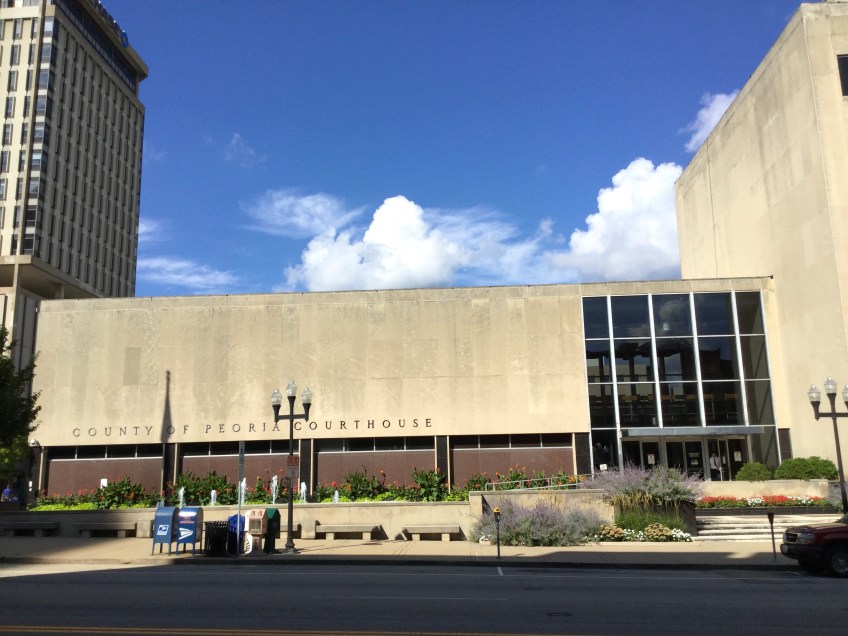
The Peoria County Courthouse as it appears today, Peoria, Illinois

It was this 1854 speech delivered here in Peoria, however, that’s widely credited with first putting Lincoln on the political map in a big way. Lincoln had mostly withdrawn from politics, having served many years in the Illinois state legislature but only winning one term in higher office in 1846 in the United States House of Representatives. The furor over the Kansas-Nebraska Act, which effectively repealed the Missouri Compromise and opened the door to the expansion of slavery, drove Lincoln back into politics, by his own account. He had always been rather reticent about the slavery issue, concerned that too much controversy over it would destabilize the country. The recent passage of the Kansas-Nebraska Act was only one of the many major events that revealed the controversy was unavoidable.

The Trial of John Brown by Horace Pippin, 1942 at the De Young Museum, San Francisco, CA. John Brown was one of those who led abolitionists into Kansas territory to combat pro-slavery advocates, and in the process, indiscriminately killed pro-slavery settlers. He led the unsuccessful raid on Harper’s Ferry in 1859 and was executed for treason.

For one thing, Kansas-Nebraska Act’s underlying political doctrine of popular sovereignty, where the states could decide on the legalization of slavery themselves by vote, led to such extreme regional disputes as Bleeding Kansas. People flooded into the territory (Kansas was not yet a state) to push the vote one way or another through violence as well as numbers. Those on the pro-slavery side wanted to preserve the political power of the slave states and to be able to settle in Kansas with their slaves if they so chose. Those opposing slavery wanted to keep slavery out of Kansas as a matter of principle and, more often, to make it a place where people could make a new life for themselves without having to compete with slaves for jobs and with wealthy slave-plantation owners for land.

Secondly, while attractive to many from both sides at first glance, the principle of popular sovereignty revealed its weaknesses over time and proved deadly to Douglas’ political career. Abolitionists and other free state citizens did not want to abide by fugitive slave laws which required that free states return escaped slaves, and did not want to protect the right of visitors to own slaves within their borders. They saw this as an imposition of slavery into territories that abolished it. Slave states regarded the refusal to return escaped slaves as an attack on their property rights, and an unfair limit on their right to travel freely from state to state. Popular sovereignty turned out to harm, not help, the cause of preserving the Union.
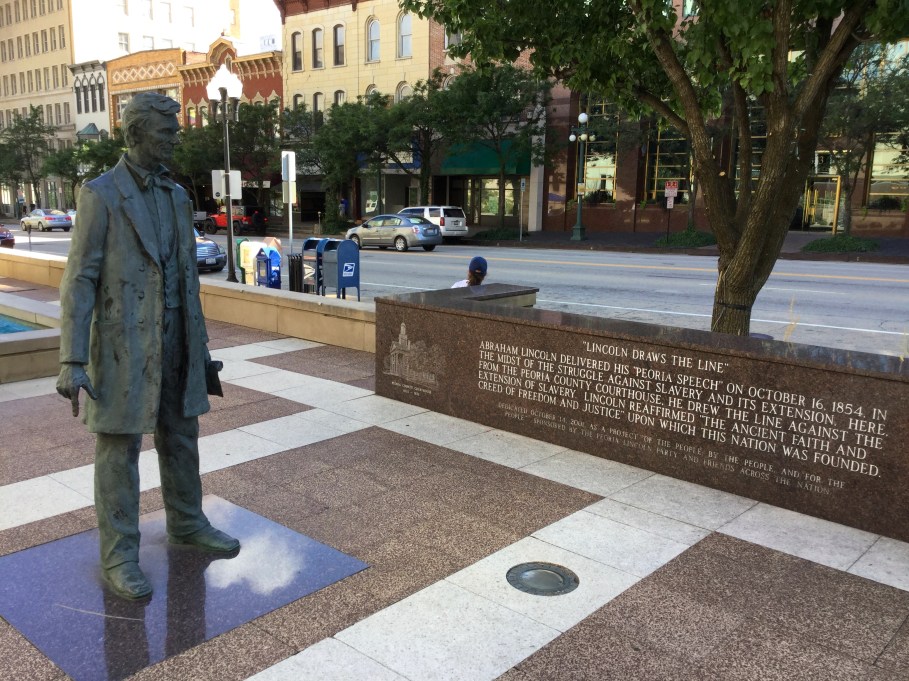
Statue of Abraham Lincoln outside the Peoria County Courthouse commemorating his Oct 16, 1854 speech here

The Peoria speech was Lincoln’s second public delivery of his first detailed and straightforward denunciation of slavery on moral grounds. While the speech did not promote the national abolition of slavery, Lincoln made the historical case that Thomas Jefferson was a reluctant slave-owner caught up in a social institution that he abhorred, but like slave-owners of Lincoln’s day, he felt trapped in it. So, Jefferson hoped and planned for its gradual dissolution. He used his influence to make sure the Northwest Ordinances of 1787 and ’89 banned slavery in all new territories of the United States, shifting the balance of political power away from the slave states and towards those states whose prosperity resulted from the industry of free people. Lincoln argued that continuing to prevent the spread of slavery was the only way to realize Jefferson’s hope while doing what was politically possible to assuage the evils of slavery until it faded away naturally. Though we, with Frederick Douglass, might be scornful of and impatient with Lincoln’s apparent have-your-cake-and-eat-it-too attitude towards slavery as a terrible moral evil but allowable in the South if it held the Union together, the speech contains the outline of the basic moral principles underlying Lincoln’s increasingly anti-slavery platform as his presidency and the Civil War progressed.

The version of the Peoria speech that’s come down to us was transcribed by Lincoln himself for publication in Springfield’s Illinois Daily Journal, in seven issues on October 21st, then the 23rd-28th, 1854. This is lucky for us as few transcripts of that series of exchanges between Douglas and Lincoln survive. Lincoln had delivered the first version of this speech in Springfield and had clarified and refined it, as well as making a few changes to tailor it to the Peoria audience.
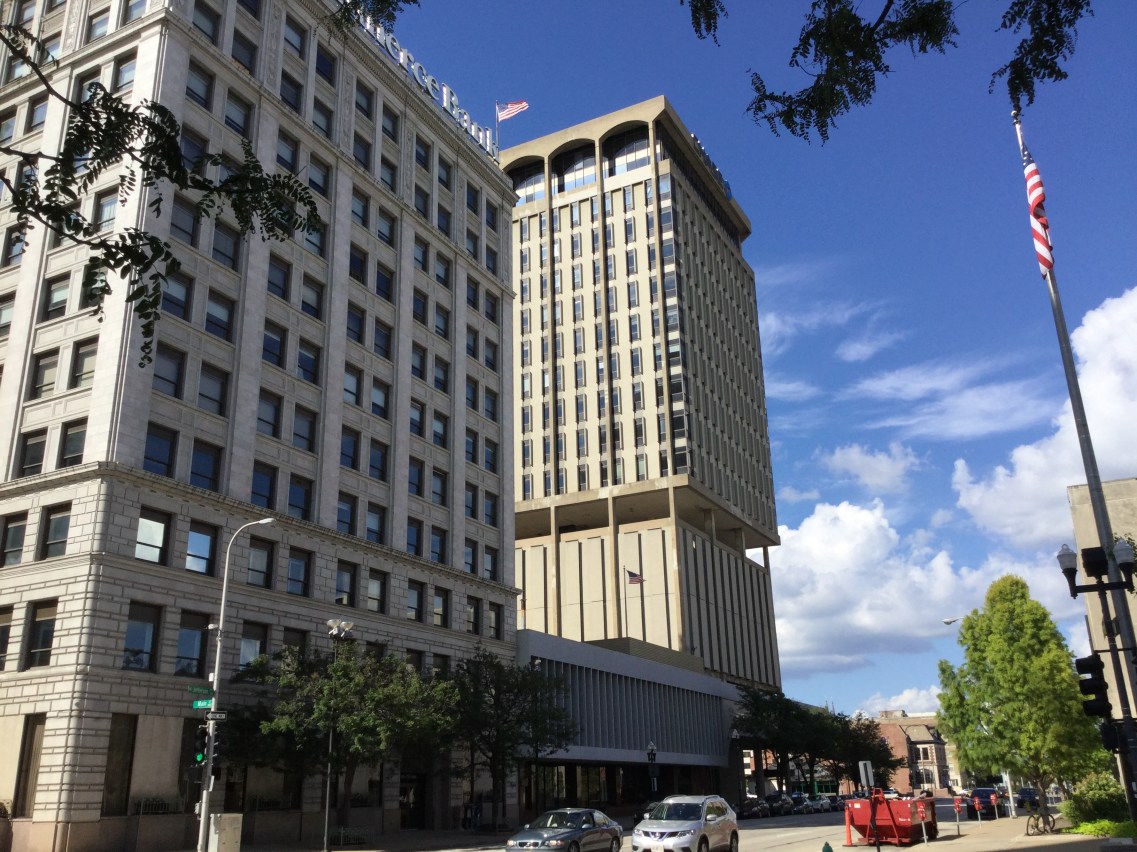
Commerce Bank at the approximate site of old Rouse’s Hall at Main St and Jefferson Ave, Peoria.

Frederick Douglass ambrotype, 1856, by an unknown photographer, image public domain via Wikimedia Commons. He spoke in Peoria in Rouse’s Hall about three years after this picture was taken.

Then I head to Jefferson and Main, to the site of Rouse’s Hall. Frederick Douglass lectured here on February 25th, 1859, and according to the Peoria Daily Transcript newspaper, his speech was so well received that Douglass decided to add a follow-up one a few days later. The Transcript reported that ‘appreciative and intelligent’ audience braved the weather in large numbers to hear this famous orator speak.

In the first speech, Douglass presented his argument that all human races had a common origin, supporting his views with ‘history, philosophy, and science’. He was not making a Darwinian case since On the Origin of Species would not be published until the fall of that same year. The Transcript also reported that the speech included an argument about slavery which ‘he had not yet exhausted,’ so presumably Douglass was presenting the larger case that since all human beings belong to a common natural family, there can be no claims of superiority that would justify one branch of this family oppressing another.

In their notice of the second speech scheduled for March 1st, the Transcript predicted that the crowd would be even larger, given the enthusiasm of the audience during the last one and the fact that this one was better advertised. They also confirmed that Douglass revealed the true ‘heinousness of Slavery’ by showing how black and white people belonged to the same human family, with the same ‘inherent faculties of the soul.’ Douglass, proclaimed the Transcript, was living proof that natural genius is to be found in all races in equal measure, and all it takes for the black race to achieve its potential and improve their faculties is to enjoy equal access to all that culture has to offer. One of the ways for his fellow black citizens to do so, Douglass said, was self-improvement: since they were not given equal chances to improve themselves, they must take their chances into their own hands as far as possible until legal and social equality was achieved.

Writing about ‘Our Recent Western Tour’ in Douglass’ Monthly, published the next month of April, 1859, Douglass spoke optimistically of the future, based on the mostly warm welcome he and his fellow speakers had received during the tour. In years past, he had often been subject to humiliation and rude treatment by audience members and people of the towns he traveled to. This time, he wrote, they were usually treated with courtesy, respect, and friendship, and the number of committed abolitionists seemed to be ever-increasing. As Douglass wrote, ‘We think a Negro lecturer an excellent thermometer of the state of public opinion on the subject of slavery…’ Though he found the overall temperature warming, he still encountered some chill between-times, as the next story will reveal.

Rouse’s Hall, image courtesy of Peoria Public Library

Robert Ingersoll in 1868. This photo would have been taken around the time that Frederick Douglass would have called on him in Peoria, when Ingersoll was about 35 years old, a married father of two, and the Attorney General of Illinois.

This also happens to be one of my favorite stories about Robert Ingersoll. It likely occurred during one of Frederick Douglass’ return visits here for an 1867 speech at Rouse’s Hall. This year is consistent with Douglass’ account: it must have happened in the late 1860’s since Douglass wrote it was ‘a dozen years ago or more’ in his final autobiography, 1881’s The Life and Times of Frederick Douglass. For all of the Transcript’s glowing review of his speeches and the audience’s enthusiasm, Douglass recalled finding little welcome offstage here on his first visit, so he dreaded going back. Perhaps he wouldn’t even be able to find a hotel that would accommodate him at all! Douglass mentioned this to a friend who he was staying with in Elmwood, a previous stop on his speaking tour. This friend said to him, ‘I know a man in Peoria, should the hotels be closed against you there, who would gladly open his doors to you – a man who would receive you at any hour of the night, and in any weather, and that man is Robert J. Ingersoll.’ (He got the middle initial wrong.) Douglass expressed concern about disturbing his family and was glad he didn’t have to since the ‘best hotel’ gave him a room. But he was intrigued his friend’s description of Ingersoll’s hospitable and unbiased personality, and about his ‘infidel’ views (these quotes are Douglass’ own, presumably tongue in cheek. Douglass was a religious skeptic in many ways himself). So Douglass went to call on the Ingersoll family at home the next morning. Douglass went on to describe the warmth of his welcome in fulsome terms, and to point out that this ‘infidel’ gave him a more Christian welcome than anyone who would define themselves that way ever had. His impression of Ingersoll’s face with its expression of ‘real living human sunshine’, I notice as I reread Douglass’ story, accords with the one I wrote in the first part of this account: ‘He has the face of a ready and kindly friend.’

In that March 6th, 1867 speech at Rouse’s Hall, Douglass spoke of the temperature dropping once again. The Civil War had ended just under two years before, and the North had not yet sorted out what they perceived as ‘the Negro problem.’ Even many of the most ardent Abolitionists were not ready to accept black people as equal members of their own communities. Like Lincoln had for most of his life, they considered slavery wrong but didn’t think that black and white people were fully if at all compatible as friends, coworkers, fellow politicians, and so on; certainly not as romantic partners. And many still thought condescendingly of freed black people as some kind of amorphous mass of downtrodden creatures that should be humbly grateful for the new freedoms that were bestowed on them, and therefore not demand too much. Douglass, of course, rejected this view. Black people had fought, and fought hard, for their own freedom, and those who fought with them, while brave and often motivated by sincerely held moral beliefs, were also acting in their own interests. The test of whether the emancipation of the black race was a true one, consistent with our American principles laid out in our founding documents, was to see how well the United States protected the rights of black people from there on out.
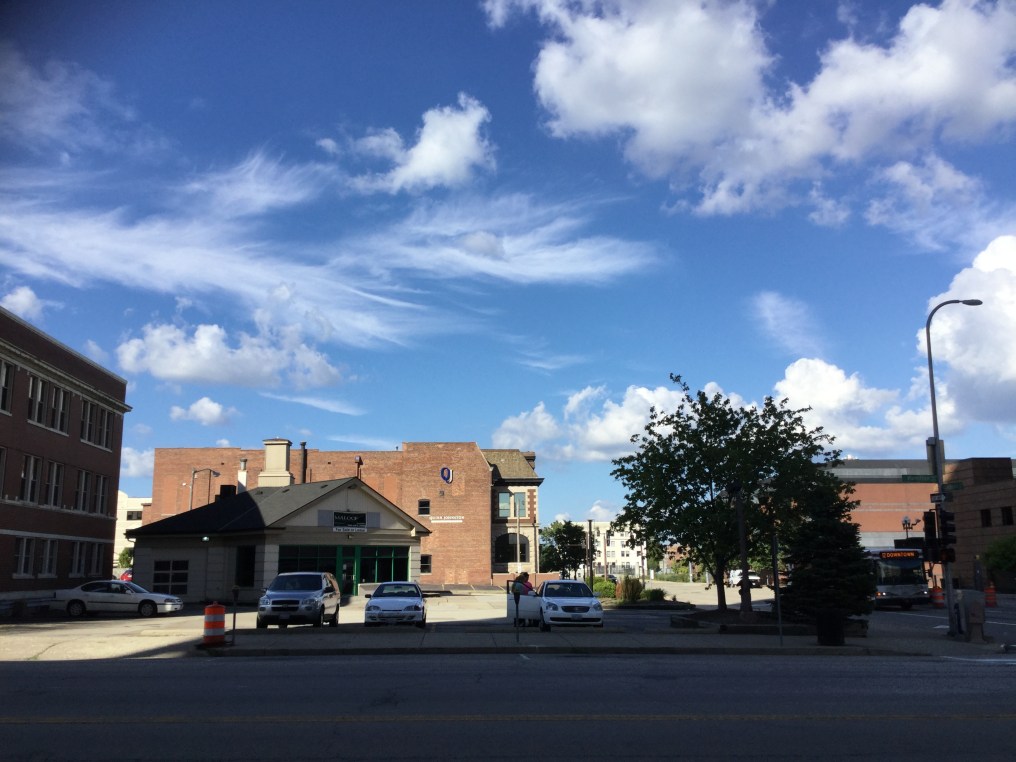
Parking lot where Robert Ingersoll’s mansion and then the National Hotel used to stand, at the north corner of Jefferson Ave and Hamilton St, kitty-corner from the Peoria County Courthouse
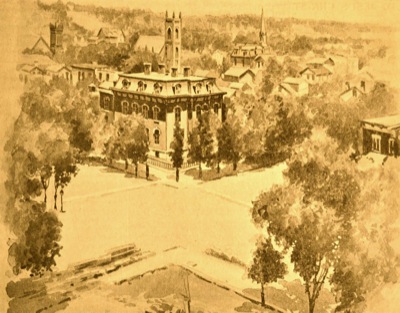
Period view of Robert Ingersoll’s grand house at Jefferson and Hamilton, image from the Robert Ingersoll Birthplace Museum webpage

In 1876, Robert Ingersoll took his law practice solo and moved his office into his third and final Peoria home at the corner of Jefferson Avenue and Hamilton Street. The Ingersoll family lived here until they returned to New York in 1877. All three locations of Ingersoll’s homes, by the way, are taken from Edward Garstin Smith’s The Life and Reminiscences of Robert G. Ingersoll. Smith provides street corners and some landmarks, but since he gives us no street numbers, doesn’t specify north, south, east, and west, and most of the landmarks have changed, I don’t always know just where to photograph. He does tell us that the National Hotel was later built on the site of this home, and Ingersoll’s ‘splendid mansion,’ a four-story affair, was ‘moved to the side of the lot’ of the hotel. Then, with further digging, I find an old postcard of the National Hotel site on the Local History and Genealogy Collection of the Peoria Public Library’s website. Once again, they come through admirably!
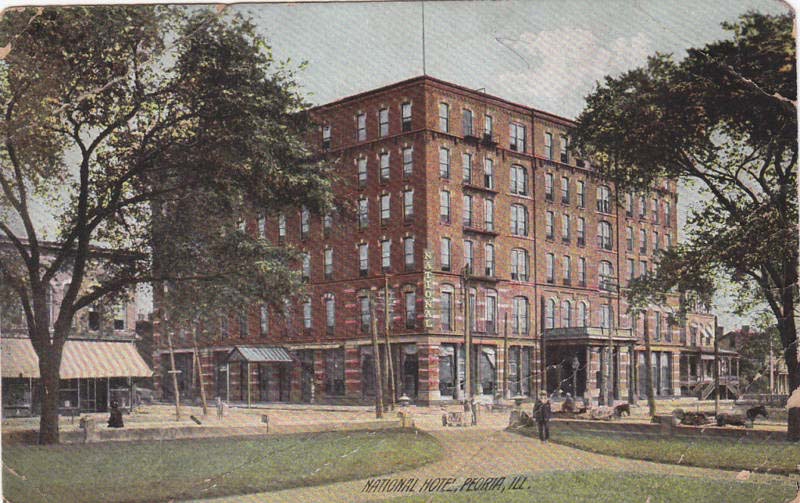
Peoria National Hotel postcard, pre-1911, courtesy of US Genealogy Express. This hotel was built on the site of the Ingersoll family’s third and final home in Peoria.

Another image of the New National Hotel at the former site of Robert G. Ingersoll’s home at the northeast corner of Jefferson & Hamilton. It was built 1883 and razed in 1970, having suffered a fire. It’s now a parking lot. Local History and Genealogy Collection, Peoria Public Library, Peoria, Illinois
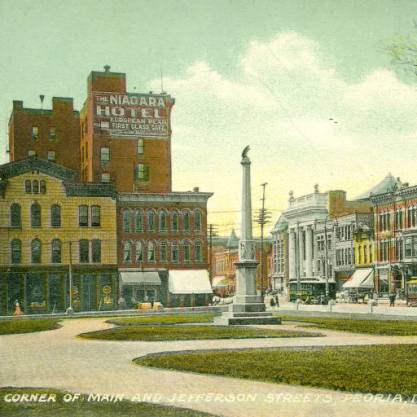
Corner of Main and Jefferson, Peoria, IL, pre-WWI, Local History and Geneology Collection, Peoria Public Library, IL.

The first home of Ingersoll in Peoria, which he rented, was in the 100 block of North Jefferson Ave, between Main St and Hamilton Blvd, and at the time Smith wrote his biography of Ingersoll, the site was occupied by the YMCA building. This site would likely be across the street from the Courthouse square; it’s my understanding that no other buildings ever occupied the square, based on all the old photos and atlases I could find of Peoria. That would place it somewhere near the Rouse’s Hall site, perhaps to the north of it where the tall building next to Commerce Bank is now. (See the Commerce Bank at Main St and Jefferson Ave photo above.)
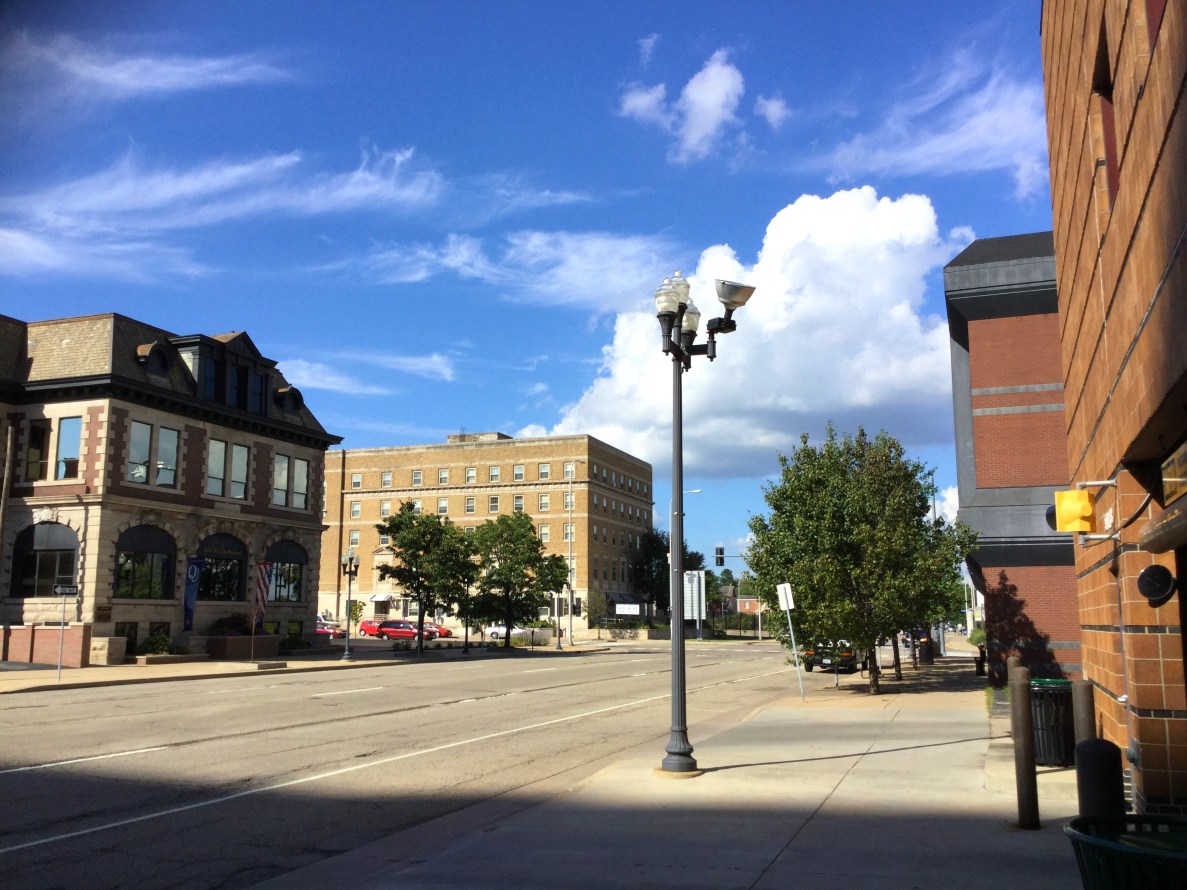
N Jefferson Ave between Hamilton & Fayette, Ingersoll's house stood about where the 1st building on left does now 2017 Amy Cools

N. Jefferson Ave between Hamilton and Fayette. Ingersoll’s second house in Peoria stood about where the first building on left does now

Ingersoll’s second home, which he also rented, was on North Jefferson Ave as well, on the 200 block between Hamilton and Fayette. It was still standing when Smith wrote his biography in 1904. This may be where Ingersoll lived when he met and married his wife, and perhaps where they lived when their daughters were born; Smith doesn’t provide a timeline for their moves between each house. Ingersoll married Eva Amelia Parker in February 1862, and his daughters Eva Robert Ingersoll and Maud Robert Ingersoll were born in 1863 and 1864, respectively. So he had already completed his time of service in the Civil War then he settled down to make a family with Eva.

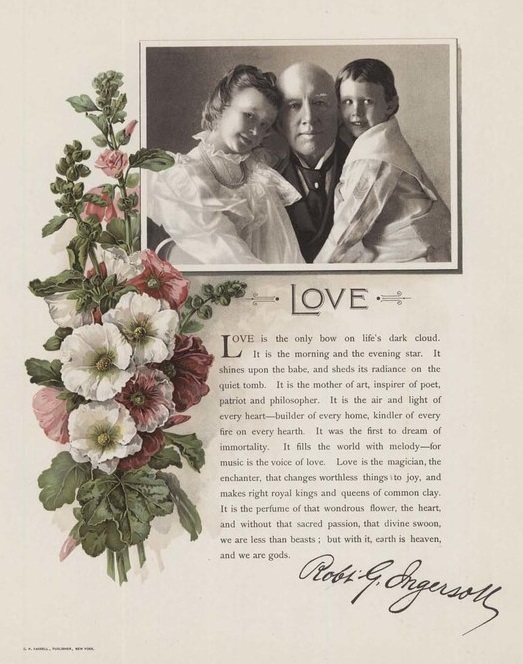
As I’ve written before, Ingersoll was a dedicated family man. He spoke eloquently and movingly of the joys of family life. It was a home filled with love and mutual respect, by all accounts. No wonder Ingersoll’s face almost invariably looks so amiable and friendly in photos! There’s a card I discover among the digital archives from the Robert Ingersoll Papers in the collection of the Abraham Lincoln Presidential Library which includes a photograph of Ingersoll cuddling two of his grandchildren over a poem he wrote titled, simply, ‘Love.’ I’ll leave you with this as I end this part of my account of my day in Peoria, and I’ll pick up the rest of the tale very soon

Farrell, C. P., “Robert Ingersoll, Love,” Chronicling Illinois, Abraham Lincoln Presidential Library

*Listen to the podcast version here or on Google Play, or subscribe on iTunes

Ordinary Philosophy and its Traveling Philosophy / History of Ideas series is a labor of love and ad-free, supported by patrons and readers like you. Please offer your support today!

~~~~~~~~~~~~~~~~~~~~~~~~~~~~~~~~~~~~~~

Sources and inspiration:

Blassingame, J. (Ed.). The Frederick Douglass Papers, Series One: Speeches, Debates, and Interviews. 4 volumes, New Haven and London: Yale University Press, 1979-1999

Carwardine, Richard. Lincoln: A Life of Purpose and Power. New York: Random House, 2003

Donald, David Herbert. Lincoln. New York: Simon & Schuster, 1995

Douglass, Frederick. The Life and Times of Frederick Douglass, 1881.

East, Ernest E. Abraham Lincoln Sees Peoria: An Historical and Pictorial Record of Seventeen Visits from 1832 to 1858. Peoria, 1939

Electoral history of Abraham Lincoln‘. In Wikipedia, The Free Encyclopedia

Foner, Philip S. The Life and Writings of Frederick Douglass, Vol. II. New York: International Publishers, 1950.

Garrett, Romeo B. Famous First Facts About Negroes. New York: Arno Press, 1972

Garrett, Romeo B. The Negro in Peoria, 1973 (manuscript is in the Peoria Public Library’s Local History & Genealogy Collection)

Herndon, William H. and Jesse W. Weik. Herndon’s Lincoln: The True Story of a Great Life. 1889

Hoffman, R. Joseph. ‘Robert Ingersoll: God and Man in Peoria‘. The Oxonian, Nov 13, 2011

Insurance Maps of Peoria, Volume 1. Sanborn Map Company of New York, 1927. (Showing the street numbers before they changed in 1958)

Kelly, Norm. ‘The Hall That Rouse Built‘, Peoria Magazines website, Feb 2015

Kelly, Norm. ‘Peoria’s Own Robert Ingersoll‘, Peoria Magazines website, Feb 2016

Leyland, Marilyn. ‘Frederick Douglass and Peoria’s Black History‘, Peoria Magazines website, Feb 2005

Lehrman, Lewis E. Lincoln at Peoria: The Turning Point. Mechanicsburg, PA: Stackpole Books, 2008.

Lincoln Draws the Line’, Peoria, IL – posted by KG1960 on Waymarking.com

Lincoln, Abraham. ‘Peoria Speech, October 16, 1854.’ via the National Park Service’s Lincoln Home National Historic Site website and ‘Abraham Lincoln’s speech at Peoria, Illinois: [Oct. 16, 1854] in reply to Senator Douglas‘. Seven numbers of the Illinois Daily Journal, Springfield, Oct. 21, 23-28, 1854. [Peoria, Ill.: E. J. Jacob]

Lincoln Home National Historic Site, Illinois. Website, National Park Service

MacMillan, Lois. ‘Close Reading: Speech at Peoria, October 16, 1854‘, published at Quora: Understanding Lincoln

Peck, Graham. ‘New Records of the Lincoln-Douglas Debate at the 1854 Illinois State Fair: The Missouri Republican and the Missouri Democrat‘. Journal of the Abraham Lincoln Association, Volume 30, Issue 2, Summer 2009, pp. 25-80

Peoria Speech, October 16, 1854‘. Lincoln Home National Historic Site, Illinois website, National Park Service

Smith, Edward Garstin. The Life and Reminiscences of Robert G. Ingersoll. New York: The National Weekly Publishing Co, 1904

Wakefield, Elizabeth Ingersoll, ed. The Letters of Robert Ingersoll. New York: Philosophical Library, 1951

The Wheeling Daily Intelligencer, W. Virginia, July 24th, 1899. From Chronicling America: Historic American Newspapers. Library of Congress
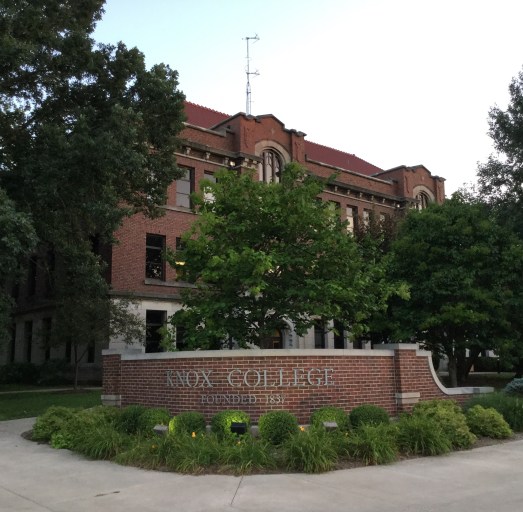
Knox College, Galesburg, Illinois – Abraham Lincoln and Stephen Douglas Debate

Knox College, George Davis Hall at E. South and S. Cherry Streets, Galesburg, Illinois

Knox College, Galesburg, Illinois, July 27, 2017

After exploring Fort Robinson for a couple of hours yesterday morning, I washed my face, changed my clothes, ate a hearty cooked breakfast in the restaurant in the main lodge, and drove east across Nebraska.

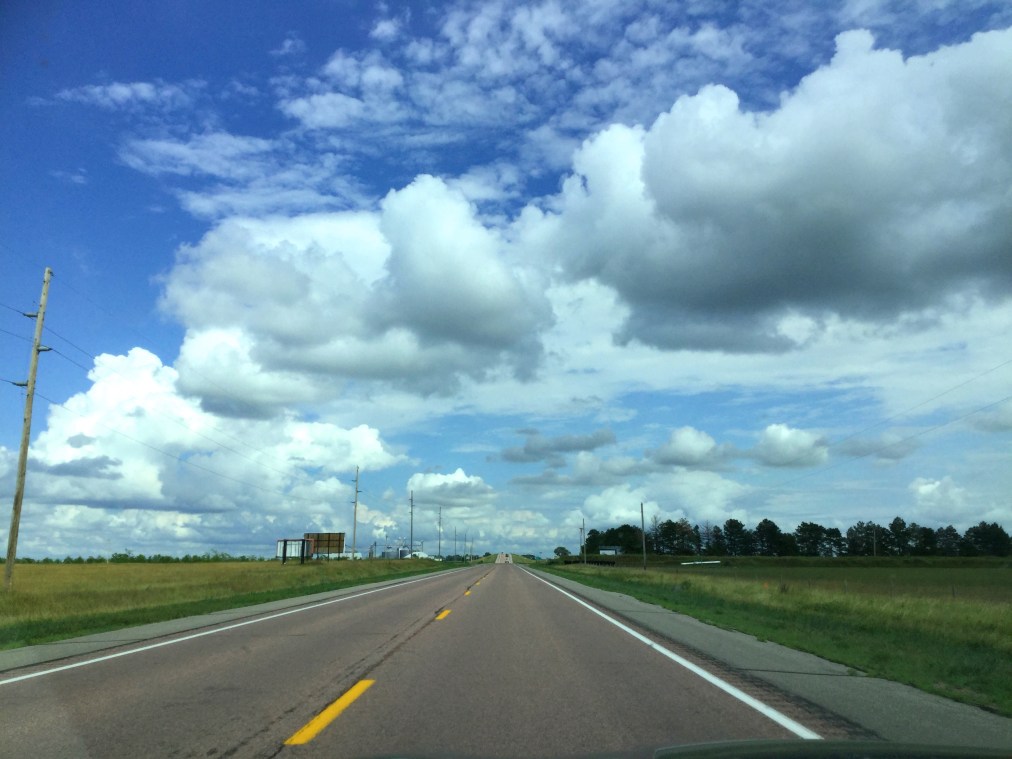
The drive was beautiful, vast blue-blue-blue skies with towering puffy clouds and occasional gray ones that blew through and dropped a little rain on the way. Rainbows faded in and out of view. The green and gold fields sometimes laid flat and sometimes rolled over gentle slopes and undulations. The road ran straight and wound among them accordingly. Tidy farmhouses were scattered across the land, and silos and grain elevators rose high near little town clusters, some full of quiet life on this warm summer afternoon, some nearly or entirely abandoned and decayed. I drove through the early evening until I decided I could no longer do without a nice shower and a proper bed. So I found a little hotel in Missouri Valley, Iowa and got a good night’s rest. This morning, I linger until nearly noon to finish writing up and publishing one of my pieces for this series.

Looking through the windshield on Highway 20, headed east through Nebraska farmland, 2017 Amy Cools

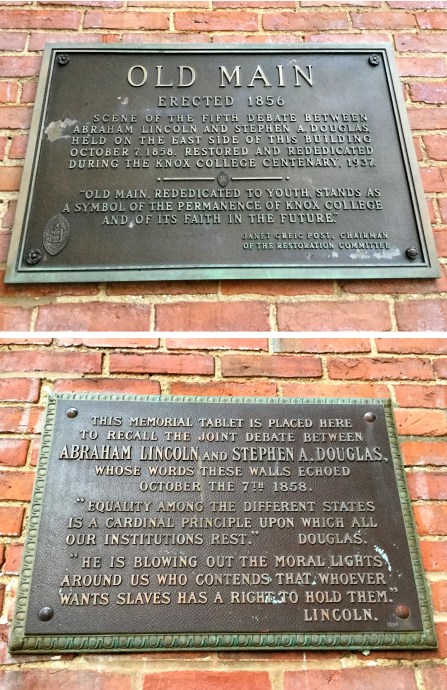
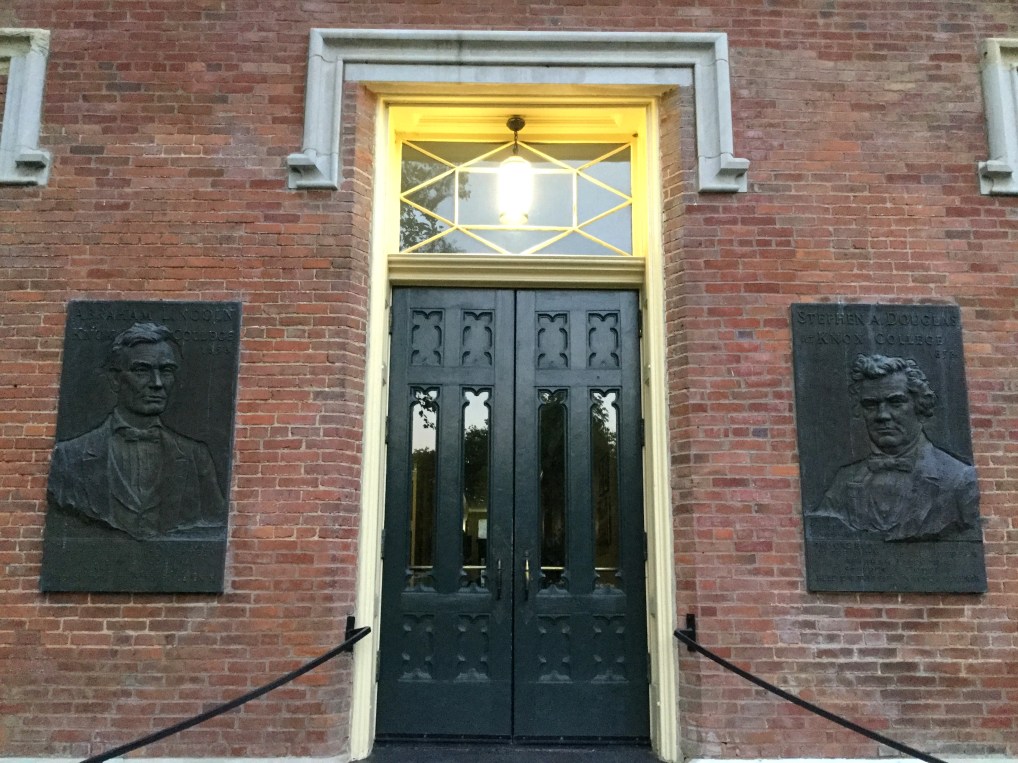
Lincoln Douglass debate plaques on Old Main, Knox College. The debate plaque on the bottom engages in a bit of romanticism: the words could not echo ‘from these walls’ since it was held outside. Perhaps they could have echoed from the outer east wall, but ‘blowing’ is the key word here: the chilly wind that day would have likely rendered any echo inaudible.

I continue east towards Peoria, and about an hour before I reach that city, I spot a highway sign for an Abraham Lincoln historical site in Galesburg, Illinois. I turn off the highway and follow the signs to Knox College.

Knox College was chartered in 1837 by the Illinois state legislature while Abraham Lincoln was still a member. It was founded by New York minister George Washington Gale and a group of fellow idealists and reformers. They were, among other things, dedicated to training people in self-sufficiency and the practical arts, to opposing slavery, and to providing women with a full education. So the twenty-one-year-old college no doubt enthusiastically welcomed the rising young anti-slavery politician already widely known for his unique combination of eloquence and broad knowledge, and his awkward, homespun, frontier appearance. He was engaged in a series of seven debates with the well-dressed, polished, canny career politician Stephen A. Douglas, who Lincoln was hoping to replace as Illinois Senator in the 1859 election. (At this time, senators were still elected into office by the state legislatures rather than by popular vote.)

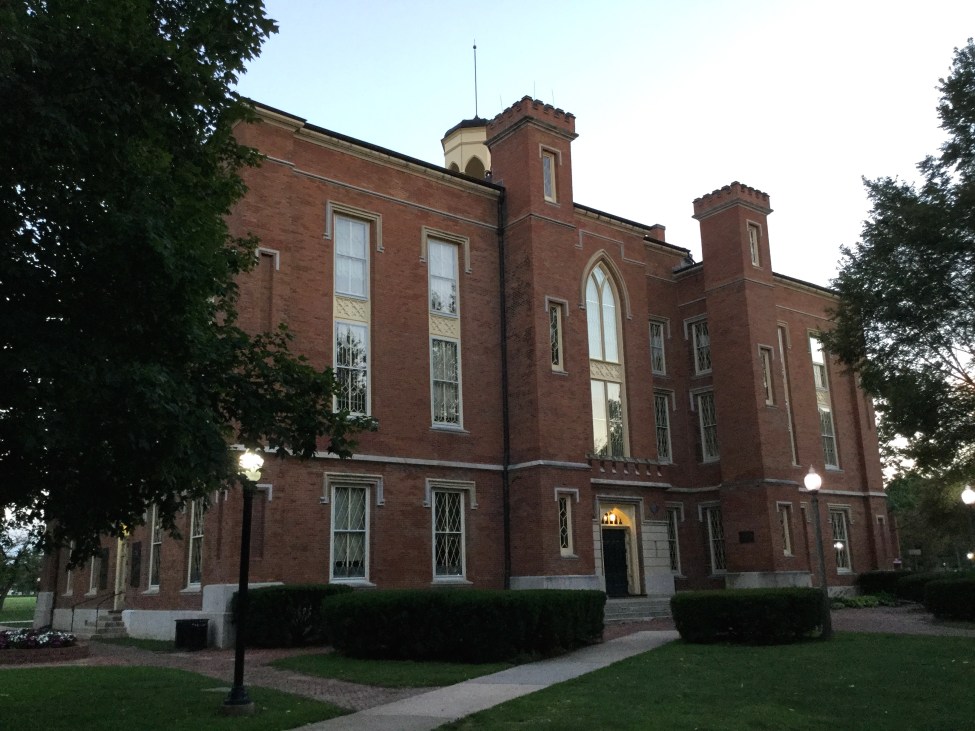
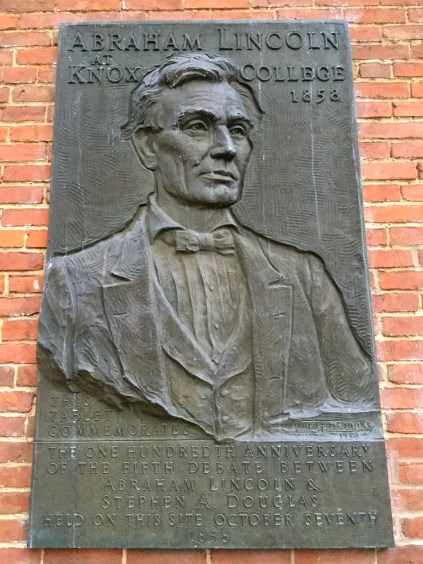
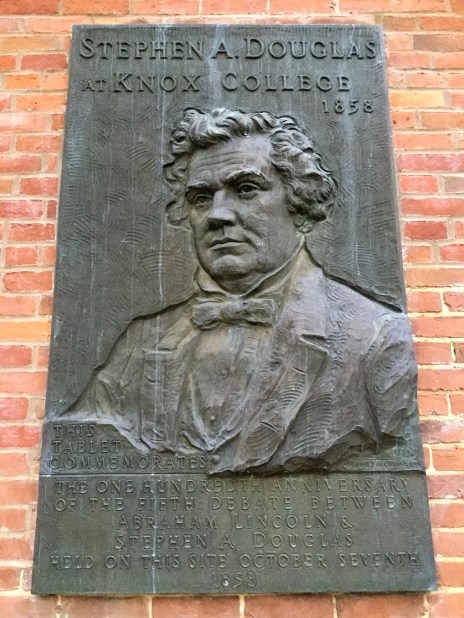
The fifth debate of the series was held here at Knox College on October 7, 1858, on the east lawn of the newly constructed Main building, now called Old Main. Plaques of Lincoln and Douglas are placed on the east wall of the Old Main to commemorate the event. This building, in fact, is the only remaining original building associated with these famous Lincoln-Douglas debates.

Old Main, Knox College, Galesburg, Illinois. The east lawn, where Abraham Lincoln and Stephen A. Douglass debated, is on the right side of this building, to the left looking at the photo. You can see the two tall plaques commemorating the debate on either side of the side door

Abraham Lincoln plaque on the east wall of Old Main, Knox College

Since it was a cold and blustery fall day, the debate was moved from an open lawn to a spot at the side of the Main building where the stage was sheltered from the wind; it couldn’t be moved inside because there were 10,000-20,000 people there, depending on which newspaper account you read. All agree that the audience was enormous.

Lincoln climbed through a window to reach the debate platform and as he did, he reportedly quipped ‘Well, at least I’ve gone through college.’ We tend to think of him as a somber man, ever dignified, ever noble in his comportment. He has attained such a mythical status as a moral leader and shepherd of our nation through our most severe national crisis, and his image in photographs, portraits, and sculpture are almost as invariably solemn, stately, unsmiling, his face often drawn with sorrow, as he appears in our collective imagination. But, Lincoln was actually quite playful and even goofy sometimes, a joker and teller of humorous, sometimes bawdy stories. If you’ve watched the excellent Steven Spielberg movie Lincoln, you’ve seen that delightful scene where he tells a naughty joke about a painting of George Washington and an outhouse. In case you want to know how the joke goes, well, I’m not going to tell you. Not because I mind telling naughty jokes (I love ’em!) but because if you’ve seen the film, you likely remember it, and if you haven’t, it’s high time you did, and I hope your curiosity about this joke is now one more incentive to do so.

Lincoln-Douglas debate plaques on either side of the door in the east wall of Old Main, Knox College

As they debated here, one of the main points on which Douglas attacked Lincoln was his alleged sectionalism. He argued that the Republican party platform was all about appealing to extremist adherents to regional political doctrines that the Northerners subscribed to, but not the South. But he, Douglas claimed, was the true believer in a universal principle: popular sovereignty. The states and all new territories that were admitted to the Union should each vote on whether or not to allow slavery within their own borders. After all, wasn’t the United States founded on the idea that people had the right to govern themselves? It was sectionalists like Lincoln who were worsening the growing pains of our nation. The national debate over slavery was dividing the nation ever more sharply was new territories were added, and with each new addition, North and South worried anew over the resulting balance of power between free and slave slaves.

Stephen Douglas plaque on the east wall of Old Main, Knox College

Lincoln, however, turned Douglas’ argument right back on him. Lincoln argued that slavery was wrong while admitting that the Constitution allowed for it to continue in the South where it had already existed. He further argued that the law must be obeyed as it stood. But he also believed that some of the slave-owning founders of our nation, including Thomas Jefferson and George Washington, as well all of the non-slave-owning founders, believed that slavery was a moral evil and hoped it would die out or be abolished over time. Lincoln pointed out unlike the founders, Douglas refused to take a moral stand on slavery; he insisted it should be a matter of popular sovereignty, up to the states to decide for themselves. In short, Douglas believed that sectional interests should decide the matter. Lincoln pressed Douglas on this point throughout the debates, especially at Knox College: either slavery is right or it is wrong, and as such, it should not simply be up to local popular vote. After all, this was a moral matter about those human rights such as those enumerated in the Bill of Rights. It was not merely a practical matter of ‘domestic affairs’ as Douglas put it, such as apportioning funds for regional projects, administering local public institutions, or community policing.

Now, of course, we would press Lincoln today just as he pressed Douglas on this point: if slavery was as wrong as Lincoln said it was for the reasons he said it was, then it would be intolerable anywhere it existed, the South included. Lincoln, in this, was as inconsistent as he accused Douglas of being. Slavery, after all, consisted of the imprisonment of the innocent, rape, child abduction, forced labor, wage theft, torture, even murder: all incompatible with the Constitution, the Bill of Rights, and the Declaration of Independence. Now Lincoln knew this: as he pointed out in an earlier speech, ‘A house divided against itself cannot stand. I believe this government cannot endure, permanently, half slave and half free.’ Yet, very much a border state man of his time, it took him a long time to reconcile the complex socioeconomic issues surrounding slavery with the convictions of his reason and his conscience. He may have been willing to allow slavery to continue if that’s what it took to preserve the Union, but as he himself more than hinted at, this would be futile anyway. Either slavery would dissolve away on its own, which the Missouri Compromise of 1850, the Kansas-Nebraska Act of 1954, and the Dred Scott decision of 1857 made appear a more distant and unlikely outcome than ever; or, slavery needed to be abolished. It would take Lincoln quite some time to fully evolve in the courage of his convictions and work to stop slavery everywhere it existed.

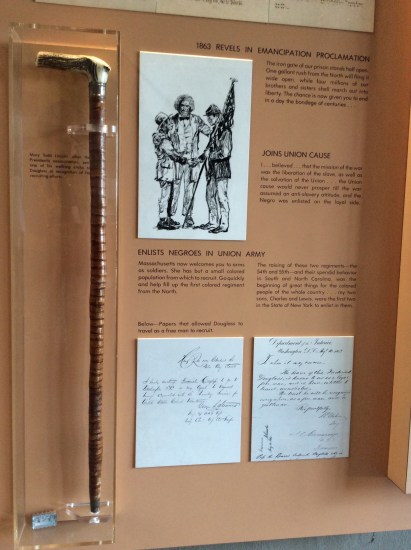
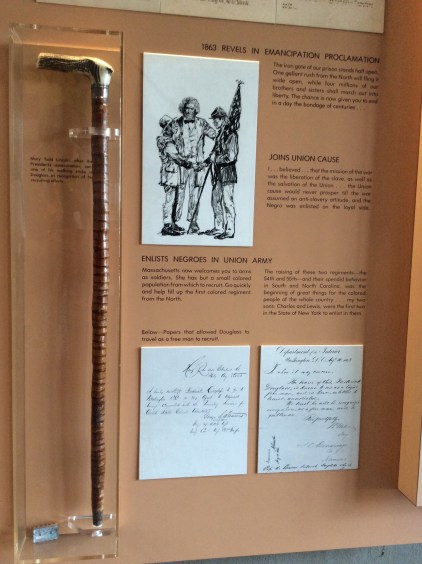
Abraham Lincoln’s walking stick, Mary Todd Lincoln’s gift to Frederick Douglass at the Frederick Douglass National Historic Site, Washington, D.C. Lincoln and Douglass were often at odds on matters of policy but became friends and allies during the Civil War. Douglass was unsparing in both praise and criticism of Lincoln as he believed it was deserved. Lincoln had the integrity to not let this interfere with his cordial treatment of Douglass, including his warm welcome of Douglass at the reception following his second inauguration.

The argument, which some continue to make today, that we should have allowed slavery to continue in the South in the expectation that it would gradually fade away on its own, to preserve the Union while averting the terrible and bloody Civil War, has always appeared to me at least extremely odd, if not morally repugnant. It especially disturbs me when I hear otherwise reasonable people make it, especially those who I otherwise admire and respect. After all, as I point out above and as I’ll repeat, slavery was imprisonment of the innocent, forced labor, destruction of families, and wage theft, and rife with rape, child abduction, torture, and murder, institutionalized with the blessing of the slave states. If slaveowners were kind to their slaves as far as the institution would allow, well, this rested entirely on their own good will. Even where laws existed to protect slaves from the worst abuses, such as murder, rape, and egregious physical punishment, enforcement of these laws were rare, and the Supreme Court’s Dred Scott decision effectively erased the right for wronged black people, free as well as slave, to take their cases to court. To drive this point home, Chief Justice Roger Taney wrote in his majority opinion that black people ‘had no rights which the white man was bound to respect.’ And slave families were necessarily torn apart on a regular basis since most slaveowners could not afford to maintain growing slave populations as they increased through childbirth. Would anyone seriously advocate, in any other circumstance, that we should permit rape, and murder, and torture, and tearing children from their families, and systematic imprisonment of the innocent to continue unabated in order to avoid war? Aren’t these the very sorts of things that the only wars we call just are fought to prevent?

Lincoln was awarded Knox College’s first honorary degree in 1860. Barack Obama was accorded that same honor in 2005, and I think this would make Knox College’s progressive founders very proud. Though Lincoln sometimes revealed that he had as many racial prejudices as a typical man of his time, opposing slavery while not believing that black and white people were fully equal or could live together in harmony, his thoughts and feelings in these matters apparently changed over time. As the Civil War went on and he was forced to confront issues of race head-on, he demonstrated growth in his understanding of the evils not only of slavery but of racism generally. So much so, in fact, that when Frederick Douglass met President Lincoln in person, he had a very positive impression of him, though Douglass had been his long-time and often very severe critic. They still did not agree on many matters of policy, but Douglass was impressed with Lincoln’s courteous treatment of him and his apparent lack of interpersonal racial prejudice. So I think that Abraham Lincoln, after getting used to the idea and observing the proof that it was slavery, not biology, that created the cultural gulf between white and black people, would also be proud that Obama is a fellow honoree and a fellow president, and of his own contributions to making that possible.

*Listen to the podcast version here or on Google Play, or subscribe on iTunes

Ordinary Philosophy and its Traveling Philosophy / History of Ideas series is a labor of love and ad-free, supported by patrons and readers like you. Please offer your support today!

~~~~~~~~~~~~~~~~~~~~~~

Sources and inspiration:

Carwardine, Richard. Lincoln: A Life of Purpose and Power. New York: Random House, 2003

Donald, David Herbert. Lincoln. New York: Simon & Schuster, 1995

Fifth Debate – Galesburg, October 7‘. History of the 1858 Debates: Lincoln-Douglas Debate Communities, from Looking for Lincoln Heritage Coalition website

Galesburg, Knox College, October 7, 1858.’ Mr. Lincoln and Freedom by The Lehrman Institute

Herndon, William H. and Jesse W. Weik. Herndon’s Lincoln: The True Story of a Great Life. 1889

Holzer, Harold. The Lincoln-Douglas Debates: The First Complete, Unexpurgated Text. New York: Fordham University Press, 2004

Knox College & Lincoln‘ from Lincoln Studies Center: About Knox, Knox College website

Knox College Circular & Plan‘ from About Knox: Our History, Knox College website

Oakes, James. The Radical and the Republican: Frederick Douglass, Abraham Lincoln, and the Triumph of Antislavery Politics. New York: W. W. Norton & Company, 2007

Scott V. Sandford | 1857‘. Landmark Cases: Historic Supreme Court Decisions, C-SPAN’s 12-part history series produced in cooperation with the National Constitution Center

To the Great Plains and Illinois I Go, in Search of Crazy Horse, Sitting Bull, Abraham Lincoln, and Other American Histories

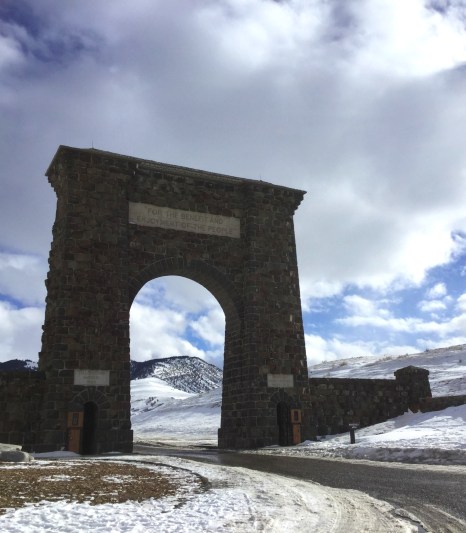
Roosevelt Arch at the North Entrance of Yellowstone National Park. Photo: January 2017 by Amy Cools

Hello, friends of Ordinary Philosophy!

From time to time, I take a trip to some corner of the globe, to explore the lives and ideas of great thinkers in the places where they lived and worked. For this series, I follow in the footsteps of thinkers who are no longer alive, since those who are still telling their own stories. But those who are no longer alive in the body live on in the ideas that they pass on, and in the example they provide for us to follow.

I’m pleased and excited to announce my seventh philosophical-historical adventure: an almost three-week road trip through the Great Plains and on to Illinois. I’ll fly from Chicago to Scotland on August 9th: I’ll be pursuing a master’s degree in the history of ideas at the University of Edinburgh starting this fall. In the meantime, I’m overjoyed to have this window of time to explore parts of my country which I’ve never seen, and to learn as much as I can along the way.

During this journey, I’ll explore Yellowstone and the history of National Parks in America (it’s been a great NP year for me!); I’ll travel throughout the Great Plains following the history of Crazy Horse, Sitting Bull, the Lakota and their and other Native Americans’ encounters with white invaders in the 1800’s and beyond; I’ll visit Springfield, Peoria, and Chicago following Abraham Lincoln, Robert Ingersoll, uniquely American forms of art and architecture, and other topics. I’ll also make many more stops and detours along the way.

Patrons of this series: Ervin Epstein MD, Liz and Russ Eagle, Tracy Runyon, Genessa Kealoha, the Cools-Ramsden family, and Shannon Harrod Reyes ~ With warmest gratitude, thank you!

Road Trip Through Indian Country to Chicago, En Route to Edinburgh
Bitterroot Mountains and the Lewis and Clark Wendover Ridge Hike
Lewis & Clark Caverns, Yellowstone National Park, and Our Public Lands
Little Bighorn Battlefield National Monument, Day 1
Little Bighorn Battlefield National Monument, Day 2
The Black Hills – Mt Rushmore, Black Elk Peak, and Crazy Horse Memorial
Standing Rock Reservation: In Search of Sitting Bull, I Find Sakakawea, Too – Part 1
Standing Rock Reservation: In Search of Sitting Bull, I Find Sakakawea, Too – Part 2
My Great Year for National Parks, Monuments, and Forests
Wounded Knee, Pine Ridge Reservation, South Dakota
Fort Robinson, Nebraska, in Search of Crazy Horse
Knox College, Galesburg, Illinois – Abraham Lincoln and Stephen Douglas Debate
Peoria, Illinois, In Search of Robert G. Ingersoll, Frederick Douglass, And Abraham Lincoln, Part 1
Peoria, Illinois, In Search of Robert G. Ingersoll, Frederick Douglass, And Abraham Lincoln, Part 2
Peoria, Illinois, In Search of Robert G. Ingersoll, Frederick Douglass, And Abraham Lincoln, Part 3

Athens and Springfield, Illinois, Part 1, In Search of Abraham Lincoln
Photobook: Marker and Train Station Where Abraham Lincoln’s Body Returned to Springfield, Illinois, May 3rd, 1865
Springfield, Illinois, In Search of Abraham Lincoln, Part 2
Springfield, Illinois, In Search of Abraham Lincoln, Part 3
Springfield, Illinois, In Search of Abraham Lincoln, Part 4
Springfield, Illinois, In Search of Abraham Lincoln, Part 5
New Salem, In Search of Abraham Lincoln
Hannibal and Florida, Missouri, in Search of Mark Twain
Chicago’s Union Stockyards Gate

And associated articles

Happy Birthday, Walt Whitman!
The Love of Possession Is a Disease With Them
Happy Birthday, Robert Ingersoll!
The Friendship of Robert G. Ingersoll and Walt Whitman

Ordinary Philosophy and its Traveling Philosophy / History of Ideas series is a labor of love and ad-free, supported by patrons and readers like you. Please offer your support today!

Happy Birthday, Julia Ward Howe!

Julia Ward Howe, ca. 1855

Julia Ward Howe, poet and activist, was born on May 27, 1819, and lived a long life ever dedicated to social reform.

She’s best known as the author of the Battle Hymn of the Republic, the stirring Civil War anthem still sung at military events and in churches today; I remember singing it at Mass growing up. Filled with Biblical imagery, it reminds me of the Old Testament-inspired Second Inaugural Address of Abraham Lincoln. In it, he addresses the terrible costs of the war in lives and property, surmising that God’s justice may demand that ‘all the wealth piled by the bondman’s two hundred and fifty years of unrequited toil shall be sunk., and …every drop of blood drawn with the lash shall be paid by another drawn with the sword’ in recompense for the terrible sin of slavery.

Howe wrote her Hymn in 1861, Lincoln’s Second Inaugural was delivered in 1865. Lincoln is known to have heard the Battle Hymn and reported to have wept when he did. Lincoln was well versed in Scripture and references it liberally in his writings and speeches; nevertheless, he may also have had Howe’s Hymn in mind when he wrote his Address. In any case, both remain prominent in American historical memory, continuing to resonate and inspire today in our Protestantism-derived culture. John Steinbeck uses her Book of Revelation-derived phrase The Grapes of Wrath as the title of his great novel about the suffering of Dust Bowl refugees fleeing to California. The great Leonard Cohen references her Hymn in ‘Steer Your Way’ from You Want It Darker, his final album released shortly before his death last fall. Howe’s lyric ‘As he died to make men holy, let us die to make men free’ becomes ‘…let us die to make things cheap.’ Cohen redirects her line to critique today’s great sin of destroying our environment likewise out of greed, complacency, indifference to the fate we’re creating for our descendants, and slavish adherence to the ‘way it’s always been done.’

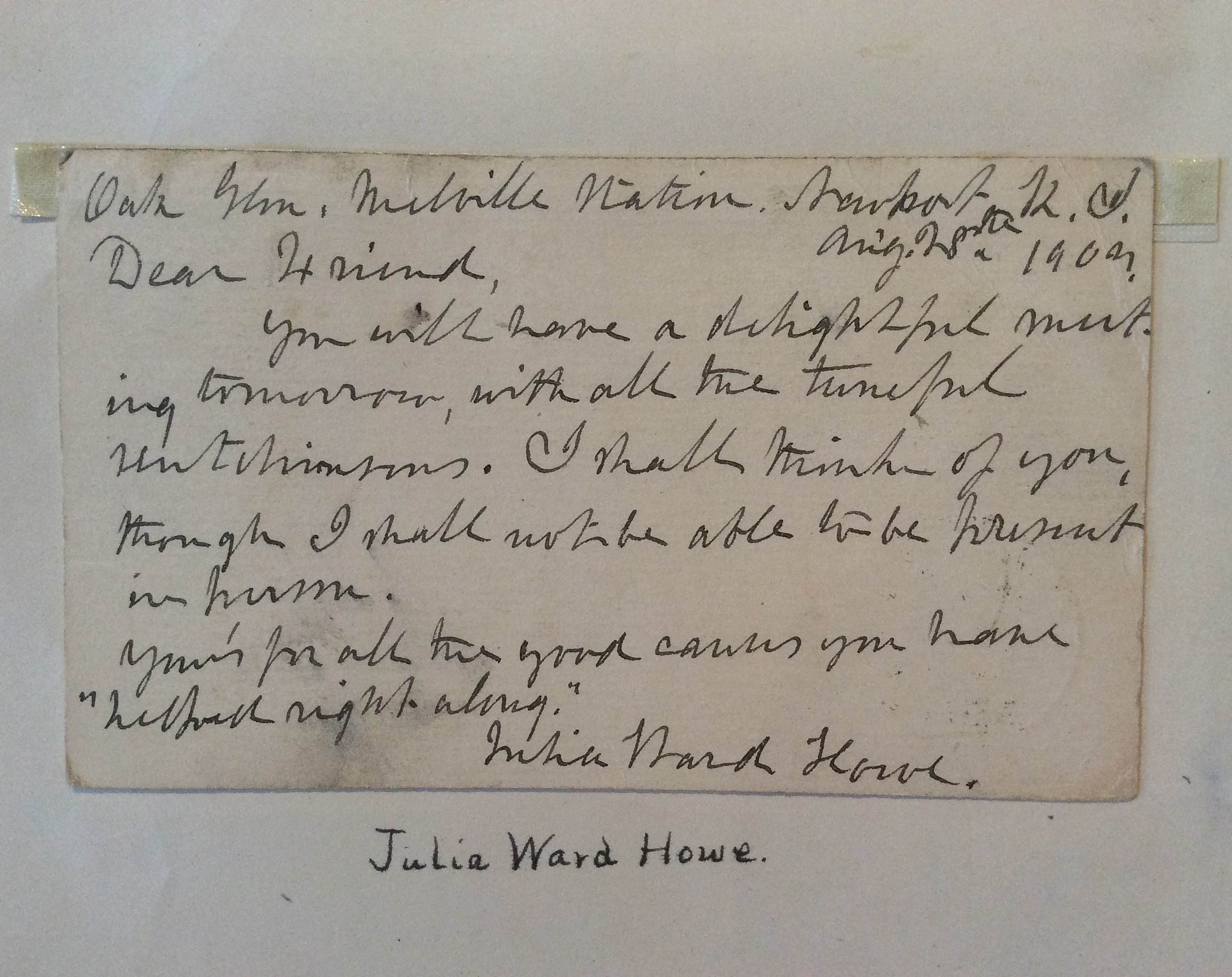
Julia Ward Howe postcard dated August 28th, 1903, from the Hutchinson Family Scrapbook in the collection of the Lynn Historical Society in Massachusetts. I was here in spring 2016 following the life and ideas of Frederick Douglass. The Hutchinson family dedicated their musical skills to the abolition movement and other reform causes and were friends with many prominent activists of their day. The scrapbook doesn’t note which member of the Hutchinson family Howe wrote this card to.

Read more about this great abolitionist, feminist, and author:

Julia Ward Howe, 1819–1910: BiographyPoetry Foundation

Julia Ward Howe (1819-1910) – by Debra Michals for the National Women’s History Museum

‘The Civil Wars of Julia Ward Howe,’ by Elaine Showalter – by Jill Lepore for The New York Times

Julia Ward Howe, 1819-1910, Volume 1 – by Laura Elizabeth Howe Richards, Maud Howe Elliott, and Florence Howe Hall, 1915

~ Ordinary Philosophy and its Traveling Philosophy / History of Ideas series is a labor of love and ad-free, supported by patrons and readers like you. Please offer your support today!

Happy Birthday, Abraham Lincoln!

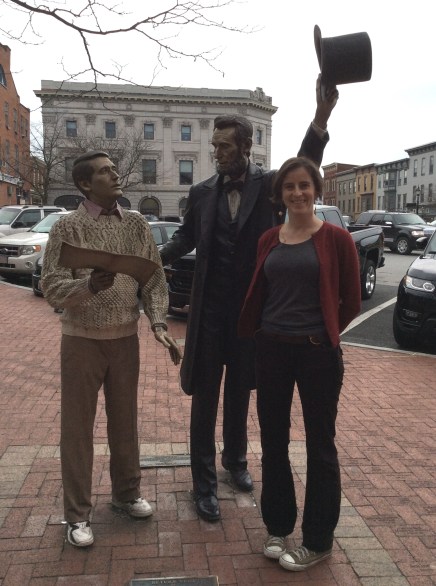
Me with Abraham Lincoln's sculpture near David Wills house where he stayed in Gettysburg, PA, the night before giving his great Address.

Me with Abraham Lincoln’s sculpture near David Wills’ house where he stayed in Gettysburg, PA, the night before giving his great Address.

Let’s remember and salute the great Abraham Lincoln, father of our nation reborn in liberty, on his birthday.

Born on February 12th, 1809, this child of a poor Kentucky farm family was largely self-educated yet rose to become our most revered President since George Washington. He was a hard-working man, from farm laborer and rail splitter to flatboat operator on the Mississippi River, then shop owner, militia captain, postmaster, lawyer, politician, then President of the United States. A popular man revered for his storytelling, conversation, intelligence, and general reputation for high integrity, Lincoln won his second campaign for political office and entered the House of Representatives in 1834. He was a successful and innovative lawyer and revered for his speechmaking. His series of debates with Democratic senator Stephen Douglas in 1858 thrust him into the national spotlight, and while he lost the race to replace Douglas in the Congress that year, his reputation continued to grow, and he defeated Douglas in the presidential race two years later. He won the Presidency as head of the newly formed anti-slavery Republican party.

Lincoln’s antipathy to slavery originated with his flatboat trip to New Orleans, where he witnessed its horrors first hand. Over the years, his political antislavery position fluctuated though it always disgusted him personally. For most of his political career, he advocated the moderate policy of stopping slavery’s spread to the new territories, leaving it in place where it already existed in the expectation that economic factors would naturally lead to its demise. But the intransigence of the slave states and the contingencies of the Civil War, combined with his own moral hatred of slavery, caused him to change his mind. Lincoln’s Emancipation Proclamation of January 1, 1863 freed all slaves in those states in rebellion, and nearly 200,000 freed black men fought for the Union Army, helping to ensure its eventual success.

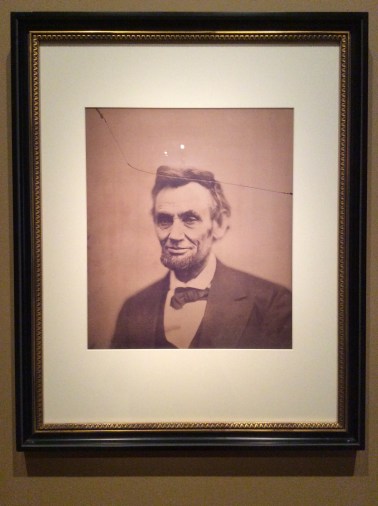
Abraham Lincoln by Alexander Gardner, Feb 5, 1865, National Portrait Gallery in D.C., 2016 Amy Cools

Abraham Lincoln by Alexander Gardner, Feb 5, 1865, National Portrait Gallery in D.C., photo 2016 by Amy Cools

Even more than his childhood poverty and lackof education, I find Lincoln’s success even more remarkable in light of the recurrent and severe depression he suffered throughout his life. While it can be crippling, it can also make sufferers that much more attuned to the suffering of fellow human beings, while deepening the understanding of human nature and increasing the capacity for sympathy. Lincoln was one of these, and his suffering refined his sensitivities and strengthened him, helping to make him the great man he became.

Having led the nation through the trauma and horror of the Civil War, Lincoln was assassinated only a month after his re-inauguration to the Presidency in 1964, shot in the head on April 14th by pro-slavery actor John Wilkes Booth while attending a play at Ford’s Theater.

Here are a few links and images of writings and works of art by, about, featuring, and inspired by Abraham Lincoln, including some of my own work.

Audiobooks of speeches and other writings of Abraham Lincoln at Librivox

Speeches, letters, and other writings by Abraham Lincoln digitized by the Northern Illinois University Libraries

Abraham Lincoln – in Wikipedia

April the 14th, Part I – by Gillian Welch

The Gettysburg Address – by Abraham Lincoln

Lincoln’s Great Depression – by Joshua Wolf Shenk for The Atlantic: Abraham Lincoln fought clinical depression all his life, and if he were alive today, his condition would be treated as a “character issue”—that is, as a political liability. His condition was indeed a character issue: it gave him the tools to save the nation

Abraham Lincoln also featured prominently in Frederick Douglass’s life and ideas which I wrote about in a history of ideas travel series I wrote last year. Here are the pieces which feature Lincoln:

Frederick Douglass Lynn Sites, Part 2: Historical Society & Hutchinson Scrapbook
Frederick Douglass, Rochester NY Sites Day 2
Frederick Douglass Seneca Falls, Canandaigua, Honeoye, and Mt Hope Cemetery Sites
Frederick Douglass Chambersburg and Gettysburg PA Sites
Frederick Douglass Washington DC Sites, Day 1, Part 1
Frederick Douglass Washington DC Sites, Day 1, Part 2
Frederick Douglass Washington DC Sites, Last Day

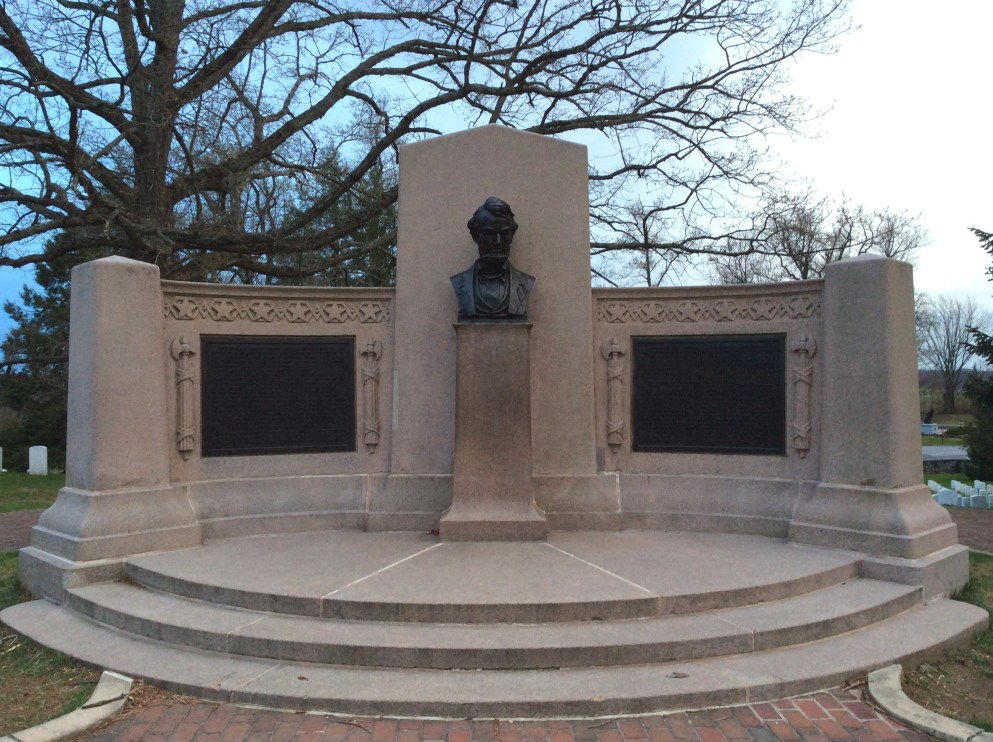
Lincoln's Gettysburg Address Memorial at Soldier's National Cemetery

Lincoln’s Gettysburg Address Memorial at Soldier’s National Cemetery, photo 2016 by Amy Cools

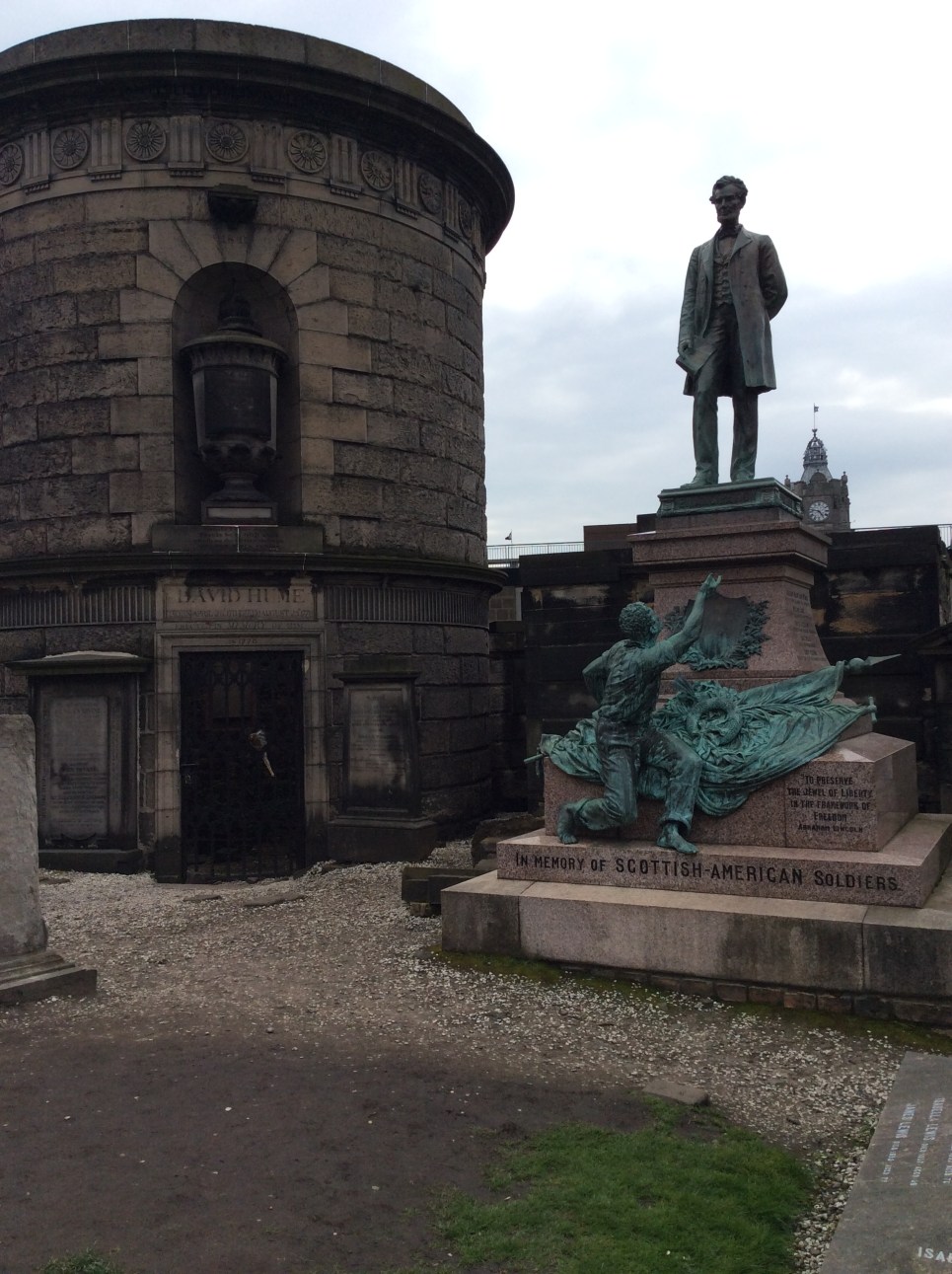
Hume's and Abraham Lincoln Scottish soldier monuments,

Hume’s grave and Abraham Lincoln sculpture on a monument to Scottish American soldiers, Calton Hill Cemetery, Edinburgh, Scotland, photo 2014 by Amy Cools

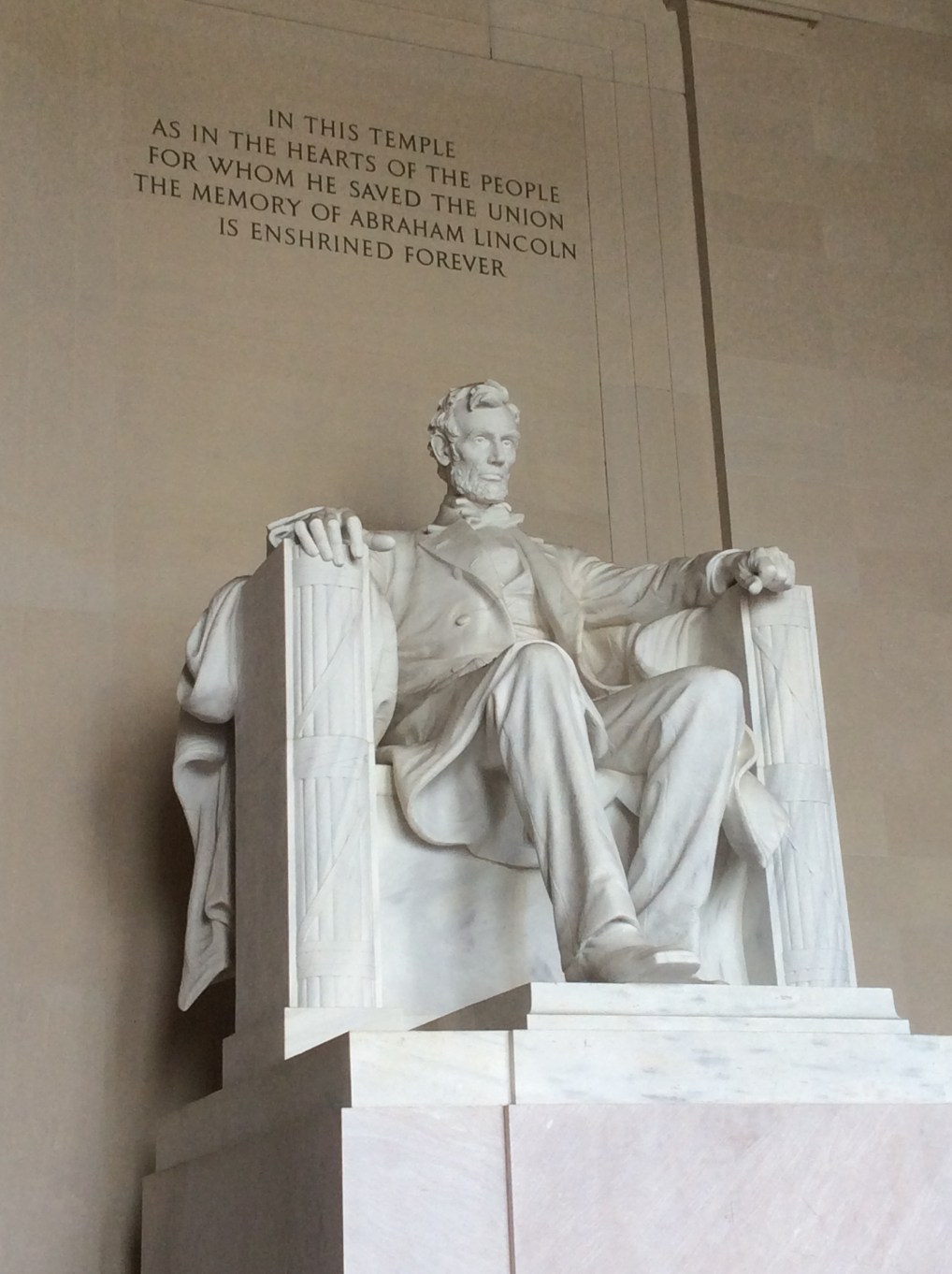
Sculpture of Abraham Lincoln in the Lincoln Memorial, Washington DC, photo 2015 by Amy Cools

Sculpture of Abraham Lincoln in the Lincoln Memorial, Washington DC, photo 2015 by Amy Cools

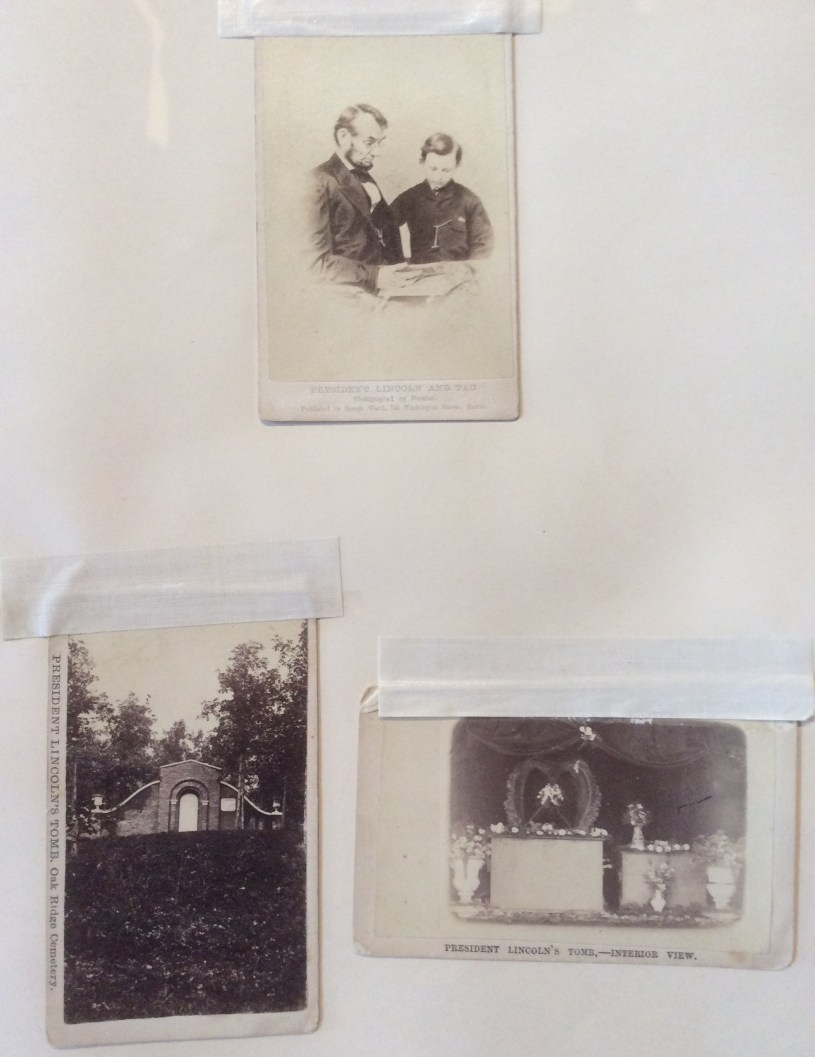
Abraham Lincoln with his son and 2 views of his tomb, from Hutchinson scrapbook at Lynn Museum

Abraham Lincoln with his son and two views of his tomb, from the Hutchinson scrapbook at Lynn Museum, photo 2016 by Amy Cools

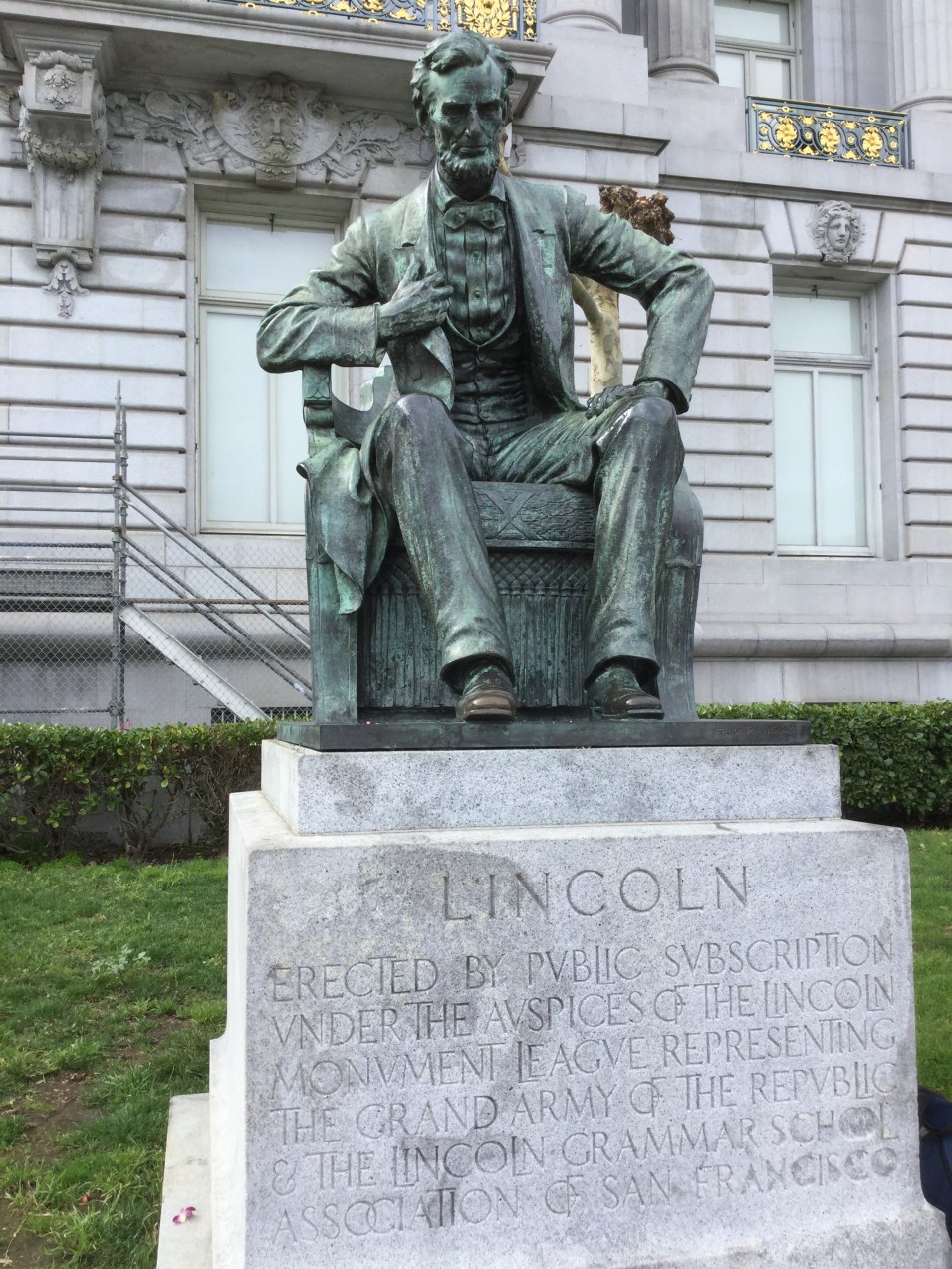
Statue of Abraham Lincoln outside of San Francisco's City Hall, photo 2017 by Amy Cools

Statue of Abraham Lincoln outside of San Francisco’s City Hall, photo 2017 by Amy Cools

Ordinary Philosophy and its Traveling Philosophy / History of Ideas series is a labor of love and ad-free, supported by patrons and readers like you. Please offer your support today!

History As A Communal Act: The History of Black History Month, by Stephen G. Hall

Frederick Douglass as US Recorder of Deeds, Library of Congress image, sign at D.C. Court of Appeals
Frederick Douglass as US Recorder of Deeds, Library of Congress image, sign at D.C. Court of Appeals
African Americans have always imagined and constructed history as a communal act. At the inception of the African American historical enterprise in the early 19th century, Jacob Oson’s Search for Truth (1817), one of the first examples of a textual African American historical production, offers insights into these communal sensibilities. Oson delivered the address in New Haven and New York, the locations of two dynamic free black communities, addressing communal concerns such as the African past, contemporary treatment, and identity. He also received help in publishing the address from Christopher Rush, Bishop in the African Methodist Episcopal Zion Church, one of the largest black church organizations in the country. From inception to publication, history existed not as the purview of the few, but as a communal product.

Oson’s work was no mere isolated incident. Writers were largely community advocates: ministers, abolitionists, autodidacts, and bibliophiles. James W.C. Pennington’s A Textbook of the Origin and History of the Colored People (1841)  offered important insights into African American history. Maria Stewart’s speeches blended piety with calls for communal action and awareness of racial injustice. Robert Benjamin Lewis’s interracial heritage (Native American and African) served as a springboard for his humanistic and universal history of African-descended people titled Light and Truth (1844). Black writers also envisioned their community as transnational. They engaged the African past as well as the complexities of the African Diaspora. They ruminated on the history of Haiti and Latin America. For these writers, African Americans were more than mere products of North American slavery. Their history was intertwined with the social, political, and cultural fabric of Africa and the Diaspora. In short, African American intellectuals understood their unique role as African-descended people whose history shaped the global experience.

Communal engagement proved central in dramatizing and reflecting the sentiments of historical periods. As African Americans laid the groundwork in the nation’s transition from slavery to freedom, Black history heralded these changes. William Wells Brown’s The Black Man (1863) and The Negro in the American Rebellion (1867) provided the first blueprints for the future. William Still’s The Underground Railroad (1871) reconstructed black heroism in the fight to end slavery. Black remembrance of the past focused less on individual achievements and more on the community’s collective ability to overcome obstacles to achieve clear goals. Freedom’s advent emanated from and served communal purposes.

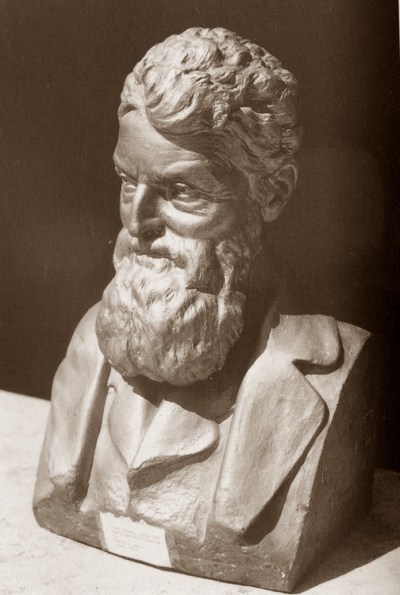
Sculpture of John Brown by Edmonia Lewis

Sculpture of John Brown by Edmonia Lewis

Black history’s communal manifestations were not merely textual. West Indian Independence Day and Juneteenth and Emancipation Day Celebrations, to name a few, permeated the communal landscape throughout the 19th and into the 20th centuries. Artistic representations, especially the work of Edmonia Lewis and Meta Vaux Warrick Fuller, were very important. Both of these women used sculpture to powerfully reconstruct the black past. Lewis’s John Brown (1864–65) and Robert Gould Shaw (1867–68, marble) depict historical figures subsequently revered in black communities. Her communal representation, Forever Free (1867, marble), celebrated the ratification of the 13th Amendment. The original title of the piece was “Morning of Liberty.” Fuller’s Ethiopia Awakening (1914), Mary Turner (Silent Protest Against Mob Violence) (1919) and Ethiopia Awakening (1930) highlight themes of racial pride, cultural awareness, and awakening and resilience in the face of adversity.

The outgrowth of these communal sensibilities naturally impacted the growth of the professionalized African American history project. Carter G. Woodson’s establishment of the Association of the Study of Negro Life and History (ASNLH) in 1915, the Journal of Negro History (1916), and the Associated Publishers in 1916 built on preexisting traditions of communal engagement and representation. These traditions were already extant in the African American historical enterprise for at least a century prior to their professionalization. Woodson used the “Documents” and “Notes” sections of the JNH to present communal offerings, the living and breathing history found in the attics and basements of African Americans around the country. Due to the small number of professionally trained historians, Woodson understood that the African American historical project must embrace the larger community as well as the professional and lay classes. Woodson utilized the broadest cross-section of the black community, drawing on everyone from K-12 educators and administrators to physicians, politicians, and pastors and ordinary people who displayed an interest in the historical past.Black literary and historical societies, bibliophiles, and collectors were also prominent in this regard. Groups such as the American Negro Academy, the Negro Society for Historical Research, and the Mu-So Lit Club played a prominent role in promoting the study of history. Their efforts were complimented by bibliophiles such as Arthur Schomburg and Jesse Moorland. Schomburg, a Puerto-Rican immigrant, collected books about the global black experience in his Harlem apartment. His extensive collection was purchased by the New York Public Library in 1925. Today it comprises the nucleus of the Schomburg Collection in Harlem, New York. Jesse Moorland, an avid bibliophile, YMCA activist, and close friend of Carter G. Woodson, donated his sizable collections to the institution, which today are housed at Howard University’s Moorland-Springarn Room.

Abraham Lincoln's walking stick, Mary Todd Lincoln's gift to Frederick Douglass

Abraham Lincoln’s walking stick, Mary Todd Lincoln’s gift to Frederick Douglass

Given more than a century of deep engagement with history in black communities in textual, commemorative, artistic, organizational (literary and historical societies and libraries and repositories), and professional projects, it is not surprising that Negro History Week (1926) and later Black History Month (1980) emerged. Instituted as a communal celebration of black possibility and reality, Negro History Week continued earlier themes of accentuating black communal achievements, charting communal possibility and using institutional spaces to shape historical understanding within black communities and more important, in the national and global spheres. Its celebration in February acknowledges its communal roots. February is the birth month of two revered figures in African American life and history in the 19th and early 20th centuries: Frederick Douglass and Abraham Lincoln. Douglass and Lincoln loomed large in the black imagination because of their associations, tangible and symbolic, with Emancipation. The commemorative celebrations of the Emancipation Proclamation and the 13th Amendment, as well as the long communal struggle to eradicate slavery from the order of things, resonated in the chords of memory in African-descended populations well into the 20th century.

In 1926, the Annual Meeting of the ASNLH was held at Morgan State College (now university) in Baltimore. A “Negro History Week Roundtable” featured educators primarily from the State of Maryland and the District of Columbia. Given the prominence and activism of the black communities in these two locales, they serve as a representative sample for how “the movement,” as it was commonly labeled, impacted black communities. The comments of the educators, one of whom was Dr. Otelia Cromwell, Head of the Department of History and English in the public schools in the District of Columbia, emphasized the importance of the work. They also highlighted the impact of the celebration on young people in urban and rural communities. According to Cromwell, the observance of Negro History Week not only proved of great interest to students, faculty, and staff in the District of Columbia, but it also “had the effect of improving the tone and atmosphere of the school room.” The summation of Cromwell’s remarks unquestionably demonstrates the immeasurable nature of history’s communal reach. The report read: “These results which cannot be easily set forth in words or mathematically measured she believed to be the most important of all.” Cromwell knew that history’s import and meaning transcended the solidarity of a single moment in time. It permeated the classroom and seeped into the collective strivings of untold generations. It informed one hundred years of historical engagement and interrogation. It gave rise to textual writing, commemorative celebrations, artistic representations, literary and historical societies, black bibliophiles and collectors, and finally the professionalization of African American history in the first half of the twentieth century.

These same communal sensibilities informed the rise of the African American museum movement in the 1960s: The DuSable Museum of African American History (1961), the International Afro-American Museum in Detroit (1965), the Anacostia Community Museum in Washington (1967), and the African American Museum of Philadelphia (1976). Other community-inspired projects include The Blacks in Wax Museum in Baltimore (1983) and the National Afro American Museum and Cultural Center in Wilberforce, Ohio (1987). All of these museums used history and historical artifacts to dramatize the black past and present it to the community. These efforts culminated in the creation of the National African American Museum on the National Mall in 2016.

Our contemporary moment has witnessed the continuation of these communal projects. It has spawned the use of digital spaces (Internet and social media such as Twitter, Facebook, Tumblr, Pinterest, Snapchat, Instagram) to present African American history and historical ideas in new and dynamic ways. The construction of syllabi to educate diverse publics about contemporary events is a direct outgrowth of this communal focus. These efforts are too numerous to name them all, but a few examples will suffice: Dr. Marcia Chatelain’s #Ferguson Syllabus and the work of Drs. Chad Williams, Kidada Williams, and Keisha Blain with the #CharlestonSyllabus, The D.A.TT Freedom Summer 2015 Syllabus, the #BlackPantherSyllabus, the #The Baltimore Syllabus, the BlackLivesMatter Syllabus, the Welfare Reform Syllabus, the Trump Syllabus 2.0, and the Trump Syllabus 2.0: Supplementary List.

Black History Month, then, is more than a month-long celebration or an obligatory relic of an outmoded past. Rather it is and continues to serve as the catalyst for the transmission of a dynamic historical memory embedded in the collective striving of a global people to celebrate their historical past, affirm their humanity, and share the richness and vibrancy of their history as a communal act.

This piece was originally published at The African American Intellectual History Society (AAIHS) blog

Stephen G. Hall is the Program Coordinator of History at Alcorn State University. He is the author of A Faithful Account of the Race: African American Historical Writing in Nineteenth-Century America (UNC Press, 2009).  He is currently completing an edited book entitled History as A Communal Act: African American Historians and Historical Writing Past and Present (Routledge Press, forthcoming). His second book project is entitled Global Visions: African American Historians Engage the World, 1885–1960. (Bio credit: AAIHS)

Ordinary Philosophy and its Traveling Philosophy / History of Ideas series is a labor of love and ad-free, supported by patrons and readers like you. Please offer your support today!

Frederick Douglass Washington DC Sites, Last Day

Portrait of Frederick Douglass by unknown artist, 1844, National Portrait Gallery in WashingtonD.C.,

Portrait of Frederick Douglass by unknown artist, 1844, National Portrait Gallery in Washington, D.C.. The NPG placard describes it as a ‘powerful portrait’ but I’m not particularly impressed, especially since I don’t think it looks like Douglass at all.

Fourteenth Day, Saturday, April 2nd

After a morning glancing at the light rainfall through the coffee shop window as I write up some notes and look up some things in preparation for the day, I begin my day’s explorations with a visit to the National Portrait Gallery. It’s at 8th and F Streets NW, its official address: unusually, it lacks a street number.

While I’m here primarily to see all the Douglass portraits I can find and have little time to spare since it’s my last day in D.C., I’ve wanted to visit the Portrait Gallery for a long time, and allow myself an extra hour to explore.

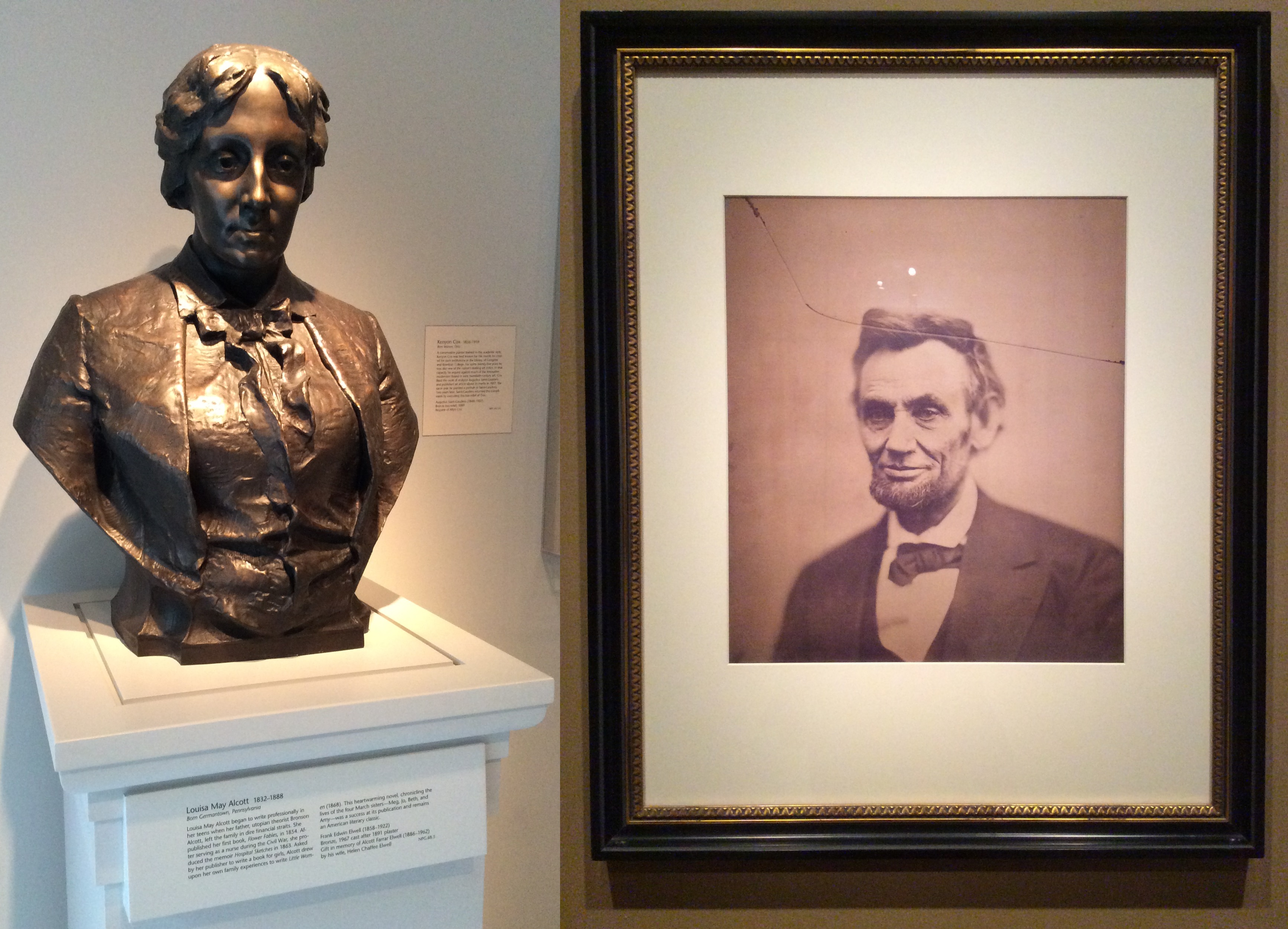
After I’ve made my inquiries at the information desk, one of the first portraits that grab my attention as I head towards my first destination is a bust of Louisa May Alcott. As you may remember from my Boston account, she was the only one willing to sit next to Douglass and his second wife Helen Pitts Douglass at Wendell Phillips’ funeral in 1884, just about a month after their marriage. You see, Helen was white, and even for that gathering of committed abolitionists, this interracial marriage was going more than a bit farther than their still rudimentary sense of human equality would allow.

The bust is an excellent likeness of Alcott, unlike the portrait of Douglass I’m seeking. It was painted in 1844 by an unknown artist. When I find it, unfortunately, I’m not impressed: it’s a nice enough painting if it portrayed just any man, but the figure I see here looks nothing like Douglass. Douglass was the son of a black mother and a white father, and his features reflected his mixed ancestry. But African ancestry is not nearly as discernible in the face in this portrait as it was in Douglass’: it just looks a little more tan, and with curlier hair, than the average white guy. Perhaps the portrait painter was not very used to, or comfortable with, portraying people other than those of European descent. Or, perhaps he wanted to emphasize Douglass’ European ancestry for other reasons. I’m very glad Douglass was an ardent fan of photography and commissioned so many portraits of himself in that medium. The camera presents an unbiased view so long as the light is good.

Left, bust of Louisa May Alcott. RAbraham Lincoln a month before his second inauguration, portrait by Alexander Gardner, February 5, 1865. National Portrait Gallery, Washington D.C.

Left, bust of Louisa May Alcott, sculpted by Frank Edwin Elwell, 1891. Right, Abraham Lincoln a month before his second inauguration, portrait by Alexander Gardner, February 5, 1865. National Portrait Gallery, Washington D.C.

Frederick Douglass photograph, National Portrait Gallery, Washington DC, 2016 by Amy CoolsI find a couple more portraits of Douglass, one an original photograph from 1876, and the other an 1845 lithograph of the sheet music cover reproduced in the Lynn Historical Society and Museum, which I featured at the beginning of my Lynn account. I go on to see many more portraits I’m excited about, but I won’t include them here for time’s sake since they’re not really relevant to Douglass’ story, except for the photographic portrait of Abraham Lincoln I find in the presidential portrait gallery. It was taken just a little more than two months before he was assassinated. Though photos of Douglass’ sometimes friend Lincoln often show him looking careworn and even rather disheveled during the course of the war, here, his hair is in place even if characteristically casually swept back and to the side, and his half-smile in the softly glowing light makes him look relaxed, even a bit day-dreamy.

Then I head to the Jefferson Building of the Library of Congress, just across First Street from the Capitol Building. For one thing, it’s my favorite place to be inside in Washington D.C., so even if I didn’t have some last-minute Douglass research to do, I would still swing by. As it turns out, however, it has an indirect yet significant relation to Douglass’ life. More specifically, to the last day of his life. As I mention in yesterday’s account, Douglass and his wife Helen were driven to the Congressional Library (better known today as the Library of Congress), where he was dropped off prior to attending the National Council of Women’s meeting, which started at ten a.m. and went until the afternoon. But the Library of Congress was not yet located in the grand Jefferson Building which was still under construction just across the street from the Capitol. It wouldn’t move in for two more years, in 1897. But Douglass would have seen the new Library it when it was well on its way to completion, and he would surely have appreciated its already obvious splendor.

Reading Room in the Jefferson Building of the Library of Congress
The main reading room in the Jefferson Building of the Library of Congress. How I love to read in this beautiful place!

I do some research here in the beautiful main Reading Room for a couple of hours, especially in John Muller’s excellent book Frederick Douglass in Washington, D.C.: The Lion of Anacostia. I make some great last-minute discoveries, including a site I thought was at a different location. I look at the clock and realize that I’ll have to hustle for the rest of the day to get everywhere I plan to go before meeting my kind hosts back in Baltimore for dinner.

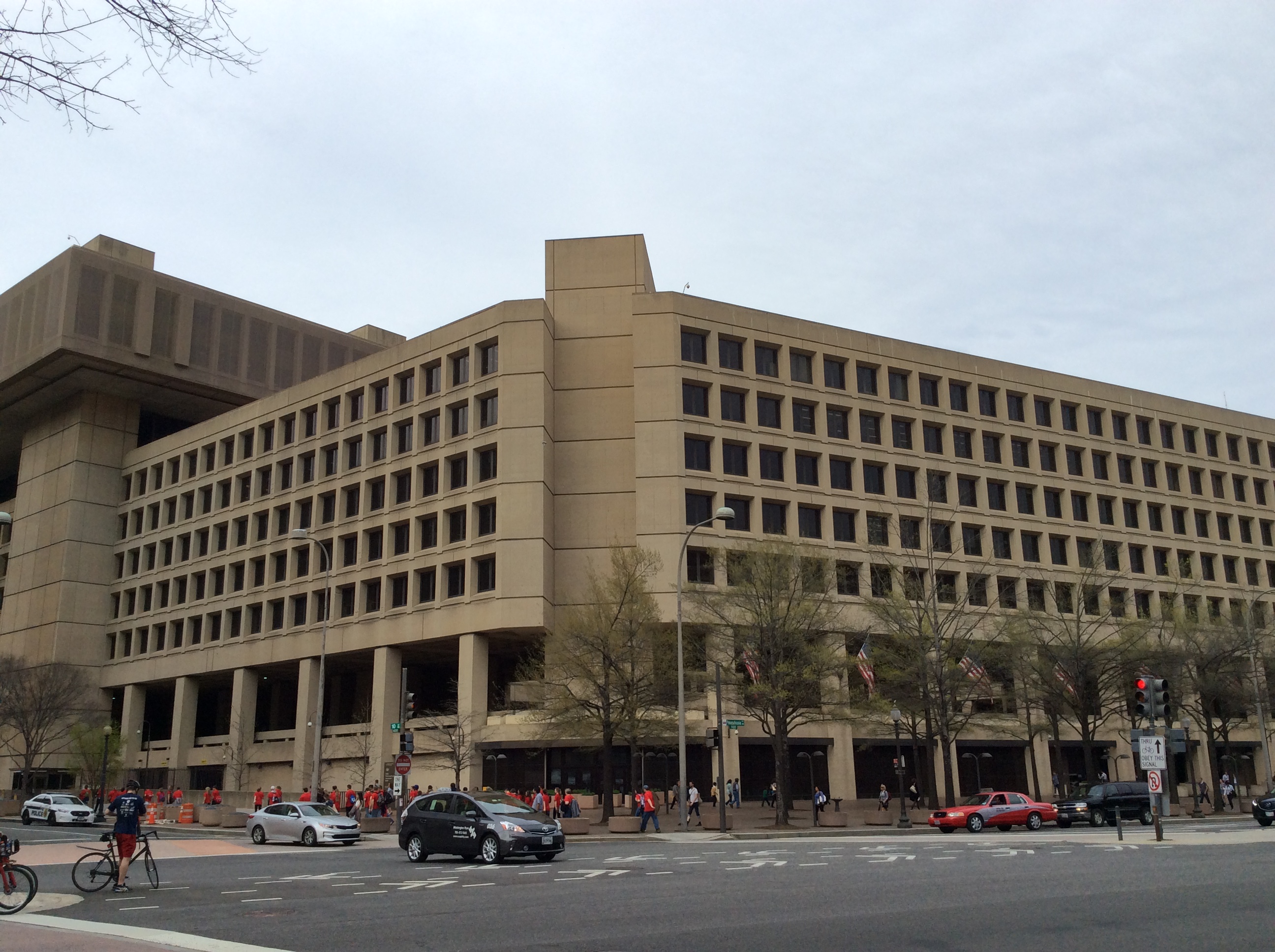
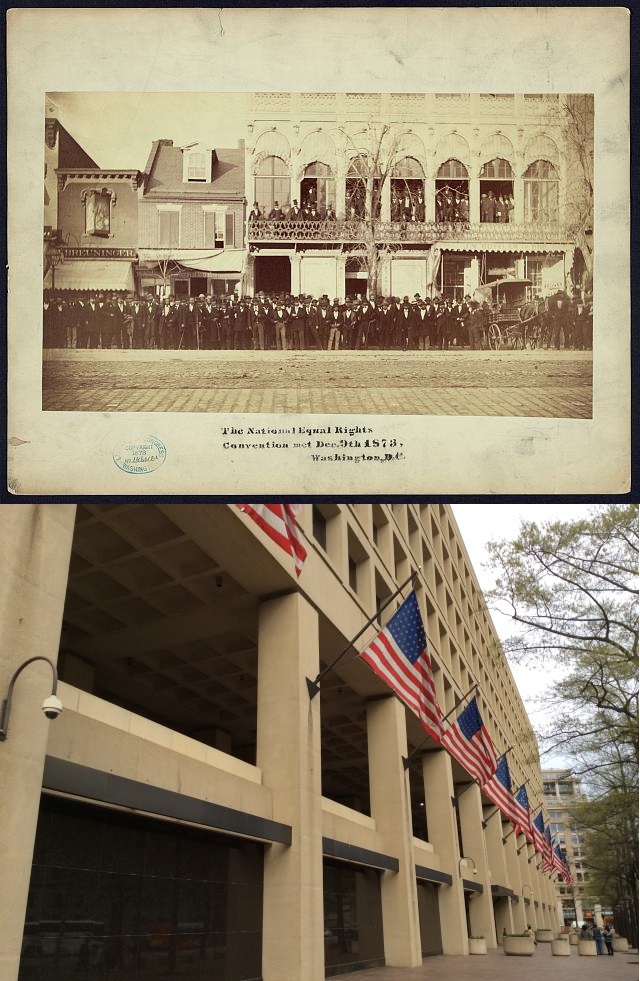
In heading to my nest destination, I pass the Capitol Building again. The Women’s Council meeting that Douglass headed to from the Congressional Library in the Capitol Building was at Menzarott Hall, just a fifteen or twenty minute’s walk away; I discussed that site and that meeting in yesterday’s account. And as discussed in my story of visiting Cedar Hill, Douglass was quite the walker (as I am), and he regularly walked to and from his hilltop home in Anacostia and his D.C. office for work, ten miles round trip. When I walked from the National Portrait Gallery to the Jefferson Building earlier today, and again as I head now to my next destination, I retrace some of yesterday’s route from the Freedman’s Bank Building to the Menzarott Hall site (now covered by the J. Edgar Hoover building) to the Capitol Building. In doing so, I also trace routes Douglass would have walked, including that of the day of his death.

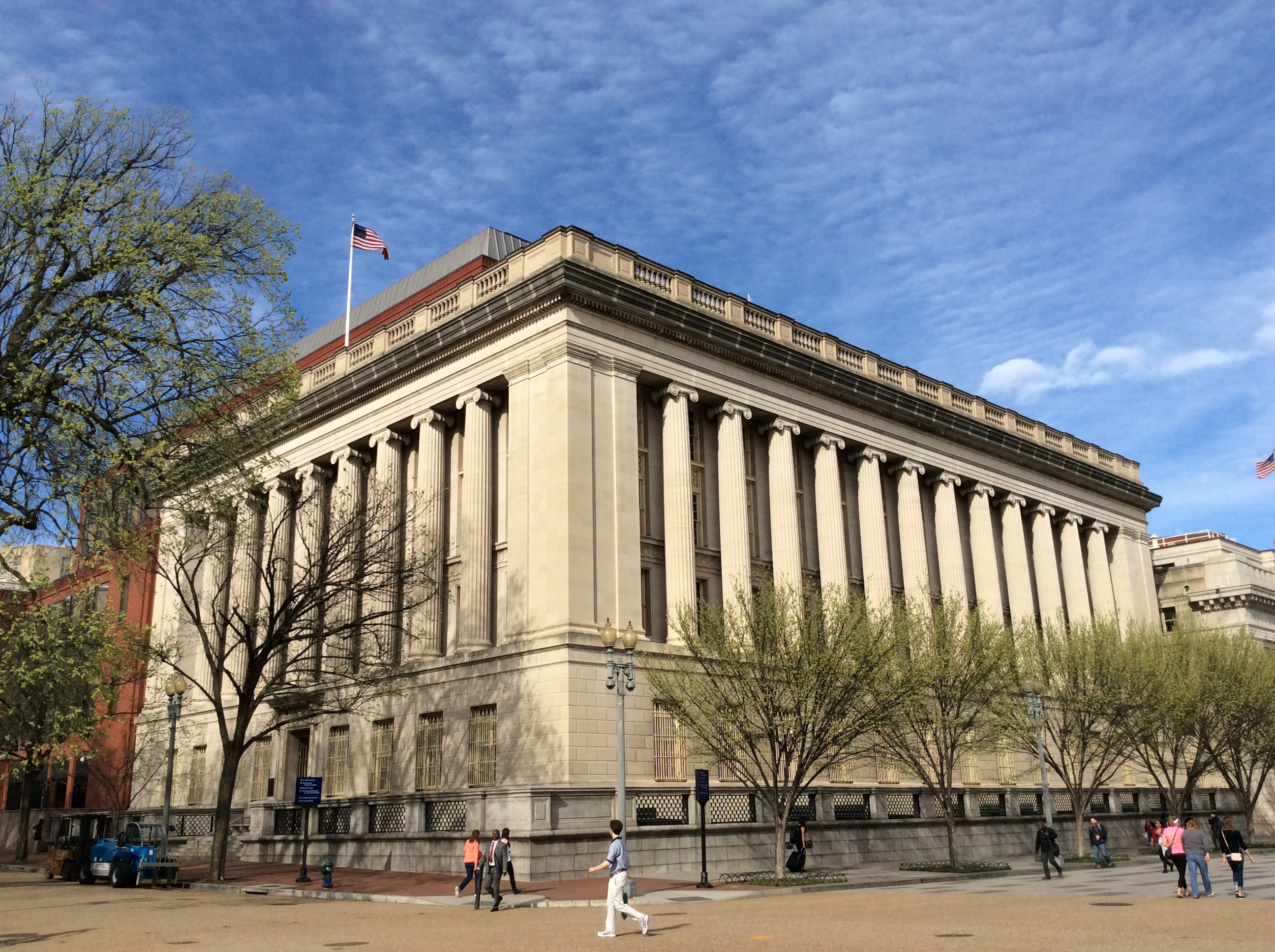
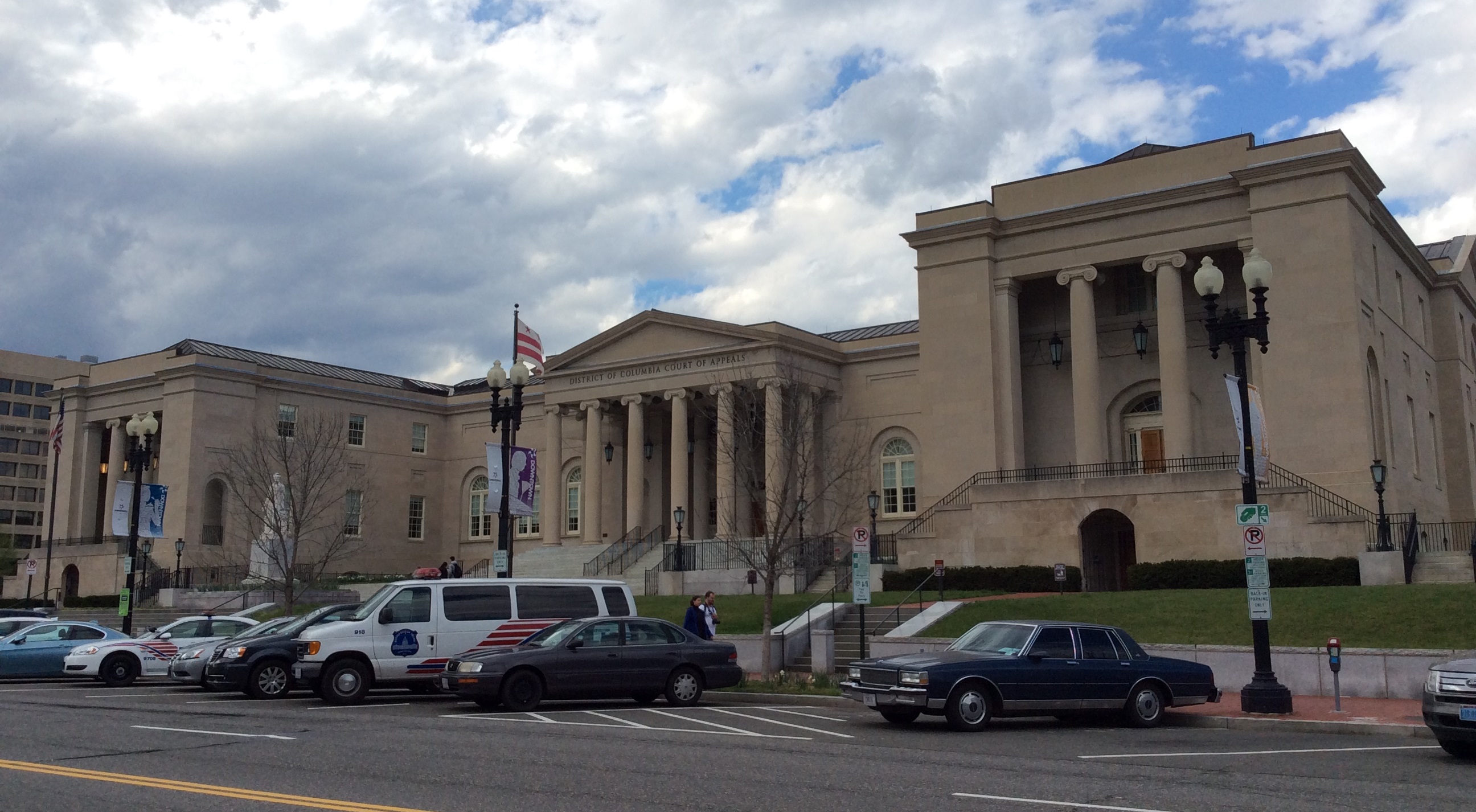
D.C. Court of Appeals, formerly City Hall, Washington, D.C.

D.C. Court of Appeals, formerly City Hall, Washington, D.C.

Lincoln's statue at DC Court of Appeals, formerly City Hall

Lincoln’s statue in front of D.C’s Court of Appeals, formerly City Hall

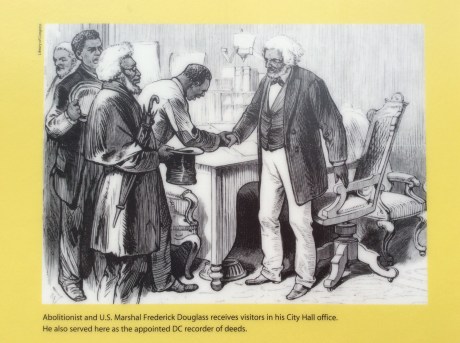
The grand edifice I find at 451 Indiana Avenue NW was once Old City Hall, where Douglass’ office used to be. It looks very much the same now as it did in Douglass’ time except now the grounds are landscaped and the street in front is paved. In 1877, Douglass was appointed U.S. Marshal of Washington, D.C. by President Rutherford B. Hayes, and he remained in that position until he resigned at the express wish of the newly elected President James Garfield in 1881. Garfield wanted to place a personal friend in that post, and as a sort of consolation prize, he arranged that Douglass be appointed Recorder of Deeds for Washington, D.C. in 1881. It seemed rather a poor prize since it was a much less prestigious post, but Douglass described the job itself as ‘more congenial to [his] feelings’ (Autobiographies 944) than the job as Marshal, where he had to deal with criminals and the courts. Douglass’ government appointments freed him from the necessity of going out on the lecture circuit for a living, and he used them to improve the lives of his fellow black citizens in other ways, such as helping them to obtain government jobs. Best of all, he was again free to speak and write as he wished, without the constraints placed on a federal officeholder, and he held this post for almost five years.

Frederick Douglass as US Recorder of Deeds, Library of Congress image, sign at D.C. Court of Appeals

Frederick Douglass as U.S. Recorder of Deeds, Library of Congress image on a sign across from the D.C. Court of Appeals building where City Hall and Douglass’ offices used to be

When Douglass was a young man, he used to say he wanted to become a senator, but over time, as he spent more time in Washington observing the grind of campaigning and favor-seeking required for running for political office, and the rampant backbiting and smear campaigns, he found he had no desire to go through all that. He himself was the victim of political backbiting, including rumors that he had grown enormously rich at public expense. (Which, by the way, was false.) Yet he always remained keenly interested in politics and called on his fellow black Americans to join him in involving themselves as deeply in the political process as they could. He stumped for many political candidates over his long career, from radical abolitionist Gerrit Smith to centrist Abraham Lincoln.

400 block of 11th St, former site of New National Era offices, Washington DC, 2016 Amy Cools

400 block of 11th St just north of Philadelphia Ave, the former site of the New National Era offices in Washington, D.C.

I’m finding that the time is simply flying by and I start to fear I’ll run out of it. So from now on, I’ll have to drive everywhere instead of walk, since what I have left to see is spread out and I have to travel a large area very quickly. I hate exploring a city by car: you have to pass by things too fast, you can’t stop, approach, and see details at will, and worst of all, you remove yourself from the crowd. I love people watching, catching bits of conversation, observing the ways they ornament and carry themselves, and stopping for a chat whenever the occasions arise.

Anyway, I head east to 11th St NW a little north of Pennsylvania Ave, the former site of The New National Era newspaper offices. They were then on the 400 block of 11th street on ‘Newspaper Row’, and the original address was 418 11th St, in the Star Annex building. Douglass was a corresponding editor when he helped launch The New Era in January of 1870, while his home was still in Rochester. The office used to be about where the sandy-gray building with the arched windows now stands (see the photograph above), or perhaps as far over as the 11th St. entrance to the 1111 Pennsylvania Ave parking garage, which is the large gated driveway with the large gray beam over its windows.

New National Era, Sept 8 1870, with Frederick Douglass as new main editor, image Library of Congress
New National Era, Sept 8 1870, the first edition after Douglass took over as chief editor

The venerable black abolitionist paper The New Era was only about a year old when it suffered an arson attack in 1848, and though the fire nearly destroyed the offices, the paper continued until 1860. The first edition of The New Era which Douglass helped found was published on January 13th, 1870, carrying on the mission of its predecessor: social justice journalism. It was spearheaded at the beginning by editor J. Sella Martin, a fellow escaped slave and abolitionist minister. Douglass’ enthusiasm as he helped launch the project was accompanied by as much trepidation; as he wrote in his Life and Times ‘…Sixteen years’ experience as editor and publisher of my own paper, and the knowledge of the toil and anxiety… caused me much reluctance and hesitation…’ (Autobiographies 836). Just a few months later, there was (likely) an arson attempt on their offices too. Douglass must have been sickened at how often he encountered arson as a tool for the oppression of himself and his people. But the offices remained intact and The New Era continued. When Douglass took over as primary editor in September of that first year, he renamed it The New National Era. He also put a lot of his own money into the venture, losing about nine to ten thousand dollars all told. His two sons Lewis and Charles worked on the paper and eventually took over its operation; they had begun their training in the newspaper trade as young boys working with their father at The North Star‘s press in Rochester. The New National Era continued until early 1974 when Douglass’ sons were forced to shut it down due to its continued financial woes.

Frederick Douglass Hall at Howard U., gated entrance facing 6th St NW, Washington, DC

Frederick Douglass Memorial Hall at Howard University, gated entrance facing onto 6th St NW, Washington, D.C.

Next, I zigzag my way north about 2 1/2 miles to Howard University, at 2400 Sixth St NW. My destination is Douglass Hall, which faces onto Sixth St. It’s between Childers Hall (which adjoins the south end of Cramton Auditorium) and the Carnegie Building, between Howard Lane and Fairmont on the east side of the street. I find out before too long that, as a non-student there, I’m actually not supposed to be on the grounds without having received permission beforehand from the university. When I explain my project to the the security guard, he seems more assured that I’m not just wandering around nosily with no good purpose, but it’s still clear it’s time for me to go. Fortunately, I’ve already found the hall and taken my photos, and he gives no indication that I’m not allowed to take any or to share them. So if you’d like to visit, just remember to call up the university first, regardless of the fact that the D.C. travel guides I’ve seen don’t tell you this.

At its founding in 1867, the historically black university was off to a financially healthy start, with generous funding from the Freedman’s Bureau to augment other government funding, private donations, and tuition. Despite some rocky times here and there over the years, Howard remains an extremely successful endeavor. It’s now, as it’s always been, open to the admission of people of all races, but it still, just as in Douglass’ time, functions as a primarily black institution. Its founder, trustee, and President General Oliver Otis Howard was also the Commissioner of the Freedman’s Bureau. Howard was a Civil War hero, having lost an arm in the war, who believed strongly in civil rights for black people and was an ardent Christian. He and some other like-minded social reformers initially founded it as a school to train black ministers, but while it still offers degrees in divinity and religious studies, it very quickly and broadly expanded its educational mission. It now includes medicine, philosophy, biochemistry and genetics, fine arts, physics and astronomy, and social work among its diverse fields of study, and is a thriving research center as well. In sum, it’s an institution that Douglass must have heartily approved of.

Frederick Douglass Memorial Hall, view facing onto square of Howard University, Washington D.C.

Frederick Douglass Memorial Hall’s east facade facing the Upper Quadrangle in the soft light of early evening

Yet…. Though Douglass was elected to the board of trustee on July 13th, 1871 and remained a member until his death, he didn’t mention his association with this important institution, so near his final home, in his last autobiography Life and Times. This seems somewhat strange. He was very active in the University’s affairs throughout his years as a member, from fundraising to personally donating to voting at board meetings to chairing commissions to writing about it in the newspaper and more, Douglass was so actively involved and admired by the university that he was granted an honorary doctorate. Why he chose not to mention Howard University in his Life and Times remains, it seems, rather inexplicable.

Charlotte Grimke House sandwiched between two apartment buildings, Washington DC

Charlotte Grimké House sandwiched between two apartment buildings, Washington DC

I head south on Georgia Ave then turn right (west) on R St, and arrive at my next destination just past 16th. 1608 R St NW was the home of Charlotte and Francis Grimké. Douglass and his second wife Helen Pitts were married here in the parlor on Jan. 24, 1884. A few days before the wedding, the Reverend Francis Grimké had stopped by Douglass’ office at City Hall because he happened to be passing by. Like Douglass, he and his wife Charlotte were of mixed African and European ancestry and were devoted, very active abolitionists. And Grimké, like Douglass, was an ordained minister, though Douglass had long since given up his role as a man of the cloth. Grimké was pastor of the large congregation of the Fifteenth Street Presbyterian Church. Yesterday, on my way from the Metropolitan A.M.E. Church to the Freedman’s Bank Building, I passed by the place it used to stand, on the east side of 15th off McPherson Square, between I and K Streets. As Grimké tells it, Douglass was especially glad to see him because he had made up his mind visit Grimké soon. Since he had decided to go ahead and marry the white woman he had fallen in love with, Douglass thought the progressive, mixed-race, widely respected Grimké would be the perfect officiant. Grimké would also prove up to the challenge of handling the inevitable public controversy to follow with equanimity.

Charlotte Grimke House

Charlotte Grimké House

While Grimké learned of Douglass’ plans sort of at the last minute, his own family was not so lucky. Douglass, for reasons still poorly understood, never told his children of his plans to remarry, let alone to a white woman. In fact, they only found out when a reporter stopped by Douglass’ Recorder of Deeds office at City Hall to follow up on his discovery of Douglass’ purchase of a marriage license that morning. His daughter Rosetta, who also worked at the office, was surprised and upset, and the rest of the family no less so when she returned home to Cedar Hill and shared the news. So when Douglass left home again that evening at six to go and wed Helen, none of them accompanied him. The newlyweds returned home again that evening for a wedding supper, and I can only imagine the very awkward tension of that meal.

Douglass’ children never really accepted the marriage, thinking it a betrayal of their mother and her race. Rosetta, evidently, felt this especially. And though Douglass and Helen were very happy in their marriage, the dynamics of family life at Cedar Hill were not always harmonious. The children’s disapproval of Helen’s perceived ‘replacement’ of Anna only added to the troubles of the household. For example, Rosetta was married to a man of dubious integrity who had trouble keeping a job and didn’t always operate within the law. Her husband Nathan Sprague even tried to extort a large sum of money from Douglass because, he claimed, his sister Helen Louisa had supposedly worked for him as a servant. In reality, Douglass had supported his sister as well as Rosetta and their children when Sprague was in jail and otherwise unemployed. Douglass’ children were accomplished in their own right and had many fine qualities, but they also, from time to time, leaned on him for financial support and relied on him to help care for their families. Some of Douglass’ friends thought that they relied on him perhaps a bit too much, and often tried to convince him to require his adult offspring to be more self-reliant, but this father hen found himself unable to hold back when his children asked him for help. Speaking for myself, given the degree to which he took such great pains to secure their happiness, I wish that his children found it in themselves to support this last great romance of his life just a little more.

Frederick and Helen Pitts Douglass at Niagara Falls, image public domain via NPS

Frederick and Helen Pitts Douglass at Niagara Falls, image public domain via NPS

While Douglass’ children joined the wider world and much of Helen’s family in their disapproval of the marriage, his wife’s mother came to accept it, joined the Cedar Hill household in her later years, and spoke fondly of her son-in-law. His protégée and friend Ida Wells often came to visit them and was outspoken in her support; same goes for the Grimkés. While many abolitionists, black and white, characterized Douglass’ choice of a white wife as Rosetta did, as a replacement or rejection of his first wife’s blackness and lack of formal education, for Douglass it was no such thing. Though he and Anna found themselves at a distance at times because she could not share in so many of his intellectual interests, they were deeply connected in other ways: their shared past as black people struggling to survive in a slave state, her instrumental role in helping him attain his freedom, their struggles together as a young black family on the run from his master while trying to make a living in a racist society, and of course, raising their many children together. With Helen, Douglass was able to share those parts of his intellectual side that he hadn’t been able to share with Anna in the context of a romantic partnership, and Helen was willing and able to travel the world with him as well. His relationship with Helen was a rounding-out of his romantic life, not a replacement of his earlier one, in my view.

Frederick Douglass' row houses at 2000–2008 17th Street, Washington

Frederick Douglass’ row houses at 2000–2004 17th Street, Washington, D.C.. He built the three to the left, from the blue one at the end to the left, now Hana Japanese Market, to the green one in the middle.

Sergeant Major Lewis Douglass, public domain courtesy of the National Gallery of Art website

Sergeant Major Lewis Douglass, public domain courtesy of the National Gallery of Art website

From here, I hurry to the last Douglass site of the trip, just a few blocks north of the Grimké house, on my way back to Baltimore. In 1875-1876, Douglass built three row houses at 2000–2004 17th Street NW, just north of U St. They’re the three southernmost houses in a five-house row. I don’t find any evidence that Douglass himself ever lived here since he and his family were living in the A Street house at that time. He did like to invest in real estate and his children would often live at the investment properties; these row houses present an example of this. Hana Japanese Market now occupies that was then number 2000 17th St; it’s now numbered 2004. His son Lewis lived in the one next to it, the yellow one, starting in 1877. This neighborhood was called Strivers’ Section for the successful African Americans who made their homes here. After all, for a black person to do well in D.C. and really anywhere in America, it took one hell of a lot of striving.

As you may remember from my earlier accounts, Lewis was a Civil War hero whose 54th regiment attacked Fort Wagner, the father of Joseph Douglass the great violinist, and direct ancestor of my honored podcast guest Ken Morris. He was an accomplished man in his own right, who had an honorable if short military career abbreviated by injury and ill health. He worked as a teacher and as a newspaperman who fought for black typesetters’ rights, worked closely with his father on The New National Era, and held many government posts. Lewis lived here at (then) 2002 17th St until he died in 1908.

This particular Douglass journey is now complete. But I’ll continue to follow his life and ideas throughout mine, whenever the opportunity presents itself. Douglass’ story is embedded deeply in my mind and heart as I’ve spent so many hours with him, peering through time and space in an effort to better understand and appreciate this fascinating, intelligent, and feeling man, with all his strengths, weaknesses, and quirks. I have lots of drafts and notes for more pieces about Douglass’ ideas on many topics, so I hope you’ll keep on the lookout for more about Douglass here at Ordinary Philosophy.

It seems that I should close the story of my journey following Frederick Douglass with an epic quote from the great man; there’s such a wealth to choose from! But I came across this visual treat that delighted me so much I’ve decided to close this account with it: a photo of Abraham Lincoln fist-bumping Martin Luther King Jr, as Douglass stands by, tall and dignified as ever amidst these shenanigans, next to Harriet Tubman. Well, actors portraying them, anyway. I wonder what the dignified Douglass would think of fist-bumping. Probably not much; it’s a little too casual a greeting for him, I think. But who knows? The fact that it was our first black President who made it a presidentially acceptable thing to do might have changed his mind.

Enjoy!

*Listen to the podcast version here or on Google Play, or subscribe on iTunes

Frederick Douglass and friends portrayed by actors for Emancipation and the Dream of Freedom From Slavery to the White House 2009 by Michael A. Roth, National Park Service

Frederick Douglass Michael Crutcher), Abraham Lincoln (Fritz Klein), Martin Luther King Jr (Jim Lucas), and Harriet Tubman (Kathryn Harris) as portrayed in ‘Emancipation and the Dream of Freedom: From Slavery to the White House’, Lincoln Home bicentennial celebration event, 2009 by Michael A. Roth for the National Park Service. Photo used by permission.

Ordinary Philosophy and its Traveling Philosophy / History of Ideas series is a labor of love and ad-free, supported by patrons and readers like you. Please offer your support today!

~~~~~~~~~~~~~~~~~~~~~~~~~

Sources and Inspiration:

About New National Era. (Washington, D.C.) 1870-1874‘. Library of Congress: Chronicling America

Baist’s Real Estate Atlas of Surveys of Washington, District of Columbia: Volume 2, Plates 31, 14and 22. By Baist, George William, William Edward, and Harry Valentine Baist, 1909. Via Library of Congress website

Charlotte Forten Grimke (1837-1914)‘, from The National Women’s History Museum website

Death Of Fred Douglass: Obituary‘, February 21, 1895, The New York Times from On This Day, nytimes.com

Douglass, Frederick. Autobiographies (includes Narrative…, My Bondage and my Freedom, and Life and Times). With notes by Henry Louis Gates, Jr. Volume compilation by Literary Classics of the United States. New York: Penguin Books, 1994.

Douglass, Frederick. The Life and Times of Frederick Douglass. Re-published 1993, Avenal, New York: Gramercy Books, Library of Freedom series.

Douglass, Frederick. My Bondage and My Freedom: 1855 Edition with a new introduction. Re-published 1969, New York: Dover Publications, Inc.

Douglass, Helen, 1838-1903, ed. In Memoriam: Frederick Douglass. Philadelphia: J.C. Yorston & Co, 1897

Foner, Philip S. The Life and Writings of Frederick Douglass, Vol. 1-4. New York: International Publishers, 1950.

Jefferson’s Legacy: A Brief History of the Library of Congress‘, Library of Congress website http://www.loc.gov

Journey to Greatness: Character Lessons from the Past‘, from Lincoln Home National Historic Site, Illinois website page of the National Park Service.

Logan, Rayford W. Howard University: the First Hundred Years, 1867-1967. New York University Press, 1969

McFeely, William. Frederick Douglass. New York: W.W. Norton & Company, 1991.

Muller, John. ‘Arson attempt on the offices of Frederick Douglass’ The New Era? [Baltimore Sun, May 1871]’ , ‘Francis Grimke tells story of “The Second Marriage of Frederick Douglass” [The Journal of Negro History, 1934]’, ‘Frederick Douglass, editor of The New National Era, explains newspaper’s name change [September 8, 1870]‘, and Howard Univeristy. Views of Fred. Douglass Upon the Proposed Changes in its Management [National Republican., June 24, 1875, p. 4.], In Frederick Douglass in Washington, D.C.: The Lion of Anacostia blog

Muller, John. Frederick Douglass in Washington, D.C.: The Lion of Anacostia. Charleston: The History Press, 2012.

Ott, Chris. ‘Grimké, Francis (1850–1937)‘ From BlackPast.org

Quarles, Benjamin. Frederick Douglass. Washington D.C.: The Associated Publishers, 1948.

Sergeant Major Lewis Douglass‘, National Gallery of Art website.

Strivers’ Section Historic District‘, from National Register of Historic Places hosted by the NPS

Turner, Cory. ‘Martin, John Sella (1832-1876)‘. BlackPast.org

New Podcast Episode: Frederick Douglass Washington DC Sites, Day 1, Part 2

Frederick Douglass standing in front of his home at 320 A Street NE, Washington, DC, in 1876. Public domain via NPS

Frederick Douglass standing in front of his home at 320 A Street NE, Washington, DC, in 1876. Public domain via NPS

Listen to this podcast episode here or on Google Play, or subscribe on iTunes

Thirteenth Day, Friday, April 1st, continued

I leave the approximate site of Helen Pitts-Douglass’ onetime home at 913 E St NE, and head southwest to 316-18 A Street NE.

In 1872, Douglass moved his family here to Washington, DC. Since his beloved farm home on the hill in Rochester had burned to the ground on June 2, 1872, probably by arson, Douglass was bitter and in the mood to shake the dust of that city from his feet. He had already been considering a permanent move to Washington since his work with the New National Era newspaper (more on that to come), his political work, and his efforts to obtain a good government appointment often took him there, sometimes for lengthy stays. In fact, he was in Washington when he received a telegram notifying him of the fire….  Read the full account here

Ordinary Philosophy and its Traveling Philosophy / History of Ideas series is a labor of love and ad-free, entirely supported by patrons and readers like you. Please offer your support today!

Frederick Douglass Washington DC Sites, Day 1, Part 2

Frederick Douglass standing in front of his home at 320 A Street NE, Washington, DC, in 1876. Public domain via NPS

Frederick Douglass standing in front of his home at 320 A Street NE, Washington, DC, in 1876. Public domain via NPS

Thirteenth Day, Friday, April 1st, continued

I leave the approximate site of Helen Pitts-Douglass’ onetime home at 913 E St NE, and head southwest to 316-18 A Street NE.

In 1872, Douglass moved his family here to Washington, DC. Since his beloved farm home on the hill in Rochester had burned to the ground on June 2, 1872, probably by arson, Douglass was bitter and in the mood to shake the dust of that city from his feet. He had already been considering a permanent move to Washington since his work with the New National Era newspaper (more on that to come), his political work, and his efforts to obtain a good government appointment often took him there, sometimes for lengthy stays. In fact, he was in Washington when he received a telegram notifying him of the fire.

Frederick Douglass house at 316-320 A St, Washington DC, photo 2016 by Amy Cools

Frederick Douglass house at 316-318 A St and the museum dedicated to him next door, in Washington, D.C.

So Douglass brought his family here, and after a stay in rented rooms, the Douglass family moved into this pretty Queen Anne brick house, likely in late 1872. I haven’t yet found a more exact timeline for where the Douglasses lived and when during their first months in Washington: sources vary on this. The plaque I find here at the house, placed in 1966, says that Douglass lived here from 1871 to 1877, though many other sources say 1872 and 1878, respectively. Perhaps Douglass had purchased this already as a second or investment home in 1871. In any case, the Douglass family lived here for about six years until they moved across the Anacostia River to Cedar Hill in 1878, though Douglass retained ownership of this house. I find an entry in John Muller’s Lion of Anacostia blog showing that Douglass applied for a permit to build onto this property in 1879, and his son Charles was living here when he died in 1920.

The restored house and the adjacent building at 320 A St now make up The Frederick Douglass Museum and Caring Hall of Fame, which is available for tours by appointment.

AME Methodist Church at 1518 M St NW

The Metropolitan A.M.E. Church at 1518 M St NW, Washington D.C.

Then I head northwest across town, a cross-wise route via Massachusetts Ave to the Metropolitan A.M.E. Church at 1518 M St NW. This historic church has many associations with Douglass, but I’ll focus on three main ones. In 1889, the Bethel Literary Society held a surprise 71st birthday celebration for Douglass here. Actually, the party would have been held at the church hall next door, since that’s where the Society met, where the ugly office building now stands to the right of the church. He was called upon to speak, and speak he did, of course, that was his specialty. The speech was written down by hand then typed; it’s at the Library of Congress today.

Douglass delivered another speech here five years later on January 9th, 1894. It was one of his greatest, called ‘The Lessons of the Hour’. In it, he speaks out against the lynching which had become rampant in the South. As you may remember from my New York account, Douglass was inspired by Ida B. Wells’ investigative journalism into the true nature and extent of lynching in the South, and had joined her in campaigning against it in 1892. Douglass blamed the accusations of rape used to excuse the lynchings as a new method of slandering black people and inciting white people to hate and fear them, since they could no longer use the excuse of a fear of slave uprising or black domination of white people through the vote. If it was true that black men were actually suddenly going around raping white women right and left, which mind you, hadn’t happened much in the South historically, why resort to mob violence instead of proving these cases in court? Because, Douglass charged, the lynchers and their apologists knew these accusations were lies. Metropolitan A.M.E. Church sign, Washington D.C. photo 2016 by Amy Cools

Photo of AME Metropolitan Church by Charles Frederick Douglass, 1900, via NPS website

Photo of AME Metropolitan Church by Charles Frederick Douglass, circa 1900, public domain via the National Park Service website.

One year later, Douglass’ funeral service was held here, on Feb 25th 1895, the first of two; the second was held in Rochester, where he was buried. This funeral was attended by huge numbers of mourners and dignitaries, including Susan B. Anthony and Justice John Marshall Harlan, the great Kentucky-born Supreme Court justice who had reversed his views on slavery to become a champion of civil rights. (A factoid of personal interest: Justice Harlan’s family home was in Harrodsburg, a town founded by an ancestor on my mother’s side; she’s a Harrod.) Justice Harlon famously dissented in the Court’s decisions in the Civil Rights Cases of 1883 and Plessy v. Ferguson of 1896, which set back the cause of black rights for over half a century. Douglass, who believed in the perfectibility of humankind, would have welcomed Harlan’s moral evolution warmly, just as he welcomed Lincoln’s.

Obamas on Inauguration Day 2013 by P. Souza, Public domain via Wikimedia Commons

United States President Barack Obama and First Lady Michelle Obama attend a church service at Metropolitan A.M.E. Church in Washington, D.C., on Inauguration Day, Sunday, 20 January 2013, by Peter Souza, public domain via Wikimedia Commons

I don’t enter the church because there’s a man standing outside clearly discouraging drop-in guests, as they appear to be setting up for an event; I have the impression it’s a funeral. I curb my curiosity with some effort, out of respect, though I really, really want to see the inside of this great historic place. President Bill Clinton’s inaugural prayer service was also held here, and Barack and Michelle Obama attended a service here on the occasion of Obama’s inauguration in 2013 as well. What excitement for Douglass, if he were there that day! Well, I’ll make it inside next time I’m in D.C., I hope.

US Treasury Annex renamed the Freedmen's Bank Building, 1503 Pennsylvania Ave

US Treasury Annex renamed the Freedmen’s Bank Building, 1503 Pennsylvania Ave

Freedmen's Bank building plaque, on entrance of the building facing onto Madison Pl.

Freedmen’s Bank building plaque, on entrance of the building facing onto Madison Pl.

I find I need to move my car, so I head down the way a bit and find a good parking spot and walk south towards the Mall, to 1503-1505 Pennsylvania Ave NW. My destination is the U.S. Treasury Annex building, a marble edifice with classical columns off the pedestrian-only section of Pennsylvania Ave where it joins the southeast corner of Lafayette Square. It stands across from the north end of the main U.S. Department of the Treasury building to the left (west) of the PNC and Bank of America building.

I’m here because the Annex building stands on the site of the original headquarters of the Freedman’s Bank, and has recently been renamed the Freedman’s Bank Building to commemorate that institution’s 150th anniversary. Though the bank was headquartered here in 1867, the first branch had opened over a year earlier in Baltimore, Maryland, the site of which, as you may remember, I sought in Baltimore on my way back from the East Shore of Maryland. The 1874 newspaper article I referenced lists the Baltimore location as a branch office of the main one in Washington, though it still likely predates the main office.

Freedman's Savings Bank Building, Pennsylvania Ave, Washington DC, public domain via Wikimedia Commons

Freedman’s Savings Bank Building in 1890 not long before it was razed, at about 1503 Pennsylvania Ave, Washington DC. In his Life and Times, Douglass wrote of this handsome, exquisitely appointed building devoted to the well-being of his people, ‘The whole thing was beautiful’.

In March 1874, Douglass was named President of the Freedman’s Bank. It was a private bank chartered by the U.S. government with Lincoln’s support, with Congressional oversight. It was supposed to help freed slaves and their families gain economic independence as well. The Bank opened to widespread popular support and for many years did just what it set out to do, and Douglass was a passionate fan of the project, depositing $12,000 of his own money. However, over time, poor management and corruption left it heavily in debt and on the verge of collapse. Douglass was asked to take over the Bank in hopes that his reputation would buttress the Bank’s own. But Douglass found he just couldn’t save it. Not only did he lack expertise as a banker, he learned only after he accepted how deeply the Bank was in trouble. Even a personal loan of $10,000 could do little to contribute to the Bank’s solvency. From this experience, as Douglass told it, he learned a great deal about how corrupt the political system had become as well as the unfortunate selfishness and greed of too many people.

Douglass also learned that he was not particularly adept as a businessman in many ways. He well understood the importance of economic independence for achieving full political and social equality, and succeeded financially due to his hard work, his prudent investments in safer ventures such as real estate, and his prodigious array of skills in other areas. As he admitted, however, he lost a lot of money when he helped found the New National Era paper and could not save the Freedmen’s Bank because, in both ventures, he failed to look into and secure their financial underpinnings himself before putting his own money in. In both cases, he simply took other people’s word for it, for how the venture was doing or likely to do, and his advisors were not disinterested parties. So the New National Era and the Bank failed as his North Star had nearly done before Julia Griffith’s tenure there, through poor financial handling. In business matters at least, Douglass’ idealism tended to win out over his more pragmatic approach in other areas.

The White House, Washington D.C.

The White House, Washington D.C., looking across the South Lawn and President’s Park fountain

Next, I head south on 15th St, and turn right on the pedestrian walkway that E St becomes as it passes between President’s Park and the South Lawn of the White House, and the Ellipse.

Late in July of 1863, Douglass visited the White House for the first time when he requested, and was granted, an audience to address President Abraham Lincoln directly. His mission was to obtain better treatment of black soldiers. When they were first admitted to the Union Army, black soldiers received less pay and less and poorer quality equipment than their white compatriots. This, though they faced greater danger at the hands of hostile Southerners, especially if they were captured.

Lincoln told Douglass, regretfully, that he could not yet guarantee equal treatment of black soldiers given the strength of Northern opposition to enlisting black soldiers at all. He agreed, however, that Douglass’ demands were just and he would do as much as he could as the opportunities presented themselves, including signing off on Secretary of War’s commissions for black soldiers. Though he had often considered Lincoln a ‘vascillator’, not a consistent or even principled champion of black rights, Douglass left this audience with an impression of Lincoln as ‘an honest man’ and, personally, ‘entire[ly] free… from prejudice against colored people’. On the basis of this meeting, Douglass decided to resume recruitment of black soldiers into the Union Army, which he had stopped for awhile in protest over their treatment. However, over time, he still found himself often frustrated at the slow pace of reform in the President’s administration, and his old doubts about Lincoln stayed with him, enough for him to join in an effort of Radical Republicans to replace Lincoln in the next election. Douglass met Lincoln a second time about August 25, 1864; Lincoln had asked to meet Douglass again since he heard Douglass was unhappy with his policies. As I described in my Chambersburg account, Lincoln and Douglass concocted a plan for the latter to lead efforts to help slaves flee north behind Union lines, a plan very like John Brown’s original one before Harper’s Ferry. Douglass agreed to this plan but it never materialized.

Douglass returned again to the White House many times. On March 4th, 1865, he attended the reception held here following Lincoln’s second inauguration. When Douglass tried to enter, he was stopped by two policemen who tried to trick him into leaving. He stood his ground and got word in to Lincoln, who ordered that Douglass be allowed in. When Douglass entered, Lincoln strode across the room, shook his hand, and loudly greeted him as ‘my friend Douglass’.

Andrew Johnson in 1860. Yes, I agree, he looked a lot like Tommy Lee Jones

Andrew Johnson in 1860. Yes, I agree, he looked a lot like Tommy Lee Jones

On February 7th, 1866, Douglass arrived here again with a delegation, which included his son Lewis, to meet President Andrew Johnson. They discussed and debated Johnson’s Reconstruction policies. Johnson protested that his South-friendly, anti-black-suffrage policies were designed to prevent race wars, while Douglass argued that since his policies perpetuated the same old hatreds and bigotries, they would result merely in prolonging the conflicts. The year before, on the Capitol steps just before he delivered his Second Inaugural Address, Lincoln pointed Douglass out in the crowd to then Vice President Johnson. Douglass noticed that Johnson looked at him with ‘bitter contempt and aversion’ when he didn’t know Douglass was looking. But when Douglass caught Johnson’s eye, his faced smoothed into a friendlier expression. Douglass would go on to write that he knew then that Johnson was not a sincere friend of the cause for black rights.

Douglass returned to the White House more than once in the mid-to-late 1880’s at the invitation of Grover Cleveland. But likely not to dinner, as some had said, despite what alcoholic-turned-prohibitionist preacher Sam Small wrote. Small was also quite the racist, and used the rumor to try and discredit Cleveland, writing ‘[he] invited that leader of niggerdom, Fred Douglass, to his dinner table. I might excuse him…, but when he invited the low wife to go there, it is more than I can stand’. (What a creep!) Douglass himself wrote in his Life and Times that he and Helen were invited to many receptions by the Clevelands but didn’t mention a dinner with them. Douglass expressed approval of Cleveland as a person, though they were divided over politics, because Cleveland treated the Douglasses with courtesy and respect despite Douglass’ efforts against him in the presidential race. Perhaps Douglass was more disposed to friendliness because of his disillusionment with the Republicans and their abandonment of the black rights cause at this time, and as always, he was very proud that he was now a man that presidents rub shoulders with. But I don’t find evidence that Cleveland did much of anything to show he cared about black rights either. In later years, he even took to protesting to the House of Representatives that he had never done such a thing as invite a black person to dinner at the White House. Douglass’ flattering picture of Cleveland, sadly, appears to show a weakness. Always a proud man, Douglass let his personal pride overcome his convictions somewhat in this instance.

J. Edgar Hoover Building at 925 Pennsyvania NW, Washington DC

J. Edgar Hoover Building at 925 Pennsylvania NW, Washington DC

Metzerott Hall, 1873, 925 Pennsylvania Ave, public domain via LOC, and the Hoover Bldg today

Metzerott Hall in 1873 at 925 Pennsylvania Ave, public domain via Library of Congress (above), and the Hoover Building today (below)

I head southwest along Pennsylvania Ave to 925 NW, the former site of Metzerott Hall now occupied by the humongous and hideous J. Edgar Hoover Building. Once called Iron Hall, its facade collapsed in 1894, presumably due to the massive weight of its iron portions.

On February 20th, 1895, Douglass addressed a meeting of the National Council of Women here. This address was his last act of public service: at about 7 that evening at home, as he described the events of this meeting to Helen, he fell to his knees and died suddenly of heart failure. Douglass’ friend Mark Twain also spoke here, and as we can see from the postcard at the left, the Equal Rights Association met here too. As you may remember, Douglass was a member. On May 15th, 1871, Douglass was appointed to the brand new Legislative Council of the Territorial Government of the District of Columbia by Ulysses S. Grant, who both Twain and Douglass admired. However, Douglass only kept the post for a little over a month. He resigned on June 20th, citing pressing engagements elsewhere, but I suspect Douglass might have suspected this legislature was flawed. Exactly 3 years after his resignation, the Territorial Government was abruptly disbanded for financial irresponsibility. As you may remember, while Grant was personally honest as far as historians can tell, his administration was infamous for its corruption and waste.

The Capitol Building with its dome under reconstruction

The Capitol Building with its dome under reconstruction

Inauguration of Mr. Lincoln, March 4, 1861, photographer unknown, public domain via LOC

First inauguration of President Lincoln, March 4, 1861, photographer unknown

I continue east on Pennsylvania Ave to the Capitol Building, and go around to its east facade off East Capitol St NE and First St SE.

On March 4th, 1861, Lincoln delivered his first inaugural address on the steps of the not-quite-finished Capitol Building. Douglass did not attend but he read the Address and critiqued it sharply in Douglass’ Monthly, the successor to the North Star and Frederick Douglass’ Paper. He described the address as ‘double-tongued’ and ‘…but little better than our worst fears, and vastly below what we had fondly hoped it would be’. Douglass viewed Lincoln’s refusal to take a strong stance against slavery as a betrayal of principle. He accused Lincoln of being as cowed by the slaveowners as previous administrations had been, as Lincoln stated his intention not to interfere with slavery where it already existed and promised to uphold fugitive slave laws in the North. Over time, Douglass realized that Lincoln personally hated slavery and that this conciliatory stance was a pragmatic way of attaining the presidency so he could save the Union and reform it gradually. But Lincoln’s caution and reticence went too far even for the pragmatic Douglass, who had lost his faith that slavery could be ended without force.

Abraham Lincoln delivering 2nd inaugural address as President of the U.S., Washington, D.C., photo Public Domain via LOC

Abraham Lincoln delivering his Second Inaugural Address on the steps of the Capitol Building, Washington, D.C.. This photo was made especially famous when historian Ronald C. White identified John Wilkes Booth among those standing on the platform above and to the right of Lincoln, to the right of the statue and just to the left of the tall man with the bowler hat

As we have already seen, however, Douglass did attend Lincoln’s second Inaugural Address, held here on the steps of the then-finished Capitol Building on March 4, 1865. Douglass was far, far, better pleased with this one, to say the least. Lincoln, at last, had taken a firm stance against slavery, and the line ‘every drop of blood drawn with the lash shall be paid by another drawn with the sword’ surely resonated with Douglass’s sense of justice. He was ambivalent about violence throughout his life, but had come to believe it was sometimes both justified and necessary. Later that day at the White House reception, Lincoln asked Douglass what he thought of this Address, presumably because he knew Douglass had so thoroughly and publicly excoriated Lincoln’s first.

Douglass was here at the Capitol Building one last time on the morning of his death. According to his obituary in the New York Times, he was dropped off at the Congressional Library (Library of Congress) which was located in this building until it was moved across the street to the beautiful new Jefferson Building two years later, in 1897. More on that in tomorrow’s account.

The Jefferson Memorial on the Tidal Basin among the cherry blossoms

The Jefferson Memorial on the Tidal Basin among the cherry blossoms

It’s a beautiful early evening when I end my Douglass explorations for the day here at the Capitol Building. I make my way to the Jefferson Memorial to watch the sun set over the Tidal Basin through the cherry blossoms now in full bloom. Tomorrow will be my last day in D.C., and my last day following Douglass on this tour. To be continued….

*Listen to the podcast version here or on Google Play, or subscribe on iTunes

Ordinary Philosophy and its Traveling Philosophy / History of Ideas series is a labor of love and ad-free, supported by patrons and readers like you. Please offer your support today!

~~~~~~~~~~~~~~~~~~~~~~~~~

Sources and Inspiration:

Baist’s Real Estate Atlas of Surveys of Washington, District of Columbia: Volume 2, Plate 21. By Baist, George William, William Edward, and Harry Valentine Baist, 1909. Via Library of Congress website
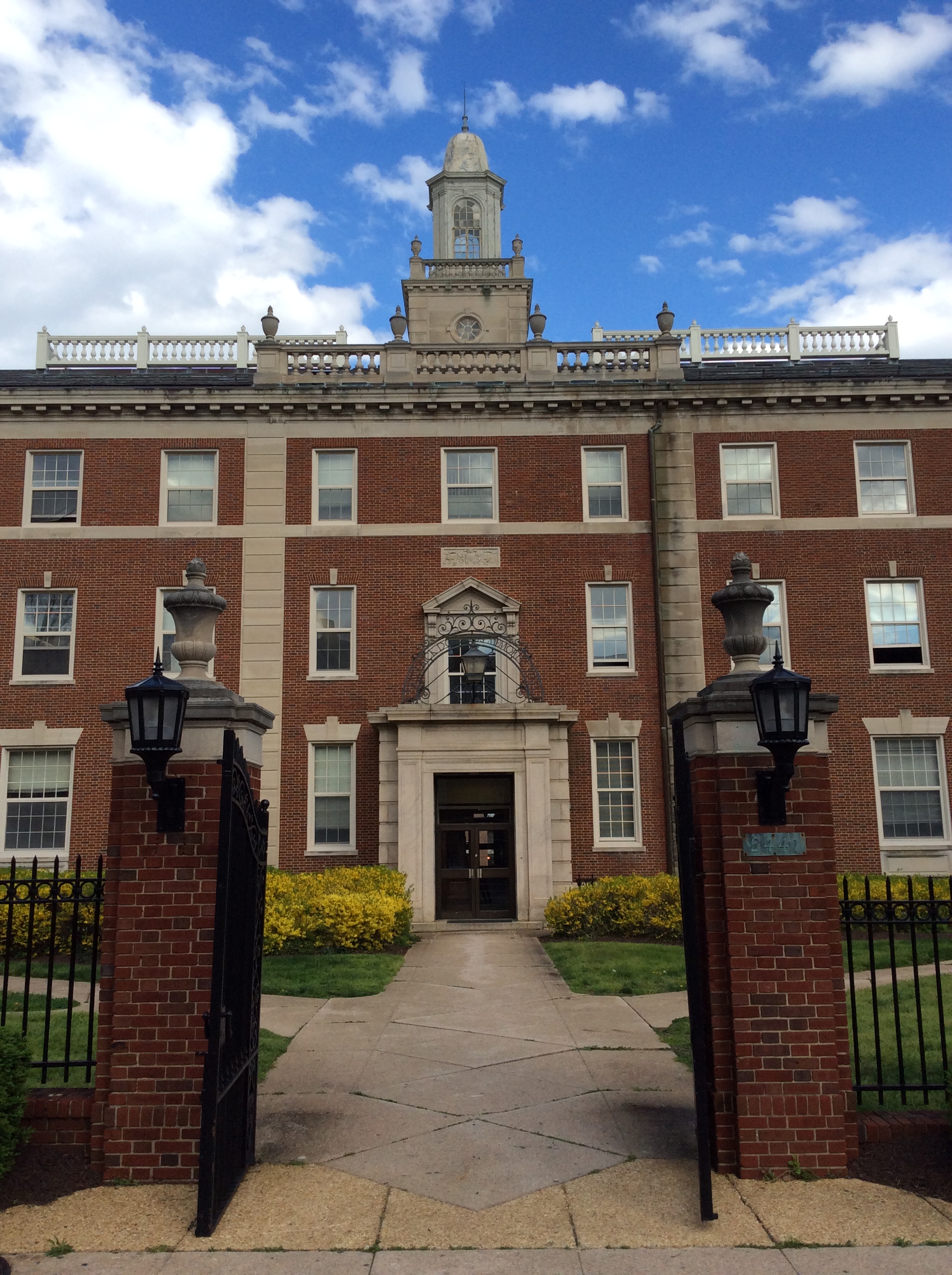
Blight, David W. ‘Lincoln, Douglass and the ‘Double-Tongued Document’’. New York Times Opinionator blog, May 6, 2011.

Blight, David W. ‘“Your Late Lamented Husband”: A Letter from Frederick Douglass to Mary Todd Lincoln‘. In The Gilder Lehrman Institute of American History website

Death Of Fred Douglass: Obituary‘, February 21, 1895, The New York Times from On This Day, nytimes.com

Douglass, Frederick. Address … January 9th, 1894, on the Lessons of the Hour. Press of Thomas and Evans, Baltimore, Maryland. From the Library of Congress website.
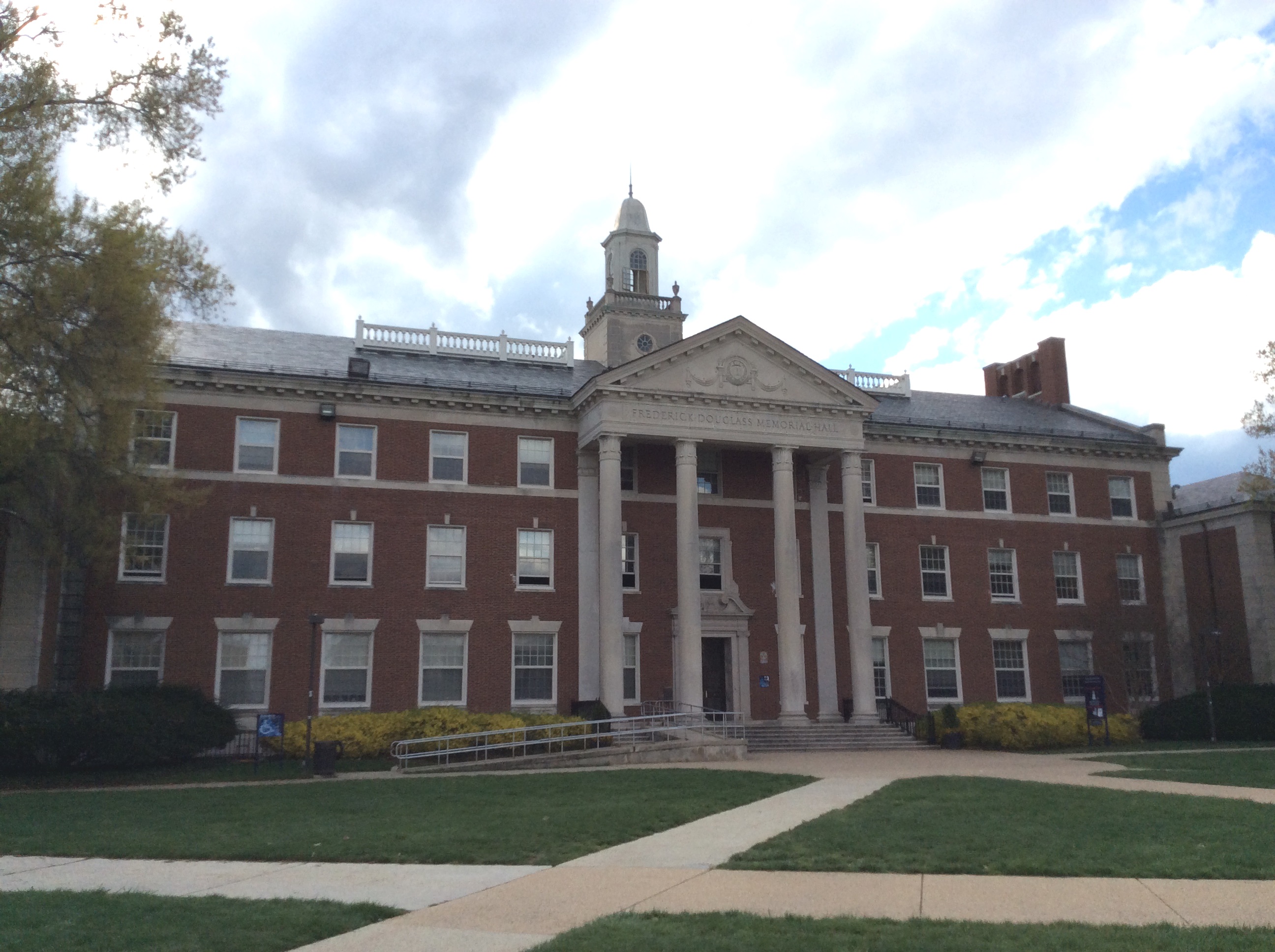
Douglass, Frederick. The Life and Times of Frederick Douglass. Re-published 1993, Avenal, New York: Gramercy Books, Library of Freedom series.

Douglass, Frederick. My Bondage and My Freedom: 1855 Edition with a new introduction. Re-published 1969, New York: Dover Publications, Inc.

Douglass, Frederick. ‘Speech at a Surprise Party on Douglass’ 71st Birthday. 1889‘. Manuscript/Mixed Material. Retrieved from the Library of Congress website

Douglass, Helen, 1838-1903, ed. In Memoriam: Frederick Douglass. Philadelphia: J.C. Yorston & Co, 1897

Foner, Philip S. The Life and Writings of Frederick Douglass, Vol. 1-4. New York: International Publishers, 1950.

Gayle, Margot and Carol Gayle. Cast-iron Architecture in America: The Significance of James Bogardus. WW Norton & Co: New York, 1998.

Harris, Gardiner. ‘The Underside of the Welcome Mat‘, The New York Times, N0v. 8, 2008

Jefferson’s Legacy: A Brief History of the Library of Congress‘, Library of Congress website http://www.loc.gov
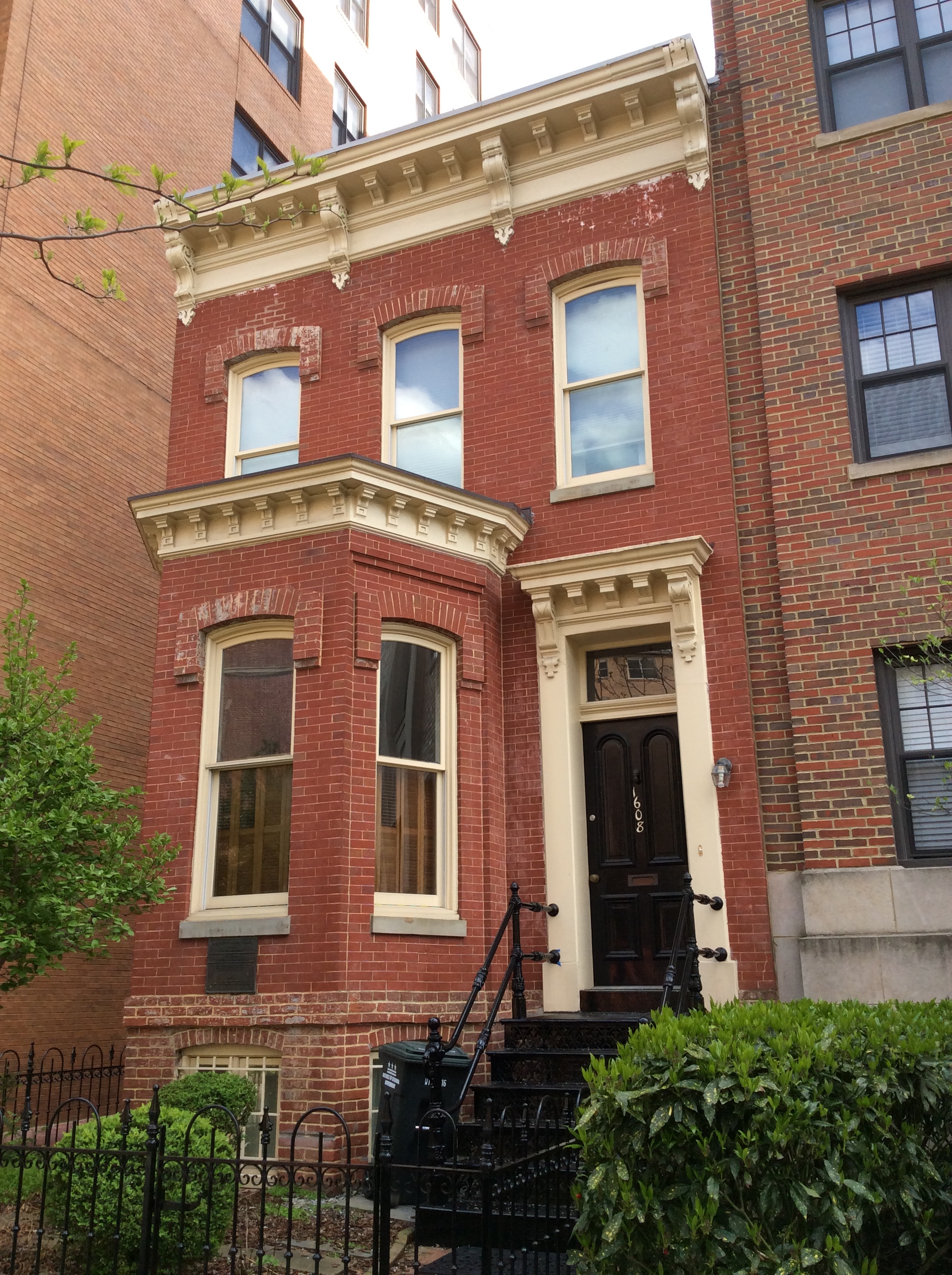
King, Gilbert. ‘The Great Dissenter and his Half-Brother‘. Dec 20, 2011, Smithsonian.com

McFeely, William. Frederick Douglass. New York: W.W. Norton & Company, 1991.

Muller, John. ‘Francis Grimke tells story of “The Second Marriage of Frederick Douglass” [The Journal of Negro History, 1934]’ In Frederick Douglass in Washington, D.C.: The Lion of Anacostia blog

Muller, John. ‘Frederick Douglass’ “Application for Permit to Build” for 316 & 318 A Street NE’. In Frederick Douglass in Washington, D.C.: The Lion of Anacostia blog

Muller, John. Frederick Douglass in Washington, D.C.: The Lion of Anacostia. Charleston: The History Press, 2012.

Quarles, Benjamin. Frederick Douglass. Washington D.C.: The Associated Publishers, 1948.

Roberts, Kim. ‘The Bethel Literary and Historical Society‘. Beltway Poetry Quarterly, Literary Organizations Issue.

Roe, Garrett W. Frederick Douglass’ ‘Homecoming’: Funeral and Burial, visual presentation, May 23rd 2014

Stiller, Jesse. ‘The Freedman’s Savings Bank: Good Intentions Were Not Enough; A Noble Experiment Goes Awry‘. Office of the Comptroller of the Currency, U.S. Treasury Department website

Treasury to Commemorate 150th Anniversary of Freedman’s Bank,’ 12/29/2015 press release of the U.S. Treasury Department’s Press Center
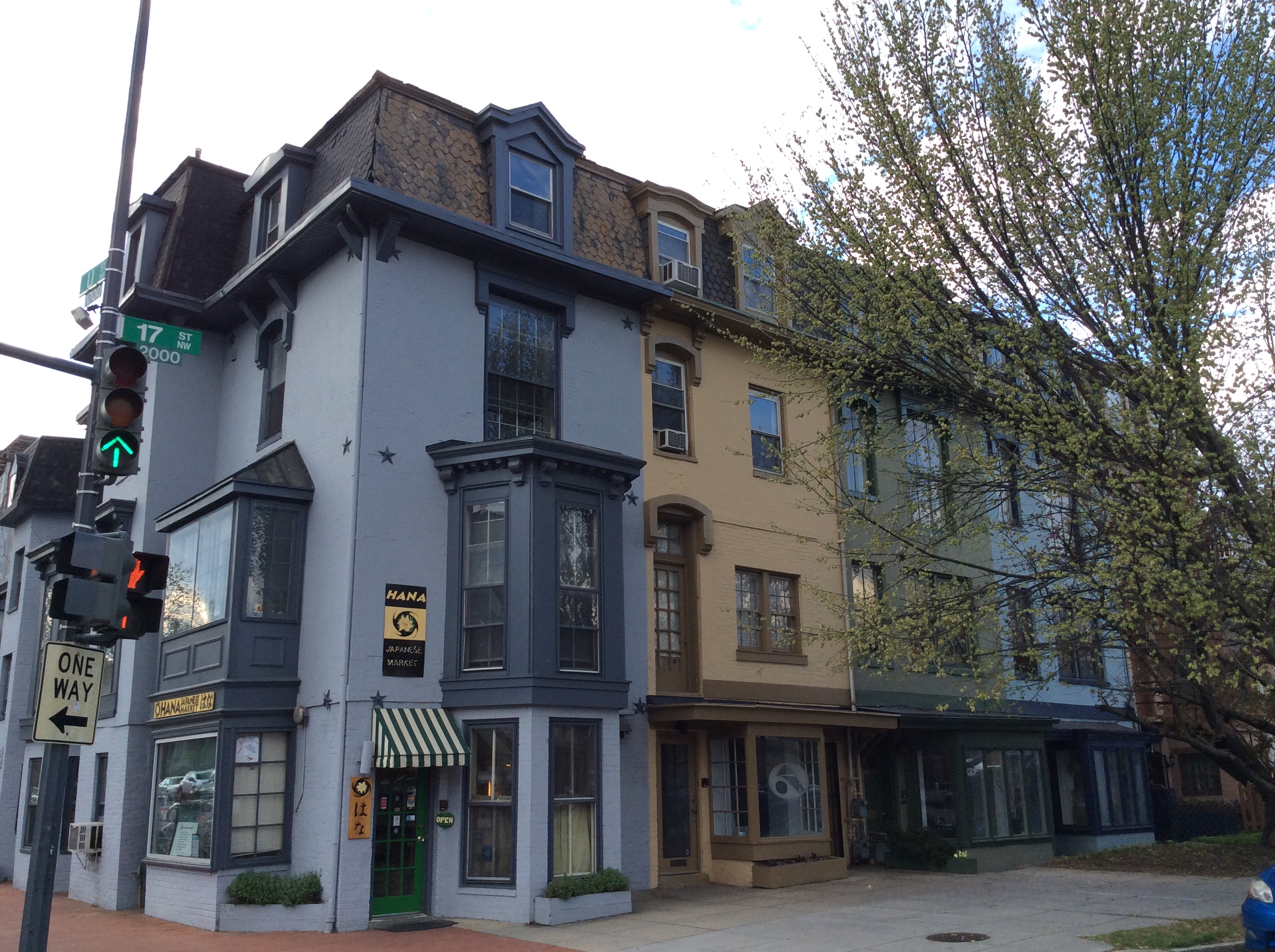
Veroske, Ariel. ‘The Feather Duster Affair of 1874‘, June 20th, 2013, from WETA.org

The Washington Times. (Washington, D.C.), 18 Feb. 1895. From Chronicling America: Historic American Newspapers, Library of Congress.

New Podcast Episode: Frederick Douglass Washington DC Sites, Day 1, Part 1
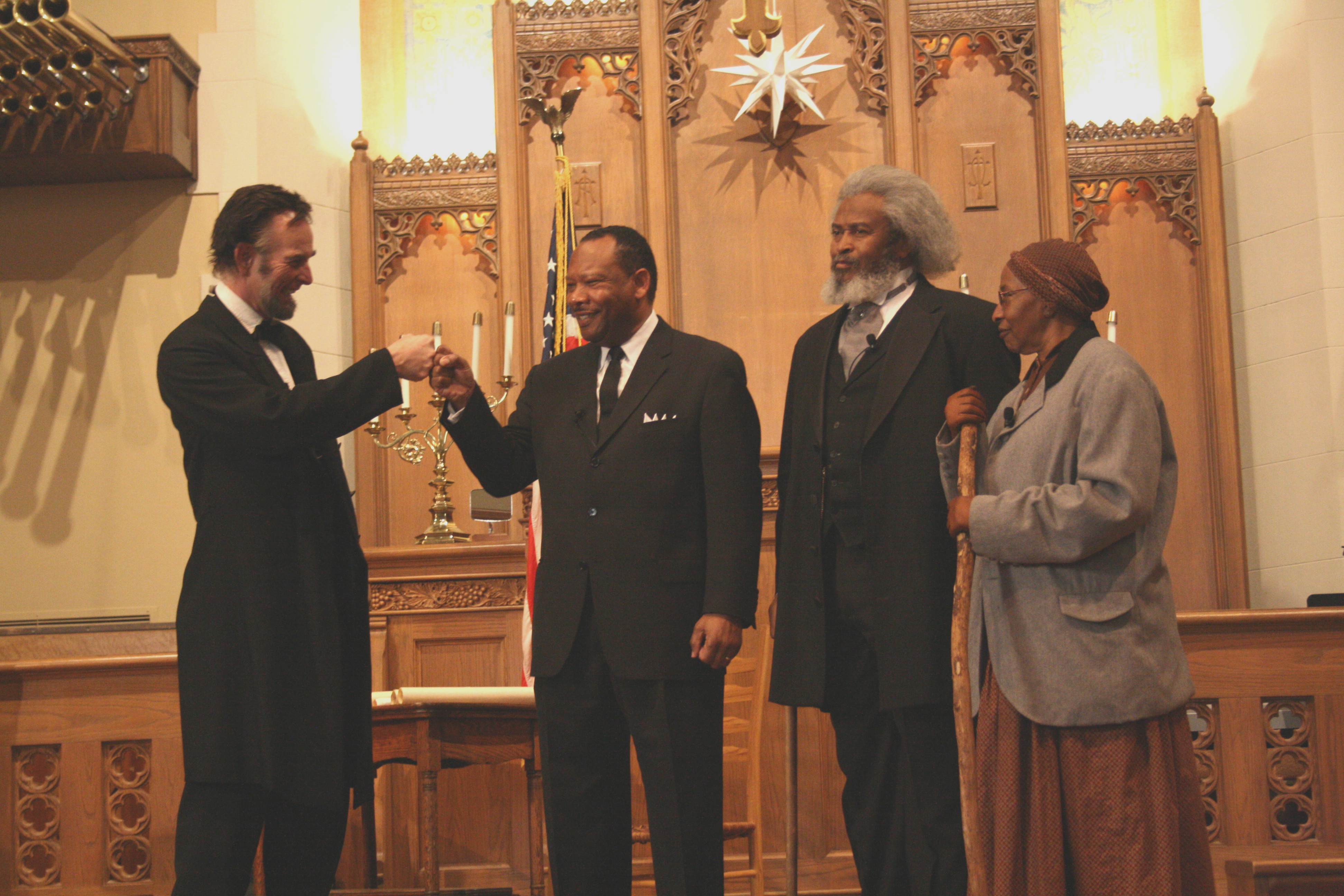
Statue and quote at the Frederick Douglass National Historic Site
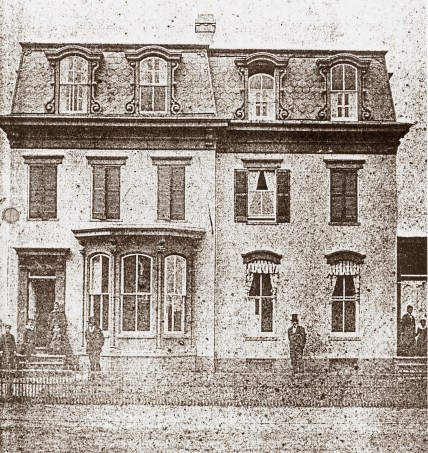
Statue and quote at the Frederick Douglass National Historic Site

Listen to this podcast episode here or on Google Play, or subscribe on iTunes

Thirteenth Day, Friday April 1st

I begin at Cedar Hill in Anacostia, Frederick Douglass’ handsome, gabled house on a hill overlooking Washington DC. He moved here with Anna and the kids in September of 1878, having lived in the capital city of Washington for a little over six years. In a sense, the Douglasses didn’t really move out of Washington when they moved into their new suburban home east of the Anacostia River. Anacostia, called Uniontown in the mid-1800’s then switched back again, was part of the District of Columbia, which in turn was larger than Washington and encompassed it. When the boundaries of Washington and the District of Columbia became one and the same in 1878, the Douglasses’ Anacostia home became a Washington city home then too.

It’s another lovely day, again the sky is partly cloudy, the air soft and warm and a little breezy, freshly washed by the morning’s rain. The cold weather I had shivered in for much of the first half of my trip is nearly forgotten.

The National Park Service now owns and runs the house, the grounds, and the visitor center and museum, collectively called The Frederick Douglass National Historic Site. I take a brief look at the outside of the house, then stop at the visitor center and sign up for the guided tour which will start shortly. I take another brief look around while I wait, and note the displays and artifacts I want to examine more closely when I return to the visitor center museum…. Read the full account here:

Ordinary Philosophy and its Traveling Philosophy / History of Ideas series is a labor of love and ad-free, entirely supported by patrons and readers like you. Please offer your support today!