New Podcast Episode: Frederick Douglass Rochester NY Sites, Day 2

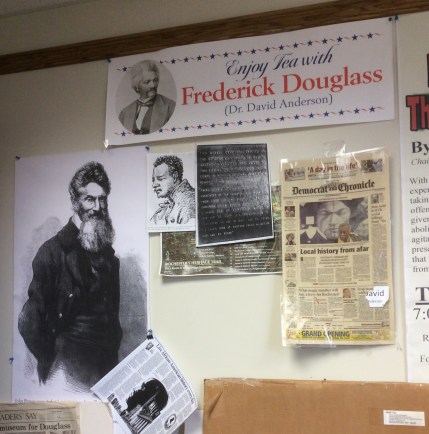
Douglass scholarship articles and posters, Dr. David Anderson's office, Nazareth College Rochester, 2016 Amy CoolsListen to this podcast episode here or on Google Play, or subscribe on iTunes

Tenth day, Tuesday March 29th

I begin my day with an early visit to Dr. David Anderson, a Frederick Douglass scholar, visiting professor at Nazareth College, founding member of Blackstorytelling League, and an all around delightful and fascinating man! He is kind enough to grant me an interview of an hour or so, which ends up turning into a much longer conversation than that.

Among many other things too numerous to describe in full here (I’ll bring more details of our talk into the discussion of my subsequent discoveries), we talk about the Douglass family as a whole, and especially, Frederick Douglass’ wife Anna…. Read the written account here:

Ordinary Philosophy and its Traveling Philosophy / History of Ideas series is a labor of love and ad-free, entirely supported by patrons and readers like you. Please offer your support today!

O.P. Recommends: Philosopher, an Inclusive Forum for Thought

Meena Krishnamurthy, image credit Meena KrishnamurthyI just discovered this wonderful blog called Philosopher, dedicated to women philosophers (‘philosop-hers’) and which ‘for the next six months will feature posts by philosophers of color. After this time, the blog will feature work by philosophers from underrepresented groups in philosophy, more generally.’

I have been inspired, edified, and intrigued by what I’ve read here thus far, and I trust you will be too. Thanks, Meena Krishnamurthy, for creating such an excellent forum!

You can learn more about Ms. Krishnamurthy, Assistant Professor of Philosophy at the University of Michigan, at her personal website, https://meenakrishnamurthy.net/

Ordinary Philosophy and its Traveling Philosophy / History of Ideas series is a labor of love and is ad-free, supported by patrons and readers like you. Please offer your support today!

Happy Birthday, John Stuart Mill!

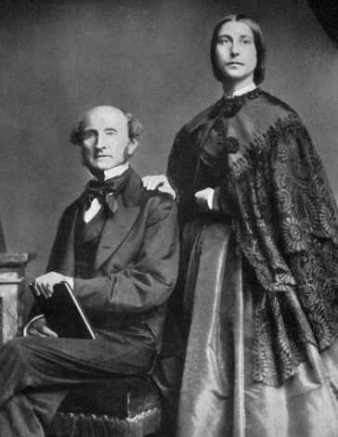
John Stuart Mill and Helen Taylor, daughter of Harriet Taylor, collaborated with Mill after her mother's death, public domain via Wikimedia CommonsOne of my very favorite ideas in political philosophy is John Stuart Mill’s ‘marketplace of ideas’ (though he didn’t phrase it this way himself): that the free, open, and vigorous exchange of ideas in the public square does more to further human knowledge than anything else. But not only has his comprehensive and to my mind, absolutely correct defense of free speech in his great work On Liberty had an immense and beneficial influence on the history and theory of human rights, he was admirable in myriad other ways as well:

‘Mill believed in complete equality between the sexes, not just women’s colleges and, someday, female suffrage but absolute parity; he believed in equal process for all, the end of slavery, votes for the working classes, and the right to birth control (he was arrested at seventeen for helping poor people obtain contraception), and in the common intelligence of all the races of mankind… all this along with an intelligent acceptance of the free market as an engine of prosperity and a desire to see its excesses and inequalities curbed…. Mill was an enemy of religious bigotry and superstition, and a friend of toleration and free thought, without overdoing either…’ ~ Adam Gopnik, from his article and book review ‘Right Again‘, 2008

‘The son of James Mill, a friend and follower of Jeremy Bentham, John Stuart Mill (1806-1873) was subjected to a rigorous education at home: he mastered English and the classical languages as a child, studied logic and philosophy extensively, read the law with John Austin, and then embarked on a thirty-five career with the British East India Company at the age of seventeen. (He also suffered through a severe bout of depression before turning twenty-one.) Despite such a rich background, Mill credited the bulk of his intellectual and personal development to his long and intimate association with Harriet Hardy Taylor. They were devoted friends for two decades before the death of her husband made it possible for them to marry in 1852; she died in Avignon six years later. Mill continued to write and to participate in political affairs, serving one term in Parliament (1865-68). The best source of information about Mill’s life is his own Autobiography (1873). Mill

Philosophically, Mill was a radical empiricist who held that all human knowledge, including even mathematics and logic, is derived by generalization from sensory experience. In A System of Logic, Ratiocinative and Inductive (1843) he explained in great detail the canons for reasoning inductively to conclusions about the causal connections exhibited in the natural world.

Mill’s moral philosophy was a modified version of the utilitarian theory he had learned from his father and Bentham. In the polemical Utilitarianism (1861) Mill developed a systematic statement of utilitarian ethical theory. He modified and defended the general principle that right actions are those that tend to produce the greatest happiness of the greatest number of people, being careful to include a distinction in the quality of the pleasures that constitute happiness. There Mill also attempted a proof of the principle of utility, explained its enforcement, and discussed its relation to a principle of justice. Mill

Mill’s greatest contribution to political theory occurs in On Liberty (1859), where he defended the broadest possible freedom of thought and expression and argued that the state can justify interference with the conduct of individual citizens only when it is clear that doing so will prevent a greater harm to others. Mill also addressed matters of social concern in Principles of Political Economy (1848) and Considerations on Representative Government (1861) and eloquently supported the cause of women’s rights in The Subjection of Women (1869).’

~ from The Philosophy Pages by Garth Kemerling, licensed under a Creative Commons Attribution-Share Alike 3.0 Unported License

Read more about John Stuart Mill:

Anschutz, Richard Paul. ‘John Stuart Mill: British Philosopher and Economist‘. In Encyclopædia Britannica.

Gopnik, Adam. ‘Right Again: The Passions of John Stuart Mill‘. New Yorker magazine website, Oct 6 2008

Heydt, Colin. ‘John Stuart Mill (1806—1873)‘, Internet Encyclopedia of Philosophy

Mill, John Stuart. On Liberty, from Project Gutenberg

Wilson, Fred. “John Stuart Mill“, The Stanford Encyclopedia of Philosophy

~ Ordinary Philosophy and its Traveling Philosophy / History of Ideas series is a labor of love and ad-free, entirely supported by patrons and readers like you. Please offer your support today!

Happy Birthday, Lady Mary Wortley Montagu!

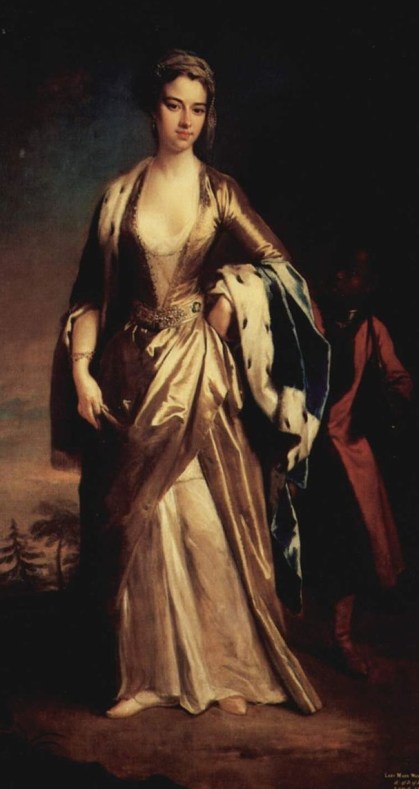
Mary Wortley Montagu by Jonathan Richardson the Younger (cropped), public domain via Wikimedia CommonsI just discovered this fascinating woman this morning, on the occasion of her birthday.

According to Encyclopedia Britannica, Lady Mary Wortley Montagu was a ‘prolific letter writer in almost every epistolary style; she was also a distinguished minor poet, always competent, sometimes glittering and genuinely eloquent. She is further remembered as an essayist, feminist, traveler, and eccentric.’

Here are three excellent features on Montagu:

Lady Mary Wortley Montagu“. Encyclopædia Britannica.

Lady Mary Wortley Montagu, 1689–1762“. The Poetry Foundation.

Secor, A., 1999. ‘Orientalism, gender and class in Lady Mary Wortley Montagu’s Turkish Embassy Letters: to persons of distinction, men of letters and c’. Cultural Geographies (formerly Ecumene) Volume 6, Issue 4 pp375-398. Arnold Publishers.

~ Ordinary Philosophy and its Traveling Philosophy / History of Ideas series is a labor of love and ad-free, entirely supported by patrons and readers like you. Please offer your support today!

Remembering Margaret Fell

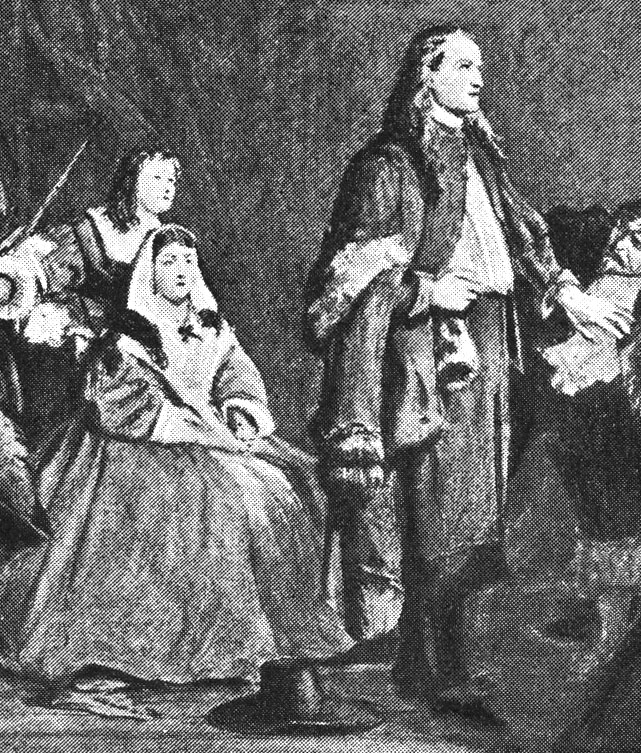
Margaret Fell, with George Fox before the judges, from a painting by J. Pettie 1663, public domain via Wikimedia Commons

Margaret Fell with George Fox before the judges, from a painting by J. Pettie, 1663

Margaret Fell was born on some unknown date in 1614, so let’s take this occasion to remember her on the date of her death, April 23rd, 1702.

Fell’s lived a life as passionate as it was long. She was an unconventional thinker for her time, a zealous and progressive religious activist at times imprisoned for her beliefs, a prolific writer, well-traveled, a mother of eight children and a wife twice.

An early adherent and eloquent promoter of Quakerism, Fell is now considered one of its founders. She converted to Quakerism after hearing a sermon by one of its most charismatic preachers, George Fox, and almost immediately launched into a lifetime of hosting Quaker meetings and speaking out on behalf of her new religion. After her husband died some years later, Fell married Fox, probably more as a co-missionary than as a romantic partner since their work, travels, and imprisonments kept them apart for much of their marriage.

As I’ve had a lifelong fascination with the history of human rights, I’ve long admired the Quakers because, along with Unitarians and Deists, so many have been leaders in the struggle to expand, establish, and promote them. That’s because these faiths emphasize the importance of individual conscience, the primacy of the human mind, God’s rational nature, and the moral equality of all human beings.

Fell believed in the Quaker doctrine of the Inner Light which God has caused to shine equally in the hearts of all beings; all we need do is heed it. Therefore, one does not need ministers, priests, or any other authorities or intercessors to achieve salvation. And because God has created everyone for the same purpose and gave everyone that light, everyone is spiritually equal and capable of understanding and proclaiming the Truth. We can see how this doctrine, central to Quakerism, readily aligns with human rights movements centered on a belief human spiritual and intellectual equality. The right of women to speak in church and write religious texts, in her time limited to men, was a cause particularly dear to Fell’s heart. While Fell’s belief in the equality of women was limited to their role as spiritual beings, Quakerism tended to encourage ever-more progressive beliefs in its adherents. Over time, Quakers came to be leaders in the abolitionist and pacifist movements, promoting the right of all to receive equal and universal education and for women’s rights in social and political spheres as well.

In light of her achievements as a female religious pioneer, and the human rights advances facilitated by the Quaker faith she helped found, Fell’s contributions should continue to be remembered and celebrated.

Ordinary Philosophy and its Traveling Philosophy / History of Ideas series is a labor of love and is ad-free, supported by patrons and readers like you. Please offer your support today!

~~~~~~~~~~~~~~~~~~~~~~~~~~

Sources and inspiration

Broad, Jacqueline, ‘Margaret Fell‘, The Stanford Encyclopedia of Philosophy, Edward N. Zalta (ed.)

Jacoby, Susan. Strange Gods: A Secular History of Conversion. New York: Pantheon, 2016 (see chapter on Margaret Fell)

In Memory of Hypatia of Alexandria

Detail of the death portrait of a wealthy woman, c. 160-170 AD near modern-day Er-Rubayat in the Fayum, public domain via Wikimedia CommonsHypatia’s birthday is somewhere between 350 and 370 AD; a range of dates indicating great uncertainty, to be sure, but clear original sources this old are hard to come by, especially from a city as turbulent and violence-torn as the Alexandria of her day. The day of her death is better known, sometime in March of 415 AD. Since the latter date is more precise, we’ll break with our tradition here and remember Hypatia in the month of her tragic and violent death instead of on the date of her birth.

She’s a mathematician, astronomer, teacher, and philosopher, who writes commentaries on important works in geometry and astronomy with her father Theon, likely contributing original work of her own. Hypatia is a Neoplatonist, a philosophy with mystical overtones which posits that everything derives its being from the One, an ultimately conscious yet nonmaterial, non-spacial entity which is the pure ideal of everything that is. She is a scholar and teacher in a field and in a world that’s male-dominated, and historians from her day to ours emphasize her extraordinary talents and her femininity with a nearly equal mix of awe and bemusement.

So let us remember and honor Hypatia for her great contributions to human knowledge and to the history of women’s liberation, living proof that women are equals in intellect and courage.

And let us also remember her sad death as a cautionary tale against those who inflame popular sentiment to seize power for themselves. Hypatia meets her death at the hands of a Christian mob caught up in the anti-pagan hysteria of the day; Alexandria itself was caught up in a power struggle between civic and religious authority. The mob of extremists who drag Hypatia from her carriage, torture and kill her with roofing tiles, and defile her body are inspired by their partisanship with theocratic bishop Cyril to kill this pagan philosopher, this mathematician and astronomer (then often equated with sorcerer), this woman who dared teach men, this friend of Cyril’s rival Orestes, civic leader of Alexandria. As Hypatia scholar Micheal Deakin quotes: “Cyril was no party to this hideous deed, but it was the work of men whose passions he had originally called out. Had there been no [earlier such episodes], there would doubtless have been no murder of Hypatia.”

From the current presidential primary race, in which a certain millionaire is whipping up populist support* with extremist racial and religious rhetoric, back to Hypatia’s time and beyond, power-hungry opportunists plead innocence from the very violence they inspire. Yet it appears hard to justify that plea when reason and the lessons of history plainly reveal the nearly inevitable results of fomenting sectarian strife. Extremism in the defense of liberty or anything else is a vice** because of the way it drives away reason and sympathy, and after all, nothing is as liberty-destroying as mob violence and death.

Ordinary Philosophy is a labor of love and is ad-free, entirely supported by patrons and readers like you. Please offer your support today!

~~~~~~~~~~~~~~~~~~~~~~~~~~~~~

Read more about Hypatia:

Deakin, Michael.’Hypatia of Alexandria‘ from Ockham’s Razor radio program of Radio National of Australia (transcript), Sun August 3rd 1997. (click ‘Show’ across from ‘Transcript’)

O’Connor, J J and E F Robertson. ‘Hypatia of Alexandria‘, from the School of Mathematics and Statistics, University of St Andrews, Scotland website.

‘O’Neill, Tim. ‘“Agora” and Hypatia – Hollywood Strikes Again‘. Armarium Magnum blog, Wed May 20, 2009

Zielinski, Sarah. ‘Hypatia, Ancient Alexandria’s Great Female Scholar‘. Smithsonianmag.com, Mar 14, 2010.

…and about Neoplatonism

Wildberg, Christian, “Neoplatonism“, The Stanford Encyclopedia of Philosophy (Spring 2016 Edition), Edward N. Zalta (ed.)

* ‘What If Trump Wins?’ by Jeet Heer in New Republic, Nov 24, 2015

** in reference to the quote ‘Extremism in the defense of liberty is no vice’ from Barry Goldwater’s 1964 presidential nomination acceptance speech 

O.P. Recommends: Like the Oscars, #PhilosophySoWhite

School of Athens by Raphael [Public domain], via Wikimedia Commons (cropped)Eric Schwitzgebel, who authors the The Splintered Mind blog (a favorite of mine), recently co-wrote this excellent opinion piece about philosophy’s lack of diversity.

Like Hollywood, Schwitzgebel and Myisha Cherry find that there’s a set of preconceptions which underlie the way work is chosen and promoted which, in turn, virtually guarantees philosophy will remain non-diverse. Hollywood has its own set; for academic philosophy, the glorification of obscurantism is a primary factor. Schwitzgebel and Cherry write: ‘We admire philosophers whose central arguments are nearly impossible to understand, or who speak in paradoxes, who accept seemingly bizarre views, or who display dazzling skill with formal logical structures of no practical significance. Kant and Hegel are better loved than understood.’ Seeming smart, the authors explain, has long been confused by too many academics with being smart.

The piece goes on to show how this obscurantism has become the traditional province of white male academics, and is integral to keeping the field of philosophy so exclusionary, and to most people, so irrelevant.

This, of course, would be sad news for Ordinary Philosophy, dedicated as it is to philosophy in the public square, if it were news. But it’s not news, and that’s one of the main reasons O.P. exists. Philosophy should be, like good government, of, by, and for the people. While specialization is key to the development and exploration of complex ideas, obscurantism and jargon, despite assumptions to the contrary, are not necessary to that project. In fact, they accomplish little except ensuring that philosophy is tedious and unpleasant to read, that philosophers end up talking to nearly no-one but each other, and that the field as a whole ends up remaining oh-so-white, oh-so-male, and to most, oh-so-irrelevant.

Ordinary Philosophy and its Traveling Philosophy / History of Ideas series is a labor of love and is ad-free, entirely supported by patrons and readers like you. Please offer your support today!

What Is Happening to the Word ‘Beautiful’? by Tanya Newton

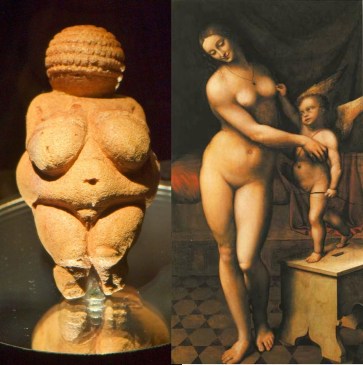
e993b-two2bvenuses2b-2bvenus2bof2bwillendorf2band2bvenus2band2bcupid2bby2bgiampietrino2c2bcopy2bafter2blost2bleda2band2bthe2bswan2bby2bleonardo2bda2bvinci2c2bboth2bpublic2bd‘Beautiful’ has always been a battleground in feminist discussions of representation. While it may seem counterintuitive to argue that we should consider more women as beautiful while also arguing that a woman’s capabilities are worth more than her appearance, tackling the rigid definition of beautiful has been important for intersectional feminism. A traditionally beautiful woman is white; women of colour are more likely to be sexualised instead. A beautiful woman is also normally able-bodied. She usually does not appear to be economically below the middle-class, something that is subtly but pervasively inherent in our ideas of the ideal body shape (too slender for manual labour) and the current trend of tanning (demonstrating leisure time and disposable income). A beautiful woman often also has long hair, a delicate face, and big eyes; she is vulnerable, not strong. So renegotiating this limited meaning of beautiful is a powerful act. Great progress has made with it, which should be cause for optimism. However, recent redefinitions are more troubling than empowering.

Beautiful is being used more and more often to denote a woman’s entire identity. Popular Urban Dictionary entries for beautiful state:

Beautiful is a woman who has a distinctive personality, one who can laugh at anything, including themselves, who is especially kind and caring to others. She is a woman who above all else knows the value of having fun, and not taking life too seriously. She is a woman that you can trust and count on to brighten your day. She is a woman who can inexplicably make you feel really good just by being around her, and yet brings such great sadness when she is gone.  (10,257 positive votes)

Your smile makes you pretty, your body makes you sexy, only your mind makes you beautiful (5,019 positive votes)

The description of anyone who is true to themself (3,272 positive votes)

Yes, it’s Urban Dictionary, but Urban Dictionary is not the only place this idea surfaces. A Buzzfeed video uploaded by Ashly Perez shows women stating that pretty is about “validation” from society, it is taught to young girls, and it is constructed by the media. I’m sure most feminists wouldn’t disagree. However, the video continues to say that beauty is different. “It is something that comes from the inside out: a combination of who I am and what I bring to the table”, one woman says. “I feel most beautiful when I’m using my mind and when I’m around my friends,” another adds. Beauty is made to mean personality. Perhaps this is why Dove’s latest marketing campaign makes women choose to label themselves as either “beautiful” or “average”—not average-looking. Perhaps Dove’s intention is to say that if your personality or capabilities are above average, you are beautiful.

However, beautiful already has a meaning and that meaning can’t simply be erased. It refers primarily to appearance, not identity. The number one definition in the Oxford Dictionary is: “Pleasing the senses or mind aesthetically”. Merriam Webster’s top definition is: “The quality of being physically attractive”. If these definitions were not true, and beauty instead referred to a person’s personality, then the trope beauty is bad wouldn’t exist and men could be called beautiful. Yet Cersei Lannister’s greatest weapon remains her beauty while calling a man beautiful remains an insult.

So Dove’s video, no matter what the intentions are, cannot tell women that if they are above average they are beautiful. Beautiful will not allow itself to be used that way; its meaning of ‘physically attractive’ always twists the message. Dove’s video actually tells women that if they are not beautiful, they are average: their intelligence, their capabilities, and their personality are not as relevant to their identity than their appearance. This video is more problematic than empowering. Buzzfeed’s video links being beautiful to being liked and loved, and while by “beautiful” Buzzfeed means being happy and sociable, we know that being physically attractive really does mean being more loved. Again, using the word beautiful subverts Buzzfeed’s message.

In fact, even if we were able to somehow strip beautiful of its current definition and redefine it to refer to a person’s attitudes and likeability instead of their appearance, that would damage the progress that intersectional feminism has already made. As discussed, beauty’s definition is under contention, and the meaning is slowly broadening. This is too important an accomplishment to discard. Beauty as appearance is a mainstream acknowledgement of visibility and measurement of value. To acknowledge that women of colour, trans women, disabled women, and less wealthy women are beautiful is to say that society considers them equal in appearance to white, able-bodied, cis, affluent women. Beauty meaning identity, on the other hand, does not do this. Stating that the category of beautiful that women have struggled to be included in still does not mean they are considered capable of being physically attractive by mainstream society, but that it’s irrelevant because their friends like them, is a regression.

Buzzfeed’s argument that women should be encouraged to measure their worth by more than their appearance is admirable. Dove’s advocacy of self-confidence is also applaudable. Yet beautiful is the wrong word to adopt to signify a person’s value and self-confidence; it is already laden with too much meaning.

After studying English Language and Literature at King’s College London, Tanya Newton moved to Japan where she teaches English. She loves to read and write, and loves tea almost as much. She is strongly interested in cultures and social structures. (Bio credit: Darrow)

This article was originally published on Darrow. Read the original article.

Ordinary Philosophy and its Traveling Philosophy / History of Ideas series is a labor of love and ad-free, supported by patrons and readers like you. Please offer your support today!

From Oakland to Maryland, New York, and Massachusetts I Go, in Search of Frederick Douglass

Hello, friends of Ordinary Philosophy!

From time to time, I take a trip to some corner of the globe, to explore the lives and ideas of great thinkers in the places where they lived and worked. For this series, I follow in the footsteps of thinkers who are no longer alive, since those who are still telling their own stories. But those who are no longer alive in the body live on in the ideas that they pass on, and in the example they provide for us to follow.

I’m pleased and excited to announce my fifth philosophical-historical themed adventure, beginning with research and study in Oakland, CA, then off to Baltimore, MD, New York, Washington DC, and other East Coast sites to follow in the footsteps of Frederick Douglass.

Frederick Douglass’s life story is inspiring and humbling in the strength, character, and dazzling intellect he reveals, rising to such greatness in the midst of such adversity. Born a slave on the eastern shore of Maryland in the early 1800’s, he was an autodidact, having overheard his master say that learning to read leads to learning to think, rendering a slave too independent-minded to submit to domination by another. Hearing this, young Frederick knew what he had to do. Attaining literacy and learning a skilled trade gave him the wherewithal to escape to New York City in 1838 at about 20 years of age. A few years later, as a result of an impromptu but impassioned and eloquent speech about the hardships of a life enslaved, he was recruited as a public speaker for the abolitionist cause. He spent the rest of his life as an activist for all manner of human rights causes, from the abolition of slavery to universal suffrage to women’s rights and beyond.

Douglass is an especially compelling subject for a historian-philosopher; observing the true nature and ramifications of slavery led him to think deeply about the most essential questions in human life, which, in turn, spurred him on to a life of thought and action on behalf of oppressed peoples. In these roles, Douglass had a heavy influence on American thought and on the course of American history. He asked, and answered: What does it mean to be a person? What does it mean to be a person of faith? What are rights, and why are we entitled to them? What is dignity, and does possessing it entail that we have certain obligations to ourselves and others? Given the frailties and strengths of human nature, how can we best live together and form just societies? What do the Constitution, its Bill of Rights, and the Declaration of Independence really say about slavery, equality, and other human rights issues?

So I’ll begin my tale here in my home city of Oakland, CA, where I begin my research and exploration into Douglass’s life and ideas, then off to the east coast of the United States I’ll go, from March 19th thru April 2nd! There, I’ll visit landmarks associated with his life, places where he lived and died, worked, thought, wrote, studied, and rested, to see for myself how the places informed the man, and vice versa.

~ Listen to the podcast version of this series intro here or on iTunes

Here is the story of Frederick Douglass as I discover him:
Traveling Philosophy Series: Frederick Douglass Edition, Prologue, Oakland, CA
Frederick Douglass on Faith and Doubt
Frederick Douglass on the Constitution
Frederick Douglass the Pragmatist
Frederick Douglass Baltimore Sites
Frederick Douglass’s Birthplace, Maryland’s Eastern Shore Sites Part 1
Frederick Douglass, Easton and St. Michaels, Maryland’s Eastern Shore Sites Part 2
Frederick Douglass Havre de Grace and Philadelphia Sites
Frederick Douglass New York City Sites
Frederick Douglass New Bedford, Massachusetts Sites
Frederick Douglass Boston Sites
Frederick Douglass Lynn, Massachusetts Sites
Frederick Douglass Lynn Sites, Part 2: Historical Society & Hutchinson Scrapbook
Frederick Douglass Albany, Troy, and Syracuse NY Sites
Interview with Leigh Fought on Anna and Frederick Douglass
Frederick Douglass Rochester NY Sites, Day 1
Frederick Douglass, Rochester NY Sites Day 2
Interview with Ken Morris, Anti-Slavery Activist & Descendant of Frederick Douglass
Frederick Douglass Seneca Falls, Canandaigua, Honeoye, and Mt Hope Cemetery Sites
Frederick Douglass Chambersburg and Gettysburg PA Sites
Frederick Douglass Washington DC Sites, Day 1, Part 1
Frederick Douglass Washington DC Sites, Day 1, Part 2
Frederick Douglass Washington DC Sites, Last Day

More about Frederick Douglass:

Peoria, Illinois, In Search of Robert G. Ingersoll, Frederick Douglass, And Abraham Lincoln, Part 1
Peoria, Illinois, In Search of Robert G. Ingersoll, Frederick Douglass, And Abraham Lincoln, Part 2
Peoria, Illinois, in Search of Robert G. Ingersoll, Frederick Douglass, and Abraham Lincoln, Part 3
Photobook: Frederick Douglass and Edinburgh, Old and New
O.P. Recommends: ‘A Man’s a Man for a’ That: Frederick Douglass in Scotland’ by Andrea Baker for BBC Radio 4
Say What? Frederick Douglass on Originalist Interpretations of the United States Constitution
O.P. Recommends: Frederick Douglass’ Drunk History Episode
Say What? Frederick Douglass on Race Relations
Citizenship, Belonging, and the Experiences of Amero-Africans in West Africa: An Analysis of William Innes’ Early History of Liberia

Ordinary Philosophy and its Traveling Philosophy / History of Ideas series is a labor of love and ad-free, supported by patrons and readers like you. Please offer your support today!

Patrons of the Frederick Douglass series: RH Kennerly, Elizabeth Lenz, Alex Levin, Cory Argonti Cools, Bryan Kilgore, Michael Burke, Gaia So, Veronica Ruedrich, Blair Miller, Alex Black, Devin Cecil-Wishing, Roxanne and Fred Smalkin and family, and Jim Callahan and Nerissa Callahan-Stiles and family. ~ With warmest gratitude, thank you!

Mary Wollstonecraft, Champion of Reason, Passionate in Love

The life and work of Mary Wollstonecraft, mother of modern feminism, can seem to reveal a mass of contradictions.

Her seminal feminist work, A Vindication of the Rights of Woman, champions reason as the ultimate guide for a moral and productive life. She used reason to great effect to show why women should, and how they could, grow out of their socially constructed roles as under-educated coquettes and household drudges. She believed that reason should rule both individuals and societies because it’s the best tool we have to achieve justice and to perfect the self. Without reason, she thought, human beings are ruled by narrow self-interest, by prejudice born of ignorance, and by crude lust.

Yet the life Wollstonecraft chose to live was widely criticized both during her lifetime and over the two hundred plus years since her death. It’s not just because she didn’t conform to the mores of her time; her life choices are still considered unreasonable and even self-destructive by many. At times, they made her an object of scandal, impoverished, or deeply depressed, even in such desperate straits that she twice attempted suicide. That’s because she was also deeply passionate, devoted to retaining her personal and mental freedom while abandoning herself to loves which never failed to break her heart, be they revolution, family, friend, or lover. For Wollstonecraft, reason and passion are not opposites: they are two sides of the same coin. A truly reasonable person, she thought, is kind, affectionate, and generous as well, and a passionate lover of justice, truth, and beauty.
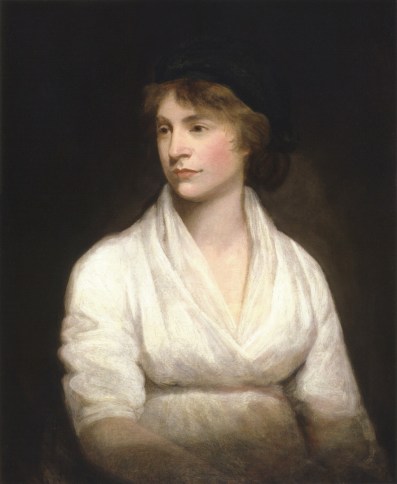
Wollstonecraft’s chosen role for herself was, first and foremost, a teacher, an advocate of knowledge and instiller of reason. While teaching was one of the few professions open to her as an eighteenth-century woman from a respectable but impoverished background, she brought her formidable powers of reason to bear on the problems with many of the educational and child-rearing practices of her day. After her first job as a companion, she became a teacher, first in the classroom at a school she founded with two of her sisters and her best friend, and then as a governess. When she became a mother twice over in her mid- and late thirties, she was a tender and hands-on mother, an advocate of breastfeeding and attentive parenting in an era of wet-nurses and governesses, when wealthy and middle-class parents participated relatively little in the care and instruction of their children even from infancy.

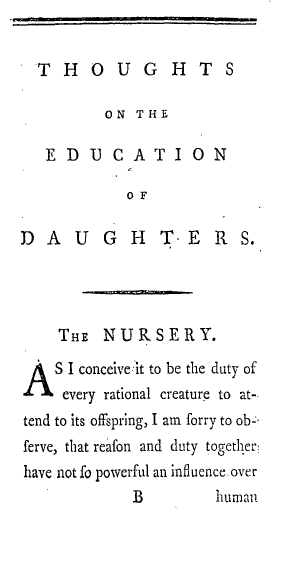
Her first book, Thoughts on the Education of Daughters, opens with her parenting advice and argues that girls should be taught how to run a household while also learning self-sufficiency. In Wollstonecraft’s time, women were not expected to support themselves; they were trained to raise a family, learning how to catch and keep a man first, to be household managers second, and to be educators of young children third. Single women, widows, and married women whose husbands, fathers, brothers, and other male relations could or would not support them had few employment options available to them, mostly directly related to one of the three roles they were trained for. Those jobs that women could respectably accept paid very little, so those working women nearly always lived a life of subservience and privation. Modern feminist thought, until very recently, equated domestic life with that housebound, nearly choiceless life most women were required to live. However, now that women’s basic moral right to self-determination has become so widely established, most have come to consider a domestic-centric life just as valid a choice for free women as a professional or public life. So in this sense, Wollstonecraft’s view of women was more progressive even than that of many modern feminists, even if by accident rather than foresight: she did not speak of a time when women would need to reject domesticity in order to free themselves from it, only to reclaim it by choice after their liberation.

Her ideas were inspired by her own experience: Wollstonecraft discovered firsthand how important it is never to assume that one’s self or one’s children will always have someone they can depend on for education, sustenance, or affection. Life’s too uncertain for that: parents, spouses, relatives, colleagues, and friends can become neglectful, estranged, impoverished, or disabled, and of course, sometimes they die. Wollstonecraft’s father squandered his inheritance and never bothered to learn how to earn an adequate living, leaving all of his children (except for his oldest son, who inherited what was left) to fend for themselves in adulthood, and his daughters without the dowry necessary for a respectable marriage. Knowing firsthand what it’s like to wrest a living from a world where women were ill-equipped for and mostly barred from nearly all employments that men were free to pursue, Wollstonecraft believed all girls should have a thorough education centered on self-sufficiency, from learning how to take care of a household, to learning how to think, to learning how to make a living. This not only gives women the freedom to choose a partner for better reasons than mere survival (Wollstonecraft equated the latter with prostitution), but leaves women free to live their lives as independently as they choose.

Until Wollstonecraft’s response to Edmund Burke’s critique of the French Revolution, her Vindication of the Rights of Men (1790), her published work continued on an educational vein, from original compositions to editorial work to translation. Beginning with The Rights of Men, through A Vindication of the Rights of Woman (1792), and up to her last work, Letters Written During a Short Residence in Sweden, Norway, and Denmark (1796), she transitioned from a teacher of ideas into an innovator, drawing on the wealth of knowledge she had obtained through her lifetime thus far of work and study. She was a semi-autodidact, her rather patchy childhood education supplemented in her teens by her own voracious reading and by friends who recognized her hunger for learning, and continued independently during her working years in the hours she could dedicate to her self-improvement. When she established herself as a professional author, she was finally able to immerse herself fully in the life of an intellectual, attending famous salons and becoming the friend and colleague of many of the brightest minds of her day.

One of the central themes in The Rights of Woman is women’s education. In this work, Wollstonecraft explained that it’s the nature of women, rather than their practical needs, that’s the ultimate justification for their rights, though she doesn’t minimize the importance of the latter. Since women possess reason just as men do, they also need education in order to be happy, fulfilled, and above all, moral. Infantilizing women by denying them a full education, she wrote, renders them not only financially helpless, entirely dependent on men whether or not they’re capricious, selfish, lazy, cruel, or just unlucky, but undermines them as moral beings. It’s reason, more than anything else, that determines the difference between right and wrong, and a quality, well-rounded education is required for using reason to its fullest capacity.

But outside of her moral reasoning, in her life as she lived it, Wollstonecraft displayed the often stark contrast between what one might expect a person ruled by reason would do, and what a person would do when driven by passion.

One of her earliest romantic interests, the Irish gentleman and songwriter George Ogle, ended up causing her no harm and probably doing her even more good than many might realize; not only did her cheer her with intellectual and witty conversation in her time as governess for the wealthy Kingsborough family in Ireland, a biographer credits him as the secret benefactor whose cash gift allowed her to return home to England and pursue writing in earnest. And her pursuit of the intellectual life she loved probably brought her more joy and fulfillment than anything else, with the possible exception of her daughter Fanny.

But most of her other loves did seem to bring her at least as much pain as joy. Her first deep attachment in her early teens was to her friend Jane Arden, who didn’t share her idealistic concept of the near-exclusive, passionate friendship of the soulmate. The more the young Mary sought to dominate her affections, the more Jane drew away. Fanny Blood, her dearest friend in adulthood, nearly lived up to her ideal, but her father’s shiftlessness kept her family impoverished, leaving Fanny with the responsibilities of main breadwinner as well as head housekeeper for her large family. Wollstonecraft saw her dreams for Fanny and herself mostly come true when they joined forces with Wollstonecraft’s sisters to found a school, but this didn’t last as long as she hoped. The distant and dithering suitor that Fanny had longed to marry for years finally carried her off to Portugal, leading to her painful death less than a year later as she succumbed simultaneously to her tuberculosis and the rigors of childbirth. The painter Henry Fuseli may have been a romantic interest: he later liked to claim this, and others echoed this claim, but much of the evidence also indicates that her interest in him was as an aesthetic and intellectual soulmate more than anything else. (At this time, she was still firmly opposed to marriage, and determined to keep herself free from the sort of entanglements that would hamper her mental and physical freedom.)

After a bit of scandal around her unconventional, and rejected, proposal to Fuseli and his wife (who was also her good friend) that she live with the two of them, she set off for Paris to witness the French Revolution firsthand. Wollstonecraft was an ardent supporter of the Revolution, as she saw it continuing the work of dismantling the tyranny of a parasitical monarchy, a corrupt and greedy church, and the oppressive social practices and mores that the American Revolution had started. By the time she arrived, the French Revolution had already taken a violent turn, but she held out hopes that this was a natural but temporary outcome of a people throwing off a tyranny that had ruthlessly oppressed them so badly and for so for so long. While she maintained throughout that a certain amount of violence is the natural byproduct of any truly transformative revolution, she became more and more disillusioned with its leadership and tactics over time, and finally, with her own hopes of its success. (She identified herself with the more moderate Girondin political persuasion throughout.) Wollstonecraft did not live long enough to see that the Revolution would end up ultimately succeeding in ushering in a new era of human rights-centered government in Europe, once some social balance was restored. But she did escape the Terror, probably narrowly, having fallen in love once again. She found herself pregnant and fleeing for her life, returning to England after giving birth her first child at age 35.

And it was Gilbert Imlay, the father of this child and the first deep romantic passion of her life, that caused her the most pain, more than the sisters with whom she was often at odds, more than her most cherished female friends who left her in one way or another, more than her ne’er-do-well brother and the Blood family, more than her self-important painter Fuselli, more than the school she founded that fell apart when she left to nurse Fanny in her final illness, leaving her deep in debt. Imlay presented himself as a man of adventure, an American frontiersman of rugged, self-sufficient, and honest character. These proved to be an illusion: he was actually primarily a man of business, sometimes (often?) of shady dealings, and one who frequently failed to keep his word. In Imlay, Wollstonecraft finally found an exciting sexual partner, a stimulating companion, and a fellow believer in truly living according to one’s personality. They never married because they didn’t believe in that institution, though they found it expedient at times to pass themselves off as husband and wife. In fact, this pretense may very well have saved Wollstonecraft’s life, since the perpetrators of the Terror, in its most insular stage, were executing many expatriate Britons; Americans, however, were still in good standing with the Revolution, and as Imlay’s ‘wife’ she was considered American as well. But it became clear over time that Imlay was not eager to embark on the happy domestic life her pregnancy caused her to long for, and he abandoned her slowly, in stages. It took her a long time to get over Imlay while struggling to get by as a single mother in 18th-century Europe; it was during this period she twice attempted suicide.

Her eventual husband and first biographer William Godwin called Wollstonecraft a ‘firmest champion’ of her sex. In Godwin, Wollstonecraft finally found the lasting sort of love she had been looking for. Their attraction was initially an intellectual connection which only later developed into romantic passion. Sadly, they only enjoyed a brief romance, less than two years, since she died of complications from giving birth to her second child. I think Godwin was right that she was a champion of reason, and I would add, of passion too, and a champion of seeking: of truth, of wisdom, of self-discovery, of new ideas and sources of knowledge, of experiences that expand the mind and the heart, of becoming the best human being one can be. To fully follow her example is very risky: she often flung prudent reasoning to the wind in favor of following her heart, in a time most dangerous for women to do so. Yet, though reasoned prudence is a virtue, it can be taken too far, holding you back, preventing you from taking chances and experiencing all the richness life can offer. She did not hold back.

~ Ordinary Philosophy is a labor of love and ad-free, supported by patrons and readers like you. Any support you can offer will be deeply appreciated!

~~~~~~~~~~~~~~~

Sources and inspiration:

Godwin, William. ‘Memoirs of the Author of A Vindication of the Rights of Woman‘. London, 1798.

Gordon, Lyndall. Vindication: A Life of Mary Wollstonecraft. New York: Harper Collins, 2006.

Jacobs, Diane. Her Own Woman: The Life of Mary Wollstonecraft. New York: Simon & Schuster, 2001. http://books.simonandschuster.com/Her-Own-Woman/Diane-Jacobs/9780743214704

Tomalin, Claire. The Life and Death of Mary Wollstonecraft. London: Weidenfield & Nicholson, 1974