From Oakland to Maryland, New York, and Massachusetts I Go, in Search of Frederick Douglass

Hello, friends of Ordinary Philosophy!

From time to time, I take a trip to some corner of the globe, to explore the lives and ideas of great thinkers in the places where they lived and worked. For this series, I follow in the footsteps of thinkers who are no longer alive, since those who are still telling their own stories. But those who are no longer alive in the body live on in the ideas that they pass on, and in the example they provide for us to follow.

I’m pleased and excited to announce my fifth philosophical-historical themed adventure, beginning with research and study in Oakland, CA, then off to Baltimore, MD, New York, Washington DC, and other East Coast sites to follow in the footsteps of Frederick Douglass.

Frederick Douglass’s life story is inspiring and humbling in the strength, character, and dazzling intellect he reveals, rising to such greatness in the midst of such adversity. Born a slave on the eastern shore of Maryland in the early 1800’s, he was an autodidact, having overheard his master say that learning to read leads to learning to think, rendering a slave too independent-minded to submit to domination by another. Hearing this, young Frederick knew what he had to do. Attaining literacy and learning a skilled trade gave him the wherewithal to escape to New York City in 1838 at about 20 years of age. A few years later, as a result of an impromptu but impassioned and eloquent speech about the hardships of a life enslaved, he was recruited as a public speaker for the abolitionist cause. He spent the rest of his life as an activist for all manner of human rights causes, from the abolition of slavery to universal suffrage to women’s rights and beyond.

Douglass is an especially compelling subject for a historian-philosopher; observing the true nature and ramifications of slavery led him to think deeply about the most essential questions in human life, which, in turn, spurred him on to a life of thought and action on behalf of oppressed peoples. In these roles, Douglass had a heavy influence on American thought and on the course of American history. He asked, and answered: What does it mean to be a person? What does it mean to be a person of faith? What are rights, and why are we entitled to them? What is dignity, and does possessing it entail that we have certain obligations to ourselves and others? Given the frailties and strengths of human nature, how can we best live together and form just societies? What do the Constitution, its Bill of Rights, and the Declaration of Independence really say about slavery, equality, and other human rights issues?

So I’ll begin my tale here in my home city of Oakland, CA, where I begin my research and exploration into Douglass’s life and ideas, then off to the east coast of the United States I’ll go, from March 19th thru April 2nd! There, I’ll visit landmarks associated with his life, places where he lived and died, worked, thought, wrote, studied, and rested, to see for myself how the places informed the man, and vice versa.

~ Listen to the podcast version of this series intro here or on iTunes

Here is the story of Frederick Douglass as I discover him:
Traveling Philosophy Series: Frederick Douglass Edition, Prologue, Oakland, CA
Frederick Douglass on Faith and Doubt
Frederick Douglass on the Constitution
Frederick Douglass the Pragmatist
Frederick Douglass Baltimore Sites
Frederick Douglass’s Birthplace, Maryland’s Eastern Shore Sites Part 1
Frederick Douglass, Easton and St. Michaels, Maryland’s Eastern Shore Sites Part 2
Frederick Douglass Havre de Grace and Philadelphia Sites
Frederick Douglass New York City Sites
Frederick Douglass New Bedford, Massachusetts Sites
Frederick Douglass Boston Sites
Frederick Douglass Lynn, Massachusetts Sites
Frederick Douglass Lynn Sites, Part 2: Historical Society & Hutchinson Scrapbook
Frederick Douglass Albany, Troy, and Syracuse NY Sites
Interview with Leigh Fought on Anna and Frederick Douglass
Frederick Douglass Rochester NY Sites, Day 1
Frederick Douglass, Rochester NY Sites Day 2
Interview with Ken Morris, Anti-Slavery Activist & Descendant of Frederick Douglass
Frederick Douglass Seneca Falls, Canandaigua, Honeoye, and Mt Hope Cemetery Sites
Frederick Douglass Chambersburg and Gettysburg PA Sites
Frederick Douglass Washington DC Sites, Day 1, Part 1
Frederick Douglass Washington DC Sites, Day 1, Part 2
Frederick Douglass Washington DC Sites, Last Day

More about Frederick Douglass:

Peoria, Illinois, In Search of Robert G. Ingersoll, Frederick Douglass, And Abraham Lincoln, Part 1
Peoria, Illinois, In Search of Robert G. Ingersoll, Frederick Douglass, And Abraham Lincoln, Part 2
Peoria, Illinois, in Search of Robert G. Ingersoll, Frederick Douglass, and Abraham Lincoln, Part 3
Photobook: Frederick Douglass and Edinburgh, Old and New
O.P. Recommends: ‘A Man’s a Man for a’ That: Frederick Douglass in Scotland’ by Andrea Baker for BBC Radio 4
Say What? Frederick Douglass on Originalist Interpretations of the United States Constitution
O.P. Recommends: Frederick Douglass’ Drunk History Episode
Say What? Frederick Douglass on Race Relations
Citizenship, Belonging, and the Experiences of Amero-Africans in West Africa: An Analysis of William Innes’ Early History of Liberia

Ordinary Philosophy and its Traveling Philosophy / History of Ideas series is a labor of love and ad-free, supported by patrons and readers like you. Please offer your support today!

Patrons of the Frederick Douglass series: RH Kennerly, Elizabeth Lenz, Alex Levin, Cory Argonti Cools, Bryan Kilgore, Michael Burke, Gaia So, Veronica Ruedrich, Blair Miller, Alex Black, Devin Cecil-Wishing, Roxanne and Fred Smalkin and family, and Jim Callahan and Nerissa Callahan-Stiles and family. ~ With warmest gratitude, thank you!

O.P. Recommends: Alison Gopnik’s ‘David Hume and the Buddha’

I just read a delightful piece in The Atlantic‘s October 2015 issue which combines three of my favorite things: history of ideas, a detective story, and David Hume. In her article ‘David Hume and the Buddha’, psychology researcher, philosopher, and author Alison Gopnik tells the tale of how she detected elements of Buddhist philosophy in Hume’s A Treatise on Human Nature, and how she set out to discover if he had indeed been influenced by it.

In Hume’s time, mid-1700’s, there was very little access to Buddhist philosophy in Europe, at least in part due to church suppression of its public dissemination. There was, however, some accounts of it buried in private libraries here and there, especially among the Jesuits, travelers, missionaries, and scholars as they were (and are). As Gopnik read up on Buddhist philosophy and European first encounters with it, she stumbled upon more than an ideological link with Hume: a possible way he could have discovered as a young scholar.

Like the 23-year-old Hume, Gopnik had fallen into a depression, but in her case, it was brought on by the changes that so often occur in mid-life: the children have grown up and left home, her marriage had broken up, she moved, and the stress of it all left her unable to work for a time. Hume’s depression was likely brought on by too many years of intense study, too much time spent indoors all alone. His Letter to a Physician of 1734 is a clear and detailed account of what it’s like to suffer a severe bout of depression, and he recognized it, clear-headed naturalist that he was, as an ailment of the physical body, and just as amenable to a cure if only the right one could be found.

Hume found the cure for depression in regular exercise and in enjoying the company of other people; Gopnik found in in a new love and renewed enthusiasm for her favorite pursuits, but first she found it in Hume. After finishing Gopnik’s story, I find myself even more impatient for my next traveling philosophy adventure in the history of ideas. Until then, I’ll continue to be inspired by Hume’s, Gopnik’s, the Buddha’s, and other great thinkers’ work, and heed Thomas Jefferson’s advice: if you keep yourself busy and your mind occupied, depression will be hard pressed to find its way in.

~~~~~~~~~~~~~~~~~~~~~~
Gopnik, Alison. ‘David Hume and the Buddha’. The Atlantic, October 2015 issue.
Published online as ‘How an 18th-Century Philosopher Helped Solve My Midlife Crisis:

David Hume, the Buddha, and a search for the Eastern roots of the Western Enlightenment’.
http://www.theatlantic.com/magazine/archive/2015/10/how-david-hume-helped-me-solve-my-midlife-crisis/403195/

To Achieve Freedom Of or From Religion, Equal Protection is a Better Strategy Than Separation of Church and State

Generally, I’m a big fan of such organizations as the Freedom From Religion Foundation and Americans United for Separation of Church and State.

The former, founded in 1978, is headed by Annie Laurie Gaylor and Dan Barker, enthusiastic and principled atheists who believe that true religious freedom entails freedom from religious interference in matters of government or public goods. They carry out their mission in two main ways: through letter-writing and litigation when the establishment clause of the First Amendment to the Constitution (“Congress shall make no law respecting an establishment of religion…”) is violated, and through public awareness campaigns via social media, network news appearances, a radio show (also available as a podcast; I’m a regular listener), billboards, and ads.

The latter, founded in 1947, is headed by Reverend Barry Lynn, an ordained United Church of Christ minister. The AU pursues many of the same goals as the FFRF, also through legal and public awareness campaigns, and also with the stated mission of upholding the establishment clause. Lynn’s and the AU’s emphasis is more on freedom of religion, pointing out how the creation of a purposefully and innovatively secular government led to less religious persecution and greater freedom of conscience in the United States than had been achieved in any other Western society up to that point.

The FFRF and the AU have done a lot of good, especially when it comes to such matters as the misrepresentation of religion as science in the public school classroom, keeping government representatives from proselytizing in their official roles, and preventing religious views from infringing on certain civil rights. That’s because they do their work in a culture which strongly values religious liberty and within a system of laws that’s designed to protect it, and they do it well. However dominated by Christianity at its outset, our nation’s origins, rife with religious dissenters championing freedom of conscience, led to the United States largely abandoning its religious favoritism and oppression in favor of religious liberty.

Yet, though the religiously non-affiliated, atheists/agnostics, and those critical of political action by religious organizations are a rapidly growing demographic, it seems that the FFRF and the AU still aren’t achieving their goals as effectively as they might. For example, many government meetings still commence with sectarian prayers, private religious opinions can still trump those of the professional medical field when it comes to access to reproductive health care, organized religions can still get special tax breaks and other perks that non-religious organizations can’t get, religious charities (such as adoption agencies) can collect public money while discriminating against some citizens on religious grounds, and American officials still seem required to pepper their rhetoric with pious references to retain public favor.

How can this be? Why do the FFRF and AU fail to achieve many of their goals when our national legal and cultural commitment to religious liberty is so robust?

It’s because of the simple fact that it’s impossible to separate our core beliefs, be they philosophical, scientific, skeptical, religious, or otherwise, from our politics. Politics is how we go about organizing our lives as members of society, which is always composed of people with conflicting interests and beliefs, and the positions we take on how we go about doing this are based on what we believe about justice, fairness, and our purpose in life. It makes no more sense to demand that people keep their religious beliefs out of politics than it is to demand they keep their other beliefs out, because our beliefs, whatever the source, are the catalysts for our opinions and actions. Forcing people to artificially separate only religious belief from political action or speech, then, is a form of unjustified religious discrimination, because it prevents some people, and not others, from public expression of their true beliefs specifically on religious grounds. For those who might object that religiously motivated politics serve to oppress people of other religions or of no religion, I reply that this is no more or no less true than it is of other belief-motivated politics. You can just as well say that liberals are trying to oppress conservatives because they act on their liberal beliefs, or that conservationists are trying to oppress free-market proponents because they act on their conservationist beliefs, and so on.

Well, then, what do we make of the world history of actual religious oppression, when people of some religious beliefs were oppressed by people of other religious beliefs? This, sadly, is not just a part of world history: it continues to this day, though in this country more often by individuals than by government. But I would say the problem has not been caused just by people forcing their religious beliefs on others through law. It’s more that people tried to force everyone to act and believe according to the tenets of only one religion, or of a very few. It’s not religion, per se, that’s the problem. We can recognize this when considering the history of religiously committed people who were the original champions of religious liberty in the United States. It makes no sense to say that religion in politics is always oppressive when it’s often been the case that religion in politics is what led to expanding religious and other civil liberties in the first place. The problem is the exclusivity and favoritism that some religiously-motivated politics call for.

So how do we attain full religious liberty while allowing the free expression of religion in politics?

We start answering this when we consider what religious liberty and religious freedom is is the first place. Freedom both of and from religion requires that people be able to express their beliefs and live according to them except as it limits the freedom of others to do so, and vice versa. Those laws and practices which protect our ability to enjoy religious freedom without infringing on the rights of others determine our religious liberty. While the principle of separation of church and state, which the First Amendment is often interpreted to express, is meant to protect religious liberty, I find that attempt to put this principle into practice often defeats the purpose, which is to achieve real religious freedom. Too many of the efforts to keep religion out of politics cross over or tread too close to the line between separating church from state, and end up unfairly suppressing government workers’ and political candidates’ freedom to publicly express their beliefs in their public life. This not only tramples on their civil rights, it also prevents the public from being informed of the true motivations behind the politics of their representatives.

It seems to me that the equal protection clause of the Fourteenth Amendment (“No State shall…deny to any person within its jurisdiction the equal protection of the laws”) would do a much better job of systematically and effectively protecting religious freedom not only because it doesn’t make the impossible demand of segregating our core beliefs from our politics, but because it’s so straightforward. Does the proposed law take every religious consideration under account, or can it, within reason? If the answer is yes, then it does not infringe on religious freedom. If the answer is no, the law must be rejected, or it must be derived from universal principles only, such as those which all philosophies and religions can generally agree on: justice, fairness, beneficence, and so on.

In other words, the principle of equal protection can generate a clear decision procedure to determine whether a law or practice is commensurate with religious freedom, in a way that the principle of separation of church and state can’t. 

In sum: when it comes to equal protection, what’s good for the goose is good for the gander. If all religions can be represented in a generally applicable law, or receive tax breaks, or be represented by a public monument on public property, well and good. If they can’t all be represented, then none can. Equal protection means: all or none.

There’s a case still under way, in which the legality of a Ten Commandments monument erected on state property is being challenged on the grounds it violates the principle of church and state. While the ACLU is challenging the Ten Commandments monument on establishment clause grounds, Lucien Greaves of the Satanic Temple is making a different argument: the Ten Commandments monument should stay …if, of course, a seven foot bronze statue of Baphomet can go up next to it, along with all other religious monuments people want to erect. It doesn’t take much imagination to picture what a crowded mess public lawns and buildings would become if plaques, statues, engravings, and every other sort of representation of the religious beliefs of all Americans were to be represented in every one. Some argue that pride of place of religious monuments should be given to those that have a special significance in American history. If that case won out (though many of the founding Christians didn’t believe in graven images), public lawns could still become very crowded with Abrahams, Moseses, Virgin Marys, Martin Luthers, Joseph Smiths, crucifixes, angels, innumerable saints, and much, much more. But would that really represent what religious freedom means to us, to give favored and exclusive access to a few religions to the walls and lawns of our public spaces and to our laws? That looks like the bad old religiously oppressive Europe many of our forebears fled from in the first place. No, if the expression of belief is to find a place in the public sphere, it must be universal, representing the myriad disparate beliefs of all, or those which are universal to all.

Now imagine the equal protection principle applied to access to health care, to education, to adoption agencies, and so on. If certain religious individuals or organizations want to influence the outcome of regulations to reproductive health care, they can send lobbyists if representatives of all belief groups have the same opportunity to participate in the discussion (secondary to the relevant medical experts, of course). If these religious individuals and organizations don’t want other views to be represented, then it’s in their interests to prudently withdraw.

Many religious organizations seem to be in a bit of a panic today in the United States, especially those with a long and distinguished pedigree. If they aren’t in a favored position to promote their views in the public square, they seem to think, their very survival is threatened. I think they’re shooting themselves in the foot with these tactics. For one thing, they appear a bit bullying, a bit usurping, and more than a bit desperate, and serve more to alienate people than otherwise. Secondly and most importantly, there’s that overall deep cultural American attachment to religious freedom. So although a number of the more zealous advocate for more government support of their own religion, it appears that most Americans see this as a betrayal of core religious principles (“Give to Caesar that which is Caesar’s…”, “My kingdom is not of this world…”, “But when you pray…pray in secret…”) and of our heritage of ever-more-vigorous religious tolerance.

So while the ‘wall of separation’ might appear a lovely fiction to many, it’s no more realistically or navigably erectable than a gaggle of religious monuments in a town square, not in a nation that believes so strongly in the freedom to think and act on one’s conscience in every sphere of private and public life. It’s best to stick more closely with our more laudable pluralistic tradition and proclaim: as a people, we can either favor everyone’s right to believe, or no-one’s. That’s why all religiously motivated people should freely participate in voting, running for office, and making laws, so long as the laws are applicable to everyone and safeguard the rights of all individuals equally, and they should feel at liberty to say what beliefs motivate them. In fact, that’s invaluable information the electorate shouldn’t be deprived of by contrived, impossible to enforce separation of belief laws.

In the end, forcible separation of the people into a nation of “our beliefs vs. theirs” won’t lead to more freedom of or from religion, but the principle of equality will.

Ordinary Philosophy and its Traveling Philosophy / History of Ideas series is a labor of love and ad-free, supported by patrons and readers like you. Please offer your support today!

~~~~~~~~~~~~~~~~~~~~~~~~~~~~~~~~~

Sources and Inspiration:

‘About Americans United for the Separation of Church and State’. AU website. https://www.au.org/about ‘About FFRF: Welcome to the Freedom from Religion Foundation’. FFRF website. http://ffrf.org/about

Baker, John. ‘Establishment of Religion’, The Heritage Guide to the Constitution.
http://www.heritage.org/constitution#!/amendments/1/essays/138/establishment-of-religion

Christian, Carol. ‘Satanic Temple’s statue of Satanic figure under way for Oklahoma capitol’, Houston Chron.com, May 6, 2014. http://www.chron.com/news/nation-world/article/Satanic-Temple-s-statue….

‘“Nones” on the Rise’, Pew Research Center: Religion and Public Life. Oct 9th, 2012 http://www.pewforum.org/2012/10/09/nones-on-the-rise/

Nussbaum, Martha. “Equal Respect for Conscience: The Roots of a Moral and Legal Tradition” https://www.youtube.com/watch?v=UChBe5sNQbk

The Pope, Climate Change, Morality, and the Politicians

During my lunch break today, I stumbled on an article about the Pope’s upcoming encyclical on climate change.

It reports reactions to the encyclical in which the Pope explains why he accepts human activity is responsible for most of the current climate change and for other ‘situations of environmental degradation’, and in which he calls on all people to fulfill their roles as stewards of God’s creation by changing their wasteful and polluting behavior.

As is usually the case with anything new that comes out concerning climate change and environmental issues, the politicians and pundits quoted in this article approve or criticize his message according to strict party lines. Including (surprise, surprise!) many Catholics.

An aside: the day I see an American Catholic politician change their views even a bit when they don’t accord with the Pope’s, I’ll actually be impressed by their religious sincerity. This Pope has roundly criticized unfettered capitalism and the amassing of great personal wealth, to the discomfiture of many, and has shown other signs of being progressive (or regressive in the sense that his views hearken back to an earlier time, being far more consistent with those of the biblical Jesus than with those of modern conservative politicians). After all, when new and convincing evidence comes along or when a better argument is made, we should all be open to changing our beliefs, right? And who is more qualified to offer these to a Catholic than the Pope? I’m not arguing that Catholics should just blindly agree with everything the Pope says, no one should. At a certain point, though, when you call yourself Catholic but dismiss whatever the Pope says that disagrees with your politics, you might be a ‘cafeteria Catholic’, a pejorative that conservative Catholics traditionally have thrown at liberal and progressive Catholics. I’m just sayin’.

Anyway, the part about how the divide over the pope’s message parallels the party line doesn’t surprise me. What does is that those who reject the Pope’s teachings on climate change and environmental stewardship try to defend their dismissal on the grounds that the Pope’s message is about science and politics and, therefore, they don’t have to listen to him on this matter since he should be ‘focusing on what [he’s] good at, which is theology and morality.’

So what is morality to these people? In the article under discussion, Rick Santorum, Jeb Bush, and Bill Donahue, all three conservative and politically influential Catholics, talk about morality as one thing, and anything having to do with caring for the earth which might have political ramifications another. So how, exactly, is the matter of how and why we should care for the earth not an issue of morality? Do they think that morality consists entirely of things like ‘don’t swear or lie’, ‘go to Church’, or ‘for God’s sake, repress your sexuality until it simultaneously feels super forbidden, barely fun, and only to be enjoyed in the narrowest of circumstances’? These guys are not, by any means, the first people I’ve heard try to narrowly define morality so that it doesn’t interfere with their politicking or whatever other business they’re engaged in. And this sort of thing is not limited to conservatives: liberals and progressives regularly spout that ‘keep your morality to yourself and out of politics’ bit too.

Morality and politics, in fact, are all about the same things and should pursue the same goals: how we go about sharing this world with one another; how we do right by each other while protecting our own rights; how we go about treating everyone with justice, compassion, and integrity.

Hate to tell you this, fellows, but when you talk that way you sound about as foolish as those Heartland Institute people accusing the Pope and the United Nations of being ‘unscientific’ for agreeing with the scientific consensus. And let me tell you, Jeb Bush, the ‘political realm’ ‘ought to be about about making us better as people’. I sincerely hope all these guys were quoted out of context or just misspoke about the relationship between morality and politics.

Because if any politician really believes politics and morality are two separate things, their constituents should be worried, and they are doing the wrong job. In any case, we’ll see if they really believe politics and morality are separate the next time a political issue having to do with reproductive health care comes up.

~~~~~~~~~~~~~~~~~~~~~~~~~~~~~~~~~~~~~~~~~~~
Sources and Inspiration:
Kirchgaessner, Stephanie and John Hooper. ‘Pope Francis warns of destruction of Earth’s ecosystem in leaked encyclical’, The Guardian, June 16 2015. http://www.theguardian.com/world/2015/jun/15/pope-
Neuman, Scott. ‘The Pope Is About To Weigh In On Climate Change. Not Everyone Is Happy’, The Two-Way: Breaking News from NPR, June 17, 2015. http://www.npr.org/sections/thetwo-way/2015/06/17/

On the Josh Duggar Controversy, Part 2

My recent piece on the Josh Duggar controversy was an especially controversial one for many of my readers, as I expected it would be, and here’s a response in answer to the many objections and questions I received in response to it.

To begin with, what do I mean by ‘child’ anyway? Fifteen-year-olds aren’t children, are they? I mean, it’s not like they’re little kids any more! C’mon, they know what they’re doing!

Well, yes and no, They know what they’re doing much more than younger children; but, like younger children, they’re encountering new and often staggering challenges which their not yet fully developed brains are still learning how to handle, especially when it comes to integrating their newfound sexual needs and urges into socially responsible behavior.

When it comes to nailing down an exact age or age range for the category child, I would leave it to relevant experts to decide this as it relates to policy. I consider a child a person who has not yet reached a stage of development in experience and physical maturity (including and especially of the brain) generally capable of practicing reason, forward-thinking, and self-control to the level that mature persons are generally capable of. I expect this age to be somewhere in the range of 17 – 19, though of course this differs from person to person. This might be better determined by a mental health professional when deciding if an offender should be directed to medical treatment or juvenile court or to the adult justice system.

Disgust is also playing a big role in public reactions to this case. Many are uncomfortable with the fact that children often act on their new sexual urges at all, let alone in ways that don’t respect the rights of others, since they lack the relevant social experience and their immature brains lack the structures that adults rely on for self-control. I was recently listening to a talk by the great Martha Nussbaum on how disgust often leads us to act unjustly towards one another; I think that this is happening here in Josh’s case. We all need to remember that sex is just as much a natural part of life as any other, and that to help them get through their life changes, we must react constructively and help children learn how to deal with it all. There are plenty of childhood misbehaviors that infringe on others’ rights: bullying, stealing, selfish refusal to help or share, and so on and so on. It makes no more sense to react hysterically to one than the other.

To single out sexuality in children as an instinct or set of behaviors to be disgusted at or feared more than others is to my mind not only unreasonable but superstitious, since it’s anti-scientific and anti-naturalistic, even inhumane. And to lump all sexual misbehavior in children together as ‘molestation’ and ‘assault’ is not only inappropriate, it’s absolutely wrong. Not only does it cause the public to treat the person slapped with these labels unjustly, it minimizes the injury of those who suffered real assaults or suffered substantial harm. In this case, people are referring to Josh’s unwanted groping or petting in the same terms that people are referring to the rape of children by clergy, for example: they are all being lumped together as ‘child molesters’. There is no moral justification for equating the forcible rape of a younger person by an older person with unwanted groping of one child by another, yet so many people are getting away with doing this very thing in the public debate right now by referring to them all in the same terms.

And it doesn’t make sense to react to the suffering of one child, the target of the undesirable behavior, by treating the misbehaving child unjustly. Whether or not we like it, the process of growing into our mature sexual nature is uncomfortable, complicated, and riddled with mistakes. Sometimes we need to give sexually misbehaving children a talking-to, sometimes we need to punish them, and sometimes we need to separate violent or dangerous children from others until they’ve learned their lesson. But we need to stop trying to sanitize childhood and adolescence, both on the right side of the ideological spectrum and on the left. Conservatives need to stop screeching about the horrors of teens having sex, the dire consequences of sex-ed, and how making contraceptives and the HPV vaccine available to youngsters will cause them all to be sex-addled reprobates. Liberals need to stop self-righteously acting as if children are simultaneously passive receptacles of adult virtues and perfect little angels whose misbehaviors are products of a corrupt society rather than immaturity, that children who cause discomfort or suffering in others must be ruthlessly tried, convicted, and sentenced in public opinion, and most of all, they need to stop promoting a culture of perpetual victimhood. Like I said before, we all need to grow up!

Even in the cases of extreme misbehavior, the future of the offending child should not be ruined by exposing them to a lifetime of media scrutiny, or placing them on a publicly accessible criminal registry for life, or otherwise lynching their reputation. The situation is never helped by heaping injustice upon suffering. And imagine what a society would look like, what a huge and oppressed underclass we would create, if we were to actually punish all children who were caught misbehaving in ways that caused other children suffering, or infringed on others’ rights, by publicizing their misdeeds for life. Today, I’m finding it quite funny (not ‘ha-ha’ funny) how many of the same people who’ve jumped on the ‘Josh Duggar is a child molester’ bandwagon are upset, as they absolutely should be, by Kalief Browder’s unjust punishment for allegedly stealing a backpack as a child of 16. Yet they’re treating Josh as a pariah since he ‘should have known better’ and Kalief as a tragedy because ‘he was just a kid’. Of course, Kalief’s treatment was far more unfair, and had far more dire consequences, than Josh’s. But many lives are ruined forever because of how society sometimes unjustly punishes people for life for offenses they commit as children, by the courts and in the media, and many people are driven to despair and even suicide because of it. And as Human Rights Watch and many other criminal justice reform organizations have found, people treated as Josh is being treated now are often driven to the same desperate lengths as Kalief.

Another thing: it doesn’t matter a tiny bit what Josh Duggar believes as an adult, what his religious or political opinions are, and especially, what his parents’ beliefs are, when it comes to how he misbehaved as a child and how we treat him because of it. I don’t like Josh’s religion, I don’t like the indoctrination brand of homeschooling his family promotes (which I experienced myself, to the detriment of my early education), and I don’t agree with the Duggar clan’s message overall. None of that matters. Neither I nor anyone else has license to do the wrong thing just because we don’t agree with someone’s opinions, even if we think they are being hypocritical. In Josh’s case, if he now promotes Christian moral values and believes we should deal with sexual misbehavior harshly, it has nothing to do with whether he failed to live up to those principles before he was old enough to maturely formulate them. An adult can oppose bullying (rightly!) even if they themselves bullied others as a child, or promote stricter laws against theft even if they stole things as a child. The one has nothing to do with the other when it comes to one’s beliefs; every single one of us have convictions that our childhood behavior doesn’t reflect. We should criticize Josh’s beliefs on their own merits, and not on anything else.

In fact, we all learn right from wrong precisely because we’ve made mistakes: we do the wrong thing constantly as we grow up, and learn not to do it again because of the consequences. Sometimes it’s because we’re corrected or punished by an authority figure, sometimes it’s because we hurt others and feel ashamed, or because our peers strike back or shun us, and so on. It’s not until we’ve had ample opportunity to learn these lessons, and for our brains to develop enough to process and implement them, that we should begin to be held fully responsible for our actions.

One more thing: I would ask my fellow liberals and progressives who are jumping on the ‘Josh Duggar is a child molester’ bandwagon to consider this: would you accept this brand of character assassination based on childhood misdeeds from people on the other side of the ideological divide?

Let’s imagine ourselves in a counterfactual (make-believe or what-might-have-been) world in which Peter Singer, influential philosopher and founder of the modern animal rights movement, was suddenly embroiled in controversy. Suppose an angry neighbor convinced the local police to publish a report revealing that Singer has thrown rocks at the neighbors’ cats when he was fourteen or fifteen, sometimes injuring them a little or causing them fear and distress; sometimes, the rocks missed and the cats didn’t even notice what happened since they were asleep at the time. Then suppose conservatives who oppose animal rights’ legislation started splashing this story all over the press, saying things like: ‘Look what a hypocrite Peter Singer is, that animal abuser!’ and ‘See, I told you so-called liberal values are no good, look how Peter Singer behaves, that just shows what all those animal-rights bleeding-heart liberals who support him are really like!’ If you were not outraged at that injustice, and amazed at the unconscionable behavior of conservatives who reacted to the story this way, I would be just as appalled at the lack of critical thinking, and the willingness to betray ones’ principles to score political points, as I am with the ‘Josh Duggar is a child molester’ crowd. Peter Singer’s principles and beliefs he espouses as an adult has nothing to do with whether or not he misbehaved as a child in that counterfactual world.

In sum: we all need to deal justly with one another, and not stoop to assassinating one another’s characters for bad reasons just because we disagree. If we really believe in truth, justice, tolerance, and the rightness of our cause, we should hold ourselves to the discipline of never taking the moral low ground, because, ultimately, we all lose by doing so.

~~~~~~~~~~~~~~~~~~~~~~~~~~~~~~~~~~~~~~~~~~~~~~~~~~~

Sources nad Inspiration:

Nussbaum, Martha. ‘Same-Sex Marriage and Constitutional Law: Beyond the Politics of Disgust’
Talk at Cornell Law School, Nov 11, 2009 https://www.youtube.com/watch?v=dybhnOZvCvw

Schwirtz, Michael & Michael Winerip. ‘Kalief Browder, Held at Rikers Island for 3 Years Without Trial, Commits Suicide’. New York Times, June 8, 2015 http://www.nytimes.com/2015/06/09/nyregi

Singer, Peter. Animal Liberation. Random House, New York, 1975
https://books.google.com/books?id=2wi8AAAAIAAJ&q=animal+liberation+peter+singer&d

‘US: More Harm Than Good: Exempt Youth Sex Offenders From Registration Laws’. Human Rights Watch, May 1, 2013. http://www.hrw.org/news/2013/05/01/us-more-harm-good

Josh Duggar and Public Hysteria Over the ‘Sex Crimes’ of Children

Sick of hearing about Josh Duggar yet?

I sure am. But it’s not the volume of reporting and public gossip on the story that’s making me sick. It’s the way we simultaneously fear and drool over stories that reveal that children have sexual instincts too. It’s the way our laws and the media punish children, often for the rest of their lives, for this very fact. And it’s the way that far too many of my fellow freethinkers, supposedly enlightened and sex-positive, have jumped on the bandwagon in their zeal to ‘get at’ the Duggars.

In case you haven’t heard, Josh is the 27 year old son of celebrity parents Michelle and Jim Bob Duggar, a conservative Christian couple whose practice of rampant childbearing (19 at this point) made them the subject of a popular reality television show.

It turns out that Josh was a kid like many other kids: as a young teen, he touched other children, some far younger than himself, in a sexual manner. Most of it was light petting, or touching of the genital area through clothing. I couldn’t find evidence that there was any violence or physical coercion involved. At some point Josh went to his parents and confessed, and over time, law enforcement was called in, and all those involved received counseling.

It started out with gossip, then somehow, someone got Arkansas authorities to release the police report, which was splashed all over the news by trashy celebrity-gossip publication InTouch Weekly. While names and pronouns were redacted, it became clear that the report was about Josh, and he and his family ‘fessed up. At the request of one of the recipients of the unwelcome touching, the record was destroyed.

Even my fellow freethinkers and sex-positivists have joined in the fray. While giving half-hearted disclaimers to their spreading Josh Duggar ‘molestation’ tales (a strong term for the type of non-violent, secret petting described) even though he was a child at the time, they’re so eager to get at Michelle and Jim Bob that their scruples have fled them.

Deeply disappointing. While it’s right that children taught to respect the bodily integrity of others and the importance of consent, it’s also true that children are insatiably curious, with immature brains that lack the structures adults rely on for self-control. C’mon, people. Don’t you have any memory at all of what it’s like to be a little bag of hormones lacking a developed prefrontal cortex? Don’t you remember the storms of emotion and urges, which we could hardly make sense of or control, that raged through us and seemed to take over our minds and bodies? Yes, children have bodies with parts, and sometimes they explore their budding sexuality by touching each other on these parts. We need to get over it and grow up, if we are to be the wise and just helpers children need as they grow up.

Whether or not their intentions were protective or self-serving, the Duggar parents did the right thing by shielding their child from the media circus. They probably did the right thing by privately turning to law enforcement to help teach their recalcitrant young son that actions have consequences and that there are personal boundaries that must be respected. They definitely did the right thing by seeking counseling, even if the counseling could have been of better quality. This is not a story, as many are portraying it, that echoes the clergy child abuse scandals of the last few decades. Those were real sexual crimes perpetuated on children by adults who are far more capable of self-control, and who wield a sort of power that children, as Josh was at the time, do not possess.

Correct children for their mistakes, punish them appropriately to discourage unacceptable behavior, but do not pillory them in the media and do not punish them for the rest of their lives for their childhood wrongdoing. This is true even if the person is now an adult. We do not hold adults to account for what they did as children because we believe in accountability and personal responsibility. To gossip about the mistakes and misdemeanors of children now grown is disgusting and morally reprehensible, because it teaches people that it’s no use to try and become a better person if society will always punish you no matter how you better yourself in the future. Shame on you, Rachel Ford of Friendly Atheist, usually such a good forum for critical thinking. Shame on you, Ana Kasparian and company on the Young Turks, for waiting till near the end of your video commentary to make a halfhearted disclaimer that kids’ disciplinary records shouldn’t be made public, after you passed along this gossip in such an unbalanced and salacious manner. And shame on all of you who joined in this witch hunt.

There’s yet another story that I recently heard about a man who was put on a sex offender registry because he, as a child, had sexual contact with another child. The young man in the story did wrong, but he reformed. Yet he and his family are still suffering the consequences, as are thousands just like him (often for offenses as minor as showing a photo of a body part to another minor, consensually or not), and may be suffering for the rest of his life. There’s nothing so cruel as a simultaneously sex-obsessed and sex-fearing society toward a registered ‘sex offender’, regardless of how they got the label. Think of that young man, of Josh, and of how every single one of our lives could be destroyed if our childhood mistakes were held over our heads in perpetuity.

If people want to criticize the Duggar parents for making a circus of their family and exposing their small children to the stress and danger of life in the limelight (think of the Jackson family and how celebrity affected those kids), well and good. But LEAVE THE KIDS OUT OF IT.

Sources:

Bryan, Miles. For Juvenile Sex Offenders, State Registries Create Lifetime of Problems’. All Things Considered, NPR. May 28th, 2015. http://www.npr.org/2015/05/28/410251735/for-juvenile-sex…

Ember, Sydney. ‘Josh Duggar Molested Four of His Sisters, His Parents Tell Fox News’, New York Times, June 4th 2015. http://www.nytimes.com/2015/06/04/business/media/josh-duggar-molested…

Ford, Rachel. ‘What the Rush to Defend Josh Duggar Tells Us About Conservative Christian Morality’, Friendly Atheist blog. http://www.patheos.com/blogs/friendlyatheist/2015/05/27/what-…

‘Josh Duggar Chilling Molestation Confession In New Police Report’, InTouch Weekly, June 3 2015
http://www.intouchweekly.com/posts/josh-duggar-chilling-molestation-confession-in-new-police…

‘Josh Duggar’s Child Molestation History Revealed’, The Young Turks, May 22nd 2015.
https://www.youtube.com/watch?v=_MEjjV_jcCc

Sexual Purity: A Dirty Idea

So have you ever heard of a purity ball?

It’s sort of like a prom, but with a twist: daughters are accompanied by their fathers, instead of their boyfriends. There, they enjoy music, eat, drink, and dance… and then these young girls pledge to remain sexually abstinent, or ‘pure’, until their wedding day.

Other than sounding weirdly out-of-date, like bride-prices and trousseaus, anything else bother you about this concept?

What does this concept of ‘purity’ mean?

The idea seems to be that if you’ve never had sex with someone, you’re more virtuous, more worthy, more desirable, more ….clean.

But what does this imply? That if you do have sex with someone, you’ve become, somehow, ‘impure’? That it makes you dirty, less desirable, less worthy, less virtuous, less worthy of respect, maybe even less valuable as a person?
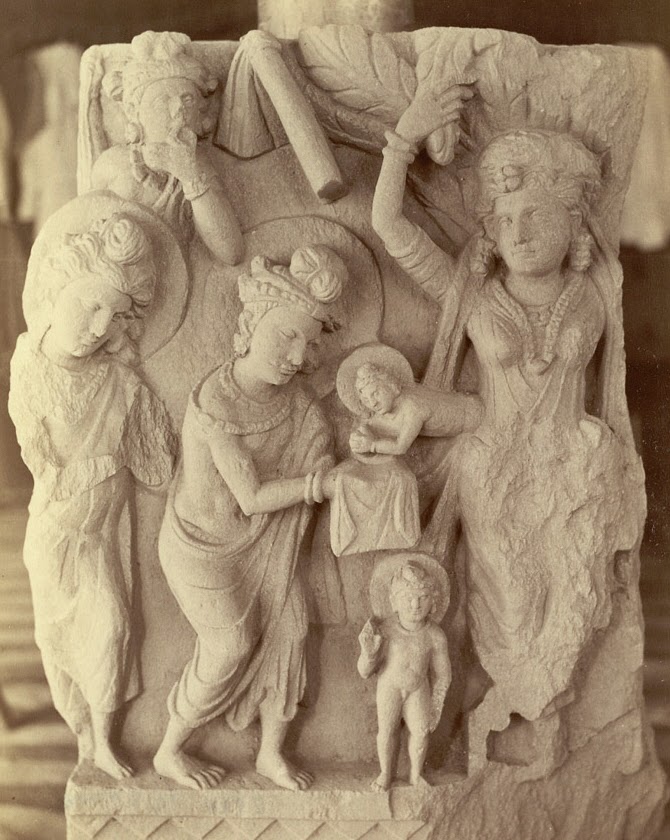
This idea, that engaging in one of the most social, most cooperative, most intimately friendly actions that human beings enjoy with one another can ever make you ‘impure’, has been a bee in my bonnet ever since I began to question what the idea of sexual purity, like the Cult of the Virgin, really stands for. For ages, human belief systems have equated virginity, especially of women, with sacredness. The stories of the birth of Horus, of the Buddha, of many of the Greek gods, of Jesus, all illustrate this obsession many of the world’s cultures, and especially religions, have had with virginity. (The virgin birth of the Buddha seems to be a later addition: early Buddhist texts honor the Buddha’s father, as his natural father, as well.) These gods and heroes are made out to be more special, better than mere ordinary human beings, at least partly because their mothers didn’t create them with the help of another human being. Gods and saints have been more revered, and brides’ dowries have been higher, so long as they or their mothers are virgins.
So what does this say about our attitude towards human beings?
‘How about respect?’ one might ask. ‘How about the idea that we should practice self-control, that we should respect each other’s bodies, and not ‘use’ each other for our own selfish pleasure?’ I answer: this is both an important issue, and an entirely separate one. Sexuality, for human beings, is generally a deeply emotional thing, unlike most other animals (so far as we know). For us, it’s intertwined with the need for closeness, for intimacy, for feeling more alive, for just plain feeling good. In short, it’s one of the most richly sociable activities we engage in. And we can easily hurt each other through sex, when we lie to our partners, when we make promises we don’t keep, when we profess love to get what we want only to show indifference afterwards, and worst of all, when we inflict pain and violate their right to self-determination through rape. We expect each other to practice sexual self-control, and we are right to condemn ‘using’ anyone as a mere tool for our exclusive pleasure.

But sex outside of marriage is more often friendly, affectionate, respectful, mutually exciting, and consensual than not. Most of the time, it’s a good and valuable thing, not only for its own sake, but for what it can teach us about being good partners not only for the evening, but for life. And even when it’s not, when we use our sexuality selfishly, or to harm or deceive others, our bad behavior has no impact at all on their integrity or worth. We may be said to make ourselves ‘impure’ through our disrespect, dishonesty, cruelty, or violence; we may metaphorically be said to sully our own moral characters by wronging anotherYet we don’t have purity balls in which we pledge not to sully ourselves by lying, stealing, cheating, or murdering. There’s no Cult of the Honest Woman, no god or prophet honored by virtue of their mother’s never haven stolen anything. And we don’t ever imply that we can be made impure if others lie to, steal from, or cause harm to us. It’s sex that’s been so widely singled out and associated with the concept of transmissible purity and impurity in so many of the world’s ideologies, cultures, and religions, for reasons that are no longer useful, and no longer morally defensible.

When I look at the belief systems that sacralize virginity, it seems the common denominator is the inheritance of values from tribal, patriarchal cultures, in which life was wrested out of the land with great difficulty, where infant mortality was high and competition for territory was fierce. Keeping tight control over women helped ensure one’s bloodline was unmixed with that of competitors, and worthy of protection by the head of the household and the tribe. The mythology of purity and impurity, of ritual, superstition, and prohibition surrounding human sexuality is perceived as such effective method of social control that they persist in many cultures and belief systems even to this day (though sexual assault statistics over the decades reveal that liberal, secular societies generally have lower rates of sexual assaults than more sexually repressive ones). Over the years, the justifications have changed, but attitudes remain the same.

Yet most of the world’s population has long since left that harsh ancestral world behind, and we are in an age in which personal liberty and individual human worth and dignity are valued like never before. Murder, theft, assault, and sexual coercion and violence are vilified and illegal, and most societies now go out of their way to ensure individuals can express their personalities and pursue their own goals as much as possible, in safety and security. We also care to understand how and why our social institutions and practices can enrich and beautify human life, and to celebrate them, from conversation, humor, and storytelling, to music and fine arts, to dining with friends, family, and allies, to sex itself, as countless scholarly volumes, scientific studies, and works of art and literature attest.

I argue that this view of human nature, in which human beings are understood as both individually valuable and thoroughgoingly social, doesn’t have room for this concept of sexual purity and impurity. In fact, to say sex with another human being can ever make you impure is just about the most personally insulting and antisocial idea one can express: the claim that the touch of another human being can make you dirty is an attack on human dignity itself.

It undermines the concept of personal responsibility, in which we are morally accountable for what we do and not for what a person does to us. It treats sex as a thing that is corrupt and evil outside of a narrow context, in a way totally divorced from what we’ve discovered about the history, evolutionary biology, and psychology of human sexuality. It reveals a deep scorn for human nature, in which sexuality is as basic a component as rationality, language, the need to survive, to feel pleasure, to matter, and to find love and companionship. And it implies that human beings are innately corrupt, dirty, wicked things, redeemed only through distancing themselves from their own humanity.

Just as I reject all of these, so I reject the idea of sexual purity. And I think you should, too, if you believe that human beings are valuable and worthy of respect for their own sake.

* Listen to the podcast version here or on iTunes

* Also published at The Dance of Reason, Sac State’s philosophy blog

Encourage a More Progressive Islam: The Peaceful Muslim Majority Should Dominate the Conversation

The debates around the Charlie Hebdo shooting have been raging hot and fast: should there be a stronger military response to militant Islamists? Does the Quran promote or at least allow violence, and if so, is Islam really a religion of peace? Are principles of the right to free speech and basic respect for the feelings of religious people compatible?
We’ve tried, and mostly failed, the military response tactic. Even where gains appear to have been made in the short term, a new crop of fanatics soon rise up to strike, as they feel their country’s honor has been violated by invaders who have no right to dictate what they should believe, what laws they should make, or what form of government they should create. It’s a fact of history that invasion, real or perceived, by foreign armies invariably provokes those disposed to violence to take up arms; these, in turn, convince the young, the aimless, and the self-righteous to join them in their ‘sacred’ cause. Even if the intention of the ‘invaders’ is to liberate or to protect (though I’m not convinced that’s entirely or even usually the case on the part of governments), these military interventions usually turn out worse for everyone in the long run. Consider the domino effect from our early intervention in Afghanistan against the Russians to our seemingly endless war(s) in the Middle East. While each intervention on its own seemed justified to many in the short term, the deeper all parties dig themselves in with more fighting, the more the bodies pile up and the deeper the tensions run, generating yet more conflict.
So how about the religion itself, and its holy book? The Quran indeed contains violent passages, allowing and even commanding its readers to kill those who violate certain commandments or who don’t believe. The Bible is also chock-full of both divinely tolerated and divinely commanded violence, including rape, murder, mutilation, and lots of genocide. Christians, for centuries, invaded other countries, overthrew rulers, tortured and killed heretics and ‘witches‘ (including little girls), and harshly oppressed the Jews, from baptizing and kidnapping their babies to murderous pogroms. All this with consent, by silence or by instruction, of religious authority figures, including the Pope.

So why does the western world widely consider Christianity a religion of peace, and Islam a religion of genocide? Well, Christianity has undergone a pretty thorough reformation through the influence of better philosophical and evidence-based ideas, starting with the Protestants, continuing with the Enlightenment, and up to the Age of Science and Human Rights. With widespread literacy and open trade came the awareness that the old dogmatic, sin-obsessed, holy-war-glorifying ways are actually quite awful for human well-being, and that hey, if God loves us, maybe he doesn’t actually want us to live that way. Now, except for abortion clinic bombers, the odd Timothy McVeigh or Anders Behring Breivik, and certain pundits, fundamentalists, and warmongers who seem to long for the days of the Crusades, Christianity is now, in comparison, mostly a benign family of religions of tolerance, peace, and good works. Even if, as I believe, they get a lot of stuff wrong (mostly the metaphysical stuff; otherwise, many of the ethical systems they promote are not half bad), Christian religions bear little resemblance to their forebears who enacted Old Testament values with gusto. Same goes for (most of) the Jewish family of religions.

This takes to our modern Age of Human Rights, in which the rights and interests of individual persons are of primary concern, so that any and all human institutions, be it religion, corporation, community, or government, is judged by how well it serves to protect and expand human rights. Is Islam compatible with this new understanding of the importance of human rights, in that they are at least on equal footing with religion, if not taking precedence over it? (From the religious viewpoint, of course: most modern, reformed, and mainstream religions seem to promote a robust conception of the centrality of human rights in their moral systems, and see no real conflict. The most progressive believers, as well as atheists and secularists, think that too many religions are still retrograde and unjust in their beliefs regarding gay, women’s, and children’s rights.) Should the threat of offending religious people be sufficient to limit that most sacred of human rights to the western world, free speech? We’re still figuring that one out when it comes to extreme cases, such as those that specifically incite violence, or ‘hate speech’. But for the most part, I think the general attitude of the western world towards free speech is the correct one: it should rarely be constrained, except when’s demonstrable that severe and direct harm will almost surely result from it. Even the speech of people with the most disgusting views must be tolerated in the interests of being an informed person, since it’s important to know who they are and what the bad ideas are that influence them. Most religions in the western world have become pretty comfortable with the idea of free speech and have come to value it highly, including the more moderate forms of Islam.

So how to stop the seeming spiral of parts of the Muslim world into an orgy of violence and the ideological dominance of its most extreme and retrograde forms? Encourage and promote those who stand against those violent ideologues. Most Muslims belong to this category of believers, and number among the most humane, thoughtful, and decent people you may care to meet. These are the Muslims who feel most, and most justifiably, beleaguered. They are as horrified as anyone else at all the atrocities committed in the name of the religion they identify with, perhaps more so since it’s other Muslims committing these crime, and like most Christians today, emphasize the nice parts of their holy book and interpret away the rest. And I’m sure they feel, as this thoughtful piece successfully argues, that it’s as ridiculous to blame Muslims as a group for the actions of Muslim killers, as it is to blame all Catholics for child-raping clerics, all Jews for the ultra-Orthodox few slinging feces at schoolgirls, or all atheists for Stalin’s genocide. It’s as ridiculous to expect all Catholics, Jews, and atheists to apologize and justify themselves following such atrocities, as it is to expect all Muslims to.

While there are still large parts of the Muslim world living under the rule of governments whose laws still carry out a retrograde understanding of justice, it’s just not true that most Muslims condone terrorist acts. Indeed, while doing research for this piece, I had a far harder time finding Muslim leaders who justify any kind of violence, even physical punishment for ‘apostates’ and criminals, than those that do. Outside of the rantings of pundits, who jump on the relatively rare examples of communities where a significant demographic believe violence is justified, it’s just not the case that Islam necessitates violence any more than Christianity does. Both revere holy books rife with passages promoting violence, but few Muslims and Christians are guided more by those passages than the peace-promoting ones. Yet it seems the pundits’ rantings dominate the major media outlets, while the voices of the peaceful majority of Muslims are all too often drowned out.

So if you’re one of those screaming and pointing fingers at ‘The Muslims’, let’s all stop being so damned self-righteous and smug in our own ‘enlightened’ point of view (yes, you too, my fellow atheists). Those of us who are interested in living in a more just, peaceful, tolerant, and free world should encourage such progress wherever it’s found, by praising it and trumpeting it from the rooftops. While I, too, feel that the world will be a better place when religion has lost its still too widespread dominance over the human heart and mind, I also know that many religious people feel a deep sense of identity with whatever faith they were brought up in, and this rarely changes quickly.

Who, then, will change the minds of those Muslims who hold beliefs contrary to principles of human rights and personal liberty? Will it be vitriolic Christians who point out the speck in their eye while ignoring the historical plank in their own? Will it be atheists who shout ‘Look, I told you so, that’s what happens when you consider ancient tribal texts the source of your morals’? I don’t think so, if history and a large body of research into why and how humans form their beliefs are any indication. The people who will change the mind of Muslims will generally be other Muslims.

So share widely every story of Muslims who hate violence and love tolerance, knowledge, and freedom, and let it it drown out the fundamentalists; I, for one, am rooting for their side in the fight over what broadly defines their religion. After all, they have the credentials and the inside knowledge of how it is to be a Muslim, to demonstrate to their fellow believers that the best way to be Muslim is to believe in a God of peace, tolerance, and justice. If you support these good people, you will become a help, and not a hindrance, on the journey of the human race, religious and secular alike, towards a more peaceful, tolerant, just, and wise world.

Here are prominent and influential Muslims and Muslim groups who stand against violence, to which I’ll keep adding as I discover them… and there are plenty to discover. Please share as widely as you can!

The Arab League and Al-Azhar condemn the Charlie Hebdo shooting:

The Council on American-Muslim Relations condemns the Charlie Hebdo shooting:
The Grand Mosque of Paris condemns the Charlie Hebdo shooting:
Imam Hassen Chalghoumi condemns the Charlie Hebdo shooting:
Imam Imtiaz Ahmed condemns the Charlie Hebdo shooting:
President Abdel Fattah al-Sisi condemns the Charlie Hebdo shooting: 
 
The Union of Islamic Organizations of France condemns the Charlie Hebdo shooting:

What Leaving Religion Has Done for Me

I grew up as a member of a large and generally very religious, very conservative Catholic family. As I describe in an earlier piece, both sides of my family are close-knit and traditional, with a tendency to insularity. When I was much younger, I loved it. Religion, especially in its more traditional and fundamentalist forms, has many upsides: a strong sense of community, a feeling of intimate belongingness in a group that shares a creed, a mythology, a history, and an identity. There are things I remember fondly: the warmth that suffuses family faith-based rituals, like putting on a fresh new dress for Easter morning, or the excitement of Christmas midnight mass, with its rich decorations, solemn rituals, and stirring hymns. We would return and light the tree, a luminous and dream-like vision to a child who just woke up from the wee-hours car ride home. There were pancake breakfasts and coffee socials after Mass, Sunday school friends, singing in the choir, and suppression of giggles as my brother, sisters, and I pulled faces at each other during the hour-plus long service.

I also remember that religious fervor, that soaring feeling, that high, that rush of heart-swelling emotion that would come over me sometimes as I sought connection with the divine. In my mid-teens, Jesus was my ‘drug’ of choice. (Not that I did much in the way of drugs later, ahhh-hem.) The Catholic religion has many elements that suit a romantic temperament: prayers and chants, candles and incense, a baroque artistic sense, a preoccupation with death, suffering, and self-sacrifice, and a deep veneration for martyrdom. And no-one is more romantic than a teenager.

But that feeling of belongingness can also lead to insularity, so that you feel removed to some degree from the broader human community and from the wider world of ideas. There was a feeling of loneliness sometimes, of separation from the world. I remember times when my religious compatriots and I would bad-mouth secular people: their music, clothing, slang, history, practices, and beliefs and ideas (I later learned we were mostly wrong about what they actually think and believe). It felt satisfying, in a way, as it made me feel part of some exclusive club, but it felt a bit mean too. We portrayed the rest of the world to ourselves as a lost, sad, evil place compared with what our religion had to offer. We could rest easy, satisfied that we knew the truth and could lead more meaningful, ‘holy’ lives, here on earth and after death. (Though, oddly enough, I feared death terribly in those years, and thought of it often. Try as I might, the always vague promise of the joys of heaven failed to console me. I thought perhaps God was testing me: tests of faith are an important theme in Catholicism.)

As I approached adulthood, and began to meet people from different backgrounds, with different beliefs, faith faded and gave way to doubt. I’d always been a curious person, but my youthful shyness and anxiety, combined with my insular upbringing, kept me mostly isolated from the world beyond family and church. It wasn’t until I entered the workforce, and then attended junior college, that I discovered the wider world, one of dazzling variety, and found it suited my personality to a T.

Slowly, I began to emerge from my religious shell. I began to let down my guard, thinking: if my religion is true, my faith will survive running the gauntlet of questions, challenges, and opposing ideas, gaining strength along the way. After all, if integrity and love of knowledge are virtues and God is good, God would prefer even an honest atheist to an intellectually lazy believer. So I opened myself up to discovery, to an enthralling diversity of beliefs, ideas, cultures, and practices, a world with a rich and varied history. Science, literature, philosophy, history, art, culture, religion itself, all became available to me to explore, to consider, and to critique, honestly, in its own terms, and on its own merits. There were no more heresies and dogmas: now, there were facts and theories, truth and falsehood, useful ideas and otherwise. There was no more sin and redemption: now, there were systems of ethics and self-improvement, and considered moral judgments derived from considerations of good and bad, help and harm, beneficence and selfishness, virtue and non-virtue. The supernatural gave way to the natural, certitude to a healthy skepticism, blanket acceptance of creed to understanding, faith to belief ‘wisely apportioned to the evidence’.

I came to value the sense of belonging to humanity as a whole over the sense of belonging to a narrower community of belief. My newfound cosmopolitanism broadened my sense of care for and responsibility to my fellow human beings beyond the scope of any one ideology. The world was no longer divided into ‘Us’ (in my case, Catholics) and ‘Them’, the poor benighted souls wandering this world lost, hopeless, and forlorn. Instead, I came to understand that all of these tools we’ve developed, from morality to literature to government to art to religion, are products of the great quest to better ourselves, to attain the happiness and fulfillment that all humans seek. Religion, like culture, language, and so on, I came to understand as a human creation, and no more or less important, sacred, or immune to change and criticism than any other artifact. Religion lost its magic: since humans made religion, humans can reform or unmake it. I could glean the best of what it has to offer, and explore its history, appreciate its role in moral progress, gain insight from its ethical and metaphysical theories, enjoy the creativity which gave rise to its fables and rituals, and discard the rest.

Likewise, the whole of the great treasure trove of human thought became available to me for study and consideration. There is no list of banned books, no heresies. Instead, there are good ideas and bad ideas: theories that better explain the workings of the universe, and those that do not; beliefs that accord with reality and with reason, and those that do not; ideologies that lead people to do good and to lead better lives, and those that do not; literature and art that arouse the best emotions and enrich understanding in us, and those that do not.

Many religions, including the brand of fundamentalist Catholicism in which I was raised, lead many adherents to restrict the education of their children to a cherry-picked, often distorted or flat-out-wrong, circumscribed array of ideas, scientific theories, and historical accounts that accord with the doctrines of their faith. Many of these children remain ignorant of the wider world of human thought and history until something in their experience or personality compels them to look beyond the teachings of their youth. For example, my own dear grandmother, out of love but misguided by her piety, did a disservice to the education of her grandchildren by attempting, and in some cases succeeding, to restrict our education in this way. Her religious beliefs led to her conviction that a broad, liberal education offered too many temptations to disbelief, so she felt compelled keep us from learning anything other than that which would accord with her fundamentalist Catholic faith. As I later discovered, she was right, not for the reasons she thought. Truth, in my opinion, holds fast in the face of challenges; it does not give way as easily as error does. Each new thing I learned, then, was not a temptation: it was a window of opportunity for growing in understanding, and for replacing bad ideas with better ones. Fortunately, I inherited, and was inspired by, her adventurous side, her love of people. Over time, I encountered and fell in love with the wider world of ideas, through the people I came to meet and the broader education I eventually received.
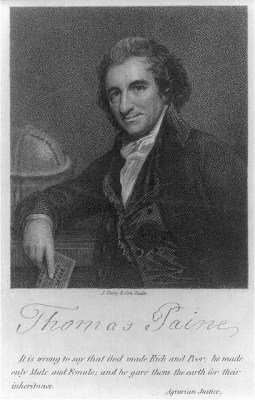
Now, in place of memorizing and reciting the Apostle’s Creed, I immerse myself in Aristotle and Mill, in Hume and Kant, in Wollstonecraft, Rose, Stanton, Jefferson, and Paine, in Avicenna and Aquinas, in Rawls, Pinker, Newberger Goldstein, and Hitchens. I can immerse myself in the teachings of religious founders as well, including the historical Jesus, endlessly more complex, fascinating, and inspiring than the blonde, haloed icon of the Baltimore Catechism. I have the opportunity to explore what all of these thinkers and reformers have to offer, to seek to understand their ideas on their own terms, putting aside those distorted accounts produced by religious rivalry. I can also, without fear of divine censure, explore the bad ideas people have conceived, from belief in witchcraft and satanic possession to the defense of torture, to racist ideologies, to ‘holy war’ and terrorism to social Darwinism (a sadly misleading term, does a disservice to a great thinker by associating his name with eugenics, a pseudoscientific theory contrary to his own ideas). I can try to enter the minds of those who created these dangerous and immoral ideas, in order to really understand how they came up with them, and to better explain why they are so terrible.

These days, I think of myself as a happier, more morally responsible, more intellectually honest, and more informed person than I would have been if I had remained religious. In that, I speak for myself only. Yet I know that this is true for many others, whose accounts celebrate the benefits of their own religious deconversions. It’s my impression that the most joyful, most passionate, and yes, the most resentful converts from religion are those who were brought up in more restrictive, fundamentalist belief systems. Critics say that such people gave up their religion because it was too hard, so they took the easy way out; or, that they just wanted to be able to ‘sin’ freely. I’ve had these accusations thrown at me many times. In a sense, they’re right, but not for the reasons they think. Many of these religions are too hard because their restrictions and demands are contrary to human nature since they’re based on deeply flawed accounts of it, and much of what they deem ‘sin’ is not wrong after all.

Many people attribute their own best qualities, of character, of behavior, of outlook on life, to religion, whether it’s the one they were brought up with or one they converted to. While I recognize the fact that religion can give a deep sense of fulfillment, the evidence indicates religiosity is not more of a predictor for good behavior than secularism. Study after study, personal account after personal account reveal that religious people commit most crimes at about the same rate, are about as generous, and behave about as morally overall than secular people.

My own observation is that people use religion to justify whatever way they are inclined to behave, good or bad. As the physicist Steven Weinberg points out, good people do good things, and evil people do evil things, regardless of religion. Many of the kindest, wisest, and most wonderful people I know are religious, and credit their religion with their moral successes. I’ve also known plenty of religious people use their beliefs to dodge responsibility for their bad behavior with excuses such as ‘the devil made me do it’ and ‘well, of course, I’m just a sinner’. They use this get-out-of-jail-free-card, such as this particular one available to Catholics (but of course, not necessarily endorsed by all Catholics): ‘I’ll just go to Confession later’. Some are otherwise good people who hold what I think are immoral beliefs, because they were taught to believe this way, and threatened with eternal punishment if they don’t. Others aren’t morally praiseworthy people in any sense of the term, and go through life doing only that which serves their own short-term self-interest. Religion, for these, is a matter of convenience or habit.

All of these things are basically true of the non-religious people I’ve come across, including my secular community of friends, family, and co-workers. Some are kinder than others, some are morally committed to doing good, some have a more nihilistic, selfish, or jaded view of the world. Yet here’s why I generally prefer a secular brand of morality over the religious: secular people generally take goodness more for granted. While this might sound counter-intuitive as an indicator of a better moral character or as a way of habituating oneself to better behavior, I think it’s excellent for both.

For example, when complimented on a good deed, a secular response is generally something along these lines: ‘well, obviously, it’s the right thing to do’, or, ‘it just feels right / good’, or, ‘of course, that’s how decent people behave’. These sorts of responses indicate that they see goodness as the default position, as required by reason, as a basic human instinct, or both. After all, human beings go through day to day life being decent to one another: we pay the asking price for the things we want, we step aside to let others pass on the sidewalk, we obey the rules of traffic, we say please and thank you, we lavish food, money, and medical care on strangers as well as family and friends, we spend huge amounts of our time communicating complex thoughts and ideas, and so on and so on. We take all this for granted, to our credit. When we compare the human species with all others, even to our closest relatives the chimpanzees, we find that our level of cooperation, generosity, and tolerance is quite remarkable. In all other species, some combination of predation, raiding, warfare, murder, infanticide, and/or indifference to suffering and the welfare of anyone besides close kin and allies are par for the course. With humans, however, such behavior makes the news.

Since goodness is the default, it’s badness has to be explained: by mental illness, alcohol or drugs, a bad upbringing, a momentary selfishness that overcame one’s better side, or by faulty ideology or culture. Therefore, most good deeds are not terribly remarkable: they are a natural product of sociability combined with reason. Sociability gives us the instincts to cooperate and help others; reason shows us that the more widely we extend our cooperation and good-naturedness, the better off everyone is in the long run.
Since secular people (as well as many liberal and progressive religious people) tend to believe in the basic goodness of human nature, they tend to be liberal in politics and morality, and broad in their conception of human nature. For example: since it’s everyone’s basic duty to help one another out, it’s right and just that we all pay taxes to create public welfare systems for those less fortunate than ourselves. To not institute public welfare systems is to say that it’s right that people should enjoy the benefits of civilized society, while being permitted to shirk their responsibility to care for those whom it hasn’t benefited. Another example: since most kinds of human behavior are good or at least morally neutral, there’s only a narrow range of behaviors that should be prohibited, namely those that actively harm others. Human nature, with its unique combination of advanced intelligence and strong social instincts, has evolved to include a wide variety of ways of being that are not only valid, but worthy of celebration, as they are indicative of the wonderfully fascinating, complex, endlessly inventive creatures that we are.

It’s no surprise, then, that secularists and adherents of the more liberal religions, which share this belief in basic human goodness and the broadness of human nature, have been on the forefront of reform and civil rights movements throughout history. Abolition of slavery, religious liberty, women’s, worker’s, and gay rights, indeed all of the great movements for reform and freedom, originated with the dissidents, the broad-minded, and the humanists. Religion is made for human beings, not the other way around.

An aside: there are certain leading secularists, such as Richard Dawkins and Sam Harris, who claim that the only ‘true’ religious believers are fundamentalists. They argue that liberal and reformed believers just want to pick and choose the ‘nice’ parts and discard the rest, which constitutes a betrayal of their religion. I think this view is not only historically inaccurate, it’s based on a more basic categorical error. Religions are not, and have never been, eternally ‘fixed’ systems that do, or ‘should’, remain constant over time. They are better understood as belonging to a category of things that include culture and language, all of which come gradually into being from thoughts and practices that are products of human nature, and change over time. Culture, language, and religion evolve as human nature evolves and as the totality of human knowledge and wisdom expands and is applied to current circumstances. It’s no more true to say that the only ‘true’ religion is that which remains wedded to a particular holy book or creed established by a synod, or a particular interpretation of these, than it is to say that the only ‘true’ communicator of English language is one who strictly adheres to the first Webster’s dictionary, or considers the Canturbury Tales or the works of Shakespeare as the eternal exemplar of ‘true’ English grammar and style.

Let’s contrast the more liberal, progressive, humanist views of secularists and moderate believers with the views of some of the more fundamentalist and hierarchical religions, usually descendants of tribal belief systems. This includes the brand of conservative Catholicism I grew up with (which is not reflective of all variants of Catholicism, some of which are quite tolerant and emphasize social justice). In these belief systems, humans are born in sin, ‘fallen’, weak and corrupt, and it’s only through the greatest struggle, and never without divine help, that we can achieve goodness. Their view of human nature is narrow: people are created to fulfill one of a number of comparatively few, narrowly defined roles, and behavior and proclivities that aren’t in accordance with these are sinful. Their view of life is one of spiritual warfare: we are beset on all sides by Satan and his agents as they vie with God for dominance over our souls. The way to redemption, then, is a lifetime of constant prayer, diligence, and suffering, battling one’s way to an eventual union with God that relatively few can achieve.

Secularism and the liberal religions, with their naturalist view of morality, emphasize the ordinariness of human goodness and the value of habitual, systematic, readily achievable goodness. The more rigid, fundamentalist religions, on the other hand, emphasize the difficulty of defeating evil and the value of relatively rare exploits of good deeds through heroic self-denial. While the latter may be more romantic and exciting, I think that the secularist and humanist view of human nature has been more conducive to human flourishing overall. It promotes a greater quantity of goodness in the world by making it understandable and accessible. This is readily apparent when we examine the evidence throughout history and up to the present time. Where we find tolerant governments and secular or progressive religious belief systems, we find less warfare, a higher standard of living, and a system of laws that protect all citizens from oppression, from each other as well as from government itself. Where we find civilizations dominated by religious fundamentalism, rigid ideologies, and aristocratic and ‘ordained’ hierarchies, on the other hand, we find the opposite.

In sum: leaving religion behind, for me, has proved not only emancipatory, but has provided a wonderful opportunity for learning, for critical thought, and for personal growth that I may never had had otherwise. I still have a residual distaste for religion, especially for its more ritualistic trappings, as one has a distaste for imbibing a substance one has overindulged in, or for fire after one has been burned. I shy away from churches, am creeped out by rote prayers, and feel depressed when listening to Gregorian chants and solemn hymns. (I feel very differently about other forms of sacred music, and wouldn’t you know it, I never heard any of them in the church of my youth.) Yet I seek wisdom from any source in which it may be found, and since I know that there is much to be found in religious traditions as there is in any arena of human thought, I look for it there, too, despite the inclinations I sometimes have against it. And one day, when my residual aversion to religion has finally worn away, I’ll be that much less in the sway of the kind of bias that blinds the intellect and blunts the understanding.

*Listen to the podcast version here or here on iTunes
*Also published at Darrow http://darrow.org.uk/2015/04/12/what-leaving-religion-has-done-for-me/

Welcome to the Podcast Edition of Ordinary Philosophy!

Hello dear readers, and welcome to the
podcast version of Ordinary Philosophy!

You can listen to the podcast here, on Google Play, or subscribe in iTunes.

Like many of you, I’m a big fan of podcasts, mostly because my life is very busy. One day in the future, I hope to have a lot more time to do each task one at a time, to really be present, as they say, as I wash the dishes, straighten the house, do the laundry, and perform all those other tasks that take up time, but not much thought.

But at this time in my life, between my day jobs, my creative projects, and spending time with friends and family (which I don’t do enough of these days, sadly), I don’t have enough time to keep up the world of ideas as nearly much as I’d like to by sitting down and reading. Instead, I keep myself informed and increase my education by listening to lots of podcasts: discussions with my favorite authors and thinkers, audio renditions of books and essays, debates, recordings of classes on my favorite subjects, and so on. I listen to these podcasts while doing those aforementioned chores, and let me tell you: as one who is not fond at all of household chores like doing the dishes and washing the floor, the podcast is a marvelous invention: they transform boring chore time into great opportunities for learning and exploration. I’m also an avid hiker, and it’s a wonderful thing to be able to immerse myself in some fascinating ideas or discussion as I immerse myself in the beauties of nature.

To begin with, this podcast will simply consist of audio recordings of my Ordinary Philosophy pieces. Over time, I may add commentary and who knows, perhaps interviews and discussions with guests. We’ll see how it goes. In the meantime, here’s Ordinary Philosophy in audio form: I hope you find it interesting and enjoyable!

… And here’s episode 2: Is the Market Really the Most Democratic Way to Determine Wages?
Originally published as an essay Feb 6th, 2014