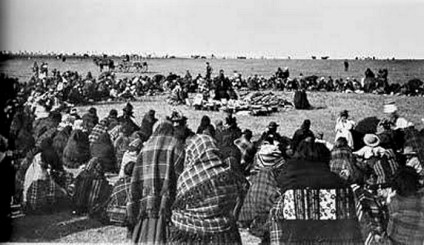
On July 26, 1948, Harry Truman Abolishes Discrimination and Segregation in the Armed Forces by Executive Order 9981

On this day, President Harry Truman took one more step towards realizing the idea, central to the founding documents of the United States, that all persons are created equal.

Thank you, Grinman Films, for telling the story!

Ordinary Philosophy and its Traveling Philosophy / History of Ideas series is a labor of love and ad-free, supported by patrons and readers like you. Please offer your support today!

Lewis & Clark Caverns, Yellowstone National Park, and Our Public Lands

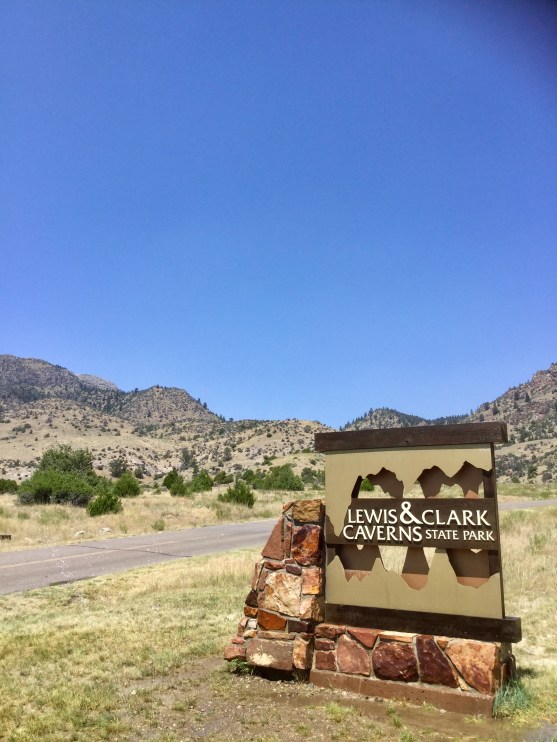
Entrance to Lewis & Clark Caverns State Park, Montana. Merriwether Lewis’ and William Clark’s expedition never visited these caves: they were not discovered (by whites, anyway) until the later 1800’s. But the expedition did pass nearby, a little further south along the Jefferson River, so the caverns were later named for these intrepid explorers

Journal: Billings, Montana, Friday, July 21, 2017

In my idealistic early adulthood, I often lamented how a certain coffee chain, with its weirdly militarist logo of a two-tailed mermaid with a star on her head (the old logo was much better), seemed to crowd out much of the market for charming coffee shops serving Italian style preparations while playing quality music. The more I’ve traveled, however, the more I’ve come to appreciate their ubiquitous clean bathrooms, unlimited wifi, comfortable chairs and tables to write and read at, and dependable coffee.

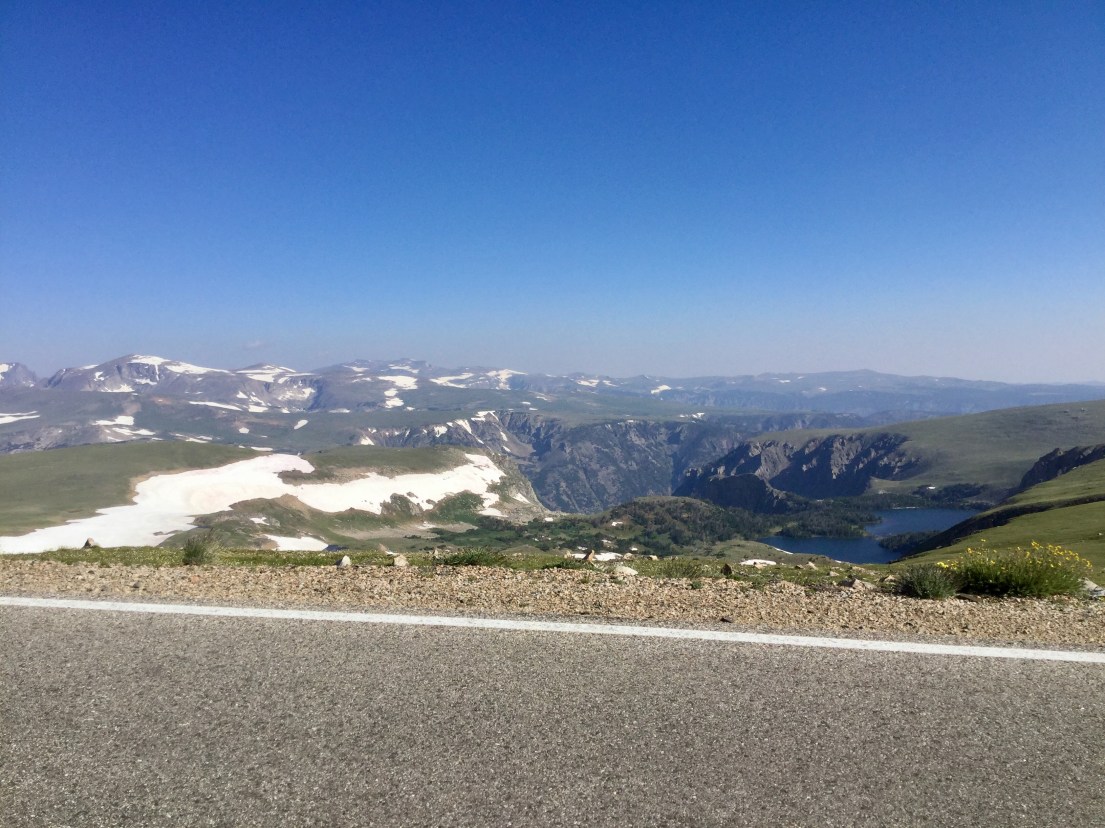
Especially this morning. I woke up disheveled and a bit cramped: I camped out in the car last night on a pull-out near the road block at the very top of the pass on Beartooth Highway, which runs through the mountains of the Shoshone and Custer-Gallatin National Forests. There’s construction on the road and I made it there too late to get through; they close the top of the pass during the night so that the construction zone can be navigated safely, only in daylight hours. My decision as to where to spend the night, therefore, was made for me: every campground, lodge, and hotel I passed were full. It was too windy to set up my tent in the dark, so I re-made the nice cozy nest in the backseat that I had made the night before to spend the night in Yellowstone. I fell asleep to a spectacularly clear and starry night, and I woke up to this:

View from Beartooth Highway at the top of the pass on Hwy 12 through Shoshone and Custer-Gallatin National Forests, very near to where I spent the night

So I drove another hour or two until I came to Billings. I found the nearest Starbucks, took a baby-wipe-and-sink bath, brushed my teeth, changed into fresh clothes, and ordered oatmeal and coffee. Now, clean and comfortable, I’ll tell the story of my last two days on the road.

After enjoying my cold beers and a little rest at Lochsa Lodge in the early evening following my Wendover Ridge Hike in the Bitterroot Mountains on Tuesday, July 18th, I drove to Butte, Montana, where I found a cheap but perfectly acceptable motor inn which had, most importantly of all, a bathtub. The hot bath finished the restoration that dipping my arms, head, legs, and feet in the Lochsa River had begun, and I awoke the next morning ready for a long day.

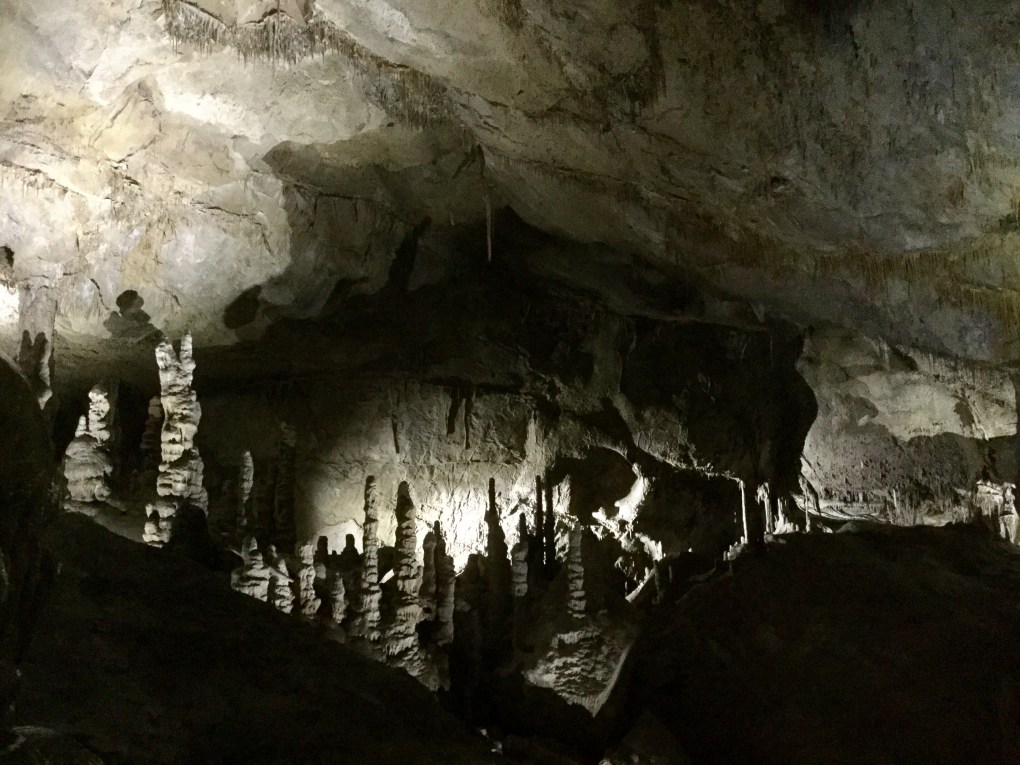
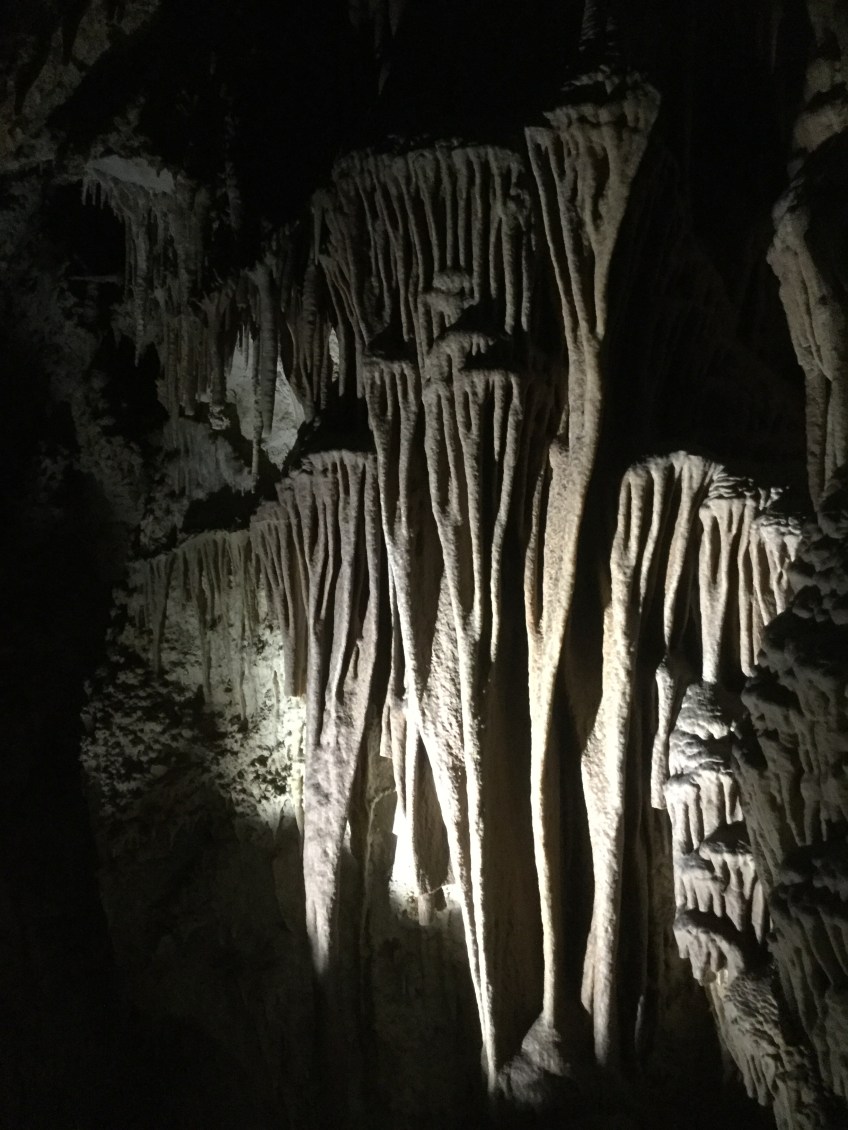
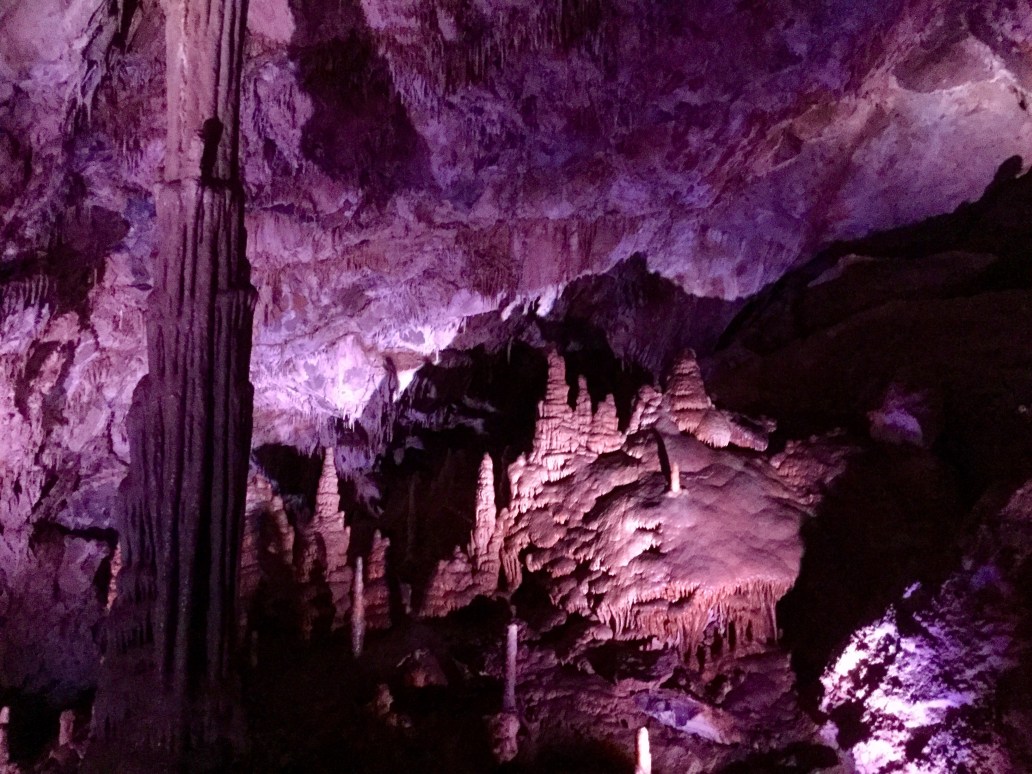
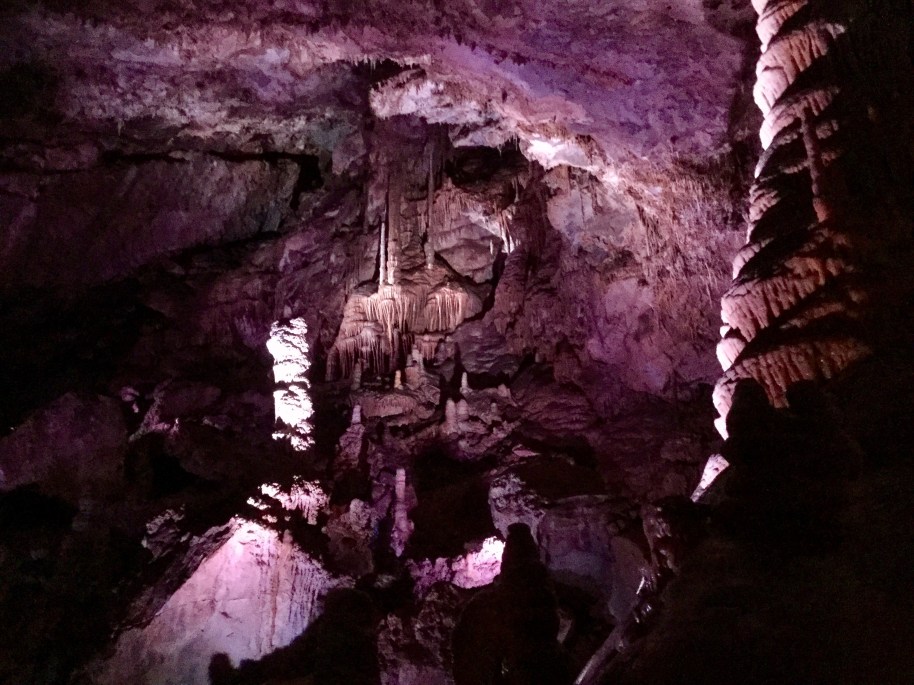
On Wednesday morning, July 19th, I headed for the west entrance to Yellowstone National Park, and on my way, I noticed signs for the Lewis & Clark Caverns. I had heard of them a few times before and that they were well worth seeing. So I followed the signs, and I’m so glad I did. Here’s (some of) what I saw:

The limestone and minerals that make up most of the Caverns are colored in shades of white and gray highlighted here and there with shades of yellow and pale rust. The Paradise Room, the lowest, largest, and most colorful cave in the system, is richly hued mostly in shades of pink and purple. The lighting is carefully designed to show the colors as they would appear in daylight.

In the first of the caves, we noticed that most of the small stalactites and some of the smaller stalagmites were broken. This mangling of this natural wonder occurred in the late 1800’s and early 1900’s, when the Caverns were managed and shown to tourists by private entrepreneurs, who charged high prices and allowed visitors to break off pieces as souvenirs of their visits. This is yet one more of the hundreds of examples to show how important the national and state great public parks are. Unfortunately, profit motives and human psychology very often result in short-sighted decisions that cause long term harm, and the tragedy of the commons is revealed in the way some individuals rob the wider community of the opportunity to enjoy the riches nature has to offer unless the people unite to protect, defend, and steward them. Government, in this case as in many others, does provide an invaluable check and balance to the self-centeredness and destructiveness that form parts (but only parts) of human nature.

So I’m with documentarian Ken Burns in his belief that the National Park System (and by extension, every state and regional park system) is America’s best idea. Yellowstone, Niagara Falls, Yosemite, the Grand Canyon, Virginia’s Natural Bridge, and countless others of the most awesome, most beautiful, and most rare of the landscapes built by the forces of nature, were despoiled and marred by humans seeking to profit off these wonders regardless of whether their efforts served to protect or destroy them in the long term. Much of the damage is still being repaired if it can be at all, and some of the damage is ongoing and still unresolved as in the case of the great Yosemite Valley in my own California, where heavy car traffic is causing pollution, overcrowding, and wildlife destruction. Even good government fails sometimes, so the public needs to act as a check and balance on that as well. I would recommend that we demand that the National Park System close off Yosemite Valley to private car traffic.

Early Wednesday evening, I arrived at Yellowstone National Park, the first national park in the world (way to go, America!) and explored many of its wonders, stopping along the way to inquire at every campsite I passed whether a site had opened up. At long last, late in the evening, one did, a tiny RV site where pitching a tent is not permitted. So, I slept in the car. I felt better about that anyway, since as I was about to pull in to park, I watched a tall, thin man in a black shirt and a long black pleated glossy skirt walking slowly and deliberately backwards through my site, like a scene out of David Lynch’s Twin Peaks. I’m pretty broad-minded in my opinions of human behavior since I consider the variety and creativity in the human species among the most interesting and often delightful of natural phenomena, but this was a little weird. I let him do his thing undisturbed.

Once he left, I created a cozy sleep space in the backseat with my sleeping bag and camp sleeping pad, additionally padded at one end with my coats, towels, and sweaters, then I stepped outside, sipping from the large bottle of ale I brought with me and leaning on my rental car, looking at the brilliant stars showing between the black silhouettes of the trees. Eventually, a sustained rustle of a large creature of some sort sent me scurrying to my backseat nest. I didn’t fear bears here since the large number of other campers and their fires would keep them at bay, but the strange man had left me just a little spooked, rather to my surprise. So I laid there in the car drinking more of my ale and thinking about the amazing sights I had seen earlier that evening, only a few of which are pictured below:

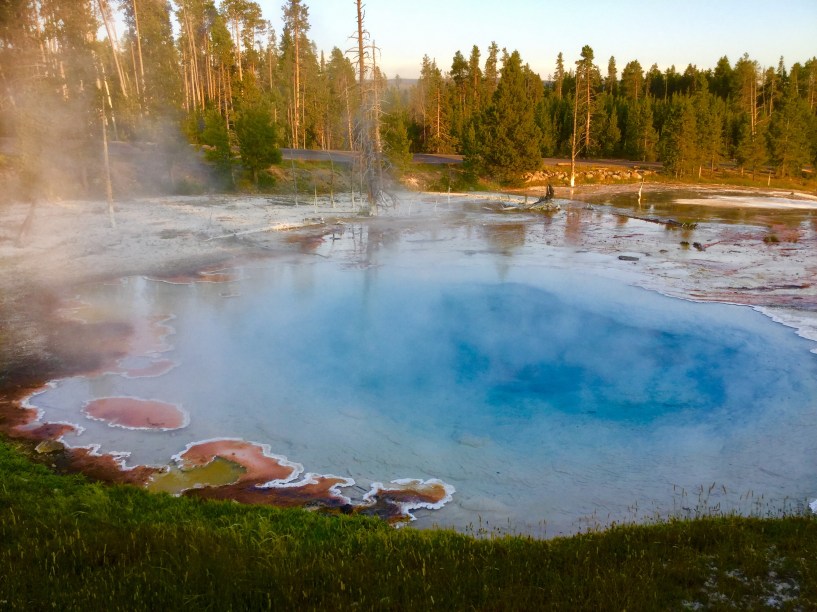
Fountain Paint Pot, with intense blue above the white surrounded by brilliantly colored microbes and minerals. The water is incredibly clear and you can see the deep opening in the earth from which the water wells up

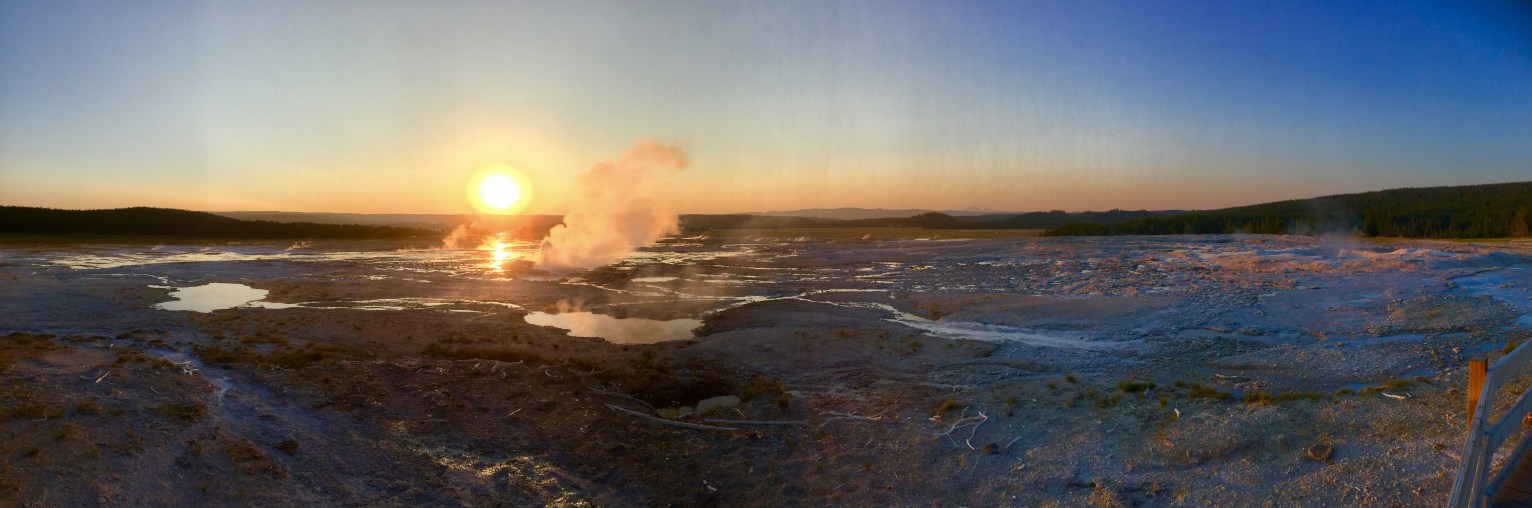
The sun sinking low over Artist’s Paint Pots, Yellowstone

I watched Old Faithful erupt for several minutes just after sunset.

The next morning, July 2oth, I explored the park. I saw wonder after wonder after wonder! Here are some of them:

Looking at the Grand Canyon of Yellowstone from the top of Lower Falls. I see where the park got its name

View of the Lower Falls from the side of the Grand Canyon of Yellowstone. I didn’t get any successful pictures of the osprey’s nest on a tower of rock near the cliff side, where the mother was guarding and feeding her two young. It was a beautiful sight to see her swoop gracefully through the air and quickly return with wiggling prey. A nature videographer on the overlook kindly let me get a few good views of the action through his camera.

A view of Yellowstone from the road between Tower / Roosevelt Junction and Mammoth Hot Springs. On recommendation, I took a brief trip to Gardiner to get water and a few supplies and to find a nearby campground to return to that night, still having no luck in Yellowstone. On the rise above Gardiner across the river and the valley between, I got these beautiful views of Yellowstone. But when it comes to a campsite, no luck here either! I shrugged my shoulders and returned to the park. Something was bound to work out… the spirit of adventure was and is strong in me, and I don’t care much where I sleep

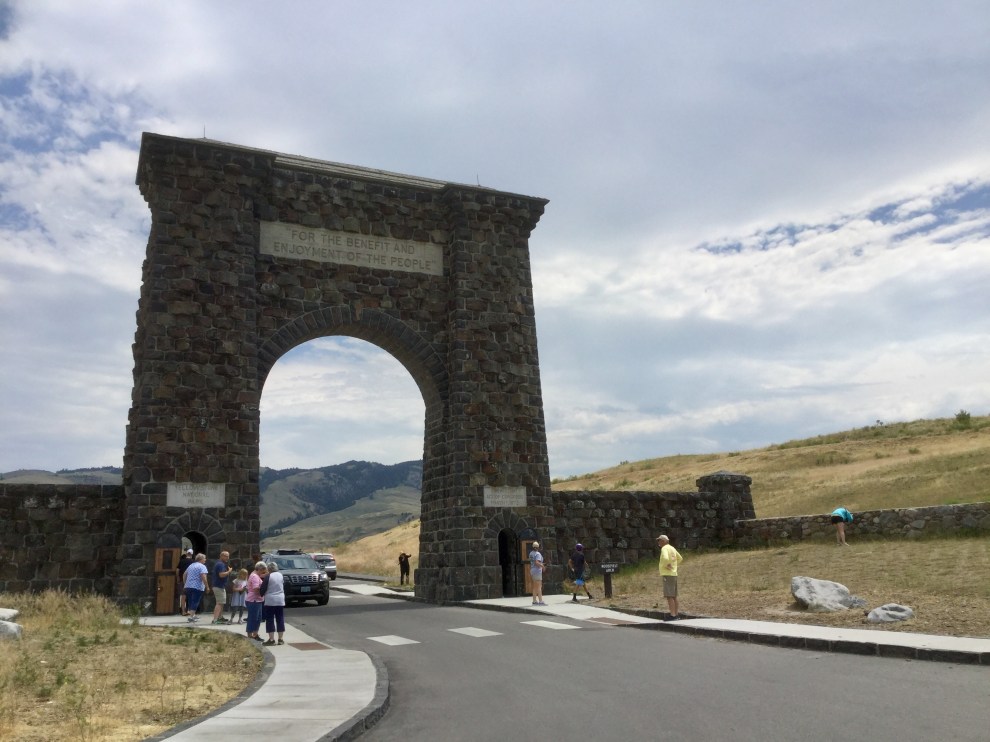
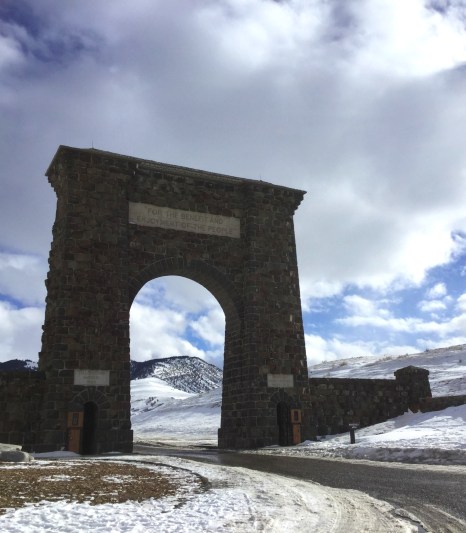
Roosevelt Arch at the north gate of Yellowstone; I was here last this January and the backdrop was white with snow where it’s now green.

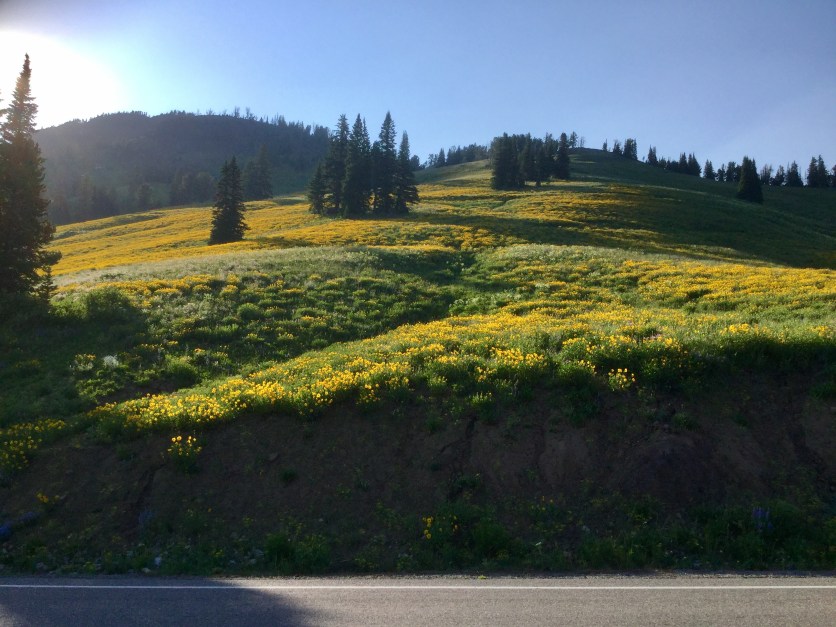
A hillside clothed in brilliant grasses and wildflowers across from the similarly garbed Mt. Washburn, Yellowstone NP

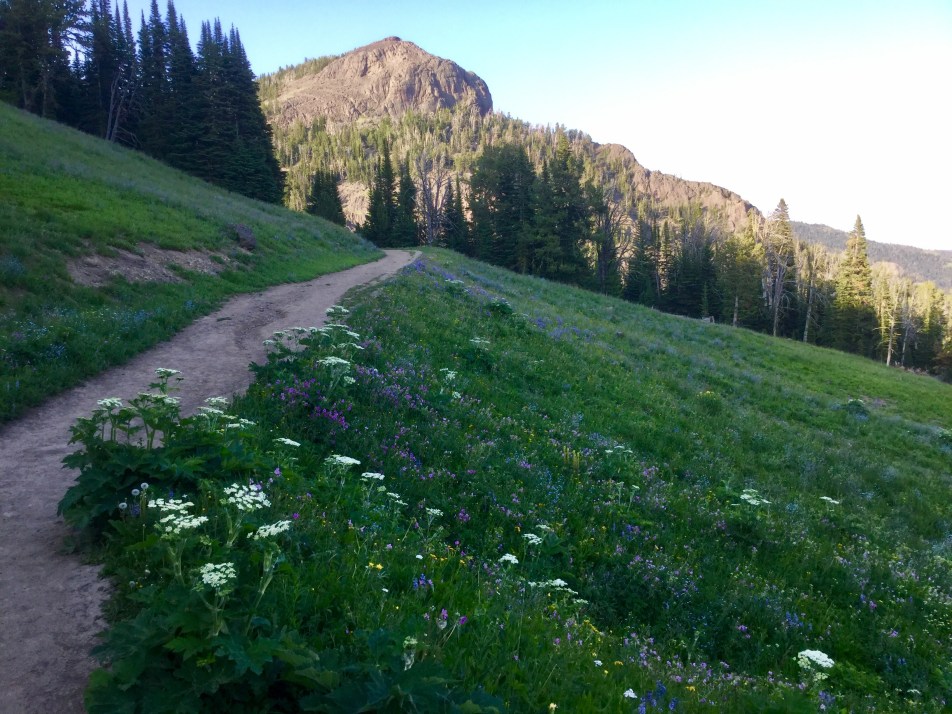
The trail up Mt Washburn, a 3-mile hike which climbs 1,400 feet

See the animals dotting the side of Mt Washburn? I saw so much wildlife up here: elk, horned mountain sheep with their young, birds, and chipmunks.

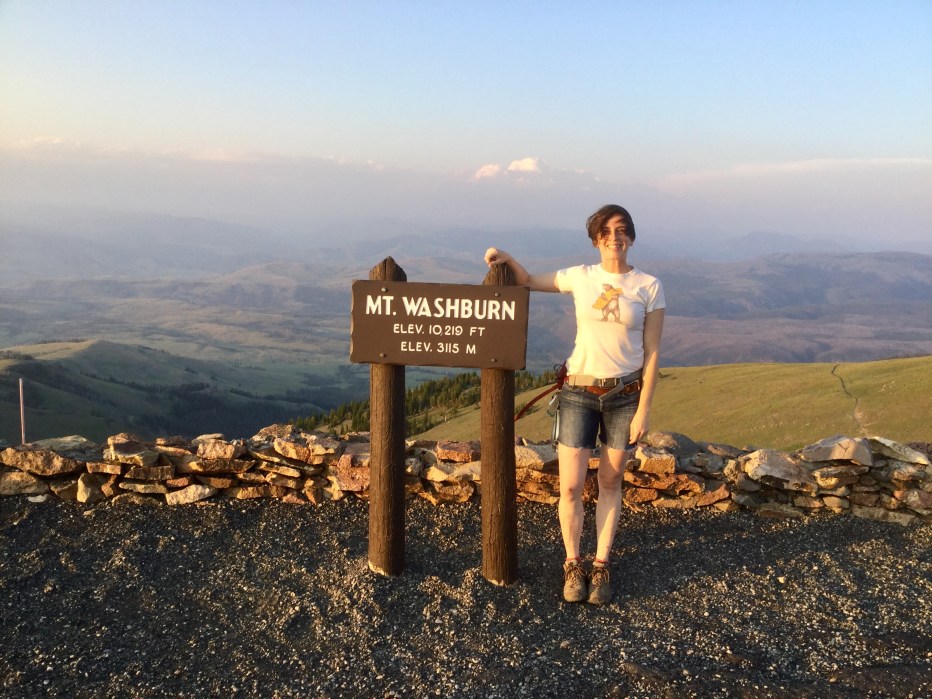
At the summit of Mt Washburn. My elation is pretty evident in this photo

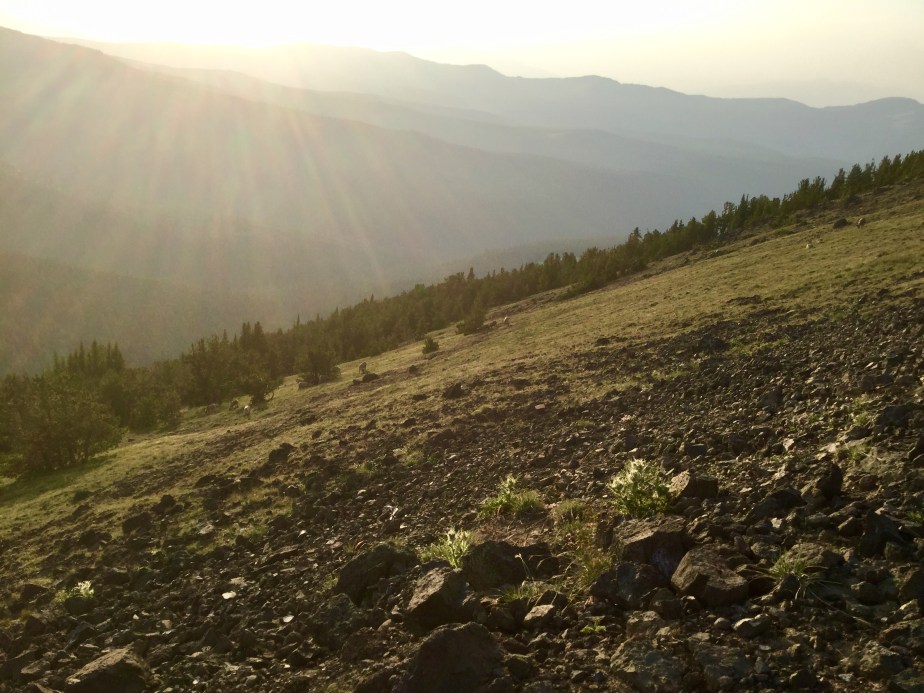
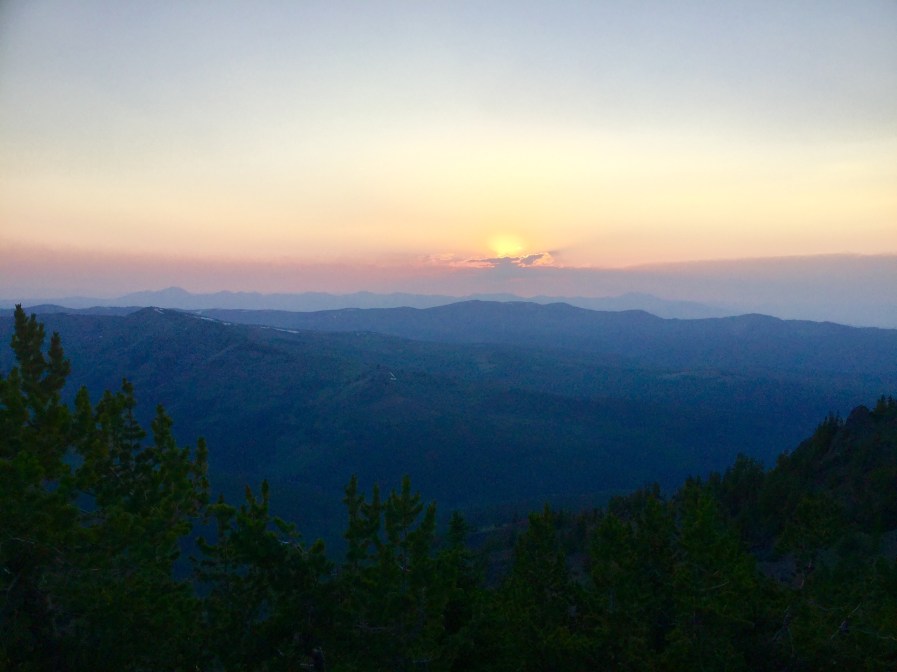
The setting sun from the trail as I descended Mt Washburn

From the base of Mt Washburn, I readied myself for the drive of undetermined length from Yellowstone, Hwy 212 towards I-90 en route to my next destination via Cooke City-Silver Gate. When I was in Yellowstone in January, I saw a lot of buffalo but hadn’t seen any at all this trip. But as I drove in the dark, my headlights picked up a dark shape off to the side with two glowing eyes. I stopped and put on my hazard lights as a fuzzy, light brown, charmingly ungainly creature appeared, followed by a mother buffalo and two more calves. Over the next fifteen minutes or so, I watched a small herd of buffalo wander onto the road then mill around. Two young males found this a perfect place to tussle and push. Bison social hour was finally ended as an impatient motorist finally decided to clear the road by driving slowly at the herd, honking, until they took fright and scampered off the road. A little further on, I came across another car, pointing in the other direction, with its hazard lights on and its bumper caved in. The driver ruefully confirmed that he had collided with one of the herd, but the stricken animal was nowhere to be seen. Buffalo are hardy creatures, I hope that one recovers from the impact. Later on, my headlights picked up elk, two waddling fat little creatures (marmots?), and a red fox. As you may imagine, I drove particularly slowly after all that.

I drove on, winding up and up and up, until I reached that roadblock I told you about. I gazed at the bright, bright stars awhile, then curled up to sleep.

Ordinary Philosophy and its Traveling Philosophy / History of Ideas series is a labor of love and ad-free, supported by patrons and readers like you. Please offer your support today!

Bitterroot Mountains and the Lewis and Clark Wendover Ridge Hike

A view through the windshield of Petty Creek Rd / Rte 489 between I-90 and Hwy 12, Lolo National Forest, Montana

Journal: Powell Campground & Lochsa Lodge, Clearwater-Nez Perce National Forest, Monday, July 17th, 2017

After lingering over breakfast this morning with my sister Bonnie, cousin Beth, nephew Cory, and cousin Mo, I realized there was no way I was making it from Spokane to Yellowstone National Park today. So I thought: why not camp near Lochsa Lodge and do the Lewis and Clark Wendover Ridge hike, which friends of mine will be doing later this week, on the way? I’ve left plenty of time in my itinerary to go spur-of-the-moment adventuring. My friends have told so many tales of joy and hardship on this hike that my curiosity and spirit of competition just can’t resist the challenge. So, I make my decision. I stop at Superior Ranger Station off I-90, discuss my plans with the two oh-so-kind and helpful women there, and get directions. The ranger here who knows the trails, as well as the ranger she conferred with by phone at Powell Ranger Station, both warn me that the trail is extremely rough and in parts nearly impassible, not having been maintained in any way for at least two years. Sounds to me right now more like a dare than a warning.

I head south on Petty Creek Road, a beautiful drive through a pastoral valley, and over the ridge to Highway 12 and a short drive back west. I was here last in snowy, frigid January. It’s very different today.

Lochsa Lodge, Clearwater-Nez Perce National Forest, Idaho

I was in these mountains last when on a delightfully nerdy literary-historical retreat to celebrate my 40th birthday in my own way. Rather, it was just one, a newer one, of my own ways. I delight in parties, too, and in camping, and in going off on solitary adventures in which I also meet new people. On my actual 40th birthday, I went camping with a tiny company of closest family and friends, foregoing the usual New Year’s celebration with dancing, drinking, and light carousing. But I was feeling a little more pensive this time around and wanted to go off and do something on my own as well. So I went on a retreat a few weeks later which took me to Lochsa Lodge, right across the campground from where I am now, and made those very friends who will be doing the Wendover Ridge hike in a week or so. The thermometer never topped freezing when I was here last; now, it’s green and lush and warm. The campground is teeming with fat little chipmunks and birds, and the hidden animals are no doubt likewise well fed in all this abundant growth.

My tiny tent at Powell Campground, Clearwater National Forest, Idaho

The little orange tent is set up, a little green plastic doll shoe in the corner. I’ll be sleeping in my niece Savannah’s cast-off tent, very lightweight and very small. It’s sufficient for these summer days: it’s 8:30 pm as I write this and I don’t need sleeves yet. I’m using this little cast-off tent since I’ll be flying to Scotland at the end of this trip, and have no room in my luggage to take a good tent with me across the sea. It’ll go to a thrift store when I reach Chicago.

I hike trail 25, which runs north and south. I know that if I can’t find the trail or if I lose it, I could never get too lost: to the north is the top of the ridge, to the east, the West Fork of Wendover Creek and the fire road that runs along it, to the west, the other road and the steep hillside. And, of course, to the south, is the Lochsa River

Journal: Whitehouse Campground, Lolo National Forest, Idaho, July 18th, 2017

This morning, I’ll hike from the Lochsa River to Wendover Ridge, the steep 7-mile hike that those same friends I made during that January retreat call the ‘Wendover Death March.’ It follows the route (more or less) that Merriweather Lewis and William Clark took over Wendover Ridge, on a trail used by the Nez Perce, with a Shoshone guide. I’ll tell you the story tomorrow.

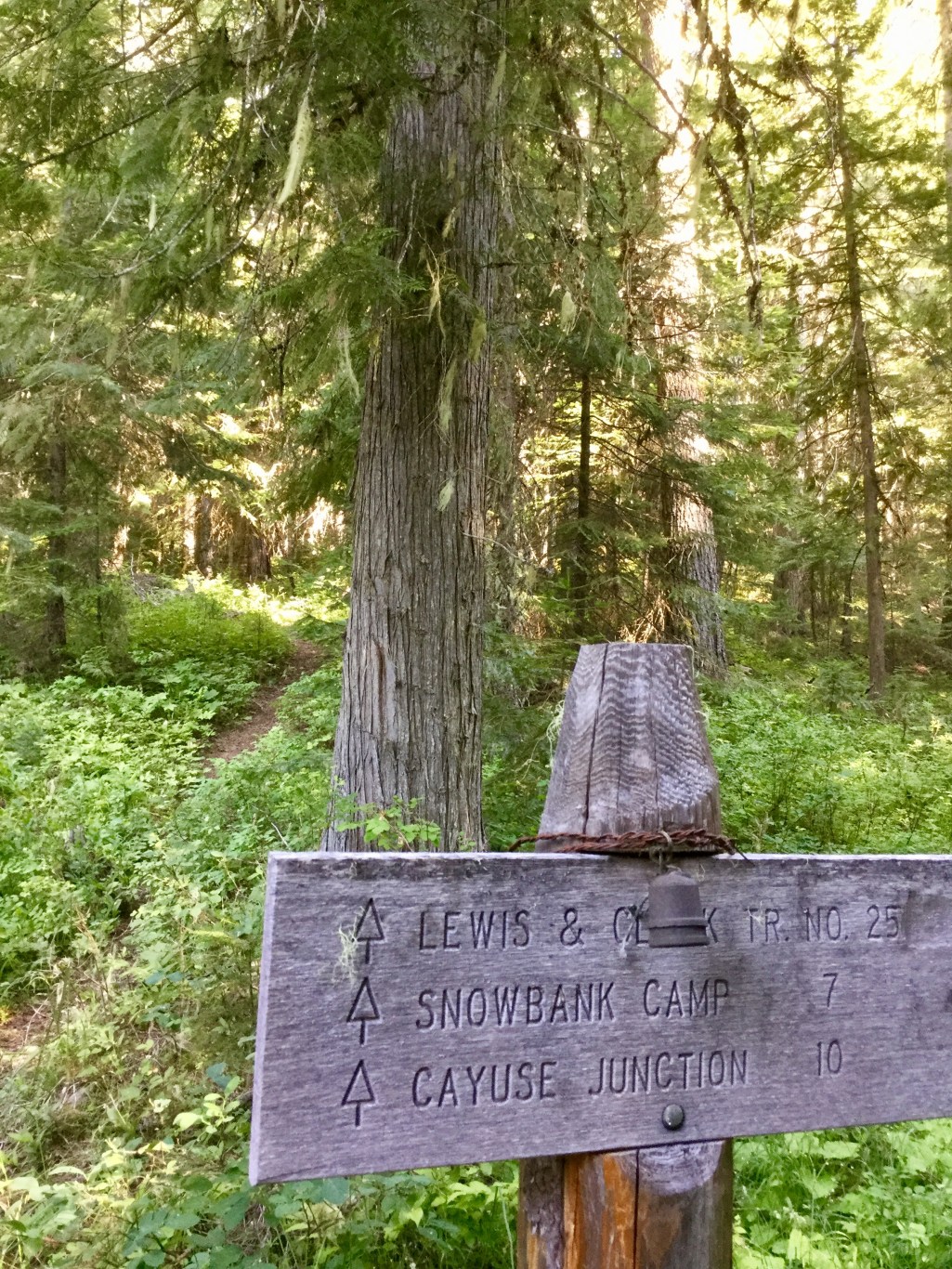
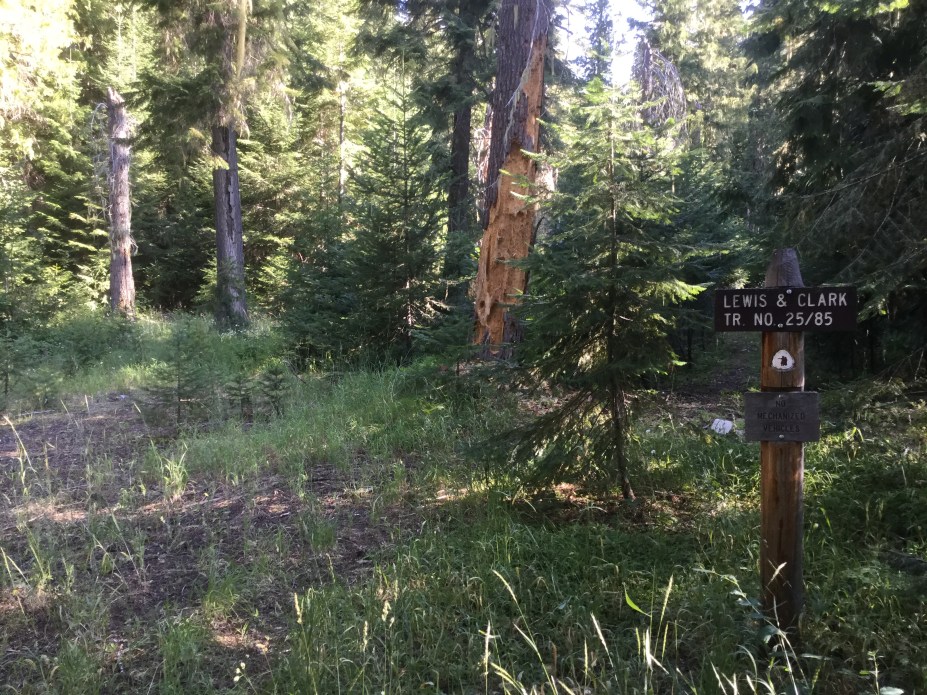
Trail marker for Lewis & Clark 25: 7 miles to Snowbank Camp on Wendover Ridge

Journal: Cafe at Park & Main, Butte, Montana, July 19th, 2017

From this cafe, I’ll tell the story of yesterday’s hike in annotated photos, with this introduction: relaxed from a hot bath last night, with that satisfying feeling of combined mild soreness and strength the day following strenuous exercise, a warm bowl of oatmeal and berries in my belly, a second hot cup of very creamy coffee, and the open road and adventures yet to come before my mind’s eye, I am as happy as a person can be.

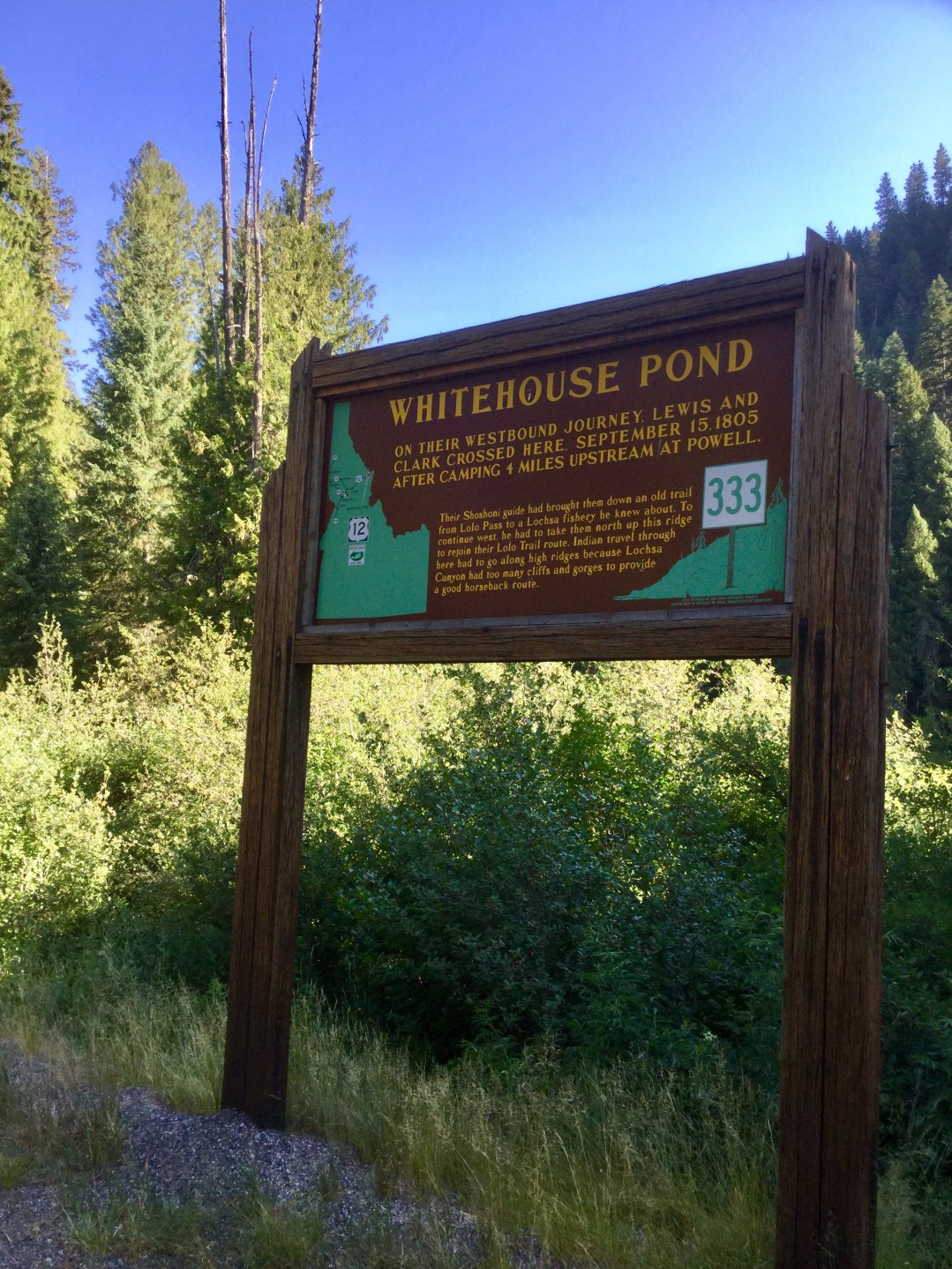
This sign, not far from the trailhead, tells a bit of the Lewis & Clark story on this route

Sign marking the start of the overgrown Trail 25, Nez Perce-Clearwater National Forest

I climbed the steep first section of the trail, at times clambering over fallen trees and pushing through soft, lush, lower overgrowth, until I reached a fire road. I turned right, misreading the map, which is partially obscured by a little annotation where it portrays this section. The trail follows to the right of the road, not to the left of another which branches off, and I chose the wrong branch. I go half an hour out of my way before the sign for the Wendover Creek West Fork alerts me I’m too far east. No matter. It’s a lovely warm-up for the rigors of the next section of the hike. I go back to where I had turned onto the road and find the partially obscured trail marker which sets me on the right path again.

The butterflies are out in force in Clearwater National Forest

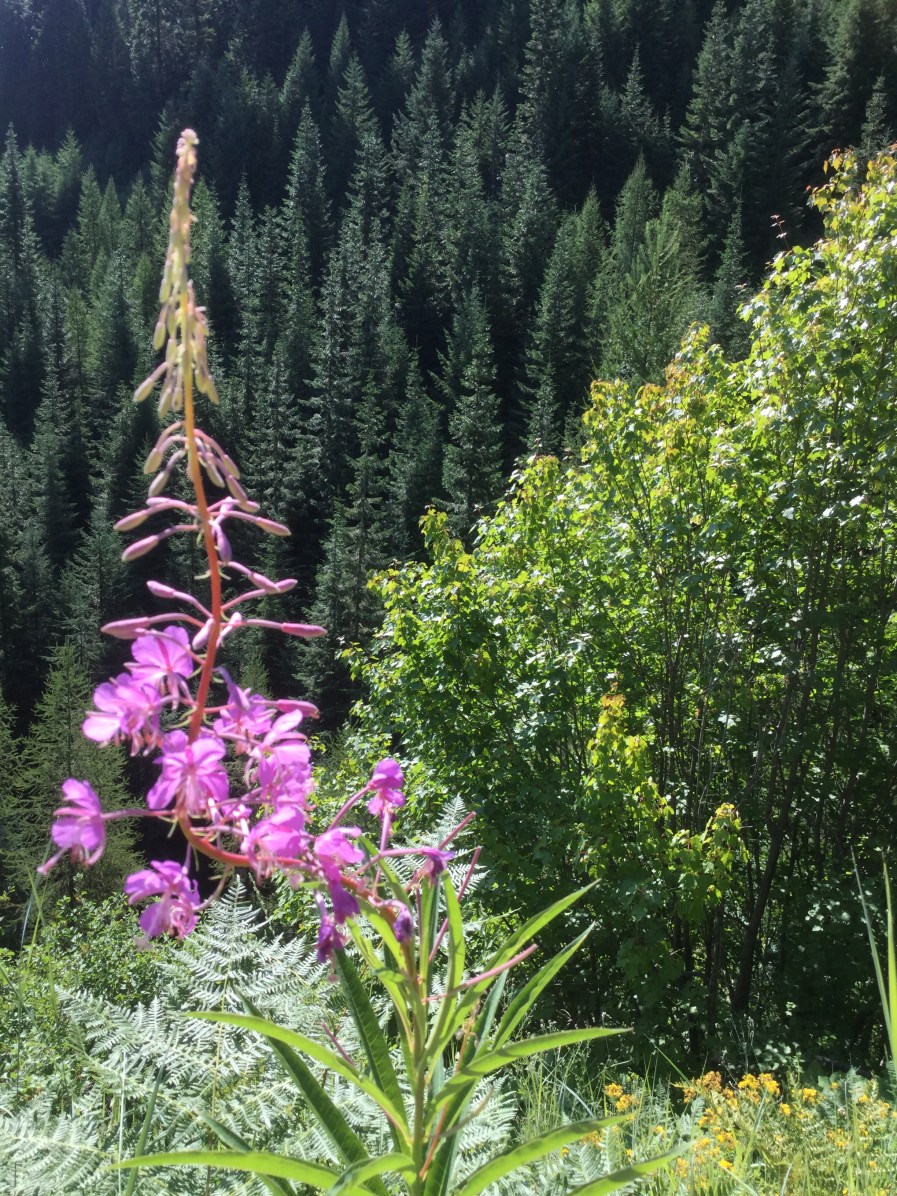
A cone of purple wildflowers echoes the shape of the trees on Wendover Ridge, Bitterroot Mountains, ID, 2017 Amy Cools

A cone of purple wildflowers echoes the shape of the trees on Wendover Ridge

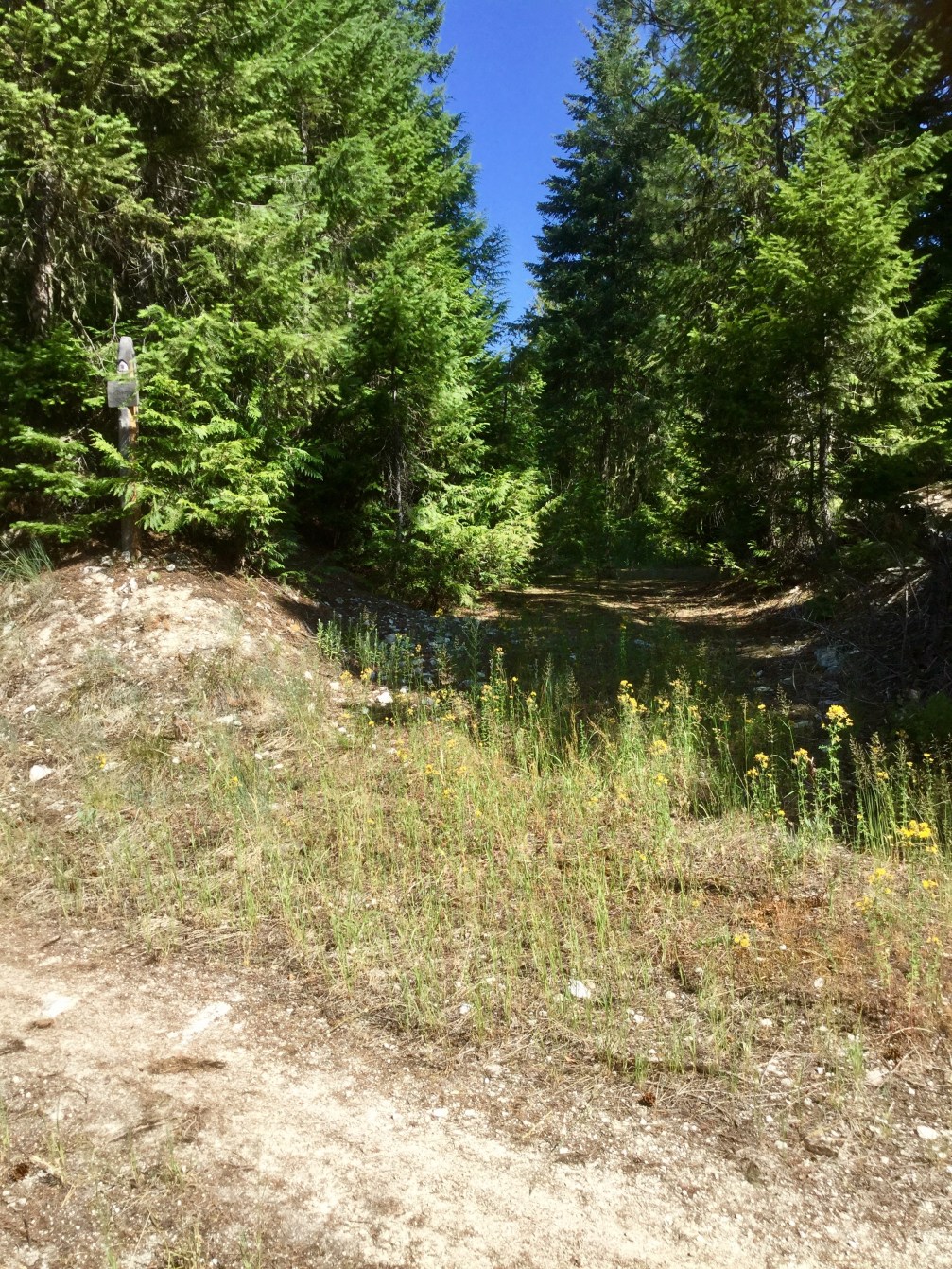
Ah-hah, there’s the trail marker, off to the left among the tree. I was too far off to the right to notice it when I made that wrong turn.

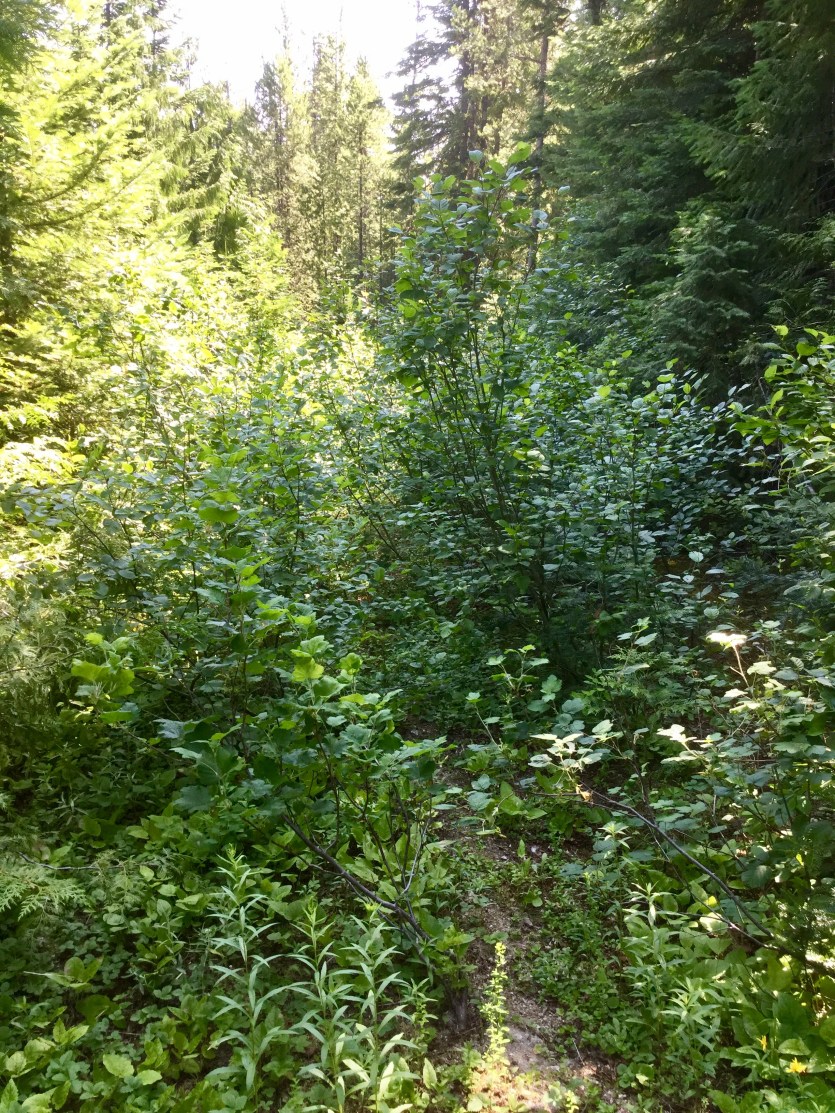
Yes, there’s a trail under there

…. and under all that too. The trail’s overgrowth and fallen tree debris get thicker and thicker the farther I go. I should have worn pants, however warm the weather

I dub these ‘Jazz Hands Ferns’

A chipmunk tail, cleanly severed, draped decoratively on a stump. Creepy.

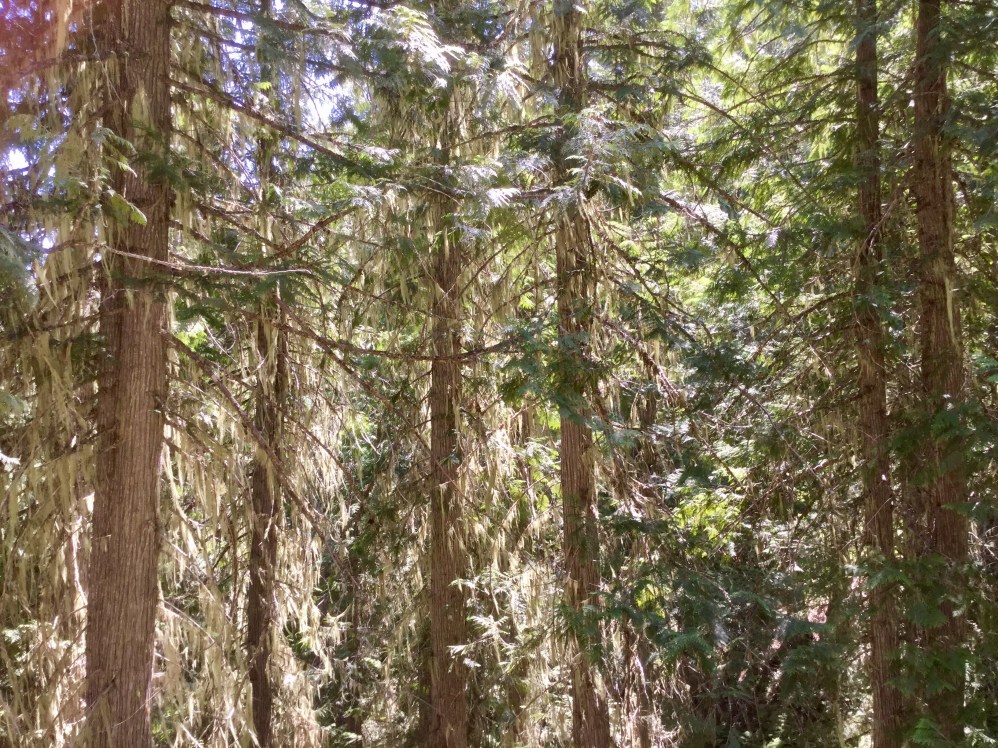
Hanging mosses drape a grove of trees

Another winged beauty

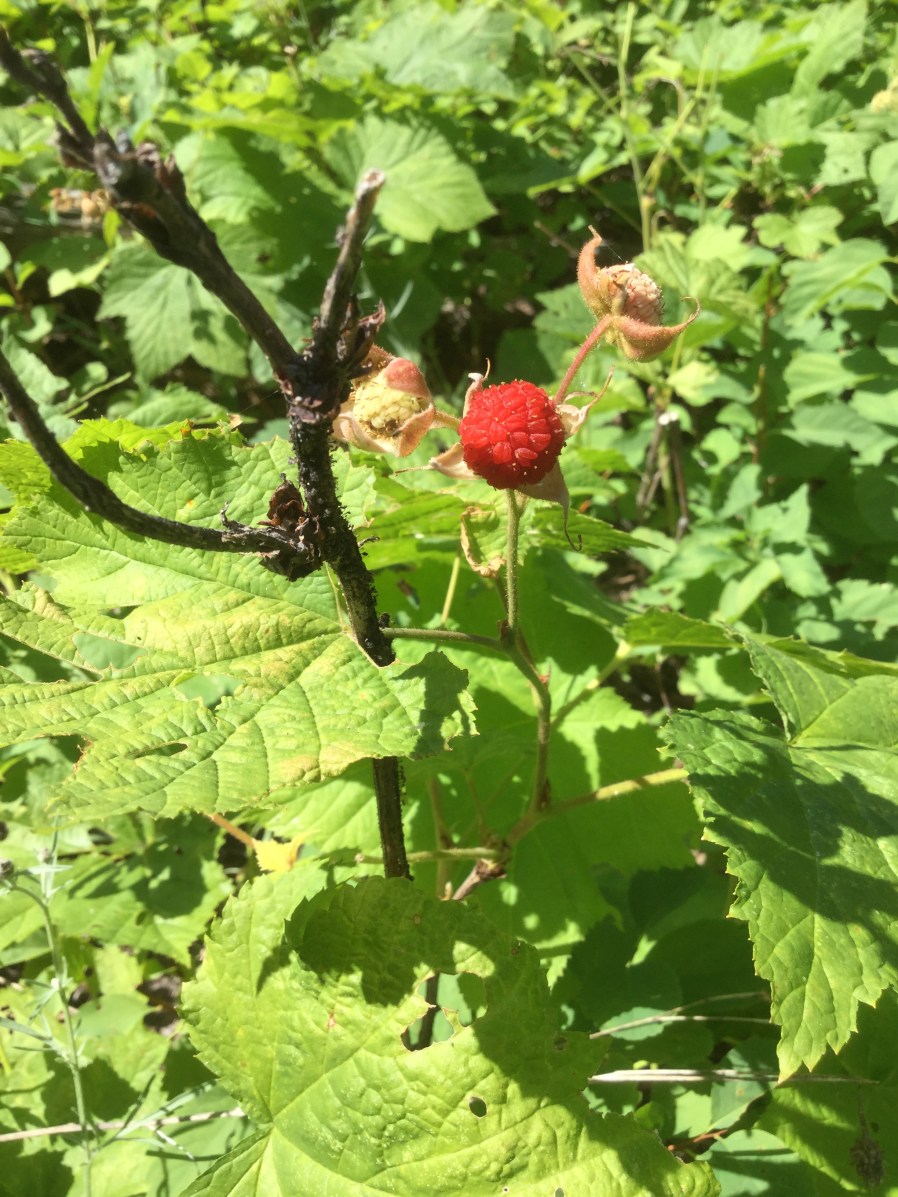
Thimbleberries, with a lightly sweet and tangy taste. The ripe fruit turns bright red and soft, and lifts easily off the underlying structure which it covers like a cap, or thimble. They also grow plentifully along one of my favorite hikes in the Oakland hills in California

Stunning view from the side of the ridge somewhere in the vicinity of the trail. At this point, I turned back about an hour ago. I believe I nearly reached the summit but I could not find the trail, try as I might, among the loose litter of needles in a large grove on a particularly steep section. I was nearly out of water and it was very hot: I’m still recovering from a chest inflammation and laryngitis following a particularly nasty chest cold and needed more water than usual. But the deep breathing of clean, dry, deliciously scented mountain air and strenuous exercise of the day invigorated me, and I felt better and better as I went along, nearly recovered. Still, it seemed prudent to turn back while I still had a little water, since I had hiked a long, hard distance already.

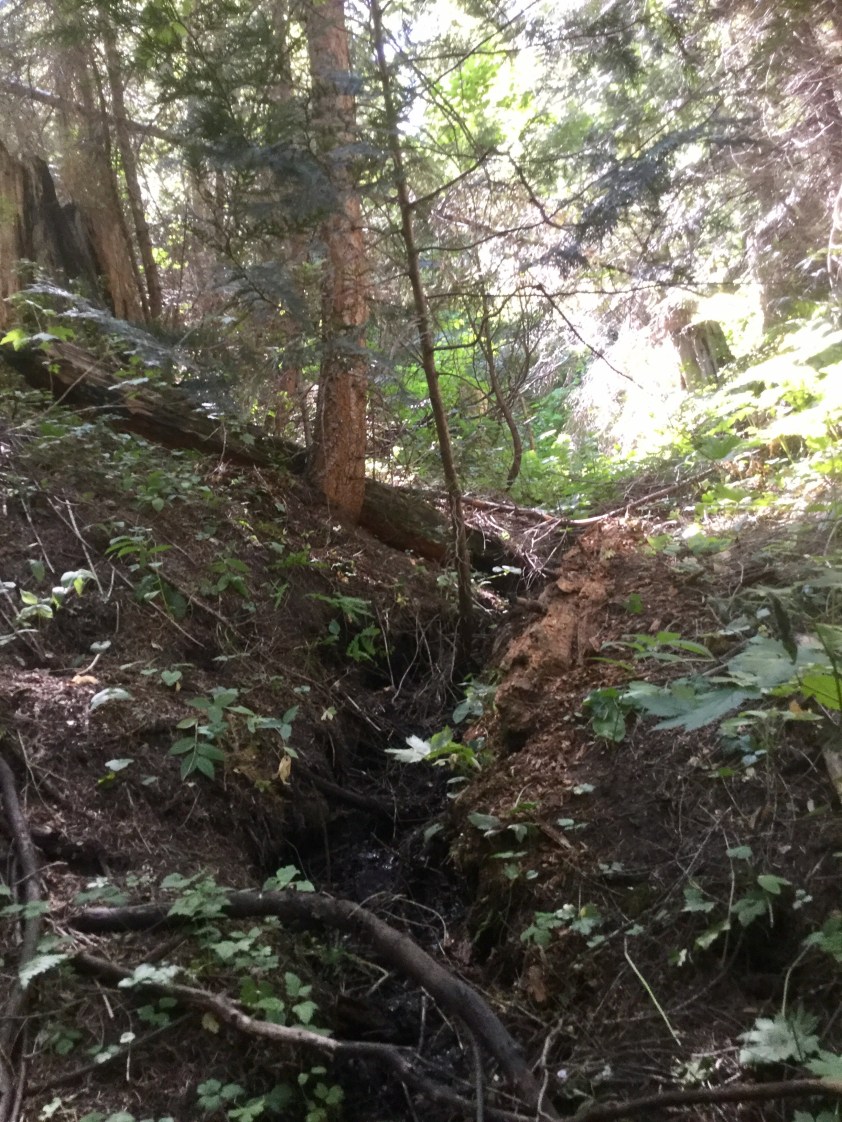
A little brook that feeds into Wendover Creek’s West Fork. Farther up, I found a large, muddy spring bubbling up over a large area; I discovered it as my shoes squelched right through it under its obscuring blanket of happy leaves. I searched and found a section where it filtered through a little patch of sand and tiny rocks. I tipped one of my canteens and pressed it gently on its side into the sand, so the water flowed into it nearly to the top. Then, I poured it into my larger canteen through my cotton shirt, filtering out most of the silt. The water was cold and minerally and incredibly refreshing. I filled the larger canteen with filtered water, and the smaller again with unfiltered. My water worry assuaged, I continued with renewed confidence. Not finding a better route down, I decided to follow the water, which I knew must inevitably lead to Wendover Creek. It was steep and required lots of sliding and Tarzaning down the slope from the overhanging strong but bendy branches

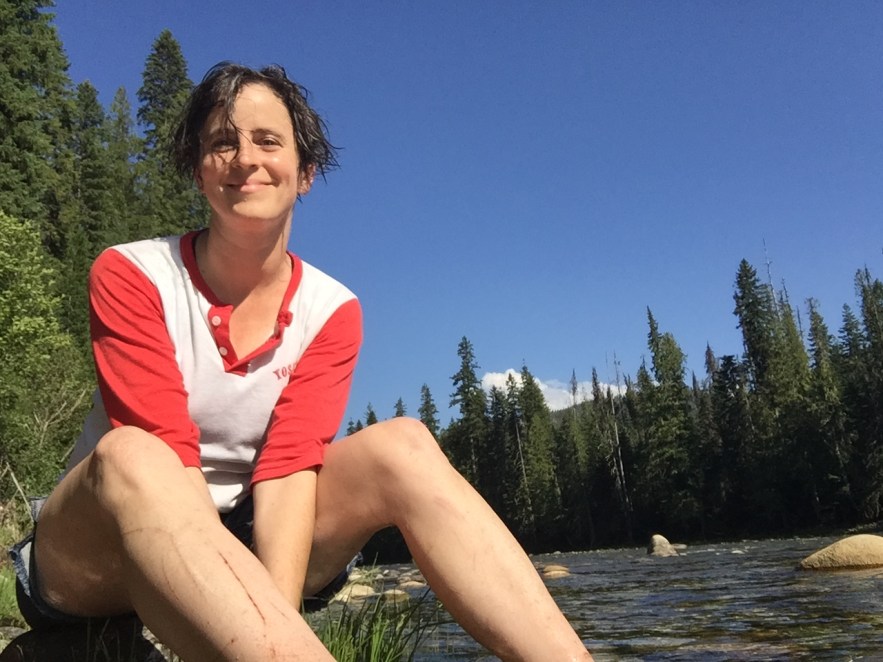
This is what a tired and very happy hiker looks like

I tore up my legs a bit on this adventure: I recommend pants despite the heat. Oh well.

I was glad to reach this fork of Wendover Creek, which is what I was aiming for hiking down off-trail, Bitterroot Mountains, ID, 2017 Amy Cools

I was glad to reach this fork of Wendover Creek. I was aiming for this creek since hiking downhill off-trail, which I knew was in this fold of the mountain on this side of the ridge. I finished the hike on this gravel fire road which takes me back to the main road just west of Whitehouse Pond, where I had begun the hike

One more of Nature’s winged jewels

The hike accomplished, I bathed my stinging legs and hot head and arms in the Lochsa River. What a glorious day. I completed it with two cold beers at the Lodge, a little rest, and a nice drive to Butte, Montana, and – oh, the joy – a hot bath and a long sleep. The hike took 8 1/2 hours all told, including the hour-long accidental detour.

*Listen to the podcast version here or on Google Play, or subscribe on iTunes

Ordinary Philosophy and its Traveling Philosophy / History of Ideas series is a labor of love and ad-free, supported by patrons and readers like you. Please offer your support today!

Before You Can Be With Others, First Learn to Be Alone, by Jennifer Stitt

In 1840, Edgar Allan Poe described the ‘mad energy’ of an ageing man who roved the streets of London from dusk till dawn. His excruciating despair could be temporarily relieved only by immersing himself in a tumultuous throng of city-dwellers. ‘He refuses to be alone,’ Poe wrote. He ‘is the type and the genius of deep crime … He is the man of the crowd.’

Like many poets and philosophers through the ages, Poe stressed the significance of solitude. It was ‘such a great misfortune’, he thought, to lose the capacity to be alone with oneself, to get caught up in the crowd, to surrender one’s singularity to mind-numbing conformity. Two decades later, the idea of solitude captured Ralph Waldo Emerson’s imagination in a slightly different way: quoting Pythagoras, he wrote: ‘In the morning, – solitude; … that nature may speak to the imagination, as she does never in company.’ Emerson encouraged the wisest teachers to press upon their pupils the importance of ‘periods and habits of solitude’, habits that made ‘serious and abstracted thought’ possible.

In the 20th century, the idea of solitude formed the centre of Hannah Arendt’s thought. A German-Jewish émigré who fled Nazism and found refuge in the United States, Arendt spent much of her life studying the relationship between the individual and the polis. For her, freedom was tethered to both the private sphere – the vita contemplativa – and the public, political sphere – the vita activa. She understood that freedom entailed more than the human capacity to act spontaneously and creatively in public. It also entailed the capacity to think and to judge in private, where solitude empowers the individual to contemplate her actions and develop her conscience, to escape the cacophony of the crowd – to finally hear herself think.

In 1961, The New Yorker commissioned Arendt to cover the trial of Adolf Eichmann, a Nazi SS officer who helped to orchestrate the Holocaust. How could anyone, she wanted to know, perpetrate such evil? Surely only a wicked sociopath could participate in the Shoah. But Arendt was surprised by Eichmann’s lack of imagination, his consummate conventionality. She argued that while Eichmann’s actions were evil, Eichmann himself – the person – ‘was quite ordinary, commonplace, and neither demonic nor monstrous. There was no sign in him of firm ideological convictions.’ She attributed his immorality – his capacity, even his eagerness, to commit crimes – to his ‘thoughtlessness’. It was his inability to stop and think that permitted Eichmann to participate in mass murder.

Just as Poe suspected that something sinister lurked deep within the man of the crowd, Arendt recognised that: ‘A person who does not know that silent intercourse (in which we examine what we say and what we do) will not mind contradicting himself, and this means he will never be either able or willing to account for what he says or does; nor will he mind committing any crime, since he can count on its being forgotten the next moment.’ Eichmann had shunned Socratic self-reflection. He had failed to return home to himself, to a state of solitude. He had discarded the vita contemplativa, and thus he had failed to embark upon the essential question-and-answering process that would have allowed him to examine the meaning of things, to distinguish between fact and fiction, truth and falsehood, good and evil.

‘It is better to suffer wrong than to do wrong,’ Arendt wrote, ‘because you can remain the friend of the sufferer; who would want to be the friend of and have to live together with a murderer? Not even another murderer.’ It is not that unthinking men are monsters, that the sad sleepwalkers of the world would sooner commit murder than face themselves in solitude. What Eichmann showed Arendt was that society could function freely and democratically only if it were made up of individuals engaged in the thinking activity – an activity that required solitude. Arendt believed that ‘living together with others begins with living together with oneself’.

But what if, we might ask, we become lonely in our solitude? Isn’t there some danger that we will become isolated individuals, cut off from the pleasures of friendship? Philosophers have long made a careful, and important, distinction between solitude and loneliness. In The Republic (c380 BCE), Plato proffered a parable in which Socrates celebrates the solitary philosopher. In the allegory of the cave, the philosopher escapes from the darkness of an underground den – and from the company of other humans – into the sunlight of contemplative thought. Alone but not lonely, the philosopher becomes attuned to her inner self and the world. In solitude, the soundless dialogue ‘which the soul holds with herself’ finally becomes audible.

Echoing Plato, Arendt observed: ‘Thinking, existentially speaking, is a solitary but not a lonely business; solitude is that human situation in which I keep myself company. Loneliness comes about … when I am one and without company’ but desire it and cannot find it. In solitude, Arendt never longed for companionship or craved camaraderie because she was never truly alone. Her inner self was a friend with whom she could carry on a conversation, that silent voice who posed the vital Socratic question: ‘What do you mean when you say …?’ The self, Arendt declared, ‘is the only one from whom you can never get away – except by ceasing to think.’

Arendt’s warning is well worth remembering in our own time. In our hyper-connected world, a world in which we can communicate constantly and instantly over the internet, we rarely remember to carve out spaces for solitary contemplation. We check our email hundreds of times per day; we shoot off thousands of text messages per month; we obsessively thumb through Twitter, Facebook and Instagram, aching to connect at all hours with close and casual acquaintances alike. We search for friends of friends, ex-lovers, people we barely know, people we have no business knowing. We crave constant companionship.

But, Arendt reminds us, if we lose our capacity for solitude, our ability to be alone with ourselves, then we lose our very ability to think. We risk getting caught up in the crowd. We risk being ‘swept away’, as she put it, ‘by what everybody else does and believes in’ – no longer able, in the cage of thoughtless conformity, to distinguish ‘right from wrong, beautiful from ugly’. Solitude is not only a state of mind essential to the development of an individual’s consciousness – and conscience – but also a practice that prepares one for participation in social and political life. Before we can keep company with others, we must learn to keep company with ourselves.Aeon counter – do not remove

~ Jennifer Stitt is a graduate student in the history of philosophy at the University of Wisconsin-Madison. Bio credit: Aeon

This article was originally published at Aeon and has been republished under Creative Commons.

Ordinary Philosophy and its Traveling Philosophy / History of Ideas series is a labor of love and ad-free, supported by patrons and readers like you. Please offer your support today!

To the Great Plains and Illinois I Go, in Search of Crazy Horse, Sitting Bull, Abraham Lincoln, and Other American Histories

Roosevelt Arch at the North Entrance of Yellowstone National Park. Photo: January 2017 by Amy Cools

Hello, friends of Ordinary Philosophy!

From time to time, I take a trip to some corner of the globe, to explore the lives and ideas of great thinkers in the places where they lived and worked. For this series, I follow in the footsteps of thinkers who are no longer alive, since those who are still telling their own stories. But those who are no longer alive in the body live on in the ideas that they pass on, and in the example they provide for us to follow.

I’m pleased and excited to announce my seventh philosophical-historical adventure: an almost three-week road trip through the Great Plains and on to Illinois. I’ll fly from Chicago to Scotland on August 9th: I’ll be pursuing a master’s degree in the history of ideas at the University of Edinburgh starting this fall. In the meantime, I’m overjoyed to have this window of time to explore parts of my country which I’ve never seen, and to learn as much as I can along the way.

During this journey, I’ll explore Yellowstone and the history of National Parks in America (it’s been a great NP year for me!); I’ll travel throughout the Great Plains following the history of Crazy Horse, Sitting Bull, the Lakota and their and other Native Americans’ encounters with white invaders in the 1800’s and beyond; I’ll visit Springfield, Peoria, and Chicago following Abraham Lincoln, Robert Ingersoll, uniquely American forms of art and architecture, and other topics. I’ll also make many more stops and detours along the way.

Patrons of this series: Ervin Epstein MD, Liz and Russ Eagle, Tracy Runyon, Genessa Kealoha, the Cools-Ramsden family, and Shannon Harrod Reyes ~ With warmest gratitude, thank you!

Road Trip Through Indian Country to Chicago, En Route to Edinburgh
Bitterroot Mountains and the Lewis and Clark Wendover Ridge Hike
Lewis & Clark Caverns, Yellowstone National Park, and Our Public Lands
Little Bighorn Battlefield National Monument, Day 1
Little Bighorn Battlefield National Monument, Day 2
The Black Hills – Mt Rushmore, Black Elk Peak, and Crazy Horse Memorial
Standing Rock Reservation: In Search of Sitting Bull, I Find Sakakawea, Too – Part 1
Standing Rock Reservation: In Search of Sitting Bull, I Find Sakakawea, Too – Part 2
My Great Year for National Parks, Monuments, and Forests
Wounded Knee, Pine Ridge Reservation, South Dakota
Fort Robinson, Nebraska, in Search of Crazy Horse
Knox College, Galesburg, Illinois – Abraham Lincoln and Stephen Douglas Debate
Peoria, Illinois, In Search of Robert G. Ingersoll, Frederick Douglass, And Abraham Lincoln, Part 1
Peoria, Illinois, In Search of Robert G. Ingersoll, Frederick Douglass, And Abraham Lincoln, Part 2
Peoria, Illinois, In Search of Robert G. Ingersoll, Frederick Douglass, And Abraham Lincoln, Part 3

Athens and Springfield, Illinois, Part 1, In Search of Abraham Lincoln
Photobook: Marker and Train Station Where Abraham Lincoln’s Body Returned to Springfield, Illinois, May 3rd, 1865
Springfield, Illinois, In Search of Abraham Lincoln, Part 2
Springfield, Illinois, In Search of Abraham Lincoln, Part 3
Springfield, Illinois, In Search of Abraham Lincoln, Part 4
Springfield, Illinois, In Search of Abraham Lincoln, Part 5
New Salem, In Search of Abraham Lincoln
Hannibal and Florida, Missouri, in Search of Mark Twain
Chicago’s Union Stockyards Gate

And associated articles

Happy Birthday, Walt Whitman!
The Love of Possession Is a Disease With Them
Happy Birthday, Robert Ingersoll!
The Friendship of Robert G. Ingersoll and Walt Whitman

Ordinary Philosophy and its Traveling Philosophy / History of Ideas series is a labor of love and ad-free, supported by patrons and readers like you. Please offer your support today!

Happy Birthday, Ida B. Wells!

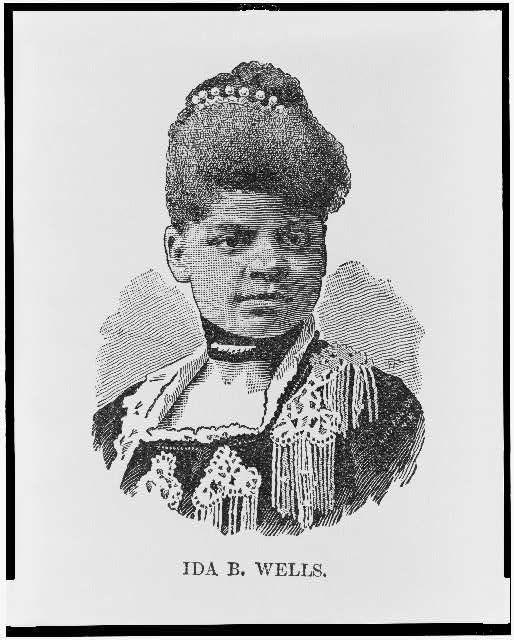
Ida B. Wells, head-and-shoulders portrait, published, 1891, Image retrieved from the Library of Congress LC-USZ62-107756, public domainIn the course of my journey following the life of Frederick Douglass last year, I was so glad to have the opportunity to visit the place in New York City where he may have first met the great Ida B. Wells. It was late 1892, and this fiery young newspaperwoman had published her very controversial piece of investigative journalism in the New York Age on June 25, 1892. It was expanded and published as a pamphlet later that year as Southern Horrors: Lynch Law in All Its Phases.

Many people at that time thought of lynching as an unfortunate and somewhat rare excess of race-hatred by frustrated Southern whites. And many more saw it as a lawless but not entirely unjustified species of vengeance against black men who had raped white women. But Wells would change all that. In early 1892, three of Wells’ friends were lynched after a dispute between themselves and white owners of a rival business. She was outraged, and began an investigation of the practice and history of lynching as a whole.

When Wells wrote Southern Horrors, she had already been an activist and writer for black rights for many years. In 1884, she resisted being forced out of the first class train car into the ‘colored car’; she later sued the train company, won the first suit, then lost on appeal. This incident (which echoes Douglass’ train protest in 1841) led to many other lawsuits, articles, and activism against anti-black laws and social practices. In 1892, her investigation of lynching revealed to Wells that lynching was far from just vengeance for rape, it was inflicted for petty crimes, supposed insubordination or impertinence, drunkenness, competition, and so on. She discovered that lynchings were not all that rare, either, and came to the conclusion that they consisted a form of social control, a replacement for the terrorism of the slave system.

Douglass was inspired and energized by Wells’ writing and anti-lynching work, and wrote a letter praising Southern Horrors as an introduction. He visited her in New York City where she was living for a little while as a writer for and part owner of the New York Age, which was (probably) published at the site I visited in Harlem. I visited a second site associated with Wells two days after my New York visit: she delivered one of her hard-hitting speeches in her speaking tour following the publication of Southern Horrors at Tremont Temple in Boston on Feb 13th, 1893.

Education was another driving force in her life. Her first job was as a teacher at age 14, and she taught for many years, over time supplementing her teaching with journalism, writing and editing for the Evening Star, The Living Way, and the Free Speech and Headlight. Another of her most controversial, consciousness-raising articles was published in 1891 in the Free Speech about the conditions in black schools: the poor quality of the buildings which housed them, and of the education and morals of the teachers and school boards who administered them. She was not fired outright, but the school refused to hire her for the next school year. She then went on to work full-time for the newspaper, promoting the Free Speech from city to city and writing articles along the way, until the Free Speech‘s offices and printing press were destroyed by angry whites after the publication of her ‘Lynch Law’ piece. Adversity only served to strengthen Wells’ resolve, each attack causing her to re-double her efforts on behalf of her people.

Wells went on to have a long and distinguished career in writing, investigative journalism, and activism for black rights and women’s suffrage. She worked with Frederick Douglass and W.E.B. DuBois, toured the United States and Europe as a speaker and activist, founded Chicago’s Alpha Suffrage Club, served as secretary of the National Afro-American Council, founded and became the first president of the Negro Fellowship League, and helped found the National Association for the Advancement of Colored People (NAACP), among many other things.

For a long time, Wells thought of marriage and romantic relationships as oppressive, where women were expected to defer to men and flatter their vanity. But one day, she met a man who must have made her feel very differently, an attorney, writer, and fellow advocate for black rights named Ferdinand Barnett. She married him and they raised four children.

Please follow the links below to learn more about Ida B. Wells. If I manage to accomplish the tiniest fraction of what she did in my own life, I would consider myself a great success.

Ordinary Philosophy and its Traveling Philosophy / History of Ideas series is a labor of love and ad-free, supported by patrons and readers like you. Please offer your support today!

~~~~~~~~~~~~~~~~~~~~~~~~

Sources and inspiration:

Ida B. Wells-Barnett‘, episode 25 of the History Chicks podcast by Beckett Graham and Susan Vollenweider.

Ida B. Wells-Barnett‘. Encyclopædia Britannica. Encyclopædia Britannica Online.

McBride, Jennifer. ‘Ida B. Wells: Crusade for Justice‘. From Webster University’s website.

McNally, Deborah. ‘Barnett, Ferdinand Lee (1858-1936)‘, in BlackPast.org

Steptoe, Tyina. ‘Barnett, Ida Wells (1862-1931)’, in BlackPast.org

Wells, Ida. B. Crusade for Justice: The Autobiography of Ida B. Wells. Ed. Alfred Duster. Chicago, University of Chicago Press, 1970.

Wells, Ida. B. Southern Horrors: Lynch Law in All Its Phases, 1892, via Project Gutenberg

Wikipedia contributors. ‘Ida B. Wells‘. In Wikipedia, The Free Encyclopedia.

Wintz, Paul Finkelman, Cary D. Encyclopedia of the Harlem Renaissance: K-Y. 2004.

Trump: For the love of Putin

Fareed Zakaria's avatarFareed Zakaria

By Fareed Zakaria
Thursday, July 13, 2017

The latest revelations about Russia and President Trump’s campaign are useful because they might help unravel the mystery that has always been at the center of this story. Why has Trump had such a rosy attitude toward Russia and President Vladimir Putin? It is such an unusual position for Trump that it begs for some kind of explanation.

Unlike on domestic policy, where he has wandered all over the political map, on foreign policy, Trump has held clear and consistent views for three decades. In 1987, in his first major statement on public policy, he took out an ad in several newspapers that began, “For decades, Japan and other nations have been taking advantage of the United States.” In the ad, he also excoriated “Saudi Arabia, a country whose very existence is in the hands of the United States,” and other “allies who…

View original post 669 more words

Happy Birthday, Henry David Thoreau!

Replica of Thoreau's cabin near Walden Pond, Rhythmic Quietude, Creative Commons BY-SA 3.0 via Wikimedia Commons, cropped

Replica of Thoreau’s cabin near Walden Pond

Henry David Thoreau is the American philosopher and writer best known for two books, On Walden Pond and Civil Disobedience.

The first is about simplifying your life so as to find what it’s really all about, the second promotes breaking the law in protest when the state does wrong (think Martin Luther King in the Birmingham jail). Walden tells of Thoreau’s experiences and observations living a simple life in a cabin for two years, where he seeks to clear his mind of the encumbrances and distractions of life in society and focus on immersion in nature and the life of the mind. Civil Disobedience is an essay prompted by Thoreau’s refusal to pay taxes in protest of slavery and of America’s starting a war to seize land from the Mexican government.

Here’s a list of resources, short but sweet, to introduce you to his life and work if you haven’t been already or would like a refresher. Not all are complimentary, but that’s good: we learn much from the debate over his ideas, too.

Henry David Thoreau‘, from American Transcendentalism Web

Henry David Thoreau‘. In Wikipedia, The Free Encyclopedia.

Popova, Maria. ‘Happy Birthday, Thoreau: The Beloved Philosopher on How to Use Civil Disobedience to Advance Justice‘ and ‘The Spirit of Sauntering: Thoreau on the Art of Walking and the Perils of a Sedentary Lifestyle‘ in Brainpickings.org

Schultz, Kathryn. ‘Pond Scum: Henry David Thoreau’s Moral Myopia.’ The New Yorker, Oct 19th 2015.

The Thoreau Reader: Annotated works of Henry David Thoreau – Three complete books and four essays, annotated copies of Walden and Civil Disobedience, and more…

West, Stephen. Henry David Thoreau. Episode 83 of Philosophize This podcast

Ordinary Philosophy and its Traveling Philosophy / History of Ideas series is a labor of love and ad-free, supported by patrons and readers like you. Please offer your support today!

Frederick Douglass’ Fourth of July Speech at Rochester, NY’s Old Corinthian Hall, 1852

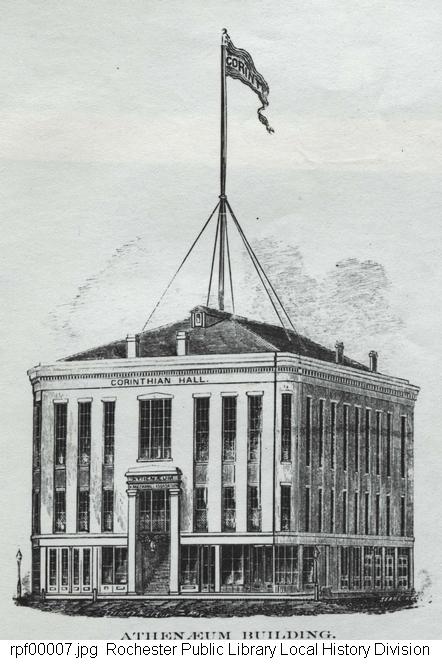
Drawing of Corinthian Hall, image credit Rochester Public Library Local History Division (note it's also called The Atheaneum in the subtitle)

Drawing of Corinthian Hall, image credit Rochester Public Library Local History Division (note that it’s still titled The Athenaeum)

Excerpt from Frederick Douglass Rochester NY Sites, Day 1 published May 23, 2016

I head east on Main… to the site of the old Corinthian Hall, which, according to a couple of sources, was near the end of Corinthian Street behind the Reynolds Arcade, where the parking garage is now. Originally called The Athenaeum, as were so many public halls of the time, it was renamed Corinthian Hall after the style of the classical columns on its stage, and the building was widely famed for its beauty. Corinthian Street was also renamed, and most internet sources I find say it was originally named Exchange Place.  However, I discover that these two pieces of received internet wisdom appear to be a bit off. Poring over old maps in Rochester Library’s online images database, I find one published in 1851, two years after the hall was built in 1849. For one, I find that while the street was named Exchange Place before it was named Corinthian, it was named Work Street at the time the hall was built. Secondly, I find that it was not actually under the parking garage at the end of the street. It was actually directly across from the back entrance of the Reynolds Arcade, where a parking lot and a glassy midcentury office building now stand. The 1851 map was a little behind the times: Corinthian Hall and Exchange Place had already received their new names in 1850, but the map retains their original designations.

Douglass spoke frequently at what he referred to as ‘the beautiful Corinthian Hall’ in the 1850’s. In fact, he  ‘lectured [there] every Sunday evening during an entire winter’ as he wrote in his Life and Times. He delivered a speech here on Aug 21, 1852 at the Fugitive Slave Convention, in opposition to the Fugitive Slave Act. Then in July 1853, Douglass presided over the National Convention of Colored Men in Rochester, which became a center for the antislavery movement; his biographer Philip S. Foner called this convention ‘the most important’. This is where the pressing problem of lack of unification between various factions of the antislavery movement were identified and discussed, as well as the relative lack of black leadership. Though this Rochester convention still failed to bring about a unified black political movement, like the previous one in Troy discussed in an earlier account, it sent a powerful message that all black Americans had a powerful champion in Douglass.

Corinthian St, north of Main, around the site of old Corinthian Hall

The rear of the Reynolds Arcade facing onto Corinthian St, north of Main, across from the site of old Corinthian Hall

View from west end of Corinthian St, showing site of old Corinthian Hall at right where the glassy midcentury building now stands, photo 2016 by Paige Sloan

View from west end of Corinthian St, showing site of old Corinthian Hall at right where the glassy midcentury building now stands, photo 2016 courtesy of Paige Sloan. Note the Corinthian columns on the First National Bank of Rochester-Old Monroe County Savings Bank Building, built in 1924, in the rear of the photo.

But the single most important Douglass moment in this hall happened on July 5, 1852, when he delivered his powerful ‘What to the Slave is the Fourth of July?‘ speech for the first time. He delivered it on the 5th instead of the 4th, he said, because the latter was a day of mourning for himself and his people. This speech was Douglass’ Gettysburg Address, his Second Inaugural, his ‘To Be or Not to Be?’, where his powers of oratory and his eloquence were in full force. The speech is long, opening with a reflection on the history of the United States’ founding and its promise of renewed freedom for all. Then he pours out his lament:

‘I am not included within the pale of this glorious anniversary! Your high independence only reveals the immeasurable distance between us. The blessings in which you, this day, rejoice, are not enjoyed in common. — The rich inheritance of justice, liberty, prosperity and independence, bequeathed by your fathers, is shared by you, not by me. The sunlight that brought life and healing to you, has brought stripes and death to me. This Fourth [of] July is yours, not mine. You may rejoice, I must mourn….

What, to the American slave, is your 4th of July? I answer: a day that reveals to him, more than all other days in the year, the gross injustice and cruelty to which he is the constant victim. To him, your celebration is a sham; your boasted liberty, an unholy license; your national greatness, swelling vanity; your sounds of rejoicing are empty and heartless; your denunciations of tyrants, brass fronted impudence; your shouts of liberty and equality, hollow mockery; your prayers and hymns, your sermons and thanksgivings, with all your religious parade, and solemnity, are, to him, mere bombast, fraud, deception, impiety, and hypocrisy — a thin veil to cover up crimes which would disgrace a nation of savages. There is not a nation on the earth guilty of practices, more shocking and bloody, than are the people of these United States, at this very hour.’

If what he had to say that day didn’t make people ashamed to celebrate liberty for themselves while denying it to others, no words could.

* Read the full story of this day following the life and ideas of Frederick Douglass here

Ordinary Philosophy and its Traveling Philosophy / History of Ideas series is a labor of love and ad-free, supported by patrons and readers like you. Please offer your support today!

~~~~~~~~~~~~~~~~~~~~~~~~~~~~~~

Sources and Inspiration

33. Corinthian Hall / Academy of Music‘, The Freethought Trail website

Corinthian Hall (venue)‘, under ‘Charter Inductees’, Rochester Music Hall of Fame website

Cornell, Silas, ‘Map of the City of Rochester‘, 1863. From Rochester Library Digital Collections, Monroe County Library System website.

Douglass, Frederick. Autobiographies (includes Narrative…, My Freedom and my Bondage, and Life and Times). With notes by Henry Louis Gates, Jr. Volume compilation by Literary Classics of the United States. New York: Penguin Books, 1994.

Douglass, Frederick. “What to the Slave Is the Fourth of July?”, July 5, 1852. Teaching American History (website)

The Era of Academies in Monroe County‘, From Rochester Library Digital Collections, Monroe County Library System website.

First National Bank of Rochester-Old Monroe County Savings Bank Building. In Wikipedia, The Free Encyclopedia.

Foner, Philip S. The Life and Writings of Frederick Douglass, Vol. 1-4. New York: International Publishers, 1950.

McFeely, William. Frederick Douglass. New York: W.W. Norton & Company, 1991.

McKelvey, Blake. ‘Historic Antecedents from the Crossroads Project‘. From the Rochester History Journal, Oct 1864, Vol. 26, No. 4.

The Love of Possession is a Disease With Them

Lakota giveaway ceremony, photo origin unknown

In my recent readings in the history of the Lakota and other native peoples of America’s Great Plains, I’ve been struck by descriptions of their giveaway ceremonies. They remind me of another practice I had learned of before, and which I believe is more generally familiar: the potlatch, a related custom practiced by Native Americans of the Northwest. Potlatches generally came with strict expectations of giving the gifts away again promptly, and then some. These exchanges cemented power relations and were often aggressively competitive; they’re better understood as tactical, sociopolitical transactions rather than simple acts of generosity.

Lakota giveaway ceremonies, however, are much more altruistic in the sense that we commonly understand the term. The gifts are given freely with no expectation of payback; in fact, the resulting impoverishment itself is a badge of honor. That’s why I chose a quote by Sitting Bull, the great Hunkpapa Lakota chief, to introduce this essay. He once illustrated the contrast between Lakota and white attitudes towards property by telling how his poverty aroused the admiration of his people, rather than the disdain most white people feel toward such a state. To those who share Sitting Bull’s impression of the invaders of his homeland, the driving need to amass and own material goods can be a sign of spiritual poverty.

Today’s United States, like those nations most similar to her in culture and economy, is very much not characterized by that less-is-more spirit. This is nothing new. The United States and Canadian governments’ historical prohibitions on giveaway ceremonies in vanquished tribes indicate that Sitting Bull’s characterization of white culture describes something that’s been around for quite a while. These governments viewed giveaway ceremonies as a challenge to the enthusiasm for a market-driven type of productive cooperation they wished to instill in the nations they conquered. These and other Western societies (derived from Europe) had been centered around the production, acquisition, accumulation, and display of goods particularly since the industrial age. This is reflected in our values, our mores, our politics, our language, our cultural attitudes, the ways we celebrate holidays and major life events, and even, increasingly, our religious and spiritual practices.

The free market system, a new style of trade characterized by Adam Smith as that best for improving lives of all human beings most efficiently, has indeed instilled many good practices and attitudes. For example, we’re less likely to see other nations and cultures as enemies when we cultivate relationships as trading partners; we see the effects of this change in international relations and in the relative peacefulness of the modern world to those which practiced the old feudal and mercantilist systems. We also see that more people throughout the world now live longer, more comfortable lives than ever before, as the market incentivizes and drives innovation to respond more efficiently to demand. But there have always been downsides to free markets too. Think of the slave trade; trade wars; colonialism; invasion and confiscation of indigenous lands; the immiseration of working people in squalid industrial towns and dismal factories; price- and wage-fixing by trusts and monopolies; and vast inequalities in wealth and in chances of success are but a few examples. Such practices and inefficiencies are not merely excesses or abuses perpetrated by a few bad actors: they are regular and expected outcomes of a system whose purpose is to maximize profit and come out ahead of everyone else.

And now, we see that market values have pervaded all levels of our consciousness, our self-conception of who we are and how we should best inhabit our world. As philosopher Michael Sandel describes it, we have gone from having a market economy to being a market society. The way we live, think, and feel is pervaded by consumerism. We’ve become buyers and sellers to the extent that we have become products ourselves, marketed and commodified, valued in work and in life insofar as we present ourselves the right way, are seen in the right places, wear the right brands and styles, drive the right cars, and use the right products.

And this has led us to a new problem, one unimaginable to John Locke, Adam Smith, and others who developed the theories about property rights and the benefits of open markets that we take for granted today. Human societies were relatively small then, and the uninhabited regions and untapped resources of the world seemed vast, even endless by comparison. It’s very different today. The population of the world has grown so large, our technological ability to produce goods from raw materials so varied, efficient, and prolific, and our ingrained habits of making, amassing, and consuming voraciously is leading us to a crisis of mass waste, pollution, and climate change.

The pollution problem can be seen as the modern corollary of Thomas Malthus’ 1798 theory that human reproduction would inevitably outstrip food production, leading to mass impoverishment. Though Malthus’ ideas had long gone out of fashion with advancements in agricultural technology and the widespread use of birth control, he’s enjoying a bit of a comeback. However long technology can stave off many of the ill effects of exponential population growth, the earth’s habitable surface and ability to produce what we need to survive (let alone to live well) is finite nonetheless. This is also true of our atmosphere’s ability to absorb the off-gassing of our industries without changing our biosphere’s ability to sustain the life it gave rise to. Over the centuries and decades, concerns about human impact on the natural world and its life-sustaining resources swing from optimism that we can and will create new technology and social practices that will solve everything, to worry that we won’t be sufficiently motivated or innovative in time to stave off the destruction of our own habitat.

In my years past working at a recycling and salvage operation, I observed a part of the massive flow of waste we generate, much of it perfectly good stuff we just throw away. The sheer volume of it all haunts me still. Photo of Amy Cools by Stephen Loewinsohn for the East Bay Express

Beginning with Rachel Carson’s 1962 book Silent Springenvironmental consciousness is becoming ever more pervasive across the political spectrum. But it seems that ecological responsibility is still an ideal that has not yet changed our behavior except in a few token ways. Even progressive, self-consciously ‘green’ micro-cultures, such as that of the San Francisco Bay Area where I live, generally consume and discard on a very large scale. There’s a strong market here for innovations in green products such as compostable and reusable utensils and packaging, recycled fiber and bamboo clothing, energy-efficient technology, and more. Some of this technology replaces other arrays of products such as CDs, books, ledgers, pens and pencils, camera film, landline telephones, and so on, and could in time reduce the amount of stuff made. Yet new generations and styles of products replace the old ones almost as often and quickly as they are introduced, and the things which the new products replace in turn become trash. And in the case of technology, particularly toxic trash. There are recycling programs, to be sure, but they don’t keep up with the volume of discards, and the recycling process itself can be toxic. And the compostable packaging which cocoons every fashionable new product and every new gadget adds to the deluge. Take-out meal services and ready-to-make meals in a box are ever-increasing in popularity, every breakfast, lunch, and dinner wrapped in a soon-to-be-wad-of-trash. Newly ubiquitous reusable shopping bags and thinly-walled plastic bottles do little in the face of this accelerating volume of throwaway goods and conveniently, disposably-packaged everything.

What does all this mean on a planet now so dominated by humans, materialistic, energetic, intelligent, creative, productive, and exponentially-reproductive?

It does seem that our love of possession is a disease with us, not just in the moral and spiritual sense that Sitting Bull refers to. It’s become something palpable, something we see before our eyes, that we breathe in, that we swim among. It shares characteristics of cancer, growing, proliferating, invading at an accelerating rate, which we still likewise seem powerless to stop. And the gases from the production and decay of all this stuff is changing the climate from the one that gave rise to the evolution of, and now sustains and nurtures, the plants and animals that give us life.

So what do we do? How do we divert or change this deeply ingrained cultural habit, this seemingly unstoppable force that we’ve unleashed?

I think about that other thing Sitting Bull said, about his people respecting him not because he owned many things in the way valued by white people, but because he kept little for himself. How, then, if we shift our values? How if we began to regard the need to compulsively and conspicuously consume stuff as crass, as burdensome, as uncool, as unenlightened, even as pitiable?

This isn’t necessarily as unlikely or even as unimaginable as it might seem. We often take for granted that our love and pursuit of stuff is an immutable trait of the human psyche. Yet, that’s not the case, as evidenced by cultural and spiritual mores that differ widely; we can look to the surprise and disgust of Sitting Bull and his people when encountering the white invaders’ greed for gold, land, and buffalo hides. There is an idea from Japanese culture, mottainai, which has deep roots and is growing again in popularity. This complex and hard-to-translate idea includes a reverence for objects and the value of frugality, both of which preclude the wasteful, polluting consumerist practices of modern market societies. And there are many more cultural and spiritual traditions of long standing in which the possession of more goods than needed is considered a negative.

Asceticism is an extreme variety of this less-is more value, an ancient tradition in which one seeks to reach the highest levels of spiritual perfection by divesting themselves of all or most material goods and comforts. There is also the culture of the traveler and world citizen, those who own little since having too many things to haul around gets in the way of opportunities for adventure. There is also a modern fad, admittedly a rather niche conceit of those with higher incomes, of living in tiny, design-heavy, super-efficient homes, reducing one’s personal possessions to the most utilitarian minimum.

However, these ways of life, admired and admirable as they can be, are not workable for most people. Except for asceticism, they are also unaffordable for most people, and none of these work for those who have families to care for, or those who are elderly or disabled, and so on. What of the least wealthy among us, those who must opt for the cheaper products regardless of whether they’ll wear out and become trash sooner? And what about the joy of shopping for stuff, new and novel things that relieve the monotony and stress of an ordinary working life? Even in this realm of life, however, we do have an awareness that the short-term fun of buying stuff can lead to long-term unhappiness. For example, the extremes of material consumption, hoarding and compulsive shopping, are widely considered destructive and unhealthy, if not forms of mental illness. Expanding this sense of the unhealthiness of having too much stuff can be gradually extended to include things that we might sorta like at first but realize we won’t use much or care about for long. Over time, we can acculturate ourselves to less but higher quality things, and better yet, to value publicly owned goods more highly: parks, museums, public beaches, public buildings, and hopefully in the future, more community- and government- owned public amusement centers such as skating rinks, gyms, arcades, and so on.

Sitting Bull and his family, 1881

And while it might seem too difficult to inculcate the value of less-is-more, we can remember that many deeply-ingrained cultural values and habits have been purposely and quickly shifted. The right of gay people to marry and enjoy other equal benefits of society are now generally taken for granted when only two decades ago legal gay marriage was unimaginable to most. Smoking is widely considered unhealthy and a public nuisance, through just a few decades of education, public awareness campaigns, and taxation. Bullying, racist and sexist slurs, discriminatory practices, and many, many other bad habits, once so culturally pervasive, are no longer respectable.

While shopping and owning a lot of stuff might not seem to be habits as bad as any of the above, I believe that we’ll soon recognize that it might be. Now that there are so many of us in the world, we can no longer consider ourselves as morally responsible beings only as individuals when it comes to the health of our environment. With well over seven billion people on the earth increasing exponentially, we are now responsible to each other in the ways our actions contribute to the aggregate effects. Let’s make the effects of our presence on the earth not resemble those of a disease. Let’s instead make it more aligned with mottainai by treating the earth as the most precious object there is; more akin to the role of earth-steward as the God of Genesis called on his human creation to be; more akin to Sitting Bull and his generous less-is-more spirit. Our physical and spiritual health and our very lives depend upon it.

*Listen to the podcast version here or on Google Play, or subscribe on iTunes

~~~~~~~~~~~~~~~~~~~~~~

Sources and Inspiration

Auxier, Randall. ‘Indian Givers‘, Nov 15th, 2013. Radically Empirical blog

Blaisdell. Robert (ed.) Great Speeches by Native Americans. NY: Dover, 2000.

Bruchac, Joseph. ‘Sacred Giving, Sacred Receiving‘, June 20, 2016, Parabola

Cole, Douglas and Ira Chaikin. An Iron Hand upon the People: The Law Against the Potlatch on the Northwest CoastVancouver: Douglas & Mclntyre, 1990 (PDF download)

Her Many Horses, Emil. ‘A Song for the Horse Nation: Remembering Lakota Ways‘. From A Song for the Horse Nation, edited by George P. Horse Capture (A’aninin) and Emil Her Many Horses

Jackson, Joe. Black Elk: The Life of an American Visionary. New York: Farrar, Straus, and Giroux, 2016.

Mottainai: a Philosophy of Waste‘. August, 2015. Interview and discussion with Kevin Taylor by Joe Gelonesi for The Philosopher’s Zone, a podcast of Radio National, Australia.
Pettipas, Katherine. Severing the Ties that Bind: Government Repression of Indigenous Religious Ceremonies on the Prairies. Winnepeg: University of Manitoba Press, 1994.

Rachel Carson, American Experience by PBS, April 18th, 2010

Roth, Christopher E. ‘Goods, Names, and Selves: Rethinking the Tsimshian Potlatch‘, American Ethnologist, Vol. 29, No. 1 (Feb., 2002), pp. 123-150

Sandel, Michael. What Money Can’t Buy: The Moral Limits of Markets. New York: Farrar, Straus and Giroux, 2012.

Sitting Bull‘. Encyclopædia Britannica, April 21, 2017

Thomas Malthus‘. Encyclopædia Britannica.