Happy Birthday, Thomas Jefferson!

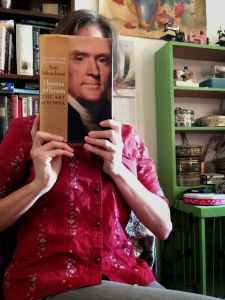
In remembrance of Thomas Jefferson (April 13 1743 – July 4, 1826) on his birthday, here’s the story of my travels last year following his life and ideas

Amy M Cools's avatarOrdinary Philosophy

Hello, friends of Ordinary Philosophy!

From time to time, I take a trip to some corner of the globe, to explore the lives and ideas of great thinkers in the places where they lived and worked. For this series, I follow in the footsteps of thinkers who are no longer alive, since those who are still telling their own stories. But those who are no longer alive in the body live on in the ideas that they pass on, and in the example they provide for us to follow.

I’m pleased and excited to announce my third philosophical-historical themed adventure, this time in Washington DC, Philadelphia, and various sites in Virginia to follow in the footsteps of…. you may have guessed it… Thomas Jefferson!

Thomas Jefferson was born on April 13th, 1743, and in his long life, he accomplished more than most. He was a founding father of the United…

View original post 288 more words

Frederick Douglass New Bedford, Massachusetts Sites

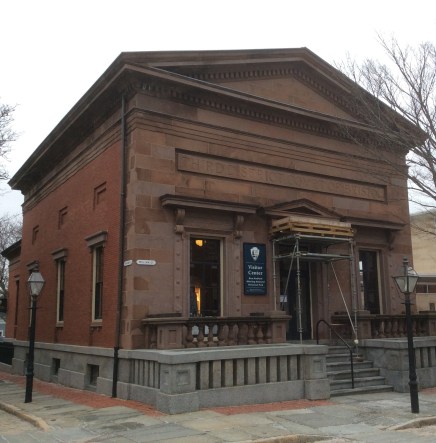
The New Bedford Whaling National Historical Park visitor center

The New Bedford Whaling National Historical Park visitor center

Fifth Day, Thursday March 24th

When I arrive in the old whaling town of New Bedford, Massachusetts, it’s overcast and very chilly. I had so enjoyed the respite from the cold in New York City’s balmy weather I was already a little spoiled. But I’m wearing lots of wool and my shearling boots, so I think I’m prepared. I start with the New Bedford Whaling National Historical Park visitor center, run by the National Park Service. Several of the town’s buildings of historical interest are also preserved by the NPS, including one of particular interest for my journey today. The visitor center is housed in the Old Third District Courthouse constructed in 1835, a handsome Greek Revival building.

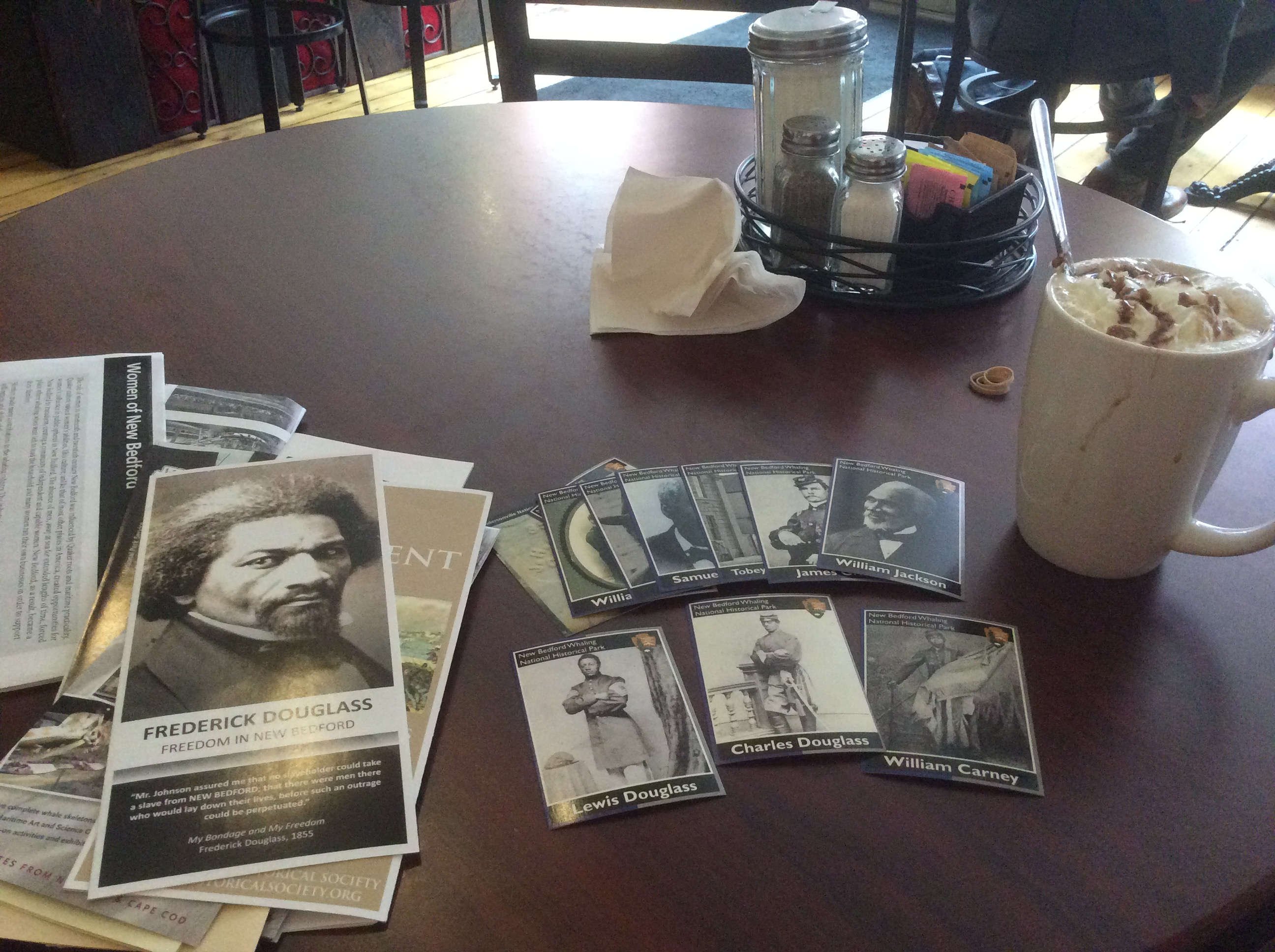
I’m assisted by the kind and knowledgeable Diane Altman Berube, and when I describe the purpose of my trip, she immediately supplies me with information, advice, a map, some pamphlets about Frederick Douglass, the town’s Underground Railroad and abolitionist history (a strong one!), and another about the 54th Regiment of the Union Army and an accompanying collection of cards, like baseball cards, with images and stories of men involved. The 54th Regiment plays an important role in Douglass’ life in many ways, more on that shortly.
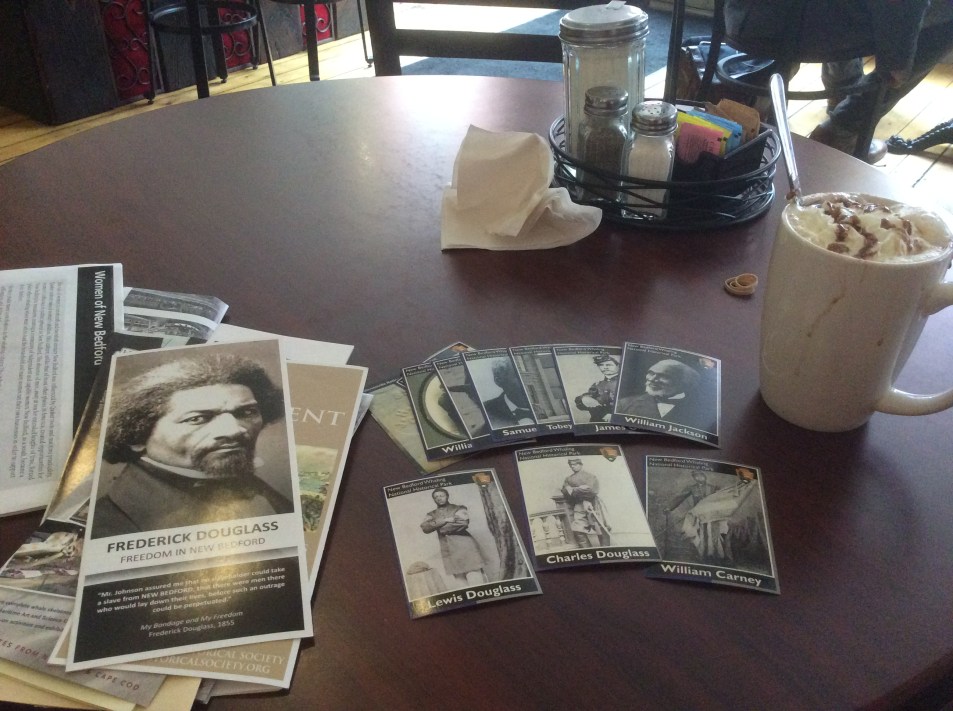
Cafe Mocha at Tia Maria's with Frederick Douglass tour materials, New Bedford MA

Cafe Mocha at Tia Maria’s with Frederick Douglass tour materials, New Bedford MA

After discussing the history of New Bedford, especially history pertaining to my trip, Diane directs me to a nearby coffeeshop and cafe, where I go to study the materials she gave me, do some additional research following what we’ve discussed, and arrange my tour for the day. Tia Maria’s is a sweet little Portuguese establishment, and serves me a beautiful cafe mocha topped with a cookie. What a nice way to warm up!
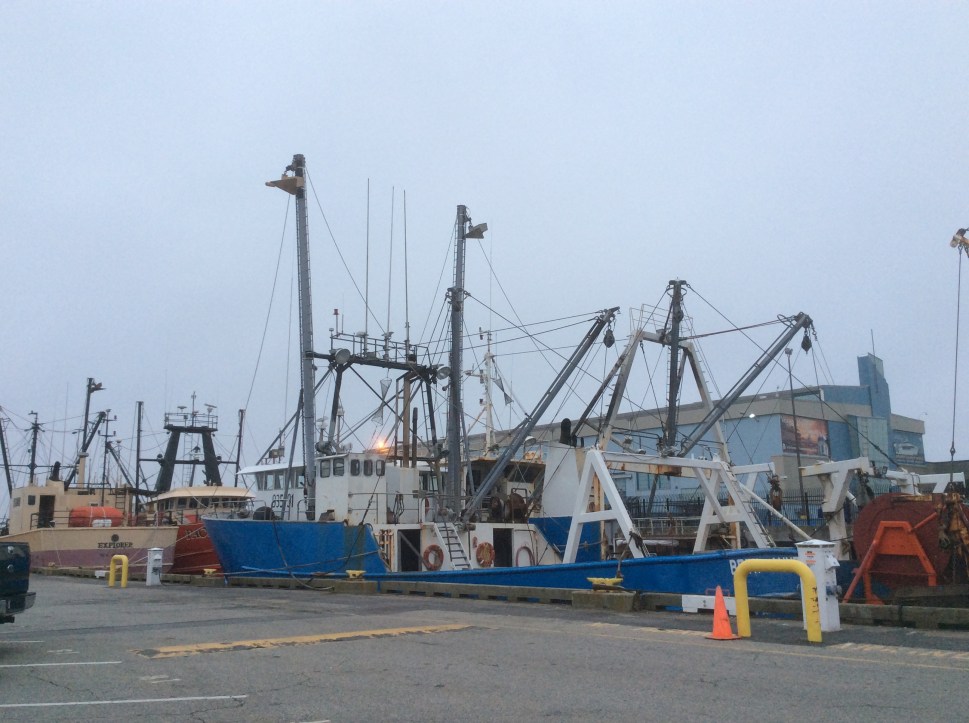
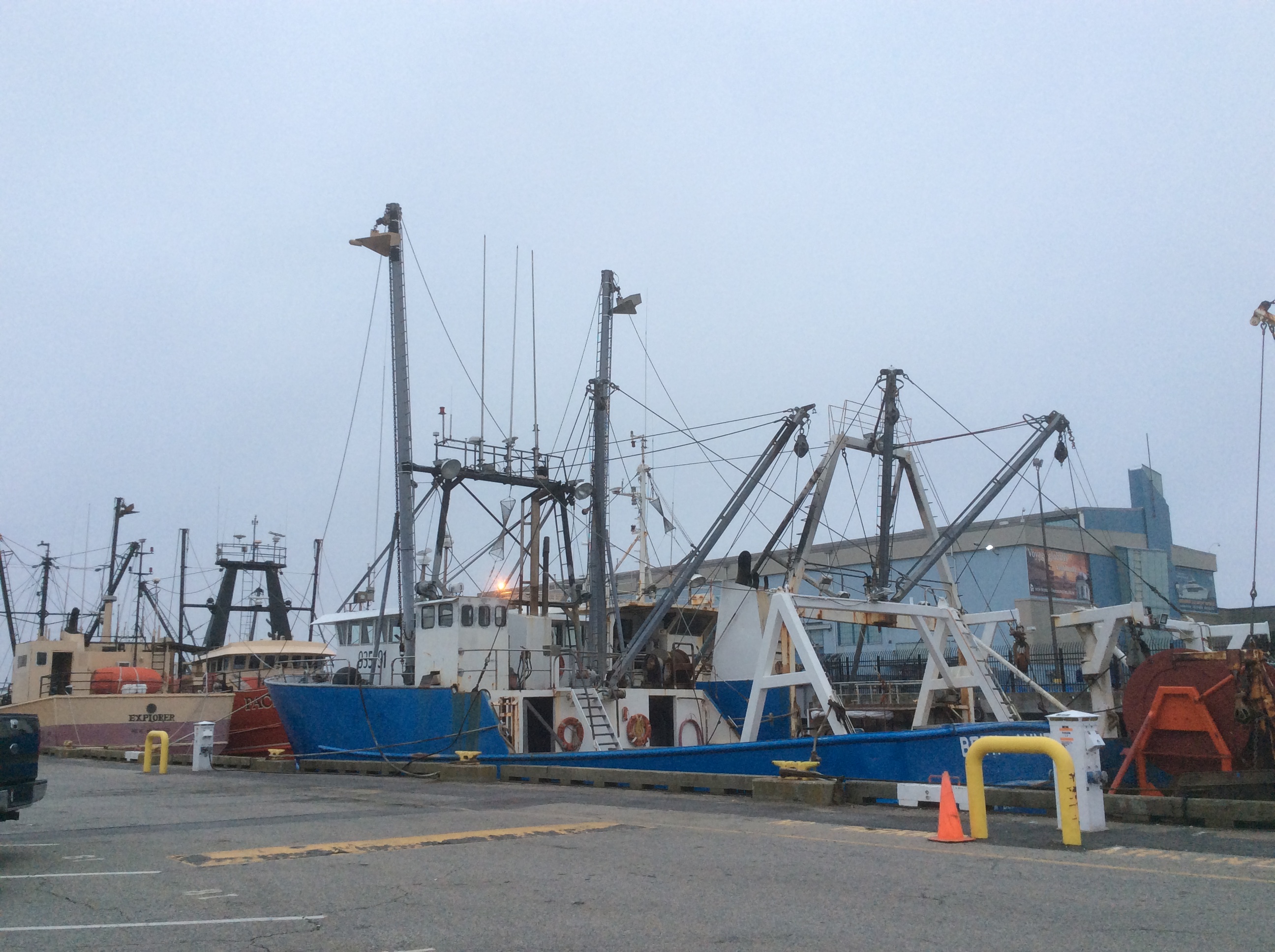
Pier at the old whaling town of New Bedford, MA

Pier at the old whaling town of New Bedford, MA

I’m here in New Bedford because the newly married Douglasses wanted a safer haven than New York City, which as we’ve seen was not, at that time, exactly a secure or safe place for escaped slaves or black people in general. New Bedford was an abolitionist stronghold and besides, being a seafaring town, Douglass expected it to be easy for his to get a good job in his trade as a ship’s caulker. The large population of free black people of that town, and their allies the Quakers, Unitarians, and others who believed strongly in universal human rights and dignity, were united and fierce in the defense of their freedom. Would-be fugitive slave catchers were loath to attempt captures there, since they were promptly driven out of town upon discovery, often accompanied by a good beating.
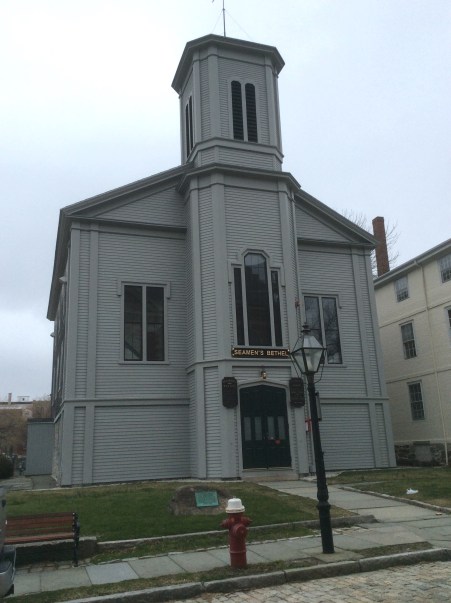
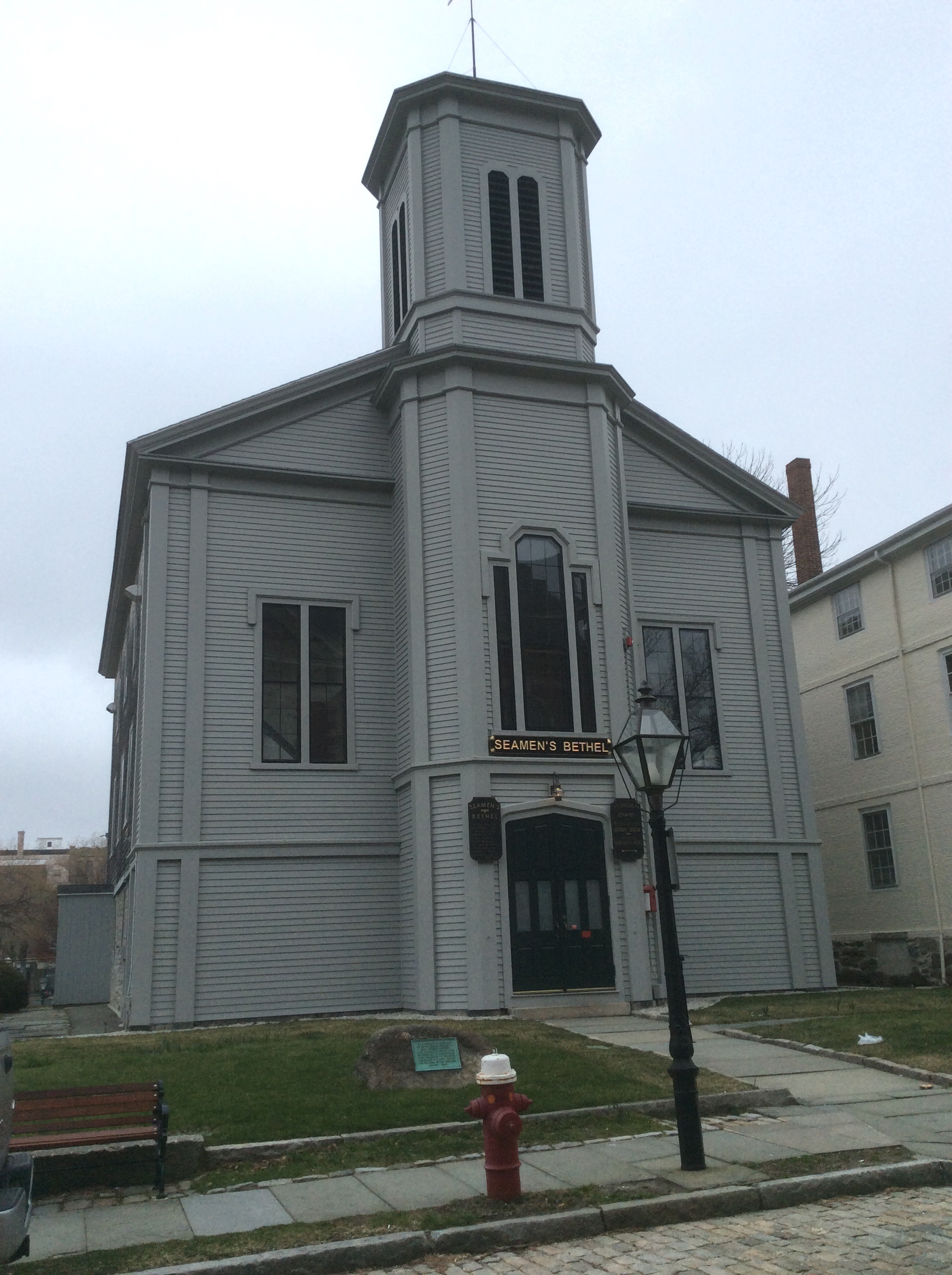
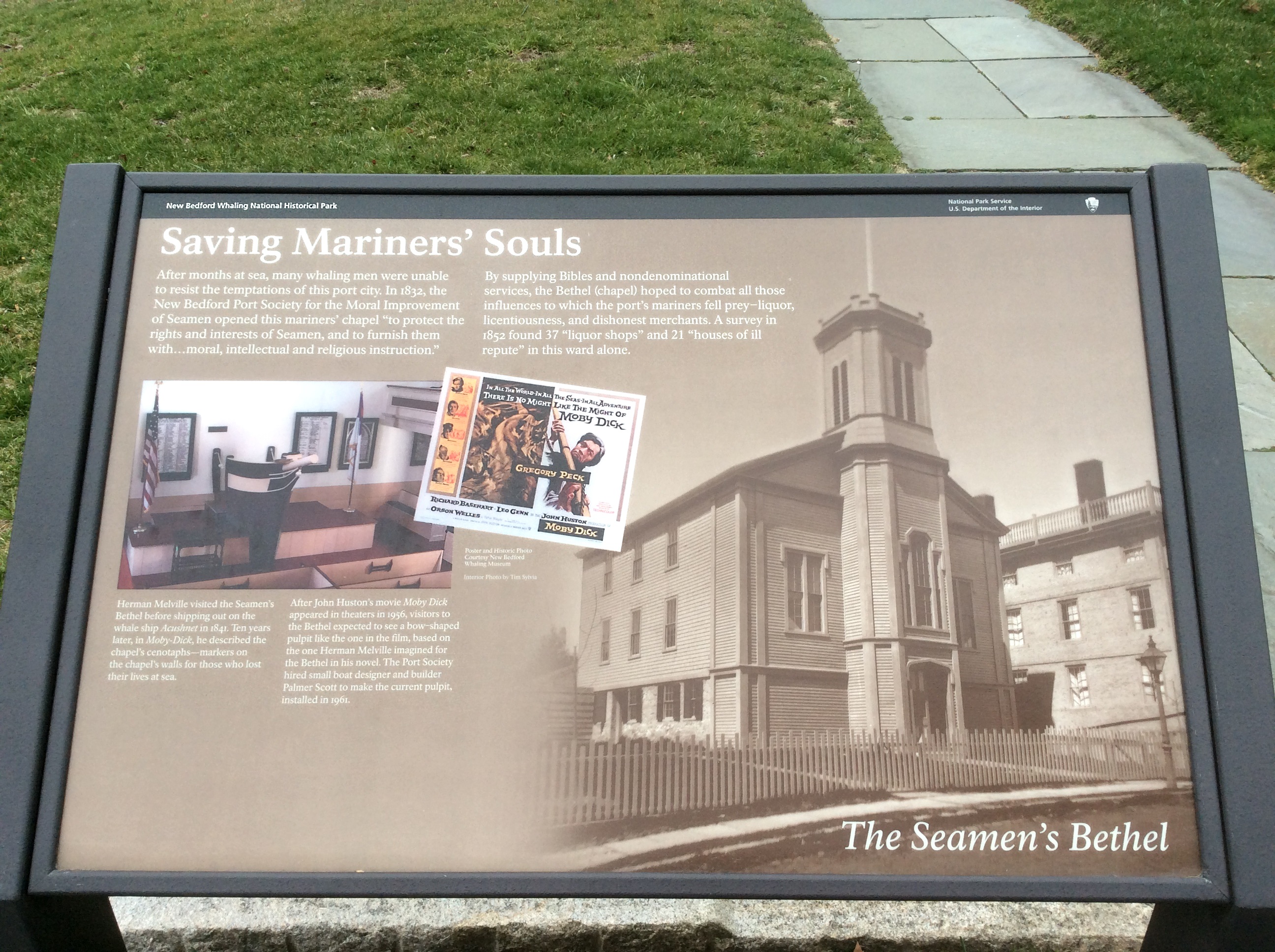
Seaman's Bethel in New Bedford Massachusetts, featured in Melville's Moby-Dick

Seaman’s Bethel in New Bedford Massachusetts, featured in Melville’s Moby-Dick

I decide to tour my New Bedford sites in order of location rather than chronology for two main reasons: I don’t have the luxury of extra time so I need to travel efficiently without much zigzagging around, and it’s really, really cold, to which this California gal is not acclimated, so I don’t want to stay outside for long wandering stretches.

I’m diverted at the outset by Seaman’s Bethel, since I pass by it at the crest of on Johnny-Cake Hill (charming name!) on my way from my car to my first destination. This old clapboard church to my left is featured in Herman Melville’s Moby-Dick, so of course I’m interested. I’ve long loved Melville, and I read his short stories, especially Billy Budd, over and over again as a young girl. While connections other than New Bedford itself, where Melville signed up to work on the whaler Acushnet and the fact that each wrote a story about a slave revolt on a ship never occurred to me, some writers have found many links between the lives and ideas of Douglass and Melville, as explained and described in Frederick Douglass and Herman Melville: Essays in RelationI’m intrigued by this book which I only just discovered through my research for this trip, I’ll certainly return to give it a good read.
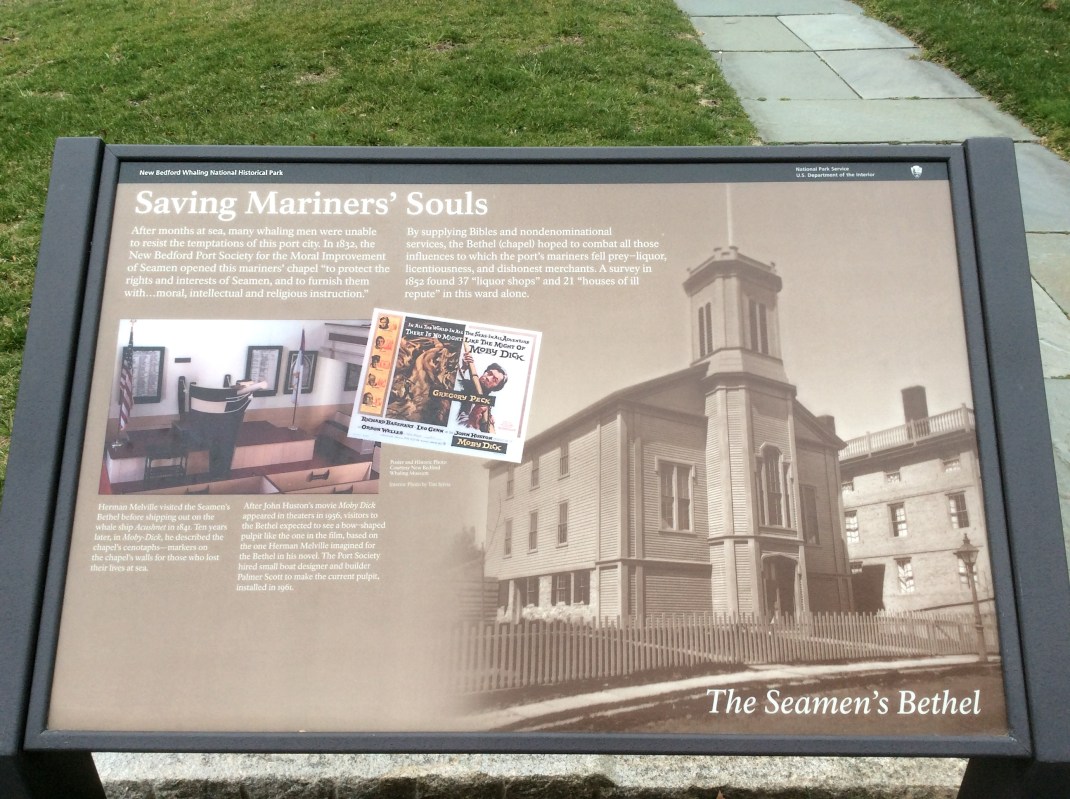
Historical sign for Seaman's Bethel, New Bedford MA

Historical sign for Seaman’s Bethel, New Bedford MA
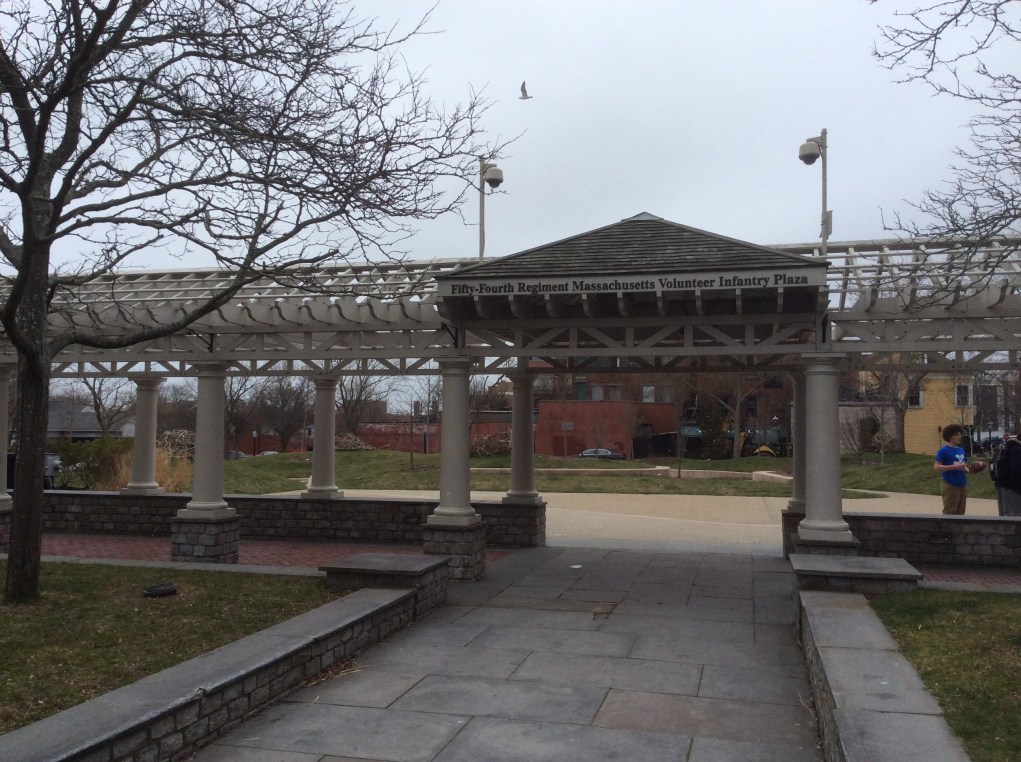
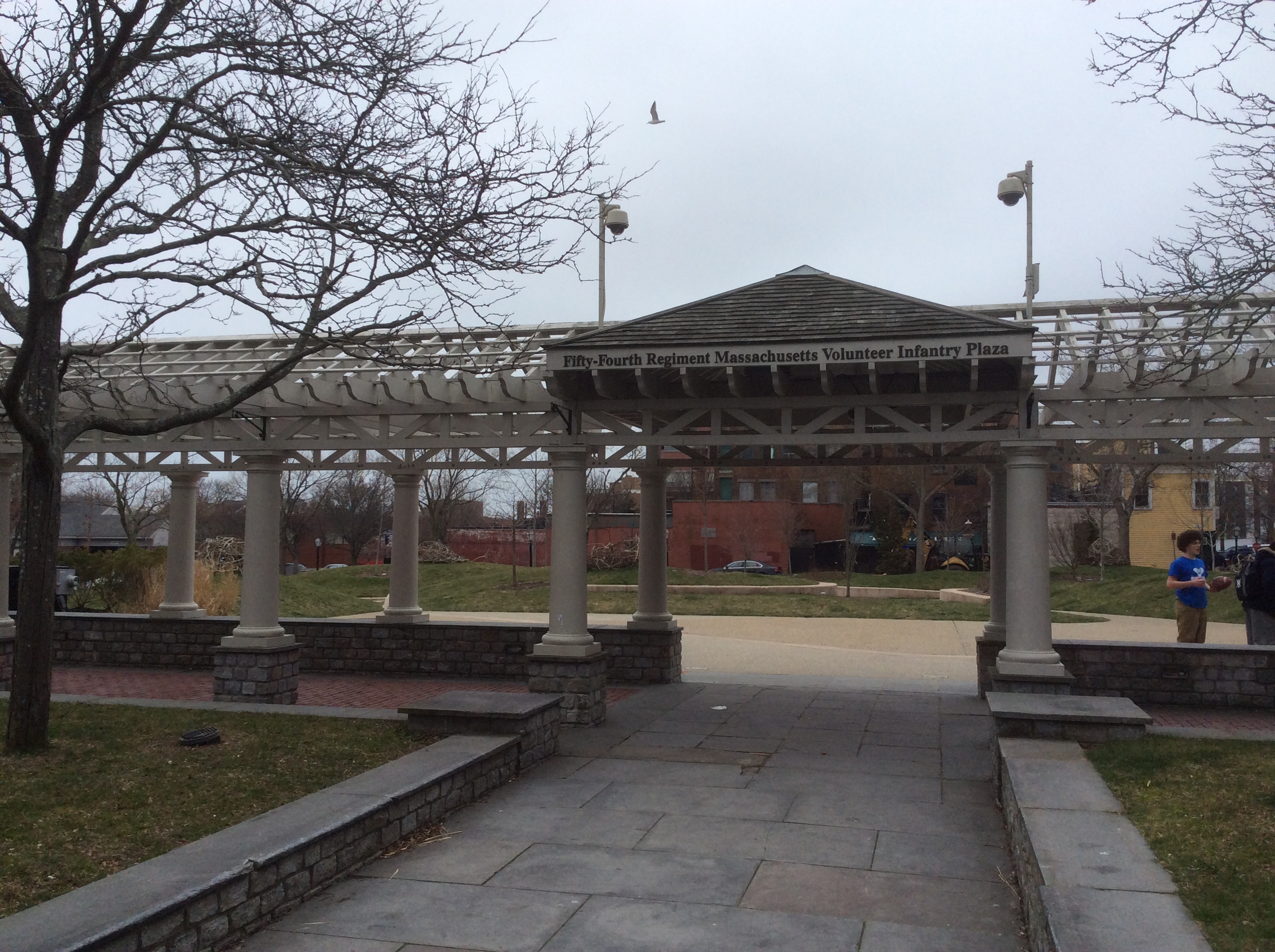
Fifty-Fourth Regiment Massachusetts Volunteer Infantry Plaza, New Bedford MA

Fifty-Fourth Regiment Massachusetts Volunteer Infantry Plaza, New Bedford MA

I begin with the Fifty-Fourth Regiment Massachusetts Volunteer Infantry Plaza on William St. between S. Second St and Acushnet Ave. This is where men signed up to serve as soldiers in the 54th Regiment as the first black troops of the Union Army in March of 1863. Douglass was a fierce advocate for the right of black men to enlist, and thought it not only their responsibility to fight for their own freedom, he thought it an invaluable tool for attaining better social standing and an opportunity to learn invaluable skills that a life of slavery often robbed them of. Two of the men to enlist in the 54th were the Douglasses’ own two sons, Lewis and Charles. Lewis saw combat with the 54th and was wounded in the assault on Fort Wagner on July 18th of that year; Charles fell ill and couldn’t serve at the time, but he later became a sergeant in the 5th Massachusetts Cavalry. More on the 54th Regiment coming up in another post soon.

Here I pause in my account of today’s journey. As I mention in the tale of my day in Easton, I occasionally miss places or photo opportunities that I kick myself for afterword. This happens nowhere else on this trip more than here in New Bedford. In this case, I’m particularly hard pressed for time, and to be honest, a little distracted by the cold. Turns out I’ve way underestimated the time I’d need here. So I’m going to do something a little differently for this day’s account: when you see a paragraph that begins with an asterisk, it’s an account of a place that I discover in my fact-checking and editing for this day’s journey, but that I overlook or don’t photograph adequately. I’m doing this so that if you want to use this account as a guide for your own Douglass trip here, you won’t miss anything important.
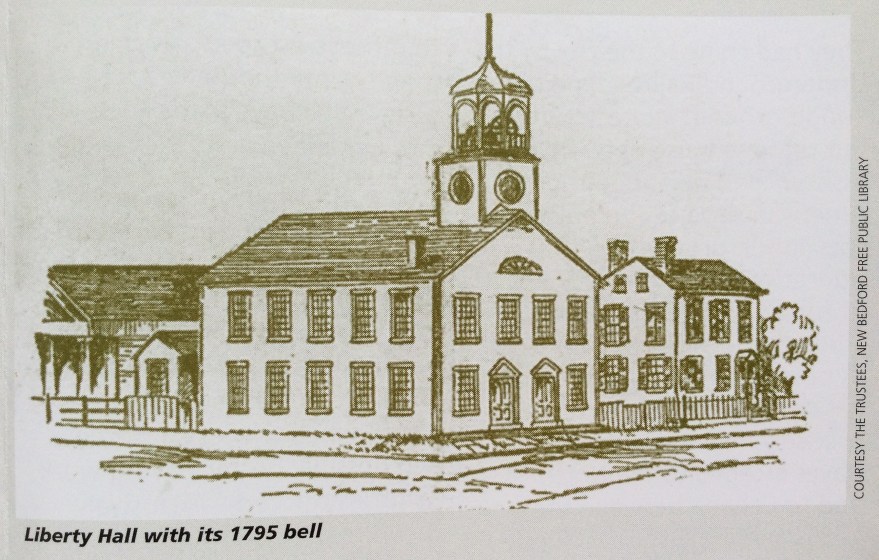
Liberty Hall illustration from NPS Underground Railroad - New Bedford Brochure*Where I should go next, but miss though I’ve marked it on my map (as my friend Alex likes to say, ‘derp!’), is a little further west on William St just past Purchase St, where there’s a plaque commemorating Liberty Hall. The original hall burned down in October 1854, and burned so hotly it melted the bell; the plaque contains a piece of its twisted metal.

Douglass first heard William Lloyd Garrison speak at this hall in May or June 1839. Garrison preached that ‘prejudice against color was rebellion against God’, because all manner of sectarianism and prejudice went against God’s will that everyone be united into one body in Christ’s kingdom. Douglass was enthralled, read every issue of the Liberator enthusiastically, and attended every antislavery meeting held in this and nearby towns. He returned to Liberty Hall many times as a speaker himself over the next two decades in the 1840’s and 50’s.
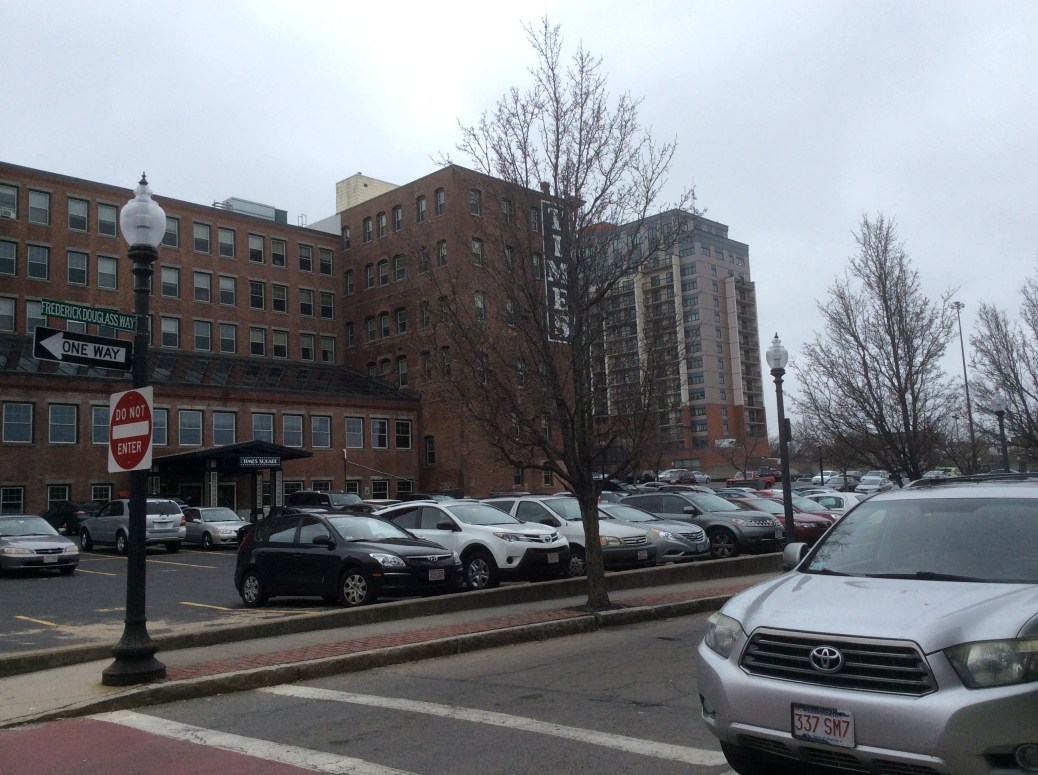
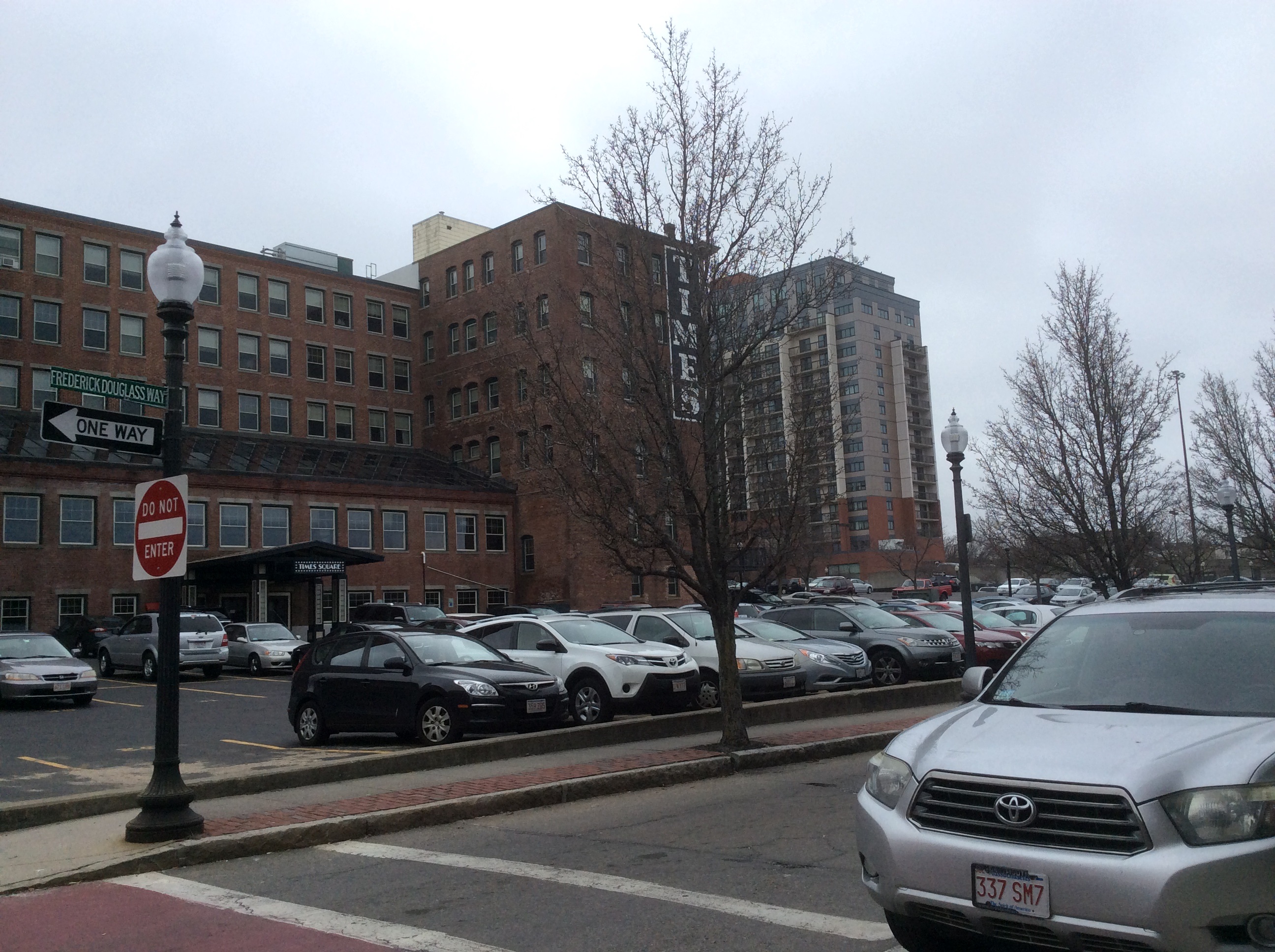
Frederick Douglass Way, formerly Ray St where the Douglasses lived at number 111, New Bedford MA

Frederick Douglass Way, formerly Ray St where the Douglasses lived at number 111, New Bedford MA

From the 54th Regiment Plaza, I continue west on William very briefly, then head up Acushnet Ave to its north end. This street ends rather abruptly; though it had once continued north for quite a while, it was razed at some point, likely to make way for the freeway that runs there. It used to be Ray St, where Douglass and Anna moved to a house at number 111; their family was growing and they needed more space. The street there, and their third house in New Bedford, used to be closer to the wharves where Douglass worked for a time. Acushnet becomes Frederick Douglass way north of Elm St. Diane at the NPS told me that I would find a street up this way named Frederick Douglass Way. She wishes that either a grand or more main street was named after him, or that this street were more decorative and well landscaped. Since it’s fitting that this street be named for Douglass since he once lived here, I hope for my part it’s her second wish that will come true.
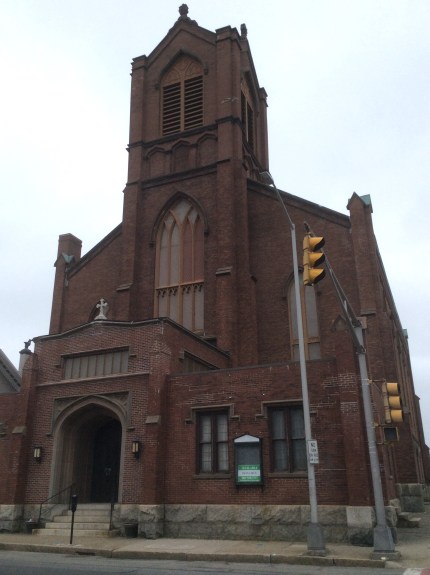
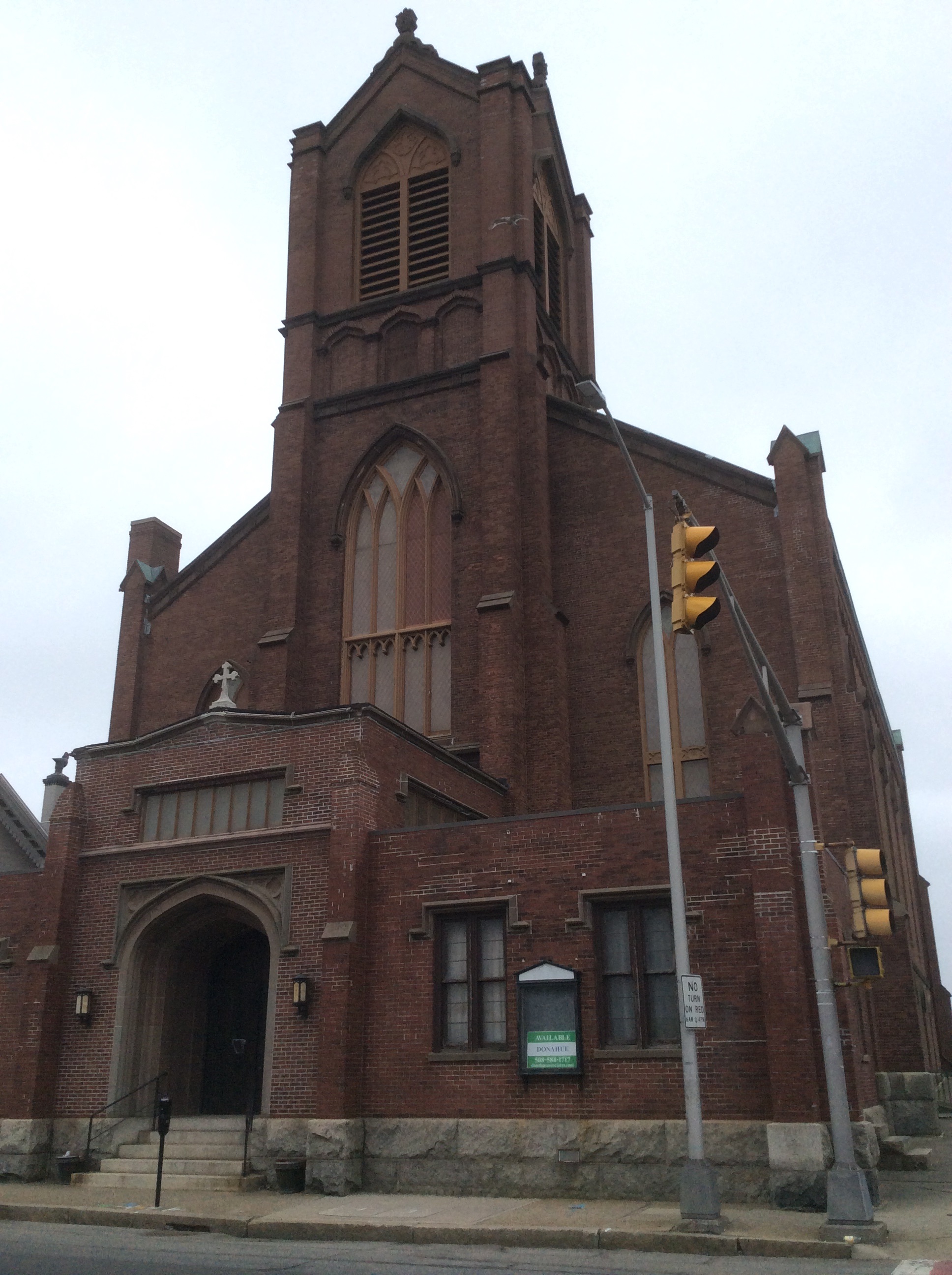
Former Methodist Church at Elm and County Streets, New Bedford MA

Former Methodist Church at Elm and County Streets, New Bedford MA

From Frederick Douglass Way, I head straight east on Elm all the way to the corner of Elm and County Streets. Diane at the NPS visitor center identified this as the old Methodist Church, which is no longer active at this site; it’s currently up for sale. The engraving in one of the pointed arches in the center front of the bell tower notes it was built in 1858, twenty years after Douglass would have begun attending. This may then be a new location, or it may have been rebuilt on this original site; Douglass specifically refers to its being on Elm St.

The Douglasses were seeking religious community and comfort, and hadn’t yet fully realized the degree to which the mainstream Methodist church, the religion of his youth, was a powerful supporter of slavery. Its ministers taught slaves that their salvation was to be attained through obedience to the worldly masters the Lord had placed over them, that their virtue was to be found in submission and hard work, and that their reward was to be in heaven rather than on earth. Unfortunately, many religious sects throughout history have used this tactic to exploit the poor and oppressed, teaching them that resignation to their plight is a virtue and a sure ticket to a better life in the hereafter, thereby avoiding the necessity, and responsibility, of making life on earth a happy and just one for all.

In addition, the segregation of black people into the back of the church, serving them communion only after the whites had been served, disenchanted Douglass and he promptly left, never to return. After all, as Douglass believed, the quality of a faith is revealed in the teachings of its ministers and the beliefs and behavior of its congregation, especially in matters of justice and kindness to one’s fellow human beings. He later joined a small faith community called the Zion Methodists, not only as a congregant, but as a licensed preacher. (There is a church building that housed the Frederick Douglass Memorial African Methodist Episcopal Zion Church, no longer extant, at William and Eighth, but it’s uncertain whether it’s a continuation of Douglass’ congregation though it was named for him.)
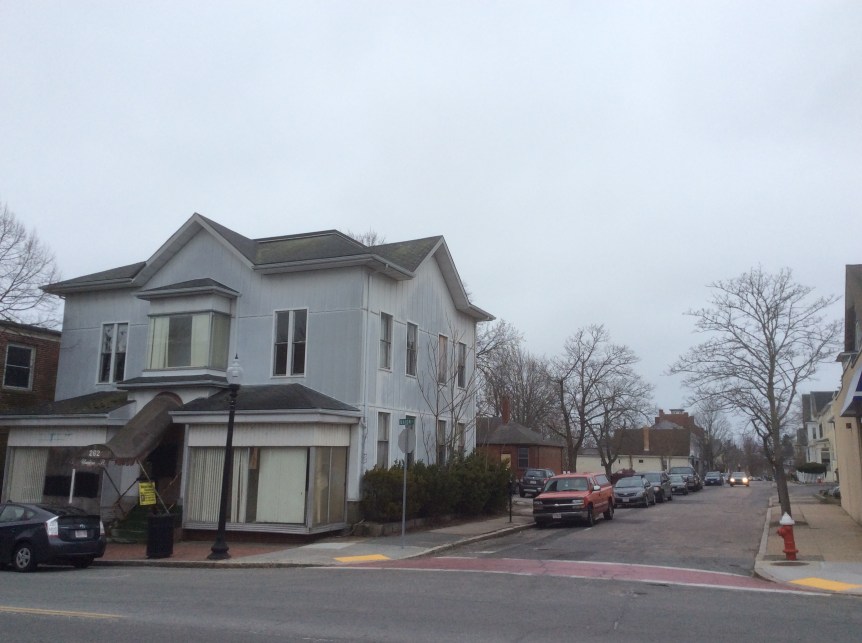
The Peabody house site at Union and 7th, New Bedford MA, 2016 by Amy Cools

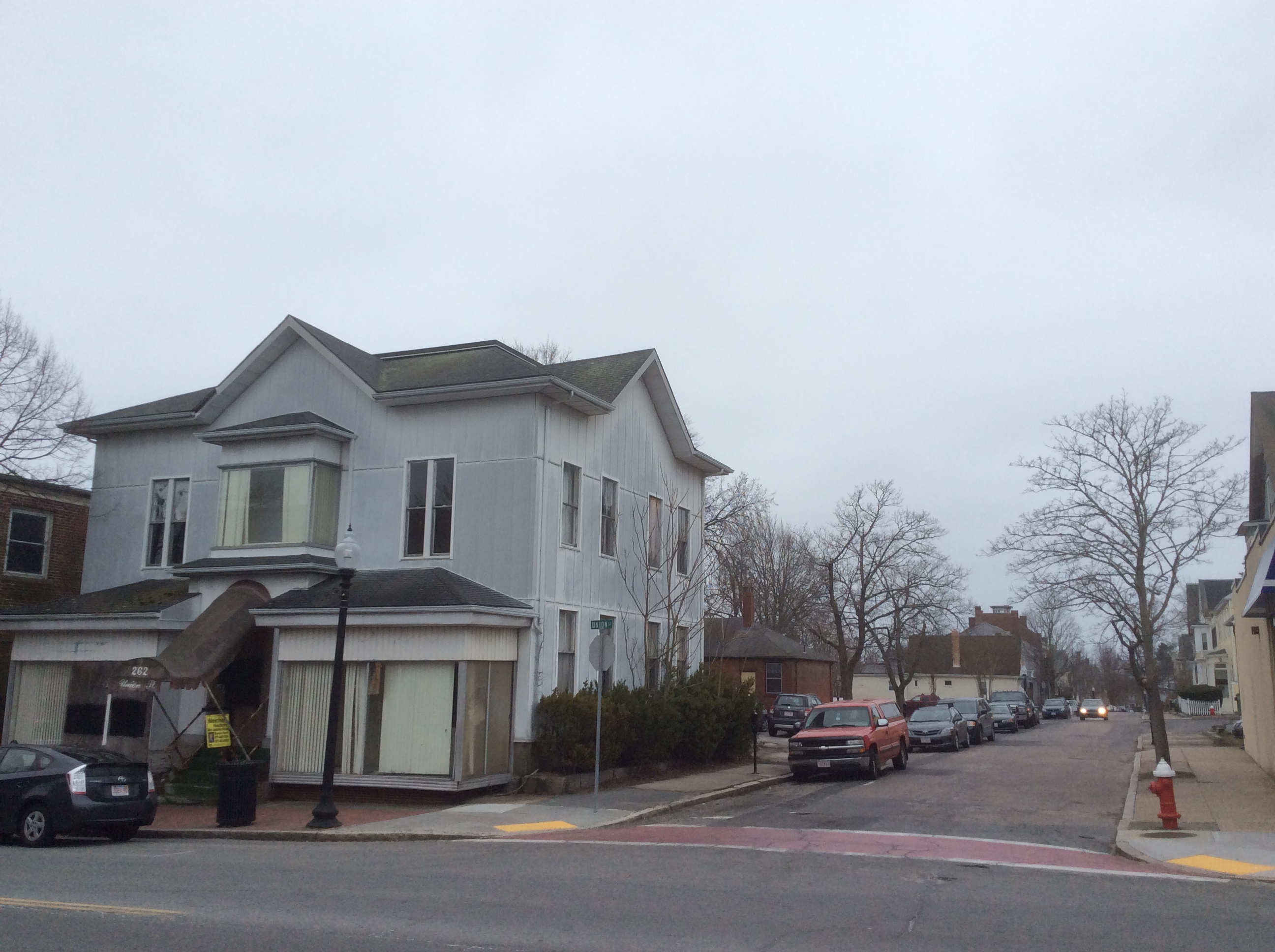
The Peabody house site was about where the gray house now stands at Union & 7th Sts, New Bedford MA

Then I head south down Eighth St, turn left on Union, and stop at Seventh. There were two locations of interest in the life of Douglass here. One, on the southeast corner of Union and Seventh, once stood the house of the Peabodys, at 174 Union St, about where the gray house is now. This is where Douglass picked up his first odd job here when Mrs. Peabody paid him two silver dollars to put away a load of coal. This seemingly insignificant moment in a life felt very significant to the newly escaped Douglass, because it was the first money he ever earned that no one at that moment had the right or the inclination to take from him. It was one small job for a man, but one huge step in feeling like a free one.
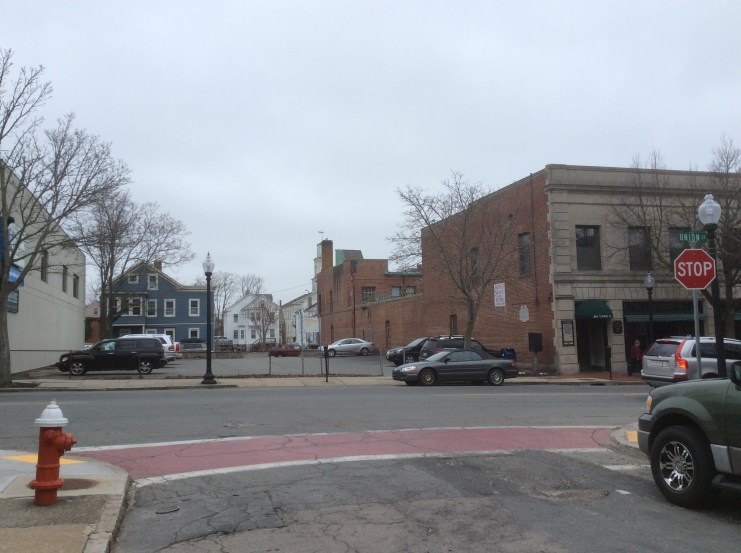
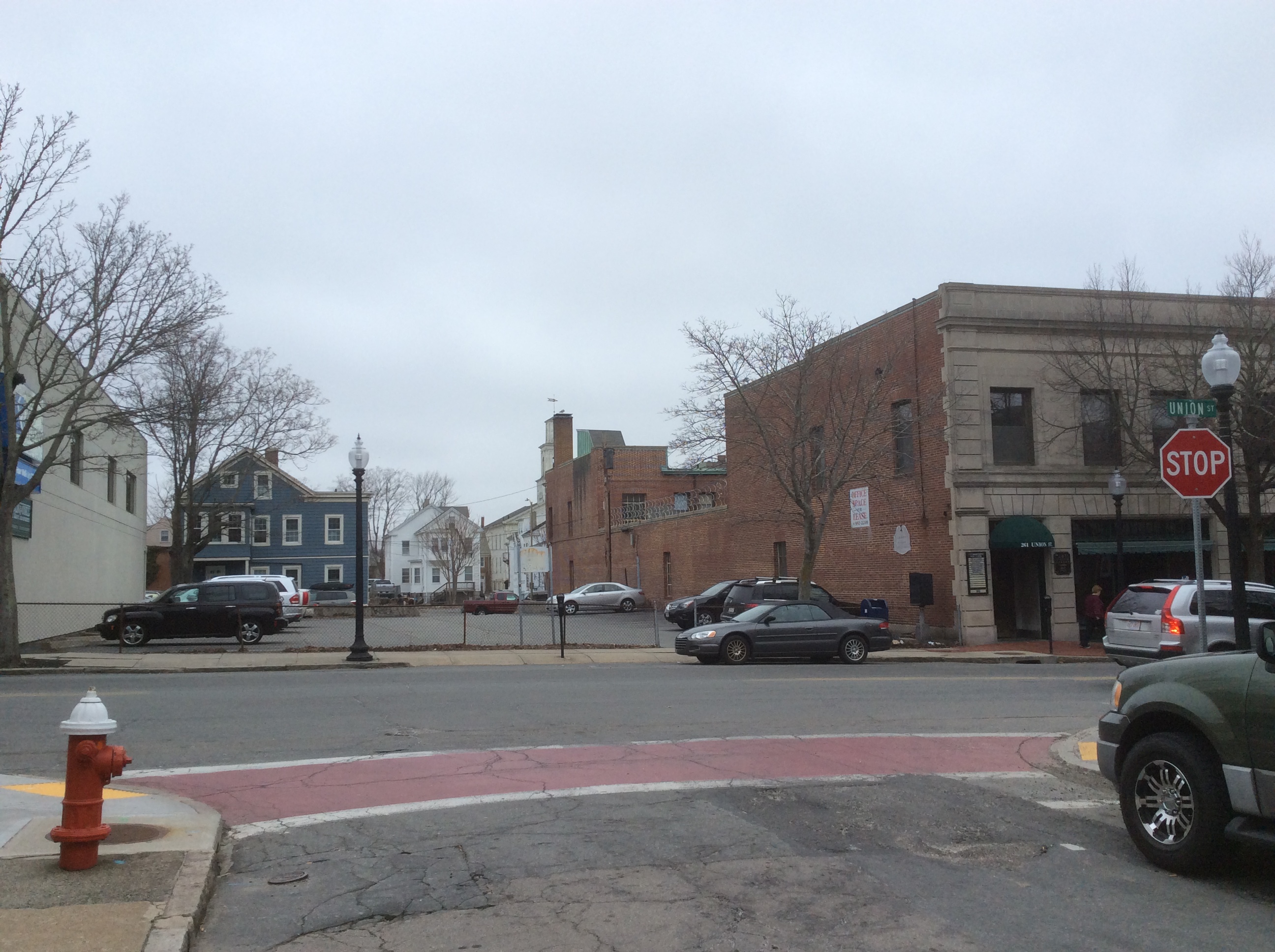
Site of Joseph Ricketson's house on the north side of Union at 7th St, New Bedford MA
Site of Joseph Ricketson’s house on the north side of Union at 7th St, New Bedford MA

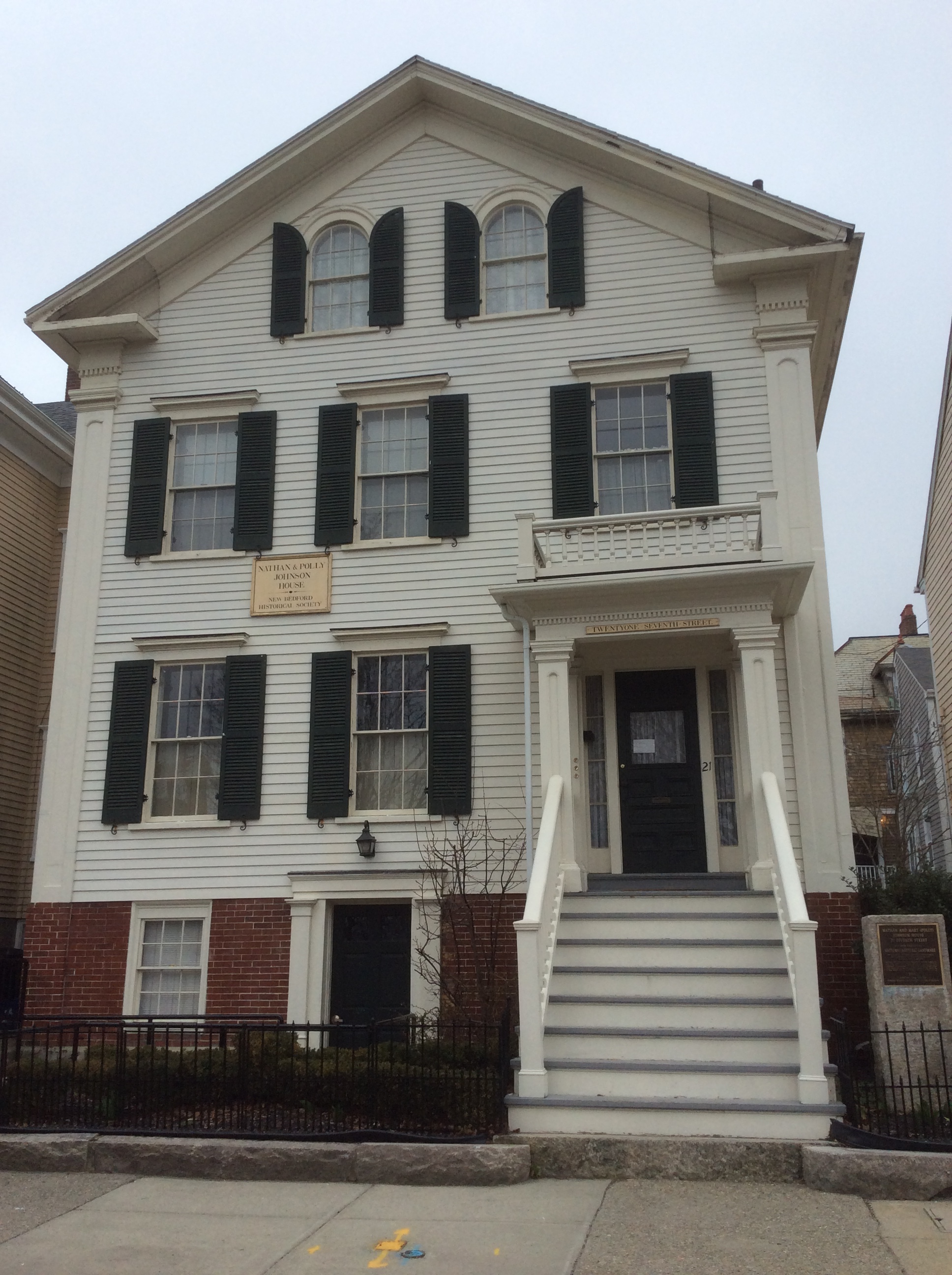
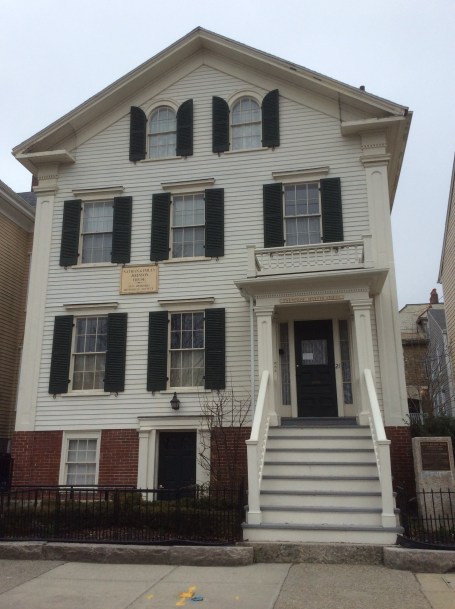
Nathan and Polly Johnson House at 21 Seventh St, New Bedford, MA

Nathan and Polly Johnson House at 21 Seventh St, New Bedford, MA

Also on Union and Seventh, where this parking lot is now on the north side of the street, across from where Seventh begins, lived a man, or rather two men, named Joseph Ricketson. One of the the two men Douglass named in his narrative who picked up the newly married Douglasses when they arrived at Newport and took them to New Bedford was Joseph Ricketson (probably referring to Sr). The Ricketson house was a busy and particularly well documented stop on the Underground Railroad.

Then, Ricketson and the Douglasses would have taken the same route as I do now (assuming they stopped at his house first), heading south on Seventh Street to Nathan and Polly Johnson’s house at number 21.
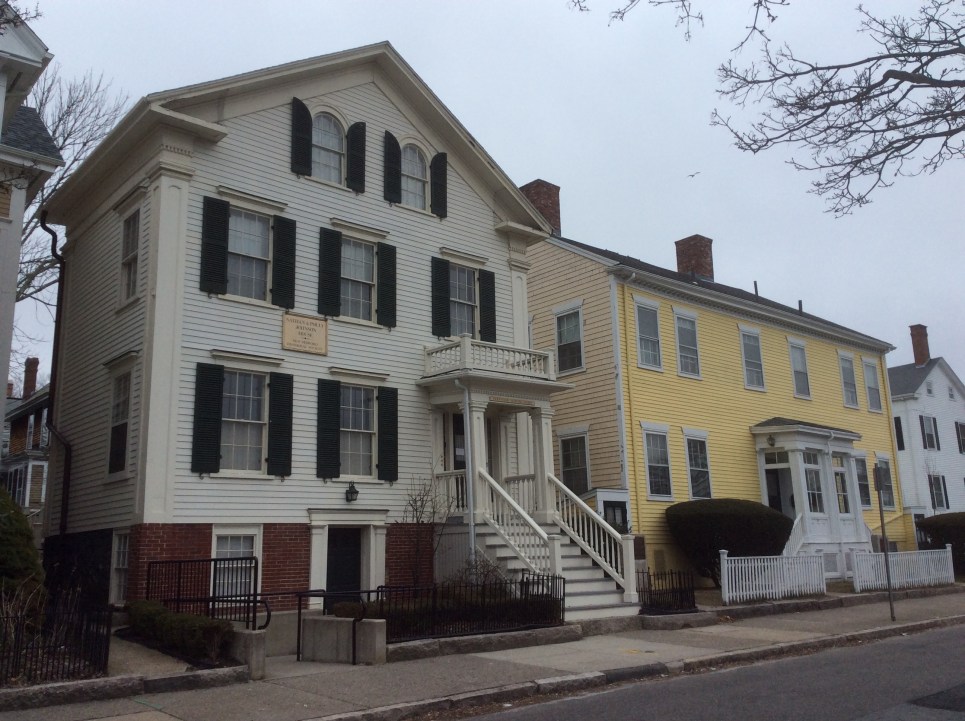
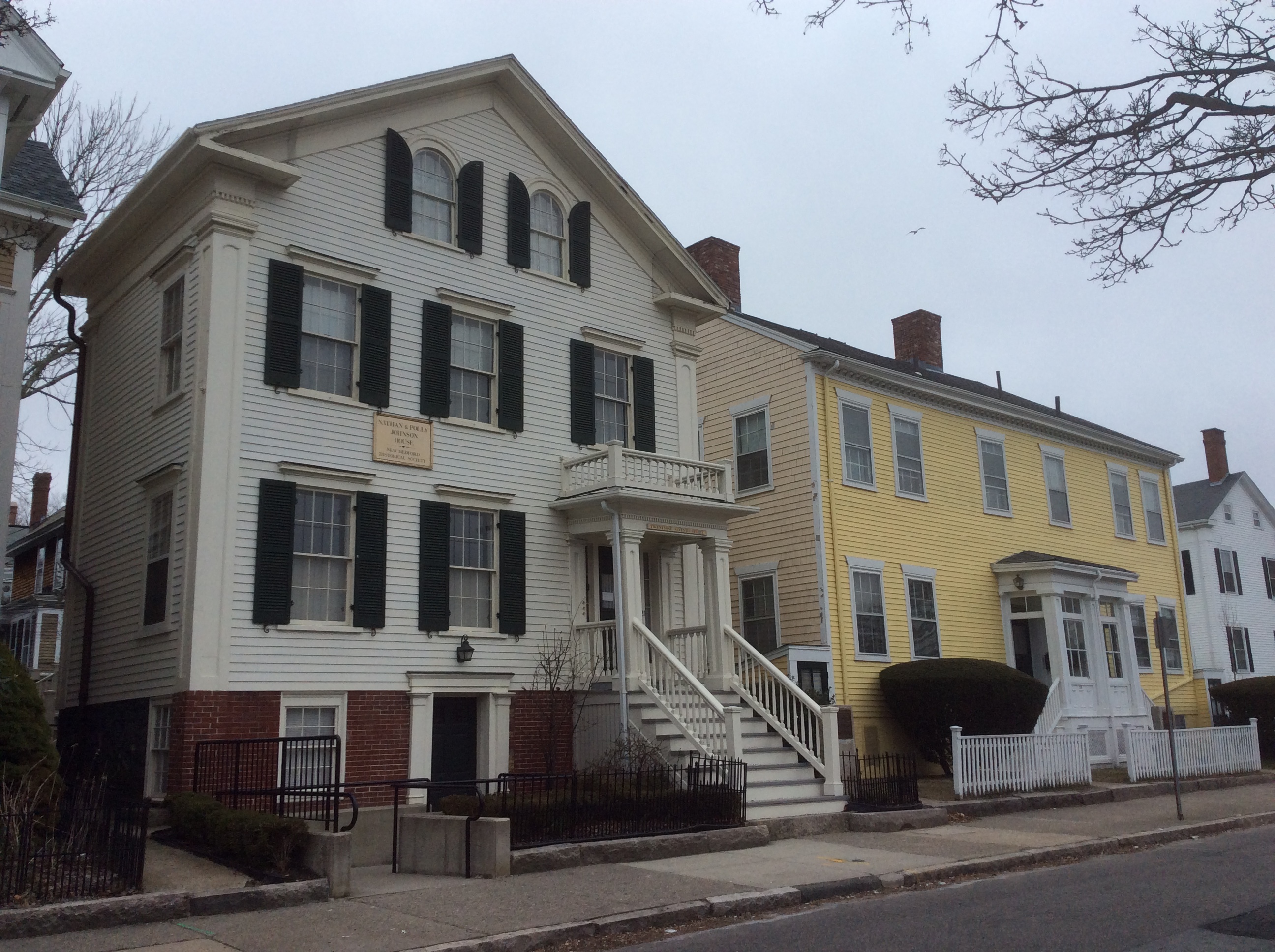
Nathan and Polly Johnson House (and adjoining) at 21 Seventh St, New Bedford MA, 2016 Amy Cools

Nathan and Polly Johnson House at 21 Seventh St and adjoining Quaker meetinghouse (in yellow), New Bedford MA
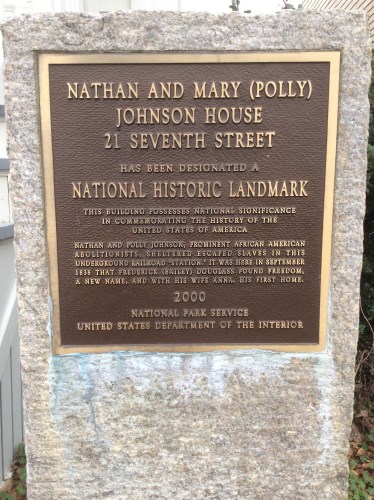
Historical Plaque at Nathan and Polly Johnson House, New Bedford MA

Historical Plaque at Nathan and Polly Johnson House, New Bedford MA

This was the first home Douglass and Anna lived together, from the day they arrived here on September 17th 1838 until they moved into their own first home in 1839. It’s the only New Bedford home of the Douglasses still standing. Nathan and Polly were an inspiration to the Douglasses, a free, successful black couple who spent much of their time and money to help their people achieve the same.

Actually, to be perfectly accurate, it was the newly married Johnsons who arrived here, since the former Frederick Bailey (Douglass) had renamed himself Frederick Johnson, making himself and Anna two more of the already too many Johnsons in the town! Most of the escaped slaves here had taken the same last name, a friendly but over-done tribute. Johnson suggested the surname Douglass instead, after a hero in the Sir Walter Scott novel he was reading at the time, and Frederick accepted.
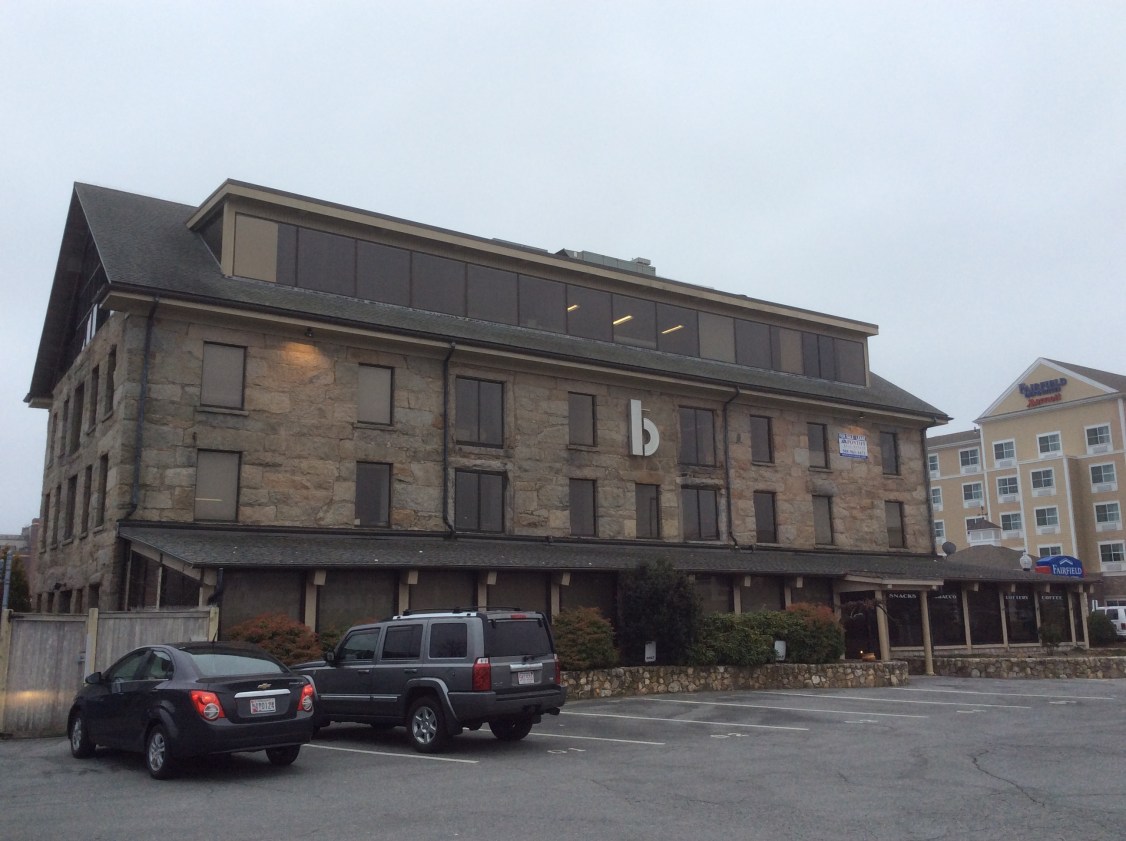
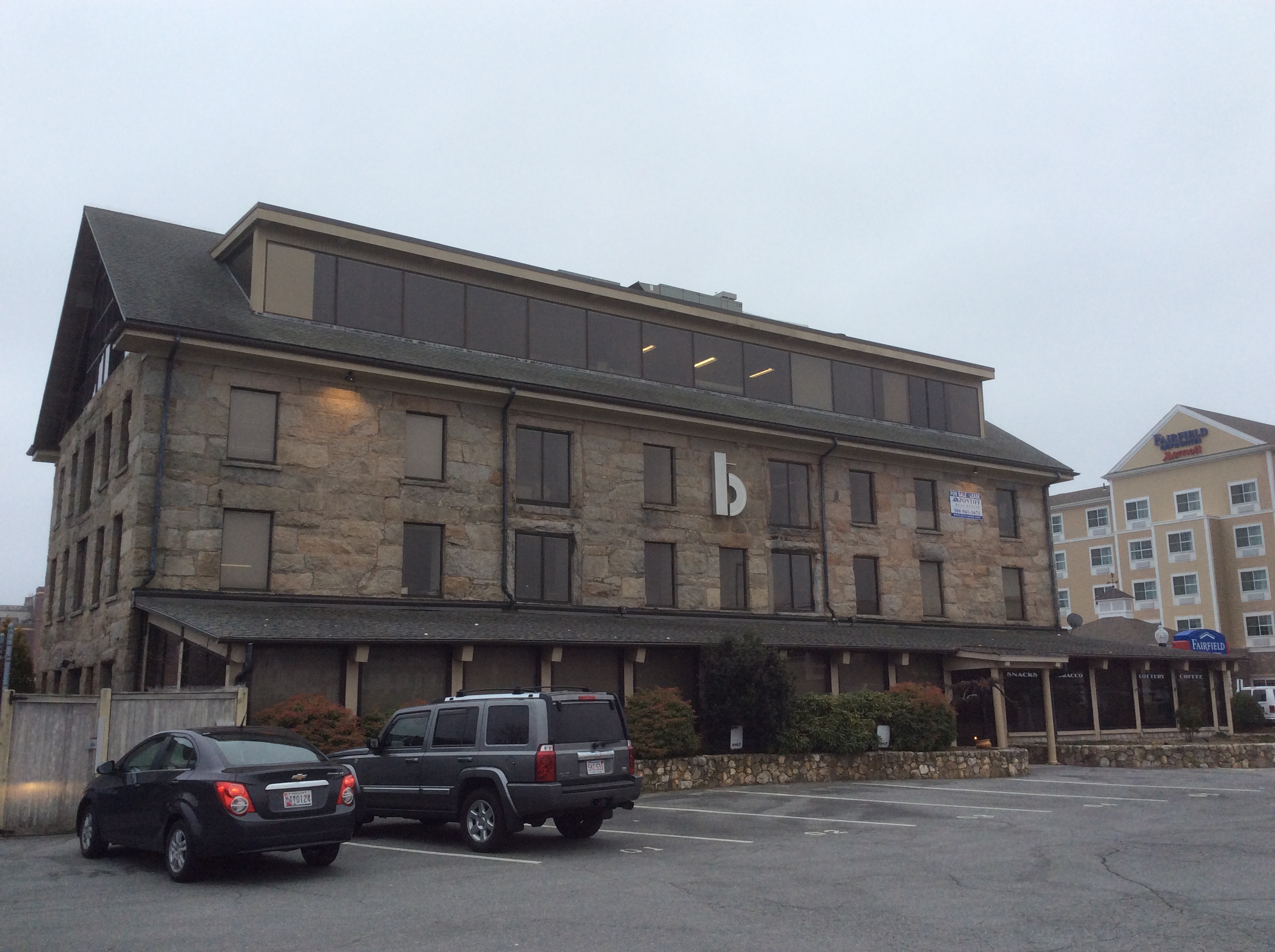
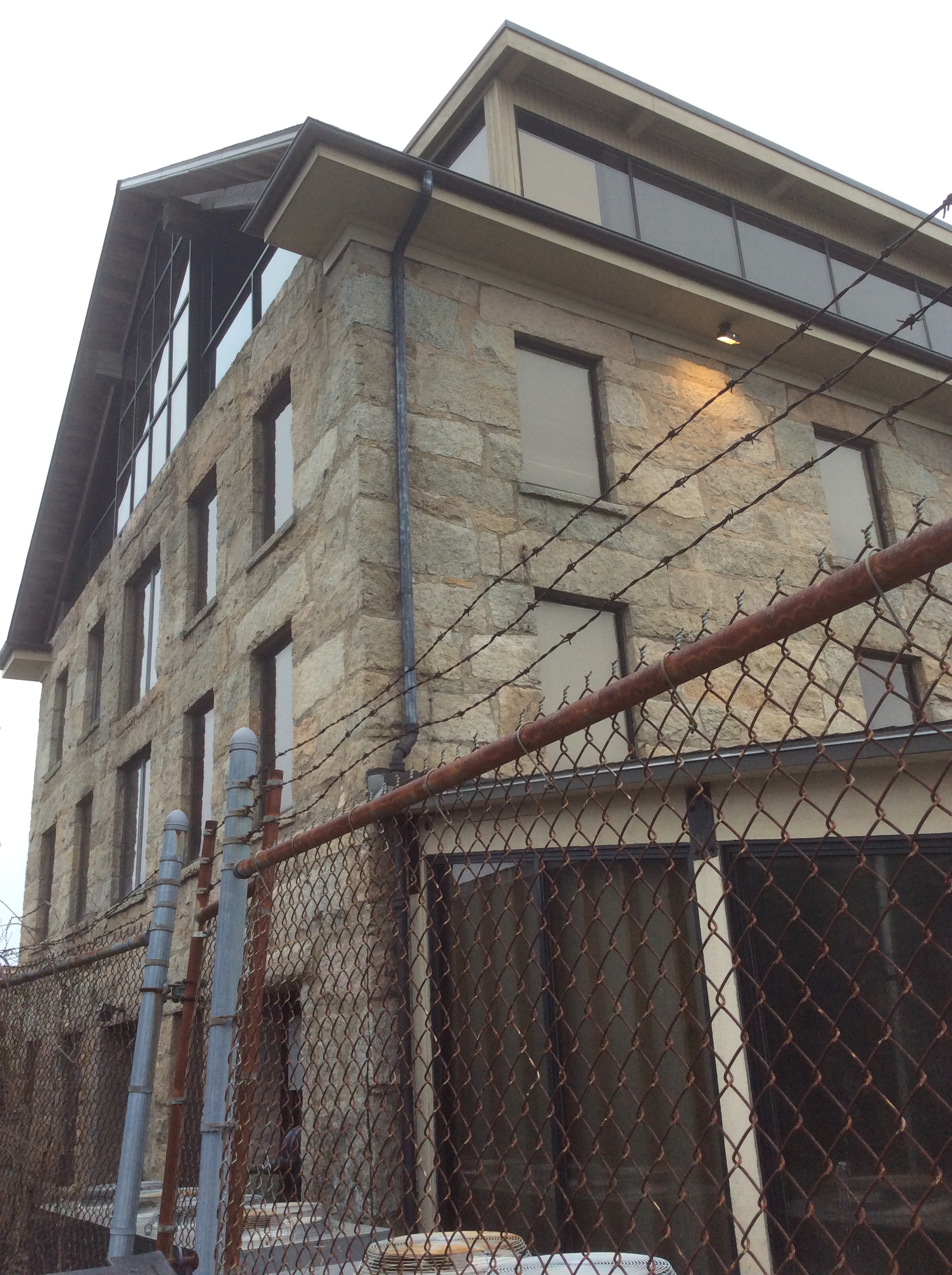
 1838 Whale Oil Refinery Building near Leonard's Pier, MacArthur St

1838 whale oil refinery building at 185 MacArthur Dr where Frederick Douglass may have worked

Then, as it’s I’m getting colder by the minute and hardly able to move my fingers (the wind chill has pushed the ‘feels like’ temperature down at this point to near freezing), I return to my car, and drive to 185 MacArthur Drive near Leonard’s Pier. This is the site of New Bedford’s first whale oil refinery, built in 1838. In his autobiographies, Douglass wrote of visiting the wharves to find work, described the granite warehouses there, told of loading casks of oil onto ships, and said he worked for a time in an oil refinery in the south of the city, for the same Joseph Ricketson just spoken of earlier. It would make sense that this is the same oil refinery, since it is indeed south of old New Bedford (where all the sites visited today were) and the year is early enough. If it isn’t Ricketson’s refinery, it could still be one of the ones Douglass delivered casks of oil to the ships from, and as you can see, it is made of granite.
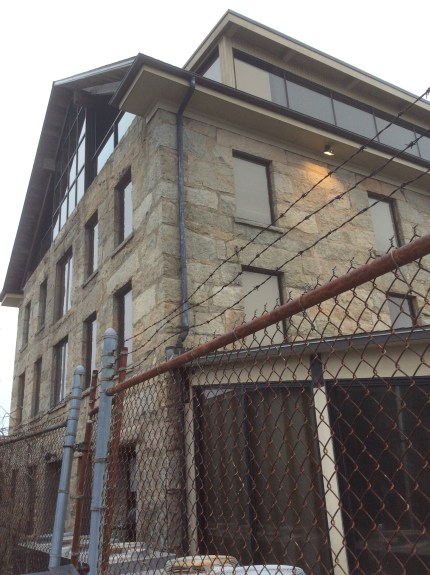
Another, closer view of 1838 oil refinery, New Bedford, MA

Another, closer view of 1838 oil refinery, New Bedford, MA

Douglass was amazed at the level of social equality black people enjoyed there with its integrated schools and many other institutions, but there was still segregation in many of the public buildings and competition and prejudice among working people. It was for the same reason that caused Douglass’ bad experiences working on the docks, especially at Gardiner’s shipyard, when he was still enslaved in Fell’s Point, because free whites had to compete for wages with black workers who would accept lower wages and therefore drive them down. In the end, Douglass couldn’t find a good job as a caulker here, so he worked as a common laborer, on the docks, in an (this?) oil refinery, and at a brass foundry among other things, averaging about a dollar a day instead of the two dollars he could earn as a caulker. Though he was poor and worked long hours (which, as he said, was not at all conducive to mental improvement for the lack of time), he obtained a free subscription to Garrison’s The Liberator (which led him to Garrison’s talk at Liberty Hall), attended as many abolitionist meetings as he could, and continued to educate himself. As he became more informed, he became a more passionate believer in the cause of human rights.
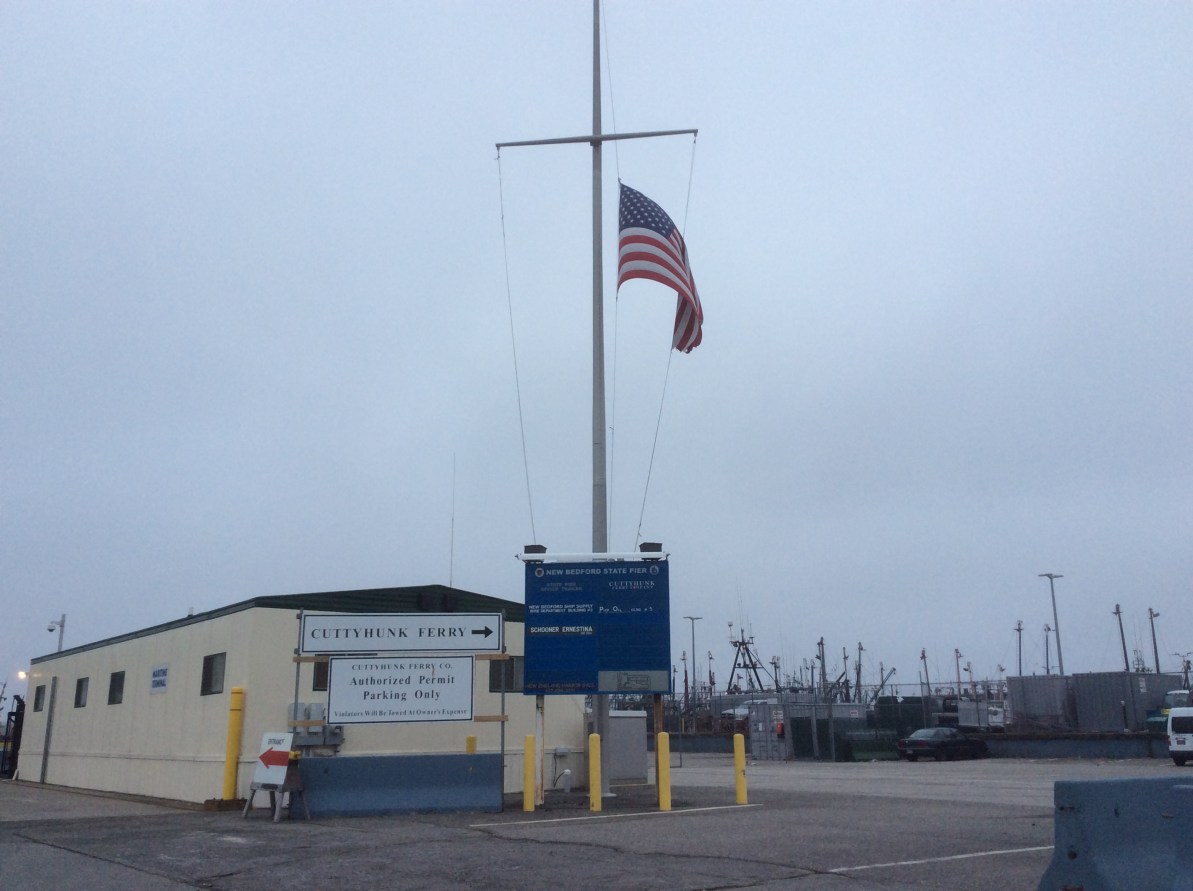
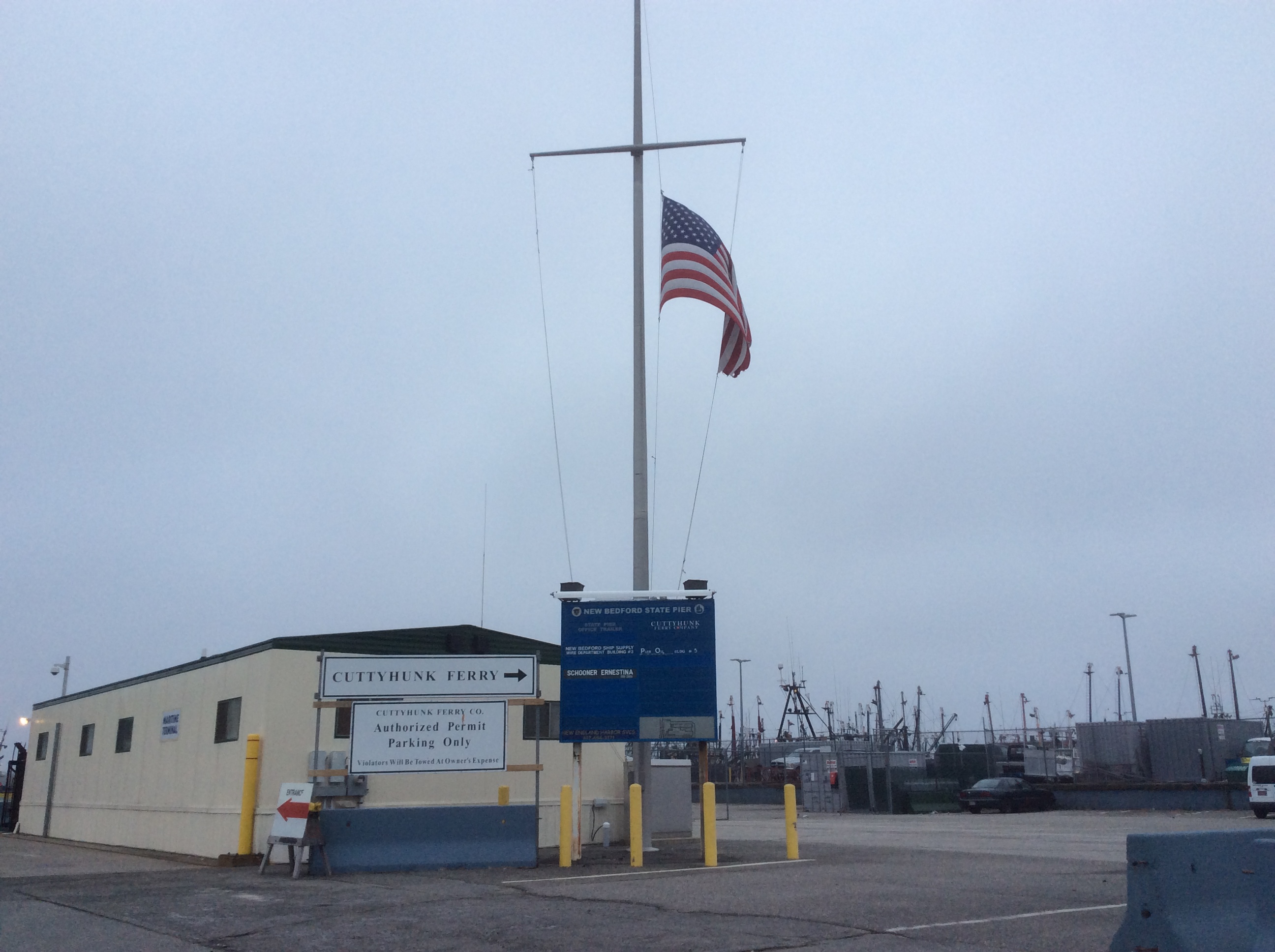
The delightfully names Cuttyhunk Ferry at New Bedford, which does not take you to Nantucket, unfortunately

The delightfully named Cuttyhunk Ferry at New Bedford which does not take you to Nantucket, unfortunately

I head a little north along the piers, and stop for a bit to look across the water in the general direction of Nantucket. The ferries don’t run there until later in April. On Aug 11, 1841, Douglass was invited to tell the attendees of his experiences as a slave at a large antislavery convention there at Atheneum Hall. Abolitionist William Coffin had overheard him talking with friends in a ‘little schoolhouse on Second St’ (which, though scouring all the sources I can find up to this point, I don’t find a location for) and was so impressed by his eloquent style of speaking, he was sure the convention would be too. It was likely one of the places the Zion Methodists met, for whom Douglass preached). Douglass first met William Lloyd Garrison there in person following this talk (as you remember, he had already heard him speak at Liberty Hall) and as Douglass’ telling of his story was so effective, he was solicited by another abolitionist leader John Collins to become a member and speaker of the Massachusetts Anti-Slavery Society. Thus began Douglass’ lifetime career as a human rights activist.
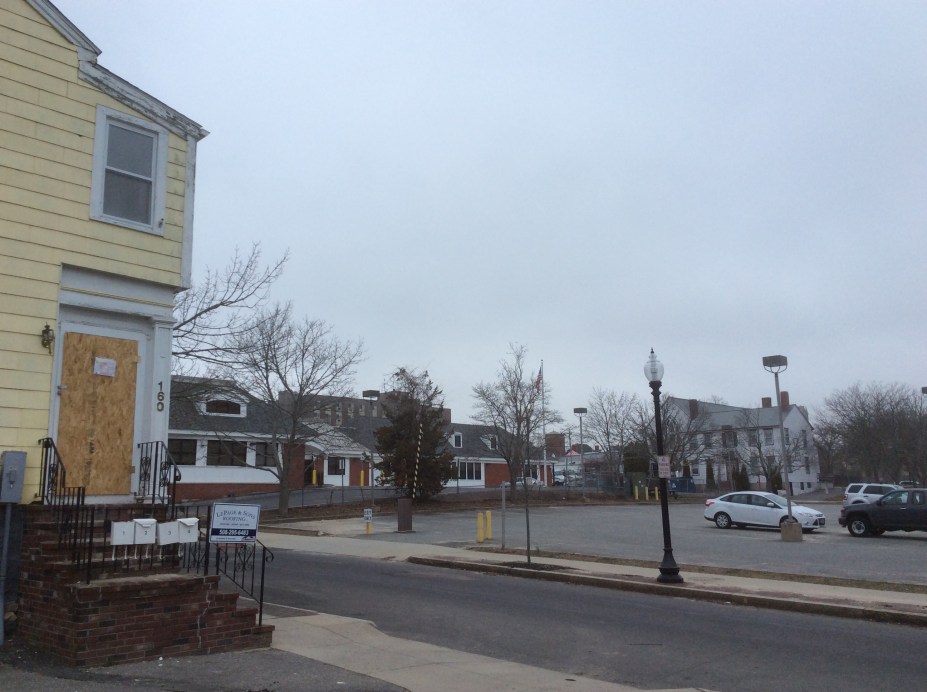
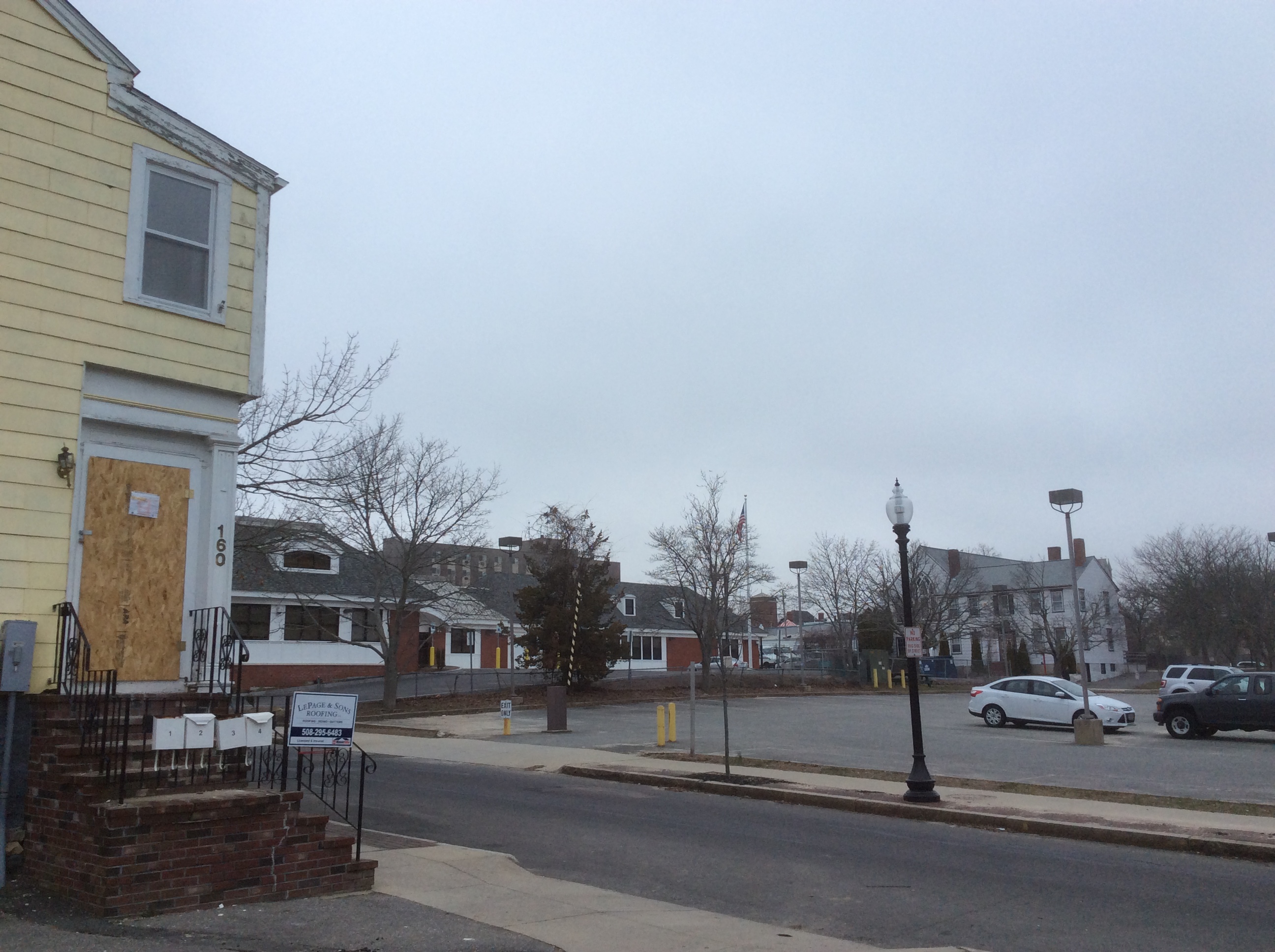
About where 157 Elm St was, site of Frederick and Anna Douglass' first home of their own in New Bedford MA

About where 157 Elm St was, site of Frederick & Anna Douglass’ first home of their own in New Bedford

The last site I visit today is where Frederick and Anna’s first home used to stand at 157 Elm St. I had actually passed by it earlier, on my way from Frederick Douglass Way to the old Elm St Methodist Church, as I had it on my list and in my notes but not on my map (derp! #2). If the street numbers haven’t changed, then it would have been on or near the site of the parking lot across from the yellow house marked 160. There’s not much left in the way of old buildings, so I go up a little ways toward the Methodist church, stopping at Eighth to photograph some of the houses on Elm, but most of them look too new to date to their time here.
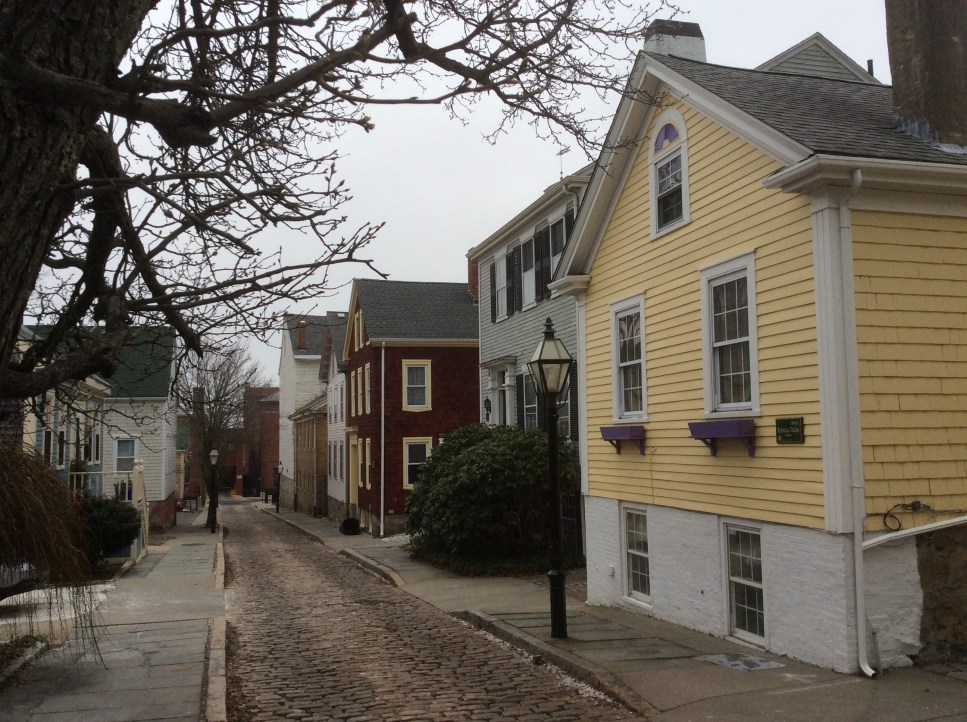
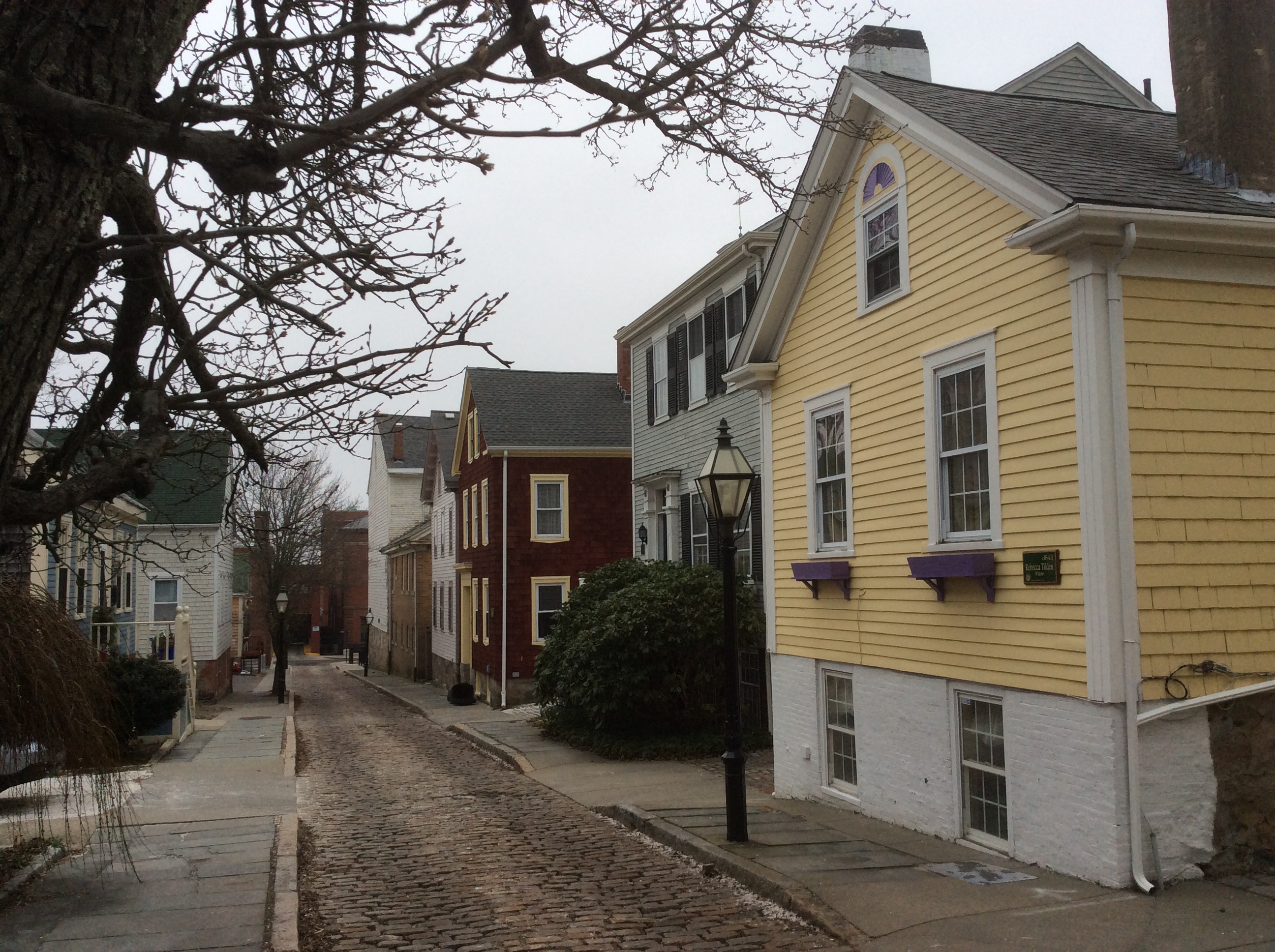
1830's houses on Mechanics Lane, off 8th and parallel to Elm St, New Bedford MA
1830’s houses on Mechanics Lane, off 8th and parallel to Elm St, New Bedford MA

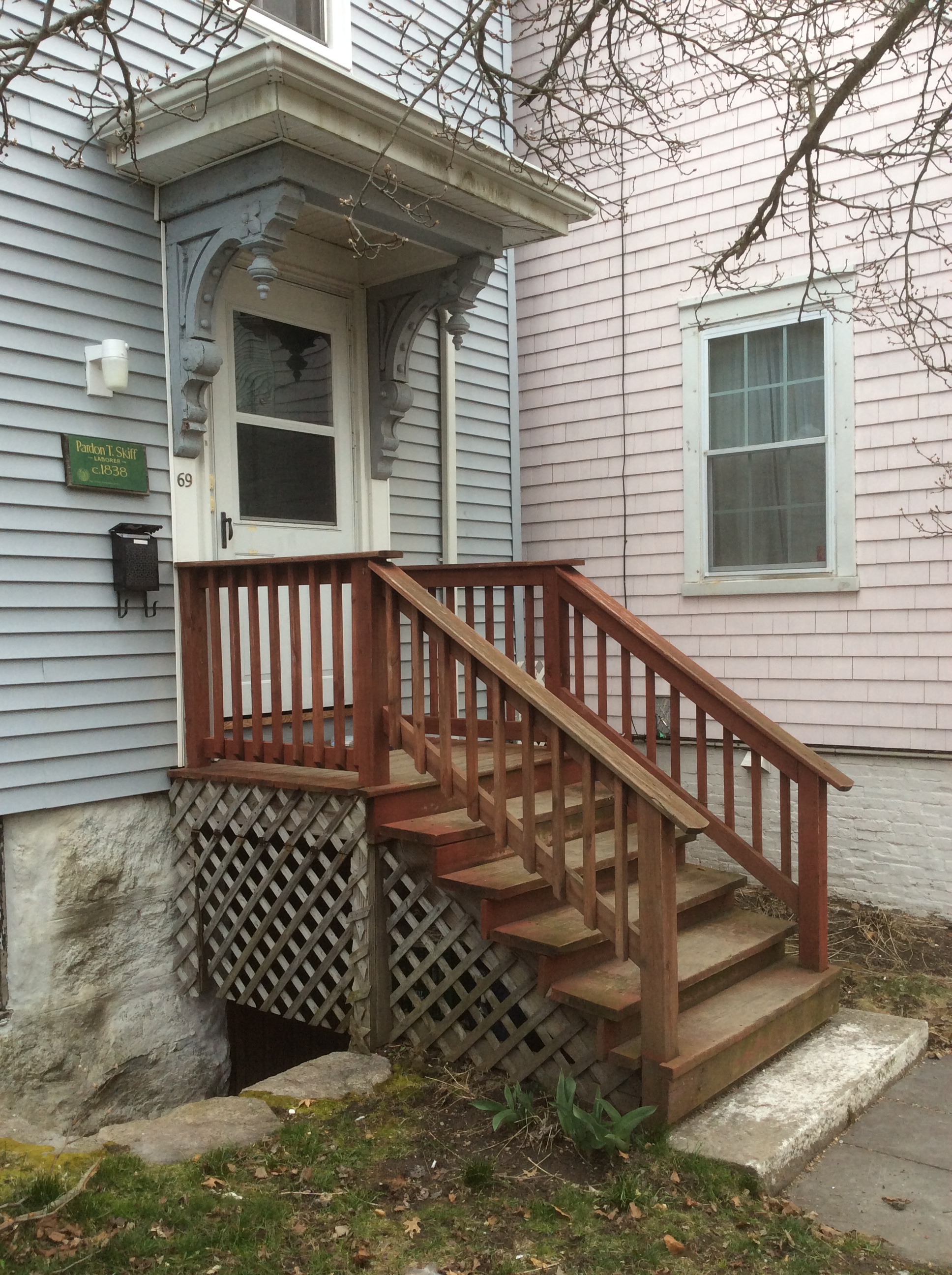
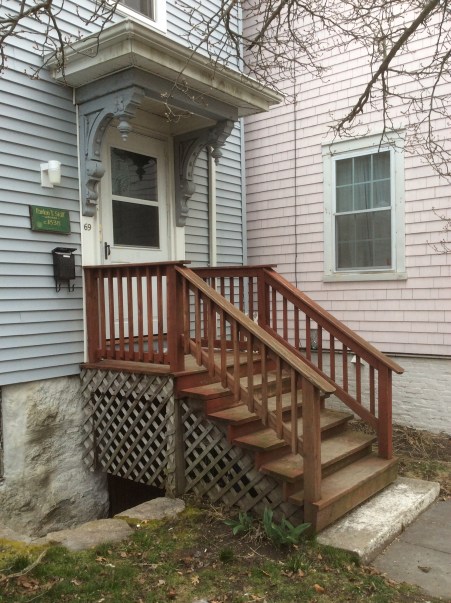
1838 home of Pardon T. Skiff, laborer, Mechanics Lane in New Bedford, 2016 by Amy Cools

1838 home of the delightfully named Pardon T. Skiff, laborer, on Mechanics Lane in New Bedford

Then as I head around the corner on Eighth, I spot a little street that runs one next to and parallel to Elm named Mechanics Lane, where most of the houses look of the right vintage, on a cobblestone street. I draw nearer to the houses and sure enough, their dates of original construction in the 1830’s are proudly displayed. So by looking at this street, we can get a good idea of what their neighborhoods looked like while they lived here. The Zion Methodist Church that the Douglasses used to attend may have stood at the corner of Eighth and Mechanics about where I’m standing as I spot this street, though again, that’s uncertain. The congregation met at various places around the town, since they had no permanent place of worship early on.

Thus ends my account of my day in New Bedford, a delightful and interesting day, even if a bit chilly. I need to skedaddle to meet my host in time at the end of my drive to my next destination. Stay tuned!
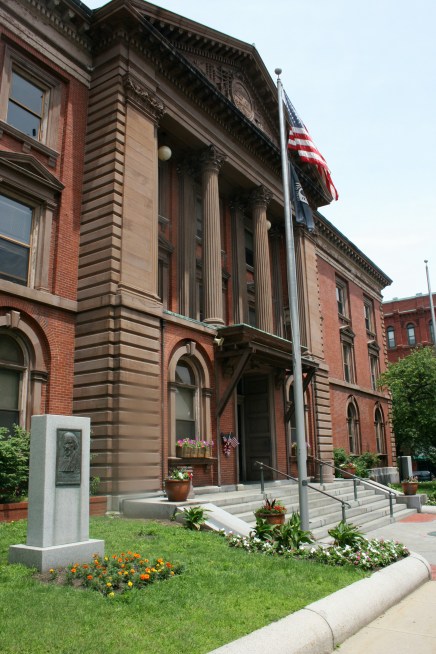
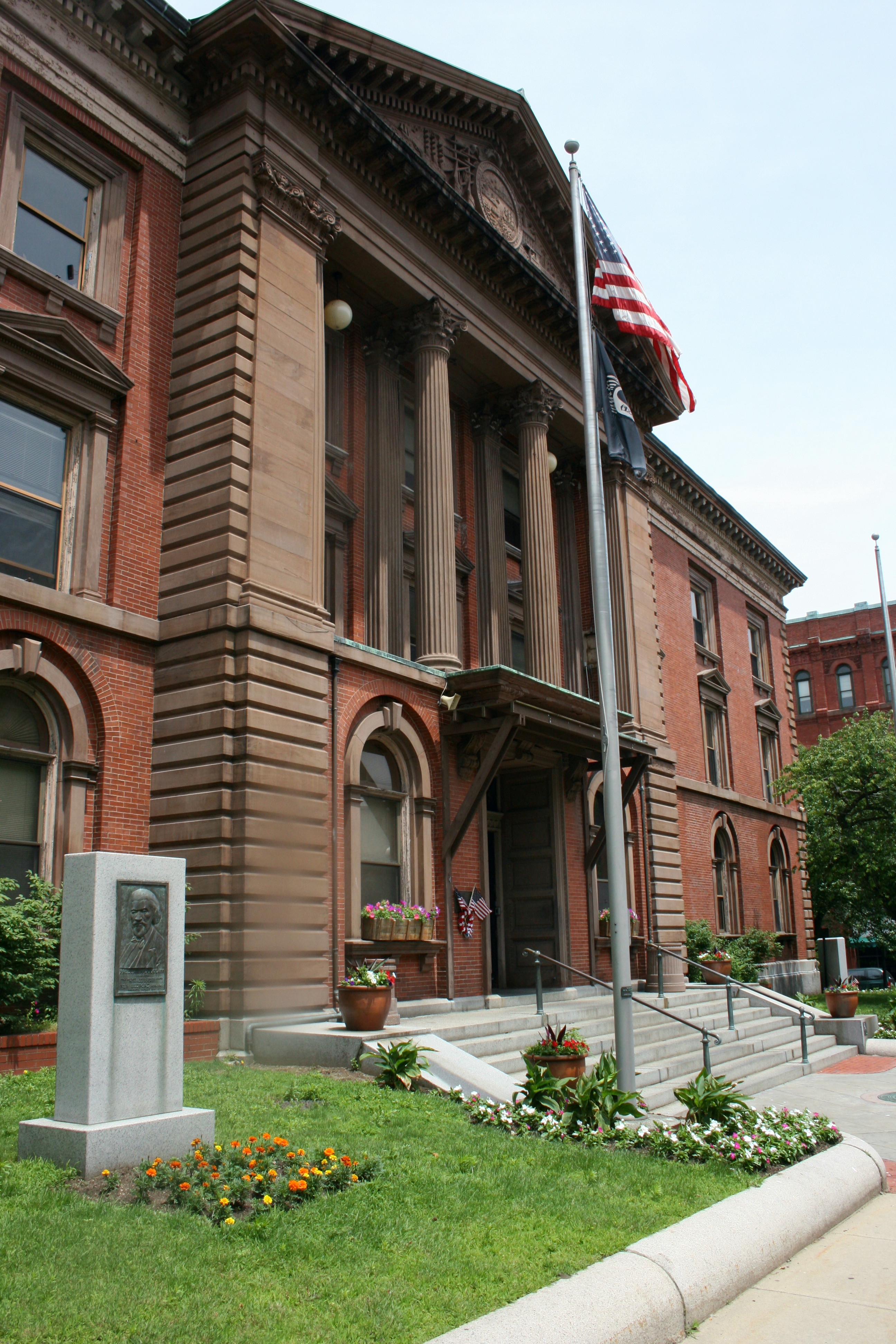
City Hall and Frederick Douglass monument at 133 William St

City Hall and Frederick Douglass monument at 133 William St


* By the way, if you have time to swing by, there’s a small Frederick Douglass monument on the front lawn of City Hall at 133 William St, near Mechanics Street, which you can see at the left of the photo. I don’t stop here since it’s not on my list of sites directly associated with Douglass’ life and as I mentioned, I’m running late and freezing cold so I don’t linger. But it’s a handsome building and a nice monument to visit.

*Listen to the podcast version here or on iTunes

~ Ordinary Philosophy and its Traveling Philosophy / History of Ideas series is a labor of love and ad-free, supported by patrons and readers like you. Please offer your support today!

~~~~~~~~~~~~~~~~~~~~~~~~~~

Sources and Inspiration:

Blassingame, J. (Ed.). The Frederick Douglass Papers, Series One: Speeches, Debates, and Interviews. 4 volumes, and The Frederick Douglass Papers, Series 2: Autobiographical Writings. 3 volumes. New Haven and London: Yale University Press, 1979-1999

Douglass, Frederick. Autobiographies, with notes by Henry Louis Gates, Jr. Volume compilation by Literary Classics of the United States. New York: Penguin Books, 1994.

Douglass, Frederick. The Life and Times of Frederick Douglass. Re-published 1993, Avenal, New York: Gramercy Books, Library of Freedom series.

Douglass, Frederick. My Bondage and My Freedom: 1855 Edition with a new introduction. Re-published 1969, New York: Dover Publications, Inc.

Foner, Philip S. The Life and Writings of Frederick Douglass, Vol. 1-4. New York: International Publishers, 1950.

Frederick Douglass and Herman Melville: Essays in Relationedited by Robert S. Levine and Samuel Otter. University of North Carolina Press, 2008.

Herman Melville‘, from Wikipedia, The Free Encyclopedia.

Hood, James Walker. One Hundred Years of the African Methodist Episcopal Zion Church: Or, the Centennial of African Methodism. New York, 1895. (p 541)

Janiskee, Bob. ‘Loss of the Historic Baker-Robinson Whale Oil Refinery Rankles Officials at New Bedford Whaling National Historical Park‘. Apr 20th, 2010. National Parks Traveler

National Park Service, New Bedford Whaling National Historical Park publications: The 54th Regiment cards and The Underground Railroad: New Bedford and A Whaling Town brochures.

New Bedford Black History Trail‘. The New Bedford Historical Society website

New Bedford Historical Society publications: Frederick Douglass: Freedom in New Bedford, The 54th Regiment, and Nathan and Mary “Polly” Johnson House brochures.

Walker Lithograph & Publishing Co., 1911. Massachusetts, New Bedford 1911. Atlas. (Plate 14)

Weidman, Budge. ‘Teaching With Documents: The Fight for Equal Rights: Black Soldiers in the Civil War – Preserving the Legacy of the United States Colored Troops‘, 1997. National Archives Teacher’s Resources.

Welker, Grant. ‘New Hotel Latest Sign of a Revived New Bedford‘. Jun 5, 2010. The Herald News.

New Podcast Episode: Frederick Douglass Baltimore Sites

Listen to this podcast episode hereDouglass Place with engraved marker, Fell's Point Baltimore MD, photo 2016 Amy Cools or subscribe on iTunes

First day, Sunday March 20th

So here I am on the East Coast, commencing my Frederick Douglass history of ideas travel adventure in earnest! I’m thrilled, and know I’ll learn and see a lot, since I have so many sites I plan to visit already and know I’ll discover more as I go along.

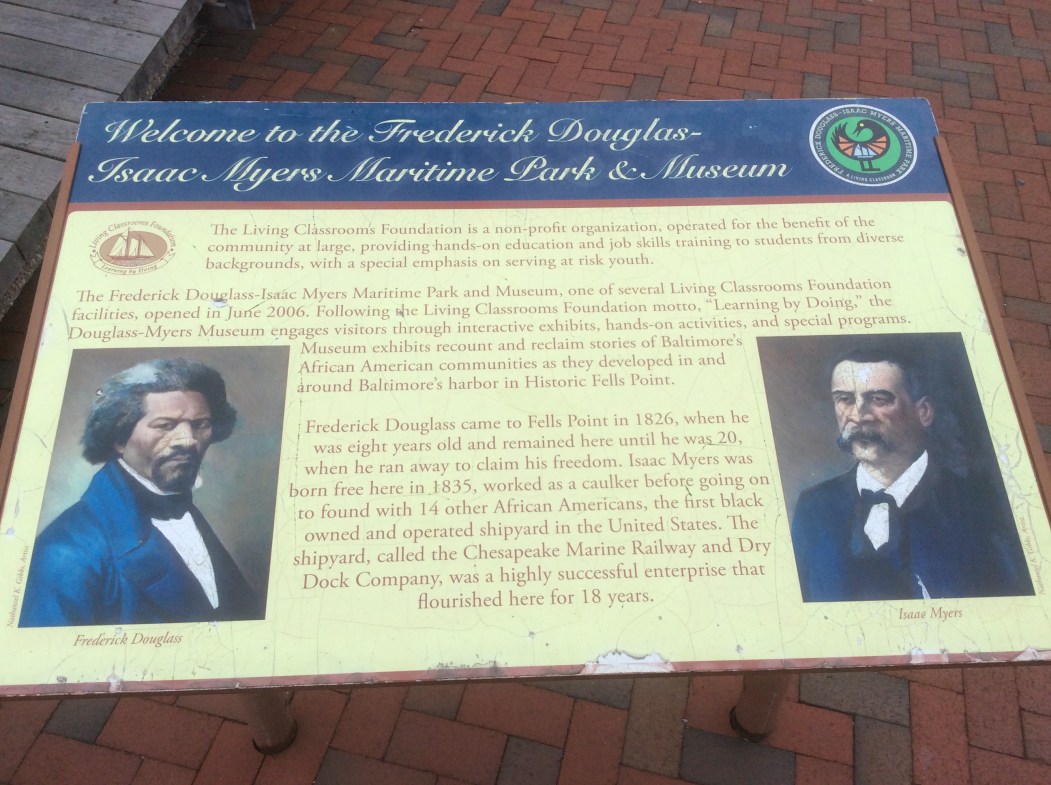
…In a very important way, it’s fitting to begin with Douglass’s life here in Baltimore, centered in the waterfront district of Fell’s Point, since this is where Frederick Douglass had one of the most formative experiences of his life.

… Read the original travel account here

Ordinary Philosophy and its Traveling Philosophy / History of Ideas series is a labor of love and is ad-free, entirely supported by patrons and readers like you. Please offer your support today!

Frederick Douglass New York City Sites

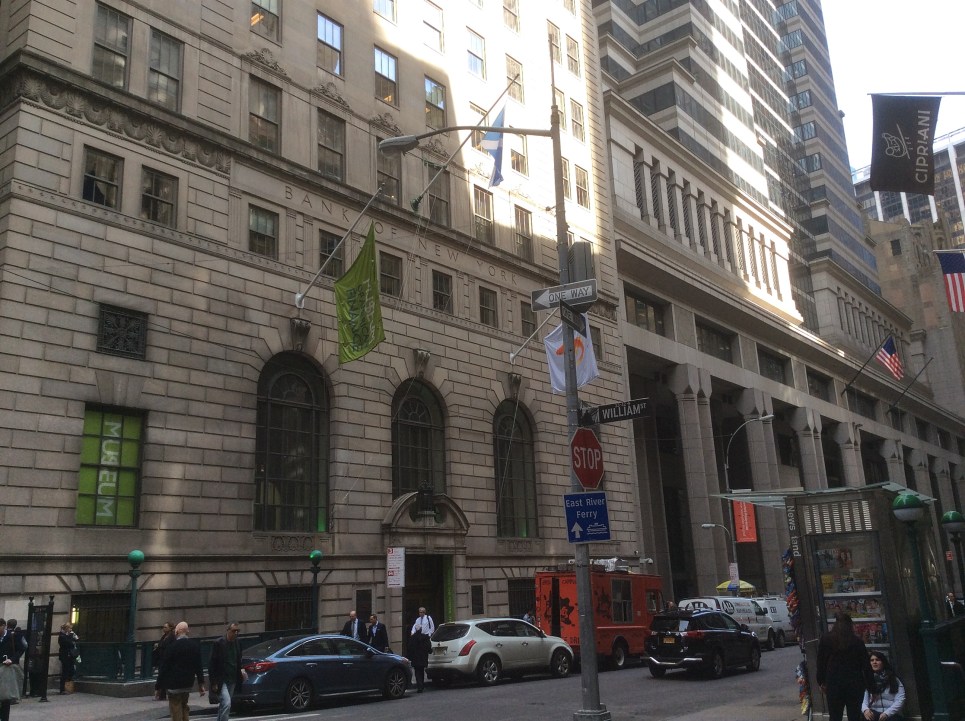
Bank of New York at Wall and William Sts NYC, 2016 by Amy Cools

Bank of New York (cornerstone laid June 22 1797) at Wall and William Streets, New York City

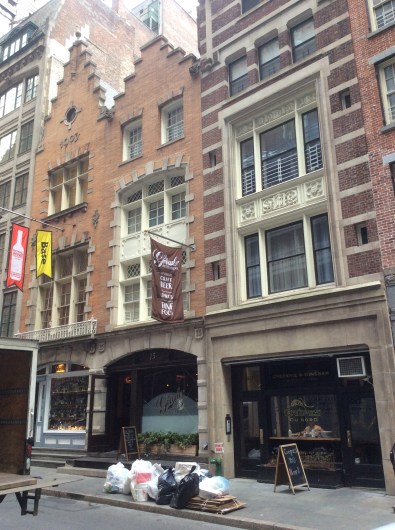
Three old buildings on historic S. William Street, 2016 by Amy Cools

Three old buildings on historic S. William Street

Fourth Day, Wednesday, March 23rd

I arrived yesterday afternoon in New York City and had a good hangout with my friend with whom I’m staying (thanks, Devin!).

After doing more research and mapping out today’s journey, I head to my first destination. I take the subway to lower Manhattan to the Brooklyn Bridge stop, zigzag my way southeast to Wall and William Streets, then down to S. William St. Wall Street was the northern border of the city when it was still young, so I decide it’s as good a way as any to get a feel for the old city, though really, the truly old intact buildings in NYC are scattered, and few. I’m only looking back to the 1830’s for this trip, but as you may know or may remember from my earlier series on Ernestine Rose and Elizabeth Cady Stanton, this city has a long history of tearing everything down regularly and starting fresh.

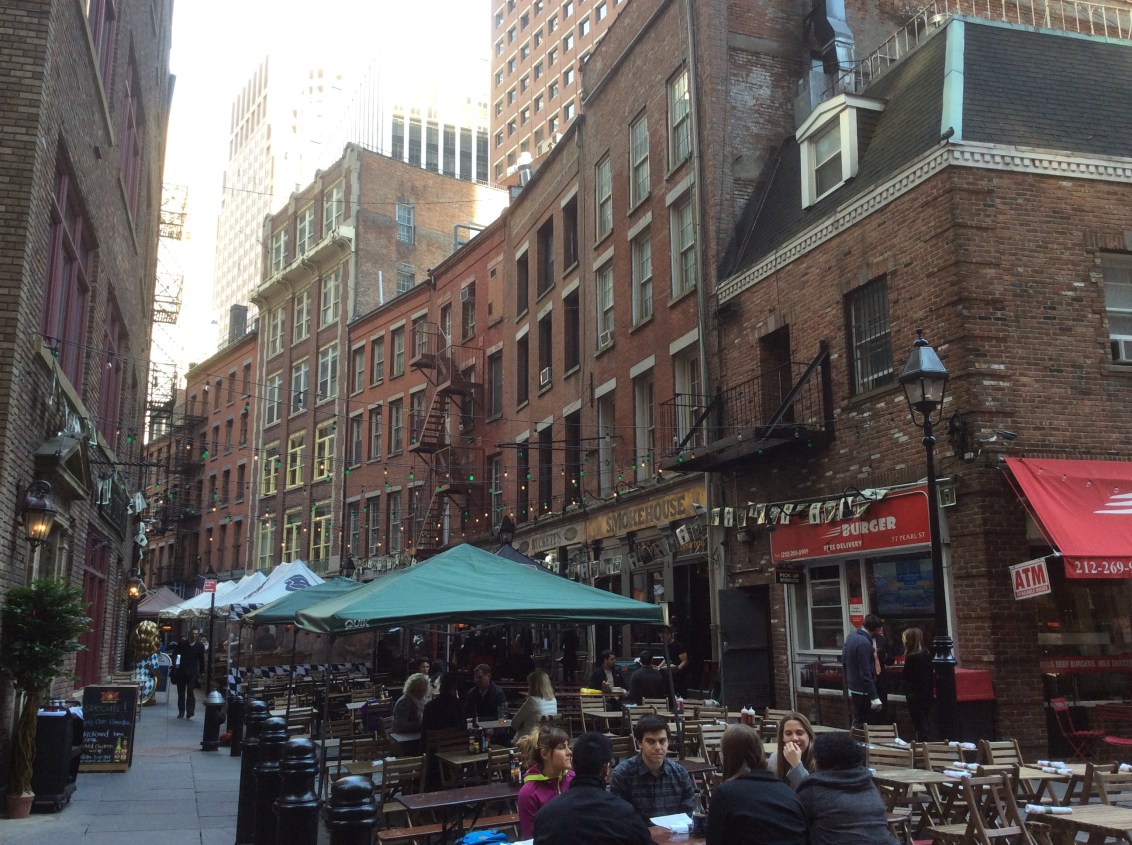
Stone St on the other side of S. William NYC, 2016 by Amy Cools

Stone St on the other side of S. William St., New York City

I’m heading to S. William because, as you may remember from my account of yesterday’s travels, Douglass accidentally referred to the Willow St. depot in Philadelphia as the William St. depot, which was the New York one. It doesn’t say specifically in any of his accounts that he went to the William St depot the day he arrived in New York City on Monday, September 4th, 1838. He would have arrived at a New York City wharf coming across from a New Jersey train station. I interpret his mistake, though, to indicate he did go to William St. that day, especially combined with his description of being among the bustle of Broadway and gradually making his way north to Center Street. The general route makes sense.

Foundation brickwork from 1830's building at 13 S. William St, 2016 Amy Cools

Foundation brickwork from 1830’s building at 13 S. William St, NYC

I photograph a row of older buildings at the foot of William St. As you can see by the numbers near the peaks of the facades, they’re dated at the turn of the century, more than half a century after Douglass arrived here, newly freed by his own efforts.

As I draw near to the buildings to take a closer look, I spot a historical plaque on 13 S. William St, the one with the year 1903 prominently displayed near the pointy top. That’s the year it was rebuilt after a fire in a more fashionable Dutch Revival style; the original building was under construction when Douglass was here in NYC in 1838, and the foundations remain. The buildings’ other entrance is on Stone St, to the east and parallel to S. William St as it curves around and up in a northeasterly direction. I see from early New York City atlases that the streets here retain their shape and direction from Douglass’ days here. So even if Douglass didn’t come to the William St. depot when he arrived, he was near this part of town, this is one of the few places where anything still stands from that time, and he probably went there at some point since his memory was familiar enough with the name of the William Street depot to transfer it to the Philadelphia one when he tried to recall it later on.

Sign at Collect Pond with story and picture of The Tombs, NYC, 2016 by Amy Cools

Sign at Collect Pond with story and picture of The Tombs, New York City

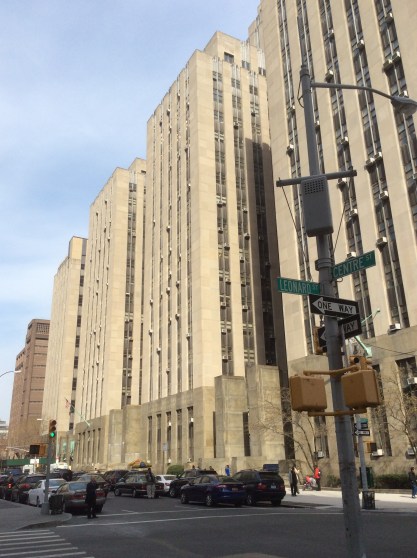
Criminal Courts building on Centre St, New York City, photo 2016 by Amy Cools

Criminal Courts building on Centre St, New York City

So back to following Douglass, and in this case to a place he went for certain. I make my way north, just as he did on his way ever more surely to freedom, to Centre St. across from the site of The Tombs. It stood at the site where Collect Pond now stretches between Lafayette and Centre Streets, at cross streets White and Leonard. It was an Egyptian revival building (hence the name, as in ancient Egyptian tombs) repurposed as a prison because it was ill-suited for its original purpose. In his Life and Times, Douglass recalls meeting a sailor named Stuart who saw him across the street from where his house stood on the west side of that street. Stuart takes an interest in him and befriends him right away. I’m sure it had much to do with Douglass’ appearance, since he dressed as a sailor himself for his escape: sailors were held in especially high regard in this part of the world at this time, so he felt he was less likely to be challenged, and since many black people were employed as sailors, he felt he’d more likely pass without notice.

Douglass’s new friend Stuart gave him shelter for the night. Since Stuart lived across from The Tombs on Centre St., his house would have stood somewhere on the grounds now occupied by the enormous New York City Criminal Court Building.

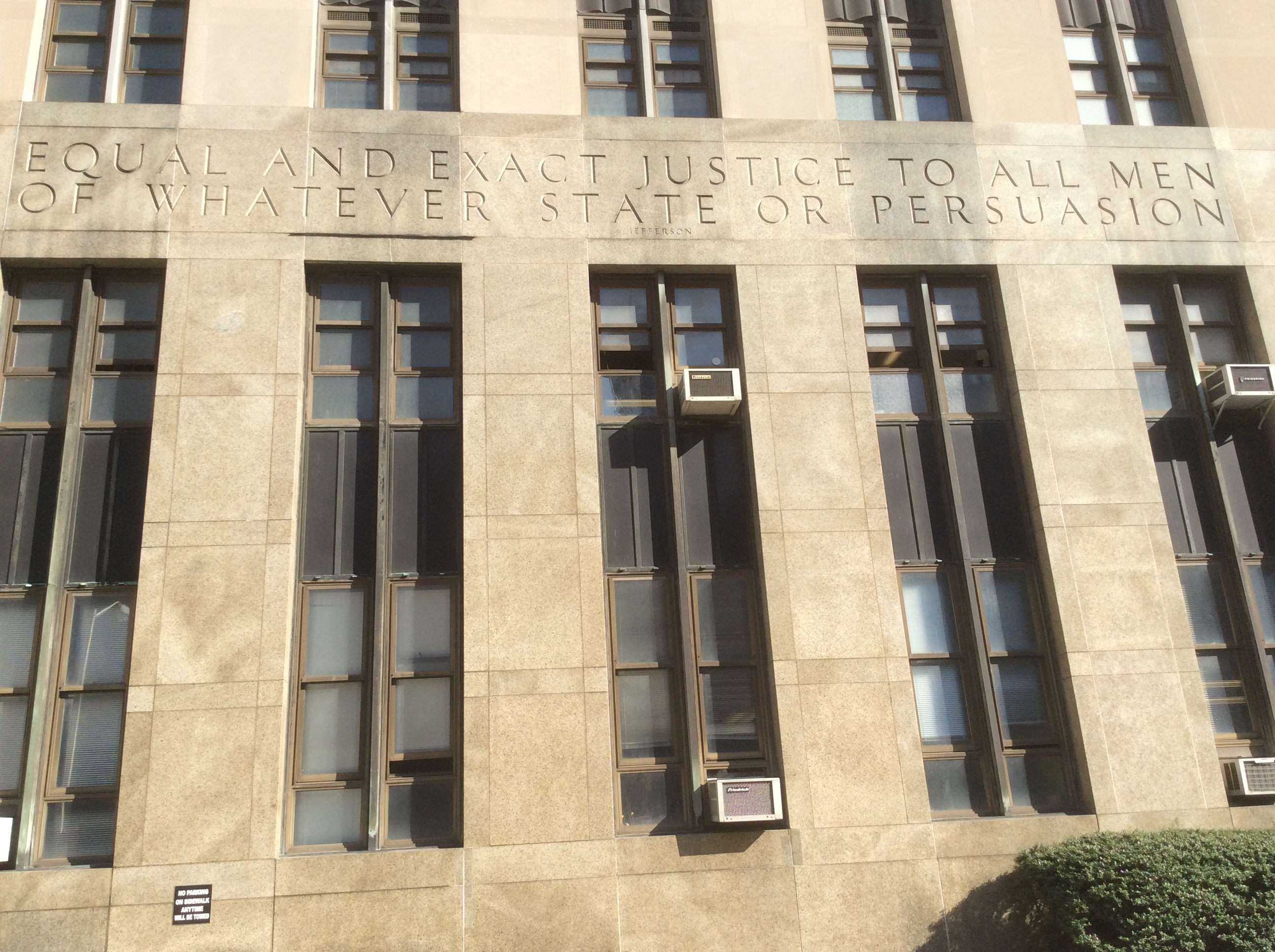
Jefferson quote on the New York City Criminal Courts Building

Jefferson quote on the New York City Criminal Courts Building

Looking up at the words engraved across the center front, something strikes me. I imagine what Douglass would have felt that day if he knew the words ‘Equal and Exact Justice to All Men of Whatever State or Persuasion’ would be etched in stone one day above the place his head lay. After all, it describes very well the central driving principle of his life. (As you can see if you look closely at the name under the quote, this one’s from Jefferson; it’s from his first inaugural address. Regretfully, the author of it never did find sufficient conviction within himself to realize that principle for those of Douglass’ people he held in slavery.)

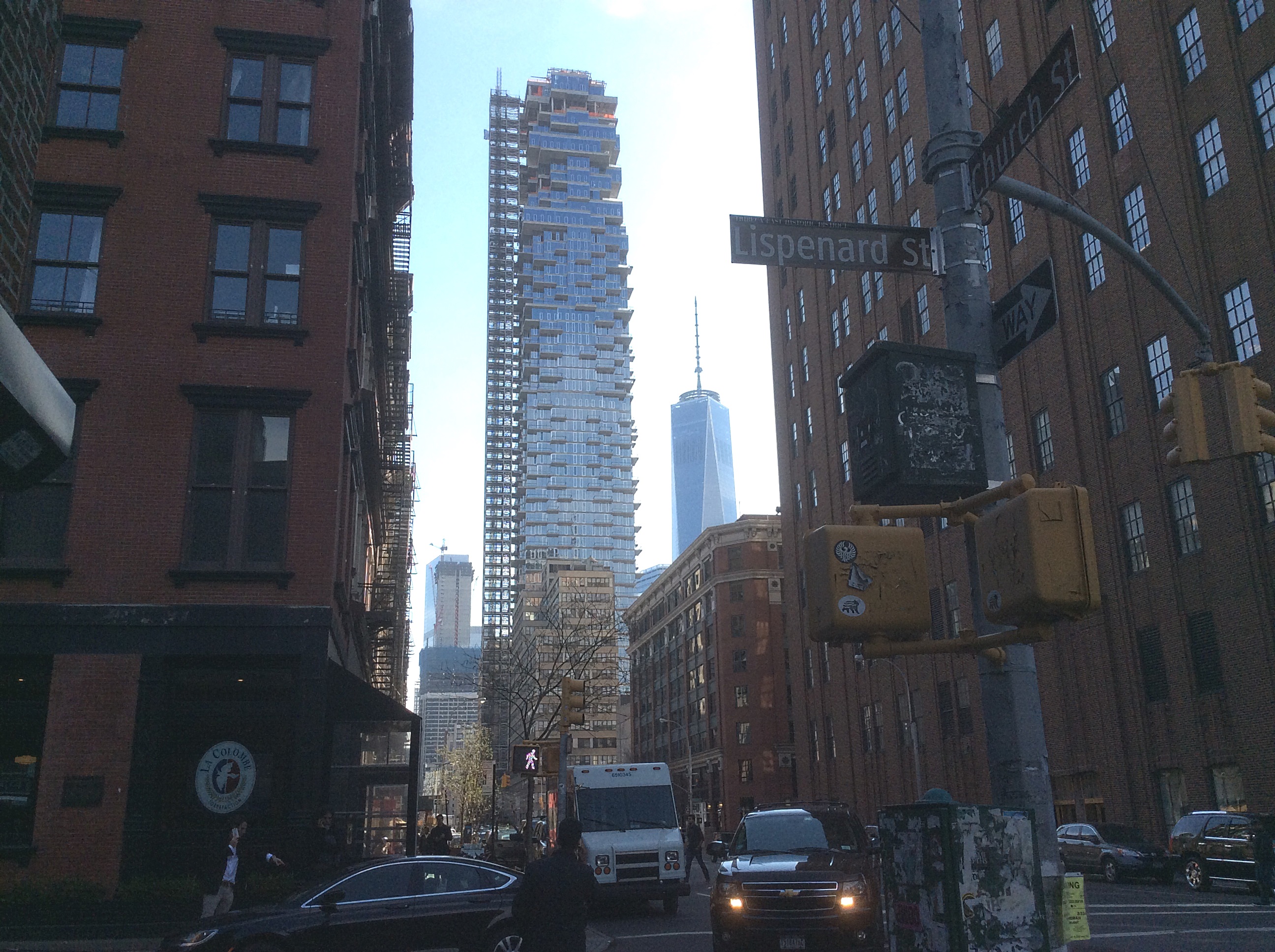
Church and Lispenard Streets, Tribeca, NYC, photo 2016 by Amy Cools

Church and Lispenard Streets, Tribeca, NYC. The red brick building on the left stands at the site of David Ruggle’s house, now La Columbe Coffee at 36 Lispenard

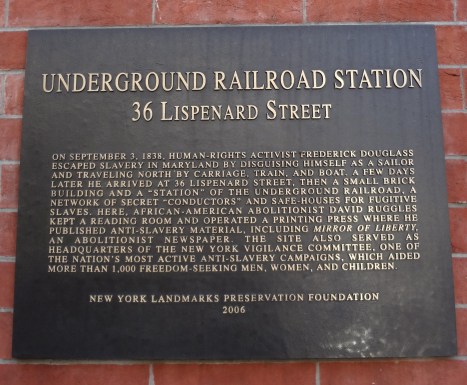
David Ruggles House Plaque at 36 Lispenard, photo credit Steven E. Greer, used by permission

David Ruggles House Plaque at 36 Lispenard Street

The next morning, Stuart the hospitable sailor accompanied him to David Ruggles’ house. Ruggles was a free black man and an officer on the Underground Railroad, and he had sent for Douglass, inviting him to stay at his place for the next few days at the corner of Church and Lispenard Streets. So that’s where I head next, and it’s in what’s now the TriBeCa neighborhood, just below Canal a little west of Broadway. While Douglass hid out here, he sent for his sweetheart Anna, who had done so much already to help him escape by providing him with his sailor disguise and selling one of her feather beds for travel funds. In fact, she had likely met him on one of the docks at Fell’s Point, where my Douglass travels began. When she heard of his successful escape, she came from Baltimore immediately to join him when she heard of his successful escape. They were married here at the Ruggles home on Sept 15, 1838.

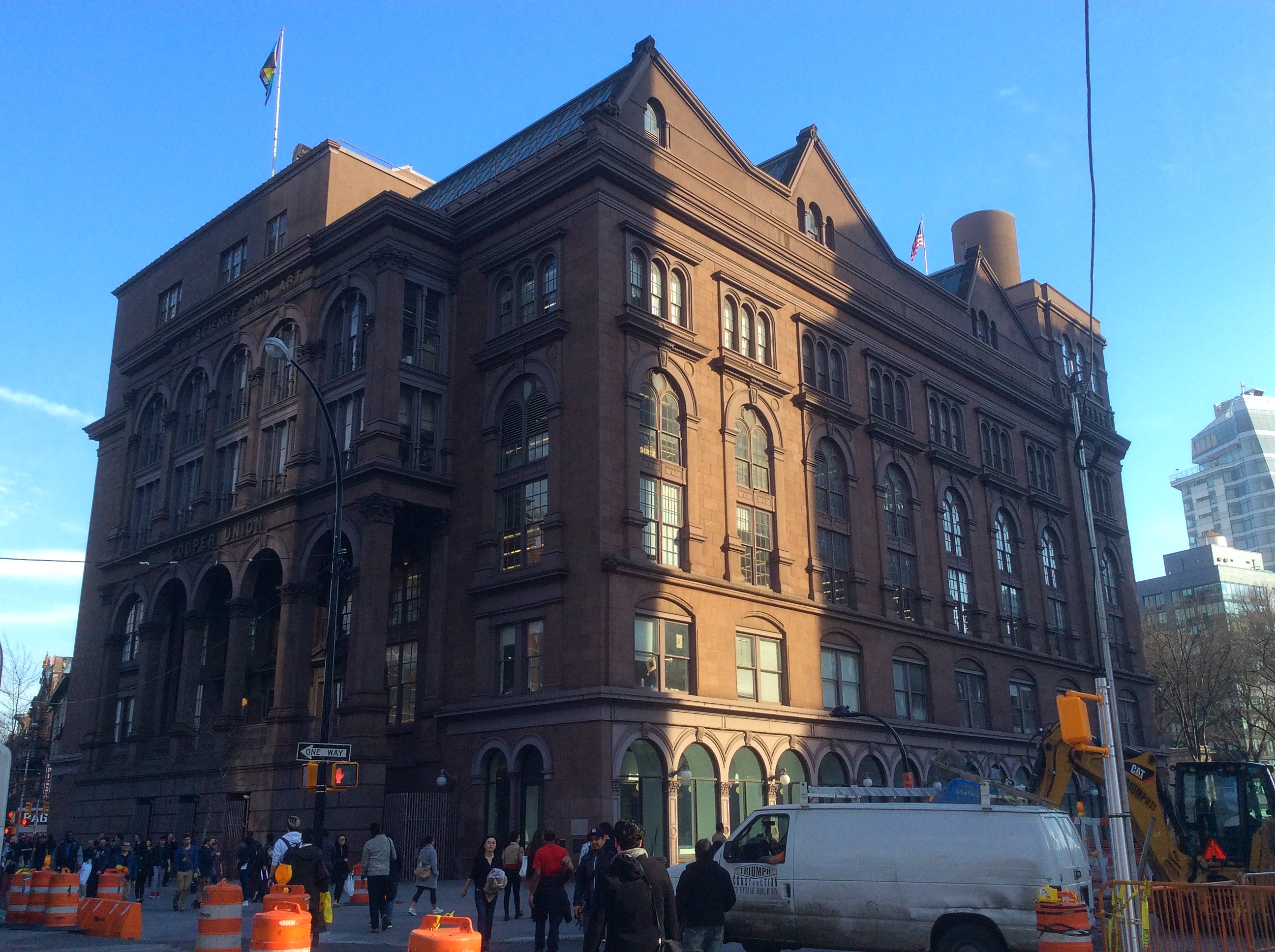
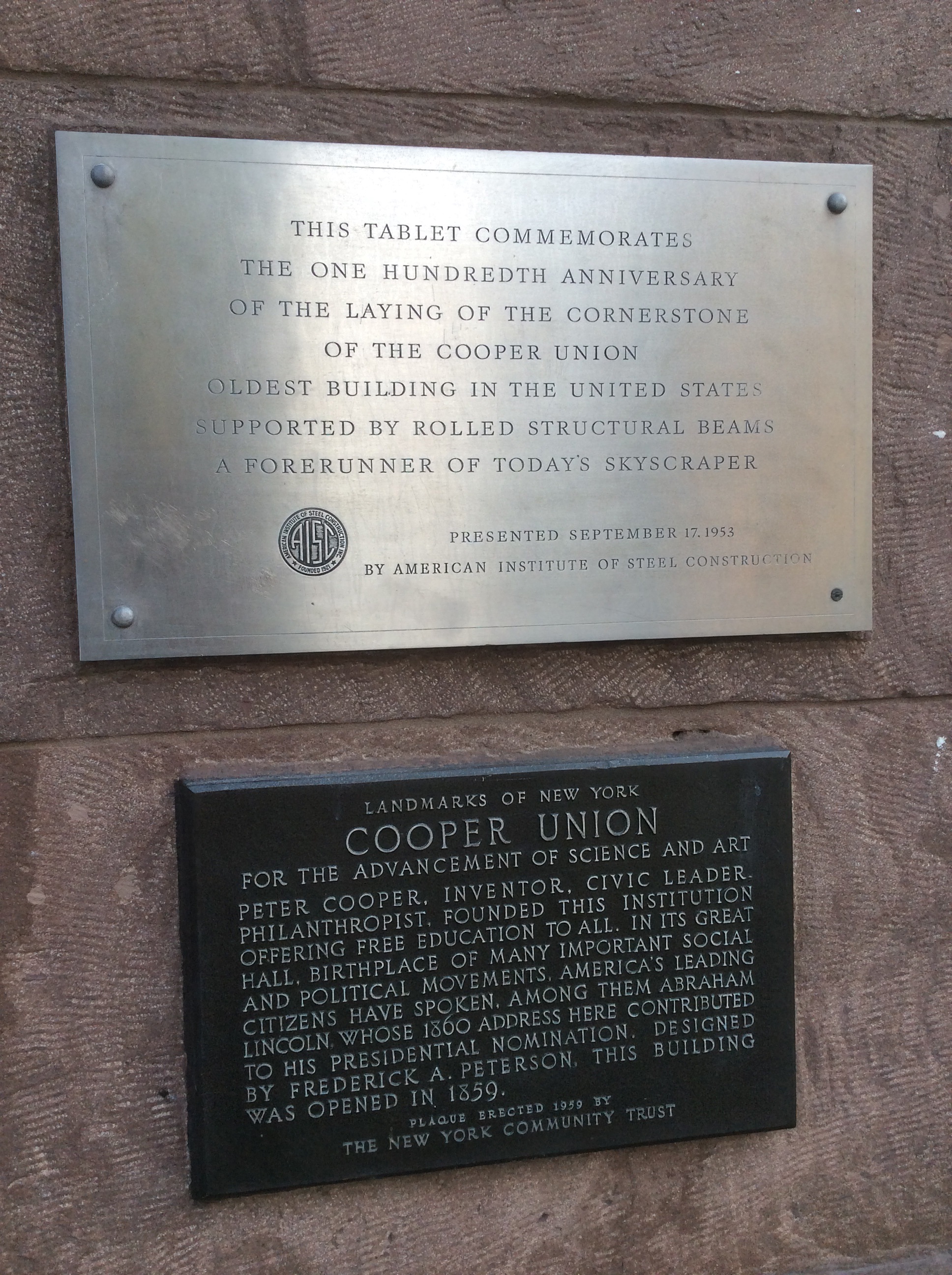
Cooper's Union at Cooper Square and Astor Place, NYC

Cooper’s Union at Cooper Square and Astor Place, NYC

I continue north on Broadway, walking briskly since it’s fairly far, 11 long blocks north and four moderate-sized blocks east. But it’s a beautiful warm day outside and I can’t bring myself to go down in the subway. I’m heading for the Cooper Union foundation building at the southeast corner of the intersection of Astor Place and Cooper Square, a few blocks east of Washington Square and a couple blocks north. It’s a brownstone affair with arched windows built in the mid-1850’s. Cooper’s Union is a school founded on the idea that all people of talent and drive should receive a free, high-quality education whether or not they or their families can afford to pay, and its founder put an enormous fortune where his mouth was.

Historical plaques on Cooper's Union, New York City

Historical plaques on Cooper’s Union, New York City

This building has had about as many great speaker’s voices echoing down its halls as you could wish for, including Abraham Lincoln and Mark Twain. In November of 1861, when the building was still fairly new, our hero and their mutual friend traveled to New York City. Six days after delivering a speech for the Emancipation League Speech in Boston, he delivered it again here. Douglass called forcefully once again for the immediate emancipation of all slaves and for the enlistment of black soldiers into the Union Army, which would not be allowed until a little over a year later. Douglass felt it was all-important that black people should be at the forefront of the fight against slavery, which everyone knew, and still does if they’re being honest, was more about slavery than anything else. Not only would this prove to their fellow Americans that black people were as brave and able as anyone else, which most Americans both north and south had trouble believing, it would give soldiers the opportunity to improve their own fortunes by establishing them as heroes, and by instilling in them that sense of confidence and self-worth born of taking their own destinies finally and firmly into their own hands.

Douglass returned to Cooper’s Union to speak more than once. On one occasion on May 30th 1865, Douglass delivered a speech not only memorializing his sometimes target of criticism, sometimes friend, and recently martyred hero Abraham Lincoln, he also denounced the New York Common Council for not allowing black people to participate in Lincoln’s funeral procession in New York City. This town, though in a free state, was not yet a warm and welcoming place for black people. Not only did the very real danger of slavecatchers here convince him to move to New Bedford soon after his arrival in September 1838, on one occasion years later in 1850 he was beaten up by several white men just for walking down the street with two white lady friends of his on his arms. New York City was not, at the time, a place of human rights idealism so much as a place of commerce, and forced free labor can be good for business, or so it was often thought.

A view of 9th Ave, west side of street between 37th and 38th Sts, possible site of Apollo Hall in New York City

A view of 9th Ave, west side of street between 37th and 38th Sts, possible site of Apollo Hall in New York City

As you can see from the ever-increasing contrast in the photos as the sun makes it way west and downward, I’m running low on daylight, so I take the subway to my next destination. According to The New York Sun of January 26 1897, Page 3, Apollo Hall was at 495 Ninth Avenue, which is now between 37th and 38th. I can’t be sure that this is the right place, since at this point, I have not found an atlas confirming the location. I just have the street address number, which as we know, can change sometimes, and many results came up for ‘Apollo Hall New York’ keyword search, such as a playhouse which temporarily had Apollo in its name and a Brooklyn one described in The Weekly Democratic Statesman of May 13, 1875, p 4 as being on Fifth St in Brooklyn, a Union Tabernacle house of worship. But the hall named in the New York Sun article seems to be more of a forum for meetings such as the ones Douglass spoke at, and my sources refer to its being held in NYC, not Brooklyn. So, until I discover otherwise (and I’ll let you know if I do, dear readers!), I’ll assume this is the general location. There are no markers that I can find.

American Anti-slavery Society Anniversary program, May 12 1863, N. Y.

American Anti-slavery Society Anniversary program, May 12 1863, N. Y.

On April 9th 1870, ten days after the ratification of the 15th Amendment, the American Anti-Slavery Society met here for the last time. In his speech, Douglass said that the best and really the only way to thank God for the victory over slavery and the newly won right to vote (the 15th Amendment was ratified just that February) was by thanking the men and women who made it happen, because only through them was the will of God apparent. He was sometimes criticized in editorials and in the pulpit, especially by other black ministers, for not prioritizing God in his writing, in his speeches, and his public statements of gratitude. Douglass would have none of it, saying that as long as people did nothing about the injustice and evil done in the world, it was never done at all; the insistence on prioritizing the role of God in the good that’s accomplished can lull people into thinking that, as we sometimes put it today, it’s okay to just hang back and ‘let go, and let God’. Douglass didn’t think his work or that of his fellow activists here was done with the passage of the 15th amendment. He called for a new campaign for women’s suffrage, and he said that the mission didn’t end, only changed, to improve the lot of all suffering people, including Indians, women, and all oppressed minorities

In another landmark moment at Apollo Hall, delegates nominated Douglass as a candidate for Vice President on May 11, 1872.

Here’s the story if you’re interested in getting a little deeper into the historical details (skip this and the next long paragraph if you’re short on time): These delegates were meeting here to organize a new Equal Rights Party out of disappointment and frustration with the Republican’s increasing lack of commitment to progressive values. The Republican Party, Douglass’ party, was starting to fissure over corruption in President Ulysses S. Grant’s administration, the debate over Radical Reconstruction (the policy of guaranteeing full equal political rights to black people and punishing Confederate leaders for waging war against their country), and the party’s increasing tendency to favor corporate and individual business interests over the rights of oppressed persons, especially black people and women. The Equal Rights Party was formed in opposition to the Liberal Republicans as well. Both criticized Grant for doing little to solve the corruption problem as well as for allowing Douglass to be excluded from an important White House meeting of one of the very commissions Grant had appointed him to, as well as Grant’s refusal to chastise the caption of the mail packet, on the return of the commission to DC, who excluded Douglass from the dining room. The ERP and the LR’s believed these discriminatory actions of Grant showed he was not truly committed to the cause of furthering the cause of black cause. But the ERP opposed the LR’s policy of cooperating with southern states-rights contingent who wanted to forgive ex-Confederates and rebuild the south economically, even if it meant sacrificing black civil rights issues.

The newly formed ERP nominated women’s and labor rights activist Victoria Claflin Woodhull for President of the United States and Frederick Douglass for Vice President, a progressive ticket if there ever was one. Douglass didn’t accept, since he believed it imperative that the black vote remained united behind the only party that had, and could still, actually accomplish good things for black people even if some time and compromise were required.  (Here he shows his pragmatist side.) He dismissed the White House commission dinner slight as an oversight, and pointed out that the LR’s and Democrat’s state-rights policies protected the Klu Klux Klan’s terrorism in the South. Grant won the election that fall by a landslide, and Douglass was appointed one of the two electors-at-large for New York State; he and his fellow elector, friend, and mentor Gerit Smith conveyed the results of the New York ballot to the Senate. But Douglass was to find himself ever more disappointed in the Republican Party’s lackluster performance in ensuring that black people actually enjoyed the rights guaranteed to them by the 13th, 14th, and 15th amendments.

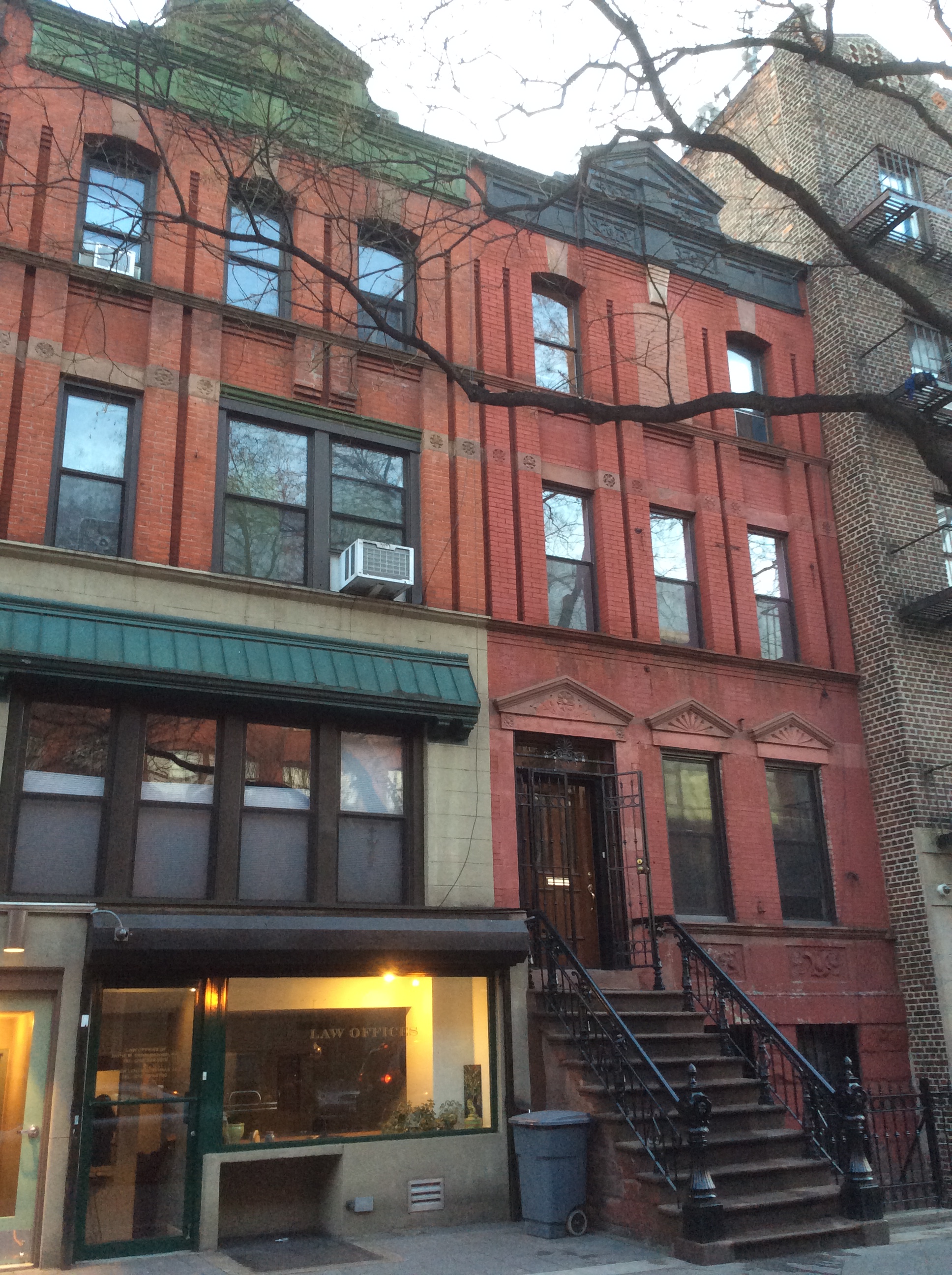
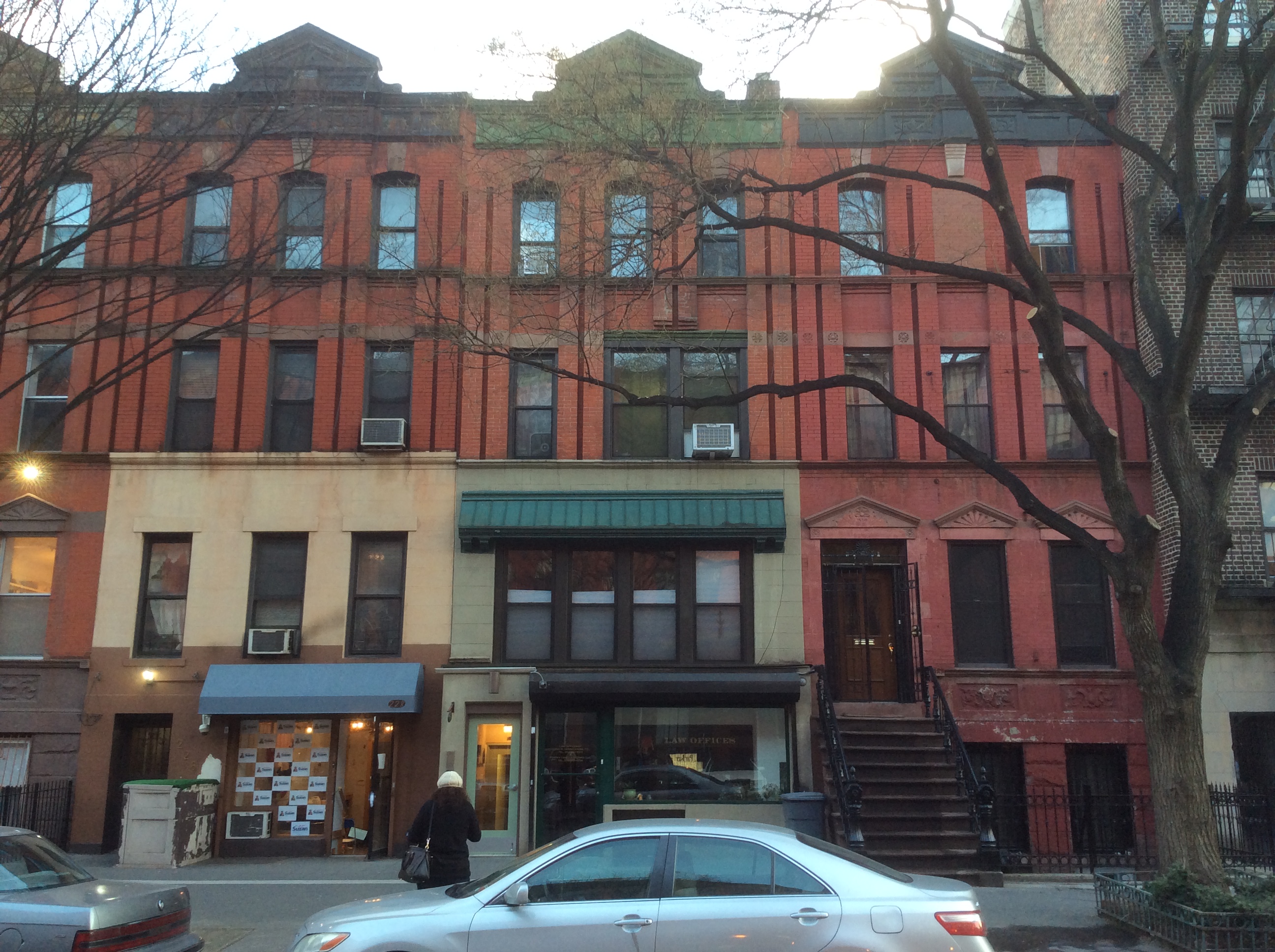
The former offices of Ida Wells' New York Age newspaper at 230 W. 135th St (center) Harlem, New York City

The former offices of Ida Wells’ New York Age newspaper at 230 W. 135th St (center) Harlem, New York City

230 and 232 W. 135th St, Harlem, New York City

230 and 232 W. 135th St, Harlem, New York City

So north I press on, again by subway, all the way to Harlem. I really like this neighborhood. I head to 230 West 135th St, between Frederick Douglass Blvd (appropriately enough; it was formerly 8th Ave) and Adam Clayton Powell Jr. Blvd (formerly 7th). I’m in luck: according to an old city atlas from the late 1800’s I’m so glad to find digitized and offered online, the street numbers don’t appear to have changed: the placement of number 230 matches the distance between 7th and 8th Avenues as it’s marked on my map. So exciting: it’s very rare for me to find that address numbers have not changed. Number 230 is now a small suite of law offices, one in a row of red-colored brownstone and brick fronts, with an updated pale pea-soup green facade complete with modern square windows and an awning. The one to the right of it, though, is clearly unchanged, and would certainly have looked identical.

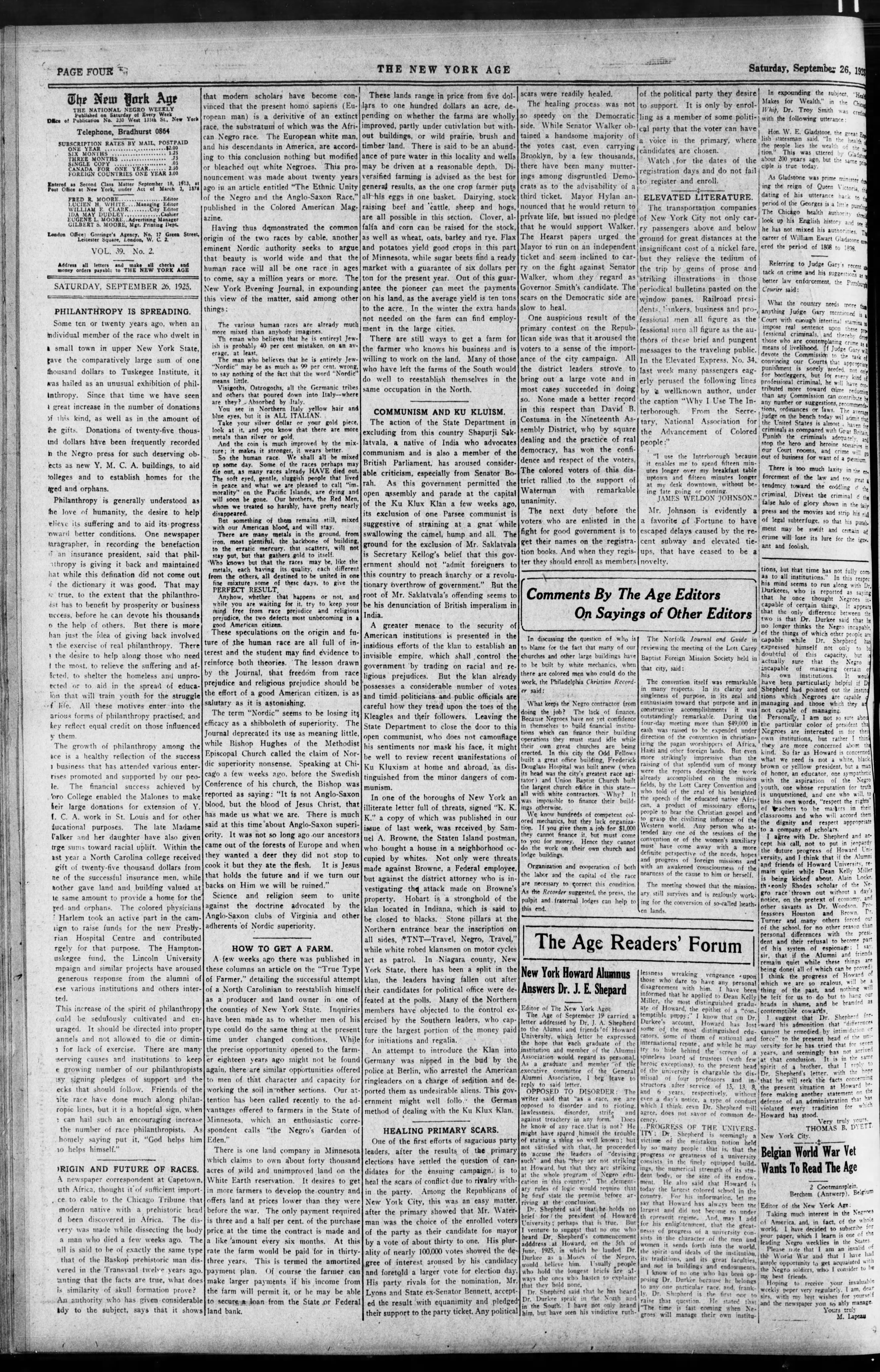
The New York Age, for Saturday, Sep 26, 1925

The New York Age, for Saturday, Sep 26, 1925, page four showing address of their offices

In late 1892, Douglass came here to New York City to visit the marvelous Ida B.Wells, whose investigative journalism into lynching of black people inspired and informed his later speeches and activism. He almost certainly came to visit her in these offices. She moved to New York City in late 1892 for a short time before settling in Chicago, and in that time became a writer for and part owner of the New York Age, a very influential black newspaper which thrived for decades. Again, I’m in luck: there’s an earlier edition digitized and published online which gives the address of its offices. The New York Age and Wells’ powerful pamphlet Southern Horrors: Lynch Law in All Its Phases were printed here.

A Man Was Lynched Yesterday 1930's NAACP flag, Thomas Jefferson Building, Library of Congress

A Man Was Lynched Yesterday 1930’s NAACP flag, Thomas Jefferson Building of the Library of Congress.

Lynching was not, for a long time, a central issue for Douglass nor for many fellow abolitionists. It seemed that many took it for granted that it really was crimes committed by those lynched that sparked vigilante justice. And besides, the fight for political rights was central and took enormous energy and dedication, with seeming little to spare for extralegal extremist activity. However, when Wells’ own friends were lynched because of hysteria whipped up by a rival business owner who didn’t like the competition, Wells was galvanized. She saw, firsthand, how lynching was a terroristic weapon to keep black people subjugated through fear. All you had to do was cry ‘rape’, especially by a black man against a white woman, and you could torture and kill whoever you thought was out of line or too insistent on having their rights or dignity respected. It worked all too well, and the achievements of the civil rights movement were surely significantly delayed by these tactics. After all, it’s hard to fight for and exercise your political rights when you have to keep your head down, avoiding the flame and the rope wielded by members of a touchy populace that hates you and thinks you’re less than fully human. Douglass came to realize that and took on this fight too.

So ends my New York City adventures, and I look forward to so many more as I keep on pressing north. My next story follows soon!

*Listen to the podcast version here or on iTunes

Ordinary Philosophy and its Traveling Philosophy / History of Ideas series is a labor of love and ad-free, supported by patrons and readers like you. Please offer your support today!

~~~~~~~~~~~~~~~~~~~~~~~~~~~~~~~~~~~~

Sources and Inspiration:

Anna Murray-Douglass‘. In Wikipedia, The Free Encyclopedia.

Blassingame, J. (Ed.). The Frederick Douglass Papers, Series One: Speeches, Debates, and Interviews. 4 volumes, and The Frederick Douglass Papers, Series 2: Autobiographical Writings. 3 volumes. New Haven and London: Yale University Press, 1979-1999
Douglass, Frederick, ed.  John R. McKivigan. The Frederick Douglass Papers: Series Two: Autobiographical Writings, Volume 3: The Life and Times of Frederick Douglass, p. 504.

Douglass, Frederick. The Heroic Slave: A Cultural and Critical Edition. Eds Robert S. Levine, John Stauffer, and John McKivigan. Hew Haven: Yale University Press, 2015.

Douglass, Frederick. The Life and Times of Frederick Douglass. Re-published 1993, Avenal, New York: Gramercy Books, Library of Freedom series.

Douglass, Frederick. My Bondage and My Freedom: 1855 Edition with a new introduction. Re-published 1969, New York: Dover Publications, Inc.

Fifth Avenue Theatre‘. In Wikipedia, The Free Encyclopedia.

Foner, Philip S. The Life and Writings of Frederick Douglass, Vol. 1-4. New York: International Publishers, 1950.

Frederick Douglass Chronology‘. From Frederick Douglass National Historic Site District of Columbia, National Park Service website

Lionel Pincus and Princess Firyal Map Division, The New York Public Library. (1884- – 1893). Manhattan, V. 11, Double Page Plate No. 248 [Map bounded by W. 140th St., Lenox Ave., W.. 135th St., 8th Ave.]

McFeely, William. Frederick Douglass. New York: W.W. Norton & Company, 1991.

The New York City Landmarks Preservation Commission. (Feb 14, 2007). ‘New York City Landmarks Preservation Commission Unveils Plaque at Site of One of the Nation’s Most Important Stations Along the Underground Railroad‘ [Press Release]

The New York Age: The National Negro Weekly. 26th September 1925, Page Four.

New-York Tribune. (New York [N.Y.]), 26 Jan. 1896. Chronicling America: Historic American Newspapers. Lib. of Congress.

Rutherford, Karen. ‘Ida B. Wells-Barnett‘. Jan 2004. From The Mississippi Writers Page, MWP.OleMiss.edu/

Wells-Barnett, Ida B. ‘Southern Horrors: Lynch Law in All Its Phases.’ Originally published in The New York Age, June 25, 1892. From Project Gutenberg

Frederick Douglass Havre de Grace and Philadelphia Sites

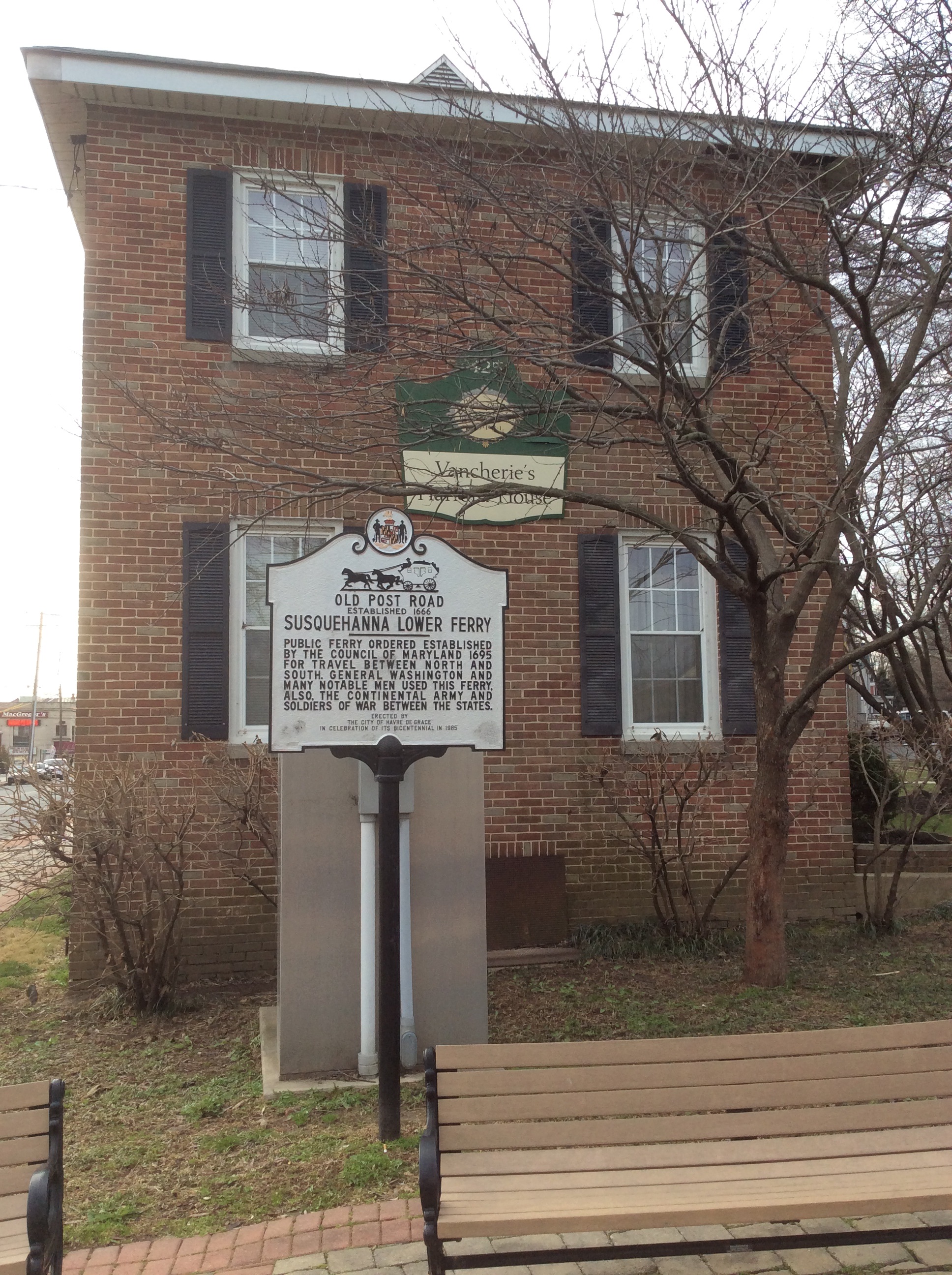
The Susquehanna Ferry historical marker

The Susquehanna Ferry historical marker in Havre de Grace

Third day, Tuesday March 22nd

I head north, the direction of freedom for the American slave of the antebellum south. Spoiler alert: so did Frederick Douglass! To his and all of our great benefit, he took his life and whatever fortunes he could hope to enjoy in Maryland into his own hands, and made his risky bid for freedom in September 1838 at age 20.

Douglass was a particularly clever young man, and by this time, had educated himself to an impressive degree for anyone his age, let alone one who had to get his learning largely on the sly while working more than full time. He had honed his skills, become more resourceful, and gained a wider circle of friends, and he counted on all of these to make this attempt more successful than the first. He decided that his best bet was to disguise himself as a sailor. Sailors were highly respected in seafaring Maryland; his years in the shipyards gave him easy familiarity with the terms and style of speech; and he had a sailor friend willing to lend him his sailor’s certificate. But this still was quite a gamble: he didn’t really match the description on the paper, so he had to trust the conductor would treat him with the usual respect accorded to sailors and not look too closely.

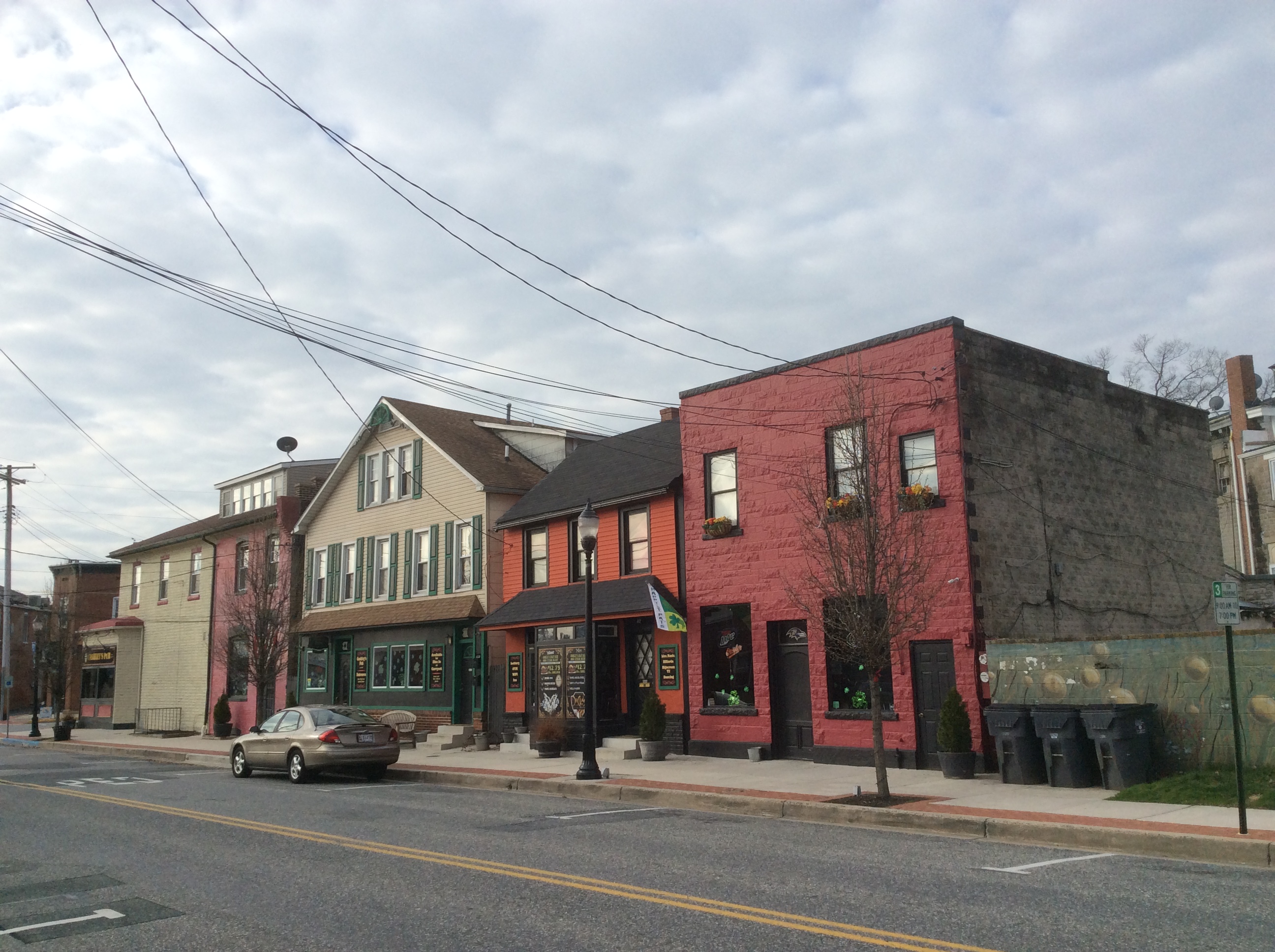
Havre de Grace, Maryland

A View of Havre de Grace, Maryland

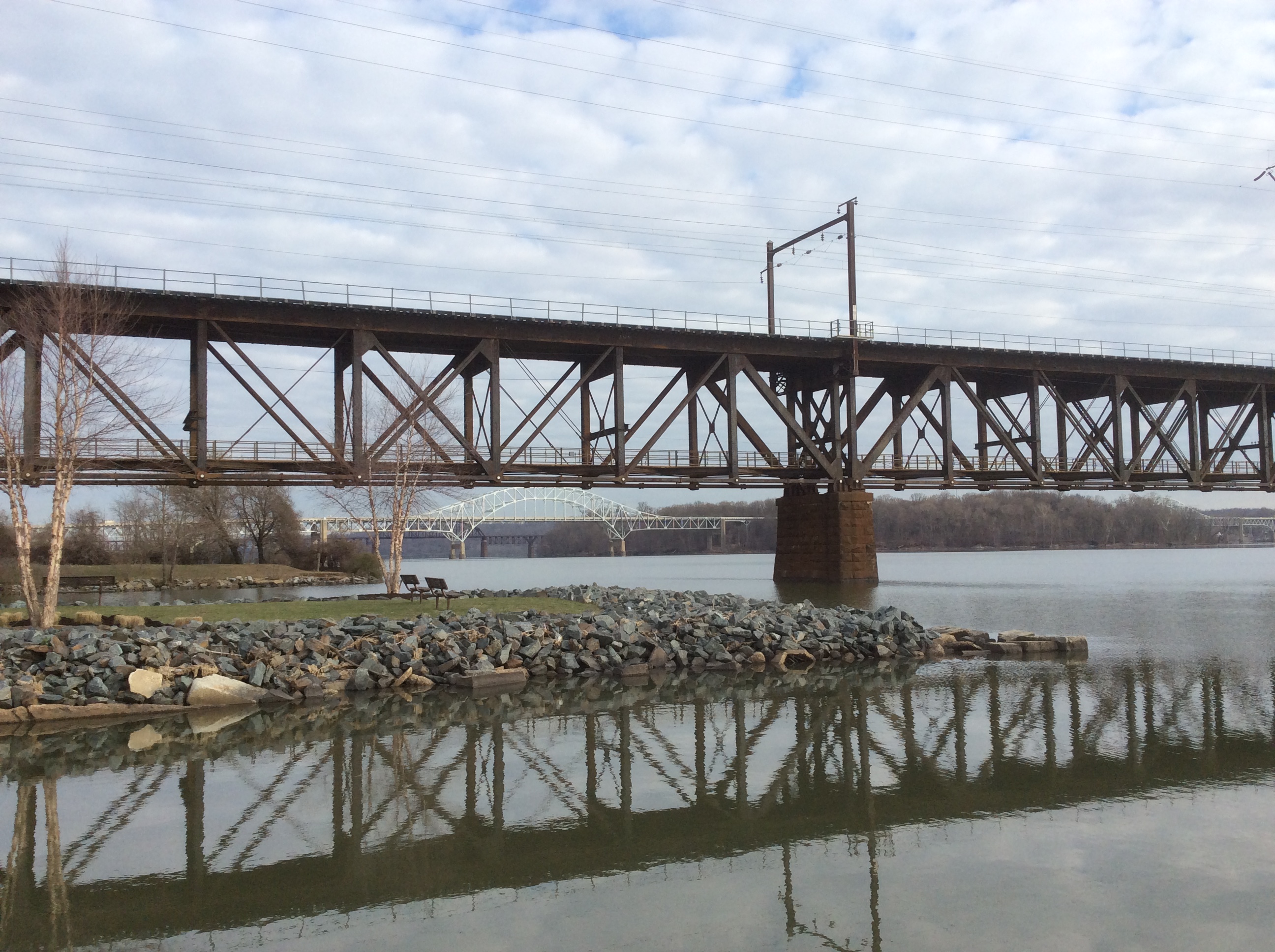
The Susquehanna River looking northeast from Havre de Grace

The Susquehanna River looking northeast from Havre de Grace

So he headed to Philadelphia first, which would require taking the train to Havre de Grace to cross the Susquehanna River by ferry, then the train to Wilmington in slave Delaware, and then a steamboat to Philadelphia in free Pennsylvania and to some degree of safety. As you can see from the sign above (open the photo in a new tab to enlarge for ease of reading), this ferry service has a long and distinguished history.

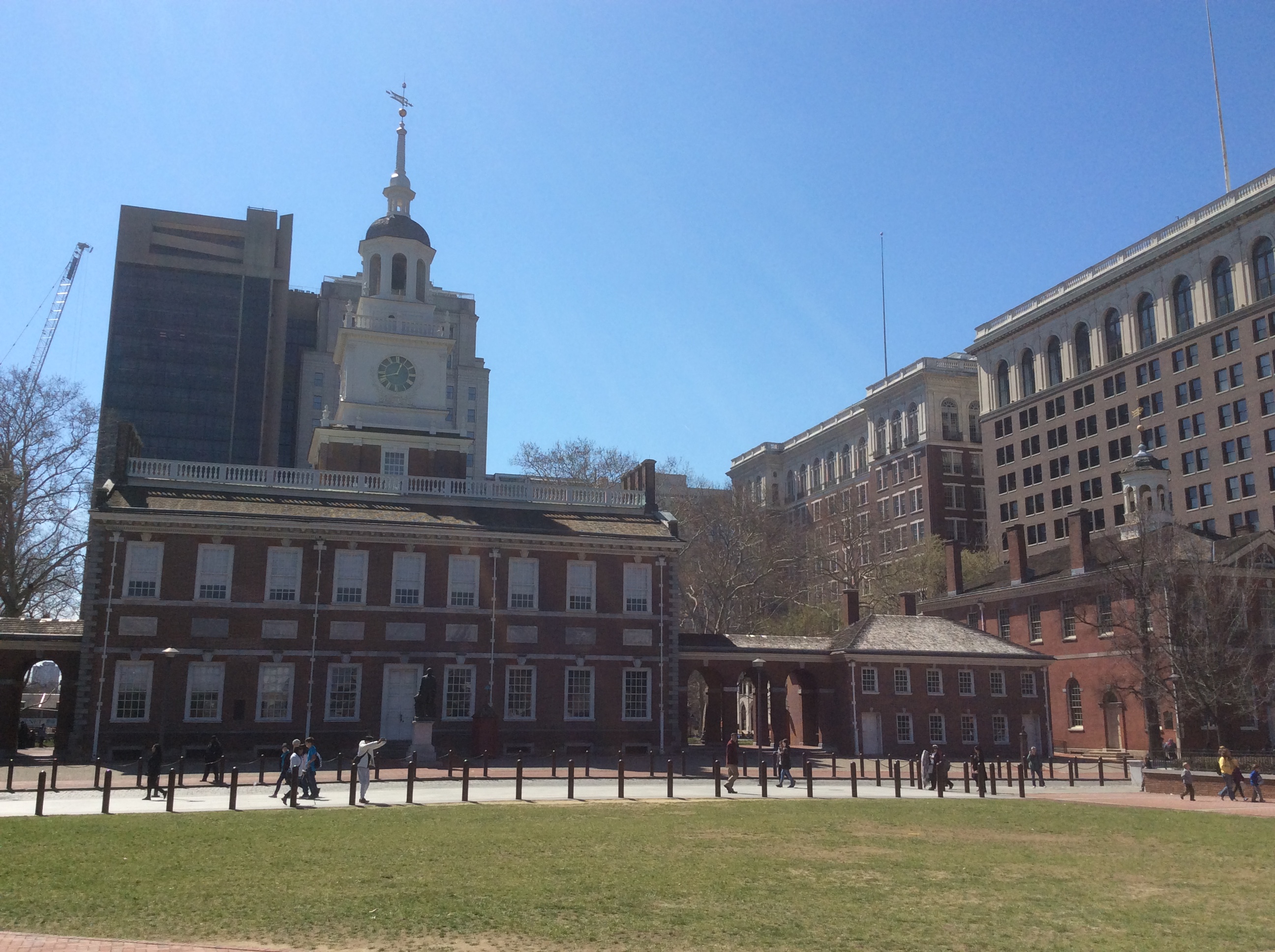
Independence Hall, Old City Philadelphia, 2016 by Amy Cools

Independence Hall from the square, Old City Philadelphia

I continue north to Philadelphia, and instead of heading straight to the depot where Douglass would have arrived here, I save that for later because it’s father north and I don’t want to backtrack. Instead, I make my way to the Old City, where 28 years after his escape, on September 3rd 1866, Douglass gives a speech and leads a protest march. By this time, he’s already had a long distinguished career as an abolitionist and human rights activist. We’ll find out more about how he got there as this series goes on.

Douglass was appointed a delegate by the Republican convention of Rochester to the National Loyalist Convention. The Civil War was over, Abraham Lincoln was gone, and his successor President Andrew Johnson was a huge disappointment to Douglass, to the Republican party, and to all those who wanted the United States to protect the rights of Americans not yet benefiting enough from the Union victory. Radical Reconstructionists and Southern Unionists found common cause with the more pragmatic Republican Party in their opposition to Johnson’s Southern appeasement and anti-equality agenda. So, they all sent delegates to the Convention at Independence Hall in Philadelphia to speak out against his policies.

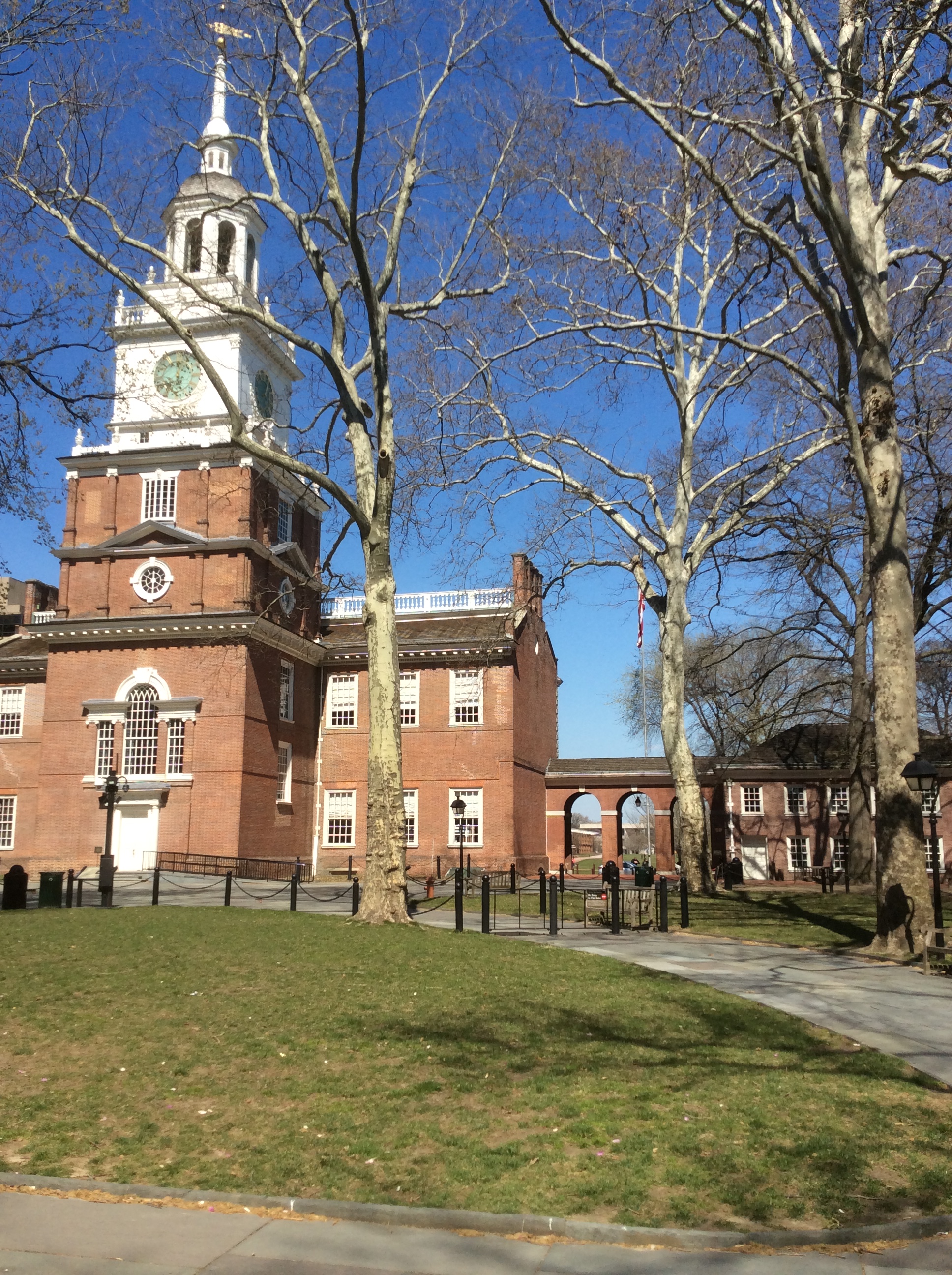
Independence Hall lawn, at the south entrance

Independence Hall from the south lawn

When Douglass arrived at the Convention, he was further disappointed: many members were perturbed, even dismayed, at the arrival of a black delegate, and feared that allowing him to speak would undermine their chances of success in a North that was still rife with racial prejudice, even if they didn’t like slavery. But Douglass pointed out that if they didn’t allow him to participate fully, the Convention would appear hypocritical and cowardly, especially given that his attendance at the convention was already reported in the papers. So he made his speech unopposed.

It turns out that Douglass also gave a speech on the State House lawn many years earlier, in August 1844, which was also reported by local papers. As we can see, Douglass was right to warn the other delegates about bad publicity if he was shunned by the Convention, since his public appearances had been newsworthy items for years. News reports and reviews of the earlier speech are now hosted on the Independence Hall website, which the lady at Independence Hall welcome center kindly directed me to, and you can read them here.

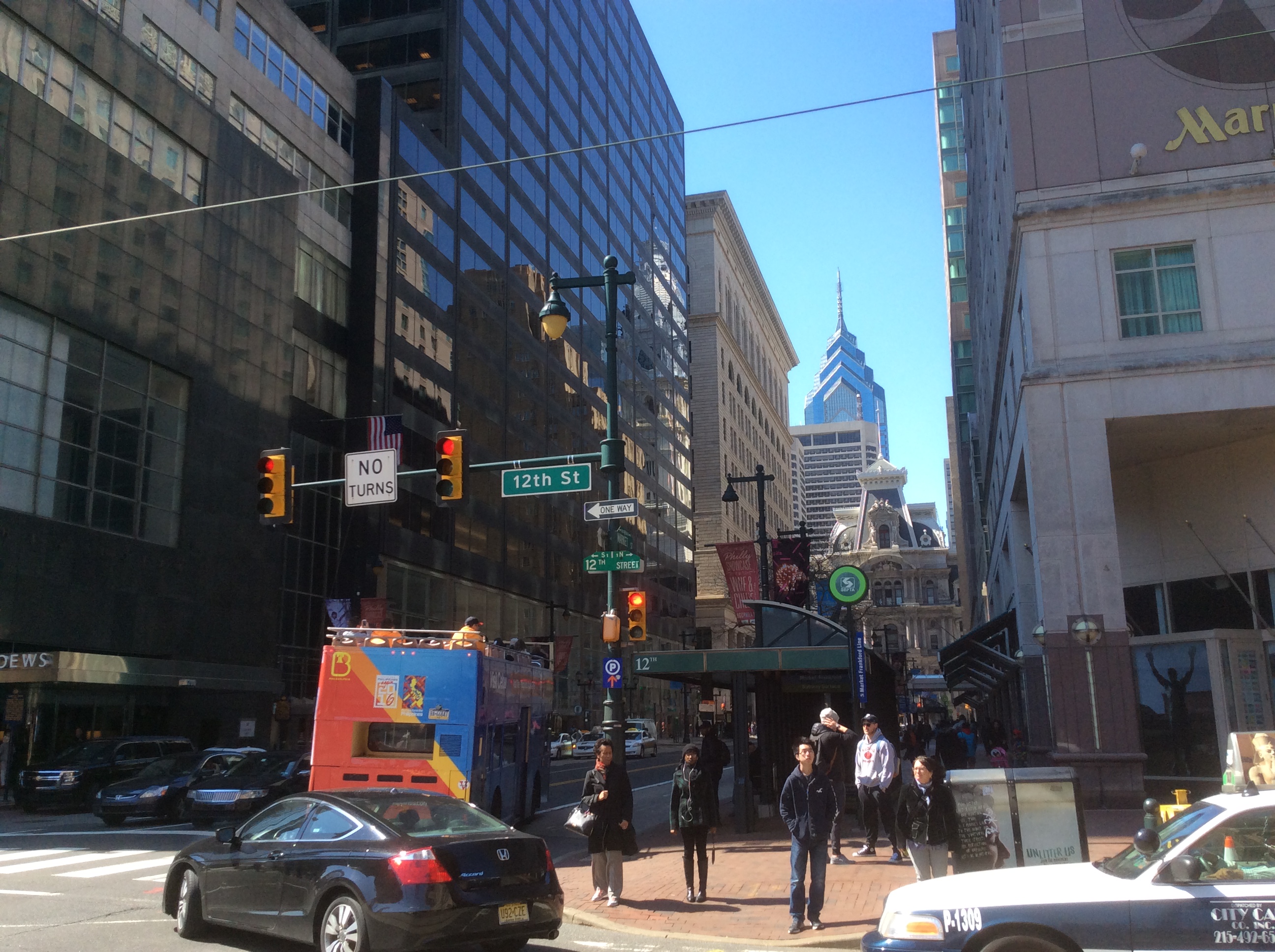
At 12th and Market, Philadelphia

At 12th and Market, Philadelphia, where the second glassy building back on the left stands on the approximate National Hall site

Back to our 1866 story: Douglass marched in parade with the Convention down Chestnut to 12th St, to the site of National Hall on Market between Twelfth and Thirteenth. It’s no longer there, and there’s no plaque marking the site. But looking at the photo above, which looks north on Market across 12th, it stood about where the second glassy building back on the left side of the street does now, according to an 1862 city atlas. This was not Douglass’ first appearance at National Hall, either. From the beginning of his first role as an abolitionist speaker, Douglass traveled widely and made huge numbers of public appearances, so I don’t even try to follow him to most of those sites. I just to try to make it to the places where he made his most influential speeches, as many as I can given I only have two weeks for this trip.

As the Convention parade made its way, a young white woman named Amanda Sears came up to Douglass. She was Thomas Auld’s granddaughter, daughter of Lucretia Auld who had always treated Douglass kindly as a young slave and who became his owner for a short time after Aaron Anthony’s death. Sears had come to hear him speak and finally meet him in person since she had become a fan of his; their meeting created great sympathy in the crowd and generated favorable publicity for the march.

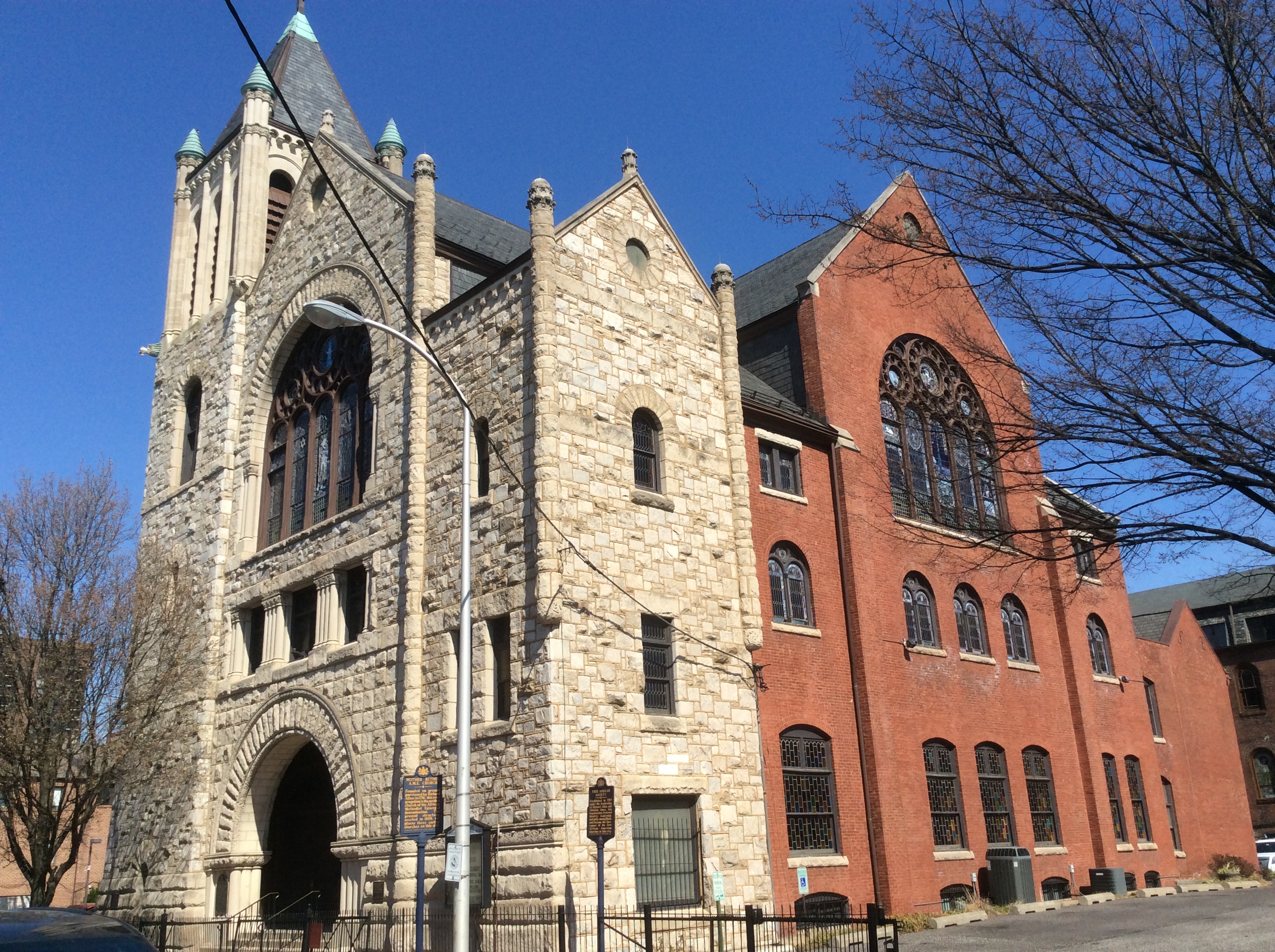
Mother Bethel A.M.E. Church, Old City Philadelphia

Mother Bethel A.M.E. Church, Old City Philadelphia

Next, I head to Mother Bethel A.M.E. church, the first black church in Philadelphia also recommended to me by the lady at the Independence Hall center. First, though, I have to return to my car from 12th and Market all the way back to Arch and 3rd where I’d started, to avoid getting a parking ticket.

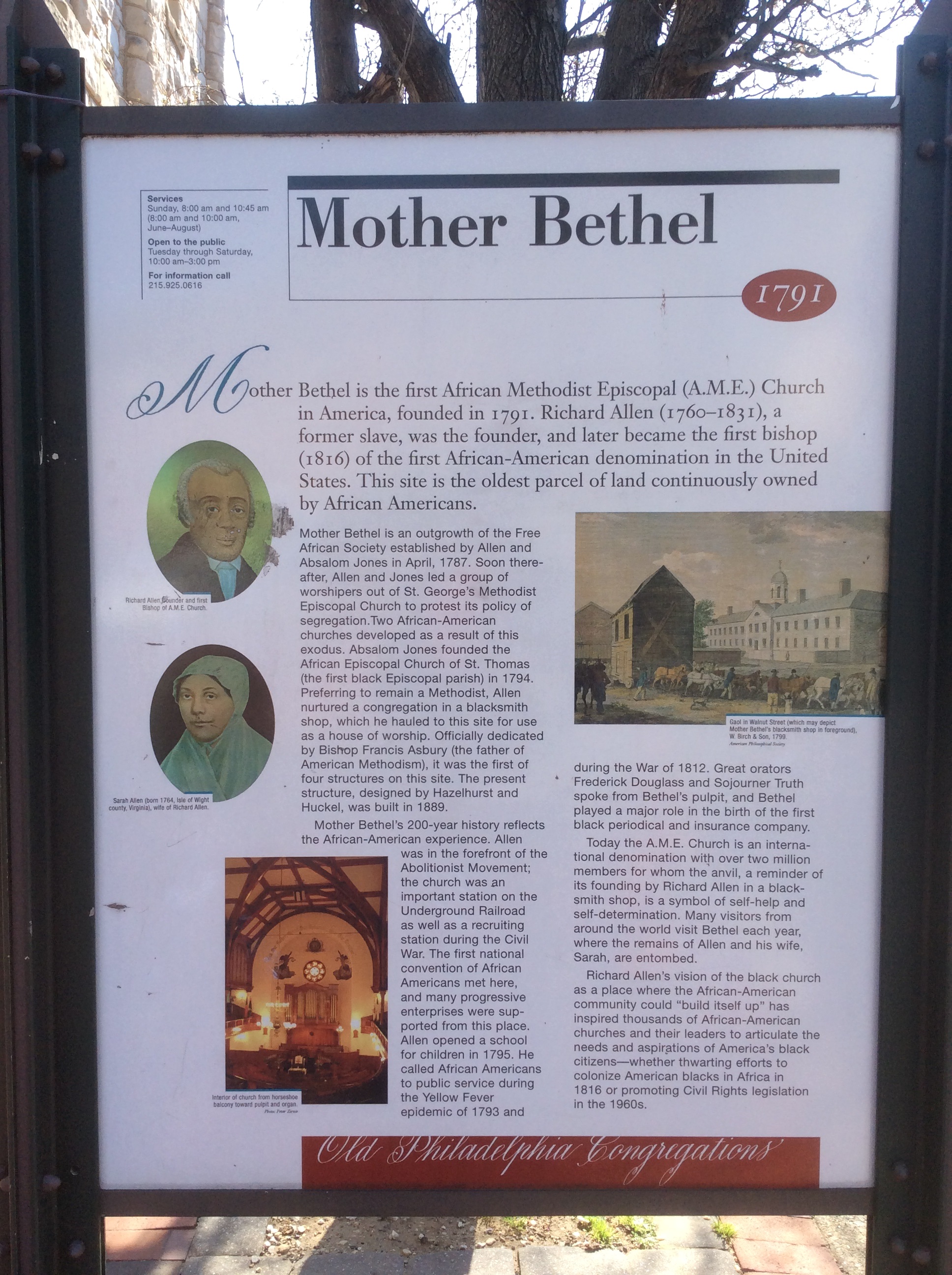
Mother Bethel historical sign, Old City Philadelphia

Mother Bethel historical sign, Old City Philadelphia

On my way back, after checking to see if the African American Museum on Arch at 7th was open (it isn’t), I notice a historical marker for a Quaker meeting house built on land donated by William Penn a century or so earlier, and snap a picture. A tall handsome woman with gray hair notices and exclaims ‘Oh, you’re interested in the meeting house? I give tours there!’ I say yes, but in future: I’m making note of it for a history of ideas tour on Penn I’d like to take someday (stay tuned!). But at this moment, I’m still rushing to my car to avoid that parking ticket! We continue to chat, the lady and her companion hurrying with me in sympathy, and we exchange stories of our historical interests. When hearing I’m on a Douglass tour, her companion confirms that Douglass spoke on at least one occasion at Mother Bethel. That occasion was in April 1863, when Douglass was hard at work recruiting the first black soldiers into the Union Army. I’ll be covering the story of Douglass the recruiter more fully very soon in this series.

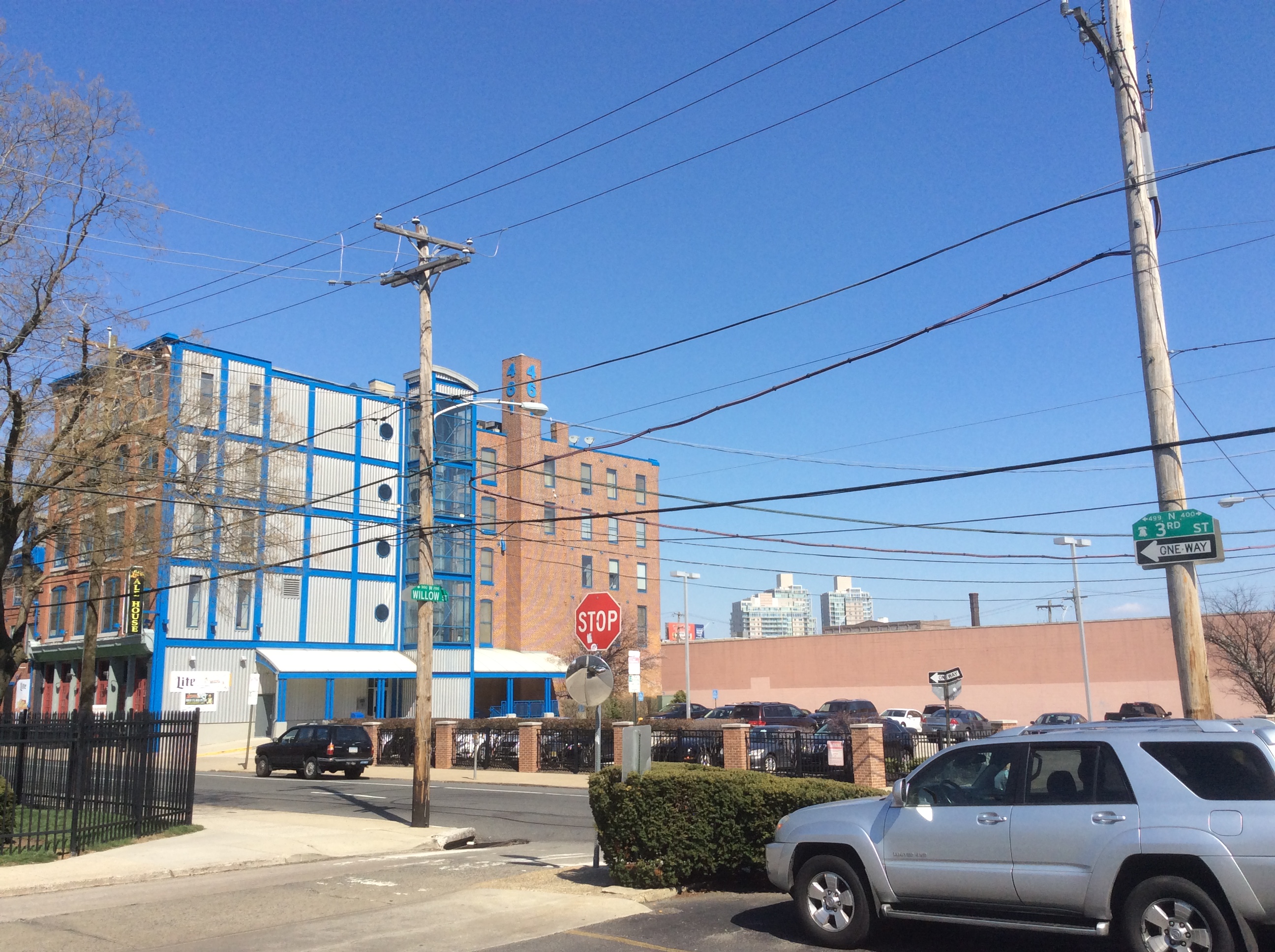
A view at Willow and 3rd Streets, Philadelphia

Northwest corner of Willow and 3rd Streets, about where an old Philadelphia depot used to stand

Then I head north, to the site of the depot where Douglass caught the train to New York City on Willow Street at 3rd St. on Sept 3rd, 1838. In earlier drafts of his autobiographies, Douglass referred to the Philadelphia train depot as the ‘William St. depot’, but the William St depot was in New York City, where he was headed. His editors corrected this to ‘Willow St’. There’s nothing here marking the site of the old train depot at the northwest corner of these cross streets, but that’s not too surprising: in those early years of train travel, depots were often hastily constructed or repurposed buildings, none of which lasted long enough to be considered memorable later on.

So ends this relatively short day of visiting Douglass sites: I’m headed for New York City to meet my friend with whom I’m staying, and where I’ll continue my explorations tomorrow. Stay tuned!

*Listen to the podcast version here or on iTunes

Ordinary Philosophy and its Traveling Philosophy / History of Ideas series is a labor of love and is ad-free, entirely supported by patrons and readers like you. Please offer your support today!

~~~~~~~~~~~~~~~~~~~

Sources and Inspiration:

Blassingame, J. (Ed.). The Frederick Douglass Papers, Series One: Speeches, Debates, and Interviews. 4 volumes, and The Frederick Douglass Papers, Series 2: Autobiographical Writings. 3 volumes. New Haven and London: Yale University Press, 1979-1999 (p. 504)
Douglass, Frederick. Autobiographies, with notes by Henry Louis Gates, Jr. Volume compilation by Literary Classics of the United States. New York: Penguin Books, 1994.

Douglass, Frederick. The Life and Times of Frederick Douglass. Re-published 1993, Avenal, New York: Gramercy Books, Library of Freedom series.

Douglass, Frederick. My Bondage and My Freedom: 1855 Edition with a new introduction. Re-published 1969, New York: Dover Publications, Inc.

Douglass, Frederick, ed.  John R. McKivigan. The Frederick Douglass Papers: Series Two: Autobiographical Writings, Volume 3: The Life and Times of Frederick Douglass, p. 504.

Foner, Philip S. The Life and Writings of Frederick Douglass, Vol. 1-4. New York: International Publishers, 1950.

Frederick Douglass‘, from Independence Hall in American Memory, companion website for book of the same name by Charlene Mires, University of Pennsylvania Press, 2013

Lippincott, J. B. & Co. ‘Atlas of the City of Philadelphia, 1862, Section 4‘. Published by Samuel L. Smedley

National Hall! Fred’k Douglass will lecture before the Alumni Association of the Institute for Colored Youths…‘, originally published by the Institute for Colored Youth, Philadelphia, PA., in 1863. From WorldCat.org: The World’s Largest Library Catalog

Philadelphia History: Early Railroad Transportation‘. from UShistory.org hosted and created by Independence Hall Association.

Stauffer, John and Benjamin Soskis. The Battle Hymn of the Republic: A Biography of the Song That Marches On. New York: Oxford University Press, 2013.

https://books.google.com/books?id=bIRQpD3HNSAC&pg=PA59&lpg=PA59&dq=frederick+doug

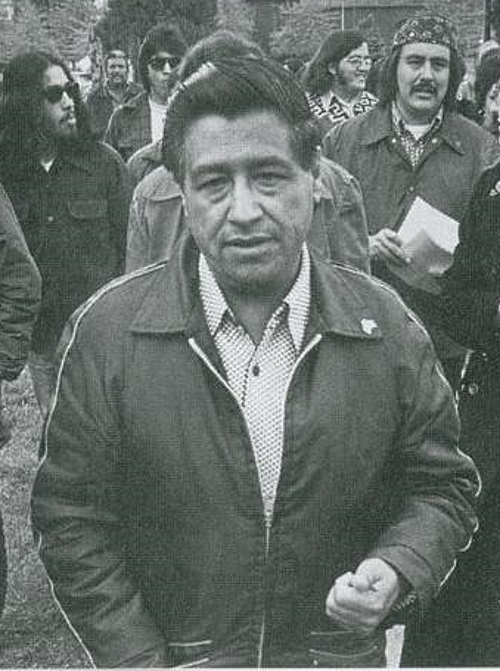
Cesar Chavez Day, by Alejandro Magana

Cesar Chavez visits college - By Movimiento - Own work, cropped - CC BY-SA 3.0 httpcreativecommons.orglicensesby-sa3.0 via Wikimedia CommonsEvery year around Cesar Chavez’s birthday, as media outlets report of festivities in his honor, I’m reminded of a joke in a Simpsons episode and the strange sadness it elicited in me when I saw it: Homer Simpson is on his front lawn and is confronted with the apparition of a debonair, mustachioed man who introduces himself as, “the spirit of Cesar Chavez.”

In typical Homer confusion he asks, “Then why do you look like Cesar Romero?”

The ghost replies, “Because you don’t know what I look like!”

Cesar Chavez is certainly revered by many people, especially within the Latino community, but despite the steadily increasing ubiquity of his name across the United States, especially the American Southwest, there are still many Americans today who don’t really know who he is, let alone what he stood for, or what he accomplished.

Cesar Chavez was a Mexican-American community organizer turned labor leader and . A former migrant farmworker recruited by the Community Service Organization (CSO) in its heyday of the 1950s, he co-founded the National Farmworkers Association (NFWA,) which later became the United Farm Workers (UFW,) the first successful union for migrant farmworkers. The UFW’s membership consisted mostly of indigent Latinos and Filipinos, and their struggle for justice and dignity, fighting to gain higher wages and better conditions in the fields where they were deprived of basic needs such as clean drinking water and bathrooms, became a national moral cause under the stewardship of Chavez, who courted national and international sympathy using militant non-violent tactics in the vein of Mahatma Gandhi and Martin Luther King Jr, such as strikes, boycotts, fasts, and peaceful marches.

Chavez was not an imposing orator with the fire-and-brimstone timbre of the Reverend Dr. King, nor did he cut as iconoclastic a figure as Gandhi, but in his unassuming way he could be just as charismatic and endearing, and this often caught people off guard, as it did an interviewer for the New Yorker in 1973, who, “had expected, if not a Mexican-American Lenin…a young, hard, intense man bristling with revolutionary zeal. Instead we found Mr. Chavez to be a stocky man…about five feet seven …with Indian features…and a pleasant earnest manner.” With his trademark regular boys’ haircut parted on the side and wearing simple cardigans with button down plaid shirts and slacks, his fashion was more Mr. Rogers than Mr. Lenin. He looked the part of the humble Everyman that people felt they could relate to.

On a personal note, my parents actually met while working with Cesar Chavez in the early ‘70s, and when they tell stories of those days, they both recall how approachable he was with his easy but confident demeanor; how people were drawn to him and trusted him, even as he took them out of their comfort zones, like the time he sent my mom and a few other farmworkers to Chicago, to publicize and organize the Grape Boycott, even though they spoke very little English and were armed with just a few phone numbers of sympathizers there along with the names of some churches that might possibly provide them with food, room and board. They believed they could accomplish such ambitious plans because this diminutive, unpretentious man seemed capable of stopping the engine of the entire agricultural industry and took on Big Agribusiness all by himself. Before it became widely known as the slogan of Barack Obama’s presidential campaign, I grew up with my father reminding me, “¡Si se puede!” (Yes, you can!) a phrase Chavez often chanted before throngs of people at picket lines and marches.

Like Gandhi and King, he was intensely spiritual and absolutely committed to non-violence. In what may be his most recognizable aphorism, he said, “It is my deepest belief that only by giving our lives do we find life. I am convinced that the truest act of courage…is to sacrifice ourselves for others in a totally non-violent struggle for justice.” Self-immolation was a recurring theme in both word and deed: in 1968, during the Delano Grape Strike, after several tense confrontations at the picket lines nearly devolved into violence, he fasted for 25 days to encourage and remind the farmworkers that their fight was to be a non-violent one. He would fast for 24 days again in 1972, and in 1988 he fasted for 36 days(!) to bring attention to the pesticide poisoning of grape workers and their children. It is thought that his relatively early death at the age of 63 in 1993 was probably due to aggregated health complications suffered from these sacrifices. Still, even now, if you talk to people who marched with Chavez and the UFW back then, most speak of Chavez in reverential, even hagiographical ways, for to them he was como un santo: like a saint..

Throughout the 1960s and 1970s, as the UFW made sweeping legislative strides on behalf of organized farm labor, Chavez was also becoming the most widely known leader within the broader Chicano Movement, or “El Movimiento,” a civil rights movement which empowered Mexican Americans caught between two cultures, not quite Mexican enough for their Mexican immigrant forebears, nor seen as truly American by the white hegemony. The term “chicano” was originally a derogatory term for the American children of Mexican migrants, but in the Movement it was flipped, transmogrified, to be a badge of ethnic pride. Of course Chavez always made sure to situate the fight of the UFW as united with the struggle of “all farm workers across the country, the Negroes and poor whites, the Puerto Ricans, Japanese, and Arabians…the races that comprise the oppressed minorities of the United States,” but “The Plan de Delano,” a text co-authored by Chavez with Dolores Huerta and the Chicano playwright Luis Valdez, reifies and emboldens his ethnic heritage, declaring “We are sons of the Mexican Revolution.” To this day, the flag of the UFW, showing a black Aztec eagle on stark red background, is widely considered a symbol of Chicano or Latino pride. Those of us who wear this symbol, or even, as in my case, have it tattooed on their body, recognize that the life we have so firmly rooted in the United States, with access to resources and opportunities that our parents or grandparents did not have, is due to the hard work and vigilance of people like Cesar Chavez, Dolores Huerta, or my mother, Maria Saludado.

The identity politics that certainly began to swell in the 1960s have persisted despite reactionary criticism and remain particularly relevant today; an era in which the ugly scars of racism seem as starkly etched in our national consciousness as ever. As we near the end of the second term of America’s first ‘non-white’ President, as Mexican immigration continues to be a galvanizing and polarizing issue in the US, and the Latino vote is highly prized on both sides of the political aisle, conditions would seem fecund for a reboot of El Movimiento. In appropriate fashion, this year the Cesar Chavez Foundation, an offshoot of the UFW, began its annual celebration in San Fernando, the first city in the nation to commemorate Cesar Chavez Day with a paid holiday, with a rally and march to encourage activism to “Dump Trump.”

¡Que viva César Chávez!

~ Alejandro Magaña is a musician, poet, and songwriter some of the time, and a father and husband all of the time. He also works full-time as an office manager at Urban Ore in West Berkeley. He lives in North Oakland with his wife and son and books and records.

~ Ordinary Philosophy and its Traveling Philosophy / History of Ideas series is a labor of love and is ad-free, entirely supported by patrons and readers like you. Please offer your support today!

~~~~~~~~~~~~~~~~~~~~~~

Sources and Inspiration:

● My mother and father. ¡Que viva mis padres!
● Chasan, Daniel. “‘Marcher,’ an interview with Cesar Chavez,” The New Yorker, May 27, 1967.
● Chavez, Cesar, Huerta, Dolores, and Valdez, Luis. “The Plan of Delano,” El Malcriado, March 17, 1966.
● Chavez, Cesar. An Organizer’s Tale: Speeches Ed. Ilan Stevens. London: Penguin Books, 2008.

Frederick Douglass, Easton and St. Michaels, Maryland’s Eastern Shore Sites Part 2

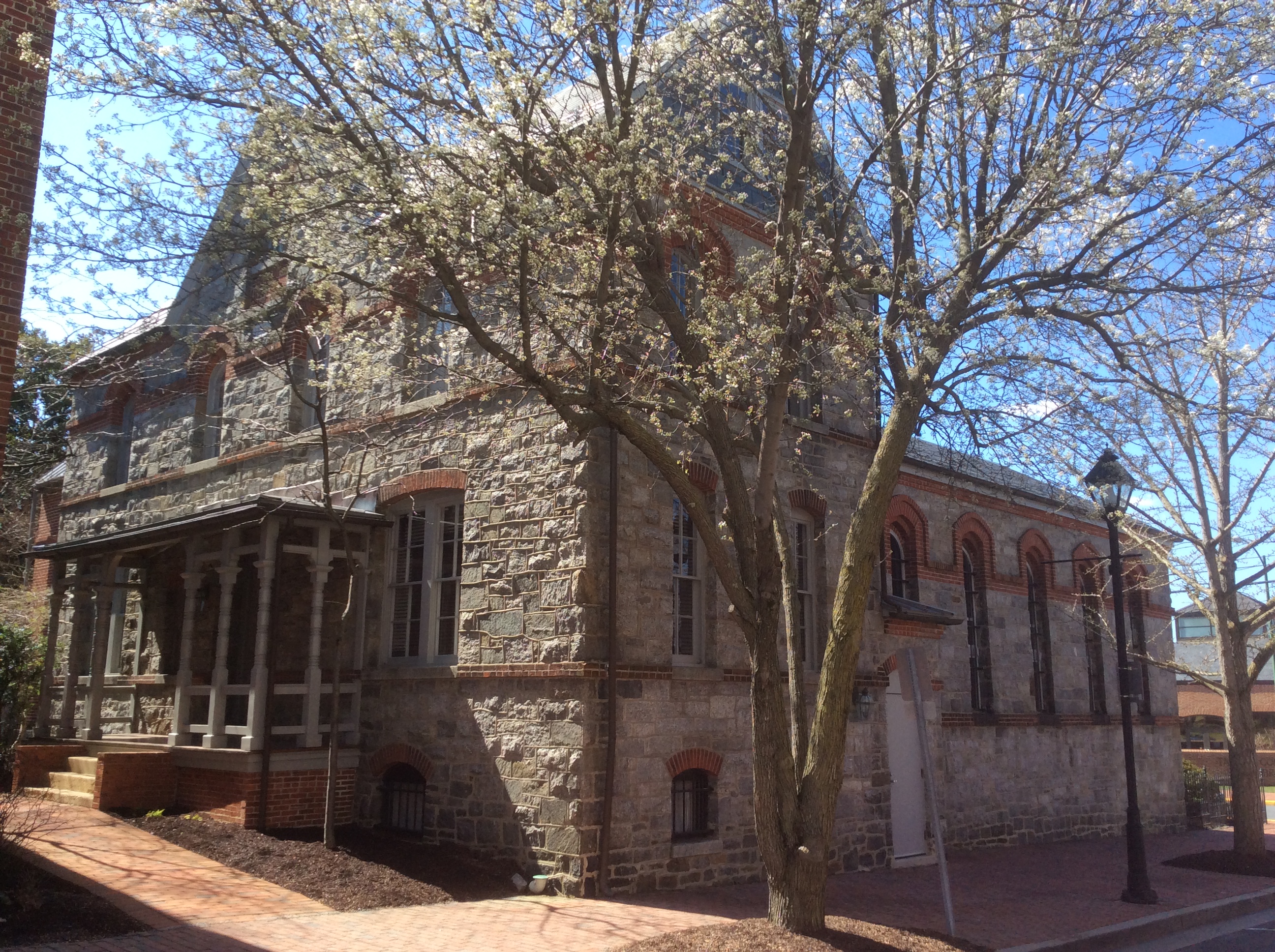
Bethel African Methodist Episcopal Church in Easton, MD at South & Hanson Sts

Bethel African Methodist Episcopal Church in Easton, MD at South & Hanson Sts

Second day, Monday March 21st, continued

When I left you last, I was telling you the story of finding Frederick Douglass’ birthplace, and how moving an experience it was for me…

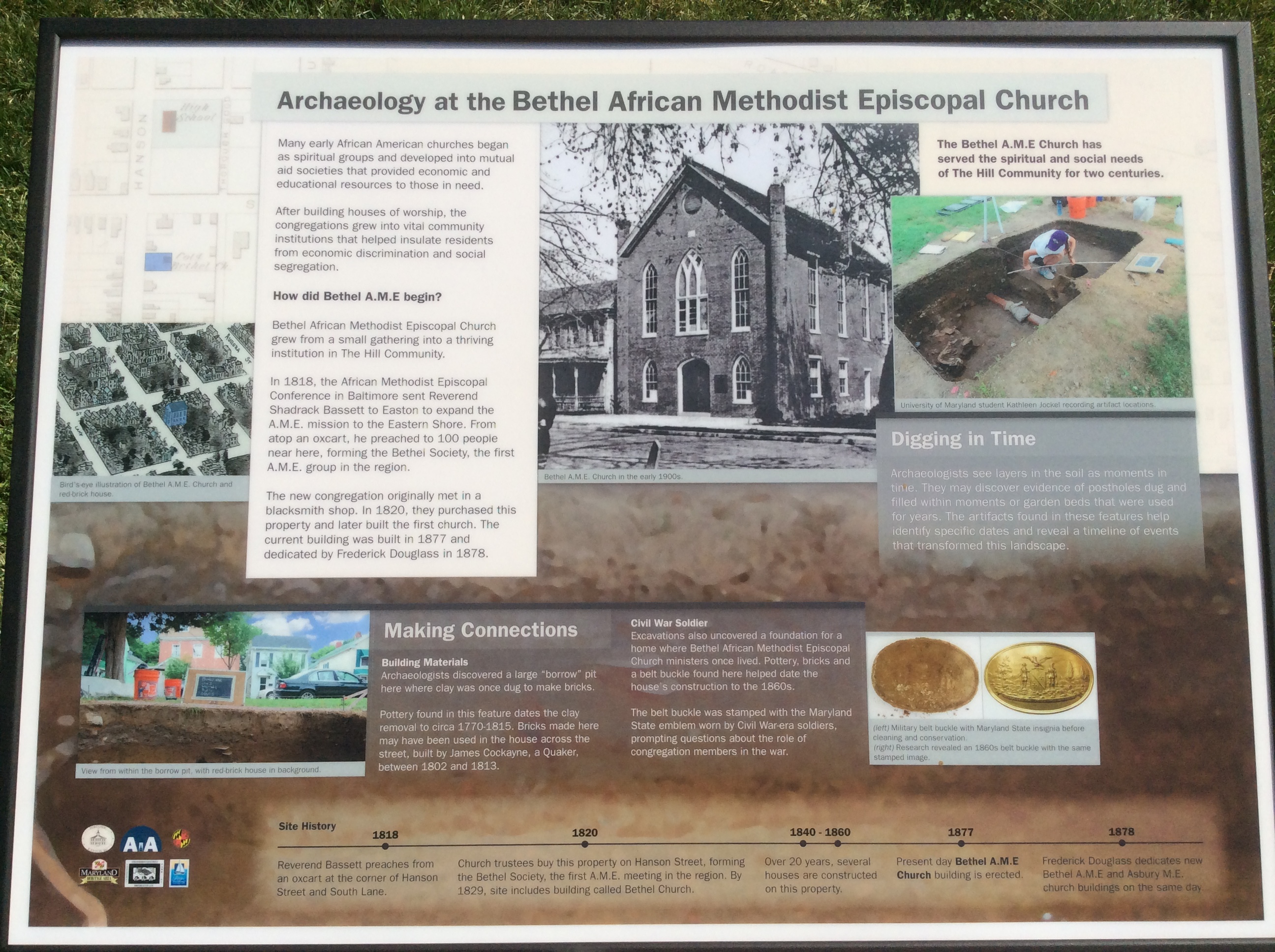
After a short while, I pull myself back out of the reverie I’ve fallen into; I have lots of places to visit today, and must get a move on. I head back to downtown Easton and begin my tour here on Hanson Rd, between South Lane and South Street, where Bethel A.M.E. Church stands on the east side of the street. The congregation had first assembled in 1818, the year that Douglass was born. When Douglass returned to Easton in 1878, he dedicated this new church building; what a consecration!

Archaeology at Bethel A.M.E. sign, Easton, MA

Archaeology at Bethel A.M.E. Church sign, Easton, MA

A statue of Frederick Douglass outside of the Talbot County Courthouse in Easton, courtesy Preservation Maryland, Creative Commons

A statue of Frederick Douglass outside of the Talbot County Courthouse in Easton, courtesy Preservation Maryland, Creative Commons

When Douglass returned here in 1878 to rediscover his birthplace, he also visited central Easton and gave speeches, including a famous one in front of the courthouse at Federal and West Streets. There’s a very handsome statue of him there.

Unfortunately… I forget to visit the front of the courthouse and photograph it! Throughout this trip, I discover, or remember, that from time to time I miss something, and like today, something important or exciting. This especially happens when I’m distracted with the effort of finding obscure sites, like Douglass’s birthplace this morning. I wish I had more than two weeks for this tour so I don’t find myself so often in a rush! But I shake off my disappointment: I’m seeing so many wonderful things, and learning so much on this trip. And fortunately, there are so many others out there who share my admiration for Douglass, who follow and share his history too. I’m in their debt, and couldn’t do this trip without them. And after all, I was at the courthouse, just off to the side and around the back.

Here’s another great photo by one such person for you to check out, and a little more about the speech Douglass gave here on November 25th.

Sheriff's House and Jail in Easton, MD, c. 1881

Sheriff’s House and Jail in Easton, MD, c. 1881

After Bethel A.M.E., I head to a building that stands right behind the very courthouse I forget to photograph. In 1836, Douglass planned an escape with his friends while he was working at William Freeland’s farm. Their plans were discovered, likely reported by one of the early participants who let his fear overcome him. They were thrown in the Easton jail at this site, which he described as more roomy and comfortable than he expected a jail to be, but with heavy iron latticework covering the windows. He also described the ugly feeling of being inspected by slave traders, who would opportunistically arrive when slaves were imprisoned there in hopes of picking up new ‘wares’ that masters had found too troublesome. Those slave traders were looked down upon, even despised, though this was a slave society. It’s one of the more unfortunate foibles of human nature that people will despise those who do the very work they benefit from and even require, when they don’t want to dirty their own hands with it. But back to the Easton jail… the building which stands here today is the 1881 granite jail and Sheriff’s house that replaced the original, which had been built in 1710.
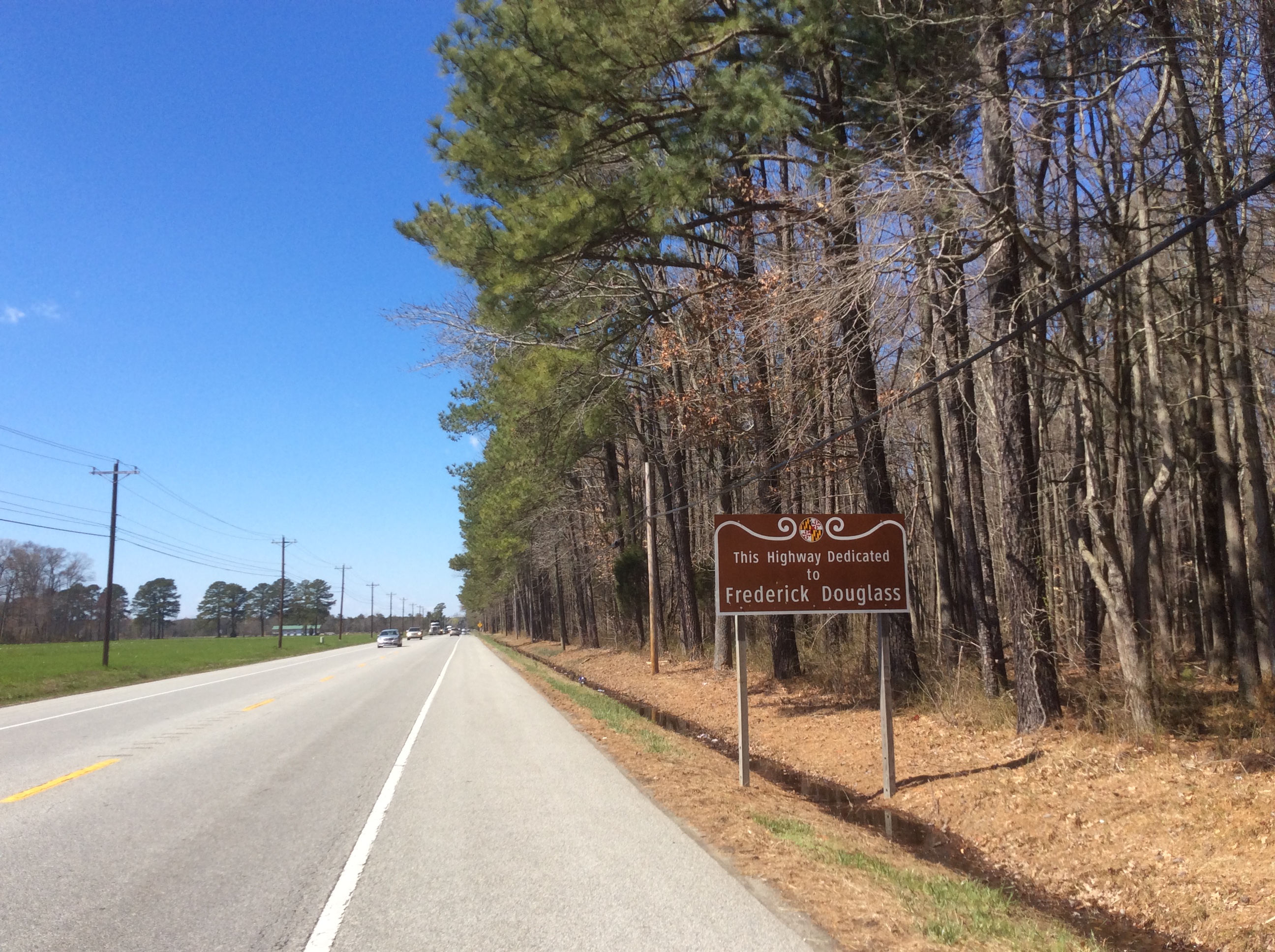
Frederick Douglass dedication sign on Highway 33 between Easton & St Michael's

Frederick Douglass dedication sign on Highway 33 between Easton & St Michaels

I leave Easton and head for St. Michaels.
On the way there, I first see a sign dedicating Highway 33 to Douglass. In 1877, 1878, and 1892, Douglass returned to the Easton and St. Michaels area. This is the main highway between them now; did he take this very road, I wonder? A little further down the road, St Michaels welcome sign includes the motto ‘The Town That Fooled the British’. I wonder what that refers to and I look it up. Here’s the story. It’s a good one.
Frederick Douglass sign, St. Michaels, MD

Frederick Douglass sign, St. Michaels, MD

I park at the municipal parking lot at the west end of town and find myself right by this sign. Perfect!

I stop in at the 1812 Bar and Grill right there at Talbot and Mill, have a chat with the nice lady who lets me to leave my phone with her to charge while I go on my tour. I’ll be back for an afternoon ale.

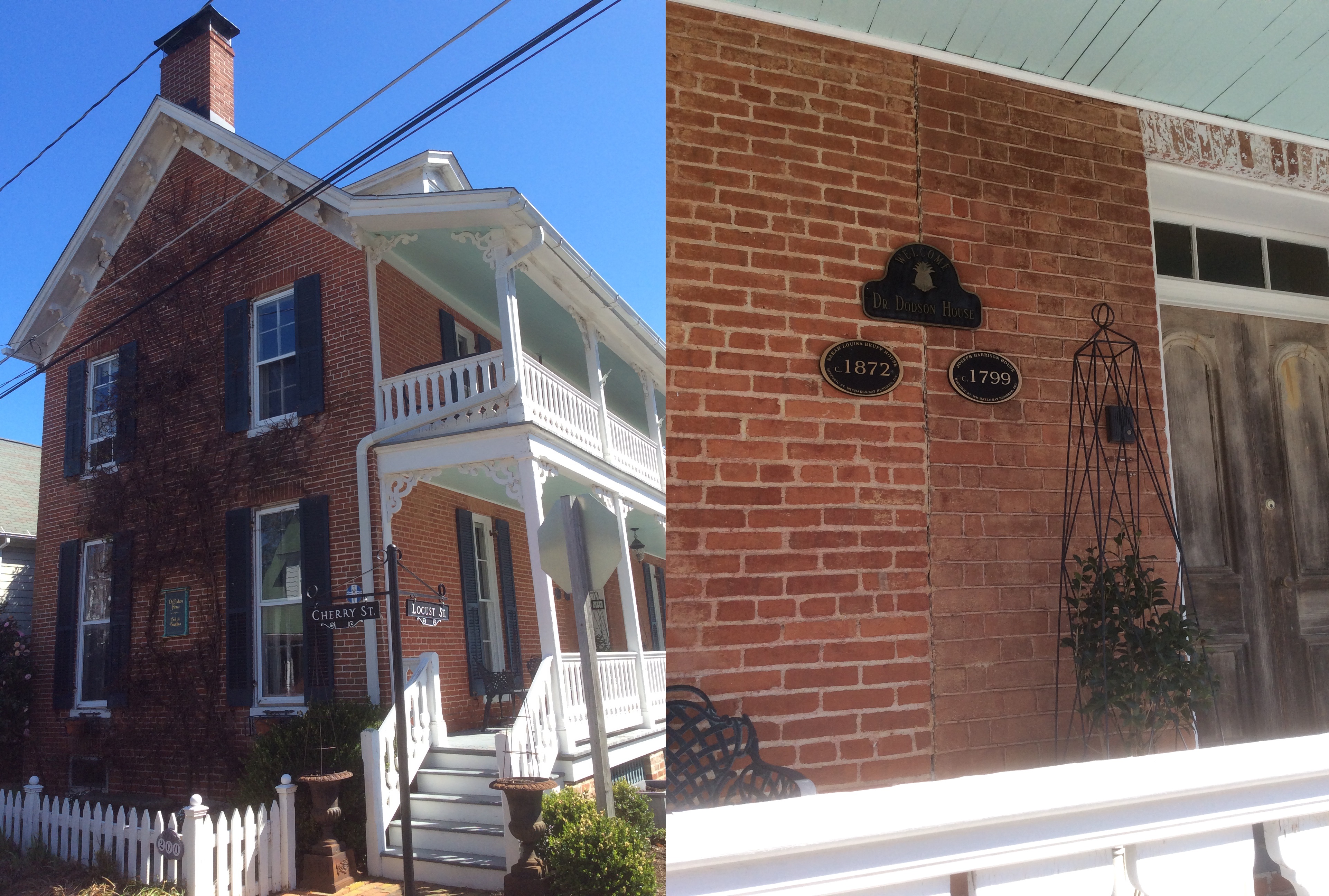
Dodson House, two views, site of 1877 Auld and Douglass reconciliation

Dodson House, two views, site of 1877 Auld and Douglass reconciliation

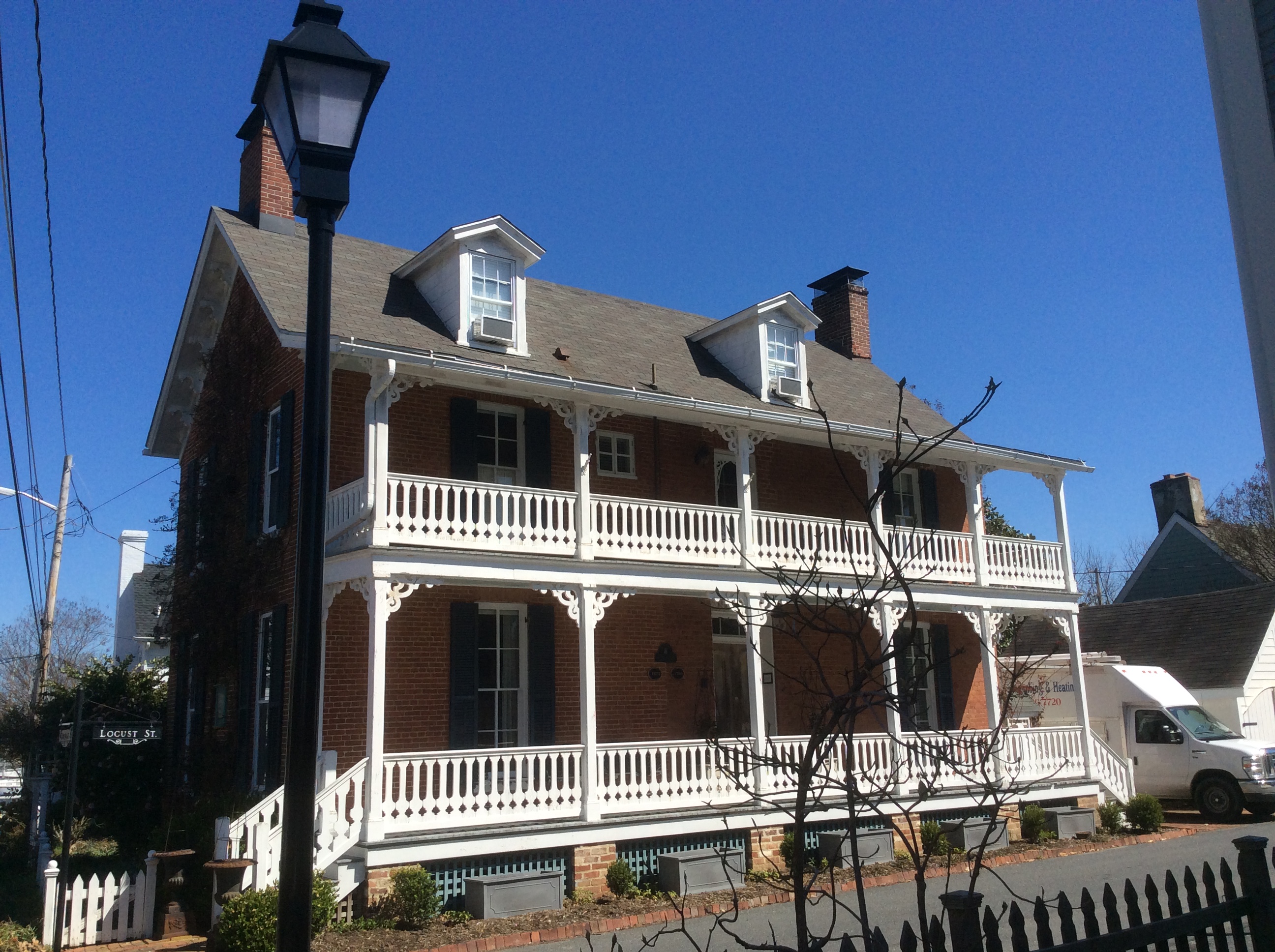
I start with a long red brick house on Cherry Street now called Dodson House and now a bed and breakfast, originally built in 1799 and expanded in 1872. The house’s given address is 200 Cherry St, though its long front faces onto Locust St.

You can see where the house was nearly doubled in size: the seam is clearly visible, with the dates of construction now helpfully marked on the front of the house. Douglass lived here when he was brought back from Baltimore at age 15. Thomas Auld, who owned Douglass (always feels creepy to refer to someone owning someone else), had a falling out with his brother Hugh for a time, and as punishment, took Douglass away from their service and back to the East Shore in 1833, for three years until they made up again. Douglass had become accustomed to a certain amount of personal freedom and plentiful food, both of which he was regularly deprived of back over here on the Eastern Shore, and Douglass did not keep his feelings of displeasure entirely secret. Over time, Auld became so upset at Douglass’ insubordination and evident lack of respect that he eventually sent him away for a year to suffer worse conditions, more on this shortly.

Dodson House, formerly the Auld House on Cherry St, Easton, MD

Dodson House, formerly the Auld House, on Cherry St, Easton, MD

Douglass also returned to this house for a visit many years later in 1877 to make peace with Thomas Auld, who was in failing health by the time. Auld had objected to Douglass’ characterization of him in his Narrative as a cruel and heartless man. Douglass originally thought his grandmother belonged to Auld after Colonel Lloyd’s death, and when she was abandoned to fend for herself in a shabby cabin when too old to work, he thought this indicative of bad character on Auld’s part. However, as Douglass acknowledged in this interview, in a public letter in 1849, and many times afterwards, he was mistaken: his grandmother was actually willed to another Anthony relative.

But, as Douglass pointed out, Auld only took her in to care for her after Douglass’ story subjected Auld to widespread criticism. This didn’t change the fact that slaves were routinely treated badly under the same system of slavery Auld took part in, especially given that many didn’t know or care to find out how their overseers or relatives treated them as long as the work got done and the money came in. But still, Douglass acknowledged that Auld wasn’t directly responsible in this case, that Auld and his family had treated their slaves much better in later years, and that it was the system itself that was ultimately responsible for his grandmother’s plight. The two men shook hands and reconciled, and Auld died soon after.

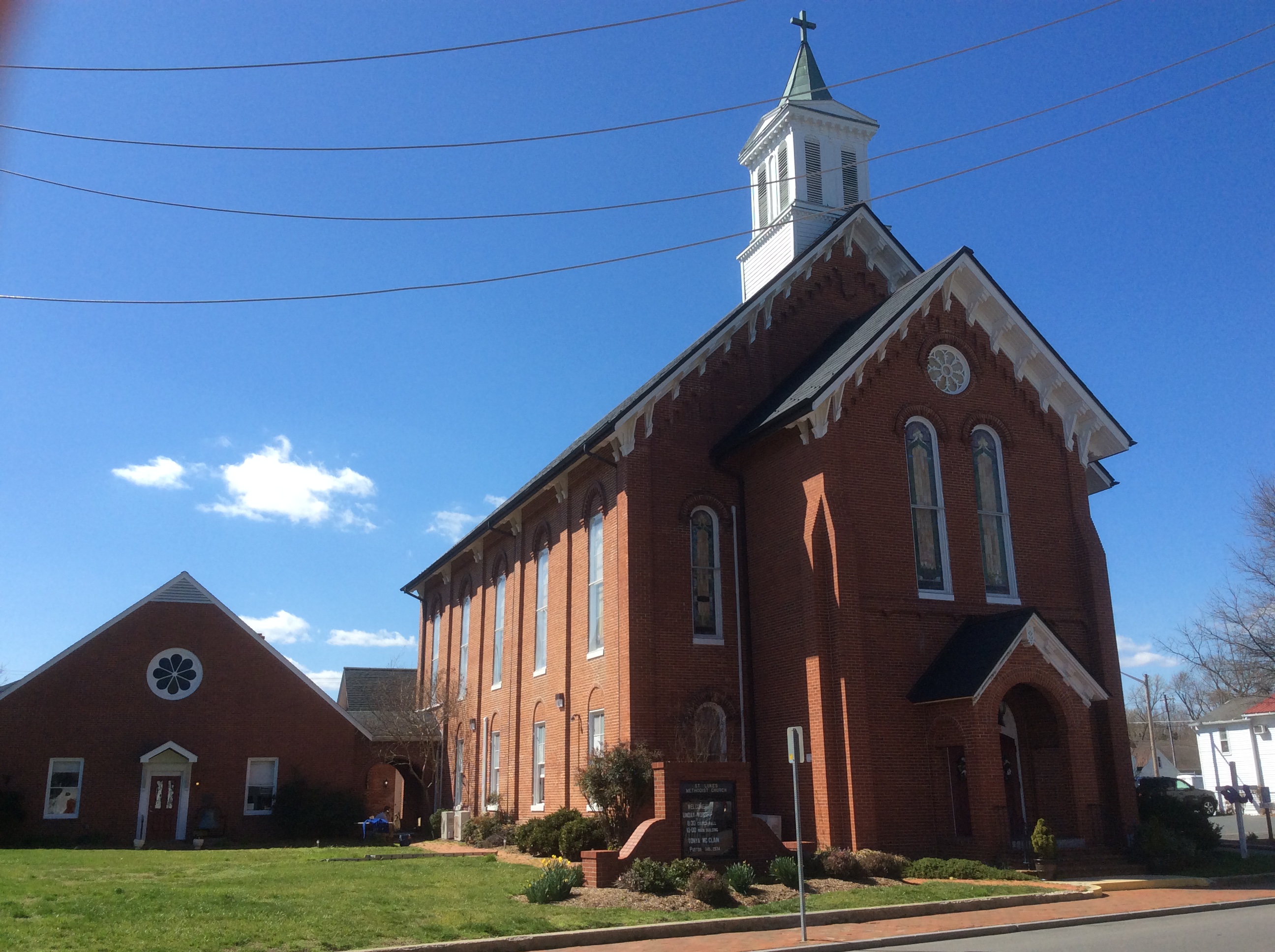
Old St Luke's Methodist Church in St Michael's, MD

Old St Luke’s Methodist Church in St Michaels, MD

Then I head east to the big St Luke’s United Methodist church on Talbot St. St Michaels’ walking tour map, published by St Michaels Museum, says the Auld family is buried here. I see a lot of the same names on gravestones in this cemetery, some of which appear also in the big Christ Church burial ground across the street: Caulks, Harrisons, Jeffersons, Dodsons, Jones’, and so forth. Search as I might, I can’t find any Auld grave markers. The doors of the church rectory are unlocked but there are no staff inside to answer my inquiries, and the electrician working there doesn’t think there’s a grave map available; he mentions he has a couple of friends buried there. I do find Bruffs, who were related to the Aulds; around here, you’ll see that name pop up a lot, including once again in this account.

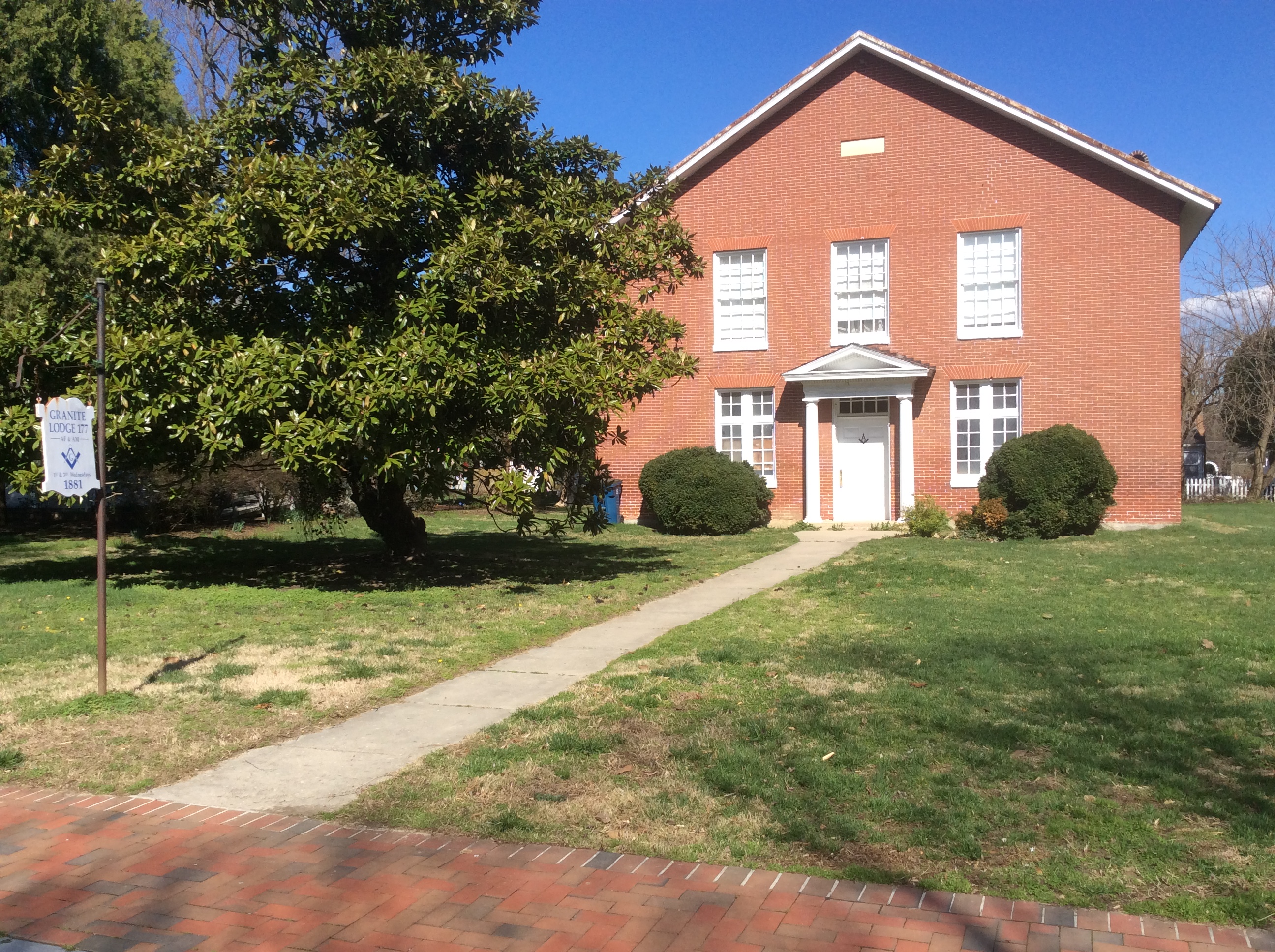
Granite Lodge in St. Mary's Square, St Michaels, MD

Granite Lodge in St. Mary’s Square, St Michaels, MD

Then I head across the street and back around the next short block to St. Mary’s Square. I find Granite Lodge, a brick building which replaces an earlier structure that served as the first Methodist church in St Michaels. Douglass likely attended church here at least sometimes with the Auld family.

By the way, Easton and St Michaels are both adorable towns. I love that East Coast look, so different from my native California.

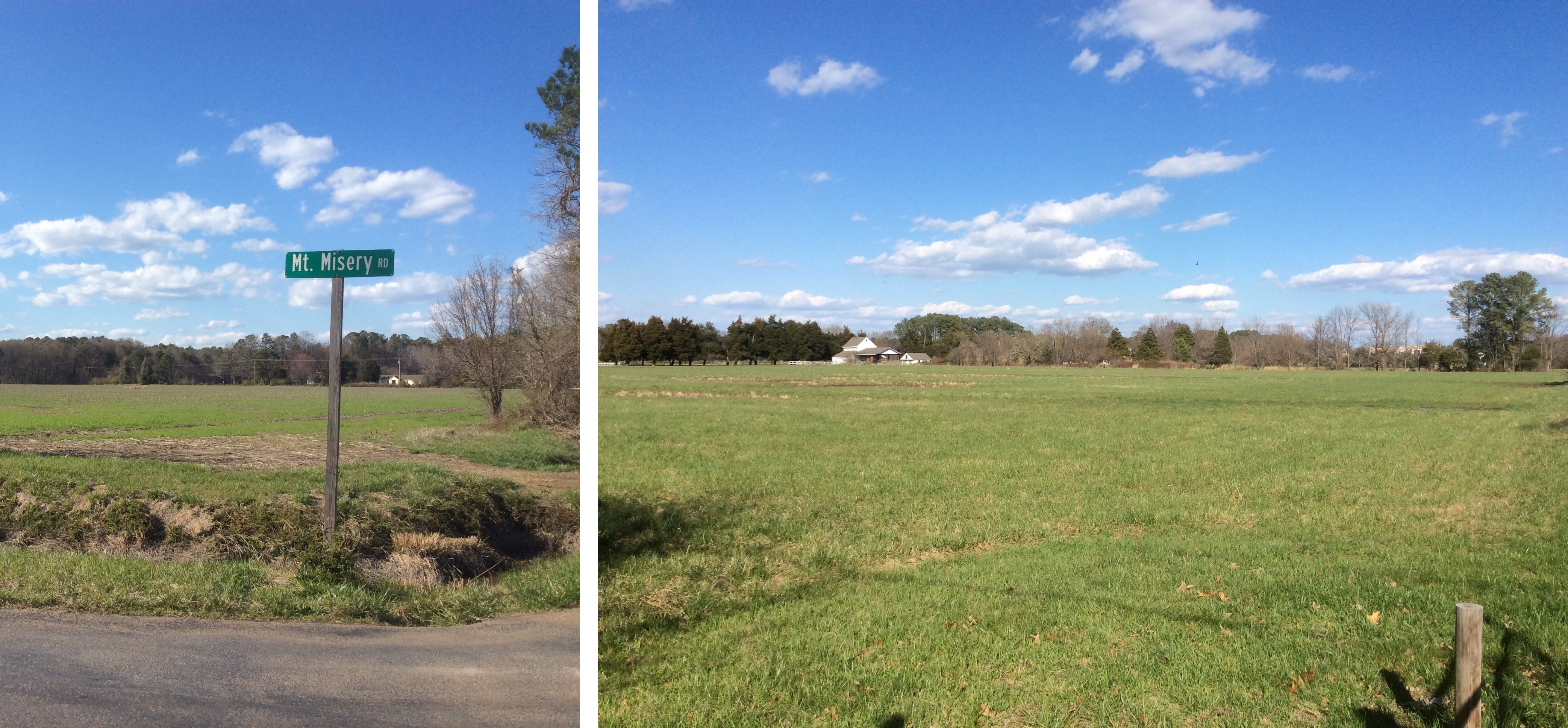
Mt Misery Rd sign and possible William Freeland's farm site, St Michaels MD

Mt Misery Rd sign and possible William Freeland’s farm site, St Michaels MD

A farm near what was formerly William Freeland's, St Michaels, MD

A farm near what was formerly William Freeland’s, St Michaels, MD

Then to Mount Pleasant Road via Railroad, southwest of St Michaels. I pass Mt Misery Rd, and take photos of some of the land around here which at one time was owned by William Freeland.

Douglass came here in January of 1834 to work for Freeland before he was sent back to Baltimore in late 1836. While Douglass thought Freeland by far the fairest and most lenient slaveowner he had ever known, the experience of even a modicum of decency in life actually made him more determined to be free, making him feel more keenly what he was missing. He made his first attempt to escape to the north in his second year there, which got him thrown into Easton jail in 1836 as discussed above. The escape attempt, at least in part, convinced Auld that Douglass would be better off in Baltimore after all, and more likely to stay put because he had been happier there. Besides, in the meantime, he had made up with his brother Hugh.

An old advertisement for the sale of Freeland’s land describes it as part farmland, part woods, as it is here today, and the description of the location and its proximity to these roads indicate it was right around here.

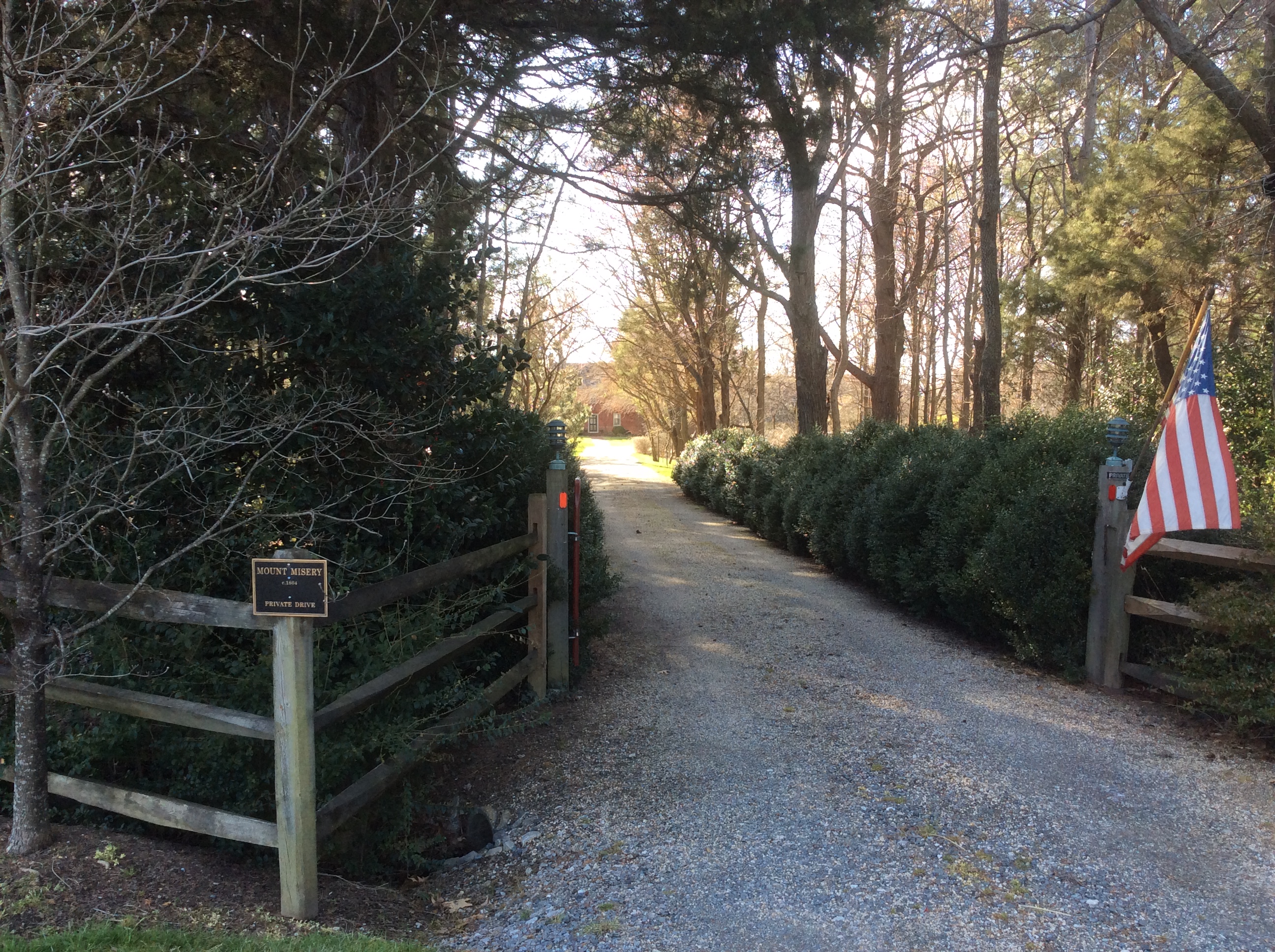
Entrance to Mt. Misery, formerly Edward Covey's farm, St Michaels MD

Entrance to Mt. Misery, formerly Edward Covey’s farm, St Michaels MD

Then back to Mt Misery Rd and turning west, I take it to where it bends sharply to the left, then pull over and park. Straight ahead of me is the drive to Mt. Misery, onetime slavebreaker Edward Covey’s farm. Unfortunately, it’s now private property; for many years, it was a bed and breakfast open to the public. Donald Rumsfeld bought this property for a vacation home in 2006, which was rather controversial. I’m not going to speculate on his motivations, since I have no way of knowing what he was thinking. I do hope that he decides, in a noble gesture and to improve or enhance his legacy, to donate it to the state, the National Park Service, or some other organization so that it can be open to the public once again. After all, it’s a historical site of great emotional significance to many.

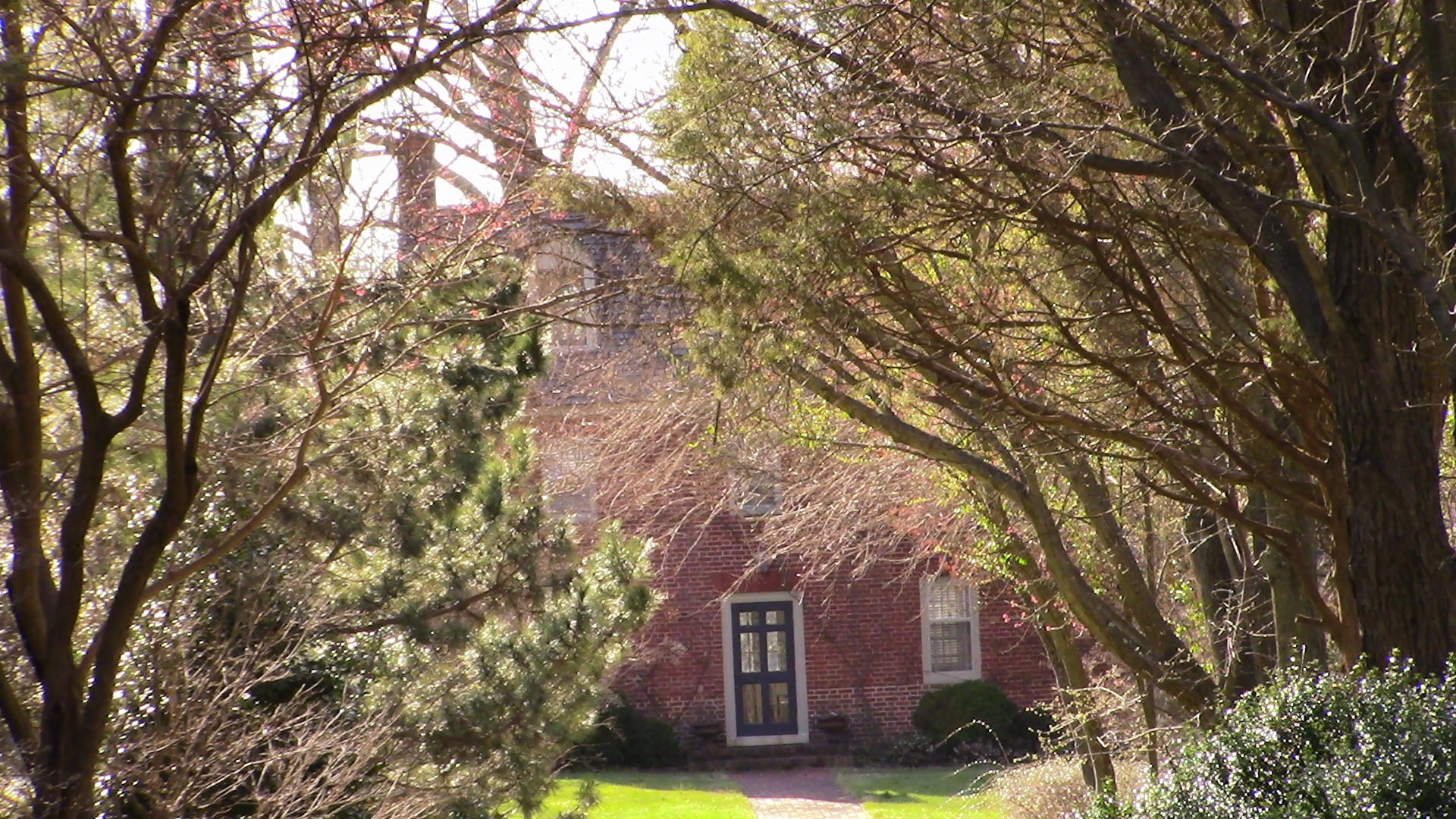
Mt Misery Farmhouse from the driveway entrance

Mt Misery farmhouse from the driveway entrance

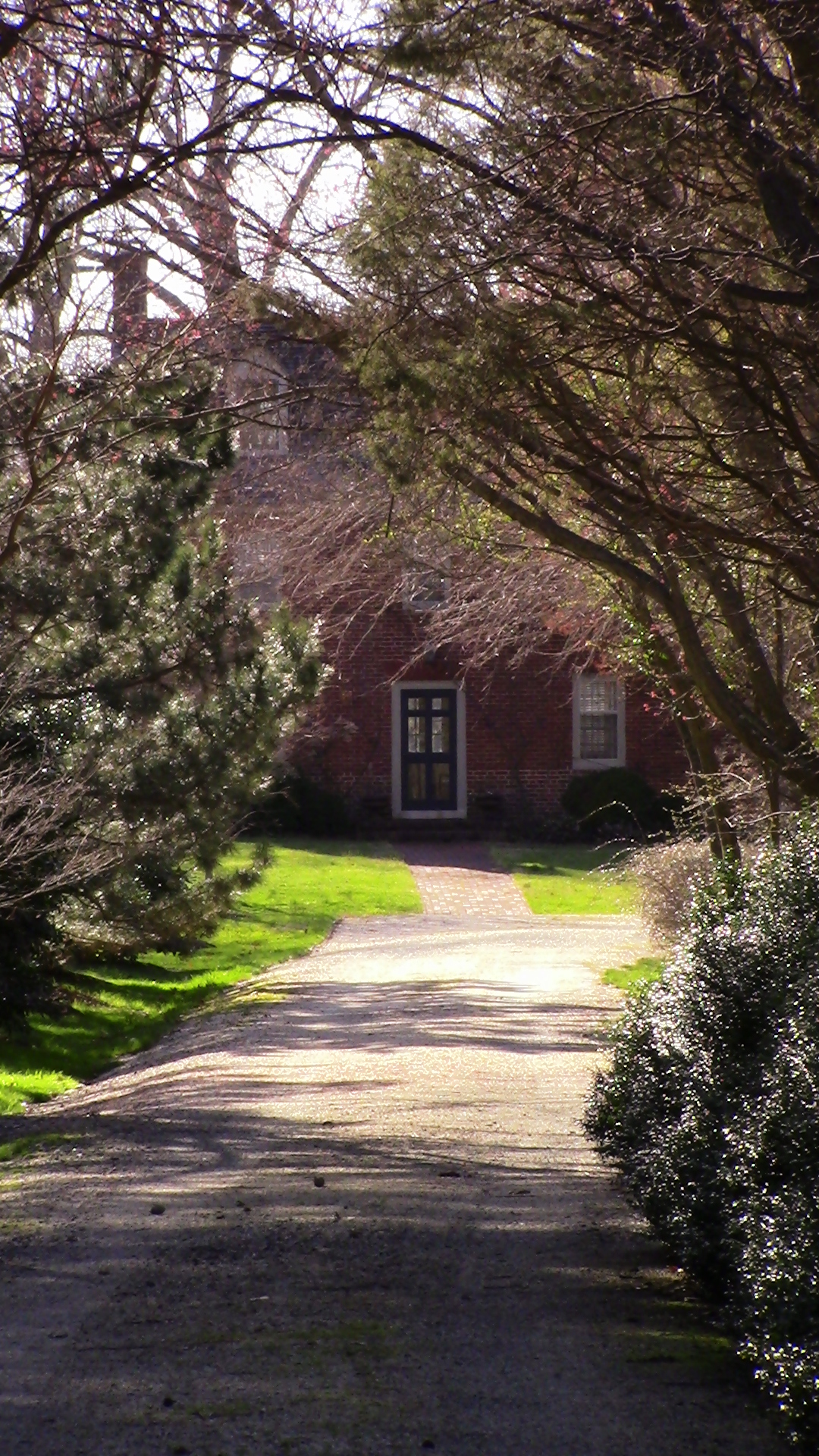
So especially being that it belongs to a wealthy and powerful political figure, I’m going to heed the ‘private drive’ sign and not go up to the house. I wouldn’t go up anyway, I do believe people have a right to privacy in their own home. Besides, getting arrested would get in the way of my trip, though I’m sure that’s unlikely, I still wouldn’t recommend taking the risk. There are many photos of the house online, and besides, my video camera has good zoom and takes photos, so at least we can get a peek.

Another view of Mt Misery farmhouse from the driveway entrance

Another view of Mt Misery farmhouse from the driveway entrance

As I mentioned earlier, Douglass’ attitude of evident displeasure and disrespect on his condition of life here on the East Shore, as compared to his relatively happy life in Baltimore, grated on Auld. In Baltimore he was well fed and clothed, he could improve his reading and writing skills (though on the sly), edify his piety (he had a religious awakening in his mid teens), and spend time with the neighborhood boys when his work was done. None of this was true for him back in St Michaels. Douglass was unhappy, and really let it show.

So, Auld sent Douglass away at the age of 16 to work at Covey’s for a year, to learn his lesson, so to speak. The work was hard, the conditions awful, and Douglass did begin to feel that his spirit was beginning to break. But, it never really did. One day, Douglass decided he could take no more, and refused to submit to another flogging. When Covey tried to physically subdue him, Douglass stood his ground. Though he was only about 16, Covey could not overcome Douglass’ wiry strength, made more so by the heavy manual labor he had been doing since leaving Baltimore. This was when, Douglass wrote, he became a man.

Unionville on Maryland's Eastern Shore, a settlement of black Union army veterans and freed black people

Unionville on Maryland’s Eastern Shore, a settlement of black Union army veterans and freed black people

On Highway 370 heading north to my next destination, my attention is caught by the historical marker sign for the small town of Unionville that I pass through. Douglass was very much involved with Abraham Lincoln’s decision to finally allow the Union Army to enlist black soldiers, more on this in upcoming accounts. Some of these veterans settled here; I hope they found good rest and a happy life in this pretty and peaceful place.

Gateway to Wye House of the former plantation of Colonel Lloyd, Easton MD

Gateway to Wye House of the former plantation of Colonel Lloyd at about 25780 Bruffs Island Rd, Easton MD

I arrive at the driveway to Wye Farm and then, just past it, the gates to Wye House of the erstwhile Colonel Lloyd’s plantation. Again, the drive is marked ‘private’, and I respect it. In my research, I’ve seen many articles that talk about educational tours of this house for school groups, scholars, and so on, but I’m not here long enough to make arrangements for this. Until just a few years ago, Wye House was owned by a philanthropist, historian and member of the Lloyd family who died in 2012. How this affects the ease of arranging a tour today I’m not sure. You see the house much more clearly here than you can in the zoom photo I take today.

Aaron Anthony, Douglass’ owner and possible father, it was rumored, was an overseer for Lloyd, who owned vast tracts of land and was very wealthy. Anthony’s own slaves often worked for Lloyd as well. Douglass was employed only very lightly here at the ‘Big House’, since he was sent to Baltimore when only about seven or eight. Child slaves were not sent out to do hard work until their bodies were considered mature enough to handle it, which I’m sure was a much younger age than we’d consider acceptable today.

Near the former site of the Baltimore Branch of the Freedman's Bank

Near the former site of the Baltimore Branch of the Freedman’s Bank

I head my way back to Baltimore from the East Shore, I swing by the area where the Baltimore Branch of the Freedmen’s Savings Bank used to be on 7th St. The wonderfully helpful Toni from the Mapping the Freedmen’s Bureau website found an old ad for the bank in response to my request for its location.

Cross streets near Baltimore's Freedman's Bank site

Cross streets near Baltimore’s Freedman’s Bank site

I find more than one 7th St in Baltimore, but neither seems to be in the right area since they would have been too far from 1870’s commercial areas. I do find another 7th street in an early map of Baltimore which no longer exists; it was off and to the north of Fort Ave, east of Covington. These are the two main streets that have remained where they are with the same names as they had in Douglass’ time. The closest street to the original, which appears to no longer be there since there are only two streets here where there used to be three differently placed ones, is narrow Belt St., just above Hyson and below E. Clement.

In March 1874, Douglass was named President of the Freedman’s Bank, headquartered on Pennsylvania Ave in Washington DC since 1867. The first branch opened here. It was a private bank chartered by the US government and supported by Lincoln, and it was supposed to help freed slaves and their families gain economic independence. For a while at least, it accomplished its mission very well. However, poor management and political and corporate corruption left it heavily in debt and on the verge of collapse. Despite his best efforts, Douglass could not save the bank, and from this experience, and learned just how corrupt the political and financial system of the United States had really become.

So ends my tour of the East Shore and last Baltimore site, an eventful, exciting, and long day of exploration. Stay tuned for my next adventure!

*Listen to the podcast version here or on iTunes

~ Ordinary Philosophy and its Traveling Philosophy / History of Ideas series is a labor of love and is ad-free, entirely supported by patrons and readers like you. Please offer your support today!

~~~~~~~~~~~~~~~~~~~~~~

Sources and Inspiration:

The American Farmer, Vol. IV‘. Agricultural journal published 1848 by Samuel Sands, Baltimore, MD.

Away From Home: Frederick Douglass Statue‘. Dec 20, 2014, InForum.com

Burgoyne, Mindie. ‘A Bike Ride to Mount Misery – Hello, Rummy!’ Travel Hag blogAway From Home: Frederick Douglass statue

Capt. Aaron Anthony (b. circa 1766 – d. 1826): Property Owner, Talbot County, Maryland‘. From Archives of Maryland (Biographical Series), msa.Maryland.gov

Easton, MD Walking Tour‘. From EastonMD.org

Eyeballing the Rumsfeld Maryland Residence‘ (photos) From Cryptome.org

Finseth, Ian. ‘Douglass and the Legacy of Mount MiseryBaltimore Sun, Aug 20, 2006

Fought, Leigh. ‘Obituary for Thomas Auld in the Baltimore Sun, Feb. 12, 1880‘. Douglass’ Women: In Progress blog

New National Era. (Washington, D.C.), Sept 28 1871. Chronicling America: Historic American Newspapers. Lib. of Congress.

Oliver, Elizabeth. ‘Misery, Thy Name is Rumsfeld’s Vacation Home: Race, power, and history come to a head at Rumsfeld’s historic vacation home’. Oct 26th, 2006 for Utne.com

VanGorder, Megan. ‘Frederick Douglass Narrative Tour‘ for Gilder Lehrman Institute’s Online Course – Amazing Grace: How Writers Helped End Slavery.

A Walking Tour of Historic St Michaels‘. From StMichaelsMuseum.org

Wye House‘. In Wikipedia, The Free Encyclopedia.

Wye House owner, philanthropist and local historian dies at her home’. Jul 27, 2012, The Star Democrat

Frederick Douglass’s Birthplace, Maryland’s Eastern Shore Sites Part 1

Easton, MD on a bright spring morning in March

Easton, MD on a bright spring morning in March

Frederick Douglass Birthplace Map 3

Second day, Monday March 21st

I wake up early and make my way to Maryland’s east shore, looking forward to a beautiful day in the country. It’s windy and very cold, but clear and sunny. I head for downtown Easton: the route from there to my first destination is easiest to follow for a non-local like me. And I can use all the help I can get: this will be the first site I visit in any of my history travels where I will rely both on maps that predate the turn of the 20th century and natural landmarks to locate it.

Just a few blocks into downtown Easton, I turn left on highway 328, which is Goldsborough Street where it starts /ends at Washington Street (Highway 565) in Easton, running only east from here. After about 7 or 8 miles, I turn left onto Lewiston Road.

Looking back on Highway 328 from Lewiston Rd, Easton MD

Looking back on Highway 328 from Lewiston Rd, Easton MD

I decide it would be a good idea to check with local people before I start looking for the next landmark, a crossroads called Tapper’s Corner: generally, it’s best to confer with the experts when you want to do something right. The lady I ask at the business at the corner, Bullock Construction, says go 2 or 3 miles, but the lady who gave me directions from the porch of her home down the street says go further. She lives right here, so I go with her recommendation.

Sheep at a farm on Lewiston Rd en route to Tapper's Corner

Sheep at a farm on Lewiston Rd en route to Tapper’s Corner

It ends up about 5 (oh so pretty) miles to Tapper’s Corner Rd, also know as Highway 303, a road that t-bones off Lewiston to my left.

Tapper's Corner off Lewiston Rd, with the Aaron Anthony old Holme Hill Farm site at the right

Tapper’s Corner off Lewiston Rd, with the Aaron Anthony old Holme Hill Farm site at the right

At my right I see, facing forward toward Queen Anne’s County, a big white house with white roofed green barns. According to my sources, this is the site of Aaron Anthony’s old Holme Hill Farm.

Aaron Anthony's farm, later Ebenezer Jackson's, now horse farm, Easton MD

Aaron Anthony’s farm, later Ebenezer Jackson’s, now horse farm, Easton MD

To my right and a little behind me, in the big green field with the trees behind it lining the Tuckahoe creek, is where Douglass was born in 1818, in a little long-vanished cabin. It was called Aunt Bettie’s lot, located between the road, a little ravine called Kentucky, and the Anthony farm, behind which runs the little mill stream into the pond where little Frederick went fishing.

Ravine, Woods & Field at Frederick Douglass's birthplace between Tapper's Corner & the Tuckahoe

Ravine, woods, and field at Frederick Douglass’s birthplace between Tapper’s Corner and the Tuckahoe

I want to stand on the very spot where the cabin stood, as near as I can determine it to be. I turn around, go back and park along the road at the lone little pull-out spot available on that side. The rest of the road is has a drainage ditch running the full length on either side. The little pull-out area at the side of the road is a little clue that there’s something special here: it’s at the same field where the cabin was and the ravine is. I cross the big green field, a plowed-under grassy cornfield, toward the ravine. I follow where it veers to the left, towards the one green tree among the gray winter branches along the curving ravine. When Douglass returned in 1878 to find his birthplace, he looked for a big cedar tree that he remembered from his childhood ‘a little deeper in the woods, near the edge of the ravine’. I draw closer to the green and discover it’s actually three trees: two pines and another tree, tucked in among the pines and other trees, shorter than them with darker needles. I jump up and pull off a little chunk of greenery: yes, it’s cedar. I get a chill.

The ravine among the woods next to Frederick Douglass' birthplace

The woods along Kentucky Ravine next to Frederick Douglass’ birthplace

Perhaps it’s the very same cedar tree that led Douglass, or perhaps, it’s an offspring of that tree. It seems too much of a coincidence that there would be one lone but unrelated cedar tree right here by the ravine as he described. Either way, I feel very emotional, very moved. I tend to develop a sense of love and concern for the people whose lives I follow and am solicitous of their memory, and these mementos of their lives help bring their stories closer to me. I hope this account makes you feel the same, and will help you more easily make this same pilgrimage one day.

*Listen to the podcast version here or on iTunes

~ Ordinary Philosophy and its Traveling Philosophy / History of Ideas series is a labor of love and is ad-free, entirely supported by patrons and readers like you. Please offer your support today!

~~~~~~~~~~~~~~~~~~~~~~

Sources and Inspiration:

Note: A wonderful source for finding Frederick Douglass’ birthplace, complete with maps and her research process, is my youngest yet: the author, Amanda Barker, did this research project and report in the 1990’s for her 7th grade honors class. Wherever you are, thank you, Amanda!

Aaron Anthony’s Holme Hill Farm‘. ChoptankRiverHeritage.org

Barker, Amanda. ‘The Search for Frederick Douglass’ Birthplace‘. The Eastern Shore Guide 

Douglass, Frederick. Autobiographies (includes Narrative…, My Bondage and my Freedom, and Life and Times). With notes by Henry Louis Gates, Jr. Volume compilation by Literary Classics of the United States. New York: Penguin Books, 1994.

Douglass, Frederick. The Life and Times of Frederick Douglass. Re-published 1993, Avenal, New York: Gramercy Books, Library of Freedom series.

Douglass, Frederick. My Bondage and My Freedom: 1855 Edition with a new introduction. Re-published 1969, New York: Dover Publications, Inc.

Foner, Philip S. The Life and Writings of Frederick Douglass, Vol. 1-4. New York: International Publishers, 1950.

Frederick Douglass Heritage: The Official Website. Website of the University of Massachusetts History Club

Holland, Jesse. Black Men Built the Capitol: Discovering African-American History In …, Part 3. Connecticut: Globe Pequot Press: North Carolina 2007

Holmes Hill Farm‘. Sankofa’s Slavery Data Collection, at Rootsweb.ancestry.com (Sankofa is an avatar of Dr. David Anderson of Nazareth College in Rochester, this may be coincidental)

McFeely, William. Frederick Douglass. New York: W.W. Norton & Company, 1991.

Frederick Douglass Baltimore Sites

Home where Amy 's host family lives in Garrison, MD, in a post-Civil War freedman's settlement, photo March 2016 by Amy Cools

Home where my host family lives in Garrison, MD, in a post-Civil War freedman’s settlement

First day, Sunday, March 20th

So here I am on the East Coast, commencing my Frederick Douglass history of ideas travel adventure in earnest! I’m thrilled and know I’ll learn and see a lot since I have so many sites I plan to visit already and know I’ll discover more as I go along.

I wake up still undecided whether to begin my Douglass explorations on the East Shore of Maryland or in Baltimore proper. I was leaning toward the Shore to keep my account more chronologically aligned with Douglass’s life, but inclement weather, the Maryland Historical Society’s open hours, a lost document, and a bit of oversleeping decided for me: a delayed start made it best to keep today’s journeys closer to home away from home. So, Baltimore it is!

Fell's Point, Baltimore MD, photo March 2016 by Amy Cools

Fell’s Point, Baltimore, Maryland

Aliceanna and Durham Streets, Baltimore, Maryland March 2016, photo by Amy Cools

Aliceanna and Durham Streets, Baltimore, Maryland

In a very important way, it’s actually fitting to begin with Douglass’ life here in Baltimore, centered in the waterfront district of Fell’s Point, since this is where Frederick Douglass had one of the most formative experiences of his life.

It happened in a ‘spare, narrow house at the corner of an alley’, Happy Alley, off Alliceanna Street at S. Durham. This was Douglass’s first home with the Hugh Auld family, composed of shipbuilder Hugh, his wife Sophia, and their little son Tommy. Frederick Bailey, who adopted the last name Douglass after fleeing slavery, was a child of just seven or eight himself, was imported from the plantation to be Tommy’s companion and body servant.

There used to be a sign marking this street corner as a Frederick Douglass historical site, but it’s disappeared (you can see the two silvery clamps still strapped under the street name signs). Perhaps people in the neighborhood were tired of being bothered by tourists asking where the exact house is. I have no shame, so I bother a young man with my inquiries. He doesn’t happen to know about that historical tidbit but is interested to hear the story; he happens to pass me by again a little while later, pulls over, and asks for the website so he can check in later and see what I find out, so I know he isn’t just being polite; he certainly is very kind.

Site of Frederick Douglass' home with the Aulds at Aliceanna and S. Durham, Fell's Point, Baltimore, MD, photo March 2016 by Amy Cools

Site of Frederick Douglass’ home with the Aulds at Aliceanna and S. Durham, Fell’s Point, Baltimore, MD

And another nice person, a woman entering her home in the very new-looking building on the southeast corner of Alliceanna and S. Durham does know, however, and confirms that building below, as far as she knows, stands on the very site of the old Auld house. She, for one, hopes the sign will go back up.

So back to that formative experience: Sophia Auld thought it would be a good idea to teach Frederick how to read since he was companion and body servant to the young son of the household and could thus aid in his education. But when Hugh came into the room and saw her teaching Frederick his letters, he stopped her, telling her in his hearing that ‘[he] should know nothing but how to obey his master …if you teach [him] how to read, there will be no keeping him. It would forever unfit him to be a slave…’ As Douglass later recalled, this is the moment he realized the full inhumanity of the slave system, and knew exactly what he needed to do. No enforced ignorance for him!

Lancaster St, end where Gardiner's and Meacham's shipyards used to be, Fell's Point, Baltimore MD, photo 2016 by Amy Cools

Lancaster St, end where Gardiner’s and Beacham’s shipyards used to be, Fell’s Point, Baltimore MD

Then I head down to the end of Lancaster St, about where Frederick worked at James Beacham’s shipyard in 1826, close to William Gardiner’s shipyard where he received more advanced training, upon returning to Baltimore in 1836 after three years back on the East Shore. He had another formative experience at Gardiner’s which I’ll tell you about shortly. Frederick worked on many shipyards and became a skilled caulker over time, earning him enough wages that Hugh was willing to let him keep some, unaware Frederick was saving up to start a new life as a free man one day.

Boats docked at end of Lancaster and Thames Streets, Fell's Point, Photo 2016 Amy Cools

Boats docked at end of Lancaster and Thames Streets, Fell’s Point

I head west on Thames St. At number 12 or 13, Frederick purchased the first book he ever owned at Nathaniel Knight’s shop at 28 Thames St, The Columbian Orator. The buildings are numbered very differently now, and at the time I write this post, I’ve yet to find an early atlas with street addresses. Fell’s Point is clearly a moneyed area, and large sections of Thames St has been built over with luxury condos, especially on the waterfront side. The other side of the street retains more of its older buildings, and all is very well kept and very charming.

A view of Thames St, Fell's Point, Baltimore MD, photo 2016 Amy Cools

A view of Thames St, Fell’s Point, Baltimore MD

I continue on to the very end of Thames St, heading west to the Frederick Douglass-Isaac Myers Maritime Park and Museum.

Frederick Douglass-Isaac Myers Maritime Park and Museum Fell's Pt, photo 2016 by Amy Cools

Frederick Douglass-Isaac Myers Maritime Park and Museum, Fell’s Point

Frederick Douglass-Isaac Myers Maritime Museum Sign, Fell's Pt, photo 2016 by Amy Cools

Frederick Douglass-Isaac Myers Maritime Museum Sign, Fell’s Point

The sculpture I find here of his head, though striking, looks a little odd just sitting on the ground as it is; I find myself instinctively looking around for the body it fell off of. Perhaps they’ll give it a new setting at some point.

Frederick Douglass sculpture at Maritime Park Fell's Pt, photo 1, 2016 by Amy Cools

Frederick Douglass sculpture at Maritime Park Fell’s Point

Frederick Douglass sculpture at Maritime Park Fell's Pt, photo 2, 2016 by Amy Cools

Frederick Douglass sculpture at Maritime Park, with sign

Then I head right, around to Philpot St, where Frederick also lived with the Auld family (they moved around the Fell’s Point neighborhood a few times). The Maritime Park Museum actually faces onto it at least as much as it does onto Thames. Here, little Frederick obtained the help of his playmates to build on the fragmentary education he had received from Sophia and really learn to read. Some neighborhood boys helped him out, and though he never named them in his narrative for fear they’ll be criticized for this, he thanked them anonymously.

S Caroline and Block St corner by Philpot St, Fell's Point, photo 2016 Amy Cools

Corner of S. Caroline and Block St by Philpot St, Fell’s Point

The little loop of a street which remains that’s still called Philpot St on Google Maps, though there are no identifying street signs, is at the west end of Thames behind Block and S. Caroline. It curves around to where the Maritime Museum and Park overlook the harbor, and you can see Domino Sugars factory in the background across the water. The area where the Auld house was, and perhaps where Frederick played and read with his friends at Durgin and Bailey’s shipyard, is now flattened, with all signs that there ever was a street here, let alone a neighborhood, obliterated and under new construction.

Then I backtrack a little on Thames towards Bond St. If you look closely, you can see this view of Bond St is at Shakespeare St; Frederick grew to love William Shakespeare.

Bond St at Shakespeare, Fell's Point, Baltimore MD, photo 20156 by Amy Cools

Bond St at Shakespeare St, Fell’s Point

The occasion which took Frederick to Bond St, and which takes me here next too, was a sad one. Since he had become a skilled caulker at Gardiner’s shipyard, his work was very much in demand, especially as an enslaved black man who commanded lower wages than skilled white workers. Baltimore’s shipyards employed many skilled black workers on its busy waterfront, paying them all lower wages, and the white workers felt deeply resentful at this threat to their livelihood. So one day, when Frederick was perhaps sixteen, he was severely beaten by four of his coworkers. Auld was very angry, both because, as Frederick believed, he was genuinely concerned about his well-being and considered what they had done cruel and unjust, and, of course, he did not want his prized source of income to lose his ability to work. So he accompanied Frederick to magistrate William Watson’s office on Bond St. Again, as of this date, I can find no specific street address; when and if I do, I’ll let you know.

But to Auld’s chagrin, Watson refused to arrest the men or do anything about the crime at all: although the evidence a crime had been committed was presented in Frederick’s own battered face, only a white man’s testimony was legally admissible. The indignity and injustice of this were yet more striking evidence for Frederick that slavery was a great evil, strengthening his conviction that he must find a way to gain his freedom.

Then back up Bond to Aliceanna again, to grab a snack and better wifi connectivity at Cafe Latte’da, a punk rock-y comfy little hole in the wall coffee shop. It’s right around the corner from Jimmy’s Restaurant and Fountain Service on S. Broadway, where I had begun with a delicious breakfast of tater tots topped with pulled pork and cole slaw. If you’re like me and love comfy, well-established eateries with down to earth food and atmosphere, I recommend these two.

Fell St at Thames and Ann, Fell's Point, Baltimore Md, photo 2016 by Amy Cools

Fell St at Thames and Ann, Fell’s Point, Baltimore MD

Then back to Fell St at Thames and Ann, which I had overlooked on my first go-round, but it’s no problem since the waterfront part of Fell’s Point is pretty small and very walkable. Frederick lived on Fell’s St with Hugh Auld when he returned to his service in Baltimore in late 1836. Again, Douglass gave no address in his memoirs. Hugh thought he’d be less likely to try to escape if he had more interesting employment in an environment which better suited him, enjoying more independence through retaining part of his wages and eventually, living in a place of his own. At this point, Frederick had become an expert caulker and could command much better wages despite his race and status as a slave. When Frederick did live on his own for awhile, there was an episode where Frederick didn’t return from a weekend outing to the Fell St house in time, and Auld was enraged. He threatened to take away the independence he had granted Frederick up to this point and to make him move back home.

Thames St Park bordered also by Lancaster and Wolfe, Fell's Pt, photo 2016 by Amy Cools

Thames St Park bordered also by Lancaster and Wolfe, Fell’s Point

Since I’m back near the east end of Thames, I go back towards the end of Wolfe Street since I had found another secondary resource, a Baltimore Sun article, on my coffee break. I’m looking again for the site of Gardiner’s shipyard where he was beaten by his co-workers.  According to the article, ‘William and George Gardiner’s shipyard [was] on the north-east corner of Lancaster and Wolfe Streets’. It’s not at the water’s edge now; the waterline at Fell’s Point has been changed quite a bit in many places over the years as it’s been filled in and built over. Beacham’s, as I described earlier, would have been nearby, around the corner to the north. There’s this little park called Thames St Park, bordered also by Wolfe and Lancaster; perhaps this is the site of one or part of both of those shipyards.

Douglass Place, 500 block of Dallas St, Fell's Point Baltimore MD, photo 2016 by Amy Cools

Douglass Place, 500 block of Dallas St, Fell’s Point Baltimore MD

Douglass Place with engraved marker, Fell's Point Baltimore MD, photo 2016 Amy Cools

Douglass Place with engraved marker, Fell’s Point

Next, I head for a site associated with Douglass many years later in his life. I walk north on S. Durham St, passing Douglass’ first home site with the Aulds again, then left (west) on Aliceanna towards S. Dallas St. I find that the stretch of Dallas between me and the 500 block of Dallas near Fleet St where I’m headed is built over, so I go back up Bond to go around. I find what I’m looking for: a little row of brick houses, where an engraved cream stone in the larger of the red brick buildings confirms this is indeed ‘Douglass Place’. Douglass built these in the early 1890’s as quality, affordable rental housing for black residents.

Historical Plaque at Douglass Place, Fell's Pt Baltimore, photo 2016 by Amy Cools

Historical Plaque at Douglass Place, Fell’s Pt

Billie Holliday house at 219 Durham St, Fell's Point, Baltimore MD, photo 2016 Amy Cools

Billie Holliday house at 219 Durham St, Fell’s Point

On my way out from Fell’s Point proper, I decide to swing by a site only very tangentially linked to Douglass. The lady who confirmed the location of the Aliceanna St house directed me to a home where Billie Holiday grew up at 219 Durham St. I love Billie Holiday, as I’m sure you do too, so I’m thrilled to make this discovery. Holiday, as you remember, sang ‘Strange Fruit’, a stark and haunting song about lynching that was very controversial when she recorded it in the late 1930’s but well loved, and her performance of this song is among the very best. Douglass became an activist in his later years against lynching…. more on that in a future post.

The Wharf formerly known as Smith's, Inner Harbor, Baltimore MD, 2016 by Amy Cools

The Wharf, formerly known as Smith’s Wharf, at the end of Gay St, Inner Harbor, Baltimore MD

Then I head towards the Inner Harbor, west towards downtown, to the wharf which used to be called Smith’s Wharf. It’s described in an old document as located at the south end of Gay St. ‘run[ning] north and south, from the east side of Gay St dock…’, now at Pratt, assuming that where the water meets the shore has not changed dramatically, though it’s not really a safe assumption. It’s just that I mostly have the current shoreline to follow, with atlases from young Frederick’s time so scarce.

Wharf at Gay and Pratt, formerly Smith's, Inner Harbor, Baltimore MD, photo 2016 Amy Cools

Wharf at Gay and Pratt, formerly Smith’s, Inner Harbor, Baltimore MD

This is where little Frederick first arrived in Baltimore, diverted from his likely destiny as a plantation slave to a better one working in the city, though this was no guarantee of better treatment. Though city slaves often enjoyed a better standard of living in the city, Douglass tells of slaves in neighboring homes in Fell’s Point who were treated very cruelly. But on that day in the mid-1820’s, as Frederick watched the city shore draw near, he was thrilled at the prospect of a new and easier life than that of his deprived, if somewhat carefree, childhood as a plantation orphan.

Maryland Historical Society, Celebrating the 15th Amendment, photo 2016 by Amy Cools

Maryland Historical Society Museum, Celebrating the 15th Amendment Plaque in the Civil War Exhibit

Then to my last stop, the Maryland Historical Society downtown, to see what they have on Douglass. I don’t find much, as the library is closed, though the museum is open. I am excited, however, to find a plaque with a photo of an event I want to discover a location for but haven’t yet. In 1870, Douglass gave a speech before a crowd of about 10,000 people in Baltimore in celebration of the passage of the 15th Amendment, and as it turns out, the celebratory parade ends at, and the celebrations culminate, at the War of 1812 memorial tower called the Battle Monument at E. Fayette and N. Calvert; you can see its column to the right. As luck would have it, an unsuccessful search for another site (I’ll tell you about it in the next post) happens to take me to thus very same place; when going through and studying my photos afterward, I’m excited to make this discovery! Here’s the site today; as you can see, it looks very different, except for the Monument itself.

Battle Monument at E. Fayette and N. Calvert, Baltimore MD, photo 2016 by Amy Cools

Battle Monument at E. Fayette and N. Calvert, Baltimore MD

So ends my first day of following the life of Frederick Douglass on the East Coast, and it’s been a thrilling one. Coming up next: a day on the East Shore of Maryland, his birthplace and towns where he spent much of his early life. Stay tuned!

*Listen to the podcast version here or on iTunes

~ Ordinary Philosophy and its Traveling Philosophy / History of Ideas series is a labor of love and is ad-free, supported by patrons and readers like you. Please offer your support today!

~~~~~~~~~~~~~~~~~~~~~~

Sources and Inspiration:

Battle Monument‘. In Wikipedia, The Free Enclyclopedia. Encyclopedia.

Douglass, Frederick. The Life and Times of Frederick Douglass. Re-published 1993, Avenal, New York: Gramercy Books, Library of Freedom series.

Douglass, Frederick. My Bondage and My Freedom: 1855 Edition with a new introduction. Re-published 1969, New York: Dover Publications, Inc.

Douglass Terrace – Dallas Street North of Fleet Street’. BaltimoreMD. com

Eastern District‘. Baltimore City Police History.com

Foner, Philip S. The Life and Writings of Frederick Douglass, Vol. 1-4. New York: International Publishers, 1950.

Historical Sign Marking Where Frederick Douglass Lived as a Slave in Fells Point at Durham & Aliceanna‘. (photo) What I Saw Riding My Bike Around Today blog

Kelly, Jacques. ‘2 Neighborhoods Show City’s Gems of Black History‘. Feb 19, 1993, The Baltimore Sun website

Lakin, James. The Baltimore Directory and Register, for 1814-15. Baltimore: J.C. O’Reilly.

McFeely, William. Frederick Douglass. New York: W.W. Norton & Company, 1991.

Papenfuse, Edward. ‘Recreating Lost Neighborhoods: The House on Ann Street, Fells Point, Baltimore City, Maryland‘. Reflections by a Maryland Archivist blog

Separate is Not Equal: Brown vs. Board of Education‘. The National Museum of American History website, by the Smithsonian

Shopes, Linda. ‘Fells Point: A Close-up Look At Baltimore’s Oldest Working-class Community’. Nov 24, 1991. The Baltimore Sun website

Troy, Davis. ‘The Story of the 15th Amendment in Maryland‘. Maryland.gov

Ordinary Philosophy is Pleased to Introduce Eric Gerlach

Eric GerlachHello dear readers,

I’m so pleased to welcome Eric Gerlach as a regular contributor to Ordinary Philosophy!

Eric was my teacher some years ago when I returned to college to study philosophy. I attended his Introduction to Philosophy class, and it very much inspired and influenced me to this day. In the class, he emphasized and explained the connections between human thought in all times and places in a friendly, warm, and easygoing style, and ancient philosophy from all over the world seemed as relatable, timely, and relevant today as it ever was. He still teaches this excellent class, which I very much recommend if you’re ever enrolled at Berkeley City College. I’ve been continuing to enjoy his work at his blog for some years now.

I’m so thrilled that Eric accepted my invitation to lend his voice to Ordinary Philosophy, and I’m sure you’ll find his work as interesting and edifying as I always do. Please join me in extending Eric a warm welcome to O.P.!

~ Amy Cools, creator and editor of Ordinary Philosophy