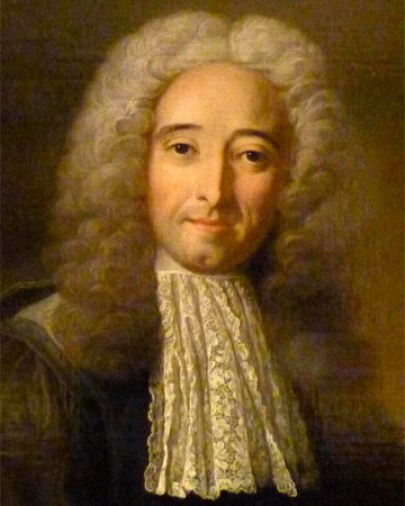
Happy Birthday, Helvétius!

Claude-Adrien Helvétius, born on January 26th, 1715, is often credited with being a father of utilitarianism, or at least, for planting its philosophical seeds. Also an uncommonly egalitarian thinker for his time and place, he was born with a silver spoon in his mouth, perhaps filled with a tincture of some sort from time to time: Helvétius was the son and grandson of very wealthy physicians who ministered to royalty. Through these connections, Helvétius was appointed to a lucrative post as a tax collector and grew very wealthy when he was relatively young. By the time he was thirty-six and newly married, Helvétius had tired of courtly life, and retired to a country estate to take up a life of letters and scholarship.

The first published fruit of his study and writing was his famous philosophical work De l’esprit (Of the Mind). After it came out in 1758, it created an uproar at the University of Paris, among the clergy, among other philosophers, and at the court; on more than one occasion, it was publicly burned. To keep himself out of trouble, Helvétius was forced to publicly renounce the book. But as it is with so many things, all the controversy sparked intense public interest, and De l’esprit became one of the most widely read books of his time. And what exactly was it about the book that caused so much consternation? Salonnière, intellectual, and consummate letter-writer Madam du Deffand quipped that this was due to Helvétius putting into writing what everyone was already secretly thinking but not allowed to say.

More specifically, Helvétius’ controversial ideas include the notion that all animals, human beings included, form their mentalities from sensation and experience (thereby implicitly challenging religious concepts of the soul); that all actions we call right or just, wrong or unjust are ultimately the result of self-interest (though self-interest is so often bound up with our conception of ourselves as part of larger groups, such as nations, religious communities, tribes, and so on, so that self-interest and the interests of others can become virtually indistinguishable); that the passions are both the ultimate disguisers of truth while simultaneously providing the necessary drive to seek it at all; and that all human motivation consists of seeking the most pleasure and avoiding the most pain. The latter is a central tenet, in some form or another, of utilitarianism, and was developed into more comprehensive philosophical and ethical systems by those fathers of utilitarianism Jeremy Bentham and John Stuart Mill.

Helvétius also had a theory of education and human aptitude that’s refreshingly egalitarian to modern sensibilities. He believed that everyone is just as capable of great learning and achievements, but that the only reasons people don’t equally achieve are either because they don’t care to, or because they were not taught well. While Helvétius did not have the benefit of later studies in psychology and the social sciences which reveal the picture to be more complicated than that, he did make the case that everyone could and should be able to develop themselves according to their interests and potential, and that the positive transformative power of education for individuals and societies is nearly boundless.

After Helvétius’ death on December 26, 1771, his widow, Anne-Catherine, never remarried. She spent much of her time hosting a famous salon; some years ago, I visited the place where she welcomed the erudition, wit, and flirtation of Benjamin Franklin (who was a special friend and admirer), Thomas Jefferson, Condorcet, Napoléon, and other luminaries, and shocked John and Abigail Adams.

Learn more about the sophisticated, free-thinking, and well-read Helvétius at

Claude-Adrien Helvétius ~ NNDB

Claude Adrien Helvetius (1715—1771) ~ the Internet Encyclopedia of Philosophy

Claude Adrien Helvetius (1715 – 71) ~ by David Pearce for Utilitarianism.com

Claude-Adrien Helvétius: French PhilosopherEncyclopaedia Britannica

Enlightenment ~ by William Bristow for The Stanford Encyclopedia of Philosophy (Helvétius appears in sect 2.2, ‘Ethical Theory‘)

Grand Illusions ~ Claude-Adrien Helvétius on passion blinders, republished in Lapham’s Quarterly

Madame Helvétius and Ben Franklin ~ at Rodama: A Blog of 18th Century & Revolutionary French Trivia

Salonnière Madame Helvétius ~ by Kristen O’Brien for The Salonnière blog

See also the works by Helvétius available online at the Internet Archive

~ Ordinary Philosophy is a labor of love and ad-free, supported by patrons and readers like you. Any support you can offer will be deeply appreciated!
Happy Birthday, Emmanuel Chukwudi Eze!

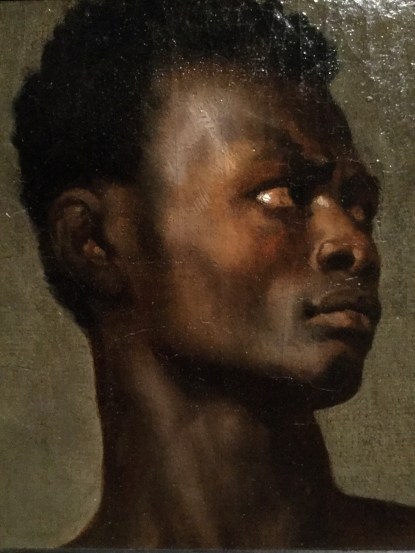
Study of an African’s Head, 1830 by Paul-Jean Flandron, Seattle Art Museum. I could not find a portrait of Dr. Eze that I could share, so I chose this powerful portrait instead, with which I illustrated another guest-hosted piece by Dag Herbjørnsrud, which describes the ideas of the 17th-century Ethiopian philosopher Zera Yacob. Eze also studied Yacob’s ideas.

Emmanuel Chukwudi Eze, born in Nigeria on January 18th, 1963, made a deep study of systems of thought in Africa, Europe, and the Americas. Born of Catholic parents, he was educated in Jesuit colleges and universities. He mined philosophy and intellectual history from across the globe, widely and deeply. He particularly focused  on postcolonial thought in Africa and the Americas, and rejected attempts to relegate tools of thought to people of one culture or another. Instead, he emphasized the importance of difference and complexity in the practice of reason.

Learn more about Dr. Eze’s broad and rigorous approach to thought:

About Dr. Eze and his book On Reason: Rationality in a World of Cultural Conflict and Racism ~ Duke University Press

African Philosophy at the Turn of the Millennium ~  Emmanuel Chukwudi Eze in dialogue with Rick Lewis

Book review: Achieving our Humanity: The Ideal of the Postracial Future by Emmanuel Chukwudi Eze ~ by Cleavis Headley and Kibujjo M. Kalumba

The Color of Reason: The Idea of “Race” in Kant’s Anthropology ~ by Emmanuel Chukwudi Eze

A Defence of Emmanuel Chukwudi Eze’s Conception of Reason ~ by Mohammed Xolile Ntshangase

Emmanuel Chukwudi Eze ~ in Wikipedia, The Free Encyclopedia 

Emmanuel Chukwudi Eze, 1963-2007: A Personal Reflection ~ by Bruce B. Janz

Philosophia Africana ~ archive of the journal Dr. Eze edited and often published in at the Philosophy Documentation Center

Reading Reason with Emmanuel Eze ~ by John Pittman

*A version of this piece was previously published at Ordinary Philosophy

~ Ordinary Philosophy is a labor of love and ad-free, supported by patrons and readers like you. Any support you can offer will be deeply appreciated!
Feminist, Abolitionist, Immigrant, Socialist, Atheist, Jew: The Extraordinary Ernestine Rose, Human Rights Activist

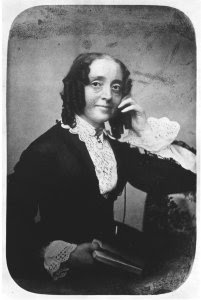
5e5b1-ernestinerose2b1In honor of Ernestine Louise Rose on the anniversary of her birth, January 13th, 1810 
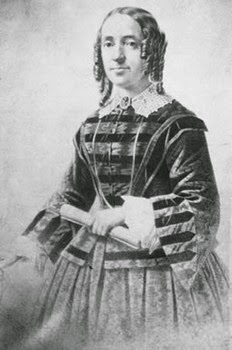
Why such a title, you might ask? Feminist. Abolitionist. Immigrant. Socialist. Atheist. Jew. A series of epithets in Rose’s day, they’re still too often used as such. Why be so provocative?

In her life as an activist and orator, Ernestine Rose wasn’t deliberately provocative in any shock-factor sort of way. She wore modest black, gray, and brown dresses, never the bloomers (puffy pants worn under short skirts) that the more ‘radical’ feminists adopted; she never railed against individual capitalists or slaveholders as evil oppressors; she was openly happy in her traditional-style marriage; and while she was not hesitant to respond abruptly, wittily, even sarcastically to insults and bad arguments, she was not given to preemptive personal attacks or calls for violence. Yet in a time when women stayed at home when not accompanied in public by chaperones, she traveled often and often alone; when women were expected to be demure and silent in public, she was a witty, incisive, passionate, and famous public speaker; when most women accepted their assigned roles, she argued and fought for their rights; when slavery was still widely considered acceptable or at a necessary evil, she worked for their emancipation; when many or even most of her fellow feminists did not consider the races and classes equal, she argued that all people should have the same political and social rights; when hierarchical class systems were considered a law of nature, she argued for economic equality; when most people were religious, she was an unapologetic atheist; in an insular and xenophobic Protestant Christian country, she was a cosmopolitan foreigner of Jewish ancestry.

In short, Ernestine was just about as much of an outsider as one could be. Save being black, disabled, gay, or a single woman, she could hardly have belonged simultaneously to more of the marginalized groups of her day, yet even these found in her a champion as well. Feminist, Abolitionist, Immigrant, Socialist, Atheist, Jew can goad us into considering anew why and how these labels are simultaneously uncomfortable reminders of the persistence of prejudice, and remind us that they’re really badges of honor for passionate believers in universal human freedom.

3a25c-ernestine2broseIn spite of many obstacles, Ernestine Rose was a renowned public speaker and debater in her own time, and especially acclaimed for her role among the preeminent leaders of the feminist movement. The abolitionist, socialist, pro-immigrant, Jewish, freethinker, and Paineite (devotees to the life and ideas of Thomas Paine, who had become a target of hatred and slander due to his freethought views) communities also benefited from her staunch and tireless work on their behalf. She was widely praised as an orator, her style described as ‘powerful’, ‘eloquent’, ‘intelligent’, and ‘dignified’, and often sold out even the largest halls. When travel plans or one of her many bouts of serious illness kept her from speaking at conventions and other public events, organizers would worry about the possibility of success without her participation. Yet now she is virtually forgotten, more so than just about any other feminist or abolitionist of the time with her level of fame. How did this come to be?
It was, for Rose, a very similar situation as it was for her hero Thomas Paine, hailed as a father of the American Revolution who wrote Common Sense, The Rights of Man, and The Age of Reason. Both of these great advocates of universal human rights had ideas that were simply too innovative, too outlandish, too challenging for widespread and sustained acceptance. Both inspired great admiration and achieved widespread fame for their abilities and achievements during their lifetime, but after the initial thrill of their progressive ideals wore off, conservative fearmongering that Rose’s and Paine’s ideas would undermine civilized society won the day. Successive generations would come to pick out what they liked from their work and enjoy the benefits, while vilifying Rose and Paine as radicals, corrupters of public morality, and would-be destroyers of civilization.

It’s only within the last fifty years or so that Paine’s reputation (Theodore Roosevelt still referred to him as a ‘filthy little atheist’) has been fully rehabilitated, his contributions widely celebrated. For Ernestine Rose, unjustly in my view, this hasn’t happened. Paine has the advantage of having been a white man, a friend of many of the Founding Fathers of the United States, a believer in free markets, and a deist. For Rose, a woman, a Jew, an atheist, and a socialist, the remnants of bigotry that she so eloquently called on us to overcome still cast a shadow over public memory, as the light of history belatedly re-illuminates the life and work of this extraordinary woman.

To learn more about the great Ernestine Rose, please check out:

About Ernestine Rose ~ by the Ernestine Rose Society at Brandeis University

Ernestine Louise Rose (1810-1892) ~ by the American Jewish Historical Society via the Jewish Virtual Library

Ernestine Rose, 1810-1892 ~ by Janet Freedman for the Jewish Women’s Archive

Ernestine Rose: American Social Reformer ~ by the editors for Encyclopædia Britannica

Forgotten Feminisms: Ernestine Rose, Free Radical ~ by Judith Shulevitz for the New York Review of Books’ NYR Daily

Interview with Bonnie Anderson, Author of The Rabbi’s Atheist Daughter: Ernestine Rose, International Feminist Pioneer ~ by the New Books Network

~ Ordinary Philosophy is a labor of love and ad-free, supported by patrons and readers like you. Any support you can offer will be deeply appreciated!

Happy Birthday, Baruch Spinoza!

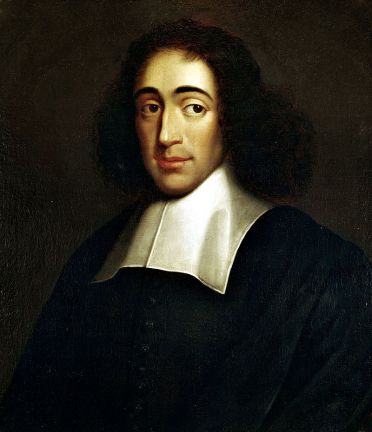
Portrait of Baruch de Spinoza (1632-1677), ca. 1665, by an unknown artist

Baruch Spinoza was born on November 24, 1632, in Amsterdam, the Netherlands. He was the son of Michael and Hannah Spinoza, Portuguese Jews who were forced to convert to Christianity, then imprisoned and tortured by the Inquisition, then fled to relatively tolerant Amsterdam. The Spinozas became successful and respected members of Amsterdam’s Jewish community.

Their son Baruch (also called by his Latinized name Benedicto, also meaning ‘blessed’), was a precocious and brilliant boy who became an intellectually rigorous, curious, and free-thinking man. He wrote prodigiously, profoundly, and often obscurely while earning a humble living as a scientific instrument lens-grinder. He was excommunicated for his unorthodox beliefs (rather surprising still given the relative broad-mindedness of that synagogue), shunned and condemned by his fellow Jews and by Christians alike, and lived the rest of his too-short life in near-solitude, though in rich correspondence with a wide circle of friends and intellectuals.

His idea of God as a unified substance which, in some sense, can be understood as being the same as Nature or the Universe itself, is still widely beloved (the great physicist Albert Einstein and eloquent, outspoken atheist Christopher Hitchens, for example, were among his biggest fans), hated, and debated widely, especially insofar as it can be difficult to grasp the exact nature of Spinoza’s metaphysical and ethical ideas. Spinoza refused to repudiate his ideas despite the intense social pressure he had to deal with for the rest of his life. But however much his correspondents argued, cajoled, threatened with hellfire, or otherwise tried to convince him to abandon his beliefs, Spinoza responded with firmness, constancy, thoroughness, and courtesy.

Learn more about the integrious Baruch Spinoza at:

Baruch Spinoza ~ by Steven Nadler for The Stanford Encyclopedia of Philosophy

Baruch Spinoza (1632 – 1677) ~ in the Jewish Virtual Library

Benedict De Spinoza (1632—1677) ~ by Blake D. Dutton for the Internet Encyclopedia of Philosophy

Betraying Spinoza ~ Rebecca Goldstein on her book Betraying Spinoza: The Renegade Jew Who Gave Us Modernity

Benedict de Spinoza: Dutch-Jewish Philosopher ~ by Richard H. Popkin for the Encyclopædia Britannica

From Baruch to Benedicto! (Spinoza pt. 1) and Spinoza Part 2 ~ by Stephen West for Philosophize This! podcast

God Intoxicated Man – The Life and Times of Benedict Spinoza ~ by Michael Goldfarb for the BBC’s Sunday Feature

Spinoza ~ Melvin Bragg discusses Spinoza’s life and thought with Jonathan Rée, Sarah Hutton, and John Cottingham for In Our Time

The Heretic Jew ~ by Harold Bloom, book review of Rebecca Goldstein’s Betraying Spinoza: The Renegade Jew Who Gave Us Modernity for The New York Times

The Writings of Spinoza ~ at Internet Sacred Text Archive

*A version of this piece was previously published at Ordinary Philosophy

~ Ordinary Philosophy is a labor of love and ad-free, supported by patrons and readers like you. Any support you can offer will be deeply appreciated!

Happy Birthday, Abigail Adams!

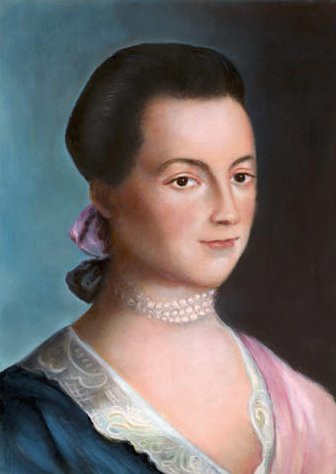
Abigail Adams, the earliest known image of her painted near the time of her marriage in 1764

Abigail Adams, born on November 22, 1744 in Weymouth, Massachusetts, was wife and chief advisor to John Adams, American founding father and second president; early advocate for women’s rights and opponent of slavery; self-taught intellectual; mother to many children including another American president; and a savvy and successful financial speculator. One reason why she remains among the most well-known figures in American history is the voluminous, well-preserved, witty, erudite, charming, highly personal, and utterly fascinating correspondence between her and her husband John. While she remained at home raising the children and managing their home, John was frequently away for extended periods on matters of revolution and state. Their letters are famous: they were loving and forthright with one other on a rare level, and the ideas and advice these two brilliant people shared with one another illuminate and inspire readers still.

Learn more about our wise and indefatigable founding mother Abigail Adams at:

Abigail Adams ~ by Beckett Graham and Susan Vollenweider for The History Chicks podcast

Abigail Adams ~ by Bonnie Hurd Smith for the Boston Women’s Heritage Trail website

Abigail Adams (1744 – 1818) ~ bio for the Adams National Historical Park, National Park Service website

Abigail Adams: American First Lady ~ by Betty Boyd Caroli for Encyclopædia Britannica

Abigail Adams: Revolutionary Speculator ~ Liz Covart interviews Woody Holton for Ben Franklin’s World: A Podcast About Early American History

Abigail Smith Adams ~ by Debra Michals for the National Women’s History Museum website

Correspondence Between John and Abigail Adams ~ Transcripts of over 1,100 letters, transcribed and digitized by The Massachusetts Historical Society

First Family: Abigail and John Adams ~ by Joseph J. Ellis for the Philadelphia Free Library

How Abigail Adams Proves Bill O’Reilly Wrong About Slavery ~ by David A. Graham for The Atlantic

John Adams ~ Miniseries by HBO, 2008

*A version of this piece was previously published at Ordinary Philosophy

~ Ordinary Philosophy is a labor of love and ad-free, supported by patrons and readers like you. Any support you can offer will be deeply appreciated!

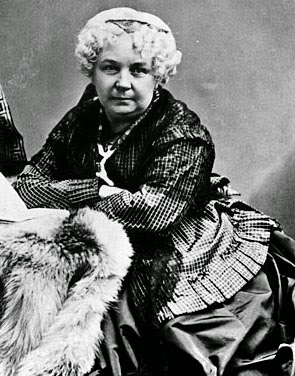
Happy Birthday, Elizabeth Cady Stanton!

In honor of the great feminist Elizabeth Cady Stanton‘s birthday, I’m sharing again the stories of my explorations of her life and ideas in the places she lived and worked, often in conjunction with her fellow feminists Ernestine Rose and Frederick Douglass:

To New York City I Go, In Search of Ernestine Rose and Elizabeth Cady Stanton

Enjoy, and I hope you find her story as fascinating and inspiring as I do!

~ Ordinary Philosophy is a labor of love and ad-free, supported by patrons and readers like you. Any support you can offer will be deeply appreciated!

*A version of this piece was previously published at Ordinary Philosophy

Happy Birthday, John Jones!

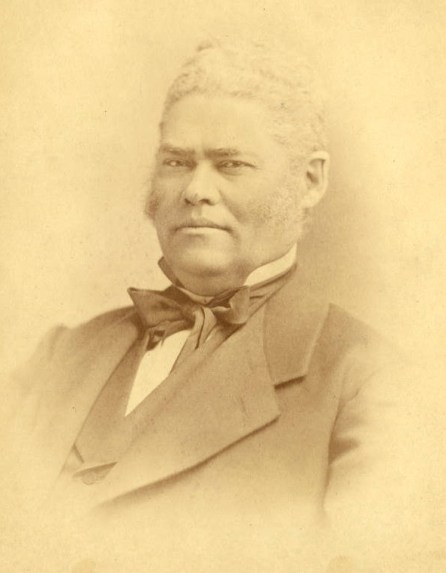
John Jones, portrait by Mosher & Baldwin, 1882, courtesy of the Chicago History Museum

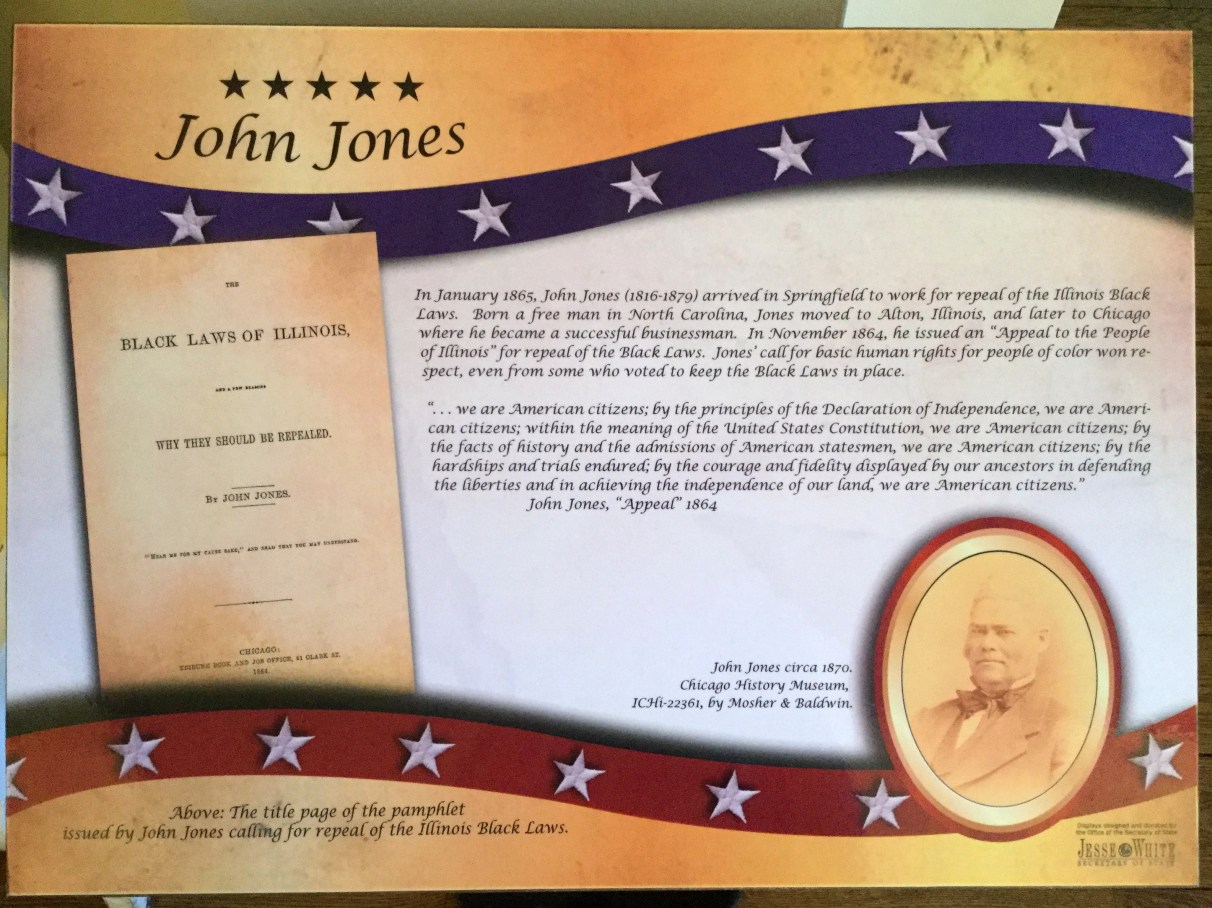
When I visited Springfield, Illinois last summer, I found a very interesting plaque at the Old State House downtown. It told the story of John Jones and his activism against Illinois’s Black Laws, a set of legal codes that pertained only to black people, and, as you likely and immediately supposed,  were terribly oppressive. Such laws have a long history in the United States and as long as they’ve been around, lovers of justice have been around to fight them. John Jones was one such person.

Born on November 3rd, 1816 to an American black mother and German white father, Jones had to make his own way early in the world. Jones’ mother did not trust his father to do right by his son so she apprenticed him to a tailor when he was very young. The resourceful Jones taught himself to read and write and, having learned what he needed to, he released himself from the tailor’s service by age 27. He then obtained official free papers for himself and his wife, née Mary Jane Richardson, and secured their freedom to live and travel by posting a $1,000 bond in 1844. While he and his wife were both born free, they had to worry about the numerous ‘fugitive’ slave catchers and kidnappers prowling around, all too happy to capture as many black persons as they could get ahold of, passing them off as escaped slaves in exchange for a substantial payoff.

The Joneses moved to Chicago from Alton, Illinois in 1845, where there was an established community of black entrepreneurs and therefore, more opportunities for families such as theirs. Jones worked hard and savvily, building up a very successful tailoring business and amassing an impressive fortune within just a few years. The Joneses used their success to help their fellow black citizens, making their home one of the key Chicago stops on the Underground Railroad. Jones poured much of his money and time into civil rights activism, working for the abolitionist cause and to overturn the Fugitive Slave Act of 1850 and the already decades-old Black Laws of Illinois, sometimes with his fellow autodidact and activist Frederick Douglass. For the rest of his life, Jones was a prominent intellectual, moral, religious, and political leader in the black community of Chicago and beyond.

Learn more about the courageous civil rights leader John Jones at:

John Jones (1816–1879): Activist, politician, tailor, entrepreneur  ~ by Jessie Carney Smith for Encyclopedia.com

Jones, John ~ by Cynthia Wilson for Blackpast.org

Historical placard for John Jones, Old State House, Springfield, Illinois

*A version of this piece was previously published at Ordinary Philosophy

~ Ordinary Philosophy is a labor of love and ad-free, supported by patrons and readers like you. Any support you can offer will be deeply appreciated!

Happy Birthday, John Adams!

John Adams by John Trumbull, 1793, National Portrait Gallery, Washington, D.C.

Like many who watched the excellent 2008 miniseries John Adams with Paul Giamatti in the title role and Laura Linney as Abigail Adams, my interest in the United States’ second president increased quite a bit after watching it. And when I subsequently read John Ellis’ Passionate Sage: The Character and Legacy of John Adams, I found myself thoroughly engrossed. I read of a man who was brilliant, insecure, honest, vain, visionary, retrograde, loving, selfish… all character traits which I believe are often found in the most interesting and accomplished people. The same traits that drive people to do wonderful and unusual things are often the same as, or found in conjunction with, those which make people thoroughly insufferable. For example, the insecure egoist’s need to be loved and admired provides the drive for accomplishment, and those who are intelligent enough to surpass most others in this regard are also intelligent enough to recognize it, which can result in an overinflated ego. Perhaps because I don’t have to put up with him personally, I can freely admire and even feel affection for Adams as the sensitive, flawed human being  revealed in his massive correspondence; an egoist who nevertheless was obsessed with justice and did his best to see it done in the world, who sacrificed his own posterity and a second term in office to preserve his new country from the existential threat of an ill-conceived war; whose dignity was far too easily wounded but at times proved himself a loyal friend even to those that betrayed him – Thomas Jefferson being a prime example.

Americans may have more easily forgiven all of this if he hadn’t championed the Alien and Sedition Acts and signed them into law, parts of which are seen today as contrary to essential American principles. In his fear that the bond between the states in his newly united country would break apart under the strain of war and the spiraling controversies of party politics, Adams overreached. But his legacy shouldn’t be overshadowed by this one, though admittedly significant, mistake. As Ellis writes for Encyclopædia Britannica,

Although Adams was regarded by his contemporaries as one of the most significant statesmen of the revolutionary era, his reputation faded in the 19th century, only to ascend again during the last half of the 20th century. The modern edition of his correspondence prompted a rediscovery of his bracing honesty and pungent way with words, his importance as a political thinker, his realistic perspective on American foreign policy, and his patriarchal role as founder of one of the most prominent families in American history.

Learn more about the oh-so-human, brilliant president John Adams at:

John Adams ~ Miniseries by HBO, 2008

John Adams As He Lived: Unpublished Letters to Dr. Benjamin Waterhouse, Professor of Physic at Harvard College ~ published in The Atlantic, May 1927

John Adams: The Case of the Missing John Adams Monument ~ Lillian Cunningham for the Presidential podcast series presented by The Washington Post

John Adams: President of the United States ~ Joseph J. Ellis for Encyclopædia Britannica

Plain Speaking: In David McCullough’s Telling, the Second President is Reminiscent of the 33rd (Harry Truman) ~ by Pauline Maier for The New York Times: Books, May 27, 2001

Sorry, HBO. John Adams Wasn’t That Much of a Hero ~ Jack Rakove for The Washington Post, April 20, 2008

*A version of this piece was previously published at Ordinary Philosophy

~ Ordinary Philosophy is a labor of love and ad-free, supported by patrons and readers like you. Any support you can offer will be deeply appreciated!

Happy Birthday, Erasmus!

Erasmus, from page 32 of The Century of Sir Thomas More by Benjamin Orange Flower, 1896, public domain via the British Library

Desiderius Erasmus (October 27, 1469 – July 12, 1536) was, by his own account, born in Rotterdam, Holland. His father was a priest and his mother the daughter of a physician, who, unsurprisingly, were not married. As a child of an illicit union, he had no apparent prospects for a successful worldly career, so he was initially educated for the life of a cleric. However, he was very unhappy during these early years of his education and training, feeling that the strict, narrowly constrained life didn’t suit him. Though he was ordained a priest, Erasmus later insisted he was pressured into doing so, likely because by that time he had long been an orphan of no means to speak of and so had no apparent alternative means of support.

Erasmus was, however, a very pious man, but in his own way. The Catholic Church, at this time, was seen by Erasmus and others of like mind as a decadent, corrupt, licentious institution in deep need of reform, as it had largely cast aside the pure, simple Christianity of its humble founder. Nevertheless, Erasmus’ reformist instincts did not ally him with those who wished to do away with the Catholic Church altogether: like his friend and protégé Thomas More, he saw the Church as a unified spiritual body that must be preserved. While he was sympathetic to Martin Luther’s impassioned and wholehearted rejection of ecclesiastical corruption, Erasmus rejected his views on the hopelessly sinful nature of humanity, so corrupt that goodness and redemption were dependent entirely on God’s grace. Erasmus contended that human beings had God-given free will, and thus were capable of goodness by exercising that will to choose good and reject evil. Erasmus also rejected Luther’s radical and wholesale rejection of the Church. Erasmus believed, rather, that reform would be achieved within its institutions by its conscientious members and through individual inner spiritual renewal, characterized by a life of love and humility in conjunction with a simple piety unconcerned with convoluted doctrines and earthly show.

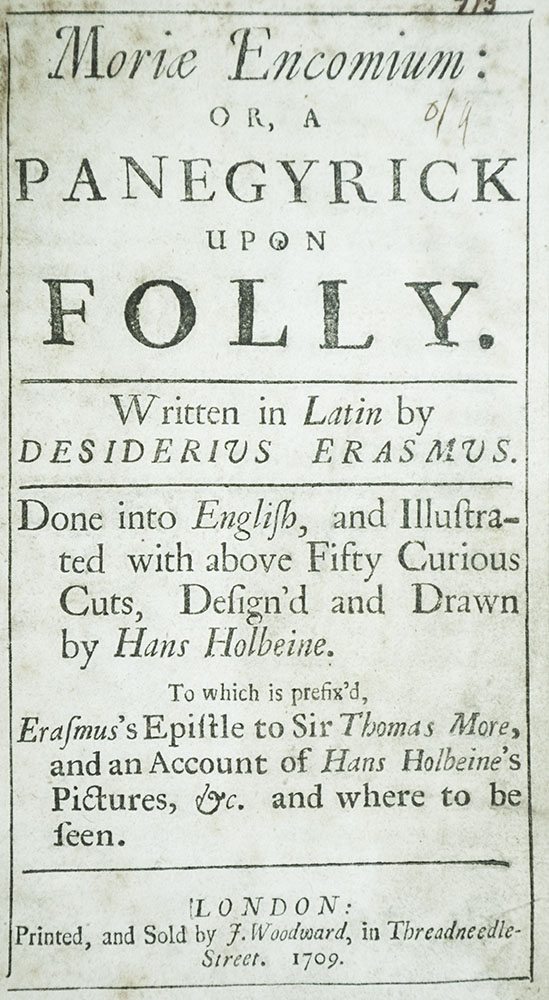
Moriæ Encomium, or, In Praise of Folly by Desiderius Erasmus, page from J. Woodward’s 1709 English translation

The Church, Erasmus believed, would also hugely benefit from a greater focus on secular and classical learning. After all, the human mind was one of God’s greatest creations, so the products of human intelligence deserved attention and reverence second only to sacred writ. Besides, secular scholarship could act as a valuable corrective to theologians’ tendencies to get so wrapped up in fine points of doctrine that their convoluted wranglings served only to confuse and confound the faithful. These convictions, and his long and successful career as a scholar and writer inspired by them, made Erasmus the godfather and patron saint, so to speak, of humanism. Erasmus did not invent that school of thought, but he created so many seminal works in that genre that his name has come to be nearly synonymous with humanism. A brilliant and deeply read scholar, Erasmus’ incredible body of work included annotated translations of classical Greek and Roman works; theological treatises; collections of proverbs and adages; works on aesthetics, style, and writing; voluminous correspondence with the most learned scholars of his time; and much, much more. Erasmus’ most widely known and popular work, however, remains his In Praise of Folly. However brilliant Erasmus was otherwise, he was unsurpassed as a satirist, and he used his cutting wit as a reformist tool, arguably more effective and memorable than his erudition and most eloquent argument.

Despite Erasmus’ disadvantageous start in life in other ways, he made the most of the education he was fortunate to receive. Over the course of his long life, his dissatisfaction with monastic and court life and restless curiosity drove him to create a career as a man of letters on his own terms, seeking patrons that allowed him a career of as much intellectual freedom as the times would allow. Erasmus is often a slippery character, and his motivations and true convictions are hard to pin down, by design. He was least as pragmatic as he was idealistic, and however sharp and potentially dangerous his religious and political satire, he deftly avoided getting himself in trouble in the turbulent and dangerous era he lived in. Not so Erasmus’ friend and protégé More, whose similarly sharp wit and lawyerly skill did not sufficiently counteract his religiosity enough to avoid the chopping block.

Learn more about the brilliant and witty Erasmus by following the links below. I’ve included selections about Erasmus from a variety of religious publication as well which illustrate the mixed admiration and vexation that Erasmus’ idiosyncratic intellect and religiosity still inspire:

Desiderius Erasmus ~ by Erika Rummel for The Stanford Encyclopedia of Philosophy

Desiderius Erasmus ~ in New Advent’s Catholic Encyclopedia

Desiderius Erasmus ~ in Reformation500

Desiderius Erasmus (1468?—1536) ~ by Eric MacPhail for Internet Encyclopedia of Philosophy

Desiderius Erasmus: Dutch Humanist and Scholar ~ by James D. Tracy for Encyclopædia Britannica

Erasmus ~ Melvin Bragg discusses Erasmus with Diarmaid MacCulloch, Eamon Duffy, and Jill Kraye for In Our Time

In Praise of Folly ~ by Desiderius Erasmus, with an introductory biography, Erasmus’ ‘Epistle to Sir Thomas More’, and illustrations by Hans Holbein at Project Gutenberg

The Praise of Folly ~ Nathan Gilmour, David Grubbs, and Michial Farmer discuss this work for The Christian Humanist Podcast

~ Ordinary Philosophy is a labor of love and ad-free, supported by patrons and readers like you. Any support you can offer will be deeply appreciated!

Happy Birthday, Philippa Foot!

‘Philippa Foot [, born on October 3rd, 1920, was] a philosopher who argued that moral judgments have a rational basis, and who introduced the renowned ethical thought experiment known as the Trolley Problem…’ William Grime’s New York Times obituary of this philosopher, far less widely known than she is influential, is an excellent introduction to the life and ideas of the brilliant Foot.

You can also learn more about Philippa Foot at

Is Goodness Natural? Philippa Foot was one of a group of brilliant women philosophers who swam against the tide of 20th-century moral thought ~ by Nakul Krishna for Aeon

Philippa Foot ~ by Martin L. White for Encyclopædia Britannica

Philippa Foot ~ Interview by Rick Lewis for Philosophy Now, conducted in the autumn of 2001

Philippa Foot (1920-2010) ~ by Lawrence Solum for Legal Theory Blog

Philippa Foot Obituary: A ‘Grande Dame of Philosophy’, She Pioneered Virtue Ethics – by Jane O’Grady for The Guardian, October 5th, 2010

Philippa Foot: Trolleys and Natural Goodness ~ by Edward Harcourt for Prospect magazine, Oct 7, 2010

Professor Philippa Foot: Philosopher Regarded as Being Among the Finest Moral Thinkers of the Age ~ by Peter J Conradi and Gavin Lawrence for The Independent, Oct 18th, 2010

and a multitude of citations in Stanford Encyclopedia of Philosophy entries

~ Ordinary Philosophy is a labor of love and ad-free, supported by patrons and readers like you. Any support you can offer will be deeply appreciated!!