Frederick Douglass Albany, Troy, and Syracuse NY Sites

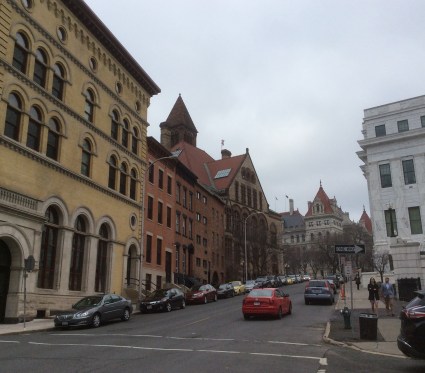
A view of Albany, NY, 2016 by Amy Cools

A view of downtown Albany, New York, looking west

Eighth Day, Sunday March 27th

I get up very early and leave Cambridge (where I’ve been staying while visiting Boston and Lynn) and this time, instead of heading north, I head west across upstate New York. I’ve never visited this part of the country before. My friend who I’ll be staying with in Rochester laments that I’m visiting at the least advantageous time of year for beauty’s sake: the snow is gone, and having scrubbed the trees bare, leaves the trash it’s been concealing exposed, and there’s not a hint of green nor bloom yet on the branches. But I still think it’s lovely, with a sort of stark gray beauty, and enjoy the day’s drive of about 325 miles.
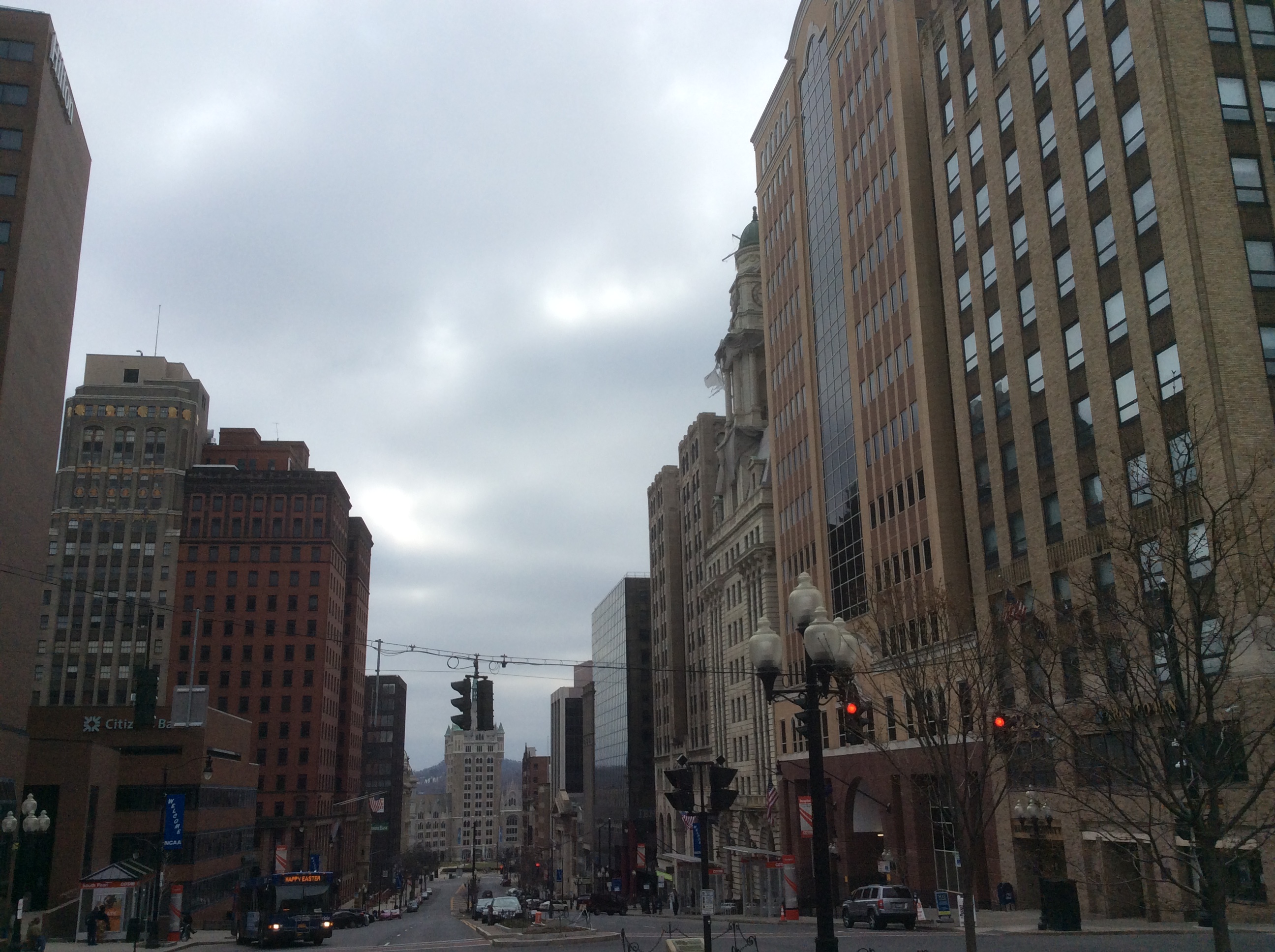
A view down State Street looking toward the Hudson River, Albany NY

A view down State Street looking toward the Hudson River, Albany NY

My first stop is Albany, a city on a hill with beautiful architecture. There were some ardent abolitionists here, and it had one of the main stations on the Underground Railroad on the route Frederick Douglass was connected to. Douglass named Stephen MyersLydia and Abigail Mott (who he entrusted with the education of his daughter Rosetta for a time) and William Topp in his autobiographies as some of the key figures here in the cause of the liberation of black people. But Douglass had some very unflattering things to say about Albany too: as he wrote in 1847, he observed a lot of racism here, especially in the wealthier families enriched directly or indirectly from slaveholding, and in the press. He was warmly welcomed by the congregation of the Baptist Church on State Street, but as of this time I can’t confirm its location: the current Baptist Church on State Street, Emmanuel, didn’t move there until 1869, and the Baptist church I found dating from his time was not on State St.

Tweddle Hall, inscribed 1754 Old Tweddle Hall, from Albany Institute of History & Art Library

Tweddle Hall, inscribed ‘1754 Old Tweddle Hall’, from Albany Institute of History & Art Library

I wander the downtown area for a little while, glad to stretch my legs, admiring the grand city center buildings, soaring churches (mostly built in the mid to late 1880’s), old stone and brick row houses, and the lovely view east where the hill slopes down to the Hudson River. Then I head to my main destination, the site where Frederick Douglass spoke at the American Equal Rights Convention at Tweddle Hall, held November 20th and 21st, 1866. Tweddle Hall once stood at the northeast corner of State and Pearl, and originally built in 1860, it burned down, was rebuilt once in 1883, then replaced in 1927 by the Bank Building which now stands here.

Douglass had long been an ardent champion of the women’s rights movement; he had been the first to back Elizabeth Cady Stanton’s call for women’s suffrage at the Seneca Falls convention in 1848 (more on this story in an upcoming account).

But here in Albany, a serious split in the women’s rights movement began with the debate over the 15th Amendment. The American Equal Rights Association had formed earlier that year, on May 10th in New York City. The Eleventh National Women’s Rights Convention reformed itself as the AERA, dedicated equally to black and female suffrage following the 14th Amendment, which for the first time specifically linked the word ‘male’ to the right to vote. While the 14th Amendment didn’t specifically guarantee the right to vote to all males, it did limit representation according to the number of adult males allowed to vote, overturning the hated 3/5ths compromise clause of the Constitution which granted representation, albeit reduced, to non-voting ‘persons bound to service for a number of years’, in other words, slaves.

Bank Building at NE corner of State and Pearl, site of old Tweddle Hall, 2016 Amy Cools

Bank Building at northeast corner of State and S. Pearl, site of old Tweddle Hall

The proposed 15th Amendment, as written and as it was eventually passed, would guarantee the right to vote to all citizens regardless of ‘race, color, or previous condition of servitude’, leaving the ‘male’ link to voting from the 14th Amendment intact. Douglass’ biographer Phillip S. Foner describes Douglass’ position on the 15th Amendment as: ‘to women the ballot was desirable, to the Negro it was a matter of life and death.’ Douglass thought it was absolutely imperative that black people get the right to vote even if it meant putting aside other great political causes for the moment. Adding women’s right to vote to the 15th Amendment would make it so much more controversial that it surely wouldn’t pass. After all, it wasn’t only black men who were still suffering great oppression and failing to enjoy the rights the Civil War victory was supposed to have won them; black women suffered worst of all because they had no legally protected voters to represent them. To many in the women’s rights movement, this was an unpardonable breach of loyalty from the man who had been their dedicated champion from the beginning. But Douglass still supported the AERA, joined in their petitions, and even acted as a representative and as a Vice President over the years.

Unfortunately, as the political struggle for racial suffrage gained more traction than woman suffrage, some of the feminist political rhetoric took on a racist character, saying, for example, that suffrage for educated, civilized white women should take precedent over suffrage for uneducated, ‘degraded’ black people. Sadly, even his old friends and allies Susan B. Anthony and Elizabeth Cady Stanton stooped to this rhetoric, though in later years Stanton redeemed herself somewhat by warmly, and wittily, congratulating Douglass and Helen Pitts on their January 24th, 1884 marriage: ‘After all the terrible battles and political upheavals we have had in expurgating our constitutions of that odious adjective ‘white’ it is really remarkable that you of all men should have stooped to do it honor.’ Perhaps his good example of loyalty to her in later years, despite her earlier racist comments, helped her overcome the worst in her character that angry disappointment can tend to bring out even in the best of us.
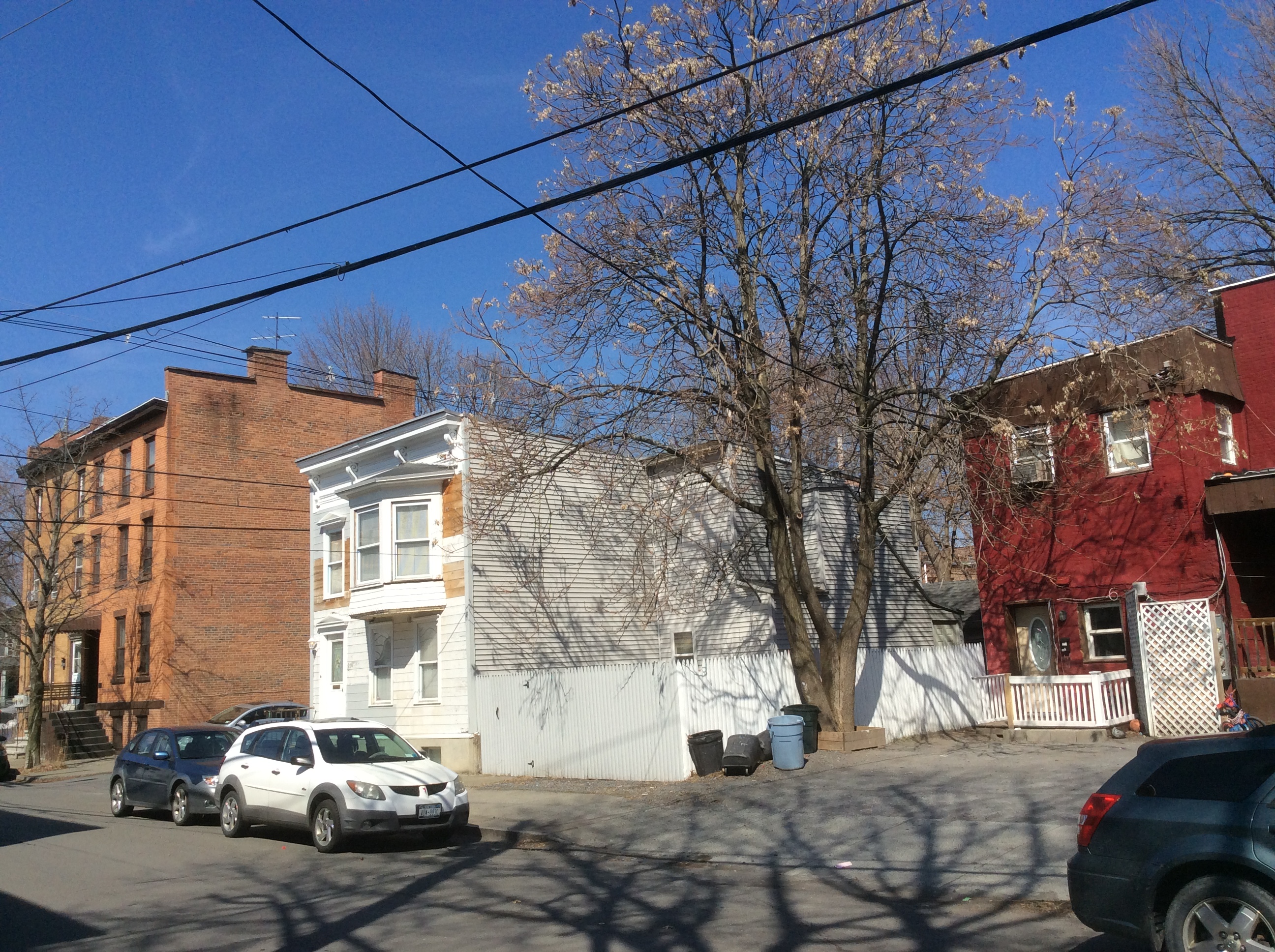
Liberty St at Franklin, Troy NY, two blocks east of the Liberty Street Presbyterian Church site

Liberty St at Franklin, Troy NY, two blocks east of the Liberty Street Presbyterian Church historical marker site

I return to my car and drive about 15 minutes north along the Hudson River to Troy, another northern New York State former industrial town which has clearly suffered a long and steady decline. But it’s full of lovely old buildings and has an interesting history; for example, Elizabeth Cady Stanton attended Troy Female Seminary. It’s also a college town; when I stop for coffee and to do some research, I find myself among many college age students spending late Easter morning studying (though I suppose they’re on spring break, what good students!) and hanging out.
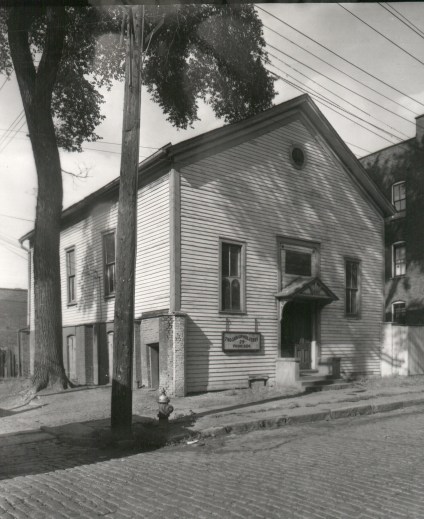
Liberty Street Presbyterian Church, Collection of the Rensselaer County Historical Society, Troy, NY 2

Liberty Street Presbyterian Church in a later incarnation as a laundry. This only known surviving photo is in the collection of the Rensselaer County Historical Society, Troy, NY

I’m headed for the site of Liberty Street Presbyterian Church, which Albany’s Times Union newspaper reports was on the corner of Liberty and Franklin Streets – which may not actually be the right street corner, as I discover when fact-checking and doing extended research for this account, more on that in a moment. The Liberty Street Church used to be a stop on the Underground Railroad, ran by pastor Henry Highland Garner from 1838 to 1848.

I’m looking for this site today because the 1847 National Colored Convention was held here, where the ultimately unsuccessful movement to start a national, unified Negro League movement began. According to John Cromwell in his 1914 book The Negro in American History‘…the very first article in the first number of [Douglass’ paper] the North Star published January, 1848, is an extended notice of the National Colored Convention held at the Liberty Street Church, Troy, New York, October 9th, 1847′. Nathan Johnson, who the Douglasses made their first home with in New Bedford, was president of the convention. Frederick Douglass was one of the Massachusetts delegates to this convention. He still espoused Garrisonian principles at the time (he changed his mind later), which, among other things, held that moral suasion and non-violent boycotting of politics were the most effective ways to end slavery. He called on his fellow black people everywhere to leave their churches if they were segregated or supportive of slavery in any way, and stressed the importance of education and self-improvement to stand as living testaments against the prejudices of white people. However, for a variety of reasons, it proved too difficult to unite the scattered, disenfranchised black community together into one unified movement. Those who were free shared the tactical and philosophical disagreements of white members of the abolitionist movement; those who were still enslaved or suffering the worst hardships of poverty, illiteracy, and other innumerable forms of intimidation and oppression found it difficult or impossible to participate.
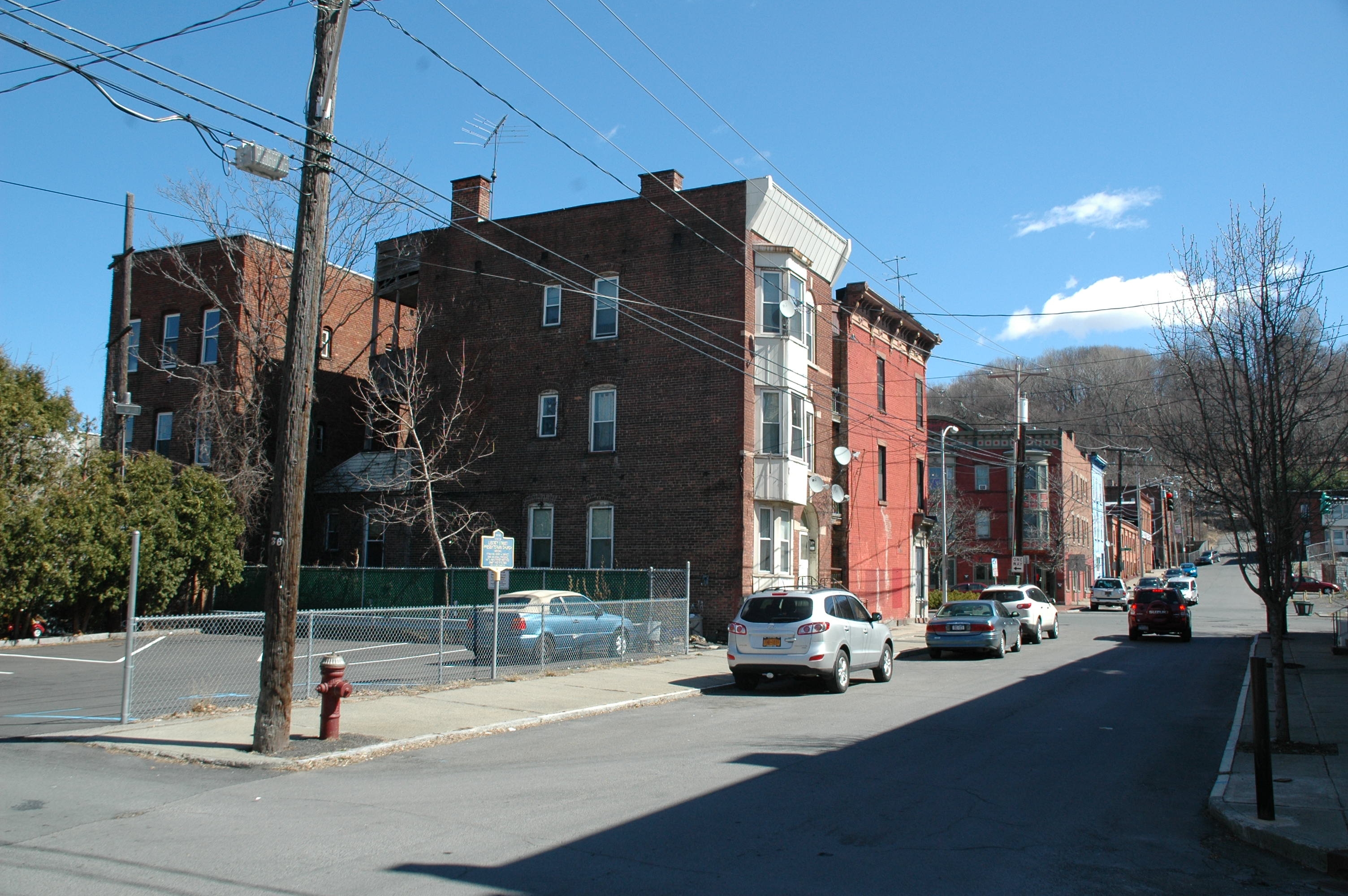
Liberty Street Presbyterian Church Site (according to historical marker), photo by Howard C. Ohlhous 2016

Liberty Street Presbyterian Church Site with historical marker, photo by Howard C. Ohlhous 2016

So why might I be at the wrong street corner here at Liberty and Franklin? Because my additional research for this account prior to publication pulled up two locations for the old church, rather than the one I had initially pulled up. A couple of secondary and tertiary sources, which I find first and which guide my day’s search here, list the location as Liberty at Franklin: the newspaper, and this booklet for a historical project from 2008. I don’t yet have enough evidence now to prove definitively which is correct, though I believe one much is more likely. The crossing of Liberty and Franklin Streets is unmarked; Franklin is a narrow little street that runs between 2nd and 3rd, between the three story brick building and the two story white board one with the bay window. It’s a rather shabby little street corner now, the buildings here now don’t appear to be all that old.
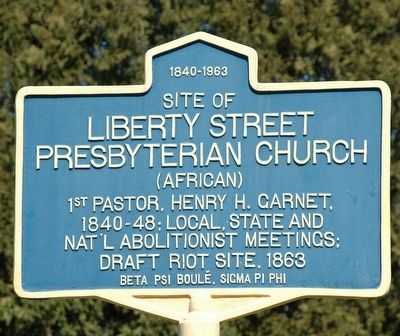
Liberty Street Presbyterian Church Marker at Liberty and Church Streets, photo by Howard C Ohlhous

Liberty Street Presbyterian Church Marker at Liberty and Church Streets, photo by Howard C Ohlhous

Yet the historical marker for the Liberty Street Presbyterian Church is placed at Liberty and Church Streets, two blocks east of here. Oddly enough, the creators of the Spectres of Liberty project describe the site in their booklet as located on Liberty at Franklin, yet they hold their ‘Raising the Ghost of the Liberty Street Presbyterian Church‘, a super cool historical art event, at the marker site. Could it be that the street names have been changed or reassigned? A city map / atlas from 1845 reveals that the street names and locations are the same here today as they were then.

In case the historical marker is placed incorrectly (update: the Rensselaer County Historical Society assures me that the marker is at the correct site) and this does turn out to be the correct site, which corner of Liberty and Franklin could it have been on? Comparing the photo to the streets now, there’s one clue that might help me: the fire hydrant shown in the photo. There is no fire hydrant now, but there is a capped water supply pipe which could have supplied it; unless it’s torn up and moved, this would remain a permanent fixture. It’s in the sidewalk in front of the three story red brick apartment building on the northwest corner of the street. If this is the same water supply, that would place the church on that corner with its narrower pointy side facing on Franklin and its long side facing Liberty. However, when I look more closely at the photo I’m referring to (the only known surviving one, it’s in the Rensselaer Historical Society collection), the site where the historical marker is located, two blocks east at Liberty and Church looks more like the correct location, if the placement of the fire hydrant and the street pole are the same today.

So why include my story of possibly looking in the wrong place (which, as it turns out, I do)? Well, this travel series is the story of a journey, and journeys often include wrong turns, misreading of signs, incorrect maps, bad directions, and so forth. Each of these is a learning experience, and I hope you don’t mind that I take you along with me as I learn. As we’ve just seen, there are conflicting sources of information out there, and the lesson I learn here: triple-check all sources!
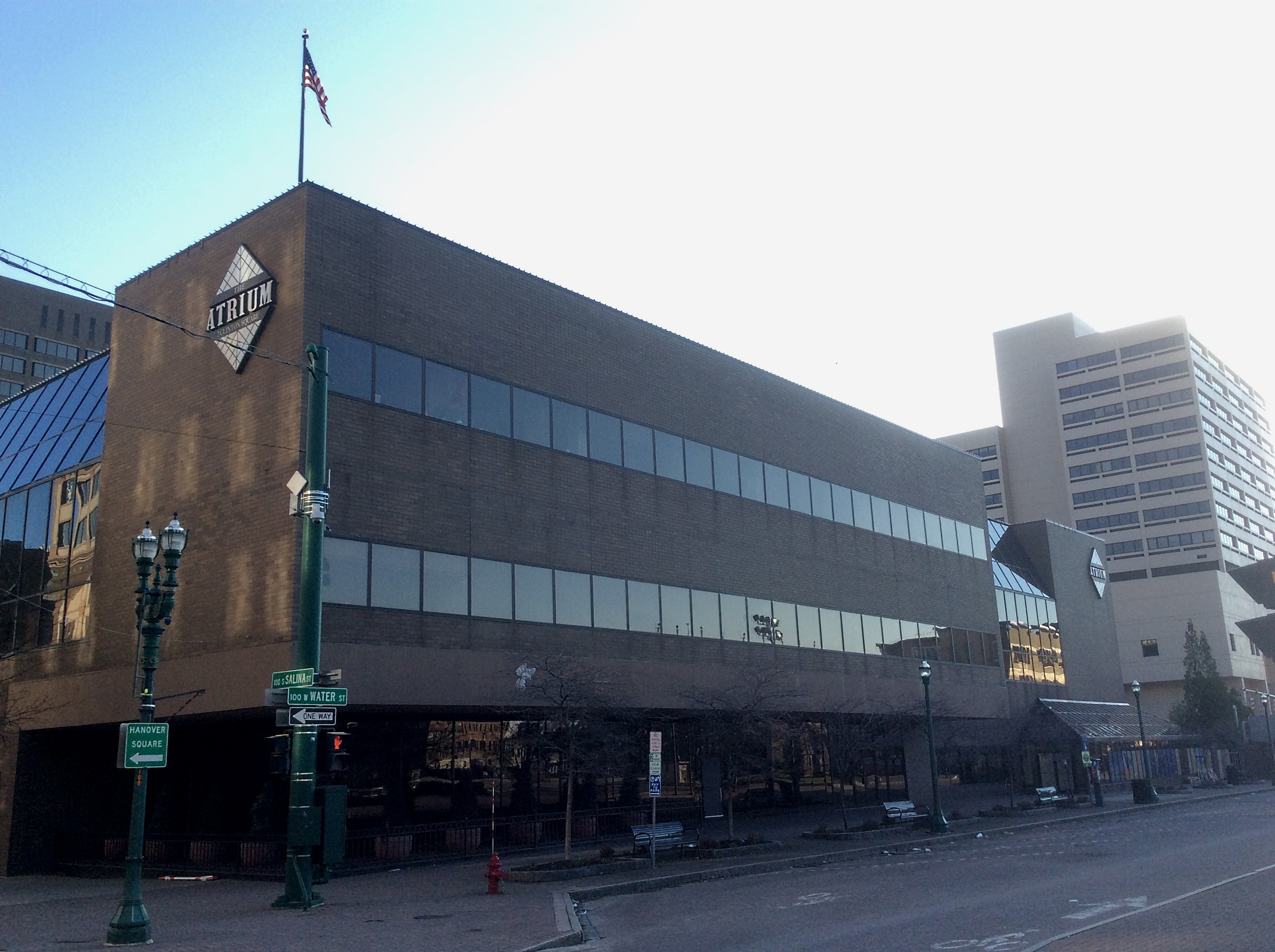
Wieting Hall Site, Syracuse NY,

Wieting Hall Site,  111-119 W. Water St at S. Salina off Clinton Square, Syracuse NY
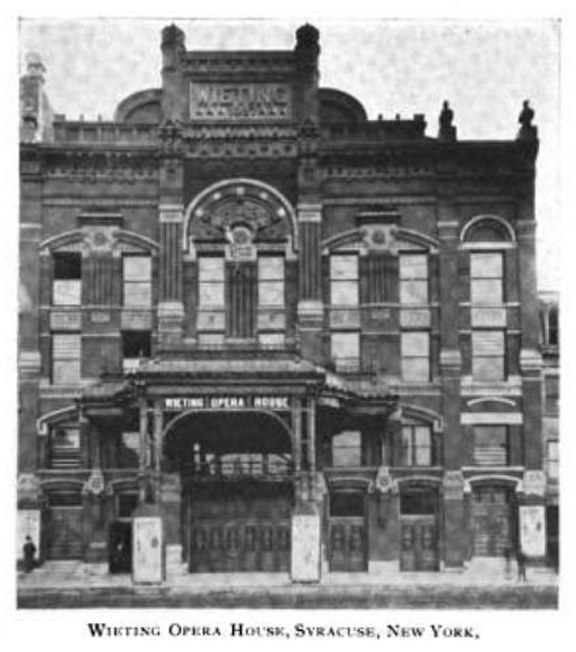
Wieting Opera House on Clinton Square in Syracuse, New York, 1898

Wieting Opera House on Clinton Square in Syracuse, New York, 1898

My last destination of the day is the site of Wieting Hall, at 111-119 W. Water Street in Syracuse, NY. The hall, which was first built in 1851, burned down in 1856 and was rebuilt as an opera house in 1857, burned and rebuilt yet again in 1881. Its builder and public-spirited owner Dr. John Wieting was a stoic yet tenacious man, responsible for its every incarnation. As you can see, what stands here now is not nearly so inspiring, in looks or in history.

On Nov 14th, 1861, Douglass was scheduled to deliver a speech on the Civil War and why the slaves needed to be freed en masse for the Union to win, one of his many appearances in Syracuse. Syracuse was another important stop on the underground railroad. However, as we’ve seen throughout this travel series, just because New York and other Northern states were free did not mean that all people here wanted black people to be armed, to enjoy civil rights, or even to be emancipated. Many in Syracuse were abolitionists and many others were not; racism was endemic in both of these groups.

According to Foner’s biography, an angry protest was planned: many townspeople were prepared to drive him and the other abolitionist speakers from the city. However, to his great credit, mayor Charles Andrews and Dr. Wieting refused to be intimidated, insisting that the talk take place as planned. They believed (as I agree all Americans should) that even unpopular speech should be protected speech, and their Syracuse was not to be a place where free speech could be squelched by threats. So 50 – 100 police were stationed (depending on the source) along with armed members of the Second Onondaga Regiment. When Douglass spoke, the crowd was well-behaved and respectful, be it because they actually did respect him and his right to speak, or because they were not allowed to be otherwise.

Clinton Square and Jerry Rescue Monument, Syracuse NY

Clinton Square and Jerry Rescue Monument, at S. Clinton and W. Water Streets, Syracuse NY, with Wieting Hall site in the background
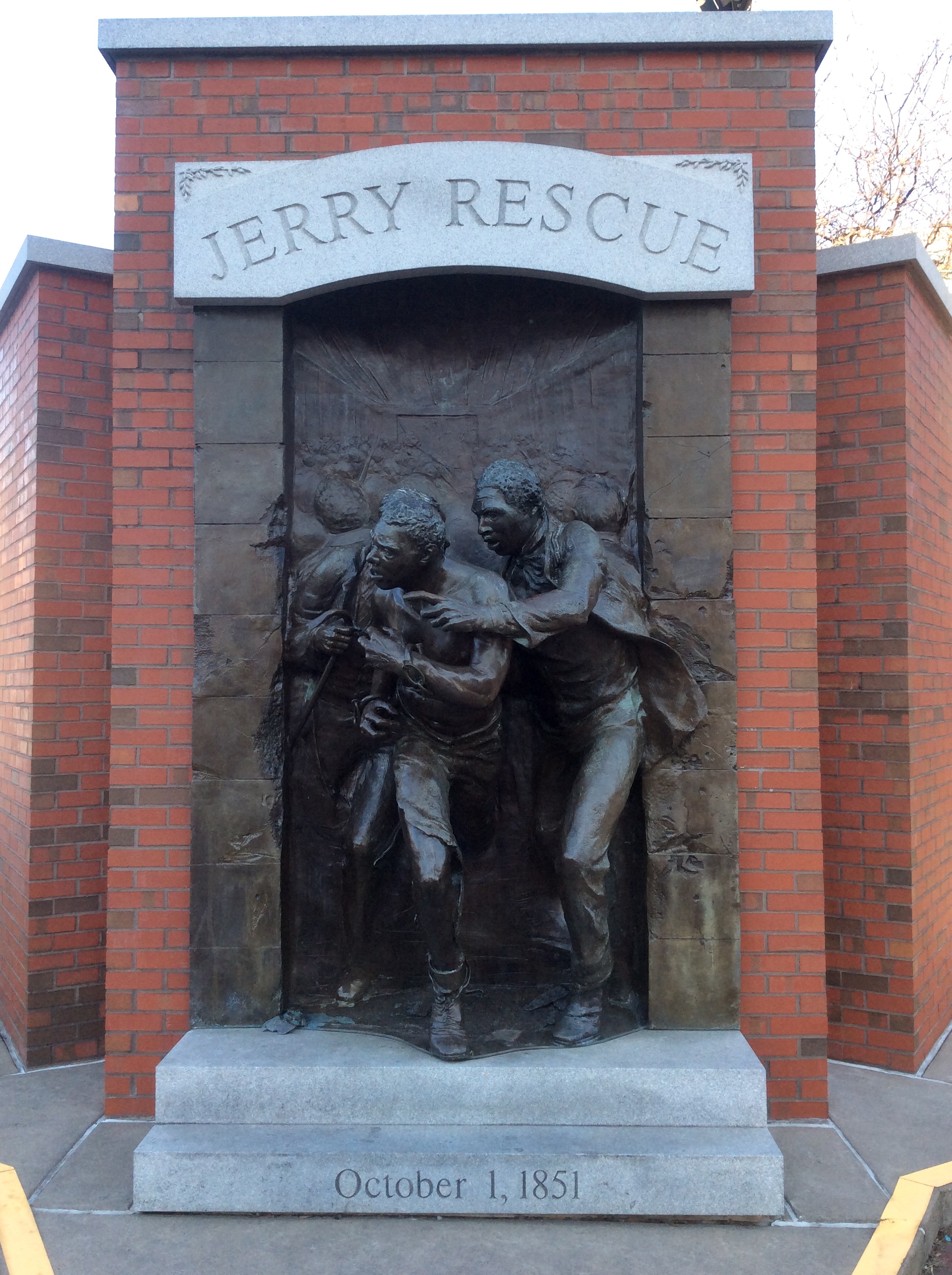
Jerry Rescue Monument, Syracuse NY, photo 2016 by Amy CoolsAs I have plenty of daylight left, I wander through lovely Clinton Square, clearly a site in the process of restoration. The large rectangular concrete center used to be a part of the Erie Canal, a waterway route to the center of the city, and a place to ice skate when frozen over in winter (part if it is still filled with water and turned into a wintertime outdoor skating rink today!)

I discover a monument near the southwest corner of the square, erected in 2001 and dedicated to the October 1st, 1851 rescue of William ‘Jerry’ Henry. An escaped slave from Missouri, he was arrested as part of the effort to enforce the much-hated Fugitive Slave Act, enacted on September 18th, 1850. Many Northerners, abolitionist or not, thought it an intolerable intrusion on the legal autonomy of states and on freedom of conscience. Though the orator and statesman Daniel Webster (who, as you may remember from the second of my Lynn accounts, supported it as an acceptable compromise for preserving the Union) warned that the Fugitive Slave Act would be rigorously enforced here in Syracuse, it was vigorously defied on that October day. Attendees of the Liberty Party state convention (the party of Gerrit Smith, Douglass’ friend and mentor who we’ll learn more about soon) broke into the jail and freed Jerry, hid him in town for a few days, and smuggled him to Canada. This event would be long celebrated by abolitionists and champions of human rights, Douglass among them, as a triumph over oppression and in thanks to those who risked themselves to help a fellow human being in need.
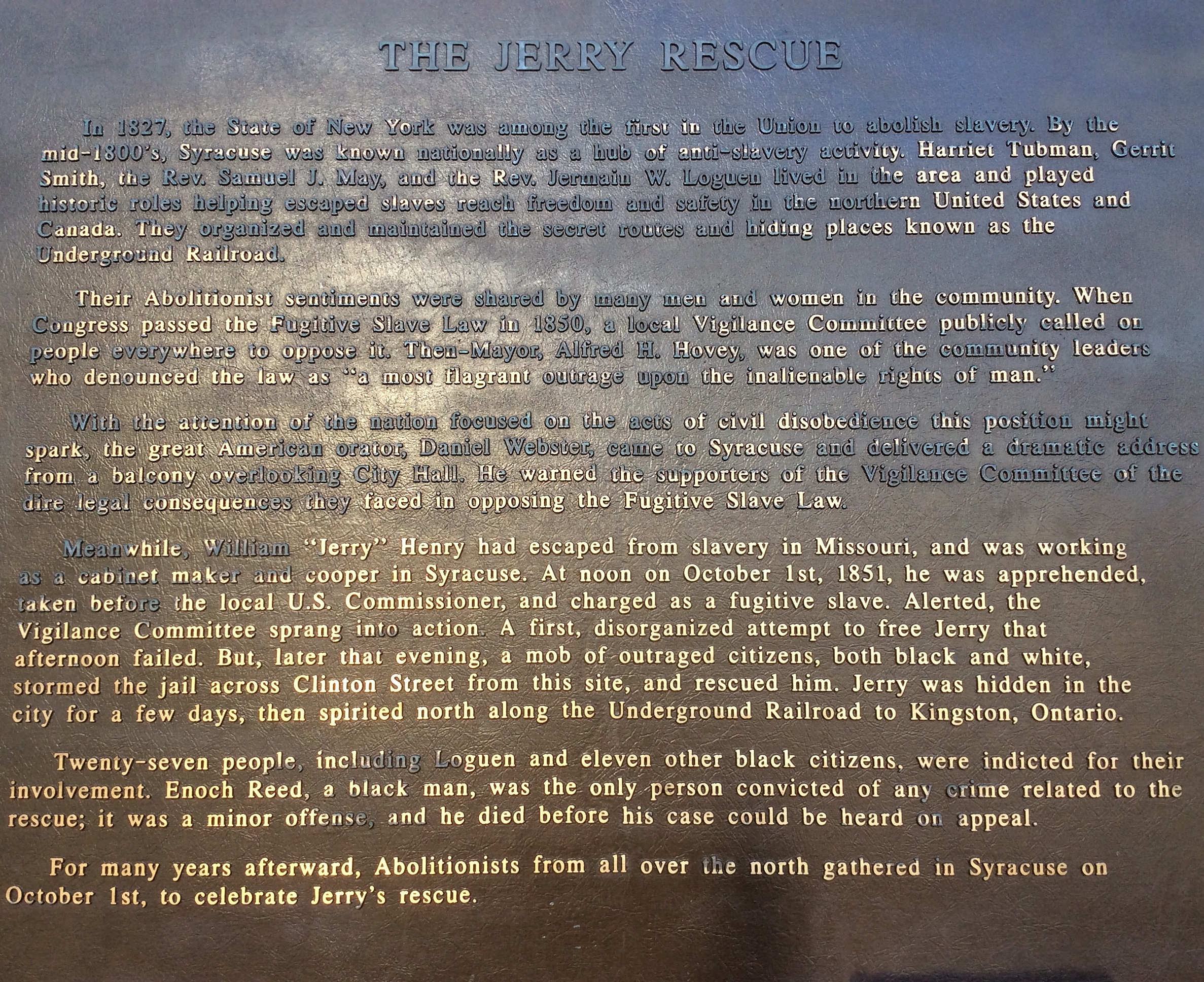
Jerry Rescue Monument Plaque, Syracuse NY, photo 2016 by Amy Cools

Jerry Rescue Monument Plaque in Clinton Square, Syracuse NY
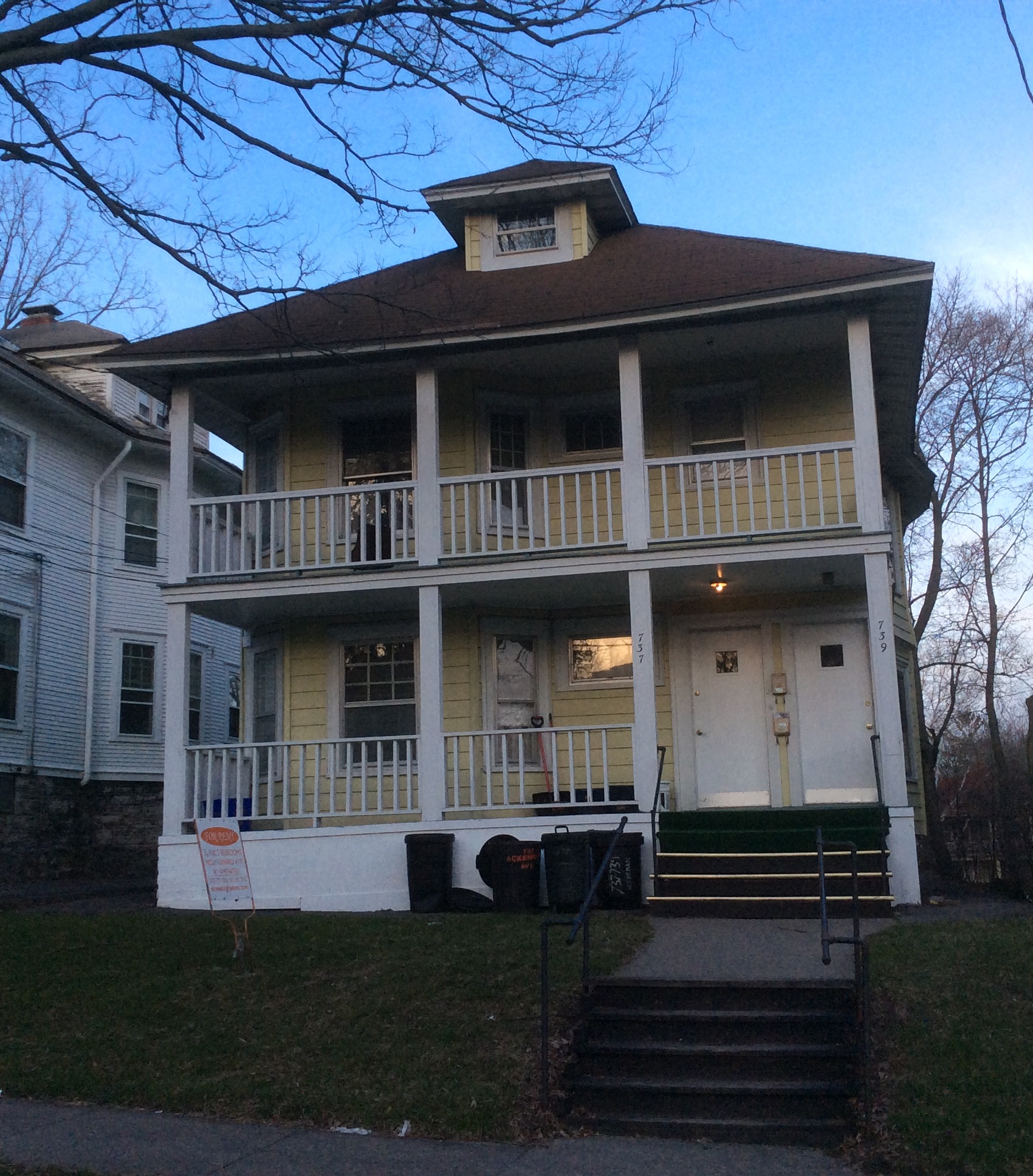
Yellow house I stay at in Syracuse, NY, photo 2016 by Amy CoolsSo ends my tale of today’s adventures. I’m going to spend the night in a rented room in an old yellow house near beautiful Syracuse University, the most charming place I stay throughout the trip, with the exception of my new friends’ house near Baltimore and my old friends’ house in Rochester. Stay tuned for my continuing adventures following the life and ideas of Frederick Douglass!

~ Ordinary Philosophy and its Traveling Philosophy / History of Ideas series is a labor of love and ad-free, supported by patrons and readers like you. Please offer your support today!

~~~~~~~~~~~~~~~~~~~~~~~~~~~~

Sources and Inspiration:

Amendment XIV: Citizenship Rights, Equal Protection, Apportionment, Civil War Debt‘, Constitution Center website

Amendment XV: Right to Vote Not Denied by Race‘, Constitution Center website

American Equal Rights Association‘. In Wikipedia, The Free Encyclopedia.

Beauchamp, William Martin. Past and Present of Syracuse and Onondaga County, New York: From Prehistoric Times to the Beginning of 1908 (Volume 2). SJ Clarke Publishing Co: New York, 1908.

Blassingame, J. (Ed.). The Frederick Douglass Papers, Series One: Speeches, Debates, and Interviews. 4 volumes, and The Frederick Douglass Papers, Series 2: Autobiographical Writings. 3 volumes. New Haven and London: Yale University Press, 1979-1999 (including a letter to Sydney H. Gay, dated Oct 4th 1847)

‘Courtesy of the Rensselaer County Historical Society: Rev. Henry Highland Garnet’. The Amistad CommissionNew York Department of State website

Cromwell, John Wesley. The Negro in American History: Men and Women Eminent in the Evolution of the American of African Descent. J.F. Tapley Co: New York, 1914

Douglass, Frederick. Autobiographies (includes Narrative…, My Freedom and my Bondage, and Life and Times). With notes by Henry Louis Gates, Jr. Volume compilation by Literary Classics of the United States. New York: Penguin Books, 1994.

Frederick Douglass Escapes Slavery, Becomes Leading Abolitionist‘, Onondaga Historical Association website

Foner, Philip S. The Life and Writings of Frederick Douglass, Vol. 1-4. New York: International Publishers, 1950.

Garrison, William Lloyd. The Letters of William Lloyd Garrison, Volume IV: From Disunionism to the Brink of War, 1850-1860. Edited by Louis Ruchames

Hallaron, Amy. ‘Artist’s magic lives on in Troy‘, Times Union, Albany, Monday, January 16, 2012

Jerry Rescue‘. In Wikipedia, The Free Encyclopedia.

Jerry Rescue Monument‘, #44, Freethought Trail website

‘Liberty Street Presbyterian Church (African)’, Historical Marker Database (source of marker photos)

Lydia and Abigail Mott‘, Underground Railroad History website

McFeely, William. Frederick Douglass. New York: W.W. Norton & Company, 1991.

Proceedings of the National Convention of Colored People and Their Friends; held in Troy, NY; on the 6th, 7th, 8th, and 9th of October, 1847.’ Colored Conventions website, University of Delaware

Rittner, Don. Albany, Then & NowArcadia: Charleston SC, 2002

Robinson, Olivia, Josh MacPhee, and Dara Greenwald. Spectres of Liberty: The Raising of the Ghost of the Liberty Street Church. Websitebooklet and video

Stephen Myers‘, Underground Railroad History website

Susan B. Anthony Boldly Writes the Speaker of the House Asking for a Public Endorsement of Women’s Suffrage‘, pamphlet for 1866 Convention and signed letter, RAAB collection website

Troy, N.Y., from actual survey‘ (map / atlas) by S.A. Beers, civl. engineer. Depicts: 1845

Upstate New York and the Women’s Rights Movement‘, University of Rochester / River Campus Libraries website

Wieting Opera House‘, #51, Freethought Trail website

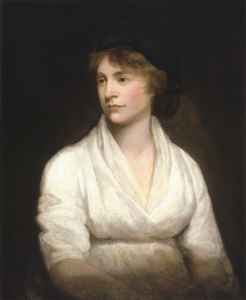
Mary Wollstonecraft, Champion of Reason, Passionate in Love

In honor of Mary Wollstonecraft’s 257th birthday (she was born on April 27, 1759), here’a piece I wrote about her last fall, following my history of ideas travel series following this great feminist and champion of human rights’ time in Paris. Enjoy!

Amy M Cools's avatarOrdinary Philosophy


The life and work of Mary Wollstonecraft, mother of modern feminism, can seem to reveal a mass of contradictions.

Her seminal feminist work, A Vindication of the Rights of Woman, champions reason as the ultimate guide for a moral and productive life. She used reason to great effect to show why women should, and how they could, grow out of their socially constructed roles as under-educated coquettes and household drudges. She believed that reason should rule both individuals and societies because it’s the best tool we have to achieve justice and to perfect the self. Without reason, she thought, human beings are ruled by narrow self-interest, by the prejudice born of ignorance, and by crude lust.

Yet the life Wollstonecraft chose to live was widely criticized both during her lifetime and over the two hundred plus years since her death. It’s not just because she didn’t conform to the mores…

View original post 2,185 more words

Remembering Margaret Fell

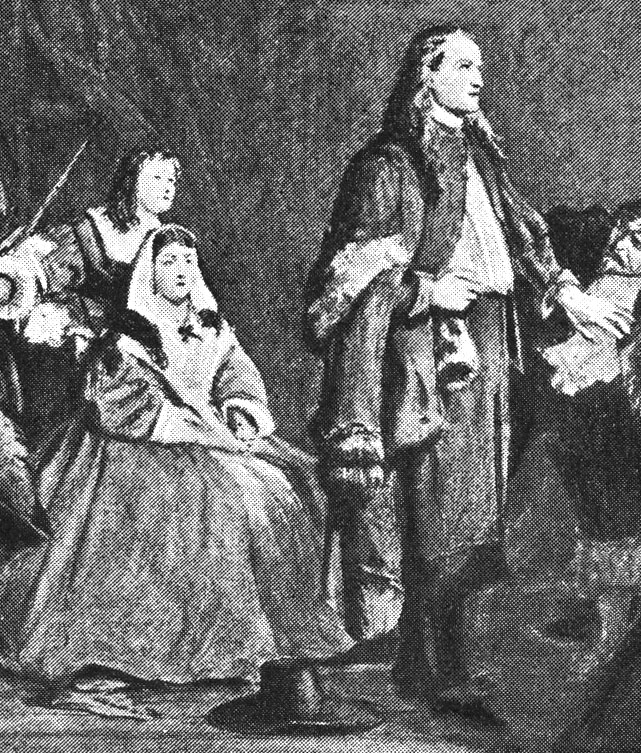
Margaret Fell, with George Fox before the judges, from a painting by J. Pettie 1663, public domain via Wikimedia Commons

Margaret Fell with George Fox before the judges, from a painting by J. Pettie, 1663

Margaret Fell was born on some unknown date in 1614, so let’s take this occasion to remember her on the date of her death, April 23rd, 1702.

Fell’s lived a life as passionate as it was long. She was an unconventional thinker for her time, a zealous and progressive religious activist at times imprisoned for her beliefs, a prolific writer, well-traveled, a mother of eight children and a wife twice.

An early adherent and eloquent promoter of Quakerism, Fell is now considered one of its founders. She converted to Quakerism after hearing a sermon by one of its most charismatic preachers, George Fox, and almost immediately launched into a lifetime of hosting Quaker meetings and speaking out on behalf of her new religion. After her husband died some years later, Fell married Fox, probably more as a co-missionary than as a romantic partner since their work, travels, and imprisonments kept them apart for much of their marriage.

As I’ve had a lifelong fascination with the history of human rights, I’ve long admired the Quakers because, along with Unitarians and Deists, so many have been leaders in the struggle to expand, establish, and promote them. That’s because these faiths emphasize the importance of individual conscience, the primacy of the human mind, God’s rational nature, and the moral equality of all human beings.

Fell believed in the Quaker doctrine of the Inner Light which God has caused to shine equally in the hearts of all beings; all we need do is heed it. Therefore, one does not need ministers, priests, or any other authorities or intercessors to achieve salvation. And because God has created everyone for the same purpose and gave everyone that light, everyone is spiritually equal and capable of understanding and proclaiming the Truth. We can see how this doctrine, central to Quakerism, readily aligns with human rights movements centered on a belief human spiritual and intellectual equality. The right of women to speak in church and write religious texts, in her time limited to men, was a cause particularly dear to Fell’s heart. While Fell’s belief in the equality of women was limited to their role as spiritual beings, Quakerism tended to encourage ever-more progressive beliefs in its adherents. Over time, Quakers came to be leaders in the abolitionist and pacifist movements, promoting the right of all to receive equal and universal education and for women’s rights in social and political spheres as well.

In light of her achievements as a female religious pioneer, and the human rights advances facilitated by the Quaker faith she helped found, Fell’s contributions should continue to be remembered and celebrated.

Ordinary Philosophy and its Traveling Philosophy / History of Ideas series is a labor of love and is ad-free, supported by patrons and readers like you. Please offer your support today!

~~~~~~~~~~~~~~~~~~~~~~~~~~

Sources and inspiration

Broad, Jacqueline, ‘Margaret Fell‘, The Stanford Encyclopedia of Philosophy, Edward N. Zalta (ed.)

Jacoby, Susan. Strange Gods: A Secular History of Conversion. New York: Pantheon, 2016 (see chapter on Margaret Fell)

In Memory of Hypatia of Alexandria

Detail of the death portrait of a wealthy woman, c. 160-170 AD near modern-day Er-Rubayat in the Fayum, public domain via Wikimedia CommonsHypatia’s birthday is somewhere between 350 and 370 AD; a range of dates indicating great uncertainty, to be sure, but clear original sources this old are hard to come by, especially from a city as turbulent and violence-torn as the Alexandria of her day. The day of her death is better known, sometime in March of 415 AD. Since the latter date is more precise, we’ll break with our tradition here and remember Hypatia in the month of her tragic and violent death instead of on the date of her birth.

She’s a mathematician, astronomer, teacher, and philosopher, who writes commentaries on important works in geometry and astronomy with her father Theon, likely contributing original work of her own. Hypatia is a Neoplatonist, a philosophy with mystical overtones which posits that everything derives its being from the One, an ultimately conscious yet nonmaterial, non-spacial entity which is the pure ideal of everything that is. She is a scholar and teacher in a field and in a world that’s male-dominated, and historians from her day to ours emphasize her extraordinary talents and her femininity with a nearly equal mix of awe and bemusement.

So let us remember and honor Hypatia for her great contributions to human knowledge and to the history of women’s liberation, living proof that women are equals in intellect and courage.

And let us also remember her sad death as a cautionary tale against those who inflame popular sentiment to seize power for themselves. Hypatia meets her death at the hands of a Christian mob caught up in the anti-pagan hysteria of the day; Alexandria itself was caught up in a power struggle between civic and religious authority. The mob of extremists who drag Hypatia from her carriage, torture and kill her with roofing tiles, and defile her body are inspired by their partisanship with theocratic bishop Cyril to kill this pagan philosopher, this mathematician and astronomer (then often equated with sorcerer), this woman who dared teach men, this friend of Cyril’s rival Orestes, civic leader of Alexandria. As Hypatia scholar Micheal Deakin quotes: “Cyril was no party to this hideous deed, but it was the work of men whose passions he had originally called out. Had there been no [earlier such episodes], there would doubtless have been no murder of Hypatia.”

From the current presidential primary race, in which a certain millionaire is whipping up populist support* with extremist racial and religious rhetoric, back to Hypatia’s time and beyond, power-hungry opportunists plead innocence from the very violence they inspire. Yet it appears hard to justify that plea when reason and the lessons of history plainly reveal the nearly inevitable results of fomenting sectarian strife. Extremism in the defense of liberty or anything else is a vice** because of the way it drives away reason and sympathy, and after all, nothing is as liberty-destroying as mob violence and death.

Ordinary Philosophy is a labor of love and is ad-free, entirely supported by patrons and readers like you. Please offer your support today!

~~~~~~~~~~~~~~~~~~~~~~~~~~~~~

Read more about Hypatia:

Deakin, Michael.’Hypatia of Alexandria‘ from Ockham’s Razor radio program of Radio National of Australia (transcript), Sun August 3rd 1997. (click ‘Show’ across from ‘Transcript’)

O’Connor, J J and E F Robertson. ‘Hypatia of Alexandria‘, from the School of Mathematics and Statistics, University of St Andrews, Scotland website.

‘O’Neill, Tim. ‘“Agora” and Hypatia – Hollywood Strikes Again‘. Armarium Magnum blog, Wed May 20, 2009

Zielinski, Sarah. ‘Hypatia, Ancient Alexandria’s Great Female Scholar‘. Smithsonianmag.com, Mar 14, 2010.

…and about Neoplatonism

Wildberg, Christian, “Neoplatonism“, The Stanford Encyclopedia of Philosophy (Spring 2016 Edition), Edward N. Zalta (ed.)

* ‘What If Trump Wins?’ by Jeet Heer in New Republic, Nov 24, 2015

** in reference to the quote ‘Extremism in the defense of liberty is no vice’ from Barry Goldwater’s 1964 presidential nomination acceptance speech 

Happy Birthday, Rosa Luxemburg!

Rosa Luxemburg, By unknown photographer around 1895-1900 [Public domain], via Wikimedia CommonsRosa Luxemburg, Mar 5 1871 – Jan 15 1919, is the great Marxist theorist, writer, economist, revolutionist, anti-war and anti-capital-punishment activist, and philosopher who was murdered during the German Revolution of 1918–1919.
Though she’s an anti-war activist, Luxemburg is also critical of the idea that a just society can be brought about by incremental reforms through established political systems. If she were to be involved in the 2016 Democratic primary race between Hillary Clinton and Bernie Sanders, she would very likely back Bernie, with his more revolutionary style and rhetoric: she’s sharply critical of the Social Democratic Party of Germany, to which she belongs (in its left wing) for favoring a Hillary-style reformist approach. However, her internationalism takes Marxist thinking beyond the point where leading Marxists of her day had progressed, with their focus on unique formulations of Marxist political theory tailored to their own particular national identities and histories. She would likely find fault, then, with Bernie’s protectionism.

Luxemburg’s other great contribution to Marxist thought is her theory about the accumulation of capital. Since capitalism’s primary fuel is constant and ever-increasing consumption, she thinks it’s a mechanism for the ultimate destruction of our material capabilities to sustain ourselves, starting with the ecosystems on which indigenous people, the poor, and the working class depend. Here as well, her progressive thinking takes her far beyond Marx himself, and her concerns in this timely issue makes her as relevant now as ever.

Read more about the brilliant and fearless Luxemburg:

‘Who’s Who – Rosa Luxemburg’ at First World War.com

‘The Dialectic of the Spatial Determination of Capital: Rosa Luxemburg’s Accumulation of Capital Reconsidered’ by Peter Hudis

The Crisis of German Social Democracy (The Junius Pamphlet) by Rosa Luxemburg, 1915

‘Rosa Luxemburg’, from Wikipedia, the free encyclopedia

Ordinary Philosophy and its Traveling Philosophy / History of Ideas series is a labor of love and is ad-free, entirely supported by patrons and readers like you. Please offer your support today!

What Ordinary Philosophy’s All About: Clarifying the Vision

People in a Public Square, Image Creative Commons via PixabayIt’s been an especially busy few weeks for me: studying, researching, writing, planning for my upcoming traveling philosophy journey and for the expanded future of Ordinary Philosophy. This year so far, I’ve had the great good fortune to meet some inspiring new people: passionate, thinking, active, and creative. I’ve also gotten to know others better as well, and am opening new doors and making new contacts every day. Our conversations have been inspiring me to think more clearly and deeply about my vision for Ordinary Philosophy, about my hopes, dreams, and goals, and about the wonderful people who will work with me to accomplish them in the future.
So I’ve just been looking over my introductory statement about Ordinary Philosophy, and thought it needed some clarifying and expanding. Here’s my vision as it stands now, best as I can describe it, and it’s beautiful to me. I hope it is to you too!

~~~~~~~~~~~~~~~~~~~~~~~~~~~~~~

Ordinary Philosophy is founded on the belief that philosophy is an eminently useful endeavor as well as a fascinating and beautiful one, and that citizen philosophers and academic philosophers alike share in making it so.

So why the name Ordinary Philosophy?

The ‘Ordinary’ in Ordinary Philosophy means: Philosophy is not only pursued behind the walls of academia.

It’s an ordinary activity, something we can do regularly whatever our education, background, or profession, from our homes, workplaces, studies, public spaces, and universities. It’s applicable to ordinary life, since it’s about solving the problems we all encounter in the quest to pursue a good, happy, and meaningful one.

It’s about seeking answers to the ‘big questions’ we ask ourselves all the time: ‘What’s the right thing to do?’ ‘What’s a meaningful life, and how can I make mine so?’ ‘What’s the truth of the matter, what does truth mean anyway, and how do I know when I’ve found it?’ ‘What does it mean to have rights?’ ‘How did reality come to be as it is?’, and so on.

It’s also just as much about the ordinary, day-to-day questions: ‘Should I take this job, and will it help fulfill my highest aspirations?’ ‘It is wrong to put my interests first this time, even if it will harm someone else?’ ‘What’s the difference between just talking about other people and malicious gossip?’ ‘Why should I go out of my way to vote?’

And in the end, it’s about living philosophy, about philosophy in the public square, and the stories and histories of philosophy as it is realized, personified, lived out by activists, artists, scholars, educators, communicators, leaders, engaged citizens, and everyone else who loves what’s just, what’s beautiful, and what’s true.

All of this is philosophy.

~ Amy Cools, founder and editor of Ordinary Philosophy

Sex, Gender, Surgery, and Freedom

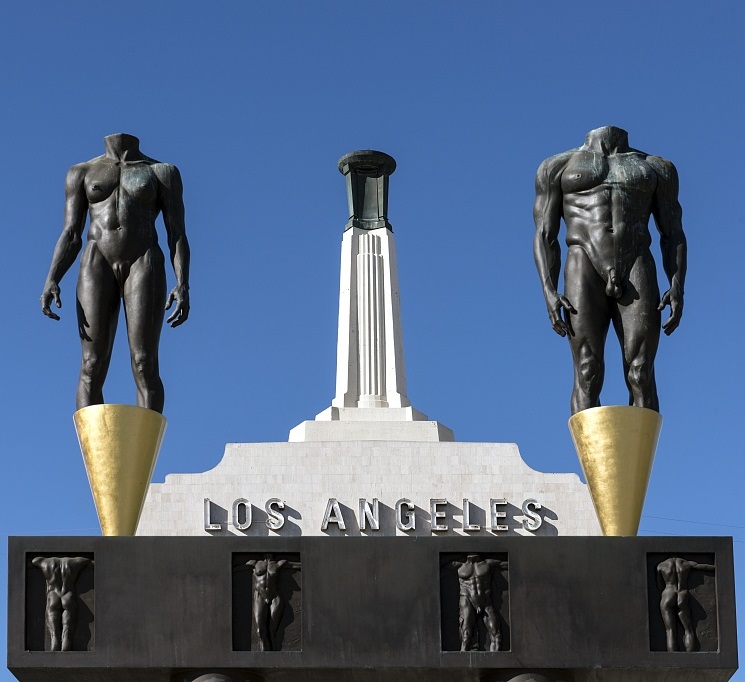
The Olympic Gateway arch and male and female statues at the entrance to the Los Angeles Memorial Coliseum, Los Angeles, California by Robert Graham, public domain via Library of CongressI believe that people should be free to express their tastes, preferences, and personalities without legal limits if little or no harm is done to others by doing so. Not including mere hurt feelings, however: if it did, no one would be free to do much of anything.

Likewise, I believe we have positive moral obligations to respect each other and ourselves, and to do so, we should work to free ourselves from harmful biases and distastes based on cultural, racial, religious, and gender stereotypes and narrow standards of beauty.

But when a popular social practice seems to promote one of these principles while betraying the other, it can be difficult to decide whether it’s right or wrong, good or bad.

Take plastic surgery, Botox injections, and other body-altering elective procedures done for non-reconstructive, ‘vanity’ purposes. I’ve dubbed them cosmetic medical interventions. Last year, I examined the benefits and impacts of these, both personal and social. Many, even most, would consider opting for one of these cosmetic treatments  anything from harmless vanity to helpful in boosting self-esteem, and most would consider it a purely personal matter and no-one else’s business. Yet I found that the social acceptance and increasing prevalence of cosmetic medical interventions can have significant impacts that affect a whole culture. While I didn’t find sufficient justification for banning most of them or even for claiming they’re immoral across the board, I believe I presented evidence and arguments sufficient to show they can cause harm, especially in the aggregate. While cosmetic medical interventions can and do make some individuals happy in particular circumstances, they can present health risks, be disfiguring, become psychologically addictive, and perpetuate gender stereotypes, ageism, racism, classism, and other mindsets that erode respect and tolerance.

And as my examination progressed, an uneasy realization kept nagging at me. Many of my questions and concerns about cosmetic medical interventions could apply, for the same or similar reasons, to sex reassignment surgery. I decided not to include it in that discussion because it’s embraced by so many as an important way to achieve fulfillment, acceptance, and equality for traditionally marginalized transgender people, making it a politically ‘hot’ and delicate issue warranting its own careful examination.

Then not too long ago, I heard this story on NPR about one of two twin boys, self-identified as a girl since the age of three, who became the young woman she identifies as today through sex reassignment surgery. Nicole’s story, while fascinating in its own right, struck me at the moment because of the terminology used: gender reassignment surgery.

That got me to thinking a lot about the issue again. Hmm, I thought, ‘gender reassignment surgery’, that’s a new way of putting it… but wait a minute: isn’t there a glaring assumption, even some contradictions, contained in that phrase?

For one thing, haven’t critics of traditional, binary gender roles been arguing that gender is neither dichotomic nor fixed? That gender is a set of attributes culturally or personally assigned according to sex, transmitted through social practice and the enforcement of norms? If so, how can gender, not just sex, be surgically altered? Sex can be reassigned to a certain extent: physical appearance can be surgically altered to match the general appearance of persons of the opposite biological sex, though we can’t transplant or build functioning reproductive organs (as of yet, anyway). And gender can be reassigned through self-identification, mental state, legal status, social acceptance, and many other means.

But how can gender be surgically reassigned, unless we accept the assumption that gender is tied to sex and an accompanying set of particular physical attributes?

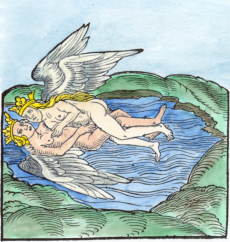
Illustration of fermentation in the Rosarium philosophorum, Frankfurt, 1550, public domain via Wikimedia Commons

I recognize that calling it ‘gender reassignment surgery’ is motivated by progressive values. Besides the regressive assumption I perceive in the term, it’s also forward-thinking in its attempt to reflect the best science available about transgender people, and a sympathetic recognition of the difficulties they experience in binary-gendered societies. The term hints at part of what science shows us: the experience of gender is at least partly biological in origin. However, gender is not, as the term also indicates, inextricably linked to how closely one’s physical appearance correlates with the general appearance of males and females. Science reveals that the feeling of belonging to a particular gender is generally correlated with sex, as biologist and neuroscientist Robert Sapolsky explains; however, it’s more complicated than that. We now have the capability of studying the brains of people who seek sex reassignment surgery because they feel their gender doesn’t match the body they’re born with. When transgender people like Nicole from the NPR story, who just know from a very young age that they really belong to a different gender than others perceive, we can actually see that their brains are physically different from the average person whose gender and sex fit the more common binary system. For example, the brain of a young male-sexed person who has felt female for years can look, in some regions, more like the average brain of a female than of a male. And the tenuous link between sex and gender for many people doesn’t end there: physical expression of sex can be ambiguous, with some bodies having genitalia with both male and female characteristics, or not identifiably either, whatever the gender.

Therefore, the phrase ‘gender reassignment surgery’ misses the boat in reflecting the science of transgender experience and its biological origins. But it’s also regressive insofar as it contradicts that valuable, hard-won insight that gender is also cultural. The larger question of who we want to be, as it relates to gender, isn’t determined by the appearance of our bodies and whether that appearance matches one sex or another: it’s also determined by how other people treat us based on the appearance of our bodies and how we present ourselves. And the way other people treat us has as more to do more to do with culturally instilled values and expectations than with strictly biological instincts.

So the NPR story led me to expand my initial questions and concerns arising from my examination of cosmetic medical interventions: is sex reassignment surgery also such a good thing on the whole, for society and for individuals? And to add: might it do more to reinforce gender stereotypes and the notion that our physical appearance determines our fate, than it enhances our freedom and long term sense of self-worth and happiness?

The evidence regarding the latter is very limited, since sex reassignment surgery hasn’t been done on a large scale for very long. There’s a(n) (in)famous study from Sweden from a few years ago that found that rates of suicide and psychiatric disorders were higher in those that received sex reassignment surgery and hormone therapy. People of every political persuasion drew wildly different conclusions from this, generally to fit their already held convictions: either that the higher rates of suicide and psychiatric disorder only reveal the stigma that transgender people face, not that transgender people are mentally ill or sex reassignment surgery is bad, or, that the higher rates of undesirable outcomes reveal that sex reassignment surgery is an invasive, painful, and harmful mistreatment of what’s really a cultural and psychological problem.

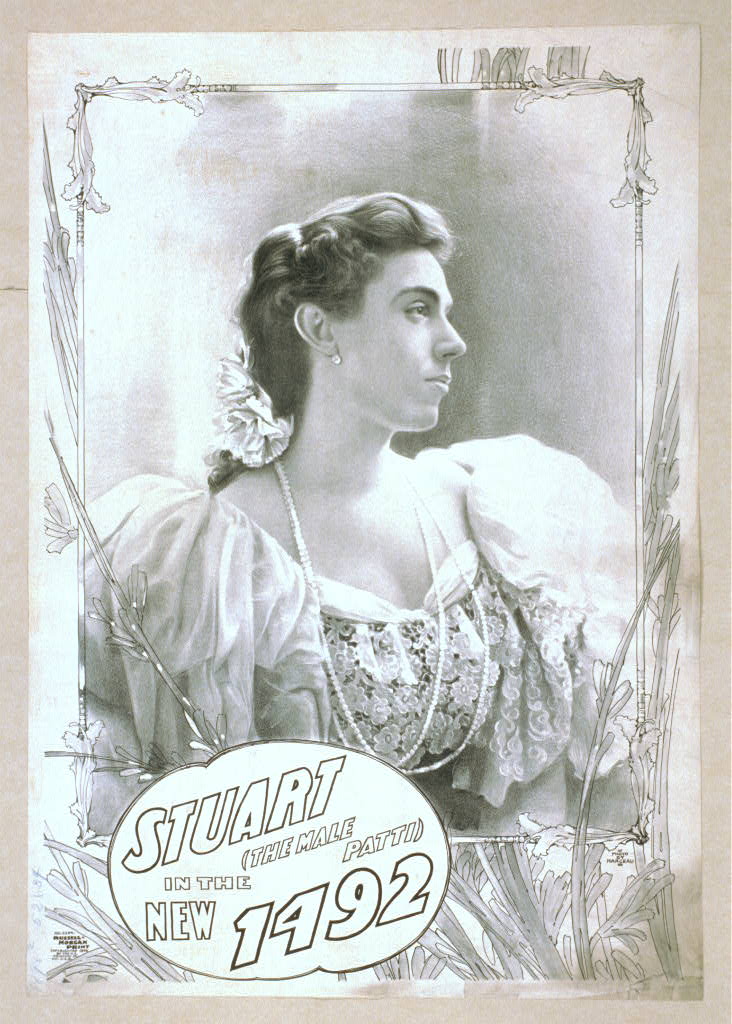
Stuart (the male Patti) in the new 1492, Cin., U.S.A. U.S. Printing Co., c 1898, public domain via Library of CongressI don’t believe it’s hard for most of us to accept that many opt for cosmetic medical interventions because they feel driven to it by pervasive ageism, sexism, and gender stereotypes. If you’re convinced that you’re too ‘old’, ‘wrinkled’, ‘fat’ ‘flat-chested’, or otherwise don’t match cultural standards of what a beautiful and successful person looks like, than you feel you need surgery in order to be accepted, to succeed, and to be admired. Sometimes, opting for cosmetic medical interventions helps to achieve these goals in come circumstances. In similar ways, some may feel the need for sex reassignment surgery because they’ve been told throughout their life, regardless of how they feel about themselves and what their preferences are, that they can’t wear a dress or makeup, be tough, be cute, play rough, take a leadership role, be forthright and assertive, pursue their real interests, or otherwise express their true personalities because they look like a boy or a girl. And sometimes for these transgender people, sex reassignment surgery helps them to express who they feel they really are, because their new appearance changes the way others perceive them and expect them to act.

Does this mean that we need to accept that sex reassignment surgery, or cosmetic medical intervention for that matter, is the best way to help us achieve the freedom to be who we want to be? Does it help instill in us the values of respect and tolerance for others and for ourselves, regardless of physical appearance? Is it really the key to breaking down gender stereotypes and increasing the freedom to be who we really are?

I have some questions and some doubts.

Don’t get me wrong: I believe that our newfound willingness to accept that people have the right to present or alter themselves as they see fit, and to recognize that their reasons for doing so may be good or at least understandable, is a good thing: it shows we’ve become more generous, our imaginations have broadened, and we’ve become more solicitous of other people’s interest in seeking their own happiness than we are concerned with whether their actions conform to our own moral or religious standards. I’m not exploring this issue because I doubt that society is moving towards increased tolerance, respect for diversity, and commitment to increasing human freedom; in fact, I believe that we’ve generally progressed a lot on all of these fronts, and will continue to do so. I’m exploring it because I’m doubtful that sex reassignment surgery is the best solution overall or in the long term to furthering these excellent ends, for the individual and for society.

For one thing, sex reassignment surgery seems to reinforce the idea that we need to look a certain way in order to be a certain way. In fact, it’s very name, like NPR’s term gender reassignment surgery, concedes this. Do we ‘feel like a man’, but ‘look like a woman’? Then to match our own and other’s ideas of what ‘feeling like a man’ should look like, we alter our body: remove the breasts, add a penis, and take hormones to deepen the voice, broaden the shoulders, and increase body hair. Or vice versa.

But why must we concede that changing the way our bodies look is the best way to resolve the disparity between how we look and what we and others expect of ourselves because of it? Sex reassignment surgery and the term gender reassignment surgery seem to concede too much to this assumption, to the point of people feeling that the radical step of extensive cosmetic surgery, with all its associated risks of infection, scarring, and other side effects, is necessary for them to be happy in their own skin. It’s also very expensive, and available mostly to the relatively wealthy and to those willing or able to get into debt, which, like cosmetic medical interventions, adds a classist element, making gender-as-sex expression the privilege of the few. It seems to me that sex reassignment surgery can serve to reinforce the notion that gender is strictly binary because of the way it conforms our bodies to it. So while the overall goal of sex reassignment surgery might be to break down rigid, narrow cultural perceptions of the link between sex and gender, it seems to act more as a concession to them.

Pin-up photo of Hedy Lamarr for the May 7, 1943 issue of Yank, the Army Weekly, public domain via Wikimedia Commons

I’m also not so sure about the real freedom of choice that many feel they have when they opt for sex reassignment surgery. Since most of us treat others quite differently according to their perceived gender, for those who feel like they belong to another gender than people perceive them as, the disparity can grow intolerable over time. Thus, sex reassignment surgery can appear to be their only viable alternative. Imagine being treated all the time like a different person than you know you are, and you can imagine the frustration. Perhaps you are an intellectual by inclination, but your family doesn’t fully educate you as a child or encourage an academic career for you as an adult because of their religious conviction that only men are the God-appointed thinkers and leaders of church and home. Perhaps your curvy figure and heart-shaped face lead people to treat you as if you are little more than a ‘bimbo’, a ‘sex kitten’, or on the make (I’m thinking of the brilliant and lovely Hedy Lamarr, actress and inventor). Perhaps you are a biological woman who likes to wear short hair and comfortable, practical, and sturdy ‘masculine’ clothing, who find makeup and ‘feminine’ clothing binding and unsuited to your personality and lifestyle, and you find yourself unable to go about your daily business without people treating you as if you’re not a ‘real woman’ (whatever THAT means!) or as if you are ‘asexual’ or ‘hate men’.

I can imagine these situations, and I’ve experienced some version of all of these myself in my own life. For transgender people, the disparity is more pronounced, and the need for a lasting solution more urgent. In this sense, I not only appreciate the perceived necessity for a solution like sex reassignment surgery, but am deeply sympathetic as well.

Yet the problem here, again, is similar to that I’ve addressed when considering cosmetic medical interventions: while we might be happier as individuals or in the short term by surgically or chemically altering our appearance, is it really a good long-term solution to the underlying problem? Mightn’t we actually be prolonging it by perpetuating and strengthening sex and gender stereotypes through sex reassignment surgery, as we’ve considered? Is it really a good thing to allow ourselves too much leeway by accepting, out of hand, that surgically altering our bodies to fit society’s standards is better than the option of training ourselves and each other to learn to be comfortable with, and even love and appreciate, the bodies nature has given us? It seems that the latter is actually more conducive to creating a world where racism, ageism, and rigid binary sex and gender codes lose their hold on our imagination and moral sense, and a sustainable solution at that, available to rich and poor alike.

Acceptance of the practice of sex reassignment surgery may be a necessary step, even if a flawed one, on the way to creating a society that not only tolerates, but values, increasing diversity in cultural- and self-expression. I don’t believe for a moment that any individual person who opts to have sex reassignment wants to impose their ideas about gender on anyone else; they’re seeking to be true to themselves the best way they know how. And sometimes, for some people, it does the trick. That’s why, like with cosmetic medical intervention, I’m loathe to make the claim that we should ban sex reassignment surgery for consenting adults. But the social outcome of the practice in the aggregate, as it becomes an institution, may undermine the very good it’s trying to do. Whatever the intention, sex reassignment surgery leaves physical scars just as it can social and psychological ones, as our unreadiness, our inability, our unwillingness, or our refusal to accept ourselves and each other as we really are is carved into the very bodies of transgender people.

Perhaps the liberty to choose sex reassignment surgery is what we need right now to break old habits and attain the freedom to be who we know ourselves to be. I hope that this, in turn, will become the freedom from having to change our bodies to coincide with our own and other people’s preconceptions on sex and gender.

Ordinary Philosophy and its Traveling Philosophy / History of Ideas series is a labor of love and ad-free, supported by patrons and readers like you. Please offer your support today!

~~~~~~~~~~~~~~~~~~~~~~

Sources and inspiration:

‘Becoming Nicole’ Recounts One Family’s Acceptance Of A Transgender Child’. NPR: National Public Radio. Oct 20, 2015 http://www.npr.org/sections/health-shots/2015/10/19/449937765/becoming-nicole-recounts-one-familys-acceptance-of-their-transgender-child

Dhejne, Cecilia et al. ‘Long-Term Follow-Up of Transsexual Persons Undergoing Sex Reassignment Surgery: Cohort Study in Sweden’. Feb 22, 2011
http://www.ncbi.nlm.nih.gov/pmc/articles/PMC3043071/

Glicksman, Eve. ‘Transgender Today: Throughout History, Transgender People Have Been Misunderstood and Seldom Studied. That’s Beginning to Change.’ American Psychological Association. April 2013. http://www.apa.org/monitor/2013/04/transgender.aspx

Sapolsky, Robert. ‘Caitlyn Jenner and Our Cognitive Dissonance’
http://nautil.us/issue/28/2050/caitlyn-jenner-and-our-cognitive-dissonance

What Is Happening to the Word ‘Beautiful’? by Tanya Newton

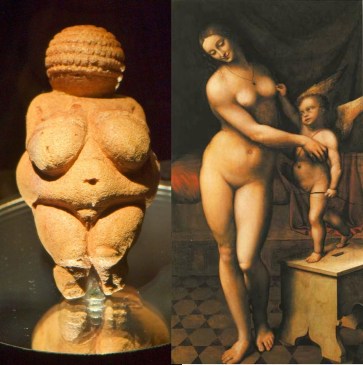
e993b-two2bvenuses2b-2bvenus2bof2bwillendorf2band2bvenus2band2bcupid2bby2bgiampietrino2c2bcopy2bafter2blost2bleda2band2bthe2bswan2bby2bleonardo2bda2bvinci2c2bboth2bpublic2bd‘Beautiful’ has always been a battleground in feminist discussions of representation. While it may seem counterintuitive to argue that we should consider more women as beautiful while also arguing that a woman’s capabilities are worth more than her appearance, tackling the rigid definition of beautiful has been important for intersectional feminism. A traditionally beautiful woman is white; women of colour are more likely to be sexualised instead. A beautiful woman is also normally able-bodied. She usually does not appear to be economically below the middle-class, something that is subtly but pervasively inherent in our ideas of the ideal body shape (too slender for manual labour) and the current trend of tanning (demonstrating leisure time and disposable income). A beautiful woman often also has long hair, a delicate face, and big eyes; she is vulnerable, not strong. So renegotiating this limited meaning of beautiful is a powerful act. Great progress has made with it, which should be cause for optimism. However, recent redefinitions are more troubling than empowering.
Beautiful is being used more and more often to denote a woman’s entire identity. Popular Urban Dictionary entries for beautiful state:

Beautiful is a woman who has a distinctive personality, one who can laugh at anything, including themselves, who is especially kind and caring to others. She is a woman who above all else knows the value of having fun, and not taking life too seriously. She is a woman that you can trust and count on to brighten your day. She is a woman who can inexplicably make you feel really good just by being around her, and yet brings such great sadness when she is gone.  (10,257 positive votes)

Your smile makes you pretty, your body makes you sexy, only your mind makes you beautiful (5,019 positive votes)

The description of anyone who is true to themself (3,272 positive votes)

Yes, it’s Urban Dictionary, but Urban Dictionary is not the only place this idea surfaces. A Buzzfeed video uploaded by Ashly Perez shows women stating that pretty is about “validation” from society, it is taught to young girls, and it is constructed by the media. I’m sure most feminists wouldn’t disagree. However, the video continues to say that beauty is different. “It is something that comes from the inside out: a combination of who I am and what I bring to the table”, one woman says. “I feel most beautiful when I’m using my mind and when I’m around my friends,” another adds. Beauty is made to mean personality. Perhaps this is why Dove’s latest marketing campaign makes women choose to label themselves as either “beautiful” or “average”—not average-looking. Perhaps Dove’s intention is to say that if your personality or capabilities are above average, you are beautiful.

However, beautiful already has a meaning and that meaning can’t simply be erased. It refers primarily to appearance, not identity. The number one definition in the Oxford Dictionary is: “Pleasing the senses or mind aesthetically”. Merriam Webster’s top definition is: “The quality of being physically attractive”. If these definitions were not true, and beauty instead referred to a person’s personality, then the trope beauty is bad wouldn’t exist and men could be called beautiful. Yet Cersei Lannister’s greatest weapon remains her beauty while calling a man beautiful remains an insult.

So Dove’s video, no matter what the intentions are, cannot tell women that if they are above average they are beautiful. Beautiful will not allow itself to be used that way; its meaning of ‘physically attractive’ always twists the message. Dove’s video actually tells women that if they are not beautiful, they are average: their intelligence, their capabilities, and their personality are not as relevant to their identity than their appearance. This video is more problematic than empowering. Buzzfeed’s video links being beautiful to being liked and loved, and while by “beautiful” Buzzfeed means being happy and sociable, we know that being physically attractive really does mean being more loved. Again, using the word beautiful subverts Buzzfeed’s message.

In fact, even if we were able to somehow strip beautiful of its current definition and redefine it to refer to a person’s attitudes and likeability instead of their appearance, that would damage the progress that intersectional feminism has already made. As discussed, beauty’s definition is under contention, and the meaning is slowly broadening. This is too important an accomplishment to discard. Beauty as appearance is a mainstream acknowledgement of visibility and measurement of value. To acknowledge that women of colour, trans women, disabled women, and less wealthy women are beautiful is to say that society considers them equal in appearance to white, able-bodied, cis, affluent women. Beauty meaning identity, on the other hand, does not do this. Stating that the category of beautiful that women have struggled to be included in still does not mean they are considered capable of being physically attractive by mainstream society, but that it’s irrelevant because their friends like them, is a regression.

Buzzfeed’s argument that women should be encouraged to measure their worth by more than their appearance is admirable. Dove’s advocacy of self-confidence is also applaudable. Yet beautiful is the wrong word to adopt to signify a person’s value and self-confidence; it is already laden with too much meaning.

After studying English Language and Literature at King’s College London, Tanya Newton moved to Japan where she teaches English. She loves to read and write, and loves tea almost as much. She is strongly interested in cultures and social structures. (Bio credit: Darrow)

This article was originally published on Darrow. Read the original article.

Ordinary Philosophy and its Traveling Philosophy / History of Ideas series is a labor of love and ad-free, supported by patrons and readers like you. Please offer your support today!

Welcome to the new Ordinary Philosophy!

Ordinary Philosophy, Writing a letter *oil on panel *39 x 29.5 cm *signed b.c.: GTB *ca. 1655, assemblage by Amy Cools 2015Greetings to all,

On this New Year’s Day, which also happens to be my birthday and therefore, personally, doubly a day of new beginnings, I’m looking forward to a more expansive, more energetic future for Ordinary Philosophy!

What is Ordinary Philosophy?

It’s a series of explorations founded on the belief that philosophy is an eminently useful endeavor as well as a fascinating and beautiful one, and that citizen philosophers and academic philosophers alike share in making it so. A citizen philosopher myself, I found that my experiences as an avid reader, an artist, a working person, an entrepreneur, a student, and a writer filled my mind constantly with questions and new ideas, spurring me ever on in the search for answers. As I’ve always been a restless and hungry thinker, I fell in love with philosophy, especially, practical philosophy and the history of ideas.

What is Ordinary Philosophy’s mission?

It’s always been to share this love of philosophy and the history of ideas with you. In my explorations, I’ve encountered the most fascinating, innovative, and beautiful ideas from the curious, thoughtful, questing, and inventive world out there, from academic philosophy to science to history to current events to politics to the arts and so, so much more; so much more, in fact, that I can’t possibly process it all on my own.

So here at O.P.’s new home, I’ve broadened the mission.

While there have been occasional guest posts, there will be much more of an emphasis on providing a forum for many more voices at O.P., representing views from all walks of life. O.P. will also publish many more reviews, recommendations, and links directing readers to the great ideas proliferating out there that may be of special interest to O.P.’s audience.

The Traveling Philosophy / History of Ideas series will also expand. Each series will become more in-depth, with more detailed explorations of the life and ideas of each subject and more resources for further exploration and study. The podcast will expand in tandem: new audio recordings of longer pieces published in O.P. for those of you on the go who enjoy the ideas found here but don’t always have the time to sit down and read. As time goes by, I plan to expand the podcast as well to include interviews and a series of downloadable travel guides to accompany the History of Ideas series.

To better accomplish this expanded mission, I’ve moved O.P. here to its new platform: easier to read, use, and share. So if you love great ideas and the pieces you encounter here, please support O.P.’s expanded mission by sharing as widely as you can.

Lastly, dear readers, I appeal to you: Ordinary Philosophy is a labor of love, and depends entirely on your support. I’m determined to keep O.P. ad-free, but can’t do it without you. All financial contributions will be credited by name (unless anonymity is expressly preferred, of course!) on each project funded by their donations, and welcomed with deepest gratitude. Please support Ordinary Philosophy today!

Yours,

Amy Cools, founder and editor of Ordinary Philosophy

*Listen to the podcast version here or on iTunes

From Oakland to Maryland, New York, and Massachusetts I Go, in Search of Frederick Douglass

Hello, friends of Ordinary Philosophy!

From time to time, I take a trip to some corner of the globe, to explore the lives and ideas of great thinkers in the places where they lived and worked. For this series, I follow in the footsteps of thinkers who are no longer alive, since those who are still telling their own stories. But those who are no longer alive in the body live on in the ideas that they pass on, and in the example they provide for us to follow.

I’m pleased and excited to announce my fifth philosophical-historical themed adventure, beginning with research and study in Oakland, CA, then off to Baltimore, MD, New York, Washington DC, and other East Coast sites to follow in the footsteps of Frederick Douglass.

Frederick Douglass’s life story is inspiring and humbling in the strength, character, and dazzling intellect he reveals, rising to such greatness in the midst of such adversity. Born a slave on the eastern shore of Maryland in the early 1800’s, he was an autodidact, having overheard his master say that learning to read leads to learning to think, rendering a slave too independent-minded to submit to domination by another. Hearing this, young Frederick knew what he had to do. Attaining literacy and learning a skilled trade gave him the wherewithal to escape to New York City in 1838 at about 20 years of age. A few years later, as a result of an impromptu but impassioned and eloquent speech about the hardships of a life enslaved, he was recruited as a public speaker for the abolitionist cause. He spent the rest of his life as an activist for all manner of human rights causes, from the abolition of slavery to universal suffrage to women’s rights and beyond.

Douglass is an especially compelling subject for a historian-philosopher; observing the true nature and ramifications of slavery led him to think deeply about the most essential questions in human life, which, in turn, spurred him on to a life of thought and action on behalf of oppressed peoples. In these roles, Douglass had a heavy influence on American thought and on the course of American history. He asked, and answered: What does it mean to be a person? What does it mean to be a person of faith? What are rights, and why are we entitled to them? What is dignity, and does possessing it entail that we have certain obligations to ourselves and others? Given the frailties and strengths of human nature, how can we best live together and form just societies? What do the Constitution, its Bill of Rights, and the Declaration of Independence really say about slavery, equality, and other human rights issues?

So I’ll begin my tale here in my home city of Oakland, CA, where I begin my research and exploration into Douglass’s life and ideas, then off to the east coast of the United States I’ll go, from March 19th thru April 2nd! There, I’ll visit landmarks associated with his life, places where he lived and died, worked, thought, wrote, studied, and rested, to see for myself how the places informed the man, and vice versa.

~ Listen to the podcast version of this series intro here or on iTunes

Here is the story of Frederick Douglass as I discover him:
Traveling Philosophy Series: Frederick Douglass Edition, Prologue, Oakland, CA
Frederick Douglass on Faith and Doubt
Frederick Douglass on the Constitution
Frederick Douglass the Pragmatist
Frederick Douglass Baltimore Sites
Frederick Douglass’s Birthplace, Maryland’s Eastern Shore Sites Part 1
Frederick Douglass, Easton and St. Michaels, Maryland’s Eastern Shore Sites Part 2
Frederick Douglass Havre de Grace and Philadelphia Sites
Frederick Douglass New York City Sites
Frederick Douglass New Bedford, Massachusetts Sites
Frederick Douglass Boston Sites
Frederick Douglass Lynn, Massachusetts Sites
Frederick Douglass Lynn Sites, Part 2: Historical Society & Hutchinson Scrapbook
Frederick Douglass Albany, Troy, and Syracuse NY Sites
Interview with Leigh Fought on Anna and Frederick Douglass
Frederick Douglass Rochester NY Sites, Day 1
Frederick Douglass, Rochester NY Sites Day 2
Interview with Ken Morris, Anti-Slavery Activist & Descendant of Frederick Douglass
Frederick Douglass Seneca Falls, Canandaigua, Honeoye, and Mt Hope Cemetery Sites
Frederick Douglass Chambersburg and Gettysburg PA Sites
Frederick Douglass Washington DC Sites, Day 1, Part 1
Frederick Douglass Washington DC Sites, Day 1, Part 2
Frederick Douglass Washington DC Sites, Last Day

More about Frederick Douglass:

Peoria, Illinois, In Search of Robert G. Ingersoll, Frederick Douglass, And Abraham Lincoln, Part 1
Peoria, Illinois, In Search of Robert G. Ingersoll, Frederick Douglass, And Abraham Lincoln, Part 2
Peoria, Illinois, in Search of Robert G. Ingersoll, Frederick Douglass, and Abraham Lincoln, Part 3
Photobook: Frederick Douglass and Edinburgh, Old and New
O.P. Recommends: ‘A Man’s a Man for a’ That: Frederick Douglass in Scotland’ by Andrea Baker for BBC Radio 4
Say What? Frederick Douglass on Originalist Interpretations of the United States Constitution
O.P. Recommends: Frederick Douglass’ Drunk History Episode
Say What? Frederick Douglass on Race Relations
Citizenship, Belonging, and the Experiences of Amero-Africans in West Africa: An Analysis of William Innes’ Early History of Liberia

Ordinary Philosophy and its Traveling Philosophy / History of Ideas series is a labor of love and ad-free, supported by patrons and readers like you. Please offer your support today!

Patrons of the Frederick Douglass series: RH Kennerly, Elizabeth Lenz, Alex Levin, Cory Argonti Cools, Bryan Kilgore, Michael Burke, Gaia So, Veronica Ruedrich, Blair Miller, Alex Black, Devin Cecil-Wishing, Roxanne and Fred Smalkin and family, and Jim Callahan and Nerissa Callahan-Stiles and family. ~ With warmest gratitude, thank you!