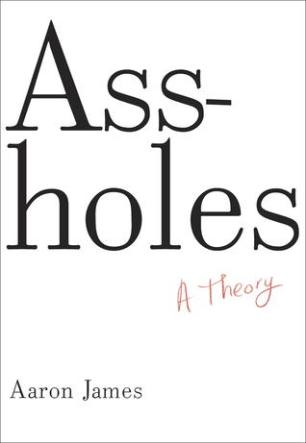
Book Review / Reflections On: Assholes, a Theory

The title might make you think it’s not a serious work, that it’s tongue-in-cheek, even a parody of a philosophy book.

But it’s really a very good, intelligently written, well-thought-out exploration of a sadly widespread phenomenon. And yes, it’s so satisfying to finally see that age-old question ‘Why are you being such an asshole?’ addressed and explained so thoroughly.

Author Aaron James is not being merely provocative in using the term ‘asshole’ to designate the particular kind of person he’s talking about. He uses this colloquialism because we really have no other word that’s so specific and so widely understood, to refer to a person who displays a certain attitude and systematically engages in certain types of bad behavior. Here’s James’ three-part definition: the asshole 1) allows himself to enjoy special advantages and does so systematically: 2) does this out of an entrenched sense of entitlement; and 3) is immunized by his sense of entitlement against the complaints of other people (p 5).

When we say of someone: ‘what an asshole!’, or observe ‘that was such an asshole thing to do!’ pretty much everyone recognizes this just the sort of person or behavior we’re talking about. If we were to use a more formal or non-slang term instead, as in ‘what a bad person!’ or ‘that was a depraved thing to do!’, the full richness and specificity of meaning that the colloquial, richly nuanced term asshole possesses wouldn’t be fully expressed. Look at how many words it took James to define what we mean by ‘asshole’ (and I would say, not quite fully: none of the definition’s three parts describe the little shudder of outraged disgust we feel when we see assholes doing what they do.)

That’s why, like James and fellow philosopher Harry Frankfurt, whose 2005 paper ‘On Bullshit’ caused quite a stir, I disagree with linguistic purists and prudes who wholly reject the use of colloquialisms in serious or academic work (though I speak only for myself as to how far this should go ). Out of self-righteously willful obtuseness, I insist, these purists just don’t ‘get it’. Everyday spoken language is much more fluid and adaptable than formal language, because there’s no arbiter of proper usage ‘breathing down your neck’ other than your partner in conversation. In the virtual experimentation lab that is daily conversation, we search for words that express exactly what we mean as efficiently if possible, and if there’s no ready word available, we adapt one that already exists, or make one up on the spot. As long as the person you’re talking to right then understands you, ‘it’s all good’. Formal language, on the other hand, evolves much more slowly, and must adhere more rigidly to existing standards of usage. Only over long periods of time do newer terms, having entered into common usage, filter up through the levels of linguistic formalization, and become accepted by editors of dictionaries, publishing houses, and news media. Yet the formalization of language doesn’t always result in a more expressive, precise one. As you can see, I used several idioms and colloquialisms in this paragraph, in quotes, to express my thoughts, and if you haven’t ‘been living under a rock’ you probably understood exactly what I meant. You can also see that colloquialisms can not only be a more colorful or amusing way, but more efficient way, of expressing yourself. You can test this by trying to define the full meaning of these colloquialisms, with all their nuance, using a lesser number of terms in formal language. I’d ‘bet your ass’ you can’t!

(In one of my student papers written a few years ago, I explore the linguistic origins and evolution of colloquialisms in the light of Grice’s Cooperative Principle, Dumas and Lighter’s paper on slang, and Steven Anderson’s hilarious and thoughtful documentary F**k. )

But I digress. To return to James’ book: it has a lot going on. So much so that it lead me to think, for example, more about the nature of language itself, just from the parts where he discusses what ‘asshole’ means, the various subtypes of assholes, and compares and contrasts asshole to related terms bitch, schmuck, assclown, douchebag, dickhead, dick move, and so on. (He forgot one of my favorites, asshat, which refers to having one’s head up one’s own ass, thereby wearing it like a hat.) It’s a testament to the richness of ideas in this book that thinking it over, every time, engendered so many other interesting lines of thought. Exploring the concepts contained in the term ‘asshole’ raises important questions about respect for one’s self and others, of human dignity, of exploitation, of how you should act and not act in a cooperative society, what we can rightfully expect of others and why their failure to live up to this is so objectionable, and much more; in short, this term is thick with moral and political implications.

There’s one point on which I disagree: his suggestion that, while assholes are far more likely to be men (which I agree is the case), they are almost entirely a product of culture (chapter 4). While I agree there may be cultural factors that help instill asshole qualities in men, and that some cultures are more likely to instill these qualities than others, it seems that nature plays a larger role than James allows. I think it likely that testosterone, the hormone which we know increases the tendency to aggression, contributes a lot to the phenomenon of assholery. After all, the traits James ascribes to the asshole are aggressive in nature: systematically granting oneself special privileges over others, of feeling entitled to things whatever the circumstances, and rejecting or ignoring others’ just complaints. It’s not that all men are assholes, far from it. It’s just that the biological factor of hormonal makeup increases the likelihood that males will be more susceptible to asshole influences, or more likely to possess aggressive traits that readily fall into asshole patterns of thought and behavior, than women. To my mind, assholery is a product of combined nature and nurture: asshole seeds take root in ground made more fertile by testosterone.

One of my favorite sections of the book was on asshole capitalism. James is not claiming here that capitalism is necessarily an asshole system. What he’s claiming is that capitalism is essentially a cooperative system ripe for exploitation by assholes, which, in turn, puts it in ever-present danger of collapse, of being destroyed from within. That’s because capitalism is a system of exchange and of reward: people exchange goods and services cooperatively and fairly, which generates trust and more trade, and people reward those who devise and provide the best goods and services with admiration and customer loyalty. And assholery, systematically behaving as if one is entitled to things regardless of the actual value of their contributions to the world, threatens the stability of the cooperative environment necessary for capitalism.

Since assholes systematically regard themselves as the rightful recipients of the best of everything, out of a sense that they are entitled to it per se, assholes exploit other people’s willingness to be fair and to reward others. Asshole drivers feel that owning bimmers entitle them to run red lights and rev their motors inches from people in crosswalks; asshole CEOs and managers think nothing of the fact that their wealth is built on the backs of sweatshop laborers or from industries that generate mass pollution; asshole bankers think they should earn millions or billions a year because they ‘have the balls’ to gamble other people’s money in financial markets, even at the risk of bringing down entire economies (to be fair, they are often so obsessed with their own rewards they may have a hard time even conceiving of larger, potentially dire consequences, because that would mean seriously considering interests other than their own).

Capitalism can and does thrive when people act somewhat selfishly within a larger context of cooperativeness. But never to the extent that the system would hold up under too much lying, cheating, stealing, abuse and neglect of employees, etc. That’s because money, and markets, can’t operate without trust. If most people can be trusted and it’s just a relatively few bad apples gaming the system, well, human nature being what it is, that’s to be expected. But if entitled, self-obsessed, rapacious assholes proliferate beyond a certain proportion, all bets are off. James explains why the modern Russian oligarchic system is rightly considered a full asshole capitalist system and the Japanese system is very much not. Worryingly, and not the least bit to my surprise, James presents evidence for what I’ve already been convinced of: the United States brand of capitalism is edging far too close to Russia’s end of the spectrum, and much farther away from Japan’s. That’s because our modern American capitalist culture has become one of entitlement (as much as certain pundits like to use this word exclusively to refer to aid to the poor, not handouts and special privileges to the rich), in which far too many of use we feel justified in grabbing whatever we want because we somehow, innately, ‘deserve’ it, everyone else be damned.

In sum: this book is a very useful book, on how to understand the origins and nature of assholes; on how to recognize and deal with assholes in the media and in daily life (James’ theory helps explain why certain assholes in the media remain entrenched in their self-serving dishonesty); and as a cautionary tale of when societies allow and encourage assholery to run amok.

– This book review is dedicated to my father-in-law, a man given to succinctness. His fatherly wisdom, which so resonated with my husband he has retold it many times over the years: ‘Son, don’t be an asshole. The world has enough of them already’.

James, Aaron. Assholes, a Theory. First published Doubleday, NY 2012.
First Anchor Books Edition, Apr 2014.  www.onassholes.com

Nicholson, Christie. ‘Testosterone Promotes Aggression Automatically’, Scientific American, June 9, 2012. http://www.scientificamerican.com/podcast/episode/testosterone-promotes-agression-aut

Thanks also to www.urbandictionary.com, which helped me make sure I had all my colloquialisms right, and avoided spelling bimmer ‘beamer’ like a moron
Ordinary Philosophy Recommends: David Morris on the ‘Volunteer’ Army and the History and Science of PTSD

In this fascinating podcast, former Marine infantry officer David Morris explains to host Indre Viskontas what PTSD (post-traumatic stress disorder) really is: a little bit medical diagnosis, and a whole lot moral/political argument. To understand PTSD, we need to consider not only why some suffer from PTSD and why others don’t, but what war means to us as a society.

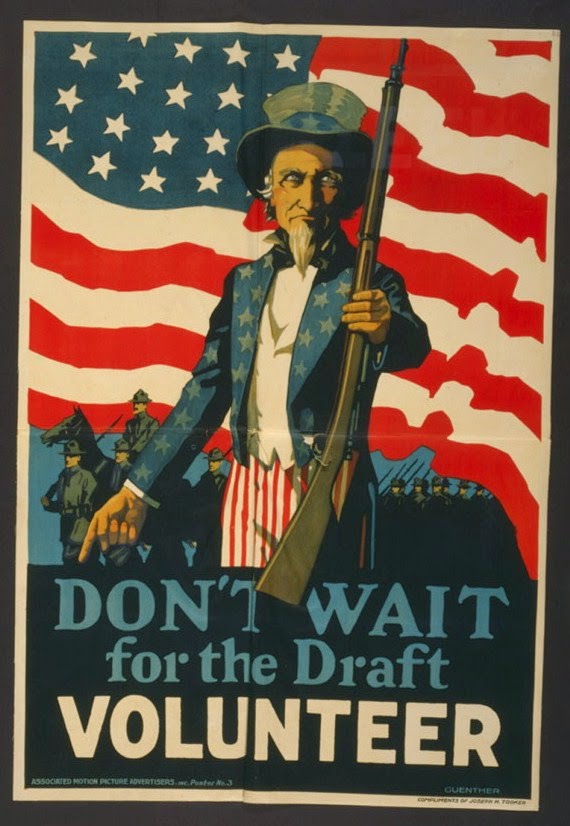
Besides being fascinated by what I learned about the science and history of PTSD specifically (as I hope you will by listening to the podcast!) I was particularly struck by what Morris’s remarks on the institution of our modern ‘volunteer’ army (starting at about 19.17). He points out how our nations’s leaders, along with most Americans, are almost entirely removed from the consequences of the wars we start since the de facto end of conscription in the 1970’s.

It seems that allowing all soldiers the choice to enlist, rather than forcing them to do so, is the only fair and just way to go about fighting a war, right? Seems shameful, undemocratic, even downright un-American, to force people to kill who don’t believe in killing.

Yet Morris makes this excellent point: rather than allowing us to ‘choose for ourselves’, which sounds democratic, the volunteer army system allows us to vote in favor of war, or stay at home and do little or nothing to stop it, while avoiding most of the burden and all of the danger.

So we start wars, or allow them to be started in our name, at little or no cost to most of us. As a nation, we all too often rush into war with too little consideration of the long-term consequences, or little understanding of the underlying cultural and historical causes of the turmoil in the first place (hmm, can we think of any modern wars that belong in that category?). Meanwhile, the President who calls for declaring war, the Congress who votes in its favor, we who vote these leaders to office, and the rest of us who do little or nothing about any of it, can rest easy knowing we don’t have to pay the costs. We don’t have to be soldiers, or to send our friends and loved ones off to do the fighting, unless we want to. We can shout our opinions to the heavens, take a righteous stand on one side or another, and forget about it the next day.

So the ‘volunteer’ army of paid soldiers bear the burden, face the danger, take the bullets and suffer the pain, while the most of the rest of us go about our relatively wealthy, secure, and comfortable lives, forgetting there’s a war on at all. How is this democratic? How is it any more fair or just to let the entire burden and danger of our war fall on the tiny percentage of Americans who enlist, and on their loved ones?

Morris offers what I think is a very good solution: if we do go to war, every able adult must be eligible for drafting into public service: we can choose to join the armed forces, or we can choose to dedicate hours working for the public good, at a non-profit, or with the Peace Corps, AmeriCorps, or other public works project. That way, we can require each other to become full participatory citizens once again, with all the rights and responsibilities that entails. If we truly believe that all killing is wrong, or that this particular war we’re engaged in is unjust, we won’t be forced to betray our principles, but neither will we be able to escape our civic duty to involve ourselves in the all-important matter of war and peace. And our leaders will be encouraged to make more responsible decisions about the wars they vote for, knowing once again that whatever they decide, they and their own families and friends will have to bear the burden too.

~~~~~~~~~~~~~~~~~~~~~~~~~~~
Sources and Inspiration: 

Morris, David J. ‘The History and Science of PTSD’. Inquiring Minds podcast #73, Feb … 2015
https://soundcloud.com/inquiringminds/73-david-j-morris-the-history-and-science-of-ptsd

Wikipedia contributors. “Conscription in the United States.” Wikipedia, The Free Encyclopedia. http://en.wikipedia.org/wiki/Conscription_in_the_United_States

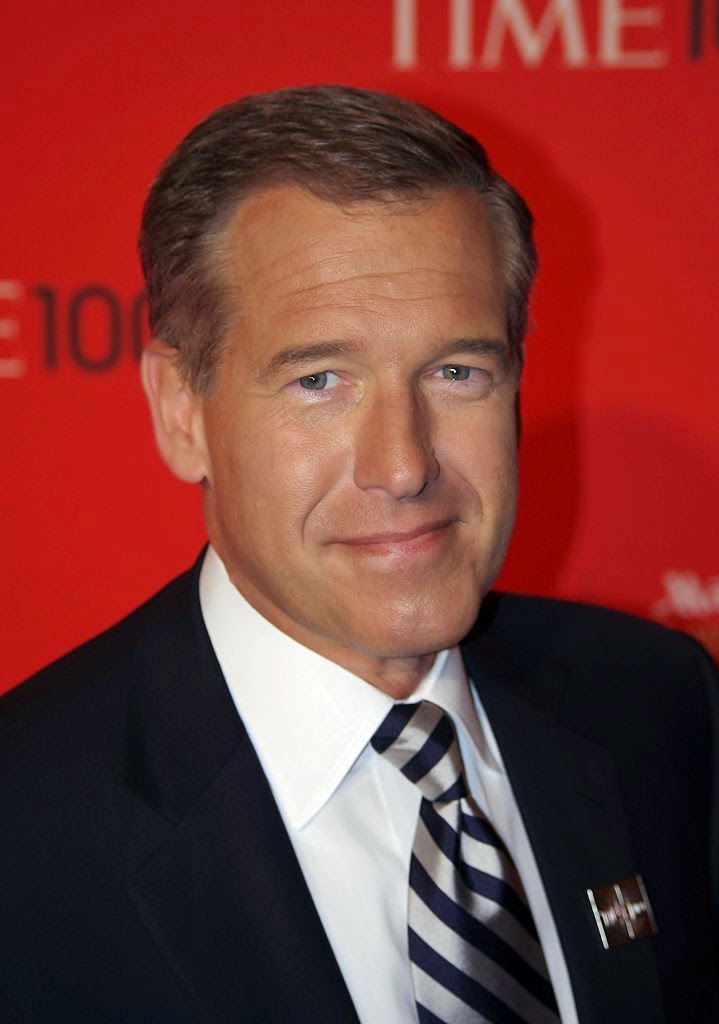
Brian Williams, Bill O’Reilly, Rush Limbaugh, and Honesty in Public Discourse

You’re likely aware of the backstory to this piece: well-known news anchorman Brian Williams was caught telling stories. A generous interpretation would portray them as exaggerations; a harsher one a series of self-aggrandizing lies. Williams placed himself in the thick of the action while covering certain news stories, like the shooting down of a military helicopter and the aftermath of Hurricane Katrina, when he was actually at a safe distance. Since his stories were recently debunked, in whole or in part, by others there at the time, he has been widely criticized, shamed, and mocked, and the public debate over the nature and reliability of modern news rages ever more fiercely.

He’s not the only public figure in hot water right now for playing fast and loose with the truth. Bill O’Reilly is also being called out for his history of adding, ahem, some ‘color’ (my term, not his) to his news stories. He’s repeatedly talked (bragged?) about ‘covering four wars with his pen’ (his words), including the war in the Falklands, when he was actually over a thousand miles away from the ‘active war zone’ (also his words, the phrase he used to describe his own location at the time) covering a demonstration in Buenos Aires.

But the O’Reilly case is different! many say. Brian Williams is a trusted news anchor, from whom people expect to get unvarnished facts, and they expect to get them because that’s what he promises to deliver. O’Reilly is a commentator, albeit on a popular news station. Yet he presents himself as a truth-teller, speaking from the ‘No Spin Zone’, constantly referring to his bona fides as a lifelong journalist. So his viewers do expect the same level of honesty from him as from Williams, be it the facts or his true political and moral opinions.

Bill O'Reilly dining with troops, image public domain via Wikimedia Commons

Bill O’Reilly dining with troops, image public domain via Wikimedia Commons

Instead of taking the snarky, self-righteous tone he’s adopted, using tactics of straw-manning and name-calling his critics and trying to obscure his tall tales with lame excuses, O’Reilly could just honestly admit that he used exaggerated or even just colorful language to add a sense of immediacy, urgency, or drama to his stories, and given his self-proclaimed role as a truth teller and ‘non-spinner’, admit that he might have misled his audience.

Rush Limbaugh, another famous commentator who’s often accused of lying and slander, likes to use the same excuse that his fans do when he gets caught: that he’s ‘just an entertainer’. Presumably, then, when he purposefully misrepresents the words, actions, and characters of his ideological opponents, he doesn’t really mean what he says. Or does he?

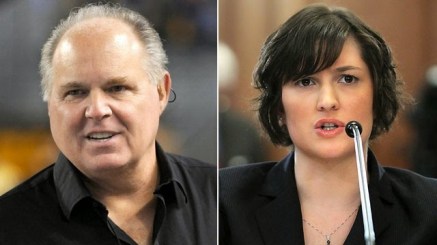
Rush Limbaugh / Sandra Fluke, image public domain via axiomamnesia.com/

One such case was that of Sandra Fluke, a law student and activist who testified before Congress regarding a proposed religious exemption to the government mandate that all health insurance policies must cover contraception. Fluke presented arguments, based on medical evidence and anecdotes of friends with gynecological and hormonal conditions, that birth control is essential preventative and therapeutic health care, especially for women, and as such, should be covered under all plans, public or private.

Limbaugh exploded. He called Fluke a slut and a prostitute and represented her as saying that ‘she must be paid to have sex’, and if so, she should provide sex tapes as public repayment for taxpayer money. Yet if you read Fluke’s own testimony, and read or listen to any of Fluke’s own discussion of birth control, it’s clear that she doesn’t mean any such thing, or says anything that can reasonably be construed as saying that paying for birth control is equal in any way to ‘paying for sex’. This would be as nonsensical as saying that to pay for an emergency room visit for a car crash victim amounts to ‘paying them to drive’ (and therefore they are obligated to be your chauffer?), or to pay for insulin for a diabetes sufferer is to ‘pay them to eat sweets’, or to pay the medical bills for the delivery of baby is to ‘pay for her to have sex’ (after all, that’s how she got pregnant) or ‘pay for her to have children’ (and therefore you have the right to put spycams in the nursery? Or make her child come over to do your chores?). After a storm of protest over his nasty (and pervy) rhetoric, Limbaugh apologized for calling her names and for ‘exaggerations to describe’ her personally. Yet he’s never, so far as I could discover, apologized for distorting and misrepresenting (two commonly used, slightly polite ways of saying ‘lying about’) her views on preventative healthcare on his radio show. Of the two, I argue that the name-calling is by far the lesser of the two: the slurs are unbelievable, and therefore perhaps possibly construed as satire. But the misrepresentation of her views is a lie that harms both her and the public, by slandering her and keeping important information from his audience, replacing it with falsities.

Limbaugh tells his viewers that he’s one of the most ‘honest‘ commentators out there, ‘huge on personal responsibility’ as he said in the same apology broadcast. He also says that he’s a satirist, that he uses ‘absurdity to illustrate the absurd’. It doesn’t appear to me as if he presents his take on Fluke’s testimony as satire: he seems to present it as a corollary of her arguments. The trouble with Limbaugh is that he slides back and forth from what he tries to call ‘satire’ to what he would call ‘the truth’ without any sort of clarification, any sort of signal to his audience so they can tell when he’s being factual, and when he’s uttering an absurdity to make a point. In researching this piece, I read quote after quote, transcript after transcript, of supposed satirical absurdities, facts, and half-truths all scrambled together will-nilly in each sentence, each paragraph, each entire show, generally with no discernible way to tell which was which. This gives him a general ‘out’ when it comes to saying whatever he wants without being called out for lying, which, in turns, makes every statement as credible as any other, which is not at all. Sorry, Rush. You can’t have it both ways.

(When I was doing research to refresh my memory on the case, I found that he had scrubbed his website of all transcripts and recordings of his actual remarks. It may be he was forced to do so as a result of his advertisers fleeing, or it may have been his own ass-covering move. Either way, this scrubbing does not represent evidence of his honesty or belief in ‘personal responsibility and accountability’, to say the least.)

So why bring up this old case again?

It’s to illustrate how and why so many of us are feeling so distrustful, so tired, so saddened, or (I think mostly) so jaded about honesty, and the lack thereof, in our public discourse. These three men, three widely admired, influential public figures present themselves as advocates for and providers of ‘the truth’: the straight newsman, the newsman-turned-commentator-on-a-news-network, and the straight commentator. All of them have been caught lying, some more than others, some more seriously, perhaps, than others. The way these three men have responded to being caught in lies and exaggerations reveal a lot about what they expect of themselves, and what they think we expect of them.

Brian Williams, of the three, has responded the best. He publicly apologized and admitted he made a mistake, admittedly in a rather defensive, perhaps self-excusing way. His inaccuracies may have been half-honest, in a sense, as he exaggerated his stories little by little over time with each re-telling, as human beings commonly do, just as Bill O’Reilly may have done. (I have been researching how memory works for another piece I’m working on, and how easy it is for certain people to create false memories, and to change certain aspects of a memory, especially when recalled and discussed repeatedly over a period of time. Stay tuned for more on that.) But he, like O’Reilly, should also have been fact-checking himself all along when re-telling such an important story after so many years, because that’s his self-imposed job: to stay faithful to the facts in a way the ordinary citizen doesn’t necessarily need to. As his friends and colleagues have stated, however, he alone, of these three, appears appropriately contrite, even ‘shattered’.

It seems clear that he’s aware of the wrong he’s done, and why it was wrong.

O’Reilly and Limbaugh, on the other hand, have been reacting very badly, as we have seen. They simply seem to have a different conception of what truth is, and what their relation to it should be. Is it because they consider themselves commentators first, and reporters of factual information second? Perhaps. But this makes no difference.

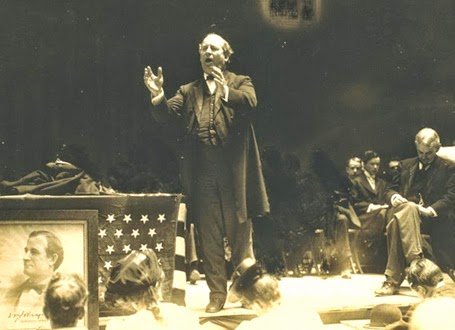
William Jennings Bryant, 1908, image Public Domain

If you promise your audience that you will tell the truth, that you should be trusted, then you have made it your duty to be truthful and trustworthy. I believe, further, that it becomes your duty in these circumstances to be a living example of truthfulness and trustworthiness: conduct discourse in an honest fashion, present your opponent’s views fairly and give them the benefit of the doubt, and debate and discuss their arguments on their own merits. If you want to tell the truth indirectly in satire, make clear what’s satire, and what’s not.

And if you get caught in a lie or an exaggeration, admit it. Your audience will thank you for your honesty, even as you make a mistake, since admitting it without excuses it proves your honesty all the more.

The discussion continues: On Jonathan Webber’s Discussion on Deception With Words: Honesty in Public Discourse Part II

*Listen to the podcast version here or on iTunes
*Also published at Darrow http://darrow.org.uk/2015/04/12/brian-williams-bill-oreilly-rush
*this piece has been lightly edited on June 8th, 2018 for clarity

~~~~~~~~~~~~~~~~~~~~~~~~~~~~~~~

Sources and Inspiration:

Corn, David. ‘Bill O’Reilly Responds. We Annotate’. Mother Jones, Feb 20th 2015
http://www.motherjones.com/politics/2015/02/david-corn-response-oreilly-falklandsFluke, Sandra. Sandra Fluke Yestimony to US Congress, Feb 23, 2012
https://en.wikisource.org/wiki/Sandra_Fluke_testimony_to_US_Congress_%282012_Feb….

Freed, Benjamin. ‘7 Questions for Travis Tritten, Reporter Who Debunked Brian Williams’s Helicopter Story’, Washingtonian, Feb 5th 2015. 
http://www.washingtonian.com/blogs/capitalcomment/media/7-questions-for-travis-tritt…Limbaugh, Rush. ‘Why I Apologized to Sandra Fluke’. The Rush Limbaugh Show, Mar 05 2012
http://www.rushlimbaugh.com/daily/2012/03/05/why_i_apologized_to_sandra_flukeLimbaugh, Rush. Quote: ‘You know I have always tried to be honest with you…’ Wikiquote, from
The Rush Limbaugh Show, Oct 10th 2003 http://en.wikiquote.org/wiki/Rush_Limbaugh

McCoy, Terrance. ‘Brian Williams Perhaps Misremembered Floating Dead Body and Gangs During Katrina Hotel…’ Washington Post Feb 10, 2015

http://www.washingtonpost.com/news/morning-mix/wp/2015/02/10/brian-williams-perhaps

Mahler, Jonathan, Ravi Somaiyia, and Emily Steele. ‘With an Apology, Brian Williams Digs Himself Deeper in Copter Tale’. New York Times, Feb 5, 2015
http://www.nytimes.com/2015/02/06/business/brian-williamss-apology-over-iraq-account-is-

Reeve, Elspeth. ‘Rush Scrubs ‘Slut’ Comment, Demand for Fluke Sex Tapes’. The Wire, Mar 8 2012 http://www.thewire.com/politics/2012/03/rush-scrubs-demand-for-fluke-sex-tapes/49643/

Steel, Emily and Ravi Somaiyia. ‘Brian Willaims Suspended From NBC for Six Months Without Pay’, New York Times, Feb 10, 2015

Uygur, Cenk. ‘Bill O’Reilly Responds To Attacks Over Falkland Islands War Coverage Lies’.
The Young Turks, Feb 23rd, 2015. https://www.youtube.com/watch?v=DiTbq8OAqbM

Book review: Plato at the Googleplex: Why Philosophy Won’t Go Away

As I sit here and sit here, racking my brain for a place to start this book review, I find I’m at a loss. I should have scribbled some notes as I was going along. But I didn’t, dammit. Perhaps it was because I was too enthralled all the while, each chapter taking me to new and surprising places. And since I’ve finished, it left me with so much to think about all at once, so therefore, I don’t know where to begin…
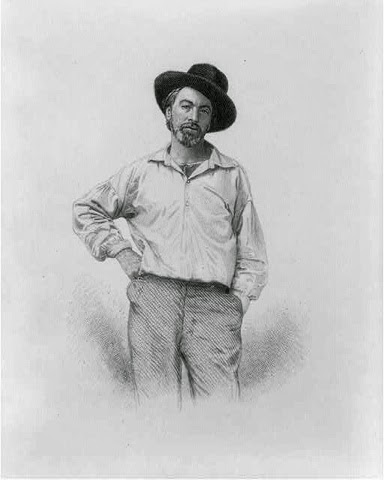
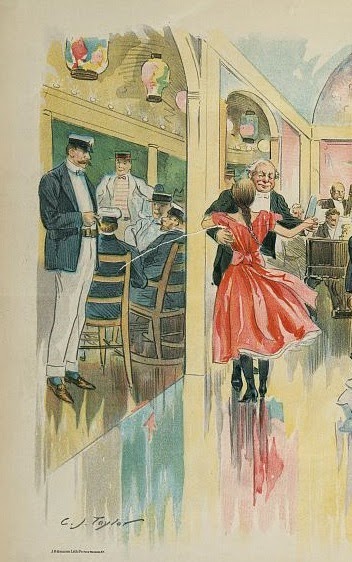
Well, here’s the gist of it: Plato at the Googleplex, by Rebecca Newberger Goldstein, is about Plato, his philosophy, his life and times, and his relevance to the world today. The chapters jump back and forth in time: each non-fiction chapter is about Plato’s (and his main influence Socrates’) life and thought, and is interspersed with a fictional one where Plato finds himself in some modern scenario. In each of the latter, he’s involved in dialogue and debate with various figures representative of our time, from an advice-session-turned-discussion with a media escort accompanying Plato in advance of his Authors at Google presentation and a tech geek on lunch break, to a panel discussion on how to raise a perfect child with a tiger-mom-slash-idealist and a Freudian, to an interview with a Bill O’Reilly-like pundit, to an MRI session in a neuroscientist’s research lab.

I’ve read some Plato over the years, a book here, and (mostly) a selection there, and he nearly always felt very removed. His language seemed remote and foreign, his thought experiments (the mythical Republic) seemed outlandish and overly idealistic, and the leading-question and answer style of his Socrates felt contrived, by modern standards of taste. Yet it took this scholar of Plato, who brought to bear her considerable skill as a novelist, to reveal Plato as the thinking, seeking, flesh-and-blood person who, more than just about anyone, got this whole philosophical project going in a big way.

Plato got it all going by showing us how to question everything, and why we should: it’s the only way to make progress. Not progress for its own sake: progress for our own sake, as it’s necessary to make every life better in a practical sense, and more worthwhile in a personal and social sense. Goldstein addresses time and again the objection that philosophy makes no progress, since it’s still asking the same questions. While the ‘same questions’ part might be true, the ‘no progress’ part is not. Some of the questions remain the same because they’re the questions each individual person must answer in regards to their own lives and experiences, no two of which are just alike. Therefore, the answers will be different for each person. Others of these ‘same questions’ are of such magnitude that we must keep asking them in order to slowly fill in the wealth of detail each answer requires if we are ever to get to a satisfactory one. Some remain important but unanswered, not necessarily because they are unanswerable (though many may well be), but because we don’t have the tools or information we need available yet. And so on and so forth.

Yet the most important reason we keep asking so many of these same questions is that the search for answers keeps generating yet more important questions, and yet more answers. And we, intelligent, restless, creative, curious creatures that we are, love love LOVE trying to find things out. I think more than we love knowing, though we love to know some things. And it’s the practice of never taking things for granted, never resting on our epistemological laurels too long, always asking, that Plato teaches us is the best way to learn about the marvelous world around us, and the universe out there, and that within our own minds.

In short: I highly recommend this glorious book. We would all do better to know more about Plato and why he’s so important, and it’s hard to imagine anyone doing a better job of describing why and how this is than Goldstein. But more than that, this book is a celebration of philosophy, the love of wisdom itself. It’s taken its place way up there among my very favorites!
(It’s = Philosophy and this book.)

Plato at the Googleplex: Why Philosophy Won’t Go Away. Pantheon, New York 2014.
http://www.rebeccagoldstein.com/publications/plato-googleplex-why-philosophy-won%E2%80%99t-go-away

Walt Whitman, on Animals

I’ve been revisiting the poems of Walt Whitman lately, listening to them read aloud on Librivox by a skilled reader, enjoying every moment of them in their rich simplicity. This one especially struck me, and I feel compelled to share it with you.

From Song of Myself, Book 3

I think I could turn and live with animals, they are so placid and self-contain’d.
I stand and look at them long and long.
They do not sweat and whine about their condition,
They do not lie awake in the dark and weep for their sins,
They do not make me sick discussing their duty to God,
Not one is dissatisfied, not one is demented with the mania of owning things,
Not one kneels to another, nor to his kind that lived thousands of years ago,
Not one is respectable or unhappy over the whole earth.
So they show their relations to me and I accept them,
They bring me tokens of myself, they evince them plainly in their possession.

~~~~~~~~~~~~~~~~~~~~~~~~~~~~~~

You know me, dear readers, as one who enjoys mentally taking apart things to see how the world works, a little too obsessively at times, perhaps. Yet I am an animal too, just one who does that kind of thing. But it’s good to remember to be the kind of animal that just takes in, and enjoys, simply, sometimes

Sexual Purity: A Dirty Idea

So have you ever heard of a purity ball?

It’s sort of like a prom, but with a twist: daughters are accompanied by their fathers, instead of their boyfriends. There, they enjoy music, eat, drink, and dance… and then these young girls pledge to remain sexually abstinent, or ‘pure’, until their wedding day.

Other than sounding weirdly out-of-date, like bride-prices and trousseaus, anything else bother you about this concept?

What does this concept of ‘purity’ mean?

The idea seems to be that if you’ve never had sex with someone, you’re more virtuous, more worthy, more desirable, more ….clean.

But what does this imply? That if you do have sex with someone, you’ve become, somehow, ‘impure’? That it makes you dirty, less desirable, less worthy, less virtuous, less worthy of respect, maybe even less valuable as a person?
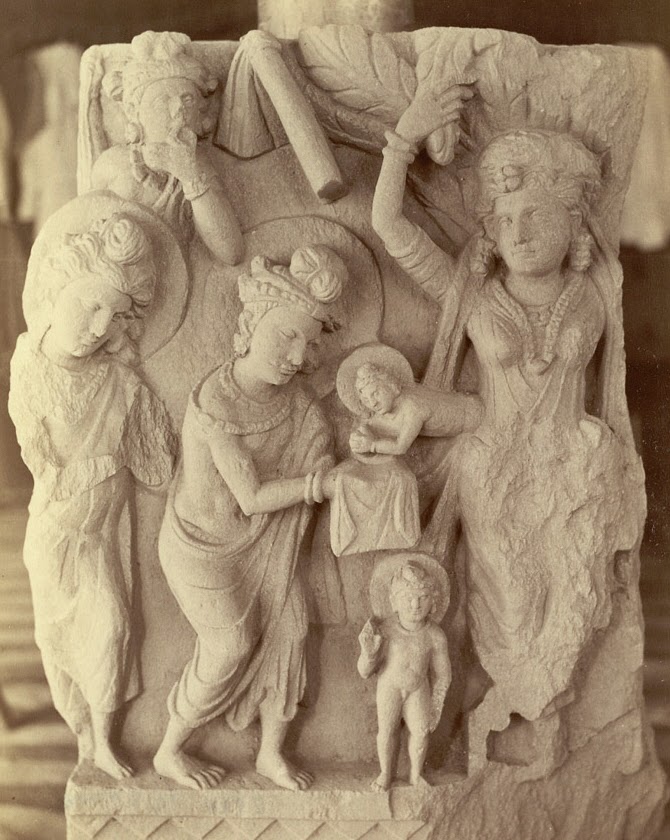
This idea, that engaging in one of the most social, most cooperative, most intimately friendly actions that human beings enjoy with one another can ever make you ‘impure’, has been a bee in my bonnet ever since I began to question what the idea of sexual purity, like the Cult of the Virgin, really stands for. For ages, human belief systems have equated virginity, especially of women, with sacredness. The stories of the birth of Horus, of the Buddha, of many of the Greek gods, of Jesus, all illustrate this obsession many of the world’s cultures, and especially religions, have had with virginity. (The virgin birth of the Buddha seems to be a later addition: early Buddhist texts honor the Buddha’s father, as his natural father, as well.) These gods and heroes are made out to be more special, better than mere ordinary human beings, at least partly because their mothers didn’t create them with the help of another human being. Gods and saints have been more revered, and brides’ dowries have been higher, so long as they or their mothers are virgins.
So what does this say about our attitude towards human beings?
‘How about respect?’ one might ask. ‘How about the idea that we should practice self-control, that we should respect each other’s bodies, and not ‘use’ each other for our own selfish pleasure?’ I answer: this is both an important issue, and an entirely separate one. Sexuality, for human beings, is generally a deeply emotional thing, unlike most other animals (so far as we know). For us, it’s intertwined with the need for closeness, for intimacy, for feeling more alive, for just plain feeling good. In short, it’s one of the most richly sociable activities we engage in. And we can easily hurt each other through sex, when we lie to our partners, when we make promises we don’t keep, when we profess love to get what we want only to show indifference afterwards, and worst of all, when we inflict pain and violate their right to self-determination through rape. We expect each other to practice sexual self-control, and we are right to condemn ‘using’ anyone as a mere tool for our exclusive pleasure.

But sex outside of marriage is more often friendly, affectionate, respectful, mutually exciting, and consensual than not. Most of the time, it’s a good and valuable thing, not only for its own sake, but for what it can teach us about being good partners not only for the evening, but for life. And even when it’s not, when we use our sexuality selfishly, or to harm or deceive others, our bad behavior has no impact at all on their integrity or worth. We may be said to make ourselves ‘impure’ through our disrespect, dishonesty, cruelty, or violence; we may metaphorically be said to sully our own moral characters by wronging anotherYet we don’t have purity balls in which we pledge not to sully ourselves by lying, stealing, cheating, or murdering. There’s no Cult of the Honest Woman, no god or prophet honored by virtue of their mother’s never haven stolen anything. And we don’t ever imply that we can be made impure if others lie to, steal from, or cause harm to us. It’s sex that’s been so widely singled out and associated with the concept of transmissible purity and impurity in so many of the world’s ideologies, cultures, and religions, for reasons that are no longer useful, and no longer morally defensible.

When I look at the belief systems that sacralize virginity, it seems the common denominator is the inheritance of values from tribal, patriarchal cultures, in which life was wrested out of the land with great difficulty, where infant mortality was high and competition for territory was fierce. Keeping tight control over women helped ensure one’s bloodline was unmixed with that of competitors, and worthy of protection by the head of the household and the tribe. The mythology of purity and impurity, of ritual, superstition, and prohibition surrounding human sexuality is perceived as such effective method of social control that they persist in many cultures and belief systems even to this day (though sexual assault statistics over the decades reveal that liberal, secular societies generally have lower rates of sexual assaults than more sexually repressive ones). Over the years, the justifications have changed, but attitudes remain the same.

Yet most of the world’s population has long since left that harsh ancestral world behind, and we are in an age in which personal liberty and individual human worth and dignity are valued like never before. Murder, theft, assault, and sexual coercion and violence are vilified and illegal, and most societies now go out of their way to ensure individuals can express their personalities and pursue their own goals as much as possible, in safety and security. We also care to understand how and why our social institutions and practices can enrich and beautify human life, and to celebrate them, from conversation, humor, and storytelling, to music and fine arts, to dining with friends, family, and allies, to sex itself, as countless scholarly volumes, scientific studies, and works of art and literature attest.

I argue that this view of human nature, in which human beings are understood as both individually valuable and thoroughgoingly social, doesn’t have room for this concept of sexual purity and impurity. In fact, to say sex with another human being can ever make you impure is just about the most personally insulting and antisocial idea one can express: the claim that the touch of another human being can make you dirty is an attack on human dignity itself.

It undermines the concept of personal responsibility, in which we are morally accountable for what we do and not for what a person does to us. It treats sex as a thing that is corrupt and evil outside of a narrow context, in a way totally divorced from what we’ve discovered about the history, evolutionary biology, and psychology of human sexuality. It reveals a deep scorn for human nature, in which sexuality is as basic a component as rationality, language, the need to survive, to feel pleasure, to matter, and to find love and companionship. And it implies that human beings are innately corrupt, dirty, wicked things, redeemed only through distancing themselves from their own humanity.

Just as I reject all of these, so I reject the idea of sexual purity. And I think you should, too, if you believe that human beings are valuable and worthy of respect for their own sake.

* Listen to the podcast version here or on iTunes

* Also published at The Dance of Reason, Sac State’s philosophy blog

Science and Philosophy, a Beautiful Friendship: A Response to Michael Shermer

There’s been some very public dig-taking between the science and philosophy camps lately. Lawrence KraussNeil DeGrasse TysonStephen Hawking, and other scientists are saying philosophy’s become irrelevant, little more than an esoteric old boy’s club. On the other hand, philosophers, theologians, politicians, and others criticize ‘scientism‘, the conviction that science, and only science, can and should be the ultimate source for all human knowledge; that all truth claims, that all ethical, metaphysical, and political beliefs, should not only be informed by or founded on, but entirely determined by, empirical evidence.

Michael Shermer’s article ‘A Moral Starting Point: How Science Can Inform Ethics‘ (Scientific American, February 2015) doesn’t dismiss philosophy so directly. He includes philosophy in a list of three other arenas of human thought, with religion and political theory, as those to which most people turn for answers in matters of right and wrong, good and evil. Science can, Shermer says, provide those answers, and goes on to explain why he believes ethics has no better source for them. The history of the human race is rife with slavery, torture, theft, and discrimination, yet all diminish human flourishing. Much of this harmful behavior consists of the group abusing certain of its members for the sake of others. But since it’s individual beings that ‘perceive, emote, respond, love, feel, and suffer’, Shermer says, it’s individual beings that are the ‘fundamental units’ of nature (evidenced by the fact they’re what natural selection targets). The primary purpose of ethics, then, is to promote the flourishing of individual beings, and to denounce all that doesn’t.

Yet as I read Shermer’s article several times, satisfied as I am that he places high value on the importance of empirical evidence, I find I have some objections. He doesn’t discuss how easy it is to jump to conclusions, inferring the ‘ought’ too quickly from the ‘is’. David Hume is the philosopher most famous for describing how tricky it really is to derive the ‘is’ directly from the ‘ought’, or in other words, the problems with assuming that just because something is a certain way, that means it should be that way. For example, how do we go about deciding that one fact, or one ‘is’, is more important than another fact when determining what ought’ to be done?

I also worry his argument helps perpetuate a certain myth, widely maintained by those who feel the need to erect walls around their respective fields of inquiry. In some cases, like Krauss’s, this whole debate appears to devolve into some sort of intellectual pissing contest. The myth is the claim that there’s a sharp dividing line between each field of inquiry, just as the committed political libertarian perceives the divide between the one and the many, the individual and the group. When Shermer includes philosophy in the list of alternate sources for ethics, and, implicitly, dismisses it as the best candidate, I think that he hints, wrongly, that philosophy is in competition with science generally.

A famous example of leaping too quickly from the ‘is’ to the ‘ought’, or in other words, deriving an ethical system too quickly from a scientific discovery, is eugenics. Many were so enthusiastic about the thrilling new scientific theory of natural selection, derived from observations in nature, that they thought it could be applied to all explanatory theories. Just as it is a fact that nature selects against certain individuals based on the ability to thrive in its environment, so it is that human beings should emulate nature and act as rational arbiters of fitness. In other words, we should select select against those individuals we think ‘degrade’ society by their existence and by their capacity to pass on their ‘undesirable’ qualities.
Scientists widely thought, from the late nineteenth century to the middle of the twentieth, that the human species could be more efficiently ‘perfected’ through the judicious selection of traits to pass on to future generations.

Here, philosophy and science (and yes, even religion) could have done a much better job at working together: arguably, these eugenic ethicists could have used a lot more Hume, philosopher, and a little less Cesare Lombroso, physician and criminologist who thought all bad human traits were physically inherited. It’s not that the physical sciences should not contribute to ethics, not in the least. It’s that more checks and balances between fields of inquiry could have kept so many over-eager scientists from over-applying their discoveries where there are good arguments to show they did not belong. If eugenicist scientists had paid more heed to Hume’s warning that we can’t so readily derive the ‘ought’ (what we should do) from the ‘is’ (the actual state of affairs in the world), perhaps they may have more carefully considered all of the evidence, including human moral instinct and logical arguments in favor of human equality, done a better job of including all available scientific data in their social theories, and restrained themselves from unleashing such a destructive ideology on the world.

 
But shouldn’t ethics be informed by facts about the world? If it isn’t, doesn’t that make ethics too arbitrary, or too abstract, to be applied to the lives of actual, living human beings, as members of a society as well as individuals? I agree with Shermer that it should. But I also think that facts about the world aren’t enough, on their own, to fully determine what we ought to do. In fact, these facts can’t be enough, all on their own. That’s because, for one thing, there are so many ‘is’s’ to consider, many of which indicate an opposite course of action would be best. To return to one of the many problems with eugenics: its promoters considered the ‘is’ of natural selection against ‘unfit’ members as the most important fact to consider in deciding which lives society ‘ought’ to consider worth living. After all, it’s selection against weak and ecologically ‘unfit’ individuals which made their surviving descendants ‘superior’. But there are other ‘is’s’: human beings are naturally disposed to empathize with those who are suffering to help them out, even if they are sickly, disabled, or otherwise more susceptible to an early death. This disposition, this instinct, is itself an evolved trait. It’s also a fact that the same cooperative set of instincts that compel us help the ‘unfit’ survive is the same that drives us, as a species, to help each other live happier, healthier, wealthier, and therefore ‘fitter’ lives in the long run, as individuals as well as members of society.
 
Shermer considers the well-being of individuals the primary goal of ethics, and for scientific reasons. He explains: ‘The singular and separate organism is to biology and society what the atom is to physics—a fundamental unit of nature. The first principle of the survival and flourishing of sentient beings is grounded in the biological fact that it is the discrete organism that is the main target of natural selection and social evolution, not the group. We are a social species, but we are first and foremost individuals within social groups and therefore ought not to be subservient to the collective.’ It’s clear that he, like all rational, well informed thinkers, doesn’t ascribe to the principles of eugenics, now considered not science, but pseudoscience. But it’s not so clear how he’s justified, based on scientifically confirmed facts alone, in saying that because natural selection works on the individual, it’s the individual whose interests should be protected first, and society second. After all, natural selection also works against individuals, culling some for the benefit of the group. So, one could just as well argue that the evidence shows it’s better for individuals, as well as for society, if those who are sickly or more likely to pass on disease and disability to others, should at least be allowed to die off as nature, without our intervention, would have it. Shermer needs more than just an array of facts to show why some, and not others, should inform ethics.
It’s true that, historically, far too much death and destruction have been wrought on individuals when they are perceived as ‘subservient’ to the group. In this, Shermer has much evidence on his side. But it’s also true that much harm results from placing too much emphasis on the rights of individuals over the wellbeing of society. Lax gun regulations make it easy on gun enthusiasts to enjoy their hobby while also making it easy for the murderously criminal and mentally ill to obtain guns too; lax labor laws make is easy for employers to exploit and abuse their workers to the point of disabling injury and death; lax financial regulation allow a few speculators plunge economies into ruin and populations into a state of want; ‘personal belief’ exemptions allow parents not to vaccinate their children, resulting in epidemics of disease and even death; the list goes on and on. Great harm, generally, comes from the attempt to separate individuals and society into two competing camps, or to, as Margaret Thatcher would have it, from acting on the belief that the group, or ‘society’, doesn’t really exist at all.

In our intensely social, emotive, thinking human species, the incredible degree of individualness that individuals can achieve is due at least as much to the contributions of the group, over time, as to the individual’s own efforts. Human beings make art, tell stories, travel, enjoy romance and friendship, build buildings and erect monuments, and create such rich and complex products of thought as history, myth, religion, politics, literature, science, and to my mind the greatest, philosophy (since it overarches and unifies all other systems of thought), precisely because of the level of sociability we have evolved. The rugged, self-reliant individual of American mythology, for example, is precisely that: a myth. No human being could get very far if they didn’t have a society, to help feed, clothe, and equip them with the tools and technology they need to perform their wonderful individual feats, and to restore them to health and pass on their story afterwards. Humans flourish when individuals efforts are promoted and when they’re not allowed to infringe too much on the interests of the group.

The human species, as a whole, flourishes so well because of this two-way dependence between the individual and the group: you can’t have one without the other. The incredible diversity of its individual members should be encouraged and protected because they make our species among the most adaptable, and therefore among the most resilient on earth. When we oppress individuals, when we seek to crush expression of personality, or system of belief, or ability to pursue personal goals and professions, we wrong both the individual and the human species, by undermining individual potential while making the species that much less diverse and therefore, less adaptable. When we undermine the flourishing of society by allowing individuals to pursue purely self-interested whims and goals to the detriment of all, we wrong the individual too. Short-sighted, self-centric market choices leading to mass pollution and climate change, widespread cell phone use while driving, ideologues who keep their children out of the public schools to indoctrinate them in one world view, and one only… when the individual is allowed, by the group, to pursue their own myopic interests to the detriment of all, individuals suffer too.

In all other areas of biological science, it’s essential to understand a species as a whole if you want to fully understand any individual. When you look at an individual being, you see a set of characteristics that could just as well be quirks as traits; when you look at the species as a whole, you recognize which of those characteristics all have in common, and which are necessary for all members of a given species to survive and flourish. Even when it comes to solitary animals, most cats, for example, we consider each one as members of the species cat as well as a particular furry, comfort-loving, furniture-ravaging, mouse-chasing, charmingly mischievous, producer-of-the-cutest-offspring-on-earth-namely-kittens animal. If we didn’t perceive them dualistically in this way, we wouldn’t understand much about any one cat, let alone all cats. If we were to encounter an individual animal with all those traits, and had never encountered or learned about others, we wouldn’t know what to feed them, how we might need to protect the furniture, or why we should keep a video camera handy when they’re around. If we need this dualistic perception of cat as one furry animal and one of many cats in order to understand it, how much more so for a highly social species, such as humans, whose interests and fates are so intertwined. I see no reason, scientific or otherwise, to look at the human species any differently in this regard.
 
This cat example might seem so illustrate such an obvious point as to be silly, but I think we need to remind ourselves of it every time an intellectual tries to divorce fields of inquiry from one another in the general human project of truth-seeking, or an ethicist, politician, or anyone else tries to completely separate the interests of the individual from that of the group. I think both are mistakes that Shermer comes too close to making in this article.
This whole discussion of how easy it is to draw wrong conclusions from scientific evidence can also serve to buttress Shermer’s initial point about ethics, even if it doesn’t support his overemphasis on the divide between the individual and the group. I agree that scientifically verifiable facts about human beings should inform our ethics; the best system of ethics, to my mind, is a naturalistic system. Here’s where we arrive at what Shermer mostly gets right. Looking outwards at the world provides the raw material for any system of thought, as his title ‘A Moral Starting Point’ more than suggests. After all, all knowledge begins with the information we receive through our senses, as Aristotle, Hume, and the other empiricist philosophers point out. There is no reason to think we could think at all if we have never heard, seen, felt, tasted, or smelled anything to think about. And it’s thinking that gets us to do more than just sensing the world as a microbe, a plant, or a clam does, reacting without reflection. Philosophy is the human species’ way of taking the art of thinking as far as it can go: we examine what the information we receive might mean in a larger context. We question, we look for answers restlessly not only because we want to solve problems: we love to do so. Philosophy, after all, literally means ‘love of knowledge/wisdom’, translated from the Greek. And as we ask and as we look, in the interplay between the input of our senses and the organization of information through thought, science affords reality the opportunity ‘to answer us back’, as Rebecca Newberger Goldstein so puts it so well (Plato, p. 34).Philosophy not only provides the impetus and the direction for the inquiry of science: once we find out the facts, it helps us figure out what to make of them. In every step of the way, the formulation of scientific theories relies heavily on philosophy, from the application of the rules of logic to the justification of why we should value or emphasize one set of facts over another. In fact, until very recently, science was a branch of philosophy (natural philosophy) until that general branch of inquiry about the natural world became so large it specialized and branched off, then branched off again into physics, biology, chemistry, and so forth. Those areas of philosophy that didn’t branch off into the sciences and into theology, came to be identified with the arcane varieties of metaphysics, epistemology, ethics, and so on, pursued largely behind the walls of academia today.

But philosophy is not limited to an arcane, highly abstract field of inquiry, as fascinating and valuable as that can be. It’s that approach to life as a perceiving, emoting, responding, loving, feeling, suffering, and thinking being, that every person partakes in, to one level or another. Philosophy, from its very beginnings, originates in the public square. It’s welcoming into ones’ self the whole world of things to sense and to imagine with a curious, critical, and interdisciplinary approach, and engaging in that way of thinking with others. I want to know why, and how, and who, and so on, and not only to know what is, but why I care about it and why others should too. Science is a big part of this. Yet philosophy is prior to, and necessary for, the former. In fact, it was my love of philosophy that led to my fascination with science, to question and replace some of the ideas I was taught in my youth (creationism, the doctrine of original sin, the sacralization of virginity, and so on) with a more naturalist system of inquiry. To separate philosophy from science is as unhelpful as divorcing the individual from the species: one does not function without the other.When it comes to understanding the universe, in fact, there is no such thing as ‘nonoverlapping magisteria’ of thought (as Steven Jay Gould put it when he tries, to my mind unsuccessfully, to justify the separation of theology and science). I think it’s a mistake to engage in the kind of intellectual turf war that science, philosophy, and other fields of inquiry are sometimes engaged in, not only because it sets up mental road blocks to incorporating the full range of evidence and ideas available, it sets a bad example for critical thinking. Shermer does well to remind philosophers, many of whom are sadly remiss in this, that they need science to keep them honest, so that subtle errors in logic, mistakes in self-justification, or over-weddedness to a particular tradition of thought can’t lead them too far astray.

But ‘philosophy-jeerers’, as Newberger Goldstein calls them, make a mistake when forgetting how much science owes philosophy, and how heavily they actually depend on it. For example, at the beginning of the article, Shermer refers to rights theory in philosophy as a popular source of ethics, as a contrast to a scientific view. Yet later on in the same piece, he refers to ‘natural rights’ as a scientific ethical principle. Yet rights theory has always been derived, even if indirectly at times, from the application of reason to observed facts about human beings: that they are rational and feeling creatures, that they are capable of autonomous will, that they seek to live ‘the good life’, and so on. To intimate that rights theory is, or has ever been, an alternative to an empirical view of ethics is either to ignore or to misunderstand what rights theory is and always has been.
Darwin's Ghost be Rebecca Stott, Photo Credit: Goodreads
Remember Aristotle, philosopher extraordinaire, one of the earliest and most famous founders of two (among many) of the most influential fields of philosophy: ethics and natural philosophy (better known today as science). As so delightfully described in Rebecca Stott’s Darwin’s Ghosts, Aristotle didn’t remain in his armchair (did they have armchairs in ancient Greece?), spinning abstract theories straight out of his head, arguing tedious points of logic with his fellow philosophers. He looked to the world to provide the raw material with which to craft his theories on the origins and nature of life, diving for specimens of sea flora and fauna, following animals around and recording their behavior. It was his philosophical mind that drove him to ask the questions and look for answers, and it was nature that provided the predicates, the subjects, of his reasoning.

In the words of Humphrey Bogart, we can see, from accounts of her birth, ‘the beginning of a beautiful friendship’ between Science and her parent, Philosophy. The most intimate kind of friendship, where the dialogue is open and honest and each supports the other, guiding one another away from the pitfalls and wrong turns the other doesn’t see.

So from the very beginning, philosophy has always been there to keep science honest, supplying the discipline of logic and helping it avoid methodological errors. It makes it clear to why there are relatively few direct or easy links from the ‘is’ to the ‘ought’ when formulating principles of ethics. It shows science that finding out how things work doesn’t readily indicate how we should apply that information in our daily lives, that even the best scientist is prone to bias, misunderstanding, and underestimation of that which we don’t yet know, and how science can be used to help and not harm.

There is no honest philosophy without science, and there is no science at all without philosophy.

*Listen to the podcast version here or on iTunes
* A version of this piece is published in Philosophy Now
*Also published in Darrow
~~~~~~~~~~~~~~~~~~~~~~~~~~~~~

Sources and inspiration:

Anderson, Ross. ‘Has Physics Made Philosophy and Religion Obsolete?’ The Atlantic. Apr 23, 2012
http://www.theatlantic.com/technology/archive/2012/04/has-physics-made-philosophy-and-religion

Burnett, Thomas. ‘What is Scientism?’ American Association for the Advancement of Science website.
http://www.aaas.org/page/what-scientism

‘Cesare Lombroso.’ In Wikipedia, The Free Encyclopedia
http://en.wikipedia.org/wiki/Cesare_Lombroso

Fagan, Andrew. ‘Human Rights’. Internet Encyclopedia of Philosophy.
http://www.iep.utm.edu/hum-rts/#H2

Gould, Stephen Jay. “Nonoverlapping Magisteria,” Natural History 106 (March 1997): 16-22
http://www.colorado.edu/physics/phys3000/phys3000_fa11/StevenJGoulldNOMA.pdf

Hume, David. A Treatise of Human Nature, Book III: Of Morals. 1739.

http://www.earlymoderntexts.com/pdfs/hume1740book3.pdf
Nerdist Podcast: ‘Neil Degrasse Tyson Returns Again’. March 17th, 2014
http://www.nerdist.com/pepisode/nerdist-podcast-neil-degrasse-tyson-returns-again/

Newberger Goldstein, Rebecca: Plato at the Googleplex: Why Philosophy Won’t Go Away. 
New York, 2014 http://www.rebeccagoldstein.com/publications/plato-googleplex-why-philosophy-

 
Shermer, Michael: ‘A Moral Starting Point: How Science Can Inform Ethics.’ Scientific American, 
February 2015.  http://www.scientificamerican.com/Stott, Rebecca. Darwin’s Ghosts: The Secret History of Evolution. Random House, New York 2012.
https://books.google.com/books?id=5Lt_MXhNJEoC&pg=PP5&dq=darwin%27s+ghost

Thatcher, Margaret. Quote from interview with Women’s Own magazine, Oct 31st 1987.
http://briandeer.com/social/thatcher-society.htm

Warman, Matt. ‘Stephen Hawking Tells Google “Philosophy is Dead”‘. The Telegraph, May 17th, 2011
http://www.telegraph.co.uk/technology/google/8520033/Stephen-Hawking-tells-Google-philosophy

Is Feminism Passe? No! Cries A Distinct Lack of Statuary

Many say that the idea of ‘feminism’ is outmoded: it smacks of reverse sexism, and the women’s rights movement has pretty much accomplished its goals anyway, at least in the free world.

Why flog a dead horse, ladies?

In my last travel blog series, following in the footsteps of great thinkers who changed the world, I explored New York City. I found statue after statue, monument after monument, portrait after portrait, of important men in American history: there were Lincolns, Jeffersons, Clintons, and Hamiltons galore, and speaking of horses, a multitude of Washingtons, often astride one. Yet search as I might, in this city that birthed and nurtured so many of the greatest American intellectual and reform movements, I was hard pressed to find such tributes to their female counterparts. Wait! there’s one: Eleanor Roosevelt, great humanitarian… and oh yes, wife and cousin to two American presidents.

Of course, Eleanor should be honored with this beautiful monument for the great things she did. But would she have been if it weren’t for the famous men in her life? Hmmm. It’s not that statues, monuments, and other public works of honorary art are necessary to show how important anyone’s achievements are, so long as we remember them and pass on their ideas. But they do provide a window into the values and interests of the people. Initiatives, petitions, and referendums are submitted, committees form, public collections are taken up, and wealthy people grant commissions to create these public works.

In short, these monuments go up when enough people care enough to publicly show how much they care.

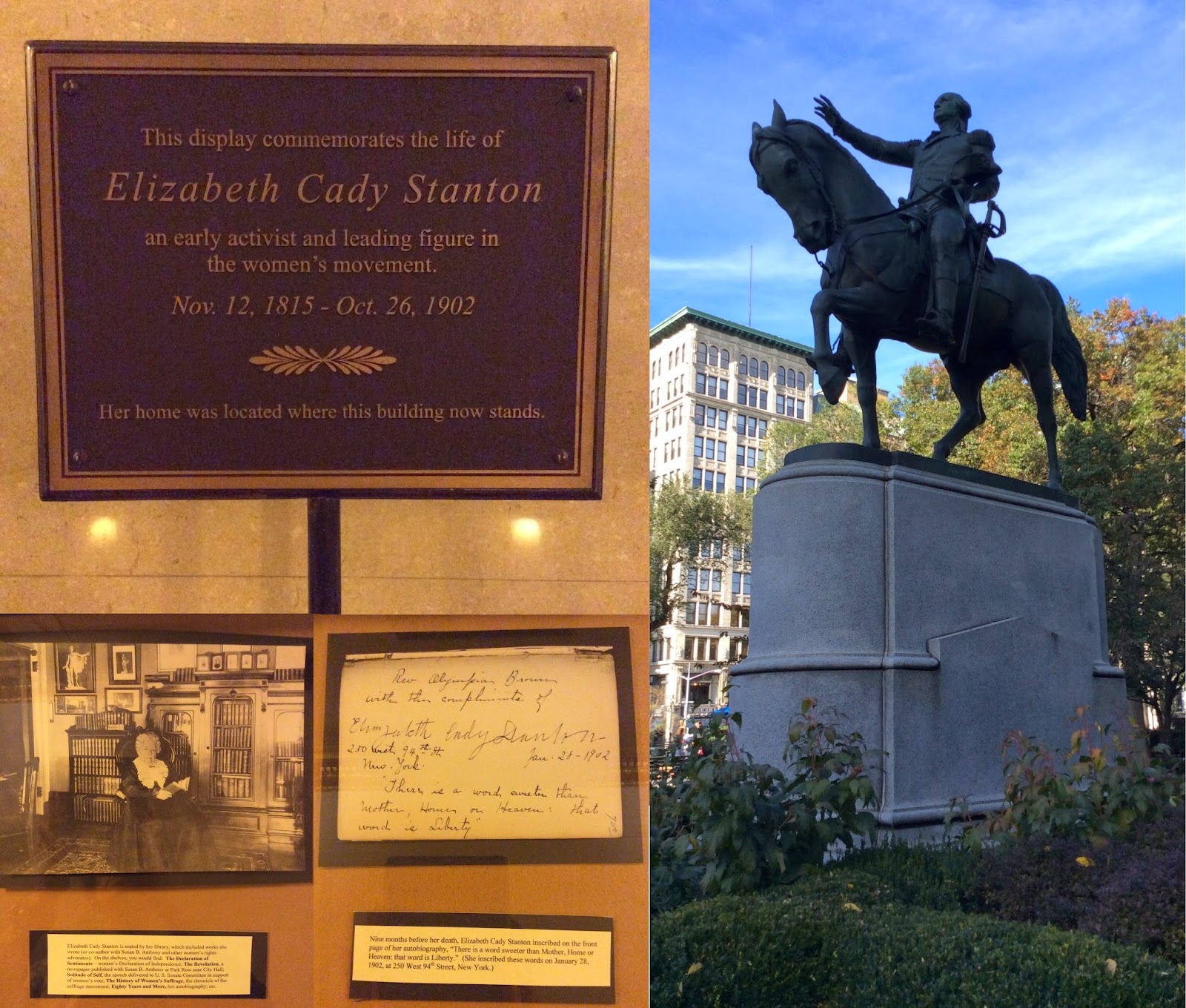
So how can it be that great women like Mary Wollstonecraft, Ernestine Rose, Sojourner Truth, Elizabeth Cady Stanton, and Margaret Sanger are commemorated so modestly or so seldom? (A little plaque or a sign on a street corner here, a dusty little cabinet display there.) When their efforts, arguably, liberated more people than anyone else? After all, women make up more than half of the human race, and prior to their life’s work, most women in the world lived almost completely under the subjugation of men, most with restricted education, all denied the full range of rights and opportunities accorded to men.

I feel a free woman, myself, in most ways. I read, think, work, play, procreate (or not!), travel, dress, and so forth, as I decide for myself. Thanks, brilliant, fearless, principled women of history! But their work is not done so long as great women are not honored equally as great men, and working women as much as working men, and women who need health care as much as men need health care, and so on.

Is feminism over? I’ll believe it when I see it. In marble, granite, brass… or in the office of the President of the United States. Maybe then.

*Listen to the podcast version here or on iTunes

The Wisdom of Crowds: How Voting Produces a Better Society

It’s easy to feel discouraged in the United States of America sometimes.

Recently, I was chatting with someone who suggested that a meritocracy might be better than the democracy (of sorts) which we have now. A democratic republic, rather, and a degraded one: our government seems more dysfunctional than ever, overrun with ideologues and pawns of a few moneyed interests, and hyperbole and unreason holds sway over public discourse. A meritocracy, where rulers are selected based only on their qualifications, be it education, political experience, or business acumen, might prove a welcome change.
Meritocracy is, pretty much, just a theoretical form of government. I expect everyone believes it would be best to have wise and qualified leaders (if we must have any at all), and most think it’s good to try to put such people in office. No government exists whose constitution specifically requires that only the smartest people rule. But imagine a real meritocracy, with strict laws in place to ensure that only the most able, most knowledgeable leaders are appointed. Perhaps public officials would be selected by undergoing a series of tests, or elected by a panel of experts in relevant fields of knowledge. Wouldn’t this increase the chance that no dummies, however slick, charming, or pandering, would be allowed to hijack the government and, through their incompetence, ruin it for everyone else?
Not all that long ago, this sounded pretty good to me. When I returned to college awhile back and studied political philosophy, I was very much in the mood for it, or something like it. Like just about everyone else, it felt that I was constantly slapping my forehead (as I still do) over the ludicrous statements and bad laws our politicians were cranking out. Wouldn’t it be much better if they all had to take IQ tests, plus general knowledge tests in political and legal theory, history, English, rhetoric, and the rules of basic courtesy before they were allowed to run for office? (I’m willing to bet that no politicians who call for ‘citizenship tests’ for voters also call for ‘leadership tests’ for themselves.) Like you, dear readers, I have a deep respect for learning, and would be thrilled to see more of it make its way into our government and into our political discourse, let alone into our (to my mind) overly-materialist culture.

Yet through the years, the more widely I read, and the more I listen to politicians, scholars, and other influential people discuss and debate any given topic in any given field of expertise, it doesn’t seem likely that anyone exists, however brilliant, who could know or understand enough about any subject to craft public policy on their own. No one mind can hold all the relevant knowledge that should be brought to bear in crafting a good law. It’s not just technical knowledge that’s the problem: an expert in a field could, at least theoretically, access enough of that sort of knowledge on their own, from their colleagues, their library, and the Internet, though it still seems unrealistic that one person could put it all together in a reasonable time frame. The far bigger problem is that no one person could escape their own biases sufficiently to craft laws that are just for everyone.

All societies are made up of people with different personalities, different points of view, different belief systems, different circumstances of life. Each, therefore, has different interests and different responsibilities, and have different rights they hold most dear. It’s not possible for any one mind to fully understand how the rights, responsibilities, and interests of all interact and conflict. Not only that: a wise leader must effectively predict the entire chain of events that might result from enforcement of the law, or system of laws. We might say well, of course, no one knows all these things. So what we need in order to create an effective meritocracy is many leaders, not one or just a few. Between them all, a governing body of a large number of experts should be able to work out these problems as least as well as the public at large, and probably better.
But here we run into problem of numbers. Aside from the inevitable clashes of ego, think of how many ‘meritocrats’ it would take to adequately take all of the relevant knowledge, all the possible outcomes, all the values and interests of all of its citizens into account while crafting legislation. Is it likely that any one group, so unrepresentative as they are of the general population, could create a society in which the rights and interests of all of society, rich and poor, educated and otherwise, men, women, and children, laboring and not, of all races, are fairly and equally represented? Could they do this even in theory, given the facts of human psychology? Almost everyone, almost all of the time, automatically favors their own interests and those of their peers over those of other groups, and it makes sense that they should. For one thing, they understand why their own interests are as they are, because they arise from their own particular life experience. For another, everyone is prone to availability bias: people form beliefs and make decisions based on examples they themselves can readily call to mind. Therefore, we are intellectually hostage, so to speak, to whatever set of information and experience we are privy to. However much we try to expand our knowledge of the world, we are always limited. These, and myriad other quirks of human psychology, make it inevitable that no one human being on their own, or a relatively small group of human beings, could make sufficiently fair, impartial, and fully informed decisions on policies that effect everyone.

Let’s consider pre-Revolutionary France for an extreme example of how a meritocratic but short-sighted few, ruling over a non-participatory citizenry, can bring about societal collapse. France, like other European societies at the time, was ruled by a heritable meritocracy of a monarch and an aristocracy, and an appointed clergy, who all had the wealth and leisure, unavailable to most people, to afford an education. These ruled a populace which they kept in strict subjection, for the people’s own good, of course. Yet these meritocrats could not put themselves into the sabots (wooden clogs of the peasantry) of the majority of the people. (The Estates General, made up of representatives from various classes, advised the king, but had little power to begin with, and it decreased over time; the Third Estate, made up of the poorest members of  French society, had the least power, and the burden of taxation fell almost entirely on them.) As they saw it, the classes of society were properly kept in their place to fulfill their respective roles, and to undermine this structure would be to undermine the delicate balance of a functioning society. They were proven wrong: the intolerable condition of their lives caused the laboring classes to revolt and overthrow their rulers. While the monarch, the aristocracy, and the clergy considered themselves best suited for rule, they lacked the knowledge, the insight available only through the experience of what it takes to make the life of a laboring person not only bearable enough forestall rebellion, but satisfying and remunerative enough to encourage more productivity. They lacked the epistemic humility that wise people have. If the ruling elites were more informed, say, by the input of the people they ruled over, perhaps they could have thought of ways to harness human energy and facilitate creativity as market societies would later do. But since they shut themselves off from the input of the majority of the population, their policies were ill-informed and short-sighted, and their society eventually collapsed. This was the fate of so many undemocratic societies, that it seems most likely to be the fate of all.

‘But wait a minute!’ you may object. Why would we expect better results in a democracy, when it’s at least as likely and probably more, that the average person’s vote is based on just as narrow, less-than-fully-informed self-interest as that of the aforementioned meritocrats?

 
In a democratic system, individual voters don’t have to be fully informed about everything for their votes to be valuable. Since the vote crowd-sources knowledge from the entire population, each person, even if voting out of narrow self-interest, informs society of the things they know most about. Our votes tell each other what we want, and indicate why. By the way people vote, we discover what individuals have learned from their own life experiences, from the work they do, their area of study or expertise, their family and peer groups, and the demands of the environment in which they live. We learn what people believe, what their interests are, how far they’re willing to go to help each other out, and where they want the line drawn to protect themselves. We learn how much people know (and how much they don’t), what values they hold, and what kind of leaders they admire.

So it’s not that the average voter must be wise or fair for their vote to count, though it’s better that they are, since this speeds up the process of creating a better government. What matters most is that society as a whole is well informed. A society can only become knowledgeable enough to create a government that’s well-functioning, impartial, and more conducive to the flourishing of all of its constituents, by this crowd-sourcing of information. Since no one mind, or no few minds, can hold enough information or understand enough points of view to do what’s best for everyone, it’s everyone who must provide the necessary knowledge.

This utilitarian argument, by the way, is not meant to replace moral arguments in favor of democracy: that proper respect for the moral equality of all persons entails the right to vote, or that it’s incumbent on all good citizens to fulfill their social obligations through political participation, and so on. I offer it as one of many excellent reasons to prefer a democratic system of government over any other: not only because it’s morally enlightened, it’s also the most practical. Democracy is best because it works best, and the evidence of history bears this out. In modern democratic societies, for example, war is relatively rare, since the transfer of power from one leader to the next is peaceful. Generally, the burdens of war disproportionately fall on the majority of society while a relative few reap the benefits; very few wars in history were revolutions that benefited the majority the most. For those of us dismayed at how many wars we still wage nowadays, compare the state of the world today with the history of Europe : nearly every time a ruler or rulers died, by fair means or foul, either a war would break out to decide who should rule next, or the new ruler(s) would embark on a war of conquest to prove their supremacy, or the favored religion of the new ruler(s) was forcibly, and bloodily, imposed. Most of Europe was at war most of the time, century after century, until their monarchies, aristocracies, and theocracies were replaced with modern, democratic, and largely secular governments. Modern democratic societies, while sometimes at war with other countries, aren’t at war with each other, and there are far fewer wars overall as a result.

Let’s consider a modern example of how not voting not only leads to more oppression, but to well-intentioned yet bad policy resulting from self-imposed ignorance: the disenfranchisement of convicts. Those convicted of serious crimes are punished with the loss of some of their civil rights, at least for awhile, and this often includes the right to vote. While I understand the deterrent effect of many types of punishment, including the loss of some rights and privileges, the loss of the vote does little good in this respect. Each individual prisoner loses little when they lose the vote, but society loses a lot: as we punish criminals by taking away their right to vote, we undermine our society by making it that much less informed.

As we are only significantly realizing now, our criminal justice system is not only rife with mistakes, but with affronts to human dignity and assaults on human rights. For example, we’re discovering that our ‘common-sense’ reliance on eyewitness testimony and police interrogation techniques has led to an unacceptable rate of false convictions. We’re finally discovering that our ‘tried-and-true’ methods of police interrogation and psychological questioning routinely generate false testimony and false confessions. This includes 20%-25% of exonerations for serious crimes based on DNA evidence (an alarming rate, since relevant DNA evidence is available only in a substantial minority of cases). There are a wealth of examples of people convicted because of the brain’s ability to create false memories, especially if an authority figure or medical ‘professional’ induces them, or because eyewitnesses misunderstand or misremember what they saw. Consider the rash of cases in the 1980’s and 1990’s where scores of childcare workers were falsely convicted of ritualistic child rape and torture. Or the Norfolk, Virgina murder/rape case, in which four grown military men (who had passed mental- and bodily-health tests to join the Navy) were coerced into giving contradictory confessions. The list of problems with our justice system does not end there, not by a long shot: there’s our long history of junk forensic science, prison overcrowding, official indifference to prison rape, solitary confinement-induced mental illness, and law-enforcement policies which generate higher recidivism rates and help turn petty criminals into hardened, violent ones through over-punishment.

Yet if those convicted of crimes had been informing the rest of us, through their votes, of their inside knowledge of the criminal justice system, the sooner we could have had the opportunity to recognize and correct these errors. It took centuries for policy makers and researchers and scientists to discover how prevalent, and how serious, these problems are, or to care enough to find out. Of course, it’s important to be tough on crime, and all members of a society have the right and responsibility to protect themselves and their loved ones. But this interest in self-protection must be balanced against the interests of those who have suffered the ill effects of over-zealous, ‘tough-on-crime’ policies. Every time an innocent person is convicted of a crime, the guilty one remains free to commit more, and every policy that encourages the abuse of prisoners and raises incarceration and recidivism rates, the more injustice we commit, the more criminality we foster, and the more taxes we pay.

None of this is to say that merit doesn’t matter, of course it does. In modern democratic societies, we not only vote directly for specific laws and taxes, we vote for representatives, specialists whose job it is to be better informed on the issues than the average person, or have expert advisers, or have achieved a higher level of education. A democratic republic such as ours can be seen as a type of meritocracy, since the idea is that the people, as a whole, elect representatives based on their merits as well as on the likelihood that they will best represent their constituents’ interests. But even so, the fact that they are voted in by all of the people still ensures that the whole range of interests are represented, and the widest possible range of knowledge is brought to bear.

To return to the degraded state of the United States’ democratic republic: the problem isn’t so much that uninformed voters are dragging the country down, though I think they, too, can impede progress. The bigger problem is that the votes of most people count less than ever, in this era where buying power makes right, and where the interests and values of the majority of people are not adequately represented. For example, we have a problem under-regulation, where powerful financial interests have over-ridden the interests of most of the population. These few financial interests, who have grown to such gargantuan proportions that they hold most of the nation’s capital in their (virtual) vaults, gamble with it freely for the sake their own personal gain, to the detriment of the nation’s economy, and of the world’s.We also have a problem with over-regulation, where special interests of a powerful few successfully hijack government, through financial enticements and pressure on elected officials, for the express purpose of crushing their competition. Here, again, the interests of most of the people are trumped by the outsize influence of a moneyed few.

Here’s my two cents on the matter: VOTE! You matter! Your interests, your input matter! Don’t just throw your hands up in the air, sigh, stay home, and play into the hands of those who have, in recent years, been throwing up roadblocks to keep certain people from the polls, disproportionately effecting the poor, those disabled by age or illness, and otherwise disadvantaged people. After all, do you think it’s likely that such an effort would be made by those in power if voting doesn’t matter? Think about it.

Listen to the podcast edition here or on iTunes

****************************************************************************

Sources and Inspiration:

Berlow, Alan. ‘What Happened in Norfolk.’ New York Times Magazine. August 19th, 2007.
http://www.nytimes.com/2007/08/19/magazine/19Norfolk-t.html

Childress, Sarah. ‘Why Voter ID Laws Aren’t Really About Fraud’. Oct 20, 2014. Frontline.
http://www.pbs.org/wgbh/pages/frontline/government-elections-politics/why-voter-id-laws-arent-...

‘Day-care sex-abuse hysteria’. (2014, December 29). In Wikipedia, The Free Encyclopedia.
http://en.wikipedia.org/wiki/Day-care_sex-abuse_hysteria

‘Estates General (France)’. (2014, October 5). In Wikipedia, The Free Encyclopedia
http://en.wikipedia.org/wiki/Estates_General_%28France%29

Fontevecchia, Agustino. ‘As New York City Crushes the Food Truck Business, Mexicue Pushes a New Model’. Forbes. May 23rd, 2014. ‘http://www.forbes.com/sites/afontevecchia/2014/05/23/...

Fraser, Scott. ‘Why Eyewitnesses Get It Wrong’ TED talk. May 2012
http://www.ted.com/talks/scott_fraser_the_problem_with_eyewitness_testimony

Kahneman, Daniel. Thinking, Fast and Slow. Farrar, Straus and Giroux, New York 2011.
https://books.google.com/books?id=ZuKTvERuPG8C&printsec=frontcover&dq=thinking...

Lightman, David. ‘Wall Street crisis is culmination of 28 years of deregulation’. McClatchyDC. Sept 15th, 2008. http://www.mcclatchydc.com/2008/09/15/52559/wall-street-crisis-is-culmination.html

Loftus, Elizabeth. “The Fiction of Memory” TED talk. June 2013.
http://www.ted.com/talks/elizabeth_loftus_the_fiction_of_memory?

‘Meritocracy’. Wikipedia, The Free EncyclopediaJan 8, 2015.
http://en.wikipedia.org/wiki/Meritocracy

Mills, Steve and Maurice Possley. ‘Man Executed on Disproved Forensics’. Chicago Tribune, Dec 9th, 2004. http://www.chicagotribune.com/news/nationworld/chi-0412090169dec09-story.html#page=1

Perrilo, Jennifer T. and Saul M. Kassin. ‘The Lie, The Bluff, and False Confessions’. Law and Human Behavior (academic journal of tje American Psychology-Law Society). Aug 24th, 2010.
https://www.how2ask.nl/wp-content/uploads/downloads/2011/10/Perillo-Kassin-The-Lie-The-Bluff

Perry, Marvin. Western Civilization: A Brief History, Vol II: From the 1400’s. Boston: Wadsworth, 2009 https://books.google.com/books?id=7SIKAAAAQBAJ&printsec=frontcover&dq=Perry,

Pinker, Steven. The Better Angels of Our Nature: Why Violence Had Declined. New York: Viking Penguin, 2011 https://books.google.com/books?id=J7ATQb6LZX0C&printsec=frontcover&dq=inauthor

Encourage a More Progressive Islam: The Peaceful Muslim Majority Should Dominate the Conversation

The debates around the Charlie Hebdo shooting have been raging hot and fast: should there be a stronger military response to militant Islamists? Does the Quran promote or at least allow violence, and if so, is Islam really a religion of peace? Are principles of the right to free speech and basic respect for the feelings of religious people compatible?
We’ve tried, and mostly failed, the military response tactic. Even where gains appear to have been made in the short term, a new crop of fanatics soon rise up to strike, as they feel their country’s honor has been violated by invaders who have no right to dictate what they should believe, what laws they should make, or what form of government they should create. It’s a fact of history that invasion, real or perceived, by foreign armies invariably provokes those disposed to violence to take up arms; these, in turn, convince the young, the aimless, and the self-righteous to join them in their ‘sacred’ cause. Even if the intention of the ‘invaders’ is to liberate or to protect (though I’m not convinced that’s entirely or even usually the case on the part of governments), these military interventions usually turn out worse for everyone in the long run. Consider the domino effect from our early intervention in Afghanistan against the Russians to our seemingly endless war(s) in the Middle East. While each intervention on its own seemed justified to many in the short term, the deeper all parties dig themselves in with more fighting, the more the bodies pile up and the deeper the tensions run, generating yet more conflict.
So how about the religion itself, and its holy book? The Quran indeed contains violent passages, allowing and even commanding its readers to kill those who violate certain commandments or who don’t believe. The Bible is also chock-full of both divinely tolerated and divinely commanded violence, including rape, murder, mutilation, and lots of genocide. Christians, for centuries, invaded other countries, overthrew rulers, tortured and killed heretics and ‘witches‘ (including little girls), and harshly oppressed the Jews, from baptizing and kidnapping their babies to murderous pogroms. All this with consent, by silence or by instruction, of religious authority figures, including the Pope.

So why does the western world widely consider Christianity a religion of peace, and Islam a religion of genocide? Well, Christianity has undergone a pretty thorough reformation through the influence of better philosophical and evidence-based ideas, starting with the Protestants, continuing with the Enlightenment, and up to the Age of Science and Human Rights. With widespread literacy and open trade came the awareness that the old dogmatic, sin-obsessed, holy-war-glorifying ways are actually quite awful for human well-being, and that hey, if God loves us, maybe he doesn’t actually want us to live that way. Now, except for abortion clinic bombers, the odd Timothy McVeigh or Anders Behring Breivik, and certain pundits, fundamentalists, and warmongers who seem to long for the days of the Crusades, Christianity is now, in comparison, mostly a benign family of religions of tolerance, peace, and good works. Even if, as I believe, they get a lot of stuff wrong (mostly the metaphysical stuff; otherwise, many of the ethical systems they promote are not half bad), Christian religions bear little resemblance to their forebears who enacted Old Testament values with gusto. Same goes for (most of) the Jewish family of religions.

This takes to our modern Age of Human Rights, in which the rights and interests of individual persons are of primary concern, so that any and all human institutions, be it religion, corporation, community, or government, is judged by how well it serves to protect and expand human rights. Is Islam compatible with this new understanding of the importance of human rights, in that they are at least on equal footing with religion, if not taking precedence over it? (From the religious viewpoint, of course: most modern, reformed, and mainstream religions seem to promote a robust conception of the centrality of human rights in their moral systems, and see no real conflict. The most progressive believers, as well as atheists and secularists, think that too many religions are still retrograde and unjust in their beliefs regarding gay, women’s, and children’s rights.) Should the threat of offending religious people be sufficient to limit that most sacred of human rights to the western world, free speech? We’re still figuring that one out when it comes to extreme cases, such as those that specifically incite violence, or ‘hate speech’. But for the most part, I think the general attitude of the western world towards free speech is the correct one: it should rarely be constrained, except when’s demonstrable that severe and direct harm will almost surely result from it. Even the speech of people with the most disgusting views must be tolerated in the interests of being an informed person, since it’s important to know who they are and what the bad ideas are that influence them. Most religions in the western world have become pretty comfortable with the idea of free speech and have come to value it highly, including the more moderate forms of Islam.

So how to stop the seeming spiral of parts of the Muslim world into an orgy of violence and the ideological dominance of its most extreme and retrograde forms? Encourage and promote those who stand against those violent ideologues. Most Muslims belong to this category of believers, and number among the most humane, thoughtful, and decent people you may care to meet. These are the Muslims who feel most, and most justifiably, beleaguered. They are as horrified as anyone else at all the atrocities committed in the name of the religion they identify with, perhaps more so since it’s other Muslims committing these crime, and like most Christians today, emphasize the nice parts of their holy book and interpret away the rest. And I’m sure they feel, as this thoughtful piece successfully argues, that it’s as ridiculous to blame Muslims as a group for the actions of Muslim killers, as it is to blame all Catholics for child-raping clerics, all Jews for the ultra-Orthodox few slinging feces at schoolgirls, or all atheists for Stalin’s genocide. It’s as ridiculous to expect all Catholics, Jews, and atheists to apologize and justify themselves following such atrocities, as it is to expect all Muslims to.

While there are still large parts of the Muslim world living under the rule of governments whose laws still carry out a retrograde understanding of justice, it’s just not true that most Muslims condone terrorist acts. Indeed, while doing research for this piece, I had a far harder time finding Muslim leaders who justify any kind of violence, even physical punishment for ‘apostates’ and criminals, than those that do. Outside of the rantings of pundits, who jump on the relatively rare examples of communities where a significant demographic believe violence is justified, it’s just not the case that Islam necessitates violence any more than Christianity does. Both revere holy books rife with passages promoting violence, but few Muslims and Christians are guided more by those passages than the peace-promoting ones. Yet it seems the pundits’ rantings dominate the major media outlets, while the voices of the peaceful majority of Muslims are all too often drowned out.

So if you’re one of those screaming and pointing fingers at ‘The Muslims’, let’s all stop being so damned self-righteous and smug in our own ‘enlightened’ point of view (yes, you too, my fellow atheists). Those of us who are interested in living in a more just, peaceful, tolerant, and free world should encourage such progress wherever it’s found, by praising it and trumpeting it from the rooftops. While I, too, feel that the world will be a better place when religion has lost its still too widespread dominance over the human heart and mind, I also know that many religious people feel a deep sense of identity with whatever faith they were brought up in, and this rarely changes quickly.

Who, then, will change the minds of those Muslims who hold beliefs contrary to principles of human rights and personal liberty? Will it be vitriolic Christians who point out the speck in their eye while ignoring the historical plank in their own? Will it be atheists who shout ‘Look, I told you so, that’s what happens when you consider ancient tribal texts the source of your morals’? I don’t think so, if history and a large body of research into why and how humans form their beliefs are any indication. The people who will change the mind of Muslims will generally be other Muslims.

So share widely every story of Muslims who hate violence and love tolerance, knowledge, and freedom, and let it it drown out the fundamentalists; I, for one, am rooting for their side in the fight over what broadly defines their religion. After all, they have the credentials and the inside knowledge of how it is to be a Muslim, to demonstrate to their fellow believers that the best way to be Muslim is to believe in a God of peace, tolerance, and justice. If you support these good people, you will become a help, and not a hindrance, on the journey of the human race, religious and secular alike, towards a more peaceful, tolerant, just, and wise world.

Here are prominent and influential Muslims and Muslim groups who stand against violence, to which I’ll keep adding as I discover them… and there are plenty to discover. Please share as widely as you can!

The Arab League and Al-Azhar condemn the Charlie Hebdo shooting:

The Council on American-Muslim Relations condemns the Charlie Hebdo shooting:
The Grand Mosque of Paris condemns the Charlie Hebdo shooting:
Imam Hassen Chalghoumi condemns the Charlie Hebdo shooting:
Imam Imtiaz Ahmed condemns the Charlie Hebdo shooting:
President Abdel Fattah al-Sisi condemns the Charlie Hebdo shooting: 
 
The Union of Islamic Organizations of France condemns the Charlie Hebdo shooting: