O.P. Recommends: Political Philosophy in the World Part 1: Human Rights, an interview with Samuel Moyn

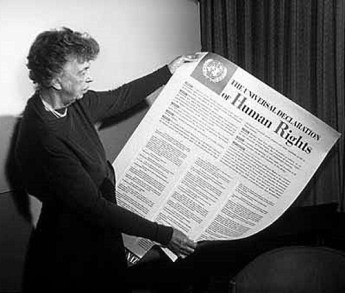
Eleanor Roosevelt and Human Rights Declaration, public domain via Wikimedia CommonsIn this fascinating interview, The Philosopher’s Zone Joe Gelonesi interviews Samuel Moyn about the political concept of human rights and its utility. As Moyn points out, though we like to talk abut human rights as if they’re evident and sacrosanct, we actually live in a world where many communities and nations still suffer widespread political and economic corruption, implement policies that foster foster inequality of wealth and opportunity, don’t provide adequate healthcare to many or most of its citizens, fail to prevent or mitigate racism, sexism, violence, even slavery, incarcerate huge numbers of its citizens for even minor  (or some might think non-) crimes, and in other ways don’t live up to the ideal of universal human rights as outlined, say, in the U.N.’s Universal Declaration of Human Rights.

So what are human rights and what does it mean to have them? That’s as tricky a question as it ever was. Though we like to think it’s a given, it’s not at all clear that all, or even most, people agree on even the most basic answer to this question. For one thing, ‘human rights’ starts sounding like such an abstract thing once you start trying to define what thye are.  For another, there’s this big conundrum I see in the human rights theory that I think relate directly to Moyn’s comments.

If human rights are something innate, something we’re born with, then why do so many disagree about what are rights and what aren’t, and why do we have to fight for them? But then again, if we we say that everyone is born with them, then we can and should be outraged when human rights are not recognized and protected.

If they’re something we create for ourselves and one another, than how are we justified in saying that everyone should have them, regardless of context or culture? But then again, if we say they don’t naturally exist so we have to create them, then that motivates us all the more to have to come up with excellent justifications for why we think everyone should have them, and forces us to work all the harder to make sure everyone does.

~~~~~~~~~~~~~~~~~~~~~~~~~~~~~~~~~~~~~~~~

Sources and inspiration:

‘Political Philosophy in the World: Human Rights’. Interview with Professor Samuel Moyn by Joe Gelonesi. The Philosopher’s Stone podcast, April 3 2016


Frederick Douglass New Bedford, Massachusetts Sites

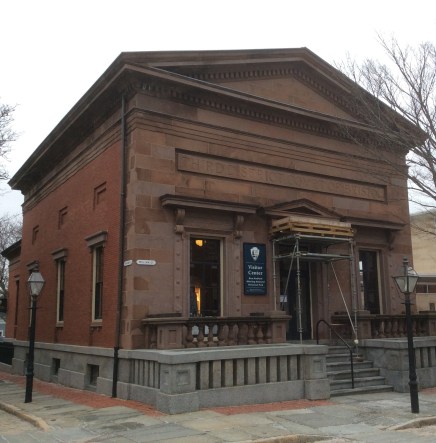
The New Bedford Whaling National Historical Park visitor center

The New Bedford Whaling National Historical Park visitor center

Fifth Day, Thursday March 24th

When I arrive in the old whaling town of New Bedford, Massachusetts, it’s overcast and very chilly. I had so enjoyed the respite from the cold in New York City’s balmy weather I was already a little spoiled. But I’m wearing lots of wool and my shearling boots, so I think I’m prepared. I start with the New Bedford Whaling National Historical Park visitor center, run by the National Park Service. Several of the town’s buildings of historical interest are also preserved by the NPS, including one of particular interest for my journey today. The visitor center is housed in the Old Third District Courthouse constructed in 1835, a handsome Greek Revival building.

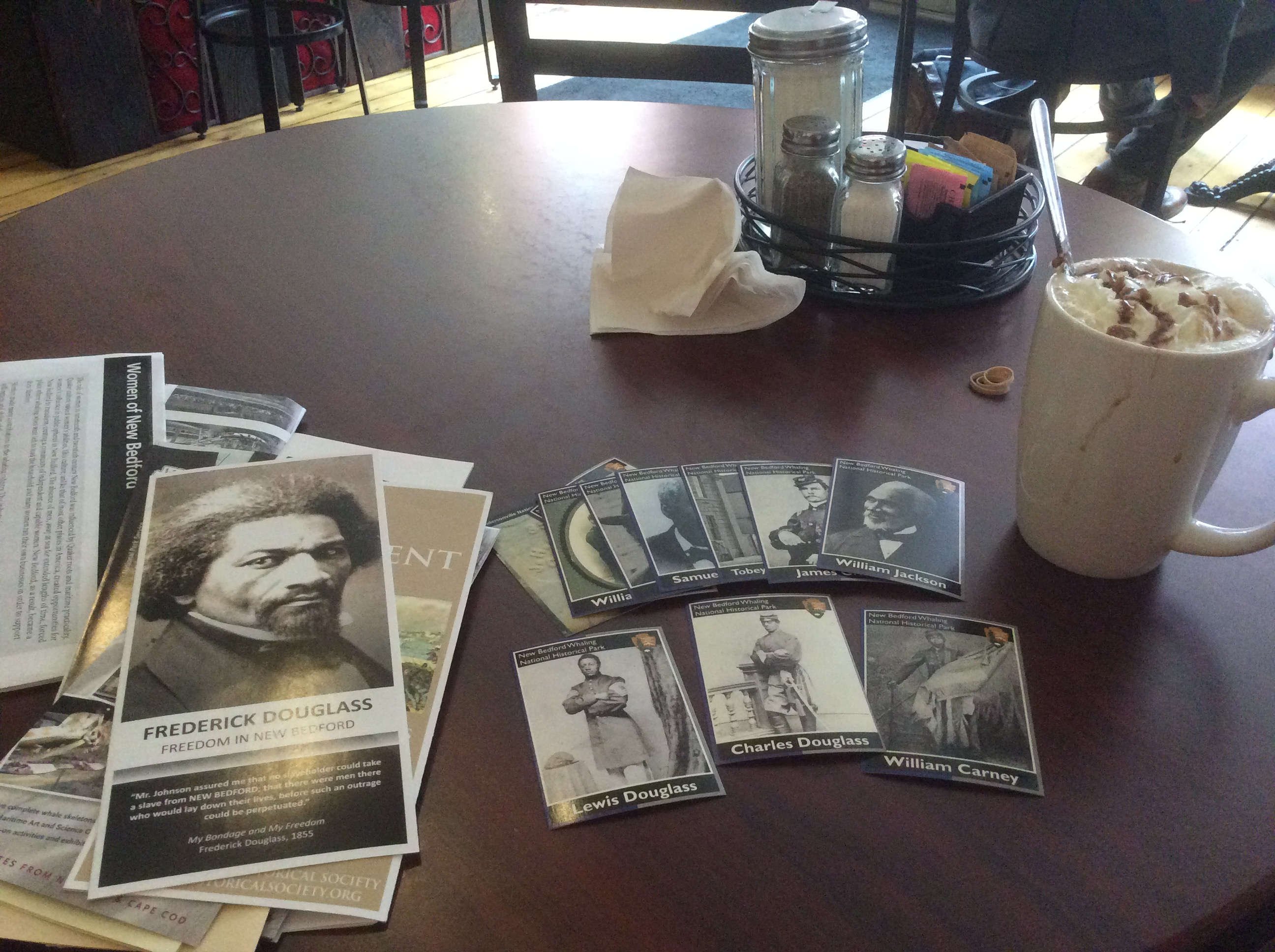
I’m assisted by the kind and knowledgeable Diane Altman Berube, and when I describe the purpose of my trip, she immediately supplies me with information, advice, a map, some pamphlets about Frederick Douglass, the town’s Underground Railroad and abolitionist history (a strong one!), and another about the 54th Regiment of the Union Army and an accompanying collection of cards, like baseball cards, with images and stories of men involved. The 54th Regiment plays an important role in Douglass’ life in many ways, more on that shortly.
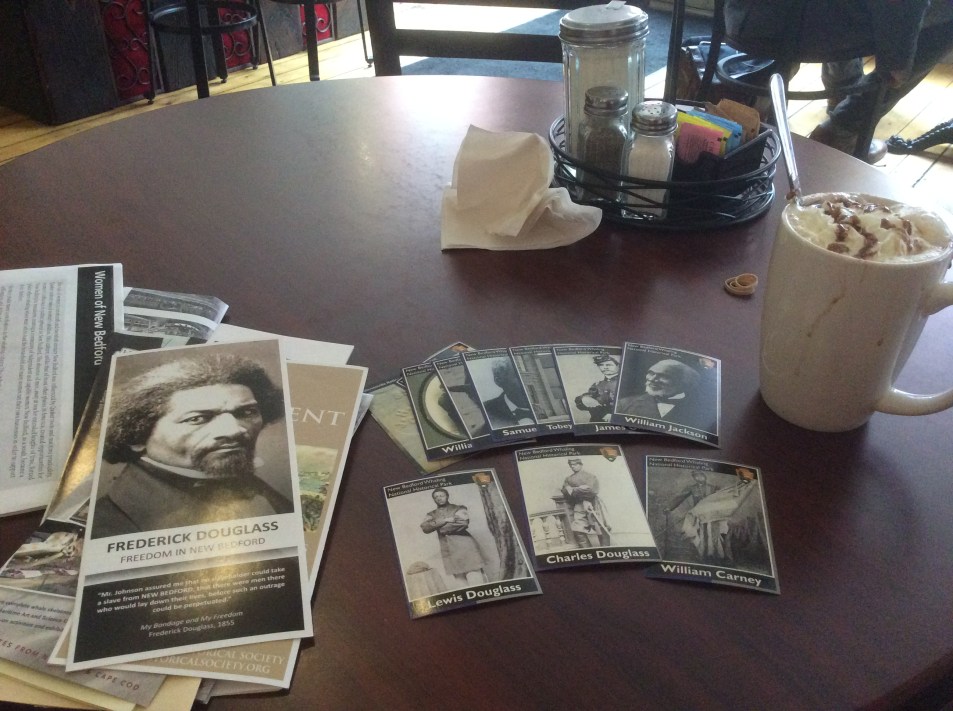
Cafe Mocha at Tia Maria's with Frederick Douglass tour materials, New Bedford MA

Cafe Mocha at Tia Maria’s with Frederick Douglass tour materials, New Bedford MA

After discussing the history of New Bedford, especially history pertaining to my trip, Diane directs me to a nearby coffeeshop and cafe, where I go to study the materials she gave me, do some additional research following what we’ve discussed, and arrange my tour for the day. Tia Maria’s is a sweet little Portuguese establishment, and serves me a beautiful cafe mocha topped with a cookie. What a nice way to warm up!
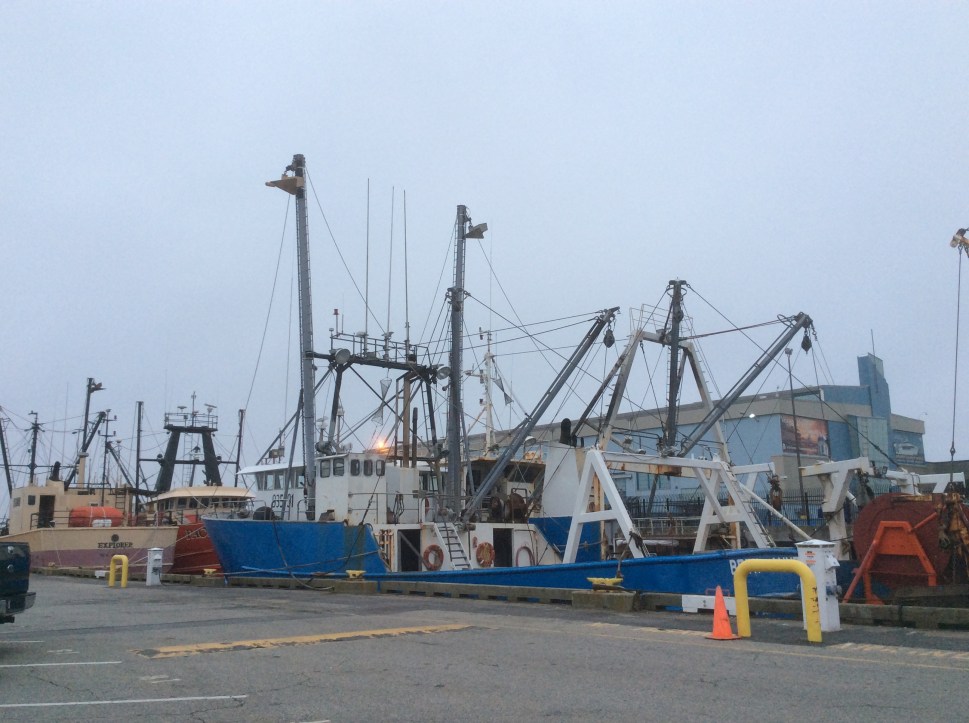
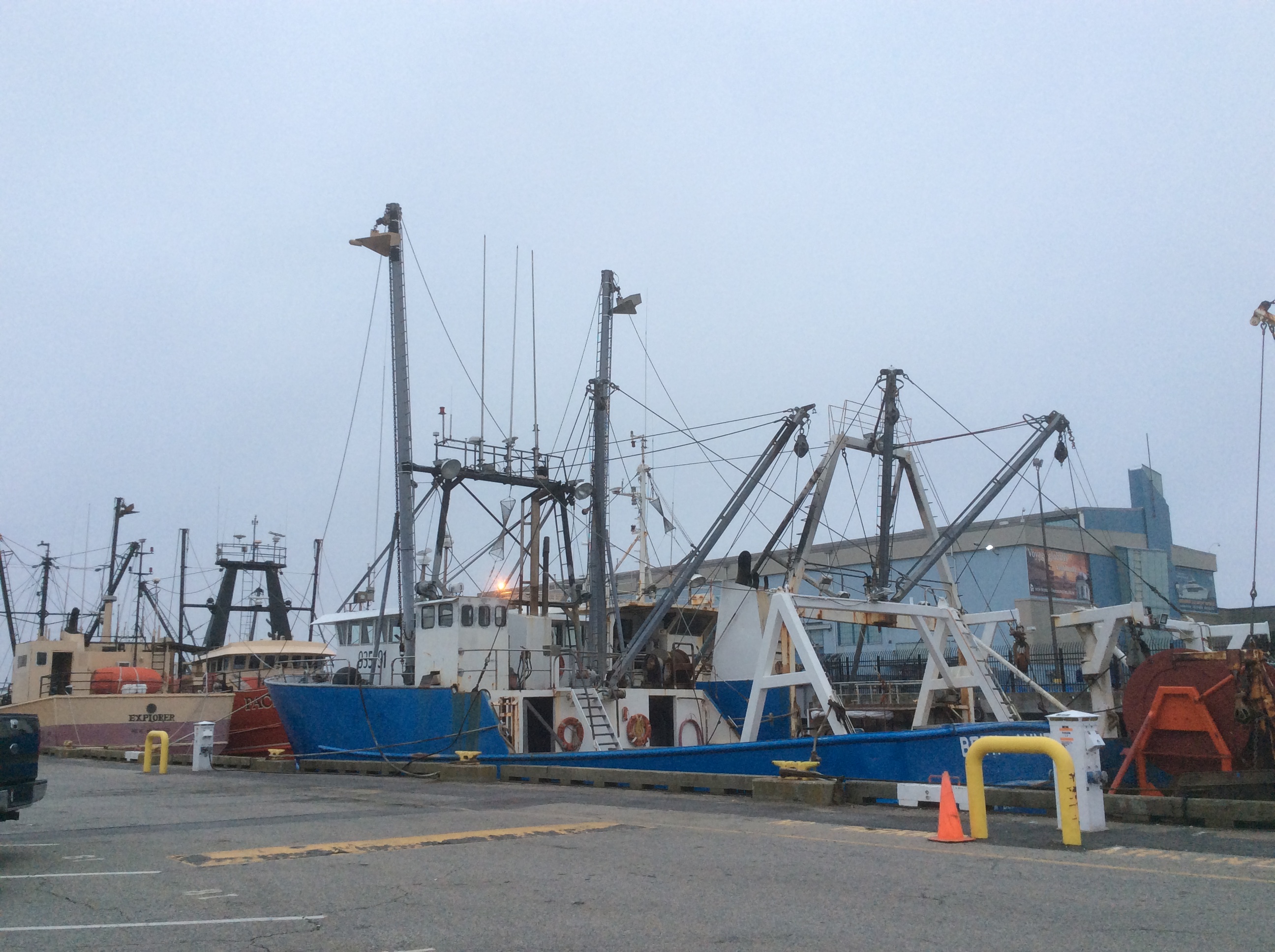
Pier at the old whaling town of New Bedford, MA

Pier at the old whaling town of New Bedford, MA

I’m here in New Bedford because the newly married Douglasses wanted a safer haven than New York City, which as we’ve seen was not, at that time, exactly a secure or safe place for escaped slaves or black people in general. New Bedford was an abolitionist stronghold and besides, being a seafaring town, Douglass expected it to be easy for his to get a good job in his trade as a ship’s caulker. The large population of free black people of that town, and their allies the Quakers, Unitarians, and others who believed strongly in universal human rights and dignity, were united and fierce in the defense of their freedom. Would-be fugitive slave catchers were loath to attempt captures there, since they were promptly driven out of town upon discovery, often accompanied by a good beating.
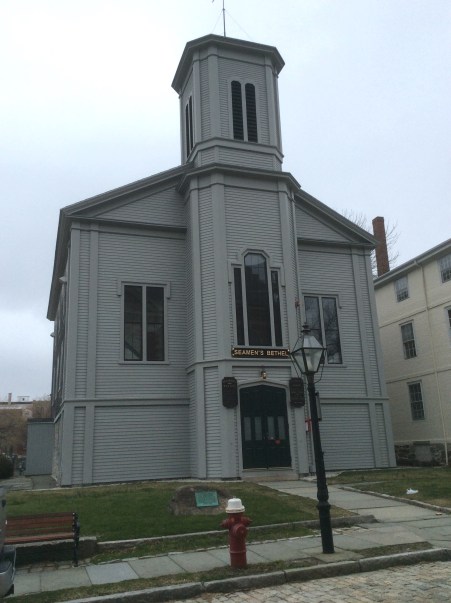
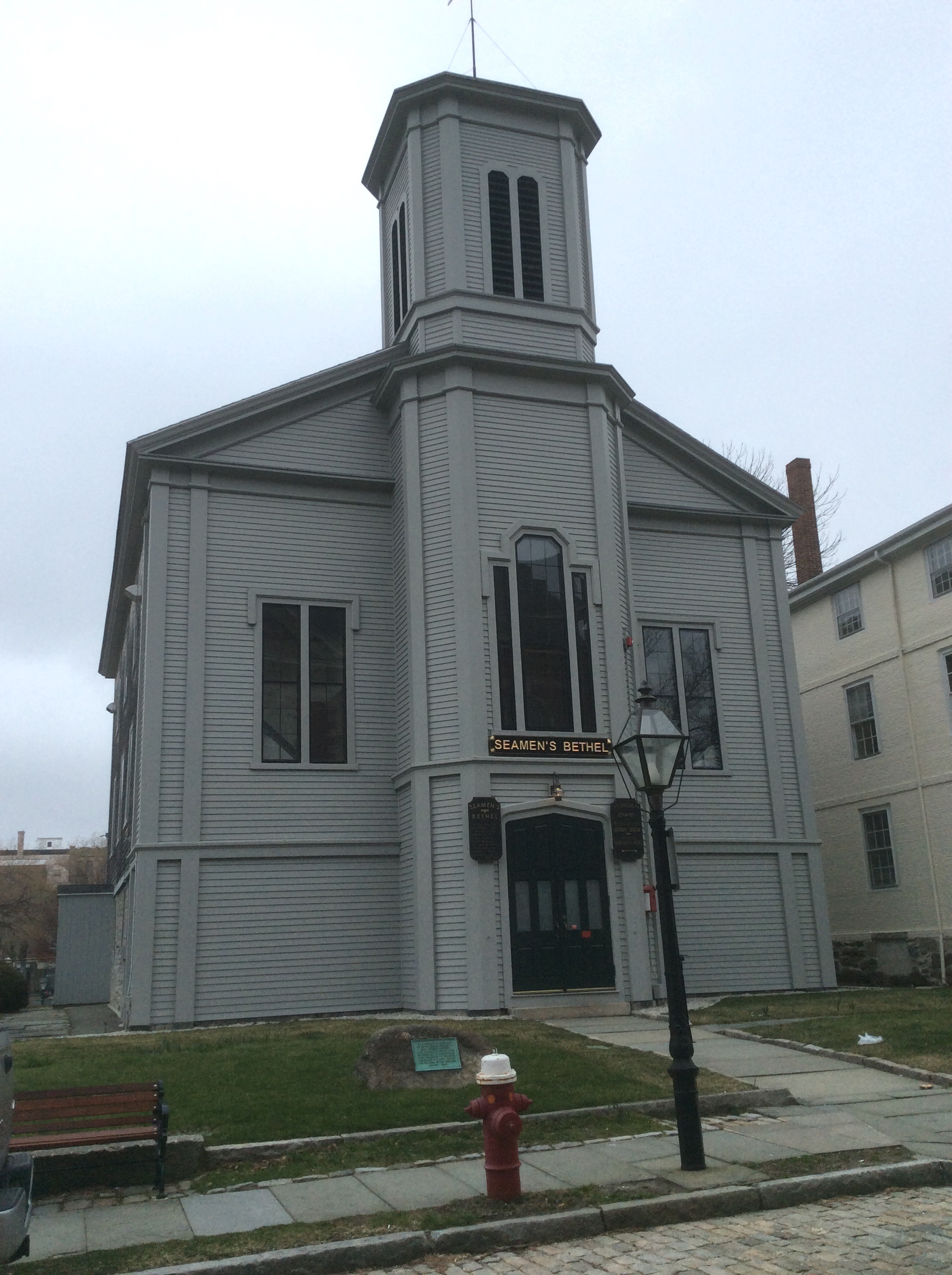
Seaman's Bethel in New Bedford Massachusetts, featured in Melville's Moby-Dick

Seaman’s Bethel in New Bedford Massachusetts, featured in Melville’s Moby-Dick

I decide to tour my New Bedford sites in order of location rather than chronology for two main reasons: I don’t have the luxury of extra time so I need to travel efficiently without much zigzagging around, and it’s really, really cold, to which this California gal is not acclimated, so I don’t want to stay outside for long wandering stretches.

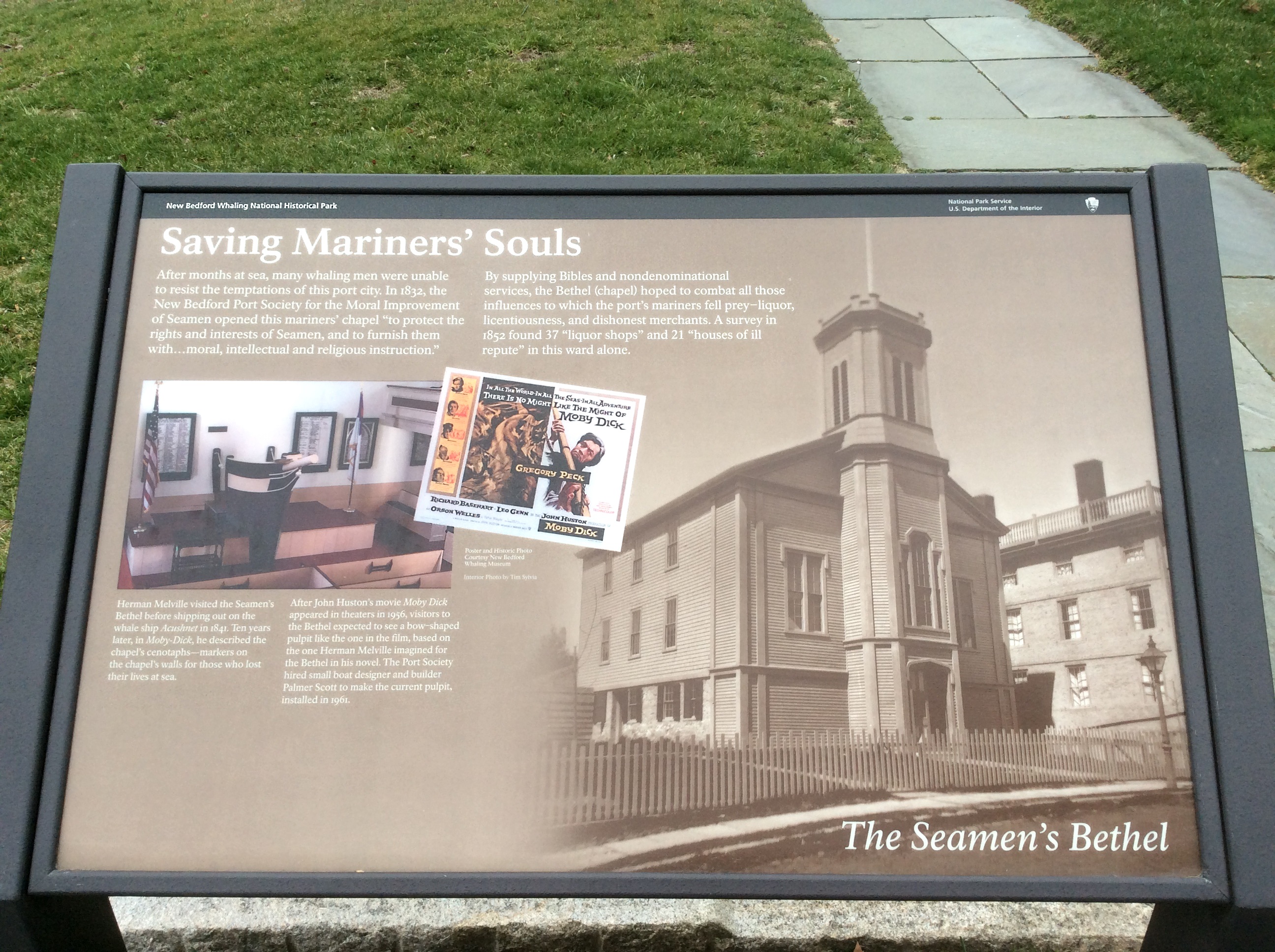
I’m diverted at the outset by Seaman’s Bethel, since I pass by it at the crest of on Johnny-Cake Hill (charming name!) on my way from my car to my first destination. This old clapboard church to my left is featured in Herman Melville’s Moby-Dick, so of course I’m interested. I’ve long loved Melville, and I read his short stories, especially Billy Budd, over and over again as a young girl. While connections other than New Bedford itself, where Melville signed up to work on the whaler Acushnet and the fact that each wrote a story about a slave revolt on a ship never occurred to me, some writers have found many links between the lives and ideas of Douglass and Melville, as explained and described in Frederick Douglass and Herman Melville: Essays in RelationI’m intrigued by this book which I only just discovered through my research for this trip, I’ll certainly return to give it a good read.
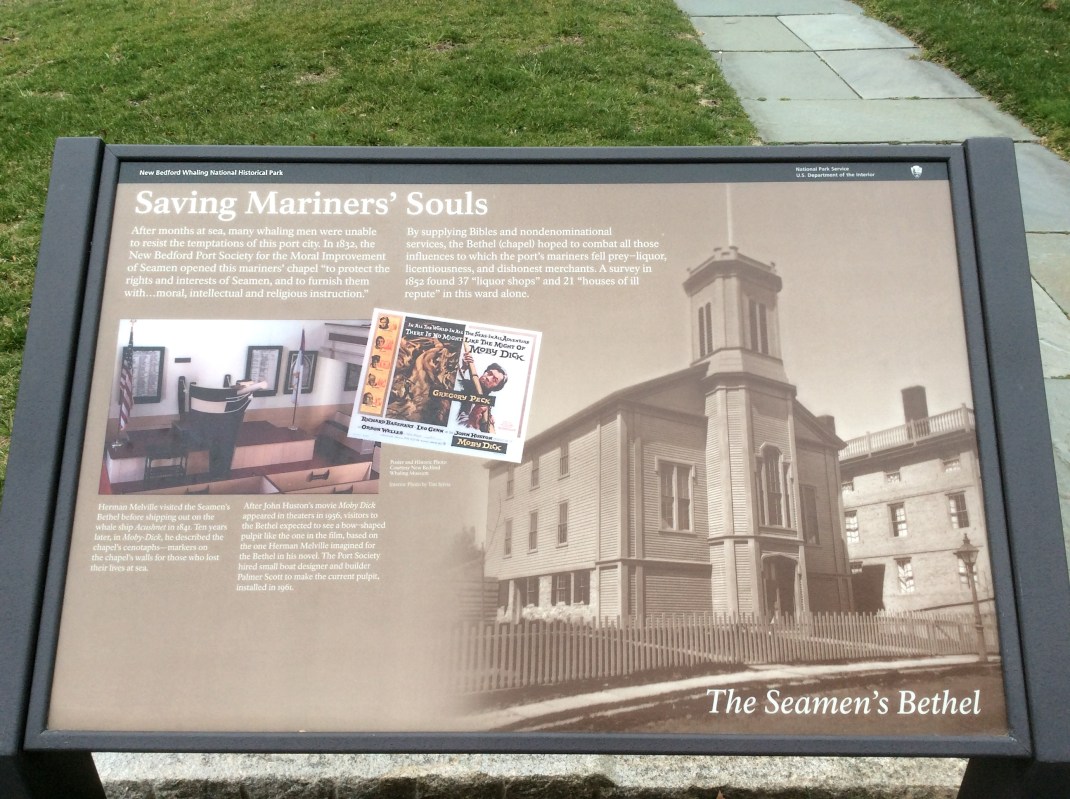
Historical sign for Seaman's Bethel, New Bedford MA

Historical sign for Seaman’s Bethel, New Bedford MA
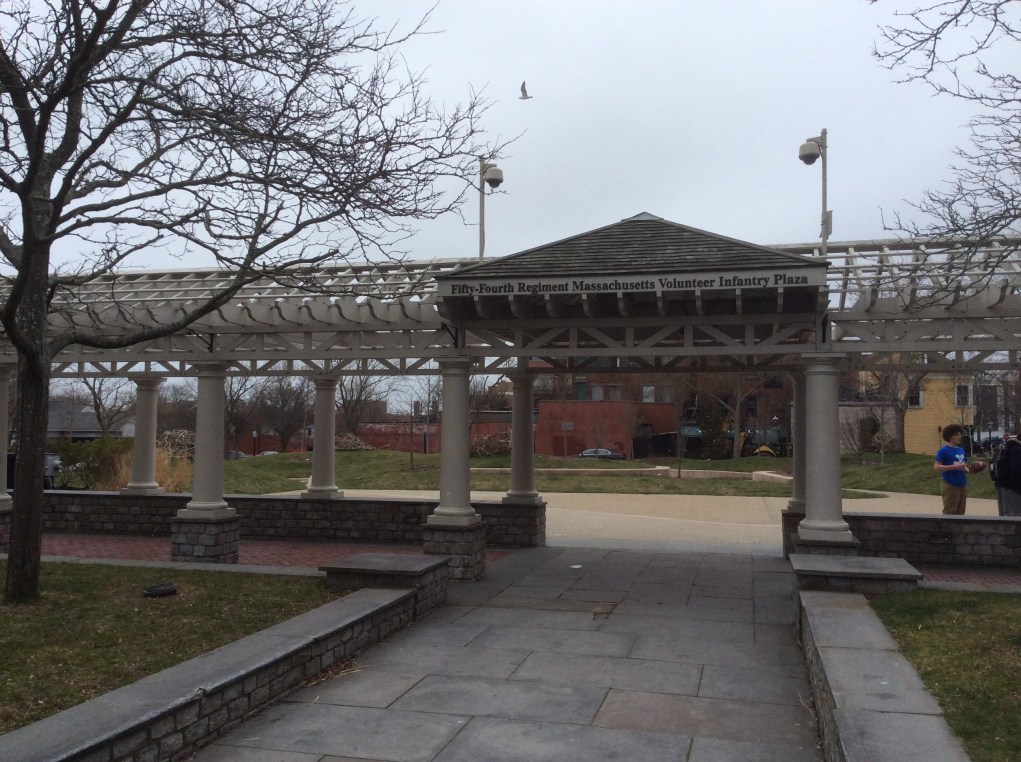
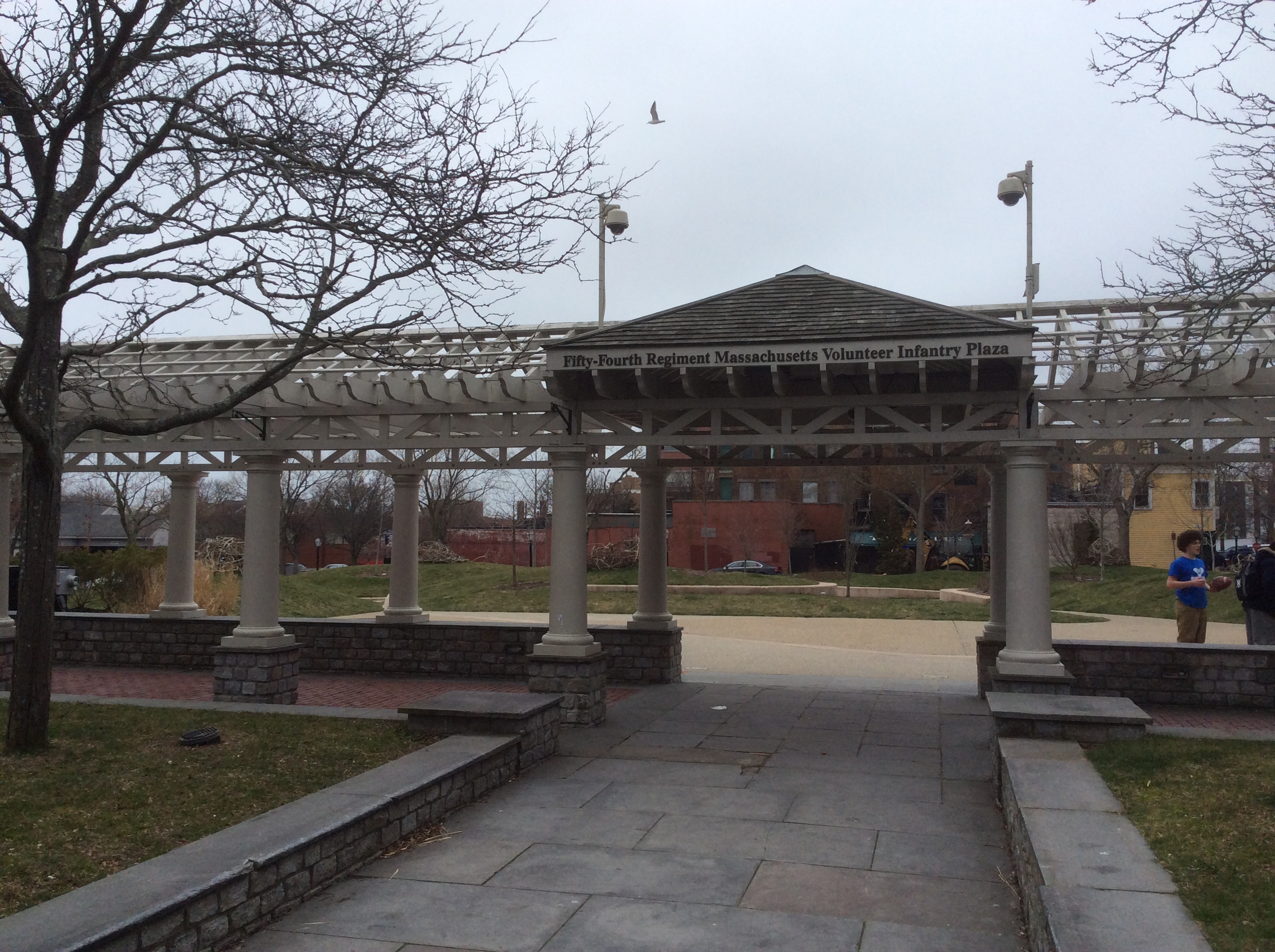
Fifty-Fourth Regiment Massachusetts Volunteer Infantry Plaza, New Bedford MA

Fifty-Fourth Regiment Massachusetts Volunteer Infantry Plaza, New Bedford MA

I begin with the Fifty-Fourth Regiment Massachusetts Volunteer Infantry Plaza on William St. between S. Second St and Acushnet Ave. This is where men signed up to serve as soldiers in the 54th Regiment as the first black troops of the Union Army in March of 1863. Douglass was a fierce advocate for the right of black men to enlist, and thought it not only their responsibility to fight for their own freedom, he thought it an invaluable tool for attaining better social standing and an opportunity to learn invaluable skills that a life of slavery often robbed them of. Two of the men to enlist in the 54th were the Douglasses’ own two sons, Lewis and Charles. Lewis saw combat with the 54th and was wounded in the assault on Fort Wagner on July 18th of that year; Charles fell ill and couldn’t serve at the time, but he later became a sergeant in the 5th Massachusetts Cavalry. More on the 54th Regiment coming up in another post soon.

Here I pause in my account of today’s journey. As I mention in the tale of my day in Easton, I occasionally miss places or photo opportunities that I kick myself for afterword. This happens nowhere else on this trip more than here in New Bedford. In this case, I’m particularly hard pressed for time, and to be honest, a little distracted by the cold. Turns out I’ve way underestimated the time I’d need here. So I’m going to do something a little differently for this day’s account: when you see a paragraph that begins with an asterisk, it’s an account of a place that I discover in my fact-checking and editing for this day’s journey, but that I overlook or don’t photograph adequately. I’m doing this so that if you want to use this account as a guide for your own Douglass trip here, you won’t miss anything important.
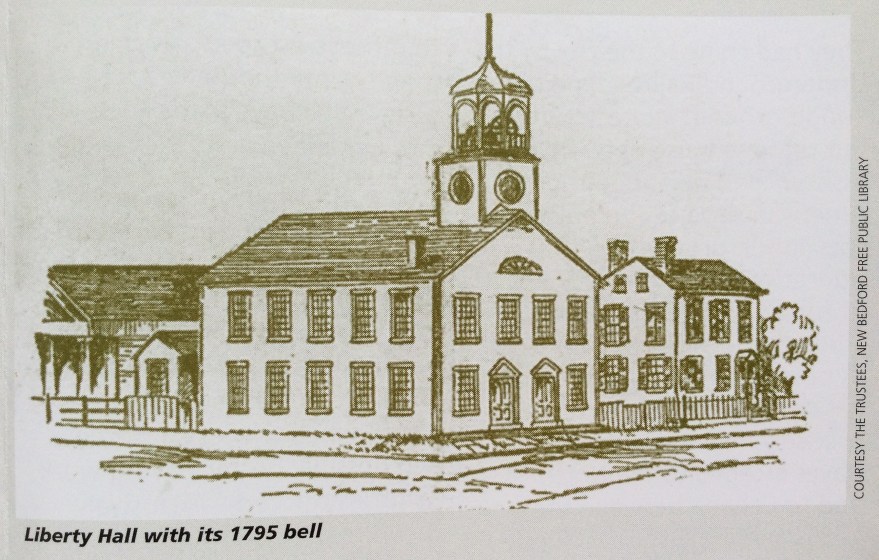
Liberty Hall illustration from NPS Underground Railroad - New Bedford Brochure*Where I should go next, but miss though I’ve marked it on my map (as my friend Alex likes to say, ‘derp!’), is a little further west on William St just past Purchase St, where there’s a plaque commemorating Liberty Hall. The original hall burned down in October 1854, and burned so hotly it melted the bell; the plaque contains a piece of its twisted metal.

Douglass first heard William Lloyd Garrison speak at this hall in May or June 1839. Garrison preached that ‘prejudice against color was rebellion against God’, because all manner of sectarianism and prejudice went against God’s will that everyone be united into one body in Christ’s kingdom. Douglass was enthralled, read every issue of the Liberator enthusiastically, and attended every antislavery meeting held in this and nearby towns. He returned to Liberty Hall many times as a speaker himself over the next two decades in the 1840’s and 50’s.
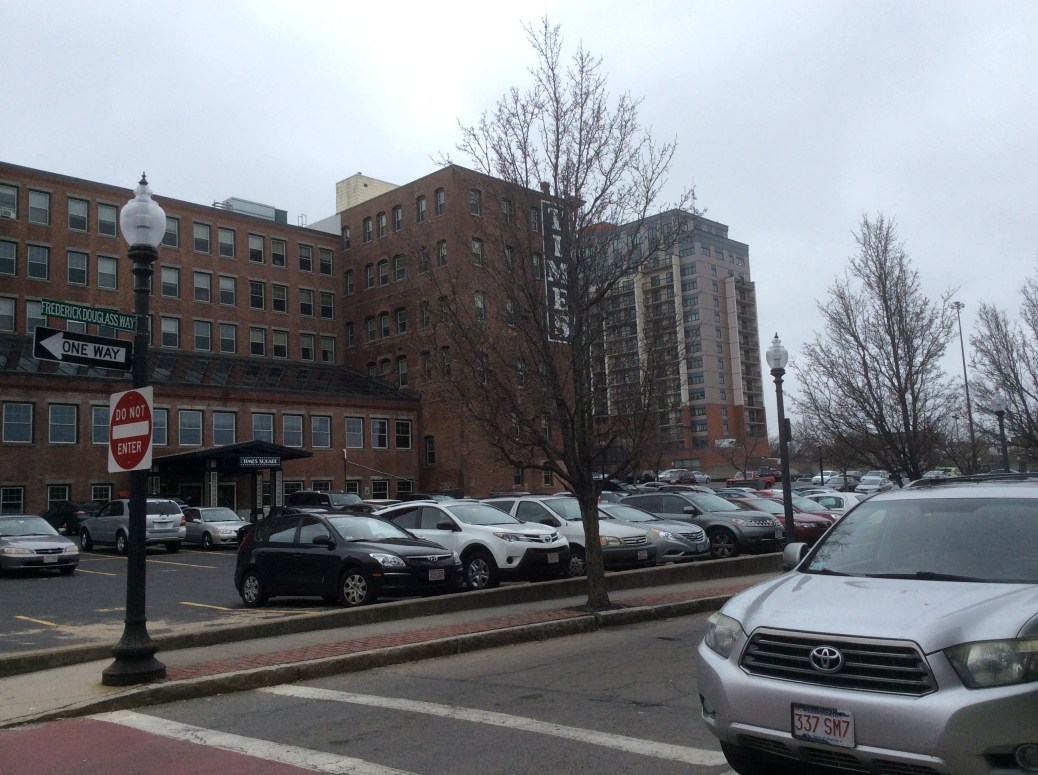
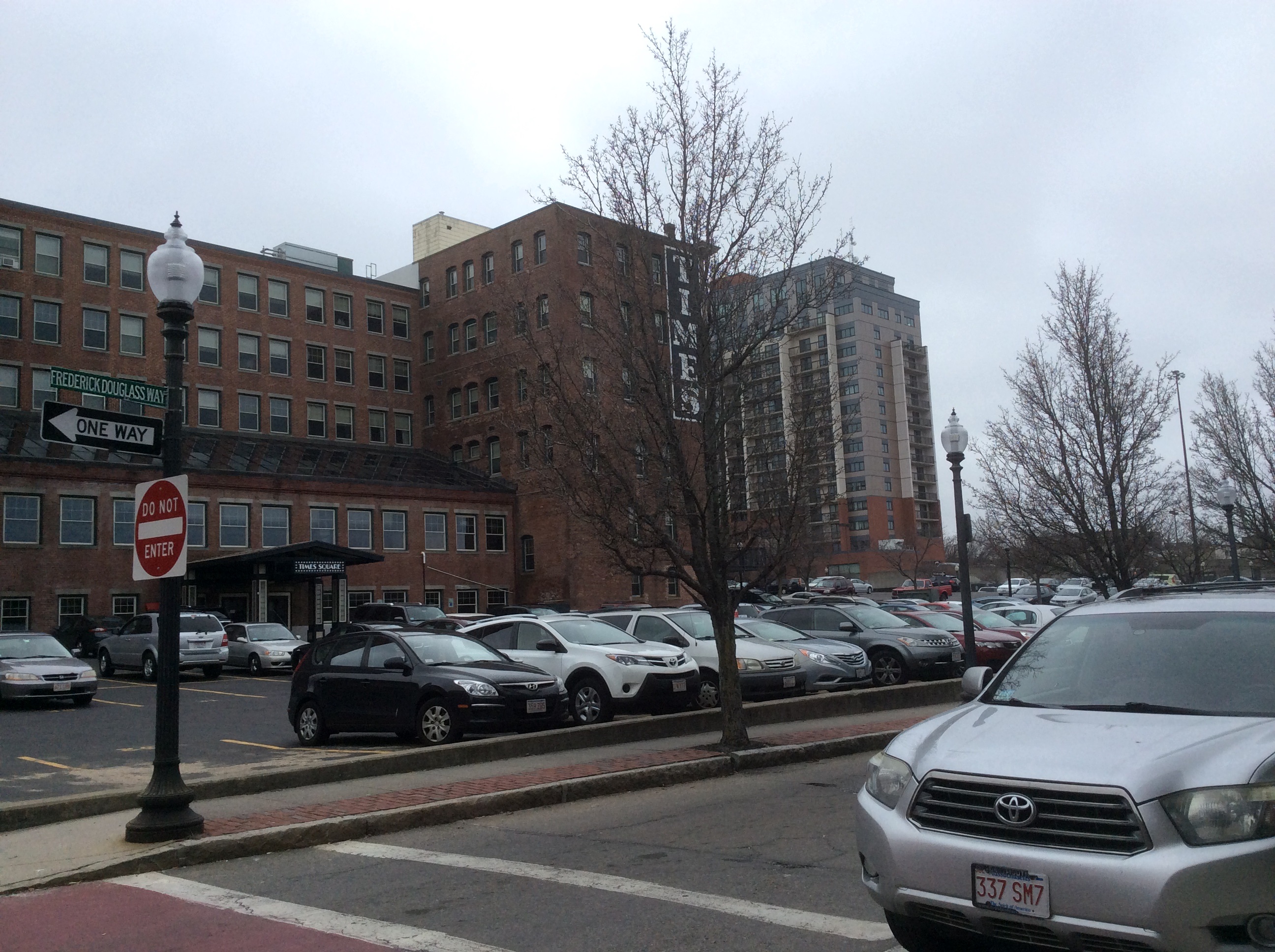
Frederick Douglass Way, formerly Ray St where the Douglasses lived at number 111, New Bedford MA

Frederick Douglass Way, formerly Ray St where the Douglasses lived at number 111, New Bedford MA

From the 54th Regiment Plaza, I continue west on William very briefly, then head up Acushnet Ave to its north end. This street ends rather abruptly; though it had once continued north for quite a while, it was razed at some point, likely to make way for the freeway that runs there. It used to be Ray St, where Douglass and Anna moved to a house at number 111; their family was growing and they needed more space. The street there, and their third house in New Bedford, used to be closer to the wharves where Douglass worked for a time. Acushnet becomes Frederick Douglass way north of Elm St. Diane at the NPS told me that I would find a street up this way named Frederick Douglass Way. She wishes that either a grand or more main street was named after him, or that this street were more decorative and well landscaped. Since it’s fitting that this street be named for Douglass since he once lived here, I hope for my part it’s her second wish that will come true.
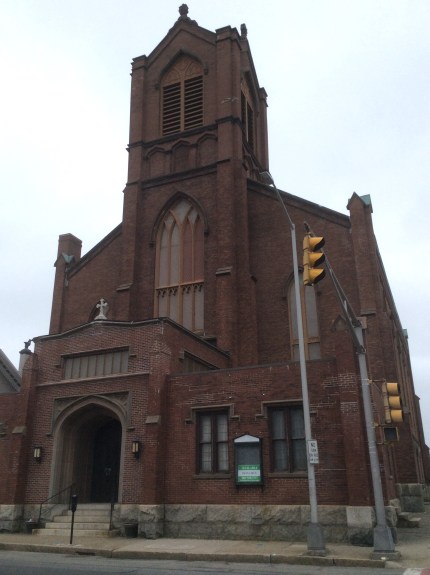
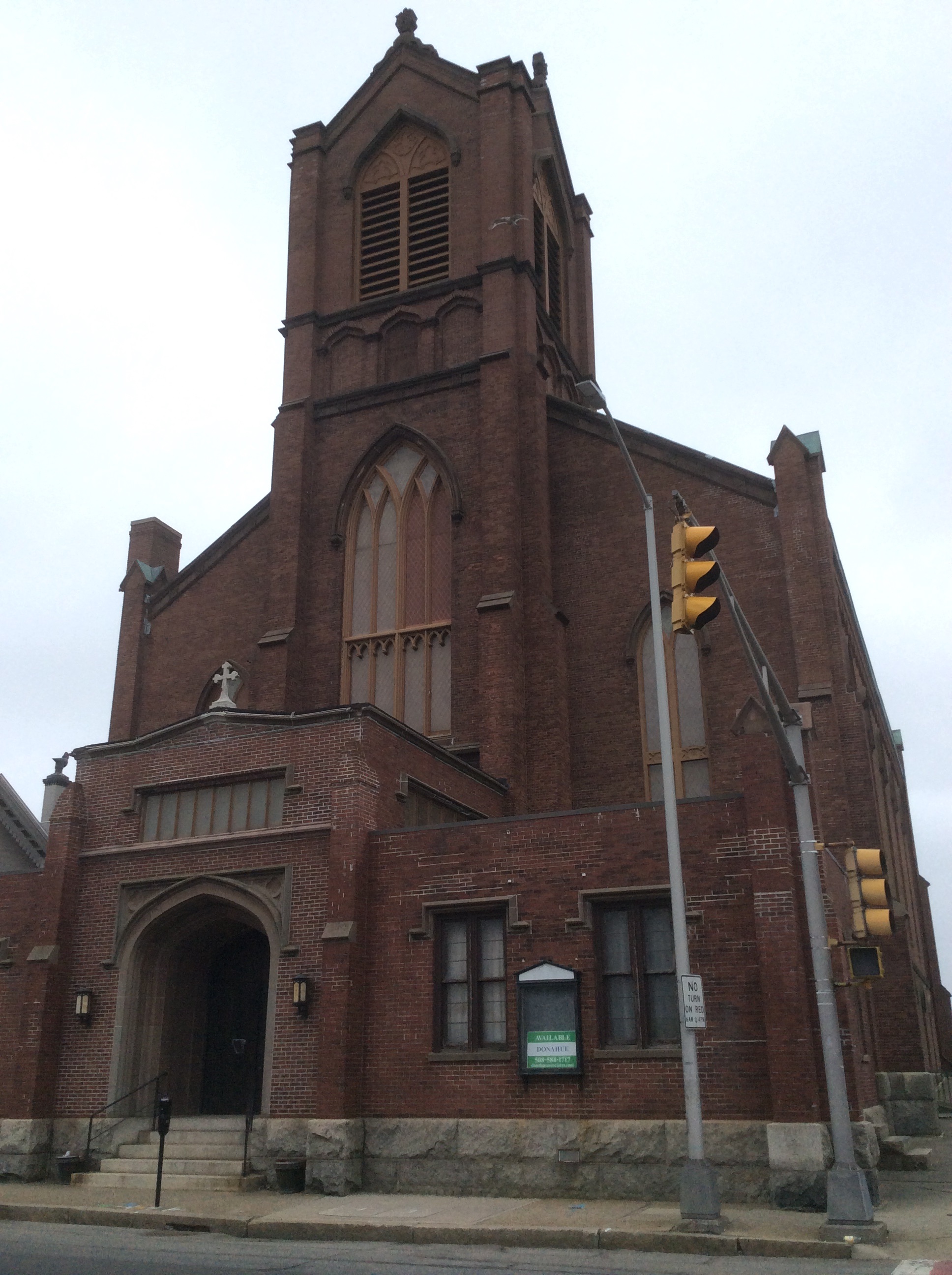
Former Methodist Church at Elm and County Streets, New Bedford MA

Former Methodist Church at Elm and County Streets, New Bedford MA

From Frederick Douglass Way, I head straight east on Elm all the way to the corner of Elm and County Streets. Diane at the NPS visitor center identified this as the old Methodist Church, which is no longer active at this site; it’s currently up for sale. The engraving in one of the pointed arches in the center front of the bell tower notes it was built in 1858, twenty years after Douglass would have begun attending. This may then be a new location, or it may have been rebuilt on this original site; Douglass specifically refers to its being on Elm St.

The Douglasses were seeking religious community and comfort, and hadn’t yet fully realized the degree to which the mainstream Methodist church, the religion of his youth, was a powerful supporter of slavery. Its ministers taught slaves that their salvation was to be attained through obedience to the worldly masters the Lord had placed over them, that their virtue was to be found in submission and hard work, and that their reward was to be in heaven rather than on earth. Unfortunately, many religious sects throughout history have used this tactic to exploit the poor and oppressed, teaching them that resignation to their plight is a virtue and a sure ticket to a better life in the hereafter, thereby avoiding the necessity, and responsibility, of making life on earth a happy and just one for all.

In addition, the segregation of black people into the back of the church, serving them communion only after the whites had been served, disenchanted Douglass and he promptly left, never to return. After all, as Douglass believed, the quality of a faith is revealed in the teachings of its ministers and the beliefs and behavior of its congregation, especially in matters of justice and kindness to one’s fellow human beings. He later joined a small faith community called the Zion Methodists, not only as a congregant, but as a licensed preacher. (There is a church building that housed the Frederick Douglass Memorial African Methodist Episcopal Zion Church, no longer extant, at William and Eighth, but it’s uncertain whether it’s a continuation of Douglass’ congregation though it was named for him.)
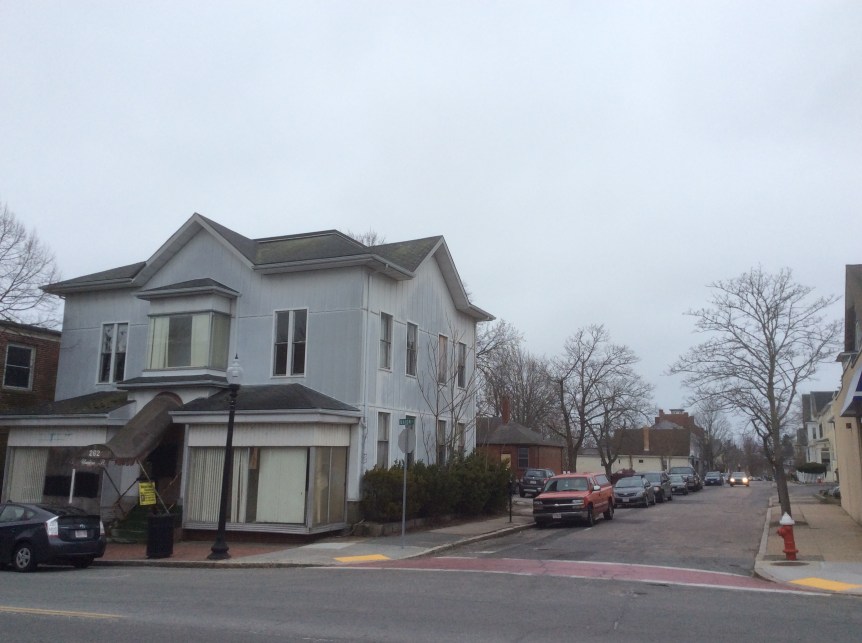
The Peabody house site at Union and 7th, New Bedford MA, 2016 by Amy Cools

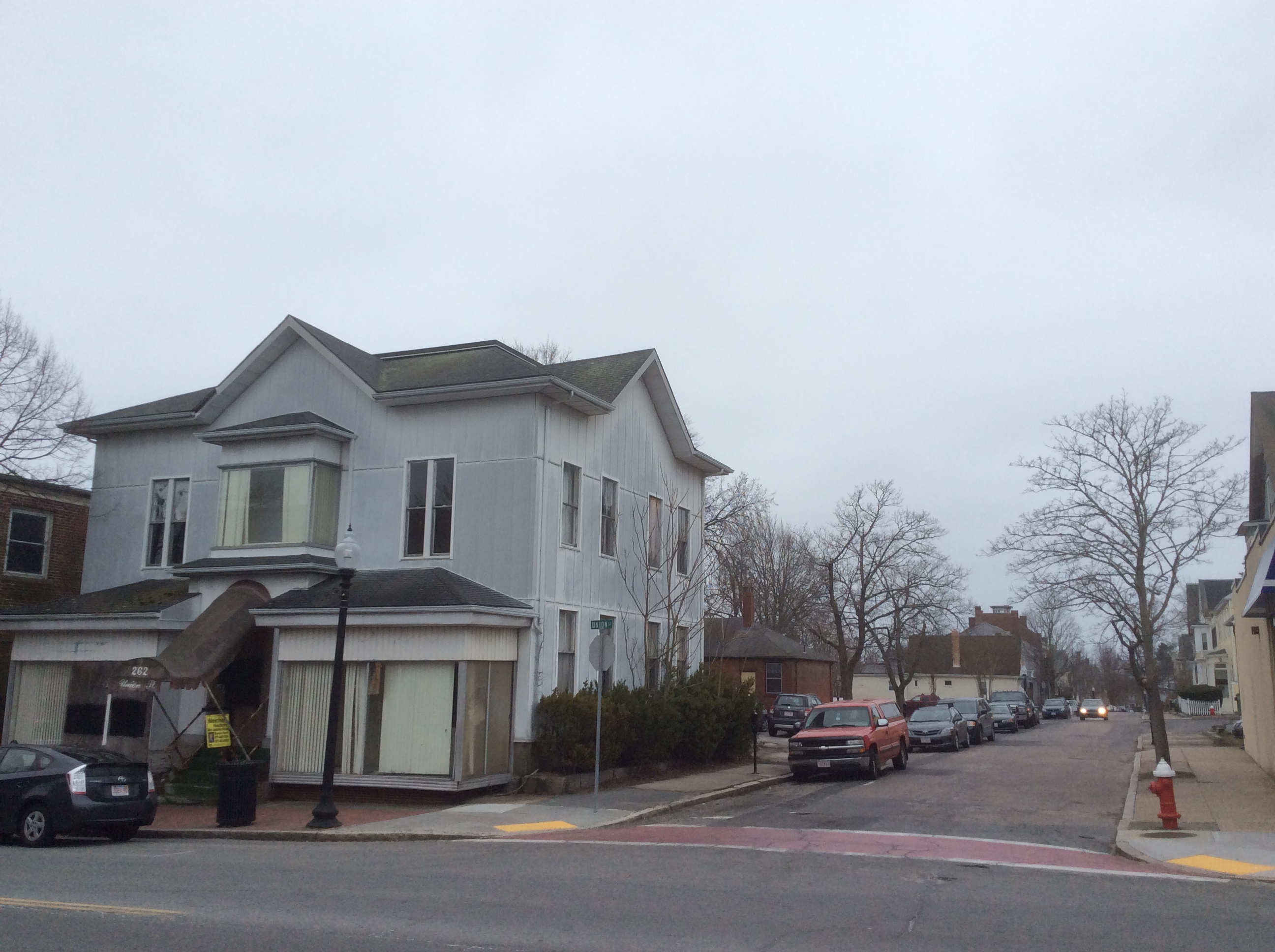
The Peabody house site was about where the gray house now stands at Union & 7th Sts, New Bedford MA

Then I head south down Eighth St, turn left on Union, and stop at Seventh. There were two locations of interest in the life of Douglass here. One, on the southeast corner of Union and Seventh, once stood the house of the Peabodys, at 174 Union St, about where the gray house is now. This is where Douglass picked up his first odd job here when Mrs. Peabody paid him two silver dollars to put away a load of coal. This seemingly insignificant moment in a life felt very significant to the newly escaped Douglass, because it was the first money he ever earned that no one at that moment had the right or the inclination to take from him. It was one small job for a man, but one huge step in feeling like a free one.
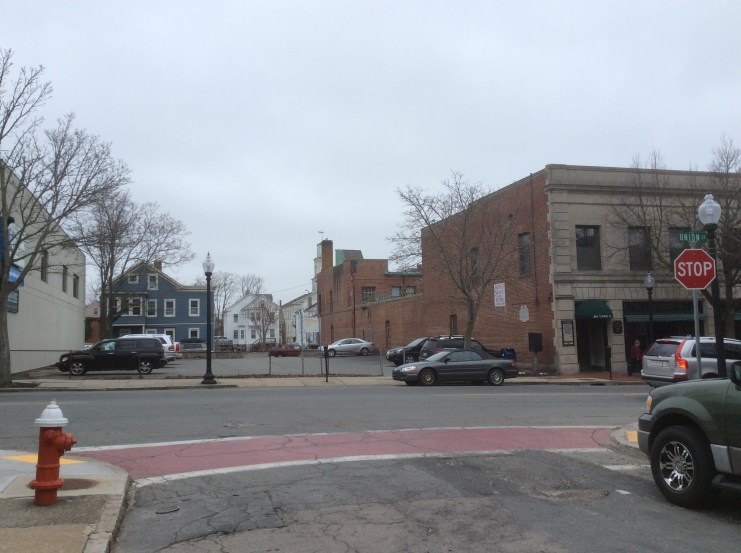
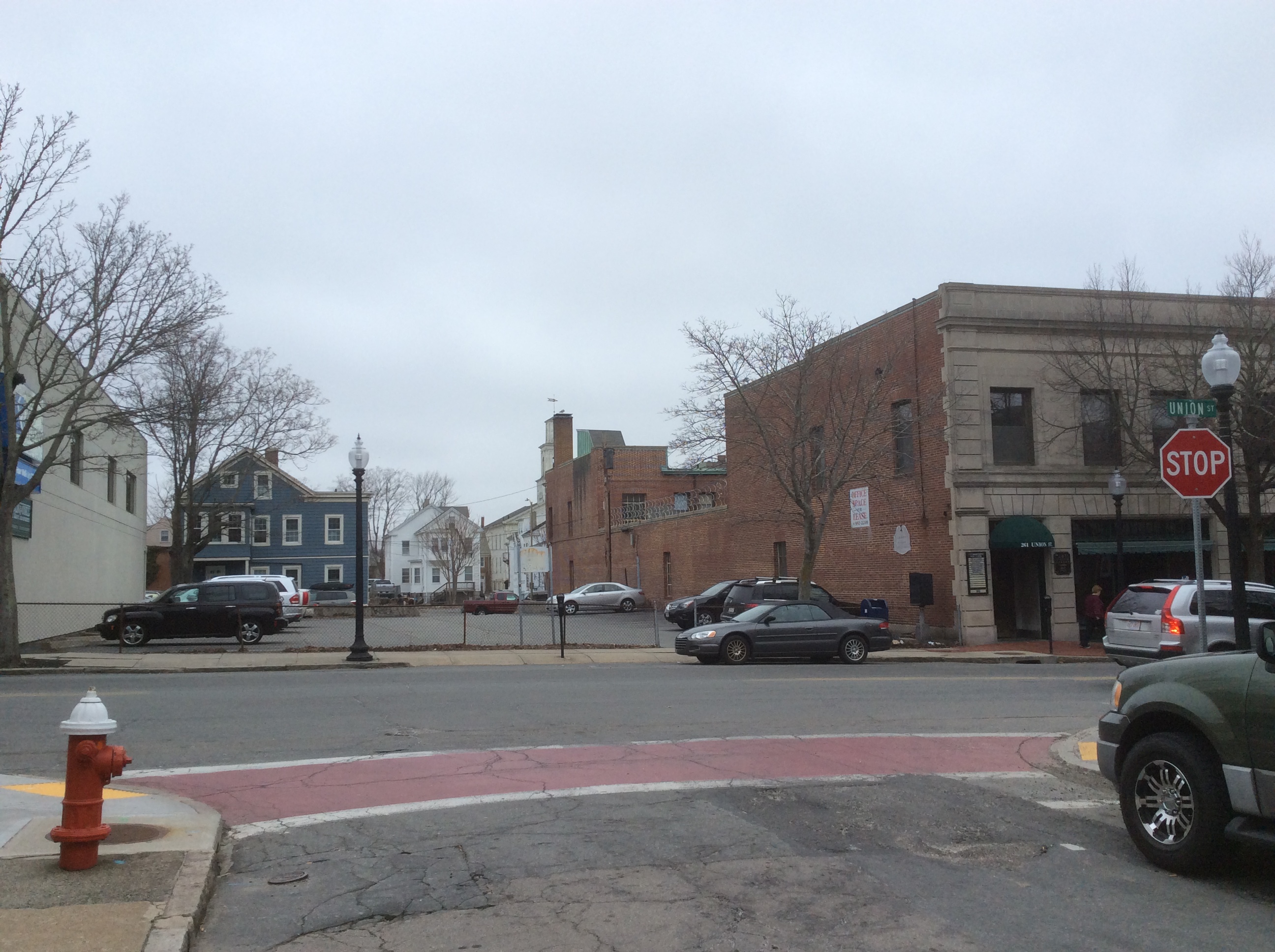
Site of Joseph Ricketson's house on the north side of Union at 7th St, New Bedford MA
Site of Joseph Ricketson’s house on the north side of Union at 7th St, New Bedford MA

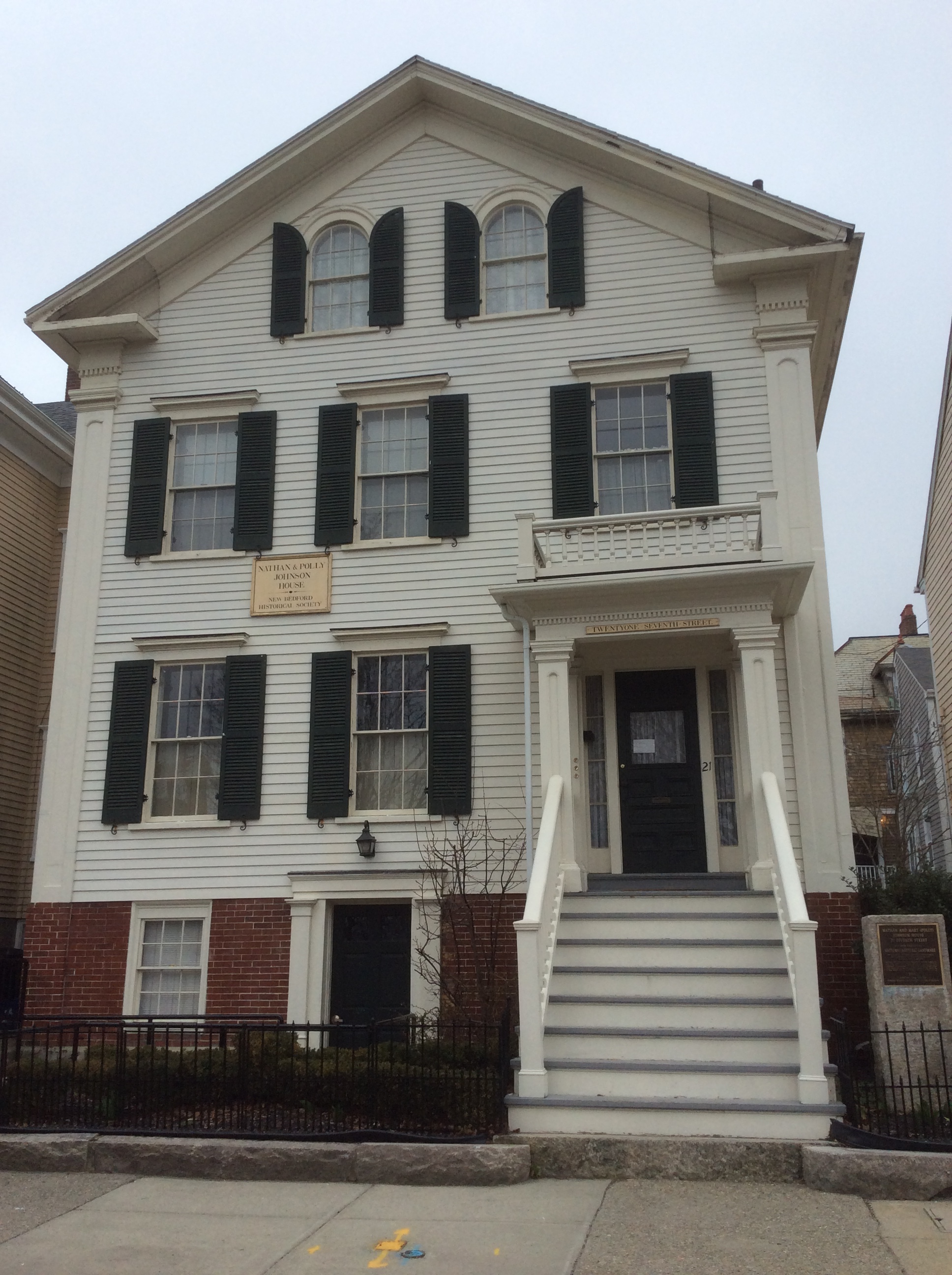
Nathan and Polly Johnson House at 21 Seventh St, New Bedford, MA

Nathan and Polly Johnson House at 21 Seventh St, New Bedford, MA

Also on Union and Seventh, where this parking lot is now on the north side of the street, across from where Seventh begins, lived a man, or rather two men, named Joseph Ricketson. One of the the two men Douglass named in his narrative who picked up the newly married Douglasses when they arrived at Newport and took them to New Bedford was Joseph Ricketson (probably referring to Sr). The Ricketson house was a busy and particularly well documented stop on the Underground Railroad.

Then, Ricketson and the Douglasses would have taken the same route as I do now (assuming they stopped at his house first), heading south on Seventh Street to Nathan and Polly Johnson’s house at number 21.
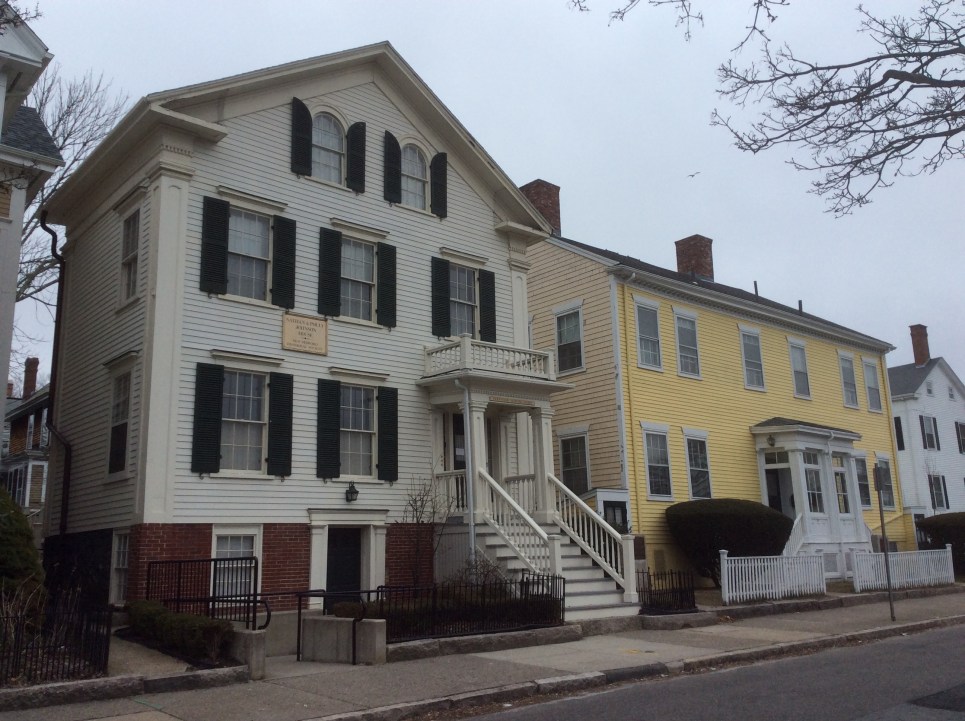
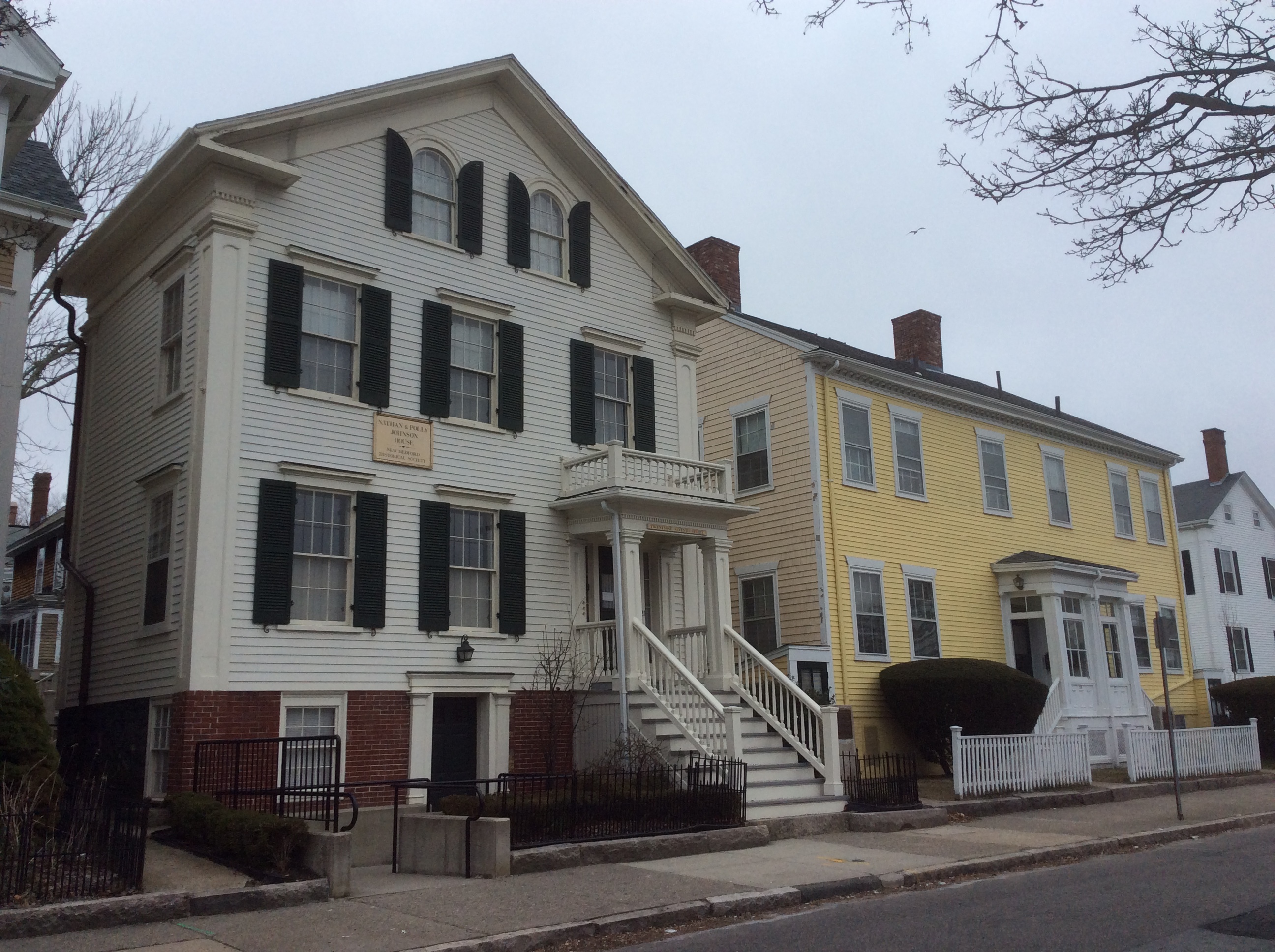
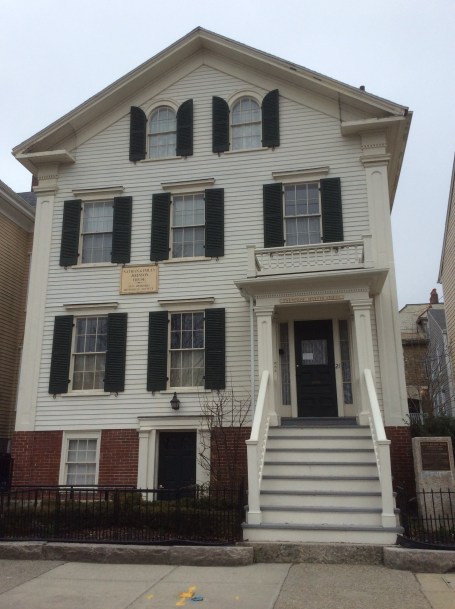
Nathan and Polly Johnson House (and adjoining) at 21 Seventh St, New Bedford MA, 2016 Amy Cools

Nathan and Polly Johnson House at 21 Seventh St and adjoining Quaker meetinghouse (in yellow), New Bedford MA
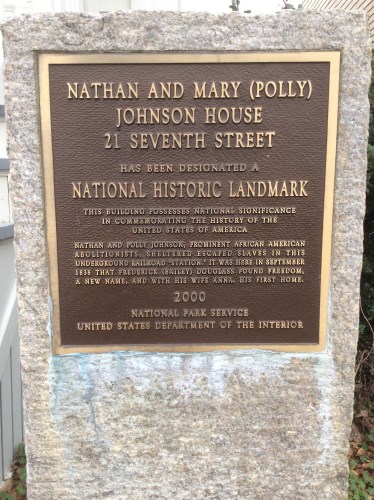
Historical Plaque at Nathan and Polly Johnson House, New Bedford MA

Historical Plaque at Nathan and Polly Johnson House, New Bedford MA

This was the first home Douglass and Anna lived together, from the day they arrived here on September 17th 1838 until they moved into their own first home in 1839. It’s the only New Bedford home of the Douglasses still standing. Nathan and Polly were an inspiration to the Douglasses, a free, successful black couple who spent much of their time and money to help their people achieve the same.

Actually, to be perfectly accurate, it was the newly married Johnsons who arrived here, since the former Frederick Bailey (Douglass) had renamed himself Frederick Johnson, making himself and Anna two more of the already too many Johnsons in the town! Most of the escaped slaves here had taken the same last name, a friendly but over-done tribute. Johnson suggested the surname Douglass instead, after a hero in the Sir Walter Scott novel he was reading at the time, and Frederick accepted.
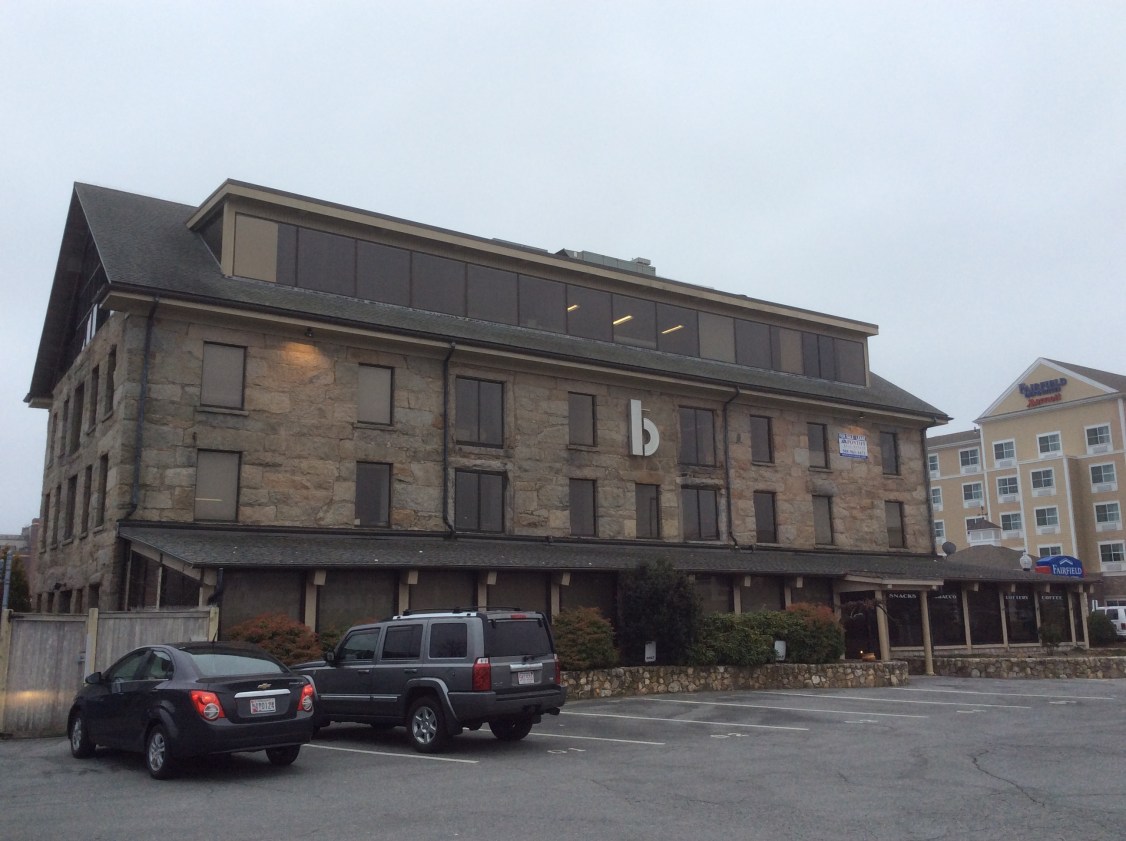
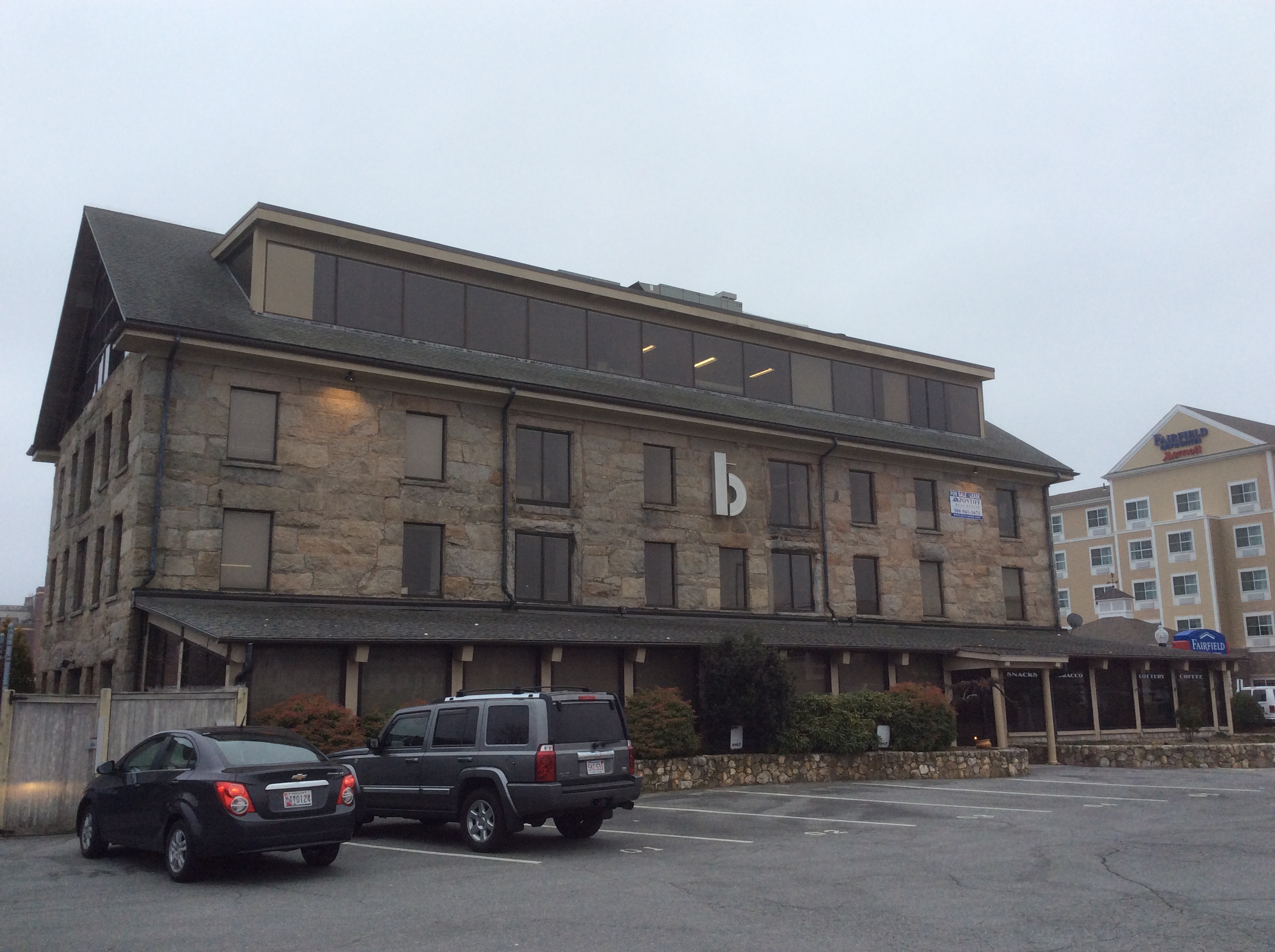
 1838 Whale Oil Refinery Building near Leonard's Pier, MacArthur St

1838 whale oil refinery building at 185 MacArthur Dr where Frederick Douglass may have worked

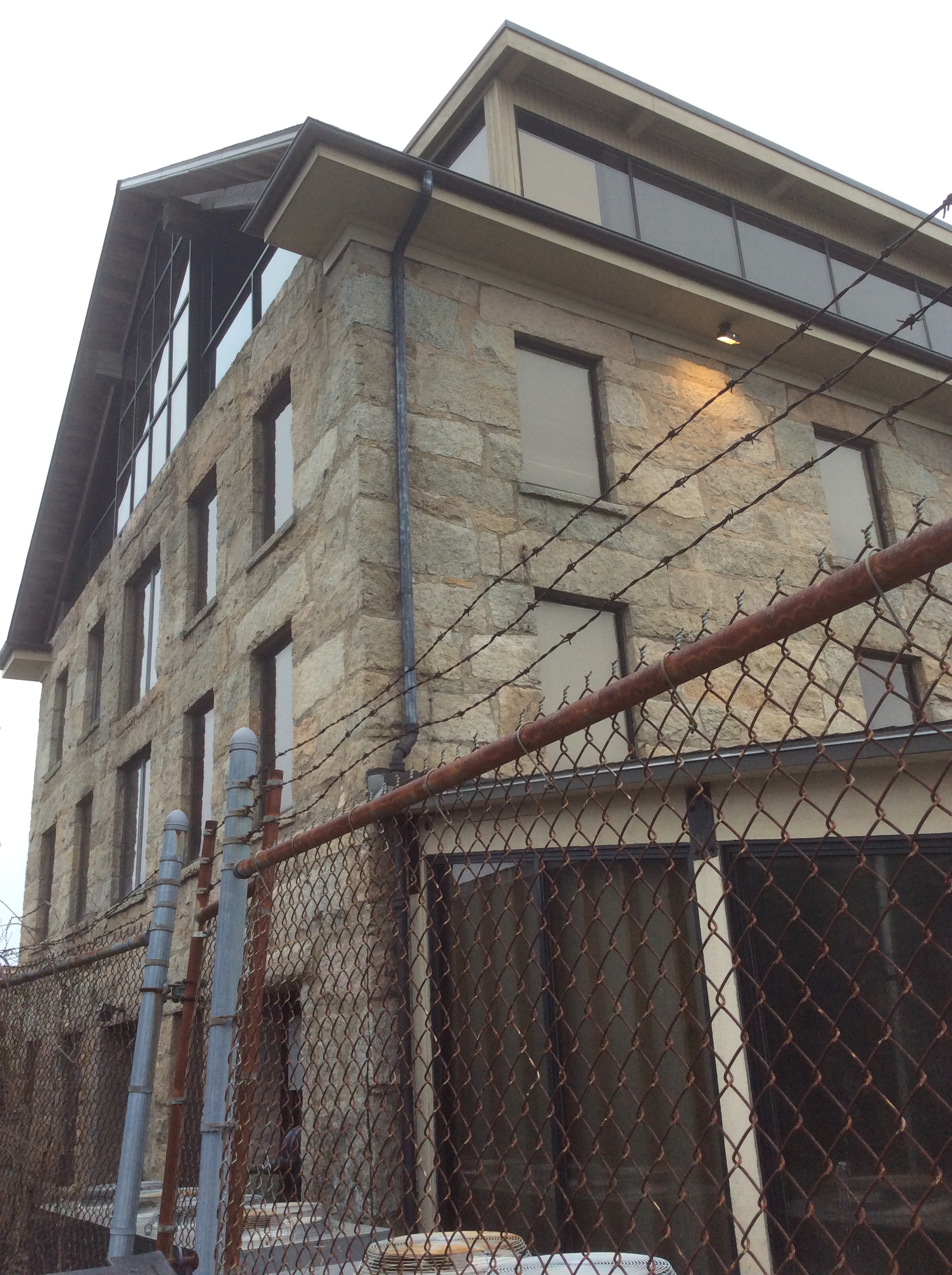
Then, as it’s I’m getting colder by the minute and hardly able to move my fingers (the wind chill has pushed the ‘feels like’ temperature down at this point to near freezing), I return to my car, and drive to 185 MacArthur Drive near Leonard’s Pier. This is the site of New Bedford’s first whale oil refinery, built in 1838. In his autobiographies, Douglass wrote of visiting the wharves to find work, described the granite warehouses there, told of loading casks of oil onto ships, and said he worked for a time in an oil refinery in the south of the city, for the same Joseph Ricketson just spoken of earlier. It would make sense that this is the same oil refinery, since it is indeed south of old New Bedford (where all the sites visited today were) and the year is early enough. If it isn’t Ricketson’s refinery, it could still be one of the ones Douglass delivered casks of oil to the ships from, and as you can see, it is made of granite.
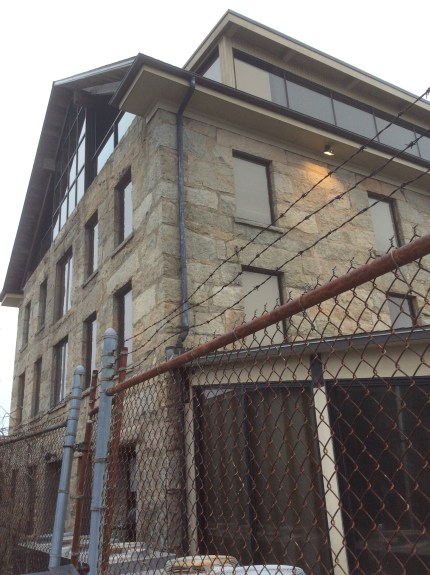
Another, closer view of 1838 oil refinery, New Bedford, MA

Another, closer view of 1838 oil refinery, New Bedford, MA

Douglass was amazed at the level of social equality black people enjoyed there with its integrated schools and many other institutions, but there was still segregation in many of the public buildings and competition and prejudice among working people. It was for the same reason that caused Douglass’ bad experiences working on the docks, especially at Gardiner’s shipyard, when he was still enslaved in Fell’s Point, because free whites had to compete for wages with black workers who would accept lower wages and therefore drive them down. In the end, Douglass couldn’t find a good job as a caulker here, so he worked as a common laborer, on the docks, in an (this?) oil refinery, and at a brass foundry among other things, averaging about a dollar a day instead of the two dollars he could earn as a caulker. Though he was poor and worked long hours (which, as he said, was not at all conducive to mental improvement for the lack of time), he obtained a free subscription to Garrison’s The Liberator (which led him to Garrison’s talk at Liberty Hall), attended as many abolitionist meetings as he could, and continued to educate himself. As he became more informed, he became a more passionate believer in the cause of human rights.
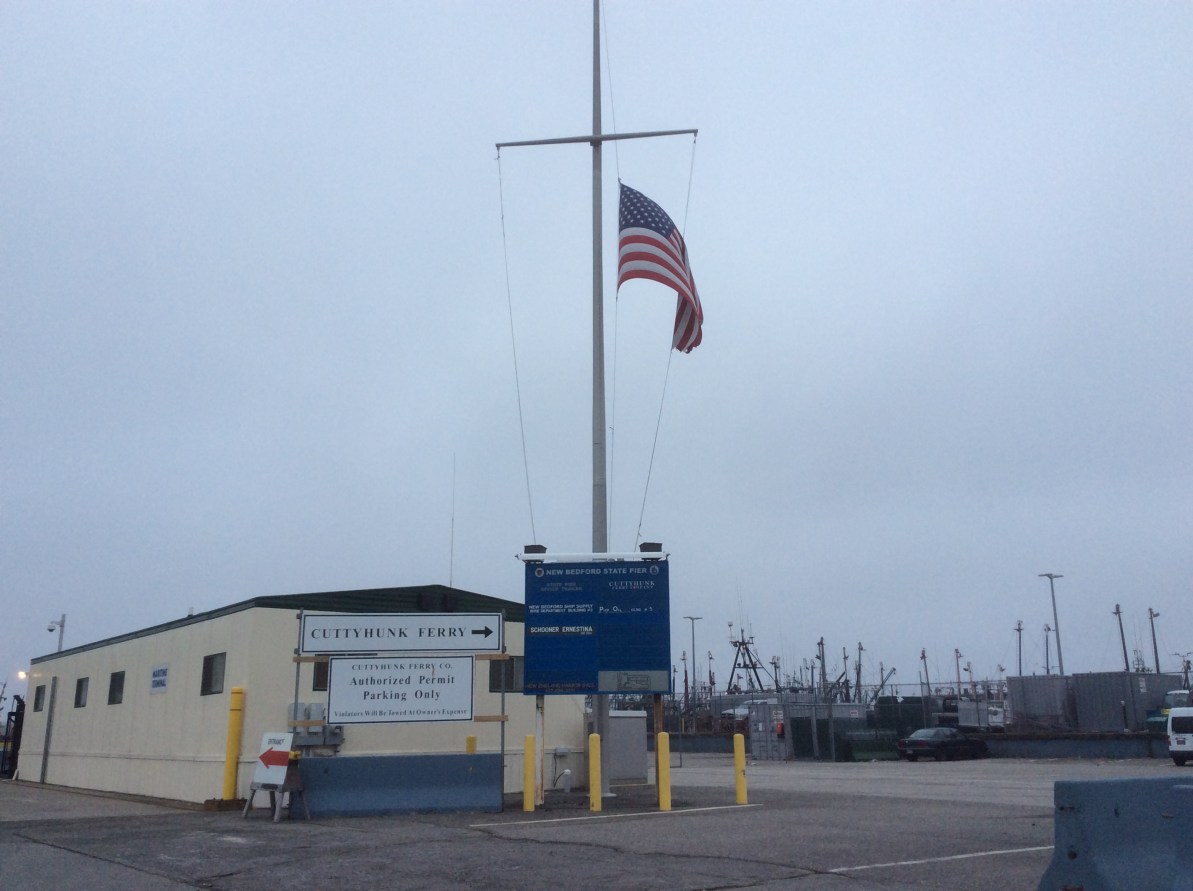
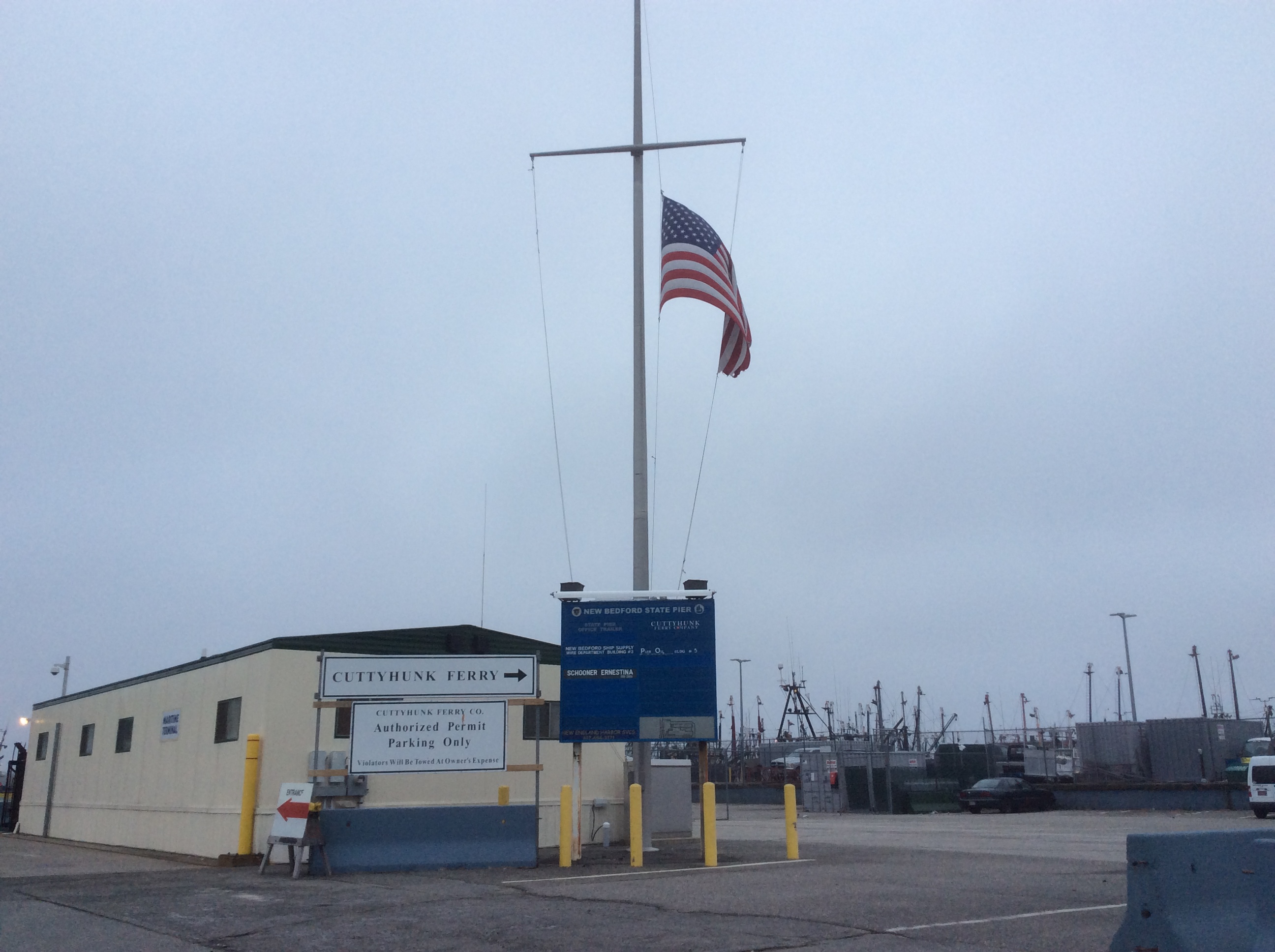
The delightfully names Cuttyhunk Ferry at New Bedford, which does not take you to Nantucket, unfortunately

The delightfully named Cuttyhunk Ferry at New Bedford which does not take you to Nantucket, unfortunately

I head a little north along the piers, and stop for a bit to look across the water in the general direction of Nantucket. The ferries don’t run there until later in April. On Aug 11, 1841, Douglass was invited to tell the attendees of his experiences as a slave at a large antislavery convention there at Atheneum Hall. Abolitionist William Coffin had overheard him talking with friends in a ‘little schoolhouse on Second St’ (which, though scouring all the sources I can find up to this point, I don’t find a location for) and was so impressed by his eloquent style of speaking, he was sure the convention would be too. It was likely one of the places the Zion Methodists met, for whom Douglass preached). Douglass first met William Lloyd Garrison there in person following this talk (as you remember, he had already heard him speak at Liberty Hall) and as Douglass’ telling of his story was so effective, he was solicited by another abolitionist leader John Collins to become a member and speaker of the Massachusetts Anti-Slavery Society. Thus began Douglass’ lifetime career as a human rights activist.
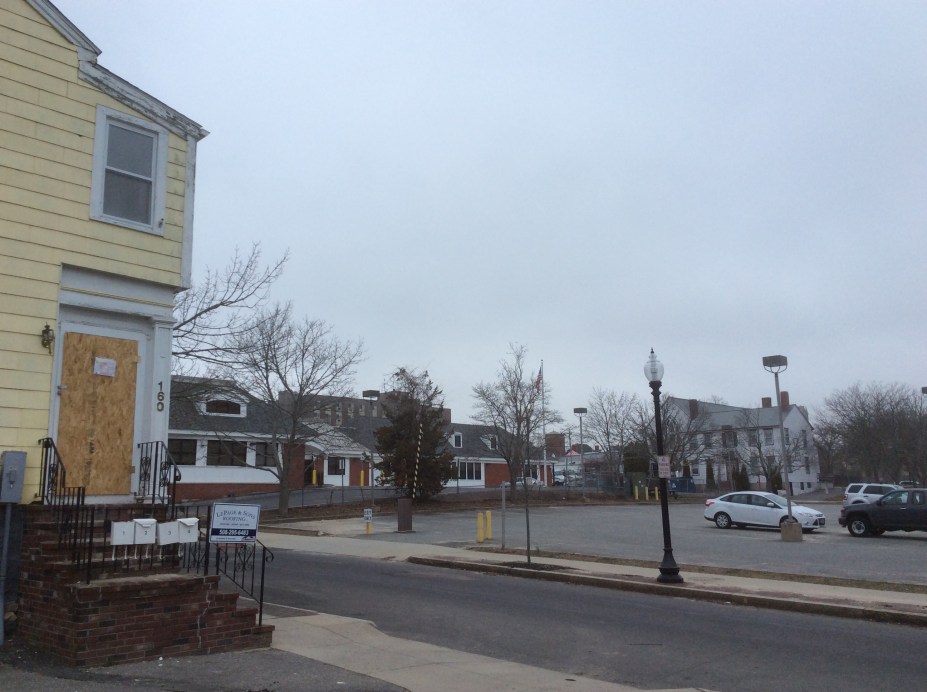
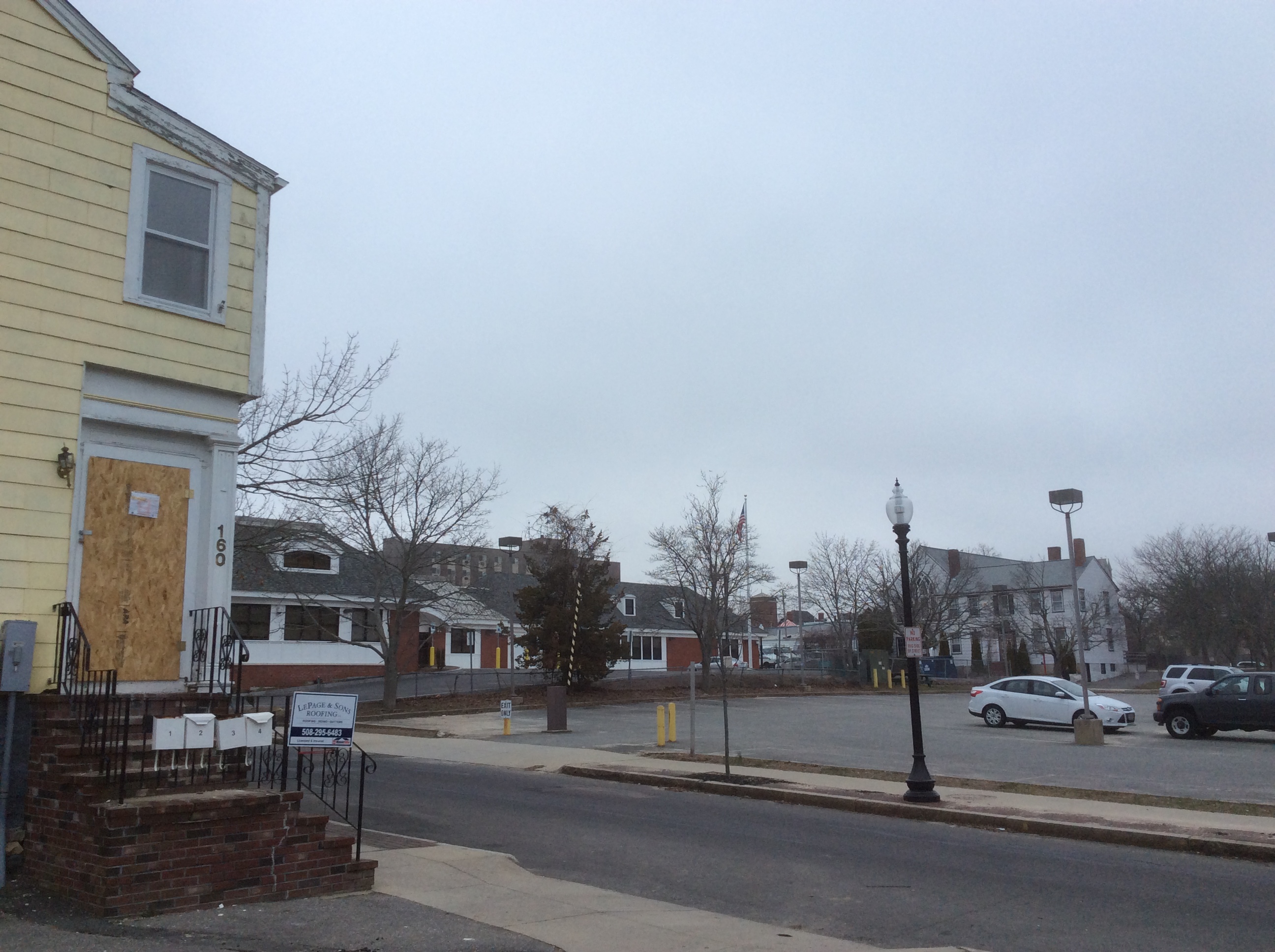
About where 157 Elm St was, site of Frederick and Anna Douglass' first home of their own in New Bedford MA

About where 157 Elm St was, site of Frederick & Anna Douglass’ first home of their own in New Bedford

The last site I visit today is where Frederick and Anna’s first home used to stand at 157 Elm St. I had actually passed by it earlier, on my way from Frederick Douglass Way to the old Elm St Methodist Church, as I had it on my list and in my notes but not on my map (derp! #2). If the street numbers haven’t changed, then it would have been on or near the site of the parking lot across from the yellow house marked 160. There’s not much left in the way of old buildings, so I go up a little ways toward the Methodist church, stopping at Eighth to photograph some of the houses on Elm, but most of them look too new to date to their time here.
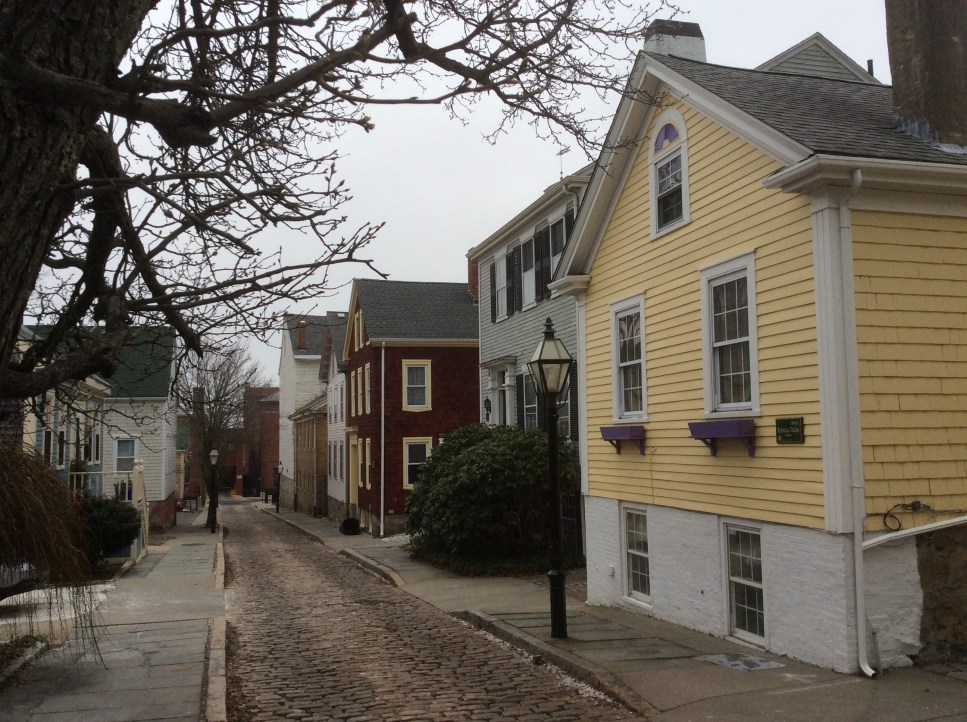
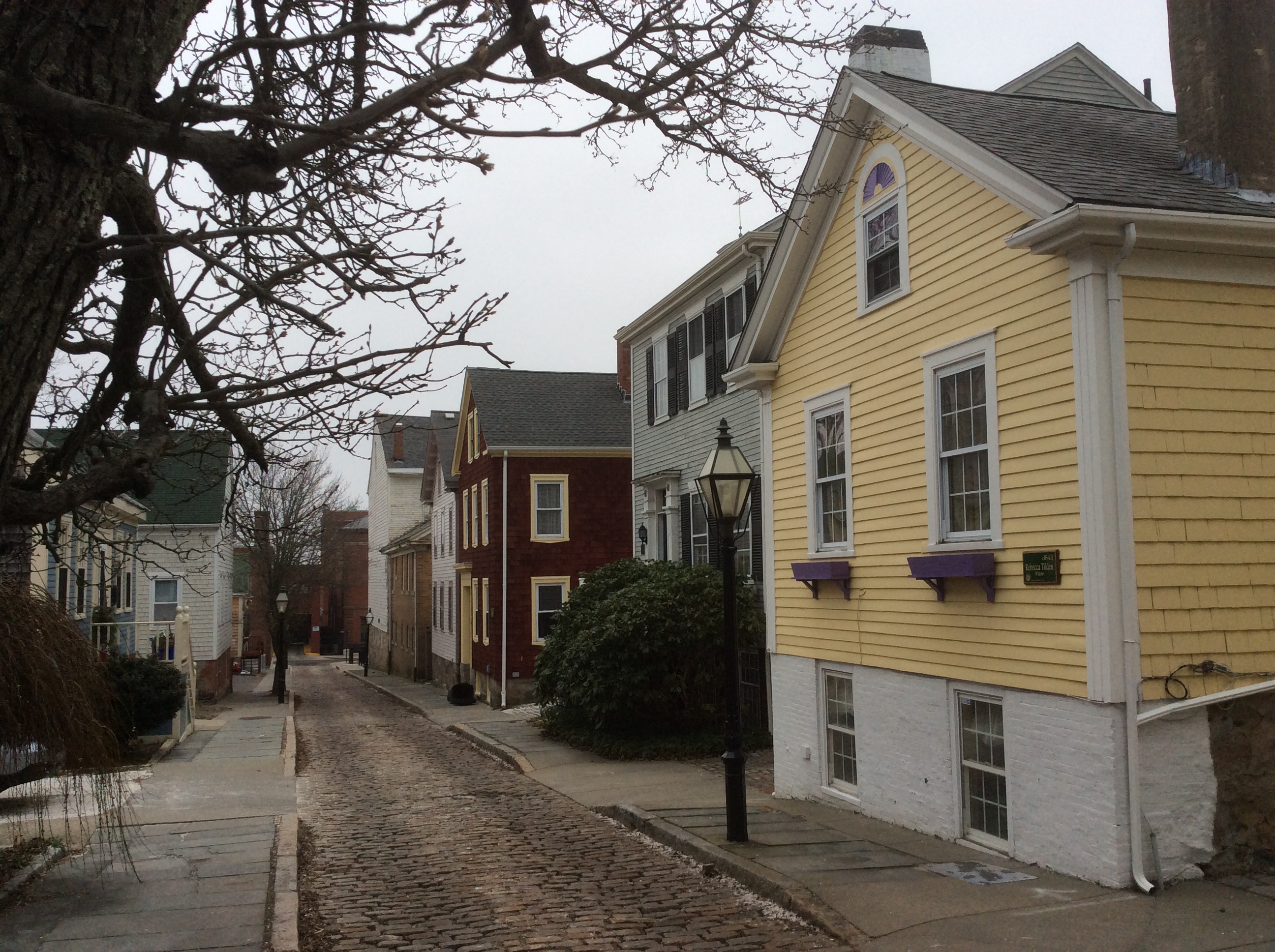
1830's houses on Mechanics Lane, off 8th and parallel to Elm St, New Bedford MA
1830’s houses on Mechanics Lane, off 8th and parallel to Elm St, New Bedford MA

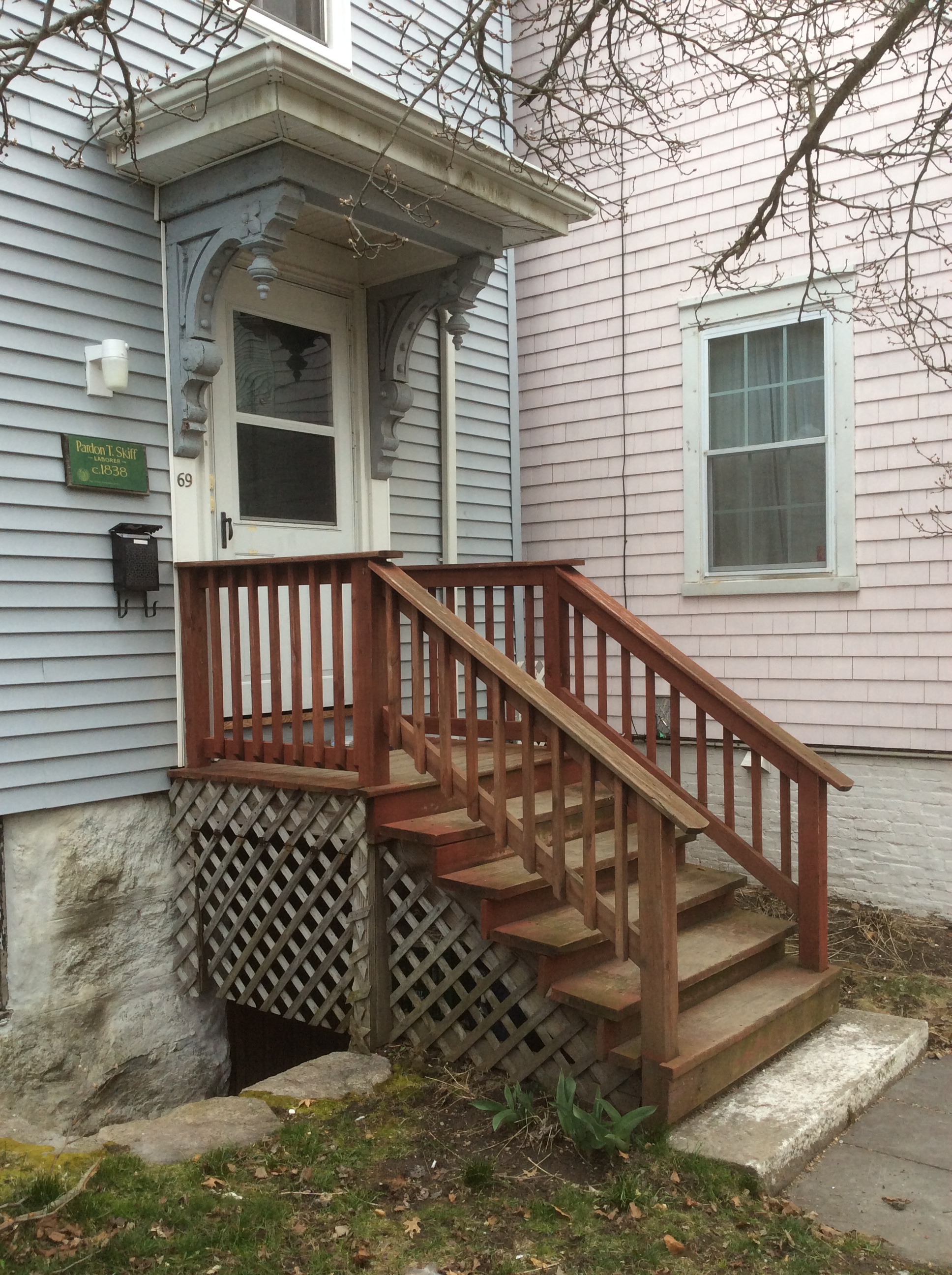
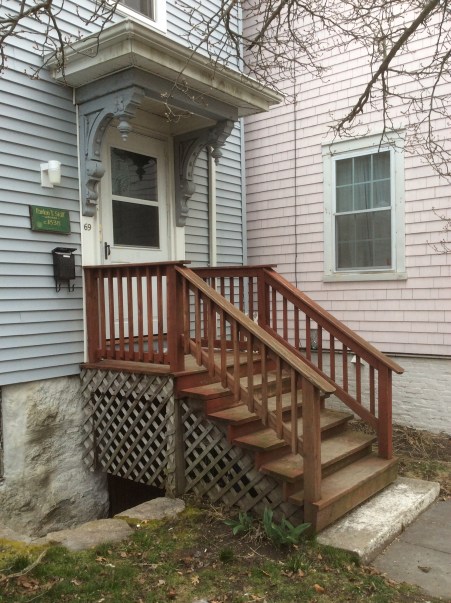
1838 home of Pardon T. Skiff, laborer, Mechanics Lane in New Bedford, 2016 by Amy Cools

1838 home of the delightfully named Pardon T. Skiff, laborer, on Mechanics Lane in New Bedford

Then as I head around the corner on Eighth, I spot a little street that runs one next to and parallel to Elm named Mechanics Lane, where most of the houses look of the right vintage, on a cobblestone street. I draw nearer to the houses and sure enough, their dates of original construction in the 1830’s are proudly displayed. So by looking at this street, we can get a good idea of what their neighborhoods looked like while they lived here. The Zion Methodist Church that the Douglasses used to attend may have stood at the corner of Eighth and Mechanics about where I’m standing as I spot this street, though again, that’s uncertain. The congregation met at various places around the town, since they had no permanent place of worship early on.

Thus ends my account of my day in New Bedford, a delightful and interesting day, even if a bit chilly. I need to skedaddle to meet my host in time at the end of my drive to my next destination. Stay tuned!
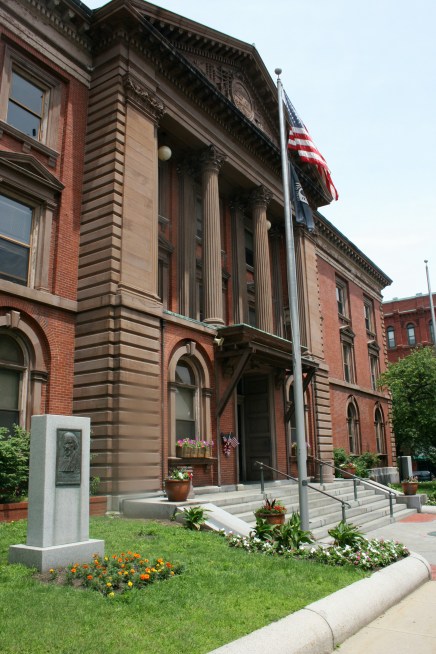
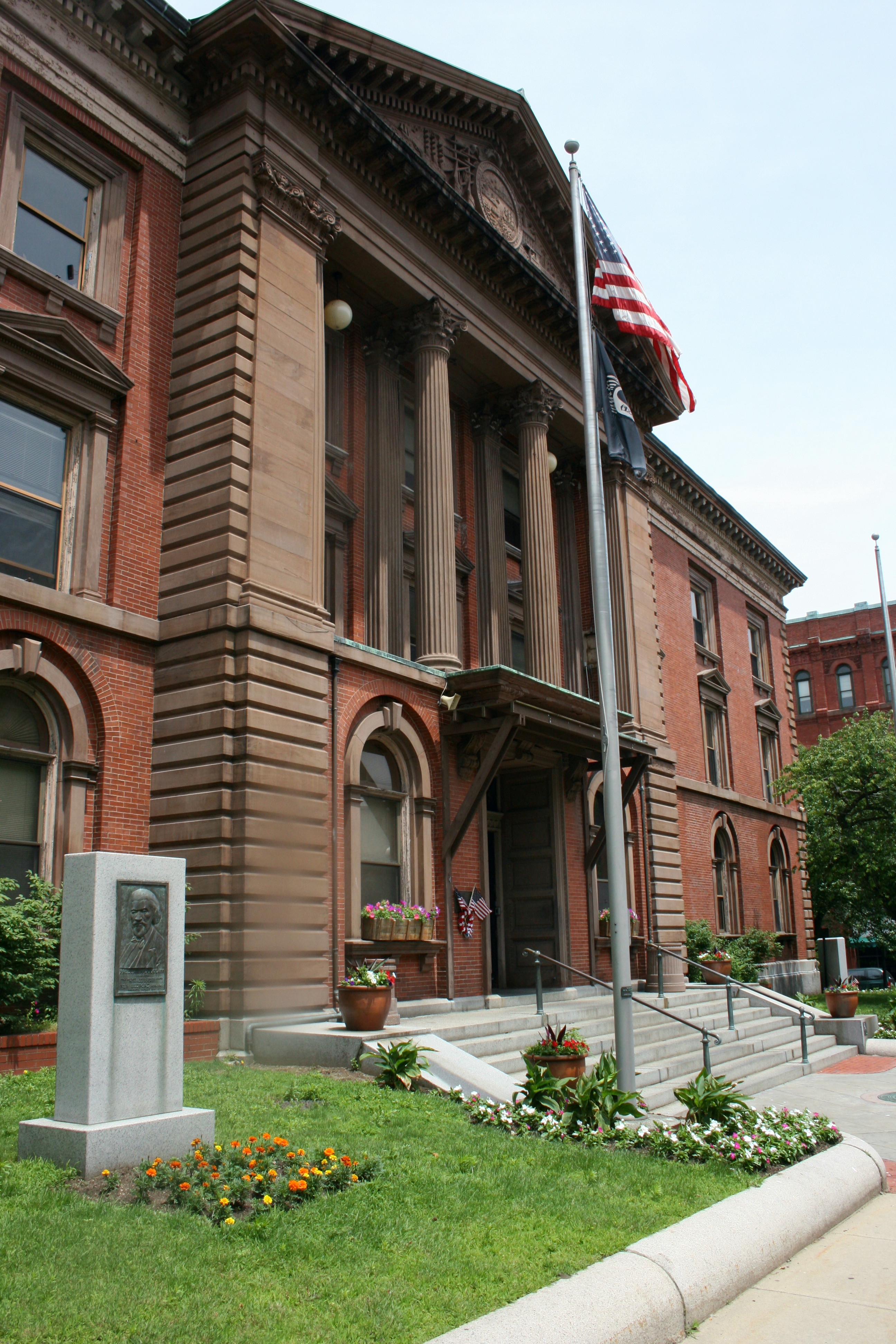
City Hall and Frederick Douglass monument at 133 William St

City Hall and Frederick Douglass monument at 133 William St


* By the way, if you have time to swing by, there’s a small Frederick Douglass monument on the front lawn of City Hall at 133 William St, near Mechanics Street, which you can see at the left of the photo. I don’t stop here since it’s not on my list of sites directly associated with Douglass’ life and as I mentioned, I’m running late and freezing cold so I don’t linger. But it’s a handsome building and a nice monument to visit.

*Listen to the podcast version here or on iTunes

~ Ordinary Philosophy and its Traveling Philosophy / History of Ideas series is a labor of love and ad-free, supported by patrons and readers like you. Please offer your support today!

~~~~~~~~~~~~~~~~~~~~~~~~~~

Sources and Inspiration:

Blassingame, J. (Ed.). The Frederick Douglass Papers, Series One: Speeches, Debates, and Interviews. 4 volumes, and The Frederick Douglass Papers, Series 2: Autobiographical Writings. 3 volumes. New Haven and London: Yale University Press, 1979-1999

Douglass, Frederick. Autobiographies, with notes by Henry Louis Gates, Jr. Volume compilation by Literary Classics of the United States. New York: Penguin Books, 1994.

Douglass, Frederick. The Life and Times of Frederick Douglass. Re-published 1993, Avenal, New York: Gramercy Books, Library of Freedom series.

Douglass, Frederick. My Bondage and My Freedom: 1855 Edition with a new introduction. Re-published 1969, New York: Dover Publications, Inc.

Foner, Philip S. The Life and Writings of Frederick Douglass, Vol. 1-4. New York: International Publishers, 1950.

Frederick Douglass and Herman Melville: Essays in Relationedited by Robert S. Levine and Samuel Otter. University of North Carolina Press, 2008.

Herman Melville‘, from Wikipedia, The Free Encyclopedia.

Hood, James Walker. One Hundred Years of the African Methodist Episcopal Zion Church: Or, the Centennial of African Methodism. New York, 1895. (p 541)

Janiskee, Bob. ‘Loss of the Historic Baker-Robinson Whale Oil Refinery Rankles Officials at New Bedford Whaling National Historical Park‘. Apr 20th, 2010. National Parks Traveler

National Park Service, New Bedford Whaling National Historical Park publications: The 54th Regiment cards and The Underground Railroad: New Bedford and A Whaling Town brochures.

New Bedford Black History Trail‘. The New Bedford Historical Society website

New Bedford Historical Society publications: Frederick Douglass: Freedom in New Bedford, The 54th Regiment, and Nathan and Mary “Polly” Johnson House brochures.

Walker Lithograph & Publishing Co., 1911. Massachusetts, New Bedford 1911. Atlas. (Plate 14)

Weidman, Budge. ‘Teaching With Documents: The Fight for Equal Rights: Black Soldiers in the Civil War – Preserving the Legacy of the United States Colored Troops‘, 1997. National Archives Teacher’s Resources.

Welker, Grant. ‘New Hotel Latest Sign of a Revived New Bedford‘. Jun 5, 2010. The Herald News.

O.P. Recommends: Some Pragmatic Considerations Against Intellectualism about Belief, by Eric Schwitzgebel

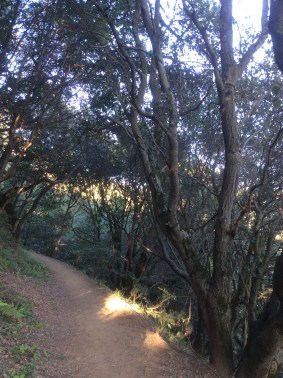
A Trail in Redwood Park, photo 2016 by Amy CoolsAs you may have noticed, I often recommend pieces by Eric Schwitzgebel; of course, that’s because his work is fantastic, and I’m always looking forward to his new posts.
This one’s about understanding why and how we believe, and especially, what our behavior reveals about the true nature of our beliefs. Schwitzgebel offers a succinct and to my mind, convincing criticism of the idea that we have certain beliefs but just often fail to live up to them. Instead, he places the emphasis on observing behavior as a more reliable and accurate indicator of what we in fact do believe.

This is a sobering thought, since it means that the way we like to comfort ourselves when we don’t behave as we think we should isn’t really valid: ‘I meant well! And I’ll do better next time because I really believe in….’ This kind of excuse it always readily available to us in the intellectualist model of belief as Schwitzgebel describes it, but really, what’s the practical use of saying we believe something something then if we consistently give ourselves this kind of ‘out’?  In this way, it’s closely related to the Socratic argument that there’s no such thing as weakness of will, since if we actually believe something, it makes no sense to think we actually could act otherwise. And it seems to me to go beyond pragmatism: if belief and behavior are considered separately, the former seems to lose a good deal of meaning, seeming a disembodied, impersonal thing that doesn’t seem so much to describe the actual world, or an actual person so much as something very abstract, very removed.

But it’s also an encouraging thought. For one, it helps us be more honest about who we really are and why we do what we do; as Schwitzgebel points out, this understanding of belief makes us more responsible for not only our reactions but our beliefs, and therefore gives us more control over them. Which ties into: this view of belief fits in neatly with the ‘fake it ’til you make it’ approach to self improvement. Perhaps our intellect tells to us that there’s a better way to behave, or that there’s a proposition we should accept since upon consideration, it appears to be the truth, but the way we act so far doesn’t accord with this intellectual discovery. How to resolve this uncomfortable cognitive dissonance? Why, change our behavior! Not only will it change our habits over time, it helps turn our intellectual considerations into conviction, or part of our mental makeup as not only thinking, but believing beings.

Ordinary Philosophy and its Traveling Philosophy / History of Ideas series is a labor of love and is ad-free, entirely supported by patrons and readers like you. Please offer your support today!

~~~~~~~~~~~~~~~~~~~~~~~~~~~~

Sources and inspiration:

Schwitzgebel, Eric. ‘Some Pragmatic Considerations Against Intellectualism about Belief, The Splintered Mind blog, April 07, 2016.

Stroud, Sarah, “Weakness of Will“, The Stanford Encyclopedia of Philosophy (Spring 2014 Edition) Edward N. Zalta (ed.)

New Podcast Episode: Frederick Douglass Baltimore Sites

Listen to this podcast episode hereDouglass Place with engraved marker, Fell's Point Baltimore MD, photo 2016 Amy Cools or subscribe on iTunes

First day, Sunday March 20th

So here I am on the East Coast, commencing my Frederick Douglass history of ideas travel adventure in earnest! I’m thrilled, and know I’ll learn and see a lot, since I have so many sites I plan to visit already and know I’ll discover more as I go along.

…In a very important way, it’s fitting to begin with Douglass’s life here in Baltimore, centered in the waterfront district of Fell’s Point, since this is where Frederick Douglass had one of the most formative experiences of his life.

… Read the original travel account here

Ordinary Philosophy and its Traveling Philosophy / History of Ideas series is a labor of love and is ad-free, entirely supported by patrons and readers like you. Please offer your support today!

Frederick Douglass New York City Sites

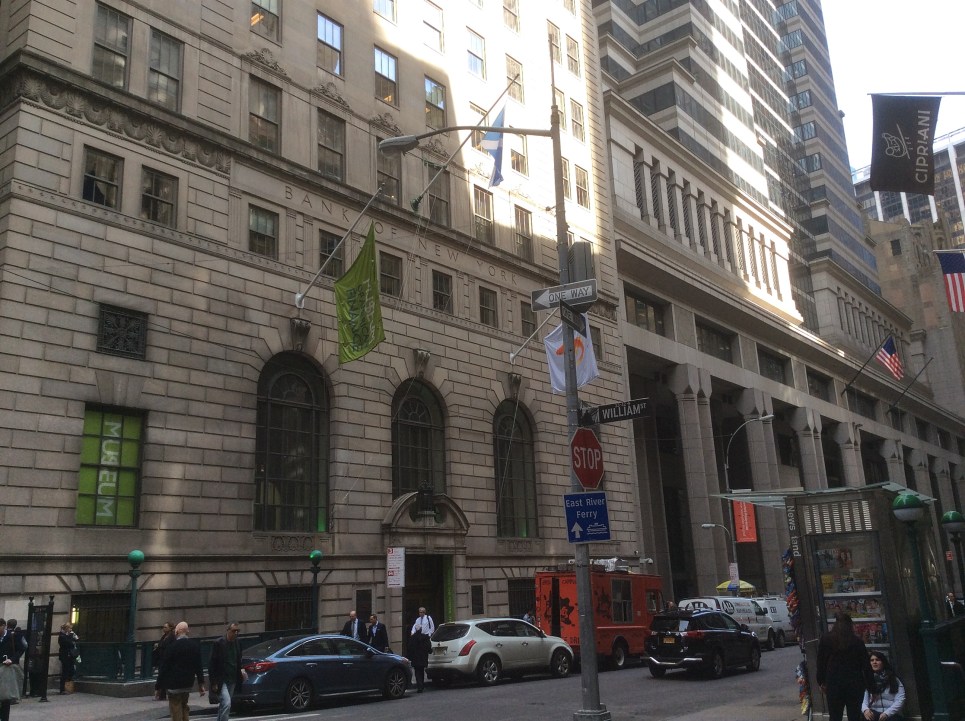
Bank of New York at Wall and William Sts NYC, 2016 by Amy Cools

Bank of New York (cornerstone laid June 22 1797) at Wall and William Streets, New York City

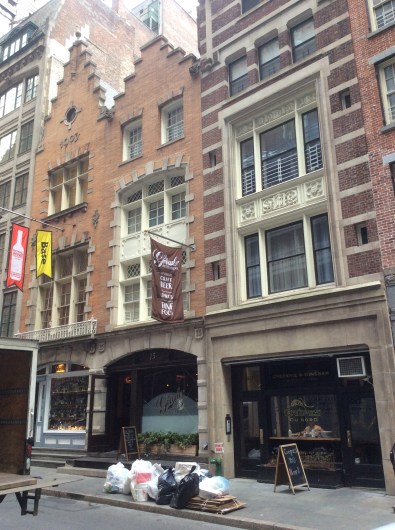
Three old buildings on historic S. William Street, 2016 by Amy Cools

Three old buildings on historic S. William Street

Fourth Day, Wednesday, March 23rd

I arrived yesterday afternoon in New York City and had a good hangout with my friend with whom I’m staying (thanks, Devin!).

After doing more research and mapping out today’s journey, I head to my first destination. I take the subway to lower Manhattan to the Brooklyn Bridge stop, zigzag my way southeast to Wall and William Streets, then down to S. William St. Wall Street was the northern border of the city when it was still young, so I decide it’s as good a way as any to get a feel for the old city, though really, the truly old intact buildings in NYC are scattered, and few. I’m only looking back to the 1830’s for this trip, but as you may know or may remember from my earlier series on Ernestine Rose and Elizabeth Cady Stanton, this city has a long history of tearing everything down regularly and starting fresh.

Stone St on the other side of S. William NYC, 2016 by Amy Cools

Stone St on the other side of S. William St., New York City

I’m heading to S. William because, as you may remember from my account of yesterday’s travels, Douglass accidentally referred to the Willow St. depot in Philadelphia as the William St. depot, which was the New York one. It doesn’t say specifically in any of his accounts that he went to the William St depot the day he arrived in New York City on Monday, September 4th, 1838. He would have arrived at a New York City wharf coming across from a New Jersey train station. I interpret his mistake, though, to indicate he did go to William St. that day, especially combined with his description of being among the bustle of Broadway and gradually making his way north to Center Street. The general route makes sense.

Foundation brickwork from 1830's building at 13 S. William St, 2016 Amy Cools

Foundation brickwork from 1830’s building at 13 S. William St, NYC

I photograph a row of older buildings at the foot of William St. As you can see by the numbers near the peaks of the facades, they’re dated at the turn of the century, more than half a century after Douglass arrived here, newly freed by his own efforts.

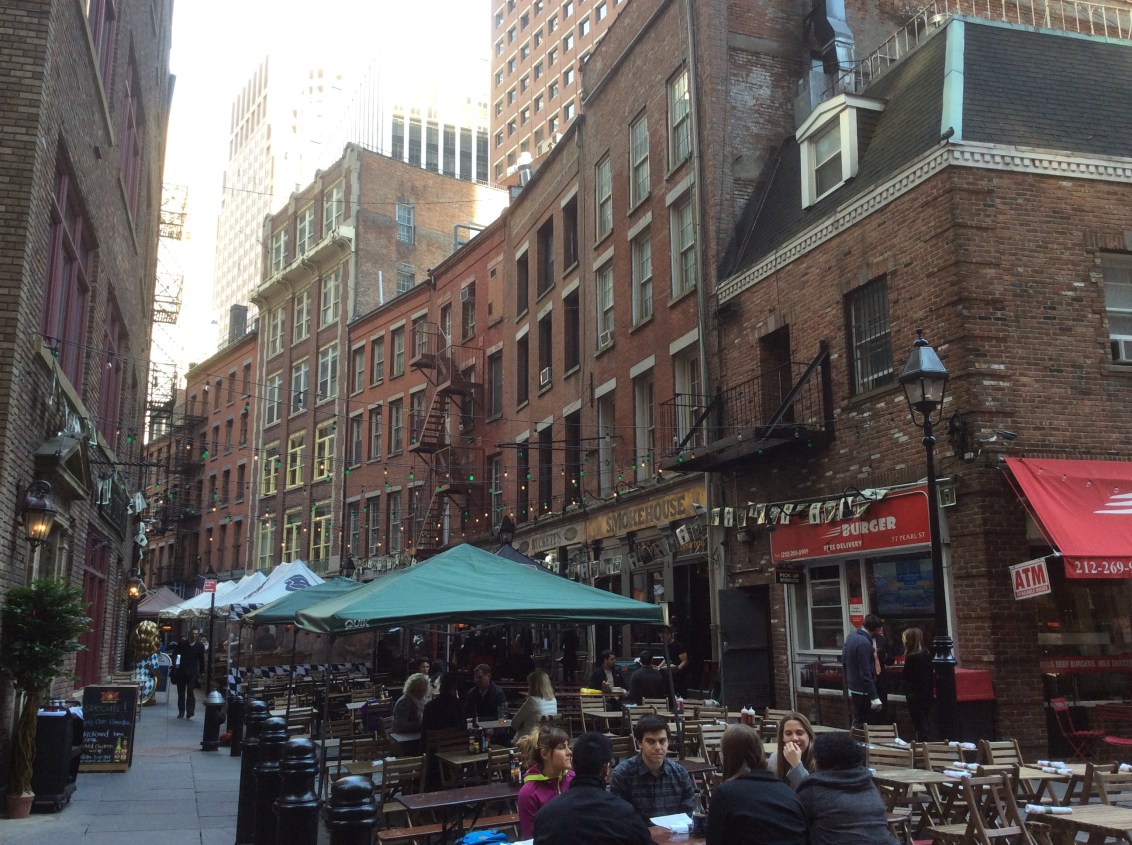
As I draw near to the buildings to take a closer look, I spot a historical plaque on 13 S. William St, the one with the year 1903 prominently displayed near the pointy top. That’s the year it was rebuilt after a fire in a more fashionable Dutch Revival style; the original building was under construction when Douglass was here in NYC in 1838, and the foundations remain. The buildings’ other entrance is on Stone St, to the east and parallel to S. William St as it curves around and up in a northeasterly direction. I see from early New York City atlases that the streets here retain their shape and direction from Douglass’ days here. So even if Douglass didn’t come to the William St. depot when he arrived, he was near this part of town, this is one of the few places where anything still stands from that time, and he probably went there at some point since his memory was familiar enough with the name of the William Street depot to transfer it to the Philadelphia one when he tried to recall it later on.

Sign at Collect Pond with story and picture of The Tombs, NYC, 2016 by Amy Cools

Sign at Collect Pond with story and picture of The Tombs, New York City

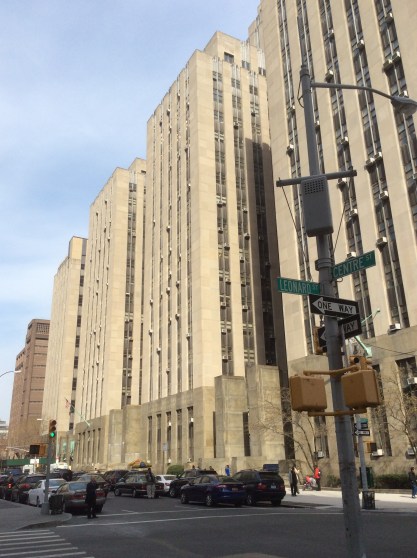
Criminal Courts building on Centre St, New York City, photo 2016 by Amy Cools

Criminal Courts building on Centre St, New York City

So back to following Douglass, and in this case to a place he went for certain. I make my way north, just as he did on his way ever more surely to freedom, to Centre St. across from the site of The Tombs. It stood at the site where Collect Pond now stretches between Lafayette and Centre Streets, at cross streets White and Leonard. It was an Egyptian revival building (hence the name, as in ancient Egyptian tombs) repurposed as a prison because it was ill-suited for its original purpose. In his Life and Times, Douglass recalls meeting a sailor named Stuart who saw him across the street from where his house stood on the west side of that street. Stuart takes an interest in him and befriends him right away. I’m sure it had much to do with Douglass’ appearance, since he dressed as a sailor himself for his escape: sailors were held in especially high regard in this part of the world at this time, so he felt he was less likely to be challenged, and since many black people were employed as sailors, he felt he’d more likely pass without notice.

Douglass’s new friend Stuart gave him shelter for the night. Since Stuart lived across from The Tombs on Centre St., his house would have stood somewhere on the grounds now occupied by the enormous New York City Criminal Court Building.

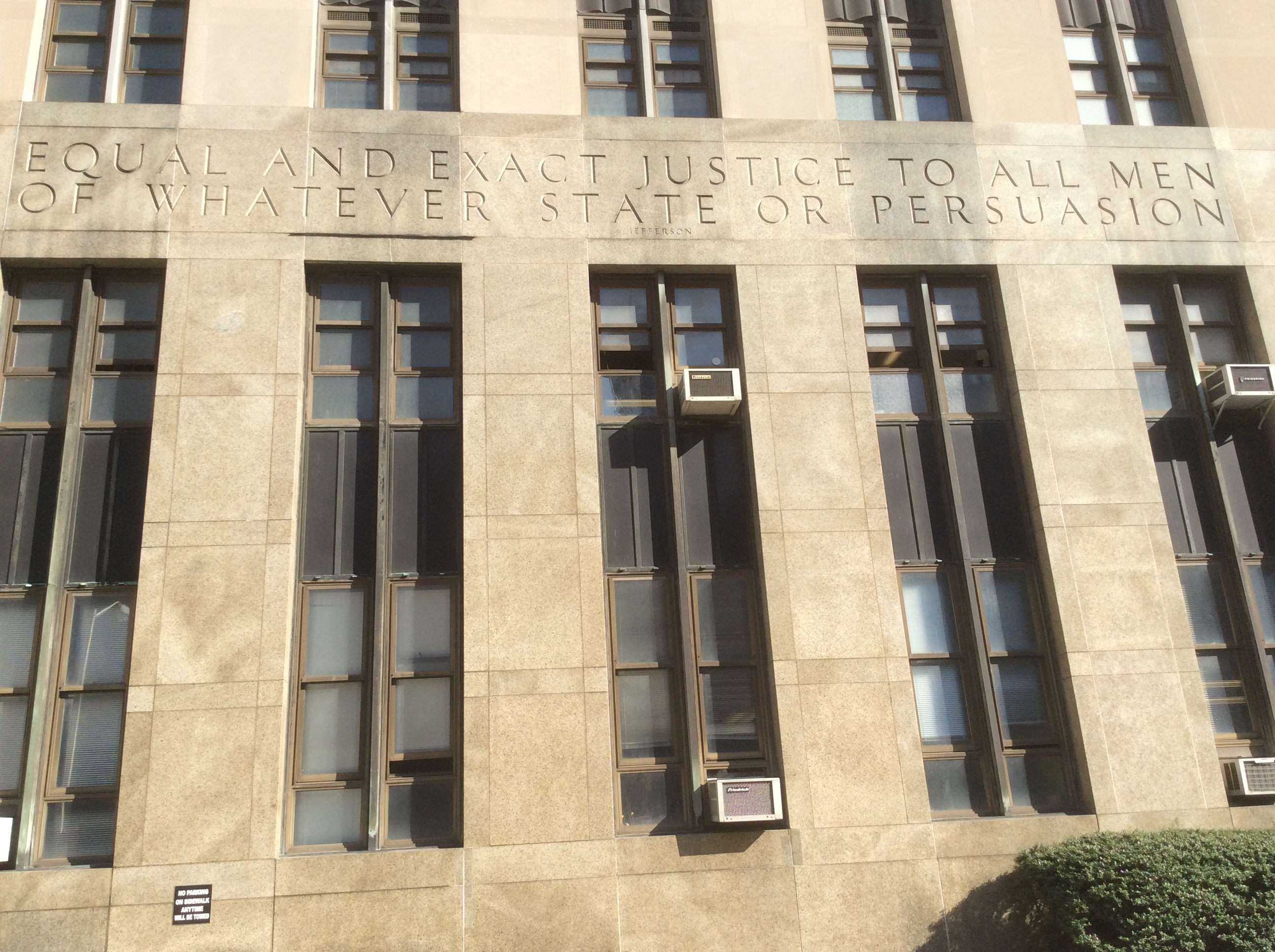
Jefferson quote on the New York City Criminal Courts Building

Jefferson quote on the New York City Criminal Courts Building

Looking up at the words engraved across the center front, something strikes me. I imagine what Douglass would have felt that day if he knew the words ‘Equal and Exact Justice to All Men of Whatever State or Persuasion’ would be etched in stone one day above the place his head lay. After all, it describes very well the central driving principle of his life. (As you can see if you look closely at the name under the quote, this one’s from Jefferson; it’s from his first inaugural address. Regretfully, the author of it never did find sufficient conviction within himself to realize that principle for those of Douglass’ people he held in slavery.)

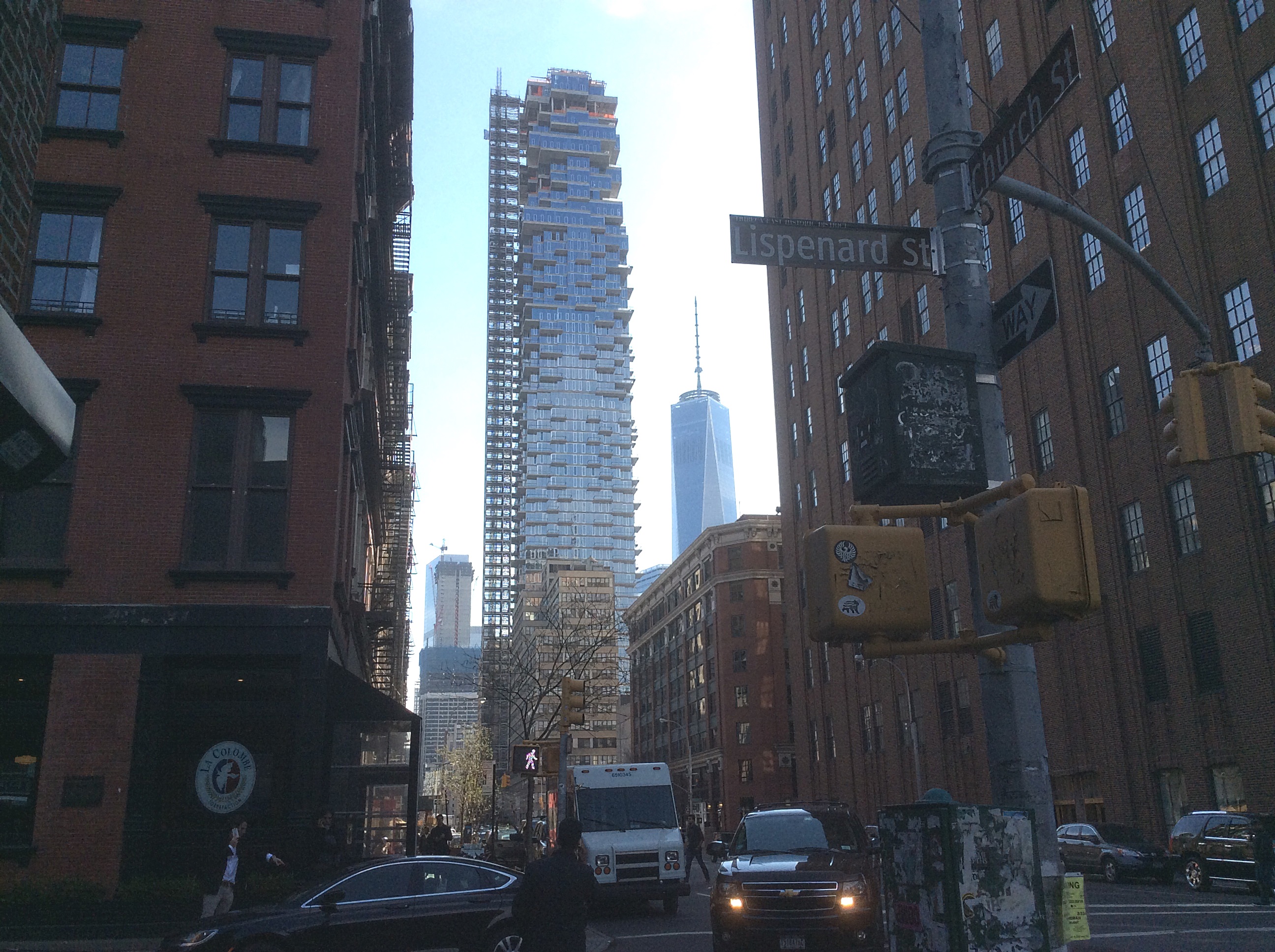
Church and Lispenard Streets, Tribeca, NYC, photo 2016 by Amy Cools

Church and Lispenard Streets, Tribeca, NYC. The red brick building on the left stands at the site of David Ruggle’s house, now La Columbe Coffee at 36 Lispenard

David Ruggles House Plaque at 36 Lispenard, photo credit Steven E. Greer, used by permission

David Ruggles House Plaque at 36 Lispenard Street

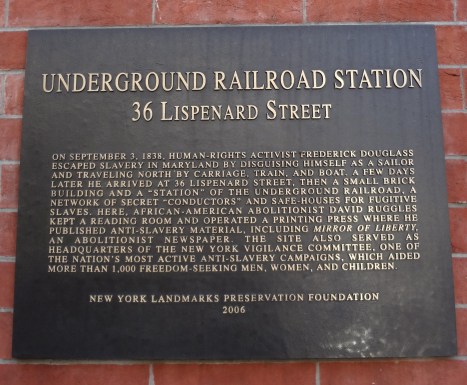
The next morning, Stuart the hospitable sailor accompanied him to David Ruggles’ house. Ruggles was a free black man and an officer on the Underground Railroad, and he had sent for Douglass, inviting him to stay at his place for the next few days at the corner of Church and Lispenard Streets. So that’s where I head next, and it’s in what’s now the TriBeCa neighborhood, just below Canal a little west of Broadway. While Douglass hid out here, he sent for his sweetheart Anna, who had done so much already to help him escape by providing him with his sailor disguise and selling one of her feather beds for travel funds. In fact, she had likely met him on one of the docks at Fell’s Point, where my Douglass travels began. When she heard of his successful escape, she came from Baltimore immediately to join him when she heard of his successful escape. They were married here at the Ruggles home on Sept 15, 1838.

Cooper's Union at Cooper Square and Astor Place, NYC

Cooper’s Union at Cooper Square and Astor Place, NYC

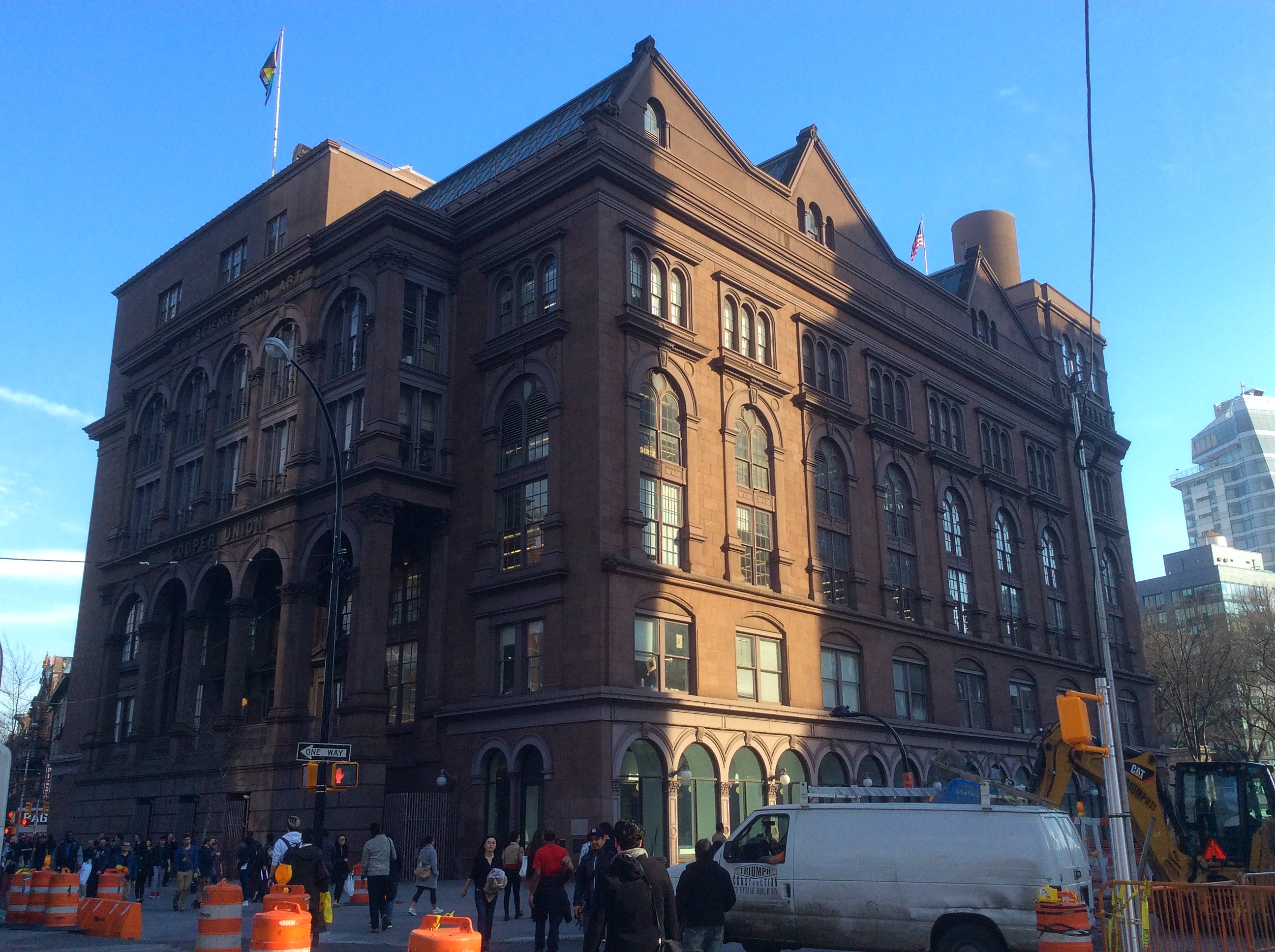
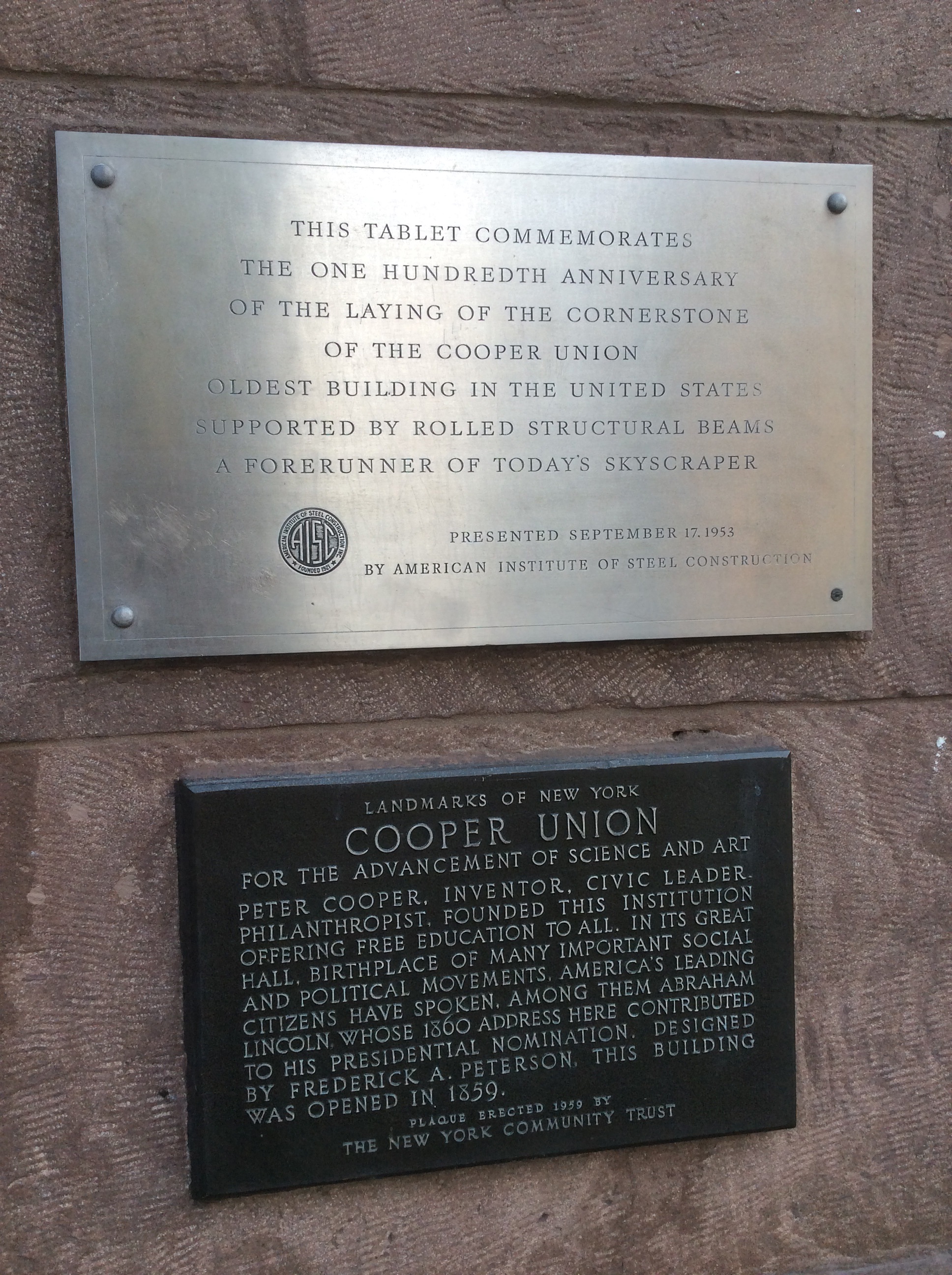
I continue north on Broadway, walking briskly since it’s fairly far, 11 long blocks north and four moderate-sized blocks east. But it’s a beautiful warm day outside and I can’t bring myself to go down in the subway. I’m heading for the Cooper Union foundation building at the southeast corner of the intersection of Astor Place and Cooper Square, a few blocks east of Washington Square and a couple blocks north. It’s a brownstone affair with arched windows built in the mid-1850’s. Cooper’s Union is a school founded on the idea that all people of talent and drive should receive a free, high-quality education whether or not they or their families can afford to pay, and its founder put an enormous fortune where his mouth was.

Historical plaques on Cooper's Union, New York City

Historical plaques on Cooper’s Union, New York City

This building has had about as many great speaker’s voices echoing down its halls as you could wish for, including Abraham Lincoln and Mark Twain. In November of 1861, when the building was still fairly new, our hero and their mutual friend traveled to New York City. Six days after delivering a speech for the Emancipation League Speech in Boston, he delivered it again here. Douglass called forcefully once again for the immediate emancipation of all slaves and for the enlistment of black soldiers into the Union Army, which would not be allowed until a little over a year later. Douglass felt it was all-important that black people should be at the forefront of the fight against slavery, which everyone knew, and still does if they’re being honest, was more about slavery than anything else. Not only would this prove to their fellow Americans that black people were as brave and able as anyone else, which most Americans both north and south had trouble believing, it would give soldiers the opportunity to improve their own fortunes by establishing them as heroes, and by instilling in them that sense of confidence and self-worth born of taking their own destinies finally and firmly into their own hands.

Douglass returned to Cooper’s Union to speak more than once. On one occasion on May 30th 1865, Douglass delivered a speech not only memorializing his sometimes target of criticism, sometimes friend, and recently martyred hero Abraham Lincoln, he also denounced the New York Common Council for not allowing black people to participate in Lincoln’s funeral procession in New York City. This town, though in a free state, was not yet a warm and welcoming place for black people. Not only did the very real danger of slavecatchers here convince him to move to New Bedford soon after his arrival in September 1838, on one occasion years later in 1850 he was beaten up by several white men just for walking down the street with two white lady friends of his on his arms. New York City was not, at the time, a place of human rights idealism so much as a place of commerce, and forced free labor can be good for business, or so it was often thought.

A view of 9th Ave, west side of street between 37th and 38th Sts, possible site of Apollo Hall in New York City

A view of 9th Ave, west side of street between 37th and 38th Sts, possible site of Apollo Hall in New York City

As you can see from the ever-increasing contrast in the photos as the sun makes it way west and downward, I’m running low on daylight, so I take the subway to my next destination. According to The New York Sun of January 26 1897, Page 3, Apollo Hall was at 495 Ninth Avenue, which is now between 37th and 38th. I can’t be sure that this is the right place, since at this point, I have not found an atlas confirming the location. I just have the street address number, which as we know, can change sometimes, and many results came up for ‘Apollo Hall New York’ keyword search, such as a playhouse which temporarily had Apollo in its name and a Brooklyn one described in The Weekly Democratic Statesman of May 13, 1875, p 4 as being on Fifth St in Brooklyn, a Union Tabernacle house of worship. But the hall named in the New York Sun article seems to be more of a forum for meetings such as the ones Douglass spoke at, and my sources refer to its being held in NYC, not Brooklyn. So, until I discover otherwise (and I’ll let you know if I do, dear readers!), I’ll assume this is the general location. There are no markers that I can find.

American Anti-slavery Society Anniversary program, May 12 1863, N. Y.

American Anti-slavery Society Anniversary program, May 12 1863, N. Y.

On April 9th 1870, ten days after the ratification of the 15th Amendment, the American Anti-Slavery Society met here for the last time. In his speech, Douglass said that the best and really the only way to thank God for the victory over slavery and the newly won right to vote (the 15th Amendment was ratified just that February) was by thanking the men and women who made it happen, because only through them was the will of God apparent. He was sometimes criticized in editorials and in the pulpit, especially by other black ministers, for not prioritizing God in his writing, in his speeches, and his public statements of gratitude. Douglass would have none of it, saying that as long as people did nothing about the injustice and evil done in the world, it was never done at all; the insistence on prioritizing the role of God in the good that’s accomplished can lull people into thinking that, as we sometimes put it today, it’s okay to just hang back and ‘let go, and let God’. Douglass didn’t think his work or that of his fellow activists here was done with the passage of the 15th amendment. He called for a new campaign for women’s suffrage, and he said that the mission didn’t end, only changed, to improve the lot of all suffering people, including Indians, women, and all oppressed minorities

In another landmark moment at Apollo Hall, delegates nominated Douglass as a candidate for Vice President on May 11, 1872.

Here’s the story if you’re interested in getting a little deeper into the historical details (skip this and the next long paragraph if you’re short on time): These delegates were meeting here to organize a new Equal Rights Party out of disappointment and frustration with the Republican’s increasing lack of commitment to progressive values. The Republican Party, Douglass’ party, was starting to fissure over corruption in President Ulysses S. Grant’s administration, the debate over Radical Reconstruction (the policy of guaranteeing full equal political rights to black people and punishing Confederate leaders for waging war against their country), and the party’s increasing tendency to favor corporate and individual business interests over the rights of oppressed persons, especially black people and women. The Equal Rights Party was formed in opposition to the Liberal Republicans as well. Both criticized Grant for doing little to solve the corruption problem as well as for allowing Douglass to be excluded from an important White House meeting of one of the very commissions Grant had appointed him to, as well as Grant’s refusal to chastise the caption of the mail packet, on the return of the commission to DC, who excluded Douglass from the dining room. The ERP and the LR’s believed these discriminatory actions of Grant showed he was not truly committed to the cause of furthering the cause of black cause. But the ERP opposed the LR’s policy of cooperating with southern states-rights contingent who wanted to forgive ex-Confederates and rebuild the south economically, even if it meant sacrificing black civil rights issues.

The newly formed ERP nominated women’s and labor rights activist Victoria Claflin Woodhull for President of the United States and Frederick Douglass for Vice President, a progressive ticket if there ever was one. Douglass didn’t accept, since he believed it imperative that the black vote remained united behind the only party that had, and could still, actually accomplish good things for black people even if some time and compromise were required.  (Here he shows his pragmatist side.) He dismissed the White House commission dinner slight as an oversight, and pointed out that the LR’s and Democrat’s state-rights policies protected the Klu Klux Klan’s terrorism in the South. Grant won the election that fall by a landslide, and Douglass was appointed one of the two electors-at-large for New York State; he and his fellow elector, friend, and mentor Gerit Smith conveyed the results of the New York ballot to the Senate. But Douglass was to find himself ever more disappointed in the Republican Party’s lackluster performance in ensuring that black people actually enjoyed the rights guaranteed to them by the 13th, 14th, and 15th amendments.

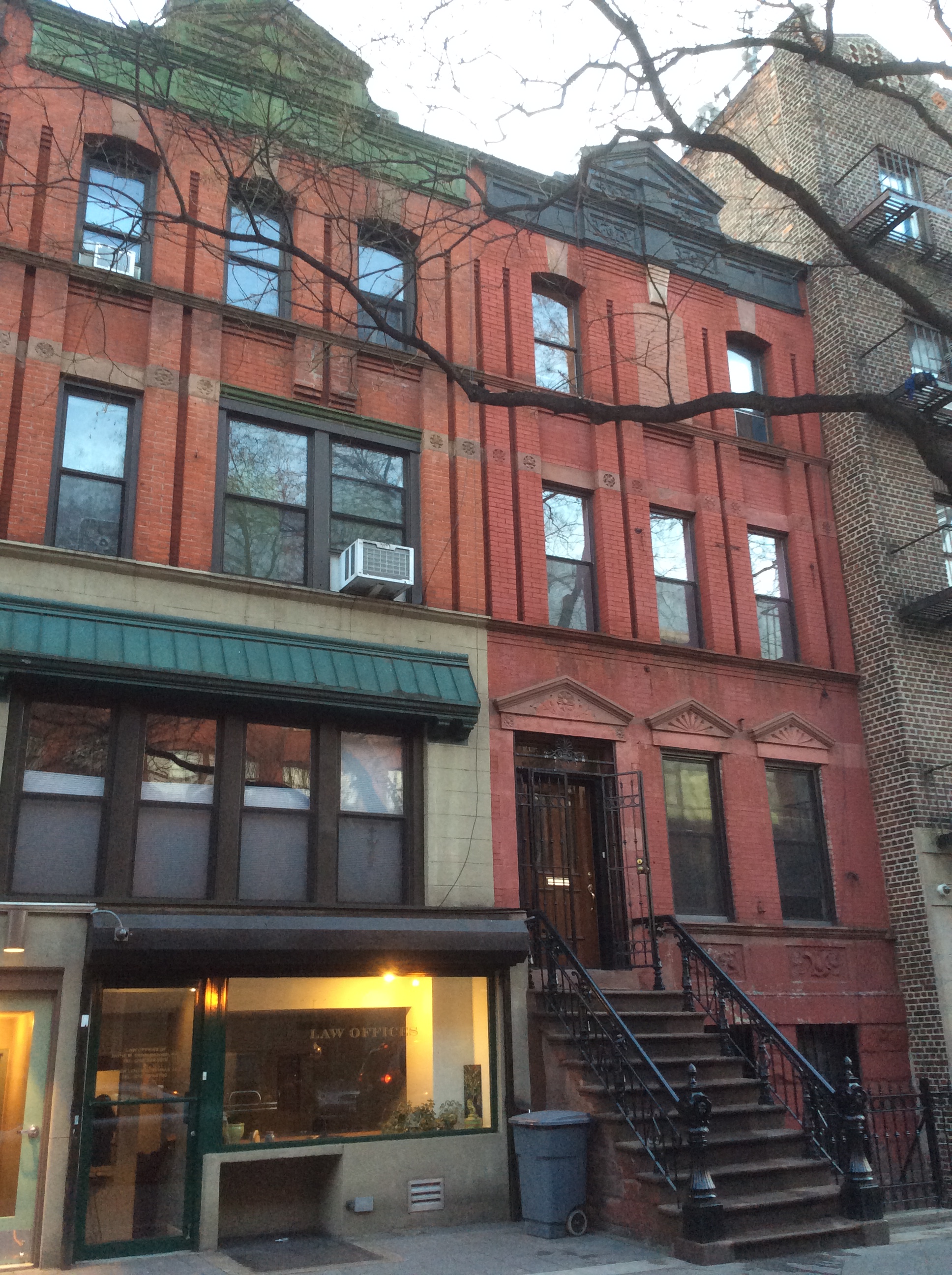
The former offices of Ida Wells' New York Age newspaper at 230 W. 135th St (center) Harlem, New York City

The former offices of Ida Wells’ New York Age newspaper at 230 W. 135th St (center) Harlem, New York City

230 and 232 W. 135th St, Harlem, New York City

230 and 232 W. 135th St, Harlem, New York City

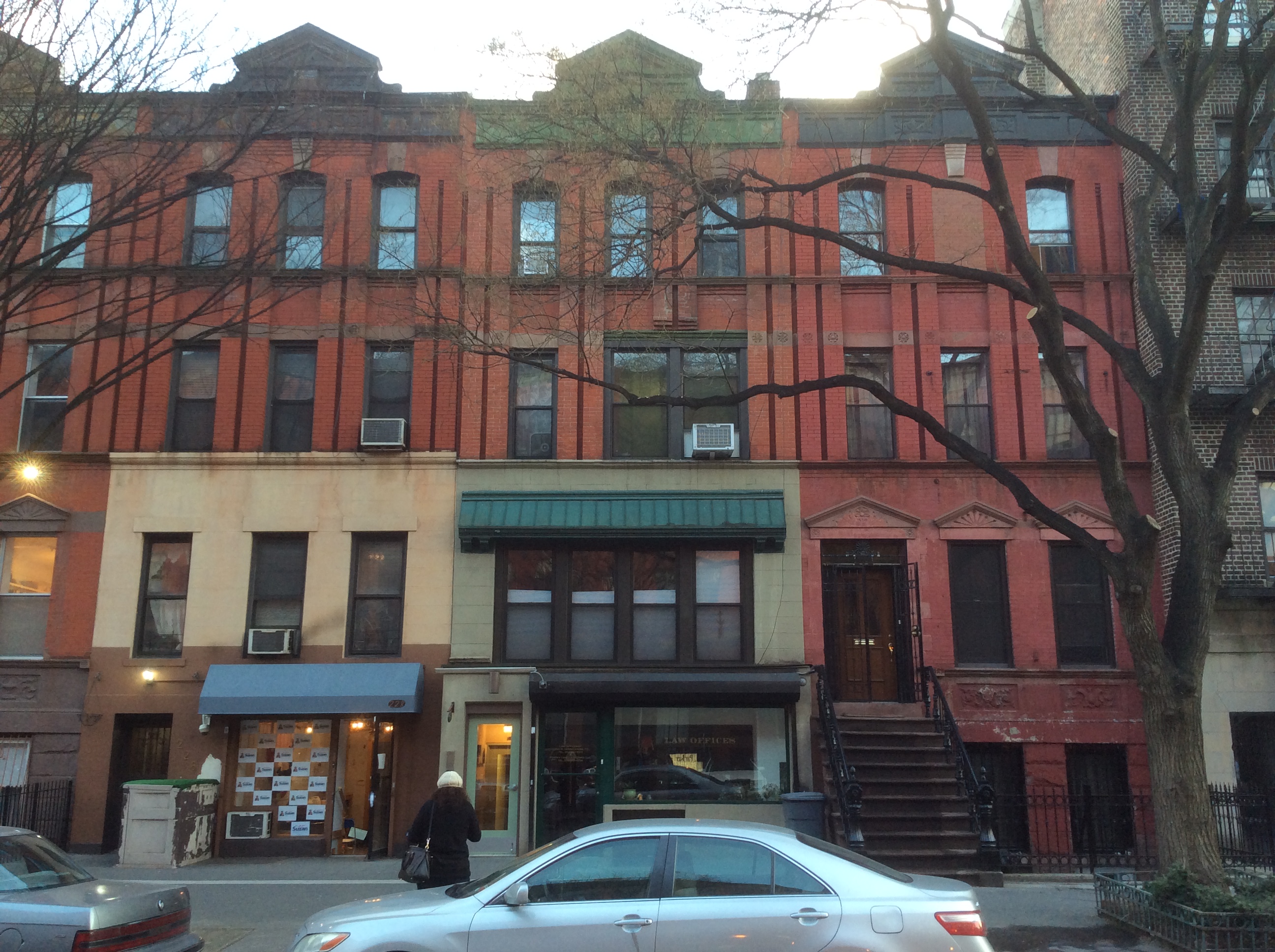
So north I press on, again by subway, all the way to Harlem. I really like this neighborhood. I head to 230 West 135th St, between Frederick Douglass Blvd (appropriately enough; it was formerly 8th Ave) and Adam Clayton Powell Jr. Blvd (formerly 7th). I’m in luck: according to an old city atlas from the late 1800’s I’m so glad to find digitized and offered online, the street numbers don’t appear to have changed: the placement of number 230 matches the distance between 7th and 8th Avenues as it’s marked on my map. So exciting: it’s very rare for me to find that address numbers have not changed. Number 230 is now a small suite of law offices, one in a row of red-colored brownstone and brick fronts, with an updated pale pea-soup green facade complete with modern square windows and an awning. The one to the right of it, though, is clearly unchanged, and would certainly have looked identical.

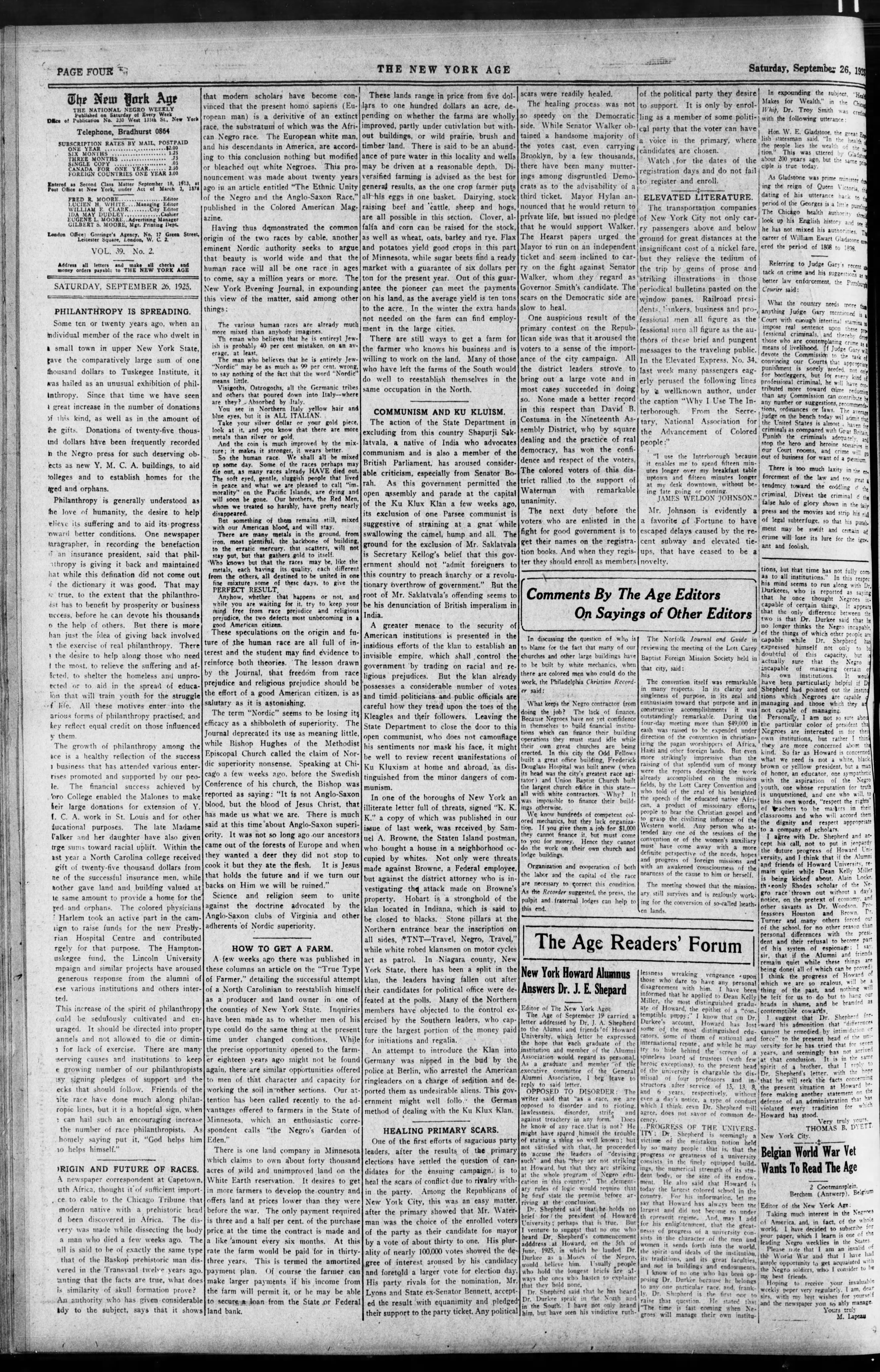
The New York Age, for Saturday, Sep 26, 1925

The New York Age, for Saturday, Sep 26, 1925, page four showing address of their offices

In late 1892, Douglass came here to New York City to visit the marvelous Ida B.Wells, whose investigative journalism into lynching of black people inspired and informed his later speeches and activism. He almost certainly came to visit her in these offices. She moved to New York City in late 1892 for a short time before settling in Chicago, and in that time became a writer for and part owner of the New York Age, a very influential black newspaper which thrived for decades. Again, I’m in luck: there’s an earlier edition digitized and published online which gives the address of its offices. The New York Age and Wells’ powerful pamphlet Southern Horrors: Lynch Law in All Its Phases were printed here.

A Man Was Lynched Yesterday 1930's NAACP flag, Thomas Jefferson Building, Library of Congress

A Man Was Lynched Yesterday 1930’s NAACP flag, Thomas Jefferson Building of the Library of Congress.

Lynching was not, for a long time, a central issue for Douglass nor for many fellow abolitionists. It seemed that many took it for granted that it really was crimes committed by those lynched that sparked vigilante justice. And besides, the fight for political rights was central and took enormous energy and dedication, with seeming little to spare for extralegal extremist activity. However, when Wells’ own friends were lynched because of hysteria whipped up by a rival business owner who didn’t like the competition, Wells was galvanized. She saw, firsthand, how lynching was a terroristic weapon to keep black people subjugated through fear. All you had to do was cry ‘rape’, especially by a black man against a white woman, and you could torture and kill whoever you thought was out of line or too insistent on having their rights or dignity respected. It worked all too well, and the achievements of the civil rights movement were surely significantly delayed by these tactics. After all, it’s hard to fight for and exercise your political rights when you have to keep your head down, avoiding the flame and the rope wielded by members of a touchy populace that hates you and thinks you’re less than fully human. Douglass came to realize that and took on this fight too.

So ends my New York City adventures, and I look forward to so many more as I keep on pressing north. My next story follows soon!

*Listen to the podcast version here or on iTunes

Ordinary Philosophy and its Traveling Philosophy / History of Ideas series is a labor of love and ad-free, supported by patrons and readers like you. Please offer your support today!

~~~~~~~~~~~~~~~~~~~~~~~~~~~~~~~~~~~~

Sources and Inspiration:

Anna Murray-Douglass‘. In Wikipedia, The Free Encyclopedia.

Blassingame, J. (Ed.). The Frederick Douglass Papers, Series One: Speeches, Debates, and Interviews. 4 volumes, and The Frederick Douglass Papers, Series 2: Autobiographical Writings. 3 volumes. New Haven and London: Yale University Press, 1979-1999

Douglass, Frederick, ed.  John R. McKivigan. The Frederick Douglass Papers: Series Two: Autobiographical Writings, Volume 3: The Life and Times of Frederick Douglass, p. 504.

Douglass, Frederick. The Heroic Slave: A Cultural and Critical Edition. Eds Robert S. Levine, John Stauffer, and John McKivigan. Hew Haven: Yale University Press, 2015.

Douglass, Frederick. The Life and Times of Frederick Douglass. Re-published 1993, Avenal, New York: Gramercy Books, Library of Freedom series.

Douglass, Frederick. My Bondage and My Freedom: 1855 Edition with a new introduction. Re-published 1969, New York: Dover Publications, Inc.

Fifth Avenue Theatre‘. In Wikipedia, The Free Encyclopedia.

Foner, Philip S. The Life and Writings of Frederick Douglass, Vol. 1-4. New York: International Publishers, 1950.

Frederick Douglass Chronology‘. From Frederick Douglass National Historic Site District of Columbia, National Park Service website

Lionel Pincus and Princess Firyal Map Division, The New York Public Library. (1884- – 1893). Manhattan, V. 11, Double Page Plate No. 248 [Map bounded by W. 140th St., Lenox Ave., W.. 135th St., 8th Ave.]

McFeely, William. Frederick Douglass. New York: W.W. Norton & Company, 1991.

The New York City Landmarks Preservation Commission. (Feb 14, 2007). ‘New York City Landmarks Preservation Commission Unveils Plaque at Site of One of the Nation’s Most Important Stations Along the Underground Railroad‘ [Press Release]

The New York Age: The National Negro Weekly. 26th September 1925, Page Four.

New-York Tribune. (New York [N.Y.]), 26 Jan. 1896. Chronicling America: Historic American Newspapers. Lib. of Congress.

Rutherford, Karen. ‘Ida B. Wells-Barnett‘. Jan 2004. From The Mississippi Writers Page, MWP.OleMiss.edu/

Wells-Barnett, Ida B. ‘Southern Horrors: Lynch Law in All Its Phases.’ Originally published in The New York Age, June 25, 1892. From Project Gutenberg

Pounding on a Tub: A Short Essay on Zhuangzi, Death, and the Logos by Ryan V. Stewart

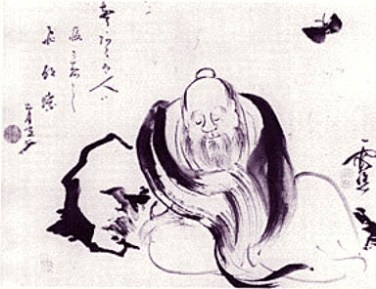
Zhuangzi Butterfly Dream by Ike no Taiga, Japan, 1723-1776, Public domain via Wikimedia CommonsTaoism, to my mind, is one of the world’s most intriguing philosophical and religious traditions. Uniquely Chinese, and yet deeply universal in its message, Taoism, perhaps more than any other mystical system, emphasizes simplicity, mystery, awe, tranquility, spontaneity, and naturalness. (Though Zen Buddhism, as well as Stoicism—granted, not a form of mysticism per se—would give it a run for its money.)
In the past few centuries, growing intrigue in this tradition has brought about a slew of inquiries from spiritually-conflicted Westerners and Orientalist anthropologists, as well as mystics and philosophers then-unfamiliar with, and those still curious about, Taoist and Chinese thought. This includes the general barrage of “big questions” that the world’s religions so often provide answers for: Why am I here? What is my purpose? What happens when I die?

It is this last question—What happens when I die?—that I’d like to focus on here, including, for consideration, the perspective of a very famous—and this is unsurprising—Taoist.

Alongside Laozi—said to be the author of the eponymous Laozi, or Tao Te Ching—there is one other great philosopher who shaped the development of Taoist philosophy: This is Chuang-tzu (or Zhuangzi, as his name is also transliterated), regarded by many as the penultimate thinker or sage in the current of philosophical Taoism. Chuang-tzu’s book, often (as with Laozi) titled after his own name, reads as a series of parables and short stories—many humorous—whereas Laozi’s text is more of a work of verse or creative prose, steeped in obscure symbolism. Either way, the Chuangzu, like its earlier counterpart, touches on both metaphysics and ethics, laying out the way in which action—namely action which is virtuous (de) and “effortless” (wu wei)—follows from a deep understanding of the fundamental nature of oneself and the cosmos, both reifying and stemming from an existence marked by tranquility and happiness. To the individual who has realized the nature of things, being at peace, time and change present no problem. And thus death, an aspect of life so many of us are even wary of discussing, is—as with all things appropriate to nature in its own element—nothing perturbing, and merely a transformation.

On that note, Chuang-tzu’s views on death are perhaps best articulated in a parable concerning his wife’s passing:

The parable, set after the death of Chuang-tzu’s wife, tells us that the sage’s friend, Hui Shih, has come to Chuang-tzu to offer his condolences. To his surprise, Hui Shih—expecting to see a man in mourning—finds Chuang-tzu celebrating by singing and pounding on a tub.

Hui Shih, understandably surprised, asks Chuang-tzu about his apparent dispassion towards his wife’s passing, saying, “You lived with her, she brought up your children and grew old. It should be enough simply not to weep at her death. But pounding on a tub and singing—this is going too far, isn’t it?”

Chuang-tzu then replies, “You’re wrong. When she first died, do you think I didn’t grieve like anyone else? But I looked back to her beginning and the time before she was born. Not only the time before she was born, but the time before she had a body. Not only the time before she had a body, but the time before she had a spirit. In the midst of the jumble of wonder and mystery a change took place and she had a spirit. Another change and she had a body. Another change and she was born. Now there’s been another change and she’s dead. It’s just like the progression of the four seasons, spring, summer, fall, winter.

Now she’s going to lie down peacefully in a vast room. If I were to follow after her bawling and sobbing, it would show that I don’t understand anything about fate. So I stopped.” (Zhuangzi, 191-192.)

Chuang-tzu’s reply is consistent with the overall passivity of Taoist thought. In Taoism, emphasis is placed on the acceptance of natural order, and of understanding and living in accordance with the actual nature of things, as opposed to one’s judgments of, or mental impositions upon, the world. (On this note, Chuang-tzu’s “If I were to follow after her bawling and sobbing, it would show that I don’t understand anything about fate,” is sometimes translated as “for me to go about weeping and wailing would be to proclaim myself ignorant of the natural laws.”) Part of this order is the universe’s constant state of flux and, as such, death for Chuang-tzu is more so a transformation than a stopping point—merging, and becoming inseparable from the world, rather than merely dissolving. (The “vast room,” as Chuang-tzu calls it, is sometimes translated as “the great mansion of the universe.”)

Thus we see Chuang-tzu’s exemplification of the Taoist master as an individual who accepts the world on its own terms. The master is also one who, in some manner, observes or experiences the constant principle—the ineffable Tao, or “Way”—which remains behind the mundane state of transience, being its source, essence, and end. Nature (in all its transitions), here represented by the four seasons, performs different operations—albeit indifferently—its cyclical nature a symbol of something greater than mere beginnings and passings away. Hence, aware of the union of the metaphysical and the purely natural, a Taoist sage (zhenren or shengren) is at ease in the world.

Such a perspective seems so simple, and yet pervasive, that one could consider it almost perennial. Another strain of metaphysics in which we observe the wholesale acceptance of change (and a kind of mysterious monism to complement it) is that of the ever-obscure Heraclitus, whose Logos(“Word” or “the Word”) is in certain ways a sort of Western (or Greek) Tao. While Heraclitus in many ways remains as much a legend as, and his sayings even more disorganized than those of, Laozi, the principle of the Logos is the main feature of his philosophy, and provides a parallel to the Tao. To this effect Heraclitus famously states, “This logos holds always but humans always prove unable to understand it, both before hearing it and when they have first heard it. For though all things come to be in accordance with this logos, humans are like the inexperienced… distinguishing each in accordance with its nature and saying how it is.” (Heraclitus, 98.) Chuang-tzu, exemplifying the impartial and natural philosophy of a Taoist sage, shows us how, in understanding the nature of change and death, one follows and lives in accordance with a perennial understanding, not bound by particular traditions, but available through a common reasoning and intuition regarding the operations of the universe. Through such common reasoning, Heraclitus was not far off the mark, if at all.

Heraclitus’s Logos, moreover, implies not only an order to be found in the natural world, but in human action, as well. Humans are, after all, just as much part of the Logos as anything else. (Similarly, in Taoism, a human being is considered a microcosm of the universe, and in Marcus Aurelius’s Stoicism the individual is treated as a subset of “the Whole.”) Thus, on the topic of human conduct, Heraclitus notes, “Speaking with understanding they must hold fast to what is shared by all, as a city holds to its law, and even more firmly. For all human laws are nourished by a divine one. It prevails as it wills and suffices for all and is more than enough.” (Heraclitus, 43.) Heraclitus also delves more deeply, into the constituents of human wellbeing, on which topic he contends that “Thinking well is the greatest excellence: to act and speak what is true, perceiving things according to their nature,” (Heraclitus, 43) and that “Wantonness needs putting out, even more than a house on fire.” Together these passages suggest that wisdom and goodness consist of perceiving things truthfully, as they are, and that one’s acceptance of and contentment with nature leads to real happiness.

Chuang-tzu, as a Taoist, maintains a similar position, though with a twist: The sage’s passivity, part of his deep appreciation for the reality of change—as demonstrated in the parable of his wife’s death—can be understood as an example of the aforementioned wu-wei, or “non-doing.” (Roughly.) Wu-wei implies an action, behavior, or process which is “effortless,” supremely efficient by virtue of avoiding all that is needless. Any obstacle or struggle is rendered a non-concern when one acts in terms of wu-wei—thus in accordance with the Tao. Hence, all the simplest things in life exemplify the principle of wu-wei by virtue of their doing, and doing-with, so little.

As is noted in section 18 of the text of the Zhuangzi, Chuang-tzu says, “I take inaction to be true happiness, but ordinary people think it is a bitter thing. I say: perfect happiness knows no happiness, perfect praise knows no praise. The world can’t decide what is right and what is wrong. And yet inaction can decide this. Perfect happiness, keeping alive—only inaction gets you close to this.

“Let me try putting it this way: The inaction of Heaven is its purity, the inaction of earth is its peace…” (Zhuangzi, 191.)

Note here that wu-wei—“inaction”—is sometimes translated (more accurately) as “actionless action,” and that the first two lines of Chuang-tzu’s poem (after “Let me try putting it this way…”) has more recently been rendered as “Heaven does without through its purity, / Earth does without through its calmness…”

Heaven and earth, primordial elements of the Chinese mythological cosmos, are at ease in their ancient perfection, achieved through nothing and achieving everything without effort. The sage, in seeking to emulate the Tao as it is presented in and by the world, becomes indifferent, as the universe is indifferent, and thus has no trepidations in regards to death. The sage understands that he, and those individuals around him, are merely manifestations of the absolute Way. Thus, what can death be to him who is indifferent toward change, however great or small? Death, for the sage, is merely “the beginning,” and a continuation of the “life” of the cosmos and, indeed, the Tao—the Way.

About the author ~ Ryan V. Stewart is a writer and student from Connecticut. He has been actively writing since 2006, and blogs about everything from mysticism and philosophy to environmental issues, the arts, and personal peeves at The Grand Tangent. He’s interested in the intersection of mysticism, comparative religion, and philosophical analysis (among other things). 

~ Ordinary Philosophy and its Traveling Philosophy / History of Ideas series is a labor of love and is ad-free, entirely supported by patrons and readers like you. Please offer your support today!

Bibliography

  • The Complete Works of Zhuangzi. Trans. Burton Watson. New York, NY: Columbia UP, 1968. Print.
  • The Art and Thought of Heraclitus: An Edition of the Fragments with Translation and Commentary. Trans. Charles H. Kahn. Cambridge, UK: Cambridge UP, 1979. Print.

Should A Minor Be Tried as an Adult Due to the Seriousness of the Crime?

Here’s a piece I published one year ago today, in case you missed it at the time, and I’d love to hear what you think. I’ll be publishing some brand new pieces very soon, including a piece by a returning guest, the continuing saga of my adventures following the life and ideas of Frederick Douglass, some recommendations, and birthday remembrances of great thinkers. Stay tuned!

Amy M Cools's avatarOrdinary Philosophy

Here’s a case, currently in the news, in which a young girl helps murder her mother because her mother was trying to break up her relationship with her much older boyfriend.

In this case, the girl charged is 14 years old. A long series of text messages, along with forensic evidence, the timeline of events, and the girl’s own testimony indicate that she and her boyfriend did in fact commit the murder (though, of course, this must be proved in court).

Here’s what troubles me most besides the cruel and terrible murder itself: the girl is being charged as an adult. And she’s being charged as an adult, apparently, due to the seriousness of the crime, a practice that’s been allowed in many states for decades. The main argument in favor of this practice goes something like this: if the crime is serious, or ‘adult’ enough (whatever that means), the…

View original post 177 more words

Frederick Douglass Havre de Grace and Philadelphia Sites

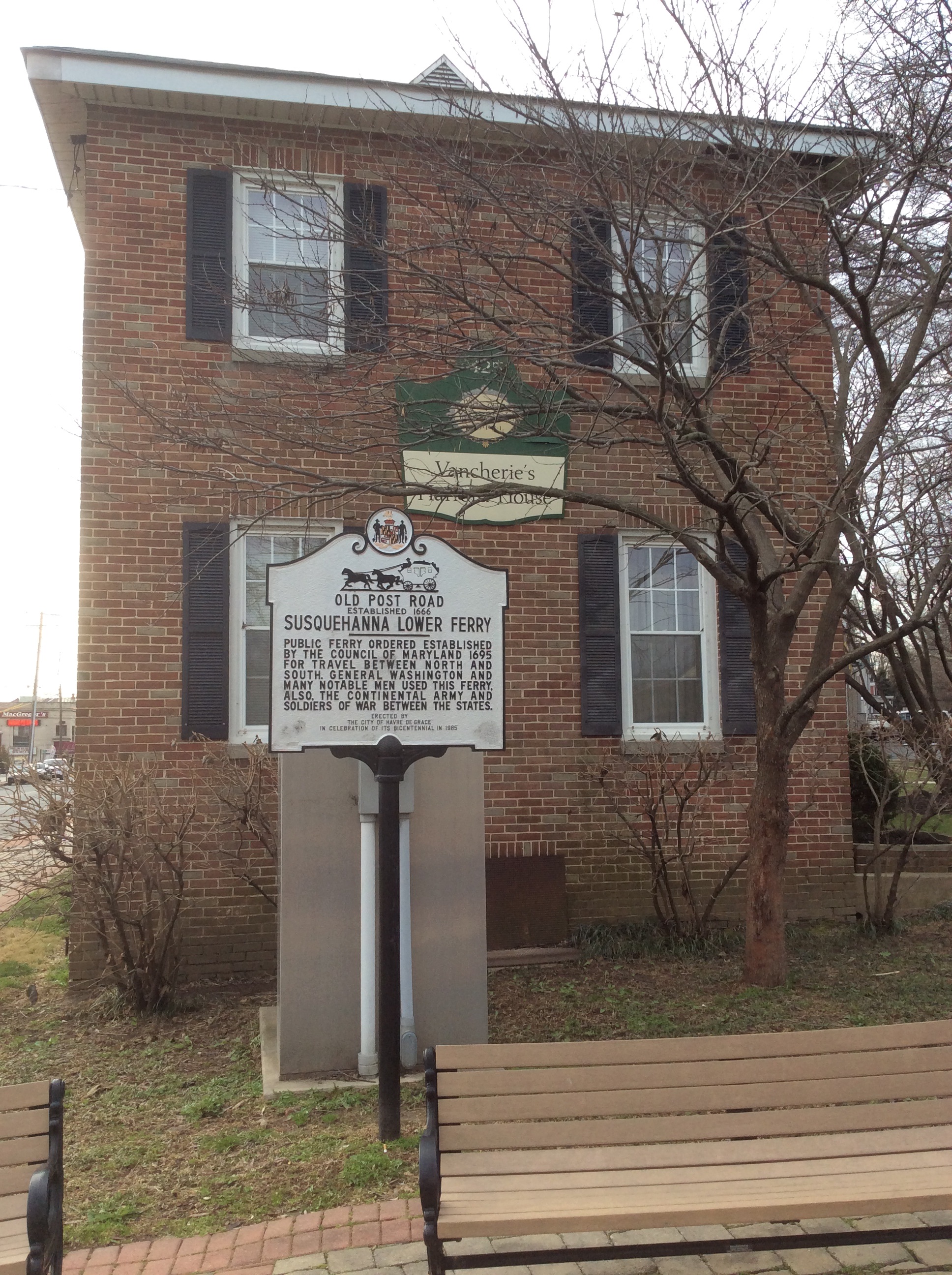
The Susquehanna Ferry historical marker

The Susquehanna Ferry historical marker in Havre de Grace

Third day, Tuesday March 22nd

I head north, the direction of freedom for the American slave of the antebellum south. Spoiler alert: so did Frederick Douglass! To his and all of our great benefit, he took his life and whatever fortunes he could hope to enjoy in Maryland into his own hands, and made his risky bid for freedom in September 1838 at age 20.

Douglass was a particularly clever young man, and by this time, had educated himself to an impressive degree for anyone his age, let alone one who had to get his learning largely on the sly while working more than full time. He had honed his skills, become more resourceful, and gained a wider circle of friends, and he counted on all of these to make this attempt more successful than the first. He decided that his best bet was to disguise himself as a sailor. Sailors were highly respected in seafaring Maryland; his years in the shipyards gave him easy familiarity with the terms and style of speech; and he had a sailor friend willing to lend him his sailor’s certificate. But this still was quite a gamble: he didn’t really match the description on the paper, so he had to trust the conductor would treat him with the usual respect accorded to sailors and not look too closely.

Havre de Grace, Maryland

A View of Havre de Grace, Maryland

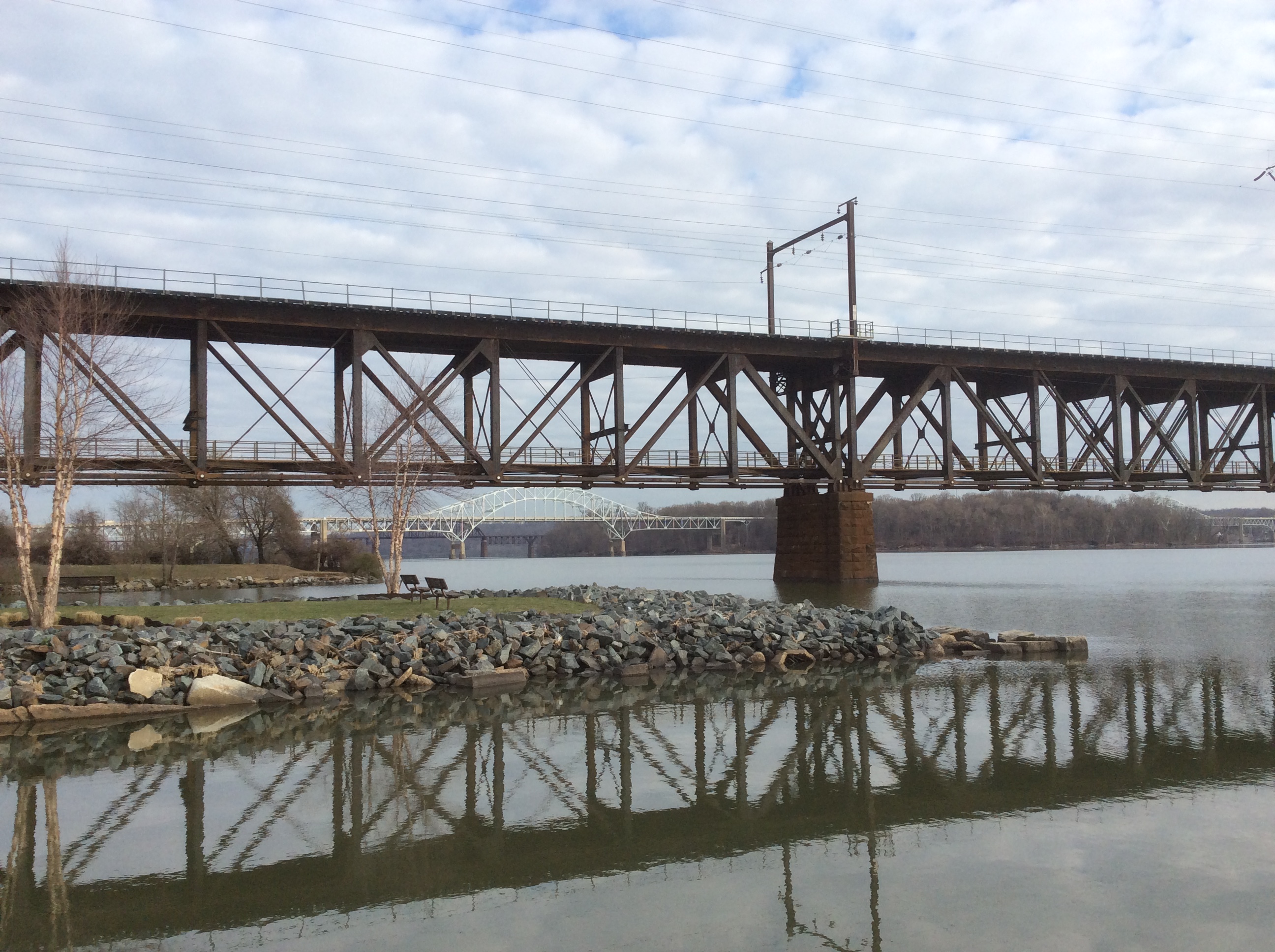
The Susquehanna River looking northeast from Havre de Grace

The Susquehanna River looking northeast from Havre de Grace

So he headed to Philadelphia first, which would require taking the train to Havre de Grace to cross the Susquehanna River by ferry, then the train to Wilmington in slave Delaware, and then a steamboat to Philadelphia in free Pennsylvania and to some degree of safety. As you can see from the sign above (open the photo in a new tab to enlarge for ease of reading), this ferry service has a long and distinguished history.

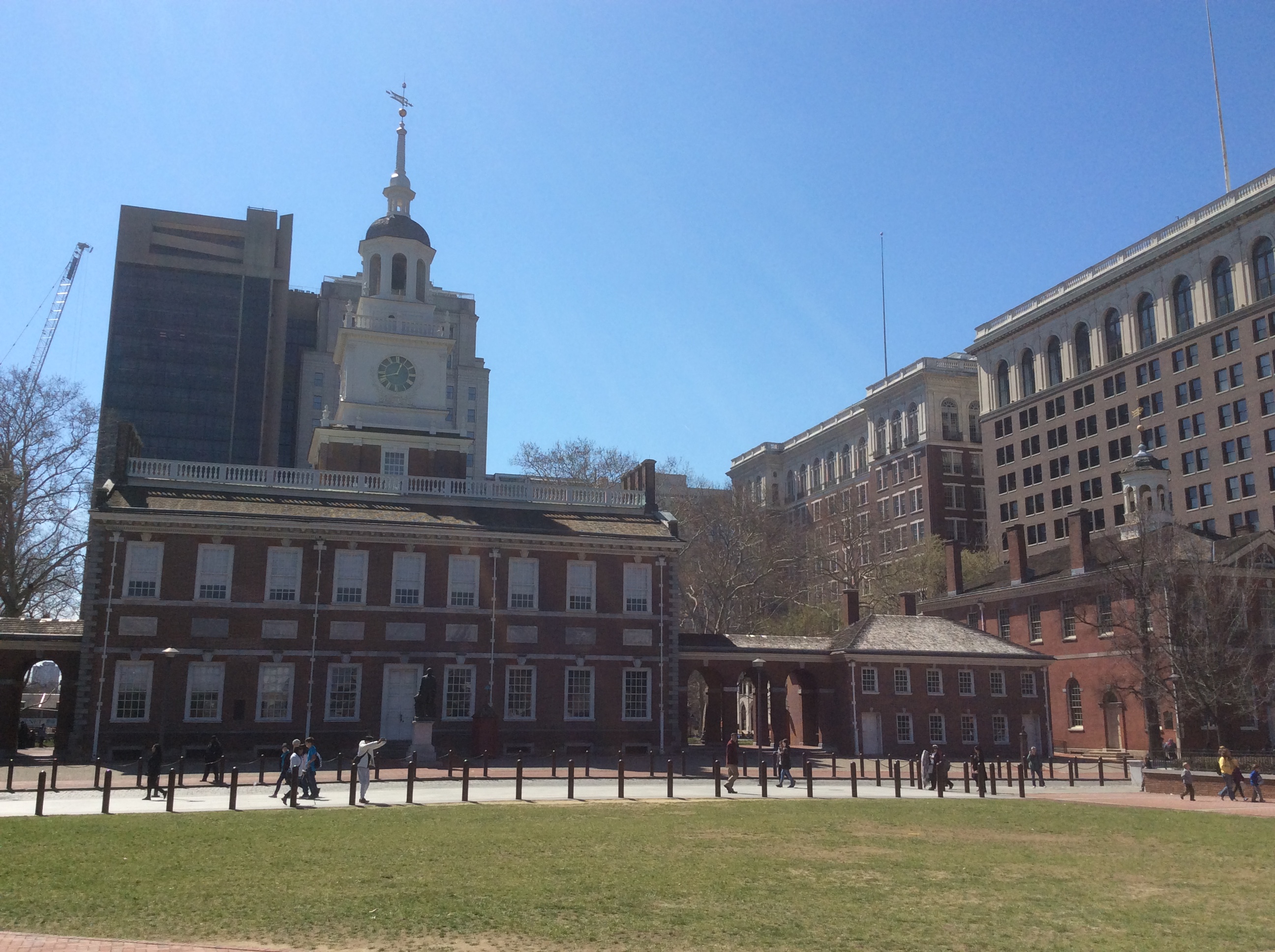
Independence Hall, Old City Philadelphia, 2016 by Amy Cools

Independence Hall from the square, Old City Philadelphia

I continue north to Philadelphia, and instead of heading straight to the depot where Douglass would have arrived here, I save that for later because it’s father north and I don’t want to backtrack. Instead, I make my way to the Old City, where 28 years after his escape, on September 3rd 1866, Douglass gives a speech and leads a protest march. By this time, he’s already had a long distinguished career as an abolitionist and human rights activist. We’ll find out more about how he got there as this series goes on.

Douglass was appointed a delegate by the Republican convention of Rochester to the National Loyalist Convention. The Civil War was over, Abraham Lincoln was gone, and his successor President Andrew Johnson was a huge disappointment to Douglass, to the Republican party, and to all those who wanted the United States to protect the rights of Americans not yet benefiting enough from the Union victory. Radical Reconstructionists and Southern Unionists found common cause with the more pragmatic Republican Party in their opposition to Johnson’s Southern appeasement and anti-equality agenda. So, they all sent delegates to the Convention at Independence Hall in Philadelphia to speak out against his policies.

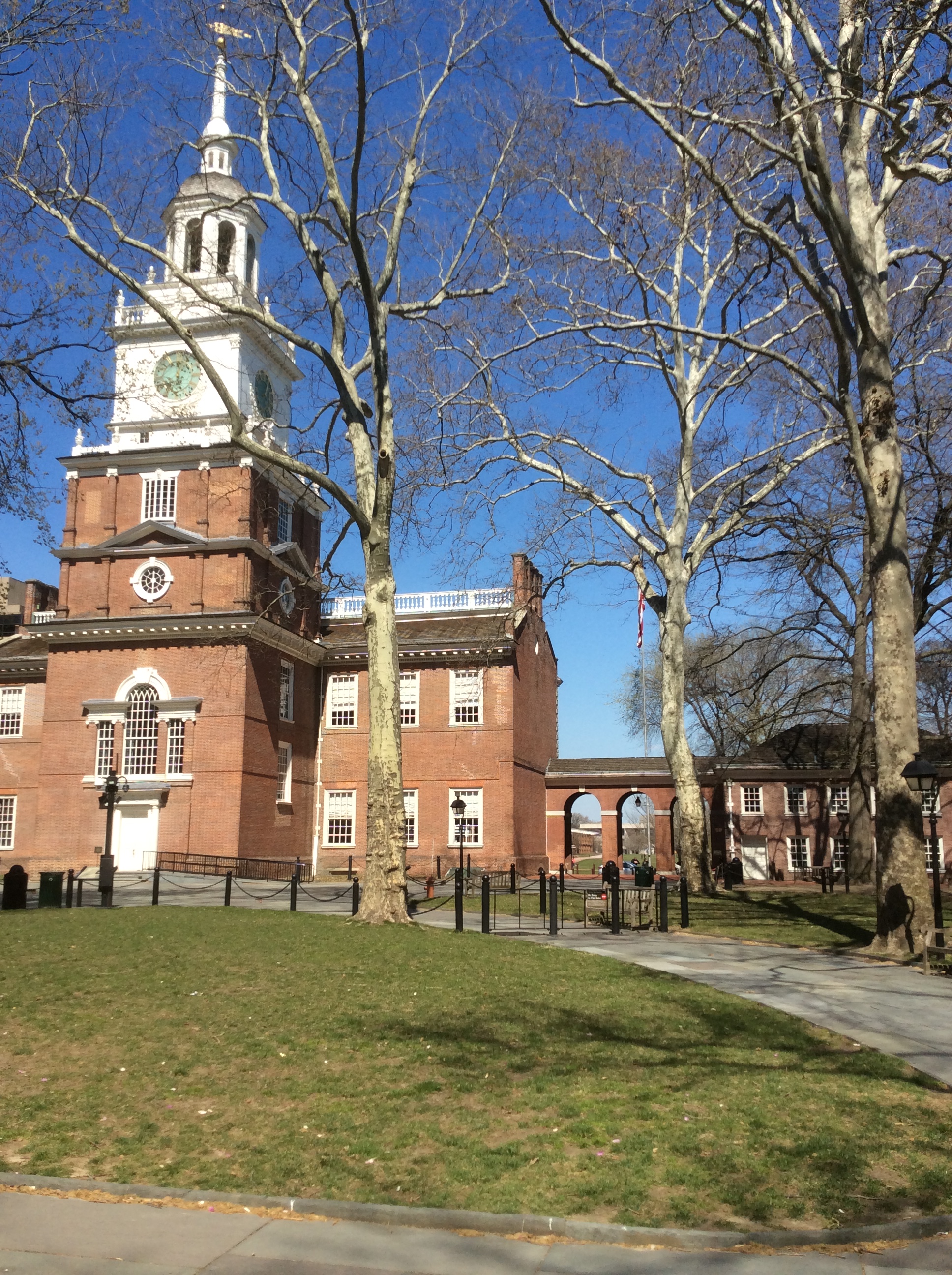
Independence Hall lawn, at the south entrance

Independence Hall from the south lawn

When Douglass arrived at the Convention, he was further disappointed: many members were perturbed, even dismayed, at the arrival of a black delegate, and feared that allowing him to speak would undermine their chances of success in a North that was still rife with racial prejudice, even if they didn’t like slavery. But Douglass pointed out that if they didn’t allow him to participate fully, the Convention would appear hypocritical and cowardly, especially given that his attendance at the convention was already reported in the papers. So he made his speech unopposed.

It turns out that Douglass also gave a speech on the State House lawn many years earlier, in August 1844, which was also reported by local papers. As we can see, Douglass was right to warn the other delegates about bad publicity if he was shunned by the Convention, since his public appearances had been newsworthy items for years. News reports and reviews of the earlier speech are now hosted on the Independence Hall website, which the lady at Independence Hall welcome center kindly directed me to, and you can read them here.

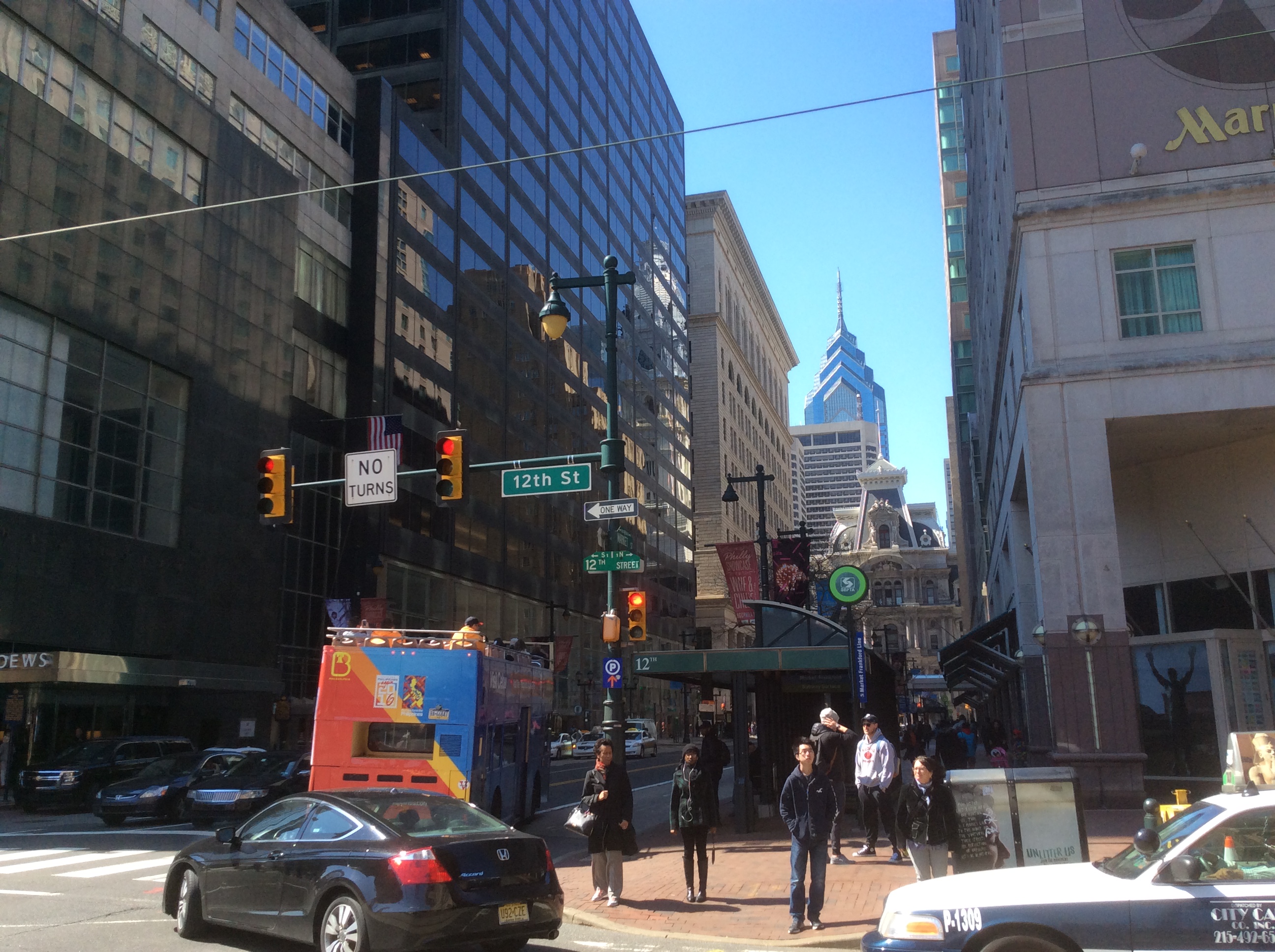
At 12th and Market, Philadelphia

At 12th and Market, Philadelphia, where the second glassy building back on the left stands on the approximate National Hall site

Back to our 1866 story: Douglass marched in parade with the Convention down Chestnut to 12th St, to the site of National Hall on Market between Twelfth and Thirteenth. It’s no longer there, and there’s no plaque marking the site. But looking at the photo above, which looks north on Market across 12th, it stood about where the second glassy building back on the left side of the street does now, according to an 1862 city atlas. This was not Douglass’ first appearance at National Hall, either. From the beginning of his first role as an abolitionist speaker, Douglass traveled widely and made huge numbers of public appearances, so I don’t even try to follow him to most of those sites. I just to try to make it to the places where he made his most influential speeches, as many as I can given I only have two weeks for this trip.

As the Convention parade made its way, a young white woman named Amanda Sears came up to Douglass. She was Thomas Auld’s granddaughter, daughter of Lucretia Auld who had always treated Douglass kindly as a young slave and who became his owner for a short time after Aaron Anthony’s death. Sears had come to hear him speak and finally meet him in person since she had become a fan of his; their meeting created great sympathy in the crowd and generated favorable publicity for the march.

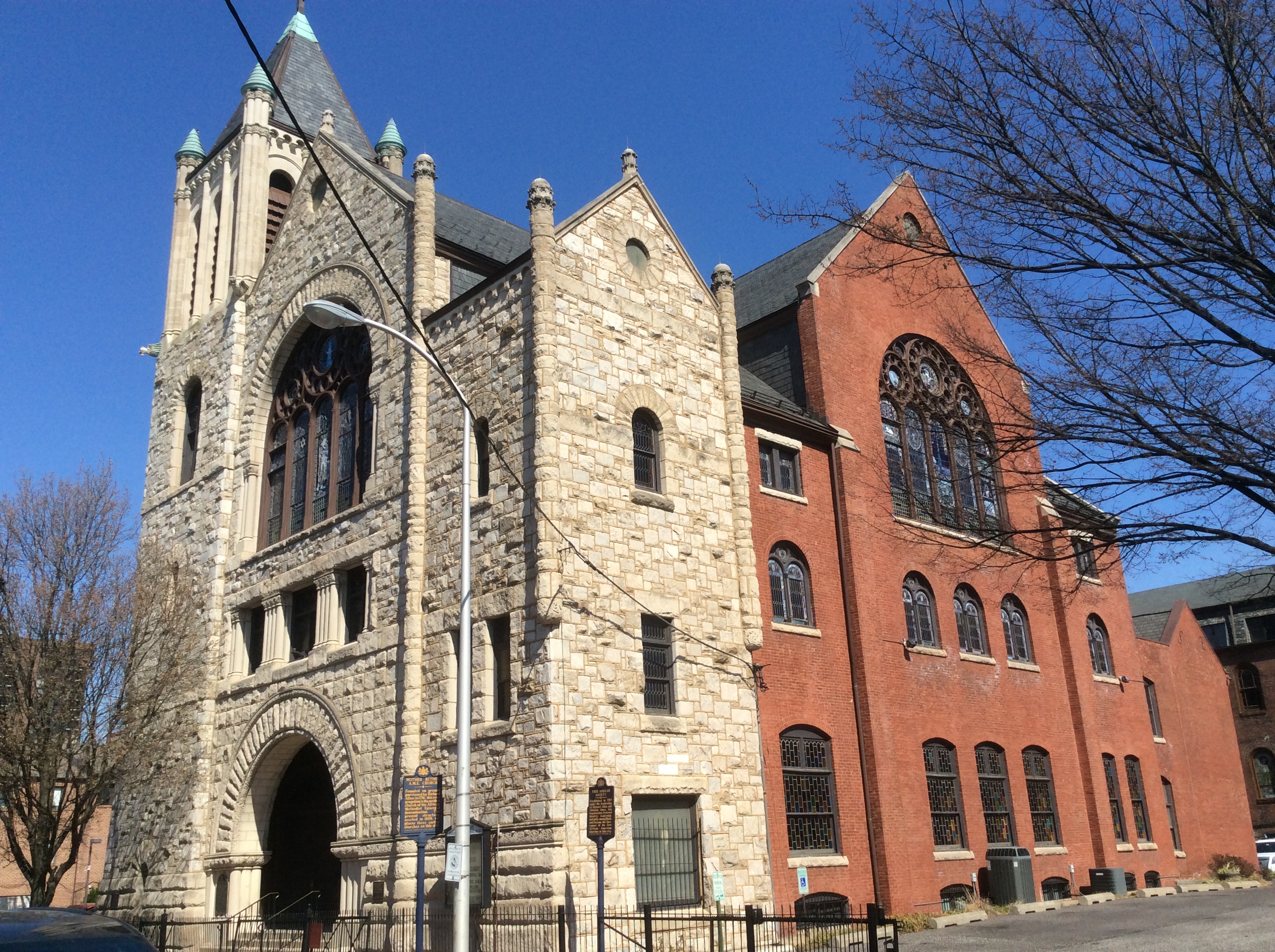
Mother Bethel A.M.E. Church, Old City Philadelphia

Mother Bethel A.M.E. Church, Old City Philadelphia

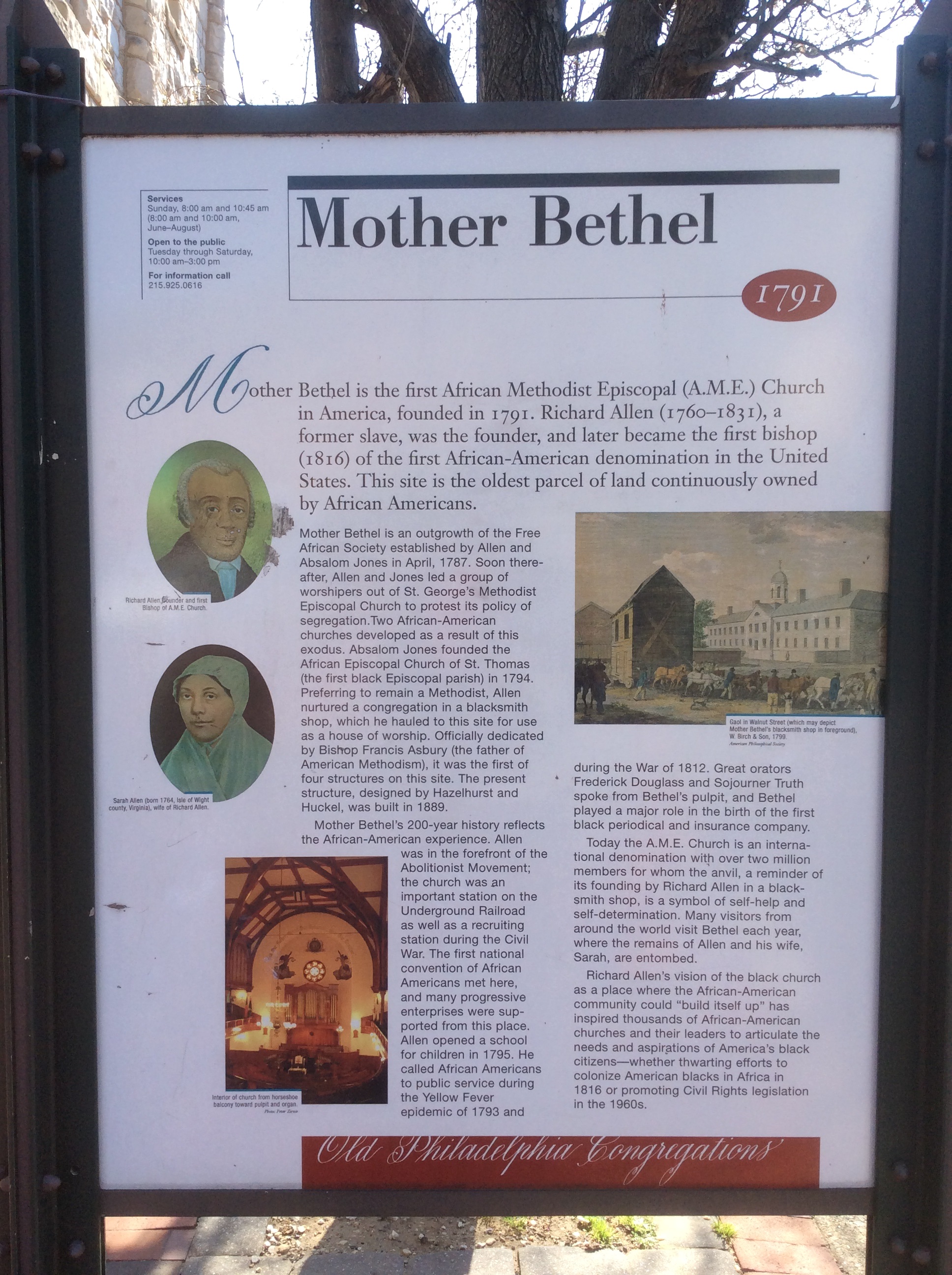
Next, I head to Mother Bethel A.M.E. church, the first black church in Philadelphia also recommended to me by the lady at the Independence Hall center. First, though, I have to return to my car from 12th and Market all the way back to Arch and 3rd where I’d started, to avoid getting a parking ticket.

Mother Bethel historical sign, Old City Philadelphia

Mother Bethel historical sign, Old City Philadelphia

On my way back, after checking to see if the African American Museum on Arch at 7th was open (it isn’t), I notice a historical marker for a Quaker meeting house built on land donated by William Penn a century or so earlier, and snap a picture. A tall handsome woman with gray hair notices and exclaims ‘Oh, you’re interested in the meeting house? I give tours there!’ I say yes, but in future: I’m making note of it for a history of ideas tour on Penn I’d like to take someday (stay tuned!). But at this moment, I’m still rushing to my car to avoid that parking ticket! We continue to chat, the lady and her companion hurrying with me in sympathy, and we exchange stories of our historical interests. When hearing I’m on a Douglass tour, her companion confirms that Douglass spoke on at least one occasion at Mother Bethel. That occasion was in April 1863, when Douglass was hard at work recruiting the first black soldiers into the Union Army. I’ll be covering the story of Douglass the recruiter more fully very soon in this series.

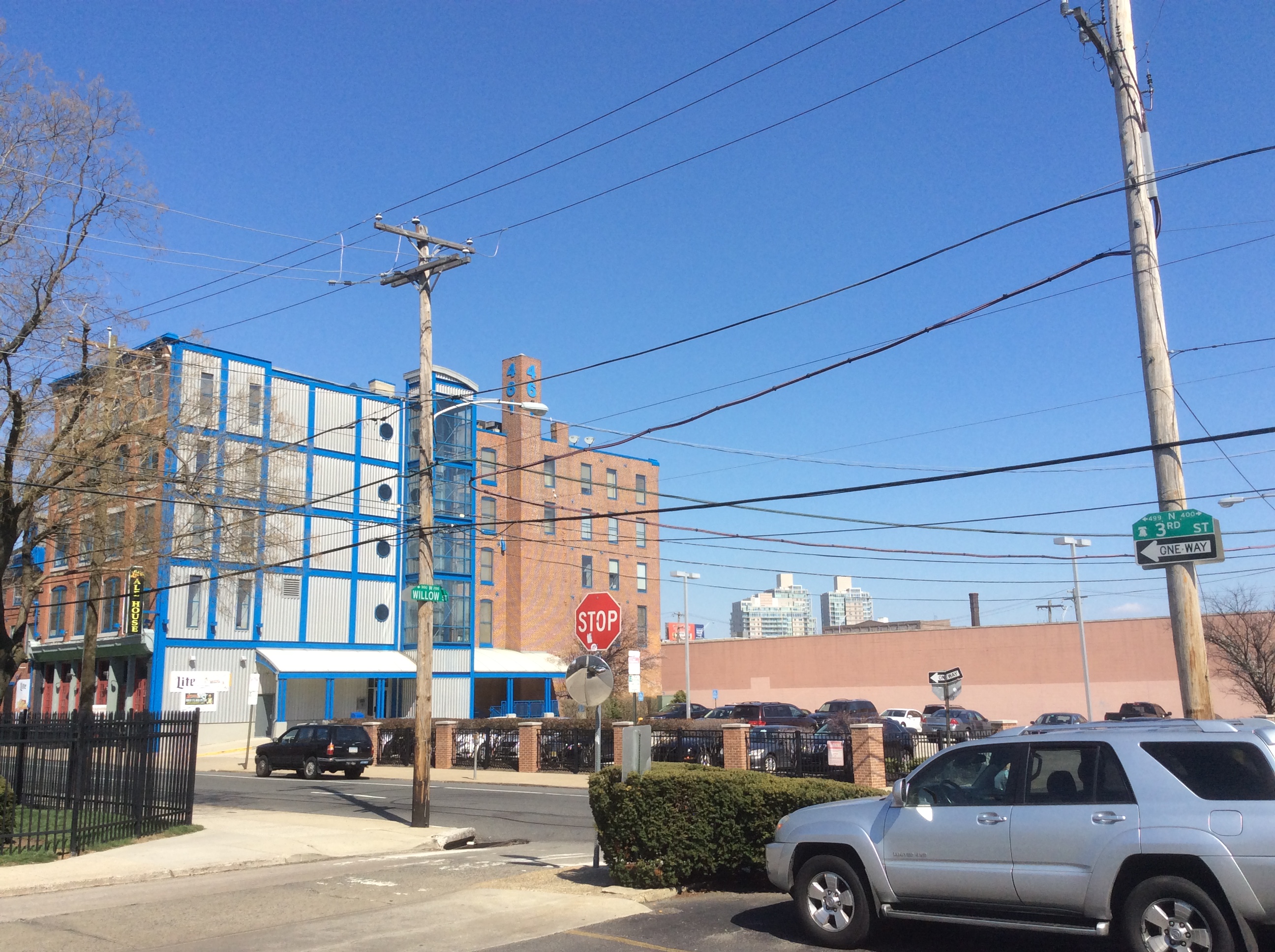
A view at Willow and 3rd Streets, Philadelphia

Northwest corner of Willow and 3rd Streets, about where an old Philadelphia depot used to stand

Then I head north, to the site of the depot where Douglass caught the train to New York City on Willow Street at 3rd St. on Sept 3rd, 1838. In earlier drafts of his autobiographies, Douglass referred to the Philadelphia train depot as the ‘William St. depot’, but the William St depot was in New York City, where he was headed. His editors corrected this to ‘Willow St’. There’s nothing here marking the site of the old train depot at the northwest corner of these cross streets, but that’s not too surprising: in those early years of train travel, depots were often hastily constructed or repurposed buildings, none of which lasted long enough to be considered memorable later on.

So ends this relatively short day of visiting Douglass sites: I’m headed for New York City to meet my friend with whom I’m staying, and where I’ll continue my explorations tomorrow. Stay tuned!

*Listen to the podcast version here or on iTunes

Ordinary Philosophy and its Traveling Philosophy / History of Ideas series is a labor of love and is ad-free, entirely supported by patrons and readers like you. Please offer your support today!

~~~~~~~~~~~~~~~~~~~

Sources and Inspiration:

Blassingame, J. (Ed.). The Frederick Douglass Papers, Series One: Speeches, Debates, and Interviews. 4 volumes, and The Frederick Douglass Papers, Series 2: Autobiographical Writings. 3 volumes. New Haven and London: Yale University Press, 1979-1999 (p. 504)

Douglass, Frederick. Autobiographies, with notes by Henry Louis Gates, Jr. Volume compilation by Literary Classics of the United States. New York: Penguin Books, 1994.

Douglass, Frederick. The Life and Times of Frederick Douglass. Re-published 1993, Avenal, New York: Gramercy Books, Library of Freedom series.

Douglass, Frederick. My Bondage and My Freedom: 1855 Edition with a new introduction. Re-published 1969, New York: Dover Publications, Inc.

Douglass, Frederick, ed.  John R. McKivigan. The Frederick Douglass Papers: Series Two: Autobiographical Writings, Volume 3: The Life and Times of Frederick Douglass, p. 504.

Foner, Philip S. The Life and Writings of Frederick Douglass, Vol. 1-4. New York: International Publishers, 1950.

Frederick Douglass‘, from Independence Hall in American Memory, companion website for book of the same name by Charlene Mires, University of Pennsylvania Press, 2013

Lippincott, J. B. & Co. ‘Atlas of the City of Philadelphia, 1862, Section 4‘. Published by Samuel L. Smedley

National Hall! Fred’k Douglass will lecture before the Alumni Association of the Institute for Colored Youths…‘, originally published by the Institute for Colored Youth, Philadelphia, PA., in 1863. From WorldCat.org: The World’s Largest Library Catalog

Philadelphia History: Early Railroad Transportation‘. from UShistory.org hosted and created by Independence Hall Association.

Stauffer, John and Benjamin Soskis. The Battle Hymn of the Republic: A Biography of the Song That Marches On. New York: Oxford University Press, 2013.

https://books.google.com/books?id=bIRQpD3HNSAC&pg=PA59&lpg=PA59&dq=frederick+doug

Wall of Thanks

General Major Contributors to Ordinary Philosophy

Cory Argonti-Cools
Robert Lane
Laurence Murphy
Charles M. Saunders
Gaia So & Jay Millsap

My sincere thanks to you all! ~ Amy

Patrons of the In Search of Crazy Horse, Sitting Bull, Abraham Lincoln, and Other American Histories Series

Funding: Ervin Epstein, MDIMG_7626

Lodging & Storage of my Stuff: the Cools-Ramsden familyIMG_7730

Funding: Genessa KealohaIMG_7858

Funding: Liz & Russ EagleIMG_8016

Patrons of the Margaret Sanger Series

Funding: Christopher Wallanderthank-you-christopher-photo-by-amy-cools-and-unknown-nyc-2016

Lodging: Magaly Gamarra Grant, Devin Cecil-Wishing, Sally Leethank-you-magaly-devin-and-sally-photo-by-amy-cools-and-unknown-2016

Patrons of the Frederick Douglass Series

Funding: Bryan Kilgore, Michael Burke, Veronica Ruedrich, Blair Miller, Alex Black

IMG_5470

IMG_6728

IMG_6877 

Lodging: Roxanne, Fred, Aleph, Maya, Devin, Sally, Jim, Nerissa, Brennan, and JamesonIMG_4079
IMG_7058.5

~ And thanks to everyone else out there who contributed in so many ways!

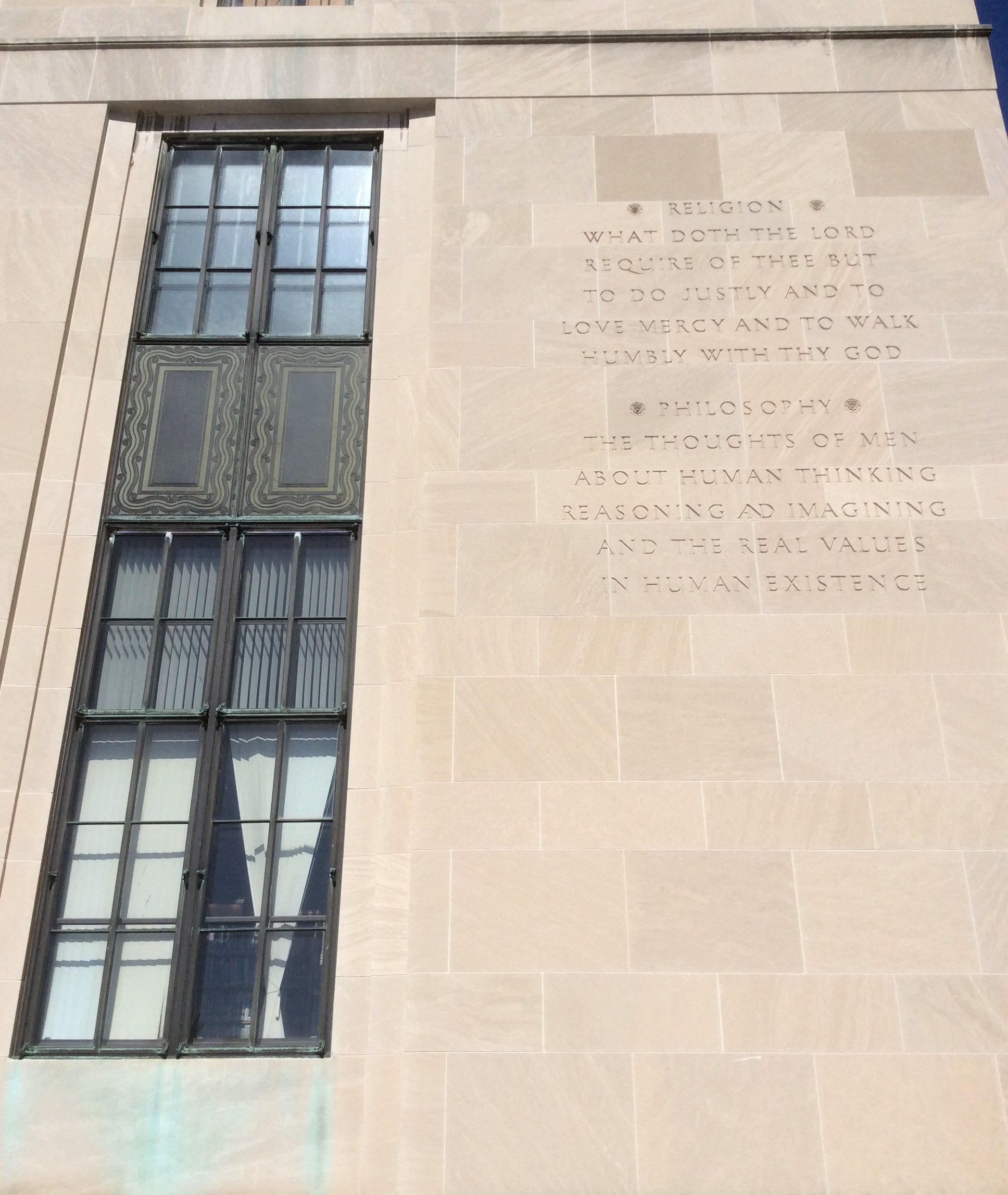
Spotted: A Definition of Philosophy and of Religion on a Library Wall

Definition of Philosophy and Religion on Rundel Library Building, Rochester, photo 2016 Amy CoolsThe other day, I spotted these definitions of Religion and Philosophy.

They’re engraved on the side of the handsome Rundel Memorial Building of the downtown Central Library of Rochester and Monroe County.

What do you think of these definitions?

Like the author(s), do you think religion and philosophy are two separate things, one dealing strictly with human thought and affairs, and the other with aligning human will to the divine?