Interview with Leigh Fought on Anna and Frederick Douglass

In my research and fact-checking for the final installment of my travel series following the life and ideas of Frederick Douglass, I stumbled on this recommendation on John Muller’s blog again. Thank you for this, John, and I’ve relied heavily on your work for my D.C. travels, I couldn’t have done it as enjoyably and as thoroughly without you!

jmullerwashingtonsyndicate's avatarFrederick Douglass in Washington, D.C.: The Lion of Anacostia

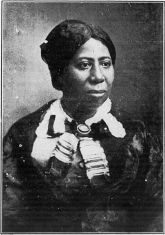
Anna Murray DouglassIf you haven’t reviewed the Douglass travel writing at “Ordinary Philosophy,” you should!

In the meantime, check out an interview with Prof. Leigh Fought here!

View original post

Happy Birthday, Ida B. Wells!

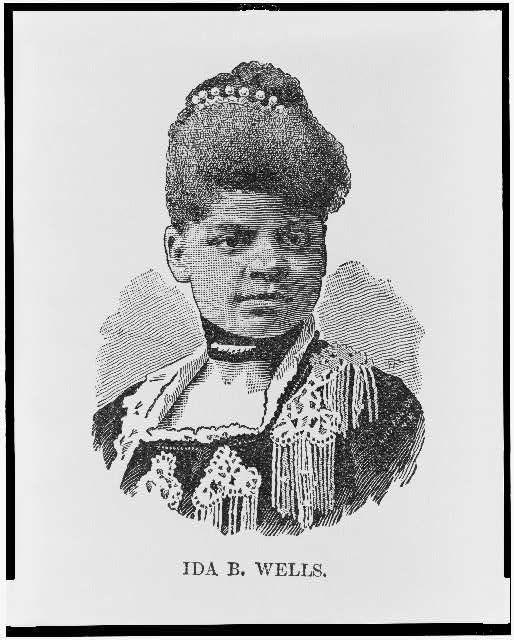
Ida B. Wells, head-and-shoulders portrait, published, 1891, Image retrieved from the Library of Congress LC-USZ62-107756, public domainIn my recent journey following the life of Frederick Douglass, I was so glad to have the opportunity to visit the place in New York City where he may have first met the great Ida B. Wells. It was late 1892, and this fiery young newspaperwoman had published her very controversial piece of investigative journalism in the New York Age on June 25, 1892. It was expanded and published as a pamphlet later that year as Southern Horrors: Lynch Law in All Its Phases.

Many people at that time thought of lynching as an unfortunate and somewhat rare excess of race-hatred by frustrated Southern whites. And many more saw it as a lawless but not entirely unjustified species of vengeance against black men who had raped white women. But Wells would change all that. In early 1892, three of Wells’ friends were lynched after a dispute between themselves and white owners of a rival business. She was outraged, and began an investigation of the practice and history of lynching as a whole.

When Wells wrote Southern Horrors, she had already been an activist and writer for black rights for many years. In 1884, she resisted being forced out of the first class train car into the ‘colored car’; she later sued the train company, won the first suit, then lost on appeal. This incident (which echoes Douglass’ train protest in 1841) led to many other lawsuits, articles, and activism against anti-black laws and social practices. In 1892, her investigation of lynching revealed to Wells that lynching was far from just vengeance for rape, it was inflicted for petty crimes, supposed insubordination or impertinence, drunkenness, competition, and so on. She discovered that lynchings were not all that rare, either, and came to the conclusion that they consisted a form of social control, a replacement for the terrorism of the slave system.

Douglass was inspired and energized by Wells’ writing and anti-lynching work, and wrote a letter praising Southern Horrors as an introduction. He visited her in New York City where she was living for a little while as a writer for and part owner of the New York Age, which was (probably) published at the site I visited in Harlem. I visited a second site associated with Wells two days after my New York visit: she delivered one of her hard-hitting speeches in her speaking tour following the publication of Southern Horrors at Tremont Temple in Boston on Feb 13th, 1893.

Education was another driving force in her life. Her first job was as a teacher at age 14, and she taught for many years, over time supplementing her teaching with journalism, writing and editing for the Evening Star, The Living Way, and the Free Speech and Headlight. Another of her most controversial, consciousness-raising articles was published in 1891 in the Free Speech about the conditions in black schools: the poor quality of the buildings which housed them, and of the education and morals of the teachers and school boards who administered them. She was not fired outright, but the school refused to hire her for the next school year. She then went on to work full-time for the newspaper, promoting the Free Speech from city to city and writing articles along the way, until the Free Speech‘s offices and printing press were destroyed by angry whites after the publication of her ‘Lynch Law’ piece. Adversity only served to strengthen Wells’ resolve, each attack causing her to re-double her efforts on behalf of her people.

Wells went on to have a long and distinguished career in writing, investigative journalism, and activism for black rights and women’s suffrage. She worked with Frederick Douglass and W.E.B. DuBois, toured the United States and Europe as a speaker and activist, founded Chicago’s Alpha Suffrage Club, served as secretary of the National Afro-American Council, founded and became the first president of the Negro Fellowship League, and helped found the National Association for the Advancement of Colored People (NAACP), among many other things.

For a long time, Wells thought of marriage and romantic relationships as oppressive, where women were expected to defer to men and flatter their vanity. But one day, she met a man who must have made her feel very differently, an attorney, writer, and fellow advocate for black rights named Ferdinand Barnett. She married him and they raised four children.

Please follow the links below to learn more about Ida B. Wells. If I manage to accomplish the tiniest fraction of what she did in my own life, I would consider myself a great success.

Ordinary Philosophy and its Traveling Philosophy / History of Ideas series is a labor of love and ad-free, supported by patrons and readers like you. Please offer your support today!

~~~~~~~~~~~~~~~~~~~~~~~~

Sources and inspiration:

Ida B. Wells-Barnett‘, episode 25 of the History Chicks podcast by Beckett Graham and Susan Vollenweider.

Ida B. Wells-Barnett‘. Encyclopædia Britannica. Encyclopædia Britannica Online.

McBride, Jennifer. ‘Ida B. Wells: Crusade for Justice‘. From Webster University’s website.

McNally, Deborah. ‘Barnett, Ferdinand Lee (1858-1936)‘, in BlackPast.org

Steptoe, Tyina. ‘Barnett, Ida Wells (1862-1931)’, in BlackPast.org

Wells, Ida. B. Crusade for Justice: The Autobiography of Ida B. Wells. Ed. Alfred Duster. Chicago, University of Chicago Press, 1970.

Wells, Ida. B. Southern Horrors: Lynch Law in All Its Phases, 1892, via Project Gutenberg

Wikipedia contributors. ‘Ida B. Wells‘. In Wikipedia, The Free Encyclopedia.

Wintz, Paul Finkelman, Cary D. Encyclopedia of the Harlem Renaissance: K-Y. 2004.


New Podcast Episode: Frederick Douglass Washington DC Sites, Day 1, Part 1

Statue and quote at the Frederick Douglass National Historic Site

Statue and quote at the Frederick Douglass National Historic Site

Listen to this podcast episode here or on Google Play, or subscribe on iTunes

Thirteenth Day, Friday April 1st

I begin at Cedar Hill in Anacostia, Frederick Douglass’ handsome, gabled house on a hill overlooking Washington DC. He moved here with Anna and the kids in September of 1878, having lived in the capital city of Washington for a little over six years. In a sense, the Douglasses didn’t really move out of Washington when they moved into their new suburban home east of the Anacostia River. Anacostia, called Uniontown in the mid-1800’s then switched back again, was part of the District of Columbia, which in turn was larger than Washington and encompassed it. When the boundaries of Washington and the District of Columbia became one and the same in 1878, the Douglasses’ Anacostia home became a Washington city home then too.

It’s another lovely day, again the sky is partly cloudy, the air soft and warm and a little breezy, freshly washed by the morning’s rain. The cold weather I had shivered in for much of the first half of my trip is nearly forgotten.

The National Park Service now owns and runs the house, the grounds, and the visitor center and museum, collectively called The Frederick Douglass National Historic Site. I take a brief look at the outside of the house, then stop at the visitor center and sign up for the guided tour which will start shortly. I take another brief look around while I wait, and note the displays and artifacts I want to examine more closely when I return to the visitor center museum…. Read the full account here:

Ordinary Philosophy and its Traveling Philosophy / History of Ideas series is a labor of love and ad-free, entirely supported by patrons and readers like you. Please offer your support today!

Frederick Douglass Washington DC Sites, Day 1, Part 1

Detail of Frederick Douglass autobiography exhibit, FD Home Visitor Center

Detail of autobiography exhibit, Frederick Douglass Home Visitor Center

Thirteenth Day, Friday April 1st

I begin at Cedar Hill in Anacostia, Frederick Douglass’ handsome, gabled house on a hill overlooking Washington DC. He moved here with Anna and the kids in September of 1878, having lived in the capital city of Washington for a little over six years. In a sense, the Douglasses didn’t really move out of Washington when they moved into their new suburban home east of the Anacostia River. Anacostia, called Uniontown in the mid-1800’s then switched back again, was part of the District of Columbia, which in turn was larger than Washington and encompassed it. When the boundaries of Washington and the District of Columbia became one and the same in 1878, the Douglasses’ Anacostia home became a Washington city home then too.

It’s another lovely day, again the sky is partly cloudy, the air soft and warm and a little breezy, freshly washed by the morning’s rain. The cold weather I had shivered in for much of the first half of my trip is nearly forgotten.

The National Park Service now owns and runs the house, the grounds, and the visitor center and museum, collectively called The Frederick Douglass National Historic Site. I take a brief look at the outside of the house, then stop at the visitor center and sign up for the guided tour which will start shortly. I take another brief look around while I wait, and note the displays and artifacts I want to examine more closely when I return to the visitor center museum.

Cedar Hill, Frederick Douglass' home on the hill in Anacostia, Washington DC

Cedar Hill, Frederick Douglass’ home on the hill in Anacostia, Washington DC

Helen Pitts Douglass Portrait, Cedar Hill, Anacostia, Washington DC

Portrait of Helen Pitts Douglass in the entrance hall at Cedar Hill, Anacostia, Washington DC

Then I join the tour group on the steps leading up the hill to the house. Let me express my gratitude and give credit at the outset to the very knowledgeable and helpful Nate Johnson who leads the tour. Much of the information I share with you here about the house and the Douglass family’s life together he provides in whole, or he confirms and fleshes out the stories.

In the entrance hall, I spot a miniature portrait of Helen Pitts Douglass, who Frederick married about 17 months after Anna’s death. Frederick and Helen met as neighbors soon after the Douglasses moved to Cedar Hill, and Helen came to work in Douglass’ office on Capitol Hill alongside his daughter Rosetta. Helen was a suffragist and abolitionist, like her father and Douglass’ long time acquaintance Gideon Pitts, and she and Douglass bonded over their shared social and political beliefs. As you may remember from the Boston and Honeoye accounts, their marriage was very controversial: many black people thought that Douglass was betraying Anna and his race by marrying a white woman, and many white people objected for obvious (purely racist!) reasons, even their fellow abolitionists. While Douglass brushed it off by saying that when he married Anna, he married a woman the color of his mother, and when he married Helen, he married a woman the color of his father, he had more explaining to do when it came to his family. Not because of the racial difference so much: though his children were sensitive on that issue on behalf of their mother, they knew his views on the color line and that it should be erased. It seems the trouble was mostly that he didn’t tell them that he was going to get married. We’ll return to that family drama soon…

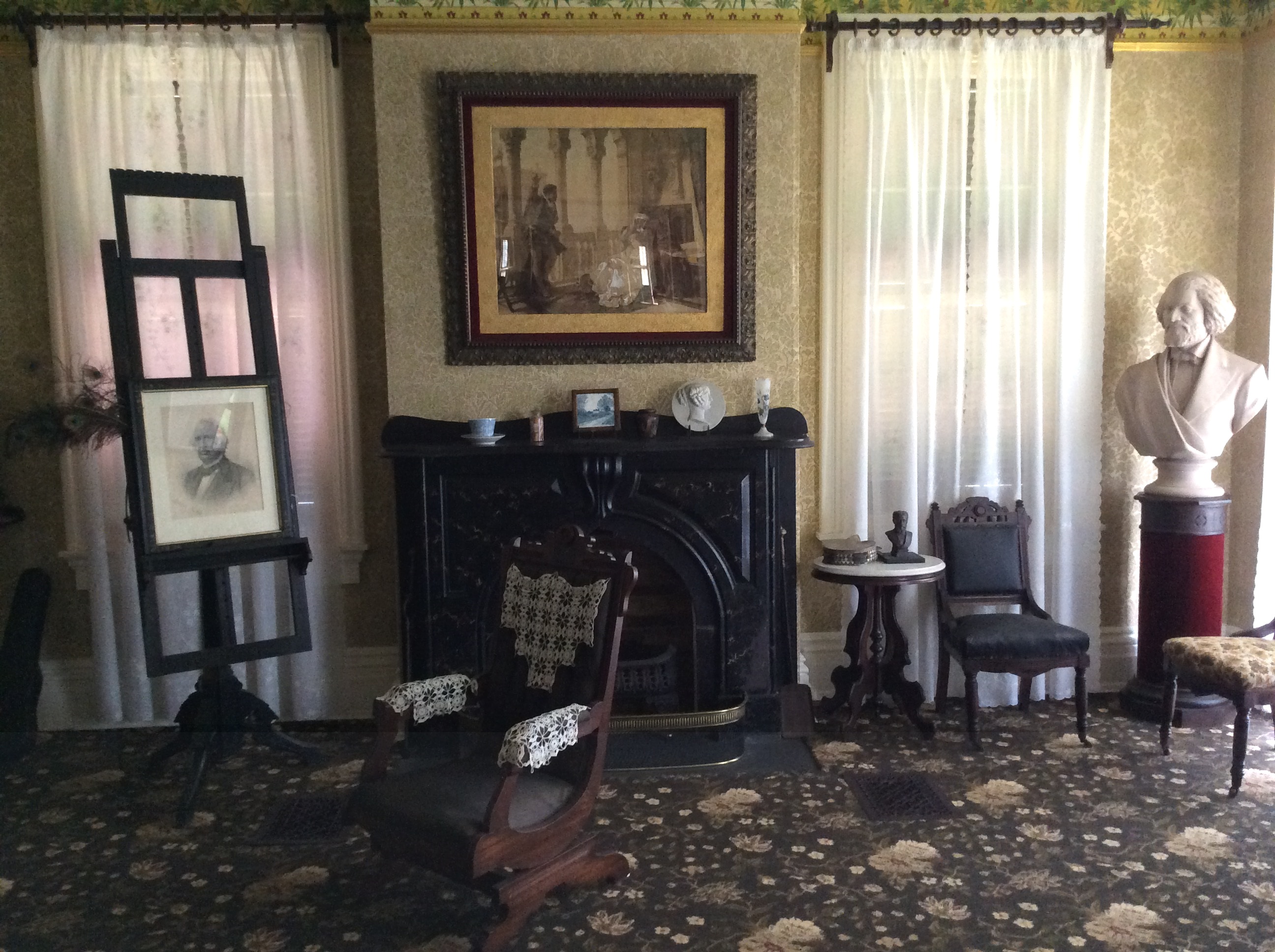
Douglass family sitting room at Cedar Hill, Anacostia

Douglass family sitting room at Cedar Hill, Anacostia

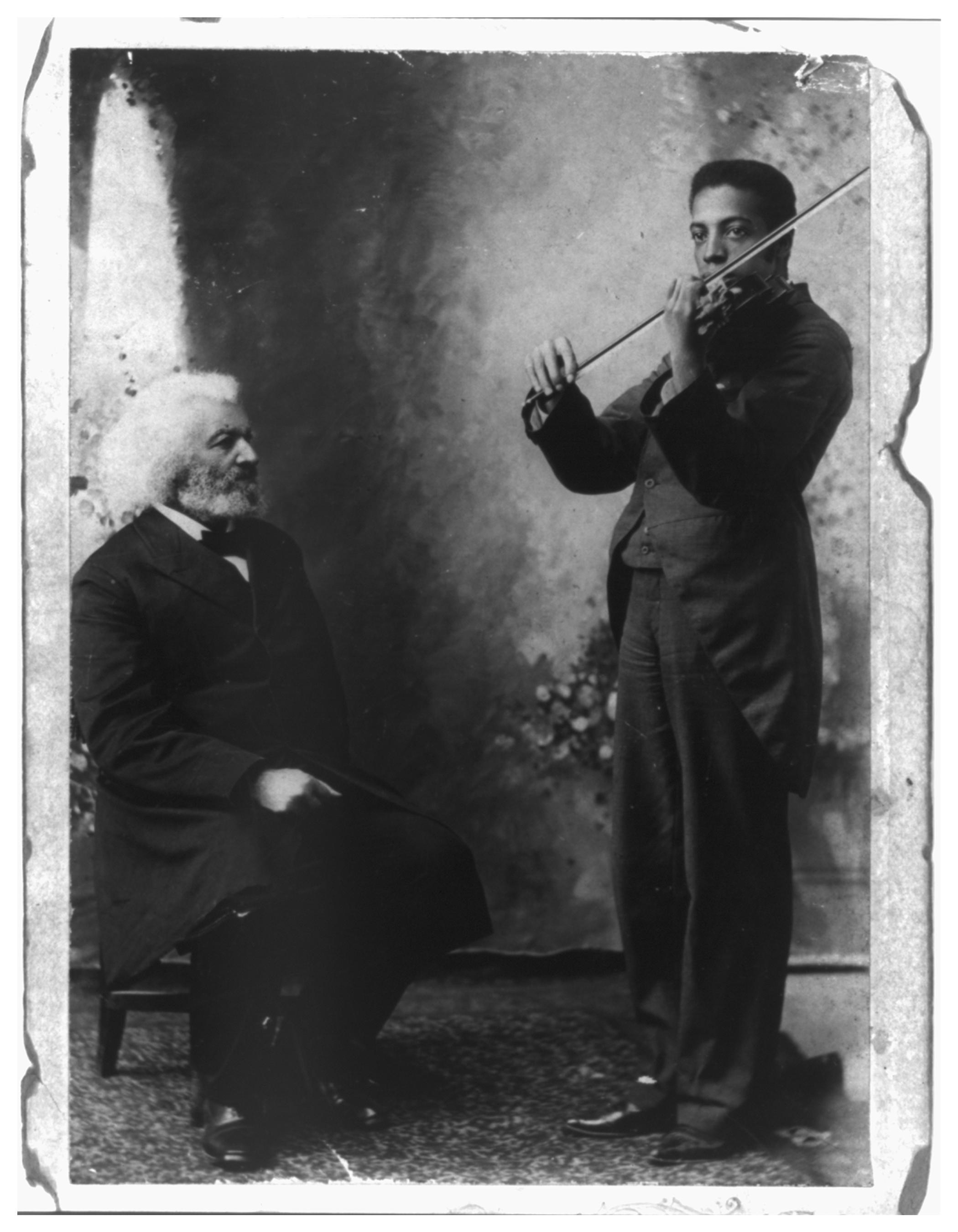
Frederick and Joseph Douglass, from the Library of Congress archives, via the Lion of Anacostia blog

Frederick and Joseph Douglass from the Library of Congress archives via the Lion of Anacostia blog. There are many portraits of Frederick and Joseph together; evidently, they were proud of one another

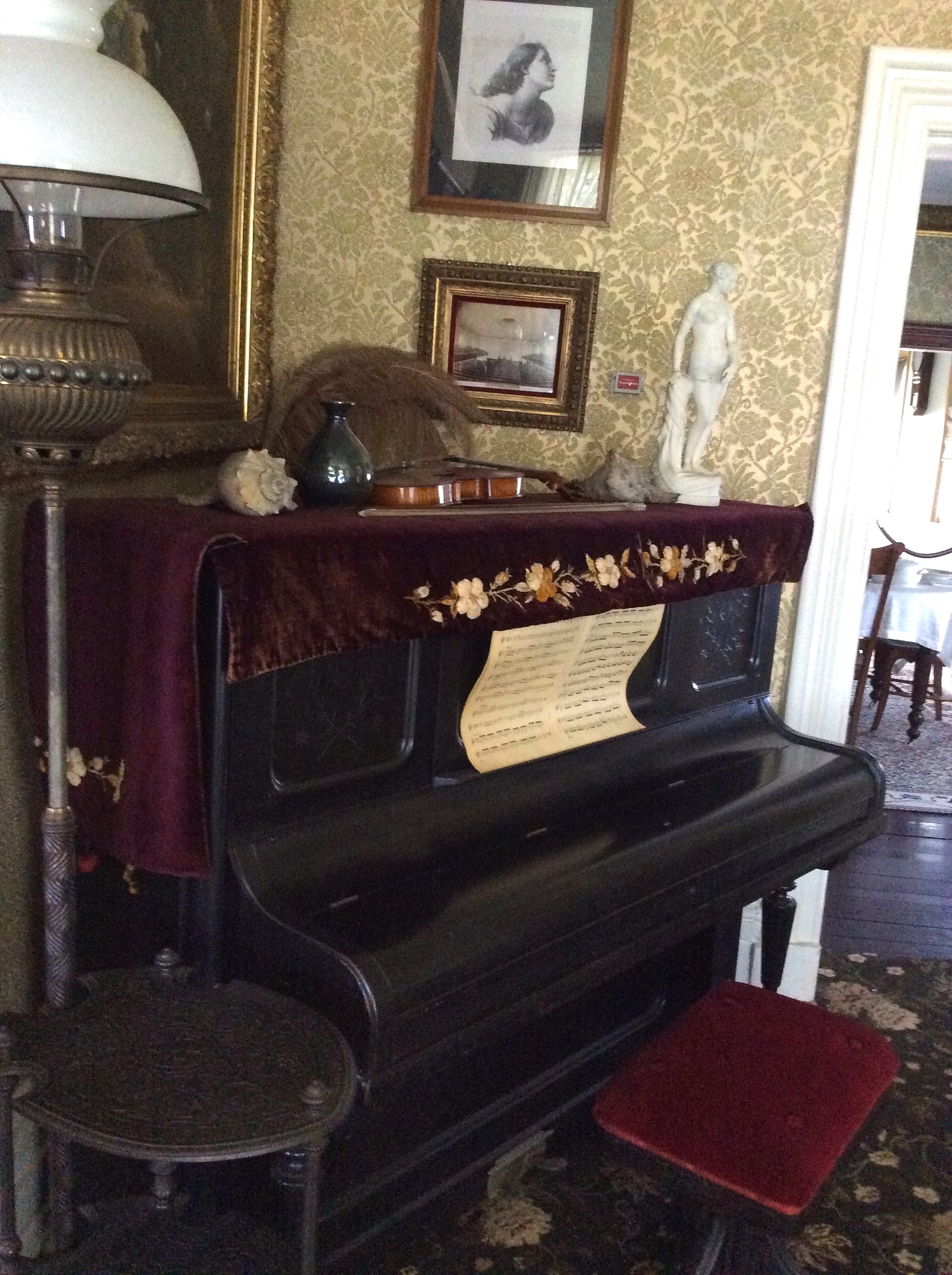
The door on the right from the entrance hall leads to the West Parlor, or sitting room, where the family would gather to play music, sing, and generally just hang out after dinner. As discussed in my account of my first day in Rochester, the Douglasses were a musical family, His daughter Rosetta and his second wife Helen played the piano, he and his son Charles played the violin, and possibly Anna did as well. Douglass was a very talented player, would play often, and sometimes dance. His grandson Joseph, son of Lewis, also adopted the violin and played with such great skill that it became his profession. Joseph’s first major performance was at the Columbia Exposition, which his grandfather helped organize, on August 25th, 1893, at age 22. He was the first violinist to be recorded, taught at Howard University and various schools, and toured the world as a concert violinist. (I subsequently had the pleasure of interviewing one of Frederick and Joseph’s descendants for my podcast!)

Sitting room piano with Joseph Douglass' violin on top

Sitting room piano with Joseph Douglass’ violin on top

Anna Douglass circa 1860, image from the Library of Congress collection

Anna Douglass circa 1860, image from the Library of Congress collection

The grandkids, frequent visitors and sometimes residents of the big house, would join in the fun of the sitting room family gatherings. Some would sing along with the music, and other times were devoted to games and general romping, here and throughout the house, wherever they could get away with it. In public, Douglass presented himself in a very serious and dignified way, but at home he was very playful, romping with the grandkids and joking a lot. He’d allow his granddaughters to braid his flowing hair and tie ribbons in it, only to have to rush off sometimes and put it back in order for the sake of the frequent guests who visited the house.

Anna’s portrait presides over the formal East Parlor, dedicated to greeting and entertaining guests. Her picture, directly across from the big bookshelf, occupies the central place of honor between the two tall windows at the front of the house. Unfortunately, the way the light is streaming brightly in the windows just after midday makes the portrait, easy to see in person, impossible for my camera to pick up amid the strong backlight. In fact, the way the sun is creating such high contrasts in the room, most of my photos of this room don’t end up turning out.

Frederick Douglass' library at Cedar Hill (2), Anacostia, Washington DC, 2016 by Amy Cools

Frederick Douglass’ library and study at Cedar Hill

Anna lived here at Cedar Hill for just under four years, presiding over this stately but lively home bustling with children, grandchildren, extended family, and frequent and numerous houseguests. While she had some health troubles, she remained pretty active until she suffered a stroke on July 9th, 1884, and lingered almost a month. After she died, at about age 69, Douglass fell into a deep and at times almost debilitating depression for well over a year. He thought about selling his house and traveling, perhaps moving to Europe for awhile. But his family needed him here, and besides, his neighbor and clerk Helen Pitts had become a close friend and ally.

Then we stop at the library, south of the East Parlor, accessible through a connecting door. Many of the things in this room actually belonged to Douglass, such as the top hat to the right of the desk. According to the National Park service, ‘Douglass’s extensive library contained more than 1000 volumes that included books on history, science, government, law, religion and literature. ‘ I don’t, unfortunately, get the opportunity to take a close look at the contents of that nice big bookshelf.

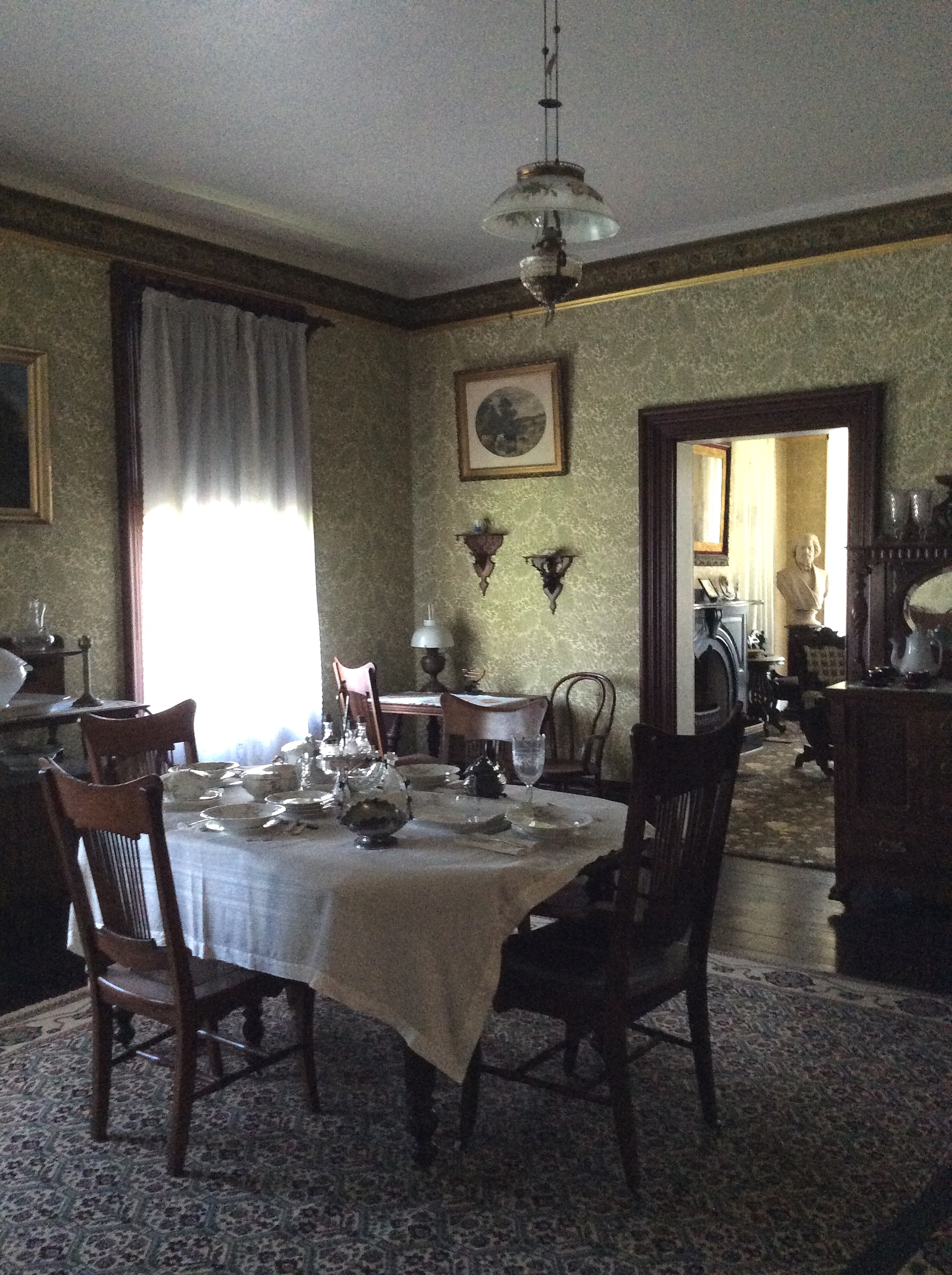
Cedar Hill dining room, where Frederick Douglass died, Anacostia Washington DC

Cedar Hill dining room, where Frederick Douglass died. His big chair is to the left.

Another view of the Cedar Hill dining room, looking north into the sitting room

Another view of the Cedar Hill dining room, looking north into the sitting room

We stop next at the dining room at the end of the entrance hall and to the right, with a big door leading onto the hallway, through which we look at the room, but also connected to the sitting room through another connecting door. On February 20th, 1895, Douglass and Helen were at this table discussing the women’s rights convention he had just attended that day. His old friend (or perhaps more accurately expressed in modern slang as ‘frenemy’) Susan B. Anthony had escorted him to the front of the room to speak. Always a talented mimic, he was repeating another’s speech he had heard there at the convention, probably sitting, then rising, from his big dining room chair. All of a sudden, he sank to his knees, suffering a massive heart attack. He could not be revived.

I linger here behind the tour group for a few moments.

Then I rejoin the group and we go around to the kitchen, which is beyond the dining room, through the pantry. Anna was an excellent cook, and she would make Maryland beaten biscuits for Douglass. They were made from dough that was beaten to trap air in the dough, an alternate to leavening. The resulting biscuits are small, round, and rather hard but Douglass loved them, having grown up on them in the Chesapeake.

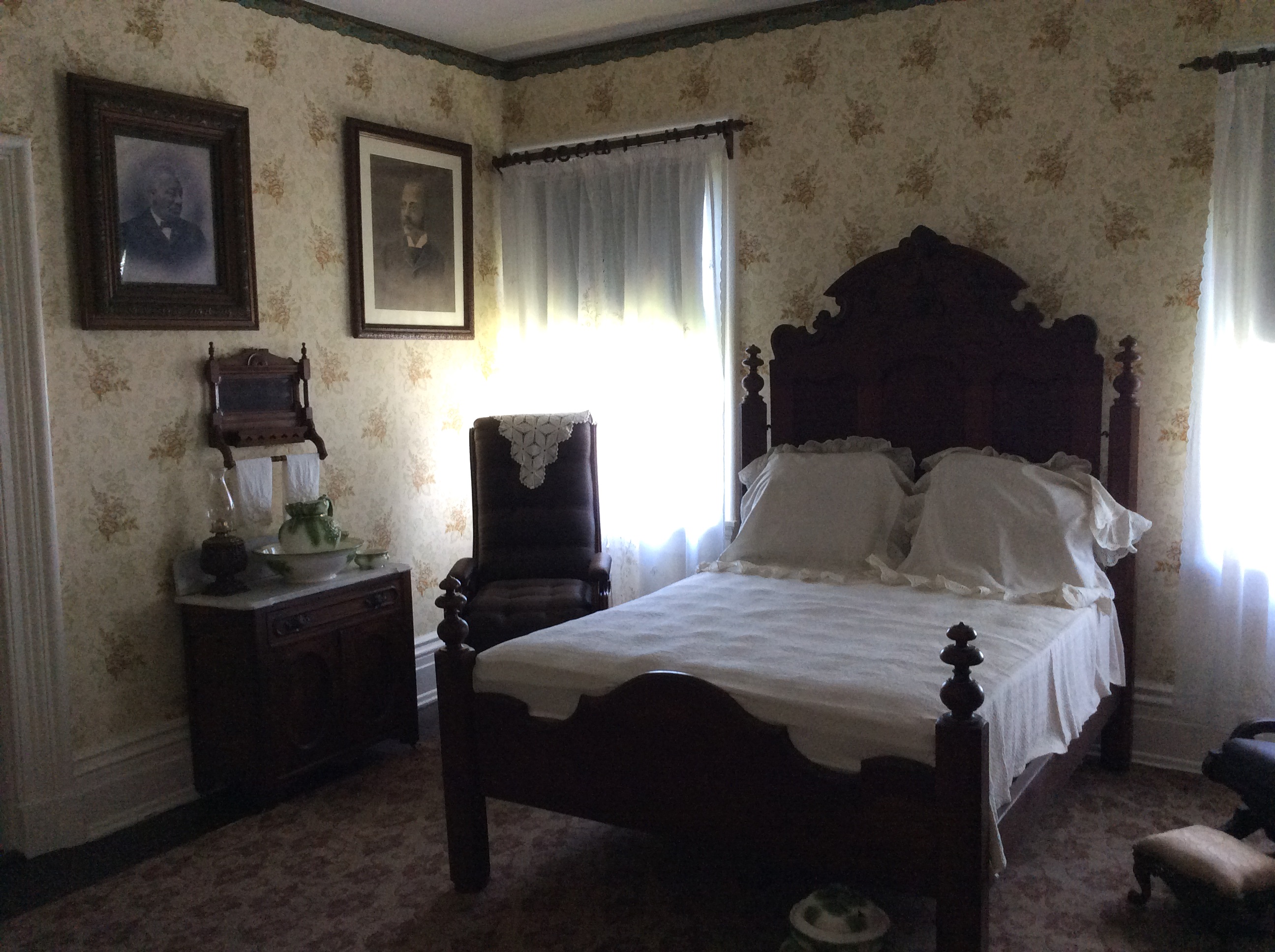
Anna Douglass's bedroom, Cedar Hill

Anna Douglass’s bedroom, Cedar Hill

Helen Pitts Douglass' bedroom, Cedar Hill

Helen Pitts Douglass’ bedroom, Cedar Hill

Then we go upstairs. Anna’s and Helen’s bedrooms are across Douglass’, which is on your right if you’ve just come up the stairs. Looking across the hall from Douglass’ room, Anna’s is on the left with the ruffled pillowcases and golden flower pattern wallpaper, Helen’s on the right with the dress form and green striped wallpaper. After Anna’s death, Douglass sealed her room off and no one stayed in there again.

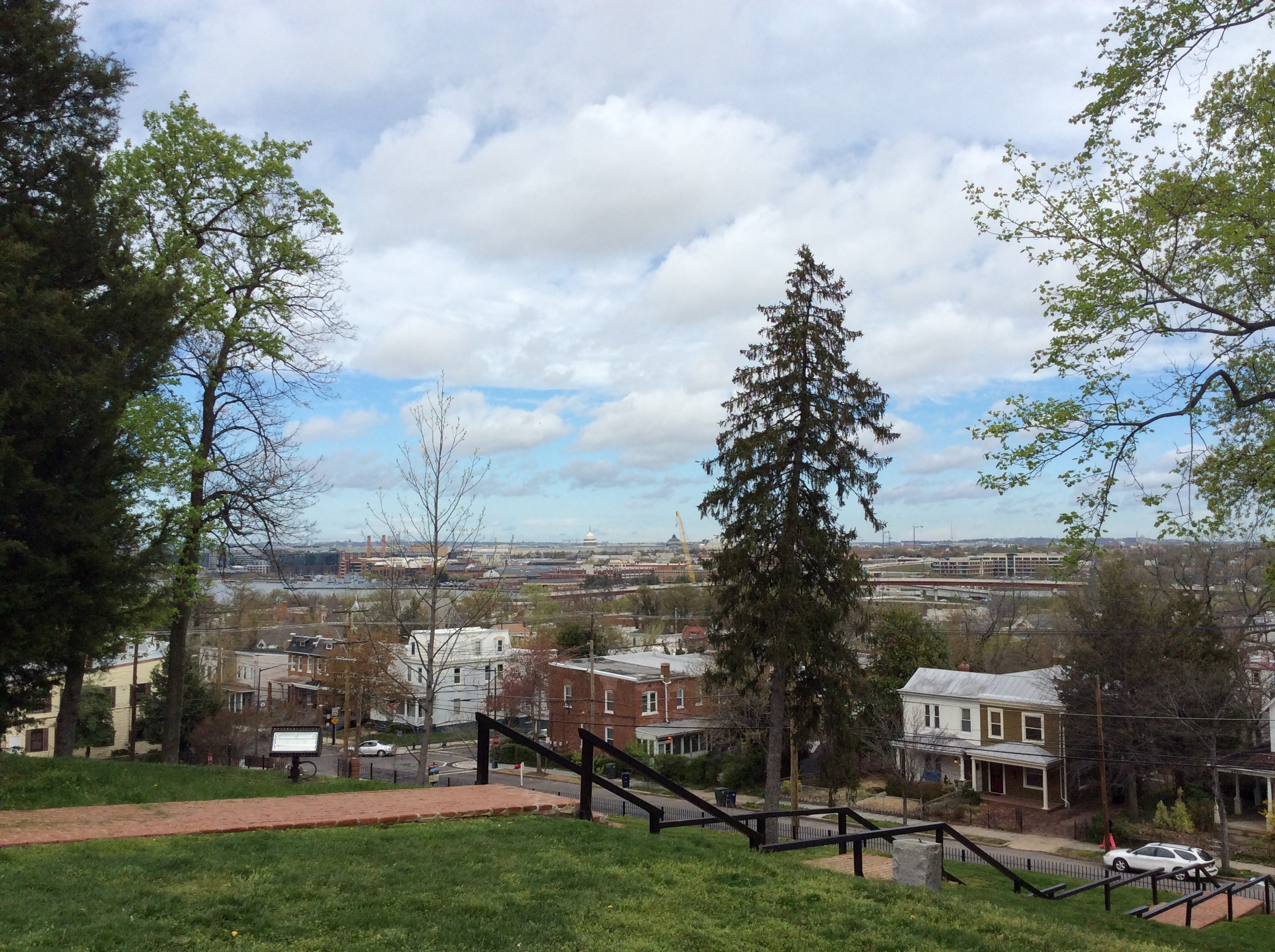
Douglass had the big bedroom, with a desk where he may have worked sometimes. Note the weights on the floor by the big leather armchair: he was a large, powerfully built man, over six feet tall and two hundred thirty pounds, with a strong voice. He would often work out with free weights out on the lawn, and would also often walk the five miles to work each way between Capitol Hill and Cedar Hill. He wrote that he felt stronger at this time in his life than he had in years. You can see Capitol Hill and the Washington Monument looking out of the bay window above the front door off to the left, and the view from the lawn in front of the house is fantastic, with the city laid out before you in a panorama across the Anacostia River.

Frederick Douglass' bedroom

Frederick Douglass’ bedroom. Note the dumbbells on the floor by the big leather chair: Douglass exercised regularly, including lifting weights out on the lawn and walking ten miles roundtrip to work on Capitol Hill. He remained active and vigorous right up to the time of his death at age 77

During the years Douglass lived at Cedar Hill, he was once again a well-to-do man after the debacle of the failed Freedman’s Bank, a subject I mentioned in an earlier account and to which I’ll return soon. To rebuild his finances, he went out on tour again, and he had been able to command very large speaking fees throughout the North and earned a good salary as Recorder of Deeds in Washington D.C., and with the help of a loan from a well-to-do friend, he was once again able to afford a grand house.

The view from Cedar Hill's front lawn, of Washington DC and Capitol Hill

The view from Cedar Hill’s front lawn, of Washington DC and Capitol Hill

By the time Douglass moved to Cedar Hill, he had moved into the role of a senior statesman and had a lot of social and political influence. Yet while Douglass retains his reputation to this day as a fiery champion of black rights, he was perceived by many in those later years to have lost sight of the true plight of most black Americans, especially in the South. He still supported the Republican Party even as it was abandoning Reconstruction, leaving the southern states free to flout the 14th and 15th Amendments. By the time Douglass moved to Anacostia and his grand home on Cedar Hill, his days as a slave, a laborer, and a working abolitionist suffering the everyday oppressions and indignities of Jim Crow were far behind him. His biographers Philip Foner and William McFeely both describe and critique his seeming lack of full awareness and concern for how bad it really was at this time for ordinary black working Americans. To many, it was clear that Douglass’ pragmatism had overshadowed his fiery spirit as a champion of human rights.

In 1876, Douglass was so eager that Rutherford B. Hayes become President, in a heavily contested, extremely close election, that he failed to criticize the Republican Party’s policies in any serious way. To be fair to Douglass, it was still the only major party that at least nominally supported black rights, and if Hayes lost to Tilden, even the appearance of national concern over the rights of black Americans would be lost. But really, his critics said, he should have advocated the complete abandonment of the Republican Party since it had in practice largely abandoned the cause of actual emancipation. After all, the existence of the 14th and 15th Amendments meant nothing to the lives of black Americans if their politicians and fellow citizens routinely blocked access to the polls, to good jobs, to elected office, and to all the other rights and privileges of citizens of a free nation.

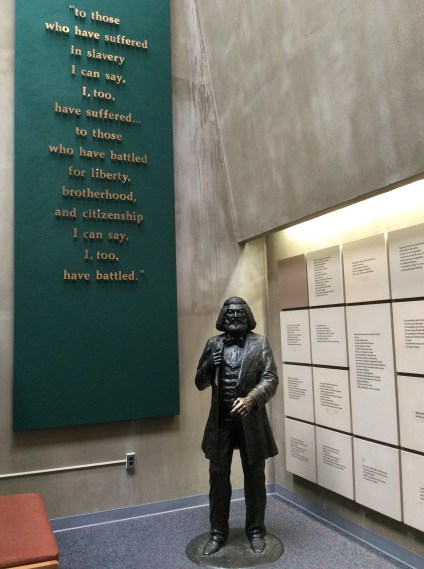
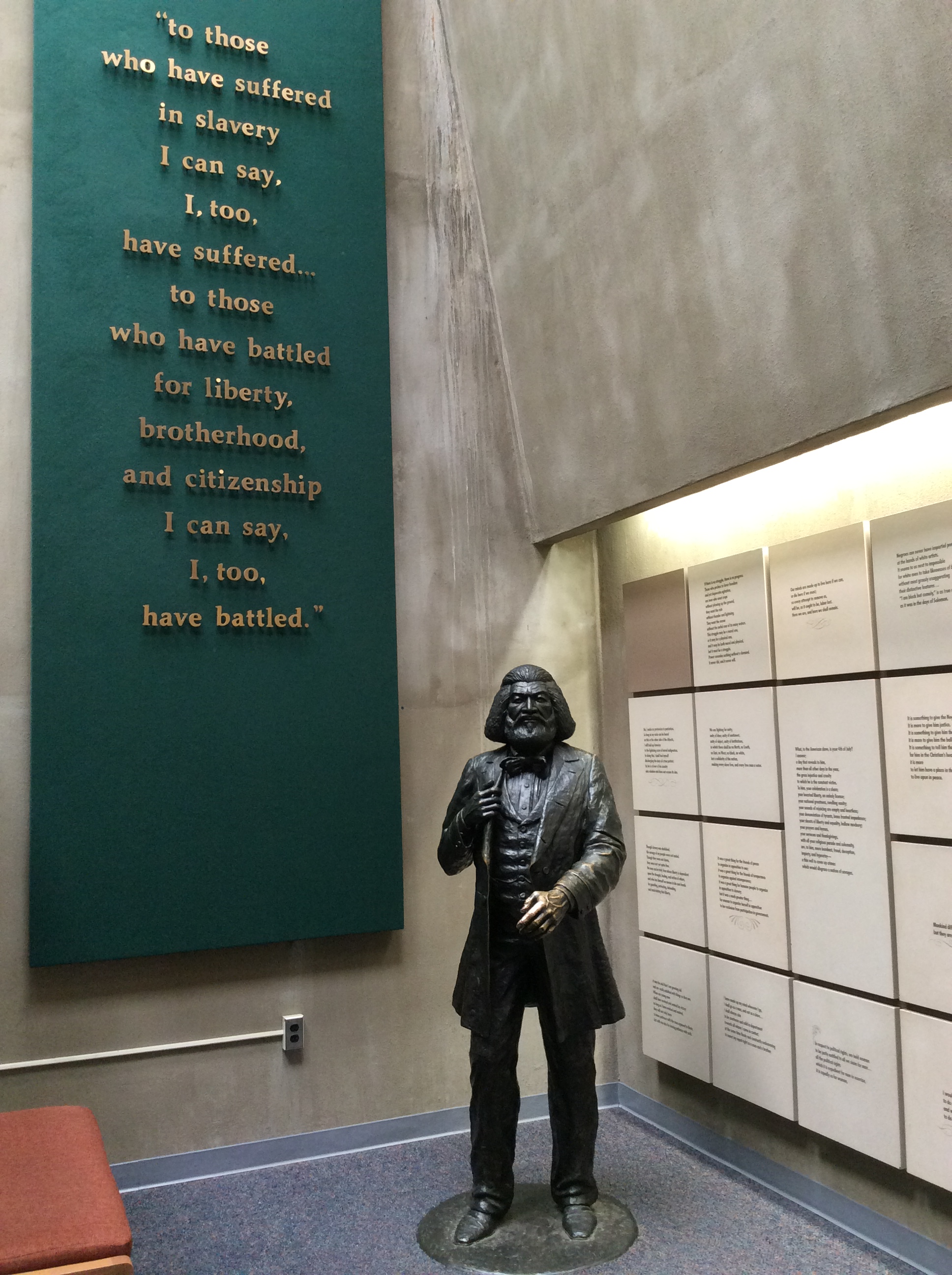
Statue and quote at the Frederick Douglass National Historic Site

Statue and quote at the Frederick Douglass National Historic Site

The Republican Party had a powerful contingent who had come to prioritize economic progress over human rights reform, and thought that keeping federal troops stationed in the South to protect black rights only served to delay national reconciliation and economic recovery. So Republicans routinely struck deals with southern leaders eager to return to old social practices and had often come to be no better than Democrats at protecting black rights. President Hayes, for so long an ardent supporter of strong federal enforcement of civil rights laws, shifted his focus to economic recovery and civil service reform. To be fair to Hayes, ‘Republican Party’ had become almost synonymous with ‘political corruption’, and the new president, famed for his integrity throughout his political career, was determined to fix that. And Hayes was far from the only one who thought that economic recovery would bring about gradual black rights reform through the value of their work in a revitalized economy.

So the Democrats had their way, and black citizens lost many of the political gains they had made. They lost their hard-won representation in government and had even become even worse off in many parts of the South than they had been under slavery, with endemic Klu Klux Klan and White League terrorism, lynching, black codes, debt peonage, convict leasing, and sharecropping, which systematically cheated black people out of the earnings from their labor. And as history reveals, the Douglass of 1857 who had said in Canandaigua ‘If there is no struggle, there is no progress’, was right, and Hayes and the gradualist reformers were wrong. The South continued its oppression of black people nearly unchecked for another hundred years, and their rights were only reclaimed through their protest and struggle, assisted by the intervention of the federal government.

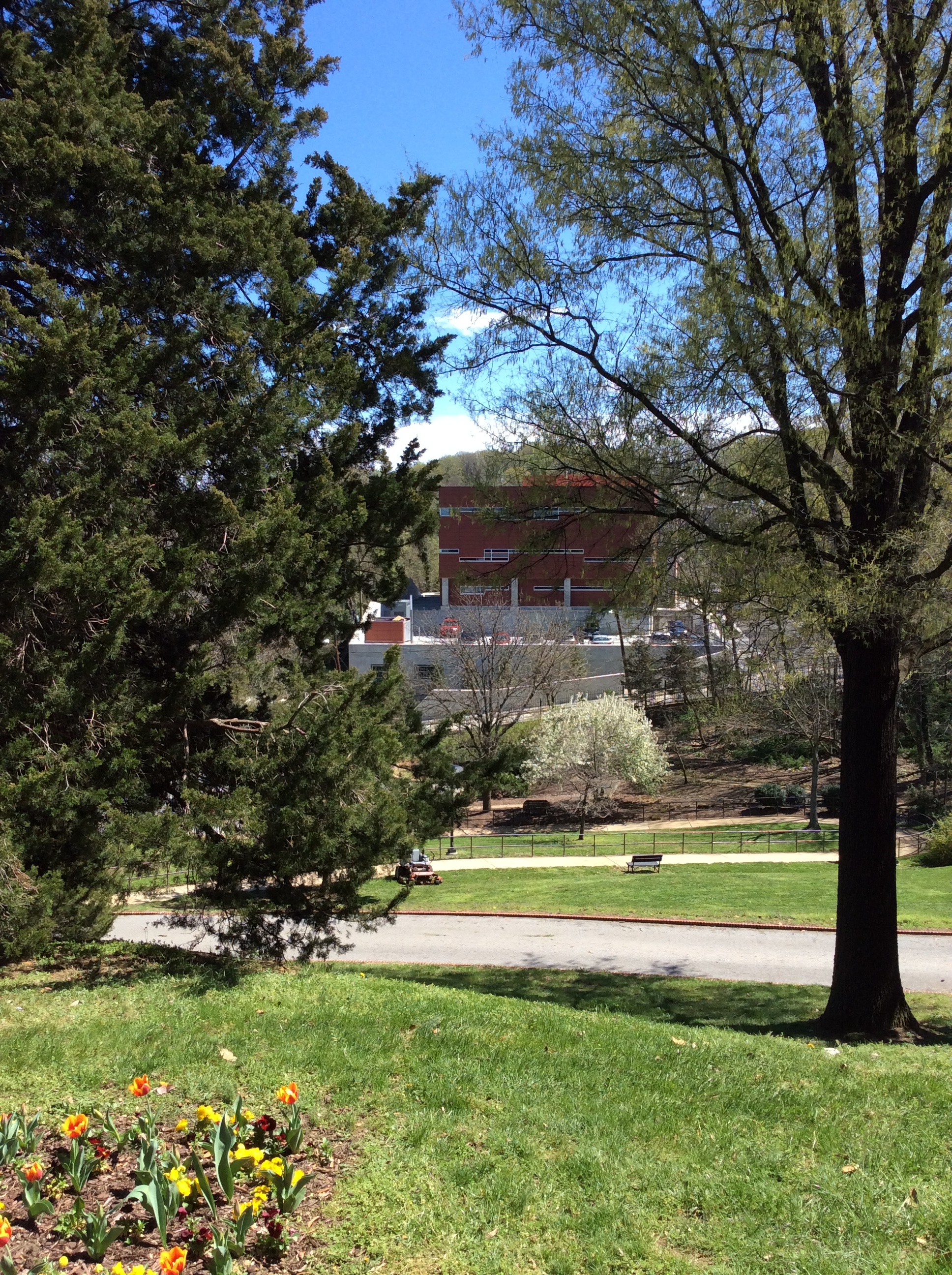
View from Cedar Hill, looking east toward the site of Hiram and niece Helen Pitts' house

View from Cedar Hill, looking east toward the site of Hiram and niece Helen Pitts’ house

But by the 1888 election, Douglass was no longer so ready to remain silent in the face of Republican Party’s failures to protect human rights. It was no longer good enough that the Republican Party had been the party of Lincoln and of the Union. His rhetoric took on a more fiery tone once again, and he said that if the Republican Party wouldn’t live up to their promises to protect black rights, he now looked forward to their defeat. And defeated they were: Democrat Grover Cleveland had already taken the White House in 1884. Douglass attributed this to the Republican Party’s abandonment of the human rights platform, which had made it the champion of goodhearted people, in favor of a profit-first agenda.

As we leave the house, in response to my inquiry, Johnson points me in the direction of the site of Helen Pitts’ uncle Hiram’s house, right beside Cedar Hill where the tall red building stands directly to the right if you’re looking toward D.C. from the front porch (or to your left if you’re looking at the front of the house). Helen lived here with her uncle for a time, and the Pittses and Douglasses were friends, neighbors, and colleagues.  Hiram, like his brother and Helen’s father Gideon in Honeoye, refused to speak to the couple or allow them the house after Helen married Douglass. There was a path that led from Hiram’s house up to Cedar Hill, but after the marriage presumably, sadly, it saw much less use.

The hymnal Frederick Douglass had with him when he escaped from slavery in 1838

The hymnal Frederick Douglass had with him when he escaped from slavery in 1838

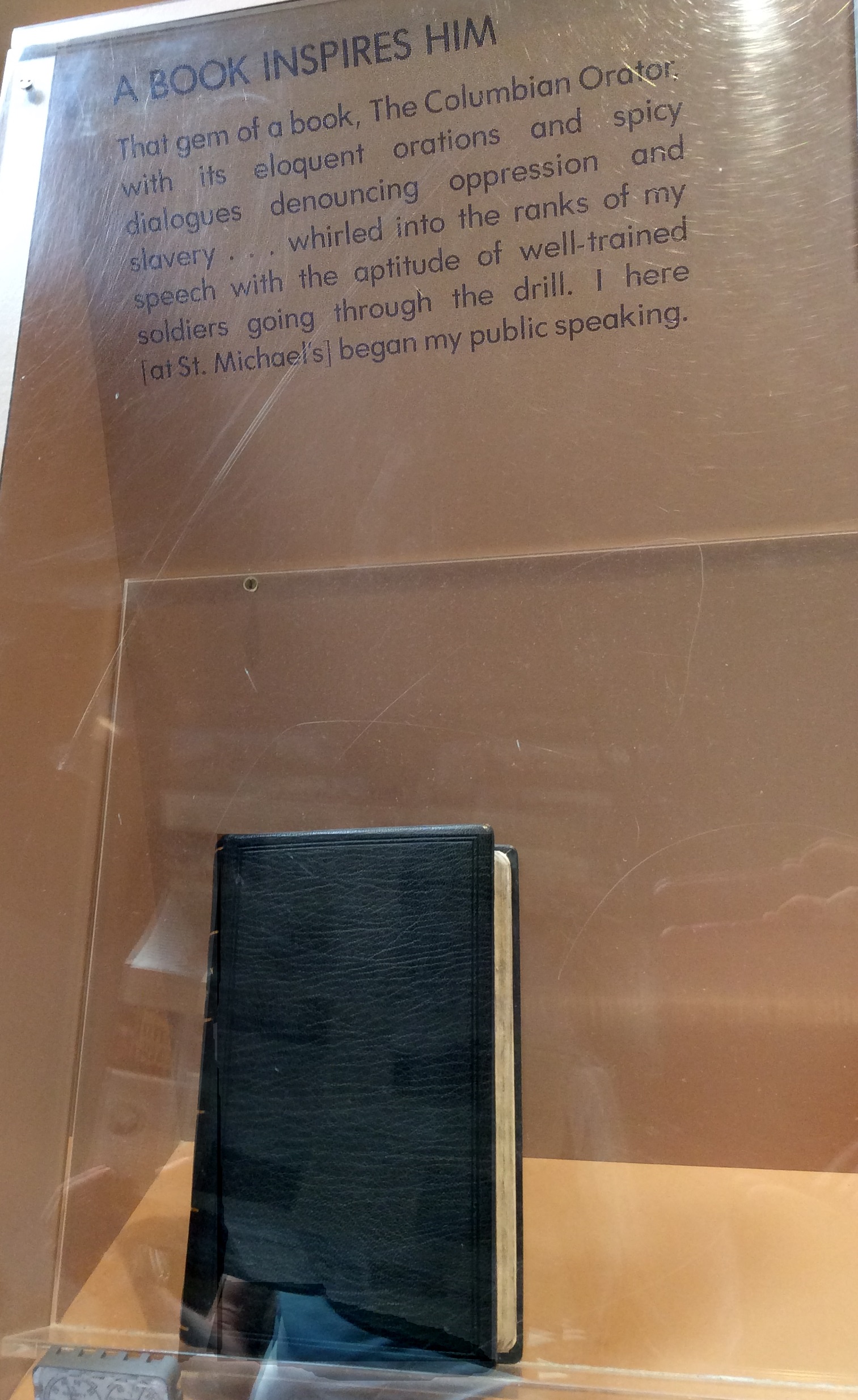
A copy of the Columbian Orator, the first book Frederick Douglass purchased

A copy (but not the copy) of the Columbian Orator, the first book Frederick Douglass ever purchased

I return to the Frederick Douglass National Historic Site museum, tucked into the east foot of the hill, and the treasures therein. Among them, there’s the hymnal which Douglass had with him when he escaped from slavery. It seems quite incredible that it survived, especially given the fire at his Rochester home. I wonder if the family took special pains to make sure that this one book, at least, escaped the flames. There’s also a copy (but not his copy) of the Columbian Orator, the first book Douglass ever bought, which, as you may remember, he purchased from Knight’s shop on Thames St in Fell’s Point, Baltimore, when he was only about 12 years old. It was among the most influential books of his life.

Douglass’ death mask, cast in plaster, is also here. His strong brow is relaxed, the deep furrow over the nose smoothed out a bit. His wide-set eyes look peacefully closed but the lips, usually set straight in a dignified manner in portraits, are here drawn tightly together, even pursed, but I’m guessing this is due to the castmaker’s efforts to keep plaster out of the mouth. His characteristically leonine hair is plastered (no pun intended) to his well-formed head. In death, as in life, he’s strikingly handsome.

Here, too, I find Abraham Lincoln’s walking stick, gifted to Douglass by Mary Todd Lincoln in thanks for his service recruiting for the Civil War.

Frederick Douglass' death mask and cast of his hand, at his National Historic Site in Washington DC

Frederick Douglass’ death mask and cast of his hand, at his National Historic Site in Washington DC

 Abraham Lincoln's walking stick, Mary Todd Lincoln's gift to Frederick Douglass

Abraham Lincoln’s walking stick, Mary Todd Lincoln’s gift to Frederick Douglass, on the left, and copies of his passes for recruiting for the Union Army

After a rather lengthy visit closely examining all the displays and chatting with the docent, I cross the Anacostia again as I head north to 913 E St NE, where according to Douglass’ biographer McFeely, Helen Pitts was living when Douglass came to pick her up on January 24th, 1884, on their way to be married.

Houses off Maryland and E St NE where they converge, south side, Washington DC, 2016 Amy Cools

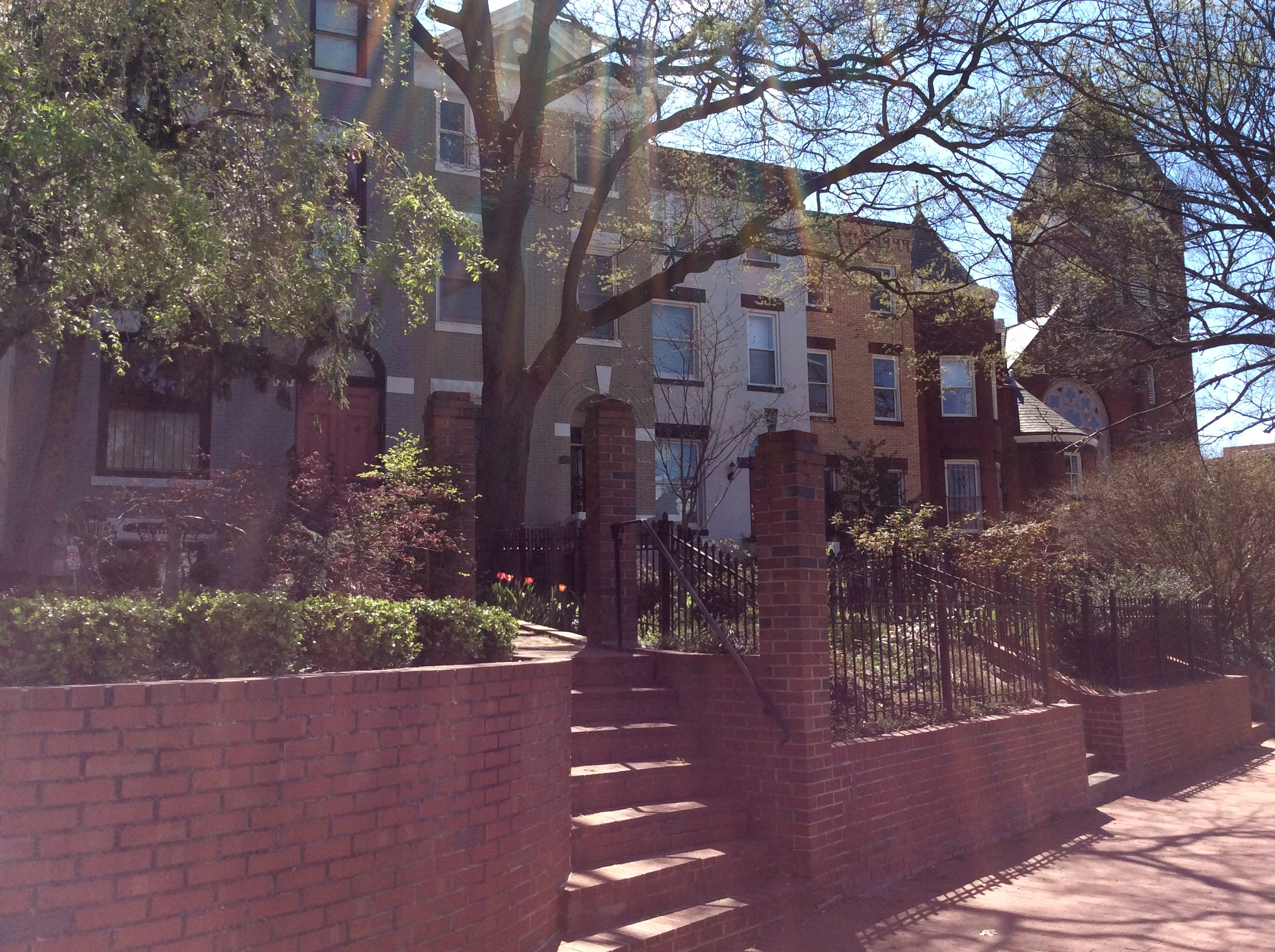
Houses off Maryland Ave and E St NE where they converge, on the south side of the street where the odd numbers run for both E and Maryland. The tan house in the center is marked 913 Maryland Ave, but I can’t tell from Google Maps or the 1909 Baist atlas if it’s also 913 E St, though that would also be consistent with the numbering.

When I arrive, I find it’s a little hard to be sure that the 913 I find is an E Street address, a Maryland Ave, or both: these streets intersect at an odd angle here just east of 9th St. Google Maps seems to say it’s 913 E, but the door plaque says it’s 913 Maryland Ave. I find Baist’s city atlas from the turn of the century on the Library of Congress website, the earliest I can find online, and it shows that the numbers here have apparently not changed, since 1909 at least. In 1884, Helen lived here or near here, again, if the 1909 atlas is right. She had moved here from her uncle Hiram’s house to be closer to Capitol Hill, where she worked as Douglass’ clerk, though that meant she and Douglass were no longer neighbors. Perhaps they wanted to keep their deepening relationship less evident to the public eye. Again, more on their marriage soon to come.

I decide to break up the account up here of this day’s adventures into two accounts since it’s such a full day and I learn so much. To be continued!

*Listen to the podcast version here or on Google Play, or subscribe on iTunes

Ordinary Philosophy and its Traveling Philosophy / History of Ideas series is a labor of love and ad-free, supported by patrons and readers like you. Please offer your support today!

~~~~~~~~~~~~~~~~~~~~~~~~~

Sources and Inspiration:

About Us: Living History‘. Frederick Douglass Family Initiatives website (family tree, photos).

Baist’s Real Estate Atlas of Surveys of Washington, District of Columbia: Volume 2, Plate 21. By Baist, George William, William Edward, and Harry Valentine Baist, 1909. Via Library of Congress website

Benjamin Harrison: Campaigns and Elections,’ from Miller Center of Public Affairs, University of Virginia website

Blight, David W. ‘“Your Late Lamented Husband”: A Letter from Frederick Douglass to Mary Todd Lincoln‘. In The Gilder Lehrman Institute of American History website

Douglass, Frederick. The Life and Times of Frederick Douglass. Re-published 1993, Avenal, New York: Gramercy Books, Library of Freedom series.

Douglass, Frederick. My Bondage and My Freedom: 1855 Edition with a new introduction. Re-published 1969, New York: Dover Publications, Inc.

Foner, Philip S. The Life and Writings of Frederick Douglass, Vol. 1-4. New York: International Publishers, 1950.

Fought, Leigh. ‘On Trusting Secondary Sources‘. From Frederick Douglass’s Women: In Progress blog

Holt, Michael F. ‘The Contentious Election of 1876‘, in History Now: The Journal of the Gilder Lehrman Institute

Joseph Douglass‘. In Wikipedia, The Free Encyclopedia.

McFeely, William. Frederick Douglass. New York: W.W. Norton & Company, 1991.

Maryland Beaten Biscuits‘, in Guest Recipe Book. Diana’s Desserts website

Muller, John. Frederick Douglass in Washington, D.C.: The Lion of Anacostia. Charleston: The History Press, 2012.

Rutherford B. Hayes: Life in Brief‘, from Miller Center of Public Affairs, University of Virginia website.

Southern, Eileen. The Music of Black Americans: A History. W. W. Norton & Company, 1997

New Podcast Episode: Frederick Douglass Chambersburg and Gettysburg PA Sites

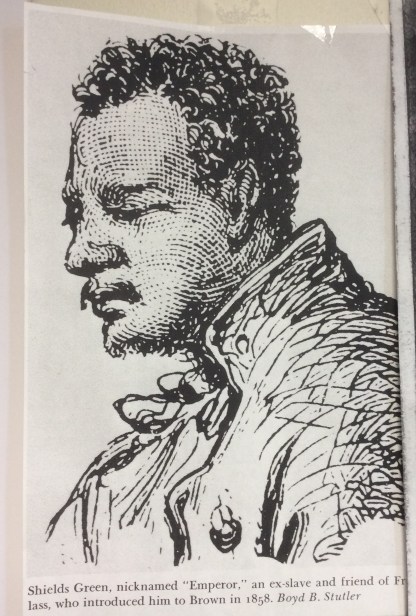
Poster of Shields Green in David Anderson's Nazareth College office, photo 2016 Amy Cools

Listen to this podcast episode here or on Google Play, or subscribe on iTunes

Twelfth Day, Thursday March 31st

It’s breezy, overcast, and warm the day I drive south from Rochester to Washington D.C., with a first stop in Chambersburg, Pennsylvania to visit two sites of special interest for my Frederick Douglass journey.

The first is a two story clapboard house at 225 E. King St, where John Brown rented a room in Mary Ritner’s boarding house in the summer of 1859, and where he planned his doomed raid on the federal arsenal at Harper’s Ferry. Unfortunately, I’m visiting during the off-season: the house is closed until the tourist season starts in May, but I find a blog with two nice photos of the interior posted. It happens to be a blog dedicated to Fredrick Law Olmsted, the great landscape architect who designed Highland Park, site of Frederick Douglass’ statue and memorial in Rochester…. Read the written account here:

Ordinary Philosophy and its Traveling Philosophy / History of Ideas series is a labor of love and ad-free, entirely supported by patrons and readers like you. Please offer your support today!

Happy Birthday, Aimé Césaire!

Aimé Fernand David Césaire, photo credit manomerci.comAimé-Fernand-David Césaire was a poet, playwright, philosopher, and politician from Martinique. In his long life (1913-2008), Césaire accomplished much in each of these roles, a rare feat as they rarely coincide in one person!

In turn mayor of Fort-de-France, deputy to the French National Assembly for Martinique, and President of the Regional Council of Martinique, this prolific writer and intellectual was also co-founder of Négritude, a ‘literary movement of the 1930s, ’40s, and ’50s that began among French-speaking African and Caribbean writers living in Paris as a protest against French colonial rule and the policy of assimilation.’ (Encyclopædia Britannica). The Stanford Encyclopedia of Philosophy describes Négritude as ‘the self-affirmation of black peoples, or the affirmation of the values of civilization of something defined as “the black world” as an answer to the question “what are we in this white world?”’. The term was chosen so as to be provocative, a way of re-claiming the word nègre, which had become a racial slur, while simultaneously shocking those who heard or read it into paying attention. Through his philosophy, political writing, and especially his poetry and plays, the world pays attention still.

Learn more about the great Aimé Césaire through the resources below; an excellent place to start is with Meredith Goldsmith’s article from The Poetry Foundation.

Ordinary Philosophy and its Traveling Philosophy / History of Ideas series is a labor of love and ad-free, supported by patrons and readers like you. Please offer your support today!

~~~~~~~~~~~~~~~~~~~~~~~~

Sources and inspiration:

Aime Cesaire‘. In Encyclopædia Britannica.

Chidi, Sylvia Lovina. The Greatest Black Achievers in History, chapter 1

Diagne, Souleymane Bachir, ‘Négritude‘. In The Stanford Encyclopedia of Philosophy

Goldsmith, Meredith. ‘Aimé Fernand Césaire‘, 1913–2008. In The Poetry Foundation


New Podcast Episode: Frederick Douglass Seneca Falls, Canandaigua, Honeoye, and Mt Hope Cemetery Sites

Women's Rights National Historical Park headquarters, Seneca Falls NY

Women’s Rights National Historical Park headquarters, Seneca Falls NY

Listen to this podcast episode here or on Google Play, or subscribe on iTunes

Eleventh day, Tuesday March 30th

It’s a beautiful, clear sunny day, and the chill of the morning gives way to a balmy afternoon. I drive about an hour east and slightly to the south, through the lovely Finger Lakes region of New York to Seneca Falls.

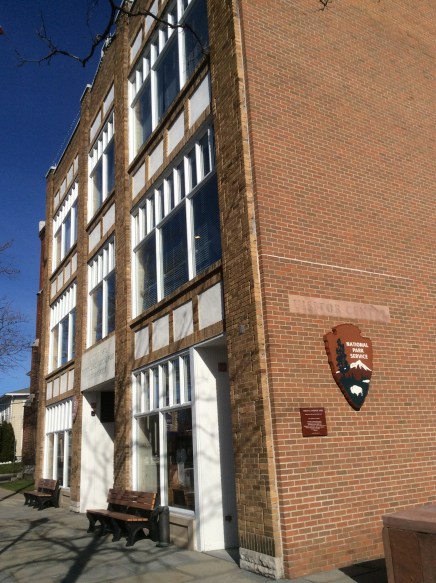
I’m here to visit what’s now the Women’s Rights National Historical Park, which is headquartered at 136 Fall Street in Seneca Falls. I begin with the reconstructed Wesleyan Church next door at Fall and Mynderse Streets, the site of that momentous occasion which brings me here. I’ve long wanted to visit this place and had hoped to do so during my history of ideas travel series about Elizabeth Cady Stanton, but didn’t have enough time during that trip to make the journey, about a five hour drive from New York City one-way. But here I am at long last…. Read the written account here:

Ordinary Philosophy and its Traveling Philosophy / History of Ideas series is a labor of love and ad-free, entirely supported by patrons and readers like you. Please offer your support today!

New Podcast Episode: Frederick Douglass Rochester NY Sites, Day 2

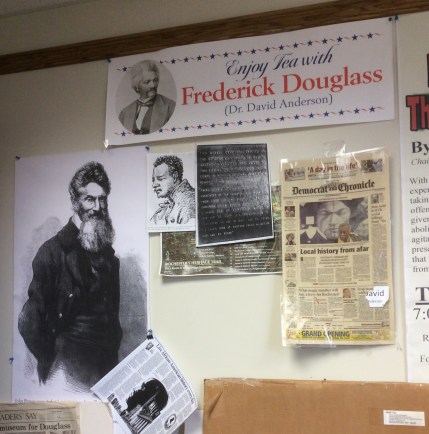
Douglass scholarship articles and posters, Dr. David Anderson's office, Nazareth College Rochester, 2016 Amy CoolsListen to this podcast episode here or on Google Play, or subscribe on iTunes

Tenth day, Tuesday March 29th

I begin my day with an early visit to Dr. David Anderson, a Frederick Douglass scholar, visiting professor at Nazareth College, founding member of Blackstorytelling League, and an all around delightful and fascinating man! He is kind enough to grant me an interview of an hour or so, which ends up turning into a much longer conversation than that.

Among many other things too numerous to describe in full here (I’ll bring more details of our talk into the discussion of my subsequent discoveries), we talk about the Douglass family as a whole, and especially, Frederick Douglass’ wife Anna…. Read the written account here:

Ordinary Philosophy and its Traveling Philosophy / History of Ideas series is a labor of love and ad-free, entirely supported by patrons and readers like you. Please offer your support today!

Frederick Douglass Seneca Falls, Canandaigua, Honeoye, and Mt Hope Cemetery Sites

Women's Rights National Historical Park headquarters, Seneca Falls NY

Women’s Rights National Historical Park headquarters, Seneca Falls NY

Eleventh day, Tuesday March 30th

It’s a beautiful, clear sunny day, and the chill of the morning gives way to a balmy afternoon. I drive about an hour east and slightly to the south, through the lovely Finger Lakes region of New York to Seneca Falls.

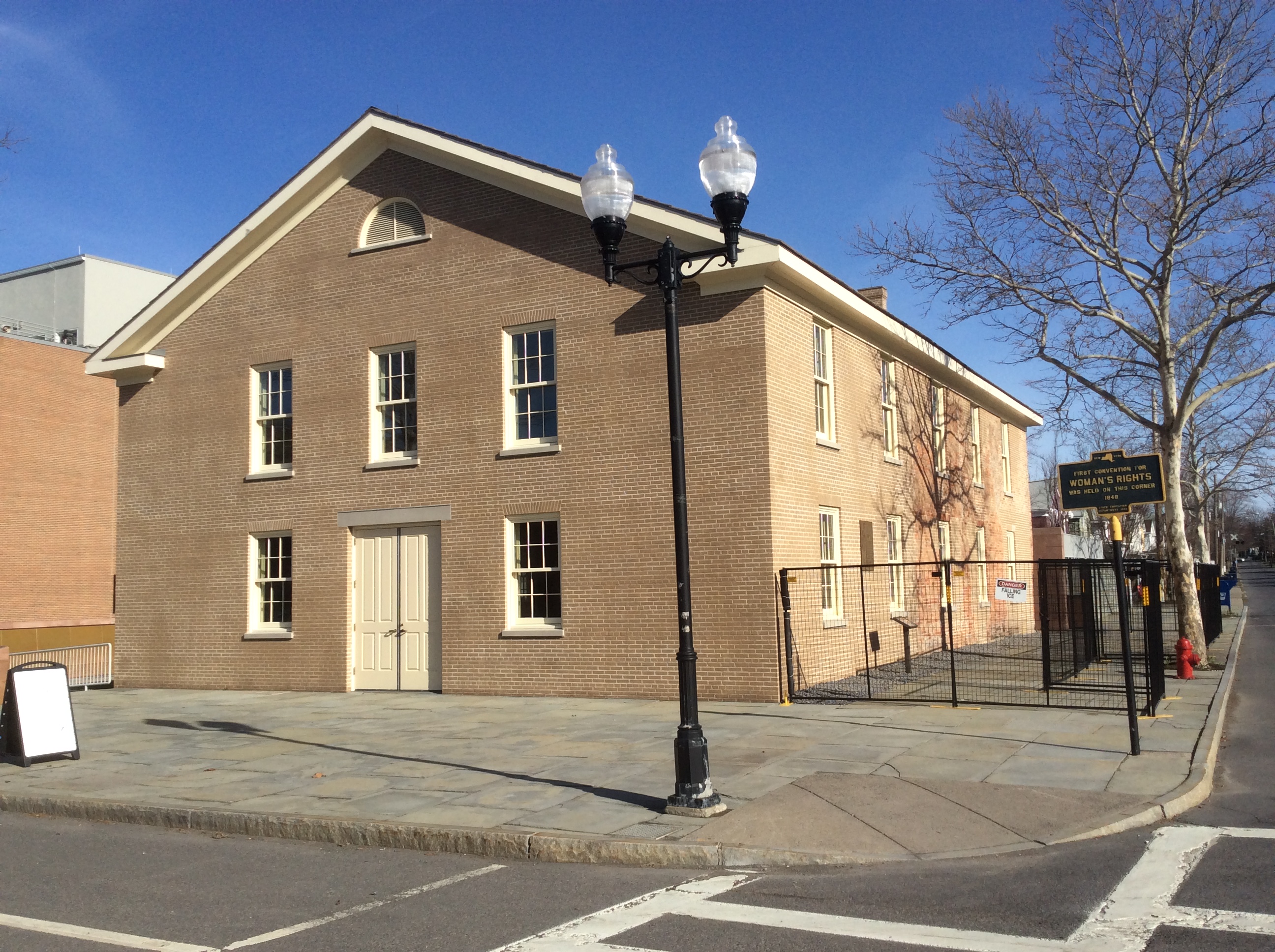
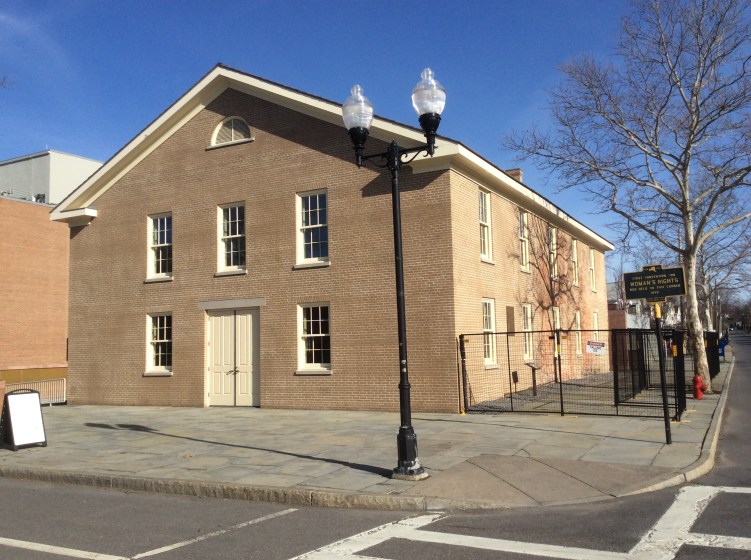
I’m here to visit what’s now the Women’s Rights National Historical Park, which is headquartered at 136 Fall Street in Seneca Falls. I begin with the reconstructed Wesleyan Church next door at Fall and Mynderse Streets, the site of that momentous occasion which brings me here. I’ve long wanted to visit this place and had hoped to do so during my history of ideas travel series about Elizabeth Cady Stanton, but didn’t have enough time during that trip to make the journey, about a five hour drive from New York City one-way. But here I am at long last.
Wesleyan Chapel, site of 1st Women's Rights Convention, Seneca Falls NY, 2016 A Cools

Wesleyan Chapel, the site of the Seneca Falls Women’s Rights Convention of 1848
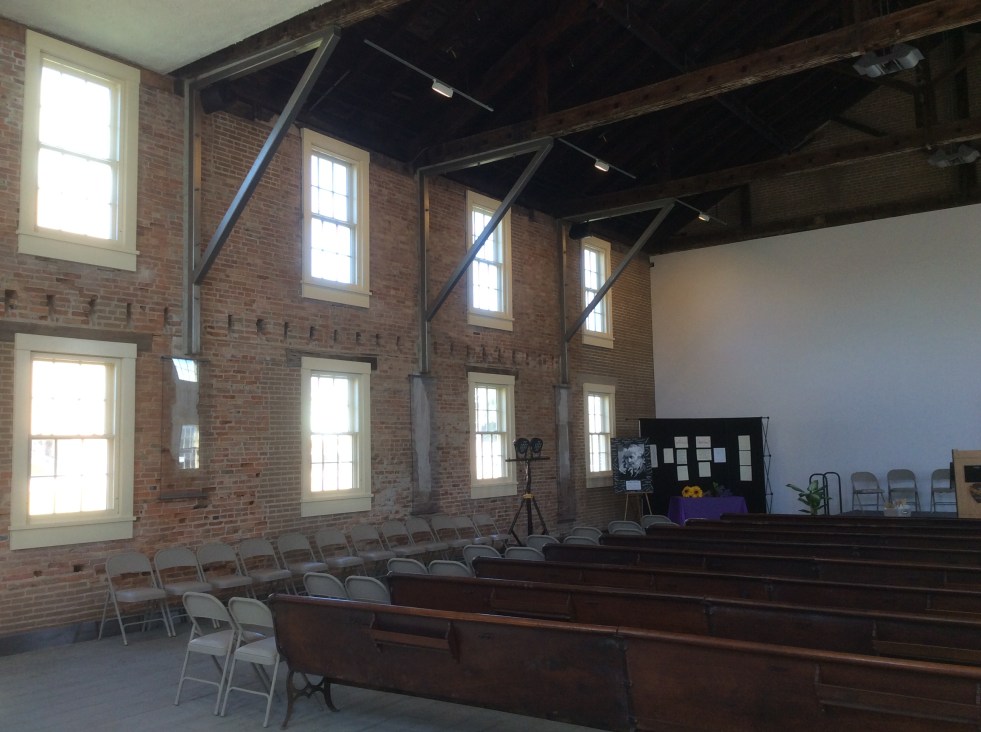
Interior of the rebuilt and restored Wesleyan Church. It went through several remodels and incarnations as various businesses, but much of the original brickwork remained, including some of the original plaster underneath layers of paint and later interior walls

Interior of the rebuilt and restored Wesleyan Church where the Convention was held. It went through several remodels and incarnations as various businesses, but much of the original brickwork remained, including some of the original plaster underneath layers of paint and later interior walls, now preserved beneath sheets of plexiglass

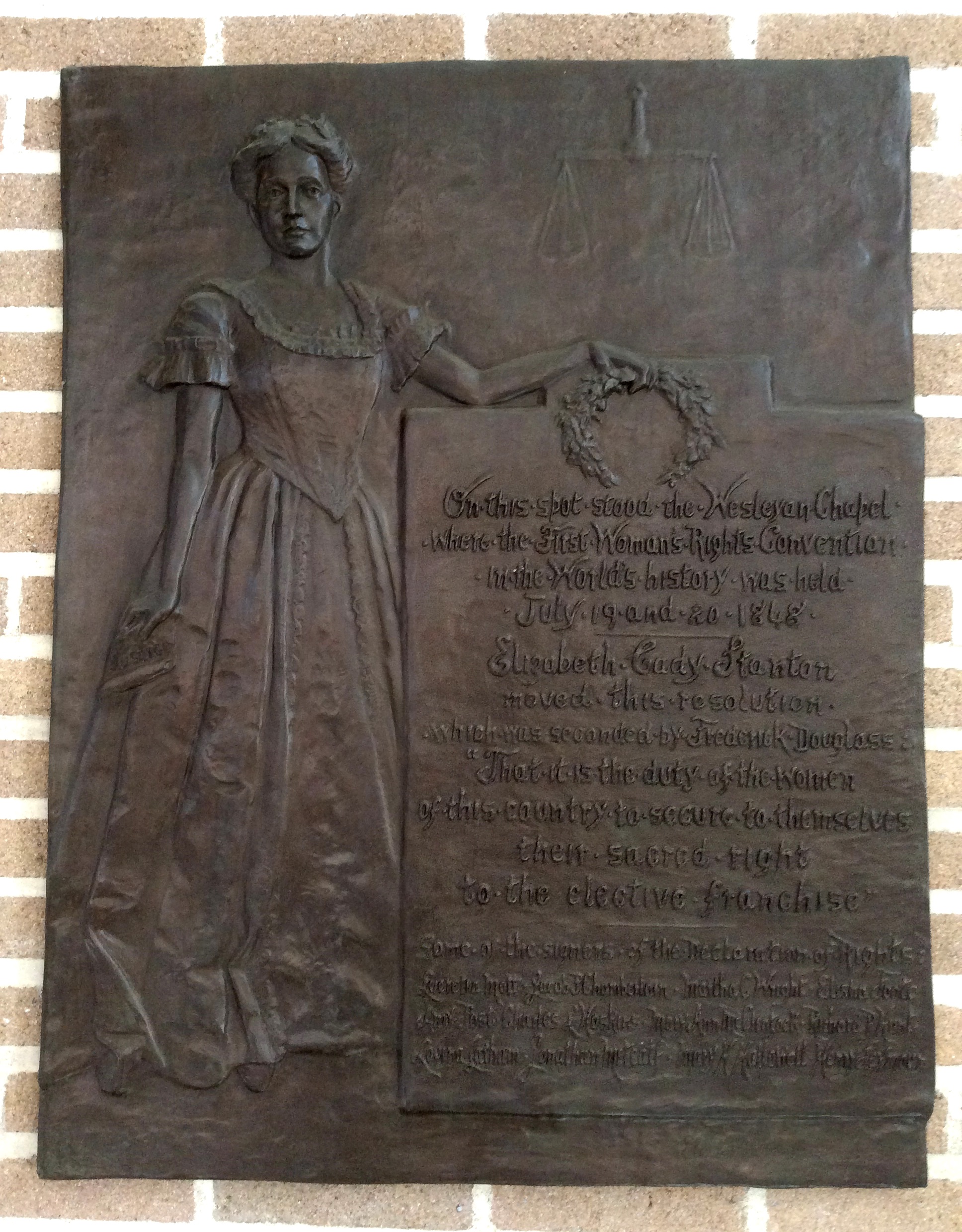
On July 19th and 20th of 1848, Frederick Douglass attended the Women’s Rights Convention here, the first women’s rights convention in the United States. This convention grew out of the abolitionist cause, directly and indirectly, to which Douglass had dedicated his life.
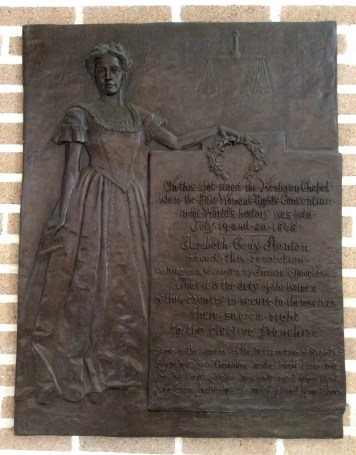
1848 Seneca Falls Woman's Rights Convention commemorative plaque in the Wesleyan Chapel

1848 Seneca Falls Woman’s Rights Convention commemorative plaque in the Wesleyan Chapel, placed here on the 60th anniversary of the Convention in 1908

Directly, Stanton and her fellow abolitionist Lucretia Mott were incensed that they were forced to sit in a segregated balcony at the 1840 World Anti-Slavery Convention in London, along with all of the other female attendees. To make matters worse, women were not allowed to speak during the proceedings at all. Stanton and Mott planned to do something about the injustice that pervaded even this supposed haven of enlightened humanity. At Seneca Falls, they did, though Stanton’s activist efforts had been delayed, as would continue to be the case for many years, by frequent childbearing and resulting family responsibilities, to Susan B. Anthony’s dismay.

Indirectly, the women’s rights movement had, for many, come to be identified with the abolitionist movement, as many realized that many of the same and similar arguments for the liberation of black people applied to the liberation of women. If all human beings were equal in that they shared the same basic human nature and dignity (which according to many, was bestowed by God), they were entitled to the same political rights as any other person and had the same moral claim to just and kind treatment by their fellow human beings. If this were true for black people and for people of other races, how could this not be true for women? Women’s consciousness of their subjugated status had been growing for a long time, but it was the reform era of Stanton and Douglass that saw the first serious efforts to enact more substantial, comprehensive laws to protect and establish the political and social rights of women.

Frederick Douglass and Elizabeth Cady Stanton sculptures at the Women's Rights National Historical Park museum, part of the 'First Wave' sculpture group by Lloyd Lillie

Frederick Douglass and Elizabeth Cady Stanton sculptures at the Women’s Rights National Historical Park museum, part of the ‘First Wave’ sculpture group by Lloyd Lillie

It was here that Douglass met Stanton in 1848, and they became lifelong friends, though their relationship was deeply strained at times by the same disagreements and racist rhetoric over the 14th and 15th Amendments that had marred his friendship with Susan B. Anthony. (You may remember the story of Stanton’s bad behavior in my earlier account of visiting other New York sites.) I like to imagine the tiny 5′ 3″ Stanton and the over 6′ tall Douglass, both indomitable, both intellectually gifted, sometimes deep in conversation, and sometimes delivering speeches in their very different yet forceful and convincing rhetorical styles. Douglass was the only black person in attendance at the Convention, and not only was he the only man who stood in favor of Stanton’s initial motion for a resolution calling for women’s suffrage, he was the only one to do so at first. It was initially too controversial even for most of the attendees, who were calling for better property and child custody rights. He delivered one of his trademark eloquent speeches in favor of Stanton’s motion, and it was so convincing that it passed by a narrow majority, though unfortunately, the resulting storm of media criticism caused many to withdraw their names afterwards.

Douglass’ feminism was inspired by gratitude as well as his sense of justice and intellectual commitment to logical consistency. As he wrote in his Life and Times ‘Observing woman’s agency, devotion, and efficacy in pleading the cause of the slave, gratitude for this high service early moved me to give favorable attention to the subject of what is called “woman’s rights” and caused me to be denominated a women’s-rights man. I am glad to say I have never been ashamed to be thus designated. Recognizing …moral intelligence and the ability to discern right from wrong, good from evil, and the power to choose between them, as the true basis of republican government, to which all are alike subject and all bound alike to obey, I was not long in reaching the conclusion that there was no foundation in reason or justice for woman’s exclusion from the right of choice in the selection of the persons who should frame the laws…’ (Autobiographies 906-07).
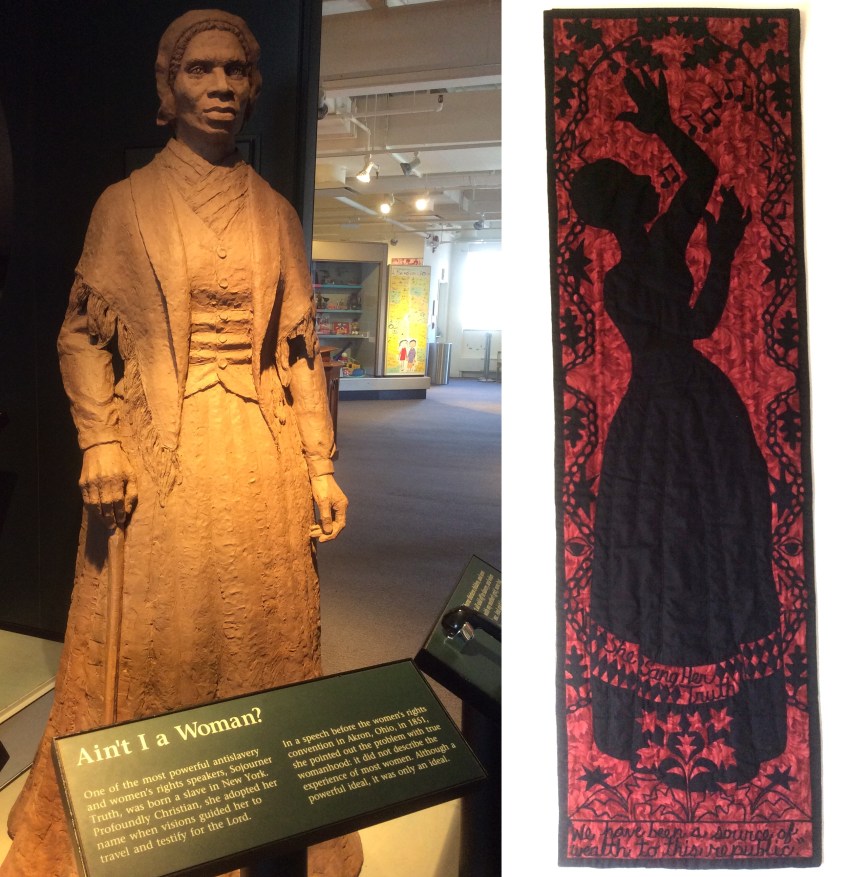
Soujourner Truth statue and plaque at the Women's Rights National Historical Park, and 'The Truth Sings' quilt by Alice Gant, on temporary display

Soujourner Truth statue and plaque at the Women’s Rights National Historical Park, and ‘The Truth Sings’ quilt by Alice Gant on temporary display

Among the varied and fascinating exhibits I see at the museum, I find two of Sojourner Truth: one a statue with a plaque telling of her momentous ‘Ain’t I a Woman?’ speech, and another a quilt, which warms my heart because as you may already know, I’m a quilter myself. Douglass referred to Sojourner Truth as his ‘good old friend’ and like Douglass, though she hoped for a peaceful end to slavery, she came to believe that war would be necessary. In an instance that he relates in his Life and Times, Truth asked him: ‘Frederick, is God dead?’ He answered: ‘No, and because God is not dead slavery can only end in blood.’ Douglass’ answer reflects sentiments found in Thomas Jefferson’s remark on slavery ‘I tremble for my country when I reflect that God is just’ and in Abraham Lincoln’s words from his Second Inaugural Address: ‘Fondly do we hope, fervently do we pray, that this mighty scourge of war may speedily pass away. Yet, if God wills that it continue …until every drop of blood drawn with the lash shall be paid by another drawn with the sword, ….so still it must be said “the judgments of the Lord are true and righteous altogether’.

Gerit Smith, Theodosia Smith, and Frederick Douglass share an antislavery podium. This photo reproduction is on display at the Seneca Fall WRNHP

Gerit Smith, Theodosia Smith, and Frederick Douglass share an antislavery podium. This photo reproduction is on display at the Seneca Fall WRNHP

An interesting fact I learned at the Seneca Falls museum: Elizabeth Cady Stanton and Gerit Smith, Douglass’ great friend, mentor, and political ally, were cousins, and she met her future husband at Smith’s house. Smith was a philanthropist, radical politician, reformer, and activist, and a profound influence on Douglass, whose shift in views on the role of politics in reform and the correct interpretation of the Constitution brought them in closely in line with Smith’s own. Smith provided financial and moral support for Douglass’ North Star and rallied his friends to do the same, and Douglass threw his support behind Smith’s successful run for Congress in 1852, though not his unsuccessful run as a Radical Abolitionist presidential candidate against Republican Abraham Lincoln in 1860. Douglass’ pragmatism ruled in this instance, and he supported the candidacy of the latter.

Smith was also a supporter of John Brown’s raid on Harper’s Ferry, a story which we’ll return to in my next travel account.

Gerit and Ann Smith, photos from the Hutchinson family scrapbook at the Lynn Museum and Historical Society
Gerit and Ann Smith, photos from the Hutchinson family scrapbook at the Lynn Museum and Historical Society

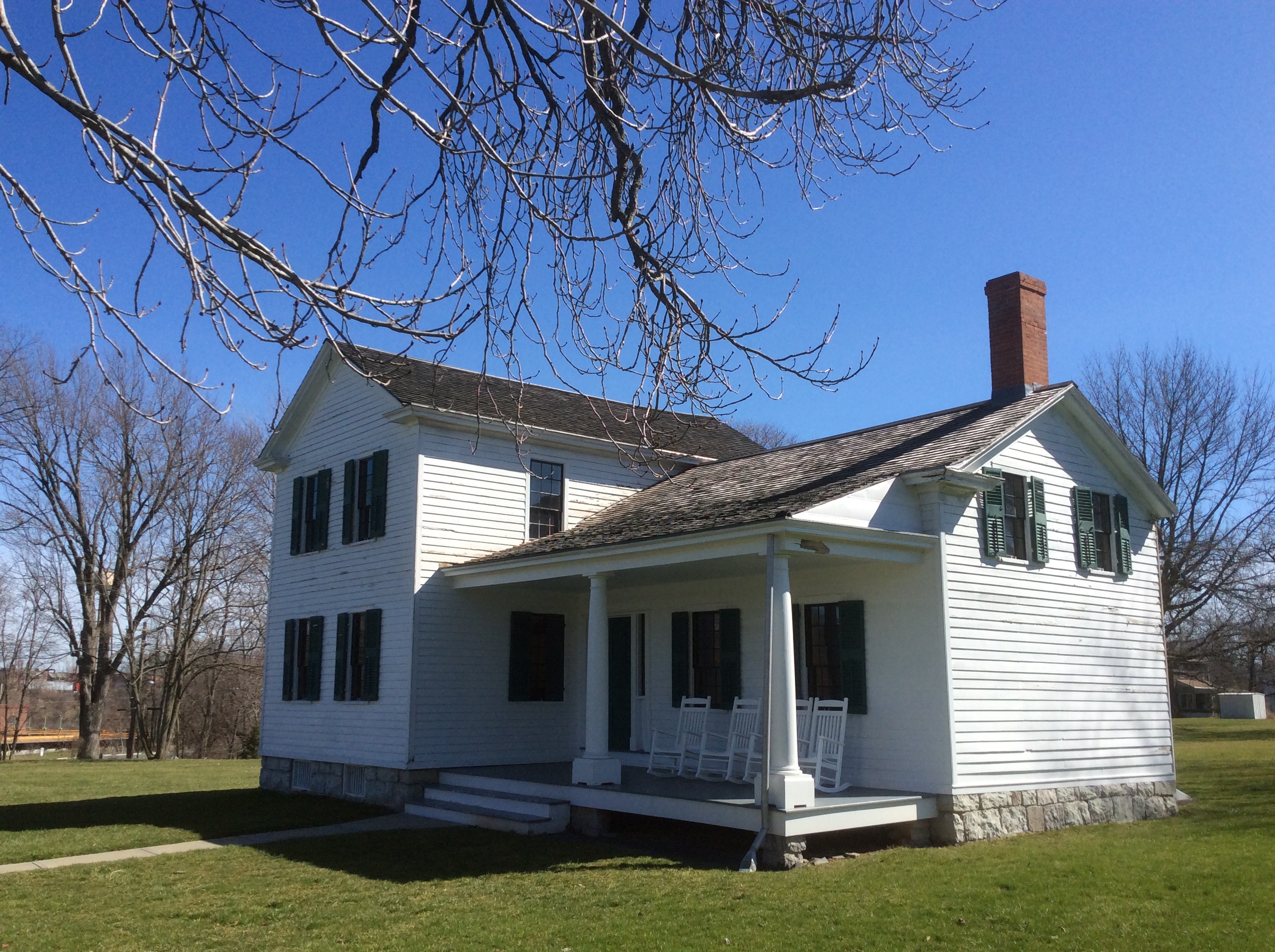
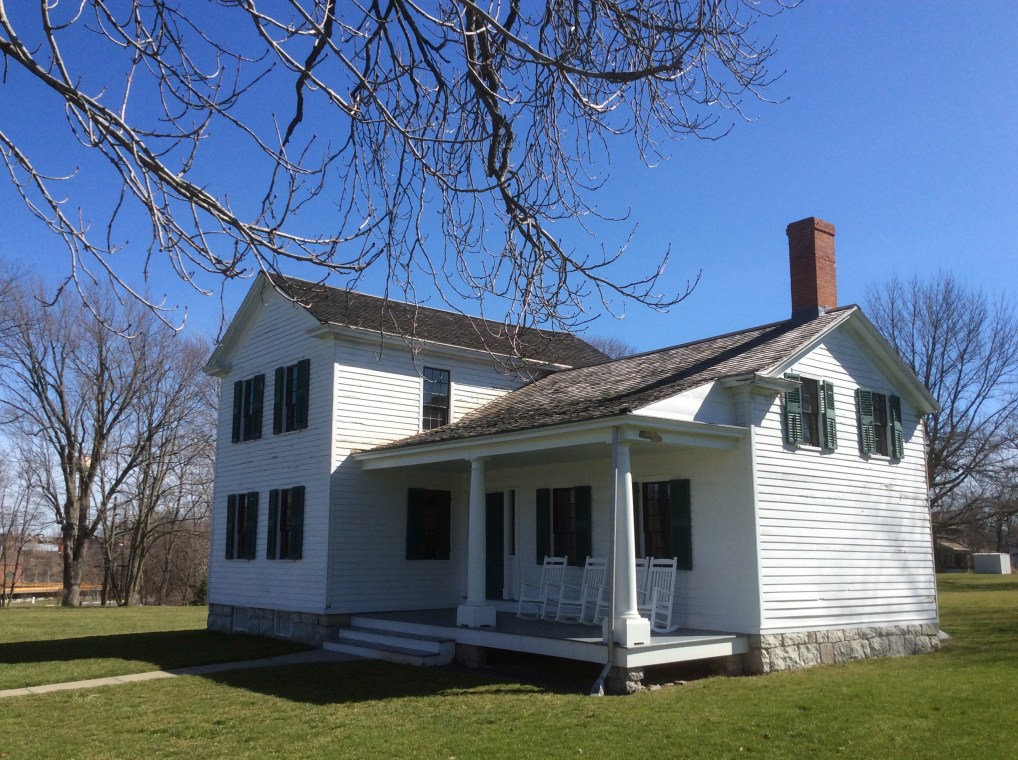
Elizabeth Cady Stanton's house in Seneca Falls, NY

Elizabeth Cady Stanton’s house in Seneca Falls, NY
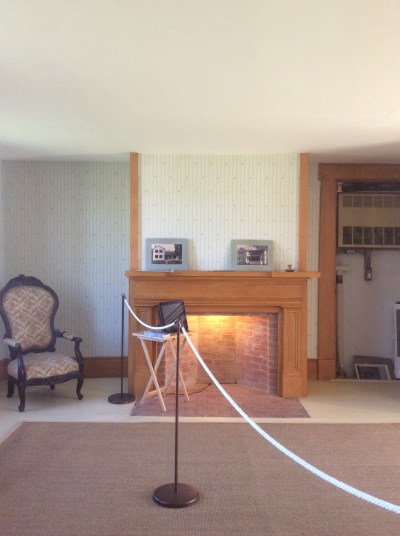
An interior view of Elizabeth Cady Stanton's House, Seneca Falls

An interior view of Elizabeth Cady Stanton’s House, Seneca Falls

After a thorough tour of the exhibits, I continue to Stanton’s house. Though it’s on the other side of the river, it’s officially part of the park, which includes other locations of significance in the women’s rights movement here in Seneca Falls and one in neighboring Waterloo. It appears now a very simple clapboard affair, though I learn from the Park Service historical sign that it had been about twice the size that it is now and the Stantons had a lot of work done to make it a comfortable and lovely home, naming it ‘Grassmere’ after poet William Wordsworth’s place. But Stanton was restless here, missing the busy social life she had enjoyed in Boston and bored with full-time housekeeping and child-rearing. The convention revived her spirits, as did traveling to speak at subsequent women’s rights conventions in Rochester and elsewhere, and her collaboration with Anthony, which lasted for the rest of her life. They met here in Seneca Falls three years after the 1848 convention, introduced to each other by Amelia Bloomer, for whom the early-feminist long-puffy-pants were named and which Stanton and Anthony could not be persuaded to adopt. They wanted to be taken seriously and felt the strange pants would distract from the message of their cause. They were right.
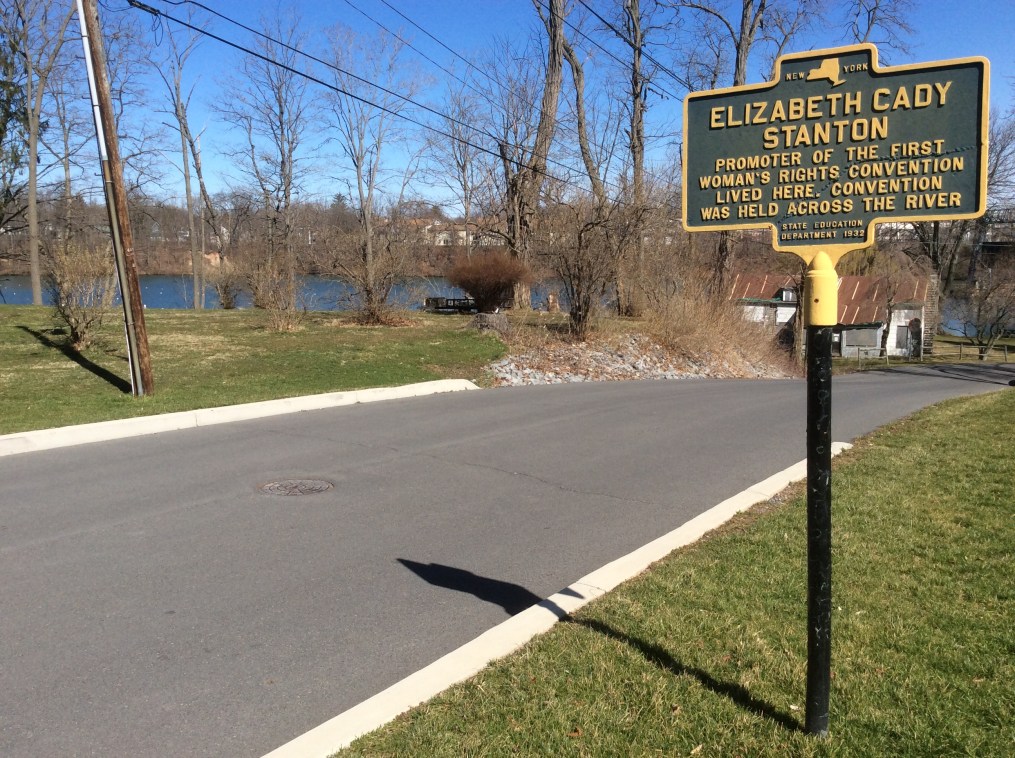
Elizabeth Cady Stanton house historical marker, with the Seneca River in the background
Elizabeth Cady Stanton house historical marker, with the Seneca River in the background

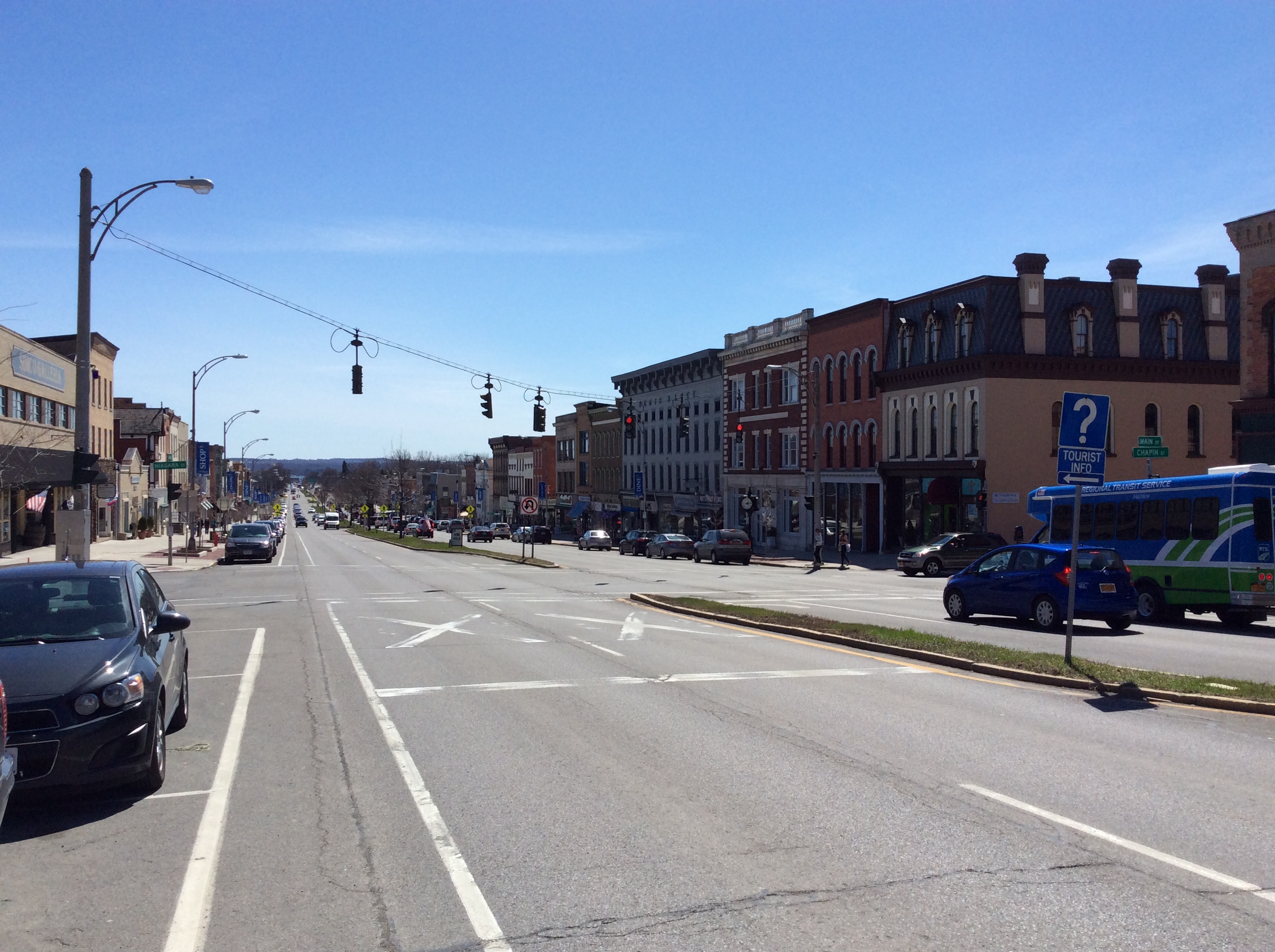
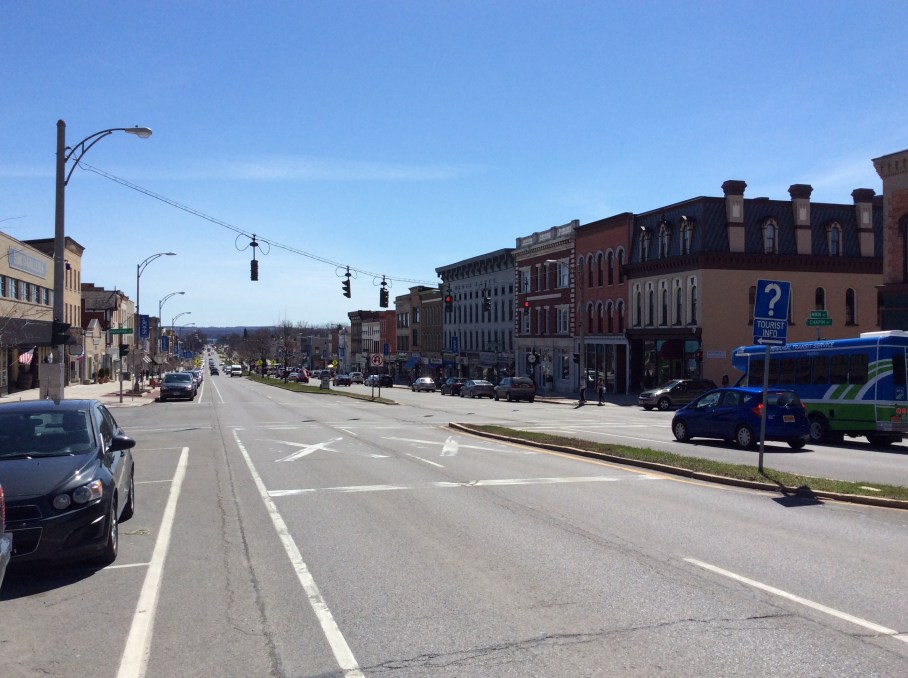
Main St, Canandaiga, NY

Main St, Canandaigua, NY

Canandaigua Courthouse, site of Susan B. Anthony Trial

Canandaigua Courthouse, site of Susan B. Anthony Trial

 Canandaiga's City Hall, NY

Canandaiga’s City Hall, NY

I continue my travels east toward my next destination via Canandaigua, a town which had come up in my discussion with Douglass scholar David Anderson and my visit to the Susan B. Anthony House in Rochester.

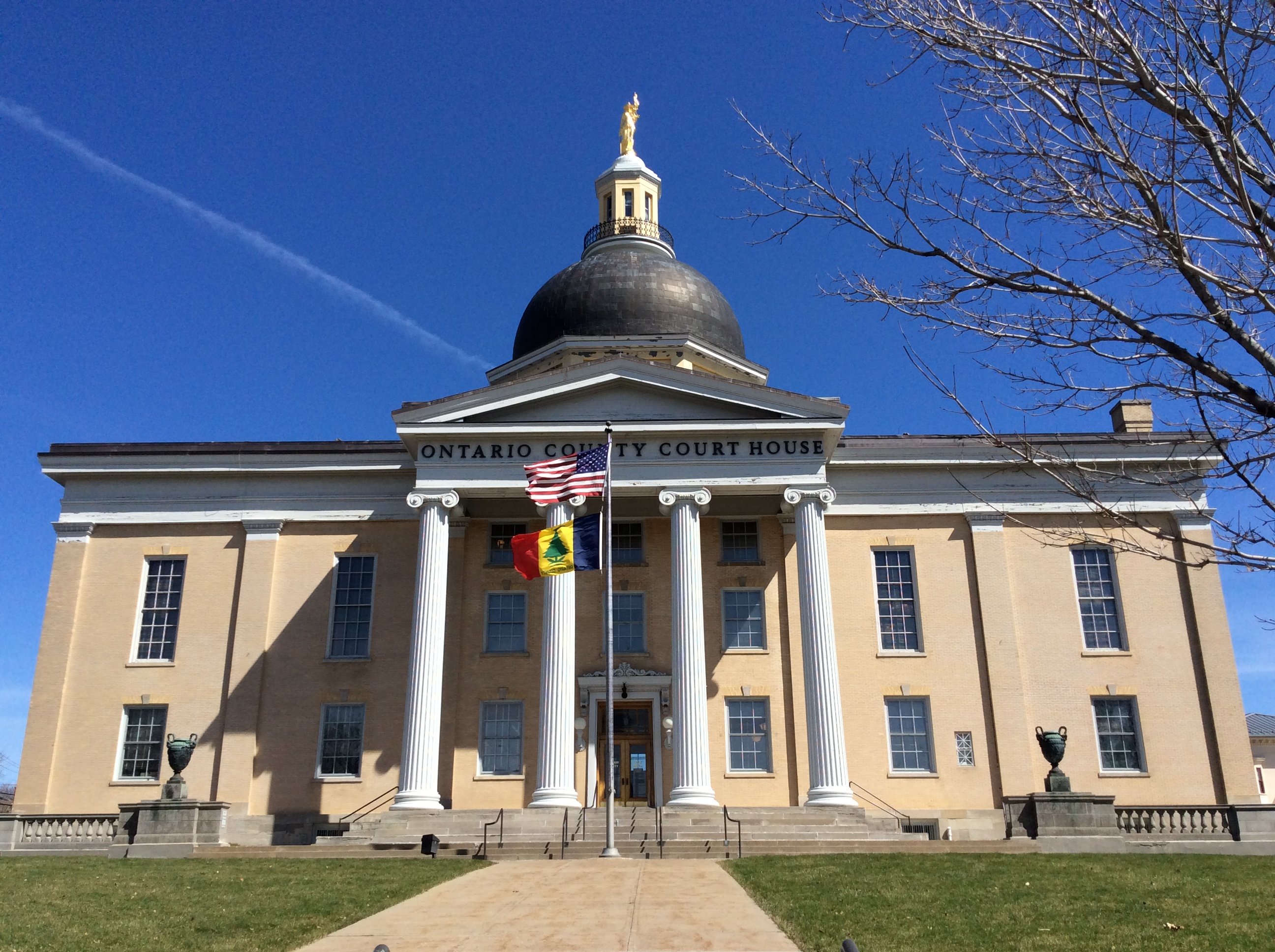
I find myself first at the Ontario County Courthouse on Main St at Ontario, where Susan B. Anthony was put on trial for voting in 1873. As I speculated in the account of my second day in Rochester, Douglass must have been proud.

Douglass was a keynote speaker at the August 4th, 1857 celebration here, of the West Indies Emancipation of August 1st, 1834, when the approxomately 750,000 slaves of the British West Indies were freed, at least formally. Douglass addressed his remarks to ‘Mr. President’, by whom he meant Austin Steward. Steward was a friend and important influence on Douglass, and according to David Anderson, the Douglass scholar I talked with yesterday, he asked, if Britain can separate from slavery, why not the United States?

Steward fled slavery and gained his freedom in 1813. He become a successful Rochester businessman, a writer of one of the great slavery narratives Twenty-Two Years a Slave, and Forty Years a Freeman, and was President of the Board of Managers for the Wilberforce colony in Canada, founded as a haven for black people fleeing oppressive laws in Ohio.
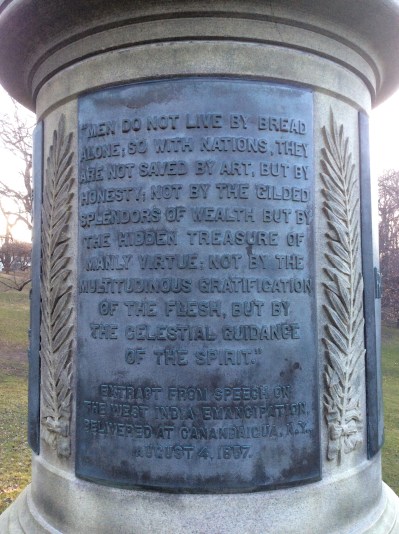
Excerpt from speech at Canandaigua, NY, 1857 on Frederick Douglass statue in Rochester

Excerpt from speech at Canandaigua NY in 1857, on the pedestal of the Frederick Douglass monument / statue in Rochester’s Highland Park

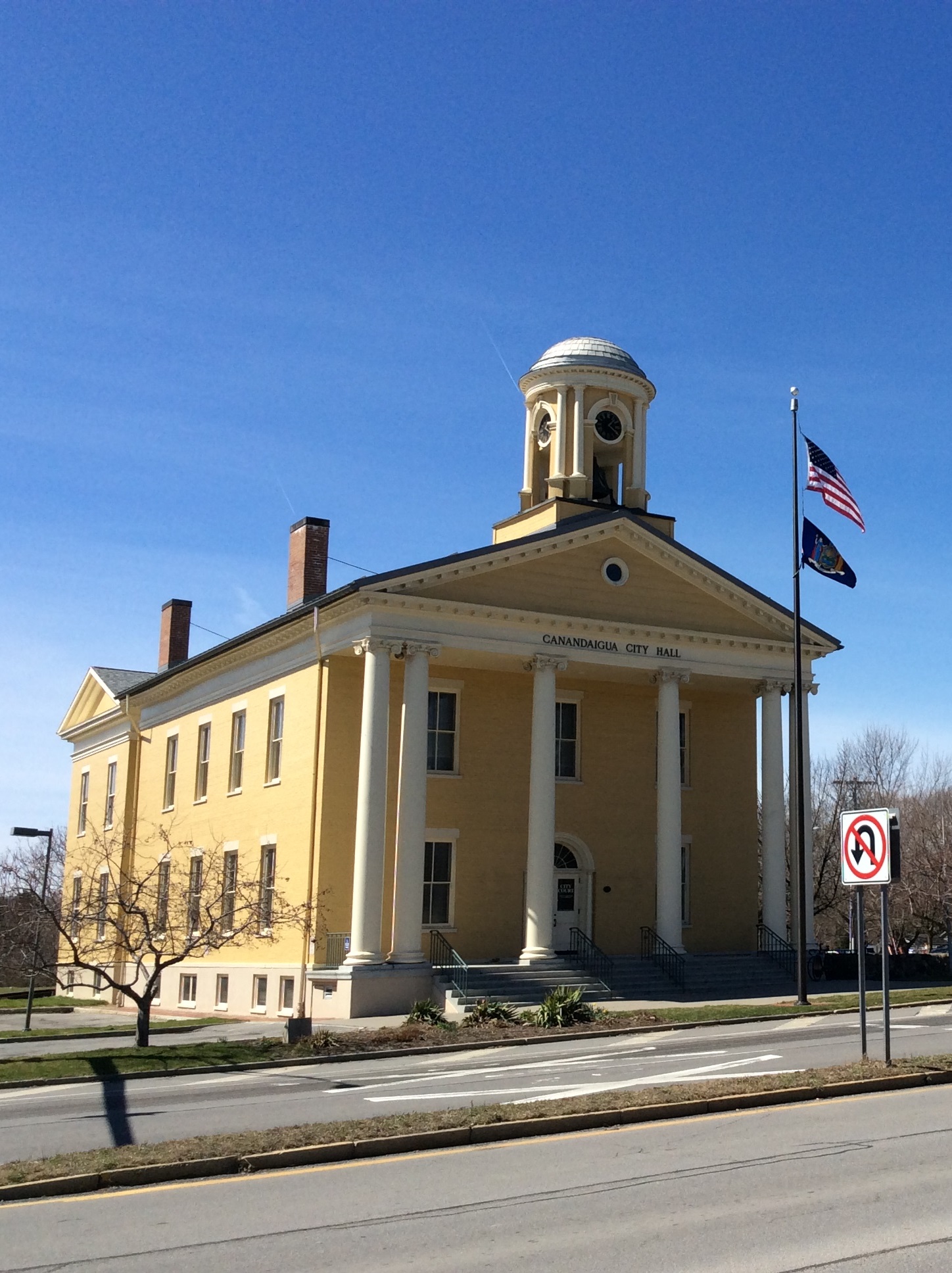
I haven’t been able to uncover the exact location where Douglass gave his famed speech here, the speech that yielded one of his most famous quotes: ‘If there is no struggle, there is no progress’. According to the sources I do find, there were parades. I’m guessing they would have happened on Main Street, perhaps beginning or ending at City Hall as many public celebrations of civic events do.

Austin Steward is buried in here in Canandaigua. I’m rapidly running out of time for the day and I still have several places to visit and many miles to drive, so I press on and don’t seek his burial site today, as much as I wish to. But if you have the chance to visit, he was buried at West Avenue Cemetery in 1860. Please pay my respects for me until and if I have the opportunity to do so myself.

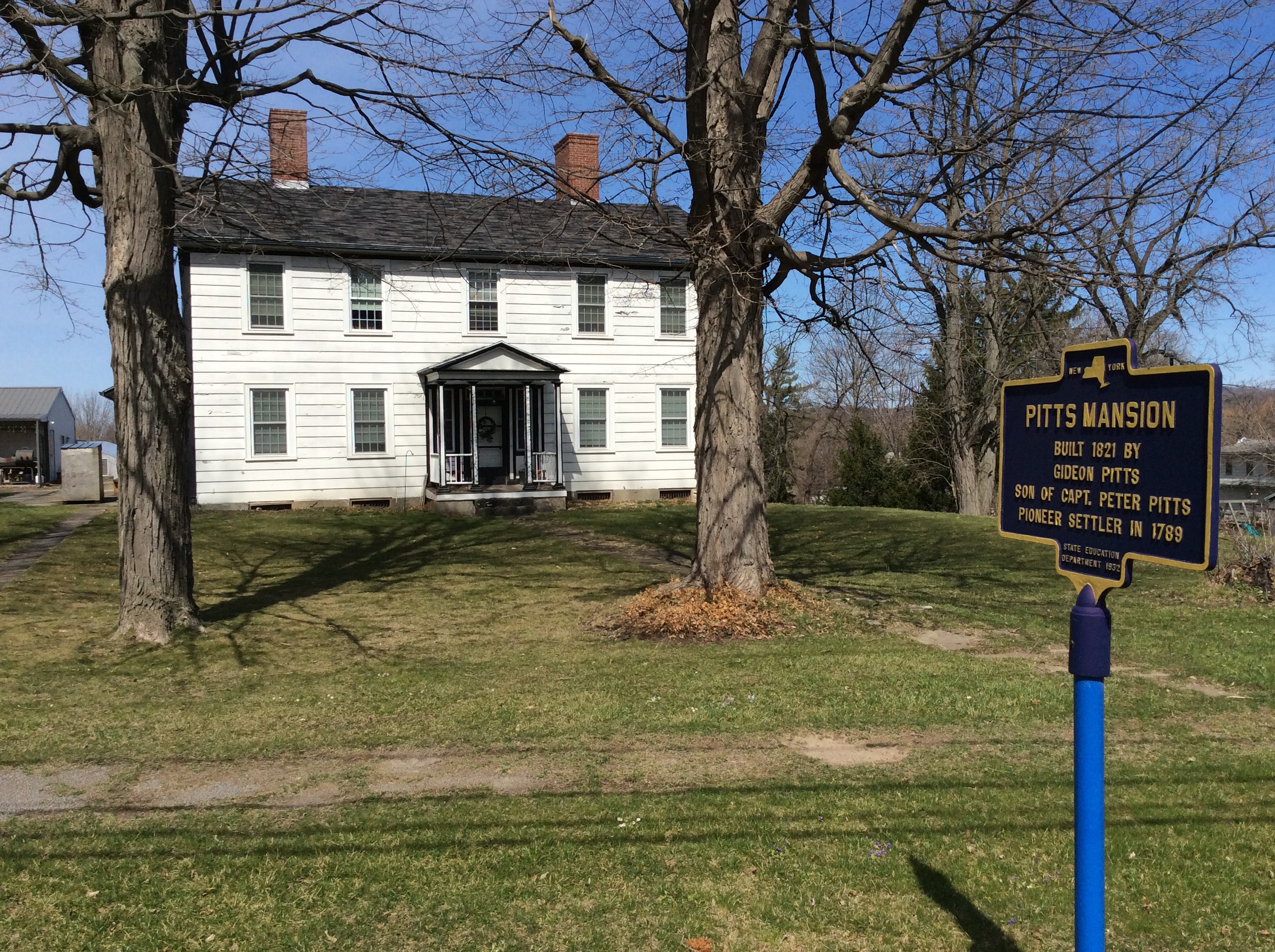
I continue east, a lovely drive of one hour on Highway 20A to where it turns into West Main St in Honeoye. My destination is the Pitts mansion, located just west of Church St which t-bones northward off W. Main. On the north side of the street, there’s a two-story white house with a pointy roofed little front door porch, and a prominent historical marker out front.
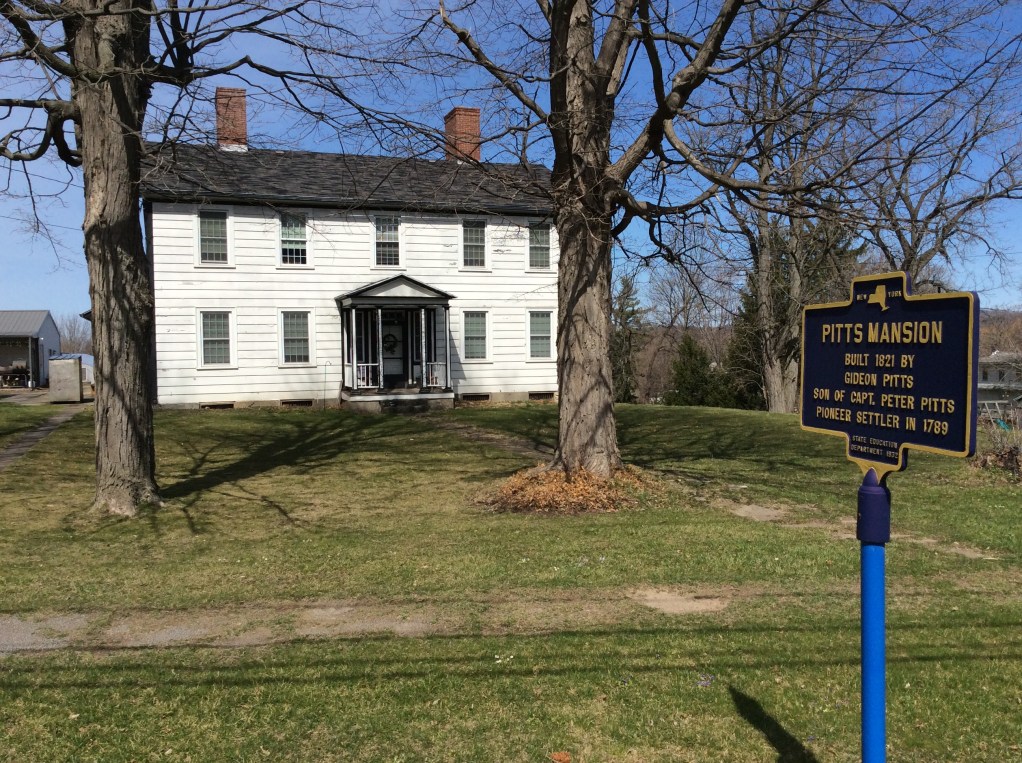
Gideon Pitts House, Honeoye, NY, home of the father of Helen Pitts Douglass

Gideon Pitts House, Honeoye, NY, home of the father of Helen Pitts Douglass

Near the end of January in 1884, the newly married widower Douglass and his wife Helen Pitts Douglass traveled to Honeoye to visit her father and his old acquaintance and fellow abolitionist, Gideon Pitts. They had known each other since the 1840’s, and Helen may even have met Douglass when she was a child. Despite his abolitionist beliefs and old ties to Douglass, Pitts did not allow Douglass to enter the house. Pitts was far from the only one of Douglass’ friends and colleagues to disapprove of their marriage; interracial marriage was widely seen as a step too far even by many of the most committed abolitionists. But some stood by him, as you may remember from my earlier accounts. This was Stanton’s opportunity to stand by him as he had stood by her 36 years ago at Seneca Falls, and she did so by writing him a letter of congratulations, which was kept out of the press only at the urging of Susan B. Anthony, always on the defense against anything that might hurt the women’s suffrage cause. Stanton had become more radical and nonconformist by this time, and had discarded the racist rhetoric and attitudes she had adopted in the fight over the 14th and 15th Amendments.
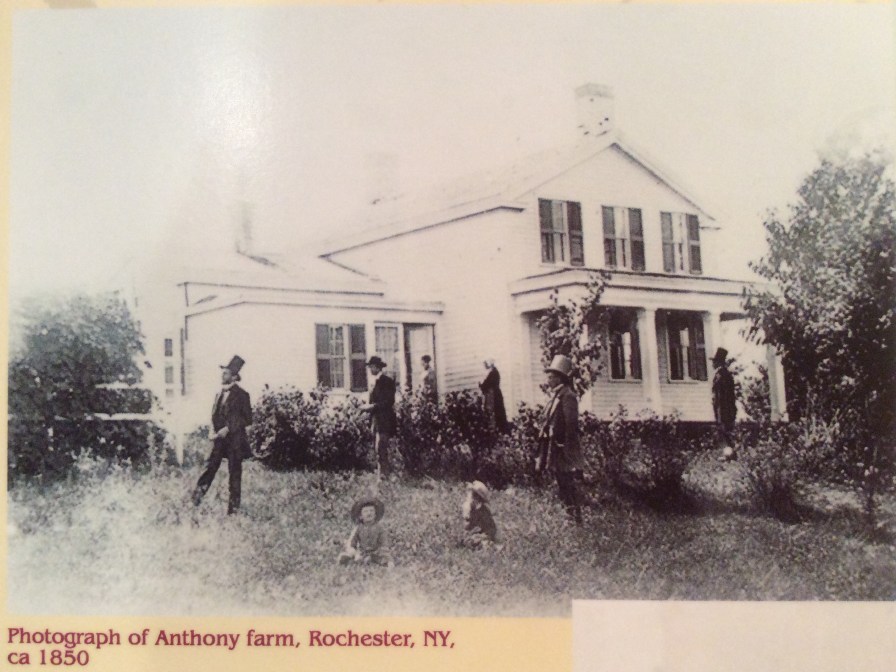
Anthony Family Farm photo, Susan B. Anthony House Museum, Rochester NY

Anthony Family Farm photo reproduction in an exhibit at Susan B. Anthony House Museum, Rochester NY. The photo is flipped from the original digitized on the University of Rochester website, see links below.
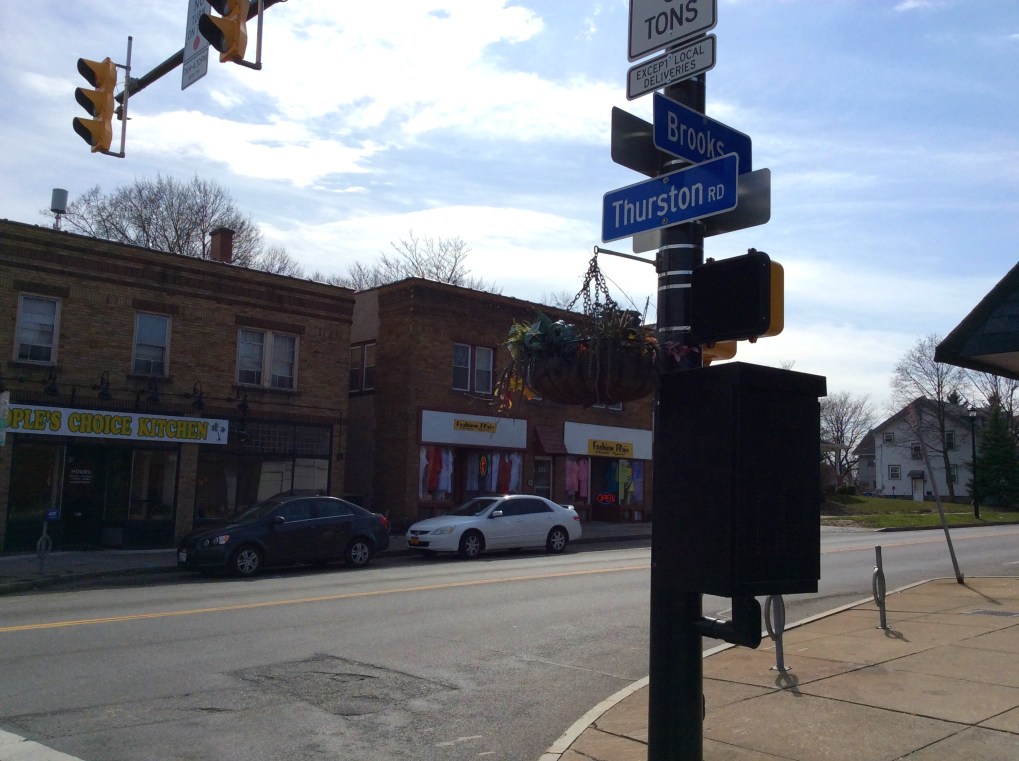
Brooks Ave and Thurston Rd, near Anthony farm site in Rochester NY
Brooks Ave and Thurston Rd near Anthony farm site in Rochester NY

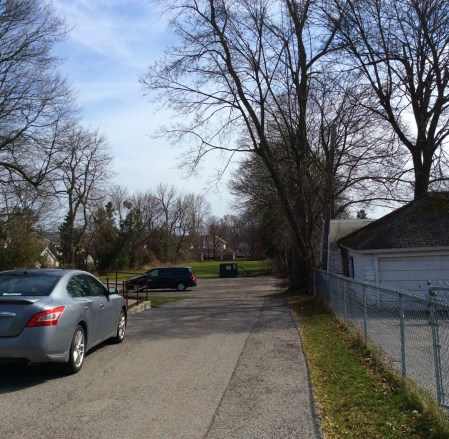
Looking down a private road toward the Anthony family lands and farm site, Thurston, Genessee Park and Brooks, Rochester, 2016 A Cools

Looking south from Brooks Ave down a private road, between Thurston Rd and Genessee Park Blvd, toward the Anthony family farm and general direction of the house site

I return to Rochester by continuing east on 20A, then the 390 north, to the easterly outskirts of town near the airport where the Anthony family land and farmhouse used to be. The house stood on a rise not far from Brooks Ave, somewhere between Genessee Park Blvd and Thurston Rd, on an elevation south of Brooks. Susan B. Anthony lived here until 1862; she moved into the house I visited on my second day in Rochester in 1865, with her sister Mary and her mother Lucy.

Douglass was a regular visitor at this house around 1850, where friends and fellow reformers would gather. Anthony ran the farm at this time while her father was away working in Syracuse, and took care of her ailing mother; the next year, she would meet Stanton and they would begin their lifetime partnership as women’s rights activists, which took her away from home for long periods. Daniel and Lucy Anthony, Susan’s parents, were progressive Hicksite Quakers like Douglass’ close friends Amy and Isaac Post, and like the Posts, were proponents of women’s rights and ardent abolitionists. Their farmhouse here, then in the town of Gates, and Susan’s cousin Asa’s house not far away at 446 Post Ave (I don’t make it to this house today), were stops on the Underground Railroad. Douglass told of one occasion around this time of a warning that they received about a slave catcher pursuing three escapees, one of whom was sheltering at the Douglasses’, one at Asa Anthony’s farm, and another in Farmington 18 miles away. The Rochester abolitionists helped spirit the men away to freedom in Canada via Lake Ontario, as they helped so many others escaping through here.
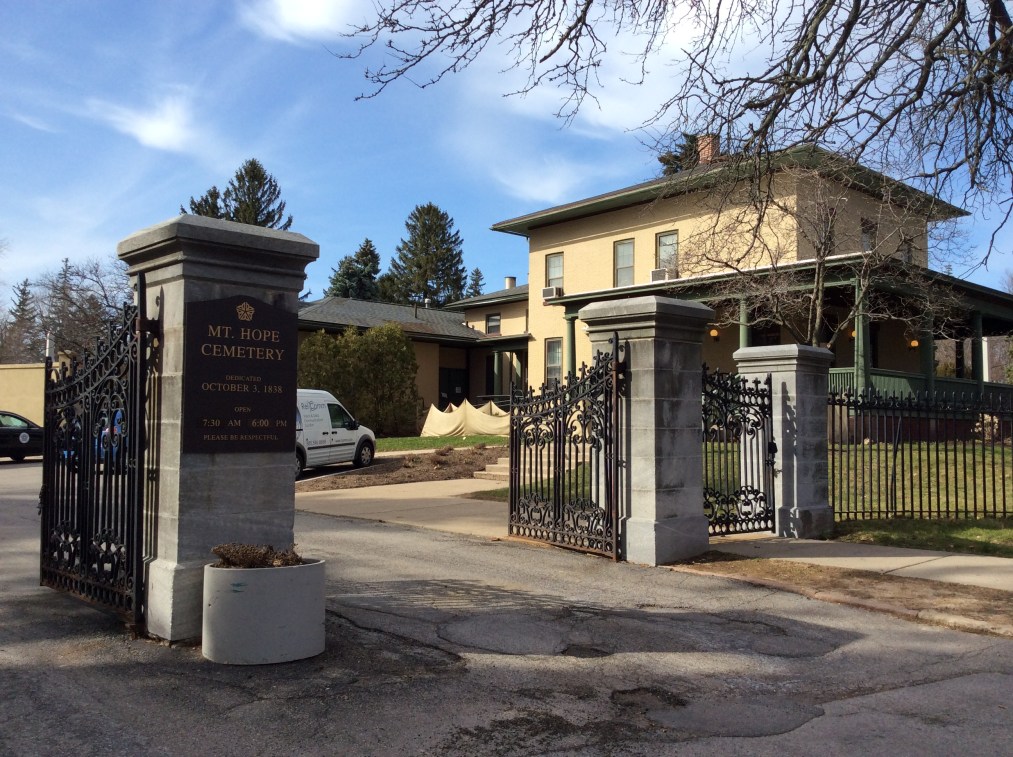
Mt Hope Cemetery Gate, photo 2016 by Amy Cools

Entrance to Mt. Hope Cemetery

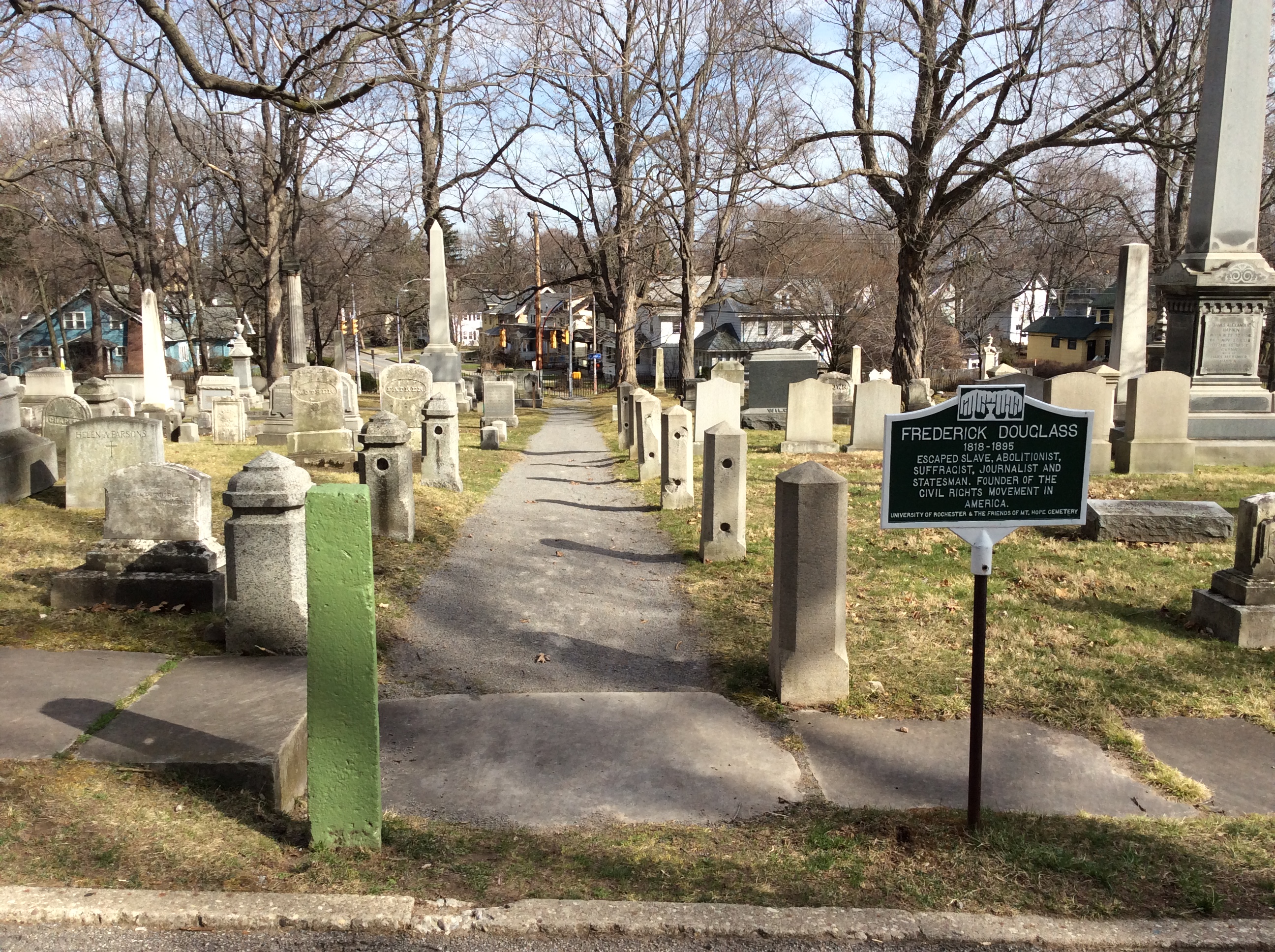
My last destination of the day, and the last Douglass site I’ll visit in Rochester, is Mt Hope Cemetery just a couple miles west of here off Mt Hope Avenue. It’s lovely, warm, gently breezy, and just a little cloudy when I arrive at the cemetery. I park in front of the administrative offices at the Mt Hope entrance, which is the southernmost entrance on Mt Hope Ave north of Elmwood Ave, between Stewart and Langslow Streets. Heading east into the cemetery, I take the first little road to the right, called Fifth Ave, passing two crossroads and a pond to the left. I come to a little gravel path on my right marked with a historical marker, and take that path to a tall obelisk gravestone on the left (the kind that looks like the Washington Monument). There’s another little gravel path at that corner that turns left, helpfully marked with a pointer sign. The path ends at the Douglass family plot. When I arrive, I’m alone, and it’s peaceful.

Historical marker en route to gravesites of Frederick Douglass and his family at Mt Hope Cemetery in Rochester NY

Historical marker en route to gravesites of Frederick Douglass and his family at Mt Hope Cemetery in Rochester NY

Douglass’ own large central gravestone is prominently marked with brass letters and two rosettes that have weathered to a bright pale green. The taller stone monument behind reads, on the front: ‘To the Memory of Frederick Douglass, 1817 – 1895, erected by his sons Lewis H. and Charles R….’. These are the two sons that fought with the Union Army which their father was so instrumental in integrating. Douglass’ other son, Frederick Jr, had died about two and a half years before Douglass, on August 4th, 1892. On the left side, the monument reads: ‘Anna, Wife of Frederick Douglass, Died 1882’ and on the right, ‘Annie Douglass, Daughter, Died 1860′. She died nine days before her 11th birthday, while Douglass was in Glasgow following his flight from possible arrest in connection with the John Brown case. Douglass hurriedly returned, and he and Anna grieved together.

The return of Anna’s remains to Rochester to be buried next to Annie and her husband is a fascinating story which is generally left out or told incorrectly in Douglass biographies; to hear the story, please listen to my interview with Douglass scholar Leigh Fought.

Gravestones and burial monument of Frederick and Anna, Douglass and their children, and of second wife Helen Pitts Douglass

Gravestones and burial monument of Frederick and Anna, Douglass and their children, and of second wife Helen Pitts Douglass

His second wife, Helen Pitts Douglass, is buried to his left. On her stone, under her name, is engraved ‘…Widow of orator and statesman Frederick Douglass. Through her vision his greatness was memorialized at Cedar Hill in Washington D.C., Mrs. Douglass was the founder of the Frederick Douglass Historical and Memorial Association.’ For the next eight years of her life, following Douglass’ death on February 20th of 1895, she made it her life’s work to preserve and promote his memory and those of his family.

I linger here awhile, to reflect and to rest, I don’t know for how long. After some time, I rouse myself: the cemetery is only open for a little while longer and I have a little more seeking to do.

Historical marker en route to Susan B. Anthony's gravesite

Historical marker en route to Susan B. Anthony’s gravesite

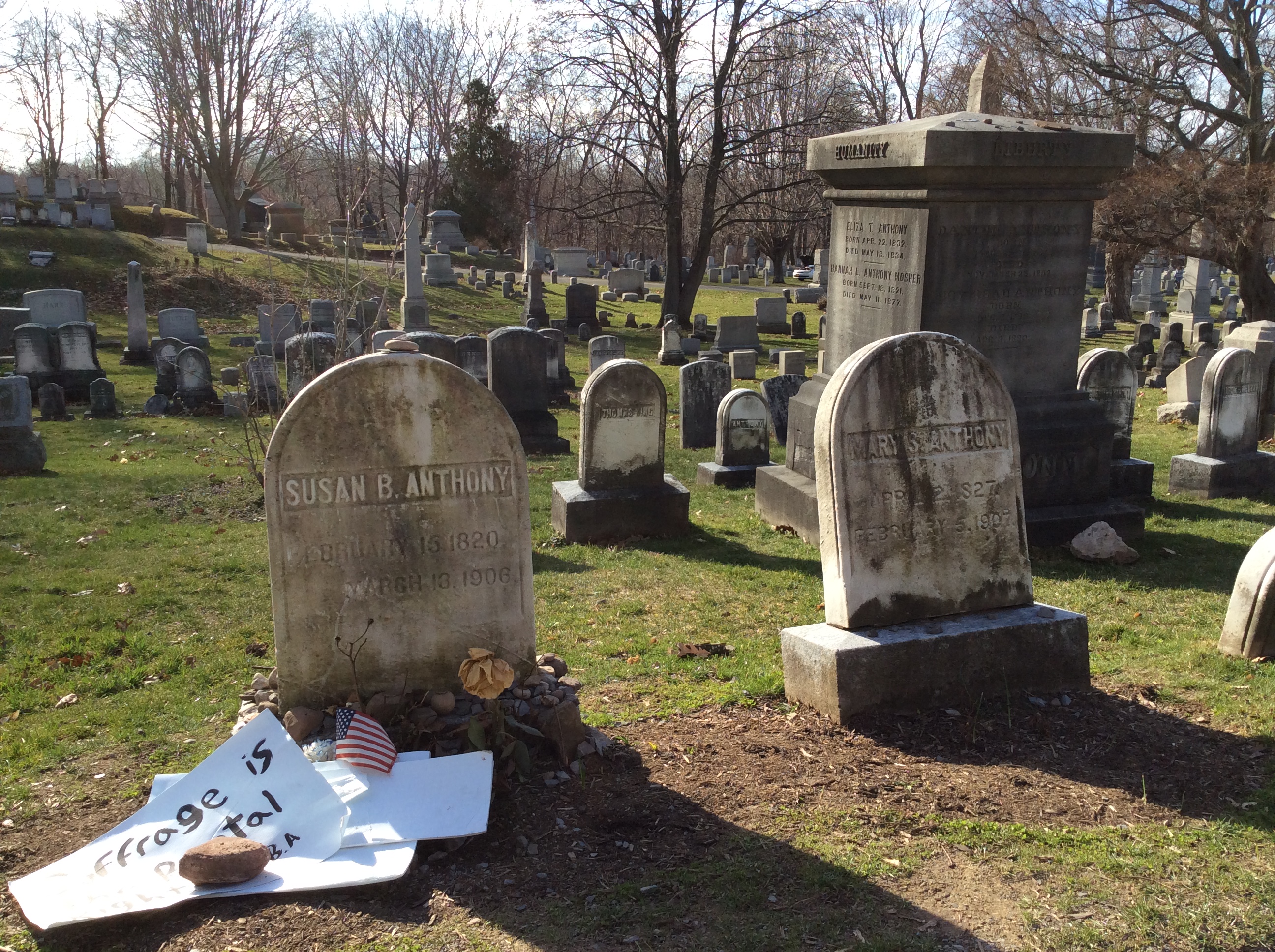
Susan B. and Mary S. Anthony headstones, with Daniel and Lucy Anthony family monument behind and to the right

Susan B. and Mary S. Anthony headstones, with Daniel and Lucy Anthony family monument behind and to the right

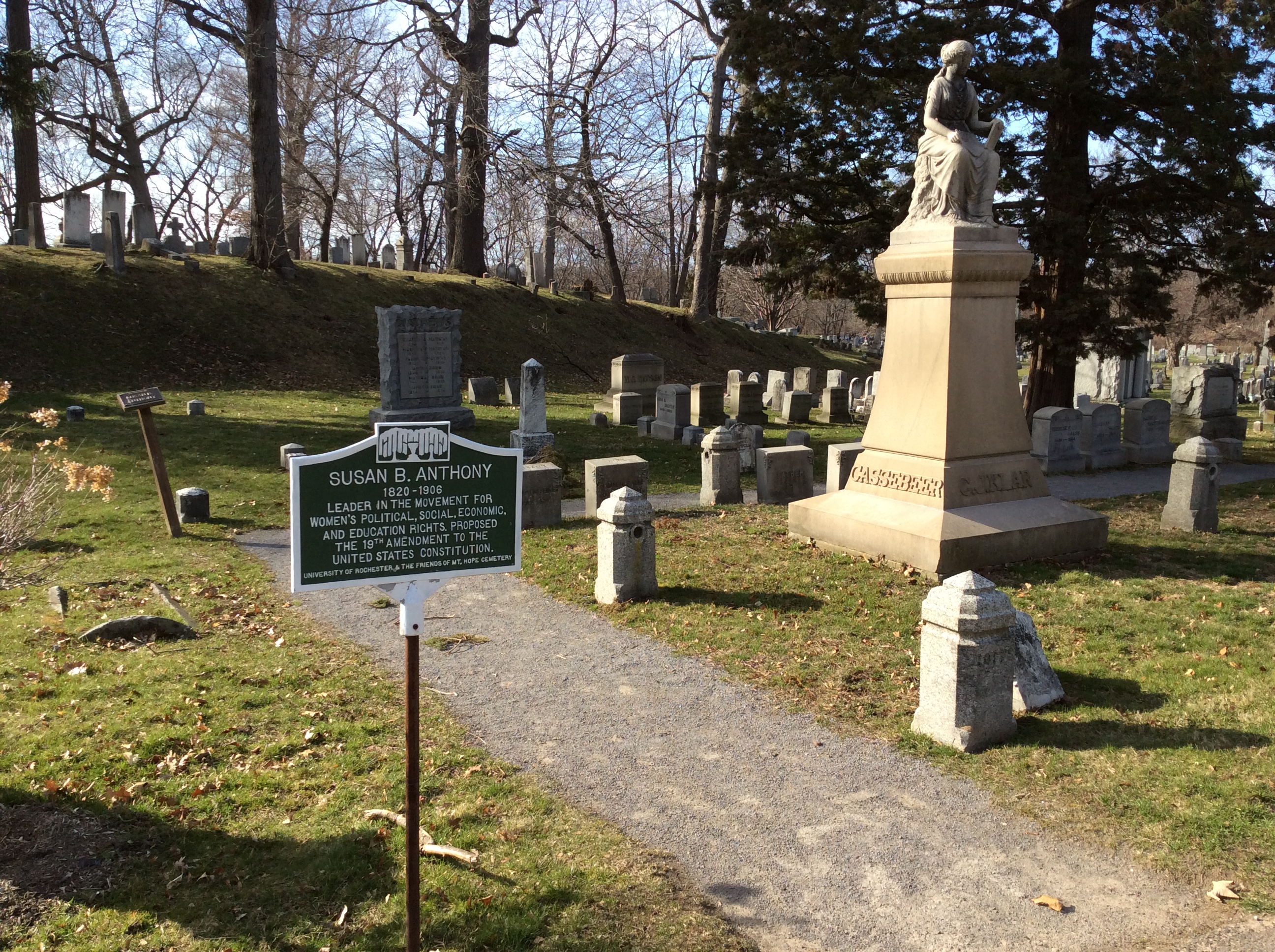
His friend Susan B Anthony is also buried here. I return to the main path and wind my way up north and to the left. The path continues to curve around, going up to a rise above a chapel-like structure. A little ways down, just past a tall stone monument on the right crowned with a figure of a young woman holding two tablets propped on her lap, there’s another historical marker and a pointer sign directing you down a gravel path that soon turns right. I follow it where it leads back down parallel to the way I came. A little ways before you see another tall obelisk to the left, there’s a modest little white gravestone on the same side of the path with a rounded top. It’s engraved, simply, ‘Susan B. Anthony, February 15, 1820, March 13, 1906’. Next to her stone is that of her sister Mary, who lived with her in the Rochester house I visited yesterday on Madison St. She was a teacher and in many other ways a wonderful and fascinating woman in her own right. For example, she insisted on equal pay to accept a school principle’s job and stood her ground, refusing to take the job until they agreed, making her the first female teacher to receive a salary equal to a man’s in the state of New York. The Anthony sisters are buried next to their parents, Daniel and Lucy, who instilled the Quaker belief in their daughters that women and men are equal in moral worth and insisted on their receiving the full education generally only given to men. Many other members of the Anthony family are buried here too.

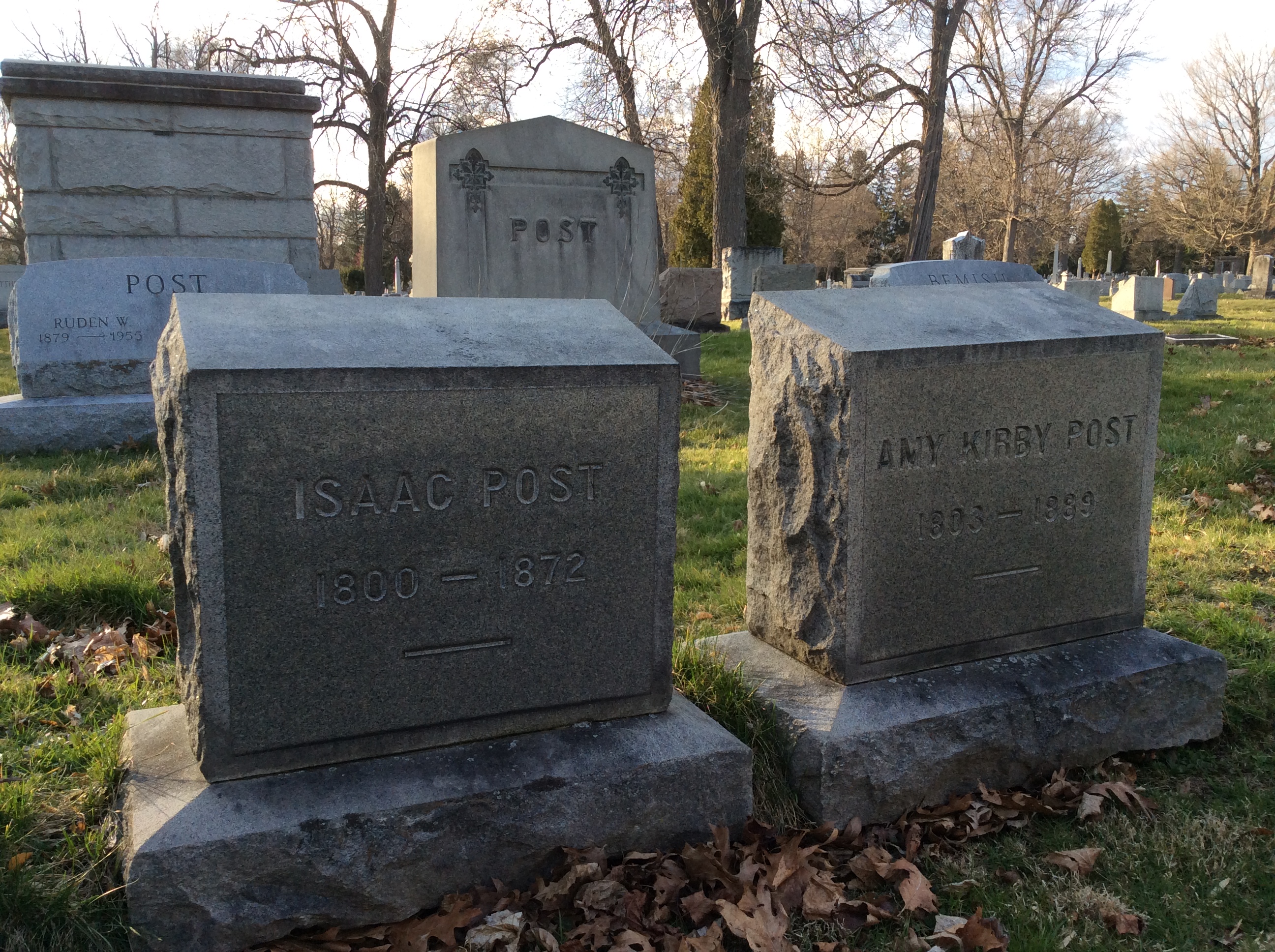
 Amy and Isaac Post headstones at Mt Hope Cemetery, Rochester NY
Amy and Isaac Post headstones at Mt Hope Cemetery, Rochester NY

Amy and Isaac Post sign at site of their house, now the Hochstein School, 2016 A Cools

Amy and Isaac Post sign at site of their house, which is now occupied by the Hochstein School, Rochester NY

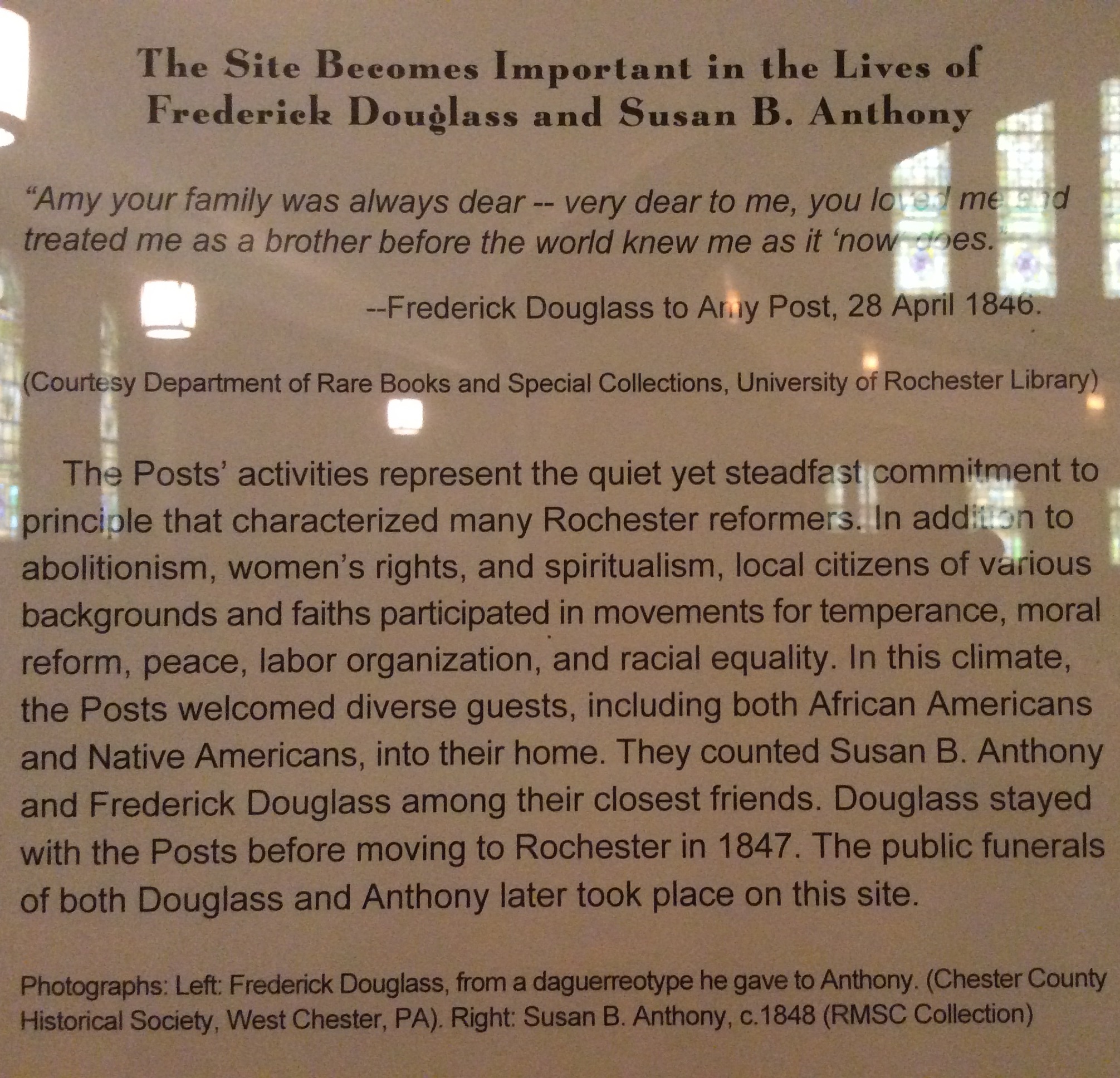
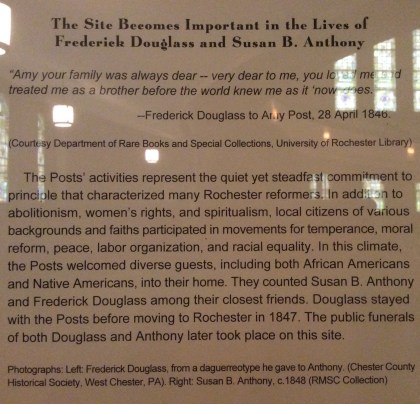
While walking back toward the front gate in hopes of finding one last burial place, the security officer driving by tells me it’s just past six, and the cemetery is closed. The time had flown so fast! He’s kind and lets me stay a little longer, since there’s a car broken down in the cemetery waiting for a tow anyway and he has to wait to close up. So I hurry on. I return to the split road entrance to the cemetery from the parking lot at the Mt. Hope entrance, and this time, take it left for just a bit, then take the first right turn onto Evergreen. I pass Second Ave and go about halfway down the next plot to my left. I wander a little and get a little lost, but I’ll skip that part and tell you where I find the easy route: looking to the left from (south of) Evergreen into area 2, you can see a very tall pillar topped with a robed figure pointing to the sky, and just beyond that, what looks like a little stone house. Head straight between the two into the rows of stones, and pretty much directly east of the little stone house, you’ll find a taller, older stone marked just ‘Post’ and one row to the east of that, two stones side by side reading ‘Isaac Post, 1800-1872’ and ‘Amy Kirby Post, 1803-1889’. As you may remember from my account of my first day in Rochester, Douglass and progressive reformers Amy and Isaac Post were very close friends, from the mid 1840’s until their deaths. I was touched the other day when I read this quote from a letter Douglass wrote in April  of 1846, posted on the wall of the Hochstein school at the former site of the Posts’ home:  ‘Amy your family was always dear — very dear to me, you loved me and treated me as a brother before the world knew me as it now does’. It is a rare and precious thing to find such friends.

The cemetery is closed, and I must leave. But my journey is not over…

*Listen to the podcast version here or on Google Play, or subscribe on iTunes

~ Ordinary Philosophy and its Traveling Philosophy / History of Ideas series is a labor of love and ad-free, supported by patrons and readers like you. Please offer your support today!

~~~~~~~~~~~~~~~~~~~~~~~~~~~~~~~~

Sources and inspiration:

Austin Steward‘. Find a Grave website

Douglass, Frederick. Autobiographies (includes Narrative…, My Bondage and My Freedom, and Life and Times). With notes by Henry Louis Gates, Jr. Volume compilation by Literary Classics of the United States. New York: Penguin Books, 1994.

Douglass, Frederick. ‘Two Speeches, one on the West India Emancipation, the other on the Dred Scott Decision.‘, published in 1857 by C.P. Dewey, Rochester NY, digitized by the Central Library of Rochester

DuBois, Ellen. ‘Reconstruction and the Battle for Woman Suffrage‘. The Gilder Lehrman Institute of American History website

Elizabeth Cady Stanton‘. In Wikipedia, The Free Encyclopedia.

Fought, Leigh. ‘Honeoye, Part 2‘. Frederick Douglass’s Women: in Progress blog

The Frederick Douglass Encyclopedia, ed Julius E. Thompson, James L. Conyers Jr., Nancy J. Dawson. Greenwood Press.

Frederick Douglass Project Writings: West India Emancipation.’ From the University of Rochester Frederick Douglass Project, River Campus Libraries website

Gerrit Smith‘. In Wikipedia, The Free Encyclopedia.

Heritage Documentation Programs: Wesleyan Chapel‘. National Park Service website

Jaschik, Sue. ‘Lucy Read Anthony and Daniel Anthony‘. Epitaph, by the Friends of the Mount Hope Cemetery, Vol 26 No. 1, Winter 2006, found the University of Rochester website

Lewis, David. ‘Steward, Austin (1793-1869)‘. Blackpast.org

Morry, Emily. ‘Susan B. Anthony’s Rural Roots‘. Local History Rocs! blog by Rochester’s Public Library Local History and Genealogy Division

Muller, John. ‘Death Knocked on the Door of the Frederick Douglass Family Too Often…’ Frederick Douglass in Washington, D.C.: The Lion of Anacostia blog

Pierce, Preston E. ‘Main Street Guided History Walk: Special Walking Tour of Lower North Main Street Cannadaigua.’ Ontario County website

Pitts Mansion – Honeoye, NY‘. Waymarking.com

Schmitt, Victoria Sandwick. ‘Rochester’s Frederick Douglass Part One‘ and ‘Rochester’s Frederick Douglass Part Two‘. Rochester History journal, Vol. LXVII Summer 2005 No. 3 and Vol. LXVII Fall 2005 No. 4. McFeely, William. Frederick Douglass. New York: W.W. Norton & Company, 1991.

Seneca Falls Convention‘. In The Encyclopedia of New York State (from selected entries published online)

Truth, Sojourner. ‘Ain’t I A Woman?’ Delivered 1851, Women’s Rights Convention, Akron, Ohio.  National Park Service website

Wellman, Judith. ‘The Seneca Falls Convention: Setting the National Stage for Women’s Suffrage.’ The Gilder Lehrman Institute of American History website

The West Indian Colonies and Emancipation‘. From the Living Heritage: Parliament and Empire series, at Parliament.uk

The Trial of Susan B. Anthony: A Short Narrative‘. History of the Federal Judiciary, Federal Judicial Center website

Women’s Rights National Historical Park website, National Park Service

Interview with Ken Morris, Anti-Slavery Activist

Ken Morris, image credit Kenneth Morris.jpgListen to this podcast episode here or on Google Play, or subscribe on iTunes

I’m honored and excited to introduce my next guest for Ordinary Philosophy’s 58th podcast episode, Ken Morris.

Ken Morris is closely linked to Frederick Douglass, the subject of my most recent history of ideas travel series, and carries on his legacy by working in a noble and very important cause, anti-slavery activism. He has an incredible family history and personal life story and array of accomplishments which you’ll be sure to find as impressive and fascinating as I do, but I’ll stop here and let him tell you all about it….

For more about Ken Morris and his work, please visit:

The Frederick Douglass Family Initiatives website
Bio: http://fdfi.org/ken
Facebook: https://www.facebook.com/FrederickDouglassFamilyInitiatives/
Twitter: https://twitter.com/kmorrisjr
and Picturing Frederick Douglass, to which Mr. Morris contributed and sales of which benefit the FDFI: http://fdfi.org/book

Ordinary Philosophy and its Traveling Philosophy / History of Ideas series is a labor of love and ad-free, supported by patrons and readers like you. Please offer your support today!