To the Great Plains and Illinois I Go, in Search of Crazy Horse, Sitting Bull, Abraham Lincoln, and Other American Histories

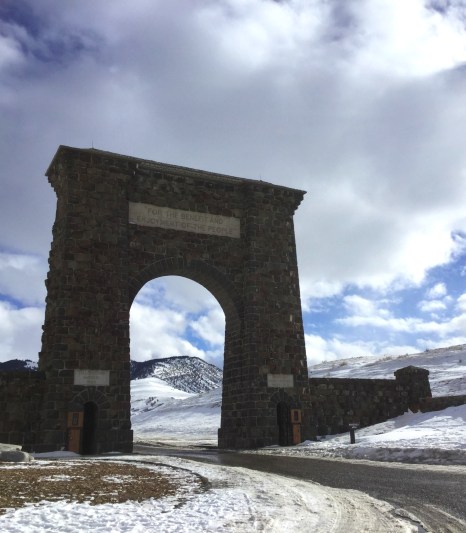
Roosevelt Arch at the North Entrance of Yellowstone National Park. Photo: January 2017 by Amy Cools

Hello, friends of Ordinary Philosophy!

From time to time, I take a trip to some corner of the globe, to explore the lives and ideas of great thinkers in the places where they lived and worked. For this series, I follow in the footsteps of thinkers who are no longer alive, since those who are still telling their own stories. But those who are no longer alive in the body live on in the ideas that they pass on, and in the example they provide for us to follow.

I’m pleased and excited to announce my seventh philosophical-historical adventure: an almost three-week road trip through the Great Plains and on to Illinois. I’ll fly from Chicago to Scotland on August 9th: I’ll be pursuing a master’s degree in the history of ideas at the University of Edinburgh starting this fall. In the meantime, I’m overjoyed to have this window of time to explore parts of my country which I’ve never seen, and to learn as much as I can along the way.

During this journey, I’ll explore Yellowstone and the history of National Parks in America (it’s been a great NP year for me!); I’ll travel throughout the Great Plains following the history of Crazy Horse, Sitting Bull, the Lakota and their and other Native Americans’ encounters with white invaders in the 1800’s and beyond; I’ll visit Springfield, Peoria, and Chicago following Abraham Lincoln, Robert Ingersoll, uniquely American forms of art and architecture, and other topics. I’ll also make many more stops and detours along the way.

Patrons of this series: Ervin Epstein MD, Liz and Russ Eagle, Tracy Runyon, Genessa Kealoha, the Cools-Ramsden family, and Shannon Harrod Reyes ~ With warmest gratitude, thank you!

Road Trip Through Indian Country to Chicago, En Route to Edinburgh
Bitterroot Mountains and the Lewis and Clark Wendover Ridge Hike
Lewis & Clark Caverns, Yellowstone National Park, and Our Public Lands
Little Bighorn Battlefield National Monument, Day 1
Little Bighorn Battlefield National Monument, Day 2
The Black Hills – Mt Rushmore, Black Elk Peak, and Crazy Horse Memorial
Standing Rock Reservation: In Search of Sitting Bull, I Find Sakakawea, Too – Part 1
Standing Rock Reservation: In Search of Sitting Bull, I Find Sakakawea, Too – Part 2
My Great Year for National Parks, Monuments, and Forests
Wounded Knee, Pine Ridge Reservation, South Dakota
Fort Robinson, Nebraska, in Search of Crazy Horse
Knox College, Galesburg, Illinois – Abraham Lincoln and Stephen Douglas Debate
Peoria, Illinois, In Search of Robert G. Ingersoll, Frederick Douglass, And Abraham Lincoln, Part 1
Peoria, Illinois, In Search of Robert G. Ingersoll, Frederick Douglass, And Abraham Lincoln, Part 2
Peoria, Illinois, In Search of Robert G. Ingersoll, Frederick Douglass, And Abraham Lincoln, Part 3

Athens and Springfield, Illinois, Part 1, In Search of Abraham Lincoln
Photobook: Marker and Train Station Where Abraham Lincoln’s Body Returned to Springfield, Illinois, May 3rd, 1865
Springfield, Illinois, In Search of Abraham Lincoln, Part 2
Springfield, Illinois, In Search of Abraham Lincoln, Part 3
Springfield, Illinois, In Search of Abraham Lincoln, Part 4
Springfield, Illinois, In Search of Abraham Lincoln, Part 5
New Salem, In Search of Abraham Lincoln
Hannibal and Florida, Missouri, in Search of Mark Twain
Chicago’s Union Stockyards Gate

And associated articles

Happy Birthday, Walt Whitman!
The Love of Possession Is a Disease With Them
Happy Birthday, Robert Ingersoll!
The Friendship of Robert G. Ingersoll and Walt Whitman

Ordinary Philosophy and its Traveling Philosophy / History of Ideas series is a labor of love and ad-free, supported by patrons and readers like you. Please offer your support today!

Happy Birthday, Walt Whitman!

Walt Whitman, age 35, from Leaves of Grass, Fulton St., Brooklyn, N.Y., engraving by Samuel Hollyer from daguerreotype by Gabriel Harrison, public domain via Wikimedia Commons‘Walt Whitman, an American, one of the roughs, a kosmos, Disorderly fleshy and sensual . . . . eating drinking and breeding, No sentimentalist . . . . no stander above men and women or apart from them . . . . no more modest than immodest.’ Thus Walt Whitman introduces himself to us for the first time in his first self-published 1855 edition of Leaves of Grass. Not on the cover or on the title page, mind you, but deep within the body of the untitled poem later called Song of Myself. If this is a dialing-back attempt to inject a little respectable humility or yet another self-aggrandizing affectation on the part of this unapologetic egoist, it’s hard to say definitely, though I strongly suspect it’s the latter. It certainly is so-very-American.

He was confident, earthy, crude, and vibrant, a self-styled natural man whose personas were nonetheless carefully crafted. He did his own thing and ‘lived the free life of a rover’ (an Eric Bogle phrase from his great anti-war ballad And the Band Played Waltzing Matilda), working odd jobs as a printer, journalist, teacher, and clerk, among other things. Moved by horror and compassion at the magnitude of death and suffering he observed, he worked some years as a nurse to the Civil War wounded, and spent much of his somewhat meager earnings on supplies for their comfort and care. He remained single but had many lovers, probably mostly homosexual, though he praises the physical beauty and power of women as lavishly in his poems as he does those of men. All the while, starting at just over age 30, he began to write his highly idiosyncratic, free verse poetry celebrating the authentic and the crafted self, the human body, democracy, equality, work, nature, and companionship. He spent the rest of his somewhat long life revising and republishing several editions of Leaves of Grass, up to several months before his death at age 72 in 1892.

To read more work by, about, and inspired by the great Walt Whitman, here are some links and articles:

Walt Whitman“. in Encyclopædia Britannica Online.

Walt Whitman, 1819–1892‘. The Poetry Foundation (website)

Whitman, Walt. Leaves of Grass (1855). Source: Electronic Text Center, University of Virginia Library

Whitman, Walt. Assorted poems at Poets.org

The Walt Whitman Archive, Ed Folsom and Kenneth M. Price, Ed., published by the Center for Digital Research in the Humanities at the University of Nebraska–Lincoln

and just because I love it:

The Body Electric, song and music video by Hooray for the Riff Raff. The song title is inspired by one of Whitman’s most enduring and controversial poems, and is a critique of the tradition of the murder ballad

Ordinary Philosophy and its Traveling Philosophy / History of Ideas series is a labor of love and ad-free, supported by patrons and readers like you. Please offer your support today!
Remembering Margaret Fell

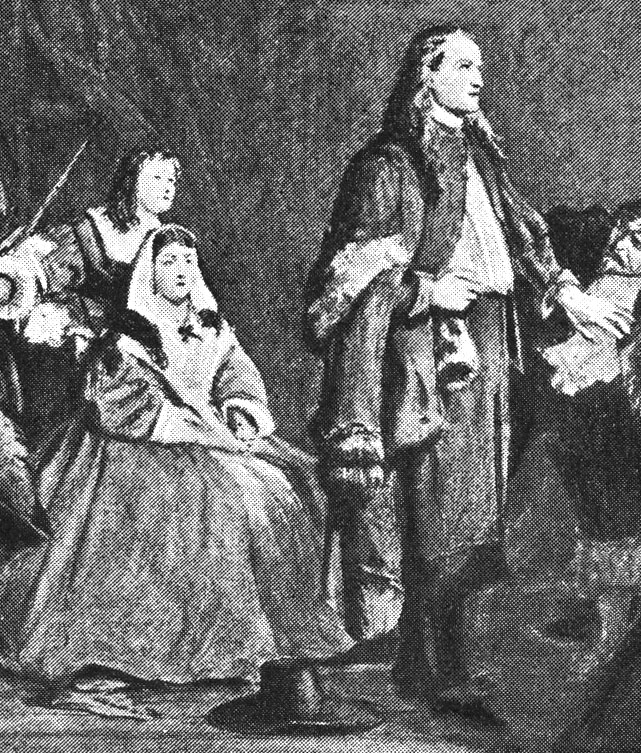
Margaret Fell, with George Fox before the judges, from a painting by J. Pettie 1663, public domain via Wikimedia Commons

Margaret Fell with George Fox before the judges, from a painting by J. Pettie, 1663

Margaret Fell was born on some unknown date in 1614, so let’s take this occasion to remember her on the date of her death, April 23rd, 1702.

Fell’s lived a life as passionate as it was long. She was an unconventional thinker for her time, a zealous and progressive religious activist at times imprisoned for her beliefs, a prolific writer, well-traveled, a mother of eight children and a wife twice.

An early adherent and eloquent promoter of Quakerism, Fell is now considered one of its founders. She converted to Quakerism after hearing a sermon by one of its most charismatic preachers, George Fox, and almost immediately launched into a lifetime of hosting Quaker meetings and speaking out on behalf of her new religion. After her husband died some years later, Fell married Fox, probably more as a co-missionary than as a romantic partner since their work, travels, and imprisonments kept them apart for much of their marriage.

As I’ve had a lifelong fascination with the history of human rights, I’ve long admired the Quakers because, along with Unitarians and Deists, so many have been leaders in the struggle to expand, establish, and promote them. That’s because these faiths emphasize the importance of individual conscience, the primacy of the human mind, God’s rational nature, and the moral equality of all human beings.

Fell believed in the Quaker doctrine of the Inner Light which God has caused to shine equally in the hearts of all beings; all we need do is heed it. Therefore, one does not need ministers, priests, or any other authorities or intercessors to achieve salvation. And because God has created everyone for the same purpose and gave everyone that light, everyone is spiritually equal and capable of understanding and proclaiming the Truth. We can see how this doctrine, central to Quakerism, readily aligns with human rights movements centered on a belief human spiritual and intellectual equality. The right of women to speak in church and write religious texts, in her time limited to men, was a cause particularly dear to Fell’s heart. While Fell’s belief in the equality of women was limited to their role as spiritual beings, Quakerism tended to encourage ever-more progressive beliefs in its adherents. Over time, Quakers came to be leaders in the abolitionist and pacifist movements, promoting the right of all to receive equal and universal education and for women’s rights in social and political spheres as well.

In light of her achievements as a female religious pioneer, and the human rights advances facilitated by the Quaker faith she helped found, Fell’s contributions should continue to be remembered and celebrated.

Ordinary Philosophy and its Traveling Philosophy / History of Ideas series is a labor of love and is ad-free, supported by patrons and readers like you. Please offer your support today!

~~~~~~~~~~~~~~~~~~~~~~~~~~

Sources and inspiration

Broad, Jacqueline, ‘Margaret Fell‘, The Stanford Encyclopedia of Philosophy, Edward N. Zalta (ed.)

Jacoby, Susan. Strange Gods: A Secular History of Conversion. New York: Pantheon, 2016 (see chapter on Margaret Fell)

Photobook: Benjamin Franklin’s Grave in Old Town Philadelphia, Pennsylvania

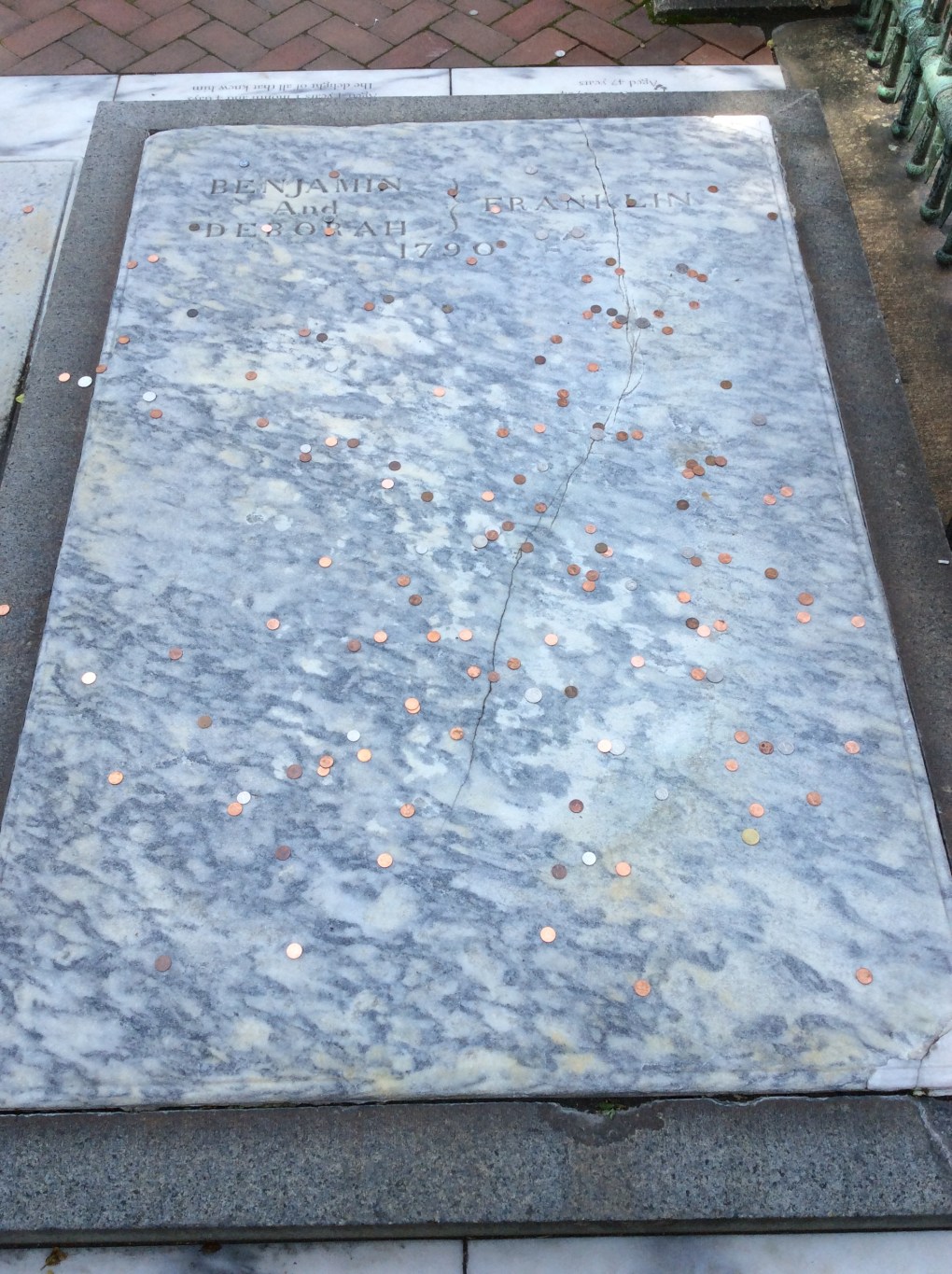
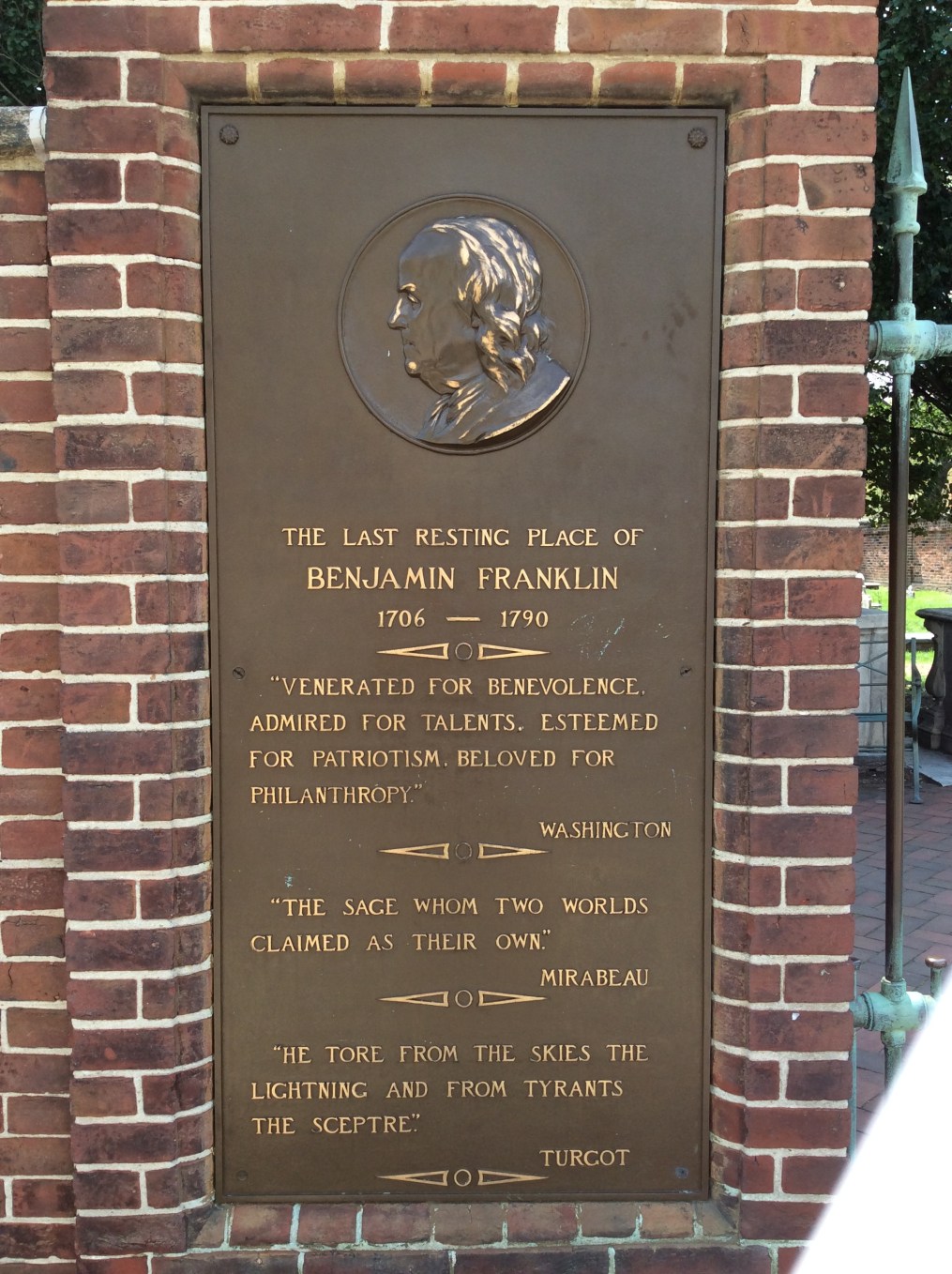
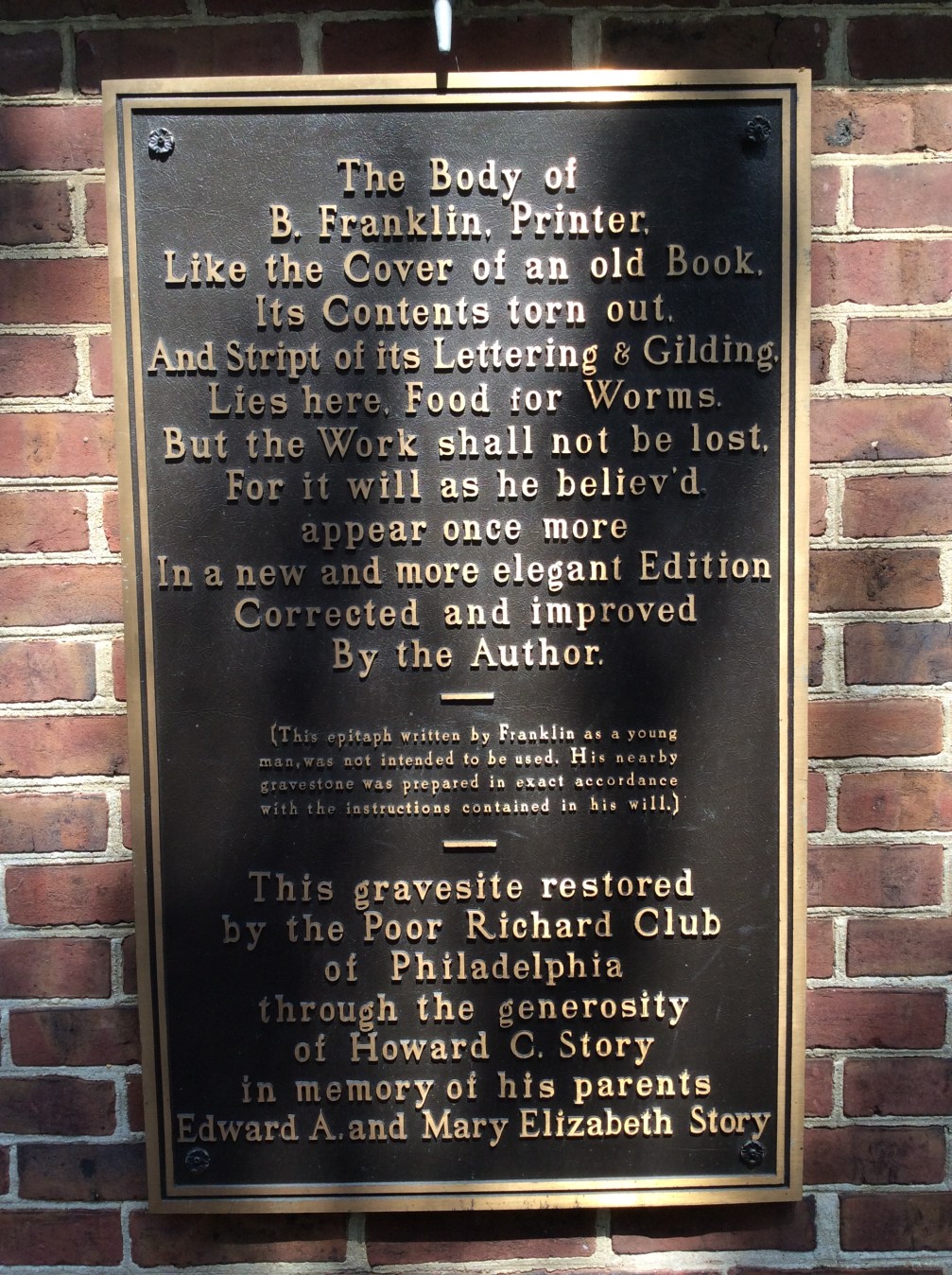
Benjamin Franklin‘s grave in Christ Church Burial Ground at Arch and 5th Streets, Old Town Philadelphia, PA. I took this photo while on the first of my Thomas Jefferson history of ideas tours, 2015. Franklin died on this day, April 17th, in 1790 here in Philadelphia. Scroll down for more…

Ordinary Philosophy and its Traveling Philosophy / History of Ideas series is a labor of love and ad-free, supported by patrons and readers like you. Please offer your support today!

Margaret Sanger NYC Sites, Day 3 Part 2

24 Post Ave near Dyckman St, Inglewood, Manhattan, NYC, 2016 by Amy Cools

24 Post Ave near Dyckman St, Inglewood, Manhattan, NYC, 2016 by Amy Cools

Listen to this podcast episode here or on Google Play, or subscribe on iTunes

Thursday, October 20th, 2016, continued

I exit the A train at the Dyckman St station, the second to the last stop on the line, and walk a couple of blocks to 34 Post Ave. Margaret Sanger moved into ‘an inexpensive little flat’ here in January of 1914 leaving her husband William, or Bill as she called him, behind in Paris. The Sangers had lived there for a few months as Sanger researched and wrote and William worked to establish himself as a painter. En route to Paris, they stopped in Glasgow, Scotland, so that Sanger could observe and write about the effects of municipal ownership, a system of public ownership often endorsed by Socialists, for a newspaper assignment. While in Paris, Sanger met with many socialists and activists, all the while researching French methods of contraception. But she was growing bored and restless, eager to get back to work and engage in activism once again. She and the three children returned to New York City around the New Year, leaving William behind to continue his artistic pursuits… Read the written version here

Ordinary Philosophy and its Traveling Philosophy / History of Ideas series is a labor of love and ad-free, supported by patrons and readers like you. Please offer your support today!


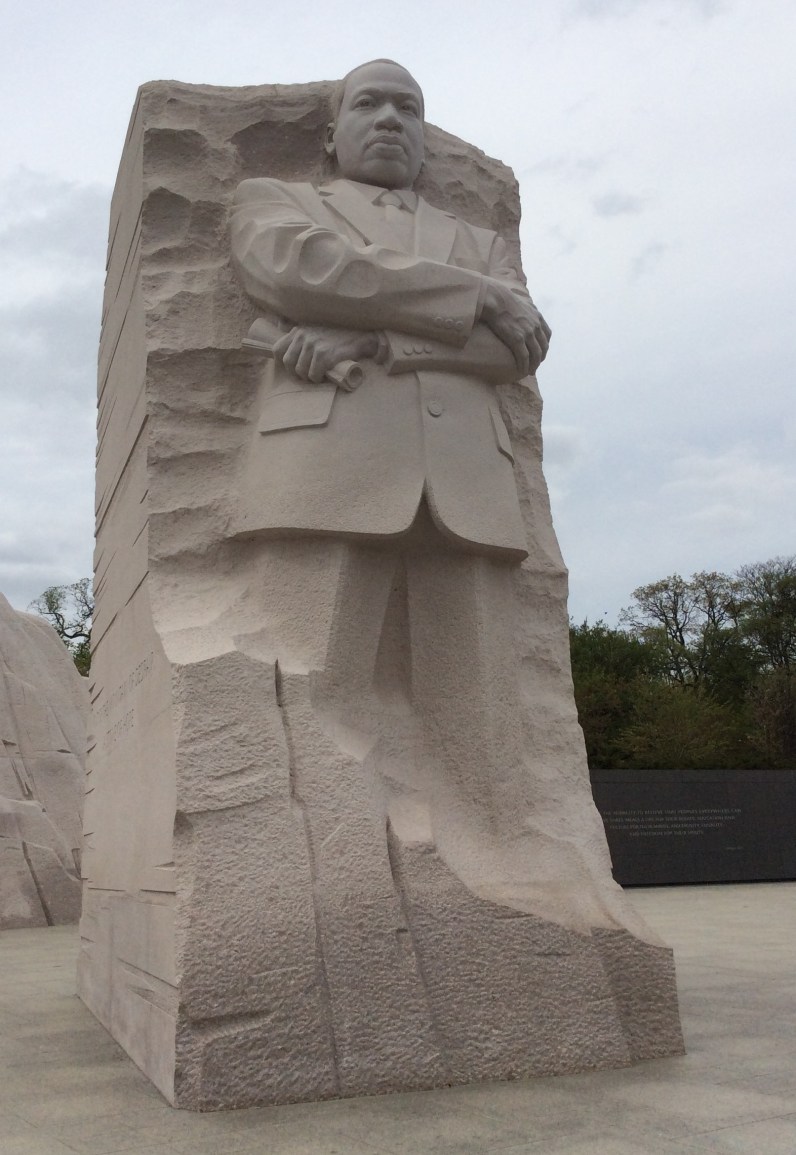
Photobook: Martin Luther King, Jr on the Mall in Washington, D.C.


Sculpture of Martin Luther King, Jr on the Mall in Washington D.C., photo 2015 by Amy Cools

About a year and a half ago, I visited Washington, D.C. and Martin Luther King, Jr’s memorial on the Mall. The sculpture of King at the center of the memorial is by Lei Yixin and was completed in 2011. His likeness here is not liked by all: some feel King looks too stern and confrontational. But Yixin felt it important to demonstrate King’s strength and determination in his portrait. 


Ordinary Philosophy and its Traveling Philosophy / History of Ideas series is a labor of love and ad-free, supported by patrons and readers like you. Please offer your support today!

The Tragedy–and Hope–of African American History, by Robert Greene II

Obamas on Inauguration Day 2013 by P. Souza, Public domain via Wikimedia Commons

Obamas on Inauguration Day 2013 by P. Souza, Public domain via Wikimedia Commons

In 2007, Andrew Sullivan wrote a cover essay for The Atlantic in which he argued that the rise of Barack Obama to the national stage meant an end to the divisive cultural politics that defined American politics since 1968. Sullivan argued at the time, “he could take America—finally—past the debilitating, self-perpetuating family quarrel of the Baby Boom generation that has long engulfed all of us.” Reflecting on the events of the last eight years, it now seems this assumption about Obama’s rise was naïve and misplaced. Now, as we transition from an “Age of Obama” to an “Age of Trump” everyone has spilled much ink—both real and digital—trying to explain how we got here.

A keen reading of African American history, especially intellectual history, offers us much to consider in this debate. The recent Ta-Nehisi Coates essay, “My President Was Black,” offers one of the better meditations on Obama’s presidency and its possible legacy. The responses to it—in particular Tressie McMillian Cottom’s—have all been useful to also think about Obama’s failings and successes in office. Along with this is a reflection among historians and others about what kind of era we’re entering. Indeed, Coates’ body of work—from his essay on Bill Cosby and Black America to this most recent piece—offer a fascinating take on post-1945 African American history. While I will leave that for another post down the road, I do want to tackle the ways in which history is being discussed in the public sphere in 2016.

Historical comparison is a cottage industry unto itself. After November’s election, pundits and historians alike began casting a wide net to make comparisons with the past. Jamelle Bouie compared the events of November 8, 2016 to the backlash to Reconstruction. This comparison soon caught on with other writers. Barret Holmes Pitner, at The Daily Beast, made a similar argument. In concern about potential backlash to racial progress, I can sympathize with this comparison. This reminds me of earlier comparisons made between Black Lives Matter and the Civil Rights and/or Black Power Movements. But I also vehemently disagree with it.

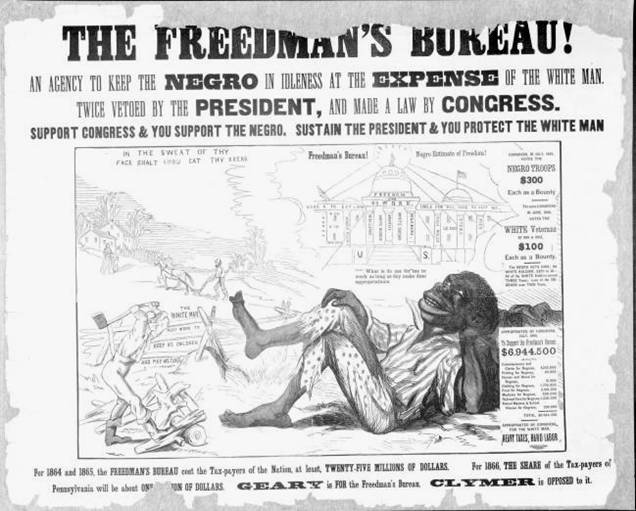
Backlash against racial progress is central to the story of America–as you can see with this political advertisement from 1866. Whether or not it was the reason for Trump’s victory, the interminable problem of racism and democracy in American society remains with us.

Historical analogies are useful, but we also need to recognize how they are limited in speaking to the present moment. Both Bouie and Pitner acknowledge this. History never repeats itself. It doesn’t even necessarily rhyme. But we can “use” history to think harder about the present. History, taught well, teaches us that the present is never easy to understand. There are never any simple answers or quick victories. Historical comparison, of course, is nothing new. C. Vann Woodward, among many others, referred to the Civil Rights Movement as a “Second Reconstruction.” Today, the theologian and activist Rev. Dr. William Barber of North Carolina refers to the present day as a “Third Reconstruction.” Others may also argue that the here and now is a “second Nadir of African American history,” in comparison with the low point in African American history from 1890 to 1930 written about and described as such by Rayford Logan.

The comparison with another nadir is not new. The historian Sundiata Keita Cha-Jua argued, in a The Black Scholar essay in 2010, that Black America was already suffering through a second nadir. There, he argued that African Americans were already in a nadir due to a variety of factors. Most notably, the changes in American political economy since the mid-1970s due to the rise of neoliberalism and its associated policies of austerity—coupled with cultural and political debates over colorblindness and racism—have damaged the progress made by African Americans in the immediate aftermath of the Civil Rights Movement. Cha-Jua argued that events such as the 2000 election (and allegations of voter suppression in Florida), the federal response to Hurricane Katrina, and the collapse of the housing market in 2007-08 (which destroyed the slowly-built up wealth of the African American middle class) were all symbols of the modern nadir. This was all before Obama’s election in 2008—which Cha-Jua argued was “contrasted but not off set by” the events previously mentioned.

I disagreed with this analysis of a “new Nadir” when it first came out. Today, I am tempted to argue that it is the best analysis of the present moment. Economic factors of the damage done to African Americans over the last three decades lend some credence to Cha-Jua’s analysis. And, to be blunt, I worry that any administration in the White House may not provide the answers to helping millions of Americans—regardless of race—recover from the 2008-09 Great Recession. The debate about voter suppression across the country, highlighted by recent events in North Carolina, also make the “new Nadir” take a tempting one.

I still reject a wholesale comparison with that era, for a variety of reasons. But it is not out of any sense that things are fine today. On the contrary. Historical comparisons are not to be discarded. They can and do serve a purpose. Comparisons across historical eras make the present day easier to understand. In that sense, African American history is critically useful. After all, African American history offers a bitterly learned lesson—that democracy and progress are always built in American history on a foundation of sand. Freedom cannot be taken for granted. Most importantly, the whiggish idea of history as a march of progress has been laid bare, once again. Much of human history proves this. For Americans, however, to simply look to the history of African Americans—or, for that matter, Native Americans, women, Hispanics, a multitude of groups—is to realize that “progress” and “hope” are not natural to human history.

And so we plunge into 2017, unsure of the future and groping for lessons from the past to help us. The urge to make historical comparisons is understandable. Just remember that the differences between eras is important too.

~ Originally published at Society for U.S. Intellectual History Blog, on January 1st, 2017

~ Robert Greene II is a PhD. student at the University of South Carolina. He studies American history after 1945 with a focus on the American South, political history, and memory. (Bio credit: S-USIH Blog)

Ordinary Philosophy and its Traveling Philosophy / History of Ideas series is a labor of love and ad-free, supported by patrons and readers like you. Please offer your support today!

A Woman’s Work: Ann Plato’s Republic, by Sara Georgini

phillis-wheatley-silhouette-william-kingShe was named for the ship that stole her away. At seven years old, Phillis Wheatley crossed the Atlantic from West Africa, another dot in the mosaic of roughly six million enslaved Africans who landed in the Americas between 1700 and 1808. Small and so young, she became Boston merchant John Wheatley’s gift to wife Susannah. Early on, Phillis’ talent shone. She mastered Latin and Greek, earning transatlantic praise for her Poems on Various Subjects, Religious and Moral, the first book of poetry by an African-American, published in London in 1773. She sat for an author portrait, toured England, met George Washington, and, finally, secured her freedom before dying, impoverished, in 1784.

Early Americans and early Americanists have pored over her too-brief career ever since. Phillis Wheatley’s byline alone, threading together her sacrifice and her sale, bears hard history in it. As an African-American founding mother of our national literary tradition, Wheatley owns a leading role in survey classes, public statues, and cultural memory. Wheatley’s last manuscript, 300 pages of poetry, may be lost; but we hold pieces of her legacy intact. Here at the Massachusetts Historical Society, I pass by her writing desk nearly every day. It’s not the one in her formal portrait. Rather, it’s the mahogany “card or tea table” that John Wheatley gifted Phillis with sometime during her long servitude. Ball-and-claw feet grip the carpet. A neat apron-front drawer has room enough for cards, ink, and a few cottony sheets of colonial paper. Sold at auction to settle her heavy debts, the poet’s desk is a rich artifact of literary technology, an Enlightenment-era laptop. Polished and bare, Phillis Wheatley’s desk raises the question: Who took up her pen?

Today, resuming my series on early American women intellectuals, I’ll focus on Ann Plato, a Hartford, Conn., schoolteacher who was, in many ways, Wheatley’s direct heir. Or so argued the abolitionist preacher James W.C. Pennington in his opening attestation of Plato’s 1841 Essays; Including Biographies and Miscellaneous Pieces, in Prose and Poetry. Pennington, then deep at work on his own book, The Origin and History of the Colored People (1841), made a compelling case for Plato’s historical significance. Of African-American and Native American ancestry, Plato (fl. 1824-1870), had, according to Pennington, suffered in order to persevere as a literary artist. By his lights, Ann Plato therefore joined the ranks of Wheatley, the Roman playwright Terence, and the Jamaican poet Francis Williams. “These all served in adversity,” Pennington reminded readers, “and afterwards found that nature had no objection, at least to their serving the world in high repute as poets… But as Greece had a Plato why may we not have a Platoess?”

For researchers, the long-forgotten, local “Platoess” has proved near-mythic to examine. A great deal of excellent biographical spadework has been done by Ron Welburn, in Hartford’s Ann Plato and the Native Borders of Identity (Albany: SUNY Press, 2015). Ann Plato presents a critical dilemma for scholars, as Welburn points out, since she “left neither entry nor exit signs,” opting to blur her contributions within the historical record. Tracing Plato’s education from eastern Long Island to her Connecticut teaching career, Welburn weaves in the intellectual “places in between,” where Ann Plato also thrived: praying at the Talcott Street (Colored) Congregational Church, publishing poetry in The Colored American newspaper, and––like so many other Americans––possibly wending her way West, to Iowa, in the Reconstruction era. To deal with Plato on any critical level is tough. Though she produced several shorter (and often near/anonymous) pieces, Ann Plato’s legacy rises or falls on her single volume, Essays. Between her conduct book’s rote lines lies a wealth of African-Americans’ sense of experience, education, history. A pastiche of prose parables, morality tales, advice for youths, and poetry humming with political and religious commentary: Ann Plato’s book is at home in the early republic.

Plato’s Essays split along three paths, marked out “Prose,” “Biographies,” and “Poetry.” To read Plato is to sink fully into the antebellum schoolroom. The first section instructs the reader via “lessons from nature,” outlining the Christian principles of education, diligence, and obedience needed to frame a good character. Youth remains the best “season” to cultivate ideal habits. Plato’s voice steers the narrative; she is quiet but firm. In one essay, she frets that her female pupils will favor making a “showy appearance” more than “prizing the gift” of entrance into the “temple of knowledge.” In another piece, she urges students to excel, since “mediocrity is a proof of weakness; and perfection may always be purchased by application.” Like her literary peers, Ann Plato keeps her “Prose” primly aspirational with “Eminence from Obscurity,” a listicle of “great” European men who have “risen from humble stations” and laboring lives to become artists and scholars.

Plato wraps up “Prose” with a trinity of tragic reflections. “Life is Short” documents the first moments of new orphans, in freefall after a family funeral. “Death of the Christian,” a shorter and more ambitious work, namechecks a set of classical and modern references (Caesar, Pollok, Byron, Chesterfield, Addison). There, Plato reels in cultured readers with her impressive grasp of Anglo-American literature. Then she steps back, sealing her conclusion with an appeal to godly virtue. “Learn with what superior dignity of mind a Christian can die,” Plato writes. Certainly, Pennington’s “authoress” knew her audience, for Plato folds lost friends into her saga. The second part, “Biographies,” features short eulogies of four women, all local acquaintances who died young (likely of consumption). Using their lives to reinforce cherished notions of Christian morality and youthful piety, Plato attempts women’s biography with sentimental verve. Industrious, mild, and ever sweetened by death’s approach, Plato’s subjects melt and sway into one another’s path. Plato is more interested in presenting a template than a person, putting her work in line with the religious tracts, advice books, and “manners” novels that fellow New Englanders enjoyed. Then, in the space of a few stanzas, Plato turns inward, and against the crowd.

Ann Plato is best known for her poem, “The Natives of America,” an eloquent reflection on her biracial identity, which features prominently in her Essays’ final pages. Go ahead, read it. Plato opens in a familiar, Longfellow-esque tone, with a child begging for a story from her father’s lap. But the narrative she learns is one of conquest and loss. Here is a key sample: “Wars ensued. They knew the handling of firearms. / Mothers spoke,––no fear this breast alarms, / They will not cruelly us oppress, / Or thus our lands possess. / Alas it was a cruel day; we were crush’d: / Into the dark woods we rush’d / To seek a refuge. / My daughter, we are now diminish’d, unknown, / Unfelt! Alas! no tender tone / To cheer us when the hunt is done; / Fathers sleep––we’re silent every one.” If Plato’s individual eulogies run drab, embroidered with obligatory accents of Christian piety, her reconstruction of the Native American experience is raw, powerful, and worth your read.

Part of why I began this project was to read more early American thinkers who sensed their histories, like Phillis Wheatley’s or Ann Plato’s, were diminished, unfelt, unknown. Reading Ann Plato’s republic is a way to understand the kind of historical figure extolled by Anna Julia Cooper in A Voice From the South (1892), the “open-eyed but hitherto voiceless Black Woman of America.” It’s also a route to retrace how early American women wrote about themselves en route to Seneca Falls, through the Civil War, beyond the cultural upheavals of Reconstruction, and into a modern realm of world literature that Phillis Wheatley glimpsed, far too briefly. For, as “A Lady from Philadelphia,” asked in an 1885 issue of Lippincott’s Monthly Magazine: “Why should not the coming novelist be a woman as well as an African? She––the woman of that race––has some claims on Fate which are not yet paid up.”

~ Sara Georgini is a Historian & Series Editor, Adams Papers, @MHS1791. Ph.D., #BU. Views=mine, #history for all (Bio notes credit: author’s own on her Twitter page)

~ This piece was originally published in the Society for U.S. Intellectual History Blog on December 21st, 2016

Ordinary Philosophy and its Traveling Philosophy / History of Ideas series is a labor of love and ad-free, supported by patrons and readers like you. Please offer your support today!

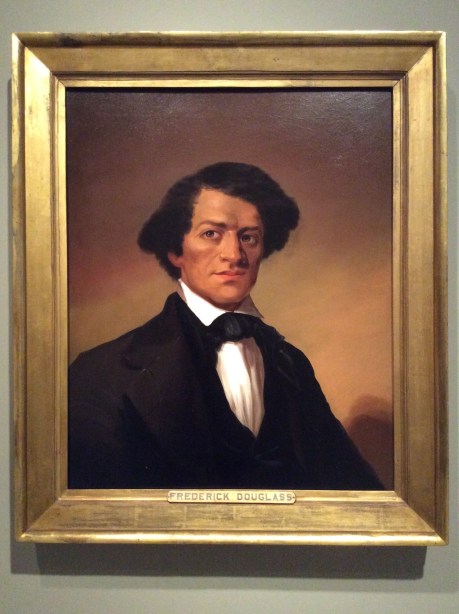
New Podcast Episode: Frederick Douglass Washington DC Sites, Last Day

Portrait of Frederick Douglass by unknown artist, 1844, National Portrait Gallery in WashingtonD.C.,

Portrait of Frederick Douglass by unknown artist, 1844, National Portrait Gallery in WashingtonD.C.,

Listen to this podcast episode here or on Google Play, or subscribe on iTunes

Fourteenth Day, Saturday, April 2nd

After a morning glancing at the light rainfall through the coffee shop window as I write up some notes and look up some things in preparation for the day, I begin my day’s explorations with a visit to the National Portrait Gallery. It’s at 8th and F Streets NW, its official address: unusually, it lacks a street number.

While I’m here primarily to see all the Douglass portraits I can find and have little time to spare since it’s my last day in D.C., I’ve wanted to visit the Portrait Gallery for a long time, and allow myself an extra hour to explore.

After I’ve made my inquiries at the information desk, one of the first portraits that grab my attention as I head towards my first destination is a bust of Louisa May Alcott. As you may remember from my Boston account, she was the only one willing to sit next to Douglass and his second wife Helen Pitts Douglass at Wendell Phillips’ funeral in 1884, just about a month after their marriage…. Read the original account here:

Ordinary Philosophy and its Traveling Philosophy / History of Ideas series is a labor of love and ad-free, supported by patrons and readers like you. Please offer your support today!

Interview with Leigh Fought on Anna and Frederick Douglass

In my research and fact-checking for the final installment of my travel series following the life and ideas of Frederick Douglass, I stumbled on this recommendation on John Muller’s blog again. Thank you for this, John, and I’ve relied heavily on your work for my D.C. travels, I couldn’t have done it as enjoyably and as thoroughly without you!

jmullerwashingtonsyndicate's avatarFrederick Douglass in Washington, D.C.: The Lion of Anacostia

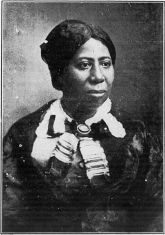
Anna Murray DouglassIf you haven’t reviewed the Douglass travel writing at “Ordinary Philosophy,” you should!

In the meantime, check out an interview with Prof. Leigh Fought here!

View original post