New Podcast Episode: Frederick Douglass Washington DC Sites, Day 1, Part 1

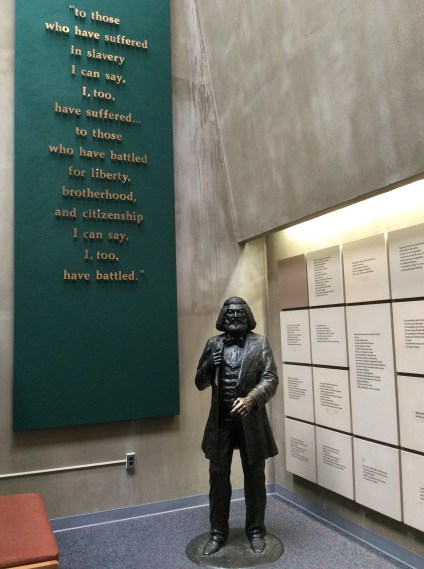
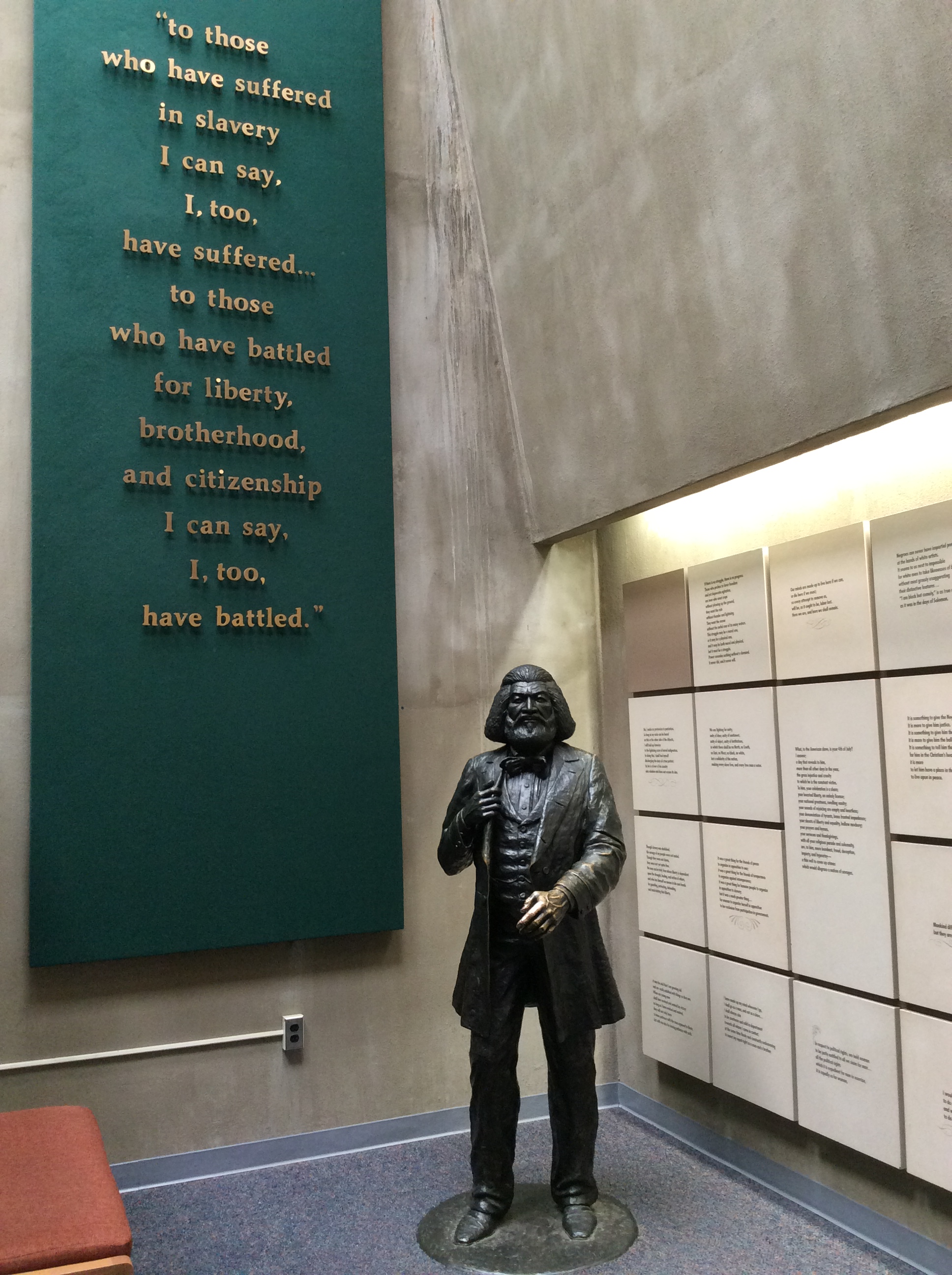
Statue and quote at the Frederick Douglass National Historic Site

Statue and quote at the Frederick Douglass National Historic Site

Listen to this podcast episode here or on Google Play, or subscribe on iTunes

Thirteenth Day, Friday April 1st

I begin at Cedar Hill in Anacostia, Frederick Douglass’ handsome, gabled house on a hill overlooking Washington DC. He moved here with Anna and the kids in September of 1878, having lived in the capital city of Washington for a little over six years. In a sense, the Douglasses didn’t really move out of Washington when they moved into their new suburban home east of the Anacostia River. Anacostia, called Uniontown in the mid-1800’s then switched back again, was part of the District of Columbia, which in turn was larger than Washington and encompassed it. When the boundaries of Washington and the District of Columbia became one and the same in 1878, the Douglasses’ Anacostia home became a Washington city home then too.

It’s another lovely day, again the sky is partly cloudy, the air soft and warm and a little breezy, freshly washed by the morning’s rain. The cold weather I had shivered in for much of the first half of my trip is nearly forgotten.

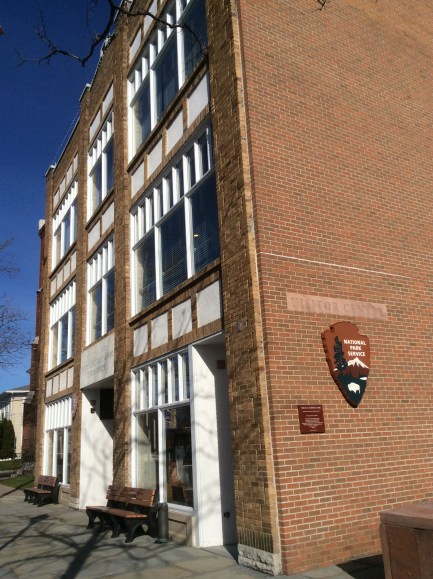
The National Park Service now owns and runs the house, the grounds, and the visitor center and museum, collectively called The Frederick Douglass National Historic Site. I take a brief look at the outside of the house, then stop at the visitor center and sign up for the guided tour which will start shortly. I take another brief look around while I wait, and note the displays and artifacts I want to examine more closely when I return to the visitor center museum…. Read the full account here:

Ordinary Philosophy and its Traveling Philosophy / History of Ideas series is a labor of love and ad-free, entirely supported by patrons and readers like you. Please offer your support today!

Happy Birthday, Henry David Thoreau!

Replica of Thoreau's cabin near Walden Pond, Rhythmic Quietude, Creative Commons BY-SA 3.0 via Wikimedia Commons, cropped

Replica of Thoreau’s cabin near Walden Pond

Henry David Thoreau is the American philosopher and writer best known for two books, Walden  and Civil Disobedience. The first is about simplifying your life so as to find what it’s really all about, the second promotes breaking the law in protest when the state does wrong (think Martin Luther King in the Birmingham jail). Walden tells of Thoreau’s experiences and observations living a simple life in a cabin for two years, where he seeks to clear his mind of the encumbrances and distractions of life in society and focus on immersion in nature and the life of the mind. Civil Disobedience is an essay prompted by Thoreau’s refusal to pay taxes in protest of slavery and of America’s starting a war to seize land from the Mexican government.

Here’s a list of resources, short but sweet, to introduce you to his life and work if you haven’t been already or would like a refresher. Not all are complimentary, but that’s good: we learn much from the debate over his ideas, too.

Henry David Thoreau‘, from American Transcendentalism Web

Henry David Thoreau‘. In Wikipedia, The Free Encyclopedia.

Popova, Maria. ‘Happy Birthday, Thoreau: The Beloved Philosopher on How to Use Civil Disobedience to Advance Justice‘ and ‘The Spirit of Sauntering: Thoreau on the Art of Walking and the Perils of a Sedentary Lifestyle‘ in Brainpickings.org

Schultz, Kathryn. ‘Pond Scum: Henry David Thoreau’s Moral Myopia.’ The New Yorker, Oct 19th 2015.

The Thoreau Reader: Annotated works of Henry David Thoreau – Three complete books and four essays, annotated copies of Walden and Civil Disobedience, and more…

West, Stephen. Henry David Thoreau. Episode 83 of Philosophize This podcast

Ordinary Philosophy and its Traveling Philosophy / History of Ideas series is a labor of love and ad-free, supported by patrons and readers like you. Please offer your support today!

Frederick Douglass Washington DC Sites, Day 1, Part 1

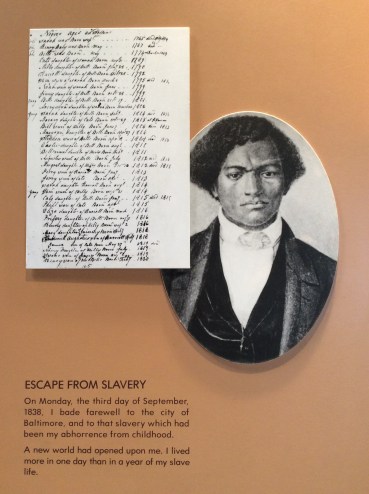
Detail of Frederick Douglass autobiography exhibit, FD Home Visitor Center

Detail of autobiography exhibit, Frederick Douglass Home Visitor Center

Thirteenth Day, Friday April 1st

I begin at Cedar Hill in Anacostia, Frederick Douglass’ handsome, gabled house on a hill overlooking Washington DC. He moved here with Anna and the kids in September of 1878, having lived in the capital city of Washington for a little over six years. In a sense, the Douglasses didn’t really move out of Washington when they moved into their new suburban home east of the Anacostia River. Anacostia, called Uniontown in the mid-1800’s then switched back again, was part of the District of Columbia, which in turn was larger than Washington and encompassed it. When the boundaries of Washington and the District of Columbia became one and the same in 1878, the Douglasses’ Anacostia home became a Washington city home then too.

It’s another lovely day, again the sky is partly cloudy, the air soft and warm and a little breezy, freshly washed by the morning’s rain. The cold weather I had shivered in for much of the first half of my trip is nearly forgotten.

The National Park Service now owns and runs the house, the grounds, and the visitor center and museum, collectively called The Frederick Douglass National Historic Site. I take a brief look at the outside of the house, then stop at the visitor center and sign up for the guided tour which will start shortly. I take another brief look around while I wait, and note the displays and artifacts I want to examine more closely when I return to the visitor center museum.
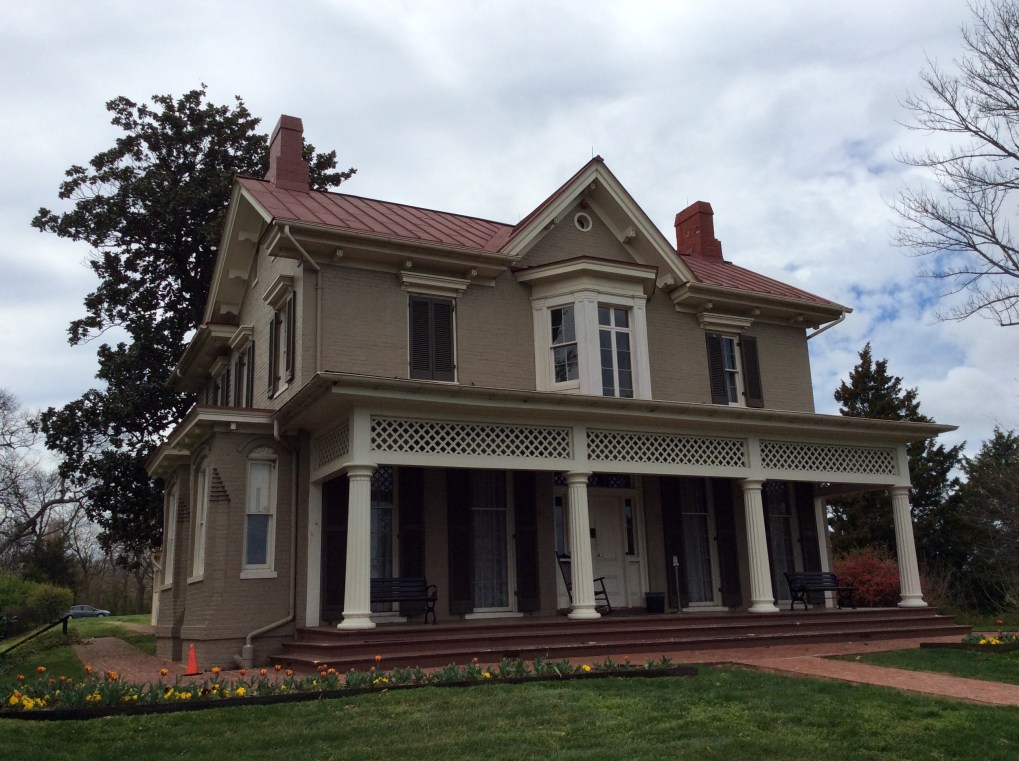
Cedar Hill, Frederick Douglass' home on the hill in Anacostia, Washington DC
Cedar Hill, Frederick Douglass’ home on the hill in Anacostia, Washington DC

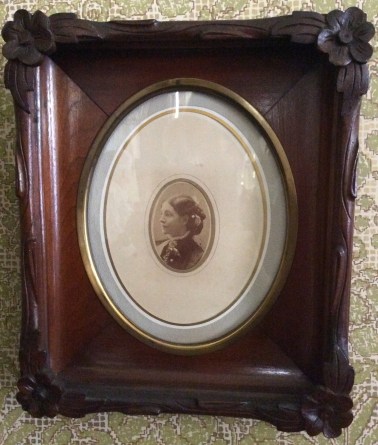
Helen Pitts Douglass Portrait, Cedar Hill, Anacostia, Washington DC

Portrait of Helen Pitts Douglass in the entrance hall at Cedar Hill, Anacostia, Washington DC

Then I join the tour group on the steps leading up the hill to the house. Let me express my gratitude and give credit at the outset to the very knowledgeable and helpful Nate Johnson who leads the tour. Much of the information I share with you here about the house and the Douglass family’s life together he provides in whole, or he confirms and fleshes out the stories.

In the entrance hall, I spot a miniature portrait of Helen Pitts Douglass, who Frederick married about 17 months after Anna’s death. Frederick and Helen met as neighbors soon after the Douglasses moved to Cedar Hill, and Helen came to work in Douglass’ office on Capitol Hill alongside his daughter Rosetta. Helen was a suffragist and abolitionist, like her father and Douglass’ long time acquaintance Gideon Pitts, and she and Douglass bonded over their shared social and political beliefs. As you may remember from the Boston and Honeoye accounts, their marriage was very controversial: many black people thought that Douglass was betraying Anna and his race by marrying a white woman, and many white people objected for obvious (purely racist!) reasons, even their fellow abolitionists. While Douglass brushed it off by saying that when he married Anna, he married a woman the color of his mother, and when he married Helen, he married a woman the color of his father, he had more explaining to do when it came to his family. Not because of the racial difference so much: though his children were sensitive on that issue on behalf of their mother, they knew his views on the color line and that it should be erased. It seems the trouble was mostly that he didn’t tell them that he was going to get married. We’ll return to that family drama soon…
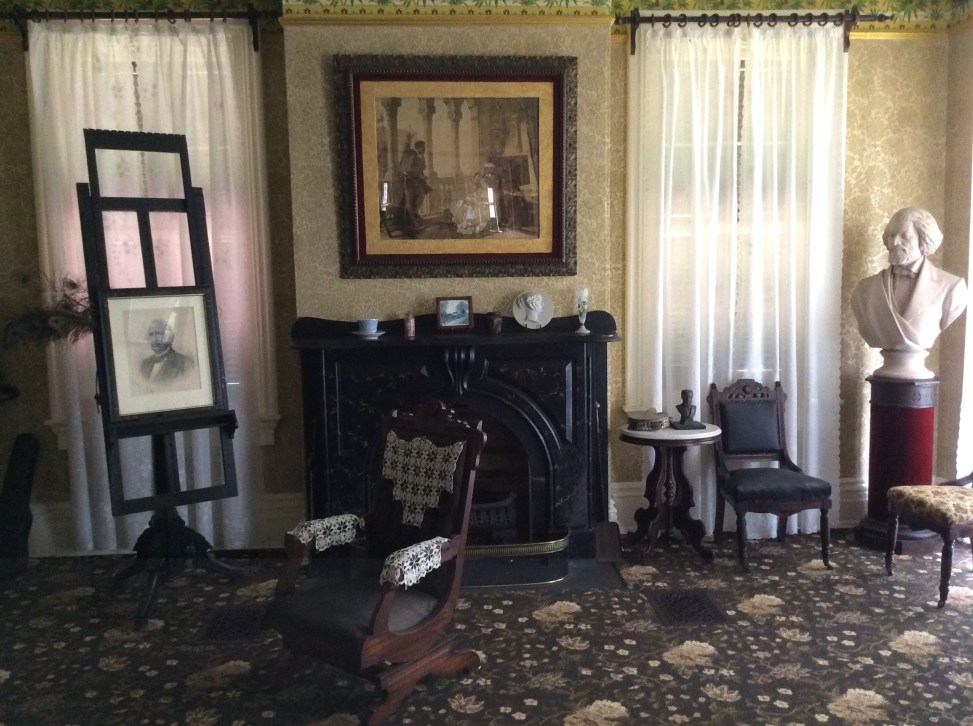
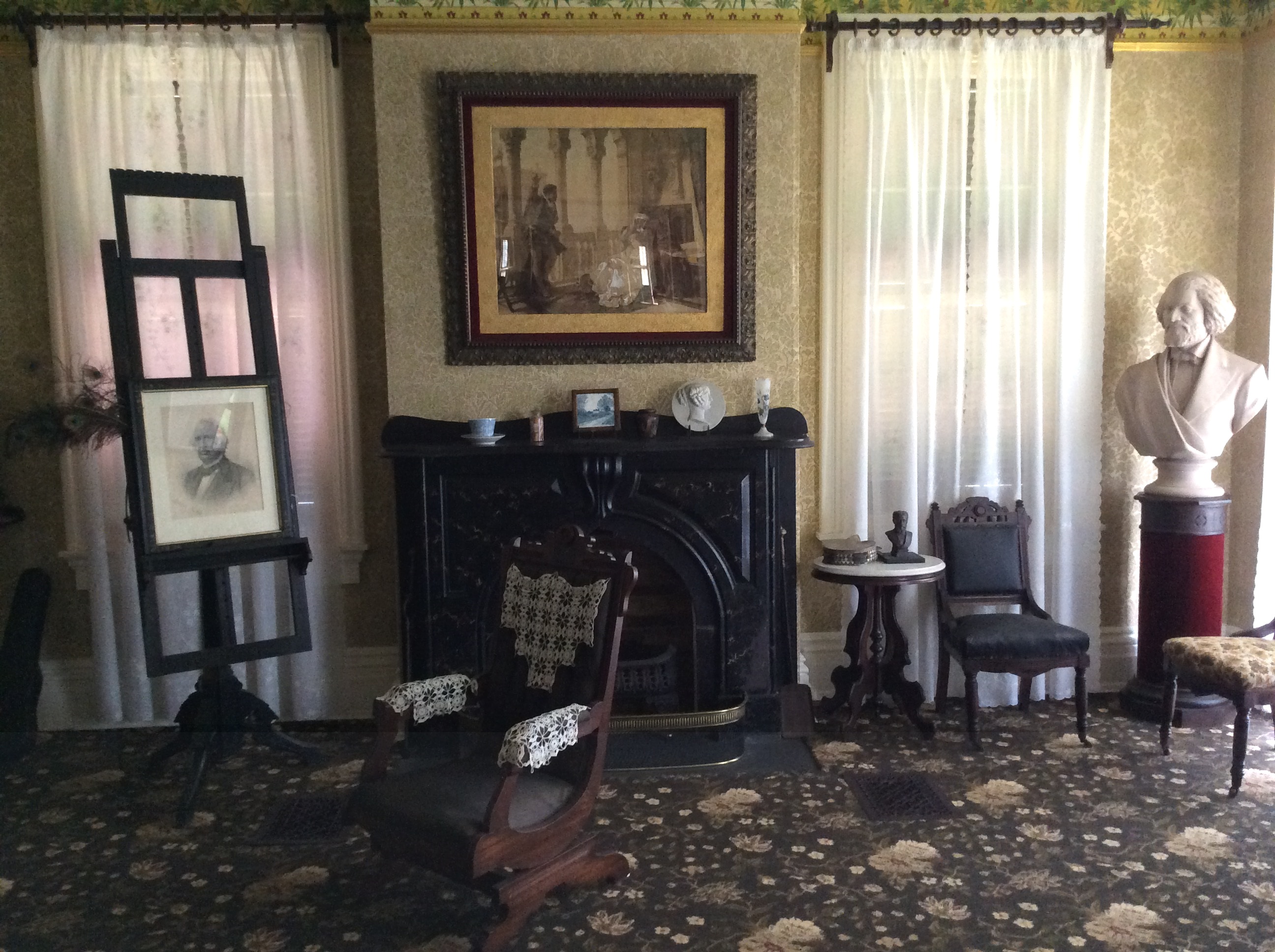
Douglass family sitting room at Cedar Hill, Anacostia
Douglass family sitting room at Cedar Hill, Anacostia

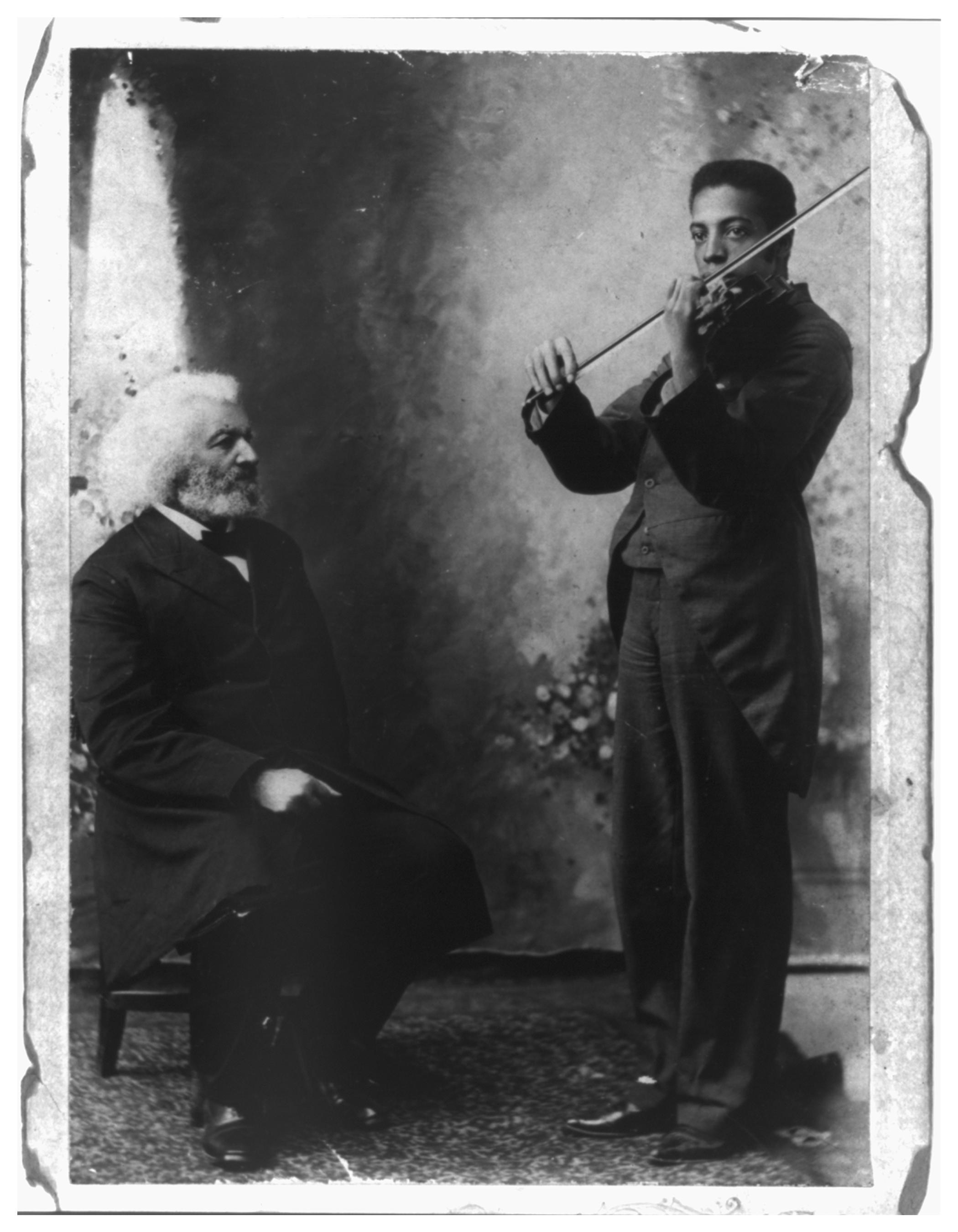
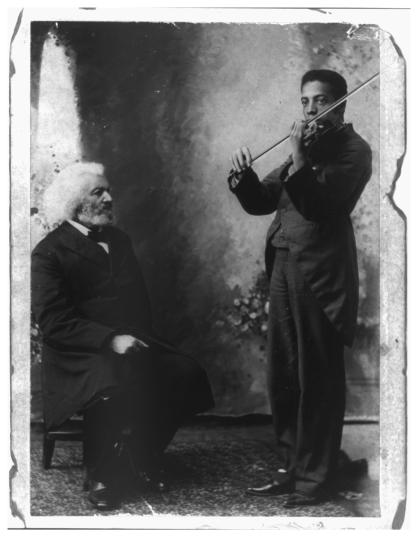
Frederick and Joseph Douglass, from the Library of Congress archives, via the Lion of Anacostia blog

Frederick and Joseph Douglass from the Library of Congress archives via the Lion of Anacostia blog. There are many portraits of Frederick and Joseph together; evidently, they were proud of one another

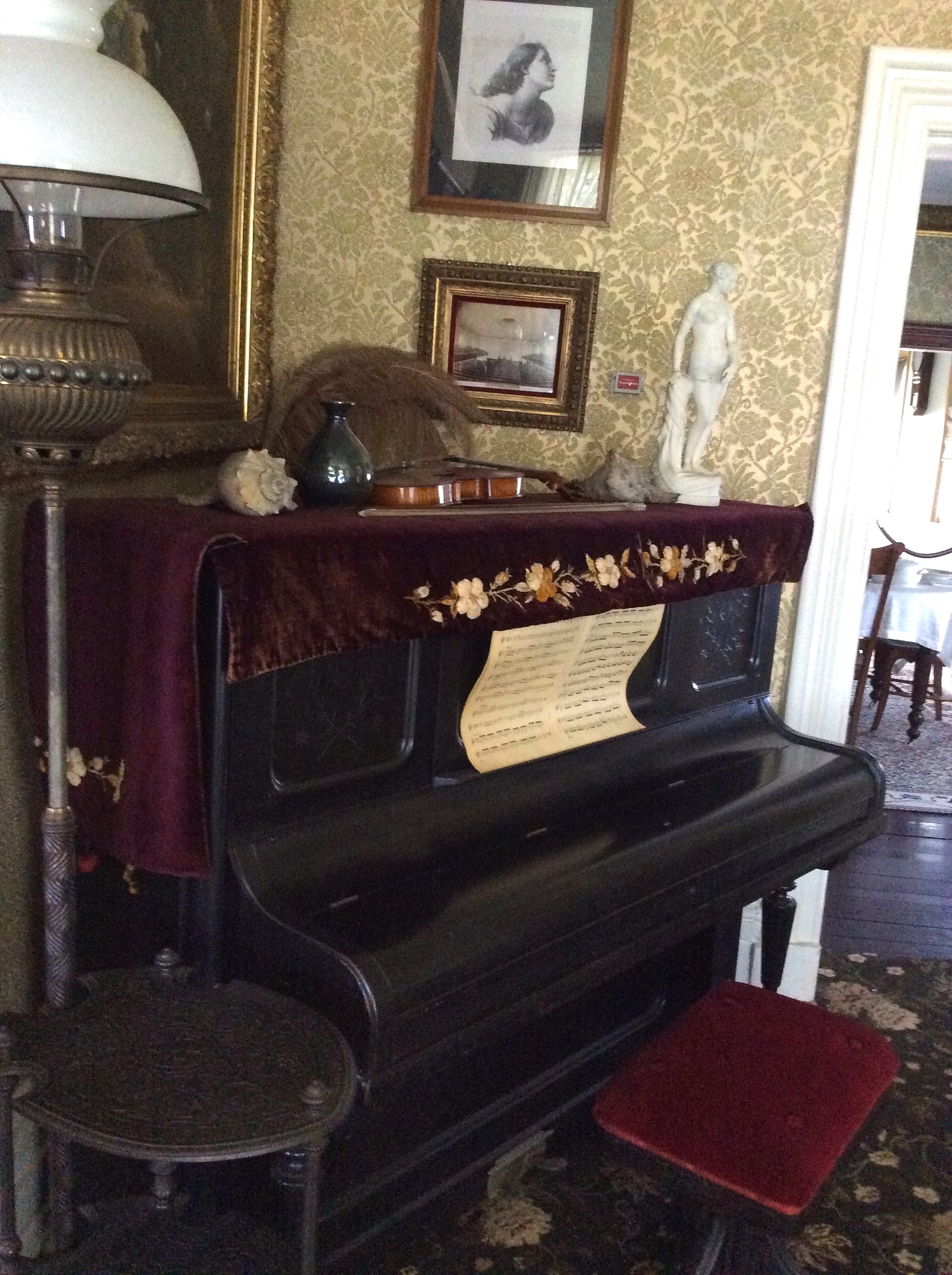
The door on the right from the entrance hall leads to the West Parlor, or sitting room, where the family would gather to play music, sing, and generally just hang out after dinner. As discussed in my account of my first day in Rochester, the Douglasses were a musical family, His daughter Rosetta and his second wife Helen played the piano, he and his son Charles played the violin, and possibly Anna did as well. Douglass was a very talented player, would play often, and sometimes dance. His grandson Joseph, son of Lewis, also adopted the violin and played with such great skill that it became his profession. Joseph’s first major performance was at the Columbia Exposition, which his grandfather helped organize, on August 25th, 1893, at age 22. He was the first violinist to be recorded, taught at Howard University and various schools, and toured the world as a concert violinist. (I subsequently had the pleasure of interviewing one of Frederick and Joseph’s descendants for my podcast!)
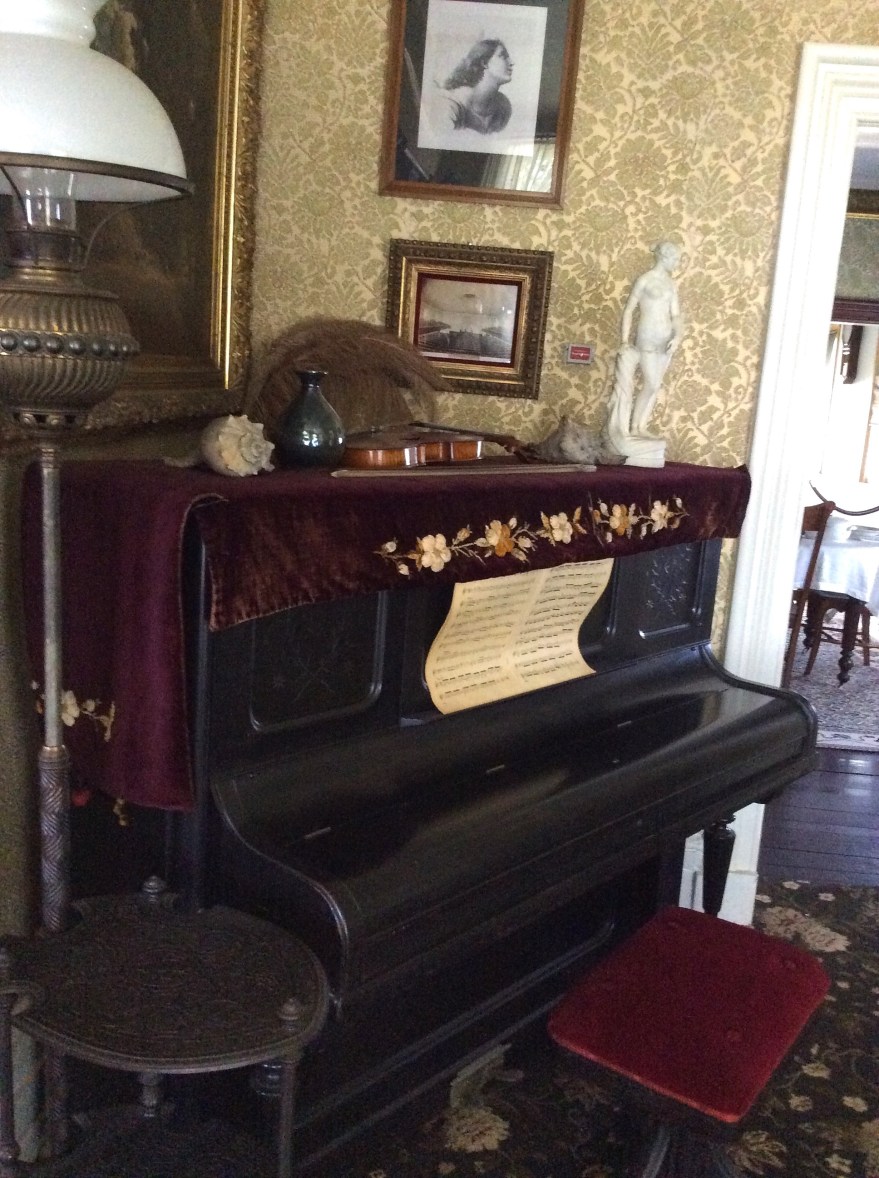
Sitting room piano with Joseph Douglass' violin on top

Sitting room piano with Joseph Douglass’ violin on top
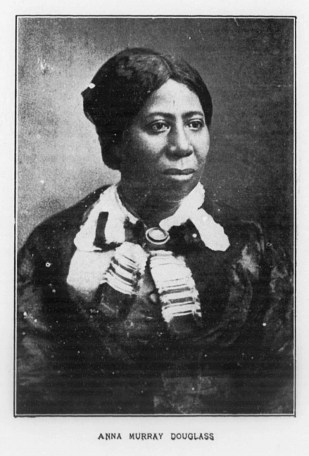
Anna Douglass circa 1860, image from the Library of Congress collection

Anna Douglass circa 1860, image from the Library of Congress collection

The grandkids, frequent visitors and sometimes residents of the big house, would join in the fun of the sitting room family gatherings. Some would sing along with the music, and other times were devoted to games and general romping, here and throughout the house, wherever they could get away with it. In public, Douglass presented himself in a very serious and dignified way, but at home he was very playful, romping with the grandkids and joking a lot. He’d allow his granddaughters to braid his flowing hair and tie ribbons in it, only to have to rush off sometimes and put it back in order for the sake of the frequent guests who visited the house.

Anna’s portrait presides over the formal East Parlor, dedicated to greeting and entertaining guests. Her picture, directly across from the big bookshelf, occupies the central place of honor between the two tall windows at the front of the house. Unfortunately, the way the light is streaming brightly in the windows just after midday makes the portrait, easy to see in person, impossible for my camera to pick up amid the strong backlight. In fact, the way the sun is creating such high contrasts in the room, most of my photos of this room don’t end up turning out.
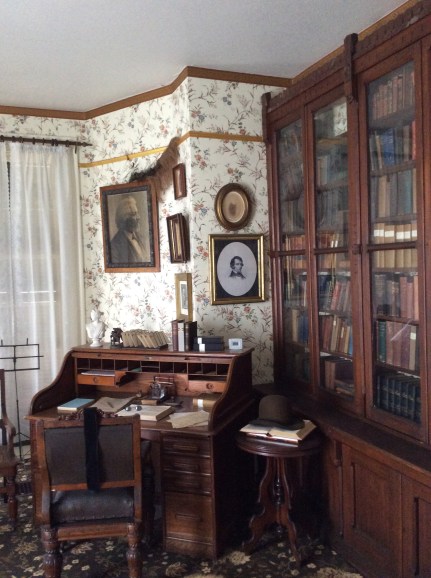
Frederick Douglass' library at Cedar Hill (2), Anacostia, Washington DC, 2016 by Amy Cools

Frederick Douglass’ library and study at Cedar Hill

Anna lived here at Cedar Hill for just under four years, presiding over this stately but lively home bustling with children, grandchildren, extended family, and frequent and numerous houseguests. While she had some health troubles, she remained pretty active until she suffered a stroke on July 9th, 1884, and lingered almost a month. After she died, at about age 69, Douglass fell into a deep and at times almost debilitating depression for well over a year. He thought about selling his house and traveling, perhaps moving to Europe for awhile. But his family needed him here, and besides, his neighbor and clerk Helen Pitts had become a close friend and ally.

Then we stop at the library, south of the East Parlor, accessible through a connecting door. Many of the things in this room actually belonged to Douglass, such as the top hat to the right of the desk. According to the National Park service, ‘Douglass’s extensive library contained more than 1000 volumes that included books on history, science, government, law, religion and literature. ‘ I don’t, unfortunately, get the opportunity to take a close look at the contents of that nice big bookshelf.
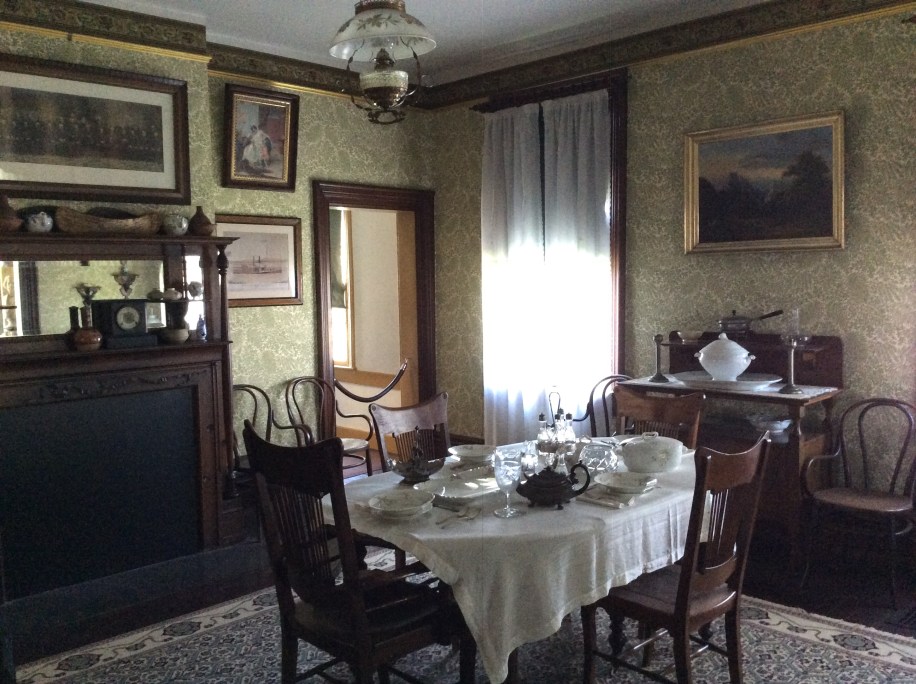
Cedar Hill dining room, where Frederick Douglass died, Anacostia Washington DC

Cedar Hill dining room, where Frederick Douglass died. His big chair is to the left.
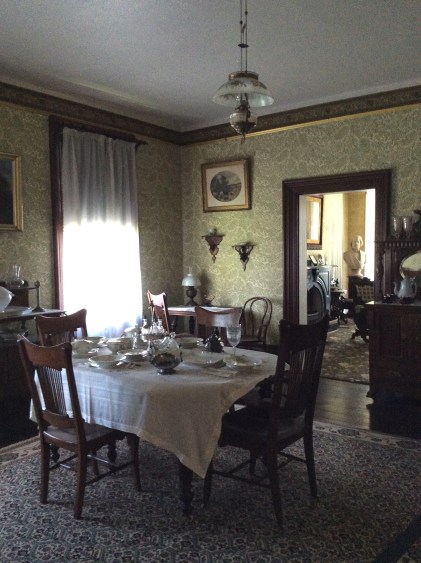
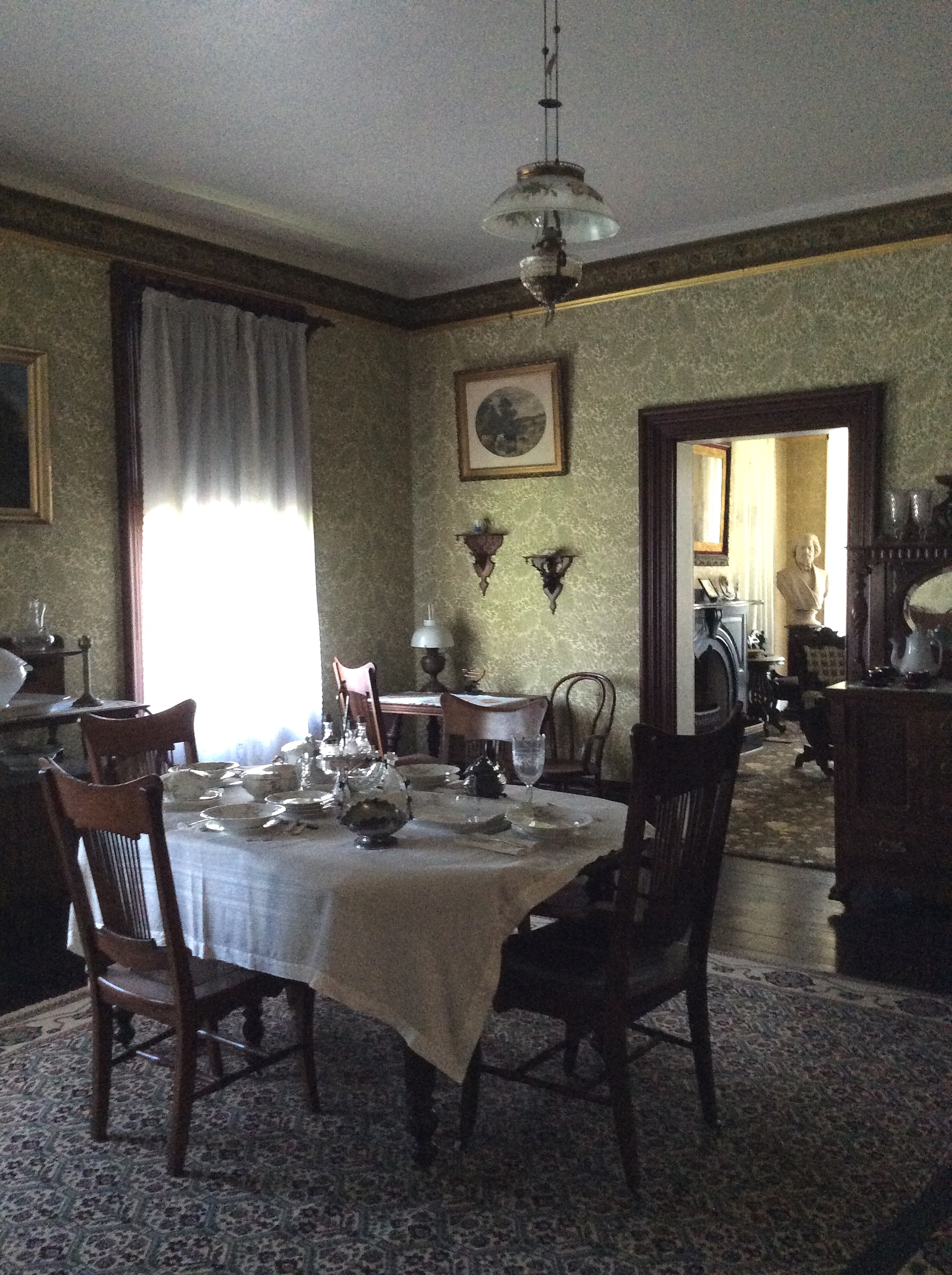
Another view of the Cedar Hill dining room, looking north into the sitting room

Another view of the Cedar Hill dining room, looking north into the sitting room

We stop next at the dining room at the end of the entrance hall and to the right, with a big door leading onto the hallway, through which we look at the room, but also connected to the sitting room through another connecting door. On February 20th, 1895, Douglass and Helen were at this table discussing the women’s rights convention he had just attended that day. His old friend (or perhaps more accurately expressed in modern slang as ‘frenemy’) Susan B. Anthony had escorted him to the front of the room to speak. Always a talented mimic, he was repeating another’s speech he had heard there at the convention, probably sitting, then rising, from his big dining room chair. All of a sudden, he sank to his knees, suffering a massive heart attack. He could not be revived.

I linger here behind the tour group for a few moments.

Then I rejoin the group and we go around to the kitchen, which is beyond the dining room, through the pantry. Anna was an excellent cook, and she would make Maryland beaten biscuits for Douglass. They were made from dough that was beaten to trap air in the dough, an alternate to leavening. The resulting biscuits are small, round, and rather hard but Douglass loved them, having grown up on them in the Chesapeake.
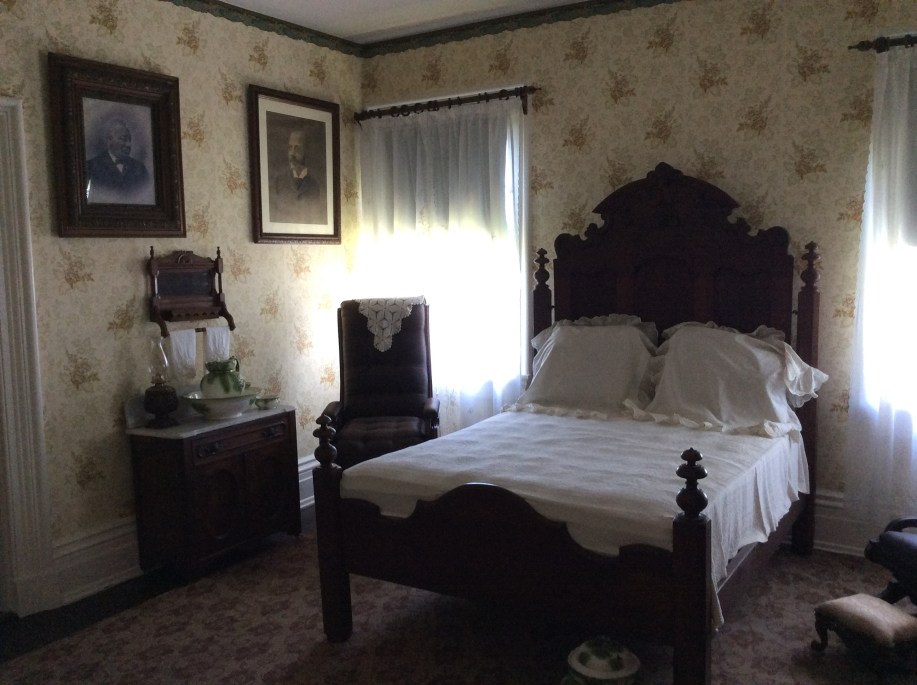
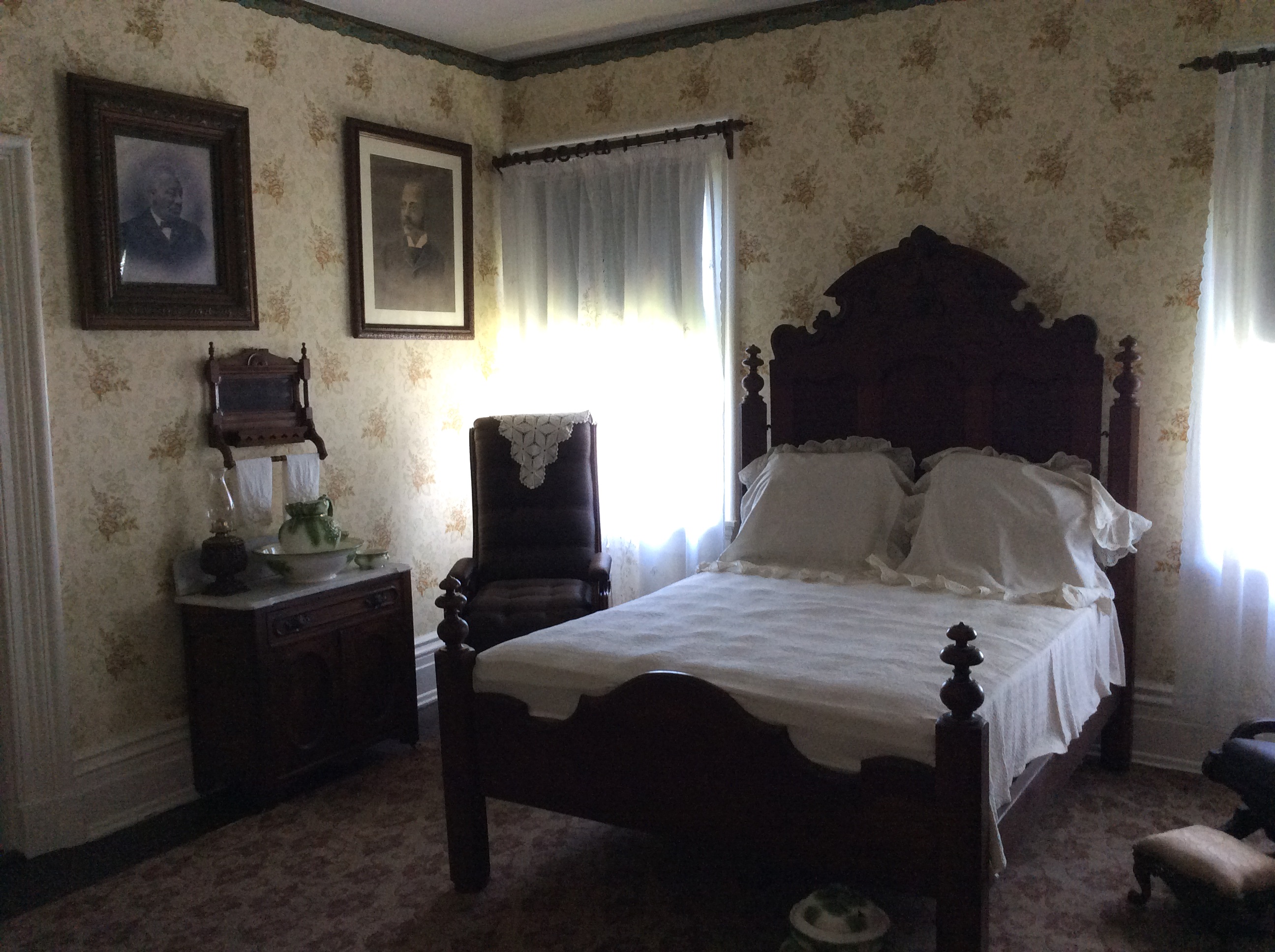
Anna Douglass's bedroom, Cedar Hill

Anna Douglass’s bedroom, Cedar Hill

Helen Pitts Douglass' bedroom, Cedar Hill

Helen Pitts Douglass’ bedroom, Cedar Hill

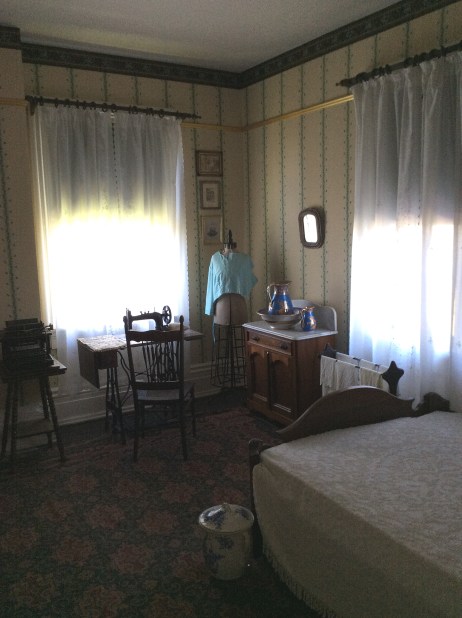
Then we go upstairs. Anna’s and Helen’s bedrooms are across Douglass’, which is on your right if you’ve just come up the stairs. Looking across the hall from Douglass’ room, Anna’s is on the left with the ruffled pillowcases and golden flower pattern wallpaper, Helen’s on the right with the dress form and green striped wallpaper. After Anna’s death, Douglass sealed her room off and no one stayed in there again.

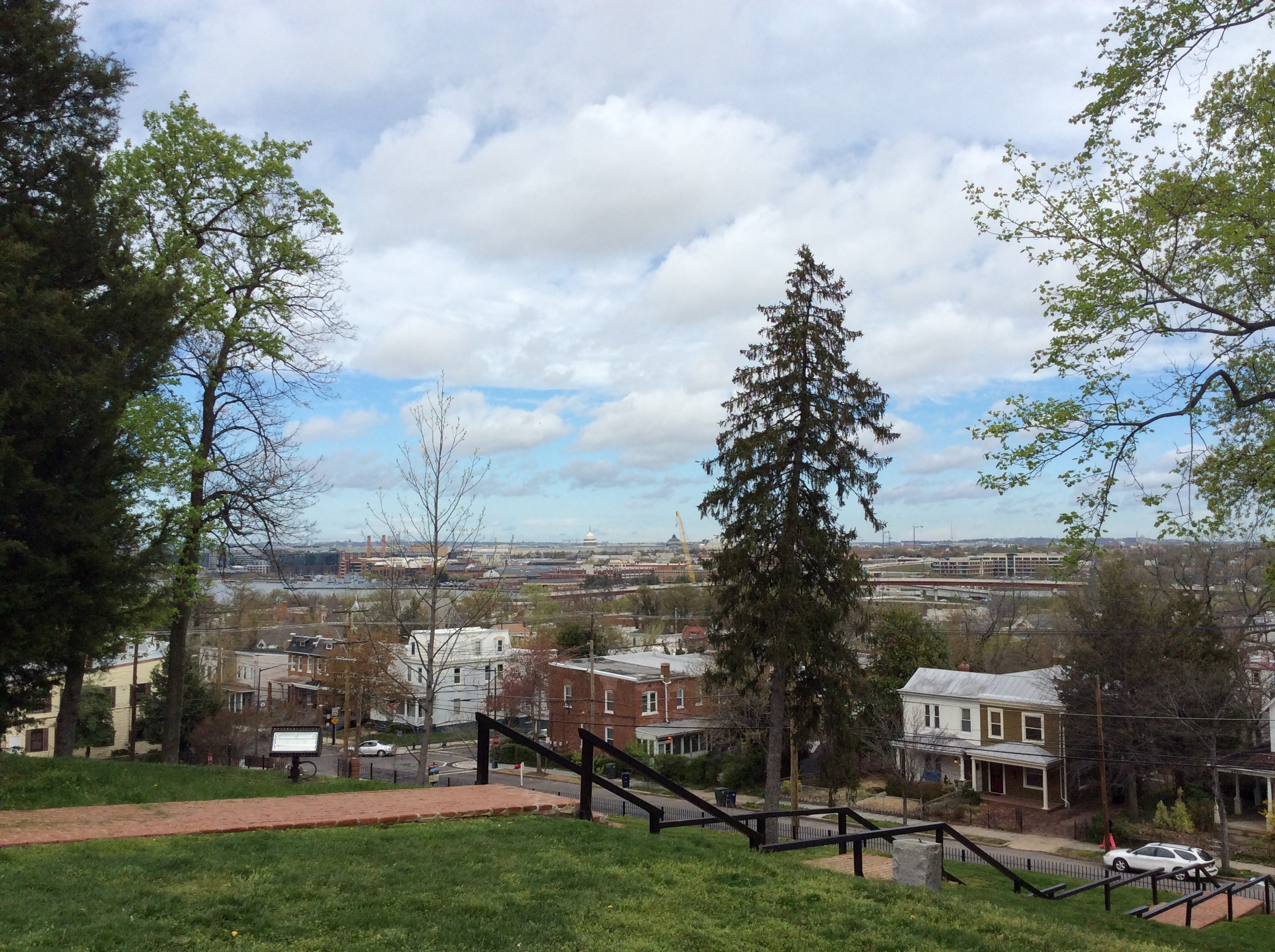
Douglass had the big bedroom, with a desk where he may have worked sometimes. Note the weights on the floor by the big leather armchair: he was a large, powerfully built man, over six feet tall and two hundred thirty pounds, with a strong voice. He would often work out with free weights out on the lawn, and would also often walk the five miles to work each way between Capitol Hill and Cedar Hill. He wrote that he felt stronger at this time in his life than he had in years. You can see Capitol Hill and the Washington Monument looking out of the bay window above the front door off to the left, and the view from the lawn in front of the house is fantastic, with the city laid out before you in a panorama across the Anacostia River.
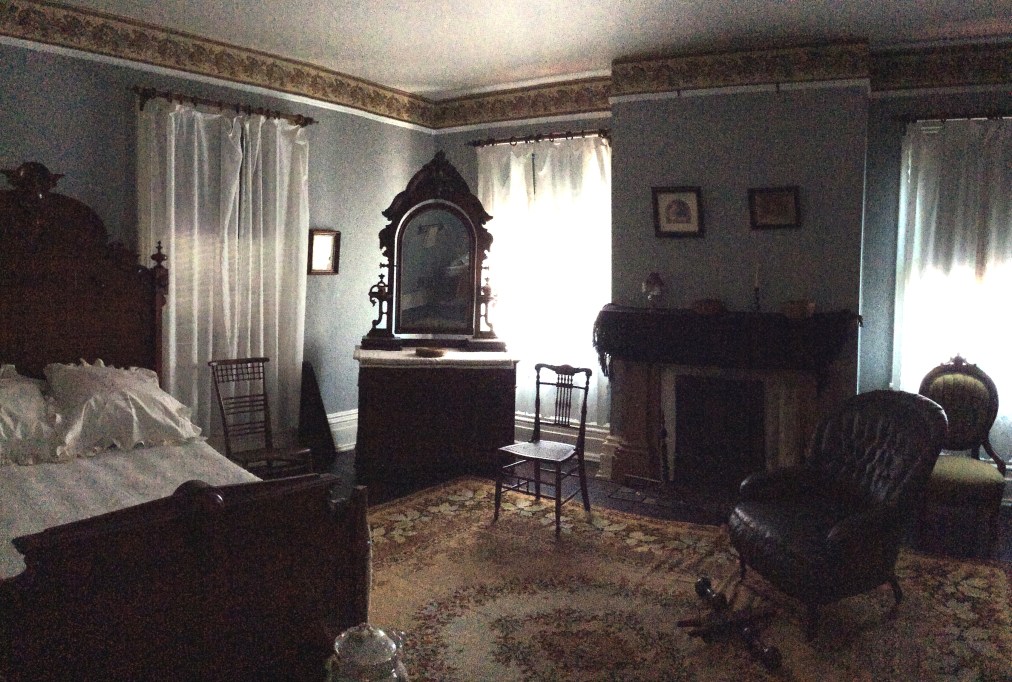
Frederick Douglass' bedroom

Frederick Douglass’ bedroom. Note the dumbbells on the floor by the big leather chair: Douglass exercised regularly, including lifting weights out on the lawn and walking ten miles roundtrip to work on Capitol Hill. He remained active and vigorous right up to the time of his death at age 77

During the years Douglass lived at Cedar Hill, he was once again a well-to-do man after the debacle of the failed Freedman’s Bank, a subject I mentioned in an earlier account and to which I’ll return soon. To rebuild his finances, he went out on tour again, and he had been able to command very large speaking fees throughout the North and earned a good salary as Recorder of Deeds in Washington D.C., and with the help of a loan from a well-to-do friend, he was once again able to afford a grand house.
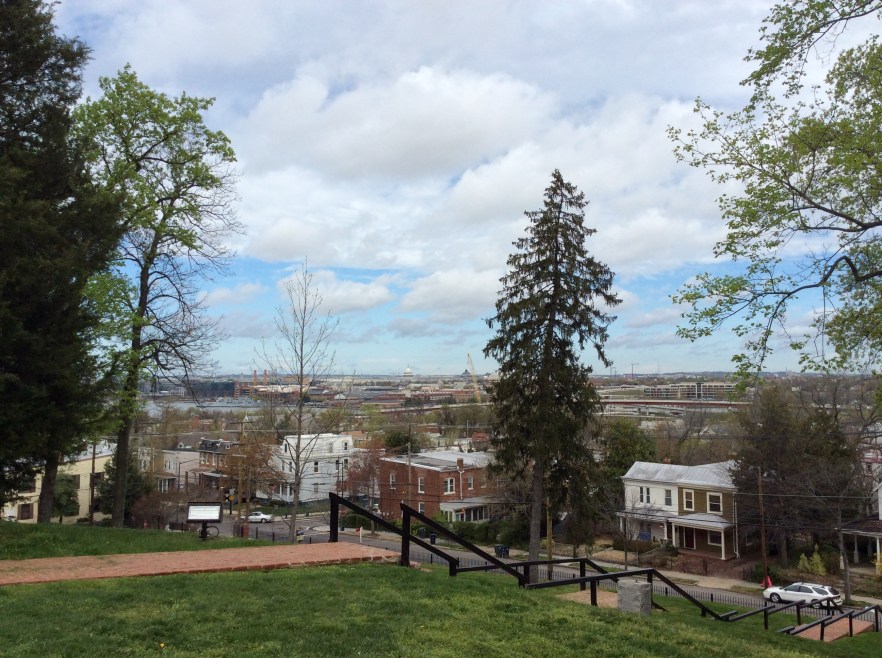
The view from Cedar Hill's front lawn, of Washington DC and Capitol Hill

The view from Cedar Hill’s front lawn, of Washington DC and Capitol Hill

By the time Douglass moved to Cedar Hill, he had moved into the role of a senior statesman and had a lot of social and political influence. Yet while Douglass retains his reputation to this day as a fiery champion of black rights, he was perceived by many in those later years to have lost sight of the true plight of most black Americans, especially in the South. He still supported the Republican Party even as it was abandoning Reconstruction, leaving the southern states free to flout the 14th and 15th Amendments. By the time Douglass moved to Anacostia and his grand home on Cedar Hill, his days as a slave, a laborer, and a working abolitionist suffering the everyday oppressions and indignities of Jim Crow were far behind him. His biographers Philip Foner and William McFeely both describe and critique his seeming lack of full awareness and concern for how bad it really was at this time for ordinary black working Americans. To many, it was clear that Douglass’ pragmatism had overshadowed his fiery spirit as a champion of human rights.

In 1876, Douglass was so eager that Rutherford B. Hayes become President, in a heavily contested, extremely close election, that he failed to criticize the Republican Party’s policies in any serious way. To be fair to Douglass, it was still the only major party that at least nominally supported black rights, and if Hayes lost to Tilden, even the appearance of national concern over the rights of black Americans would be lost. But really, his critics said, he should have advocated the complete abandonment of the Republican Party since it had in practice largely abandoned the cause of actual emancipation. After all, the existence of the 14th and 15th Amendments meant nothing to the lives of black Americans if their politicians and fellow citizens routinely blocked access to the polls, to good jobs, to elected office, and to all the other rights and privileges of citizens of a free nation.
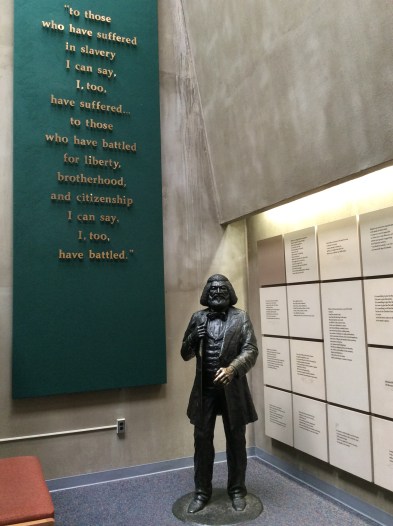
Statue and quote at the Frederick Douglass National Historic Site

Statue and quote at the Frederick Douglass National Historic Site

The Republican Party had a powerful contingent who had come to prioritize economic progress over human rights reform, and thought that keeping federal troops stationed in the South to protect black rights only served to delay national reconciliation and economic recovery. So Republicans routinely struck deals with southern leaders eager to return to old social practices and had often come to be no better than Democrats at protecting black rights. President Hayes, for so long an ardent supporter of strong federal enforcement of civil rights laws, shifted his focus to economic recovery and civil service reform. To be fair to Hayes, ‘Republican Party’ had become almost synonymous with ‘political corruption’, and the new president, famed for his integrity throughout his political career, was determined to fix that. And Hayes was far from the only one who thought that economic recovery would bring about gradual black rights reform through the value of their work in a revitalized economy.

So the Democrats had their way, and black citizens lost many of the political gains they had made. They lost their hard-won representation in government and had even become even worse off in many parts of the South than they had been under slavery, with endemic Klu Klux Klan and White League terrorism, lynching, black codes, debt peonage, convict leasing, and sharecropping, which systematically cheated black people out of the earnings from their labor. And as history reveals, the Douglass of 1857 who had said in Canandaigua ‘If there is no struggle, there is no progress’, was right, and Hayes and the gradualist reformers were wrong. The South continued its oppression of black people nearly unchecked for another hundred years, and their rights were only reclaimed through their protest and struggle, assisted by the intervention of the federal government.
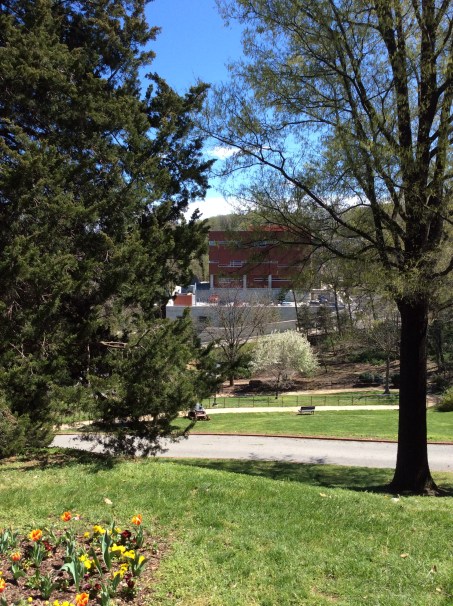
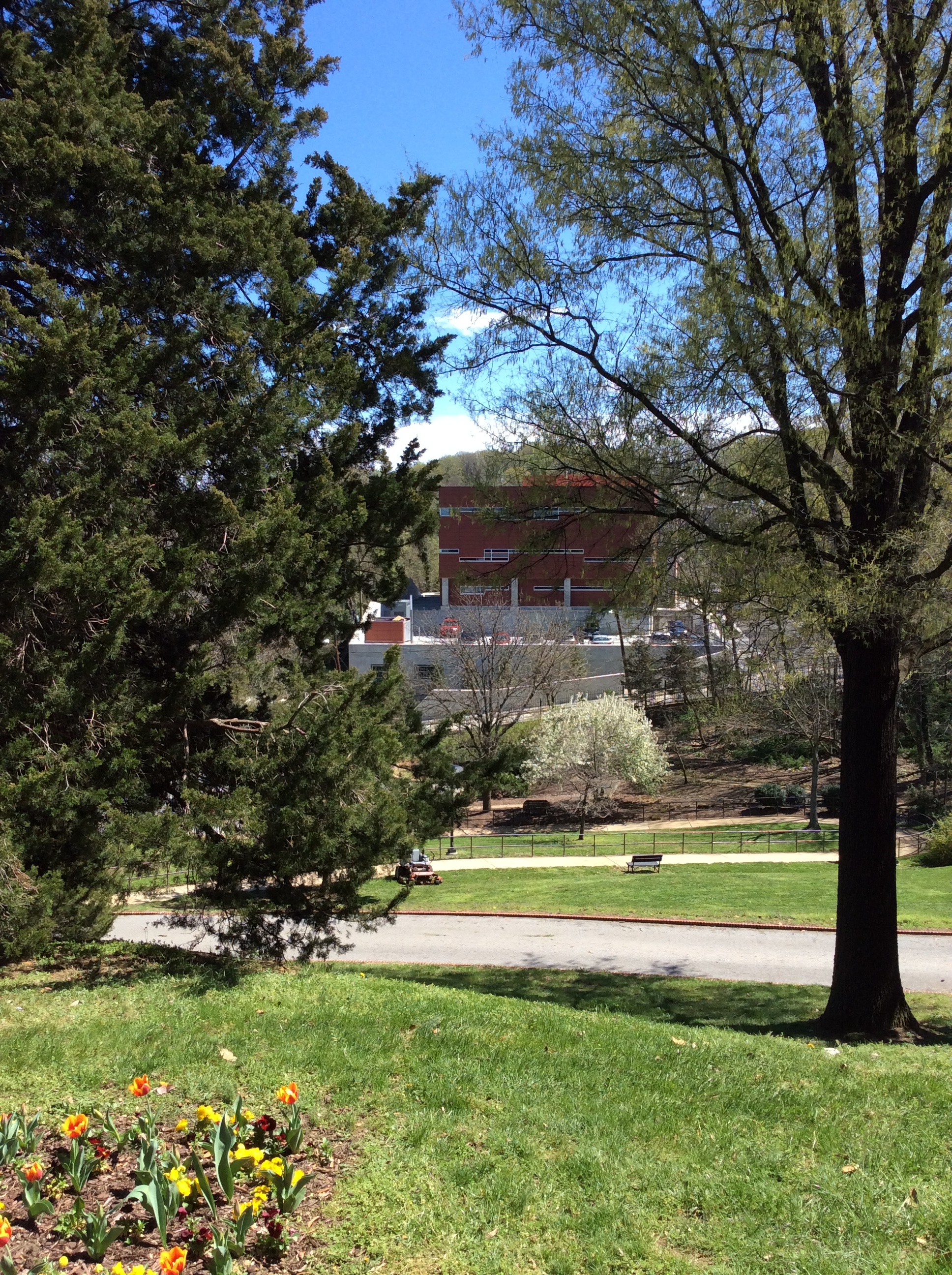
View from Cedar Hill, looking east toward the site of Hiram and niece Helen Pitts' house

View from Cedar Hill, looking east toward the site of Hiram and niece Helen Pitts’ house

But by the 1888 election, Douglass was no longer so ready to remain silent in the face of Republican Party’s failures to protect human rights. It was no longer good enough that the Republican Party had been the party of Lincoln and of the Union. His rhetoric took on a more fiery tone once again, and he said that if the Republican Party wouldn’t live up to their promises to protect black rights, he now looked forward to their defeat. And defeated they were: Democrat Grover Cleveland had already taken the White House in 1884. Douglass attributed this to the Republican Party’s abandonment of the human rights platform, which had made it the champion of goodhearted people, in favor of a profit-first agenda.

As we leave the house, in response to my inquiry, Johnson points me in the direction of the site of Helen Pitts’ uncle Hiram’s house, right beside Cedar Hill where the tall red building stands directly to the right if you’re looking toward D.C. from the front porch (or to your left if you’re looking at the front of the house). Helen lived here with her uncle for a time, and the Pittses and Douglasses were friends, neighbors, and colleagues.  Hiram, like his brother and Helen’s father Gideon in Honeoye, refused to speak to the couple or allow them the house after Helen married Douglass. There was a path that led from Hiram’s house up to Cedar Hill, but after the marriage presumably, sadly, it saw much less use.
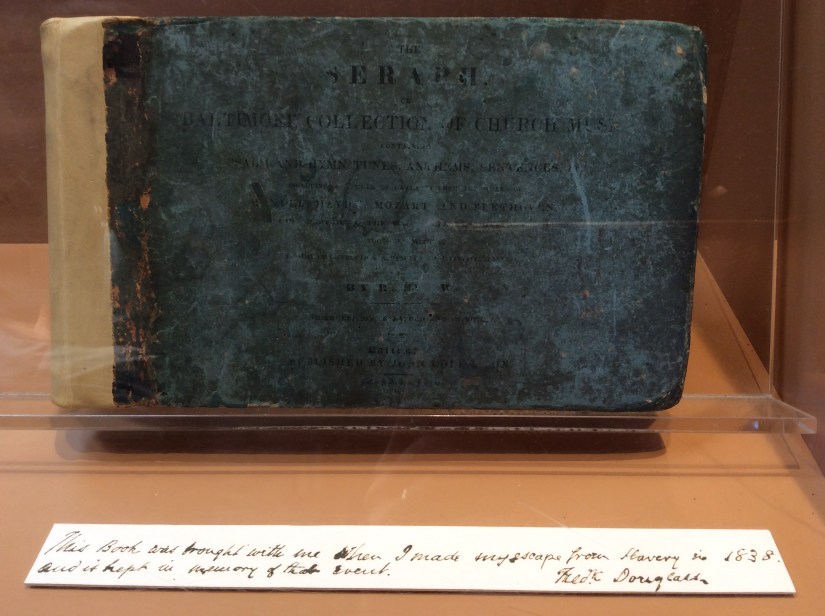
The hymnal Frederick Douglass had with him when he escaped from slavery in 1838
The hymnal Frederick Douglass had with him when he escaped from slavery in 1838

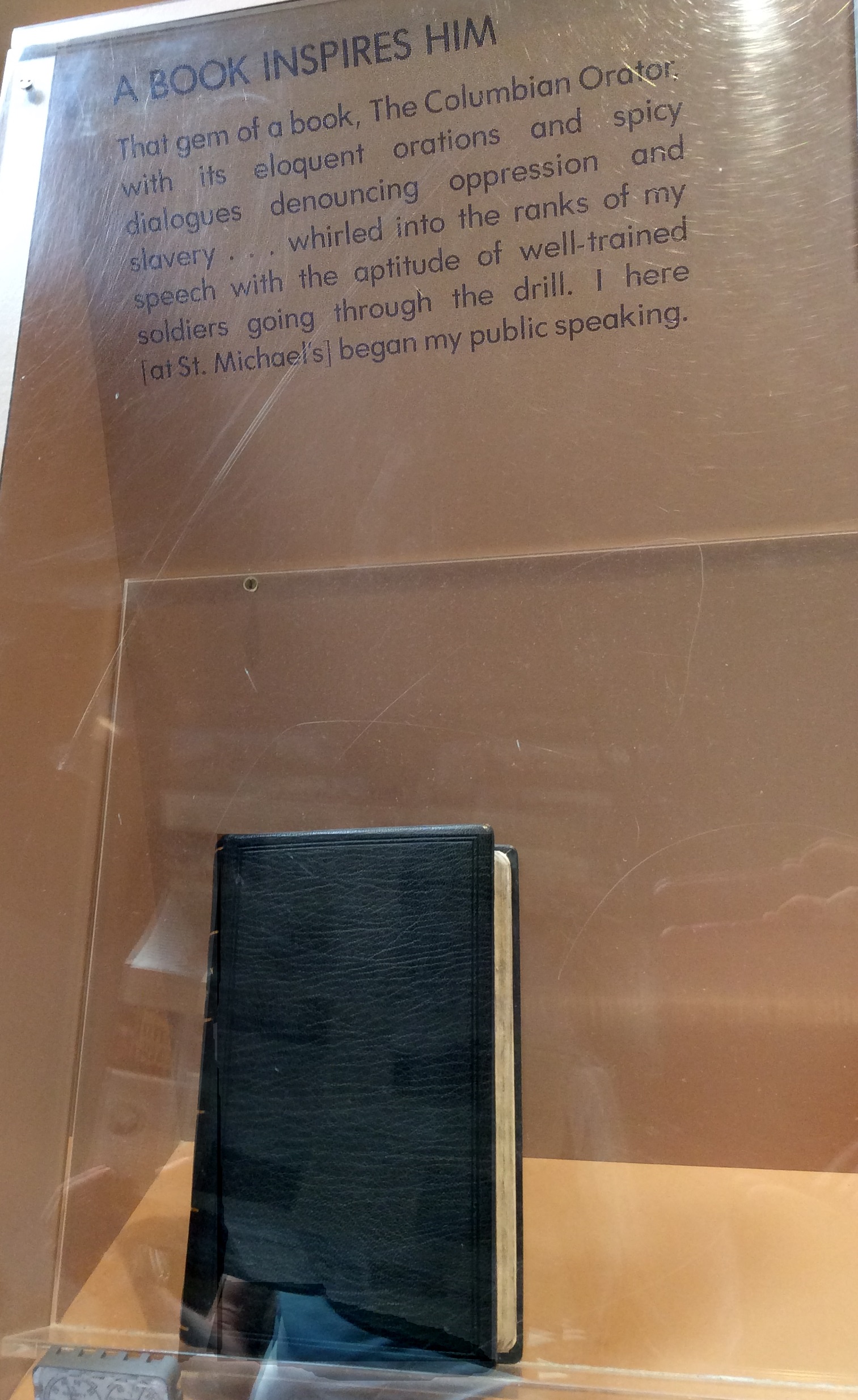
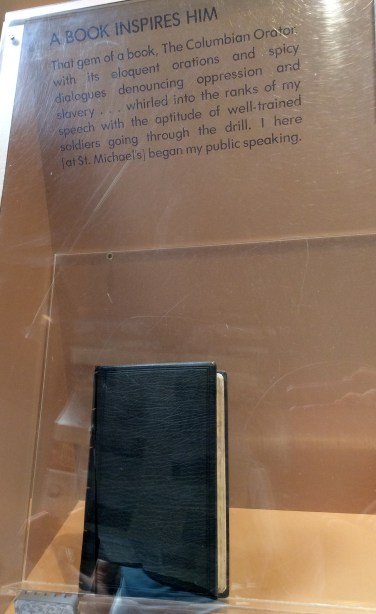
A copy of the Columbian Orator, the first book Frederick Douglass purchased

A copy (but not the copy) of the Columbian Orator, the first book Frederick Douglass ever purchased

I return to the Frederick Douglass National Historic Site museum, tucked into the east foot of the hill, and the treasures therein. Among them, there’s the hymnal which Douglass had with him when he escaped from slavery. It seems quite incredible that it survived, especially given the fire at his Rochester home. I wonder if the family took special pains to make sure that this one book, at least, escaped the flames. There’s also a copy (but not his copy) of the Columbian Orator, the first book Douglass ever bought, which, as you may remember, he purchased from Knight’s shop on Thames St in Fell’s Point, Baltimore, when he was only about 12 years old. It was among the most influential books of his life.

Douglass’ death mask, cast in plaster, is also here. His strong brow is relaxed, the deep furrow over the nose smoothed out a bit. His wide-set eyes look peacefully closed but the lips, usually set straight in a dignified manner in portraits, are here drawn tightly together, even pursed, but I’m guessing this is due to the castmaker’s efforts to keep plaster out of the mouth. His characteristically leonine hair is plastered (no pun intended) to his well-formed head. In death, as in life, he’s strikingly handsome.

Here, too, I find Abraham Lincoln’s walking stick, gifted to Douglass by Mary Todd Lincoln in thanks for his service recruiting for the Civil War.
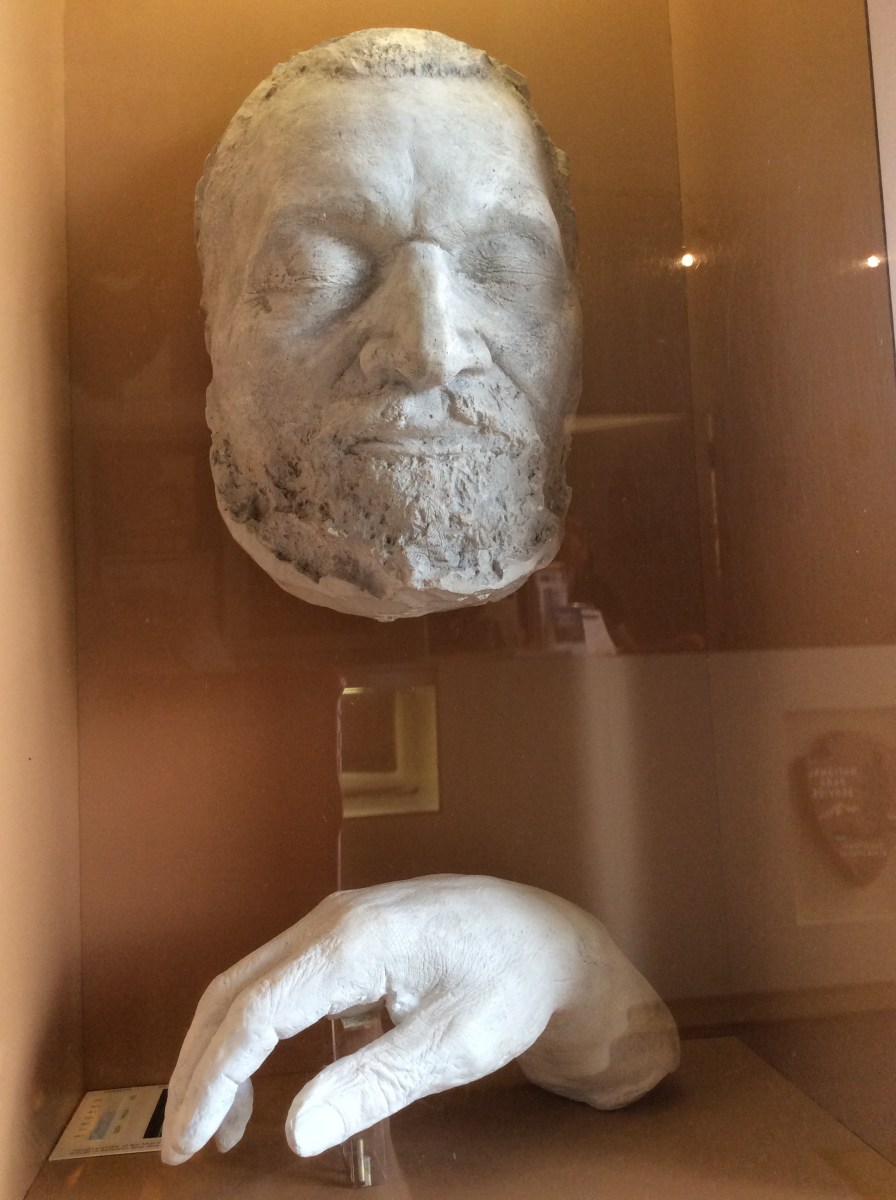
Frederick Douglass' death mask and cast of his hand, at his National Historic Site in Washington DC

Frederick Douglass’ death mask and cast of his hand, at his National Historic Site in Washington DC
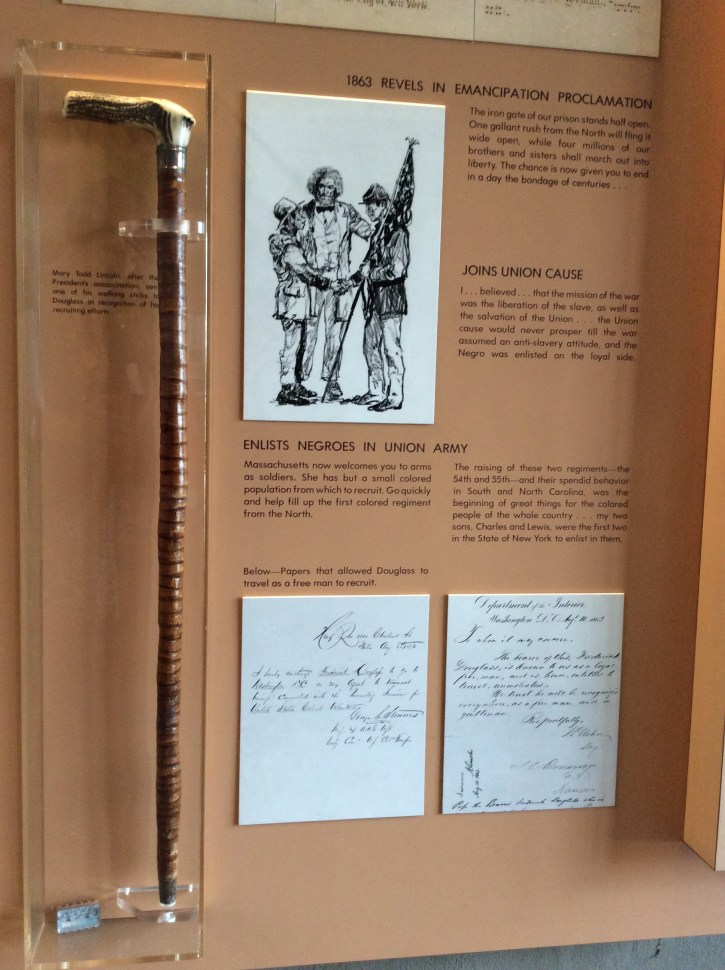
 Abraham Lincoln's walking stick, Mary Todd Lincoln's gift to Frederick Douglass

Abraham Lincoln’s walking stick, Mary Todd Lincoln’s gift to Frederick Douglass, on the left, and copies of his passes for recruiting for the Union Army

After a rather lengthy visit closely examining all the displays and chatting with the docent, I cross the Anacostia again as I head north to 913 E St NE, where according to Douglass’ biographer McFeely, Helen Pitts was living when Douglass came to pick her up on January 24th, 1884, on their way to be married.
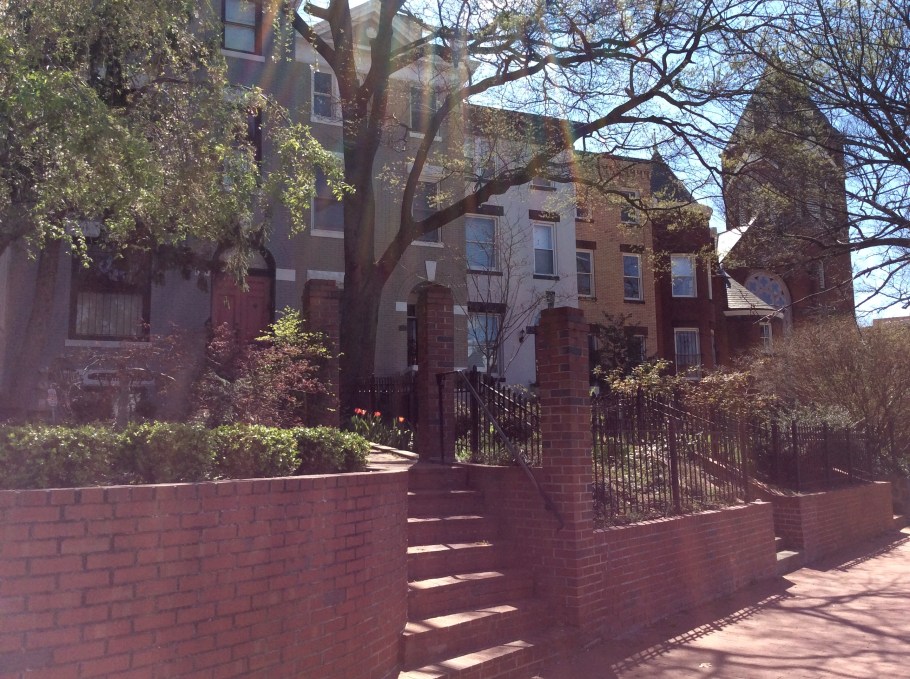
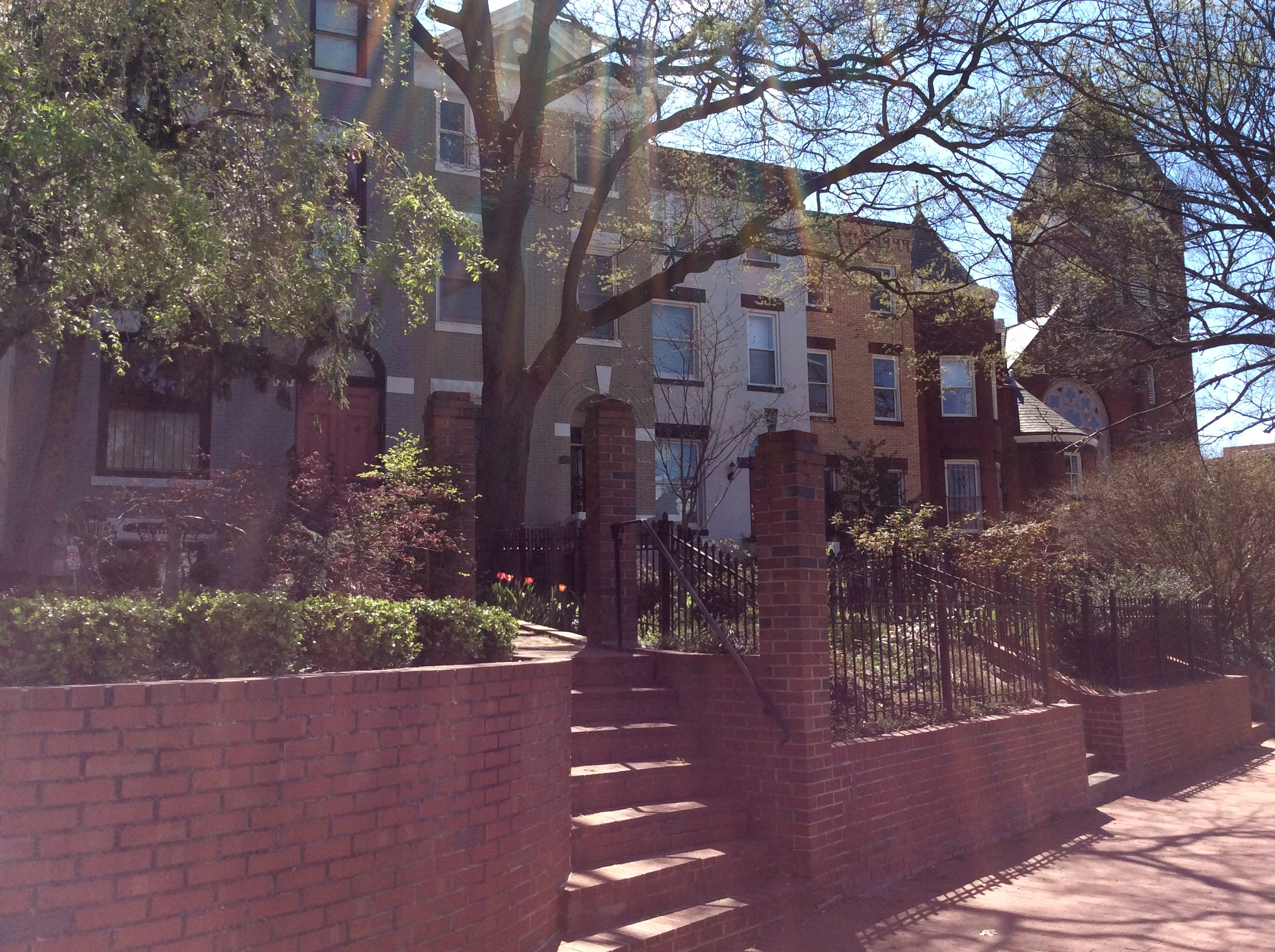
Houses off Maryland and E St NE where they converge, south side, Washington DC, 2016 Amy Cools

Houses off Maryland Ave and E St NE where they converge, on the south side of the street where the odd numbers run for both E and Maryland. The tan house in the center is marked 913 Maryland Ave, but I can’t tell from Google Maps or the 1909 Baist atlas if it’s also 913 E St, though that would also be consistent with the numbering.

When I arrive, I find it’s a little hard to be sure that the 913 I find is an E Street address, a Maryland Ave, or both: these streets intersect at an odd angle here just east of 9th St. Google Maps seems to say it’s 913 E, but the door plaque says it’s 913 Maryland Ave. I find Baist’s city atlas from the turn of the century on the Library of Congress website, the earliest I can find online, and it shows that the numbers here have apparently not changed, since 1909 at least. In 1884, Helen lived here or near here, again, if the 1909 atlas is right. She had moved here from her uncle Hiram’s house to be closer to Capitol Hill, where she worked as Douglass’ clerk, though that meant she and Douglass were no longer neighbors. Perhaps they wanted to keep their deepening relationship less evident to the public eye. Again, more on their marriage soon to come.

I decide to break up the account up here of this day’s adventures into two accounts since it’s such a full day and I learn so much. To be continued!

*Listen to the podcast version here or on Google Play, or subscribe on iTunes

Ordinary Philosophy and its Traveling Philosophy / History of Ideas series is a labor of love and ad-free, supported by patrons and readers like you. Please offer your support today!

~~~~~~~~~~~~~~~~~~~~~~~~~

Sources and Inspiration:

About Us: Living History‘. Frederick Douglass Family Initiatives website (family tree, photos).

Baist’s Real Estate Atlas of Surveys of Washington, District of Columbia: Volume 2, Plate 21. By Baist, George William, William Edward, and Harry Valentine Baist, 1909. Via Library of Congress website

Benjamin Harrison: Campaigns and Elections,’ from Miller Center of Public Affairs, University of Virginia website

Blight, David W. ‘“Your Late Lamented Husband”: A Letter from Frederick Douglass to Mary Todd Lincoln‘. In The Gilder Lehrman Institute of American History website

Douglass, Frederick. The Life and Times of Frederick Douglass. Re-published 1993, Avenal, New York: Gramercy Books, Library of Freedom series.

Douglass, Frederick. My Bondage and My Freedom: 1855 Edition with a new introduction. Re-published 1969, New York: Dover Publications, Inc.

Foner, Philip S. The Life and Writings of Frederick Douglass, Vol. 1-4. New York: International Publishers, 1950.

Fought, Leigh. ‘On Trusting Secondary Sources‘. From Frederick Douglass’s Women: In Progress blog

Holt, Michael F. ‘The Contentious Election of 1876‘, in History Now: The Journal of the Gilder Lehrman Institute

Joseph Douglass‘. In Wikipedia, The Free Encyclopedia.

McFeely, William. Frederick Douglass. New York: W.W. Norton & Company, 1991.

Maryland Beaten Biscuits‘, in Guest Recipe Book. Diana’s Desserts website

Muller, John. Frederick Douglass in Washington, D.C.: The Lion of Anacostia. Charleston: The History Press, 2012.

Rutherford B. Hayes: Life in Brief‘, from Miller Center of Public Affairs, University of Virginia website.

Southern, Eileen. The Music of Black Americans: A History. W. W. Norton & Company, 1997

New Podcast Episode: Frederick Douglass Seneca Falls, Canandaigua, Honeoye, and Mt Hope Cemetery Sites

Women's Rights National Historical Park headquarters, Seneca Falls NY

Women’s Rights National Historical Park headquarters, Seneca Falls NY

Listen to this podcast episode here or on Google Play, or subscribe on iTunes

Eleventh day, Tuesday March 30th

It’s a beautiful, clear sunny day, and the chill of the morning gives way to a balmy afternoon. I drive about an hour east and slightly to the south, through the lovely Finger Lakes region of New York to Seneca Falls.

I’m here to visit what’s now the Women’s Rights National Historical Park, which is headquartered at 136 Fall Street in Seneca Falls. I begin with the reconstructed Wesleyan Church next door at Fall and Mynderse Streets, the site of that momentous occasion which brings me here. I’ve long wanted to visit this place and had hoped to do so during my history of ideas travel series about Elizabeth Cady Stanton, but didn’t have enough time during that trip to make the journey, about a five hour drive from New York City one-way. But here I am at long last…. Read the written account here:

Ordinary Philosophy and its Traveling Philosophy / History of Ideas series is a labor of love and ad-free, entirely supported by patrons and readers like you. Please offer your support today!

New Podcast Episode: Frederick Douglass Lynn Sites, Part 2 – Historical Society and Hutchinson Scrapbook

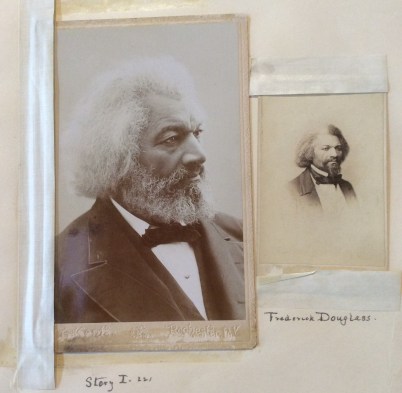
Frederick Douglass in Hutchinson Scrapbook, 2016 Amy Cools

Two portraits of Frederick Douglass from the Hutchinson Family scrapbook

Listen to this podcast episode here or subscribe on iTunes

Seventh Day, Saturday March 26th

…Lynn proves to be a Douglass treasure trove for me, especially the Lynn Museum & Historical Society. While I’m waiting to meet with a representative of the museum to look at some materials from the archives, I visit the ‘Abolitionist Lynn’ exhibit upstairs. As discussed in the first part of today’s account, Lynn had a particularly active and vocal abolitionist community. As I also discussed in the first part of today’s account, that’s what brought Douglass, laborer turned abolitionist speaker, here to Lynn… Read the original account here

Ordinary Philosophy and its Traveling Philosophy / History of Ideas series is a labor of love and is ad-free, entirely supported by patrons and readers like you. Please offer your support today!

Frederick Douglass the Pragmatist

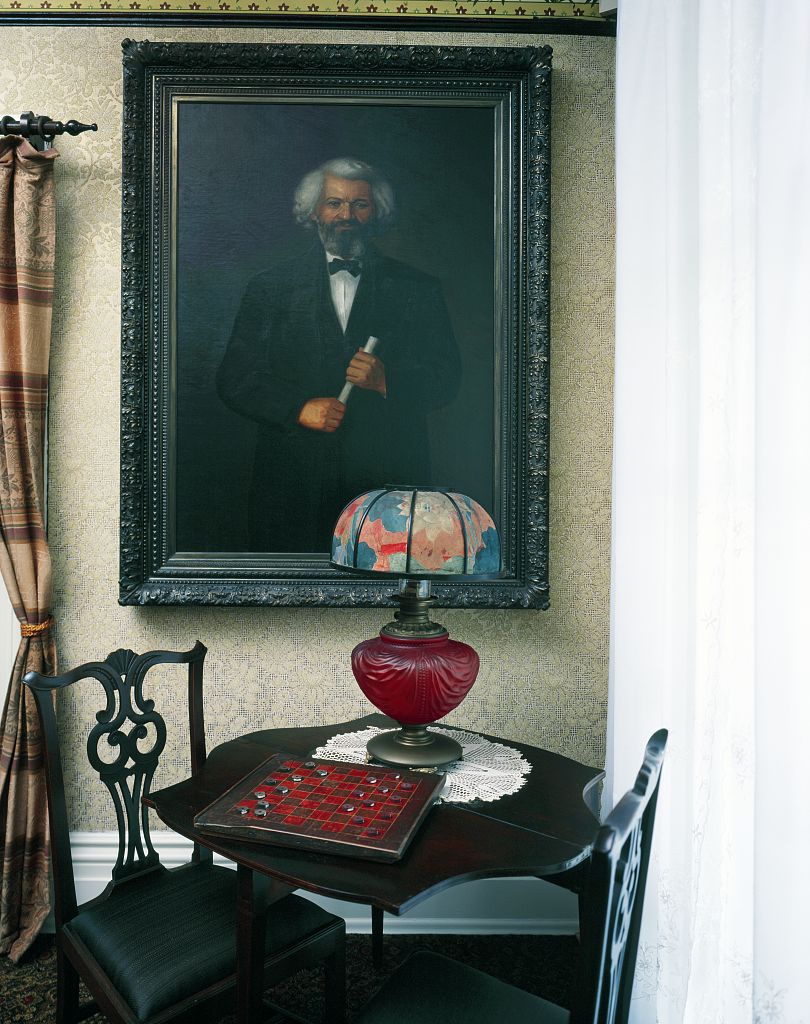
Frederick Douglass House Parlor, Washington, D.C.

Douglas is a fiery orator, an uncompromising abolitionist and proponent of universal human rights, and even an advocate of using violence if the cause is just, the harms too great, and other means prove ineffective (more on that in an upcoming piece). He criticizes those who ‘shamefully abandon their principles’. And very often, when he encounters discrimination in a hotel, restaurant, or other public place, he reports the incident to the local press.

Yet for all his energetic activism, uncompromising rhetoric, and devotion to principle, Douglass is also a pragmatist, in matters large and small.

To be sure, many of his activist tactics are as idealistic, and plainly appear so, as they are as practical. Douglass’ reports of discrimination, for example, fire up public support for the cause of equal rights by arousing a storm of protest and in turn, raising consciousness and providing examples for use in the political arena.

He’s a pragmatist when it comes to making a living as well: after a decades-long successful career lecturing and publishing, a house fire and an attempt to rescue the Freedman’s Bank from collapse leave Douglass’ finances in disarray. So he takes to the lecture circuit again full time in the 1870’s. In the pre-Civil War era, he makes his living doing what he believes in most: lecturing, debating, and arguing for abolishing slavery and expanding human rights. But in the post-Civil War era, he finds that morals, politics, and rights issues are no longer such profitable topics. So he goes ahead and lectures on the profitable ones, so long as it he can make the talks instructive and wholesome, and link them to more important issues. ‘People want to be amused as well as instructed’ he writes.

He’s a pragmatist when it comes to tactics and the importance of crafting an image. For example, Douglass considers photography a very important, modern tool for engendering mass support through empathy: if people can see and recognize the face of the person behind the ideas, and of one who is a member of a suffering and oppressed people, people will feel the visceral need for change. So, he takes care to become one of the most photographed men in American history.

Douglass’ practicality holds sway in larger issues too. He does not hesitate to change tactics or switch allegiances between organizations or parties if he thinks it would help the cause in the long run. In fact, he is convinced that true, unswerving, uncompromising allegiance to the cause itself requires a reformer to use whatever means necessary, so long as they are not morally wrong, even if they are imperfect or less inspiring or exciting to others than the more uncompromising choice. He has been criticized throughout the years for splitting with the Garrisonians, for siding with Captain John Fremont against Abraham Lincoln in the latter’s recall of Fremont’s emancipation proclamation in Missouri early in the war, for refusing to support or join in on the raid on Harper’s Ferry (though he supports John Brown’s ideas about the validity of armed resistance in general), for evading arrest and possible execution for charges of co-conspiracy in the Harper’s Ferry raid by fleeing to Canada, and for abandoning the Radical Abolitionist Party in favor of the newly formed Republican Party. His critics contend that his practice of often siding with moderate tactics and candidates reveal a lack of commitment and moral courage.

Yet he defends all of these practical choices on the grounds that commitment to the tactics or politics in and of themselves are actually a distraction, since the practice of committing to the ‘pure’ choice in the short run is often an impediment to achieving the ultimate goal in the long run. For example, if he throws his support behind his friend and hero Gerit Smith, uncompromising political candidate of the Radical Abolitionist Party, instead of Abraham Lincoln, the Republican candidate who ran on the more moderate goal of preventing the spread of slavery to the new states, he might be more admired as an uncompromising leader. But he understands what a risky move this would be. The Radical Abolitionists had little chance of winning, but the Republican Party was off to a very successful start, losing its first presidential campaign by a relatively small margin. Since the moderate goals of the Republican Party had a good chance of realization while those of the Radical Abolitionists little to none, Douglass sides with the former. The stakes are simply too high for Douglass to risk losing at this point, even if the risk appears nobler.

In sum, Douglass argues that the truly committed reformer is free to choose the more modest, practical, sure-bet option over the less apparently compromising, more radical option when it appears to be more effective in the long run. That’s because true faithfulness to the mission does not require appearing an effective reformer, it requires actually being as effective as possible. No small part of Douglass’ greatness as an activist and as a person is his willingness to forgo short-term public approval or personal glory in favor of acting in the long-term best interests of his cause. And it appears that history not only validates him as an astute tactician, but as a heroic figure, in part because in hindsight we can more easily recognize the wisdom, integrity, and strength in his pragmatism.

Ordinary Philosophy and its Traveling Philosophy / History of Ideas series is a labor of love and is ad-free, entirely supported by patrons and readers like you. Please offer your support today!

~~~~~~~~~~~~~~~~~~~~~

Sources and inspiration:

Blassingame, J. (Ed.). The Frederick Douglass Papers, Series One: Speeches, Debates, and Interviews. 4 volumes, and The Frederick Douglass Papers, Series 2: Autobiographical Writings. 3 volumes. New Haven and London: Yale University Press, 1979-1999
Douglass, Frederick. Autobiographies, with notes by Henry Louis Gates, Jr. Volume compilation by Literary Classics of the United States. New York: Penguin Books, 1994.

Douglass, Frederick. My Bondage and My Freedom: 1855 Edition with a new introduction.. Re-published 1969, New York: Dover Publications, Inc.

Foner, Philip S. The Life and Writings of Frederick Douglass, Vol. 1-4. New York: International Publishers, 1950.

Varon, Elizabeth. ‘Most photographed man of his era: Frederick Douglass’, the Washington Post, Jan 29, 2016. https://www.washingtonpost.com/opinions/most-photographed-man-of-his-era-frederick-dou

Frederick Douglass on the Constitution

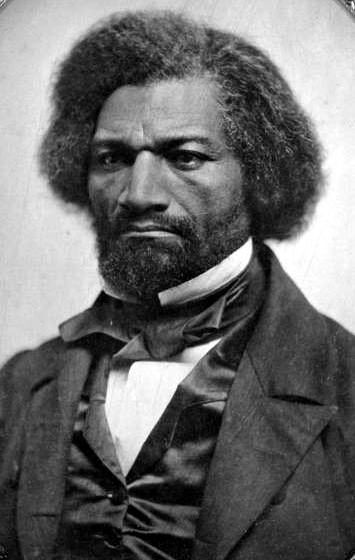
Frederick Douglass Ambrotype, 1856 by an unknown photographer, image public domain via Wikimedia CommonsEarly on his career as an abolitionist speaker and activist, Frederick Douglass is a dedicated Garrisonian: anti-violence, anti-voting, anti-Union, and anti-Constitution.

In the early 1840’s, Douglass joins a revitalized abolitionist movement largely shaped by the views of William Lloyd Garrison. Since the early 1930’s, Garrison espouses a particular set of moral and political beliefs, radical for his time, which he promotes in his influential anti-slavery paper The Liberator. He believes in total non-violence, violence being a tactic of the slaveowners and their corrupt government protectors, not of good God-fearing people who have moral truth on their side. He believes that since voting implies that a government that legalizes slavery is legitimate, true abolitionists must abstain. He believes that the continued Union of the States, Abraham Lincoln’s sacred cause, was not only impossible, but undesirable: it involved the North, directly and indirectly, in the evil of slavery. Since the South was hell-bent on preserving that unnatural and therefore illegal institution, the South should go, and good riddance. And all of these are tied to Garrison’s view of the Constitution: it’s an ultimately pro-slavery, anti-human rights document, and therefore not worthy of obedience or respect.

For many years, Douglass fully agrees with Garrison. But over time, as a result of his conversations and debates with abolitionists who interpret the Constitution differently, and of his own study, experience, and thought in the first four years of publishing his own paper The North Star, Douglass changes his mind. By the early 1850’s, the abolitionist par excellence had come to disagree with Garrison, father of American radical abolitionism, and to agree with Lincoln, proponent of preserving the Union at all costs and of the gradual phasing out of slavery.

So how does Douglass come to make what seems such a counterintuitive change in his views on the Constitution and on the role of violence, voting, and the Union in bringing an end to slavery?

Some of the reasons for Douglass’ evolution are pragmatic; his pragmatist side becomes more pronounced with time and experience (more on this in another piece). For one, he comes to believe that violence is not only unavoidable at times, but sometimes necessary (more on this in another piece as well).

Douglass also becomes convinced that abstaining from politics is just suicide by degrees for the abolitionist movement, since it cedes political power to slaveowners and their supporters. Abstaining from voting in protest, as Garrison calls for, actually works against the project of obtaining greater political rights for black people. (As with celebrity comedian-guru Russell Brand’s anti-voting campaign today; the idea of abstaining from the vote in protest is neither new nor, in my opinion, any more effective now than it was then.) As Douglass points out, however motivated some people are to do the right thing by their fellow citizens, there will always be plenty of others motivated by greed, moral laziness in going along with the status quo, and the drive for power and domination over others. Political clout, gained through voting in those who represent their views, is one of the very few ways in which black people can finally obtain and protect their equal legal rights. And not only that: voting is one of the most practical yet powerful ways black people can demonstrate their full citizenship to those who might be inclined to doubt it. Other than getting an education and fighting in the war for emancipation, Douglass argues that it’s the most important way to undermine ugly stereotypes, prevalent in his day, of black people as lazy, uninformed, and fit only to have their lives run by others. (These stereotypes are, by the way, so ugly that it’s painful just to write them down, but confronting the ugliness head-on drives home the dire necessity of getting rid of them once and for all.)Constitution of the United States, first page of the original, provided by the National Archives and Records Administration, public domain via Wikimedia Commons

But voting’s not enough to ensure that black people obtain the political power necessary to enhance and preserve their rights. For the abolitionist revolution to succeed, the Union must be preserved at all costs, and in the process, it must be recreated as the unified, true haven of freedom it’s meant to be. Douglass believes it’s the responsibility of the free states to liberate the enslaved people of the Southern states, and to extend and enforce guarantees of human rights for all inhabitants of all states.

Why? Because the Preamble of the Constitution tells us that’s what it’s for.

But how does Douglass justify this interpretation when it’s still a matter of such contention that he’s watching his country tear itself in two over it?

To understand the Constitution, it can help somewhat to consider the history that led to its creation and the ideas and intentions of those who wrote it; but to fully understand its true meaning and purpose, Douglass believes, we must always interpret all of its parts in the context of its preamble:

We the People of the United States, in Order to form a more perfect Union, establish Justice, insure domestic Tranquility, provide for the common defence, promote the general Welfare, and secure the Blessings of Liberty to ourselves and our Posterity, do ordain and establish this Constitution for the United States of America.’

The preamble is the key to any valid interpretation of the Constitution because it tells us, in plain, direct, and eloquent language, why the Constitution is written, who it’s written for, and who is bound to obey it. Any interpretation inconsistent with the Preamble reveals that either the Constitution itself is illogical, inconsistent and therefore invalid, or it shows that it’s the interpreter’s reasoning that’s illogical, inconsistent and therefore failing in understanding. Garrisonians agree with the first; Douglass agrees with the second.

So what to do with such parts of the Constitution as the three-fifths clause, which reads:

Representatives and direct Taxes shall be apportioned among the several States which  may be included within this Union, according to their respective Numbers, which shall be determined by adding to the whole Number of free Persons, including those bound to Service for a Term of Years, and excluding Indians not taxed, three fifths of all other Persons‘?. (Art. I, Sec. 2, Cl 3.)

Doesn’t it imply that all those bound to service, which in Douglass’ time almost exclusively applies to black slaves, only count as three-fifths-person, and ergo, are not fully human? While Douglass grants that this clause is deeply problematic, he no longer agrees that it’s actually an endorsement of slavery.

There are two cases which can be argued when it comes to the effects of the three fifths clause: that it gives extra 3/5th’s representative powers to slaveowners, or that it takes away 2/5th’s; that point’s debatable. As Douglass points out, the clause actually appears to be a concession of a point that slaveowners didn’t really want to make but felt forced to if they wanted to increase their political power: that slaves are persons. If they’re not, it would make no more sense to include them at all for purposes of representation than it would to include cows, chickens, or farm implements. But even this grudging concession of personhood is conceivably debatable.

But while the effects of the three fifth clause may help indicate what use it’s been used for, they don’t tell us what it really means or what its true purpose is. So how do we successfully go about determining its meaning?

How about original intent? Since the expressed beliefs and opinions of the Constitution’s authors vary so widely on the matter of slavery, this won’t help us to decide the matter either. Douglass bases his original interpretation of the Constitution as a pro-slavery document on the basis of intent, but as we’ve seen, he changes his mind.

Well, then, how about strict constructionism? This won’t help us either. The terms used are so broad that it’s hard to tell what they literally and finally mean, or to prove outside of the historical context that they refer to the American brand of slavery at all. The three fifths clause never says anything about permanent bondage or race-based slavery. (In fact, the phrase ‘term of years’ seems to imply that there’s a beginning and end to the servitude in question that’s determined by something other than birth and death, but it doesn’t exclude the latter.)

So which interpretation of the three-fifths clause is most consistent with the preamble? Not the idea that those bound to service are anything other than persons or citizens, since the right to representation is only accorded to citizens, which, in turn, are necessarily persons. Nor is the idea that those bound to service are part-person or part-citizen: there’s nothing in the language of the clause nor of the rest of the Constitution that recognizes there’s such things as part-persons or part-citizens. Douglass points out that ‘…the Constitution knows of only two classes [of people]: Firstly, citizens, and secondly, aliens’. Constitutionally, all persons born in the United States are citizens by definition, and all others aliens; of course. the latter are still persons. So the ‘three-fifths’ clause can’t be referring to the completeness of individual persons; as we can see by the language itself, it specifically applies to the total number of persons for the purpose of apportionment only.

Free Stephens, Henry Louis 1824-1882 artist, Public Domain via Library of CongressIt’s clear, then, what the three-fifths clause says about persons and implies about citizens, but what does it really say about slavery?

In a word, nothing. At least, not directly. As Douglass reminds us, the word ‘slave’ and its derivatives never appear in the Constitution at all. It does mention people ‘bound to service for a term of years’ but as we’ve already considered, this is unspecific, never mentions race, nor implies that bondage to servitude is ever anything other than limited.

There is one reading of the three fifths clause that I think is most consistent with the Preamble and with Douglass’ view of proper Constitutional interpretation. Given that the Constitution is concerned with Union, and Justice, and Tranquility, and the common defense, and the general Welfare, and Liberty, the three-fifths compromise was the best the founders could do at the time, given the intransigence of the slaveowners coupled with the young country’s need for their inclusion in the Union, to make the country large and strong enough to bring as much liberty as possible to as many people as possible. Bringing an end to slavery, Douglass believes, is the next necessary step for accomplishing the goals laid out in the Preamble as well as in the Declaration of Independence: to finally stamp out that liberty-destroying institution which had so undermined the general welfare, strength, and tranquility of the Union from its very beginning.

To return to the twin issues of personhood and citizenship in Douglass’ America: in a speech in 1854, Douglass says ‘In the State of New York where I live, I am a citizen and legal voter, and may therefore be presumed to be a citizen of the United States’. Just three short years later, in the infamous Scott vs. Sandford, a.k.a. the Dred Scott decision, the Supreme Court ruled that Douglass and all his fellow black people are not citizens at all. While Douglass explains  in his speech’… [the]  Constitution knows no man by the color of his skin’, the infamous Dred Scott decision of 1857 upended decades of common practice and legal precedent since the founding of the nation, where free black people throughout the United States had enjoyed legal, if not social, equality. However, as Douglass correctly observes, skin color is never mentioned in the Constitution as a precondition for citizenship, only place of birth and status of naturalization.

According to his biographer Philip Foner, Douglass becomes the most advanced and most informed thinker in Constitutional law, and the political and legal theory that informs it, than any of his fellow prominent abolitionists. Douglass believes, in the end, that the Garrisonian abolitionists are making the same mistake as the slaveowners: they fail to interpret the Constitution rightly, on its own terms and as a unified legal document unparalleled and unprecedented in its full establishment of human liberty. From the Garrisonians onward, those of us who likewise interpret the Constitution as protecting the rights of some without protecting others, or who likewise fail to understand its true significance, its true potential, and its true power to bring the blessings of liberty to all, just don’t get the Constitution.

*Listen to the podcast version here or on iTunes

Ordinary Philosophy and its Traveling Philosophy / History of Ideas series is a labor of love and ad-free, supported by patrons and readers like you. Please offer your support today!

~ Also published at Darrow, a forum for ideas and culture

~~~~~~~~~~~~~~~~~~~~~~~

Sources and Inspiration:

Blassingame, J. (Ed.). The Frederick Douglass Papers, Series One: Speeches, Debates, and Interviews. 4 volumes, and The Frederick Douglass Papers, Series 2: Autobiographical Writings. 3 volumes. New Haven and London: Yale University Press, 1979-1999

Douglass, Frederick. Autobiographies, with notes by Henry Louis Gates, Jr. Volume compilation by Literary Classics of the United States. New York: Penguin Books, 1994.

Douglass, Frederick. The Heroic Slave: A Cultural and Critical Edition. Eds Robert S. Levine, John Stauffer, and John McKivigan. Hew Haven: Yale University Press, 2015.

Douglass, Frederick. My Bondage and My Freedom: 1855 Edition with a new introduction.. Re-published 1969, New York: Dover Publications, Inc.

Foner, Philip S. The Life and Writings of Frederick Douglass, Vol. 1-4. New York: International Publishers, 1950.

Landmark Cases: Scott vs. Sandford (The Dred Scott Decision), A C-Span Original TV Series, 2015  http://landmarkcases.c-span.org/Case/2/Scott-V-Sandford

Traveling Philosophy Series: Frederick Douglass Edition, Prologue, Oakland, CA

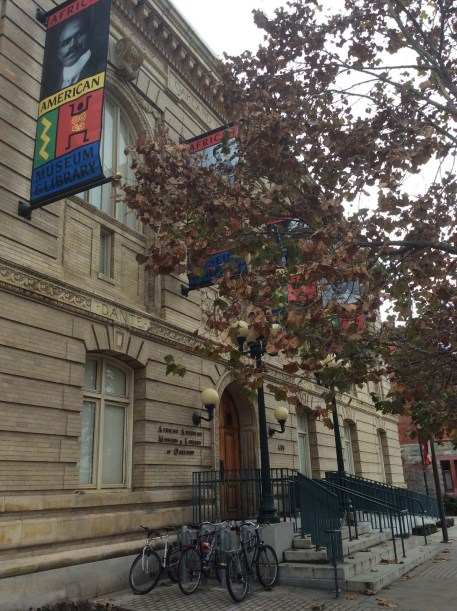
African American Museum and Library, Oakland, CA

Frederick Douglass’s Traveling Philosophy series will begin in earnest when I arrive on the East Coast. But behind every Traveling Philosophy series is research, and I have some excellent resources here where I live in Oakland, California. It’s still a little up in the air as when I’ll actually be able to make it to the East Coast for a long enough period to cover the ground I’d like to, since I intend this series to be the most comprehensive I’ve done yet. So, I’ve decided to do something a little different this time, to start the account of my journey with my discoveries and thoughts on the acts and ideas of Douglass I encounter while researching his life.

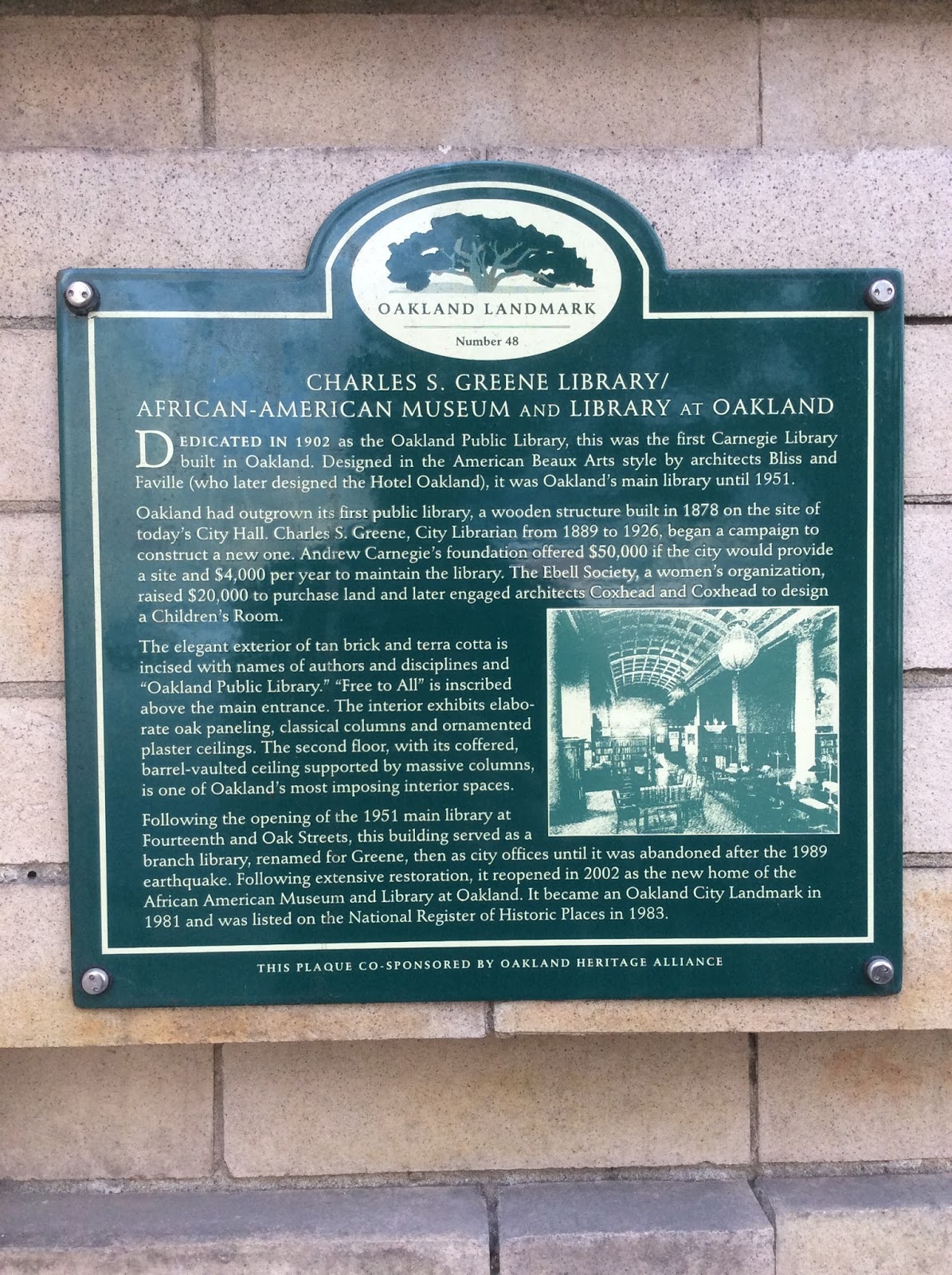
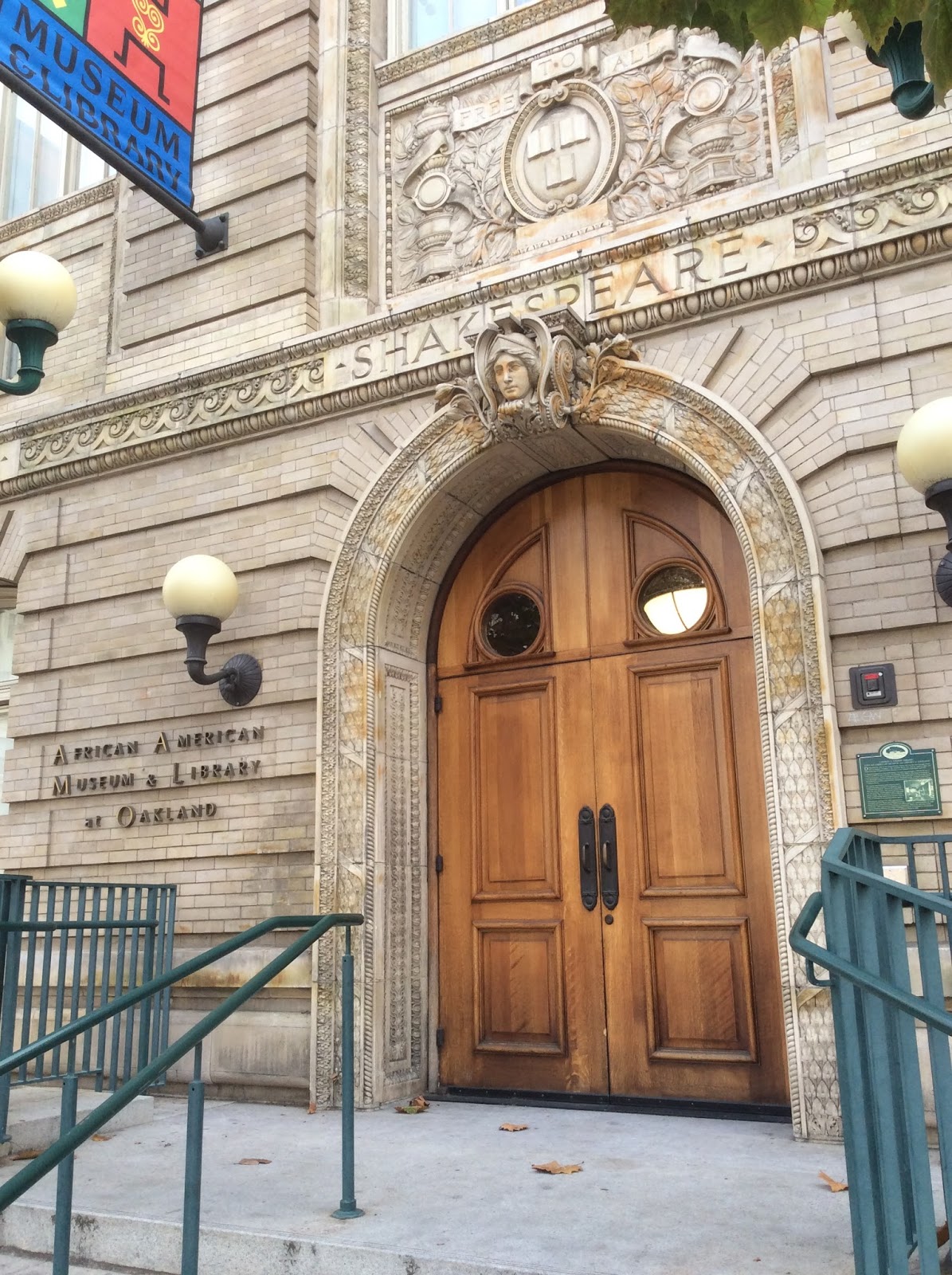
For the last several weeks, I’ve been gathering materials at my local library branch, the main branch near beautiful Lake Merritt on 14th St. But for many happy afternoons this early December, I’m on the other side of downtown, still on 14th St, in my new favorite study space, the lovely African American Museum and Library in Oakland.The AAMLO is a local Beaux Arts gem, the original main library building from 1902 until it moved to its current much larger location in the early 1950’s. (See the photo, right, of the museum’s green plaque for a brief history of the library and museum; you can click on the image to enlarge it for ease of reading, if you like.)

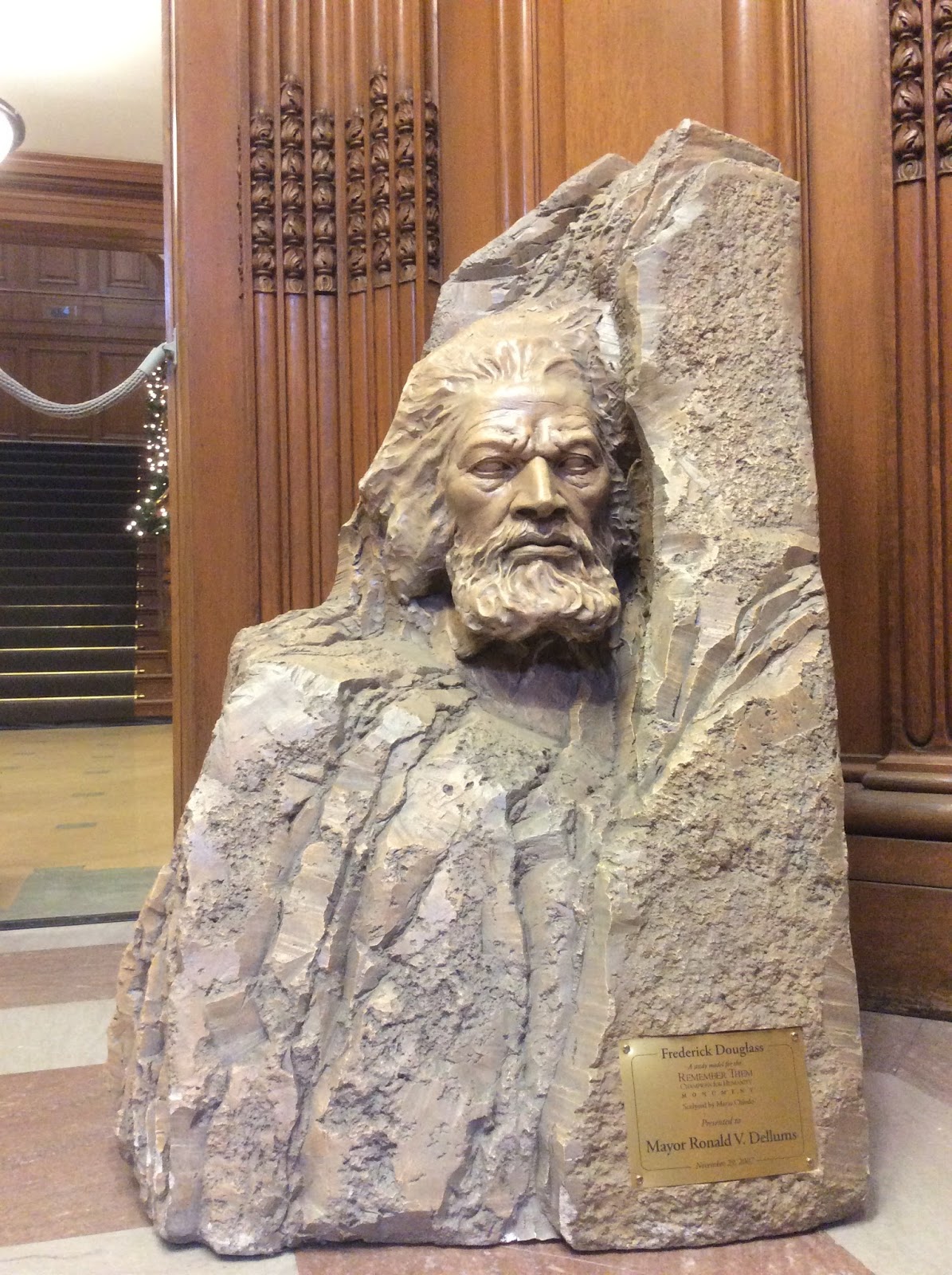
Sculpture of Frederick Douglass, AAMLO

The AAMLO is a new discovery for me this December, and as I enter, I’m greeted, to my delight, with a handsome (if rather stern) sculpture of the hero of my series. It’s this effigy of Douglass, in fact, which inspires me to just jump right in and start his Traveling Philosophy series here in Oakland.

So I’ll begin, as I mentioned, with stories and reflections on his life and work. My trip to the East Coast, tentatively planned for late winter / early spring, and the stories of that journey will be followed by a second series of essays inspired by my discoveries in the course of my travels. I hope you enjoy this new format, and as always, welcome any feedback you wish to offer!

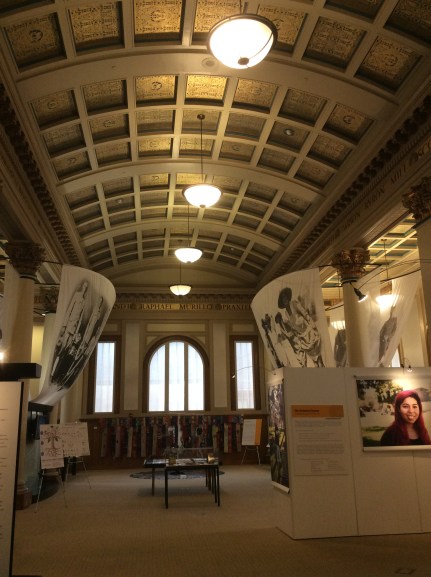
An interior view of AAMLO

AAMLO is a reference library only, so all materials I use must stay here. That’s perfectly fine with me, it’s such a lovely place to work, and lucky for me, it’s quite close by to where I live and work. Since I’ll be returning here a lot, I pick a quiet, cozy corner, and get to work…

One afternoon, after reading and making notes for quite some time, I feel the need to stretch my legs and rest my tired eyes. I go upstairs to the museum, a long gallery which runs the length of the building and which used to be the main reading room.

Crowning the main stairway which leads to this upper gallery, there’s a huge collage of great figures in African American history. It just so happens that the image of Douglass is under the name of Spinoza, among the list of names of great thinkers of the past which embellishes the frieze. Cool. Baruch Spinoza is next on my list of great thinkers to follow, but that’s a story for another time. I’d bet they’d have the most fascinating conversations, though, if they could speak the same language. Though they were very different in their histories, their particular beliefs, and their personalities, yet they were both lovers of reason, and they both lived authentically, true to their beliefs, models of intellectual integrity as they refused to obey the unjust rules of the societies they lived in.

An interior view of AAMLO, Oakland, CA, 2015 Amy Cools

A view of AAMLO’s main gallery on the upper floor

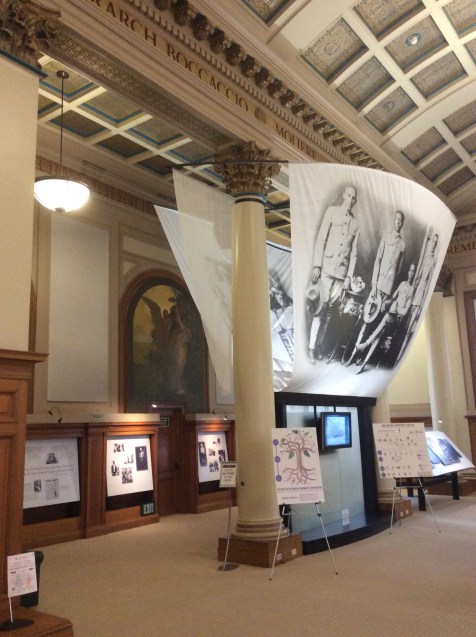
The museum tells the story of the African American people who did so much to make Oakland the vibrant and diverse city it is today, and how America’s legacy of laws and practices both helped and harmed the African American community here and throughout California. The African American community in Oakland grew by leaps and bounds throughout the 1900’s, much of it made up of refugees from the Old South, and through hard work, came to make up a significant proportion of its thriving middle class. Oakland’s economy centered around its busy port and manufactures, and as the work dried up after the stock market crash of 1929, it was no surprise that the economic woes hit African Americans the hardest: when jobs become more scarce, it was not the favored demographics that suffer from it most, as you may expect: Oakland’s working black population lost well over a third of their jobs.

Douglass himself experienced job discrimination in his time working on the Maryland docks as a caulker, hired out as a wage earner in the Baltimore shipyards for his master before he escaped to freedom. In his Narrative, Douglass relates the story of a severe beating he received at the hands of white shipbuilders who resented the competition of low-paid black labor, both slave and free. Douglass was driven from his job by violence; in 20th-century Oakland, it was a combination of job discrimination, rules and laws which prevented black people from joining or forming unions, and differential treatment by law enforcement. Not everything had changed since Douglass’s day.

A view of an exhibit in AAMLO's main gallery, upper floor, AAMLO, 2015 Amy Cools

A view of an exhibit in AAMLO’s main gallery

So as black Oaklanders suffered many of the worst effects of the economic downturn, the ills of poverty hit black communities the hardest, and harsh, unjust policing practices and drug policies exacerbated the problems that they may have been meant to alleviate. Many, however, passionately believe that there was no honest intent to help, just to oppress and destroy the black community. Whatever the case may be, the desperation of so many of Oakland’s black people makes it no wonder that the Black Panther Party was founded here in Oakland in the 1960’s. Then as now, a strong cultural tradition of racial justice activism and civic unrest flourished, sometimes, as again to be expected in an environment where so many felt disenfranchised and disrespected, to excess.

If he were alive to witness it, Douglass may have disapproved of many of the Black Panther Party’s militant tactics, but like the B.P.P. and Malcolm X after him, he came to believe that some kind of armed resistance may be necessary to achieve liberty and full equality for black people, and that if violent resistance was necessary to change the laws, it was just, given the depth of oppression and injustice black people suffered. He was, for example, an admirer of John Brown, a passionate abolitionist who unsuccessfully tried to start an armed slave rebellion and was hanged for treason as a result.

What Douglass thought about whether or not it’s right to use violence in the cause of furthering human rights, and if so, how much, against whom, and when, is a big topic, one for another essay in this series. Stay tuned!about whether or not it’s right to use violence in the cause of furthering human rights, and if so, how much, against whom, and when, is a big topic, one for another essay in this series. Stay tuned!

* Listen to the podcast version of this piece here or on iTunes

* Follow in the footsteps of Frederick Douglass with me… 

Ordinary Philosophy and its Traveling Philosophy / History of Ideas series is a labor of love and ad-free, supported by patrons and readers like you. Please offer your support today!

~~~~~~~~~~~~~~~~~~~~~~~~~

Sources and Inspiration

Douglass, Frederick. Narrative of the Life of Frederick Douglass. Originally published in Boston by the Anti-Slavery Office, May 1st, 1845.