Why We Need Citizen Philosophers

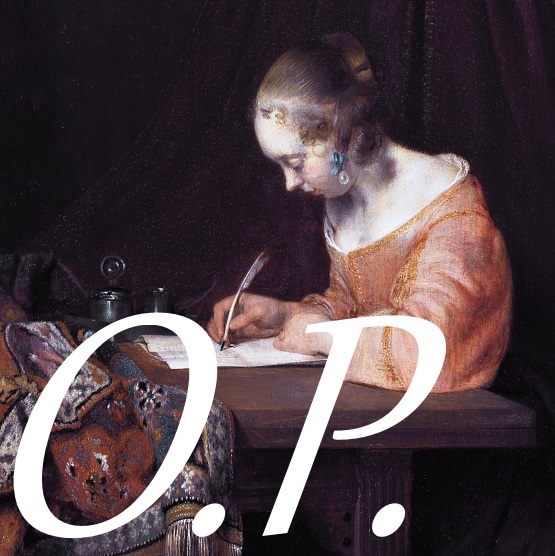
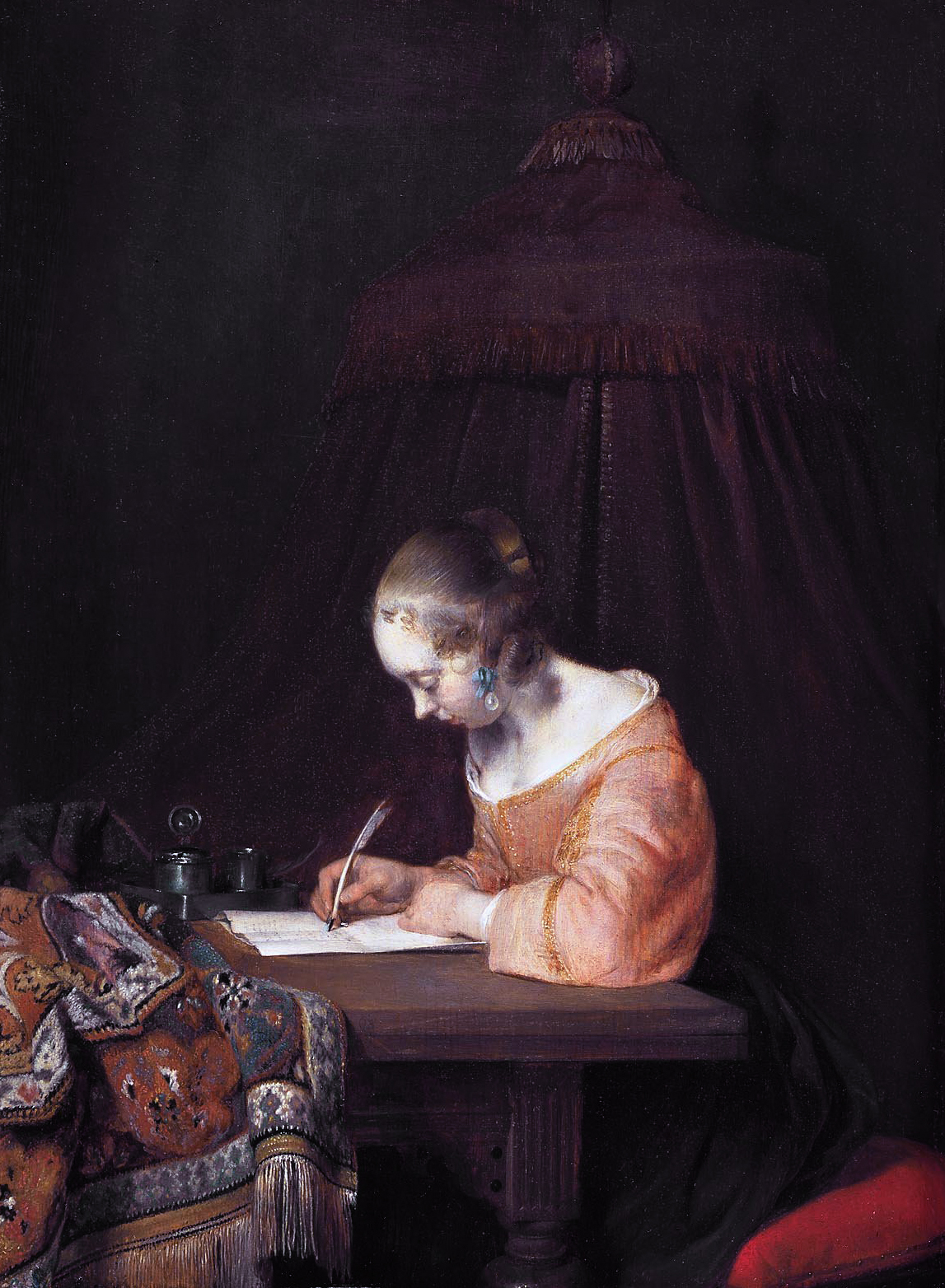
Writing a letter *oil on panel *39 x 29.5 cm *signed b.c.: GTB *ca. 1655I am a citizen philosopher, and very likely, so are you.

So what is citizen philosophy, why is it a useful concept, and what is its role in the world?

Let’s begin by considering what we mean by philosophy, generally speaking. For a long time, philosophy has been considered an almost exclusively academic pursuit, so highly specialized that only a very few experts can properly be called philosophers. As Eric Schwitzgebel points out, this is a relatively new development. In the Western world, it traces its origins to classical Greece; each region of the world has its own history of philosophy or its analogue, from Egypt to China to the Americas. As with all fields of inquiry, philosophy has branched out and specialized until much of it would be barely comprehensible to its first practitioners. Indeed, almost all fields of inquiry we know today started out as a branch of philosophy: mathematics, logic, science, medicine, theology, you name it.

But Philosophy, or ‘love of wisdom’, began in the home, the workplace, the market square, and the street corner with curious, intelligent people who, newly enjoying the luxury of free time accorded by advances in food-acquisition technologies, began to ponder on the whys and hows of the natural world and of the human experience. These people weren’t originally chosen or designated by some authority as the ‘thinkers’ as opposed to everyone else, the ‘doers’; instead, philosophy originated, grew, and specialized organically. We, as a species, began to ask and answer ever more complex questions about how to best live in the world as members of societies, what’s going on within our own minds and why, what are our roles in the universe, and what it all means… including the question ‘what is meaning?’. Over time, certain individuals came to be recognized as particularly adept at asking and answering these important questions, and came to be considered specialists and authorities in their fields of inquiry. But philosophy, broadly construed, remained a pursuit of many more people than that.Panthéon, Temple of Reason, Paris, France, Photo 2015 by Amy Cools
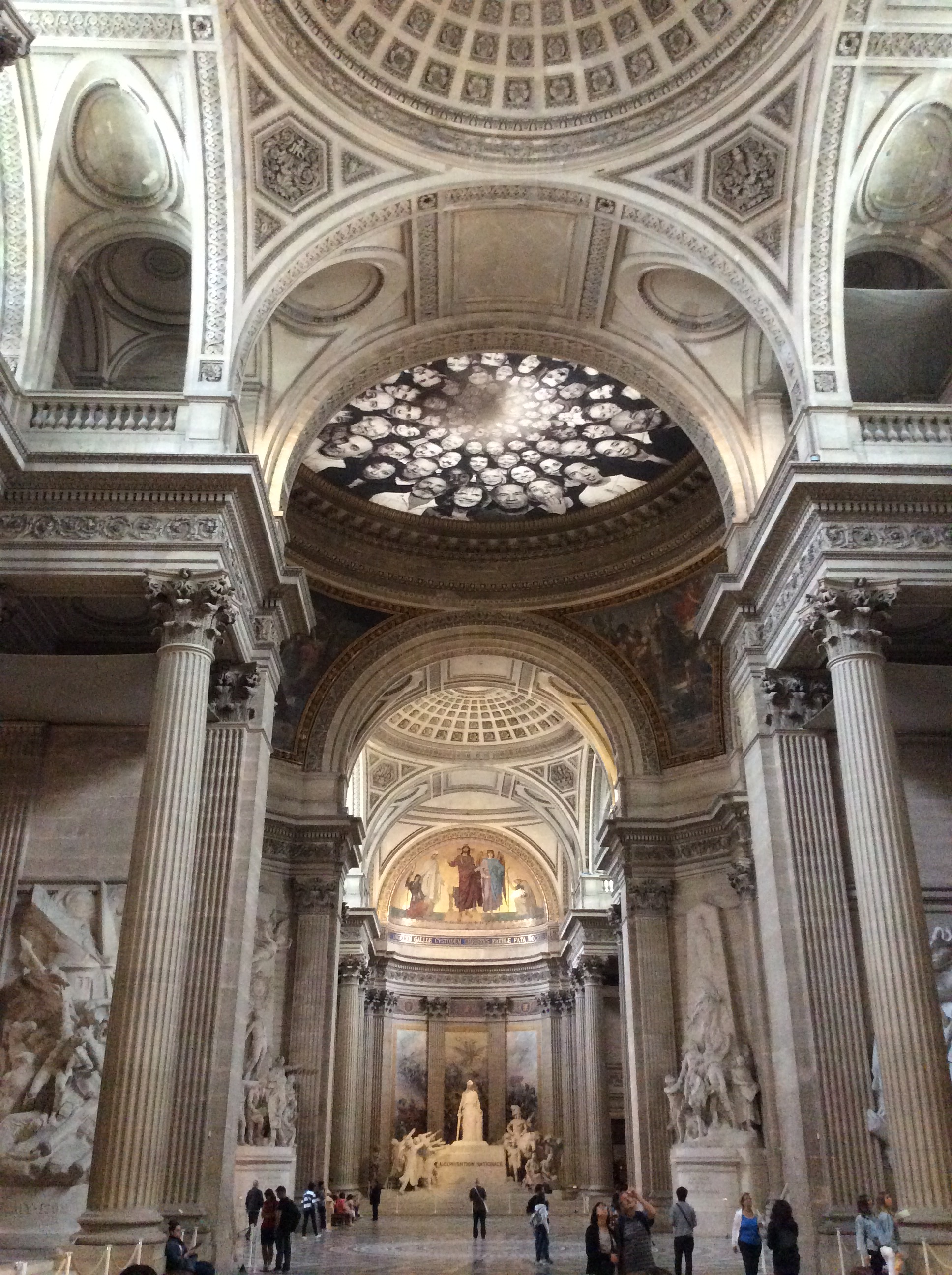
Philosophy has been demystified by re-entering popular culture, to a significant extent. There’s an ever-growing audience for popular philosophy books, articles, magazines, podcasts, and blogs. The term itself has also been re-broadened, so to speak. ‘Philosophy’ has taken on many new shades of meaning as it’s used to refer to a particular view of life, or aesthetic taste, or set of aspirations, or working theory of knowledge, or organization method, or substitution for the loaded term ‘spiritual’ …even a brand of skin care products (this one disgusts me somewhat, as it offends my aesthetic taste and sense of the ‘sacred’ by capitalizing on public respect for one of my most beloved, to me non-commodifiable things). Some of its newfound popularity is the result of advancing secularization accompanied by the desire to retain transcendence and meaning; some is the result of our newly data-centric lives brought to us by the word wide web, creating the need to make sense of the deluge of new information available to us; some is the result of the blending, annexing, and clashing of cultures in a world now widely and intimately connected through advanced media technologies and ease of travel, creating the need to find ways of communicating and living together in a world of new complexities. It’s all happening so fast that each of us is experiencing the urgency to make sense of it all right away, in a way that is practicable in our own communities and subcultures, and in a way each of us can understand and readily communicate.

In short, philosophy is enjoying a comeback in the public square. What I’m calling citizen philosophers are those who ask and answer questions there, about the nature of the universe and how to make sense of our experiences of it, who are not necessarily engaged in professional or academic philosophy. While citizen philosophers tend to spend a significant amount of time engaged in such inquiry and are motivated to educate themselves widely and systematically, many find academic philosophy too arcane and obscure to help the rest of us navigate our increasingly complex lives.

I, for one, love academic philosophy. I am continuously in awe of the work these men and women do, devoting their lives to hard study, to asking the most challenging questions, and to deep examination of the most nuanced and complex problems. This body of work is breathtaking in its scope, beautiful in the elegance of its arguments and solutions, satisfying in its wit and cleverness, fascinating in its intensive scholarship, and indispensable in its ability to help us figure out why and how to make a better world. I find it highly enjoyable and fulfilling, as well as challenging and frustrating, to grasp and wrangle with the work of academic philosophers. To be sure, academic philosophy has had its share of what David Hume calls sophistry and illusion, fit only to be consigned to the flames, and what Harry Frankfort more succinctly calls ‘bullshit’. But philosophy is not alone in this: science has had its phrenology and eugenics, medicine its humours and bloodletting, theology its justification for slavery and pogroms, and so on. Like these other disciplines, academic philosophy has some wonderfully effective built-in self-correctors, and continues to be an essential, I think preeminent, field of inquiry.
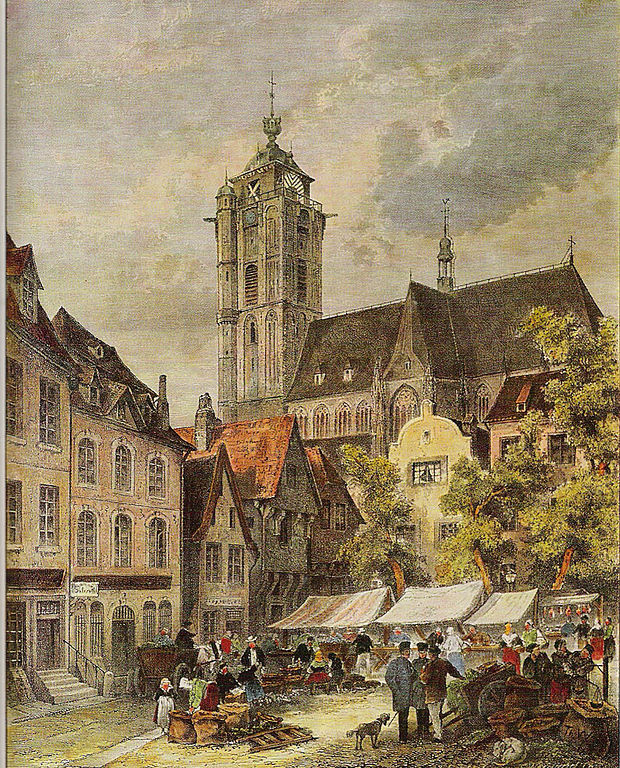
Marketplace in Duisburg by Theodor Weber, 1850, Public Domain via Wikimedia CommonsBut many of the most important and interesting questions don’t come down on us from on high, so to speak, originating from academia and revealed, as if a sort of holy writ, to the rest of us. In fact, most of the questions and problems we all wrangle with still originate in the public square, in the home, workplace, classroom, hospital, church, courtroom, political assembly, and so on. They bubble up from the challenges and uncertainties of our daily lives, are filtered through conversation and the arts, are swept up in social, legal, and political movements and institutions, and carried into the pool of academic philosophy, where they are further clarified and distilled in treatises, lectures, books, and so on.

And these questions don’t only originate with the public at large, we offer our first answers there. The answers range from fragmentary to nuanced, from intuitive to considered, from repetitions of received wisdom to original, from off-the-cuff to well-informed, by people from all walks of life with their own areas of expertise and unique capabilities of understanding born of particular experience. These citizen philosophers are on the first line of discovery and inquiry, and so called because they don’t participate in this process as a profession, but as a matter of personal interest and as a member of society at large, not subject to the demands and constraints of academic philosophy. Of course, the category of citizen philosopher does not exclude academic philosophers, because of course they, too, participate in the same process of question-creation and question-answering in the course of their everyday lives, separate from their academic pursuits.

It’s the very lack of the demands and constraints of academic philosophy that gives citizen philosophy an important role to play in public life. The world as it is offers so many varieties of human experience, so many ways of seeing the world, so many challenges that academic philosophers, like the rest of us, never have the opportunity to confront directly. Yet the scope of academic philosophy, at least potentially, is as broad as the possibilities of human (even, perhaps nonhuman?) experience. So how can it be that academic philosophers can possibly access enough information to ask and answer all the important questions that could be addressed? It may be, if academic philosophers were endowed with immense powers of comprehension and imagination that would enable them to take all the information available in the world, to truly understand what it’s like to be a coal miner in China, a cardiologist experiencing a heart attack firsthand, a one and a half year old who just created their first sentence, a person with frontal lobe epilepsy experiencing a supernatural vision, or a terrorist who became so after their entire family was killed by a bomb, and then conceive of all of the social, epistemic, metaphysical, political, and every other sort of question that may arise from these experience. (À la the mythical Mary in Frank Jackson’s black and white room.) But of course, this is impossible, as even the most intelligent and informed human mind has its limits. Sometimes, raw data is the fodder of academic philosophical inquiry. But most often, it’s the questions, moral precepts, stories, works of art, aphorisms, dogmas, memories, narratives, and all other products of the human mind, already having undergone a first round of questioning and examination, that academic philosophers take up as topics of inquiry. Group discussion in the camps of Nirman (cropped), by Abhijeet Safai, Public Domain via Wikimedia Commons
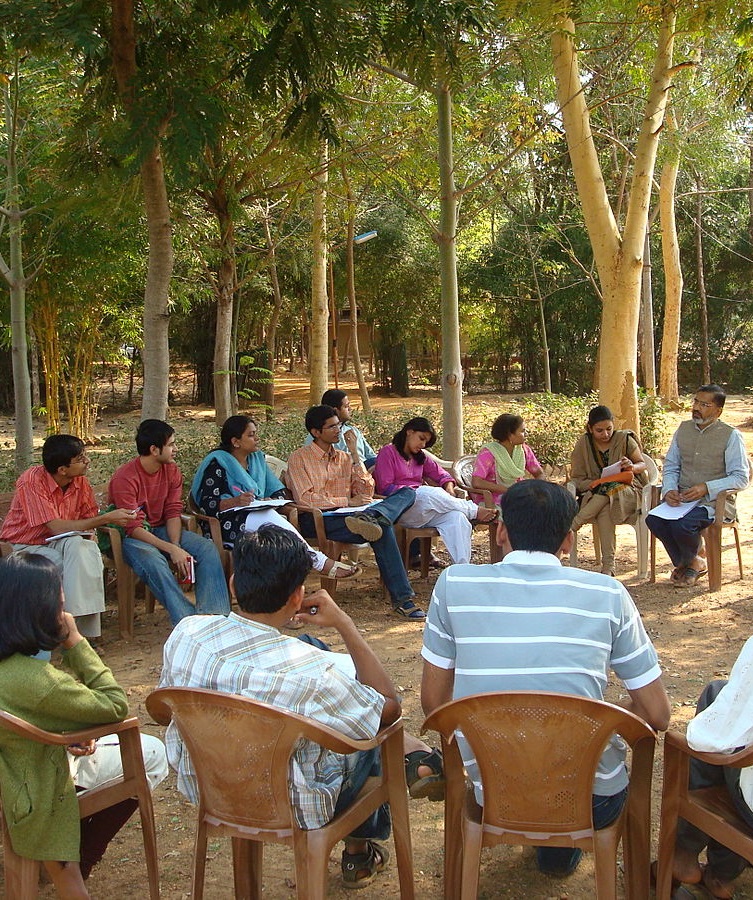
I, for one, am glad to see philosophy ever more present in the public square. That’s because I perceive philosophy as the great quest for understanding that academic and citizen philosophers all engage in, and as I see it, each gives something of immeasurable and irreplaceable value to the other. We need only recall some philosophical forays that have failed, from hairsplitting quibbles of scholasticism to navelgazing-verging-on-masturbatory obscurantisms of postmodernism, to recognize that academic philosophy benefits enormously by maintaining a robust discourse with the broader human community of activists, artists, reporters, bloggers, protesters, discussion groups, and of all others who care enough to question.  The discipline and expertise of academic philosophers, and the broader set of experiences, challenges, and opportunities for new questions and unique ways of understanding of the larger community of citizen philosophers each serve to keep the other more honest, more challenged, and more informed, in the great world conversation we’re all having.

*Listen to the podcast version here or on iTunes

Ordinary Philosophy and its Traveling Philosophy / History of Ideas series is a labor of love and is ad-free, supported by patrons and readers like you. Please offer your support today!

O.P. Recommends: Fareed Zakaria on What America Could Learn From Singapore About Racial Integration

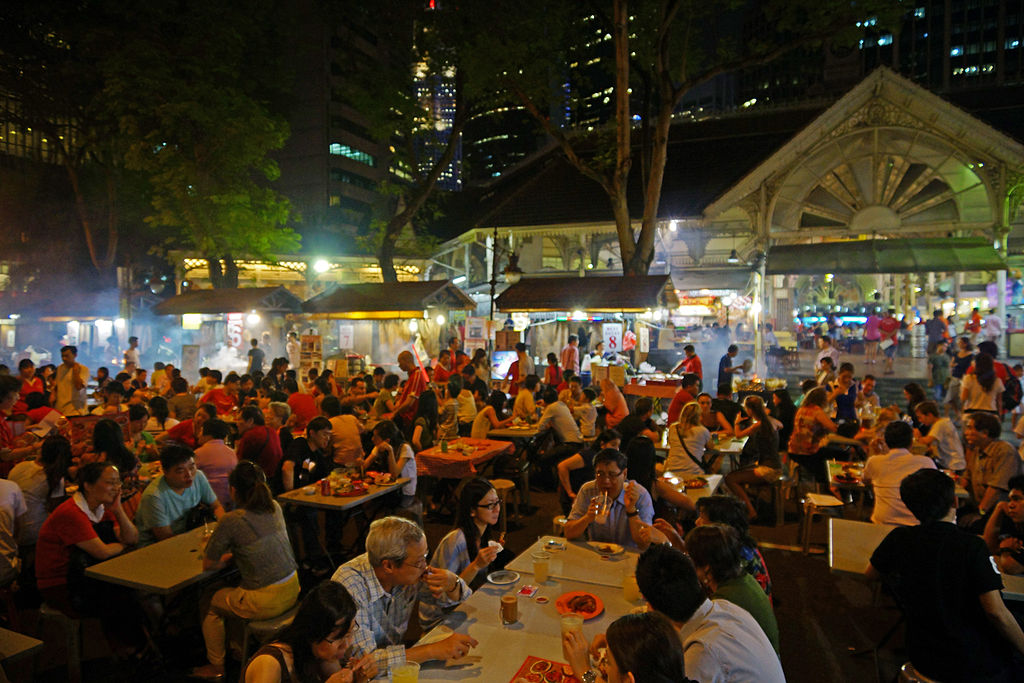
Singapore, Satay stalls along Boon Tat Street next to Telok Ayer Market by Allie Caulfield, Public Domain via Wikimedia CommonsIn thinking recently about the nature of government and its proper roles, I recalled this Fareed Zakaria piece about Singapore’s engineered diversity.

In it, Zakaria praises Singapore’s efforts to reduce racial and religious bigotry by increasing the diversity of its neighborhoods. The government’s tactics to achieve this would be intolerably intrusive to most Americans, and indeed to the citizens of most modern democratic nations. When it comes to race and class, the Singaporean law favors the government’s interest in providing an environment where citizens are brought up in familiarity with people who are different than they are, and therefore less subject to the harmful effects of bigotry, over the rights of individuals to freely choose where to live.

So can Singaporeans be considered more free than Americans when it comes to race and class? What does it mean to be free, in this sense? We struggle here in the United States from the ugly effects of entrenched bigotries, ancient and new, long after we considered it okay to sanction them by law: we live in self-segregated neighborhoods where racial minorities and the less wealthy enjoy a far lower level of health and personal safety, religious minorities (at this moment in our history, especially Muslims, although Quakers, Catholics, Jews, and others have had their turns) are subject to the suspicion and hatred born largely of ignorance, and social mobility is extremely slow. But we can choose to live, at least on paper, wherever we want. Does that really make us more free?

And if we generally agree, as a society, that we believe the end of bigotry is a worthy moral goal, is it right and proper for the government to be the arbiter of that goal? Is morality a governmental concern at all? Or is it the government’s role to keep out while citizens wrangle with important moral questions, interfering only to protect its citizens from bodily harm?

Along with Zakaria, I find much to admire in Singapore’s goal, and its tactics do appear to help foster social cohesion and reduce conflict. Would Americans would ever ‘go for’ anything like that, if our conflicts of race, class, and religion continue to set us against one another? I doubt it. But I don’t think we should kid ourselves that it makes us any more truly free.

*Listen to the podcast version here or on iTunes

~~~~~~~~~~~~~~~~~~~~~~~

Source and inspiration:

Zakaria, Fareed. ‘What America Could Learn From Singapore About Racial Integration’. The Washington Post, June 25, 2015 https://www.washingtonpost.com/opinions/from-singapore-lessons-in-harmony-and-diversity/2015/06/25/86fcbfa2-1b72-11e5-93b7-5eddc056ad8a_story.html

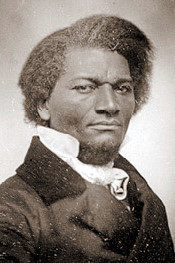
Frederick Douglass on Faith and Doubt

Frederick Douglass c. 1855, image Public Domain

In his lifetime and to this day, Frederick Douglass is a hero to the religious and non-religious,to believers and skeptics alike, each claiming him as a champion and exemplar of their values. Why the discrepancy? In his speeches, letters, and published work, Douglass reveals himself as both believer and doubter, a man of deep Christian faith who experiences a great deal of religious skepticism throughout his life.

Douglass is a self-professed believer in God and a Christian, yet he’s a vocal critic of most Christian denominations of his day, especially those of the United States. As a young man, Douglass struggles with religious doubts as he observes, time after time, that the most pious slaveowners are the most cruel. His master Thomas Auld, Edward Covey the slave-breaker, Reverend Daniel Weedon and the neighboring Hamiltons in Baltimore, among others, routinely and mercilessly whipped and abused their slaves, often to the point of great injury and near death, all justifying their behavior through Bible passages. In his second autobiography My Bondage and My Freedom, Douglass writes: ‘…The religion of the south…is a mere covering for the most horrid crimes…. Were I again to be reduced to the condition of a slave, next to that calamity, I should regard …being the slave of a religious slaveholder, the greatest that could befall me’ (159). In fact, he discovers to his surprise that the most decent master he ever had, William Freeman, was the only one without religion.

In his early days as an abolitionist activist and speaker, his accounts of his youthful doubts occasioned by his bad experiences with religious people cause many to accuse him of irreligion. But over time, he makes it clear that’s not religion itself he hates, it’s what he considers ‘false religion’. And no religion is as false as that which endorses slavery, which, first and foremost in Douglass’s time, was the Christian denominations of the American south.

But Douglass’s condemnation of American Christianity only begins with the southern churches; it by no means ends there. He calls on his fellow black people to leave any church, shaking the dust off their feet as they go, if their pastors or fellow parishioners subject them to indignity or unequal treatment. If anyone is segregated into balconies or back rows, or required to wait to receive communion after other colors or classes of parishioners, or their pastors preach against resistance to slavery, or the church in any other way indicates that black people are not deserving of the exact same respect, in degree and kind, as fellow children of God, then their church is revealed as just another peddler of false, corrupted religion. And all of these betrayals of the true Christianity, as Douglass perceives it, were as nearly pervasive in the northern churches as in the south.

Douglass believes that these practices, disrespectful of certain of God’s children, are not only unjust; they’re blasphemous because they’re direct attacks on the goodness and true nature of God. That’s because Douglass perceives the true God as not only ‘the God of Israel, Isaac, and Jacob’, but more broadly, the God of the oppressed. He sees this theme, this common thread, linking the plundered and oppressed desert tribes of Biblical Canaan (not mentioning that they did some plundering of their own) to those in his day who are suffering, reviled, and denied their natural rights: black people, women, the Irish, the abolitionists. Time and time again, Douglass relies on his interpretation of God as the God of the oppressed to show how the fugitive, the disenfranchised, the famine-starved left to die by their own governments, the righteous, reviled, and steadfast opposer of slavery and defender of the downtrodden, are actually those closest to him, are those who understand and share in his true nature.

But Douglass’s faith also appears at least as naturally derived as it is scripturally revealed. That’s because Douglass uses nature as a litmus test to reveal the truth and integrity of religion. Since by nature all people need and take joy in food and drink, physical and spiritual comfort, love, and beauty whatever their color, sex, or place of origin, and all people suffer alike from cold, hunger, thirst, cruelty, and neglect, and all people are just as capable of improvement through education and moral edification, then all people share the same nature, possess the same dignity, and have the same rights. Scripture may appear to allow for bigotry, unequal treatment, and bad behavior and even require it, but nature is observable and incontestable. So, if an interpretation of scripture seems to allow or require one to treat any of their fellow human beings as less than equally beloved, equally valuable children of the one God, that interpretation is certainly wrong since it violates the natural God-authored order of things.

In the end, Douglass relies on Jesus himself to tell us how to recognize true faith in true religion: ‘Wherefore by their fruits ye shall know them’ (Matthew 7:20). It’s not whether or not one professes belief in a religion, or can quote passages of scripture or the work of theologians, that reveals the worth and nature of faith. Douglass believes that true religion (which for Douglass, is true Christianity), always reveals itself by how well its adherents defend and promote justice and the equal dignity of all human persons. Conversely, if a religion commands or even permits injustice, it must be false. Where you find kindness and justice, there you find faith, and nowhere else.

It’s not the outward form or classification which indicates the true tree of religion to Douglass, it’s the sweetness and wholesomeness revealed in the fruit of true faith.

*Listen to the podcast version here or on iTunes

*Ordinary Philosophy and its Traveling Philosophy / History of Ideas series is a labor of love and is ad-free, supported by patrons and readers like you. Please offer your support today!

~~~~~~~~~~~~~~~~~~~~~~~~~~~~

Sources and Inspiration:

Douglass, Frederick. The Heroic Slave: A Cultural and Critical Edition. Eds Robert S. Levine, John Stauffer, and John McKivigan. Hew Haven: Yale University Press, 2015.

Douglass, Frederick. My Bondage and My Freedom: 1855 Edition with a new introduction.. Re-published 1969, New York: Dover Publications, Inc.

Foner, Philip S. The Life and Writings of Frederick Douglass, Vol. 1-4. New York: International Publishers, 1950.

Self-Soothing by Way of Erasing the Complexity of Human History, by Clay Jenkinson

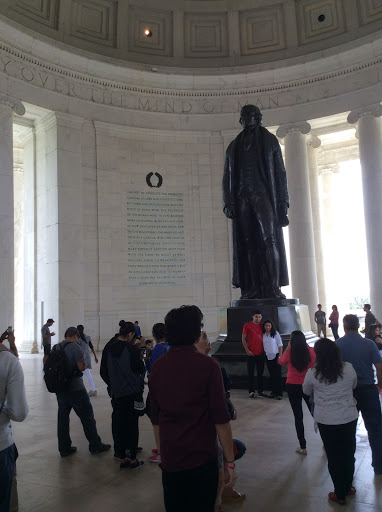
Statue of Thomas Jefferson at his Memorial in Washington D.C., photo 2015 by Amy Cools My beloved mentor in the humanities, Everett C. Albers, taught me the most important of all lessons: “Judgement is easy, understanding is hard.”

You probably have been following the recent spasm of righteousness on some of our college campuses. Some students wish to erase all traces of Woodrow Wilson at Princeton University, because he was a racist who undid what little integration his predecessors had managed in the federal government; because he was a sexist, who actively worked against women’s suffrage. Some students wish to have statues of Thomas Jefferson removed from the campus of the University of Missouri, because he was a racist, a slaveholder, and a sexual predator (if you read the Sally Hemings story in the darkest possible way). Some students at Oxford University wish to erase all traces of Cecil Rhodes, after whom Rhodesia was named, because he was a racist and an imperialist.

And so on.

It is true, by our standards as exemplars of perfect enlightenment, these men were all racists and indeed apartheidists. I have a close connection with two of them: Jefferson, whom I have been studying for thirty years, and Rhodes, whose scholarship I freely accepted back in 1976, and under whose financial legacy I studied for four wonderful years at Oxford University. I know the life and achievement of Woodrow Wilson less well, but I have read a handful of books about him over the years.

I regard this growing trend of purification rituals as wrong-headed and misguided for a number of reasons. I’ll list them as briefly as possible.

1. What will they say of us? Sometimes I try to anticipate what the righteous ones of the future will say about us? I met a petrochemical engineer a number of years ago. We talked for several hours about oil as a miracle carbon. I asked her what the epitaph of Western Civilization would be. She said. “They burned oil.” This morning I’m wearing shoes, socks, boxers, trousers, and a shirt, not one item of which was made in the United States. If I could trade each item of clothing back to the factory of its manufacture, I doubt that I would sleep well tonight. I’m with Jesus, John 8:7, “let him who is without sin cast the first stone.”

2. The whole man theory. As Jefferson wisely explained to his daughter Martha (see above), every human being is a mixed bag: enlightenment and blind prejudice, generosity and narcissism, benevolence and malevolence, good day and bad day, clarity and blind spot, outstanding in some ways, deplorable in others. Think of Lance Armstrong, Bill Cosby, Benito Mussolini, Bill Clinton, Mother Teresa, Margaret Thatcher, for example. In selecting our culture heroes, we have to assess the whole life and the entire achievement.

Jefferson was a racist and a slaveholder. These factors should weigh heavily in any rational assessment of his life and character. But we must also place in the balance his magnificent labors as a benefactor of humankind: decimal coinage, the rectangular survey grid system, separation of church and state, the University of Virginia, the organizational principle of the Library of Congress, the Louisiana Purchase, the design for the Capitol at Richmond, VA, fundamental work in paleontology, the Declaration of Independence, and the software of the American dream.

For all of his faults–and they do not begin and end with slavery–is Jefferson, in the final analysis, a benefactor or a degrader of humankind? On balance, how shall we evaluate him? Looking at his whole 83 years, his mass of writings, his range of practical achievements, his acts of greatness and his weakest moments, how shall we finally assess him?

3. Hamlet’s view. When the aging courtier Polonius tells Hamlet he will treat the visiting theater group “according to their desert,” Hamlet responds passionately: “God’s bodykins, man, much better! Use every man after his desert, and who should ‘scape whipping.” — Precisely. Where does this erasure of the past, more reminiscent of Stalin’s USSR and Orwell’s 1984 than of an enlightened democracy, end exactly? George Washington was a slaveholder. Lincoln had race views that would get him razed from Mount Rushmore by the narrowly righteous. Elizabeth Cady Stanton said remarkably ugly things about African-Americans when black men got the vote but white women did not in the wake of the Civil War. Franklin Roosevelt was an adulterer. Theodore Roosevelt was at times a warmonger. His views on American Indians are so dark at times that one hates even to read them in a scholarly arena. John F. Kennedy, LBJ, Ronald Reagan, Eisenhower, Bill Clinton, (where does this list end?) broke their marriage vows. Martin Luther King was a womanizer and he plagiarized his doctoral dissertation. Bill Clinton and George W. Bush evaded military service during the Vietnam War. Presidents Obama, Clinton, and GW Bush smoked dope. JFK dropped acid in the White House!

The only political figure I know who seems to have passed the righteous test in full purity is Jimmy Carter. That alone should give us pause. Where does this wave of righteous expurgation end?

4. ‘Tis better to wrestle than erase. My mentor Ev Albers believed that the duty of the humanities scholar is to examine and explore, to try to put any text or historical act or individual in its context, to try to understand how things shook out as they did and not otherwise. The duty of the humanist is to explore the past for its complexity, richness, unresolvedness, nuance, paradox, and problematic nature, and not to engage in the lazy enterprise of making glib judgments. Judgement is easy, understanding difficult. It does no good to portray Jefferson as a lover of liberty who unfortunately was born into a world of slavery, but who treated his slaves well and tried to change the world of Virginia and the United States to the extent that he could; and equally it does no good to portray Jefferson as a contemptible hypocrite who talked the language of liberty and equality, but who was quite content to breed slaves for the marketplace, and who dismissed African-Americans as physically and mentally inferior. One could make either argument plausibly enough, for there is a huge and not always consistent body of evidence in Jefferson writings and actions.

But surely we gain more by wrestling with the paradoxes in Jefferson’s life, illuminating, clarifying, teasing out nuance, attempting to understand his own (changing) thinking about race and slavery, his own strategy for preserving his reputation as an apostle of liberty while buying and selling human beings, who, as he freely acknowledged, “did him no injury.” After spending thirty years thinking and writing about Jefferson, I am not at all sure I understand his relationship to race and slavery. I’m not done trying. But I refuse simply to condemn him before I fully understand him.

We cannot understand ourselves if we do not understand the unresolved and perhaps unresolvable complexities of our heritage. Jefferson’s greatest biographers have said that the contradictions and unresolved principles in his life (1743-1826) are also the contradictions and unresolved issues in the American experiment. To understand ourselves, we must try to understand him. To judge him in a simplistic and self-satisfying way, means that we are short-circuiting our attempts to understand ourselves.

It would be insane, I think, to refuse to name an elementary school Martin Luther King, Jr., because he broke his marriage vows, or plagiarized his dissertation. It would be equally insane to remove Jefferson’s statue from the campus of the University of Virginia or the University of Missouri or William & Mary. Much better to use the “offending” icons as a text to discuss, debate, wrestle with, maybe even throw eggs at on occasion. But to remove those statues because Jefferson has disappointed us, US!, is to lose an opportunity for a very serious conversation about the dynamics that produced the America of 2016.

The Culture of Outrage represents a very dreary path in our pursuit of happiness and justice. In my view, on the whole, all things considered, Thomas Jefferson (as well as Woodrow Wilson, though I’m not quite as sure about Cecil Rhodes) must be seen as a net benefactor of humankind. But I would not remove a statue of Jesse Helms, George Wallace, or for that matter Pitchfork Ben Tillman from its pedestal. Better to deliberate and debate, perhaps at the top of our lungs, than to erase that which we think we have transcended.

– Clay S. Jenkinson is the author, educator, and scholar who created The Thomas Jefferson Hour, and is a sought-after historical impersonator, speaker, and media commentator, providing a deep but playful context to today’s events. (Bio credit: The Thomas Jefferson Hour, edited by A.C.) To discover more about Clay and his work, please visit http://jeffersonhour.com/

~~~~~~~~~~~~~~~~~~~~~~~~~~~~~~~~~

Further Reading:

» American Sphinx: The Character of Thomas Jefferson, by Joseph Ellis
» Thomas Jefferson: America’s Paradoxical Patriot, by Alf Mapp, Jr.

A Moral and Political Critique of Democratic Primary Debate Arguments of 2015, Part 2

This is the fourth installment of my examination of the arguments presented by presidential primary candidates of both major parties.

As with the previous posts, the debate transcript selections are in red, and my own remarks in black. I leave out introductions, banter, moderator comments, lines which indicate audience response, some purely empirical claims, and other parts that don’t directly pertain to the political and moral ideas considered here. The parts I leave out are indicated, as usual, by ellipses.

From the CNN Democratic presidential primary debate, October 14th 2015 (continued)

The source of the debate transcript which follows is the New York Times, at nytimes.com
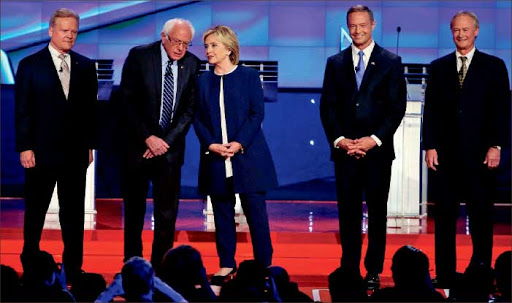
Participants: former Governor Lincoln Chafee, former Governor Martin O’Malley, former Secretary of State Hillary Clinton, Senator Bernie Sanders, and former Senator Jim Webb
Moderators: Anderson Cooper, Dana Bash, Juan Carlos Lopez, and Don Lemon

COOPER: …And welcome back. …I want to talk about issues of race in America…

WILKINS [guest]: …My question for the candidates is, do black lives matter, or do all lives matter?

SANDERS: Black lives matter. And the reason — the reason those words matter is the African American community knows that on any given day some innocent person like Sandra Bland can get into a car, and then three days later she’s going to end up dead in jail, or their kids are going to get shot. We need to combat institutional racism from top to bottom, and we need major, major reforms in a broken criminal justice system in which we have more people in jail than China. And, I intended to tackle that issue. To make sure that our people have education and jobs rather than jail cells…

O’MALLEY: Anderson, the …Black Lives Matter movement is making is a very, very legitimate and serious point, and that is that as a nation we have undervalued the lives of black lives, people of color. When …we we burying over 350 young men every single year, mostly young, and poor, and black, and I said to our legislature …that if we were burying white, young, poor men in these number we would be marching in the streets and there would be a different reaction.

I’ve seen many people respond to the ‘Black Lives Matter’ movement’s motto with a sign, or Twitter post, or internet meme reading ‘All Lives Matter’. It seems clear that those offering these responses are taking advantage of an easily derived self-righteous-sounding motto to skirt the issue while making it clear where their sympathies lie …not with the black lives lost and ruined by failed policies and cultural attitudes left over from our slave-owning past. Of course all lives matter, and I would add to those who use the latter slogan, please don’t insult the intelligence of your fellow citizens by pretending they don’t believe that too. The whole point is that our practices and policies have indicated that for far too many Americans, black lives don’t appear to matter enough, and this movement’s slogan is meant to point out that ugly fact. The ‘Black Lives Matter’ motto is powerful because of how simply and directly it highlights the often stark difference between how black people often fare than other people in so many spheres of American life.

A couple of years or so ago, conservative pundit Bill O’Reilly spent a lot of time talking about the issue of black Americans and crime, since the media debate was raging especially hotly around stop-and-frisk policies, black-on-black violence, mass incarceration of black people, violent confrontations between police officers and black people, and so on. O’Reilly placed the blame solely on culture: in his view, it could all be blamed entirely, or at least mostly, on violent rap lyrics, baggy clothes and hoodies, drugs, and other… ahem, peculiarities of black culture, with which he seems very uncomfortable.

I’ll give O’Reilly the benefit of the doubt a little here: culture could have something to do with it. It probably, actually, does. But it has nothing to do with the fashion choices of young black men, which is no more or less anti-authoritarian than those of other youth subcultures, and it doesn’t let our society off the hook, far from it. And it doesn’t at all justify his implication that the flawed policies of our police and justice systems aren’t to blame.

You see, if you don’t want kids to be brought up in a culture where they think going to jail is normal, practically even a rite of passage, than don’t institute policies that make it more likely they’ll grow up in families and neighborhoods where so many are incarcerated. For decade after decade, as demonstrated by masses of data we’ve collected on the subject, black people have been subject to a different kind and degree of law enforcement than white people, over our entire history. (Same goes for many other groups, but not for as long and to the same extent overall.) Black people are pulled over for minor infractions (real or invented) more often than white people, stopped and frisked more often, are directed to prison rather than treatment more often, receive tougher sentences, and so on and so forth.

The drug war has been especially hard on black citizens: while drugs are used at about the same rates in every racial and economic group, the laws are enforced far more rigorously against black people. I wish, for instance, police officers would prowl the frat rows of every wealthy college town in America and throw those drug offenders in prison at least as assiduously as they do in predominantly black and / or poorer neighborhoods, if they must do it at all. If they stopped and frisked there, image what a haul they’d get every weekend night! But of course they don’t. They don’t want to ruin those bright young lives for mistakes they made while in their foolish youth and throw them in jail for every little minor infraction, lowing their chances of getting a decent job, ever. But black youth must live to a higher standard. Whether or not they had the advantages of security or wealth when young, whether or not the fathers, mothers, uncles, aunts, brothers, sisters, or neighbors in their lives were wealthy, middle class, poor, or ever had been in prison, they must never make the same mistakes as those frat kids, or in fact most ordinary people who live it up and do illegal things from time to time, or else.

There are black criminals who are just as bad as any other criminals, who injure or kill police officers unjustly, for just doing their job protecting all those in their care. That’s true of people of all races, in any population. But in a society that incarcerates people to an obscene degree, even for minor infractions that arguably shouldn’t be illegal in the first place, and enforces the law disproportionately and often more harshly against black people, it shouldn’t be a shock or surprise that so many run-ins between police officers and black people turn violent.  I just hope that one day it will be a matter of shock and surprise that we kept going about it all wrong, in the same way, for so long.

COOPER: …Secretary Clinton, …Senator Sanders wants to break up the big Wall Street banks. You don’t. You say charge the banks more, continue to monitor them. Why is your plan better?

CLINTON: Well, my plan is more comprehensive. And frankly, it’s tougher because of course we have to deal with the problem that the banks are still too big to fail. We can never let the American taxpayer and middle class families ever have to bail out the kind of speculative behavior that we saw…. So I’m with both Senator Sanders and Governor O’Malley in putting a lot of attention onto the banks….

SANDERS: Let us be clear that the greed and recklessness and illegal behavior of Wall Street, where fraud is a business model, helped to destroy this economy and the lives of millions of people…. Check the record. In the 1990’s …when I had the Republican leadership and Wall Street spending billions of dollars in lobbying, when the Clinton administration, when Alan Greenspan said, “what a great idea it would be to allow these huge banks to merge,” Bernie Sanders fought them, and helped lead the opposition to deregulation….

CLINTON: …I have thought deeply and long about what we’re gonna do to do exactly what I think both the senator and the governor want, which is to rein in and stop this risk. And my plan would have the potential of actually sending the executives to jail. Nobody went to jail after $100 billion in fines were paid…

The Clinton administration seemed to buy into the same optimism that had fueled the Reagan years and the Golden Age: let the market run free, there’s lots of money to be made with the new kinds of financial market tools we have, knock down those pesky regulations and let the market regulate itself with consumer choice, and the bad products and practices will weed themselves out through self-destruction.

Well, we’ve learned that while all too many don’t regulate their own greed, the bad practices do self-destruct sometimes… the problem is, we can’t let them, because when and if they do, they can also sometimes take everyone else down with them. So, we bail out the bad actors to protect the innocent. Out of caution, or out of our almost cringing deference to Business, they mostly go unpunished, and so it goes, boom and bust, the good years awash with raging confidence, the bad with consternation, blame-slinging, and assurances that ‘this time, we’ve learned our lesson!’ And none of the worst offenders, those whose behavior did most to destroy the livelihoods of those who did not behave irresponsibly, seldom go to jail, or even forfeit enough money to stop being wealthier than most. Woody Guthrie sang: ‘Some will rob you with a six-gun, and some with a fountain pen.’ If you want to steal from people, even to the point of destroying them, just don’t do it with a gun (or while black, for that matter). You might get off scot-free.

COOPER: Senator Sanders… congressional leaders were told, without the 2008 bailout, the U.S. was possibly days away from a complete meltdown. Despite that, you still voted against it. As president, would you stand by your principles if it risked the country’s financial stability?

SANDERS: Well, I remember that meeting very well. …Hank Paulson, Bernanke came in, and they say, “guys, the economy is going to collapse because Wall Street is going under. It’s gonna take the economy with them.” And you know what I said to Hank Paulson? I said, “Hank, your guys — you come from Goldman Sachs. Your millionaire and billionaire friends caused this problem. How about your millionaire and billionaire friends paying for the bailout, not working families in this country?”

I understand the practical need for corporate protection, which allows a business to work on a bigger scale while shielding the business owner from personal financial liability. It allows the business to take more risks, which can lead to much more innovation than if they were forced to be cautious out of self-preservation. But here’s the thing: it can, and does, undermine the sense of personal responsibility in relation to doing business. For many, business is an honest endeavor, even, as a good friend of mine pointed out recently, almost altruistic: you listen to what the people care about, what they want and need, and you spend your day doing your best to make sure they get it. But for others, they’ve come to take it for granted that doing Business means that you have to take risks but that you shouldn’t personally have to pay for doing do. We need to keep this in mind, and tailor our policies accordingly: anytime someone ask society to let them to avoid being held financially responsible for the results of their choices, be wary. The motives may be benign, but the incentive to cheat, avoid regulation, exploit others, and gamble is a significant one, so we must be ready to shut down these attempts to game the system. Perhaps we should set a financial cap on financial immunity, or determine a level or quality of harm that’s too egregious for the protections of incorporation to remain in place.

BASH: …Senator Sanders, you’ve mentioned a couple of times you do have a plan to make public colleges free for everyone. Secretary Clinton has criticized that in saying she’s not in favor of making a college free for Donald Trump’s kids. Do you think taxpayers should pick up the tab for wealthy children?

I’m with Sanders on making college free for everyone, regardless of income, because Thomas Paine convinced me. I recently wrote a piece examining Paine’s ideas for a sort of basic income, a certain dollar amount that everyone receives early in life as seed money for their life’s work, and a stipend for old age. Paine thought everyone should receive it equally, rich and poor, not only because everyone would pay into it with taxes, but more importantly, it would avoid the deep sense of unfairness that so often fuels class division. Sanders’ plan for equally free college for everyone is great for these two reasons and for a third: it would promote an excellent cultural value, that we value education so much for its own sake, that we want everyone, equally, to have free and equal access to it, regardless of background or perceived need.

*Listen to the podcast version here or on iTunes

Ordinary Philosophy and its Traveling Philosophy / History of Ideas series is a labor of love and is ad-free, supported by patrons and readers like you. Please offer your support today!
Welcome to the new Ordinary Philosophy!

Ordinary Philosophy, Writing a letter *oil on panel *39 x 29.5 cm *signed b.c.: GTB *ca. 1655, assemblage by Amy Cools 2015Greetings to all,

On this New Year’s Day, which also happens to be my birthday and therefore, personally, doubly a day of new beginnings, I’m looking forward to a more expansive, more energetic future for Ordinary Philosophy!

What is Ordinary Philosophy?

It’s a series of explorations founded on the belief that philosophy is an eminently useful endeavor as well as a fascinating and beautiful one, and that citizen philosophers and academic philosophers alike share in making it so. A citizen philosopher myself, I found that my experiences as an avid reader, an artist, a working person, an entrepreneur, a student, and a writer filled my mind constantly with questions and new ideas, spurring me ever on in the search for answers. As I’ve always been a restless and hungry thinker, I fell in love with philosophy, especially, practical philosophy and the history of ideas.

What is Ordinary Philosophy’s mission?

It’s always been to share this love of philosophy and the history of ideas with you. In my explorations, I’ve encountered the most fascinating, innovative, and beautiful ideas from the curious, thoughtful, questing, and inventive world out there, from academic philosophy to science to history to current events to politics to the arts and so, so much more; so much more, in fact, that I can’t possibly process it all on my own.

So here at O.P.’s new home, I’ve broadened the mission.

While there have been occasional guest posts, there will be much more of an emphasis on providing a forum for many more voices at O.P., representing views from all walks of life. O.P. will also publish many more reviews, recommendations, and links directing readers to the great ideas proliferating out there that may be of special interest to O.P.’s audience.

The Traveling Philosophy / History of Ideas series will also expand. Each series will become more in-depth, with more detailed explorations of the life and ideas of each subject and more resources for further exploration and study. The podcast will expand in tandem: new audio recordings of longer pieces published in O.P. for those of you on the go who enjoy the ideas found here but don’t always have the time to sit down and read. As time goes by, I plan to expand the podcast as well to include interviews and a series of downloadable travel guides to accompany the History of Ideas series.

To better accomplish this expanded mission, I’ve moved O.P. here to its new platform: easier to read, use, and share. So if you love great ideas and the pieces you encounter here, please support O.P.’s expanded mission by sharing as widely as you can.

Lastly, dear readers, I appeal to you: Ordinary Philosophy is a labor of love, and depends entirely on your support. I’m determined to keep O.P. ad-free, but can’t do it without you. All financial contributions will be credited by name (unless anonymity is expressly preferred, of course!) on each project funded by their donations, and welcomed with deepest gratitude. Please support Ordinary Philosophy today!

Yours,

Amy Cools, founder and editor of Ordinary Philosophy

*Listen to the podcast version here or on iTunes

O.P. Recommends Freakonomics: Is Migration a Basic Human Right?

Airport Terminal in Salt Lake City, Photo 2015 by Amy Cools

I just listened to this episode of Freakonomics Radio podcast the other day, which I enjoyed very much and learned a lot from, and I think you’ll love it too. Freakonomics Radio is hosted full time by Stephen Dubner, one of the two authors of the famous book of the same name, published in 2005, with occasional guest hosting by its other author Steven Levitt. The book and podcast consider individual, social, and political situations from the view that human behavior is best explained in terms of the incentives that motivate us.

The podcast episode I’m recommending here is called ‘Is Migration a Basic Human Right?’ and I can hardly think of a more timely question. As Syrians fleeing death and destruction flee their war-torn country, we are invited to consider this question: do nations’ rights to maintain secure borders trump (how funny …no, actually ironic that I need that particular word right here!) the individual human right to survive and to flourish?

I love Freakonomics, despite the fact that it adopts, at times, a dismissive and even scornful tone towards philosophy (as do some of my other favorite podcasts), but that’s okay: there’s so much good information and clearheaded processing of it that its informative values trumps (groan) what might be philosophically lacking. After all, I believe, philosophy is at its best when it’s informed and disciplined by evidence, and it’s such a firmly established, fascinating, and eminently useful discipline that it can withstand critique and dismissiveness from economists, science enthusiasts, and so on. But to my edification and delight, the guest in this episode, Alex Tabarrok, professor of economics at George Mason University, gives a spirited defense of philosophy almost right off the bat.

Here’s a little excerpt for those of you in a hurry, but for the rest, I recommend you just skip this and go listen to the whole thing. Enjoy!

DUBNER: …As much as you may not like those reasons, aren’t they very much a symptom of the way humans have behaved throughout history? Borders, I mean.

TABARROK: So, borders are very common in one sense. As you say, when you look around, that’s the way the world is organized. And we’ve just gotten so used to them that we don’t even ask very much about their fundamental justification. And it’s when you come to ask about the fundamental justifications for borders that they begin to look very strange. Because they run counter to almost all of our moral writings and intuitions and philosophies. …

DUBNER: …I’ll be the skeptic for a moment — I could just say, “Well, that’s what philosophers do. Philosophers talk about ‘in a perfect world where all people were X, Y, and Z, things would go like this.’” But we all know that philosophers have no idea how the world actually works.

TABARROK: So, you know, our moral intuitions and indeed our laws today are that you shouldn’t discriminate against someone because of their race, because of their gender, their sexual preference or other issues. But for odd reasons, it’s perfectly OK to discriminate against someone because they were born somewhere else …Now, to defend philosophy, for very long periods of time, racism was perfectly normal; people have been doing it for thousands of years. And then people began to ask, “Well, what justification is there for treating someone so differently just because of their race?” And when people couldn’t come up with an answer to that question, when they were forced into this discomforting area that they can’t justify this terrible injustice, things began to change. …

~~~~~~~~~~~~~~~~~~~~~~~~~~

Sources and inspiration:

Dubner, Stephen. ‘Is Migration a Basic Human Right?’, Freakonomics Radio podcast, episode 231.
http://freakonomics.com/radio/


Social Transparency and the Epistemology of Tolerance, by G. Randolph Mayes

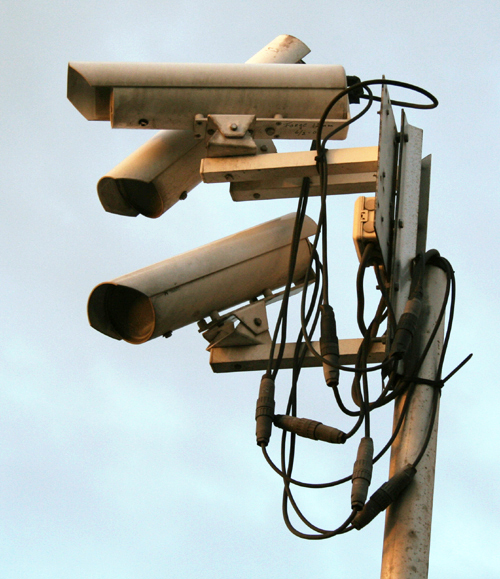
Surveillance cameras, Licensed under CC BY-SA 3.0 via Wikimedia CommonsLast week I learned a new word- apotropaic -and darned if I haven’t heard it three times since then!

Everyone is familiar with this sort of thing and has at least briefly experienced it as uncanny. It is called the Baader-Meinhof Phenomenon. Generalized, the BMP is our inclination to mistake an increased sensitivity to P for an increase in the number or frequency of P itself.

Lately I’ve been thinking about the BMP in relation to social transparency. The free flow of social information is a defining characteristic of the current era, and I tend to be far more sanguine about its effects than most. But I have started to think that the BMP presents a serious challenge to my optimism.

Most of my peers tend to be very possessive about their personal information. They feel like they own their beliefs, ideas, tastes, interests and habits. Consequently, they regard those who acquire knowledge of such without their permission as thieves. They are also haunted by Orwellian metaphors, and tend to react to increasing levels of social transparency in the public sphere with alarm as well. The idea of cameras at every street corner, shop window and traffic intersection feels dirty to them, despite its obvious value for public safety.

I dislike snoops as much as they do, but I distinguish between my preferences and my rights. I see unrestricted access to information as a cornerstone of liberal democracy. For me, the most fundamental human right is the right to learn. Whenever we choose to prevent or punish learning of any kind, there has to be an excellent reason for it. For some kinds of highly sensitive information these reasons exist, but they are consequentialist by nature and do not spring from any fundamental right to control information about ourselves.

I like glass houses. I think a world in which it is nearly impossible to hide the fact that you are an abusive husband or a pederast cleric is clearly preferable to one in which what goes on behind closed doors is nobody else’s business. In a liberal society, there is no greater disincentive to such transgressions than the certainty of others finding out. My friends are all yesbut. As in yes, but this is exactly what concerns them. They follow Orwell in thinking that a socially transparent society is fundamentally an informant society, conformist by nature.

But the evidence is that they are just wrong about this. We are living in a time of unprecedented tolerance for diversity and self-regarding eccentricities. This has not been achieved in spite of increasing social transparency. As long as homosexuals, transgenders, apostates, recreational drug users and the mentally disabled were confined to the darkness of the closet we could ridicule them with impunity. But it is difficult to continue in this vein when the clear light of day reveals that many of them are people we love.

Now here is my concern.

If increasing social transparency is not managed very carefully, it could backfire spectacularly, thanks to the BMP. When social transparency increases quickly, we suddenly become aware of the many intolerable things that have been happening right under our noses. Consequently, we get the impression that the world is going to hell in a handbasket and we become receptive to irrationally harsh responses.

What do I mean by careful management? Two things, at least.

First, it means creating future generations of adults who are more epistemologically sophisticated than mine. We grew up thinking that being responsible and informed citizens meant paying careful attention to reliable news sources, caring about the less fortunate and following our conscience. But that is a serious error.

The news is almost entirely about relating recent interesting events; it rarely provides a statistical context in virtue of which the general significance of these events may be responsibly evaluated. This is why it is possible to be an informed and conscientious citizen by the standards of my generation and still be completely unaware of essential global facts, such as that we are living in a period of unprecedented world peace or that the global poverty rate has been cut in half during the last 20 years.

If we aren’t aware of the role BMP plays in our reaction to constant reports of police brutality against minorities in the U.S, gang rapes of girls in India, the persecution of homosexuals in Russia, the public whipping of atheists in the Third World, and terrorism everywhere, then our reactions are likely to be intemperate and counterproductive.

Second, we are going to need to find the moral strength to punish wrongdoing less severely. What? Yes. To see why, consider that whenever someone decides whether to do wrong she makes an implicit expected value calculation in which the probability of being caught figures centrally. For this reason, the severity of the current punishment is itself a function of the probability of detection. In an increasingly transparent society, the probability of detection rises. Hence the previous levels of punishment are now intemperate and must be recalibrated.

As an example, consider new surveillance capabilities which can detect every single traffic light violation. Many people oppose the proliferation of this kind of technology, despite its obvious ability to save lives. Why? I think it is partly because they foresee an intolerable rise in the cost of innocent mistakes. In this sense, Orwellian concerns are absolutely on point. If we are unwilling to attenuate the severity of our punishments, applying the technology of transparency to crime detection is the road to the police state.

Social transparency has so far been part of the recipe for a more tolerant society, but so far it is tolerance for things that we are learning to hate less. Adopting more temperate responses to crimes we perhaps hate even more than before is a whole nother thing.

I hope future generations will be enlightened enough to do it, but in the meantime some apotropaic magic would come in real handy.

– Randy Mayes is a Professor in the Department of Philosophy at Sacramento State University. His main teaching and research interests are naturalism, moral psychology and the nature of rational inquiry, and he has published work on the the concepts of explanation, privacy and cruelty (bio credit: Sacramento State University Department of Philosophy). This piece was originally published at The Dance of Reason blog.

Traveling Philosophy Series: Frederick Douglass Edition, Prologue, Oakland, CA

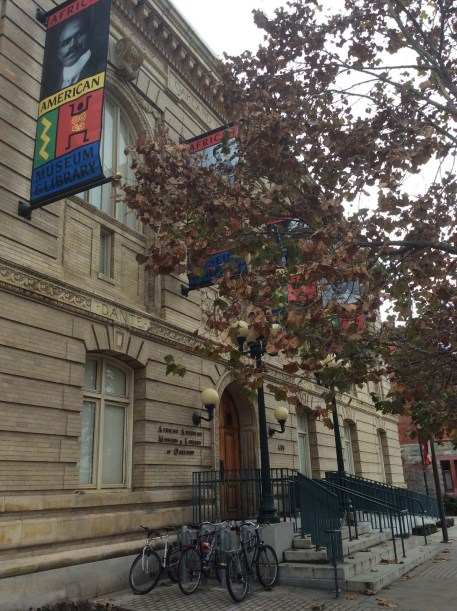
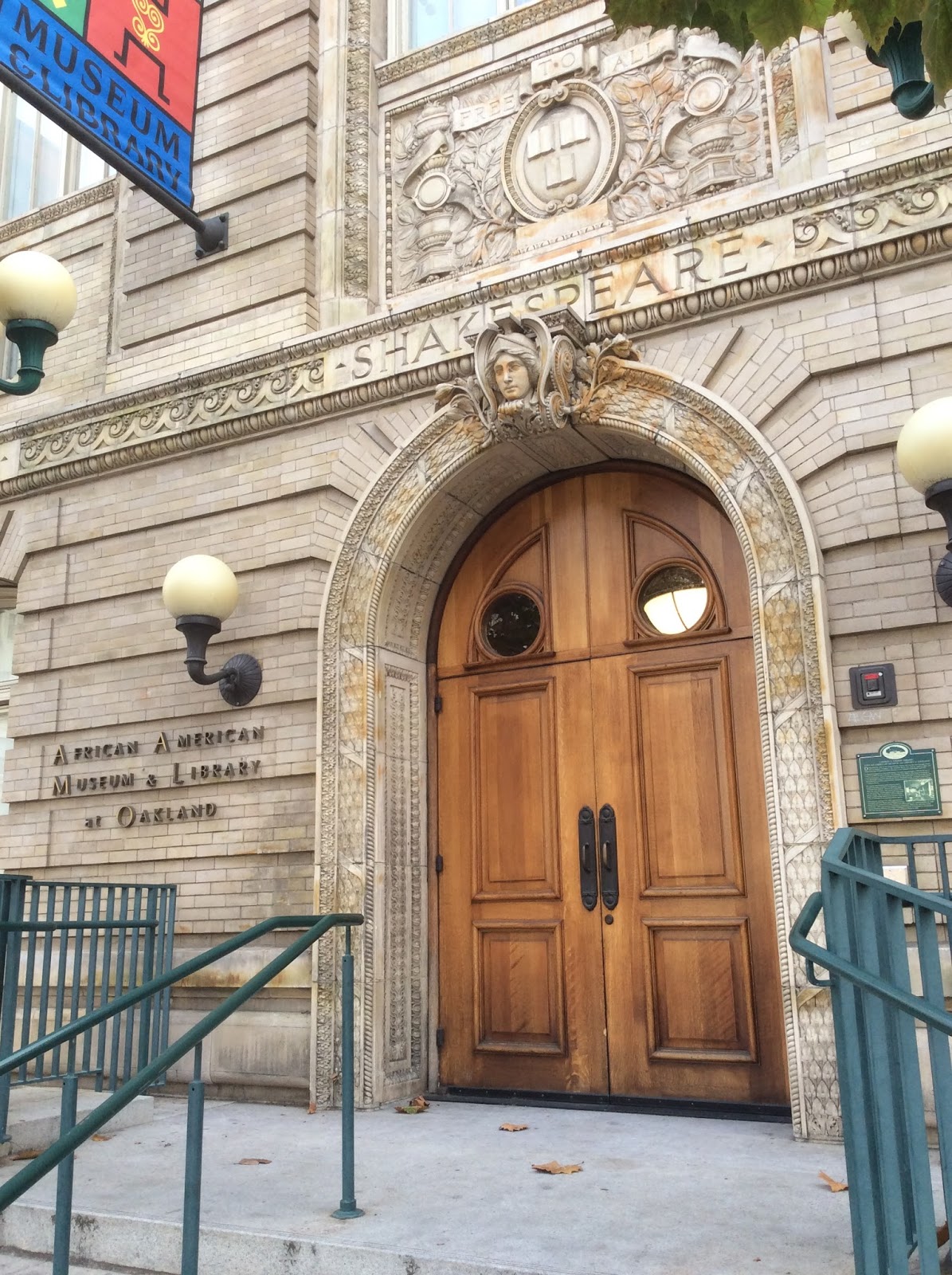
African American Museum and Library, Oakland, CA

Frederick Douglass’s Traveling Philosophy series will begin in earnest when I arrive on the East Coast. But behind every Traveling Philosophy series is research, and I have some excellent resources here where I live in Oakland, California. It’s still a little up in the air as when I’ll actually be able to make it to the East Coast for a long enough period to cover the ground I’d like to, since I intend this series to be the most comprehensive I’ve done yet. So, I’ve decided to do something a little different this time, to start the account of my journey with my discoveries and thoughts on the acts and ideas of Douglass I encounter while researching his life.

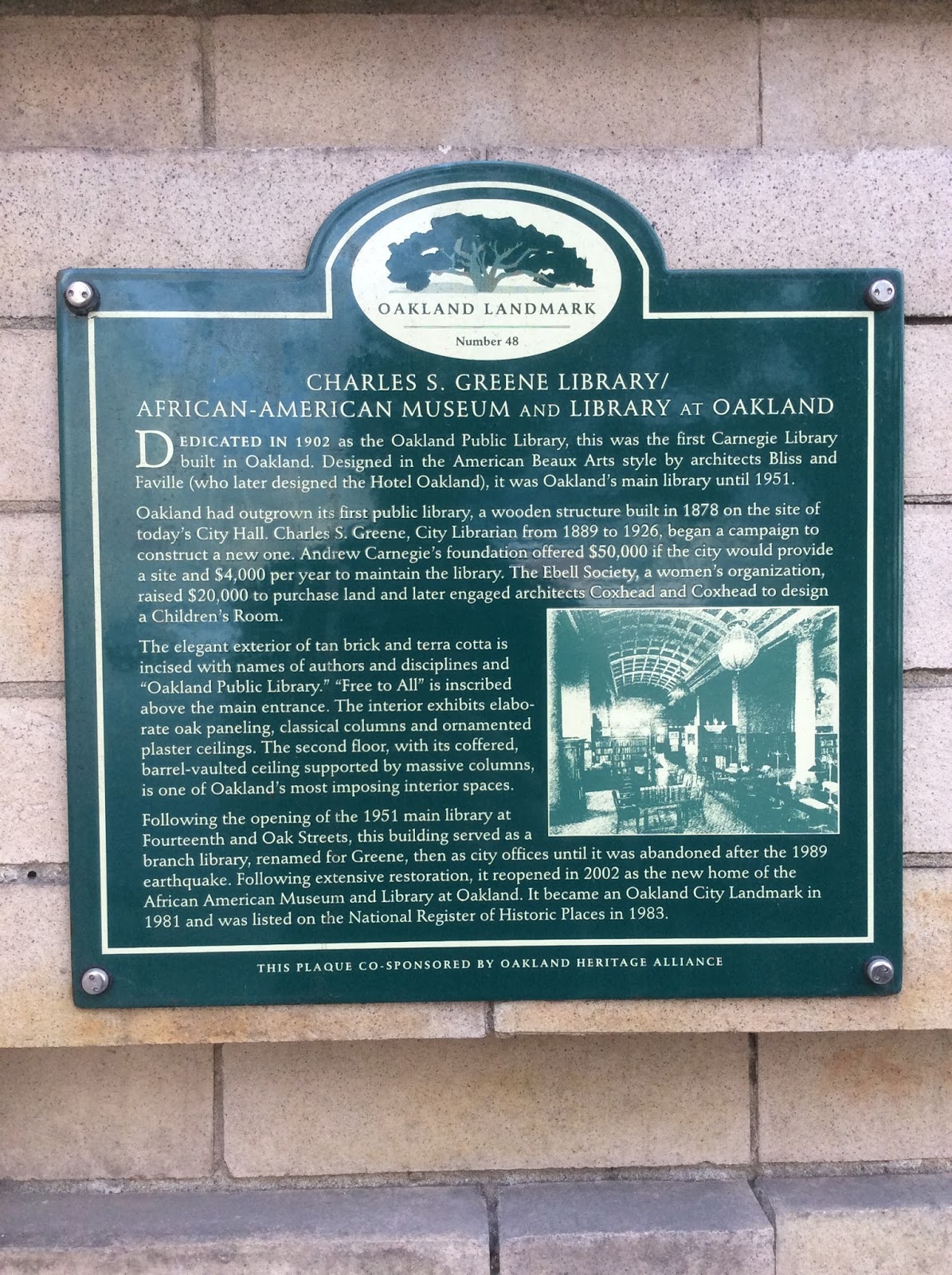
For the last several weeks, I’ve been gathering materials at my local library branch, the main branch near beautiful Lake Merritt on 14th St. But for many happy afternoons this early December, I’m on the other side of downtown, still on 14th St, in my new favorite study space, the lovely African American Museum and Library in Oakland.The AAMLO is a local Beaux Arts gem, the original main library building from 1902 until it moved to its current much larger location in the early 1950’s. (See the photo, right, of the museum’s green plaque for a brief history of the library and museum; you can click on the image to enlarge it for ease of reading, if you like.)

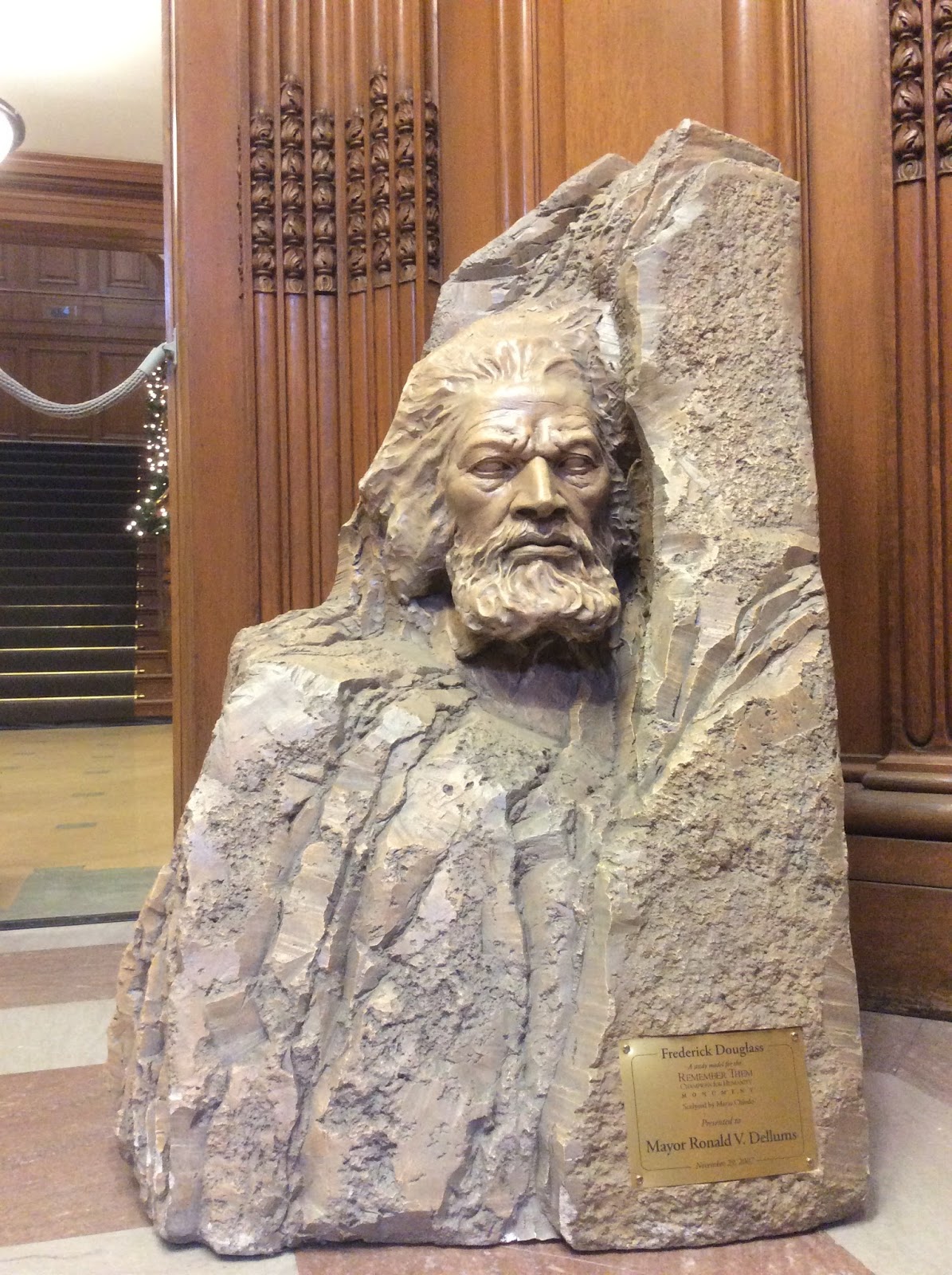
Sculpture of Frederick Douglass, AAMLO

The AAMLO is a new discovery for me this December, and as I enter, I’m greeted, to my delight, with a handsome (if rather stern) sculpture of the hero of my series. It’s this effigy of Douglass, in fact, which inspires me to just jump right in and start his Traveling Philosophy series here in Oakland.

So I’ll begin, as I mentioned, with stories and reflections on his life and work. My trip to the East Coast, tentatively planned for late winter / early spring, and the stories of that journey will be followed by a second series of essays inspired by my discoveries in the course of my travels. I hope you enjoy this new format, and as always, welcome any feedback you wish to offer!

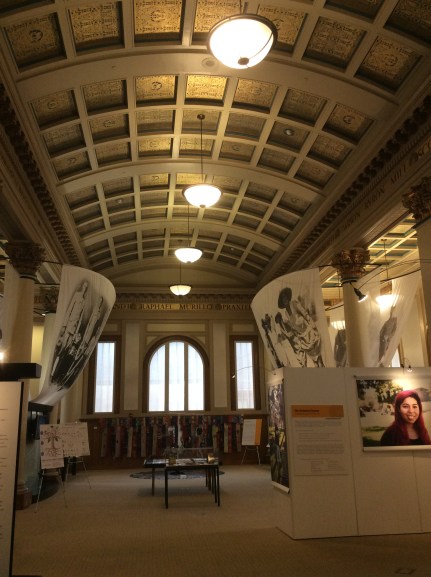
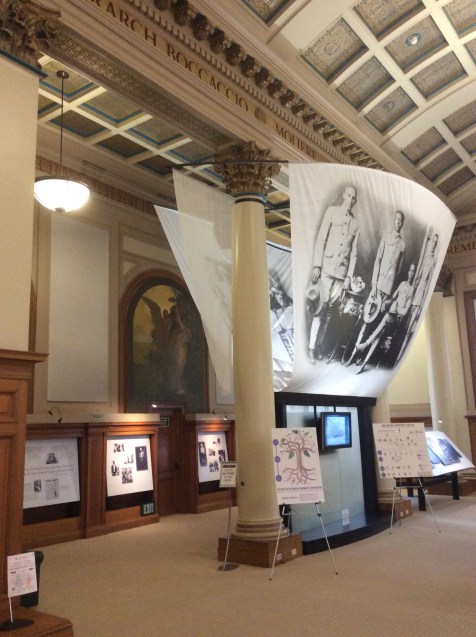
An interior view of AAMLO

AAMLO is a reference library only, so all materials I use must stay here. That’s perfectly fine with me, it’s such a lovely place to work, and lucky for me, it’s quite close by to where I live and work. Since I’ll be returning here a lot, I pick a quiet, cozy corner, and get to work…

One afternoon, after reading and making notes for quite some time, I feel the need to stretch my legs and rest my tired eyes. I go upstairs to the museum, a long gallery which runs the length of the building and which used to be the main reading room.

Crowning the main stairway which leads to this upper gallery, there’s a huge collage of great figures in African American history. It just so happens that the image of Douglass is under the name of Spinoza, among the list of names of great thinkers of the past which embellishes the frieze. Cool. Baruch Spinoza is next on my list of great thinkers to follow, but that’s a story for another time. I’d bet they’d have the most fascinating conversations, though, if they could speak the same language. Though they were very different in their histories, their particular beliefs, and their personalities, yet they were both lovers of reason, and they both lived authentically, true to their beliefs, models of intellectual integrity as they refused to obey the unjust rules of the societies they lived in.

An interior view of AAMLO, Oakland, CA, 2015 Amy Cools

A view of AAMLO’s main gallery on the upper floor

The museum tells the story of the African American people who did so much to make Oakland the vibrant and diverse city it is today, and how America’s legacy of laws and practices both helped and harmed the African American community here and throughout California. The African American community in Oakland grew by leaps and bounds throughout the 1900’s, much of it made up of refugees from the Old South, and through hard work, came to make up a significant proportion of its thriving middle class. Oakland’s economy centered around its busy port and manufactures, and as the work dried up after the stock market crash of 1929, it was no surprise that the economic woes hit African Americans the hardest: when jobs become more scarce, it was not the favored demographics that suffer from it most, as you may expect: Oakland’s working black population lost well over a third of their jobs.

Douglass himself experienced job discrimination in his time working on the Maryland docks as a caulker, hired out as a wage earner in the Baltimore shipyards for his master before he escaped to freedom. In his Narrative, Douglass relates the story of a severe beating he received at the hands of white shipbuilders who resented the competition of low-paid black labor, both slave and free. Douglass was driven from his job by violence; in 20th-century Oakland, it was a combination of job discrimination, rules and laws which prevented black people from joining or forming unions, and differential treatment by law enforcement. Not everything had changed since Douglass’s day.

A view of an exhibit in AAMLO's main gallery, upper floor, AAMLO, 2015 Amy Cools

A view of an exhibit in AAMLO’s main gallery

So as black Oaklanders suffered many of the worst effects of the economic downturn, the ills of poverty hit black communities the hardest, and harsh, unjust policing practices and drug policies exacerbated the problems that they may have been meant to alleviate. Many, however, passionately believe that there was no honest intent to help, just to oppress and destroy the black community. Whatever the case may be, the desperation of so many of Oakland’s black people makes it no wonder that the Black Panther Party was founded here in Oakland in the 1960’s. Then as now, a strong cultural tradition of racial justice activism and civic unrest flourished, sometimes, as again to be expected in an environment where so many felt disenfranchised and disrespected, to excess.

If he were alive to witness it, Douglass may have disapproved of many of the Black Panther Party’s militant tactics, but like the B.P.P. and Malcolm X after him, he came to believe that some kind of armed resistance may be necessary to achieve liberty and full equality for black people, and that if violent resistance was necessary to change the laws, it was just, given the depth of oppression and injustice black people suffered. He was, for example, an admirer of John Brown, a passionate abolitionist who unsuccessfully tried to start an armed slave rebellion and was hanged for treason as a result.

What Douglass thought about whether or not it’s right to use violence in the cause of furthering human rights, and if so, how much, against whom, and when, is a big topic, one for another essay in this series. Stay tuned!about whether or not it’s right to use violence in the cause of furthering human rights, and if so, how much, against whom, and when, is a big topic, one for another essay in this series. Stay tuned!

* Listen to the podcast version of this piece here or on iTunes

* Follow in the footsteps of Frederick Douglass with me… 

Ordinary Philosophy and its Traveling Philosophy / History of Ideas series is a labor of love and ad-free, supported by patrons and readers like you. Please offer your support today!

~~~~~~~~~~~~~~~~~~~~~~~~~

Sources and Inspiration

Douglass, Frederick. Narrative of the Life of Frederick Douglass. Originally published in Boston by the Anti-Slavery Office, May 1st, 1845.

Really, America? Ban the Refugees, Let the Troops Do All the Work?!?

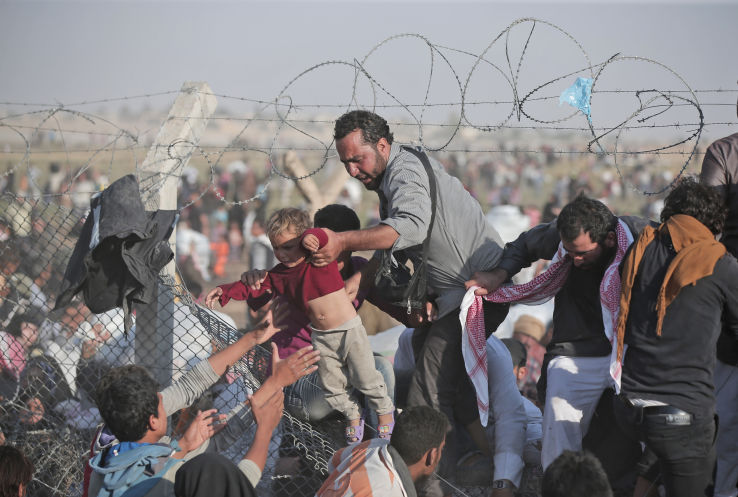
Like so many of you, I’m sure, I’ve been dismayed, though not really surprised, at the vitriol aimed at Syrian refugees and Muslims in general, following the shootings in Paris and San Bernardino. Much of it is voiced in the form of inflammatory but silly memes, but now, even some of our presidential candidates are chiming in. Reactionary religious and ethnic hatred are at least as old as human history, and so are political capitalizations on them.

These memes and the anti-Islamic proposals they promote, such as calls for the U.S. to stop taking in Syrian refugees, to ban all Muslims from entering the country, or to force all Muslims to register with the government, as far as I can tell, are mostly coming from some on the conservative end of the political spectrum. However, the backlash against all this reactionary hate-mongering is coming from both liberals and conservatives, and their arguments are bolstered by the best in our political system and its founding documents, focused, if not always perfectly, on the protection and expansion of human rights.

Besides the basic problem of the xenophobic, anti-human-rights nature of the anti-refugee and anti-Muslim rhetoric, there’s something about the whole thing that’s been bothering me, something that I hadn’t really seen addressed in so many words. I jotted down this thought in the notes for this piece, and I hadn’t had the chance to finish it until tonight.

Then, today, just a few hours before I planned to write this, I heard a re-broadcast of a news story that appears to confirm my suspicions. A recent poll from Harvard revealed that the majority of millennials, age 18-29, say we should send more troops to fight ISIS and say they wouldn’t even consider enlisting.

This was my thought before I heard that story: for all the rhetoric calling for an increase in the war effort against Islamist violent extremism, and all the preaching about supporting our troops, it seemed to me that many of the same people who want to send more military abroad to fight to protect people’s freedoms want little or nothing to do with the effort themselves. They want others, namely our soldiers, to take all the risks, shoulder all the burdens, and do all the work of defending and promoting American values, but don’t want to participate even in a relatively small way by helping out the people who are most victimized by Islamic radicalism, who vote with their feet by fleeing from violent Islamist groups to ethnically diverse, religiously free nations.

It looks as if this poll reveals that this ‘you go do it, brave soldiers in uniform, but leave us out of it!’ attitude is likely true for at least for one significant slice of the population.

What happened to the idea that if we, the people, decide to go to war, it’s we, the people, who should fight it? Makes me feel nostalgic, in the way that you can feel nostalgic for a time you’ve never experienced yourself and are not sure ever really existed, for the ‘greatest generation’ of World War II and earlier wars. Wasn’t it the case back then that most ordinary citizens felt duty-bound to participate in the war effort that their nation was fighting, even if in some small way at home? Didn’t they involve themselves, if necessary, in the work, the sacrifice, and the danger of doing the right thing, even if doing so meant some risk to themselves? It’s not even that they have to worry about conscription anymore! Isn’t the mission of promoting the American values of multiculturalism and religious freedom, protecting the innocents that flee for sanctuary to our shores and in our neighborhoods, worth our support and participation, even if we do face the risk that a few terrorists might sneak in among the innocents?

It seems that decades of complacent materialism and the all-volunteer military, among other things, have eroded some of that true civic pride and moral courage it takes to show the world that Americans are willing to do the right thing, no matter what.

*Listen to the podcast version here or on iTunes

*Ordinary Philosophy and its Traveling Philosophy / History of Ideas series is a labor of love and is ad-free, entirely supported by patrons and readers like you. Please offer your support today!
~~~~~~~~~~~~~~~~~~~~~~~~~~~~

Sources and inspiration:

Gabriel, Trip. ‘Donald Trump Says He’d ‘Absolutely’ Require Muslims to Register’. New York Times website, Politics: First Draft. Nov 20th, 2015. http://www.nytimes.com/politics/first-draft/20

Khalid, Asma. ‘Millennials Want To Send Troops To Fight ISIS, But Don’t Want To Serve’. NPR.com. Dec 11, 2015. http://www.npr.org/2015/12/10/459111960/millennials-want-to-send-tro

Walsh, Deirdre, Jeremy Diamond, and Ted Barrett. ‘Priebus, Ryan and McConnell rip Trump anti-Muslim proposal’. CNN.com. Dec 8, 2015. http://www.cnn.com/2015/12/08/politics/paul-ryan-tru