Happy Birthday, Frederick Douglass!

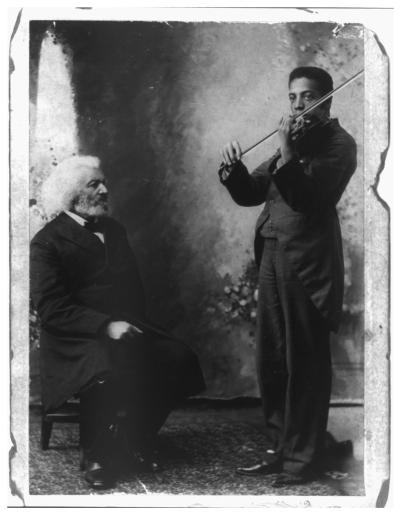
Frederick and Joseph Douglass, from the Library of Congress archives, via Lion of Anacostia b

Frederick Douglass and his grandson Joseph, concert violinist who inherited his love of music from his grandparents, from the Library of Congress archives

Let us remember and salute the great human rights activist and Enlightenment thinker Frederick Douglass, on this near-anniversary of his birth.

The exact day of Douglass’ birth is unknown. We know the year, 1818, from his entry in the slave ledger of his master Aaron Anthony. His likely birth month, February, is an estimate. In his later years, Douglass chose to celebrate his birthday on February 14th because, he said, his mother Harriet once called him ‘my Valentine’.

Douglass is among my favorite people that ever inhabited the earth. He was born into slavery in Maryland, was mostly self-educated, escaped to freedom when he was 20, married the loving and strong Anna Murray, and became one of the most eloquent and influential advocates for civil rights in American, and, indeed, world history. He was an author, orator, preacher, activist, statesman, patriarch, musician, and world traveler. I had the joy of following the life and ideas of this motivated, resourceful, brilliant, complicated, and incredibly fascinating person through the United States, and now I’m continuing my research in Scotland, where he spent a relatively brief but very influential part of his life.

Here are a few links to some articles and works of art by, about, and inspired by the great Frederick Douglass, including my own work.

7 Haunts of Frederick Douglass in New York City ~ by Amy Cools for Untapped Cities

Frederick Douglass ~ by Melvyn Bragg and guests Karen Salt, Nicholas Guyatt, and Celeste-Marie Bernier for In Our Time

Frederick Douglass – by Ronald Sundstrom for Stanford Encyclopedia of Philosophy

Frederick Douglass  ~ Melvin Bragg discusses the life and ideas of Frederick Douglass with Karen Salt, Nicholas Guyatt, and Celeste-Marie Bernier for In Our Time

Frederick Douglass: In Progress ~ by Leigh Fought

Frederick Douglass Papers ~ at Indiana University-Purdue University Indianapolis

Frederick Douglass Papers ~ at the Library of Congress

Frederick Douglass: United States Official and Diplomat ~ by the Editors for Encyclopædia Britannica

Frederick Douglass and a Valentine, Emily Dickinson and a Snake – by Rob Velella for The American Literary Blog

Frederick Douglass in Washington, D.C.: The Lion of Anacostia – by John Muller

Frederick’s Song– Douglass’ words arranged and set to music by SayReal and Richard Fink

From Oakland to Maryland, New York, and Massachusetts I Go, in Search of Frederick Douglass – History of ideas travel series by Amy Cools for Ordinary Philosophy

Interview with Ken Morris, Anti-Slavery Activist ~ by Ken Morris and Amy Cools for Ordinary Philosophy Podcast

Interview with Leigh Fought on Anna and Frederick Douglass ~ by Leigh Fought and Amy Cools for Ordinary Philosophy Podcast

Frederick Douglass in the British Isles ~ History of ideas travel series by Amy Cools for Ordinary Philosophy in Scotland, England, and Ireland, 2018-2019

*A version of this piece was previously published in Ordinary Philosophy

~ Ordinary Philosophy is a labor of love and ad-free, supported by patrons and readers like you. Any support you can offer will be deeply appreciated!

Happy Birthday, Abraham Lincoln!

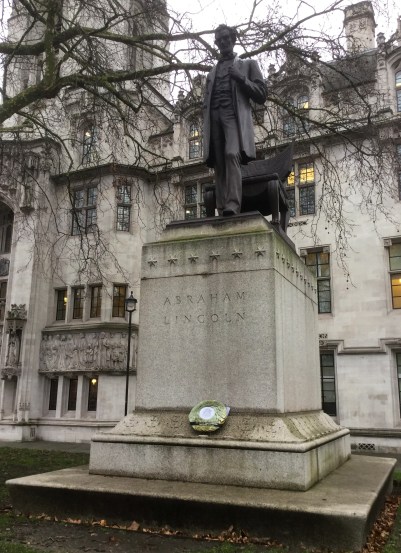
Abraham Lincoln statue near Westminster Abbey, London, on a winter day, photo 2018 by Amy Cools

Let’s remember and salute the great Abraham Lincoln, father of the United States as it was painfully reborn through the Civil War, on his birthday.

Born on February 12th, 1809, this child of a poor Kentucky farm family was largely self-educated yet rose to become our most revered President since George Washington. He was a hard-working man, from farm laborer and rail splitter to flatboat operator on the Mississippi River, then shop owner, militia captain, postmaster, lawyer, politician, then President of the United States. A popular man revered for his storytelling, conversation, intelligence, and general reputation for high integrity, Lincoln won his second campaign for political office and entered the House of Representatives in 1834. He was a successful and innovative lawyer and revered for his speechmaking. His series of debates with Democratic senator Stephen Douglas in 1858 thrust him into the national spotlight, and while he lost the race to replace Douglas in the Congress that year, his reputation continued to grow, and he defeated Douglas in the presidential race two years later. He won the Presidency as head of the newly formed anti-slavery Republican party.

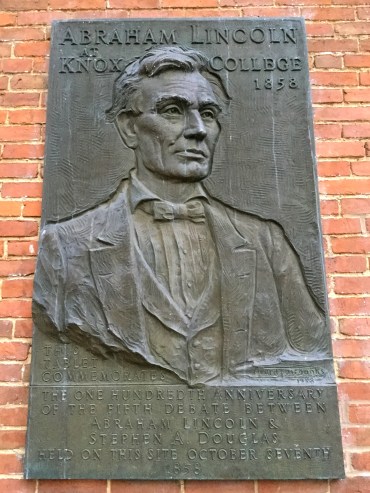
Lincoln plaque on Old Main, Knox College, Galesburg, Illinois, photo 2017 by Amy Cools

Lincoln’s antipathy to slavery was heightened by a memory from his flatboat trip to New Orleans, where he witnessed its horrors first hand. Over the years, his political antislavery position fluctuated although the institution of slavery disgusted him personally. For most of his political career, he advocated the moderate policy of stopping slavery’s spread to the new territories, leaving it in place where it already existed in the expectation that economic and cultural changes would naturally lead to its demise. But the intransigence of the slave states and the contingencies of the Civil War, combined with his own moral hatred of slavery, caused him to change his mind. Lincoln’s Emancipation Proclamation of January 1, 1863 freed all slaves in those states in rebellion, and nearly 200,000 freed black men fought for the Union Army, helping to ensure its eventual success.

Even given his childhood poverty and lack of education, I find Lincoln’s success even more remarkable in light of the recurrent and severe depression he suffered throughout his life. While it can be crippling, it can also make sufferers that much more attuned to the suffering of fellow human beings, deepening the understanding of human nature and increasing the capacity for sympathy. Lincoln was one of these, and his suffering refined his sensitivities and strengthened him, helping to make him the great man he became.

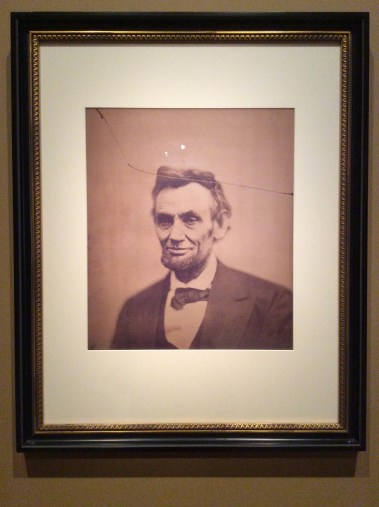
Abraham Lincoln by Alexander Gardner, Feb 5, 1865, National Portrait Gallery in D.C., 2016 Amy Cools

Abraham Lincoln by Alexander Gardner, Feb 5, 1865, National Portrait Gallery in D.C., photo 2016 by Amy Cools

Having led the nation through the trauma and horror of the Civil War, Lincoln was assassinated only a month after his re-inauguration to the Presidency in 1964, shot in the head on April 14th by pro-slavery actor John Wilkes Booth while attending a play at Ford’s Theater.

Here some writings and works of art by, about, featuring, and inspired by Abraham Lincoln, including some of my own work.

Abraham Lincoln: audiobooks of speeches and other writingsat Librivox

Abraham Lincoln: speeches, letters, and other writingsdigitized by the Northern Illinois University Libraries

Abraham Lincoln: President of the United States ~ by Richard N. Current for Encyclopædia Britannica

April the 14th, Part I ~ song by Gillian Welch

Lincoln’s Great Depression ~ by Joshua Wolf Shenk for The Atlantic: Abraham Lincoln fought clinical depression all his life, and if he were alive today, his condition would be treated as a “character issue”—that is, as a political liability. His condition was indeed a character issue: it gave him the tools to save the nation

To the Great Plains and Illinois I Go, in Search of Crazy Horse, Sitting Bull, Abraham Lincoln, and Other American Histories ~ by Amy Cools for Ordinary Philosophy

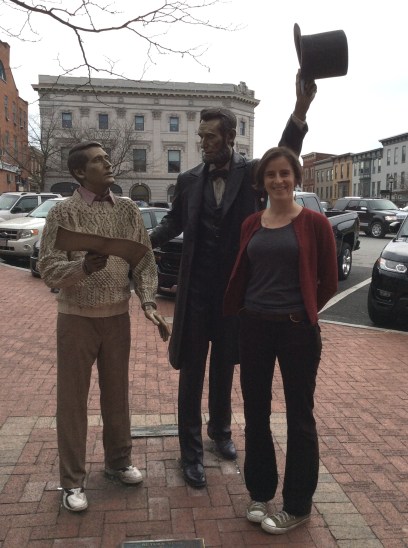
Me with Abraham Lincoln’s sculpture near David Wills house where he stayed in Gettysburg, PA, the night before giving his great Address. I visited Gettysburg during my 2016 journey following Frederick Douglass

Abraham Lincoln also features prominently in my traveling history of ideas series about the life and ideas of Frederick Douglass. Here are the pieces in that series which feature Lincoln:

Frederick Douglass Lynn Sites, Part 2: Historical Society & Hutchinson Scrapbook
Frederick Douglass, Rochester NY Sites Day 2
Frederick Douglass Seneca Falls, Canandaigua, Honeoye, and Mt Hope Cemetery Sites
Frederick Douglass Chambersburg and Gettysburg PA Sites
Frederick Douglass Washington DC Sites, Day 1, Part 1
Frederick Douglass Washington DC Sites, Day 1, Part 2
Frederick Douglass Washington DC Sites, Last Day

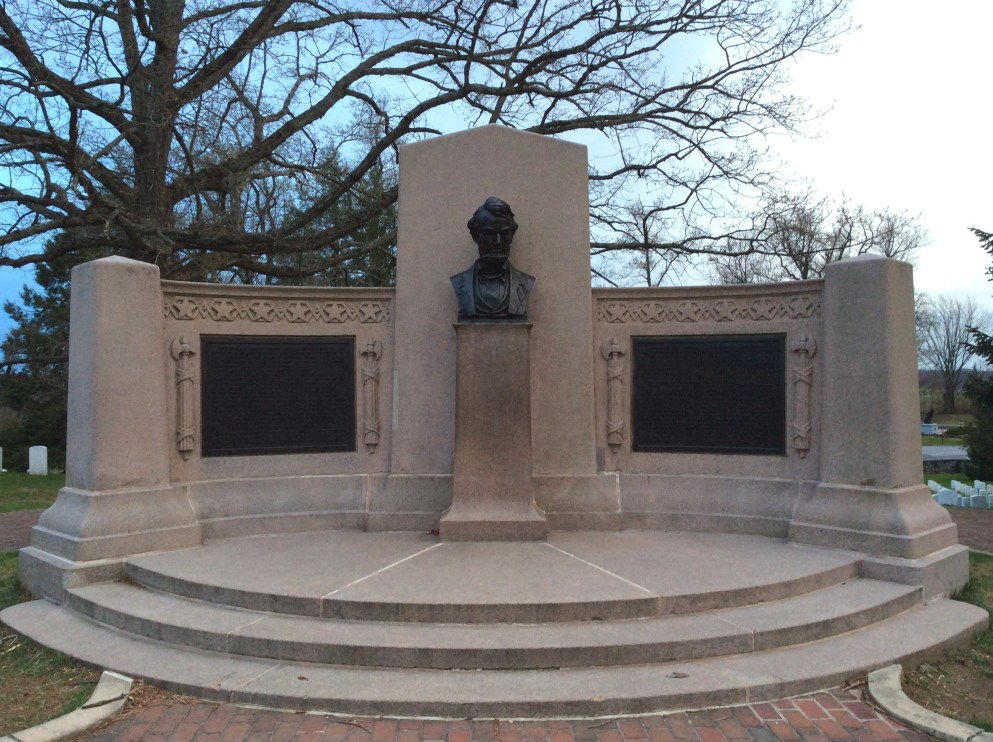
Lincoln's Gettysburg Address Memorial at Soldier's National Cemetery

Lincoln’s Gettysburg Address Memorial at Soldier’s National Cemetery, photo 2016 by Amy Cools

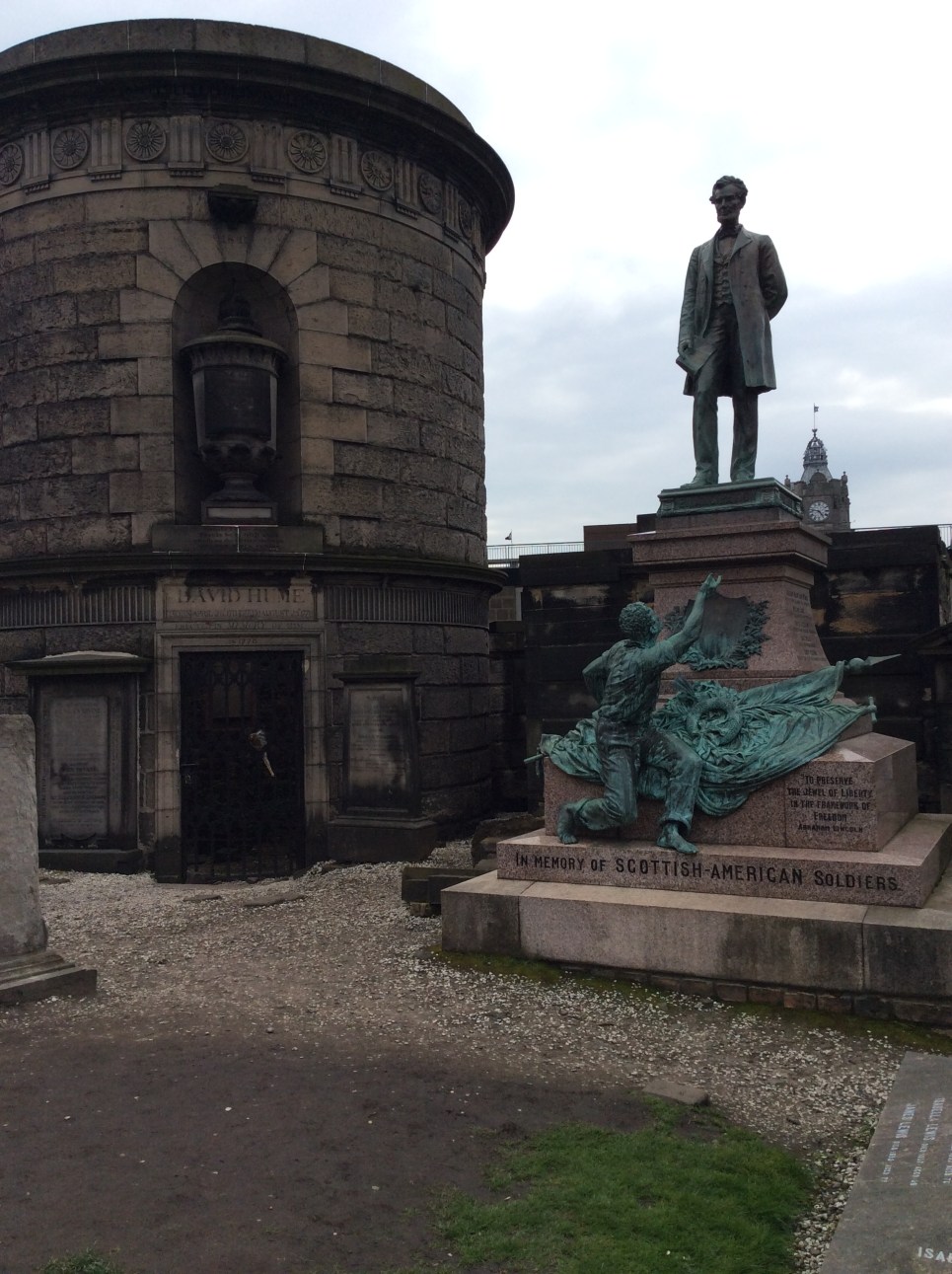
Hume's and Abraham Lincoln Scottish soldier monuments,

David Hume‘s grave and Abraham Lincoln sculpture on a monument to Scottish American soldiers, Calton Hill Cemetery, Edinburgh, Scotland, photo 2014 by Amy Cools

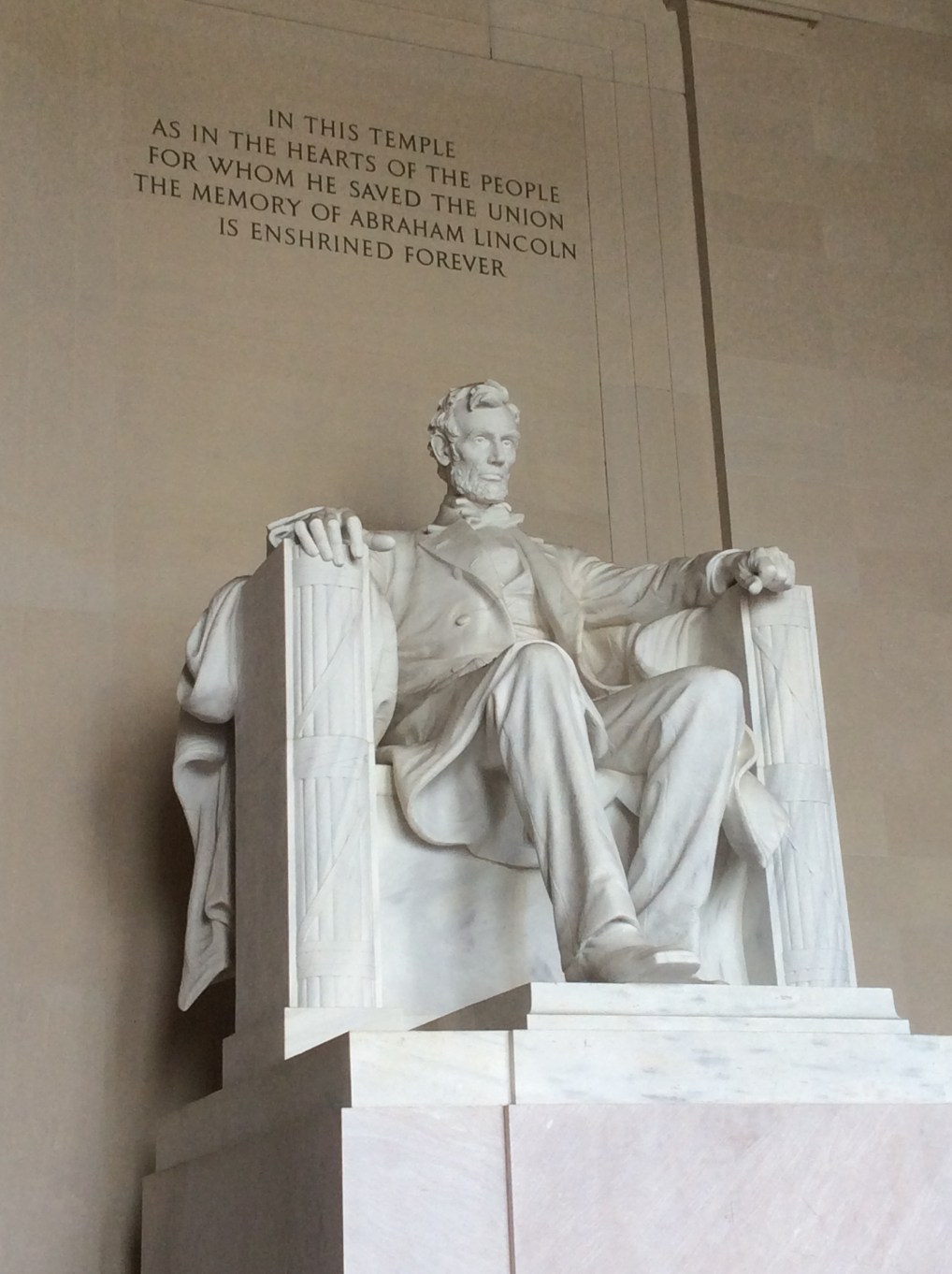
Sculpture of Abraham Lincoln in the Lincoln Memorial, Washington DC, photo 2015 by Amy Cools

Sculpture of Abraham Lincoln in the Lincoln Memorial, Washington DC, photo 2015 by Amy Cools

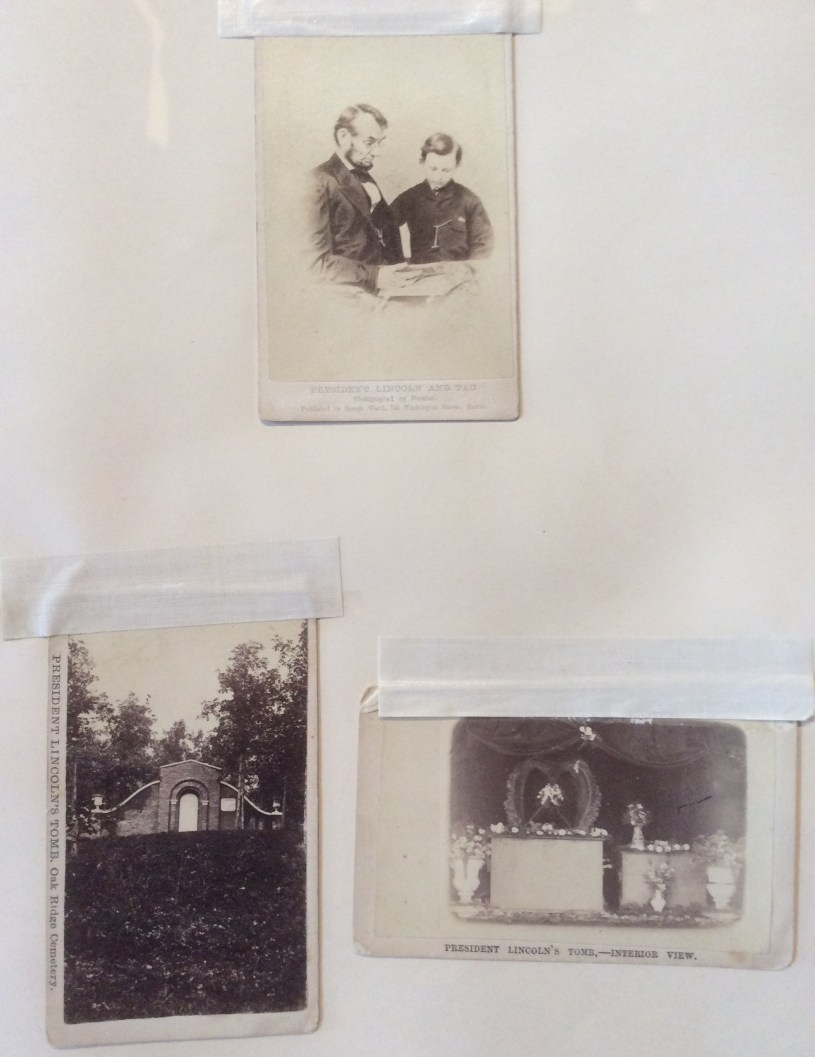
Abraham Lincoln with his son and 2 views of his tomb, from Hutchinson scrapbook at Lynn Museum

Abraham Lincoln with his son and two views of his tomb, from the Hutchinson scrapbook at Lynn Museum, photo 2016 by Amy Cools

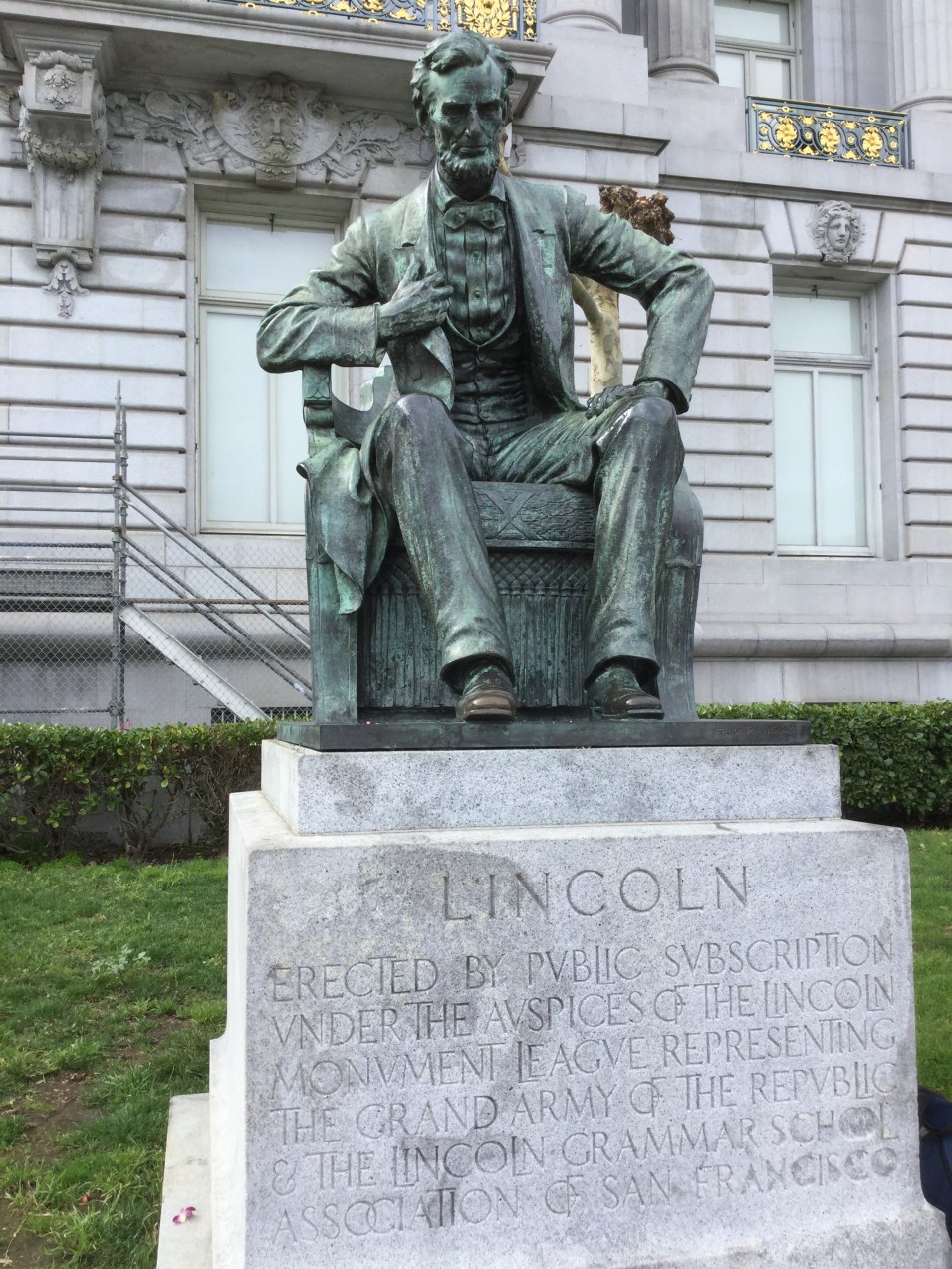
Statue of Abraham Lincoln outside of San Francisco's City Hall, photo 2017 by Amy Cools

Statue of Abraham Lincoln outside of San Francisco’s City Hall, photo 2017 by Amy Cools

~ Ordinary Philosophy is a labor of love and ad-free, supported by patrons and readers like you. Any support you can offer will be deeply appreciated!

Happy Birthday, Charles Darwin!

A Charles Darwin display at the Kelvingrove Museum, Glasgow, Scotland

Let’s remember and salute Charles Darwin, the thinker who came to understand the basic mechanism by which we and all other species on earth come to be.

Born on February 12, 1809, Darwin was the grandson of Enlightenment physician, poet, and botanist Erasmus Darwin, who posited his own theory of evolution, as had many others, who observed its effects but had not successfully formulated a theory to explain how it worked. Given that his father was also a physician, it seemed natural that young Charles would take up the family profession. He studied medicine at the University of Edinburgh (my university!) from the age of 16 to 18. Darwin would have attended classes in the original building on South Bridge, now called the Old College, beautifully designed by Robert Adam (it didn’t yet have the dome it has now). While he loved the excellent science education he received there, Darwin decided being a physician was not for him.

Old College Building on South Bridge, University of Edinburgh, where Darwin attended classes

His father then sent Darwin to Christ’s College, Cambridge, with the idea that he could be a minister instead. Darwin did well at Christ’s College, but it was his pursuits as a naturalist that really captured his imagination and into which he poured his best efforts. After he completed his Bachelor of Arts degree in 1831, he continued his scientific study of animals and geologic formations. When the opportunity arose to travel to South America on the HMS Beagle later that year, Darwin took it, and spent the next five years gathering specimens and making detailed notes of his observations of the natural world. Among the wealth of valuable scientific information he amassed, Darwin’s observations of the appearance of apparently designed adaptations in living things; fossils of known and unknown animals sometimes found in the most unexpected places (remains of ancient sea life embedded in rocks at high elevation?!?); and the incredible amount of waste and suffering throughout the natural world, from wasps who laid their eggs in living caterpillars so that the growing grubs would devour them slowly from within to the genocide and slavery routinely practiced against the native people there, gave him much to think about.

Finches in a Charles Darwin display case at the Kelvingrove Museum, Glasgow, Scotland. The adaptations of finch beaks to food sources provided Darwin a perfect example of how natural selection works to produce the appearance of design.

With his experience broadened, his understanding deepened, and his body strengthened by the rigors of his expeditions, Darwin returned to England a wiser, stronger, more serious man. The first publications of his findings, together with his friendships with influential scientists such as the geologist Charles Lyell, made him famous. Darwin had found his profession. He began to pull together the evidence of his own eyes with the work of other naturalists and scientists to formulate a theory that would explain it all. What would explain a world of living things replete with beauty and waste, some joy and contentment but far more suffering, animals marvelously wrought but more often than not hidden from the human eye either by remoteness, incredibly tiny size, or time through extinction? It was the work of Edinburgh’s own self-made geologist James Hutton, popularized and developed by Lyell, which gave Darwin one key to the mystery. Since it had become clear that the earth was indeed ancient, not young as popular interpretations of the Bible would have it, species had plenty of time to adapt and change to their environment as needed, just as the earth itself had plenty of time to form as it is.

Hutton’s Section near the foot of Salisbury Crags, Holyrood Park, Edinburgh, Scotland. On my twice-weekly hikes, I regularly pass by this rock formation. It sparked James Hutton’s realization that the earth must be ancient indeed to give the rocks time to layer, fold, and bend as they do here.

Another key to the mystery was the mass suffering and death Darwin observed. While he mourned it, it was no doubt a comforting realization that it was not designed into the natural world by a divine mind that he was nonetheless bound to worship. Rather, Darwin realized that the living things that could not survive in the environment they found themselves in left those better equipped to do so to reproduce and pass on their adaptations. This realization, this theory of natural selection, Darwin recognized to be explosive as well. It took him about twenty years of careful thought and self-questioning to publish this theory. He knew, for one, that his theory went against people’s natural squeamishness and desire to think of the earth as a friendly home. More than that, Darwin knew perhaps better than anyone what a profound challenge this theory was to orthodox Christianity. But when another naturalist, Alfred Russel Wallace, independently arrived at the same theory, Darwin was galvanized to publish his findings in 1859. His On the Origin of Species went on to become one of the most influential works in the history of thought.

Another Charles Darwin display at the Kelvingrove Museum, Glasgow, Scotland

Darwin’s life is a fascinating one in so many more ways outside of the scope of this piece. To learn more about this husband, father, writer, and restless seeker for truth, I recommend the excellent works I’ve linked to below.

Before that, one more thing: I’ve always hated the term ‘Social Darwinism’ because I think it’s terribly misleading. It refers to the idea that societies can be structured so as to direct evolution in some way, for example, by allowing the weakest or least able, as defined by that society, to die off so that the strongest and most able are the most likely to survive and reproduce. But Darwin did not espouse that idea, nor do scientists now understand him to have implied it. For Darwin, as for those who understand the theory of evolution by natural selection as an explanation of a natural process rather than a policy of action, the reason why human beings have become such a successful species is precisely our capacity for empathy and solidarity. It’s the fact that we care about each other as individuals, that we help each other survive and develop our unique capacities that makes us so adaptable, so creative, so able to get by in such a wide variety of environments. Social Darwinism, then, is contrary to Darwin’s own theories about human evolution. Eugenics, ‘survival of the fittest,’ and other such ideas that later thinkers claimed as part of Darwin’s intellectual legacy are not, in fact, his, or ideas that he would endorse given what he actually wrote. The problem with putting Darwin’s name in the term ‘Social Darwinism’ is that it wrongly implies that it was his idea, and therefore leads many to think of him as a cruel and heartless thinker, responsible for ideas which have caused much suffering and death. He was nothing of the sort.

Charles Darwin’s gravestone in Westminster Abbey, London, England. I was naughty and snuck in a quick photo, though photography is not allowed in the city’s places of worship.

Charles Darwin placard at the Kelvingrove Museum, Glasgow, Scotland

Learn more about this most influential of scientists and thinkers:

Charles Darwin: British Naturalist ~ by Adrian J. Desmond for Encyclopædia Britannica

Charles Darwin: Evolution and the Story of Our Species ~ iWonder at the BBC

Charles Darwin: various articles ~ by Maria Popova for Brain Pickings

Darwin Correspondence Project ~ at the University of Cambridge website

Darwin’s Influence on Modern Thought ~ by Ernst Mayr for Scientific American, November 24 2009

Darwin Online ~ read Charles Darwin’s books, articles, and other publications online

The Evolution of Charles Darwin ~ by Frank J. Sulloway for Smithsonian Magazine, December 2005

The Origin of the Thesis ~ by Claire Pettitt for The Times Literary Supplement

*A version of this piece was previously published at Ordinary Philosophy

Ordinary Philosophy and its Traveling Philosophy / History of Ideas series is a labor of love and ad-free, supported by patrons and readers like you. Please offer your support today!

Happy Birthday, Simone Weil!

Simone Weil via Wikimedia Commons, public domain

Simone Weil, born on February 3, 1909, lived only thirty-four years. She died as an unintentional martyr to her ideals on August 24th, 1943; she contracted tuberculosis when her overworked, underfed, exhausted body, working for the French Resistance in England, could not fight off disease. As she had done before, Weil refused to eat more than wartime rationing allowed to others, or to accept extra medical help. In a sense, allowing herself to become so run-down that she collapsed and died soon thereafter seems inconsistent with one of her central beliefs: that morality is centered on obligations to one another. When she debilitated herself through overwork and malnourishment, she rendered herself unable to fulfill those obligations she believed in. Yet in working for the benefit of others among those doing the same work, and demanding of herself that she do so under the same hard conditions that many others had to struggle in, Weil continued her long practice of putting her ideals in practice and in the process, testing them. The idealist, deeply spiritual Weil, in this way, often acted as a sort of empirical ethicist.

Weil was born to well-to-do, agnostic Jewish parents who provided her a very comfortable, secure childhood. Her high level of intelligence was evident from a very early age, and she received an excellent education. She surpassed the brilliant Simone de Bouviour in her École Normale Supérieure postgraduate exams. Yet Weil resisted employment as a full-time academic; she was intensely interested in common human concerns such as labor rights and politics. While teaching philosophy, Weil took time to travel to Germany to help her determine why Nazism took such hold there, and donated much of her time and skills to groups who supported working people. She left teaching in 1934 to work in a factory for some months, to observe conditions for unskilled working women. Weil then followed her activist instincts into joining Spain’s Republican efforts against the far-right, authoritarian Francisco Franco’s revolt in the Spanish Civil War, but an injury rendered her unable to complete her combat training, so she lent her support through her primary skill, writing. After she and her parents fled the Nazis first from Paris (she worked for a time as a farm laborer in rural France during this period), then from France, Weil joined Charles De Gaulle’s Free France movement from their London center of operations. Weil’s practice of observing work conditions and political movements first-hand undoubtedly contributed greatly to the force of the ideas she drew from such experiences.

Throughout all of this, Weil had many mystical experiences and converted to Christianity, with many of her beliefs overlapping Catholic doctrines, However, she refused to be baptized or ally herself with any one sect, prioritizing personal spiritual transformation over ritual. Weil wrote creatively and deeply on spirituality and theology; among her most original ideas was that the silence of God was necessary for creation to happen; he wasn’t dead, despite all appearances, he was just absent from the places where creation happens.

Weil had also long thought deeply about the liberal philosophy of human rights, and came to the conclusion that it was an ultimately empty concept on its own. Since it was not centered on a robust concept of human obligations, it was ultimately unworkable: rights, so conceived, could be and often were bought and sold, and while non-interference can mean rights are not violated, this means little when we need support that human rights theory doesn’t necessarily entail that we give to one another. It was only a commitment to fulfilling one’s obligations to others that well-being, bodily integrity, and every other aspect of each person’s humanity can be respected and protected. Weil put this idea to the test by working at that auto factory, as described above, where she observed the effects of the mechanical process of mass assembly on herself and other workers; to her, it appeared dehumanizing, harmful to the moral and spiritual self, instilling docility. In this and other institutions of a rights-based, private-property-centric society, Weil saw that aspects of humanity were rendered into something tradable in the marketplace, and interpersonal relations were reduced to contractual agreements, real or implied. Such a system allows for justice to be dispensed differently, or for differential access to basic human needs, according to one’s ability to pay. While I believe it’s true that liberal societies’ commitments to universal human rights have brought about a level of peace, prosperity, and individual liberty unparalleled in all other types of society throughout history, Weil’s ideas provide important insights into how a liberal system based on individual human rights might not consistently promote human well-being and personal fulfillment unless it is balanced by a robust ethic of interpersonal obligations.

Learn more about the spiritual philosopher and activist Simone Weil, who Susan Sontag called ‘one of the most uncompromising and troubling witnesses to the modern travail of the spirit,’ at:

‘God Isn’t Dead, He’s Silent’: Simone Weil Dies, Very Young ~ by Nettanel Slyomovics for Haaretz

Gravity and Grace ~ by Simone Weil

Should We Still Read Simone Weil? ~ by Heather McRobie for The Guardian

Simone Weil ~ by A. Rebecca Rozelle-Stone and Benjamin P. Davis for The Stanford Encyclopedia of Philosophy

Simone Weil ~ by Susan Sontag for The New York Review of Books

Simone Weil articles, assorted ~ by Maria Popova for Brain Pickings

Simone Weil: French Philosopher ~ at Encyclopaedia Britannica

What We Owe to Others: Simone Weil’s Radical Reminder ~ by Robert Zaretsky for The New York Times‘ Stone blog

~ Ordinary Philosophy is a labor of love and ad-free, supported by patrons and readers like you. Any support you can offer will be deeply appreciated!

Happy Birthday, Thomas Paine!

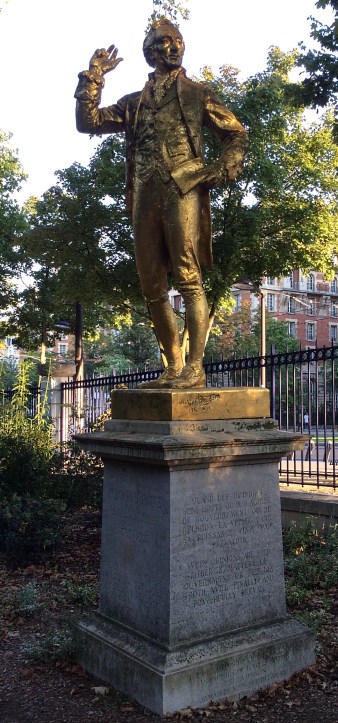
Statue of Thomas Paine by Gutzon Borglum, 1938, Parc Montsouris, Paris, photo 2015 by Amy Cools

Statue of Thomas Paine by Gutzon Borglum, 1938, Parc Montsouris, Paris, photo 2015 by Amy Cools

Let’s remember and salute the great Thomas Paine, father of our American identity, on his birthday. Born on January 29th, 1737, this British-American expatriate, a former entrepreneur and corset-maker, became one of the pre-eminent political and humanist writers in the Enlightenment tradition. He wrote brilliantly in language readily understood by readers from all walks of life yet long studied by and widely influential to scholars and other authors, from wildly popular pamphlets which the case for American independence from Britain, to books and short works centered on his Lockean conception of human rights. Paine argued for the primacy of reason in epistemology, politics, science, and theology. Paine is a primary influence in my own concept of America as ever a work-in-progress bastion of liberty, of reason, of freedom of conscience, of the idea that the establishment of property rights entails the obligation to share the wealth with those who lack what they need to live.

Here are a few links to some articles and works of art by, about, and inspired by Thomas Paine, including some of my own work:

Common Sense ~ Thomas Paine (1776)

The American Crisis ~ Thomas Paine (1776-83)

The Rights of Man – Thomas Paine (1791-92)

The Age of Reason ~ Thomas Paine (1794)

Agrarian Justice ~ Thomas Paine (1795-96)

Thomas Paine ~ from The Stanford Encyclopedia of Philosophy

Thomas Paine: British-American Author ~ by Philip S. Foner for Encyclopædia Britannica

To Paris, France I Go, In Search of Revolution-Era Thomas Paine, Mary Wollstonecraft, and Thomas Jefferson ~ history of ideas travel series in which I follow Thomas Paine’s life and ideas in the era of the French Revolution

Thomas Paine on Basic Income, and Why Welfare is Compatible with an Individualist Theory of Human Rights ~ my essay on how Paine’s ideas about property rights led him to advocate the unconditional allocation of public funds for the support of the young, the old, and the disabled

Pretty Pink Rose ~ David Bowie and Adrian Belew (1990) – ‘She tore down Paris on the tail of Tom Paine, but the left wing’s broken, the right’s insane’

As I Went Out One Morning ~ Bob Dylan (1968) ‘As I went out one morning to breathe the air around Tom Paine’s, I spied the fairest damsel that ever did walk in chains’

Tom Paine’s Bones ~ Graham Moore (1995) Recorded by Dick Gaughan in 2001. ‘Well they say I preached revolution but let me say in my defence, all I did wherever I went was to talk a lot of Common Sense’

*A version of this piece was previously published at Ordinary Philosophy

~ Ordinary Philosophy is a labor of love and ad-free, supported by patrons and readers like you. Any support you can offer will be deeply appreciated!

Happy Birthday, Helvétius!

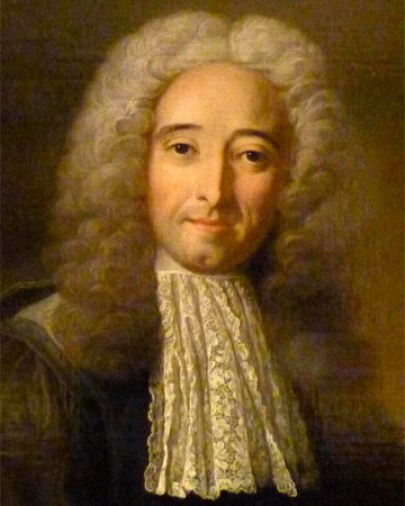
Claude-Adrien Helvétius, born on January 26th, 1715, is often credited with being a father of utilitarianism, or at least, for planting its philosophical seeds. Also an uncommonly egalitarian thinker for his time and place, he was born with a silver spoon in his mouth, perhaps filled with a tincture of some sort from time to time: Helvétius was the son and grandson of very wealthy physicians who ministered to royalty. Through these connections, Helvétius was appointed to a lucrative post as a tax collector and grew very wealthy when he was relatively young. By the time he was thirty-six and newly married, Helvétius had tired of courtly life, and retired to a country estate to take up a life of letters and scholarship.

The first published fruit of his study and writing was his famous philosophical work De l’esprit (Of the Mind). After it came out in 1758, it created an uproar at the University of Paris, among the clergy, among other philosophers, and at the court; on more than one occasion, it was publicly burned. To keep himself out of trouble, Helvétius was forced to publicly renounce the book. But as it is with so many things, all the controversy sparked intense public interest, and De l’esprit became one of the most widely read books of his time. And what exactly was it about the book that caused so much consternation? Salonnière, intellectual, and consummate letter-writer Madam du Deffand quipped that this was due to Helvétius putting into writing what everyone was already secretly thinking but not allowed to say.

More specifically, Helvétius’ controversial ideas include the notion that all animals, human beings included, form their mentalities from sensation and experience (thereby implicitly challenging religious concepts of the soul); that all actions we call right or just, wrong or unjust are ultimately the result of self-interest (though self-interest is so often bound up with our conception of ourselves as part of larger groups, such as nations, religious communities, tribes, and so on, so that self-interest and the interests of others can become virtually indistinguishable); that the passions are both the ultimate disguisers of truth while simultaneously providing the necessary drive to seek it at all; and that all human motivation consists of seeking the most pleasure and avoiding the most pain. The latter is a central tenet, in some form or another, of utilitarianism, and was developed into more comprehensive philosophical and ethical systems by those fathers of utilitarianism Jeremy Bentham and John Stuart Mill.

Helvétius also had a theory of education and human aptitude that’s refreshingly egalitarian to modern sensibilities. He believed that everyone is just as capable of great learning and achievements, but that the only reasons people don’t equally achieve are either because they don’t care to, or because they were not taught well. While Helvétius did not have the benefit of later studies in psychology and the social sciences which reveal the picture to be more complicated than that, he did make the case that everyone could and should be able to develop themselves according to their interests and potential, and that the positive transformative power of education for individuals and societies is nearly boundless.

After Helvétius’ death on December 26, 1771, his widow, Anne-Catherine, never remarried. She spent much of her time hosting a famous salon; some years ago, I visited the place where she welcomed the erudition, wit, and flirtation of Benjamin Franklin (who was a special friend and admirer), Thomas Jefferson, Condorcet, Napoléon, and other luminaries, and shocked John and Abigail Adams.

Learn more about the sophisticated, free-thinking, and well-read Helvétius at

Claude-Adrien Helvétius ~ NNDB

Claude Adrien Helvetius (1715—1771) ~ the Internet Encyclopedia of Philosophy

Claude Adrien Helvetius (1715 – 71) ~ by David Pearce for Utilitarianism.com

Claude-Adrien Helvétius: French PhilosopherEncyclopaedia Britannica

Enlightenment ~ by William Bristow for The Stanford Encyclopedia of Philosophy (Helvétius appears in sect 2.2, ‘Ethical Theory‘)

Grand Illusions ~ Claude-Adrien Helvétius on passion blinders, republished in Lapham’s Quarterly

Madame Helvétius and Ben Franklin ~ at Rodama: A Blog of 18th Century & Revolutionary French Trivia

Salonnière Madame Helvétius ~ by Kristen O’Brien for The Salonnière blog

See also the works by Helvétius available online at the Internet Archive

~ Ordinary Philosophy is a labor of love and ad-free, supported by patrons and readers like you. Any support you can offer will be deeply appreciated!

Happy Birthday, Emmanuel Chukwudi Eze!

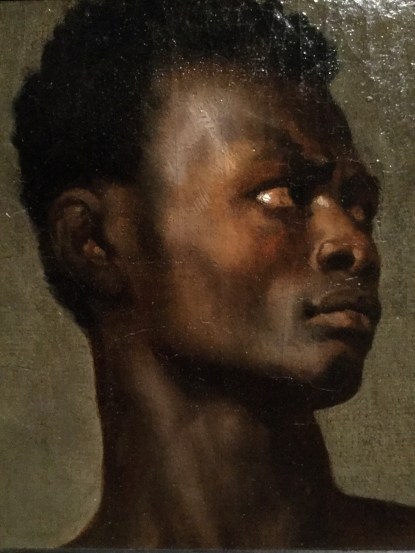
Study of an African’s Head, 1830 by Paul-Jean Flandron, Seattle Art Museum. I could not find a portrait of Dr. Eze that I could share, so I chose this powerful portrait instead, with which I illustrated another guest-hosted piece by Dag Herbjørnsrud, which describes the ideas of the 17th-century Ethiopian philosopher Zera Yacob. Eze also studied Yacob’s ideas.

Emmanuel Chukwudi Eze, born in Nigeria on January 18th, 1963, made a deep study of systems of thought in Africa, Europe, and the Americas. Born of Catholic parents, he was educated in Jesuit colleges and universities. He mined philosophy and intellectual history from across the globe, widely and deeply. He particularly focused  on postcolonial thought in Africa and the Americas, and rejected attempts to relegate tools of thought to people of one culture or another. Instead, he emphasized the importance of difference and complexity in the practice of reason.

Learn more about Dr. Eze’s broad and rigorous approach to thought:

About Dr. Eze and his book On Reason: Rationality in a World of Cultural Conflict and Racism ~ Duke University Press

African Philosophy at the Turn of the Millennium ~  Emmanuel Chukwudi Eze in dialogue with Rick Lewis

Book review: Achieving our Humanity: The Ideal of the Postracial Future by Emmanuel Chukwudi Eze ~ by Cleavis Headley and Kibujjo M. Kalumba

The Color of Reason: The Idea of “Race” in Kant’s Anthropology ~ by Emmanuel Chukwudi Eze

A Defence of Emmanuel Chukwudi Eze’s Conception of Reason ~ by Mohammed Xolile Ntshangase

Emmanuel Chukwudi Eze ~ in Wikipedia, The Free Encyclopedia 

Emmanuel Chukwudi Eze, 1963-2007: A Personal Reflection ~ by Bruce B. Janz

Philosophia Africana ~ archive of the journal Dr. Eze edited and often published in at the Philosophy Documentation Center

Reading Reason with Emmanuel Eze ~ by John Pittman

*A version of this piece was previously published at Ordinary Philosophy

~ Ordinary Philosophy is a labor of love and ad-free, supported by patrons and readers like you. Any support you can offer will be deeply appreciated!

Feminist, Abolitionist, Immigrant, Socialist, Atheist, Jew: The Extraordinary Ernestine Rose, Human Rights Activist

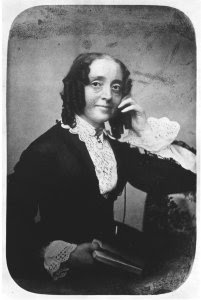
5e5b1-ernestinerose2b1In honor of Ernestine Louise Rose on the anniversary of her birth, January 13th, 1810 

Why such a title, you might ask? Feminist. Abolitionist. Immigrant. Socialist. Atheist. Jew. A series of epithets in Rose’s day, they’re still too often used as such. Why be so provocative?

In her life as an activist and orator, Ernestine Rose wasn’t deliberately provocative in any shock-factor sort of way. She wore modest black, gray, and brown dresses, never the bloomers (puffy pants worn under short skirts) that the more ‘radical’ feminists adopted; she never railed against individual capitalists or slaveholders as evil oppressors; she was openly happy in her traditional-style marriage; and while she was not hesitant to respond abruptly, wittily, even sarcastically to insults and bad arguments, she was not given to preemptive personal attacks or calls for violence. Yet in a time when women stayed at home when not accompanied in public by chaperones, she traveled often and often alone; when women were expected to be demure and silent in public, she was a witty, incisive, passionate, and famous public speaker; when most women accepted their assigned roles, she argued and fought for their rights; when slavery was still widely considered acceptable or at a necessary evil, she worked for their emancipation; when many or even most of her fellow feminists did not consider the races and classes equal, she argued that all people should have the same political and social rights; when hierarchical class systems were considered a law of nature, she argued for economic equality; when most people were religious, she was an unapologetic atheist; in an insular and xenophobic Protestant Christian country, she was a cosmopolitan foreigner of Jewish ancestry.

In short, Ernestine was just about as much of an outsider as one could be. Save being black, disabled, gay, or a single woman, she could hardly have belonged simultaneously to more of the marginalized groups of her day, yet even these found in her a champion as well. Feminist, Abolitionist, Immigrant, Socialist, Atheist, Jew can goad us into considering anew why and how these labels are simultaneously uncomfortable reminders of the persistence of prejudice, and remind us that they’re really badges of honor for passionate believers in universal human freedom.

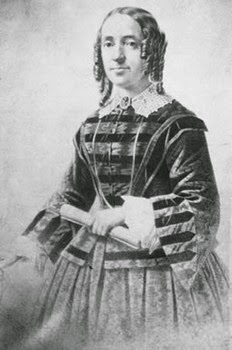
3a25c-ernestine2broseIn spite of many obstacles, Ernestine Rose was a renowned public speaker and debater in her own time, and especially acclaimed for her role among the preeminent leaders of the feminist movement. The abolitionist, socialist, pro-immigrant, Jewish, freethinker, and Paineite (devotees to the life and ideas of Thomas Paine, who had become a target of hatred and slander due to his freethought views) communities also benefited from her staunch and tireless work on their behalf. She was widely praised as an orator, her style described as ‘powerful’, ‘eloquent’, ‘intelligent’, and ‘dignified’, and often sold out even the largest halls. When travel plans or one of her many bouts of serious illness kept her from speaking at conventions and other public events, organizers would worry about the possibility of success without her participation. Yet now she is virtually forgotten, more so than just about any other feminist or abolitionist of the time with her level of fame. How did this come to be?

It was, for Rose, a very similar situation as it was for her hero Thomas Paine, hailed as a father of the American Revolution who wrote Common Sense, The Rights of Man, and The Age of Reason. Both of these great advocates of universal human rights had ideas that were simply too innovative, too outlandish, too challenging for widespread and sustained acceptance. Both inspired great admiration and achieved widespread fame for their abilities and achievements during their lifetime, but after the initial thrill of their progressive ideals wore off, conservative fearmongering that Rose’s and Paine’s ideas would undermine civilized society won the day. Successive generations would come to pick out what they liked from their work and enjoy the benefits, while vilifying Rose and Paine as radicals, corrupters of public morality, and would-be destroyers of civilization.

It’s only within the last fifty years or so that Paine’s reputation (Theodore Roosevelt still referred to him as a ‘filthy little atheist’) has been fully rehabilitated, his contributions widely celebrated. For Ernestine Rose, unjustly in my view, this hasn’t happened. Paine has the advantage of having been a white man, a friend of many of the Founding Fathers of the United States, a believer in free markets, and a deist. For Rose, a woman, a Jew, an atheist, and a socialist, the remnants of bigotry that she so eloquently called on us to overcome still cast a shadow over public memory, as the light of history belatedly re-illuminates the life and work of this extraordinary woman.

To learn more about the great Ernestine Rose, please check out:

About Ernestine Rose ~ by the Ernestine Rose Society at Brandeis University

Ernestine Louise Rose (1810-1892) ~ by the American Jewish Historical Society via the Jewish Virtual Library

Ernestine Rose, 1810-1892 ~ by Janet Freedman for the Jewish Women’s Archive

Ernestine Rose: American Social Reformer ~ by the editors for Encyclopædia Britannica

Forgotten Feminisms: Ernestine Rose, Free Radical ~ by Judith Shulevitz for the New York Review of Books’ NYR Daily

Interview with Bonnie Anderson, Author of The Rabbi’s Atheist Daughter: Ernestine Rose, International Feminist Pioneer ~ by the New Books Network

~ Ordinary Philosophy is a labor of love and ad-free, supported by patrons and readers like you. Any support you can offer will be deeply appreciated!

Review: Nancy’s Philosopher

Last night, I attended the one-woman play Nancy’s Philosopher starring the lovely and expressive Kelly Burke, written by David Black.

Through one side of an exchange between Nancy Ord, daughter of Robert Ord, Chief Baron of the Scottish Exchequer, and an unseen and unheard Angus, physician’s assistant, we learn about the social circle in Edinburgh’s well-heeled, sophisticated New Town scene, in which the Ords, James Boswell, Benjamin Franklin, Robert AdamJean Jacques Rousseau, and the great Enlightenment philosopher David Hume make their appearances. And through a series of anecdotes, we learn of Nancy’s growing love for the much older, much rounder, and controversial skeptic Hume.

This play is a history and a love letter all in one, and reveals as much about the admiration of the playwright for Nancy’s beloved as it does hers. I won’t offer any spoilers here since the play is so full of delightful revelations and unexpected, little-known connections between great figures in history. I very much recommend you go and see this little gem of a play!

Venue: Anatomy Lecture Theatre, Summerhall, at 1 Summerhall, Edinburgh, EH9 1PL

Price: £15 (concessions £12) / Sat: £20 (concessions £15)

~ Ordinary Philosophy is a labor of love and ad-free, supported by patrons and readers like you. Any support you can offer will be deeply appreciated!

Mark Twain, Joan of Arc, and a Letter to H.H. Rogers, Sunday, Apr. 29, 1895

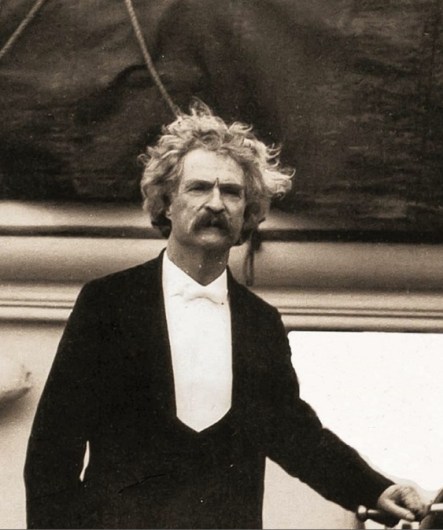
Mark Twain on the USS Mohican in the Seattle Harbor, about to embark for Europe, 1895

Excerpt from a letter from Mark Twain to H.H. Rogers in New York City: Sunday, Apr. 29, ’95:

…At 6 minutes past 7, yesterday evening, Joan of Arc was burned at the stake.

With the long strain gone, I am in a sort of physical collapse today, but it will be gone tomorrow. I judged that this end of the book would be hard work, and it turned out to be so. I have never done any work before that caused so much thinking and weighing and measuring and planning and cramming, or so much cautious and painstaking execution. For I wanted the whole Rouen trial in, if it could be got in in such a way that the reader’s interest would not flag—in fact I wanted the reader’s interest to increase; and so I stuck to it with that determination in view—with the result that I have left nothing out but unimportant repetitions. Although it is mere history—history pure and simple—history stripped naked of flowers, embroideries, colorings, exaggerations, inventions—the family agree that I have succeeded. It was a perilous thing to try in a tale, but I never believed it a doubtful one—provided I stuck strictly to business and didn’t weaken and give up: or didn’t get lazy and skimp the work. The first two-thirds of the book were easy; for I only needed to keep my historical record straight; therefore I used for reference only one French history [Michelet] and one English one [Tuckey]—and shoveled in as much fancy work and invention on both sides of the historical road as I pleased. But on this last third I have constantly used five French sources and five English ones and I think no telling historical nugget in any of them that has escaped me.

Possibly the book may not sell, but that is nothing—it was written for love.

There—I’m called to see company. The family seldom requires this of me, but they know I am not working today.

Yours sincerely,

S.L. Clemens

When reading a book of Mark Twain‘s letters to select one for an intellectual history seminar presentation last year (this is a lightly edited version of that very presentation) this letter to H.H. Rogers jumped right out at me. As many of my long-time readers may know, I’ve long had a fascination with Joan of Arc and with Mark Twain’s book about her. 1896’s Personal Recollections of Joan of Arc was, and still is, a mystery to many. Why did this hard-bitten cultural critic, cynic and skeptic write a tender and hagiographic historical novel about a medieval French Catholic warrior-saint? From his own comments over the decades, he wasn’t especially fond of the French; he thought the medieval period was an age of superstition and ignorance; he mocked patriotism as just another brand of thoughtless provincialism; and he certainly was no fan or defender of organized religion. And why did this novelist and humorist decide to write a history …well, again, a historical novel, but heavy on the history nonetheless? And why did he insist it was the best thing he’d ever written?
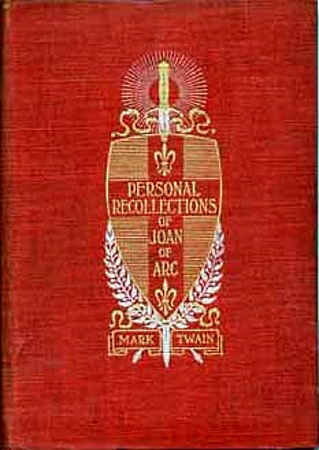
First Edition of Personal Recollections of Joan of Arc, 1896, cover

In some ways, Twain’s fascination with and tenderness for Joan of Arc isn’t hard to explain. His biographer Dixon Wecter writes that ‘the heroine of his inmost heart is Joan of Arc, a virgin of unapproachable purity’ (Wecter 172). He was noted, even then, as a writer with unusually sentimental ideas about women and girls, convinced that by nature they were tender and pure, of some plane higher than that of rough, vulgar, venal, lustful men. If we set aside the bloodshed and partisanship, it’s not too much of a stretch to characterize Joan as a model of virtuous womanhood, above the ordinary concerns and desires and accomplishments of men. And Joan appears in Twain’s book as just such a woman, with a ready wit and a strong sense of humor (Twain’s Joan laughs and pals around a lot) to redeem her from being a ‘tinsel saint,’ as he complained that the Catholic Church was about to make her with her canonization proceedings.

And when Twain wrote that his Joan book was ‘was written for love,’ he’s likely thinking not only about his love of Joan, he’s thinking of Susy. With the exception of his wife Livy, Susy was the dearest person in the world to Twain’s heart, and he made no secret of it. His daughter was vivacious, sentimental, affectionate, and the year after he finished Joan, dead. She died on August 15th, 1896, at age 24, in the same year Joan was published in book form (it was originally published as a serial in Harper’s Weekly). But throughout the first years he was writing Joan, Susy was as big a fan as he was, and had high praise, like Twain himself, for the work. It’s commonly accepted that Susy was a major inspiration for his characterization and idealization of Joan. It seems that he was in many ways unable, in fact, to put Susy aside so he could really consider Joan herself, on her own terms.

Although Twain wrote that he was recounting ‘mere history …stripped naked of flowers [and] embroideries,’ Joan’s story could not have been more fascinating on its own merits and Twain, inventor of fantastic tales and prolific creator of clever lines, could not have surpassed it in either. The fact that a seventeen-year-old illiterate peasant girl could run away from home; convince Church authorities that the voices in her head telling her to deliver France from England came from God and not the devil; convince war leaders and the King to give her troops and arms; lead the French army to a series of victories delivered by cunning military strategy as well as a new sense of united, sacred purpose; and once she was captured by the English and handed over to an ecclesiastical court in hopes they could discredit her as a sorceress and heretic, conduct her own case so skillfully that we still wonder at her prudent and adroit responses.

In early 1895, Twain wrote in his notebook that it was ‘across [France’s] firmament that those two prodigies swept, astonishing the world, Napoleon and Joan of Arc—that wonderful man and that sublime girl who dwarf all the rest of the human race.’ (Notebook 241) A little while after I read this passage and as I was looking for more references to Joan of Arc in his letters, I came across another to H.H. Rogers, written on Sunday, Sept 9th, 1894. Twain wrote: ‘..In those two days I reached and passed—successfully—a point which I was solicitous about before I ever began that book: viz., the battle of Patay.’ (Notebook p 616) The Battle of Patay, I remembered, was perhaps the most decisively victorious as well as an especially bloody battle from Joan’s campaign—which was so bloody overall that during her trial she was accused of ‘cruelly thirsting for human blood and encouraging its shedding’ (Trial 124)—and to refresh my memory of Twain’s account of it, I flipped through his Personal Recollections of Joan of Arc. On page 250, chapter XXX begins ‘When the morning broke at last on that forever memorable 18th of June’; I did a quick Google search of the date to see if this was the Patay account, since it’s not in the chapter title and there’s no index, and instead, I came up with a list of results for the Battle of Waterloo, where Napoleon met his defeat.
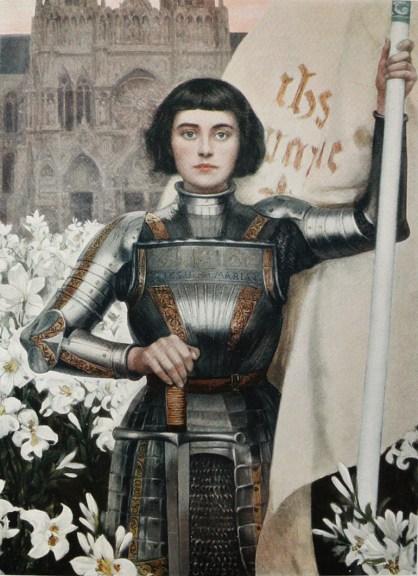
Jeanne d’Arc by Albert Lynch, engraving from Figaro Illustre magazine, 1903, public domain

I wonder: is this link between these two French objects of his admiration a coincidence? Twain often told an anecdote about the first time he encountered Joan of Arc: in 1849, when he was still a printer’s apprentice, a loose page from a biography of Joan blew right off the sidewalk and into his face (Harrington and Jenn 64). But I wonder how much of this is thanks to the romance our imagination often drapes our memories in, and how much are the links between ideas and events we inevitably find when we pursue our interests diligently enough. Perhaps he encountered the historic Battle of Patay when researching the military history of Napoleon, a more likely secular hero, and thereby found Joan again.

‘For I wanted the whole Rouen trial in, if it could be got in in such a way that the reader’s interest would not flag—in fact I wanted the reader’s interest to increase; and so I stuck to it with that determination in view—with the result that I have left nothing out but unimportant repetitions. Although it is mere history—history pure and simple—history stripped naked.’ To return to Twain’s ‘mere history’ of Joan, he’s referring to the account of her trial at Rouen that lasted from January 9th, 1431 until she was burned at the stake on May 30th of the same year. Originally, Twain was going to tell the story of her childhood through her military career, ending with the Bloodless March, in which English stronghold after stronghold, hearing of Joan’s victories, surrendered without a shot, and the King’s coronation at Rheims, where his now sole reign over his French kingdom was confirmed. But I, for one, am glad he didn’t end there, because I agree with her biographer Jules Quicherat and not Jules Michelet in that Joan’s trial is as important a part of her legacy as any of her accomplishments. I don’t really agree with Twain that his account of the trial is ‘history pure and simple’ without ‘embroideries’, but he does stick closely to the many sources he refers to for this part of the books for the essential facts. The embroideries consist of his extremely negative characterization of Pierre Cauchon, the English-sympathizing bishop who led her trial; and the thoughts, reactions, and emotions of Louis de Comte, the fictionalized recorder of the trial and Joan’s lifelong friend, and channeler of Twain’s own sympathies.

Twain was wise in his ‘cautious and painstaking execution’ of the trial scenes, I think: instead of sprinkling his Joan account with amusing tales about the colorful characters, invented or historically-based, who surround her, he focuses closely on the exchanges between Joan and her inquisitors. There’s rich material here for pathos and drama, too much to bring into this brief presentation in any detail. Twain stays true both to his own idealization of women and to Joan’s native cleverness when he highlights her seemingly artless, direct answers, which, though simple, were so spot-on that she deftly avoided the legal traps set for her. Her smarts, then, were showcased without her appearing haughty or show-offy in the slightest.

If I were to write a new biography of Joan of Arc, I’d hope to pursue her through the archives and written histories as carefully and as prolonged as Twain did—in fact, his intense and detailed research for the book made him important in the scholarly discussions about her life, times, character, and legacy—but I’d try to write it with less idealization, though I am at least half as enamoured of her as Twain is. Twain’s Joan is beautiful and compelling, but not quite real. I’d like to see for myself how closely I can approach her across the span of nearly six hundred years.

Here are some examples of questions I’d ask that Twain did not, or at least, left unanswered:

– Is Joan as unlikely a product of her time as so many of her biographers, her early ones especially, seem to believe? From Helen Castor’s history of Joan of Arc, I know that France was riddled at the time with visionaries, prophets, holy maids, seers, and the like. While none of them led the army of France, it’s true, perhaps people were not entirely surprised to hear someone like her making the claims she did, and so were more ready to listen to her. I think many of these would have ended up in ecclesiastical courts as well, so I’ll look for records of these, and examine them to see what kind of religious ideas these people shared. Could Joan have been inspired by any of them?

– Does her adroit handling of her own case in her trial really reveal simplicity and naiveté, where she was lucky to avoid legal traps only because her answers were short and to the point, or an exceptional intelligence at work? Are their patterns in the style and substance of her answers that reveal a tactical approach? She would have had plenty of time to work on this while imprisoned. I’d like to look at other court records of people from Joan’s social class to see how these court cases were generally conducted, if Joan had to face a degree of questioning any more intensive, severe, complex, etc then did others.

– The court made much of her adopting men’s dress and haircuts and wearing weapons as an affront both to religion and to modesty, while Joan herself dismissed these concerns. Was the wearing of men’s clothes so unusual for a woman in Joan’s circumstances? Joan was a peasant and did a lot of work with animals and keeping of the property, which may have allowed for women to adopt dress at time more like men’s. However, her family was actually well-do-do for people of her social class, so there may have been a stricter dress code for her than for the poorest workers. I’d like to see if there were other examples from her time of people adopting the dress of the other gender, of other social classes, etc and see what kind of controversy this did or did not arouse.

Perhaps when I get the chance to follow in the footsteps of Joan of Arc throughout France, as I’ve long planned to do, I’ll be able to answer these questions and many more.

Sources and Inspiration:

Castor, Helen. Joan of Arc: A History. London: Faber & Faber, 2014

Harrington, Paula and Ronald Jenn. Mark Twain & France: The Making of a New American Identity. Columbia: University of Missouri Press, 2017

Hobbins, Daniel. The Trial of Joan of Arc. Cambridge, Mass.; London: Harvard University Press, 2005.

Michelet, Jules. Joan of Arc: Or, The Maid of Orleans. From Michelet’s History of France. Boston: Houghton Mifflin Company, 1858.

Quicherat, Jules. Procès de Condamnation et de Réhabilitation de Jeanne d’Arc, Dite La Pucelle. Paris: J. Renouard et Cie, 1841

Twain, Mark, and Paine, Albert Bigelow. Mark Twain’s Letters (Definitive ed., Writings of Mark Twain, v.34-35). New York: G. Wells, 1923

Twain, Mark. Personal Recollections of Joan of Arc (Oxford Mark Twain). New York, [N.Y.] ; Oxford: Oxford University Press, 1996

Twain, Mark, and Paine, Albert Bigelow. Mark Twain’s Notebook (Second ed.). New York: Harper and Brothers, 1935

Wecter, Dixon. Sam Clemens of Hannibal. Boston: Houghton Mifflin, 1952

~ Ordinary Philosophy is a labor of love and ad-free, supported by patrons and readers like you. Any support you can offer will be deeply appreciated!