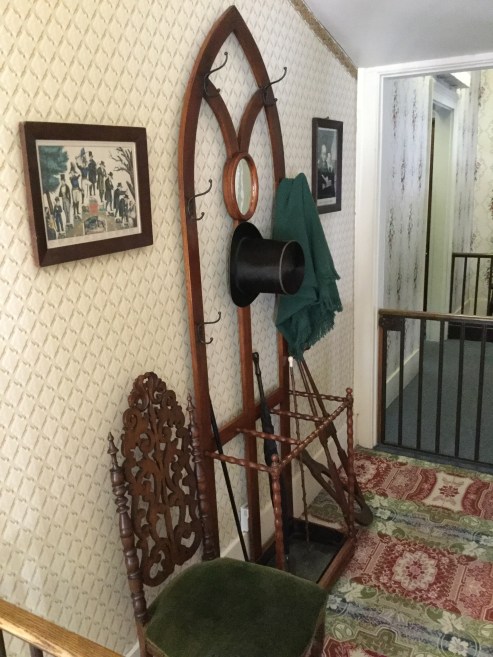
Downstairs hallway in the Lincoln Home with the Lincolns’ original hatstand – but no, not Abe’s original hat
Springfield, Illinois, Saturday, July 30th, 2017
I sleep in then linger over a continental breakfast-of-sorts in my rented room as I catch up on some rest, writing, and research. When I finally bestir myself in earnest, I head over to D’arcy’s Pint to enjoy a local delicacy for lunch. My brother John lived in Springfield for a time some years ago and told me I must eat a horseshoe while I’m in town. The internet tells me that this gastropub is the best place to enjoy this decadent regional take on the open-face sandwich, so here I am. I order a full-size one with the works, spicy, and a pint to wash it down with. They bring me a small mountain on a plate composed of Texas toast, french fries, ground meats, chopped tomatoes and other veggies, and cheese sauce, the spiciness added at the discretion of the diner from the little cup of (mildly) hot sauce on the side. It’s tasty enough, I can’t deny, and the cheese sauce is very good and appears to be homemade, not at all like the waxy bright yellow kind that comes from a can or jar. But it’s not the tastiest thing I’ve ever eaten: it’s really starchy. Potatoes and bread in one dish? Hmmm. Still, it’s plenty good enough to pack up the other half to eat later. The physically-demanding, hiking-heavy portion of my journey is far enough behind me now that I just can’t digest a heavy meal of this size all at once.
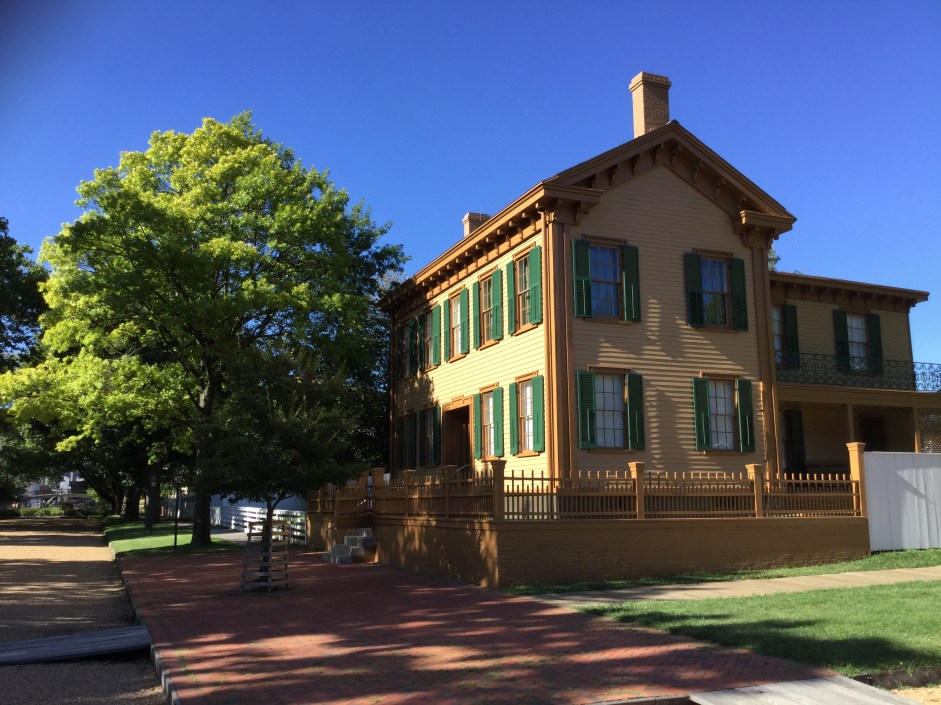
The Lincoln Home at the corner of Eighth and Jackson Streets, Springfield, Illinois. Abraham Lincoln planted the elm tree at the left.
Feeling pleasantly languorous, I return to the Lincoln Home Historic Site. The house where Abraham Lincoln, Mary Todd Lincoln, and their children lived from 1844 to 1861 stands at 413 S 8th St. It’s the only house where Lincoln lived that’s still standing except for the White House. I park in front of the Visitor Center at 426 S 7th Street and buy my ticket for the next available tour. In the intervening forty-five minutes or so before my tour starts, I wander through the exhibits in the small museum/bookshop of the visitor center and obtain a little more information for the rest of my Illinois trip. There’s lots of great stuff here.
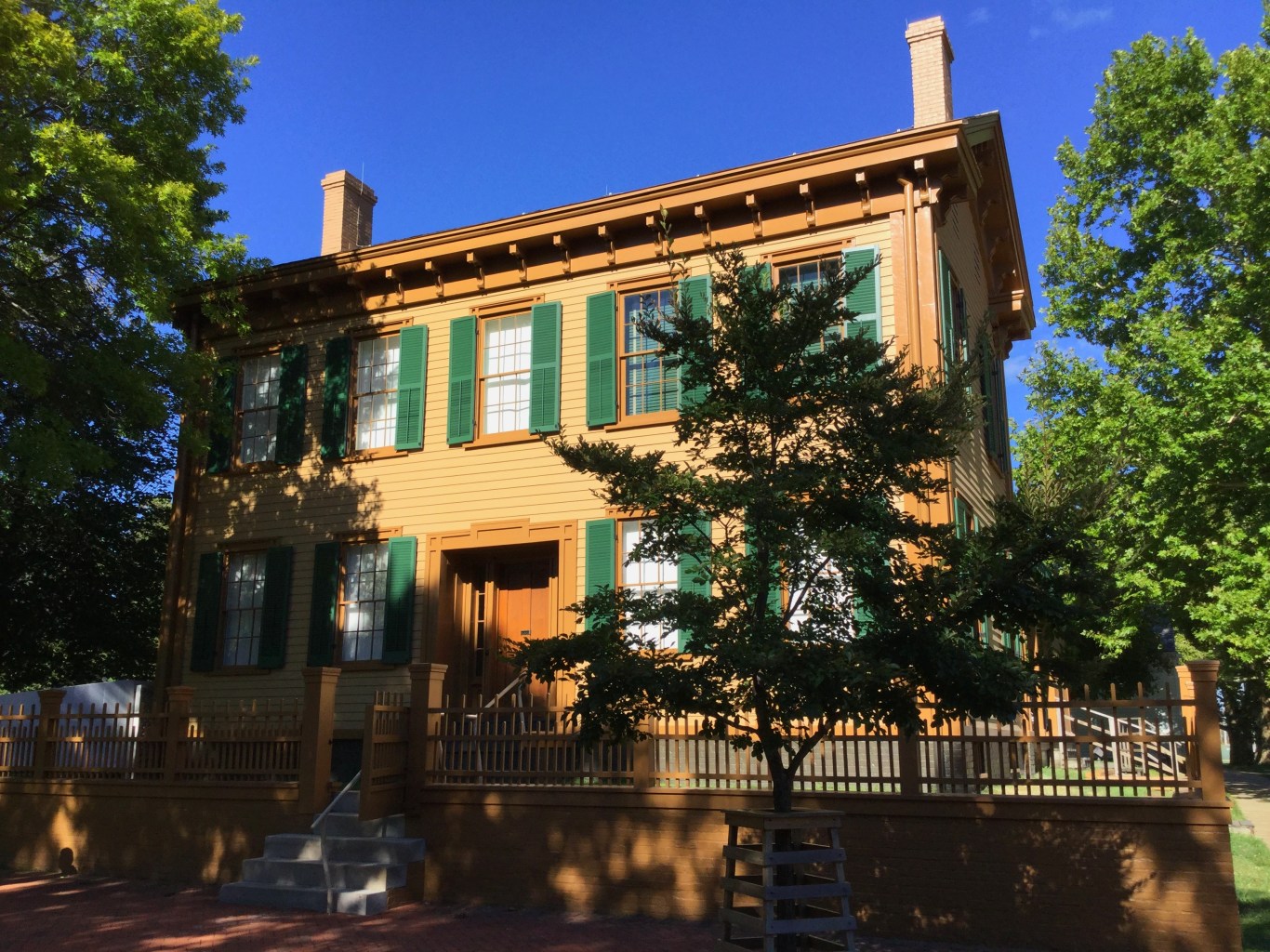
Another view of the exterior of the Lincolns’ home in Springfield, Illinois
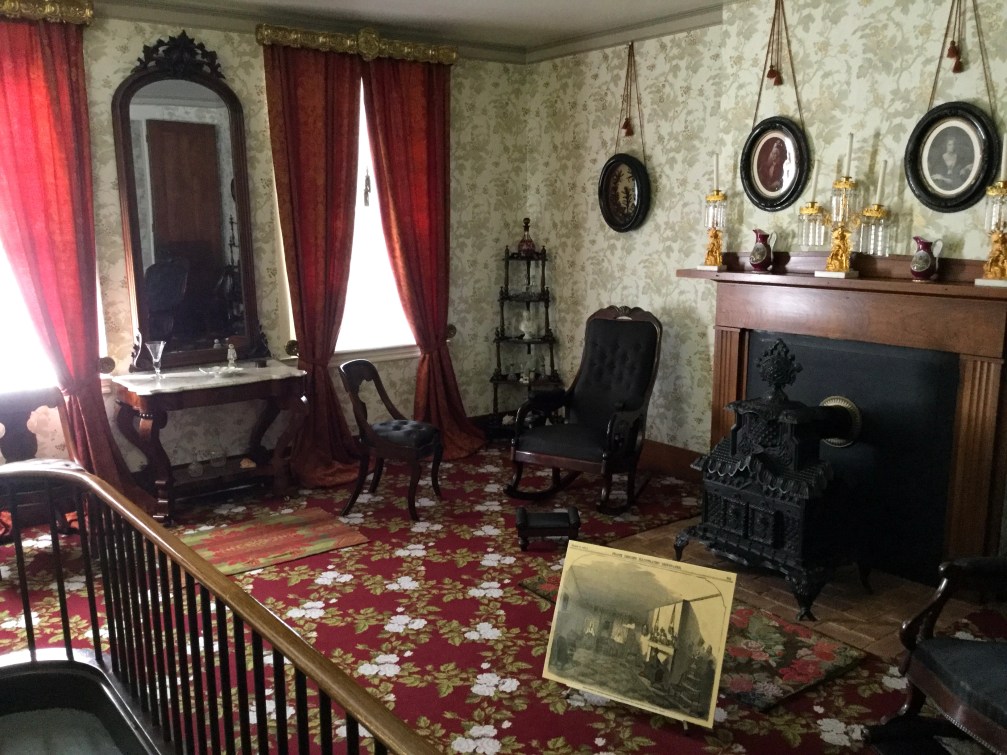
A view of the front parlor at the Lincoln Home, Springfield, Illinois.
A few minutes before our scheduled time, I meet the little tour group outside on a bench on the grass-edged wide walkway leading from the Visitor Center to the Lincoln Home. It sits among a very tidy little neighborhood of historic homes from around the Lincolns’ time here. Houses from later periods were not preserved, and a few stand empty and neatly painted, but not yet restored. Since the only activity at the streets and houses here are visitors strolling and gazing, guided and informed by the signs erected in front of some of the homes and other points of interest, it feels more like a nice outdoor museum or park than a neighborhood.
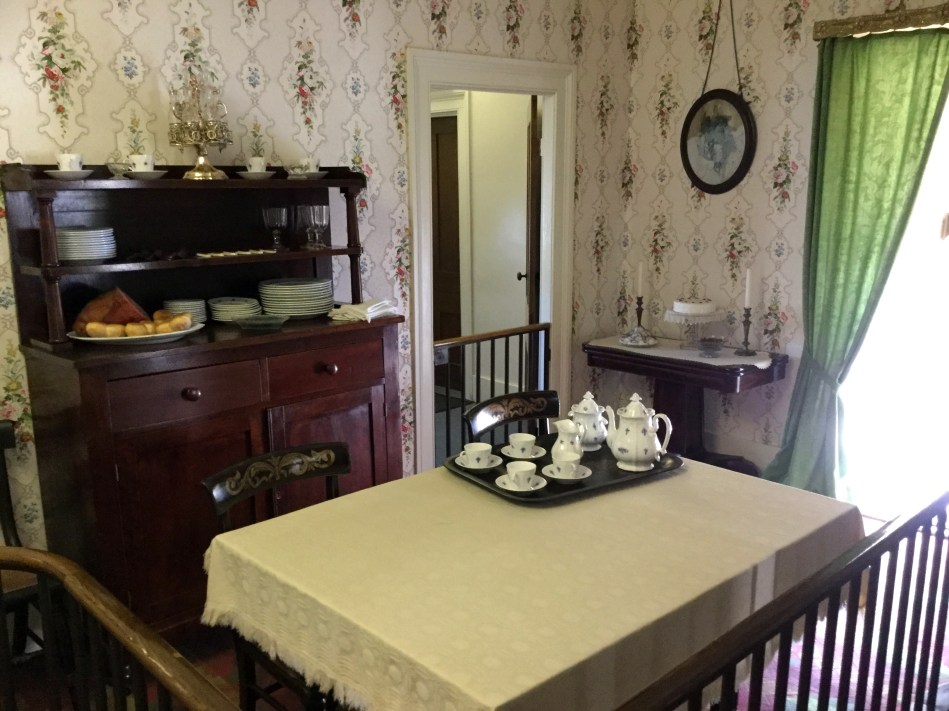
The Lincoln Home dining room
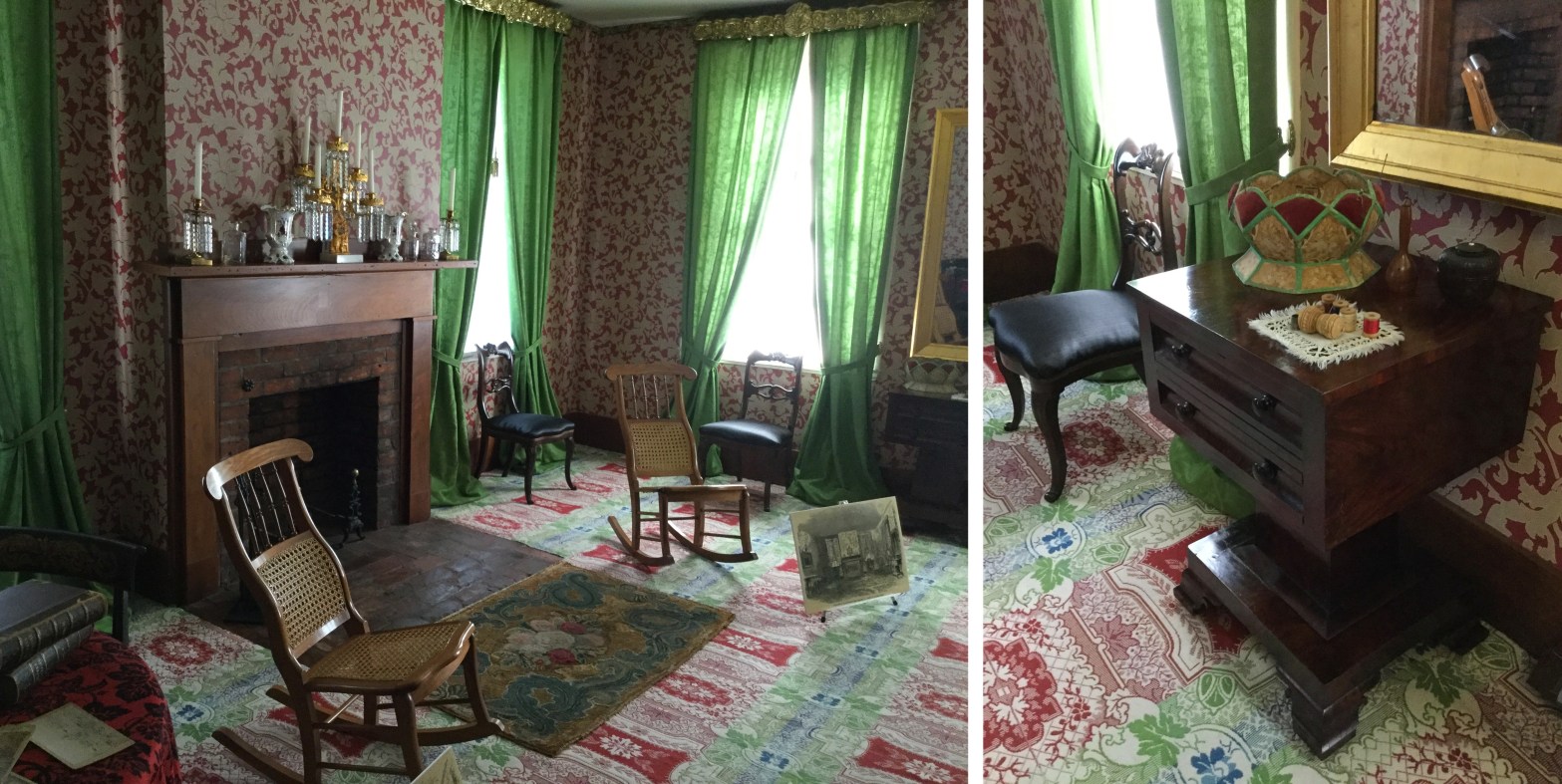
The Lincoln Home living room, with a closeup of Mary Todd Lincoln’s sewing table at the right
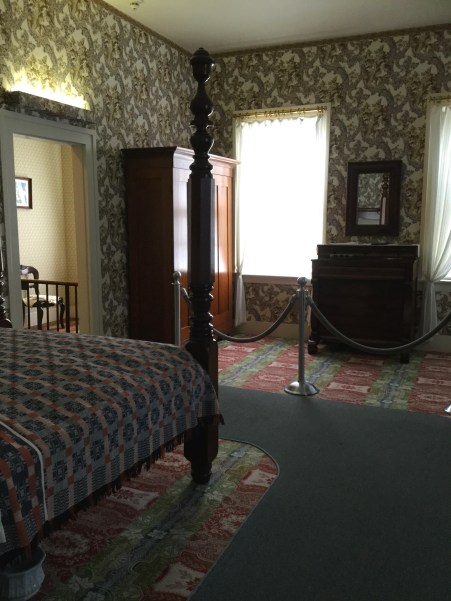
A view of the Lincolns’ extra-long four-poster bed in their bedroom at the Lincoln Home. It was the best shot I could get given I had to wait for the crowd to pass, then had only a few seconds before they ushered me along.
The Lincoln Home is a two-story house and, with the additions that the Lincolns added over the years, a decent size for a household of two adults and three children. Mary bore four sons; as you may remember, Robert was born the year before they moved here. Sadly, little Eddie died just short of four years old in 1850. He was the Lincolns’ second child and the first to be born in this house. Almost ten months after Eddie’s death, William was born, followed by Thomas, called Tad, in 1853.
The house originally consisted of just the front two-story section, tall but narrow, and this part feels as small today as I’m sure it did for the growing Lincoln family. It may seem roomier if I was here without my fellow visitors all herded together to one side of each room by the guardrail. Still, everything seems just a few steps away. The relatively small rooms would be practical for the time: they were easier and cheaper to keep warm in winter, hard to do since double-pane windows weren’t a thing yet. And since they had no modern appliances, the smaller rooms would have made cleaning the house more manageable as well.
We wind our way upstairs to the bedrooms. Each has its own wallpaper pattern, which modern tastes would generally find too ‘busy’, but these patterns were very French and therefore, very fashionable. It was very important to Mary that her homes be stylish enough to welcome and impress visitors even from the highest and wealthiest social classes. She continued this practice of elaborate home decorating at the White House, and she was reviled by many, and still is, for being an irresponsible, image-obsessed spendthrift.
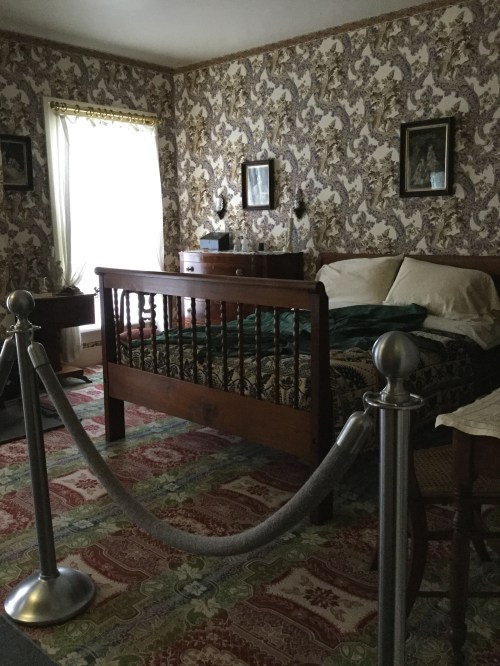
One of the children’s’ bedrooms on the upper floor of the Lincoln Home
But I don’t believe that Mary Todd’s insistence on style and elegance was the simple result of vanity or thirst for luxury. One of the things that originally drew Mary Todd and Abraham Lincoln to one another was their love of politics, and Mary, like Abraham, was ambitious; he on his own behalf, she mostly on his, since he was the only one who could engage actively in politics. She, like Abraham, was practical, and a woman’s sphere of influence then was in the home and in the entertainment of guests. She knew that her husband was more likely to be respected and admired as a political leader if he lived in homes that displayed taste, culture, and yes, money, since that was emblematic of responsibility, ability, and power. She was only one of the many First Ladies who recognized this and who likewise put a lot of energy and money into making the White House a symbol of national pride and success. But she, I believe, has been the most reviled for it.
After viewing the upper floor and its bedrooms, we return to the ground floor and pass through the little kitchen. I think I would find it inconveniently small, but Mary was a petite woman, so perhaps that helped. At least everything was in easy reach! She did most of the household cooking, a new feature of her life once she married Abraham.
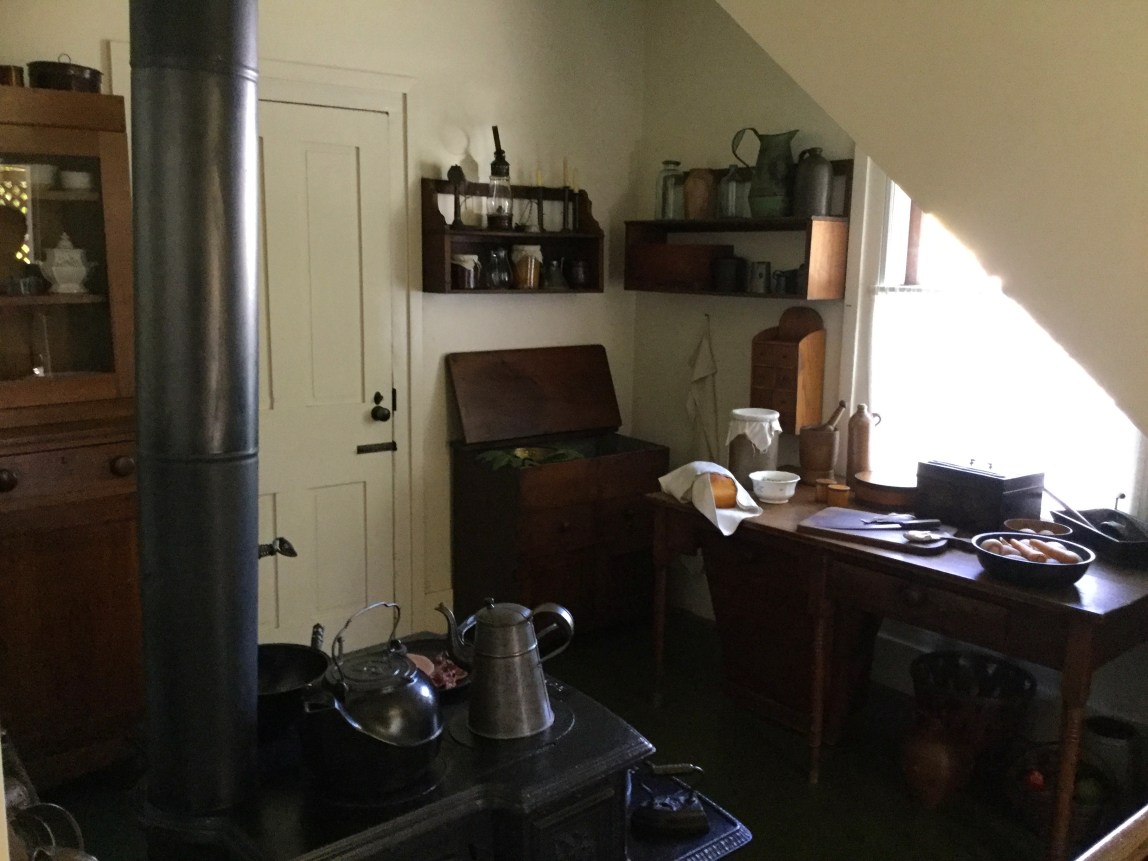
The cozy little kitchen in the Lincoln Home
Many considered their courtship and marriage a poor fit: Mary had grown up with all of the advantages of wealth while Abraham very much did not. But she, like many others once they got to know him, was impressed enough with his intelligence and character that his long background of debt and poverty didn’t seem to deter her much. But married life with Abraham was not always so easy for Mary. It wasn’t just that she had to learn to cook and to perform many of the household duties that the team of domestics at her parents’ house used to take care of. Over time, as Abraham became a more financially successful lawyer and then politician, they enjoyed a much more comfortable middle-class lifestyle and Mary had money to spend on her household and personal effects again. But Abraham was notoriously ‘deficient in those little links which make up the chain of a woman’s happiness,’ as one of his prior sweethearts observed, and often much less demonstrative of his feelings than Mary would wish.
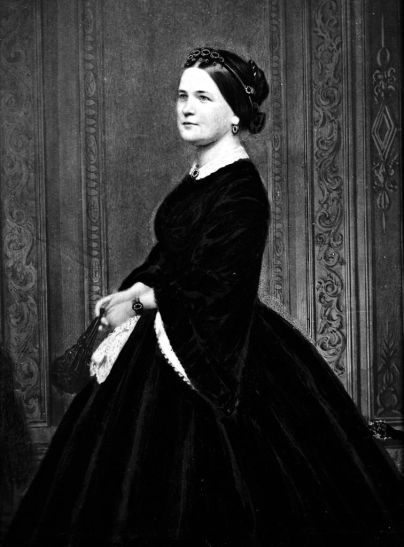
Mary Todd Lincoln, ca 1860 – 1865, Brady-Handy Photograph Collection, public domain via the Library of Congress
Yet especially during the early and middle years of their marriage, despite Lincoln’s law partner and eventual biographer William H. Herndon‘s many negative portrayals, the couple were very loving, respectful, and supportive of one another. Yes, they quarreled at times; both of them were moody, willful people. When angered, Mary would vent her frustrations but Abraham would bottle his up and withdraw, which, no doubt, sometimes made matters worse. Abraham may have had to put up with a lot sometimes, but at least for much of their marriage, Mary had to put up with more. She had a lot more character and a lot less selfishness and vanity than Herndon and many others later gave her credit for. After all, this was a woman who gave up a life of ease and wealth to marry an awkward-with-women, undemonstrative, unromantic, funny-looking guy of little means and few signs of promise besides his intelligence and charisma. She ended up with a faithful and hardworking but often absentee husband and father as he went out on the law circuit sometimes for weeks at a time, laying most of the household burdens on her shoulders. Their children were hard to deal with too: Mary and Abraham could not agree on a consistent method of discipline so they mostly gave it up, to the dismay of Lincoln’s colleagues at his law office and the White House since he’d sometimes bring his rambunctious kids to work.
Later on, the heartbreak of losing two of her children by the time she left the White House and the strain of public life took their toll on Mary. Mary was outspoken and decisive, and Victorian America was not yet accepting of such overt displays of will and opinion by women, especially by the First Lady, expected to be a model of decorum, of womanly modesty and restraint. But Mary would have none of it, and she made many enemies with her cutting wit, sarcasm, and displays of temper. She stood up for herself, not always gracefully, and this did not make her popular. Mary’s emotions, her depressions and passionate outbursts, became more volatile and frequent over time, and the Lincolns’ relationship was often more severely strained than ever. But although they had very different ways of expressing themselves, Mary and Abraham shared the sources of their pain and remained as supportive of one another as they knew how to be, and loyal to one another, for the rest of their lives.
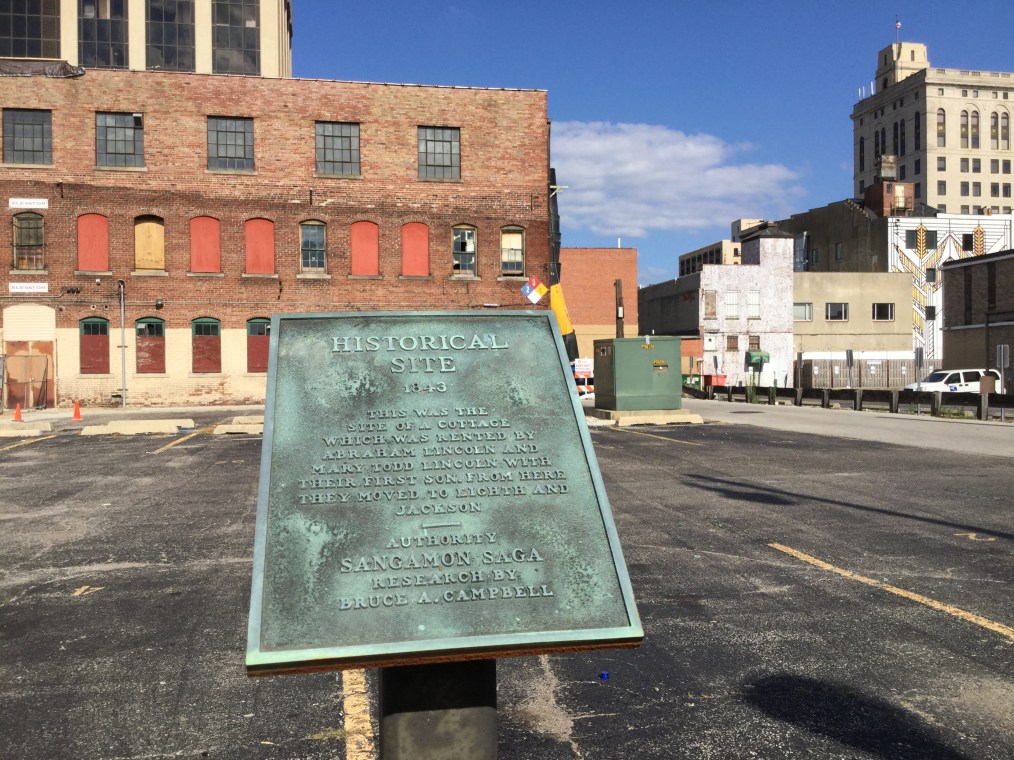
Site of Abraham and Mary Lincoln’s second home on 4th St just north of Adams, Springfield, IL 2017 Amy Cools
We complete the tour of the house and I zigzag north and west, returning to central downtown Springfield. I had confirmed the location of a few more sites in my research this morning, and in books and maps I found at the Lincoln Home Visitor Center while I was waiting for the tour to begin. The next site I visit is on 4th St, just north of Adams St, on the east side. There’s only a parking lot here now, where used to stand a modest three-room frame house. Search as I may, there seems to be no photo of the house, or, as the historical plaque at the site describes it, cottage. The Lincolns and their infant son Robert moved here in the fall of 1843. They didn’t want to raise their children in a bustling hotel, though the Globe Tavern was a nice enough place for a young couple, so they moved into the best home they could afford until Lincoln’s practice began bringing in enough money again for something better. They were here only about a year before they moved into their permanent home on 8th St.
Lincoln was still paying off old debts, and as you may remember from the last installment of my Lincoln story, his law partner at the time, Stephen T. Logan, was a little tightfisted with the practice’s money. But as Lincoln became better known and more in demand; with a little help from Mary’s father, who liked Abraham despite the fact that he couldn’t yet provide his daughter a more comfortable lifestyle; and with Lincoln’s new senior partnership with Herndon in late 1844, they felt able to afford the 8th St house that same winter.
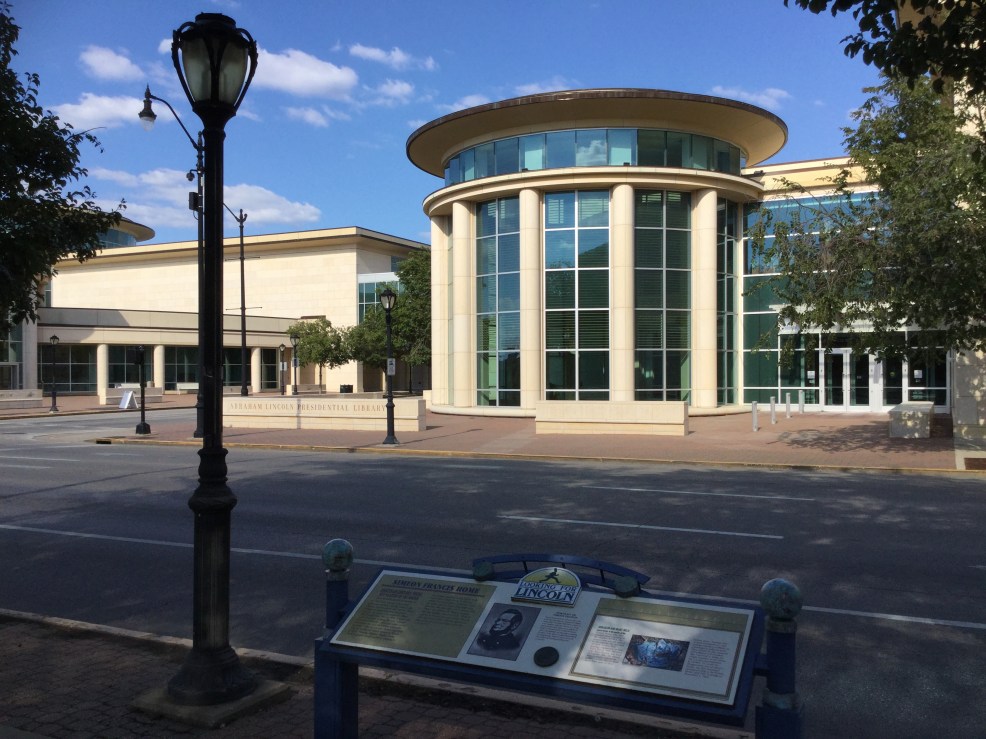
Abraham Lincoln Presidential Library and Museum, Springfield, Illinois. The Library building stands on the site of Mr. and Mrs. Simeon Francis’ home, where Abraham Lincoln and Mary Todd renewed their courtship.
Then I return to the Abraham Lincoln Presidential Library. On my first day here, I missed the sign that indicated that the Library stands on the house site of Eliza and Simeon Francis; the sign is across the street on the sidewalk next to the business building and PNC bank parking lot. Simeon Francis was the editor of Sangamo Journal and had become close friends with Lincoln in this capacity. Lincoln was a regular contributor to the editorial page through much of the 1830’s. After Mary Todd moved to town in 1839, she and Eliza Francis became close friends as well. Within the first year of their courtship, Lincoln panicked and broke off his engagement with Mary Todd on New Year’s Day, 1841 (what a day to choose, Lincoln!), and they didn’t speak much for a while.
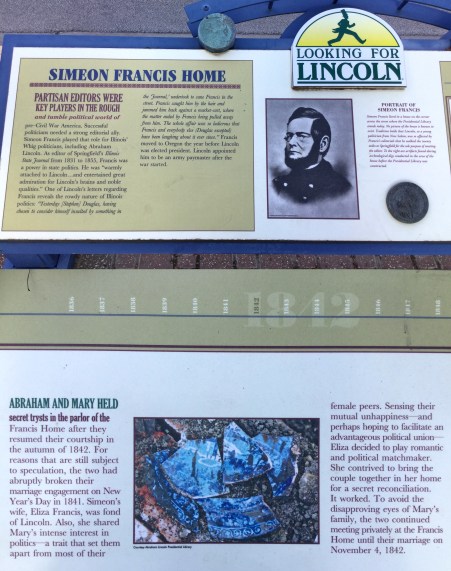
Close-ups from the Looking for Lincoln sign for the Francis home site
But they shared so many acquaintances, friends, and interests that they were inevitably brought together again, especially by their friend Eliza. They were reconciled in the house that once stood here the next year and met regularly here to renew their courtship in secret. They didn’t want their relationship to be the subject of gossip and public speculation as to the reasons for the breakup and the renewal of their relationship. I’m guessing this may have been caution especially on Mary’s part: she was pretty head over heels for this guy; her family didn’t approve of him as a match for her however much they may have liked him personally; and she had observed how the normally gregarious and social Lincoln became awkward, shy, and skittish in the presence of most women. But when they were alone, Abraham and Mary got along excellently and had much to talk about. It all went so well this time around that Abraham and Mary Todd were married on November 4th, 1842.
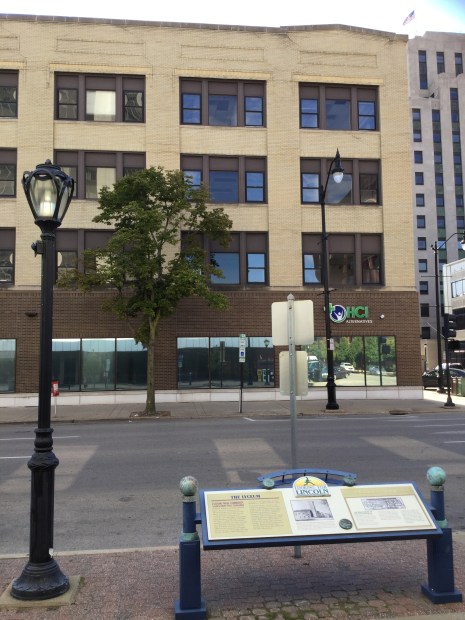
Site of the old Baptist Church at the southwest corner of 7th & Adams Sts where the Young Men’s Lyceum was held. Lincoln delivered his famous Lyceum Address here on January 27th, 1838.
I continue two blocks south and one block east to the northwest corner of 7th and Adams Sts. There’s a ‘Looking for Lincoln’ sign here on E Adams which points out the site across the street.
The Young Men’s Lyceum used to meet here at the old Baptist Church from 1838-1840. Early on during their tenure here, on January 27th, 1938, Lincoln addressed the young men with a speech titled The Perpetuation of Our Political Institutions. Now known as the Lyceum Address, Lincoln spoke against the ‘mobocracy’ which he feared was becoming too common a substitution for reasoned debate and institutional reform in American life. The rancor between abolitionist and pro-slavery sympathizers was growing, breaking out in increasing numbers of violent episodes. The Lyceum Address revolves around the lynching of Francis McIntosh, a young freeman of mixed-African and European descent, who was lynched in St. Louis less than two years before Lincoln’s address here.
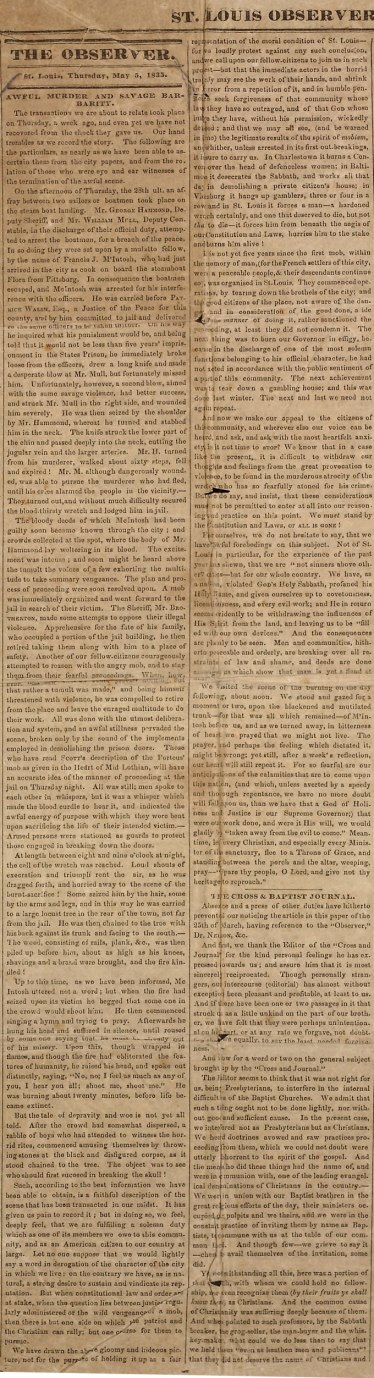
Lovejoy on the lynching of McIntosh in The Observer, May 5, 1835
McIntosh was working on a steamboat that docked in St Louis, and on his way to visit his girlfriend, he stumbled upon two policemen pursuing another man who had been in a drunken brawl. McIntosh did not obey the policeman’s shouted orders for his to help them catch the man. Like the average American of African descent, free or enslaved, McIntosh was very likely not in the habit of mixing himself up in any circumstance that involved police or government officials, for the simple reason that very few of them had any interest in dispensing justice to people like himself, especially in slave states like Missouri. The drunk man got away and McIntosh was arrested instead. When the police officers threatened him with five years in jail, in a slave state, remember, McIntosh panicked. He grabbed a knife and fled, killing one officer and wounding the other. He was caught and jailed again. A mob gathered, broke him out, chained him to a tree, and burned him alive. At first McIntosh begged for someone from the crowd, anyone, to shoot him and release him from his torture; when no one was willing to show even this level of mercy, he prayed and sang hymns until the pain and the flames silenced him for good.
Abolitionist minister and editor of The Observer Elijah Lovejoy picked up the story and, contrary to most of the press, condemned this episode as an episode of wickedness and lawlessness. Proslavery sympathizers ran a sabotage campaign against his St Louis press until he was forced to move across the Missouri River to Alton. But he was not safe there, either, and on November 7, 1837, a mob attacked the warehouse where he had hidden his press in a vain attempt at safety. They shot into the warehouse while Lovejoy and his supporters were inside. Forced to defend themselves, they shot back, wounding some members of the mob and killing one. In revenge, the mob tried to burn down the warehouse with the men still inside it, and Lovejoy was shot to death when he emerged to stop them. As was the case with McIntosh, the judge voiced his support for the mob and no-one was convicted of the murder.
Lincoln feared that his beloved country would devolve from an enlightened union of states founded on principles of reason and reverence for the rule of law into an association weakened and fractured by the same ideological intolerance and strife which marked old Europe. He did not fear that any European, or Asian, or African nation, or any other foreign power, could destroy the United States: he recognized that in this, the only thing Americans had to fear was themselves. Lincoln’s fear was prescient: Bleeding Kansas was still twenty-six years away, the Civil War thirty-three. When he delivered this speech, Lincoln was just short of 29 years old. He had been first elected a state legislator less than four years before and had been a practicing lawyer for less than a year. While ambitious for high office, I doubt that even Lincoln’s prophetic skills could help him foresee that he would be leading his nation to the ‘new birth of freedom’ he spoke of in his even more famous 1863 Gettysburg Address, with strengthened political institutions that could, it was hoped, better serve a government ‘of the people, by the people, and for the people’ – but all the people this time around. We’re still working on it.
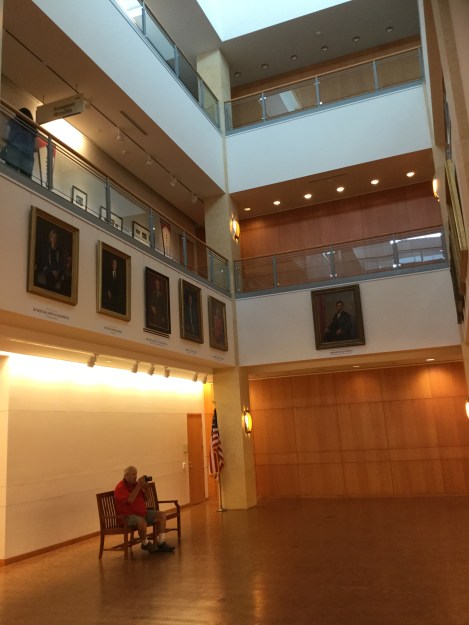
The foyer of the Abraham Lincoln Presidential Library, Springfield, Illinois
It’s early evening, and those leftovers are sounding pretty good right now. The last places I’d like to follow Lincoln here in Springfield will be open tomorrow, so I return to my lodging.
Springfield, Illinois, Sunday, July 31st, 2017
I begin my day at the Abraham Lincoln Presidential Library and get a little writing done. I would love to dig into the archives here, which now include the Robert Ingersoll Papers, but I’m itching to get back on the road. I have this big comfy rental car (a free upgrade since the first one broke down) and only a certain number of road trip days left before I leave the U.S. for a while. But I’ll certainly be back here again.
A five minute’s drive north from the Library takes me to the Edwards Place Historic Home, now owned and operated by the Springfield Art Association. I enter the visitor center to the right of the house, and though I don’t have anything scheduled, a woman on staff there was kind enough to take me on a one-on-one tour. My timing is lucky: before long it will be closed to the public for restoration, at least until May 2018. As it is, I get to see some of the rooms decorated and ready for the public complete with nice carpet, wallpaper, artifacts original to the family and to the time period, as well as other rooms and passageways in various stages of disrepair, construction, and deconstruction. I see layers of plaster, wood, wallpaper, and paint peeled and cut away, little doorways into its history. Particularly revealing to me, familiar with vintage and antique textiles, I recognize various attempts at recreating the house’s antebellum history more or less successfully in the wallpapers, with 1990’s, 1960’s-1970’s, 1920’s, and other eras’ ideas of what wallpaper from the time would look like. None of it looks at all like the Edwards’ own wallpaper peeking out from where bits of it had escaped the remodelers’ scrapers.
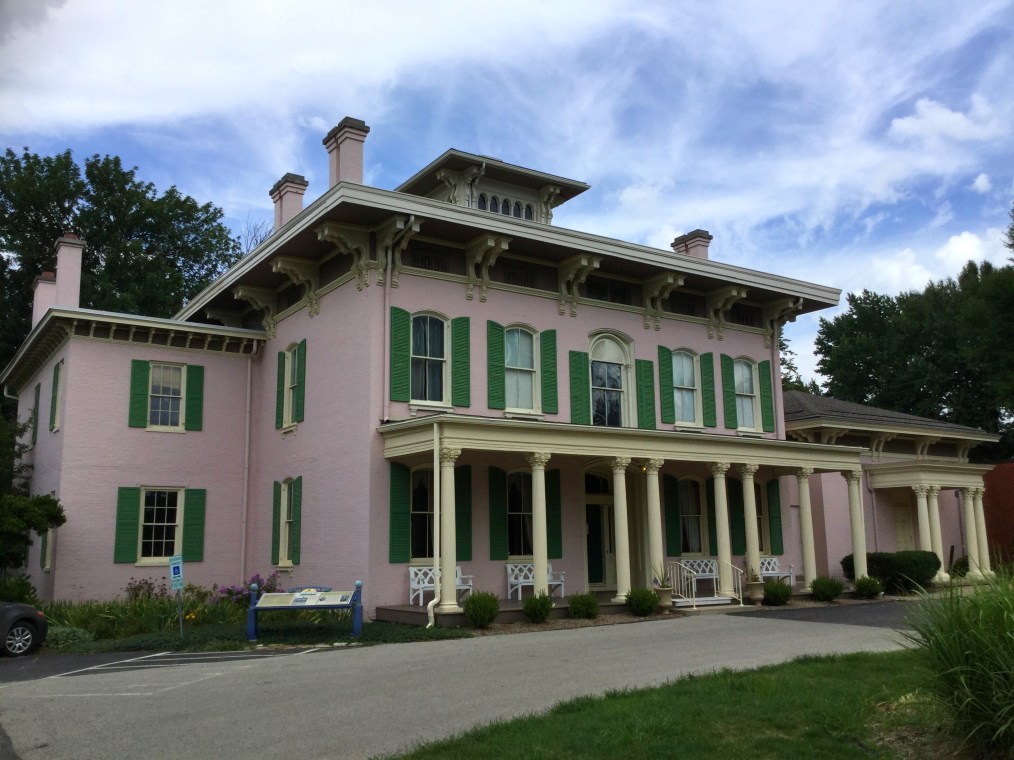
Edwards Place Historical Home, Springfield, Illinois
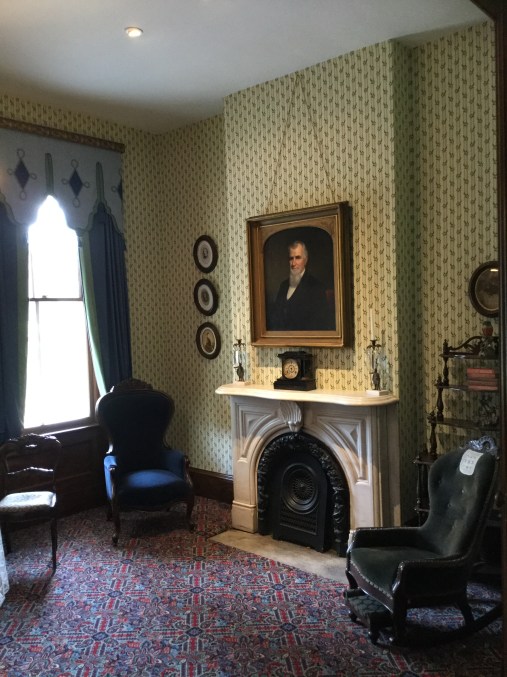
A view inside the Edwards Place Historical Home before planned restoration
The house was originally built in 1833 and expanded to its current grand dimensions after Benjamin and Helen Dodge Edwards bought the house in 1843. Benjamin Edwards was the brother of Mary Todd’s sister Elizabeth’s husband Ninian, named for the Edward brothers’ father. When Mary Todd moved to town in 1840 and settled in with her older sister Elizabeth, Mary and Helen became good friends. When Helen and her husband moved to this house three years later, Mary and her new husband Abraham were regular guests.
As Springfield Art Association says on their website, the
‘Edwards Place was a center for social activity in Springfield. Prominent citizens and politicians such as Lincoln, Stephen A. Douglas, David Davis, and numerous governors, judges, lawyers, and politicians were entertained at lavish dinner parties and the grounds played host to many summer picnics and political rallies…. Although the Lincolns did not court or marry here, Edwards Place is currently home to the “courting couch” on which Lincoln and Mary Todd sat during the early days of their romance, originally the property of Ninian Edwards.’
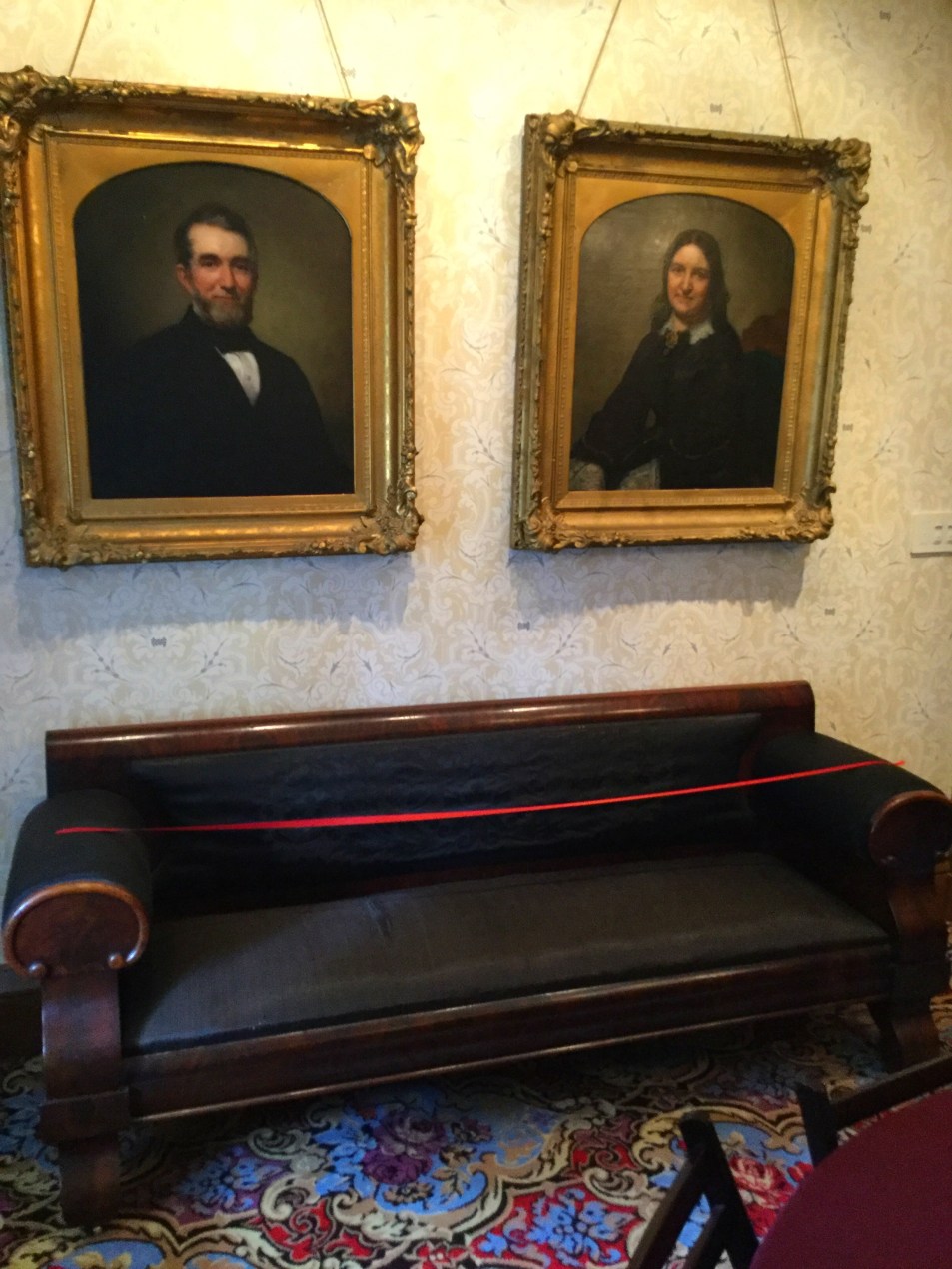
The Lincolns’ courting couch at Edwards Place Historical Home, Springfield, Illinois
The website’s article points out that I made the same mistake many people do: I mixed up the Edwards houses. This Edwards house, which currently houses the famous black horsehair couch where Abraham and Mary courted, is not the same house where that couch originally was, where the Lincolns originally courted and were married. These Edwards moved into this house the year after the Lincolns were married. The other Edwards house site, where Ninian and Elizabeth Edwards welcomed Elizabeth’s younger sister Mary into their home in 1840, is where the Michael J. Howlett building now stands. That’s downtown near where I just came from. Well, no matter. It’s only a five-minute or so backtrack.
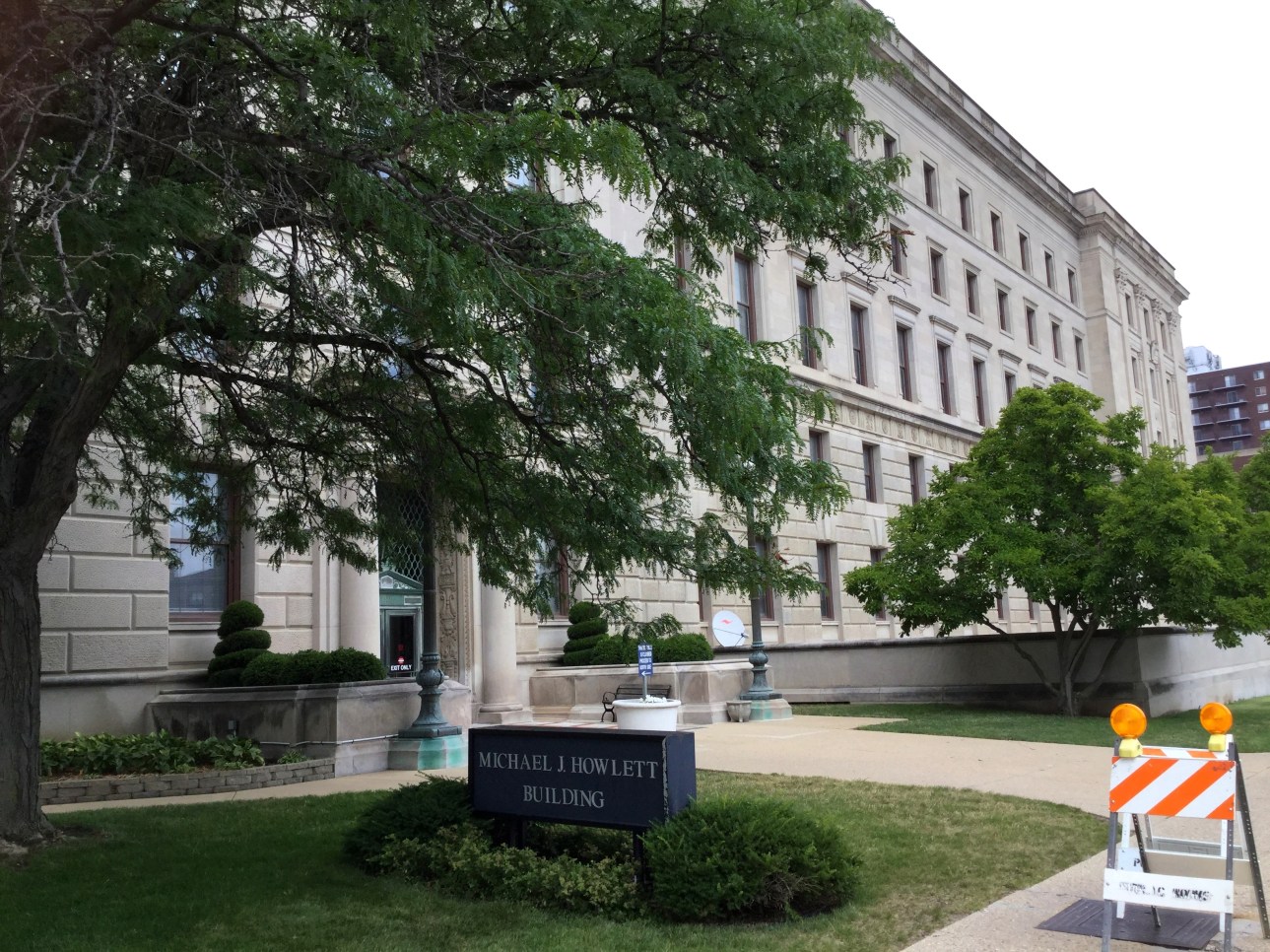
Michael J. Howlett Building, Springfield, Illinois
I find a parking spot near the Michael J. Howlett building–not easy to do since its a workday–and look for a plaque or marker. There’s sure to be one since it’s the site of such significance in Lincoln’s life. I don’t see one at first, so I visit the Illinois State Archive, the next building to the west of the Howlett building. The man at the front desk there doesn’t know of such a thing but hazards a few guesses. However, before I go on that little goose chase, the man looking after the state employee parking lot passes by. I tell him what I’m looking for, and he knows right off. Of course! He spends his days out here where it’s likely to be found. I follow his directions: if you start from the Howlett building sign on E Edwards St, head north on the driveway towards the Illinois State Capitol Building following the west side of the Howlett building. Turn right at the corner of the building, then look low on the outer wall of the accessible ramp. That’s why I missed it: it’s well below eye level, and not on a structure, or rather, the part of the structure, that I expected it to be on.
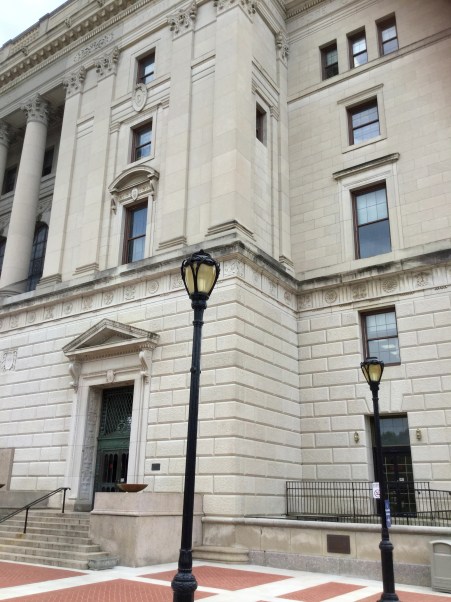
North (back) of the Michael J. Howlett building where the Edwards house site historical plaque is set low in the on the ramp wall
Mary Todd Lincoln returned to this house many years after her years in Springfield as a vivacious debutante, fiancée, wife of a lawyer and congressman, mother of a brood of wild young boys, and new First Lady. Her sister Elizabeth discovered that her oldest son Robert had her committed to an insane asylum in 1875 and was dismayed. Mary had lost her husband and three of her sons and had increasingly had a terrible time after each one. She may have struggled with what today we might call a mental illness, but since emotional issues were so poorly understood by the medical establishment at the time (as they are, in many ways, in our time) and there was no one to give a qualified assessment at the time, I won’t repeat modern diagnostic speculations here. Robert and Mary had not gotten along for a long time, and we can’t know for sure if he thought she really needed to be committed or if he was just wanted to get her out of the way and out of the bank accounts. She had adopted many unsettling habits, such as consulting spiritualists and alternating heavy spending on trifles she never used with eccentric miserly behavior, fearing poverty despite her generous government pension. Mary was able to get herself released from the asylum into the care of Elizabeth. She lived here for a time then moved to France for awhile until her health significantly declined, then returned to live with Elizabeth. She died here on July 16th, 1882.
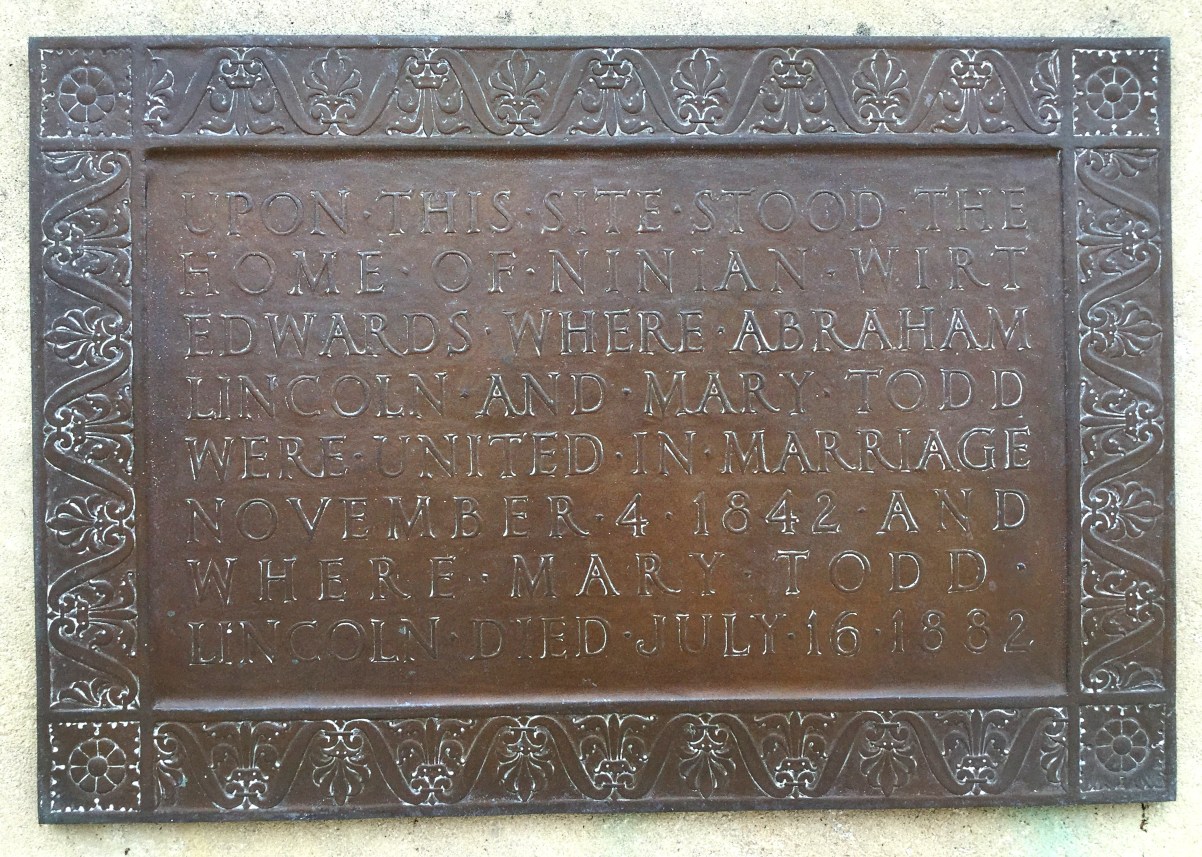
Edwards House site historical plaque on the north (back) side of the Michael J. Howlett building
Having visited all the sites on my list as well as a few I discovered during this journey, I continue on from Springfield to one more very important place associated with Lincoln’s life and ideas, and then arrive at another amazing place this evening. Stay tuned!
*Listen to the podcast version here or on Google Play, or subscribe on iTunes
Ordinary Philosophy and its Traveling Philosophy / History of Ideas series is a labor of love and ad-free, supported by patrons and readers like you. Please offer your support today!
~~~~~~~~~~~~~~~~~~~~~~~~~~~~~~~~~~~~~~~
Sources and inspiration:
Abraham Lincoln Online: Edwards Place, Lincoln Family Timeline, Lincoln Legal Career Timeline, Lincoln Timelines and Highlights, and Lyceum Address
Andreasen, Bryon C. Looking for Lincoln in Illinois: Lincoln’s Springfield. Southern Illinois University Press, 2015
Baker, Jean H. ‘Mary Todd Lincoln: Managing Home, Husband, and Children.‘ Journal of the Abraham Lincoln Association, Volume 11, Issue 1, 1990, pp. 1-12
Carwardine, Richard. Lincoln: A Life of Purpose and Power. New York: Random House, 2003
‘Central Springfield Historic District‘ National Register of Historic Places Registration Form, Prepared by Nicholas P. Kalogeresis for the National Park Service.
Donald, David Herbert. Lincoln. New York: Simon & Schuster, 1995
Edwards Place Historical Home website and page on the Springfield Art Association website
Graham, Beckett and Susan Vollenweider. ‘Mary Todd Lincoln,’ Parts One and Two. The History Chicks podcast
Gourevitch, Philip. ‘Abraham Lincoln Warned Us About Donald Trump‘. The New Yorker, March 15, 2016
Herndon, William H. and Jesse W. Weik. Herndon’s Lincoln: The True Story of a Great Life. 1889
Lehrman, Lewis E. Lincoln at Peoria: The Turning Point. Mechanicsburg, PA: Stackpole Books, 2008.
Lincoln Home National Historic Site, Illinois, website by the National Park Service
Looking for Lincoln: various historical/informational placards throughout the Springfield, Illinois and surrounding areas about the life and legacy of Abraham Lincoln at their associated sites
MacLean, Maggie. ‘Elizabeth Todd Edwards: Sister of Mary Todd Lincoln.’ Civil War Women blog, Jul 28, 2013
Nicolay, John George. An Oral History of Abraham Lincoln: John G. Nicolay’s Interviews and Essays. Carbondale: Southern Illinois University Press, 2006
Simon, Paul. Freedom’s Champion-Elijah Lovejoy. Jefferson, North Carolina: McFarland & Company, 2004
Wright, John Aaron. Discovering African American St. Louis: A Guide to Historic Sites. St. Louis: Missouri Historical Society Press, 2002






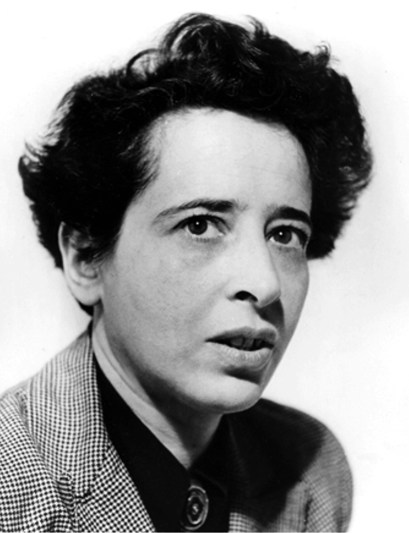 Hannah Arendt, born on October 14, 1906 in Hanover, Germany, was one of the twentieth century’s leading thinkers about political philosophy and the nature of evil. In the one and only filmed interview with her that survives, Arendt objected to being called a philosopher; she said she doesn’t feel like a philosopher, and that she thinks she has not been accepted in the philosophical community. We’re still hashing out what she meant by these statements to this day: some believe that she didn’t feel, as a woman, that the traditionally male-centric philosophical circle had room for her, so she did her work in another arena of thought; some believe since she emphasizes action and responsibility in her ethics and political thought, she felt this did not fit into the abstract nature of the accepted philosophical canon. However, her latter remark has proved no longer true, if it ever was: she is not only accepted into the philosophical circle, she has earned a prominent place in it.
 Ordinary Philosophy