Frederick Douglass Washington DC Sites, Day 1, Part 2

Frederick Douglass standing in front of his home at 320 A Street NE, Washington, DC, in 1876. Public domain via NPS

Frederick Douglass standing in front of his home at 320 A Street NE, Washington, DC, in 1876. Public domain via NPS

Thirteenth Day, Friday, April 1st, continued

I leave the approximate site of Helen Pitts-Douglass’ onetime home at 913 E St NE, and head southwest to 316-18 A Street NE.

In 1872, Douglass moved his family here to Washington, DC. Since his beloved farm home on the hill in Rochester had burned to the ground on June 2, 1872, probably by arson, Douglass was bitter and in the mood to shake the dust of that city from his feet. He had already been considering a permanent move to Washington since his work with the New National Era newspaper (more on that to come), his political work, and his efforts to obtain a good government appointment often took him there, sometimes for lengthy stays. In fact, he was in Washington when he received a telegram notifying him of the fire.

Frederick Douglass house at 316-320 A St, Washington DC, photo 2016 by Amy Cools

Frederick Douglass house at 316-318 A St and the museum dedicated to him next door, in Washington, D.C.

So Douglass brought his family here, and after a stay in rented rooms, the Douglass family moved into this pretty Queen Anne brick house, likely in late 1872. I haven’t yet found a more exact timeline for where the Douglasses lived and when during their first months in Washington: sources vary on this. The plaque I find here at the house, placed in 1966, says that Douglass lived here from 1871 to 1877, though many other sources say 1872 and 1878, respectively. Perhaps Douglass had purchased this already as a second or investment home in 1871. In any case, the Douglass family lived here for about six years until they moved across the Anacostia River to Cedar Hill in 1878, though Douglass retained ownership of this house. I find an entry in John Muller’s Lion of Anacostia blog showing that Douglass applied for a permit to build onto this property in 1879, and his son Charles was living here when he died in 1920.

The restored house and the adjacent building at 320 A St now make up The Frederick Douglass Museum and Caring Hall of Fame, which is available for tours by appointment.
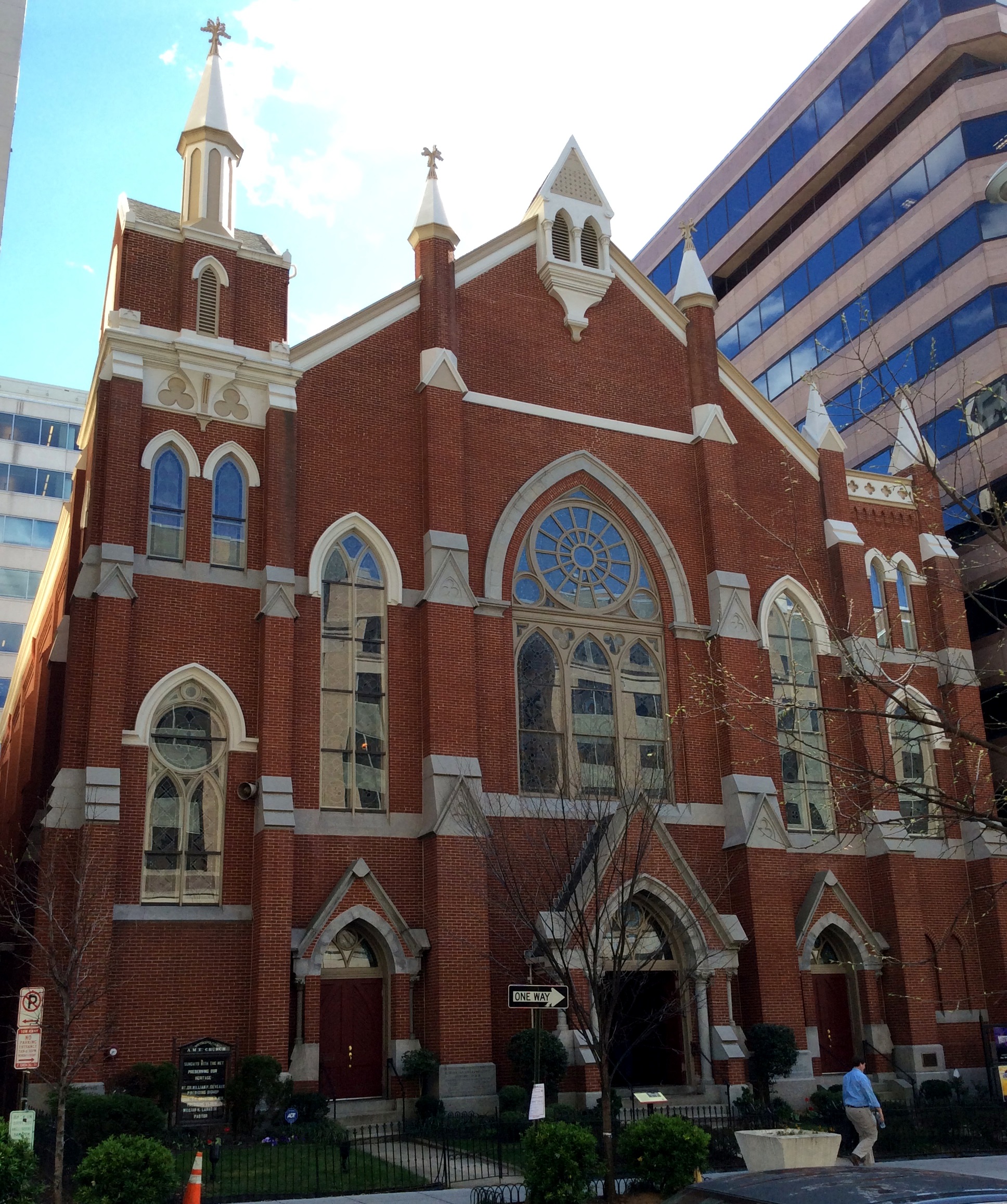
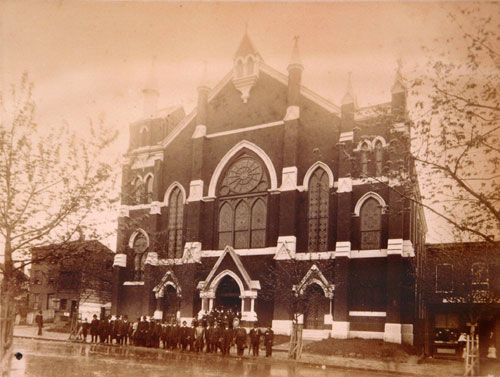
AME Methodist Church at 1518 M St NW

The Metropolitan A.M.E. Church at 1518 M St NW, Washington D.C.

Then I head northwest across town, a cross-wise route via Massachusetts Ave to the Metropolitan A.M.E. Church at 1518 M St NW. This historic church has many associations with Douglass, but I’ll focus on three main ones. In 1889, the Bethel Literary Society held a surprise 71st birthday celebration for Douglass here. Actually, the party would have been held at the church hall next door, since that’s where the Society met, where the ugly office building now stands to the right of the church. He was called upon to speak, and speak he did, of course, that was his specialty. The speech was written down by hand then typed; it’s at the Library of Congress today.

Douglass delivered another speech here five years later on January 9th, 1894. It was one of his greatest, called ‘The Lessons of the Hour’. In it, he speaks out against the lynching which had become rampant in the South. As you may remember from my New York account, Douglass was inspired by Ida B. Wells’ investigative journalism into the true nature and extent of lynching in the South, and had joined her in campaigning against it in 1892. Douglass blamed the accusations of rape used to excuse the lynchings as a new method of slandering black people and inciting white people to hate and fear them, since they could no longer use the excuse of a fear of slave uprising or black domination of white people through the vote. If it was true that black men were actually suddenly going around raping white women right and left, which mind you, hadn’t happened much in the South historically, why resort to mob violence instead of proving these cases in court? Because, Douglass charged, the lynchers and their apologists knew these accusations were lies. Metropolitan A.M.E. Church sign, Washington D.C. photo 2016 by Amy Cools
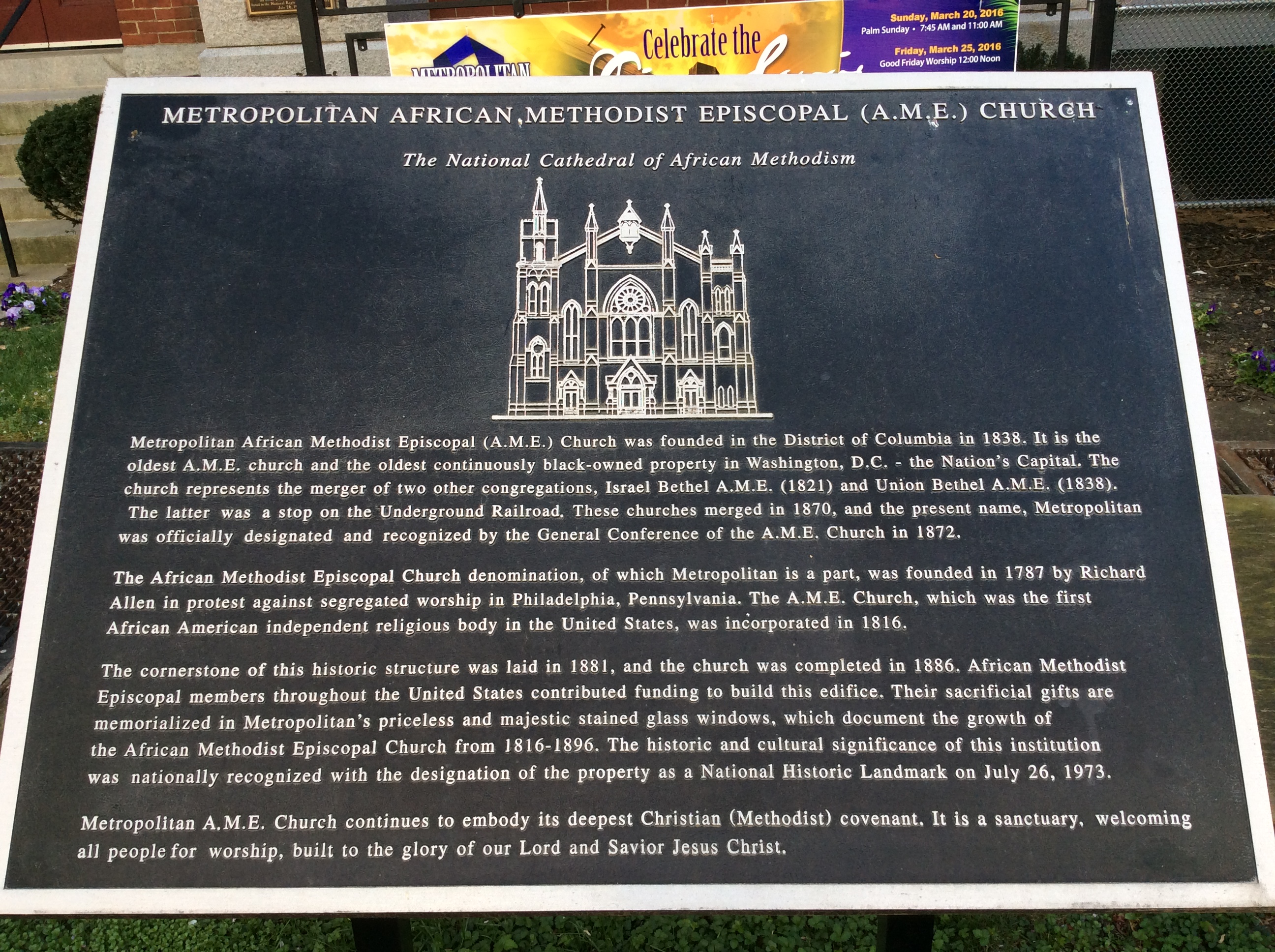
Photo of AME Metropolitan Church by Charles Frederick Douglass, 1900, via NPS website

Photo of AME Metropolitan Church by Charles Frederick Douglass, circa 1900, public domain via the National Park Service website.

One year later, Douglass’ funeral service was held here, on Feb 25th 1895, the first of two; the second was held in Rochester, where he was buried. This funeral was attended by huge numbers of mourners and dignitaries, including Susan B. Anthony and Justice John Marshall Harlan, the great Kentucky-born Supreme Court justice who had reversed his views on slavery to become a champion of civil rights. (A factoid of personal interest: Justice Harlan’s family home was in Harrodsburg, a town founded by an ancestor on my mother’s side; she’s a Harrod.) Justice Harlon famously dissented in the Court’s decisions in the Civil Rights Cases of 1883 and Plessy v. Ferguson of 1896, which set back the cause of black rights for over half a century. Douglass, who believed in the perfectibility of humankind, would have welcomed Harlan’s moral evolution warmly, just as he welcomed Lincoln’s.
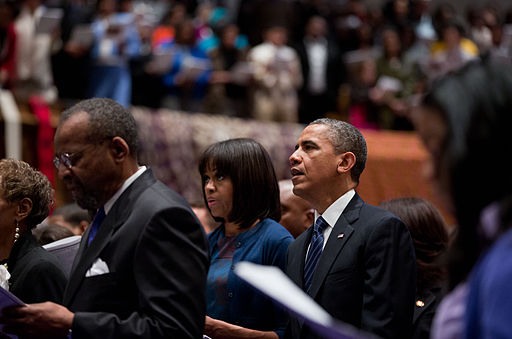
Obamas on Inauguration Day 2013 by P. Souza, Public domain via Wikimedia Commons

United States President Barack Obama and First Lady Michelle Obama attend a church service at Metropolitan A.M.E. Church in Washington, D.C., on Inauguration Day, Sunday, 20 January 2013, by Peter Souza, public domain via Wikimedia Commons

I don’t enter the church because there’s a man standing outside clearly discouraging drop-in guests, as they appear to be setting up for an event; I have the impression it’s a funeral. I curb my curiosity with some effort, out of respect, though I really, really want to see the inside of this great historic place. President Bill Clinton’s inaugural prayer service was also held here, and Barack and Michelle Obama attended a service here on the occasion of Obama’s inauguration in 2013 as well. What excitement for Douglass, if he were there that day! Well, I’ll make it inside next time I’m in D.C., I hope.
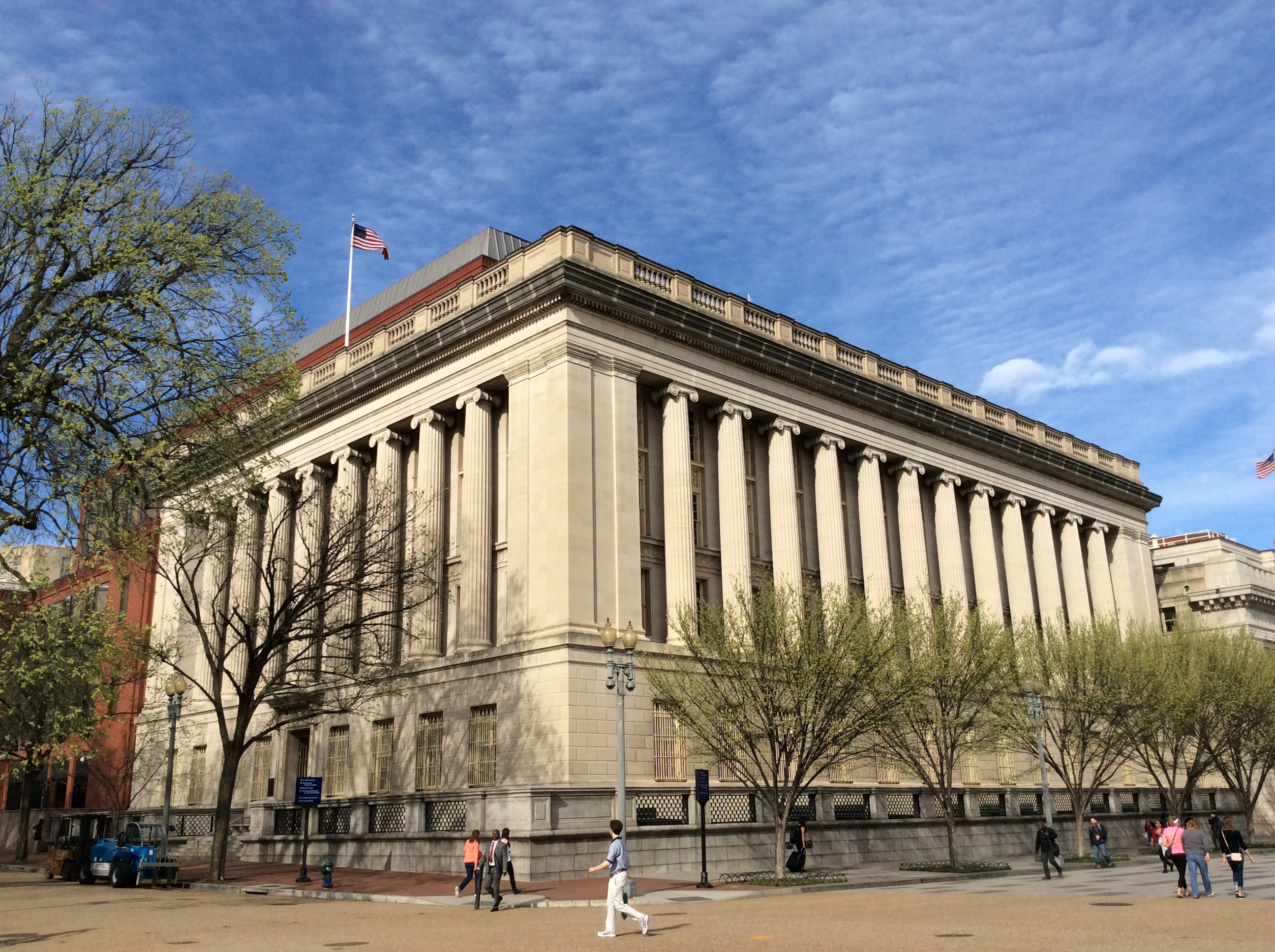
US Treasury Annex renamed the Freedmen's Bank Building, 1503 Pennsylvania Ave

US Treasury Annex renamed the Freedmen’s Bank Building, 1503 Pennsylvania Ave

Freedmen's Bank building plaque, on entrance of the building facing onto Madison Pl.

Freedmen’s Bank building plaque, on entrance of the building facing onto Madison Pl.

I find I need to move my car, so I head down the way a bit and find a good parking spot and walk south towards the Mall, to 1503-1505 Pennsylvania Ave NW. My destination is the U.S. Treasury Annex building, a marble edifice with classical columns off the pedestrian-only section of Pennsylvania Ave where it joins the southeast corner of Lafayette Square. It stands across from the north end of the main U.S. Department of the Treasury building to the left (west) of the PNC and Bank of America building.

I’m here because the Annex building stands on the site of the original headquarters of the Freedman’s Bank, and has recently been renamed the Freedman’s Bank Building to commemorate that institution’s 150th anniversary. Though the bank was headquartered here in 1867, the first branch had opened over a year earlier in Baltimore, Maryland, the site of which, as you may remember, I sought in Baltimore on my way back from the East Shore of Maryland. The 1874 newspaper article I referenced lists the Baltimore location as a branch office of the main one in Washington, though it still likely predates the main office.
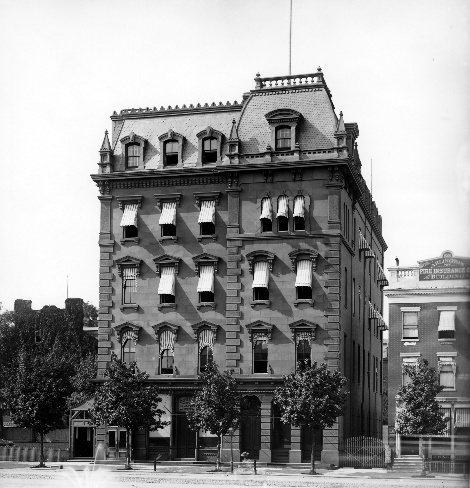
Freedman's Savings Bank Building, Pennsylvania Ave, Washington DC, public domain via Wikimedia Commons

Freedman’s Savings Bank Building in 1890 not long before it was razed, at about 1503 Pennsylvania Ave, Washington DC. In his Life and Times, Douglass wrote of this handsome, exquisitely appointed building devoted to the well-being of his people, ‘The whole thing was beautiful’.

In March 1874, Douglass was named President of the Freedman’s Bank. It was a private bank chartered by the U.S. government with Lincoln’s support, with Congressional oversight. It was supposed to help freed slaves and their families gain economic independence as well. The Bank opened to widespread popular support and for many years did just what it set out to do, and Douglass was a passionate fan of the project, depositing $12,000 of his own money. However, over time, poor management and corruption left it heavily in debt and on the verge of collapse. Douglass was asked to take over the Bank in hopes that his reputation would buttress the Bank’s own. But Douglass found he just couldn’t save it. Not only did he lack expertise as a banker, he learned only after he accepted how deeply the Bank was in trouble. Even a personal loan of $10,000 could do little to contribute to the Bank’s solvency. From this experience, as Douglass told it, he learned a great deal about how corrupt the political system had become as well as the unfortunate selfishness and greed of too many people.

Douglass also learned that he was not particularly adept as a businessman in many ways. He well understood the importance of economic independence for achieving full political and social equality, and succeeded financially due to his hard work, his prudent investments in safer ventures such as real estate, and his prodigious array of skills in other areas. As he admitted, however, he lost a lot of money when he helped found the New National Era paper and could not save the Freedmen’s Bank because, in both ventures, he failed to look into and secure their financial underpinnings himself before putting his own money in. In both cases, he simply took other people’s word for it, for how the venture was doing or likely to do, and his advisors were not disinterested parties. So the New National Era and the Bank failed as his North Star had nearly done before Julia Griffith’s tenure there, through poor financial handling. In business matters at least, Douglass’ idealism tended to win out over his more pragmatic approach in other areas.
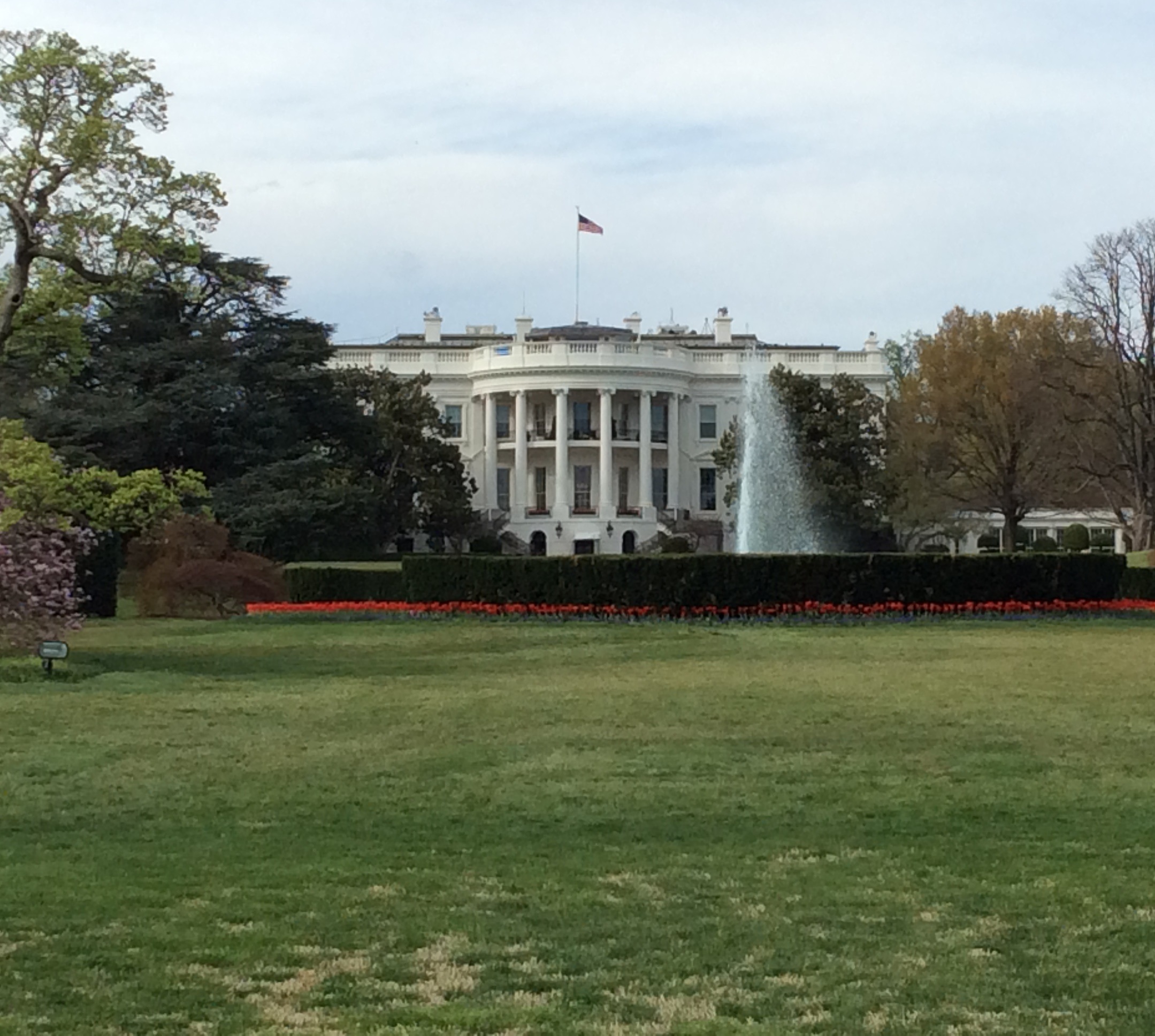
The White House, Washington D.C.

The White House, Washington D.C., looking across the South Lawn and President’s Park fountain

Next, I head south on 15th St, and turn right on the pedestrian walkway that E St becomes as it passes between President’s Park and the South Lawn of the White House, and the Ellipse.

Late in July of 1863, Douglass visited the White House for the first time when he requested, and was granted, an audience to address President Abraham Lincoln directly. His mission was to obtain better treatment of black soldiers. When they were first admitted to the Union Army, black soldiers received less pay and less and poorer quality equipment than their white compatriots. This, though they faced greater danger at the hands of hostile Southerners, especially if they were captured.

Lincoln told Douglass, regretfully, that he could not yet guarantee equal treatment of black soldiers given the strength of Northern opposition to enlisting black soldiers at all. He agreed, however, that Douglass’ demands were just and he would do as much as he could as the opportunities presented themselves, including signing off on Secretary of War’s commissions for black soldiers. Though he had often considered Lincoln a ‘vascillator’, not a consistent or even principled champion of black rights, Douglass left this audience with an impression of Lincoln as ‘an honest man’ and, personally, ‘entire[ly] free… from prejudice against colored people’. On the basis of this meeting, Douglass decided to resume recruitment of black soldiers into the Union Army, which he had stopped for awhile in protest over their treatment. However, over time, he still found himself often frustrated at the slow pace of reform in the President’s administration, and his old doubts about Lincoln stayed with him, enough for him to join in an effort of Radical Republicans to replace Lincoln in the next election. Douglass met Lincoln a second time about August 25, 1864; Lincoln had asked to meet Douglass again since he heard Douglass was unhappy with his policies. As I described in my Chambersburg account, Lincoln and Douglass concocted a plan for the latter to lead efforts to help slaves flee north behind Union lines, a plan very like John Brown’s original one before Harper’s Ferry. Douglass agreed to this plan but it never materialized.

Douglass returned again to the White House many times. On March 4th, 1865, he attended the reception held here following Lincoln’s second inauguration. When Douglass tried to enter, he was stopped by two policemen who tried to trick him into leaving. He stood his ground and got word in to Lincoln, who ordered that Douglass be allowed in. When Douglass entered, Lincoln strode across the room, shook his hand, and loudly greeted him as ‘my friend Douglass’.
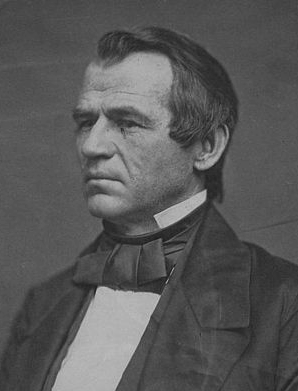
Andrew Johnson in 1860. Yes, I agree, he looked a lot like Tommy Lee Jones

Andrew Johnson in 1860. Yes, I agree, he looked a lot like Tommy Lee Jones

On February 7th, 1866, Douglass arrived here again with a delegation, which included his son Lewis, to meet President Andrew Johnson. They discussed and debated Johnson’s Reconstruction policies. Johnson protested that his South-friendly, anti-black-suffrage policies were designed to prevent race wars, while Douglass argued that since his policies perpetuated the same old hatreds and bigotries, they would result merely in prolonging the conflicts. The year before, on the Capitol steps just before he delivered his Second Inaugural Address, Lincoln pointed Douglass out in the crowd to then Vice President Johnson. Douglass noticed that Johnson looked at him with ‘bitter contempt and aversion’ when he didn’t know Douglass was looking. But when Douglass caught Johnson’s eye, his faced smoothed into a friendlier expression. Douglass would go on to write that he knew then that Johnson was not a sincere friend of the cause for black rights.

Douglass returned to the White House more than once in the mid-to-late 1880’s at the invitation of Grover Cleveland. But likely not to dinner, as some had said, despite what alcoholic-turned-prohibitionist preacher Sam Small wrote. Small was also quite the racist, and used the rumor to try and discredit Cleveland, writing ‘[he] invited that leader of niggerdom, Fred Douglass, to his dinner table. I might excuse him…, but when he invited the low wife to go there, it is more than I can stand’. (What a creep!) Douglass himself wrote in his Life and Times that he and Helen were invited to many receptions by the Clevelands but didn’t mention a dinner with them. Douglass expressed approval of Cleveland as a person, though they were divided over politics, because Cleveland treated the Douglasses with courtesy and respect despite Douglass’ efforts against him in the presidential race. Perhaps Douglass was more disposed to friendliness because of his disillusionment with the Republicans and their abandonment of the black rights cause at this time, and as always, he was very proud that he was now a man that presidents rub shoulders with. But I don’t find evidence that Cleveland did much of anything to show he cared about black rights either. In later years, he even took to protesting to the House of Representatives that he had never done such a thing as invite a black person to dinner at the White House. Douglass’ flattering picture of Cleveland, sadly, appears to show a weakness. Always a proud man, Douglass let his personal pride overcome his convictions somewhat in this instance.
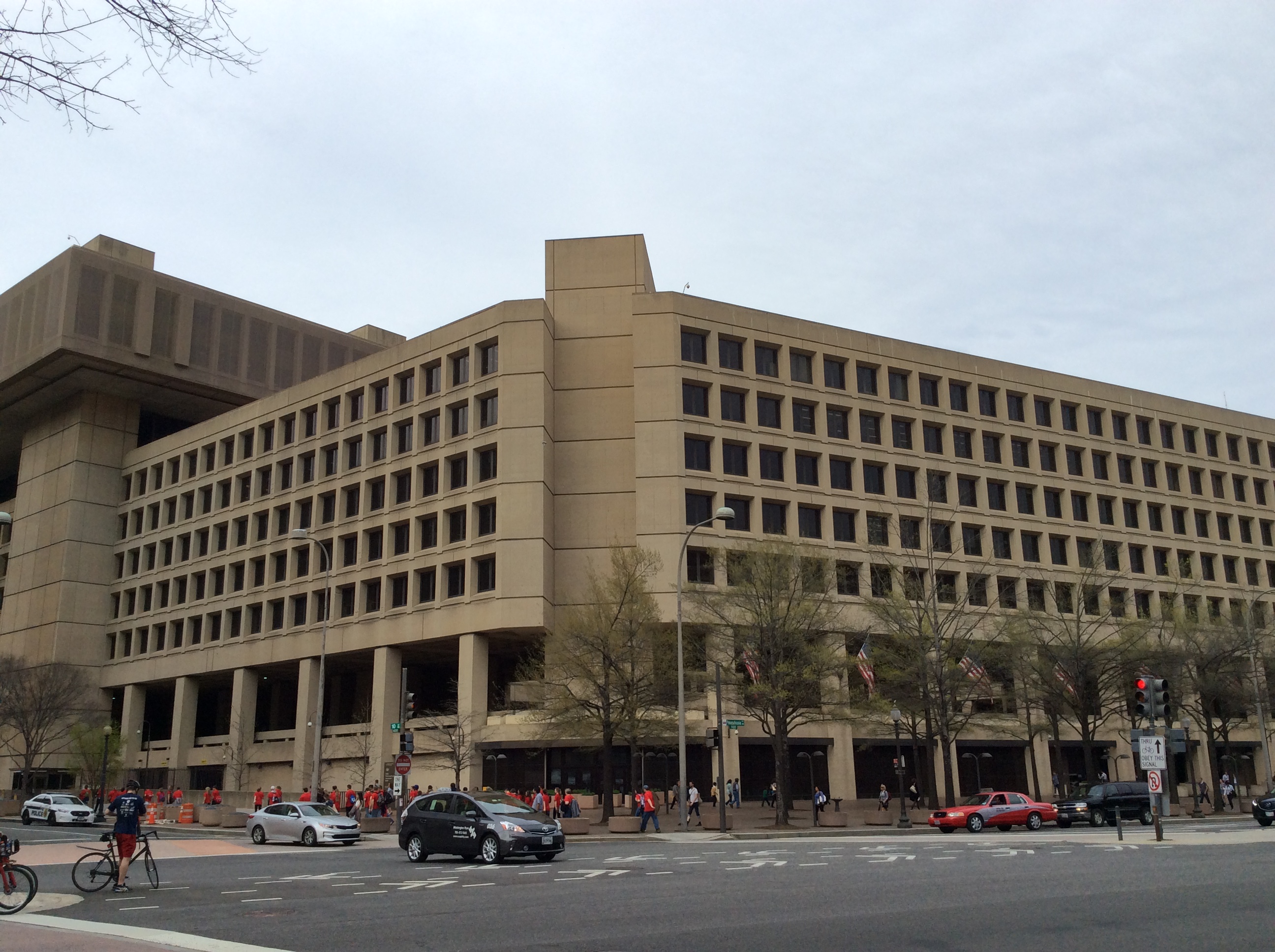
J. Edgar Hoover Building at 925 Pennsyvania NW, Washington DC

J. Edgar Hoover Building at 925 Pennsylvania NW, Washington DC
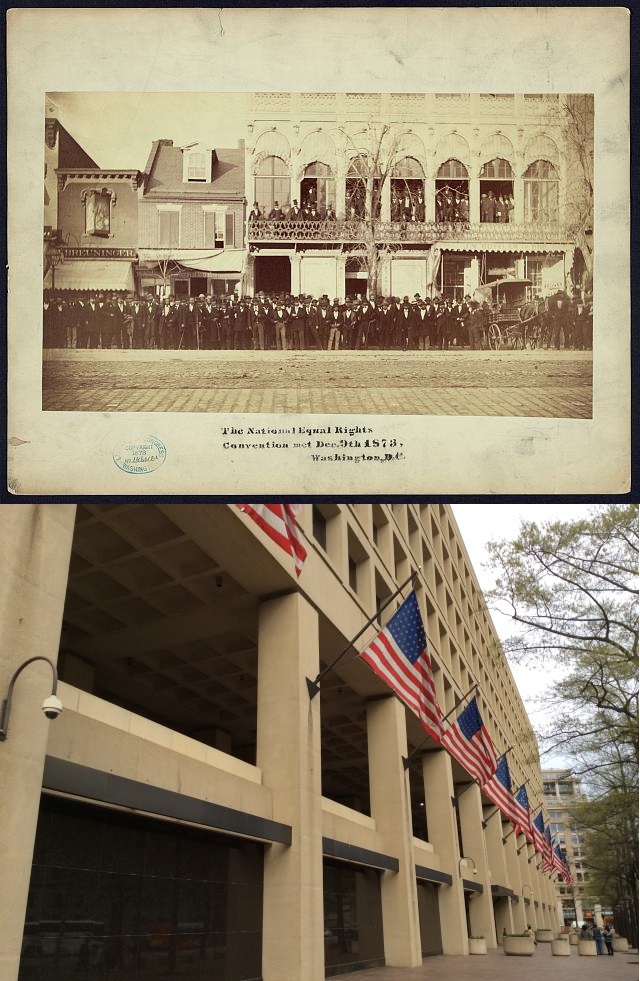
Metzerott Hall, 1873, 925 Pennsylvania Ave, public domain via LOC, and the Hoover Bldg today

Metzerott Hall in 1873 at 925 Pennsylvania Ave, public domain via Library of Congress (above), and the Hoover Building today (below)

I head southwest along Pennsylvania Ave to 925 NW, the former site of Metzerott Hall now occupied by the humongous and hideous J. Edgar Hoover Building. Once called Iron Hall, its facade collapsed in 1894, presumably due to the massive weight of its iron portions.

On February 20th, 1895, Douglass addressed a meeting of the National Council of Women here. This address was his last act of public service: at about 7 that evening at home, as he described the events of this meeting to Helen, he fell to his knees and died suddenly of heart failure. Douglass’ friend Mark Twain also spoke here, and as we can see from the postcard at the left, the Equal Rights Association met here too. As you may remember, Douglass was a member. On May 15th, 1871, Douglass was appointed to the brand new Legislative Council of the Territorial Government of the District of Columbia by Ulysses S. Grant, who both Twain and Douglass admired. However, Douglass only kept the post for a little over a month. He resigned on June 20th, citing pressing engagements elsewhere, but I suspect Douglass might have suspected this legislature was flawed. Exactly 3 years after his resignation, the Territorial Government was abruptly disbanded for financial irresponsibility. As you may remember, while Grant was personally honest as far as historians can tell, his administration was infamous for its corruption and waste.

The Capitol Building with its dome under reconstruction

The Capitol Building with its dome under reconstruction

Inauguration of Mr. Lincoln, March 4, 1861, photographer unknown, public domain via LOC

First inauguration of President Lincoln, March 4, 1861, photographer unknown

I continue east on Pennsylvania Ave to the Capitol Building, and go around to its east facade off East Capitol St NE and First St SE.

On March 4th, 1861, Lincoln delivered his first inaugural address on the steps of the not-quite-finished Capitol Building. Douglass did not attend but he read the Address and critiqued it sharply in Douglass’ Monthly, the successor to the North Star and Frederick Douglass’ Paper. He described the address as ‘double-tongued’ and ‘…but little better than our worst fears, and vastly below what we had fondly hoped it would be’. Douglass viewed Lincoln’s refusal to take a strong stance against slavery as a betrayal of principle. He accused Lincoln of being as cowed by the slaveowners as previous administrations had been, as Lincoln stated his intention not to interfere with slavery where it already existed and promised to uphold fugitive slave laws in the North. Over time, Douglass realized that Lincoln personally hated slavery and that this conciliatory stance was a pragmatic way of attaining the presidency so he could save the Union and reform it gradually. But Lincoln’s caution and reticence went too far even for the pragmatic Douglass, who had lost his faith that slavery could be ended without force.
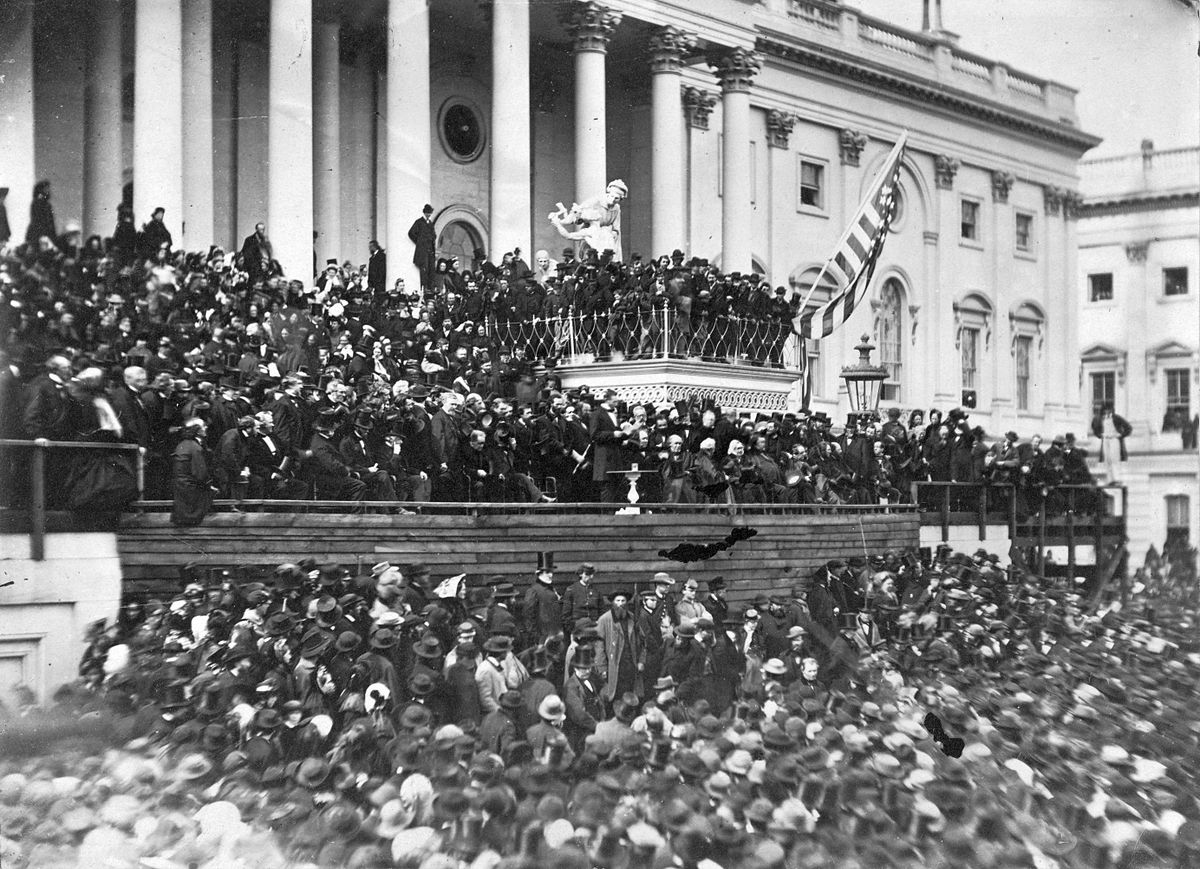
Abraham Lincoln delivering 2nd inaugural address as President of the U.S., Washington, D.C., photo Public Domain via LOC

Abraham Lincoln delivering his Second Inaugural Address on the steps of the Capitol Building, Washington, D.C.. This photo was made especially famous when historian Ronald C. White identified John Wilkes Booth among those standing on the platform above and to the right of Lincoln, to the right of the statue and just to the left of the tall man with the bowler hat

As we have already seen, however, Douglass did attend Lincoln’s second Inaugural Address, held here on the steps of the then-finished Capitol Building on March 4, 1865. Douglass was far, far, better pleased with this one, to say the least. Lincoln, at last, had taken a firm stance against slavery, and the line ‘every drop of blood drawn with the lash shall be paid by another drawn with the sword’ surely resonated with Douglass’s sense of justice. He was ambivalent about violence throughout his life, but had come to believe it was sometimes both justified and necessary. Later that day at the White House reception, Lincoln asked Douglass what he thought of this Address, presumably because he knew Douglass had so thoroughly and publicly excoriated Lincoln’s first.

Douglass was here at the Capitol Building one last time on the morning of his death. According to his obituary in the New York Times, he was dropped off at the Congressional Library (Library of Congress) which was located in this building until it was moved across the street to the beautiful new Jefferson Building two years later, in 1897. More on that in tomorrow’s account.

The Jefferson Memorial on the Tidal Basin among the cherry blossoms

The Jefferson Memorial on the Tidal Basin among the cherry blossoms

It’s a beautiful early evening when I end my Douglass explorations for the day here at the Capitol Building. I make my way to the Jefferson Memorial to watch the sun set over the Tidal Basin through the cherry blossoms now in full bloom. Tomorrow will be my last day in D.C., and my last day following Douglass on this tour. To be continued….

*Listen to the podcast version here or on Google Play, or subscribe on iTunes

Ordinary Philosophy and its Traveling Philosophy / History of Ideas series is a labor of love and ad-free, supported by patrons and readers like you. Please offer your support today!

~~~~~~~~~~~~~~~~~~~~~~~~~

Sources and Inspiration:

Baist’s Real Estate Atlas of Surveys of Washington, District of Columbia: Volume 2, Plate 21. By Baist, George William, William Edward, and Harry Valentine Baist, 1909. Via Library of Congress website

Blight, David W. ‘Lincoln, Douglass and the ‘Double-Tongued Document’’. New York Times Opinionator blog, May 6, 2011.

Blight, David W. ‘“Your Late Lamented Husband”: A Letter from Frederick Douglass to Mary Todd Lincoln‘. In The Gilder Lehrman Institute of American History website

Death Of Fred Douglass: Obituary‘, February 21, 1895, The New York Times from On This Day, nytimes.com

Douglass, Frederick. Address … January 9th, 1894, on the Lessons of the Hour. Press of Thomas and Evans, Baltimore, Maryland. From the Library of Congress website.

Douglass, Frederick. The Life and Times of Frederick Douglass. Re-published 1993, Avenal, New York: Gramercy Books, Library of Freedom series.

Douglass, Frederick. My Bondage and My Freedom: 1855 Edition with a new introduction. Re-published 1969, New York: Dover Publications, Inc.

Douglass, Frederick. ‘Speech at a Surprise Party on Douglass’ 71st Birthday. 1889‘. Manuscript/Mixed Material. Retrieved from the Library of Congress website

Douglass, Helen, 1838-1903, ed. In Memoriam: Frederick Douglass. Philadelphia: J.C. Yorston & Co, 1897

Foner, Philip S. The Life and Writings of Frederick Douglass, Vol. 1-4. New York: International Publishers, 1950.

Gayle, Margot and Carol Gayle. Cast-iron Architecture in America: The Significance of James Bogardus. WW Norton & Co: New York, 1998.

Harris, Gardiner. ‘The Underside of the Welcome Mat‘, The New York Times, N0v. 8, 2008

Jefferson’s Legacy: A Brief History of the Library of Congress‘, Library of Congress website http://www.loc.gov

King, Gilbert. ‘The Great Dissenter and his Half-Brother‘. Dec 20, 2011, Smithsonian.com

McFeely, William. Frederick Douglass. New York: W.W. Norton & Company, 1991.

Muller, John. ‘Francis Grimke tells story of “The Second Marriage of Frederick Douglass” [The Journal of Negro History, 1934]’ In Frederick Douglass in Washington, D.C.: The Lion of Anacostia blog

Muller, John. ‘Frederick Douglass’ “Application for Permit to Build” for 316 & 318 A Street NE’. In Frederick Douglass in Washington, D.C.: The Lion of Anacostia blog

Muller, John. Frederick Douglass in Washington, D.C.: The Lion of Anacostia. Charleston: The History Press, 2012.

Quarles, Benjamin. Frederick Douglass. Washington D.C.: The Associated Publishers, 1948.

Roberts, Kim. ‘The Bethel Literary and Historical Society‘. Beltway Poetry Quarterly, Literary Organizations Issue.

Roe, Garrett W. Frederick Douglass’ ‘Homecoming’: Funeral and Burial, visual presentation, May 23rd 2014

Stiller, Jesse. ‘The Freedman’s Savings Bank: Good Intentions Were Not Enough; A Noble Experiment Goes Awry‘. Office of the Comptroller of the Currency, U.S. Treasury Department website

Treasury to Commemorate 150th Anniversary of Freedman’s Bank,’ 12/29/2015 press release of the U.S. Treasury Department’s Press Center

Veroske, Ariel. ‘The Feather Duster Affair of 1874‘, June 20th, 2013, from WETA.org

The Washington Times. (Washington, D.C.), 18 Feb. 1895. From Chronicling America: Historic American Newspapers, Library of Congress.
Empathy for Immigrants

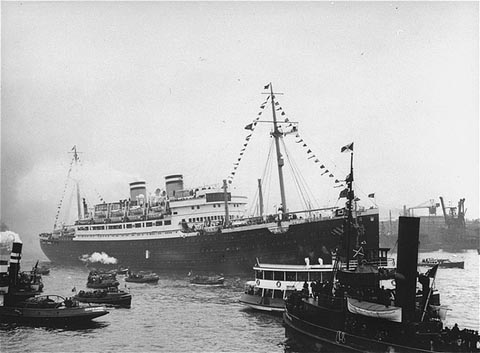
M.S. St. Louis, 1939, which carried 930 Jewish refugees who were turned away from the U.S, Canada, and Cuba

M.S. St. Louis, 1939, which carried 930 Jewish refugees who were turned away from the U.S, Canada, and Cuba

Here’s a very short piece I published almost exactly three years ago, and with the anti-immigrant rhetoric of a certain presidential nominee, I worry more than ever about the fate of those fleeing danger, severe want, and persecution. So many people in dire circumstances do not have the time or the money to wait around until they can emigrate legally. So it’s a matter of stay, suffer, and perhaps die, or go. The Smithsonian featured another article after I had originally posted this piece, about the U.S.’ history of hardline policies against refugees in the interest of national security: http://www.smithsonianmag.com/history/us-government-turned-away-thousands-jewish-refugees-fearing-they-were-nazi-spies-180957324/. But the larger question is this: if we are committed to protecting human rights in general, are we ever justified in preventing people from picking up and moving anywhere they wish to seek a happier and safer life? Last year, I shared an excellent podcast episode by Freakonomics which explored that very question: https://ordinaryphilosophy.com/2015/12/27/o-p-recommends-freakonomics-is-migration-a-basic-human-right/

Amy M Cools's avatarOrdinary Philosophy

M.S. St. Louis, 1939, which carried 930 Jewish refugees who were turned away from the U.S, Canada, and Cuba

M.S. St. Louis, 1939, which carried 930 Jewish refugees who were turned away from the U.S, Canada, and Cuba

To those hard-liners against amnesty for people who immigrated here illegally:

Remember that many, perhaps most, have done so because they’re rescuing themselves and their children from dire poverty, from murderous drug cartels, or from other dangers. They aren’t able to immigrate legally, even if they wanted to, due to the long wait times, high cost, and stringent requirements.

Do you think that all people, morally, should always place a higher value on obeying immigration laws than on the lives and well-being of themselves and their children?

This brings to my mind a famous example of people denied entrance to this country who were fleeing danger and oppression, and were forced to return to Nazi-terrorized Europe. Untold numbers of people died as a result.

Think of your own children, family…

View original post 60 more words

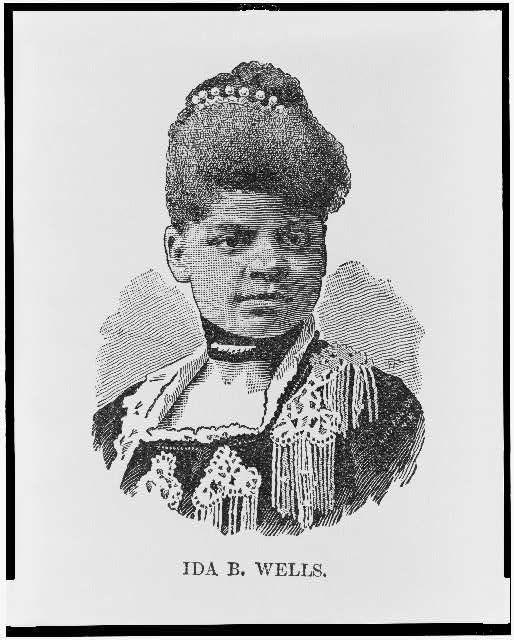
Happy Birthday, Ida B. Wells!

Ida B. Wells, head-and-shoulders portrait, published, 1891, Image retrieved from the Library of Congress LC-USZ62-107756, public domainIn my recent journey following the life of Frederick Douglass, I was so glad to have the opportunity to visit the place in New York City where he may have first met the great Ida B. Wells. It was late 1892, and this fiery young newspaperwoman had published her very controversial piece of investigative journalism in the New York Age on June 25, 1892. It was expanded and published as a pamphlet later that year as Southern Horrors: Lynch Law in All Its Phases.

Many people at that time thought of lynching as an unfortunate and somewhat rare excess of race-hatred by frustrated Southern whites. And many more saw it as a lawless but not entirely unjustified species of vengeance against black men who had raped white women. But Wells would change all that. In early 1892, three of Wells’ friends were lynched after a dispute between themselves and white owners of a rival business. She was outraged, and began an investigation of the practice and history of lynching as a whole.

When Wells wrote Southern Horrors, she had already been an activist and writer for black rights for many years. In 1884, she resisted being forced out of the first class train car into the ‘colored car’; she later sued the train company, won the first suit, then lost on appeal. This incident (which echoes Douglass’ train protest in 1841) led to many other lawsuits, articles, and activism against anti-black laws and social practices. In 1892, her investigation of lynching revealed to Wells that lynching was far from just vengeance for rape, it was inflicted for petty crimes, supposed insubordination or impertinence, drunkenness, competition, and so on. She discovered that lynchings were not all that rare, either, and came to the conclusion that they consisted a form of social control, a replacement for the terrorism of the slave system.

Douglass was inspired and energized by Wells’ writing and anti-lynching work, and wrote a letter praising Southern Horrors as an introduction. He visited her in New York City where she was living for a little while as a writer for and part owner of the New York Age, which was (probably) published at the site I visited in Harlem. I visited a second site associated with Wells two days after my New York visit: she delivered one of her hard-hitting speeches in her speaking tour following the publication of Southern Horrors at Tremont Temple in Boston on Feb 13th, 1893.

Education was another driving force in her life. Her first job was as a teacher at age 14, and she taught for many years, over time supplementing her teaching with journalism, writing and editing for the Evening Star, The Living Way, and the Free Speech and Headlight. Another of her most controversial, consciousness-raising articles was published in 1891 in the Free Speech about the conditions in black schools: the poor quality of the buildings which housed them, and of the education and morals of the teachers and school boards who administered them. She was not fired outright, but the school refused to hire her for the next school year. She then went on to work full-time for the newspaper, promoting the Free Speech from city to city and writing articles along the way, until the Free Speech‘s offices and printing press were destroyed by angry whites after the publication of her ‘Lynch Law’ piece. Adversity only served to strengthen Wells’ resolve, each attack causing her to re-double her efforts on behalf of her people.

Wells went on to have a long and distinguished career in writing, investigative journalism, and activism for black rights and women’s suffrage. She worked with Frederick Douglass and W.E.B. DuBois, toured the United States and Europe as a speaker and activist, founded Chicago’s Alpha Suffrage Club, served as secretary of the National Afro-American Council, founded and became the first president of the Negro Fellowship League, and helped found the National Association for the Advancement of Colored People (NAACP), among many other things.

For a long time, Wells thought of marriage and romantic relationships as oppressive, where women were expected to defer to men and flatter their vanity. But one day, she met a man who must have made her feel very differently, an attorney, writer, and fellow advocate for black rights named Ferdinand Barnett. She married him and they raised four children.

Please follow the links below to learn more about Ida B. Wells. If I manage to accomplish the tiniest fraction of what she did in my own life, I would consider myself a great success.

Ordinary Philosophy and its Traveling Philosophy / History of Ideas series is a labor of love and ad-free, supported by patrons and readers like you. Please offer your support today!

~~~~~~~~~~~~~~~~~~~~~~~~

Sources and inspiration:

Ida B. Wells-Barnett‘, episode 25 of the History Chicks podcast by Beckett Graham and Susan Vollenweider.

Ida B. Wells-Barnett‘. Encyclopædia Britannica. Encyclopædia Britannica Online.

McBride, Jennifer. ‘Ida B. Wells: Crusade for Justice‘. From Webster University’s website.

McNally, Deborah. ‘Barnett, Ferdinand Lee (1858-1936)‘, in BlackPast.org

Steptoe, Tyina. ‘Barnett, Ida Wells (1862-1931)’, in BlackPast.org

Wells, Ida. B. Crusade for Justice: The Autobiography of Ida B. Wells. Ed. Alfred Duster. Chicago, University of Chicago Press, 1970.

Wells, Ida. B. Southern Horrors: Lynch Law in All Its Phases, 1892, via Project Gutenberg

Wikipedia contributors. ‘Ida B. Wells‘. In Wikipedia, The Free Encyclopedia.

Wintz, Paul Finkelman, Cary D. Encyclopedia of the Harlem Renaissance: K-Y. 2004.


New Podcast Episode: Frederick Douglass Washington DC Sites, Day 1, Part 1

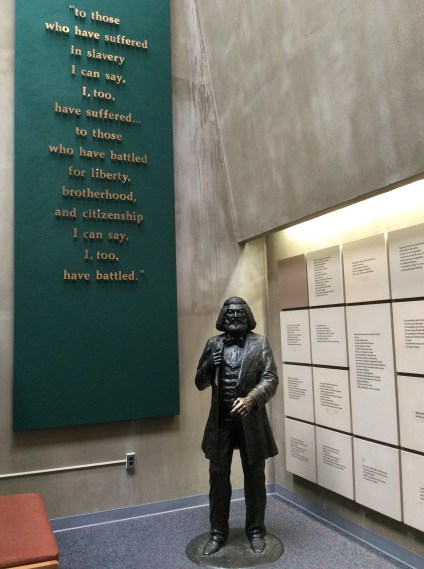
Statue and quote at the Frederick Douglass National Historic Site

Statue and quote at the Frederick Douglass National Historic Site

Listen to this podcast episode here or on Google Play, or subscribe on iTunes

Thirteenth Day, Friday April 1st

I begin at Cedar Hill in Anacostia, Frederick Douglass’ handsome, gabled house on a hill overlooking Washington DC. He moved here with Anna and the kids in September of 1878, having lived in the capital city of Washington for a little over six years. In a sense, the Douglasses didn’t really move out of Washington when they moved into their new suburban home east of the Anacostia River. Anacostia, called Uniontown in the mid-1800’s then switched back again, was part of the District of Columbia, which in turn was larger than Washington and encompassed it. When the boundaries of Washington and the District of Columbia became one and the same in 1878, the Douglasses’ Anacostia home became a Washington city home then too.

It’s another lovely day, again the sky is partly cloudy, the air soft and warm and a little breezy, freshly washed by the morning’s rain. The cold weather I had shivered in for much of the first half of my trip is nearly forgotten.

The National Park Service now owns and runs the house, the grounds, and the visitor center and museum, collectively called The Frederick Douglass National Historic Site. I take a brief look at the outside of the house, then stop at the visitor center and sign up for the guided tour which will start shortly. I take another brief look around while I wait, and note the displays and artifacts I want to examine more closely when I return to the visitor center museum…. Read the full account here:

Ordinary Philosophy and its Traveling Philosophy / History of Ideas series is a labor of love and ad-free, entirely supported by patrons and readers like you. Please offer your support today!

Frederick Douglass Washington DC Sites, Day 1, Part 1

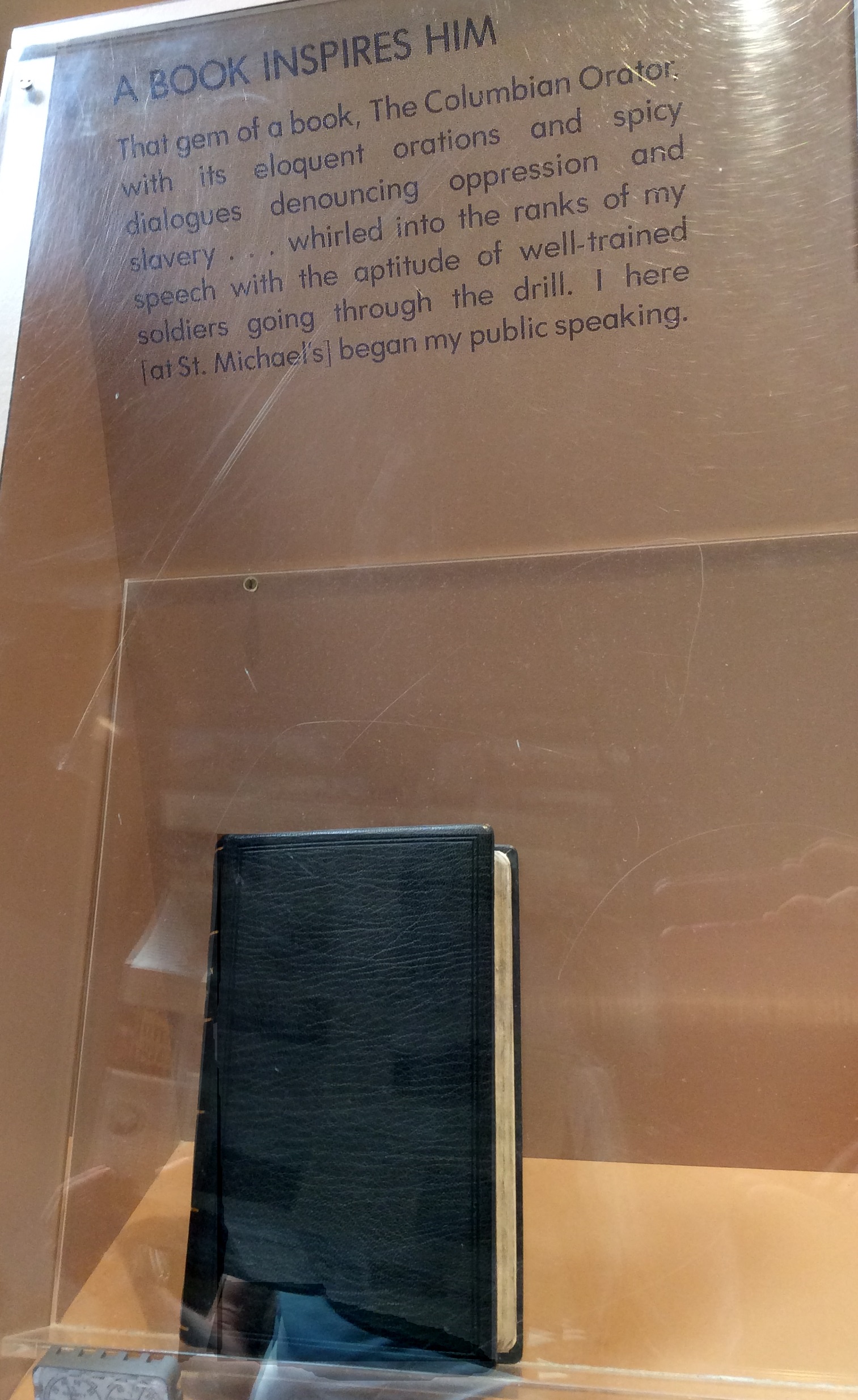
Detail of Frederick Douglass autobiography exhibit, FD Home Visitor Center

Detail of autobiography exhibit, Frederick Douglass Home Visitor Center

Thirteenth Day, Friday April 1st

I begin at Cedar Hill in Anacostia, Frederick Douglass’ handsome, gabled house on a hill overlooking Washington DC. He moved here with Anna and the kids in September of 1878, having lived in the capital city of Washington for a little over six years. In a sense, the Douglasses didn’t really move out of Washington when they moved into their new suburban home east of the Anacostia River. Anacostia, called Uniontown in the mid-1800’s then switched back again, was part of the District of Columbia, which in turn was larger than Washington and encompassed it. When the boundaries of Washington and the District of Columbia became one and the same in 1878, the Douglasses’ Anacostia home became a Washington city home then too.

It’s another lovely day, again the sky is partly cloudy, the air soft and warm and a little breezy, freshly washed by the morning’s rain. The cold weather I had shivered in for much of the first half of my trip is nearly forgotten.

The National Park Service now owns and runs the house, the grounds, and the visitor center and museum, collectively called The Frederick Douglass National Historic Site. I take a brief look at the outside of the house, then stop at the visitor center and sign up for the guided tour which will start shortly. I take another brief look around while I wait, and note the displays and artifacts I want to examine more closely when I return to the visitor center museum.

Cedar Hill, Frederick Douglass' home on the hill in Anacostia, Washington DC

Cedar Hill, Frederick Douglass’ home on the hill in Anacostia, Washington DC

Helen Pitts Douglass Portrait, Cedar Hill, Anacostia, Washington DC

Portrait of Helen Pitts Douglass in the entrance hall at Cedar Hill, Anacostia, Washington DC

Then I join the tour group on the steps leading up the hill to the house. Let me express my gratitude and give credit at the outset to the very knowledgeable and helpful Nate Johnson who leads the tour. Much of the information I share with you here about the house and the Douglass family’s life together he provides in whole, or he confirms and fleshes out the stories.

In the entrance hall, I spot a miniature portrait of Helen Pitts Douglass, who Frederick married about 17 months after Anna’s death. Frederick and Helen met as neighbors soon after the Douglasses moved to Cedar Hill, and Helen came to work in Douglass’ office on Capitol Hill alongside his daughter Rosetta. Helen was a suffragist and abolitionist, like her father and Douglass’ long time acquaintance Gideon Pitts, and she and Douglass bonded over their shared social and political beliefs. As you may remember from the Boston and Honeoye accounts, their marriage was very controversial: many black people thought that Douglass was betraying Anna and his race by marrying a white woman, and many white people objected for obvious (purely racist!) reasons, even their fellow abolitionists. While Douglass brushed it off by saying that when he married Anna, he married a woman the color of his mother, and when he married Helen, he married a woman the color of his father, he had more explaining to do when it came to his family. Not because of the racial difference so much: though his children were sensitive on that issue on behalf of their mother, they knew his views on the color line and that it should be erased. It seems the trouble was mostly that he didn’t tell them that he was going to get married. We’ll return to that family drama soon…

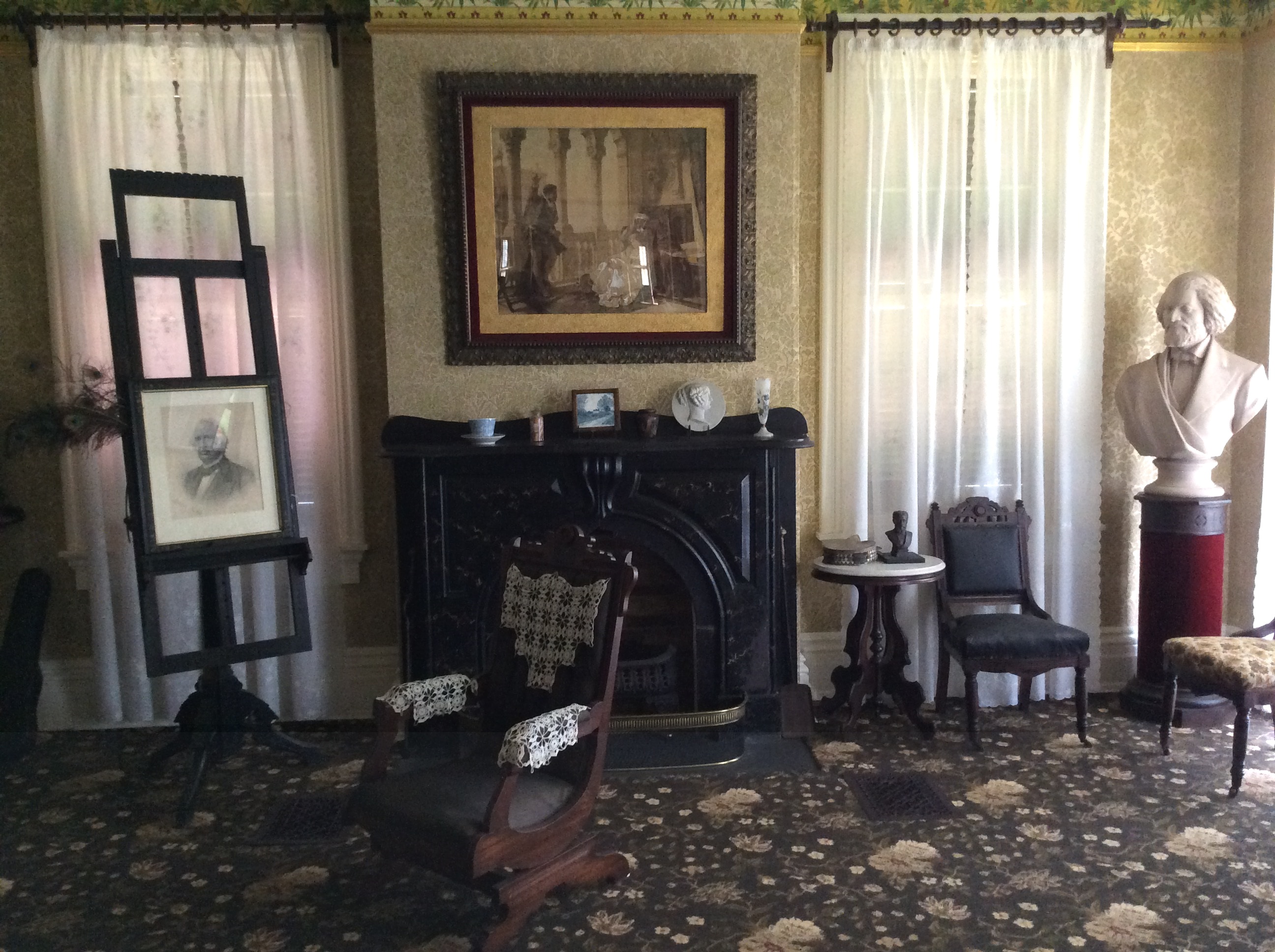
Douglass family sitting room at Cedar Hill, Anacostia

Douglass family sitting room at Cedar Hill, Anacostia

Frederick and Joseph Douglass, from the Library of Congress archives, via the Lion of Anacostia blog

Frederick and Joseph Douglass from the Library of Congress archives via the Lion of Anacostia blog. There are many portraits of Frederick and Joseph together; evidently, they were proud of one another

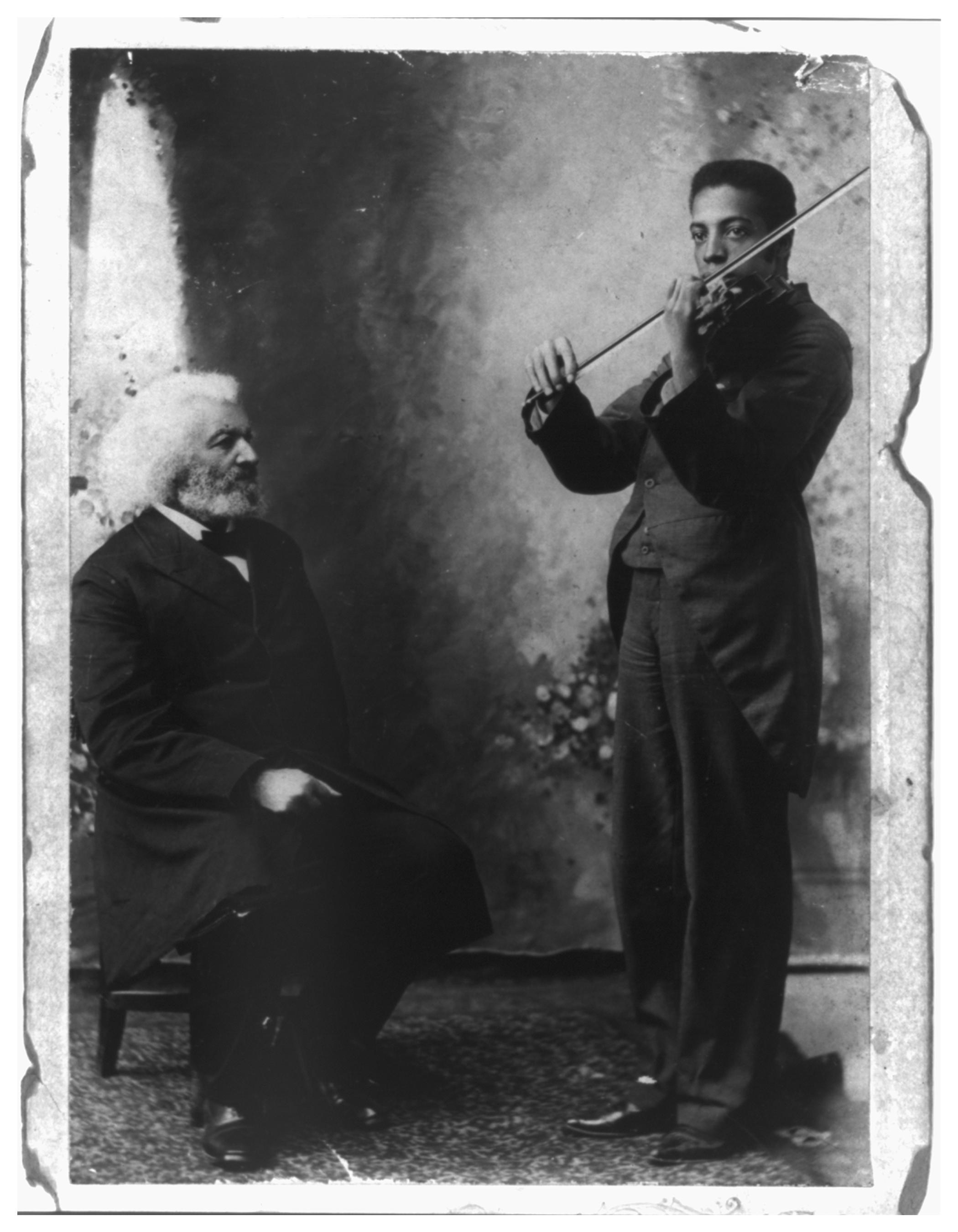
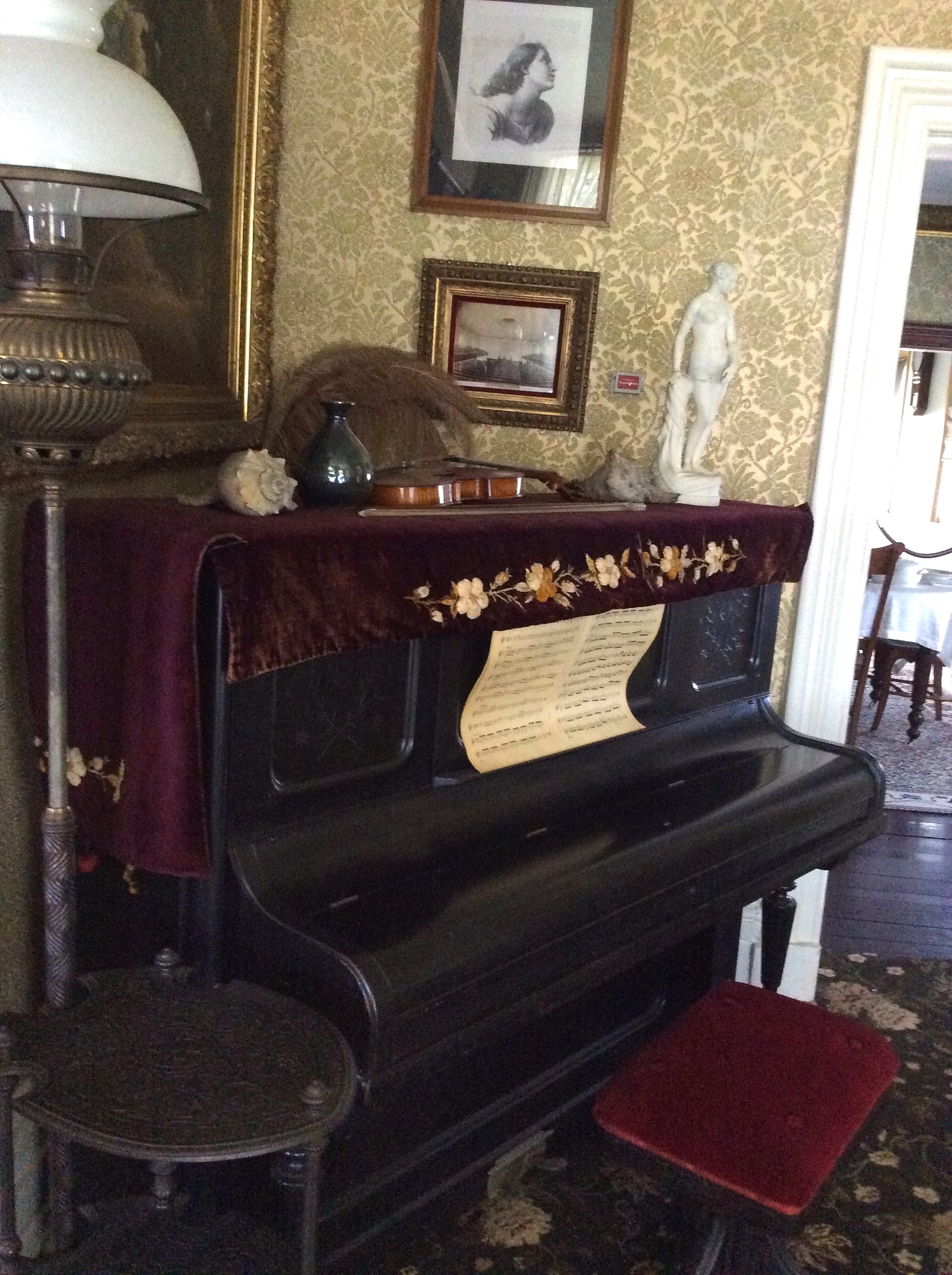
The door on the right from the entrance hall leads to the West Parlor, or sitting room, where the family would gather to play music, sing, and generally just hang out after dinner. As discussed in my account of my first day in Rochester, the Douglasses were a musical family, His daughter Rosetta and his second wife Helen played the piano, he and his son Charles played the violin, and possibly Anna did as well. Douglass was a very talented player, would play often, and sometimes dance. His grandson Joseph, son of Lewis, also adopted the violin and played with such great skill that it became his profession. Joseph’s first major performance was at the Columbia Exposition, which his grandfather helped organize, on August 25th, 1893, at age 22. He was the first violinist to be recorded, taught at Howard University and various schools, and toured the world as a concert violinist. (I subsequently had the pleasure of interviewing one of Frederick and Joseph’s descendants for my podcast!)

Sitting room piano with Joseph Douglass' violin on top

Sitting room piano with Joseph Douglass’ violin on top

Anna Douglass circa 1860, image from the Library of Congress collection

Anna Douglass circa 1860, image from the Library of Congress collection

The grandkids, frequent visitors and sometimes residents of the big house, would join in the fun of the sitting room family gatherings. Some would sing along with the music, and other times were devoted to games and general romping, here and throughout the house, wherever they could get away with it. In public, Douglass presented himself in a very serious and dignified way, but at home he was very playful, romping with the grandkids and joking a lot. He’d allow his granddaughters to braid his flowing hair and tie ribbons in it, only to have to rush off sometimes and put it back in order for the sake of the frequent guests who visited the house.

Anna’s portrait presides over the formal East Parlor, dedicated to greeting and entertaining guests. Her picture, directly across from the big bookshelf, occupies the central place of honor between the two tall windows at the front of the house. Unfortunately, the way the light is streaming brightly in the windows just after midday makes the portrait, easy to see in person, impossible for my camera to pick up amid the strong backlight. In fact, the way the sun is creating such high contrasts in the room, most of my photos of this room don’t end up turning out.

Frederick Douglass' library at Cedar Hill (2), Anacostia, Washington DC, 2016 by Amy Cools

Frederick Douglass’ library and study at Cedar Hill

Anna lived here at Cedar Hill for just under four years, presiding over this stately but lively home bustling with children, grandchildren, extended family, and frequent and numerous houseguests. While she had some health troubles, she remained pretty active until she suffered a stroke on July 9th, 1884, and lingered almost a month. After she died, at about age 69, Douglass fell into a deep and at times almost debilitating depression for well over a year. He thought about selling his house and traveling, perhaps moving to Europe for awhile. But his family needed him here, and besides, his neighbor and clerk Helen Pitts had become a close friend and ally.

Then we stop at the library, south of the East Parlor, accessible through a connecting door. Many of the things in this room actually belonged to Douglass, such as the top hat to the right of the desk. According to the National Park service, ‘Douglass’s extensive library contained more than 1000 volumes that included books on history, science, government, law, religion and literature. ‘ I don’t, unfortunately, get the opportunity to take a close look at the contents of that nice big bookshelf.

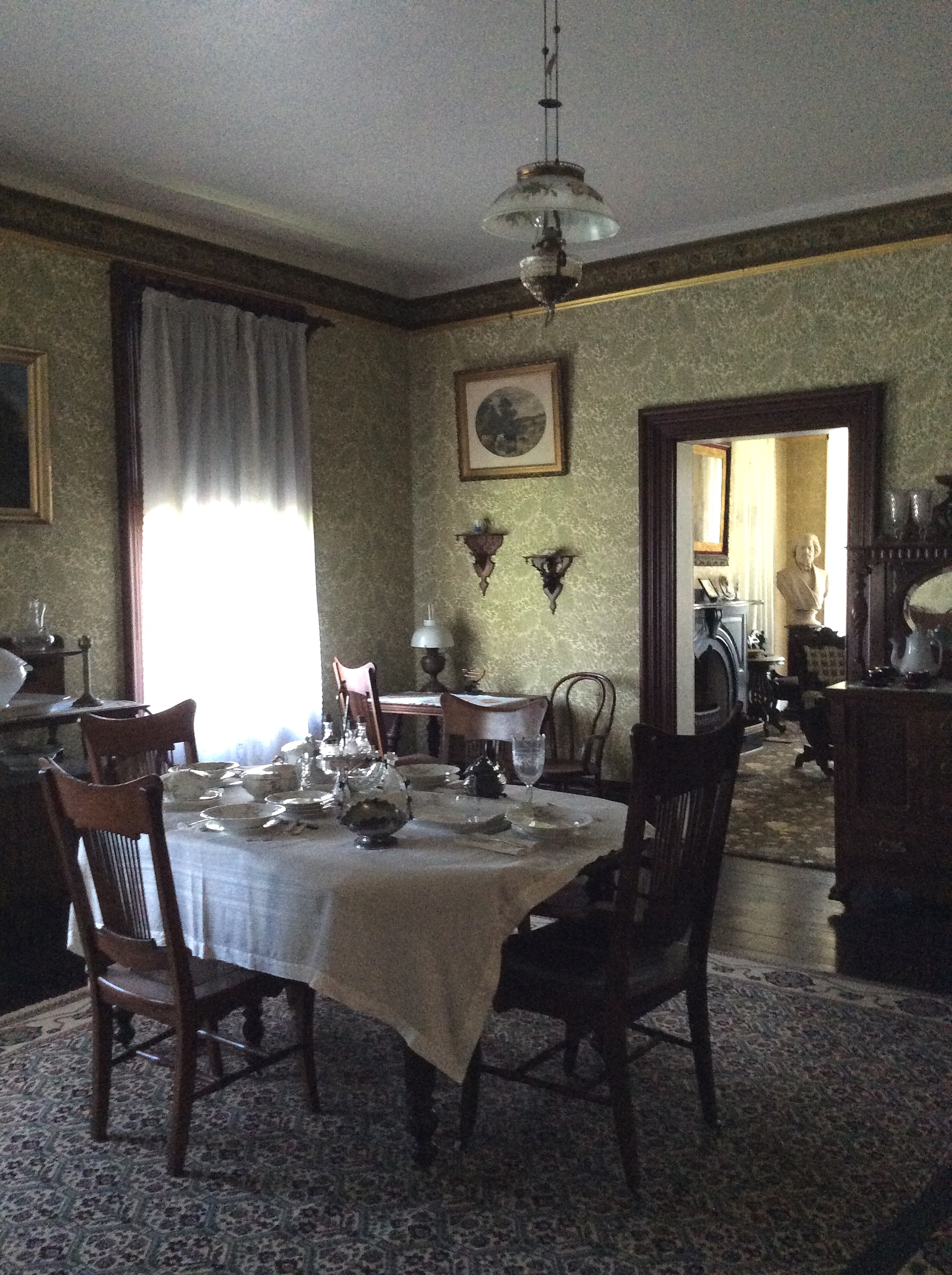
Cedar Hill dining room, where Frederick Douglass died, Anacostia Washington DC

Cedar Hill dining room, where Frederick Douglass died. His big chair is to the left.

Another view of the Cedar Hill dining room, looking north into the sitting room

Another view of the Cedar Hill dining room, looking north into the sitting room

We stop next at the dining room at the end of the entrance hall and to the right, with a big door leading onto the hallway, through which we look at the room, but also connected to the sitting room through another connecting door. On February 20th, 1895, Douglass and Helen were at this table discussing the women’s rights convention he had just attended that day. His old friend (or perhaps more accurately expressed in modern slang as ‘frenemy’) Susan B. Anthony had escorted him to the front of the room to speak. Always a talented mimic, he was repeating another’s speech he had heard there at the convention, probably sitting, then rising, from his big dining room chair. All of a sudden, he sank to his knees, suffering a massive heart attack. He could not be revived.

I linger here behind the tour group for a few moments.

Then I rejoin the group and we go around to the kitchen, which is beyond the dining room, through the pantry. Anna was an excellent cook, and she would make Maryland beaten biscuits for Douglass. They were made from dough that was beaten to trap air in the dough, an alternate to leavening. The resulting biscuits are small, round, and rather hard but Douglass loved them, having grown up on them in the Chesapeake.

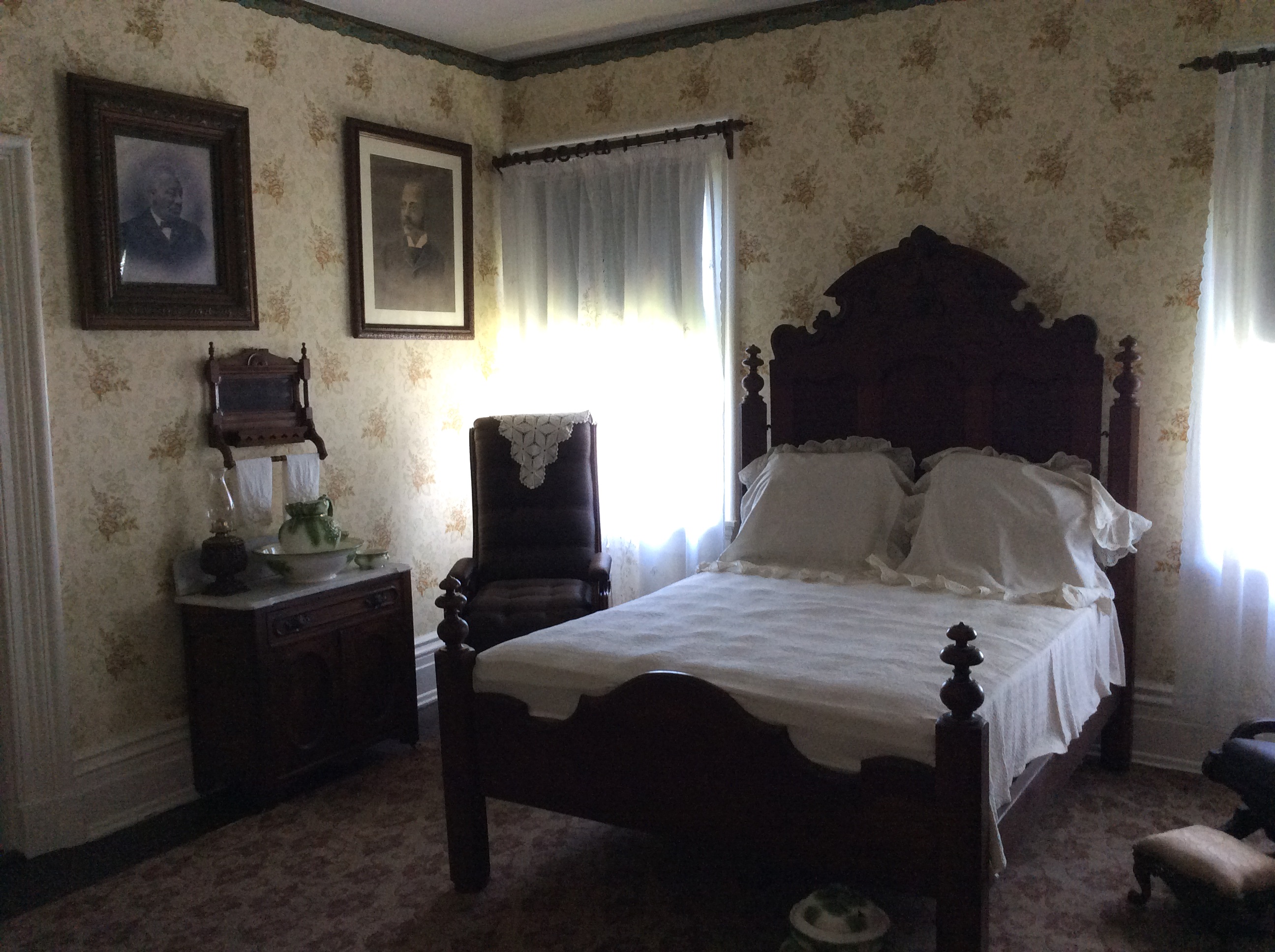
Anna Douglass's bedroom, Cedar Hill

Anna Douglass’s bedroom, Cedar Hill

Helen Pitts Douglass' bedroom, Cedar Hill

Helen Pitts Douglass’ bedroom, Cedar Hill

Then we go upstairs. Anna’s and Helen’s bedrooms are across Douglass’, which is on your right if you’ve just come up the stairs. Looking across the hall from Douglass’ room, Anna’s is on the left with the ruffled pillowcases and golden flower pattern wallpaper, Helen’s on the right with the dress form and green striped wallpaper. After Anna’s death, Douglass sealed her room off and no one stayed in there again.

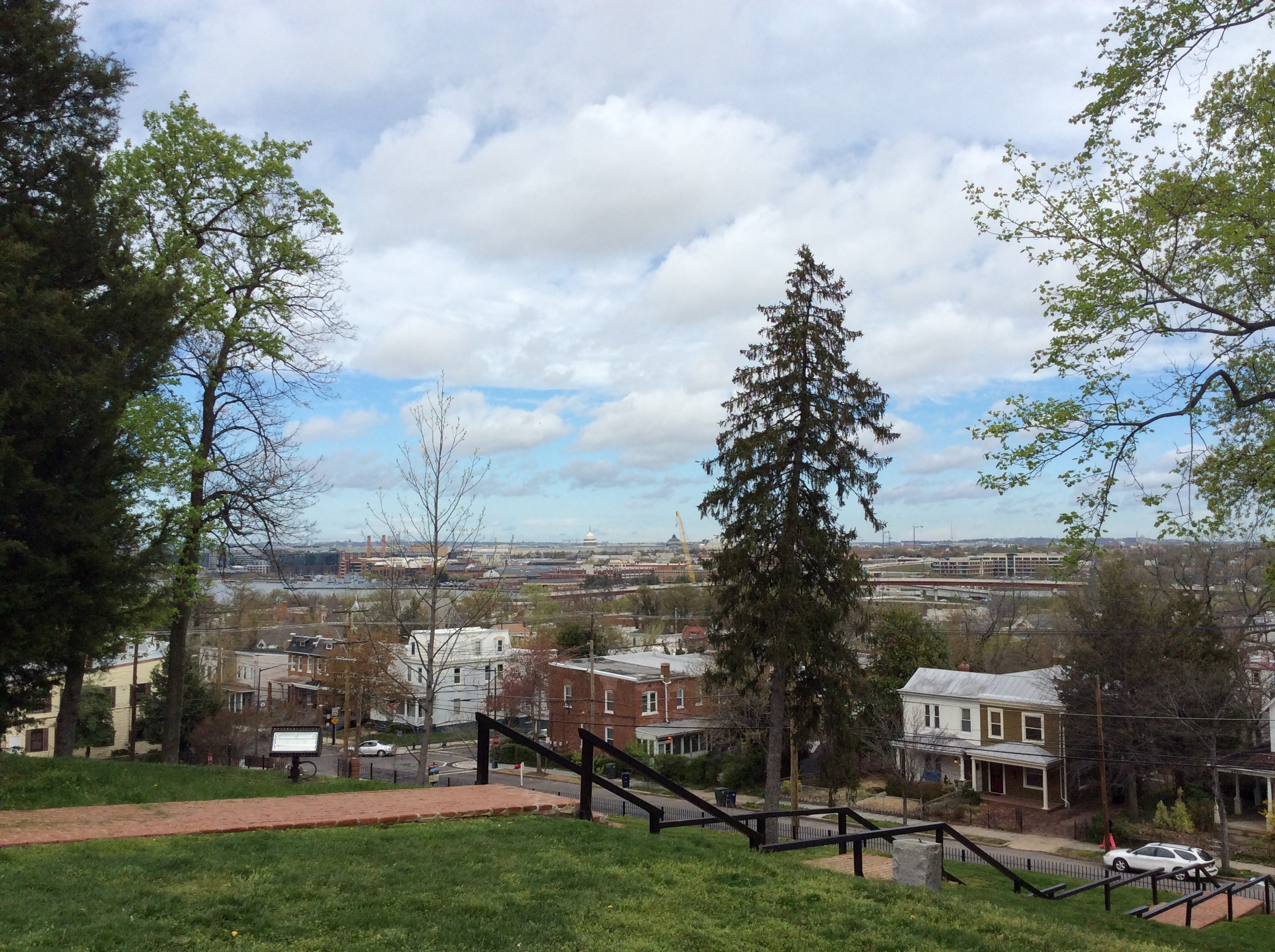
Douglass had the big bedroom, with a desk where he may have worked sometimes. Note the weights on the floor by the big leather armchair: he was a large, powerfully built man, over six feet tall and two hundred thirty pounds, with a strong voice. He would often work out with free weights out on the lawn, and would also often walk the five miles to work each way between Capitol Hill and Cedar Hill. He wrote that he felt stronger at this time in his life than he had in years. You can see Capitol Hill and the Washington Monument looking out of the bay window above the front door off to the left, and the view from the lawn in front of the house is fantastic, with the city laid out before you in a panorama across the Anacostia River.

Frederick Douglass' bedroom

Frederick Douglass’ bedroom. Note the dumbbells on the floor by the big leather chair: Douglass exercised regularly, including lifting weights out on the lawn and walking ten miles roundtrip to work on Capitol Hill. He remained active and vigorous right up to the time of his death at age 77

During the years Douglass lived at Cedar Hill, he was once again a well-to-do man after the debacle of the failed Freedman’s Bank, a subject I mentioned in an earlier account and to which I’ll return soon. To rebuild his finances, he went out on tour again, and he had been able to command very large speaking fees throughout the North and earned a good salary as Recorder of Deeds in Washington D.C., and with the help of a loan from a well-to-do friend, he was once again able to afford a grand house.

The view from Cedar Hill's front lawn, of Washington DC and Capitol Hill

The view from Cedar Hill’s front lawn, of Washington DC and Capitol Hill

By the time Douglass moved to Cedar Hill, he had moved into the role of a senior statesman and had a lot of social and political influence. Yet while Douglass retains his reputation to this day as a fiery champion of black rights, he was perceived by many in those later years to have lost sight of the true plight of most black Americans, especially in the South. He still supported the Republican Party even as it was abandoning Reconstruction, leaving the southern states free to flout the 14th and 15th Amendments. By the time Douglass moved to Anacostia and his grand home on Cedar Hill, his days as a slave, a laborer, and a working abolitionist suffering the everyday oppressions and indignities of Jim Crow were far behind him. His biographers Philip Foner and William McFeely both describe and critique his seeming lack of full awareness and concern for how bad it really was at this time for ordinary black working Americans. To many, it was clear that Douglass’ pragmatism had overshadowed his fiery spirit as a champion of human rights.

In 1876, Douglass was so eager that Rutherford B. Hayes become President, in a heavily contested, extremely close election, that he failed to criticize the Republican Party’s policies in any serious way. To be fair to Douglass, it was still the only major party that at least nominally supported black rights, and if Hayes lost to Tilden, even the appearance of national concern over the rights of black Americans would be lost. But really, his critics said, he should have advocated the complete abandonment of the Republican Party since it had in practice largely abandoned the cause of actual emancipation. After all, the existence of the 14th and 15th Amendments meant nothing to the lives of black Americans if their politicians and fellow citizens routinely blocked access to the polls, to good jobs, to elected office, and to all the other rights and privileges of citizens of a free nation.

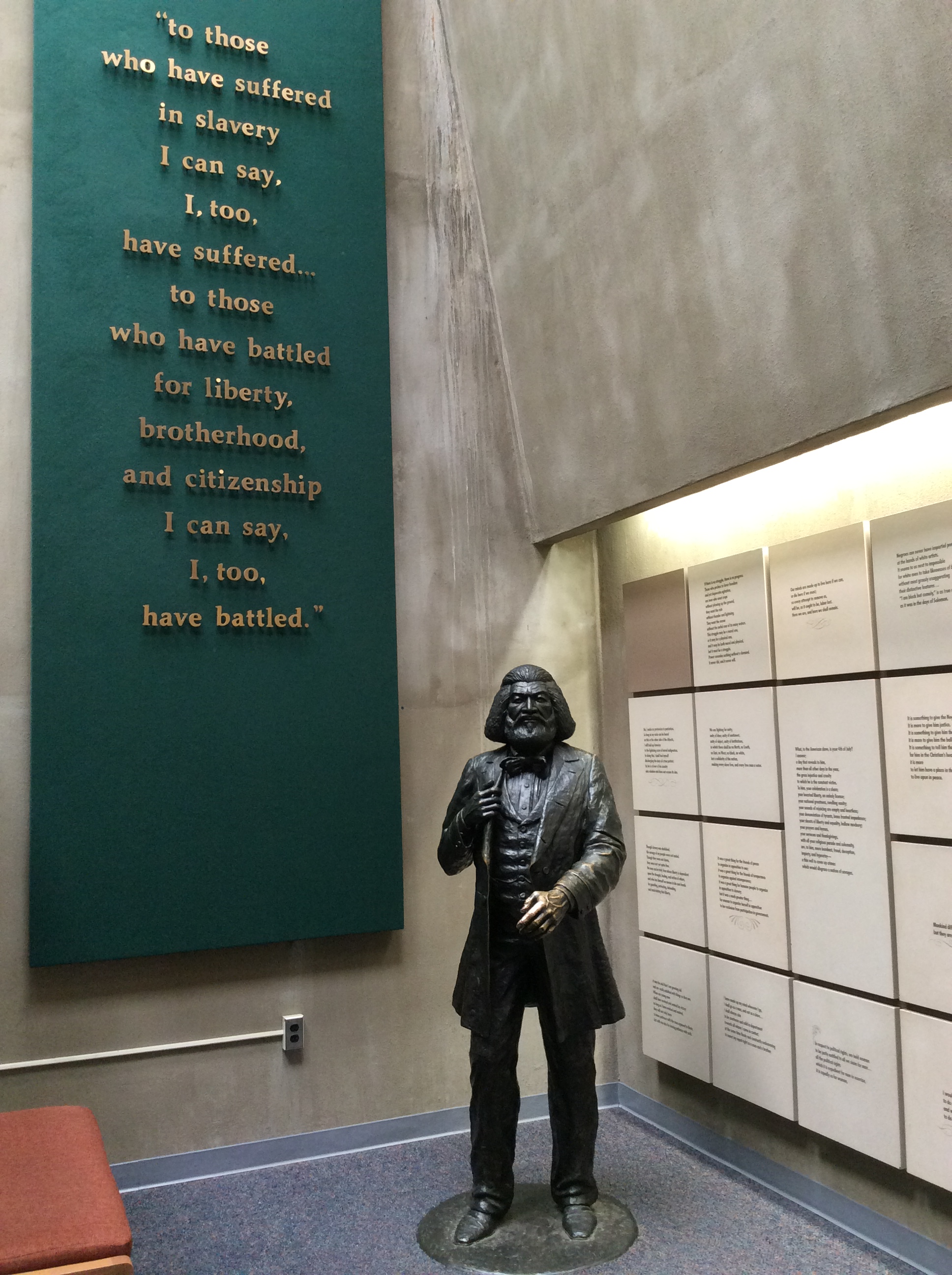
Statue and quote at the Frederick Douglass National Historic Site

Statue and quote at the Frederick Douglass National Historic Site

The Republican Party had a powerful contingent who had come to prioritize economic progress over human rights reform, and thought that keeping federal troops stationed in the South to protect black rights only served to delay national reconciliation and economic recovery. So Republicans routinely struck deals with southern leaders eager to return to old social practices and had often come to be no better than Democrats at protecting black rights. President Hayes, for so long an ardent supporter of strong federal enforcement of civil rights laws, shifted his focus to economic recovery and civil service reform. To be fair to Hayes, ‘Republican Party’ had become almost synonymous with ‘political corruption’, and the new president, famed for his integrity throughout his political career, was determined to fix that. And Hayes was far from the only one who thought that economic recovery would bring about gradual black rights reform through the value of their work in a revitalized economy.

So the Democrats had their way, and black citizens lost many of the political gains they had made. They lost their hard-won representation in government and had even become even worse off in many parts of the South than they had been under slavery, with endemic Klu Klux Klan and White League terrorism, lynching, black codes, debt peonage, convict leasing, and sharecropping, which systematically cheated black people out of the earnings from their labor. And as history reveals, the Douglass of 1857 who had said in Canandaigua ‘If there is no struggle, there is no progress’, was right, and Hayes and the gradualist reformers were wrong. The South continued its oppression of black people nearly unchecked for another hundred years, and their rights were only reclaimed through their protest and struggle, assisted by the intervention of the federal government.

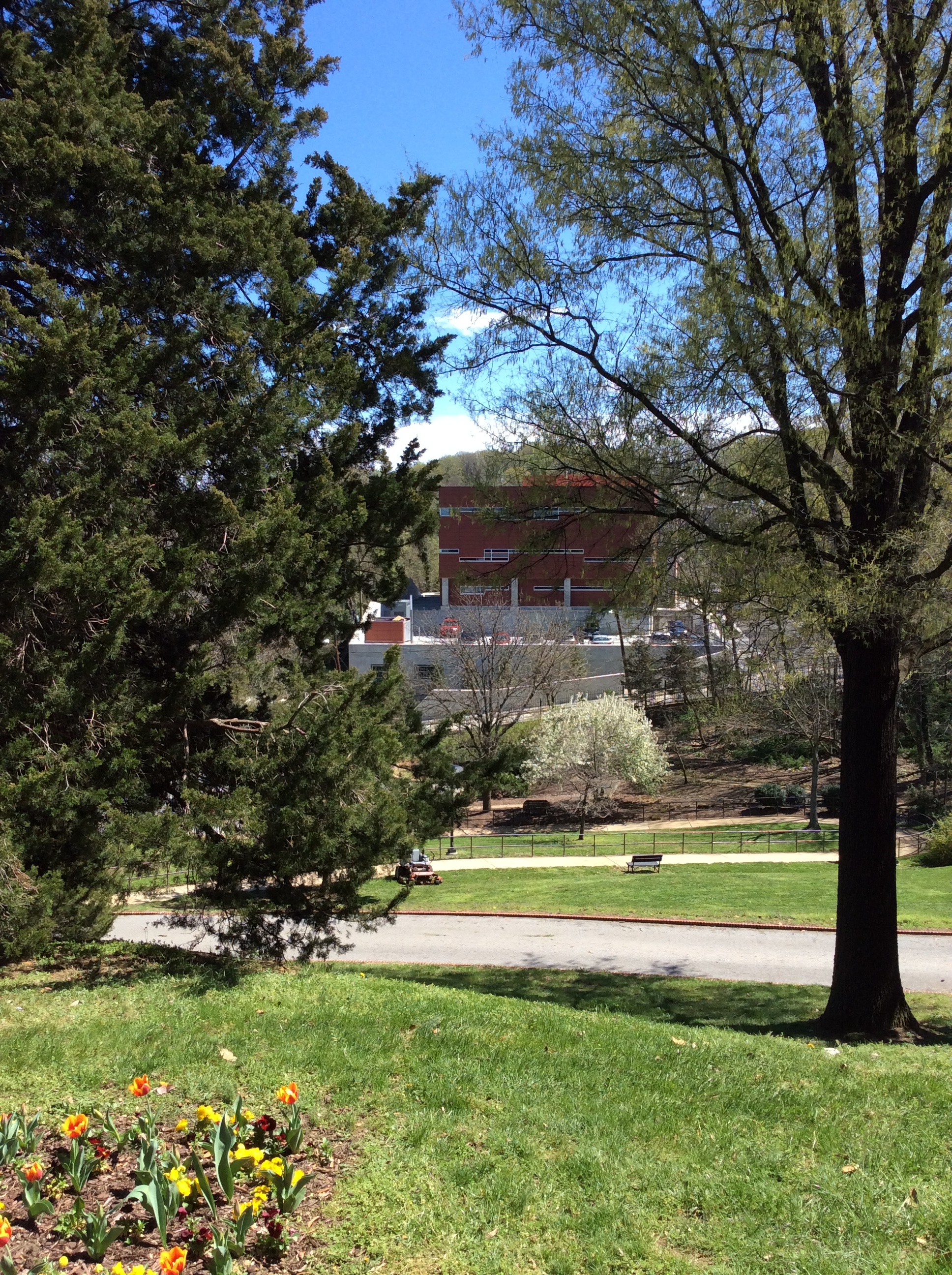
View from Cedar Hill, looking east toward the site of Hiram and niece Helen Pitts' house

View from Cedar Hill, looking east toward the site of Hiram and niece Helen Pitts’ house

But by the 1888 election, Douglass was no longer so ready to remain silent in the face of Republican Party’s failures to protect human rights. It was no longer good enough that the Republican Party had been the party of Lincoln and of the Union. His rhetoric took on a more fiery tone once again, and he said that if the Republican Party wouldn’t live up to their promises to protect black rights, he now looked forward to their defeat. And defeated they were: Democrat Grover Cleveland had already taken the White House in 1884. Douglass attributed this to the Republican Party’s abandonment of the human rights platform, which had made it the champion of goodhearted people, in favor of a profit-first agenda.

As we leave the house, in response to my inquiry, Johnson points me in the direction of the site of Helen Pitts’ uncle Hiram’s house, right beside Cedar Hill where the tall red building stands directly to the right if you’re looking toward D.C. from the front porch (or to your left if you’re looking at the front of the house). Helen lived here with her uncle for a time, and the Pittses and Douglasses were friends, neighbors, and colleagues.  Hiram, like his brother and Helen’s father Gideon in Honeoye, refused to speak to the couple or allow them the house after Helen married Douglass. There was a path that led from Hiram’s house up to Cedar Hill, but after the marriage presumably, sadly, it saw much less use.

The hymnal Frederick Douglass had with him when he escaped from slavery in 1838

The hymnal Frederick Douglass had with him when he escaped from slavery in 1838

A copy of the Columbian Orator, the first book Frederick Douglass purchased

A copy (but not the copy) of the Columbian Orator, the first book Frederick Douglass ever purchased

I return to the Frederick Douglass National Historic Site museum, tucked into the east foot of the hill, and the treasures therein. Among them, there’s the hymnal which Douglass had with him when he escaped from slavery. It seems quite incredible that it survived, especially given the fire at his Rochester home. I wonder if the family took special pains to make sure that this one book, at least, escaped the flames. There’s also a copy (but not his copy) of the Columbian Orator, the first book Douglass ever bought, which, as you may remember, he purchased from Knight’s shop on Thames St in Fell’s Point, Baltimore, when he was only about 12 years old. It was among the most influential books of his life.

Douglass’ death mask, cast in plaster, is also here. His strong brow is relaxed, the deep furrow over the nose smoothed out a bit. His wide-set eyes look peacefully closed but the lips, usually set straight in a dignified manner in portraits, are here drawn tightly together, even pursed, but I’m guessing this is due to the castmaker’s efforts to keep plaster out of the mouth. His characteristically leonine hair is plastered (no pun intended) to his well-formed head. In death, as in life, he’s strikingly handsome.

Here, too, I find Abraham Lincoln’s walking stick, gifted to Douglass by Mary Todd Lincoln in thanks for his service recruiting for the Civil War.

Frederick Douglass' death mask and cast of his hand, at his National Historic Site in Washington DC

Frederick Douglass’ death mask and cast of his hand, at his National Historic Site in Washington DC

 Abraham Lincoln's walking stick, Mary Todd Lincoln's gift to Frederick Douglass

Abraham Lincoln’s walking stick, Mary Todd Lincoln’s gift to Frederick Douglass, on the left, and copies of his passes for recruiting for the Union Army

After a rather lengthy visit closely examining all the displays and chatting with the docent, I cross the Anacostia again as I head north to 913 E St NE, where according to Douglass’ biographer McFeely, Helen Pitts was living when Douglass came to pick her up on January 24th, 1884, on their way to be married.

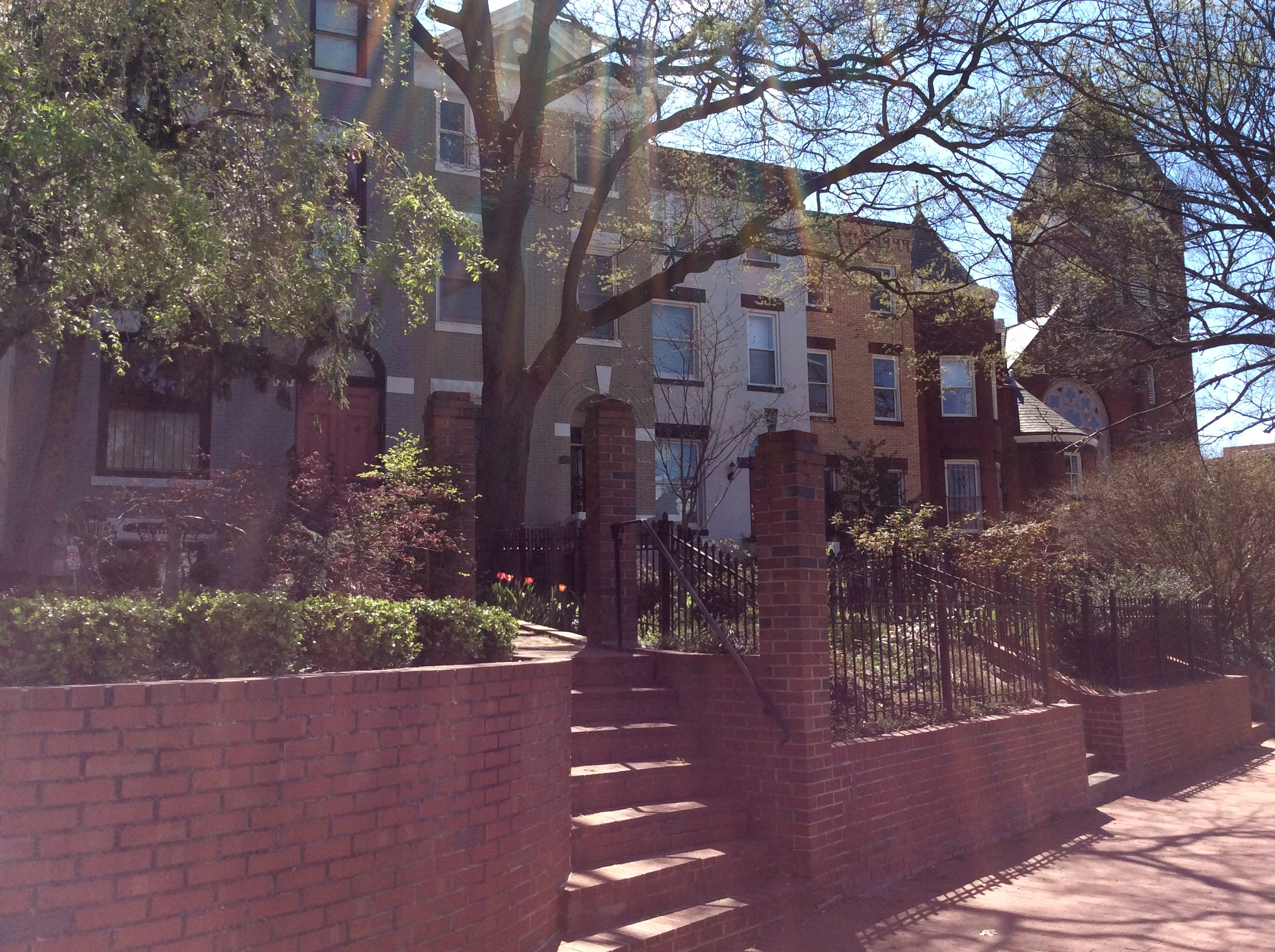
Houses off Maryland and E St NE where they converge, south side, Washington DC, 2016 Amy Cools

Houses off Maryland Ave and E St NE where they converge, on the south side of the street where the odd numbers run for both E and Maryland. The tan house in the center is marked 913 Maryland Ave, but I can’t tell from Google Maps or the 1909 Baist atlas if it’s also 913 E St, though that would also be consistent with the numbering.

When I arrive, I find it’s a little hard to be sure that the 913 I find is an E Street address, a Maryland Ave, or both: these streets intersect at an odd angle here just east of 9th St. Google Maps seems to say it’s 913 E, but the door plaque says it’s 913 Maryland Ave. I find Baist’s city atlas from the turn of the century on the Library of Congress website, the earliest I can find online, and it shows that the numbers here have apparently not changed, since 1909 at least. In 1884, Helen lived here or near here, again, if the 1909 atlas is right. She had moved here from her uncle Hiram’s house to be closer to Capitol Hill, where she worked as Douglass’ clerk, though that meant she and Douglass were no longer neighbors. Perhaps they wanted to keep their deepening relationship less evident to the public eye. Again, more on their marriage soon to come.

I decide to break up the account up here of this day’s adventures into two accounts since it’s such a full day and I learn so much. To be continued!

*Listen to the podcast version here or on Google Play, or subscribe on iTunes

Ordinary Philosophy and its Traveling Philosophy / History of Ideas series is a labor of love and ad-free, supported by patrons and readers like you. Please offer your support today!

~~~~~~~~~~~~~~~~~~~~~~~~~

Sources and Inspiration:

About Us: Living History‘. Frederick Douglass Family Initiatives website (family tree, photos).

Baist’s Real Estate Atlas of Surveys of Washington, District of Columbia: Volume 2, Plate 21. By Baist, George William, William Edward, and Harry Valentine Baist, 1909. Via Library of Congress website

Benjamin Harrison: Campaigns and Elections,’ from Miller Center of Public Affairs, University of Virginia website

Blight, David W. ‘“Your Late Lamented Husband”: A Letter from Frederick Douglass to Mary Todd Lincoln‘. In The Gilder Lehrman Institute of American History website

Douglass, Frederick. The Life and Times of Frederick Douglass. Re-published 1993, Avenal, New York: Gramercy Books, Library of Freedom series.

Douglass, Frederick. My Bondage and My Freedom: 1855 Edition with a new introduction. Re-published 1969, New York: Dover Publications, Inc.

Foner, Philip S. The Life and Writings of Frederick Douglass, Vol. 1-4. New York: International Publishers, 1950.

Fought, Leigh. ‘On Trusting Secondary Sources‘. From Frederick Douglass’s Women: In Progress blog

Holt, Michael F. ‘The Contentious Election of 1876‘, in History Now: The Journal of the Gilder Lehrman Institute

Joseph Douglass‘. In Wikipedia, The Free Encyclopedia.

McFeely, William. Frederick Douglass. New York: W.W. Norton & Company, 1991.

Maryland Beaten Biscuits‘, in Guest Recipe Book. Diana’s Desserts website

Muller, John. Frederick Douglass in Washington, D.C.: The Lion of Anacostia. Charleston: The History Press, 2012.

Rutherford B. Hayes: Life in Brief‘, from Miller Center of Public Affairs, University of Virginia website.

Southern, Eileen. The Music of Black Americans: A History. W. W. Norton & Company, 1997

Death Breeds Death in July of 2016

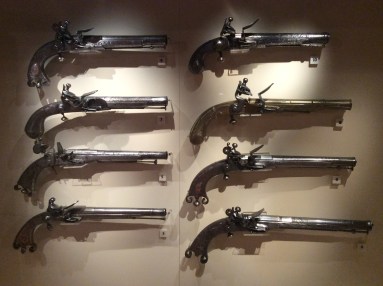
Guns at the National Museum of Scotland, Edinburgh, Photo by Amy Cools May 2014I’m sitting here tonight with a heart that’s sinking lower and lower. Two young men needlessly died this week, and it appears that one at least died with no real provocation at all. And tonight, four police officers (at least) were murdered just a little while ago, and many others wounded, at a protest held for those two young men.
On Tuesday, July 5th, Alton Sterling was wrestled to the ground by two police officers in response to a report that he was brandishing a gun in front of a convenience store where he often hung out selling CDs and videos. As the two officers pinned him down, still struggling a bit, one shouted something about a gun, then shot Alton many times in the chest. Alton died. The next day, his teenage son sobbed his heart out on TV.

On Wednesday, July 6th, Philando Castile had just gotten a birthday haircut and gone grocery shopping with his girlfriend and her daughter, when he was pulled over for a broken taillight. According to his girlfriend Diamond Reynolds, the officer ordered Philando to produce his license. Between Philando and Diamond, they told the officer that Philando carried a gun but had a permit to do so. As Philando reached for his back pocket, the officer shot him several times and he died. Diamond’s four year old daughter watched it all from the back seat.

Then just a little while ago, on this Thursday evening of July 7th, 2016, two snipers fired at police officers providing security at a protest in downtown Dallas, Texas. Four officers died, eleven officers were injured, and one civilian woman was wounded while shielding her children from the gunfire. And at the time I finish this piece, the standoff with at least one sniper continues.

What a hard evening this is, after such a hard week. What suffering and ugliness. So many shot and killed, these after so many others just this year in this country. I hate guns, personally. I never like holding one. I did try some informal target shooting with family a few years ago, and found I was a decent shot. But the experience did nothing for me emotionally after the initial fun of winning a little contest, and I was glad to have that gun leave my hands. Holding power over life and death like that makes me unhappy.

And I never identified with gun culture, though I’m familiar with it, mostly through some extended family. If the gun culture people are right, all of these people should be alive right now: everyone would be deterred from using their guns knowing that the others are also packing. Or, good guys with guns would have stopped bad guys with guns. Yet here are all these dead people, none of them ‘bad’ as far as we know. They were all some mixture of good and bad like the rest of us, surely, whatever we take those terms to mean. The shooters were not stopped by anyone, good or bad, and the first two young were shot because they had guns, and probably also because they were black. Double whammy, as the Black Panthers realized: for all the hue and cry over First Amendment rights, the moment that black people exercise them, the image of the armed patriot breaks down. Perhaps Alton showed some poor judgment here and there in the events that led up to his death. But as far as we can tell right now, he was not particularly more ‘bad’ than most people I know, at least, than most people, myself included, are and have been at times. Perhaps he did brandish a gun to make a man pestering him for money go away. Whatever. Open carry people do the same, flaunting their guns to deter others from messing with them. Most don’t get shot and killed for that. And every one of us, I think would instinctively struggle if someone tackled us to the ground, especially if we didn’t know why. Philando, apparently, did everything right, except obey the officer’s conflicting instructions in the right order. A split-second decision that any of us could make. And all of those officers killed and wounded in Dallas: we have no evidence that any of them did anything wrong, and we do know they perform an often thankless job doing the hard work dealing with our social dysfunction that most of us aren’t willing to do.

Here’s the common thread in all these killings: every person who fired shots thought that would solve a problem. All they did was create heartbreak and set us even more against one another. Anger, fear, vengeance, and self-righteousness will run amok. Perhaps we’ll listen to each other this time around, unlike the hundreds of times we’ve done nothing after mass shootings and police killings (by and of, though mostly by).

I don’t know what else to say. What a heartbreaking waste and morass of suffering. Like all of you, I’ll wrestle with all of this for a long time to come, especially as more details come out about these shootings. At this moment, I hear the helicopters whirl over the protesters in downtown Oakland from my apartment in neighboring Chinatown, as this city of protest and activism takes to the streets and blocks the freeway. I worry more violence may erupt. And I feel pretty sure of one thing: I can’t imagine ever wanting to carry a gun.

Ordinary Philosophy and its Traveling Philosophy / History of Ideas series is a labor of love and ad-free, entirely supported by patrons and readers like you. Please offer your support today!

~~~~~~~~~~~~~~~~~~~~~~~~~~~~~~~~~~~~~~~

Sources and inspiration:

4 Police Officers Dead After Shooting in Downtown Dallas: 3 Dallas officers, 1 DART officer confirmed killed in sniper fire following protest, police officials say. By NBC 5 Staff, Thu July 7, 2016. NBC 5 Dallas-Fort Worth.

Alton Sterling shooting: Homeless man made 911 call, source says. By Joshua Berlinger, Nick Valencia and Steve Almasy, 9:21 PM ET, Thu July 7, 2016, CNN.com

McLaughlin, Eliott C. Woman streams aftermath of fatal officer-involved shooting, 11:20 PM ET, Thu July 7, 2016, CNN.com

Minn. governor says race played role in fatal police shooting during traffic stop. 11:30 PM July 7, 2016, by Michael E. Miller, Wesley Lowery and Lindsey Bever. Washingtonpost.com

Frederick Douglass Chambersburg and Gettysburg PA Sites

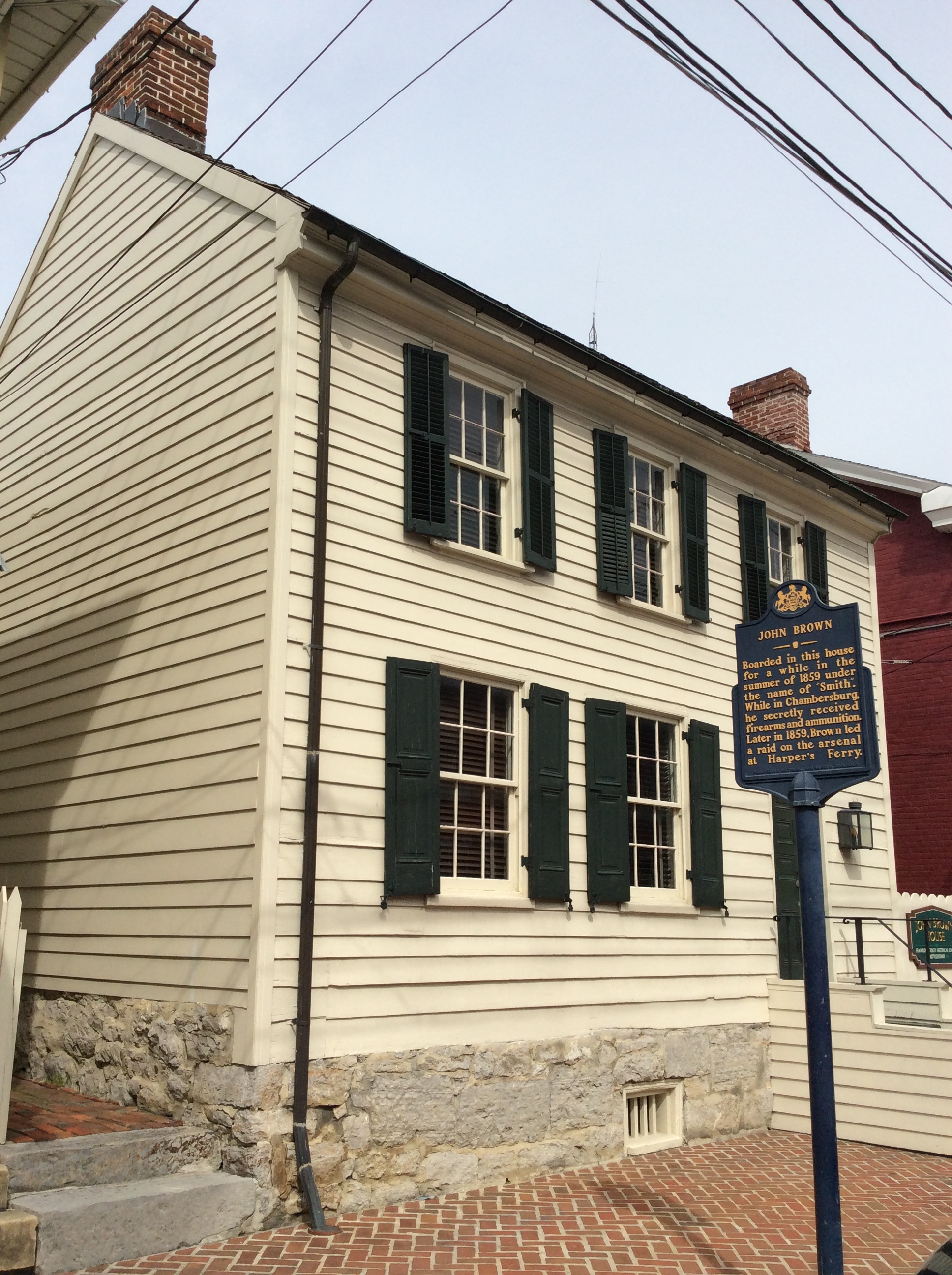
A view of the John Brown House in Chambersburg, PA

A view of the John Brown House at 225 E. King St, Chambersburg, PA

Twelfth Day, Thursday March 31st

It’s breezy, overcast, and warm the day I drive south from Rochester to Washington D.C., with a first stop in Chambersburg, Pennsylvania to visit two sites of special interest for my Frederick Douglass journey.

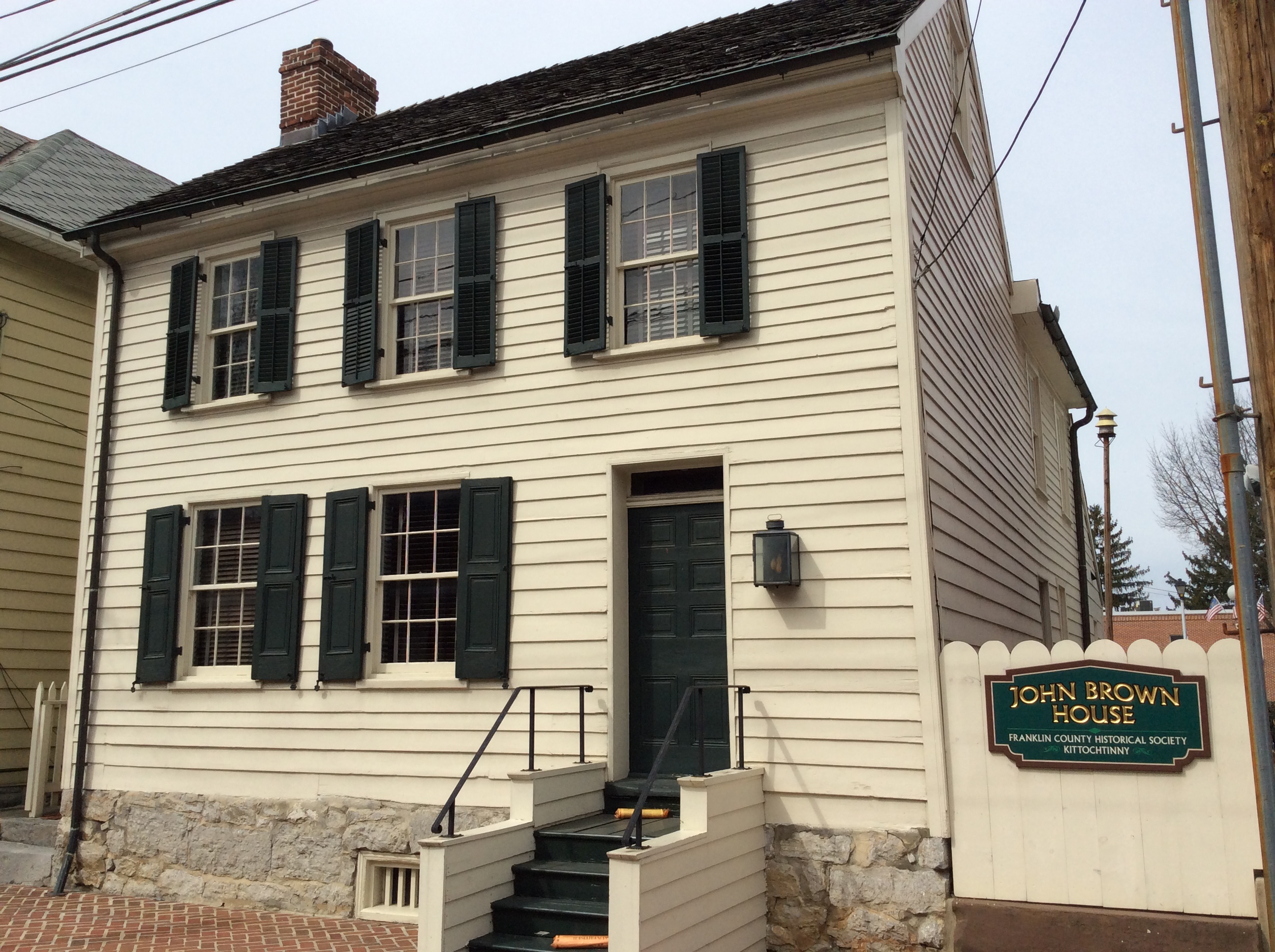
The first is a two story clapboard house at 225 E. King St, where John Brown rented a room in Mary Ritner’s boarding house in the summer of 1859, and where he planned his doomed raid on the federal arsenal at Harper’s Ferry. Unfortunately, I’m visiting during the off-season: the house is closed until the tourist season starts in May, but I find a blog with two nice photos of the interior posted. It happens to be a blog dedicated to Fredrick Law Olmsted, the great landscape architect who designed Highland Park, site of Frederick Douglass’ statue and memorial in Rochester.

Douglass had met Brown in September of 1847 while he was on a speaking tour, on the recommendation of other abolitionists. Brown had already developed a reputation as an especially fierce and dedicated one. In 1837, he had declared publicly “Here, before God, in the presence of these witnesses, from this time, I consecrate my life to the destruction of slavery.” By the time Brown met Douglass in 1847, he had already been engaged in activism for several years; for example, as you may remember from the account of my day in Lynn, MA, Brown used to speak at that town’s Sagamore Hall, which burned down in 1843, though there’s no evidence of their ever having met in Lynn. Brown invited Douglass to have dinner with him and his family in his plain, working-class Springfield Massachusetts home. He had started out as a tanner by trade, and after some financial failures, had become a successful merchant at that point. Douglass was at first surprised by the disparity between Brown’s ‘Spartan’ home, in such contrast to his prosperous-looking business office downtown, and then impressed by the fiery, righteous, single-minded, Biblically-minded (in the Old Testament sense) radical.

Douglass was still a pacifist Garrisonian at that time, but was as convinced as Brown that the political system was incapable of ending such an embedded, prejudice-ridden, and profitable (in certain contexts, such as the heavily agricultural South) system as slavery. Douglass and Brown likely had a lively discussion that evening in Springfield and on many occasions to follow, how slavery might be ended outside of the political system, and debated the relative merits of war and peace in reform. Brown visited Douglass at his South Avenue Rochester home on more than occasion and stayed with Douglass there awhile in early 1858 writing up a constitution for his planned mountain community of self-freed ex-slaves.

John Brown House (2) in Chambersburg, PA

Another view of the house where John Brown boarded in Chambersburg, PA

Douglass quoted Brown in his Life and Times as saying ‘God has given the strength of these [Alleghany] hills to freedom; they were placed here for the emancipation of the negro race; they are full of natural forts… The true object to be sought is first of all to destroy the money value of slave property… by rendering such property as insecure.’ So in 1847, he had already been planning to help slaves escape and remain free. In his remarks to Douglass, Brown displayed the fanaticism of the zealot in proclaiming that God not only ordained his plan, but placed just the right landscape right there where he could carry it out. But he also revealed his pragmatism and his business sense, which allowed him to astutely identify one of the bulwarks of slavery, the financial interests of a predominantly agricultural economy, then come up with a practical solution for undermining that bulwark. Slaves not only provided the necessary labor for these large farms, especially for labor-intensive crops like cotton, but were the dominant form of investment for Southern capitalists and living collateral for debt endemic to an agricultural economy. But if the financial incentive for slavery was removed by removing investment security, Brown thought, the institution would wither away.

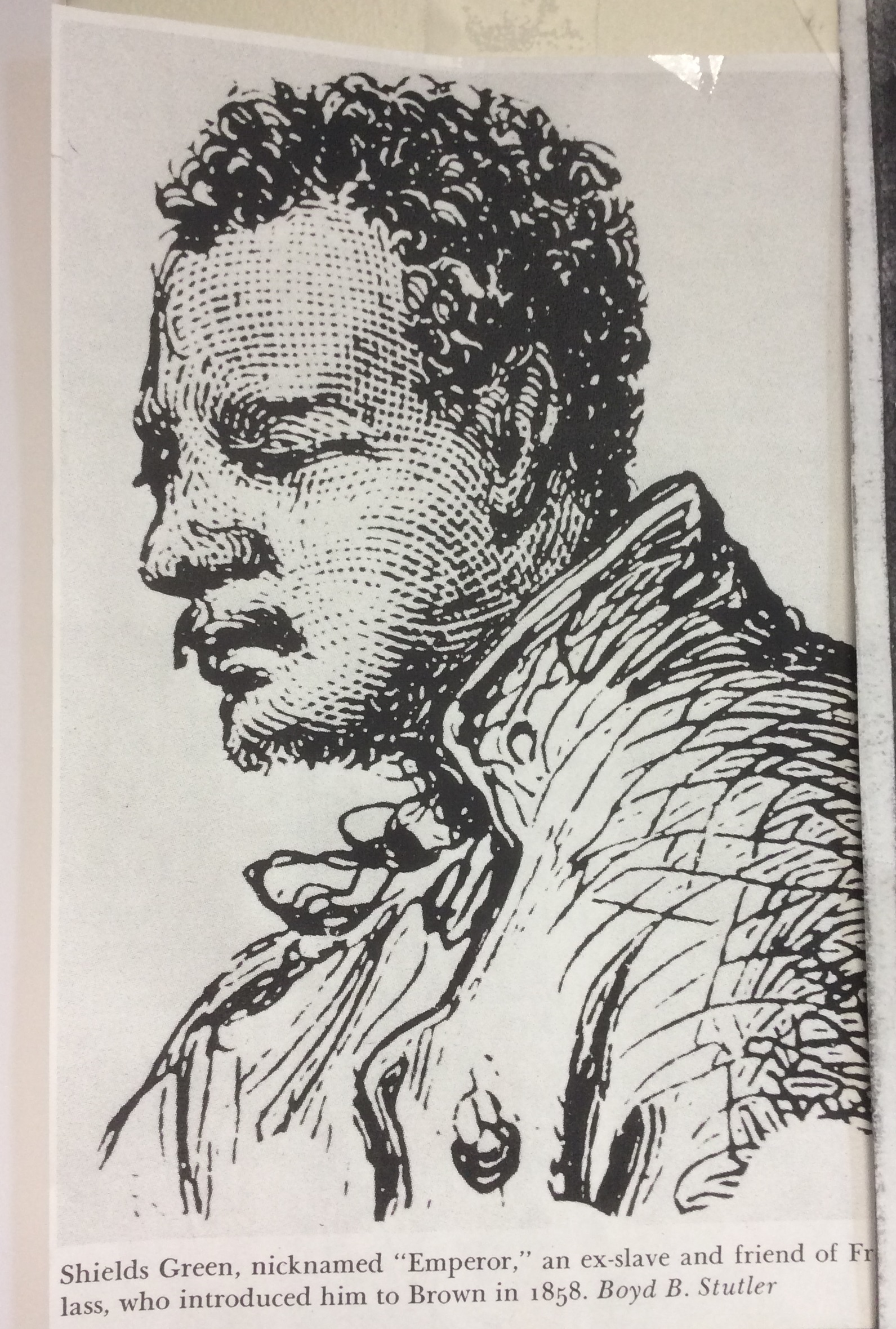
Poster of Shields Green in David Anderson's Nazareth College office

Poster of Shields Green in David Anderson’s Nazareth College office

But as you may have thought many times up to this point, it’s time I stop referring to the Harper’s Ferry plan and raid before explaining what it was and how it all went down.

Douglass and Brown’s mutual friend Shields Green accompanied Douglass from Rochester to Chambersburg in August of 1859, in response to John Brown Jr’s appeal for personal and financial support for Brown Sr’s soon-to-be-enacted operation. It had been postponed the year before due to an opportunist who volunteered his services to the venture then blackmailed potential supporters with threats of reporting the conspiracy, which in the end, he did. Douglass, now a longtime supporter and friend of Brown’s and sympathetic to his overall project of helping slaves escape, wanted to find out how the plan was progressing, how it may have changed, and how much support it had gathered. Along the way, Douglass gave some lectures as a cover for the purpose of his trip to Chambersburg and collected funds for the venture.

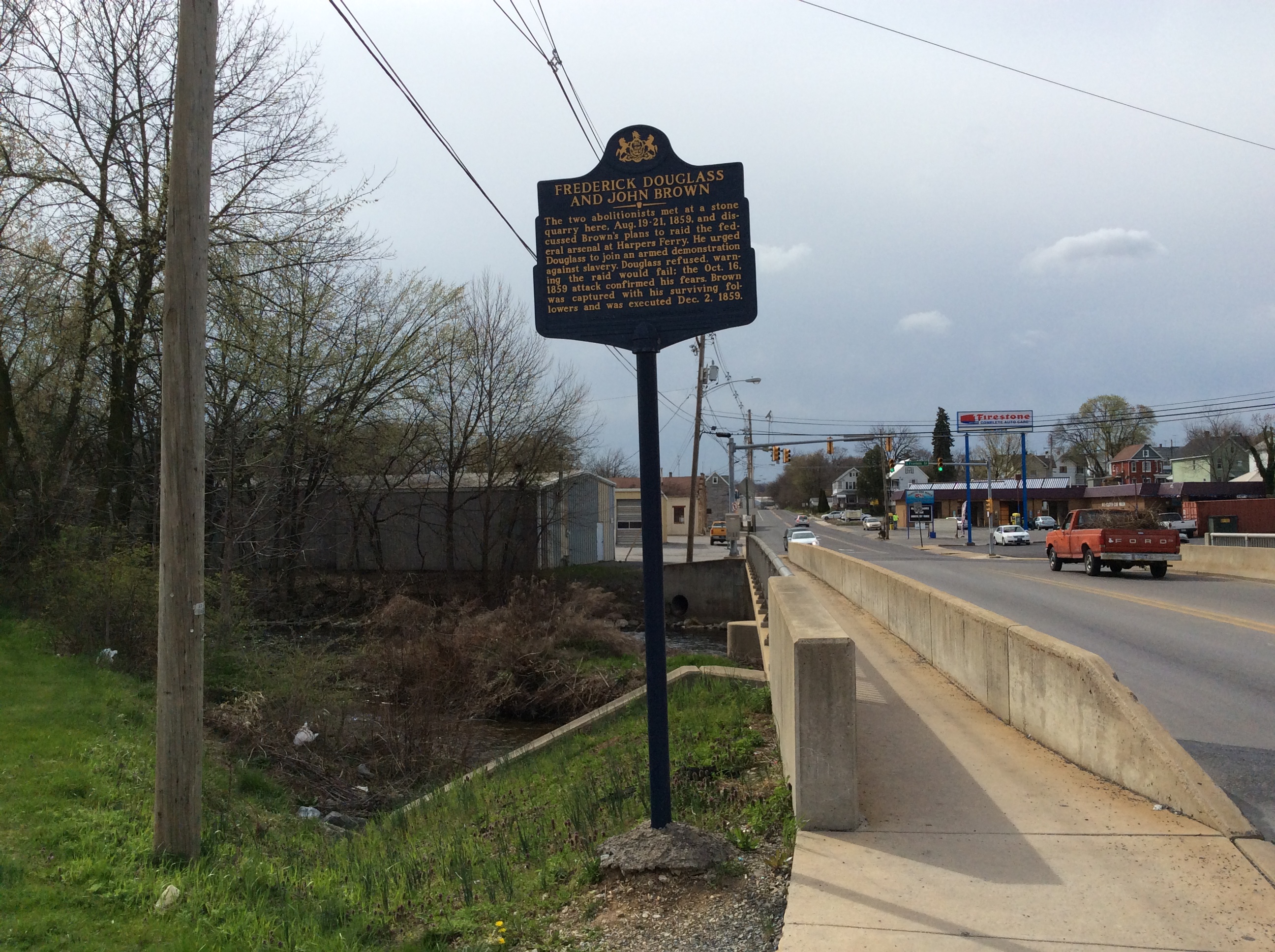
Quarry site historical marker where Douglass and Brown met, Chambersburg, 2016 Amy Cools

Quarry site historical marker where Douglass and Brown met in Chambersburg, PA, in August of 1859

The old Quarry site is generally listed as the place where Southgate Mall now stands at W. Washington St, but that’s not quite where you find the historical marker, though it is nearby. To find the marker, go to the east end of the bridge where Lincoln Highway (30) crosses over Conococheague Creek, between Cedar Ave and S. Franklin St. Loudon St is the next street to the north of W. Washington, and a broad open parking lot runs along the creek between the two, behind what’s currently a Rent-A-Center.

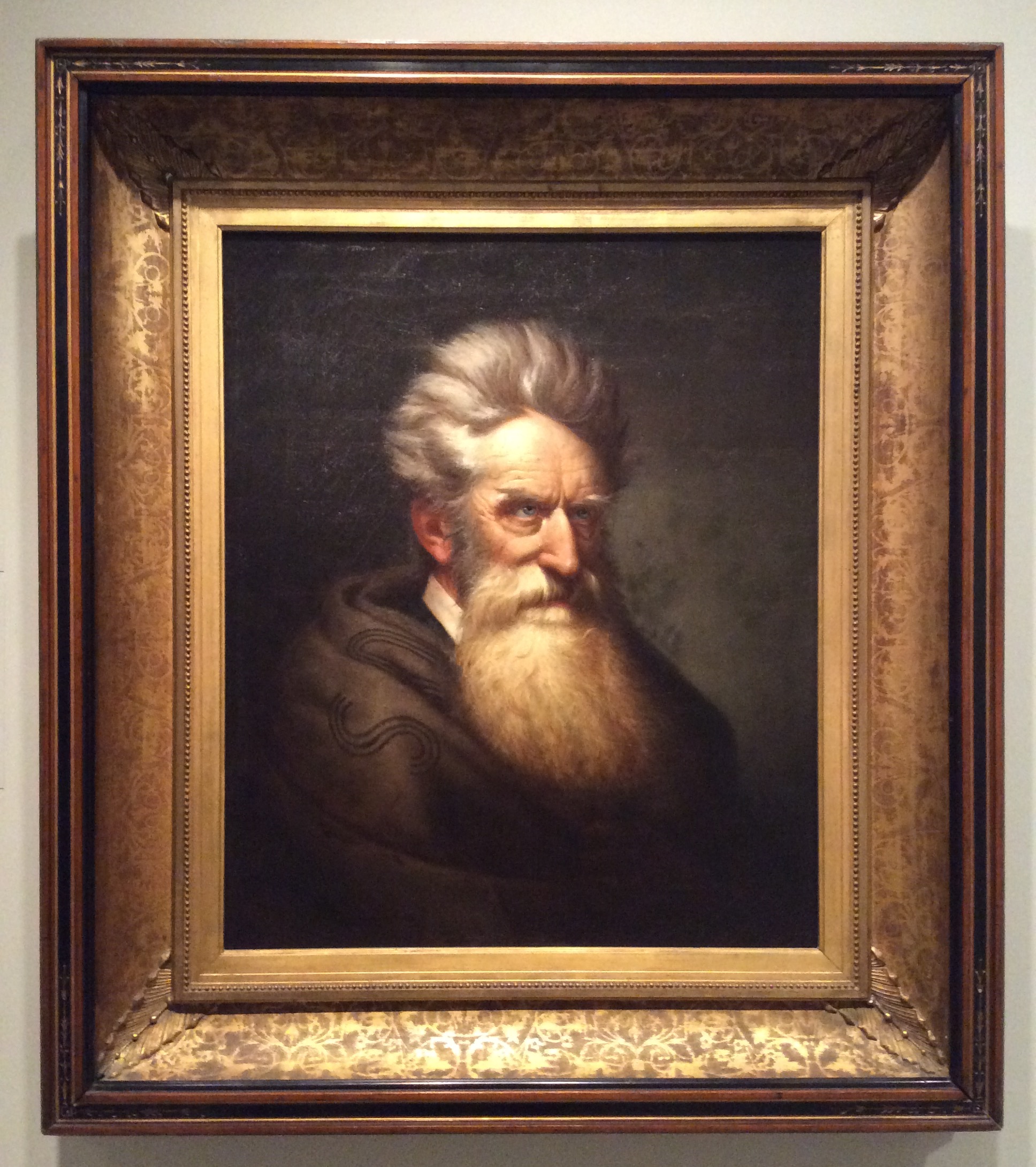
Portrait of John Brown by Born Torrington in National Portrait Gallery

Portrait of John Brown by Ole Peter Hansen Balling, 1872, at the National Portrait Gallery in Washington, DC

Douglass met with Brown here, who was outfitted as a fisherman, a perfect disguise for a creekside meeting. They, along with Green, and Brown’s secretary John Kagi, sat on the rocks and discussed and argued about Brown’s plan for the raid, apparently all night, and continued to meet and discuss the raid over the next couple of days. Brown intended to seize and occupy the federal arsenal at Harper’s Ferry, Virginia, with the small force of 22 men he had convinced to fight with him, and hold it as a symbol of righteous revolt against an evil government which had betrayed and oppressed so many of its people. This, in turn, was intended to inspire courage and anger in the slave population, and spark a mass exodus from bondage. It’s easy to picture Brown, of the deepset eyes, lined face, and flowing beard, playing the part of the angry Moses. From what he heard of the plans now, which had come to sound very much like an outright rebellion, Douglass thought the raid would certainly fail by provoking an aggressive military response. He also feared that its failure would set back the abolitionist cause in the long term by provoking a political response to increase legal protections of slavery as well.

By this time, Douglass’ view on violence had shifted: he had come to accept that violence is sometimes necessary and justified if great enough injustices or harms are being done and if other means have been tried and failed. So it wasn’t the proposed violence alone that made him oppose the plan, it’s just that he thought this particular plan would fail. Though he refused to join the raid, he later spoke of John Brown as a martyr, and always had a high opinion of his moral integrity and courage. As David Anderson of Nazareth College discussed with me in our interview, Shields Green stayed behind to join Brown in the raid. Douglass described Green in his Life and Times as ‘a man of few words, and his speech was singularly broken; but his courage and self-respect made him quite a dignified character.’ ‘Dignified’: high praise from Douglass, who valued that quality so much and took great care to nurture and project it in his own person. Shields Green survived the raid, but was captured and executed ten days later. 

Both Brown and Douglass, as you can see if you read Brown’s own speech at his trial, and as you can gather from Douglass’ Life and Times discussion of Brown, insisted that the Harper’s Ferry plans all along were only to encourage individual slaves to escape, then provide the means to defend themselves and other escapees along the route east and north. They claimed that a general slave insurrection was never part of the plan. But as was the government’s position, it all looked very much intended to spark a rebellion. I would add, it would have been a justified one if one ever could be, far more justified than the United States’ original rebellion against the British. Systematized forced labor, wage theft, rape, child-stealing, complete disenfranchisement, imposition of hunger and thirst, beatings, and enforced ignorance is a more dire set of provocations than unpopular taxes imposed without sufficient representation, in my view.

Chambersburg Map of 1894, Old Jail, Franklin County Museum, 2016 A Cools

Chambersburg Map of 1894, from the Franklin County Museum in the Old Jail, 175 E. King St.

I make a brief stop in the Franklin County Museum in the Old Jail building right down the street from the John Brown house at 175 East King Street, where I find a nice map of old Chambersburg. The town was burned by a rogue contingent of the Confederate army on July 30, 1864 (some soldiers were horrified at the senselessness of this attack against civilians and did their best to help save lives and possessions), but the Old Jail and the John Brown House both survived.

I grab a cup of coffee and jot down some notes, then continue on my way east to Washington D.C. via (you may have guessed it) Gettysburg, about 35 minutes away. Though this place is central to the legacy of Douglass’ friend and hero Abraham Lincoln, the link to Douglass’ life and ideas is a little more indirect. But I find this fascinating essay by David Blight, noted Douglass scholar. It’s a perfect accompaniment for this account, since it so well explains how Lincoln’s and Douglass’ ideas converged ever more closely as the Civil War continued, and really ties the places and themes I explore in this day’s journey together very well. Here’s a selection from that essay:

‘…Lincoln asked Douglass to lead a scheme reminiscent of John Brown and Harpers Ferry. Concerned that if he were not reelected, the Democrats would pursue a negotiated, proslavery peace, Lincoln, according to Douglass, wanted “to get more of the slaves within our lines.” Douglass went North and organized some twenty-five agents who were willing to work at the front. In a letter to Lincoln on August 29, 1864, Douglass outlined his plan for a “band of scouts” channeling slaves northward. Douglass was not convinced that this plan was fully “practicable,” but he was ready to serve. Because military fortunes shifted dramatically with the fall of Atlanta, this government-sponsored underground railroad never materialized. But how remarkable this episode must have been to both Douglass and Lincoln as they realized they were working together now to accomplish the very “revolution” that had separated them ideologically in 1861. Garry Wills has argued that Lincoln performed a “verbal coup” that “revolutionized the revolution” at Gettysburg. By 1864, that performance reflected a shared vision of the meaning of the war. Ideologically, Douglass had become Lincoln’s alter ego, his stalking horse and minister of propaganda, the intellectual godfather of the Gettysburg Address and the Second Inaugural.’ – from ‘“Your Late Lamented Husband”: A Letter from Frederick Douglass to Mary Todd Lincoln

I arrive at Gettysburg, and it’s cloudy, a bit gusty, and dropping scattered rain, but not cold. The air feels soft, and the light’s getting a bit low.

Gettysburg National Military Park, Gettysburg, PA

Gettysburg National Military Park, Gettysburg, PA

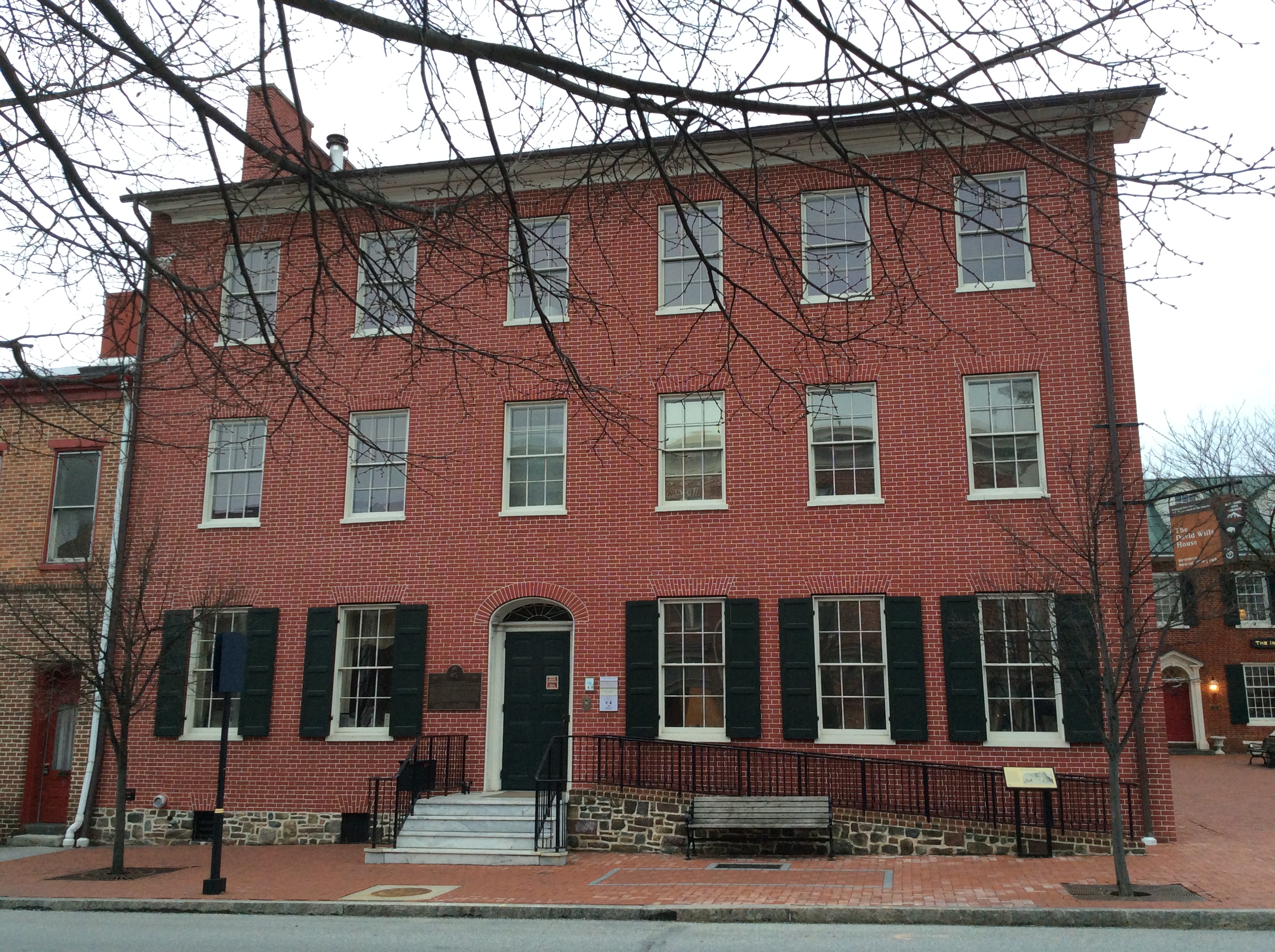
David Wills House where Lincoln stayed, Gettysburg PA, 2016 Amy Cools

David Wills House where Lincoln stayed in Gettysburg, PA, the night before he delivered his address

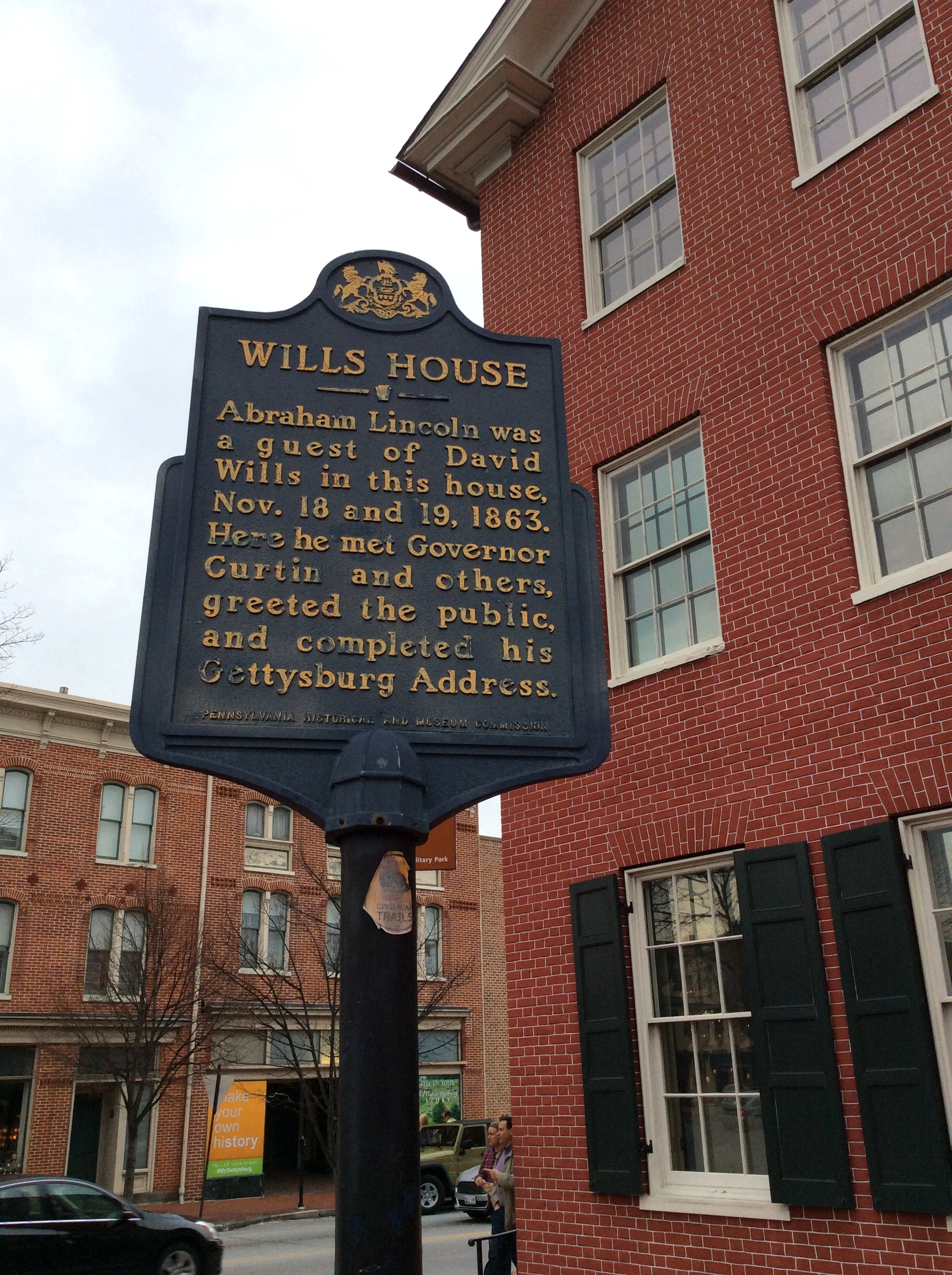
David Wills House historical marker, Gettysburg PA, 2016 Amy CoolsThe drive through the park is lovely, the grass is green, the park and its structures are beautifully maintained. I stop for a map, then head straight to the David Wills House. I arrive too late to go inside, however, though I do find another excellent blog, packed with photos of every part of the interior; scroll to the bottom of the page to find links to all of the posts in the series. Thanks, good people of the Gettysburg Daily!

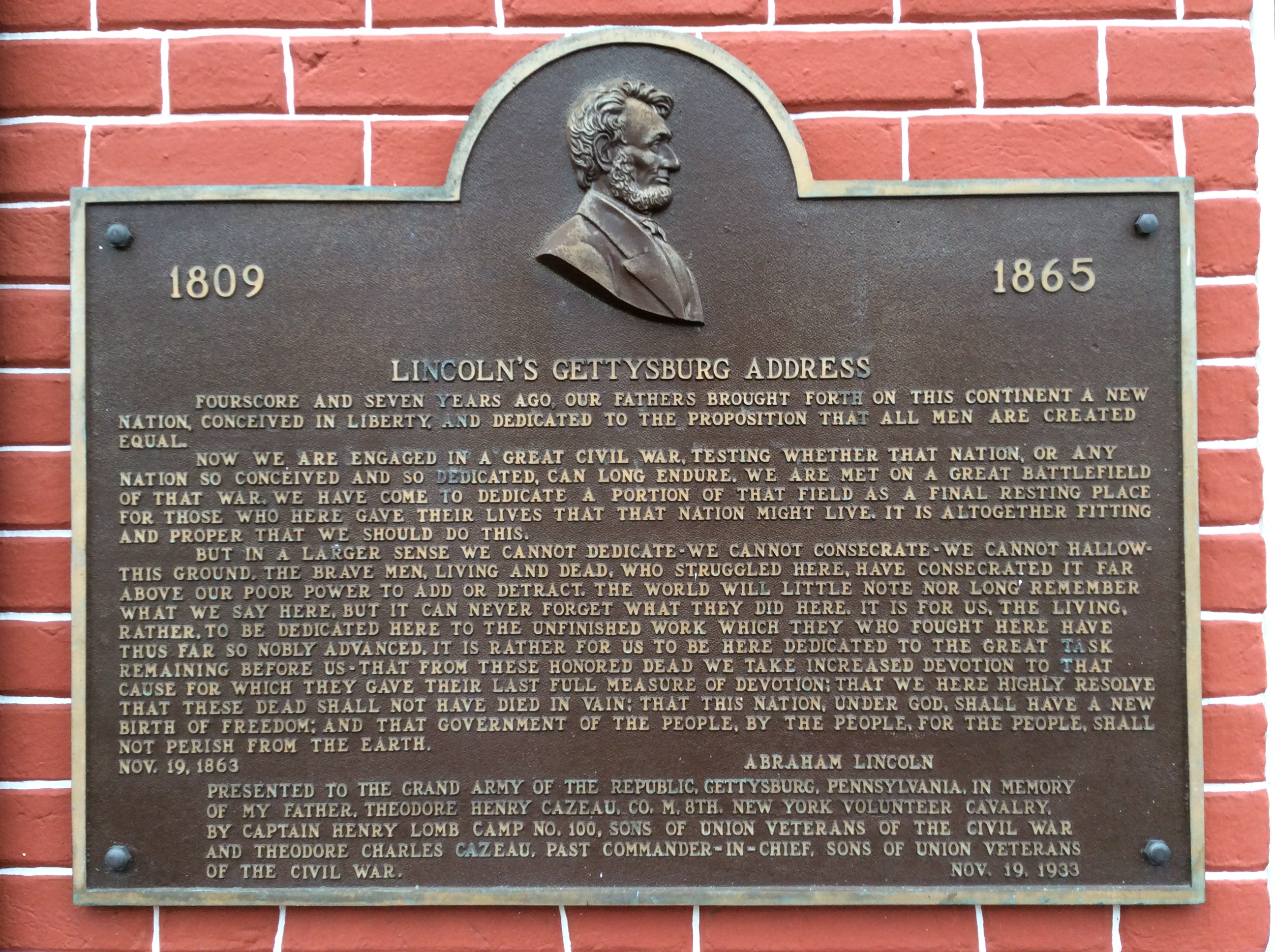
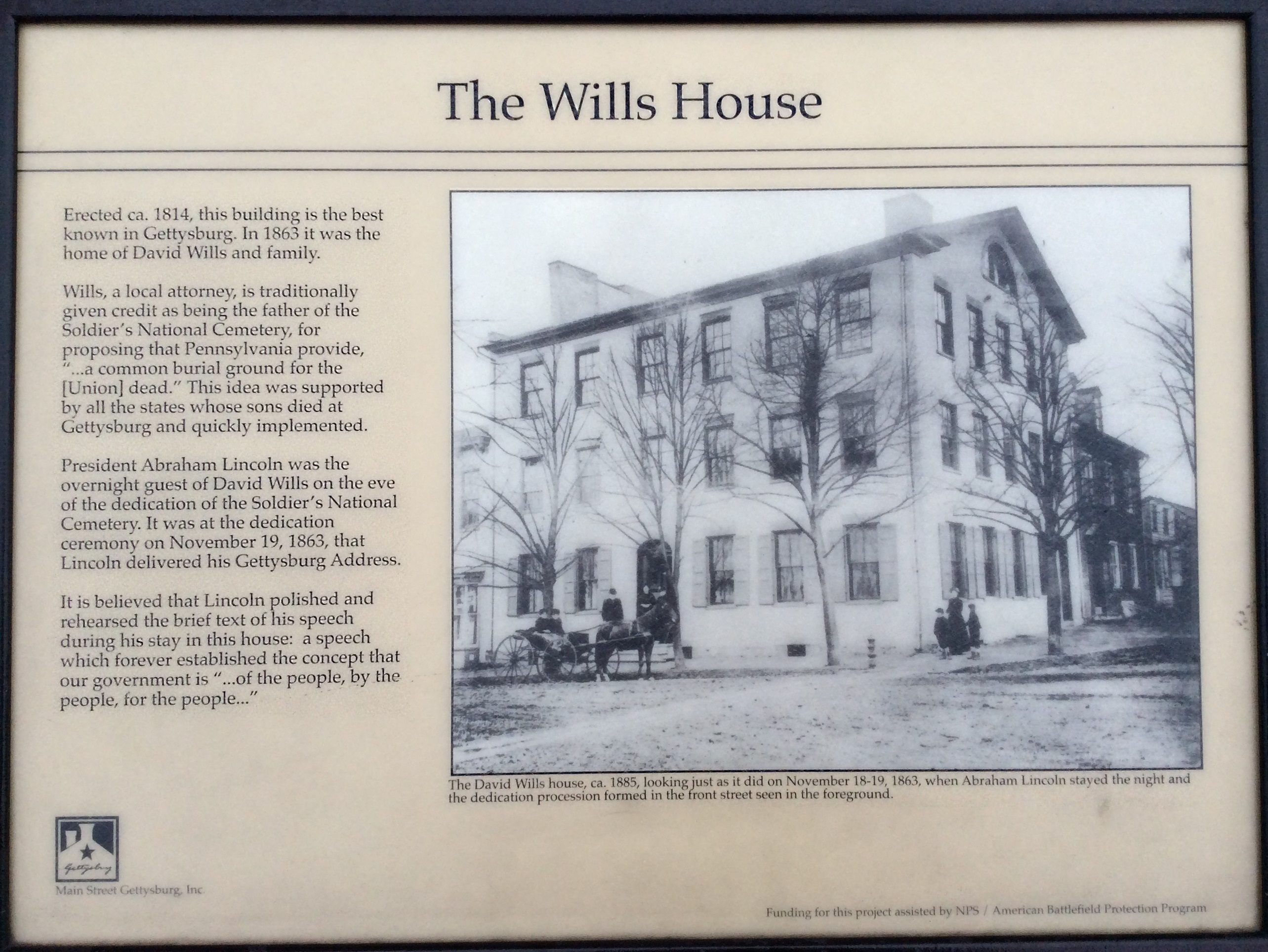
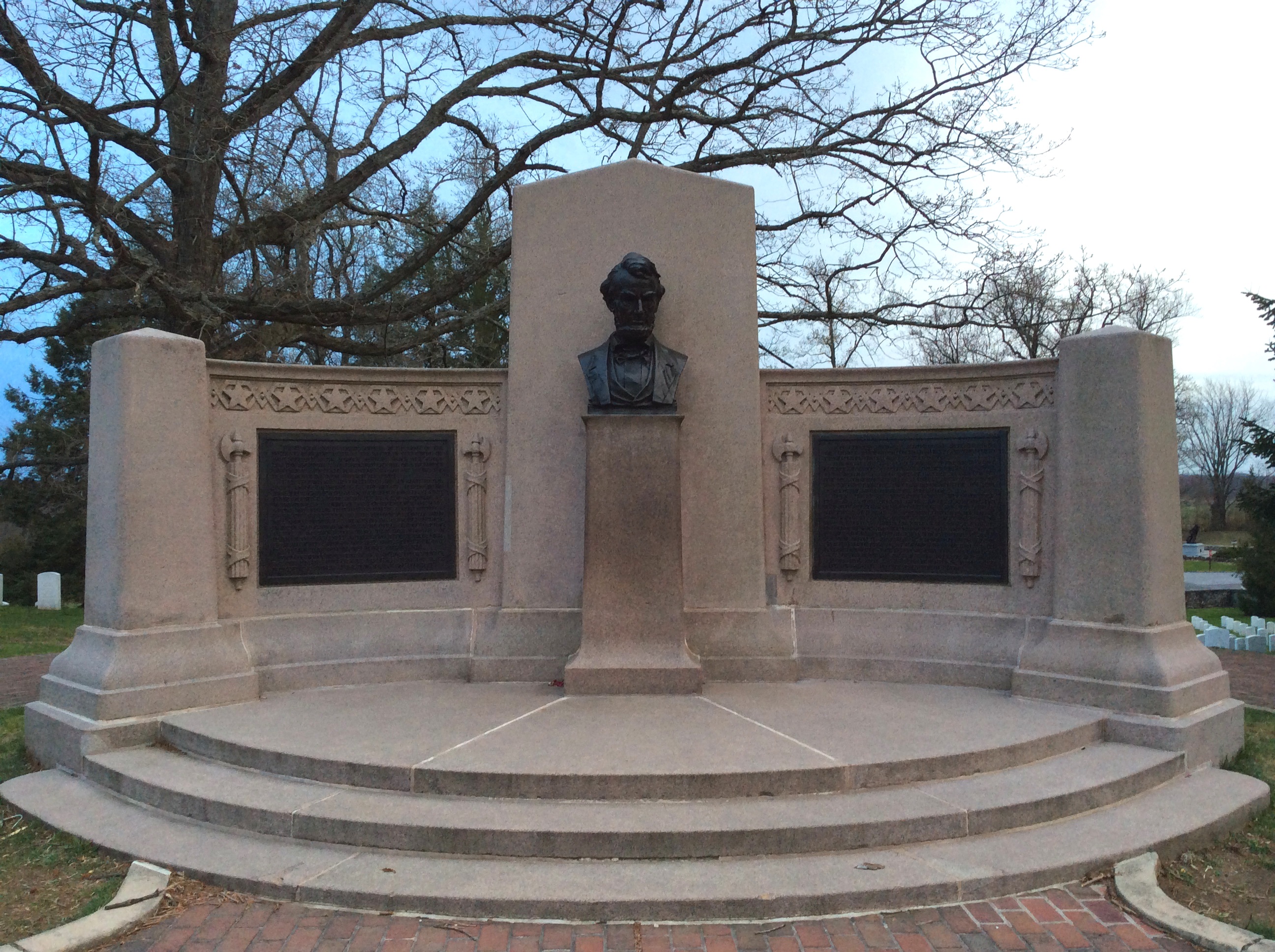
Lincoln stayed the night before delivering the Gettysburg address, and likely gave it a final edit here. The house was packed with dignitaries and visitors here for the great event, the dedication of a national cemetery at the site of the bloodiest battle of the Civil War. Lincoln’s host David Wills was an attorney who had overseen the effort to recover the hastily buried bodies from the battlefield and re-inter them with more care at a specially dedicated Soldier’s National Cemetery to the east of the battlefield. This was no mean feat, as over 3,000 soldiers were killed in the Battle of Gettysburg, from July 1st to July 3rd, 1863.

Lincoln’s address was not the only one delivered that day; orator Edward Everett’s was two hours long and well-received. But Lincoln’s brief speech, with its readily memorizable brevity and eloquence, made it the one that not only made it into most of the newspapers first, people could quote from it and recite it to one another straight away. And Lincoln’s high-pitched voice carried very well. Short but eloquent speeches had become a hallmark of Lincoln’s style, as had religious and dramatic themes which were very familiar to the public, references that resonated with them and could convey volumes in only a few well-chosen words. Lincoln had become, at this point, a masterful rhetorician, and his address transformed, for so many distraught and angry Americans, a senseless slaughter into a noble sacrifice.

The Gettysburg Address on the Wills House wall

The Gettysburg Address on the Wills House wall

David Wills House sign, Gettyburg, PA, photo 2016 by Amy Cools

Gettysburg Train Depot, built in 1859, where Lincoln arrived on August 18th, 1863

Gettysburg Train Depot, built in 1859, where Lincoln arrived on November 18th, 1863

I head two blocks north to 35 Carlisle St, where the old Gettysburg Railroad Station still stands. Built in 1859, it also served as a field hospital and military transport during the Civil War. The Gettysburg Daily blog also includes a wealth of detailed photos of the Gettysburg depot and the original location of the tracks that Lincoln’s train rolled in on near dusk on November 18th, 1863.

Gettysburg Address historical marker at Gettysburg National Cemetery

Gettysburg Address historical marker at Gettysburg National Cemetery

My last site to visit for the day takes me about a mile south, from Baltimore Street to Steinwehr Avenue to Taneytown Rd, aka Highway 134. There’s a handsome but simple old stone wall, originally built in 1864 and restored in 1980. There’s a gate about three quarters of the way down on my left, and a parking lot across the street on my right. I’m so glad I’m not continuing my drive yet, it’s just too nice outside to be content in a car. The clouds have cleared a little, and the setting sun makes quite a show on the clouds still there on the horizon, and the rain has gone.

I enter the gate and find that Gettysburg National Cemetery is one of the most moving and beautiful monuments I have ever visited, more than I expected. The flowering trees are in bloom, in every shade of pink, white, and cream, among the evergreens and those which are still bare of leaves or buds. It’s peaceful in the low warm light of the evening.

Headstones in Gettysburg National Cemetery

Headstones in Gettysburg National Cemetery

Headstones in Gettysburg National Cemetery (2), photo 2016 Amy Cools

Soldiers National Monument, Gettysburg National Cemetery, photo by Henry Hartley, shared under Creative Commons Lic. 2.0

Soldiers National Monument, Gettysburg National Cemetery, photo by Henry Hartley, shared under Creative Commons License. 2.0

The sun in sinking fast, and the gates will be closing soon. I could continue my way down the path which winds around to my left to the tall white stone Soldiers National Monument, near the site where Lincoln delivered his address. But it’s a ways down and in the interests of time, I decide to start with a closer monument, to the right after you enter the gate. It’s a monument dedicated to the Gettysburg Address itself. The taller central stone is fronted by a strongly executed bust of Lincoln, flanked by two large plaques on the curved sides carved with stars and ceremonial hatchets. One plaque contains the Address, the other contains a selection from David Will’s letter to Lincoln, inviting him to participate in the dedication ceremony and to make some remarks. The letter was sent to Lincoln only 17 days before the ceremony, and scholars debate on the significance of the last-minute invitation. National cemeteries were a new thing, run by the states, and their dedications were usually officiated over by more local dignitaries; Wills may have thought it unlikely that the President, burdened with war cares, would be able to make it, only fully realizing Gettysburg’s true political significance as the event day drew near. In any case, Lincoln did grasp it, and contrary to popular mythology, prepared his remarks very carefully, as was his wont.

Lincoln's Gettysburg Address Memorial at Soldier's National Cemetery

Lincoln’s Gettysburg Address Memorial at Soldier’s National Cemetery

I find I’ve been lingering for awhile, and it’s closing time. I’m reluctant to go, but I suppose it’s for the best. I’m hungry and I don’t want to be searching for my lodgings late at night. So I continue the two hours further south to Washington D.C., looking forward to my next day’s adventures after a good night’s sleep.

Listen to the podcast version here or on Google Play, or subscribe on iTunesLooking out of the Gettysburg National Cemetery gate, photo 2016 by Amy Cools

Ordinary Philosophy and its Traveling Philosophy / History of Ideas series is a labor of love and ad-free, supported by patrons and readers like you. Please offer your support today!

~~~~~~~~~~~~~~~~~~~~~~~~~

Sources and Inspiration:

An Official Invitation to Gettysburg.’ American Treasures of the Library of Congress online exhibition

Blight, David W. ‘“Your Late Lamented Husband”: A Letter from Frederick Douglass to Mary Todd Lincoln‘. In The Gilder Lehrman Institute of American History website

Brown, John. ‘Address of John Brown to the Virginia Court…‘, Boston, Massachusetts, circa December, 1859. On The Gilder Lehrman Institute of American History website

Burning of Chambersburg Historical Marker.Explore PA History website

The Cotton Economy in the South‘. American Eras, 1997, c. Gale Research Inc, via Encyclopedia.com

Douglass, Frederick. The Life and Times of Frederick Douglass. Re-published 1993, Avenal, New York: Gramercy Books, Library of Freedom series.

Douglass, Frederick. My Bondage and My Freedom: 1855 Edition with a new introduction. Re-published 1969, New York: Dover Publications, Inc.

Foner, Philip S. The Life and Writings of Frederick Douglass, Vol. 1-4. New York: International Publishers, 1950.

Franklin County Historical Society: ‘Old Jail‘ and ‘John Brown House (Ritner Boarding House)‘, website

Gettyburg Daily, assorted articles on the David Wills House, Abraham Lincoln, and Gettysburg (scroll down to see list)

Gettysburg Lincoln Railroad Station‘, Destination Gettysburg Philadelphia website

Gettysburg National Cemetery‘. In Wikipedia, The Free Encyclopedia.

John Brown (abolitionist)‘. In Wikipedia, The Free Encyclopedia.

Linder, Douglas. ‘The Trial of John Brown: A Chronology.’ Famous Trials, an educational and non-commercial site maintained at the University of Missouri-Kansas City Law School

McFeely, William. Frederick Douglass. New York: W.W. Norton & Company, 1991.

The Register of the Lynn Historical Society, Volumes 8-12, by Lynn Historical Society

Resisting Slavery: St. John’s Congregational Church.’ in Our Plural History, a project of Springfield Technical Community College, MA

Rodríguez, Arlene. ‘Resisting Slavery: John Brown‘. in Our Plural History, a project of Springfield Technical Community College, MA

Shields Green‘. In Ohio History Central

The United States v. John Brown (all articles), 2010. University of Missouri-Columbia School of Law website

Wills, Garry. ‘The Words That Remade America: The Significance of the Gettysburg Address.’ Adapted from his book of the same name for The Atlantic, 2012

Happy Birthday, Grace Lee Boggs! Bio and Book Review by Ashley Farmer

Grace Lee Boggs, By Kyle McDonaldm creativecommons.orglicensesby2.0, via Wikimedia Commons, cropped“The Power And Importance Of Ideas:” Grace Lee Boggs’s Revolutionary Vision”
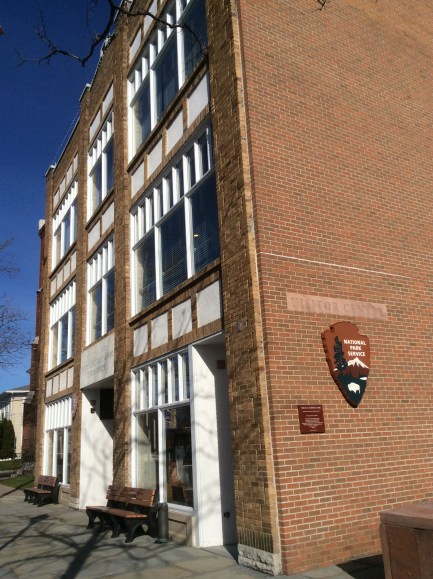
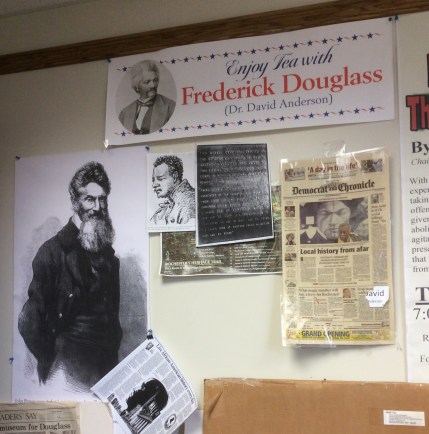
In the opening lines of her autobiography, Living for Change, Grace Lee Boggs remarked: “Had I not been born female and Chinese American, I would not have realized from early on that fundamental changes were necessary in our society.”[1] A daughter of Chinese immigrants born in 1915, who, by her account, became a philosopher in her 20s and an activist in her 30s, Boggs remains one of the greatest radical theorists of the twentieth century.

Born in Rhode Island, Boggs spent her childhood in New York City, working in the two restaurants her father owned in Times Square. At the age of 16, she left home to attend Barnard College, and afterward, Bryn Mawr, where she earned a PhD in Philosophy in 1940. Philosophers like Hegel helped her “see [her] own struggle for meaning as part of the continuing struggle of the individual to become part of the universal struggle for Freedom.”[2] Boggs moved to Chicago in 1940. She began working with the South Side Tenants Organization set up by the Workers Party, a Trotskyist group that had split off from the Socialist Workers Party. Her time in the Windy City proved transformative. For the first time she was talking and working with the black community, getting a first-hand sense of what it meant to live within the confines of segregation and discrimination, and learning how to participate in grassroots organizing.[3]

It was also during her tenure with the Workers Party that she met Caribbean radical C.L.R. James, and began a “theoretical and practical collaboration that would last twenty years.”[4] As part of a small wing of the workers Party led by James and Raya Dunayevskaya, Boggs became a leading theoretician, co-authoring texts like State Capitalism and World Revolution (1950). Through James, she came into contact with a number of black writers and activists who expanded her perspective. She relocated to Detroit in 1953, where she would organize with, and marry, James (Jimmy) Boggs.

During the 1950s, Boggs, “mainly listened and learned” to the black activists around her in an effort to better understand the black condition. It would take several years before she decided that she had been “living in the black community long enough to play an active role in the Black Power Movement that was emerging organically in a Detroit where blacks were becoming the majority.”[5] Living and working in what was considered to be an epicenter of black radicalism, Boggs engaged in a combination of theorizing and protesting, authoring texts with James Boggs, meeting and organizing with Malcolm X, and mentoring young radicals like Muhammad Ahmad (Max Stanford), leader of the Revolutionary Action Movement (RAM).

Her liberation theory was grounded in her study of philosophy and honed through her experiences organizing with and for black communities. It was also constantly evolving. Boggs emphasized dialectical thinking, arguing that reality is ever changing and that we must “constantly be aware of the new and more challenging contradictions that drive change.”[6] This reciprocal process drove her expansive vision of revolution. In her final book, The Next American Revolution, she explained her latest concept of revolution:

The next American Revolution, at this stage in our history, is not principally about jobs or health insurance or making it possible for more people to realize the American Dream of upward mobility. It is about acknowledging that we as Americans have enjoyed middle-class comforts at the expense of other peoples all over the world. It is about living the kind of lives that will not only slow down global warming but also end the galloping inequality both inside this country and between the Global North and Global South. It is about creating a new American Dream whose goal is a higher Humanity instead of the higher standard of living dependent on Empire.[7]

Boggs consistently offered a holistic vision of revolution and concrete steps through which to build it. She argued that achieving this goal meant more than organizing or mobilizing to petition the state or “changing the color of political power,” but rather growing food, reinventing education, developing Peace Zones in local neighborhoods, and creating restorative justice programs. She saw the seeds of revolution everywhere and showed us how, by practicing dialectical thinking, breaking down divides and categories, and building on rather than replicating older political models, we might “grow our souls.” She mirrored this in her own life, constantly “combining activity and reflection.”[8] Her willingness to do the work, her ability to listen and learn from black activists, her commitment to living in the communities in which she organized, and her openness to revising her politics, and values, made her an effective life-long ally of the black community and theoretician of liberation and revolution.

As she noted, often, “in the excitement of an emerging movement, we tend to want to be part of the action, and we underestimate the power and importance of the ideas in our heads and hearts.”[9] Upon her death, it’s important to revisit the ideas in her head. She left us a roadmap for revolution through ideas and action, one that anyone could be a part of if they were clear about the stakes of the transformation and that fundamental change is necessary.

~ Ashley Farmer is an historian of African-American women’s history. Her research interests include women’s history, gender history, radical politics, intellectual history, and black feminism. She earned a BA in French from Spelman College, an MA in History from Harvard University, and a PhD in African American Studies from Harvard University. She is currently a Provost Postdoctoral Fellow in the History Department at Duke University. In August 2016, she will be an Assistant Professor in the Department of History and the African American Studies Program at Boston University. This bio and more about Ms. Farmer are to be found at her personal website

~ Originally published at the African American Intellectual History Society blog, republished under the Creative Commons license

Ordinary Philosophy and its Traveling Philosophy / History of Ideas series is a labor of love and ad-free, entirely supported by patrons and readers like you. Please offer your support today!

~~~~~~~~~~~~~~~~~~~~~~~~~~~~~~~~~~~~~~

[1] Grace Lee Boggs, Living for Change: An Autobiography (Minneapolis: University of Minnesota Press, 1998), xi.

[2] Ibid., 30-31.

[3] Ibid., 36.

[4] Ibid., 43. James and Boggs “went their separate ways in 1962.”

[5] Grace Lee Boggs with Scott Kurashige, The Next American Revolution: Sustainable Activism for the Twenty-first Century (Berkeley: University of California Press, 2011), 66.

[6] Ibid., 62.

[7] Ibid., 72.

[8] Ibid., 164.

[9] Ibid., 80.

New Podcast Episode: Frederick Douglass Seneca Falls, Canandaigua, Honeoye, and Mt Hope Cemetery Sites

Women's Rights National Historical Park headquarters, Seneca Falls NY

Women’s Rights National Historical Park headquarters, Seneca Falls NY

Listen to this podcast episode here or on Google Play, or subscribe on iTunes

Eleventh day, Tuesday March 30th

It’s a beautiful, clear sunny day, and the chill of the morning gives way to a balmy afternoon. I drive about an hour east and slightly to the south, through the lovely Finger Lakes region of New York to Seneca Falls.

I’m here to visit what’s now the Women’s Rights National Historical Park, which is headquartered at 136 Fall Street in Seneca Falls. I begin with the reconstructed Wesleyan Church next door at Fall and Mynderse Streets, the site of that momentous occasion which brings me here. I’ve long wanted to visit this place and had hoped to do so during my history of ideas travel series about Elizabeth Cady Stanton, but didn’t have enough time during that trip to make the journey, about a five hour drive from New York City one-way. But here I am at long last…. Read the written account here:

Ordinary Philosophy and its Traveling Philosophy / History of Ideas series is a labor of love and ad-free, entirely supported by patrons and readers like you. Please offer your support today!

New Podcast Episode: Frederick Douglass Rochester NY Sites, Day 2

Douglass scholarship articles and posters, Dr. David Anderson's office, Nazareth College Rochester, 2016 Amy CoolsListen to this podcast episode here or on Google Play, or subscribe on iTunes

Tenth day, Tuesday March 29th

I begin my day with an early visit to Dr. David Anderson, a Frederick Douglass scholar, visiting professor at Nazareth College, founding member of Blackstorytelling League, and an all around delightful and fascinating man! He is kind enough to grant me an interview of an hour or so, which ends up turning into a much longer conversation than that.

Among many other things too numerous to describe in full here (I’ll bring more details of our talk into the discussion of my subsequent discoveries), we talk about the Douglass family as a whole, and especially, Frederick Douglass’ wife Anna…. Read the written account here:

Ordinary Philosophy and its Traveling Philosophy / History of Ideas series is a labor of love and ad-free, entirely supported by patrons and readers like you. Please offer your support today!