Frederick Douglass on Faith and Doubt

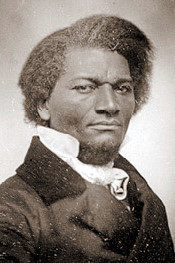
Frederick Douglass c. 1855, image Public Domain

In his lifetime and to this day, Frederick Douglass is a hero to the religious and non-religious,to believers and skeptics alike, each claiming him as a champion and exemplar of their values. Why the discrepancy? In his speeches, letters, and published work, Douglass reveals himself as both believer and doubter, a man of deep Christian faith who experiences a great deal of religious skepticism throughout his life.

Douglass is a self-professed believer in God and a Christian, yet he’s a vocal critic of most Christian denominations of his day, especially those of the United States. As a young man, Douglass struggles with religious doubts as he observes, time after time, that the most pious slaveowners are the most cruel. His master Thomas Auld, Edward Covey the slave-breaker, Reverend Daniel Weedon and the neighboring Hamiltons in Baltimore, among others, routinely and mercilessly whipped and abused their slaves, often to the point of great injury and near death, all justifying their behavior through Bible passages. In his second autobiography My Bondage and My Freedom, Douglass writes: ‘…The religion of the south…is a mere covering for the most horrid crimes…. Were I again to be reduced to the condition of a slave, next to that calamity, I should regard …being the slave of a religious slaveholder, the greatest that could befall me’ (159). In fact, he discovers to his surprise that the most decent master he ever had, William Freeman, was the only one without religion.

In his early days as an abolitionist activist and speaker, his accounts of his youthful doubts occasioned by his bad experiences with religious people cause many to accuse him of irreligion. But over time, he makes it clear that’s not religion itself he hates, it’s what he considers ‘false religion’. And no religion is as false as that which endorses slavery, which, first and foremost in Douglass’s time, was the Christian denominations of the American south.

But Douglass’s condemnation of American Christianity only begins with the southern churches; it by no means ends there. He calls on his fellow black people to leave any church, shaking the dust off their feet as they go, if their pastors or fellow parishioners subject them to indignity or unequal treatment. If anyone is segregated into balconies or back rows, or required to wait to receive communion after other colors or classes of parishioners, or their pastors preach against resistance to slavery, or the church in any other way indicates that black people are not deserving of the exact same respect, in degree and kind, as fellow children of God, then their church is revealed as just another peddler of false, corrupted religion. And all of these betrayals of the true Christianity, as Douglass perceives it, were as nearly pervasive in the northern churches as in the south.

Douglass believes that these practices, disrespectful of certain of God’s children, are not only unjust; they’re blasphemous because they’re direct attacks on the goodness and true nature of God. That’s because Douglass perceives the true God as not only ‘the God of Israel, Isaac, and Jacob’, but more broadly, the God of the oppressed. He sees this theme, this common thread, linking the plundered and oppressed desert tribes of Biblical Canaan (not mentioning that they did some plundering of their own) to those in his day who are suffering, reviled, and denied their natural rights: black people, women, the Irish, the abolitionists. Time and time again, Douglass relies on his interpretation of God as the God of the oppressed to show how the fugitive, the disenfranchised, the famine-starved left to die by their own governments, the righteous, reviled, and steadfast opposer of slavery and defender of the downtrodden, are actually those closest to him, are those who understand and share in his true nature.

But Douglass’s faith also appears at least as naturally derived as it is scripturally revealed. That’s because Douglass uses nature as a litmus test to reveal the truth and integrity of religion. Since by nature all people need and take joy in food and drink, physical and spiritual comfort, love, and beauty whatever their color, sex, or place of origin, and all people suffer alike from cold, hunger, thirst, cruelty, and neglect, and all people are just as capable of improvement through education and moral edification, then all people share the same nature, possess the same dignity, and have the same rights. Scripture may appear to allow for bigotry, unequal treatment, and bad behavior and even require it, but nature is observable and incontestable. So, if an interpretation of scripture seems to allow or require one to treat any of their fellow human beings as less than equally beloved, equally valuable children of the one God, that interpretation is certainly wrong since it violates the natural God-authored order of things.

In the end, Douglass relies on Jesus himself to tell us how to recognize true faith in true religion: ‘Wherefore by their fruits ye shall know them’ (Matthew 7:20). It’s not whether or not one professes belief in a religion, or can quote passages of scripture or the work of theologians, that reveals the worth and nature of faith. Douglass believes that true religion (which for Douglass, is true Christianity), always reveals itself by how well its adherents defend and promote justice and the equal dignity of all human persons. Conversely, if a religion commands or even permits injustice, it must be false. Where you find kindness and justice, there you find faith, and nowhere else.

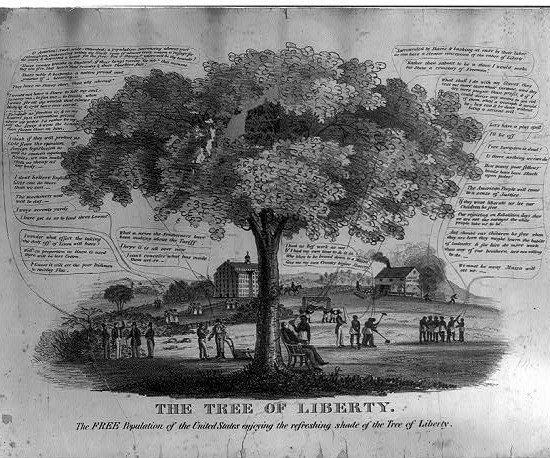
It’s not the outward form or classification which indicates the true tree of religion to Douglass, it’s the sweetness and wholesomeness revealed in the fruit of true faith.

*Listen to the podcast version here or on iTunes

*Ordinary Philosophy and its Traveling Philosophy / History of Ideas series is a labor of love and is ad-free, supported by patrons and readers like you. Please offer your support today!

~~~~~~~~~~~~~~~~~~~~~~~~~~~~

Sources and Inspiration:

Douglass, Frederick. The Heroic Slave: A Cultural and Critical Edition. Eds Robert S. Levine, John Stauffer, and John McKivigan. Hew Haven: Yale University Press, 2015.

Douglass, Frederick. My Bondage and My Freedom: 1855 Edition with a new introduction.. Re-published 1969, New York: Dover Publications, Inc.

Foner, Philip S. The Life and Writings of Frederick Douglass, Vol. 1-4. New York: International Publishers, 1950.

Welcome to the new Ordinary Philosophy!

Ordinary Philosophy, Writing a letter *oil on panel *39 x 29.5 cm *signed b.c.: GTB *ca. 1655, assemblage by Amy Cools 2015Greetings to all,

On this New Year’s Day, which also happens to be my birthday and therefore, personally, doubly a day of new beginnings, I’m looking forward to a more expansive, more energetic future for Ordinary Philosophy!

What is Ordinary Philosophy?

It’s a series of explorations founded on the belief that philosophy is an eminently useful endeavor as well as a fascinating and beautiful one, and that citizen philosophers and academic philosophers alike share in making it so. A citizen philosopher myself, I found that my experiences as an avid reader, an artist, a working person, an entrepreneur, a student, and a writer filled my mind constantly with questions and new ideas, spurring me ever on in the search for answers. As I’ve always been a restless and hungry thinker, I fell in love with philosophy, especially, practical philosophy and the history of ideas.

What is Ordinary Philosophy’s mission?

It’s always been to share this love of philosophy and the history of ideas with you. In my explorations, I’ve encountered the most fascinating, innovative, and beautiful ideas from the curious, thoughtful, questing, and inventive world out there, from academic philosophy to science to history to current events to politics to the arts and so, so much more; so much more, in fact, that I can’t possibly process it all on my own.

So here at O.P.’s new home, I’ve broadened the mission.

While there have been occasional guest posts, there will be much more of an emphasis on providing a forum for many more voices at O.P., representing views from all walks of life. O.P. will also publish many more reviews, recommendations, and links directing readers to the great ideas proliferating out there that may be of special interest to O.P.’s audience.

The Traveling Philosophy / History of Ideas series will also expand. Each series will become more in-depth, with more detailed explorations of the life and ideas of each subject and more resources for further exploration and study. The podcast will expand in tandem: new audio recordings of longer pieces published in O.P. for those of you on the go who enjoy the ideas found here but don’t always have the time to sit down and read. As time goes by, I plan to expand the podcast as well to include interviews and a series of downloadable travel guides to accompany the History of Ideas series.

To better accomplish this expanded mission, I’ve moved O.P. here to its new platform: easier to read, use, and share. So if you love great ideas and the pieces you encounter here, please support O.P.’s expanded mission by sharing as widely as you can.

Lastly, dear readers, I appeal to you: Ordinary Philosophy is a labor of love, and depends entirely on your support. I’m determined to keep O.P. ad-free, but can’t do it without you. All financial contributions will be credited by name (unless anonymity is expressly preferred, of course!) on each project funded by their donations, and welcomed with deepest gratitude. Please support Ordinary Philosophy today!

Yours,

Amy Cools, founder and editor of Ordinary Philosophy

*Listen to the podcast version here or on iTunes

Really, America? Ban the Refugees, Let the Troops Do All the Work?!?

Like so many of you, I’m sure, I’ve been dismayed, though not really surprised, at the vitriol aimed at Syrian refugees and Muslims in general, following the shootings in Paris and San Bernardino. Much of it is voiced in the form of inflammatory but silly memes, but now, even some of our presidential candidates are chiming in. Reactionary religious and ethnic hatred are at least as old as human history, and so are political capitalizations on them.

These memes and the anti-Islamic proposals they promote, such as calls for the U.S. to stop taking in Syrian refugees, to ban all Muslims from entering the country, or to force all Muslims to register with the government, as far as I can tell, are mostly coming from some on the conservative end of the political spectrum. However, the backlash against all this reactionary hate-mongering is coming from both liberals and conservatives, and their arguments are bolstered by the best in our political system and its founding documents, focused, if not always perfectly, on the protection and expansion of human rights.

Besides the basic problem of the xenophobic, anti-human-rights nature of the anti-refugee and anti-Muslim rhetoric, there’s something about the whole thing that’s been bothering me, something that I hadn’t really seen addressed in so many words. I jotted down this thought in the notes for this piece, and I hadn’t had the chance to finish it until tonight.

Then, today, just a few hours before I planned to write this, I heard a re-broadcast of a news story that appears to confirm my suspicions. A recent poll from Harvard revealed that the majority of millennials, age 18-29, say we should send more troops to fight ISIS and say they wouldn’t even consider enlisting.

This was my thought before I heard that story: for all the rhetoric calling for an increase in the war effort against Islamist violent extremism, and all the preaching about supporting our troops, it seemed to me that many of the same people who want to send more military abroad to fight to protect people’s freedoms want little or nothing to do with the effort themselves. They want others, namely our soldiers, to take all the risks, shoulder all the burdens, and do all the work of defending and promoting American values, but don’t want to participate even in a relatively small way by helping out the people who are most victimized by Islamic radicalism, who vote with their feet by fleeing from violent Islamist groups to ethnically diverse, religiously free nations.

It looks as if this poll reveals that this ‘you go do it, brave soldiers in uniform, but leave us out of it!’ attitude is likely true for at least for one significant slice of the population.

What happened to the idea that if we, the people, decide to go to war, it’s we, the people, who should fight it? Makes me feel nostalgic, in the way that you can feel nostalgic for a time you’ve never experienced yourself and are not sure ever really existed, for the ‘greatest generation’ of World War II and earlier wars. Wasn’t it the case back then that most ordinary citizens felt duty-bound to participate in the war effort that their nation was fighting, even if in some small way at home? Didn’t they involve themselves, if necessary, in the work, the sacrifice, and the danger of doing the right thing, even if doing so meant some risk to themselves? It’s not even that they have to worry about conscription anymore! Isn’t the mission of promoting the American values of multiculturalism and religious freedom, protecting the innocents that flee for sanctuary to our shores and in our neighborhoods, worth our support and participation, even if we do face the risk that a few terrorists might sneak in among the innocents?

It seems that decades of complacent materialism and the all-volunteer military, among other things, have eroded some of that true civic pride and moral courage it takes to show the world that Americans are willing to do the right thing, no matter what.

*Listen to the podcast version here or on iTunes

*Ordinary Philosophy and its Traveling Philosophy / History of Ideas series is a labor of love and is ad-free, entirely supported by patrons and readers like you. Please offer your support today!
~~~~~~~~~~~~~~~~~~~~~~~~~~~~

Sources and inspiration:

Gabriel, Trip. ‘Donald Trump Says He’d ‘Absolutely’ Require Muslims to Register’. New York Times website, Politics: First Draft. Nov 20th, 2015. http://www.nytimes.com/politics/first-draft/20

Khalid, Asma. ‘Millennials Want To Send Troops To Fight ISIS, But Don’t Want To Serve’. NPR.com. Dec 11, 2015. http://www.npr.org/2015/12/10/459111960/millennials-want-to-send-tro

Walsh, Deirdre, Jeremy Diamond, and Ted Barrett. ‘Priebus, Ryan and McConnell rip Trump anti-Muslim proposal’. CNN.com. Dec 8, 2015. http://www.cnn.com/2015/12/08/politics/paul-ryan-tru

From Oakland to Maryland, New York, and Massachusetts I Go, in Search of Frederick Douglass

Hello, friends of Ordinary Philosophy!

From time to time, I take a trip to some corner of the globe, to explore the lives and ideas of great thinkers in the places where they lived and worked. For this series, I follow in the footsteps of thinkers who are no longer alive, since those who are still telling their own stories. But those who are no longer alive in the body live on in the ideas that they pass on, and in the example they provide for us to follow.

I’m pleased and excited to announce my fifth philosophical-historical themed adventure, beginning with research and study in Oakland, CA, then off to Baltimore, MD, New York, Washington DC, and other East Coast sites to follow in the footsteps of Frederick Douglass.

Frederick Douglass’s life story is inspiring and humbling in the strength, character, and dazzling intellect he reveals, rising to such greatness in the midst of such adversity. Born a slave on the eastern shore of Maryland in the early 1800’s, he was an autodidact, having overheard his master say that learning to read leads to learning to think, rendering a slave too independent-minded to submit to domination by another. Hearing this, young Frederick knew what he had to do. Attaining literacy and learning a skilled trade gave him the wherewithal to escape to New York City in 1838 at about 20 years of age. A few years later, as a result of an impromptu but impassioned and eloquent speech about the hardships of a life enslaved, he was recruited as a public speaker for the abolitionist cause. He spent the rest of his life as an activist for all manner of human rights causes, from the abolition of slavery to universal suffrage to women’s rights and beyond.

Douglass is an especially compelling subject for a historian-philosopher; observing the true nature and ramifications of slavery led him to think deeply about the most essential questions in human life, which, in turn, spurred him on to a life of thought and action on behalf of oppressed peoples. In these roles, Douglass had a heavy influence on American thought and on the course of American history. He asked, and answered: What does it mean to be a person? What does it mean to be a person of faith? What are rights, and why are we entitled to them? What is dignity, and does possessing it entail that we have certain obligations to ourselves and others? Given the frailties and strengths of human nature, how can we best live together and form just societies? What do the Constitution, its Bill of Rights, and the Declaration of Independence really say about slavery, equality, and other human rights issues?

So I’ll begin my tale here in my home city of Oakland, CA, where I begin my research and exploration into Douglass’s life and ideas, then off to the east coast of the United States I’ll go, from March 19th thru April 2nd! There, I’ll visit landmarks associated with his life, places where he lived and died, worked, thought, wrote, studied, and rested, to see for myself how the places informed the man, and vice versa.

~ Listen to the podcast version of this series intro here or on iTunes

Here is the story of Frederick Douglass as I discover him:
Traveling Philosophy Series: Frederick Douglass Edition, Prologue, Oakland, CA
Frederick Douglass on Faith and Doubt
Frederick Douglass on the Constitution
Frederick Douglass the Pragmatist
Frederick Douglass Baltimore Sites
Frederick Douglass’s Birthplace, Maryland’s Eastern Shore Sites Part 1
Frederick Douglass, Easton and St. Michaels, Maryland’s Eastern Shore Sites Part 2
Frederick Douglass Havre de Grace and Philadelphia Sites
Frederick Douglass New York City Sites
Frederick Douglass New Bedford, Massachusetts Sites
Frederick Douglass Boston Sites
Frederick Douglass Lynn, Massachusetts Sites
Frederick Douglass Lynn Sites, Part 2: Historical Society & Hutchinson Scrapbook
Frederick Douglass Albany, Troy, and Syracuse NY Sites
Interview with Leigh Fought on Anna and Frederick Douglass
Frederick Douglass Rochester NY Sites, Day 1
Frederick Douglass, Rochester NY Sites Day 2
Interview with Ken Morris, Anti-Slavery Activist & Descendant of Frederick Douglass
Frederick Douglass Seneca Falls, Canandaigua, Honeoye, and Mt Hope Cemetery Sites
Frederick Douglass Chambersburg and Gettysburg PA Sites
Frederick Douglass Washington DC Sites, Day 1, Part 1
Frederick Douglass Washington DC Sites, Day 1, Part 2
Frederick Douglass Washington DC Sites, Last Day

More about Frederick Douglass:

Peoria, Illinois, In Search of Robert G. Ingersoll, Frederick Douglass, And Abraham Lincoln, Part 1
Peoria, Illinois, In Search of Robert G. Ingersoll, Frederick Douglass, And Abraham Lincoln, Part 2
Peoria, Illinois, in Search of Robert G. Ingersoll, Frederick Douglass, and Abraham Lincoln, Part 3
Photobook: Frederick Douglass and Edinburgh, Old and New
O.P. Recommends: ‘A Man’s a Man for a’ That: Frederick Douglass in Scotland’ by Andrea Baker for BBC Radio 4
Say What? Frederick Douglass on Originalist Interpretations of the United States Constitution
O.P. Recommends: Frederick Douglass’ Drunk History Episode
Say What? Frederick Douglass on Race Relations
Citizenship, Belonging, and the Experiences of Amero-Africans in West Africa: An Analysis of William Innes’ Early History of Liberia

Ordinary Philosophy and its Traveling Philosophy / History of Ideas series is a labor of love and ad-free, supported by patrons and readers like you. Please offer your support today!

Patrons of the Frederick Douglass series: RH Kennerly, Elizabeth Lenz, Alex Levin, Cory Argonti Cools, Bryan Kilgore, Michael Burke, Gaia So, Veronica Ruedrich, Blair Miller, Alex Black, Devin Cecil-Wishing, Roxanne and Fred Smalkin and family, and Jim Callahan and Nerissa Callahan-Stiles and family. ~ With warmest gratitude, thank you!

Thomas Paine on Basic Income, and Why Welfare is Compatible with an Individualist Theory of Human Rights

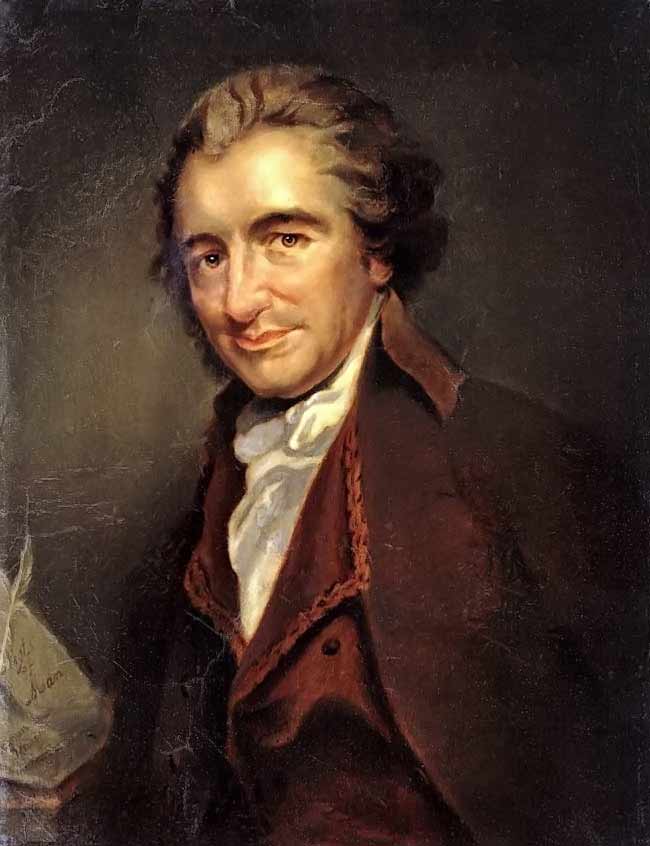
Thomas Paine, advocate of liberty par excellence, is an intellectual hero of all believers in democratic and accountable government. He’s also, especially, a hero of modern American conservatives and those of the libertarian persuasion.

But here’s a lesser known fact: he also argues in favor of what today we commonly call welfare.

Paine is, most famously, the author of Common Sense, The American Crisis, The Rights of Man, and The Age of Reason. These pamphlets are, in turn, an argument in favor of the American colonies’ cause for independence, a series of pamphlets of encouragement and calls for support for the struggling revolution, a rebuttal to Edmund Burke’s harsh critique of the French Revolution (and founding work of modern conservatism), and deist critique of Christianity and organized religion in general.

In Common Sense, Paine calls government a ‘necessary evil’, which we need only because of our flawed human nature, and he considers it legitimate only if it functions to benefit the people as a whole. But to do so, it must remain fully accountable and therefore not too large, or else it would do as governments had always done throughout the history of Europe: it would oppress, enslave, overly tax, and otherwise use its people for its own ends, making them suffer for the inevitable territorial, political, and ideological wars that all monarchs, power-hungry aristocrats, and high-ranking clergy embroiled themselves and their nations in. He also writes that commerce was one of the great pacifiers of the world by rendering people ‘useful to each other’, and as such, should not be interfered with. Thus far, his thinking is closely aligned with the political principles of libertarianism and modern American conservatism.

Yet libertarians and conservatives misunderstand Paine when they stop there: Paine very definitively argues that government should play some very important roles in public life beyond defense of life and private property and the enforcement of contracts. After all, it’s not only governments that oppress and neglect its citizens in all kinds of ways: it’s also other people.

One of these roles that government should take on is economic support of all citizens when they are the most vulnerable, especially the young, the elderly, and the infirm. As Paine observes, neither governments nor individuals sufficiently protect the rights of working people nor of the people to support themselves when they can’t yet work or can no longer work. He himself suffers at the hands of the government when in their employ as a tax officer: they routinely underpay and overwork him and his fellow tax officers, fire him for insufficient cause, and punish him for petitioning the government to improve their treatment of public employees.

Paine thinks government can do better, and go beyond just paying fair wages to its own representatives. He argues in favor of publicly funded welfare for all citizens, especially at the beginning and at end of life, and he outlines a concrete plan for its implementation. As he sees it, taxation and redistribution of wealth, within certain bounds, are just as essential for liberty as are the franchise, education, free trade, a constitution, and a bill of rights. For every person to have the chance at sustaining their life in a way compatible with their rights, the young should, at the very least, receive a free and full education and a sum of money with which to start out on their chosen profession, and a stipend to sustain them in health, comfort, and dignity when they can no longer work.

How is this possible? How can Paine be in favor of accountable government and individual rights while supporting a welfare system, often portrayed today as an enemy of both? His argument is an innovative one, and shows how a system of welfare is, in fact, not only consistent with an individualist theory of liberty and human rights, but is a necessary consequence of it.

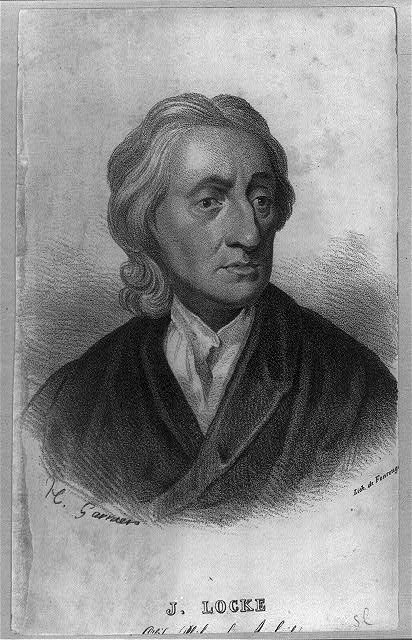
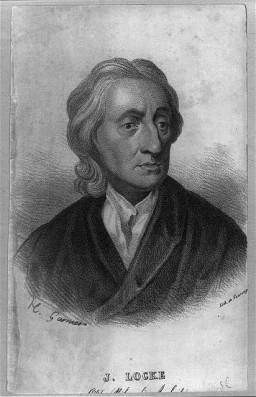
Like the writers of the Declaration of Independence, the Bill of Rights, and the United States Constitution, Paine is influenced by John Locke, author of Two Treatises on Government and therefore, indirectly, of American political theory. Paine bases his argument on a Lockean theory of rights: all human beings are born into the world with identical natural rights, including that to life and liberty. Everyone is also born with equal rights of access to the land and to its resources, since the latter two are necessary to the former, not only for sustaining life but for making it a free and happy one. The right of individuals to own property, therefore, is not a pure natural right like the others, since it allows particular people access to particular land and resources while denying it to others. Purely natural rights, by contrast, are equal in kind and in degree from individual to individual. Yet giving people the right to claim property as their own is valuable to everyone, since it provides incentives for individuals to create wealth through labor, improving what nature left on its own cannot provide: agriculture, technology, housing, art, and so on, and this wealth is shared by all through trade. Unlike the right to life and liberty, Locke’s labor theory of property rights is contingent, valid only if its original acquisition is ‘mixed’ with the owner’s labor. and only if enough is left so that others have not only enough, but just as good. (When the United States government drove the Native Americans of their ancestral land, they routinely and conveniently forgot the second part of Locke’s property rights theory as they grabbed the most resource-rich and most conveniently located land for themselves, driving the tribes into ever smaller and ever poorer places.) Even if it sometimes interferes with the ability of some to enjoy their purely natural rights, such as when certain people grab all the wealth for themselves while leaving others to suffer in poverty and even starve, Locke thinks that the right to own property benefits society on the whole to such a degree that it’s justified.
Paine, however, is not satisfied. He observes that property rights routinely benefit the few to a great degree and most relatively little. He looks not only at the world around him but at the whole of European history, seeing a world of immense wealth mostly enjoyed by a small number of people while most others earn just enough to sustain themselves, and the problem tends to grow worse over time. Paine tends to blame this state of affairs largely on a spoiled, despotic monarchy, aristocracy, and clergy, who use the law, assertions of ‘duty’, and enticements of salvation to wrangle most of the wealth out of the hands of people who actually create it. This leaves many of the young without the resources with which they could start creating wealth of their own for themselves and their families, and the impoverishment of the old who, after a lifetime of contribution through work, are left without resources when they can work no longer, having earned too little in their lives to save for their old age. So how can this be squared with Locke’s view that property rights should generally lead to the benefit of all, and that they are contingent on there generally being enough for everyone else to have what’s ‘just as good’?

He addresses this problem most thoroughly in his lesser-known pamphlet Agrarian Justice, written in 1795 and ’96 after he’s observed the success of the American revolution (except for enslaved Americans, of course) and the turmoil of the French one. The French Revolution, after all, was mostly driven by popular anger and despair over the widespread privation and suffering of the French people, condemned to a life of hard work, few prospects for social mobility, and a strict hierarchical class system in which most of the nation’s wealth was gobbled up by a very few.

Paine doesn’t just base his argument on sympathy for the poor, the hapless young, and the elderly, though his work is clearly driven by that emotion, occasioned partly by his hard-working parents’ and his own struggles to get by. Instead, his argument centers on justice; specifically, the principle of just recompense. Since every person is born into society denied of their birthright, which is the right of equal access to all land on earth and its resources, everyone is responsible for paying damages for that loss. What we now call welfare is really reparations, due to everyone, by all members of a society that enforces landed property rights.

But wait a minute, one might object: isn’t the very fact that society as a whole benefits from property rights recompense enough? Even if Paine is right, wouldn’t justice only demand we make sure that everyone has the same liberties, the same protection under the law, and the same access to basic public goods such as infrastructure and education? That way, outcomes in wealth will generally apportion themselves fairly according to the hard work and ingenuity of individuals. This idea, commonly called equality of opportunity, is especially popular with those who fall into the modern conservative and libertarian portions of the political spectrum. Anything else looks like an injustice in this view. After all, is it really just to take away wealth from some, especially those who earned it through their own labor, and give it to those who have not earned it?

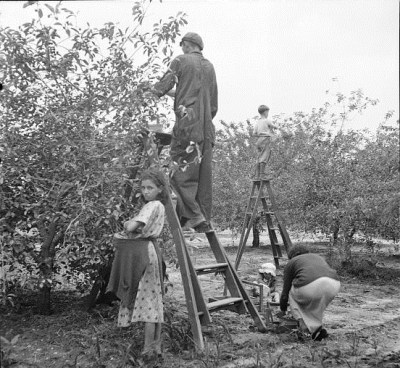
Remember that Paine offers the facts of history to show that fair wealth distribution just never seems to happen in societies that privatize land rights: the average person who works the hardest and does the most to benefit society very often does not accumulate even a fraction of the wealth as the relatively idle monarch, aristocrat, or member of the clergy. Well, then, how about today’s democratic market societies, where there is no monarch, aristocracy, or clergy empowered by the law to plunder most of the wealth from the working people for their personal use? We have only to pay attention to the news a short while to be aware that extreme inequality and unfairness of wealth distribution is as bad or nearly as bad as it’s ever been. The people doing the hardest and arguably most important jobs, such as teaching our children, manufacturing goods, cleaning up our cities, or harvesting the crops that sustain our lives earn anywhere from a pittance to a decent, but not stellar wage. Yet the CEO, the career politician, the idle children and grandchildren of millionaires, the trader and inventor of exotic financial products, and the tech whiz who invents the newest fad internet game often pile up money almost faster than they can stuff it into tax shelters.
Many like to say that unskilled, low-paid jobs are a stepping-stone to something else, but this is belied by the facts in the United States and around the world. While some do work their way up to more highly skilled and highly paid jobs, there are many, many more who never do. The fact that our economy depends on there being a certain number of those low-wage jobs in existence guarantees they will keep existing, at least until technology renders them obsolete. And when and if that happens, what will all those unemployed people do then? Even if every single one received an education and job training sufficient for employment as a skilled worker, there will only be a certain proportion of jobs that will be decently paid, leaving the rest in the same predicament. And there very well may be far fewer jobs in existence than there are people in this technological age. What then?

The reason why the whole equality of opportunity idea never works out may be that it’s a mythical concept, incompatible with the laws of nature, or if it were at least theoretically possible, undemonstrable.

In the real world, competition among workers for jobs necessarily leaves a huge number of people out when it comes to the ability to earn decent or even any money whether or not they do work hard, whether or not they’re willing but don’t have the opportunity, or whether or not they can at all. There are countless reasons for this due to the variety inherent in human nature and in the human experience. Some never had access to a good education, or they lack the network of patrons and mentors that the offspring of successful people rely on to get their own start in life. Others are simply not as intelligent, or tall, or graceful, or otherwise good-looking enough according to the whimsical and capricious standards of society, or of the ‘right’ race, ethnicity, religion, or don’t have the ‘right’ accent, and so on. There are jobs that disappear from the market due to advances in technology, with suddenly unemployed middle-aged or older people with now useless job skills in a society that heavily favors youth. There are people who are born with medical problems that make it difficult or nearly impossible to get well-paying jobs in a competitive market: skin disorders, genetically-imposed obesity, missing limbs, compromised immune systems, cancers, heart conditions…. the list is very long. And there are countless numbers of people for whom the ‘rat race’ is painful or self-destructive, as they have personalities that are shy, contemplative, independent, gentle, non-competitive, ‘weird’, and otherwise totally unsuited to that whole competition thing, and therefore terrible at it. The list goes on and on.

And the reason why equality of opportunity is undemonstrable, at least as something that can be implemented through public policy, can be recognized when we compare it to the gold standard of demonstrating the truth or usefulness of a theory: the scientific experiment. Consider a group of scientists who say, we are sure this theory is true because of this, that, and the other thing. They have an assortment of facts, they have arguments to show why, given the facts, certain things should result, so they make a prediction. Then they run the experiment and… what do you know, the results of the experiment fail to support the hypothesis. They say, oh yes, we see the flaws with the experiment and/or with the participants, they compose new arguments, they formulate a new hypothesis, they run a new experiment and… oops, it failed again! And again, and again. Now, consider every democratic market economy ever in existence and see if any of them actually achieved actual equality of outcome. These actual economies are analogous to the scientific experiments, and the equality of opportunity-based sets of policies are analogous to the hypotheses being tested. Even if, hypothetically, some system based on the ideal of equality of opportunity would actually achieve equality of outcome in a world of identical beings who are not born with or given extra advantages by others, we’ll never know. Asking us to ascribe to indemonstrable political strategies based on equality of opportunity is like asking us to believe the truth of hypotheses that are never proven by scientific experiment. That’s why I, for one, don’t buy it, and am more interested in focusing on equality of outcome, which Paine’s basic income idea seeks to resolve in a practical and just way.

Returning to the original point regarding the fairness of redistributing income from the wealthy to the un- or under-employed: Paine foresees this objection by calling for a universal basic income. In other words, he thinks that it should not be granted on the basis of need. That’s because, for one thing, he bases his whole argument on the equality of natural rights. All human beings alike are deprived of their natural right of free and full access to all of the land and its resource in societies that enforce landed property rights. Even those who own land are still deprived of the right of access to other land, so they are still owed the same damages. If they are wealthy enough to throw the money back into the public fund since they don’t need it, that’s up to them, and very much to their credit, but it’s still owed to them, same as anyone else.
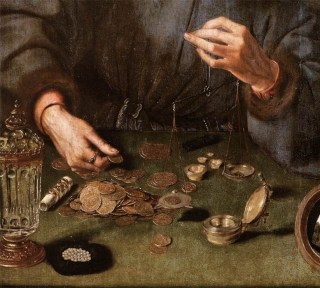
For another thing, and perhaps most importantly for its being popularly acceptable enough for implementation, Paine recognizes that basic human psychology instinctively abhors unfairness. The whole idea of giving welfare to some and not others, even based on need, might seem charitable but still feels unfair, especially when the funds are taken away from people who earned it through their own labor and given to the un- or under-employed. Human beings simply do not need any more sources of strife and division than they already contend with: politics, ideology, and religion do enough mischief on that account already. Therefore, Paine says, basic income should be equally distributed regardless of need so that no-one is given, by society at least, an excuse to resent or look down on anyone else.

*This essay has also been published at the Thomas Paine National Historical Association website (under a different title)

~ Ordinary Philosophy is a labor of love and ad-free, supported by patrons and readers like you. Any support you can offer will be deeply appreciated!

~~~~~~~~~~~~~~~~~~~~~

Sources and Inspiration:

“Labor Theory of Property.” Wikipedia, The Free Encyclopedia, 22 Sep. 2015. Web. 30 Sep. 2015.
https://en.wikipedia.org/w/index.php?title=Labor_theory_of_property&oldid=682304595

Locke, John. Two Treatises of Government, 1689
http://socserv2.socsci.mcmaster.ca/econ/ugcm/3ll3/locke/government.pdf

Paine, Thomas. Agrarian Justice, 1796.
http://piketty.pse.ens.fr/files/Paine1795.pdf

Paine, Thomas. The Rights of Man, 1791.
http://www.ucc.ie/archive/hdsp/Paine_Rights_of_Man.pdf

Freedom, Liberty, and the Inevitable Interconnectedness of Human Life

As a citizen of the United States, I’ve spent more than a little time wondering if it’s entirely a good thing that our culture is so very individualistic.

American individualism does originate from some excellent roots. The colonies that became the United States were largely founded by farmers, entrepreneurs, dreamers, the dispossessed, and others with a bold, adventurous spirit that animated them to cross the seas and start a new life from scratch in an unknown country.

These migrants included religious dissenters who struck out on their own and founded new faiths, devising theological arguments to demonstrate the righteousness of their doing so. Their arguments would later be adopted for secular purposes as they were used, barely altered, to support the right to freedom of thought and speech, and were embraced widely by many independent-minded communities. They were also open to new ideas, and were often more ready to accept innovative moral and political theories of the Enlightenment which emphasized individual rights and self-sovereignty over traditional authoritarian and elitist social systems than were their European counterparts, and more ready and able to implement them. Thomas Paine’s Common Sense and The Rights of Man, the Declaration of Independence, the United States Constitution, and the Bill of Rights are all essentially Enlightenment documents, embodying that intellectual movement’s conception of human nature and of the just society founded upon individual human rights.

The American project has always depended on free, forward-thinking individuals, and our national creed is founded on these three core beliefs: that individual human lives are valuable for their own sake, and that human rights not only exist, their defense should be our highest priority, and that all legitimate governmental authority originates with the people as a whole. Political systems founded on these beliefs, conceived in Britain and established first in America, reveal the strength of this view, and over time proved that individuals and society alike benefit enormously when the rights and interests of individuals take highest priority.

Over time, as free-market economics and other liberalizing social forces have expanded the rights and opportunities of the individual, some have come to believe that society, as a concept and as an institution, should play a secondary role in matters of public policy and morality. Margaret Thatcher, for one, famously claimed there’s no such thing. ‘Society’, to Thatcher and others whose views of human social arrangements might best be called atomist, is more or less a shorthand term for a population of individuals in a certain place and time. In this view, it’s the individual, not the group, that matters. Focus on protecting the the rights and interests of individuals, they say, and everything else will fall into place.

For one thing, they claim, the more individual rights are emphasized, the better off everyone is. Compare constitutional democracies, republics, and free-market societies which emphasize individual rights with societies that emphasize the interests of the group, and we can see that the former do a much better job overall of enhancing people’s lives. There’s more wealth, less poverty,  more opportunity, and greater autonomy in the former. The reason it works out that way, they argue, is because human nature is naturally individualistic first, and social second. For example, Michael Shermer, a well-known science writer who leans libertarian, argues that just as the individual is the object or target of evolutionary selection (or in other words, what selection acts upon), so it is the individual who should be the object or target of ethical concern and legal protection. (See my response to Shermer’s article here.)

Some such individualists, which often identify as libertarians and some as classical liberals, object to all or most taxation, saying it amounts to a sort of slavery because it forces individuals to pay for, and hence to work for, things they didn’t personally choose to contribute to. Others also object to public debt; Thomas Jefferson famously did so (though as President, the realities of governing the infant nation caused him to mitigate his views) saying it also amounts to further enslavement of future generations by forcing them, through their labor, to pay a debt they played no part in incurring. Still others object to laws limiting the ownership of guns, to the military draft, to eminent domain, to all manner of laws that subordinate the liberties of individuals to the interests of the group.

But there are some problems with these arguments. For one thing, it’s not historically true that societies that have done the most to improve lives focus almost exclusively on individual rights without regard to the interests of society. The laws of the United States, for example, are very concerned with the interests of the society as a whole as well, and are structured so as to find the correct balance between the rights of individuals and the interests and responsibilities of the people. ‘We the people’, a collective term, was chosen to as the introduction to the United States Constitution, not ‘we the individual persons’! In fact, the Bill of Rights, enumerating the rights of individuals, was only added after the Constitution, balancing the rights and interests of the people as a whole, was adopted, though its eventual inclusion was a condition for many states to agree to ratify it. The weakness of the United States government under its original Articles of Confederation, a document paying lip service to the political unity of the states without giving the federal government much real authority, was quickly recognized by leaders of the new nation struggling to maintain its newfound autonomy as it struggled to fund the American Revolution and to pay its debts, defend itself, and establish viable systems of trade. The original problem facing the infant United States, in other words, was too much concern for individual liberty and not enough for the welfare of all. The Constitution was adopted to correct this imbalance.

For another, we find that most societies generally considered anti-individualist and generally referred to as socialist, communist, or authoritarian, have not actually promoted the interests of society over individuals, for all their proclamations that that’s what they’re doing. Historically, they have exclusively promoted the ideology of one individual leader or a small group of elites, and imposed a political structure derived from it on the rest of society by crushing political dissent and severely restricting both individual and collective rights. If their policies ended up harming society as a whole, as they generally did, it didn’t matter much, so long as they carried out the will of the leader or the ruling elites. In fact, these sorts of governments could be better described as hyper-individualistic, promoting the interests of one or a few individuals regardless of the cost to society.

So how do we make sense of it all? How can we live together in societies, as we invariably do, and organize ourselves so that we can be as free as possible from the oppression of government and of other individuals? How do we achieve both negative freedom, freedom from interference, and positive freedom, freedom achieved through purposeful action? For human beings, we find that the ability to live a full and free life is tied up with our interconnectedness with our fellow humans as well as with respect for everyone else as individual persons whose worth is equal to our own. Any definition of human freedom or conception of human rights that doesn’t take sufficient account of both of these is incoherent, and not useful for understanding or for devising a better way of living, for individuals or societies.

To see this, let’s imagine what life might be life if the radical individualist view of human nature we just described won out and society operated on the principle that it (society) didn’t really exist. Imagine if the tax-equals-slavery argument was turned around so it was applied consistently: if those who built our tax-funded cities and infrastructure didn’t expressly consent to our personally using them, we shouldn’t be allowed to use them, since we would be benefiting from the fruits of their labor without their consent. This goes for anything paid for by public debt as well: since consent is central to the argument, it’s the consent itself that matters, not the money per se. In fact,So this would apply to anything achieved by collective action if people were compelled by law to contribute.


So in this scenario, we’d need to remove everything that collective action built and taxes and public debt paid for. Remove most roads and bridges, except the small ones on private property built by their owners. Remove the internet. Remove the armed forces, except for local militias. Remove police forces. Remove the polio vaccine, other vaccines, indeed, all medical advances that were achieved through the NIH and as a result of the space race and wars, both tax-funded, hugely expenses, large-scale government endeavors. Remove public lands, national and regional parks, and so on.
And we’d have to go further: remove all other laws of positive obligation which require us to do certain things, and leave only those of negative obligation, which prevent us from interfering with one another’s personal autonomy. Remove laws which require individuals to care for children, the elderly, the incapacitated, and the mentally ill. Remove Good Samaritan laws. Remove laws which require doctors, product manufacturers, food producers, pharmaceutical companies, and others to provide, in good faith and to the best of their knowledge, goods and services that won’t harm their clients.

Now imagine the ‘free’ life of the individual living in such a society. We go around constantly on the alert, knowing everyone else is armed, and while there might be laws against harming one another, the only ones who can enforce the law is ourselves. We must remain vigilant at all times, knowing that while most people, due to our evolved human nature as social creatures, don’t wish to kill or hurt one another most of the time, there are always a certain number who are able and willing to hurt others to further their own short-term interests. We may be crippled or die early from polio, or tuberculosis, or a virulent flu, or some other microbe-caused illness unless it just so happens that an enormously wealthy, long-lived philanthropist comes along willing to bankroll the decades-long, probably never-profitable project of discovering the microbe that causes it and developing vaccines which must constantly be updated due to evolution. We would probably never have the opportunity to see a buffalo, almost certainly extinct along with many other species killed in droves in the interests of short-term personal gain.

We can only travel roads, such as they are, by permission of the owner, and will likely have to stop often along the way and pay the tolls necessary to fund their building and upkeep. Because of this, most small businesses would have a terribly difficult time getting their supplies in shipped in or their products shipped out and probably never get off the ground, if runaway monopolies, never limited or broken up by government, didn’t eliminate their competition in the first place. Unless enough people happened to band together voluntarily or one extremely wealthy philanthropic person came along to make such a gigantic land purchase at the right time, we could not choose to rest our bodies and feast our eyes at great, rare natural landscapes such as Yosemite and Yellowstone; such places would be closed off at the whim of the owners; only the wealthy could afford the exorbitant entry fees the owner decided to charge; or they might have been destroyed if, say, an owner at some point decided they could make more money with Half Dome by dynamiting it for its rock or carving it into an image of his own face. The internet may have come into being at some point, but was was the case with the polio and other vaccines, the vast expenditures of time, money, and cooperation of effort required to develop it may have prevented it from ever existing except as funded by a superbusiness, and therefore, entirely controlled by it.

None of this goes to show that only a significant level of taxation and a strong government of laws could ever achieve all of the great advances of civilization and promote the use and preservation of natural resources to their fullest advantage. History shows us that while many liberties and freedoms were only ever obtained when governments intervened, it also tells us that many were brought about through other means: revolution and public unrest, markets, social institutions such as religions and universities, and so on. What this thought experiment does reveal is the intimate ways in which our lives are tied up together with those of others: what others chose or don’t choose to do provides opportunities and places limits on our freedom to choose, and vice versa.

This thought experiment also helps us see how easy it is to think that freedom and liberty are the same. I make this disclaimer from here on out: the two are often used interchangeably, in everyday as well as academic use. But I think that’s a mistake: to help explore the importance issues related to them, we need two words that are related to one another but which contain different shades of meaning, and freedom and liberty are ready and widely understood candidates. So, I’ll use them here more or less as I’ve often otherwise encountered them. Freedom, which enables one to actually chose and act upon as many alternatives that will enhance one’s ability to live a good and happy life as possible, can often come into direct conflict with liberty, which allows one to chose from the widest range of options regardless of consequences. Sometimes, when one is granted the liberty to do as they choose, they restrict the freedom of others. Consider the history of states’ rights’ activism in the United States, ostensibly all about promoting the rights of states to make most of their own laws (do states really have rights?), we find it was actually about giving states free rein to effectively strip away the Constitutional rights of certain of its citizens, and granting individuals license to do the same to one another.

Let’s consider libertarianism, a political philosophy which appears to promote personal liberty as the primary object of a society, sometimes to the extent that freedom seems relegated to a side effect or by-product. Why do I say this? Libertarianism calls for far less restriction of individual liberties than any other political philosophy except anarchism, often regardless of consequences except how it effects the liberty of others. A famous example is the issue of gun rights: libertarians generally regard the right to own guns a fundamental individual right, regardless of the evidence that more gun ownership in a population almost always correlates with far higher rates of gun-related death and injury. So while the liberty of people to own guns is protected, the total amount of freedom enjoyed by people is reduced because, of course, no one gets to enjoy freedom while they’re dead (Those who believe in life after death may disagree, but here I’m speaking in matters of law and society, which belongs entirely to the realm of the living.) There are also less demands placed on individual persons to pitch in and create public goods which enhance people’s lives, give people more choices, relieve people of the burdens of merely maintaining one’s survival, and otherwise promote the freedom to do more things even while specific liberties, such as how to allocate all of one’s own earnings, are curtailed. Whether or not more freedom is achieved, then, appears to be almost beside the point, since individual liberties are sacrosanct, not to be limited or regulated regardless of how this affects the total freedom of the individual or of society as a whole.

My intention is not to pick on libertarianism, since it’s not the only political philosophy whose adherents often fail to recognize the degree to which freedom and liberty can often diverge and to emphasize how much human individuality depends on interpersonal cooperation. While this movement is based on a fundamentally flawed conception of how freedom is best attained, it’s often modified to such as extent that many of its adherents hold very reasonable and enlightened views, and they do right to protest against governmental and corporate abuses of power. We all make such mistakes, on the left as well as on the right of the political spectrum. Many liberals demand more social responsibility in terms of tax-and-spend welfare and government investment in green technology while refusing to vaccinate their children, resulting in epidemics of easily preventable disease, and insist on muzzling people who voice unpopular or uncomfortable opinions by demanding they be fired for what they say in private and disinvited from speaking at universities, and so on. Many conservatives demand that markets remain free from government intervention while voting for legislation that gives corporations free rein to form monopolies and stifle competition, and champion religious freedom while demanding that the religious views of some people take precedence over others in matters of public policy, and enshrined to the exclusion of others in publicly funded spaces, and so on.

I, for one, value actual freedom over actual liberty, since the first is a good which directly affects my ability to live a full and happy life, and liberty is instrumental, valuable only insofar as it promotes actual freedom. And that’s why I, for one, prefer a political system that values freedom over liberty as it simultaneously values liberty as among the most freedom-promoting social good we can bestow on ourselves and one another.

Liberty is not the only way to freedom, far from it. That’s why, politically, I think I could best be described as a progressive, or a democratic republican socialist, since I believe political systems such as these do the best job of balancing individual rights with social well-being, which I think means making the increase of freedom, not just liberty, the primary goal. The reason progressive governments are on balance so successful, I believe, is that they best reflect the reality of the human condition as I’ve just described it: the desire of each individual for complete personal liberty is often in conflict with the ability of each individual to enjoy actual freedom. They protect the individual from unjustified governmental encroachment on their rights; they prevent individuals from encroaching on the rights of one another; they coordinate human efforts in great projects which reap huge benefits for huge numbers of people which smaller-scale efforts are unlikely to achieve; they have a built-in system of public input and of checks and balances through voting, taxation, appointment and hiring of experts in relevant fields of expertise, recall or impeachment of government officials, and so on.

And as we look around the world, where we find societies in which the largest number of individuals and groups enjoy the most freedom and liberty, we also find a constitution with a built-in system for amendment, robust enforcement of the rule of law, equal rights protections which neither the government or citizens are allowed to infringe on, a mixed economy, and a welfare system. And looking throughout history, we fail to find either an autocratic or a libertarian nation that achieved this balance of liberty and freedom through an infrastructure which facilitates both. Either the rights and interests of individuals are routinely ignored and trampled upon by governments in the interests of a few elites (monarchist, communist, and fascist governments fit into this category, even if they present themselves as acting in the name of the people), or individuals routinely ignore and trample upon the rights and interests of other individuals because the government is too weak and ineffectual to defend the people from each other, let alone from other nations (the United States in its first decades of existence, and countless other infant democracies and developing nations). While I find it difficult to imagine how a libertarian or autocratic society could achieve all of these things, I would be interested to see if it could be done. After all, the United States was an experiment in governance, and it did much better than many other nations at protecting individual freedom for many, if not for all; that’s why Abraham Lincoln was so anxious to keep the country together. But frankly, given human psychology and the lessons of history, I’m not holding my breath.

To many, the trick of attaining maximum freedom while simultaneously engendering maximum liberty for all seems like a tall order, if not impossible. That’s why, I suspect, so many of us so readily lean so far to one side or another, since the two seem disparate. But since the two are intertwined and inseparable due to the deep interconnectedness of humanity, for better or for worse, we need to think of the two as just different aspects of the same thing.

There are simple, practical ways of carrying this out, in legislation and in the ways we interact with others in day to day life. When it comes to policy, a good classic example of effectively balancing personal liberty with overall freedom was the old practice of restrictions on carrying guns in American towns. In the country and in their homes, people depended on their guns for food and protection and could have them handy to fight in militias if they choose to join up. However, law enforcement well knew, the close quarters people found themselves in in town could lead to a person with a gun to, in a fit of anger, drunkenness, accident, or poor judgement, permanently remove every freedom another could ever enjoy with the simple squeeze of a trigger. Therefore, when people chose to enter within town limits, they were required to give up their guns so that all could enjoy the freedom of going about their business unhampered by fear, knowing that while in town, no-one’s packing. The liberty of the gun owner was temporarily suspended in favor of the freedom of the many without placing too much of a hindrance on the gun owner’s ability to sustain their daily life. While the distribution of American society has changed, with most Americans now living in urban and suburban communities, a balance different in kind but similar in purpose might be struck. Perhaps all Americans could be allowed to own a gun if and only if they joined a state militia or local reserve branch of the military (as the actual wording of the Second Amendment provides for) so that all gun owners would be registered, trained, recognizable, and publicly accountable.

Thus far, we’ve discussed freedom and liberty extensively without once talking about rights. What are rights, and how are they related to freedom and liberty? A right is a much more nebulous concept, much harder to define or identify, and much more difficult to trace to its origin. For example, is it just something we’re born with? If so, why have human societies differed so much on what they are and whether we even have them, and why must we fight to get them? Are they, then, something we create? If so, why create some and not others? The topic of rights really needs to be the subject of another piece, one which I plan on writing about and about which countless others have written far more ably than I feel sure I ever could. But when we start discussing much more difficult cases in which freedom and liberty conflict, the subject of rights inevitably, and must, come up, if for no other reason that the concept of rights is a cornerstone of American law as it it for all nations who value and promote freedom and liberty. In the meantime, let’s talk about rights as some sort of thing tied up with personhood, we won’t say exactly what, without which persons enjoy neither freedom nor liberty. I think that’s a pretty good starting place, more or less reconcilable with every conception of right I’ve ever explored.

So sometimes, we find that in nature as well as politics, individual human freedom is intimately bound up with the rights and liberty of others, and it sometimes seems nearly impossible to tease out where individual interests, freedom, liberty, and rights begin and end. To explore this, let’s consider an ultimate doozy of a political and moral issues, one that perennially absorbs and divides the public like no other issue: abortion. Particularly, we’ll consider probably the most common argument commonly used in its favor, and perhaps, the most difficult to challenge.

This argument is the bodily rights argument, which holds that an individual’s right to their own body is inviolate. That being the case, a pregnant women has the right to expel or separate anything from her body that she doesn’t want there, just as anyone else would. This must, if that right really is inviolate, includes a fetus. In other words, no-one can ‘force’ a women to remain pregnant if she doesn’t want to be, since that would be a violation of her right to do with her own body as she sees fit.

But do we really believe that our rights to use our own bodies can and should be be unlimited? That’s not the case either. The law, just like other human beings and in fact, nature itself, ‘forces’ us to do things with our own bodies all the time. In fact, there is no such thing as moral or social obligations at all without some sort of demand on our bodies, since, of course, everything we think and do involves its use. For human beings, our freedom, our rights, and our very lives depend on whether or not others support our existence, at least some of the time, with their own bodies. There is no other law that I can think of where the bodily rights argument is the be-all-end-all.

For example, in addition to parental instinct, society uses enforcement of the law to compel parents to care for their children if social expectations haven’t done the trick, and rightly so. A parent must feed, clothe, house, and protect their children, and every single one of these obligations is dischargeable only by the use of the parent’s body, requiring labor, proximity of the parent to the child, and so on. The reason why we demand this is that we believe the child has the right to live, to enjoy the freedom and liberty that only life can bring, but no child can live without the help of their parents or other adults responsible for their care. We would not allow a mother to withhold breastfeeding, for example, if it was the only way a child could survive, or withhold cuddling, embraces, and all other physical manifestations of affection which we know children can’t be deprived of and still grow up healthy. In response to all of this, a bodily rights proponent could object that the fact that the fetus is inside the body, using the resources of the body itself, makes the case of a pregnant woman different and the demands of the fetus more egregious than we can force the mother to accept. However, I don’t see why these objections are particularly compelling, as this is a mere matter of location, not of demands on the body. All parental obligations place significant demands on the parents’ bodies whether or not the fetus’ physical location is within or without; in the case of very young children especially, these obligations hold round-the-clock. In fact, caring for a newborn or offspring of any age is often far more exhausting, far more expensive, demanding, and stressful to the mind and body that rearing a fetus inside the body.

I have yet, in fact, to encounter a defense of the bodily rights argument that’s convincing when it comes to abortion and not convincing in other matters. (‘Officer, I refuse to let you arrest me, since placing me in handcuffs and imprisoning me violates my bodily rights.’ ‘No, judge, I didn’t take my mother to the hospital or call 911 when I observed she was having a heart attack since that’s not what I decided to do with my own body.’ ‘May it please the court to note that when my client purposefully slammed their body into that other person, knocking them off the bridge, they were merely exercising the right to do with their body as they saw fit.’ Etcetera, etcetera.)

The inevitable interconnectedness of human life and its intimate relation to human freedom and liberty is what makes all societies function and upon which all law is built. It’s why, when it comes to arguments for unfettered personal liberty, including abortion rights, I don’t accept arguments such as the bodily rights argument as sufficient justification, since such arguments are derived from artificially atomistic, hyperindividualistic views of human nature,. In the case of abortion, it takes further arguments, such as whether a fetus is a person or whether the mother has the right of self-defense against the fetus that’s putting her life in jeopardy, to decide whether or not a mother has the moral obligation to provide for the development of another human life within her body. (I think that there are arguments that justify abortion in some circumstances; I explore this issue more fully in another piece.)

In all matters of law and order, of personal liberty and freedom for all, of the individual and society, the question of what we want to do, what we should do, and what we allow ourselves and others to do can only be satisfactorily and successfully addressed if our answers are informed by the basic assumption that, for each and every one of us, for there to be any I, we depend on them, and vice versa.

*Listen to the podcast reading of this essay here or on iTunes

~~~~~~~~~~~~~~~~~~~~~~~~~~~~~~~~~~~~~~~~~~~

Sources and Inspiration:

Carter, Ian, “Positive and Negative Liberty”, The Stanford Encyclopedia of Philosophy (Spring 2012 Edition), Edward N. Zalta (ed.) http://plato.stanford.edu/archives/spr2012/entries/liberty-positive-negative/

Nussbaum, Martha. “Equal Respect for Conscience: The Roots of a Moral and Legal Tradition”
https://www.youtube.com/watch?v=UChBe5sNQbk

Shermer, Michael. ‘How Science Can Inform Ethics and Champion Sentient Beings’, Scientific American, Jan 20, 2015 http://www.scientificamerican.com/article/how-science-can-inform-ethics

Thatcher, Margaret. ‘Interview for Woman’s Own (“no such thing as society”)’, Sep 23 1987, archived at MargaretThatcher.org http://www.margaretthatcher.org/document/106689

Wenar, Leif, “Rights”, The Stanford Encyclopedia of Philosophy (Fall 2011 Ed.), Edward N. Zalta (ed.) http://plato.stanford.edu/archives/fall2011/entries/rights/

On Today’s Supreme Court Ruling Striking Down State Bans on Gay Marriage

Congratulations to all of my fellow Americans in love who, until today, have been denied the equal protection that’s their Constitutional and moral right. This so happens to be the week I celebrate eight years of happy marriage with the love of my own heart, and I’m so glad that that our society is affirming the love and commitment of so many more people. Here’s to all you lovers out there!

Jefferson and Slavery

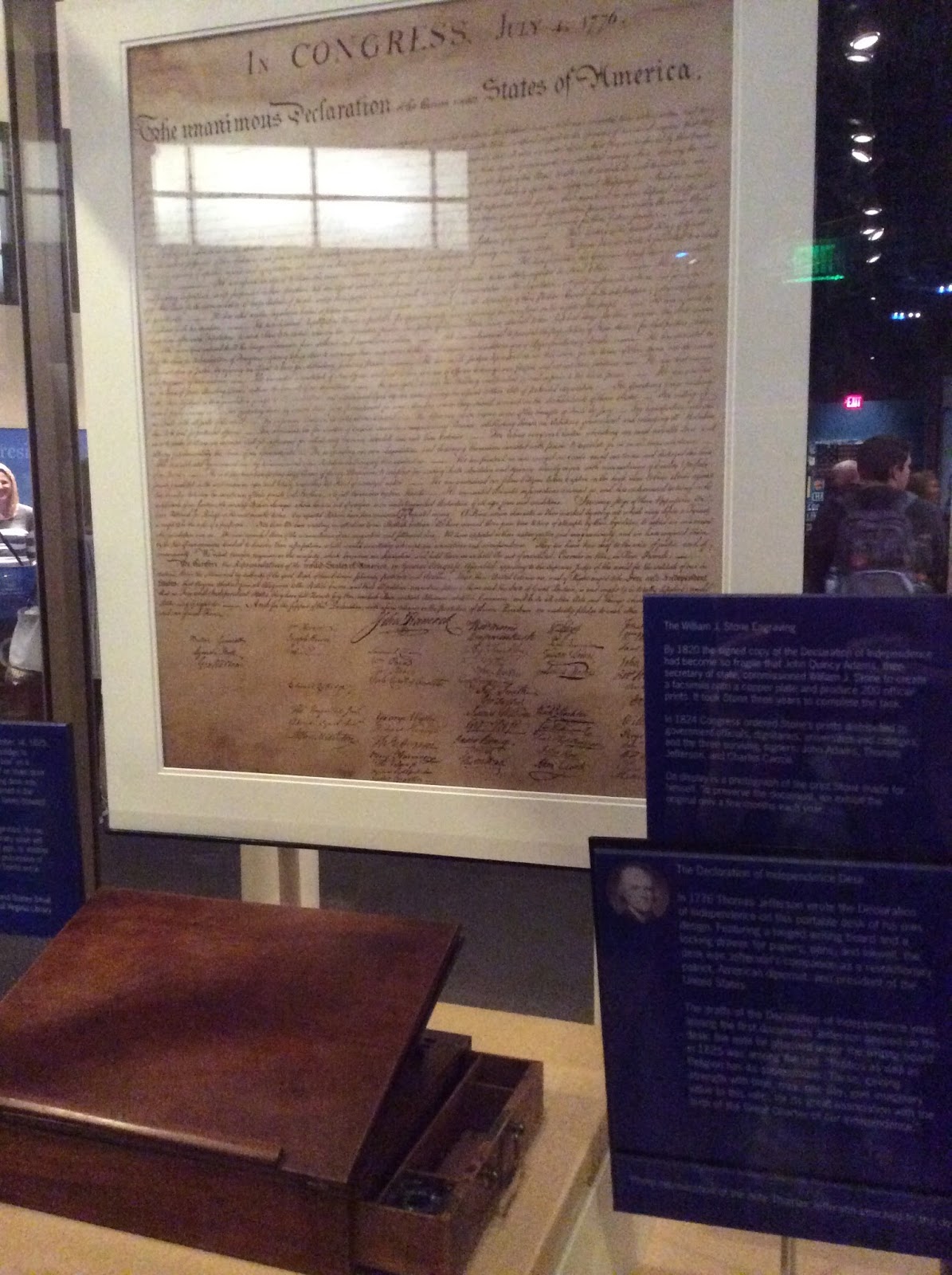
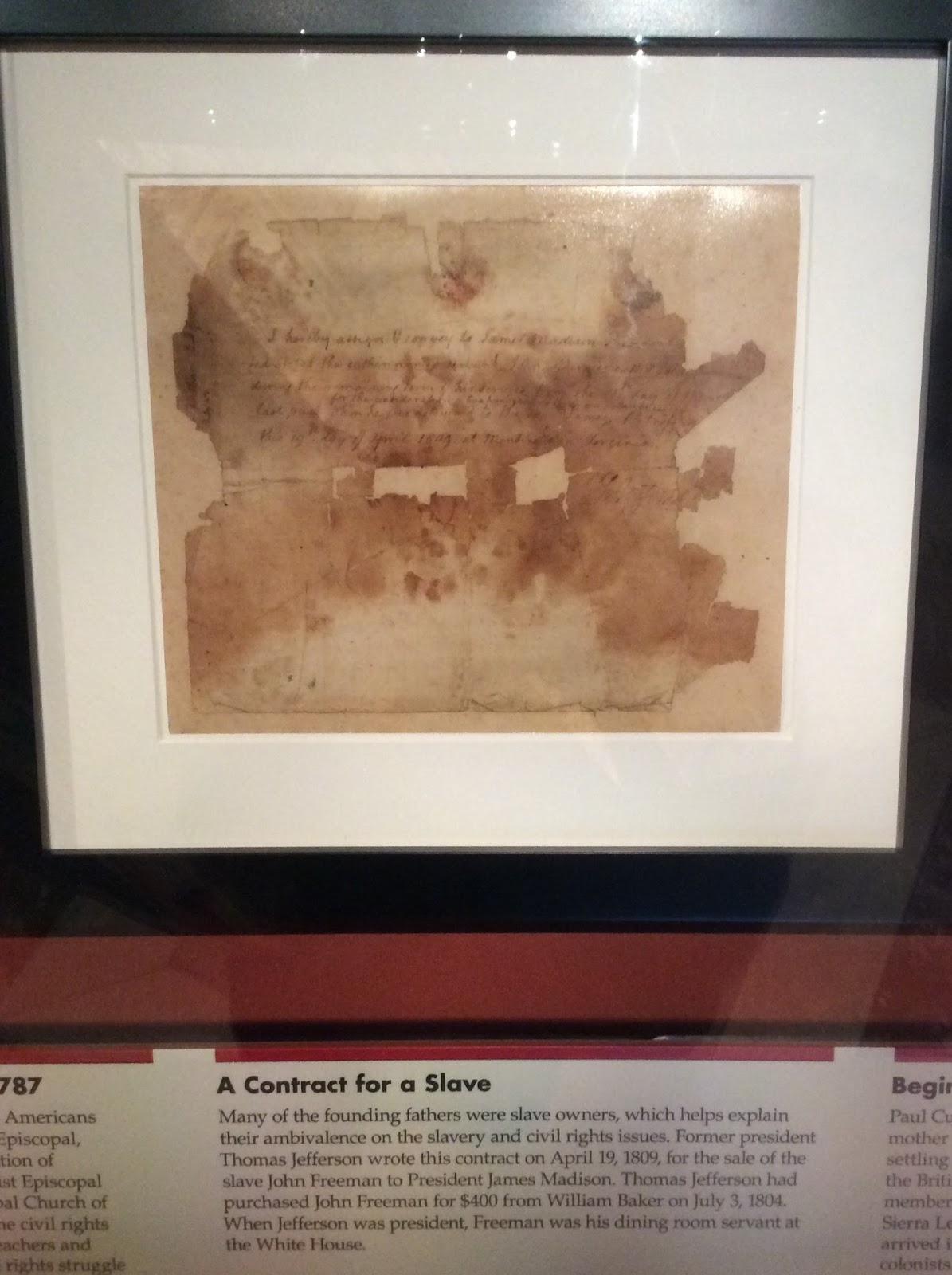
Throughout my history of ideas travel series following Thomas Jefferson, slavery was on my mind a lot: the institution as a whole, and Jefferson’s relationship to it. I was reminded of it constantly: by an original book from his own collection titled ‘The Horrors of Slavery’ now in the Library of Congress, which also displays a slave sale contract between himself and James Madison from 1809; the slave quarters and artifacts at Monticello; museum displays and plaques in D.C., Williamsburg, and Philly; and signs telling the story of his brief but telling correspondence with Benjamin Banneker.

As every student of American history learns early on, Jefferson’s words in the Declaration of Independence and his stated beliefs contrast sharply with his life as a slaveowner. And nearly every place I find something written about Jefferson, this contradiction is addressed but never really resolved.

Jefferson was in favor of the abolition of slavery early in his career as a lawyer and member of Virginia’s House of Burgesses. Having made little headway in the antislavery cause as a younger statesman, he rather abruptly gave up the fight in the 1790’s, proclaiming it unwinnable in his generation. While he continued to argue now and again that slavery was a moral and political evil, he chose to continue the expensive lifestyle of traveling, entertaining, building, and collecting fine wine, books, and art that he loved. This kept him in debt, so he funded it all the the familiar way: he remained a slaveowner for the rest of his life.

When I was in Philadelphia’s Old City, I visited the site of the President’s House and read the posted stories of the enslaved people who lived and worked there during George Washington’s tenure. As I read, I thought of how often I’d heard and read excuses made for Jefferson, Washington, and their fellow slaveowners, another common theme I encountered throughout my trip. Some sought to minimize their moral responsibility for slaveowning on the grounds they were ‘stuck’ in the institution already so they just had to ‘make the best of it’; others claimed that many were actually working on the problem in their own way but had to go slowly because of how entrenched the institution was, and so on. The most common excuse I encountered was that they weren’t really all that bad as slaveowners; in fact, they were benevolent because ‘they treated their slaves so well’, and their slaves were really better off than many free people of the laboring classes.

These ring hollow to me: they all sound like pretty lame attempts to make sense to ourselves of our history as self-professed champions of liberty who have simultaneously oppressed racial, ethnic, and ideological minorities throughout our history. I had read accounts before of Jefferson’s, Washington’s, and others’ so-called benevolent brands of slaveowning, but when I look around at these artifacts and displays, I really can’t see how true benevolence can ever coincide with that institution. As Jefferson himself wrote in his Notes on Virginia, The whole commerce between master and slave is a perpetual exercise of the most boisterous passions, the most unremitting despotism on the one part, and degrading submissions on the other. Our children see this, and learn to imitate it.’

The real answer to that conundrum is: it never made sense, and it never will. Jefferson knew it, evident not only in his embarrassed response to Benjamin Banneker, he said so over and over again, explicitly in some cases, between the lines in others. George Washington knew it too, as evidenced by his changing attitudes on slavery; indeed, all of our nation’s founding generation knew it.

That’s why they fought over the words of the Declaration of Independence, especially the original draft which more plainly revealed the stark contradiction between the colonies’ demand for liberty for themselves while they remained enslavers of others. That’s why they fought over slavery again during the Constitutional Convention and how that weird three-fifths clause got in, because they couldn’t solve the problem of how slaves could be persons deserving representation while neither free nor citizens. That’s why debates over how to treat black Revolutionary war veterans were never satisfactorily resolved, why the John Brown plot happened, why the Missouri Compromise and the Dred Scott decision and the Civil War and the Plessy vs Ferguson decision and the 1963 firehosing of the Baltimore Children’s Crusade and the Baptist Church bombing and the riots in Baltimore in 1968 and again this spring happened, and so on and so on.

The only excuse I’ve heard in defense of slaveowners like Jefferson and Washington that makes a particle of sense on the face of it is that freed slaves would likely have a worse time of it on their own than they might have under their protection. Free black people often did suffer terrible mistreatment, including terrible wages, racist criminal codes, segregation, kidnapping, and re-enslavement; freed slaves often had to choose between living where they had few prospects and leaving their still enslaved loved ones behind. Therefore, the argument goes, the attempts of some conscience-stricken slaveowners to keep their slaves while treating them more humanely were really quite benevolent. 

While there’s evidence indicating some good intentions on the part of some slaveowners, this argument just doesn’t hold up that well either when examined in the full light of history. To his credit, Washington kept more slaves on his plantation than was financially healthy for him so that families would not have to be split up, and tried to work out a way to eventually emancipate all of them with some financial provisions. Jefferson was squeamish about allowing slaves to be beaten in front of him and rarely allowed it, and paid many of them bonuses for good work. It seems on the whole, Washington has a far better record when it comes to gentler treatment and concern for the slaves’ own interests, and he freed all of them in his will though he couldn’t bring himself to do it during own his lifetime. It turns out there’s plenty of evidence Jefferson often had others whip his slaves when he wasn’t there to see it, especially when the profits from his nail business dropped off. And Jefferson’s habit of accruing large debts by his habit of living far beyond his means caused almost all of his slaves to all be sold at his death, and many slave families to be broken up, parents, children, brothers and sisters, wives and husbands torn away from one another. 

And many freed slaves actually did do quite well for themselves, or at least as well as they might have otherwise. Plenty of other plantation owners freed their slaves, and many free black people did very well for themselves in the North, West, and even in some areas of the South. Jefferson and Washington could also have allowed their slaves to make the choice for themselves whether or not they wanted to remain under their protection. They had both (Jefferson earlier in life, Washington later) come to the firm conclusion that slavery was morally wrong. They just couldn’t bring themselves to make the hard choices and personal sacrifice to fully act on their convictions.

So it’s not that, as the cliche goes, that we’re judging Jefferson, Washington, and other slaveowners by the standards of our own time, not theirs. Here’s what makes it all the more painful and injurious to our American self-image as bearers of the standard of liberty: we’re judging these Founding Fathers by their own standards, and by the standards of others in their own time, those principled lovers of freedom who did free their slaves, who decided to do the difficult but the right thing, according to the principles of the Declaration and those Washington professed later in life.

As to the issue of ‘treating their slaves so well’: consider what really went into keeping people enslaved besides whippings.

Slaves were denied the chance to make their own decisions and to enjoy the full range of human relationships that free and happy people need. The marriages of slaves were not held sacred by their masters and they could not enjoy the security of family bonds and affection. At any time, wife, husband, sister, brother, parent, and worst of all, children could be taken and sold elsewhere, never to be seen again. This happened all the time, since there was no plantation large enough to hold exponentially increasing slave families. They were provided no incentive to enjoy fulfilling occupations, since they are denied the fruits of their labor, they had a narrow field of roles to choose from or none at all (surely noone chose to be a field hand!) and there was not much personal reward for a job well done. They could be and very often were whipped, denied food and other necessities, and otherwise punished for any infraction, despite wishful hypotheses that slaves were too financially valuable to be treated badly. (Sorry, Pollyannas, history’s not on your side). They often were treated harshly even if the plantation owner didn’t desire or order it because slaveowners relied on their overseers, which they couldn’t watch most of the time, to get results.

And worst of all, because it left slaves most vulnerable to every sort of oppression and robbed them of great solace, slaves were denied education, especially higher education. Enforced ignorance was one of the surest ways to keep slaves from plotting escapes and revolts, to keep them from learning about the wider world they could wish to be a part of, from learning moral and religious arguments against slavery, and from the prospect of a good job if they ran away.

The Bible was often used to justify slavery: there are many instances of slavery in the Old Testament that Yahweh seems perfectly comfortable with, and Paul advises slaves to be obedient to their masters and to return to them if they ran away. Paul does say you should be nice to your slaves, but that’s the farthest his morals go in the matter. Like the myth of the Garden of Eden, Paul tries to instill in his readers a particular moral virtue. But if Jefferson, Washington, and their fellow slaveowners had read their Genesis a little more carefully, they might have discovered that there’s more there than a simple morality tale about obedience.A closer reading of the Garden of Eden story reveals a much deeper insight: human beings of spirit and will, of wit and intelligence, of curiosity and integrity always have, and always will, long for knowledge and self-determination. And they must and will have it, even if danger, privation, suffering, or destruction be the price.

~~~~~~~~~~~~~~~~~~~~~~~~~~~~~~~~~~~~~~~~

Sources and Inspiration:

‘Benjamin Banneker’, Africans in America, PBS.org
http://www.pbs.org/wgbh/aia/part2/2p84.html
Letter to Jefferson: http://www.pbs.org/wgbh/aia/part2/2h71t.html
and Jefferson’s response: http://www.pbs.org/wgbh/aia/part2/2h72t.html

Gordon-Reed, Annette. Thomas Jefferson and Sally Hemings: An American Controversy.
Charlottesville: University of Virginia Press, 1997. https://books.google.com/books/about/Thomas

Meacham, Jon. Thomas Jefferson: The Art of Power. New York: Random House, 2012.
http://www.jonmeacham.com/books/thomas-jefferson-the-art-of-power/

Thompson, Mary V. “The Private Life of George Washington’s Slaves”, Frontline, PBS.org
http://www.pbs.org/wgbh/pages/frontline/shows/jefferson/video/lives.html

Wiencek, Henry. ‘The Dark Side of Thomas Jefferson’, Smithsonian Magazine, Oct 2012.
http://www.smithsonianmag.com/history/the-dark-side-of-thomas-jefferson-35976004/

Should A Minor Be Tried as an Adult Due to the Seriousness of the Crime?

Here’s a case, currently in the news, in which a young girl helps murder her mother because her mother was trying to break up her relationship with her much older boyfriend.

In this case, the girl charged is 14 years old. A long series of text messages, along with forensic evidence, the timeline of events, and the girl’s own testimony indicate that she and her boyfriend did in fact commit the murder (though, of course, this must be proved in court).

Here’s what troubles me most besides the cruel and terrible murder itself: the girl is being charged as an adult. And she’s being charged as an adult, apparently, due to the seriousness of the crime, a practice that’s been allowed in many states for decades. The main argument in favor of this practice goes something like this: if the crime is serious, or ‘adult’ enough (whatever that means), the punishment should be proportionate. Adult crimes, in other words, merit adult punishment.

But wait a minute! In what way does the seriousness of the crime indicate that the girl is capable of the level of reasoning, impulse control, emotional maturity, and therefore moral accountability, of a fully functioning adult? It seems to me that in this case, the seriousness of the crime compared with the triviality of the reasons the girl gives for committing the murder indicates that she is not yet capable of an adult level of understanding.

As my regular readers may know, I hold a rather robust view of personal responsibility. But that’s not the same thing as believing that adolescents, lacking the fully developed brain structures of a person in their early 20’s, should be held to the same standard of accountability as an adult. To me, this is piling one injustice on top of another, if we believe that true justice necessarily includes not only the principle of proportionality of crime to punishment, but of punishment to culpability.

What do you think?

Welcome to the Podcast Edition of Ordinary Philosophy!

Hello dear readers, and welcome to the
podcast version of Ordinary Philosophy!

You can listen to the podcast here, on Google Play, or subscribe in iTunes.

Like many of you, I’m a big fan of podcasts, mostly because my life is very busy. One day in the future, I hope to have a lot more time to do each task one at a time, to really be present, as they say, as I wash the dishes, straighten the house, do the laundry, and perform all those other tasks that take up time, but not much thought.

But at this time in my life, between my day jobs, my creative projects, and spending time with friends and family (which I don’t do enough of these days, sadly), I don’t have enough time to keep up the world of ideas as nearly much as I’d like to by sitting down and reading. Instead, I keep myself informed and increase my education by listening to lots of podcasts: discussions with my favorite authors and thinkers, audio renditions of books and essays, debates, recordings of classes on my favorite subjects, and so on. I listen to these podcasts while doing those aforementioned chores, and let me tell you: as one who is not fond at all of household chores like doing the dishes and washing the floor, the podcast is a marvelous invention: they transform boring chore time into great opportunities for learning and exploration. I’m also an avid hiker, and it’s a wonderful thing to be able to immerse myself in some fascinating ideas or discussion as I immerse myself in the beauties of nature.

To begin with, this podcast will simply consist of audio recordings of my Ordinary Philosophy pieces. Over time, I may add commentary and who knows, perhaps interviews and discussions with guests. We’ll see how it goes. In the meantime, here’s Ordinary Philosophy in audio form: I hope you find it interesting and enjoyable!

… And here’s episode 2: Is the Market Really the Most Democratic Way to Determine Wages?
Originally published as an essay Feb 6th, 2014