Frederick Douglass Boston Sites

Phillips Street sign, where I begin my Frederick Douglass Boston journey, 2016 Amy Cools

I commence my Frederick Douglas Boston journey on Phillips St, and long for my bike. Mine is blue with upright bars for better sightseeing. Sigghhh.

Sixth Day, Friday March 25th

As I’m quick to discover, parking is at a premium in central Boston and its environs. I’ve decided not to pay the high garage rates and stick with metered parking (reasonably priced but harder to find). It’s to be expected in an awesome, busy, historically important city, of course, just be prepared! It’s such a handsome city, so much to look at, and I long for my bike: fleet, nimble, with uninterrupted view, parkable anywhere there’s a pole. At times such as this, a car feels like little but an expensive burden.

Frederick Douglass never did live here in Boston, but this city has many connections with his life: he and his family lived just a few miles north of here in Lynn from 1841-47. Douglass visited, worked, and spoke here often, and the Boston Anti-Slavery Society published his Narrative which, combined with his speaking tour of the British Isles and the United States that followed, catapulted him to fame and made him the leading African American abolitionist of his time.
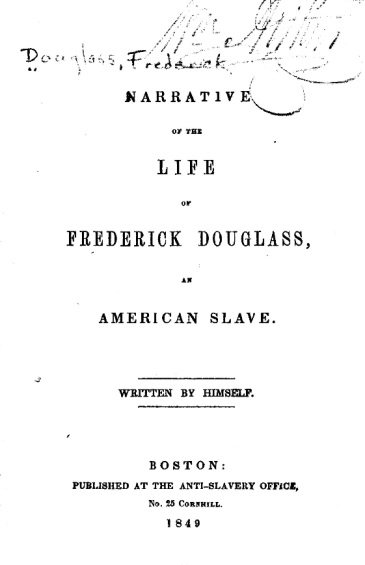
Narrative of the Life of Frederick Douglass, published by Boston Anti-Slavery Society, image L.O.C.

Narrative of the Life of Frederick Douglass, published by Boston Anti-Slavery Society, image: Library of Congress. It was published on Cornhill St which no longer exists, but I passed near its old location while walking through City Hall Plaza

As I discussed an earlier piece on Frederick Douglass and the Constitution, Douglass had a falling-out over time with the abolitionist movement of William Lloyd Garrison in the early 1850’s. The Garrisonians rejected the Constitution as a pro-slavery document and as a result, considered the government unjust and therefore illegitimate; Douglass came to believe that the Constitution, if interpreted correctly, is an anti-slavery document, and the government must be reclaimed from its pro-slavery element by seizing power through political channels if possible, through violence if necessary. The advent of the Civil War changed everything; in the face of this monumental upheaval and national crisis, political and theoretical disagreements no longer seemed so important. (Douglass demonstrates, to my mind, that one can be fully both a fiery revolutionary and a pragmatist.)

In November of 1861, the Emancipation League organized in Boston, where Douglass, the followers of Gerrit Smith (who influenced Douglass to reexamine the way he interpreted the Constitution) and the Garrisonian abolitionists formally reconciled so they could rally and unite their efforts in the cause of the Civil War cause for national union and the end of slavery. Try as I might, I’m unable to locate any exact addresses where they assembled, though I find many newspaper accounts from the time announcing their meetings and relating their activities in Boston and elsewhere. These activities included petitioning the Senate to commence emancipation efforts in earnest.
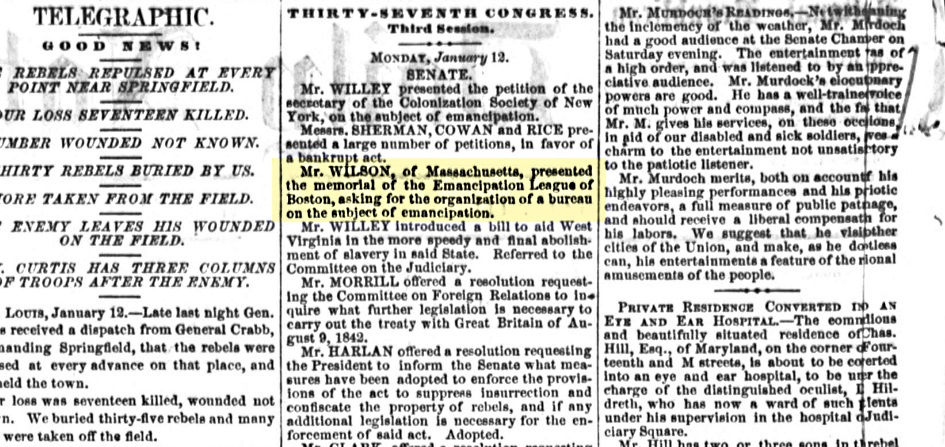
From the Daily National Republican, January 12, 1863 2nd Ed, from Chronicling America, Library of Congress

From the Daily National Republican, January 12, 1863 2nd edition from Chronicling America, Library of Congress

I begin my day’s journey by heading up Beacon Hill, where many of Boston’s abolitionists and black people settled, to 43-47 Phillips St, one block north of Cambridge between Grove and Anderson. I start here for efficiency’s sake since it’s right up the way from the coffee shop where I’m marking out my map with some new details I’ve just learned. However, it doesn’t make sense to start my story here since what happens at this site is the second part of a two-part event, so I’ll tell you about it shortly.

Museum of Afro-American History and African Meeting House, Boston Massachusetts

Museum of Afro-American History in front of the African Meeting House, Beacon Hill, Smith Ct, Boston
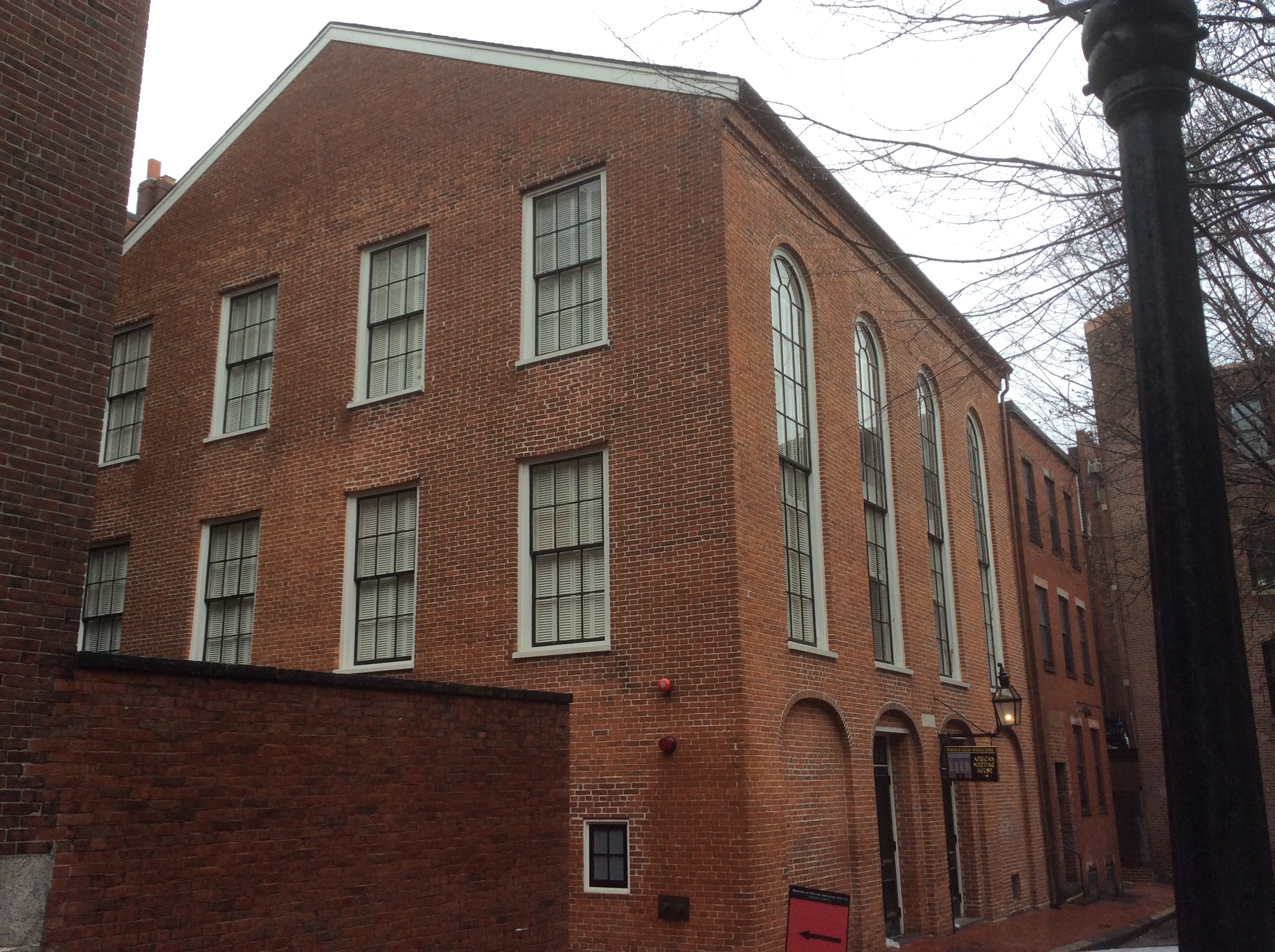
African Meeting House on Beacon Hill in Boston, MA

African Meeting House, the oldest black church in America

Then I head east on Phillips, turn right (south) on Irving, left on Myrtle, left on Joy, to Smith Court which heads off to the left from Joy St between Cambridge and Myrtle. The African Meeting House stands at the end of Smith Court just behind the Museum of Afro-American History at 46 Joy St. The Meeting House was built in 1806 ‘…to house the first African Baptist Church of Boston (a.k.a. First Independent Baptist Church) and it is now the oldest extant black church building in America’ according to the National Park Service, which maintains it and many other Black Heritage sites here on Beacon Hill. Douglass, William Lloyd Garrison, Wendell Phillips, and Sarah Grimke all spoke here at the African Meeting House, and for those in this list of people I haven’t talked about yet in my account, they will feature later on. There’s a guided tour you can take in season (I’m here too early in the year for that) or the self guided tour. I wish I had another day to visit all the site, including the guided tour of the Meeting house which is actually available today but I’d have to wait till the next available time (which, sadly, I run out of). Next time I’m in Boston…!

There are a great few things about traveling to historical places in the off-season: the crowds are light and you can get better pictures, it’s cheaper to fly, and it’s a bit easier to park (the fact that I can hope to find street parking at all is pretty good, and I didn’t get a ticket either time my meter expired). But, the weather can be iffy, the trees are bare, and some places are closed or have very limited hours. So, you have to decide if the trade-offs are worth it.54th Regiment Memorial, Boston Common, 2016 by Amy Cools
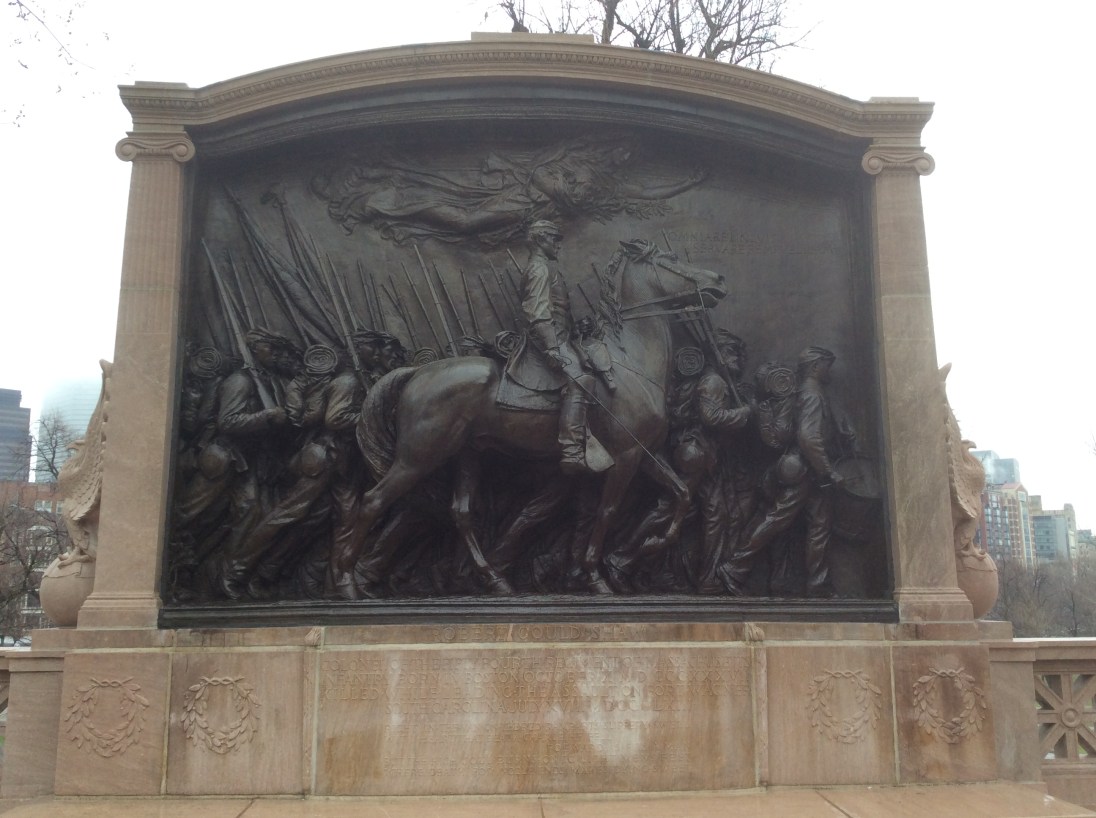
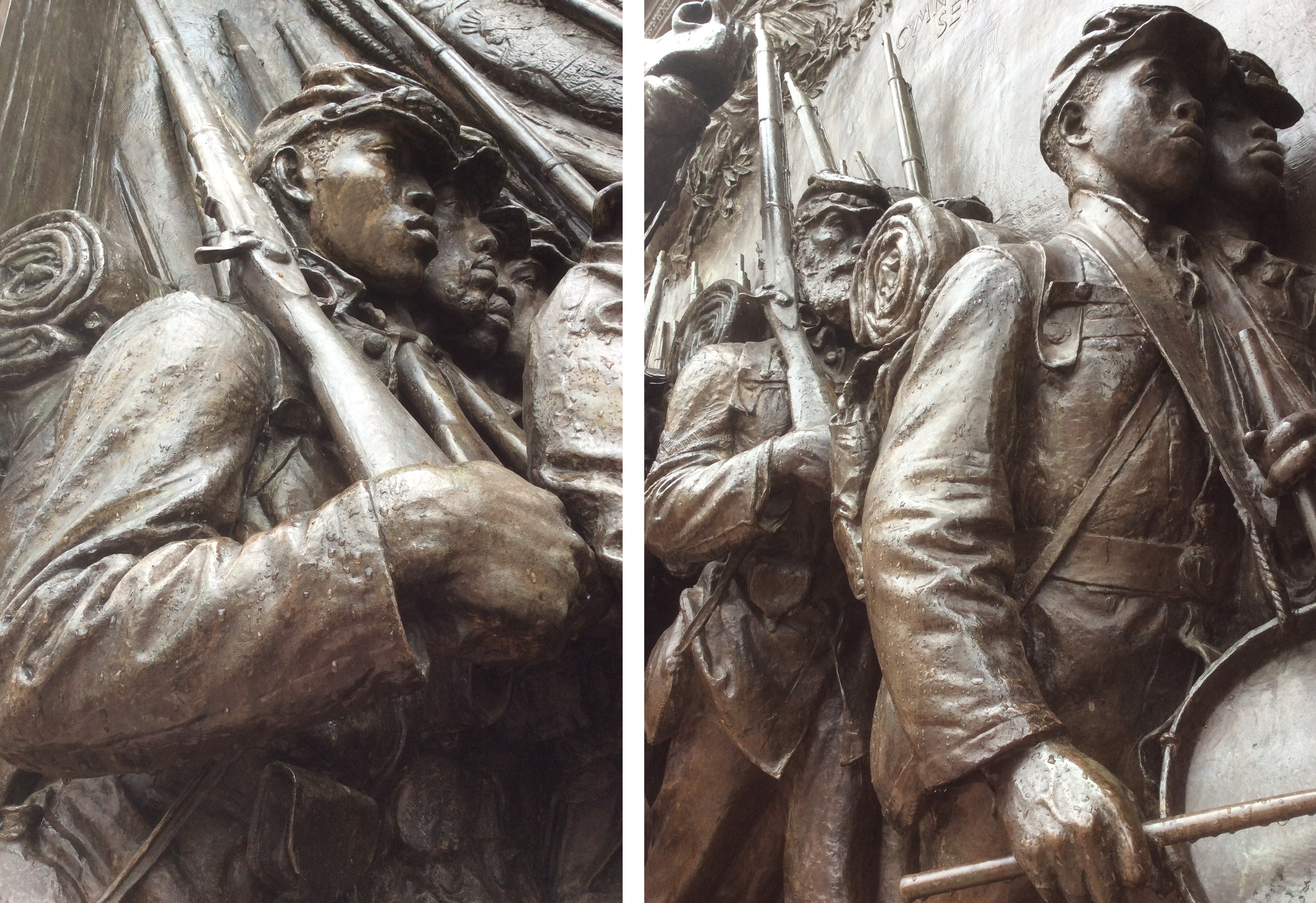
Two closeups of the 54th Regiment Memorial at Boston Common. What determination revealed in these sculpted faces!

Two closeups of the 54th Regiment Memorial at Boston Common. What determination is expressed in these sculpted faces!

Then I turn back and head south to Boston Common, to the 54th Regiment Memorial on Beacon St at Park, near the park’s northeast corner. On May 28 1863, the Massachusetts 54th Infantry Regiment of 1000 troops marched triumphantly into Boston Common. It was the first black regiment to be raised in the North. As discussed in my post from yesterday’s travels to New Bedford, Douglass was instrumental in the fight to get Abraham Lincoln to authorize and federally fund black troops’ enlistment in the Union Army, and Douglass’ two sons Lewis and Charles enlisted to fight in this regiment. What a proud papa he certainly was!
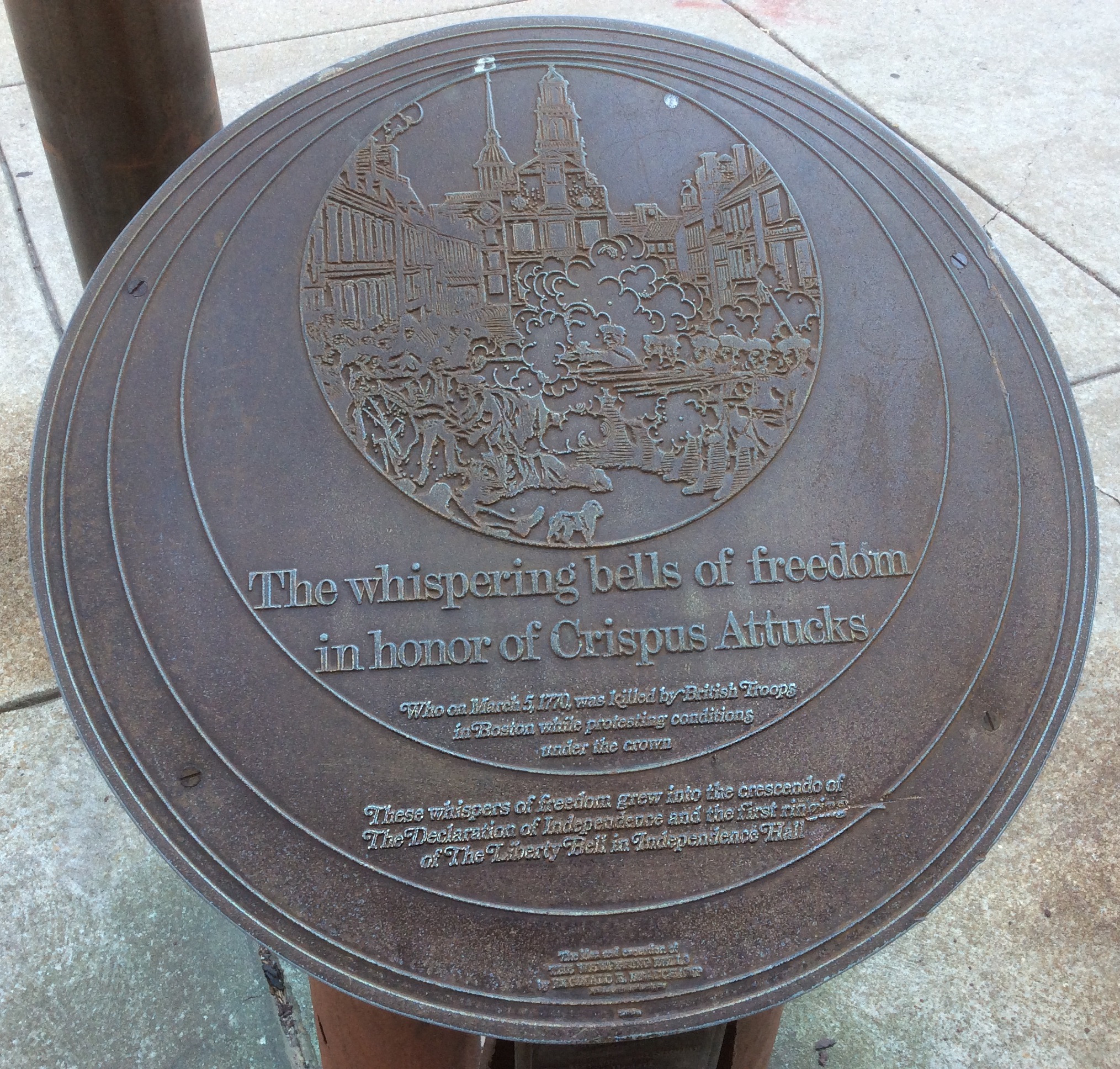
Plaque honoring Crispus Attucks, at Philadelphia's African American Museum

Plaque honoring Crispus Attucks, at Philadelphia’s African American Museum

The 54th Regiment continued their march from Boston Common on to Battery Wharf (which I will also do soon), passing the site of the Boston Massacre. That incident, where a colonial mob dared British guards to fire on them until they did, happened outside of the Old State House, at Congress, Court, and Washington Sts. (John Adams successfully defended most of the British soldiers. Though he was as ardent a patriot as you could find, he was also a man of high integrity and made the legally sound argument and fair point that if a large mob attacks a small number of armed guards, they are duty bound to defend themselves, whatever side they’re on. Crispus Attucks, a man of African and Native American ancestry, was mortally wounded in that scuffle 0n March 5th, 1770, and is often regarded as the first American casualty of the American Revolution. When I passed by Philadelphia’s African American Museum a few days ago, I snapped a photo of his memorial plaque there, knowing I would soon visit the site of his death.
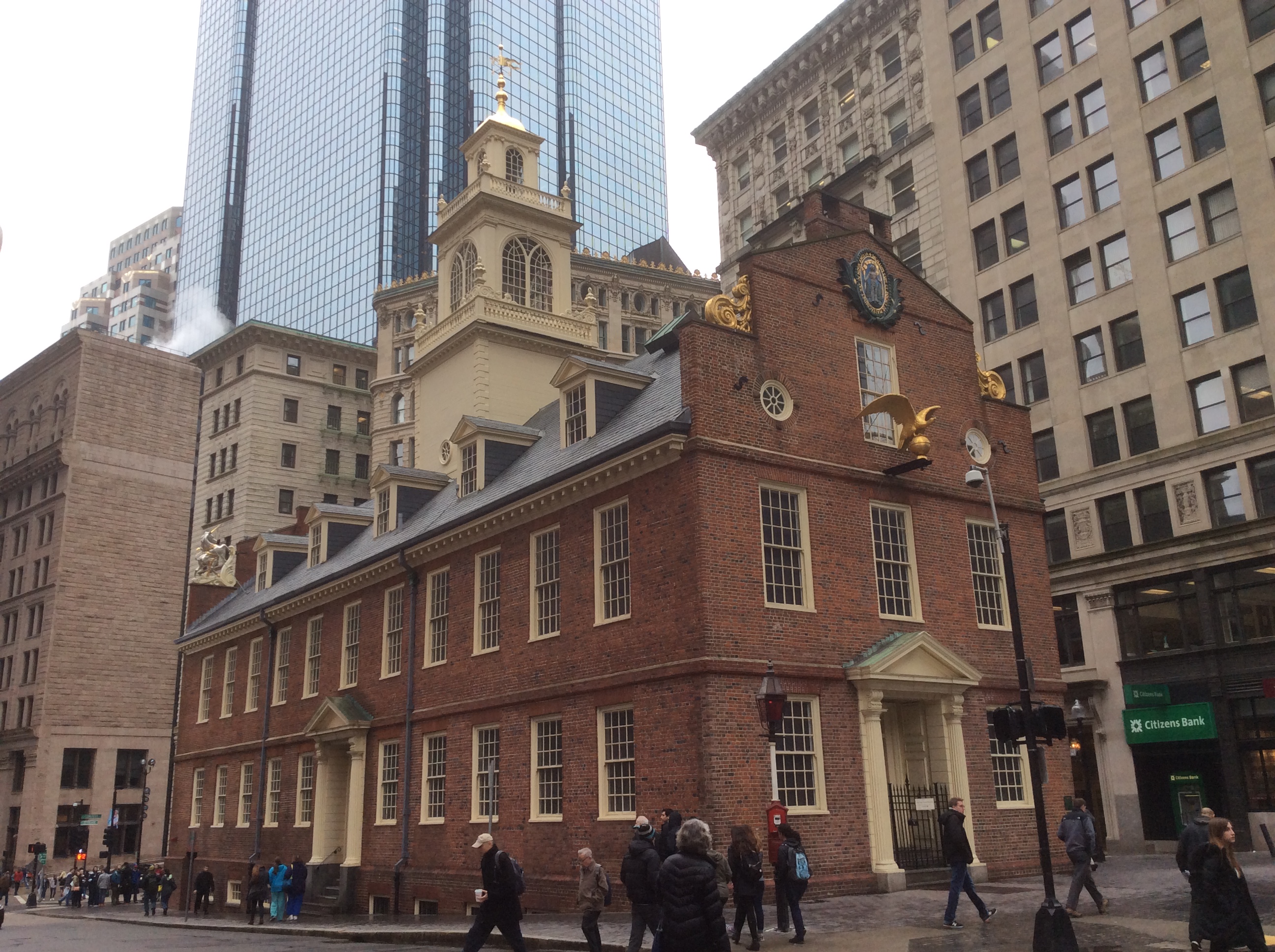
The Old State House, Boston Massachusetts

The Old State House in Boston Massachusetts, site of the Boston Massacre and of debates over whether the colonies should rebel against Britain

Back to the story of the 54th Regiment: Douglass was also active in recruiting efforts, believing that enlistment in the Union army, made possible by the Emancipation Proclamation, would give black people their chance to prove themselves as the strong, brave, patriotic, true Americans he knew them to be, and their participation in the war would establish their full right to citizenship once and for all. Unfortunately, black soldiers faced unfair and degrading treatment in the Union Army: lower pay than whites, less weapons and equipment, no chances for promotion, assigned the most dangerous and menial jobs, and so on. Many black soldiers, joined by the 54th’s white commander and son of wealthy Boston abolitionists Robert Gould Shaw, refused pay until it was equal, which was granted the next year. The South also imposed terrible penalties for captured black Union soldiers and anyone leading them: immediate execution, same as for insurrectionists. To his great credit, Shaw accepted no pay and braved the same risk of execution along with the rest of his regiment. In response to the poor treatment of black soldiers, Douglass stopped recruiting for awhile.

Tremont Temple (on the right), Boston, Massachusetts

Tremont Temple, the very ornamental building on the right, Boston, Massachusetts
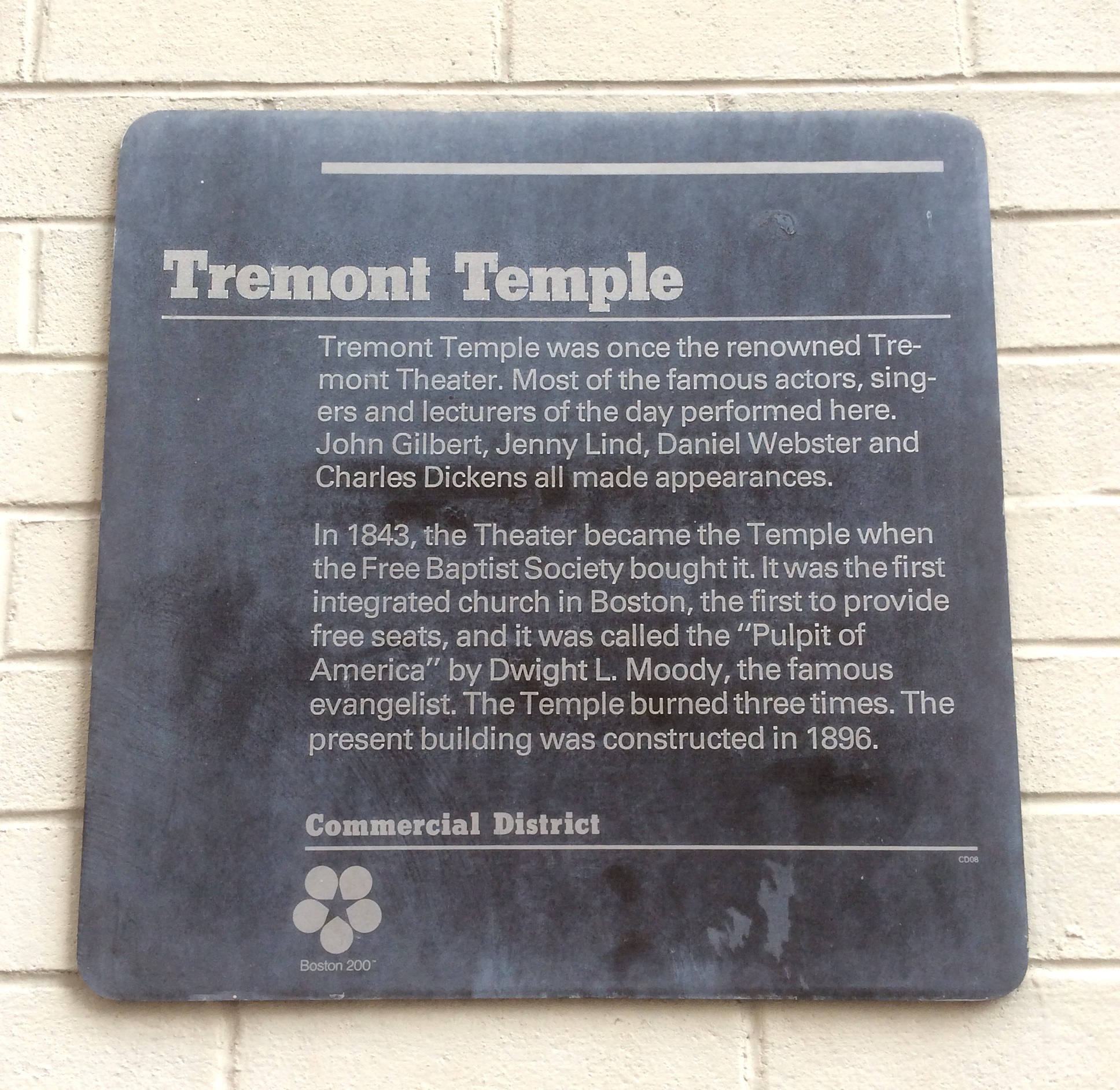
Tremont Temple Plaque, Boston Massachusetts

Then I wind my way east of Boston Common to 88 Tremont St, between Bosworth and School, to Tremont Temple. From December 31st, 1862 through the next day’s New Year holiday, Union Progressive Association and about 3,000 attendees, abolitionists, and human rights advocates gathered to greet the official announcement of the Emancipation Proclamation, and Douglass spoke at this event.
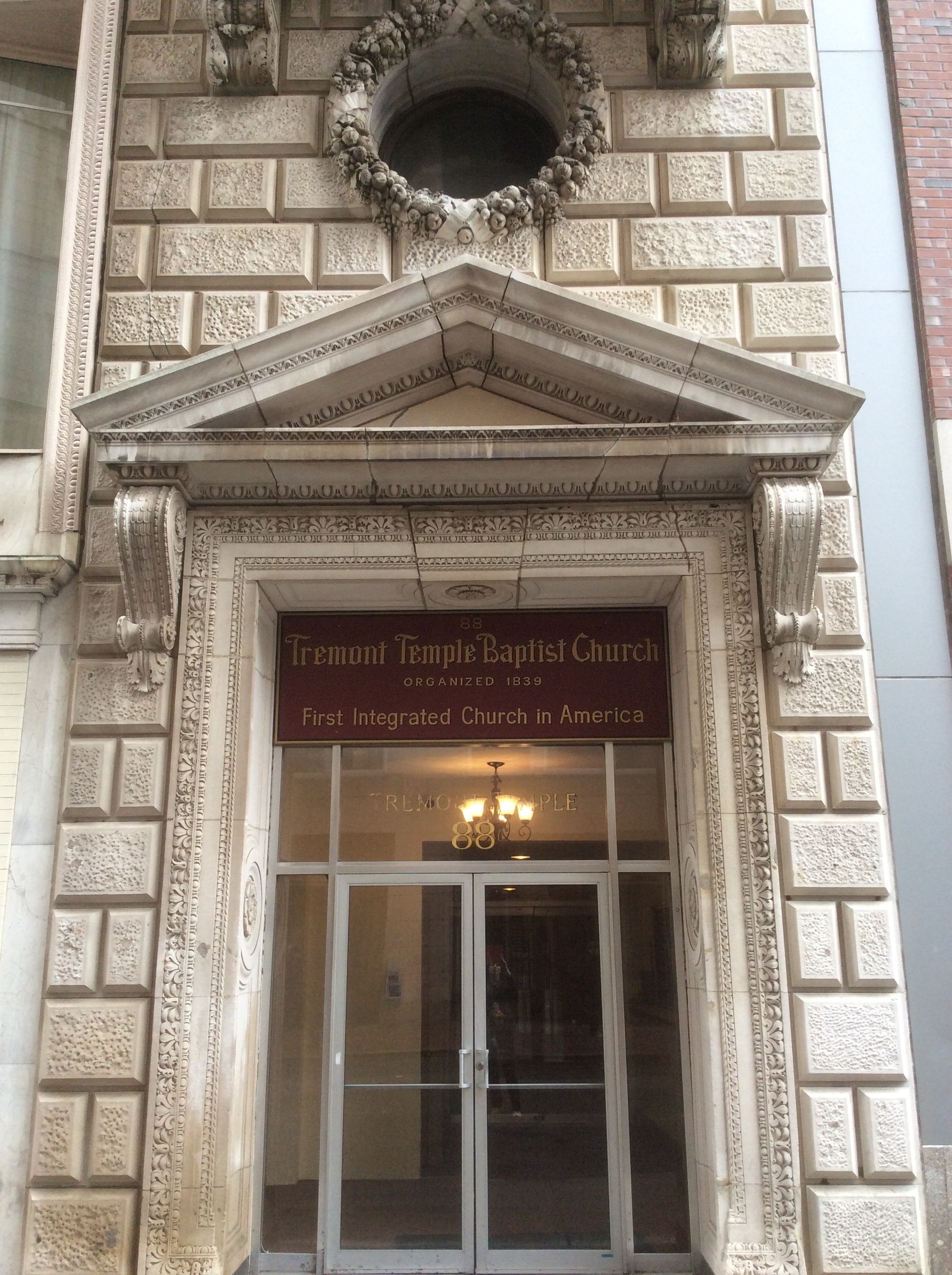
Tremont Temple doorway, 'First Integrated Church in America'

Tremont Temple doorway, ‘First Integrated Church in America’

Douglass had spoken here before, and at one time was roughed up when the recent election of Abraham Lincoln inflamed pro-slavery violence against abolitionists, even in relatively anti-slavery Boston. The Temple structure now here dates to 1896, replacing the original 1827 fire-damaged, much smaller building. Many years later, in 1893 (still in the old building), Douglass’s friend and inspiration Ida B. Wells delivered a lecture on lynching here at Tremont Temple; as discussed in my account of following Douglass in NYC, she inspired his anti-lynching activism later in life.

After the Union Progressive Association’s celebration of the Emancipation Proclamation, the party left Tremont Temple, since it closed at midnight, and moved the meeting to Twelfth Baptist Church. After fighting, working, and hoping for such a proclamation for so long, the party was not to end anytime soon, not until the wee hours at least.

43-47 Phillips St, former site of Twelfth St Baptist Church in Boston, photo 2016 Amy Cools

43-47 Phillips St, former site of Twelfth St Baptist Church in Boston

I’ll backstep a bit here: remember the first site I visited today, on Phillips Street? That’s where the Twelfth Baptist Church (where the Emancipation Proclamation celebration continued) used to stand, founded by former congregants of the African Meeting House, at number 43-47 Phillips St, a little over a half mile away on the other side of Beacon Hill.
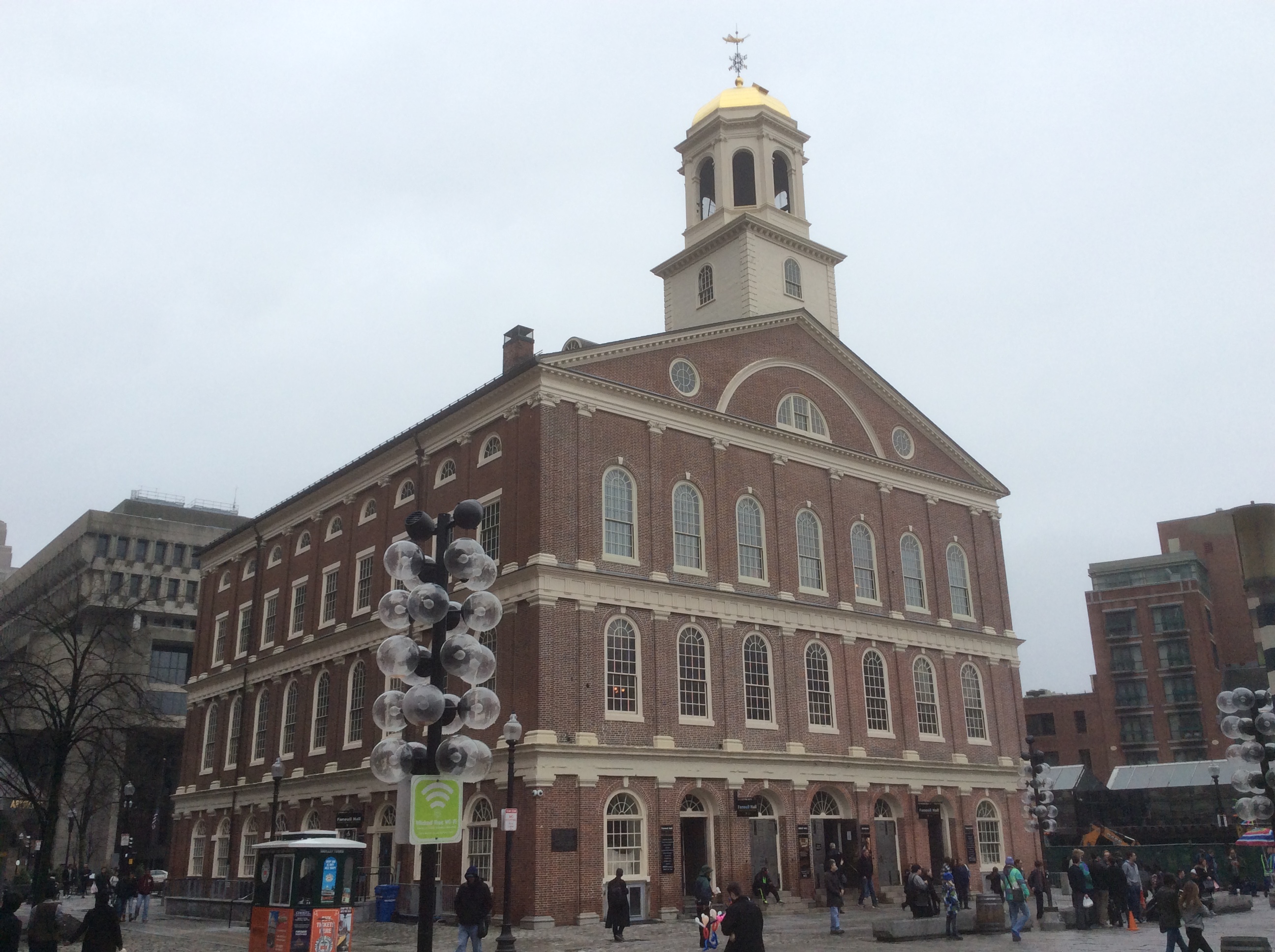
Faneuil Hall, Boston, Massachusetts

Faneuil Hall, Boston, Massachusetts

Then I head a little less than half a mile away in (kind of) the opposite direction of the Phillips St church site to Faneuil Hall at 1 Faneuil Square, where the body of Wendell Phillips lay in state in on February 6th 1884, after his funeral in the Hollis Street Church (more on this shortly, in fact, it’s the last story of the day and the most exciting as a traveling history nerd… ahem, enthusiast seeking a hard-to-find site). Phillips was another great human rights activist, writing in support of women’s civil rights including the right to the ballot box, in an article he published about two years before Elizabeth Cady Stanton famously introduced this same resolution at the 1848 Woman’s Rights Convention in Seneca Falls (we’ll be returning to this story in an upcoming piece). In his Life and Times, Douglass referred to the great abolitionist and reformer Phillip’s eloquence as ‘word painting’, an art which he had performed in life previously in this same hall.

A view from Battery Wharf, now used by the Coast Guard

A view from Battery Wharf, now used by the Coast Guard

Battery Wharf plaque maps, detail

Battery Wharf plaque maps, detail

Battery Wharf office building, Boston MA, photo 2016 by Amy Cools

Battery Wharf office building

Then after moving the car (again!) I head to Battery Wharf, where, as I described earlier, the 54th Infantry Regiment continued their triumphal march to the sea on May 28th, 1863, to travel by steamship to South Carolina. Seven weeks later, about a quarter of their number and their commander Shaw died in a bold and bloody assault on Fort Wagner. Though that battle was lost, the heroic example of these soldiers inspired many others to enlist, and Shaw’s body remained buried in a common grave with many of his soldiers. The Confederates who buried Shaw this way saw it as an insult, since officers were generally accorded their own burial with special honors, even by the enemy. Shaw’s abolitionist family and the soldiers inspired to join by the Fort Wagner fight, however, thought this manner of burial a great honor, and a testament to his courage as a soldier and his devotion to his men and the cause of human rights.
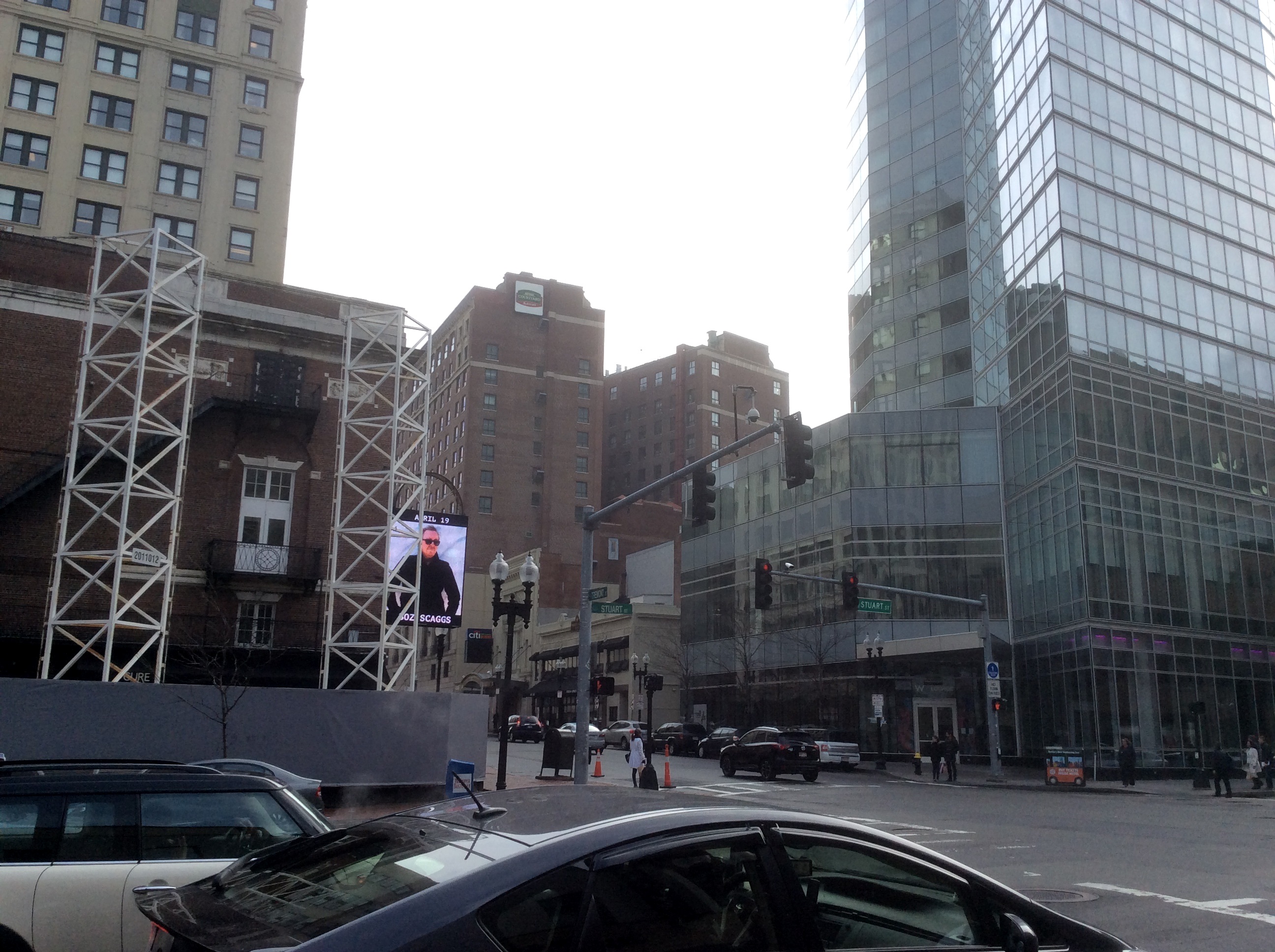
Tremont at Stuart, approaching the Citi Performing Arts Center, 2016 by Amy Cools

Tremont St at Stuart, approaching the Citi Performing Arts Center

I make the long walk south and a bit east, about a mile and a half, to the Citi Performing Arts Center. I’m seeking the site of the old Hollis Street Unitarian Church, where Wendell Phillips’ funeral took place prior to his lying in state at Faneuil Hall. This site took me far longer than any other site to find. I had scoured through old newspapers and finally discovered that his funeral was at ‘Hollis-street chapel’, certainly Hollis Street Unitarian Church, according to a Feb 16th 1884 edition of Washington D.C.’s The Bee. I found the entry in Chronicling America, an absolutely invaluable online resource for the history enthusiast on the go, an archive of old newspapers hosted on the Library of Congress website. (When fact-checking later, I find a secondary source that confirms this, based on another newspaper in an archive available only through a paid subscription.
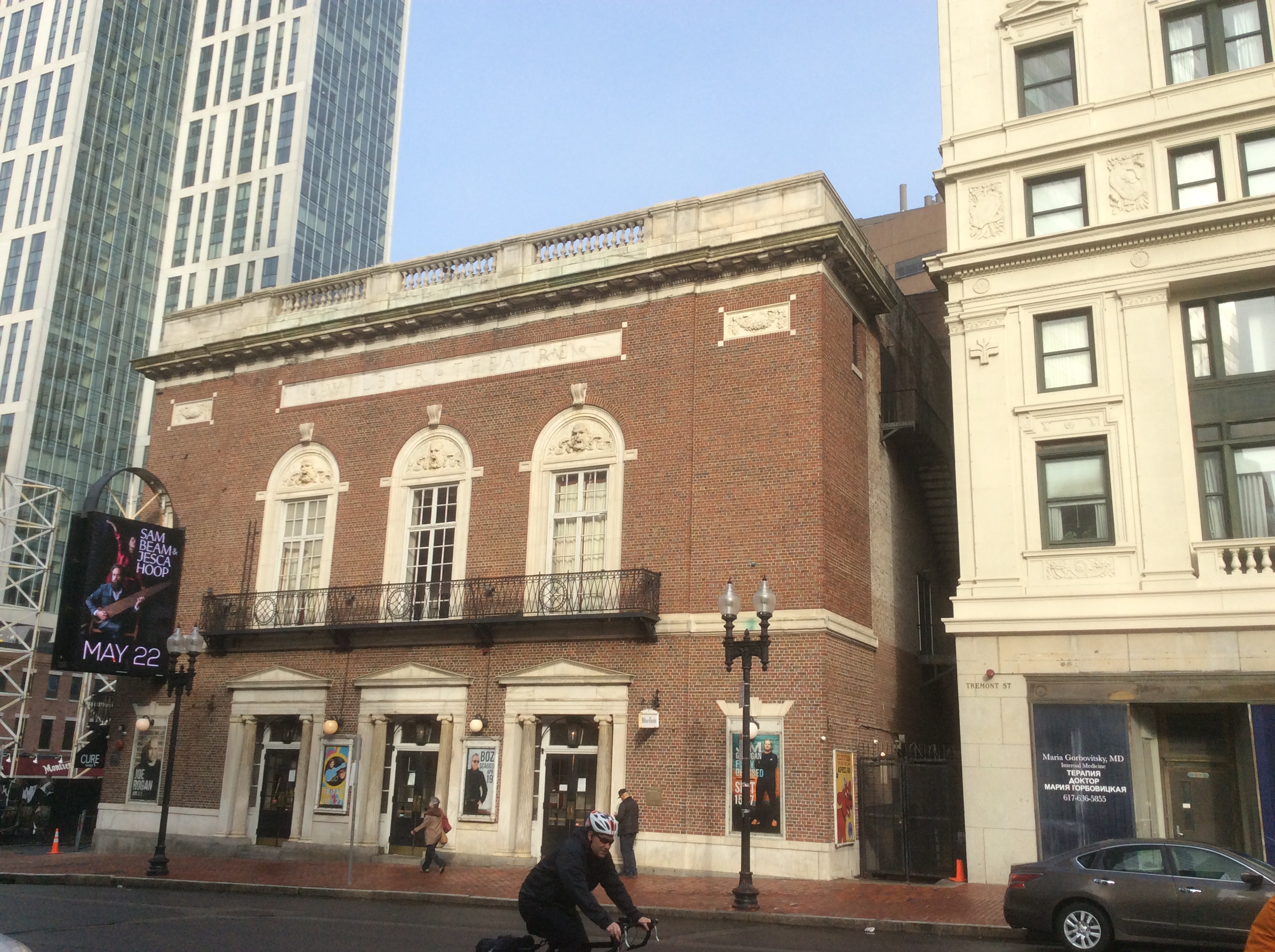
Ye Wilbur Theater (left) and Wang Theater at Citi Performing Arts Center (right)

Ye Wilbur Theater (left) and Wang Theater at Citi Performing Arts Center (right)

To continue the story of Wendell Phillips’ funeral, which Douglass attended on February 56th, 1884… He was not alone: he was accompanied by his second wife, Helen Pitts Douglass, who he had married just that January. Helen was white, and even many of their closest friends and family couldn’t deal this fact, as we’ll discover more about later in this series. Even at this church packed with Phillips’ and Douglass’ most progressive, ardent, life-long abolitionists and human rights activists, no one would dare to be the first to sit next to them until… who other than the most beloved author of my youth, Louisa May Alcott. Alcott’s show of friendship and solidarity warms the deepest parts of my heart. I read every single Alcott novel I could get my hands on throughout my girl- and young adult-hood, over and over again. As it was and still is for so many young people, especially girls and women in the English speaking world, she was one of my primary early influences, one who helped set my moral compass more than just about anyone or anything else.
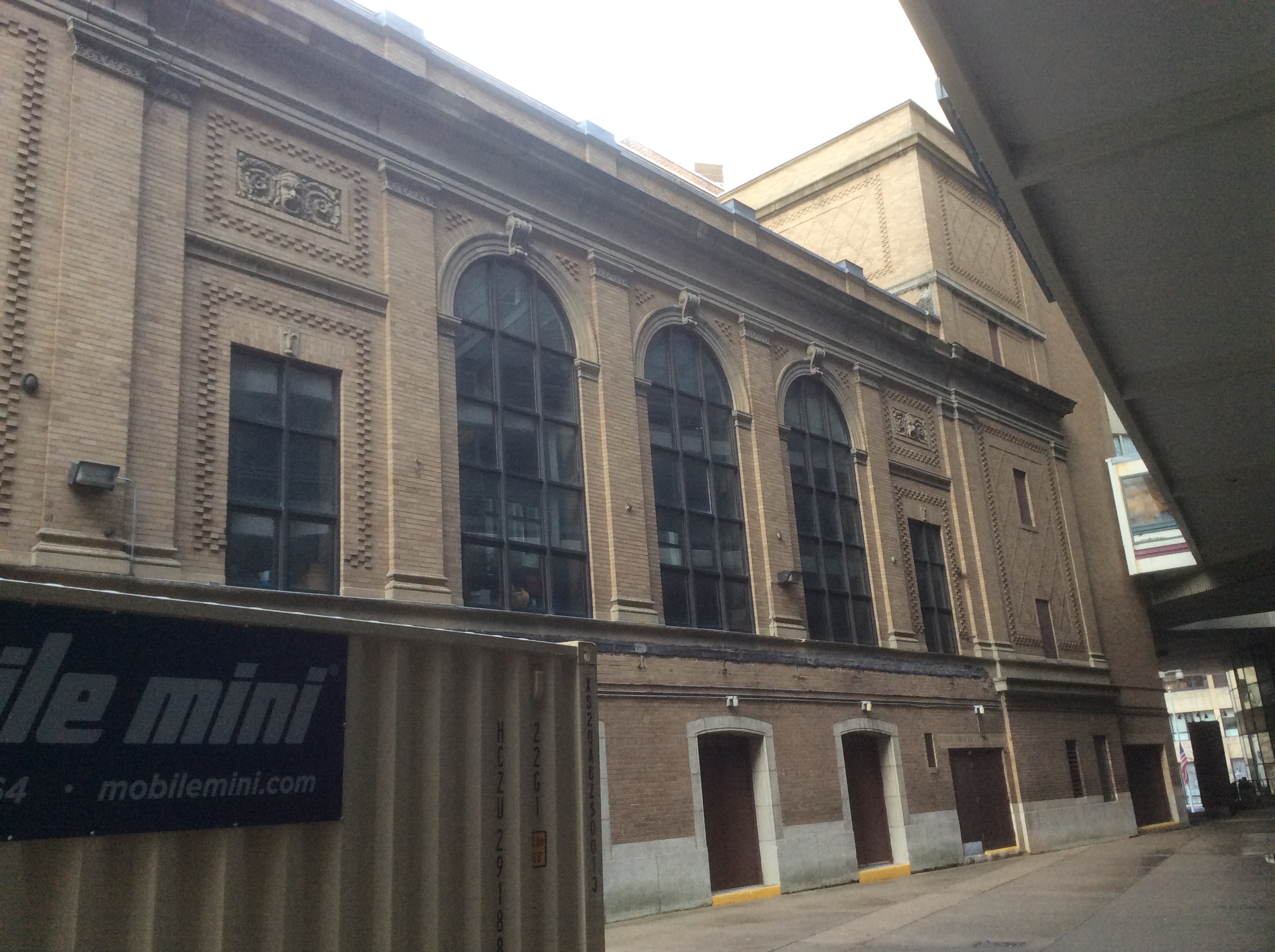
Wang Theater back end, along alley off Tremont St

A rear side view of Wang Theater along the alley off Tremont St

I expect to find little here today, since the history of the church reveals it’s no longer standing, but I made the trip and spend some time poking around anyway. Because that moment at Phillips’ funeral is so beautiful to me, I’m doing to dig deep. Clearly, from the name, the church was on Hollis St; trouble is, there’s no longer a Hollis Street according to Google Maps, the print maps I have with me, or anywhere else online. Poring over old city atlases earlier today, I at last discovered where Hollis Street used to be. It seems that stood about where the Tremont St garage is now, just south of the historic and grand Wang Theatre of the Citi Arts Center and Tufts Health Sciences campus behind it. More specifically, Hollis St used to connect Tremont and Washington Streets halfway between Kneeland and Oak.

I also discover that Hollis Street Church became Hollis Street Theater in 1885, after the congregation moved to a more spacious location the year after the funeral. I poke around, and walk up and down the walkway between the Wang Theater and the garage. Could the Wang Theater be standing on the site of the old Hollis St Theater? I notice that the front of the Wang Building differs in motifs and materials than the wide of the building. It occurs to me that possibly, a building already standing here may have been incorporated into the Wang Theater. Could there be remnants here of the old Hollis Theater, once the old Hollis Street Unitarian Church where the funeral was held? In researching the history of the Wang Theater, formerly the Metropolitan Theater, I find no evidence of this; by all accounts this grand theater was built entirely in 1925, and the photos of the old Hollis Street Church show a very different looking structure, though looking at the half-windowed bottom parts of the two buildings (see photo below and at the end of this piece), there are some similarities. Too bad, that would have been a great find!

Wang Theater on Tremont St, side facing alley, showing contrast between marble front and brick back sections of the building

Wang Theater on Tremont St, side facing alley, showing contrast between marble front and brick back sections of the building. As you can see, this side is undergoing some restoration work

But in a moment of good luck, as I’m scanning the building and the area surrounding it for any evidence of older structures, I spot something among the scaffolding that wraps around the front and south sides of the Wang Theater as its south end it undergoing some maintenance. Near the corner of the building are old brass letters which spell out ‘Tremont St’ on its west side and ‘…ollis St’ on the south. My heart skips a beat. Here it is: confirmation that this is where Hollis St was.

Wang Theatre's south side with scaffolding, photo 2016 by Amy Cools

Wang Theater's southwest corner revealing where Hollis St used to be, photo 2016 by Amy Cools

Wang Theater’s southwest corner revealing where Hollis St used to be
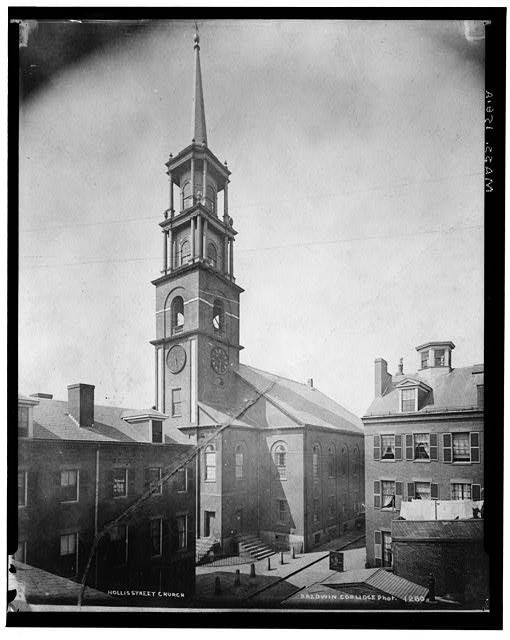
Hollis Street Church from the northeast, 1870, image public domain via Library of Congress

Hollis Street Church from the northeast, 1870, photo public domain via Library of Congress

We can see what the church looked like inside from an old photo I found onlineBut more importantly for my purposes here, the Library of Congress has a photo of the church ‘taken from the Northeast’. If that description is right, then it seems that the church stood not where the Wang Theater does but across from it, somewhere under where the Tremont St. Garage stands now, with its side facing Hollis (as you can see, it opens onto a square rather than the street) with its steepled front facing towards but not onto Washington St, and its back to Tremont.

This last discovery, successfully triangulating the location where this beautiful moment of true friendship, of love and sympathy overcoming prejudice, makes me feel very emotional and celebratory. My friend recommends The Lower Bottoms, a place that pours excellent ales, so off I go as the sun sets.

Many more adventures and exciting historical discoveries soon to come, as I continue to follow Douglass north… come on back, y’hear?

*Listen to the podcast version here or on iTunes

Wang Theater (left) and Tremont St Garage (right) view from Tremont St. (west)

Wang Theater (left) and Tremont St Garage (right) view from Tremont St. (west)

Ordinary Philosophy and its Traveling Philosophy / History of Ideas series is a labor of love and ad-free, supported by patrons and readers like you. Please offer your support today!

~~~~~~~~~~~~~~~~~~~~~~~~~~~~~~~~~~~~

Sources and Inspiration:

1843 Boston Almanac Church Engravings: Hollis Street Church‘. Congregational Library Exhibits website

54th Massachusetts Infantry Regiment‘. In Wikipedia, The Free Encyclopedia.

African American Churches of Beacon Hill‘ and ‘African Meeting House‘. Boston African American National Historic Site Massachusetts, National Park Service website

Blassingame, J. (Ed.). The Frederick Douglass Papers, Series One: Speeches, Debates, and Interviews. 4 volumes, and The Frederick Douglass Papers, Series 2: Autobiographical Writings. 3 volumes. New Haven and London: Yale University Press, 1979-1999

Boston Athenæum Theater History‘, from BostonAthenæum.org

Brooks, Rebecca Beatrice. ‘Funerals and Wakes at Faneuil Hall‘. History of Massachusetts: A History Blog About The Bay State. May 14, 2012

Bromley, George Washington and Walter Scott. Boston, 1895. Index Map. Pub. G.W. Bromley and Co. From David Rumsey Historical Map Collection at davidrumsey.com

Cutter, William Richard and William Frederick Adams, eds. Genealogical and Personal Memoirs Relating to the Families of the State of Massachusetts, Volume 4. New York, 1910.

Daily National Republican. (Washington, D.C.), 12 Jan. 1863. Chronicling America: Historic American Newspapers. Lib. of Congress.

Douglass, Frederick. The Life and Times of Frederick Douglass. Re-published 1993, Avenal, New York: Gramercy Books, Library of Freedom series.

Douglass, Frederick. My Bondage and My Freedom: 1855 Edition with a new introduction. Re-published 1969, New York: Dover Publications, Inc.

Evening Star. (Washington, D.C.), 07 Feb. 1884. Chronicling America: Historic American Newspapers. Lib. of Congress.

Foner, Philip S. The Life and Writings of Frederick Douglass, Vol. 1-4. New York: International Publishers, 1950.

Frederick Douglass Chronology‘. From Frederick Douglass National Historic Site District of Columbia, National Park Service website

History of the Old State House Building‘. The Bostonian Society (website).

Hollis Street Church‘. (2016, March 23). In Wikipedia, The Free Encyclopedia.

Hollis Street, Harvard Street. Boston 1819 and 1820 Street-Lines. Pub. 1819 by John Graves Hale, author unknown

McFeely, William. Frederick Douglass. New York: W.W. Norton & Company, 1991.

Tremont Temple. In Wikipedia, The Free Encyclopedia.

Wendell Phillips‘. In Wikipedia, The Free Encyclopedia.

What was the Boston Massacre?.’ John Adams Historical Society (website).
Frederick Douglass New York City Sites

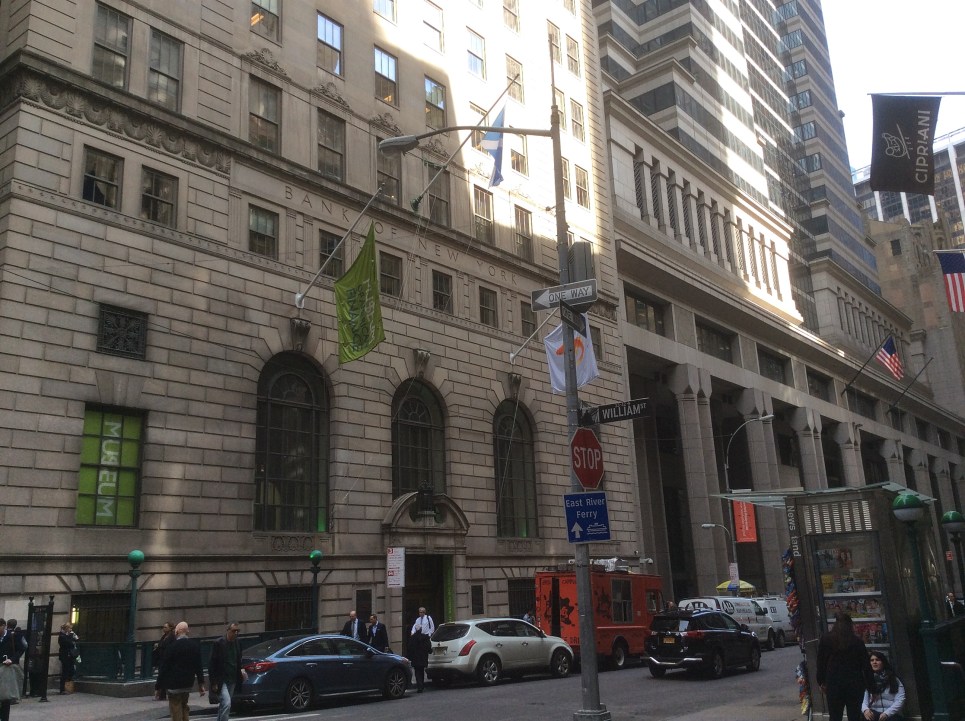
Bank of New York at Wall and William Sts NYC, 2016 by Amy Cools

Bank of New York (cornerstone laid June 22 1797) at Wall and William Streets, New York City

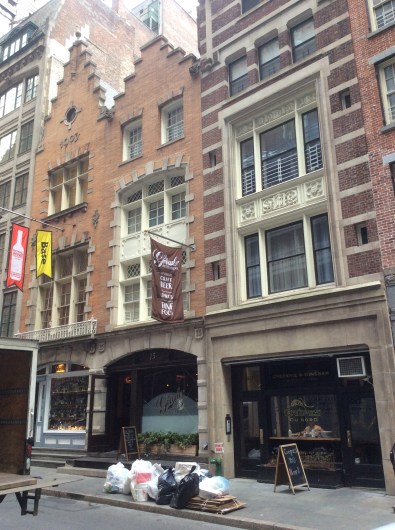
Three old buildings on historic S. William Street, 2016 by Amy Cools

Three old buildings on historic S. William Street

Fourth Day, Wednesday, March 23rd

I arrived yesterday afternoon in New York City and had a good hangout with my friend with whom I’m staying (thanks, Devin!).

After doing more research and mapping out today’s journey, I head to my first destination. I take the subway to lower Manhattan to the Brooklyn Bridge stop, zigzag my way southeast to Wall and William Streets, then down to S. William St. Wall Street was the northern border of the city when it was still young, so I decide it’s as good a way as any to get a feel for the old city, though really, the truly old intact buildings in NYC are scattered, and few. I’m only looking back to the 1830’s for this trip, but as you may know or may remember from my earlier series on Ernestine Rose and Elizabeth Cady Stanton, this city has a long history of tearing everything down regularly and starting fresh.

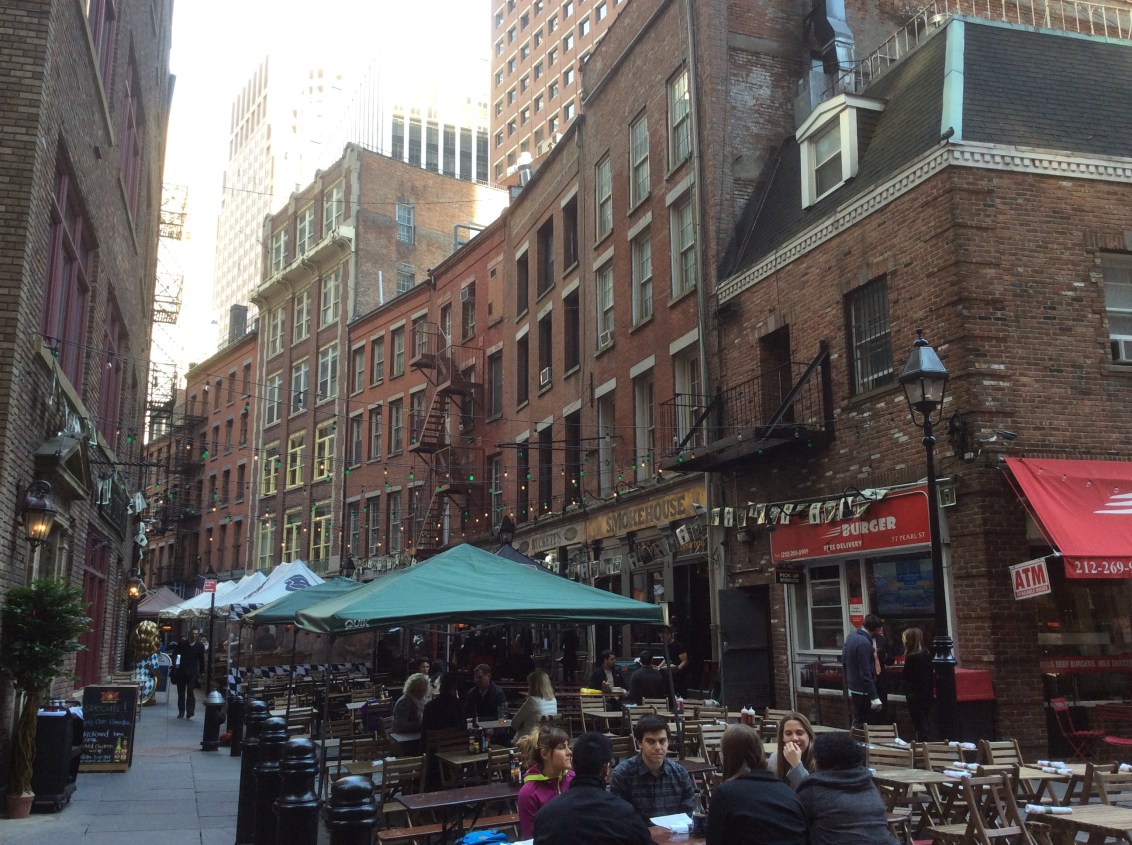
Stone St on the other side of S. William NYC, 2016 by Amy Cools

Stone St on the other side of S. William St., New York City

I’m heading to S. William because, as you may remember from my account of yesterday’s travels, Douglass accidentally referred to the Willow St. depot in Philadelphia as the William St. depot, which was the New York one. It doesn’t say specifically in any of his accounts that he went to the William St depot the day he arrived in New York City on Monday, September 4th, 1838. He would have arrived at a New York City wharf coming across from a New Jersey train station. I interpret his mistake, though, to indicate he did go to William St. that day, especially combined with his description of being among the bustle of Broadway and gradually making his way north to Center Street. The general route makes sense.

Foundation brickwork from 1830's building at 13 S. William St, 2016 Amy Cools

Foundation brickwork from 1830’s building at 13 S. William St, NYC

I photograph a row of older buildings at the foot of William St. As you can see by the numbers near the peaks of the facades, they’re dated at the turn of the century, more than half a century after Douglass arrived here, newly freed by his own efforts.

As I draw near to the buildings to take a closer look, I spot a historical plaque on 13 S. William St, the one with the year 1903 prominently displayed near the pointy top. That’s the year it was rebuilt after a fire in a more fashionable Dutch Revival style; the original building was under construction when Douglass was here in NYC in 1838, and the foundations remain. The buildings’ other entrance is on Stone St, to the east and parallel to S. William St as it curves around and up in a northeasterly direction. I see from early New York City atlases that the streets here retain their shape and direction from Douglass’ days here. So even if Douglass didn’t come to the William St. depot when he arrived, he was near this part of town, this is one of the few places where anything still stands from that time, and he probably went there at some point since his memory was familiar enough with the name of the William Street depot to transfer it to the Philadelphia one when he tried to recall it later on.

Sign at Collect Pond with story and picture of The Tombs, NYC, 2016 by Amy Cools

Sign at Collect Pond with story and picture of The Tombs, New York City

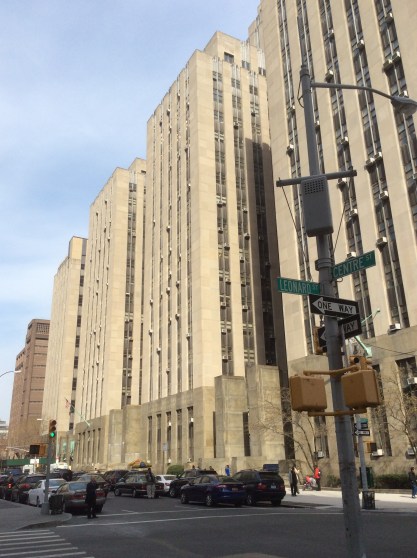
Criminal Courts building on Centre St, New York City, photo 2016 by Amy Cools

Criminal Courts building on Centre St, New York City

So back to following Douglass, and in this case to a place he went for certain. I make my way north, just as he did on his way ever more surely to freedom, to Centre St. across from the site of The Tombs. It stood at the site where Collect Pond now stretches between Lafayette and Centre Streets, at cross streets White and Leonard. It was an Egyptian revival building (hence the name, as in ancient Egyptian tombs) repurposed as a prison because it was ill-suited for its original purpose. In his Life and Times, Douglass recalls meeting a sailor named Stuart who saw him across the street from where his house stood on the west side of that street. Stuart takes an interest in him and befriends him right away. I’m sure it had much to do with Douglass’ appearance, since he dressed as a sailor himself for his escape: sailors were held in especially high regard in this part of the world at this time, so he felt he was less likely to be challenged, and since many black people were employed as sailors, he felt he’d more likely pass without notice.

Douglass’s new friend Stuart gave him shelter for the night. Since Stuart lived across from The Tombs on Centre St., his house would have stood somewhere on the grounds now occupied by the enormous New York City Criminal Court Building.

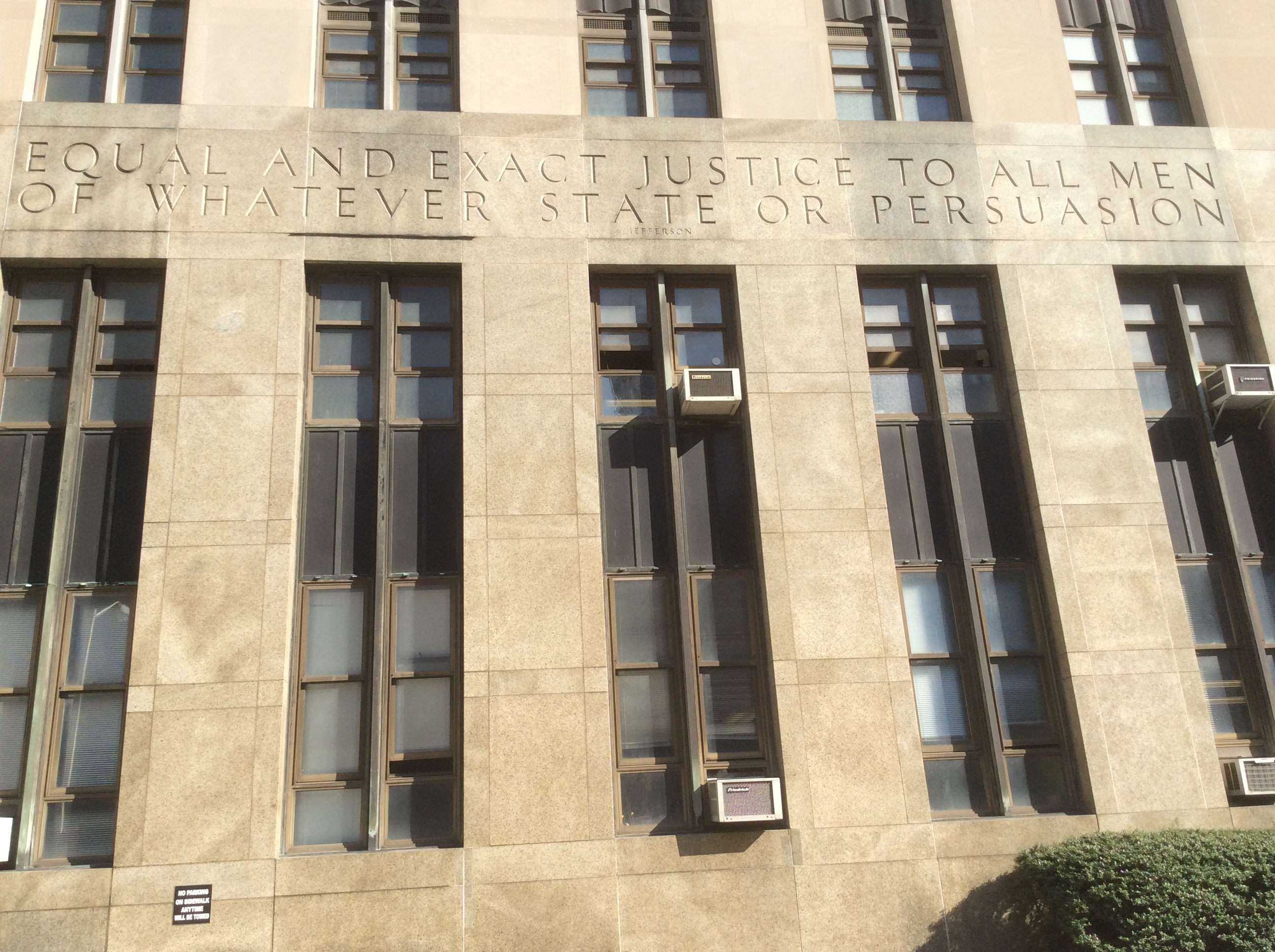
Jefferson quote on the New York City Criminal Courts Building

Jefferson quote on the New York City Criminal Courts Building

Looking up at the words engraved across the center front, something strikes me. I imagine what Douglass would have felt that day if he knew the words ‘Equal and Exact Justice to All Men of Whatever State or Persuasion’ would be etched in stone one day above the place his head lay. After all, it describes very well the central driving principle of his life. (As you can see if you look closely at the name under the quote, this one’s from Jefferson; it’s from his first inaugural address. Regretfully, the author of it never did find sufficient conviction within himself to realize that principle for those of Douglass’ people he held in slavery.)

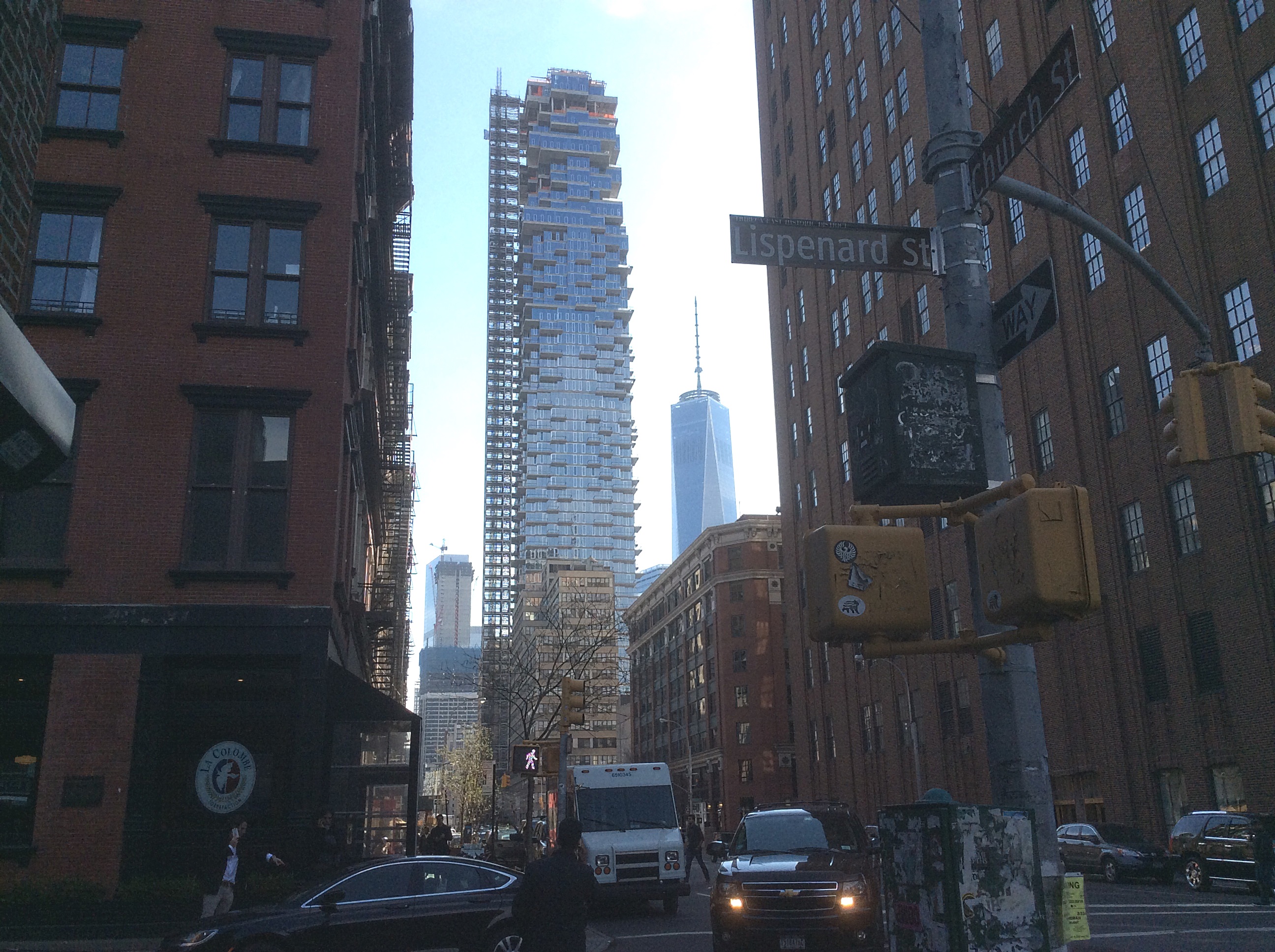
Church and Lispenard Streets, Tribeca, NYC, photo 2016 by Amy Cools

Church and Lispenard Streets, Tribeca, NYC. The red brick building on the left stands at the site of David Ruggle’s house, now La Columbe Coffee at 36 Lispenard

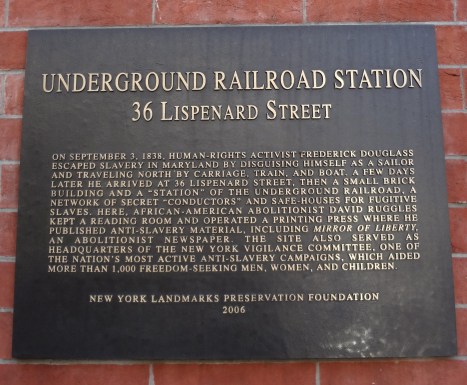
David Ruggles House Plaque at 36 Lispenard, photo credit Steven E. Greer, used by permission

David Ruggles House Plaque at 36 Lispenard Street

The next morning, Stuart the hospitable sailor accompanied him to David Ruggles’ house. Ruggles was a free black man and an officer on the Underground Railroad, and he had sent for Douglass, inviting him to stay at his place for the next few days at the corner of Church and Lispenard Streets. So that’s where I head next, and it’s in what’s now the TriBeCa neighborhood, just below Canal a little west of Broadway. While Douglass hid out here, he sent for his sweetheart Anna, who had done so much already to help him escape by providing him with his sailor disguise and selling one of her feather beds for travel funds. In fact, she had likely met him on one of the docks at Fell’s Point, where my Douglass travels began. When she heard of his successful escape, she came from Baltimore immediately to join him when she heard of his successful escape. They were married here at the Ruggles home on Sept 15, 1838.

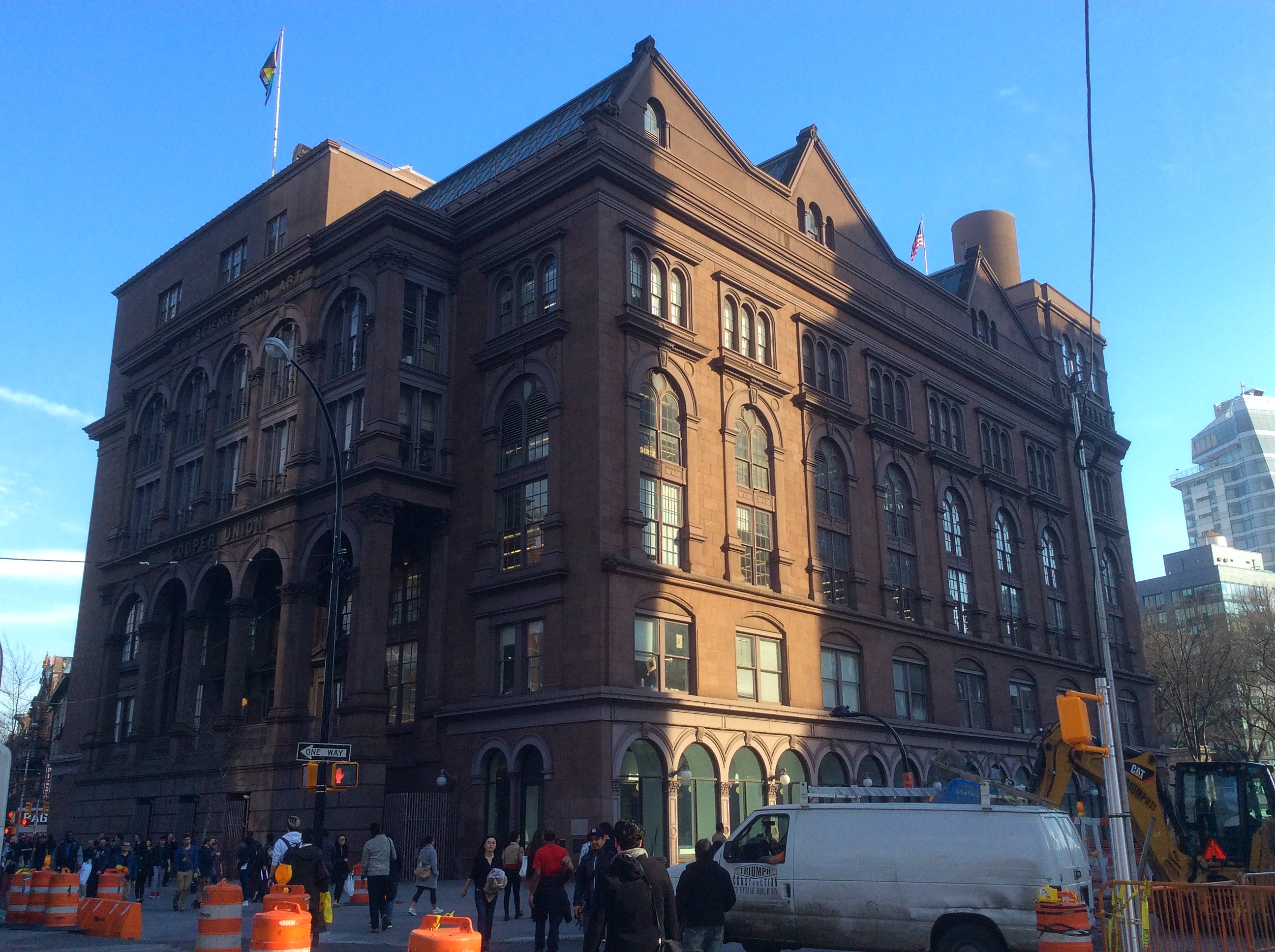
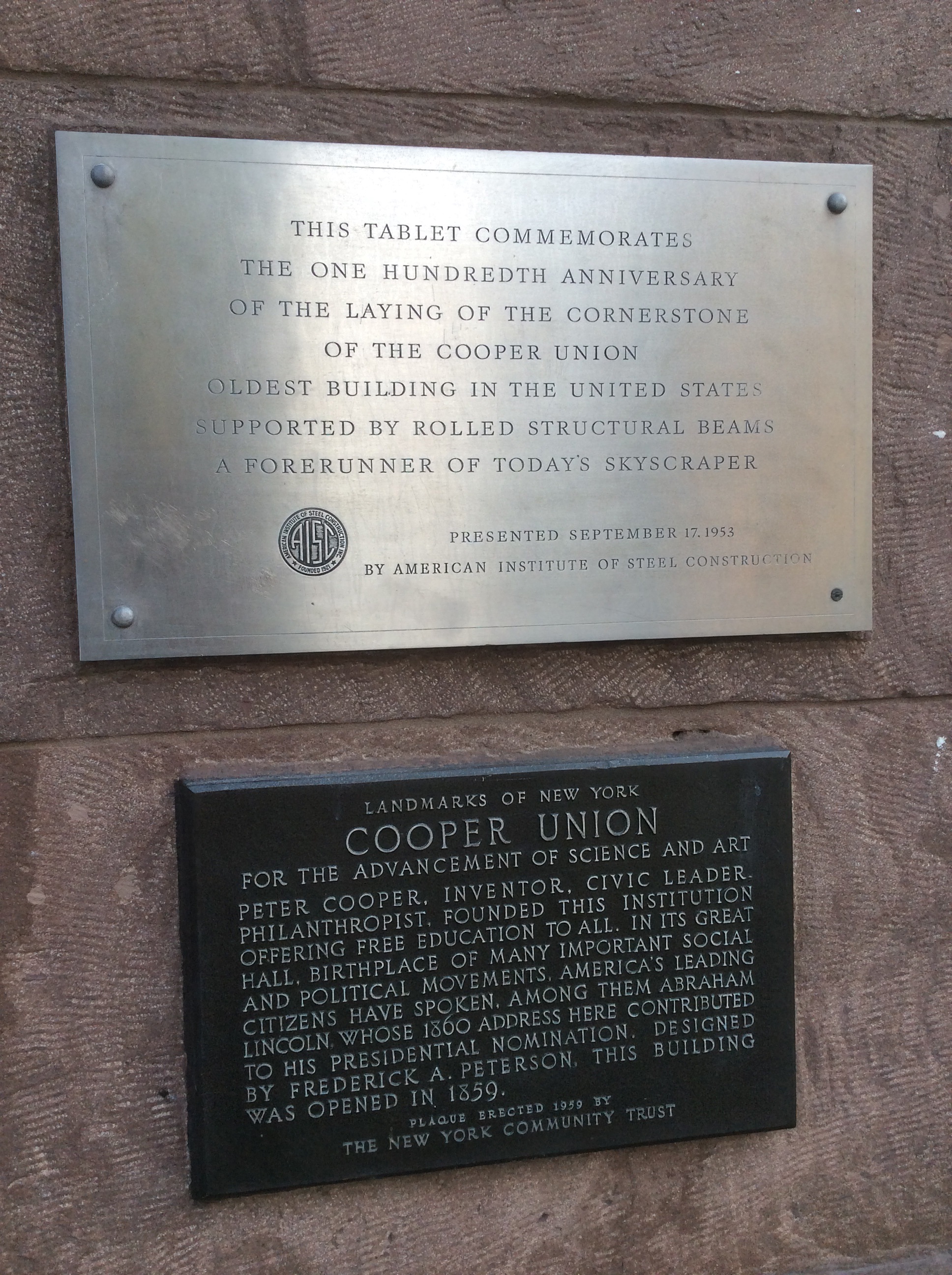
Cooper's Union at Cooper Square and Astor Place, NYC

Cooper’s Union at Cooper Square and Astor Place, NYC

I continue north on Broadway, walking briskly since it’s fairly far, 11 long blocks north and four moderate-sized blocks east. But it’s a beautiful warm day outside and I can’t bring myself to go down in the subway. I’m heading for the Cooper Union foundation building at the southeast corner of the intersection of Astor Place and Cooper Square, a few blocks east of Washington Square and a couple blocks north. It’s a brownstone affair with arched windows built in the mid-1850’s. Cooper’s Union is a school founded on the idea that all people of talent and drive should receive a free, high-quality education whether or not they or their families can afford to pay, and its founder put an enormous fortune where his mouth was.

Historical plaques on Cooper's Union, New York City

Historical plaques on Cooper’s Union, New York City

This building has had about as many great speaker’s voices echoing down its halls as you could wish for, including Abraham Lincoln and Mark Twain. In November of 1861, when the building was still fairly new, our hero and their mutual friend traveled to New York City. Six days after delivering a speech for the Emancipation League Speech in Boston, he delivered it again here. Douglass called forcefully once again for the immediate emancipation of all slaves and for the enlistment of black soldiers into the Union Army, which would not be allowed until a little over a year later. Douglass felt it was all-important that black people should be at the forefront of the fight against slavery, which everyone knew, and still does if they’re being honest, was more about slavery than anything else. Not only would this prove to their fellow Americans that black people were as brave and able as anyone else, which most Americans both north and south had trouble believing, it would give soldiers the opportunity to improve their own fortunes by establishing them as heroes, and by instilling in them that sense of confidence and self-worth born of taking their own destinies finally and firmly into their own hands.

Douglass returned to Cooper’s Union to speak more than once. On one occasion on May 30th 1865, Douglass delivered a speech not only memorializing his sometimes target of criticism, sometimes friend, and recently martyred hero Abraham Lincoln, he also denounced the New York Common Council for not allowing black people to participate in Lincoln’s funeral procession in New York City. This town, though in a free state, was not yet a warm and welcoming place for black people. Not only did the very real danger of slavecatchers here convince him to move to New Bedford soon after his arrival in September 1838, on one occasion years later in 1850 he was beaten up by several white men just for walking down the street with two white lady friends of his on his arms. New York City was not, at the time, a place of human rights idealism so much as a place of commerce, and forced free labor can be good for business, or so it was often thought.

A view of 9th Ave, west side of street between 37th and 38th Sts, possible site of Apollo Hall in New York City

A view of 9th Ave, west side of street between 37th and 38th Sts, possible site of Apollo Hall in New York City

As you can see from the ever-increasing contrast in the photos as the sun makes it way west and downward, I’m running low on daylight, so I take the subway to my next destination. According to The New York Sun of January 26 1897, Page 3, Apollo Hall was at 495 Ninth Avenue, which is now between 37th and 38th. I can’t be sure that this is the right place, since at this point, I have not found an atlas confirming the location. I just have the street address number, which as we know, can change sometimes, and many results came up for ‘Apollo Hall New York’ keyword search, such as a playhouse which temporarily had Apollo in its name and a Brooklyn one described in The Weekly Democratic Statesman of May 13, 1875, p 4 as being on Fifth St in Brooklyn, a Union Tabernacle house of worship. But the hall named in the New York Sun article seems to be more of a forum for meetings such as the ones Douglass spoke at, and my sources refer to its being held in NYC, not Brooklyn. So, until I discover otherwise (and I’ll let you know if I do, dear readers!), I’ll assume this is the general location. There are no markers that I can find.

American Anti-slavery Society Anniversary program, May 12 1863, N. Y.

American Anti-slavery Society Anniversary program, May 12 1863, N. Y.

On April 9th 1870, ten days after the ratification of the 15th Amendment, the American Anti-Slavery Society met here for the last time. In his speech, Douglass said that the best and really the only way to thank God for the victory over slavery and the newly won right to vote (the 15th Amendment was ratified just that February) was by thanking the men and women who made it happen, because only through them was the will of God apparent. He was sometimes criticized in editorials and in the pulpit, especially by other black ministers, for not prioritizing God in his writing, in his speeches, and his public statements of gratitude. Douglass would have none of it, saying that as long as people did nothing about the injustice and evil done in the world, it was never done at all; the insistence on prioritizing the role of God in the good that’s accomplished can lull people into thinking that, as we sometimes put it today, it’s okay to just hang back and ‘let go, and let God’. Douglass didn’t think his work or that of his fellow activists here was done with the passage of the 15th amendment. He called for a new campaign for women’s suffrage, and he said that the mission didn’t end, only changed, to improve the lot of all suffering people, including Indians, women, and all oppressed minorities

In another landmark moment at Apollo Hall, delegates nominated Douglass as a candidate for Vice President on May 11, 1872.

Here’s the story if you’re interested in getting a little deeper into the historical details (skip this and the next long paragraph if you’re short on time): These delegates were meeting here to organize a new Equal Rights Party out of disappointment and frustration with the Republican’s increasing lack of commitment to progressive values. The Republican Party, Douglass’ party, was starting to fissure over corruption in President Ulysses S. Grant’s administration, the debate over Radical Reconstruction (the policy of guaranteeing full equal political rights to black people and punishing Confederate leaders for waging war against their country), and the party’s increasing tendency to favor corporate and individual business interests over the rights of oppressed persons, especially black people and women. The Equal Rights Party was formed in opposition to the Liberal Republicans as well. Both criticized Grant for doing little to solve the corruption problem as well as for allowing Douglass to be excluded from an important White House meeting of one of the very commissions Grant had appointed him to, as well as Grant’s refusal to chastise the caption of the mail packet, on the return of the commission to DC, who excluded Douglass from the dining room. The ERP and the LR’s believed these discriminatory actions of Grant showed he was not truly committed to the cause of furthering the cause of black cause. But the ERP opposed the LR’s policy of cooperating with southern states-rights contingent who wanted to forgive ex-Confederates and rebuild the south economically, even if it meant sacrificing black civil rights issues.

The newly formed ERP nominated women’s and labor rights activist Victoria Claflin Woodhull for President of the United States and Frederick Douglass for Vice President, a progressive ticket if there ever was one. Douglass didn’t accept, since he believed it imperative that the black vote remained united behind the only party that had, and could still, actually accomplish good things for black people even if some time and compromise were required.  (Here he shows his pragmatist side.) He dismissed the White House commission dinner slight as an oversight, and pointed out that the LR’s and Democrat’s state-rights policies protected the Klu Klux Klan’s terrorism in the South. Grant won the election that fall by a landslide, and Douglass was appointed one of the two electors-at-large for New York State; he and his fellow elector, friend, and mentor Gerit Smith conveyed the results of the New York ballot to the Senate. But Douglass was to find himself ever more disappointed in the Republican Party’s lackluster performance in ensuring that black people actually enjoyed the rights guaranteed to them by the 13th, 14th, and 15th amendments.

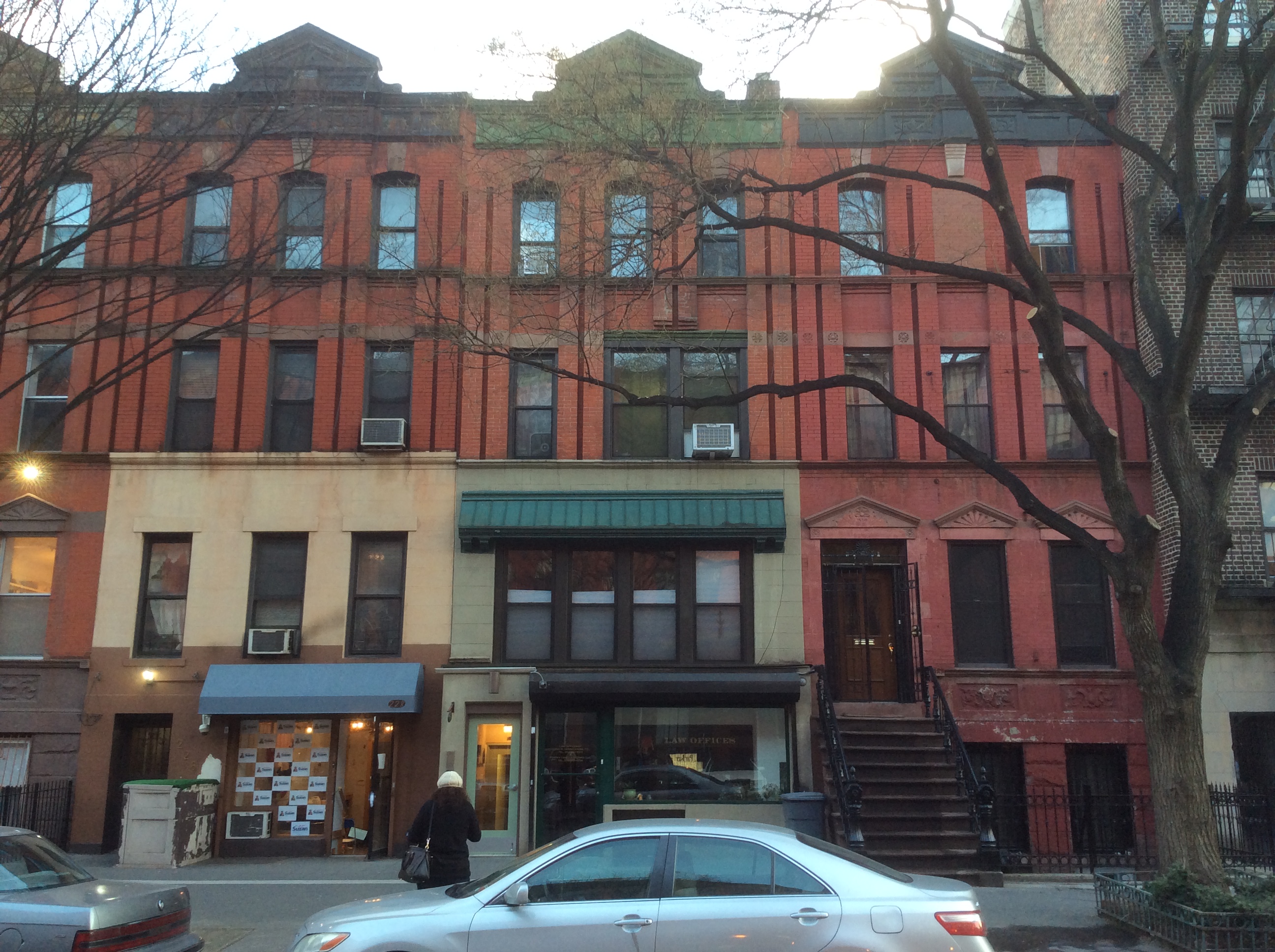
The former offices of Ida Wells' New York Age newspaper at 230 W. 135th St (center) Harlem, New York City

The former offices of Ida Wells’ New York Age newspaper at 230 W. 135th St (center) Harlem, New York City

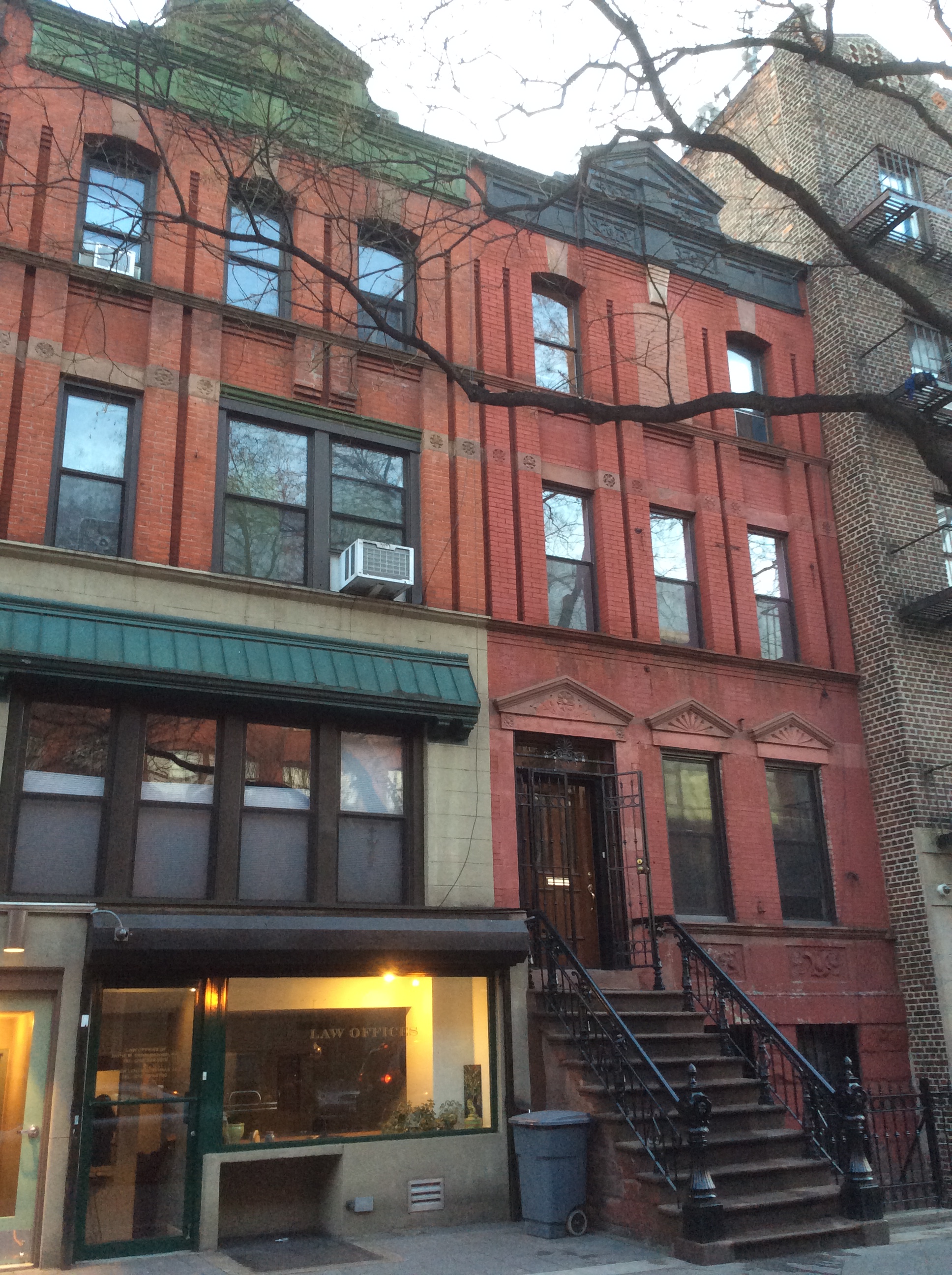
230 and 232 W. 135th St, Harlem, New York City

230 and 232 W. 135th St, Harlem, New York City

So north I press on, again by subway, all the way to Harlem. I really like this neighborhood. I head to 230 West 135th St, between Frederick Douglass Blvd (appropriately enough; it was formerly 8th Ave) and Adam Clayton Powell Jr. Blvd (formerly 7th). I’m in luck: according to an old city atlas from the late 1800’s I’m so glad to find digitized and offered online, the street numbers don’t appear to have changed: the placement of number 230 matches the distance between 7th and 8th Avenues as it’s marked on my map. So exciting: it’s very rare for me to find that address numbers have not changed. Number 230 is now a small suite of law offices, one in a row of red-colored brownstone and brick fronts, with an updated pale pea-soup green facade complete with modern square windows and an awning. The one to the right of it, though, is clearly unchanged, and would certainly have looked identical.

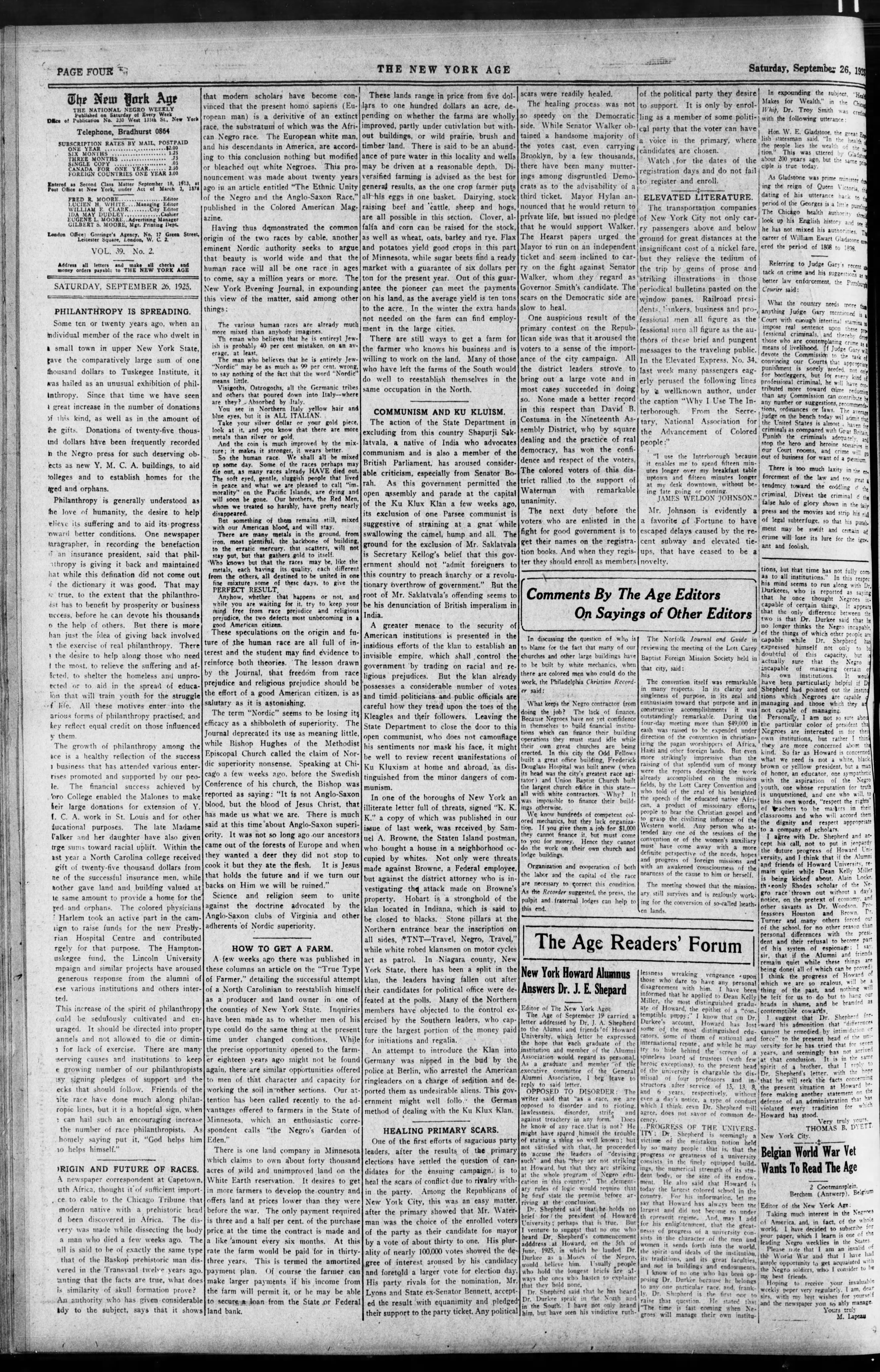
The New York Age, for Saturday, Sep 26, 1925

The New York Age, for Saturday, Sep 26, 1925, page four showing address of their offices

In late 1892, Douglass came here to New York City to visit the marvelous Ida B.Wells, whose investigative journalism into lynching of black people inspired and informed his later speeches and activism. He almost certainly came to visit her in these offices. She moved to New York City in late 1892 for a short time before settling in Chicago, and in that time became a writer for and part owner of the New York Age, a very influential black newspaper which thrived for decades. Again, I’m in luck: there’s an earlier edition digitized and published online which gives the address of its offices. The New York Age and Wells’ powerful pamphlet Southern Horrors: Lynch Law in All Its Phases were printed here.

A Man Was Lynched Yesterday 1930's NAACP flag, Thomas Jefferson Building, Library of Congress

A Man Was Lynched Yesterday 1930’s NAACP flag, Thomas Jefferson Building of the Library of Congress.

Lynching was not, for a long time, a central issue for Douglass nor for many fellow abolitionists. It seemed that many took it for granted that it really was crimes committed by those lynched that sparked vigilante justice. And besides, the fight for political rights was central and took enormous energy and dedication, with seeming little to spare for extralegal extremist activity. However, when Wells’ own friends were lynched because of hysteria whipped up by a rival business owner who didn’t like the competition, Wells was galvanized. She saw, firsthand, how lynching was a terroristic weapon to keep black people subjugated through fear. All you had to do was cry ‘rape’, especially by a black man against a white woman, and you could torture and kill whoever you thought was out of line or too insistent on having their rights or dignity respected. It worked all too well, and the achievements of the civil rights movement were surely significantly delayed by these tactics. After all, it’s hard to fight for and exercise your political rights when you have to keep your head down, avoiding the flame and the rope wielded by members of a touchy populace that hates you and thinks you’re less than fully human. Douglass came to realize that and took on this fight too.

So ends my New York City adventures, and I look forward to so many more as I keep on pressing north. My next story follows soon!

*Listen to the podcast version here or on iTunes

Ordinary Philosophy and its Traveling Philosophy / History of Ideas series is a labor of love and ad-free, supported by patrons and readers like you. Please offer your support today!

~~~~~~~~~~~~~~~~~~~~~~~~~~~~~~~~~~~~

Sources and Inspiration:

Anna Murray-Douglass‘. In Wikipedia, The Free Encyclopedia.

Blassingame, J. (Ed.). The Frederick Douglass Papers, Series One: Speeches, Debates, and Interviews. 4 volumes, and The Frederick Douglass Papers, Series 2: Autobiographical Writings. 3 volumes. New Haven and London: Yale University Press, 1979-1999

Douglass, Frederick, ed.  John R. McKivigan. The Frederick Douglass Papers: Series Two: Autobiographical Writings, Volume 3: The Life and Times of Frederick Douglass, p. 504.

Douglass, Frederick. The Heroic Slave: A Cultural and Critical Edition. Eds Robert S. Levine, John Stauffer, and John McKivigan. Hew Haven: Yale University Press, 2015.

Douglass, Frederick. The Life and Times of Frederick Douglass. Re-published 1993, Avenal, New York: Gramercy Books, Library of Freedom series.

Douglass, Frederick. My Bondage and My Freedom: 1855 Edition with a new introduction. Re-published 1969, New York: Dover Publications, Inc.

Fifth Avenue Theatre‘. In Wikipedia, The Free Encyclopedia.

Foner, Philip S. The Life and Writings of Frederick Douglass, Vol. 1-4. New York: International Publishers, 1950.

Frederick Douglass Chronology‘. From Frederick Douglass National Historic Site District of Columbia, National Park Service website

Lionel Pincus and Princess Firyal Map Division, The New York Public Library. (1884- – 1893). Manhattan, V. 11, Double Page Plate No. 248 [Map bounded by W. 140th St., Lenox Ave., W.. 135th St., 8th Ave.]

McFeely, William. Frederick Douglass. New York: W.W. Norton & Company, 1991.

The New York City Landmarks Preservation Commission. (Feb 14, 2007). ‘New York City Landmarks Preservation Commission Unveils Plaque at Site of One of the Nation’s Most Important Stations Along the Underground Railroad‘ [Press Release]

The New York Age: The National Negro Weekly. 26th September 1925, Page Four.

New-York Tribune. (New York [N.Y.]), 26 Jan. 1896. Chronicling America: Historic American Newspapers. Lib. of Congress.

Rutherford, Karen. ‘Ida B. Wells-Barnett‘. Jan 2004. From The Mississippi Writers Page, MWP.OleMiss.edu/

Wells-Barnett, Ida B. ‘Southern Horrors: Lynch Law in All Its Phases.’ Originally published in The New York Age, June 25, 1892. From Project Gutenberg

Cesar Chavez Day, by Alejandro Magana

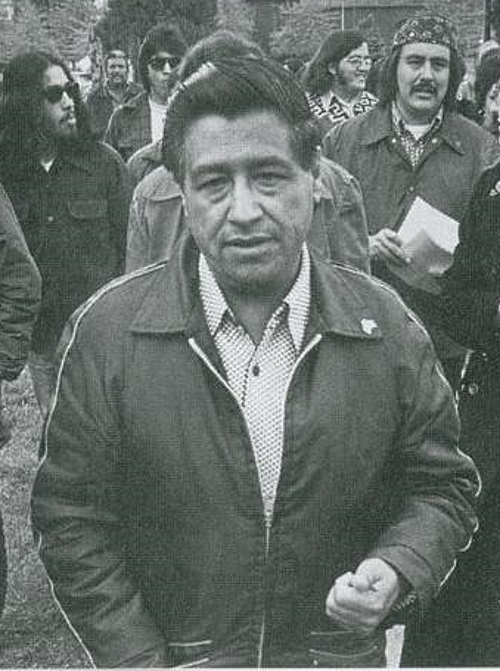
Cesar Chavez visits college - By Movimiento - Own work, cropped - CC BY-SA 3.0 httpcreativecommons.orglicensesby-sa3.0 via Wikimedia CommonsEvery year around Cesar Chavez’s birthday, as media outlets report of festivities in his honor, I’m reminded of a joke in a Simpsons episode and the strange sadness it elicited in me when I saw it: Homer Simpson is on his front lawn and is confronted with the apparition of a debonair, mustachioed man who introduces himself as, “the spirit of Cesar Chavez.”

In typical Homer confusion he asks, “Then why do you look like Cesar Romero?”

The ghost replies, “Because you don’t know what I look like!”

Cesar Chavez is certainly revered by many people, especially within the Latino community, but despite the steadily increasing ubiquity of his name across the United States, especially the American Southwest, there are still many Americans today who don’t really know who he is, let alone what he stood for, or what he accomplished.

Cesar Chavez was a Mexican-American community organizer turned labor leader and . A former migrant farmworker recruited by the Community Service Organization (CSO) in its heyday of the 1950s, he co-founded the National Farmworkers Association (NFWA,) which later became the United Farm Workers (UFW,) the first successful union for migrant farmworkers. The UFW’s membership consisted mostly of indigent Latinos and Filipinos, and their struggle for justice and dignity, fighting to gain higher wages and better conditions in the fields where they were deprived of basic needs such as clean drinking water and bathrooms, became a national moral cause under the stewardship of Chavez, who courted national and international sympathy using militant non-violent tactics in the vein of Mahatma Gandhi and Martin Luther King Jr, such as strikes, boycotts, fasts, and peaceful marches.

Chavez was not an imposing orator with the fire-and-brimstone timbre of the Reverend Dr. King, nor did he cut as iconoclastic a figure as Gandhi, but in his unassuming way he could be just as charismatic and endearing, and this often caught people off guard, as it did an interviewer for the New Yorker in 1973, who, “had expected, if not a Mexican-American Lenin…a young, hard, intense man bristling with revolutionary zeal. Instead we found Mr. Chavez to be a stocky man…about five feet seven …with Indian features…and a pleasant earnest manner.” With his trademark regular boys’ haircut parted on the side and wearing simple cardigans with button down plaid shirts and slacks, his fashion was more Mr. Rogers than Mr. Lenin. He looked the part of the humble Everyman that people felt they could relate to.

On a personal note, my parents actually met while working with Cesar Chavez in the early ‘70s, and when they tell stories of those days, they both recall how approachable he was with his easy but confident demeanor; how people were drawn to him and trusted him, even as he took them out of their comfort zones, like the time he sent my mom and a few other farmworkers to Chicago, to publicize and organize the Grape Boycott, even though they spoke very little English and were armed with just a few phone numbers of sympathizers there along with the names of some churches that might possibly provide them with food, room and board. They believed they could accomplish such ambitious plans because this diminutive, unpretentious man seemed capable of stopping the engine of the entire agricultural industry and took on Big Agribusiness all by himself. Before it became widely known as the slogan of Barack Obama’s presidential campaign, I grew up with my father reminding me, “¡Si se puede!” (Yes, you can!) a phrase Chavez often chanted before throngs of people at picket lines and marches.

Like Gandhi and King, he was intensely spiritual and absolutely committed to non-violence. In what may be his most recognizable aphorism, he said, “It is my deepest belief that only by giving our lives do we find life. I am convinced that the truest act of courage…is to sacrifice ourselves for others in a totally non-violent struggle for justice.” Self-immolation was a recurring theme in both word and deed: in 1968, during the Delano Grape Strike, after several tense confrontations at the picket lines nearly devolved into violence, he fasted for 25 days to encourage and remind the farmworkers that their fight was to be a non-violent one. He would fast for 24 days again in 1972, and in 1988 he fasted for 36 days(!) to bring attention to the pesticide poisoning of grape workers and their children. It is thought that his relatively early death at the age of 63 in 1993 was probably due to aggregated health complications suffered from these sacrifices. Still, even now, if you talk to people who marched with Chavez and the UFW back then, most speak of Chavez in reverential, even hagiographical ways, for to them he was como un santo: like a saint..

Throughout the 1960s and 1970s, as the UFW made sweeping legislative strides on behalf of organized farm labor, Chavez was also becoming the most widely known leader within the broader Chicano Movement, or “El Movimiento,” a civil rights movement which empowered Mexican Americans caught between two cultures, not quite Mexican enough for their Mexican immigrant forebears, nor seen as truly American by the white hegemony. The term “chicano” was originally a derogatory term for the American children of Mexican migrants, but in the Movement it was flipped, transmogrified, to be a badge of ethnic pride. Of course Chavez always made sure to situate the fight of the UFW as united with the struggle of “all farm workers across the country, the Negroes and poor whites, the Puerto Ricans, Japanese, and Arabians…the races that comprise the oppressed minorities of the United States,” but “The Plan de Delano,” a text co-authored by Chavez with Dolores Huerta and the Chicano playwright Luis Valdez, reifies and emboldens his ethnic heritage, declaring “We are sons of the Mexican Revolution.” To this day, the flag of the UFW, showing a black Aztec eagle on stark red background, is widely considered a symbol of Chicano or Latino pride. Those of us who wear this symbol, or even, as in my case, have it tattooed on their body, recognize that the life we have so firmly rooted in the United States, with access to resources and opportunities that our parents or grandparents did not have, is due to the hard work and vigilance of people like Cesar Chavez, Dolores Huerta, or my mother, Maria Saludado.

The identity politics that certainly began to swell in the 1960s have persisted despite reactionary criticism and remain particularly relevant today; an era in which the ugly scars of racism seem as starkly etched in our national consciousness as ever. As we near the end of the second term of America’s first ‘non-white’ President, as Mexican immigration continues to be a galvanizing and polarizing issue in the US, and the Latino vote is highly prized on both sides of the political aisle, conditions would seem fecund for a reboot of El Movimiento. In appropriate fashion, this year the Cesar Chavez Foundation, an offshoot of the UFW, began its annual celebration in San Fernando, the first city in the nation to commemorate Cesar Chavez Day with a paid holiday, with a rally and march to encourage activism to “Dump Trump.”

¡Que viva César Chávez!

~ Alejandro Magaña is a musician, poet, and songwriter some of the time, and a father and husband all of the time. He also works full-time as an office manager at Urban Ore in West Berkeley. He lives in North Oakland with his wife and son and books and records.

~ Ordinary Philosophy and its Traveling Philosophy / History of Ideas series is a labor of love and is ad-free, entirely supported by patrons and readers like you. Please offer your support today!

~~~~~~~~~~~~~~~~~~~~~~

Sources and Inspiration:

● My mother and father. ¡Que viva mis padres!
● Chasan, Daniel. “‘Marcher,’ an interview with Cesar Chavez,” The New Yorker, May 27, 1967.
● Chavez, Cesar, Huerta, Dolores, and Valdez, Luis. “The Plan of Delano,” El Malcriado, March 17, 1966.
● Chavez, Cesar. An Organizer’s Tale: Speeches Ed. Ilan Stevens. London: Penguin Books, 2008.

Happy Birthday, Rosa Luxemburg!

Rosa Luxemburg, By unknown photographer around 1895-1900 [Public domain], via Wikimedia CommonsRosa Luxemburg, Mar 5 1871 – Jan 15 1919, is the great Marxist theorist, writer, economist, revolutionist, anti-war and anti-capital-punishment activist, and philosopher who was murdered during the German Revolution of 1918–1919.
Though she’s an anti-war activist, Luxemburg is also critical of the idea that a just society can be brought about by incremental reforms through established political systems. If she were to be involved in the 2016 Democratic primary race between Hillary Clinton and Bernie Sanders, she would very likely back Bernie, with his more revolutionary style and rhetoric: she’s sharply critical of the Social Democratic Party of Germany, to which she belongs (in its left wing) for favoring a Hillary-style reformist approach. However, her internationalism takes Marxist thinking beyond the point where leading Marxists of her day had progressed, with their focus on unique formulations of Marxist political theory tailored to their own particular national identities and histories. She would likely find fault, then, with Bernie’s protectionism.

Luxemburg’s other great contribution to Marxist thought is her theory about the accumulation of capital. Since capitalism’s primary fuel is constant and ever-increasing consumption, she thinks it’s a mechanism for the ultimate destruction of our material capabilities to sustain ourselves, starting with the ecosystems on which indigenous people, the poor, and the working class depend. Here as well, her progressive thinking takes her far beyond Marx himself, and her concerns in this timely issue makes her as relevant now as ever.

Read more about the brilliant and fearless Luxemburg:

‘Who’s Who – Rosa Luxemburg’ at First World War.com

‘The Dialectic of the Spatial Determination of Capital: Rosa Luxemburg’s Accumulation of Capital Reconsidered’ by Peter Hudis

The Crisis of German Social Democracy (The Junius Pamphlet) by Rosa Luxemburg, 1915

‘Rosa Luxemburg’, from Wikipedia, the free encyclopedia

Ordinary Philosophy and its Traveling Philosophy / History of Ideas series is a labor of love and is ad-free, entirely supported by patrons and readers like you. Please offer your support today!

Frederick Douglass the Pragmatist

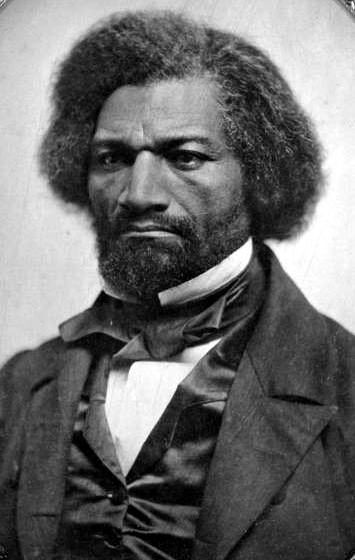
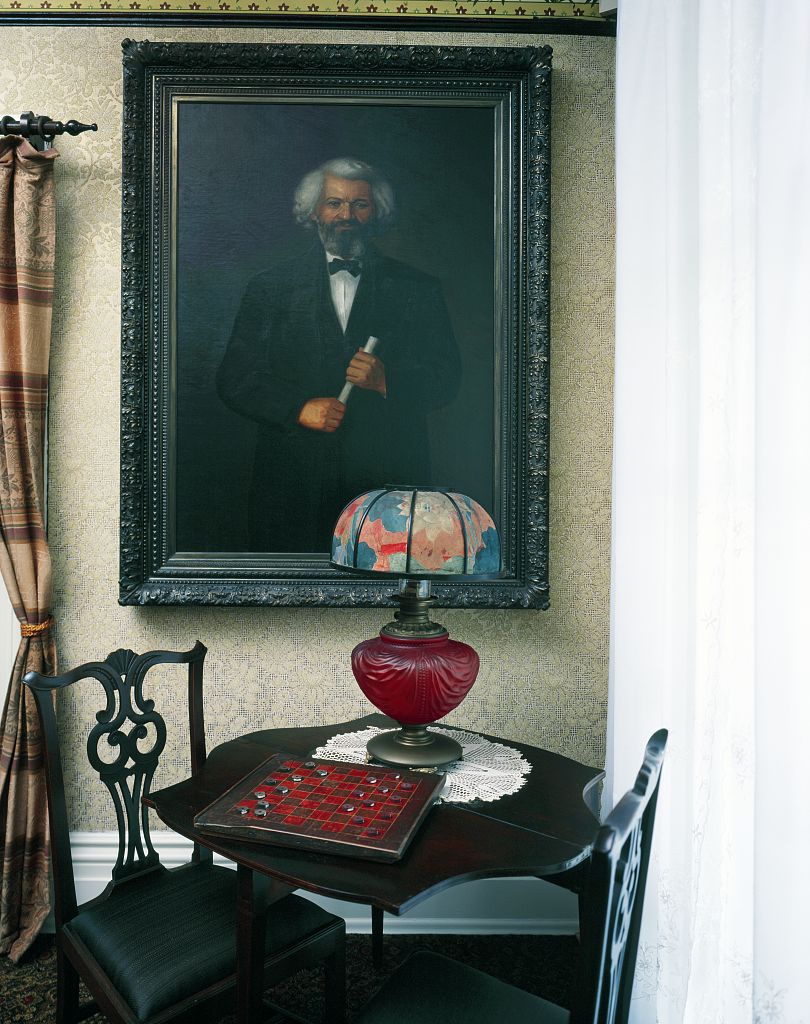
Frederick Douglass House Parlor, Washington, D.C.

Douglas is a fiery orator, an uncompromising abolitionist and proponent of universal human rights, and even an advocate of using violence if the cause is just, the harms too great, and other means prove ineffective (more on that in an upcoming piece). He criticizes those who ‘shamefully abandon their principles’. And very often, when he encounters discrimination in a hotel, restaurant, or other public place, he reports the incident to the local press.

Yet for all his energetic activism, uncompromising rhetoric, and devotion to principle, Douglass is also a pragmatist, in matters large and small.

To be sure, many of his activist tactics are as idealistic, and plainly appear so, as they are as practical. Douglass’ reports of discrimination, for example, fire up public support for the cause of equal rights by arousing a storm of protest and in turn, raising consciousness and providing examples for use in the political arena.

He’s a pragmatist when it comes to making a living as well: after a decades-long successful career lecturing and publishing, a house fire and an attempt to rescue the Freedman’s Bank from collapse leave Douglass’ finances in disarray. So he takes to the lecture circuit again full time in the 1870’s. In the pre-Civil War era, he makes his living doing what he believes in most: lecturing, debating, and arguing for abolishing slavery and expanding human rights. But in the post-Civil War era, he finds that morals, politics, and rights issues are no longer such profitable topics. So he goes ahead and lectures on the profitable ones, so long as it he can make the talks instructive and wholesome, and link them to more important issues. ‘People want to be amused as well as instructed’ he writes.

He’s a pragmatist when it comes to tactics and the importance of crafting an image. For example, Douglass considers photography a very important, modern tool for engendering mass support through empathy: if people can see and recognize the face of the person behind the ideas, and of one who is a member of a suffering and oppressed people, people will feel the visceral need for change. So, he takes care to become one of the most photographed men in American history.

Douglass’ practicality holds sway in larger issues too. He does not hesitate to change tactics or switch allegiances between organizations or parties if he thinks it would help the cause in the long run. In fact, he is convinced that true, unswerving, uncompromising allegiance to the cause itself requires a reformer to use whatever means necessary, so long as they are not morally wrong, even if they are imperfect or less inspiring or exciting to others than the more uncompromising choice. He has been criticized throughout the years for splitting with the Garrisonians, for siding with Captain John Fremont against Abraham Lincoln in the latter’s recall of Fremont’s emancipation proclamation in Missouri early in the war, for refusing to support or join in on the raid on Harper’s Ferry (though he supports John Brown’s ideas about the validity of armed resistance in general), for evading arrest and possible execution for charges of co-conspiracy in the Harper’s Ferry raid by fleeing to Canada, and for abandoning the Radical Abolitionist Party in favor of the newly formed Republican Party. His critics contend that his practice of often siding with moderate tactics and candidates reveal a lack of commitment and moral courage.

Yet he defends all of these practical choices on the grounds that commitment to the tactics or politics in and of themselves are actually a distraction, since the practice of committing to the ‘pure’ choice in the short run is often an impediment to achieving the ultimate goal in the long run. For example, if he throws his support behind his friend and hero Gerit Smith, uncompromising political candidate of the Radical Abolitionist Party, instead of Abraham Lincoln, the Republican candidate who ran on the more moderate goal of preventing the spread of slavery to the new states, he might be more admired as an uncompromising leader. But he understands what a risky move this would be. The Radical Abolitionists had little chance of winning, but the Republican Party was off to a very successful start, losing its first presidential campaign by a relatively small margin. Since the moderate goals of the Republican Party had a good chance of realization while those of the Radical Abolitionists little to none, Douglass sides with the former. The stakes are simply too high for Douglass to risk losing at this point, even if the risk appears nobler.

In sum, Douglass argues that the truly committed reformer is free to choose the more modest, practical, sure-bet option over the less apparently compromising, more radical option when it appears to be more effective in the long run. That’s because true faithfulness to the mission does not require appearing an effective reformer, it requires actually being as effective as possible. No small part of Douglass’ greatness as an activist and as a person is his willingness to forgo short-term public approval or personal glory in favor of acting in the long-term best interests of his cause. And it appears that history not only validates him as an astute tactician, but as a heroic figure, in part because in hindsight we can more easily recognize the wisdom, integrity, and strength in his pragmatism.

Ordinary Philosophy and its Traveling Philosophy / History of Ideas series is a labor of love and is ad-free, entirely supported by patrons and readers like you. Please offer your support today!

~~~~~~~~~~~~~~~~~~~~~

Sources and inspiration:

Blassingame, J. (Ed.). The Frederick Douglass Papers, Series One: Speeches, Debates, and Interviews. 4 volumes, and The Frederick Douglass Papers, Series 2: Autobiographical Writings. 3 volumes. New Haven and London: Yale University Press, 1979-1999
Douglass, Frederick. Autobiographies, with notes by Henry Louis Gates, Jr. Volume compilation by Literary Classics of the United States. New York: Penguin Books, 1994.

Douglass, Frederick. My Bondage and My Freedom: 1855 Edition with a new introduction.. Re-published 1969, New York: Dover Publications, Inc.

Foner, Philip S. The Life and Writings of Frederick Douglass, Vol. 1-4. New York: International Publishers, 1950.

Varon, Elizabeth. ‘Most photographed man of his era: Frederick Douglass’, the Washington Post, Jan 29, 2016. https://www.washingtonpost.com/opinions/most-photographed-man-of-his-era-frederick-dou

What Ordinary Philosophy’s All About: Clarifying the Vision

People in a Public Square, Image Creative Commons via PixabayIt’s been an especially busy few weeks for me: studying, researching, writing, planning for my upcoming traveling philosophy journey and for the expanded future of Ordinary Philosophy. This year so far, I’ve had the great good fortune to meet some inspiring new people: passionate, thinking, active, and creative. I’ve also gotten to know others better as well, and am opening new doors and making new contacts every day. Our conversations have been inspiring me to think more clearly and deeply about my vision for Ordinary Philosophy, about my hopes, dreams, and goals, and about the wonderful people who will work with me to accomplish them in the future.
So I’ve just been looking over my introductory statement about Ordinary Philosophy, and thought it needed some clarifying and expanding. Here’s my vision as it stands now, best as I can describe it, and it’s beautiful to me. I hope it is to you too!

~~~~~~~~~~~~~~~~~~~~~~~~~~~~~~

Ordinary Philosophy is founded on the belief that philosophy is an eminently useful endeavor as well as a fascinating and beautiful one, and that citizen philosophers and academic philosophers alike share in making it so.

So why the name Ordinary Philosophy?

The ‘Ordinary’ in Ordinary Philosophy means: Philosophy is not only pursued behind the walls of academia.

It’s an ordinary activity, something we can do regularly whatever our education, background, or profession, from our homes, workplaces, studies, public spaces, and universities. It’s applicable to ordinary life, since it’s about solving the problems we all encounter in the quest to pursue a good, happy, and meaningful one.

It’s about seeking answers to the ‘big questions’ we ask ourselves all the time: ‘What’s the right thing to do?’ ‘What’s a meaningful life, and how can I make mine so?’ ‘What’s the truth of the matter, what does truth mean anyway, and how do I know when I’ve found it?’ ‘What does it mean to have rights?’ ‘How did reality come to be as it is?’, and so on.

It’s also just as much about the ordinary, day-to-day questions: ‘Should I take this job, and will it help fulfill my highest aspirations?’ ‘It is wrong to put my interests first this time, even if it will harm someone else?’ ‘What’s the difference between just talking about other people and malicious gossip?’ ‘Why should I go out of my way to vote?’

And in the end, it’s about living philosophy, about philosophy in the public square, and the stories and histories of philosophy as it is realized, personified, lived out by activists, artists, scholars, educators, communicators, leaders, engaged citizens, and everyone else who loves what’s just, what’s beautiful, and what’s true.

All of this is philosophy.

~ Amy Cools, founder and editor of Ordinary Philosophy

Sex, Gender, Surgery, and Freedom

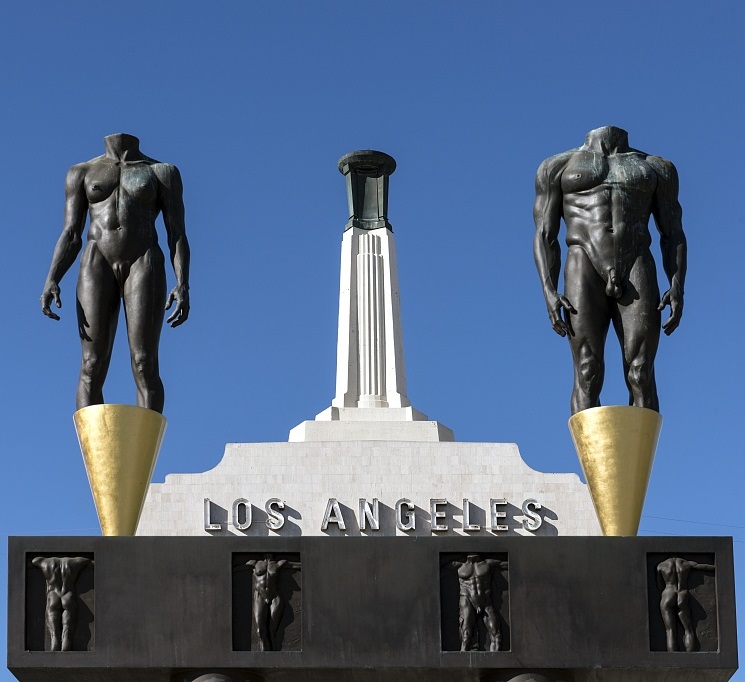
The Olympic Gateway arch and male and female statues at the entrance to the Los Angeles Memorial Coliseum, Los Angeles, California by Robert Graham, public domain via Library of CongressI believe that people should be free to express their tastes, preferences, and personalities without legal limits if little or no harm is done to others by doing so. Not including mere hurt feelings, however: if it did, no one would be free to do much of anything.

Likewise, I believe we have positive moral obligations to respect each other and ourselves, and to do so, we should work to free ourselves from harmful biases and distastes based on cultural, racial, religious, and gender stereotypes and narrow standards of beauty.

But when a popular social practice seems to promote one of these principles while betraying the other, it can be difficult to decide whether it’s right or wrong, good or bad.

Take plastic surgery, Botox injections, and other body-altering elective procedures done for non-reconstructive, ‘vanity’ purposes. I’ve dubbed them cosmetic medical interventions. Last year, I examined the benefits and impacts of these, both personal and social. Many, even most, would consider opting for one of these cosmetic treatments  anything from harmless vanity to helpful in boosting self-esteem, and most would consider it a purely personal matter and no-one else’s business. Yet I found that the social acceptance and increasing prevalence of cosmetic medical interventions can have significant impacts that affect a whole culture. While I didn’t find sufficient justification for banning most of them or even for claiming they’re immoral across the board, I believe I presented evidence and arguments sufficient to show they can cause harm, especially in the aggregate. While cosmetic medical interventions can and do make some individuals happy in particular circumstances, they can present health risks, be disfiguring, become psychologically addictive, and perpetuate gender stereotypes, ageism, racism, classism, and other mindsets that erode respect and tolerance.

And as my examination progressed, an uneasy realization kept nagging at me. Many of my questions and concerns about cosmetic medical interventions could apply, for the same or similar reasons, to sex reassignment surgery. I decided not to include it in that discussion because it’s embraced by so many as an important way to achieve fulfillment, acceptance, and equality for traditionally marginalized transgender people, making it a politically ‘hot’ and delicate issue warranting its own careful examination.

Then not too long ago, I heard this story on NPR about one of two twin boys, self-identified as a girl since the age of three, who became the young woman she identifies as today through sex reassignment surgery. Nicole’s story, while fascinating in its own right, struck me at the moment because of the terminology used: gender reassignment surgery.

That got me to thinking a lot about the issue again. Hmm, I thought, ‘gender reassignment surgery’, that’s a new way of putting it… but wait a minute: isn’t there a glaring assumption, even some contradictions, contained in that phrase?

For one thing, haven’t critics of traditional, binary gender roles been arguing that gender is neither dichotomic nor fixed? That gender is a set of attributes culturally or personally assigned according to sex, transmitted through social practice and the enforcement of norms? If so, how can gender, not just sex, be surgically altered? Sex can be reassigned to a certain extent: physical appearance can be surgically altered to match the general appearance of persons of the opposite biological sex, though we can’t transplant or build functioning reproductive organs (as of yet, anyway). And gender can be reassigned through self-identification, mental state, legal status, social acceptance, and many other means.

But how can gender be surgically reassigned, unless we accept the assumption that gender is tied to sex and an accompanying set of particular physical attributes?

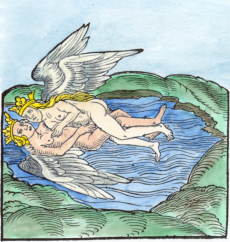
Illustration of fermentation in the Rosarium philosophorum, Frankfurt, 1550, public domain via Wikimedia Commons

I recognize that calling it ‘gender reassignment surgery’ is motivated by progressive values. Besides the regressive assumption I perceive in the term, it’s also forward-thinking in its attempt to reflect the best science available about transgender people, and a sympathetic recognition of the difficulties they experience in binary-gendered societies. The term hints at part of what science shows us: the experience of gender is at least partly biological in origin. However, gender is not, as the term also indicates, inextricably linked to how closely one’s physical appearance correlates with the general appearance of males and females. Science reveals that the feeling of belonging to a particular gender is generally correlated with sex, as biologist and neuroscientist Robert Sapolsky explains; however, it’s more complicated than that. We now have the capability of studying the brains of people who seek sex reassignment surgery because they feel their gender doesn’t match the body they’re born with. When transgender people like Nicole from the NPR story, who just know from a very young age that they really belong to a different gender than others perceive, we can actually see that their brains are physically different from the average person whose gender and sex fit the more common binary system. For example, the brain of a young male-sexed person who has felt female for years can look, in some regions, more like the average brain of a female than of a male. And the tenuous link between sex and gender for many people doesn’t end there: physical expression of sex can be ambiguous, with some bodies having genitalia with both male and female characteristics, or not identifiably either, whatever the gender.

Therefore, the phrase ‘gender reassignment surgery’ misses the boat in reflecting the science of transgender experience and its biological origins. But it’s also regressive insofar as it contradicts that valuable, hard-won insight that gender is also cultural. The larger question of who we want to be, as it relates to gender, isn’t determined by the appearance of our bodies and whether that appearance matches one sex or another: it’s also determined by how other people treat us based on the appearance of our bodies and how we present ourselves. And the way other people treat us has as more to do more to do with culturally instilled values and expectations than with strictly biological instincts.

So the NPR story led me to expand my initial questions and concerns arising from my examination of cosmetic medical interventions: is sex reassignment surgery also such a good thing on the whole, for society and for individuals? And to add: might it do more to reinforce gender stereotypes and the notion that our physical appearance determines our fate, than it enhances our freedom and long term sense of self-worth and happiness?

The evidence regarding the latter is very limited, since sex reassignment surgery hasn’t been done on a large scale for very long. There’s a(n) (in)famous study from Sweden from a few years ago that found that rates of suicide and psychiatric disorders were higher in those that received sex reassignment surgery and hormone therapy. People of every political persuasion drew wildly different conclusions from this, generally to fit their already held convictions: either that the higher rates of suicide and psychiatric disorder only reveal the stigma that transgender people face, not that transgender people are mentally ill or sex reassignment surgery is bad, or, that the higher rates of undesirable outcomes reveal that sex reassignment surgery is an invasive, painful, and harmful mistreatment of what’s really a cultural and psychological problem.

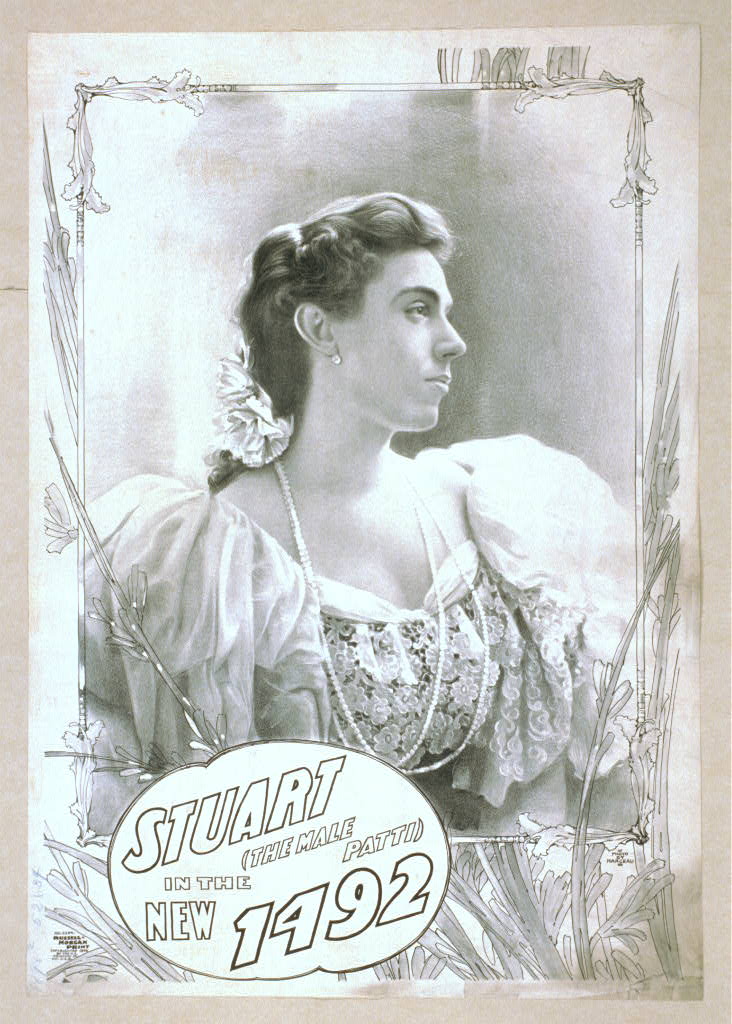
Stuart (the male Patti) in the new 1492, Cin., U.S.A. U.S. Printing Co., c 1898, public domain via Library of CongressI don’t believe it’s hard for most of us to accept that many opt for cosmetic medical interventions because they feel driven to it by pervasive ageism, sexism, and gender stereotypes. If you’re convinced that you’re too ‘old’, ‘wrinkled’, ‘fat’ ‘flat-chested’, or otherwise don’t match cultural standards of what a beautiful and successful person looks like, than you feel you need surgery in order to be accepted, to succeed, and to be admired. Sometimes, opting for cosmetic medical interventions helps to achieve these goals in come circumstances. In similar ways, some may feel the need for sex reassignment surgery because they’ve been told throughout their life, regardless of how they feel about themselves and what their preferences are, that they can’t wear a dress or makeup, be tough, be cute, play rough, take a leadership role, be forthright and assertive, pursue their real interests, or otherwise express their true personalities because they look like a boy or a girl. And sometimes for these transgender people, sex reassignment surgery helps them to express who they feel they really are, because their new appearance changes the way others perceive them and expect them to act.

Does this mean that we need to accept that sex reassignment surgery, or cosmetic medical intervention for that matter, is the best way to help us achieve the freedom to be who we want to be? Does it help instill in us the values of respect and tolerance for others and for ourselves, regardless of physical appearance? Is it really the key to breaking down gender stereotypes and increasing the freedom to be who we really are?

I have some questions and some doubts.

Don’t get me wrong: I believe that our newfound willingness to accept that people have the right to present or alter themselves as they see fit, and to recognize that their reasons for doing so may be good or at least understandable, is a good thing: it shows we’ve become more generous, our imaginations have broadened, and we’ve become more solicitous of other people’s interest in seeking their own happiness than we are concerned with whether their actions conform to our own moral or religious standards. I’m not exploring this issue because I doubt that society is moving towards increased tolerance, respect for diversity, and commitment to increasing human freedom; in fact, I believe that we’ve generally progressed a lot on all of these fronts, and will continue to do so. I’m exploring it because I’m doubtful that sex reassignment surgery is the best solution overall or in the long term to furthering these excellent ends, for the individual and for society.

For one thing, sex reassignment surgery seems to reinforce the idea that we need to look a certain way in order to be a certain way. In fact, it’s very name, like NPR’s term gender reassignment surgery, concedes this. Do we ‘feel like a man’, but ‘look like a woman’? Then to match our own and other’s ideas of what ‘feeling like a man’ should look like, we alter our body: remove the breasts, add a penis, and take hormones to deepen the voice, broaden the shoulders, and increase body hair. Or vice versa.

But why must we concede that changing the way our bodies look is the best way to resolve the disparity between how we look and what we and others expect of ourselves because of it? Sex reassignment surgery and the term gender reassignment surgery seem to concede too much to this assumption, to the point of people feeling that the radical step of extensive cosmetic surgery, with all its associated risks of infection, scarring, and other side effects, is necessary for them to be happy in their own skin. It’s also very expensive, and available mostly to the relatively wealthy and to those willing or able to get into debt, which, like cosmetic medical interventions, adds a classist element, making gender-as-sex expression the privilege of the few. It seems to me that sex reassignment surgery can serve to reinforce the notion that gender is strictly binary because of the way it conforms our bodies to it. So while the overall goal of sex reassignment surgery might be to break down rigid, narrow cultural perceptions of the link between sex and gender, it seems to act more as a concession to them.

Pin-up photo of Hedy Lamarr for the May 7, 1943 issue of Yank, the Army Weekly, public domain via Wikimedia Commons

I’m also not so sure about the real freedom of choice that many feel they have when they opt for sex reassignment surgery. Since most of us treat others quite differently according to their perceived gender, for those who feel like they belong to another gender than people perceive them as, the disparity can grow intolerable over time. Thus, sex reassignment surgery can appear to be their only viable alternative. Imagine being treated all the time like a different person than you know you are, and you can imagine the frustration. Perhaps you are an intellectual by inclination, but your family doesn’t fully educate you as a child or encourage an academic career for you as an adult because of their religious conviction that only men are the God-appointed thinkers and leaders of church and home. Perhaps your curvy figure and heart-shaped face lead people to treat you as if you are little more than a ‘bimbo’, a ‘sex kitten’, or on the make (I’m thinking of the brilliant and lovely Hedy Lamarr, actress and inventor). Perhaps you are a biological woman who likes to wear short hair and comfortable, practical, and sturdy ‘masculine’ clothing, who find makeup and ‘feminine’ clothing binding and unsuited to your personality and lifestyle, and you find yourself unable to go about your daily business without people treating you as if you’re not a ‘real woman’ (whatever THAT means!) or as if you are ‘asexual’ or ‘hate men’.

I can imagine these situations, and I’ve experienced some version of all of these myself in my own life. For transgender people, the disparity is more pronounced, and the need for a lasting solution more urgent. In this sense, I not only appreciate the perceived necessity for a solution like sex reassignment surgery, but am deeply sympathetic as well.

Yet the problem here, again, is similar to that I’ve addressed when considering cosmetic medical interventions: while we might be happier as individuals or in the short term by surgically or chemically altering our appearance, is it really a good long-term solution to the underlying problem? Mightn’t we actually be prolonging it by perpetuating and strengthening sex and gender stereotypes through sex reassignment surgery, as we’ve considered? Is it really a good thing to allow ourselves too much leeway by accepting, out of hand, that surgically altering our bodies to fit society’s standards is better than the option of training ourselves and each other to learn to be comfortable with, and even love and appreciate, the bodies nature has given us? It seems that the latter is actually more conducive to creating a world where racism, ageism, and rigid binary sex and gender codes lose their hold on our imagination and moral sense, and a sustainable solution at that, available to rich and poor alike.

Acceptance of the practice of sex reassignment surgery may be a necessary step, even if a flawed one, on the way to creating a society that not only tolerates, but values, increasing diversity in cultural- and self-expression. I don’t believe for a moment that any individual person who opts to have sex reassignment wants to impose their ideas about gender on anyone else; they’re seeking to be true to themselves the best way they know how. And sometimes, for some people, it does the trick. That’s why, like with cosmetic medical intervention, I’m loathe to make the claim that we should ban sex reassignment surgery for consenting adults. But the social outcome of the practice in the aggregate, as it becomes an institution, may undermine the very good it’s trying to do. Whatever the intention, sex reassignment surgery leaves physical scars just as it can social and psychological ones, as our unreadiness, our inability, our unwillingness, or our refusal to accept ourselves and each other as we really are is carved into the very bodies of transgender people.

Perhaps the liberty to choose sex reassignment surgery is what we need right now to break old habits and attain the freedom to be who we know ourselves to be. I hope that this, in turn, will become the freedom from having to change our bodies to coincide with our own and other people’s preconceptions on sex and gender.

Ordinary Philosophy and its Traveling Philosophy / History of Ideas series is a labor of love and ad-free, supported by patrons and readers like you. Please offer your support today!

~~~~~~~~~~~~~~~~~~~~~~

Sources and inspiration:

‘Becoming Nicole’ Recounts One Family’s Acceptance Of A Transgender Child’. NPR: National Public Radio. Oct 20, 2015 http://www.npr.org/sections/health-shots/2015/10/19/449937765/becoming-nicole-recounts-one-familys-acceptance-of-their-transgender-child

Dhejne, Cecilia et al. ‘Long-Term Follow-Up of Transsexual Persons Undergoing Sex Reassignment Surgery: Cohort Study in Sweden’. Feb 22, 2011
http://www.ncbi.nlm.nih.gov/pmc/articles/PMC3043071/

Glicksman, Eve. ‘Transgender Today: Throughout History, Transgender People Have Been Misunderstood and Seldom Studied. That’s Beginning to Change.’ American Psychological Association. April 2013. http://www.apa.org/monitor/2013/04/transgender.aspx

Sapolsky, Robert. ‘Caitlyn Jenner and Our Cognitive Dissonance’
http://nautil.us/issue/28/2050/caitlyn-jenner-and-our-cognitive-dissonance

Frederick Douglass on the Constitution

Frederick Douglass Ambrotype, 1856 by an unknown photographer, image public domain via Wikimedia CommonsEarly on his career as an abolitionist speaker and activist, Frederick Douglass is a dedicated Garrisonian: anti-violence, anti-voting, anti-Union, and anti-Constitution.

In the early 1840’s, Douglass joins a revitalized abolitionist movement largely shaped by the views of William Lloyd Garrison. Since the early 1930’s, Garrison espouses a particular set of moral and political beliefs, radical for his time, which he promotes in his influential anti-slavery paper The Liberator. He believes in total non-violence, violence being a tactic of the slaveowners and their corrupt government protectors, not of good God-fearing people who have moral truth on their side. He believes that since voting implies that a government that legalizes slavery is legitimate, true abolitionists must abstain. He believes that the continued Union of the States, Abraham Lincoln’s sacred cause, was not only impossible, but undesirable: it involved the North, directly and indirectly, in the evil of slavery. Since the South was hell-bent on preserving that unnatural and therefore illegal institution, the South should go, and good riddance. And all of these are tied to Garrison’s view of the Constitution: it’s an ultimately pro-slavery, anti-human rights document, and therefore not worthy of obedience or respect.

For many years, Douglass fully agrees with Garrison. But over time, as a result of his conversations and debates with abolitionists who interpret the Constitution differently, and of his own study, experience, and thought in the first four years of publishing his own paper The North Star, Douglass changes his mind. By the early 1850’s, the abolitionist par excellence had come to disagree with Garrison, father of American radical abolitionism, and to agree with Lincoln, proponent of preserving the Union at all costs and of the gradual phasing out of slavery.

So how does Douglass come to make what seems such a counterintuitive change in his views on the Constitution and on the role of violence, voting, and the Union in bringing an end to slavery?

Some of the reasons for Douglass’ evolution are pragmatic; his pragmatist side becomes more pronounced with time and experience (more on this in another piece). For one, he comes to believe that violence is not only unavoidable at times, but sometimes necessary (more on this in another piece as well).

Douglass also becomes convinced that abstaining from politics is just suicide by degrees for the abolitionist movement, since it cedes political power to slaveowners and their supporters. Abstaining from voting in protest, as Garrison calls for, actually works against the project of obtaining greater political rights for black people. (As with celebrity comedian-guru Russell Brand’s anti-voting campaign today; the idea of abstaining from the vote in protest is neither new nor, in my opinion, any more effective now than it was then.) As Douglass points out, however motivated some people are to do the right thing by their fellow citizens, there will always be plenty of others motivated by greed, moral laziness in going along with the status quo, and the drive for power and domination over others. Political clout, gained through voting in those who represent their views, is one of the very few ways in which black people can finally obtain and protect their equal legal rights. And not only that: voting is one of the most practical yet powerful ways black people can demonstrate their full citizenship to those who might be inclined to doubt it. Other than getting an education and fighting in the war for emancipation, Douglass argues that it’s the most important way to undermine ugly stereotypes, prevalent in his day, of black people as lazy, uninformed, and fit only to have their lives run by others. (These stereotypes are, by the way, so ugly that it’s painful just to write them down, but confronting the ugliness head-on drives home the dire necessity of getting rid of them once and for all.)Constitution of the United States, first page of the original, provided by the National Archives and Records Administration, public domain via Wikimedia Commons

But voting’s not enough to ensure that black people obtain the political power necessary to enhance and preserve their rights. For the abolitionist revolution to succeed, the Union must be preserved at all costs, and in the process, it must be recreated as the unified, true haven of freedom it’s meant to be. Douglass believes it’s the responsibility of the free states to liberate the enslaved people of the Southern states, and to extend and enforce guarantees of human rights for all inhabitants of all states.

Why? Because the Preamble of the Constitution tells us that’s what it’s for.

But how does Douglass justify this interpretation when it’s still a matter of such contention that he’s watching his country tear itself in two over it?

To understand the Constitution, it can help somewhat to consider the history that led to its creation and the ideas and intentions of those who wrote it; but to fully understand its true meaning and purpose, Douglass believes, we must always interpret all of its parts in the context of its preamble:

We the People of the United States, in Order to form a more perfect Union, establish Justice, insure domestic Tranquility, provide for the common defence, promote the general Welfare, and secure the Blessings of Liberty to ourselves and our Posterity, do ordain and establish this Constitution for the United States of America.’

The preamble is the key to any valid interpretation of the Constitution because it tells us, in plain, direct, and eloquent language, why the Constitution is written, who it’s written for, and who is bound to obey it. Any interpretation inconsistent with the Preamble reveals that either the Constitution itself is illogical, inconsistent and therefore invalid, or it shows that it’s the interpreter’s reasoning that’s illogical, inconsistent and therefore failing in understanding. Garrisonians agree with the first; Douglass agrees with the second.

So what to do with such parts of the Constitution as the three-fifths clause, which reads:

Representatives and direct Taxes shall be apportioned among the several States which  may be included within this Union, according to their respective Numbers, which shall be determined by adding to the whole Number of free Persons, including those bound to Service for a Term of Years, and excluding Indians not taxed, three fifths of all other Persons‘?. (Art. I, Sec. 2, Cl 3.)

Doesn’t it imply that all those bound to service, which in Douglass’ time almost exclusively applies to black slaves, only count as three-fifths-person, and ergo, are not fully human? While Douglass grants that this clause is deeply problematic, he no longer agrees that it’s actually an endorsement of slavery.

There are two cases which can be argued when it comes to the effects of the three fifths clause: that it gives extra 3/5th’s representative powers to slaveowners, or that it takes away 2/5th’s; that point’s debatable. As Douglass points out, the clause actually appears to be a concession of a point that slaveowners didn’t really want to make but felt forced to if they wanted to increase their political power: that slaves are persons. If they’re not, it would make no more sense to include them at all for purposes of representation than it would to include cows, chickens, or farm implements. But even this grudging concession of personhood is conceivably debatable.

But while the effects of the three fifth clause may help indicate what use it’s been used for, they don’t tell us what it really means or what its true purpose is. So how do we successfully go about determining its meaning?

How about original intent? Since the expressed beliefs and opinions of the Constitution’s authors vary so widely on the matter of slavery, this won’t help us to decide the matter either. Douglass bases his original interpretation of the Constitution as a pro-slavery document on the basis of intent, but as we’ve seen, he changes his mind.

Well, then, how about strict constructionism? This won’t help us either. The terms used are so broad that it’s hard to tell what they literally and finally mean, or to prove outside of the historical context that they refer to the American brand of slavery at all. The three fifths clause never says anything about permanent bondage or race-based slavery. (In fact, the phrase ‘term of years’ seems to imply that there’s a beginning and end to the servitude in question that’s determined by something other than birth and death, but it doesn’t exclude the latter.)

So which interpretation of the three-fifths clause is most consistent with the preamble? Not the idea that those bound to service are anything other than persons or citizens, since the right to representation is only accorded to citizens, which, in turn, are necessarily persons. Nor is the idea that those bound to service are part-person or part-citizen: there’s nothing in the language of the clause nor of the rest of the Constitution that recognizes there’s such things as part-persons or part-citizens. Douglass points out that ‘…the Constitution knows of only two classes [of people]: Firstly, citizens, and secondly, aliens’. Constitutionally, all persons born in the United States are citizens by definition, and all others aliens; of course. the latter are still persons. So the ‘three-fifths’ clause can’t be referring to the completeness of individual persons; as we can see by the language itself, it specifically applies to the total number of persons for the purpose of apportionment only.

Free Stephens, Henry Louis 1824-1882 artist, Public Domain via Library of CongressIt’s clear, then, what the three-fifths clause says about persons and implies about citizens, but what does it really say about slavery?

In a word, nothing. At least, not directly. As Douglass reminds us, the word ‘slave’ and its derivatives never appear in the Constitution at all. It does mention people ‘bound to service for a term of years’ but as we’ve already considered, this is unspecific, never mentions race, nor implies that bondage to servitude is ever anything other than limited.

There is one reading of the three fifths clause that I think is most consistent with the Preamble and with Douglass’ view of proper Constitutional interpretation. Given that the Constitution is concerned with Union, and Justice, and Tranquility, and the common defense, and the general Welfare, and Liberty, the three-fifths compromise was the best the founders could do at the time, given the intransigence of the slaveowners coupled with the young country’s need for their inclusion in the Union, to make the country large and strong enough to bring as much liberty as possible to as many people as possible. Bringing an end to slavery, Douglass believes, is the next necessary step for accomplishing the goals laid out in the Preamble as well as in the Declaration of Independence: to finally stamp out that liberty-destroying institution which had so undermined the general welfare, strength, and tranquility of the Union from its very beginning.

To return to the twin issues of personhood and citizenship in Douglass’ America: in a speech in 1854, Douglass says ‘In the State of New York where I live, I am a citizen and legal voter, and may therefore be presumed to be a citizen of the United States’. Just three short years later, in the infamous Scott vs. Sandford, a.k.a. the Dred Scott decision, the Supreme Court ruled that Douglass and all his fellow black people are not citizens at all. While Douglass explains  in his speech’… [the]  Constitution knows no man by the color of his skin’, the infamous Dred Scott decision of 1857 upended decades of common practice and legal precedent since the founding of the nation, where free black people throughout the United States had enjoyed legal, if not social, equality. However, as Douglass correctly observes, skin color is never mentioned in the Constitution as a precondition for citizenship, only place of birth and status of naturalization.

According to his biographer Philip Foner, Douglass becomes the most advanced and most informed thinker in Constitutional law, and the political and legal theory that informs it, than any of his fellow prominent abolitionists. Douglass believes, in the end, that the Garrisonian abolitionists are making the same mistake as the slaveowners: they fail to interpret the Constitution rightly, on its own terms and as a unified legal document unparalleled and unprecedented in its full establishment of human liberty. From the Garrisonians onward, those of us who likewise interpret the Constitution as protecting the rights of some without protecting others, or who likewise fail to understand its true significance, its true potential, and its true power to bring the blessings of liberty to all, just don’t get the Constitution.

*Listen to the podcast version here or on iTunes

Ordinary Philosophy and its Traveling Philosophy / History of Ideas series is a labor of love and ad-free, supported by patrons and readers like you. Please offer your support today!

~ Also published at Darrow, a forum for ideas and culture

~~~~~~~~~~~~~~~~~~~~~~~

Sources and Inspiration:

Blassingame, J. (Ed.). The Frederick Douglass Papers, Series One: Speeches, Debates, and Interviews. 4 volumes, and The Frederick Douglass Papers, Series 2: Autobiographical Writings. 3 volumes. New Haven and London: Yale University Press, 1979-1999

Douglass, Frederick. Autobiographies, with notes by Henry Louis Gates, Jr. Volume compilation by Literary Classics of the United States. New York: Penguin Books, 1994.

Douglass, Frederick. The Heroic Slave: A Cultural and Critical Edition. Eds Robert S. Levine, John Stauffer, and John McKivigan. Hew Haven: Yale University Press, 2015.

Douglass, Frederick. My Bondage and My Freedom: 1855 Edition with a new introduction.. Re-published 1969, New York: Dover Publications, Inc.

Foner, Philip S. The Life and Writings of Frederick Douglass, Vol. 1-4. New York: International Publishers, 1950.

Landmark Cases: Scott vs. Sandford (The Dred Scott Decision), A C-Span Original TV Series, 2015  http://landmarkcases.c-span.org/Case/2/Scott-V-Sandford

O.P. Recommends: Landmark Cases / Injustices, Two Great Works on the Supreme Court

This last couple of weeks or so, I’ve been packing in a lot more learning about the Supreme Court, and is it ever fascinating.
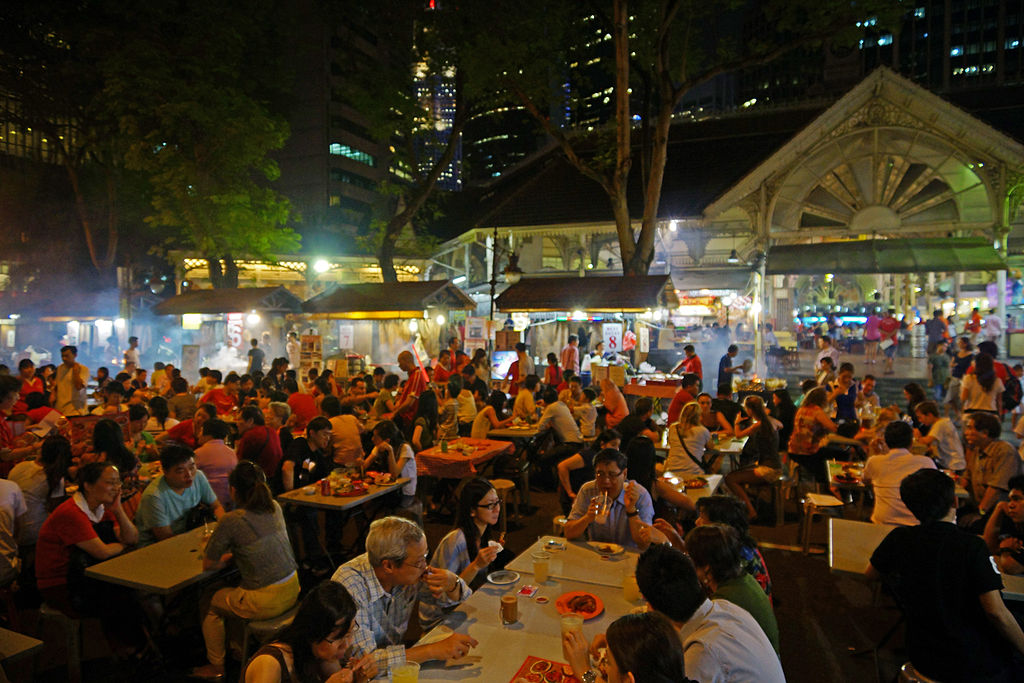
It began when I stumbled on Landmark Cases last month, a C-Span series about 12 Supreme Court cases chosen because they had a dramatic impact on the legal landscape in United States history, and because they likewise had a significant impact on the Court itself, as precedent and on its perceived legitimacy, for good or ill. It can be found as a video series online, but I’ve been listening to the podcast version.
http://landmarkcases.c-span.org/

As I was listening, the discussions reminded me of a book I had heard about a little while ago but had forgotten to read, a book about the Supreme Court’s worst failures, terrible decisions that undermined its legitimacy and had a negative impact on the lives of people for years to come. It’s called Injustices: The Supreme Court’s History of Comforting the Comfortable and Afflicting the Afflicted, by Ian Millhiser. So, I went and picked it up, and just as with the Landmark Cases Series, I’ve been finding it difficult to tear myself away.

Both the Landmark Cases series and Injustices reveal that though sometimes the Supreme Court has been the bulwark against congressional, state, and individual encroachments of freedom, it has also too often betrayed the public trust. While we remember and celebrate such cases as Brown vs. Board of EducationGriswold v. Connecticut, and Obergefell v. Hodges, which brought the blessings of liberty to more of the American people than ever before, we sometimes forget how extensive the history of freedom-crushing Supreme Court decisions really is. The Dred Scott case, Lochner vs. New York, Korematsu vs. United States, and Citizens United v. FEC, for example, allowed employers to exploit desperate workers by cornering the market, fixing wages, and creating terrible working conditions with health-destroying long hours; permitted the government to imprison innocent citizens and allow the looting of their property based on no other consideration than race; and enabled the wealthy few to effectively buy up elections. Millhiser’s view of the Supreme Court’s historical tendency to value states and property rights over civil rights and the public interest is summarized here: ‘If American government truly derives its legitimacy from the consent of the governed, then [the] agenda [of the hardline conservatives] that is so often and so soundly rejected at the polls must not be implemented by one unelected branch of government when there is no constitutional basis to do so.’ (pp 184-85).

The Supreme Court’s conservative justices, joined at times by their otherwise more liberal-minded colleagues, all too often decided their cases according to the view that the Constitution only prescribes and limits federal action, and was not intended to do likewise with state or individual action. But as many other Supreme Court justices observed, especially in its civil rights phase throughout the latter half of the twentieth century, this reading of the Constitution renders it impotent (FDR’s terminology in his second inaugural address) to extend the protections of the Bill of Rights to citizens in almost all arenas of life.

After all, most of one’s life is not spent interacting directly with the federal government or its institutions, but in homes, shops, public squares, workplaces, and so on. If the state, or an employer, or a county sheriff, or a bus driver, or a neighbor, or any other non-federal institution or person uses their liberty to oppress another individual, then the latter can’t actually enjoy the freedoms that the Bill of Rights guarantees*. And surely the founders of our nation didn’t intend the Bill of Rights, demanded as a condition of the Constitution’s passage, to be powerless to protect individual freedoms in most circumstances. This is the principle which drives the more liberal Supreme Court Justices, Millhiser, and commentators on the Landmark Cases series to agree that strict constructionist, hyper-conservative, elitist, and commerce-centric justices have historically imposed opinions on the public that do not serve their interests as idealized in the Bill of Rights, and allowed the the powerful and wealthy few to claim the right to do as they like while trampling the liberties of everyone else. Since the Constitution derives its legitimacy from ‘we the people’, then we the people, in our institutions and as individuals, should be likewise bound by the Bill of Rights.

At times, I think that Milhiser champions too strongly the general principle that unelected judges should get out of the way and allow elected representatives to legislate as their constituents demand. After all, as so many of Milhiser’s examples indicate, legislators historically have been all too happy, too often, to make laws that favor some while trampling the rights of others. The potential value of an unelected judiciary to balance the power of an elected legislature is, I think, revealed more clearly in the Landmark Cases discussions. After all, the will of the majority often runs contrary to the national project laid out in the Preamble of the Constitution and the Bill of Rights, to protect and promote the rights of everyone, especially those in the minority who need protection the most. However, as author Jeffrey Toobin points out in his endorsement of the book, Millhiser’s book does an excellent job of balancing the good history of good Supreme Court jurisprudence with the bad.

Listen to the podcast version here or on iTunes

*For more on the distinction between liberty and freedom, please see my essay Freedom, Liberty, and the Inevitable Interconnectedness of Human Life

Ordinary Philosophy and its Traveling Philosophy / History of Ideas series is a labor of love and ad-free, supported by patrons and readers like you. Please offer your support today!

~~~~~~~~~~~~~~~~~~~~~~~

Sources and inspiration:

Landmark Cases: A C-Span Original TV Series, 2015
http://landmarkcases.c-span.org

Millhider, Ian. Injustices: The Supreme Court’s History of Comforting the Comfortable and Afflicting the Afflicted. New York: Nation Books, 2015.

“One Third of a Nation”: FDR’s Second Inaugural Address, published at History Matters website. http://historymatters.gmu.edu/d/5105/

O.P. Recommends: Fareed Zakaria on What America Could Learn From Singapore About Racial Integration

Singapore, Satay stalls along Boon Tat Street next to Telok Ayer Market by Allie Caulfield, Public Domain via Wikimedia CommonsIn thinking recently about the nature of government and its proper roles, I recalled this Fareed Zakaria piece about Singapore’s engineered diversity.

In it, Zakaria praises Singapore’s efforts to reduce racial and religious bigotry by increasing the diversity of its neighborhoods. The government’s tactics to achieve this would be intolerably intrusive to most Americans, and indeed to the citizens of most modern democratic nations. When it comes to race and class, the Singaporean law favors the government’s interest in providing an environment where citizens are brought up in familiarity with people who are different than they are, and therefore less subject to the harmful effects of bigotry, over the rights of individuals to freely choose where to live.

So can Singaporeans be considered more free than Americans when it comes to race and class? What does it mean to be free, in this sense? We struggle here in the United States from the ugly effects of entrenched bigotries, ancient and new, long after we considered it okay to sanction them by law: we live in self-segregated neighborhoods where racial minorities and the less wealthy enjoy a far lower level of health and personal safety, religious minorities (at this moment in our history, especially Muslims, although Quakers, Catholics, Jews, and others have had their turns) are subject to the suspicion and hatred born largely of ignorance, and social mobility is extremely slow. But we can choose to live, at least on paper, wherever we want. Does that really make us more free?

And if we generally agree, as a society, that we believe the end of bigotry is a worthy moral goal, is it right and proper for the government to be the arbiter of that goal? Is morality a governmental concern at all? Or is it the government’s role to keep out while citizens wrangle with important moral questions, interfering only to protect its citizens from bodily harm?

Along with Zakaria, I find much to admire in Singapore’s goal, and its tactics do appear to help foster social cohesion and reduce conflict. Would Americans would ever ‘go for’ anything like that, if our conflicts of race, class, and religion continue to set us against one another? I doubt it. But I don’t think we should kid ourselves that it makes us any more truly free.

*Listen to the podcast version here or on iTunes

~~~~~~~~~~~~~~~~~~~~~~~

Source and inspiration:

Zakaria, Fareed. ‘What America Could Learn From Singapore About Racial Integration’. The Washington Post, June 25, 2015 https://www.washingtonpost.com/opinions/from-singapore-lessons-in-harmony-and-diversity/2015/06/25/86fcbfa2-1b72-11e5-93b7-5eddc056ad8a_story.html