O.P. Recommends: Five Approaches to Intellectual History, by Chris Cameron

I came across this excellently clear and succinct piece by Chris Cameron on intellectual history, which discipline I’m currently studying at the University of Edinburgh:

‘My view of what intellectual history, as I noted in the chat, is that it is the sub-discipline of history that deals with the ideas and symbols that people use to make sense of the world. A guiding assumption of this sub-discipline is that human beings depend upon the use of language, which gives meaning to individual lives. Another assumption of intellectual historians is that human beings cannot live in the world without theories about what they are doing. These theories may be explicit or implicit, but they are always present and make up our cultural construction of reality, which again, depends upon symbols and language. So intellectual history is not about what people did, necessarily, but more about what they thought they were doing.

By nature, intellectual history is an interdisciplinary field, and there are many approaches that scholars take to studying the history of ideas. I would like to outline five of the most prominent of these approaches…’

Read the full essay here at the African American Intellectual History Society’s blog Black Perspectives

Ordinary Philosophy and its Traveling Philosophy / History of Ideas series is a labor of love and ad-free, supported by patrons and readers like you. Please offer your support today!


The Friendship of Robert G. Ingersoll and Walt Whitman

Walt Whitman in 1891. He had long suffered frail health following a severe stroke in 1873, finally dying in March of 1892 of pneumonia. Nevertheless, he continued to write and enjoy the company of many friends and admirers throughout most of those years. This portrait was taken sometime during the year after Robert Ingersoll paid him tribute with his address ‘Liberty in Literature.’ Photo public domain via the Library of Congress

In the first part of my Peoria account, I promised to write more about the friendship between Robert G. Ingersoll and Walt Whitman in the next installment. But the more I read, the more I wanted to know about the relationship between these two people I admire very much. So, I decided to explore this topic a little further in its own piece. Please excuse my tardiness!

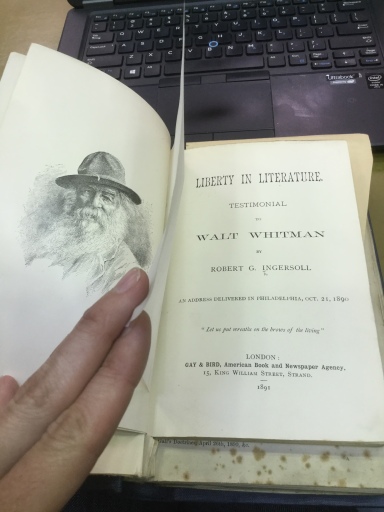
‘Let us put wreaths on the brows of the living.’ – preface line to Robert Ingersoll’s tribute to Walt Whitman Liberty in Literature, 1890

In 1890, Ingersoll read his moving, eloquent and sometimes florid Liberty in Literature testimonial to Whitman as he shared the stage with that aging, frail poet, who listened tranquilly and said little except at the end in thanks. On this day, Ingersoll described in detail the myriad reasons for admiring Whitman which he’d later outline in the more succinct and very beautiful eulogy he wrote for the poet two years later.

The great egoist who Ingersoll extolled on this day was also a great humanitarian, a friend and intimate of everyone from the most humble to the most famous, whose friends and admirers included Mark Twain, Paulina Wright Davis, Oscar Wilde, Ralph Waldo Emerson (the first to write him a letter in praise of his poetry), and Ingersoll. Yet Whitman who regularly lived in poverty throughout his life, often with friends of as little means as he himself had. He also volunteered to do the filthy, bloody, backbreaking, sorrowful labor of a nurse during the Civil War. In his maturity, especially, the egoist and humanitarian sides of himself appeared to have reached a well-developed and harmonious balance, reflecting his philosophy that all human beings are equally valuable, equally fragile, and equally godlike, including one’s self.

Whitman’s life was centered around what Ingersoll admiringly referred to as the ‘religion of the body’, which, as I understand it from Whitman’s own work as well as from Ingersoll’s description of it, includes the belief that the human body is a sacred thing rather than a source of corruption as most religious orthodoxies held; that human physical love is likewise sacred and beautiful, akin to a sacrament; that the humble and the great, the sinner and the saint, all share in the same humanity and are all deserving of the same compassion and respect. Ingersoll’s favorite line of Whitman’s, ‘Not till the sun excludes you do I exclude you,’ from his poem To a Common Prostitute, perfectly sums up the ethics of Whitman’s religion of the body.


Liberty in Literature, Robert Ingersoll’s testament to Walt Whitman. Truth Seeker Company 1890 pamphlet publication, 1st pages. In the collection of the National Library of Scotland.

Whitman was religious in an earthily mystical, entirely non-denominational sense. Ingersoll describedWhitman’s religiosity in the eulogy he wrote for him in 1892: ‘…He accepted and absorbed all theories, all creeds, all religions, and believed in none. His philosophy was a sky that embraced all clouds and accounted for all clouds. He had a philosophy and a religion of his own, broader, as he believed—and as I believe—than others. He accepted all, he understood all, and he was above all.’ Ingersoll and Whitman disagreed about religion, but this did not impact their friendship and respect for one another in any negative way. Ingersoll, famed for his agnosticism, thought that Whitman was mistaken to believe in any sort of god. Yet, it seems, Ingersoll respected Whitman’s impulse to believe because it originated from and was of a kind that reflected ‘his elemental quality–his sun-burnt philosophy–his appalling candor–his nude naturalness–his kinship with nature in all her charms–his perfect courage and above all, his sympathy!’ Whitman’s peculiar religion was also free of doctrine or of any ethical imperatives other than those which would accord with Ingersoll’s own creed ‘Happiness is the only good. The place to be happy is here. The time to be happy is now. The way to be happy is to make others so.’


Ingersoll’ eulogy to Whitman ends with the words ‘I loved him living, and I love him still.’ Whitman wholeheartedly reciprocated this feeling. He described his reasons for admiring Ingersoll in terms as least as fulsome as Ingersoll used to describe his own admiration for Whitman: ‘Damn if I don’t think the Colonel is always magnificent! There was always something ample, sufficient, about Bob’s ways and means: he always seemed big enough to go as high and as deep and as far around as anybody… inevitably, tremendously, yet almost lethargically forceful, like a law of nature.’ To Whitman, the inner qualities of his friend found expression in his large frame as well as in his well-chosen and compellingly delivered words, which Whitman compared to those of ‘a master of fence: his strokes are not only infallible but virile.’ He continues: ‘He contains no malice, no poison, but is vehement, aggressive, even overwhelming; not impetuous… but searching, calm; he batters down the opposition like some irresistible wind-blow–like the sea when it comes piling in flooding everything.’


Liberty in Literature testament to Walt Whitman, Truth Seeker Co.’s pamphlet cover, 1890, in the collection of the National Library of Scotland.

Whitman’s praise of Ingersoll, not surprisingly, incorporates suggestions of a physical appreciation as well as an intellectual and spiritual one. To Whitman, this was not mere prurience: the body, as sacred thing, was a proper object of appreciation and admiration. It appears that, to Whitman, it could also serve as much of a window to the soul as a person’s eyes, and smile, and deeds, and words. We are now well acquainted with the importance of body language in communication; Whitman goes further and finds that important elements of the human character are expressed in the very lines of the body. (I’ve recognized a similar theme in W.E.B. DuBois’s praise of black female beauty and the superior virtues expressed in that array of physical characteristics over what he perceived as the comparatively angular and pallid characteristics of white beauty.) Whitman’s admiration for (perhaps even crush on, based on his language) Ingersoll is well-rounded (pun intended) because for him, the spiritual and the physical are all equally important manifestations of the whole human person, and all must be included in order to really understand and appreciate anyone. This goes back, again, to Whitman’s religion of the body.


At the time Ingersoll delivered his tribute to Whitman two years before his death, it was the Gilded Age which, no doubt, made another particular selection from one of Whitman’s poems, Song for Occupations, stand out for Ingersoll as it does for me. The poem is another celebration of humanity; in this case, of workers particularly, and points out that it’s humanity and not the produce of their labor of which the true treasure of the earth consists. Ingersoll prefaced his reading of that selection in his Liberty in Literature address:

‘In this age of greed when houses and lands, and stocks and bonds, outrank human life; when gold is of more value than blood, these words should be read by all,’

and then offered Whitman’s lines:

‘When the psalm sings instead of the singer,

When the script preaches instead of the preacher,

When the pulpit descends and goes instead of the carver that carved the supporting desk,

When I can touch the body of books by night or day, and when they touch my body back again,

When a university course convinces like a slumbering woman and child convince,

When the minted gold in the vault smiles like the night watchman’s daughter,

When warranty deeds loafe in chairs opposite and are my friendly companions,

I intend to reach them my hand, and make as much of them as I do of men and women like you.’

As are so many of Whitman’s, these are timely words for us, too.

Ingersoll and Whitman had been friends for many years at the time of the latter’s death though they had been admirers of one another for quite some time before they met. Though they only had the opportunity to visit each other occasionally, they wrote to one another regularly. Ingersoll and Whitman also praised one another publicly quite often, and shared a kind of sympathy that only two very public-spirited, unorthodox, liberal-minded, often maligned but also well-loved people can. In short, they were natural friends. These two men, with their humanist convictions, their generous natures, their compelling ways with words, their courage in proclaiming their own unorthodox visions of a truer and better way of perceiving the world and of living in it, and their ability to love and admire one another undiminished by their occasional disagreements over religion, propriety, and other particulars, provide a most beautiful example of how a true and rich friendship can give rise to great ideas and help develop and perfect them over time. May we all enjoy such friendships in our own lives.

~~~~~~~~~~~~~~~~~~~~~~~~~~~~~

Sources and Inspiration

Folsom, Ed and Kenneth M. Price. ‘About Walt Whitman.’ Biography for The Walt Whitman Archive via the Modern American Poetry website

Ingersoll, Robert G. Liberty in Literature: A Testimonial to Walt WhitmanNew York: Truth Seeker Co, 1890

Ingersoll, Robert G. The Works of Robert G. Ingersoll, Vol. 12 (of 12) -Miscellany: A Tribute to Walt Whitman [eulogy]. New York: The Dresden Publishing Co, 1900

Pike, Royston and Eva Ingersoll Wakefield. The Life and Letters of Robert G. Ingersoll. London: Watts & Co, 1952.

Traubel, Horace, Sculley Bradley, and Gertrude Traubel. With Walt Whitman in Camden. Boston: Small, Maynard & Company, 1906

Walt Whitman‘. Encyclopædia Britannica. Encyclopædia Britannica Online.
Encyclopædia Britannica Inc., 2017. Web. 02 Sep. 2017

Walt Whitman.’ Poets.org, website of the Academy of American Poets

On the Value of Intellectuals, by Brad Kent

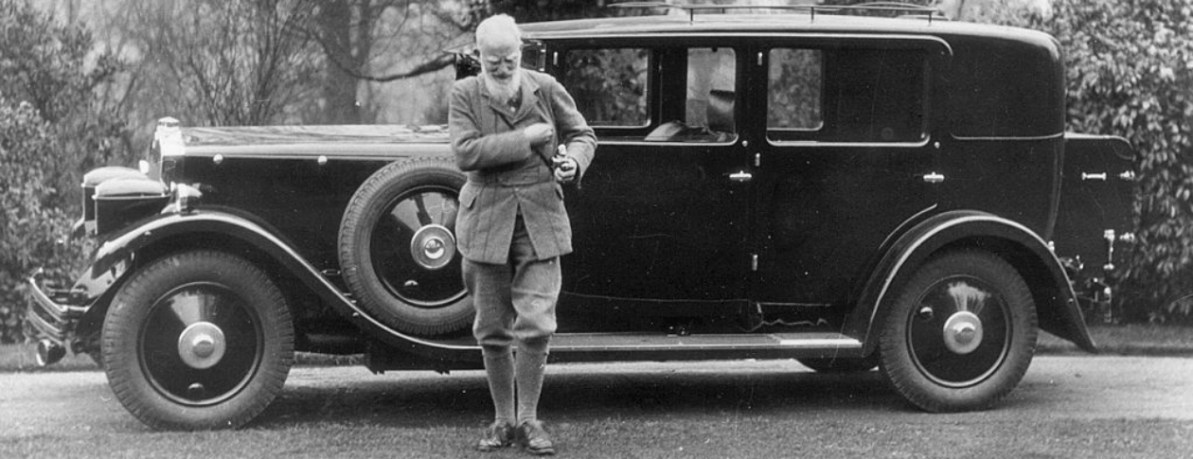
“George Bernard Shaw near St Neots from the Millership collection” from the Birmingham Museums Trust, CC BY-SA 4.0 via Wikimedia Commons.

In times of populism, soundbites, and policy-by-Twitter such as we live in today, the first victims to suffer the slings and arrows of the demagogues are intellectuals. These people have been demonised for prioritising the very thing that defines them: the intellect, or finely reasoned and sound argument. As we celebrate the 161st birthday of Bernard Shaw, one of the most gifted, influential, and well-known intellectuals to have lived, we might use the occasion to reassess the value of intellectuals to a healthy society and why those in power see them as such threats.

Born in Dublin on 26 July 1856 to a father who held heterodox religious opinions and a mother who moved in artistic circles, Shaw was perhaps bound to be unconventional. By age 19 he was convinced that his native Ireland was little more than an uncouth backwater–the national revival had yet to see the light of day–so he established himself in London in order to conquer English letters. He then took his sweet time to do it. In the roughly quarter of a century between his arrival in the metropole and when he finally had a modicum of success, Shaw wrote five novels–most of which remained unpublished until his later years–and eked out a living as a journalist, reviewing music, art, books, and theatre. That eminently readable journalism has been collected in many fine editions, and we see in it an earnest individual not only engaged in assessing the qualities of the material before him–much of which was dreadfully insipid–but eager to raise standards and to cultivate the public. He prodded people to want more and gave them the tools to understand what a better art would look and sound like. And he did so in an inimitable voice that fashioned his renowned alter ego: the great showman and controversialist, GBS.

“George Bernard Shaw, circa 1900” from the Library of Congress, Public Domain via Wikimedia Commons.

Shaw became more widely known as a playwright in late 1904, when King Edward broke his chair laughing at the Royal Command performance of Shaw’s play John Bull’s Other Island. He was no longer a journalist by trade, now being able to live by his plays, but Shaw continued to write essays, articles, and letters-to-the-editor in leading papers to set the record straight, to denounce abuses of power, and to suggest more humane courses of action. When he published his plays, he wrote polemical prefaces to accompany them that are sometimes longer than the plays themselves. These prefaces, written on an exhausting range of subjects, are equally learned and entertaining. Indeed, it has been said by some wags that the plays are the price that we pay for his prefaces.

In many ways continuing his fine work as the Fabian Society’s main pamphleteer in the 1890s, his prefaces suggest remedies for the great injustices of his time. And, what’s more, the vast majority of his prescriptions are as topical and provocative today. For example, if you’re American, should you opt for Trumpcare or Obamacare? Read The Doctor’s Dilemma and its preface and you’ll have a compelling case for neither, but rather a comprehensive and fully accessible public healthcare system, the sort now common in Canada and most European countries. That’s right, people were feeling the Bern–we might say the original Bern–well before Mr. Sanders was born.

Some of Shaw’s opinions came at a great cost. When he published Common Sense About the War, which was critical of both German and British jingoism at the outset of the Great War, he ran too much against the grain of the hyper-patriotic press and government propaganda, thereby becoming a pariah to many. But his star gradually returned into the ascendant as the body count mounted and a war-weary population came to share his point of view. The run-away international success of Saint Joan brought him the Nobel Prize for Literature in 1925 and, as Shaw said, gave him the air of sanctity in his later years.

“George Bernard Shaw with Indian Prime Minister Jawaharlal Nehru, May 1949”, from Nehru Memorial Museum & Library. Public Domain via Wikimedia Commons.

However, Shaw always maintained that he was immoral to the bone. He was immoral in the sense that, as a committed socialist in a liberal capitalist society, he didn’t support contemporary mores. Instead, he sought to change the way that society was structured and to do so he proposed absolutely immoral policies. A good number of these beyond universal healthcare have seen the light of day, such as education that prioritises the child’s development and sense of self-worth, the dismantling of the injustices of colonial rule, and voting rights for women. But those in power continue the old tug-of-war, and the intellectuals of today must be as vigilant, courageous, and energetic as Shaw in the defence of liberal humanist and social democratic values. Witness the return of unaffordable tertiary education in the UK, made possible by both Labour and Conservative policies.  We might recall that Shaw co-founded one of these institutions–the renowned London School of Economics–because he believed in their public good.

Whenever Shaw toured the globe in his later decades–he died in 1950 at age 94–he was met by leading politicians, celebrities, and intellectuals who wanted to bask in his wit, wisdom, and benevolence (Jawaharlal Nehru, Charlie Chaplin, and Albert Einstein are a few such people). Time magazine named him amongst the ten most famous people in the world–alongside Hitler and the Pope. Everywhere he went, the press hounded him for a quote. Yet despite the massive fees he could have charged, he never accepted money for his opinions, just as he had declined speaking fees in his poorer days when he travelled Britain to give up to six three-hour lectures a week to praise the benefits of social democracy. He would not be bought–or suffer the appearance of being bought.

On his birthday, then, we would do well to think of Shaw and maybe even read some of his plays, prefaces, or journalism. We might also cherish the service and immorality of intellectuals. And we should always question the motives of those who denigrate their value.

This piece was originally published in OUPBlog: Oxford University Press’s Academic Insights for the Thinking World

The Revolutionary Figure of the Beautiful, Self-Improved Soul, by Justine Kolata

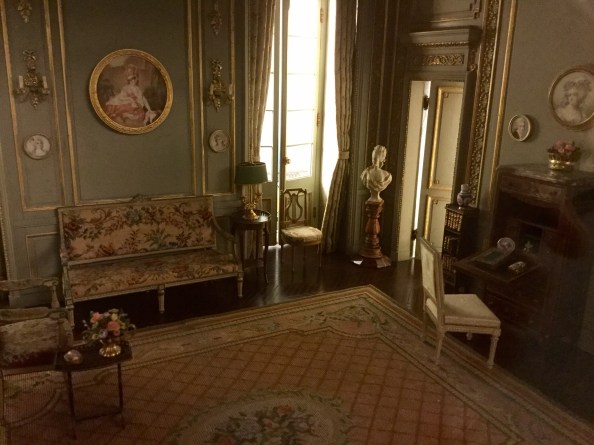
Miniature room by Mrs. James Ward Thorne portraying a French salon from about 1780, ca. 1930’s, Art Institute of Chicago

In a global culture that appears increasingly obsessed with radical individualism, narcissistic presentations of self, and incendiary political rhetoric, it is hard to imagine that society once cared about the beauty of the soul. But, in the late 18th and early 19th centuries in Germany and across Europe, the pursuit of a ‘beautiful soul’ became a cornerstone of philosophical thought and popular discourse, advanced by some of the most important intellectuals of the time, including Johann Wolfgang von Goethe, Friedrich Schiller and Wilhelm von Humboldt. To these thinkers, the pursuit of inner perfectibility responded to the horrors of the French Revolution’s irrational mass action culminating in The Terror of the 1790s. Nascent notions of democracy, they believed, could be developed only if each individual achieved liberation from what Immanuel Kant described as the ‘self-incurred tutelage’ of intellectual immaturity by developing cognitive and emotional faculties through aesthetic experiences.

At the core of the beautiful soul is the idea that the individual possesses an innate cognitive potential. Subject to the right environmental and educational conditions, this latent potential can be developed to reach a more perfect state of intellect, morality, character and conduct. The beautiful soul is an aesthetic concept focused on developing human capacities and advancing knowledge and culture. It entails the pursuit of personal cultivation to create a convergence of the individual aesthetic impulse with a collective ethical ideal. The beautiful soul is a virtuous soul, one that possesses a sense of justice, pursues wisdom, and practises benevolence through an aestheticised proclivity for the ‘good’.

Inspired by ancient Greek philosophy, the beautiful soul reflects Plotinus’ imperative to cultivate the self in the same way that the sculptor works:

Withdraw within yourself, and examine yourself. If you do not yet therein discover beauty, do as the artist, who cuts off, polishes, purifies until he has adorned his statue with all the marks of beauty. Remove from your soul, therefore, all that is superfluous, straighten out all that is crooked, purify and illuminate what is obscure, and do not cease perfecting your statue until the divine resplendence of virtue shines forth upon your sight …

Sculpting the soul and creating what Goethe referred to as ‘a more beautiful humanity’ is achieved through the internalisation of the Platonic triad of beauty, truth and goodness. Beauty is conceived as the integration of intellectual and aesthetic faculties in the encounter with art and nature. Truth is the result of the logical exercise of rational faculties and the elevating sense of curiosity derived from experiences in the world. Goodness is found in the human capacity to feel compassion for others and thereby contribute to the betterment of society.

The Platonic triad is realised within the soul by exploring ideas through lived experiences, not by blindly following abstract principles or dogma dictated by a church or political system. The concept requires that the individual actively engage her senses to navigate the material world in which beauty acts as her guide. The ineluctable indeterminateness of aesthetic, sensory experience is precisely what makes it valuable in expanding one’s consciousness in order to explore the ultimate questions of reality. Watching a lark’s parabolic trajectory in the sky, observing the fractal patterns found in nature, contemplating the concentric circles produced by rain droplets in pools of water become opportunities to understand the universe and reach a heightened cognitive-affective state. As Goethe observed: ‘A man should hear a little music, read a little poetry, and see a fine picture every day of his life in order that worldly cares may not obliterate the sense of the beautiful which God has implanted in the human soul.’

The concept affirms that, in its universality, beauty offers a means of engaging with the world, providing a common basis upon which positive social relationships can be developed, acting as a lexicon for communicative exchange. Since it is a natural human inclination to share sensory experiences, beauty provides an opportunity to bond individuals in a moment of ultimate meaning, conveying ineffable feelings that cut to the core of existence. By opening one’s perceptual horizons, a person is elevated beyond ego and self-absorption into a realm of universal concern and contemplation. Beauty achieves the good by strengthening faculties of empathy that induce deeper compassion for others and attentiveness to the wellbeing of the social collective. Thus, the marriage of the beautiful, the true and the good is for the beautiful soul more than the metaphysical meditations of antiquity but the very basis of a more just and equitable society.

Although the philosophy was never realised in the way that its theorists envisioned, the beautiful soul is far more than a beautiful idea. In turning towards aesthetics, the philosophers of the German Aufklärung (Enlightenment) did not naively evade political realities. Instead, they offered a holistic theory that recognised the long-term horizon for the flourishing of reason and human understanding. In doing so, they developed a poetic conception of politics that took inspiration from ancient Greek notions of an aesthetic state. In working towards her own self-improvement and fearlessly venturing into society, the beautiful soul was a revolutionary figure, at the vanguard of Enlightenment progress.

Self-cultivation was not an idle, vainglorious pursuit of the wealthy, but rather a radical reformulation of what it meant to be human and how to harmoniously exist in society. The beautiful soul anticipated the problems of instrumental reason, overcoming the dangers of mere utility, disenchantment and social isolation by offering an aesthetic world view that facilitated positive human interactions and a multidimensional understanding of human experience. She epitomised Enlightenment values of equality, fraternity and rationality, serving as the model of a citizen who lived up to the responsibilities associated with democracy.

The contemporary turn towards nihilism that lionises the individual at the expense of the collective has made the idea of cultivating a more beautiful soul appear hopelessly idealistic and disconnected from ‘hard realities’. In a realist’s world, we seek utilitarian ends under the guise of pragmatism, turning away from the illusiveness of an immaterial and ultimately unattainable ideal. The mystery and poetry of human nature has been stripped from our daily experience at the expense of our imaginations and our will to envision a more beautiful world. Yet, the social and environmental ills induced by our unfettered economy of instrumentality are proving anything but pragmatic for the long-term sustainability and wellbeing of our species. If we still harbour hope in the human propensity for goodness, then we ought to contemplate anew the poetic, revolutionary figure of the beautiful soul that might once again provide a vision for deepening our intellectual, moral and emotional faculties in the service of a more just and progressive future for us all.Aeon counter – do not remove

This article was originally published at Aeon and has been republished under Creative Commons.

Justine Kolata is the founder and director of The Public Sphere, and the co-founder and co-director of The Bildung Institute. She is currently pursuing a PhD in the German department at the University of Cambridge on enlightenment salon culture.

Ordinary Philosophy and its Traveling Philosophy / History of Ideas series is a labor of love and ad-free, supported by patrons and readers like you. Please offer your support today!

Frederick Douglass’ Fourth of July Speech at Rochester, NY’s Old Corinthian Hall, 1852

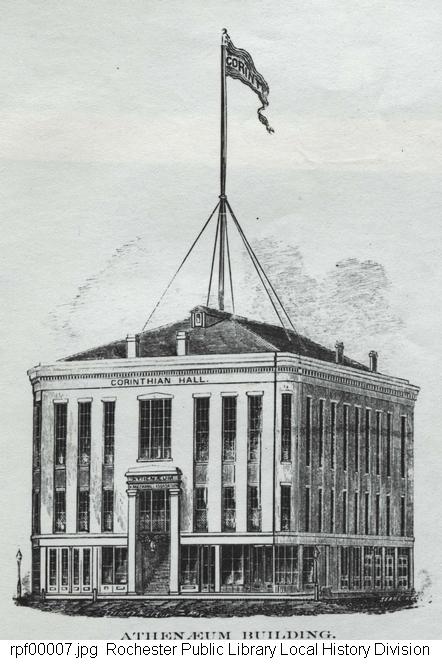
Drawing of Corinthian Hall, image credit Rochester Public Library Local History Division (note it's also called The Atheaneum in the subtitle)

Drawing of Corinthian Hall, image credit Rochester Public Library Local History Division (note that it’s still titled The Athenaeum)

Excerpt from Frederick Douglass Rochester NY Sites, Day 1 published May 23, 2016

I head east on Main… to the site of the old Corinthian Hall, which, according to a couple of sources, was near the end of Corinthian Street behind the Reynolds Arcade, where the parking garage is now. Originally called The Athenaeum, as were so many public halls of the time, it was renamed Corinthian Hall after the style of the classical columns on its stage, and the building was widely famed for its beauty. Corinthian Street was also renamed, and most internet sources I find say it was originally named Exchange Place.  However, I discover that these two pieces of received internet wisdom appear to be a bit off. Poring over old maps in Rochester Library’s online images database, I find one published in 1851, two years after the hall was built in 1849. For one, I find that while the street was named Exchange Place before it was named Corinthian, it was named Work Street at the time the hall was built. Secondly, I find that it was not actually under the parking garage at the end of the street. It was actually directly across from the back entrance of the Reynolds Arcade, where a parking lot and a glassy midcentury office building now stand. The 1851 map was a little behind the times: Corinthian Hall and Exchange Place had already received their new names in 1850, but the map retains their original designations.

Douglass spoke frequently at what he referred to as ‘the beautiful Corinthian Hall’ in the 1850’s. In fact, he  ‘lectured [there] every Sunday evening during an entire winter’ as he wrote in his Life and Times. He delivered a speech here on Aug 21, 1852 at the Fugitive Slave Convention, in opposition to the Fugitive Slave Act. Then in July 1853, Douglass presided over the National Convention of Colored Men in Rochester, which became a center for the antislavery movement; his biographer Philip S. Foner called this convention ‘the most important’. This is where the pressing problem of lack of unification between various factions of the antislavery movement were identified and discussed, as well as the relative lack of black leadership. Though this Rochester convention still failed to bring about a unified black political movement, like the previous one in Troy discussed in an earlier account, it sent a powerful message that all black Americans had a powerful champion in Douglass.

Corinthian St, north of Main, around the site of old Corinthian Hall

The rear of the Reynolds Arcade facing onto Corinthian St, north of Main, across from the site of old Corinthian Hall

View from west end of Corinthian St, showing site of old Corinthian Hall at right where the glassy midcentury building now stands, photo 2016 by Paige Sloan

View from west end of Corinthian St, showing site of old Corinthian Hall at right where the glassy midcentury building now stands, photo 2016 courtesy of Paige Sloan. Note the Corinthian columns on the First National Bank of Rochester-Old Monroe County Savings Bank Building, built in 1924, in the rear of the photo.

But the single most important Douglass moment in this hall happened on July 5, 1852, when he delivered his powerful ‘What to the Slave is the Fourth of July?‘ speech for the first time. He delivered it on the 5th instead of the 4th, he said, because the latter was a day of mourning for himself and his people. This speech was Douglass’ Gettysburg Address, his Second Inaugural, his ‘To Be or Not to Be?’, where his powers of oratory and his eloquence were in full force. The speech is long, opening with a reflection on the history of the United States’ founding and its promise of renewed freedom for all. Then he pours out his lament:

‘I am not included within the pale of this glorious anniversary! Your high independence only reveals the immeasurable distance between us. The blessings in which you, this day, rejoice, are not enjoyed in common. — The rich inheritance of justice, liberty, prosperity and independence, bequeathed by your fathers, is shared by you, not by me. The sunlight that brought life and healing to you, has brought stripes and death to me. This Fourth [of] July is yours, not mine. You may rejoice, I must mourn….

What, to the American slave, is your 4th of July? I answer: a day that reveals to him, more than all other days in the year, the gross injustice and cruelty to which he is the constant victim. To him, your celebration is a sham; your boasted liberty, an unholy license; your national greatness, swelling vanity; your sounds of rejoicing are empty and heartless; your denunciations of tyrants, brass fronted impudence; your shouts of liberty and equality, hollow mockery; your prayers and hymns, your sermons and thanksgivings, with all your religious parade, and solemnity, are, to him, mere bombast, fraud, deception, impiety, and hypocrisy — a thin veil to cover up crimes which would disgrace a nation of savages. There is not a nation on the earth guilty of practices, more shocking and bloody, than are the people of these United States, at this very hour.’

If what he had to say that day didn’t make people ashamed to celebrate liberty for themselves while denying it to others, no words could.

* Read the full story of this day following the life and ideas of Frederick Douglass here

Ordinary Philosophy and its Traveling Philosophy / History of Ideas series is a labor of love and ad-free, supported by patrons and readers like you. Please offer your support today!

~~~~~~~~~~~~~~~~~~~~~~~~~~~~~~

Sources and Inspiration

33. Corinthian Hall / Academy of Music‘, The Freethought Trail website

Corinthian Hall (venue)‘, under ‘Charter Inductees’, Rochester Music Hall of Fame website

Cornell, Silas, ‘Map of the City of Rochester‘, 1863. From Rochester Library Digital Collections, Monroe County Library System website.

Douglass, Frederick. Autobiographies (includes Narrative…, My Freedom and my Bondage, and Life and Times). With notes by Henry Louis Gates, Jr. Volume compilation by Literary Classics of the United States. New York: Penguin Books, 1994.

Douglass, Frederick. “What to the Slave Is the Fourth of July?”, July 5, 1852. Teaching American History (website)

The Era of Academies in Monroe County‘, From Rochester Library Digital Collections, Monroe County Library System website.

First National Bank of Rochester-Old Monroe County Savings Bank Building. In Wikipedia, The Free Encyclopedia.

Foner, Philip S. The Life and Writings of Frederick Douglass, Vol. 1-4. New York: International Publishers, 1950.

McFeely, William. Frederick Douglass. New York: W.W. Norton & Company, 1991.

McKelvey, Blake. ‘Historic Antecedents from the Crossroads Project‘. From the Rochester History Journal, Oct 1864, Vol. 26, No. 4.

The Love of Possession is a Disease With Them

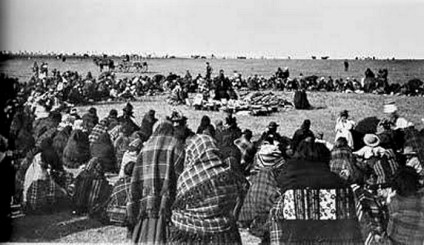
Lakota giveaway ceremony, photo origin unknown

In my recent readings in the history of the Lakota and other native peoples of America’s Great Plains, I’ve been struck by descriptions of their giveaway ceremonies. They remind me of another practice I had learned of before, and which I believe is more generally familiar: the potlatch, a related custom practiced by Native Americans of the Northwest. Potlatches generally came with strict expectations of giving the gifts away again promptly, and then some. These exchanges cemented power relations and were often aggressively competitive; they’re better understood as tactical, sociopolitical transactions rather than simple acts of generosity.

Lakota giveaway ceremonies, however, are much more altruistic in the sense that we commonly understand the term. The gifts are given freely with no expectation of payback; in fact, the resulting impoverishment itself is a badge of honor. That’s why I chose a quote by Sitting Bull, the great Hunkpapa Lakota chief, to introduce this essay. He once illustrated the contrast between Lakota and white attitudes towards property by telling how his poverty aroused the admiration of his people, rather than the disdain most white people feel toward such a state. To those who share Sitting Bull’s impression of the invaders of his homeland, the driving need to amass and own material goods can be a sign of spiritual poverty.

Today’s United States, like those nations most similar to her in culture and economy, is very much not characterized by that less-is-more spirit. This is nothing new. The United States and Canadian governments’ historical prohibitions on giveaway ceremonies in vanquished tribes indicate that Sitting Bull’s characterization of white culture describes something that’s been around for quite a while. These governments viewed giveaway ceremonies as a challenge to the enthusiasm for a market-driven type of productive cooperation they wished to instill in the nations they conquered. These and other Western societies (derived from Europe) had been centered around the production, acquisition, accumulation, and display of goods particularly since the industrial age. This is reflected in our values, our mores, our politics, our language, our cultural attitudes, the ways we celebrate holidays and major life events, and even, increasingly, our religious and spiritual practices.

The free market system, a new style of trade characterized by Adam Smith as that best for improving lives of all human beings most efficiently, has indeed instilled many good practices and attitudes. For example, we’re less likely to see other nations and cultures as enemies when we cultivate relationships as trading partners; we see the effects of this change in international relations and in the relative peacefulness of the modern world to those which practiced the old feudal and mercantilist systems. We also see that more people throughout the world now live longer, more comfortable lives than ever before, as the market incentivizes and drives innovation to respond more efficiently to demand. But there have always been downsides to free markets too. Think of the slave trade; trade wars; colonialism; invasion and confiscation of indigenous lands; the immiseration of working people in squalid industrial towns and dismal factories; price- and wage-fixing by trusts and monopolies; and vast inequalities in wealth and in chances of success are but a few examples. Such practices and inefficiencies are not merely excesses or abuses perpetrated by a few bad actors: they are regular and expected outcomes of a system whose purpose is to maximize profit and come out ahead of everyone else.

And now, we see that market values have pervaded all levels of our consciousness, our self-conception of who we are and how we should best inhabit our world. As philosopher Michael Sandel describes it, we have gone from having a market economy to being a market society. The way we live, think, and feel is pervaded by consumerism. We’ve become buyers and sellers to the extent that we have become products ourselves, marketed and commodified, valued in work and in life insofar as we present ourselves the right way, are seen in the right places, wear the right brands and styles, drive the right cars, and use the right products.

And this has led us to a new problem, one unimaginable to John Locke, Adam Smith, and others who developed the theories about property rights and the benefits of open markets that we take for granted today. Human societies were relatively small then, and the uninhabited regions and untapped resources of the world seemed vast, even endless by comparison. It’s very different today. The population of the world has grown so large, our technological ability to produce goods from raw materials so varied, efficient, and prolific, and our ingrained habits of making, amassing, and consuming voraciously is leading us to a crisis of mass waste, pollution, and climate change.

The pollution problem can be seen as the modern corollary of Thomas Malthus’ 1798 theory that human reproduction would inevitably outstrip food production, leading to mass impoverishment. Though Malthus’ ideas had long gone out of fashion with advancements in agricultural technology and the widespread use of birth control, he’s enjoying a bit of a comeback. However long technology can stave off many of the ill effects of exponential population growth, the earth’s habitable surface and ability to produce what we need to survive (let alone to live well) is finite nonetheless. This is also true of our atmosphere’s ability to absorb the off-gassing of our industries without changing our biosphere’s ability to sustain the life it gave rise to. Over the centuries and decades, concerns about human impact on the natural world and its life-sustaining resources swing from optimism that we can and will create new technology and social practices that will solve everything, to worry that we won’t be sufficiently motivated or innovative in time to stave off the destruction of our own habitat.

In my years past working at a recycling and salvage operation, I observed a part of the massive flow of waste we generate, much of it perfectly good stuff we just throw away. The sheer volume of it all haunts me still. Photo of Amy Cools by Stephen Loewinsohn for the East Bay Express

Beginning with Rachel Carson’s 1962 book Silent Springenvironmental consciousness is becoming ever more pervasive across the political spectrum. But it seems that ecological responsibility is still an ideal that has not yet changed our behavior except in a few token ways. Even progressive, self-consciously ‘green’ micro-cultures, such as that of the San Francisco Bay Area where I live, generally consume and discard on a very large scale. There’s a strong market here for innovations in green products such as compostable and reusable utensils and packaging, recycled fiber and bamboo clothing, energy-efficient technology, and more. Some of this technology replaces other arrays of products such as CDs, books, ledgers, pens and pencils, camera film, landline telephones, and so on, and could in time reduce the amount of stuff made. Yet new generations and styles of products replace the old ones almost as often and quickly as they are introduced, and the things which the new products replace in turn become trash. And in the case of technology, particularly toxic trash. There are recycling programs, to be sure, but they don’t keep up with the volume of discards, and the recycling process itself can be toxic. And the compostable packaging which cocoons every fashionable new product and every new gadget adds to the deluge. Take-out meal services and ready-to-make meals in a box are ever-increasing in popularity, every breakfast, lunch, and dinner wrapped in a soon-to-be-wad-of-trash. Newly ubiquitous reusable shopping bags and thinly-walled plastic bottles do little in the face of this accelerating volume of throwaway goods and conveniently, disposably-packaged everything.

What does all this mean on a planet now so dominated by humans, materialistic, energetic, intelligent, creative, productive, and exponentially-reproductive?

It does seem that our love of possession is a disease with us, not just in the moral and spiritual sense that Sitting Bull refers to. It’s become something palpable, something we see before our eyes, that we breathe in, that we swim among. It shares characteristics of cancer, growing, proliferating, invading at an accelerating rate, which we still likewise seem powerless to stop. And the gases from the production and decay of all this stuff is changing the climate from the one that gave rise to the evolution of, and now sustains and nurtures, the plants and animals that give us life.

So what do we do? How do we divert or change this deeply ingrained cultural habit, this seemingly unstoppable force that we’ve unleashed?

I think about that other thing Sitting Bull said, about his people respecting him not because he owned many things in the way valued by white people, but because he kept little for himself. How, then, if we shift our values? How if we began to regard the need to compulsively and conspicuously consume stuff as crass, as burdensome, as uncool, as unenlightened, even as pitiable?

This isn’t necessarily as unlikely or even as unimaginable as it might seem. We often take for granted that our love and pursuit of stuff is an immutable trait of the human psyche. Yet, that’s not the case, as evidenced by cultural and spiritual mores that differ widely; we can look to the surprise and disgust of Sitting Bull and his people when encountering the white invaders’ greed for gold, land, and buffalo hides. There is an idea from Japanese culture, mottainai, which has deep roots and is growing again in popularity. This complex and hard-to-translate idea includes a reverence for objects and the value of frugality, both of which preclude the wasteful, polluting consumerist practices of modern market societies. And there are many more cultural and spiritual traditions of long standing in which the possession of more goods than needed is considered a negative.

Asceticism is an extreme variety of this less-is more value, an ancient tradition in which one seeks to reach the highest levels of spiritual perfection by divesting themselves of all or most material goods and comforts. There is also the culture of the traveler and world citizen, those who own little since having too many things to haul around gets in the way of opportunities for adventure. There is also a modern fad, admittedly a rather niche conceit of those with higher incomes, of living in tiny, design-heavy, super-efficient homes, reducing one’s personal possessions to the most utilitarian minimum.

However, these ways of life, admired and admirable as they can be, are not workable for most people. Except for asceticism, they are also unaffordable for most people, and none of these work for those who have families to care for, or those who are elderly or disabled, and so on. What of the least wealthy among us, those who must opt for the cheaper products regardless of whether they’ll wear out and become trash sooner? And what about the joy of shopping for stuff, new and novel things that relieve the monotony and stress of an ordinary working life? Even in this realm of life, however, we do have an awareness that the short-term fun of buying stuff can lead to long-term unhappiness. For example, the extremes of material consumption, hoarding and compulsive shopping, are widely considered destructive and unhealthy, if not forms of mental illness. Expanding this sense of the unhealthiness of having too much stuff can be gradually extended to include things that we might sorta like at first but realize we won’t use much or care about for long. Over time, we can acculturate ourselves to less but higher quality things, and better yet, to value publicly owned goods more highly: parks, museums, public beaches, public buildings, and hopefully in the future, more community- and government- owned public amusement centers such as skating rinks, gyms, arcades, and so on.

Sitting Bull and his family, 1881

And while it might seem too difficult to inculcate the value of less-is-more, we can remember that many deeply-ingrained cultural values and habits have been purposely and quickly shifted. The right of gay people to marry and enjoy other equal benefits of society are now generally taken for granted when only two decades ago legal gay marriage was unimaginable to most. Smoking is widely considered unhealthy and a public nuisance, through just a few decades of education, public awareness campaigns, and taxation. Bullying, racist and sexist slurs, discriminatory practices, and many, many other bad habits, once so culturally pervasive, are no longer respectable.

While shopping and owning a lot of stuff might not seem to be habits as bad as any of the above, I believe that we’ll soon recognize that it might be. Now that there are so many of us in the world, we can no longer consider ourselves as morally responsible beings only as individuals when it comes to the health of our environment. With well over seven billion people on the earth increasing exponentially, we are now responsible to each other in the ways our actions contribute to the aggregate effects. Let’s make the effects of our presence on the earth not resemble those of a disease. Let’s instead make it more aligned with mottainai by treating the earth as the most precious object there is; more akin to the role of earth-steward as the God of Genesis called on his human creation to be; more akin to Sitting Bull and his generous less-is-more spirit. Our physical and spiritual health and our very lives depend upon it.

*Listen to the podcast version here or on Google Play, or subscribe on iTunes

~~~~~~~~~~~~~~~~~~~~~~

Sources and Inspiration

Auxier, Randall. ‘Indian Givers‘, Nov 15th, 2013. Radically Empirical blog

Blaisdell. Robert (ed.) Great Speeches by Native Americans. NY: Dover, 2000.

Bruchac, Joseph. ‘Sacred Giving, Sacred Receiving‘, June 20, 2016, Parabola

Cole, Douglas and Ira Chaikin. An Iron Hand upon the People: The Law Against the Potlatch on the Northwest CoastVancouver: Douglas & Mclntyre, 1990 (PDF download)

Her Many Horses, Emil. ‘A Song for the Horse Nation: Remembering Lakota Ways‘. From A Song for the Horse Nation, edited by George P. Horse Capture (A’aninin) and Emil Her Many Horses

Jackson, Joe. Black Elk: The Life of an American Visionary. New York: Farrar, Straus, and Giroux, 2016.

Mottainai: a Philosophy of Waste‘. August, 2015. Interview and discussion with Kevin Taylor by Joe Gelonesi for The Philosopher’s Zone, a podcast of Radio National, Australia.

Pettipas, Katherine. Severing the Ties that Bind: Government Repression of Indigenous Religious Ceremonies on the Prairies. Winnepeg: University of Manitoba Press, 1994.

Rachel Carson, American Experience by PBS, April 18th, 2010

Roth, Christopher E. ‘Goods, Names, and Selves: Rethinking the Tsimshian Potlatch‘, American Ethnologist, Vol. 29, No. 1 (Feb., 2002), pp. 123-150

Sandel, Michael. What Money Can’t Buy: The Moral Limits of Markets. New York: Farrar, Straus and Giroux, 2012.

Sitting Bull‘. Encyclopædia Britannica, April 21, 2017

Thomas Malthus‘. Encyclopædia Britannica.

Happy Birthday, Grace Lee Boggs! A Bio and Book Review by Ashley Farmer

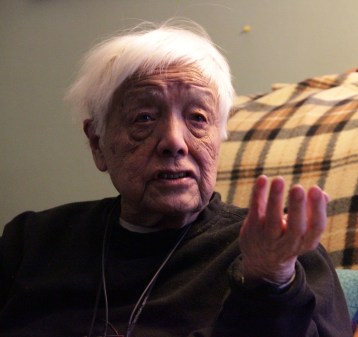
Grace Lee Boggs, By Kyle McDonaldm creativecommons.orglicensesby2.0, via Wikimedia Commons, cropped

In celebration of Grace Lee Bogg’s birthday on June 27th, 1915, I share an excellent bio and book review by historian Ashley Farmer:

“The Power And Importance Of Ideas:” Grace Lee Boggs’s Revolutionary Vision”

In the opening lines of her autobiography, Living for Change, Grace Lee Boggs remarked: “Had I not been born female and Chinese American, I would not have realized from early on that fundamental changes were necessary in our society.”[1] A daughter of Chinese immigrants born in 1915, who, by her account, became a philosopher in her 20s and an activist in her 30s, Boggs remains one of the greatest radical theorists of the twentieth century.

Born in Rhode Island, Boggs spent her childhood in New York City, working in the two restaurants her father owned in Times Square. At the age of 16, she left home to attend Barnard College, and afterward, Bryn Mawr, where she earned a PhD in Philosophy in 1940. Philosophers like Hegel helped her “see [her] own struggle for meaning as part of the continuing struggle of the individual to become part of the universal struggle for Freedom.”[2] Boggs moved to Chicago in 1940. She began working with the South Side Tenants Organization set up by the Workers Party, a Trotskyist group that had split off from the Socialist Workers Party. Her time in the Windy City proved transformative. For the first time she was talking and working with the black community, getting a first-hand sense of what it meant to live within the confines of segregation and discrimination, and learning how to participate in grassroots organizing.[3]

It was also during her tenure with the Workers Party that she met Caribbean radical C.L.R. James, and began a “theoretical and practical collaboration that would last twenty years.”[4] As part of a small wing of the workers Party led by James and Raya Dunayevskaya, Boggs became a leading theoretician, co-authoring texts like State Capitalism and World Revolution (1950). Through James, she came into contact with a number of black writers and activists who expanded her perspective. She relocated to Detroit in 1953, where she would organize with, and marry, James (Jimmy) Boggs.

During the 1950s, Boggs, “mainly listened and learned” to the black activists around her in an effort to better understand the black condition. It would take several years before she decided that she had been “living in the black community long enough to play an active role in the Black Power Movement that was emerging organically in a Detroit where blacks were becoming the majority.”[5] Living and working in what was considered to be an epicenter of black radicalism, Boggs engaged in a combination of theorizing and protesting, authoring texts with James Boggs, meeting and organizing with Malcolm X, and mentoring young radicals like Muhammad Ahmad (Max Stanford), leader of the Revolutionary Action Movement (RAM).

Her liberation theory was grounded in her study of philosophy and honed through her experiences organizing with and for black communities. It was also constantly evolving. Boggs emphasized dialectical thinking, arguing that reality is ever changing and that we must “constantly be aware of the new and more challenging contradictions that drive change.”[6] This reciprocal process drove her expansive vision of revolution. In her final book, The Next American Revolution, she explained her latest concept of revolution:

The next American Revolution, at this stage in our history, is not principally about jobs or health insurance or making it possible for more people to realize the American Dream of upward mobility. It is about acknowledging that we as Americans have enjoyed middle-class comforts at the expense of other peoples all over the world. It is about living the kind of lives that will not only slow down global warming but also end the galloping inequality both inside this country and between the Global North and Global South. It is about creating a new American Dream whose goal is a higher Humanity instead of the higher standard of living dependent on Empire.[7]

Boggs consistently offered a holistic vision of revolution and concrete steps through which to build it. She argued that achieving this goal meant more than organizing or mobilizing to petition the state or “changing the color of political power,” but rather growing food, reinventing education, developing Peace Zones in local neighborhoods, and creating restorative justice programs. She saw the seeds of revolution everywhere and showed us how, by practicing dialectical thinking, breaking down divides and categories, and building on rather than replicating older political models, we might “grow our souls.” She mirrored this in her own life, constantly “combining activity and reflection.”[8] Her willingness to do the work, her ability to listen and learn from black activists, her commitment to living in the communities in which she organized, and her openness to revising her politics, and values, made her an effective life-long ally of the black community and theoretician of liberation and revolution.

As she noted, often, “in the excitement of an emerging movement, we tend to want to be part of the action, and we underestimate the power and importance of the ideas in our heads and hearts.”[9] Upon her death, it’s important to revisit the ideas in her head. She left us a roadmap for revolution through ideas and action, one that anyone could be a part of if they were clear about the stakes of the transformation and that fundamental change is necessary.

Originally published at the African American Intellectual History Society blog, this was originally republished at O.P. when under a Creative Commons licence in 2015

Ashley Farmer is a historian of African-American women’s history. Her research interests include women’s history, gender history, radical politics, intellectual history, and black feminism. She earned a BA in French from Spelman College, an MA in History from Harvard University, and a PhD in African American Studies from Harvard University. She is currently a Provost Postdoctoral Fellow in the History Department at Duke University. In August 2016, she will be an Assistant Professor in the Department of History and the African American Studies Program at Boston University. This bio and more about Ms. Farmer are to be found at her personal website

~ Ordinary Philosophy is a labor of love and ad-free, supported by patrons and readers like you. Any support you can offer will be deeply appreciated!

*All views and opinions expressed by guest writers are their own and do not necessarily reflect those of Ordinary Philosophy’s editors and publishers

~~~~~~~~~~~~~~~~~~~~~~~~~~~~~~~~~~~~~~

[1] Grace Lee Boggs, Living for Change: An Autobiography (Minneapolis: University of Minnesota Press, 1998), xi.

[2] Ibid., 30-31.

[3] Ibid., 36.

[4] Ibid., 43. James and Boggs “went their separate ways in 1962.”

[5] Grace Lee Boggs with Scott Kurashige, The Next American Revolution: Sustainable Activism for the Twenty-first Century (Berkeley: University of California Press, 2011), 66.

[6] Ibid., 62.

[7] Ibid., 72.

[8] Ibid., 164.

[9] Ibid., 80.

Happy Birthday, Aimé Césaire!

Aimé Fernand David Césaire, photo credit manomerci.comAimé-Fernand-David Césaire was a poet, playwright, philosopher, and politician from Martinique. In his long life (1913-2008), Césaire accomplished much in each of these roles, a rare feat as they rarely coincide in one person!

In turn mayor of Fort-de-France, deputy to the French National Assembly for Martinique, and President of the Regional Council of Martinique, this prolific writer and intellectual was also co-founder of Négritude, a ‘literary movement of the 1930s, ’40s, and ’50s that began among French-speaking African and Caribbean writers living in Paris as a protest against French colonial rule and the policy of assimilation.’ (Encyclopædia Britannica). The Stanford Encyclopedia of Philosophy describes Négritude as ‘the self-affirmation of black peoples, or the affirmation of the values of civilization of something defined as “the black world” as an answer to the question “what are we in this white world?”’. The term was chosen so as to be provocative, a way of re-claiming the word nègre, which had become a racial slur, while simultaneously shocking those who heard or read it into paying attention. Through his philosophy, political writing, and especially his poetry and plays, the world pays attention still.

Learn more about the great Aimé Césaire through the resources below; an excellent place to start is with Meredith Goldsmith’s article from The Poetry Foundation.

Ordinary Philosophy and its Traveling Philosophy / History of Ideas series is a labor of love and ad-free, supported by patrons and readers like you. Please offer your support today!

~~~~~~~~~~~~~~~~~~~~~~~~

Sources and inspiration:

Aime Cesaire‘. In Encyclopædia Britannica.

Chidi, Sylvia Lovina. The Greatest Black Achievers in History, chapter 1

Diagne, Souleymane Bachir, ‘Négritude‘. In The Stanford Encyclopedia of Philosophy

Goldsmith, Meredith. ‘Aimé Fernand Césaire‘, 1913–2008. In The Poetry Foundation

East Bay Hike with Plutarch, June 11th, 2017

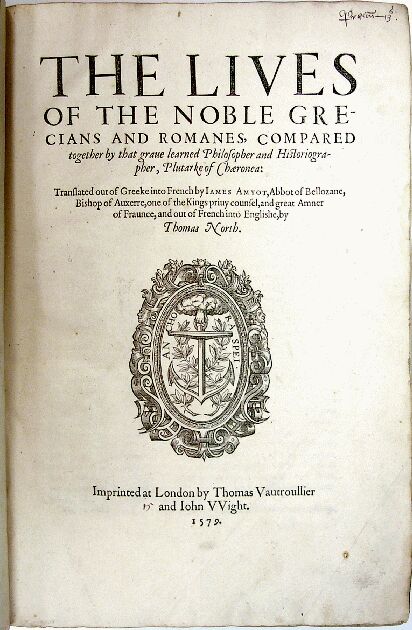
Title page of Thomas North’s translation of Plutarch’s Lives, 1579, first edition

Sunday, June 11th, 2017

I’ve been planning to read the whole of Plutarch’s Parallel Lives of the Noble Greeks and Romans for some time. I’ve also been longing for a really good stretch of the legs, especially after this last week of office work and a Saturday selling off more of my belongings in preparation for my move to Scotland. (Sorting and selling off most of the artifacts of my life and of my twenty-plus years of small business ownership has been a tedious process. If the ashes would turn into dollars to fund my education and travel, I’d gladly set it all on fire at this point and be done with it.)

It occurred to me yesterday that I could do both my hiking and my reading on my free day tomorrow! So I downloaded Lives from LibriVox onto my little portable audio player and plotted a good long Bay Area Ridge Trail hike similar to one I did two years ago. This time, my start in Anthony Chabot Regional Park would be from Lake Chabot Golf Course on the lower east end of the park since I can get there more easily without my car than to other trailheads down there. The hike is about 28 miles long, with about 4,200 feet of climbing and about the same descending all told, and goes from Oakland north to San Pablo. The hike goes through 8 regional parks and nature preserves: Anthony Chabot Regional Park, Redwood Regional Park, Huckleberry Botanic Regional Preserve, Sibley Volcanic Regional Preserve, Siesta Valley Recreation Area, Tilden Regional Park, Tilden Nature Area, and Wildcat Canyon Regional Park. I’ll hike through winding creek canyons, oak forests, redwood forests, eucalyptus groves, an ancient volcanic site, and chaparral.

This morning, I walk north and east from Lake Chabot Golf Course shortly after seven thirty, then enter Chabot Regional at the end of Grass Valley Road in south Oakland, near the San Leandro and Castro Valley borders. I take Jackson Grade east and down to Brandon Trail, where I turn left just before the sweet little stone bridge that crosses Grass Valley Creek. I head north along the east bank of the creek.

Stone Bridge over Grass Valley Creek, at Jackson Grade and Brandon Trail, Anthony Chabot Regional Park, Oakland

Plutarch’s first story tells of Theseus, founder of Athens, who rampaged around Ancient Greece like the personification of Dante’s nine circles of hell, punishing wrongdoers by inflicting on them the same species of violence they’d wreaked on others. He was quite bloodthirsty in his righteousness, slaying men and animals alike in the goriest ways possible, parading their carcasses around as warnings to the would-be wicked. But hey, all in the name of justice and glory, right? After all, according to the honor code of Theseus’ culture, a man was nothing until he’d proved himself by feats of courage, usually involving slaying an enemy. But in pitting his strength only against those who harmed and oppressed others, Theseus can be thought of as a sort of combination of Robin Hood and Dexter, the fictional serial killer/forensic scientist who directs his blood lust only against other serial killers he’s proven guilty by means of his science. But like Dexter, Theseus’ life of exploits didn’t end well, though for very different reasons. As well as a brave one, Theseus was a vainglorious and randy man, and his reputation as a hero was undermined over time by his increasing rapaciousness, concupiscence, and mistreatment of women, especially by the abduction and rape of Helen of Troy.

Looking back at Macdonald Trail, across Grass Valley Creek, from Big Bear Staging Area, where I cross Redwood Road to enter Redwood Regional Park

It’s a beautiful morning here in Chabot, sunny and a little cool. The blustering winds of yesterday have given way to occasional gentle breezes. The poppies are still closed. The cottontails hop across the trail: they emerge in the cool of the morning and the early evening and are as plentiful as, well, rabbits. Tall thistles are in bloom, and wild mustard, and lupine, and tall dandelions, and a flower that looks like Queen Anne’s lace, and sweet-smelling cones of pale pink flowers on a species of tree I can’t name. There’s a plentiful grass tipped with seed pods that arrange themselves in structures that look like rattlesnake tails, bending the stems over with their weight.

My itchy eyes and runny nose tell me I forgot to take my allergy medicine this morning in my haste to start early. It’ll be a sneezy, watery day as well as an educational one for my head.

Entering Redwood Regional Park across Redwood Road from Big Bear Staging Area of Anthony Chabot Regional Park

I cross Redwood Road and Grass Valley Creek by a little bridge into Redwood Regional Park. As I cross the bridge, Plutarch has begun to tell the life of his second hero, Romulus, founder of Rome and for whom it was named, and some stories of his twin brother Remus. Plutarch introduces this account with a long series of summaries of alternate foundation tales from popular lore. He assigns various levels of credibility to each since each story appears more fantastic than the one before, but still includes them so as to remain faithful to the pledge he makes at the beginning of his Lives to be as historically accurate as possible. But I think he settles on this Romulus story because it fits with his chosen literary construction, and not so much because it’s any less implausible. Plutarch is aware of the latter, so he seeks to gain the confidence of his readers with the admonition ‘we should not be incredulous when we see what a poet fortune sometimes is.’ As you likely guessed already, Plutarch alternates his accounts of great Greeks and Romans in pairs, chosen because they play corollary roles in the history and mythology of each culture. Theseus was the storied founder of Athens, Romulus of Rome.
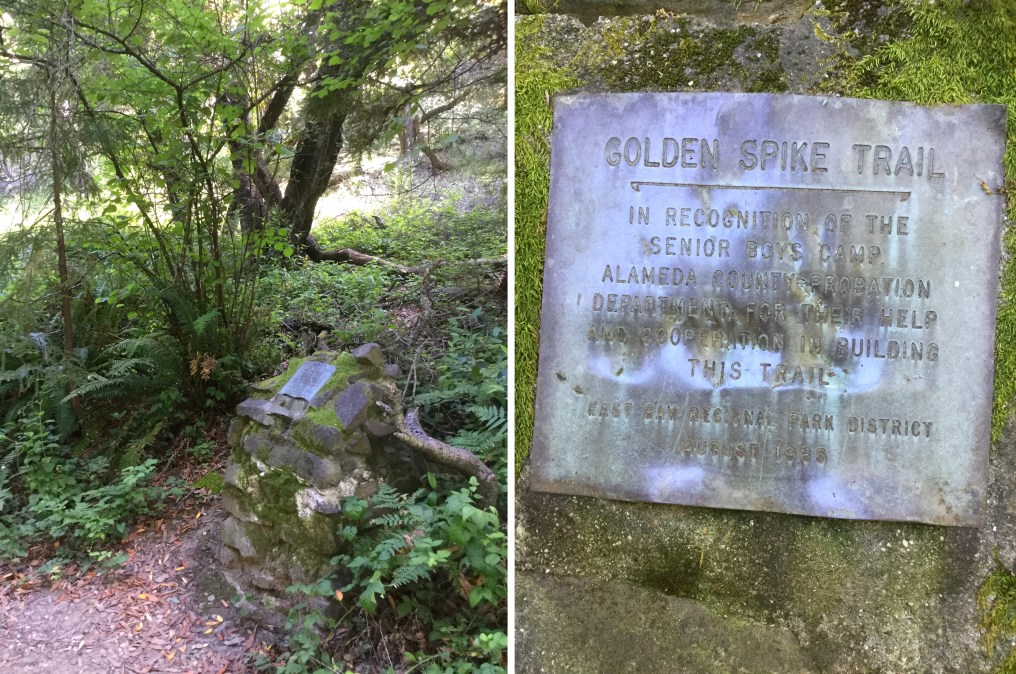
Commemorative marker on Golden Spike Trail running north along Grass Valley Creek, Redwood Regional Park

Romulus and Remus, for one of many possible reasons of court intrigue that Plutarch offers in explanation, were cast out as babies from their royal family, set afloat in a trough on the river like the biblical Moses, and left to the mercies of the rushing water and the wild animals, their flesh to become food for the birds. Instead, they were suckled by a wolf and fed by birds, especially woodpeckers, made sacred to the Romans by this kind act. The twins grew strong, bold, and handsome, conquerors of men and lovers of women. Now grown men, they overthrew one usurping and unjust tyrant, and instead of taking control themselves, they handed the city over to the rightful ruler. The only power they chose to wield was over a city they would found themselves.

A little later on in the story, I’m struck by Plutarch’s justification of the legendary rape of the Sabine women by the newly made Romans, a story immortalized countless times in art over the centuries. The commoners who left home to follow Romulus and Remus, out of admiration for their courage and just dealings, after a time sought to populate their new city by abducting women from the neighboring Sabine people. Plutarch shrugs his shoulders and writes, well, this violent act of mass rape and coerced marriage wasn’t really an act of barbarity or cruelty, but rather of necessity, since there weren’t enough women around actually consenting to marry them. And anyway, once the men had raped and impregnated and wed them, they were nice to the ladies thereafter. Yikes. As James Brown would observe, that was a man’s world, and the first Roman men of legend agreed, in the worst possible fashion, that it ain’t nothin’ without a woman or a girl.
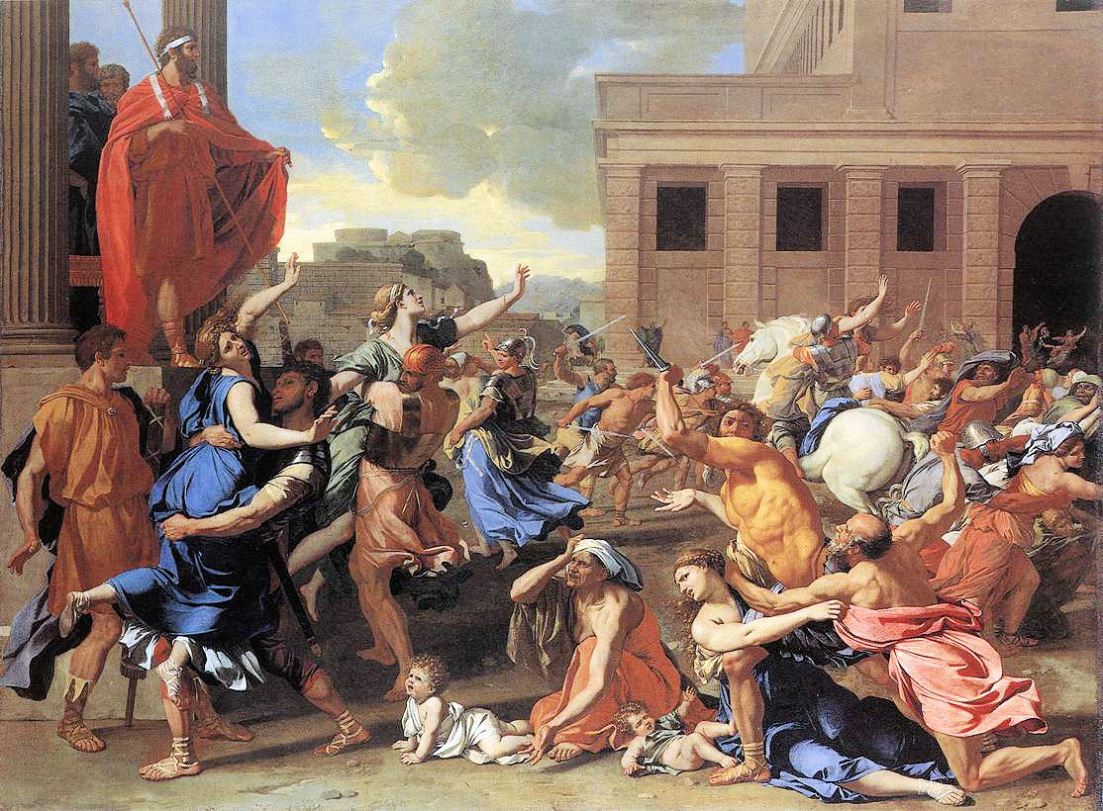
The Abduction of the Sabine Women by Nicolas Poussin, 1634–1635, Metropolitan Museum of Art, public domain via W.C.

And besides, Plutarch continues in his attempts at exoneration, the budding new city openly offered sanctuary to all escaped slaves, to fugitives from the law, and to all other unhappy and dispossessed people willing to become members of the new society they were building from scratch. It’s interesting that Rome, which Plutarch praises as the pinnacle of justice, order, and noble accomplishment, is, as he tells it, also the product of abductors, rapists, and violent criminals as well as of enterprising seekers of liberty and a better life.

Redwood Bowl in Redwood Regional Park, a welcome water stop and bathroom break

Plutarch also tells of a certain philosopher and mathematician assigned many centuries later to fix the date of Romulus’ birth, based on accounts of an eclipse that occurred around that time and on other events in his life ‘just as solutions of geometrical problems are derived.’ Plutarch goes on to consider the validity of the idea that the lives of human beings could similarly be described and even predicted so long as the astrologer had all of the relevant celestial information about the positions of the heavenly bodies. He describes the controversy over that theory in terms not entirely dissimilar to naturalist determinists and their ideological opponents today.

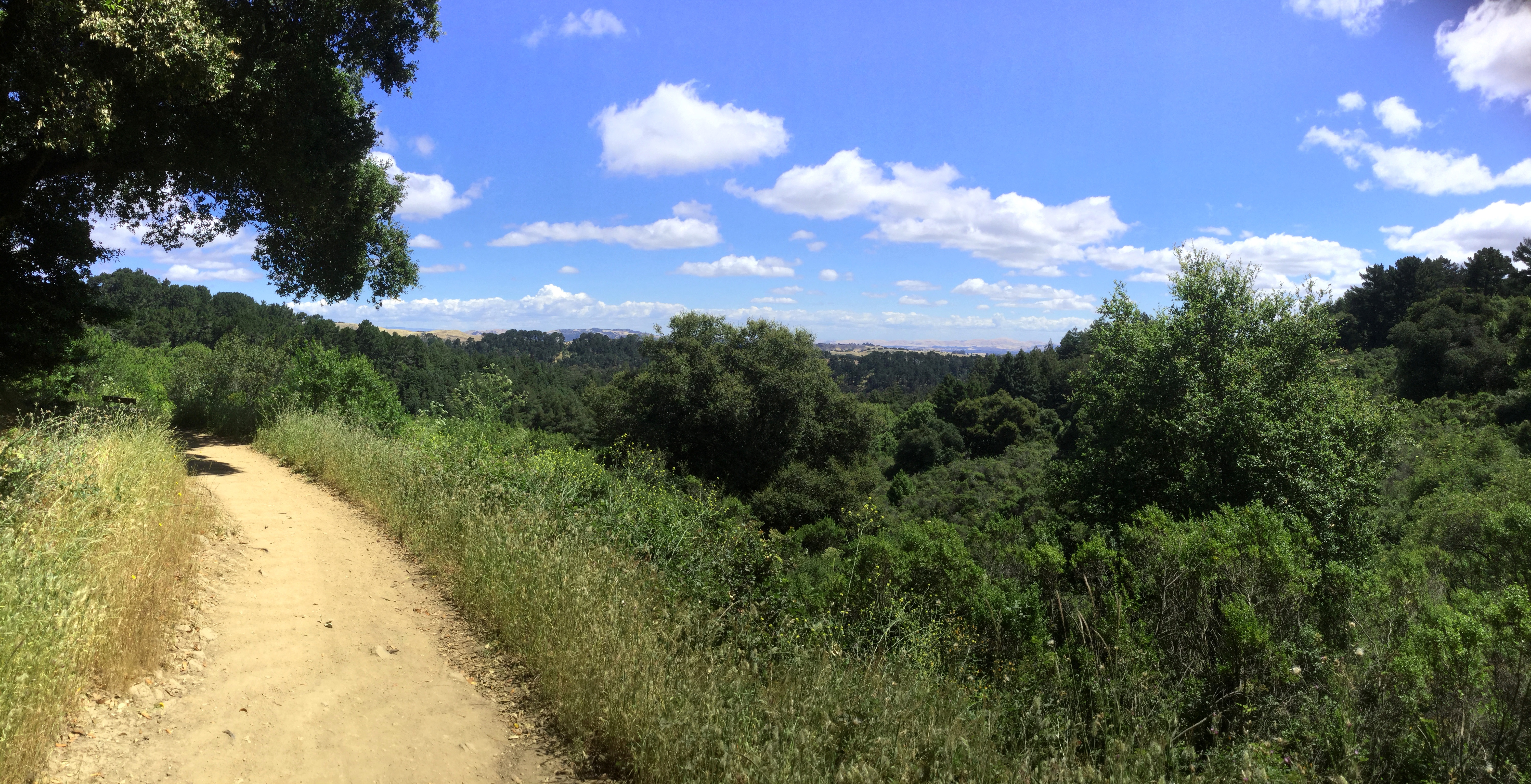
Panoramic view of Redwood Regional Park from West Ridge Trail

Following Plutarch’s account of a later attack of the Sabines on Rome, since the former didn’t take kindly to the earlier predations of the latter, and the subsequent betrayal of the city to its enemies, Plutarch makes another interesting observation. Julius Caesar once said that he loved treachery but hated traitors, just as all people hate and despise providers of things they need but are ashamed of needing. Plutarch offers these quotes and incidents as emblematic of the ways of the world. And we’ve seen this sort of this countless times through history following Plutarch. Christians of Europe, for hundreds of years, justified their persecutions of the Jews partly on account of usury. The objects of their hate were making a living providing the very loans the Christians relied on to build their wealth, but when it became more expedient to rob and kill their creditors from time to time, all bets were off. Slaveholders of the American South similarly despised and persecuted the very people who made their wealth and comfort possible, justifying their oppression on account of supposed inferiority as they quashed any attempt by their slaves to better themselves through education and work on their own behalf. And so on, and so on…

Amy and a stand of Matilija poppies at Skyline Gate of Redwood Regional Park. Two parks down, six to go!

Tiny pink buds seem to float among the starry leaves along Skyline Trail in lush Huckleberry Botanic Regional Preserve

After a good long climb, West Ridge Trail curves around to the right to become East Ridge Trail; after a short walk along this trail, I turn left at the Bay Area Ridge Trail, leaving Redwood Regional via the connector path, and crossing Pinehurst Rd., I enter beautiful Huckleberry Botanic Regional Preserve.

Skyline Trail, which winds through beautiful and lush Huckleberry, and which runs along Round Top Creek through much of Sibley Volcanic, the next park, is thickly lined with poison oak, in some places hard to avoid. The rainy winter and spring caused them to flourish, but I walk in trepidation. I had to pick my way with special care on Golden Spike Trail in Redwood, since that trail is very, very narrow, almost overgrown in places. The wildflowers that grow plentifully in spring, such as hound’s tongue, blue-eyed grass, and California buttercups, are nearly gone. Now, there’s lots of sticky monkey flower, Ithuriel’s Spear, blue dicks, mule ears, and many other flowers, as well as those I named earlier.

Plutarch wraps up this part of his Lives with a reflection on the sudden and unexplained death of Romulus and the deaths of other heroes and kings under similarly suspicious circumstances. He takes this opportunity to share his beliefs about death and the soul, and quotes the ancient philosopher Heraclitus: ‘A dry soul is best’. This quote is oftentimes interpreted as a comment on the immorality of drinking, but Plutarch interprets it as being about a soul burdened by its connection to a fleshly body, full of blood and fluids associated with the basest of needs and desires and with illness: saliva, semen, urine, phlegm, and so on. He believes that souls are defiled so long as they remain arrayed in flesh, and become pure and holy only when completely divorced from the body. Plutarch goes on to say that he believes all great and virtuous men, purified of flesh, go on to become immortal heroes, then demigods, then gods. In his ideas about the purity of souls, the corruptions of the flesh, and that at least some human beings have the potential to become gods eventually, Plutarch is in agreement with the Christians in some ways, and with the Mormons in others.

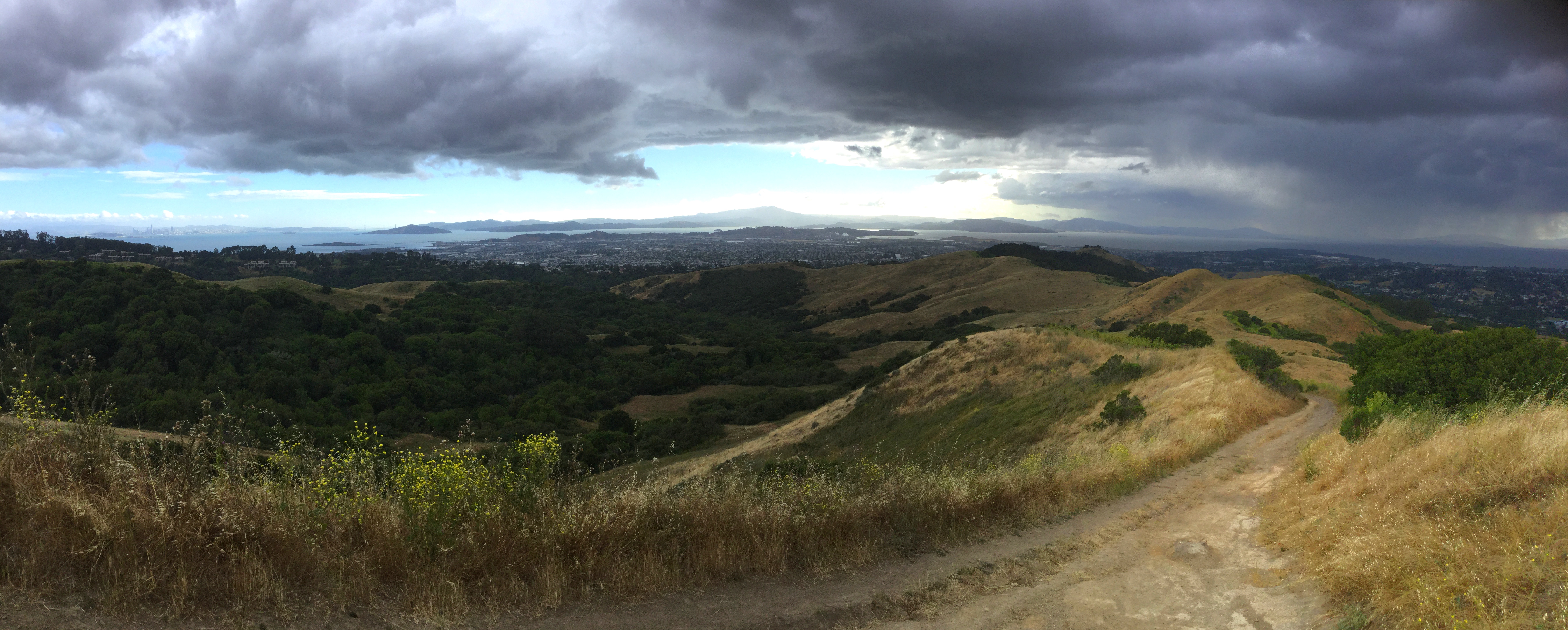
Panoramic view looking over Huckleberry Botanic Regional Preserve, from an outlook above the steepest part of the climb out of the creek canyon
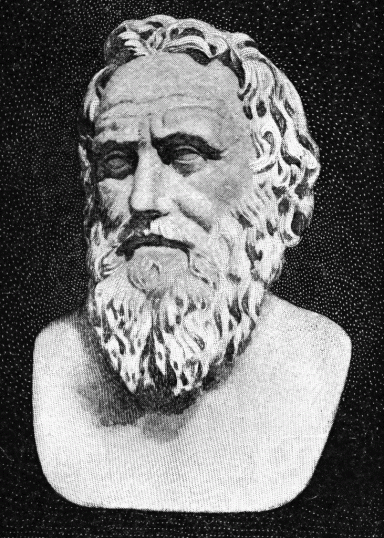
Lycurgus, illustration from William C. Morey’s Outlines of Greek History, Chicago, American Book Company, 1903

Then comes the story of Lycurgus the Lawgiver, the legendary Greek king who instituted the rigid militarist social system that remains emblematic of ancient Sparta to this day. Plutarch tells how a preceding king, Eurytion, had relaxed the severity of his monarchic rule in order to win the favor of his people. But the people, over time, ‘grew bold’ and rose up against attempts by subsequent rulers to strengthen their own power. Earlier, in his reflections on the comparative merits and demerits in the characters of Theseus and Romulus, he praised Theseus’ preference for increasingly democratic rule over Romulus’ evolution (or, devolution) into tyranny. Plutarch attributes excesses in favor of democracy to a generous and kindly spirit, and excesses of tyranny to pride and selfishness. Yet when he opens his story of Lycurgus with the destabilization of society following increased democratization, he seems to contradict himself when he earlier associates virtue with democracy and vices with tyranny, until we remember that in the first case, he’s speaking of the characters of individuals, and in the second case, he’s pointing out that democracy is not always the best answer for society at large. John Adams and Alexander Hamilton would sympathize with Plutarch here, while Thomas Jefferson would side with the people. I think Jefferson would point out, as he does following the pandemonium following the first French Revolution, that excesses are bound to happen in any struggle against tyranny. As they settle into their newly won liberty, however, people’s better natures, which predominate in the souls of all free and educated people, have the opportunity and the desire to create a just and happy society.

When Lycurgus took power, however, he perceived a society that had become ‘effeminate’ (negative term in those days), weak, selfish, and corrupt through addiction to sensual pleasures and the small-souled desire to amass personal wealth. So Lycurgus set out to re-craft his Sparta into an ideal society. One of his first reforms was the redistribution of land. He observed that most of the land was held by a few, leaving much of it undeveloped and unfarmed, while many more people were poor and unemployed. He convinced the landowners, as Plutarch tells it, to give up some of their land, which he thus distributed evenly among the citizens. He then instituted more practices designed to reduce useless luxury, overeating, and other forms of excess which caused both poor health in the individual and envy between individuals. In fact, he convinced his subjects to perceive the appearance of wealth as a defect, something to be abhorred as a sign of petty, self-indulgent weakness. Lycurgus’ system of social engineering, instituted by both persuasion and force, was not entirely welcome to the Spartans, but Plutarch heartily approves.
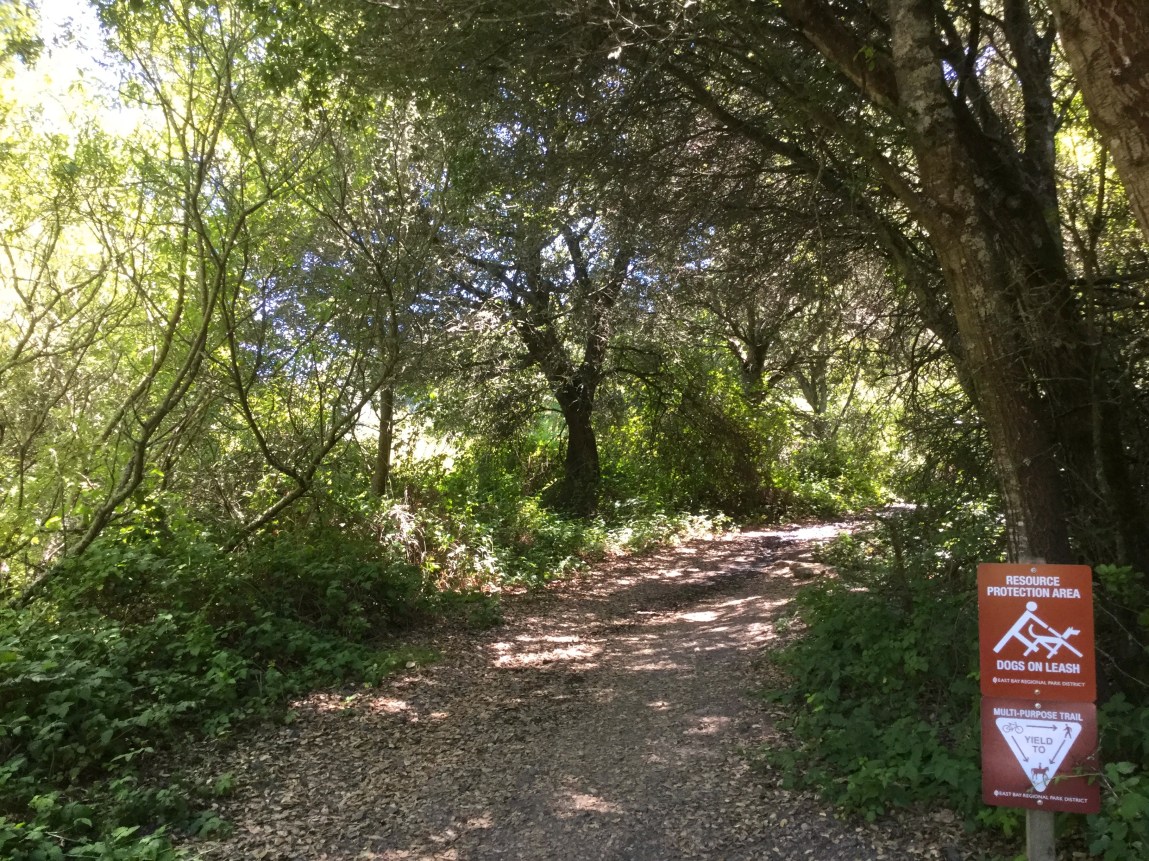
Looking back on shady Skyline Trail in Sibley Volcanic Regional Preserve, which runs along Round Top Creek

Looking back on Sibley’s volcanic formations rising above the trees, from Fish Ranch Road. Please excuse the shadow in the corner, I didn’t notice the cover on my tablet had been knocked askew in my backpack, slightly obscuring the camera lens.

Skyline Bay Area Ridge Trail crossing on Fish Ranch Road, looking north at Siesta Valley Recreation Area

Intensely blue starry flowers along Bay Area Ridge Trail through Siesta Valley Recreation Area

Yet Spartan society, so rigidly designed by Lycurgus according to his ideas about virtue and utility, was not egalitarian in the sense that we’d understand the term.  It was an intensely aristocratic society centered around a warrior elite, with an equality enforced only among that class. Wives were obtained by force, children were removed from the care of their parents at the will of the state, and deformed and sickly babies were put out to die of exposure. And as Plutarch so casually mentions, all of this equality of the ‘best’ in society, crafted by both positive and negative eugenics practices, and their strict training in virtue, sport, and war, was made possible by the slave labor of the subjugated helots. Plutarch does not seem the least distressed by this; in fact, he seems to accept this as a most natural state of affairs. He does regret that the helots were often treated harshly, even murderously, by their Spartan enslavers, but he insists that this institutional cruelty came only after Lycurgus’ rule by subsequent kings of lesser moral character.

Plutarch tells us next about Numa Pompilius, the second king of Rome. Numa was a was held in high regard by the people because he was humble, contemplative, lived simply, scorned money-making, and spent his time in study and in service to his people. After the death of Romulus, he was widely accepted as the best candidate to succeed to the throne, endorsed by Romans and Sabines alike. The original Romans and the Sabines, who had cohabited Rome in an uneasy, fractured peace, wanted a ruler who would deal as justly with one group as another. The senators who had taken over the government didn’t have the trust of the people: many believed they were corrupt and that they had, in fact, assassinated Romulus. So they decided to elect a king to keep watch over the Senate and to lead the inhabitants of Rome as one united people.

Hillside covered with sticky monkey flower in Siesta Valley Recreation Area

Beautifully patterned redwood stump near the meeting of Siesta Valley Recreation Area and Tilden Regional Park

So at 40 years old, having lived an already long life of virtue, Numa settled with reluctance, feigned or not, onto the throne. According to Numa, wielding power was not his dream: he preferred a life of mostly solitary contemplation. Plutarch, however, rather seems to describe the actions of a man secretly rejoicing in the power offered to him while coyly disguising his satisfaction. In any case, Numa was a philosophical man who believed strongly in social justice and had some earlier experience as an adjudicator. So he immediately got to work. He banished the huge retinue of servants the Romulus had gathered around him in his tyrannical old age. He instituted many reforms to gain the trust of the people and to promote peace, especially between the Sabines and the original Romans. The factional and ethnic conflict that had long plagued Rome threatened its stability and made it vulnerable to attack. So he found one inventive and one practical way to solve these problems: involuntary social mixing and censorship. He assigned individual members of differing groups to shared trades that would force interaction and cooperation that otherwise wouldn’t happen, and he forbade any references to belonging to particular cultural or ethnic groups. From now on, decreed Numa, all of his subjects were simply Roman.

I’m reminded here of a very interesting article I read about Singapore a couple of years ago, a nation which addressed a similar problem in a similar way. Singapore is a densely populated, tiny island country made up largely of immigrant workers and their descendants, of very diverse ethnic and religious backgrounds. Singapore maintains its relatively low level of interracial and interreligious conflict by assigning ethnic and religious quotas to all neighborhoods. By forcing its citizens to live, work, go to school, shop, and in every other way share their public lives by people of diverse backgrounds, Singapore hopes that everyone will be so accustomed to diversity that they’ll accept it as a matter of course. Or, even better, a matter of pride and celebration. I suspect that Singapore’s two Prime Ministers may have read Plutarch’s Lives.
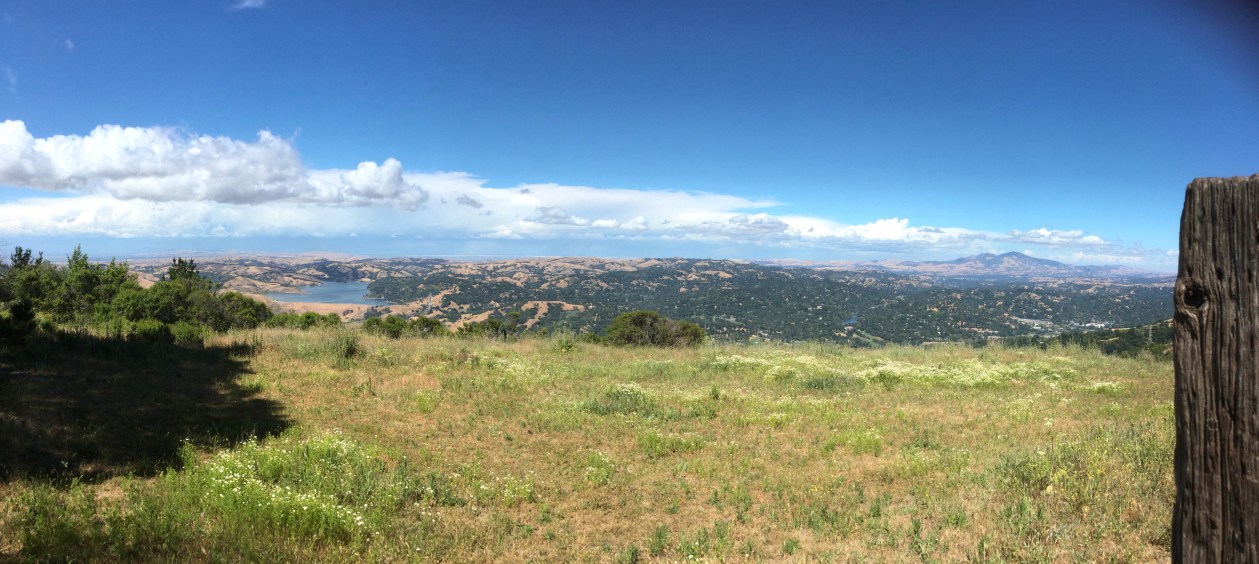
Panoramic view facing east from Seaview Trail, Tilden Regional Park, with Briones Reservoir and Mt Diablo

San Francisco, Treasure Island, Alcatraz, the Golden Gate Bridge, the Marin Headlands, Angel Island, and the Bay as seen looking west from the Seaview Trail in Tilden Regional Park
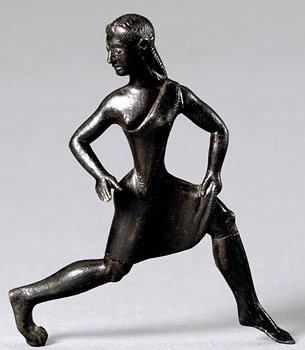
Statuette of a running girl, Spartan, about 520 BCE, British Museum. Note her bare breast, short skirt, and saucily exposed thigh. I think Lycurgus would secretly like this sculpture very much

Plutarch admires both Lycurgus and Numa. Like Lycurgus, Numa instituted his vision of a virtuous society through strict social regulation. They both believed it was the government’s job to protect the people from enemies within as well as without. Therefore, both instituted strict behavior codes for citizens as well as ways to promote peace and defend their people from military attack. Plutarch, who values virtue over liberty, generally approves of their social engineering systems but has a few problems with both as well.

For example, he’s shocked by Spartan women mingling freely with young men in public, wearing short tunics that left their thighs visible, permitted by the Lycurgian code. Plutarch seems sympathetic to or at least intellectually satisfied with Lycurgus’ theories about the power of sex to unite sympathies and strengthen social bonds. But Plutarch really dwells quite a bit on the topic of publicly bared Spartan female thighs with so much delighted horror that methinks he doth protest too much. Plutarch doesn’t, however, seem to pass judgment on the sexual practices of Spartans, which include lover- and spouse-sharing, homosexual sex and erotic play, child lovers, and coercive sex, all of which have been mostly censured and banned by law and religion since Plutarch’s time.

He approves of Numa’s restrictions on women, such as banning them from appearing and speaking in public, and of the policy of marrying them off very, very young so their husbands can instill complete obedience in them as they grow up. Yet Plutarch criticizes some of Numa’s policies when it comes to punishing crimes against women, finding them merely arbitrary in some cases and not punitive enough in others. He believes Numa could have done more to protect women’s virtue in this area. In matters of gender and sexuality generally, it’s not sexual practices that provoke Plutarch’s moralizing, as it was for so many governments and religions succeeding him throughout the centuries. He seems bothered only by practices which run contrary to his own conception of the primary feminine virtues, which, according to Plutarch and Numa, are modesty and obedience.
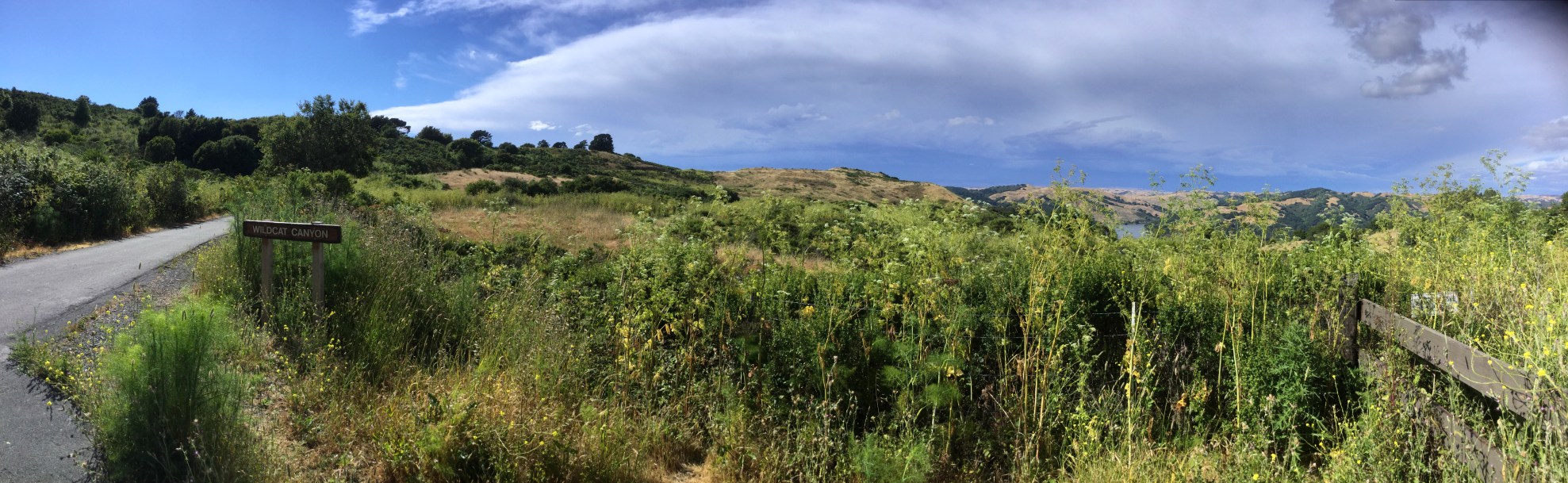
Wildcat Canyon, panoramic view from the entrance to the park from Tilden Nature Area looking northeast

As I enter Wildcat Canyon Regional Park from Tilden Nature Area, Plutarch has recently introduced me to the ancient Athenian lawmaker, poet, and ruler Solon. I’ve heard of him, but remember little. I’m about 23 miles in with another five or so to go. My feet have been very sore for the last five miles already and I’m limping. But I’m happy, and in a dreamy, almost hypnotized state at times from my regular, ceaseless footfalls. I discovered it’s no good to stop: as soon as I let my feet rest, the blood rushes into them and then it’s more painful to start again than it was to keep them a little numbed by constant use. Besides, I need to meet my ride home, and I’m behind time since I had paused so often to take pictures and slowed down so many times to tap out my reading notes.
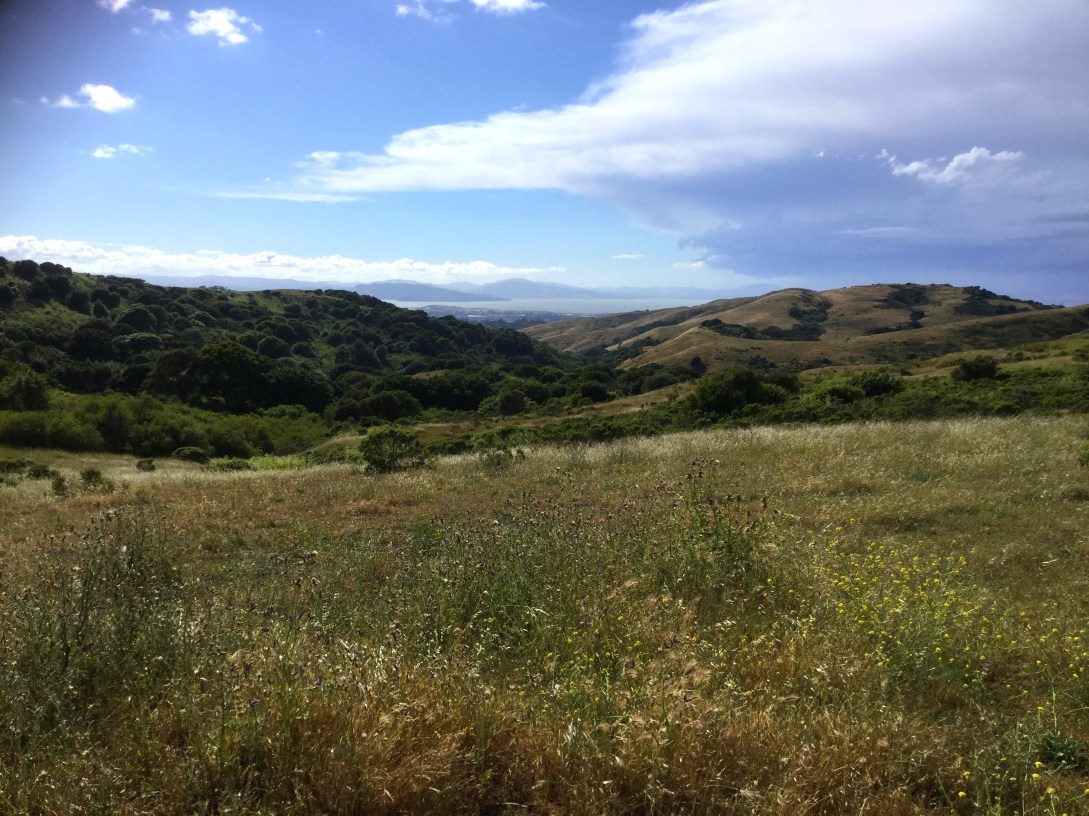
In Wildcat Canyon Regional Park, view looking northwest from Nimitz Way
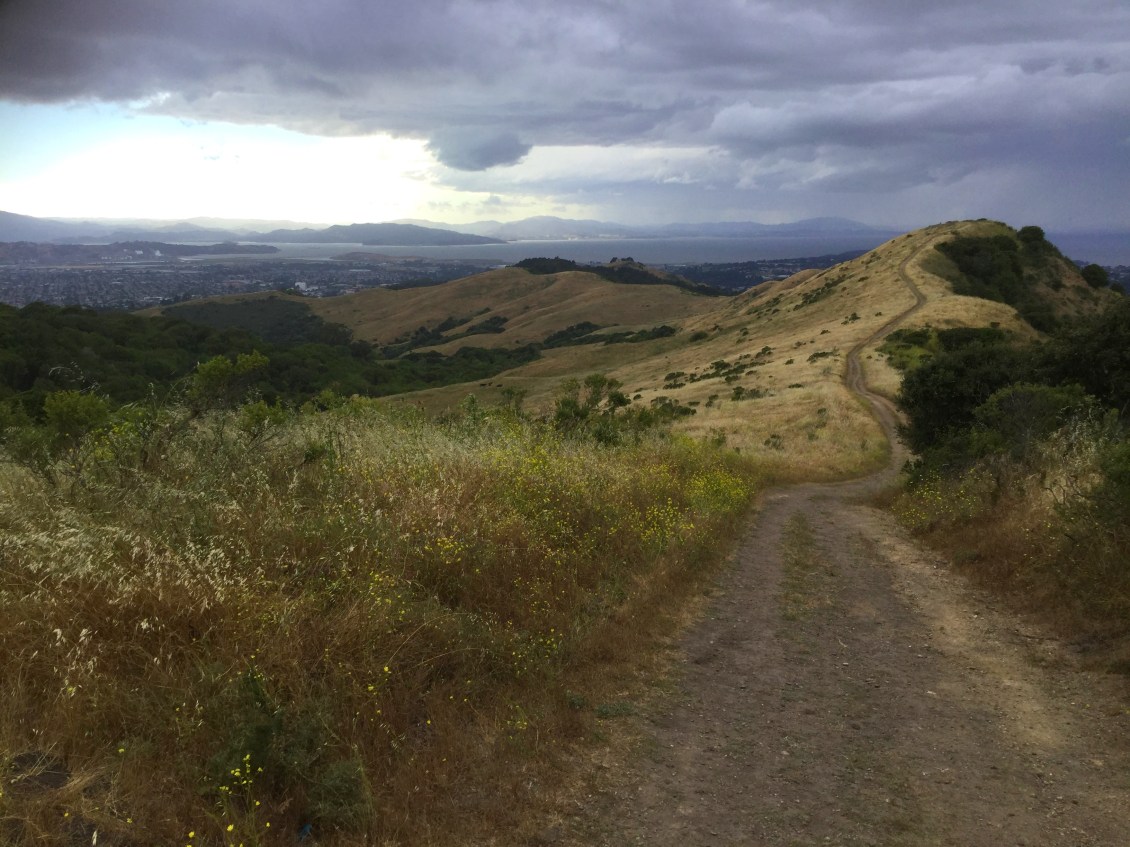
In Wildcat Canyon Regional Park, looking northwest along San Pablo Ridge Trail

I forget my feet for awhile as the wind picks up. This is usually the case on the ridge trails in Wildcat Canyon. I’ve been in winds so strong up here they suck the saliva right out of your mouth and whip it onto your face. Keeping your mouth closed doesn’t save you from this indignity, however, because the winds perform the same action on your nose. Yuck. It’s not quite so windy this time, but I can see rain in the distance, and know I may not be dry at the end of this hike. The sky, land, and water are spectacular from up here, at this time of day, in this weather. I pull on a lightweight wool sweater and this, with my shorts, keeps me perfectly comfortable temperature-wise. The wind is swaying the golden grasses like a wavy sea, and they’re glowing and shimmering in the varied light. The sky is blue, white, silver, and steel gray, and gauzy curtains in the same shade indicate scattered rainfall. After quite a time on long, level Nimitz Way, I take San Pablo Ridge and Belgum Trails, curvy and hilly, exciting in their winding, rising and falling changeability but hard on my weary knees on the downhills. I think the shoes I wore on my last hike like this were better.
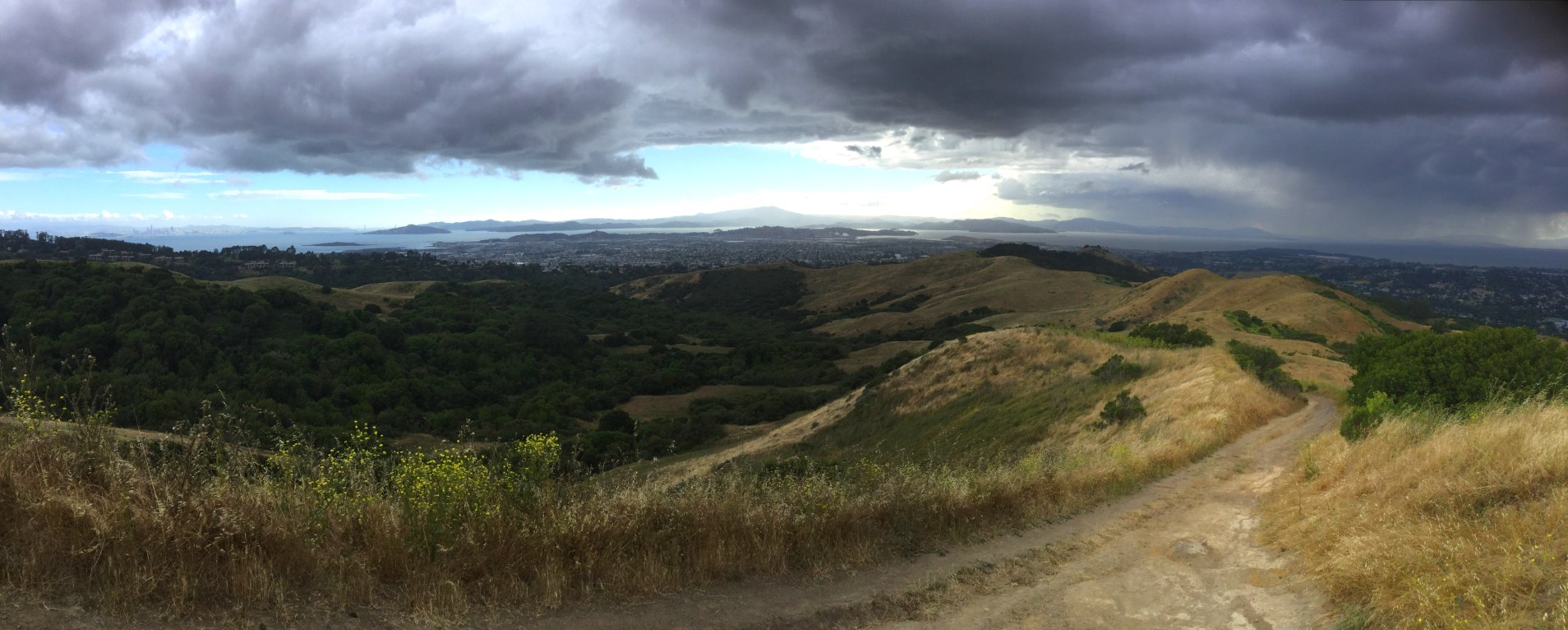
In Wildcat Canyon Regional Park, panoramic view with San Pablo Bay, Richmond, and Mt. Tamalpais in the distance (‘Mt. Tam’ to us locals) from the San Pablo Ridge Trail

Among many other things (I’m tired, and my attention is waxing and waning), Plutarch tells of Solon’s meeting with Croesus, and my ears perk up. I remember this story as told by Herodotus. Croesus (as in the saying ‘rich as Croesus’), receives Solon ostensibly as an honored guest, but really as a potential propaganda tool. He wants to impress Solon so that Solon will spread the word about the great riches, power, and glory he’s beheld in Croesus’ court. But Solon, like Plutarch’s other most admired heroes thus far, is unimpressed by such vulgar shows of wealth. The harder Croesus tries, the less Solon is impressed. Instead, he foretells the doom that such wealth is liable to bring Croesus. And sure enough, it attracts the notice of King Cyrus of Persia, who sweeps in with his army and takes all that nice gold and treasure by force. As he is about to execute Croesus, Cyrus’ attention is caught by Cyrus’ lament that he had not heeded Solon’s wisdom. Cyrus decides to spare Croesus’ life when he observes that Croesus has grown wise in turn. It doesn’t do to execute wise men so long as you are strong enough to benefit from their wisdom while keeping them in their place.

For the last mile or so, I hike in a light rain. It feels good. Then about 7 o’clock, I read my destination: Alvarado Staging Area of Wildcat Canyon near the northwest end of the park. I borrow a kind stranger’s cell phone, since mine is malfunctioning, and check on my ride, my always supportive and patient sister Therese. She’ll arrive shortly. I shelter under an oak tree, take off my shoes and socks (oh, sweet relief!) and watch the drops fall from a partly sunny sky. A young girl emerges from her house down the street and places herself in the rainfall in surprise and delight; we watch the water steam off the asphalt that, until a few moments ago, was warmed by the sun. My sister and her boyfriend Eric (who has also become my friend) pick me up and whisk me away to feast with them on papusas and beer. On our way, we see a rainbow glowing against the blue and gray to our left. It’s been a rich and thoroughly satisfying day.

*Listen to the podcast version here or on Google Play, or subscribe on iTunes

~ Ordinary Philosophy and its Traveling Philosophy / History of Ideas series is a labor of love and ad-free, supported by patrons and readers like you. Please offer your support today!

~~~~~~~~~~~~~~~~~~~~~~~~~~~~~~~~~~

Sources and inspiration:

Alighieri, Dante. The Divine Comedy: Inferno, Houghton, Mifflin, 1885

Graham, Daniel W., ‘Heraclitus‘, The Stanford Encyclopedia of Philosophy, Edward N. Zalta

Plutarch, Lucius Mestrius (c. 46 – c. 120), Parallel Lives of the Noble Greeks and Romans, translated by Bernadotte Perrin (1847 – 1920), Volumes 1, 2, 3, and 4, recordings at Librivox.org

Zakaria, Fareed. ‘What America Could Learn From Singapore About Racial Integration’. The Washington Post, June 25, 2015

How ‘The Rubáiyát of Omar Khayyám’ Inspired Victorian Hedonists, by Roman Krznaric

The Angel of the Drink of Darkness, The Rubaiyat of Omar Khayyam, by Edmund Dulac

How did a 400-line poem based on the writings of a Persian sage and advocating seize-the-day hedonism achieve widespread popularity in Victorian England? The Rubáiyát of Omar Khayyám was written by the eccentric English scholar Edward FitzGerald, drawing on his loose translation of quatrains by the 12th-century poet and mathematician Omar Khayyám. Obscure beginnings perhaps, but the poem’s remarkable publishing history is the stuff of legend. Its initial publication in 1859 – the same year as Charles Darwin’s On the Origin of Species and J S Mill’s On Liberty – went completely unnoticed: it didn’t sell a single copy in its first two years. That all changed when a remaindered copy of FitzGerald’s 20-page booklet was picked up for a penny by the Celtic scholar Whitley Stokes, who passed it on to Dante Gabriel Rossetti, who subsequently fell in love with it and sang its praises to his Pre-Raphaelite circle.

When, in 1863, it fell into the hands of John Ruskin, he declared: ‘I never did – till this day – read anything so glorious.’ From that moment, there began a cult of Khayyám that lasted at least until the First World War, by which time there were 447 editions of FitzGerald’s translation in circulation. Omar dining clubs sprang up, and you could even buy Omar tooth powder and illustrated playing cards. During the war, dead soldiers were found in the trenches with battered copies tucked away in their pockets.

What then was the extraordinary attraction of the Rubáiyát? The answer sings out from some of its most famous verses:

XXIV
Ah, make the most of what we yet may spend,
Before we too into the Dust descend;
Dust into Dust, and under Dust to lie
Sans Wine, sans Song, sans Singer, and – sans End!

XXXV
Then to the lip of this poor earthen Urn
I lean’d, the Secret of my Life to learn:
And Lip to Lip it murmur’d – ‘While you live
Drink! – for, once dead, you never shall return.’

LXIII
Oh, threats of Hell and Hopes of Paradise!
One thing at least is certain – This Life flies;
One thing is certain and the rest is Lies;
The Flower that once has blown for ever dies.

The Rubáiyát was an unapologetic expression of hedonism, bringing to mind sensuous embraces in jasmine-filled gardens on balmy Arabian nights, accompanied by cups of cool, intoxicating wine. It was a passionate outcry against the unofficial Victorian ideologies of moderation, primness and self-control.

Yet the poem’s message was even more radical than this, for the Rubáiyát was a rejection not just of Christian morality, but of religion itself. There is no afterlife, Khayyám implied, and since human existence is transient – and death will come much faster than we imagine – it’s best to savour life’s exquisite moments while we can. This didn’t mean throwing oneself into wild hedonistic excess, but rather cultivating a sense of presence, and appreciating and enjoying the here and now in the limited time we have on Earth.

This heady union of bodily pleasures, religious doubt and impending mortality captured the imagination of its Victorian audience, who had been raised singing pious hymns at church on a Sunday morning. No wonder the writer G K Chesterton admonishingly declared that the Rubáiyát was the bible of the ‘carpe diem religion’.

The influence of the poem on Victorian culture was especially visible in the works of Oscar Wilde, who described it as a ‘masterpiece of art’ and one of his greatest literary loves. He took up its themes in his novel The Picture of Dorian Gray (1890). The character of Lord Henry Wotton is a champion of hedonism who explicitly refers to the sensual allures of ‘wise Omar’, and tempts the beautiful young man Dorian to sell his soul for the decadent pleasures of eternal youth. ‘Time is jealous of you, and wars against your lilies and your roses,’ says Lord Henry. ‘A new Hedonism – that is what our century wants.’

Wilde’s novel was a thinly veiled celebration of homosexuality – a crime for which he was gaoled in 1895 (passages of the book were read out at his trial as part of the incriminating evidence). He saw in the Rubáiyát an argument for individual freedom and sexual liberation from the constraints of Victorian social convention, not least because FitzGerald too was well-known for his homosexuality. For Wilde, as for FitzGerald, carpe diem hedonism was far more than the pursuit of sensory pleasures: it was a subversive political act with the power to reshape the cultural landscape.

Hedonism has a bad reputation today, being associated with ‘YOLO’ binge-drinking, drug overdoses, and a bucket-list approach to life that values fleeting novelty and thrill-seeking above all else. Yet the history of the Rubáiyát is a reminder that we might try to rediscover the hidden virtues of hedonism.

On the one hand, it could serve as an antidote to a growing puritanical streak in modern happiness thinking, which threatens to turn us into self-controlled moderation addicts who rarely express a passionate lust for life. Pick up a book from the self-help shelves and it is unlikely to advise dealing with your problems by smoking a joint under the stars or downing a few tequila slammers in an all-night club. Yet such hedonistic pursuits – enjoyed sensibly – have been central to human culture and wellbeing for centuries: when the Spanish conquistadors arrived in the Americas, they discovered the Aztecs tripping on magic mushrooms.

On the other hand, the kind of hedonism popularised by the Rubáiyát can help to put us back in touch with the virtues of direct experience in our age of mediation, where so much of daily life is filtered through the two-dimensional electronic flickers on a smartphone or tablet. We are becoming observers of life rather than participants, immersed in a society of the digital spectacle. We could learn a thing or two from the Victorians: let us keep a copy of the Rubáiyát in our pockets, alongside the iPhone, and remember the words of wise Khayyám: ‘While you live Drink! – for, once dead, you never shall return.’Aeon counter – do not remove

This article was originally published at Aeon and has been republished under Creative Commons.

Roman Krznaric is a social philosopher. He is the founder of the world’s first Empathy Museum and of the digital Empathy Library. He is also a founding faculty member of The School of Life and on the faculty of Year Here. His latest book is Carpe Diem Regained: The Vanishing Art of Seizing the Day (2017). Bio credit: Aeon

~ Ordinary Philosophy is a labor of love and ad-free, supported by patrons and readers like you. Any support you can offer will be deeply appreciated!

*All views and opinions expressed by guest writers are their own and do not necessarily reflect those of Ordinary Philosophy’s editors and publishers