Happy Birthday, Lady Mary Wortley Montagu!

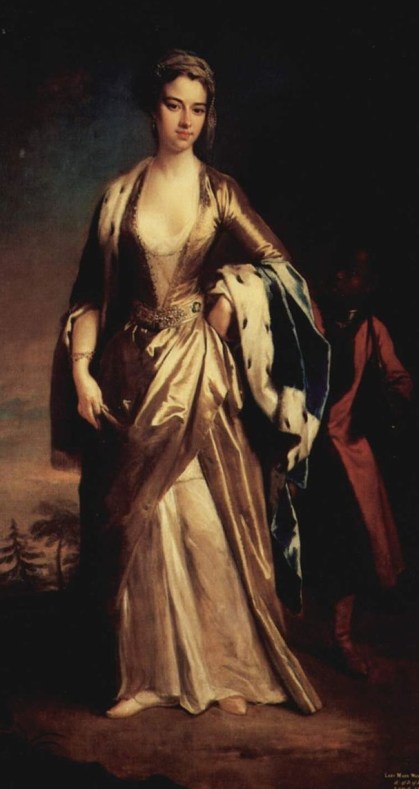
Mary Wortley Montagu by Jonathan Richardson the Younger (cropped), public domain via Wikimedia CommonsI just discovered this fascinating woman this morning, on the occasion of her birthday.

According to Encyclopedia Britannica, Lady Mary Wortley Montagu was a ‘prolific letter writer in almost every epistolary style; she was also a distinguished minor poet, always competent, sometimes glittering and genuinely eloquent. She is further remembered as an essayist, feminist, traveler, and eccentric.’

Here are three excellent features on Montagu:

Lady Mary Wortley Montagu“. Encyclopædia Britannica.

Lady Mary Wortley Montagu, 1689–1762“. The Poetry Foundation.

Secor, A., 1999. ‘Orientalism, gender and class in Lady Mary Wortley Montagu’s Turkish Embassy Letters: to persons of distinction, men of letters and c’. Cultural Geographies (formerly Ecumene) Volume 6, Issue 4 pp375-398. Arnold Publishers.

~ Ordinary Philosophy and its Traveling Philosophy / History of Ideas series is a labor of love and ad-free, entirely supported by patrons and readers like you. Please offer your support today!

New Podcast Episode: Frederick Douglass Albany, Troy, and Syracuse NY sites

Liberty Street Presbyterian Church, Collection of the Rensselaer County Historical Society, Troy, NY 2

Liberty Street Presbyterian Church in a later incarnation as a laundry. This only known surviving photo is in the collection of the Rensselaer County Historical Society, Troy, NY

Listen to this podcast episode here or subscribe on iTunes

Eighth Day, Sunday March 27th

I get up very early and leave Cambridge (where I’ve been staying while visiting Boston and Lynn) and this time, instead of heading north, I head west across upstate New York. I’ve never visited this part of the country before. My friend who I’ll be staying with in Rochester laments that I’m visiting at the least advantageous time of year for beauty’s sake: the snow is gone, and having scrubbed the trees bare, leaves the trash it’s been concealing exposed, and there’s not a hint of green nor bloom yet on the branches. But I still think it’s lovely, with a sort of stark gray beauty, and enjoy the day’s drive of about 325 miles.… Read the original account here

Ordinary Philosophy and its Traveling Philosophy / History of Ideas series is a labor of love and is ad-free, entirely supported by patrons and readers like you. Please offer your support today!

Frederick Douglass Albany, Troy, and Syracuse NY Sites

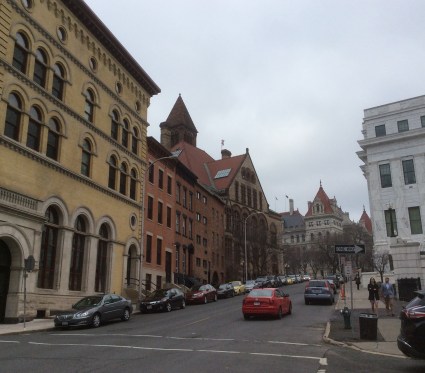
A view of Albany, NY, 2016 by Amy Cools

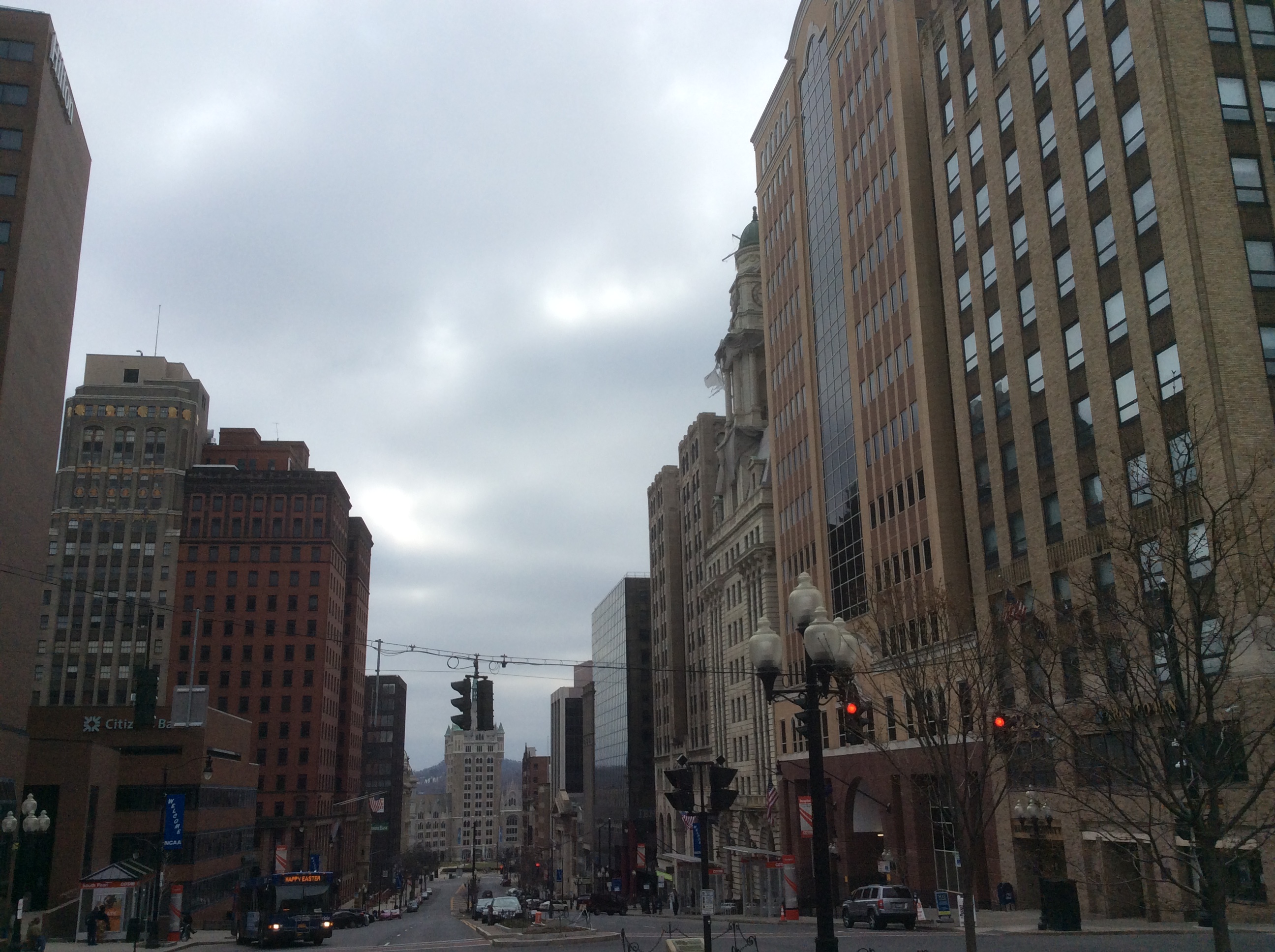
A view of downtown Albany, New York, looking west

Eighth Day, Sunday March 27th

I get up very early and leave Cambridge (where I’ve been staying while visiting Boston and Lynn) and this time, instead of heading north, I head west across upstate New York. I’ve never visited this part of the country before. My friend who I’ll be staying with in Rochester laments that I’m visiting at the least advantageous time of year for beauty’s sake: the snow is gone, and having scrubbed the trees bare, leaves the trash it’s been concealing exposed, and there’s not a hint of green nor bloom yet on the branches. But I still think it’s lovely, with a sort of stark gray beauty, and enjoy the day’s drive of about 325 miles.
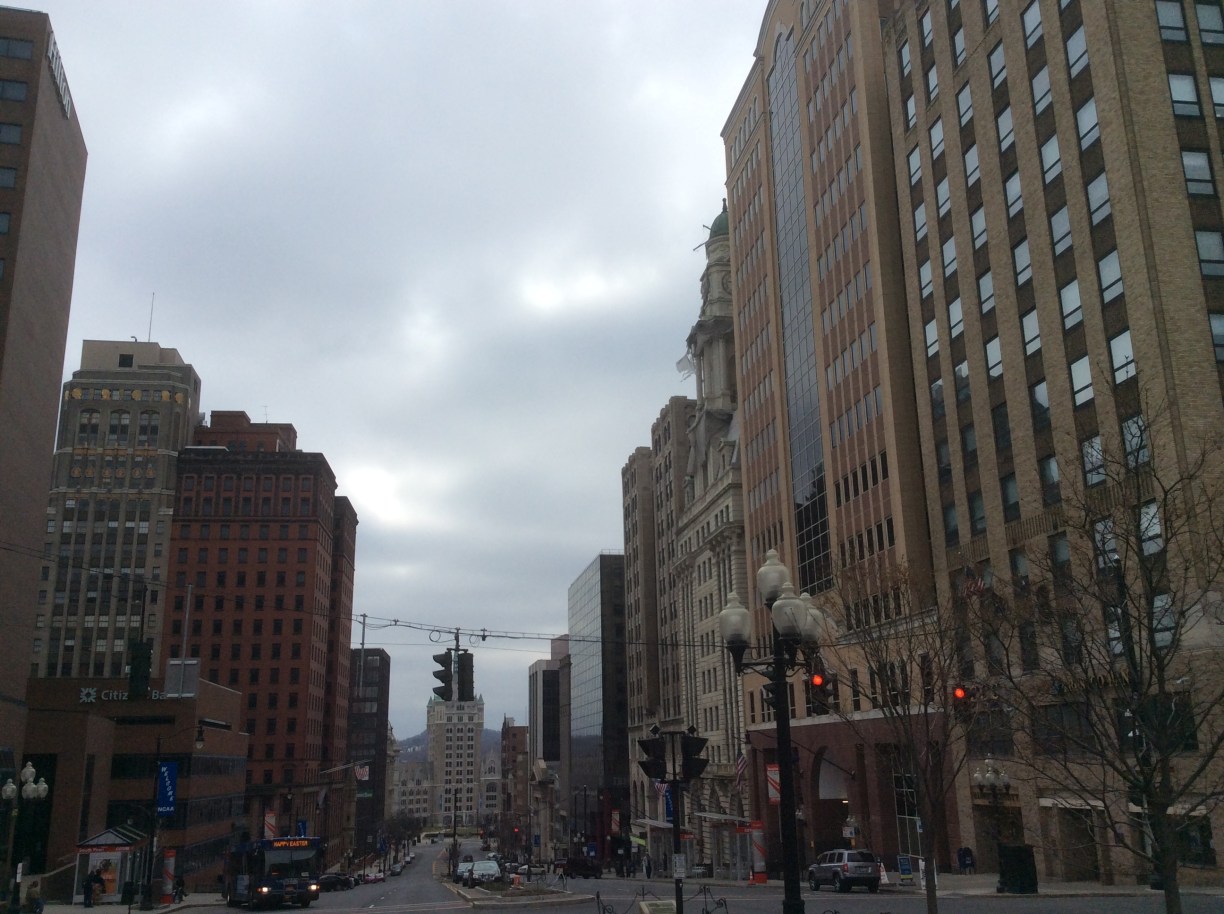
A view down State Street looking toward the Hudson River, Albany NY

A view down State Street looking toward the Hudson River, Albany NY

My first stop is Albany, a city on a hill with beautiful architecture. There were some ardent abolitionists here, and it had one of the main stations on the Underground Railroad on the route Frederick Douglass was connected to. Douglass named Stephen MyersLydia and Abigail Mott (who he entrusted with the education of his daughter Rosetta for a time) and William Topp in his autobiographies as some of the key figures here in the cause of the liberation of black people. But Douglass had some very unflattering things to say about Albany too: as he wrote in 1847, he observed a lot of racism here, especially in the wealthier families enriched directly or indirectly from slaveholding, and in the press. He was warmly welcomed by the congregation of the Baptist Church on State Street, but as of this time I can’t confirm its location: the current Baptist Church on State Street, Emmanuel, didn’t move there until 1869, and the Baptist church I found dating from his time was not on State St.

Tweddle Hall, inscribed 1754 Old Tweddle Hall, from Albany Institute of History & Art Library

Tweddle Hall, inscribed ‘1754 Old Tweddle Hall’, from Albany Institute of History & Art Library

I wander the downtown area for a little while, glad to stretch my legs, admiring the grand city center buildings, soaring churches (mostly built in the mid to late 1880’s), old stone and brick row houses, and the lovely view east where the hill slopes down to the Hudson River. Then I head to my main destination, the site where Frederick Douglass spoke at the American Equal Rights Convention at Tweddle Hall, held November 20th and 21st, 1866. Tweddle Hall once stood at the northeast corner of State and Pearl, and originally built in 1860, it burned down, was rebuilt once in 1883, then replaced in 1927 by the Bank Building which now stands here.

Douglass had long been an ardent champion of the women’s rights movement; he had been the first to back Elizabeth Cady Stanton’s call for women’s suffrage at the Seneca Falls convention in 1848 (more on this story in an upcoming account).

But here in Albany, a serious split in the women’s rights movement began with the debate over the 15th Amendment. The American Equal Rights Association had formed earlier that year, on May 10th in New York City. The Eleventh National Women’s Rights Convention reformed itself as the AERA, dedicated equally to black and female suffrage following the 14th Amendment, which for the first time specifically linked the word ‘male’ to the right to vote. While the 14th Amendment didn’t specifically guarantee the right to vote to all males, it did limit representation according to the number of adult males allowed to vote, overturning the hated 3/5ths compromise clause of the Constitution which granted representation, albeit reduced, to non-voting ‘persons bound to service for a number of years’, in other words, slaves.

Bank Building at NE corner of State and Pearl, site of old Tweddle Hall, 2016 Amy Cools

Bank Building at northeast corner of State and S. Pearl, site of old Tweddle Hall

The proposed 15th Amendment, as written and as it was eventually passed, would guarantee the right to vote to all citizens regardless of ‘race, color, or previous condition of servitude’, leaving the ‘male’ link to voting from the 14th Amendment intact. Douglass’ biographer Phillip S. Foner describes Douglass’ position on the 15th Amendment as: ‘to women the ballot was desirable, to the Negro it was a matter of life and death.’ Douglass thought it was absolutely imperative that black people get the right to vote even if it meant putting aside other great political causes for the moment. Adding women’s right to vote to the 15th Amendment would make it so much more controversial that it surely wouldn’t pass. After all, it wasn’t only black men who were still suffering great oppression and failing to enjoy the rights the Civil War victory was supposed to have won them; black women suffered worst of all because they had no legally protected voters to represent them. To many in the women’s rights movement, this was an unpardonable breach of loyalty from the man who had been their dedicated champion from the beginning. But Douglass still supported the AERA, joined in their petitions, and even acted as a representative and as a Vice President over the years.

Unfortunately, as the political struggle for racial suffrage gained more traction than woman suffrage, some of the feminist political rhetoric took on a racist character, saying, for example, that suffrage for educated, civilized white women should take precedent over suffrage for uneducated, ‘degraded’ black people. Sadly, even his old friends and allies Susan B. Anthony and Elizabeth Cady Stanton stooped to this rhetoric, though in later years Stanton redeemed herself somewhat by warmly, and wittily, congratulating Douglass and Helen Pitts on their January 24th, 1884 marriage: ‘After all the terrible battles and political upheavals we have had in expurgating our constitutions of that odious adjective ‘white’ it is really remarkable that you of all men should have stooped to do it honor.’ Perhaps his good example of loyalty to her in later years, despite her earlier racist comments, helped her overcome the worst in her character that angry disappointment can tend to bring out even in the best of us.
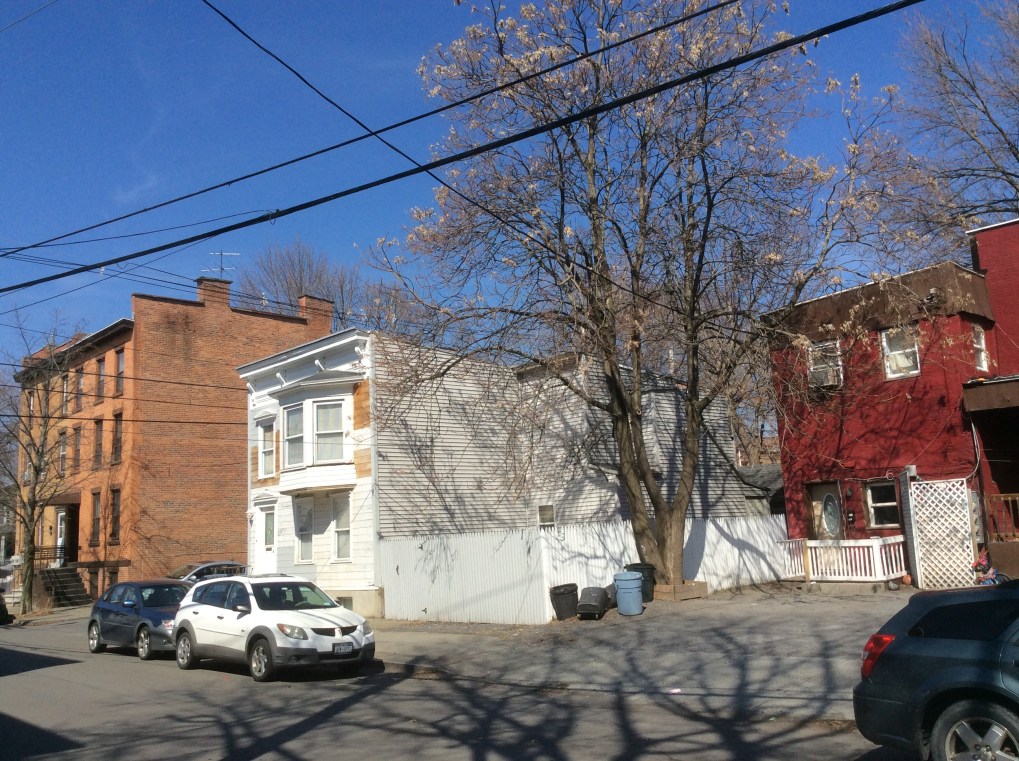
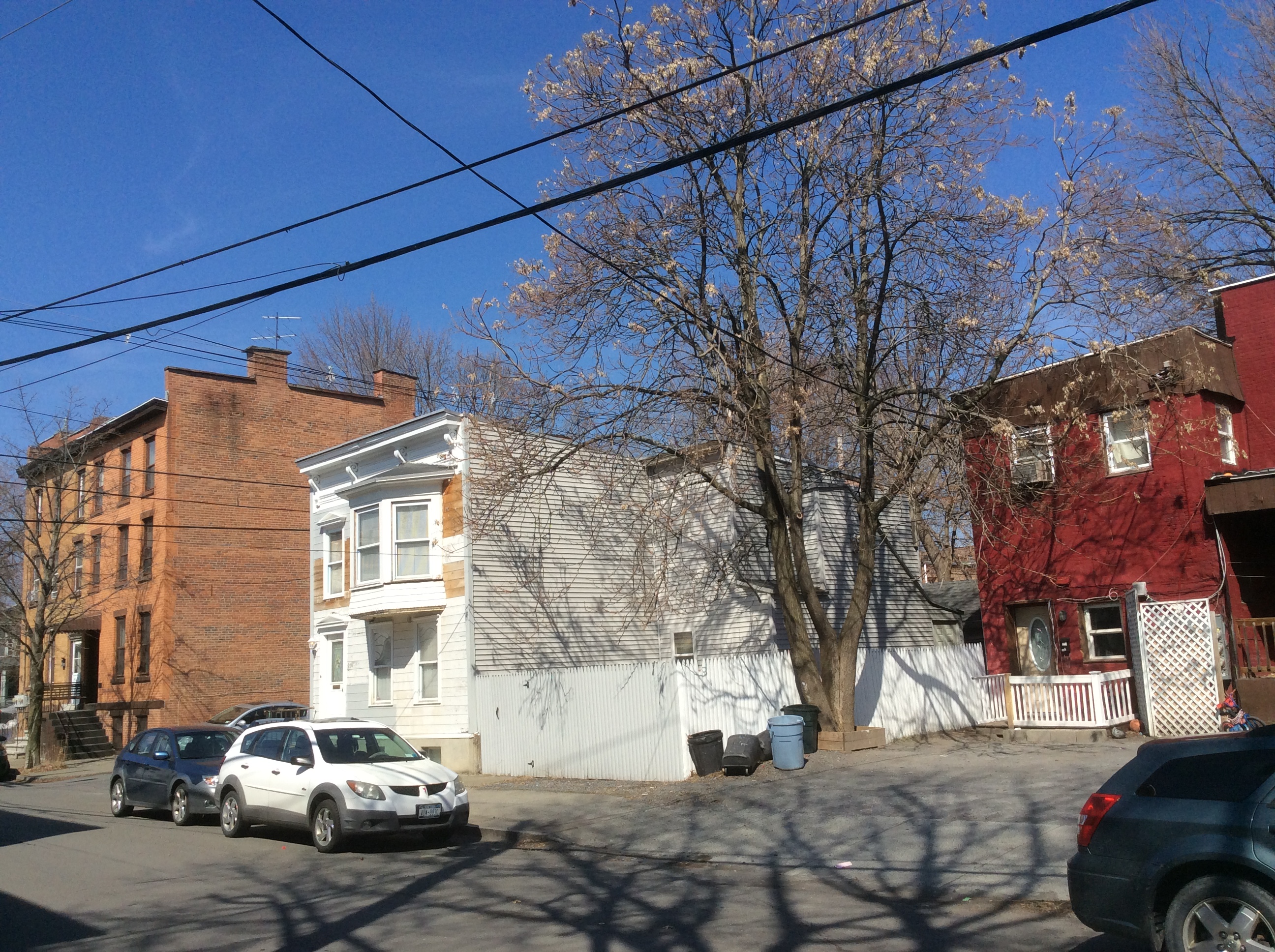
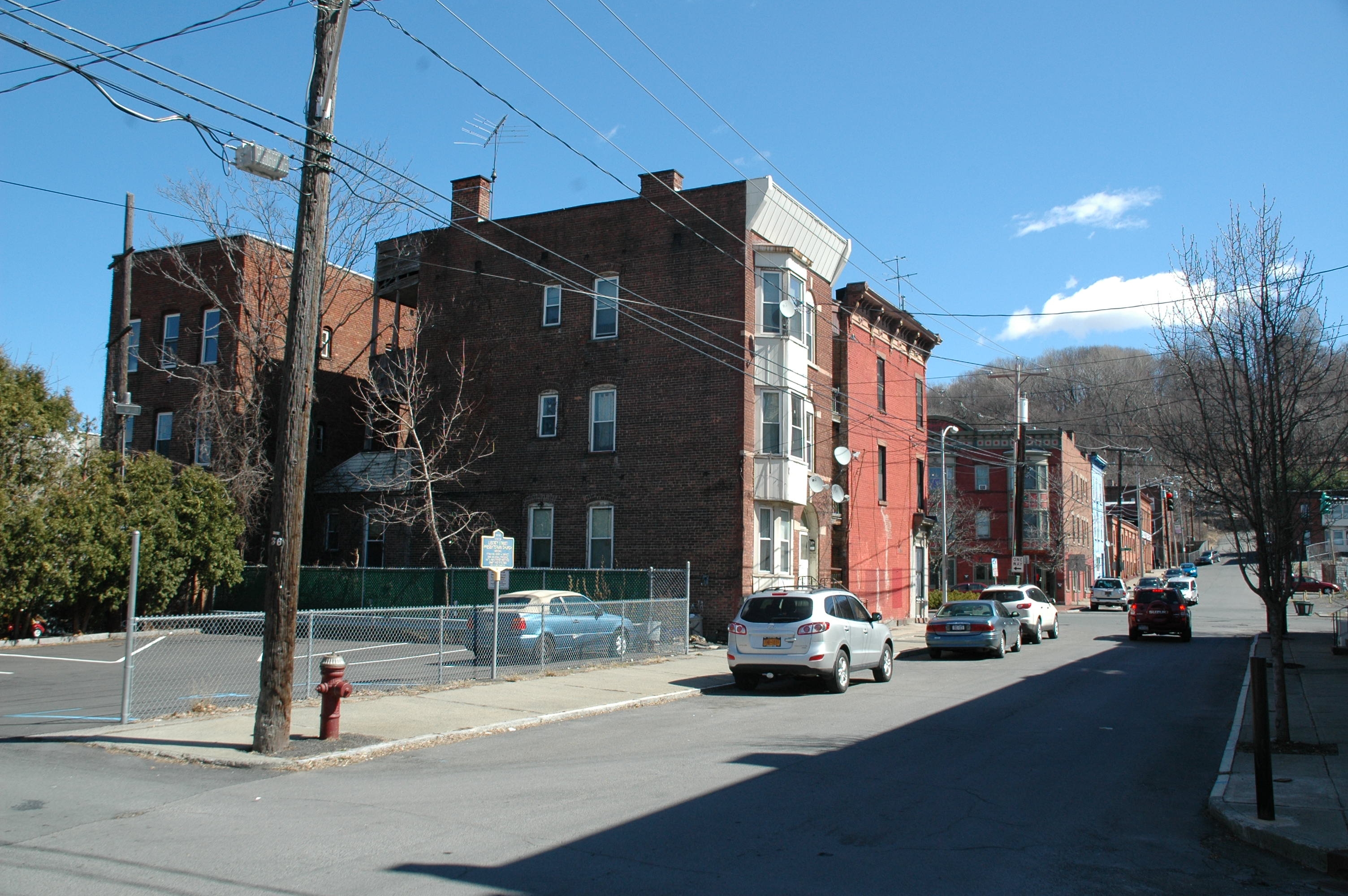
Liberty St at Franklin, Troy NY, two blocks east of the Liberty Street Presbyterian Church site

Liberty St at Franklin, Troy NY, two blocks east of the Liberty Street Presbyterian Church historical marker site

I return to my car and drive about 15 minutes north along the Hudson River to Troy, another northern New York State former industrial town which has clearly suffered a long and steady decline. But it’s full of lovely old buildings and has an interesting history; for example, Elizabeth Cady Stanton attended Troy Female Seminary. It’s also a college town; when I stop for coffee and to do some research, I find myself among many college age students spending late Easter morning studying (though I suppose they’re on spring break, what good students!) and hanging out.
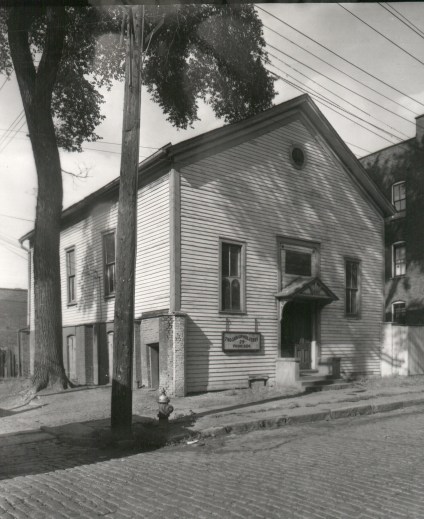
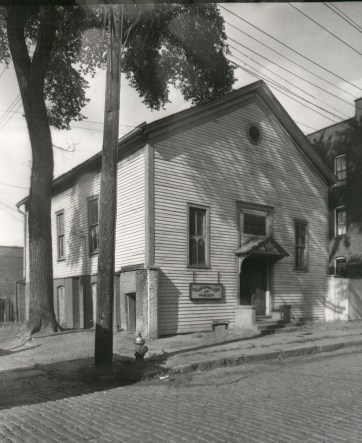
Liberty Street Presbyterian Church, Collection of the Rensselaer County Historical Society, Troy, NY 2

Liberty Street Presbyterian Church in a later incarnation as a laundry. This only known surviving photo is in the collection of the Rensselaer County Historical Society, Troy, NY

I’m headed for the site of Liberty Street Presbyterian Church, which Albany’s Times Union newspaper reports was on the corner of Liberty and Franklin Streets – which may not actually be the right street corner, as I discover when fact-checking and doing extended research for this account, more on that in a moment. The Liberty Street Church used to be a stop on the Underground Railroad, ran by pastor Henry Highland Garner from 1838 to 1848.

I’m looking for this site today because the 1847 National Colored Convention was held here, where the ultimately unsuccessful movement to start a national, unified Negro League movement began. According to John Cromwell in his 1914 book The Negro in American History‘…the very first article in the first number of [Douglass’ paper] the North Star published January, 1848, is an extended notice of the National Colored Convention held at the Liberty Street Church, Troy, New York, October 9th, 1847′. Nathan Johnson, who the Douglasses made their first home with in New Bedford, was president of the convention. Frederick Douglass was one of the Massachusetts delegates to this convention. He still espoused Garrisonian principles at the time (he changed his mind later), which, among other things, held that moral suasion and non-violent boycotting of politics were the most effective ways to end slavery. He called on his fellow black people everywhere to leave their churches if they were segregated or supportive of slavery in any way, and stressed the importance of education and self-improvement to stand as living testaments against the prejudices of white people. However, for a variety of reasons, it proved too difficult to unite the scattered, disenfranchised black community together into one unified movement. Those who were free shared the tactical and philosophical disagreements of white members of the abolitionist movement; those who were still enslaved or suffering the worst hardships of poverty, illiteracy, and other innumerable forms of intimidation and oppression found it difficult or impossible to participate.

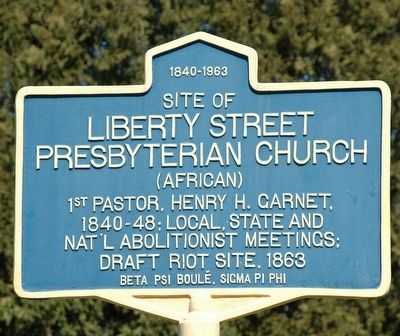
Liberty Street Presbyterian Church Site (according to historical marker), photo by Howard C. Ohlhous 2016

Liberty Street Presbyterian Church Site with historical marker, photo by Howard C. Ohlhous 2016

So why might I be at the wrong street corner here at Liberty and Franklin? Because my additional research for this account prior to publication pulled up two locations for the old church, rather than the one I had initially pulled up. A couple of secondary and tertiary sources, which I find first and which guide my day’s search here, list the location as Liberty at Franklin: the newspaper, and this booklet for a historical project from 2008. I don’t yet have enough evidence now to prove definitively which is correct, though I believe one much is more likely. The crossing of Liberty and Franklin Streets is unmarked; Franklin is a narrow little street that runs between 2nd and 3rd, between the three story brick building and the two story white board one with the bay window. It’s a rather shabby little street corner now, the buildings here now don’t appear to be all that old.
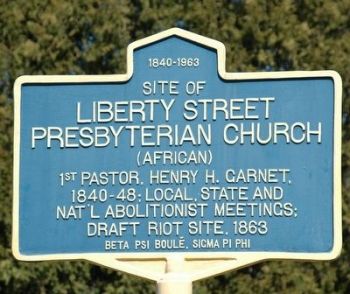
Liberty Street Presbyterian Church Marker at Liberty and Church Streets, photo by Howard C Ohlhous

Liberty Street Presbyterian Church Marker at Liberty and Church Streets, photo by Howard C Ohlhous

Yet the historical marker for the Liberty Street Presbyterian Church is placed at Liberty and Church Streets, two blocks east of here. Oddly enough, the creators of the Spectres of Liberty project describe the site in their booklet as located on Liberty at Franklin, yet they hold their ‘Raising the Ghost of the Liberty Street Presbyterian Church‘, a super cool historical art event, at the marker site. Could it be that the street names have been changed or reassigned? A city map / atlas from 1845 reveals that the street names and locations are the same here today as they were then.

In case the historical marker is placed incorrectly (update: the Rensselaer County Historical Society assures me that the marker is at the correct site) and this does turn out to be the correct site, which corner of Liberty and Franklin could it have been on? Comparing the photo to the streets now, there’s one clue that might help me: the fire hydrant shown in the photo. There is no fire hydrant now, but there is a capped water supply pipe which could have supplied it; unless it’s torn up and moved, this would remain a permanent fixture. It’s in the sidewalk in front of the three story red brick apartment building on the northwest corner of the street. If this is the same water supply, that would place the church on that corner with its narrower pointy side facing on Franklin and its long side facing Liberty. However, when I look more closely at the photo I’m referring to (the only known surviving one, it’s in the Rensselaer Historical Society collection), the site where the historical marker is located, two blocks east at Liberty and Church looks more like the correct location, if the placement of the fire hydrant and the street pole are the same today.

So why include my story of possibly looking in the wrong place (which, as it turns out, I do)? Well, this travel series is the story of a journey, and journeys often include wrong turns, misreading of signs, incorrect maps, bad directions, and so forth. Each of these is a learning experience, and I hope you don’t mind that I take you along with me as I learn. As we’ve just seen, there are conflicting sources of information out there, and the lesson I learn here: triple-check all sources!

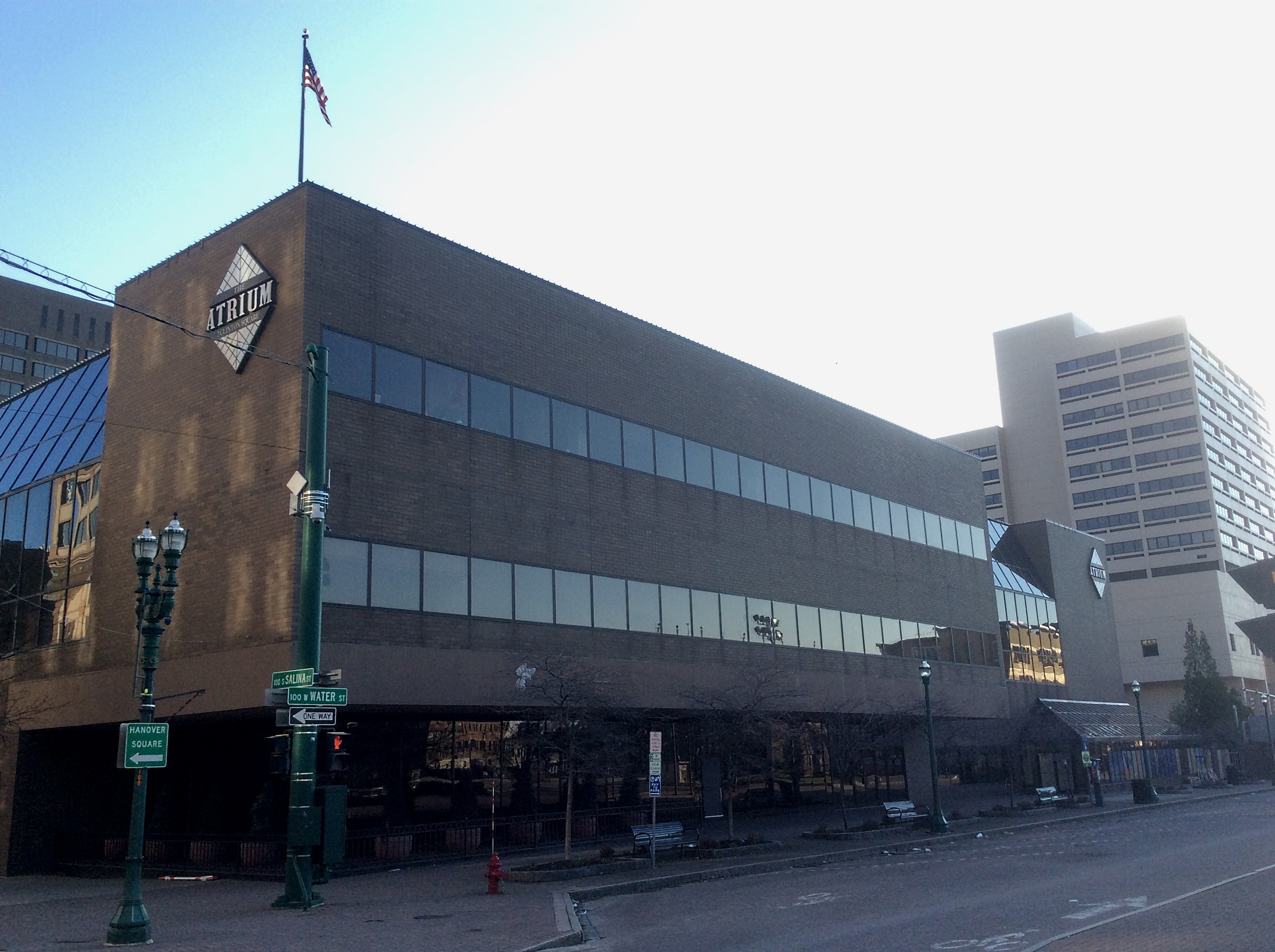
Wieting Hall Site, Syracuse NY,

Wieting Hall Site,  111-119 W. Water St at S. Salina off Clinton Square, Syracuse NY

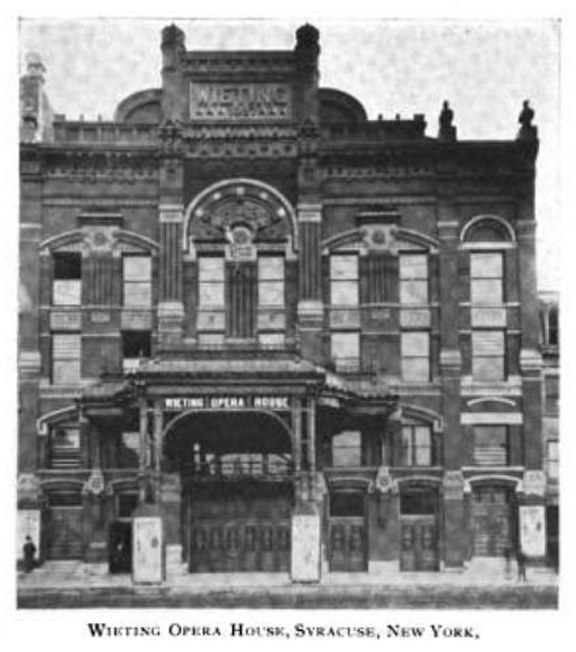
Wieting Opera House on Clinton Square in Syracuse, New York, 1898

Wieting Opera House on Clinton Square in Syracuse, New York, 1898

My last destination of the day is the site of Wieting Hall, at 111-119 W. Water Street in Syracuse, NY. The hall, which was first built in 1851, burned down in 1856 and was rebuilt as an opera house in 1857, burned and rebuilt yet again in 1881. Its builder and public-spirited owner Dr. John Wieting was a stoic yet tenacious man, responsible for its every incarnation. As you can see, what stands here now is not nearly so inspiring, in looks or in history.

On Nov 14th, 1861, Douglass was scheduled to deliver a speech on the Civil War and why the slaves needed to be freed en masse for the Union to win, one of his many appearances in Syracuse. Syracuse was another important stop on the underground railroad. However, as we’ve seen throughout this travel series, just because New York and other Northern states were free did not mean that all people here wanted black people to be armed, to enjoy civil rights, or even to be emancipated. Many in Syracuse were abolitionists and many others were not; racism was endemic in both of these groups.

According to Foner’s biography, an angry protest was planned: many townspeople were prepared to drive him and the other abolitionist speakers from the city. However, to his great credit, mayor Charles Andrews and Dr. Wieting refused to be intimidated, insisting that the talk take place as planned. They believed (as I agree all Americans should) that even unpopular speech should be protected speech, and their Syracuse was not to be a place where free speech could be squelched by threats. So 50 – 100 police were stationed (depending on the source) along with armed members of the Second Onondaga Regiment. When Douglass spoke, the crowd was well-behaved and respectful, be it because they actually did respect him and his right to speak, or because they were not allowed to be otherwise.
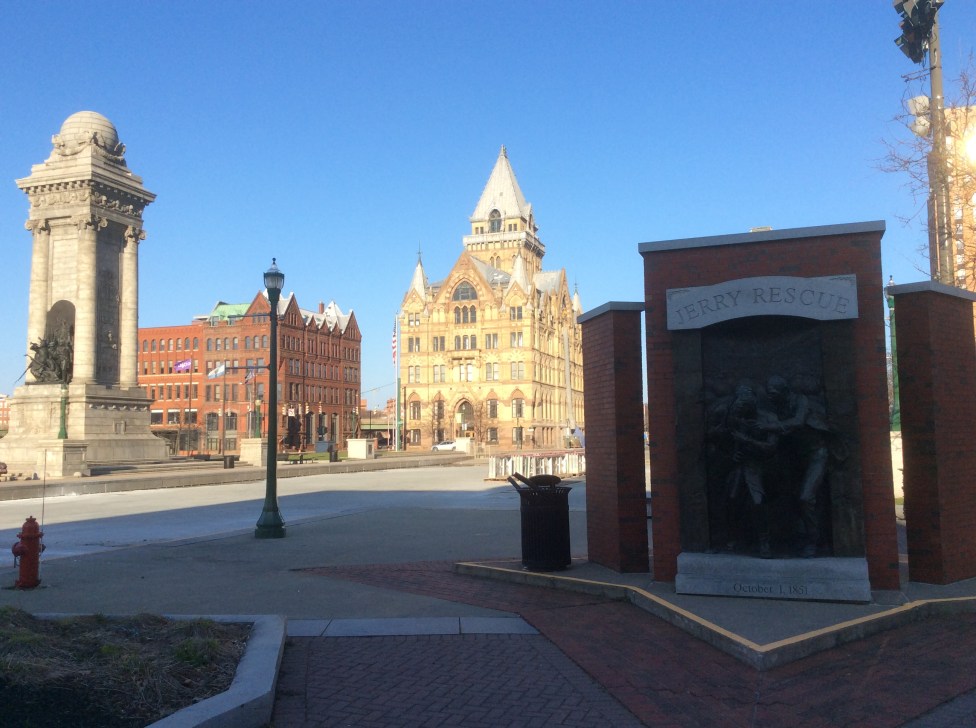
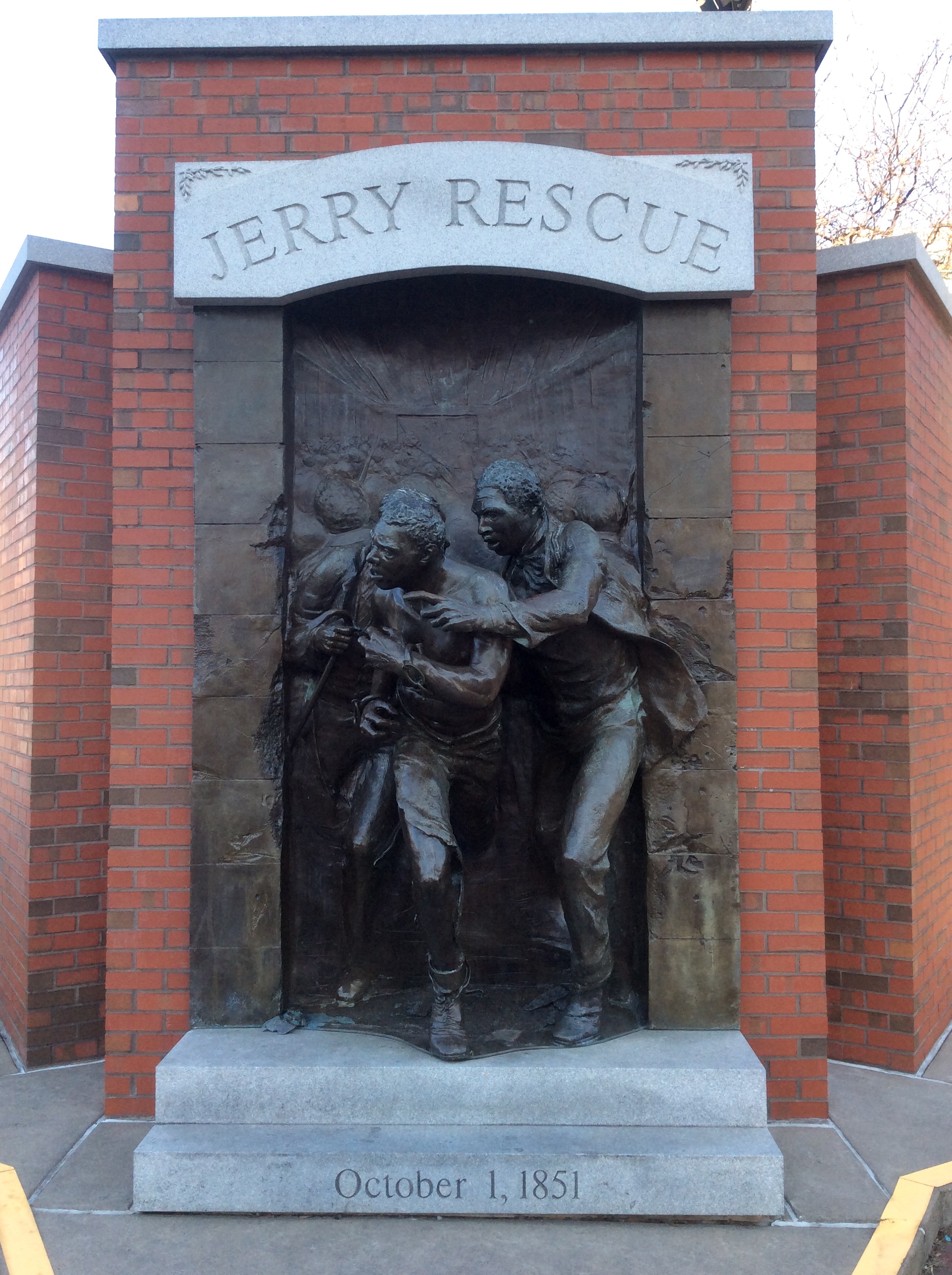
Clinton Square and Jerry Rescue Monument, Syracuse NY

Clinton Square and Jerry Rescue Monument, at S. Clinton and W. Water Streets, Syracuse NY, with Wieting Hall site in the background
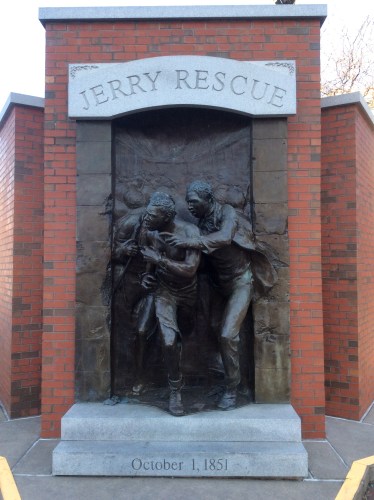
Jerry Rescue Monument, Syracuse NY, photo 2016 by Amy CoolsAs I have plenty of daylight left, I wander through lovely Clinton Square, clearly a site in the process of restoration. The large rectangular concrete center used to be a part of the Erie Canal, a waterway route to the center of the city, and a place to ice skate when frozen over in winter (part if it is still filled with water and turned into a wintertime outdoor skating rink today!)

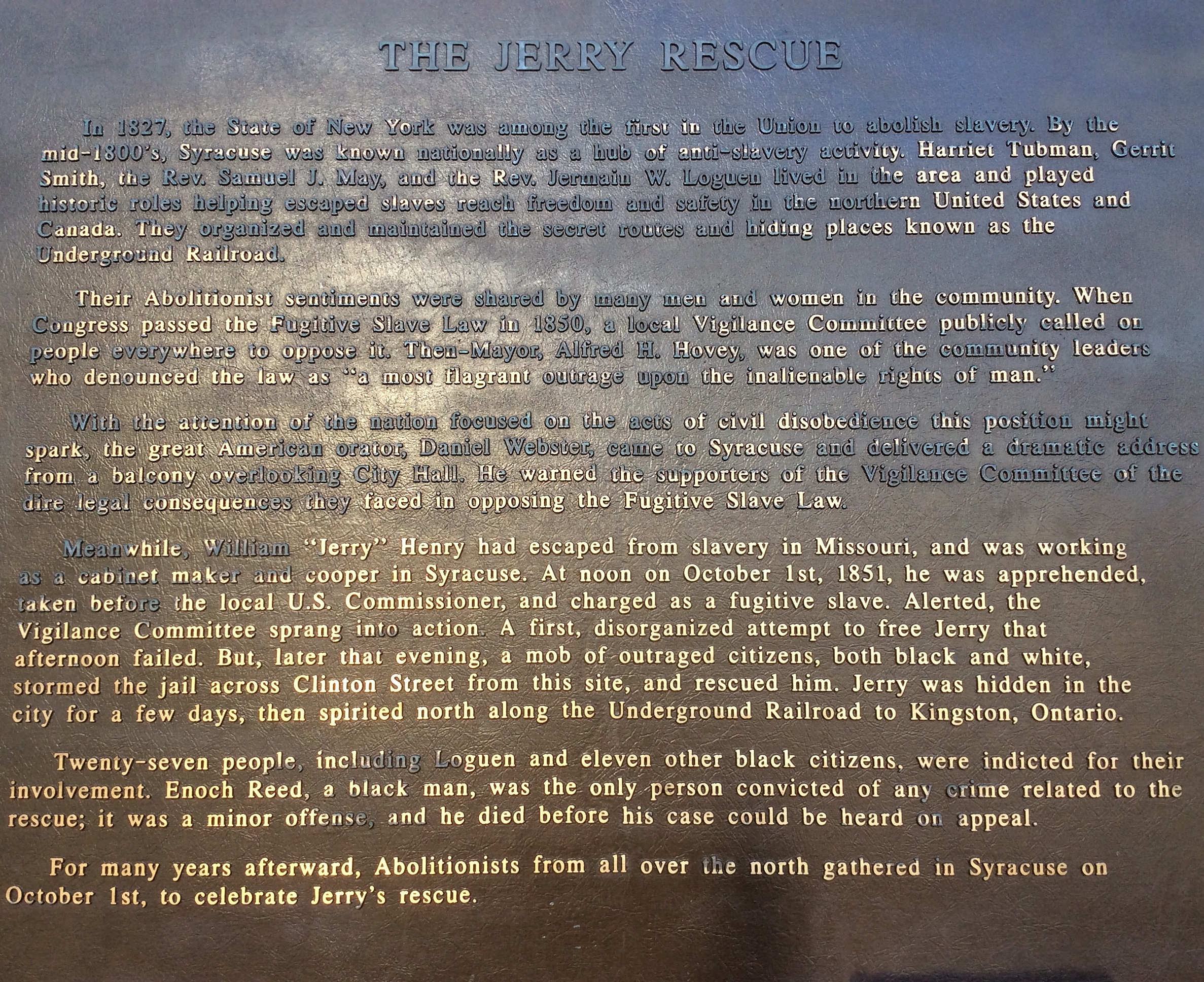
I discover a monument near the southwest corner of the square, erected in 2001 and dedicated to the October 1st, 1851 rescue of William ‘Jerry’ Henry. An escaped slave from Missouri, he was arrested as part of the effort to enforce the much-hated Fugitive Slave Act, enacted on September 18th, 1850. Many Northerners, abolitionist or not, thought it an intolerable intrusion on the legal autonomy of states and on freedom of conscience. Though the orator and statesman Daniel Webster (who, as you may remember from the second of my Lynn accounts, supported it as an acceptable compromise for preserving the Union) warned that the Fugitive Slave Act would be rigorously enforced here in Syracuse, it was vigorously defied on that October day. Attendees of the Liberty Party state convention (the party of Gerrit Smith, Douglass’ friend and mentor who we’ll learn more about soon) broke into the jail and freed Jerry, hid him in town for a few days, and smuggled him to Canada. This event would be long celebrated by abolitionists and champions of human rights, Douglass among them, as a triumph over oppression and in thanks to those who risked themselves to help a fellow human being in need.
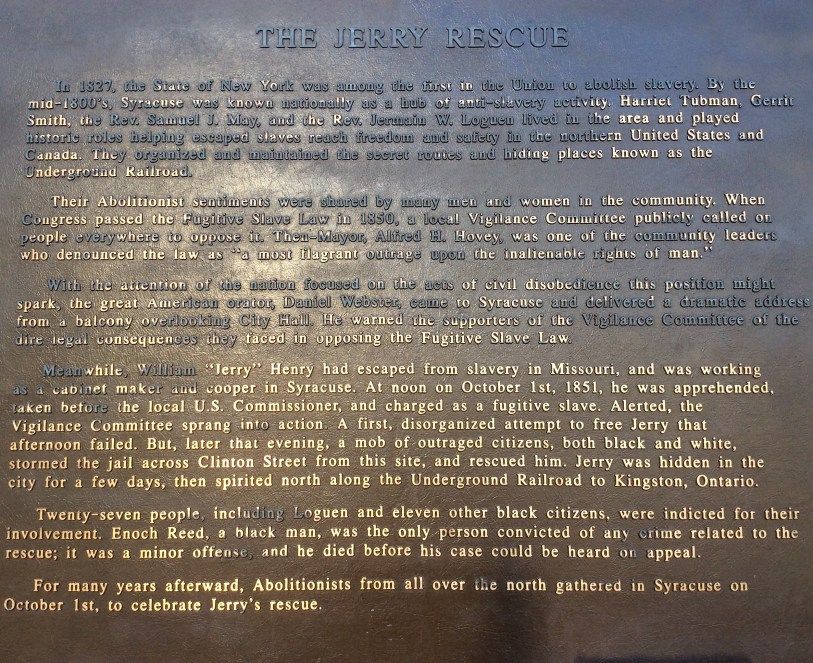
Jerry Rescue Monument Plaque, Syracuse NY, photo 2016 by Amy Cools

Jerry Rescue Monument Plaque in Clinton Square, Syracuse NY
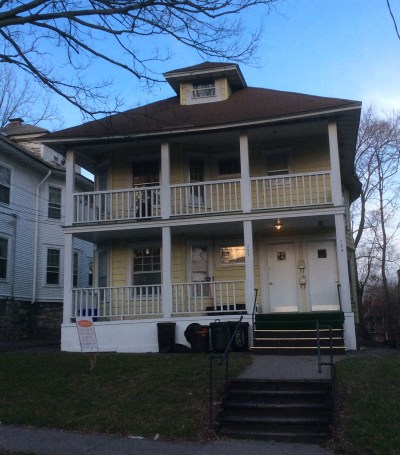
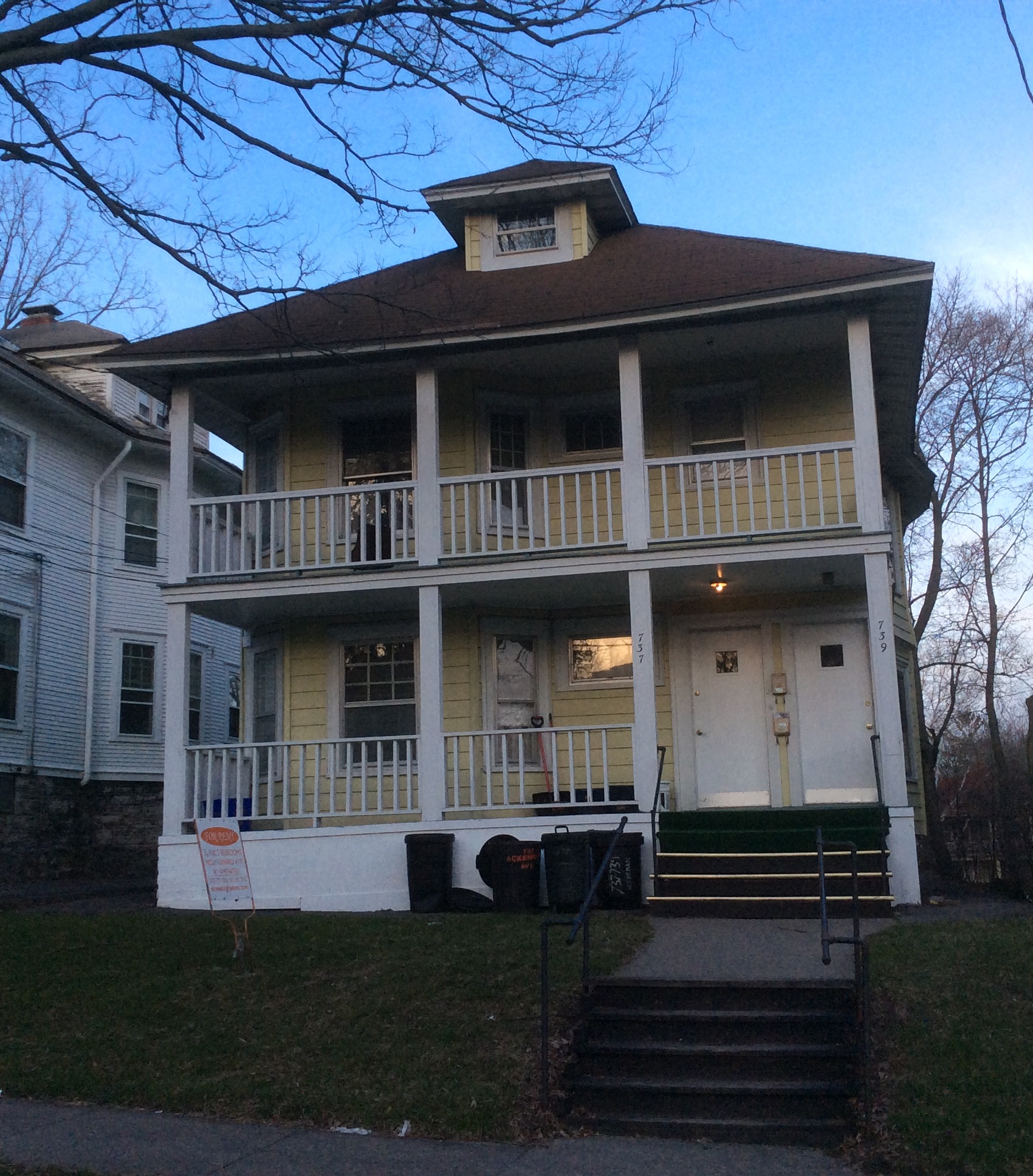
Yellow house I stay at in Syracuse, NY, photo 2016 by Amy CoolsSo ends my tale of today’s adventures. I’m going to spend the night in a rented room in an old yellow house near beautiful Syracuse University, the most charming place I stay throughout the trip, with the exception of my new friends’ house near Baltimore and my old friends’ house in Rochester. Stay tuned for my continuing adventures following the life and ideas of Frederick Douglass!

~ Ordinary Philosophy and its Traveling Philosophy / History of Ideas series is a labor of love and ad-free, supported by patrons and readers like you. Please offer your support today!

~~~~~~~~~~~~~~~~~~~~~~~~~~~~

Sources and Inspiration:

Amendment XIV: Citizenship Rights, Equal Protection, Apportionment, Civil War Debt‘, Constitution Center website

Amendment XV: Right to Vote Not Denied by Race‘, Constitution Center website

American Equal Rights Association‘. In Wikipedia, The Free Encyclopedia.

Beauchamp, William Martin. Past and Present of Syracuse and Onondaga County, New York: From Prehistoric Times to the Beginning of 1908 (Volume 2). SJ Clarke Publishing Co: New York, 1908.

Blassingame, J. (Ed.). The Frederick Douglass Papers, Series One: Speeches, Debates, and Interviews. 4 volumes, and The Frederick Douglass Papers, Series 2: Autobiographical Writings. 3 volumes. New Haven and London: Yale University Press, 1979-1999 (including a letter to Sydney H. Gay, dated Oct 4th 1847)

‘Courtesy of the Rensselaer County Historical Society: Rev. Henry Highland Garnet’. The Amistad CommissionNew York Department of State website

Cromwell, John Wesley. The Negro in American History: Men and Women Eminent in the Evolution of the American of African Descent. J.F. Tapley Co: New York, 1914

Douglass, Frederick. Autobiographies (includes Narrative…, My Freedom and my Bondage, and Life and Times). With notes by Henry Louis Gates, Jr. Volume compilation by Literary Classics of the United States. New York: Penguin Books, 1994.

Frederick Douglass Escapes Slavery, Becomes Leading Abolitionist‘, Onondaga Historical Association website

Foner, Philip S. The Life and Writings of Frederick Douglass, Vol. 1-4. New York: International Publishers, 1950.

Garrison, William Lloyd. The Letters of William Lloyd Garrison, Volume IV: From Disunionism to the Brink of War, 1850-1860. Edited by Louis Ruchames

Hallaron, Amy. ‘Artist’s magic lives on in Troy‘, Times Union, Albany, Monday, January 16, 2012

Jerry Rescue‘. In Wikipedia, The Free Encyclopedia.

Jerry Rescue Monument‘, #44, Freethought Trail website

‘Liberty Street Presbyterian Church (African)’, Historical Marker Database (source of marker photos)

Lydia and Abigail Mott‘, Underground Railroad History website

McFeely, William. Frederick Douglass. New York: W.W. Norton & Company, 1991.

Proceedings of the National Convention of Colored People and Their Friends; held in Troy, NY; on the 6th, 7th, 8th, and 9th of October, 1847.’ Colored Conventions website, University of Delaware

Rittner, Don. Albany, Then & NowArcadia: Charleston SC, 2002

Robinson, Olivia, Josh MacPhee, and Dara Greenwald. Spectres of Liberty: The Raising of the Ghost of the Liberty Street Church. Websitebooklet and video

Stephen Myers‘, Underground Railroad History website

Susan B. Anthony Boldly Writes the Speaker of the House Asking for a Public Endorsement of Women’s Suffrage‘, pamphlet for 1866 Convention and signed letter, RAAB collection website

Troy, N.Y., from actual survey‘ (map / atlas) by S.A. Beers, civl. engineer. Depicts: 1845

Upstate New York and the Women’s Rights Movement‘, University of Rochester / River Campus Libraries website

Wieting Opera House‘, #51, Freethought Trail website

Interview with Peter Adamson on Indian and Islamic Philosophy

OLYMPUS DIGITAL CAMERA

Listen to this podcast episode here or subscribe on iTunes

I’m honored to present my second interview guest, Peter Adamson, creator and host of the History of Philosophy Without Any Gaps podcast and Professor of Philosophy at the Munich School of Ancient Philosophy and at King’s College London. I’ve listened to his History of Philosophy podcast series for many years: it’s now almost 5 ½ years running, and if you are interested in philosophy, I’m hard pressed to think of a source that’s more comprehensive, thoughtful, and well-researched than Adamson’s.

In this interview, we focus on non-Western philosophy, specifically Indian and Islamic philosophy, since that’s his focus right now at his History of Philosophy series. We touch on Western philosophy as well, especially regarding the ways that Islamic and Indian philosophy influence and intersect with Western philosophy.

Listen to Adamson’s excellent series on the History of Philosophy (without any gaps)

and his Indian philosophy series co-authored by Jonardon Ganeri

Ordinary Philosophy and its Traveling Philosophy / History of Ideas series is a labor of love and is ad-free, entirely supported by patrons and readers like you. Please offer your support today!

New Podcast Episode: Frederick Douglass Lynn Sites, Part 2 – Historical Society and Hutchinson Scrapbook

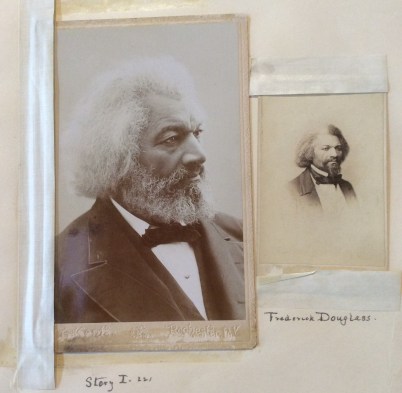
Frederick Douglass in Hutchinson Scrapbook, 2016 Amy Cools

Two portraits of Frederick Douglass from the Hutchinson Family scrapbook

Listen to this podcast episode here or subscribe on iTunes

Seventh Day, Saturday March 26th

…Lynn proves to be a Douglass treasure trove for me, especially the Lynn Museum & Historical Society. While I’m waiting to meet with a representative of the museum to look at some materials from the archives, I visit the ‘Abolitionist Lynn’ exhibit upstairs. As discussed in the first part of today’s account, Lynn had a particularly active and vocal abolitionist community. As I also discussed in the first part of today’s account, that’s what brought Douglass, laborer turned abolitionist speaker, here to Lynn… Read the original account here

Ordinary Philosophy and its Traveling Philosophy / History of Ideas series is a labor of love and is ad-free, entirely supported by patrons and readers like you. Please offer your support today!

Happy Birthday, Karl Marx!

Marx by Sam Kaprielov, 76x61cm, oil on canvas, 2015, image used by permission of the artist

Marx by Sam Kaprielov, 76x61cm, oil on canvas, 2015, http://www.samkaprielov.com/

Born on May 5 1818, few thinkers have been as influential as Karl Marx. Philosopher, theoretician of history, economist, sociologist, journalist, and revolutionary socialist, he was a prolific thinker and writer, widely lauded, criticized, and misunderstood, especially by those who claimed to act in his name.

In honor of his birthday, here is a series of pieces about Karl Marx, a recent painting by an artist whose work my good friend just introduced me to, and a song that I love.

The World Isn’t Fair, by Randy Newman

Karl Marx (1818 – 1883), a very brief bio at BBC: History

Karl Marx, 1818-1883, by Steven Kreis at The History Guide

Karl Marx, by Jonathan Wolff, at the Stanford Encyclopedia of Philosophy

Karl Marx, Wikipedia

~ Ordinary Philosophy and its Traveling Philosophy / History of Ideas series is a labor of love and ad-free, entirely supported by patrons and readers like you. Please offer your support today!

Happy Birthday, Søren Kierkegaard! By Eric Gerlach

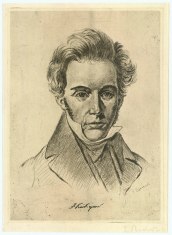
S. <>Søren Kierkegaard (1813-1855 CE), the great Danish philosopher and forerunner of existentialism, was born in the Danish city of Copenhagen, and throughout his life he enjoyed  walking through the city, greeting everyone he met as his equal regardless of their station in life.  As a young boy, Kierkegaard’s father drilled him with difficult lessons so he would be the top student in his class, but to prevent his son from developing selfish pride, the father demanded that his son get the third best grades in the class, purposefully making mistakes to prevent the boy from being recognized as first or second student.
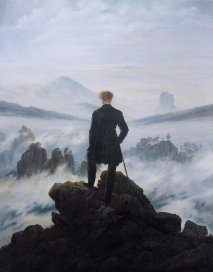

Caspar_David_Friedrich_-_Wanderer_above_the_sea_of_fog

For Kierkegaard, genuine truth is human subjectivity and perspective, and it is only the individual who accepts subjectivity who comes to realize the greater truth insofar as it is achievable by individuals.  For Kierkegaard, truth is not objective, but subjective, not an object achieved, but a test withstood, not a hurdle overcome, but an experience endured.  Kierkegaard argued that no social system can authentically give the individual meaning and truth. Individuals must make choices, and if they choose to go along with the masses, they have sacrificed their own ability to give truth meaning.  Kierkegaard wrote that he could have, like most scholars of his day, become a voice pronouncing the greatness and objectivity of his race, his country, his historical period, his fellow scholars, but rather than commit treason to truth he chose to become a spy, a solitary individual who chronicled the hypocrisy of all claims to objectivity.

472px-Kittinger-jump

To be an individual is to experience “a vertigo of possibilities”, the monstrosity of spontaneity.  Kierkegaard wrote, “We are condemned to be free”.  It is our freedom, the experience of the infinite, undefined and unbounded, which unites us most intimately with our world.  Kierkegaard argued that one can overcome the angst, the vertigo of possibilities, by making a leap of faith, by choosing to believe in something and act with some purpose in spite of the fact that beliefs and purposes can never be fully justified.  Only this is authentic individuality and truth, having chosen what one is to be, with the honest recognition of the freedom involved in the choice.

373px-Head_of_Socrates_in_Palazzo_Massimo_alle_Terme_(Rome)

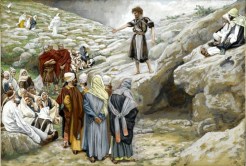
Kierkegaard saw himself as a true follower of Socrates, who argued that he knew that he did not know, which is why the Oracle at Delphi said that no man was wiser than he.  Kierkegaard wrote his college thesis on Socrates, irony, and indirect communication, much as Kierkegaard himself indirectly communicated through his pseudonyms.  Socrates never made great claims to truth, and would instead use analogy, myth, and paradox to show that human judgements and beliefs are problematic and contradictory even as they assert themselves with certainty, which Kierkegaard argued was also the method of Jesus.  Kierkegaard wrote that Socrates “approached each man individually, deprived him of everything, and sent him away empty-handed”.  Socrates showed others that they did not truly know what they believed themselves to know, and he was killed by the Athenian assembly just as Jesus was killed for questioning the Pharisees.

Brooklyn_Museum_-_Saint_John_the_Baptist_and_the_Pharisees_(Saint_Jean-Baptiste_et_les_pharisiens)_-_James_Tissot_-_overall

Kierkegaard’s works are dominated by theological concerns, wondering on many pages about the individual’s relationship to God and Jesus.  For Kierkegaard, the meaning of Christianity was not the achievement of objectivity, but the acceptance of subjectivity, of individually lacking the God’s eye view.  Kierkegaard was brutally critical of the Danish Lutheran Church for presenting itself as the objective truth, and argued that it is only as an individual that one can be a genuine Christian.  Kierkegaard argued that Christianity began as a rebellion against the status quo, but then became the entrenched regime.

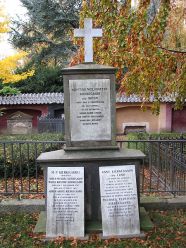
450px-Image-Søren_Kierkegaard_grave_4

After healing a blind man, Jesus rebuked the Pharisees, the political and religious establishment of his time, and said that because they think they see they are in fact blind.  In his later years, Kierkegaard attacked the Danish Church without mercy, and at his funeral a fight broke out when young theology students, progressive and inspired by Kierkegaard, protested that the church was attempting to hijack his name and fame by calling him one of their own after he had so bitterly attacked their hypocrisy for decades.  Kierkegaard wanted his tombstone to read only, “The Individual”, though his relatives decided otherwise.

Ordinary Philosophy and its Traveling Philosophy / History of Ideas series is a labor of love and is ad-free, entirely supported by patrons and readers like you. Please offer your support today!

New Podcast Episode: Frederick Douglass Lynn, Massachusetts Sites

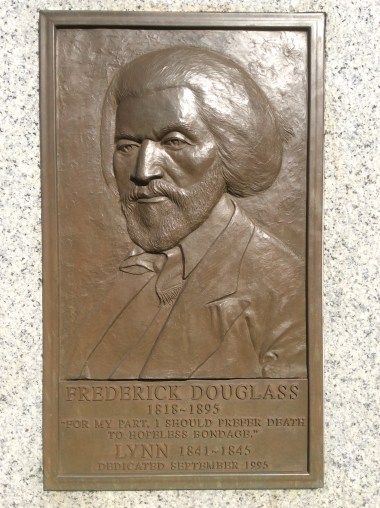
Frederick Douglass Memorial plaque in Lynn Commons, photo 2016 by Amy Cools

Frederick Douglass Memorial plaque in Lynn Commons

Listen to this podcast episode here or subscribe on iTunes

Seventh Day, Saturday March 26th

…Not long after Frederick Douglass began his public speaking career, he and his family moved here to Lynn from New Bedford. They lived here from the fall of 1841 through about November 1847. Well, actually, for much of that time, it was mostly Anna and the kids who lived here. First, Douglass was often on tour as a speaker, which took him away from home for long stretches. Secondly, he was away on a tour of the British Isles from 1845-1847, which is why many sources say Douglass himself only lived here until 1845. He returned only briefly to Lynn before moving himself and his family to Rochester near the end of 1847. His ‘industrious and neat companion‘ Anna took care of the household while he was away, and often took in piecework from Lynn’s thriving shoemaking industry to make sure the kids were always cared for and the bills paid on time….  Read the original account here

Ordinary Philosophy and its Traveling Philosophy / History of Ideas series is a labor of love and is ad-free, entirely supported by patrons and readers like you. Please offer your support today!

Frederick Douglass Lynn Sites, Part 2: Historical Society & Hutchinson Scrapbook

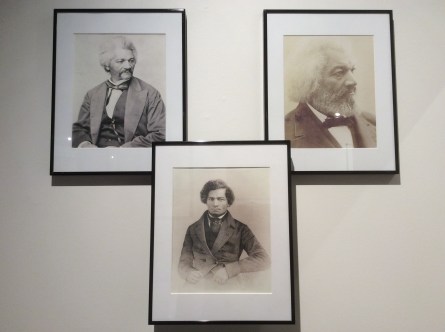
3 Portraits of Frederick Douglass at Lynn Museum, 2016 Amy Cools

Three portraits of Frederick Douglass at the Lynn Museum & Historical Society

Seventh Day, Saturday March 26th

As I mention in the first part of my account of today’s journey, Lynn proves to be a Douglass treasure trove for me, especially the Lynn Museum & Historical Society.

While I’m waiting to meet with a representative of the museum to look at some materials from the archives, I visit the  ‘Abolitionist Lynn’ exhibit upstairs. As discussed in the first part of today’s account, Lynn had a particularly active and vocal abolitionist community. As I also discussed in the first part of today’s account, that’s what brought Douglass, laborer turned abolitionist speaker, here to Lynn.

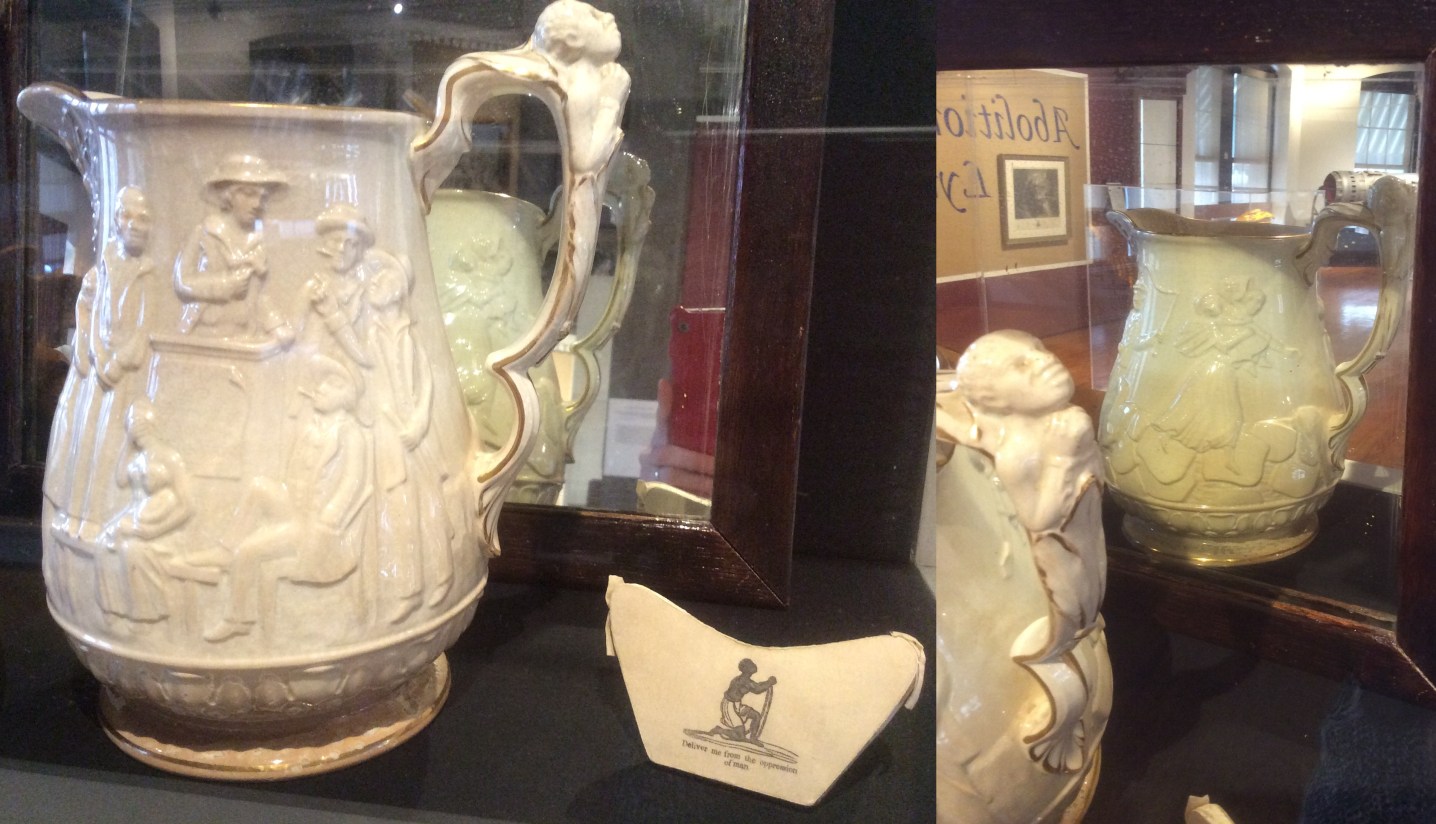
Abolitionist Pitcher at Lynn Museum, front and back, 2016 Amy Cools

Anti-Slavery Pitcher showing a slave auction at front, a slave mother and infant escaping on the back, and a praying manacled figure on the handle

Fugitive Slave Act poster, Lynn Museum, detail, 2016 Amy Cools

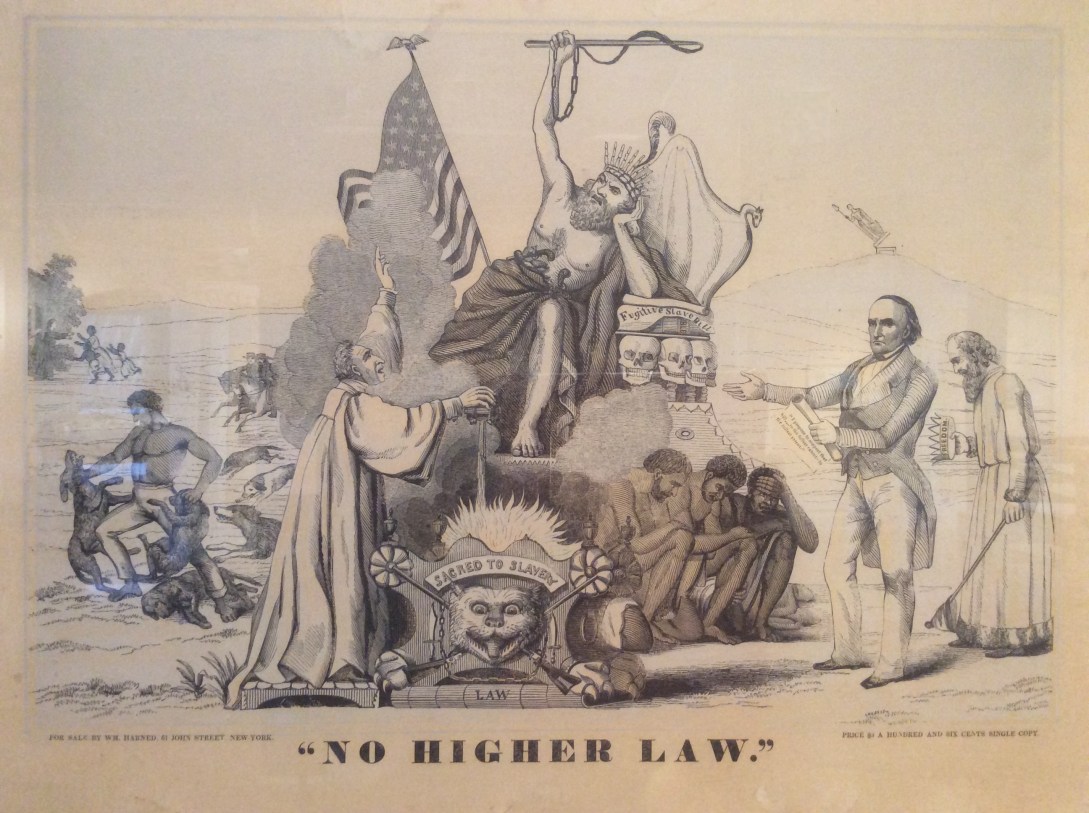
Among the many interesting exhibits I see are two posters, similar in format and general style but strikingly different in message and tone. One shows a man with an angry face, wearing a crown made of finger bones and brandishing a chain and whip, seated upon a throne and supported by three mournful slaves, three skulls, a Bible, and a copy of the Fugitive Slave Bill (Act) of 1850. A man in a white robe (perhaps a clergyman’s robe, since a judge’s robe would be black) is pouring an offering from a small cask into a fire on a small altar emblazoned ‘Sacred to Slavery’, while Daniel Webster, a leading Senator at the time famed for his eloquence, gestures to the throne, proclaiming ‘I propose to support that bill …to the fullest extent…’ and a bearded man behind him hangs his head in sorrow, lowering a crown labeled ‘Freedom’ from his head. Behind these figures, a barefoot escaping male slave wrestles with a pack of snarling dogs as two slavecatchers on horses gallop after him, a black woman and her children run into the open arms of an abolitionist white woman, and a statue of Minerva, goddess of wisdom and trade, topples from her pedestal on the hill.

The Fugitive Slave Act of 1850 was meant to put an end to a deeply divisive issue between the Northern and Southern states. Southern slaveowners were enraged that northern abolitionists, grown into an energetic movement and potent political force following the pioneering abolitionist work of William Lloyd Garrison starting in the late 1820’s, were aiding slaves escaping to the North. The Act would not only force all Northern officials to cooperate in the capture and return of escaped slaves, it would force private individuals to do so too, on pain of fines and imprisonment. Northerners, especially abolitionists, saw this as an intolerable intrusion on personal conscience by forcing them to participate in a deeply immoral system, while Southerners saw this as a simple enforcement of property rights.

No Higher Law Abolitionist Poster, Lynn Museum, 2016 Amy Cools

No Higher Law Abolitionist Poster, from the Abolitionist Lynn exhibit at the Lynn Museum & Historical Society, March 2016

Senator, statesman, and orator Daniel Webster personified the central conflicts between North and South at that time. A Northerner hailing from Massachusetts, he irreparably damaged his political career through his support for the Fugitive Slave Act, the final and most sweeping of many such acts passed over the decades. Northerners who admired him for his commitment to preserving the Union and for promoting the modernization of the United States into a center of finance and industry from the mostly agrarian economy it had long been, hated this cession of state and personal autonomy to Southern interests. And however much the South loved the bill, their economy was almost entirely based on agriculture and capital investment in slaves, so Webster’s economic policies were intolerable to them regardless of this compromise to preserve the Union. As Abraham Lincoln recognized from the beginning, though he too tried to find a way, peace between the states could never be attained so long as the law, founded on certain conceptions of human rights, tried to accommodate that intrinsically incompatible ‘peculiar institution‘ of slavery.

Haitian Ambassador Poster detail, Lynn Museum, 2016 Amy CoolsThe second poster is a nasty (despite the author’s snarky claim that it’s ‘respectful’) caricature of the abolitionist women of Lynn and of black people in general. Addressed in the subtitle to the ‘500 ladies of Lynn who wish to marry black husbands, it’s basically an elaborate telling of that schoolyard jibe ‘if you love…. so much, why don’t you marry …?’ As you can recognize in the quotes of the ladies in the ballroom oohing and awing over the visiting Haitian ambassador, the author plays on many stereotypes of black people and of women at the time. And unfortunately, most of us ‘get’ the twisted jokes in these quotes because these stereotypes persist to this day.
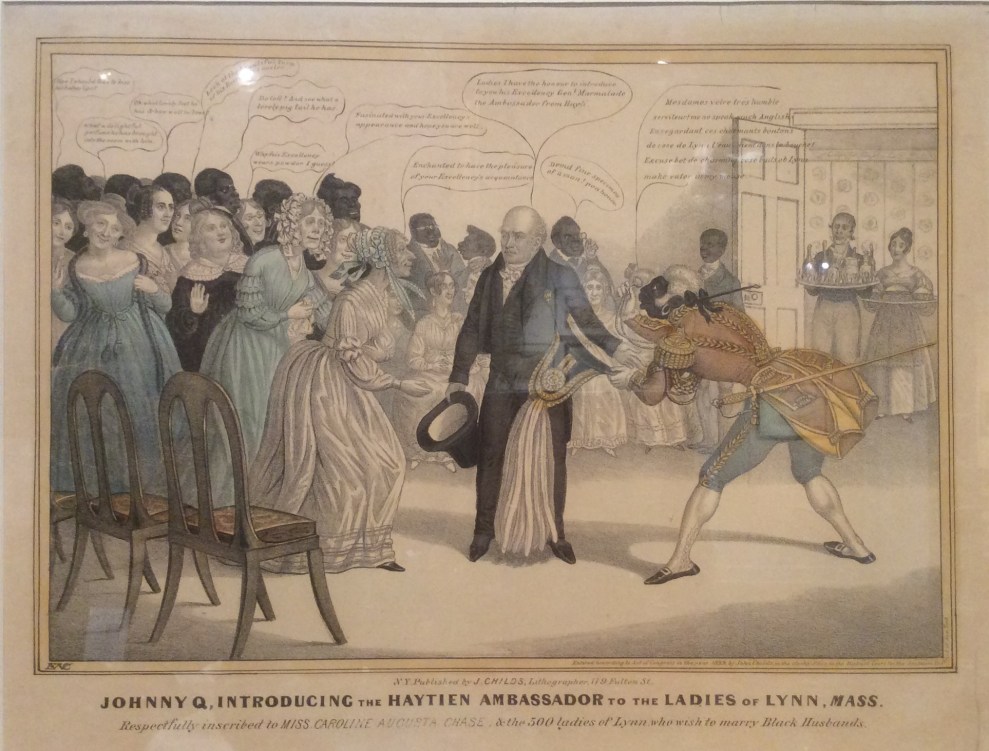
The person who created this poster in 1839 could not have foreseen that one of Lynn’s future black residents, Frederick Douglass, would go on to to become one of Lynn’s and America’s most loved and admired citizens, and would be appointed to the high office of United States Consul General to Haiti in 1889. I, for one, would get some satisfaction out of time-traveling to visit the author and inform him of these historical developments, just to see the look on his face. Douglass was too dignified a man himself to engage in such a prank if it were possible; throughout his life, he practiced great self-discipline in keeping to the moral high ground.

Johnny Q and Haitian Abassador Poster, Lynn Museum, 2016 Amy Cools

Poster caricaturing Lynn’s abolitionist movement, 1839, from the ‘Abolitionist Lynn’ exhibit at the Lynn Museum & Historical Society

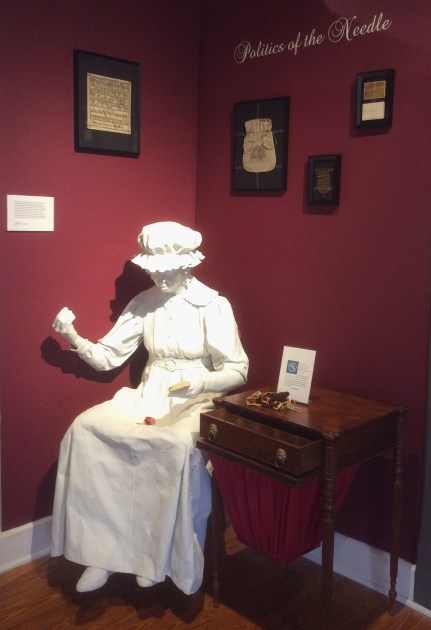
Politics of the Needle, Lynn Museum exhibit, 2016 Amy CoolsA seamstress and textile artist myself, I enjoy the exhibit of needlework artifacts here, created by the girls and women of Lynn’s abolitionist community to raise money for the abolitionist cause.
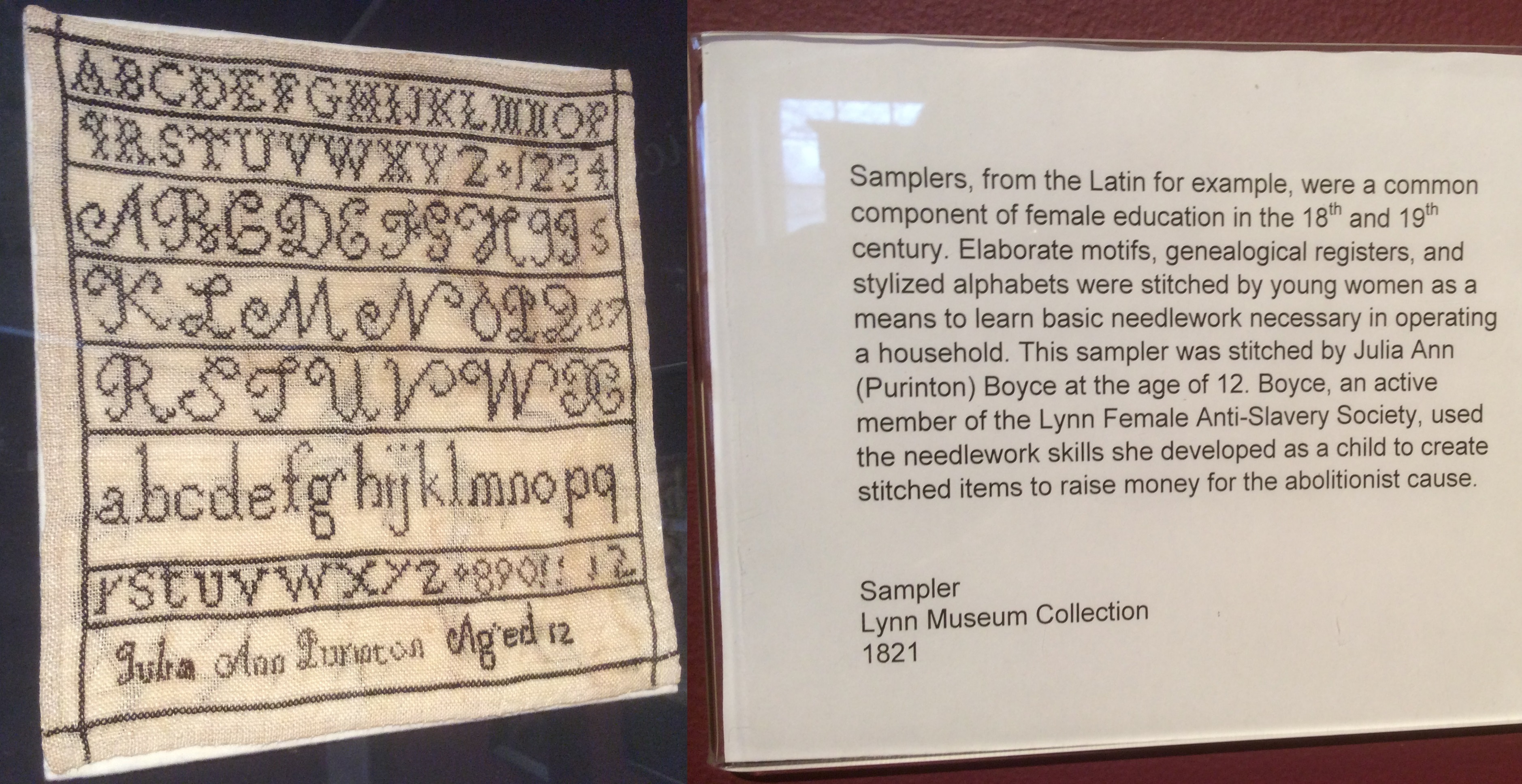
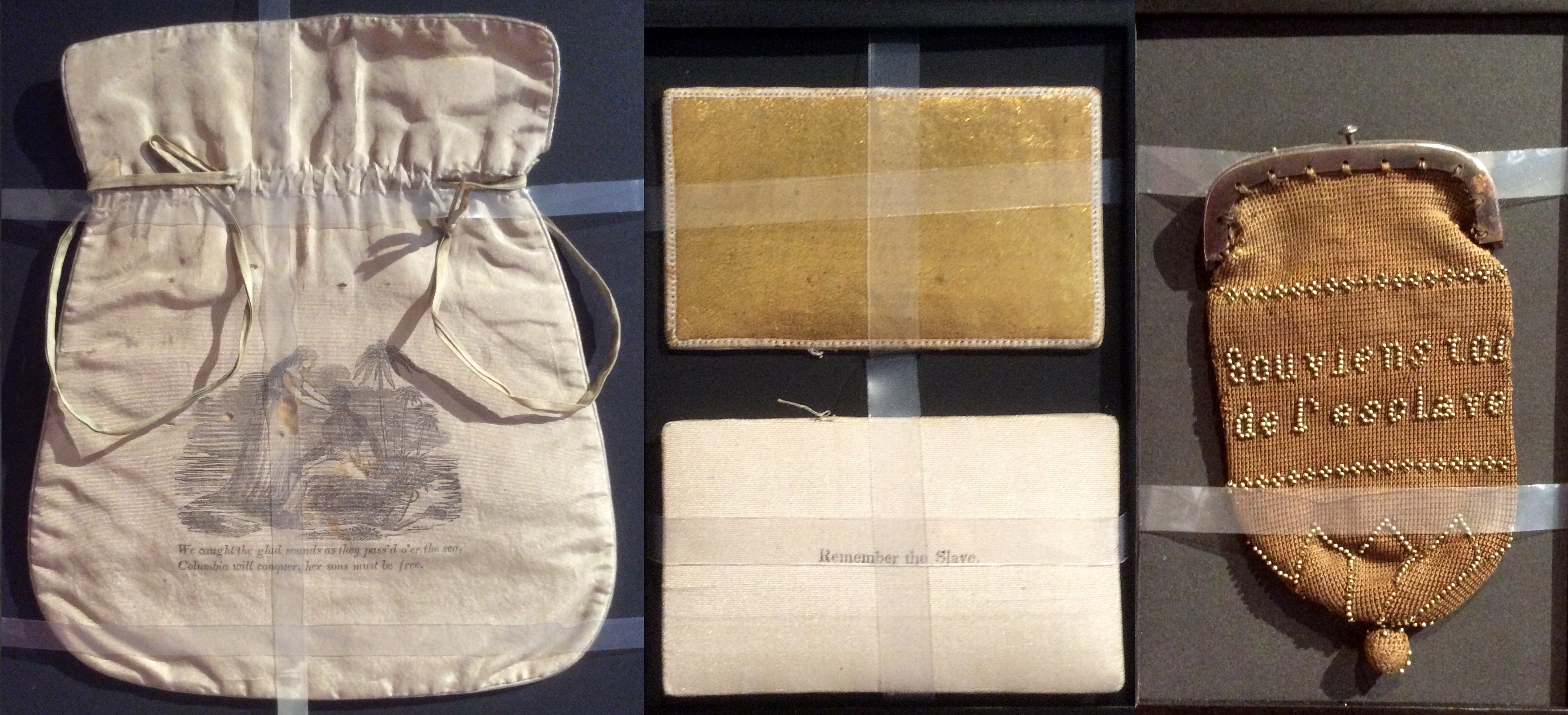
The sampler is a basic design, the only thing differentiating it from other samplers of the period is the cause it raised money for. The other pieces, through words and images, remind their owners not to forget the slaves’ plight while enjoying the freedom and comfort of their own daily lives.

The exhibit is filled with many more interesting artifacts and information, but to keep this account from becoming too long, I’ll refocus my attention on the main object of my visit here today.

Sampler by Julia Ann Boyce at Lynn Museum

Abolitionist needlework exhibit, Lynn Museum

Abolitionist needlework exhibit, Lynn Museum & Historical Society

Piano with John Hutchinson sheet music, Abolitionist Lynn exhibit, March 2016

Piano with John Hutchinson sheet music, Abolitionist Lynn exhibit, March 2016

The Hutchinson Family Scrapbook at the Lynn Museum & Historical Society

The Hutchinson Family Scrapbook at the Lynn Museum & Historical Society

Britt arrives (she so kindly takes time out of her day off to come in and meet me!) and greets me with a cart of artifacts: one is a folder filled with ephemera relating to Douglass, mostly newspaper clippings, and the other is an old scrapbook entitled: ‘Memorabilia of the Hutchinson Family’. She reminds me of what Nicole Breault, Education and Research Specialist, had informed me by email: the Lynn Museum’s archival materials are now housed at the Phillips Library at the Peabody Essex Museum. She encourages me to visit and I long to do so, of course, but as I’ve been telling you, more and more to my regret, I only have two weeks for this trip and have no time to go! I hope to be able to follow up in future, and now have yet one more good resource for original sources.

So knowing time is short this morning, too, I begin with the exciting artifact here before me, the Hutchinson family scrapbook.

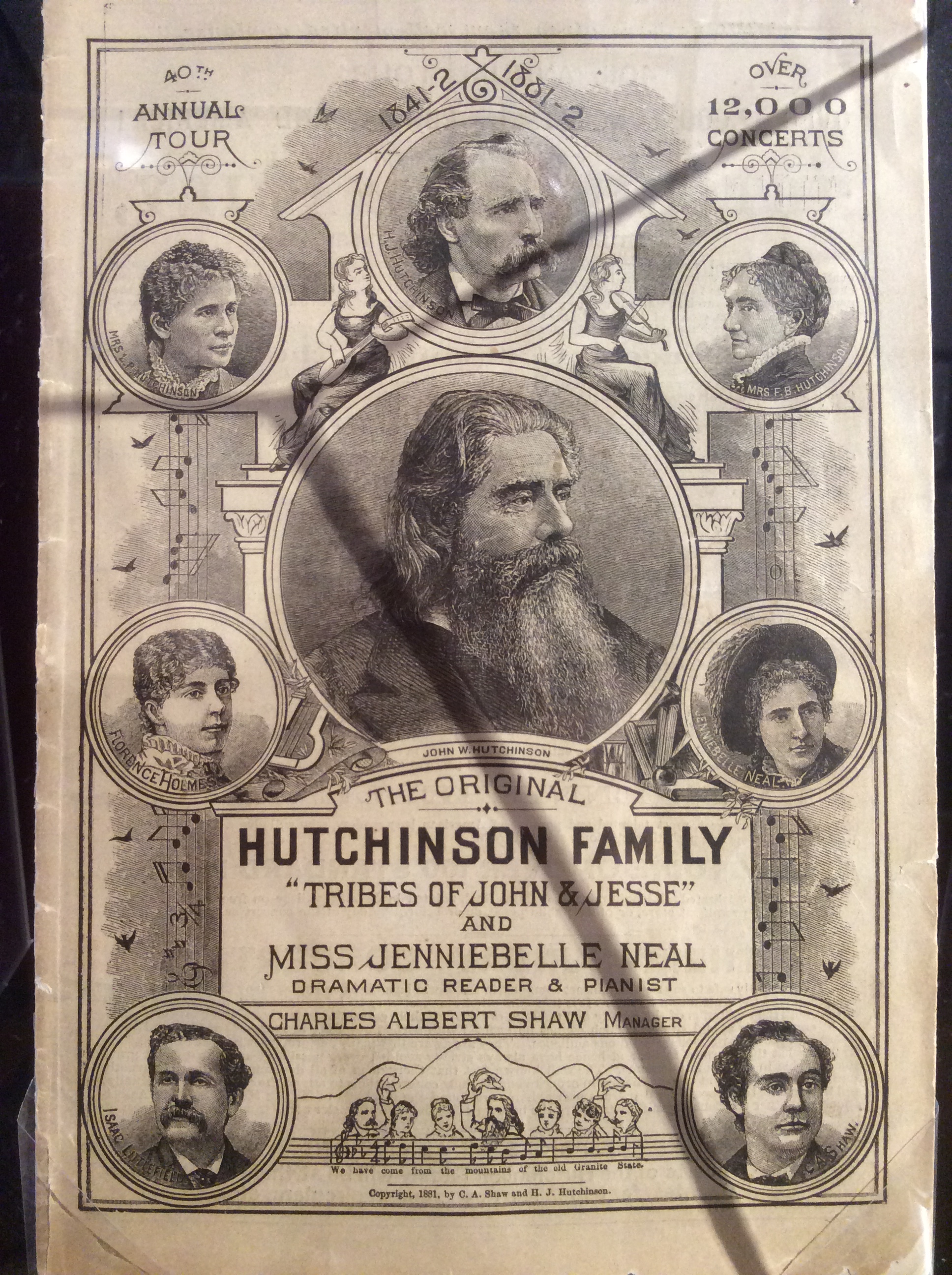
Hutchinson Family Singers Poster, Lynn Museum, 2016 Amy Cools

Hutchinson Family Singers Poster at the Abolitionist Lynn exhibit, March 2016, Lynn Museum & Historical Society

Portrait of John Hutchinson from the Hutchinson Family Scrapbook at the Lynn Historical Society. He's quite a handsome man, I think, with beautiful eyes

Portrait of John Hutchinson from the Hutchinson Family Scrapbook at the Lynn Historical Society. I think he’s very handsome, with beautiful eyes

It opens with a portrait of John Hutchinson. Douglass traveled on board with the Hutchinsons, the ‘sweet singers of anti-slavery and the “good time coming,”‘ (Life and Times) when he sailed to the British Isles on August 6th, 1847, on self-imposed exile when he felt the information contained in his newly published Narrative endangered his freedom.

The Hutchinson Family Singers vocal group was founded by John Hutchinson with his brothers Asa, Jesse, and Judson. The Hutchinson family was originally from New Hampshire, as Douglass described, but had many connections to Lynn: John saw a concert of a European singing troupe and was inspired to form his own in that style; the family later performed in Lynn; and John and his wife Patch settled here, on High Rock at the north part of the city, not far from the second Lynn home of the Douglass family. When Jesse became musical director of the group he stopped singing as often, but all of the brothers and sisters, as well as many spouses and other extended family members, joined in as full-time or occasional members. The group broke up into two ‘tribes’ since the brothers didn’t always get along (like so many brothers in bands together, like the great Kinks and maybe not the quite as great Oasis), but both groups were always billed as the ‘Hutchinson Family Singers’.

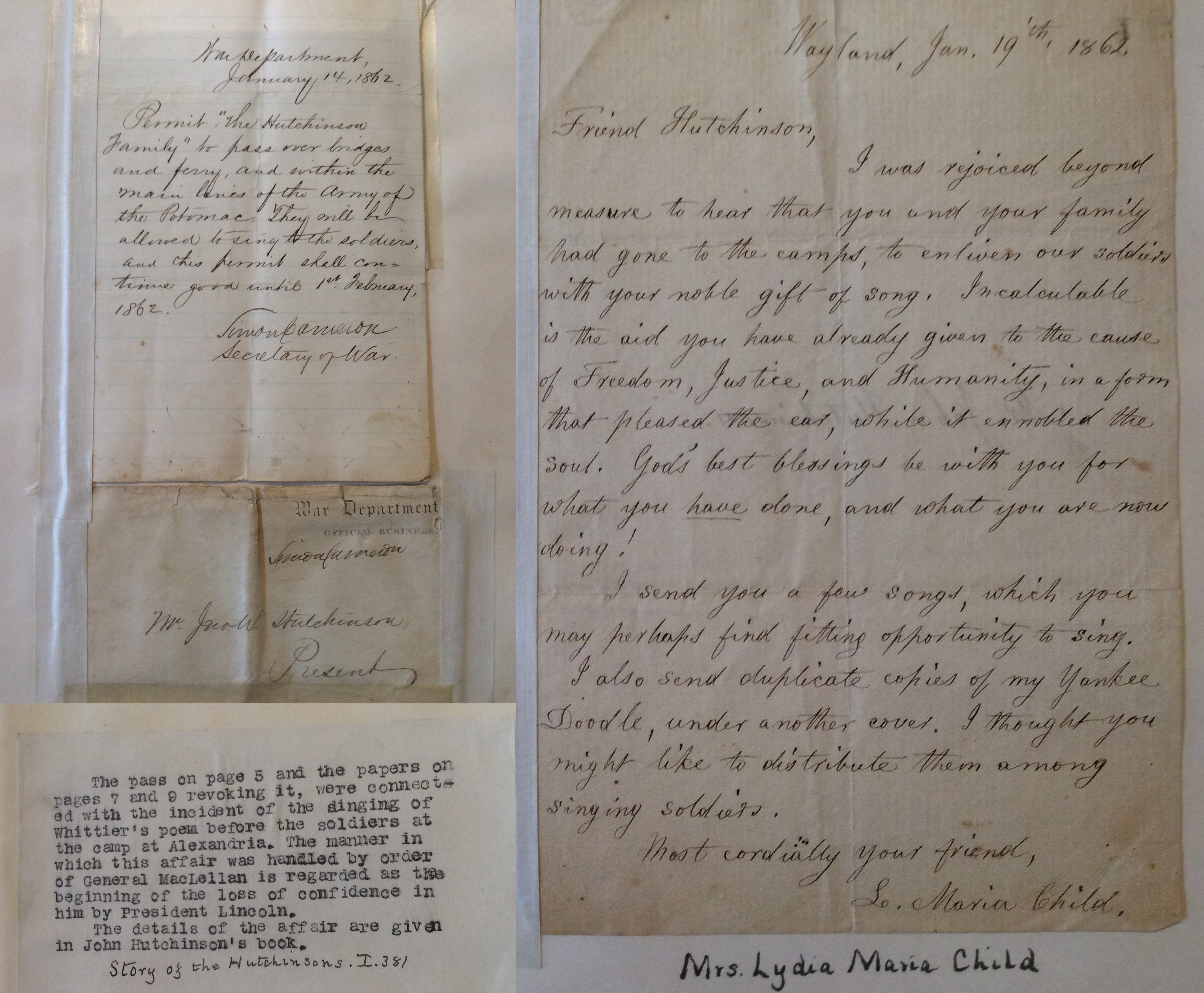
Civil War free pass and letter from Lydia Marie Child to John Huchinson, Lynn Museum & Historical Society

Civil War free pass and letter from Lydia Maria Child to John Hutchinson, Lynn Museum & Historical Society. The Hutchinson family would sing for the troops, by special permission of the Secretary of War, to cheer and inspire them. The great human rights activist and author Child applauds this in her letter to John of January 19th, 1862.

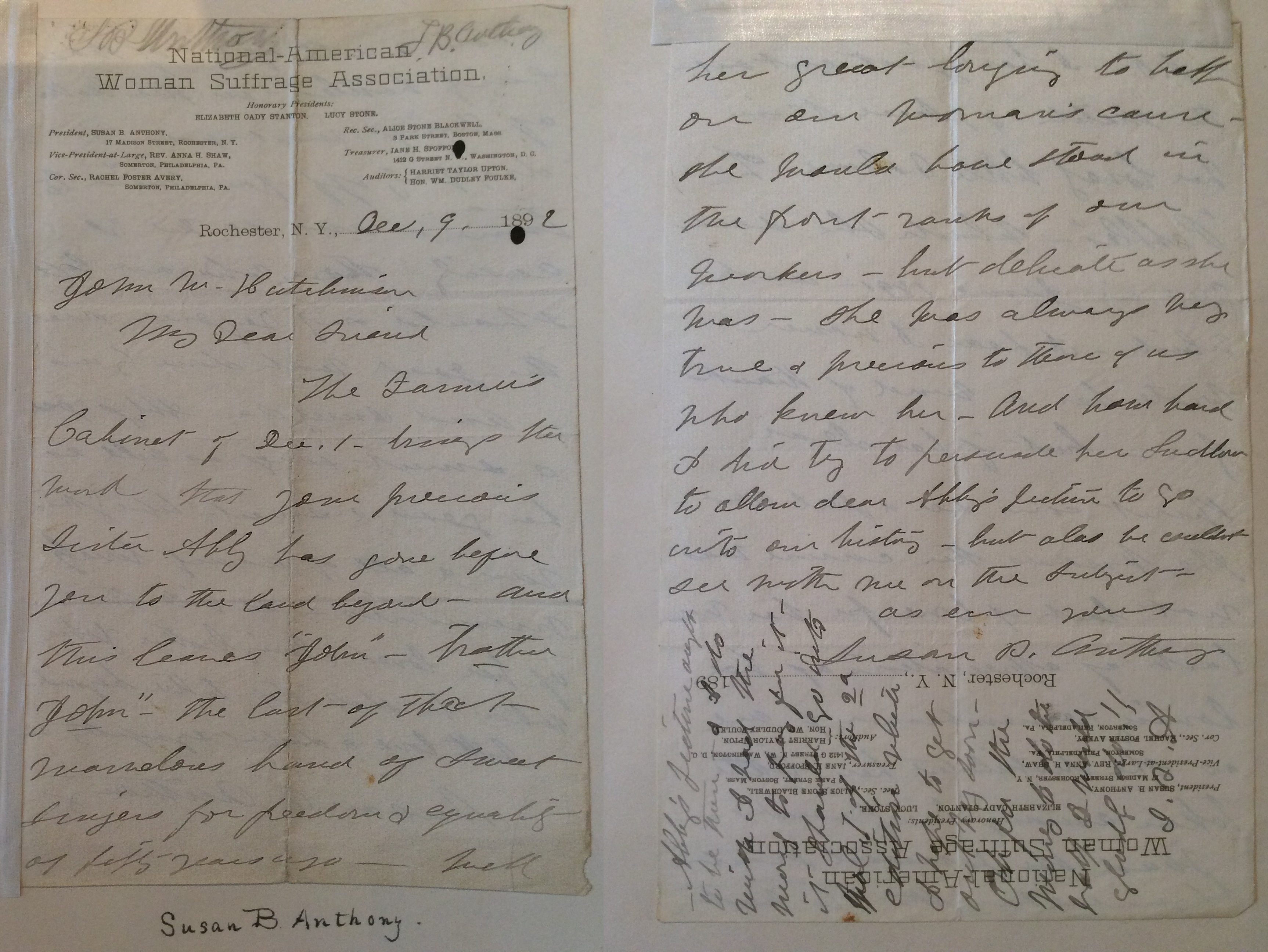
There are so many wonderful artifacts here, new thrills every time I turn the page! There’s a letter from Susan B. Anthony, great abolitionist, woman’s rights leader, and friend of Douglass, who I’ll discuss at greater length in a later account:

Susan B. Anthony Letter to John Hutchinson

Letter from Susan B. Anthony to John Hutchinson, December 9th 1892, sending condolences for the death of his sister Abby, an especially talented member of the group and also, as Anthony says here, dedicated to the women’s rights cause

Abby Hutchinson's tribute to Jesse upon his death on May 15, 1853

Abby Hutchinson’s tribute to her brother Jesse following his death on May 15, 1853. She replaced him as fourth member of the quartet when he stopped singing to become manager, then took over as manager when he died

There’s a note from Julia Ward Howe:

Note from Julia Ward Howe

Note from Julia Ward Howe, who wrote ‘Battle Hymn of the Republic’, which consisted of new lyrics to the tune of ‘John Brown’s Body’, a song about Douglass’ fiery abolitionist friend who led the raid on Harper’s Ferry. Both songs were popular Civil War hymns, for the Northern side, of course

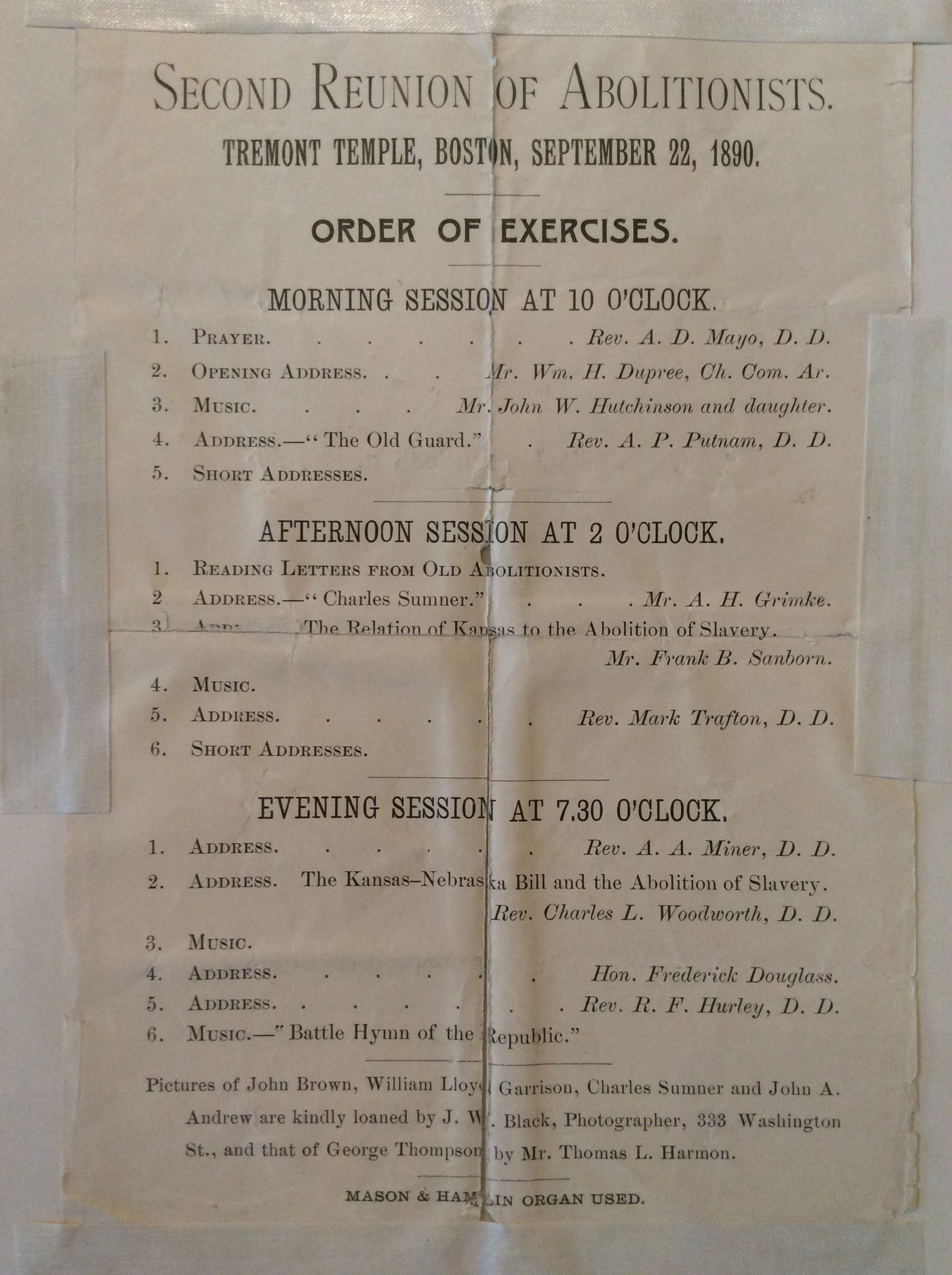
Tremont Temple Abolitionist Poster, 2016 Amy Cools

Poster for Second Abolitionist Reunion at Tremont Temple in Boston, September 22nd 1890. As you may remember from my account of my day in Boston visiting Douglass sites, he spoke here often, and as you can see from the poster, he shared the stage with John Hutchinson and his daughter Viola, who donated the scrapbook to the Lynn Historical Society (see cover photo above). They close the meeting with Howe’s ‘Battle Hymn of the Republic’

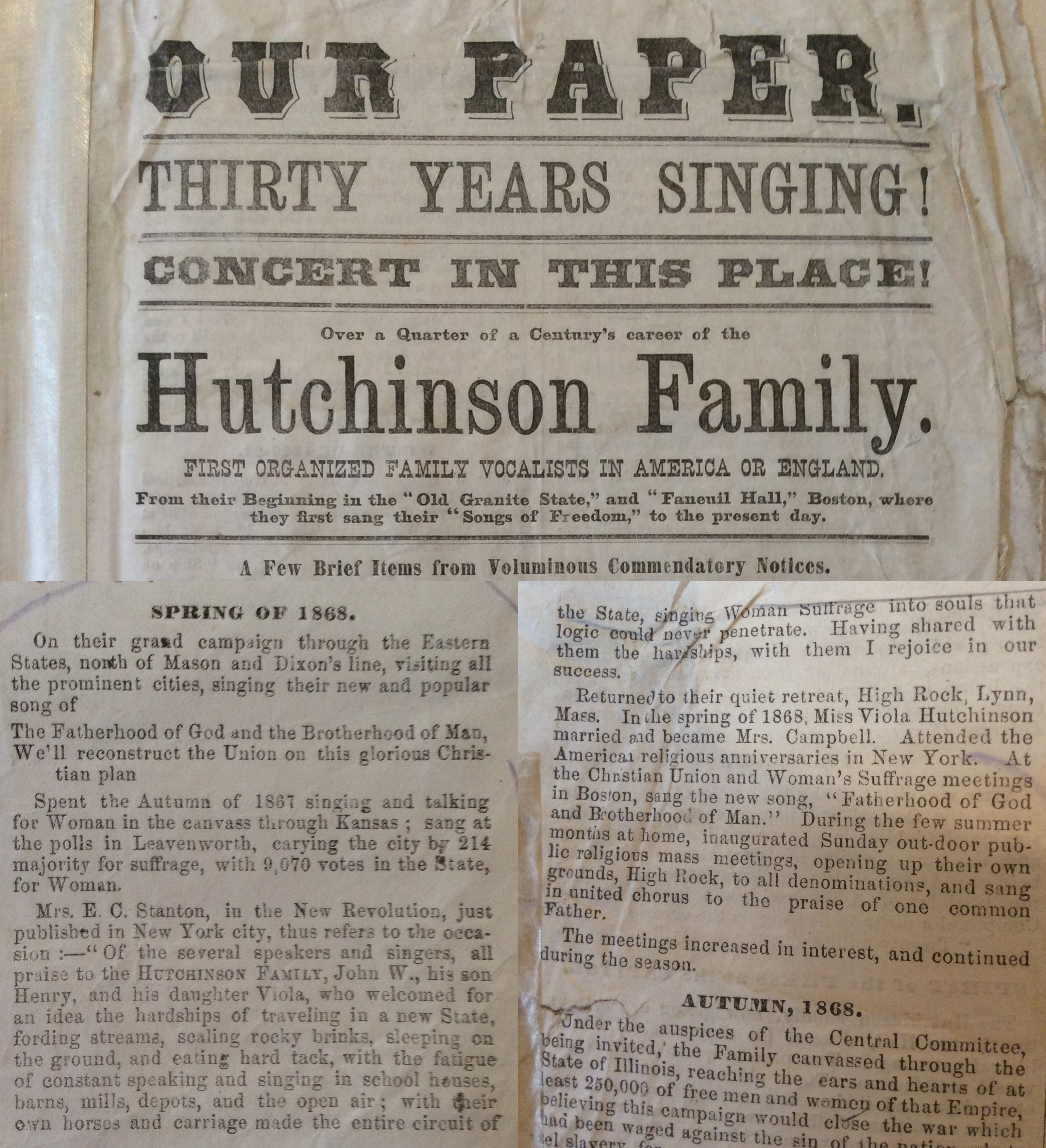
Hutchinson Family Paper celebrating 25 years as a group, with ringing endorsement by Elizabeth Cady Stanton

Hutchinson Family Paper celebrating over 25 years as a group, with a ringing endorsement by feminist leader and Douglass’ friend Elizabeth Cady Stanton

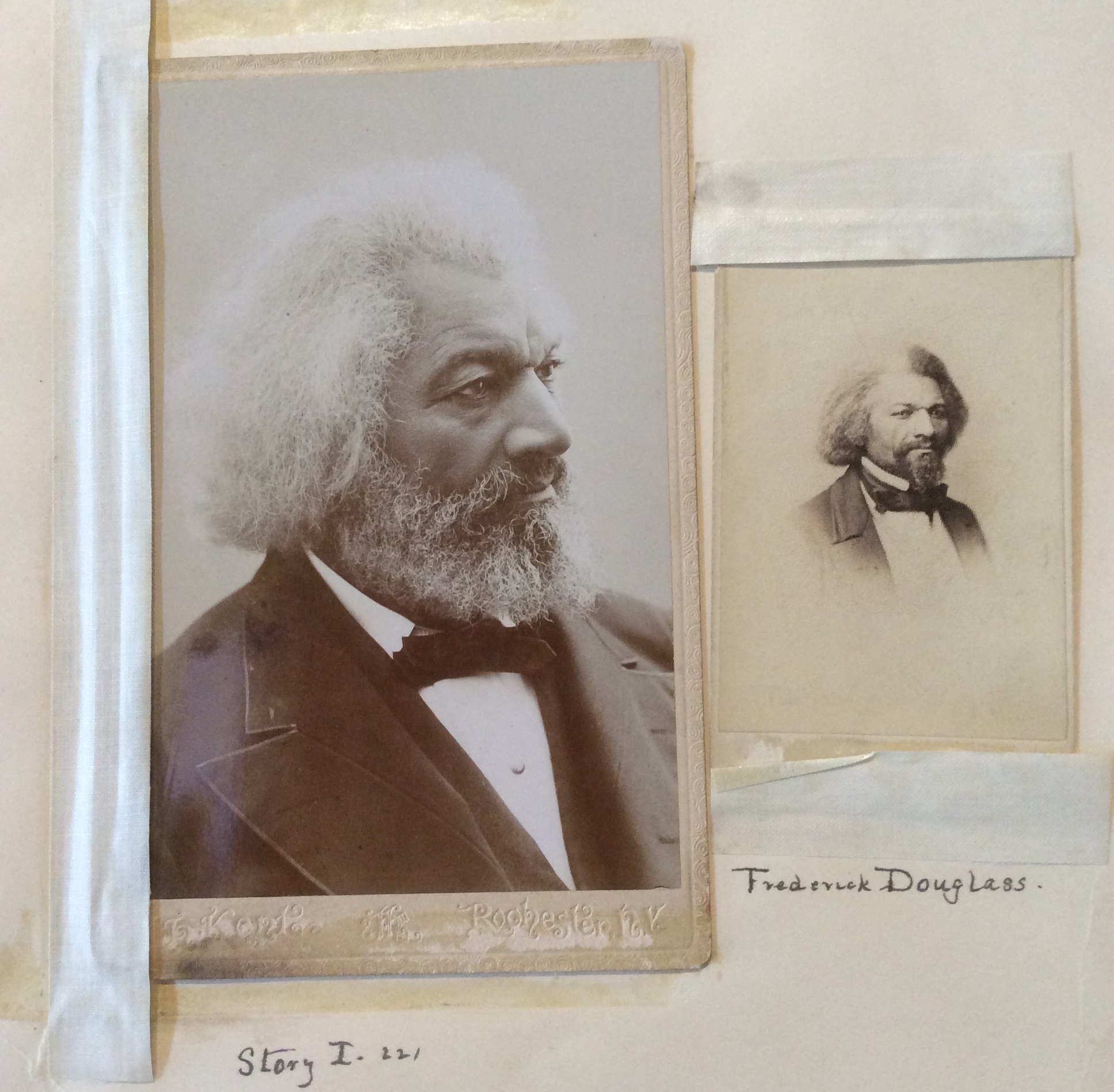
Two portraits of Frederick Douglass from the Hutchinson Family scrapbook

Two portraits of Frederick Douglass in the Hutchinson Family scrapbook

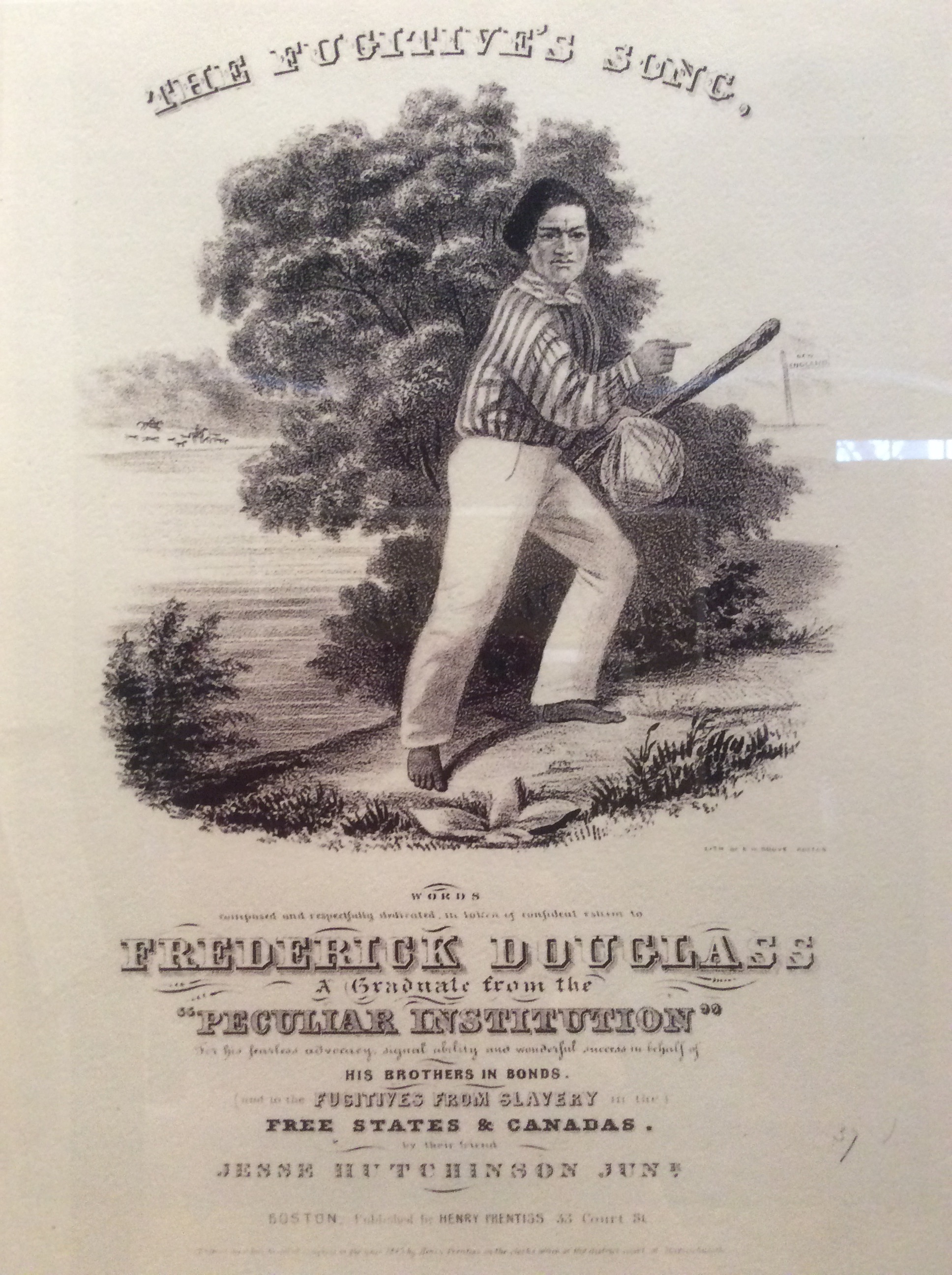
John Hutchinson Song Dedicated to Frederick Douglass Cover Page from Lynn Museum Exhibit

Jesse Hutchinson Song dedicated to Frederick Douglass, cover page print from Lynn Museum Abolitionist Lynn exhibit

As with the Lynn Museum exhibit, I find there are so many interesting things here to share and I can continue on, but this account would grow meandering and very long (it’s going to be pretty long regardless!). So, I’ll return to the central subject of this account, publishing more photos of artifacts I find here today in later accounts as they pertain to the story, and tell you about my most exciting discovery of the day.

Do you remember this drawing on the left from the first part of my Lynn journey account, of the cover page for ‘The Fugitive Song’, written by Jesse and dedicated to Frederick Douglass?

In 1874, Douglass wrote a letter to John Hutchinson mentioning Jesse (the group was often called ‘The Tribe of Jesse’ even long after his death), and it’s here in this scrapbook. Yes, I’m holding an original letter written by Douglass himself, in my own two hands! Well, archivist-gloved hands anyway, and of course I don’t remove it from the scrapbook, just carefully turn it over to read both sides. Like I’ve said many times before, artifacts and physical sites have a very strong effect on me emotionally, which is what keeps me from being just an armchair history enthusiast and drives me out on the road. So, of course, I get the chills all over again, and feel more than a bit teary-eyed!

The envelope is addressed: 'John W. Hutchinson, Lynn Mass' from 'Fred'k Douglass'

The envelope is addressed: ‘John W. Hutchinson, Lynn Mass’ from ‘Fred’k Douglass’

But anyway, here’s the full text of the letter:

‘Biddeford, Nov. 18, 1874

My dear John,

I have only time while on the wing as I am, to tell you that you made me very much obliged to you for the little pamphlet you kindly put into [sic] hands night before last in Lynn, containing biographical sketches of the several members of your remarkably musical family. No apology was needed for its publication. All who have listened as I have done, to the ‘Concord of Several Sounds’ from members of the ‘Tribe of Jesse’ want more of the music and wish to know more of the persons from whom it comes. I especially have reason to feel a grateful interest in the whole Hutchinson family for you have sung the yokes from the necks & the fetters from the limbs of my race, and dared to be true to humanity against all danger to worldly prosperity and reputation. You have dared to sing for a cause first and for cash afterward. I know of few instrumentalities which have done more for liberty and temperance than have your voices. But I only took this moment simply to thank you for the pamphlets and not to speak in the praise of the dear family.

Yours very truly, Fred’k Douglass.’

Frederick Douglass letter to John Hutchinson, dated 1874, Lynn Museum & Historical Society

Frederick Douglass letter to John Hutchinson, dated 1874, Lynn Museum & Historical Society

At long last and with little time to spare, I finish looking at the scrapbook and turn to the other clippings and ephemera I find in the Douglass file folder.

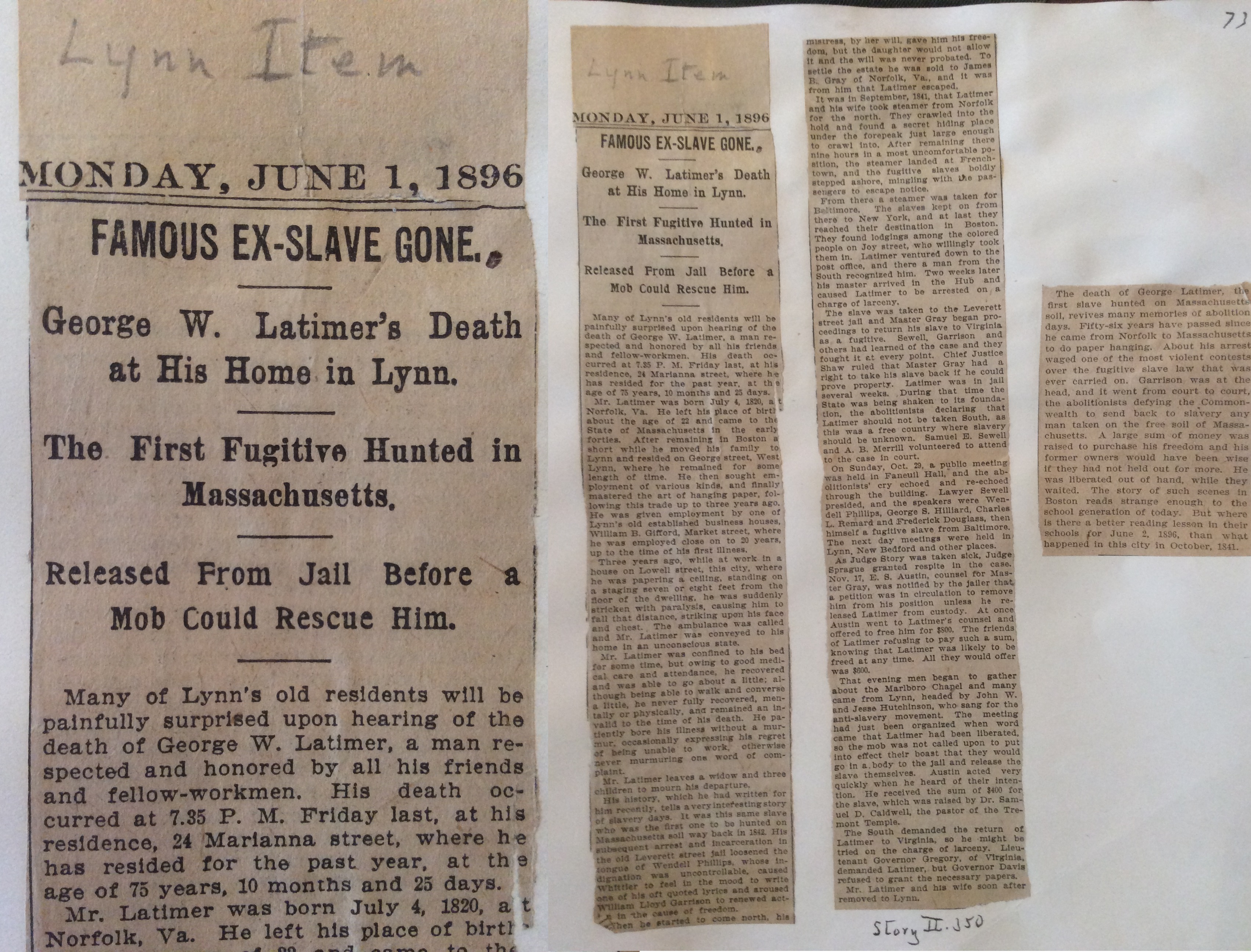
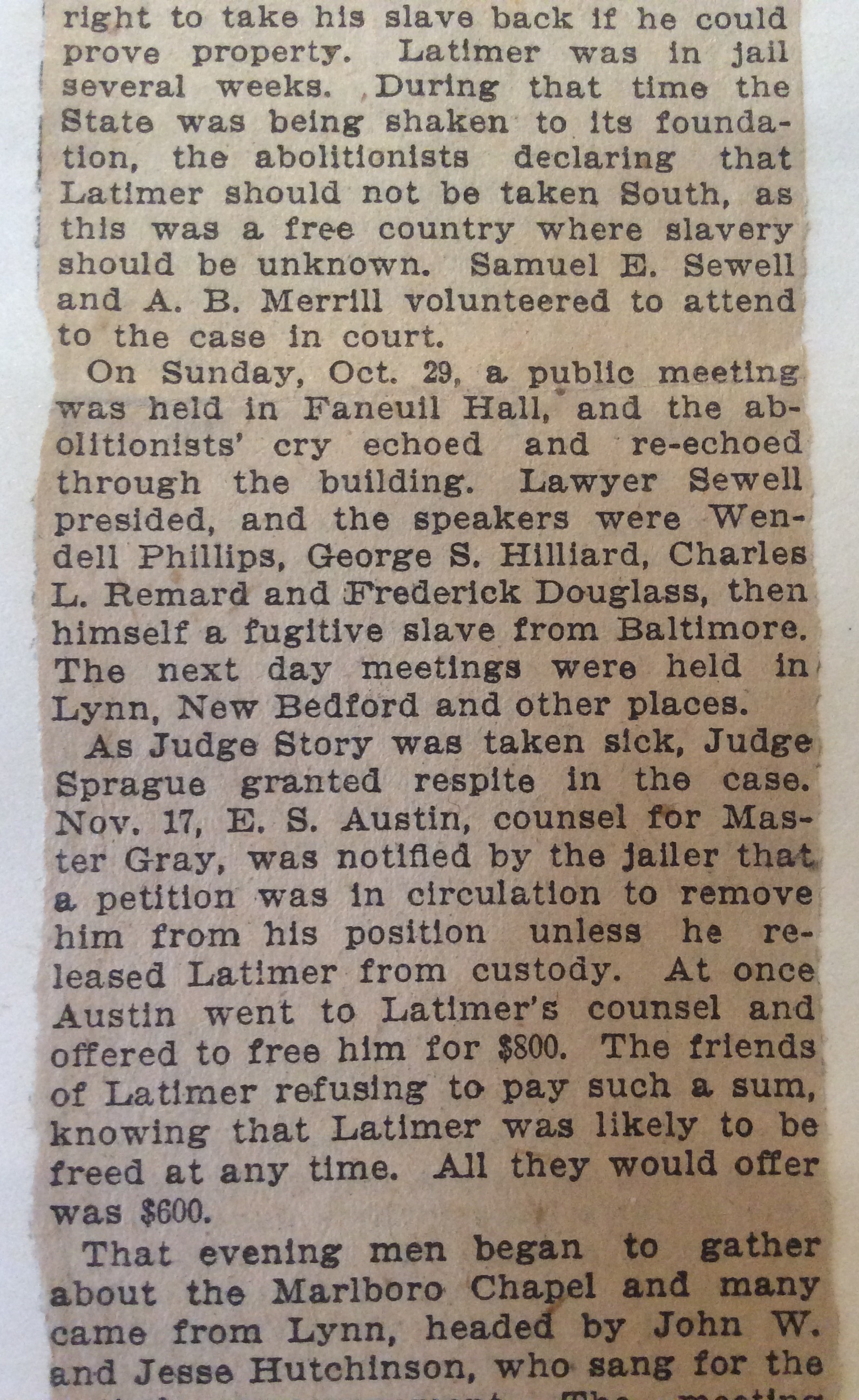
George Latimer article, Lynn Museum Archives

George Latimer article, Lynn Museum Archives

I find an old newspaper clipping here that’s very interesting, unique in its details yet generally characteristic of how high the tensions were between abolitionists and supporters of slavery, and how tight-knit abolitionist communities were. New Bedford, as discussed earlier in this series, was one such community. Lynn and Boston both have a strong history of abolitionism as well (John Adams, a Bostonian of many years, was the only one among our first several presidents who not only didn’t own slaves, but consistently regarded it a great wrong).

Detail of George Latimer article

Detail of George Latimer article

The clipping tells the story of George Latimer, a former slave who escaped with his wife Rebecca to Baltimore, than onto Boston, where George was arrested; after Latimer’s freedom was finally purchased, he and his wife settled in Lynn. I had read this story in my research on Douglass; it was disputes over slaves escaping north, such as the Latimers, that led to the passage of the Fugitive Slave Act, since the slavecatchers had pursued Latimer into a free state. And as you can see in the newspaper account (you can open the image in a new tab and zoom in to read), Douglass, William Lloyd Garrison, and Wendell Phillips were champions for Latimer’s cause and held meetings in Boston’s Faneuil Hall, where I visited yesterday. You’ll also see that Jesse and John Hutchinson were among the activists protesting Latimer’s treatment, that the pastor of Tremont Temple Samuel Caldwell paid the $400 that purchased his freedom (paid his ransom?), and that Latimer and his wife were taken in by people on Joy Street, on Beacon Hill in Boston; I walked that street just yesterday as well.

I find many other old newspaper clippings in this folder, some of which I’ve shared with you already in the first part of my account of today’s visit to Lynn, others which I’ll share with you as they relate to my further discoveries on my Douglass journey, and still others I’m happy to share upon request. But I’ll go ahead and end this account here for time’s sake, and soon follow this with the tale of my next day’s discoveries.

Again, my heartfelt thanks to all at the Lynn Museum & Historical Society. Thank you so much to Nicole Breault for arranging my visit, Britt Bowen who gave me access to historical artifacts for study, the kind ladies who greeted me and showed me around, and to everyone else there who makes this place a beautiful place to visit and a great resource!

~ Ordinary Philosophy and its Traveling Philosophy / History of Ideas series is a labor of love and ad-free, supported by patrons and readers like you. Please offer your support today!

~~~~~~~~~~~~~~~~~~~~~~~~~~~~

John and Patch Hutchinson from Family Scrapbook

John and Patch Hutchinson from Family Scrapbook

Sources and inspiration:

Blassingame, J. (Ed.). The Frederick Douglass Papers, Series One: Speeches, Debates, and Interviews. 4 volumes, and The Frederick Douglass Papers, Series 2: Autobiographical Writings. 3 volumes. New Haven and London: Yale University Press, 1979-1999

Daniel Webster‘. In Wikipedia, The Free Encyclopedia.

Douglass, Frederick. Autobiographies (includes Narrative…, My Freedom and my Bondage, and Life and Times). With notes by Henry Louis Gates, Jr. Volume compilation by Literary Classics of the United States. New York: Penguin Books, 1994.

Foner, Philip S. The Life and Writings of Frederick Douglass, Vol. 1-4. New York: International Publishers, 1950.

Frederick Douglass Chronology‘ from the National Park Service – History & Culture: People

Fugitive Slave Act of 1850‘. from Wikipedia, The Free Encyclopedia.

Fugitive Slave Law‘, from The African American Odyssey: A Quest for Full Citizenship online exhibit from the Library of Congress.

Hutchinson Family Singers‘. In Wikipedia, The Free Encyclopedia.

The Hutchinson Family Singers: America’s First Protest Singers‘. Amaranth Publishing website

Lewis, Alan. ‘Abby Hutchinson Patton‘ and ‘John Wallace Hutchinson‘, Hutchinson Family Singers Web Site (archived)

Peculiar Institution.” Dictionary of American History, 2003, from Encyclopedia.com

Weatherford, Doris. ‘Lydia Maria Child‘, via National Women’s History Museum website

William L. Garrison‘. Ohio History Central website

William Lloyd Garrison‘. From Wikipedia, The Free Encyclopedia.

Review: Strange Gods: A Secular History of Conversion, by Susan Jacoby

One of my favorite authors, who wrote the great Freethinkers: A History of American Secularism, has written another wonderful book that I believe should be foundational to any freethinker’s library, or any historian’s for that matter.

In Strange Gods, Susan Jacoby considers religious and ideological conversions, from those as famous as Augustines’s and Muhammmed Ali’s to the lesser known Margaret Fell’s and Peter Cartwright’s, in the wider context of the political and social circumstances of their times. From Augustine of Hippo, early father of the Christian church and author of Confessions and The City of God who converted from paganism to Manichaeism to Christianity, to Muhammad Ali, heavyweight boxing champion and activist who converted from Christianity to the Nation of Islam, to Sunni Islam, to Sufism, her book ranges mostly through the world dominated by Judaism, Christianity, and Islam after the turn of the first millennium CE. Jacoby explores the roles of the personal forces within and the forces of family, community, and the wider cultural, political, and religious shifts without, which led people to adopt new beliefs and in many cases, to spend the rest of their lives proselytizing for them.

What a great idea for a book! Jacoby’s in-depth study shows us how stories of conversion not only offer invaluable insights into the transformative power of newfound belief on individual persons, but how it can affect the lives of those around them and of those who come after them, for good and for ill. She offers us an in-depth exploration of each conversion from a refreshingly secular viewpoint, free of partisanship and complete with associated circumstances, influences, and social dynamics. Since conversion stories are rarely explored outside of the context of the newly adopted belief system, we don’t often get a clear view of the significance of this experience for the converted as well as for the people around them. To those within a religious tradition, converts, especially those who become prominent spokespersons or martyrs, are offered as proofs of the validity and superiority of that particular faith, yet all belief systems have their own and hold them up in this same manner. To those outside of each given tradition, converts can be dismissed as lost or misled, or even considered hoodwinked, brainwashed, or traitorous. Jacoby’s treatment helps to reveal how much larger a story conversion is than the exclusively religious and personal event it’s so often considered, while retaining a sympathetic understanding of its meaningfulness in individual lives. In these pages, each conversion story is not only a rich psychological study, but a valuable history lesson as well.

One of the conversion stories that stood out for me is one I’ve thought about many times over the years. A cultural Catholic myself, I’ve long been familiar with the story of Augustine’s conversion and with his resulting views on topics such as sex, sin, women, the Jews, and so forth. As I grew older and began to consider things more critically, Augustine seemed to me less a repentant sinner and paragon of virtue and more an off-the-deep-end zealot, who went from being a man with a healthy sex life in a loving relationship with a woman and their child to a self-obsessed, Jesus-freak fastidious hater of all that’s natural. His conversion was deeply meaningful to him, but what about the woman he dumped after their long-term relationship, their child whom he cast from his home, the friends he rejected, and the father he turned against? I try now to take a more balanced and sympathetic view of the man and I find Jacoby’s profile of his spiritual and psychological journey helpful in this regard, though I still believe many of his theological views are harmful and have had a long-term negative influence on the way the Christian world has regarded sex and the nature and role of women. Augustine did what he felt he needed to do and what he came to believe was right, and in light of the circumstances of his life and personality, his thoughts and actions are understandable, even if not always admirable. Jacoby does not idolize him by any means, but respects his intelligence and his right to believe freely, and presents a full picture of his life and circumstances with the right mixture of fairness, sympathy, critique, and refreshing touch of humor. (I’m gratified to find that someone else sees his mother Monica as a real ‘piece of work! I’ve long thought of her as manipulative, passive aggressive, and kind of creepy!)

Jacoby’s exploration of the divergence, convergence, and conflict in matters of belief is a masterful one, and goes beyond the study of conversion as a matter of faith: she also offers a deep study of the personal and social effects of forced conversions, a subject not discussed often enough. The imposition or social pressure to conform to religious and ideological orthodoxy is an ancient and effective tool to impose the will of the ruler on the people, or to impose the will of some people on others. But we kid ourselves if we think it’s just something people did in the bad old days; there are still many parts of the world where conversions are still imposed at the end of a gun or with the threat of the lash, or, at least, with knowledge that it’s the only road to social acceptance, ability to get a job and live free from harassment.

In the end, Jacoby’s book is a testament to how the Enlightenment brought about one of the world’s best inventions: the social and political ideal of freedom of conscience. The more it’s realized in the world, the longer, safer, and happier lives we’ll live, with a greater ability to understand and appreciate the true richness of the variety of human thought.

Ordinary Philosophy and its Traveling Philosophy / History of Ideas series is a labor of love and is ad-free, entirely supported by patrons and readers like you. Please offer your support today!