Happy Birthday, Mary Fairfax Somerville!

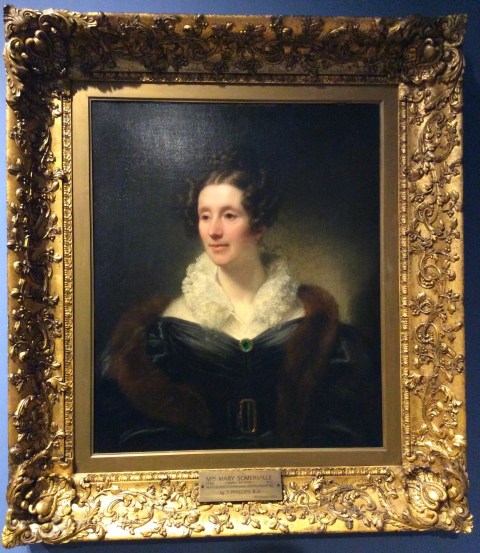
Mary Fairfax Somerville by Thomas Phillips at the National Portrait Gallery, Edinburgh, Scotland

Mary Fairfax Somerville, born on December 26, 1780 in Jedburgh, Scotland, was a mathematician of uncommon brilliance. After a very limited formal education, Fairfax educated herself from the family’s library. Though she initially was a poor writer and speller, she was an avid reader and an accomplished painter. Her interest in mathematics was sparked by a series of algebraic symbols and equations used as decoration in a fashion book. Once she began to uncover their meanings, she was hooked, and mathematics became one of the ruling passions and pursuits of her life.

Mary spent much of her time in youth and young adulthood in nearby Edinburgh. She married a cousin, Samuel Greig, at age 24, who didn’t actively interfere with her intellectual pursuits but didn’t support or approve of them, either. He died only three years later.

Back in Scotland, with a newfound independence purchased by her late husband’s money and her respectable status as a young widow with two children, Mary immersed herself in her intellectual pursuits in earnest, despite her family’s disapproval. She solved a mathematical problem placed in the Edinburgh Review by Dr. William Wallace, professor of Mathematics at the University of Edinburgh; her successful solution won her a medal and the interest of the mathematical community. Wallace guided her continuing education and introduced her to other mathematicians and scientists. She began to publish articles and books on a wide variety of mathematical and scientific subjects, including for the Royal Society, and would continue to do so for the rest of her life.

Mary received more moral and financial support when she married again in 1812. Her second husband, William Somerville (another cousin, whose mother nursed Mary as an infant), delighted in her work. They initially settled in Edinburgh, where Mary regularly communed with a small but noteworthy circle of intellectuals which included Wallace, Adam Ferguson, and Sir Walter Scott (a long-time family friend). Mary and William later moved to London for his job, where her impressive intellect and accomplishments brought her greater fame. She became friends with other luminaries such as Sir John Herschel and Annabella Milbanke (Lady Byron), who engaged Mary to tutor her daughter. This daughter, Ada Lovelace, also became a noted mathematician and a founding mother of computer science.

For the rest of her long life (she died on November 29th, 1872, about a month before she would have turned 92), Mary continued her research, problem-solving, and writing in science and mathematics, publishing many important works. Her success enabled her to support her family after her husband lost his money in an unsuccessful investment, then had to retire from work due to ill health. She became an active feminist, joining London’s General Committee for Women’s Suffrage and signing John Stuart Mill’s 1866 petition for women’s right to vote.

Learn more about this brilliant woman at:

Mary Fairfax, Mrs William Somerville, 1780 – 1872. Writer on science ~ site page for her portrait at the National Portrait Gallery, Edinburgh, Scotland

Mary Fairfax Somerville ~ by Shane Wood for Biographies of Women Mathematicians, Agnes College

Mary Somerville: British Science Writer ~ by Erik Gregersen for the Encyclopædia Britannica

Mary Somerville: Pioneer Woman Mathematician and Scientist ~ by Jone Johnson Lewis for ThoughtCo.com

Mary Somerville: Queen of Science ~ by Ruth Boreham for DangerousWomenProject.org

Mary Somerville, Scientist, Writer and a Woman of Her Time ~ by Alice Prochaska, Somerville College, Oxford

Personal Recollections, from Early Life to Old Age, of Mary Somerville ~ by Mary Somerville, edited and annotated by her daughter Martha Somerville, published in 1874

Scientist Mary Somerville to Appear on Scottish £10 Note ~ by Rob Davies for The Guardian, Feb 10th,  2016

Ordinary Philosophy and its Traveling Philosophy / History of Ideas series is a labor of love and ad-free, supported by patrons and readers like you. Please offer your support today!
Enlightenment Scotland: Adam Smith’s Grave at Canongate Kirkyard

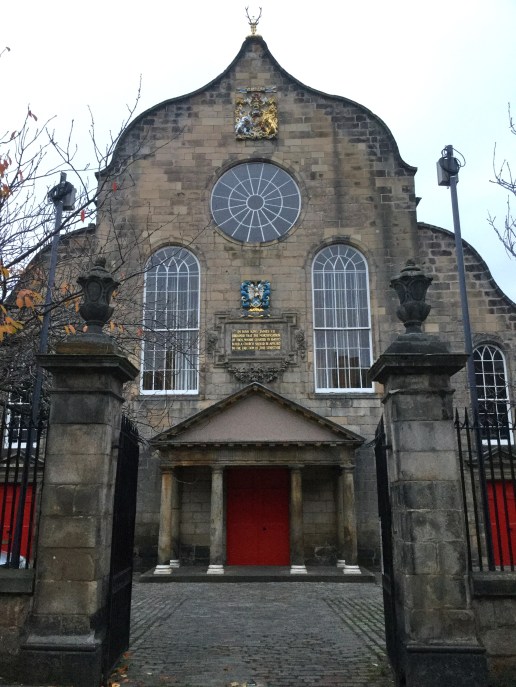
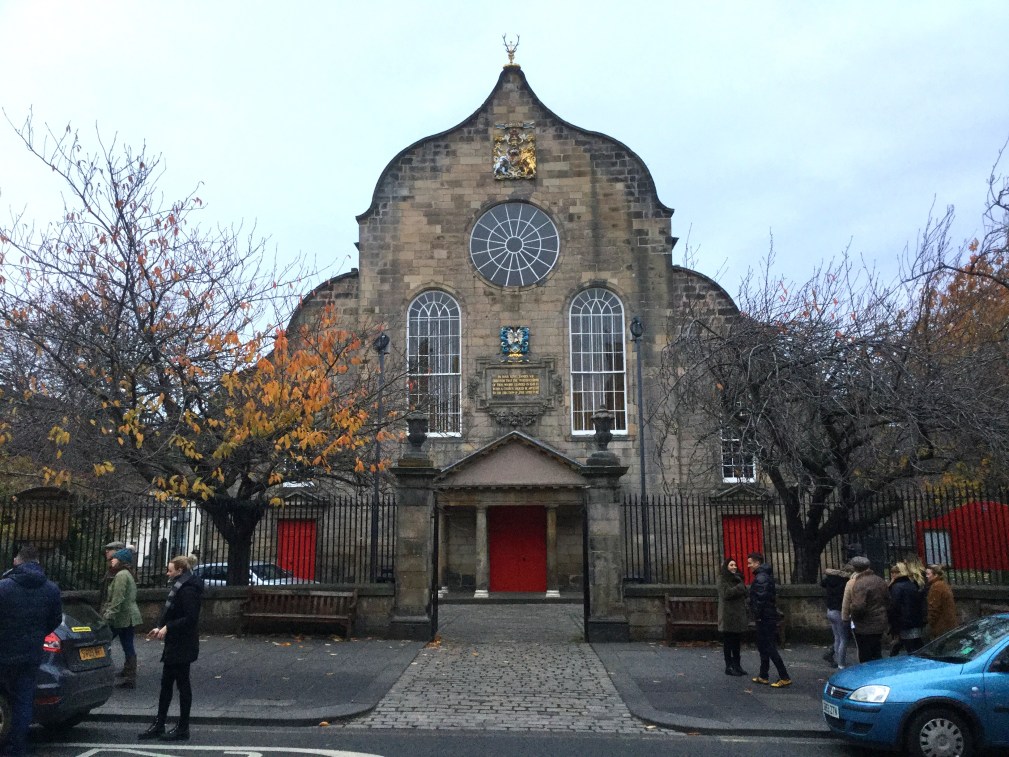
Canongate Kirk on the Royal Mile, Edinburgh, Scotland

Here in Edinburgh, where I’ve returned to University to earn my Master’s degree, I love to visit sites and monuments associated with the Enlightenment. As a lover of philosophy, the rich intellectual history of this city first brought me here: I followed (and still do) in the footsteps of David Hume for my first traveling philosophy/history of ideas series for O.P. I think it’s high time I share more of my explorations with you!

I’ll start with my visit yesterday afternoon to the great moral philosopher and economist Adam Smith‘s grave in Canongate Kirkyard on the Royal Mile. The lovely Kirk of the Canongate was built form 1688-1691, and is quite different in style than the other buildings on the Royal Mile. The graveyard behind it, however, is very like many others to be found behind kirks all over and around this great city, and includes the gravesites of many great Scots.

Canongate Kirkyard on the Royal Mile with Adam Smith’s grave center-left, Edinburgh, Scotland

Adam Smith’s grave in Canongate Kirkyard on the Royal Mile, Edinburgh, Scotland. Many of Adam Smith’s moral and political theories, and his ideas on trade and economics, were developed from the ideas of his great friend and mentor David Hume.

Canongate Kirk on the Royal Mile, Edinburgh, Scotland

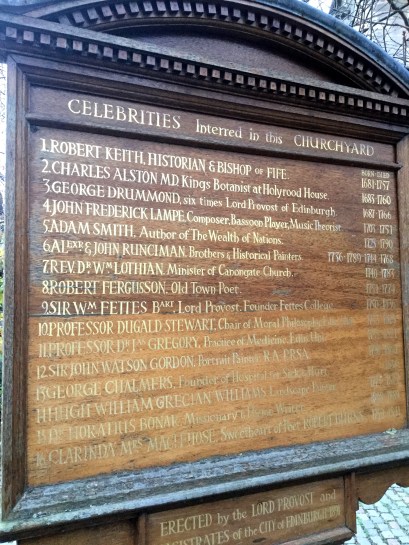
List of famous people buried at Canongate Kirkyard on the Royal Mile, Edinburgh, Scotland

Ordinary Philosophy and its Traveling Philosophy / History of Ideas series is a labor of love and ad-free, supported by patrons and readers like you. Please offer your support today!

Photobook: Frederick Douglass and Edinburgh, Old and New

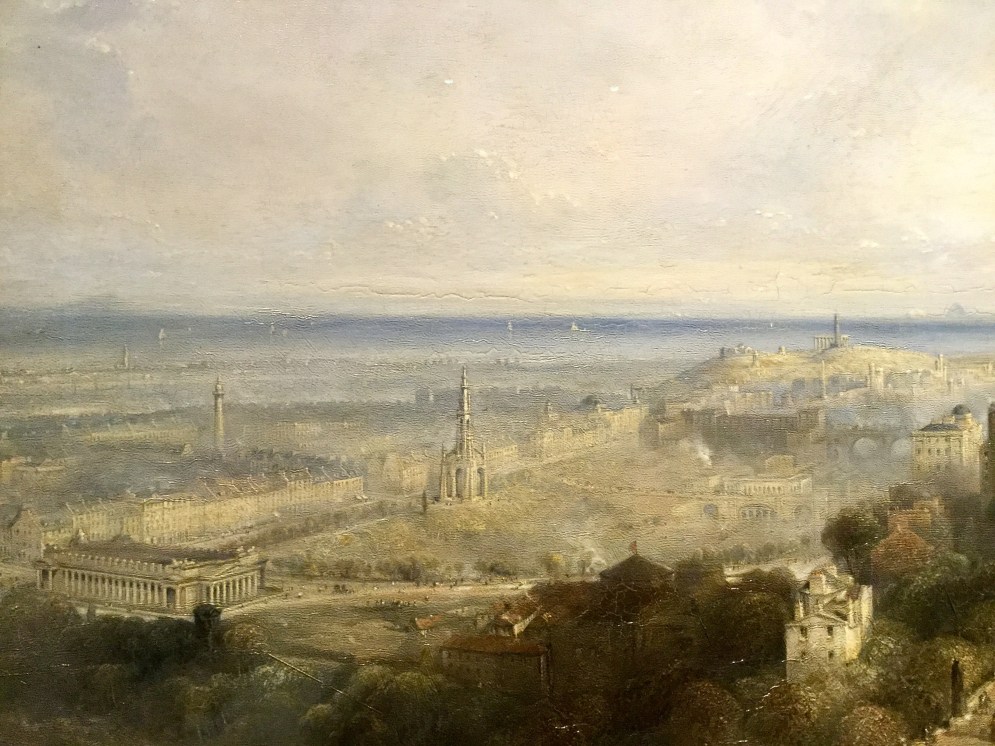
Detail of Edinburgh Old and New by David Octavius Hill, 1847, photo by Amy Cools at the Hill & Adamson photography Exhibit at the Scottish National Portrait Gallery, September 2017. In this view, the Firth of Forth is in the background, Calton Hill is at the right, Princes Street runs along the center at an angle with the Scott Monument at the center, and the Scottish National Gallery is at left, as seen from Edinburgh Castle.

Frederick Douglass wrote to William White on July 30th, 1846

‘I am now in Edinburgh. It is the capital of Scotland – and it is justly regarded as one of the most beautiful cities in Europe. I never saw one with which for beauty, elegance, and grandeur to compare it… The Monument to Sir Walter Scott – on Princes Street, is just one conglomeration of architectural beauties. The Calton Hill – Salisbury Crags and Arthur’s Seat give the city advantages over any city I have visited in this or in your country.’

The Scott Monument was finished just two years before Douglass’ visit. I walk near or among all of these places that Douglass writes of no less than several times a week. Oh, the wonder of it! – In the Main Reading Room of the National Library of Scotland with The Frederick Douglass Papers, Series III: Correspondence. Volume 1: 1842-1852, ed. John R. McKivigan.

Ordinary Philosophy and its Traveling Philosophy / History of Ideas series is a labor of love and ad-free, supported by patrons and readers like you. Please offer your support today!

A Walk to Calton Hill, Edinburgh, Scotland

Green fields and an old stone wall after a summer rain, Edinburgh, Scotland

Journal: Calton Hill, Edinburgh, early Saturday evening, August 12th

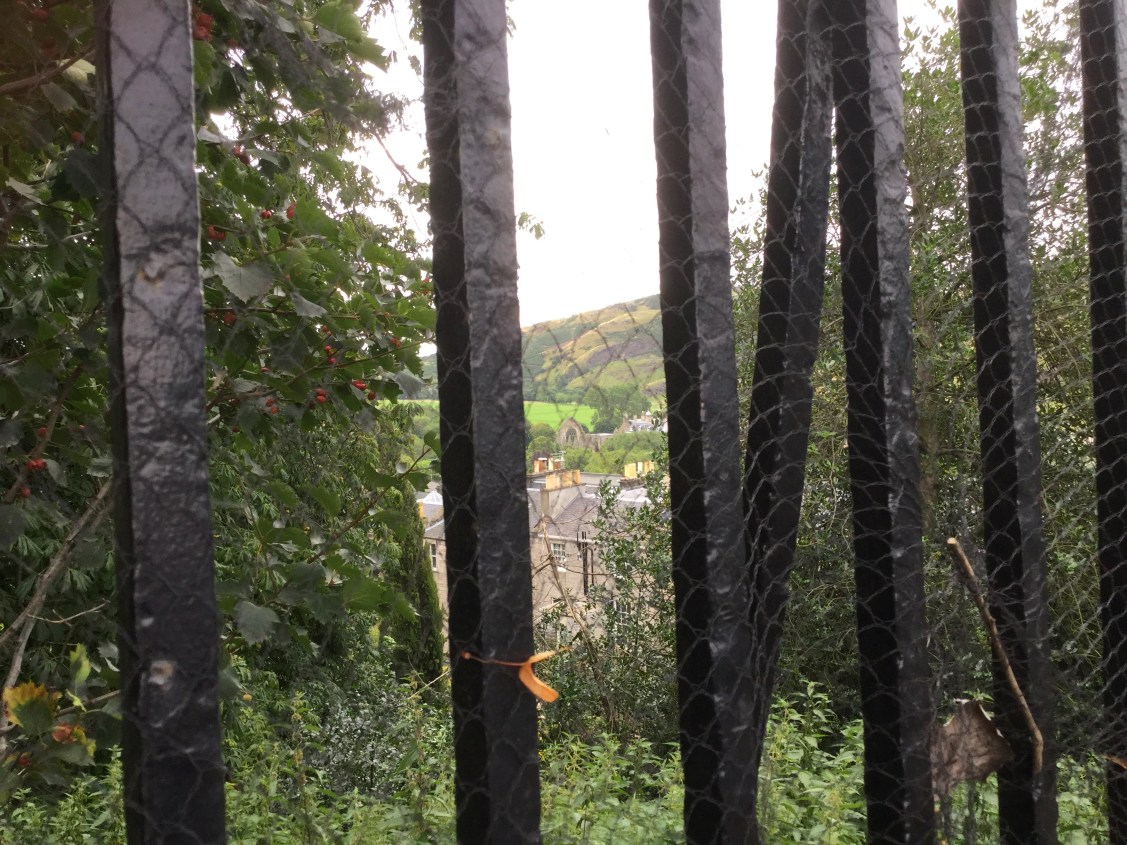
Right now, I’m tucked into a little sort of alcove formed by a guardrail behind me and an old cast iron fence in front of me, sitting on one of the concrete guardrail supports, resting my back on the end of the wide rail, with my feet up on the stone wall from which the cast iron posts rise. The slope of the hill behind Arthur’s Seat and the abbey ruins on the Holyrood Palace grounds are in my view. I’m eating an early dinner (or late tea) of sharp cheddar, an apple, a tangerine, and gingerbread which I brought with me, and a lightly salted, crusted pillowy pretzel and tiny bottle of wine which I picked up on my way here.

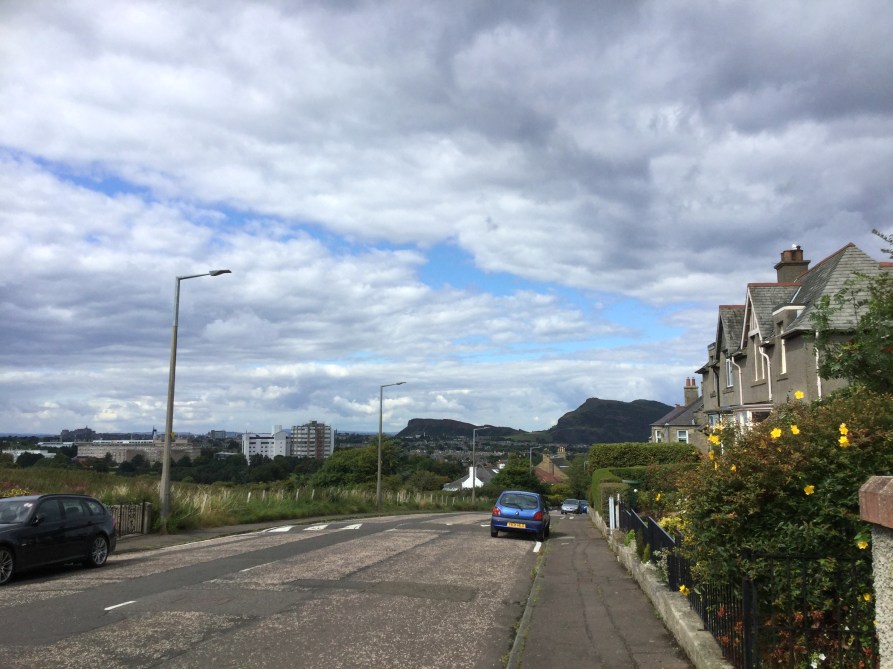
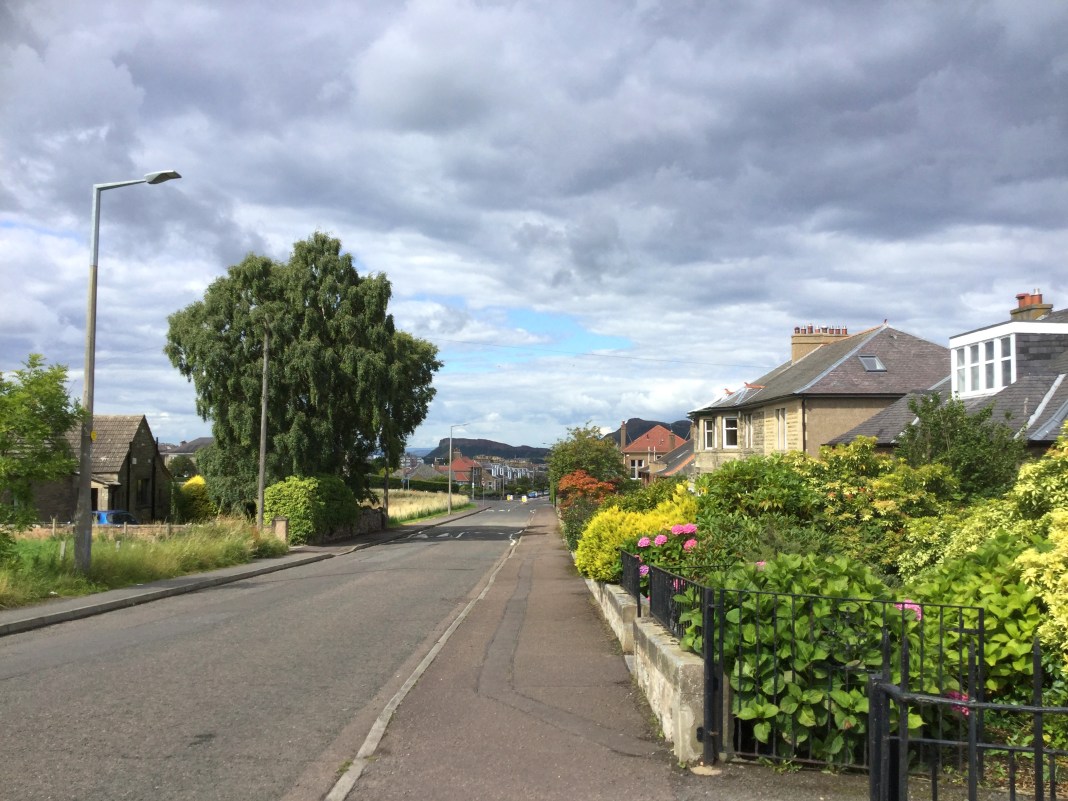
A view from my walk on Alnwickhill Rd north to Edinburgh’s city center with Arthur’s Seat in the background

Arthur’s Seat looms larger and the castle enters the view in the distance to the left, walking north along Liberton… perhaps Brae, perhaps Road, the one becomes the latter as you head north

I slept off much of my jet lag yesterday, last night well into the morning, with a break of wakefulness to sit down for a celebratory carvery dinner – with Yorkshire pudding, oh joy! – and beer, then grocery shopping. Much of this morning and early afternoon was spent on letters, working on my history of ideas travel articles for Ordinary Philosophy, going through photos of my journey of the last few weeks for that series, and a very, very long hot bath. It was raining pretty steadily all that time and it’s Saturday during the annual, world famous Fringe Festival, so it was not a good day to go hiking or taking care of business or commence job-hunting. Not that I minded at all. My room is cheery and cozy and I passed the first part of the day very pleasantly and unhurriedly.

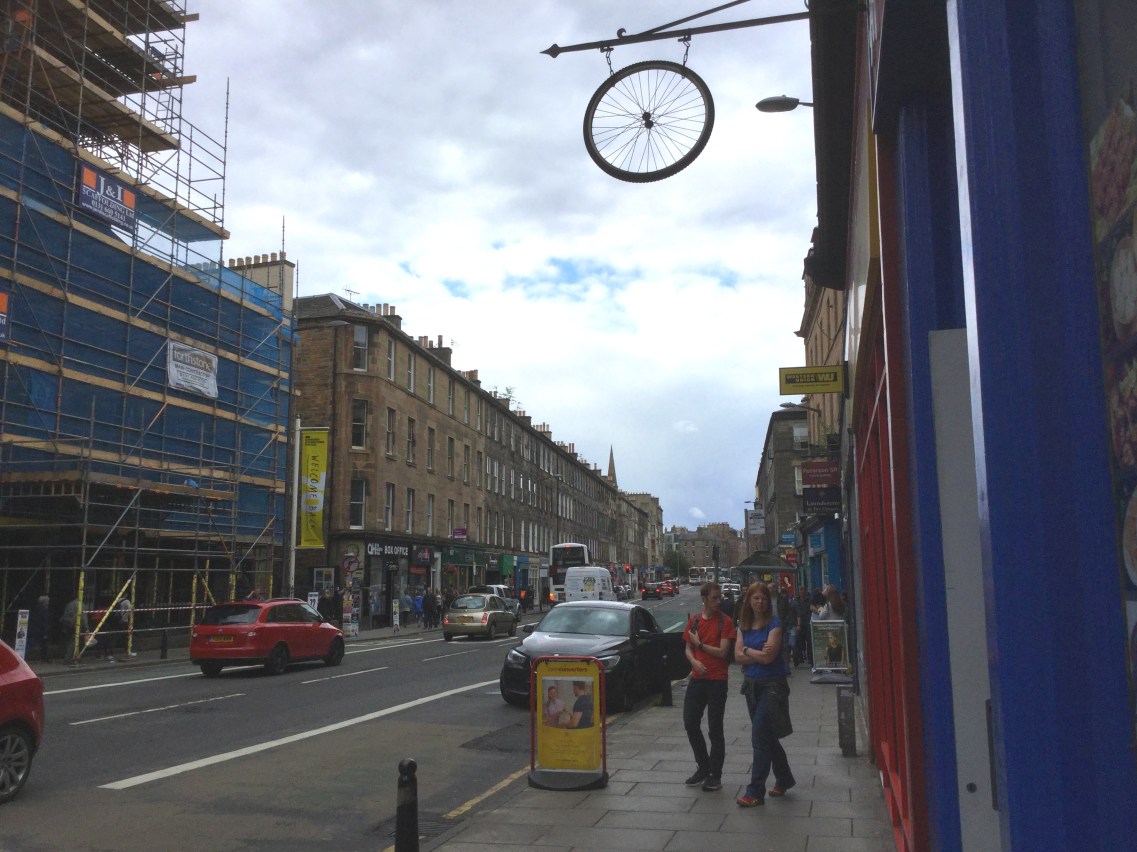
Shops and cafes line Clerk Street

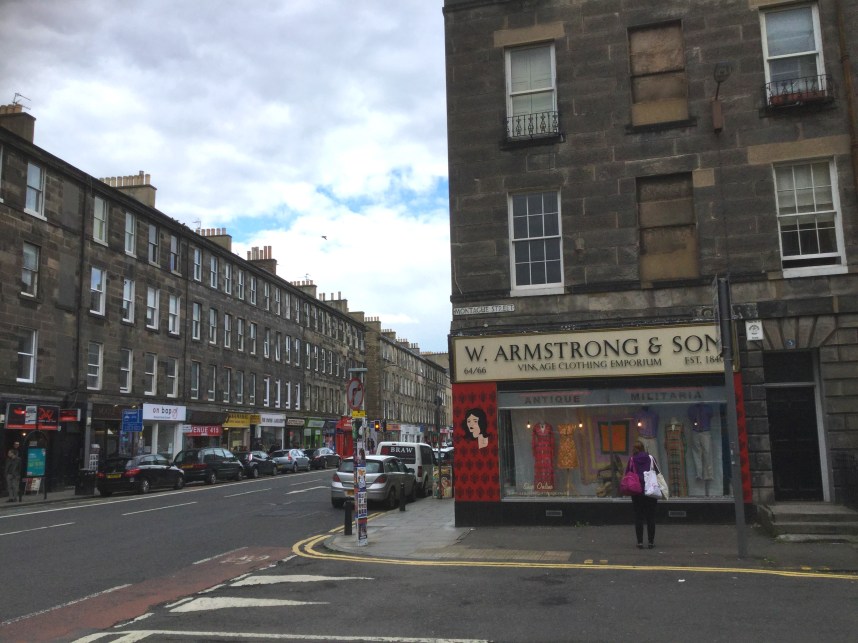
More shops and cafes on bustling Newington Road. The showy peacockian array of vintage clothing in the shop window catches my eye. I have a long background working with vintage clothing and these are very nice specimens

The crowds thicken considerably as I draw near to central Edinburgh

But as soon as I left the bath, it felt like it was time to go out. I was suddenly eager to see the lovely city I first fell in love with about three and a half years ago. It’s about an hour and a half walk from where I’m staying and I need the exercise, so I decide to go on foot. I love walking, and it’s a great way to get a detailed sense of the lay of the land between the city center and where I’m staying at the southern end of town near the city bypass. It’s sprinkling on and off a little, but I don’t mind. I’ll likely get tired of the damp and cold over time, but the last few weeks traveling through the United States have been mostly oppressively hot. It felt good today to put on a light wool sweater and not to be flushed and soaked in sweat after only a few moments of activity.

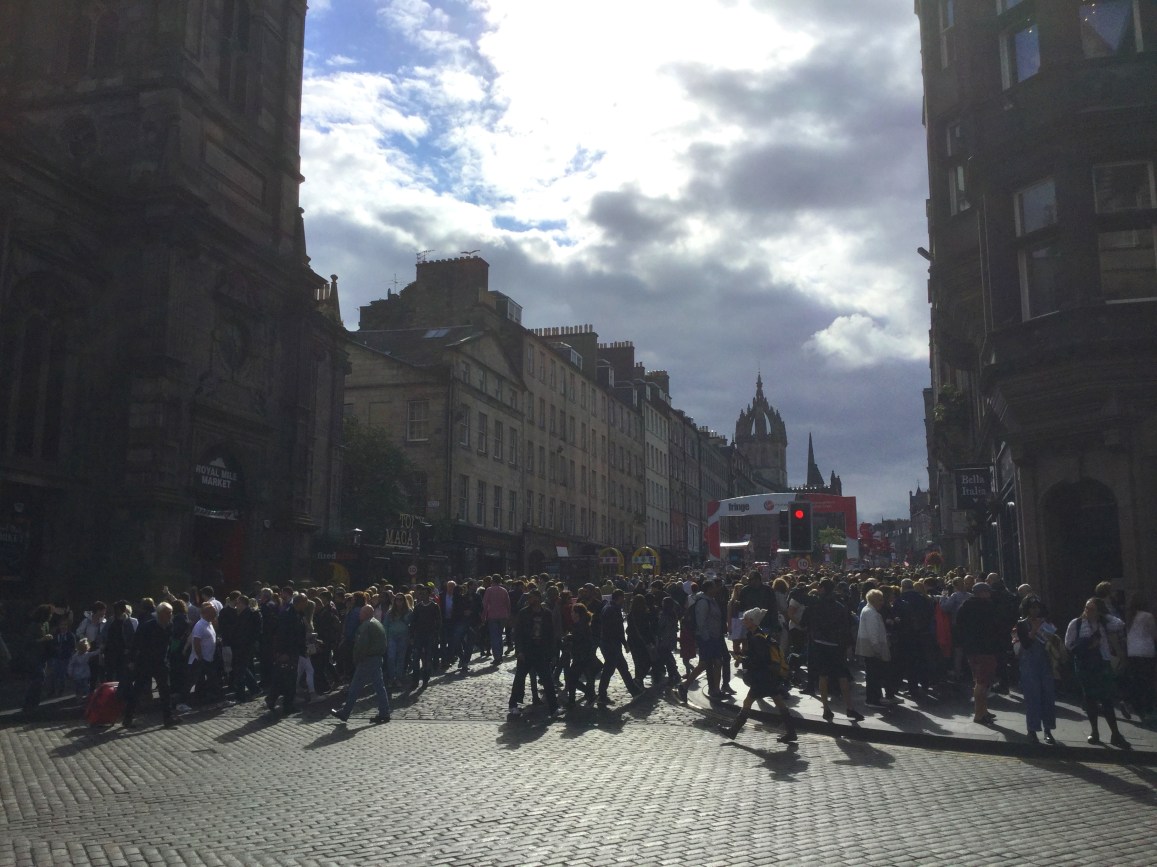
On the Royal Mile, the crowds meld into a dense throng attending Fringe Festival. During this famous, international event, the city population grows by about a third, even though many of the locals leave for vacation during this time to escape the hubbub and overcrowding

The route north to Calton Hill is pretty straightforward. After about a mile you clearly see Calton Hill and the Castle most of the way, so it’s very easy to orient yourself. I passed by petite and tidy suburban row houses, old and even ancient standalone ones, stone walls ditto, and even in one place, to my surprise, small crop fields [on subsequent thought, I think it’s a golf course, it just looks different than many American ones]. These gave way to taller, fancier buildings, new apartments, large handsome older row homes, parks, rows of shops with flats over them, then fancier homes, then tall handsome guest houses, and then, suddenly, I was in the city proper. It’s usual for Edinburgh’s old city to be very busy in tourist season but today, it’s absolutely packed, thronged with festival goers interspersed with those locals who have not fled the city, gritting their teeth as they try to reach their destinations through the hordes.

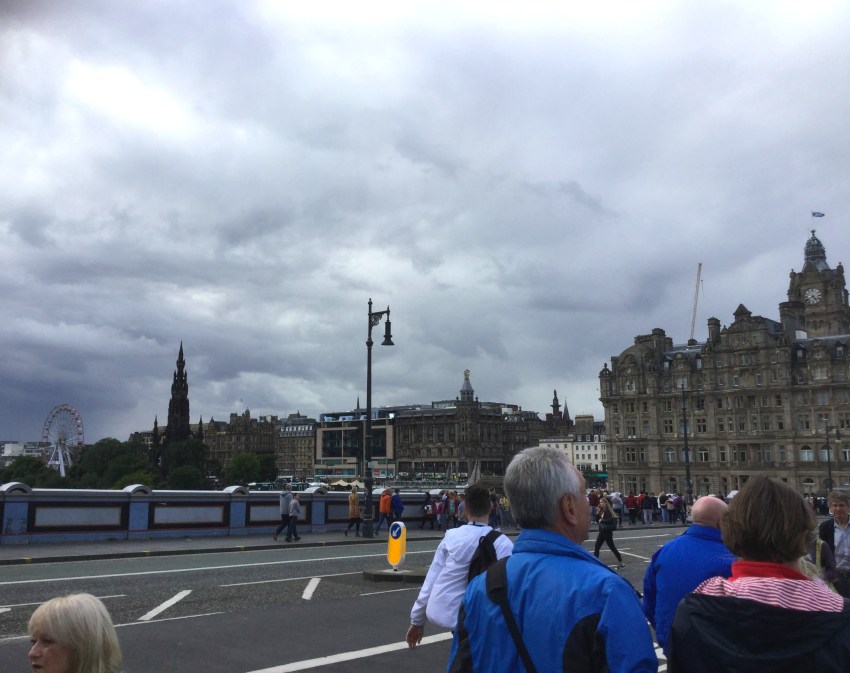
A view of Edinburgh’s New Town from the North Bridge. Sir Walter Scott’s darkly romantic neo-gothic monument rises prominently from the center of that stretch of Prince Street

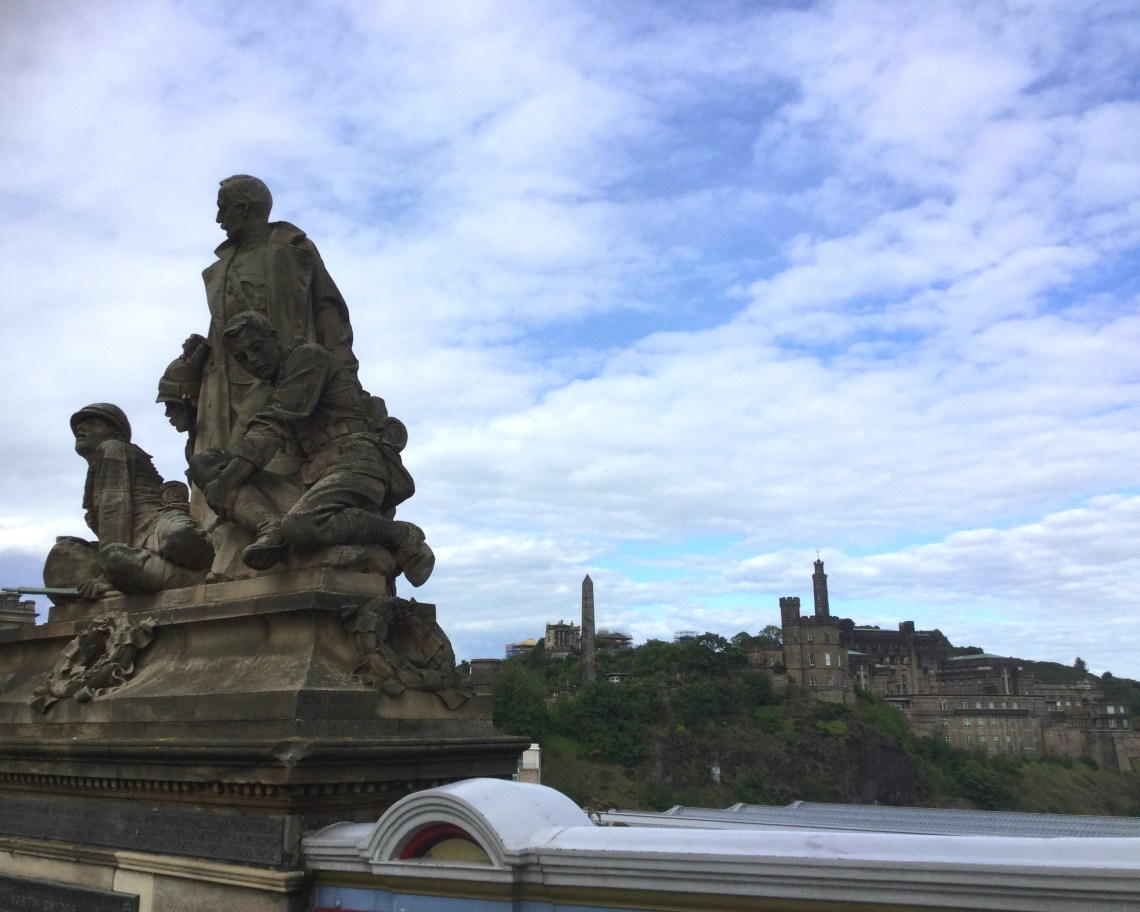
A view of Calton Hill from the North Bridge

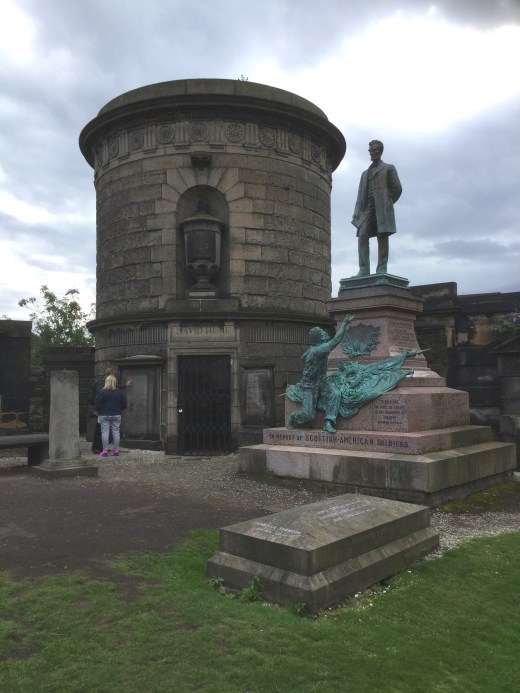
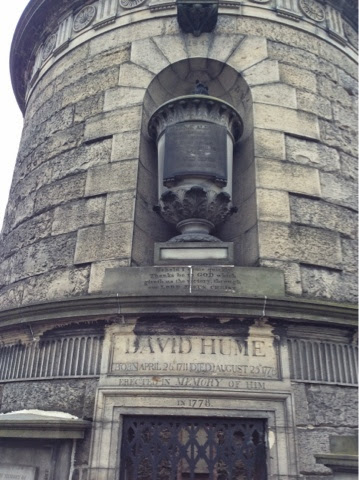
David Hume’s mausoleum and a monument to Scottish American soldiers featuring Abraham Lincoln at Old Calton Burial Ground at the foot of Calton Hill. I think it’s a beautiful thing that a great emancipator of the human person has a monument next to that of a great emancipator of human thought

I reached Calton Hill and turned into the cemetery gates to my right and paid my respects at the tomb of my man, the great Enlightenment philosopher David Hume. It was through him I met this lovely city, and he who inspired me to apply to the University of Edinburgh which he attended as a young prodigy of twelve years old.

His monument is beautiful, a neoclassical structure with clean lines, embellished just enough with a frieze of flowers and a carved urn. Other family members are buried here with him. The monument was built to reflect Hume’s wishes about the kind of monument he’d prefer if one was to be built for him; it was designed by his architect friend about a year after his death. He didn’t want anything too fancy. It’s near the base of the hill, just down the street from where the scenic walkway named for Hume circles the crown of the hill and its monuments. He successfully lobbied the town council for this path to be built so that the local people could take their exercise in a wholesome and beautiful environment readily accessible from the crowded, dirty, often dark and dank city. In this as in so many other ways, he’s totally my type of guy.

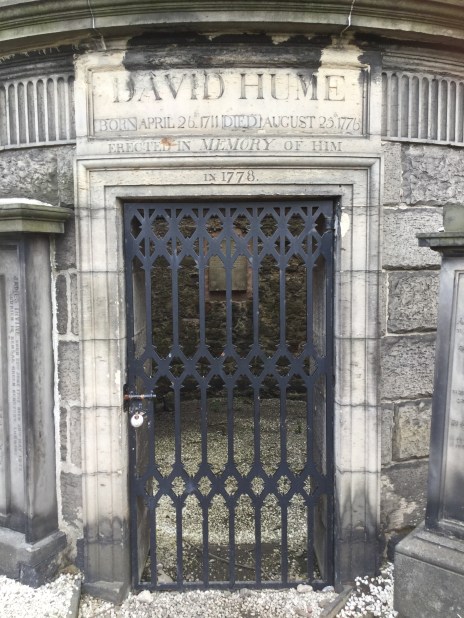
The doorway to David Hume’s mausoleum, Calton Hill, Edinburgh

I look forward so much to learning more about his life, thought, and legacy in my upcoming year here in Edinburgh. If, indeed, it’s only a year. Who knows, I may get even more hooked on this place and find myself here longer…

Ordinary Philosophy and its Traveling Philosophy / History of Ideas series is a labor of love and ad-free, supported by patrons and readers like you. Please offer your support today!
My view of a slope of Arthur’s Seat and the abbey ruins from my little picnic alcove tucked between the guardrail and the iron fence, Calton Hill

Happy Birthday, David Hume!

In honor of David Hume’s birthday, May 7, 1711, let me share anew my history of ideas travel series I created in honor of my favorite philosopher in his home city of Edinburgh, Scotland. I’ll soon be in Edinburgh again, this time for at least one year, to pursue a Master’s Degree in Intellectual History at the University of Edinburgh. I can hardly express how thrilled I am at the prospect! I’ll be expanding this Hume series while I’m there.

To Edinburgh I Go, In Search of David Hume

Hello, friends of Ordinary Philosophy! I’m pleased and excited to announce my upcoming adventure: my first philosophical-historical themed adventure, and my first trip to Edinburgh, Scotland!

Here’s my plan:

I’m taking a series of trips to places around the world, where I explore the lives and ideas of great thinkers in the places where they lived and worked. I’ll follow in the footsteps of thinkers who are no longer alive, since those who are still telling their own stories. But those who are no longer alive in the body live on in the ideas that they pass on, and in the example they provide for us to follow.

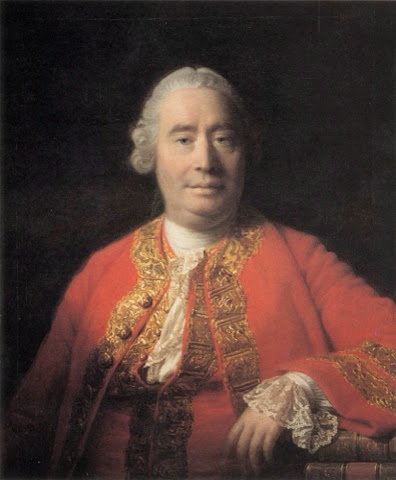
I’ve decided to start with the philosopher I most admire as a person as well as a thinker, the great David Hume. He was not only revered for the brilliance of his ideas and his honesty in presenting them, but also as a premier example of a genial, generous, great-hearted person; so much so, in fact, that one of his closest friends nicknamed him ‘Saint David’.

Hume is often described as the greatest philosopher to write in English and among the greatest philosophers of all time, period. He was a central figure in the Scottish Enlightenment, and a profoundly influential empiricist and moral philosopher

So off to beautiful Edinburgh I go! There, I’ll visit the places where he worked, thought, wrote, studied, and rested. I’ll be traveling there in the first two weeks of May, and will be writing throughout the trip. I’ll be writing in this blog not only about his ideas, but about what I can discover about his everyday life, and whatever feeling of his time and place I manage to uncover in my time there.

If you have any questions for me to answer while I’m there, or pictures you’d like me to take for you, or any information you have that could help me with this project, I’d love to hear from you!

~~~~~~~~~~~~~~~~~~~~~~~

Here are my essays on Hume as I discover him in my travels, in (roughly) chronological order:

First Day in Old Edinburgh: Hume Sites and Monuments
Hume’s New Scene of Thought, and, It’s Good to Be Able to Say ‘I Don’t Know’
Hume Sites and Monuments, Part 2
The Consolations of Philosophy, and A Death Free from Fear
Scotticisms
Happy 303rd Birthday, David Hume!
Cycling Through Edinburgh, First Time
The Debate Over Government and Freedom
The Tale of the Magic Toe – Superstition? Or What?
Hume Sites and Monuments, Part 3
Water of Leith
Last Day in Edinburgh, May 13th, 2014
Hume, Aristotle, and Guns
and a memory quilt I created for my Edinburgh trip:
A Hill and a Wall in Edinburgh, 2015, 102″ x 69″

Ordinary Philosophy and its Traveling Philosophy / History of Ideas series is a labor of love and ad-free, supported by patrons and readers like you. Please offer your support today!
Basic Income: Scotland & Beyond, by Kallum Corke

4ef8b-moneycountingpaydayImagine, for a moment, that you received enough money each month to cover all of your basic needs – no strings attached, regardless of whether or not you chose to work.

What would you do?

The ‘radical’ idea that none of us should have to work to survive is the basis of the Universal Basic Income (UBI), a monthly stipend payable to every person, regardless of how they choose to spend their time. Designed to replace existing, means-tested benefit and create a stable ‘economic floor’ under each individual, UBI offers a range of advantages over our current welfare system. For starters, the single, unconditional payment would do away with the expensive means-testing and sprawling bureaucracy that currently distributes benefit, actually saving money. Other benefits (among many) include increasing individual bargaining power in an increasingly exploitative and precarious labour market, rewarding women’s ‘invisible labour’ in the home, facilitating entrepreneurship and stimulating innovation, oh – and of course, eradicating poverty outright.

Basic Income is a resurgent economic idea with a surprisingly long history; advocated by Thomas Paine (who argued for payments to every person “rich or poor” financed by a “ground-rent” paid by property owners) and Friedrich Hayek, (who believed a basic level of economic security would greatly increase individual freedom) among other famous advocates from both the left and right of the political spectrum, it has been tried in various forms throughout history. Experiments in Canada and the U.S. in the 1970s and Uganda in 2008, for example, have explored the idea of a guaranteed income (or, a negative income tax in the U.S. example). While the methods have varied, the results have generally been similar: increased school attendance among children, improved overall health, increased entrepreneurship and a slight reduction in hours worked.

And these experiments aren’t confined to the past – with renewed public and political interest in Basic Income come new studies, with governments in Finland and the Netherlands committed to pilot programmes over the next few years and this month’s historic referendum in Switzerland. In Scotland, on the 13th of May, Professor Guy Standing, author of The Precariat: The New Dangerous Class and international advocate for Basic Income, gave a speech to the RSA (Royal Society for the encouragement of Arts, Manufactures and Commerce) in Scotland where he argued that:

“It’s the year of the pilots, and that is why I would appeal to all of us in this room and many others in Scotland, to take the lead… I don’t mind the motive, but we need pilots and Scotland with the SNP’s new commitment to move in this direction has a fantastic opportunity to do something like this. It’s desperately needed and Scotland could set an example and if it does, I think you’ll see a fire of copycats. It’s something we all must encourage.”

Professor Standing is right; with pilot programmes launching across the world, the time is ripe for a Scottish experiment – and with a Scottish parliamentary majority comprised of Greens, actively advocating for a basic income and a Scottish National Party amenable to the idea, there has never been a better time to push for a Scottish study. Scotland’s unique characteristics, population density, GDP and economic diversity make it an ideal candidate for a national pilot.

The idea has been criticised as ‘utopian’, ‘unrealisable’ and fundamentally unaffordable – but with around sixteen percent of the Scottish population estimated to be living in poverty, a continued rise in reliance on food banks across the country and with ‘jobs growth’ under the current government confined to precarious, zero-hours positions in jobs soon to be lost to automated labour, it’s fast becoming a question of whether we can afford not to implement a basic income.

Recent scandals, such as the Panama Papers leaks (which I wrote about for my last Darrow piece) have demonstrated that the world’s financial and political elite, who preach austerity at every opportunity, are the very reason basic income seems so unaffordable. There are a great many ‘routes’ to financing a universal basic income, from a land or financial transaction tax to simply forcing businesses and individuals, hiding an estimated $32tn offshore, to pay their fair share in tax. And therein lies the greatest challenge on the road to basic income: not affordability, but attitudes towards poverty and social responsibility. The same individuals who hide their assets from the taxman, denying us hospitals, roads, and education, feed us a narrative which vilifies the benefits claimants as scroungers, even though poverty has proven systemic, structural and often, inescapable.

The money to pay for basic income exists, in one form or another, just out of reach.

The Panama Papers were a symbol of ever-increasing global inequality, a world in which the richest 1% of society now has as much wealth as the other 99% combined. Universal Basic Income has the potential to redress the balance and to resolve some of the most pressing issues of our time; to eradicate poverty, to more equitably reward women for their work, achieve the mythical fusion of Capitalism and Socialism and to future-proof our economy, just in time for ‘the rise of the machines’, providing each of us with the basic necessities of life and affording us the luxury of aspiration.

Basic Income is an idea whose time has come – and Scotland, were it to implement a pilot programme of its own, has the potential to kick-start a global movement.

So I’ll ask again: What would you do if your income was guaranteed?

Kallum Corke is a filmmaker, writer and visual artist whose varied creative output is chiefly concerned with issues of social justice, politics, arts and culture. (Bio credit: Darrow) Follow the author at @kallumcorke

This article was originally published on Darrow. Read the original article.

Ordinary Philosophy and its Traveling Philosophy / History of Ideas series is a labor of love and ad-free, entirely supported by patrons and readers like you. Please offer your support today!
Last Day in Edinburgh, May 13th, 2014

I’m sitting here in James Court, having a pint at the Jolly Judge, under a cozy little overhang, watching the rain fall all around me. It started out as a sunny day, with a brilliant blue sky with scattered big puffy white clouds, probably even a hot spring day by Scottish standards.

I’ve been wandering Edinburgh all day to say goodbye to the city, and started by walking the length of the Water of Leith again, from Murrayfield Stadium to Canonmills this time; I’ll be adding some more pictures to my photojournal of that lovely place.

Then I pop by the Scottish National Portrait Gallery, since it’s on my way to the bus stop where I’m to transfer. I had forgotten to take a picture of the sculptures of David Hume and Adam Smith that adorn the southeast tower (which I’ll be adding to my account of that day), and I chat a bit with Sarah at the information desk, such a sweet woman!

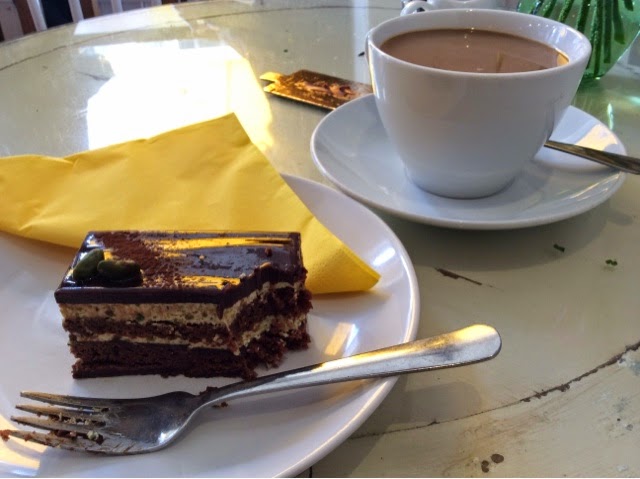
I return to Easter Road to a wonderful bakery called The Manna House, a new favorite haunt, where I celebrate with a piece of chocolate pistachio opera cake and a creamy coffee. If you ever come to Edinburgh, be sure to come here, everything they make is as delicious as it is pretty.

Then over to Calton Hill, to say farewell to the mortal remains of the great thinker I came here to discover in his hometown. As anyone would in my place, I feel  deeply moved, my chest tight, my eyes prickly. Is there someone you deeply admire, where you’ve often felt that bittersweet ache that you so wish you could meet them, knowing you never could except through the artifacts, and more importantly, the words and ideas, they left behind?  Then you know how I’m feeling just now.

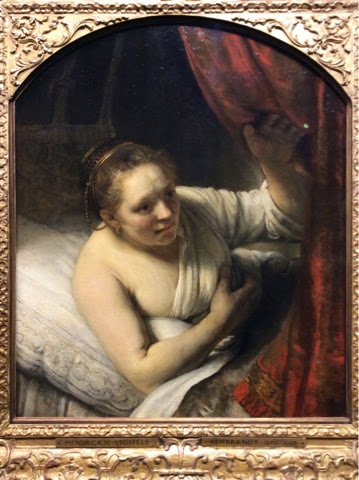
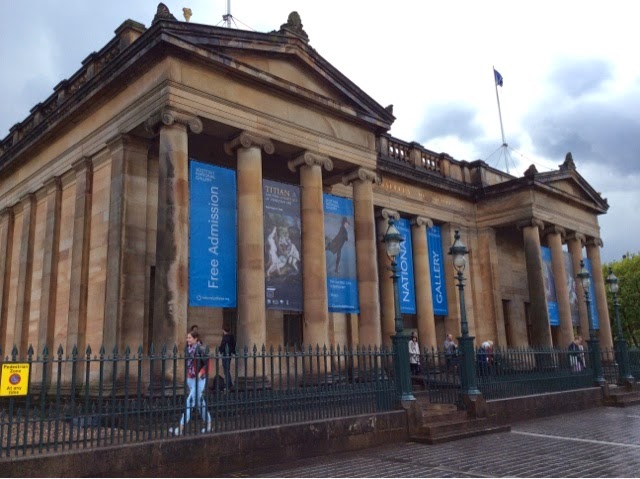
Then to the Scottish National Gallery (not to be confused with National Portrait Gallery) home to some of the great masterpieces of the world. I discover that one of my very favorite Rembrandt paintings here! That cheers me up quite a bit.

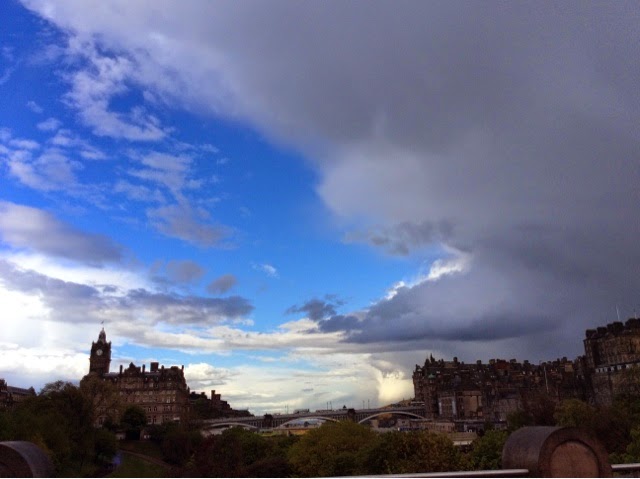
About ten minutes after I go inside, I hear the rain start to pour, and see the lightning flash through the skylight. I decide this would be a good place to linger ’till they close at five. And as soon as I leave, the rain abruptly stops, and I’m greeted to this spectacular sky again:

What a nice place Scotland is in May! The weather is changeable and keeps you on your toes, but it’s exciting in its variety. And I realize I just can’t bring myself to go back to the library and research and write anymore, as much as I intended to. I just have to walk around the city as much as I can in the time I have left, and besides, I’ve gathered a lot of material at this point. More to come on that.

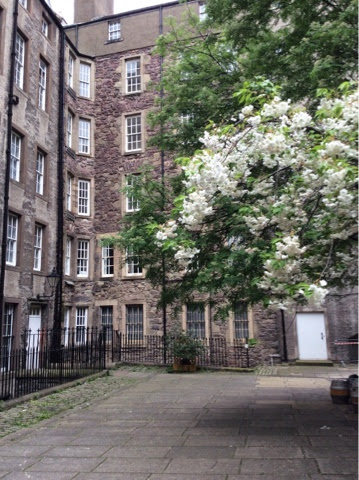
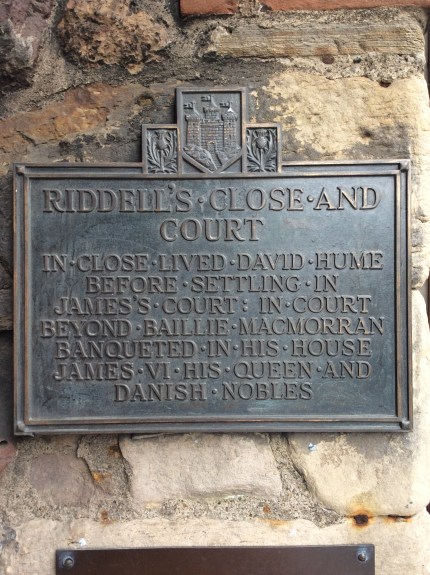
Which brings me again to where I am, the first Hume site I came across when I got here: he lived somewhere in James Court with his sister for a number of years (as I mentioned in my first blog post). I think this was his second house in Edinburgh he lived in as an adult, after his Riddle’s Court sojourn.

Soon, I’ll be having dinner with my kind and friendly hosts, Adam and Krystallenia, and early in the morning getting on a plane to return to my loving husband, my family and friends, and my beautiful California. And as soon as I can, I’ll be back, next time with my Bryan.

Ordinary Philosophy and its Traveling Philosophy / History of Ideas series is a labor of love and ad-free, entirely supported by patrons and readers like you. Please offer your support today!
~~~~~~~~~~~~~~~~~~~~~~~~

Water of Leith

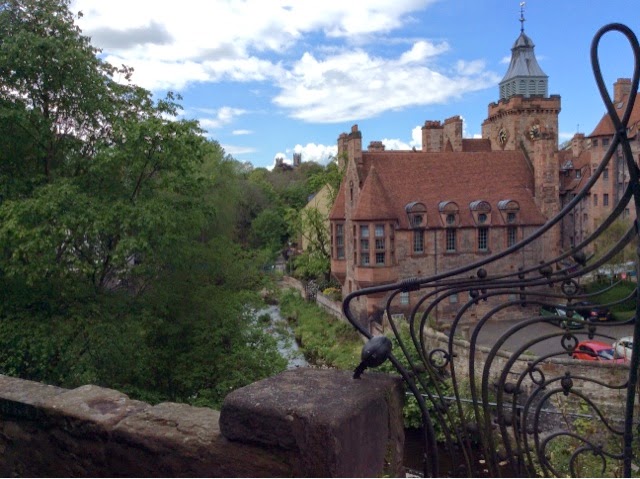
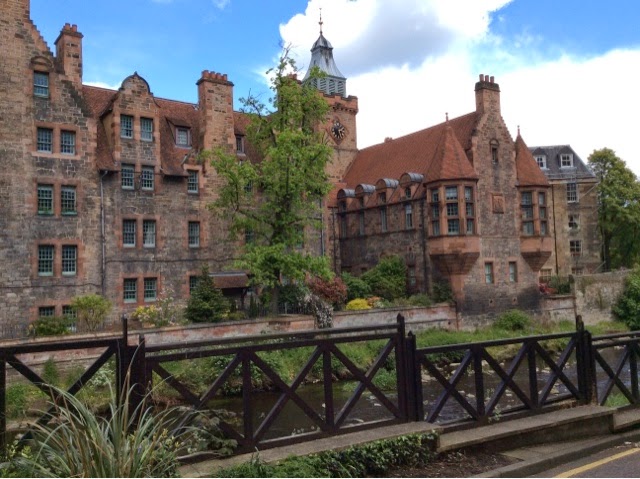
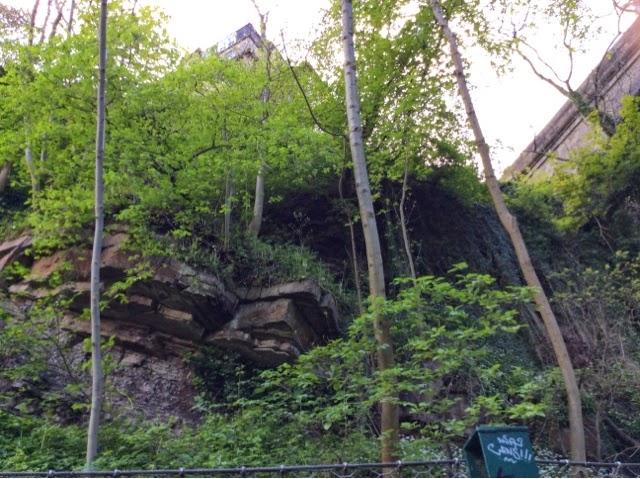
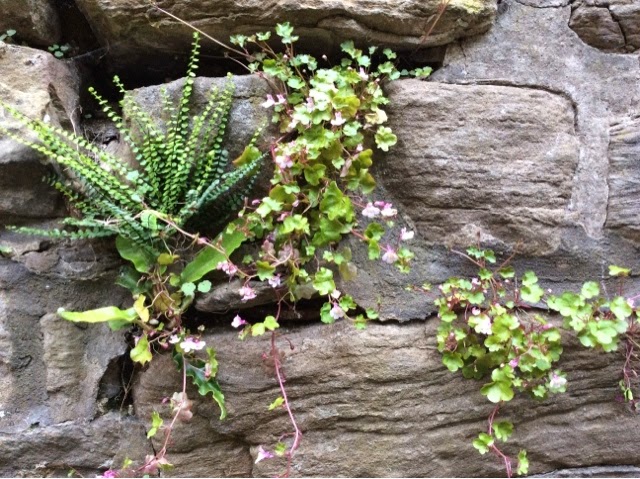
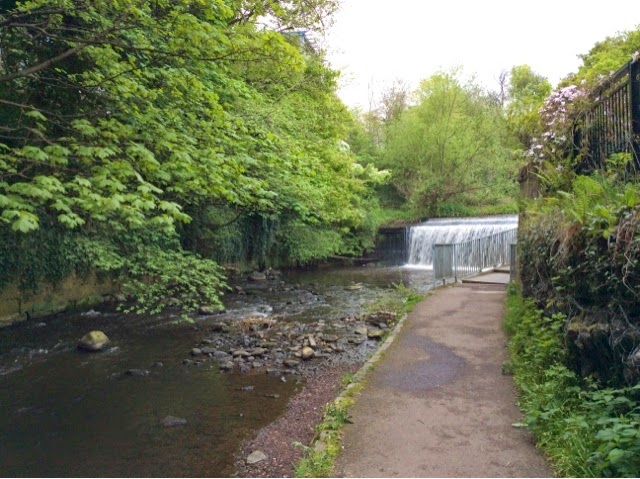
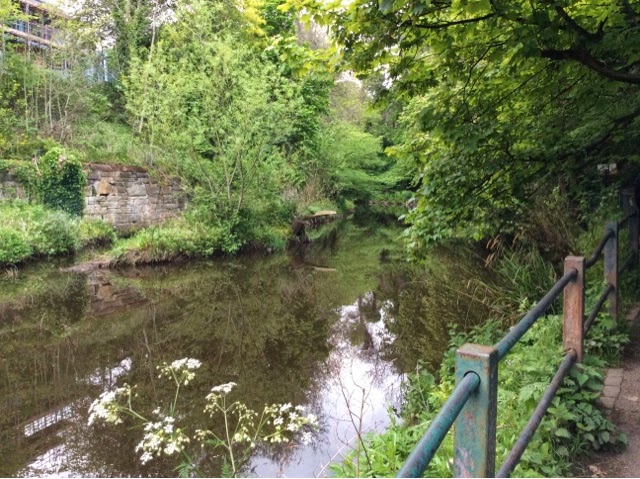
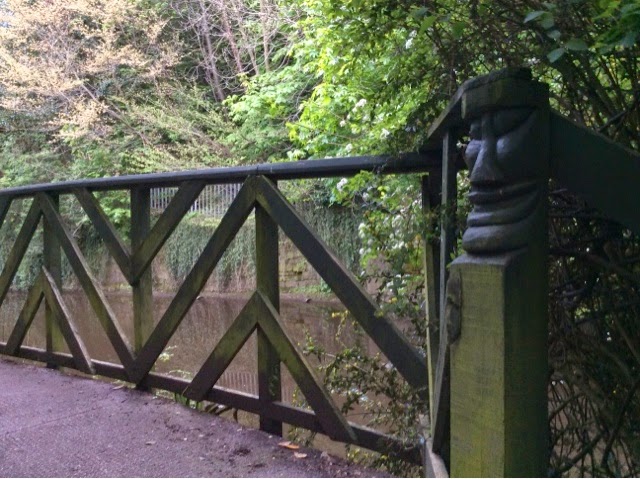
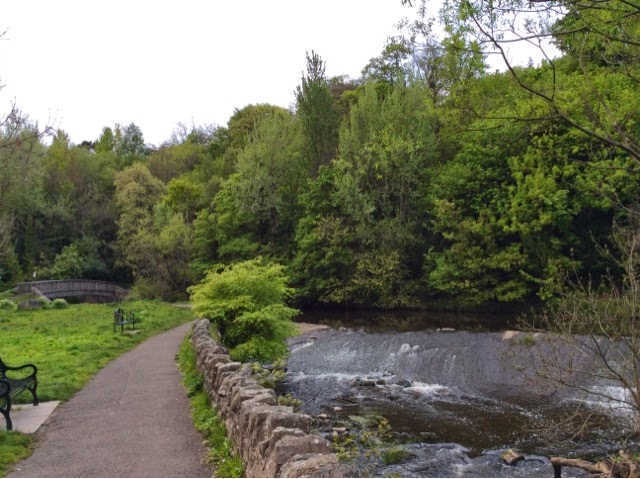
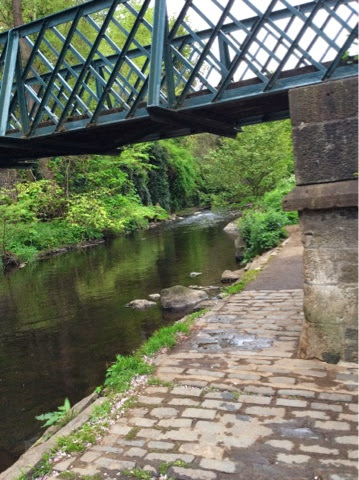
Among my very favorite discoveries in Edinburgh is the walkway along the Water of Leith, a small river that runs through the city a little south of the center of town. You duck down below the city into a little ravine, and as you walk, you find spectacular series of the prettiest views you’ll ever see, so lush and green and full of the sound of rushing water and birdsong. The mills where they ground the town’s flour used to be here, and now and again you can see the remnants of the old structures; look for them in the stone wheels, waterfalls, and other stone artifacts in and near the water.

On Sunday night, I took the very long way home, and walked the river path, which runs mostly uninterrupted, from Stonebridge to Roseburg Gardens, a walk of a few miles. I had visited the river a few times at this point, but this time I wanted to see the length of it all at once. I went again on Tuesday, my last day in Edinburgh, and stretched the route a little, this time starting at Murrayfield Stadium (where I came across the heron) and ending at Canonmills.

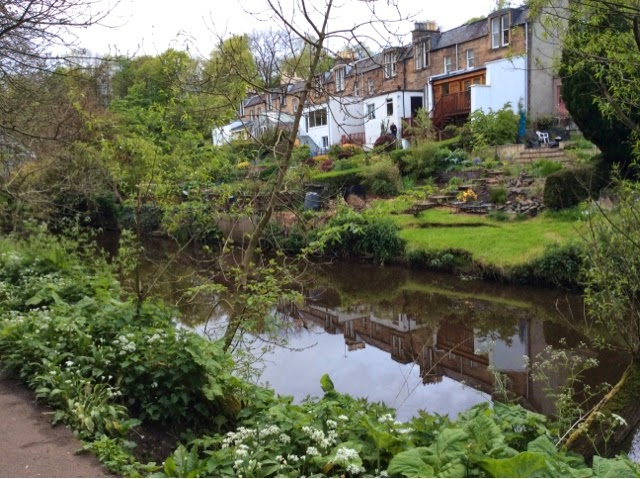
Here’s a series of photos, in no particular order, except for the first few. I first visited the riverside below the Dean Bridge, where there’s a cozy little village that looks like this

And here it is, the Water of Leith

See the heron?


Hume Sites and Monuments, Part 2

117 (2)Thursday, ‎May ‎08, ‎2014

…or more accurately this time, Hume sites and artifacts.

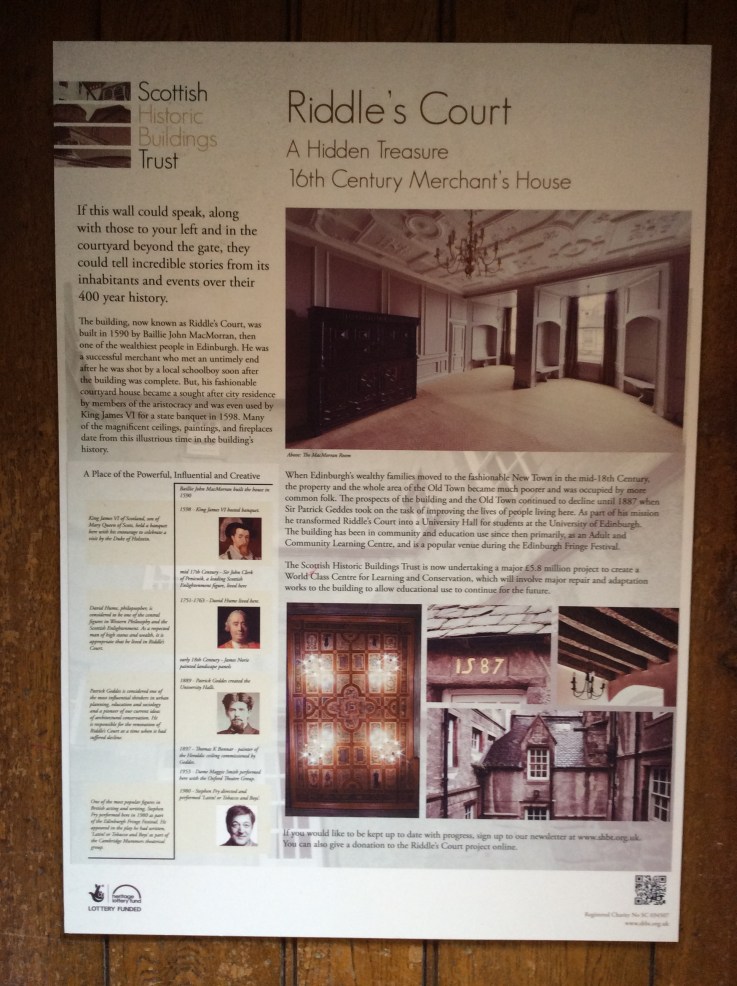
On Thursday afternoons, the Scottish Historic Buildings Trust holds an open house for Riddle’s Court (a small square enclosed by the buildings that surround it), where David Hume bought his first house in the 1750’s. In his time, the building was called a ‘land’, and a floor or suite of the building that comprised the rooms where the tenant lived was called a ‘house’. So a ‘land’ held several ‘houses’, today’s ‘flats’.

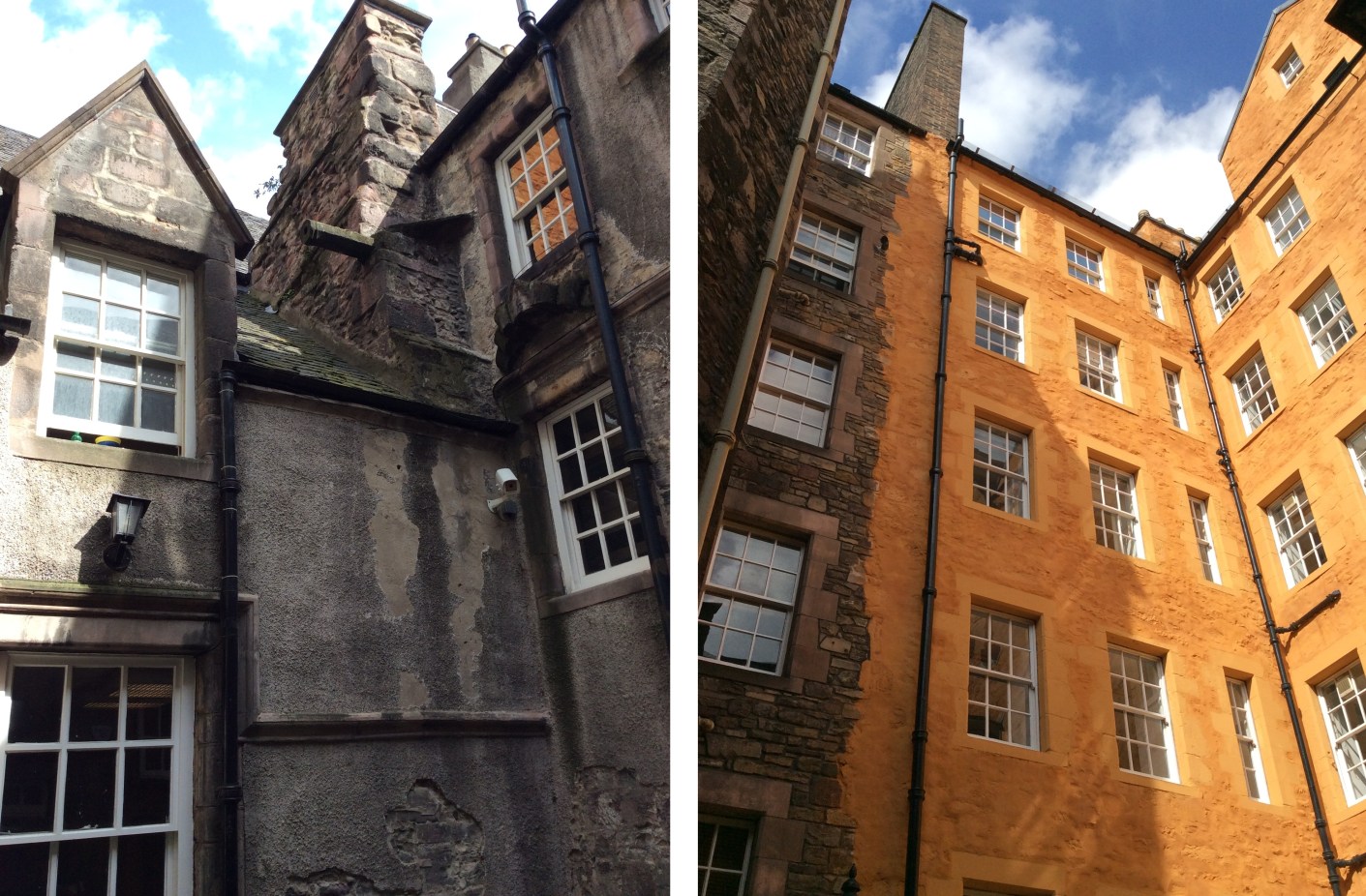
The rooms that are open to the public are on the opposite side of the court from where his house was; records are not clear from the time, but it’s pretty certain he lived in one of the upper houses on the Royal Mile side of the court. I’ll show you where in a moment.134 (2)

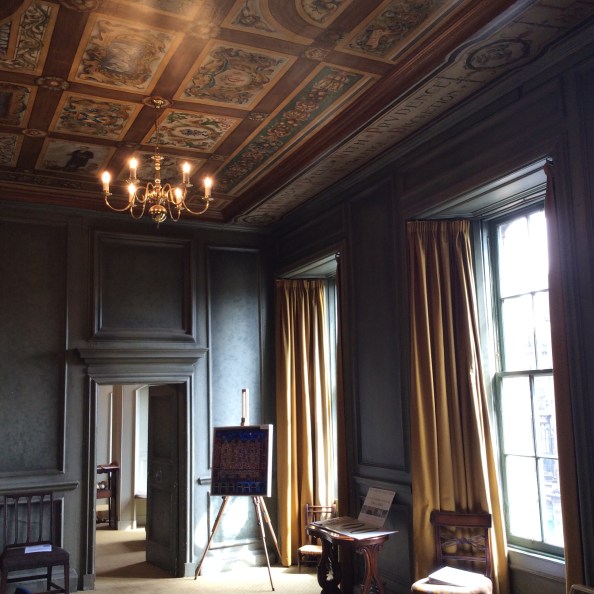
This room with the beautiful ceiling was a drawing room for later inhabitants. You can read about it in the center photo below. The closeup of the ceiling shows David Hume’s monogram, to commemorate his living nearby.779

785777778

Here (above) are views looking upwards from inside the court; the reddish color of the walls at the right is a natural color that they would have used at the time, and he probably lived in one of these upper houses. The photo on the left is at the left of the reddish wall, and I include it ’cause it’s pretty!

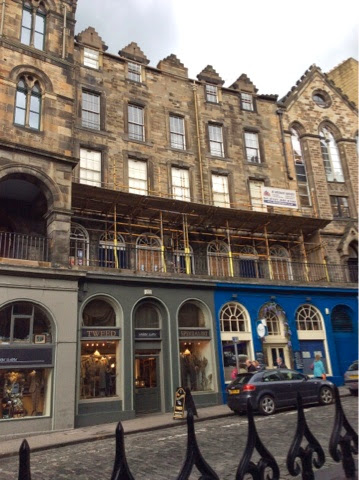
And here’s the view of the building that I’m in, opposite from Hume’s house, from Victoria Street below. Victoria Street was built in the 1830’s, where a steep, narrow footpath used to run through the gardens behind Riddle’s Court and the neighboring houses. My mother-in-law recommended that I visit Victoria Street; coincidentally, I discover that in constructing it, they almost decided to tear down the Riddle’s Court buildings, one of the most important sites I’ve come to visit. Fortunately, someone decided it was best to keep them since the buildings have such a rich history and Patrick Geddes, who was responsible for saving and restoring so many of Edinburgh’s most important historical buildings, turned it into a student center.

Two views in Riddle’s Court, Old City, Edinburgh

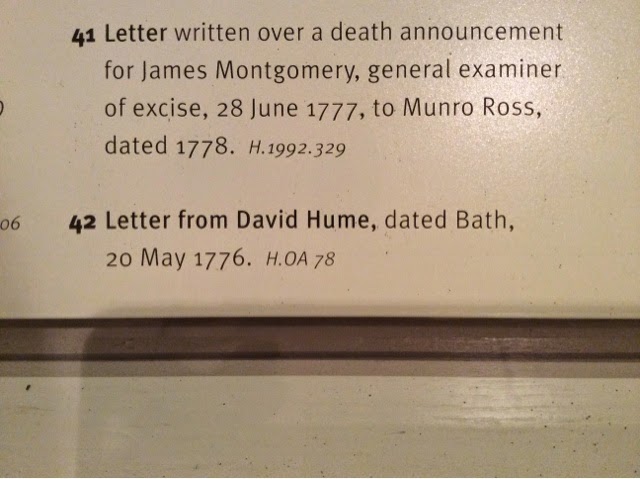
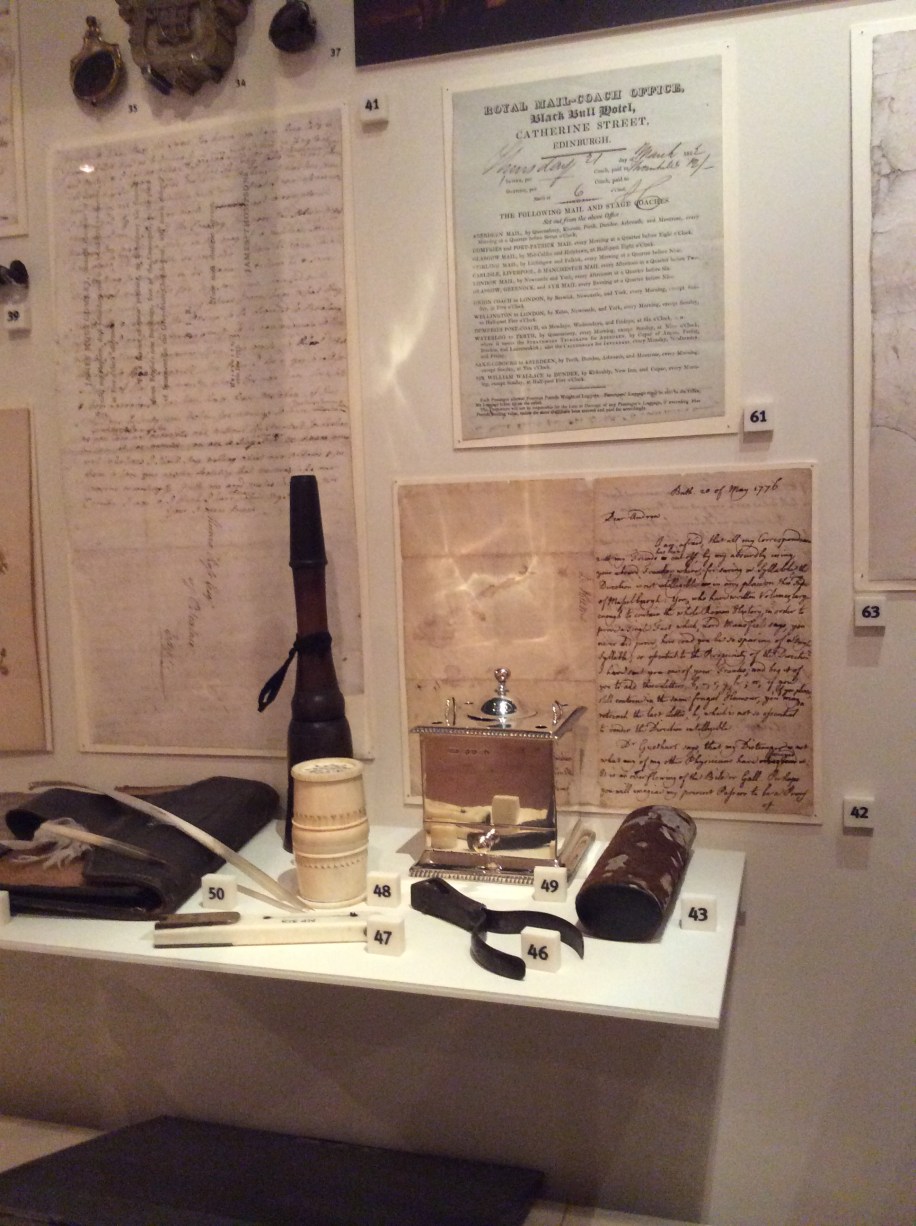
Now I turn to the first artifact I find on this trip that David Hume himself touched: a letter written just a few months before his death. It’s on display at the National Museum of Scotland, where I spend some hours this afternoon gazing at wonderful natural specimens and historical artifacts of Scotland. Hume had gone to Bath in hopes that the mineral springs there would help relieve the symptoms of the intestinal or abdominal disorder, probably cancer, that he died from. In the letter, he’s telling a man named Andrew that he’s feeling better at the moment.

A letter from David Hume to ‘Andrew’ dated May 20th 1776, at an exhibit in the National Museum of Scotland in Edinburgh

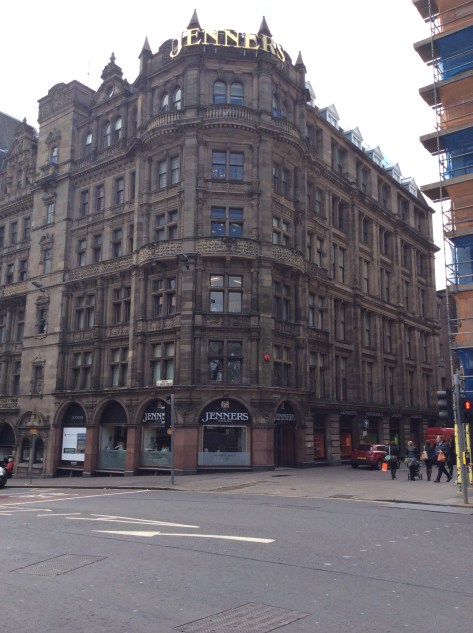
Jenner’s department store off St Andrew’s Square in Edinburgh’s New Town

Note: The following story has an update.

The next day, I set out to find the commemorative plaque at the site where David Hume’s New Town house (apartment) was at 8 South St. David’s St. at Rose. I can’t find the plaque anywhere, but his house may have stood about where this large department store stands now….

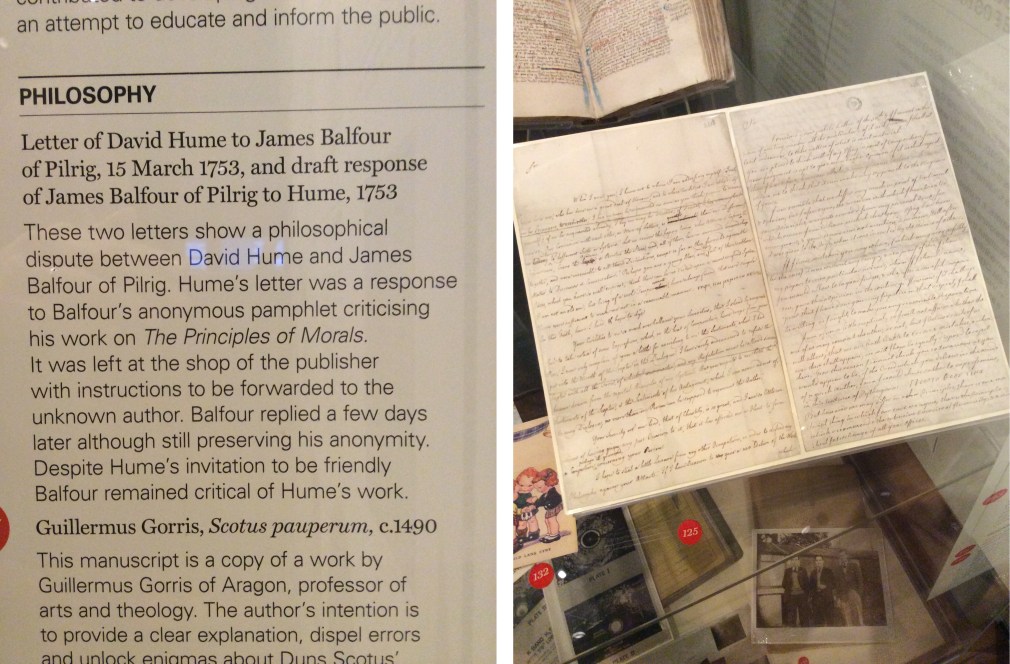
I return to the National Library of Scotland to catch up on my writing and research, and there’s another letter in Hume’s own hand on display just feet away from where I’m writing this post, at an exhibition celebrating the achievements of the Scots people.

David Hume worked for some years in the 1750’s as the librarian for the Advocate’s Library, which eventually became the National Library. Although he had a falling out with the library over their blocking of some ‘undesirable’ books he had ordered, he continued to work for them since he needed access to their collection for the ambitious, multi-volume History of Britain he was working on, for which he was most famous during his lifetime. He donated the small salary that he earned from the Library to a blind poet friend, Thomas Blacklock.

Throughout my trip, I’ve been working intermittently in the Special Collections reading room at the National Library of Scotland, referring to first editions of David Hume’s books, all published in his lifetime, save for a few ‘dangerous’ works that were published shortly after his death. I’m not allowed to take photos of them, but you’ll find them described in my various Hume essays written during and following this trip, in the section that follows each essay, called ‘Sources and Inspiration’ (my informal brand of works cited page that I use for my blog essays). When I’m back home and have more time and my own computer, I’ll look for more information on these books, with links and photos.

Letter from David Hume to James Balfour dated Mar 15, 1753 on exhibit at the National Library of Scotland

The library is closing, so I must go. More on Hume to come!

Ordinary Philosophy and its Traveling Philosophy / History of Ideas series is a labor of love and ad-free, entirely supported by patrons and readers like you. Please offer your support today!
To Edinburgh I Go, In Search of David Hume

Hello, friends of Ordinary Philosophy! I’m pleased and excited to announce my upcoming adventure: my first philosophical-historical themed adventure, and my first trip to Edinburgh, Scotland!

Here’s my plan:

I’m taking a series of trips to places around the world, where I explore the lives and ideas of great thinkers in the places where they lived and worked. I’ll follow in the footsteps of thinkers who are no longer alive, since those who are still telling their own stories. But those who are no longer alive in the body live on in the ideas that they pass on, and in the example they provide for us to follow.

I’ve decided to start with the philosopher I most admire as a person as well as a thinker, the great David Hume. He was not only revered for the brilliance of his ideas and his honesty in presenting them, but also as a premier example of a genial, generous, great-hearted person; so much so, in fact, that one of his closest friends nicknamed him ‘Saint David’.

Hume is often described as the greatest philosopher to write in English and among the greatest philosophers of all time, period. He was a central figure in the Scottish Enlightenment, and a profoundly influential empiricist and moral philosopher

So off to beautiful Edinburgh I go! There, I’ll visit the places where he worked, thought, wrote, studied, and rested. I’ll be traveling there in the first two weeks of May, and will be writing throughout the trip. I’ll be writing in this blog not only about his ideas, but about what I can discover about his everyday life, and whatever feeling of his time and place I manage to uncover in my time there.

If you have any questions for me to answer while I’m there, or pictures you’d like me to take for you, or any information you have that could help me with this project, I’d love to hear from you!

~~~~~~~~~~~~~~~~~~~~~~~

Here are my essays on Hume as I discover him in my travels, in (roughly) chronological order:

First Day in Old Edinburgh: Hume Sites and Monuments
Hume’s New Scene of Thought, and, It’s Good to Be Able to Say ‘I Don’t Know’
Hume Sites and Monuments, Part 2
The Consolations of Philosophy, and A Death Free from Fear
Scotticisms
Happy 303rd Birthday, David Hume!
Cycling Through Edinburgh, First Time
The Debate Over Government and Freedom
The Tale of the Magic Toe – Superstition? Or What?
Hume Sites and Monuments, Part 3
Water of Leith
Last Day in Edinburgh, May 13th, 2014
Hume, Aristotle, and Guns
and a memory quilt I created for my 2014 Edinburgh trip: A Hill and a Wall in Edinburgh, 2015, 102″ x 69″
Chirnside and Ninewells, Scottish Borders, Childhood and Summer Home of David Hume

Ordinary Philosophy and its Traveling Philosophy / History of Ideas series is a labor of love and ad-free, supported by patrons and readers like you. Please offer your support today!