New Podcast Episode: Frederick Douglass Rochester NY Sites, Day 1

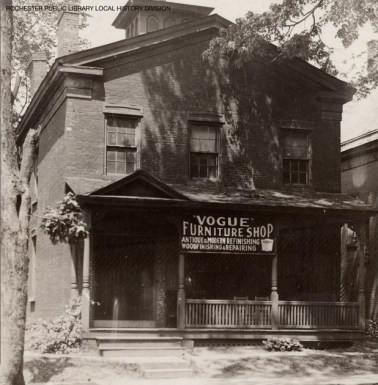
Douglass home at 4 Alexander St in later incarnation as a shop, image Rochester Public Library Local History

Listen to this podcast episode here or subscribe on iTunes

Ninth day, Monday Mar 28th

On a cold, gray, and blustery spring morning, I drive from Syracuse to Rochester NY, and head straight for a certain house very near Susan B. Anthony Square. As I suspect might be the case, the house is closed to the public today so I’ll return tomorrow; I head here first anyway to scope things out in person because it turns out,  I have more free time to explore Rochester this morning than I thought I would. Hooray! …Susan B. Anthony Square, at 39 King St, is a little park crisscrossed with meandering paths and dotted with benches and neatly trimmed shrubbery, in the center of pretty blocks of well-maintained early 19th century houses. The square is dominated by a life-size sculpture of Frederick Douglass and Susan B. Anthony by Pepsy Kettavong, called ‘Let’s Have Tea’, installed in 2001…. Read the written account here:

Ordinary Philosophy and its Traveling Philosophy / History of Ideas series is a labor of love and is ad-free, entirely supported by patrons and readers like you. Please offer your support today!

Happy Birthday, John Stuart Mill!

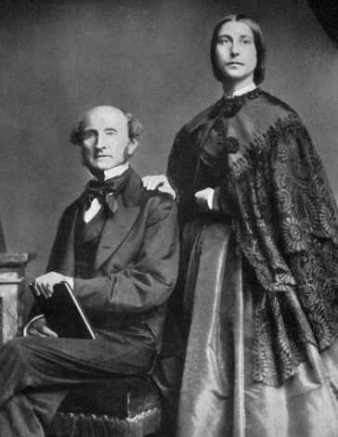
John Stuart Mill and Helen Taylor, daughter of Harriet Taylor, collaborated with Mill after her mother's death, public domain via Wikimedia CommonsOne of my very favorite ideas in political philosophy is John Stuart Mill’s ‘marketplace of ideas’ (though he didn’t phrase it this way himself): that the free, open, and vigorous exchange of ideas in the public square does more to further human knowledge than anything else. But not only has his comprehensive and to my mind, absolutely correct defense of free speech in his great work On Liberty had an immense and beneficial influence on the history and theory of human rights, he was admirable in myriad other ways as well:

‘Mill believed in complete equality between the sexes, not just women’s colleges and, someday, female suffrage but absolute parity; he believed in equal process for all, the end of slavery, votes for the working classes, and the right to birth control (he was arrested at seventeen for helping poor people obtain contraception), and in the common intelligence of all the races of mankind… all this along with an intelligent acceptance of the free market as an engine of prosperity and a desire to see its excesses and inequalities curbed…. Mill was an enemy of religious bigotry and superstition, and a friend of toleration and free thought, without overdoing either…’ ~ Adam Gopnik, from his article and book review ‘Right Again‘, 2008

‘The son of James Mill, a friend and follower of Jeremy Bentham, John Stuart Mill (1806-1873) was subjected to a rigorous education at home: he mastered English and the classical languages as a child, studied logic and philosophy extensively, read the law with John Austin, and then embarked on a thirty-five career with the British East India Company at the age of seventeen. (He also suffered through a severe bout of depression before turning twenty-one.) Despite such a rich background, Mill credited the bulk of his intellectual and personal development to his long and intimate association with Harriet Hardy Taylor. They were devoted friends for two decades before the death of her husband made it possible for them to marry in 1852; she died in Avignon six years later. Mill continued to write and to participate in political affairs, serving one term in Parliament (1865-68). The best source of information about Mill’s life is his own Autobiography (1873). Mill

Philosophically, Mill was a radical empiricist who held that all human knowledge, including even mathematics and logic, is derived by generalization from sensory experience. In A System of Logic, Ratiocinative and Inductive (1843) he explained in great detail the canons for reasoning inductively to conclusions about the causal connections exhibited in the natural world.

Mill’s moral philosophy was a modified version of the utilitarian theory he had learned from his father and Bentham. In the polemical Utilitarianism (1861) Mill developed a systematic statement of utilitarian ethical theory. He modified and defended the general principle that right actions are those that tend to produce the greatest happiness of the greatest number of people, being careful to include a distinction in the quality of the pleasures that constitute happiness. There Mill also attempted a proof of the principle of utility, explained its enforcement, and discussed its relation to a principle of justice. Mill

Mill’s greatest contribution to political theory occurs in On Liberty (1859), where he defended the broadest possible freedom of thought and expression and argued that the state can justify interference with the conduct of individual citizens only when it is clear that doing so will prevent a greater harm to others. Mill also addressed matters of social concern in Principles of Political Economy (1848) and Considerations on Representative Government (1861) and eloquently supported the cause of women’s rights in The Subjection of Women (1869).’

~ from The Philosophy Pages by Garth Kemerling, licensed under a Creative Commons Attribution-Share Alike 3.0 Unported License

Read more about John Stuart Mill:

Anschutz, Richard Paul. ‘John Stuart Mill: British Philosopher and Economist‘. In Encyclopædia Britannica.

Gopnik, Adam. ‘Right Again: The Passions of John Stuart Mill‘. New Yorker magazine website, Oct 6 2008

Heydt, Colin. ‘John Stuart Mill (1806—1873)‘, Internet Encyclopedia of Philosophy

Mill, John Stuart. On Liberty, from Project Gutenberg

Wilson, Fred. “John Stuart Mill“, The Stanford Encyclopedia of Philosophy

~ Ordinary Philosophy and its Traveling Philosophy / History of Ideas series is a labor of love and ad-free, entirely supported by patrons and readers like you. Please offer your support today!

Interview with Leigh Fought on Anna and Frederick Douglass

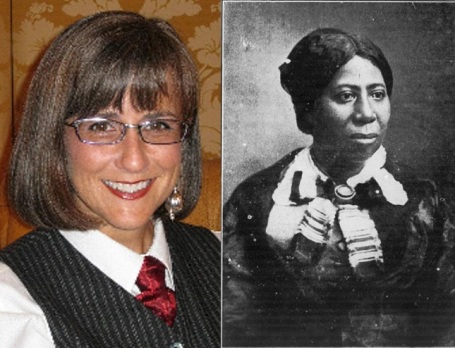
Leigh Fought image Le Moyne College, Anna Douglass image Library of CongressI’m pleased and honored to present my third interview guest, Leigh Fought, Anna and Frederick Douglass scholar and assistant professor at LeMoyne College in Syracuse. We’ll be talking about Anna Douglass, about whom I believe too little is known, and most historical presentations of her range from woefully incomplete to inaccurate and even unfair. Ms. Fought is doing significant work in righting this with her upcoming book about the women in the life of Frederick Douglass, the most significant of which, of course, is Anna.

Interview with Leigh Fought, Part One

Interview with Leigh Fought, Part Two

Find out more about Ms. Fought and her work at her blog Frederick Douglass’s Women: In Progressfaculty page for Le Moyne College, and Amazon author page, and here are some other articles and papers she’s written / co-authored; there are many others not available online, please contact the author:

Globalizing Protest in the 1980s: Musicians Collaborate to Change the World‘, The Gilder Lehrman Institute of American History

Commentary: Frederick Douglass and Interracial Marriage‘, Syracuse.com blog

~ Ordinary Philosophy and its Traveling Philosophy / History of Ideas series is a labor of love and ad-free, entirely supported by patrons and readers like you. Please offer your support today!
Review: Strange Gods: A Secular History of Conversion, by Susan Jacoby

One of my favorite authors, who wrote the great Freethinkers: A History of American Secularism, has written another wonderful book that I believe should be foundational to any freethinker’s library, or any historian’s for that matter.

In Strange Gods, Susan Jacoby considers religious and ideological conversions, from those as famous as Augustines’s and Muhammmed Ali’s to the lesser known Margaret Fell’s and Peter Cartwright’s, in the wider context of the political and social circumstances of their times. From Augustine of Hippo, early father of the Christian church and author of Confessions and The City of God who converted from paganism to Manichaeism to Christianity, to Muhammad Ali, heavyweight boxing champion and activist who converted from Christianity to the Nation of Islam, to Sunni Islam, to Sufism, her book ranges mostly through the world dominated by Judaism, Christianity, and Islam after the turn of the first millennium CE. Jacoby explores the roles of the personal forces within and the forces of family, community, and the wider cultural, political, and religious shifts without, which led people to adopt new beliefs and in many cases, to spend the rest of their lives proselytizing for them.

What a great idea for a book! Jacoby’s in-depth study shows us how stories of conversion not only offer invaluable insights into the transformative power of newfound belief on individual persons, but how it can affect the lives of those around them and of those who come after them, for good and for ill. She offers us an in-depth exploration of each conversion from a refreshingly secular viewpoint, free of partisanship and complete with associated circumstances, influences, and social dynamics. Since conversion stories are rarely explored outside of the context of the newly adopted belief system, we don’t often get a clear view of the significance of this experience for the converted as well as for the people around them. To those within a religious tradition, converts, especially those who become prominent spokespersons or martyrs, are offered as proofs of the validity and superiority of that particular faith, yet all belief systems have their own and hold them up in this same manner. To those outside of each given tradition, converts can be dismissed as lost or misled, or even considered hoodwinked, brainwashed, or traitorous. Jacoby’s treatment helps to reveal how much larger a story conversion is than the exclusively religious and personal event it’s so often considered, while retaining a sympathetic understanding of its meaningfulness in individual lives. In these pages, each conversion story is not only a rich psychological study, but a valuable history lesson as well.

One of the conversion stories that stood out for me is one I’ve thought about many times over the years. A cultural Catholic myself, I’ve long been familiar with the story of Augustine’s conversion and with his resulting views on topics such as sex, sin, women, the Jews, and so forth. As I grew older and began to consider things more critically, Augustine seemed to me less a repentant sinner and paragon of virtue and more an off-the-deep-end zealot, who went from being a man with a healthy sex life in a loving relationship with a woman and their child to a self-obsessed, Jesus-freak fastidious hater of all that’s natural. His conversion was deeply meaningful to him, but what about the woman he dumped after their long-term relationship, their child whom he cast from his home, the friends he rejected, and the father he turned against? I try now to take a more balanced and sympathetic view of the man and I find Jacoby’s profile of his spiritual and psychological journey helpful in this regard, though I still believe many of his theological views are harmful and have had a long-term negative influence on the way the Christian world has regarded sex and the nature and role of women. Augustine did what he felt he needed to do and what he came to believe was right, and in light of the circumstances of his life and personality, his thoughts and actions are understandable, even if not always admirable. Jacoby does not idolize him by any means, but respects his intelligence and his right to believe freely, and presents a full picture of his life and circumstances with the right mixture of fairness, sympathy, critique, and refreshing touch of humor. (I’m gratified to find that someone else sees his mother Monica as a real ‘piece of work! I’ve long thought of her as manipulative, passive aggressive, and kind of creepy!)

Jacoby’s exploration of the divergence, convergence, and conflict in matters of belief is a masterful one, and goes beyond the study of conversion as a matter of faith: she also offers a deep study of the personal and social effects of forced conversions, a subject not discussed often enough. The imposition or social pressure to conform to religious and ideological orthodoxy is an ancient and effective tool to impose the will of the ruler on the people, or to impose the will of some people on others. But we kid ourselves if we think it’s just something people did in the bad old days; there are still many parts of the world where conversions are still imposed at the end of a gun or with the threat of the lash, or, at least, with knowledge that it’s the only road to social acceptance, ability to get a job and live free from harassment.

In the end, Jacoby’s book is a testament to how the Enlightenment brought about one of the world’s best inventions: the social and political ideal of freedom of conscience. The more it’s realized in the world, the longer, safer, and happier lives we’ll live, with a greater ability to understand and appreciate the true richness of the variety of human thought.

Ordinary Philosophy and its Traveling Philosophy / History of Ideas series is a labor of love and is ad-free, entirely supported by patrons and readers like you. Please offer your support today!

David Hume, the Skeptical Stoic, by Massimo Pigliucci

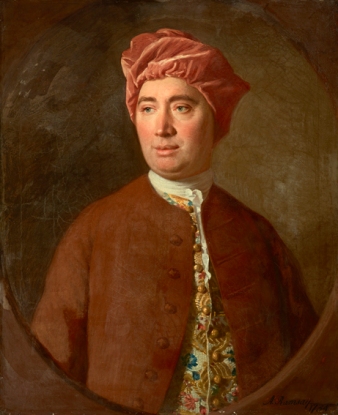
c9bd8-portrait2bof2bdavid2bhume2bby2ballan2bramsey252c2b1754252c2bscottish2bnational2bgallery252c2bpublic2bdomain2bvia2bwikimedia2bcommonsI have always been a philosophical fan of David Hume. His clear writing, commonsense approach to things, rejection of abstruse philosophizing, embracing of science, and constructive skepticism have been the sort of traits I have aspired to, however imperfectly (no, I assure you this ain’t false modesty), throughout my career. Hume’s idea that a wise person proportions beliefs to evidence, later popularized (and somewhat distorted) by Carl Sagan in the motto “extraordinary claims require extraordinary evidence” has guided me for many years, hopefully leading me to make as sound judgments as possible, as well as to change them when the cumulative evidence requires it. Add to this that le bonne David, as he was known in the Parisian salons of the Enlightenment, had a generally mild and pleasant character, and you get the features of an intellectual role model. A Stoic, however, David Hume certainly wasn’t. Or was he?

A recent article by Matthew Walker in the British Journal for the History of Philosophy (2013) tackles the question in an interesting way. Walker focuses on four essays in which Hume explores the nature of “the true philosopher,” simply entitled “The Epicurean,” “The Stoic,” “The Platonist,” and “The Sceptic.” Hume, who does not write in his own voice, but attempts an analysis of each school by writing as if he were a member (just like Cicero had done in his De Finibus, which Hume used as a model for his own essays), seems far more sympathetic to the Stoics and the Skeptics then to the Epicureans and the Platonists.

Walker, then, explores an apparent contradiction in the way Hume talks about Stoicism and Skepticism: on the one hand, he accepts the Stoic tenet that there is a way of life that the true philosopher attempts to follow, and that it is the best life possible. On the other hand, however, he also agrees with the Skeptics that there is no single way of achieving happiness. What gives? The answer, Walker suggests, lies in Hume’s flexible concept of how a true philosopher should live.

Let’s begin with Hume’s presentation of the Stoic point of view. It hinges on three theses: i) virtue-eudaimonism, the idea that virtue is the primary contributor to the happy life; ii) the reflection thesis, whereby the true philosopher guides his actions by reflection, the same way he develops and maintains his character; and iii) the supremacy thesis, the proposition that this is the best life for a human being.

Walker provides a nice analysis of Hume’s commitment to virtue-eudaimonism — the first of the three Stoic theses — albeit in a qualified fashion. He does think that the “sole purpose [of virtue] is, to make her votaries and all mankind … cheerful and happy,” but then distinguishes different virtues according to their specific contributions. So we have virtues that are immediately “agreeable” to oneself (cheerfulness and pride), those that free us from harmful behaviors (discretion, industry and frugality), virtues that are immediately good for others (wit), and those that are good for others in the long run (humanity, generosity, beneficence). Interestingly, Hume’s take come close to that of a minority opinion within ancient Stoicism, as expressed for instance by Panaetius, of whose thought Hume was aware.

Hume is also committed to the reflection thesis, the second one advanced by the Stoics. Here he takes a cue from a famous phrase by the poet Ovid: “A faithful study of the liberal arts humanizes character and permits it not to be cruel,” meaning that learning and reflection do make crucial contributions to a worthwhile human life. For Hume, philosophical reflection can help both negatively, by “extinguishing” violent passions, and positively, by improving our sensitivity to agreeable passions. Importantly, Hume doesn’t think that simply thinking about stuff improves our character and conduct, but he maintains that rational reflection can be used to change behavior and that, through repetition and habituation, one eventually can alter his character and disposition for the best. Needless to say, this is very similar to the Stoic doctrine of the gradual development and practice of virtue.

What about the supremacy thesis? That’s where things get interesting. Hume’s Skeptic answers the Stoic by saying that only a philosopher could be so blind as to think that the life of reflection is the only path to happiness. Plenty of people are happy by pursuing different lives, resulting in a type of pluralism that appears incompatible with the supremacy thesis. Moreover, Hume agrees with the Skeptic that the powers of philosophical reflection are limited, and so is their efficacy on strong passions like anger and ambition.

Hume attempts at synthesizing the two schools (just like Cicero’s before him), beginning with the contention that the Skeptic “carries the matter too far” in his criticism of philosophical reflection. Sure, one’s anger doesn’t go away because of one’s philosophizing, but critical reflection makes us see that anger is a destructive passion, therefore inducing us to take steps to curtail it, if not extinguish it. The Skeptic is right in thinking that reflection by itself cannot instill virtue, but the ancient Stoics did not think this either, hence their above mentioned developmental psychological account of virtue, from children before the age of reason to mature adults.

Also, Hume again agrees with the Skeptic that Stoicism can be used to conceal cold-heartedness and self-absorption, but counters that in effect those would be cases of bad Stoicism, as the philosophy itself only counsels a reasonable detachment from externalities, nothing more. Stoics, in other words, do not attempt to extirpate passions, but to moderate and redirect them.

The core of Walker’s argument, however, is that Hume reconciles Stoic and Skeptic positions, rescuing the supremacy thesis, by suggesting that there are two types of “philosophical” lives: narrow and broad. Walker’s analogy with religion here is brilliant and very helpful: we have no trouble understanding that religion can guide, and be central to, the lives of people. But we don’t translate that into the absurd idea that everyone should be a monk. Rather, we recognize a religious life narrowly defined, which is attractive to a few people, who achieve a meaningful existence through contemplation, prayer and the study of scriptures. But we also recognize a broadly defined religious life, which is practicable by most people, which still provides meaning and requires certain practices and studies, but that is also compatible with a number of other, non-religious aspects of existence. This is the case across religious traditions, from Christianity to Buddhism.

Analogously, says Hume, a few people can live the life of the philosopher in the narrow sense, i.e., spend most of their time reading and writing philosophy at a fairly abstract level, treating it almost as a monastic practice. But most of us can live a “philosophical” life in the sense of reading and reflecting about certain principles and attempting to put them into everyday practice, while at the same time engaging in other, more common, pursuits, what the Stoics call “preferred indifferents.”

The Stoic position, then, becomes untenable for Hume if they meant that only the narrow philosophical life is conducive to happiness. But they clearly did not. Just like there were Stoics who did live that life — Zeno, Chrysippus, Musonius Rufus, Epictetus — there were others who lived a Stoic life in the broad sense, including Cato and Marcus Aurelius.

As Walker concludes his essay, his analysis shows both that Hume keeps being fresh and relevant today, and that a Humean account of Stoicism-Skepticism demonstrates “how the ancient conception of philosophy as a way of life remains a conception worth examining even today.”

~ This piece was originally published on Massimo’s blog How to Be a Stoic on April 22, 2016

~ Massimo Pigliucci is K.D. Irani Professor of Philosophy at the City University of New York and member of the faculty at CUNY’s Graduate Center. Massimo has a background in evolutionary biology and philosophy of science. His most recent book, co-edited with Maarten Boudry, is Philosophy of Pseudoscience: Reconsidering the Demarcation Problem (Chicago Press).

~ Ordinary Philosophy and its Traveling Philosophy / History of Ideas series is a labor of love and ad-free, entirely supported by patrons and readers like you. Please offer your support today!

Remembering Margaret Fell

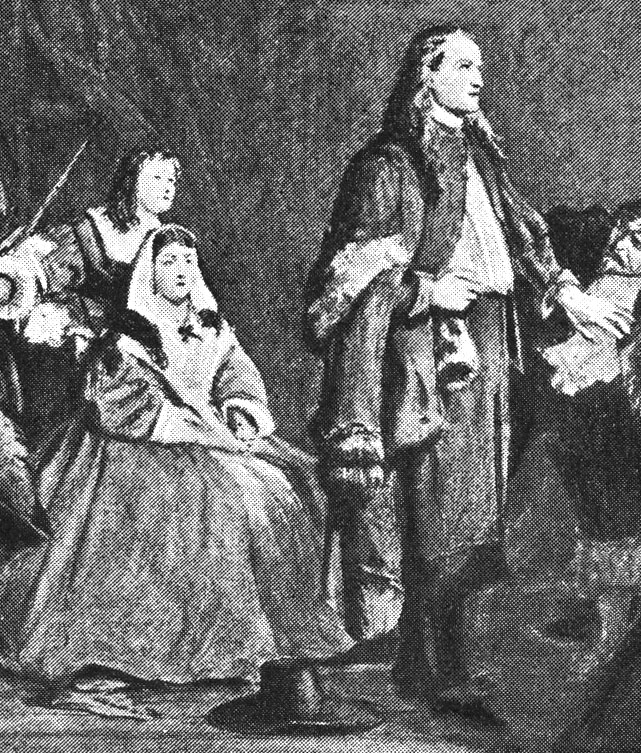
Margaret Fell, with George Fox before the judges, from a painting by J. Pettie 1663, public domain via Wikimedia Commons

Margaret Fell with George Fox before the judges, from a painting by J. Pettie, 1663

Margaret Fell was born on some unknown date in 1614, so let’s take this occasion to remember her on the date of her death, April 23rd, 1702.

Fell’s lived a life as passionate as it was long. She was an unconventional thinker for her time, a zealous and progressive religious activist at times imprisoned for her beliefs, a prolific writer, well-traveled, a mother of eight children and a wife twice.

An early adherent and eloquent promoter of Quakerism, Fell is now considered one of its founders. She converted to Quakerism after hearing a sermon by one of its most charismatic preachers, George Fox, and almost immediately launched into a lifetime of hosting Quaker meetings and speaking out on behalf of her new religion. After her husband died some years later, Fell married Fox, probably more as a co-missionary than as a romantic partner since their work, travels, and imprisonments kept them apart for much of their marriage.

As I’ve had a lifelong fascination with the history of human rights, I’ve long admired the Quakers because, along with Unitarians and Deists, so many have been leaders in the struggle to expand, establish, and promote them. That’s because these faiths emphasize the importance of individual conscience, the primacy of the human mind, God’s rational nature, and the moral equality of all human beings.

Fell believed in the Quaker doctrine of the Inner Light which God has caused to shine equally in the hearts of all beings; all we need do is heed it. Therefore, one does not need ministers, priests, or any other authorities or intercessors to achieve salvation. And because God has created everyone for the same purpose and gave everyone that light, everyone is spiritually equal and capable of understanding and proclaiming the Truth. We can see how this doctrine, central to Quakerism, readily aligns with human rights movements centered on a belief human spiritual and intellectual equality. The right of women to speak in church and write religious texts, in her time limited to men, was a cause particularly dear to Fell’s heart. While Fell’s belief in the equality of women was limited to their role as spiritual beings, Quakerism tended to encourage ever-more progressive beliefs in its adherents. Over time, Quakers came to be leaders in the abolitionist and pacifist movements, promoting the right of all to receive equal and universal education and for women’s rights in social and political spheres as well.

In light of her achievements as a female religious pioneer, and the human rights advances facilitated by the Quaker faith she helped found, Fell’s contributions should continue to be remembered and celebrated.

Ordinary Philosophy and its Traveling Philosophy / History of Ideas series is a labor of love and is ad-free, supported by patrons and readers like you. Please offer your support today!

~~~~~~~~~~~~~~~~~~~~~~~~~~

Sources and inspiration

Broad, Jacqueline, ‘Margaret Fell‘, The Stanford Encyclopedia of Philosophy, Edward N. Zalta (ed.)

Jacoby, Susan. Strange Gods: A Secular History of Conversion. New York: Pantheon, 2016 (see chapter on Margaret Fell)

New Podcast Episode: Frederick Douglass’s Birthplace, Easton, and St Michaels, Maryland’s Eastern Shore Sites

Easton, MD on a bright spring morning in March, photo 2016 by Amy Cools

Easton, MD on a bright spring morning in March

Listen to this podcast episode here or subscribe on iTunes

Second day, Monday March 21st

I wake up early, and make my way to Maryland’s east shore, looking forward to a beautiful day in the country. It’s windy and very cold, but clear and sunny. I head for downtown Easton: the route from there to my first destination is easiest to follow for a non-local like me. And I can use all the help I can get: this will be the first site I visit in any of my history travels where I will rely both on maps that predate the turn of the 20th century and natural landmarks to locate it.

… Read the original travel account here and here (originally published in two installments)

Ordinary Philosophy and its Traveling Philosophy / History of Ideas series is a labor of love and ad-free, entirely supported by patrons and readers like you. Please offer your support today!

Happy Birthday, Thomas Jefferson!

In remembrance of Thomas Jefferson (April 13 1743 – July 4, 1826) on his birthday, here’s the story of my travels last year following his life and ideas

Amy M Cools's avatarOrdinary Philosophy

Hello, friends of Ordinary Philosophy!

From time to time, I take a trip to some corner of the globe, to explore the lives and ideas of great thinkers in the places where they lived and worked. For this series, I follow in the footsteps of thinkers who are no longer alive, since those who are still telling their own stories. But those who are no longer alive in the body live on in the ideas that they pass on, and in the example they provide for us to follow.

I’m pleased and excited to announce my third philosophical-historical themed adventure, this time in Washington DC, Philadelphia, and various sites in Virginia to follow in the footsteps of…. you may have guessed it… Thomas Jefferson!

Thomas Jefferson was born on April 13th, 1743, and in his long life, he accomplished more than most. He was a founding father of the United…

View original post 288 more words

What Ordinary Philosophy’s All About: Clarifying the Vision

People in a Public Square, Image Creative Commons via PixabayIt’s been an especially busy few weeks for me: studying, researching, writing, planning for my upcoming traveling philosophy journey and for the expanded future of Ordinary Philosophy. This year so far, I’ve had the great good fortune to meet some inspiring new people: passionate, thinking, active, and creative. I’ve also gotten to know others better as well, and am opening new doors and making new contacts every day. Our conversations have been inspiring me to think more clearly and deeply about my vision for Ordinary Philosophy, about my hopes, dreams, and goals, and about the wonderful people who will work with me to accomplish them in the future.
So I’ve just been looking over my introductory statement about Ordinary Philosophy, and thought it needed some clarifying and expanding. Here’s my vision as it stands now, best as I can describe it, and it’s beautiful to me. I hope it is to you too!

~~~~~~~~~~~~~~~~~~~~~~~~~~~~~~

Ordinary Philosophy is founded on the belief that philosophy is an eminently useful endeavor as well as a fascinating and beautiful one, and that citizen philosophers and academic philosophers alike share in making it so.

So why the name Ordinary Philosophy?

The ‘Ordinary’ in Ordinary Philosophy means: Philosophy is not only pursued behind the walls of academia.

It’s an ordinary activity, something we can do regularly whatever our education, background, or profession, from our homes, workplaces, studies, public spaces, and universities. It’s applicable to ordinary life, since it’s about solving the problems we all encounter in the quest to pursue a good, happy, and meaningful one.

It’s about seeking answers to the ‘big questions’ we ask ourselves all the time: ‘What’s the right thing to do?’ ‘What’s a meaningful life, and how can I make mine so?’ ‘What’s the truth of the matter, what does truth mean anyway, and how do I know when I’ve found it?’ ‘What does it mean to have rights?’ ‘How did reality come to be as it is?’, and so on.

It’s also just as much about the ordinary, day-to-day questions: ‘Should I take this job, and will it help fulfill my highest aspirations?’ ‘It is wrong to put my interests first this time, even if it will harm someone else?’ ‘What’s the difference between just talking about other people and malicious gossip?’ ‘Why should I go out of my way to vote?’

And in the end, it’s about living philosophy, about philosophy in the public square, and the stories and histories of philosophy as it is realized, personified, lived out by activists, artists, scholars, educators, communicators, leaders, engaged citizens, and everyone else who loves what’s just, what’s beautiful, and what’s true.

All of this is philosophy.

~ Amy Cools, founder and editor of Ordinary Philosophy

Interview with Clay Jenkinson as Thomas Jefferson, Jan 16th 2016

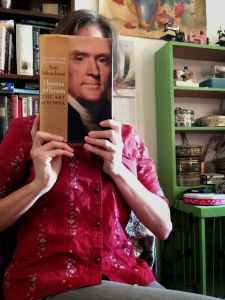
I’m ple6759b-amy2band2bjeffersonased to announce that the 33rd episode of the podcast is a super special one, as it’s Ordinary Philosophy’s first interview, and my distinguished guest is Clay Jenkinson, humanities scholar, author, and creator of the Thomas Jefferson Hour radio show and blog.

I’m a long time listener of the show; in fact, I believe I’ve listened to just about every single episode, many of them more than once, and relied on Clay’s work to inform my own, especially in the two Traveling Philosophy / History of Ideas series I did following the life and ideas of Thomas Jefferson.

I highly, highly recommend you give the Thomas Jefferson Hour a listen, you can find it at www.jeffersonhour.com, along with many other resources on the life and ideas of Jefferson, and Clay’s other work in the humanities.

You can find the accounts of my two series on Jefferson, as part of the Traveling Philosophy / History of Ideas series, here and here.

I interview Clay here in character as Thomas Jefferson, as he does on the Thomas Jefferson Hour, discussing various issues as Jefferson himself might have viewed them, informed by Clay’s extensive scholarship on his life and expressed views.

I hope you enjoy our discussion as much as I did!

You can also subscribe to the Ordinary Philosophy and Thomas Jefferson Hour podcasts on iTunes.

*Thank you, Shane and David, for your help and technical support

Ordinary Philosophy and its Traveling Philosophy / History of Ideas series is a labor of love and is ad-free, entirely supported by patrons and readers like you. Please offer your support today!