Happy Birthday, Frederick Douglass!

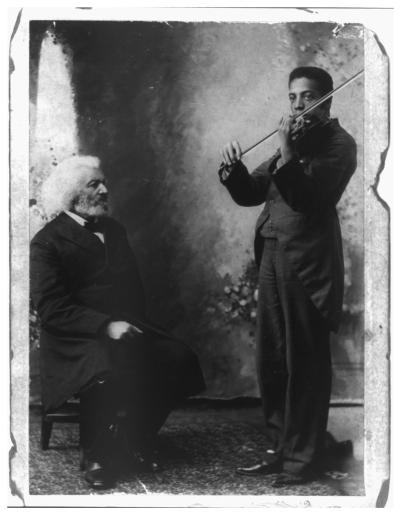
Frederick and Joseph Douglass, from the Library of Congress archives, via Lion of Anacostia b

Frederick Douglass and his grandson Joseph, concert violinist who inherited his love of music from his grandparents, from the Library of Congress archives

Let us remember and salute the great human rights activist Frederick Douglass on the bicentennial anniversary of his birth.

…well, close to it, anyway. The exact day of Douglass’ birth is unknown. We know the year, 1818, from his entry in the slave ledger of his master Aaron Anthony. His likely birth month, February, is an estimate. In his later years, Douglass chose to celebrate his birthday on February 14th because, he said, his mother Harriet once called him ‘my Valentine’.

Douglass is among my favorite people that ever inhabited the earth. He was born into slavery in Maryland, was mostly self-educated, escaped to freedom when he was 20, married the loving and strong Anna Murray, and became one of the most eloquent and influential advocates for civil rights in American, and, indeed, world history. He was an author, orator, preacher, activist, statesman, patriarch, musician, and world traveler. I had the joy of following the life and ideas of this motivated, resourceful, brilliant, complicated, and incredibly fascinating person through the United States, and now I’m continuing my research in Scotland, where he spent a relatively brief but very influential part of his life. Stay tuned for my next traveling of ideas series once again starring Douglass!

Here are a few links to some articles and works of art by, about, and inspired by the great Frederick Douglass, including my own work.

7 Haunts of Frederick Douglass in New York City – by Amy Cools for Untapped Cities

Frederick Douglass ~ by Melvyn Bragg and guests Karen Salt, Nicholas Guyatt, and Celeste-Marie Bernier for In Our Time

Frederick Douglass – by Ronald Sundstrom for Stanford Encyclopedia of Philosophy

Frederick Douglass at In Our Time ~ by BBC Radio 4 with Melvin Bragg and Guests

Frederick Douglass: In Progress ~ by Leigh Fought

Frederick Douglass Papers ~ at the Library of Congress

Frederick Douglass: United States Official and Diplomat~ by the Editors for Encyclopædia Britannica

Frederick Douglass and a Valentine, Emily Dickinson and a Snake – by Rob Velella for  The American Literary Blog

Frederick Douglass in Washington, D.C.: The Lion of Anacostia – by John Muller

Frederick’s Song– Douglass’ words arranged and set to music by SayReal and Richard Fink

From Oakland to Maryland, New York, and Massachusetts I Go, in Search of Frederick Douglass – History of ideas travel series by Amy Cools for Ordinary Philosophy

Interview with Ken Morris, Anti-Slavery Activist – by Ken Morris and Amy Cools for Ordinary Philosophy Podcast

Interview with Leigh Fought on Anna and Frederick Douglass – by Leigh Fought and Amy Cools for Ordinary Philosophy Podcast

Ordinary Philosophy and its Traveling Philosophy / History of Ideas series is a labor of love and ad-free, supported by patrons and readers like you. Please offer your support today!
O.P. Recommends: Frederick Douglass at In Our Time by BBC Radio 4 with Melvin Bragg and Guests

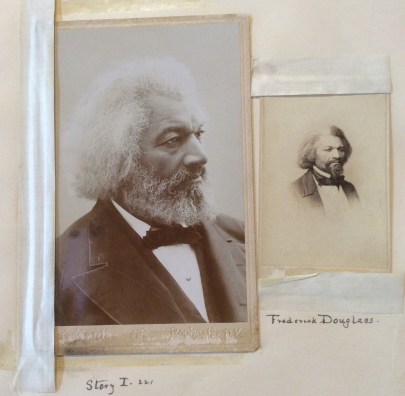
Two portraits of Frederick Douglass from the Hutchinson Family scrapbook at the Lynn Historical Society & Museum, photo by Amy Cools

I’m particularly excited to share this new episode of In Our Time because it’s on a subject particularly dear to my heart and stimulating to my mind: the life and ideas of the great human rights advocate Frederick Douglass. Born a slave in Maryland in 1818, his story as a self-made man starts with refusal: refusal of enforced ignorance; refusal to be cowed and beaten; refusal to stay in a situation where anyone claimed a right to own his person; refusal to stay silent about abuses against his fellow black humanity and against women, immigrants, and the poor; refusal to allow white abolitionists to tell him what to believe and how to present himself. In sum, Douglass refused to be anything other than or less than what he believed he could and should be.

Douglass went on to have one of the most impressive, distinguished, thoughtful, and dogged careers fighting for the rights of everyone that he perceived suffering under the worst excesses of human greed, bigotry, and moral passivity. He did so with passion and exceptional oratorial skill. All in all, I find Douglass to be one of the most memorable and inspiring human beings to ever have lived.

In their discussion on Douglass, Melvyn Bragg and his guests Karen Salt,  Nicholas Guyatt, and Celeste-Marie Bernier, the University of Edinburgh’s own Professor of Black Studies in the English Department with fill you in on many fascinating details about his life, work, and thought. I’m pleased and excited to say that Professor Bernier has recently invited me to join her in-progress project Our Bondage and Our Freedom in celebration of the bicentennial of Douglass’ birth.

Interior of the Theological School Library at the University of Edinburgh’s New College

Enjoy!

An update on my own work on Douglass: my Master’s degree studies are keeping me so occupied at the moment that I barely have time for my other research, let alone time to write it all up. At the moment, my Douglass research is taking me to the Special Collections of the Theological School Library, at the New College of the University of Edinburgh. I’m reading through Thomas Chalmers’ papers and other documents pertaining to the ‘Send Back the Money!’ campaign and the Scottish abolitionist movement. So fascinating, and I look forward very much to sharing what I find with you!

Ordinary Philosophy and its Traveling Philosophy / History of Ideas series is a labor of love and ad-free, supported by patrons and readers like you. Please offer your support today!

Robert Burns Letter at the National Library of Scotland in Honor of the Bard’s Birthday

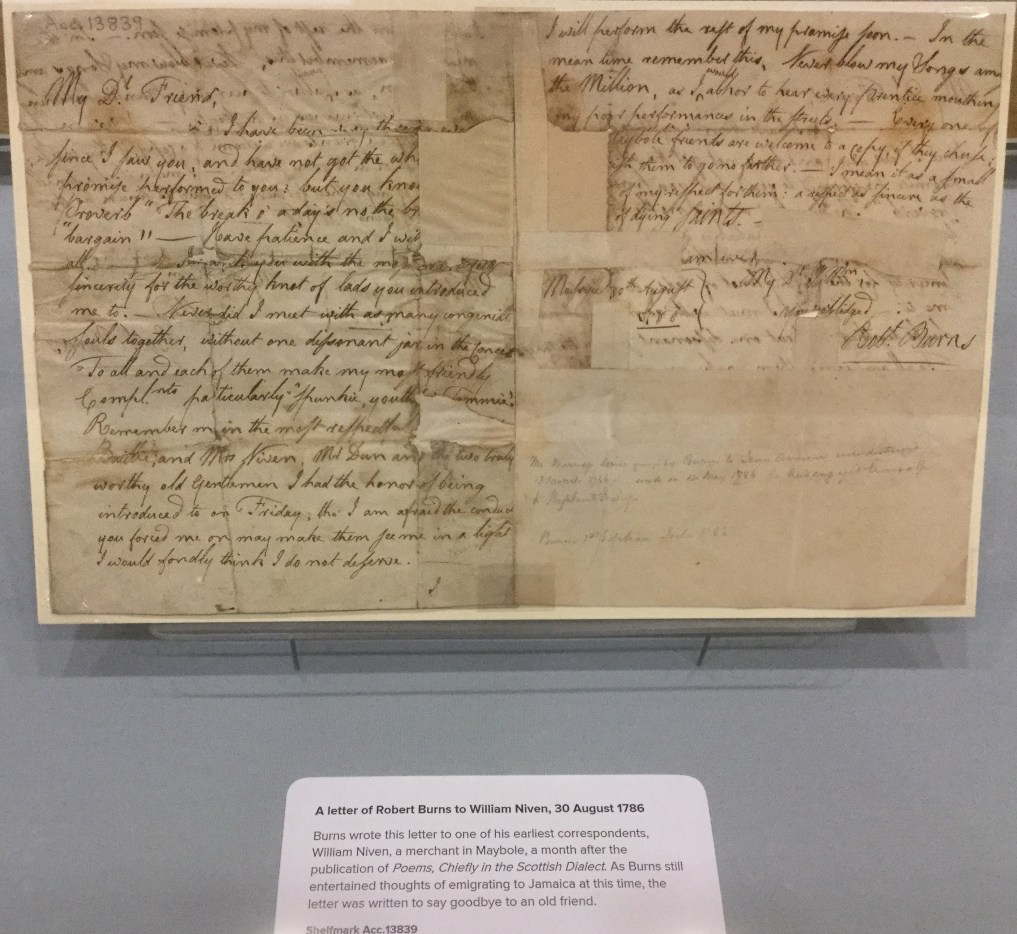
Robert Burns letter to William Niven, 30 August 1786, at National Library of Scotland, special showing 25 January 2018

Robert Burns, aka ‘the Bard’, is, as you may know, one of Scotland’s most honored sons. His poems and songs are widely regarded as among the most beautiful and resonant literary creations of all of Scotland’s people. Some of the people I’ve written about for Ordinary Philosophy were inspired and influenced by Burns, notably Abraham Lincoln and Frederick Douglass. I’ll be writing much more and regularly about Burns before long in the context of my upcoming Frederick Douglass in Scotland series and pieces on the Scottish history of ideas, stay tuned!

In honor of Robert Burns’s birthday celebration, aka Burns Night, the National Library of Scotland put one of his original letters on display for a few hours today, with a little informational card that provides a brief context. I’ll be elaborating on the significance of his planned emigration to Jamaica in my next Douglass series as well.

The letter reads:

My Dr Friend,

I have been very throng every since I saw you, and have not got the wh[ole of my] promise performed to you: but you know [the old] Proverb “The break o’ day’s no the bre[ak o’ a] bargain” – Have patience and I will [pay you] all. – I thank you with the most heart-felt sincerity for the worthy knot of lads you introduced me to. – Never did I meet with so many congenial souls together, without one dissonant jar in the Concert. To all and each of them make my friendly Complnts particularly “spunkie, youthfu’ Tammy.” Remember me in the most respectful [manner to the] Baillie, and Mrs Niven, Mr Dun, and the two truly worthy old Gentlemen I had the honor of being introduced to on Friday; tho’ I am afraid the conduct you forced me on may make them see me in a light I would fondly think I do not deserve. –

I will perform the rest of my promise soon. – In the mean time, remember this, never blow my Songs amo[ng] the Million, as I would abhor to hear every Prentice mouthing my poor performances in the streets. – Every one of [my] Maybole friends are welcome to a Copy, if they chuse; but [I w]ish them to go no farther. – I mean it as a small [mark] of my respect for them: a respect as sincere as the [faith] of dying SAINTS. –

I am ever, My Dr Willm Your oblidged,
Robt Burns

Ordinary Philosophy and its Traveling Philosophy / History of Ideas series is a labor of love and ad-free, supported by patrons and readers like you. Please offer your support today!
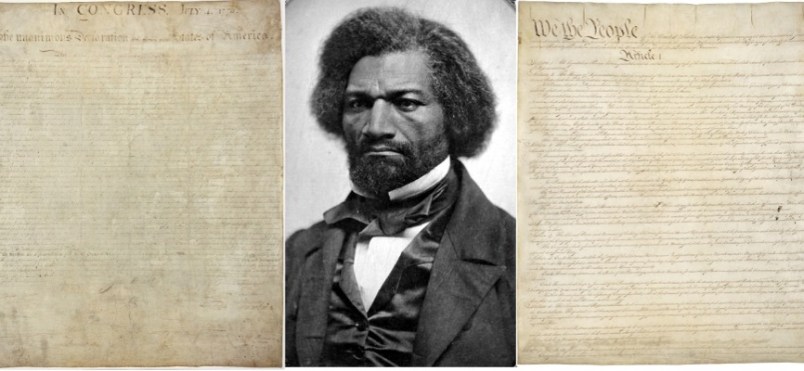
Say What? Frederick Douglass on Originalist Interpretations of the United States Constitution

‘The fact that Mr. [James] Madison can be cited on both sides of this question [of slavery] is another evidence of the folly and absurdity of making the secret intentions of the framers the criterion by which the Constitution is to be construed.’

~ Frederick Douglass, ‘The Constitution of the United States: is it Pro-Slavery or Anti-Slavery?’
Speech delivered in Glasgow, Scotland, March 26th, 1860

Ordinary Philosophy and its Traveling Philosophy / History of Ideas series is a labor of love and ad-free, supported by patrons and readers like you. Please offer your support today!
New Podcast Episode: Peoria, Illinois, in Search of Robert G. Ingersoll, Frederick Douglass, and Abraham Lincoln, Part 3

A page from Ernest East’s Abraham Lincoln Sees Peoria, published in 1939, in the collection of the Local History Room, Peoria Public Library

Listen to this podcast episode here or on Google Play, or subscribe on iTunes

Peoria, Illinois, July 28th, 2017, continued

From the 200 block of N Jefferson Ave between Hamilton Blvd and Fayette St, I zigzag my way south past Courtyard Square. According to Lewis Lehrman’s Lincoln at Peoria: The Turning Point, ‘Douglas and Lincoln probably stayed at Peoria House… at the corner of Adams and Hamilton Streets.’ Peoria House was a popular place for visitors to stay until it was destroyed by fire in 1896. According to Peoria Historical Society, it was replaced in 1908 by the grand Hotel Mayer, which, in turn, would burn down in 1963, when a drunken guest’s bedding caught fire and spread. The site is now occupied by a large Caterpillar office building.

Ernest East, however, writes in his Abraham Lincoln Sees Peoria that Lincoln definitely was a regular guest here. A contemporary newspaper report about one of these occasions, on March 27th, 1857, said ‘Hon. Abraham Lincoln is in our city and stopped at Peoria House… Read the written version here

Ordinary Philosophy and its Traveling Philosophy / History of Ideas series is a labor of love and ad-free, supported by patrons and readers like you. Please offer your support today!

New Podcast Episode: Peoria, Illinois, In Search of Robert G. Ingersoll, Frederick Douglass, and Abraham Lincoln, Part 2

Etching of the old Peoria County Courthouse on a granite wall at the new one, Peoria, IL. It shows the portico from which Lincoln delivered his famed Peoria Speech of October 16th, 1854

Listen to this podcast episode here or on Google Play, or subscribe on iTunes

Peoria, Illinois, July 28th, 2017, continued

~ Dedicated to Shannon Harrod Reyes

I leave the library and begin my afternoon’s site searches at the Peoria County Courthouse. Abraham Lincoln visited this courthouse many times over the years, on some occasions in his capacity as a lawyer and other times in association with his political career. There’s a statue of Lincoln here commemorating a particularly notable occasion: his delivery of a speech from the front portico of the old courthouse on October 16, 1854. This speech was composed and delivered in opposition to the Kansas-Nebraska Act, co-authored by Stephen A. Douglas. The Peoria Speech, as it’s now known, was part of a series that took place during that legislative election season where Douglas and Lincoln addressed and rebutted each other’s arguments, sometimes during the same event, sometimes separately. Their exchange would be revived four years later, notably in the series of seven formal debates of 1858. Douglas won that year’s Senate election with 54% of the vote, but Lincoln distinguished himself so well in that campaign season that he won the larger prize two years later. He was elected President in 1860, handily defeating his closest rival Douglas with a 10%+ lead… Read the written version here

Ordinary Philosophy and its Traveling Philosophy / History of Ideas series is a labor of love and ad-free, supported by patrons and readers like you. Please offer your support today!

O.P. Recommends: ‘A Man’s a Man for a’ That: Frederick Douglass in Scotland’ by Andrea Baker for BBC Radio 4

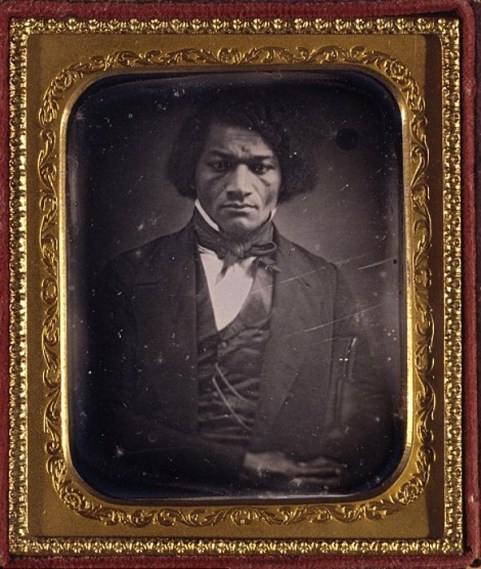
Frederick Douglass daguerreotype, late 1840’s, about how he would have looked when he was in Scotland.

I’m hard at work today researching Frederick Douglass‘ travels in Scotland in 1846 and 1860, and looking forward eagerly to my planned journey(s) following in his footsteps here. I came across this wonderful program by Andrea Baker, an American opera singer who settled here in Scotland, recorded for BBC Radio 4. I think Ms. Baker will convince you as thoroughly as I’m convinced that the story of Douglass in Scotland is absolutely fascinating!

Ordinary Philosophy and its Traveling Philosophy / History of Ideas series is a labor of love and ad-free, supported by patrons and readers like you. Please offer your support today!
New Podcast Episode: Peoria, Illinois, In Search of Robert G. Ingersoll, Frederick Douglass, and Abraham Lincoln, Part 1

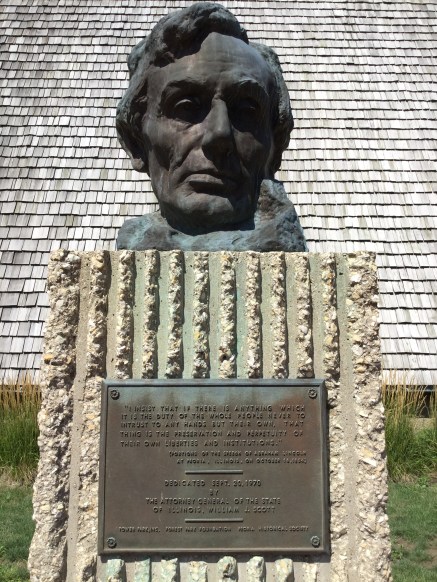
Abraham Lincoln portrait head, cast of Gutzon Borglum model for Mount Rushmore at Tower Park, Peoria Heights. Other versions of this sculpture are at the Abraham Lincoln Presidential Library, the Lincoln Tomb, and the Rotunda of the U.S. Capitol Building in Washington, D.C.

Listen to this podcast episode here or on Google Play, or subscribe on iTunes

Peoria, Illinois, July 28th, 2017

I awake in a spotlessly clean, perfectly comfortable, aggressively unimaginative Motel 6 hotel room on the north end of Peoria, Illinois. I’ve noticed that Motel 6’s are much better than they used to be when I was a child and young adult, at least in terms of cleanliness and amenities. They were never glamorous, but they now have less character. For many years, for example, the beds sported these wonderfully colorful blankets printed with stylized images of famous cities and landscapes all over the United States. Now, the rooms and draperies are beige highlighted with rust-orange, furnished with the plainest of midcentury-style designs, angular objects only occasionally relieved by a sleek curve here and there.

My term for this sort of accommodation is ‘people storage’: strictly utilitarian, uninspired, and uninspiring. Perhaps that’s a good thing for my purposes: I fled the room as soon as I could to place myself in a more interesting environment. Still, I’m irritated as I so often am with modern architecture and interior design. Why have we stopped bothering to go on artistic flights of fancy, then directing the inspirations found there towards making these things beautiful?

My first destination is a quick stop to see a bust of Abraham Lincoln at Tower Park in Peoria Heights… Read the written version here

Ordinary Philosophy and its Traveling Philosophy / History of Ideas series is a labor of love and ad-free, supported by patrons and readers like you. Please offer your support today!
 

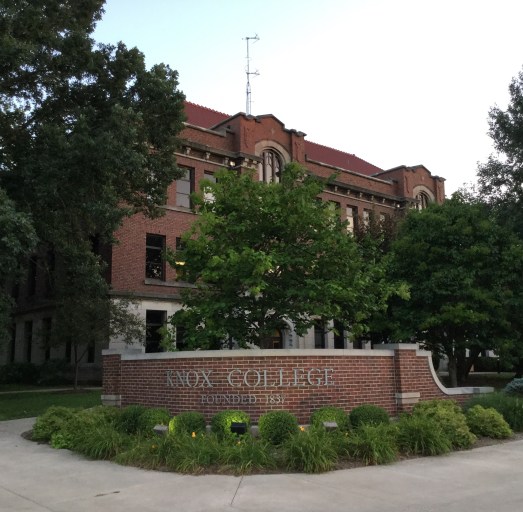
New Podcast Episode: Knox College, Galesburg, Illinois – Abraham Lincoln and Stephen Douglas Debate

Knox College, George Davis Hall at E. South and S. Cherry Streets, Galesburg, Illinois

Listen to this podcast episode here or on Google Play, or subscribe on iTunes

Knox College, Galesburg, Illinois, July 27, 2017

After exploring Fort Robinson for a couple of hours yesterday morning, I washed my face, changed my clothes, ate a hearty cooked breakfast in the restaurant in the main lodge, and drove east across Nebraska.

The drive was beautiful, vast blue-blue-blue skies with towering puffy clouds and occasional gray ones that blew through and dropped a little rain on the way. Rainbows faded in and out of view. The green and gold fields sometimes laid flat and sometimes rolled over gentle slopes and undulations. The road ran straight and wound among them accordingly. Tidy farmhouses were scattered across the land, and silos and grain elevators rose high near little town clusters, some full of quiet life on this warm summer afternoon, some nearly or entirely abandoned and decayed. I drove through the early evening until I decided I could no longer do without a nice shower and a proper bed. So I found a little hotel in Missouri Valley, Iowa and got a good night’s rest. This morning, I linger until nearly noon to finish writing up and publishing one of my pieces for this series.

I continue east towards Peoria, and about an hour before I reach that city, I spot a highway sign for an Abraham Lincoln historical site in Galesburg, Illinois. I turn off the highway and follow the signs to Knox College… Read the written version here

Ordinary Philosophy and its Traveling Philosophy / History of Ideas series is a labor of love and ad-free, supported by patrons and readers like you. Please offer your support today!
Happy Birthday, John Jones!

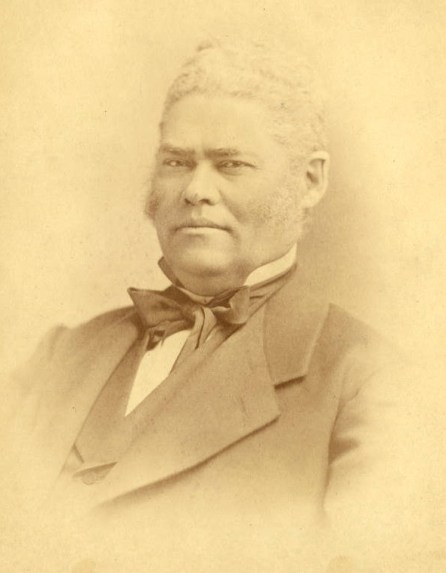
John Jones, portrait by Mosher & Baldwin, 1882, courtesy of the Chicago History Museum

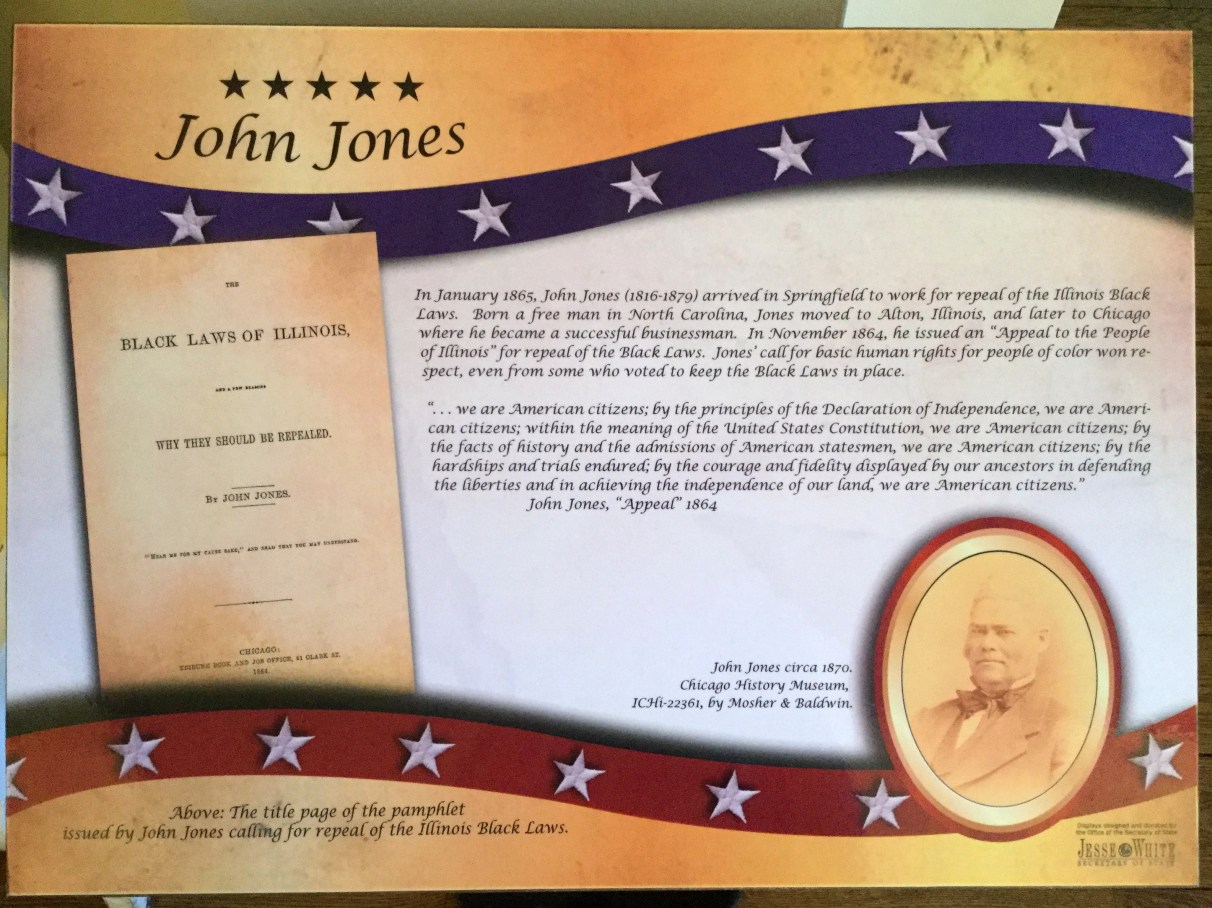
When I visited Springfield, Illinois this summer, I found a very interesting plaque at the Old State House downtown. It told the story of John Jones and his activism against Illinois’s Black Laws, a set of legal codes that pertained only to black people, and, as you likely and immediately supposed,  were terribly oppressive. Such laws have a long history in the United States and as long as they’ve been around, lovers of justice have been around to fight them. John Jones was one such person.

Born on November 3rd, 1816 to an American black mother and German white father, Jones had to make his own way early in the world. Jones’ mother did not trust his father to do right by his son so she apprenticed him to a tailor when he was very young. The resourceful Jones taught himself to read and write and, having learned what he needed to, he released himself from the tailor’s service by age 27. He then obtained official free papers for himself and his wife, née Mary Jane Richardson, and secured their freedom to live and travel by posting a $1,000 bond in 1844. While he and his wife were both born free, they had to worry about the numerous ‘fugitive’ slave catchers and kidnappers prowling around, all too happy to capture as many black persons as they could get ahold of, passing them off as escaped slaves in exchange for a substantial payoff.

The Joneses moved to Chicago from Alton, Illinois in 1845, where there was an established community of black entrepreneurs and therefore, more opportunities for families such as theirs. Jones worked hard and savvily, building up a very successful tailoring business and amassing an impressive fortune within just a few years. The Joneses used their success to help their fellow black citizens, making their home one of the key Chicago stops on the Underground Railroad. Jones poured much of his money and time into civil rights activism, working for the abolitionist cause and to overturn the Fugitive Slave Act of 1850 and the already decades-old Black Laws of Illinois, sometimes with his fellow autodidact and activist Frederick Douglass. For the rest of his life, Jones was a prominent intellectual, moral, religious, and political leader in the black community of Chicago and beyond.

Learn more about the courageous civil rights leader John Jones at:

John Jones (1816–1879): Activist, politician, tailor, entrepreneur  ~ by Jessie Carney Smith for Encyclopedia.com

Jones, John ~ by Cynthia Wilson for Blackpast.org

Historical placard for John Jones, Old State House, Springfield, Illinois

Ordinary Philosophy and its Traveling Philosophy / History of Ideas series is a labor of love and ad-free, supported by patrons and readers like you. Please offer your support today!