
Antique firearms at the Scottish National Museum, Edinburgh
I’ve been mulling over the issue of ‘gun rights’ for some time now. It’s a pressing issue here in the United States, since more people are injured and killed by citizens wielding guns than in any other state with a stable government and a thriving economy.
It’s also a divisive issue, as it’s generally argued in terms of liberty, a core value in our culture and politics. One side emphasizes the right to self-defense, the other the right to freedom from fear and from the pressure to join the arms race. And whether or not people chose to arm themselves, their fellow citizens feel that they are placed under some kind of obligation or burden as a result.
From the anti-gun perspective: if at least some of your fellow citizens are armed, then you are forced into a position where you must arm yourself too whether you’d like to or not, or remain at their mercy. After all, in a moment of greed, anger, zeal, fear, mental illness, hate, or accident, one person with a gun can permanently remove all freedoms that another could ever enjoy, within seconds, with the simple squeeze of a trigger. When another is armed, they have the potential power to wield complete control as to whether you live or die, and to force you to act according to their will, and against your own.
From the pro-gun perspective: if your fellow citizens choose not to arm themselves, you leave all the work of crime deterrence up to gun owners. Not only that: since a gun is the most effective weapon which can be wielded by a person of nearly any degree of strength, it’s the only available method for many who feel the need to defend themselves and others. In other words, it’s the one real equalizer: anyone with a gun has as much power as any other, so long as they know how and when to use it.
What would help us decide how to settle this, since the freedom to live the life we want, and the freedom to live at all, are in direct conflict here? We’re still figuring it out here in the US. Some nations have chosen in favor of individual gun rights, and others have disarmed their citizens, with varying results. While, generally speaking, nations and states with low gun ownership rates have much lower rates of gun violence, there are some exceptions. The gun rights dilemma, therefore, is not simply and immediately solved through legislation designed in favor of one set of rights issues over another.
Putting the conflicting liberty and rights issues aside for the moment, perhaps it would help to consider the relevant moral issues. Here, we can look beyond local, cultural considerations to a broader source of guidance as to what we should do about guns. What does it mean to be a good person, a virtuous person, and how do we cultivate that in ourselves and in each other? How does a society cultivate that in its citizens? Can these and other considerations help us decide what’s right, morally, when it comes to the rights and responsibilities of owning a gun? What should we do about it? Is it right or good for people to hold so much power over life and death? Permissive gun laws, which make it easy for responsible gun owners to trade in guns, also make it easier for members of drug cartels and other criminals to get their hands on them, too; that being known, are those laws right?
I think two of the greatest thinkers on morality and virtue, David Hume and Aristotle, can do much to help us discover some answers to these questions. Let’s explore their ideas, look for some answers there, and see how they fit with modern discoveries in behavioral science, psychology, and neuroscience.
 According to David Hume, morality originates in the ‘passions’, or feelings. We can see ourselves as naturally moral creatures, since we come equipped with those emotions, those motivations, that make morality possible. We demonstrate altruistic, ‘pro-social’ (not Hume’s term, a more modern one), even as children, though we develop our moral character as we grow, through life experience, conversation with other moral beings, and by acquiring and developing the use of reason. For example, from the earliest age, we approve of kindness and disapprove of cruelty. We desire happiness, love, and generosity, and detest pain and avoid selfish people; we crave learning, and enrichment, and the approval of others. Those ‘sentiments’ ennoble us, and are responsible for that which is best in our characters. Yet the emotions we come equipped with are not sufficient, in themselves, for a morally developed person. Reason also plays a key role, enabling us to universalize and expand morals, and to apply these needed in any given situation.
Yet morality cannot be founded on reason alone: as Hume points out, reason is the means to means to link one true proposition with another, but cannot, on its own, show us what to value, or make us care about each other or anything else. It’s moral feeling, the passions, that provide the motivations, and provide reason the materials to work with to develop our morality. So as we grow up, we learn to develop our moral instincts, to ‘expand our moral circle‘ through conversation and the use of reason. By spending time with others, by being exposed to diverse ways of thinking and being, we learn that others have emotions and interests just like we do, that are just as important to them as ours are to us. Emotionally, we empathize with others; rationally, we know that what we expect of others is no more or less than what we must demand of ourselves. A very young person has the instincts for morality, but prior to experience of the world and the use of reason, it’s a very limited morality, or can even be considered a sort of proto-morality. Experience of other moral agents, through discourse with them, reveals there are others whose feelings and interests matter just as much to them as ours do to us, and finally reason shows that there is not particular reason to favor oneself over another when determining moral rules and guides of behavior. A morally good person, then, will seek to be pleasant and generous, to make others happy and improve their well-being, to respect and protect their interests as much as possible, just as we desire and expect they will do for us.
Hume’s account of how morality works, combined with the body of knowledge we’ve discovered since his time, reveals that it’s as much a natural part of the makeup of the human personality as any other, as are creativity, romantic passion, mother love, curiosity, and hunger, as well as (sadly!) rapacity and cruelty. A natural explanation of morality does not require a complex suite of arguments to found its origins in logic and reason, nor does it require some cause outside of ourselves, as traditional explanations claimed. To find out what morality is and how it works, we observe human beings, how they act and how they desire themselves and each other to act; we explain how and why morality developed as a natural adaptation for human beings; and we apply reason to determine what kinds of mindsets, rules, and behaviors lead to their flourishing.
Behavioral, biological, and evolutionary sciences have, over the years, lent support to Hume’s explanation of morality. Rebecca Saxe and Alison Gopnik, among others, has closely observed the behavior of infants and very young children over time, and has gathered a large body of evidence that people demonstrate moral instincts from the very earliest age, recognize that others are moral beings with their own interests and emotions just like us, and make moral judgments accordingly. Evolutionary psychology (Darwin considered Hume one of his great influences), in which morality is considered as much an adaptation as our opposable thumbs and long limbs, inherit much from Hume’s account. In fact, Hume is widely considered a founder of naturalistic moral theory, and a father to modern cognitive science.
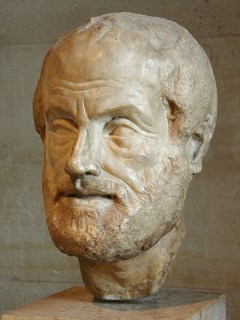 Aristotle’s grounds the origin of morality more on reason, though his theory is founded, like Hume’s, from his observation of the world and how people behave. His elegant ‘function argument’ is the centerpiece of his moral theory. When you consider what something is for, and observe what it does and how it functions, you’ll know where to start. The quality of goodness in material things is closely related to the quality of goodness when it comes to actions and moral feelings. A musical instrument is for making music; therefore, an excellent, or good, musical instrument is that which produces the best music. Further, if we consider a case in which we’re deciding who the musical instrument should belong to, it would be the right thing to do to give it to the best musician. Not to the nicest person, or the one who can pay the most for it, or even to the person who made it; those considerations are irrelevant since none of those have anything to do with the proper function of the instrument.
To Aristotle, reason is the one definitive human trait that no other creature on earth possesses. That’s what we do uniquely, and what we’re best at, or at least, that’s what we do when we’re at our best. So what we should do, the moral thing to do, is what’s most reasonable, what’s most in keeping with our nature as reasonable beings. What helps us recognize that, in turn, is called the ‘Golden Mean’: consider all those traits we have, see how they fall on a spectrum, and we will see that the virtue consists of the happy medium between extremes. For example, bravery would be the virtuous golden mean between cowardice and recklessness, love between disdain and fawning or obsession, and so on. (Fun fact: Hume himself placed great importance on moderation, temperance, and fairness, eschewing divisive party politics, for example, as if it was part of his mission to live out the ideal of the Golden Mean!)

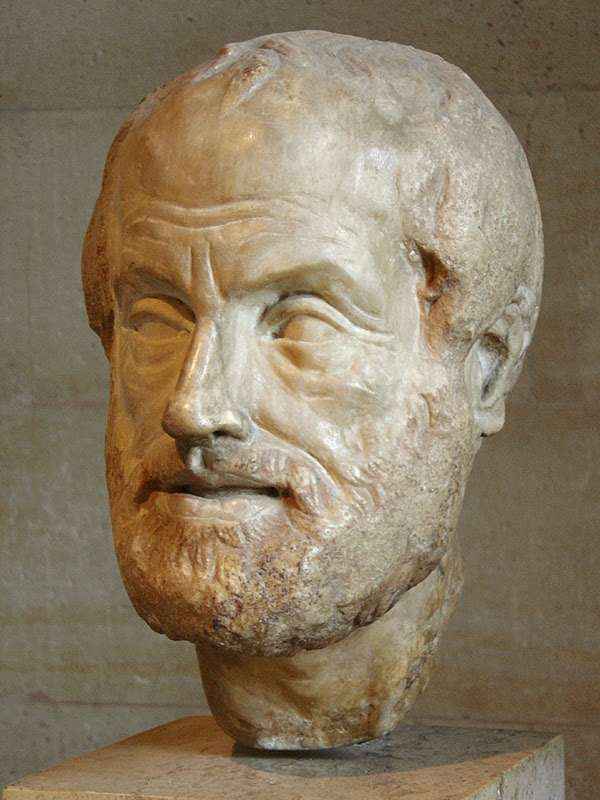
Making the leap from the function of a thing which is an artifact of intentional human creation, to the function of a human being itself, is quite a leap. Aristotle recognized this and sought to address it, but did not yet have the modern knowledge of the theory of evolution, and of evolutionary psychology, and how well they account for the origin and development of moral virtues such as kindness, sympathy, generosity, bravery, and so forth. Nor did Hume, but he did not consider it justified to form conclusions by building a logical case as far removed from original observations as many who followed Aristotle later. Hume saw human beings as much a product of the natural world as any other, and their nature as fully explicable in those terms. So leaving the function argument aside for the time being, let’s consider another important contribution of Aristotle’s to moral philosophy: the importance of habit.To Aristotle, habit is essential to the practice of virtue. By emulating virtue, we habituate ourselves to it. Over time, morality, the practice of virtue, becomes second nature. Here, Aristotle proves himself a keen observer of human psychology, and his emphasis on habit as a central driving force behind human thought and behavior, as well as something which can be deliberately instilled through practice, is confirmed by the findings of modern psychologists and neuroscientists. A recent article in Scientific American outlines some of the ways in which habits are formed, and how necessary they are if we wish to improve our behaviors systematically. Cognitive behavioral therapy, now widely considered among the most effective ways to overcome addiction and anxiety-depression, among other disorders, is also founded on these scientific discoveries.
Here’s where I find a link between these two moral theories: Aristotle’s emphasis on habit works hand in hand with Hume’s account of how moral sentiments arise from human psychology. Whether it be from habit or other mental processes we are naturally equipped with when we achieve consciousness, moral behavior is largely a spontaneous reaction to the situation at hand. Early in our development, as Saxe and Gopnik describe, a basic set of moral instincts are included in human consciousness in its earliest stages. As Hume observes, experience and reason help us expand, develop, and perfect our moral characters over time; the moral character, as Aristotle recognizes, is the set of, and relationships between, the virtuous habits we’ve cultivated through practice.
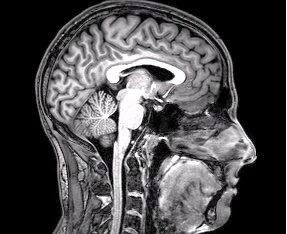 This also consistent with other findings of modern neuroscience and psychology. The way we tend to act in any given situation, the emotions and motivations that arise in us as we respond to stimuli, are formed as we react to circumstances, and by engaging in patterns of action, reactions, thoughts, behavior, we create mental channels, so to speak, or ‘paths of least resistance’, which predict our reactions, our thoughts and behavior, given similar circumstances. We usually act and think in accordance with how we’ve been given to act and think before, and only change when some new consideration(s) arises that makes us stop and consider whether to do something else this time. These considerations, the combination of reason and emotion (how do I act that will make me feel good about it, given the consequences of my actions for myself and others? How did the decisions I made last time the sort of thing came effect me and the world around me? How do others act in these situations, and what are the effects then?) inform how we habituate ourselves to new and improved moral actions and reactions.
Let’s pause for a moment. So far, we have these two thinkers’ descriptions of morality and virtue, supported by the findings of modern psychology and neuroscience. Hume and Aristotle show us where they think we should look for virtue, how to recognize it, how to describe and explain it, and where it originates. In other words, they are engaged in metaethics. But as you may have noticed, this tells us only how people actually do think and behave; what about telling us what we should do? What are the criteria for deciding what’s right and what’s wrong?

Arete (Virtue)
I think Hume and Aristotle point us in this direction: human beings not only do, but should habituate themselves to those practices which form in us the best moral character. While both men don’t explicitly tell how we can definitely say what’s right and wrong, they go to great lengths to show us what an admirable character looks like, and how they think and behave. I think they do so in order to reveal to us not only how we could be, but how we should be. In his writings as well as by example (he was widely known to have a particularly admiral character), Hume emphasizes such virtuous sentiments as sympathy, sociability, amiability, beneficence, generosity, and so on, and advocates the cultivation of these traits, especially through conversation and spending time in the company of others, especially those who can broaden your understanding of the world, and by avid reading and study of philosophy, literature, and history. Aristotle emphasizes the virtue of moderation in all things, of wisdom, self-control, courage, and nobility. Both men emphasize, to the highest degree, the use of reason, and the value of its careful and consistent application in all matters of life. It appears that they go through all this trouble not only to show us what a good person looks like, but to offer us something to aspire to: the formation of an excellent, moral character, which leads to the best life a person can achieve.
So, finally, we return to the gun issue. What does all this have to do with owning them, and using them? What does this have to do with what we observe in human behavior when people own guns? How about when people value, or even glorify, guns?
Let’s return to the consideration of the evidence, which can reveal how attitudes and practices relating to guns manifest themselves in human behavior; in other words, what habit or habits does a gun-owning society promote?
There are conflicting statistics to when it comes to gun-related behavior. For example, people in the United States own almost twice as many guns per-capita as Canadians and Germans. Canada and Germany, in turn, have a much higher rate of gun ownership compared to most other developed nations. Yet among these three nations, the United States has a far higher gun-related death rate, about four times that of Canada, and about 8 times that of Germany, though the three share many key cultural and political traits: they are democratic, capitalistic, and culturally and historically Christian. There are also examples where lower gun-related death rates correlate with higher per-capita gun ownership. This is the case for some states in the U.S, and for Switzerland, a country that, interestingly, imposes a requirement on all households to own a gun.Yet given such outliers, most states in the US, and most countries in the world, see a strong correlation between lower rates of gun-related death and injury and lower rates of gun ownership. The U.S. ranks near the top in gun-violence rates, just under Mexico’s, a country overrun with trigger-happy drug cartels, and outranked almost entirely by countries with weak, unstable governments, poor human-rights records, and high rates of poverty and income inequality. The very lowest rates of all, by contrast, are enjoyed by those countries who possess a high degree of personal liberty and human-rights protections while at the same time restrictive gun-ownership privileges, or none at all. Even in Switzerland, often cited by gun-rights advocates as an example of how high rates of gun ownership can correlate with low levels of violence, there are 16 times as many gun deaths as in the U.K, and 64 times as many as Japan. The rates are low in Switzerland only as compared with the most violent countries, but not in comparison with the least violent.

Antique long guns at the Scottish National Museum, Edinburgh
Returning to the liberty issue for a moment, it seems that overall, since you must be alive to enjoy any liberty at all, liberty is best served when there aren’t many guns around. When a fight ensues, or the home is broken into, or a child has figured out how to get into a locked cabinet, or a person goes on a violent rampage due to mental illness, few, if any, people actually end up dying or disabled when there’s no guns nearby to reach for. It’s relatively difficult and messy to kill someone with a knife and other non-gun weapons, and the planning that goes into other kinds of homicide, like poisoning, gives people more time to consider the consequences of their action, decreasing the chance they’ll go through with it, or decreasing the chances of success at homicide.
As we’ve seen, however, the liberty issue can’t be the only determining factor in deciding the gun issue, since liberty considerations conflict so sharply when one’s liberty interests run counter to another’s. There are still compelling arguments to be made that individual liberty requires the right for each person to make their own decision in the matter, from the right to self-protection and self-determination. There’s also the fact that there are some states and countries where higher rates of gun ownership do correlate with low gun violence, especially in places where the population is more homogeneous, ethnically, religiously, racially, economically, and so on, even if they are relatively few. Conversely, there’s the liberty considerations of those who wish to be free from the fear of coercion and bodily harm, ever-present dangers that usually result from a heavily armed population, as the statistics reveal.
This is where the law comes in. One main purpose of the law is to defend the rights and liberties of the citizenry at large, and this involves protecting citizens from each other. A population is always composed of people who have conflicting interests, needs and desires, so to keep a society functioning, prosperous, and harmonious as possible, the law (ideally) is crafted to balance the rights, responsibilities, and interests of each citizen, impartially, with the other.Another purpose of the law is to codify, universalize, and enforce the mores of a given society, or at least those that harmonize with the principles of justice, equality, liberty, and so on that are central to the political system of that society.And last but not least, the law encodes a system of rights, responsibilities, and prohibitions, the practice of which is requisite to being a good citizen. In other words, the law is a society’s (in a democracy, the people’s) way to habituate its citizens to those practices which form a virtuous, a good citizen.
Gun law is no exception. Prior to passing laws relating to gun ownership, there are societal attitudes towards guns that people possess, cultivate, and enforce not only through custom and discourse, but eventually through law. Famously, in the 1990’s, the Australian government, with widespread support from its citizens, collected and destroyed a large proportion of the country’s firearms, and imposed restrictive gun laws. These laws were a direct result of the public’s horrified reaction to a series of gun-related mass murders that had happened in the decade prior. The public’s new attitude towards guns was made manifest in the law. It’s still in debate whether the sharp decline in gun violence that followed the new laws were a result of the laws, or vice-versa. It appears most likely that it’s some combination of the two: after all, as we’ve observed throughout history, there’s a feedback loop between the law and a society’s moral progress.
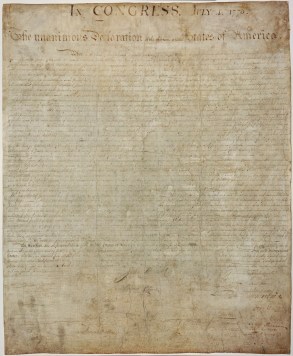 Consider the history of civil rights legislation in the United States: desegregation and other civil rights protections happened gradually, with each disenfranchised group demanding the full rights of citizenship, despite the current will of the majority to keep those groups subjugated and oppressed. Over time, the use of reason (in these cases, legal reasoning) and consideration of the values underpinning the foundational political philosophy and documents (in this case, the Declaration of Independence and the Constitution) led to new laws which not only enforced better practices, but habituated citizens to more virtuous thought and behavior, often in spite of themselves. We see this time and time again in American history: the disenfranchisement and oppression of black people, religious minorities, the poor and non-landowners, women, Jews, gay people, and so on, once common practice, came to be looked upon with righteous distaste, worthy of contempt. In so many of these cases, it was the law that changed commonly held attitudes, more than the other way around, and the change in attitudes and behavior often happened far more quickly than it would have otherwise if the practice of virtue wasn’t inculcated through law.
In sum: Considering the lessons of history, the evidence of the current states of affairs in which high gun-ownership rates correlate strongly with destructive attitudes and behavior when the entirety of the evidence is considered, and how the wisdom of two of the greatest moral thinkers is confirmed by the findings of modern science, I think that laws restricting, even eliminating, gun ownership by most individuals help lead to a wiser, more prudent, more beneficent, more amiable, more free society.
What do you think?
Ordinary Philosophy and its Traveling Philosophy / History of Ideas series is a labor of love and ad-free, entirely supported by patrons and readers like you. Please offer your support today!
– I’d especially like to thank Guy Fletcher, Lecturer in Philosophy at the University of Edinburgh, who kindly gave me some of his valuable time (despite it’s being finals week), invaluable insights, and excellent pointers regarding the subjects covered in this essay, especially in reminding me to make clearer the distinctions between meta-ethics, morality, and ethics.
~~~~~~~~~~~~~~~~~~~~~~~~~~~~~~~~~~~~~
Sources and inspiration:
Aristotle. Nichomachean Ethics. About 350 BC.
Boseley, Sarah. ‘High gun ownership makes countries less safe, US study finds‘. The Guardian, Sep 18, 2013.
De Waal, Francis. The Bonobo and the Atheist : In Search of Humanism Among the Primates, 2013.
Gopnik, Alison. The Philosophical Baby, 1998.
Haidt, Jonathan. The Righteous Mind, 2013.
Hume, David. A Treatise of Human Nature, Volume III – Of Morals. Printed for Thomas Longman in London, England, in 1740. (I had a glorious time referring to versions published in Hume’s own lifetime during my trip to Edinburgh!) Online version: http://www.gutenberg.org/files/4705/4705-h/4705-h.htm
David B. and Stephen D’Andrilli. “What America can learn from Switzerland is that the best way to reduce gun misuse is to promote responsible gun ownership.” American Rifleman, Feb 1990
Kraut, Richard, ‘Aristotle’s Ethics‘. The Stanford Encyclopedia of Philosophy, 2014
Morris, William Edward. ‘David Hume‘. The Stanford Encyclopedia of Philosophy, 2009.
Saxe, Rebecca. ‘How We Read Each Other’s Minds‘. TED talk, 2009
Tucker, Abigail. ‘Are Babies Born Good?’ Smithsonian Magazine, Jan 2013.















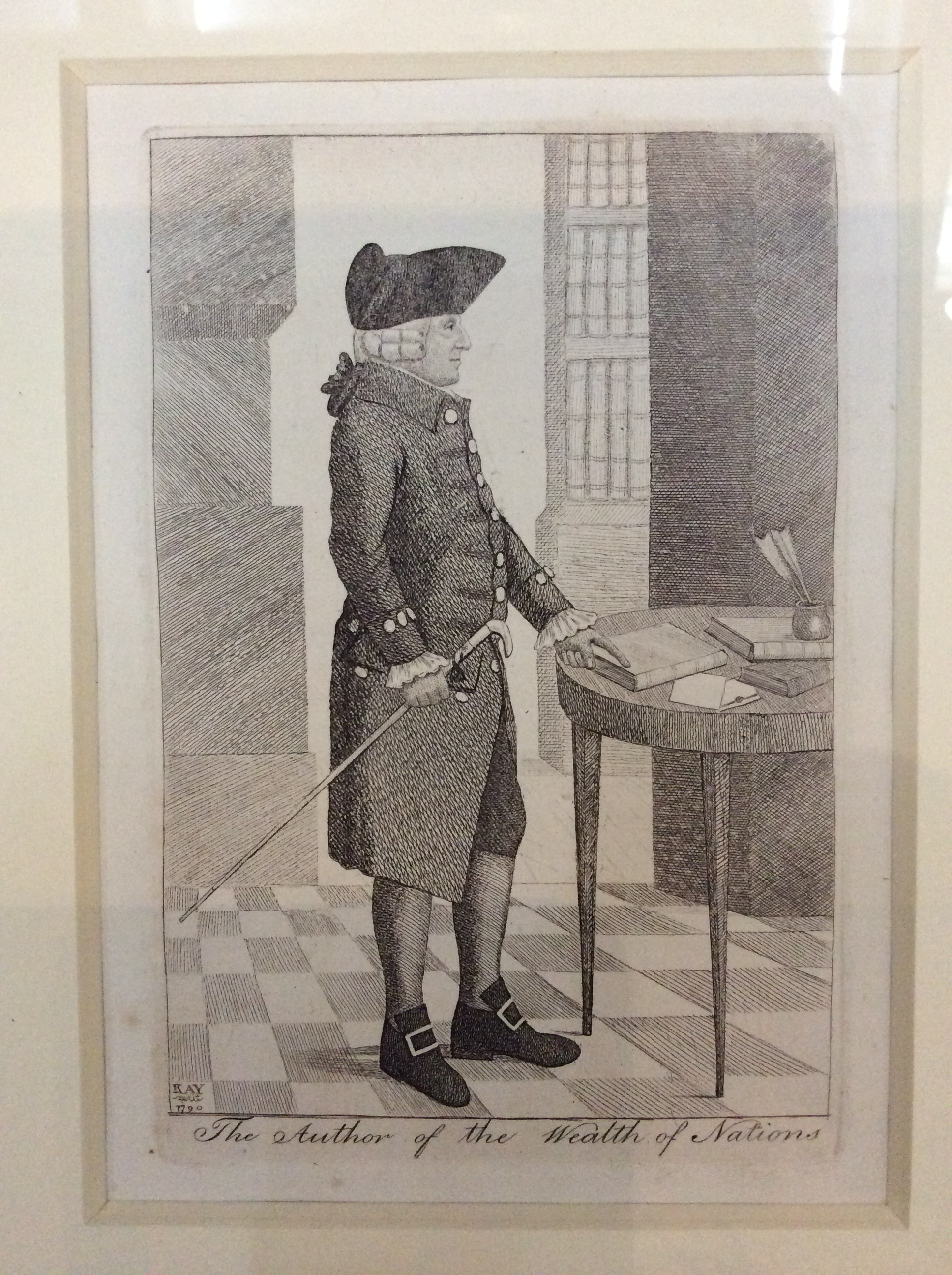


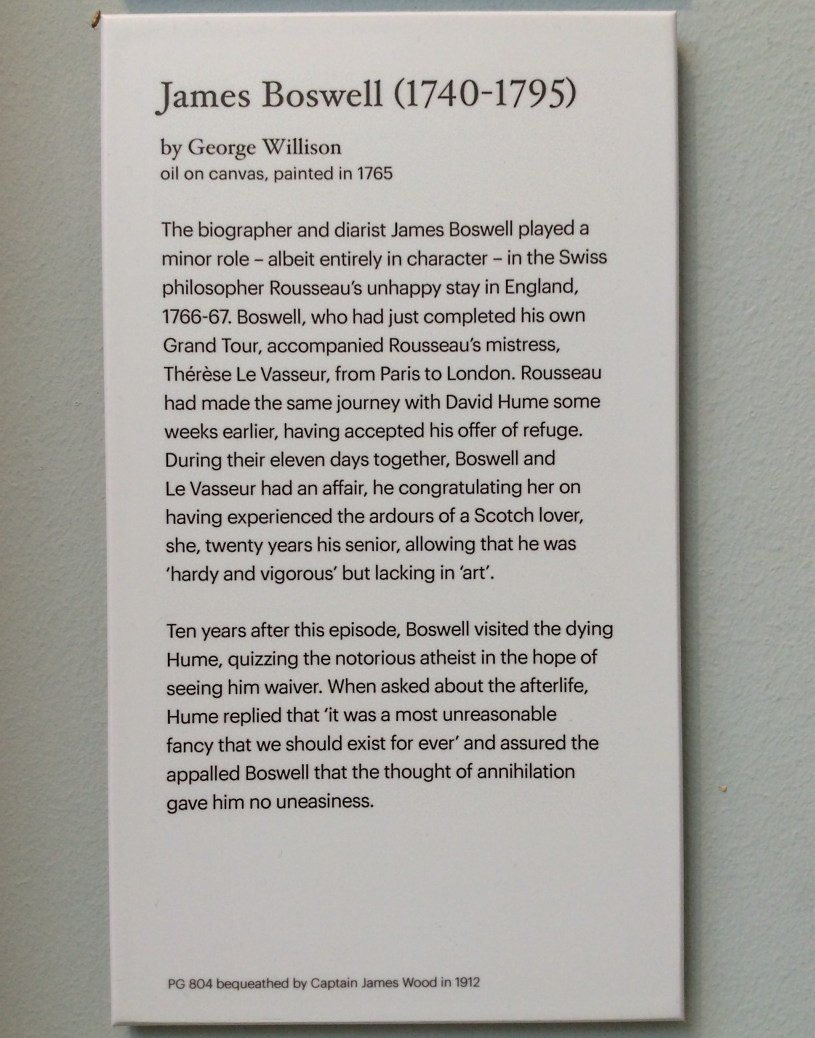





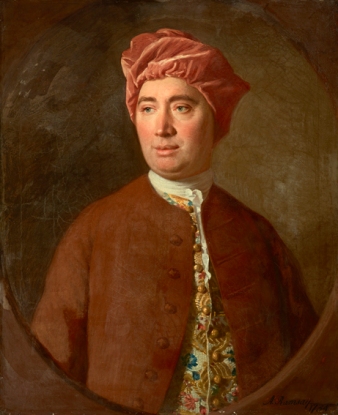 I have always been a philosophical fan of David Hume. His clear writing, commonsense approach to things, rejection of abstruse philosophizing, embracing of science, and constructive skepticism have been the sort of traits I have aspired to, however imperfectly (no, I assure you this ain’t false modesty), throughout my career. Hume’s idea that a wise person proportions beliefs to evidence, later popularized (and somewhat distorted) by Carl Sagan in the motto “extraordinary claims require extraordinary evidence” has guided me for many years, hopefully leading me to make as sound judgments as possible, as well as to change them when the cumulative evidence requires it. Add to this that le bonne David, as he was known in the Parisian salons of the Enlightenment, had a generally mild and pleasant character, and you get the features of an intellectual role model. A Stoic, however, David Hume certainly wasn’t. Or was he?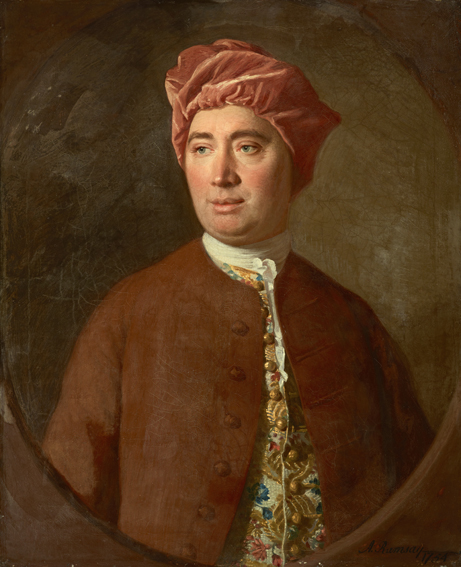





 Ordinary Philosophy