Happy Birthday, Nicolaus Copernicus!

Nicolaus Copernicus portrait from Town Hall in Toruń, ca.1580, public domain via Wikimedia Commons

Nicolaus Copernicus portrait from Town Hall in Toruń, ca.1580, public domain via Wikimedia Commons

Let us remember and salute the visionary Nicolaus Copernicus on the occasion of his birthday.

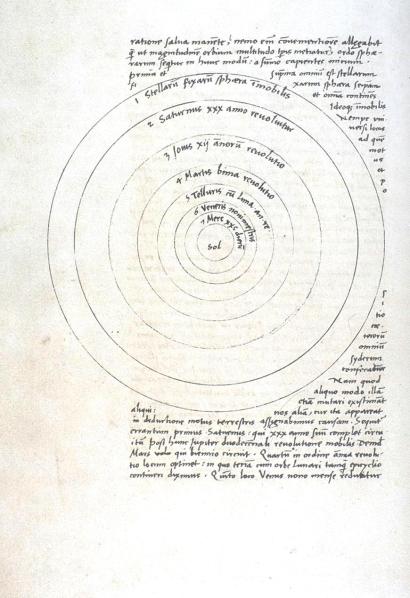
de-revolutionibus-manuscript-p9b-by-nicolas-copernicus-www-bj-uj-edu-pl-public-domain-via-wikimedia-commons

De Revolutionibus manuscript, page 9b by Nicolaus Copernicus (www.bj.uj.edu.pl) Public domain via Wikimedia Commons

Born on February 19th, 1473, Copernicus gave our modern world the heliocentric theory of the solar system. He credited the ancient Greek astronomer and mathematician Aristarchus of Samos with originally describing how Earth and her sister planets orbit around the sun and took it upon himself to make the observations and work out the mathematics to prove it. Copernicus reintroduced the heliocentric theory so convincingly that it overcame the dominant earth-centered model preferred by the powerful Christian Church for theological reasons. His rigorous and clear reason simply could not accept the clumsy, assumption-laden model that Claudius Ptolemy had devised in the second century A.D. to explain why the planets did not behave as expected if the earth-centered model was accurate. Copernicus was a religious man himself, but he did not believe that his faith required him to believe something that his reason and his own eyes demonstrated was untrue.

For emphasizing the primacy of observation-driven reason over theology when it comes to describing and explaining the natural world, Copernicus is widely credited with starting the Scientific Revolution.

Here’s a short list of excellent resources to learn more about the great Nicolaus Copernicus:

Nicolaus Copernicus – by Sheila Rabin for The Stanford Encyclopedia of Philosophy

Nicolaus Copernicus – by J.J. O’Connor and E.F. Robertson for the MacTutor History of Mathematics Archive, School of Mathematics and Statistics University of St. Andrews, Scotland

Nicolaus Copernicus – From Wikipedia, the free encyclopedia

Copernicus – episode 2 of the BBC series The Beauty of Diagrams, hosted by mathematician Marcus du Sautoy

Ordinary Philosophy and its Traveling Philosophy / History of Ideas series is a labor of love and ad-free, supported by patrons and readers like you. Please offer your support today!

Happy Birthday, Ida B. Wells!

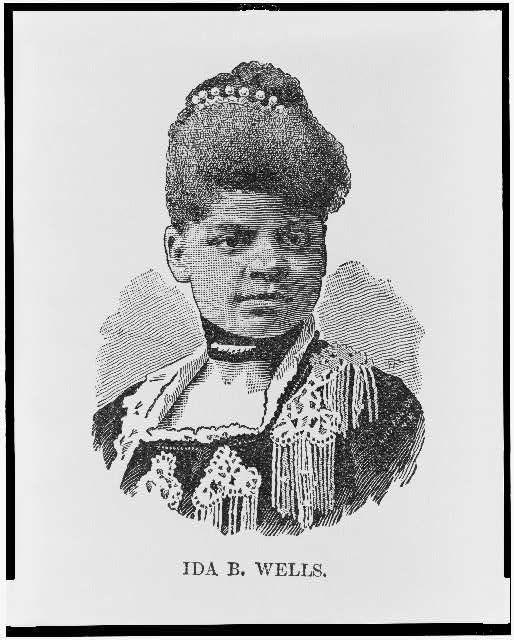
Ida B. Wells, head-and-shoulders portrait, published, 1891, Image retrieved from the Library of Congress LC-USZ62-107756, public domainIn my recent journey following the life of Frederick Douglass, I was so glad to have the opportunity to visit the place in New York City where he may have first met the great Ida B. Wells. It was late 1892, and this fiery young newspaperwoman had published her very controversial piece of investigative journalism in the New York Age on June 25, 1892. It was expanded and published as a pamphlet later that year as Southern Horrors: Lynch Law in All Its Phases.

Many people at that time thought of lynching as an unfortunate and somewhat rare excess of race-hatred by frustrated Southern whites. And many more saw it as a lawless but not entirely unjustified species of vengeance against black men who had raped white women. But Wells would change all that. In early 1892, three of Wells’ friends were lynched after a dispute between themselves and white owners of a rival business. She was outraged, and began an investigation of the practice and history of lynching as a whole.

When Wells wrote Southern Horrors, she had already been an activist and writer for black rights for many years. In 1884, she resisted being forced out of the first class train car into the ‘colored car’; she later sued the train company, won the first suit, then lost on appeal. This incident (which echoes Douglass’ train protest in 1841) led to many other lawsuits, articles, and activism against anti-black laws and social practices. In 1892, her investigation of lynching revealed to Wells that lynching was far from just vengeance for rape, it was inflicted for petty crimes, supposed insubordination or impertinence, drunkenness, competition, and so on. She discovered that lynchings were not all that rare, either, and came to the conclusion that they consisted a form of social control, a replacement for the terrorism of the slave system.

Douglass was inspired and energized by Wells’ writing and anti-lynching work, and wrote a letter praising Southern Horrors as an introduction. He visited her in New York City where she was living for a little while as a writer for and part owner of the New York Age, which was (probably) published at the site I visited in Harlem. I visited a second site associated with Wells two days after my New York visit: she delivered one of her hard-hitting speeches in her speaking tour following the publication of Southern Horrors at Tremont Temple in Boston on Feb 13th, 1893.

Education was another driving force in her life. Her first job was as a teacher at age 14, and she taught for many years, over time supplementing her teaching with journalism, writing and editing for the Evening Star, The Living Way, and the Free Speech and Headlight. Another of her most controversial, consciousness-raising articles was published in 1891 in the Free Speech about the conditions in black schools: the poor quality of the buildings which housed them, and of the education and morals of the teachers and school boards who administered them. She was not fired outright, but the school refused to hire her for the next school year. She then went on to work full-time for the newspaper, promoting the Free Speech from city to city and writing articles along the way, until the Free Speech‘s offices and printing press were destroyed by angry whites after the publication of her ‘Lynch Law’ piece. Adversity only served to strengthen Wells’ resolve, each attack causing her to re-double her efforts on behalf of her people.

Wells went on to have a long and distinguished career in writing, investigative journalism, and activism for black rights and women’s suffrage. She worked with Frederick Douglass and W.E.B. DuBois, toured the United States and Europe as a speaker and activist, founded Chicago’s Alpha Suffrage Club, served as secretary of the National Afro-American Council, founded and became the first president of the Negro Fellowship League, and helped found the National Association for the Advancement of Colored People (NAACP), among many other things.

For a long time, Wells thought of marriage and romantic relationships as oppressive, where women were expected to defer to men and flatter their vanity. But one day, she met a man who must have made her feel very differently, an attorney, writer, and fellow advocate for black rights named Ferdinand Barnett. She married him and they raised four children.

Please follow the links below to learn more about Ida B. Wells. If I manage to accomplish the tiniest fraction of what she did in my own life, I would consider myself a great success.

Ordinary Philosophy and its Traveling Philosophy / History of Ideas series is a labor of love and ad-free, supported by patrons and readers like you. Please offer your support today!

~~~~~~~~~~~~~~~~~~~~~~~~

Sources and inspiration:

Ida B. Wells-Barnett‘, episode 25 of the History Chicks podcast by Beckett Graham and Susan Vollenweider.

Ida B. Wells-Barnett‘. Encyclopædia Britannica. Encyclopædia Britannica Online.

McBride, Jennifer. ‘Ida B. Wells: Crusade for Justice‘. From Webster University’s website.

McNally, Deborah. ‘Barnett, Ferdinand Lee (1858-1936)‘, in BlackPast.org

Steptoe, Tyina. ‘Barnett, Ida Wells (1862-1931)’, in BlackPast.org

Wells, Ida. B. Crusade for Justice: The Autobiography of Ida B. Wells. Ed. Alfred Duster. Chicago, University of Chicago Press, 1970.

Wells, Ida. B. Southern Horrors: Lynch Law in All Its Phases, 1892, via Project Gutenberg

Wikipedia contributors. ‘Ida B. Wells‘. In Wikipedia, The Free Encyclopedia.

Wintz, Paul Finkelman, Cary D. Encyclopedia of the Harlem Renaissance: K-Y. 2004.


Happy Birthday, W.V.O. Quine!

WVO Quine on the Bluenose II in Halifax, Nova Scotia, photo courtesy of Douglas Quine (cropped)

WVO Quine on the Bluenose II in Halifax, Nova Scotia, photo courtesy of Douglas Quine

The emphases in my own education in philosophy were Ethics, Politics, and Law, so I didn’t spend as much time studying Willard Van Orman Quine’s great contributions to philosophy as I would like. However, if my focus was Mathematical Logic, Epistemology, Philosophy of Language, or Philosophy of Science, I would have spent a lot of time with the prodigious output of his remarkable intelligence. But one of his important observations is brought up in introductory philosophy classes generally, an epistemological (having to do with knowledge) quandary: Given that science continuously makes new discoveries, sometimes in the process overturning and replacing earlier theories, how can we ever say that we actually know anything about the world? Science relies on the fact that all theories are subject to revision, expansion, and being proved wrong. Does this mean, then, there’s no such thing as knowledge, since, in theory, anything we claim to know may be disproved by later discoveries?

For Quine, there is no dividing line between science and philosophy; they are interconnected ways of discovering and understanding the world. As the Stanford Encyclopedia of Philosophy puts it, Quine ‘denies that there is a distinctively philosophical standpoint, which might, for example, allow philosophical reflection to prescribe standards to science as a whole. He holds that all of our attempts at knowledge are subject to those standards of evidence and justification which are most explicitly displayed, and most successfully implemented, in the natural sciences. This applies to philosophy as well as to other branches of knowledge.’ The Internet Encyclopedia of Philosophy says further, ‘…Quine often appeals to [Otto] Neurath’s metaphor of science as a boat, where changes need to be made piece by piece while we stay afloat, and not when docked at port. He further emphasizes that both the philosopher and scientist are in the same boat (1960, 3; 1981, 72, 178). The Quinean philosopher then begins from within the ongoing system of knowledge provided by science, and proceeds to use science in order to understand science. …his use of the term “science” applies quite broadly referring not simply to the ‘hard’ or natural sciences, but also including psychology, economics, sociology, and even history (Quine 1995, 19; also see Quine 1997). But a more substantive reason centers on his view that all knowledge strives to provide a true understanding of the world and is then responsive to observation as the ultimate test of its claims…’

Oh, and he played the mandolin and piano, and learned a lot of languages just so he could deliver his lectures in the native language of the audience. Whatta guy!

For more about the great W.V.O. Quine, please visit the excellent sources below; a good place to start is the New York Times article.

Ordinary Philosophy and its Traveling Philosophy / History of Ideas series is a labor of love and ad-free, supported by patrons and readers like you. Please offer your support today!

~~~~~~~~~~~~~~~~~~~~~~~~

Sources and inspiration:

Hylton, Peter, ‘Willard van Orman Quine‘, The Stanford Encyclopedia of Philosophy

Sinclair, Robert. ‘Willard Van Orman Quine: Philosophy of Science‘, in The Internet Encyclopedia of Philosophy

Willard Van Orman Quine. In The Basics of Philosophy: A huge subject broken down into manageable chunks

Willard Van Orman Quine. In Wikipedia, The Free Encyclopedia.

Willard Van Orman Quine, 1908-2000: Philosopher and Mathematician. Website

W. V. Quine, Philosopher Who Analyzed Language and Reality, Dies at 92.’ New York Times, Dec 29, 2000

Happy Birthday, Omar Khayyám!

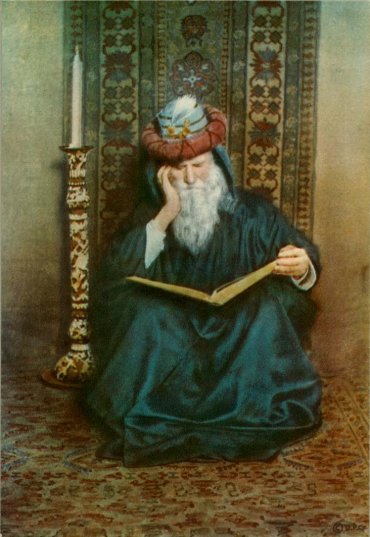
By Adelaide Hanscom, from Edward Fitzgerald's The Rubaiyat of Omar Khayyam, 1905, public domain via Wikimedia Commons

Since Edward FitzGerald published his translation of The Rubáiyát of Omar Khayyám in 1859, Omar Khayyám has been known, especially in the western world, first and foremost as a great poet, eloquently expressing the joy and beauty of life and our own struggles to live it with a sense of love and meaning. It’s a humanist work, with Khayyám writing much as an Epicurean or Skeptic here and a Stoic there, freely doubting and wondering at everything, unshackled from the orthodoxy one might expect from a famed teacher and writer of his time and place. Yet Khayyám, a devotee of Avicenna, took his Islamic faith very seriously, and thought deeply about the nature of God and our relationship to him.

Khayyám, born in Persia in 1048, was most famed in his own time as a mathematician, astronomer, and scientist. He wrote some of the most important medieval works in geometry and algebra, and helped reform the calendar, an even more accurate one than the Gregorian calendar we use today. But he was also an accomplished philosopher, and scholars are working on resolving the apparent contradictions between this work and his poetry.

One thing I’ve gotten from my research (which, thus far, is only beginning and therefore not nearly enough): for all his prodigious learning and accomplishments, Khayyám honestly acknowledges the limits of human understanding, and seems to tell us that while the great work of discerning the truths of the universe is a great, noble, even necessary endeavor, we do well to keep in mind that we can never know everything, whether through science or religion. So, Khayyám seems tells us, we do well to work, to wonder, to seek, to do right, but also to live for today:

‘At first they brought me perplexed in this way
Amazement still enhances day by day
We all alike are tasked to go but Oh!
Why are we brought and sent? This none can say’. (Rubā‘iyyāt, Tirtha 1941, 18, from IEP)

‘As Spring and Fall make their appointed turn,
The leaves of life one aft another turn;
Drink wine and brood not—as the Sage has said:
“Life’s cares are poison, wine the cure in turn.” (Sa‘idī 1994, 58, from IEP)

~ Ordinary Philosophy and its Traveling Philosophy / History of Ideas series is a labor of love and ad-free, entirely supported by patrons and readers like you. Please offer your support today!

~~~~~~~~~~~~~~~~~~~~~~~~~~~~~~

Sources and Inspiration

Aminrazavi, Mehdi and Van Brummelen, Glen, ‘Umar Khayyam‘, The Stanford Encyclopedia of Philosophy

Omar Khayaam, 1048–1131‘. The Poetry Foundation

Omar Khayyam‘. In Encyclopædia Britannica.

Omar Khayyam‘. In Wikipedia, The Free Encyclopedia.

Rizvi, Sajjad H. ‘Avicenna (Ibn Sina)‘. The Internet Encyclopedia of Philosophy

‘Umar al-Khayyam (Omar Khayyam)‘. Muslim Heritage

Happy Birthday, Lady Mary Wortley Montagu!

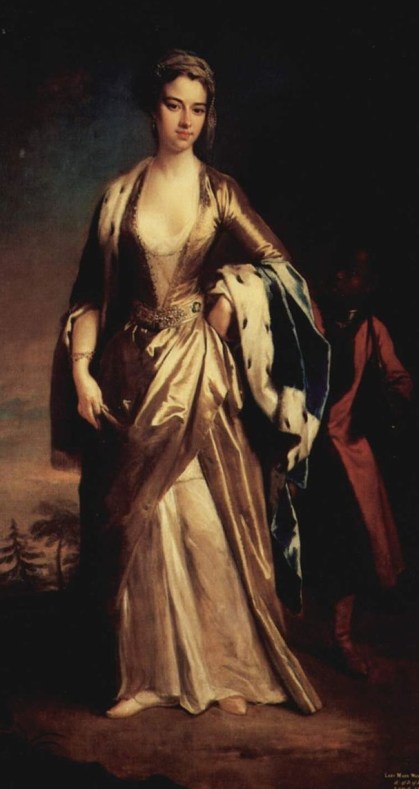
Mary Wortley Montagu by Jonathan Richardson the Younger (cropped), public domain via Wikimedia CommonsI just discovered this fascinating woman this morning, on the occasion of her birthday.

According to Encyclopedia Britannica, Lady Mary Wortley Montagu was a ‘prolific letter writer in almost every epistolary style; she was also a distinguished minor poet, always competent, sometimes glittering and genuinely eloquent. She is further remembered as an essayist, feminist, traveler, and eccentric.’

Here are three excellent features on Montagu:

Lady Mary Wortley Montagu“. Encyclopædia Britannica.

Lady Mary Wortley Montagu, 1689–1762“. The Poetry Foundation.

Secor, A., 1999. ‘Orientalism, gender and class in Lady Mary Wortley Montagu’s Turkish Embassy Letters: to persons of distinction, men of letters and c’. Cultural Geographies (formerly Ecumene) Volume 6, Issue 4 pp375-398. Arnold Publishers.

~ Ordinary Philosophy and its Traveling Philosophy / History of Ideas series is a labor of love and ad-free, entirely supported by patrons and readers like you. Please offer your support today!

Mary Wollstonecraft, Champion of Reason, Passionate in Love

In honor of Mary Wollstonecraft’s 257th birthday (she was born on April 27, 1759), here’a piece I wrote about her last fall, following my history of ideas travel series following this great feminist and champion of human rights’ time in Paris. Enjoy!

Amy M Cools's avatarOrdinary Philosophy


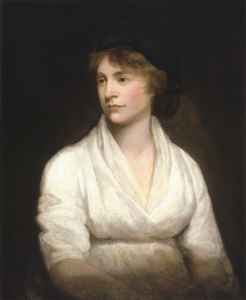
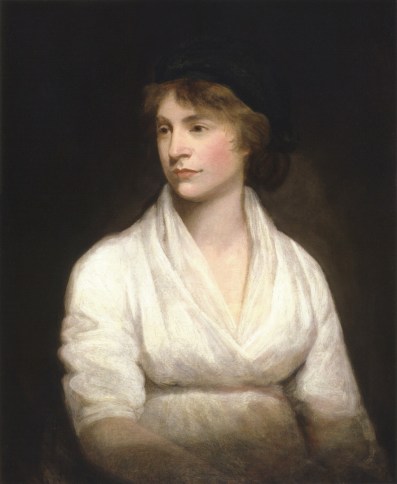
The life and work of Mary Wollstonecraft, mother of modern feminism, can seem to reveal a mass of contradictions.

Her seminal feminist work, A Vindication of the Rights of Woman, champions reason as the ultimate guide for a moral and productive life. She used reason to great effect to show why women should, and how they could, grow out of their socially constructed roles as under-educated coquettes and household drudges. She believed that reason should rule both individuals and societies because it’s the best tool we have to achieve justice and to perfect the self. Without reason, she thought, human beings are ruled by narrow self-interest, by the prejudice born of ignorance, and by crude lust.

Yet the life Wollstonecraft chose to live was widely criticized both during her lifetime and over the two hundred plus years since her death. It’s not just because she didn’t conform to the mores…

View original post 2,185 more words

Mary Wollstonecraft, Champion of Reason, Passionate in Love

The life and work of Mary Wollstonecraft, mother of modern feminism, can seem to reveal a mass of contradictions.

Her seminal feminist work, A Vindication of the Rights of Woman, champions reason as the ultimate guide for a moral and productive life. She used reason to great effect to show why women should, and how they could, grow out of their socially constructed roles as under-educated coquettes and household drudges. She believed that reason should rule both individuals and societies because it’s the best tool we have to achieve justice and to perfect the self. Without reason, she thought, human beings are ruled by narrow self-interest, by prejudice born of ignorance, and by crude lust.

Yet the life Wollstonecraft chose to live was widely criticized both during her lifetime and over the two hundred plus years since her death. It’s not just because she didn’t conform to the mores of her time; her life choices are still considered unreasonable and even self-destructive by many. At times, they made her an object of scandal, impoverished, or deeply depressed, even in such desperate straits that she twice attempted suicide. That’s because she was also deeply passionate, devoted to retaining her personal and mental freedom while abandoning herself to loves which never failed to break her heart, be they revolution, family, friend, or lover. For Wollstonecraft, reason and passion are not opposites: they are two sides of the same coin. A truly reasonable person, she thought, is kind, affectionate, and generous as well, and a passionate lover of justice, truth, and beauty.
Wollstonecraft’s chosen role for herself was, first and foremost, a teacher, an advocate of knowledge and instiller of reason. While teaching was one of the few professions open to her as an eighteenth-century woman from a respectable but impoverished background, she brought her formidable powers of reason to bear on the problems with many of the educational and child-rearing practices of her day. After her first job as a companion, she became a teacher, first in the classroom at a school she founded with two of her sisters and her best friend, and then as a governess. When she became a mother twice over in her mid- and late thirties, she was a tender and hands-on mother, an advocate of breastfeeding and attentive parenting in an era of wet-nurses and governesses, when wealthy and middle-class parents participated relatively little in the care and instruction of their children even from infancy.

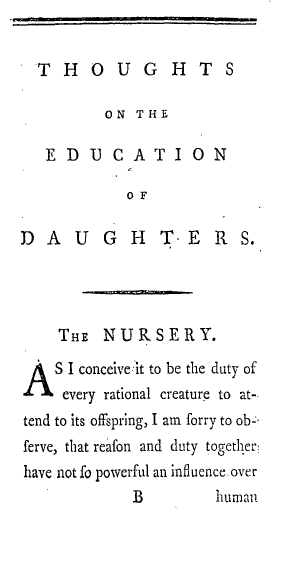
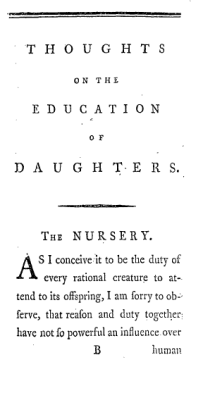
Her first book, Thoughts on the Education of Daughters, opens with her parenting advice and argues that girls should be taught how to run a household while also learning self-sufficiency. In Wollstonecraft’s time, women were not expected to support themselves; they were trained to raise a family, learning how to catch and keep a man first, to be household managers second, and to be educators of young children third. Single women, widows, and married women whose husbands, fathers, brothers, and other male relations could or would not support them had few employment options available to them, mostly directly related to one of the three roles they were trained for. Those jobs that women could respectably accept paid very little, so those working women nearly always lived a life of subservience and privation. Modern feminist thought, until very recently, equated domestic life with that housebound, nearly choiceless life most women were required to live. However, now that women’s basic moral right to self-determination has become so widely established, most have come to consider a domestic-centric life just as valid a choice for free women as a professional or public life. So in this sense, Wollstonecraft’s view of women was more progressive even than that of many modern feminists, even if by accident rather than foresight: she did not speak of a time when women would need to reject domesticity in order to free themselves from it, only to reclaim it by choice after their liberation.

Her ideas were inspired by her own experience: Wollstonecraft discovered firsthand how important it is never to assume that one’s self or one’s children will always have someone they can depend on for education, sustenance, or affection. Life’s too uncertain for that: parents, spouses, relatives, colleagues, and friends can become neglectful, estranged, impoverished, or disabled, and of course, sometimes they die. Wollstonecraft’s father squandered his inheritance and never bothered to learn how to earn an adequate living, leaving all of his children (except for his oldest son, who inherited what was left) to fend for themselves in adulthood, and his daughters without the dowry necessary for a respectable marriage. Knowing firsthand what it’s like to wrest a living from a world where women were ill-equipped for and mostly barred from nearly all employments that men were free to pursue, Wollstonecraft believed all girls should have a thorough education centered on self-sufficiency, from learning how to take care of a household, to learning how to think, to learning how to make a living. This not only gives women the freedom to choose a partner for better reasons than mere survival (Wollstonecraft equated the latter with prostitution), but leaves women free to live their lives as independently as they choose.

Until Wollstonecraft’s response to Edmund Burke’s critique of the French Revolution, her Vindication of the Rights of Men (1790), her published work continued on an educational vein, from original compositions to editorial work to translation. Beginning with The Rights of Men, through A Vindication of the Rights of Woman (1792), and up to her last work, Letters Written During a Short Residence in Sweden, Norway, and Denmark (1796), she transitioned from a teacher of ideas into an innovator, drawing on the wealth of knowledge she had obtained through her lifetime thus far of work and study. She was a semi-autodidact, her rather patchy childhood education supplemented in her teens by her own voracious reading and by friends who recognized her hunger for learning, and continued independently during her working years in the hours she could dedicate to her self-improvement. When she established herself as a professional author, she was finally able to immerse herself fully in the life of an intellectual, attending famous salons and becoming the friend and colleague of many of the brightest minds of her day.

One of the central themes in The Rights of Woman is women’s education. In this work, Wollstonecraft explained that it’s the nature of women, rather than their practical needs, that’s the ultimate justification for their rights, though she doesn’t minimize the importance of the latter. Since women possess reason just as men do, they also need education in order to be happy, fulfilled, and above all, moral. Infantilizing women by denying them a full education, she wrote, renders them not only financially helpless, entirely dependent on men whether or not they’re capricious, selfish, lazy, cruel, or just unlucky, but undermines them as moral beings. It’s reason, more than anything else, that determines the difference between right and wrong, and a quality, well-rounded education is required for using reason to its fullest capacity.

But outside of her moral reasoning, in her life as she lived it, Wollstonecraft displayed the often stark contrast between what one might expect a person ruled by reason would do, and what a person would do when driven by passion.

One of her earliest romantic interests, the Irish gentleman and songwriter George Ogle, ended up causing her no harm and probably doing her even more good than many might realize; not only did her cheer her with intellectual and witty conversation in her time as governess for the wealthy Kingsborough family in Ireland, a biographer credits him as the secret benefactor whose cash gift allowed her to return home to England and pursue writing in earnest. And her pursuit of the intellectual life she loved probably brought her more joy and fulfillment than anything else, with the possible exception of her daughter Fanny.

But most of her other loves did seem to bring her at least as much pain as joy. Her first deep attachment in her early teens was to her friend Jane Arden, who didn’t share her idealistic concept of the near-exclusive, passionate friendship of the soulmate. The more the young Mary sought to dominate her affections, the more Jane drew away. Fanny Blood, her dearest friend in adulthood, nearly lived up to her ideal, but her father’s shiftlessness kept her family impoverished, leaving Fanny with the responsibilities of main breadwinner as well as head housekeeper for her large family. Wollstonecraft saw her dreams for Fanny and herself mostly come true when they joined forces with Wollstonecraft’s sisters to found a school, but this didn’t last as long as she hoped. The distant and dithering suitor that Fanny had longed to marry for years finally carried her off to Portugal, leading to her painful death less than a year later as she succumbed simultaneously to her tuberculosis and the rigors of childbirth. The painter Henry Fuseli may have been a romantic interest: he later liked to claim this, and others echoed this claim, but much of the evidence also indicates that her interest in him was as an aesthetic and intellectual soulmate more than anything else. (At this time, she was still firmly opposed to marriage, and determined to keep herself free from the sort of entanglements that would hamper her mental and physical freedom.)

After a bit of scandal around her unconventional, and rejected, proposal to Fuseli and his wife (who was also her good friend) that she live with the two of them, she set off for Paris to witness the French Revolution firsthand. Wollstonecraft was an ardent supporter of the Revolution, as she saw it continuing the work of dismantling the tyranny of a parasitical monarchy, a corrupt and greedy church, and the oppressive social practices and mores that the American Revolution had started. By the time she arrived, the French Revolution had already taken a violent turn, but she held out hopes that this was a natural but temporary outcome of a people throwing off a tyranny that had ruthlessly oppressed them so badly and for so for so long. While she maintained throughout that a certain amount of violence is the natural byproduct of any truly transformative revolution, she became more and more disillusioned with its leadership and tactics over time, and finally, with her own hopes of its success. (She identified herself with the more moderate Girondin political persuasion throughout.) Wollstonecraft did not live long enough to see that the Revolution would end up ultimately succeeding in ushering in a new era of human rights-centered government in Europe, once some social balance was restored. But she did escape the Terror, probably narrowly, having fallen in love once again. She found herself pregnant and fleeing for her life, returning to England after giving birth her first child at age 35.

And it was Gilbert Imlay, the father of this child and the first deep romantic passion of her life, that caused her the most pain, more than the sisters with whom she was often at odds, more than her most cherished female friends who left her in one way or another, more than her ne’er-do-well brother and the Blood family, more than her self-important painter Fuselli, more than the school she founded that fell apart when she left to nurse Fanny in her final illness, leaving her deep in debt. Imlay presented himself as a man of adventure, an American frontiersman of rugged, self-sufficient, and honest character. These proved to be an illusion: he was actually primarily a man of business, sometimes (often?) of shady dealings, and one who frequently failed to keep his word. In Imlay, Wollstonecraft finally found an exciting sexual partner, a stimulating companion, and a fellow believer in truly living according to one’s personality. They never married because they didn’t believe in that institution, though they found it expedient at times to pass themselves off as husband and wife. In fact, this pretense may very well have saved Wollstonecraft’s life, since the perpetrators of the Terror, in its most insular stage, were executing many expatriate Britons; Americans, however, were still in good standing with the Revolution, and as Imlay’s ‘wife’ she was considered American as well. But it became clear over time that Imlay was not eager to embark on the happy domestic life her pregnancy caused her to long for, and he abandoned her slowly, in stages. It took her a long time to get over Imlay while struggling to get by as a single mother in 18th-century Europe; it was during this period she twice attempted suicide.

Her eventual husband and first biographer William Godwin called Wollstonecraft a ‘firmest champion’ of her sex. In Godwin, Wollstonecraft finally found the lasting sort of love she had been looking for. Their attraction was initially an intellectual connection which only later developed into romantic passion. Sadly, they only enjoyed a brief romance, less than two years, since she died of complications from giving birth to her second child. I think Godwin was right that she was a champion of reason, and I would add, of passion too, and a champion of seeking: of truth, of wisdom, of self-discovery, of new ideas and sources of knowledge, of experiences that expand the mind and the heart, of becoming the best human being one can be. To fully follow her example is very risky: she often flung prudent reasoning to the wind in favor of following her heart, in a time most dangerous for women to do so. Yet, though reasoned prudence is a virtue, it can be taken too far, holding you back, preventing you from taking chances and experiencing all the richness life can offer. She did not hold back.

~ Ordinary Philosophy is a labor of love and ad-free, supported by patrons and readers like you. Any support you can offer will be deeply appreciated!

~~~~~~~~~~~~~~~

Sources and inspiration:

Godwin, William. ‘Memoirs of the Author of A Vindication of the Rights of Woman‘. London, 1798.

Gordon, Lyndall. Vindication: A Life of Mary Wollstonecraft. New York: Harper Collins, 2006.

Jacobs, Diane. Her Own Woman: The Life of Mary Wollstonecraft. New York: Simon & Schuster, 2001. http://books.simonandschuster.com/Her-Own-Woman/Diane-Jacobs/9780743214704

Tomalin, Claire. The Life and Death of Mary Wollstonecraft. London: Weidenfield & Nicholson, 1974