In Memory of Harriet Tubman

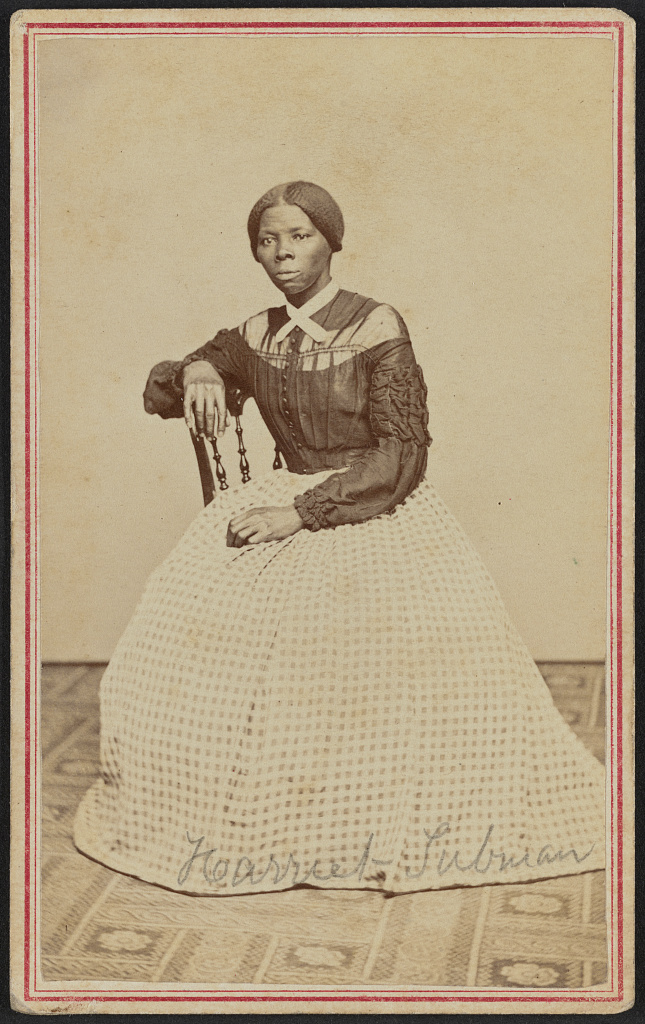
Portrait of Harriet Tubman by Benjamin Powelson, Auburn, New York, 1868-69, public domain via the Library of Congress

On this anniversary of her death on March 10, 1913, let us remember and salute Harriet Tubman, that brave, intrepid, and most ingenious of women.

Born on the eastern shore of Maryland as Araminta Ross around 1820, she was put to work very young, from field labor to housework to child tending. She suffered regular physical abuse all the while, including whippings and a cracked skull from a two-pound weight thrown her way as she refused to interfere with the escape of a fellow slave. The resulting injury caused her much pain and difficulty from the age of 12 until she received brain surgery in her late 70’s. She was both disabled and inspired by her injury: she suffered severe headaches and narcolepsy, but she also experienced visions which she believed were sent by God.

But her injury apparently little to dampen her energy or undermine her ingenuity. In 1849, Minty, as she was nicknamed, escaped to Philadelphia to avoid being sold further South where there was a good chance she’d suffer under an even harsher enslavement. Her first husband, John Tubman, a free man, refused to go with her. The next year, Harriet Tubman (she adopted her mother’s first name upon her marriage to Tubman) returned to Maryland to rescue her niece and her niece’s two children. That was the first of 19 rescue missions in which Tubman risked her own freedom by returning to Maryland rescue family, friends, and many other people, about 70 in all. She helped dozens more complete their journeys north to Canada through the Underground Railroad.
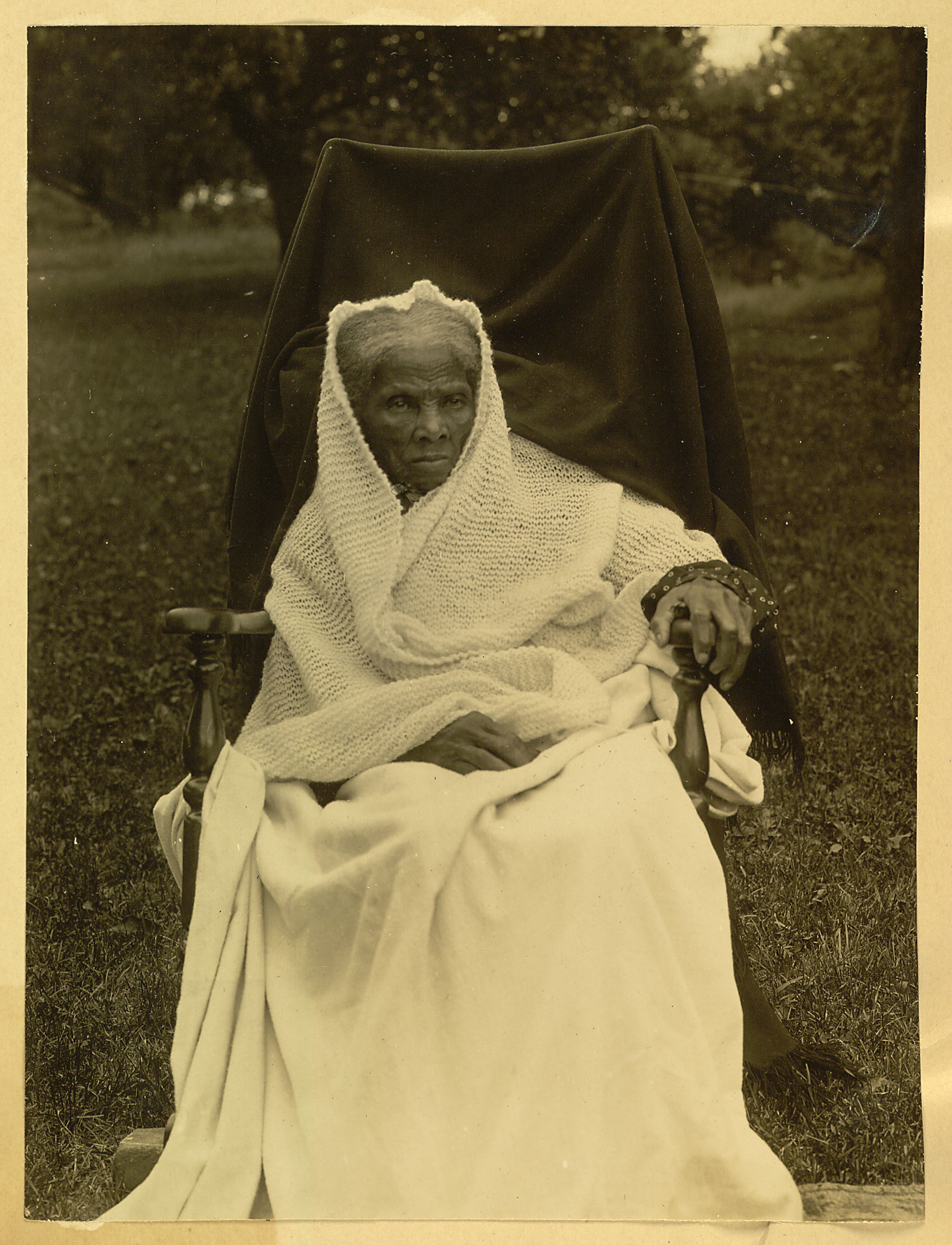
Harriet Tubman, 1911, Auburn, New York, from Miller NAWSA Suffrage Scrapbooks, public domain via the Library of Congress

During the Civil War, Tubman would go on to free about ten times as many as she had from Maryland. From 1862-1865, she worked as a nurse, a scout, and a spy for the Union Army. One on occasion, she and Colonel James Montgomery led an expedition into South Carolina to destroy plantations and liberate their enslaved workforces, about 700 people in all.

For the rest of her life, Tubman worked hard to help her fellow black citizens recover and thrive after release from slavery. She worked and raised money to care for orphans and the aged, and she also became a women’s rights activist. Despite her war services and other services on behalf of Americans most in need of help, Tubman received only a fraction of the pension that male veterans received and she struggled with financial hardship for the rest of her life, in no small part because she donated so many of the funds she raised to various causes. She died in 1911 in the Home for the Aged that she established next to her own home in Auburn, New York.

Be further inspired by the great Harriet Tubman through these works of journalism, scholarship, art, and comedy:

Runaway award notice for Harriet Tubman (then also known as ‘Minty’) and her two brothers, 1849. Via ClickAmericana.org

Harriet Ross Tubman (c. 1821-1913) ~ by Shirley Yee for BlackPast.org

Harriet Tubman ~ by Debra Michals for the National Women’s History Museum

Harriet Tubman ~ by Eloise Greenfield, performed by Thelma R. Thomas

Harriet Tubman ~ for the National Park Service website

Harriet Tubman ~ Neal Conan interviews Katherine Clinton for NPR’s Talk of the Nation

Harriet Tubman: American Abolitionist ~ by the editors of Encyclopaedia Britannica

Harriet Tubman Leads an Army of Bad Bitches ~ starring Crissle West and Octavia Spencer for Drunk History

Harriet Tubman’s Ballad ~ composed and performed by Veronika Jackson, lyrics by Woody Guthrie

Harriet Tubman’s Path to Freedom
~ by Ron Stodghill for The New York Times

Harriet Tubman: Slavery, the Civil War, and Civil Rights in the 19th Century~ by Kristen T. Oertel

Harriet Tubman and the Underground Railroad, Part I and Part II ~ with hosts Tracy V. Wilson and Holly Frey for Stuff You Missed in History Class

Harriet Tubman: Underground Railroad “Conductor”, Nurse, Spy ~ at Civil War Trust website

Iconic Americans: Meet Harriet (Minty) Tubman ~ by J.C. Shively for I Love American History blog

New Book Documents Courage of Harriet Tubman and Underground Railroad (excerpt) ~ by Eric Foner at The Root

Scenes in the Life of Harriet Tubman ~ by Sarah H. Bradford, 1869

~ Ordinary Philosophy is a labor of love and ad-free, supported by patrons and readers like you. Please offer your support today!
O.P. Recommends: Slavery and the History of Abolition: An Interview with Manisha Sinha for the African American Intellectual History Society

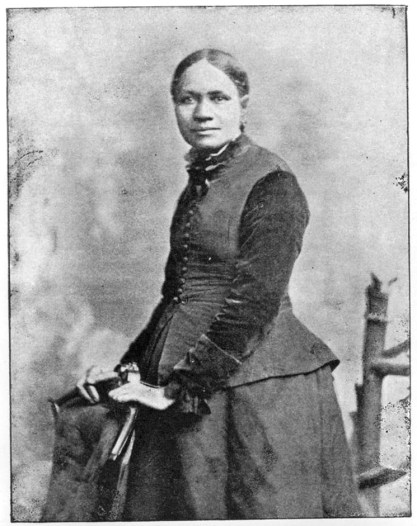
1898 portrait of Frances E.W. Harper, one of the multitude of abolitionists so richly featured in Sinha’s The Slave’s Cause

I’ve been reading Manisha Sinha‘s wonderful book The Slave’s Cause as fast as I can, which is not very fast at all given my current master’s degree course heavy reading load. But today, I’m happy to say, I’ll be really digging into it for a seminar essay I’m working on. What a happy coincidence that this interview with Rebecca Brenner for the African American Intellectual History Society is just published today; thanks as always for the excellent work you do, AAIHS!

Here are some audio sources to learn more about Sinha’s work on African American leadership in the abolitionist movement:

Harvard Book Store talk, March 2016, recorded and published at C-SPAN

Manisha Sinha, A History of Abolition: interview with Liz Covart for Ben Franklin’s World podcast

Slavery & Abolition in Antebellum America with Manisha Sinha, interview with Daniel Gullotta for The Age of Jackson Podcast

Ordinary Philosophy and its Traveling Philosophy / History of Ideas series is a labor of love and ad-free, supported by patrons and readers like you. Please offer your support today!

O.P. Recommends: Frederick Douglass’ Drunk History Episode

This year brings all things Frederick Douglass to O.P., in celebration of the bicentennial of the great human rights activist’s birth, one especially dear to my mind and heart. So here I share my favorite episode of Drunk History, in which comedian and screenwriter Jen Kirkman drinks two bottles of wine before she tells Douglass’ story. It also stars Don Cheadle as Frederick Douglass, Will Farrell as Abraham Lincoln, and Zooey Deschanel as Mary Todd Lincoln. Directed by Jeremy Konner. Prepare for some aching ribs…

Ordinary Philosophy and its Traveling Philosophy / History of Ideas series is a labor of love and ad-free, supported by patrons and readers like you. Please offer your support today!
New Podcast Episode: New Salem, in Search of Abraham Lincoln

Statue of Abraham Lincoln as surveyor at New Salem, Illinois

Listen to this podcast episode here or on Google Play, or subscribe on iTunes

New Salem, Sunday, July 31st, 2017

From the Michael J. Howlett building in downtown Springfield (part of which stands on the site of the Ninian Edwards house where Abraham and Mary Todd Lincoln were married and where Mary died), I head northwest on highway 97 to New Salem Historic Park. This is the site of New Salem, the small frontier commercial village which played no small role in Lincoln’s life as a young man striking out on his own. It’s a pleasant drive through farmland with homes and farm buildings and gas stations and tiny general stores scattered here and there. In a little under half an hour, I reach a wooded area, and soon after that, take the turnout to my left to New Salem. I stop for a snack at the little cafe offering a modest selection of hot dogs, nachos, sandwiches, and other things that take the edge off but don’t suffice as a meal. The park’s visitor center buildings are all closed because the air conditioning system isn’t working. I don’t blame them at all for not opening up: it feels very much like a summer day in the Midwest, hot and humid, and I imagine a full day indoors would get stuffy and miserable. But the park itself is open to roam, so I do… Read the written version here

Ordinary Philosophy and its Traveling Philosophy / History of Ideas series is a labor of love and ad-free, supported by patrons and readers like you. Please offer your support today!
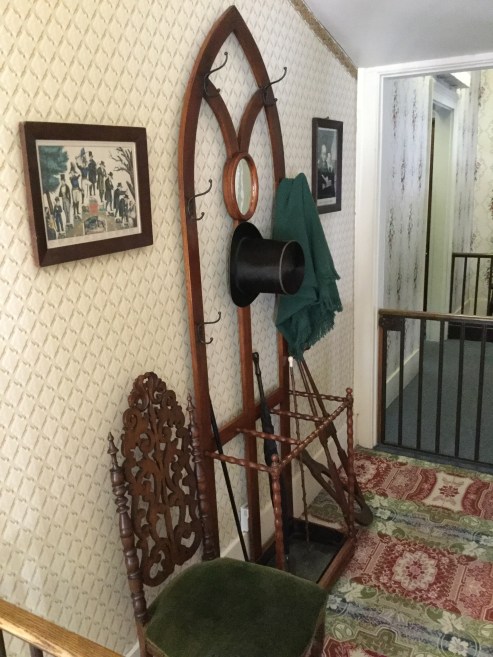
New Podcast Episode: Springfield, Illinois, in Search of Abraham Lincoln, Part 5

Downstairs hallway in the Lincoln Home with the Lincolns’ original hatstand – but no, not Abe’s original hat

Listen to this podcast episode here or on Google Play, or subscribe on iTunes

Springfield, Illinois, Saturday, July 30th, 2017

I sleep in then linger over a continental breakfast-of-sorts in my rented room as I catch up on some rest, writing, and research. When I finally bestir myself in earnest, I head over to D’arcy’s Pint to enjoy a local delicacy for lunch. My brother John lived in Springfield for a time some years ago and told me I must eat a horseshoe while I’m in town. The internet tells me that this gastropub is the best place to enjoy this decadent regional take on the open-face sandwich, so here I am. I order a full-size one with the works, spicy, and a pint to wash it down with. They bring me a small mountain on a plate composed of Texas toast, french fries, ground meats, chopped tomatoes and other veggies, and cheese sauce, the spiciness added at the discretion of the diner from the little cup of (mildly) hot sauce on the side. It’s tasty enough, I can’t deny, and the cheese sauce is very good and appears to be homemade, not at all like the waxy bright yellow kind that comes from a can or jar. But it’s not the tastiest thing I’ve ever eaten: it’s really starchy. Potatoes and bread in one dish? Hmmm. Still, it’s plenty good enough to pack up the other half to eat later. The physically-demanding, hiking-heavy portion of my journey is far enough behind me now that I just can’t digest a heavy meal of this size all at once… Read the written version here

Ordinary Philosophy and its Traveling Philosophy / History of Ideas series is a labor of love and ad-free, supported by patrons and readers like you. Please offer your support today!
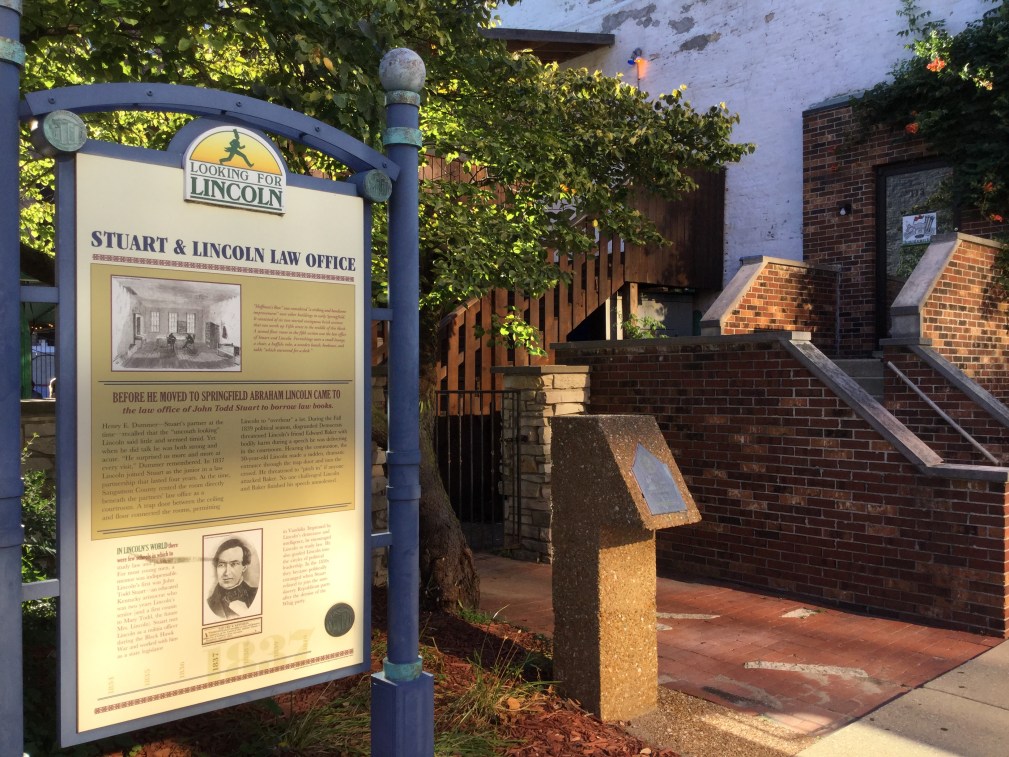
New Podcast Episode: Springfield, Illinois, in Search of Abraham Lincoln, Part 4

Site of Stuart & Lincoln law office at Hoffman’s Row, Springfield, Illinois

Listen to this podcast episode here or on Google Play, or subscribe on iTunes

Springfield, Illinois, Saturday, July 29th, 2017, continued

I leave the Myers Building at the former site of Joshua Fry Speed’s store and Abraham Lincoln’s last law office on S 5th Street, and head north, crossing E Washington St, and continue halfway up the block. On my left (west), at 109 N 5th St / NW Old State Capitol Plaza, is a historical marker for the Stuart & Lincoln Law Office. John Todd Stuart was Lincoln’s first law partner, the man from whom he borrowed the law books he needed for his legal training, and his future wife Mary Todd’s first cousin. Lincoln received his license to practice law two years after he began his studies, and joined Stuart’s law practice as a junior partner in April of 1837. He was living over Speed’s store, having moved here to Springfield to embark on his legal career, so he walked more or less the same route to get to work as I walk today from the Myers Building… Read the written version here

Ordinary Philosophy and its Traveling Philosophy / History of Ideas series is a labor of love and ad-free, supported by patrons and readers like you. Please offer your support today!
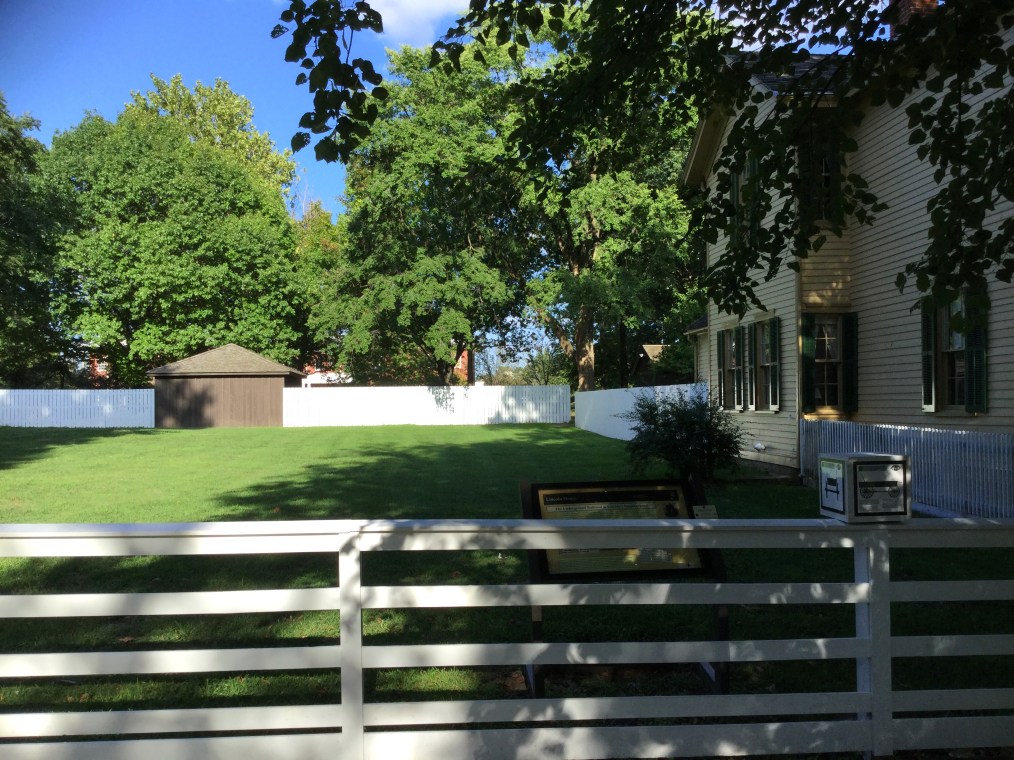
Photobook: Jameson Jenkins and the ‘Slave Stampede’ Rescue

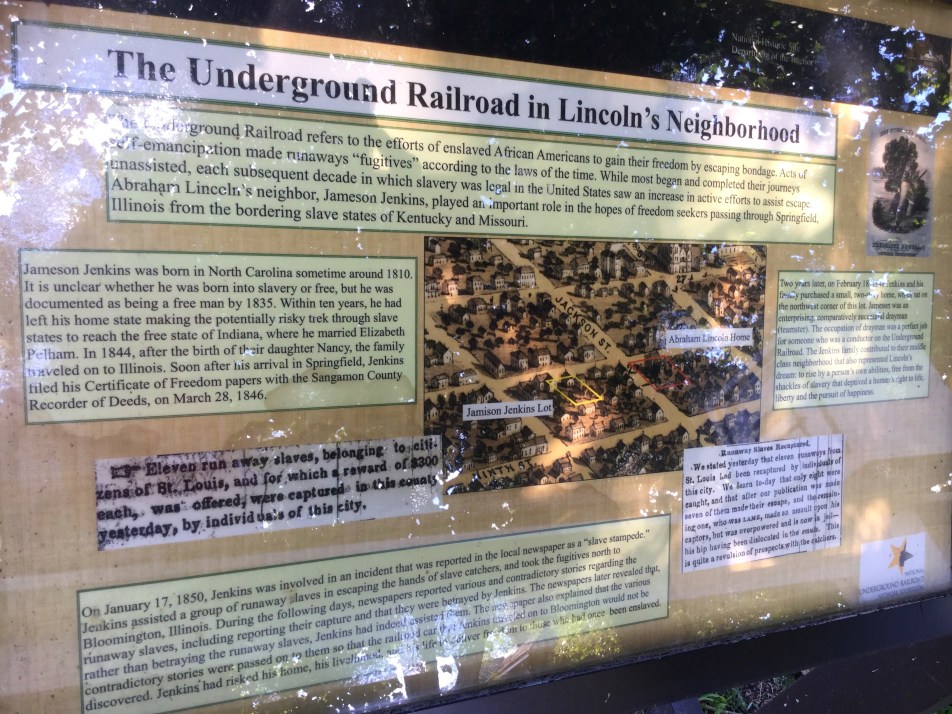
Jameson Jenkins’ lot in the Lincoln Home National Historic Site National Park in Springfield, Illinois, on 8th street next to the Henson Robinson House. On January 17th, 1850, Jenkins helped a group of 11 slaves escape northward, planting false rumors so that local papers would confuse the story and thus help the refugees evade capture. Jenkins was a drayman, and according to SangamonLink: History of the County of Sangamon, Illinois, ‘On Feb. 11, 1861, Jameson Jenkins drove [his near-neighbor] President-elect Abraham Lincoln on his last Springfield carriage ride, from the Chenery House at Fourth and Washington Streets to the Great Western Railroad depot — now the Lincoln Depot — as Lincoln began his trip to Washington, D.C.’.

The historical placard at Jameson Jenkins’ lot. The photograph is at an angle because the glare was so bright on the direct shots that most of the text and images were obscured

Ordinary Philosophy and its Traveling Philosophy / History of Ideas series is a labor of love and ad-free, supported by patrons and readers like you. Please offer your support today!
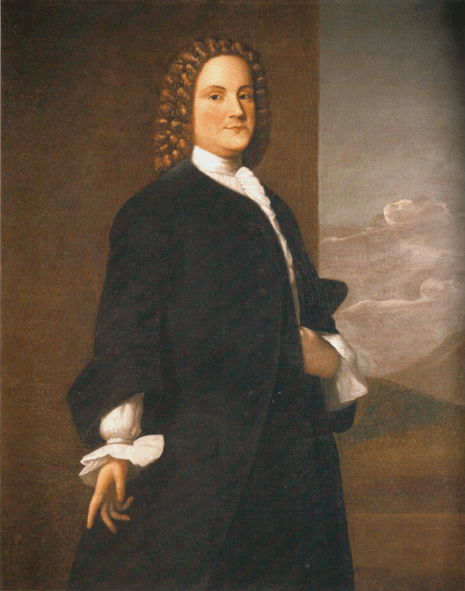
Happy Birthday, Benjamin Franklin!

Benjamin Franklin, earliest known portrait by Robert Feke, 1738-1746, public domain via Wikimedia Commons

My philosophy and history of ideas travels and research have now led me to many, many sites associated with the life, ideas, friends, and colleagues of Benjamin Franklin in two continents and the United Kingdom, and I have more on my list to visit still. Just the other day, I visited Benjamin Franklin’s house in London (see below). And I’ve discovered more links between this man and other great thinkers and ideas that will be the topics of future stories, stay tuned!

This long-lived, very sociable polymath was born January 17th, 1706 and died April 17, 1790. He was a printer, writer, publisher, inventor, scientist, diplomat, and American founding father, mentor to many, friend to countless more, and mediator extraordinaire between rivals, colleagues, friends, and nations. Always on a quest to further expand and expound human knowledge, Franklin founded the American Philosophical Society, which persists to this day.

Learn more about this extraordinary man:

Autobiography of Benjamin Franklin ~ by Benjamin Franklin, 1791

Benjamin Franklin: American Author, Scientist, and Statesman ~ by Theodore Hornberger and Gordon S. Wood for Encyclopædia Britannica

Benjamin Franklin: An Extraordinary Life, an Electric Mind ~ PBS

Benjamin Franklin FAQ ~ The Franklin Institute Website

Benjamin Franklin Joins the Revolution ~ by Walter Isaacson for Smithsonian.com, July 2003

What Led Benjamin Franklin to Live Estranged From His Wife for Nearly Two Decades? ~ by Stephen Coss for Smithsonian.com, September 2017

Ordinary Philosophy and its Traveling Philosophy / History of Ideas series is a labor of love and ad-free, supported by patrons and readers like you. Please offer your support today!
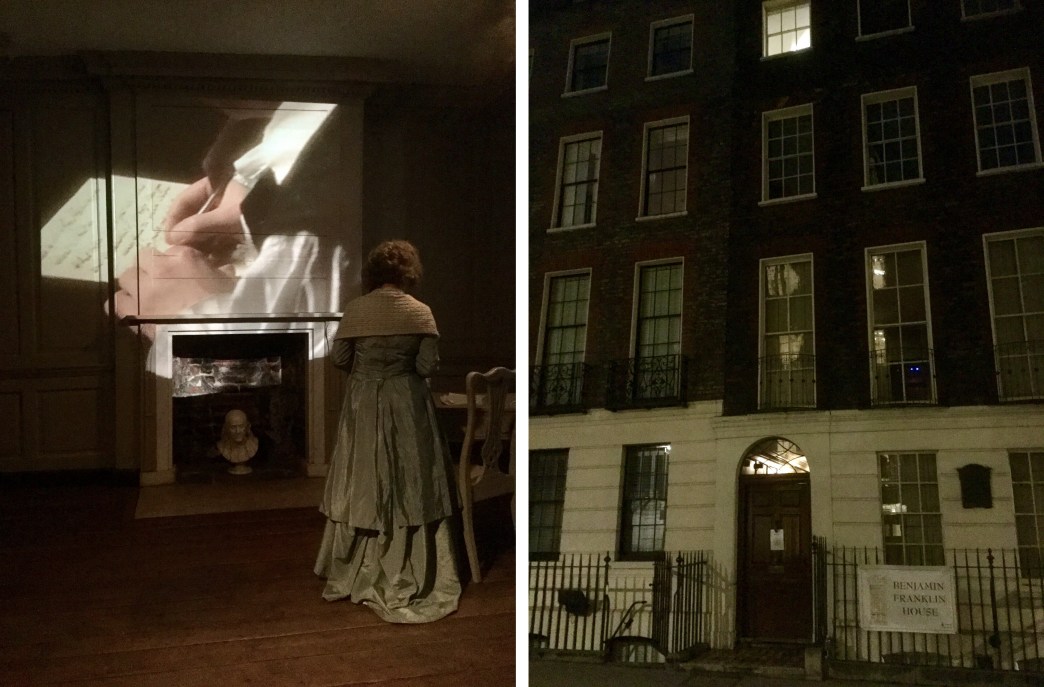
Benjamin Franklin House in London, evening visit, left, interpretive tour, right, exterior

New Podcast Episode: Springfield, Illinois, In Search of Abraham Lincoln, Part 2

Abraham Lincoln Presidential Library and Museum, Springfield, Illinois. The Museum is to the left, the Library is to the right

Listen to this podcast episode here or on Google Play, or subscribe on iTunes

Springfield, Illinois, Saturday, July 29th, 2017, continued

After my visit to the Lincoln Tomb at the Oak Ridge Cemetery and a quick stop to drop off my luggage at the room where I’ll be staying, I continue my Springfield journey downtown at the Abraham Lincoln Presidential Library and Museum, at 112 N. Sixth St. It’s a large complex, the two public buildings each stretching the length of one city block along N. Sixth St. It has a very late-1990’s – early 2000’s style, neither particularly handsome nor offensive in my view, just… generic. I associate it with municipal buildings such as city halls, branch libraries, and large post offices, perhaps because so many were built in this general style in my native California throughout my teens and early adulthood.

I start with the Museum at the northeast corner of N. Sixth and E. Jefferson… Read the written version here

Ordinary Philosophy and its Traveling Philosophy / History of Ideas series is a labor of love and ad-free, supported by patrons and readers like you. Please offer your support today!

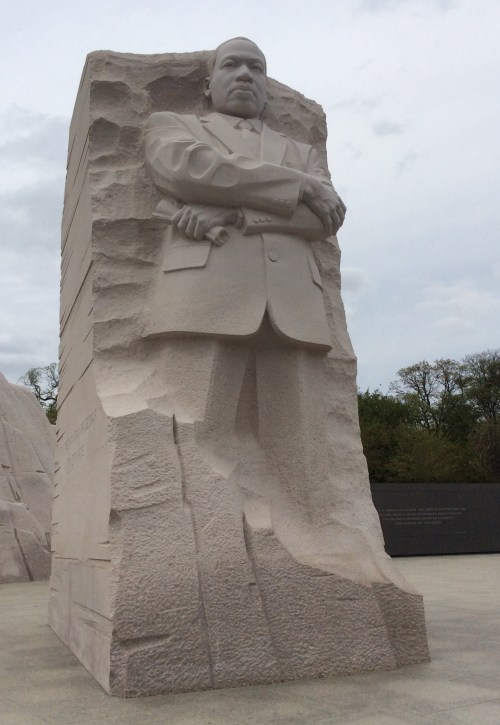
Happy Birthday, Martin Luther King, Jr.!

Sculpture of Martin Luther King, Jr by Lei Yixin on the Mall in Washington D.C.

Dr. Martin Luther King, Jr., born January 15, 1929, is among the world’s most influential and memorable civil rights leaders. The young, respected theologian and pastor of Dexter Avenue Baptist Church was elected president of the Montgomery Improvement Association in late 1955, which ran the bus boycott following Rosa Park’s refusal to move to the back of a segregated bus earlier that year. King proved to be a charismatic and eloquent leader and soon moved to the forefront of the larger movement to end legal and social discrimination and segregation in the American South. His philosophy of nonviolent direct action, heavily influenced by Mahatma Gandhi, resonated widely and still does. It’s consistent with key religious sentiments and principles found in King’s and the majority of Americans’ Christianity, as well as other philosophical and religious systems which emphasize both justice and mercy. The nonviolent tactics that King endorsed also kept the movement on such a moral high ground that it stymied would-be white critics who found it necessary to resort to smear campaigns and ad-hominem attacks, including and especially J. Edgar Hoover’s FBI administration. King’s ‘I Have a Dream’ speech and his ‘Letter From a Birmingham Jail’ are two of the most moving and most influential creations of the American modern Civil Rights Movement, or indeed of any civil rights movement.

King was cut down by an assassin’s bullet on April 4, 1968, outside of his hotel room in Memphis, Tennessee, where he was engaged in worker’s rights activism, another major cause to which he dedicated his life.

Learn more about the complex, flawed, and great Dr. King at:

About Dr. King ~ at The Martin Luther King, Jr. Center for Nonviolent Social Change

Envisioning Martin Luther King, Jr. in the Twenty-First Century ~ by Dr. Elwood Watson for Black Perspectives, blog of the African American Intellectual History Society (AAIHS)

I Have A Dream ~ speech by Martin Luther King, Jr.

King, Martin Luther, Jr. (1929-1968) ~ by Clayborne Carson for BlackPast.org

Martin Luther King ~ by the BBC

Martin Luther King, Jr. ~ by David L. Lewis and Clayborne Carson for Encyclopædia Britannica

Martin Luther King and Union Rights ~ by Michael Honey for Clarion, newspaper of PSC/Cuny

Martin Luther King, Jr: An Extraordinary Life ~ a project by The Seattle Times

Martin Luther King Jr.: Leader of Millions in Nonviolent Drive for Racial Justice ~ obituary by Murray Schumach for The New York Times

A Reading of the Letter from Birmingham Jail ~ by Martin Luther King, Jr, read and recorded by The Kirwan Institute for the Study of Race and Ethnicity and project participants

Ordinary Philosophy and its Traveling Philosophy / History of Ideas series is a labor of love and ad-free, supported by patrons and readers like you. Please offer your support today!