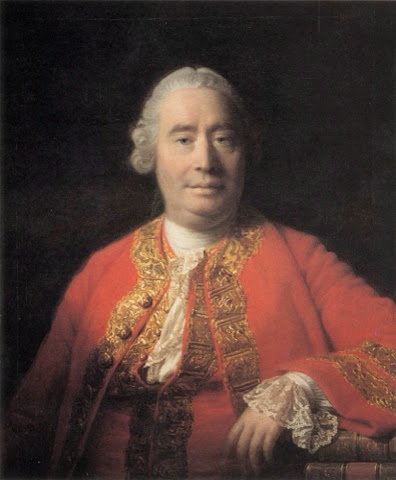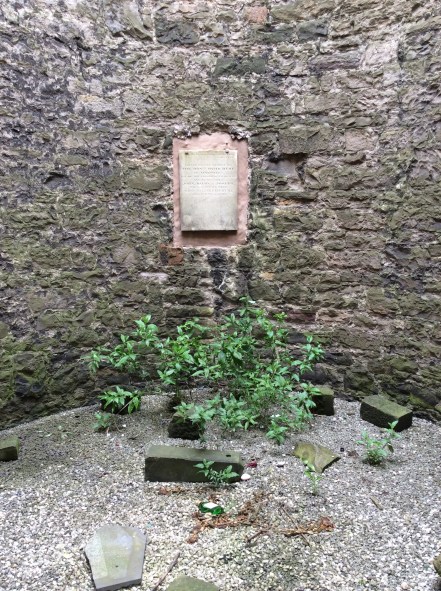
The Debate Over Government and Freedom

As I read, do research, and reflect during my philosophy-themed travel to Edinburgh, I come across more or less the same issues as I do in contemporary discussions in the United States. David Hume argued in favor of a greater degree of freedom of commerce than was afforded people in his time, because as he observed, trade and its accompanying flow of information was a sure road to greater prosperity and liberty for the people as a whole.

Yet Hume hadn’t had the opportunity to observe how in a free market, the gradual accumulation of capital and the forming of monopolies could also be used to oppress and even enslave people, and rob individuals of fair opportunity and their share of the fruits of their labor. (His friend Adam Smith, however, predicted some of this.) Both correctly described what, in fact, did happen in the free market: it brought people out of serfdom, and led to greater prosperity for a larger number of people than ever before.

Market considerations also created the slave trade and made slavery last as long as it did; it’s causing the despoilation and ruination of the homes and lives of people around the world who live where they have rich natural resources but no political power; it’s causing the US to head towards a state of oligarchy, where misguided conservatives and libertarians are pushing through legislation that allows the rich to effectively buy the government that was intended to represent others as well; it’s destroying the environment through the reckless overproduction and overconsumption by manufacturers and consumers who usually make shortsighted, imprudent decisions, as behavioral economists observe and predict.

The fact that certain individuals and moneyed interests have and do oppress people as much as governments do, is what’s missing from much of the political discourse today. I have an essay in the works regarding government, the people, and liberty, but this fact seems obvious to me: the whole point of the US system of government (as well of those of other free countries in the world today) was that it’s supposed to be us, in a representative sense.

In that case, it shouldn’t be a matter of ‘making government small enough to drown in a bathtub’, or however that Grover Norquist quote goes. If that were the case, slavery never would have ended, for example: it was we the people, through our government, that forced slaveowners and the entrenched moneyed interests that depended on slavery for their profits, to give up some of their power, and freed millions of people to pursue their own happiness. We, via the government, championed human rights against encroachments on the part of both other individuals and government: suffrage for women and minorities, religious freedom, reproductive rights, you name it. Why on earth would we want to drown ‘we the people’ in that metaphorical bathtub? That would destroy individual liberty as surely as crushing the free market would.

Re-read, then take to heart, the intro to the Constitution, Grover.

My solution: take back the government from the few moneyed interests and individuals that are buying it up bit by bit, and make it ‘we the people’ again. Individual freedom, as well as the public interest and most businesses, would thus be best served. Remember, if plurality of interests disappears, swallowed up in mega business and monopolies that end up controlling the majority of resources, we would end up, effectively, just as much in a state of serfdom as anyone was before the free market was invented.

Cycling Through Edinburgh, First Time

This blog post is going to be a bit different than the others: it’s going to be about cycling!

Hope you don’t mind the departure.

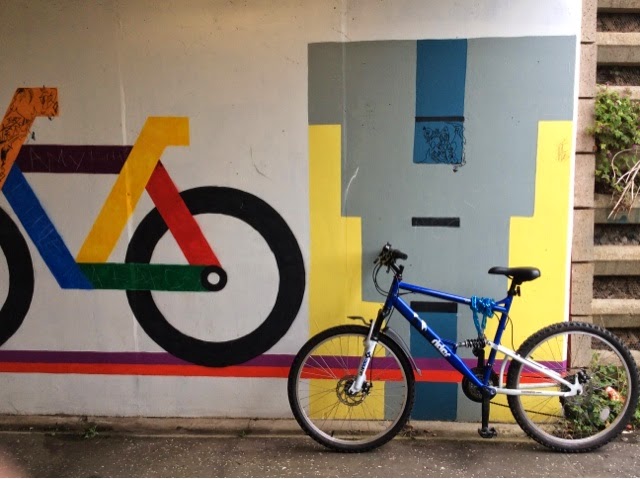
So today I finally had access to a bike, though I don’t think you, Bryan, my dear husband and resident bike mechanic extraordinaire, would approve of it.
It was abandoned at my hosts’ place by a former guest who couldn’t take it with them. And no wonder. The goddamn thing weighs about a hundred pounds. Adam (of the couple I’m renting a room from, nicest guy you’ll ever meet, as is his lady, Krystallenia) did fix it up a bit, but I discovered issues with it while riding. For one thing, the seat was way too low, I felt like I was riding a little clown bike (made of lead), and my knees started to ache fast.

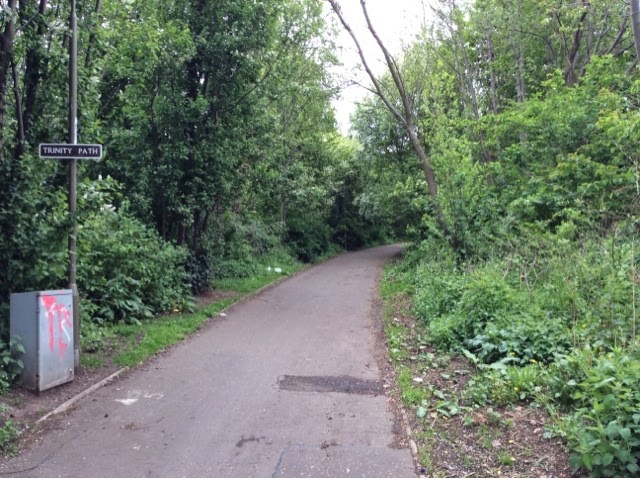
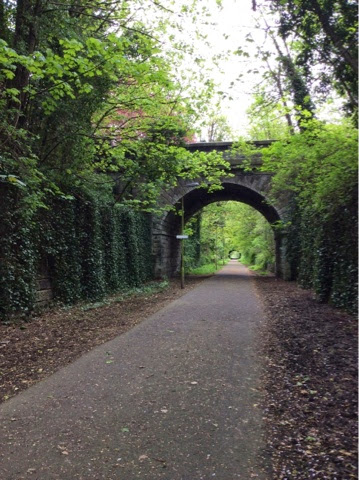
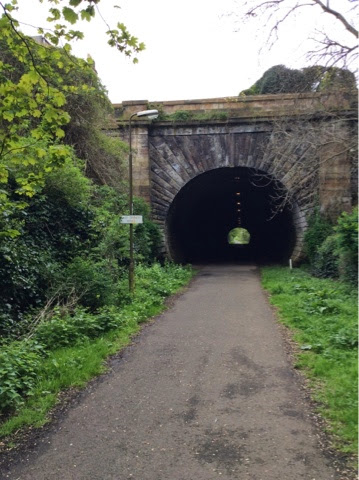
But I was cheered at the prospect of exploring Edinburgh’s awesome hub of dedicated cycling/pedestrian paths (greenways), converted defunct tram lines, so I made the best of it. 

<


Not too shabby! So I meandered through these bike paths, and while I had a general idea where I was going, a kind man soon disabused me of that notion. He could see my eyes glaze over as he tried to explain how the spiderweb of paths would lead me to where I was eventually headed, so he offered to accompany me. He pointed out (as I had realized) that the downside to the lush greenery that surrounded the paths was that you were completely shielded from seeing any landmark that could indicate where you’re going.His name is Adrian, a family practitioner, and he’s getting back into shape from being off the bike for three years. On his last cycling holiday in the Pyrenees, he fell and broke his neck. He’s okay now, he reassured me. We exchanged travel tips: he’s about to travel to the US with his wife and teenage daughters to see the usual beauty spots, the Grand Canyon, Bryce Canyon, Zion, and so forth.

When we reached the end of the bike maze, we parted, after he showed me where a bike co-op shop was, who might do quick repair. The other major issue I had discovered: the handlebar stem as not firmly bolted down, and would slip off to one side whenever I’d stop, then push off to start again. A sweetheart named Dougie (or Duggie?) raised the seat and tightened down the handlebars for me, after grumbling over the bike a bit (I apologized for asking him to work on such a shitty bike, and he grumbled, kindly, that it came from a ‘car shop, not a bike shop’). He refused to take any payment at all.

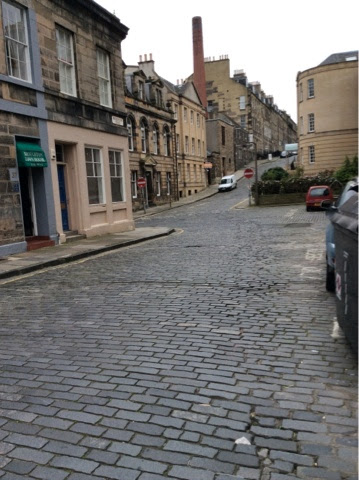
I continued on my way, through a maze of little windy, hilly, cobblestone streets. Would have been impossible without the handlebar repair.

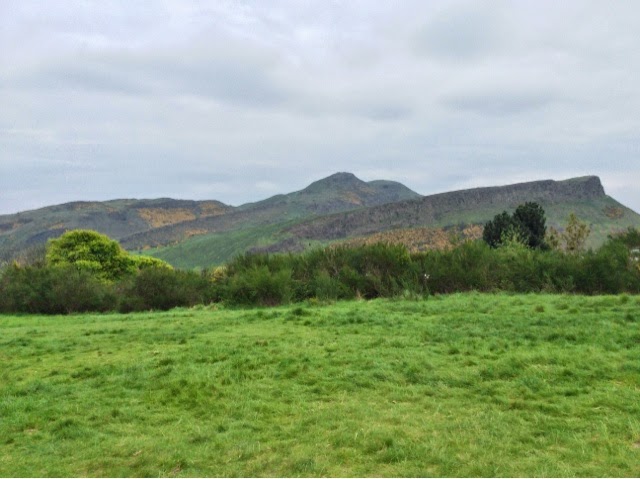
When I neared Calton Hill, I turned towards Arthur’s Seat, which I had seen from my explorations on my first day there. Here it is, seen from the hill that day:


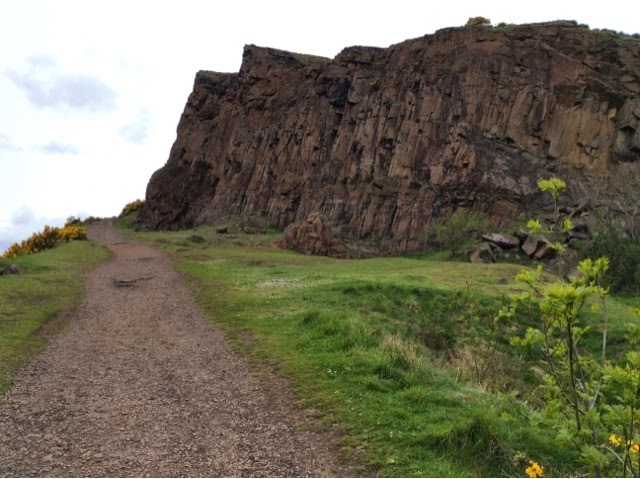
And here it is as I start the ascent:

It’s so beautiful, and has a wonderfully wild feel to it, for a place right next to the city

It was hard to stop stopping to take pictures, every bend in the path revealed a scene more enchanting than the last.

So at the summit, I stopped to eat lunch, as it started to sprinkle. There was, like, twenty weathers that day. But I dressed as a San Franciscan in spring, so I was set.

Smoked German cheese and a pear

If you want to keep warm on a ‘driech’ day (thanks for the cool new addition to my vocabulary, Jackie!), ride up Arthur’s Seat on a two-hundred pound bicycle (yes, it got heavier). I don’t think it really was kosher to take my bike up, but the signs didn’t specifically say not too, so I did. You would have been proud of me, Bryan, there was definitely some ‘gnar’. I was roasting by the time I reached the top.

So I went down, and spent the rest of the day half biking, half sightseeing by foot.
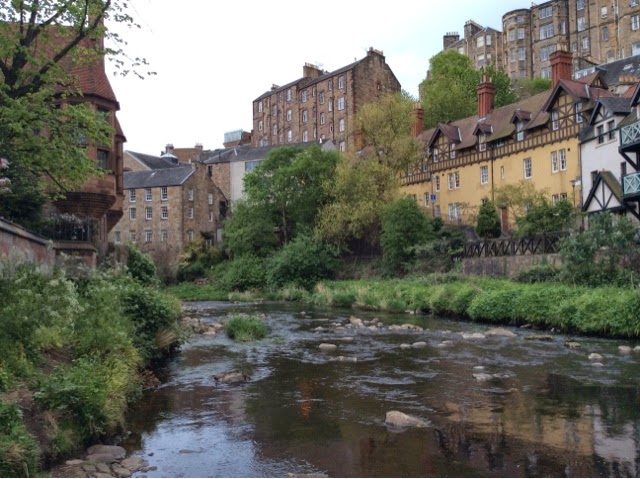
On the way back (I couldn’t linger ’till dark cause I had no lights, I went by way of Dean Village, which drops below the Dean Bridge and along Leith Waterway.

And finally, I reached my temporary home, to this sky


It was a good day. David Hume’s birthday! Yet I was the one that got the gift. Adam made scones and tea, and before bed he and I, and eventually Krystallenia when she came home from work, talked about Poland where he’s from, Greece where she’s from, and the US.

Hume Sites and Monuments, Part 2

117 (2)Thursday, ‎May ‎08, ‎2014

…or more accurately this time, Hume sites and artifacts.

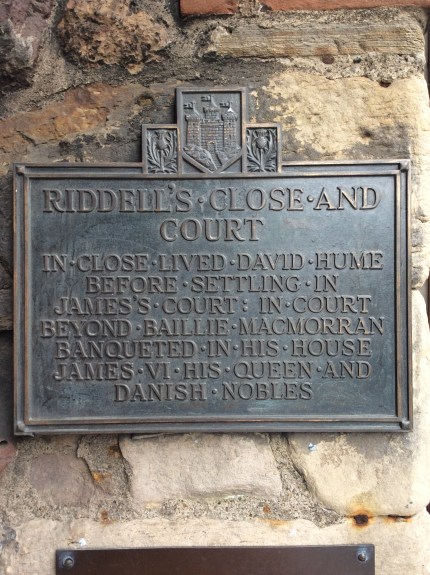
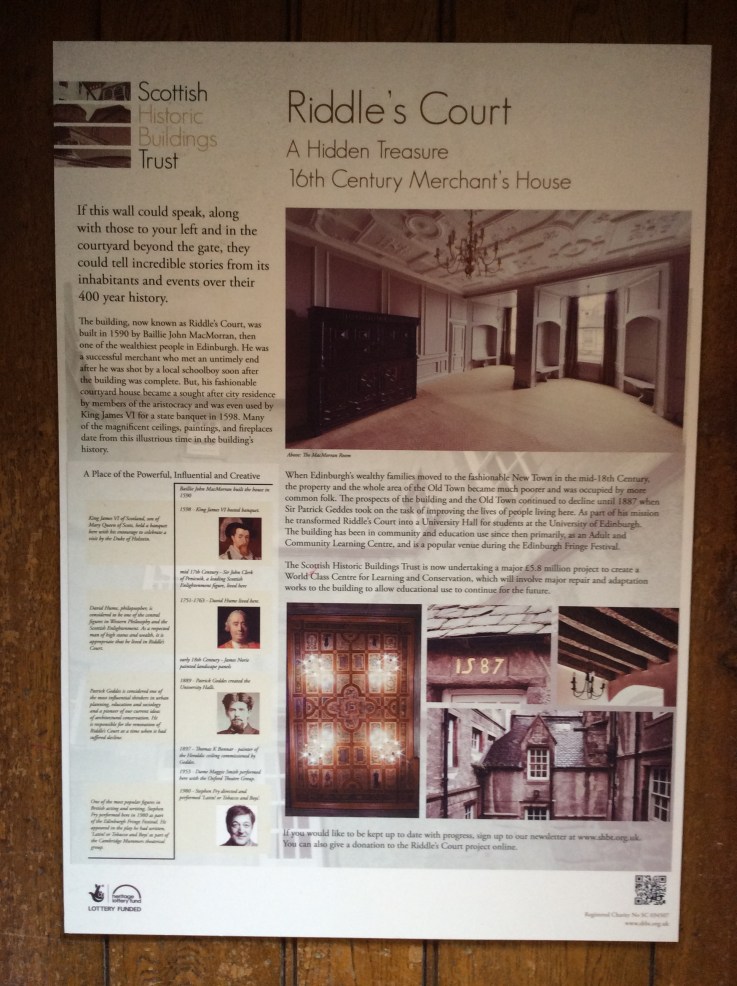
On Thursday afternoons, the Scottish Historic Buildings Trust holds an open house for Riddle’s Court (a small square enclosed by the buildings that surround it), where David Hume bought his first house in the 1750’s. In his time, the building was called a ‘land’, and a floor or suite of the building that comprised the rooms where the tenant lived was called a ‘house’. So a ‘land’ held several ‘houses’, today’s ‘flats’.

The rooms that are open to the public are on the opposite side of the court from where his house was; records are not clear from the time, but it’s pretty certain he lived in one of the upper houses on the Royal Mile side of the court. I’ll show you where in a moment.134 (2)

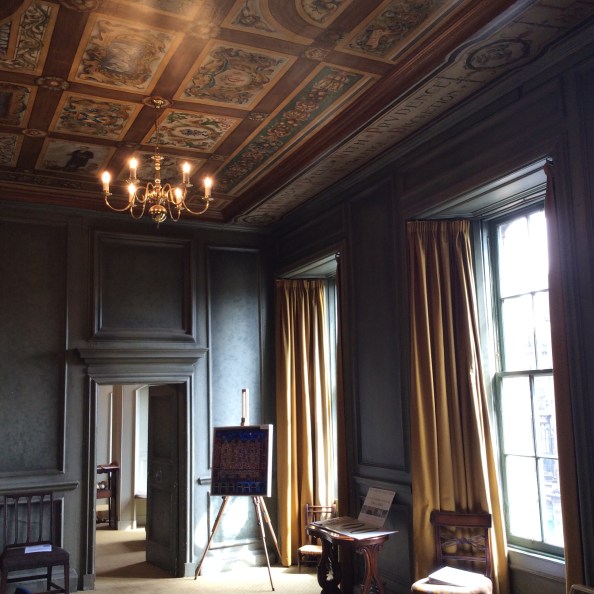
This room with the beautiful ceiling was a drawing room for later inhabitants. You can read about it in the center photo below. The closeup of the ceiling shows David Hume’s monogram, to commemorate his living nearby.779

785777778

Here (above) are views looking upwards from inside the court; the reddish color of the walls at the right is a natural color that they would have used at the time, and he probably lived in one of these upper houses. The photo on the left is at the left of the reddish wall, and I include it ’cause it’s pretty!

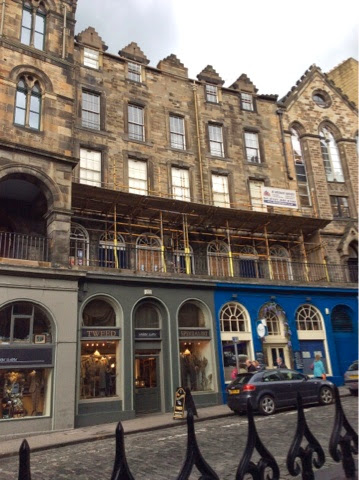
And here’s the view of the building that I’m in, opposite from Hume’s house, from Victoria Street below. Victoria Street was built in the 1830’s, where a steep, narrow footpath used to run through the gardens behind Riddle’s Court and the neighboring houses. My mother-in-law recommended that I visit Victoria Street; coincidentally, I discover that in constructing it, they almost decided to tear down the Riddle’s Court buildings, one of the most important sites I’ve come to visit. Fortunately, someone decided it was best to keep them since the buildings have such a rich history and Patrick Geddes, who was responsible for saving and restoring so many of Edinburgh’s most important historical buildings, turned it into a student center.

Two views in Riddle’s Court, Old City, Edinburgh

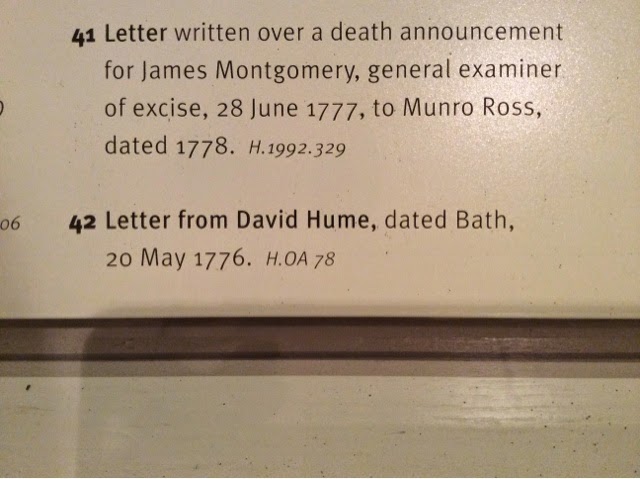
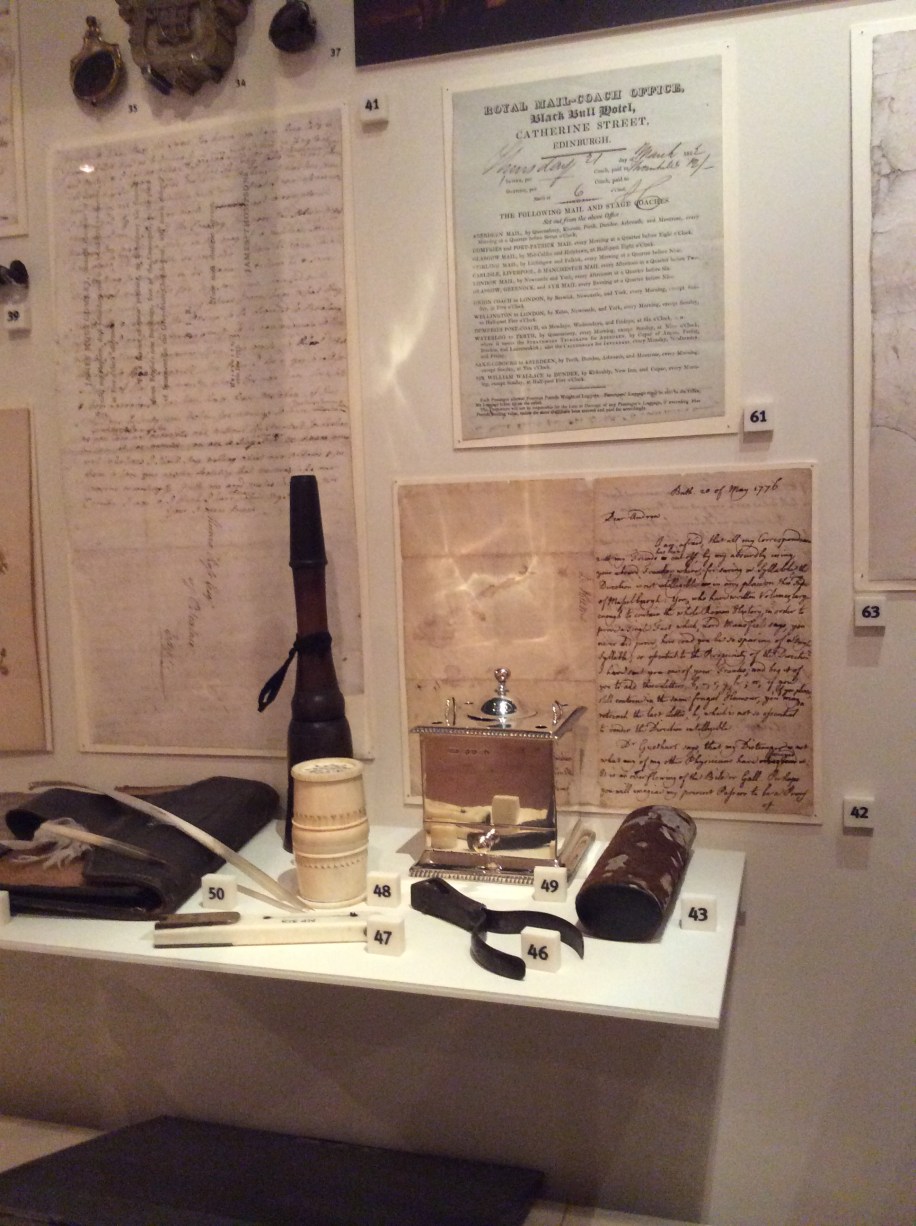
Now I turn to the first artifact I find on this trip that David Hume himself touched: a letter written just a few months before his death. It’s on display at the National Museum of Scotland, where I spend some hours this afternoon gazing at wonderful natural specimens and historical artifacts of Scotland. Hume had gone to Bath in hopes that the mineral springs there would help relieve the symptoms of the intestinal or abdominal disorder, probably cancer, that he died from. In the letter, he’s telling a man named Andrew that he’s feeling better at the moment.

A letter from David Hume to ‘Andrew’ dated May 20th 1776, at an exhibit in the National Museum of Scotland in Edinburgh

Jenner’s department store off St Andrew’s Square in Edinburgh’s New Town

Note: The following story has an update.

The next day, I set out to find the commemorative plaque at the site where David Hume’s New Town house (apartment) was at 8 South St. David’s St. at Rose. I can’t find the plaque anywhere, but his house may have stood about where this large department store stands now….

I return to the National Library of Scotland to catch up on my writing and research, and there’s another letter in Hume’s own hand on display just feet away from where I’m writing this post, at an exhibition celebrating the achievements of the Scots people.

David Hume worked for some years in the 1750’s as the librarian for the Advocate’s Library, which eventually became the National Library. Although he had a falling out with the library over their blocking of some ‘undesirable’ books he had ordered, he continued to work for them since he needed access to their collection for the ambitious, multi-volume History of Britain he was working on, for which he was most famous during his lifetime. He donated the small salary that he earned from the Library to a blind poet friend, Thomas Blacklock.

Throughout my trip, I’ve been working intermittently in the Special Collections reading room at the National Library of Scotland, referring to first editions of David Hume’s books, all published in his lifetime, save for a few ‘dangerous’ works that were published shortly after his death. I’m not allowed to take photos of them, but you’ll find them described in my various Hume essays written during and following this trip, in the section that follows each essay, called ‘Sources and Inspiration’ (my informal brand of works cited page that I use for my blog essays). When I’m back home and have more time and my own computer, I’ll look for more information on these books, with links and photos.

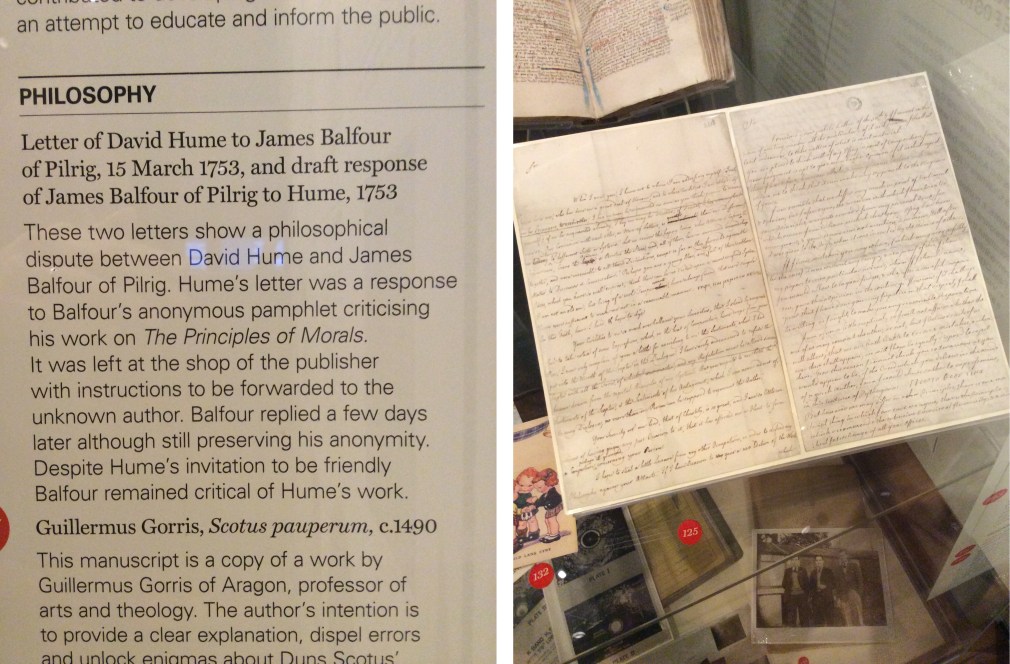
Letter from David Hume to James Balfour dated Mar 15, 1753 on exhibit at the National Library of Scotland

The library is closing, so I must go. More on Hume to come!

Ordinary Philosophy and its Traveling Philosophy / History of Ideas series is a labor of love and ad-free, entirely supported by patrons and readers like you. Please offer your support today!

The Consolations of Philosophy, and A Death Free from Fear

A view of the interior of David Hume's grave monument, Edinburgh, Scotland, 2014 Amy Cools

A view of the interior of David Hume’s grave monument, Edinburgh, Scotland

There is one argument that seldom fails to come up in discussions with religious people who feel the deep need to persuade you to share their beliefs: that religion is the only thing that can bring real consolation, to overcome the fear of death. When I was a child, and through my twenties, I was often seized with that fear; with my grandmother’s death, the first deep grief I’d ever known, it really hit hard for awhile.

Yet it was in those same years that I was religious, or had recently come out of it, that I experienced most of that fear.

I began to wonder: can that association between religion and fear of death be something like smoking? The smoking creates the need to smoke, and then is the only relief for the urge to smoke again. I think there might be something in that idea, at least in the sense that since most religions bring up the subject of death a lot, it’s harder to shake the fear if you’re constantly reminded. But really, people have been afraid of death for at least as long as they’ve been creating art, literature, and religions that express it. The origins of that fear must be a feature of human psychology, or at least a common by-product of it.

The death of Socrates has long been held up as the prime example of a good death, a death faced with composure and courage (if you’ve never read it, I encourage you to discover that moving, fascinating story!) Seneca, Epicurus, and many other great philosophers have shown us, through words and example, how death can be devoid of fear. I turn to a somewhat more modern example: the account I’m reading that Adam Smith wrote, of the death of his close friend David Hume, my favorite philosopher.

Hume was widely considered to be a skeptic and an atheist, and therefore a dangerous person, a corrupting influence. His naturalistic, practical, sensible philosophy revealed the impossibility of miracles and of knowing whether or not imperceptible things exist, and implied the lack of necessity for the existence of god(s). For his own safety and financial stability, Hume’s friends, as well as his own prudence, convinced him not to publish all he actually wrote, including one of his most important works, Dialogues Concerning Natural Religion, until after his death.

Adam Smith’s account of Hume’s death is one such that any us us could wish for. When Hume discovered he (probably) had intestinal cancer, he resigned himself to enjoying the time he had left, and making the best as well as the most, of it. After all, he said, ‘…a man of sixty-five, by dying, cuts off only a few years of infirmities…’ Hume continued to entertain and to visit friends, play cards, travel, write and edit, and do as much as his waning strength would let him. When he could finally no longer get out of bed, sit up for long, or leave his home, he passed the time in his favorite way, by reading, and dictating letters to his loved ones.

Here’s what Smith had to say, regarding how both the habits of a lifetime, and terminal illness, highlighted the true character of his friend Hume:

‘His temper, indeed, seemed to be more happily balanced… than that perhaps of any other man I have ever known. Even …the lowest state of his fortune… never hindered him from exercising… acts both of charity and generosity…. The extreme gentleness of his nature never weakened either the firmness of his mind, or the steadiness of his resolutions. His constant pleasantly was the genuine effusion of good-nature and good humor, tempered with delicacy and modesty… And that gaiety of temper …which is so often accompanied with frivolous and superficial qualities, was in him certainly attended with… the most extensive learning, the greatest depth of thought, and a capacity in every respect the most comprehensive. Upon the whole, I have always considered him, both in his lifetime and since his death, as approaching as nearly to the idea of a perfectly wise and virtuous man, as perhaps the nature of human frailty will permit.’ What a tribute!

David Hume's grave monument, Calton Hill, Edinburgh, Scotland, 2014 Amy Cools

David Hume’s grave monument, Calton Hill, Edinburgh, Scotland

The physician who attended his death wrote:

‘He continued to the last perfectly sensible, and free from much pain or feelings of distress. He never dropped the smallest expression of impatience; but when he had occasion to speak to the people about him, always did it with affection and tenderness…. [H]e died in such such a happy composure of mind, that nothing could exceed it.’

So how does a David Hume, a Socrates, a Seneca, or you, or I, live a life full of joy and virtue and free of the fear of death?

I’m not talking about living a perfect life, here. For one thing, I think the idea of ‘perfection’ is weird to apply to human beings, indeed any biological entity. The concept is too abstract, only applicable to such things as mathematics, logic, and geometry, when describing things such as numbers, and either/or distinctions, and the degree of the angles in a Euclidean triangle. Biological things, most especially human beings, are complicated, full of conflicting emotions, needs, desires, interests, and so on.

But there are ways to get though life that help you achieve happiness and goals worth having, and there are ways that don’t. And there are people (and some other animals, of course!) who exemplify ways of living that are so successful, and so admirable, that it’s an excellent idea to observe them, especially given that we are social creatures who depend on one another for edification and support.

So when it comes to living that life full of joy and virtue, relatively free of that fear of death, I think we would all do well not to look to an ideology, like a religion or some utopian ideal, or some such panacea. I’d look, rather, to a person who lived well, and consider how their character, how their general outlook on life, how their habits contributed to it. This would apply to anyone, secular or religious, anyone. 

But especially to lovers of philosophy. Philosophy, that love of wisdom, has been a love of mine for a long time, much longer than I knew what it was, how to identify it. From the time I was little, i was fascinated by the (mostly theological, sometimes political, sometimes otherwise strictly philosophical) discussions that often went on around the dinner table when the adults got together. And I would badger my dad with endless questions on such matters, my poor patient Dad!

By the time I returned to college the second time, I knew what I wanted to spend my time really getting into these fascinating topics, of how and why the world works, and how we should best go about living in it. And here I am, doing the same thing, but now sharing the discussion with all of you who take an interest, because it’s my firm conviction that philosophy is something pretty much all of us engage in, so often that it’s one of the most ordinary things we do.

But making philosophy a more central part of my life has been one of the most happy-making things in it. There’s a wonderfully titled book by a sixth-century thinker, Boethius, called The Consolation of Philosophy, written when he was going through the worst time of his life, imprisoned, facing execution. It’s such an excellent book title that it’s become an ordinary phrase, usually pluralized (I’ve used it for years before I ever found out where it came from). Like Boethius, like Socrates, like Seneca and Hume, I know that even if I had the great misfortune of facing the loss of the most treasured things in my life: my loving and beloved husband, my family and friends, my health and my possessions, I would have a way to keep my best self intact.

Philosophy is among the greatest ways, if not the greatest, to make sense not only out of day to day realities, it puts you closely in touch with the largest and most important things, and helps you realize your connections to them so deeply, that in a very real way you never fully lose your loves, your family, your friends, and it turns out that while some possessions are wonderful and worth having, they’re never worth so much that the loss of them should destroy you.

Living a life with philosophy now a conscious interest and pursuit has enabled me to live a richer and fuller life, and helps me day to day to figure out ways to make it better, and to overcome those difficulties I still have. I have high hopes that will enable me become at least a bit as admirable as these great people I’ve mentioned here, and many many more whom I have not. And not only does this hope rule my life: fear, including that of death, no longer does.

– Written in the Rare Books Reading Room of the Library of Scotland, Edinburgh, on my David Hume travel writing trip, May 2014

Ordinary Philosophy and its Traveling Philosophy / History of Ideas series is a labor of love and ad-free, supported by patrons and readers like you. Please offer your support today!
~~~~~~~~~~~~~~~~~~~~~~~~~~~~~~~~~~~~~~~
Sources and inspiration:
De Botton, Alain. ‘Seneca on Anger’ from the BBC series Philosophy: A Guide to Happiness, 2000.
 
Hume, David. Life of David Hume. (Includes his short autobiography My Own Life, and a letter from Adam Smith to William Strahan. Printed in London, 1777.
 
Konstun, David. ‘Epicurus’, 2014. The Standford Encyclopedia of Philosophy. http://plato.stanford.edu/entries/epicurus/#4
 
Marenbon, John, ‘Anicius Manlius Severinus Boethius’, 2013, The Stanford Encyclopedia of Philosophy. http://plato.stanford.edu/entries/boethius/

Scotticisms

There’s this great little addendum to an edition of Hume’s Political Discourses, a first edition printed in Edinburgh by R. Fleming in 1752, called Scotticisms, that I came across in my research.
It ‘translates’ and compares phrases in Scotch to their corresponding phrases in English (English spoken in London and by academics, I suppose). David Hume was among the Scottish authors of his time who tried to make his writing more accessible to a wider British and European audience, who often had difficulty understanding Scotch. So he made of habit of using the English phrases and/or including a glossary like this one.

Interestingly, there’s a surprising number of cases where the Scotch phrases are the same as we use in the US today, while the English version has died out. Makes sense, I guess, since we have had such a large Scotch-Irish population throughout our history, but I would have thought the English influence would have been even more pervasive at the time, through governance, literature and commerce. Overall, more of the English versions persisted here, but not many more, and those seem to be the more common phrases or single words. Of course, being that this list is from so long ago, even more of the phrases in both have fallen out of use entirely, at least in the US.

Here are some examples, with the Scotch first, and the English second

 – conform to / conformable to
– friends and acquaintances / friends and acquaintance
– incarcerate / imprison
– tear to pieces / tear in pieces
– in the long run / at long run
– out of hand / presently
– a park / an enclosure
– ’tis a question if / ’tis a question whether (of course we say ‘it’s’ instead of ‘ ’tis’ )
– nothing else / no other thing
– there, where / thither, whither
– compete / enter into competition
– a chimney / a grate
– deduce / deduct

There are some cases where I wish we kept the Scotch version, more fun, though we use the English, or something closer to it

 – notour / notorious
– to be difficulted / to be puzzled
– dubiety / doubtfulness
– superplus / surplus
– yesternight / last night
– to extinguish an obligation / to cancel an obligation
– to condescend upon / to specify (is this indicative of pride to easily wounded, where even to give details is offensive?)
– butter and bread / bread and butter (different priorities, I suppose!)

Ordinary Philosophy and its Traveling Philosophy / History of Ideas series is a labor of love and ad-free, entirely supported by patrons and readers like you. Please offer your support today!

First Day in Old Edinburgh: Hume Sites and Monuments

On Calton Hill with Edinburgh’s Old City in the background.

‎It’s early Sunday afternoon, and I’m recovering from probably the single longest day of walking I’ve ever done, and that’s saying a lot for this avid hiker and walking enthusiast. My hip joints ache, my feet ache, my calves ache, my shins ache. But I don’t care, each of these aches are little tokens of a beautiful day. But let me back up a bit…

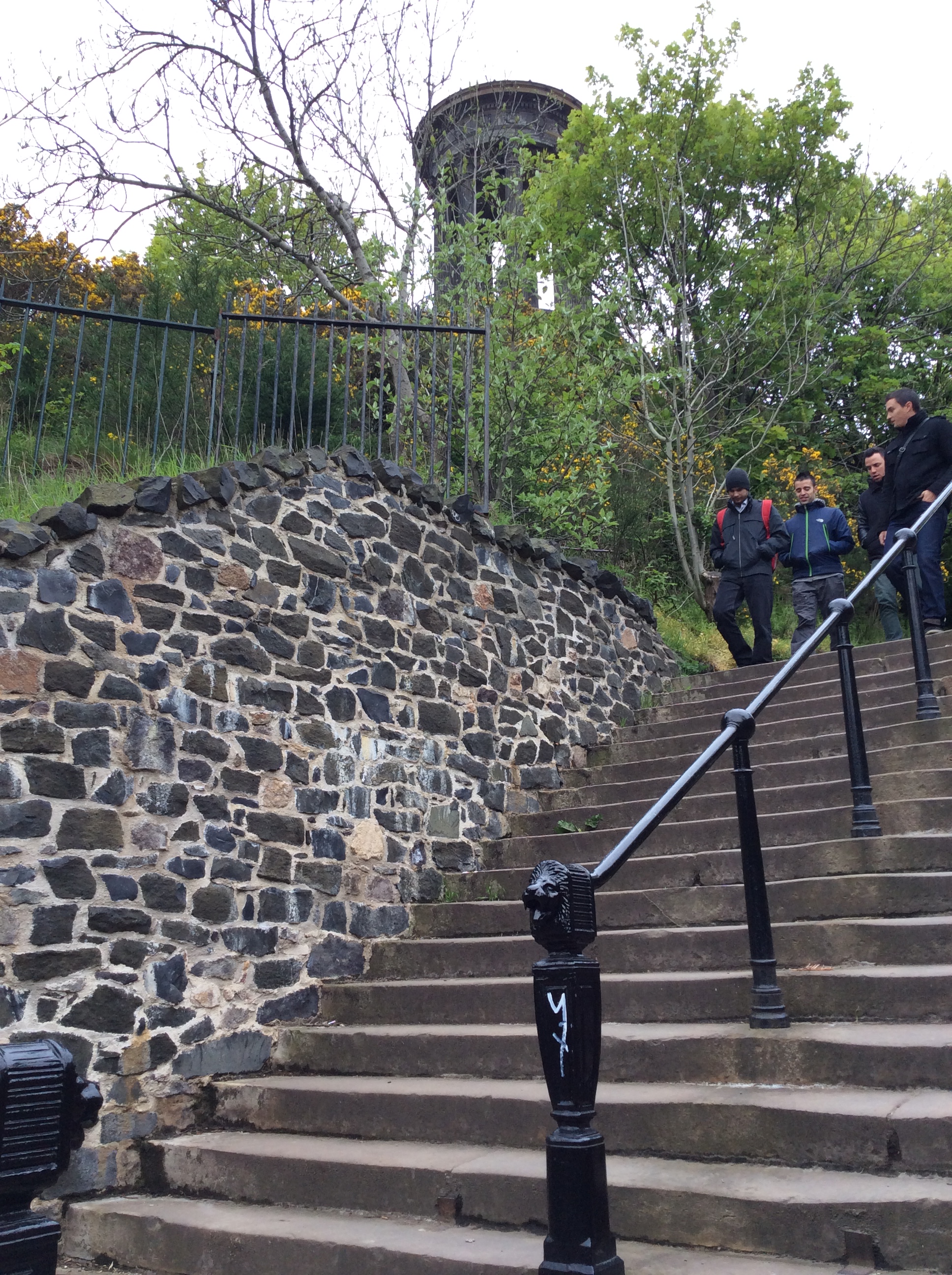
a-stairway-to-the-park-at-calton-hill-edinburgh-2014-amy-cools

Saturday, ‎May ‎03, ‎2014

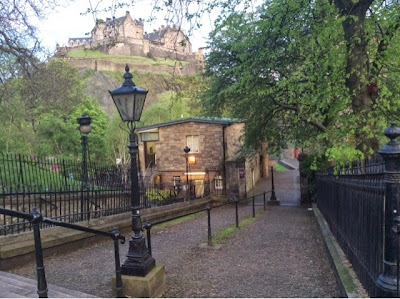
I started my exploration of the Old City from the other end, where the Castle of Edinburgh overlooks all from its high perch on a craggy rock, along the Royal Mile, which heads east from the castle to Calton Hill and the Palace of Holyroodhouse.

The first half of my day is spent getting my bearings, creating a mental map of how the Old City hangs together, while spontaneously popping into any historic place that looked interesting. That can get expensive, paying entrance fees, but what the hell, it was my first day. Anyway, that’s what keeps these wonderful old places from falling into ruin or turning into tacky gift shops, so it’s worth every penny.) I have my little camera out to keep my hands free and snap a gazillion photos along the way. I don’t have a way to upload those photos and share them with you now, but I will when I get back home in a couple of weeks. The photos you see here are taken on my tablet.

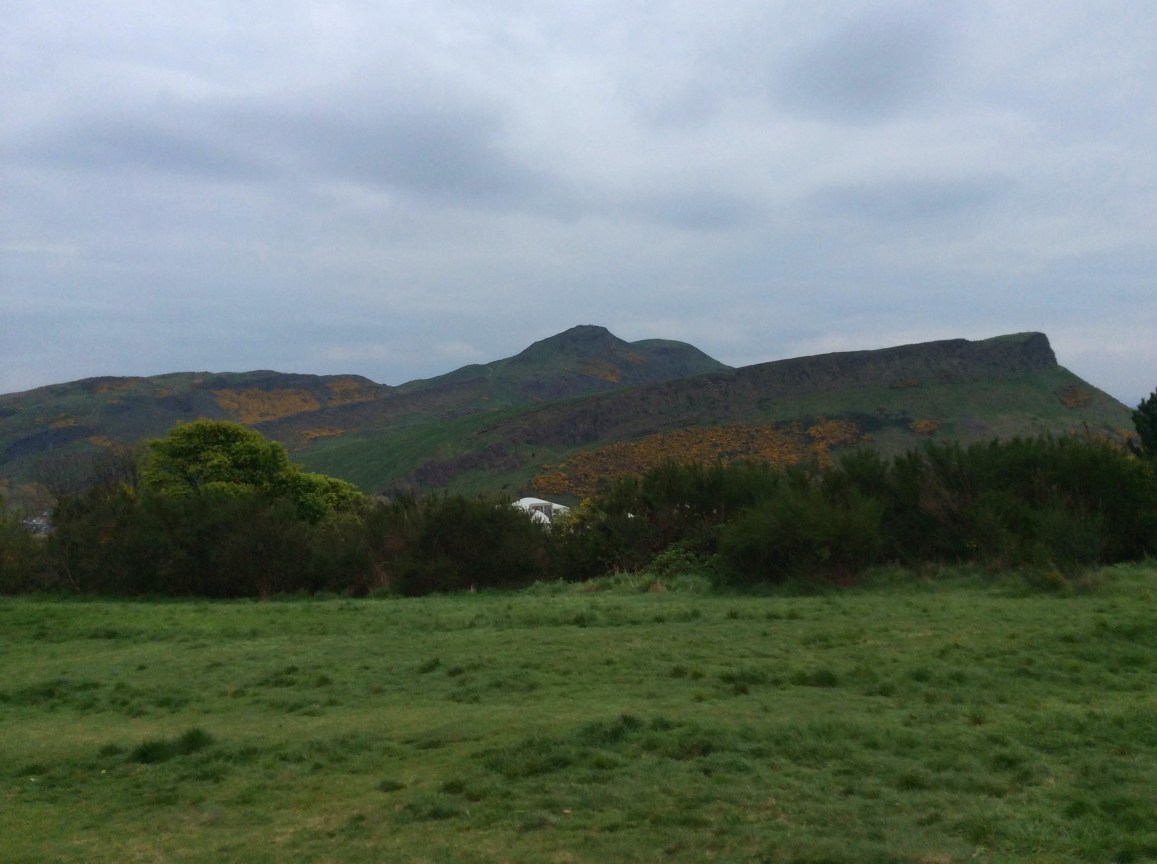
Arthur's Seat as seen from Calton Hill on a gray spring day, Edinburgh, 2014 Amy Cools.JPG

Arthur’s Seat as seen from Calton Hill on a gray spring day

So here I am, overlooking Edinburgh from Calton Hill.

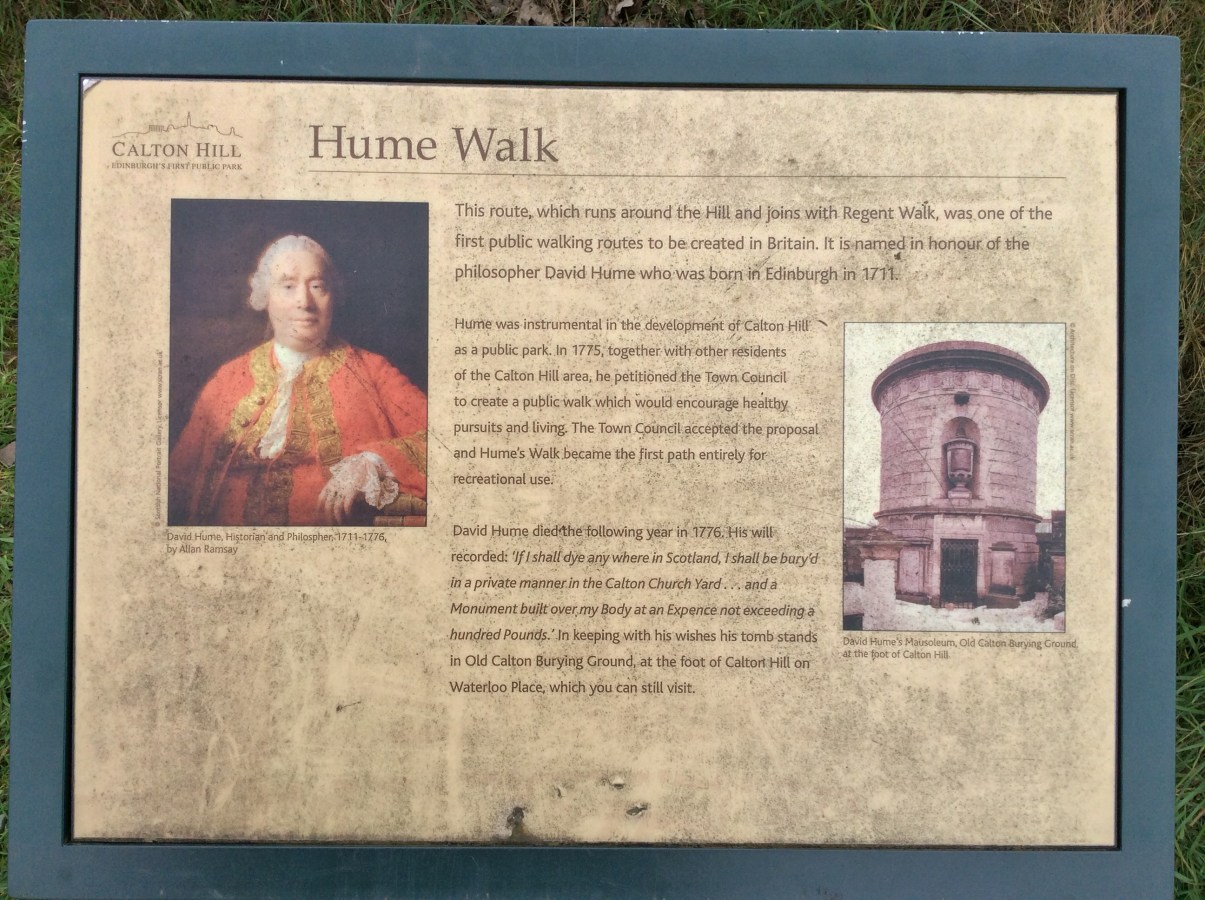
It’s on Calton Hill that my journey following David Hume really begins, though I had looked into some sites associated with his life on the way, that I’ll return to later. It’s here on Calton Hill that he’s buried, and it’s here, I discover, that he caused the first path in Edinburgh to be built dedicated solely to the improvement of mind and body. Here, people would be encouraged to take their exercise by having a lovely place to walk, on this hillside with its spectacular views of the city, the surrounding countryside, and the Firth (estuary), away from the hustle and bustle, the crowds, the dirt, the unhealthy air, and the smells of the city. The first path to be built is named Hume Path in his honor, so of course, that’s the path I choose.

hume-walk-plaque-on-calton-hill-edinburgh-2014-amy-cools

Hume Walk sign, Calton Hill, Edinburgh

David Hume’s grave monument, Calton Hill, Edinburgh, Scotland

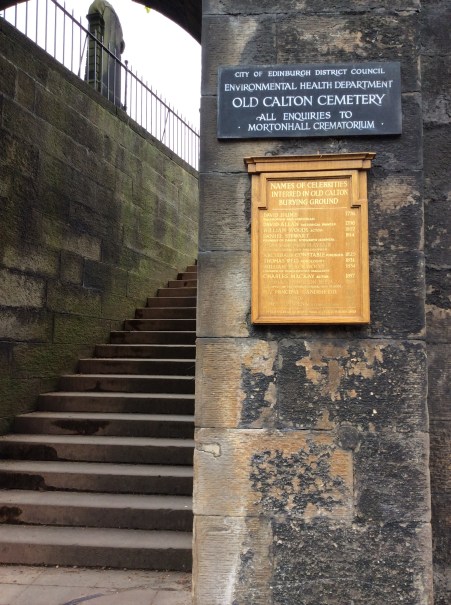
Old Calton Cemetery, Calton Hill, Edinburgh, 2014 Amy Cools.JPGI head back downhill a little from the park at the top of the hill, and Calton Hill Cemetery is on my left. I go through the gate and up the short flight of steps, and a bit ahead to my right, I find Hume’s elegant and rather simple monument and gravesite. I spend a good bit of time here musing: the power of physical objects to really bring things into focus still never fails to surprise me, and my sense of purpose in this journey to Edinburgh is strengthened.
I’ll soon write a reflection on his good and noble death

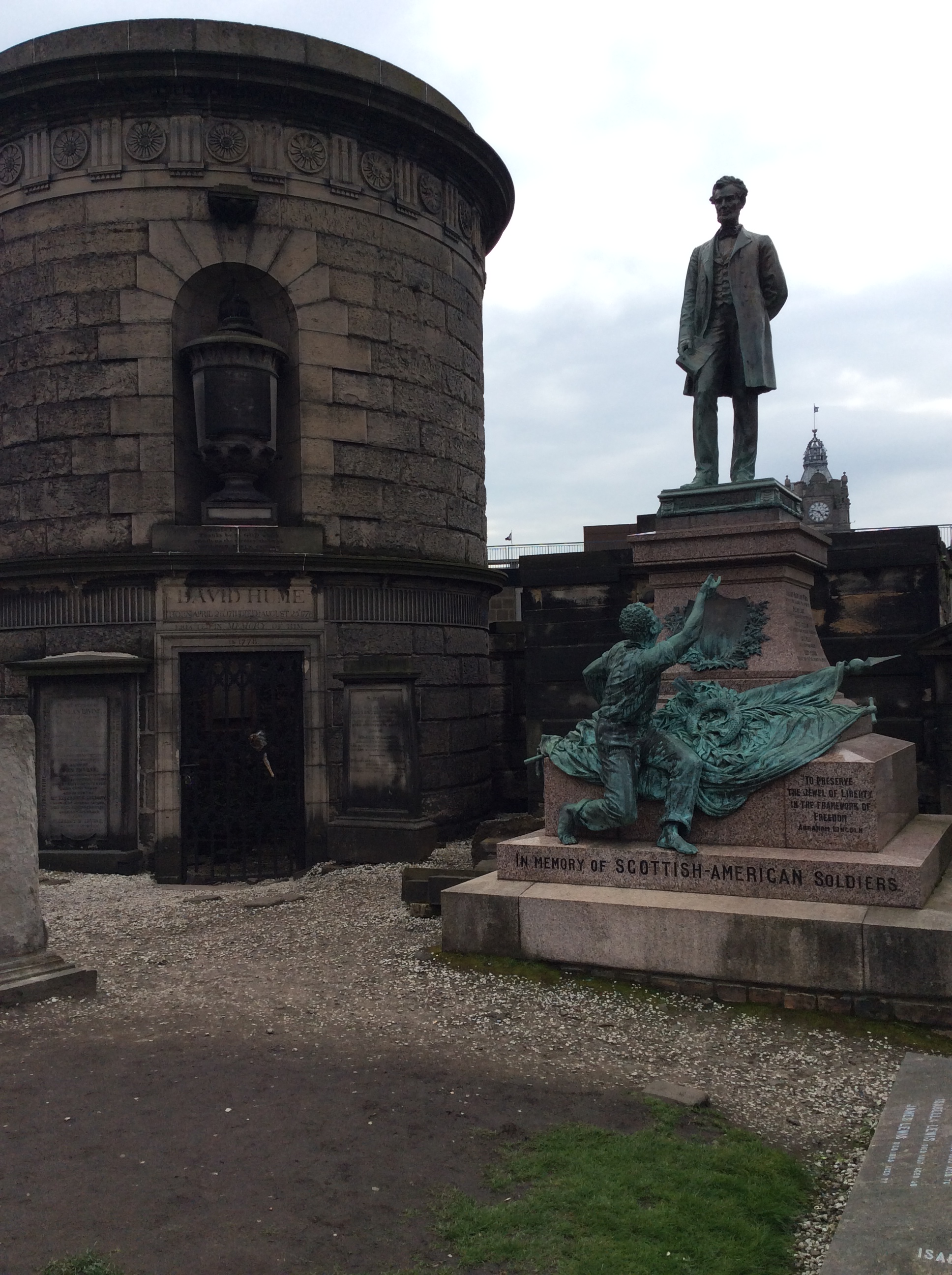
Hume's and Abraham Lincoln Scottish soldier monuments,

Hume and Scottish soldier monuments at Old Calton Cemetery

I’m also moved to discover that a monument to Scottish-American soldiers was erected, featuring a statue of Abraham Lincoln. It seems to me so fitting that these two great heroes of freedom are honored here side by side, one of freedom of person, the other of thought.

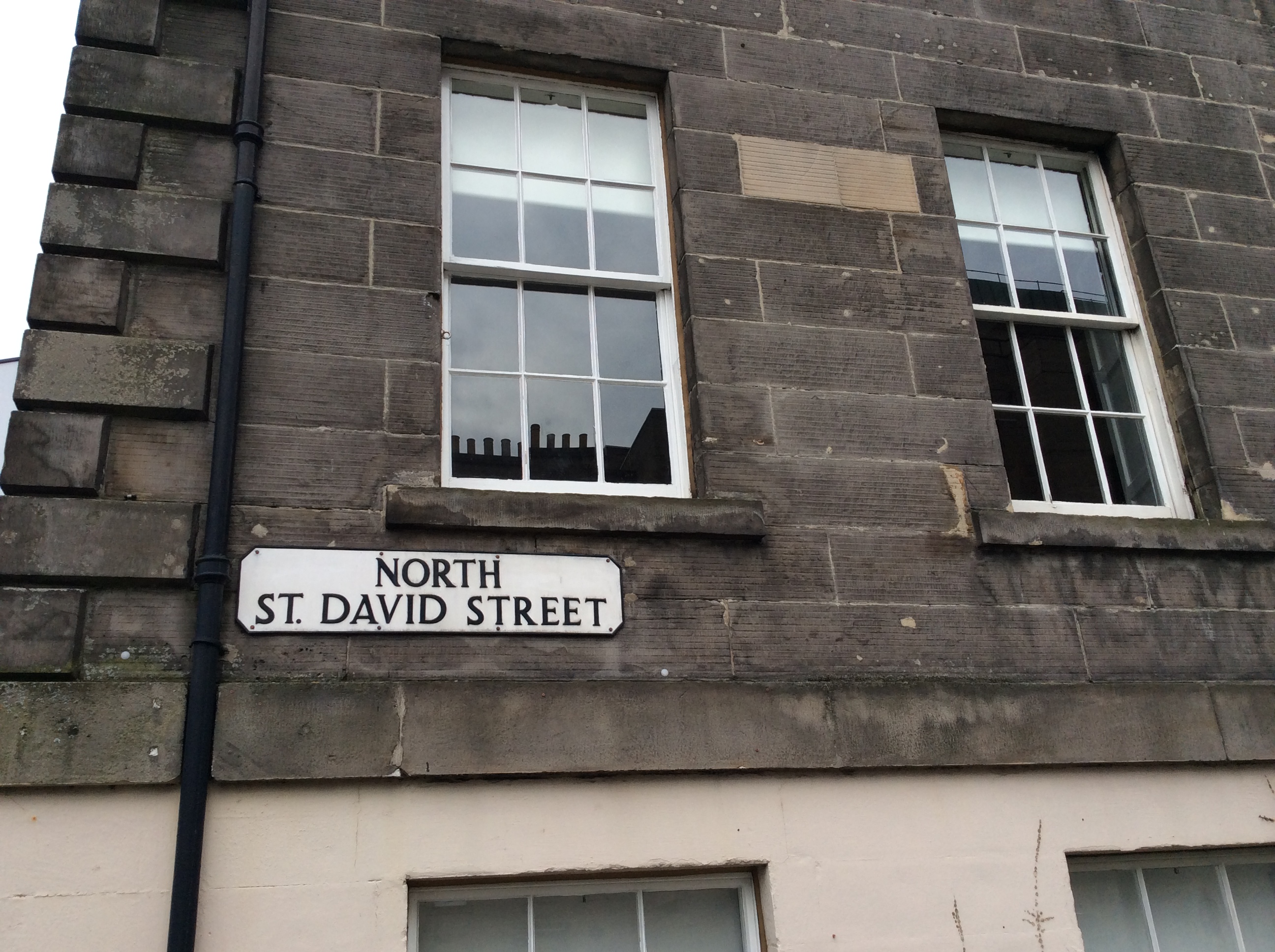
When I leave Calton Hill, I return to the Royal Mile by an alternate route, with a detour along York Place to St. David’s Street. This street got its name from a fond prank by his close friend Nancy Orde, who wrote this little tribute in chalk on the side of Hume’s house. The street bears the name to this day.

My explorations are sure to bring me back to this street since Hume once lived here, so stay tuned. I’ll be back when I’ve gathered more details.

north-st-david-street-sign-edinburgh-scotland-2014-amy-cools

statue-of-david-hume-on-the-royal-mile-edinburgh-2014-amy-cools

Statue of David Hume on the Royal Mile by Sandy Stoddart, 1995

I return to the Royal Mile and this time head west, passing by a grand statue of David Hume, across from St. Giles’ Cathedral. I’m not sure it looks anything like him based on all of his portraits I’ve seen, but it’s a handsome statue, very classical. This bronze Hume probably looks much better with his shirt off than the real man ever did; he was a portly and not terribly good-looking fellow, as much as I admire and respect him. But who knows? Perhaps the younger Hume was a little more fit, before the years of poring over books left him out of shape. The statue’s right toe is polished and very shiny, looks like it’s a tradition to rub his toe for luck.

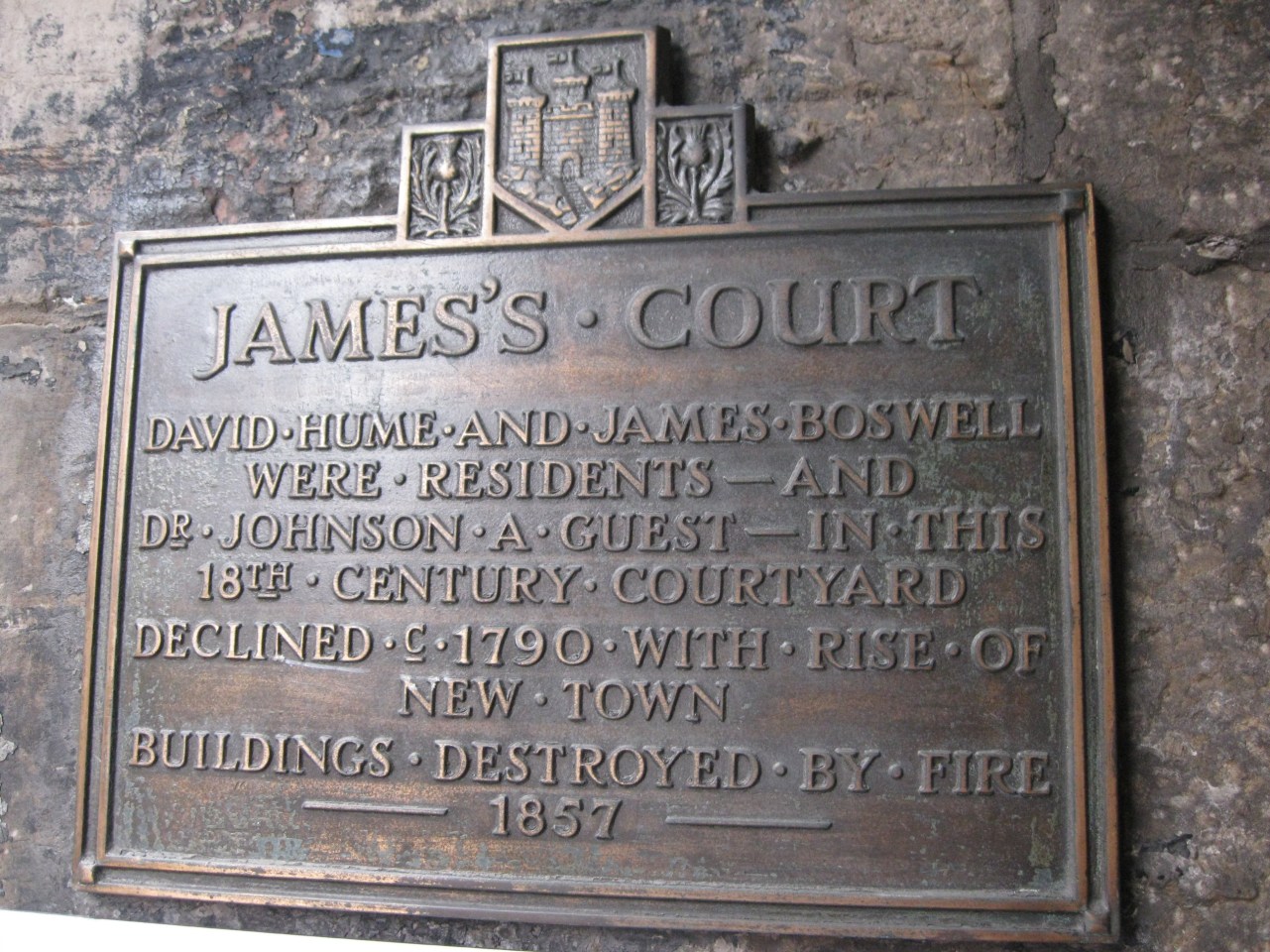
Plaque in close leading to James’s Court, where David Hume lived for a time

James Court on the Royal Mile, Edinburgh

James Court on the Royal Mile, Edinburgh

I return to James’s Court, where he lived for awhile in a tenement (apartment) with his sister. The original buildings are mostly gone, lost in a fire ages ago. I visited Gladstone’s Land and the John Knox house earlier in the day, two restored tenements from the era, and the Writer’s Museum, the restored home of Lady Stairs, built in 1622 and purchased and decorated by her in the 1700’s, all of which gives me a good idea of what Hume’s place would have looked like generally. James’s Court is a lovely little courtyard reached through a couple of lit

The old city is full of such little closes leading to pretty little courtyards or providing access to who knows where, all nearly irresistible to an American like me, where ancient cities are rare. Each time I see one of those closes, it looks like a little magic portal to some other place and time, and I just have to go through it. I spent much of my day stumbling on interesting corners of the city this way.

Tenements on the Royal Mile at Lawnmarket. 'Tenements' used to just refer to apartment buildings; the term gained its negative connotation later

Tenements on the Royal Mile at Lawnmarket. ‘Tenements’ used to just refer to apartment buildings; the term gained its negative connotation later

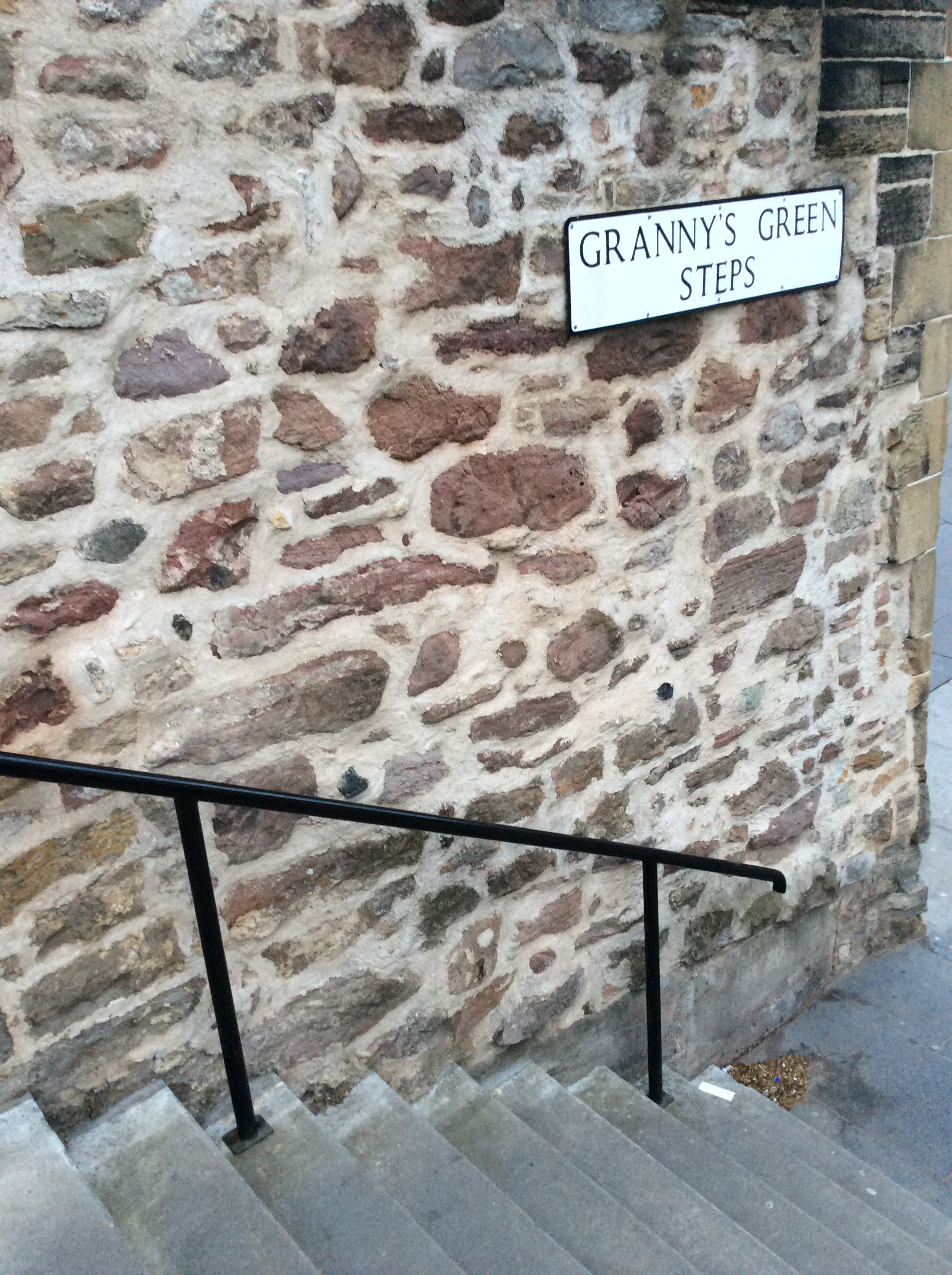
Granny's Green Steps

On the other side of Lawnmarket (the same little neighborhood as James Court) is another stand of tenements across from the castle, in the area where Hume was born in 1711. The original buildings are also no longer there; while most of the tenements that stand today in old Edinburgh are old, most of them date from the mid-1700’s and later. Many of the original tenements were lost in fires, a common occurrence in those days when people depended on open flames for all light, heating, and cooking, and a fire that started in one place would quickly spread. Many of the others were torn down, since after Hume’s time, the tenements became the homes of the poor, where overcrowding and the accompanying disease and filth left them in very poor condition (people and buildings like).

I end my first day of Hume-seeking here, as I suddenly realize I’ve been walking for hours without eating. I eat a meal of the obligatory haggis (it’s delicious, even if it does sit a bit heavy; I suspect it’s not the haggis that the Scots of yore ate, which was boiled. This haggis does not appear to be prepared that way), and I wash down with a pint, of course.

It’s a typical Scottish spring day, cloudy and a little chilly, totally bearable to one used to San Franciso weather. It rains on me just a little during my walk back to my temporary home.haggis-and-a-pint-edinburgh-scotland-2014-amy-cools

Ordinary Philosophy and its Traveling Philosophy / History of Ideas series is a labor of love and ad-free, entirely supported by patrons and readers like you. Please offer your support today!

Hume’s New Scene of Thought, and, It’s Good to Be Able to Say ‘I Don’t Know’

David Hume, sculpture by Sandy Stoddart on the Royal Mile, Edinburgh

David Hume was always a nerd, something I love about him. Since he was a young boy, he always had his face buried in a book. And he was a happy nerd, self-described as having a ‘cheerful’ and ‘sanguine’ (optimistic) personality. I like that too.

Perhaps that’s why he was able to enter into his self-described ‘New Scene of Thought’. It was a whole new philosophy, one which included, as a central guiding principle, that the honest thinker should never claim to know, or to understand, that which the human mind can’t know or understand, and if they can’t know or understand it, they shouldn’t make strong claims of knowledge about it. But another guiding principle is this: the process of learning and thinking critically is among the noblest endeavors there is.
 
This sounds simple enough. But to the thinkers and to the everyday person in his time, this was not the way people thought. It was the end of the long period of scholasticism, of academics and theologians who took great pride in devising complex and subtle arguments about anything and everything under the sun (and above it), and whose authority was not to be challenged. If you were a member of this elite, you better support this system or you better find another occupation if you don’t want to be financially, and reputationally, ruined. if you were an everyday person, you should stay in your place, accept what the great thinkers have to tell you, and don’t ask too many questions.
 
It’s also a challenge to the way many people think today, from the strong skeptic who says ‘no one can know anything at all, so who cares?’ to the theocrat who says ‘I know the author of the universe, I know what he says, and I know what everyone must believe and how they should act’. We live in an age where screaming pundits dominate the media, who are certain ‘the other side’ is leading us all straight to ruin; where politicians are more reluctant to serve the public interest by putting aside their differences and working together on important issues; where the funding and communication of science is up for grabs to the highest bidding corporations.
 
Hume challenged the philosophers, the theologians, all those who made extraordinary claims about the ultimate nature of reality and of the workings of the human mind. He thought that they were undermining, even destroying the great project of philosophy by being so abstract, and so extravagant in their claims. Too many, Hume thought, had pretensions of knowing exactly how the universe came into being and how it worked, what was ultimate source of morality, what is meant by ‘the soul’ and how human beings are defined by it, and so on. These thinkers based their claims on two things: that the author of the universe has communicated these things to them and that they knew what the author meant, and that the elaborate arguments they constructed were all based on irrefutable logic and careful reasoning. Or some combination of these.
 
Yet these philosophers and theologians were in violent disagreement all the time, sometimes with the such disastrous results as a willingness, even an enthusiasm, for silencing, oppressing, even killing those with different opinions. This was so for even such highly abstruse arguments as to whether there were one or three persons in God, or what was the nature of the invisible force that made the planets go around the sun.
 
How do we account for such disagreements, when they originated from such seemingly perfect sources, revelation and logic? 
 
That’s because, Hume said, they got this wrong: that there’s such a thing as perfect human knowledge or understanding, or even that there is any mind at all that exists that knows all there is to know about everything. The honest thinker is the one that understands that a mind is a limited, fallible thing, and that the one way to know the most we can know is to carefully observe the world then only accept those ideas as true which observation can support. ‘The wise man…proportions his belief to the evidence.’ That’s another thing they got wrong: they tried to go so far with their logic, that the evidence they founded it on was so far removed, or so slight, I’d liken it to building a pyramid of elephants on a ball in a cartoon circus. Better to have a pretty solid foundation before you try such a thing.
 
Hume’s ‘New Scene of Thought’ helped make philosophy a reinvigorated, attractive scene for the curious and the thoughtful. Philosophy, at the time, referred to all areas of study whose project was to discover and understand as much as could be known about the universe. 
 
Funnily enough, it’s the attitude that human beings are fallible in our perceptions and our thinking, that enabled us to learn out as much as we have so far about so many areas of life, and that made the scientific process not only sucessful, but possible. That means when we observe something, or think something, we can’t just run out and proclaim our discoveries, just like that. We have to talk to each other compare notes, patiently test our theories again and again, and even if we’ve done all that, be able to say, humbly, ‘I was wrong’ if a better explanation comes along. This doesn’t mean we can’t believe in anything. It means that belief is always on a spectrum, is stronger or weaker depending on the support we have for it: whether it’s supported by observation and evidence, whether it consistently leads us to make successful predictions and form quality explanatory theories, and so on. But it should never be absolute. We should always be open to finding out more, and always suspicious if someone tells us they have the final, absolute answer.
 
It took this optimistic, friendly (Hume was well known to be a kind and genial person), and careful thinker, of great integrity, to form such a beautifully honest philosophy. Always having his nose in a book, he was well-read, and understood that there was an incredibly wide range of human thought and experience to draw from, much of it contradicting each other. And his reaction was not that we should resolve these contradictions by finding some orthodoxy and sticking to it, or saying at all that is not strictly logical in some abstract, perfect sense is valueless. He was able to take it all at face value for what it was: the natural outcome of what it means to have a human mind. The human mind is not just a reasoner, or a believer: it also perceives, dreams, thinks, feels, hallucinates. It’s variable, and it’s fascinating, and it all needs to be taken into account, if you want to pursue understanding to the utmost that you can. 
 
If you don’t yet have the answer, you must always be ready to say, honestly, ‘I don’t know’. That leaves you able and ready to say the next best sentence in the quest for knowledge: ‘Let’s find out.’
 
And this is only his epistemology (the study of knowledge) and his answer to metaphysics (the study of the fundamental nature of reality). Don’t get me started on his moral philosophy, which is even more awesome….. ’cause that will be the topic for another essay.
Ordinary Philosophy and its Traveling Philosophy / History of Ideas series is a labor of love and ad-free, supported by patrons and readers like you. Please offer your support today!
~~~~~~~~~~~~~~~~~~~~~~~~~~~~~~~~~~~~~
 
Sources and inspiration:
 
Hume, David. ‘Letter to a Physician‘, 1734. 

Hume, David. My Own Life, 1776. 

Morris, William Edward. ‘David Hume‘. The Stanford Encyclopedia of Philosophy, 2009.

The Myth of the Divide Between Individualism and Collectivism

Mirrored from http://halftimemag.com/articles/web-exclusives/encore-magazine-extras/top-10-marching-moments-of-2008-Details-photos-and-videos.html

What!?‘ you may well ask.

These are diametrically opposed, are they not? Those in favor of one of these views of personal identity, the economy, and public life generally despise the other. Proponents on one side of the ideological divide often shudder at the very thought of being identified with the other. So what could I mean by this?

I’ll start, then, by defining my terms.

Individualism, I think, is easier to define in a way that’s generally acceptable. In this view, protecting the rights and liberties of the individual is the ultimate aim of morality and politics. It holds that each human person has their own integrity of mind and body (and by extension, property) and should not be subject to coercion, harm, or theft. Individualism is preeminent in American culture, and the values associated with this worldview are emphasized by most modern democratic, capitalistic societies. It’s also, at first glance, most consistent with the ideals of the Age of Rights, which places the highest value on the rights of individuals, which should not be infringed on by the state nor by others.

Collectivism is harder to define. The 20th century saw the rise of collectivist, or socialist, states, the largest and most influential of which (ostensibly) valued the society more than individuals. When many think of collectivist societies, they think of Chairman Mao’s China, Kim Jong Il’s North Korea, or Joseph Stalin’s Soviet Union. To my mind, however, these societies were collectivist in name only: since it was the will and interests of one individual or few individuals that were imposed on those societies, usually to the detriment of everyone else. There was little or no willing collective effort for the collective’s sake, little to no public input regarding the collective’s rights and interests, and little to no collective benefit.

For the purposes of this piece, I define collectivism more broadly as the idea that a good society, in which people flourish and live as freely as possible, can only be achieved by some significant level of collective action. In this view, there is such a thing as the public good, and morality demands that everyone should do their part to sustain it. The full details of what the public good consists of and how it can be achieved should be debated by the public, but its characteristics include the idea that all human persons have as much moral worth as much as any other, that all have rights regardless of ‘merit’ (real or perceived) and wealth (or the lack thereof), that all are morally accountable when they fail in their responsibility to protect and nurture those rights, and that the fates of all are intertwined.

It may seem to you, as it does to me, that these conceptions of individualism and collectivism each have their attractions, and each contain some level of truth. Both are ultimately concerned with the well-being of all people, even if they might seem to start from a different end of the spectrum in deciding where the foundation of values should be (with the individual, or with the group). Both focus on human rights. So why are people so divided in their views on this matter, at least as presented in the mainstream media and by political parties?

Perhaps it’s because the arguments that we hear so often present a distorted view. Not only do public figures, pundits, commentators, and even educators offer caricatures of others’ views, they often present a misleading, even simplistic view of their own. Here are some ways I see the how we make [non]sense of the tension between individualism and collectivism, between the one and the many, as manifested in public discourse:

From libertarians and the far right:

– A tendency to systematically overemphasize the individualness of individuals. In other words, they represent individual achievement as attributable entirely, or almost entirely, to the innovation, creativity, and hard work of the individual. But in almost every case, each great ‘individual’ achievement is possible because they had the infrastructure of ideas, innovations, inventions, technologies, and discoveries of those who came before available to build on. Bill Gates and Steve Jobs, for example, were able to accomplish what they did because their admirable hard work and creativity enabled them to take the discoveries of mathematicians, physicists, metallurgists, etc, to the next level of technological advancement. The widely-mocked (and admittedly clumsily worded) ‘you didn’t build that’ quote from a 2012 Barack Obama speech was a cynical reaction of the radicalized right against any sort of public recognition that while individual talent and effort are crucial, we also rely heavily on each other in achieving what we do.

– A tendency to underestimate the degree to which a robust morality of social responsibility makes individual freedom not only more expansive, but possible in the first place. Without morality, without a social framework of cooperation, self-restraint from plunder and violence, and the generosity that’s more the rule than the exception in any human group, individual human beings would be left in the narrowly circumscribed situation of the forager and lonely hunter. We would have little time and leisure left to such luxurious pursuits as the acquisition of knowledge, the sharing of ideas, artistic creation, and technological innovation that human beings are so uniquely good at, if we are constantly busy simply feeding ourselves, warming ourselves, and fighting each other off of what little stash of goods we’ve managed to obtain. It may be objected that since human beings naturally desire to better their situation, self-interest would lead to cooperation through the desire to trade. But that only begs the question of why we would engage in fair trade, and not simply plunder if we are the strongest. Why has this instinct for reciprocity has become part of the fabric of the human personality?

From 20th century-style communists and socialists

– A tendency to devalue the importance of the individual out of proportion, and even divorced from, the importance of society. The major autocratic socialist regimes ruthlessly quashed opposition, disposed of enemies, and systematically repressed all but the most insipid, and most propagandist, forms of the arts (and still do! Though not so many). Societies ended up in the odd state of being glorified by their leaders as the greatest in the world, while simultaneously made up of citizens that were each so worthless that any one of them could be legitimately disposed of like so much garbage, if it seemed in the best interests of the state.

From liberals:

– A tendency to declare that government should not be in the business of ‘legislating morality’, while at the same time demanding that government demand accountability for some forms of wrong-doing. Government is a moral enterprise by definition. For example, when a law is made that one person may not kill or injure another, it’s made because of a society’s moral position that life is better than death, and that it’s wrong to infringe on another person’s right to live and thrive. Morality, and law, have everything to do with a society’s deciding what people should or should not do; in other words, it’s normative. There are many who try to downplay the relationship between law and morality, including this blogger who described the law as simply a set of rules to ensure that society is ‘harmonious and safe’, while morality has to do with your ‘personal sense of right and wrong’. But this is not at all how law works now, and not at all how law emerged as a product of human psychology as a social. From the beginning, the law has always had to do with retributive, distributive, and restorative justice, though the balance of these three differ from society to society. Laws that attempt to harmonize society, for example, are based on the notion that harmony is better than discord, that people ‘ought’ to maintain harmony by refraining from violence and disturbing the peace. Laws that govern parking originate with the idea that public spaces ought to be used and maintained for the benefit of everyone. Laws that protect people from assault originate from the idea that people have a right to life and health.

– Closely related to the above, a tendency to incoherence as to whether they themselves view government as moral, or morally neutral. Many liberal people decry any governmental attempts to interfere with some behaviors, such as those pertaining to sexuality and drug use, on the basis that these are moral, and therefore strictly personal, issues. But at the same time, they will demand that government regulate or prohibit other behaviors, such as fraud committed by financial institutions, or in the use of torture and the targeting of minorities in stop-and-frisk policies, on the basis that the latter practices are wrong or unfair. Yet all of these issues have everything to do with morality: what we ought and ought not to do, and why. For example, a democratic government is based on the moral norms that every individual has rights and that every individual’s well-being matters. Therefore, a good government is based on the moral norm that every individual should have a say in what their government does. A society with such a government also, by the very fact they have a government at all, think that all members of society have responsibilities to one another. After all, if there is no moral accountability, there are no norms, no law, no society. We end back up where the radical individualists left us: lonely scavengers or predators, without the vast resources social cooperation offers.

So how do we reconcile these seemingly disparate views?

I think we need to realize that the very idea that there is a sharp dividing line between individualism and collectivism is an illusion. In fact, individualism is not only reliant on collectivism, but is a product of it. We get to pursue such energy-expensive, extravagant projects as music, literature, art, government, architecture, and the rest because at some point we started banding together in a network of support rarely seen in other creatures. We rallied to protect our big-brained, long-vulnerable young, share the fruits of the hunt and of foraging, and invented such social-cohesion-strengthening practices as making music, telling stories, taking part in rituals of marriage and burial, and creating art.

And how do we craft societal practices that promote the rights and interests of the free individual, without undermining the collectivism that makes individual freedom possible?

As we have seen, 20th-century-style ‘socialist’ governments revealed how a society is undermined when it 
under-emphasizes the individual and overemphasizes the collective. But given the utter disregard for individual human life, and individual human rights, it’s not so hard to recognize how badly they got it all wrong. When your ideology holds that a great society is made up of individuals that are so worthless that they can be eliminated at the whim of the government, or have no personal rights or value outside of their value as laborers or fulfillers of some pre-determined role, or have no say in what their government or their autocratic ruler does, than the whole society is undermined by being made up of powerless, dehumanized, devalued, uninspired, unmotivated people.

It’s also the case that those social instincts that make us such successful cooperators combine with other instincts sometimes in a way that leads to atrocious behavior. Anti-Jewish pogroms, racially motivated massacres such as those in Rwanda and the former Yugoslavia, and rampages following sports games are such example of violent mass-hysteria. The tendency of people to ‘follow the leader’ in heartless behavior is as thoroughly documented in laboratory studies as it is in the history books. Democracy and reason are the two best tools human beings have come up with to correct the excesses of our strong social instincts. The secret ballot box allows us to participate in governance without coercion or in-the-moment peer pressure, and reason allows us to step back and reflect on whether or not we we’re doing, or what we’re about to do, is really in our own, and everyone else’s, interests. 

Independent-minded individuals, less prone to coercion, herd instinct, and social pressure, are also absolutely essential corrective not only to mass cruelty, but to to entrenched laws and norms that have outlived their usefulness, and whose immorality have been overlooked, explained away, or overridden due to other social interests. Slavery is a classic example of this: a popular desire for attaining personal wealth combined with entrenched racism (the ugly side of tribalism), led a majority in many societies to ignore their own moral sense of sympathy, justice, and beneficence in favor of policies that catered to their baser instincts. It was a few dissenters that reminded society of what morality is for, and how institutionalizing cruelty and indifference to the interests of other human beings harms everyone, that led societies to reform themselves and change their policies to better serve both individual and collective interests.

On the other hand, oligarchic, fascist, and other ultra-capitalist societies, which hold that government’s only job is to enforce contracts, prevent invasion, and prevent people from assaulting one another, also undermine themselves, because they have only a negative conception of freedom as their moral foundation. When a government is structured according to the idea that human beings have few responsibilities to each other than fulfilling contracts and respecting property rights, they become a society where fewer and fewer people are enjoying the fruits of everyone’s labor. For example, monopolies develop (as Adam Smith pointed out), which set prices and wield most of the power over legislators. You have fewer and fewer wealthy individuals and organizations that pay to influence the halls of power, that 
monopolize the dissemination of information trough mass media, while the voices of those that have little or no money to do so are drowned out. You get societies made up that look like the early industrial towns when capitalism first flourished without regulation, where many got rich, while a great bulk of others ended up doing crippling labor in squalid conditions, withe the empty ‘choice’ of accepting such work, or facing privation or starvation. You end up a society that drives down wages for most people while fewer and fewer funnel all or most of the gains made by an economic system to a few, more ruthless individuals that are left at ‘the top’

Because I see individualism and collectivism as intertwined, I’m in favor of a strong democracy and a mixed economy. In a healthy, democratic society, it’s the innovators, the creative geniuses, the ‘weirdos’, that ensure that a society is adaptable, rich in ideas, technologies, and creativity, and does not stagnate and wither away. Human beings succeed not only because we are social, we succeed because we are adaptive and innovative, and it’s the freedom of the individual to come up with new art forms, technologies, ideas, etc, that make a society dynamic. The incentive of improving one’s lot in life through one’s own hard work also fuels the drive to better ones’ self.

A ready analogy for this is the necessity of genetic mutations in evolving a successful, adaptive species. While not all mutations (innovations, new ideas) are beneficial, there are some that are, and without those pioneering one-offs, a population cannot adapt to meet new and challenging circumstances, and does not possess that wonderful variety of traits that make it both capable of much, and fascinating to behold. A society of individuals free to pursue their own goals and protect their own interests, so long as they contribute to the public good and don’t harm others, is that which is likely not only to survive, but thrive. For example, free trade, sometimes derided by modern liberals, is an excellent tool that is both highly individualistic and highly socialistic. It incentivizes and rewards individual innovation and hard work, though an elaborate framework of cooperativeness that includes, but is not limited to, a strong commitment to fairness and reciprocity, a conception of justice that demands recompense for hard work, and a distaste for theft and exploitation. But like all tools, it must be used wisely and well, and within certain parameters.

And this this is why I also believe in such collective projects and institutions as publicly-funded roads, public education, and health care. I believe in regulations such as gun control and strict regulations for drivers, since these don’t prioritize the rights of some individuals to put others in danger for insufficient cause. I don’t believe in society-aggrandizing, anti-individualist enterprises such as war (in most circumstances). After all, you have few rights when you are incapacitated by injury and disease, and none at all when you’re dead. A society that places few restrictions and responsibilities on gun owners and operators of motor vehicles make it all to easy for one individual, in a moment of temper, carelessness, or mental instability to permanently remove all or most rights from fellow human beings. As we can see from (most) heavily-armed, hyper-individualistic societies such as the United States, we kill and injure one another at enormous rates with our guns and our cars. A more morally robust concept of civic duty would lead to the creation of laws based on the premise that a right which bears greater risks engenders a greater burden of responsibility. And since government is a moral enterprise, its laws should not only hold people accountable for doing wrong to one another, but demand some responsibility to do right by each other. 

Why morality requires both accountability and responsibility is another Big Question. Sounds to me like a great topic for another essay…

****************************************************************************

Some sources and inspiration:

Anderson, Elizabeth. ‘Tom Paine and the Ironies of Social Democracy’, 2012 Dewey Lecture in Law and Philosophy
Darwall, Stephen. ‘Moral Accountability’, 2014, Philosophy Bites podcast

Ellis, Joseph. Revolutionary Summer, 2013

Heath, Joseph. Economics Without Illusions, 2010

Pinker, Steven. The Better Angels of Our Nature: Why Violence Has Declined, 2011

Sandel, Michael. ‘A New Citizenship’, 2009 Reith Lectures


To Edinburgh I Go, In Search of David Hume

Hello, friends of Ordinary Philosophy! I’m pleased and excited to announce my upcoming adventure: my first philosophical-historical themed adventure, and my first trip to Edinburgh, Scotland!

Here’s my plan:

I’m taking a series of trips to places around the world, where I explore the lives and ideas of great thinkers in the places where they lived and worked. I’ll follow in the footsteps of thinkers who are no longer alive, since those who are still telling their own stories. But those who are no longer alive in the body live on in the ideas that they pass on, and in the example they provide for us to follow.

I’ve decided to start with the philosopher I most admire as a person as well as a thinker, the great David Hume. He was not only revered for the brilliance of his ideas and his honesty in presenting them, but also as a premier example of a genial, generous, great-hearted person; so much so, in fact, that one of his closest friends nicknamed him ‘Saint David’.

Hume is often described as the greatest philosopher to write in English and among the greatest philosophers of all time, period. He was a central figure in the Scottish Enlightenment, and a profoundly influential empiricist and moral philosopher

So off to beautiful Edinburgh I go! There, I’ll visit the places where he worked, thought, wrote, studied, and rested. I’ll be traveling there in the first two weeks of May, and will be writing throughout the trip. I’ll be writing in this blog not only about his ideas, but about what I can discover about his everyday life, and whatever feeling of his time and place I manage to uncover in my time there.

If you have any questions for me to answer while I’m there, or pictures you’d like me to take for you, or any information you have that could help me with this project, I’d love to hear from you!

~~~~~~~~~~~~~~~~~~~~~~~

Here are my essays on Hume as I discover him in my travels, in (roughly) chronological order:

First Day in Old Edinburgh: Hume Sites and Monuments
Hume’s New Scene of Thought, and, It’s Good to Be Able to Say ‘I Don’t Know’
Hume Sites and Monuments, Part 2
The Consolations of Philosophy, and A Death Free from Fear
Scotticisms
Happy 303rd Birthday, David Hume!
Cycling Through Edinburgh, First Time
The Debate Over Government and Freedom
The Tale of the Magic Toe – Superstition? Or What?
Hume Sites and Monuments, Part 3
Water of Leith
Last Day in Edinburgh, May 13th, 2014
Hume, Aristotle, and Guns
and a memory quilt I created for my 2014 Edinburgh trip: A Hill and a Wall in Edinburgh, 2015, 102″ x 69″
Chirnside and Ninewells, Scottish Borders, Childhood and Summer Home of David Hume

Ordinary Philosophy and its Traveling Philosophy / History of Ideas series is a labor of love and ad-free, supported by patrons and readers like you. Please offer your support today!