On Being Part of Something Bigger Than Oneself

Sometimes, I’m carried away by the awesome realization that I’m part of so many things that are larger than myself. In fact, I feel quite mystical at these times.

I’m part of a particular family; part of many communities of friends and of people who share passions and common goals; part of a cultural group; part of the whole human family. I love and am loved in return. I cooperate with my husband, with my family and friends with my coworkers, with the people I interact with everyday, be it in everyday life, in romance, in play; in conversation, in sharing meals, in commerce, in navigating traffic, and in other countless ways. I share in the business of life and in the struggle to survive, which for human beings necessitates this high level of cooperation, because with our relatively weak teeth, slow gait, blunt ‘claws’, big clumsy bodies, and expensive brains, we are much more vulnerable, as individuals, than most other animals to predation and hunger. So I share in this great community of empathy, some to a greater or a lesser degree, and we all do what we can to be good and decent people, at least much of the time.

I’m part of the history of human thought, part of the rich legacy of human curiosity and wonder over the millennia, whose love of learning and of doing our bit more to expand human understanding makes us, as Carl Sagan so beautifully put it, ‘..a way for the universe to know itself.’ And every one of us who takes part of this quest to understand the world get as far as we do only because those before us passed down what they learned and what they invented so we can build on it. No one human being can, on their own, invent languages to create and organize ideas, observe the full vastness of the universe, and form the myriad theories that make up the incredible body of knowledge we can access and enjoy today. But millions of human minds, sharing in this knowledge quest, have achieved a level of understanding that our ancestors could never have dreamed of, and our descendants will do the same. When we think about it, each of our individual minds is filled with the words and ideas created by others, which we rearrange and build on to create our own, which we then pass along. In this sense, it’s hard to tell where our own minds end and others’ begin; we all share in one human stream of consciousness, millennia-old, from which we draw, and into which we contribute, constantly, all of our lives. This is one sense in which we’re immortal.

I’m also a part of the great creative outpouring of humanity. We all participate in this, some as the makers, some as the enjoyers, most of us as both, to some degree or another. I am inspired by the beautiful, interesting, innovative, and curious things others create, which inspires me to create things I think are beautiful as well. I dance to music others make, some of us make our own, and some of us sing along and pass the songs on to our friends and to the next generation. I cry and laugh and smile and immerse myself as I read the stories and hear the jokes and watch the movies that our fantastically, restlessly, endlessly creative species never stops coming up with.

Finally, I’m part of the great workings of the universe, of the great process of evolution, where all the stuff I’m made of was forged in stars and crafted into what eventually became me, by the myriad forces that arranged every molecule in my body, in new formulations in each successive environment through the ages. Every bit of me used to be something else, and I’m intimately related to every single other thing in the universe; every human being, every plant, every insect, every thing that lives and moves is my cousin.

I often hear people expressing discontent, that they’re searching for something that’s missing, that they want to be part of something bigger than themselves. So we join cults, buy self-help books, immerse ourselves in various ‘spiritualities’ and ‘philosophies’, even immolate ourselves and destroy each other for the sake of some extremist ideology, in restless pursuit of that quest. It’s all too easy, in day to day life, to forget the all the amazing, myriad ‘something bigger”s that all of us are a part of just by virtue of existing. 

I’m now in a happy time in my life when I’ve learned to recognize and appreciate this fact more than ever before. These days, I have other ways to more fully participate in these ‘something bigger”s. I have an insatiable hunger for reading and learning in the last few years to a greater degree than any other time in my life, and since I left the stifling religion of my childhood, I’ve found the entire range of ideas available for my consideration, and the whole of humanity and of all living things is my spiritual community. I’ve taken a job in a new field so I’m learning something new every day, I’ve taken up writing and spending more time creating and developing my art, and trying to be more prudent with making and spending money so I can help out my family and travel more. We all have our own ways.

Being a part of something bigger is the simplest thing there is. It’s realizing it that’s the hard part.

What is a ‘Natural’ Medicine, Anyway?

I’ve often found that many people aren’t aware of the difference between herbal medicines and homeopathic remedies, perhaps because these terms have come to be used more and more interchangeably. There are many herbal, or ‘natural’, medicines, that are proven to work for many conditions: aspirin, quinine, ginger, marijuana, and so on. Homeopathy refers to nothing of this sort. Rather, homeopathy makes two claims: 1. like cures like (for example, a substance that makes a stomach ache will also cure it) as long as it’s greatly diluted, and 2. water has a ‘memory’, and it can be ‘imprinted’ by adding such a substance to it. Neither of these claims can be substantiated by any scientific means, and to my mind, they’re preposterous.

Homeopathic businesses, just like peddlers of many other ‘natural’ cures, wish to remain immune from demonstrating, through studies and testing, that they actually work and are not harmful. Yet they are both multi-billion dollar industries with the potential to do massive harm. To my mind, their efforts to remain immune from regulation and oversight are just as corrupt as those of some pharmaceutical companies and other industries that seek to shield themselves from public accountability. There are other ‘natural’ medicines which are proven to work, offered by honest practitioners who care enough to demonstrate effectiveness, that the health-conscious consumer can opt for instead.

I use the word ‘natural’ in quotes because I think there’s something odd about qualifying certain medicines as natural, and some as not. Since I don’t believe in anything ‘supernatural’, by default, everything is natural. The difference between all these medicines, then, is whether they’re effective or not, or whether they’re harmful or not.

~ This little essay is a reflection inspired by Jerry Coyne’s article ‘Why Do Liberals Tolerate Pseudoscience at Whole Foods?

Communitarianism, Writ Large

I listened to Bill Moyers’ discussion with Michelle Alexander recently, about her book The New Jim Crow and her activism against the over-incarceration of black people here in the US. Something she said really struck me, as it relates to a problem I’ve been mulling over for some time. She said:

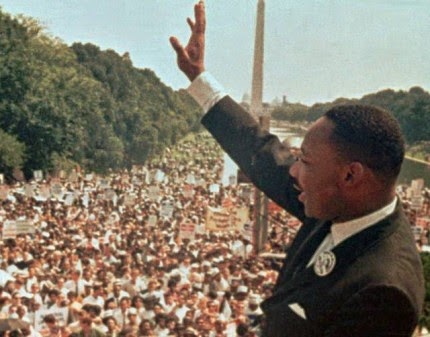
I realize that as well-intentioned as all that work was, it was leading me to a place of relatively narrow thinking… If I care about a young man serving, you know, 25 years to life for a minor drug crime… If I care about him and care about his humanity, ought I not also care equally about a young woman who’s facing deportation back to a country she hardly knows and had lived in only as a child and can barely speak the language? And ought I not be as equally concerned about her fate as well? Ought I not be equally concerned about a family whose loved ones were just killed by drones in Afghanistan? Ought I not care equally for all? And that really was Dr. King’s insistence at the end of his life. That we ought to care about the Vietnamese as much as we care and love our people at home.’

Alexander’s reflection on her own work illustrates our need not only to grow more expansive in our thinking in order to achieve a more just society not just locally, but globally: we need to witness and internalize the sufferings faced by other human beings who are not like us in appearance and culture, so that our instincts for empathy and for justice expand as well. 

The problems associated with the organization and implementation of an ordered society is the central topic of political philosophy; the problems associated with making societies just is the concern of ethical philosophy. Two philosophers whose work I especially admire in these fields are John Rawls and Michael Sandel. They are both concerned with justice, how to recognize a just society, and how we select the criteria for ethical decision-making. (I’m also a fan of Sandel’s because he’s engaged in a cause that’s dear to my heart: the great project of philosophy is not, and should not be, confined to academia. With his freely accessible lectures and discussions, and his popular philosophy books, he is among those reintroducing philosophy to the public square. Philosophy originated in the public square, after all, and as it addresses the concerns of the whole of humanity, then it should be a concern of, and the conversation should be accessible to, the whole of humanity as well.)

Yet Rawls and Sandel are at odds in some key ways. Among other things, Rawls’ theory of justice is classically liberal, in the tradition of John Locke, and focused on universalizability: a just system is one that must be applicable to all human societies, in all times and places. Sandel focuses more on the importance of community and tradition in matters of justice, and the answers are found more in solutions to ethical dilemmas based on particular society’s evolved norms. Rawl’s famous ‘veil of ignorance’ is his method for discerning whether or not a society is just: if each and every person were to be randomly assigned a role in society and had no way to know ahead of time who they would be (woman, man, CEO, employee, black, white, rich, poor, etc), and knowing this, they had to design a social arrangement, what would they all agree on? Then, we can look at how that veil-of-ignorance social design compares with an actual society to help us assess how just it is, and in turn, help us create s social system that will benefit everyone as much as possible. Seems a method that should obtain pretty fair, democratic results, right? But for Sandel, the veil of ignorance seems incoherent even as a mere thought experiment, since morals originate in, or emerge from, particular societies. Therefore, what is just is derived from how actual societies work, how they’ve grown and evolved to solve their own sets of problems, and cannot be derived from hypotheticals. So Rawls’ and Sandel’s ideas seem, on the face of it, irreconcilable. Who’s right?

Sandel’s views are generally described as communitarian, though he’s not entirely comfortable that characterization in that it can go too far in allowing community to trump the individual in all things moral. According to the Stanford Encyclopedia of Philosophy, ‘…communitarians argued that the standards of justice must be found in forms of life and traditions of particular societies and hence can vary from context to context’. In other words, communitarianism is the philosophy that ethics have more to do with particular societal morals and traditions, so the claim that there can be a universal definition of justice, such as Rawls’, is dubious at best.

When it comes to explaining how cultural traditions evolve to make a society more just, communitarianism has something to offer. For example, it’s among America’s most self-identifiable traditional ideals that individual liberty is of highest value and should be promoted as long as the freely chosen actions of one person don’t infringe on the freedom of another. The ideal of individual liberty has long roots in American society, and evolved and expanded over time through political upheavals, case law, and interpersonal disputes. But when we consider the traditional American ideal of individual liberty (by no means unique to America, of course) and compare it to our social history, it’s clear that it’s not no simple: it’s also been a tradition in the US to enslave other people. When that particular tradition was slowly, painfully overturned, there were many other ways that people, legally or illegally but commonly practiced, infringed on the freedoms of others: by denying women the vote, imposing Black Codes and Jim Crow laws, segregating the military, preventing workers from forming unions, and so on.

So a communitarian could argue that while the moral ideal of freedom is traditional in the US, it’s the broader implementation of it that took a long time as traditional practices caught up.

But how about societies that don’t have traditions of individual freedom, who believe there are some classes of people that should have all the power and wealth, and that it’s proper and right that others live in impoverishment and misery, lacking rights of citizenship, for their entire lives? Such is the caste system of India, for example, or the traditionally influential political philosophy of Aristotle which holds that there ‘natural’ slaves. Are we, then, not to be concerned that people of those cultures are suffering from injustice, if they belong to a community with different traditional views of justice? After all, according to the caste system, and to Aristotle and those communities that hold like views, it is just that certain people are slaves and certain people are not, that some people have power and some do not, that some live in wealth and comfort and others in misery, because all of this is justified by their society’s traditional concept of human nature.

Many people, myself included, have the same problem with communitarianism as I am sure Michelle Alexander does, given her quote which opens this essay: why should our sense of empathy, of moral obligation, be limited to the concerns and traditions of our own communities? That may have been prudent, even necessary, for our ancient ancestors, when human groups became large enough to need to compete for resources, but didn’t have the sophistication or technology to facilitate cooperation on such a large scale.

But now, our situation is very different: people’s ideas and actions, thanks to advanced technologies in communication, production, and travel, can have worldwide consequences, for ill and for good. We have access to centuries of the best products of human thought from disparate traditions all over the world, which are gradually coming to a consensus on some key issues in ethics and politics: the value of individual liberty, the benefits of equality, the necessity of having and fulfilling civic duties, and how to recognize a just society, for example.We have access to centuries of historical evidence which demonstrate the benefits of ever-more widespread cooperation, and the ineffectiveness of violent conflict, so that the immense suffering caused by war ends up wasted and unnecessary. And finally, now that people spend a lot of time ‘face-to-face’ with others from all over the world via computer, we feel a sense of real global community. Familiarity with people of different habits, different appearances, and different interests removes our sense of discomfort, and breeds not contempt, but empathy, compassion, and friendliness.

So perhaps the conflict between communitarian and modern liberal accounts of what constitutes a just society will lessen over time. After all, communitarianism must contain within it the idea that traditions change, grow, and evolve, since there have always been so many different traditions with mutually exclusive ethical codes. (I, too, think that morality is not fixed and eternal; rather, it’s a product of evolving, social, cooperative creatures.) And if the world’s communities are merging into one moral community, than the basic ideas of communitarianism will harmonize ever more with the universalizable ethical goals of liberal thought. While communitarians and liberals might still argue over the origins(s) of morals (tradition? reason? emotions?), our conception of justice, our ethical systems and the political institutions with which we realize them (governments, laws, and so on) will look more and more alike all over the world.

Listen to the podcast version here or subscribe on iTunes

~ Also published at Darrow, forum for ideas and creative commons webzine

~ Re-edited slightly in Feb/Mar 2016

~~~~~~~~~~~~~~~~~~~~~~~~~~~~~~

Sources and inspiration:

Alexander, Michelle. ‘Incarceration Nation’. Interview with Bill Moyers, December 20, 2013. http://billmoyers.com/episode/incarceration-nation/

Alexander, Michelle. The New Jim Crow. 2012. New York: New Press Books.

Anderson, Elizabeth. ‘Tom Paine and the Ironies of Social Democracy‘, University of Chicago Law School Dewey Lecture 2012

Bell, Daniel. ‘Communitarianism‘, Stanford Encyclopedia of Philosophy.

Rawls, John. A Theory of Justice. Cambridge: Harvard University Press, 1971.

Sandel, Michael. Various works and lectures, including his books What Money Can’t Buy: The Moral Limits of Markets and Justice: What’s the Right Thing to Do?

Schneider, Greig and Egon Zehnder, Boston, and Ulrike Krause. ‘Interview with political philosopher Michael J. Sandel’, The Focus magazine. http://www.egonzehnder.com/the-focus-magazine/topics/the-focus-on-family/parallel-worlds/interview-with-political-philosopher-michael-j-sandel.html

The Value of a Liberal Education, and Two Risks of an Ideologically Narrow One

I grew up in a large, pretty close-knit extended family. There was a lot of dysfunction, as with many families, but a lot of love too. While I was often frustrated by the choices of some relatives (such as the tendency to enable bad behavior by sheltering the ‘sinner’ from consequences, or pretending it wasn’t happening), I was also secure in the knowledge that I belonged to a large, loving circle of people who would never abandon each other.

We were also a very insular family. We mostly hung out with each other and a few close family friends, pretty much all from church and pretty much all holding similar beliefs. Many of us kids, especially the older ones, had little contact with people outside of family and church. Many of us were (and some still are) home-schooled with a very conservative, fundamentalist Catholic curriculum, and many others attended all or mostly religious schools.

Given the state of much of the public school system, at least in the working class neighborhoods where many of us grew up, a part of me sympathizes with this choice. American public schools often leave much to be desired, to say the least. Since we have such a rotten system in America of funding public schools, with funding determined by the local tax base, we create a classist school system where the kids who need the most help don’t get the funding. So much for the non-aristocratic, egalitarian, freedom-of-opportunity ideal of America! But I digress…

But it seemed that the choice to limit our schooling to a strict Catholicism-centric education was usually based less on the concern with education quality as on a concern with raising children to replicate their parent’s beliefs and lifestyles. This makes sense in a certain way: parents want what’s best for their children, and people generally believe their own beliefs are the best, so, it’s logical parents want their children to believe and live as the parents see fit.

But here’s the way in which that doesn’t make sense: children are not replicants of their parents. They have their own thoughts, their own personalities, and their own sets of experiences. The world is full of different beliefs systems and lifestyles, often incompatible with those of the parents, that fulfill people, that suit them and make them happy. Every child, however they were raised, will inevitably confront that fact, and in today’s world of rapid, comprehensive access to data from all over the world, it will not take long.

Many parents recognize these facts, and are comfortable raising their children in a cosmopolitan fashion.

They want to equip their children with all the information they might require to navigate the world successfully in any community they may end up being a part of. To this end, they want children to truly understand not only their own beliefs, but the beliefs of others. While these parents may explain to their children why they think their own beliefs are better, they know that understanding the alternatives strengthens their capacity for critical thought. These patents also understand that their children should be comfortable interacting with people who believe and behave differently than they do, and familiarity with other faiths and cultures is the best way to accomplish this. Last but not least, these parents have the epistemic humility to admit that there’s a possibility that they are wrong, and they want to afford their children the opportunity to discover for themselves if that’s the case.

Such wise parents would agree, as I do, with Daniel Dennett, the philosopher who promotes the idea that a study of world religions should be a basic part of childhood education. Since religion is so central to both private and public life for most inhabitants of the world, he argues, children require this information to be wise and informed citizens. I think the same applies to science, politics, history, literature, and other disciplines relating to how people go about sharing, navigating, and understanding this world together.

For those parents who insist on providing an ideologically narrow education for their children, I’d ask them to consider this questions: when children grow up and confront different beliefs, customs, and lifestyles for the first time, as they inevitably will, what happens? What happens, for example, to the child of Biblical fundamentalists who finds out that almost all scientists, besides the half-dozen quoted in their textbooks, believe the Earth is billions of years old? Or that prayer doesn’t, statistically, prove to be effective in healing people? Or that people of other belief systems often live as harmonious, happy, fulfilled, ‘blessed’ lives as they do? Or even better? What happens to the barely educated woman, married off in her early teens and taught to be submissive to her husband, when she discovers that other women have the opportunity enjoy a rich intellectual life, a successful career, or a partnership with a spouse that respects her as an independent person?
For some children educated in this narrow way, whether their parents’ intentions were benign or otherwise, they will mostly reject alternative beliefs and ideas they come across out of hand. (‘That can’t be true, Dad would never lie to me.’ ‘I feel deep in my heart I know the truth, so I don’t need to question it.’ ‘Those poor Buddhists, they didn’t learn about Jesus. When they do, then they’ll truly be happy.’ ‘That’s the Devil talking, better not listen or I’ll be tortured in hell.’ ‘Liberals don’t believe in anything, but I do, so they must not have anything of value to say.’ ‘Environmentalists should just trust God instead of the government to protect the earth.’) They will grow up to more or less replicate the lives of their parents, happy in the security of knowing that they know the truth, what life’s really all about.
Others (I think very much a minority, but some) will thoroughly question the beliefs they were raised with in light of new ideas they’ve confronted, and in the end retain their parents’ beliefs because, to them, those beliefs ‘held up’ to the scrutiny. They might make some modifications here and there, but overall, stay convinced. These few are among the happiest of people, even happier than the unquestioning believers, I think, because they enjoy not only a sense of security in their beliefs, but intellectual satisfaction.

Still others will end up with a smorgasbord of beliefs, considering some sacred and unquestionable, discarding others, and adopting new ones. (Conservative Catholics derisively call others ‘cafeteria Catholics’ for engaging in this sort of picking and choosing.)

Many more will engage in ‘doublethink’, holding two or more contradictory beliefs at the same time. To take another example from the religion of my childhood, one might believe that it’s ‘spiritually true’ that the body and blood of Jesus is present in the eucharistic wafer, but also believe it’s scientifically impossible for a thing to have all the qualities of bread while simultaneously being composed of human tissue. (The psychological phenomenon of cognitive dissonance, how pervasive it is and the ways we deal with it, is discussed thoroughly and fascinatingly in Carol Tavris and Elliot Aronson’s book Mistakes Were Made, but Not By Me. I highly, highly recommend it.)

But there are two big risks for the hopeful yet, I think, misguided parents who seeks to shelter their children from knowledge that could contradict their own cherished beliefs. And I think parents would do well to consider these risks carefully before embarking on this project of transforming education into something more akin to indoctrination.
Risk #1: Your children might grow up to challenge you on your perceived deception. They will ask: What did you have to hide? Why did you feel you had to shelter me from thinking through these matters in an informed way? If what you taught me was really, evidently true, than why did you go to such lengths to keep me from learning about opposing ideas? And why would you undermine my ability to defend the beliefs you wanted to pass on, by keeping me ignorant of the challenges to those beliefs?
I went through that process myself, resenting my education which as narrow and limited until I took it into my own hands and chose a public college rather then the very conservative one my family would choose for me. Initially, I questioned the motives of my family, and was very angry that I was years behind in many subjects, especially science and history. Over time, I’ve come to realize that it was their tactics, not their motivations, that were at fault. But the damage had been done.

Risk #2: But by fair the largest danger is raising children with the potential to be bigots, even violent ones. While most children brought up to strictly conform to the beliefs of their parents will not turn out that way, of course, too many do. Consider this: what inspires oppression, warfare, and terrorists attacks? They come from the ideologically ‘pure’, from those who think it’s their job to make sure the world conforms to their ideology, from religious dogmatism to racial ideology to political utopianism. And the more isolated people are in their minds from the ideas and beliefs of others, the more sure, the more committed they are, that they are right, so everyone else must be wrong. And if others are wrong, if they are different, they are the enemy.

Since people are rarely convinced to convert to a whole new set of beliefs overnight, the ideologue often resorts to violence as a means of forcibly imposing those beliefs. Ironically, violence, though a popular tool
throughout history for trying to impose change, it’s the least effective, as psychologist Steven Pinker and other researchers reveal. To this day, religiously and politically motivated terror attacks and assassinations continue to make headlines.

Yet despite this, things on that front are getting better all the time. I recently heard Pete Seeger say, pertaining to the environment, that the world will be saved by people working in their communities. I think the world will also be saved by children who grow up in this new era where information about the world is not so easily hidden from them. Despite some parent’s best efforts, children can no longer so easily be sheltered in little bubbles of idealized ignorance, sentimentally dubbed ‘innocence’. Since information flows so freely, children now grow up exposed to media that brings others’ experiences so vividly to life, and are now more comfortable in the presence of people who look and think differently then they do. Familiarity with ‘others’ humanizes them, and communities will come to be determined mostly by shared interests, not by geographic location or ideological isolationism.

So parents, teach your children not only how to be good people, but to be informed citizens of the world. It will be a safer and more wondrous place for them and their progeny, and I bet they’ll thank you for it.

Is the Market Really The Most Democratic Way to Determine Wages?

When it comes to just compensation for labor, people disagree on how wages should be determined.

Some say that wages should be allocated according to the value of the work itself, and that this value is based on how beneficial the work is to society. For example, a nurse or a doctor saving lives should be paid much more than a financial speculator or a star athlete. In that sense, pay rates in the US and indeed, almost everywhere, are often grossly unjust.

Others say that people who work the hardest deserve the most pay. This is perhaps an even more popular view here the the US, where a strong work ethic is a traditional, highly prized virtue. Yet it’s easy to find countless examples of people who work equally hard yet earn vastly different salaries (a day laborer versus a high-powered attorney, for example), so even on this view, too many people’s wages are unjust.

And many others say that the market is the fairest mechanism. This is an especially popular view in the liberty-loving US. After after all, it’s people’s free choices that determine prices, since a price is simply how much people are willing to pay for a thing; and where the prices are high, the wages for its creators are high too. So, for example, if lots of people decide to pay high ticket prices to see a live sports event, then people are voting with their dollars and therefore, it’s democratic and fair that star athletes earn sky-high wages. And if people are only willing to pay a little money for a cheaply made product, well, then it’s fair that people who make it should earn less, at least per unit made. An unfettered market, then, is the most democratic, fair way to determine wages.

For the most part, I think that people tend to hold some kind of combination of these views, even as they lean a little more towards one, and they will consider each job and the justness of the wages it pays on a case-by-case basis. And there are related considerations as well, such as whether the job indirectly creates
societal benefits, whether it’s innovative, whether it’s aesthetically valuable, and so on.

But I’d like to challenge one of these views because it’s based on a false assumption. Can you guess what it is, before you scroll down?………………………………………………………..

………………………………… If you think it’s the assumption that since wages are based on prices, and prices are based on free choices, therefore the market is a democratic way to allocate wages, you’re right. So now why do you think I think this assumption is false?………………………………………………………..

………………………………… So here’s why I think it’s false. I don’t think prices actually reflect people’s democratic choice regarding what people should be paid for their work; prices reflect what people are willing to pay for a particular good or service, and that’s it. When people pay a certain price for a sports game ticket, for example, they’re just indicating how much they’re willing to pay to see the game itself. It’s anybody’s guess what they would vote to pay an athlete if they could write the figure on a piece of paper and slip it in a ballot box. Same goes for a grocery shopper voting on the pay of crop pickers. Do you really think that, just because a person happily pays only $.80 a pound for oranges on special, that they think the people who picked those crops should make very little money? I’m willing to bet that just about anyone, when they think about how hard the labor of the average crop picker is, how invaluable their labor is for sustaining life, and how much a living wage is, just about anyone would write down at least that figure on the slip of paper. In fact, I bet they’d vote for quite a comfortable salary. And I bet they’d lower the wage for most athletes substantially, especially if that meant the money saved there could go to someone doing a more ‘important’ or ‘worthy’ job, whatever we think that is.

I’m not sure myself exactly how we should determine wages, I’m sure I’m like most people and think there should be some sort of multifaceted approach. When I think of a more ideal world, I’d like to see wages have more to do with social utility when it comes to providing necessary goods and services (food production, the medical field, infrastructure), education, law enforcement, public arts, and so on. The market could have more to do with determining wages and prices for ordinary luxury goods and entertainment, within limits, of course.

Anyway, when we debate  wages and wealth distribution, don’t let’s kid ourselves that wages are set by a process that’s at all democratic. If that were the case, ultra wealthy financiers and many CEOs wouldn’t enjoy such vast wages even though they enjoy abysmal approval ratings, and it wouldn’t be so hard to get the minimum wage raised even though most Americans poll in favor of it.

Now in fact, most wages, most of the time, are actually based on how hard it is to replace the worker, more than on any other consideration. Crop pickers, though they do valuable work to society, are easy to replace; brain surgeons are not. So in this way, we see that the market does set the wages, but we also see there’s nothing choice-driven, nothing democratic about it. It all has to do with what it takes to do the job: brute facts abut the world. Some tasks are, by nature, complicated and take incredible skill and learning to perform. Others do not. All, however, are necessary, and all suit people of different personalities and capabilities. So given that this is how wages end up being what they are, do we think that this is how wages should be set?

What do you think?

—————————————-

Inspiration for this little essay is drawn most immediately from ‘Should a Banker Be Paid More Than a Nurse?’, episode 3, from Michael Sandel’s ‘The Public Philosopher’ discussion and debate series, though it’s also based on many other things I’ve read, such as Joseph Heath’s Economics Without Illusions, talks I’ve heard, and many other discussions I’ve engaged in

Happy Thomas Paine’s Birthday!

It’s January 29th, the date commonly chosen to commemorate the birth of the great freethinker and author of the American revolution, Thomas Paine. (His exact birthdate is unknown.) Paine offered eloquent political and moral arguments in support of the colonies’ right to break away and form independent states, using ordinary language accessible to all. He probably did more than any other individual to rally popular support to that cause. But Paine not only offered compelling arguments in favor of freedom from tyranny in politics: he was a staunch deist and opponent of religion, and considered the clergy as oppressive as any monarch could be.

Paine, whom Theodore Roosevelt once referred to as a ‘filthy little atheist’ died in poverty and obscurity, yet many of us quote him frequently without even knowing it. He shared with Thomas Jefferson the uncanny ability to encapsulate ideas into perfectly turned phrases so well, that they remain in common usage today.

If you’re intrigued, find out more about Thomas Paine here
http://plato.stanford.edu/entries/paine/
here,
http://en.wikipedia.org/wiki/Thomas_Paine
and, very briefly, here
http://www.npr.org/templates/story/story.php?storyId=1592233

The Problem of the One and the Many

I think that the majority of what I’ve been mulling over for quite some time now either relates to, or boils down to, this one problem.

What does it mean to be an individual, when one is composed of so many parts? What does it mean to be an individual when one can do so little without the input and support of others? How can a group, or a society, look out for its best interests as a whole, without calling on each member to give up so much that the whole is made of up impoverished individuals?

What do you think?

The Debate Over Motherhood, and the Human Family. Or, To Have or to Have Not…

…children, that is.

Over the last year, it seems, there’s been a deluge of essays, articles, and other works about the decision of whether or not to have children. The Time cover story on ‘The Childfree Life‘ kicked off quite a bit of controversy, as well as some applause. Many were thrilled to have their choice not to have children finally presented in a positive light in such an influential publication, but many found it distasteful and even insulting. Others, such as Melanie Notkin, criticized the article, in this case not for what it promoted or criticized, but for containing too many assumptions and misinterpretations.

So here’s another take on the subject, from a fond auntie from a very large extended family, who chooses not to have children.

So why all the fuss? Why are we still arguing over all this in a time and place where women, generally, have the right their own persons, to say no to sex, to pursue careers, to engage fully in public and political life?

Although birth control has now been widely and cheaply available for decades, it’s clear that we’re not yet comfortable with our newfound ability to enjoy our sexuality while simultaneously controlling our reproduction. We haven’t yet decided what this means for us. What are the ramifications, economically, morally, legally? Will we be better off overall, or not? Are we to be frightened that people will stop valuing parenthood as a worthy choice, if remaining childless is considered just as good? Or are we to rejoice that the human race may slow its population growth to a sustainable level?

Mark Driscoll is a ‘celebrity’ pastor from the Seattle area, whose view of the whole birth control issue is not positive, to say the least. His essay ‘Who’s Afraid of Pregnant Women?’ first appeared in the ‘On Faith’ blog in December 2013 (now found on FaithStreet). Driscoll’s essay conveys some of the same feeling I sense in many parents, especially women, when they write or share comments and articles that extol full-time motherhood. He expresses a feeling of beleaguerment for parents of large families, and fears that human life has become less valuable to us than other animals, that pregnant women are regularly belittled for being ‘breeders’, and that it is our godly duty to bear and raise children.

I came upon his article weeks ago, and have mulled it over several times: it stuck with me because I recognize some of his ideas and attitudes as very similar, if not identical, to those of many of my own relatives. I belong to a very large, largely conservative Catholic family, and they are huge fans of having children: my father is one of fifteen kids, my mother one of nine. I’m one out of five siblings, and as of last count, I have 70 or so first cousins. Indoor family reunions are out of the question unless we rent a large hall, and when we dance our traditional Virginia Reel, it’s quite a work-out!

I’ve always considered it great fun to be part of such a big family. I’ve had playmates and companions at hand my whole life. It’s fascinating, at family reunions, to see how various family traits pop up, reshuffled and recombined in so many ways; which traits seem to skip a generation and which do not, how a male family member might appear if they were born a woman instead (and vice versa), and so on. (With so many first cousins, the likelihood that there are more close look-a-likes evidently increases.) My extended family is, in fact, just of the sort that Driscoll extols, and is going strong.

I’m also a sucker for babies and children generally. They are adorable in their smallness, with their squeaky voices, their quirky and often hilarious pronunciations and turns of phrase as they learn to speak, in their toddling walk, in their displays of newly acquired, unexpected, and impressive intelligence, and in so many other ways. Of course, I tend to see them at their best: rarely at bedtime, or sick, or throwing tantrums. I see them when they’re on vacation or when they’re excited at the prospect of playing with a visiting auntie (or cousin, or family friend) who’s not worn out from childcare, and who’s easily manipulated into lenience.

So it’s natural that though I’ve chosen not to have children, I wonder once in a while if I’m missing out on something I would actually enjoy, just as I do with other big life choices of the sort where if I choose one thing, it necessarily excludes another. I’ve noticed that many people who choose not to be parents, especially women, are torn, while others feel quite strongly that choosing childlessness is right for them. Having children is a huge responsibility, presents many risks and challenges, and requires giving up one’s current lifestyle, so parenthood appears daunting and even downright unattractive for many. But when it comes to what Mark Driscoll describes as a general modern attitude of ‘contempt for motherhood, I just don’t know what he’s talking about.

I happen to be of an age, my later 30’s, when it’s common to start having children these days, especially where I live, the San Francisco Bay Area. It’s also a place where parenting is a popular choice, despite Driscoll’s claims. I’ll use the place I live as an example, though I suspect that the same is true for other coastal, more urban areas of the US as well, if my friends and acquaintances, media and popular TV shows are any indication. At the same time, it’s true that there’s a comparatively lower birth rate in San Francisco and other large cities than in the US overall. Driscoll attributes this comparatively low birth rate to his ‘contempt for motherhood’ theory, but I don’t think his assumptions are correct.

To begin with, SF proper is an incredibly expensive place to live. When city people have established their careers and met their partners, generally, they move to the suburbs or some smaller town to have their kids, if they haven’t struck it rich and can afford to stay. What I don’t find is that people, generally, love animals to the exclusion of kids. Pets are affordable companions, and need relatively little space, perfect for small city apartments and roommate situations. But children need room, and time, and money for college if you can afford it, so you wait to have them until you have a good job and money put aside.

If you spend much time in the Bay Area, especially as a woman, you find out very quickly, and have it impressed upon you very regularly, that many women here are enthusiastic mothers. They promote the parenting lifestyle vigorously (albeit a particular pure-food-centric, small-family, hands-on, ‘sustainable’ style). The joyous new mothers I know now look at me askance when I answer their inevitable ‘So, when are you having a baby?’ in the negative. After a doubtful pause, sometimes they say, unconvinced by their own words, ‘Well, it’s not for everyone.’ But more often, a knowing nod: ‘…when that clock starts ticking…’ Who knows, perhaps I have a very, very slow clock! Which has been getting slower by the year…..

The whole ‘breeder’ as an expression of contempt-for-mothers thing that Driscoll complains of, I’ll pass over lightly. It’s a tongue-in-cheek term, a response to the eons of dismissiveness and denigration of the gay community as so-called destroyers of the family. (Weird. My gay relatives didn’t in the least bit interfere with the considerable fecundity of my extended family.) The point of that wry, joking term is to criticize the very idea of valuing a human person only in light of their birthing potential, rather than for their own sake as a human being. Yes, the term may be adopted by some who are critical of the decision to have large families in a world where not all kids who are born are cared for, but that’s generally because they see that choice as unsustainable, destructive to future generations. Whether or not you agree with their opinion on the matter, I just don’t see a logical connection to contempt for motherhood in either sense. I think Driscoll could step outside of his own sphere and experience actually talking to members of these communities to understand what they’re getting at.

Driscoll does, however, expressly reveal contempt for people who choose not to have children. He doesn’t address the reasons (other than his assumed ‘contempt’) why people make this choice, so it’s hard to know how he would argue against what would appear to most reasonable people to be excellent reasons. For some, there’s a high probability of risk to their health, as revealed by family and personal medical history. Some are poor and don’t want to give birth to children they can’t afford to feed and educate properly, and some live in dangerous or oppressive areas of the world. Some find that they can best help out their community or extended family by being more available with time and resources than they might be as parents. Some simply feel that having kids to please others, contrary to their own desires and the bent of their personalities, would be irresponsible, let alone selfish. There are many more reasons people decide not to have children, I think usually not for one, but for a variety of reasons (I am among these).

Instead, the contempt Driscoll expresses in his phrase ‘fools’ parade’ seems to be entirely Biblically based. Yet he’s he’s on shaky ground with his particularly narrow interpretations. For one, even if he’s right, that his God exists and literally commanded that humans ‘fill the earth with people’, it seems we did a really good job already, and will continue to do so even if all we did was reproduce at a replacement rate. That commandment does not logically entail that each and every person have as many children as possible, regardless of the circumstances. For another, God may be a ‘good and perfect father to millions’, it’s hard to prove otherwise. But millions of other kids, if his account is correct, are allowed by that same God to die of starvation and disease, and indiscriminate childbearing has never alleviated the problem.

Driscoll leaves no room for the idea that, as a believer in his God, you could also believe that respect for life actually entails prudent childbearing, and that if we are all part of God’s family, that means that there’s a variety of roles in that family other than parents, such as aunts, uncles, grandparents, cousins, and so forth. (While Catholics, especially, promote the big family lifestyle, they also incorporate this interpretation to some degree, with their spiritual roles of celibate ‘sisters’, ‘brothers’, and ‘fathers’.) Parents sometimes need the all-important extra help that non-parent family members are in the best position to provide, and others who wish to rear children but not give birth, such as many gay parents, adopt those children that no one else is caring for. Others invent, build, entertain, and in other ways use all their time and energy to help create a beautiful and more interesting world for all to grow up and flourish in, and so participate indirectly in raising the next generation.

Driscoll seemingly attributes his ‘contempt for motherhood’ to ‘evolutionary thinking’ (he’s not clear on this point), claiming that it leads to thinking of human beings as ‘nothing more than a particular arrangement of cells and matter’. But I fail to see how he makes this assumption, as no evolutionary thinker I’ve met, or whose work I’ve read, thinks this way.

I, too, am an evolutionary thinker, and as such, my sense of the human race as one big family is no spiritual construct, but concrete reality. As an evolutionary thinker, I think it’s absurd that Driscoll parrots that tired old trope that if you accept the scientific theory of evolution, than you must think that humans are nothing more than the sum of their parts, with no point to their existence and with no reason to be good to one another. But why would he assume this? I think it’s unlikely that someone in his position is really that ignorant of the basics of human evolution; rather, I think he feels the need to subscribe to this this false dichotomy of selfish evolutionist or generous deist in order to reach his desired conclusion.

Morality, empathy, altruism: all are key components of human psychology, and they are the very reasons why we are an evolutionary success story. The ‘inevitable’ evils he attributes to evolutionary thinkers, such as genocide and isolation, are directly contrary to the story of how we evolved as one of the most complex, highly social species the world has ever seen. Most other species do not have the same sense of care towards one another as we do, and that’s because most require relatively little cooperation, if any, for their survival, with their short reproductive cycles, sharp teeth, strong limbs, exoskeletons, and so on. Without cooperation, a strong sense of fairness, empathy, and high regard for human life, the few human beings that exist would live lives that are ‘solitary, poor, nasty, brutish, and short‘… in fact, we would not be identifiable as human beings at all.


 

New Year’s Day, a Resolution, and Writing as ‘Stepping Back’

For some reason, my eyes flew open a little before 8 am this morning, even though I didn’t go to bed ’til 2. I was at a house party with good friends, and spent a good deal of it by the fire pit in the backyard, and my hair smells deliciously like smoke. Bryan’s still sleeping, the house is quiet, and I’m here on the sofa with my coffee, obeying the first of my New Year’s resolutions on my list: to write at least 500 words a day.

I love the New Year holiday, and as I rediscovered when I returned to college a three (or so) years ago, I love writing. So this is an excellent way to start the year!

I feel that I can express myself so much better, sometimes, through writing, even better than with my artwork, and I’m always trying to find a way to communicate better with people. I’m a social person, who needs the feel the love and companionship of others in order to feel happy and satisfied. In fact, I’m very needy in this way. (Funnily enough, even more so than Bryan, who’s perfectly happy and comfortable spending a lot of time alone; he’s very self-possessed. But in social situations, Bryan’s the one who’s most at ease, who can find a way to connect with everyone, so funny and entertaining in conversation, and everyone loves him!) But I’m also very shy, and within the last couple of years, I’ve let many of the good habits I built up in my early 20’s fall away. When I was a child and into my teens, I was extremely shy and awkward, and had few friends, since the strange circumstances of my upbringing kept me somewhat isolated. But when I went to junior college, I enjoyed the company of so many new people and craved it constantly, so I learned how to be social and agreeable, mostly by listening and asking a lot of questions (this was not mere politeness, I was really interested! People are especially fascinating when you’ve spent most of your life rarely getting to know anyone outside of your own family). But in the last couple of years, I’ve become much more introverted in my habits, and have discovered, to my dismay, that there are so many people I care about that I haven’t really talked to at all, or in depth, in a long time. I even find myself retreating into myself when the people I actually want to talk to are right there in the room with me! That will change, I am determined.

So many of my introverted habits, I think, come from trying to figure out who I am and why, and how to be the kind of person I want to be, the kind of person worthy of respect, admiration even. I’ve been immersed in the past couple of years one of those existential crises that fall upon so many in their thirties, when one suddenly finds that they are well on their way through adulthood and there’s just not longer an ocean of time left. While these crises are inevitable and provide a valuable opportunity to take stock, it’s also important not to let them go on too long, since they can lead to that internal, doubt-driven wheel-spinning that impedes action. It’s a time to get it together and pick some goals to pursue and things to excel at, but then the time comes where you need to just get out there and actually do something about it.

Writing is an excellent tool to that end, and a way to really get to know one’s self, what one’s core values are, what are the best uses of one’s time and energy. It’s reflection and action all at once. I often feel that I really don’t know myself that well in many ways, and suspect that, through writing, I’ll be able to discover more. I think it’s often hard to understand oneself, to know certain things about one’s own personality and motivations, because it’s so hard to judge one’s own actions objectively, to see patterns in behavior, to get the ‘big picture’ view. One’s just just too close of an observer, too immersed in the instincts and emotions of the moment, to really ‘get’ why one’s doing, or thinking, or saying, whatever it is, at the time. I think writing is a process very like the ‘stepping back’ I do when creating an artwork or a piece of craft: I take a moment, or a few, to take some steps back from the work, to look at the overall effect, and to see how everything is hanging together, what needs to be changed, and what is working well.

When I write down what I’m thinking, I can get that big-picture view in a way that I rarely can otherwise, except perhaps in depthy conversation. Yet, writing is very like good, depthy conversation, because you’re calling on yourself to explain and describe something to an audience, and you’re conscious of other minds and how they may be perceiving what you have to say. And, you’re calling to mind the things other people have written or said concerning whatever it is you’re writing about. So writing also helps me to figure out what I really think and believe about things out there in the world.

That’s because, through writing, you can put together all those elements to craft a bigger picture, a more complete story, as opposed to just experiencing the daily stream of reactions to what’s going on out there. These reactions are important in themselves, the emotional responses, the internal arguments, the stockpiling of information about the world. But when you write, as when you converse, you’re putting it all together for yourself as well as for the person you’re talking to. What writing has over conversation is that you can go back and look over what you’re saying, and revise it, and perfect it much more thoroughly, and it’s not subject to lapses of memory. You become accountable to the ideas you expressed before, much like politicians are now accountable for those things they do and those words they spout off, since everything’s recorded these days. The more you write, and share what you write, you become more accountable to yourself, and to your readers. It places you firmly on a path of regular self-discipline, and self-improvement, as you strive to improve the quality and cohesiveness of your ideas. This ‘stepping-back’ process can do for your mind what it can do for the things you create: it shows you what’s missing, what you need to do in order to complete a more perfect, more beautiful, more unified whole.

So on this New Year’s morning, I affirm my resolution to be a better writer, and, through that, a better thinker and a better person. And I thank you, dear reader, for participating in this endeavor with me.


Hostility to Genetically Modified Organisms is Lazy and Misguided, by Scott Merlino

Hello dear readers!

Over the last couple of weeks, I’ve been absorbed in getting ready for a gallery show of my quilts and other sewn objects http://amymcools.blogspot.com/p/amber-avalos-and-amy-cools-textile.html. Between that and holiday preparations, birthdays, and so forth, I’ve been neglecting my writing (and missing it too!)

So in the meantime, until I get more time to write again, I thought I’d share this deliciously provocative, well-written essay on genetically modified foods that I just came across. It’s by Scott Merlino, who taught the epistemology class I took a couple of years ago. Deeply informed in the biological sciences and in philosophy, Merlino presents our current state of knowledge on the subject within an orderly and logical argument in favor of GMOs and their life-enhancing and life-saving potential.

Here it is, mirrored (unmodified) from the philosophy blog Cave of Reason. I’m curious to know what you think:

Hostility to genetically modified organisms is lazy and misguided

by Scott Merlino

“Anything that is in the world when you’re born is normal and ordinary and is just a natural part of the way the world works. Anything that’s invented between when you’re fifteen and thirty-five is new and exciting and revolutionary and you can probably get a career in it. Anything invented after you’re thirty-five is against the natural order of things.” – Douglas Adams, The Salmon of Doubt (2002)

Every week thousands of people protest genetically modified (GM) organisms, and not a few vandalize research sites where GM crops and animals are developed or tested. Many European countries and regions of Asia, Africa, South America, and Australia ban some or all GM products. Greenpeace, for example, has a zero-tolerance stance towards GM. However, co-founder of Greenpeace Patrick Moore now advocates ardently for GM crops for humanitarian reasons: GM remedies for dietary deficiencies save lives.

GM refers to any organism whose genotype has been altered and includes alteration by genetic engineering (GE) and non-genetic engineering methods. GE refers to changes in the genetic constitution of cells resulting from the introduction or elimination of specific genes via molecular biology (i.e., recombinant DNA) techniques. All GE is GM, but some GM is produced by GE and some GM is not.

GM corrects micronutrient deficiencies endemic where rice is a staple food. Vitamin A provides humans with an essential nutrient for vision, growth and reproduction; its deficiency is a public health problem in more than half of all countries, especially in Africa and South-East Asia. The World Health Organization finds that over 250 million people suffer from vitamin A deficiency and over 1 million die each year from it. Diets low in vitamin A produce over 300,000 irreversible cases of blindness annually, mainly in children, half of whom die within a year. Most of these people live in poverty, their diet is mainly a daily ration of rice. Lack of vitamin A also compromises immune system integrity and thus increases the risk of severe illness and even death from such common childhood infections as diarrhea and measles.

Wild rice grains contain a negligible amount of beta-carotene, a key metabolic vitamin A precursor. In the 1990s, molecular biologists Ingo Potrykus and Peter Beyer designed the “Golden Rice” cultivar by inserting two additional genes into the rice’s DNA, thereby producing beta-carotene in the grain. The presence of beta-carotene, which makes kernels of corn bright yellow, also makes Golden Rice grains yellow. Beta-carotene derived from Golden Rice converts to vitamin A in humans.

If GM organisms such as Golden Rice can save human lives, then why are so many people upset? What exactly is it about GM rice or GM in general that people oppose? As many see it, GM is (a) unnatural, (b) untested, (c) unsafe, or (d) over-industrializes agriculture. This last concern is important, especially to proponents of sustainable agriculture, but it is not an objection to GM as such, it is an objection to when, how, and to what extent we should use GM cultivated crops. I won’t address this issue here, but see this 2001 Economic Impacts of Genetically Modified Cropsreport. Each of the remaining three objections warrants serious consideration, because they are popular and thus undermine much that such technology offers. What interests me is both how weak each objection is and how little available evidence counts for (and against) each.

Suppose that someone accepts GM for crops such as Golden Rice but not for others. It is difficult, then, to sustain an objection to either GM or GE in general. To be sure, GM is mostly used so far to design into massively cultivated crops traits such as selective herbicide or insect resistance. Objecting to this use of GM or GE amounts to objecting to the specific traits produced, not the method by which such traits were produced. But if one objects to specific GM traits, then GM is not the problem, and we change the subject from whether GM is acceptable to when it is unacceptable. This is another conversation worth having, but it is a different issue. Again, either one objects to GM, in general, or specific GM traits. One need not reject GM, as a process, out of concern for any potential unintended, bad consequences of specific traits that GM (either GE or non-GE) produces. We don’t reject a whole technology simply because we because fear some of it products.

(a) Is GM unnatural? Yes, and so what? As I see it, one cannot oppose GM organisms produced by non-genetic engineering, since this amounts to a rejection of traditional/conventional agriculture, which was invented by our ancestors at least 10,000 years ago who cultivated plants and domesticated animals to suit their needs and wants. Cows, sheep, goats, pigs, sheep, horses, corn, wheat, rice, soybeans, and potatoes have all been genetically modified via selective breeding. We don’t reject all or even most human agricultural manipulations of these species, so we don’t reject all GM organisms. Of course, all GM is unnatural, but then all artificial selection is unnatural. Civilization depends upon artificial selection. We are living in and dealing with the consequences of human interventions (or expressions) of the natural order already. We innovate, observe consequences, and alter our ways so as to avoid the most demonstrably negative outcomes – this is nothing new.

What about genes moving from one species to another? Non-deliberate gene flow is possible when GM crops are grown in areas where interspecies contact occurs with non-GM crops or weedy species. It already happens in nature in wild populations, and in cultivated crop plants resulting from conventional selective breeding. However, rice species, and species, in general, with their different genotypes, have significant reproductive isolation, which makes them unlikely to hybridize with each other.

To be fair, there is something more specific to which many GM opponents object, namely genetic engineering (GE), which is a kind of GM. So, to call these GM techniques unnatural distinguishes molecular techniques from conventional plant and animal hybrid production methods such as outcrossing, crossbreeding, and inbreeding. GE is essentially biotechnology applied to genes. But we already accept such technologies in medicine. Since the 1990s, gene therapy researchers have been using “genes as medicine” in treatments for cystic fibrosis, diabetes, cancer, and even enhancing musculoskeletal tissue regeneration or inhibiting disease progression in brain disorders, stroke, and traumatic brain injury. Creating novel gene combinations in organisms is not without possible perils but this is a reason for careful design, controlled observations and tests, and above all vigilance. So many unfortunate people stand to benefit from such genetic engineering that it is inhumane and anti-science to block such innovations from fear alone.

(b) Is GM untested? No, even a superficial literature search reveals that GM products and consequences have been and continue to be subject to peer-reviewed, controlled, tests designed to reveal likely hazards to human health and the environment. People voicing this objection need to overcome their intellectual torpor and do their homework on this. I recommend starting with the 2004 National Academy of Sciences “Safety of Genetically Engineered Foods: Approaches to Assessing Unintended Health Effects,” (2004). And the most recent 2013 systematic review of tests published in the Critical Review of Biotechnology concludes that “scientific research conducted so far detected no significant hazards directly connected with the use of genetically engineered crops.”

(c) Is GM unsafe? Possibly, but that a process or product is possibly unsafe is a good reason for us to proceed with caution, and never a rational reason to forego research, development and testing, especially when profound improvements in human health and welfare are demonstrable. It is quite difficult to prove that something is safe, especially when people disallow or destroy research facilities. But tests for actual unsafe consequences have been done (see above).

Further, when studies designed specifically to detect adverse effects find no statistically greater risks using GM, opponents overlook or deny these results. In the US, FDA approval requires that each new GM crop be tested. If a new protein (trait) has been added to the genome, the protein must be shown to be neither toxic nor allergenic. The European Union invests more than €300 million in research on the biosafety of GM organisms. After a decade of research its recent 2010 report (p.16) concluded “GMOs are not, per se, more risky than e.g. conventional plant breeding technologies.”

Yes, some investigators conclude that some GM organisms are unsafe. But few published studies survive expert scrutiny. One spectacular case worth reviewing fully is the 2011 Seralini studyalleging that herbicide-resistant corn caused cancer in rats. Its problematic experimental design and low statistical power provoked this 2012 European Food Safety Authority review.

By the way, one cannot assert consistently that GM is unsafe or dangerous and untested in the same breath, since the only way we may reliably show that any specific GM is a danger or unsafe is by testing under controlled conditions. If there is no such test, then there is no evidence that GM is either safe or unsafe. Speculation, anecdotes, and poorly designed studies that fail peer scrutiny will never satisfy burden of proof requirements even if they satisfy the lazy among us.

Scott Merlino
Senior Lecturer
Department of Philosophy
Sacramento State