Happy Birthday, Walt Whitman!

Walt Whitman, age 35, from Leaves of Grass, Fulton St., Brooklyn, N.Y., engraving by Samuel Hollyer from daguerreotype by Gabriel Harrison, public domain via Wikimedia Commons‘Walt Whitman, an American, one of the roughs, a kosmos, Disorderly fleshy and sensual . . . . eating drinking and breeding, No sentimentalist . . . . no stander above men and women or apart from them . . . . no more modest than immodest.’ Thus Walt Whitman introduces himself to us for the first time in his first self-published 1855 edition of Leaves of Grass. Not on the cover or on the title page, mind you, but deep within the body of the untitled poem later called Song of Myself. If this is a dialing-back attempt to inject a little respectable humility or yet another self-aggrandizing affectation on the part of this unapologetic egoist, it’s hard to say definitely, though I strongly suspect it’s the latter. It certainly is so-very-American.

He was confident, earthy, crude, and vibrant, a self-styled natural man whose personas were nonetheless carefully crafted. He did his own thing and ‘lived the free life of a rover’ (an Eric Bogle phrase from his great anti-war ballad And the Band Played Waltzing Matilda), working odd jobs as a printer, journalist, teacher, and clerk, among other things. Moved by horror and compassion at the magnitude of death and suffering he observed, he worked some years as a nurse to the Civil War wounded, and spent much of his somewhat meager earnings on supplies for their comfort and care. He remained single but had many lovers, probably mostly homosexual, though he praises the physical beauty and power of women as lavishly in his poems as he does those of men. All the while, starting at just over age 30, he began to write his highly idiosyncratic, free verse poetry celebrating the authentic and the crafted self, the human body, democracy, equality, work, nature, and companionship. He spent the rest of his somewhat long life revising and republishing several editions of Leaves of Grass, up to several months before his death at age 72 in 1892.

To read more work by, about, and inspired by the great Walt Whitman, here are some links and articles:

Walt Whitman“. in Encyclopædia Britannica Online.

Walt Whitman, 1819–1892‘. The Poetry Foundation (website)

Whitman, Walt. Leaves of Grass (1855). Source: Electronic Text Center, University of Virginia Library

Whitman, Walt. Assorted poems at Poets.org

The Walt Whitman Archive, Ed Folsom and Kenneth M. Price, Ed., published by the Center for Digital Research in the Humanities at the University of Nebraska–Lincoln

and just because I love it:

The Body Electric, song and music video by Hooray for the Riff Raff. The song title is inspired by one of Whitman’s most enduring and controversial poems, and is a critique of the tradition of the murder ballad

Ordinary Philosophy and its Traveling Philosophy / History of Ideas series is a labor of love and ad-free, supported by patrons and readers like you. Please offer your support today!

The “Woman’s Rights” Man: A New Book on Women in Frederick Douglass’s World, by Ibram X. Kendi

Left: Leigh Fought, image Le Moyne College; right, Anna Douglass, image Library of Congress

The author of Women in the World of Frederick Douglass is Leigh Fought. Professor Fought is an associate professor of history at Le Moyne College in Syracuse, New York. She was an associate editor on the first volume of Frederick Douglass’s correspondence at the Frederick Douglass Papers, published by Yale University Press in 2009. Her previous books includes Southern Womanhood and Slavery: A Biography of Louisa McCord (University of Missouri Press, 2003) and Mystic, Connecticut: From Pequot Village to Tourist Town (History Press, 2006). Professor Fought earned her Ph.D. in U.S. history from the University of Houston and a Master of Library Science degree from Simmons College in Boston.

In his extensive writings, Frederick Douglass revealed little about his private life. His famous autobiographies present him overcoming unimaginable trials to gain his freedom and establish his identity—all in service to his public role as an abolitionist. But in both the public and domestic spheres, Douglass relied on a complicated array of relationships with women: white and black, slave-mistresses and family, political collaborators and intellectual companions, wives and daughters. The great man needed them throughout a turbulent life that was never so linear and self-made as he often wished to portray it.In Women in the World of Frederick Douglass, Leigh Fought illuminates the life of the famed abolitionist off the public stage. She begins with the women he knew during his life as a slave: his mother, from whom he was separated; his grandmother, who raised him; his slave mistresses, including the one who taught him how to read; and his first wife, Anna Murray, a free woman who helped him escape to freedom and managed the household that allowed him to build his career. Fought examines Douglass’s varied relationships with white women—including Maria Weston Chapman, Julia Griffiths, Elizabeth Cady Stanton, and Ottilie Assing—who were crucial to the success of his newspapers, were active in the antislavery and women’s movements, and promoted his work nationally and internationally. She also considers Douglass’s relationship with his daughter Rosetta, who symbolized her parents’ middle class prominence but was caught navigating between their public and private worlds. Late in life, Douglass remarried to a white woman, Helen Pitts, who preserved his papers, home, and legacy for history.

By examining the circle of women around Frederick Douglass, this work brings these figures into sharper focus and reveals a fuller and more complex image of the self-proclaimed “woman’s rights man.”

In this well-researched and richly textured book, Leigh Fought gives us a fascinating new view into the life and times of one our most famous and revered figures: Frederick Douglass. As he freely acknowledged, women helped make Douglass the man he became. So we, too, are in debt to the women whose stories come so vividly alive in these pages.”—Annette Gordon-Reed, author of The Hemingses of Monticello: An American Family

Ibram X. Kendi: What are the principle findings or arguments of the book? What do you hope readers take away from reading it?

Leigh Fought: Frederick Douglass would not have become one of the greatest black activists of the nineteenth century without the work of women. This was not the cliché “behind every great man is a woman.” Women played a central role in his intellectual development, his independence as a man and activist, his economic well-being, his challenge to racial stereotypes and prohibitions, and the persistence of his place in history.

When I started this project, I was simply interested in finding more about all of these women who seemed as fascinated by Douglass as I was, except that they actually knew him. I also thought that the project would be synthetic. As it turned out, others had expressed little curiosity about most of the women themselves, with the exception of those women who merited their own biographies. Then, as I began to reconstruct the lives of the women from original research in order to explain their interaction with Douglass, I began to see a feminine space around him, much like the concept of a “negative space” in art. That feminine space, like most feminine spaces, was where the real action took place. If you want to know about a life, that is the place you have to investigate.

In Women in the World of Frederick Douglass, readers will meet a host of fascinating, resourceful women, some of whom might otherwise remain footnotes. The women featured in this book had the most dramatic influence on Douglass’s life, but they also had their own agendas and contexts that explain the ebb and flow of their relationships with Douglass, as well as his respect for or sympathy with them. The abuse suffered by slave women and the capitulation of white women to the institution of slavery shaped his childhood, laying the foundation for the man he became. In his adulthood, each woman at some point formed a partnership with Douglass to advance a cause against racism that extended beyond abolition and the end of slavery. His relationships with all of these women exposed the variety of ways that gender and race were employed as tools of oppression. At the same time, he and they mobilized their resistance along those very same lines. While the story of women in Douglass’s world does not preclude other actors or influences in his life, by bringing them into focus their biographies add nuance and deeper understanding to his.

This piece was originally published at Black Perspectives, the blog of the AAIHS, on May 1st, 2017, the release date of Ms. Fought’s book

Ibram X. Kendi is the associate editor of Black Perspectives. He is the author of Stamped from the Beginning: The Definitive History of Racist Ideas in America (Nation, 2016), which won the 2016 National Book Award for Nonfiction. In August, Kendi begins a new position as Professor of History and International Relations and the Founding Director of the Anti-Racist Research and Policy Center at American University. Follow him on Twitter @DrIbram.

~ Ordinary Philosophy is a labor of love and ad-free, supported by patrons and readers like you. Any support you can offer will be deeply appreciated!

*All views and opinions expressed by guest writers are their own and do not necessarily reflect those of Ordinary Philosophy’s editors and publishers


Lovely But Sterile?

Statue of Athena, goddess of Philosophy and War, in the Vatican Museum. Like so much of traditional academic philosophy: elegant, cold, impersonal, the purview of the wealthy, and white…

W.E.B. DuBois once wrote that academic philosophy is the ‘lovely but sterile land of philosophical speculation.’ He decides to turn his attention to history and the social sciences so he can offer more concrete answers and practical help to his beleaguered fellow black citizens.

I’ve been inclined to agree with DuBois now and again, out of irritation, out of impatience, out of out of distaste for the obscurantist language and arch tone philosophy is sometimes delivered in, and no doubt, out of my own inability to comprehend. While I often find academic philosophy enthralling, elegant, interesting, and beautiful, I sometimes think, well yes, this is interesting, this is clever, this is fun, but in the end, what does it do? What is it for, and who is it for? Why care about those fine points, technical details, and subtle nuances that academics and scholars go on about that are seemingly unrelated to practical matters of general human wellbeing? Are they just entertaining and impressing themselves and occasionally each other?

I’ve heard people make a similar critique of the arts as DuBois makes of philosophy. ‘Real art’ shouldn’t be primarily about pleasure, about beauty for beauty’s sake, though it can be beautiful too. Its primary purpose should be to transform, inspire, even disturb and shock the viewer so as to make them an agent of change.

Here’s the thing: as much as I love history, ethical theory, civil rights movements, the arts as described in the previous sentence, and so on, I also love human artifacts which have no apparent reason to exist other than their interest and beauty. This is sometimes portrayed as frivolous: why please ourselves with ‘useless’ things which don’t do any work, which don’t inspire action? But I counter: why does everything have to be useful to us, to do work for us? Putting aside the practical value of philosophy (which I and so many other lovers of philosophy contend is quite high) and the arts, is there no place for sheer beauty, sheer interest? Is there no value in just pleasing our senses, from our most basic and instinctual to our most highly refined? Are the deep desires for intellectual exercise and beauty any less central to the human psyche than the needs for love and liberty and life itself? I know sustaining life and expanding liberty is valuable not only because they help us to survive but because they give us access to those things which make life beautiful.

I also know, for myself, that the beauty and interest I find everywhere in the world, be they in products of nature or of human creativity, impact my heart directly and immediately. I enjoy them without wondering why they exist, if they have a right to exist, or if they are useful to me or others. With human artifacts, it’s only after that first impact that I wonder about the personality and motives of the artist, think about what they’re trying to convey, and find inspiration, whether it be to further refine of my sense of beauty or to change the world or myself in other ways.

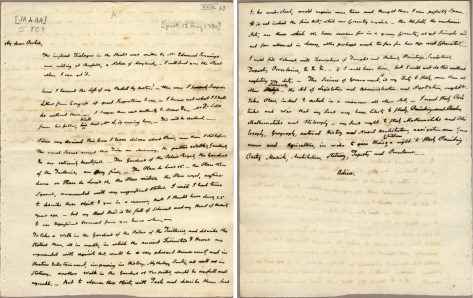
Letter from John Adams to Abigail Adams, posted from Paris on May 12, 1780. From the Massachusetts Historical Society collections

I think of something John Adams once wrote to his wife Abigail: ‘The Science of Government it is my Duty to study, more than all other Sciences: the Art of Legislation and Administration and Negotiation, ought to take Place, indeed to exclude in a manner all other Arts. I must study Politicks and War that my sons may have liberty to study Mathematicks and Philosophy. My sons ought to study Mathematicks and Philosophy, Geography, natural History, Naval Architecture, navigation, Commerce and Agriculture, in order to give their Children a right to study Painting, Poetry, Musick, Architecture, Statuary, Tapestry and Porcelaine.’ For Adams, the purpose of work to change the world for the better is in order that beauty can exist in the world more plentifully, to be promoted and protected for its own sake, and in order that everyone would ultimately have an equal right to access and enjoy in that beauty. Just so for art, for philosophy, for the natural world and for human society alike.

W.E.B. Dubois, Photograph taken by J.E. Purdy in 1904, public domain via Library of Congress

W.E.B. Dubois, Photograph taken by J.E. Purdy in 1904, public domain via Library of Congress

I think DuBois agrees, actually. He clearly loves philosophy for its own sake and thinks it beautiful; after all, he describes it as ‘lovely’ instead of merely dismissing it as useless. But he feels his own talents are best directed at making the world more just for himself and for others who are still routinely denied access to academic philosophy, the high arts, and any other realm of thought and creativity they might want to engage in. Some don’t have the leisure time or disposable income; some are deprived of the right to education or access to the funds needed to pay for it; some live in war-torn places unable to support or protect educational and arts institutions. Like Adams, Dubois feels it his duty and his calling to be an agent of change in his time. And like Adams, DuBois lives a life of philosophy-in-action, his work driven by his convictions about justice and the good life. This demonstrates that for him as it is for countless others, philosophy is fertile indeed.

Ordinary Philosophy and its Traveling Philosophy / History of Ideas series is a labor of love and ad-free, supported by patrons and readers like you. Please offer your support today!

Happy Birthday, Morton White!

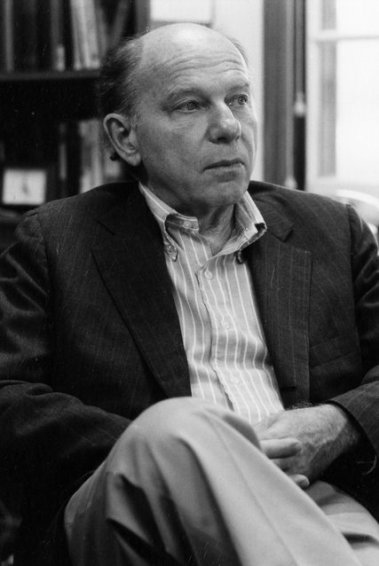
Morton White in 1981

The world lost Morton White (April 29, 1917 – May 27, 2016) less than a year ago as I write this today, and I first learned of him through reading his obituary in The New York Times. As I read, I knew this is a man and an approach to philosophy I must learn more about. Being immersed in other projects, I learned little about him in the intervening eleven months. Happily, I was just reminded by going through my list of significant dates in the lives of the world’s great thinkers (by no means comprehensive!) I placed two of his books on hold at the San Francisco Public Library and will commence reading them on this 100th anniversary of his birth.

White was a philosopher and historian of ideas. According to the Institute for Advanced Studies, ‘he maintained that philosophy of science is not philosophy enough, thereby encouraging the examination of other aspects of civilized life—especially art, history, law, politics and religion—and their relations with science’. And as William Grimes put it for TNYT, his ‘innovative theory of “holistic pragmatism” showed the way toward a more socially engaged, interdisciplinary role for philosophy’.

I studied philosophy with great love and enthusiasm as an undergraduate, yet I found myself then as now just as curious about other disciplines, especially history and the arts, and have often felt that the lines dividing these areas of study are sometimes artificial and even impediments to understanding. Since then, I’ve been pursuing my studies in the broader history of ideas as well, informally for the past few years, formally at the University of Edinburgh starting this fall. No doubt, White has influenced the direction my studies in intellectual history will take in ways I’ll learn as I go along, and in many more ways than I’ll ever know.

Learn more about White and his fascinating ideas with me:

Holistic Pragmatism and the Philosophy of Culture‘ – chapter 1 of A Philosophy of Culture: The Scope of Holistic Pragmatism, New Jersey: Princeton University Press 2002, in which White summarizes what his holistic pragmatism is all about

Morton White, Philosopher of Holistic Pragmatism, Dies at 99‘ – Obituary for the New York Times by William Grimes, June 10, 2016

Morton White 1917–2016 – His memorial page at the Institute for Advanced Study website, June 08, 2016

And you can find his selected bibliography at Wikipedia

Ordinary Philosophy and its Traveling Philosophy / History of Ideas series is a labor of love and ad-free, supported by patrons and readers like you. Please offer your support today!

Ordinary Philosophy’s 4th Anniversary

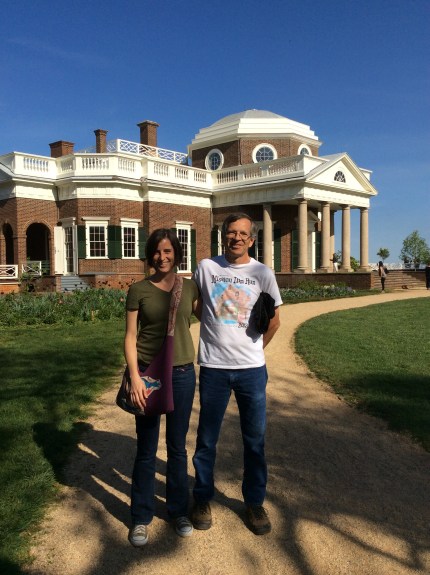
At Monticello, VA, with my Dad, John Cools, in 2015 for my history of ideas series following Thomas Jefferson in America

I published my first post for Ordinary Philosophy four years ago today, on April 23rd, 2013. Thank you, dear readers and listeners, for your kind attention, your encouragement, your corrections, your patience as I learn with and from you, and your hospitality and financial support (you know who you are!) for all of my traveling philosophy / history of ideas series.

Ordinary Philosophy has been one of the most satisfying projects of my life, and I look forward to continuing to share my love of philosophy, history, ideas, and travel for many more years to come, whatever form this will take.

I’m thrilled to share the news with you that I’ll be resuming my formal education at the University of Edinburgh this fall. What an adventure this will be! I’ll be living and studying in the center of the Scottish Enlightenment and the city of David Hume. He brought me here three years ago when I followed his life and ideas for my first history of ideas travel series. I’ll take this opportunity continue my Hume series as well. Though my studies will demand a great deal of my energy and attention, I dearly hope I’ll be able to devote more time to share more with you here at Ordinary Philosophy, not less, as I once again pour the bulk of my time, energy, and love into the world of ideas.

Yours, as ever, Amy Cools

Ordinary Philosophy and its Traveling Philosophy / History of Ideas series is a labor of love and ad-free, supported by patrons and readers like you. Please offer your support today!

Selfie in the beautiful Rose Room of the New York Public Library, 2016 Amy Cools

In the beautiful Rose Room of the New York Public Library. Thank you, friends, for supporting my New York projects too! Ahhh, what a town…

John Steinbeck Country Part II: Grave Site and Fremont Peak State Park Hike

San Ardo Gas and Liquor Store, in San Ardo, off highway 101 in central California

Saturday, April 15th, 2017

I head north from Paso Robles, where I dropped off a troupe of long-distance cyclists this morning, via the 101 back towards the San Francisco Bay Area. My route takes me through Salinas and other old stomping grounds of John Steinbeck. I want to visit one site I missed when I was here last time on a cultural tour following his life and writings, and to revisit another site more thoroughly. On the way, I stop for gas in a little agricultural town called San Ardo, having forgotten to fill up in Paso Robles. I’m glad I have to stop here, because this little town reminds me of happy times visiting so many other small towns rather like this on road trips. I stop into the cafe to fill my thermos with coffee and buy some cookies for the road, and have a chat with the friendly young man who works here, in English and in Spanish.

San Ardo Cafe, outside and in, San Ardo, CA, 2017 Amy Cools

The town’s appearance, too, is probably not unrecognizable from Steinbeck’s time. Who knows, he may have passed through here, it’s not far from his old home territory. The people who live and work here are in many ways Steinbeck’s people, those who work the soil so that we can eat but who we have often long neglected and abused. He made it his business for much of his career to illustrate the lives, circumstances, and sometimes desperate plights of these people, often immigrants and refugees fleeing hard times in their places of origin, for the often oblivious American public.

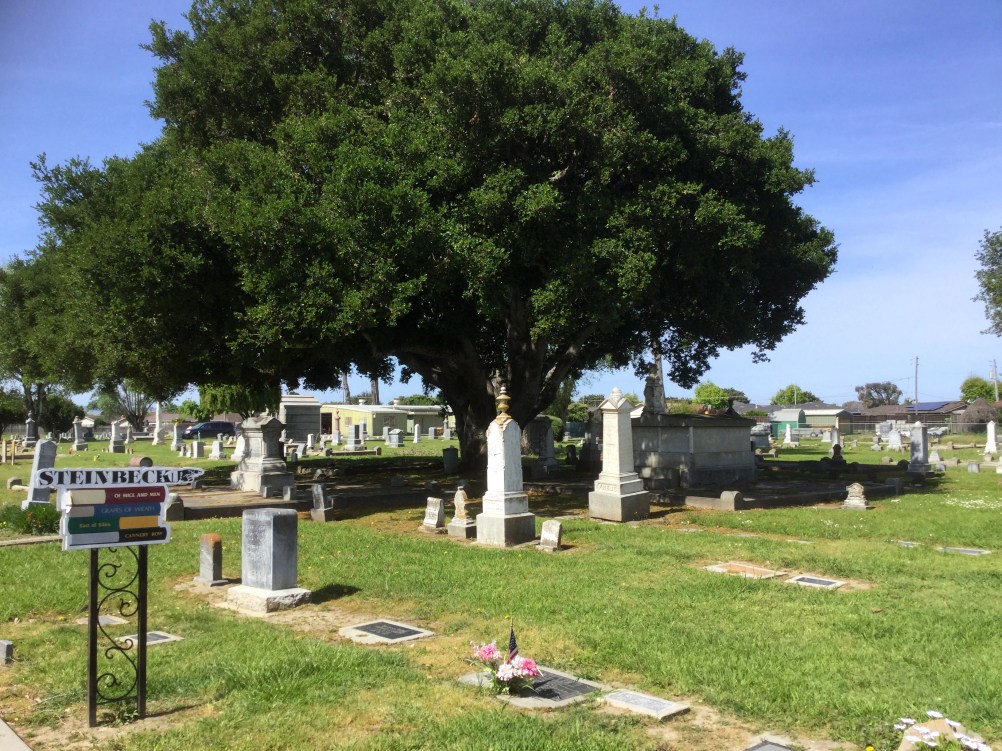
Guide sign to John Steinbeck’s grave in the Garden of Memories, Salinas, CA

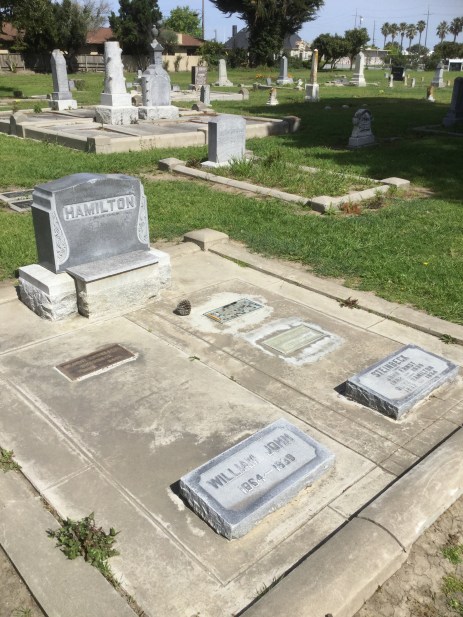
Steinbeck and Hamilton family plot, Garden of Memories, Salinas, CA

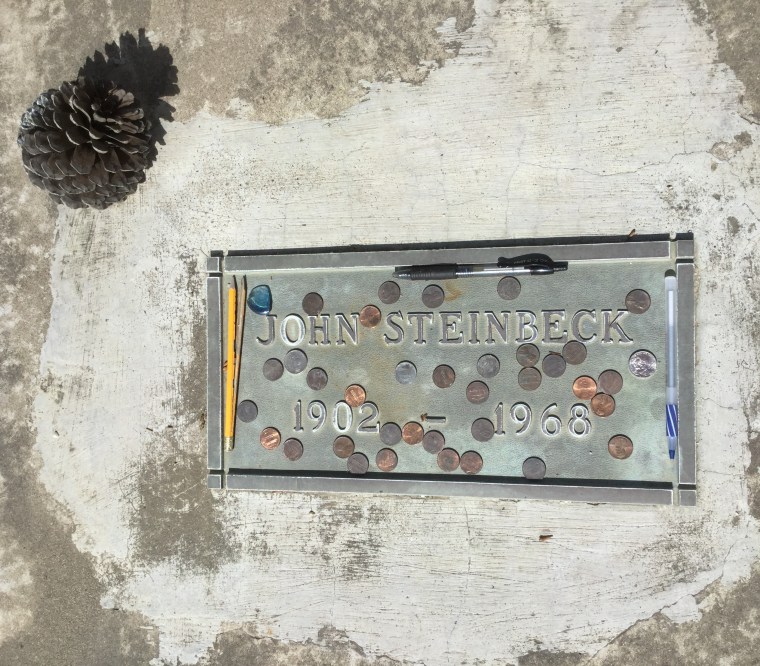
I continue an hour north to Salinas, where I visit Steinbeck’s grave in the Garden of Memories at Abbott St and East Romie Ln. Here he lies surrounded by his family. His headstone is the one decorated with tributes: coins, pens, and one pine cone (artfully placed by nature or a fan, I don’t know). You may recognize some of the names from his novel East of Eden: Hamilton, the family name of his mother; John Ernst, the first and middle name of the author and his father; and Olive Hamilton, the schoolteacher daughter of Samuel Hamilton and the author’s mother. It’s pretty here today, very green, with tiny white daisies and various kinds of yellow flowers blooming everywhere.

East of Eden is a double Cain-and-Abel story about two pairs of brothers in which one brother enjoys the love of his father with seeming little effort, and the other is jealous and driven to despair when his strenuous efforts to win that same love are rejected. Steinbeck wrote this novel for his sons and in hopes of creating the Great American Novel. It is an excellent novel, great in parts, but not the Novel. If any of his works are contenders for this mythical status, he had already written it as The Grapes of Wrath.

John Steinbeck’s grave marker

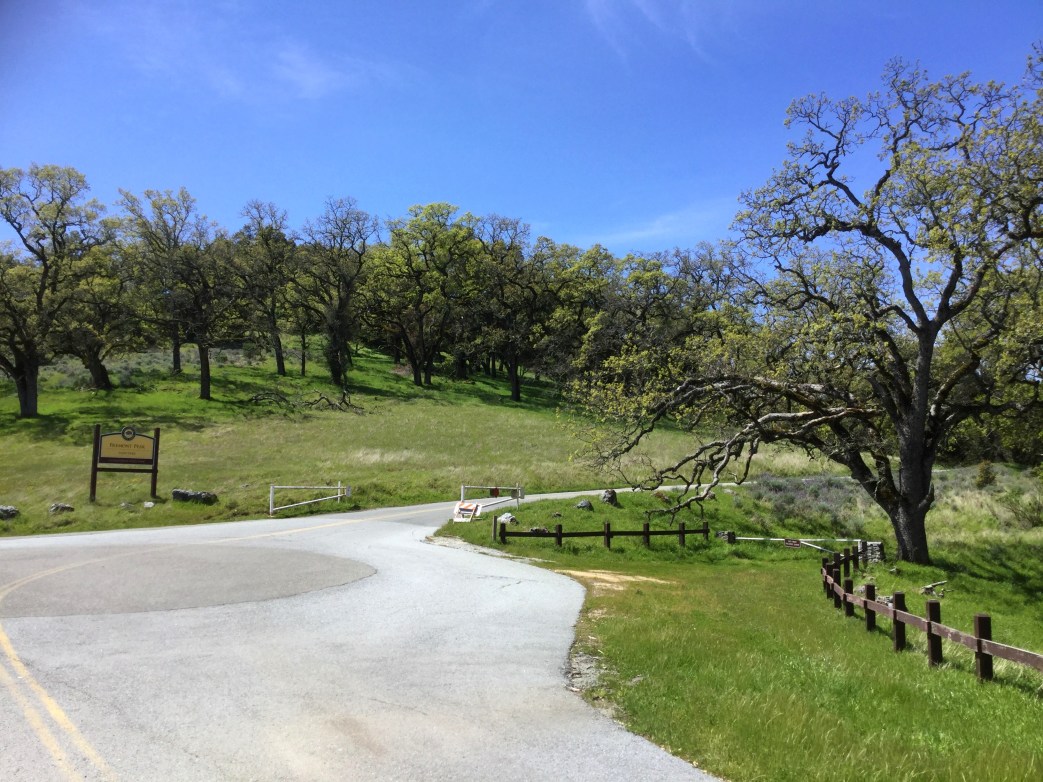
Fremont Peak State Park entrance sign, Cold Springs trailhead is to the right through the gate

Then I return to Fremont Peak, which Steinbeck ascended during his Travels with Charley to take in the broad view of his homeland from above. I plan to climb it from the bottom or as near as I can get to it, but find that Fremont Peak State Park is surrounded on all sides by private property until you’re well up the mountain. It was hard to tell this from Google Maps and from my print California maps. The park brochure, which is available free for visitors at the main parking lot near the center of the park and online, contains the map showing the entire trail system. I decide to walk them all, in an order which will take me winding counter-clockwise all around the park, leaving the loop about two-thirds of the way around for an out-and-back to the peak. I’m guessing Steinbeck would likely not have walked this long way up and around. His health was not great: he had long-term heart problems and was a lifelong heavy smoker, which seems to have aged him more than necessary for his years.

On Cold Springs Trail, Fremont Peak State Park, CA. Left, the windy and narrow under the mossy oaks. Right, a small abandoned shack which on first glance appears to be a two-room outhouse but which contains no signs of plumbing or waste pits. The sign above the trough warns that the water no longer piped here is unsafe for drinking

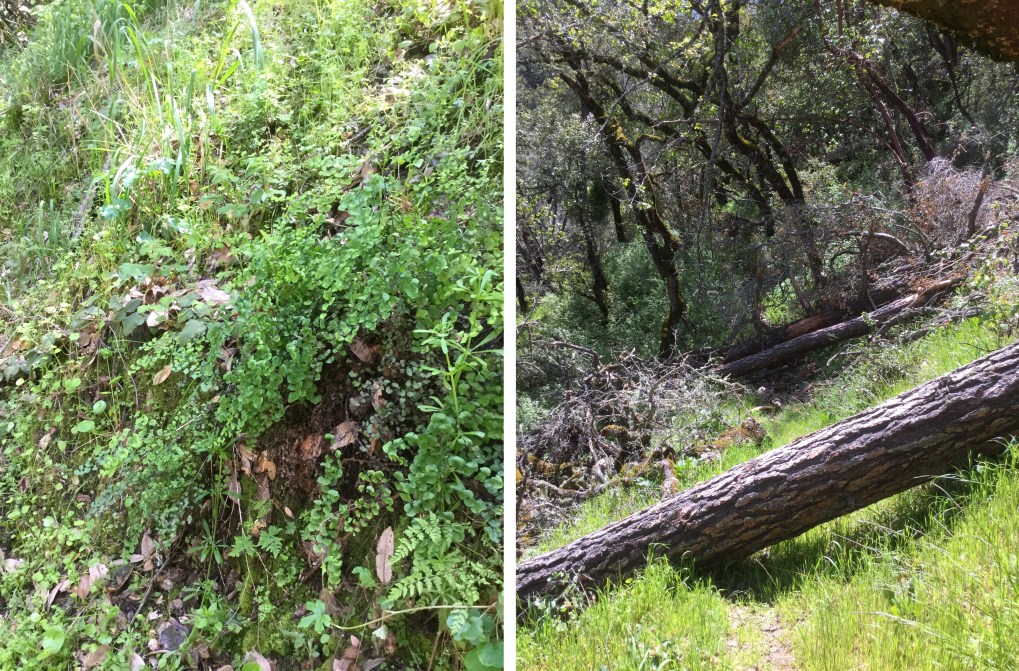
I backtrack to Doe Flat Day Camp near the park entrance and park my car there. As you’re entering the park on Juan Bautista Road, Doe Flat is to the left of the Fremont State Park entrance sign. The trailhead to Cold Springs Trail, on which I commence my hike, is across the street from the campground and through the gate, unmarked except on the park map. I had missed it when I first entered the park since it lacks a sign and because it’s so overgrown. Only a little, narrow, blurred strip of dirt marks the way that evidently few hikers take. It’s green and lush here, a gift of the winter and early spring heavy rains that ended our drought of the last few years. Miner’s lettuce, wood fern, thistle, various grasses, and maidenhair proliferate and revel in the joy of living. The trail is obliterated in many places by fallen trees, the less fortunate recipients of the storms. At one point, I use my head as a battering ram to get through the branches that my hands are already too full to push aside. I’m grateful for my new red sun hat, broad-brimmed and made of a not too heavy but very sturdy synthetic material. It keeps my hair free from the tangling twigs and my shoulders free from scratches. Its bright color will also serve to mark the site of my remains if I am one of those few Californians that make a meal for a mountain lion every two decades or so, if such an enterprising feline takes advantage of my aloneness on this solitary trail. My shins and ankles, however, are shit out of luck.

Left: Maidenhair, miner’s lettuce, spiny wood fern, and grasses. Right: Fallen logs. On Cold Springs Trail, Fremont Peak S.P., CA

Except when it comes to poison oak. I keep an eagle eye out for it; I still have scars from the last time I was here. It’s much easier to see now since the leaves have grown in thick and it’s already starting to redden in some places. I’m also alone this time, and hence undistracted.

Suddenly, the path changes. It’s broader and sandier, and the mossy oaks abruptly give way to manzanita, toyon, and coyote brush. Now I can look up and out at the view because the growth is lower and sparser here, and because the poison oak clearly doesn’t like this dry and sunny side of the hill. Soon after the change, I come to a clearing where a signpost marks the beginning of Valley View Trail where Cold Springs ends at a fire road crossing. There are two weathered picnic benches to my left and a beautiful stand of purple lupine to my right. I veer left on the fire road, then right to continue on to Valley View Trail. The oaks have reappeared, interior live, scrub, and poison. I pick my way with great care again, but the trail is so overgrown and the fallen branches so tangled with it that I’m not sure if I successfully avoid all danger. I’ll be sure to take a hot shower with a scrub brush and plenty of soap when I get home.

Left: Fremont Star Lily. Right: California Mountain Lilac. Fremont Peak State Park, CA

Milk maids and miner’s lettuce in bloom around a mossy trunk, Fremont State Park, CA

The wildflowers are not so thick now in most spots, though I can see the dried and shriveled evidence that they were not long ago. They may soon enjoy a second bloom from the straggler storm that passed through recently. Those still here are just beautiful, white, pink, yellow, purple, and blue. I see waxy yellow California buttercups, blue witch and blue-eyed grass, purple shooting stars and larkspur, golden poppies, white woodland stars, and many, many more. A woodpecker knocks overhead as other birds chatter, squawk, trill, and call with that ‘wheeeeeew’ sound that accompanies old-time comedy scenes.

I cross a little road and Valley View Campground, a sweet little spot. On the other side, Valley View Trail becomes a much wider and well-traveled one, and I start meeting hikers now and again. A pair of lovers frolic and laugh somewhere nearby, fitting in perfectly with the bird chorus. A barbed wire fence running along the right of the trail marks the park boundary.

Left: Hound’s Tongue. Right: Woodland Star. Fremont Peak State Park, CA

Left: Wild Pansy. Right: Royal Larkspur. Fremont Peak State Park, CA, 2017 Amy Cools

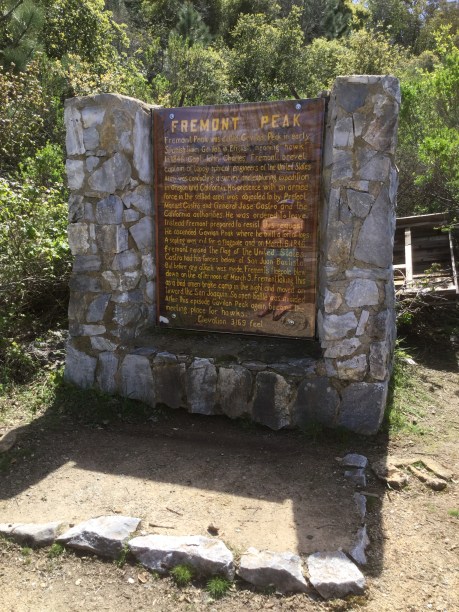
Captain John Fremont 1846 flagpole story sign, Fremont Peak State Park, CA

I arrive at the parking lot near Oak Point Campground where the Peak Trail begins, which I ascended with the John Steinbeck Odyssey Tour group in March. There’s a large sign framed in stone which tells the story of Captain John Charles Fremont’s run-in with Prefect Manuel Castro and General Jose Castro in 1846. It tells it as if it’s a heroic tale on Fremont’s part, but it reads to me like an act of arrogance and a provocation to war, waltzing into another’s country with an army and without a by-your-leave then planting your nation’s flag in their soil. His flagpole blew down, however, and the superstitious general hightailed it out of there with his soldiers before any fighting started. The roof of this monument has likewise fallen and a shirtless beefcake is reflected in the sign as I take a picture. The circumstances of this moment make me chuckle.

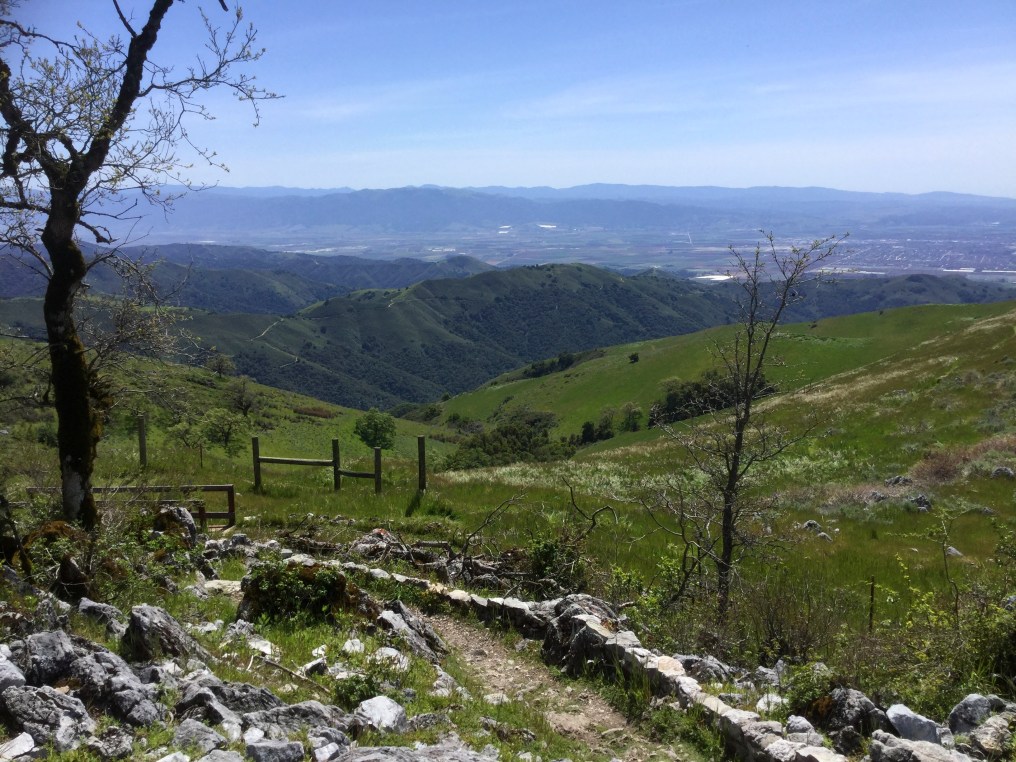
Rocky trail to Fremont Peak

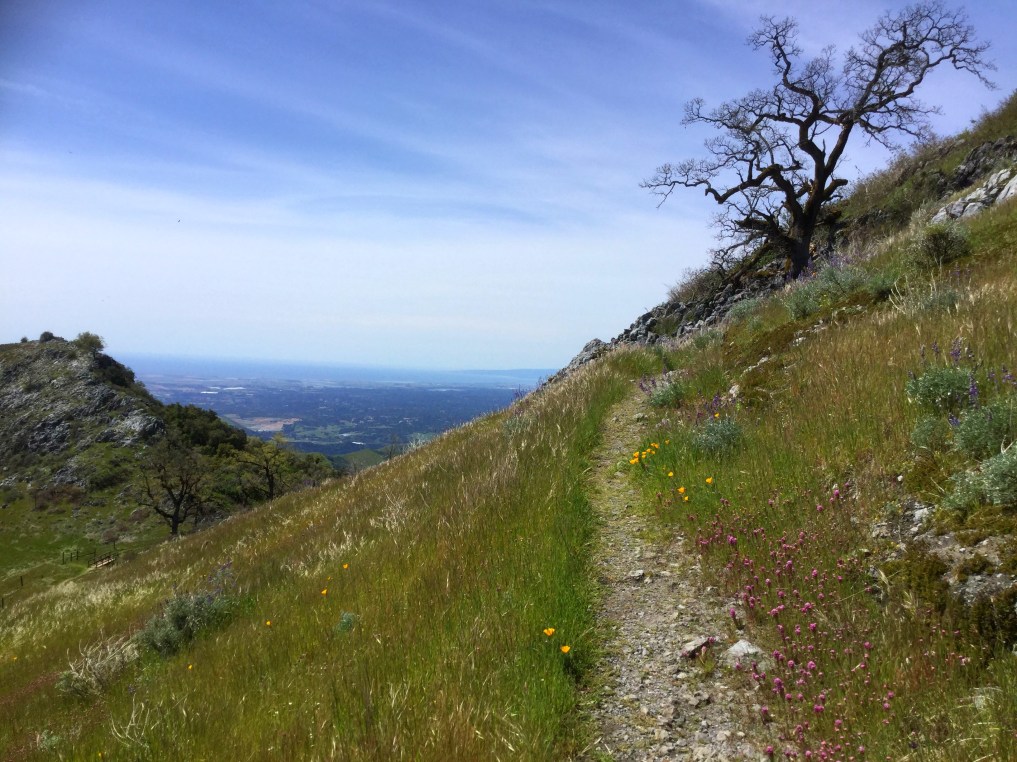
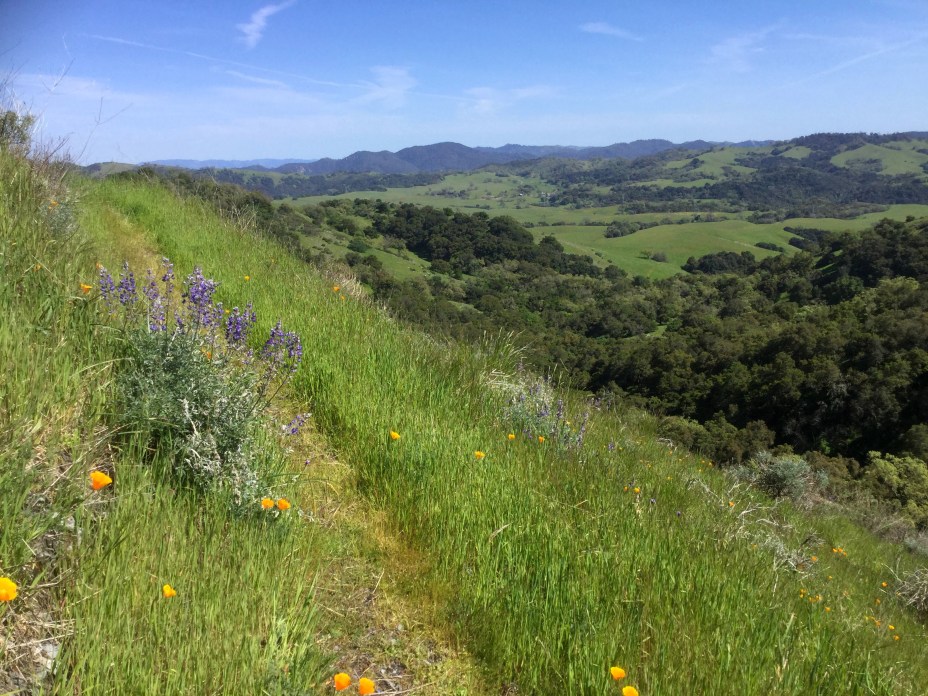
Wildflowers along the grassy hill side of the trail to Fremont Peak

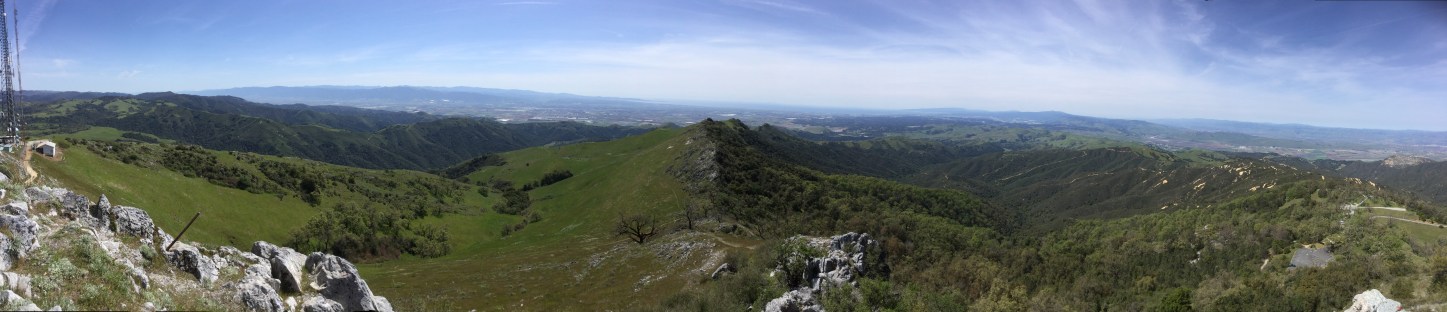
Panoramic view from Fremont Peak

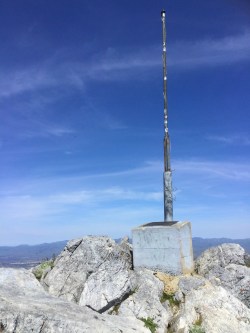
Historical marker and flagpole on Fremont Peak

In all seriousness, though, this is a beautiful spot, conducive to much loftier thoughts and feelings. I climb to the peak, and the view is incredible. It’s even greener than it was in March, and now it’s wildflower season. The Monterey Bay spreads out ahead and a little my left, and the crop fields grow to my right. The Salinas Valley region is one of the most productive agricultural areas of California. The sight of Fremont’s flagpole here at the top has been marked by another, much sturdier one, and a brass plaque set in concrete, which tells the tale even more heroicly. I chuckle again as my reflective mood is broken.

Then I remember my travel companions gathered with me on the last occasion which brought me here, and sigh. I miss them.

At the foot of the Peak Trail, I turn right onto Carmen’s Trail, which zigzags thinly through slopes thickly covered with softest greenery and more thistles, which gently sting my ankles. It’s lovely and cooler here in the shade of taller oaks, which need to reach higher for the sun in this little canyon. The narrow creek bed running along its bottom is already dry. On the other side, the trail ascends a grassy, open hillside, the green just barely beginning its Midas’ touch transformation into the gold of summer. It’s inset with jewel-bright lupine and poppies throughout.

View from Carmen’s Trail, Fremont Peak State Park

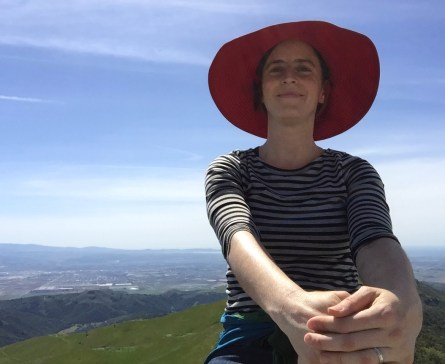
Amy Cools on Fremont Peak

Carmen’s Trail ends at a little pointy shingle-sided building of quality construction, handsomely finished in varnished wood and teal paint, perhaps a cabin. I turn right just before I reach it and take Tony’s Trail, which returns me in short order to Doe Flat. I dine on some leftover pizza which I had set to warm in its foil on the sunny dashboard. It’s more delicious than it was when it was fresh at last night’s dinner.

It’s been a delightful day.

* See my profile of Julia Ward Howe, whose Battle Hymn of the Republic provided the title of The Grapes of Wrath, and which is printed in the opening pages of the novel

*Listen to the podcast version here or on Google Play, or subscribe on iTunes

Ordinary Philosophy and its Traveling Philosophy / History of Ideas series is a labor of love and ad-free, supported by patrons and readers like you. Please offer your support today!

Traveling Philosophy Series, Thomas Jefferson Edition: Prologue

Three years ago today

Amy M Cools's avatarOrdinary Philosophy

As I sit here in the airport terminal in Salt Lake City, waiting for one of my connecting flights to DC, I sleepily munch on French fries and watch the crowd go by. My ever-generous darling awoke with me at three thirty this morning to drive me to the airport, and though I’m almost too tired to think, I can’t sleep either, as is usually the case at the beginning of a trip (I can usually sleep on the way home).

So as I’m watching the crowd, I’ve got Thomas Jefferson in the back of my mind, as I’ve been immersing myself in biographies, lectures, discussions, and author’s talks about his life and thought over the last couple of weeks. On the first leg of my trip, I had just been re-reading the first chapters of Susan Jacoby’s marvelous Freethinkers: A History of American Secularism, in which Jefferson’s Enlightenment philosophy…

View original post 589 more words

Happy Birthday, Averroes (Ibn Rushd)! By Eric Gerlach

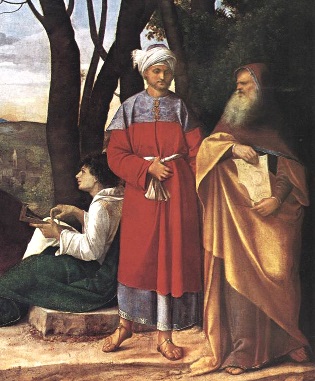
Averroes by Giorgione890 years ago today, on April 14th, 1126, the great Islamic philosopher, theologian, political theorist and scientist Ibn Rushd, or as he is known by the Latinate version of his name in Europe, Averroes, was born.

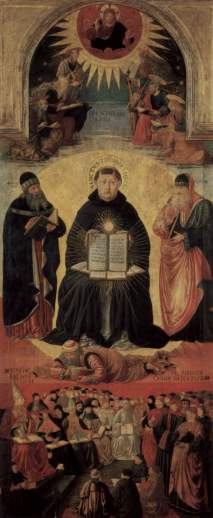
Among his many achievements, Averroes is credited with popularizing the study of Aristotle in Europe, inspiring the work of Thomas Aquinas and the Christian Scholastics.  Averroes was known as “The Commentator” and Aristotle “The Philosopher” to Aquinas and the Scholastics, as Averroes wrote multiple commentaries to help others understand Aristotle’s thought.  To the left is an image of Averroes standing between and above an ancient Greek sage, likely Aristotle, and an Italian scholar of the Renaissance, sitting at their feet, painted by Giorgione of Venice. Averroes was also a major influence on Maimonides, Giordano Bruno, Pico della Mirandola, and Baruch Spinoza, and was one of the great souls that Dante wrote was dwelling in limbo with the Greek sages who lived before Jesus.

Aquinas Averroes and Scholastics

Thomas Aquinas

Averroes’ grandfather and father both served as chief judge of Cordoba, the place where Averroes was born, which later became part of Spain.  Averroes wrote prolifically, twenty-eight works of philosophy as well as important treatises on law and medicine.  As a rationalist, Averroes argued that philosophy and religion teach the same truth and thus are not in conflict, such that intellectuals pursue the same matters that common people comprehend through religion and rhetoric.  He also argued that analytic thinking was important for the proper interpretation of the Quran, as Christian Scholastics would argue later about the Bible in Europe.  Averroes’ works were banned and burned in Islamic and Christian lands at different times, but they were revered enough to survive in both places.

Averroes was opposed to the work of Al-Ghazali, the Sufi mystic and author of The Incoherence of the Philosophers.  Ghazali argued that philosophers such as Plato, Aristotle, Al-Farabi and Avicenna contradict each other, and are thus incoherent as a set, and also contradict the teachings of Islam.  Ghazali also argued that Aristotle and those who follow him are wrong to assert that nature proceeds according to established laws, as all things proceed directly through the will of God.  Averroes wrote his most famous work, The Incoherence of the Incoherence, in response to Ghazali.  Averroes defended Aristotle and argued that philosophy doeslead to coherent truth, which is not in conflict with Islam, and that nature proceeds indirectly from God via the laws of nature, which God established during creation.

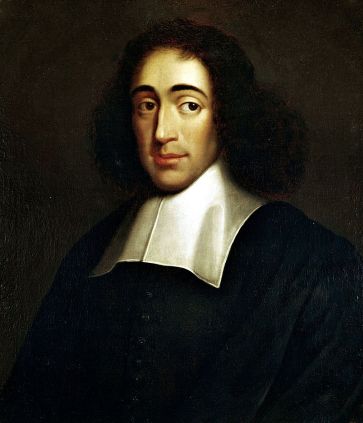
Portrait of Baruch de Spinoza (1632-1677), ca. 1665, by an unknown artist

Portrait of Baruch de Spinoza (1632-1677), ca. 1665, by an unknown artist

Averroes is also famous for his idea of monopsychism, that we all share the same divine soul, mind and awareness, with each taking a part such that the lower soul is individual and mortal but the higher soul is universal and immortal, the source of true inspiration and reason.  Spinoza, who said that each of us is like a wave on the great sea of being, was a pantheist, inspired in part by Averroes.  Much later, when Albert Einstein was asked if he believed in God, he said, in the spirit of Averroes, “I believe in Spinoza’s god”.

In these and countless other instances, we can discern the influence of Averroes throughout both Eastern and Western thought. Thank you for your wisdom and insight, Averroes!

~ Ordinary Philosophy is a labor of love and ad-free, supported by patrons and readers like you. Any support you can offer will be deeply appreciated!

*All views and opinions expressed by guest writers are their own and do not necessarily reflect those of Ordinary Philosophy’s editors and publishers

Margaret Sanger in the San Francisco Bay Area, California

Scottish Rite Masonic Temple mosaic, above the doorway of what’s now the Regency Center, San Francisco

Fairly early on in my research for my history of ideas series on Margaret Sanger in New York City, I discover that she delivered one of her more famous addresses here in Oakland. Practically just around the corner from where I live, in fact!

So I’ve long had the idea of doing a follow-up Sanger project here in the San Francisco Bay Area, certain I’d find she’s been here more than once. That turns out to be the case. And not only do I discover that she visited here several times, I find that the excellent library at the University of California at Berkeley has some great resources for filling in some gaps in my information about Sanger in NYC. So, this story will have two parts: the first part is about sites associated with Sanger here, and the second part is about some discoveries I make in U.C. Berkeley’s archives following up on two NYC sites.
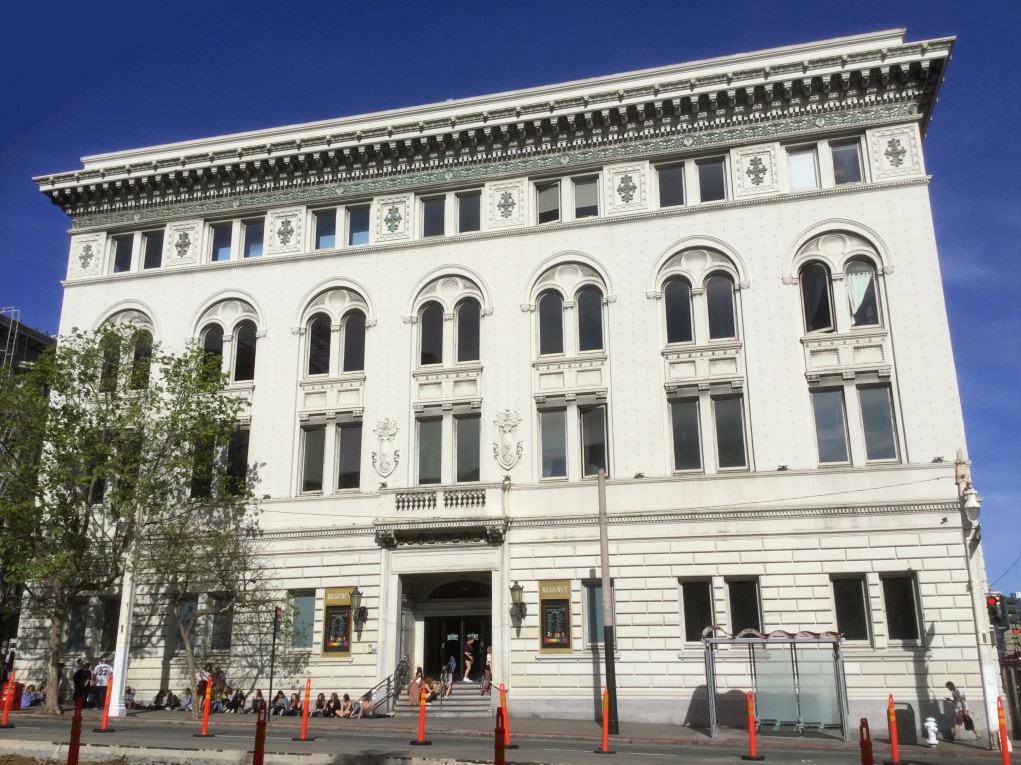
Scottish Rite Masonic Temple, now the Regency Center, at Sutter and Van Ness in San Francisco, CA

Stairway and elevator at the Regency Center, formerly the Scottish Rite Temple at Sutter and Van Ness, San Francisco

I: Sanger in Oakland and San Francisco

Friday, March 31st, 2017

I head first to San Francisco, a quick and easy trip on BART (Bay Area Rapid Transit System, our subway/ell) across the Bay, and take a pleasant walk on this spring day from Montgomery Street station east, first along Post through Union Square, then on Sutter. December 16th, 1928, Sanger spoke at the Scottish Rite Hall in San Francisco, at Sutter and Van Ness. The Scottish Rite Masonic Temple moved into its new quarters in the early 1960’s, and this building became the Regency Center, a multi-purpose venue. In fact, I was here just a few years ago when I saw John Cale, one of my very favorite musical artists of all time, perform in the ballroom, but Sanger likely spoke in the Social Hall. It’s also likely she delivered more or less the same speech she delivered at Oakland Civic Auditorium three days later, the story of that speech will follow below. Perhaps the speeches and corrections she scribbled onto the speech, which I link to here, constitute the differences between her addresses at the San Francisco and Oakland venues.

Small upper room in the Scottish Rite Temple, now the Regency Center, San Francisco

I write to people who manage and organize events at the Regency Center but am unable to line up a day to meet soon that will work with all of our schedules.

But since I have this free afternoon on a glorious spring day, I head over anyway, in case I luck out and end up there at a good time. Turns out, the very helpful man I find here, who’s in charge of setting up events, regretfully tells me there’s just too much going on for me to head upstairs and poke around to the rooms where she may have spoken; various contemporary sources designate the venue as the Scottish Rite ‘Hall’ and ‘Auditorium’, so the exact site is unclear. So I take photos in the places he allows me to wander: the hallway, the main stairway, and a meeting room just off the main landing now converted into a small bar.

About 22 years earlier, in August of 1916, Sanger wrote to her friends Charles and Bessie Drysdale, ‘In San Francisco [on a birth control lecture tour] I had a collapse, and was three days in bed under medical care, but recovered sufficiently to hold six meetings.’ As you may recall, Sanger suffered from recurrent tubercular infections, and from time to time they made her quite ill and exhausted. I have yet to find a record of specific locations she visited or stayed in San Francisco on that trip. Sanger didn’t mention her time in Oakland in this letter, though she may have meant to include the greater Bay Area when she said ‘San Francisco’, as visitors often do. Since she delivered her Oakland speech only three days after this San Francisco tour, this may have been one of the six meetings she spoke of.

So I return to Oakland to follow in Sanger’s footsteps there.

Margaret Sanger Hotel Oakland appearance, Oakland Tribune, Thu Jun 15, 1916, evening edition, front page. For the full article, click here. The drawing looks nothing like Sanger, and what’s up with the silhouette of celery? Yes, I know it’s meant to be a vase…

Hotel Oakland Ballroom, vintage postcard via Hotel Oakland Village website

On June 15, 1916, Sanger gave a speech in the ballroom of the Hotel Oakland at 270 13th St. I don’t find a transcript of this speech, but I do find a newspaper article about this event, which includes a summary of its main points as well as a review. The speech was well received by the audience, according to Gene Baker, writing for the Oakland Tribune. He compared Sanger favorably to Emma Goldman, Sanger’s one-time friend and ally from whom, truth be told, Sanger co-opted the mantle of birth control advocate-in-chief. As Baker commented in his article, Sanger was much more traditionally ‘feminine’ than Goldman in appearance, ‘slight’ and prettily dressed. Sanger was both a committed sex-positivist and a straight woman and saw no contradictions between her feminist convictions and in making herself attractive to men. Baker also described Sanger as speaking with intensity (which indicates she was feeling better since her collapse in San Francisco) and with scientific coldness. Perhaps she did convey a sense of scientific detachment, given her habit of buttressing her calls for action with a barrage of facts and statistics, or perhaps he perceived her keen grasp of the issues and her memory for detail as unfeminine and therefore ‘cold.’

Baker also wrote of her outspoken opposition to Theodore Roosevelt’s beliefs about childbearing in this speech; she frequently published rebukes and rebuttals to the President’s public stances against birth control and in favor of large families. (Baker mentioned that she spoke out against Roosevelt in San Francisco as well.) Both Sanger and Roosevelt were eugenicists but of different types: Sanger believed in negative eugenics, in curing human ills through having less children, especially if the parents were ill, disabled, or too poor to bring up well-nourished, well-educated, and well-housed children, and Roosevelt believed in positive eugenics, improving the human race through intelligent and hardworking people having as many children as possible.
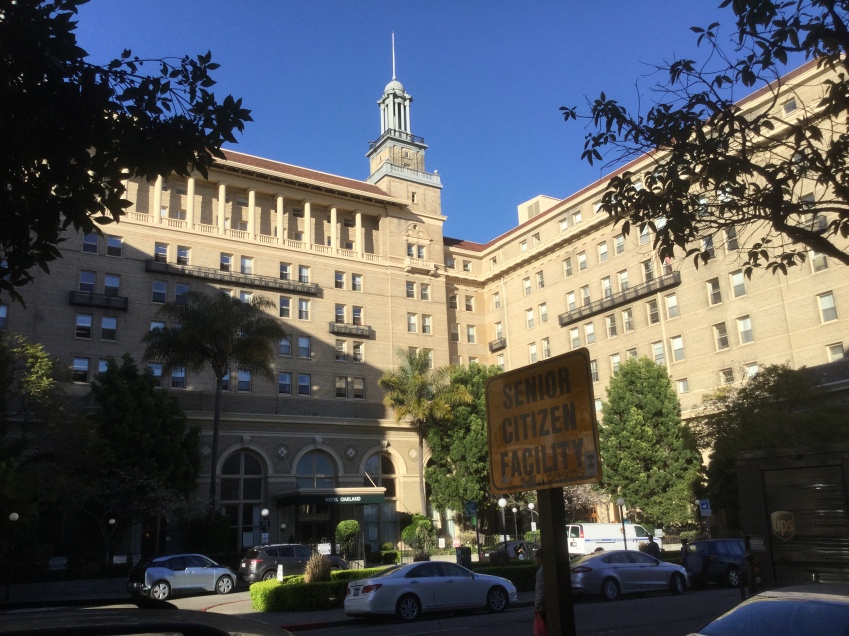
Hotel Oakland, now Hotel Oakland Village senior citizen community


Hotel Oakland Village main lounge, Oakland, CA

Hotel Oakland, vintage postcard via Hotel Oakland Village website

Hotel Oakland Historical Plaque, Oakland, CA

The Hotel Oakland, which opened as a luxury hotel on December 23rd, 1912, is now a senior community residence. Its grand edifice is little changed, but its garden is no longer so sumptuous and much of its interior is much plainer, having been stripped of its chandeliers and fancy furniture and painted plain white, though the lounge ceiling is painted a lovely antique-gold color. I sign in at the desk and walk around the first floor, greeting each person I see with a hello, a smile, and a nod, everyone is friendly and welcoming, and no one questions my presence. I take photos freely on the ground floor except in the large back room converted into an activity and physical therapy area, which, it so happens, appears to be the former ballroom I seek. I ask the person who works there if I may take pictures; she’s a Spanish speaker, and I ask in that language (unforgivably clumsily, given that I’m a California native and I should be more adept) if I may take pictures. She explains that the person that could authorize this won’t be back in until Monday, so I depart. As much as I am historically nosy, I make it my practice never to infringe on the territory of working people. They have enough to worry about without wondering if they could get in trouble on my behalf.

I do, however, take photos of the front lobby, in full view of everyone there who appears not the least concerned with my presence except to return my smile when they happen to catch my eye. Most of the residents are Chinese. This is no surprise since the Hotel Oakland Village, as it’s now named, borders Chinatown, and like the neighborhood in general, it is family-oriented, with visitors of all ages coming and going, often taking the elderly residents for local outings, such infirmities as they have lovingly supported by wheelchairs, walkers, arms, and hands. The parks in this neighborhood often contain large groups, sometimes very large, of older people going through the graceful, slow, deliberate movements of Tai Chi. It’s likely they include many of the residents of this hotel. The sight of these people, something like colorful wildflowers waving in the wind, something like windmills if windmills were endowed with personalities, intention, and rich history and could move deliberately to music, warms my heart on my morning walks.

Oakland’s Chinatown at the time of the Hotel Oakland’s heyday; many of these old houses stand today. This photo is on the wall of the Oakland Hotel Village main hallway

Margaret Sanger Speeches, Announcement for Oakland and S.F, in the Oakland Tribune, Sun Dec 16, 1928

Margaret Sanger Speeches, Announcement for Oakland and S.F, in the Oakland Tribune, Sun Dec 16, 1928

Next, I visit the Oakland Civic Auditorium, later called the Kaiser Convention Center, also just a few blocks from my house, near Lake Merritt. On December 19th, 1928, Sanger delivered the speech ‘The Necessity for Birth Control‘ here. It was a least as dedicated to eugenics-based arguments about the ill effects of ‘feeble-minded’, ill, disabled, and poor people having children to whom they passed down these traits and which they could not care for properly, as it was about preventing suffering.

The eugenics arguments and opinions she used in this speech are hard to take now, just as they were for many then. Yet to be fair to Sanger, we must remember that her arguments were informed by her experiences working as a visiting nurse in the slums where the poorest of the working poor lived in NYC, where the best efforts of public charities often seemed to hardly make a dent in relieving suffering, especially when, as Sanger believed, so much of it was preventable:

In her speech, Sanger said:

To define Birth Control, we say it is the conscious control of the birth-rate by scientific means that prevent the conception of human life. Prevent, remember. Prevent does not mean to interfere. It does not mean to destroy. There is no more interference with life through birth control than there is to remain unmarried or to live a celibate life. We also say “to control.” Control does not mean that you limit. When you control your furnace you do not have to put the fire out. When you control your motor you do not necessarily stop your car. To control the birth rate means that there shall be the same right for those who do not wish to have children as for those who do wish to have them. There are no objections to those who wish to increase the size of their families, but on the other side there seems to be a great deal of question and controversy as to the right of those who wish to limit or control the number of their children. ~ Margaret Sanger, ‘The Necessity for Birth Control’

Booklet for the Oakland Civic Auditorium and Opera House, now Kaiser Convention Center, Oakland Public Library

Oakland Civic Auditorium as it appears today

The Oakland Civic Auditorium had stood for 14 years when Sanger spoke here in 1928 and she had become very well known indeed in the dozen intervening years since she spoke at the Hotel Oakland. The Auditorium is a huge venue, as we can see in historical photos: it held Buffalo Bill’s Wild West Show and the Barnum and Bailey circus, symphony orchestras, and other large-scale entertainments. The history of this place is wonderful, with so many other amazing activists, artists, speakers, and performers appearing here over the years: Isadora Duncan, Duke Ellington, Marian Anderson, Paul Robeson, Johnny Cash, Elvis Presley, Martin Luther King, Jr, the Grateful Dead… It’s no longer in use, standing empty since just before the turn of this century, but I hope this beautiful Beaux-Arts edifice is reclaimed, restored, and put to as good a use as it once was.

Buffalo Bill Wild West Show at the Oakland Civic Auditorium, photo from booklet at Oakland Public Library

II: More About Sanger in NYC at U.C. Berkeley’s Doe Memorial Library

Research & photos: gathered on various dates from November 2016 to March 2017

And now, here’s my follow-up on two sites associated with Sanger in NYC:

Margaret Sanger Letter to Noah Slee on Barclay Hotel Stationery, excerpt, from the Sophia Smith Microfilm Collection

From Day 1, Part 3‘I track down a listing in the Margaret Sanger Papers Microfilm Edition: Smith College Collection Series catalog for a microfilm of a letter Sanger received from the Barclay hotel, but I don’t have access to it at the moment. It’s not available online and I’ve not yet had a chance to visit the library at the University of California at Berkeley, which has a copy’

I finally get around to tracking down the microfilm collection, stored deep in the archives at the Doe Memorial Library at U.C. Berkeley, with the assistance of the ever- kind and helpful Nancy Oanh Tran. In looking through the microfilms of documents dated around the time of Sanger’s stay at the Barclay Hotel, I find a phone message for Sanger and many chatty letters to her husband Noah Slee written on Barclay Hotel stationery. The letters discussed visits to and from friends, a visit from her son Grant, how much less pleasant it was to drive a car in New York City than in Tucson, how disorganized she was, and so on. Most of the contents of these letters are of little interest to anyone outside of their relationship, their circle of friends, and of course, dedicated historians, except, I think, for one thing: she begs him not to join her in New York City, and not to ask her to leave her work there yet. In her second marriage, she demanded the freedom she wanted that she did not find enough of in her first, and she got it through endearments, compliments, even sappiness, so that Noah would feel loved and not abandoned; through cajoling; through explanations and arguments about the importance of her work and her need to do it unimpeded; and even through what reads to me like a guilt trip.

o I American Eugenics Society journal, Doe Memorial Library at U.C. Berkeley

From Day 2, Part 2: ‘According to Robin Pokorski’s Mapping Margaret Sanger, ‘The Hotel Astor was the site of the National Birth Control Conference of November 19 and 20, 1929. The conference was sponsored by the American Birth Control League.’ I find few contemporary references online to the talks and attendees of this conference other than a few remarks in some contemporary newspapers and a brief excerpt from Eugenics: A Journal of Race Betterment, Volumes 3-4, 1930, published by the American Eugenics Society. An article from The Capital Times of Madison, Wisconsin outlines some of the topics of discussion, such as the Comstock laws and the current science of reproduction, and lists some of the headliners of the conference, which include ‘famous educators, doctors, and pastors.’ ‘

In doing further research, I find there’s a copy of the American Eugenics Society journal also in the collections of U.C. Berkeley’s Doe Memorial Library.

Mary Louise Inman, who wrote an account of and commentary on the meeting for the Eugenics Journal, wrote:

‘Most of our adult generation can remember when [the birth control movement] was chiefly characterized by determined looking ladies selling The Birth Control Review on metropolitan street corners, Margaret Sanger being held up for her propaganda, and a general feeling in the lay breast that the whole thing was not quite respectable.

Here we see before our eyes the evolution of an idea. That the movement has undergone a decided moral, social, and intellectual transformation is evidenced by the presence on the speaker’s platform of some of our foremost religious leaders, together with eminent writers, physicians, educators and scientists, as well as other professional and non-professional men and women of the highest social standing.’ ~ Inman, Eugenics, Jan 3oth ed, p 12

As I read further, I take notes. They go:

National Birth Control article for Eugenics journal by Mary Inman, 1930

‘In his speech, one Dr. E. Bord Barrett, a former Jesuit and still a practicing Catholic, held out hope that the Church would be flexible and adaptable on the birth control issue. He was a believer in the social benefits of birth control, and based his hope on the fact that so many Catholics used birth control, that Church-mandated celibacy for priests and others indicated that the Church recognized it was not always in the best interests of individuals and communities for everyone to have children, and that the Church blessed marriages of couples who could not have children.

Dr. Hannah Stone, director of the Birth Control Clinical Research Bureau and Sanger’s long-time colleague who was arrested in the raids on the W. 15th Street clinic, was among the speakers, but her talk was not recorded or described in Inman’s article.

Ministers and rabbis voiced their support for birth control on humanitarian and personal responsibility grounds.

The second day of the conference was dedicated to issues related to eugenics. They discussed the questions of whether it was desirable to ‘breed geniuses at will’, if it could be done at all; who would be qualified to decide what are ‘desirable’ human traits and types beyond those which impart health and the ability to take care of ones’ self; whether ‘spiritual values’ should be brought to bear on the issues, and much more.

Albert Edward Wiggam, worried that birth control might exacerbate a differential birth rate between those who are prudent, far-sighted, intelligent and self-controlled enough to be more likely to use birth control, and those who conceive and bear children thoughtlessly. He believed these traits were largely transmissible, predicting the likely behavior of the next generation. To counteract this problem, Wiggam believed that birth control needed to be universally and readily available as well as easy to use.’

Margaret Sanger, from Eugenics journal, Doe Memorial Library at U.C. Berkeley

The article ends by noting that Margaret Sanger could not attend the conference, which surprises me! Instead, she sent a telegram which was read to the attendees since her attendance was sorely missed given her role as a founder of the movement and the most important activist of her time for women’s rights, since the suffragists. Inman predicted that birth control would become as readily accepted in society as women’s right to vote, however controversial its past. She was mostly right. Though many Americans are uncomfortable with publicly funding birth control since we believe so firmly in the right to religious dissent, most Americans actually do use birth control, at least at some point in their lives. And as Sanger hoped, it has become readily available, easy to use, mostly every cheap, and all very safe. And she played a very significant role in bringing this about.

Thank you, Margaret Sanger.

Listen to the podcast version here or on Google Play, or subscribe on iTunes

Ordinary Philosophy and its Traveling Philosophy / History of Ideas series is a labor of love and ad-free, entirely supported by patrons and readers like you. Please offer your support today!

~~~~~~~~~~~~~~~~~~~~~~

Sources and Inspiration:

Duchsherer, Aimee. ‘Better Babies or More Babies?: Theodore Roosevelt, Margaret Sanger, and the Birth Control Movement‘. July 16, 2015, Theodore Roosevelt Center at Dickenson State University blog.

The Hotel Oakland Village website: ‘History: Grand Hotel‘ and ‘Historical Photos

Inman, Mary Louise. ‘The National Birth Control Conference’ from Eugenics: A Journal of Race Betterment, Volumes 3-4, January 1930, pp 12-17.

Kaiser Convention Center‘. In Wikipedia, The Free Encyclopedia.

The Margaret Sanger Papers Electronic Edition: Margaret Sanger and The Woman Rebel, 1914-1916, eds. Esther Katz, Cathy Moran Hajo and Peter Engelman (Columbia, S.C.: Model Editions Partnership, 1999)

The Margaret Sanger Papers Microfilm Edition: Smith College Collection, eds. Esther Katz, Cathy Moran Hajo, Peter Engelman, and Anke Vass Hubbard, 1996. #Microfilm 77685 , S15:0042. Reel S15: May 1938 – Nov 1938

Brochure for the Kaiser Center, one the old Oakland Civic Auditorium, Oakland Library collection


‘The Regency Ballroom: About‘, from their website

The Regency Center‘. In Wikipedia, The Free Encyclopedia.

Regency Center: Venue Overview: History‘, from their website

Sanger, Margaret. ‘A “Birth Control” Lecture Tour‘, Aug 9, 1916. Published article: Malthusian, Sept. 1916, 83-84. (Sanger’s letter to Charles and Bessie Drysdale published as an article)

Sanger, Margaret. ‘The Necessity for Birth Control,’ Dec 19, 1928. Typed Draft Speech. Source: Margaret Sanger Papers, Library of Congress, Library of Congress Microfilm 130:0226

Social Hall SF: Venue Info‘, from their website (part of the Regency Center)

Tillmany, Jack. ‘Regency I: 1320 Van Ness Avenue, San Francisco, CA 94109‘. Cinema Treasures website

Can We Have More Than One Friend? According to Montaigne, No, by Manuel Bermudez

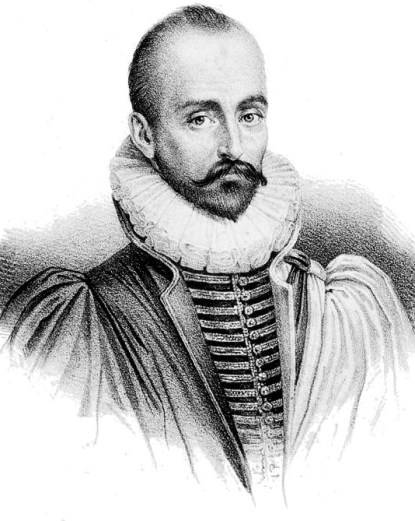
Michel de Montaigne, public domain via Wikimedia Commons

The Essais are the perfect mate to accompany anybody, throughout all stages of life. It’s always interesting to explore Michel de Montaigne‘s life and his marvelous book: the Essais. Within his lifespan, Montaigne was able to find true friendship for himself and record its effects therein. Here we propose to navigate Montaigne’s approach to friendship.

In his Nicomachean Ethics Aristotle wrote that friendship was “one soul in two bodies.” Montaigne, on the contrary, always thought that friendship was a free exchange between two people.

Montaigne thought that true friendship was rare. He himself acknowledges to have found only one proper friend in his life: Etienne de La Boétie. And he could enjoy this friendship only for a mere four years. They met as adults and death took Montaigne’s soulmate early. An irreplaceable loss. After La Boétie’s death (in 1563), Montaigne didn’t feel the desire to find a substitute for his dead friend. Perhaps the reason was that our French friend knew intuitively that such a profound bond could only happen once in a lifetime.

Is it possible to have many different friends at any given time? According to Montaigne, true friends are not only scarce, but they should be unique, if only for loyalty’s sake.

If two friends asked you to help them at the same time, which of them would you dash to? If they asked for conflicting favours, who would have the priority? If one entrusted to your silence something that was useful to the other, how would you manage?

— Montaigne, Essais, “On Friendship”

Montaigne-Dumonstier

Portrait of Montaigne by an unknown artist. Public Domain via Wikimedia Commons

The dilemma set here finds an easy solution for Montaigne, since the balance will always incline towards one of them. A succession of these choices would lead him to the real friend. Thus, it would be proved that true friendships tend to uniqueness.

When Montaigne talks about friendship, he does so from his own feelings towards a person of flesh and blood: Etienne de La Boétie. He transferred what he felt for his kindred spirit to the Essais. He loved his friend to the point where he felt despondently lost when La Boétie died. Montaigne attempted to find solace in his writing about La Boétie, even though he failed to portray the true nature of their relationship.

We can find a good deal of mystery in a friendship like these two men had. That strange and powerful empathy that Montaigne tried to describe is difficult to understand. Montaigne concludes that: “They are unimaginable facts for those who have not tried them.”

Montaigne distinguished true friendship from ordinary friendship. Ordinary friendships have, in a way or another, self-interest behind their development. It’s an investment made not with money, but with affection. On the other hand, true friendship is described by the author with the following words:

For the rest, which we commonly call friends, and friendships, are nothing but acquaintance, and familiarities, either occasionally contracted, or upon some design, by means of which, there happens some little intercourse betwixt our souls: but in the friendship I speak of, they mix and work themselves into one piece, with so universal a mixture, that there is no more sign of the seam by which they were first conjoyn’d.

— Montaigne, Essais, “On Friendship”

In an attempt to describe the nature of his friendship with La Boétie, Montaigne concludes with his famous expression: “If a man should importune me to give a reason why I lov’d him; I find it could no otherwise be exprest, than by making answer: because it was he, because it was I.”

We can only add here that in the example of Bordeaux of the Essais, Montaigne wrote first “because it was he.” Later he added “because it was I.”

This essay was originally published at OUP Blog: Oxford University Press’s Academic Insights for the Thinking World

Read Montaigne’s essay ‘On Friendship’ here

Manuel Bermudez is Professor of Philosophy at the University of Cordoba, Spain. He is the author of the Oxford Bibliographies in Philosophy article “Michel de Montaigne.” (Bio credit: OUPblog)

~ Ordinary Philosophy is a labor of love and ad-free, supported by patrons and readers like you. Any support you can offer will be deeply appreciated!

*All views and opinions expressed by guest writers are their own and do not necessarily reflect those of Ordinary Philosophy’s editors and publishers