O.P. Recommends: How Paper Shaped Civilization

De briefschrijfsterIn his Atlantic review of Mark Kurlansky’s new book Paper: Paging Through History, Reid Mitenbuler gives us a brief overview of the history and impact of paper ,and how modern technology is once again radically shifting the way we communicate:

‘…Beyond tweeting, how would Plato have responded to modern changes in the way humans communicate? During his own time, people increasingly recorded their thoughts and experiences in writing, and he worried that written language reduced our reliance on memory. The tool made us less human, even mechanical, he argued, because once something was jotted down, it no longer came from within a person. It was less authentic, and therefore less true.

Then again, Plato expressed this concern in Phaedrus, his dialogue that most famously grapples with the issue, by writing it down.

Plato’s complicated relationship with writing—or really, with the seismic shifts of technological change—forms the heart of an impressive new book, Paper: Paging Through History. Mark Kurlansky …picks up a seemingly mundane commodity to examine a wider phenomenon: historical attitudes toward disruptive technologies. His question: how do humans absorb and disseminate information? His answer helps reveal the evolution, both politically and economically, of how the world has come to be organized….’ Read more: 

Ordinary Philosophy and its Traveling Philosophy / History of Ideas series is a labor of love and ad-free, supported by patrons and readers like you. Please offer your support today!

Happy Birthday, John Stuart Mill!

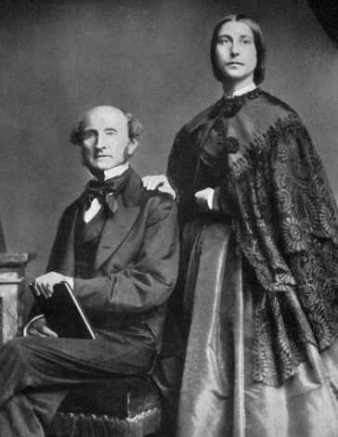
John Stuart Mill and Helen Taylor, daughter of Harriet Taylor, collaborated with Mill after her mother's death, public domain via Wikimedia CommonsOne of my very favorite ideas in political philosophy is John Stuart Mill’s ‘marketplace of ideas’ (though he didn’t phrase it this way himself): that the free, open, and vigorous exchange of ideas in the public square does more to further human knowledge than anything else. But not only has his comprehensive and to my mind, absolutely correct defense of free speech in his great work On Liberty had an immense and beneficial influence on the history and theory of human rights, he was admirable in myriad other ways as well:

‘Mill believed in complete equality between the sexes, not just women’s colleges and, someday, female suffrage but absolute parity; he believed in equal process for all, the end of slavery, votes for the working classes, and the right to birth control (he was arrested at seventeen for helping poor people obtain contraception), and in the common intelligence of all the races of mankind… all this along with an intelligent acceptance of the free market as an engine of prosperity and a desire to see its excesses and inequalities curbed…. Mill was an enemy of religious bigotry and superstition, and a friend of toleration and free thought, without overdoing either…’ ~ Adam Gopnik, from his article and book review ‘Right Again‘, 2008

‘The son of James Mill, a friend and follower of Jeremy Bentham, John Stuart Mill (1806-1873) was subjected to a rigorous education at home: he mastered English and the classical languages as a child, studied logic and philosophy extensively, read the law with John Austin, and then embarked on a thirty-five career with the British East India Company at the age of seventeen. (He also suffered through a severe bout of depression before turning twenty-one.) Despite such a rich background, Mill credited the bulk of his intellectual and personal development to his long and intimate association with Harriet Hardy Taylor. They were devoted friends for two decades before the death of her husband made it possible for them to marry in 1852; she died in Avignon six years later. Mill continued to write and to participate in political affairs, serving one term in Parliament (1865-68). The best source of information about Mill’s life is his own Autobiography (1873). Mill

Philosophically, Mill was a radical empiricist who held that all human knowledge, including even mathematics and logic, is derived by generalization from sensory experience. In A System of Logic, Ratiocinative and Inductive (1843) he explained in great detail the canons for reasoning inductively to conclusions about the causal connections exhibited in the natural world.

Mill’s moral philosophy was a modified version of the utilitarian theory he had learned from his father and Bentham. In the polemical Utilitarianism (1861) Mill developed a systematic statement of utilitarian ethical theory. He modified and defended the general principle that right actions are those that tend to produce the greatest happiness of the greatest number of people, being careful to include a distinction in the quality of the pleasures that constitute happiness. There Mill also attempted a proof of the principle of utility, explained its enforcement, and discussed its relation to a principle of justice. Mill

Mill’s greatest contribution to political theory occurs in On Liberty (1859), where he defended the broadest possible freedom of thought and expression and argued that the state can justify interference with the conduct of individual citizens only when it is clear that doing so will prevent a greater harm to others. Mill also addressed matters of social concern in Principles of Political Economy (1848) and Considerations on Representative Government (1861) and eloquently supported the cause of women’s rights in The Subjection of Women (1869).’

~ from The Philosophy Pages by Garth Kemerling, licensed under a Creative Commons Attribution-Share Alike 3.0 Unported License

Read more about John Stuart Mill:

Anschutz, Richard Paul. ‘John Stuart Mill: British Philosopher and Economist‘. In Encyclopædia Britannica.

Gopnik, Adam. ‘Right Again: The Passions of John Stuart Mill‘. New Yorker magazine website, Oct 6 2008

Heydt, Colin. ‘John Stuart Mill (1806—1873)‘, Internet Encyclopedia of Philosophy

Mill, John Stuart. On Liberty, from Project Gutenberg

Wilson, Fred. “John Stuart Mill“, The Stanford Encyclopedia of Philosophy

~ Ordinary Philosophy and its Traveling Philosophy / History of Ideas series is a labor of love and ad-free, entirely supported by patrons and readers like you. Please offer your support today!

The Philosopher’s Drinking Song

Good morning! Feeling a bit irreverent and impish today, so I’m sharing this little gem with you all. Thank you, Monty Python!

Ordinary Philosophy and its Traveling Philosophy / History of Ideas series is a labor of love and ad-free, supported by patrons and readers like you. Please offer your support today!

Happy Birthday, Bertrand Russell!

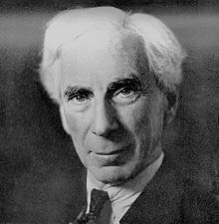
Betrand Russell in 1938, image public domain  via Wikimedia CommonsBertrand Russell lived an extraordinarily long life, in which he did an extraordinary number of extraordinary things.

Encyclopedia Britannica introduces him thusly: ‘Bertrand Russell ….born May 18, 1872, Trelleck, Monmouthshire, Wales- died Feb. 2, 1970, Penrhyndeudraeth, Merioneth, [was a] British philosopher, logician, and social reformer, founding figure in the analytic movement in Anglo-American philosophy, and recipient of the Nobel Prize for Literature in 1950. Russell’s contributions to logic, epistemology, and the philosophy of mathematics established him as one of the foremost philosophers of the 20th century. To the general public, however, he was best known as a campaigner for peace and as a popular writer on social, political, and moral subjects. During a long, productive, and often turbulent life, he published more than 70 books and about 2,000 articles, married four times, became involved in innumerable public controversies, and was honoured and reviled in almost equal measure throughout the world…’

For myself, he was particularly influential to my younger freethinking self, disenchanted with the religion of my youth and seeking new and more satisfying ways of viewing the world. I read his great History of Western Philosophy and Why I Am Not a Christian each several times over. I admire his clear, precise thinking and his principled anti-war stance which came at a significant cost, including jail time and loss of a prestigious job at the University of Chicago, and it’s always so enjoyable to watch him speak (you’ll find plenty of videos on YouTube) in his oh-so-aristocratic accent with a pipe often tucked into the corner of his mouth. He was not a perfect man, but oh man, he was never a less-than-fascinating one.

Read more about Bertrand Russell:

Bertrand Russell‘. In Encyclopedia Britannica

Irvine, Andrew David, “Bertrand Russell“, The Stanford Encyclopedia of Philosophy

~ Ordinary Philosophy and its Traveling Philosophy / History of Ideas series is a labor of love and ad-free, entirely supported by patrons and readers like you. Please offer your support today!

Happy Birthday, Omar Khayyám!

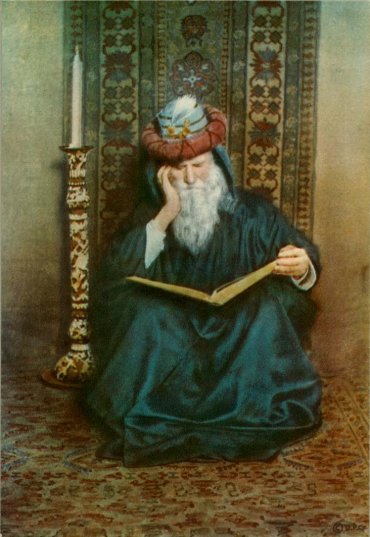
By Adelaide Hanscom, from Edward Fitzgerald's The Rubaiyat of Omar Khayyam, 1905, public domain via Wikimedia Commons

Since Edward FitzGerald published his translation of The Rubáiyát of Omar Khayyám in 1859, Omar Khayyám has been known, especially in the western world, first and foremost as a great poet, eloquently expressing the joy and beauty of life and our own struggles to live it with a sense of love and meaning. It’s a humanist work, with Khayyám writing much as an Epicurean or Skeptic here and a Stoic there, freely doubting and wondering at everything, unshackled from the orthodoxy one might expect from a famed teacher and writer of his time and place. Yet Khayyám, a devotee of Avicenna, took his Islamic faith very seriously, and thought deeply about the nature of God and our relationship to him.

Khayyám, born in Persia in 1048, was most famed in his own time as a mathematician, astronomer, and scientist. He wrote some of the most important medieval works in geometry and algebra, and helped reform the calendar, an even more accurate one than the Gregorian calendar we use today. But he was also an accomplished philosopher, and scholars are working on resolving the apparent contradictions between this work and his poetry.

One thing I’ve gotten from my research (which, thus far, is only beginning and therefore not nearly enough): for all his prodigious learning and accomplishments, Khayyám honestly acknowledges the limits of human understanding, and seems to tell us that while the great work of discerning the truths of the universe is a great, noble, even necessary endeavor, we do well to keep in mind that we can never know everything, whether through science or religion. So, Khayyám seems tells us, we do well to work, to wonder, to seek, to do right, but also to live for today:

‘At first they brought me perplexed in this way
Amazement still enhances day by day
We all alike are tasked to go but Oh!
Why are we brought and sent? This none can say’. (Rubā‘iyyāt, Tirtha 1941, 18, from IEP)

‘As Spring and Fall make their appointed turn,
The leaves of life one aft another turn;
Drink wine and brood not—as the Sage has said:
“Life’s cares are poison, wine the cure in turn.” (Sa‘idī 1994, 58, from IEP)

~ Ordinary Philosophy and its Traveling Philosophy / History of Ideas series is a labor of love and ad-free, entirely supported by patrons and readers like you. Please offer your support today!

~~~~~~~~~~~~~~~~~~~~~~~~~~~~~~

Sources and Inspiration

Aminrazavi, Mehdi and Van Brummelen, Glen, ‘Umar Khayyam‘, The Stanford Encyclopedia of Philosophy

Omar Khayaam, 1048–1131‘. The Poetry Foundation

Omar Khayyam‘. In Encyclopædia Britannica.

Omar Khayyam‘. In Wikipedia, The Free Encyclopedia.

Rizvi, Sajjad H. ‘Avicenna (Ibn Sina)‘. The Internet Encyclopedia of Philosophy

‘Umar al-Khayyam (Omar Khayyam)‘. Muslim Heritage

O.P. Recommends: Your Brain on the Scientific Method

Old Medicine Bottles, PublicDomain via Wikimedia CommonsIn ‘Your Brain on the Scientific Method‘, Sara E. and Jack M. Gorman open with a discussion of John Oliver’s recent takedown of scientific sensationalism in the media and its negative impact on the public’s understanding of science and its methods. Just about every day, it seems, there’s a study that comes out which reveals that things science said were bad are actually good for you and vice versa; that some foodstuff, familiar or exotic, was just discovered to be the ‘miracle cure’ for something or other;  some new report or yet another scientist will come out either proving or disproving human-caused climate change; and so on.

But there’s a lot more to the story of public misunderstanding of science, the authors say: the reason we often have trouble understanding science and its methods is the same reason why scientific sensationalism is so effective: science is so contrary to the way our brains generally, instinctively work. Find out why in this excellent piece…

Gorman, Sara E. and Jack M. ‘Your Brain on the Scientific Method‘. Oxford University Press blog, May 17th 2016.

Scientific Studies‘. Last Week Tonight with John Oliver, HBO, May 8th 2016.

~ Ordinary Philosophy and its Traveling Philosophy / History of Ideas series is a labor of love and ad-free, entirely supported by patrons and readers like you. Please offer your support today!

Interview with Leigh Fought on Anna and Frederick Douglass

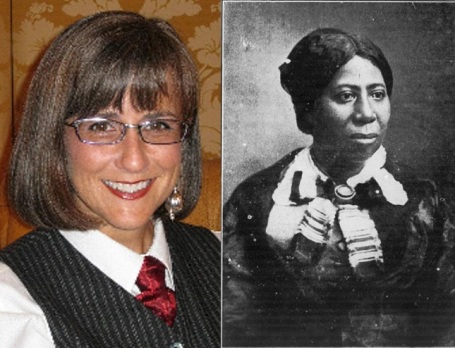
Leigh Fought image Le Moyne College, Anna Douglass image Library of CongressI’m pleased and honored to present my third interview guest, Leigh Fought, Anna and Frederick Douglass scholar and assistant professor at LeMoyne College in Syracuse. We’ll be talking about Anna Douglass, about whom I believe too little is known, and most historical presentations of her range from woefully incomplete to inaccurate and even unfair. Ms. Fought is doing significant work in righting this with her upcoming book about the women in the life of Frederick Douglass, the most significant of which, of course, is Anna.
Interview with Leigh Fought, Part One

Interview with Leigh Fought, Part Two

Find out more about Ms. Fought and her work at her blog Frederick Douglass’s Women: In Progressfaculty page for Le Moyne College, and Amazon author page, and here are some other articles and papers she’s written / co-authored; there are many others not available online, please contact the author:

Globalizing Protest in the 1980s: Musicians Collaborate to Change the World‘, The Gilder Lehrman Institute of American History

Commentary: Frederick Douglass and Interracial Marriage‘, Syracuse.com blog

~ Ordinary Philosophy and its Traveling Philosophy / History of Ideas series is a labor of love and ad-free, entirely supported by patrons and readers like you. Please offer your support today!

Happy Birthday, Lady Mary Wortley Montagu!

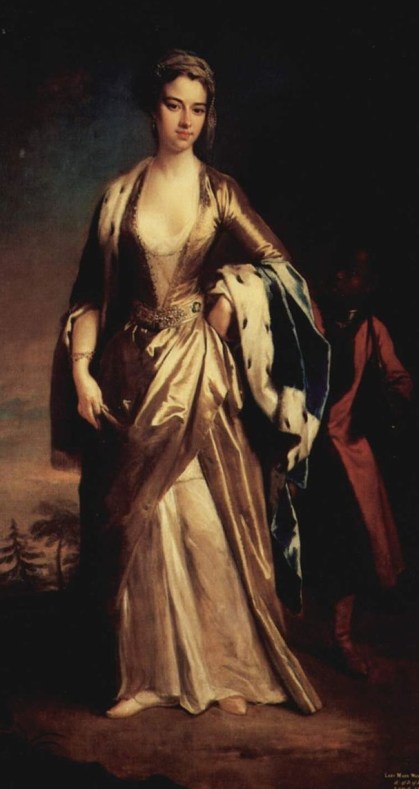
Mary Wortley Montagu by Jonathan Richardson the Younger (cropped), public domain via Wikimedia CommonsI just discovered this fascinating woman this morning, on the occasion of her birthday.


According to Encyclopedia Britannica, Lady Mary Wortley Montagu was a ‘prolific letter writer in almost every epistolary style; she was also a distinguished minor poet, always competent, sometimes glittering and genuinely eloquent. She is further remembered as an essayist, feminist, traveler, and eccentric.’

Here are three excellent features on Montagu:

Lady Mary Wortley Montagu“. Encyclopædia Britannica.

Lady Mary Wortley Montagu, 1689–1762“. The Poetry Foundation.

Secor, A., 1999. ‘Orientalism, gender and class in Lady Mary Wortley Montagu’s Turkish Embassy Letters: to persons of distinction, men of letters and c’. Cultural Geographies (formerly Ecumene) Volume 6, Issue 4 pp375-398. Arnold Publishers.

~ Ordinary Philosophy and its Traveling Philosophy / History of Ideas series is a labor of love and ad-free, entirely supported by patrons and readers like you. Please offer your support today!

OP Recommends: A Piece About How All Rivers Lead to Philosophy on Wikipedia

River, by Brandom Lam, Creative Commons via Pixabay

In ‘All Wikipedia Roads Lead to Philosophy, but Some of Them Go Through Southeast Europe First‘, Nathan Collins writes about a University of Vermont study on how knowledge is structured on Wikipedia, following the observation by webcomic xkcd that following hyperlinks in this giant e-encyclopedia seem to lead almost inevitably to the Philosophy page.

Makes sense to me. The ‘major organizing principle’ for the world’s largest online forum for sharing knowledge turns out to be philosophy, literally the ‘love of wisdom’?

Surprise surprise!

An enjoyable read.

Ordinary Philosophy and its Traveling Philosophy / History of Ideas series is a labor of love and is ad-free, entirely supported by patrons and readers like you. Please offer your support today!

~~~~~~~~~~~~~~~~~~~~~~~~~~~~~~~~~~~~

Sources and inspiration:

Collins, Nathan. ‘All Wikipedia Roads Lead to Philosophy, but Some of Them Go Through Southeast Europe First‘, Pacific Standard, May 2016.

xkcd: A webcomic of romance, sarcasm, math, and language


New Podcast Episode: Frederick Douglass Albany, Troy, and Syracuse NY sites

Liberty Street Presbyterian Church, Collection of the Rensselaer County Historical Society, Troy, NY 2

Liberty Street Presbyterian Church in a later incarnation as a laundry. This only known surviving photo is in the collection of the Rensselaer County Historical Society, Troy, NY

Listen to this podcast episode here or subscribe on iTunes

Eighth Day, Sunday March 27th

I get up very early and leave Cambridge (where I’ve been staying while visiting Boston and Lynn) and this time, instead of heading north, I head west across upstate New York. I’ve never visited this part of the country before. My friend who I’ll be staying with in Rochester laments that I’m visiting at the least advantageous time of year for beauty’s sake: the snow is gone, and having scrubbed the trees bare, leaves the trash it’s been concealing exposed, and there’s not a hint of green nor bloom yet on the branches. But I still think it’s lovely, with a sort of stark gray beauty, and enjoy the day’s drive of about 325 miles.… Read the original account here

Ordinary Philosophy and its Traveling Philosophy / History of Ideas series is a labor of love and is ad-free, entirely supported by patrons and readers like you. Please offer your support today!