
 I am a citizen philosopher, and very likely, so are you.
So what is citizen philosophy, why is it a useful concept, and what is its role in the world?
Let’s begin by considering what we mean by philosophy, generally speaking. For a long time, philosophy has been considered an almost exclusively academic pursuit, so highly specialized that only a very few experts can properly be called philosophers. As Eric Schwitzgebel points out, this is a relatively new development. In the Western world, it traces its origins to classical Greece; each region has its own history of philosophy or its analog, from Egypt to China to the Americas, indeed, the whole world. As with all fields of inquiry, philosophy has branched out and specialized until much of it would be barely comprehensible to its first practitioners. Indeed, almost all fields of inquiry we know today started out as a branch of philosophy: mathematics, logic, science, medicine, theology, you name it.
But philosophy, or ‘love of wisdom’, began in the home, the workplace, the market square, and the street corner. As agriculture became more advanced, curious and intelligent people had more time to ponder the whys and hows of the natural world and human experience. These people weren’t originally chosen or designated by some authority as the ‘thinkers’ as opposed to everyone else, the ‘doers’. Instead, philosophy naturally grew out of conversation. Over time, as questions and ideas advanced and grew more numerous, it also specialized, organically, over time. A branch here dedicated itself to figuring out how nature works, first under the name natural philosophy, later science, which branched further into biology, geology, physics, and so on. A branch there dedicated itself to figuring out how we should behave and what we should value, and now we have political theory, aesthetics (study of beauty and taste), bioethics (ethics in medicine), theology, and so on. We began to ask and answer ever more complex questions about how to best live as members of societies, what’s going on within our own minds and why, what are our roles in the universe, and what it all means… including the question ‘what is meaning?’. Over time, certain people were recognized as particularly good at asking and answering these important questions, so they came to be recognized as specialists and authorities. But philosophy, broadly construed, remained a pursuit of many more people than that.
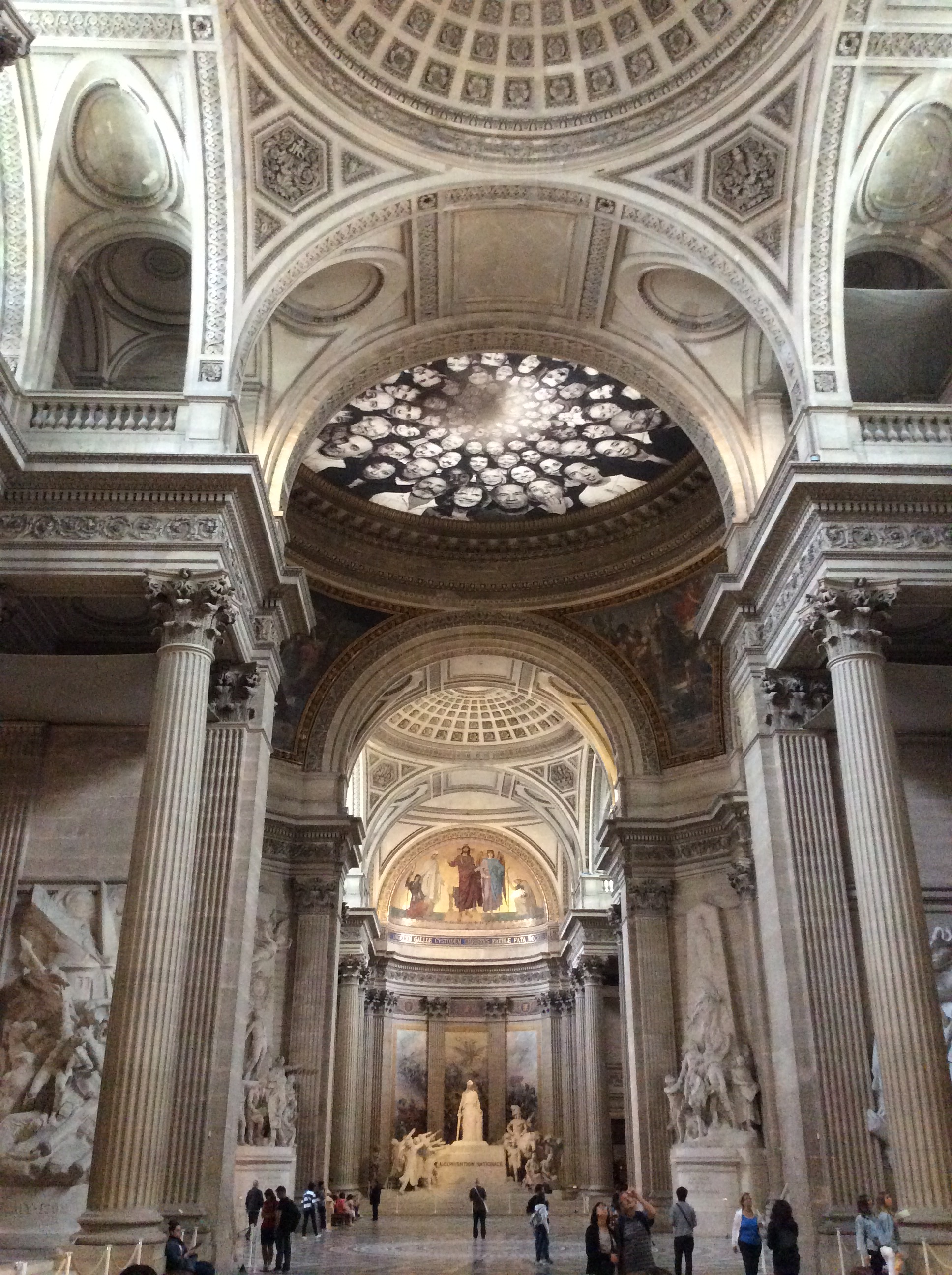 Philosophy has been demystified by re-entering popular culture to a significant extent. There’s an ever-growing audience for popular philosophy books, articles, magazines, podcasts, and blogs. The term itself has also been re-broadened. ‘Philosophy’ has taken on many new shades of meaning as it’s now used to refer to a particular view of life, or personal standards of taste, or set of hopes and dreams, or working theory of knowledge, or organization method, or substitution for the loaded term ‘spiritual’ …even a brand of skin care products! (This one bothers me: it offends my sense of the ‘sacred’ by capitalizing on respect for something I believe shouldn’t be and, and really can’t be, bought and sold.) Some of its newfound popularity is the result of advancing secularization accompanied by our continuing need for meaningfulness. Some is the result of our newly data-centric lives brought to us by the internet, creating the need to make sense of the deluge of new information available to us. And some is the result of the meeting, blending, annexing, and clashing of cultures in a world ever more connected through media and ease of travel, creating the need to find new ways of communicating and living together in an ever more cosmopolitan world.
In short, philosophy is enjoying a comeback in the public sphere. What I’m calling citizen philosophers are all those actively, consistently ask and answer questions about the nature of the universe and how to make sense of our experiences in it, and who aren’t necessarily engaged in professional or academic philosophy. While citizen philosophers tend to spend a lot of time in inquiry and self-education, many find academic philosophy too arcane, too subtle and obscure to help the rest of us navigate our increasingly complex inner and interpersonal lives.
I, for one, love academic philosophy. I am continuously in awe of the work these men and women do, devoting their lives to hard study, to asking the most challenging questions, and to a deep examination of the most nuanced and complex problems. This body of work is breathtaking in its scope, beautiful in the elegance of its arguments and solutions, satisfying in its wit and cleverness, fascinating in its intensive scholarship, and indispensable in its ability to help us figure out why and how to make a better world. I find it highly enjoyable and fulfilling, as well as challenging and frustrating, to grasp and wrangle with the work of academic philosophers. To be sure, academic philosophy has had its share of what David Hume calls ‘sophistry and illusion, fit only to be consigned to the flames’, and what Harry Frankfort more succinctly calls ‘bullshit’. But philosophy is not alone in this: science has had its phrenology and eugenics, medicine its humours and bloodletting, theology its justification for slavery and pogroms, and so on. Like these other disciplines, academic philosophy has some wonderfully effective built-in self-correctors, and continues to be an essential, I think preeminent, field of inquiry.
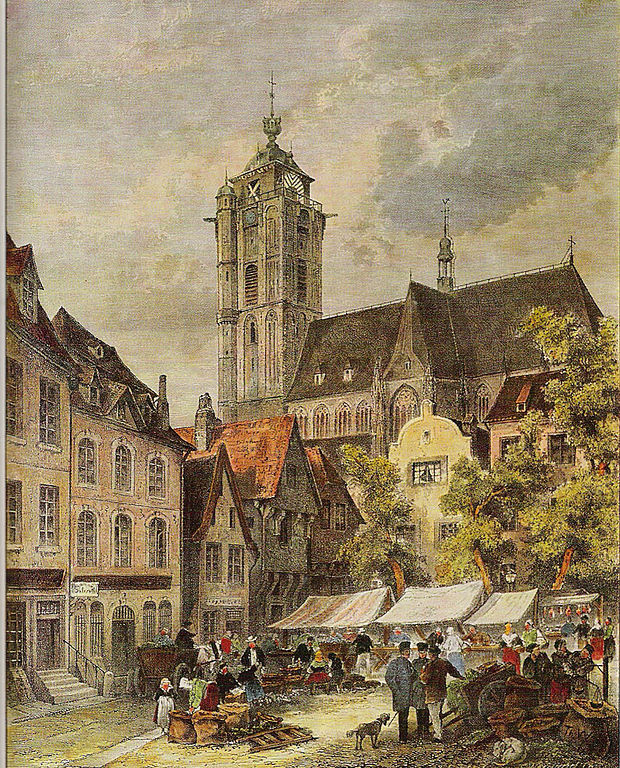 But many of the most important and interesting questions don’t come down to us from on high, so to speak, originating from academia and revealed as if a sort of holy writ. In fact, most of the questions and problems we all wrangle with still originate in the public sphere, in the home, workplace, classroom, hospital, church, courtroom, political assembly, and so on. They bubble up from the challenges and uncertainties of our daily lives, are filtered through conversation and the arts, are swept up in social, legal, and political movements and institutions, and carried into the pool of academic philosophy, where they are further clarified and distilled in treatises, lectures, books, and so on.
And these questions don’t only originate with the public at large, we offer our first answers there. The answers range from fragmentary to nuanced, from intuitive to well-considered, from repetitions of received wisdom to original, from off-the-cuff to well-informed. They’re offered by people from all walks of life with their own areas of expertise and unique capabilities of understanding born of particular experience. These citizen philosophers are on the first line of discovery and inquiry, and called so because they don’t participate in this process as a profession, but as a matter of personal interest and as members of society at large, not subject to the demands and constraints of academic philosophy. Of course, the category of ‘citizen philosopher’ doesn’t exclude academic philosophers, because of course they, too, participate in the same process of question-creation and question-answering in the course of their everyday lives as well as in academia.
It’s the very lack of the demands and constraints of academic philosophy that gives citizen philosophy an important role to play in the public life. The world as it is offers so many varieties of human experience, so many ways of seeing the world, so many challenges that academic philosophers, like the rest of us, never have the opportunity to confront directly. Yet the scope of academic philosophy, at least potentially, is as broad as the possibilities of human (even, perhaps nonhuman?) experience. So how can it be that academic philosophers can possibly access enough information, and consider things from enough perspectives, to ask and answer all the important questions that could be addressed? If academic philosophers were endowed with almost limitless powers of comprehension and imagination, they might in theory take in all the available information and then truly understand what it’s like to be a coal miner in China, a cardiologist experiencing a heart attack firsthand, a one and a half year old who just created their first sentence, a person with frontal lobe epilepsy experiencing a supernatural vision, or a terrorist who became so after their entire family was killed by a bomb, and then conceive of all of the social, epistemic (relating to the study of knowledge), metaphysical (relating to the ultimate nature of all that exists), political, and every other sort of questions that may arise from these experiences. (À la the mythical Mary in Frank Jackson’s black and white room.) But of course, this is impossible in the real world. Sometimes, raw data is the fodder of academic philosophical inquiry. But more often I think, academic philosophers inquire into the questions, morals, stories, works of art, aphorisms, dogmas, memories, narratives, and all other products of the human mind after they’ve undergone the first round of questioning and examination in the public square.
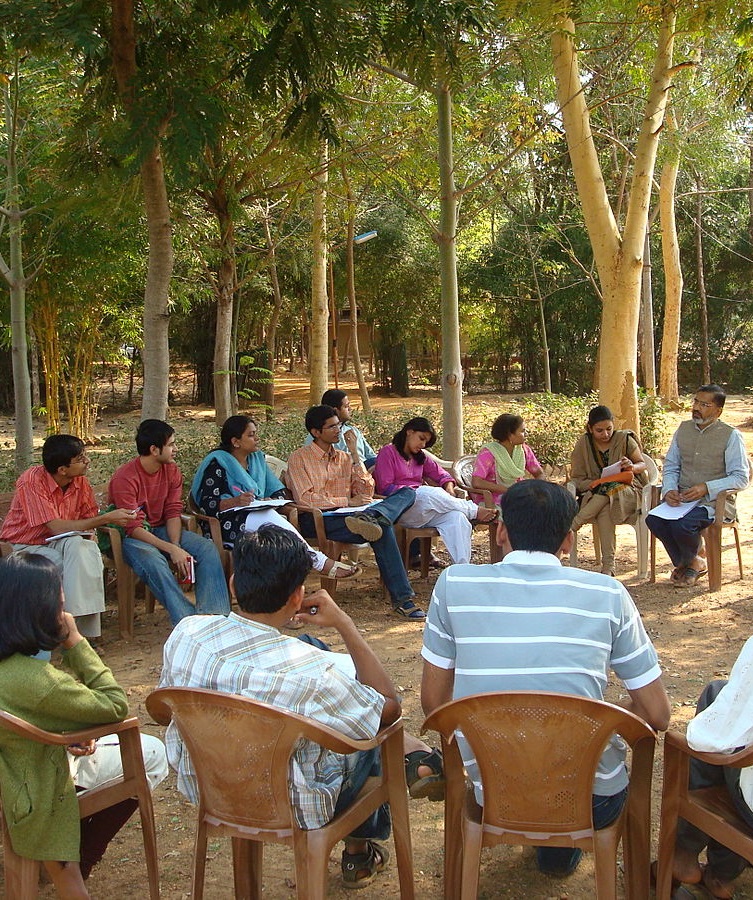 I, for one, am glad to see philosophy ever more present in the public square. That’s because I perceive philosophy as the great quest for understanding that academic and citizen philosophers all engage in, and, as I see it, each gives something of immeasurable and irreplaceable value to the other. We need only recall some philosophical forays that have failed, from scholastic hairsplitting quibbles to postmodern navel-gazing-verging-on-masturbatory obscurantisms, to recognize that academic philosophy benefits enormously by its give and take with the public square. To remain relevant, honest, exciting, and dedicated to truth and beauty, philosophy as a method of inquiry must include robust discourse with the broader community of activists, artists, reporters, bloggers, protesters, workers, political actors, discussion groups, and all who care enough to question. And these, in turn, are kept honest by academic philosophers, who challenge all of us to subject our passionately held convictions to critical thinking.
The discipline and expertise of academic philosophers, and the broader set of experiences, challenges, and opportunities for new questions and unique ways of understanding the larger community that citizen philosophers offer, each serve to keep the other more honest, more challenged, and more informed, in the great world conversation we’re all having.
~ An earlier version is also published at Ordinary Philosophy and published in Darrow in a version nearly identical to this one. My thanks to Darrow’s editors for their very helpful comments, critiques, and suggestions, especially in pointing out that the original version often read more like an obscure academic philosophy piece and less like the conversation in the public square it promotes!
~ Also published in The Fifth Floor Polish philosophy magazine
Ordinary Philosophy and its Traveling Philosophy / History of Ideas series is a labor of love and is ad-free, supported by patrons and readers like you. Please offer your support today!
~~~~~~~~~~~~~~~~~~~~~~~~~~~~~~~~~~~
Sources and inspiration:
‘Mary’s Room’, in Philosophy Index
Schwitzgebel, Eric. ‘What Philosophical Work Could Be‘. Published in Ordinary Philosophy and in the author’s own The Splintered Mind




![School of Athens by Raphael [Public domain], via Wikimedia Commons (cropped)](https://ordinaryphilosophy.com/wp-content/uploads/2016/05/school-of-athens-by-raphael-public-domain-via-wikimedia-commons-cropped.jpg?w=302&h=271)
 Hypatia’s birthday is somewhere between 350 and 370 AD; a range of dates indicating great uncertainty, to be sure, but clear original sources this old are hard to come by, especially from a city as turbulent and violence-torn as the Alexandria of her day. The day of her death is better known, sometime in March of 415 AD. Since the latter date is more precise, we’ll break with our tradition here and remember Hypatia in the month of her tragic and violent death instead of on the date of her birth.
 Ordinary Philosophy