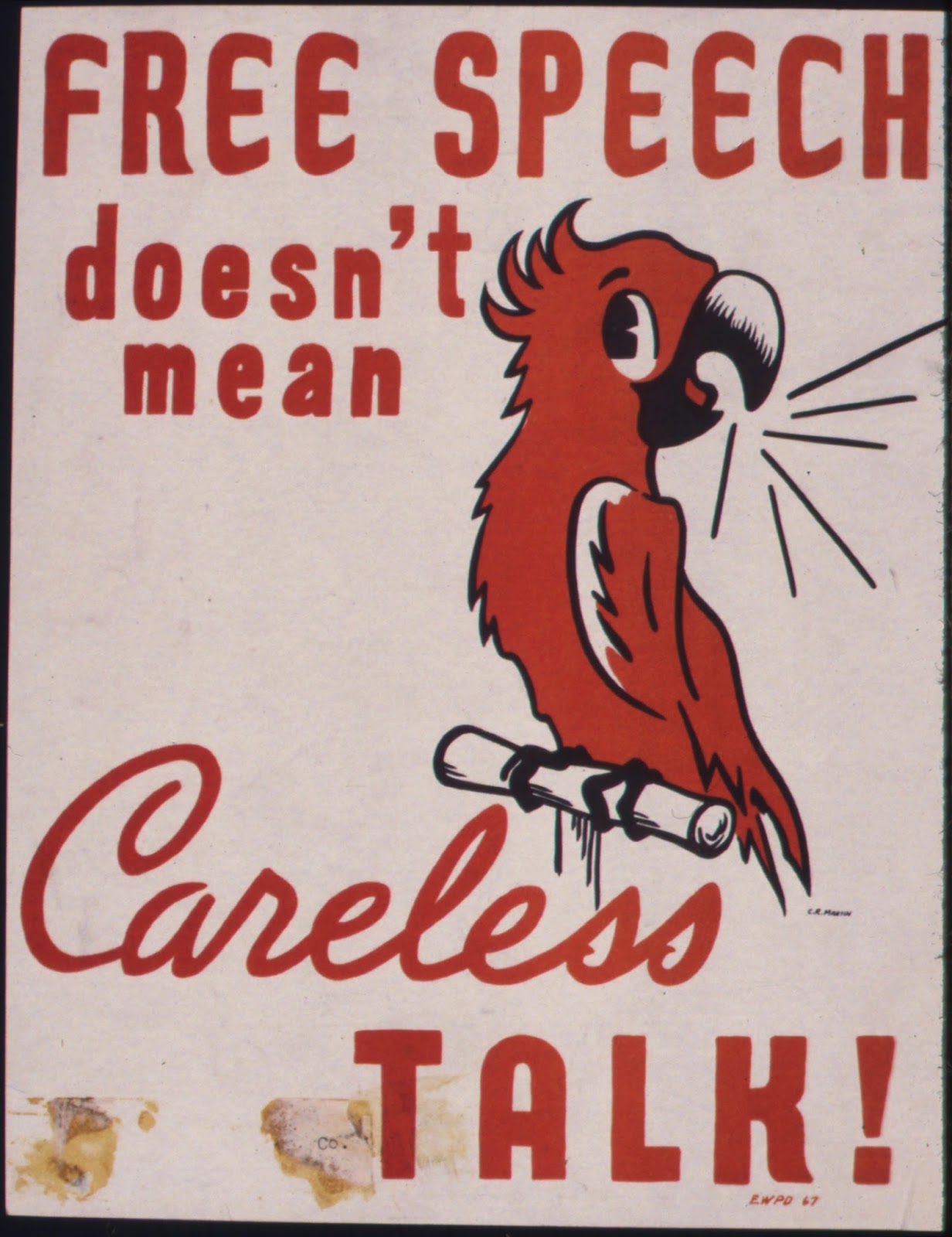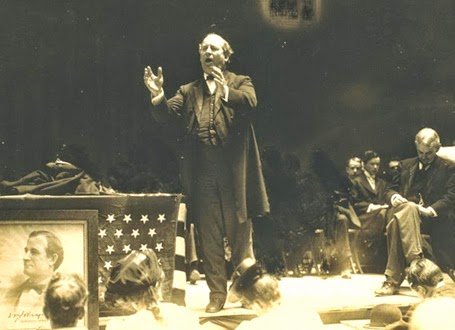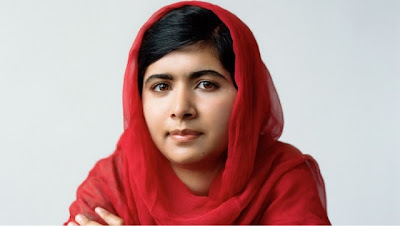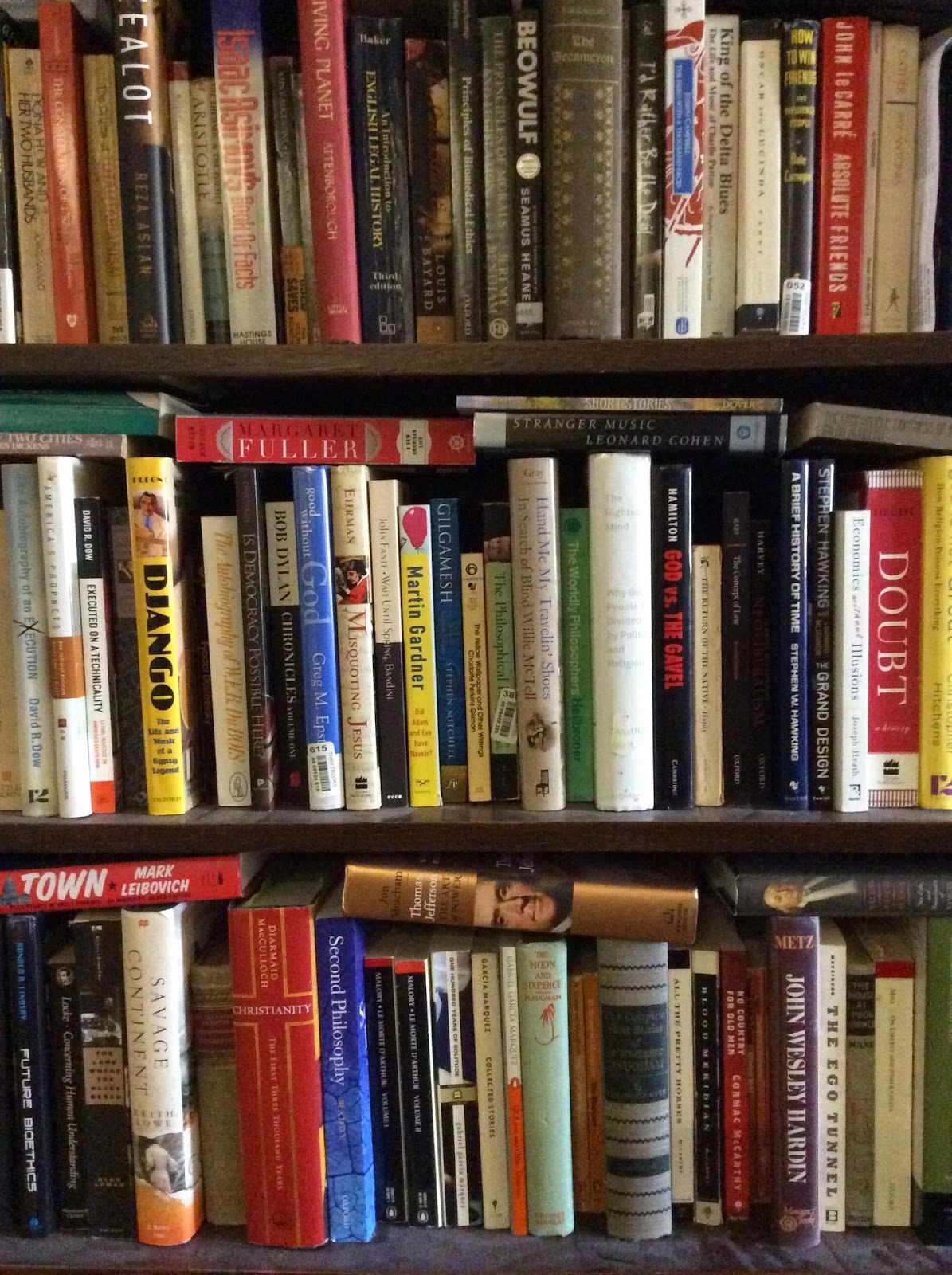
I love to make things, as anyone will tell you who’s known me very long. My two favorite kinds of things to create are written pieces, be they argumentative, explanatory, illustrative, narrative, and so on, and are usually essays; and artworks, now usually picture quilts, but for many years drawings, paintings, and occasionally sculptures. Though I’ve long loved the written word, my oldest creative love is art.
I’m also a populist by instinct, in the sense that I care a lot about sharing my life with many kinds of people, and relatively little about fitting in with or impressing a small, select group. When I’m in a scene that feels too cliquish, too elite, too cool, too exclusionary, too, well… ‘scene-y’, then I’m out. Not to say I don’t care about community: I do, deeply. But when it comes to anything I think is wonderful and lovable, the more widely I want to share it. That’s what I’m all about as a writer and as an artist.
And that’s why I’m just not that into conceptual art, on the whole. By conceptual art, I mean that which is created more with the intention of referring to or hinting at abstract concepts, and less for purpose of telling a story or of being a thing of beauty. The more conceptual a piece is, the more it leaves me cold, because to me, conceptual art is exclusionary in nature. This type of art is really only meaningful to, and therefore meant for, an exclusive circle, people who spend a lot of time in that sort of art culture, or in a moneyed elite, or in certain academic circles. (I value and respect academia, but to me, it fulfills a very different function than art does.) It’s made for people in a position to ‘get it’. Conceptual art speaks in jargon, in secret handshakes, in code, in insider-ese, in the language of moneyed leisure. All well and good for those who enjoy this sort of club atmosphere. But of art, I want more.
I want art that’s more like music, or poetry, or architecture, or myth: even if it’s originally meant only to communicate within a culture, it can and does communicate across time, space, culture, socioeconomic status, and language. To me, the more soul-stirring the art is, the more comprehensively it tells a story (in both senses of the word ‘comprehensive’). It’s that sort of universal human communication, like tears, laughs, sighs, or smiles, that makes art transcendent, that bridges those gaps between each other and between ourselves and all that exists, which we all ache to cross.
I love folk art, and I love craftsmanship. They are the two sides of art that I think communicate most universally.
By folk art, I mean that which is meant to communicate a story: of a person or persons, of an event, of a myth, of belief, of history. It can be crude or it can be finely wrought, but what makes it good is its ability to communicate to anyone, from anywhere or at any time, what’s going on in the mind and heart of the artist.
By craftsmanship, I mean the art of creation which requires a high level of dexterity and skill, and which demonstrates the countless hours of practice and of mastery that demonstrates the artist’s deep love of the creative process itself. We all make things, so we are all able to recognize and appreciate, on some level, whatever level of care and ability that went into making the thing we see. And as makers, we invariably encounter the limits of our abilities, and in doing so, we realize how difficult it is transcend our own limits and make something well. When an artist accomplishes this superbly, we’re impressed, and delighted.
On the whole, I think the world of conceptual art is suffering too many of the ill effects of its own excesses. Craftsmanship is not valued nearly enough; indeed, I’ve heard artworks rich in it dismissed time and time again as not really art, they’re ‘just crafts’. Representations of people, places, and ideas that are widely recognizable are dismissed as ‘too literal’. I really think that most people who walk through galleries these days are often jaded, or bored, or amused, or bemused, and, as a whole, tired of being talked down to by artists and gallery curators. The public is getting tired of the art world’s pretensions: it often looks as if just about anything can be fastened to the wall, demanding the public’s praise and appreciation so long as it’s accompanied by a description that sounds obscurely profound enough. Conceptual art, on the whole, has grown too elitist and too removed from the most fundamental emotional needs that art, at its best, can fulfill.
I grant that there are some things of value in conceptual art, too. For one thing, as my husband points out, when it was a new movement, it allowed artists to break down artistic boundaries, many of which should have been broken down since they placed too many restraints on innovation and creativity. (I can always count on Bryan to play an effective devil’s advocate, to find the weak and missing points in my arguments; thanks, as always, for keeping me honest, babe!) There are subtle points that conceptual artists can make that are of value and difficult to express fully or eloquently through other means of communication. Sometimes, the concepts explored are important or interesting ones, even if they are too obscurely or affectedly expressed. There are also accidents of beauty and visual interest that occur when an artist is playing freely with materials trying to express something else. And so on and so on.
But nonetheless, I feel that the conceptual art world needs more critics. It needs some competition, it needs some opposition, and I feel just fine in my overall feeling of antipathy to it as it is right now. Conceptual art (with its cousin, abstract art) has its defenders in plenty: namely, nearly every art gallery and museum and patron with deep pockets out there. The representational artists, the visual storytellers, the communicators in paint and clay and fabric and stone and wood trying to reach the widest audience, they’re not honored so much these days, except in the hearts of the grateful public who’s always happy to find artists who are direct and honest with them, who desire to satisfy their longing for beauty and love of a good story. In short, conceptuality in art has become the new paradigm, the new standard, the new orthodoxy. Conceptual art doesn’t suffer from one less champion; the rest of the art world could do with more.
So from the roughest cave painting of our earliest human ancestors to the most finely wrought work by Leonardo da Vinci, from the earthy Venus of Willendorf to the most exquisitely sculpted Michelangelo, from the doll’s dress of the youngest stitcher-in-training to the Parisian couture gown, and from the memory rag-quilt sewn in the half-light of a bayou shack to the most intricate, hand-stitched fine textile work fit for a queen you ever saw: I want to say, I love you the most. Thank you for the joy you bring me, the delight to my senses, and most of all, the communion with the wider world of things and people. Thank you for bridging the gaps.
Tag Archives: Ordinary Philosophy
To Washington DC, Virginia, and Philadelphia I Go, In Search of Thomas Jefferson
Hello, friends of Ordinary Philosophy!
From time to time, I take a trip to some corner of the globe, to explore the lives and ideas of great thinkers in the places where they lived and worked. For this series, I follow in the footsteps of thinkers who are no longer alive, since those who are still telling their own stories. But those who are no longer alive in the body live on in the ideas that they pass on, and in the example they provide for us to follow.
I’m pleased and excited to announce my third philosophical-historical themed adventure, this time in Washington DC, Philadelphia, and various sites in Virginia to follow in the footsteps of…. you may have guessed it… Thomas Jefferson!
Thomas Jefferson was born on April 13th, 1743, and in his long life, he accomplished more than most. He was a founding father of the United States, and went from being a young scholar, lawyer, and representative in the Virginia House of Burgesses, to writing the Declaration of Independence and the Virginia Statute for Religious Freedom, to public service as a congressman, as Minister to France, as Secretary of State, as Vice President to friend and rival John Adams, and finally as third president of the United States. Throughout his life, among many other things, he was an inventor, amateur scientist, farmer, avid reader, architect, naturalist, author, founder of the University of Virginia, and of course, philosopher.
He was a fascinatingly complex and contradictory figure: a self-described shy and modest man with a distaste for politics, who time and time again re-entered the strident political arena of his day to eventually reach the highest office in the land; a critic of the national debt and of too much federal power and a strict Constitutional constructionist, who helped create a stronger national government in the first place, and who flouted the Constitution and further indebted the nation to make the Louisiana Purchase; a promoter of personal liberty and a slaveowner; an idealist and a pragmatist.
So off to the east coast I go! There, I’ll visit landmarks associated with his life, and places where he lived, worked, died, thought, wrote, studied, and rested.
I’ll be traveling there from April 18th through the 26th, and will be writing throughout the trip. I’ll be writing not only about his ideas, but about what I can discover about his everyday life in these places, and whatever feeling of the time and place I can capture.
Here’s the story of the trip, and related essays about Jefferson and his ideas:
http://www.ordinaryphilosophy.com/2015/05/thomas-jefferson-sites-part-2.html
http://www.ordinaryphilosophy.com/2015/05/thomas-jefferson-sites-part-3.html
http://www.ordinaryphilosophy.com/2015/05/thomas-jefferson-sites-part-4.html
http://www.ordinaryphilosophy.com/2015/05/thomas-jefferson-sites-part-5.html
http://www.ordinaryphilosophy.com/2015/05/thomas-jefferson-sites-part-6.html
http://www.ordinaryphilosophy.com/2015/06/jefferson-and-slavery.html
Should A Minor Be Tried as an Adult Due to the Seriousness of the Crime?
Here’s a case, currently in the news, in which a young girl helps murder her mother because her mother was trying to break up her relationship with her much older boyfriend.
In this case, the girl charged is 14 years old. A long series of text messages, along with forensic evidence, the timeline of events, and the girl’s own testimony indicate that she and her boyfriend did in fact commit the murder (though, of course, this must be proved in court).
Here’s what troubles me most besides the cruel and terrible murder itself: the girl is being charged as an adult. And she’s being charged as an adult, apparently, due to the seriousness of the crime, a practice that’s been allowed in many states for decades. The main argument in favor of this practice goes something like this: if the crime is serious, or ‘adult’ enough (whatever that means), the punishment should be proportionate. Adult crimes, in other words, merit adult punishment.
But wait a minute! In what way does the seriousness of the crime indicate that the girl is capable of the level of reasoning, impulse control, emotional maturity, and therefore moral accountability, of a fully functioning adult? It seems to me that in this case, the seriousness of the crime compared with the triviality of the reasons the girl gives for committing the murder indicates that she is not yet capable of an adult level of understanding.
As my regular readers may know, I hold a rather robust view of personal responsibility. But that’s not the same thing as believing that adolescents, lacking the fully developed brain structures of a person in their early 20’s, should be held to the same standard of accountability as an adult. To me, this is piling one injustice on top of another, if we believe that true justice necessarily includes not only the principle of proportionality of crime to punishment, but of punishment to culpability.
What do you think?
Ordinary Philosophy Recommends: IQ2 Debate – Are Liberals Stifling Intellectual Diversity on Campus?
When I first read the title of this debate, my immediate reaction was ‘Yup!’
Many of the examples of effective censorship were already familiar to me: the students who called for UC Berkeley to dis-invite Bill Maher to deliver a commencement speech; constant overzealous insistence on ‘politically correct’ terminology; the perceived need to prefix nearly every class lecture or statement with ‘trigger warnings’ so that students’ feelings, apparently of the delicacy of fine china within their tender little minds, wouldn’t suffer in the slightest.
If I sound sarcastic in the latter remarks, it’s intentional: all this hyper-sensitivity, I fear, is helping to dumb down public discourse, which is especially worrisome in the very institutions whose mission it is to enlighten. It’s important to understand the difference between respect for others, which I think includes the respect for their intellect which informs open and honest discourse, and the squeamish fear of arousing any emotional response beyond placid approval.
Likewise, the students who call for dis-invitations of speakers they don’t agree with would show themselves much more faithful to true liberal values if they support the right of people with opposing views to speak at their campus. If they disagree with the views and actions of the speaker, they should show up to the speech and challenge the views of the speaker in person, in the question and answer session, or with signs for the speaker and audience to read, or if no other means of expression is available to them, plainly express their dissent by getting up en masse and walking out.
http://intelligencesquaredus.org/debates/past-debates/item/1310-liberals-are-stifling-intellectual….
‘Vanderbilt University: Refusal to Approve Constitutions of Student Groups that Require Leaders to Share Beliefs’, FIRE (Foundation for Individual Rights in Education) website, 2012.
http://www.thefire.org/cases/vanderbilt-university-refusal-to-approve-constitutions-of-student…
Book Review / Summary: The Birth of the Pill
In The Birth of the Pill, Jonathan Eig tells the fascinating story of the four people whose combined efforts, arguably more than any others, made birth control effective, affordable, widely available, and perhaps most importantly (since it makes all the others possible), socially acceptable: Margaret Sanger, Dr. Gregory Pincus, Dr. John Rock, and Katherine McCormick.
At the time the contraceptive pill was being developed, human reproduction was still very poorly understood. Prudish attitudes and obscenity laws hampered scientific research, discouraged and in many cases prevented doctors from educating their patients, and kept women from having any significant degree of control over their own bodies or the decision to become pregnant. It took a few independent-minded, morally driven people of unusual character to achieve change in the arena of reproductive rights.
Two of these four had spent years caring for people whose unchecked fertility threatened their own life and health, and the well-being of their families. Women, especially poor women, found themselves pregnant again and again before their bodies had recovered from earlier pregnancies, had medical conditions caused or exacerbated by pregnancy and childbirth, or could not afford adequate food, clothing, shelter, and health care for their rapidly growing families. Many women also found too many pregnancies burdensome, as they were prevented from pursuing an education or a career, or suffered from exhaustion, depression, and feelings of hopelessness as they found themselves caring for more children than they could cope with.
Margaret Sanger and Dr. John Rock encountered all of these problems up close and personal; their birth control activism was the direct result of their experiences as reproductive health care providers. Sanger worked for many years as a nurse caring for the poorest people in the slums and tenements of New York City. She was so moved by the plight of these women that she risked fines and imprisonment to open the first ‘birth control’ clinic (as she coined the term). Countless poor women, who had often already fled starvation, poverty, and disease in their home countries, found themselves unable to escape the cycle of repeated pregnancies and deepening poverty as their own bodies weakened and their meager resources were stretched ever thinner in the face of anti-immigrant bias, pittance wages, and filthy, overcrowded, and dangerous living and working conditions. This was also an era when women had no right of refusal of sex to their husbands. They faced the awful choice of risking another pregnancy, injury or death by self-performed abortion, or being abandoned when few jobs were available to women, and few jobs paid women enough to live on themselves, let alone support a family. And charity organizations, try as they might, could not keep up with even a fraction of the demand for assistance. Despite repeated arrests and fines, Sanger continued to provide birth control devices and information to the who women flocked to her clinic, pouring out their life stories in person and in letters like this one (original spelling):
‘… I am thirty years old have been married 14 years and have 11 children… I have kidney and heart disease, and every one of my children is defictived and we are very poor. Now Miss Sanger can you please help me… I am so worred and and I have cryed my self sick …I know I will go like my poor sister she went insane and died. …the doctor won’t do anything for me … if I could tell you all the terrible things that I have been through with my babys and children you would know why I would rather die than have another one. Please no one will ever know and I will be so happy and I will do anything in this world for you and your good work …Doctors are men and have not had a baby so they have no pitty for a poor sick Mother. You are a Mother and you know so please pitty me and help me. Please Please.’
I can only imagine what Sanger felt as she read this letter as she worked with so many women struggling under these same burdens, while social mores and the law opposed her efforts to help them.
Dr. John Rock was an obstetrician and fertility specialist. While one of his main focuses was on helping women with fertility problems become pregnant, he also worked with many other women for whom pregnancy, childbirth, and child care was detrimental to their physical and mental health, for various reasons. He became a staunch activist for birth control, and worked to convince the public and the Catholic church, of which he was a committed member, that effectively planning families and regulating childbirth is not only practical, but of the highest moral worth, since it promotes bodily and spiritual health, and a loving family life in which all children can be well cared for. He thought he could convince the church hierarchy that the hormonal method of birth control is consistent with Catholic teaching, since it’s simply an extension of the natural cycle that occurs in a woman’s body, rather than a barrier method with was doctrinally forbidden; his rhythm-method clinic taught the only form of birth control other than abstinence that was sanctioned by his religion, but as he observed, neither worked very well. His efforts to help women control their rates of pregnancy would eventually prove effective, but his efforts to convince the Church, until this day, have been in vain.
Yet birth control was not only linked to beliefs in reproductive rights and health: it was linked to a change in sexual mores. Sanger, Pincus, Rock, and McCormick all held what we’d now call ‘sex-positive’ beliefs: they thought sex could and should be a wonderful thing, among the most joyous, intimate, and healthy means by which humans connect with one another. In a time when sex was often regarded as shameful, depraved, and for the sake of men (I would argue that while it’s re-branded, it still is, as ‘liberated’, ‘powerful’ women painfully squeeze themselves into bustiers and stilettos and straighten, curl, bleach, and cut their hair and bodies to fit into a few stereotypical male fantasy body types as possible, in our crudely sex-obsessed, tabloid, misogynistic culture — yes, I’m talking about you too, Beyonce), they thought it could and should be a loving, freeing, and transcendent experience for both partners.
Dr. Gregory Pincus, the scientist who would ultimately formulate the first effective, FDA-approved birth control pill, was an unusually independent-minded, freethinking, colorful personality from an early age. As a young researcher at Harvard, he was widely publicized for his frank and unapologetic views on the benefits of revolutionizing human reproduction through scientific intervention. The sensationalist, brave-new-world ‘news’ stories led to Harvard’s kicking him out of their faculty and their labs, as a reputation-defense measure. Pincus went on to found his own research institute,. where he continued his research into hormones and their effects in reproduction. Arguably, it was this very political and financial independence from any large mainstream establishment that enabled him to succeed in his goal to produce the first birth control pill.
It also took money, and lots of it, as it does with any new pharmaceutical. Planned Parenthood could only provide limited funding for Pincus’s work, so it dragged on slowly, until Katherine McCormick, wealthy heiress, came along. She had discovered, shortly after she married, that her new husband suffered from severe mental illness. McCormick was well-educated, an MIT graduate at the time of her marriage, and was fascinated by all things science. When she learned of her husband’s mental illness, she poured time, money, and research into finding a cure, especially in the fields of hormonal research and heritability. She was also dedicated to women’s rights causes, and by the time of her husband’s death, her interests and fields of study and activism led to her single-minded determination to aid in the cause of making birth control effective and widely accessible. It was she, more than any other, who provided Pincus the funds to pursue more lab research, and for he and Rock to conduct more clinical trials.
Eig’s book is not a simple hero story: he reveals the history and personalities of each with their complex set of motivations, warts and all. Sanger was a eugenicist, for example. It was not uncommon for progressives, scientists, and those in the medical field to subscribe to the principles of eugenics at that time; many thought (mistakenly, as it turned out) that it was the only way science could really ‘cure’ disability and disease once and for all. Medical science, humanitarian groups, and governments had not yet offered systematic or effective solutions to the dangers of pregnancy and childbirth, diseases caused by overcrowding and malnourishment, and mental health issues, and were simply unable to keep up with the demands of the humanitarian crisis in affected communities. Eugenics, on the other had, seemed to offer the only sure and straightforward solution, until the application of its principles by fascist governments revealed how faulty a ‘science’ (really a pseudoscience) it was. Sanger was also a neglectful mother, unsuited by personality to the stay-at-home role mothers were restricted to in her time. Pincus was a media hound, and conducted some of his trials in what today would be considered an unethical manner. Rock was willing to mislead some of his patients when he found that public attitudes made most women unwilling to participate in contraceptive studies, if presented as such. And McCormick, like Sanger, had a marked tendency to elitism.
Yet the contributions of these four unusual, passionate, driven crusaders towards improving women’s health and social and legal emancipation can hardly be stressed enough. Women can now have as many children as they choose when they choose, and are not subject to the whims of men when it comes reproductive issues (still mostly true despite discouraging recent regrettable, retrograde legal decisions, for example, regarding the mandate that insurance companies pay for full reproductive health care). Sanger’s, Pincus’s, Rock’s, and McCormick’s belief that birth control would ultimately improve and save the lives of women, and improve the standard of living for families, have been vindicated over the years. For example, women on the pill live longer, on average, than other women, and the results of decades of study leads the World Health Organization to promote birth control as an important means of improving health and relieving poverty around the world.
~~~~~~~~~~~~~~~~~~~~~~~~~~~
Kelland, Kate, Ed Jon Hemming ‘Women On the Pill Live Longer: Study’. Reuters, Mar 12 2010
http://www.reuters.com/article/2010/03/12/us-contraceptive-pill-risk-idUSTRE62B01R20100312
http://www.who.int/topics/reproductive_health/en/
A Hike From Serpentine Prairie / Dream On, But Remember to Enjoy Today
Serpentine Prairie is a wonderful place to be in spring, and I started my hike there today.
It’s an open, hilly field adjacent to Redwood, a regional park in the Oakland hills, among the most beautiful places I’ve ever been, and I am so glad to live nearby.
We’re in a drought here in California, but you would never know it from what I saw. The native California grasses are abundant, green and thick (and rare, having been choked out by imported Mediterranean species, but not here: the poor soil, made from the crumbled bedrock serpentine, is inhospitable to all but the native species which evolved to thrive on it), bright green new growth is bursting from branches left and right against the darker trees, and vines crawl, twist, and fling themselves across it all, reaching for the sun. The wildflowers are in full bloom, in shades of golden orange (poppies, of course!), yellow, purple, and white, except for the mottled purple-and-green ones, a little like umbrellas and a little like bells, leaning down to shade and guard their tender inner flowers. The variety of wildflowers is surprising when you look a little closer: just the white ones all look like so many sparky little stars, but are so different in the shade of green, leaf shape, and size of the plant they grow from.
There’s a little plant here and there, a fern I think, with bright lightly ruffled leaves shaped like those of the ginkgo tree in autumn. They hang on superthin stems, almost gossamer, of purplish-bluish-black, and they fluttered and shuddered when I blew on them. Watch out for poison oak! you who suffer from it, because it’s all over the place. I think I’ve grown immune from the time I’ve spent among it all, but it’s best to be careful. It’s all tangled up underfoot, lobed and shiny, among the wild strawberry and miner’s lettuce, waiting to grab at an unwary ankle.
So many kinds of trees grow here: the twisty madrones with their sexy ultra-smooth skin, peeling bark, and little white bells on for spring; the gnarled, ancient-looking oaks with their moss, the exotic eucalyptus keeping the earth in place, and the redwoods, soooooo tall, and so aloof from all the seasonal frenzy going on underfoot.
Daylight savings time has just started, and I’ve been chomping at the bit for it: on my shorter days at work, now that the evenings are long, I made a beeline for the hills as soon as I got off, so I can finish my hike before dark, as I will do every week now that the long evenings of daylight are here. I’m selfish: I hope the farmers lose the argument, and daylight savings time remains our national habit.
Earlier today, I had just realized, once again, that I had lately fallen into one of my bad old habits, born of my impatient and restless nature. I’ve been so irritated at not being able to do all that I want to do right now, that I’ve been forgetting to fully enjoy the things I love to do that I am doing.
My day has job gotten busier and more demanding in the past year, my workload and the hours required to do the job well increased, and I’ve been fretting because the essays I want to write, the things I want to to sew, the books I want to read, the places I want to visit, are piling up, as I have less and less time to give them and still get my rest.
But when isn’t this true, and for whom? Nearly all lives become ever busier, and the days seem to grow shorter, the father away you are from childhood. That’s just the way it is.
We can only control how busy we are so much, when we must work for a living, have families to take care of, and so on. But we have a little more control over how we approach it all, as we struggle to keep up with what we need to do and what we want to do.
I am restless, and impatient, and prone to daydream. This can be good, and for the most part, I think it is. I like it, anyway: these have pushed me to do things I look back on with satisfaction. But when I realized earlier today that I had fallen out of the habit of fully enjoying the good things I could be enjoying now, I remembered to engage in my with so much more of my attention, so as I was closely observing the little flowers, the leaves, and the vines, I was looking closely enough to see the little snake dart across the path and ‘hide’ in plain sight, camouflaged against the stems, just as I was stepping out of Serpentine Prairie and onto Golden Spike Trail. What perfect timing!
I’ll go to bed now, thankful to have my love to cuddle with, and a world to wake to, that I’m lucky enough to have the opportunity to enjoy, as long as I remember to do so.
Brian Williams, Bill O’Reilly, Rush Limbaugh, and Honesty in Public Discourse
You’re likely aware of the backstory to this piece: well-known news anchorman Brian Williams was caught telling stories. A generous interpretation would portray them as exaggerations; a harsher one a series of self-aggrandizing lies. Williams placed himself in the thick of the action while covering certain news stories, like the shooting down of a military helicopter and the aftermath of Hurricane Katrina, when he was actually at a safe distance. Since his stories were recently debunked, in whole or in part, by others there at the time, he has been widely criticized, shamed, and mocked, and the public debate over the nature and reliability of modern news rages ever more fiercely.
He’s not the only public figure in hot water right now for playing fast and loose with the truth. Bill O’Reilly is also being called out for his history of adding, ahem, some ‘color’ (my term, not his) to his news stories. He’s repeatedly talked (bragged?) about ‘covering four wars with his pen’ (his words), including the war in the Falklands, when he was actually over a thousand miles away from the ‘active war zone’ (also his words, the phrase he used to describe his own location at the time) covering a demonstration in Buenos Aires.
But the O’Reilly case is different! many say. Brian Williams is a trusted news anchor, from whom people expect to get unvarnished facts, and they expect to get them because that’s what he promises to deliver. O’Reilly is a commentator, albeit on a popular news station. Yet he presents himself as a truth-teller, speaking from the ‘No Spin Zone’, constantly referring to his bona fides as a lifelong journalist. So his viewers do expect the same level of honesty from him as from Williams, be it the facts or his true political and moral opinions.

Bill O’Reilly dining with troops, image public domain via Wikimedia Commons
Instead of taking the snarky, self-righteous tone he’s adopted, using tactics of straw-manning and name-calling his critics and trying to obscure his tall tales with lame excuses, O’Reilly could just honestly admit that he used exaggerated or even just colorful language to add a sense of immediacy, urgency, or drama to his stories, and given his self-proclaimed role as a truth teller and ‘non-spinner’, admit that he might have misled his audience.
Rush Limbaugh, another famous commentator who’s often accused of lying and slander, likes to use the same excuse that his fans do when he gets caught: that he’s ‘just an entertainer’. Presumably, then, when he purposefully misrepresents the words, actions, and characters of his ideological opponents, he doesn’t really mean what he says. Or does he?

Rush Limbaugh / Sandra Fluke, image public domain via axiomamnesia.com/
One such case was that of Sandra Fluke, a law student and activist who testified before Congress regarding a proposed religious exemption to the government mandate that all health insurance policies must cover contraception. Fluke presented arguments, based on medical evidence and anecdotes of friends with gynecological and hormonal conditions, that birth control is essential preventative and therapeutic health care, especially for women, and as such, should be covered under all plans, public or private.
Limbaugh exploded. He called Fluke a slut and a prostitute and represented her as saying that ‘she must be paid to have sex’, and if so, she should provide sex tapes as public repayment for taxpayer money. Yet if you read Fluke’s own testimony, and read or listen to any of Fluke’s own discussion of birth control, it’s clear that she doesn’t mean any such thing, or says anything that can reasonably be construed as saying that paying for birth control is equal in any way to ‘paying for sex’. This would be as nonsensical as saying that to pay for an emergency room visit for a car crash victim amounts to ‘paying them to drive’ (and therefore they are obligated to be your chauffer?), or to pay for insulin for a diabetes sufferer is to ‘pay them to eat sweets’, or to pay the medical bills for the delivery of baby is to ‘pay for her to have sex’ (after all, that’s how she got pregnant) or ‘pay for her to have children’ (and therefore you have the right to put spycams in the nursery? Or make her child come over to do your chores?). After a storm of protest over his nasty (and pervy) rhetoric, Limbaugh apologized for calling her names and for ‘exaggerations to describe’ her personally. Yet he’s never, so far as I could discover, apologized for distorting and misrepresenting (two commonly used, slightly polite ways of saying ‘lying about’) her views on preventative healthcare on his radio show. Of the two, I argue that the name-calling is by far the lesser of the two: the slurs are unbelievable, and therefore perhaps possibly construed as satire. But the misrepresentation of her views is a lie that harms both her and the public, by slandering her and keeping important information from his audience, replacing it with falsities.
Limbaugh tells his viewers that he’s one of the most ‘honest‘ commentators out there, ‘huge on personal responsibility’ as he said in the same apology broadcast. He also says that he’s a satirist, that he uses ‘absurdity to illustrate the absurd’. It doesn’t appear to me as if he presents his take on Fluke’s testimony as satire: he seems to present it as a corollary of her arguments. The trouble with Limbaugh is that he slides back and forth from what he tries to call ‘satire’ to what he would call ‘the truth’ without any sort of clarification, any sort of signal to his audience so they can tell when he’s being factual, and when he’s uttering an absurdity to make a point. In researching this piece, I read quote after quote, transcript after transcript, of supposed satirical absurdities, facts, and half-truths all scrambled together will-nilly in each sentence, each paragraph, each entire show, generally with no discernible way to tell which was which. This gives him a general ‘out’ when it comes to saying whatever he wants without being called out for lying, which, in turns, makes every statement as credible as any other, which is not at all. Sorry, Rush. You can’t have it both ways.
(When I was doing research to refresh my memory on the case, I found that he had scrubbed his website of all transcripts and recordings of his actual remarks. It may be he was forced to do so as a result of his advertisers fleeing, or it may have been his own ass-covering move. Either way, this scrubbing does not represent evidence of his honesty or belief in ‘personal responsibility and accountability’, to say the least.)
So why bring up this old case again?
It’s to illustrate how and why so many of us are feeling so distrustful, so tired, so saddened, or (I think mostly) so jaded about honesty, and the lack thereof, in our public discourse. These three men, three widely admired, influential public figures present themselves as advocates for and providers of ‘the truth’: the straight newsman, the newsman-turned-commentator-on-a-news-network, and the straight commentator. All of them have been caught lying, some more than others, some more seriously, perhaps, than others. The way these three men have responded to being caught in lies and exaggerations reveal a lot about what they expect of themselves, and what they think we expect of them.
Brian Williams, of the three, has responded the best. He publicly apologized and admitted he made a mistake, admittedly in a rather defensive, perhaps self-excusing way. His inaccuracies may have been half-honest, in a sense, as he exaggerated his stories little by little over time with each re-telling, as human beings commonly do, just as Bill O’Reilly may have done. (I have been researching how memory works for another piece I’m working on, and how easy it is for certain people to create false memories, and to change certain aspects of a memory, especially when recalled and discussed repeatedly over a period of time. Stay tuned for more on that.) But he, like O’Reilly, should also have been fact-checking himself all along when re-telling such an important story after so many years, because that’s his self-imposed job: to stay faithful to the facts in a way the ordinary citizen doesn’t necessarily need to. As his friends and colleagues have stated, however, he alone, of these three, appears appropriately contrite, even ‘shattered’.
It seems clear that he’s aware of the wrong he’s done, and why it was wrong.
O’Reilly and Limbaugh, on the other hand, have been reacting very badly, as we have seen. They simply seem to have a different conception of what truth is, and what their relation to it should be. Is it because they consider themselves commentators first, and reporters of factual information second? Perhaps. But this makes no difference.
If you promise your audience that you will tell the truth, that you should be trusted, then you have made it your duty to be truthful and trustworthy. I believe, further, that it becomes your duty in these circumstances to be a living example of truthfulness and trustworthiness: conduct discourse in an honest fashion, present your opponent’s views fairly and give them the benefit of the doubt, and debate and discuss their arguments on their own merits. If you want to tell the truth indirectly in satire, make clear what’s satire, and what’s not.
And if you get caught in a lie or an exaggeration, admit it. Your audience will thank you for your honesty, even as you make a mistake, since admitting it without excuses it proves your honesty all the more.
*Listen to the podcast version here or on iTunes
*Also published at Darrow http://darrow.org.uk/2015/04/12/brian-williams-bill-oreilly-rush…
*this piece has been lightly edited on June 8th, 2018 for clarity
~~~~~~~~~~~~~~~~~~~~~~~~~~~~~~~
Sources and Inspiration:
Corn, David. ‘Bill O’Reilly Responds. We Annotate’. Mother Jones, Feb 20th 2015
http://www.motherjones.com/politics/2015/02/david-corn-response-oreilly-falklandsFluke, Sandra. Sandra Fluke Yestimony to US Congress, Feb 23, 2012
https://en.wikisource.org/wiki/Sandra_Fluke_testimony_to_US_Congress_%282012_Feb….
Freed, Benjamin. ‘7 Questions for Travis Tritten, Reporter Who Debunked Brian Williams’s Helicopter Story’, Washingtonian, Feb 5th 2015.
http://www.washingtonian.com/blogs/capitalcomment/media/7-questions-for-travis-tritt…Limbaugh, Rush. ‘Why I Apologized to Sandra Fluke’. The Rush Limbaugh Show, Mar 05 2012
http://www.rushlimbaugh.com/daily/2012/03/05/why_i_apologized_to_sandra_flukeLimbaugh, Rush. Quote: ‘You know I have always tried to be honest with you…’ Wikiquote, from
The Rush Limbaugh Show, Oct 10th 2003 http://en.wikiquote.org/wiki/Rush_Limbaugh
http://www.washingtonpost.com/news/morning-mix/wp/2015/02/10/brian-williams-perhaps…
Mahler, Jonathan, Ravi Somaiyia, and Emily Steele. ‘With an Apology, Brian Williams Digs Himself Deeper in Copter Tale’. New York Times, Feb 5, 2015
http://www.nytimes.com/2015/02/06/business/brian-williamss-apology-over-iraq-account-is-…
Reeve, Elspeth. ‘Rush Scrubs ‘Slut’ Comment, Demand for Fluke Sex Tapes’. The Wire, Mar 8 2012 http://www.thewire.com/politics/2012/03/rush-scrubs-demand-for-fluke-sex-tapes/49643/
Uygur, Cenk. ‘Bill O’Reilly Responds To Attacks Over Falkland Islands War Coverage Lies’.
The Young Turks, Feb 23rd, 2015. https://www.youtube.com/watch?v=DiTbq8OAqbM
The Wisdom of Crowds: How Voting Produces a Better Society
It’s easy to feel discouraged in the United States of America sometimes.
Yet through the years, the more widely I read, and the more I listen to politicians, scholars, and other influential people discuss and debate any given topic in any given field of expertise, it doesn’t seem likely that anyone exists, however brilliant, who could know or understand enough about any subject to craft public policy on their own. No one mind can hold all the relevant knowledge that should be brought to bear in crafting a good law. It’s not just technical knowledge that’s the problem: an expert in a field could, at least theoretically, access enough of that sort of knowledge on their own, from their colleagues, their library, and the Internet, though it still seems unrealistic that one person could put it all together in a reasonable time frame. The far bigger problem is that no one person could escape their own biases sufficiently to craft laws that are just for everyone.
All societies are made up of people with different personalities, different points of view, different belief systems, different circumstances of life. Each, therefore, has different interests and different responsibilities, and have different rights they hold most dear. It’s not possible for any one mind to fully understand how the rights, responsibilities, and interests of all interact and conflict. Not only that: a wise leader must effectively predict the entire chain of events that might result from enforcement of the law, or system of laws. We might say well, of course, no one knows all these things. So what we need in order to create an effective meritocracy is many leaders, not one or just a few. Between them all, a governing body of a large number of experts should be able to work out these problems as least as well as the public at large, and probably better.Let’s consider pre-Revolutionary France for an extreme example of how a meritocratic but short-sighted few, ruling over a non-participatory citizenry, can bring about societal collapse. France, like other European societies at the time, was ruled by a heritable meritocracy of a monarch and an aristocracy, and an appointed clergy, who all had the wealth and leisure, unavailable to most people, to afford an education. These ruled a populace which they kept in strict subjection, for the people’s own good, of course. Yet these meritocrats could not put themselves into the sabots (wooden clogs of the peasantry) of the majority of the people. (The Estates General, made up of representatives from various classes, advised the king, but had little power to begin with, and it decreased over time; the Third Estate, made up of the poorest members of French society, had the least power, and the burden of taxation fell almost entirely on them.) As they saw it, the classes of society were properly kept in their place to fulfill their respective roles, and to undermine this structure would be to undermine the delicate balance of a functioning society. They were proven wrong: the intolerable condition of their lives caused the laboring classes to revolt and overthrow their rulers. While the monarch, the aristocracy, and the clergy considered themselves best suited for rule, they lacked the knowledge, the insight available only through the experience of what it takes to make the life of a laboring person not only bearable enough forestall rebellion, but satisfying and remunerative enough to encourage more productivity. They lacked the epistemic humility that wise people have. If the ruling elites were more informed, say, by the input of the people they ruled over, perhaps they could have thought of ways to harness human energy and facilitate creativity as market societies would later do. But since they shut themselves off from the input of the majority of the population, their policies were ill-informed and short-sighted, and their society eventually collapsed. This was the fate of so many undemocratic societies, that it seems most likely to be the fate of all.
‘But wait a minute!’ you may object. Why would we expect better results in a democracy, when it’s at least as likely and probably more, that the average person’s vote is based on just as narrow, less-than-fully-informed self-interest as that of the aforementioned meritocrats?
So it’s not that the average voter must be wise or fair for their vote to count, though it’s better that they are, since this speeds up the process of creating a better government. What matters most is that society as a whole is well informed. A society can only become knowledgeable enough to create a government that’s well-functioning, impartial, and more conducive to the flourishing of all of its constituents, by this crowd-sourcing of information. Since no one mind, or no few minds, can hold enough information or understand enough points of view to do what’s best for everyone, it’s everyone who must provide the necessary knowledge.
Let’s consider a modern example of how not voting not only leads to more oppression, but to well-intentioned yet bad policy resulting from self-imposed ignorance: the disenfranchisement of convicts. Those convicted of serious crimes are punished with the loss of some of their civil rights, at least for awhile, and this often includes the right to vote. While I understand the deterrent effect of many types of punishment, including the loss of some rights and privileges, the loss of the vote does little good in this respect. Each individual prisoner loses little when they lose the vote, but society loses a lot: as we punish criminals by taking away their right to vote, we undermine our society by making it that much less informed.
As we are only significantly realizing now, our criminal justice system is not only rife with mistakes, but with affronts to human dignity and assaults on human rights. For example, we’re discovering that our ‘common-sense’ reliance on eyewitness testimony and police interrogation techniques has led to an unacceptable rate of false convictions. We’re finally discovering that our ‘tried-and-true’ methods of police interrogation and psychological questioning routinely generate false testimony and false confessions. This includes 20%-25% of exonerations for serious crimes based on DNA evidence (an alarming rate, since relevant DNA evidence is available only in a substantial minority of cases). There are a wealth of examples of people convicted because of the brain’s ability to create false memories, especially if an authority figure or medical ‘professional’ induces them, or because eyewitnesses misunderstand or misremember what they saw. Consider the rash of cases in the 1980’s and 1990’s where scores of childcare workers were falsely convicted of ritualistic child rape and torture. Or the Norfolk, Virgina murder/rape case, in which four grown military men (who had passed mental- and bodily-health tests to join the Navy) were coerced into giving contradictory confessions. The list of problems with our justice system does not end there, not by a long shot: there’s our long history of junk forensic science, prison overcrowding, official indifference to prison rape, solitary confinement-induced mental illness, and law-enforcement policies which generate higher recidivism rates and help turn petty criminals into hardened, violent ones through over-punishment.
None of this is to say that merit doesn’t matter, of course it does. In modern democratic societies, we not only vote directly for specific laws and taxes, we vote for representatives, specialists whose job it is to be better informed on the issues than the average person, or have expert advisers, or have achieved a higher level of education. A democratic republic such as ours can be seen as a type of meritocracy, since the idea is that the people, as a whole, elect representatives based on their merits as well as on the likelihood that they will best represent their constituents’ interests. But even so, the fact that they are voted in by all of the people still ensures that the whole range of interests are represented, and the widest possible range of knowledge is brought to bear.
To return to the degraded state of the United States’ democratic republic: the problem isn’t so much that uninformed voters are dragging the country down, though I think they, too, can impede progress. The bigger problem is that the votes of most people count less than ever, in this era where buying power makes right, and where the interests and values of the majority of people are not adequately represented. For example, we have a problem under-regulation, where powerful financial interests have over-ridden the interests of most of the population. These few financial interests, who have grown to such gargantuan proportions that they hold most of the nation’s capital in their (virtual) vaults, gamble with it freely for the sake their own personal gain, to the detriment of the nation’s economy, and of the world’s.We also have a problem with over-regulation, where special interests of a powerful few successfully hijack government, through financial enticements and pressure on elected officials, for the express purpose of crushing their competition. Here, again, the interests of most of the people are trumped by the outsize influence of a moneyed few.
Here’s my two cents on the matter: VOTE! You matter! Your interests, your input matter! Don’t just throw your hands up in the air, sigh, stay home, and play into the hands of those who have, in recent years, been throwing up roadblocks to keep certain people from the polls, disproportionately effecting the poor, those disabled by age or illness, and otherwise disadvantaged people. After all, do you think it’s likely that such an effort would be made by those in power if voting doesn’t matter? Think about it.
Listen to the podcast edition here or on iTunes
****************************************************************************
Sources and Inspiration:
Berlow, Alan. ‘What Happened in Norfolk.’ New York Times Magazine. August 19th, 2007.
http://www.nytimes.com/2007/08/19/magazine/19Norfolk-t.html
Childress, Sarah. ‘Why Voter ID Laws Aren’t Really About Fraud’. Oct 20, 2014. Frontline.
http://www.pbs.org/wgbh/pages/frontline/government-elections-politics/why-voter-id-laws-arent-...
‘Day-care sex-abuse hysteria’. (2014, December 29). In Wikipedia, The Free Encyclopedia.
http://en.wikipedia.org/wiki/Day-care_sex-abuse_hysteria
‘Estates General (France)’. (2014, October 5). In Wikipedia, The Free Encyclopedia.
http://en.wikipedia.org/wiki/Estates_General_%28France%29
Fontevecchia, Agustino. ‘As New York City Crushes the Food Truck Business, Mexicue Pushes a New Model’. Forbes. May 23rd, 2014. ‘http://www.forbes.com/sites/afontevecchia/2014/05/23/...
Fraser, Scott. ‘Why Eyewitnesses Get It Wrong’ TED talk. May 2012
http://www.ted.com/talks/scott_fraser_the_problem_with_eyewitness_testimony
Kahneman, Daniel. Thinking, Fast and Slow. Farrar, Straus and Giroux, New York 2011.
https://books.google.com/books?id=ZuKTvERuPG8C&printsec=frontcover&dq=thinking...
Lightman, David. ‘Wall Street crisis is culmination of 28 years of deregulation’. McClatchyDC. Sept 15th, 2008. http://www.mcclatchydc.com/2008/09/15/52559/wall-street-crisis-is-culmination.html
Loftus, Elizabeth. “The Fiction of Memory” TED talk. June 2013.
http://www.ted.com/talks/elizabeth_loftus_the_fiction_of_memory?
‘Meritocracy’. Wikipedia, The Free Encyclopedia. Jan 8, 2015.
http://en.wikipedia.org/wiki/Meritocracy
Mills, Steve and Maurice Possley. ‘Man Executed on Disproved Forensics’. Chicago Tribune, Dec 9th, 2004. http://www.chicagotribune.com/news/nationworld/chi-0412090169dec09-story.html#page=1
Perrilo, Jennifer T. and Saul M. Kassin. ‘The Lie, The Bluff, and False Confessions’. Law and Human Behavior (academic journal of tje American Psychology-Law Society). Aug 24th, 2010.
https://www.how2ask.nl/wp-content/uploads/downloads/2011/10/Perillo-Kassin-The-Lie-The-Bluff…
Perry, Marvin. Western Civilization: A Brief History, Vol II: From the 1400’s. Boston: Wadsworth, 2009 https://books.google.com/books?id=7SIKAAAAQBAJ&printsec=frontcover&dq=Perry,…
Pinker, Steven. The Better Angels of Our Nature: Why Violence Had Declined. New York: Viking Penguin, 2011 https://books.google.com/books?id=J7ATQb6LZX0C&printsec=frontcover&dq=inauthor…
Encourage a More Progressive Islam: The Peaceful Muslim Majority Should Dominate the Conversation
The debates around the Charlie Hebdo shooting have been raging hot and fast: should there be a stronger military response to militant Islamists? Does the Quran promote or at least allow violence, and if so, is Islam really a religion of peace? Are principles of the right to free speech and basic respect for the feelings of religious people compatible?So why does the western world widely consider Christianity a religion of peace, and Islam a religion of genocide? Well, Christianity has undergone a pretty thorough reformation through the influence of better philosophical and evidence-based ideas, starting with the Protestants, continuing with the Enlightenment, and up to the Age of Science and Human Rights. With widespread literacy and open trade came the awareness that the old dogmatic, sin-obsessed, holy-war-glorifying ways are actually quite awful for human well-being, and that hey, if God loves us, maybe he doesn’t actually want us to live that way. Now, except for abortion clinic bombers, the odd Timothy McVeigh or Anders Behring Breivik, and certain pundits, fundamentalists, and warmongers who seem to long for the days of the Crusades, Christianity is now, in comparison, mostly a benign family of religions of tolerance, peace, and good works. Even if, as I believe, they get a lot of stuff wrong (mostly the metaphysical stuff; otherwise, many of the ethical systems they promote are not half bad), Christian religions bear little resemblance to their forebears who enacted Old Testament values with gusto. Same goes for (most of) the Jewish family of religions.
This takes to our modern Age of Human Rights, in which the rights and interests of individual persons are of primary concern, so that any and all human institutions, be it religion, corporation, community, or government, is judged by how well it serves to protect and expand human rights. Is Islam compatible with this new understanding of the importance of human rights, in that they are at least on equal footing with religion, if not taking precedence over it? (From the religious viewpoint, of course: most modern, reformed, and mainstream religions seem to promote a robust conception of the centrality of human rights in their moral systems, and see no real conflict. The most progressive believers, as well as atheists and secularists, think that too many religions are still retrograde and unjust in their beliefs regarding gay, women’s, and children’s rights.) Should the threat of offending religious people be sufficient to limit that most sacred of human rights to the western world, free speech? We’re still figuring that one out when it comes to extreme cases, such as those that specifically incite violence, or ‘hate speech’. But for the most part, I think the general attitude of the western world towards free speech is the correct one: it should rarely be constrained, except when’s demonstrable that severe and direct harm will almost surely result from it. Even the speech of people with the most disgusting views must be tolerated in the interests of being an informed person, since it’s important to know who they are and what the bad ideas are that influence them. Most religions in the western world have become pretty comfortable with the idea of free speech and have come to value it highly, including the more moderate forms of Islam.
So how to stop the seeming spiral of parts of the Muslim world into an orgy of violence and the ideological dominance of its most extreme and retrograde forms? Encourage and promote those who stand against those violent ideologues. Most Muslims belong to this category of believers, and number among the most humane, thoughtful, and decent people you may care to meet. These are the Muslims who feel most, and most justifiably, beleaguered. They are as horrified as anyone else at all the atrocities committed in the name of the religion they identify with, perhaps more so since it’s other Muslims committing these crime, and like most Christians today, emphasize the nice parts of their holy book and interpret away the rest. And I’m sure they feel, as this thoughtful piece successfully argues, that it’s as ridiculous to blame Muslims as a group for the actions of Muslim killers, as it is to blame all Catholics for child-raping clerics, all Jews for the ultra-Orthodox few slinging feces at schoolgirls, or all atheists for Stalin’s genocide. It’s as ridiculous to expect all Catholics, Jews, and atheists to apologize and justify themselves following such atrocities, as it is to expect all Muslims to.
While there are still large parts of the Muslim world living under the rule of governments whose laws still carry out a retrograde understanding of justice, it’s just not true that most Muslims condone terrorist acts. Indeed, while doing research for this piece, I had a far harder time finding Muslim leaders who justify any kind of violence, even physical punishment for ‘apostates’ and criminals, than those that do. Outside of the rantings of pundits, who jump on the relatively rare examples of communities where a significant demographic believe violence is justified, it’s just not the case that Islam necessitates violence any more than Christianity does. Both revere holy books rife with passages promoting violence, but few Muslims and Christians are guided more by those passages than the peace-promoting ones. Yet it seems the pundits’ rantings dominate the major media outlets, while the voices of the peaceful majority of Muslims are all too often drowned out.
Who, then, will change the minds of those Muslims who hold beliefs contrary to principles of human rights and personal liberty? Will it be vitriolic Christians who point out the speck in their eye while ignoring the historical plank in their own? Will it be atheists who shout ‘Look, I told you so, that’s what happens when you consider ancient tribal texts the source of your morals’? I don’t think so, if history and a large body of research into why and how humans form their beliefs are any indication. The people who will change the mind of Muslims will generally be other Muslims.
So share widely every story of Muslims who hate violence and love tolerance, knowledge, and freedom, and let it it drown out the fundamentalists; I, for one, am rooting for their side in the fight over what broadly defines their religion. After all, they have the credentials and the inside knowledge of how it is to be a Muslim, to demonstrate to their fellow believers that the best way to be Muslim is to believe in a God of peace, tolerance, and justice. If you support these good people, you will become a help, and not a hindrance, on the journey of the human race, religious and secular alike, towards a more peaceful, tolerant, just, and wise world.
The Arab League and Al-Azhar condemn the Charlie Hebdo shooting:
What Leaving Religion Has Done for Me
I grew up as a member of a large and generally very religious, very conservative Catholic family. As I describe in an earlier piece, both sides of my family are close-knit and traditional, with a tendency to insularity. When I was much younger, I loved it. Religion, especially in its more traditional and fundamentalist forms, has many upsides: a strong sense of community, a feeling of intimate belongingness in a group that shares a creed, a mythology, a history, and an identity. There are things I remember fondly: the warmth that suffuses family faith-based rituals, like putting on a fresh new dress for Easter morning, or the excitement of Christmas midnight mass, with its rich decorations, solemn rituals, and stirring hymns. We would return and light the tree, a luminous and dream-like vision to a child who just woke up from the wee-hours car ride home. There were pancake breakfasts and coffee socials after Mass, Sunday school friends, singing in the choir, and suppression of giggles as my brother, sisters, and I pulled faces at each other during the hour-plus long service.
I also remember that religious fervor, that soaring feeling, that high, that rush of heart-swelling emotion that would come over me sometimes as I sought connection with the divine. In my mid-teens, Jesus was my ‘drug’ of choice. (Not that I did much in the way of drugs later, ahhh-hem.) The Catholic religion has many elements that suit a romantic temperament: prayers and chants, candles and incense, a baroque artistic sense, a preoccupation with death, suffering, and self-sacrifice, and a deep veneration for martyrdom. And no-one is more romantic than a teenager.
But that feeling of belongingness can also lead to insularity, so that you feel removed to some degree from the broader human community and from the wider world of ideas. There was a feeling of loneliness sometimes, of separation from the world. I remember times when my religious compatriots and I would bad-mouth secular people: their music, clothing, slang, history, practices, and beliefs and ideas (I later learned we were mostly wrong about what they actually think and believe). It felt satisfying, in a way, as it made me feel part of some exclusive club, but it felt a bit mean too. We portrayed the rest of the world to ourselves as a lost, sad, evil place compared with what our religion had to offer. We could rest easy, satisfied that we knew the truth and could lead more meaningful, ‘holy’ lives, here on earth and after death. (Though, oddly enough, I feared death terribly in those years, and thought of it often. Try as I might, the always vague promise of the joys of heaven failed to console me. I thought perhaps God was testing me: tests of faith are an important theme in Catholicism.)
As I approached adulthood, and began to meet people from different backgrounds, with different beliefs, faith faded and gave way to doubt. I’d always been a curious person, but my youthful shyness and anxiety, combined with my insular upbringing, kept me mostly isolated from the world beyond family and church. It wasn’t until I entered the workforce, and then attended junior college, that I discovered the wider world, one of dazzling variety, and found it suited my personality to a T.

Slowly, I began to emerge from my religious shell. I began to let down my guard, thinking: if my religion is true, my faith will survive running the gauntlet of questions, challenges, and opposing ideas, gaining strength along the way. After all, if integrity and love of knowledge are virtues and God is good, God would prefer even an honest atheist to an intellectually lazy believer. So I opened myself up to discovery, to an enthralling diversity of beliefs, ideas, cultures, and practices, a world with a rich and varied history. Science, literature, philosophy, history, art, culture, religion itself, all became available to me to explore, to consider, and to critique, honestly, in its own terms, and on its own merits. There were no more heresies and dogmas: now, there were facts and theories, truth and falsehood, useful ideas and otherwise. There was no more sin and redemption: now, there were systems of ethics and self-improvement, and considered moral judgments derived from considerations of good and bad, help and harm, beneficence and selfishness, virtue and non-virtue. The supernatural gave way to the natural, certitude to a healthy skepticism, blanket acceptance of creed to understanding, faith to belief ‘wisely apportioned to the evidence’.
I came to value the sense of belonging to humanity as a whole over the sense of belonging to a narrower community of belief. My newfound cosmopolitanism broadened my sense of care for and responsibility to my fellow human beings beyond the scope of any one ideology. The world was no longer divided into ‘Us’ (in my case, Catholics) and ‘Them’, the poor benighted souls wandering this world lost, hopeless, and forlorn. Instead, I came to understand that all of these tools we’ve developed, from morality to literature to government to art to religion, are products of the great quest to better ourselves, to attain the happiness and fulfillment that all humans seek. Religion, like culture, language, and so on, I came to understand as a human creation, and no more or less important, sacred, or immune to change and criticism than any other artifact. Religion lost its magic: since humans made religion, humans can reform or unmake it. I could glean the best of what it has to offer, and explore its history, appreciate its role in moral progress, gain insight from its ethical and metaphysical theories, enjoy the creativity which gave rise to its fables and rituals, and discard the rest.
Likewise, the whole of the great treasure trove of human thought became available to me for study and consideration. There is no list of banned books, no heresies. Instead, there are good ideas and bad ideas: theories that better explain the workings of the universe, and those that do not; beliefs that accord with reality and with reason, and those that do not; ideologies that lead people to do good and to lead better lives, and those that do not; literature and art that arouse the best emotions and enrich understanding in us, and those that do not.
Many religions, including the brand of fundamentalist Catholicism in which I was raised, lead many adherents to restrict the education of their children to a cherry-picked, often distorted or flat-out-wrong, circumscribed array of ideas, scientific theories, and historical accounts that accord with the doctrines of their faith. Many of these children remain ignorant of the wider world of human thought and history until something in their experience or personality compels them to look beyond the teachings of their youth. For example, my own dear grandmother, out of love but misguided by her piety, did a disservice to the education of her grandchildren by attempting, and in some cases succeeding, to restrict our education in this way. Her religious beliefs led to her conviction that a broad, liberal education offered too many temptations to disbelief, so she felt compelled keep us from learning anything other than that which would accord with her fundamentalist Catholic faith. As I later discovered, she was right, not for the reasons she thought. Truth, in my opinion, holds fast in the face of challenges; it does not give way as easily as error does. Each new thing I learned, then, was not a temptation: it was a window of opportunity for growing in understanding, and for replacing bad ideas with better ones. Fortunately, I inherited, and was inspired by, her adventurous side, her love of people. Over time, I encountered and fell in love with the wider world of ideas, through the people I came to meet and the broader education I eventually received.
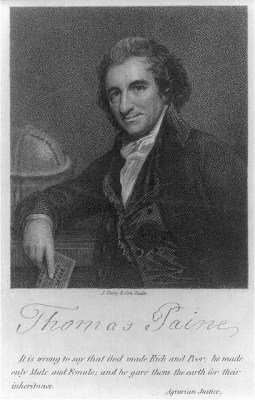
Now, in place of memorizing and reciting the Apostle’s Creed, I immerse myself in Aristotle and Mill, in Hume and Kant, in Wollstonecraft, Rose, Stanton, Jefferson, and Paine, in Avicenna and Aquinas, in Rawls, Pinker, Newberger Goldstein, and Hitchens. I can immerse myself in the teachings of religious founders as well, including the historical Jesus, endlessly more complex, fascinating, and inspiring than the blonde, haloed icon of the Baltimore Catechism. I have the opportunity to explore what all of these thinkers and reformers have to offer, to seek to understand their ideas on their own terms, putting aside those distorted accounts produced by religious rivalry. I can also, without fear of divine censure, explore the bad ideas people have conceived, from belief in witchcraft and satanic possession to the defense of torture, to racist ideologies, to ‘holy war’ and terrorism to social Darwinism (a sadly misleading term, does a disservice to a great thinker by associating his name with eugenics, a pseudoscientific theory contrary to his own ideas). I can try to enter the minds of those who created these dangerous and immoral ideas, in order to really understand how they came up with them, and to better explain why they are so terrible.
These days, I think of myself as a happier, more morally responsible, more intellectually honest, and more informed person than I would have been if I had remained religious. In that, I speak for myself only. Yet I know that this is true for many others, whose accounts celebrate the benefits of their own religious deconversions. It’s my impression that the most joyful, most passionate, and yes, the most resentful converts from religion are those who were brought up in more restrictive, fundamentalist belief systems. Critics say that such people gave up their religion because it was too hard, so they took the easy way out; or, that they just wanted to be able to ‘sin’ freely. I’ve had these accusations thrown at me many times. In a sense, they’re right, but not for the reasons they think. Many of these religions are too hard because their restrictions and demands are contrary to human nature since they’re based on deeply flawed accounts of it, and much of what they deem ‘sin’ is not wrong after all.
Many people attribute their own best qualities, of character, of behavior, of outlook on life, to religion, whether it’s the one they were brought up with or one they converted to. While I recognize the fact that religion can give a deep sense of fulfillment, the evidence indicates religiosity is not more of a predictor for good behavior than secularism. Study after study, personal account after personal account reveal that religious people commit most crimes at about the same rate, are about as generous, and behave about as morally overall than secular people.
My own observation is that people use religion to justify whatever way they are inclined to behave, good or bad. As the physicist Steven Weinberg points out, good people do good things, and evil people do evil things, regardless of religion. Many of the kindest, wisest, and most wonderful people I know are religious, and credit their religion with their moral successes. I’ve also known plenty of religious people use their beliefs to dodge responsibility for their bad behavior with excuses such as ‘the devil made me do it’ and ‘well, of course, I’m just a sinner’. They use this get-out-of-jail-free-card, such as this particular one available to Catholics (but of course, not necessarily endorsed by all Catholics): ‘I’ll just go to Confession later’. Some are otherwise good people who hold what I think are immoral beliefs, because they were taught to believe this way, and threatened with eternal punishment if they don’t. Others aren’t morally praiseworthy people in any sense of the term, and go through life doing only that which serves their own short-term self-interest. Religion, for these, is a matter of convenience or habit.

All of these things are basically true of the non-religious people I’ve come across, including my secular community of friends, family, and co-workers. Some are kinder than others, some are morally committed to doing good, some have a more nihilistic, selfish, or jaded view of the world. Yet here’s why I generally prefer a secular brand of morality over the religious: secular people generally take goodness more for granted. While this might sound counter-intuitive as an indicator of a better moral character or as a way of habituating oneself to better behavior, I think it’s excellent for both.
For example, when complimented on a good deed, a secular response is generally something along these lines: ‘well, obviously, it’s the right thing to do’, or, ‘it just feels right / good’, or, ‘of course, that’s how decent people behave’. These sorts of responses indicate that they see goodness as the default position, as required by reason, as a basic human instinct, or both. After all, human beings go through day to day life being decent to one another: we pay the asking price for the things we want, we step aside to let others pass on the sidewalk, we obey the rules of traffic, we say please and thank you, we lavish food, money, and medical care on strangers as well as family and friends, we spend huge amounts of our time communicating complex thoughts and ideas, and so on and so on. We take all this for granted, to our credit. When we compare the human species with all others, even to our closest relatives the chimpanzees, we find that our level of cooperation, generosity, and tolerance is quite remarkable. In all other species, some combination of predation, raiding, warfare, murder, infanticide, and/or indifference to suffering and the welfare of anyone besides close kin and allies are par for the course. With humans, however, such behavior makes the news.
Since goodness is the default, it’s badness has to be explained: by mental illness, alcohol or drugs, a bad upbringing, a momentary selfishness that overcame one’s better side, or by faulty ideology or culture. Therefore, most good deeds are not terribly remarkable: they are a natural product of sociability combined with reason. Sociability gives us the instincts to cooperate and help others; reason shows us that the more widely we extend our cooperation and good-naturedness, the better off everyone is in the long run.
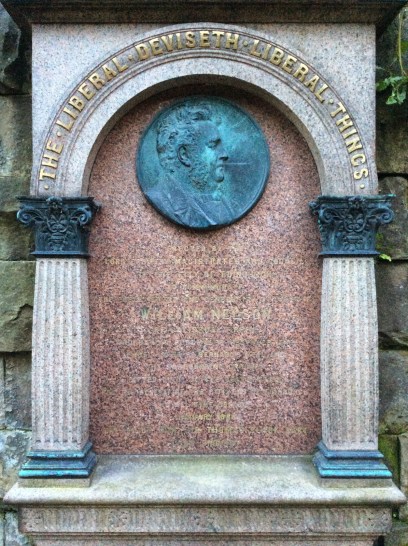
Since secular people (as well as many liberal and progressive religious people) tend to believe in the basic goodness of human nature, they tend to be liberal in politics and morality, and broad in their conception of human nature. For example: since it’s everyone’s basic duty to help one another out, it’s right and just that we all pay taxes to create public welfare systems for those less fortunate than ourselves. To not institute public welfare systems is to say that it’s right that people should enjoy the benefits of civilized society, while being permitted to shirk their responsibility to care for those whom it hasn’t benefited. Another example: since most kinds of human behavior are good or at least morally neutral, there’s only a narrow range of behaviors that should be prohibited, namely those that actively harm others. Human nature, with its unique combination of advanced intelligence and strong social instincts, has evolved to include a wide variety of ways of being that are not only valid, but worthy of celebration, as they are indicative of the wonderfully fascinating, complex, endlessly inventive creatures that we are.
It’s no surprise, then, that secularists and adherents of the more liberal religions, which share this belief in basic human goodness and the broadness of human nature, have been on the forefront of reform and civil rights movements throughout history. Abolition of slavery, religious liberty, women’s, worker’s, and gay rights, indeed all of the great movements for reform and freedom, originated with the dissidents, the broad-minded, and the humanists. Religion is made for human beings, not the other way around.
An aside: there are certain leading secularists, such as Richard Dawkins and Sam Harris, who claim that the only ‘true’ religious believers are fundamentalists. They argue that liberal and reformed believers just want to pick and choose the ‘nice’ parts and discard the rest, which constitutes a betrayal of their religion. I think this view is not only historically inaccurate, it’s based on a more basic categorical error. Religions are not, and have never been, eternally ‘fixed’ systems that do, or ‘should’, remain constant over time. They are better understood as belonging to a category of things that include culture and language, all of which come gradually into being from thoughts and practices that are products of human nature, and change over time. Culture, language, and religion evolve as human nature evolves and as the totality of human knowledge and wisdom expands and is applied to current circumstances. It’s no more true to say that the only ‘true’ religion is that which remains wedded to a particular holy book or creed established by a synod, or a particular interpretation of these, than it is to say that the only ‘true’ communicator of English language is one who strictly adheres to the first Webster’s dictionary, or considers the Canturbury Tales or the works of Shakespeare as the eternal exemplar of ‘true’ English grammar and style.
Let’s contrast the more liberal, progressive, humanist views of secularists and moderate believers with the views of some of the more fundamentalist and hierarchical religions, usually descendants of tribal belief systems. This includes the brand of conservative Catholicism I grew up with (which is not reflective of all variants of Catholicism, some of which are quite tolerant and emphasize social justice). In these belief systems, humans are born in sin, ‘fallen’, weak and corrupt, and it’s only through the greatest struggle, and never without divine help, that we can achieve goodness. Their view of human nature is narrow: people are created to fulfill one of a number of comparatively few, narrowly defined roles, and behavior and proclivities that aren’t in accordance with these are sinful. Their view of life is one of spiritual warfare: we are beset on all sides by Satan and his agents as they vie with God for dominance over our souls. The way to redemption, then, is a lifetime of constant prayer, diligence, and suffering, battling one’s way to an eventual union with God that relatively few can achieve.
Secularism and the liberal religions, with their naturalist view of morality, emphasize the ordinariness of human goodness and the value of habitual, systematic, readily achievable goodness. The more rigid, fundamentalist religions, on the other hand, emphasize the difficulty of defeating evil and the value of relatively rare exploits of good deeds through heroic self-denial. While the latter may be more romantic and exciting, I think that the secularist and humanist view of human nature has been more conducive to human flourishing overall. It promotes a greater quantity of goodness in the world by making it understandable and accessible. This is readily apparent when we examine the evidence throughout history and up to the present time. Where we find tolerant governments and secular or progressive religious belief systems, we find less warfare, a higher standard of living, and a system of laws that protect all citizens from oppression, from each other as well as from government itself. Where we find civilizations dominated by religious fundamentalism, rigid ideologies, and aristocratic and ‘ordained’ hierarchies, on the other hand, we find the opposite.

In sum: leaving religion behind, for me, has proved not only emancipatory, but has provided a wonderful opportunity for learning, for critical thought, and for personal growth that I may never had had otherwise. I still have a residual distaste for religion, especially for its more ritualistic trappings, as one has a distaste for imbibing a substance one has overindulged in, or for fire after one has been burned. I shy away from churches, am creeped out by rote prayers, and feel depressed when listening to Gregorian chants and solemn hymns. (I feel very differently about other forms of sacred music, and wouldn’t you know it, I never heard any of them in the church of my youth.) Yet I seek wisdom from any source in which it may be found, and since I know that there is much to be found in religious traditions as there is in any arena of human thought, I look for it there, too, despite the inclinations I sometimes have against it. And one day, when my residual aversion to religion has finally worn away, I’ll be that much less in the sway of the kind of bias that blinds the intellect and blunts the understanding.
*Listen to the podcast version here or here on iTunes
*Also published at Darrow http://darrow.org.uk/2015/04/12/what-leaving-religion-has-done-for-me/