You Can Still Call Me Feminist

 Many women don’t like to be called ‘feminist’ anymore.

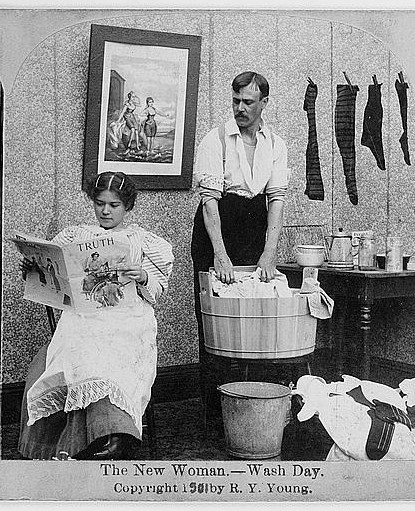
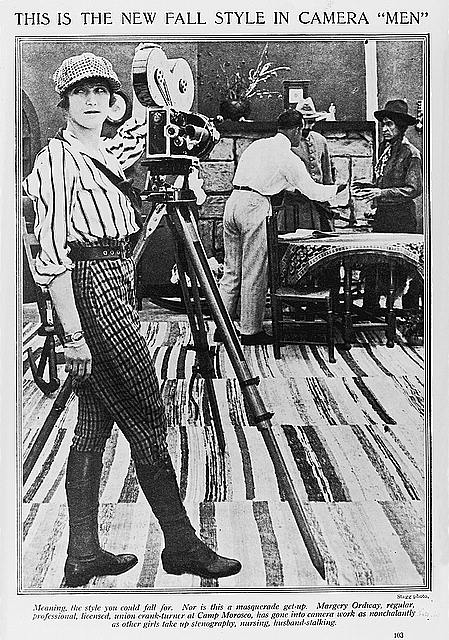
Some think the term’s outdated and no longer useful, because when we use it we remind people of, and thereby perpetuate, silly notions about women from the bad old days. Others think it’s too divisive, highlighting the differences between between men and women instead of emphasizing our much more important similarities, which was the whole point of feminism in the first place.

I understand the distaste for the f-word. Second-wave feminists, continuing the fight for equality that the first wave had only partially achieved, sometimes overshot the mark in their zeal. Some thought men had to be taken down a peg or several; others thought that greater separation of the sexes, rather than less, was what it would take to liberate women from men’s intransigent misogyny. Many even thought, and continue to think, that men and women are so fundamentally unlike in the ways they think and feel that they will never achieve true friendship and equality.

I, like those who object to the term feminism, think that these separatists are wrong about human psychology, and am more optimistic about the improving relations between the sexes, especially as gender roles are losing some of their rigidity throughout the world. Though the recent flap over Cannes Film Festival’s kicking women off the red carpet for not wearing high heels might put a damper on this view, the fact that this raised such a huge outcry makes the whole story seem more like a point in its favor. Like the first wave feminists, I hold the view that the similarities between men and women so far outnumber the differences as to render them largely irrelevant, especially when it comes to human rights and political equality. The term feminism itself is a first wave feminist invention.

There are many meaningful terms which make sense because of the history behind them, not because they make literal sense anymore. Take the term film as it’s used in ‘Cannes Film Festival’: it’s used to refer to movies in general. Yet actual film, that specially prepared plastic on which a multitude of images are imprinted to be played back later as a moving picture, are only sometimes used in movie-making today. Movie aficionados who now refer to movies as films don’t mean to imply that actual film was used in any given movie; whether or not it was, they wish to emphasize the craft and history behind the art of movie-making that they all share.

The term under question here also has a meaning that’s evolved over time. Feminism expresses, in the words of that great old tongue-in-cheek slogan, ‘the radical notion that women are people’. Just as humanism was coined as a rallying word to promote the idea that human beings and their achievements are valuable for their own sake, feminism was coined to rally people to the cause of equal rights for women, since women possess the same defining qualities of humanity as men. At one time, it was necessary to prove that point. Now that we take women’s equality for granted in much of the world,  feminism might seem antiquated or divisive. But I don’t think that’s really the case. Almost everyone is familiar enough with the current usage of the term film to know that what we mean now is not exactly what we used to mean, but we still like to use it because of the history it alludes to. Likewise, most people should be familiar enough with feminism to know it’s now generally used in the context of critiquing the more entrenched and obscure problems of sexism in our society, not to demonstrate the basic humanity of women or the depravity of men.

So I still like to identify myself as feminist. Despite the blemishes some put on the term over the last century and a half, I value it because of the way it connects the current pursuit of equal rights and dignity for all to the brave and noble women (and like-minded men) throughout history who fought for their freedom, and mine, under its banner.

Review: In Defense of a Liberal Education, by Fareed Zakaria

In Defense of a Liberal Education, by Fareed Zakaria
New York: W.W. Norton & Company, Inc., 2015

When I returned to college a few years ago to follow my heart’s desire and study philosophy, one of my ethics professors opened the first class session with this question: ‘Why are you here?’ It was not meant as that ubiquitous and difficult-to-answer metaphysical question which would be the topic of so many future course discussions (difficult because it’s not well-formed, many of us would object, being too nebulous). He meant, why where we there in his class, and why were we attending college at all?

I was sitting there, aglow with satisfaction at having resumed my pursuit of a higher education after spending so many years working for others, then struggling to keep my own small business afloat in the 2008 recession era. I was feeling that the daily tasks of my working life were taking up an inordinate amount of time while failing to satisfy my curiosity about the world, so I reduced the size of my business (I’m happy to report it continues to thrive to this day) and returned to school.

In answer to my ethics professor’s question, a few hands went up. ‘To get a good job?…’ one student offered, hesitatingly. ‘I want to get rich! That’s what we’re all here for, really’ said another, with bravado. Others chimed in in assent, with a few objecting that while that’s really what they were here for, too, that’s not the only reason. While some lip service was paid to the intrinsic value of education, the instrumental view of college, as a means to the end of achieving wealth and status, won out in that particular discussion.

In the idealistic mood I was in, I was disappointed. I was here because I was sick to death of the struggle to get ahead, and was thrilled at the prospect of pouring most of my energy into learning and thinking; making money was now relegated to the periphery of my life, and good riddance. For awhile, at least, I would be thrifty and work enough to pay the bills and save a little for emergencies, and that was it.

Why open this review with an anecdote? I’m inspired to to do by Zakaria himself, who opens his excellent little book with his own story: how he, like his brother, came to America and received a liberal education, and what it did for him. In fact, his book is all about what education can do to make each individual’s life a much richer one, in every sense of the word. When I say ‘little book’, I only mean it’s not long, just six chapters and less than 200 pages. It’s really a very big book when it comes to the ideas he explores and the wealth of information and evidence he supplies in support of his arguments. I’ve long admired Zakaria’s ability to express important ideas clearly, succinctly, and with personality, and with this book, he accomplishes all of these to the highest degree.

A liberal education, as Zakaria describes it, is not only generous in its rewards; it’s liberating. It frees the mind narrowed by a lack knowledge and experience, of deeply exploring other points of view. It expands and strengthens the mind as it becomes more elastic, ever ready to take in more information and process it in light of what you’ve learned so far. The more art and culture you take in, the more developed your aesthetic tastes become, and the more you’re able to appreciate. The more you’re practiced in critical thinking, the better able you are to take in new ideas and explore them for quality and for beauty, for strengths and weaknesses. When done right, a liberal education should not make you a ‘know-it-all’; it should make you more open, more ready and able to constantly learn more as you go through life, and more keenly aware of how little anyone can really know about this fantastically rich, complicated, and endlessly fascinating universe we find ourselves in.

A liberal education also makes you a better citizen. You learn about important and influential political theories, and critiquing them logically as well as comparing how they fare throughout history, you learn what works, what doesn’t, and how to judge what might work best in the future. You learn about those who made a big difference in the world, how you can make a difference too, and why you should try to do so. It’s also a quintessentially American innovation: by the people, of the people, and for the people. It’s a great equalizer, open to anyone (or at least intended to be) who has the basic skills and the desire to learn, no matter what socioeconomic class they come from. It presents the best ideas from all over the world for the students to critique and compare on their own merits, though instructors who themselves came from all manner of backgrounds.
Zakaria compares liberal education to skills-based training, which is now winning favor in public and political discourse as the more practical way to help people improve their lives. Many politicians are decrying public education as too ephemeral and calling for more public money to be spent on job training, if spent on education at all. Even President Obama, in favor of free junior college for qualified applicants, recently took a crack at a humanities major. While agreeing that skills-based training is very important, Zakaria explains why it’s not only not enough for a democracy, it’s not enough for a nation that wants to stay innovative and competitive. A person whose talents are honed and locked into one narrow set of skills may be very good at one particular job, but when changes in technology and in the market render that job obsolete, that person’s training is no longer relevant, and they’re left poorly equipped to pursue other options. Consider an entire population educated and trained this narrowly, and you see the problem. As Zakaria points out, a liberal education, which focuses on instilling a broad base of knowledge and generally applicable critical thinking skills, does much more to help people become more informed, flexible, and equipped to take in new information and apply it in new ways.

When I reconsider that ethics class discussion in light of Zakaria’s book, I realize we were talking past each other. There’s no reason to choose between the instrumental side and the intrinsic value of college. A liberal education, which as undergrads we were all pursuing, helps us accomplish all of our goals in a way few other social institutions can, and can be essential for helping us become the best human beings we can be.

Anecdote and Evidence

I was engaged in conversation the other day with someone I like very much and whose opinions I respect, yet with whom I often disagree. This is a very good thing: these are the sort of discussions that keep us honest. They force us to confront arguments and evidence we hadn’t considered before. They challenge us to recognize our unjustified assumptions, things we’ve long taken for granted and never thought to question. And over time, they instill in us the habit of forming good quality arguments that withstand such challenges, and discard those that don’t. These are valuable lessons which we don’t learn so readily in discussion with like-minded people, in preaching to the choir, so to speak.

That evening, we were mostly discussing politics, history, and social issues. Over the course of the evening, I found my interlocutor often supported his arguments primarily with anecdotes, as we all often do. Anecdotes are invaluable discussion tools: they illustrate what we mean by taking the argument out of the realm of the abstract into concrete reality, or in other words, they bring the argument to life. But over the course of the evening, I found that for nearly every anecdote he presented, I thought of one in support of a counterargument. Now it just so happened that some of the topics under discussion were sensitive issues, and since we were in mixed company and everyone was on holiday, I was loathe to bring up anything that would cause strong discomfort or hurt feelings, so I held back.

But I wish I had asked him to clarify this crucial detail: did he mean to use these anecdotes as illustrations, or as evidence?

If he was using these anecdotes to illustrate the larger points he was making, well and good. If he was using these anecdotes as evidence of how stated facts or general rules were manifested or broke down in particular circumstances, well and good. And if he was using these anecdotes as evidence of how particular circumstances can give rise to unique results, again, well and good.

Yet, the fact that I could easily think of a contradictory anecdote for every one he presented weakened his arguments in my mind as he was making them, in those cases where he was arguing in favor of truth claims about the world as a whole. That’s because he hadn’t made is clear how he was using these anecdotes to support his claims.

We should keep this in mind every time we make an argument: an anecdote, considered on its own, should not be considered evidence when it comes to general rules, facts, or theories.

Generally, we should be hesitant to rely too much on anecdotes when we want to persuade others of the truth of what we’re saying.Why? Well, the world is a complicated place, with innumerable factors to consider when making a judgment on any given situation. So while any one anecdote can show how a particular array of circumstances can lead to a specific outcome, it doesn’t reveal enough about what can happen given another particular set of circumstances, or what usually happens in the world as a whole.

There was a warehouse cat I knew named Stinky, years ago when I worked in a salvage yard and retail warehouse. She was a charmingly decrepit cat, runty and ancient. She purred like an old lawnmower, she had rheumy eyes, and she ate a special diet of soft food because she had no teeth. She had terrible arthritis or some other undiagnosed bone or joint condition, which gave her an oddly rolling gait and caused her to nearly fall over every time she strained her head up around to the side to look at you. She also left a patch of brown dust everywhere she slept because she could not reach around to groom her body. For all of this, she seemed to have a happy life: she was very affectionate, showed few signs of pain or distress for all her maladies, and dearly loved and tenderly cared for by all of us who worked there. (My heart still aches with affection when I remember our dear departed little kitty!)

Now, suppose someone where to discuss cats with me, and based on my close acquaintance with Stinky, I were to argue that cats are slow, ungainly creatures with no teeth, that they are dirty animals that don’t groom themselves, they always weigh less than eight pounds, and if you were to hear a low rumbling sound, you can bet it’s a cat. My interlocutor would justifiably think I’m a little nutty. When it comes to talking about one cat, an anecdote is very revealing. When it comes to talking about the species cat, not so much. In other words: one cat is an anecdote, but lots of cats are evidence.

While all this might appear obvious, it’s natural for human beings to form beliefs and to argue on the basis of what we’re familiar with: we all have our own sets of experiences from which we draw our ideas about the world. Yet, as we grow in knowledge and understanding, it’s important to gather as much information as we can about the world that goes beyond our own experience, since we lead ourselves astray all the time by relying on anecdotes, or in other words, the limits of our own experience. The anecdote can point us in the direction of where to seek for truth, since it reveals facts about the world in that particular time and place, but on its own, can’t tell us much about larger truths or how the world works as a whole.

Statistics are evidence. Meta-studies are evidence. One study can be considered useful evidence if it’s sufficiently large and well-conducted, but given so many variables in the world and the statistical likelihood of getting skewed results in any one given study, it’s better to rely on meta-studies, or a hypothesis or theory supported by many studies and observations over time.

Returning to the anecdote with which I began this piece to illustrate my argument: given the evidence of the many discussions we’ve had over time, I have every reason to believe my interlocutor that evening is an intelligent person, well-informed in many ways. Given my confidence in his abilities, I also believe he’s fully aware of the difference between anecdote and evidence. Yet, since our evolved brains naturally think first in terms of our own experience so that we easily fall into the anecdote-belief trap, we need to keep in mind the difference between anecdote and evidence, use them appropriately, and make it clear to ourselves and our partners in discussion how we’re using each of them to support our arguments and why.

Thomas Jefferson Sites, Part 5: Washington, D.C., Third Day

 Fifth day, April 23rd

I map out my route, then make a timely departure from my temporary home this morning: I have lots to do before I meet up with someone very special this evening, and I don’t want to be late.

I’ll be traveling today by car, since I have so many places to go throughout the day that aren’t close to one another, but that’s okay, none of my destinations are downtown.

I start with Kalorama, site of an opulent home belonging to Thomas Jefferson’s friend and fellow statesman Joel Barlow, who purchased the property on Jefferson’s advice in 1807. Barlow made extensive additions and improvements to the house originally on the site, and Jefferson, always the enthusiastic gardener and improver of homes, offered his advice for the gardens and orchards too, and visited the estate many times. Kalorama, by the way, is Greek for ‘fine view’.
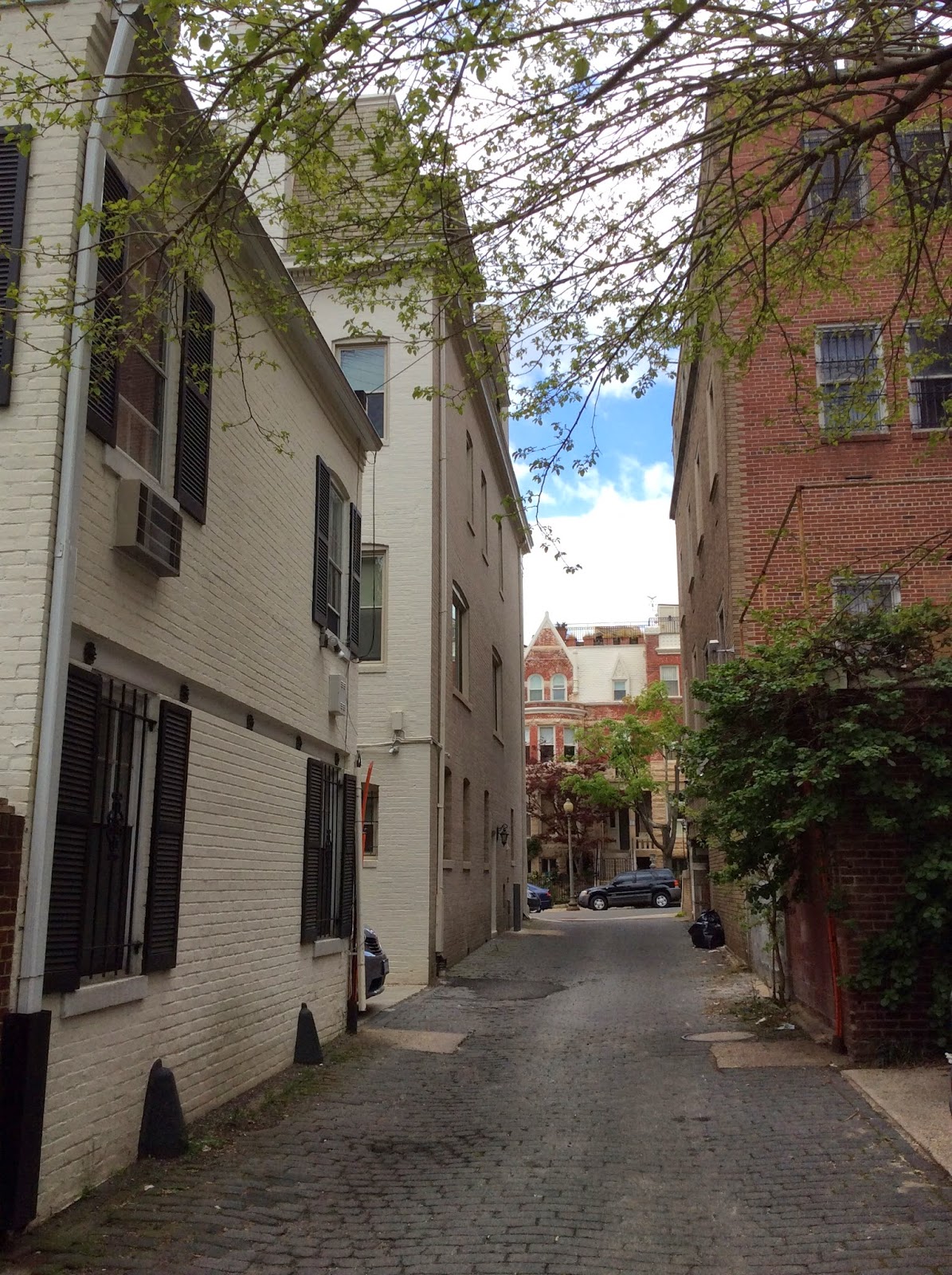
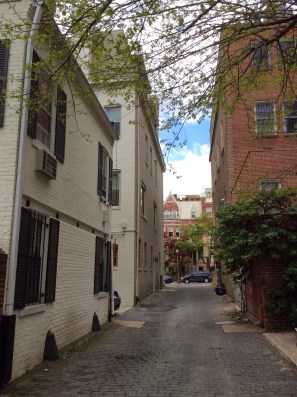
The mansion and its associated buildings are long gone, the main house finally torn down in the late 1800’s to make way for city expansion in that area. The intersection of Massachusetts and Florida Avenues where I was directed to by one source, and where I park, turns out to be closer to where the gatehouse stood at the entrance to the grounds. The main house actually stood closer to 23rd and S Streets. I explore the streets and alleys about a block radius to the north and west of where my car is, and an alley I photograph seems to be oriented in the same direction as the gatehouse used to be, but south about a block.

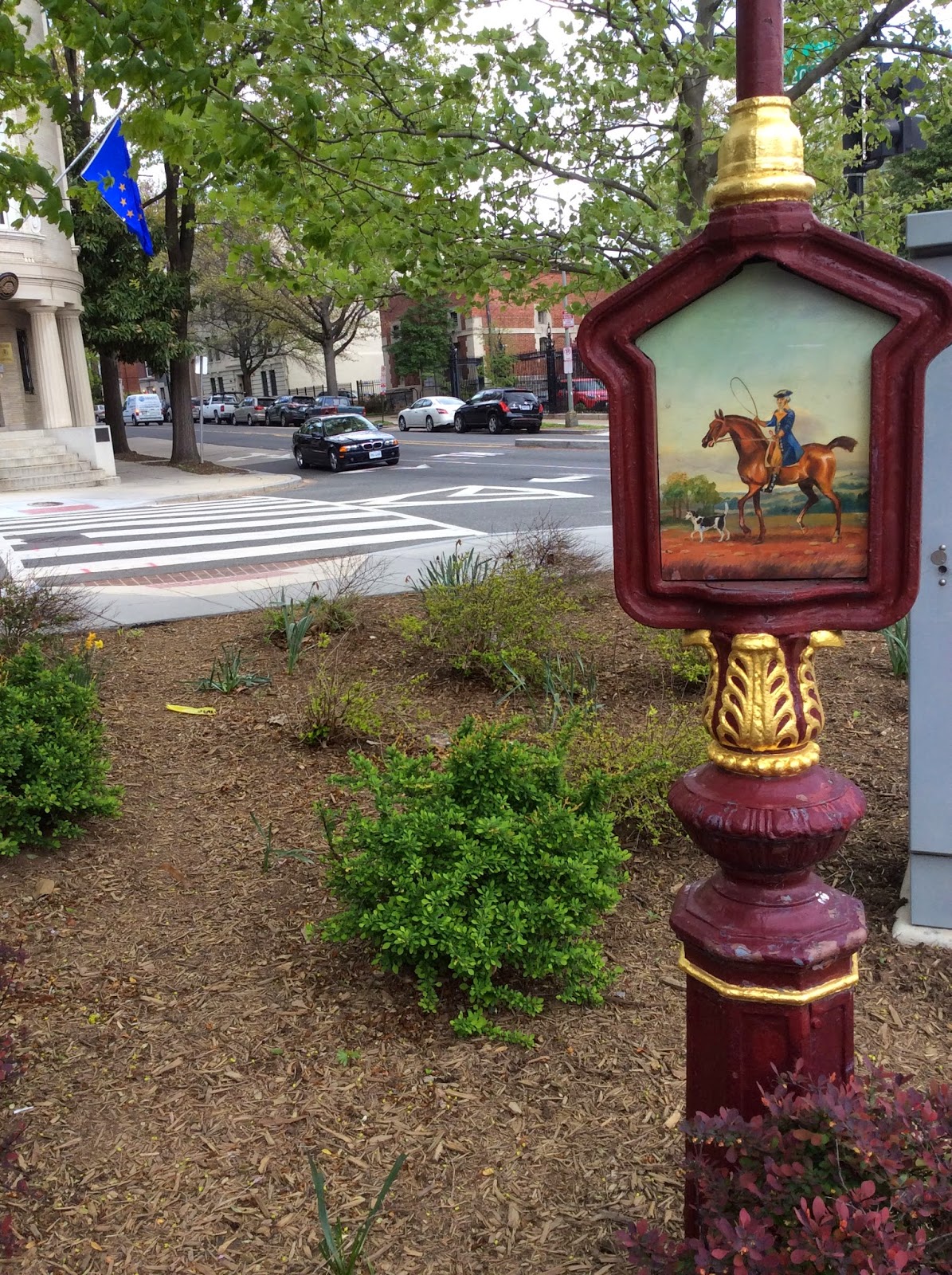
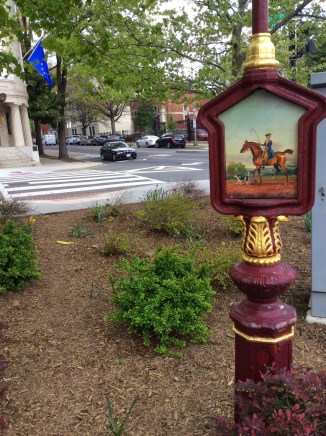
In my poking around, I find this great little antique call box, painted by Peter Waddell, who specializes in images of 18th and 19th century Washington’, according to the little plaque on the back. It portrays George Washington, who never lived in D.C.; his nephew, however, is the man Barlow bought Kalorama from.

My next destination is Georgetown, formerly known as George Town before it became a district of D.C.. It’s now known for the university of the same name, its history as a commercial and industrial center for the area, its canal, and its elegant shops and restaurants.
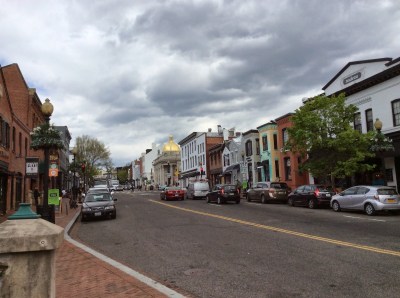

I’m headed first for the site of Suter’s tavern, where Jefferson stayed on his travels back and forth from Philadelphia, and wrote of the delicious glasses of wine he enjoyed there (Jefferson loved wine). There’s nothing apparently left of that building, either, except many stories, since it was a very popular inn at the time and many famous people stayed there. There are also many claims that it’s actually still standing (including one made by a business that’s in the building in question. Marketing tool?). There’s an old photo, supposedly of Suter’s tavern in the Library of Congress, but it seems that neither the photo nor the rest of these claims can be substantiated. John Suter, the proprietor, didn’t actually own the building, so there are no property records to back any of these claims up. From what I can find, it seems there’s a consensus that it was probably on or near what’s now Wisconsin Ave just north of the canal.
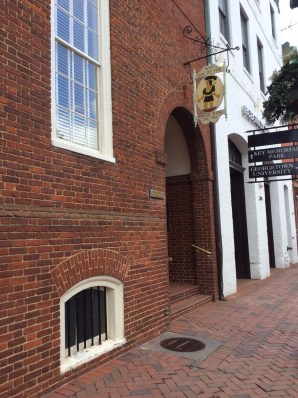
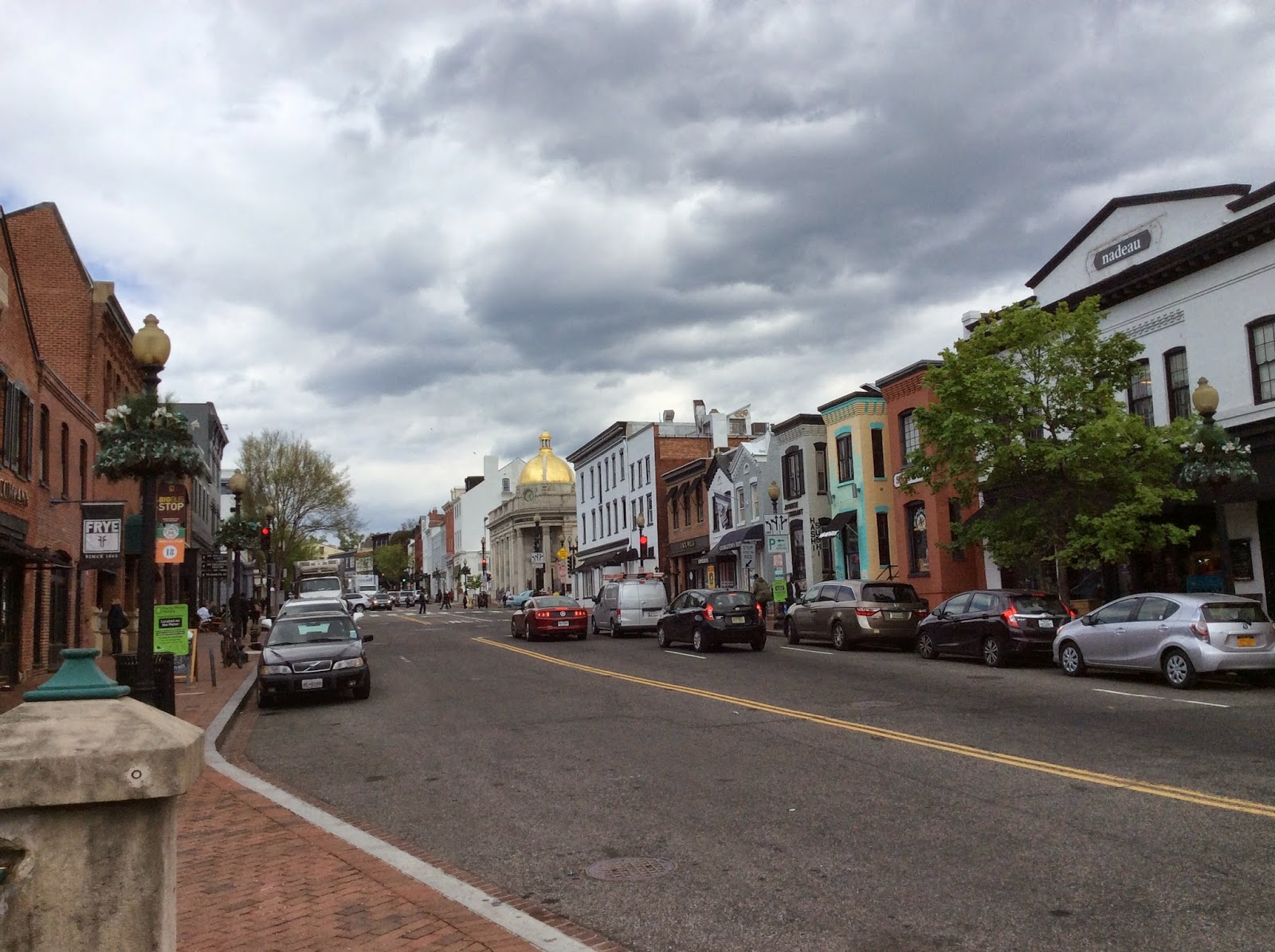
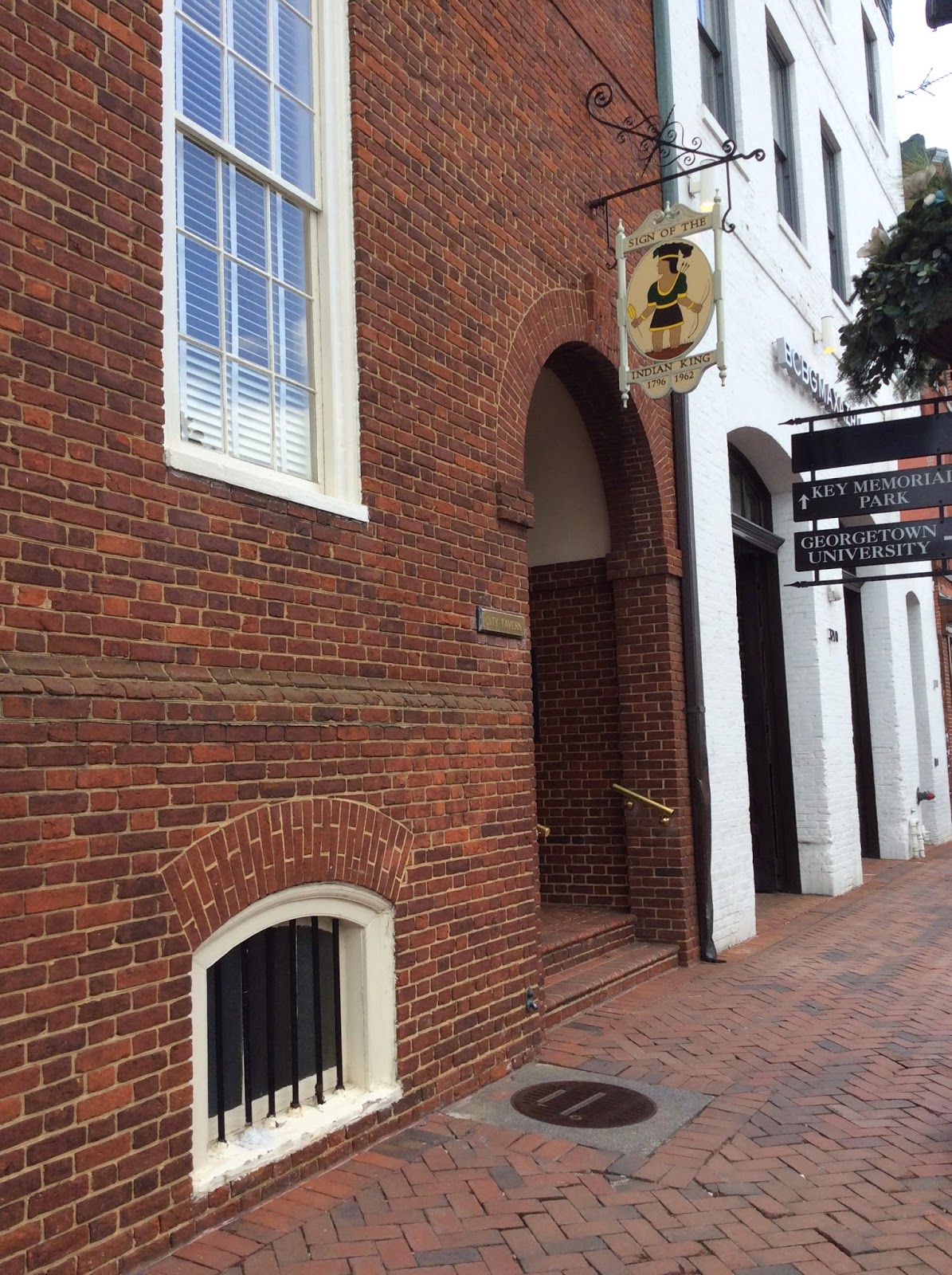
As I head west on M Street to make my way to my next destination just a few blocks away, I’m scanning the scene as I’ve been doing the whole trip, looking for markers indicating historical sites and buildings that appear to date to the right time period.Here, it pays off. To my left, I spot a sign with a stylized old-fashioned image of a Native American on it, with the dates 1796 and 1962. I look up and, yes, the building looks promising. I quickly locate the plaques that identify it as The City Tavern and date its original construction to 1796. Great! It’s the right place, the right time …even the right name: as you may remember, Jefferson frequented the City Tavern in Philadelphia too. Okay, okay, the name doesn’t matter, it’s so generic that any city Jefferson visited is fairly likely to have a tavern of that name. Seriously, though, I think it likely that he’d be associated with it for the same reasons I came up with that Jefferson version of the Six Degrees of Kevin Bacon game: he seemed to know just about everyone, or have professional or social connections with everyone.Sure enough, it turns out Jefferson is associated with this City Tavern too: he probably came here to at least to dine and attend events, since around this time he lived close to the White House while he was Vice President (the White House was still called the President’s House at the time) and then in the White House. He may even have had occasion to stay the night now again, even if it was not far from home: he was a busy, social man with lots of friends, and even short distances to us seemed a lot farther in Jefferson’s time of travel by horse and carriage
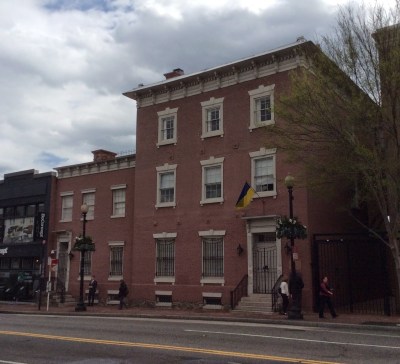
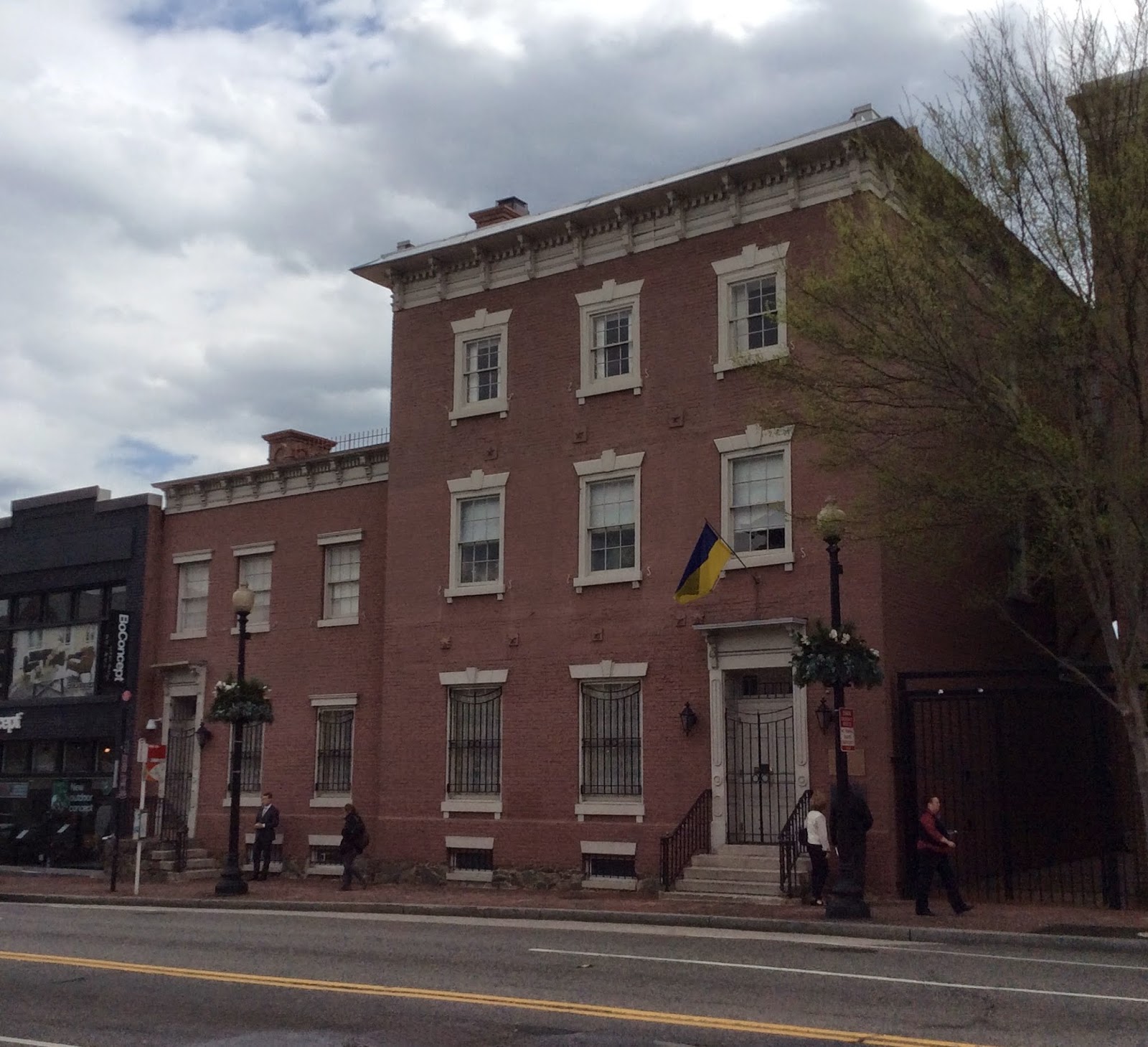
I continue on my way to my next stop: Uriah Forrest’s house, AKA the Forrest-Marbury House, AKA the Ukranian Embassy. Jefferson dined at Forrest’s house and apparently stayed the night, along with Madison and others (though my primary source for this indicates that Jefferson spent the night in Georgetown, it’s not clear whether it was elsewhere, such as nearby Suter’s, or this house). They were on that same trip that took them to nearby Notley Young’s house visiting local landowners in preparation for building the new capital city there. Jefferson and company took the time for a little pleasure trip, to take a tour of the area and visit some small waterfalls about four miles away, according to a letter of a contemporary describing the day’s outings.

While the house is named for Uriah Forrest, who was one of the party when Jefferson was there in 1790, he actually didn’t live in that house yet; he moved in in 1792. Another member of the group did, the original owner who had it built in 1788, Secretary of the Navy Benjamin Stoddert. Like so many of the other Federal style buildings featured in this series, it’s a tall, somewhat plain but still handsome house of red brick. It’s one of the few buildings that date before the turn of the 19th century still standing in Georgetown.
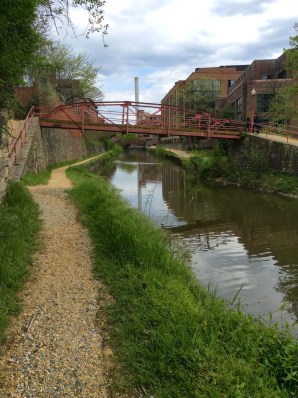
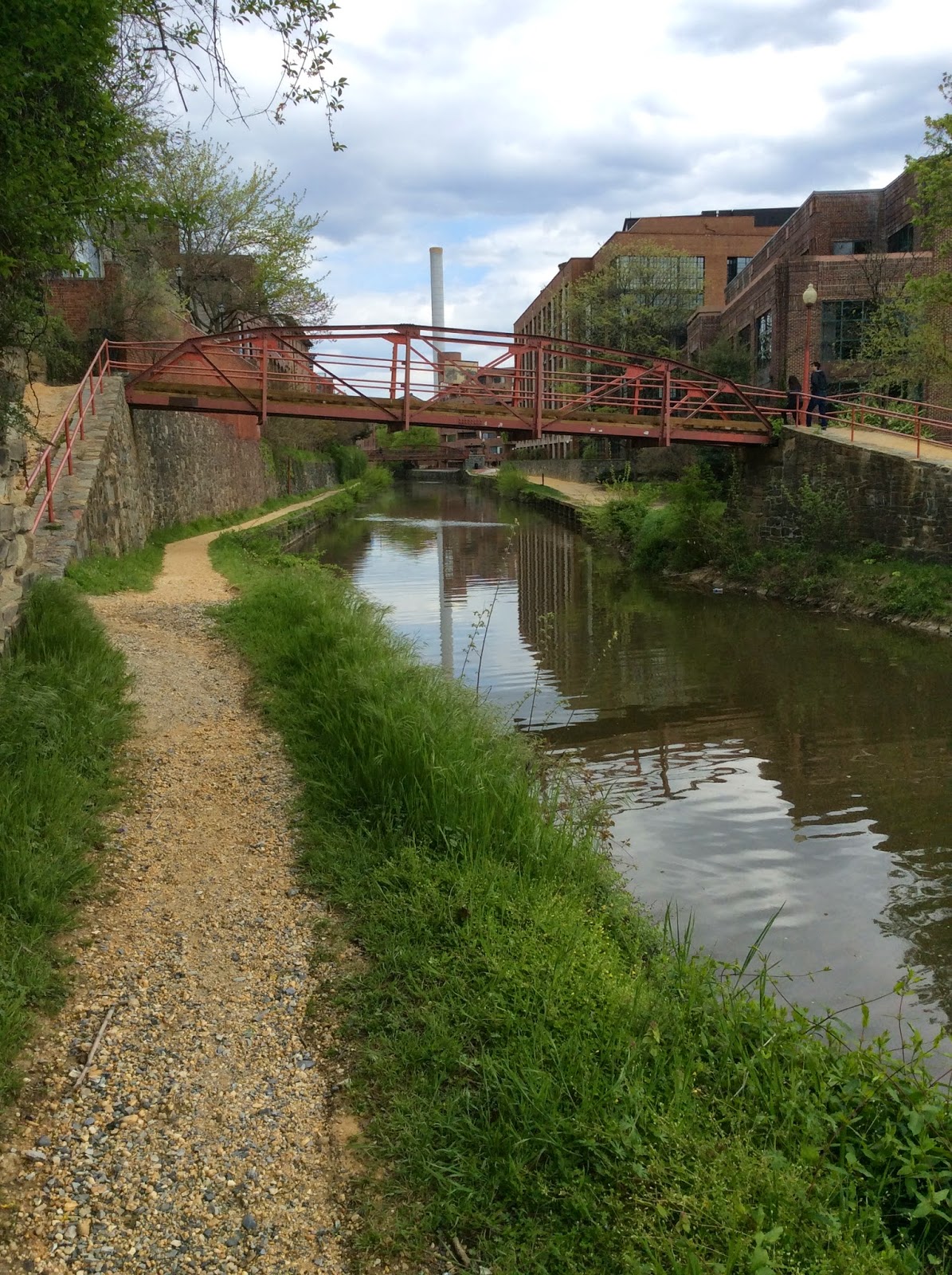
I decide to take the long way back to my car, via Francis Scott Key Park and the canal walk (I’ll add a photobook with more images of Georgetown soon). It’s a lovely stroll, via simple gravel paths along either side of the grass-lined canal, crossed by steel bridges painted that same rusty-red color of the Golden Gate bridge in San Francisco, and hemmed by old red brick warehouses, industrial buildings, and stone walls. Georgetown, originally a port town and trading center along the Chesapeake & Ohio Canal, became a bustling industrial center in the 19th century. Over time, the railroads and then flooding rendered the canal useless as a shipping route.

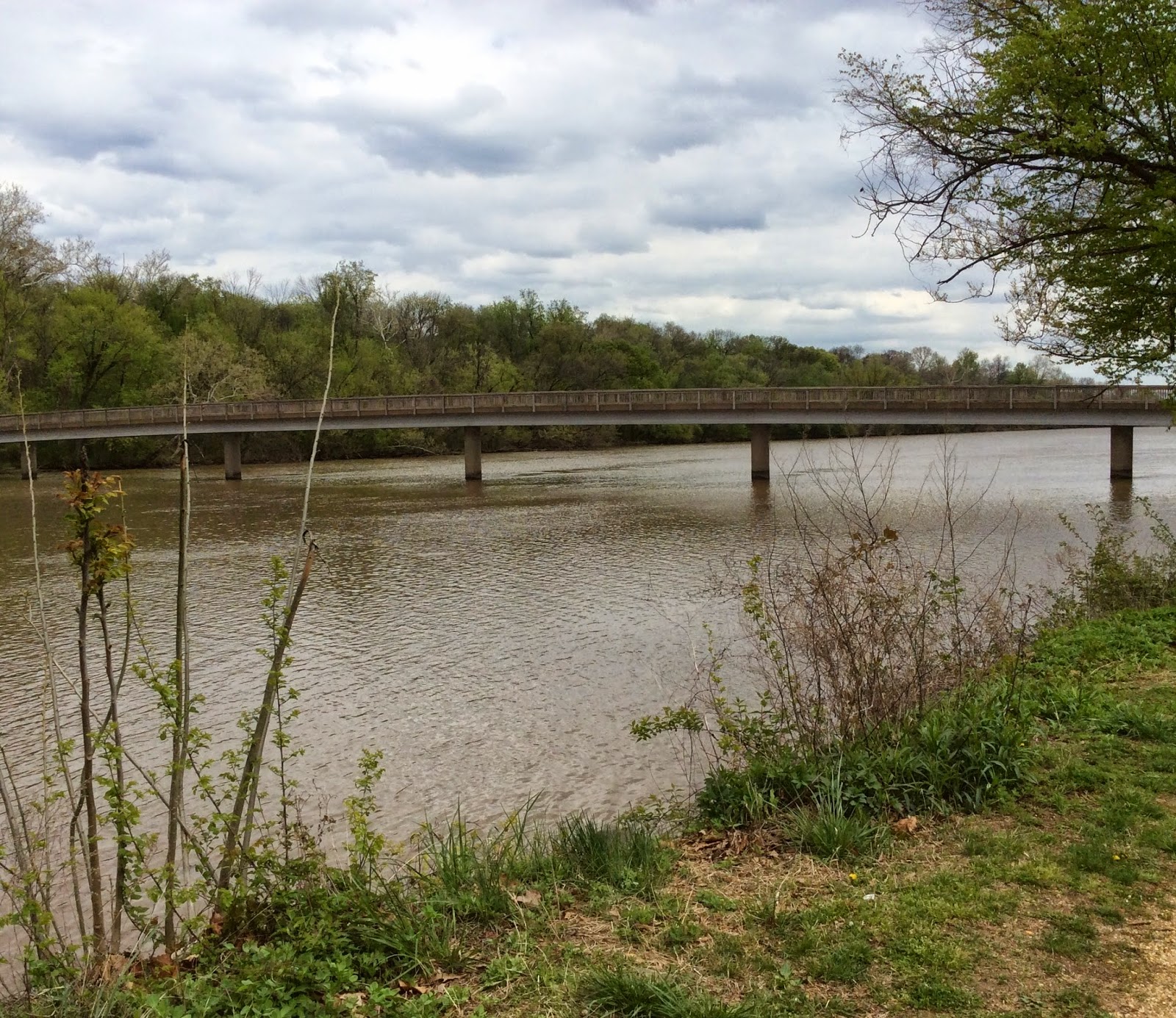
After my happy stroll, I continue on to my final destination of the afternoon before the person I’m going to meet arrives. I’m heading for Analostan Island, which I had stood over, but not on, when I attempted to reach it by the Interstate 66 bridge footpath a few days before. This time I’m successful, but reach it very circuitously, as I miss the turn at the other end of the Francis Scott Key Memorial Bridge that would put me on George Washington Parkway, and end up going around and through Arlington National Cemetery. But I’m okay with that: I like getting lost sometimes, I find out interesting things that way.
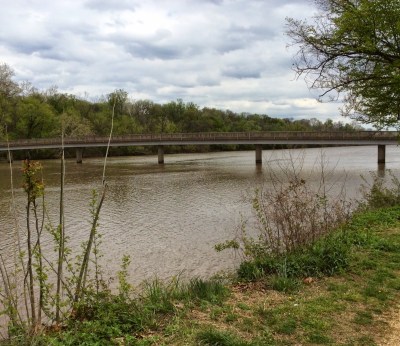
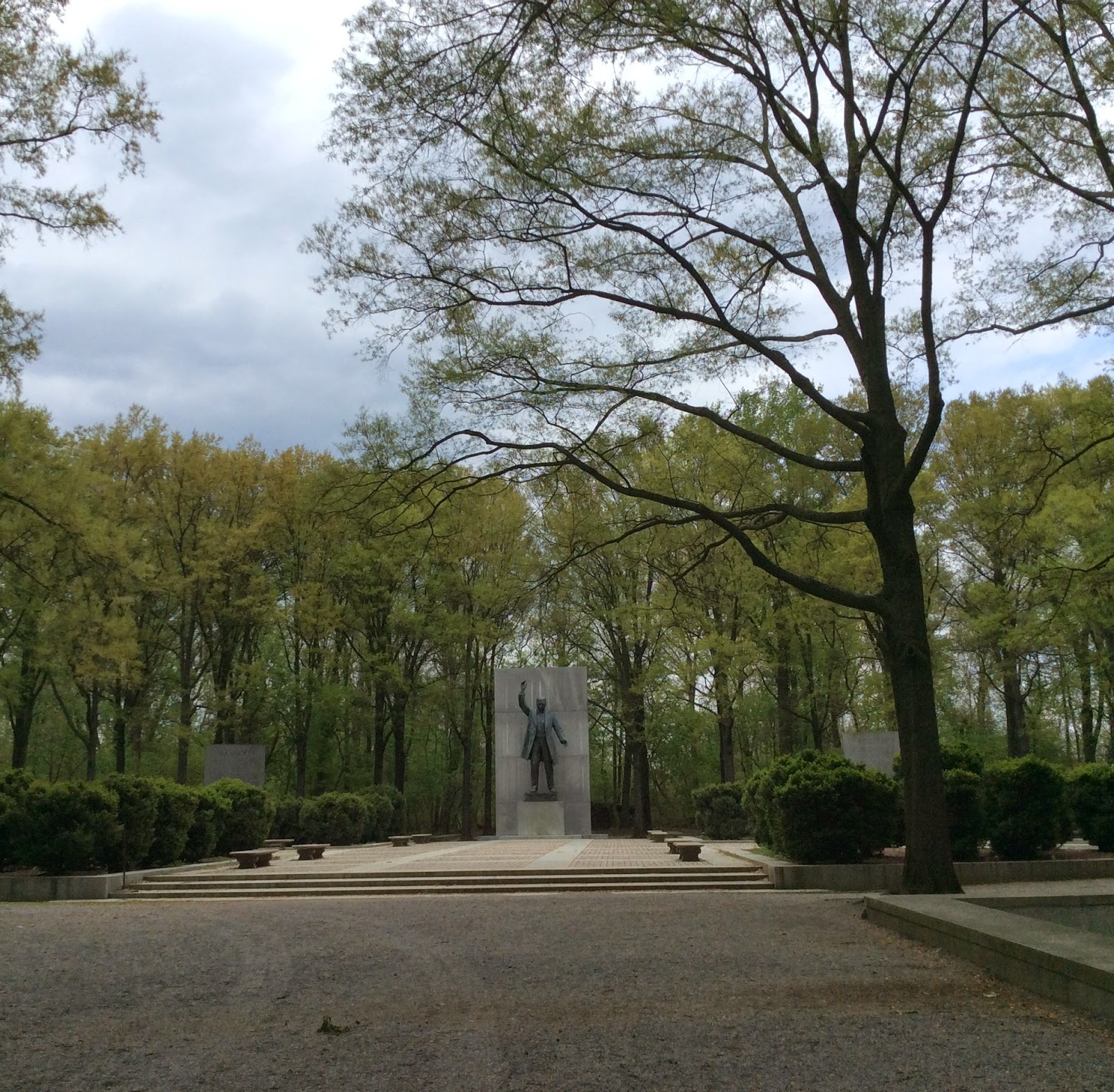
 As I mentioned earlier in this series, Jefferson visited Analostan Island many times. His friend John Mason, son of George Mason (who was a member of the Constitutional Convention and contributed to the writing of the Constitution, but in the end, refused to sign it), built a mansion on Analostan in the 1790’s. The island, now named Theodore Roosevelt Island, retains no apparent traces of its history as the site of a plantation, luxury home, and getaway spot. It’s mostly grown wild, except for the hiking paths that crisscross its perimeter, length, and breadth, and the Theodore Roosevelt Memorial perhaps half a mile from the island end of the footpath that reaches it.
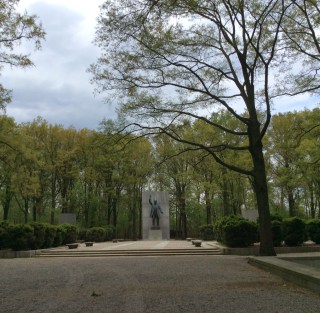
The memorial appears just a little neglected: there are weeds growing through the spaces between the flagstones, and the fountain is waterless and scattered with debris, mostly just dead plant stuff. Theodore Roosevelt’s likeness, large and a little menacing-looking (calls to mind the phrase ‘bully pulpit’, though more in today’s sense of the term than his), is portrayed in the act of delivering some impassioned speech, one arm upraised. If there were a crowd here, the statue’s demeanor would be fitting; the island being nearly empty this afternoon, it looks oddly out of place with its peaceful surroundings, with no sound but birds chirping and the wind blowing through the trees (it’s another blustery day).

There are large stones carved with phrases praising bold, courageous ‘manliness’ which I find a bit annoying; my feminist side protests that I and many of my fellow women are more bold and courageous than many men, and that these are human traits, not ‘manly’ ones. I’m also aware of the warmongering, reckless side of his personality, which I don’t find admirable. I prefer Jefferson’s philosophy, which places a far higher value on courtesy, reason, and compromise, with war a measure of absolute last resort (though not so for spontaneous revolution of the people when they find their natural rights are being trampled upon, that’s another matter; he considered this a desirable thing sometimes). I remember, however, that Roosevelt often used his power to promote the rights of the poor and to protect our natural resources. Parks like this, for example, as are many of the places I’ve visited this trip, are an extension of his legacy, publicly funded preservations of natural beauty and historical places that market forces nearly caused the destruction of. I forgive him and move on.
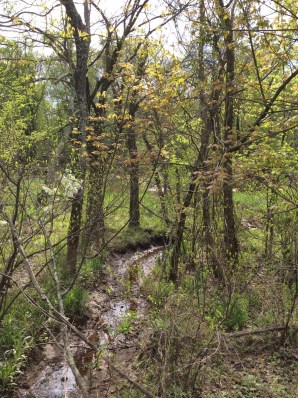
My main goal for this island hike is to find some remnant of the Mason house, since it’s the artifact directly associated with Jefferson here, and then skedaddle and swing by Alexandria, home of Gadsby’s tavern where Jefferson stayed once, on my way to the place I’m meeting someone later. But once I start tramping round the island, my inner hiker, having been starved of her exercise and natural scenery for over a week now, demands a longer stay. So I forego the Alexandria stop (which I never end up making, oh well) and hike vigorously for a couple of hours.

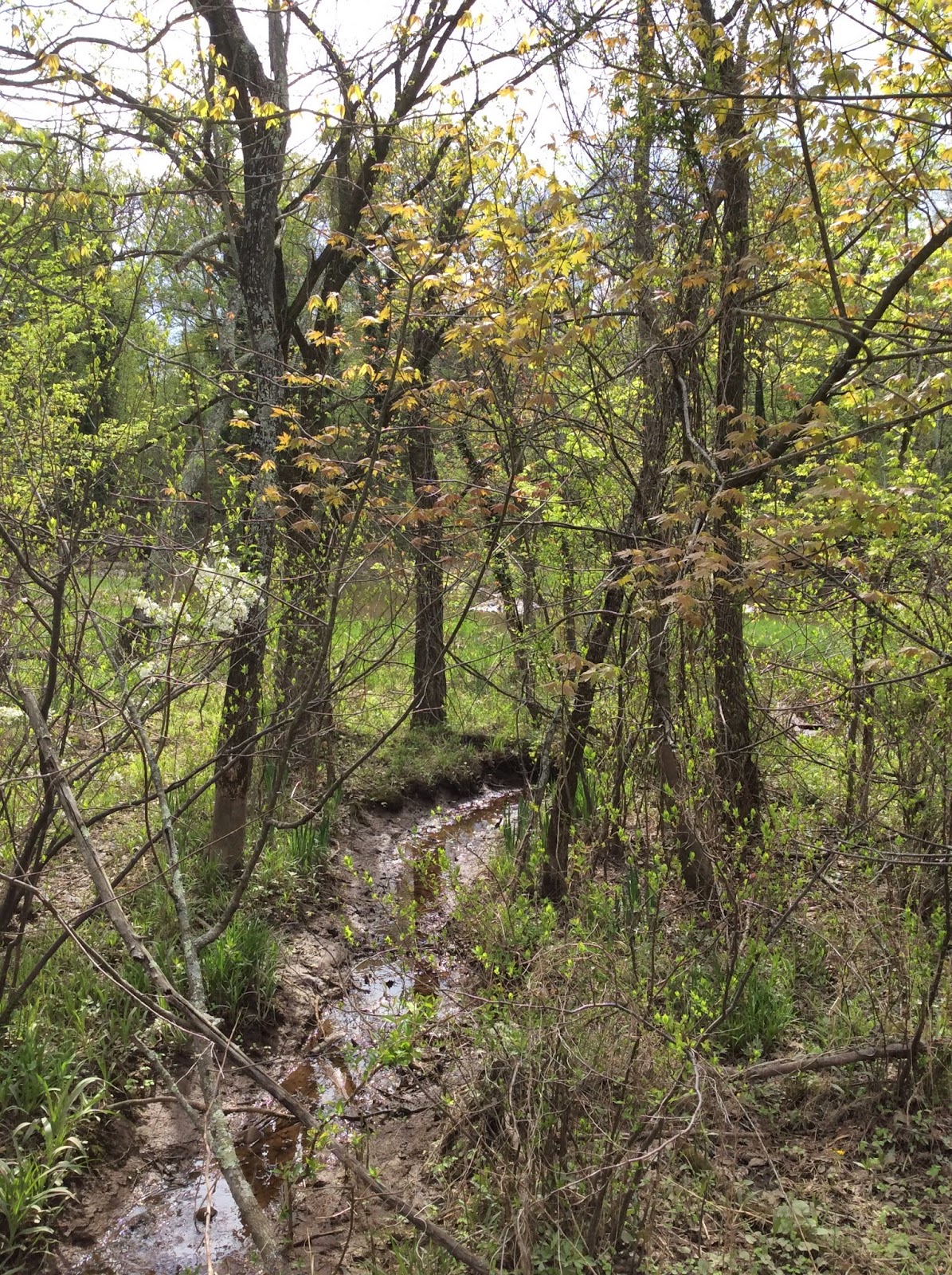
It’s mostly forest, with large area of marshland along its south and eastern end; I start my hike on the trail that goes through it from end to end, counterclockwise around the island. Much of this path consists of a wooden boardwalk to keep the hiker out of the water. There are birds galore, many of which I’ve never seen before and whose unusual calls I try to memorize so I can find out more about them later.

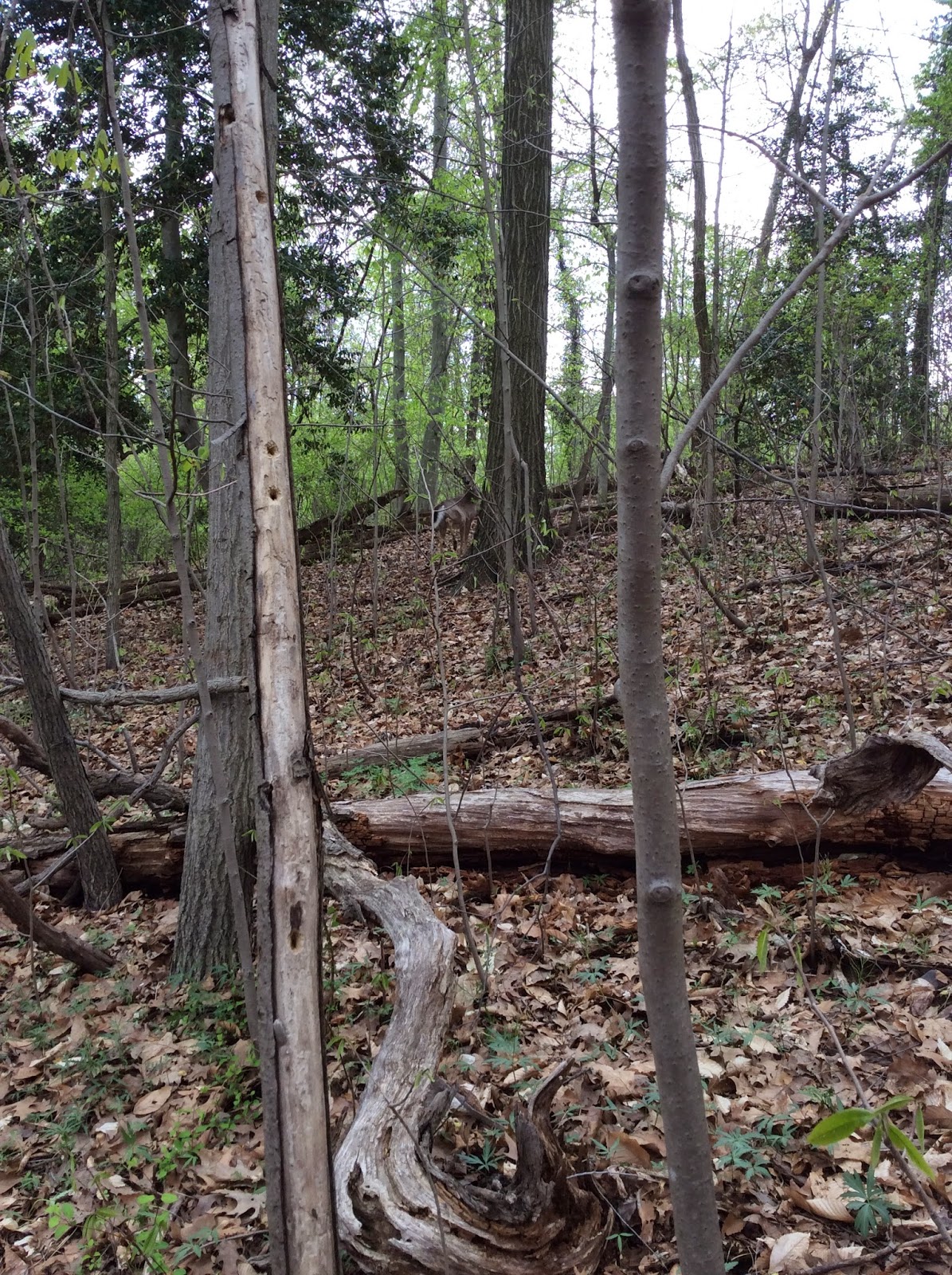
At the end of the marsh walk, I return to the woods, and I crisscross the entire island time and again. I think I walked every single official trail on the island, some more than once, and some unofficial little narrow ones as well. A herd of deer and I spooked one another when I was on one of these little narrow ones. Most bounded away to my left toward the marsh, but one bounded across my path and ended up very close to me on my right. We stared at one another for awhile, then she moved on.

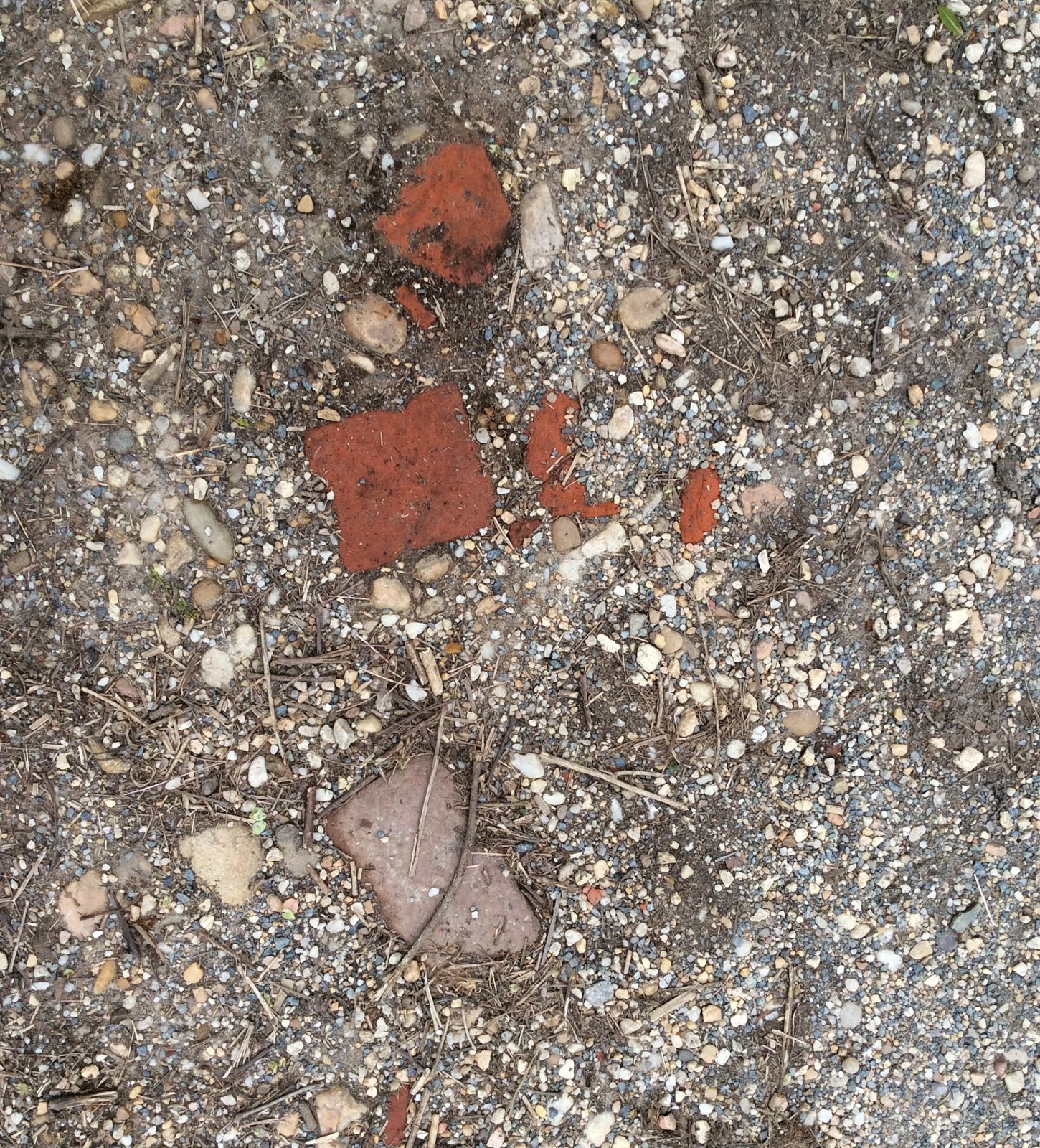
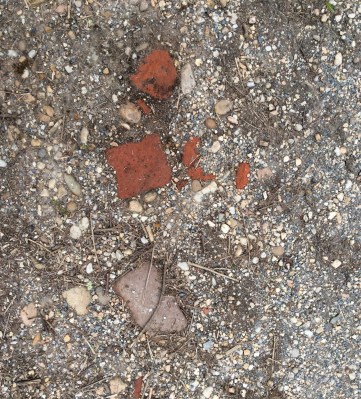
Finally I come across what I’m looking for, sort of. I find a National Park Service Sign indicating the little rise where the mansion stood. I ascend the rise, and among the trees, find the only sign that indicates there was once a structure here: a few broken remnants of old brick. Perhaps there’s some remains below ground; how fun it would be to dig it up, if so! However, since I never did fulfill that childhood dream of becoming an archaeologist, I suppose I better not.
I find the site just in time, since the time has come to leave the island for the meeting I spoke of. But you’ll have to wait ’til the next installment of my Jefferson adventure to find out who with!

Stay tuned….

*Listen to the podcast version here or on iTunes. 

Sources and Inspiration:

‘Analostan Island’, George Mason’s Gunstan Hall website.
http://www.gunstonhall.org/georgemason.

‘City Tavern Club: History’, City Tavern Club website.
http://www.citytavernclubdc.org/Default.aspx?p=DynamicModule&pageid=335988...

DeFerrari, John. Lost Washington, Part 3. Charleston, SC: The History Press, 2011
http://books.google.com/books/about/Lost_Washington.html?id=NTvO0u1JzK8C

Hansen, Stephen A. ‘General John Mason House, Analostan Island’
http://analostan.dchistoricdesigns.com/
and ‘The Kalorama Estate: A Brief History’
http://kalorama.dchistoricdesigns.com/

‘History of the Forrest-Marbury House’, Embassy of Ukraine website.
http://usa.mfa.gov.ua/en/embassy/history

Jacoby, Susan. Freethinkers: A History of American Secularism. New York: Owl Books, 2004.
http://us.macmillan.com/freethinkers/susanjacoby

Jefferson, Thomas. Writings. Compiled by The Library of America, New York: Penguin Books.
http://www.loa.org/volume.jsp?RequestID=67

Jenkinson, Clay. The Thomas Jefferson Hour. Podcast.
http://www.jeffersonhour.com/listen.html

Meacham, Jon. Thomas Jefferson: The Art of Power. New York: Random House, 2012.
http://www.jonmeacham.com/books/thomas-jefferson-the-art-of-power/

Shippen, Thomas Lee. ‘Letter to William Shippen, Sep. 15. 1790’. Founders Online, website
http://founders.archives.gov/documents/Jefferson/01-17-02-0136-0004

‘Timeline of Jefferson’s Life’. Monticello.org. Website of the Thomas Jefferson Foundation.
http://www.monticello.org/site/jefferson/timeline-jeffersons-life

‘Washington, D.C.’ Thomas Jefferson Encyclopedia, Monticello.org website.
http://www.monticello.org/site/research-and-collections/washington-dc

A Hike From Serpentine Prairie / Dream On, But Remember to Enjoy Today

Serpentine Prairie is a wonderful place to be in spring, and I started my hike there today.

It’s an open, hilly field adjacent to Redwood, a regional park in the Oakland hills, among the most beautiful places I’ve ever been, and I am so glad to live nearby.

We’re in a drought here in California, but you would never know it from what I saw. The native California grasses are abundant, green and thick (and rare, having been choked out by imported Mediterranean species, but not here: the poor soil, made from the crumbled bedrock serpentine, is inhospitable to all but the native species which evolved to thrive on it), bright green new growth is bursting from branches left and right against the darker trees, and vines crawl, twist, and fling themselves across it all, reaching for the sun. The wildflowers are in full bloom, in shades of golden orange (poppies, of course!), yellow, purple, and white, except for the mottled purple-and-green ones, a little like umbrellas and a little like bells, leaning down to shade and guard their tender inner flowers. The variety of wildflowers is surprising when you look a little closer: just the white ones all look like so many sparky little stars, but are so different in the shade of green, leaf shape, and size of the plant they grow from.

There’s a little plant here and there, a fern I think, with bright lightly ruffled leaves shaped like those of the ginkgo tree in autumn. They hang on superthin stems, almost gossamer, of purplish-bluish-black, and they fluttered and shuddered when I blew on them. Watch out for poison oak! you who suffer from it, because it’s all over the place. I think I’ve grown immune from the time I’ve spent among it all, but it’s best to be careful. It’s all tangled up underfoot, lobed and shiny, among the wild strawberry and miner’s lettuce, waiting to grab at an unwary ankle.

So many kinds of trees grow here: the twisty madrones with their sexy ultra-smooth skin, peeling bark, and little white bells on for spring; the gnarled, ancient-looking oaks with their moss, the exotic eucalyptus keeping the earth in place, and the redwoods, soooooo tall, and so aloof from all the seasonal frenzy going on underfoot.

Daylight savings time has just started, and I’ve been chomping at the bit for it: on my shorter days at work, now that the evenings are long, I made a beeline for the hills as soon as I got off, so I can finish my hike before dark, as I will do every week now that the long evenings of daylight are here. I’m selfish: I hope the farmers lose the argument, and daylight savings time remains our national habit.

Earlier today, I had just realized, once again, that I had lately fallen into one of my bad old habits, born of my impatient and restless nature. I’ve been so irritated at not being able to do all that I want to do right now, that I’ve been forgetting to fully enjoy the things I love to do that I am doing.

My day has job gotten busier and more demanding in the past year, my workload and the hours required to do the job well increased, and I’ve been fretting because the essays I want to write, the things I want to to sew, the books I want to read, the places I want to visit, are piling up, as I have less and less time to give them and still get my rest.

But when isn’t this true, and for whom? Nearly all lives become ever busier, and the days seem to grow shorter, the father away you are from childhood. That’s just the way it is.

We can only control how busy we are so much, when we must work for a living, have families to take care of, and so on. But we have a little more control over how we approach it all, as we struggle to keep up with what we need to do and what we want to do.

I am restless, and impatient, and prone to daydream. This can be good, and for the most part, I think it is. I like it, anyway: these have pushed me to do things I look back on with satisfaction. But when I realized earlier today that I had fallen out of the habit of fully enjoying the good things I could be enjoying now, I remembered to engage in my with so much more of my attention, so as I was closely observing the little flowers, the leaves, and the vines, I was looking closely enough to see the little snake dart across the path and ‘hide’ in plain sight, camouflaged against the stems, just as I was stepping out of Serpentine Prairie and onto Golden Spike Trail. What perfect timing!

I’ll go to bed now, thankful to have my love to cuddle with, and a world to wake to, that I’m lucky enough to have the opportunity to enjoy, as long as I remember to do so.

Is Feminism Passe? No! Cries A Distinct Lack of Statuary

Many say that the idea of ‘feminism’ is outmoded: it smacks of reverse sexism, and the women’s rights movement has pretty much accomplished its goals anyway, at least in the free world.

Why flog a dead horse, ladies?

In my last travel blog series, following in the footsteps of great thinkers who changed the world, I explored New York City. I found statue after statue, monument after monument, portrait after portrait, of important men in American history: there were Lincolns, Jeffersons, Clintons, and Hamiltons galore, and speaking of horses, a multitude of Washingtons, often astride one. Yet search as I might, in this city that birthed and nurtured so many of the greatest American intellectual and reform movements, I was hard pressed to find such tributes to their female counterparts. Wait! there’s one: Eleanor Roosevelt, great humanitarian… and oh yes, wife and cousin to two American presidents.

Of course, Eleanor should be honored with this beautiful monument for the great things she did. But would she have been if it weren’t for the famous men in her life? Hmmm. It’s not that statues, monuments, and other public works of honorary art are necessary to show how important anyone’s achievements are, so long as we remember them and pass on their ideas. But they do provide a window into the values and interests of the people. Initiatives, petitions, and referendums are submitted, committees form, public collections are taken up, and wealthy people grant commissions to create these public works.

In short, these monuments go up when enough people care enough to publicly show how much they care.

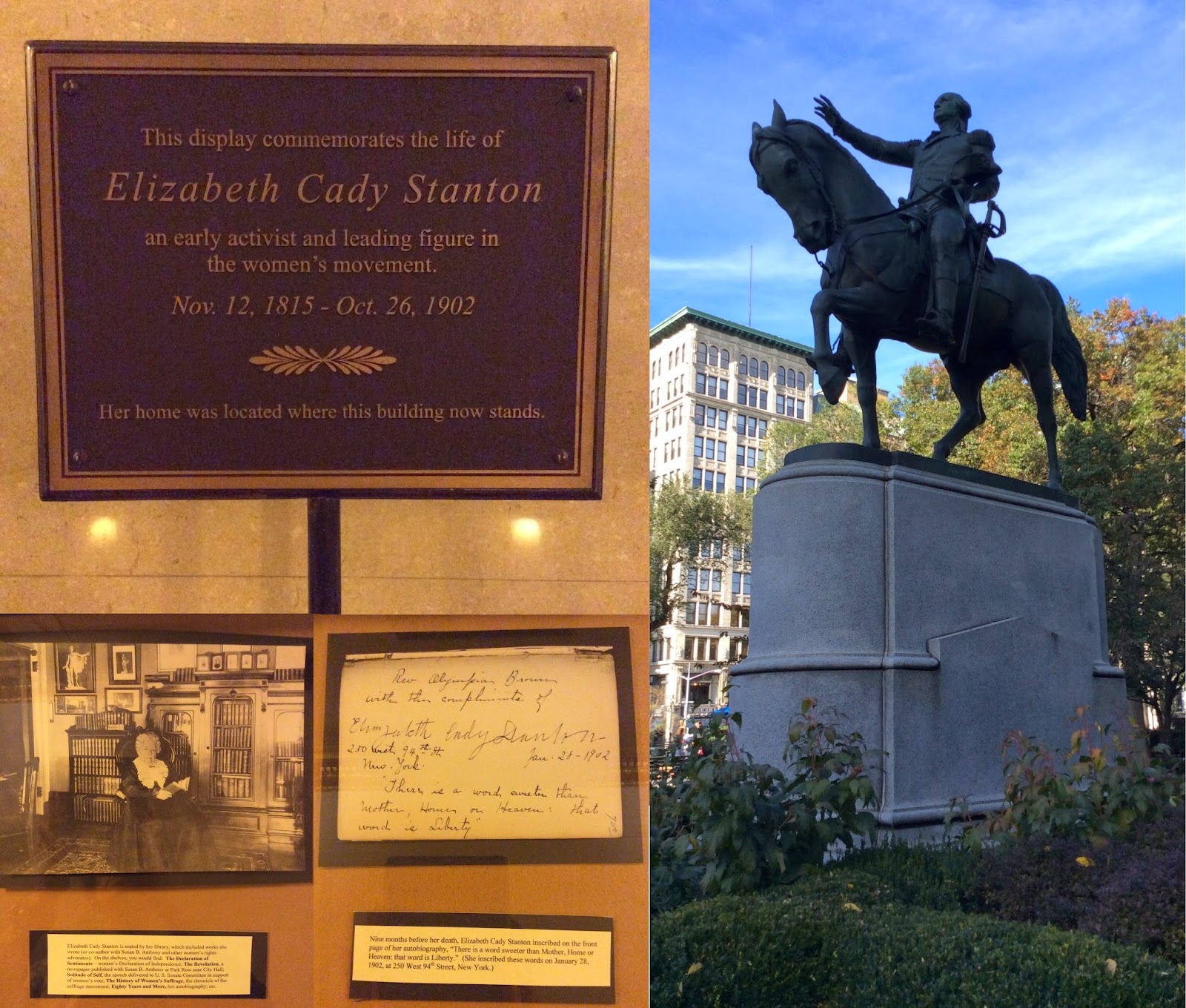
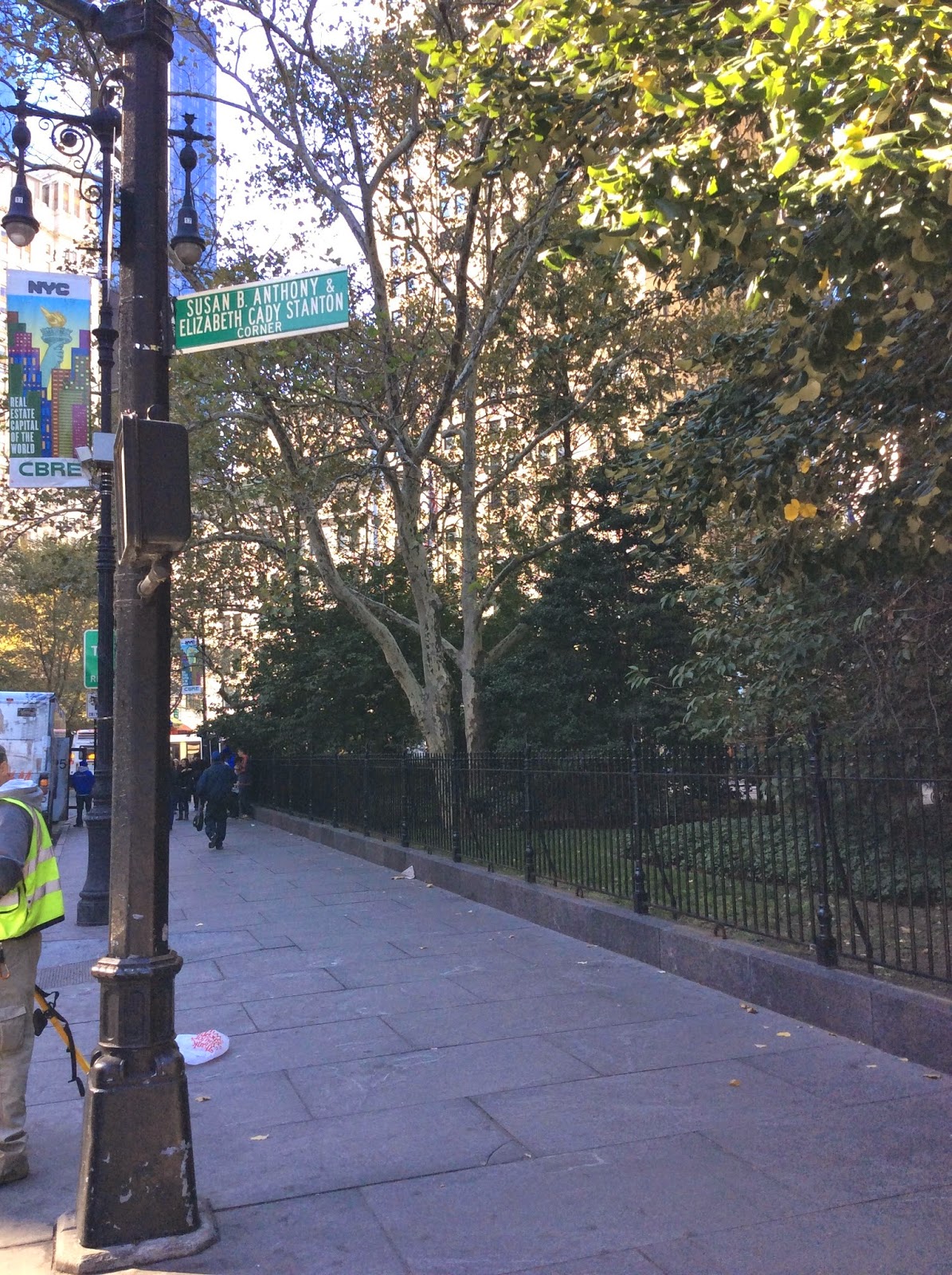
So how can it be that great women like Mary Wollstonecraft, Ernestine Rose, Sojourner Truth, Elizabeth Cady Stanton, and Margaret Sanger are commemorated so modestly or so seldom? (A little plaque or a sign on a street corner here, a dusty little cabinet display there.) When their efforts, arguably, liberated more people than anyone else? After all, women make up more than half of the human race, and prior to their life’s work, most women in the world lived almost completely under the subjugation of men, most with restricted education, all denied the full range of rights and opportunities accorded to men.

I feel a free woman, myself, in most ways. I read, think, work, play, procreate (or not!), travel, dress, and so forth, as I decide for myself. Thanks, brilliant, fearless, principled women of history! But their work is not done so long as great women are not honored equally as great men, and working women as much as working men, and women who need health care as much as men need health care, and so on.

Is feminism over? I’ll believe it when I see it. In marble, granite, brass… or in the office of the President of the United States. Maybe then.

*Listen to the podcast version here or on iTunes

Review: Sweet Bar Bakery

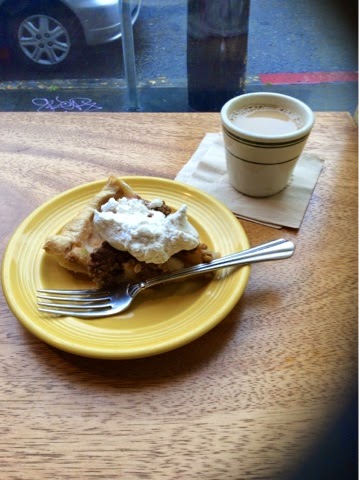
Found another new cafe with wi-fi, plenty of space to write, and an excellent assortment of tasty treats; and apparently, so have many other others! This rainy afternoon drove a lot of people indoors, but I was still able to find a great window seat, of which there are many. They offer a bottomless cup of coffee for two bucks, perfect for those like me who intend to stay awhile, and I started with a delicious slice of apple crumble pie with whipped cream. The coffee is good, the pie better, and people behind the counter were even sweeter than the pie. And while the people who work here and who frequent this establishment, the warm and friendly atmosphere give it a significant advantage to a certain way-too-cool-for-you vibe of another nearby one which will remain unnamed, though you locals may easily guess.

Besides pies, cakes, cookies, and other sweets, they have plenty of savory snacks and smaller meals to choose from, too.

All around, a tasty experience, highly recommended! I got one of those stamp cards where you can earn a free drink, since I’ll most definitely be back.

Who: Sweet Bar Bakery
What and Why: Baked sweets and savories, coffee, tea, soup, pizza, and more
Where: 2355 Broadway, Oakland CA 94612 
When: Mon – Fri 8am – 8pm, Sat 8am – 7pm, Sun 9am -7 pm

Money and Human Worth

‘It’s just business.’

This is one of my least favorite phrases of all time. 
It seems to be used, generally, to explain away unpleasant, unkind, or unethical behavior, or to avoid addressing or dealing with the undesirable side effects of a difficult but necessary decision, in a situation where money is involved.

Yet just because the phrase ‘it’s just business’ might be used only in difficult or unpleasant situations, that doesn’t make it wrong, does it? Couldn’t it be a shorthand way of pointing out that it’s impossible to make everyone happy in every business transaction, since it involves two or more opposing sets of interests? In fact, the phrase could be revealing humane concern, a regret that there are often undesirable side effects to the other in conducting business.

Yes, I allow; the utterer could be expressing these sentiments, choosing this phrase because it’s a ready-made, widely understood part of our lexicon.

But we don’t hear it being used this way much, do we? It seems this phrase is almost always used to justify rudeness, treating human beings as if they’re merely a means to an end or taking advantage of an opportunity to exploit others; to explain away bribery, theft, extortion, bullying, abuse… It’s not generally used in cases of honest dealing, of courtesy and respect for other person(s) involved in a transaction, of doing one’s best to make sure an employee is treated or ‘let go’ in as just and fair a manner as possible. In such situations, no such disclaimer is necessary.

So why am I bringing this up? What’s caused me to think about why and how people use this phrase, and for it to rankle with me enough to write this essay?

Full disclosure: I have a working gal’s chip on my shoulder.

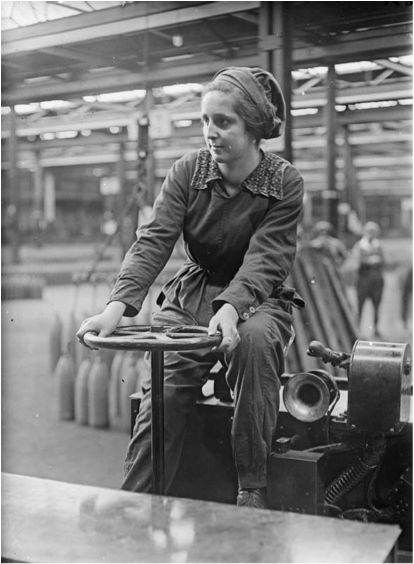
I’ve worked for a living my entire life, since I was about seventeen. Most of those years I worked in customer service. I’ve prepared and served food and drink, I’ve sold goods and services, I’ve made art and things to wear, I’ve lifted and carried loads, I’ve decorated and cleaned, I’ve answered phone calls, I’ve scheduled appointments and events… The list goes on. I consider it all honest work, and I think… no, I know, I’ve helped make life better for many, many people along the way.

All this is true, in fact, of most of the people in the world. Behind every counter and cash register, on the receiving end of every phone call and email, in every kitchen and factory and field and warehouse and office and hospital, other people’s work make our lives better. We depend on them for providing the necessities and the luxuries of life. Their hard work makes our lives enjoyable and even possible. Given this fact, it never fails to disappoint me, and sometimes still surprises me, how often people feel entitled to treat working people with condescension, disdain, and even abuse, from the first moment of interaction.

Now most people I’ve worked for and done business with have been decent, many more have been polite, friendly and supportive, and some have been the loveliest people I’ve ever had the pleasure to meet, some have become dear friends. I consider myself lucky that in so many ways, throughout the course of my working life, I’ve enjoyed a great deal of moral and financial support, others’ concern for my well-being, a richness of interesting experiences, of opportunities to improve my situation, of the goodness of other people, and of the chance to expand my talents, exercise my creativity and problem solving skills, and best of all, to never stop learning.

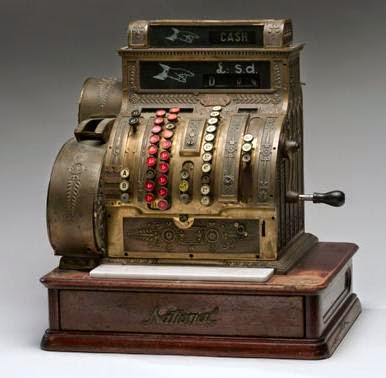
But I also couldn’t possibly begin to make a full account of the number of times I’ve felt dismissed, condescended to, treated like a machine or a servant, and attacked for all manner of disappointments and inconveniences (real or perceived) whether I was responsible for them or not, simply by virtue of being on the other side of that counter, that receipt book, that telephone, that paycheck. I am also keenly aware how instrumental I was, or at least tried to be, in making that person’s life better at that moment. And this, again, is true of every working person in the world. Without us working people, no one could eat food, drink water, keep themselves and their homes and cities clean, travel, heal their ills, enjoy any luxuries, and so on, in comfort and security. And of course, the category ‘us working people’ include the vast majority of humanity. Most of us work for a living, and each job we do involves at least some kind of business interaction. It’s work that provides the (real) goods and services for sale in any business transaction. And almost all of us who live in this world have had many occasions to bemoan ill treatment in our capacities as workers and engagers in business.

This is where we arrive at the connection between the phrase ‘it’s just business’ and why it bothers me so much. I detest it because it expresses an attempt to dehumanize the interaction and, by extension, the person one does business with. It implies that one can remove the ‘human element’, the consideration of the other as a being with moral worth to whom we have certain obligations, from the realm of business. And if it’s not really a human interaction, therefore, one does not have to act with kindness, fairness, or respect.

I argue that this the attempt to dehumanize business is impossible: business is entirely about people. All business transactions are a type of human interaction. It’s true that when we make a bargain, when we exchange money for something we want, certain elements are added to the interaction. There are problems of fairness to be resolved, there’s customer loyalty to be won, the need for expediency may be pressing, and so forth. But all types of human interaction contain unique elements: all involve a particular combination of expectations, obligations, etiquette, and other considerations. The fact that it’s a business transaction, and not another kind, does not subtract from the basic fact that all parties are human beings to whom we owe a basic level of respect and courtesy.

Business, in this sense, is always personal.

Most of us, most of the time, recognize this. Most business, day to day, is conducted in a reasonably courteous and decent way. We greet the other person, we say thank you (if not always ‘please’), we ‘shake hands on it’. We don’t usually lie, steal, or bully to get what we want. We treat our colleagues and employees with decency at least when we come into direct contact with them, we praise their work and give them raises and bonuses if we can, we usually feel regret, at least on some level, if we feel we need to fire them, and we hope they do well in the future. When we consider the phrase ‘it’s just business’, we realize that it holds little meaning when considered in light of how we usually behave. Understood as ‘it’s just a human interaction that involves money,’ we realize it’s a rather meaningless statement.

So it appears clear that we resort to this phrase when doing the right thing by the person we’re doing business with becomes difficult or inexpedient to getting what we want. And I fear it’s became far too widely, and far too unquestioningly, accepted when used this way. Why have we come to acquiesce to the idea that when money enters an interaction, that its appropriate to overlook or cast aside our concern for the cost in human dignity, in respect, well-being, rights, justice, and simple decency? I fear that in our enthusiasm for the benefits of the marketplace, we too easily become complacent to what can be lost.

What we can lose is the respect we should have, as a central feature of our character, for the moral worth of others, and that if we let that slip, we undermine ourselves as social creatures, and in turn, everyone’s prospects for well-being. If our dignity, our moral worth, is up for sale, then the marketplace, ideally a highly cooperative, mutually beneficial institution, devolves into an arms ace where the most ruthless thrive in the short term, while trust erodes and the whole system of collapses in the long run. We can recognize this by comparing and contrasting various societies and their market systems, contemporary and historical. Oligarchies, tyrannies, rigidly enforced class systems and aristocracies, ideologically-based planned economies, are all extreme examples of how the disregard of individual human worth and dignity cause a marketplace to lose its ability to benefit all, and ultimately to self-destruct.

So, from a matter as minor as rudeness to a salesperson, to as serious as slavery, the same principle applies. The exchange of money for something we want or need makes no difference, morally, to the basic way we should treat anyone. That’s because, while goods or services are marketable, a person’s moral worth can never be, and should never be, up for sale.

It’s true that we’re sometimes justified in expressing anger and disappointment when doing business. Sometimes others fail, a little or a lot, in performing their part of the bargain or duties of their job, and we feel quite unfriendly when that’s the case. Sometimes others fail to provide good customer service, and are rude and unhelpful from the start. Sometimes others provide ‘services’ and products that are faulty, useless, or even harmful. In these circumstances it’s just to criticize their work, or to withhold or take back payment if the terms of the exchange aren’t fulfilled, or to let them know that you won’t be patronizing their business again. It’s appropriate, in such cases, and to voice one’s displeasure.

But this just reaction to the failure of the other to fulfill their part of the bargain is not what I’m criticizing here. It’s the unspoken attitude, unfortunately too widespread in my observation, that the person with the money in the exchange is automatically entitled to be abrupt and impersonal, to always demand, command, act impatient, and even abuse those they’re paying, in a manner inconsistent with respect for human dignity. It’s implied in the adage ‘the customer is always right.’ Are you the recipient of a payment, for goods or services, or as an employee on the clock? If so, many think, you are immediately transformed into a legitimate target for frustration, impatience, desire, greed, and sense of entitlement, whether or not you were responsible for the disappointment. In this sense, it feels as if you are no longer a person to them. Because if they consider you a person, wouldn’t they feel that they should be polite, respectful, or at a minimum, not rude or hateful to you, just as they would any other person?


Again, to argue that business is not personal, that it removes much or even all of the human element, is to make a very serious claim, with dire repercussions. It would imply that the moral worth of a human being is calculable in dollars and cents, and that it can be bought and sold. I argue that the number value of money and the degree of significance of a human life can never be aligned, and that you can’t ‘pay away’ your moral obligations towards any human being. When you pay for a good or a service, that, and only that, is what you pay for. Your payment does not apply in any way to your moral obligation to respect others.

One might object: ‘I didn’t choose to enter into any kind of relationship with the person I’m doing business with, they just happened to be the one I had to interact with to get something I need or want. Shouldn’t relationships be a matter of choice? Why, then, can’t a business interaction be impersonal, especially if members of a society agree that it’s impersonal?’

To begin with, all human interactions ultimately belong in the category of unchosen relationships. We stumble upon interactions with people all the time, and it’s a fact of life that all relationships occur because of chance circumstances, at least at first. We don’t choose for ourselves who we pass by on the street, who the open seat on the subway is next to, who our classmates, colleagues, or the new neighbors will be, who the people we already know will introduce us to, or who our parents, siblings, and relatives are. They become part of our world via circumstances out of our control. Since all human interactions belong in the same category. I argue, the same basic obligation to be just, polite, and respectful applies equally in all human interactions.

Secondly: one can no more give away or sell one’s own moral worth than they can choose to negate or buy another’s. That’s because human worth, mutual obligations of respect and duty and mutual dependence, are not merely a part of some unspoken contract. They are a feature of human nature by virtue of the fact that we are social and rational, and therefore, moral beings. ‘X cannot buy or sell away the moral with of Y‘ is equally true, if we are indeed rational, social beings, whether the variables X and Y are replaced in that statement by ‘you’ or ‘I’. (1)

It’s a fundamental part of the human condition that we are all bound together in a mutual web of obligation and dependency. Without one another, we would not get very far in life, and all we achieve, all we do, are the result of the combination of our own efforts with the contributions of others. One needs the ingenuity and knowledge of physics of the inventor and the architect when one needs a car, a bridge, a home, and owes a debt of gratitude for the resulting vast improvement in the ease and comfort of life. The inventor and the architect, in turn, needs the labor of the miner, the smelter, and the carpenter, and owes not only money, but respect and gratitude for supplying the raw material, without which their designs could not be realized, and for being among their clients, without which their wealth could not be earned and their work would not be needed. One needs the knowledge and skill and of the physician when health fails, and owes to her gratitude, admiration, and respect for the services she provides, and the hard work and intelligence it required to attain her abilities to heal. The physician needs the fruit of the work of the laborer in the field to sustain her life, and owes the laborer gratitude, admiration, and respect for the difficulty of the work performed and the fact that her life is sustained through his labor. The exchange of money is simply the means by which the exchange is organized; the basic fact that we all depend on each other, and have moral obligations to each other, is not altered by its usage.

*****************************************************************************
(1) Pinker, Steven. The Better Angels of Our Nature, 2011, Viking Penguin, New York. pp 647-648

Gospel Songs, Negro Spirituals, and This Heathen

The great Mahalia Jackson

I’m a non-religious person, an atheist, a freethinker, a heathen…. whatever you want to call me, any of those terms suits me just fine. I also love a lot of ‘God-dy’, spiritual music.


I grew up Catholic, but for the most part, our church music didn’t ‘stay’ with me as an adult. I’m just not that into chants (I usually find them kinda depressing) and traditional Catholic and Christian hymns tend to be pretty chant-y, or too ponderous and formal for my taste. ‘Ave Maria’ is lovely, and some of the Christmas songs, but overall, that style just doesn’t do much for me. Nor did I ever like the more modern, multi-denominational Christian hymns: they’re mostly pretty corny, and are as artistically satisfying and pack as much of an emotional punch as a discount Hallmark card. The absolute worst of all: Christian rock, country, and pop music. ***shudder***

But let me tell you: if I had grown up in a Baptist church in the South, and heard that passionate, joyful gospel music every Sunday, or those soulful Negro spirituals, I may have remained a weekly churchgoer to this day. I just don’t know if I could have torn myself away from those songs, which alternately uplift the hearer to dizzying heights, or tears your heart apart with the most delicious pain as it simultaneously heals you.

Why do I love this brand of religious music? Why do I find it ranks right up there with the very best of human artistic accomplishments?

I’ve thought this over quite a bit, and I’ve come to the conclusion that there are three main reasons:

1) Time: Gospel songs and Negro spirituals were developed from centuries of earlier forms of music, from standard Christian church songs, American folk songs, and rhythmic African music. The crafters of these songs had a rich tradition to draw from, and this music was developed and perfected over centuries. Of course, this is true of all types of music one degree or another, so now we add the next basic element:

2) Indirectness: For some as yet poorly-understood reason rooted in human psychology, I find that the most sublime, most important emotional truths are rarely well conveyed if the language used is too literal. The words can be simple and seemingly direct, but what they’re ultimately alluding too, the deepest and most transcendent parts of human experience, are somehow out of reach of ordinary language. When it comes to religious music, it has a way of revealing the depths of pain, joy, gratitude, ecstasy, and connection with each other and the universe as it’s couched in the symbolic language of the supernatural. (To me, that is; to its authors, the supernatural imagery is often meant to be taken literally). Other forms of poetry do the same; that’s why similes, metaphors, and other linguistic forms of insinuation and suggestion are so universal. Like symbolism, they are incredibly effective in igniting the imagination and setting it free to roam the universe and explore our inner depths. Yet there’s one more element needed to really raise these forms of music to the heights of artistic expression:

3) Authenticity: Gospel songs and Negro spirituals (along with other related forms of American music, blues, country, and folk) are a direct outpouring of some of the greatest suffering, coupled with the deepest longing for redemption and relief from suffering, that humankind has ever known. There is little to no affectation in this music. Much of this music is the legacy of slavery, the outpourings of the tortured human spirit in the midst of oppression, torture, hopelessness, and despair resulting from one of the greatest evils the human race has ever inflicted on so many of its members. So it’s no wonder that the language of religious redemption, combined with the longing for liberty and freedom from pain on earth, and the joy at the thought of its attainment, resulted in some of the most transcendent, stirring music that our species has ever created.

That’s why I find, heathen that I am, that most freethought and atheist songs leave me cold: they are missing one or more of these elements. Steve Martin is just about right: ‘Atheists Don’t Have No Songs‘! They are too gimmicky, too ‘clever’, too literal, too simultaneously reactionary to and derivative from religious music. The few freethought songs I like are are almost always the funny ones, where cleverness is what the song’s all about, such as Roy Zimmerman’s Creation Science 101.

It’s no surprise that agnostic, atheist, irreverent songs are generally not very good, since freethought as a movement is still very young compared to religion. Give it some time and good songs will come, no doubt, once they’ve escaped the overly-rational, self-consciously non-spiritual constraints they’ve placed on themselves. Tim Minchin, by adding some heart to the mix with his witty and sweet White Wine in the Sun, moves freethought songcraft in the right direction.

So who cares about religion or no religion in music: all are created by human beings for the enjoyment of other human beings. Here’s a list of some of my very favorite gospel and spiritual songs (and songs inspired by that tradition) that I think are more moving than just about anything else you’re likely to hear:

He Must Have Known‘ – Mahalia Jackson – (Thanks for this one, Mike LaSalle)

Let It Shine‘ – Blind Willie Johnson

Didn’t It Rain‘ – Sister Rosetta Tharpe (and well, pretty much every other song she ever did!)


Sending Up My Timber‘ – Blind Willie McTell


I Saw The Light‘ – Hank Williams as Luke the Drifter


Com’ By H’Yere Good Lord – Nina Simone

I Must See Jesus – Snooks Eaglin


Uncloudy Day – The Staple Singers

I Was Standing By the Bedside of a Neighbor – Michelle Lanchester and Sweet Honey in the Rock

I’ll be adding to this list from time to time as I think of them, or find a new must-hear. In the meantime, dance, weep, jump up and down, sway, transcend, and enjoy!

Review: Lindgren’s Coffee and Cafe

Stumbled on this cozy little spot last week, and decided to come back and have me a little writing session with something hot and tasty to drink, as I am wont to do.

My cafe mocha is totally solid: classic, made with nice chocolate and rich but not too sweet, and the young man at the counter is friendly and thoughtful. They ran out of whipped cream, so he made me a lovely pile of foam instead. 
The place has a nice warm feeling to it, with lots of seating, plenty of options for snacks, meals, even cold beer, and a nice roomy back patio too. The decor is very nice: vintage look cafe banners, dark wood furniture, an aged brick wall.
Glad to have found another good Berkeley spot to write in. I’ll be back!

Who, What, Why, How: http://www.LindgrensCafe.com

Where: 2120 Dwight Way (at Shattuck), Berkeley, CA 94704

When: Every day 8am – 8:00 pm

Perhaps I’ll see you there sometime!