Cycling Through Edinburgh, First Time

This blog post is going to be a bit different than the others: it’s going to be about cycling!

Hope you don’t mind the departure.

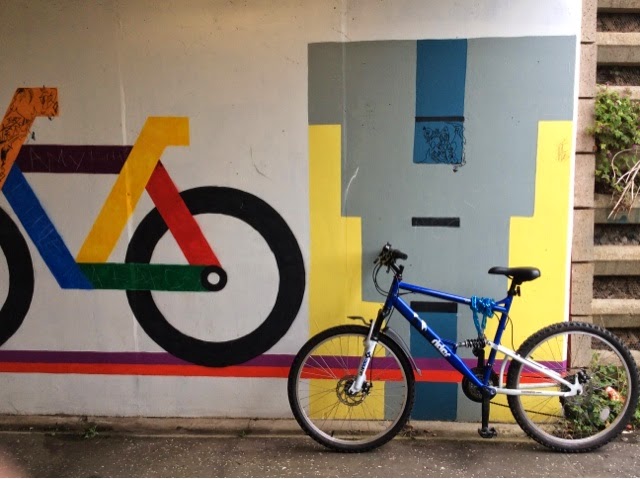
So today I finally had access to a bike, though I don’t think you, Bryan, my dear husband and resident bike mechanic extraordinaire, would approve of it.
It was abandoned at my hosts’ place by a former guest who couldn’t take it with them. And no wonder. The goddamn thing weighs about a hundred pounds. Adam (of the couple I’m renting a room from, nicest guy you’ll ever meet, as is his lady, Krystallenia) did fix it up a bit, but I discovered issues with it while riding. For one thing, the seat was way too low, I felt like I was riding a little clown bike (made of lead), and my knees started to ache fast.

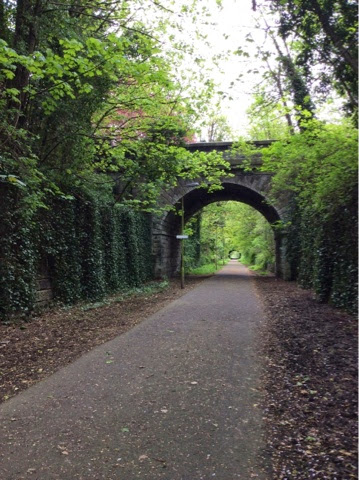
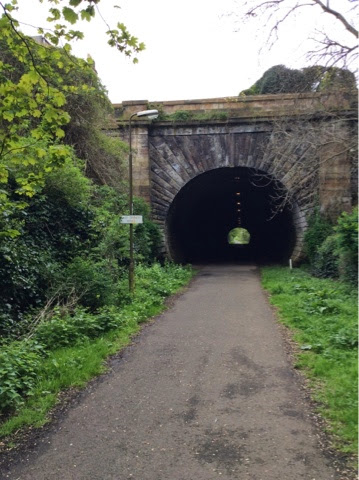
But I was cheered at the prospect of exploring Edinburgh’s awesome hub of dedicated cycling/pedestrian paths (greenways), converted defunct tram lines, so I made the best of it. 
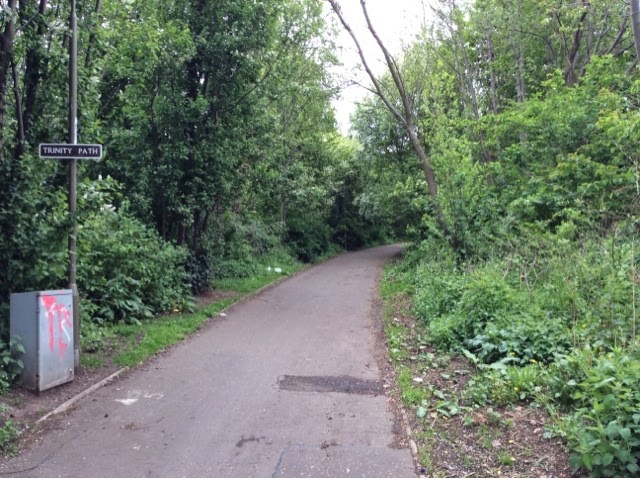
<


Not too shabby! So I meandered through these bike paths, and while I had a general idea where I was going, a kind man soon disabused me of that notion. He could see my eyes glaze over as he tried to explain how the spiderweb of paths would lead me to where I was eventually headed, so he offered to accompany me. He pointed out (as I had realized) that the downside to the lush greenery that surrounded the paths was that you were completely shielded from seeing any landmark that could indicate where you’re going.His name is Adrian, a family practitioner, and he’s getting back into shape from being off the bike for three years. On his last cycling holiday in the Pyrenees, he fell and broke his neck. He’s okay now, he reassured me. We exchanged travel tips: he’s about to travel to the US with his wife and teenage daughters to see the usual beauty spots, the Grand Canyon, Bryce Canyon, Zion, and so forth.

When we reached the end of the bike maze, we parted, after he showed me where a bike co-op shop was, who might do quick repair. The other major issue I had discovered: the handlebar stem as not firmly bolted down, and would slip off to one side whenever I’d stop, then push off to start again. A sweetheart named Dougie (or Duggie?) raised the seat and tightened down the handlebars for me, after grumbling over the bike a bit (I apologized for asking him to work on such a shitty bike, and he grumbled, kindly, that it came from a ‘car shop, not a bike shop’). He refused to take any payment at all.
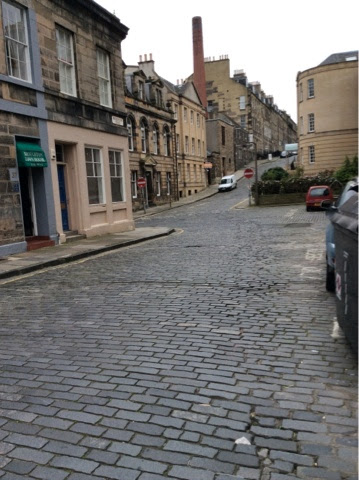
I continued on my way, through a maze of little windy, hilly, cobblestone streets. Would have been impossible without the handlebar repair.

When I neared Calton Hill, I turned towards Arthur’s Seat, which I had seen from my explorations on my first day there. Here it is, seen from the hill that day:
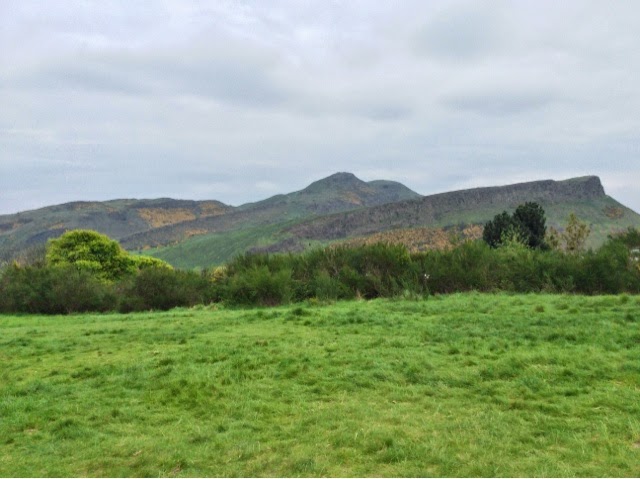

And here it is as I start the ascent:
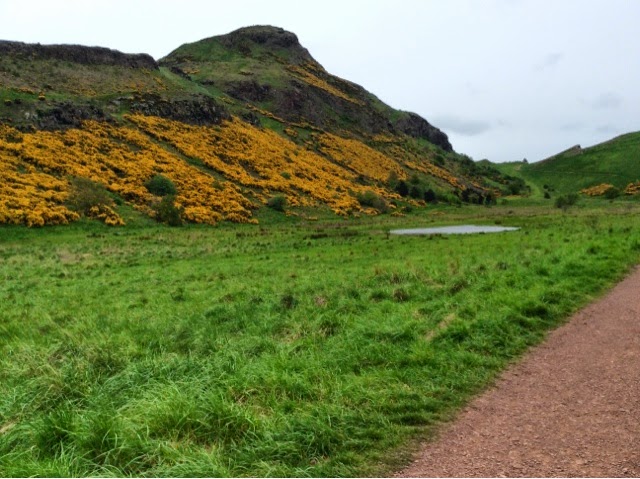
It’s so beautiful, and has a wonderfully wild feel to it, for a place right next to the city
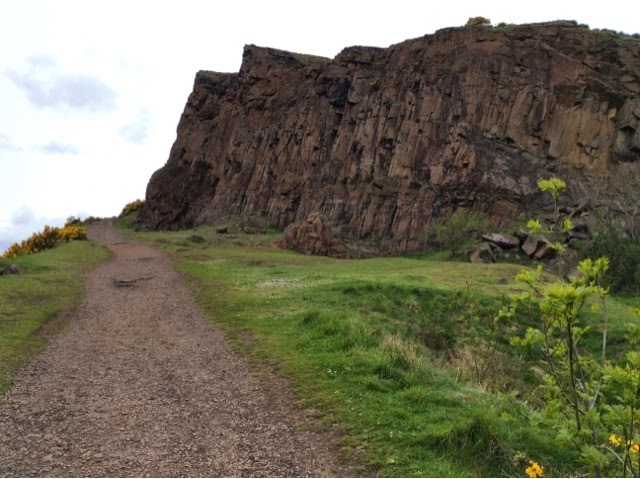
It was hard to stop stopping to take pictures, every bend in the path revealed a scene more enchanting than the last.

So at the summit, I stopped to eat lunch, as it started to sprinkle. There was, like, twenty weathers that day. But I dressed as a San Franciscan in spring, so I was set.

Smoked German cheese and a pear

If you want to keep warm on a ‘driech’ day (thanks for the cool new addition to my vocabulary, Jackie!), ride up Arthur’s Seat on a two-hundred pound bicycle (yes, it got heavier). I don’t think it really was kosher to take my bike up, but the signs didn’t specifically say not too, so I did. You would have been proud of me, Bryan, there was definitely some ‘gnar’. I was roasting by the time I reached the top.

So I went down, and spent the rest of the day half biking, half sightseeing by foot.
On the way back (I couldn’t linger ’till dark cause I had no lights, I went by way of Dean Village, which drops below the Dean Bridge and along Leith Waterway.
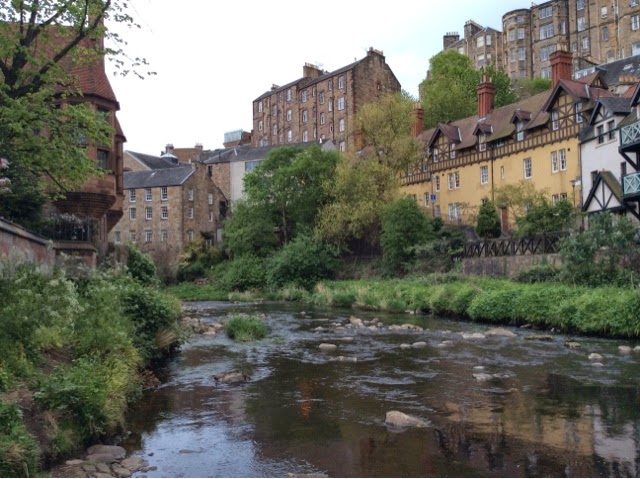
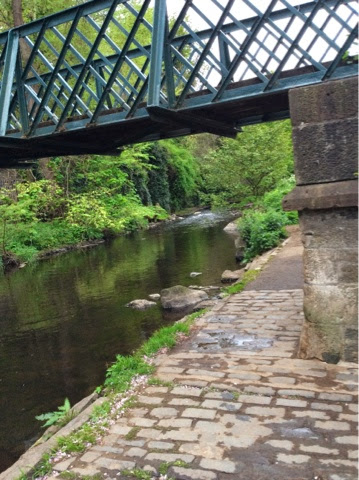
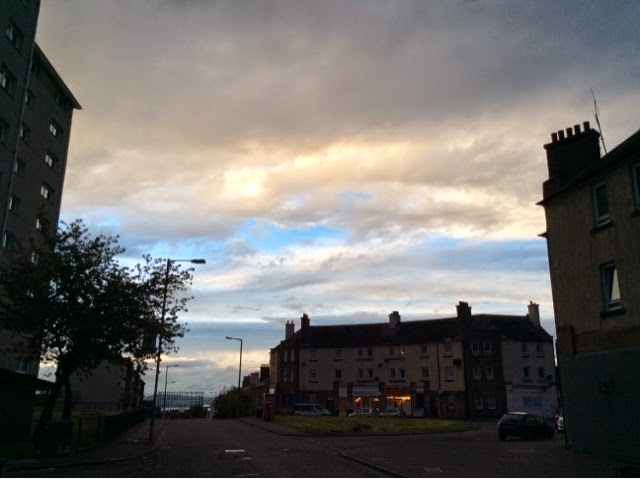
And finally, I reached my temporary home, to this sky
It was a good day. David Hume’s birthday! Yet I was the one that got the gift. Adam made scones and tea, and before bed he and I, and eventually Krystallenia when she came home from work, talked about Poland where he’s from, Greece where she’s from, and the US.
Hume Sites and Monuments, Part 2

117 (2)Thursday, ‎May ‎08, ‎2014

…or more accurately this time, Hume sites and artifacts.

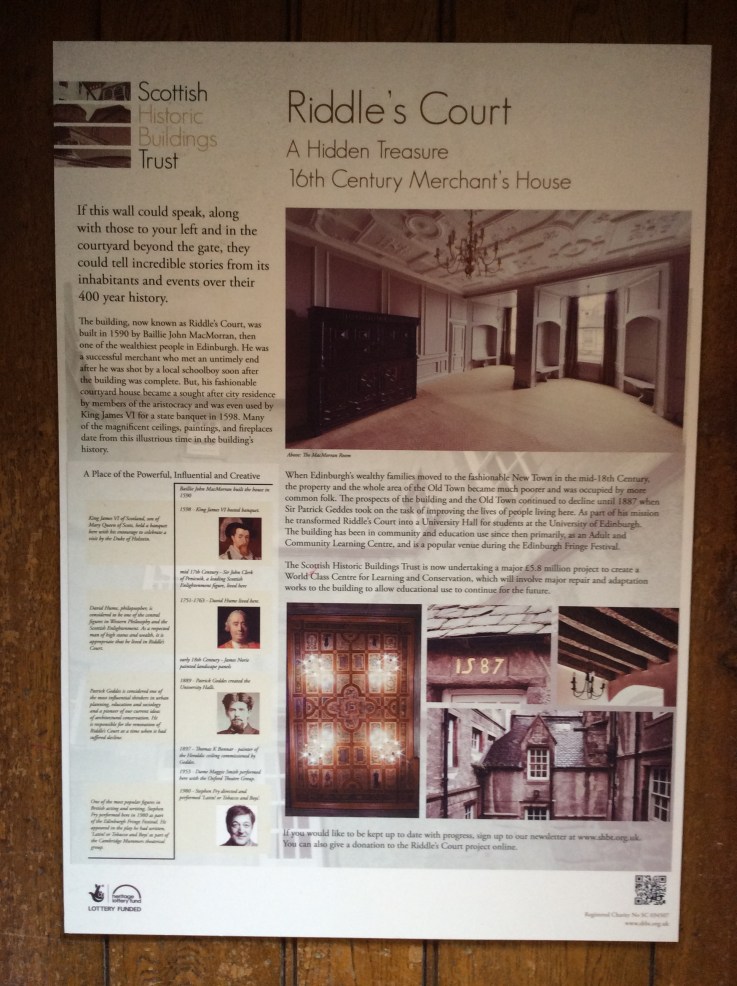
On Thursday afternoons, the Scottish Historic Buildings Trust holds an open house for Riddle’s Court (a small square enclosed by the buildings that surround it), where David Hume bought his first house in the 1750’s. In his time, the building was called a ‘land’, and a floor or suite of the building that comprised the rooms where the tenant lived was called a ‘house’. So a ‘land’ held several ‘houses’, today’s ‘flats’.

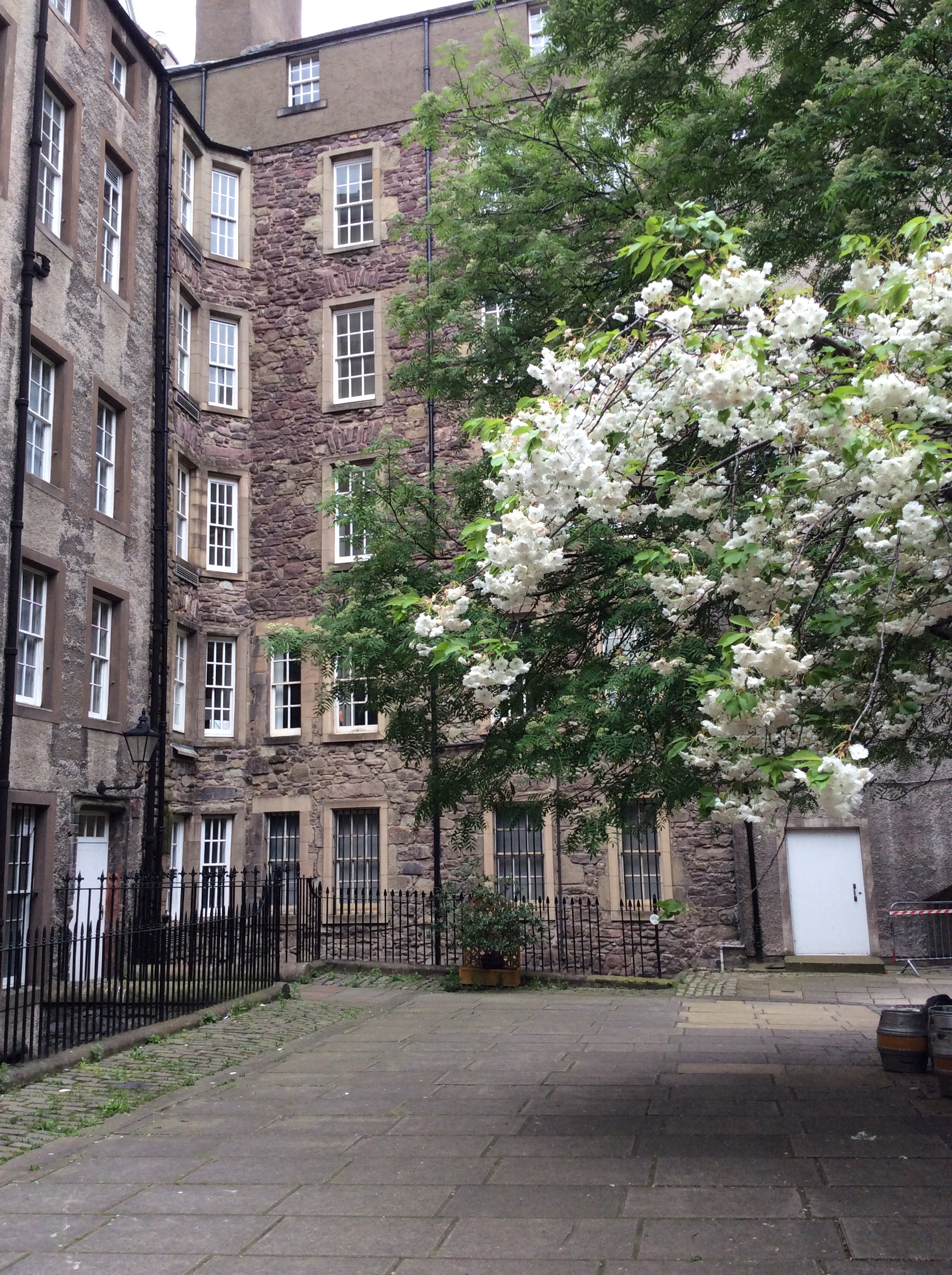
The rooms that are open to the public are on the opposite side of the court from where his house was; records are not clear from the time, but it’s pretty certain he lived in one of the upper houses on the Royal Mile side of the court. I’ll show you where in a moment.134 (2)

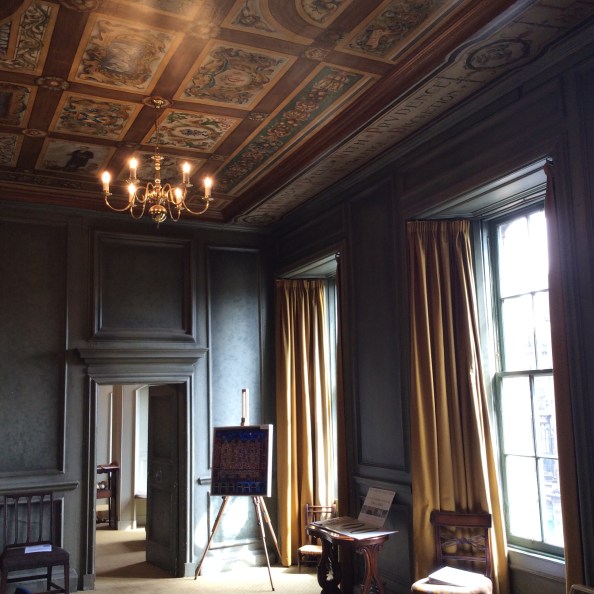
This room with the beautiful ceiling was a drawing room for later inhabitants. You can read about it in the center photo below. The closeup of the ceiling shows David Hume’s monogram, to commemorate his living nearby.779

785777778

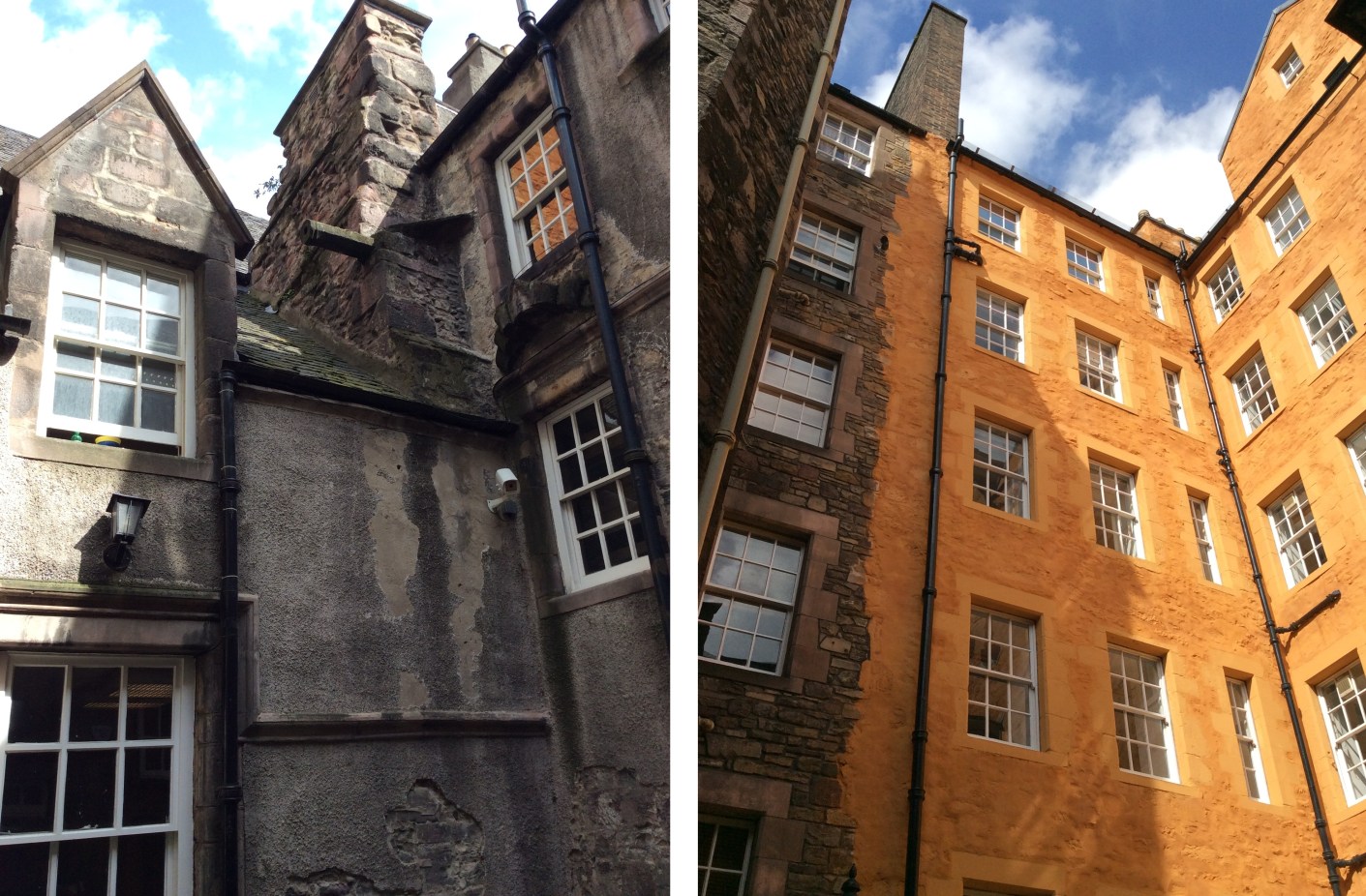
Here (above) are views looking upwards from inside the court; the reddish color of the walls at the right is a natural color that they would have used at the time, and he probably lived in one of these upper houses. The photo on the left is at the left of the reddish wall, and I include it ’cause it’s pretty!

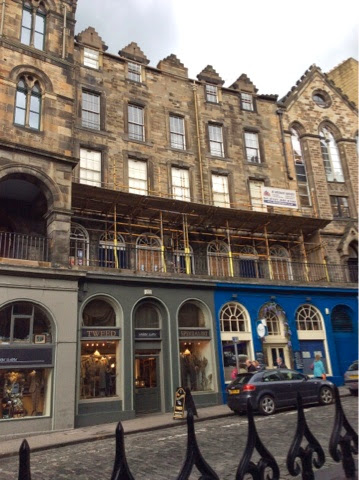
And here’s the view of the building that I’m in, opposite from Hume’s house, from Victoria Street below. Victoria Street was built in the 1830’s, where a steep, narrow footpath used to run through the gardens behind Riddle’s Court and the neighboring houses. My mother-in-law recommended that I visit Victoria Street; coincidentally, I discover that in constructing it, they almost decided to tear down the Riddle’s Court buildings, one of the most important sites I’ve come to visit. Fortunately, someone decided it was best to keep them since the buildings have such a rich history and Patrick Geddes, who was responsible for saving and restoring so many of Edinburgh’s most important historical buildings, turned it into a student center.

Two views in Riddle’s Court, Old City, Edinburgh

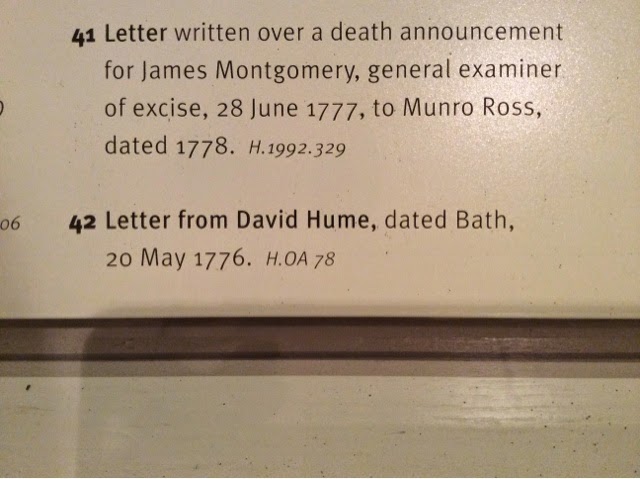
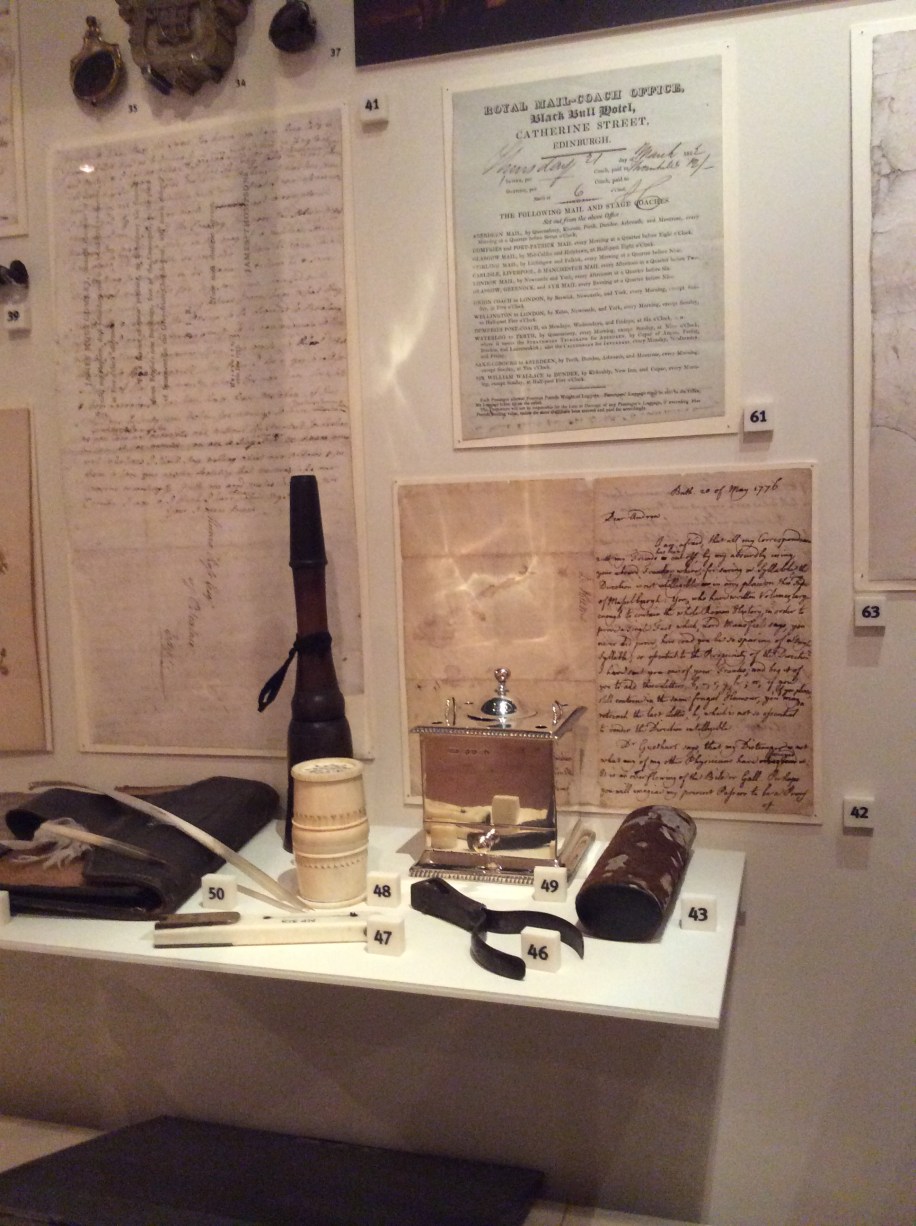
Now I turn to the first artifact I find on this trip that David Hume himself touched: a letter written just a few months before his death. It’s on display at the National Museum of Scotland, where I spend some hours this afternoon gazing at wonderful natural specimens and historical artifacts of Scotland. Hume had gone to Bath in hopes that the mineral springs there would help relieve the symptoms of the intestinal or abdominal disorder, probably cancer, that he died from. In the letter, he’s telling a man named Andrew that he’s feeling better at the moment.

A letter from David Hume to ‘Andrew’ dated May 20th 1776, at an exhibit in the National Museum of Scotland in Edinburgh

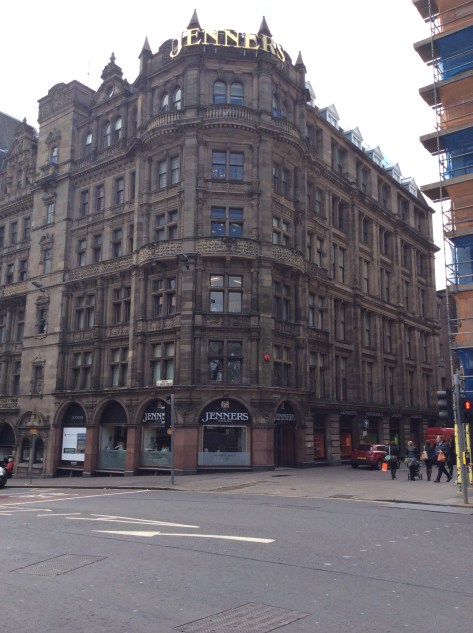
Jenner’s department store off St Andrew’s Square in Edinburgh’s New Town

Note: The following story has an update.

The next day, I set out to find the commemorative plaque at the site where David Hume’s New Town house (apartment) was at 8 South St. David’s St. at Rose. I can’t find the plaque anywhere, but his house may have stood about where this large department store stands now….

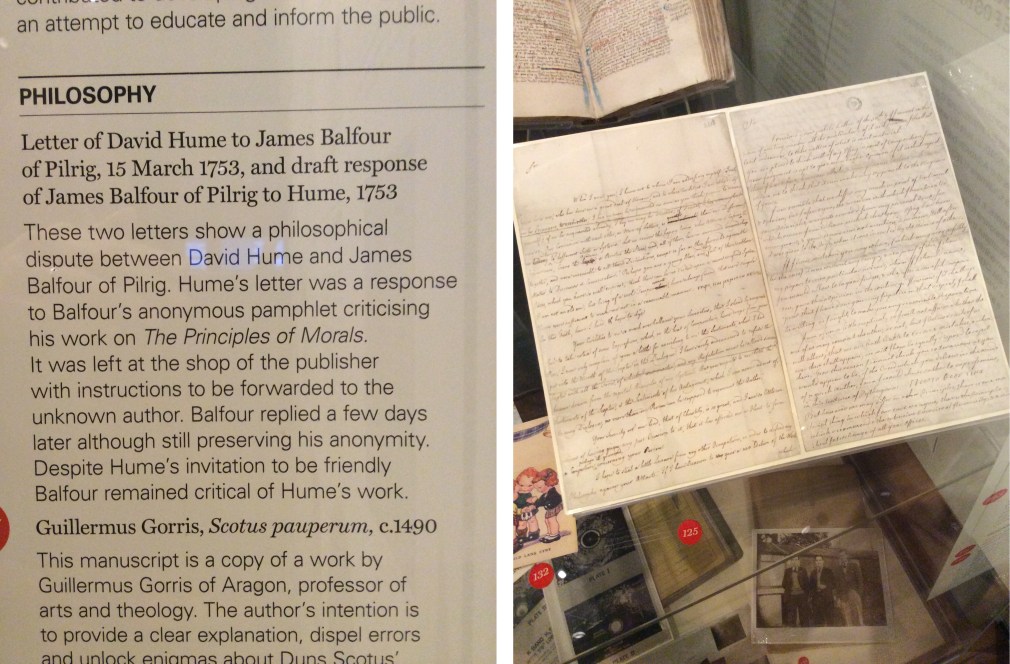
I return to the National Library of Scotland to catch up on my writing and research, and there’s another letter in Hume’s own hand on display just feet away from where I’m writing this post, at an exhibition celebrating the achievements of the Scots people.

David Hume worked for some years in the 1750’s as the librarian for the Advocate’s Library, which eventually became the National Library. Although he had a falling out with the library over their blocking of some ‘undesirable’ books he had ordered, he continued to work for them since he needed access to their collection for the ambitious, multi-volume History of Britain he was working on, for which he was most famous during his lifetime. He donated the small salary that he earned from the Library to a blind poet friend, Thomas Blacklock.

Throughout my trip, I’ve been working intermittently in the Special Collections reading room at the National Library of Scotland, referring to first editions of David Hume’s books, all published in his lifetime, save for a few ‘dangerous’ works that were published shortly after his death. I’m not allowed to take photos of them, but you’ll find them described in my various Hume essays written during and following this trip, in the section that follows each essay, called ‘Sources and Inspiration’ (my informal brand of works cited page that I use for my blog essays). When I’m back home and have more time and my own computer, I’ll look for more information on these books, with links and photos.

Letter from David Hume to James Balfour dated Mar 15, 1753 on exhibit at the National Library of Scotland

The library is closing, so I must go. More on Hume to come!

Ordinary Philosophy and its Traveling Philosophy / History of Ideas series is a labor of love and ad-free, entirely supported by patrons and readers like you. Please offer your support today!

First Day in Old Edinburgh: Hume Sites and Monuments

On Calton Hill with Edinburgh’s Old City in the background.

‎It’s early Sunday afternoon, and I’m recovering from probably the single longest day of walking I’ve ever done, and that’s saying a lot for this avid hiker and walking enthusiast. My hip joints ache, my feet ache, my calves ache, my shins ache. But I don’t care, each of these aches are little tokens of a beautiful day. But let me back up a bit…

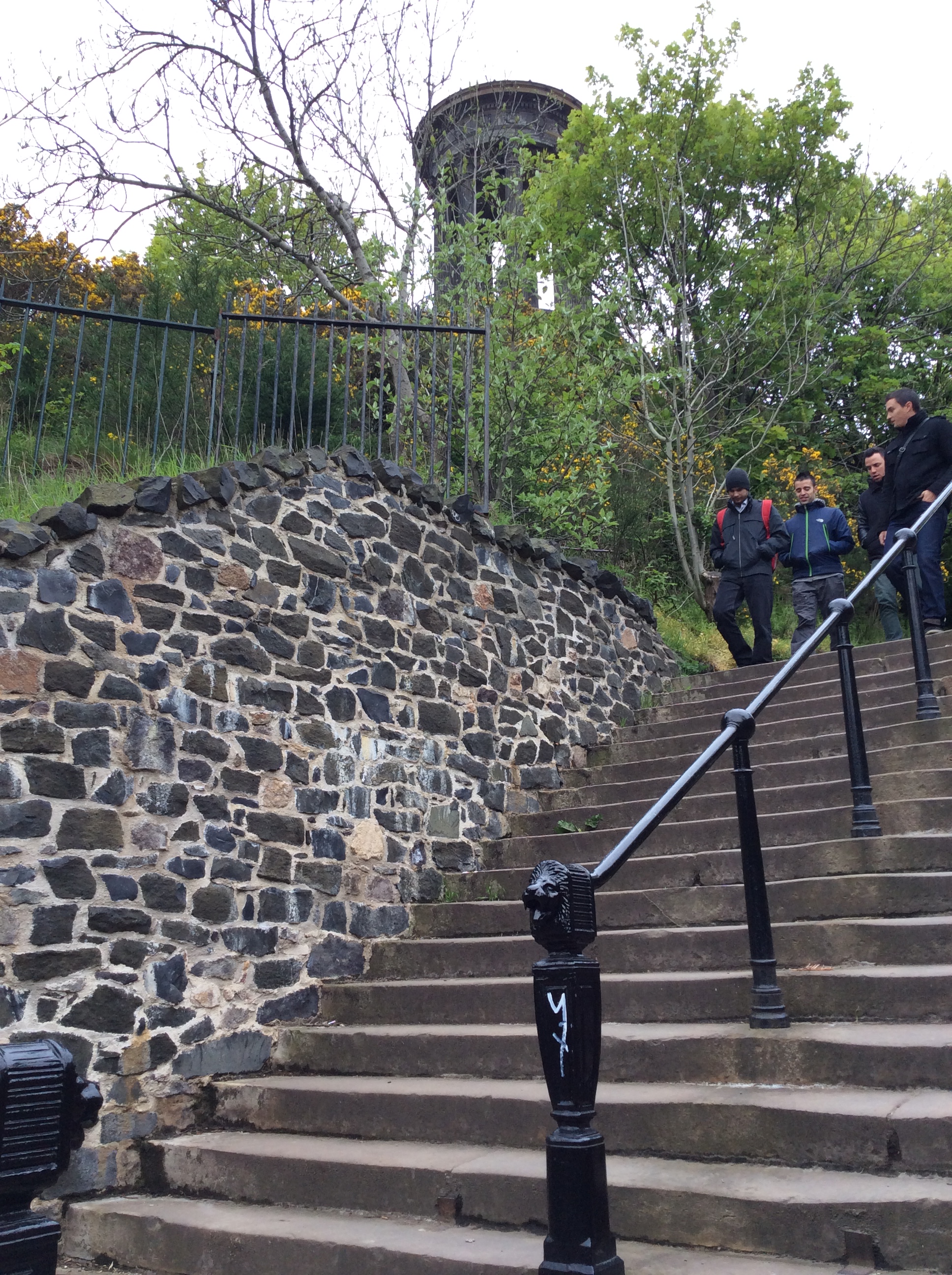
a-stairway-to-the-park-at-calton-hill-edinburgh-2014-amy-cools

Saturday, ‎May ‎03, ‎2014

I started my exploration of the Old City from the other end, where the Castle of Edinburgh overlooks all from its high perch on a craggy rock, along the Royal Mile, which heads east from the castle to Calton Hill and the Palace of Holyroodhouse.

The first half of my day is spent getting my bearings, creating a mental map of how the Old City hangs together, while spontaneously popping into any historic place that looked interesting. That can get expensive, paying entrance fees, but what the hell, it was my first day. Anyway, that’s what keeps these wonderful old places from falling into ruin or turning into tacky gift shops, so it’s worth every penny.) I have my little camera out to keep my hands free and snap a gazillion photos along the way. I don’t have a way to upload those photos and share them with you now, but I will when I get back home in a couple of weeks. The photos you see here are taken on my tablet.

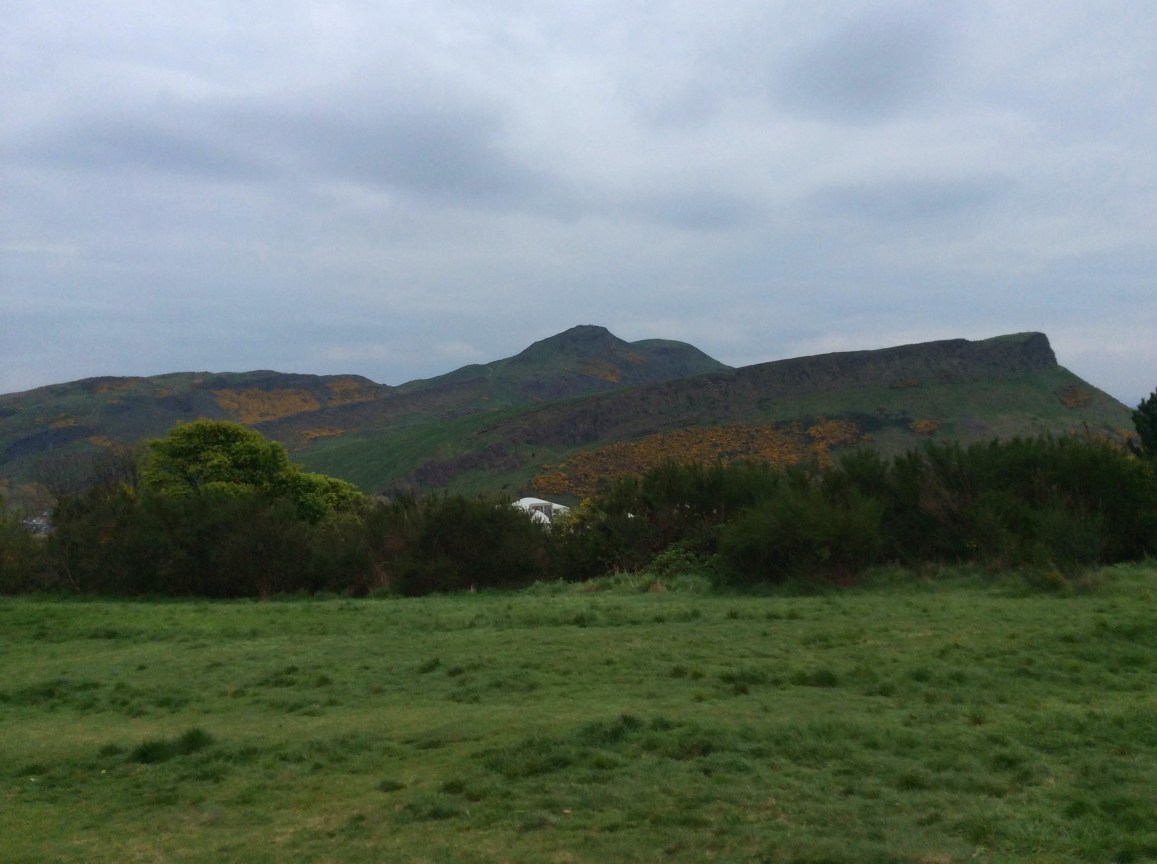
Arthur's Seat as seen from Calton Hill on a gray spring day, Edinburgh, 2014 Amy Cools.JPG

Arthur’s Seat as seen from Calton Hill on a gray spring day

So here I am, overlooking Edinburgh from Calton Hill.

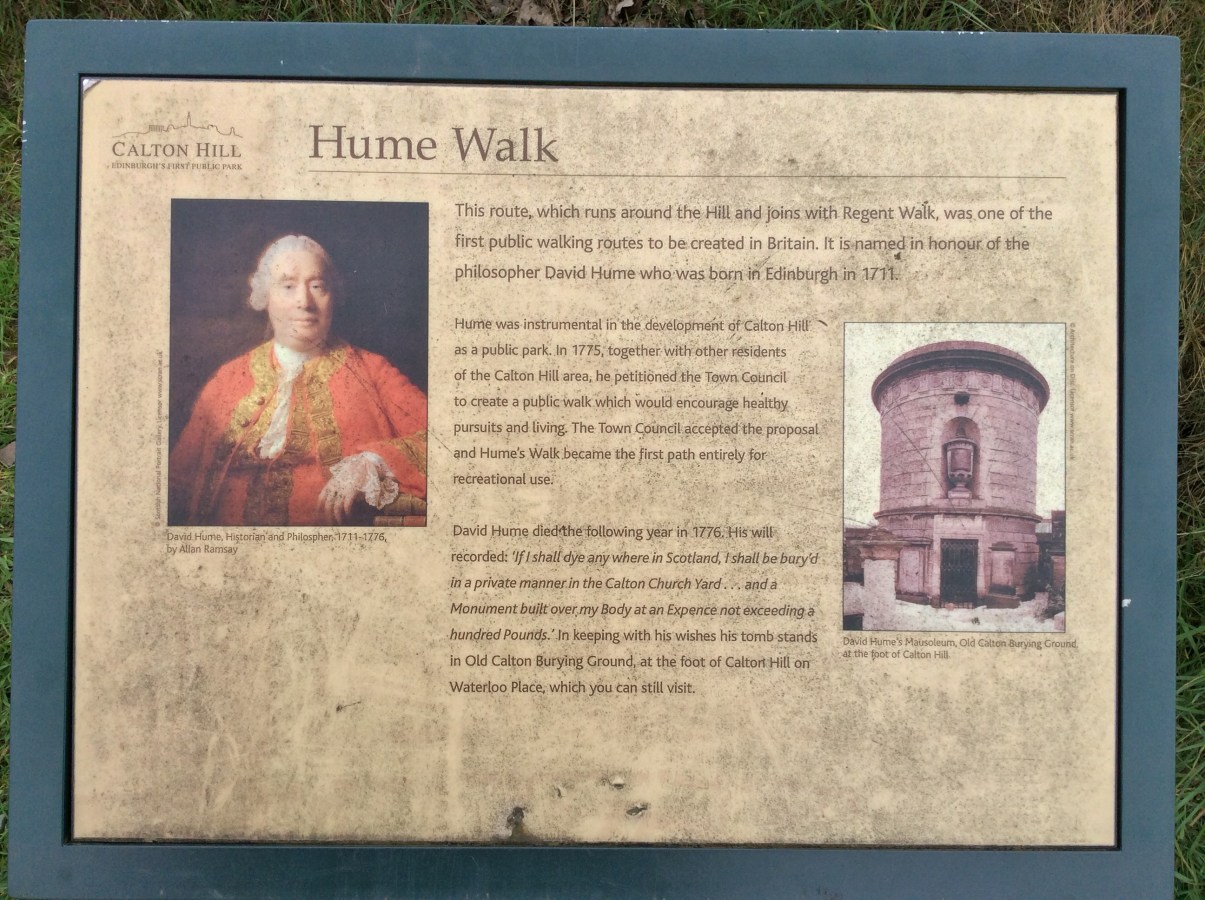
It’s on Calton Hill that my journey following David Hume really begins, though I had looked into some sites associated with his life on the way, that I’ll return to later. It’s here on Calton Hill that he’s buried, and it’s here, I discover, that he caused the first path in Edinburgh to be built dedicated solely to the improvement of mind and body. Here, people would be encouraged to take their exercise by having a lovely place to walk, on this hillside with its spectacular views of the city, the surrounding countryside, and the Firth (estuary), away from the hustle and bustle, the crowds, the dirt, the unhealthy air, and the smells of the city. The first path to be built is named Hume Path in his honor, so of course, that’s the path I choose.

hume-walk-plaque-on-calton-hill-edinburgh-2014-amy-cools

Hume Walk sign, Calton Hill, Edinburgh

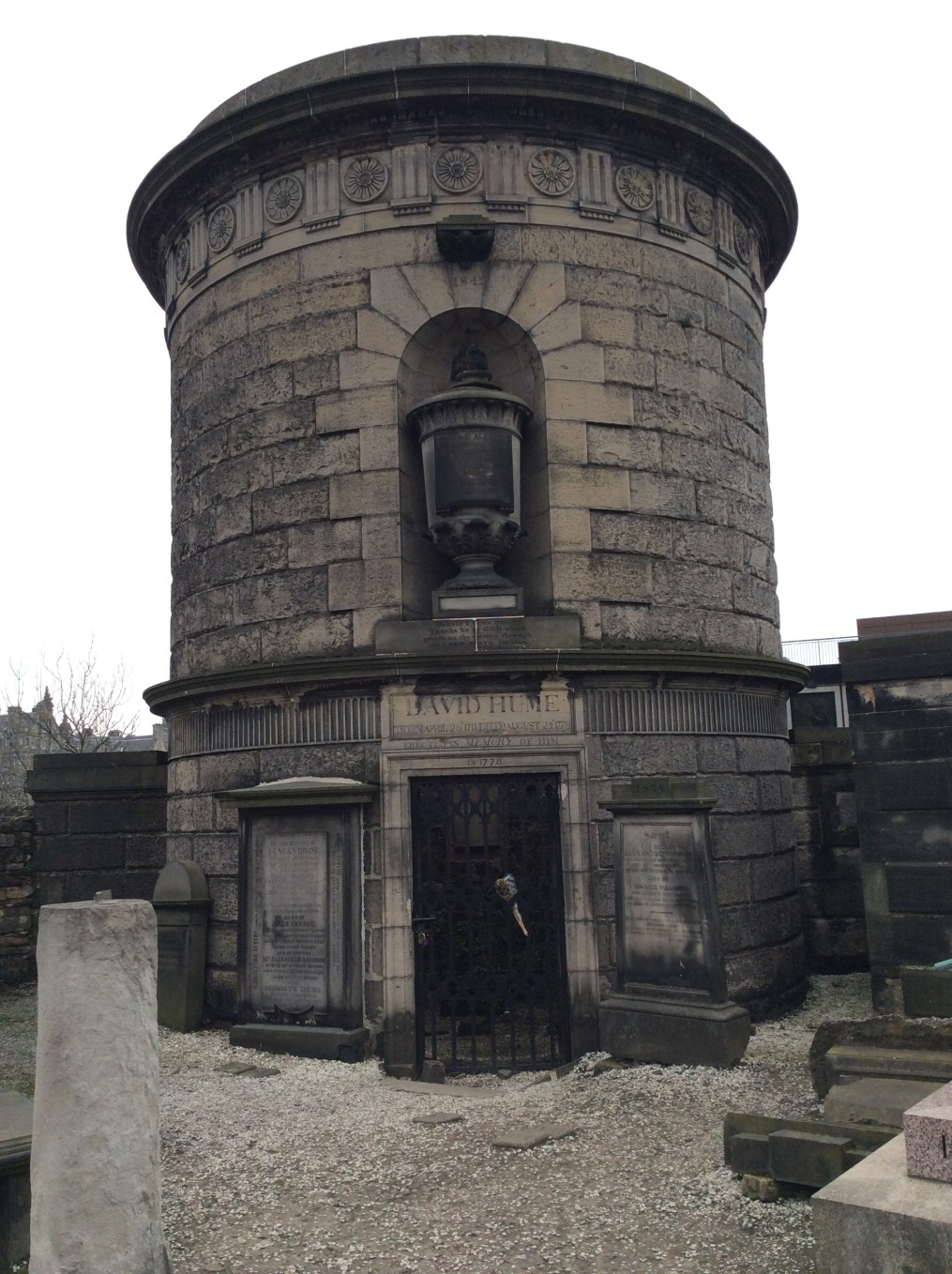
David Hume’s grave monument, Calton Hill, Edinburgh, Scotland

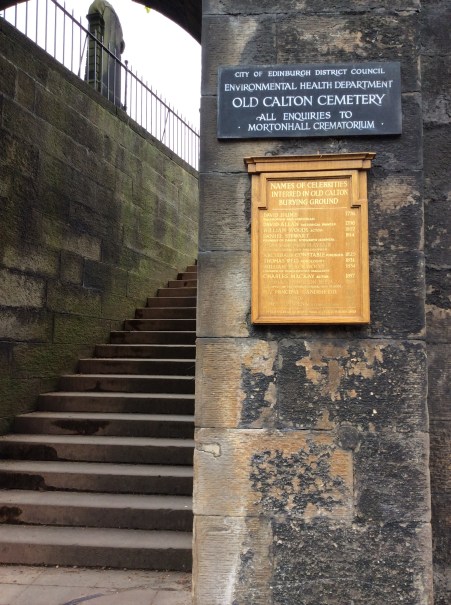
Old Calton Cemetery, Calton Hill, Edinburgh, 2014 Amy Cools.JPGI head back downhill a little from the park at the top of the hill, and Calton Hill Cemetery is on my left. I go through the gate and up the short flight of steps, and a bit ahead to my right, I find Hume’s elegant and rather simple monument and gravesite. I spend a good bit of time here musing: the power of physical objects to really bring things into focus still never fails to surprise me, and my sense of purpose in this journey to Edinburgh is strengthened.
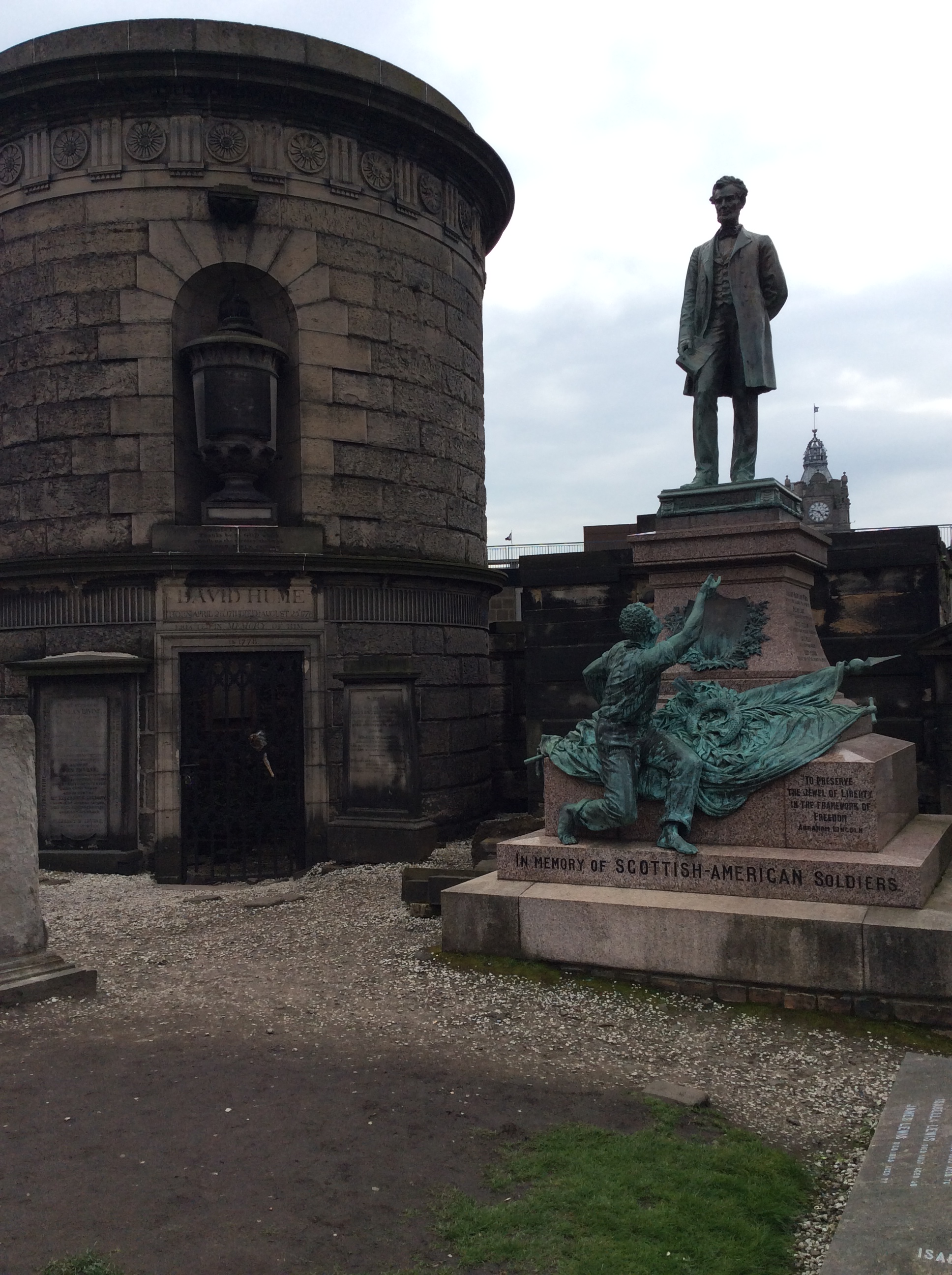
I’ll soon write a reflection on his good and noble death

Hume's and Abraham Lincoln Scottish soldier monuments,

Hume and Scottish soldier monuments at Old Calton Cemetery

I’m also moved to discover that a monument to Scottish-American soldiers was erected, featuring a statue of Abraham Lincoln. It seems to me so fitting that these two great heroes of freedom are honored here side by side, one of freedom of person, the other of thought.

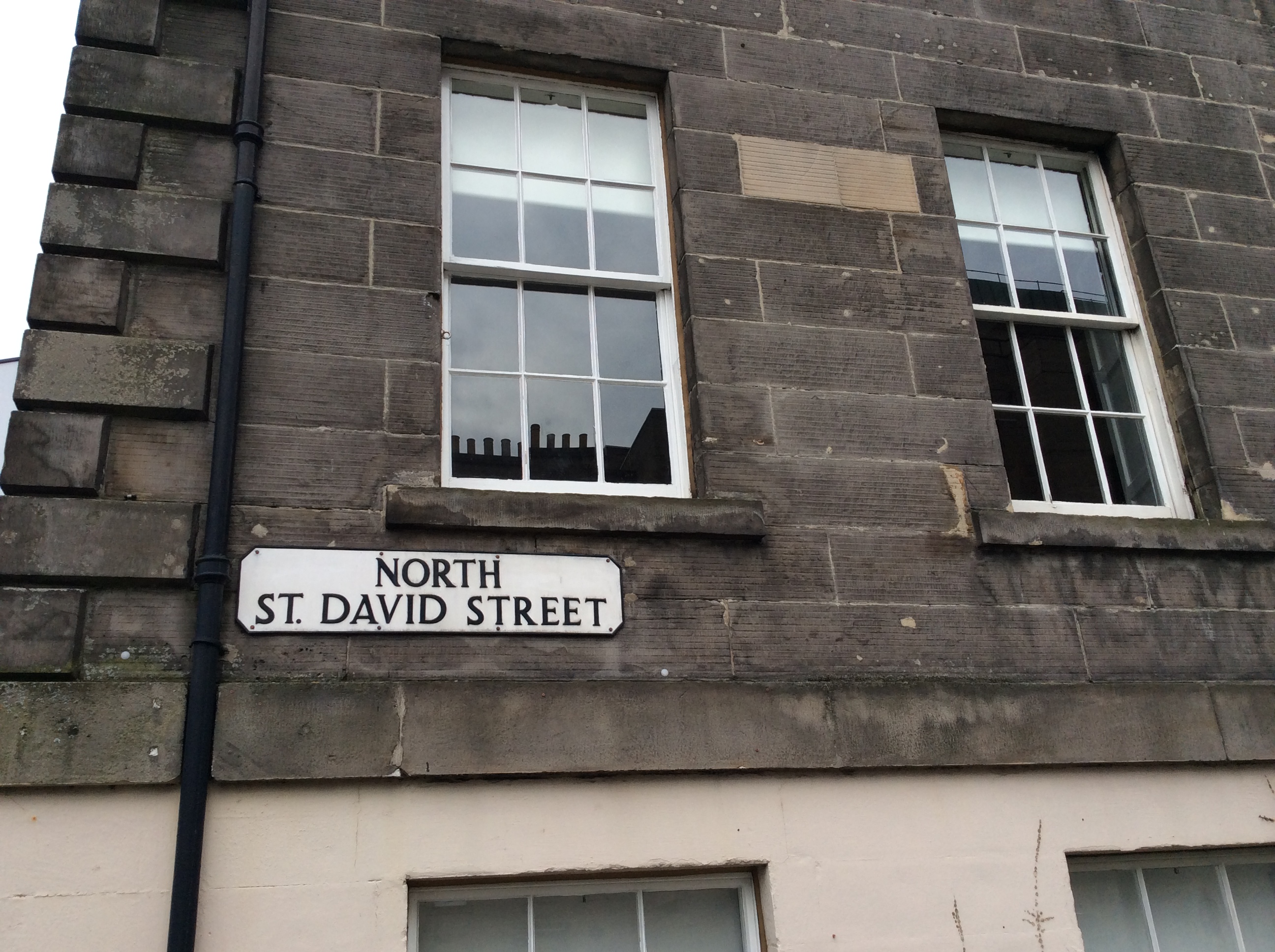
When I leave Calton Hill, I return to the Royal Mile by an alternate route, with a detour along York Place to St. David’s Street. This street got its name from a fond prank by his close friend Nancy Orde, who wrote this little tribute in chalk on the side of Hume’s house. The street bears the name to this day.

My explorations are sure to bring me back to this street since Hume once lived here, so stay tuned. I’ll be back when I’ve gathered more details.

north-st-david-street-sign-edinburgh-scotland-2014-amy-cools

statue-of-david-hume-on-the-royal-mile-edinburgh-2014-amy-cools

Statue of David Hume on the Royal Mile by Sandy Stoddart, 1995

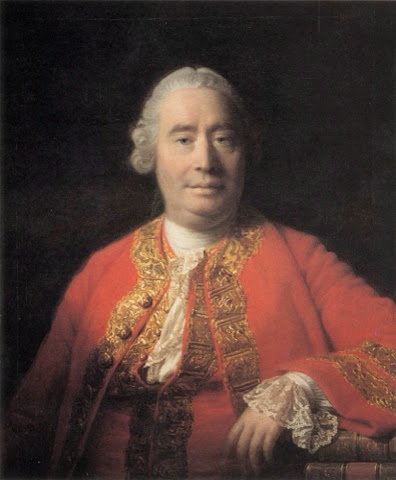
I return to the Royal Mile and this time head west, passing by a grand statue of David Hume, across from St. Giles’ Cathedral. I’m not sure it looks anything like him based on all of his portraits I’ve seen, but it’s a handsome statue, very classical. This bronze Hume probably looks much better with his shirt off than the real man ever did; he was a portly and not terribly good-looking fellow, as much as I admire and respect him. But who knows? Perhaps the younger Hume was a little more fit, before the years of poring over books left him out of shape. The statue’s right toe is polished and very shiny, looks like it’s a tradition to rub his toe for luck.

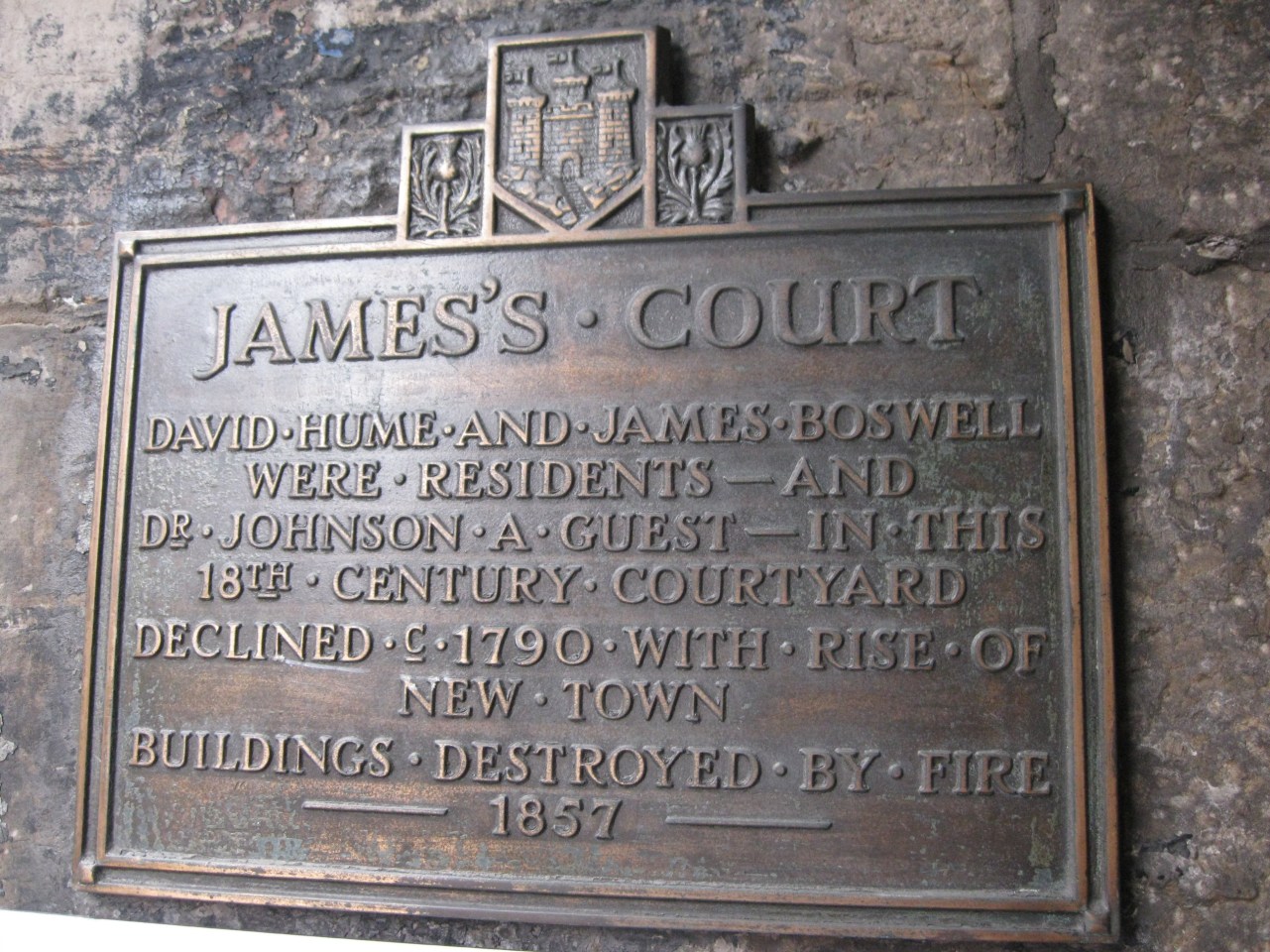
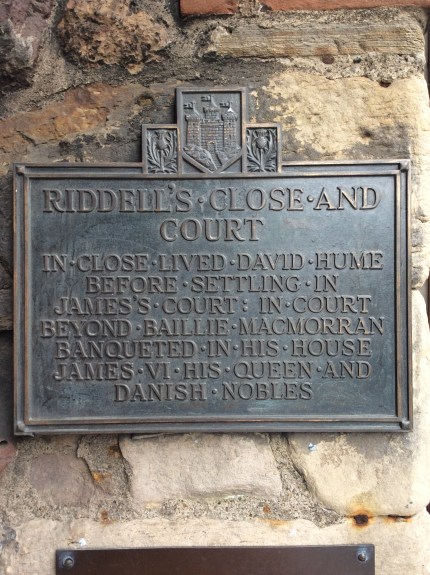
Plaque in close leading to James’s Court, where David Hume lived for a time

James Court on the Royal Mile, Edinburgh

James Court on the Royal Mile, Edinburgh

I return to James’s Court, where he lived for awhile in a tenement (apartment) with his sister. The original buildings are mostly gone, lost in a fire ages ago. I visited Gladstone’s Land and the John Knox house earlier in the day, two restored tenements from the era, and the Writer’s Museum, the restored home of Lady Stairs, built in 1622 and purchased and decorated by her in the 1700’s, all of which gives me a good idea of what Hume’s place would have looked like generally. James’s Court is a lovely little courtyard reached through a couple of lit

The old city is full of such little closes leading to pretty little courtyards or providing access to who knows where, all nearly irresistible to an American like me, where ancient cities are rare. Each time I see one of those closes, it looks like a little magic portal to some other place and time, and I just have to go through it. I spent much of my day stumbling on interesting corners of the city this way.

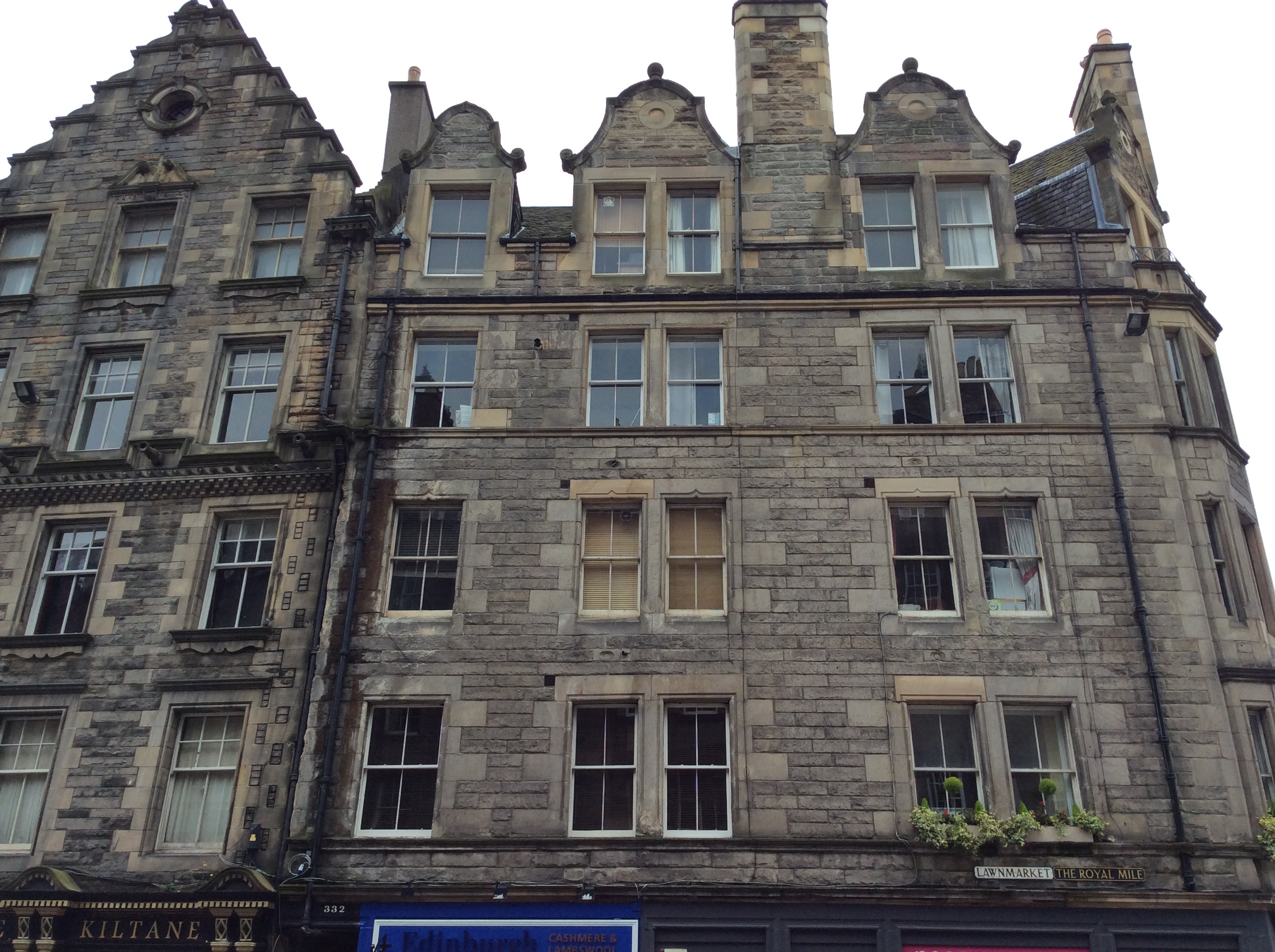
Tenements on the Royal Mile at Lawnmarket. 'Tenements' used to just refer to apartment buildings; the term gained its negative connotation later

Tenements on the Royal Mile at Lawnmarket. ‘Tenements’ used to just refer to apartment buildings; the term gained its negative connotation later

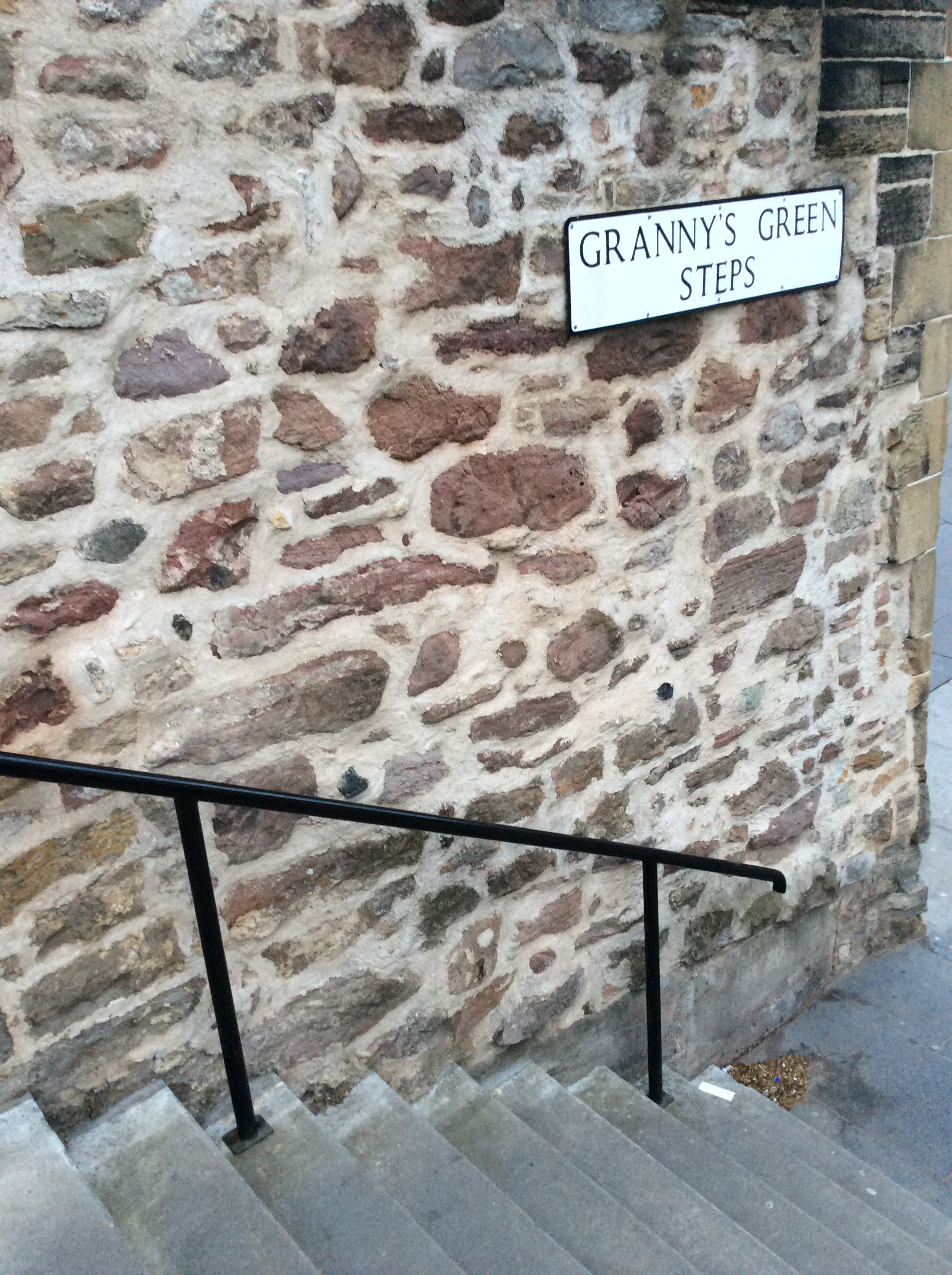
Granny's Green Steps

On the other side of Lawnmarket (the same little neighborhood as James Court) is another stand of tenements across from the castle, in the area where Hume was born in 1711. The original buildings are also no longer there; while most of the tenements that stand today in old Edinburgh are old, most of them date from the mid-1700’s and later. Many of the original tenements were lost in fires, a common occurrence in those days when people depended on open flames for all light, heating, and cooking, and a fire that started in one place would quickly spread. Many of the others were torn down, since after Hume’s time, the tenements became the homes of the poor, where overcrowding and the accompanying disease and filth left them in very poor condition (people and buildings like).

I end my first day of Hume-seeking here, as I suddenly realize I’ve been walking for hours without eating. I eat a meal of the obligatory haggis (it’s delicious, even if it does sit a bit heavy; I suspect it’s not the haggis that the Scots of yore ate, which was boiled. This haggis does not appear to be prepared that way), and I wash down with a pint, of course.

It’s a typical Scottish spring day, cloudy and a little chilly, totally bearable to one used to San Franciso weather. It rains on me just a little during my walk back to my temporary home.haggis-and-a-pint-edinburgh-scotland-2014-amy-cools

Ordinary Philosophy and its Traveling Philosophy / History of Ideas series is a labor of love and ad-free, entirely supported by patrons and readers like you. Please offer your support today!

To Edinburgh I Go, In Search of David Hume

Hello, friends of Ordinary Philosophy! I’m pleased and excited to announce my upcoming adventure: my first philosophical-historical themed adventure, and my first trip to Edinburgh, Scotland!

Here’s my plan:

I’m taking a series of trips to places around the world, where I explore the lives and ideas of great thinkers in the places where they lived and worked. I’ll follow in the footsteps of thinkers who are no longer alive, since those who are still telling their own stories. But those who are no longer alive in the body live on in the ideas that they pass on, and in the example they provide for us to follow.

I’ve decided to start with the philosopher I most admire as a person as well as a thinker, the great David Hume. He was not only revered for the brilliance of his ideas and his honesty in presenting them, but also as a premier example of a genial, generous, great-hearted person; so much so, in fact, that one of his closest friends nicknamed him ‘Saint David’.

Hume is often described as the greatest philosopher to write in English and among the greatest philosophers of all time, period. He was a central figure in the Scottish Enlightenment, and a profoundly influential empiricist and moral philosopher

So off to beautiful Edinburgh I go! There, I’ll visit the places where he worked, thought, wrote, studied, and rested. I’ll be traveling there in the first two weeks of May, and will be writing throughout the trip. I’ll be writing in this blog not only about his ideas, but about what I can discover about his everyday life, and whatever feeling of his time and place I manage to uncover in my time there.

If you have any questions for me to answer while I’m there, or pictures you’d like me to take for you, or any information you have that could help me with this project, I’d love to hear from you!

~~~~~~~~~~~~~~~~~~~~~~~

Here are my essays on Hume as I discover him in my travels, in (roughly) chronological order:

First Day in Old Edinburgh: Hume Sites and Monuments
Hume’s New Scene of Thought, and, It’s Good to Be Able to Say ‘I Don’t Know’
Hume Sites and Monuments, Part 2
The Consolations of Philosophy, and A Death Free from Fear
Scotticisms
Happy 303rd Birthday, David Hume!
Cycling Through Edinburgh, First Time
The Debate Over Government and Freedom
The Tale of the Magic Toe – Superstition? Or What?
Hume Sites and Monuments, Part 3
Water of Leith
Last Day in Edinburgh, May 13th, 2014
Hume, Aristotle, and Guns
and a memory quilt I created for my 2014 Edinburgh trip: A Hill and a Wall in Edinburgh, 2015, 102″ x 69″
Chirnside and Ninewells, Scottish Borders, Childhood and Summer Home of David Hume

Ordinary Philosophy and its Traveling Philosophy / History of Ideas series is a labor of love and ad-free, supported by patrons and readers like you. Please offer your support today!