

Detail of autobiography exhibit, Frederick Douglass Home Visitor Center
Thirteenth Day, Friday April 1st
I begin at Cedar Hill in Anacostia, Frederick Douglass’ handsome, gabled house on a hill overlooking Washington DC. He moved here with Anna and the kids in September of 1878, having lived in the capital city of Washington for a little over six years. In a sense, the Douglasses didn’t really move out of Washington when they moved into their new suburban home east of the Anacostia River. Anacostia, called Uniontown in the mid-1800’s then switched back again, was part of the District of Columbia, which in turn was larger than Washington and encompassed it. When the boundaries of Washington and the District of Columbia became one and the same in 1878, the Douglasses’ Anacostia home became a Washington city home then too.
It’s another lovely day, again the sky is partly cloudy, the air soft and warm and a little breezy, freshly washed by the morning’s rain. The cold weather I had shivered in for much of the first half of my trip is nearly forgotten.
The National Park Service now owns and runs the house, the grounds, and the visitor center and museum, collectively called The Frederick Douglass National Historic Site. I take a brief look at the outside of the house, then stop at the visitor center and sign up for the guided tour which will start shortly. I take another brief look around while I wait, and note the displays and artifacts I want to examine more closely when I return to the visitor center museum.

Cedar Hill, Frederick Douglass’ home on the hill in Anacostia, Washington DC

Portrait of Helen Pitts Douglass in the entrance hall at Cedar Hill, Anacostia, Washington DC
Then I join the tour group on the steps leading up the hill to the house. Let me express my gratitude and give credit at the outset to the very knowledgeable and helpful Nate Johnson who leads the tour. Much of the information I share with you here about the house and the Douglass family’s life together he provides in whole, or he confirms and fleshes out the stories.
In the entrance hall, I spot a miniature portrait of Helen Pitts Douglass, who Frederick married about 17 months after Anna’s death. Frederick and Helen met as neighbors soon after the Douglasses moved to Cedar Hill, and Helen came to work in Douglass’ office on Capitol Hill alongside his daughter Rosetta. Helen was a suffragist and abolitionist, like her father and Douglass’ long time acquaintance Gideon Pitts, and she and Douglass bonded over their shared social and political beliefs. As you may remember from the Boston and Honeoye accounts, their marriage was very controversial: many black people thought that Douglass was betraying Anna and his race by marrying a white woman, and many white people objected for obvious (purely racist!) reasons, even their fellow abolitionists. While Douglass brushed it off by saying that when he married Anna, he married a woman the color of his mother, and when he married Helen, he married a woman the color of his father, he had more explaining to do when it came to his family. Not because of the racial difference so much: though his children were sensitive on that issue on behalf of their mother, they knew his views on the color line and that it should be erased. It seems the trouble was mostly that he didn’t tell them that he was going to get married. We’ll return to that family drama soon…
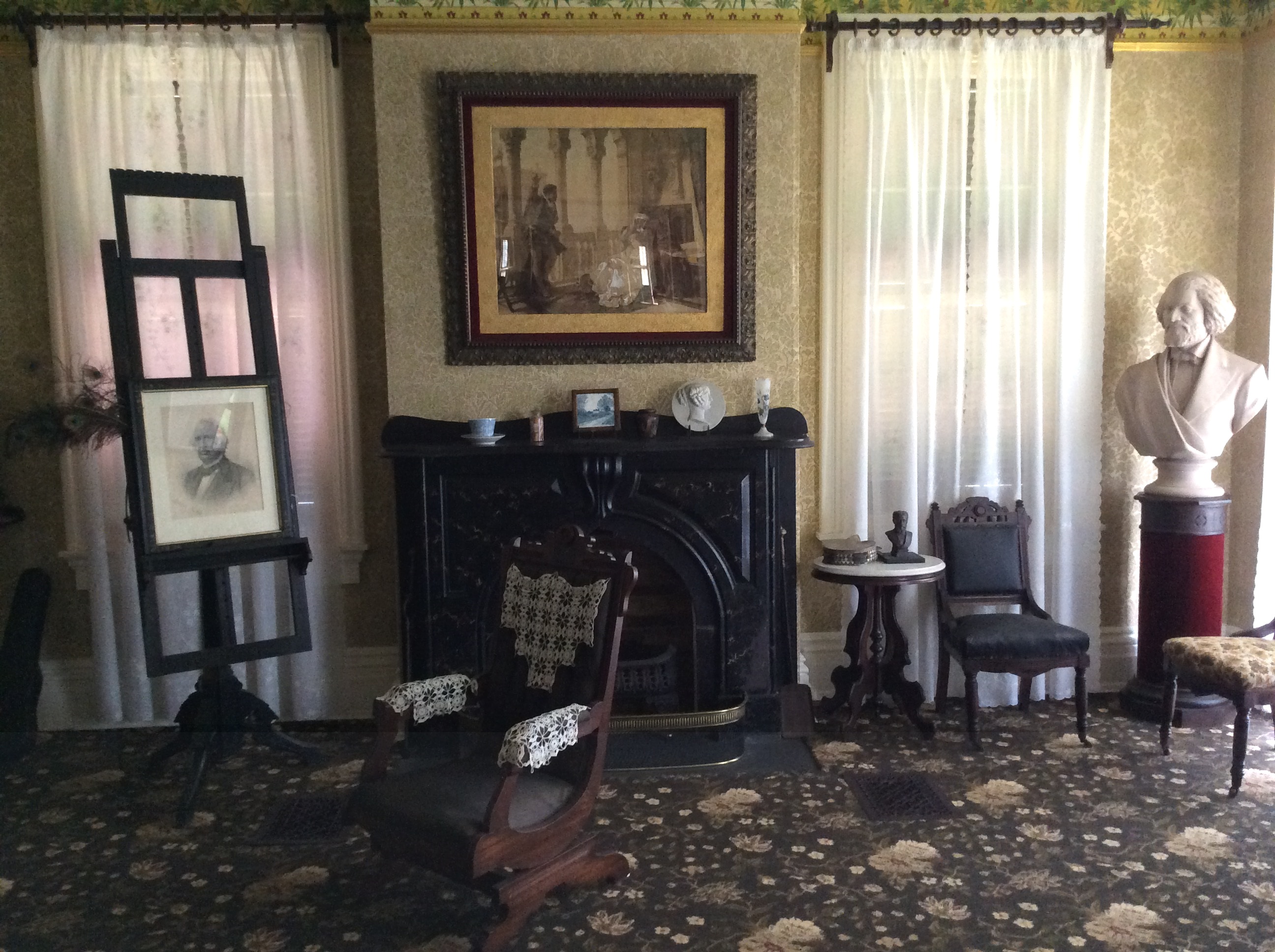
Douglass family sitting room at Cedar Hill, Anacostia
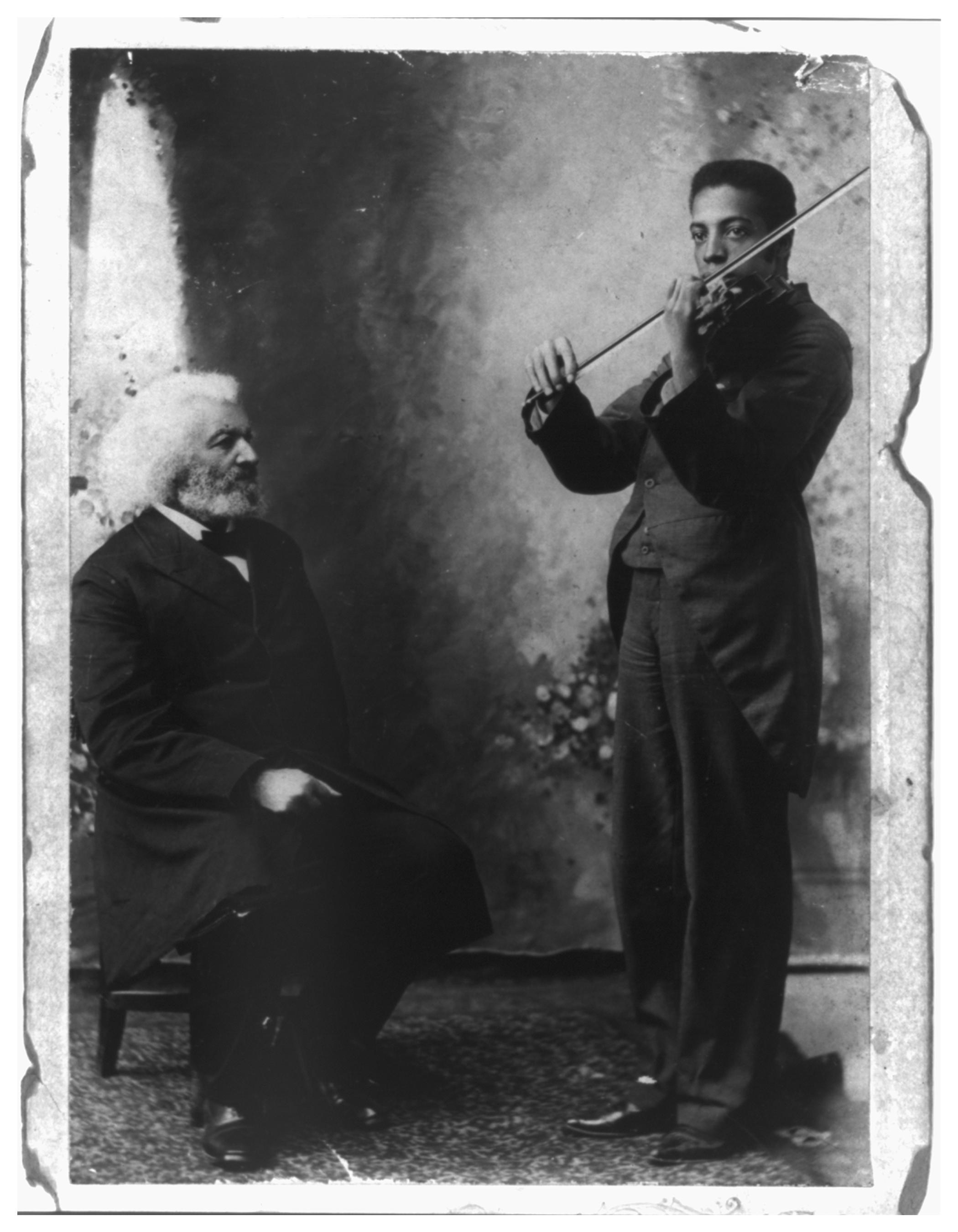
Frederick and Joseph Douglass from the Library of Congress archives via the Lion of Anacostia blog. There are many portraits of Frederick and Joseph together; evidently, they were proud of one another
The door on the right from the entrance hall leads to the West Parlor, or sitting room, where the family would gather to play music, sing, and generally just hang out after dinner. As discussed in my account of my first day in Rochester, the Douglasses were a musical family, His daughter Rosetta and his second wife Helen played the piano, he and his son Charles played the violin, and possibly Anna did as well. Douglass was a very talented player, would play often, and sometimes dance. His grandson Joseph, son of Lewis, also adopted the violin and played with such great skill that it became his profession. Joseph’s first major performance was at the Columbia Exposition, which his grandfather helped organize, on August 25th, 1893, at age 22. He was the first violinist to be recorded, taught at Howard University and various schools, and toured the world as a concert violinist. (I subsequently had the pleasure of interviewing one of Frederick and Joseph’s descendants for my podcast!)
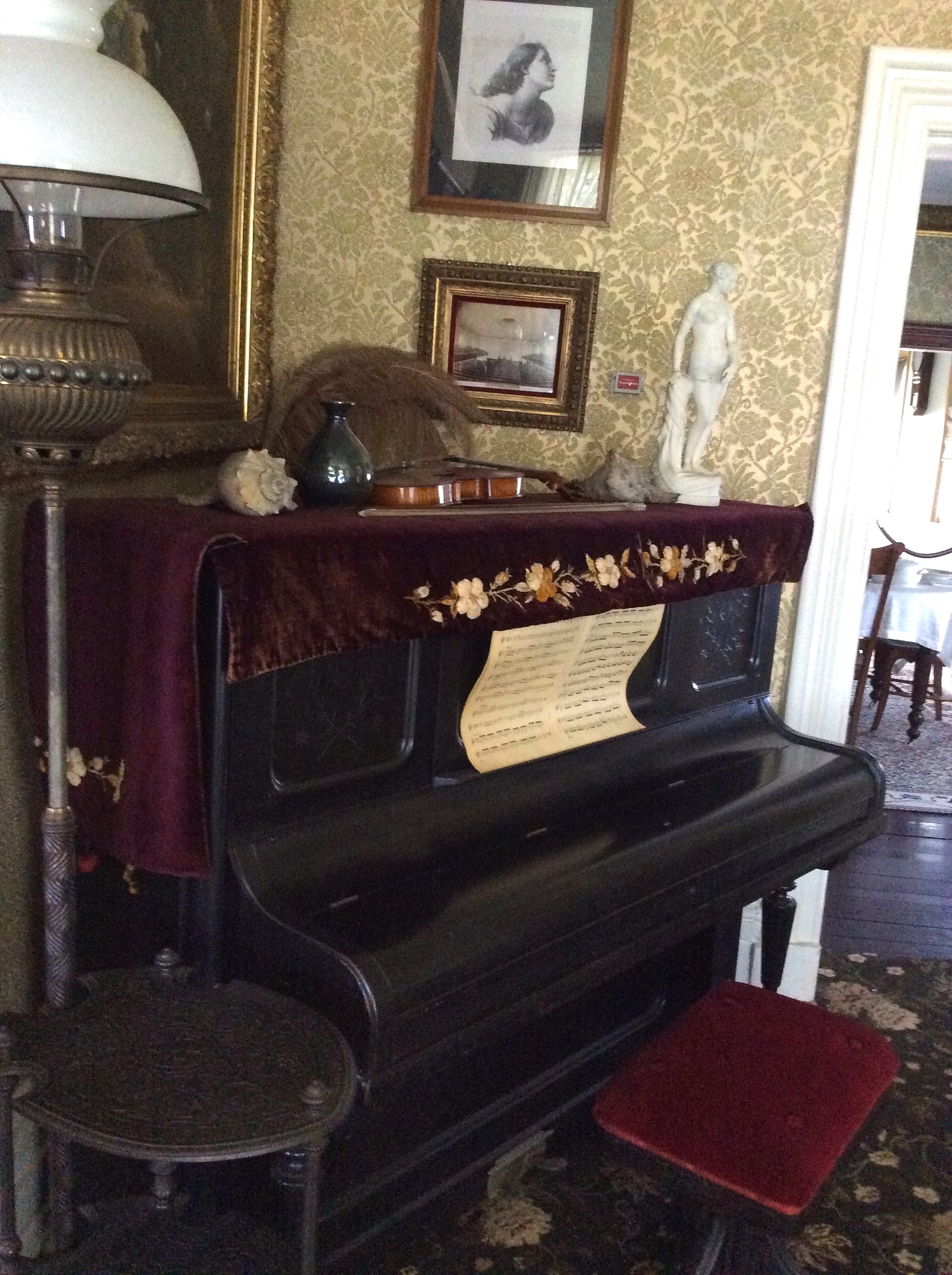
Sitting room piano with Joseph Douglass’ violin on top

Anna Douglass circa 1860, image from the Library of Congress collection
The grandkids, frequent visitors and sometimes residents of the big house, would join in the fun of the sitting room family gatherings. Some would sing along with the music, and other times were devoted to games and general romping, here and throughout the house, wherever they could get away with it. In public, Douglass presented himself in a very serious and dignified way, but at home he was very playful, romping with the grandkids and joking a lot. He’d allow his granddaughters to braid his flowing hair and tie ribbons in it, only to have to rush off sometimes and put it back in order for the sake of the frequent guests who visited the house.
Anna’s portrait presides over the formal East Parlor, dedicated to greeting and entertaining guests. Her picture, directly across from the big bookshelf, occupies the central place of honor between the two tall windows at the front of the house. Unfortunately, the way the light is streaming brightly in the windows just after midday makes the portrait, easy to see in person, impossible for my camera to pick up amid the strong backlight. In fact, the way the sun is creating such high contrasts in the room, most of my photos of this room don’t end up turning out.

Frederick Douglass’ library and study at Cedar Hill
Anna lived here at Cedar Hill for just under four years, presiding over this stately but lively home bustling with children, grandchildren, extended family, and frequent and numerous houseguests. While she had some health troubles, she remained pretty active until she suffered a stroke on July 9th, 1884, and lingered almost a month. After she died, at about age 69, Douglass fell into a deep and at times almost debilitating depression for well over a year. He thought about selling his house and traveling, perhaps moving to Europe for awhile. But his family needed him here, and besides, his neighbor and clerk Helen Pitts had become a close friend and ally.
Then we stop at the library, south of the East Parlor, accessible through a connecting door. Many of the things in this room actually belonged to Douglass, such as the top hat to the right of the desk. According to the National Park service, ‘Douglass’s extensive library contained more than 1000 volumes that included books on history, science, government, law, religion and literature. ‘ I don’t, unfortunately, get the opportunity to take a close look at the contents of that nice big bookshelf.

Cedar Hill dining room, where Frederick Douglass died. His big chair is to the left.
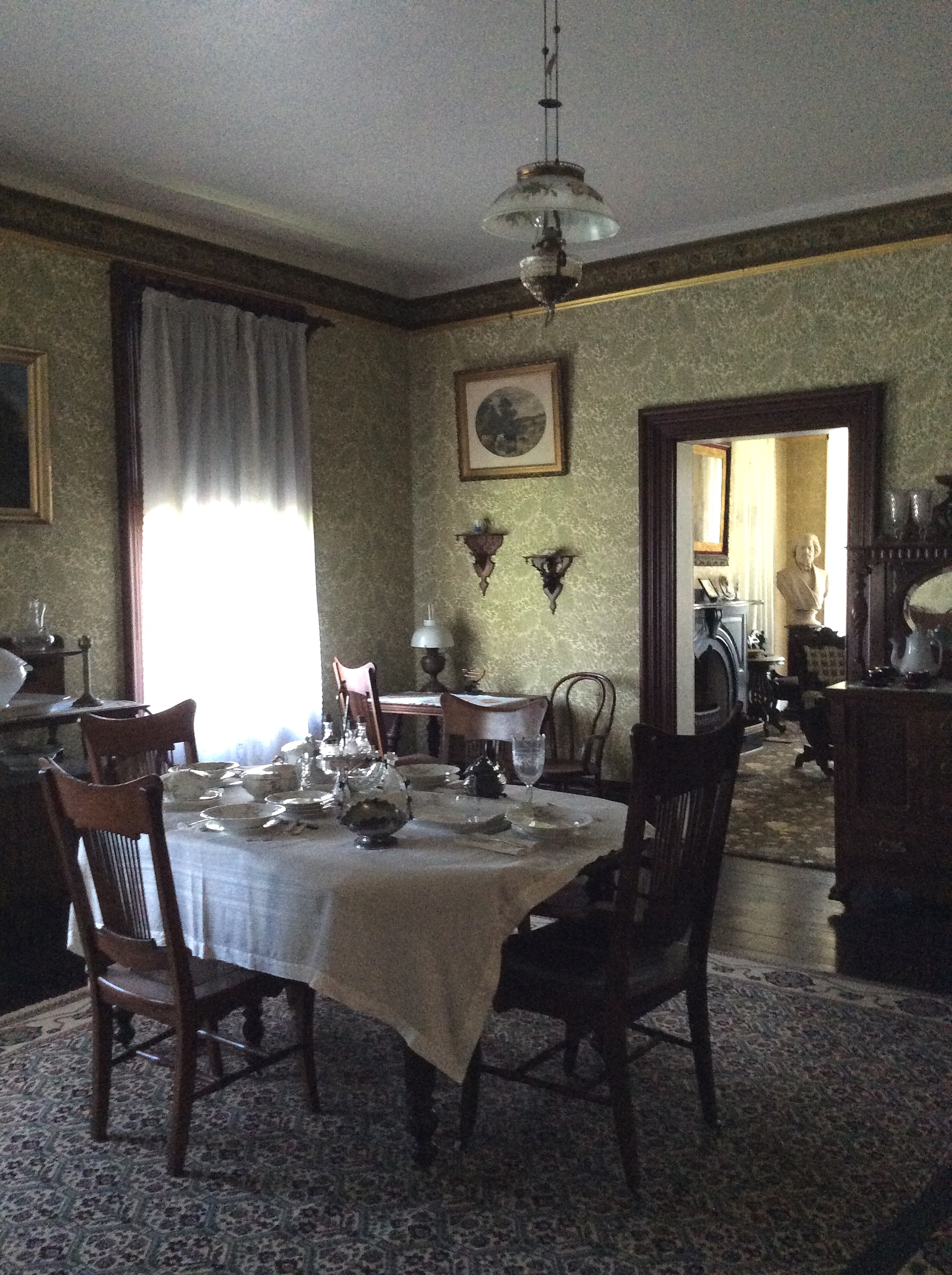
Another view of the Cedar Hill dining room, looking north into the sitting room
We stop next at the dining room at the end of the entrance hall and to the right, with a big door leading onto the hallway, through which we look at the room, but also connected to the sitting room through another connecting door. On February 20th, 1895, Douglass and Helen were at this table discussing the women’s rights convention he had just attended that day. His old friend (or perhaps more accurately expressed in modern slang as ‘frenemy’) Susan B. Anthony had escorted him to the front of the room to speak. Always a talented mimic, he was repeating another’s speech he had heard there at the convention, probably sitting, then rising, from his big dining room chair. All of a sudden, he sank to his knees, suffering a massive heart attack. He could not be revived.
I linger here behind the tour group for a few moments.
Then I rejoin the group and we go around to the kitchen, which is beyond the dining room, through the pantry. Anna was an excellent cook, and she would make Maryland beaten biscuits for Douglass. They were made from dough that was beaten to trap air in the dough, an alternate to leavening. The resulting biscuits are small, round, and rather hard but Douglass loved them, having grown up on them in the Chesapeake.
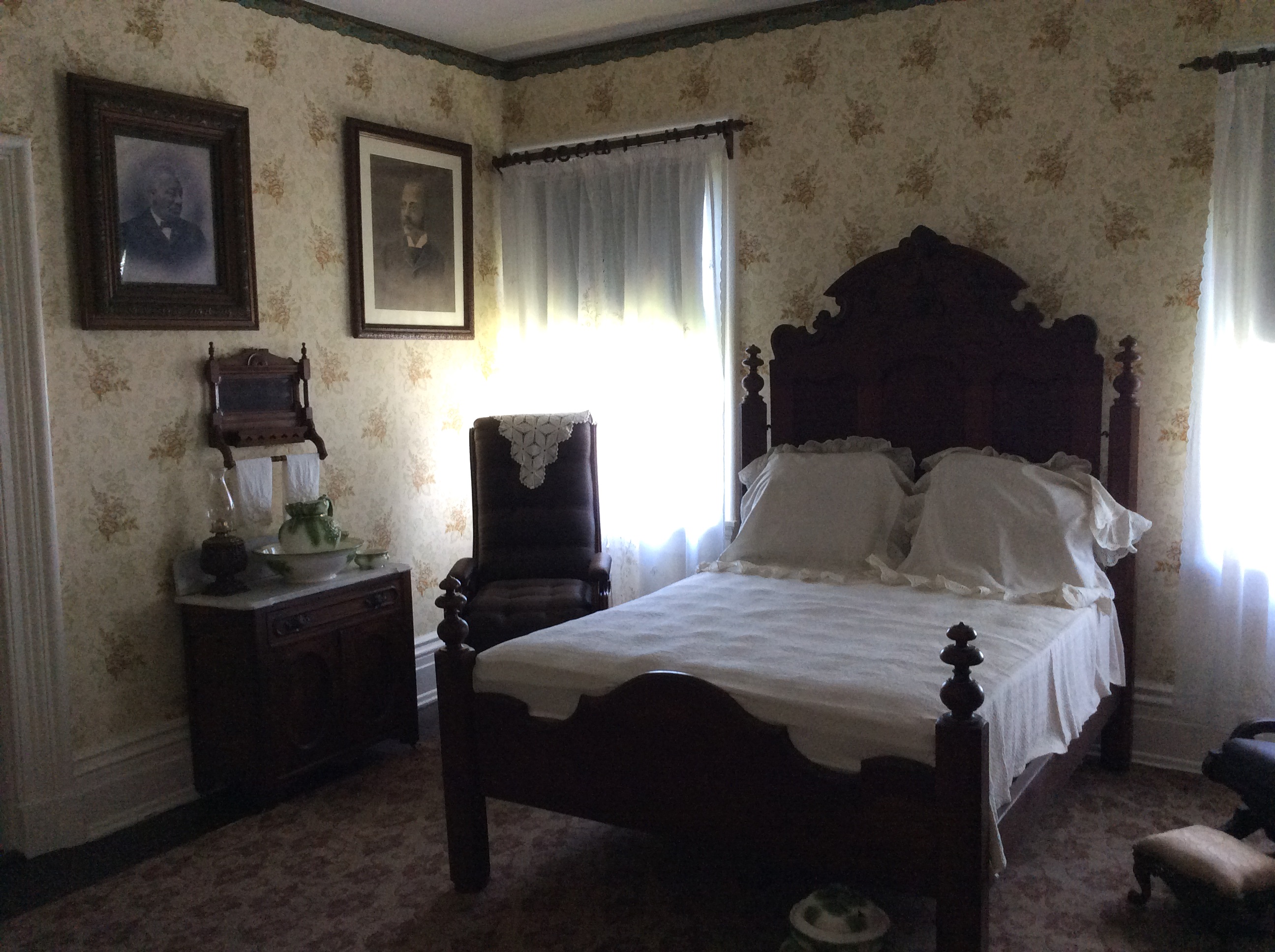
Anna Douglass’s bedroom, Cedar Hill

Helen Pitts Douglass’ bedroom, Cedar Hill
Then we go upstairs. Anna’s and Helen’s bedrooms are across Douglass’, which is on your right if you’ve just come up the stairs. Looking across the hall from Douglass’ room, Anna’s is on the left with the ruffled pillowcases and golden flower pattern wallpaper, Helen’s on the right with the dress form and green striped wallpaper. After Anna’s death, Douglass sealed her room off and no one stayed in there again.
Douglass had the big bedroom, with a desk where he may have worked sometimes. Note the weights on the floor by the big leather armchair: he was a large, powerfully built man, over six feet tall and two hundred thirty pounds, with a strong voice. He would often work out with free weights out on the lawn, and would also often walk the five miles to work each way between Capitol Hill and Cedar Hill. He wrote that he felt stronger at this time in his life than he had in years. You can see Capitol Hill and the Washington Monument looking out of the bay window above the front door off to the left, and the view from the lawn in front of the house is fantastic, with the city laid out before you in a panorama across the Anacostia River.

Frederick Douglass’ bedroom. Note the dumbbells on the floor by the big leather chair: Douglass exercised regularly, including lifting weights out on the lawn and walking ten miles roundtrip to work on Capitol Hill. He remained active and vigorous right up to the time of his death at age 77
During the years Douglass lived at Cedar Hill, he was once again a well-to-do man after the debacle of the failed Freedman’s Bank, a subject I mentioned in an earlier account and to which I’ll return soon. To rebuild his finances, he went out on tour again, and he had been able to command very large speaking fees throughout the North and earned a good salary as Recorder of Deeds in Washington D.C., and with the help of a loan from a well-to-do friend, he was once again able to afford a grand house.
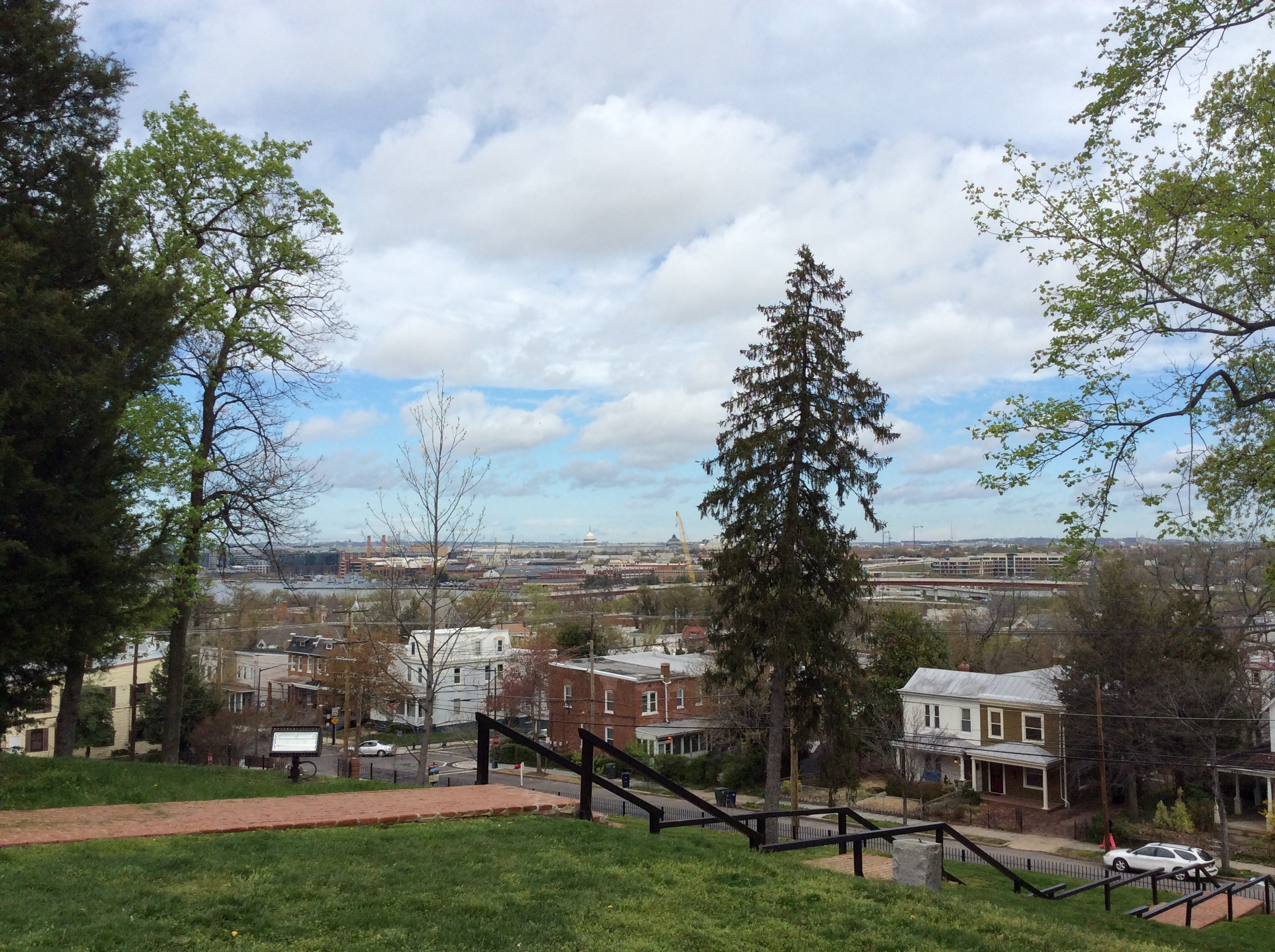
The view from Cedar Hill’s front lawn, of Washington DC and Capitol Hill
By the time Douglass moved to Cedar Hill, he had moved into the role of a senior statesman and had a lot of social and political influence. Yet while Douglass retains his reputation to this day as a fiery champion of black rights, he was perceived by many in those later years to have lost sight of the true plight of most black Americans, especially in the South. He still supported the Republican Party even as it was abandoning Reconstruction, leaving the southern states free to flout the 14th and 15th Amendments. By the time Douglass moved to Anacostia and his grand home on Cedar Hill, his days as a slave, a laborer, and a working abolitionist suffering the everyday oppressions and indignities of Jim Crow were far behind him. His biographers Philip Foner and William McFeely both describe and critique his seeming lack of full awareness and concern for how bad it really was at this time for ordinary black working Americans. To many, it was clear that Douglass’ pragmatism had overshadowed his fiery spirit as a champion of human rights.
In 1876, Douglass was so eager that Rutherford B. Hayes become President, in a heavily contested, extremely close election, that he failed to criticize the Republican Party’s policies in any serious way. To be fair to Douglass, it was still the only major party that at least nominally supported black rights, and if Hayes lost to Tilden, even the appearance of national concern over the rights of black Americans would be lost. But really, his critics said, he should have advocated the complete abandonment of the Republican Party since it had in practice largely abandoned the cause of actual emancipation. After all, the existence of the 14th and 15th Amendments meant nothing to the lives of black Americans if their politicians and fellow citizens routinely blocked access to the polls, to good jobs, to elected office, and to all the other rights and privileges of citizens of a free nation.
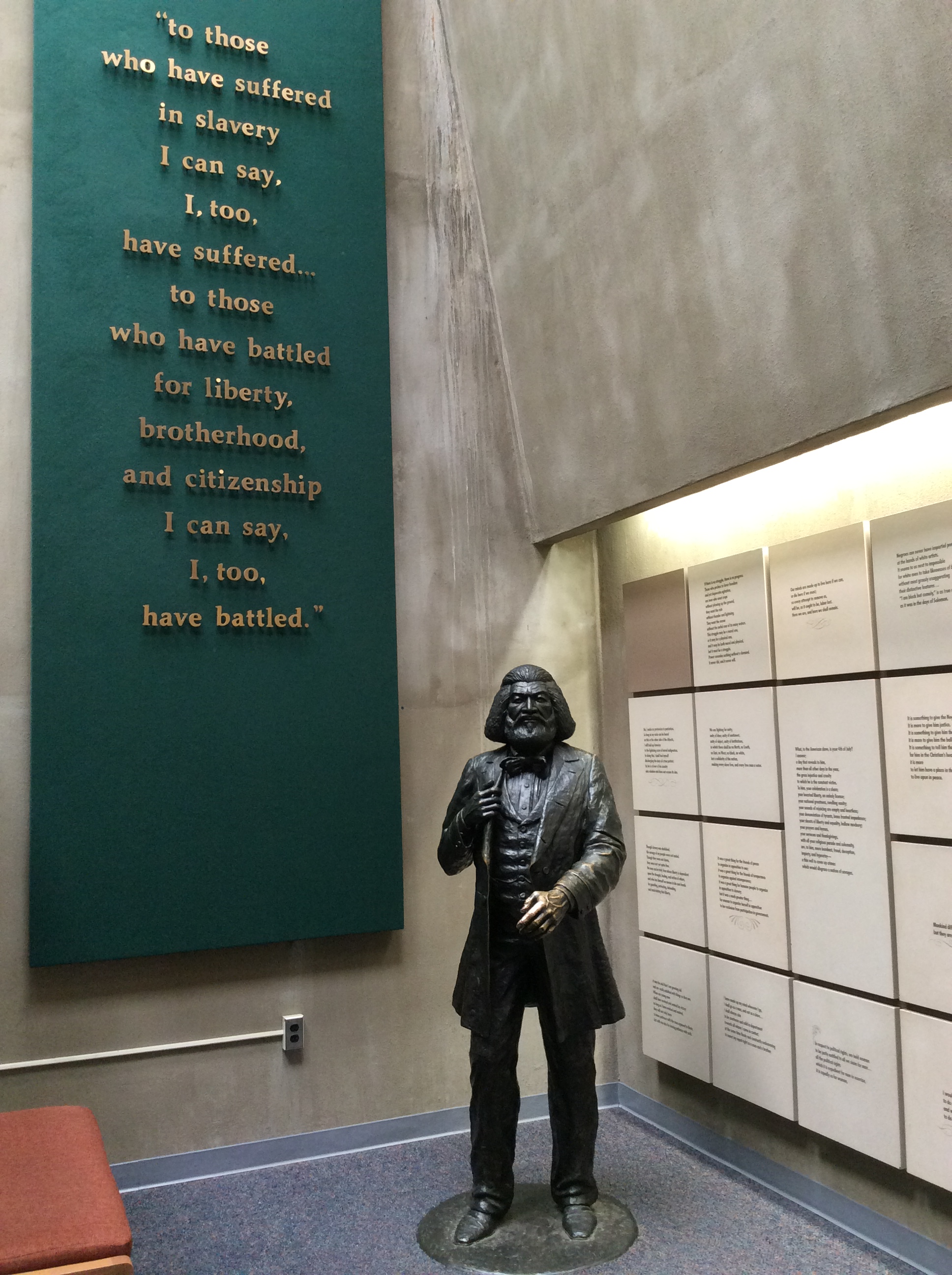
Statue and quote at the Frederick Douglass National Historic Site
The Republican Party had a powerful contingent who had come to prioritize economic progress over human rights reform, and thought that keeping federal troops stationed in the South to protect black rights only served to delay national reconciliation and economic recovery. So Republicans routinely struck deals with southern leaders eager to return to old social practices and had often come to be no better than Democrats at protecting black rights. President Hayes, for so long an ardent supporter of strong federal enforcement of civil rights laws, shifted his focus to economic recovery and civil service reform. To be fair to Hayes, ‘Republican Party’ had become almost synonymous with ‘political corruption’, and the new president, famed for his integrity throughout his political career, was determined to fix that. And Hayes was far from the only one who thought that economic recovery would bring about gradual black rights reform through the value of their work in a revitalized economy.
So the Democrats had their way, and black citizens lost many of the political gains they had made. They lost their hard-won representation in government and had even become even worse off in many parts of the South than they had been under slavery, with endemic Klu Klux Klan and White League terrorism, lynching, black codes, debt peonage, convict leasing, and sharecropping, which systematically cheated black people out of the earnings from their labor. And as history reveals, the Douglass of 1857 who had said in Canandaigua ‘If there is no struggle, there is no progress’, was right, and Hayes and the gradualist reformers were wrong. The South continued its oppression of black people nearly unchecked for another hundred years, and their rights were only reclaimed through their protest and struggle, assisted by the intervention of the federal government.
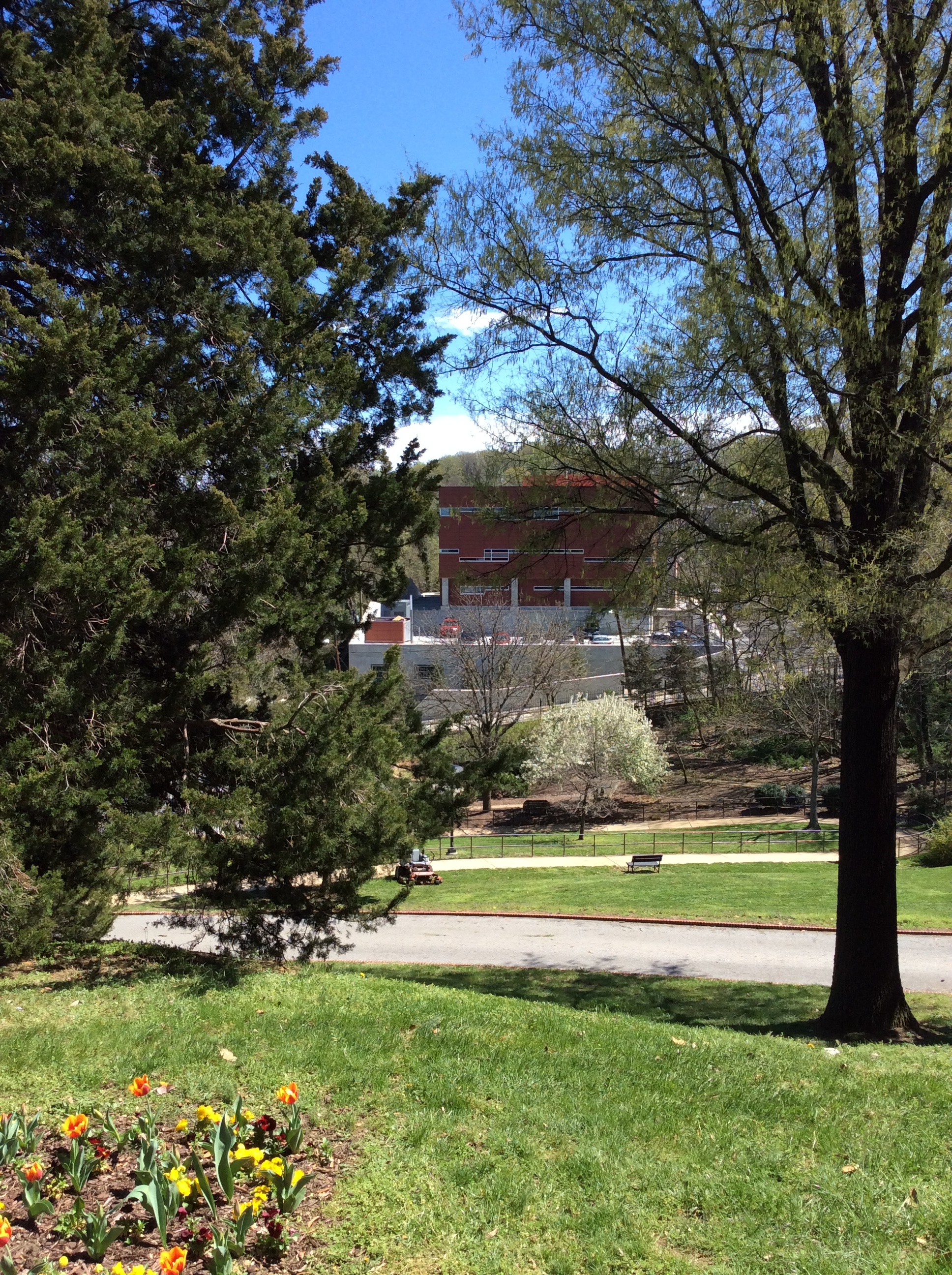
View from Cedar Hill, looking east toward the site of Hiram and niece Helen Pitts’ house
But by the 1888 election, Douglass was no longer so ready to remain silent in the face of Republican Party’s failures to protect human rights. It was no longer good enough that the Republican Party had been the party of Lincoln and of the Union. His rhetoric took on a more fiery tone once again, and he said that if the Republican Party wouldn’t live up to their promises to protect black rights, he now looked forward to their defeat. And defeated they were: Democrat Grover Cleveland had already taken the White House in 1884. Douglass attributed this to the Republican Party’s abandonment of the human rights platform, which had made it the champion of goodhearted people, in favor of a profit-first agenda.
As we leave the house, in response to my inquiry, Johnson points me in the direction of the site of Helen Pitts’ uncle Hiram’s house, right beside Cedar Hill where the tall red building stands directly to the right if you’re looking toward D.C. from the front porch (or to your left if you’re looking at the front of the house). Helen lived here with her uncle for a time, and the Pittses and Douglasses were friends, neighbors, and colleagues. Hiram, like his brother and Helen’s father Gideon in Honeoye, refused to speak to the couple or allow them the house after Helen married Douglass. There was a path that led from Hiram’s house up to Cedar Hill, but after the marriage presumably, sadly, it saw much less use.

The hymnal Frederick Douglass had with him when he escaped from slavery in 1838
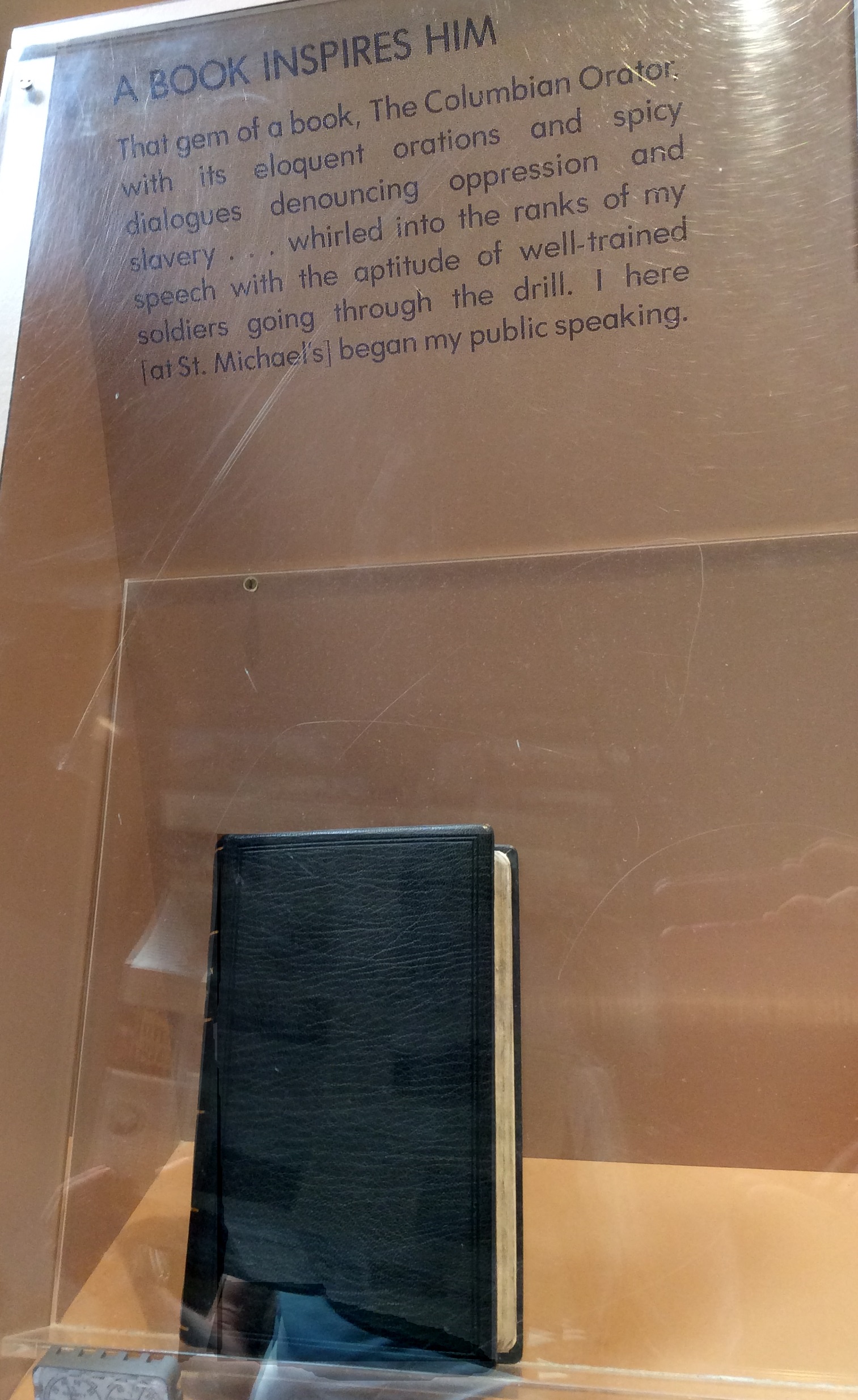
A copy (but not the copy) of the Columbian Orator, the first book Frederick Douglass ever purchased
I return to the Frederick Douglass National Historic Site museum, tucked into the east foot of the hill, and the treasures therein. Among them, there’s the hymnal which Douglass had with him when he escaped from slavery. It seems quite incredible that it survived, especially given the fire at his Rochester home. I wonder if the family took special pains to make sure that this one book, at least, escaped the flames. There’s also a copy (but not his copy) of the Columbian Orator, the first book Douglass ever bought, which, as you may remember, he purchased from Knight’s shop on Thames St in Fell’s Point, Baltimore, when he was only about 12 years old. It was among the most influential books of his life.
Douglass’ death mask, cast in plaster, is also here. His strong brow is relaxed, the deep furrow over the nose smoothed out a bit. His wide-set eyes look peacefully closed but the lips, usually set straight in a dignified manner in portraits, are here drawn tightly together, even pursed, but I’m guessing this is due to the castmaker’s efforts to keep plaster out of the mouth. His characteristically leonine hair is plastered (no pun intended) to his well-formed head. In death, as in life, he’s strikingly handsome.
Here, too, I find Abraham Lincoln’s walking stick, gifted to Douglass by Mary Todd Lincoln in thanks for his service recruiting for the Civil War.

Frederick Douglass’ death mask and cast of his hand, at his National Historic Site in Washington DC

Abraham Lincoln’s walking stick, Mary Todd Lincoln’s gift to Frederick Douglass, on the left, and copies of his passes for recruiting for the Union Army
After a rather lengthy visit closely examining all the displays and chatting with the docent, I cross the Anacostia again as I head north to 913 E St NE, where according to Douglass’ biographer McFeely, Helen Pitts was living when Douglass came to pick her up on January 24th, 1884, on their way to be married.
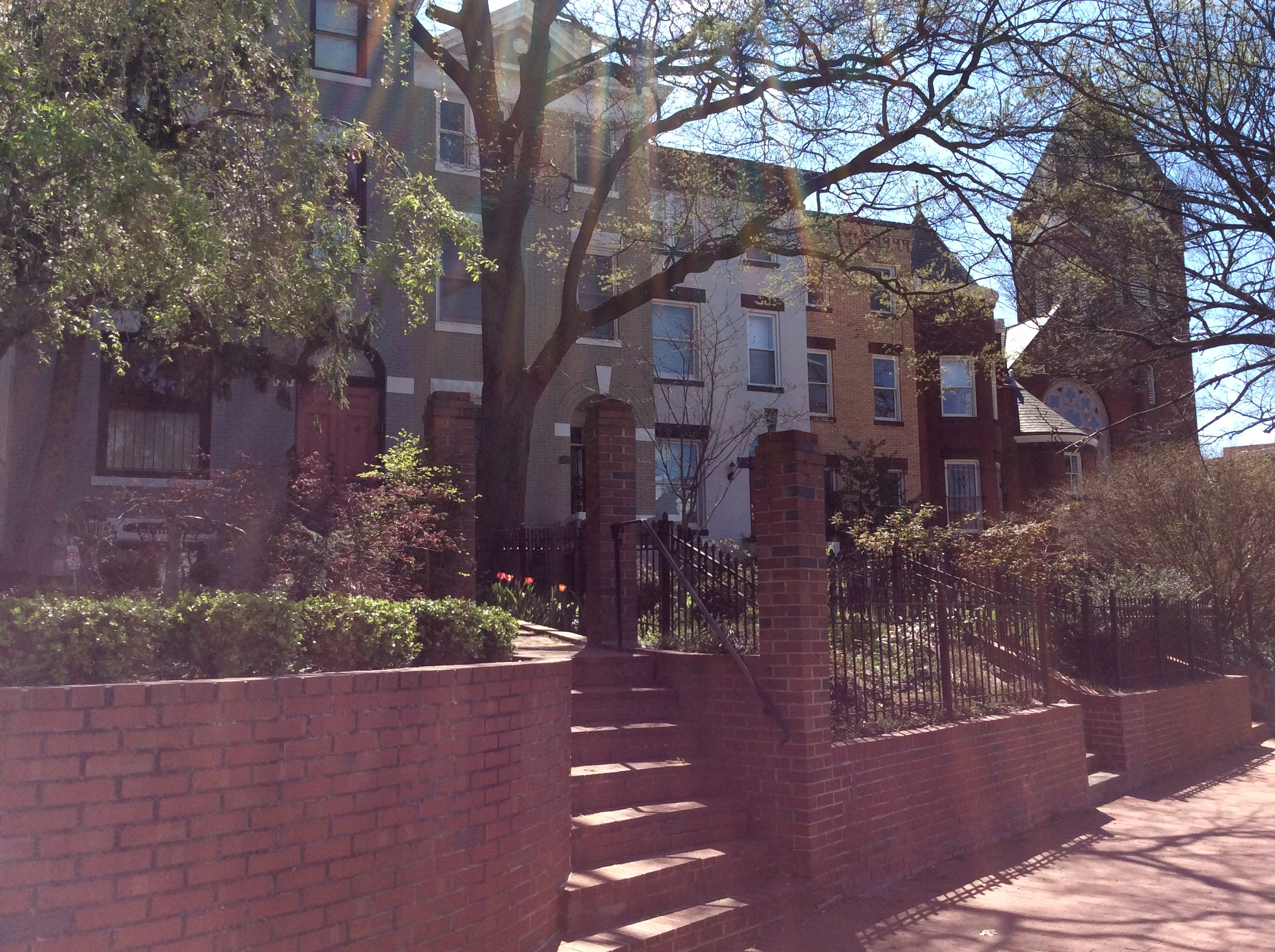
Houses off Maryland Ave and E St NE where they converge, on the south side of the street where the odd numbers run for both E and Maryland. The tan house in the center is marked 913 Maryland Ave, but I can’t tell from Google Maps or the 1909 Baist atlas if it’s also 913 E St, though that would also be consistent with the numbering.
When I arrive, I find it’s a little hard to be sure that the 913 I find is an E Street address, a Maryland Ave, or both: these streets intersect at an odd angle here just east of 9th St. Google Maps seems to say it’s 913 E, but the door plaque says it’s 913 Maryland Ave. I find Baist’s city atlas from the turn of the century on the Library of Congress website, the earliest I can find online, and it shows that the numbers here have apparently not changed, since 1909 at least. In 1884, Helen lived here or near here, again, if the 1909 atlas is right. She had moved here from her uncle Hiram’s house to be closer to Capitol Hill, where she worked as Douglass’ clerk, though that meant she and Douglass were no longer neighbors. Perhaps they wanted to keep their deepening relationship less evident to the public eye. Again, more on their marriage soon to come.
I decide to break up the account up here of this day’s adventures into two accounts since it’s such a full day and I learn so much. To be continued!
*Listen to the podcast version here or on Google Play, or subscribe on iTunes
Ordinary Philosophy and its Traveling Philosophy / History of Ideas series is a labor of love and ad-free, supported by patrons and readers like you. Please offer your support today!
~~~~~~~~~~~~~~~~~~~~~~~~~
Sources and Inspiration:
‘About Us: Living History‘. Frederick Douglass Family Initiatives website (family tree, photos).
Baist’s Real Estate Atlas of Surveys of Washington, District of Columbia: Volume 2, Plate 21. By Baist, George William, William Edward, and Harry Valentine Baist, 1909. Via Library of Congress website
‘Benjamin Harrison: Campaigns and Elections,’ from Miller Center of Public Affairs, University of Virginia website
Blight, David W. ‘“Your Late Lamented Husband”: A Letter from Frederick Douglass to Mary Todd Lincoln‘. In The Gilder Lehrman Institute of American History website
Douglass, Frederick. The Life and Times of Frederick Douglass. Re-published 1993, Avenal, New York: Gramercy Books, Library of Freedom series.
Douglass, Frederick. My Bondage and My Freedom: 1855 Edition with a new introduction. Re-published 1969, New York: Dover Publications, Inc.
Foner, Philip S. The Life and Writings of Frederick Douglass, Vol. 1-4. New York: International Publishers, 1950.
Fought, Leigh. ‘On Trusting Secondary Sources‘. From Frederick Douglass’s Women: In Progress blog
Holt, Michael F. ‘The Contentious Election of 1876‘, in History Now: The Journal of the Gilder Lehrman Institute
‘Joseph Douglass‘. In Wikipedia, The Free Encyclopedia.
McFeely, William. Frederick Douglass. New York: W.W. Norton & Company, 1991.
‘Maryland Beaten Biscuits‘, in Guest Recipe Book. Diana’s Desserts website
Muller, John. Frederick Douglass in Washington, D.C.: The Lion of Anacostia. Charleston: The History Press, 2012.
‘Rutherford B. Hayes: Life in Brief‘, from Miller Center of Public Affairs, University of Virginia website.
Southern, Eileen. The Music of Black Americans: A History. W. W. Norton & Company, 1997
 Blassingame, J. (Ed.). The Frederick Douglass Papers, Series One: Speeches, Debates, and Interviews. 4 volumes, and The Frederick Douglass Papers, Series 2: Autobiographical Writings. 3 volumes. New Haven and London: Yale University Press, 1979-1999
 Ordinary Philosophy