Happy Birthday, Grace Lee Boggs! A Bio and Book Review by Ashley Farmer

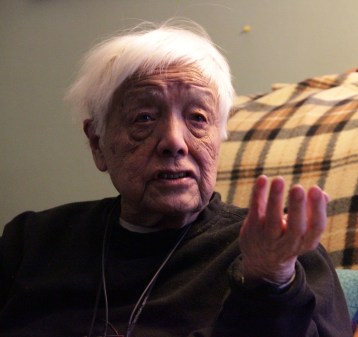
Grace Lee Boggs, By Kyle McDonaldm creativecommons.orglicensesby2.0, via Wikimedia Commons, cropped

In celebration of Grace Lee Bogg’s birthday on June 27th, 1915, I share an excellent bio and book review by historian Ashley Farmer:

“The Power And Importance Of Ideas:” Grace Lee Boggs’s Revolutionary Vision”

In the opening lines of her autobiography, Living for Change, Grace Lee Boggs remarked: “Had I not been born female and Chinese American, I would not have realized from early on that fundamental changes were necessary in our society.”[1] A daughter of Chinese immigrants born in 1915, who, by her account, became a philosopher in her 20s and an activist in her 30s, Boggs remains one of the greatest radical theorists of the twentieth century.

Born in Rhode Island, Boggs spent her childhood in New York City, working in the two restaurants her father owned in Times Square. At the age of 16, she left home to attend Barnard College, and afterward, Bryn Mawr, where she earned a PhD in Philosophy in 1940. Philosophers like Hegel helped her “see [her] own struggle for meaning as part of the continuing struggle of the individual to become part of the universal struggle for Freedom.”[2] Boggs moved to Chicago in 1940. She began working with the South Side Tenants Organization set up by the Workers Party, a Trotskyist group that had split off from the Socialist Workers Party. Her time in the Windy City proved transformative. For the first time she was talking and working with the black community, getting a first-hand sense of what it meant to live within the confines of segregation and discrimination, and learning how to participate in grassroots organizing.[3]

It was also during her tenure with the Workers Party that she met Caribbean radical C.L.R. James, and began a “theoretical and practical collaboration that would last twenty years.”[4] As part of a small wing of the workers Party led by James and Raya Dunayevskaya, Boggs became a leading theoretician, co-authoring texts like State Capitalism and World Revolution (1950). Through James, she came into contact with a number of black writers and activists who expanded her perspective. She relocated to Detroit in 1953, where she would organize with, and marry, James (Jimmy) Boggs.

During the 1950s, Boggs, “mainly listened and learned” to the black activists around her in an effort to better understand the black condition. It would take several years before she decided that she had been “living in the black community long enough to play an active role in the Black Power Movement that was emerging organically in a Detroit where blacks were becoming the majority.”[5] Living and working in what was considered to be an epicenter of black radicalism, Boggs engaged in a combination of theorizing and protesting, authoring texts with James Boggs, meeting and organizing with Malcolm X, and mentoring young radicals like Muhammad Ahmad (Max Stanford), leader of the Revolutionary Action Movement (RAM).

Her liberation theory was grounded in her study of philosophy and honed through her experiences organizing with and for black communities. It was also constantly evolving. Boggs emphasized dialectical thinking, arguing that reality is ever changing and that we must “constantly be aware of the new and more challenging contradictions that drive change.”[6] This reciprocal process drove her expansive vision of revolution. In her final book, The Next American Revolution, she explained her latest concept of revolution:

The next American Revolution, at this stage in our history, is not principally about jobs or health insurance or making it possible for more people to realize the American Dream of upward mobility. It is about acknowledging that we as Americans have enjoyed middle-class comforts at the expense of other peoples all over the world. It is about living the kind of lives that will not only slow down global warming but also end the galloping inequality both inside this country and between the Global North and Global South. It is about creating a new American Dream whose goal is a higher Humanity instead of the higher standard of living dependent on Empire.[7]

Boggs consistently offered a holistic vision of revolution and concrete steps through which to build it. She argued that achieving this goal meant more than organizing or mobilizing to petition the state or “changing the color of political power,” but rather growing food, reinventing education, developing Peace Zones in local neighborhoods, and creating restorative justice programs. She saw the seeds of revolution everywhere and showed us how, by practicing dialectical thinking, breaking down divides and categories, and building on rather than replicating older political models, we might “grow our souls.” She mirrored this in her own life, constantly “combining activity and reflection.”[8] Her willingness to do the work, her ability to listen and learn from black activists, her commitment to living in the communities in which she organized, and her openness to revising her politics, and values, made her an effective life-long ally of the black community and theoretician of liberation and revolution.

As she noted, often, “in the excitement of an emerging movement, we tend to want to be part of the action, and we underestimate the power and importance of the ideas in our heads and hearts.”[9] Upon her death, it’s important to revisit the ideas in her head. She left us a roadmap for revolution through ideas and action, one that anyone could be a part of if they were clear about the stakes of the transformation and that fundamental change is necessary.

Originally published at the African American Intellectual History Society blog, this was originally republished at O.P. when under a Creative Commons licence in 2015

Ashley Farmer is a historian of African-American women’s history. Her research interests include women’s history, gender history, radical politics, intellectual history, and black feminism. She earned a BA in French from Spelman College, an MA in History from Harvard University, and a PhD in African American Studies from Harvard University. She is currently a Provost Postdoctoral Fellow in the History Department at Duke University. In August 2016, she will be an Assistant Professor in the Department of History and the African American Studies Program at Boston University. This bio and more about Ms. Farmer are to be found at her personal website

~ Ordinary Philosophy is a labor of love and ad-free, supported by patrons and readers like you. Any support you can offer will be deeply appreciated!

*All views and opinions expressed by guest writers are their own and do not necessarily reflect those of Ordinary Philosophy’s editors and publishers

~~~~~~~~~~~~~~~~~~~~~~~~~~~~~~~~~~~~~~

[1] Grace Lee Boggs, Living for Change: An Autobiography (Minneapolis: University of Minnesota Press, 1998), xi.

[2] Ibid., 30-31.

[3] Ibid., 36.

[4] Ibid., 43. James and Boggs “went their separate ways in 1962.”

[5] Grace Lee Boggs with Scott Kurashige, The Next American Revolution: Sustainable Activism for the Twenty-first Century (Berkeley: University of California Press, 2011), 66.

[6] Ibid., 62.

[7] Ibid., 72.

[8] Ibid., 164.

[9] Ibid., 80.

Is it Moral to Respect the Wishes of the Dead, Above the Living? By Barry Lam

Imagine what a country would be like if every person could secure a vote in elections that happened after their death. If you stated your preferences in your will, you could execute a vote for the conservative, liberal, Asian, or White Separatist candidate, in every election, in perpetuity, and your vote would compete with the votes of the living. Imagine that a legal structure were erected to execute the wishes of the dead, and that the law would side with the dead even when their wishes conflicted with the needs of the living, or with the wellbeing of future generations.

We have overwhelmingly good moral reasons to reject such a society. We believe that with death comes the loss of the right to influence the political institutions of the living. Yet this kind of moral clarity disappears as soon as we move from politics to wealth. There is a huge industry dedicated to executing the wishes of human beings after their death. Through endowments, charitable trusts, dynasty trusts, and inheritance law, trillions of dollars in the US economy and many legal institutions at all levels are tied up in executing the wishes of wealthy people who died long ago. The UK does not fall far behind. As wealth inequality increases, the wealthy today are earmarking large amounts of money from the future economy to carry out their current wishes. The practice is so deeply ingrained in the culture of elite institutions, and such a ubiquitous feature of life, that only in obscure journals in law and philanthropy does anyone express concern about the justice of the practice.

In the US, the wealthy continue to own and grow wealth after their death, and the state can enforce the spending wishes of the dead in many ways. For instance, you may require, as a condition of inheritance, that your grandchildren marry within a religious faith, or that a school be named after you, forbidding a change in name even if the school would otherwise go bankrupt. Alternatively, an individual may secure current and future wealth in a tax-sheltered trust only for descendants, where the money can both grow and be shielded from creditors in perpetuity. A third legal instrument is the charitable trust, where the dead can earmark current and future wealth to some particular purpose considered ‘charitable’ where such purposes are now broad enough to include anything from the care of abandoned guinea pigs to the preservation of Huey military aircraft. Non-profit institutions such as hospitals, museums and universities can have large amounts of their spending constrained by the wishes of dead donors, such as that there be an endowed professorship for the study of parapsychology, or that a certain wing must be set aside for housing individuals of Confederate ancestry.

These practices are, on reflection, quite puzzling. Ideas about what is good to do in the world ought to change with the changing conditions of the world. Funding cancer research is good only in a world in which there is cancer. Giving distant descendants enormous amounts of wealth is good only if they are not sociopaths. And yet, we allow such power to those who are no longer around to know about the world, and who cannot be harmed or benefited any longer from such spending.

In fact, the idea that the dead could lose their rights to control the future is familiar in our moral lives, and this idea gets reflected elsewhere in the law. The state does not enforce your desire that your spouse not remarry. Even if your spouse promises this to you on your deathbed, it would not be illegal for her to break this promise. Businesses do not feel obligated to carry out the wishes of their now-dead founders, even if those founders had strong preferences about the future of the business. These kinds of posthumous desires carry little weight in our deliberations about what we should do now, and we certainly do not erect legal institutions to enforce these kinds of preferences.

However, when it comes to the wishes of the dead with respect to their personal wealth, we grant them many rights. And when you start adding up the wealth tied to the dead, the amount is staggering, likely in the trillions. The current state of wealth inequality together with the ongoing practice of honouring the wishes of the dead, could result in a future economy that will reflect the preferences of a past aristocracy, rather than the majority of those living. Respecting the wishes of the dead can lead to serious intergenerational economic injustice.

William Shakespeare’s last will and testament

The irony of our current practices is that we the living are to blame for sabotaging our own wellbeing. The dead are not around to complain if we were to change these practices; these are our institutions, and any pain we inflict on ourselves from being worse off but for the preferences of the dead cannot honestly be held against the dead. We do not need perpetual trusts to incentivise spending for charitable purposes. Many philanthropists today such as Bill Gates understand that there is greater charitable impact from spending done within one’s lifetime, which is the foundation of the Giving Pledge.

So why do we continue to give the dead such eternal rights? I believe we honour the wishes of the dead out of a misplaced sense of moral duty, as we would feel if we made a deathbed promise to a loved one. But deathbed promises are not unconditional, eternal, nor must they be satisfied at serious self-interested, financial, or moral, cost to the living. They are, instead, a lot like living promises. If I promise my child some candy but, through no fault of my own, the only available candy must be acquired at serious moral cost to some current candy-owner, it is not morally obligatory to fulfil this promise. A promise itself holds some moral weight, but not overriding moral weight.

Another reason we do this is that we have a self-interested desire that our own interests and values be preserved by future people after our own death, on pain that we disappear from the world without any legacy of influence. This existential fear we overcome by permitting institutions to honour the wishes of the dead in order to guarantee a place for our wishes in the future. But it is time to recognise the vanity and narcissism of the practice, and do what is actually best for the living, which is to have the living determine it for themselves.Aeon counter – do not remove

This article was originally published at Aeon and has been republished under Creative Commons.

Barry Lam is associate professor of philosophy at Vassar College, New York state, and is Humanities-Writ Large fellow at Duke University in North Carolina. He hosts and produces the philosophy podcast Hi-Phi Nation, and lives in Poughkeepsie, NY. (Bio credit: Aeon)

* Note: Barry’s podcast episode on this same topic is excellent, I highly recommend you give it a listen!

~ Ordinary Philosophy is a labor of love and ad-free, supported by patrons and readers like you. Any support you can offer will be deeply appreciated!

*All views and opinions expressed by guest writers are their own and do not necessarily reflect those of Ordinary Philosophy’s editors and publishers

Why Shouldn’t We Compel Them to Come In? Locke, the Enlightenment, and the Debate over Religious Toleration, by Nicholas Jolley

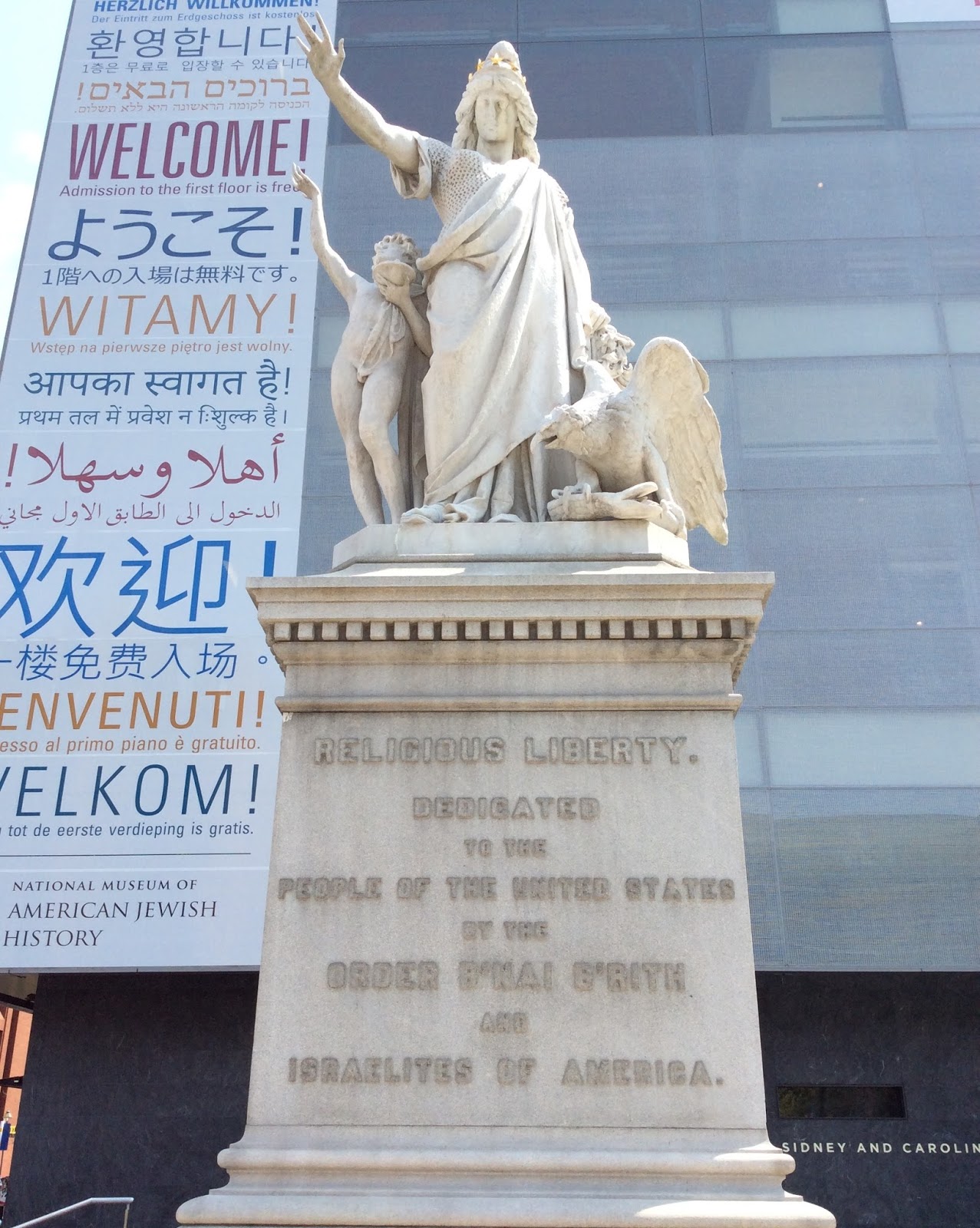
Religious Liberty, at the National Museum of American Jewish History in Philadelphia, by Moses Jacob Ezekiel, 1876

Most people in the West today unreflectively accept the need for religious toleration. Of course, if pressed, they will admit that toleration, like freedom of speech, can’t be absolute; there must be some limits. Suppose, for example, that my religion calls for human sacrifice every Sunday; no one will think that such a religion should be tolerated. Again, if pressed, people will agree that there are difficult cases: to take an issue that troubled John Locke, suppose that my religion demands allegiance to a foreign power. We may think that reasonable people can disagree over such cases. But the fact that there are these problem cases doesn’t shake people’s commitment to the principle of religious toleration.

We tend to be so wedded to this principle that we can easily forget how seductive the case for intolerance can be. Consider, for instance, a person who says with an authoritative air: “I know that my religion is the true one and that yours is completely false. I also know you will go to hell if you don’t convert to my religion.” Wouldn’t it be an act of charity on his part to convert you, by force if necessary, to the religion that will ensure your happiness in the afterlife? Here one might adapt an example given by that champion of liberalism, John Stuart Mill, for another purpose. A police officer sees a person trying to cross a bridge that he knows to be unsafe. According to Mill, it’s not an unwarranted interference with the person’s liberty for the officer to use force to prevent him or her from stepping on to the bridge; he knows, after all, that the bridge is unsafe and he knows that the person doesn’t want to fall into the river. One might take a similar line in the religious case: I know that John’s religion is leading him to hell, and I know that that’s not where he wishes to end up. Theologians in the Western tradition such as Augustine have argued for intolerance along these lines, and they have buttressed their argument by appealing to the biblical text: “Compel them to come in.”

Modern liberals are likely to respond that the appeal to Mill’s example is unfair, for the analogy is far from exact. For one thing, Mill builds into his example the assumption that there is no time to warn the person about the danger of the bridge; presumably, if there were time to warn him, then other things being equal, Mill would admit that there was no case for coercion. More importantly, one might argue that no one really knows, or can know, that the doctrines of revealed religion are true; acceptance of such doctrines depends on accepting the accounts of witnesses who may be unreliable or whose words may have been misinterpreted down the ages.

The idea that no one can know the claims of revealed religion are true is the basis for one of Locke’s main strategies of argument for religious toleration. The strategy is a powerful one, but it is open to a couple of objections. First, Locke sets the bar for knowledge very high: he allows little to count as knowledge that isn’t on a par with mathematical demonstration. By his lights, in the bridge example, even the policeman doesn’t strictly know that the bridge is unsafe. Further, even if the champion of intolerance concedes that he doesn’t strictly know his religion to be true, he may still say that he has very strong support for his beliefs, and that this level of support justifies him in coercing others. So the kind of case that Locke makes here may not be conclusive.

Fortunately, Locke has other strings to his bow. One intriguing argument turns on the nature of belief and its relation to the will. Suppose that the champion of intolerance says to the unbeliever: “You ought to believe the articles of my faith” (e.g. the doctrine of the Trinity). It seems apt for the unbeliever to reply to such a claim by saying: “It’s not in my power to believe this doctrine. You misunderstand the nature of belief. Belief is not a voluntary action like switching on a light. Rather, belief is more like falling in love; it’s something that happens to you.” One might then plug in the Kantian principle implicitly accepted by Locke: ought implies can. If belief is not in my power, and ought implies can, then I can have no obligation to believe the proposition in question.

This can seem like a powerful reply to the advocate of intolerance, but again, unfortunately, it’s not conclusive. For the advocate may say: “I agree that belief is not directly under your voluntary control, but I maintain that it is indirectly so. True, you can’t just switch on belief, but it’s in your power to do things that will result, or are likely to result, in your coming to believe.” Pascal, for instance, thought that though we can’t just believe at will, we can do things such as going to Mass and mixing with the congregation of the faithful that will have the effect of producing belief; faith, he thought, is catching. And then the intolerant person is in a position to make a case for religious persecution on the part of the state: there should be penalties for non-attendance at church so that people are induced to attend and at least to give a hearing to the teachings of the state-approved religion. This was the argument put to Locke by his opponent, Jonas Proast. Locke seeks to reply to this argument by saying that sincere religious belief can’t be produced in this way, and that it’s only sincere religious belief that is acceptable to God. Whether this reply to Proast is successful is a controversial issue among philosophers who have studied the debate. And the issue isn’t a narrowly academic one: it should be of interest to all those who seek to defend the values of the Enlightenment today.

This essay was originally published at OUP Blog: Oxford University Press’s Academic Insights for the Thinking World

Nicholas Jolley is Research Professor and Emeritus Professor of Philosophy at the University of California, Irvine. He has also taught at the University of California, San Diego, and Syracuse University. He is the author of a number of books for OUP, including Toleration and Understanding in Locke (2017), and Locke’s Touchy Subjects: Materialism and Immortality (2015).

~ Ordinary Philosophy is a labor of love and ad-free, supported by patrons and readers like you. Any support you can offer will be deeply appreciated!

*All views and opinions expressed by guest writers are their own and do not necessarily reflect those of Ordinary Philosophy’s editors and publishers

How ‘The Rubáiyát of Omar Khayyám’ Inspired Victorian Hedonists, by Roman Krznaric

The Angel of the Drink of Darkness, The Rubaiyat of Omar Khayyam, by Edmund Dulac

How did a 400-line poem based on the writings of a Persian sage and advocating seize-the-day hedonism achieve widespread popularity in Victorian England? The Rubáiyát of Omar Khayyám was written by the eccentric English scholar Edward FitzGerald, drawing on his loose translation of quatrains by the 12th-century poet and mathematician Omar Khayyám. Obscure beginnings perhaps, but the poem’s remarkable publishing history is the stuff of legend. Its initial publication in 1859 – the same year as Charles Darwin’s On the Origin of Species and J S Mill’s On Liberty – went completely unnoticed: it didn’t sell a single copy in its first two years. That all changed when a remaindered copy of FitzGerald’s 20-page booklet was picked up for a penny by the Celtic scholar Whitley Stokes, who passed it on to Dante Gabriel Rossetti, who subsequently fell in love with it and sang its praises to his Pre-Raphaelite circle.

When, in 1863, it fell into the hands of John Ruskin, he declared: ‘I never did – till this day – read anything so glorious.’ From that moment, there began a cult of Khayyám that lasted at least until the First World War, by which time there were 447 editions of FitzGerald’s translation in circulation. Omar dining clubs sprang up, and you could even buy Omar tooth powder and illustrated playing cards. During the war, dead soldiers were found in the trenches with battered copies tucked away in their pockets.

What then was the extraordinary attraction of the Rubáiyát? The answer sings out from some of its most famous verses:

XXIV
Ah, make the most of what we yet may spend,
Before we too into the Dust descend;
Dust into Dust, and under Dust to lie
Sans Wine, sans Song, sans Singer, and – sans End!

XXXV
Then to the lip of this poor earthen Urn
I lean’d, the Secret of my Life to learn:
And Lip to Lip it murmur’d – ‘While you live
Drink! – for, once dead, you never shall return.’

LXIII
Oh, threats of Hell and Hopes of Paradise!
One thing at least is certain – This Life flies;
One thing is certain and the rest is Lies;
The Flower that once has blown for ever dies.

The Rubáiyát was an unapologetic expression of hedonism, bringing to mind sensuous embraces in jasmine-filled gardens on balmy Arabian nights, accompanied by cups of cool, intoxicating wine. It was a passionate outcry against the unofficial Victorian ideologies of moderation, primness and self-control.

Yet the poem’s message was even more radical than this, for the Rubáiyát was a rejection not just of Christian morality, but of religion itself. There is no afterlife, Khayyám implied, and since human existence is transient – and death will come much faster than we imagine – it’s best to savour life’s exquisite moments while we can. This didn’t mean throwing oneself into wild hedonistic excess, but rather cultivating a sense of presence, and appreciating and enjoying the here and now in the limited time we have on Earth.

This heady union of bodily pleasures, religious doubt and impending mortality captured the imagination of its Victorian audience, who had been raised singing pious hymns at church on a Sunday morning. No wonder the writer G K Chesterton admonishingly declared that the Rubáiyát was the bible of the ‘carpe diem religion’.

The influence of the poem on Victorian culture was especially visible in the works of Oscar Wilde, who described it as a ‘masterpiece of art’ and one of his greatest literary loves. He took up its themes in his novel The Picture of Dorian Gray (1890). The character of Lord Henry Wotton is a champion of hedonism who explicitly refers to the sensual allures of ‘wise Omar’, and tempts the beautiful young man Dorian to sell his soul for the decadent pleasures of eternal youth. ‘Time is jealous of you, and wars against your lilies and your roses,’ says Lord Henry. ‘A new Hedonism – that is what our century wants.’

Wilde’s novel was a thinly veiled celebration of homosexuality – a crime for which he was gaoled in 1895 (passages of the book were read out at his trial as part of the incriminating evidence). He saw in the Rubáiyát an argument for individual freedom and sexual liberation from the constraints of Victorian social convention, not least because FitzGerald too was well-known for his homosexuality. For Wilde, as for FitzGerald, carpe diem hedonism was far more than the pursuit of sensory pleasures: it was a subversive political act with the power to reshape the cultural landscape.

Hedonism has a bad reputation today, being associated with ‘YOLO’ binge-drinking, drug overdoses, and a bucket-list approach to life that values fleeting novelty and thrill-seeking above all else. Yet the history of the Rubáiyát is a reminder that we might try to rediscover the hidden virtues of hedonism.

On the one hand, it could serve as an antidote to a growing puritanical streak in modern happiness thinking, which threatens to turn us into self-controlled moderation addicts who rarely express a passionate lust for life. Pick up a book from the self-help shelves and it is unlikely to advise dealing with your problems by smoking a joint under the stars or downing a few tequila slammers in an all-night club. Yet such hedonistic pursuits – enjoyed sensibly – have been central to human culture and wellbeing for centuries: when the Spanish conquistadors arrived in the Americas, they discovered the Aztecs tripping on magic mushrooms.

On the other hand, the kind of hedonism popularised by the Rubáiyát can help to put us back in touch with the virtues of direct experience in our age of mediation, where so much of daily life is filtered through the two-dimensional electronic flickers on a smartphone or tablet. We are becoming observers of life rather than participants, immersed in a society of the digital spectacle. We could learn a thing or two from the Victorians: let us keep a copy of the Rubáiyát in our pockets, alongside the iPhone, and remember the words of wise Khayyám: ‘While you live Drink! – for, once dead, you never shall return.’Aeon counter – do not remove

This article was originally published at Aeon and has been republished under Creative Commons.

Roman Krznaric is a social philosopher. He is the founder of the world’s first Empathy Museum and of the digital Empathy Library. He is also a founding faculty member of The School of Life and on the faculty of Year Here. His latest book is Carpe Diem Regained: The Vanishing Art of Seizing the Day (2017). Bio credit: Aeon

~ Ordinary Philosophy is a labor of love and ad-free, supported by patrons and readers like you. Any support you can offer will be deeply appreciated!

*All views and opinions expressed by guest writers are their own and do not necessarily reflect those of Ordinary Philosophy’s editors and publishers

When Philosophy Needed Muslims, Jews and Christians Alike, by Peter Adamson

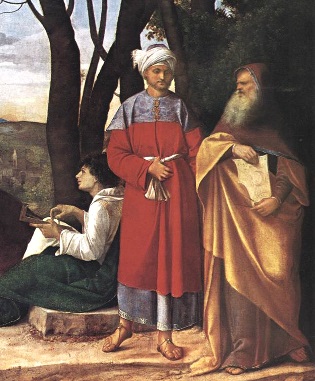
From The Three Philosophers, attributed to Giorgione, ca. early 1500’s. It likely portrays a young Italian philosopher, Averroes, and Plato

If you were asked to name the most important philosopher of 10th-century Baghdad, you would presumably not hesitate to say ‘al-Farabi’. He’s one of the few thinkers of the Islamic world known to non-specialists, deservedly so given his ambitious reworking of Platonic and Aristotelian metaphysics and political philosophy. But if you were yourself a resident of 10th-century Baghdad, you might more likely think of Yahya ibn ‘Adi. He is hardly a household name now, but was mentioned by the historian al-Mas‘udi as the only significant teacher of Aristotelian philosophy in his day. But ibn ‘Adi is not just a good example of how fame wanes across the centuries. He is also a fine illustration of the inter-religious nature of philosophy in the Islamic world.

Ibn ‘Adi was a Christian, as were most of the members of the group of philosophers who wrote commentaries on Aristotle at this time in Baghdad. The Muslim al-Farabi, who was apparently ibn ‘Adi’s teacher, was an exception to the rule. Completing the ecumenical picture, ibn ‘Adi was involved in an exchange of letters with a Jewish scholar named Ibn Abi Sa‘id al-Mawsili, who wrote to him with questions about Aristotle’s philosophy that he was hoping to have cleared up. Admittedly, Baghdad was an exceptional place, the capital of empire and thus a melting pot that drew scholars from all over the Islamic world. But philosophy was an interfaith phenomenon in other times and places too. The best example is surely Islamic Spain, celebrated for its culture of convivencia (‘living together’). Two of the greatest medieval thinkers, the Muslim Averroes and the Jew Maimonides, were rough contemporaries who both hailed from al-Andalus. After Toledo fell into the hands of the Christians, the Jew Avendauth collaborated with the Christian Gundisalvi to translate a work by the Muslim thinker Avicenna from Arabic into Latin.

That last example is a revealing one. Philosophy in these times often involved representatives of different faiths because it often presupposed translation. Hardly any philosophers of the Islamic world could read Greek, not even Averroes, the greatest commentator on Aristotle. He and other Muslim enthusiasts for Hellenic wisdom had to rely on translations, which had mostly been executed by Christians in the 8th to 10th centuries. Knowledge of Greek had been maintained by Christian scholars in Byzantine Syria, which explains why Muslim patrons turned to Christians to render works by Aristotle, Ptolemy, Galen and many other ancient thinkers into Arabic. Thus the very existence of Hellenic-inspired philosophy in the Islamic world was a manifestation of inter-religious cooperation.

All of which is not to say that the Islamic world was free of inter-religious dispute. On the contrary, it seems that one reason those Muslim patrons were interested in Aristotle was that his logic would give them the tools to keep up with Christian opponents in theological debate. A vivid example is provided by al-Kindi, the first Muslim thinker to draw on Hellenic sources. He wrote a short refutation of the Trinity in which he used Greek logic to argue that God must be wholly one, not one and three – mentioning that Christian readers should be able to follow the argument, given their familiarity with logical concepts. A nice twist to the story is that we know of this refutation only thanks to the aforementioned ibn ‘Adi, who quoted al-Kindi in order then to rebut his attack on the Christian dogma.

While men such as al-Kindi were appropriating Greek ideas to defend Islam and attack Christianity, others disapproved of the importation of these same ideas into Muslim culture: al-Kindi responded to unnamed critics who deplored the use of pagan philosophy, and the founder of the Christian Baghdad school got into a public dispute with a Muslim grammarian over the usefulness of Aristotle’s logic. The grammarian mocked the pretensions of the Christian Aristotelians, and delighted in pointing out that all this logic had not prevented them from believing that God can somehow be both one and three.

Still, it remains the case that philosophy and the sciences more generally offered a kind of meeting point or neutral ground for intellectuals of different faiths. Muslims, Christians and Jews who shared an interest in Aristotle’s metaphysics or the medical theories of Galen read each others’ commentaries and elaborations on the Hellenic tradition. This is shown even by the disputes that they had with one another: using Greek logic to debate the Trinity implicitly suggested that this was a topic that could be resolved by appeal to reason. And many of the thinkers mentioned above argued that philosophy offered the best resource for the interpretation of sacred texts, whether the Torah, the Christian Bible, or the Quran. So it is no coincidence that in the Muslim al-Kindi, the Christian ibn ‘Adi, and the Jew Maimonides, the One God of Abrahamic tradition bears a striking resemblance to the god of Aristotle’s Metaphysics. Their shared enterprise as elite philosophers meant that they had more in common with one another than they did with most of their co-religionists.Aeon counter – do not remove

This article was originally published at Aeon and has been republished under Creative Commons.

Peter Adamson is a professor of philosophy at the Ludwig Maximilian University of Munich. He is the author of several books, including The Arabic Plotinus (2002) and Great Medieval Thinkers: al-Kindi (2007) and Philosophy in the Islamic World (2016), and hosts the History of Philosophy podcast. (Bio credit: Aeon)

~ Ordinary Philosophy is a labor of love and ad-free, supported by patrons and readers like you. Any support you can offer will be deeply appreciated!

*All views and opinions expressed by guest writers are their own and do not necessarily reflect those of Ordinary Philosophy’s editors and publishers


The “Woman’s Rights” Man: A New Book on Women in Frederick Douglass’s World, by Ibram X. Kendi

Left: Leigh Fought, image Le Moyne College; right, Anna Douglass, image Library of Congress

The author of Women in the World of Frederick Douglass is Leigh Fought. Professor Fought is an associate professor of history at Le Moyne College in Syracuse, New York. She was an associate editor on the first volume of Frederick Douglass’s correspondence at the Frederick Douglass Papers, published by Yale University Press in 2009. Her previous books includes Southern Womanhood and Slavery: A Biography of Louisa McCord (University of Missouri Press, 2003) and Mystic, Connecticut: From Pequot Village to Tourist Town (History Press, 2006). Professor Fought earned her Ph.D. in U.S. history from the University of Houston and a Master of Library Science degree from Simmons College in Boston.

In his extensive writings, Frederick Douglass revealed little about his private life. His famous autobiographies present him overcoming unimaginable trials to gain his freedom and establish his identity—all in service to his public role as an abolitionist. But in both the public and domestic spheres, Douglass relied on a complicated array of relationships with women: white and black, slave-mistresses and family, political collaborators and intellectual companions, wives and daughters. The great man needed them throughout a turbulent life that was never so linear and self-made as he often wished to portray it.In Women in the World of Frederick Douglass, Leigh Fought illuminates the life of the famed abolitionist off the public stage. She begins with the women he knew during his life as a slave: his mother, from whom he was separated; his grandmother, who raised him; his slave mistresses, including the one who taught him how to read; and his first wife, Anna Murray, a free woman who helped him escape to freedom and managed the household that allowed him to build his career. Fought examines Douglass’s varied relationships with white women—including Maria Weston Chapman, Julia Griffiths, Elizabeth Cady Stanton, and Ottilie Assing—who were crucial to the success of his newspapers, were active in the antislavery and women’s movements, and promoted his work nationally and internationally. She also considers Douglass’s relationship with his daughter Rosetta, who symbolized her parents’ middle class prominence but was caught navigating between their public and private worlds. Late in life, Douglass remarried to a white woman, Helen Pitts, who preserved his papers, home, and legacy for history.

By examining the circle of women around Frederick Douglass, this work brings these figures into sharper focus and reveals a fuller and more complex image of the self-proclaimed “woman’s rights man.”

In this well-researched and richly textured book, Leigh Fought gives us a fascinating new view into the life and times of one our most famous and revered figures: Frederick Douglass. As he freely acknowledged, women helped make Douglass the man he became. So we, too, are in debt to the women whose stories come so vividly alive in these pages.”—Annette Gordon-Reed, author of The Hemingses of Monticello: An American Family

Ibram X. Kendi: What are the principle findings or arguments of the book? What do you hope readers take away from reading it?

Leigh Fought: Frederick Douglass would not have become one of the greatest black activists of the nineteenth century without the work of women. This was not the cliché “behind every great man is a woman.” Women played a central role in his intellectual development, his independence as a man and activist, his economic well-being, his challenge to racial stereotypes and prohibitions, and the persistence of his place in history.

When I started this project, I was simply interested in finding more about all of these women who seemed as fascinated by Douglass as I was, except that they actually knew him. I also thought that the project would be synthetic. As it turned out, others had expressed little curiosity about most of the women themselves, with the exception of those women who merited their own biographies. Then, as I began to reconstruct the lives of the women from original research in order to explain their interaction with Douglass, I began to see a feminine space around him, much like the concept of a “negative space” in art. That feminine space, like most feminine spaces, was where the real action took place. If you want to know about a life, that is the place you have to investigate.

In Women in the World of Frederick Douglass, readers will meet a host of fascinating, resourceful women, some of whom might otherwise remain footnotes. The women featured in this book had the most dramatic influence on Douglass’s life, but they also had their own agendas and contexts that explain the ebb and flow of their relationships with Douglass, as well as his respect for or sympathy with them. The abuse suffered by slave women and the capitulation of white women to the institution of slavery shaped his childhood, laying the foundation for the man he became. In his adulthood, each woman at some point formed a partnership with Douglass to advance a cause against racism that extended beyond abolition and the end of slavery. His relationships with all of these women exposed the variety of ways that gender and race were employed as tools of oppression. At the same time, he and they mobilized their resistance along those very same lines. While the story of women in Douglass’s world does not preclude other actors or influences in his life, by bringing them into focus their biographies add nuance and deeper understanding to his.

This piece was originally published at Black Perspectives, the blog of the AAIHS, on May 1st, 2017, the release date of Ms. Fought’s book

Ibram X. Kendi is the associate editor of Black Perspectives. He is the author of Stamped from the Beginning: The Definitive History of Racist Ideas in America (Nation, 2016), which won the 2016 National Book Award for Nonfiction. In August, Kendi begins a new position as Professor of History and International Relations and the Founding Director of the Anti-Racist Research and Policy Center at American University. Follow him on Twitter @DrIbram.

~ Ordinary Philosophy is a labor of love and ad-free, supported by patrons and readers like you. Any support you can offer will be deeply appreciated!

*All views and opinions expressed by guest writers are their own and do not necessarily reflect those of Ordinary Philosophy’s editors and publishers


A Politic of Forgiveness and Responsibility, by Dylan Flint

“Our fathers sinned, and are no more; and we bear their iniquities” Lamentations 5:7

Whether or not we buy the metaphysical presuppositions of this passage from the Bible, and others like it, we cannot deny that we do not choose the household we are born into nor can we choose our country of birth.

To put it bluntly, I did not choose to be American.

I moved to China in the midst of an ugly election and considered, like many others, going (in my case staying) abroad if a certain candidate was elected. Well, he was elected, and I probably won’t stay abroad. But, then again, I do not know what the future holds.

Living in China during this election cycle has caused me a great deal of reflection surrounding three things: the sociopolitical climate of my new home, the shortcomings of democracy, and what it means to be an American.

In many ways, China is ahead of us. For starters, they’ve already had their experiment with communism and thrown it out as no good. In America, however (pardon the metaphor) we seem rather stuck, unable to do our business or get off the pot. Yet, in many other ways, China seems centuries behind. The current government at times easily reminds us of something out of the Dark Ages: complete centralized authoritative rule, shadow policy making, the imprisoning and beating of dissenting artists, and a hell-bent policy of eliminating any hint of revolution. And while the beheadings aren’t held in the square, China currently executes more of its citizens than any other nation in the world.(1)

While we are quick to lament, and rightly so, I can not deny that it works. In fact, I have never seen so many happy people in my life.

Cyber-threats, terrorism, misinformation, hacked elections, these are all non-issues. At least, not ones felt by ordinary citizens. With closed borders, the great firewall, and a state-run media, this is the reality.

And what about crime? Likewise, it is a non-issue.

But why is this so?

One can cite the fact that the government wastes trillions of renminbi (RMB) on new construction projects, many of which will never see the light of day, simply so people can stay employed. While I do not deny this contributes to the low crime rate, I feel I have struck something deeper — something ingrained in the social fabric of the people. In China, there are no second chances. I have found the concept of forgiveness to be a strangely western, strangely Christian idea.

When I asked a group of Chinese students, aged 20–35, about the private prison system in America, many agreed that it was unjust and that rehabilitation has fallen behind cheap labor and profit in priority. But when I asked those same students if they would invite a convict back into their lives after they had served their time, I was shocked by the fiercely absolute “No” I received. Not one of them said they would hire the person if they owned a company, and many suggested they wouldn’t even associate with the person. Even if the person was a child when they committed the offense, the answer was still the same. The verdict was in: if you did something that landed you in jail, you are forever an outsider. It is no wonder people don’t commit crimes.

While I found this to be a bit cruel, I had to remember that outside Christendom this is the way things work. And I am starting to realize that forgiveness comes at quite the cost.

Higher principles are not cheap. They demand a lot from us.

Last year, when Angela Merkel opened Germany’s doors to more than a million refugees, she was doing so because it was the right thing to do. Nevertheless, the tangible consequences appear to have been devastating. Whether the rate of terror has actually increased due to the influx of refugees, or politicians are merely fanning flames of xenophobia, it doesn’t seem to matter much. Regardless of who is responsible, the country is in turmoil.

Now, I would like to believe that, given enough time, Merkel’s good graces will be rewarded. However, it is hard to see such a thing outside the classroom. All I can see is sensible people living in fear, opportunistic politicians cashing in, and daily injustices committed against those who seek refuge.(2) This is a spotty resume for “doing the right thing”, to say the least. But beyond this, I think there is a real lesson here. I think we must realize what it is our higher principles ask us to overcome.

We have to understand that this growing alt-right protectionist polemic that passed Brexit, put Donald Trump in office, and may put out Angela Merkel is not all based on false news, rhetoric, and politics of fear. Despite what I am about to say going against everything I was taught by Hollywood, the reality is that foreigners wreak havoc on familiar social norms, dissent is painful to bear, tolerance is exhausting, criminals hardly ever learn from their mistakes, and our enemies know to hit us where it hurts: they take advantage of our good graces, making a mockery of our higher principles. Free trade, open borders, second chances, all of it attracts exploitation.

When taking one honest, good-long-look at China, it is not hard to see the draw of a massive one party system with closed borders that censures the media and silences civil unrest at all costs.(3) It is so peaceful here. And while the harmony may be faux, there is real solidarity. Despite all the problems China faces (and they are immense), the sentiment of the people is that we are all in this together — we are all Chinese.

It pains me to admit that this sense of identity is gone in America, if there ever was such a thing. Despite the few radical god-fearing patriots, the sentiment of American solidarity — the home to pioneers of freedom, people who believed they could build the future they wanted for themselves, the shining beacon of hope for the tired, hungry, and poor of the world — is completely gone.

Maybe I envision America’s past as does a child who reads a storybook, and maybe I see China through the eyes of a foreigner, but I still believe free people can come together of their own volition, and that this is somehow better than the alternatives. However, I would be lying if I said this belief isn’t constantly being challenged by everything around me, or that I have never considered its outright abandonment. In fact, it may be worth asking ourselves why it is we even have this belief. What is this something extra that makes it better if we make decisions for ourselves, and come together on our own, instead of someone one else forcing this upon us?

This very same question is to be found, incidentally enough, in the history of Christianity. There the question takes on the form: why is conversion in the heart better than conversion through coercion?

Many Christian philosophers, Pierre Bayle comes to mind, have argued that this is just clearly so — that only a true conversion takes place if it happens in the heart of man, not merely in his outward demonstrations. But this argument, though I agree with its conclusions, often ends with an appeal to the “natural light” of reason. In other words, a conversion in the heart is just obviously better. But, absent this vague intuition, it is hard to see why.

I’ve always believed the ends to never justify the means… but, if God is the end, it could hardly matter how you got there. After all, you arrived at God.

*     *     *

Benjamin Franklin once said, “those who would give up Essential Liberty to purchase a little Temporary Safety, deserve neither Liberty nor Safety.”

As a juvenile, I believed this quote to be expounding the sagacity of the libertarian. Now, as an adult, I see it more as a proclamation, or rather a warning, of the insecurity of a democracy. On the one hand, if essential liberties are lost, then the entire system collapses. On the other, if an individual wishes to relinquish his liberty in exchange for some relief from the anxiety that that liberty expounds upon him, then he loses his place in that system. In other words, everyone must believe in it for the system to work. What a frail thing indeed. That is, unless we take ‘belief’ to mean something other than it does in its pejorative sense. In any event, if I were not a talented, energetic, young Aristotelian who stood to gain from toppling monarchs, it would be hard to see why anyone would want to buy into such a thing.

It could be rebutted that a democracy ensures against corruption, and I would reply that profit-seeking corporations are running America. It could be replied that a democracy represents the people, and I would say then that the last honest politician was shot in the head. It could be said that a democracy ensures against the homogeneity of opinion and the stagnation of ideas, and I would say we are overrun with opinion and everyone’s “good” ideas. It could be said that democracy encourages progress, and I would say America is behind a lot of the world. It could be said that democracy and religious freedom go hand-in-hand, and I would say purchasing good vibes at a megachurch hardly constitutes unabated spiritual development. It could be said that only in a democracy do we get to choose our leader, and I would say that over half the voting populous didn’t select America’s current president.

Now to be sure, charges against democracy are nothing new. Plato famously argued in his masterpiece Republic that the next logical step after the beautiful, multifarious democracy was tyranny. And it isn’t because some tyrant comes and takes our kingdom: it is because we give rise to the tyrant. This is simply the natural consequence of our desires playing the part of the ruler in the political organism that is the state. So the story goes: our customs and values diminish from generation to generation because, in a democracy, the father is on equal ground with the son; when things go wrong, as they are bound to, we desperately elect a leader who promises to continue to give us everything we wish for. But the thing is, because we have destroyed our values in the relativism that cohabits with democracy, the leader lacks that which it takes to be a good leader. The beautiful tragedy runs its course, and we become slaves to the tyrant — the embodiment of our passions — in his wild pursuit to save us.

But let be also known that Plato likewise believed in something called the Form of the Good: a metaphysical force which has the power to transform the natural world, including its natural consequences.

While I do not doubt that this is a hard notion for people to understand, let alone believe in, I find it compelling. And the reason why is I have been transformed, if not by it, then by something similar. See, the thing I can not deny, no matter how bad things get in America and how good things get for me in China, is that I have been given a second chance — a second chance I did not deserve.

*     *     *

As a heroin addict in my early 20’s, I tore through the lives of others. In my wild pursuit for pleasure and comfort, I abused my freedom just as much as America is being abused today. My family, my community, my society, my culture, have now all forgiven me, and my debt for this is insurmountable. But it isn’t a debt I don begrudgingly.

I moved to China to repay a debt to my father — to become my own man: a self-sufficient man who under his own propensities can nurture and provide for himself and others — and it is becoming one of the defining experiences of my life. The process of going back over our lives — our histories — and making right our wrongs, is one of great beauty, tremendous insight, and strengthening of soul. It is not a journey of dread. It is the path we want to be on, and, for me, it all began with a choice, a free choice.

Now, I am compelled by this path. It is not by force that I am compelled, but by a sense of moral duty. I am beginning to see what a life of service means, and it is something I really want. I want to repay my family, my community, my country, my western ethos, which gave me another chance at life.

I was once asked as an undergraduate what the Form of the Good meant to me, and for the first time I have a genuine answer: being able to implement your own ideas and to have the consequences be of benefit — to see the lives of other people improve by your hand. It is hard to imagine such a thing flowering and reaching its fullest fruition in a country that stifles free expression and assembly.

The spirit of the west — freedom of conscience, forgiveness, freedom of assembly, freedom of expression, freedom to influence, self-governance — is sick and dying, but it is not dead. Being able to believe what you want, to say what you want, to think what you want, to go after what you want, and to fall flat on your face, but then to be given a second chance, the means of redemption, the opportunity to really learn, and then to see it all work — to see yourself become a positive force in the lives of others — that, that is worth saving.

But I am fully aware that unless one has shared this experience, it is hard to see how they could reach the same conclusion. In other words, it is hard to see why ordinary people should buy into these higher principles if they don’t immediately benefit from them.

I recently read that chaos, insecurity, anxiety, complaining, deceit, and rhetoric are not signs that a democracy is failing. Rather, these are signs a democracy is working —that this is a democracy in action.

Maybe it is the case that we don’t need everyone to be convinced. Maybe the system need only produce a few good men — maybe even only one. I take some solace in the idea.

*     *     *

So why then is it better if conversion takes place in the heart? If answers must be given, this is because once the Father dies, it can live on in the Son, and the Son can one day pass on the torch. Absent this internalization, it is hard to imagine a thing surviving once our father leaves us.

And, after all has been said, what does it mean to be an American? For me, it means having the freedom to become influential in the lives of others, for better or for worse. It means taking part in a socio-political environment where goodness at least has the potential to reach its highest expression.

But what will happen to us? Will a democracy give rise to a tyrant, a few good men, or to a philosopher king? This I obviously do not know, but since I have recovered from my passions, and things are beginning to fall into their proper place, I am hopeful, nay faithful, that the same thing can happen to her.

Despite the fact my generation is being handed a broken country, I assume the responsibility it entails. I forgive my father’s transgressions. I forgive my country’s mistakes. And I, of my own volition, compelled by moral duty, seek a life in politics.

It is true I never chose to be American. But today, I do.

1)  https://en.wikipedia.org/wiki/Capital_punishment_in_China

2) http://www.bbc.com/news/world-europe-39096833

3) I have in mind Tiananmen Square June, 4th 1989.

*A version of this essay was originally published by Chosenmag.com in April 2017

Dylan Flint is a Seattle native with deep ties to the Pacific Northwest. He has been writing continuously ever since getting sober in 2013. He has written on a wide range of topics, from spirituality and addiction to politics and poetry, but everything has always had a philosophical bent. Philosophy is not only dear to Dylan, he considers it a part of himself–an “expression of his soul” to use his own words. Dylan received his BA in philosophy from the University of Washington in 2015. Since graduating he has spent time in Germany at the University of Tubingen, and for this past year, he has been teaching English in China’s Jiangsu province. When he isn’t reading and writing, Dylan enjoys skiing, hiking, traveling and generally being outdoors. This fall he plans to return to the Pacific Northwest. He has been accepted to the philosophy masters program at Simon Fraser University in Vancouver, BC. After he completes this program, he plans to pursue a PhD in philosophy and dreams of one day being a philosophy professor so he can share his love with the next generation of thinkers. To follow Dylan’s thoughts and experiences along the way, you can check out his blog at www.medium.com/@aphilosophersquarrel or on Instagram @aphilosophersquarrel

~ Ordinary Philosophy is a labor of love and ad-free, supported by patrons and readers like you. Any support you can offer will be deeply appreciated!

*All views and opinions expressed by guest writers are their own and do not necessarily reflect those of Ordinary Philosophy’s editors and publishers

Bertrand Russell Got Stoicism Seriously Wrong, by Massimo Pigliucci

I’m an admirer of Bertrand Russell in some ways, and not in others. For one, I, too, have discovered over time that Russell had gotten some things very wrong about some philosophers and their ideas, and had to overcome some of the prejudices his History of Philosophy had instilled in me. Thanks for the defense of Stoicism, Massimo Pigliucci! This essay serves as a good introduction to Stoicism as well.

Happy Birthday, Una Marson! A Profile of this Great Cultural and Literary Nationalist by Lisa Tomlinson

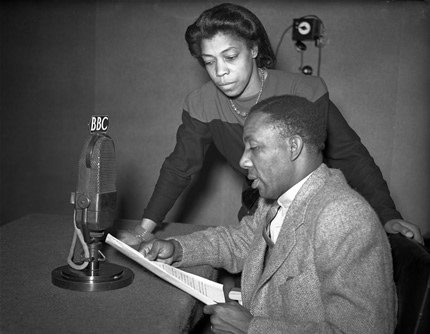
Una Marson, image from AAIHS

Una Marson: Cultural and Literary Nationalist

Una Marson was born on May 5, 1905 in the rural parish of St. Elizabeth, Jamaica, sixteen years after the novelist and poet Claude McKay. Following in the literary footsteps of McKay, Marson valorized African working-class cultural aesthetics and engaged with the wider African diaspora through her literary and political work. Although her work has not received the same attention or accolades as her fellow countryman Claude McKay, Marson has, without a doubt, made a significant contribution to Caribbean and diasporic literature. She was certainly a key figure in twentieth century black internationalist politics.

Fortunately, conversations around the life and work of Una Marson have been kept alive and archived in a few libraries throughout the world. Writers such as Erika Smilowitz, Honor Ford Smith, and Alison Donnell have also written critical essays on Marson’s literary and political involvement inside and outside of Jamaica. Additionally, her biographer Delia Jarrett-Macauley has provided a comprehensive documentation of Marson’s life and writing. Therefore, their works are most instructive in offering more information concerning Marson’s life and activism.

Not surprisingly, Marson’s early works of literature reflected her colonial education. Marson’s writing in her first collection of poems, Tropic Reveries (1930) and Heights and Depth (1931), adapted traditional European literary structure and spoke to pastoral style poetry. As her travels abroad strengthened her race consciousness in the mid-1930s, Marson’s literary work departed from the conventions of British Victorian and Romantic literature. As such, her third volume of poems, The Moth and the Star (1937), articulated themes that resonated with the experiences of African women entrapped within received notions of white beauty standards.

In her poem “Cinema eyes,” for example, the narrator tries to protect her daughter from procuring a “cinema mind” under the influence of white supremacy, which “saw no beauty in black faces.” Two other poems, “Kinky hair blues” and “Black is Fancy,” reveal black hair politics and many black women’s desire to alter their physical appearances:

I hate dat ironed hair
And dat bleaching skin
Hate dat ironed hair
And dat bleaching skin
But I’ll be alone
If I don’t fall in 2

Over time, Marson’s work also became more rooted in Jamaican experiences, and she integrated the indigenous culture of the black Jamaican working-class. In her poem “Stone Breaker, ”Marson sheds light on the experiences of black working-class Jamaican women using the native language, Jamaican, to express class and racial inequalities that inform life on the island: “De big backra car dem/ A lik up de dus’ in a we face” 3

Maintaining a bond to her Jamaican roots, Quashie Comes to London, a more lighthearted poem, highlights the immigrant experience of homesickness in the metropolis of London. Quashie’s diasporic journey in cold dreary London and yearning for familiar food items such as “some ripe breadfruit / Some fresh ackee and saltfish too / An’dumpins hot will suit,” later becomes common threads in the works of Caribbean diasporic writers living outside of the region.

Marson further developed her use of African Jamaican cultural aesthetics and experiences in her popular plays, London Calling and Pocomania. In Pocomania, for instance, she includes the local vernacular, folklore, and African-centered religious practice called Pocomania to challenge middle-class respectability and Christianity. She does this through Stella, the middle-class character in the play, who journeys to the world of the black Jamaican working-class in a bid to experience the forbidden religious rituals of Pocomania. Given the fact that the reference to anything “African” was frowned upon in colonial Jamaica, Marson’s plays and poems reflected a transgressive intervention in conventional Jamaican literature.

In many ways, Marson unselfishly employed her literary status to foster and build upon the development of a Caribbean literary canon. In her desire to advance Jamaican literature and culture, Marson formed the Writers Club, the Kingston Drama Club, and the Poetry League during the 1930s. Marson was also responsible for starting a publishing press.

una1While living in England, Marson developed the BBC radio program, “Caribbean Voices,” which evolved into a significant literary show, one that would have a crucial impact on the development of new writings and writers from the Anglophone Caribbean. Caribbean cultural luminaire Kamau Braithwaite has characterized the forum as the “single most important literary catalyst for Caribbean creative and critical writing in English.” 4
In addition to her literary engagement, Marson was also very politically active in local and international affairs. In 1928, at the age of 23, she became the first woman in Jamaica to own and edit a magazine, The Cosmopolitan. Marson used this publication as an outlet to express social concerns in Jamaica (i.e., race and class prejudices) and also to address gender issues. In her editorials, Marson consistently advocated for the expansion of educational and employment opportunities, the development of women’s self-help groups, and the granting of women’s suffrage.

As a feminist, Marson worked in various overseas women organizations and was the only black woman to attend the 12th Annual Congress of the International Alliance of Women for Suffrage and Equal Citizenship conference in Istanbul, Turkey in 1935. Motivated by wider diasporic experiences, she used the opportunity to advocate for the rights of black woman globally and called on the conference to recognize African women in their daily struggles.

Coupled with her feminist work, Pan-Africanism became a dominant feature of Marson’s activism. Marson’s Pan-Africanist vision, for example, was invested in the need for educational reform on her island, a reform that would reverse the colonial education to which she was subjected and instead teach Jamaican children about their African past. Equally, Marson worked as a secretary for the Ethiopian emperor, Haile Selassie, where she used this position to highlight the separation of families and Italian atrocities against women and children in Ethiopia. As his private secretary, Marson also accompanied him to Geneva where he pleaded his country’s case to the League of Nations on the matter of the Italian invasion and occupation.

Marson’s last years of political activism focused on advocacy for the Rastafarian community in her native Jamaica, where she successfully established a home for Rastafarians. She also created the Save the Children Fund, an organization that helped to fund poor children’s basic education.

According to published sources and acquaintances, Marson’s extensive work and travels later contributed to her frail health. Marson struggled with depression and was hospitalized several times in mental health facilities before she died of a heart attack in Jamaica in 1965.

Like Claude McKay, Una Marson’s literary and political work emerged out of their native country Jamaica and later became a part of a wider community of diasporic Africans who sought to assert a distinct national voice and identity. Both writers combined their work with the indigenous cultural expression of the island but were also open to bridging the conversation with other black art forms as evident in the jazz poems of Marson and her brief experimentation with the African American vernacular.

Unlike McKay, however, Marson remained in Jamaica to witness the fruition of her goal toward a cultural and literary renaissance. The 1950s and 1960s defined a literary and cultural rebirth for Anglophone Caribbean people as seen in the dramatic growth in the number of artists, musicians, and creative writers working regionally and internationally. Writers such as Jamaican Andrew Salkey, Barbadian George Lamming, and Trinidadian Samuel Selvon all began to make their mark as renowned Caribbean writers and cultural activists in various parts of the globe.

Therefore, Marson’s commitment to gender politics, race, class, and her impulse to divert from British literary style shaped a generation of writers who aspired to attain cultural and political sovereignty. Indeed, Marson belongs to a long line of black internationalist intellectuals and activists, whose works have been fundamental to struggles for cultural assertion and self-hood.

  1. D. Jarrett-Macauley, The Life of Una Marson 1905-65 (Manchester: Manchester University Press, 1998), 73
  2. Una Marson, Moth and the Star, 91.
  3. Una Marson, Moth and the Star, 70; Like Professor Carolyn Cooper and some Caribbean linguistics I have chosen to use Jamaican (rather than patois) because the term “patois” has a negative linguistic connotation of inferiority.
  4. Kamau Brathwaite, History of the Voice: The Development of Nation Language in Anglophone Caribbean Poetry (London: New Beacon, 1984).

This piece was originally published at the African American Intellectual History Society blog on March 26, 2016

Lisa Tomlinson is a Jamaican researcher and scholar residing in Kingston, Jamaica. Her area of specialization includes literary and cultural studies of the Caribbean and African diaspora, Black literary criticism and anti-colonial studies. She holds a degree in English Literature from Carleton University and a Ph.D. in Humanities (Comparative Perspective and Culture) with a graduate diploma in Latin America and Caribbean Studies.

Lisa has worked in tertiary institutions in Ontario, Canada where she taught courses in English literature, humanities, and visual culture. She is currently a lecturer at the University of the West Indies, Mona Campus in the Department of Literatures in English. Some of her publications include book chapters in Jamaicans in the Canadian Experience: A Multicultralizing Presence, Archipelagos of Sound: Transnational Caribbeanities: Women and Music, Critical Insights: Harlem Renaissance, as well as encyclopedia entries in the Dictionary of Afro-Latin American and Caribbean Biography. (Bio credit: AAIHS)

~ Ordinary Philosophy is a labor of love and ad-free, supported by patrons and readers like you. Any support you can offer will be deeply appreciated!

*All views and opinions expressed by guest writers are their own and do not necessarily reflect those of Ordinary Philosophy’s editors and publishers

Happy Birthday, Søren Kierkegaard! By Eric Gerlach

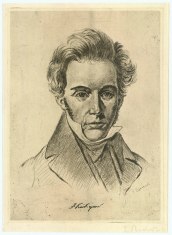
S. <>Søren Kierkegaard (1813-1855 CE), the great Danish philosopher and forerunner of existentialism, was born in the Danish city of Copenhagen, and throughout his life he enjoyed walking through the city, greeting everyone he met as his equal regardless of their station in life.  As a young boy, Kierkegaard’s father drilled him with difficult lessons so he would be the top student in his class, but to prevent his son from developing selfish pride, the father demanded that his son get the third best grades in the class, purposefully making mistakes to prevent the boy from being recognized as first or second student.
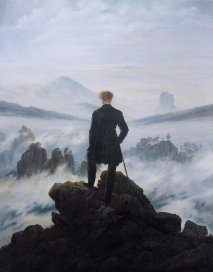

Caspar_David_Friedrich_-_Wanderer_above_the_sea_of_fog

For Kierkegaard, genuine truth is human subjectivity and perspective, and it is only the individual who accepts subjectivity who comes to realize the greater truth insofar as it is achievable by individuals.  For Kierkegaard, truth is not objective, but subjective, not an object achieved, but a test withstood, not a hurdle overcome, but an experience endured.  Kierkegaard argued that no social system can authentically give the individual meaning and truth. Individuals must make choices, and if they choose to go along with the masses, they have sacrificed their own ability to give truth meaning.  Kierkegaard wrote that he could have, like most scholars of his day, become a voice pronouncing the greatness and objectivity of his race, his country, his historical period, his fellow scholars, but rather than commit treason to truth he chose to become a spy, a solitary individual who chronicled the hypocrisy of all claims to objectivity.

472px-Kittinger-jump

To be an individual is to experience “a vertigo of possibilities”, the monstrosity of spontaneity.  Kierkegaard wrote, “We are condemned to be free”.  It is our freedom, the experience of the infinite, undefined and unbounded, which unites us most intimately with our world.  Kierkegaard argued that one can overcome the angst, the vertigo of possibilities, by making a leap of faith, by choosing to believe in something and act with some purpose in spite of the fact that beliefs and purposes can never be fully justified.  Only this is authentic individuality and truth, having chosen what one is to be, with the honest recognition of the freedom involved in the choice.

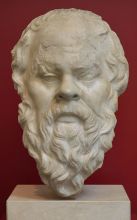
373px-Head_of_Socrates_in_Palazzo_Massimo_alle_Terme_(Rome)

Kierkegaard saw himself as a true follower of Socrates, who argued that he knew that he did not know, which is why the Oracle at Delphi said that no man was wiser than he.  Kierkegaard wrote his college thesis on Socrates, irony, and indirect communication, much as Kierkegaard himself indirectly communicated through his pseudonyms.  Socrates never made great claims to truth, and would instead use analogy, myth, and paradox to show that human judgments and beliefs are problematic and contradictory even as they assert themselves with certainty, which Kierkegaard argued was also the method of Jesus.  Kierkegaard wrote that Socrates “approached each man individually, deprived him of everything, and sent him away empty-handed”.  Socrates showed others that they did not truly know what they believed themselves to know, and he was killed by the Athenian assembly just as Jesus was killed for questioning the Pharisees.

Brooklyn_Museum_-_Saint_John_the_Baptist_and_the_Pharisees_(Saint_Jean-Baptiste_et_les_pharisiens)_-_James_Tissot_-_overall

Kierkegaard’s works are dominated by theological concerns, wondering on many pages about the individual’s relationship to God and Jesus.  For Kierkegaard, the meaning of Christianity was not the achievement of objectivity, but the acceptance of subjectivity, of individually lacking the God’s eye view.  Kierkegaard was brutally critical of the Danish Lutheran Church for presenting itself as the objective truth, and argued that it is only as an individual that one can be a genuine Christian.  Kierkegaard argued that Christianity began as a rebellion against the status quo, but then became the entrenched regime.

450px-Image-Søren_Kierkegaard_grave_4

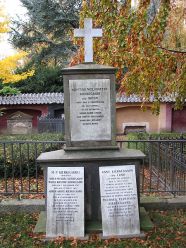
After healing a blind man, Jesus rebuked the Pharisees, the political and religious establishment of his time, and said that because they think they see they are in fact blind.  In his later years, Kierkegaard attacked the Danish Church without mercy, and at his funeral a fight broke out when young theology students, progressive and inspired by Kierkegaard, protested that the church was attempting to hijack his name and fame by calling him one of their own after he had so bitterly attacked their hypocrisy for decades.  Kierkegaard wanted his tombstone to read only, “The Individual”, though his relatives decided otherwise.

~ Ordinary Philosophy is a labor of love and ad-free, supported by patrons and readers like you. Any support you can offer will be deeply appreciated!

*All views and opinions expressed by guest writers are their own and do not necessarily reflect those of Ordinary Philosophy’s editors and publishers