Is it Ethical to Use Data from Nazi Medical Experiments? by Lynn Gillam

Birkenau (Nazi concentration camp where medical experiments were performed on prisoners) by Scotch Mist - Own work - creative commons license, via Wikimedia CommonsDuring World War II, Nazi doctors had unfettered access to human beings they could use in medical experiments in any way they chose. In one way, these experiments were just another form of mass torture and murder so our moral judgement of them is clear.

But they also pose an uncomfortable moral challenge: what if some of the medical experiments yielded scientifically sound data that could be put to good use? Would it be justifiable to use that knowledge?

Using data

It’s tempting to deflect the question by saying the data are useless – that the bad behaviour must have produced bad science, so we don’t even have to think about it. But there is no inevitable link between the two because science is not a moral endeavour. If scientific data is too poor to use, it’s because of poor study design and analysis, not because of the bad moral character of the scientist. And in fact, some of the data from Nazi experiments is scientifically sound enough to be useful.

The hypothermia experiments in which people were immersed in ice water until they became unconscious (and many died), for instance, established the rate of cooling of humans in cold water and provided information about when re-warming might be successful. Data from the Nazi experiments was cited in scientific papers from the 1950s to the 1980s, but with no indication of its nature.

The original source appears as a paper by Leo Alexander, published in Combined Intelligence Objectives Subcommittee Files. This is an unusual type of publication to be mentioned in a scientific journal, and it’s unclear that it comes from the trial of Nazi doctors at Nurmemberg.

In the late 1980s, US researcher Robert Pozos argued the Nazi hypothermia data was critical to improving methods of reviving people rescued from freezing water after boat accidents, but the New England Journal of Medicine rejected his proposal to publish the data openly.

Use of data generated by the Nazis from the deadly phosgene gas experiments has also been considered, and rejected by the US Environmental Protection Agency, even though it could have helped save lives of those accidentally exposed.

A tricky conundrum

So should the results of Nazi experiments ever be taken up and used? A simple utilitarian response would look to the obvious consequences. If good can come to people now and in the future from using the data, then its use is surely justified. After all, no further harm can be done to those who died.

But a more sophisticated utilitarian would think about the indirect and subtle consequences. Perhaps family members of those who were experimented on would be distressed to know the data was being used. And their distress might outweigh the good that could be done. Or perhaps using the data would send the message that the experiments weren’t so bad after all, and even encourage morally blinkered doctors to do in their own unethical experiments.

Of course, these bad consequences could be avoided simply be making sure the data is used in secret, never entering the published academic literature. But recommending deception to solve a moral problem is clearly problematic in itself.

The trouble is that focusing on the consequences – whether good or bad – of using Nazi data, misses an important point: there’s a principle at stake here. Even if some good could come of using the data, it would just not be right to use it. It would somehow deny or downplay the evil of what was done in the experiments that generated them.

This is a common sentiment, but if it is to hold ethical weight we need to be able to spell it out and give it a solid foundation. A little reflection shows that, as a society, we don’t have an absolute objection to deriving some good out of something bad or wrong. Murder victims sometimes become organ donors, for instance, but there is no concern that is inappropriate.

Paying our debt

So how to decide when it’s all right to derive some good from a wrongdoing? I think the answer lies in considering what society owes ethically to the victims of a wrongdoing. The ongoing investigations into institutional child sexual abuse in a number of Western countries have brought this question sharply into focus.

The wrongs done to victims of abuse are over but that’s not the end of the matter. Victims are ethically owed many things: recognition that what was done to them was indeed wrong, a credible indication that the society takes this seriously, an effort to identify, apprehend and punish the perpetrators, and compensation for their ongoing suffering and disadvantage. But beyond this, we have an obligation not to forget, and not to whitewash.

Victims of Nazi medical experiments are owed these same things. If society’s obligations to them have broadly been met through the Nuremberg trials and the ongoing global abhorrence of the awful things done to people in World War II, then it might be ethically possible to use the data if it could lead to some good.

But this must only be done with absolute openness about the source of the data, and clear condemnation of the way it was obtained. Citation of the Nazi hypothermia data in the medical and scientific literature from the 1950s to the 1980s gives no hint at all about of what is being referred to, and so falls ethically short.

Click here to read more articles in The Conversation’s series On Human Experiments.The Conversation

Lynn Gillam, Academic Director/ Clinical Ethicist, Children’s Bioethics Centre at the Royal Children’s Hospital, and Associate Professor in Health Ethics at the Centre for Health and Society, University of Melbourne

This article was originally published on The Conversation. Read the original article.

What Is Happening to the Word ‘Beautiful’? by Tanya Newton

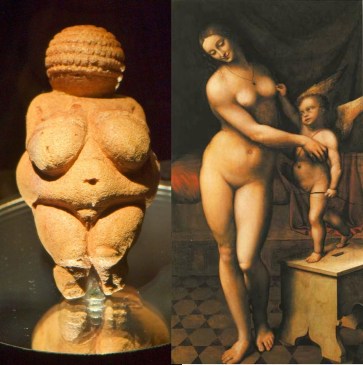
e993b-two2bvenuses2b-2bvenus2bof2bwillendorf2band2bvenus2band2bcupid2bby2bgiampietrino2c2bcopy2bafter2blost2bleda2band2bthe2bswan2bby2bleonardo2bda2bvinci2c2bboth2bpublic2bd‘Beautiful’ has always been a battleground in feminist discussions of representation. While it may seem counterintuitive to argue that we should consider more women as beautiful while also arguing that a woman’s capabilities are worth more than her appearance, tackling the rigid definition of beautiful has been important for intersectional feminism. A traditionally beautiful woman is white; women of colour are more likely to be sexualised instead. A beautiful woman is also normally able-bodied. She usually does not appear to be economically below the middle-class, something that is subtly but pervasively inherent in our ideas of the ideal body shape (too slender for manual labour) and the current trend of tanning (demonstrating leisure time and disposable income). A beautiful woman often also has long hair, a delicate face, and big eyes; she is vulnerable, not strong. So renegotiating this limited meaning of beautiful is a powerful act. Great progress has made with it, which should be cause for optimism. However, recent redefinitions are more troubling than empowering.

Beautiful is being used more and more often to denote a woman’s entire identity. Popular Urban Dictionary entries for beautiful state:

Beautiful is a woman who has a distinctive personality, one who can laugh at anything, including themselves, who is especially kind and caring to others. She is a woman who above all else knows the value of having fun, and not taking life too seriously. She is a woman that you can trust and count on to brighten your day. She is a woman who can inexplicably make you feel really good just by being around her, and yet brings such great sadness when she is gone.  (10,257 positive votes)

Your smile makes you pretty, your body makes you sexy, only your mind makes you beautiful (5,019 positive votes)

The description of anyone who is true to themself (3,272 positive votes)

Yes, it’s Urban Dictionary, but Urban Dictionary is not the only place this idea surfaces. A Buzzfeed video uploaded by Ashly Perez shows women stating that pretty is about “validation” from society, it is taught to young girls, and it is constructed by the media. I’m sure most feminists wouldn’t disagree. However, the video continues to say that beauty is different. “It is something that comes from the inside out: a combination of who I am and what I bring to the table”, one woman says. “I feel most beautiful when I’m using my mind and when I’m around my friends,” another adds. Beauty is made to mean personality. Perhaps this is why Dove’s latest marketing campaign makes women choose to label themselves as either “beautiful” or “average”—not average-looking. Perhaps Dove’s intention is to say that if your personality or capabilities are above average, you are beautiful.

However, beautiful already has a meaning and that meaning can’t simply be erased. It refers primarily to appearance, not identity. The number one definition in the Oxford Dictionary is: “Pleasing the senses or mind aesthetically”. Merriam Webster’s top definition is: “The quality of being physically attractive”. If these definitions were not true, and beauty instead referred to a person’s personality, then the trope beauty is bad wouldn’t exist and men could be called beautiful. Yet Cersei Lannister’s greatest weapon remains her beauty while calling a man beautiful remains an insult.

So Dove’s video, no matter what the intentions are, cannot tell women that if they are above average they are beautiful. Beautiful will not allow itself to be used that way; its meaning of ‘physically attractive’ always twists the message. Dove’s video actually tells women that if they are not beautiful, they are average: their intelligence, their capabilities, and their personality are not as relevant to their identity than their appearance. This video is more problematic than empowering. Buzzfeed’s video links being beautiful to being liked and loved, and while by “beautiful” Buzzfeed means being happy and sociable, we know that being physically attractive really does mean being more loved. Again, using the word beautiful subverts Buzzfeed’s message.

In fact, even if we were able to somehow strip beautiful of its current definition and redefine it to refer to a person’s attitudes and likeability instead of their appearance, that would damage the progress that intersectional feminism has already made. As discussed, beauty’s definition is under contention, and the meaning is slowly broadening. This is too important an accomplishment to discard. Beauty as appearance is a mainstream acknowledgement of visibility and measurement of value. To acknowledge that women of colour, trans women, disabled women, and less wealthy women are beautiful is to say that society considers them equal in appearance to white, able-bodied, cis, affluent women. Beauty meaning identity, on the other hand, does not do this. Stating that the category of beautiful that women have struggled to be included in still does not mean they are considered capable of being physically attractive by mainstream society, but that it’s irrelevant because their friends like them, is a regression.

Buzzfeed’s argument that women should be encouraged to measure their worth by more than their appearance is admirable. Dove’s advocacy of self-confidence is also applaudable. Yet beautiful is the wrong word to adopt to signify a person’s value and self-confidence; it is already laden with too much meaning.

After studying English Language and Literature at King’s College London, Tanya Newton moved to Japan where she teaches English. She loves to read and write, and loves tea almost as much. She is strongly interested in cultures and social structures. (Bio credit: Darrow)

This article was originally published on Darrow. Read the original article.

Ordinary Philosophy and its Traveling Philosophy / History of Ideas series is a labor of love and ad-free, supported by patrons and readers like you. Please offer your support today!

Social Transparency and the Epistemology of Tolerance, by G. Randolph Mayes

Surveillance cameras, Licensed under CC BY-SA 3.0 via Wikimedia CommonsLast week I learned a new word- apotropaic -and darned if I haven’t heard it three times since then!

Everyone is familiar with this sort of thing and has at least briefly experienced it as uncanny. It is called the Baader-Meinhof Phenomenon. Generalized, the BMP is our inclination to mistake an increased sensitivity to P for an increase in the number or frequency of P itself.

Lately I’ve been thinking about the BMP in relation to social transparency. The free flow of social information is a defining characteristic of the current era, and I tend to be far more sanguine about its effects than most. But I have started to think that the BMP presents a serious challenge to my optimism.

Most of my peers tend to be very possessive about their personal information. They feel like they own their beliefs, ideas, tastes, interests and habits. Consequently, they regard those who acquire knowledge of such without their permission as thieves. They are also haunted by Orwellian metaphors, and tend to react to increasing levels of social transparency in the public sphere with alarm as well. The idea of cameras at every street corner, shop window and traffic intersection feels dirty to them, despite its obvious value for public safety.

I dislike snoops as much as they do, but I distinguish between my preferences and my rights. I see unrestricted access to information as a cornerstone of liberal democracy. For me, the most fundamental human right is the right to learn. Whenever we choose to prevent or punish learning of any kind, there has to be an excellent reason for it. For some kinds of highly sensitive information these reasons exist, but they are consequentialist by nature and do not spring from any fundamental right to control information about ourselves.

I like glass houses. I think a world in which it is nearly impossible to hide the fact that you are an abusive husband or a pederast cleric is clearly preferable to one in which what goes on behind closed doors is nobody else’s business. In a liberal society, there is no greater disincentive to such transgressions than the certainty of others finding out. My friends are all yesbut. As in yes, but this is exactly what concerns them. They follow Orwell in thinking that a socially transparent society is fundamentally an informant society, conformist by nature.

But the evidence is that they are just wrong about this. We are living in a time of unprecedented tolerance for diversity and self-regarding eccentricities. This has not been achieved in spite of increasing social transparency. As long as homosexuals, transgenders, apostates, recreational drug users and the mentally disabled were confined to the darkness of the closet we could ridicule them with impunity. But it is difficult to continue in this vein when the clear light of day reveals that many of them are people we love.

Now here is my concern.

If increasing social transparency is not managed very carefully, it could backfire spectacularly, thanks to the BMP. When social transparency increases quickly, we suddenly become aware of the many intolerable things that have been happening right under our noses. Consequently, we get the impression that the world is going to hell in a handbasket and we become receptive to irrationally harsh responses.

What do I mean by careful management? Two things, at least.

First, it means creating future generations of adults who are more epistemologically sophisticated than mine. We grew up thinking that being responsible and informed citizens meant paying careful attention to reliable news sources, caring about the less fortunate and following our conscience. But that is a serious error.

The news is almost entirely about relating recent interesting events; it rarely provides a statistical context in virtue of which the general significance of these events may be responsibly evaluated. This is why it is possible to be an informed and conscientious citizen by the standards of my generation and still be completely unaware of essential global facts, such as that we are living in a period of unprecedented world peace or that the global poverty rate has been cut in half during the last 20 years.

If we aren’t aware of the role BMP plays in our reaction to constant reports of police brutality against minorities in the U.S, gang rapes of girls in India, the persecution of homosexuals in Russia, the public whipping of atheists in the Third World, and terrorism everywhere, then our reactions are likely to be intemperate and counterproductive.

Second, we are going to need to find the moral strength to punish wrongdoing less severely. What? Yes. To see why, consider that whenever someone decides whether to do wrong she makes an implicit expected value calculation in which the probability of being caught figures centrally. For this reason, the severity of the current punishment is itself a function of the probability of detection. In an increasingly transparent society, the probability of detection rises. Hence the previous levels of punishment are now intemperate and must be recalibrated.

As an example, consider new surveillance capabilities which can detect every single traffic light violation. Many people oppose the proliferation of this kind of technology, despite its obvious ability to save lives. Why? I think it is partly because they foresee an intolerable rise in the cost of innocent mistakes. In this sense, Orwellian concerns are absolutely on point. If we are unwilling to attenuate the severity of our punishments, applying the technology of transparency to crime detection is the road to the police state.

Social transparency has so far been part of the recipe for a more tolerant society, but so far it is tolerance for things that we are learning to hate less. Adopting more temperate responses to crimes we perhaps hate even more than before is a whole nother thing.

I hope future generations will be enlightened enough to do it, but in the meantime some apotropaic magic would come in real handy.

– Randy Mayes is a Professor in the Department of Philosophy at Sacramento State University. His main teaching and research interests are naturalism, moral psychology and the nature of rational inquiry, and he has published work on the the concepts of explanation, privacy and cruelty (bio credit: Sacramento State University Department of Philosophy). This piece was originally published at The Dance of Reason blog.

Compassion, Emptiness, and the Heart Sutra, by Ryan V. Stewart

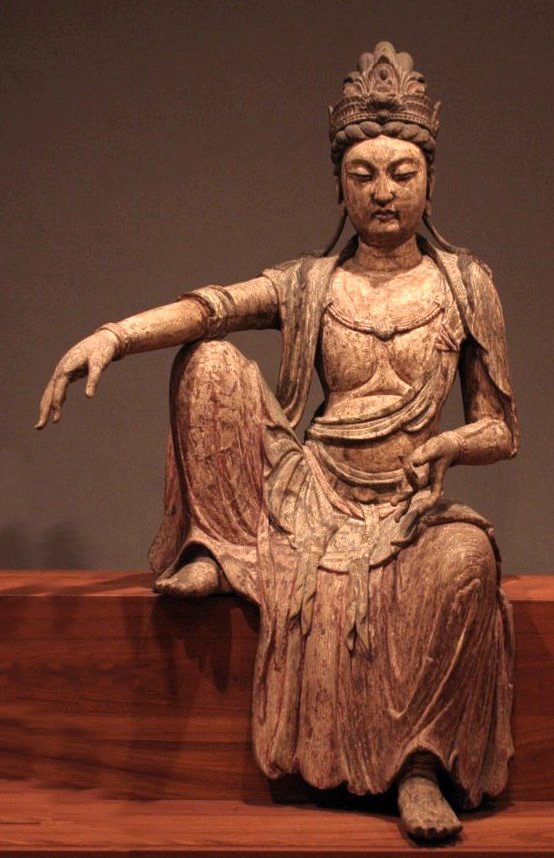
d1185-guanyin252c2bthe2bchinese2bexpression2bof2bavalokiteshvara252c2bnorthern2bsung2bdynasty252c2bchina252c2bc-2b1025252c2bwood252c2bhonolulu2bacademy2bof2barts252c2bpublic2b1One of the chief concerns of philosophy, since time immemorial, has been to properly address the question, “How do I live?” Namely, “How do I live well?” Naturally—for as long as our species has had the wherewithal to question its purpose and condition, the problem of ethics has found itself at the frontiers of human thought. Many moral philosophies have since rushed into that wide gulf between knowledge and truth, systems of understanding and action which attempt to conquer our ethical indecisiveness and color in a void where so much uncertainty exists.

Many traditions prescribe the ideal, virtuous, or noble life. From the ancient, academic, or political—e.g. Epicureanism, utilitarianism, humanism, or libertarianism—to the more mystical or overtly religious—e.g. Jainism, Christianity, or Taoism—many are concerned with how one acts (or can act), or at least how one views oneself in relation to others and to the world at large.

The Buddhist religion—though some prefer to see it as a philosophy—is one such tradition. An ancient and diverse faith, Buddhism is perhaps best known for its thorough and egalitarian moral philosophy. And while it is indeed diverse (containing a huge number of schools, most with their own interpretive methods and styles of meditation and ritual practice), compassion (or karuna) is treated as an important trait of an enlightened being, and a cornerstone of Buddhist thought, in all sects. Thus, throughout the various iterations of Buddhism—from the forest-monk Theravada of Thailand to the Zen habits of Japan—one finds a remarkably consistent system of normative ethics, and a conceptual framework for promoting the wellbeing of all sentient creatures.

That all being said, the ontological concepts which necessitate Buddhist compassion are perhaps most concisely expressed by the Mahayana (“great vehicle”) tradition—one of two or three major branches into which Buddhism is often divided. Buddhism maintains a unique connection between metaphysics and ethics, and the deeply profound philosophies of many Mahayana thinkers, and those presented in a number of the Mahayana sutras (Buddhist sacred texts), can be seen as an attempt to navigate and define that sort of connection.

Where does one begin in exploring such a notion? The corpus of Buddhist literature is impossibly vast, and anyone could spend a lifetime pondering so many mystical works and their commentaries. I would argue, however, that in order to form at least a basic understanding of the Mahayana ethical-metaphysical relationship, we need look no further than the ancient and seminal Heart Sutra.

Written as a dialogue and teaching, the Heart Sutra is a brief monologue on the part of a bodhisattva (an enlightened being who has postponed his or her salvation in order to remain in the world and aid sentient beings) by the name of Avalokiteshvara. Avalokiteshvara (known as Guanyin in China and Chenrezig in Tibet—the latter where the Dalai Lama is considered his living manifestation), whose name roughly translates to “the lord who looks down,”—that is, he looks down upon the world of the unenlightened with charity and love—is a bodhisattva representing perfect compassion. Befitting this disposition, the Avalokiteshvara of the Heart Sutra provides a mortal monk, Sariputra, with a profound teaching, a parcel of great wisdom intended to eradicate the suffering of sentient beings. Avalokiteshvara’s great revelation is that all phenomena are, in fact, “empty.” (Red Pine, p. 3.)

To clarify, the bodhisattva is saying that everything in the world lacks an inherent “self,” or essence. This concept finds its origin in the oldest, pre-Mahayana forms of Buddhism, and the Buddha himself noted that “no-self” is, along with impermanence (anicca) and unsatisfactoriness (dukkha), one of three “marks” which constitute the nature of reality. Anatta, for the historical Buddha, and for the older Theravada school, mostly implies that nothing in the world can be said to be one’s “self,” (atman), and thus identifying anything as representing the essence of oneself—a “self” made up only of non-self parts (cf. Hume’s “bundle theory”)—is delusory. The self-concept, for the Buddha, is an illusion of essence which binds human beings to false worldviews and causes them to misrepresent reality, thus barring them from enlightenment.

The falseness of self-hood forms a bedrock of Buddhist philosophy. In the “emptiness” (sunyata) of the Mahayana, however, we find anatta further developed. (Nagao, pp. 173-174.) We owe this development chiefly to Nagarjuna, a first-century Buddhist philosopher who founded the Madhyamaka school of Mahayana Buddhism, and developed the philosophies (one most notably being sunyata) inherent in the Mahayana Prajnaparamita sutras. In his text, Fundamental Verses on the Middle Way, Nagarjuna famously states, to this effect, “All is possible when emptiness is possible. Nothing is possible when emptiness is impossible.” Thus emptiness, in this sense, is not mere nothingness, but an open space in which all potential exists. Hence one cannot truly differentiate being and nonbeing, total emptiness and total “allness,” infinite nothing and infinite something. One implies, or necessitates, the other. In the Heart Sutra, Avalokiteshvara explains this to Sariputra when he says, “Form is emptiness, emptiness is form; emptiness is not separate from form, form is not separate from emptiness; whatever is form is emptiness, whatever is emptiness is form.” For the Mahayana school, emptiness is not merely the surrogate for essence, and a blank space where one imagines the self, but the numinous nature of all things.

Now, this emptiness implies another notion (this one common to Buddhism on the whole), “dependent origination.” (Pratityasamutpada.) According to this doctrine, all phenomena exist dependently, depending upon one another in order to maintain their existence. (Encyclopedia Britannica, n.p.) Thus, there is no free, permanent, inherent, and individual existence for any beings or objects. Their causes and conditions are inextricably linked to the unending web of phenomena arising and passing away in the universe. One thing cannot be said to be truly separate from anything else when it exists, in time and space, alongside all else, and when it requires for its existence the (falsely!) extraneous forces of nature, matter, and energy. Thomas J. McFarlane, writing in his 1995 essay “The Meaning of Sunyata in Nagarjuna’s Philosophy,” sums this up nicely when he states, “According to Madhyamika, the root of all suffering lies in… the error of mistaking the relative for the absolute, the conditioned for the unconditioned. We take imagined separation as real, supposed division as given.”

An easier, less flowery way to illustrate these three ideas—no-self, emptiness, and dependent origination—in tandem may be to imagine something made up of familiar parts: A tree, for instance. We all know that trees are made of a variety of components—trunk, roots, branches, leaves. Where, then, lies the “treeness” of the tree, in the tree? Is the tree its roots? Is the tree its leaves? No? Why not? One may say, “‘tree’ is the name we give to the sum of the parts of the tree,” but then, of course, “tree” is reduced to a mere name and concept, not a thing-in-itself. Whatever can be called a “tree” is ultimately made up of non-tree parts, and thus there is no “treeness” at all. Similarly, the self, though imagined as one’s essence or “soul,” can be divided into mental phenomena and parts of the body. (All of which are subject to constant change, hence anicca.) There is no “selfness” for this self, only the experience of a very familiar concept by the same name. Thus Avalokiteshvara tells Sariputra, “Whatever is form is emptiness, whatever is emptiness is form. The same holds for sensation and perception, memory and consciousness.”

We now have a grasp on no-self (anatta), and can see how easily it translates to no-essence-anywhere-at-all (sunyata) by analyzing everything down into its (non-) fundamental components, components which themselves are also made up of other components, and so on and so forth. One can continue dividing things and concepts forever, down to an infinitesimal. (Granted, this is a conceptual exercise, and the author omits any claims about concrete physics for lack of sincere knowledge of the subject. Regardless of Planck lengths and fundamental particles, confer “infinite divisibility.”)

But how does emptiness translate into connection, into pratityasamutpada? Let us continue with the metaphor of the tree, and observe how the tree is not only constructed of non-tree parts, but dependent on the conditions of the world at large for those very constructs: A tree, like all lifeforms, requires a number of inputs from its surrounding environment in order to survive and thrive. Water, soil, and sunlight most readily come to mind. Water, for instance, rains down from clouds, which themselves are formed from atmospheric water vapor. Soil is produced over many years by the degradation of organic matter, and organic matter is contained by other lifeforms, which exist by dint of their evolutionary ancestors. Sunlight reaches the Earth from the Sun, which itself was formed billions of years ago from sparse bits of matter produced in the Big Bang.

What sort of philosophical quandary do we run into here, then? For our purposes it is best to put the question this way: “At what point is the tree no longer itself?” That is to say, “At what point is any “one” thing separable from the causes and conditions that give rise to it, or the causes and conditions that it gives rise to?”

If we take this notion—this pratityasamutpada—to its logical conclusion, we come to recognize that we are, in order to exist, dependent upon components and conditions outside of ourselves; that everything, in fact, is; that the entire universe is one integrated system, and in some sense an entity-unto-itself.

One response to such a situation—and an understandable one, at that—may be that of deep compassion: the fact that we are dependent upon all else, and all else upon us, in some sense (and albeit in a small way), gives us reason to care for the world (and other beings especially) as if the welfare of other things and beings was the same as ours… as if we have no “self” apart from that of the world at large, the welfare of which—from crabs to carpenters—is our concern as beings endowed with the capacity for both suffering and empathy. No doubt, it’s this very suffering which binds us to one another. We, knowing our own pain, can experience it vicariously, through others. Philosophers as diverse as Marcus Aurelius, Hume, and Schopenhauer understood the universality of pain and empathy, and thus their importance in morality.

The Buddha, of course, realized the same. And while you may not find a be-all-end-all answer to the big ethical problems in one particular system, opting instead (as many do) for an eclectic approach to moral philosophy, you have to admit that Buddhism provides one of the most intricate (and practical) answers to our moral quandaries.

As long as human beings have questioned the nature of their freedom and manners of life and livelihood, philosophy has helped fill the void inherent in the realms of “good” and “evil” and everything in between. Buddhism presents us with one particularly bright light, helping to illuminate the murky and ever-indefinite realm of philosophical inquiry.

About the author ~ Ryan V. Stewart is a writer and student from Connecticut. He has been actively writing since 2006, and blogs about everything from mysticism and philosophy to environmental issues, the arts, and personal peeves at The Grand Tangent. He’s interested in the intersection of mysticism, comparative religion, and philosophical analysis (among other things). 

~ Ordinary Philosophy and its Traveling Philosophy / History of Ideas series is a labor of love and is ad-free, entirely supported by patrons and readers like you. Please offer your support today!

Bibliography

Red Pine, trans. The Heart Sutra. Washington, DC: Shoemaker & Hoard, 2004. Print.

Nagao, Gajin. Mādhyamika and Yogācāra: A Study of Mahāyāna Philosophies. Delhi, India: Sri Satguru Publications, 1992. Print.

“Paticca-samuppada.” Encyclopedia Britannica Online. Ed. Anonymous. Encyclopedia Britannica, n.d. Web. .

What Philosophical Work Could Be, by Eric Schwitzgebel

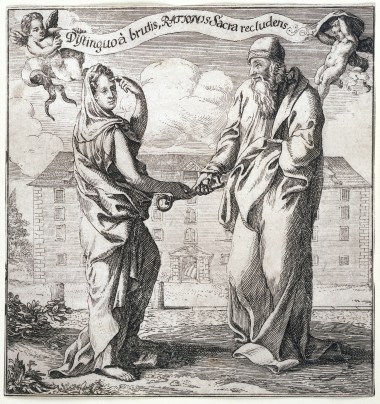
A woman representing Wisdom giving to Aristotle the key to the treasure-house of Reason, to distinguish man from the beasts. Etching. Image public domain via Wikimedia Commons.jpgAcademic philosophers in Anglophone Ph.D.-granting departments tend to have a narrow conception of what counts as valuable philosophical work. Hiring, tenure, promotion, and prestige turn mainly on one’s ability to write an essay in a particular theoretical, abstract style, normally in reaction to the work of a small group of canonical historical and 20th century figures, on a fairly constrained range of topics, published in a limited range of journals and presses. This is too narrow a view.

I won’t discuss cultural diversity here, which I have addressed elsewhere. Today I’ll focus on genre and medium.

Consider the recency and historical contingency of the philosophical journal article. It’s a late 19th century invention. Even as late as the mid-20th century, leading philosophers in Western Europe and North America were doing important work in a much broader range of styles than is typical now. Think of the fictions and difficult-to-classify reflections of Sartre, Camus, and Unamuno, the activism and popular writings of Russell, Dewey’s work on educational reform, Wittgenstein’s fragments. It’s really only with the generation hired to teach the baby boomers that our conception of philosophical work became narrowly focused on the academic journal article, and on books written in that same style.

Consider the future of media. The magazine is a printing-press invention and carries with it the history and limitations of that medium. With the rise of the internet, other possibilities emerge: videos, interactive demonstrations, blogs, multi-party conversations on social media, etc. Is there something about the journal article that makes it uniquely better for philosophical reflection than these other media? (Hint: no.)

Nor need we think that philosophical work must consist of expository argumentation targeted toward disciplinary experts and students in the classroom. This, too, is a narrow and historically recent conception of philosophical work. Popular essays, fictions, aphorisms, dialogues, autobiographical reflections, and personal letters have historically played a central role in philosophy. We could potentially add, too, public performances, movies, video games, political activism, and interactions with the judicial system and governmental agencies.

Philosophers are paid to develop expertise in philosophy, to bring that expertise in philosophy into the classroom, and to contribute that expertise to society in part by further advancing philosophical knowledge. A wide range of activities fit within that job description. I am inclined to be especially liberal here for two reasons: First, I have a liberal conception of philosophy as inquiry into big-picture ontological, normative, conceptual, and broadly theoretical issues about anything (including, e.g., hair and football as well as more traditionally philosophical topics). I favor treating a wide range of inquiries as philosophical, only a small minority of which happen in philosophy departments. And second, I have a liberal conception of “inquiry” on which sitting at one’s desk reading and writing expository arguments is only one sort of inquiry. Engaging with the world, trying out one’s ideas in action, seeing the reactions of non-academics, exploring ideas in fiction and meditation — these are also valuable modes of inquiry that advance our philosophical knowledge, activities in which we not only deploy our expertise but cultivate and expand it, influencing society and, in a small or a large way, the future of both academic philosophy and non-academic philosophical inquiry.

Research-oriented philosophy departments tend to regard writing for popular media or consulting with governmental agencies as “service”, which is typically held in less esteem than “research”. I’m not sure service should be held in less esteem; but I would also challenge the idea that such work is not also partly research. If one approaches popular writing as a means of “dumbing down” pre-existing philosophical ideas for an audience of non-experts whose reactions one does not plan to take seriously, then, yes, that popular writing is not really research. But if the popular essay is itself a locus of philosophical creativity, where philosophical ideas are explored in hopes of discovering new possibilities, advancing (and not just marketing) one’s own thinking, furthering the community’s philosophical dialogue in a way that might strike professional philosophers, too, as interesting rather than merely familiar re-hashing, and if it’s done in a way that is properly intellectually responsive to the work of others, then it is every bit as much “research” as is a standard journal article. Analogously with consulting — and with Twitter feeds, TED videos, and poetry.

I urge our discipline to conceptualize philosophical work more broadly than we typically do. A Philosophical Review article can be an amazing, awesome thing. Yes! But we should see journal articles of that style, in that type of venue, as only one of many possible forms of important, field-shaping philosophical work.

~ Eric Schwitzgebel is a Professor of Philosophy at University of California at Riverside. This piece was originally published on June 11 at his excellent blog The Splintered Mind and re-published here with the author’s permission.

Ordinary Philosophy and its Traveling Philosophy / History of Ideas series is a labor of love and ad-free, supported by patrons and readers like you. Please offer your support today!

Argument & Censorship, Opposition & Oppression, by Eric Gerlach

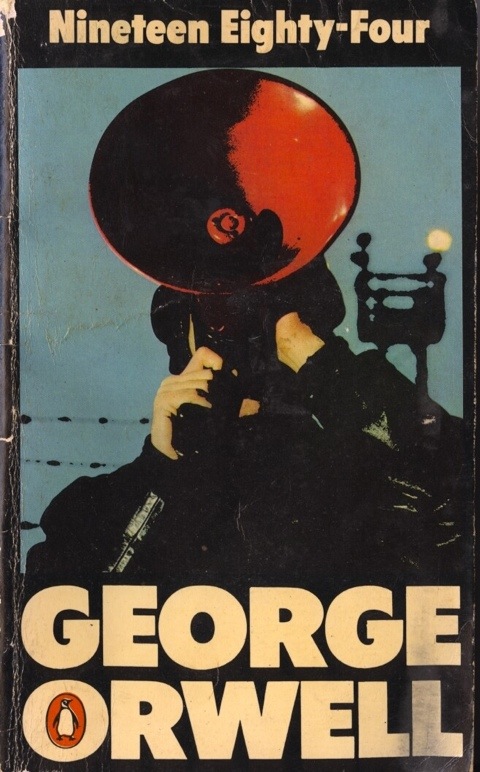
A friend of mine passed me an article about millennials and George Orwell, which claimed that young people on the internet are bullying others mercilessly who are out of step with the dogmas of the left.  This is hardly a new claim about millennials, as many since the 80’s have said that “political correctness” is oppressive and invoked 1984. While I agree that militant dogmatism is found on both sides of the aisle, I think what irked me most about the article was the comparison to Orwell and claims of censorship regarding heated exchanges online between free individuals.  At a time when many are confusing arguments and boycotts with fascism, I feel that a distinction needs to be made between opposition and oppression, between argument and censorship.

If someone argues with you, and continues to argue with you, they are not censoring you.  They are speaking with you.  They are opposed to your beliefs, but not necessarily opposed to you speaking. They may not be good at listening, and they may give you little chance to speak, but they are engaging you in a conversation, even if it is a terrible one. Often, they are hoping to hear the reasons you won’t change your mind, to change your mind, and then hear you say that your mind has been changed.  When I receive critical comments, I am irritated, but I have not been censored.  Nietzsche said that one should appreciate one’s enemies, as they help one to grow stronger, which I find to be an inspirational strategy for getting the most out of one’s beliefs.

~~~~~~~~~

Eric Gerlach teaches philosophy and the history of human thought at Berkeley City College. This piece was originally published on April 16 at his excellent blog Eric Gerlach, ‘A Skeptical & Global Guide to the History of Human Thought’, which I highly recommend, and re-published here with the author’s permission.

Fury Road, by Christina Bellon

Max:  Here, everyone is broken.
Furiosa: Out here, everything hurts.

~ Mad Max: Fury Road

I couldn’t wait to see this movie. And then I couldn’t wait to see it again. The first viewing was cathartic in all the right ways, but it was a sensory assault. In 3-D it was almost abusive. The second time allowed me to attend to the story, the characters, the art and imagery, the dance of bodies in fight and vehicles in chase. Those Pole Cats are terrifyingly beautiful swinging through the air at high speed (all done live). Now I could enjoy the artistry of this post-apocalyptic adventure. Fury Road has everything the genre demands, explosions, fights, minimal dialogue. But, there’s more.

This is a fractured world, bodily and psychically. We find two competing philosophies, that understanding of reality by which we make sense of our world. There is the dualism of Joe’s warrior-cult, expressed best in the War Boy creed, “I live. I die. I live again.” There’s the witnessing of a warrior’s meritorious death in battle, being taken to the gates of Valhalla (by Joe, himself, for those not “mediocre”), and of being reborn, “shiny and chrome.”

There’s also the non-dualism of Furiosa’s unsentimental realism, her willingness to risk everything to return home, to find redemption in this life for the unstated horrors she has committed, and of the Free Women’s matrilineal earth-centered pragmatism, where the value of living is in being with others, clean water, fertile soil, and where the dead are held close in name and memory. There is no next life. The film doesn’t decide this ultimate question for us, though. Even as Joe’s mythology shatters in the wreckage of flesh and steel, one of the freed women is praying, “to anyone who’s listening.”

Commentators have claimed this is a feminist film, or that it should really be called Furiosa rather than Mad Max. The feminist in me (well, it’s really all of me) agrees. But most of these commentators are selling it short. This is a real feminist movie, and they don’t seem to know why.

If all it takes for a film to be feminist these days is for there to be a woman lead who can throw a punch and drive a truck, who isn’t a mere plot device, or isn’t there to fall in love or in bed with the leading man, then, yawn, ok, this is a feminist movie. But that’s not saying much. A genuinely feminist movie is more than not demeaning or minimizing. It is one that takes women seriously – with our strengths and weaknesses, as equals, complex, capable and vulnerable (as we all are), as worth knowing, trusting, and joining. And that’s what Fury Road does so brilliantly. Here we see women, portrayed complexly, richly, and honestly. It’s still so rare. It’s as refreshing as it is riveting.

Here, everyone has a price, a place, a function, and with it a value. Absent these, you’re rabble fighting for drops of precious water. In this post-apocalyptic hell, where every life-giving resource is either scarce, toxic, or gone, the human body becomes the principal resource: as meat, as breeders, as perpetually pregnant women milked for “mother’s milk,” as those caged and tapped as living blood bags, and as those War Boys who are “cannon fodder.” It’s not just the women in this movie who have no bodily autonomy, without means for bodily integrity, who are exploited and abused. Everyone is. Even Joe is trapped by the mythology he creates, as his body literally rots from nuclear contamination and as he fails repeatedly to produce “perfect” sons.

There is a deeply humanist principle on offer in this movie. It’s in all the great stories and in any of the laws worth preserving. It justifies their escape. It’s what they each would die in pursuit of. It’s in our dread they will fail and our weeping for those who don’t make it. This principle reminds us that each and every one of us is valuable to her- and himself, and that we must treat each other accordingly. It tells us that people are not only not food, they are not property. This is a humanist message. It is a message which is carried by the women, and adopted by the men who help them. It’s written on the walls of their captivity, demonstrated by their willingness to share what little they have, to risk themselves for the vulnerable and like-minded, and in their rejection of war. It’s in the satchel of seeds, “heirlooms, the real thing,” which Giddy Mary protects like her life, their lives – our lives – depend on it.

We want their vision of the world to replace the one they flee, we need them to succeed and Joe to fail, because we fucked it up for them… “Who killed the world?” they ask several times. Well, we did, clearly. Whether accidentally, negligently, or intentionally, we killed it. Our misdeeds gave birth to the world where one’s choices are Gas Town, Bullet Farm, or Citadel… or being feral in the wild. We created their hell. We need that humanist message to get through, for those carrying it to be successful, for them not to falter, or die along the way. We fucked up.

There’s so much this film makes us ask:
Why does Furiosa seek redemption? We know what haunts Max, but have few clues about what haunts her. Likely, it’s bad. She’s the only woman, an Imperator, in Joe’s hyper-masculinized war machine. That achievement would have been costly.
What was “The Green Place”? How did it last so long, and then disappear?
Why are there so many War Pups but no girls… anywhere?
… and, so much it asks of us:
What is the moral cost of our sources of milk and meat?

Is it inevitable that we send our young to war?

Why are we not terrified at the loss of our green places?
What value do we place on others – on those who grow and produce our food, teach our children… keep our gas flowing?

~~~~~~~~~

Christina Bellon is Professor and Chair of the Department of Philosophy at Sacramento State University, California. This piece was originally published on June 8 at the excellent blog The Dance of Reason: the Sac State Department of Philosophy’s virtual hallway, which I highly recommend, and re-published here with the author’s permission.

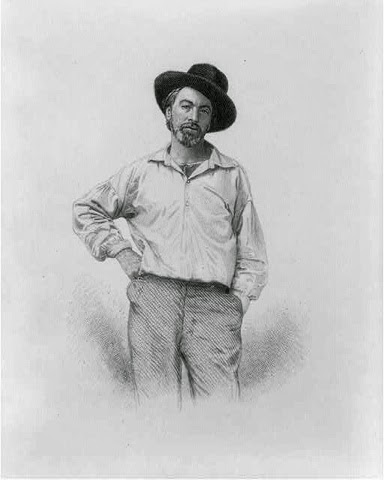
Walt Whitman, on Animals

I’ve been revisiting the poems of Walt Whitman lately, listening to them read aloud on Librivox by a skilled reader, enjoying every moment of them in their rich simplicity. This one especially struck me, and I feel compelled to share it with you.

From Song of Myself, Book 3

I think I could turn and live with animals, they are so placid and self-contain’d.
I stand and look at them long and long.
They do not sweat and whine about their condition,
They do not lie awake in the dark and weep for their sins,
They do not make me sick discussing their duty to God,
Not one is dissatisfied, not one is demented with the mania of owning things,
Not one kneels to another, nor to his kind that lived thousands of years ago,
Not one is respectable or unhappy over the whole earth.
So they show their relations to me and I accept them,
They bring me tokens of myself, they evince them plainly in their possession.

~~~~~~~~~~~~~~~~~~~~~~~~~~~~~~

You know me, dear readers, as one who enjoys mentally taking apart things to see how the world works, a little too obsessively at times, perhaps. Yet I am an animal too, just one who does that kind of thing. But it’s good to remember to be the kind of animal that just takes in, and enjoys, simply, sometimes

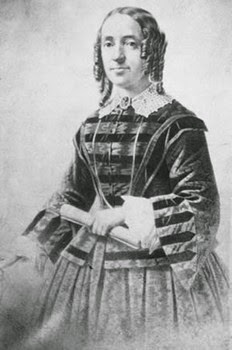
In Her Own Words: A Defense of Atheism, by Ernestine Rose, 1861

My friends: –In undertaking the inquiry of the existence of a God, I am fully conscious of the difficulties I have to encounter. I am well aware that the very question produces in most minds a feeling of awe, as if stepping on forbidden ground, too holy and sacred for mortals to approach. The very question strikes them with horror, as is owing to this prejudice so deeply implanted by education, and also strengthened by public sentiment, that so few are willing to give it a fair and impartial investigation, –knowing but too well that it casts a stigma and reproach upon any person bold enough to undertake the task, unless his previously known opinions are a guarantee that his conclusions would be in accordance and harmony with the popular demand. But believing as I do, that Truth only is beneficial, and Error, from whatever source, and under whatever name, is pernicious to man, I consider no place too holy, no subject too sacred, for man’s earnest investigation; for by so doing only can we arrive at Truth, learn to discriminate it from Error, and be able to accept the one and reject the other.

No is this the only impediment in the way of this inquiry. The question arises, Where shall we begin? We have been told, that “by searching none can find out God” which has so far proved true; for, as yet, no one has ever been able to find him. The most strenuous believer has to acknowledge that it is only a belief, but he knows nothing on the subject. Where, then, shall we search for his existence? Enter the material world; ask the Sciences whether they can disclose the mystery? Geology speaks of the structure of the Earth, the formation of the different strata, of coal, of granite, of the whole mineral kingdom. –It reveals the remains and traces of animals long extinct, but gives us no clue whereby we may prove the existence of a God.

Natural history gives us a knowledge of the animal kingdom in general; the different organisms, structures, and powers of the various species. Physiology teaches the nature of man, the laws that govern his being, the functions of the vital organs, and the conditions upon which alone health and life depend…. But in the whole animal economy–though the brain is considered to be a “microcosm”, which which may be traced a resemblance or relationship with everything in Nature–not a spot can be found to indicate the existence of a God.

Mathematics lays the foundation of all the exact sciences. It teaches the art of combining numbers, of calculating and measuring distances, how to solve problems, to weigh mountains, to fathom the depths of the ocean; but gives no directions how to ascertain the existence of a God.

Astronomy tells us of the wonders of the Solar System–the eternally revolving planets, the rapidity and certainty of their motions, the distance from planet to planet, from star to star. It predicts with astonishing and marvelous precision the phenomena of eclipses, the visibility upon our Earth of comets, and proves the immutable law of gravitation, but is entirely silent on the existence of a God.

In fine, descend to the bowels of the Earth, and you will learn what it contains; into the depths of the ocean, and you will find the inhabitants of the great deep; but neither in the Earth above, nor the waters below, can you obtain any knowledge of his existence. Ascend into the heavens, and enter the “milky way,” go from planet to planet and to the remotest star, and ask the eternally revolving systems, Where is God? and Echo answers, Where?

The Universe of Matter gives us no record of his existence. Where next shall we search? Enter the Universe of Mind, read the volumes written on the subject, and in all the speculations, the assertions, the assumptions, the theories, and the creeds, you can only find Man stamped in an indelible impress his own mind on every page. In describing his God, he delineated his own character: the picture he drew represents in living and ineffaceable colors the epoch of his existence–the period he lived in.

It was a great mistake to say that God made man in his image. Man, in all ages, made his God in his own image, and we find that just in accordance with his civilization, his knowledge, his experience, his taste, his refinement, his sense of right, of justice, of freedom, and humanity, –so has he made his God. But whether coarse or refined; cruel and vindictive, or kind and generous; an implacable tyrant, or a gentle and loving father; it still was the emanation of his own mind –the picture of himself.

But, you ask, how came it to be that man thought or wrote about God at all? The answer is very simple. Ignorance is the mother of Superstition. In proportion to man’s ignorance he is superstitious–does he believe in the mysterious. The very name has a charm for him. Being unacquainted with the nature and laws of things around him, with the true causes of the effects he witnessed, he ascribed them to false ones–to supernatural agencies. The savage, ignorant of the mechanism of a watch, attributes the ticking to a spirit. The so-called civilized man, equally ignorant of the mechanism of the Universe, and the laws which govern it, ascribes it to the same erroneous cause. Before electricity was discovered, a thunderstorm was said to come from the wrath of an offended Deity. To this fiction of man’s uncultivated mind, has been attributed all of good and evil, or wisdom and of folly. Man has talked about him, written about him, disputed about him, fought about him,–sacrificed himself, and extirpated his fellow man. Rivers of blood and oceans of tears have been shed to please him, yet no one has ever been able to demonstrate his existence.

But the Bible, we are told, reveals this great mystery. Where Nature is dumb, and Man ignorant, Revelation speaks in the authoritative voice of prophecy. Then let us see whether that Revelation can stand the test of reason and of truth.–God, we are told, is omnipotent, omniscient, omnipresent, –all wise, all just, and all good; that he is perfect. So far, so well; for less than perfection were unworthy of a God. The first act recorded of him is, that he created the world out of nothing; but unfortunately the revelation of Science–Chemistry–which is based not on written words, but demonstrable facts, says that Nothing has no existence, and therefore out of Nothing, Nothing could be made. Revelation tells us that the world was created in six days. Here Geology steps in and says, that it requires thousands of ages to form the various strata of the earth. The Bible tells us the earth was flat and stationary, and the sun moved around the earth. Copernicus and Galileo flatly deny this flat assertion, and demonstrates by Astronomy that the earth is spherical, and revolves around the sun. Revelation tells us that on the fourth day God created the sun, moon, and stars. This, Astronomy calls a moon story, and says that the first three days, before the great torchlight was manufactured and suspended in the great lantern above, must have been rather dark.

The division of the waters above from the waters below, and the creation of the minor objects, I pass by, and come at once to the sixth day.

Having finished, in five days, this stupendous production, with its mighty mountains, its vast seas, its fields and woods; supplied the waters with fishes–from the whale that swallowed Jonah to the little Dutch herring; peopled the woods with inhabitants–from the tiger, the lion, the bear, the elephant with his trunk, the dromedary with his hump, the deer with his antlers, the nightingale with her melodies, down to the serpent which tempted mother Eve; covered the fields with vegetation, decorated the gardens with flowers, hung the trees with fruits; and surveying this glorious world as it lay spread out like a map before him, the question naturally suggested itself. What is it all for, unless there were beings capable of admiring, of appreciating, and of enjoying the delights this beautiful world could afford? And suiting the action to the impulse, he said, “let us make man.” “So God created man in his own image; in the image of God created he him, male and female created he them.”

I presume by the term “image” we are not to understand a near resemblance of face or form, but in the image or likeness of his knowledge, his power, his wisdom, and perfection. Having thus made man, he placed him (them) in the garden of Eden–the loveliest and most enchanting spot at the very head of creation, and bade them (with the single restriction not to eat of the tree of knowledge), to live, to love, and to be happy.

What a delightful picture, if we could only rest here! But did these beings, fresh from the hand of omnipotent wisdom, in whose image they were made, answer the great object of their creation, answer the great object of their creation? Alas! no. No sooner were they installed in their Paradisean home, than they violated the first, the only injunction given them, and fell from their high estate; and not only they, but by a singular justice of that very merciful Creator, their innocent posterity to all coming generations, fell with them! Does that bespeak wisdom and perfection in the Creator, or in the creature? But what was the cause of this tremendous fall, which frustrated the whole design of the creation? The Serpent tempted mother Eve, and she, like a good wife, tempted her husband. But God did not know when he created the Serpent, that it would tempt the woman, and that she was made of such frail materials, (the rib of Adam,) as not to be able to resist the temptation? If he did not know, then his knowledge was at fault; if he did, but could not prevent that calamity, then his power was at fault; if he knew and could, but would not, then his goodness was at fault. Choose which you please, and it remains alike fatal to the rest.

Revelation tells us that God made man perfect, and found him imperfect; then he pronounced all things good, and found them most desperately bad. “And God saw that the wickedness of man was great in the earth, and it grieved him at his heart.” “And the Lord said, I will destroy man whom I have created, from the face of the earth; both man and beasts, and the creeping things, and the fowls of the air, for it repenteth me that I have made them.”So he destroyed everything, except Noah with his family, and a few household pets. Why he saved them is hard to say, unless it was to reserve materials as stock in hand to commence a new world with; but really, judging of the character of those he saved, by their descendants, it strikes me it would have been much better, and given him far less trouble, to have let them slip also, and with his improved experience made a new world out of fresh and superior materials. (*see footnote)

As it was, this wholesale destruction even, was a failure. The world was not one jot better after the flood than before. His chosen children were just as bad as ever, and he had to send his prophets, again and again, to threaten, to frighten, to coax, cajole, and to flatter them into good behaviour. But all to no effect. They grew worse and worse; and having made a covenant with Noah after he sacrificed of “every clean beast and of every clean fowl,”–“The Lord smelt the sweet savour; and the Lord said in his heart, I will not again curse the ground any more for man’s sake; for the imagination of man’s heart is evil from his youth; neither will I again smite any more every living thing, as I have done.” And so he was forced to resort to  the last sad alternative of sending “his only begotten son,” his second self, to save them. But alas! “his own received him not,” and so he was obliged to adopt the Gentiles, and die to save the world. Did he succeed, even then? Is the world saved? Saved! From what? From ignorance? It is all around us. From poverty, vice, crime, sin, misery, and shame? It abounds everywhere.Look into your poor-houses, your prisons, your lunatic asylums; contemplate the whip, the instruments of torture, and of death; ask the murderer, or his victim; listen to the ravings of the maniac, the shrieks of distress, the groans of despair; mark the cruel deeds of the tyrant, the crimes of slavery, and the suffering of the oppressed; count the millions of lives lost by fire, by water, and by the sword; measure the blood spilled, the tears shed, the sighs of agony drawn from the expiring victims on the altar of fanaticism; –and tell me from what the world was saved? And why was it not saved? Why does God still permit these horrors to afflict the race? Does omniscience not know it? Could omnipotence not do it? Would infinite wisdom, power, and goodness allow his children thus to live, to suffer, and to die? No! Humanity revolts against such a supposition.

Ah! Not now, says the believer. Hereafter will he save them. Save them hereafter! From what? From the apple eaten by our mother Eve? What a mockery! If a rich parent were to let his children live in ignorance, poverty, and wretchedness, all their lives, and hold out to them the promise of a fortune at some time hereafter, he would justly be considered a criminal, or a madman. The parent is responsible to his offspring–the Creator to his creature.

The testimony of Revelation has failed. Its account of the creation of the material world is disproved by science. Its account of the creation of man in the image of perfection, is disproved by its own internal evidence. To test the Bible God by justice and benevolence, he could not be good; to test him by reason and knowledge, he could not be wise; to test him by the light of the truth, the rule of consistency, we must come to the inevitable conclusion that, like the Universe of matter and of mind, this pretended Revelation has also failed to demonstrate the existence of a God.

Methinks I hear the the believer say, you are unreasonable; you demand as impossibility; we are finite, and therefore cannot understand, much less define and demonstrate the infinite. Just so! But if I am unreasonable in asking you to demonstrate the existence of the being you wish me to believe in, are you not infinitely more unreasonable to expect me to believe–blame, persecute, and punish me for not believing–in what you have to acknowledge you cannot understand?

But, says the Christian, the world exists, and therefore there must have been a God to create it. That does not follow. The mere fact of its existence does not prove a Creator. Then how came the universe into existence? We do not know but the ignorance mind of man is certainly no proof of the existence of a God. Yet upon that very ignorance has it been predicated, and is maintained. From the little knowledge we have, we are justified in the assertion that the Universe never was created, from the simple fact that not one atom of it can be annihilated. To suppose a Universe created, is to suppose a time when it did not exist, and that is a self-evident absurdity. Besides, where was the Creator before it was created? Nay, where is he now? Outside of that Universe, which means the all in all, above, below, and around? That is another absurdity. is he contained within? Then he can only be a part, for the whole indeed includes all the parts. If only a part, then he cannot be the Creator, for a part cannot create the whole. But the world could not have made itself. True; nor could God have made himself; and if you must have a God to make the world, you will be under the same necessity to have another to make him, and others still to make them, and so on until reason and common sense are at a stand-still.

The same argument applies to a First Cause. We can no more admit of a first than a last cause. What is a first cause? The one immediately preceding the last effect, which was an effect to a cause in its turn–an effect to causes, themselves effects. All we know is an eternal chain of cause and effect, without beginning as without end.

But is there is no evidence of intelligence, of design, and consequently of a designer? I see no evidence of either. What is intelligence? It is not a thing, a substance, an existence in itself, but simply a property of matter, manifesting itself through organizations. We have no knowledge of, nor can we conceive of, intelligence apart from organized matter; and we find that from the smallest and simplest insect, through all the links and gradations in Nature’s great chain, up to Man–just in accordance with the organism, the amount, and the quality of brain, so are the capacities to receive impressions, the power to retain them, and the abilities to manifest and impart them to others; namely, to have its peculiar nature cultivated and developed, so as to bear mental fruits, just as the cultivated earth bears vegetation–physical fruits. Not being able to recognize an independent intelligence, I can perceive no design or designer except in the works of man.

But, says Paley, does the watch not prove a watchmaker–a design, and therefore a designer? How much more does the Universe?Yes; the watch shows design, and the watchmaker did not leave us in the dark on the subject, but clearly and distinctly stamped his design on the face of the watch. Is it as clearly stamped on the Universe? Where is the design, in the oak to grow to its majestic height? In the formation of the wing of the bird, to enable it to fly, in accordance with the promptings of its nature? or in the sportsman to shoot it down while flying? In the butterfly to dance in the sunshine? or its being crushed in the tiny fingers of a child? Design in man’s capacity for the acquisition of knowledge, or in his groping in ignorance? In the necessity to obey the laws of health, or in the violation of them, which produces disease? In the desire to be happy, or in the causes that prevent it, and make him live in toil, misery, and suffering?

The watchmaker not only stamped his design on the face of the watch, but he teaches how to wind it up when it runs down; how to repair the machinery when it is out of order; and how to put a new spring in when the old one is broken, and leave the watch as good as ever. Does the great Watchmaker, as he is called, show the same intelligence and power in keeping, or teaching others to keep, this complicated mechanism–Man–always in good order? and when the life-spring is broken replace it with another, and leave him just the same? If an Infinite Intelligence designed man to possess knowledge, he could not be ignorant; to be healthy, he could not be diseased; to be virtuous, he could not be vicious; to be wise, he could not act so foolish as to trouble himself about the Gods, and neglect his own best interests.

But, says the believer, here is a wonderful adaptation of means to ends; the eye to see, the ear to hear, &c. Yes, this is very wonderful; but not one more jot so, than if the eye were made to hear, and the ear to see. The supporters of Design use sometimes very strange arguments. A friend of mine, a very intelligent man, with quite a scientific taste, endeavored once to convince me of a Providential design, from the fact that a fish, which has always lived in the Mammoth Cave of Kentucky, was entirely blind. Here, said he, is strong evidence; in that dark cave, where nothing was to be seen, the fish need no eyes, and therefore has none. He forget the demonstrable fact that the element of light is indispensable in the formation of the organ of sight, without which it could not be formed, and no Providence, or Gods, could enable the fish to see. That fish story reminds me of the Methodist preacher who proved the wisdom and benevolence of Providence in always placing the rivers near large cities, and death at the end of life; for Oh! my dear hearers, said he, what could have become of us had he placed it at the beginning?

Everything is wonderful, and wonderful just in proportion as we are ignorant; that that proves no “design” or “designer”. But did things come by chance? It exists only in the perverted mind of the believer, who, while insisting that God was the cause of everything, leaves Him without any cause. The Atheist believes as little in the one as in the other. He knows that no effect could exist without an adequate cause, and that everything in the Universe is governed by laws.

The Universe is one vast chemical laboratory, in constant operation, by her internal forces. The laws or principles of attraction, cohesion, and repulsion, produce in never-ending succession the phenomena of composition, decomposition, and recomposition. The how, we are too ignorant to understand, to modest to presume, and too honest to profess. Had man been a patient and impartial inquirer, and not with childish presumption attributed everything he could not understand, to supernatural causes, given names to hide his ignorance, but observed the operations of Nature, he would undoubtedly have know more, been wiser, and happier.

As it is, Superstition has ever been the greatest impediment to the acquisition of knowledge. Every progressive step of man clashed against the two-edged sword of Religion, to whose narrow restrictions he had but too often to succumb, or march onward at the expense of interest, reputation, and even life itself.

But, we are told, that Religion is natural; the belief in a God universal. Were it natural, then it would indeed be universal, but it is not. We have ample evidence to the contrary. According to Dr. Livingstone, there are whole tribes or nations, civilized, moral, and virtuous; yes, so honest that they expose their goods for sale without guard or value set upon them, trusting to the honesty of the purchaser to pay its proper price.

Yet these people have not the remotest idea of a God, and he found it impossible to impart it to them. And in all the ages of the world, some of the most civilized, the wisest, and the best, were entire unbelievers; only they dared not openly avow it, except at the risk of their lives. Proscription, the torture and the stake, were found most efficient means to seal the lips of heretics; and though the march of progress has broken the infernal machines, and extinguished the fires of the Inquisition, the proscription, and the more refined but not less cruel and bitter persecutions of an intolerant and bigoted public opinion, in Protestant countries, as well as in Catholic, on account of belief, are quite enough to prevent men from honestly avowing their true sentiments upon the subject. Hence there are few possessed of the moral courage of a Humboldt.

If the belief in a god were natural, there would be no need to teach it. Children would possess it as well as adults, the layman as the priest, the heathen as much as the missionary. We don;t have to teach the general elements of human nature;–the five senses, seeing, hearing, smelling, tasting, and feeling. They are universal; so would religion be were it natural, but it is not. On the contrary, it is an interesting and demonstrable fact, that all children are Atheists, and were religion not inculcated into their minds they would remain so. Even as it is, they are great sceptics, until made sensible of the potent weapon by which religion has ever been propagated, namely, fear–fear of the lash of public opinion here, and a jealous, vindictive God hereafter. No; there is no religion in human nature, nor human nature in religion. It is purely artificial, the result of education, while Atheism is natural, and, were the human mind not perverted and bewildered by the mysteries and follies of superstition, would be universal.

But the people have been made to believe that were it not for religion, the world would be destroyed–man would become a monster, chaos and confusion would reign supreme. These erroneous notions conceived in ignorance, propagated by superstition, and kept alive by an interested and corrupt priesthood who fatten on the credulity of the public, are very difficult to be eradicated.

But sweep all the belief on the supernatural from the face of the earth, and the world would remain just the same. The seasons would follow each other in their regular succession; the stars would shine in the firmament; the sun would shed his benign and vivifying influence of light and heat upon us; the clouds would discharge their burden in gentle and refreshing showers; and cultivated fields would bring forth vegetation; summer would ripen the golden grain, ready for harvest; the trees would bear fruits; the birds would sing in accordance with their happy instinct, and all Nature would smile as joyously around us as ever. Nor would man degenerate. Oh! no. His nature, too would remain the same. He would have to be obedient to the physical, mental, and moral laws of his being, or to suffer the natural penalty for their violation; observe the mandates of society, or receive the punishment. His affections would be just as warm, the love of self-preservation as strong, the desire for happiness and fear of pain as great. He would love freedom, justice, and truth, and hate oppression, fraud, and falsehood, as much as ever.

Sweep all belief in the supernatural from the globe, and you would chase away the whole fraternity of spectres, ghosts, and hobgoblins, which have so befogged and bewildered the human mind, that hardly a clear ray of the light of Reason can penetrate it. You would cleanse and purify the heart of the noxious, poisonous weed of superstition, with its bitter, deadly fruits–hypocrisy, bigotry, and intolerance, and fill it with charity and forbearance towards erring humanity. You would give man courage to sustain him in trials and misfortune, sweeten his temper, give him a new zest for the duties, the virtues, and the pleasures of life.

Morality does not depend on the belief in any religion. History gives ample evidence that the more belief the less virtue and goodness. Nor need we go back to ancient times to see the crimes and atrocities perpetrated under its sanction. Look at the present crisis–at the South with 4,000,000 of human beings in slavery, bought and sold like brute chattels under the sanction of religion and of God, which the Reverends Van Dykes and Raphalls of the North fully endorse, and the South complains that the reforms in the North are owing to Infidelity. Morality depends on accurate knowledge of the nature of man, of the laws that govern his being, the principles of right, of justice, and of humanity, and the conditions requisite to make him healthy, rational, virtuous, and happy.

The belief in a God has failed to produce this desirable end. On the contrary, while it could not make man better, it has made him worse; for in preferring blind faith in things unseen and unknown to virtue and morality, in directing his attention from the known to the unknown, from the real tot he imaginary, from the certain here to a fancied hereafter, from the fear of himself, of the natural result of vice and crime, to some whimsical despot, it perverted his judgment, degraded him in his own estimation, corrupted his feelings, destroyed his sense of right, of justice, and of truth, and made him a moral coward and a hypocrite. The lash of a hereafter is no guide for us here. Distant fear cannot control present passion. It is much easier to confess your sins in the dark, than to acknowledge them in the light; to make it up with a God you don’t see, than with a man whom you do. Besides, religion has always left a back door open for sinners to creep out of at the eleventh hour. But teach man to do right, to love justice, to revere truth, to be virtuous, not because a God would reward or punish him hereafter, but because it is right; and as every act brings its own reward or its own punishment, it would best promote his interest by promoting the welfare of society. Let him feel the great truth that our highest happiness consists in making all around us happy, and it would be an infinitely truer and safer guide for man to a life of usefulness, virtue, and morality, than all the beliefs in all the Gods ever imagined.

The more refined and transcendental religionists have often said to me, if you do away with religion, you would destroy the most beautiful element of human nature–the feeling of devotion and reverence, ideality, and sublimity. This, too, is an error. These sentiments would be cultivated just the same, only we would transfer the devotion from the unknown to the known; from the Gods who, if they existed, would not need it, to man who does. Instead of reverencing an imaginary existence, man would learn to revere justice and truth. Ideality and sublimity would refine his feelings, and enable him to admire and enjoy the ever-changing beauties of Nature; the various and almost unlimited powers and capacities of the human mind; the exquisite and indescribable charms of a well-cultivated, highly refined, virtuous, noble man.

But not only have the priests tried to make the very term Atheism odious, as if it would destroy all of good and beautiful in Nature, but some of the reformers, not having the moral courage to avow their own sentiments, wishing to be popular, fearing lest their reforms would be considered Infidel, (as all reforms assuredly are,) shield themselves from the stigma, by joining in the tirade against Atheism, and associate it with everything that is vile, with the crime of slavery, the corruptions of the Church, and all the vices imaginable. This is false, and they know it. Atheism protests against this injustice. No one had a right to give the term a false, a forced interpretation, to suit his own purposes (this applies also to some of the Infidels who stretch and force the term Atheist out of its legitimate significance). As well we might use the terms Episcopalian, Unitarian, Universalist, to signify vice and corruption, as the term Atheist, which means simply a disbelief in a God, because finding no demonstration of his existence, man’s reason will not allow him to believe, nor his conviction to play the hypocrite, and profess what he does not believe. Give it its true significance, and he will abide the consequences; but don’t fasten upon it the vices belonging to yourselves. Hypocrisy is the mother of a large family!

In conclusion, the Atheist says to the honest conscientious believer, Though I cannot believe in your God which you have failed to demonstrate, I believe in man; if I have no faith in your religion, I have faith, unbounded, unshaken faith in the principles of right, of justice, and humanity. Whatever good you are willing to do for the sake of your God, I am full as willing to do for the sake of man. But the monstrous crimes the believer perpetrated in persecuting and exterminating his fellowman on account of differences of belief, the Atheist, knowing that belief is not voluntary, but depends on evidence, and therefore there can be no merit in the belief of any religions, nor demerit in a disbelief in all of them, could never be guilty of. Whatever good you would do without fear of punishment, the Atheist would do simply because it is good; and being so, he would receive the far surer and more certain reward, springing from well-doing, which would constitute his pleasure, and promote his happiness.

‘A Defense of Atheism’ by Ernestine Rose. Reproduced with permission from Women Without Superstition: No Gods – No Masters, The Collected Writings of Women Freethinkers of the Nineteenth and Twentieth Centuries. Edited by Annie Laurie Gaylor. Madison, Wisconsin 1997.
https://ffrf.org/shop/women-without-superstition-no-gods-no-masters

***************************************************************************

* Note: In the paragraph regarding the story of Noah’s flood, Ernestine Rose could be interpreted as having a negative view of human nature, or she could be satirizing religious views of human nature as intrinsically evil and in need of redemption from some power outside of itself. From her other writings, it appears to be the latter; in her writings overall, she reveals her more positive view of human nature. For example, consider this quote: “I have endeavored to the best of my powers and ability to serve the cause and progress of humanity, to advocate what seemed to be the truth; to defend human nature from the libel cast upon it by superstition…” (Dorress-Worters, Paula. Mistress of Herself: Speeches and Letters of Ernestine Rose, Early Women’s Rights Leader. The Feminist Press at CUNY, 2008, p. 208)

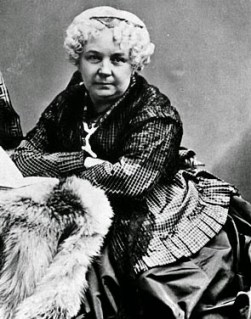
In Her Own Words: Solitude of Self, by Elizabeth Cady Stanton, 1892

Mr. Chairman and gentlemen of the committee: We have been speaking before Committees of the Judiciary for the last twenty years, and we have gone over all the arguments in favor of a sixteenth amendment which are familiar to all you gentlemen; therefore, it will not be necessary that I should repeat them again.
 
The point I wish plainly to bring before you on this occasion is the individuality of each human soul; our Protestant idea, the right of individual conscience and judgment–our republican idea, individual citizenship. In discussing the rights of woman, we are to consider, first, what belongs to her as an individual, in a world of her own, the arbiter of her own destiny, an imaginary Robinson Crusoe with her woman Friday on a solitary island. Her rights under such circumstances are to use all her faculties for her own safety and happiness.
 
Secondly, if we consider her as a citizen, as a member of a great nation, she must have the same rights as all other members, according to the fundamental principles of our Government.
 
Thirdly, viewed as a woman, an equal factor in civilization, her rights and duties are still the same–individual happiness and development.
 
Fourthly, it is only the incidental relations of life, such as mother, wife, sister, daughter, that may involve some special duties and training. In the usual discussion in regard to woman’s sphere, such as men as Herbert Spencer, Frederic Harrison, and Grant Allen uniformly subordinate her rights and duties as an individual, as a citizen, as a woman, to the necessities of these incidental relations, some of which a large class of woman may never assume. In discussing the sphere of man we do not decide his rights as an individual, as a citizen, as a man by his duties as a father, a husband, a brother, or a son, relations some of which he may never fill. Moreover he would be better fitted for these very relations and whatever special work he might choose to do to earn his bread by the complete development of all his faculties as an individual.
 
Just so with woman. The education that will fit her to discharge the duties in the largest sphere of human usefulness will best fit her for whatever special work she may be compelled to do.
 
The isolation of every human soul and the necessity of self-dependence must give each individual the right, to choose his own surroundings.
 
The strongest reason for giving woman all the opportunities for higher education, for the full development of her faculties, forces of mind and body; for giving her the most enlarged freedom of thought and action; a complete emancipation from all forms of bondage, of custom, dependence, superstition; from all the crippling influences of fear, is the solitude and personal responsibility of her own individual life. The strongest reason why we ask for woman a voice in the government under which she lives; in the religion she is asked to believe; equality in social life, where she is the chief factor; a place in the trades and professions, where she may earn her bread, is because of her birthright to self-sovereignty; because, as an individual, she must rely on herself. No matter how much women prefer to lean, to be protected and supported, nor how much men desire to have them do so, they must make the voyage of life alone, and for safety in an emergency they must know something of the laws of navigation. To guide our own craft, we must be captain, pilot, engineer; with chart and compass to stand at the wheel; to match the wind and waves and know when to take in the sail, and to read the signs in the firmament over all. It matters not whether the solitary voyager is man or woman.
 
Nature having endowed them equally, leaves them to their own skill and judgment in the hour of danger, and, if not equal to the occasion, alike they perish.
 
The appreciate the importance of fitting every human soul for independent action, think for a moment of the immeasurable solitude of self. We come into the world alone, unlike all who have gone before us; we leave it alone under circumstances peculiar to ourselves. No mortal ever has been, no mortal over will be like the soul just launched on the sea of life. There can never again be just such environments as make up the infancy, youth and manhood of this one. Nature never repeats herself, and the possibilities of one human soul will never be found in another. No one has ever found two blades of ribbon grass alike, and no one will never find two human beings alike. Seeing, then, what must be the infinite diversity in human, character, we can in a measure appreciate the loss to a nation when any large class of the people in uneducated and unrepresented in the government. We ask for the complete development of every individual, first, for his own benefit and happiness. In fitting out an army we give each soldier his own knapsack, arms, powder, his blanket, cup, knife, fork and spoon. We provide alike for all their individual necessities, then each man bears his own burden.
 
Again we ask complete individual development for the general good; for the consensus of the competent on the whole round of human interest; on all questions of national life, and here each man must bear his share of the general burden. It is sad to see how soon friendless children are left to bear their own burdens before they can analyse their feelings; before they can even tell their joys and sorrows, they are thrown on their own resources. The great lesson that nature seems to teach us at all ages is self-dependence, self-protection, self-support. What a touching instance of a child’s solitude; of that hunger of heart for love and recognition, in the case of the little girl who helped to dress a Christmas tree for the children of the family in which she served. On finding there was no present for herself she slipped away in the darkness and spent the night in an open field sitting on a stone, and when found in the morning was weeping as if her heart would break. No mortal will ever know the thoughts that passed through the mind of that friendless child in the long hours of that cold night, with only the silent stars to keep her company. The mention of her case in the daily papers moved many generous hearts to send her presents, but in the hours of her keenest sufferings she was thrown wholly on herself for consolation.
 
In youth our most bitter disappointments, our brightest hopes and ambitions are known only to otherwise, even our friendship and love we never fully share with another; there is something of every passion in every situation we conceal. Even so in our triumphs and our defeats.
 
The successful candidate for Presidency and his opponent each have a solitude peculiarly his own, and good form forbid either in speak of his pleasure or regret. The solitude of the king on his throne and the prisoner in his cell differs in character and degree, but it is solitude nevertheless.
 
We ask no sympathy from others in the anxiety and agony of a broken friendship or shattered love. When death sunders our nearest ties, alone we sit in the shadows of our affliction. Alike mid the greatest triumphs and darkest tragedies of life we walk alone. On the divine heights of human attainments, eulogized land worshiped as a hero or saint, we stand alone. In ignorance, poverty, and vice, as a pauper or criminal, alone we starve or steal; alone we suffer the sneers and rebuffs of our fellows; alone we are hunted and hounded through dark courts and alleys, in by-ways and highways; alone we stand in the judgment seat; alone in the prison cell we lament our crimes and misfortunes; alone we expiate them on the gallows. In hours like these we realize the awful solitude of individual life, its pains, its penalties, its responsibilities; hours in which the youngest and most helpless are thrown on their own resources for guidance and consolation. Seeing then that life must ever be a march and a battle, that each soldier must be equipped for his own protection, it is the height of cruelty to rob the individual of a single natural right.
 
To throw obstacle in the way of a complete education is like putting out the eyes; to deny the rights of property, like cutting off the hands. To deny political equality is to rob the ostracised of all self-respect; of credit in the market place; of recompense in the world of work; of a voice among those who make and administer the law; a choice in the jury before whom they are tried, and in the judge who decides their punishment. Shakespeare’s play of Titus Andronicus contains a terrible satire on woman’s position in the nineteenth century–“Rude men” (the play tells us) “seized the king’s daughter, cut out her tongue, out off her hands, and then bade her go call for water and wash her hands.” What a picture of woman’s position. Robbed of her natural rights, handicapped by law and custom at every turn, yet compelled to fight her own battles, and in the emergencies of life to fall back on herself for protection.
 
The girl of sixteen, thrown on the world to support herself, to make her own place in society, to resist the temptations that surround her and maintain a spotless integrity, must do all this by native force or superior education. She does not acquire this power by being trained to trust others and distrust herself. If she wearies of the struggle, finding it hard work to swim upstream, and allow herself to drift with the current, she will find plenty of company, but not one to share her misery in the hour of her deepest humiliation. If she tried to retrieve her position, to conceal the past, her life is hedged about with fears last willing hands should tear the veil from what she fain would hide. Young and friendless, she knows the bitter solitude of self.
How the little courtesies of life on the surface of society, deemed so important from man towards woman, fade into utter insignificance in view of the deeper tragedies in which she must play her part alone, where no human aid is possible.
 
The young wife and mother, at the head of some establishment with a kind husband to shield her from the adverse winds of life, with wealth, fortune and position, has a certain harbor of safety, occurs against the ordinary ills of life. But to manage a household, have a desirable influence in society, keep her friends and the affections of her husband, train her children and servants well, she must have rare common sense, wisdom, diplomacy, and a knowledge of human nature. To do all this she needs the cardinal virtues and the strong points of character that the most successful statesman possesses.
 
An uneducated woman, trained to dependence, with no resources in herself must make a failure of any position in life. But society says women do not need a knowledge of the world, the liberal training that experience in public life must give, all the advantages of collegiate education; but when for the lock of all this, the woman’s happiness is wrecked, alone she bears her humiliation; and the attitude of the weak and the ignorant in indeed pitiful in the wild chase for the price of life they are ground to powder.
 
In age, when the pleasures of youth are passed, children grown up, married and gone, the hurry and hustle of life in a measure over, when the hands are weary of active service, when the old armchair and the fireside are the chosen resorts, then men and women alike must fall back on their own resources. If they cannot find companionship in books, if they have no interest in the vital questions of the hour, no interest in watching the consummation of reforms, with which they might have been identified, they soon pass into their dotage. The more fully the faculties of the mind are developed and kept in use, the longer the period of vigor and active interest in all around us continues. If from a lifelong participation in public affairs a woman feels responsible for the laws regulating our system of education, the discipline of our jails and prisons, the sanitary conditions of our private homes, public buildings, and thoroughfares, an interest in commerce, finance, our foreign relations, in any or all of these questions, here solitude will at least be respectable, and she will not be driven to gossip or scandal for entertainment.
 
The chief reason for opening to every soul the doors to the whole round of human duties an pleasures is the individual development thus attained, the resources thus provided under all circumstances to mitigate the solitude that at times must come to everyone. I once asked Prince Krapotkin, the Russian nihilist, how he endured his long years in prison, deprived of books, pen, ink, and paper. “Ah,” he said, “I thought out many questions in which I had a deep interest. In the pursuit of an idea I took no note of time. When tired of solving knotty problems I recited all the beautiful passages in prose or verse I have ever learned. I became acquainted with myself and my own resources. I had a world of my own, a vast empire, that no Russian jailer or Czar could invade.” Such is the value of liberal thought and broad culture when shut off from all human companionship, bringing comfort and sunshine within even the four walls of a prison cell.
 
As women of times share a similar fate, should they not have all the consolation that the most liberal education can give? Their suffering in the prisons of St. Petersburg; in the long, weary marches to Siberia, and in the mines, working side by side with men, surely call for all the self-support that the most exalted sentiments of heroism can give. When suddenly roused at midnight, with the startling cry of “fire! fire!” to find the house over their heads in flames, do women wait for men to point the way to safety? And are the men, equally bewildered and half suffocated with smoke, in a position to more than try to save themselves?
At such times the most timid women have shown a courage and heroism in saving their husbands and children that has surprise everybody. Inasmuch, then, as woman shares equally the joys and sorrows of time and eternity, is it not the height of presumption in man to propose to represent her at the ballot box an the throne of grace, do her voting in the state, her praying in the church, and to assume the position of priest at the family alter.
 
Nothing strengthens the judgment and quickens the conscience like individual responsibility. Nothing adds such dignity to character as the recognition of one’s self-sovereignty; the right to an equal place, every where conceded; a place earned by personal merit, not an artificial attainment, by inheritance, wealth, family, and position. Seeing, then that the responsibilities of life rests equally on man and woman, that their destiny is the same, they need the same preparation for time and eternity. The talk of sheltering woman from the fierce sterns of life is the sheerest mockery, for they beat on her from every point of the compass, just as they do on man, and with more fatal results, for he has been trained to protect himself, to resist, to conquer. Such are the facts in human experience, the responsibilities of individual. Rich and poor, intelligent and ignorant, wise and foolish, virtuous and vicious, man and woman, it is ever the same, each soul must depend wholly on itself.
 
Whatever the theories may be of woman’s dependence on man, in the supreme moments of her life he can not bear her burdens. Alone she goes to the gates of death to give life to every man that is born into the world. No one can share her fears, on one mitigate her pangs; and if her sorrow is greater than she can bear, alone she passes beyond the gates into the vast unknown.
 
From the mountain tops of Judea, long ago, a heavenly voice bade His disciples, “Bear ye one another’s burdens,” but humanity has not yet risen to that point of self-sacrifice, and if ever so willing, how few the burdens are that one soul can bear for another. In the highways of Palestine; in prayer and fasting on the solitary mountain top; in the Garden of Gethsemane; before the judgment seat of Pilate; betrayed by one of His trusted disciples at His last supper; in His agonies on the cross, even Jesus of Nazareth, in these last sad days on earth, felt the awful solitude of self. Deserted by man, in agony he cries, “My God! My God! why hast Thou forsaken me?” And so it ever must be in the conflicting scenes of life, on the long weary march, each one walks alone. We may have many friends, love, kindness, sympathy and charity to smooth our pathway in everyday life, but in the tragedies and triumphs of human experience each moral stands alone.
 
But when all artificial trammels are removed, and women are recognized as individuals, responsible for their own environments, thoroughly educated for all the positions in life they may be called to fill; with all the resources in themselves that liberal though and broad culture can give; guided by their own conscience an judgment; trained to self-protection by a healthy development of the muscular system and skill in the use of weapons of defense, and stimulated to self-support by the knowledge of the business world and the pleasure that pecuniary independence must ever give; when women are trained in this way they will, in a measure, be fitted for those hours of solitude that come alike to all, whether prepared or otherwise. As in our extremity we must depend on ourselves, the dictates of wisdom point of complete individual development.
In talking of education how shallow the argument that each class must be educated for the special work it proposed to do, and all those faculties not needed in this special walk must lie dormant and utterly wither for want of use, when, perhaps, these will be the very faculties needed in life’s greatest emergencies. Some say, Where is the use of drilling girls in the languages, the Sciences, in law, medicine, theology? As wives, mothers, housekeepers, cooks, they need a different curriculum from boys who are to fill all positions. The chief cooks in our great hotels and ocean steamers are men. In large cities men run the bakeries; they make our bread, cake and pies. They manage the laundries; they are now considered our best milliners and dressmakers. Because some men fill these departments of usefulness, shall we regulate the curriculum in Harvard and Yale to their present necessities? If not why this talk in our best colleges of a curriculum for girls who are crowding into the trades and professions; teachers in all our public schools rapidly filling many lucrative and honorable positions in life? They are showing too, their calmness and courage in the most trying hours of human experience.
 
You have probably all read in the daily papers of the terrible storm in the Bay of Biscay when a tidal wave such havoc on the shore, wrecking vessels, unroofing houses and carrying destruction everywhere. Among other buildings the woman’s prison was demolished. Those who escaped saw men struggling to reach the shore. They promptly by clasping hands made a chain of themselves and pushed out into the sea, again and again, at the risk of their lives until they had brought six men to shore, carried them to a shelter, and did all in their power for their comfort and protection.
 
What especial school of training could have prepared these women for this sublime moment of their lives. In times like this humanity rises above all college curriculums, and recognizes Nature as the greatest of all teachers in the hour of danger and death. Women are already the equals of men in the whole of ream of thought, in art, science, literature, and government. With telescope vision they explore the starry firmament, and bring back the history of the planetary world. With chart and compass they pilot ships across the mighty deep, and with skillful finger send electric messages around the globe. In galleries of art the beauties of nature and the virtues of humanity are immortalized by them on their canvas and by their inspired touch dull blocks of marble are transformed into angels of light.
 
In music they speak again the language of Mendelssohn, Beethoven, Chopin, Schumann, and are worthy interpreters of their great thoughts. The poetry and novels of the century are theirs, and they have touched the keynote of reform in religion, politics, and social life. They fill the editor’s and professor’s chair, and plead at the bar of justice, walk the wards of the hospital, and speak from the pulpit and the platform; such is the type of womanhood that an enlightened public sentiment welcomes today, and such the triumph of the facts of life over the false theories of the past.
 
Is it, then, consistent to hold the developed woman of this day within the same narrow political limits as the dame with the spinning wheel and knitting needle occupied in the past? No! no! Machinery has taken the labors of woman as well as man on its tireless shoulders; the loom and the spinning wheel are but dreams of the past; the pen, the brush, the easel, the chisel, have taken their places, while the hopes and ambitions of women are essentially changed.
 
We see reason sufficient in the outer conditions of human being for individual liberty and development, but when we consider the self dependence of every human soul we see the need of courage, judgment, and the exercise of every faculty of mind and body, strengthened and developed by use, in woman as well as man.
 
Whatever may be said of man’s protecting power in ordinary conditions, mid all the terrible disasters by land and sea, in the supreme moments of danger, alone, woman must ever meet the horrors of the situation; the Angel of Death even makes no royal pathway for her. Man’s love and sympathy enter only into the sunshine of our lives. In that solemn solitude of self, that links us with the immeasurable and the eternal, each soul lives alone forever. A recent writer says:
 
I remember once, in crossing the Atlantic, to have gone upon the deck of the ship at midnight, when a dense black cloud enveloped the sky, and the great deep was roaring madly under the lashes of demoniac winds. My feelings was not of danger or fear (which is a base surrender of the immortal soul), but of utter desolation and loneliness; a little speck of life shut in by a tremendous darkness. Again I remember to have climbed the slopes of the Swiss Alps, up beyond the point where vegetation ceases, and the stunted conifers no longer struggle against the unfeeling blasts. Around me lay a huge confusion of rocks, out of which the gigantic ice peaks shot into the measureless blue of the heavens, and again my only feeling was the awful solitude.
 
And yet, there is a solitude, which each and every one of us has always carried with him, more inaccessible than the ice-cold mountains, more profound than the midnight sea; the solitude of self. Our inner being, which we call our self, no eye nor touch of man or angel has ever pierced. It is more hidden than the caves of the gnome; the sacred adytum of the oracle; the hidden chamber of Eleusinian mystery, for to it only omniscience is permitted to enter.
 
Such is individual life. Who, I ask you, can take, dare take, on himself the rights, the duties, the responsibilities of another human soul?
~~~~~~~~~~~~~~~~~~~~~~~~~~~~~~~~~~~

‘Solitude of Self’. Address Delivered by Mrs. Stanton before the Committee of the Judiciary of the United States Congress, Monday, January 18, 1892 (In the Public Domain) Source: National American Woman Suffrage Association Collection (Library of Congress) 
http://memory.loc.gov/cgi-bin/query/r?ammem/nawbib:@field(NUMBER+@band(rbnawsa+n8358)):