“Why” before “How”

“Why” before “How”

I very much recommend this very thoughtful piece by Steve Rose. This is a particularly timely read for me…

Steve Rose's avatarSteve Rose PhD

“He who has a why to live can bear almost any how.” —Friedrich Nietzsche

Those seeking change look toward the mountain ahead, ambivalent to whether or not they should make the trek. They want to get to the top, but are comfortable and safe. Torn between these two competing desires, one may seek out professional advice on mountain-climbing, buy all the top-notch gear, and painstakingly plan their route, perpetually putting off the climb. This is the danger of putting the “how” before the “why”.

We all know people who’ve procrastinated by planning perfectionist plots, while never getting to the hard work of actually making a change. The problem with this approach is that it continues indefinitely, leaving the person wanting the end-goal, yet not having the level of motivation required to take action. The reason for this lack of motivation is the lack of focus on why one is pursuing…

View original post 322 more words

New Podcast Episode: Margaret Sanger and Race

Dr Dorothy Ferebee - Planned Parenthood as a Public Health Measure for the Negro Race, speech for Birth Control Federation of America, 1942

Dr Dorothy Ferebee – Planned Parenthood as a Public Health Measure for the Negro Race, speech for Birth Control Federation of America, 1942

Listen to this podcast episode here or on Google Play, or subscribe on iTunes

Since the earliest days of her birth control activism, Margaret Sanger has been often accused of being a racist, among other things. To many of her critics, her birth control advocacy must be understood as a nefarious plot to undermine human morals and decency, and any means of twisting her message to convey this are fair game. As I discuss in an earlier piece, a favored method of attack, which persists to this day, is to present a sentence or phrase of Sanger’s out of context to ‘prove’ her ‘true’ beliefs about people of other races. Her detractors even claim that she was on a genocidal mission to reduce or even exterminate black people, Jews, and other immigrant groups by destroying future generations. Never mind that Martin Luther King, Jr. praised her work on behalf of his beleaguered people. Never mind that she worked closely with civil rights leaders such as Mary McLeod Bethune and W.E.B. DuBois. Never mind that she opened clinics to serve black and other minority women because so many existing clinics refused to serve anyone but whites. Never mind that she wrote in 1944:

‘We must protect tomorrow’s Chinese baby and Hindu baby, English and Russian baby, Puerto Rican, Negro and white American babies who will stand side by side… to bring promise of a better future’

Read the written version here

Ordinary Philosophy and its Traveling Philosophy / History of Ideas series is a labor of love and ad-free, supported by patrons and readers like you. Please offer your support today!

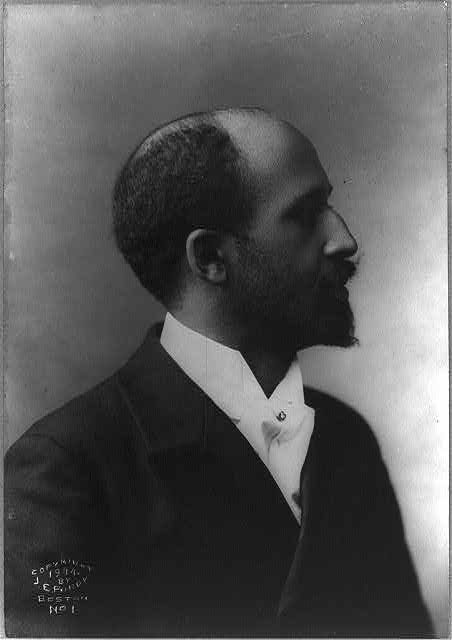
Happy Birthday, W.E.B. Du Bois!

W.E.B. Dubois, Photograph taken by J.E. Purdy in 1904, public domain via Library of Congress

W.E.B. Dubois, photograph taken by J.E. Purdy in 1904, public domain via Library of Congress

Let us honor the life and legacy of the great American writer, historian, journalist, professor, activist, philosopher, and race theorist W.E.B. Du Bois, born on February 23, 1868.

The NAACP (of which he was a founder) writes of DuBois:

‘William Edward Burghardt Du Bois (February 23, 1868 – August 27, 1963) was an American civil rights activist, leader, Pan-Africanist, sociologist, educator, historian, writer, editor, poet, and scholar. He became a naturalized citizen of Ghana in 1963 at the age of 95.

…In 1891 Du Bois got his master of arts and in 1895 his doctorate in history from Harvard. His dissertation, The Suppression of the African Slave Trade to the United States of America, 1638-1870, was published as No. 1 in the Harvard Historical Series. This important work has yet to be surpassed. In 1896 he married Nina Gomer, and they had two children. …[A]t the University of Pennsylvania… he conducted the pioneering sociological study of an urban community, published as The Philadelphia Negro: A Social Study (1899). These first two works assured Du Bois’s place among America’s leading scholars.

Du Bois’s life and work were an inseparable mixture of scholarship, protest activity, and polemics. All of his efforts were geared toward gaining equal treatment for black people in a world dominated by whites and toward marshaling and presenting evidence to refute the myths of racial inferiority’ …

Read his NAACP bio in full here

Donald J. Morse writes of DuBois for the Internet Encyclopedia of Philosophy:

‘W. E. B. Du Bois was an important American thinker: a poet, philosopher, economic historian, sociologist, and social critic. His work resists easy classification. This article focuses exclusively on Du Bois’ contribution to philosophy; but the reader must keep in mind throughout that Du Bois is more than a philosopher; he is, for many, a great social leader. His extensive efforts all bend toward a common goal, the equality of colored people. His philosophy is significant today because it addresses what many would argue is the real world problem of white domination. So long as racist white privilege exists, and suppresses the dreams and the freedoms of human beings, so long will Du Bois be relevant as a thinker, for he, more than almost any other, employed thought in the service of exposing this privilege, and worked to eliminate it in the service of a greater humanity. Du Bois’ pragmatist philosophy, as well as his other work, underlies and supports this larger social aim. Later in life, Du Bois turned to communism as the means to achieve equality. He envisioned communism as a society that promoted the well being of all its members, not simply a few. Du Bois came to believe that the economic condition of Africans and African-Americans was one of the primary modes of their oppression, and that a more equitable distribution of wealth, as advanced by Marx, was the remedy for the situation ….

Read the full IEP bio here

You will find another good short bio and list of DuBois’ writings at The Pennsylvania Center for the Book‘s website

…and click here for pieces about or featuring DuBois at Ordinary Philosophy

Ordinary Philosophy and its Traveling Philosophy / History of Ideas series is a labor of love and ad-free, supported by patrons and readers like you. Please offer your support today!

Happy Birthday, John Rawls!

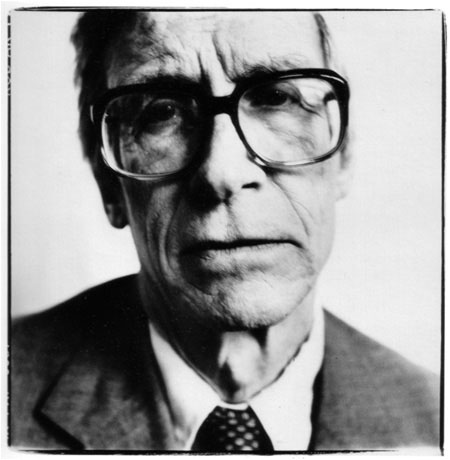
John Rawls, image via BBC's Will and Testament blogLet’s remember and celebrate John Rawls, Feb 21, 1921 – Nov 24, 2002, the great political and moral theorist who thinks of justice as fairness, on his birthday.

Among his greatest contributions is the thought experiment called ‘the veil of ignorance’. It’s a beautifully simple tool for designing a just society. Imagine you’re to be placed into society with no idea what you would be: rich, poor, or middle-class; tall or short; intelligent or not; of which gender; outgoing or shy; of which race; employed and at what kind of job or not at all; and so on.

Given that you have no idea what your roles in life will be, what cultural practices, laws, policies, governmental system, economic system, and so on, would you put into place? Remember, behind that veil of ignorance, you’ll have to decide what kind of society benefits everyone the most since you could end up being anyone. If you were really in that situation, imagine just how fair you’d be. Perhaps, as Rawls imagines, we’d all be far better off if that was really how the world works.

Here’s a short list of resources to learn more about the great John Rawls:

John Rawls – by Leif Wenar for The Stanford Encyclopedia of Philosophy

John Rawls – by Henry S. Richardson for the Internet Encyclopedia of Philosophy

A Theory of Justice – by John Rawls (Google book preview)

and my own work featuring Rawls:

Behind the Veil: Rawls, Locke, de Tocqueville, and Human Connection in a Liberal Society

Communitarianism, Writ Large

Sources, Influences, Shout-Outs, and all that Good Stuff

Ordinary Philosophy and its Traveling Philosophy / History of Ideas series is a labor of love and ad-free, supported by patrons and readers like you. Please offer your support today!

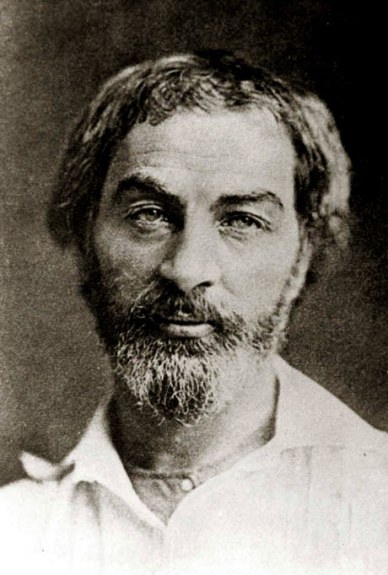
O.P. Recommends: NYT’s Story of How Zachary Turpin, Graduate Student at the University of Houston, Found a Lost Walt Whitman Novel

Walt Whitman in 1854, Daguerreotype, Photographer unknown probably Gabriel Harrison, public domain via Wikimudia Commons

Walt Whitman in 1854, daguerreotype, photographer unknown (probably Gabriel Harrison), public domain via Wikimedia Commons

I just came across this exciting story this morning in the New York Times’ Books section about how Zachary Turpin, a graduate student at the University of Houston, found a lost Walt Whitman novel. It was published in serial form in The Sunday Dispatch in 1852. It’s called Life and Adventures of Jack Engle: An Autobiography, and subtitled A Story of New York at the Present Time.

Read the New York Times article about the book’s discoverer and how he made his discovery here,

and read more about the book, part of the book itself online, and order a print copy here

Ordinary Philosophy and its Traveling Philosophy / History of Ideas series is a labor of love and ad-free, supported by patrons and readers like you. Please offer your support today!


New Podcast Episode: Margaret Sanger NYC Sites, Day 4

Planned Parenthood Clinic at Margaret Sanger Square, Mott and Bleeker Streets, NYC

Planned Parenthood Clinic at Margaret Sanger Square, Mott and Bleeker Streets, NYC

Listen to this podcast episode here or on Google Play, or subscribe on iTunes

Friday, October 21st, 2016

It’s cold and rainy, so I spend a long morning with my coffee as I do more research. Try as I might, I just can’t identify, with any certainty, the exact site of the Queens County Penitentiary, Long Island City, where Margaret Sanger was imprisoned for thirty days in 1917 for operating her Brownsville birth control clinic. Nor do I locate the site of the original White Plains Hospital where Sanger trained as a nurse. I had pored over the atlases of that town, from that time, in the New York Public Library map division, and I searched assiduously in their digitized records this morning. No luck.

So I finish my account of the first site I visited on Tuesday and publish it, then head out. It keeps raining, but oh well, it’s not a terribly long walk and besides, I welcome a walk in the rain, under my umbrella, of course. The drought back home had been mostly unrelenting for ages and it’s nice to experience a good rain again.

My first destination is Planned Parenthood’s Margaret Sanger Center at Mott and Bleecker Streets… Read the written version here

Ordinary Philosophy and its Traveling Philosophy / History of Ideas series is a labor of love and ad-free, supported by patrons and readers like you. Please offer your support today!
 

Happy Birthday, Nicolaus Copernicus!

Nicolaus Copernicus portrait from Town Hall in Toruń, ca.1580, public domain via Wikimedia Commons

Nicolaus Copernicus portrait from Town Hall in Toruń, ca.1580, public domain via Wikimedia Commons

Let us remember and salute the visionary Nicolaus Copernicus on the occasion of his birthday.

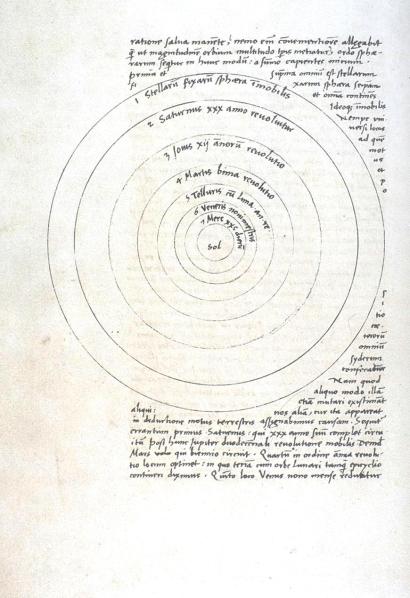
de-revolutionibus-manuscript-p9b-by-nicolas-copernicus-www-bj-uj-edu-pl-public-domain-via-wikimedia-commons

De Revolutionibus manuscript, page 9b by Nicolaus Copernicus (www.bj.uj.edu.pl) Public domain via Wikimedia Commons

Born on February 19th, 1473, Copernicus gave our modern world the heliocentric theory of the solar system. He credited the ancient Greek astronomer and mathematician Aristarchus of Samos with originally describing how Earth and her sister planets orbit around the sun and took it upon himself to make the observations and work out the mathematics to prove it. Copernicus reintroduced the heliocentric theory so convincingly that it overcame the dominant earth-centered model preferred by the powerful Christian Church for theological reasons. His rigorous and clear reason simply could not accept the clumsy, assumption-laden model that Claudius Ptolemy had devised in the second century A.D. to explain why the planets did not behave as expected if the earth-centered model was accurate. Copernicus was a religious man himself, but he did not believe that his faith required him to believe something that his reason and his own eyes demonstrated was untrue.

For emphasizing the primacy of observation-driven reason over theology when it comes to describing and explaining the natural world, Copernicus is widely credited with starting the Scientific Revolution.

Here’s a short list of excellent resources to learn more about the great Nicolaus Copernicus:

Nicolaus Copernicus – by Sheila Rabin for The Stanford Encyclopedia of Philosophy

Nicolaus Copernicus – by J.J. O’Connor and E.F. Robertson for the MacTutor History of Mathematics Archive, School of Mathematics and Statistics University of St. Andrews, Scotland

Nicolaus Copernicus – From Wikipedia, the free encyclopedia

Copernicus – episode 2 of the BBC series The Beauty of Diagrams, hosted by mathematician Marcus du Sautoy

Ordinary Philosophy and its Traveling Philosophy / History of Ideas series is a labor of love and ad-free, supported by patrons and readers like you. Please offer your support today!
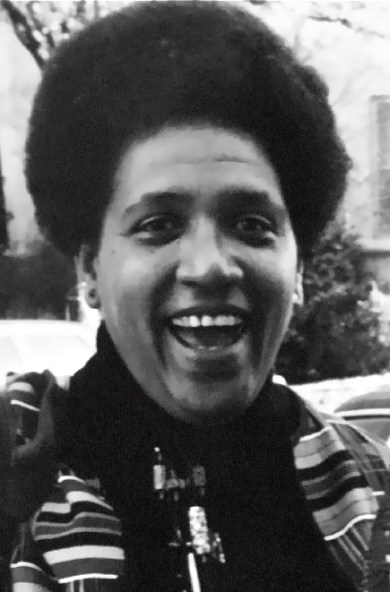
Happy Birthday, Audre Lorde!

Audre Lorde, 1980

Audre Lorde, 1980

Poet and civil rights activist Audre Lorde was born on February 18, 1934. In remembrance of this powerful and eloquent woman on her birthday, I’ll share the bio I found at the Poetry Foundation:

‘A self-described “black, lesbian, mother, warrior, poet,” Audre Lorde dedicated both her life and her creative talent to confronting and addressing the injustices of racism, sexism, and homophobia. Her poetry, and “indeed all of her writing,” according to contributor Joan Martin in Black Women Writers (1950-1980): A Critical Evaluation, “rings with passion, sincerity, perception, and depth of feeling.” Concerned with modern society’s tendency to categorize groups of people, Lorde fought the marginalization of such categories as “lesbian” and “black woman,” thereby empowering her readers to react to the prejudice in their own lives. While the widespread critical acclaim bestowed upon Lorde for dealing with lesbian topics made her a target of those opposed to her radical agenda, she continued, undaunted, to express her individuality, refusing to be silenced. As she told interviewer Charles H. Rowell in Callaloo: “My sexuality is part and parcel of who I am, and my poetry comes from the intersection of me and my worlds… [White, arch-conservative senator] Jesse Helms’s objection to my work is not about obscenity…or even about sex. It is about revolution and change.” Fighting a battle with cancer that she documented in her highly acclaimed Cancer Journals (1980), Lorde died of the illness in 1992…. Read more about Audre Lorde and her poetry here

Ordinary Philosophy and its Traveling Philosophy / History of Ideas series is a labor of love and ad-free, supported by patrons and readers like you. Please offer your support today!
Margaret Sanger NYC Sites, Day 3 Part 2

24 Post Ave near Dyckman St, Inglewood, Manhattan, NYC, 2016 by Amy Cools

24 Post Ave near Dyckman St, Inglewood, Manhattan, NYC, 2016 by Amy Cools

Listen to this podcast episode here or on Google Play, or subscribe on iTunes

Thursday, October 20th, 2016, continued

I exit the A train at the Dyckman St station, the second to the last stop on the line, and walk a couple of blocks to 34 Post Ave. Margaret Sanger moved into ‘an inexpensive little flat’ here in January of 1914 leaving her husband William, or Bill as she called him, behind in Paris. The Sangers had lived there for a few months as Sanger researched and wrote and William worked to establish himself as a painter. En route to Paris, they stopped in Glasgow, Scotland, so that Sanger could observe and write about the effects of municipal ownership, a system of public ownership often endorsed by Socialists, for a newspaper assignment. While in Paris, Sanger met with many socialists and activists, all the while researching French methods of contraception. But she was growing bored and restless, eager to get back to work and engage in activism once again. She and the three children returned to New York City around the New Year, leaving William behind to continue his artistic pursuits… Read the written version here

Ordinary Philosophy and its Traveling Philosophy / History of Ideas series is a labor of love and ad-free, supported by patrons and readers like you. Please offer your support today!

 

Happy Birthday, Jeremy Bentham!

Jeremy Bentham's Auto-Icon at University College London, 2003 by Michael Reeve, GNU Free Documentation License Version 1.2

Jeremy Bentham’s Auto-Icon at University College London, photo 2003 by Michael Reeve

Jeremy Bentham, the great English moral and legal philosopher born on February 15, 1748, was a very strange man. A brilliant one, but strange nonetheless. He was a precocious child and advanced in his studies very early, finding Westminster and Queen’s College at Oxford too easy and therefore rather boring. He was trained as a lawyer but decided not to practice law after hearing William Blackstone’s lectures. Blackstone’s treatise Commentaries on the Laws of England is still considered one of the most authoritative and foundational works on English law, so for a guy to consider them so flawed that he’d want to give up his career seems a bit… well, presumptuous. But he demonstrated his own great intellectual capacities through his lifetime of prolific writing, mostly on legal theory, moral philosophy, and social reform. In the end, he earned the right to a certain degree of arrogance.

Bentham is generally considered the father of utilitarianism, the moral philosophy which judges anything that can be judged as right or wrong, good or evil, according to how conducive it is to ‘the greatest happiness of the greatest number.’ Utilitarianism, then, is a type of consequentialism, which holds that a thing is right or wrong based on its consequent harms or benefits. Bentham did not invent the principles of utilitarianism; he discovered them in the writings of Cesare Beccaria (who authored the ‘greatest happiness’ axiom), David Hume, Claude Helvétius, and Joseph Priestley. But he spent a lifetime synthesizing these principles into a cohesive, fleshed-out moral philosophy founded on utility, whether a law or action increases or decreases pleasure or happiness. This principle can seem too subjective to apply to matters of law or public policy; after all, what makes one happy can make another less so, and how can we determine whether the happiness of one is greater, or more important, than the happiness of another? Bentham, careful and systematic in his approach to this as he was to everything else, devised his ‘Felicific Calculus’ to solve this problem. Bentham believed that pleasure, a natural phenomenon like everything else in the world, was likewise quantifiable. He hoped his method of assigning unitary measurements to pleasure, then determining their relative values through mathematics, was a way to make his moral philosophy practicable, conducive to real social reform.

To many, the idea that pleasure and happiness could be reduced to mathematical formulas seems very strange; some think he may have had Asperger’s syndrome or another cognitive feature that caused Bentham to view emotion with such scientific detachment. But as socially awkward as he and his ideas often were, his utilitarian philosophy led to him to some moral conclusions that we now consider extremely progressive and much more caring than those typical of his times. For example, he was an early proponent of racial equality, women’s rights, and animal rights. As to animal rights, just as for all classes of human beings, considering only the pleasure and pain of some sentient beings and not others when it comes to morals is unscientific and therefore unjustifiably biased. After all, animals, like all human beings, have feelings too, and their feelings are just as important to them as ours are to us. So, a moral system based on feelings must consider all equally important, so that one unit of pig happiness, for example, is just as morally significant as one unit of human happiness. The only correct way to balance them out in matters of morals and public policy is to apply the Felicific Calculus to determine how much pleasure or pain each experience in any given situation.

At the end of his long and productive life, the committed naturalist arranged to have his body publicly dissected, both for scientific inquiry and to provide an example to others; he believed that a perfectly good body should never go to waste and that everyone should donate their body to science. He also arranged to have his head and skeleton preserved, dressed in his clothes and stuffed to look as lifelike as possible, to be displayed in some public place. The preservation of Bentham’s head, with its glass eyes he had purchased some years before, left much to be desired; the expression it ended up with creeped people out. So his Auto-Icon, as he called it, sits today in its glass case at University College, London with a nice lifelike wax head in its place. His real head is safely stored away where students, prone to stealing over the years in a series of pranks, can no longer get to it.

Read more about the brilliant and eccentric Bentham at:

Jeremy Bentham – by James E. Crimmins for The Stanford Encyclopedia of Philosophy

Jeremy Bentham – University College London website

Jeremy Bentham on the Suffering of Non-Human AnimalsUtilitarianism.com

Ordinary Philosophy and its Traveling Philosophy / History of Ideas series is a labor of love and ad-free, supported by patrons and readers like you. Please offer your support today!