New Podcast Episode: East Bay Hike with Plutarch, June 11th, 2017

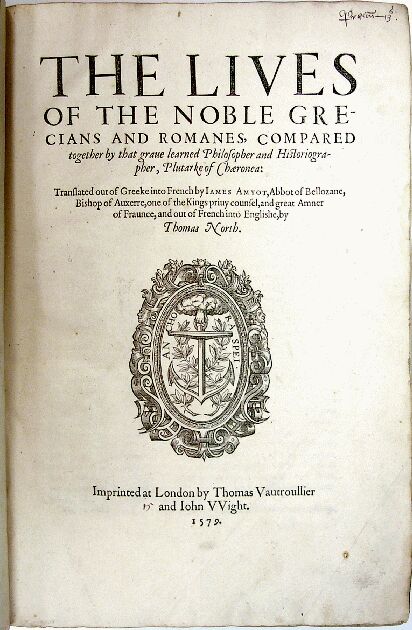
Title page of Thomas North’s translation of Plutarch’s Lives, 1579, first edition

Listen to this podcast episode here or on Google Play, or subscribe on iTunes

Sunday, June 11th, 2017

I’ve been planning to read the whole of Plutarch’s Parallel Lives of the Noble Greeks and Romans for some time. I’ve also been longing for a really good stretch of the legs, especially after this last week of office work and a Saturday selling off more of my belongings in preparation for my move to Scotland. (Sorting and selling off most of the artifacts of my life and of my twenty-plus years of small business ownership has been a tedious process. If the ashes would turn into dollars to fund my education and travel, I’d gladly set it all on fire at this point and be done with it.)

It occurred to me yesterday that I could do both my hiking and my reading on my free day tomorrow! So I downloaded Lives from LibriVox onto my little portable audio player and plotted a good long Bay Area Ridge Trail hike similar to one I did two years ago…

Read the written version here

Ordinary Philosophy and its Traveling Philosophy / History of Ideas series is a labor of love and ad-free, supported by patrons and readers like you. Please offer your support today!

East Bay Hike with Plutarch, June 11th, 2017

Title page of Thomas North’s translation of Plutarch’s Lives, 1579, first edition

Sunday, June 11th, 2017

I’ve been planning to read the whole of Plutarch’s Parallel Lives of the Noble Greeks and Romans for some time. I’ve also been longing for a really good stretch of the legs, especially after this last week of office work and a Saturday selling off more of my belongings in preparation for my move to Scotland. (Sorting and selling off most of the artifacts of my life and of my twenty-plus years of small business ownership has been a tedious process. If the ashes would turn into dollars to fund my education and travel, I’d gladly set it all on fire at this point and be done with it.)

It occurred to me yesterday that I could do both my hiking and my reading on my free day tomorrow! So I downloaded Lives from LibriVox onto my little portable audio player and plotted a good long Bay Area Ridge Trail hike similar to one I did two years ago. This time, my start in Anthony Chabot Regional Park would be from Lake Chabot Golf Course on the lower east end of the park since I can get there more easily without my car than to other trailheads down there. The hike is about 28 miles long, with about 4,200 feet of climbing and about the same descending all told, and goes from Oakland north to San Pablo. The hike goes through 8 regional parks and nature preserves: Anthony Chabot Regional Park, Redwood Regional Park, Huckleberry Botanic Regional Preserve, Sibley Volcanic Regional Preserve, Siesta Valley Recreation Area, Tilden Regional Park, Tilden Nature Area, and Wildcat Canyon Regional Park. I’ll hike through winding creek canyons, oak forests, redwood forests, eucalyptus groves, an ancient volcanic site, and chaparral.

This morning, I walk north and east from Lake Chabot Golf Course shortly after seven thirty, then enter Chabot Regional at the end of Grass Valley Road in south Oakland, near the San Leandro and Castro Valley borders. I take Jackson Grade east and down to Brandon Trail, where I turn left just before the sweet little stone bridge that crosses Grass Valley Creek. I head north along the east bank of the creek.

Stone Bridge over Grass Valley Creek, at Jackson Grade and Brandon Trail, Anthony Chabot Regional Park, Oakland

Plutarch’s first story tells of Theseus, founder of Athens, who rampaged around Ancient Greece like the personification of Dante’s nine circles of hell, punishing wrongdoers by inflicting on them the same species of violence they’d wreaked on others. He was quite bloodthirsty in his righteousness, slaying men and animals alike in the goriest ways possible, parading their carcasses around as warnings to the would-be wicked. But hey, all in the name of justice and glory, right? After all, according to the honor code of Theseus’ culture, a man was nothing until he’d proved himself by feats of courage, usually involving slaying an enemy. But in pitting his strength only against those who harmed and oppressed others, Theseus can be thought of as a sort of combination of Robin Hood and Dexter, the fictional serial killer/forensic scientist who directs his blood lust only against other serial killers he’s proven guilty by means of his science. But like Dexter, Theseus’ life of exploits didn’t end well, though for very different reasons. As well as a brave one, Theseus was a vainglorious and randy man, and his reputation as a hero was undermined over time by his increasing rapaciousness, concupiscence, and mistreatment of women, especially by the abduction and rape of Helen of Troy.

Looking back at Macdonald Trail, across Grass Valley Creek, from Big Bear Staging Area, where I cross Redwood Road to enter Redwood Regional Park

It’s a beautiful morning here in Chabot, sunny and a little cool. The blustering winds of yesterday have given way to occasional gentle breezes. The poppies are still closed. The cottontails hop across the trail: they emerge in the cool of the morning and the early evening and are as plentiful as, well, rabbits. Tall thistles are in bloom, and wild mustard, and lupine, and tall dandelions, and a flower that looks like Queen Anne’s lace, and sweet-smelling cones of pale pink flowers on a species of tree I can’t name. There’s a plentiful grass tipped with seed pods that arrange themselves in structures that look like rattlesnake tails, bending the stems over with their weight.

My itchy eyes and runny nose tell me I forgot to take my allergy medicine this morning in my haste to start early. It’ll be a sneezy, watery day as well as an educational one for my head.

Entering Redwood Regional Park across Redwood Road from Big Bear Staging Area of Anthony Chabot Regional Park

I cross Redwood Road and Grass Valley Creek by a little bridge into Redwood Regional Park. As I cross the bridge, Plutarch has begun to tell the life of his second hero, Romulus, founder of Rome and for whom it was named, and some stories of his twin brother Remus. Plutarch introduces this account with a long series of summaries of alternate foundation tales from popular lore. He assigns various levels of credibility to each since each story appears more fantastic than the one before, but still includes them so as to remain faithful to the pledge he makes at the beginning of his Lives to be as historically accurate as possible. But I think he settles on this Romulus story because it fits with his chosen literary construction, and not so much because it’s any less implausible. Plutarch is aware of the latter, so he seeks to gain the confidence of his readers with the admonition ‘we should not be incredulous when we see what a poet fortune sometimes is.’ As you likely guessed already, Plutarch alternates his accounts of great Greeks and Romans in pairs, chosen because they play corollary roles in the history and mythology of each culture. Theseus was the storied founder of Athens, Romulus of Rome.

Commemorative marker on Golden Spike Trail running north along Grass Valley Creek, Redwood Regional Park

Romulus and Remus, for one of many possible reasons of court intrigue that Plutarch offers in explanation, were cast out as babies from their royal family, set afloat in a trough on the river like the biblical Moses, and left to the mercies of the rushing water and the wild animals, their flesh to become food for the birds. Instead, they were suckled by a wolf and fed by birds, especially woodpeckers, made sacred to the Romans by this kind act. The twins grew strong, bold, and handsome, conquerors of men and lovers of women. Now grown men, they overthrew one usurping and unjust tyrant, and instead of taking control themselves, they handed the city over to the rightful ruler. The only power they chose to wield was over a city they would found themselves.

A little later on in the story, I’m struck by Plutarch’s justification of the legendary rape of the Sabine women by the newly made Romans, a story immortalized countless times in art over the centuries. The commoners who left home to follow Romulus and Remus, out of admiration for their courage and just dealings, after a time sought to populate their new city by abducting women from the neighboring Sabine people. Plutarch shrugs his shoulders and writes, well, this violent act of mass rape and coerced marriage wasn’t really an act of barbarity or cruelty, but rather of necessity, since there weren’t enough women around actually consenting to marry them. And anyway, once the men had raped and impregnated and wed them, they were nice to the ladies thereafter. Yikes. As James Brown would observe, that was a man’s world, and the first Roman men of legend agreed, in the worst possible fashion, that it ain’t nothin’ without a woman or a girl.
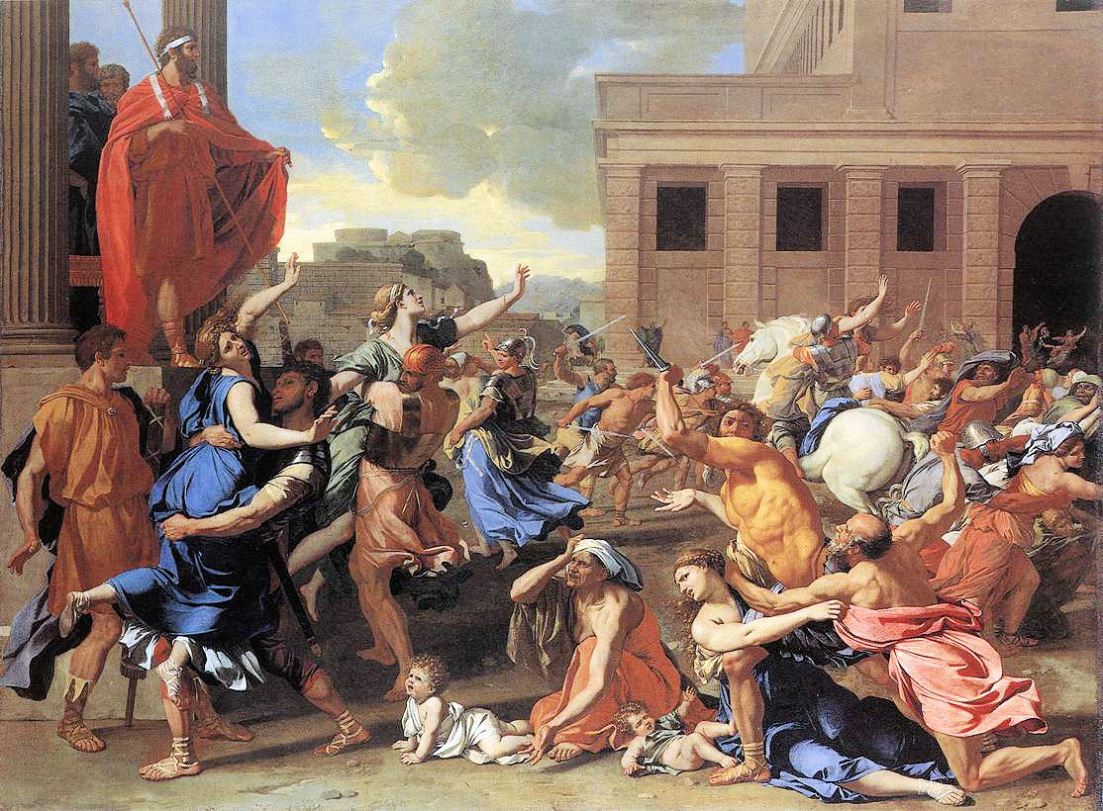
The Abduction of the Sabine Women by Nicolas Poussin, 1634–1635, Metropolitan Museum of Art, public domain via W.C.

And besides, Plutarch continues in his attempts at exoneration, the budding new city openly offered sanctuary to all escaped slaves, to fugitives from the law, and to all other unhappy and dispossessed people willing to become members of the new society they were building from scratch. It’s interesting that Rome, which Plutarch praises as the pinnacle of justice, order, and noble accomplishment, is, as he tells it, also the product of abductors, rapists, and violent criminals as well as of enterprising seekers of liberty and a better life.

Redwood Bowl in Redwood Regional Park, a welcome water stop and bathroom break

Plutarch also tells of a certain philosopher and mathematician assigned many centuries later to fix the date of Romulus’ birth, based on accounts of an eclipse that occurred around that time and on other events in his life ‘just as solutions of geometrical problems are derived.’ Plutarch goes on to consider the validity of the idea that the lives of human beings could similarly be described and even predicted so long as the astrologer had all of the relevant celestial information about the positions of the heavenly bodies. He describes the controversy over that theory in terms not entirely dissimilar to naturalist determinists and their ideological opponents today.

Panoramic view of Redwood Regional Park from West Ridge Trail

Following Plutarch’s account of a later attack of the Sabines on Rome, since the former didn’t take kindly to the earlier predations of the latter, and the subsequent betrayal of the city to its enemies, Plutarch makes another interesting observation. Julius Caesar once said that he loved treachery but hated traitors, just as all people hate and despise providers of things they need but are ashamed of needing. Plutarch offers these quotes and incidents as emblematic of the ways of the world. And we’ve seen this sort of this countless times through history following Plutarch. Christians of Europe, for hundreds of years, justified their persecutions of the Jews partly on account of usury. The objects of their hate were making a living providing the very loans the Christians relied on to build their wealth, but when it became more expedient to rob and kill their creditors from time to time, all bets were off. Slaveholders of the American South similarly despised and persecuted the very people who made their wealth and comfort possible, justifying their oppression on account of supposed inferiority as they quashed any attempt by their slaves to better themselves through education and work on their own behalf. And so on, and so on…

Amy and a stand of Matilija poppies at Skyline Gate of Redwood Regional Park. Two parks down, six to go!

Tiny pink buds seem to float among the starry leaves along Skyline Trail in lush Huckleberry Botanic Regional Preserve

After a good long climb, West Ridge Trail curves around to the right to become East Ridge Trail; after a short walk along this trail, I turn left at the Bay Area Ridge Trail, leaving Redwood Regional via the connector path, and crossing Pinehurst Rd., I enter beautiful Huckleberry Botanic Regional Preserve.

Skyline Trail, which winds through beautiful and lush Huckleberry, and which runs along Round Top Creek through much of Sibley Volcanic, the next park, is thickly lined with poison oak, in some places hard to avoid. The rainy winter and spring caused them to flourish, but I walk in trepidation. I had to pick my way with special care on Golden Spike Trail in Redwood, since that trail is very, very narrow, almost overgrown in places. The wildflowers that grow plentifully in spring, such as hound’s tongue, blue-eyed grass, and California buttercups, are nearly gone. Now, there’s lots of sticky monkey flower, Ithuriel’s Spear, blue dicks, mule ears, and many other flowers, as well as those I named earlier.

Plutarch wraps up this part of his Lives with a reflection on the sudden and unexplained death of Romulus and the deaths of other heroes and kings under similarly suspicious circumstances. He takes this opportunity to share his beliefs about death and the soul, and quotes the ancient philosopher Heraclitus: ‘A dry soul is best’. This quote is oftentimes interpreted as a comment on the immorality of drinking, but Plutarch interprets it as being about a soul burdened by its connection to a fleshly body, full of blood and fluids associated with the basest of needs and desires and with illness: saliva, semen, urine, phlegm, and so on. He believes that souls are defiled so long as they remain arrayed in flesh, and become pure and holy only when completely divorced from the body. Plutarch goes on to say that he believes all great and virtuous men, purified of flesh, go on to become immortal heroes, then demigods, then gods. In his ideas about the purity of souls, the corruptions of the flesh, and that at least some human beings have the potential to become gods eventually, Plutarch is in agreement with the Christians in some ways, and with the Mormons in others.

Panoramic view looking over Huckleberry Botanic Regional Preserve, from an outlook above the steepest part of the climb out of the creek canyon
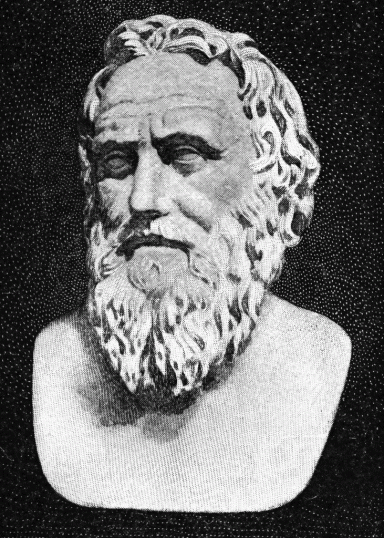
Lycurgus, illustration from William C. Morey’s Outlines of Greek History, Chicago, American Book Company, 1903

Then comes the story of Lycurgus the Lawgiver, the legendary Greek king who instituted the rigid militarist social system that remains emblematic of ancient Sparta to this day. Plutarch tells how a preceding king, Eurytion, had relaxed the severity of his monarchic rule in order to win the favor of his people. But the people, over time, ‘grew bold’ and rose up against attempts by subsequent rulers to strengthen their own power. Earlier, in his reflections on the comparative merits and demerits in the characters of Theseus and Romulus, he praised Theseus’ preference for increasingly democratic rule over Romulus’ evolution (or, devolution) into tyranny. Plutarch attributes excesses in favor of democracy to a generous and kindly spirit, and excesses of tyranny to pride and selfishness. Yet when he opens his story of Lycurgus with the destabilization of society following increased democratization, he seems to contradict himself when he earlier associates virtue with democracy and vices with tyranny, until we remember that in the first case, he’s speaking of the characters of individuals, and in the second case, he’s pointing out that democracy is not always the best answer for society at large. John Adams and Alexander Hamilton would sympathize with Plutarch here, while Thomas Jefferson would side with the people. I think Jefferson would point out, as he does following the pandemonium following the first French Revolution, that excesses are bound to happen in any struggle against tyranny. As they settle into their newly won liberty, however, people’s better natures, which predominate in the souls of all free and educated people, have the opportunity and the desire to create a just and happy society.

When Lycurgus took power, however, he perceived a society that had become ‘effeminate’ (negative term in those days), weak, selfish, and corrupt through addiction to sensual pleasures and the small-souled desire to amass personal wealth. So Lycurgus set out to re-craft his Sparta into an ideal society. One of his first reforms was the redistribution of land. He observed that most of the land was held by a few, leaving much of it undeveloped and unfarmed, while many more people were poor and unemployed. He convinced the landowners, as Plutarch tells it, to give up some of their land, which he thus distributed evenly among the citizens. He then instituted more practices designed to reduce useless luxury, overeating, and other forms of excess which caused both poor health in the individual and envy between individuals. In fact, he convinced his subjects to perceive the appearance of wealth as a defect, something to be abhorred as a sign of petty, self-indulgent weakness. Lycurgus’ system of social engineering, instituted by both persuasion and force, was not entirely welcome to the Spartans, but Plutarch heartily approves.

Looking back on shady Skyline Trail in Sibley Volcanic Regional Preserve, which runs along Round Top Creek

Looking back on Sibley’s volcanic formations rising above the trees, from Fish Ranch Road. Please excuse the shadow in the corner, I didn’t notice the cover on my tablet had been knocked askew in my backpack, slightly obscuring the camera lens.

Skyline Bay Area Ridge Trail crossing on Fish Ranch Road, looking north at Siesta Valley Recreation Area

Intensely blue starry flowers along Bay Area Ridge Trail through Siesta Valley Recreation Area

Yet Spartan society, so rigidly designed by Lycurgus according to his ideas about virtue and utility, was not egalitarian in the sense that we’d understand the term.  It was an intensely aristocratic society centered around a warrior elite, with an equality enforced only among that class. Wives were obtained by force, children were removed from the care of their parents at the will of the state, and deformed and sickly babies were put out to die of exposure. And as Plutarch so casually mentions, all of this equality of the ‘best’ in society, crafted by both positive and negative eugenics practices, and their strict training in virtue, sport, and war, was made possible by the slave labor of the subjugated helots. Plutarch does not seem the least distressed by this; in fact, he seems to accept this as a most natural state of affairs. He does regret that the helots were often treated harshly, even murderously, by their Spartan enslavers, but he insists that this institutional cruelty came only after Lycurgus’ rule by subsequent kings of lesser moral character.

Plutarch tells us next about Numa Pompilius, the second king of Rome. Numa was a was held in high regard by the people because he was humble, contemplative, lived simply, scorned money-making, and spent his time in study and in service to his people. After the death of Romulus, he was widely accepted as the best candidate to succeed to the throne, endorsed by Romans and Sabines alike. The original Romans and the Sabines, who had cohabited Rome in an uneasy, fractured peace, wanted a ruler who would deal as justly with one group as another. The senators who had taken over the government didn’t have the trust of the people: many believed they were corrupt and that they had, in fact, assassinated Romulus. So they decided to elect a king to keep watch over the Senate and to lead the inhabitants of Rome as one united people.

Hillside covered with sticky monkey flower in Siesta Valley Recreation Area

Beautifully patterned redwood stump near the meeting of Siesta Valley Recreation Area and Tilden Regional Park

So at 40 years old, having lived an already long life of virtue, Numa settled with reluctance, feigned or not, onto the throne. According to Numa, wielding power was not his dream: he preferred a life of mostly solitary contemplation. Plutarch, however, rather seems to describe the actions of a man secretly rejoicing in the power offered to him while coyly disguising his satisfaction. In any case, Numa was a philosophical man who believed strongly in social justice and had some earlier experience as an adjudicator. So he immediately got to work. He banished the huge retinue of servants the Romulus had gathered around him in his tyrannical old age. He instituted many reforms to gain the trust of the people and to promote peace, especially between the Sabines and the original Romans. The factional and ethnic conflict that had long plagued Rome threatened its stability and made it vulnerable to attack. So he found one inventive and one practical way to solve these problems: involuntary social mixing and censorship. He assigned individual members of differing groups to shared trades that would force interaction and cooperation that otherwise wouldn’t happen, and he forbade any references to belonging to particular cultural or ethnic groups. From now on, decreed Numa, all of his subjects were simply Roman.

I’m reminded here of a very interesting article I read about Singapore a couple of years ago, a nation which addressed a similar problem in a similar way. Singapore is a densely populated, tiny island country made up largely of immigrant workers and their descendants, of very diverse ethnic and religious backgrounds. Singapore maintains its relatively low level of interracial and interreligious conflict by assigning ethnic and religious quotas to all neighborhoods. By forcing its citizens to live, work, go to school, shop, and in every other way share their public lives by people of diverse backgrounds, Singapore hopes that everyone will be so accustomed to diversity that they’ll accept it as a matter of course. Or, even better, a matter of pride and celebration. I suspect that Singapore’s two Prime Ministers may have read Plutarch’s Lives.
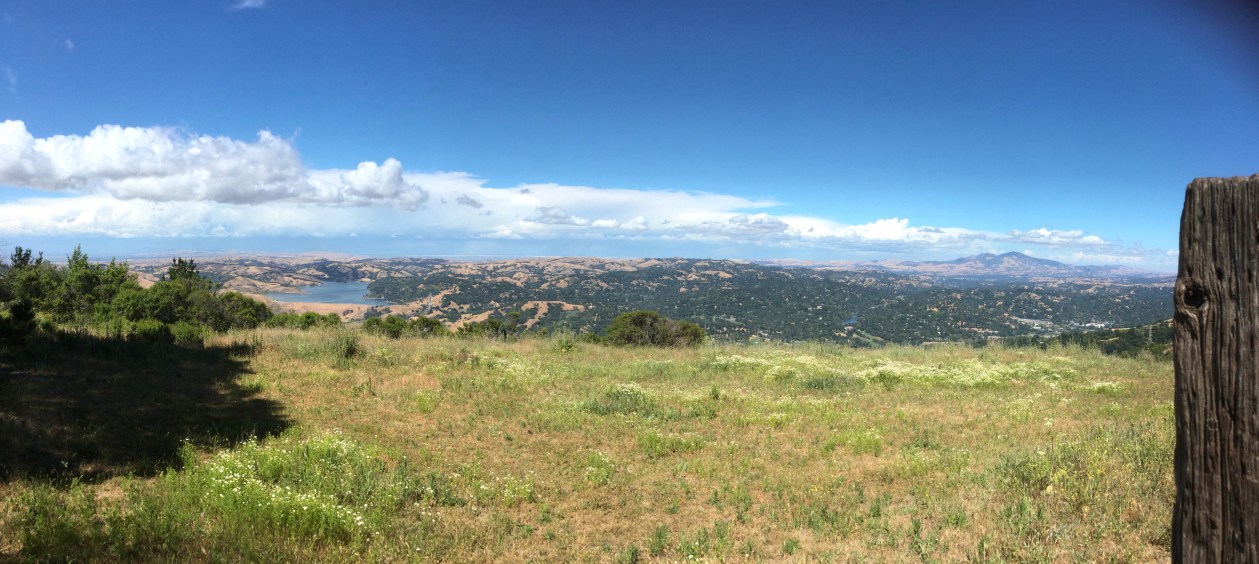
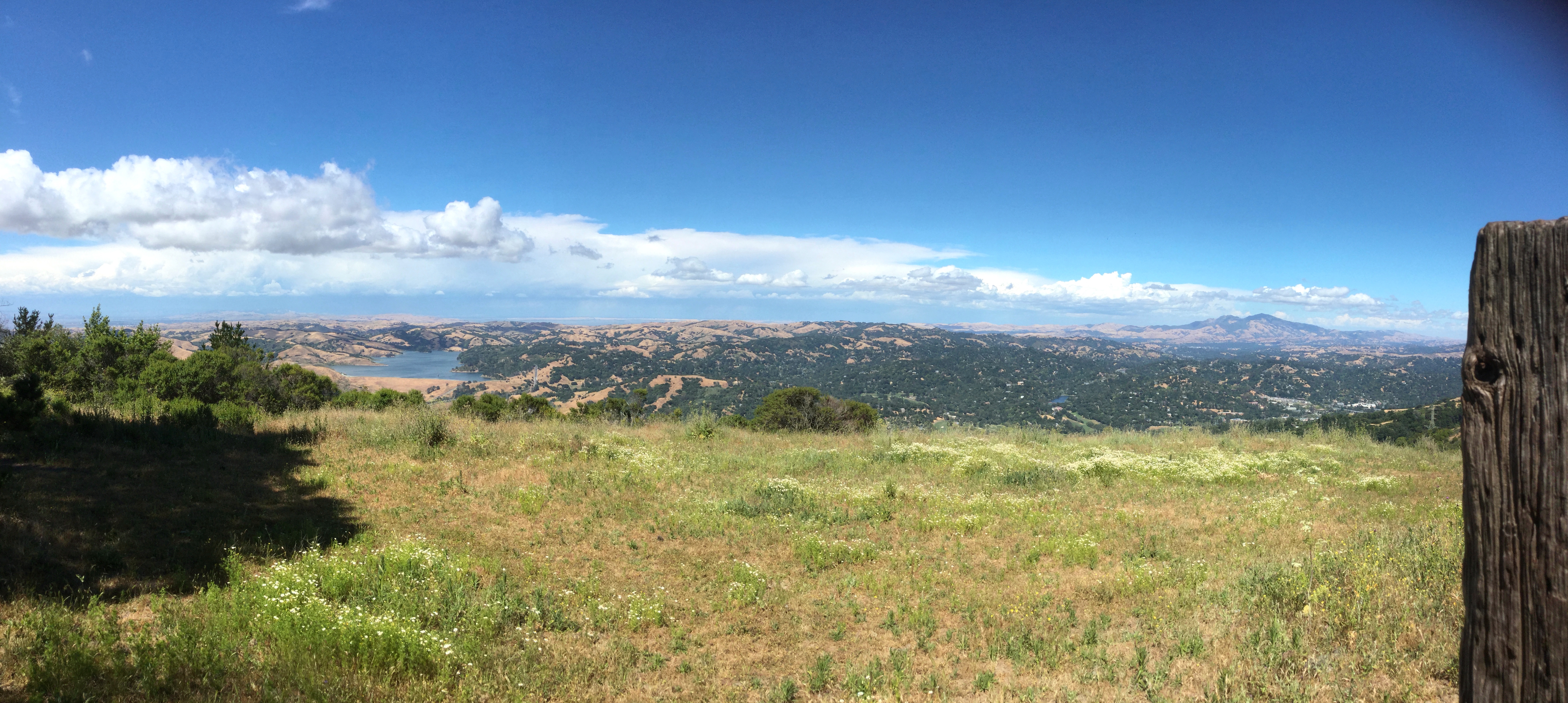
Panoramic view facing east from Seaview Trail, Tilden Regional Park, with Briones Reservoir and Mt Diablo

San Francisco, Treasure Island, Alcatraz, the Golden Gate Bridge, the Marin Headlands, Angel Island, and the Bay as seen looking west from the Seaview Trail in Tilden Regional Park
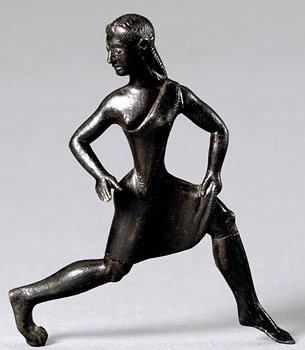
Statuette of a running girl, Spartan, about 520 BCE, British Museum. Note her bare breast, short skirt, and saucily exposed thigh. I think Lycurgus would secretly like this sculpture very much

Plutarch admires both Lycurgus and Numa. Like Lycurgus, Numa instituted his vision of a virtuous society through strict social regulation. They both believed it was the government’s job to protect the people from enemies within as well as without. Therefore, both instituted strict behavior codes for citizens as well as ways to promote peace and defend their people from military attack. Plutarch, who values virtue over liberty, generally approves of their social engineering systems but has a few problems with both as well.

For example, he’s shocked by Spartan women mingling freely with young men in public, wearing short tunics that left their thighs visible, permitted by the Lycurgian code. Plutarch seems sympathetic to or at least intellectually satisfied with Lycurgus’ theories about the power of sex to unite sympathies and strengthen social bonds. But Plutarch really dwells quite a bit on the topic of publicly bared Spartan female thighs with so much delighted horror that methinks he doth protest too much. Plutarch doesn’t, however, seem to pass judgment on the sexual practices of Spartans, which include lover- and spouse-sharing, homosexual sex and erotic play, child lovers, and coercive sex, all of which have been mostly censured and banned by law and religion since Plutarch’s time.

He approves of Numa’s restrictions on women, such as banning them from appearing and speaking in public, and of the policy of marrying them off very, very young so their husbands can instill complete obedience in them as they grow up. Yet Plutarch criticizes some of Numa’s policies when it comes to punishing crimes against women, finding them merely arbitrary in some cases and not punitive enough in others. He believes Numa could have done more to protect women’s virtue in this area. In matters of gender and sexuality generally, it’s not sexual practices that provoke Plutarch’s moralizing, as it was for so many governments and religions succeeding him throughout the centuries. He seems bothered only by practices which run contrary to his own conception of the primary feminine virtues, which, according to Plutarch and Numa, are modesty and obedience.

Wildcat Canyon, panoramic view from the entrance to the park from Tilden Nature Area looking northeast

As I enter Wildcat Canyon Regional Park from Tilden Nature Area, Plutarch has recently introduced me to the ancient Athenian lawmaker, poet, and ruler Solon. I’ve heard of him, but remember little. I’m about 23 miles in with another five or so to go. My feet have been very sore for the last five miles already and I’m limping. But I’m happy, and in a dreamy, almost hypnotized state at times from my regular, ceaseless footfalls. I discovered it’s no good to stop: as soon as I let my feet rest, the blood rushes into them and then it’s more painful to start again than it was to keep them a little numbed by constant use. Besides, I need to meet my ride home, and I’m behind time since I had paused so often to take pictures and slowed down so many times to tap out my reading notes.

In Wildcat Canyon Regional Park, view looking northwest from Nimitz Way

In Wildcat Canyon Regional Park, looking northwest along San Pablo Ridge Trail

I forget my feet for awhile as the wind picks up. This is usually the case on the ridge trails in Wildcat Canyon. I’ve been in winds so strong up here they suck the saliva right out of your mouth and whip it onto your face. Keeping your mouth closed doesn’t save you from this indignity, however, because the winds perform the same action on your nose. Yuck. It’s not quite so windy this time, but I can see rain in the distance, and know I may not be dry at the end of this hike. The sky, land, and water are spectacular from up here, at this time of day, in this weather. I pull on a lightweight wool sweater and this, with my shorts, keeps me perfectly comfortable temperature-wise. The wind is swaying the golden grasses like a wavy sea, and they’re glowing and shimmering in the varied light. The sky is blue, white, silver, and steel gray, and gauzy curtains in the same shade indicate scattered rainfall. After quite a time on long, level Nimitz Way, I take San Pablo Ridge and Belgum Trails, curvy and hilly, exciting in their winding, rising and falling changeability but hard on my weary knees on the downhills. I think the shoes I wore on my last hike like this were better.

In Wildcat Canyon Regional Park, panoramic view with San Pablo Bay, Richmond, and Mt. Tamalpais in the distance (‘Mt. Tam’ to us locals) from the San Pablo Ridge Trail

Among many other things (I’m tired, and my attention is waxing and waning), Plutarch tells of Solon’s meeting with Croesus, and my ears perk up. I remember this story as told by Herodotus. Croesus (as in the saying ‘rich as Croesus’), receives Solon ostensibly as an honored guest, but really as a potential propaganda tool. He wants to impress Solon so that Solon will spread the word about the great riches, power, and glory he’s beheld in Croesus’ court. But Solon, like Plutarch’s other most admired heroes thus far, is unimpressed by such vulgar shows of wealth. The harder Croesus tries, the less Solon is impressed. Instead, he foretells the doom that such wealth is liable to bring Croesus. And sure enough, it attracts the notice of King Cyrus of Persia, who sweeps in with his army and takes all that nice gold and treasure by force. As he is about to execute Croesus, Cyrus’ attention is caught by Cyrus’ lament that he had not heeded Solon’s wisdom. Cyrus decides to spare Croesus’ life when he observes that Croesus has grown wise in turn. It doesn’t do to execute wise men so long as you are strong enough to benefit from their wisdom while keeping them in their place.

For the last mile or so, I hike in a light rain. It feels good. Then about 7 o’clock, I read my destination: Alvarado Staging Area of Wildcat Canyon near the northwest end of the park. I borrow a kind stranger’s cell phone, since mine is malfunctioning, and check on my ride, my always supportive and patient sister Therese. She’ll arrive shortly. I shelter under an oak tree, take off my shoes and socks (oh, sweet relief!) and watch the drops fall from a partly sunny sky. A young girl emerges from her house down the street and places herself in the rainfall in surprise and delight; we watch the water steam off the asphalt that, until a few moments ago, was warmed by the sun. My sister and her boyfriend Eric (who has also become my friend) pick me up and whisk me away to feast with them on papusas and beer. On our way, we see a rainbow glowing against the blue and gray to our left. It’s been a rich and thoroughly satisfying day.

*Listen to the podcast version here or on Google Play, or subscribe on iTunes

~ Ordinary Philosophy and its Traveling Philosophy / History of Ideas series is a labor of love and ad-free, supported by patrons and readers like you. Please offer your support today!

~~~~~~~~~~~~~~~~~~~~~~~~~~~~~~~~~~

Sources and inspiration:

Alighieri, Dante. The Divine Comedy: Inferno, Houghton, Mifflin, 1885

Graham, Daniel W., ‘Heraclitus‘, The Stanford Encyclopedia of Philosophy, Edward N. Zalta

Plutarch, Lucius Mestrius (c. 46 – c. 120), Parallel Lives of the Noble Greeks and Romans, translated by Bernadotte Perrin (1847 – 1920), Volumes 1, 2, 3, and 4, recordings at Librivox.org

Zakaria, Fareed. ‘What America Could Learn From Singapore About Racial Integration’. The Washington Post, June 25, 2015

Frederick Douglass, Rochester NY Sites Day 2

Douglass is on my mind a lot these days, as I’m reading Leigh Fought’s new book on the crucial role of so many women in his work and in the development of his thought. Otherwise, I’m still in the depths of wrapping up my job here, selling off most of my worldly goods, and preparing to resume my academic pursuits in another country; therefore, I’m not writing nearly as much as I’d like. Here’s an account I wrote a year ago of following his life and thought, in case you missed it.

Amy M Cools's avatarOrdinary Philosophy

Douglass scholarship articles and posters, Dr. David Anderson's office, Nazareth College Rochester, 2016 Amy Cools Articles, posters, and mementos of Frederick Douglass scholarship and events, Dr. David Anderson’s office, Nazareth College of Rochester

Tenth day, Tuesday March 29th

I begin my day with an early visit to Dr. David Anderson, a Frederick Douglass scholar, visiting professor at Nazareth College, founding member of Blackstorytelling League, and an all around delightful and fascinating man! He is kind enough to grant me an interview of an hour or so, which ends up turning into a much longer conversation than that.

Among many other things too numerous to describe in full here (I’ll bring more details of our talk into the discussion of my subsequent discoveries), we talk about the Douglass family as a whole, and especially, Frederick Douglass’ wife Anna.

As discussed in the account of my day in Lynn, Anna took in piecework from Lynn’s thriving shoe industry, attaching uppers to soles, to help support the family…

View original post 4,591 more words

Happy Birthday, Adam Smith!

Adam Smith statue on the Royal Mile in Edinburgh, Scotland

Adam Smith was a philosophical disciple and life-long friend of David Hume, and as such, I encountered his ideas regularly while I was following the life and ideas of Hume a few years ago in Edinburgh. Smith wrote a moving account of Hume’s last days.

Smith was baptized and perhaps born on June 5th, 1723 in Kirkcaldy (a fishing village near Edinburgh) and died on July 17, 1790 in Edinburgh, Scotland. He attended university at Glasgow and Oxford, and found the former intellectual milieu more stimulating by orders of magnitude. Glasgow and Edinburgh were vigorous centers of Enlightenment thought in philosophy, natural philosophy (as the sciences were then known), linguistics, history, political theory, mathematics, and more. David Hume, Adam Smith, and their fellow leaders in the Scottish Enlightenment joined the ranks of this philosophical tradition’s greatest and most influential thinkers.

Like pretty much all Americans interested in basic economic theory, I’d heard a lot about The Wealth of Nations, Smith’s treatise on political economy. You likely have as well, since here you are reading a birthday tribute to Adam Smith! The Wealth of Nations is considered the foundational theoretical work on capitalism and therefore, Smith is regarded as a key figure in economic theory. But when I returned to university a few years ago to study philosophy, and when researching the life and ideas of Hume and his contemporaries for my aforementioned project, I spent more time with Smith’s moral philosophy. So I’ll focus this aspect of his thinking here. After all, this was his main arena of inquiry: he was not an economist, but a professor of moral philosophy at Glasgow. His Theory of Moral Sentiments was, and still is to a lesser consent, respected as a major work in moral philosophy. And, I think there are enough people promoting his Wealth of Nations as, like, the best thing ever; you can find plenty to read about that on the internet.

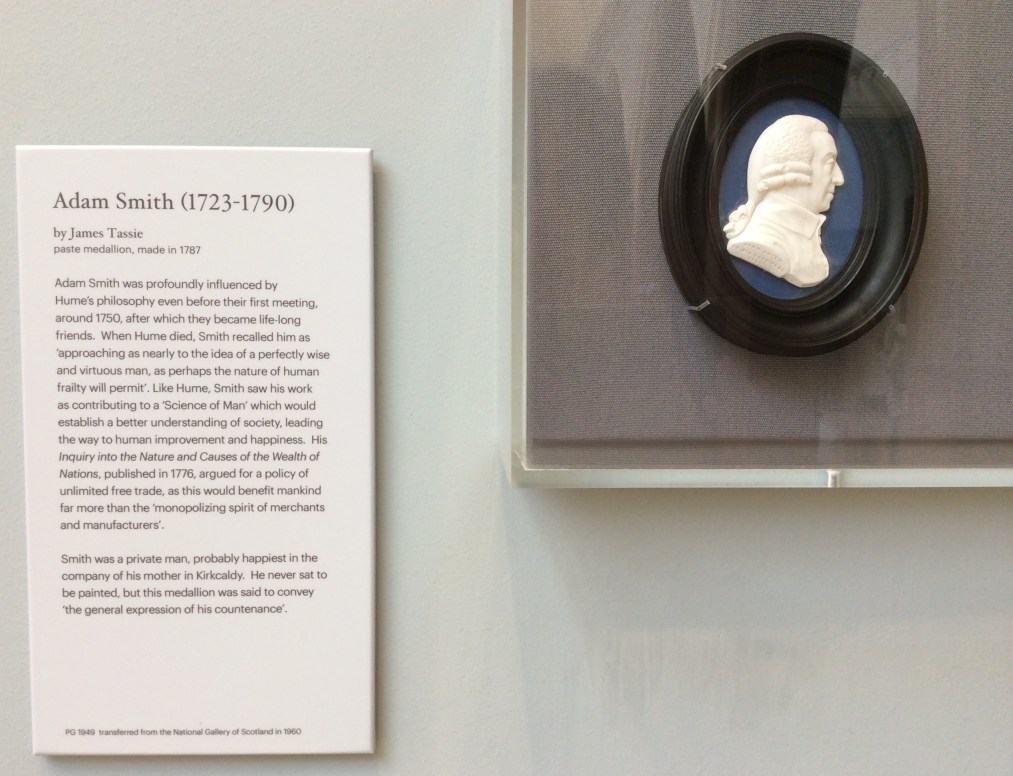
Portrait medallion of Adam Smith by James Tassie at the National Portrait Gallery in Edinburgh, Scotland.

Smith’s Theory of Moral Sentiments merges from a sort of compendium of elements of moral philosophy, in which Smith fuses what he considers the best and most coherent elements of moral philosophy into one compelling system. In it, one recognizes Humian sentimentalism, Kantian-type reason-based morality (Immanuel Kant’s work on this topic came after Smith’s, though the men were direct contemporaries), consequentialism, and Aristotelian virtue ethics. Like Hume, Smith thinks that the emotions play a central role. Before Hume, morality was widely considered to be primarily a matter of reason, and morality required us to quash our emotions, or as Hume put it, passions, because human are naturally and by default selfish, greedy, profane, lazy, and in myriad others way fallen creatures. Hume, however, does not agree. He believes that human beings naturally identify with the pains and joys of others, internalizing them and causing us to want to ameliorate their circumstances, and it’s this direct emotional response that drives the moral sense. Smith largely agrees, but not wholly. He also stresses the importance of sympathy (close to the sense that we’d usually now mean empathy) in making moral judgments. Smith explains that the moral agent is like an impartial spectator who participates in the daily lives, sufferings, and joys of our fellow human beings through our emotional response to their situation.

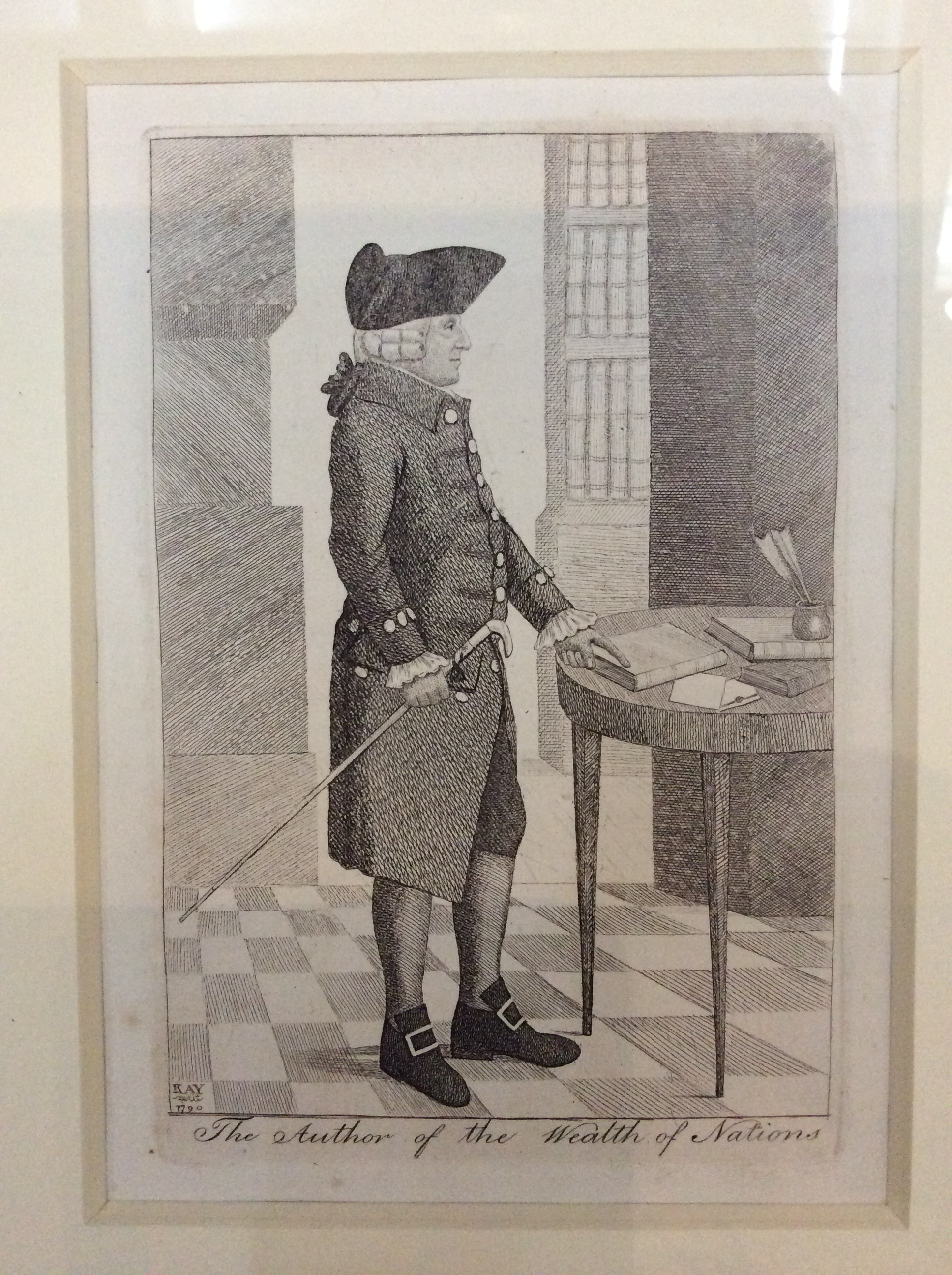
Adam Smith portrait by John Kay from 1790 (the year of Smith’s death), at the National Portrait Gallery, Edinburgh

But Smith also believes that sympathy (empathy) is not enough: our sympathies can and should be corrected by reason since our emotional responses can become inappropriate to the situation, corrupted by ignoble impulses such as greed, ambition, selfishness, and so on. An impartial, uncorrupted spectator would not consider indifference or cruelty, for example, as proper emotional responses to the plight of others. (I see shades of John Rawl’s ‘veil of ignorance‘ here.) One way to help us maintain moral ‘propriety’, as Smith put it, is to apply reason, and one way our reason can help us judge whether our moral sentiments are correct is to consider the consequence of actions we feel inclined to do. While the consequences of our actions don’t determine their rightness or wrongness as they do in consequentialist moral theories, they are an important consideration and in some cases, such as those in which human life hangs in the balance, they should take precedence. And finally, Smith agrees with Aristotle that we can’t rely on a pre-determined, reason-derived, emotionally-detached set of inflexible moral principles to differentiate right from wrong, good from bad, as Kant would have it. Rather, we naturally recognize and respond to virtue when we see it. We admire its beauty and goodness and have the desire to emulate it. Aristotle sees virtue as a perfect balance between opposing qualities in the same sphere: courage is the virtue on the right part of the spectrum between cowardliness and recklessness; temperance between licentiousness and insensibility; friendliness between obsequiousness and cold indifference. Smith likewise stresses the importance of balance in our moral character but focuses more on attuning our sympathies so they are in propriety, thereby driving us to act in the kindest, most honest, and fairest way towards one another as a matter of course.

This is only a very short summary of Smith’s moral philosophy by one who is by no means an expert. To learn more about the great philosopher and economist Adam Smith from those who are (including himelf, he’s an excellent and compelling writer), and for more about the philosophical traditions that influenced him and which he influenced in turn, see:

Adam Smith (1723—1790) – Jack Russell Weinstein for the Internet Encyclopedia of Philosophy

Adam Smith’s Moral and Political Philosophy – by Samuel Fleischacker for The Stanford Encyclopedia of Philosophy

Adam Smith pt. 1 – Specialization and Adam Smith pt. 2 – The Tip of the Iceberg Of Wealth – Stephen West discusses Adam Smith’s political economy for his blog Philosophize This!

Adam Smith on What Human Beings Are Like – Nicholas Phillipson discusses Adam Smith’s view of human beings with Nigel Warburton for Philosophy Bites podcast

Enlightenment – William Bristow for The Stanford Encyclopedia of Philosophy

Moral Sentimentalism – Antti Kauppinen for The Stanford Encyclopedia of Philosophy

The Problem With Inequality, According to Adam Smith – Dennis C. Rasmussen, Jun 9, 2016 for The Atlantic

The Theory of Moral Sentiments – Adam Smith, first published in 1759

~ Ordinary Philosophy and its Traveling Philosophy / History of Ideas series is a labor of love and ad-free, supported by patrons and readers like you. Please offer your support today!

Happy Birthday, Walt Whitman!

Walt Whitman, age 35, from Leaves of Grass, Fulton St., Brooklyn, N.Y., engraving by Samuel Hollyer from daguerreotype by Gabriel Harrison, public domain via Wikimedia Commons‘Walt Whitman, an American, one of the roughs, a kosmos, Disorderly fleshy and sensual . . . . eating drinking and breeding, No sentimentalist . . . . no stander above men and women or apart from them . . . . no more modest than immodest.’ Thus Walt Whitman introduces himself to us for the first time in his first self-published 1855 edition of Leaves of Grass. Not on the cover or on the title page, mind you, but deep within the body of the untitled poem later called Song of Myself. If this is a dialing-back attempt to inject a little respectable humility or yet another self-aggrandizing affectation on the part of this unapologetic egoist, it’s hard to say definitely, though I strongly suspect it’s the latter. It certainly is so-very-American.

He was confident, earthy, crude, and vibrant, a self-styled natural man whose personas were nonetheless carefully crafted. He did his own thing and ‘lived the free life of a rover’ (an Eric Bogle phrase from his great anti-war ballad And the Band Played Waltzing Matilda), working odd jobs as a printer, journalist, teacher, and clerk, among other things. Moved by horror and compassion at the magnitude of death and suffering he observed, he worked some years as a nurse to the Civil War wounded, and spent much of his somewhat meager earnings on supplies for their comfort and care. He remained single but had many lovers, probably mostly homosexual, though he praises the physical beauty and power of women as lavishly in his poems as he does those of men. All the while, starting at just over age 30, he began to write his highly idiosyncratic, free verse poetry celebrating the authentic and the crafted self, the human body, democracy, equality, work, nature, and companionship. He spent the rest of his somewhat long life revising and republishing several editions of Leaves of Grass, up to several months before his death at age 72 in 1892.

To read more work by, about, and inspired by the great Walt Whitman, here are some links and articles:

Walt Whitman“. in Encyclopædia Britannica Online.

Walt Whitman, 1819–1892‘. The Poetry Foundation (website)

Whitman, Walt. Leaves of Grass (1855). Source: Electronic Text Center, University of Virginia Library

Whitman, Walt. Assorted poems at Poets.org

The Walt Whitman Archive, Ed Folsom and Kenneth M. Price, Ed., published by the Center for Digital Research in the Humanities at the University of Nebraska–Lincoln

and just because I love it:

The Body Electric, song and music video by Hooray for the Riff Raff. The song title is inspired by one of Whitman’s most enduring and controversial poems, and is a critique of the tradition of the murder ballad

Ordinary Philosophy and its Traveling Philosophy / History of Ideas series is a labor of love and ad-free, supported by patrons and readers like you. Please offer your support today!

New Podcast Episode: Remembering Joan of Arc

Joan of Arc by Amy Cools, about 1998

Listen to this podcast episode here or on Google Play, or subscribe on iTunes

My fascination with Joan of Arc, born sometime in 1412 and put to death by fire on May 30th, 1431, is long-standing, beginning in my girlhood. Joan, as you likely know, is the French national heroine who fought to remove medieval France from English rule, whose exploits turned the tide and guaranteed France’s ultimate victory in the Hundred Year’s War.

She was the daughter of prosperous peasants in Domrémy, France. On a self-proclaimed mission from God to restore French rule to the rightful heir of the House of Valois, she convinced the local baron, military leaders, and eventually the crown prince to put her in charge of the dispirited French army, despite the fact that she was illiterate, militarily inexperienced, and a teenage girl…. Read the written version here

Ordinary Philosophy and its Traveling Philosophy / History of Ideas series is a labor of love and ad-free, supported by patrons and readers like you. Please offer your support today!

Remembering Joan of Arc

Joan of Arc by Amy Cools, about 1998. My mental image of her then was influenced by popular iconography and films, much of it which, as I did, portrayed her as tall, fair-skinned, and light-haired (think Ingrid Bergman’s 1948 film portrayal). In real life, she was somewhat short, dark-eyed with black hair, and had a sun-tanned, athletic body that, despite their describing it as attractive, aroused no lust in her fellow soldiers. Perhaps this resulted from their idealization of her as too godly for mere mortals to touch. Or perhaps, as I surmise, her indifference to sex with men was too manifest to give rise to that kind of chemistry. My drawing does, I think, manifest my youthful idea of her as a lovely tomboy, as an active, confident girl was then miscalled. Joan’s wearing the white shift which she wore to the stake and holding her cross made of two sticks tied together, which a sympathetic bystander quickly fashioned to comfort her on her way to execution

My fascination with Joan of Arc, born sometime in 1412 and put to death by fire on May 30th, 1431, is long-standing, beginning in my girlhood. Joan, as you likely know, is the French national heroine who fought to remove medieval France from English rule, whose exploits turned the tide and guaranteed France’s ultimate victory in the Hundred Year’s War.

She was the daughter of prosperous peasants in Domrémy, France. On a self-proclaimed mission from God to restore French rule to the rightful heir of the House of Valois, she convinced the local baron, military leaders, and eventually the crown prince to put her in charge of the dispirited French army, despite the fact that she was illiterate, militarily inexperienced, and a teenage girl.

By the time Joan reached the Dauphin, as the French crown prince was called, the French had long been in the habit of losing battles, even when they had the upper hand in numbers and defensive position, often because they were unable to cohere as a unified fighting force. French society was still feudal, highly stratified by class, and the army was no exception. Common soldiers were ill-equipped and underused, mistrusted and despised by aristocratic and wealthy knights jealous of their own superior rank. They could not bring themselves to give common soldiers opportunities for a share in the military glories of conquest. So French armies, fractured by class with everyone out for themselves, lost time after time to the more pragmatic and unified English forces. Troops of English longbowmen, for example, were made of up common soldiers highly valued for their strength and skill, and the English army made full use of them, to the detriment of the French. When Joan came along, a peasant in direct communication with Saint Micheal the Archangel, patron saint of French knights, she served as the much-needed unifier of French sympathies. Knights and commoners alike were united by their love of her and what she represented, and they began to fight as one, an army made holy and therefore equal: the aristocracy and chivalric order may have been respecters of persons, but the God who called Joan to lead them in their sacred quest was not.

Joan also whipped the army into shape, demanding that they train as hard as she did. She banned gambling, swearing, and prostitution from the camps, and required that soldiers attend religious services regularly. These reforms served the double purpose of further unifying soldiers through daily rituals that helped internalize their sense of holy, shared purpose, and of reducing the opportunities for alcoholism, venereal disease, and other ravages of hard living that could weaken her forces. She also prohibited raiding and pillaging which further unified French sympathies, especially of the common people and the countryside who had long suffered the predations of marauding English and French soldiers.

Joan of Arc, ca. 1450-1500, oil on parchment, artist unknown, public domain

Once she had raised the Seige of Orléans, drove the English from fort after fort, and led the Dauphin to be crowned King at Reims, her hawkish mission fell victim to what she considered dithering and intrigue, and what Charles VII considered diplomacy to save lives and capital. As Joan saw it, aristocrats and corrupt clerics, still jealous of their own social standing and opportunities for power either as leaders in the newly strengthened French order or as secret English collaborators, blocked her next great project: to deliver Paris from English control. She relieved her frustration and boredom by leading a series of minor skirmishes against the English, and was finally captured at one of these. She was handed over to an ecclesiastical court, led by French clerics symphathetic to the English cause, so they try her as heretic, ‘proving’ her in league with Satanic fiends, as the great English playwright William Shakespeare portrays her in Henry V. This would discredit her godly mission, her power to unite the French, and her assistance to Charles VII’s cause, thereby undermining his royal legitimacy. She was burned at the stake in Rouen, having accomplished the first part of her mission, the liberation of Orléans and the coronation of her King, and setting in motion the second part, the complete liberation of France from English rule, at only nineteen years old.

But it was clear to both French and English that the ‘holy’ court that condemned Joan was led and manipulated by political actors, not by men of God whose chief concern was to protect the Church from heresy. About twenty years after her death, the victorious French king Charles VII, who owed his crown and the reclamation of his kingdom to Joan, was finally reminded of his debt of gratitude by the realization that his hold on power was threatened if his rule was the result of the machinations of a heretic. A trial of rehabilitation and nullification commenced in the mid-1400’s, which formally vindicated her and proved to their satisfaction her mission came from God. Almost five hundred years after her death, Joan of Arc was proclaimed a saint by the Catholic Church.

Joan of Arc statue in Paris, France, photo 2015 by Amy Cools. This stylized depiction of her, in that Art Deco style I so love, makes me think of a green flame: green for the fields in which she roamed as a child shepherd, flame for her passionate intensity. Her attempt to liberate Paris by force from English rule was put to a stop by Charles VII’s diplomatic maneuverings, as well as by a wound she suffered in the failed assault. Paris was recovered by the French only a few years later by a means this inveterate warrior dismissed as a sign of weakness: by treaty. I believe, by the way, the fire she was wont to ignite in the hearts of soldiers also flamed in the breasts of the liberators of Paris five hundred years later in WWII.

I was religious as a child and a teenager, and admired her then as a Catholic saint. By my late teens, I had left religious belief behind, but my admiration for her has only grown and deepened over the years. She became something more to me, more rich, more mysterious, more complex. I think of her now as a native genius, with no other language or context in which to express, to herself and others, her political and military insights than the religion which infused her life and the life of the lives of her fellow countrypeople. And the way she was able to baffle, rebut, and defeat her interrogators at the show trial by those determined to discredit her before burning her at the stake remains a marvel. Her intellect was such that, despite her illiteracy and lack of formal education, she was able to see right through the legal deceptions of her judges and prosecutors, avoiding every verbal trap and pitfall they set for her, turning their attacks and arguments right back on them.

In preparation for this anniversary of her death, I’ve immersed myself in writing and art about Joan. Besides various histories, I’ve recently re-read Mark Twain’s historical novel Personal Recollections of Joan of Arc, which was recommended to me by my devoutly Catholic grandmother. I’ve read it many times over the last two decades. It was Twain’s own favorite of all his novels; he proudly announced he spent twelve years researching it and two years writing it, which he did for no other novel. While Joan is as full of comical scenes and quips as any of his other works, it’s a tender book, channeling his love for his own wife and daughters, with much less sarcasm and much more earnest, overtly expressed sorrow and compassion than anything else he ever wrote. His Joan is suffused with the sweetness, purity, and honesty he perceived much of in young girls and too little of in the rest of the world. Twain’s ideas about young girls and women are, I think, hyper-sentimental, naive, even dehumanizing to the extent that his ideal of female virtue did not include the full range of human reason and passion. He, like most in his era, in Joan’s time, and in fact, Joan herself, fetishized female virginity. But I love his account of Joan’s brave life and tragic death nonetheless, just as we can be forgivingly fond of the quaint idealizations of our fathers, uncles, and grandfathers of the sweet purity of womanhood while secretly rolling our eyes.

Drawing of Joan of Arc by Clément de Fauquembergue, as a doodle on the margin of the protocol of the parliament of Paris, dated May 10th, 1429. It’s the only contemporary image of her

Unlike Twain’s tender ideal of Victorian-style womanhood and the Church’s monumental Saint, I find the complex, flesh-and-blood Joan, full of marvelous virtues, deep flaws, incredible natural abilities, inexplicable quirks, and ordinary human qualities, much more interesting. I admire her courage, audacity, bravery, energy, savviness, intelligence, trust in her own abilities, and independence of spirit. I’m disturbed and even at times repelled by her single-minded, sometimes bloodthirsty willingness to sacrifice so many human lives for her cause; her insistence that those things going on in her own mind were the absolute truth and must be believed and obeyed or else; her absolute allegiance to the divine right of kings as established by male bloodline (especially given that many of the French preferred the less ruthless, less feudal, more legally scrupulous style of English rule); and her hyper-religiosity which impelled her to write letters calling on others to put Muslims and religious dissenters to the sword.

The real Joan is such a compendium of attributes and mysteries that she’s become an icon and an inspiration to perhaps the diverse set of people I can think of:

Joan of Arc is a working person’s icon. She’s a self-made woman who got her start working with her hands in the fields, and given very little formal education. But with her own common sense, strong sense of self, and enterprising spirit, she pulled herself up by her bootstraps more quickly and to a greater height than nearly anyone else in history. She began as an illiterate peasant in a feudal society and ended up chief of the armies of France before she reached twenty, and after her death reached even greater heights as a Catholic saint, a military legend, and France’s eternal national hero.

Joan of Arc is a religious icon. She claimed an intimate knowledge of the will of God through the voices of his emissaries he sent to her, St Michael the Archangel, St Catherine, and St Margaret. She’s a treasured if difficult icon for Catholicism: she claimed that God spoke to her directly through heavenly messengers, even as the Church considered itself the divinely-appointed sole intercessor between humanity and heaven. Though she presented a challenge to Church hierarchy and to the Pauline conception of women as the silent, submissive inheritors of Eve’s great sin, Joan was re-reconciled to the very Church that had condemned her, for a variety of theological as well as (I think history makes clear) political reasons. (Re-reconciled because her first formal ecclesiastical examination at Poitiers, to establish the truth of her mission before she was allowed to meet the Dauphin, declared that she was devout, orthodox in religion, a true virgin, and free of deceit). Though she remained passionately loyal to the Church and hated religious dissent, she also embodied the independent spirit that inspired the Protestant revolution, centered on the conviction that God can, and does, speak directly to us in our hearts and through Scripture, no earthly intercessors required.

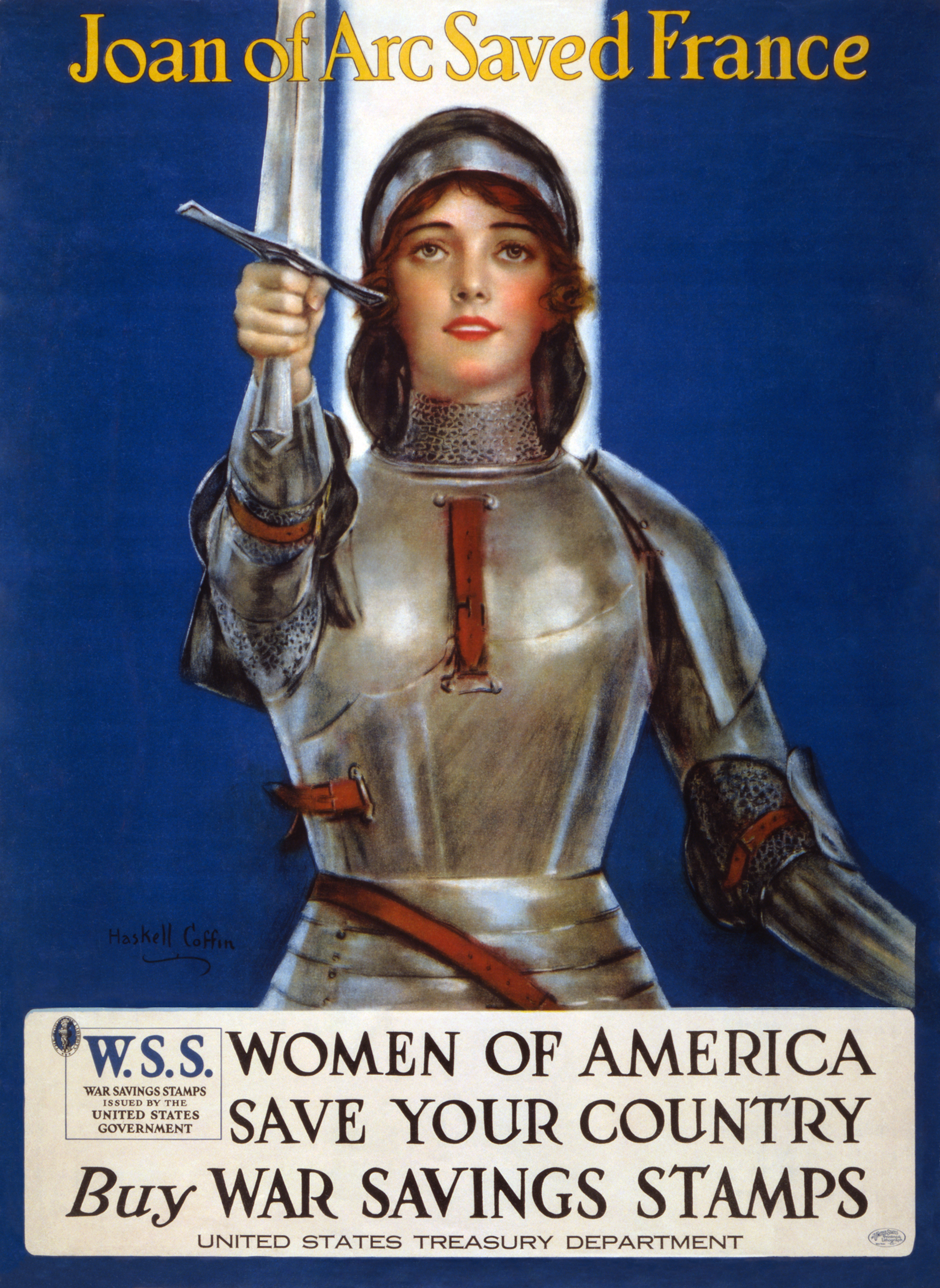
World War I lithograph poster, 1918. It’s rather a strange one, using the image of Joan to encourage women to help the war effort by attending to their domestic concerns; the US military still banned women from fighting. But Joan was all the rage then: Twain’s thoroughly researched novel, together with other renewed scholarly interest in her over the previous fifty years, made the story of her life much more widely known, and the Church had recently beatified her. She was made a saint two years after this poster was published.

Joan of Arc is a military icon. She loved fighting and spurned any diplomacy beyond plans to move the English out of France as quickly as possible. Though she initially wept at the sight of soldiers wounded and dead as a result of her aggressive tactic of direct assault, she continued to lead every charge in her favored, necessarily casualty-heavy way. Her rhetoric in letters and speech, though embellished with appeals to Christian forbearance and mercy, was violent, filled with threats to chop off heads and put to the sword all who did not obey the will of God as she proclaimed it to be. She inspired deep and enthusiastic devotion in her soldiers, even in her most hard-bitten, most skeptical generals, and quickly achieved a mythic stature among her countrypeople that even General Douglas MacArthur could only envy.

Joan of Arc is a queer icon. She was a cross-dresser who disdained sex with men. Her first simple style of male garb was a practical measure for a soldier who needed to move freely and for a woman often surrounded by men in a culture that regarded single women without escort as fair sexual prey. But over time, as she first encountered the delights of elegant and expensive clothing, showered upon her as gifts of admiration and gratitude, she became quite the clothes horse. She saw no problem with this: medieval sensibilities often conflated holiness with material richness just as the Old Testament did, and God, his favorites, saints, and angels were almost invariably portrayed in the richest of finery. But her enemies mocked her adopted style of wearing silken hose and richly embellished garments in fine fabrics as proof she was as vain, conceited, and driven by lust for personal fame and riches as they had always said. Another reputed French visionary, a young shepherd boy being groomed as Joan’s more convenient, less pugnacious replacement as saintly advisor to the king, blamed her capture on her having fallen prey to vanity and luxury. They claim that she was captured because of her finery, pulled off her horse by the fancy little cape she had grown fond of wearing.

Jeanne d’Arc by Albert Lynch, engraving from Figaro Illustre magazine, 1903, public domain

Joan of Arc is an art and fashion icon. Her exploits, her cross-dressing, her independence of spirit, and her short hair inspired centuries of creative people to capture this wondrously unique individual on canvas, in brass and wood, and in textiles. And songs, poems, stories, films, plays, and countless other forms of creative expression emphasize this, that, or the other facet of her varied and mysterious character. And the Joan-style, French-invented bobbed haircut of the 1920’s, the same decade which saw Joan’s canonization and women’s obtaining the full legal right to vote in the United States and Britain (it took France another twenty years), became a potent symbol, a public declaration that each cropped head recognized that:

Joan of Arc is the feminist icon, par excellence. She bested men in daring and stamina on the battlefield, in intellect time after time in the courtroom, in keeping her own counsel and determining her own destiny despite opposition from family, church, and society, in self-preservation from her would-be prison rapists, and in the courage she displayed on the day of her death. And yet, as she charmingly boasted near the beginning of her final trials, she was confident that she a better seamstress and spinner than just about any other woman! She wore armor, pretty dresses, rough men’s clothes, and over-the-top finery as it suited her. She sang, rode horses, adventured, communed with God and angels, told men and other women what to do, and drove thousands of people to distraction wondering what to make of this extraordinary, inspiring, difficult, inexplicable, and unforgettable person.

*Listen to the podcast version here or on Google Play, or subscribe on iTunes

It’s my dream and my plan, as soon as resources and time allow, to follow the life and ideas of Joan of Arc in France. Stay tuned, though it might be quite a while, and in the meantime, here are some great sources for learning more about this marvelous woman:

~~~~~~~~~~~~~~~~~~~

Sources and inspiration: 

Castor, Helen. Joan of Arc: A History. New York: HarperCollins, 2015

Crown, Daniel. ‘The Riddle Of Mark Twain’s Passion For Joan Of Arc‘. The Awl, Apr 3, 2012.

De Pizan, Christine. Ditié de Jeanne d’Arc (Song of Joan of Arc), ed. Angus J. Kennedy and Kenneth Varty (Oxford: Society for the Study of Medieval Languages and Literature, 1977), trans. L. Shopkow

Graham, Beckett and Susan Vollenweider. ‘Joan of Arc‘, episode 51 of The History Chicks podcast

Harrison, Kathryn. Joan of Arc: A Life Transfigured. New York: Doubleday, 2014

Joan of Arc, 1948 film directed by Victor Fleming, screenplay by Maxwell Anderson

Murray, T. Douglas. Jeanne d’Arc. New York: McClure, Phillips & Co, 1902 (excerpts detailing her trial)

The Passion of Joan of Arc. 1928 film, screenplay by Joseph Delteil and Carl Theodor Dreyer, directed by Carl Theodor Dreyer

Richey, Stephen Wesley. Joan of Arc: The Warrior Saint. Westport, CT: Praeger Publishers, 2003

Saint Joan, 1957 film adapted George Bernard Shaw’s play Saint Joan, screenplay by Graham Greene, directed by Otto Preminger

Shakespeare, William. Henry VI, Part I, 1591. Via Open Source Shakespeare (website)

Twain, Mark. Personal Recollections of Joan of Arc, 1896.

~ Ordinary Philosophy and its Traveling Philosophy / History of Ideas series is a labor of love and ad-free, supported by patrons and readers like you. Please offer your support today!

Happy Birthday, Julia Ward Howe!

Julia Ward Howe, ca. 1855

Julia Ward Howe, poet and activist, was born on May 27, 1819, and lived a long life ever dedicated to social reform.

She’s best known as the author of the Battle Hymn of the Republic, the stirring Civil War anthem still sung at military events and in churches today; I remember singing it at Mass growing up. Filled with Biblical imagery, it reminds me of the Old Testament-inspired Second Inaugural Address of Abraham Lincoln. In it, he addresses the terrible costs of the war in lives and property, surmising that God’s justice may demand that ‘all the wealth piled by the bondman’s two hundred and fifty years of unrequited toil shall be sunk., and …every drop of blood drawn with the lash shall be paid by another drawn with the sword’ in recompense for the terrible sin of slavery.

Howe wrote her Hymn in 1861, Lincoln’s Second Inaugural was delivered in 1865. Lincoln is known to have heard the Battle Hymn and reported to have wept when he did. Lincoln was well versed in Scripture and references it liberally in his writings and speeches; nevertheless, he may also have had Howe’s Hymn in mind when he wrote his Address. In any case, both remain prominent in American historical memory, continuing to resonate and inspire today in our Protestantism-derived culture. John Steinbeck uses her Book of Revelation-derived phrase The Grapes of Wrath as the title of his great novel about the suffering of Dust Bowl refugees fleeing to California. The great Leonard Cohen references her Hymn in ‘Steer Your Way’ from You Want It Darker, his final album released shortly before his death last fall. Howe’s lyric ‘As he died to make men holy, let us die to make men free’ becomes ‘…let us die to make things cheap.’ Cohen redirects her line to critique today’s great sin of destroying our environment likewise out of greed, complacency, indifference to the fate we’re creating for our descendants, and slavish adherence to the ‘way it’s always been done.’

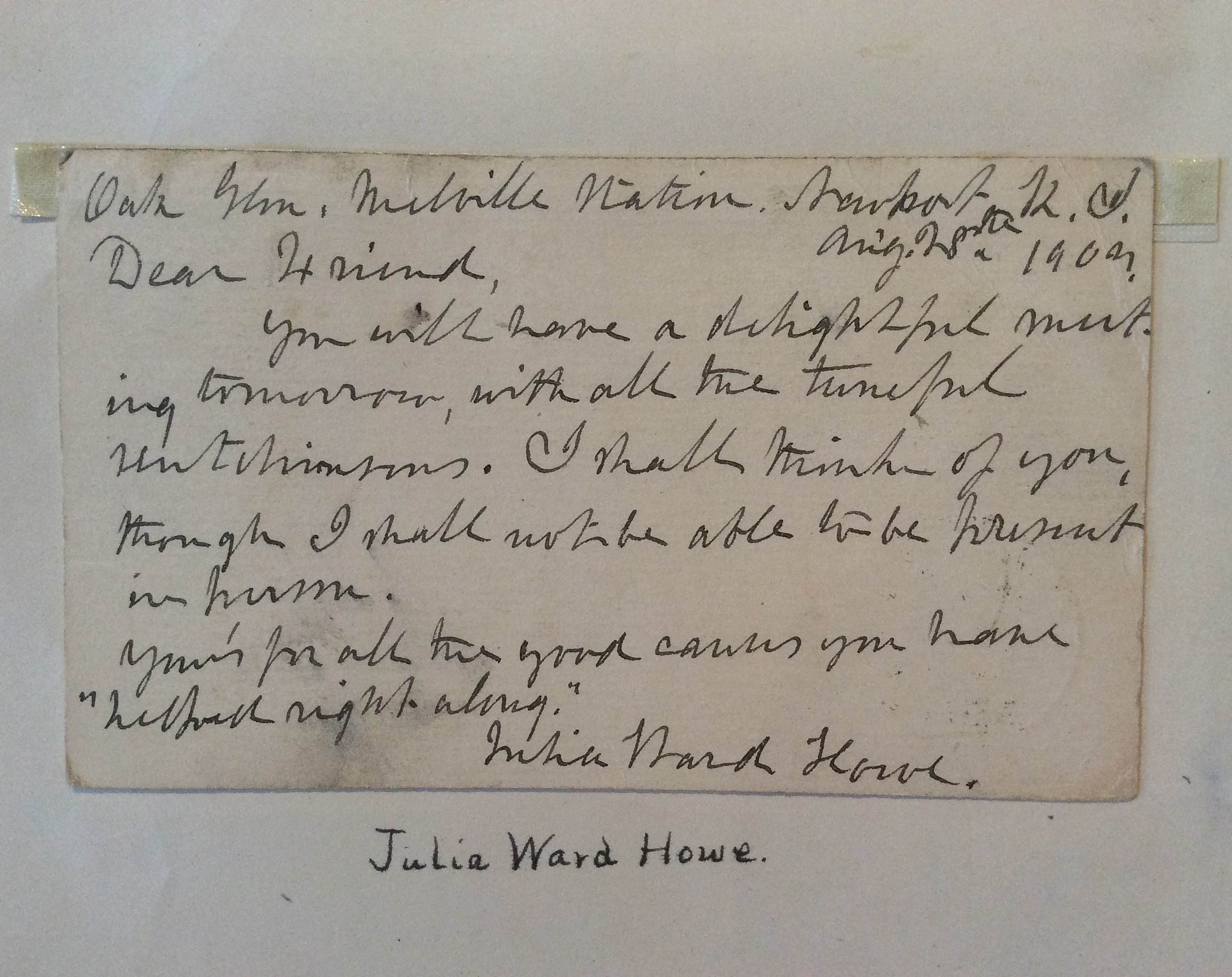
Julia Ward Howe postcard dated August 28th, 1903, from the Hutchinson Family Scrapbook in the collection of the Lynn Historical Society in Massachusetts. I was here in spring 2016 following the life and ideas of Frederick Douglass. The Hutchinson family dedicated their musical skills to the abolition movement and other reform causes and were friends with many prominent activists of their day. The scrapbook doesn’t note which member of the Hutchinson family Howe wrote this card to.

Read more about this great abolitionist, feminist, and author:

Julia Ward Howe, 1819–1910: BiographyPoetry Foundation

Julia Ward Howe (1819-1910) – by Debra Michals for the National Women’s History Museum

‘The Civil Wars of Julia Ward Howe,’ by Elaine Showalter – by Jill Lepore for The New York Times

Julia Ward Howe, 1819-1910, Volume 1 – by Laura Elizabeth Howe Richards, Maud Howe Elliott, and Florence Howe Hall, 1915

~ Ordinary Philosophy and its Traveling Philosophy / History of Ideas series is a labor of love and ad-free, supported by patrons and readers like you. Please offer your support today!

Happy Birthday, Omar Khayyám!

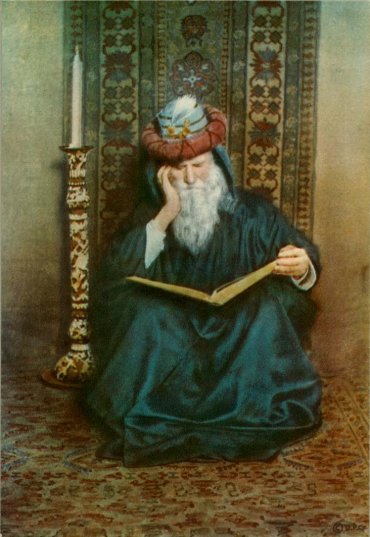
By Adelaide Hanscom, from Edward Fitzgerald's The Rubaiyat of Omar Khayyam, 1905, public domain via Wikimedia Commons

Since Edward FitzGerald published his translation of The Rubáiyát of Omar Khayyám in 1859, Omar Khayyám has been known, especially in the western world, first and foremost as a great poet, eloquently expressing the joy and beauty of life and our own struggles to live it with a sense of love and meaning. It’s a humanist work, with Khayyám writing much as an Epicurean or Skeptic here and a Stoic there, freely doubting and wondering at everything, unshackled from the orthodoxy one might expect from a famed teacher and writer of his time and place. Yet Khayyám, a devotee of Avicenna, took his Islamic faith very seriously, and thought deeply about the nature of God and our relationship to him.

Khayyám, born in Persia in 1048, was most famed in his own time as a mathematician, astronomer, and scientist. He wrote some of the most important medieval works in geometry and algebra, and helped reform the calendar, an even more accurate one than the Gregorian calendar we use today. But he was also an accomplished philosopher, and scholars are working on resolving the apparent contradictions between this work and his poetry.

One thing I’ve gotten from my research (which, thus far, is only beginning and therefore not nearly enough): for all his prodigious learning and accomplishments, Khayyám honestly acknowledges the limits of human understanding, and seems to tell us that while the great work of discerning the truths of the universe is a great, noble, even necessary endeavor, we do well to keep in mind that we can never know everything, whether through science or religion. So, Khayyám seems tells us, we do well to work, to wonder, to seek, to do right, but also to live for today:

‘At first they brought me perplexed in this way
Amazement still enhances day by day
We all alike are tasked to go but Oh!
Why are we brought and sent? This none can say’. (Rubā‘iyyāt, Tirtha 1941, 18, from IEP)

‘As Spring and Fall make their appointed turn,
The leaves of life one aft another turn;
Drink wine and brood not—as the Sage has said:
“Life’s cares are poison, wine the cure in turn.” (Sa‘idī 1994, 58, from IEP)

~ Ordinary Philosophy and its Traveling Philosophy / History of Ideas series is a labor of love and ad-free, supported by patrons and readers like you. Please offer your support today!

~~~~~~~~~~~~~~~~~~~~~~~~~~~~~~

Sources and Inspiration

Aminrazavi, Mehdi and Van Brummelen, Glen, ‘Umar Khayyam‘, The Stanford Encyclopedia of Philosophy

Omar Khayaam, 1048–1131‘. The Poetry Foundation

Omar Khayyam‘. In Encyclopædia Britannica.

Omar Khayyam‘. In Wikipedia, The Free Encyclopedia.

Rizvi, Sajjad H. ‘Avicenna (Ibn Sina)‘. The Internet Encyclopedia of Philosophy

‘Umar al-Khayyam (Omar Khayyam)‘. Muslim Heritage

Happy Birthday, Bertrand Russell!

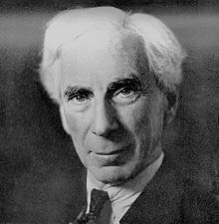
Betrand Russell in 1938, image public domain via Wikimedia CommonsBertrand Russell lived an extraordinarily long life, in which he did an extraordinary number of extraordinary things.

Encyclopedia Britannica introduces him thusly: ‘Bertrand Russell ….born May 18, 1872, Trelleck, Monmouthshire, Wales- died Feb. 2, 1970, Penrhyndeudraeth, Merioneth, [was a] British philosopher, logician, and social reformer, founding figure in the analytic movement in Anglo-American philosophy, and recipient of the Nobel Prize for Literature in 1950. Russell’s contributions to logic, epistemology, and the philosophy of mathematics established him as one of the foremost philosophers of the 20th century. To the general public, however, he was best known as a campaigner for peace and as a popular writer on social, political, and moral subjects. During a long, productive, and often turbulent life, he published more than 70 books and about 2,000 articles, married four times, became involved in innumerable public controversies, and was honoured and reviled in almost equal measure throughout the world…’

For myself, he was particularly influential to my younger freethinking self, disenchanted with the religion of my youth and seeking new and more satisfying ways of viewing the world. I read his History of Western Philosophy and Why I Am Not a Christian each several times over. I admire his clear, precise thinking and his principled anti-war stance which came at a significant cost, including jail time and loss of a prestigious job at the University of Chicago, and it’s always so enjoyable to watch him speak (you’ll find plenty of videos on YouTube) in his oh-so-aristocratic accent with a pipe often tucked into the corner of his mouth. He was not a perfect man, but he was never a less-than-fascinating one.

Read more about Bertrand Russell:

Bertrand Russell – in Encyclopedia Britannica

Bertrand Russell – by Andrew David Irvine for The Stanford Encyclopedia of Philosophy

~ Ordinary Philosophy and its Traveling Philosophy / History of Ideas series is a labor of love and ad-free, supported by patrons and readers like you. Please offer your support today!