Josh Duggar and Public Hysteria Over the ‘Sex Crimes’ of Children

Sick of hearing about Josh Duggar yet?

I sure am. But it’s not the volume of reporting and public gossip on the story that’s making me sick. It’s the way we simultaneously fear and drool over stories that reveal that children have sexual instincts too. It’s the way our laws and the media punish children, often for the rest of their lives, for this very fact. And it’s the way that far too many of my fellow freethinkers, supposedly enlightened and sex-positive, have jumped on the bandwagon in their zeal to ‘get at’ the Duggars.

In case you haven’t heard, Josh is the 27 year old son of celebrity parents Michelle and Jim Bob Duggar, a conservative Christian couple whose practice of rampant childbearing (19 at this point) made them the subject of a popular reality television show.

It turns out that Josh was a kid like many other kids: as a young teen, he touched other children, some far younger than himself, in a sexual manner. Most of it was light petting, or touching of the genital area through clothing. I couldn’t find evidence that there was any violence or physical coercion involved. At some point Josh went to his parents and confessed, and over time, law enforcement was called in, and all those involved received counseling.

It started out with gossip, then somehow, someone got Arkansas authorities to release the police report, which was splashed all over the news by trashy celebrity-gossip publication InTouch Weekly. While names and pronouns were redacted, it became clear that the report was about Josh, and he and his family ‘fessed up. At the request of one of the recipients of the unwelcome touching, the record was destroyed.

Even my fellow freethinkers and sex-positivists have joined in the fray. While giving half-hearted disclaimers to their spreading Josh Duggar ‘molestation’ tales (a strong term for the type of non-violent, secret petting described) even though he was a child at the time, they’re so eager to get at Michelle and Jim Bob that their scruples have fled them.

Deeply disappointing. While it’s right that children taught to respect the bodily integrity of others and the importance of consent, it’s also true that children are insatiably curious, with immature brains that lack the structures adults rely on for self-control. C’mon, people. Don’t you have any memory at all of what it’s like to be a little bag of hormones lacking a developed prefrontal cortex? Don’t you remember the storms of emotion and urges, which we could hardly make sense of or control, that raged through us and seemed to take over our minds and bodies? Yes, children have bodies with parts, and sometimes they explore their budding sexuality by touching each other on these parts. We need to get over it and grow up, if we are to be the wise and just helpers children need as they grow up.

Whether or not their intentions were protective or self-serving, the Duggar parents did the right thing by shielding their child from the media circus. They probably did the right thing by privately turning to law enforcement to help teach their recalcitrant young son that actions have consequences and that there are personal boundaries that must be respected. They definitely did the right thing by seeking counseling, even if the counseling could have been of better quality. This is not a story, as many are portraying it, that echoes the clergy child abuse scandals of the last few decades. Those were real sexual crimes perpetuated on children by adults who are far more capable of self-control, and who wield a sort of power that children, as Josh was at the time, do not possess.

Correct children for their mistakes, punish them appropriately to discourage unacceptable behavior, but do not pillory them in the media and do not punish them for the rest of their lives for their childhood wrongdoing. This is true even if the person is now an adult. We do not hold adults to account for what they did as children because we believe in accountability and personal responsibility. To gossip about the mistakes and misdemeanors of children now grown is disgusting and morally reprehensible, because it teaches people that it’s no use to try and become a better person if society will always punish you no matter how you better yourself in the future. Shame on you, Rachel Ford of Friendly Atheist, usually such a good forum for critical thinking. Shame on you, Ana Kasparian and company on the Young Turks, for waiting till near the end of your video commentary to make a halfhearted disclaimer that kids’ disciplinary records shouldn’t be made public, after you passed along this gossip in such an unbalanced and salacious manner. And shame on all of you who joined in this witch hunt.

There’s yet another story that I recently heard about a man who was put on a sex offender registry because he, as a child, had sexual contact with another child. The young man in the story did wrong, but he reformed. Yet he and his family are still suffering the consequences, as are thousands just like him (often for offenses as minor as showing a photo of a body part to another minor, consensually or not), and may be suffering for the rest of his life. There’s nothing so cruel as a simultaneously sex-obsessed and sex-fearing society toward a registered ‘sex offender’, regardless of how they got the label. Think of that young man, of Josh, and of how every single one of our lives could be destroyed if our childhood mistakes were held over our heads in perpetuity.

If people want to criticize the Duggar parents for making a circus of their family and exposing their small children to the stress and danger of life in the limelight (think of the Jackson family and how celebrity affected those kids), well and good. But LEAVE THE KIDS OUT OF IT.

Sources:

Bryan, Miles. For Juvenile Sex Offenders, State Registries Create Lifetime of Problems’. All Things Considered, NPR. May 28th, 2015. http://www.npr.org/2015/05/28/410251735/for-juvenile-sex…

Ember, Sydney. ‘Josh Duggar Molested Four of His Sisters, His Parents Tell Fox News’, New York Times, June 4th 2015. http://www.nytimes.com/2015/06/04/business/media/josh-duggar-molested…

Ford, Rachel. ‘What the Rush to Defend Josh Duggar Tells Us About Conservative Christian Morality’, Friendly Atheist blog. http://www.patheos.com/blogs/friendlyatheist/2015/05/27/what-…

‘Josh Duggar Chilling Molestation Confession In New Police Report’, InTouch Weekly, June 3 2015
http://www.intouchweekly.com/posts/josh-duggar-chilling-molestation-confession-in-new-police…

‘Josh Duggar’s Child Molestation History Revealed’, The Young Turks, May 22nd 2015.
https://www.youtube.com/watch?v=_MEjjV_jcCc

Review: In Defense of a Liberal Education, by Fareed Zakaria

In Defense of a Liberal Education, by Fareed Zakaria


New York: W.W. Norton & Company, Inc., 2015

When I returned to college a few years ago to follow my heart’s desire and study philosophy, one of my ethics professors opened the first class session with this question: ‘Why are you here?’ It was not meant as that ubiquitous and difficult-to-answer metaphysical question which would be the topic of so many future course discussions (difficult because it’s not well-formed, many of us would object, being too nebulous). He meant, why where we there in his class, and why were we attending college at all?

I was sitting there, aglow with satisfaction at having resumed my pursuit of a higher education after spending so many years working for others, then struggling to keep my own small business afloat in the 2008 recession era. I was feeling that the daily tasks of my working life were taking up an inordinate amount of time while failing to satisfy my curiosity about the world, so I reduced the size of my business (I’m happy to report it continues to thrive to this day) and returned to school.

In answer to my ethics professor’s question, a few hands went up. ‘To get a good job?…’ one student offered, hesitatingly. ‘I want to get rich! That’s what we’re all here for, really’ said another, with bravado. Others chimed in in assent, with a few objecting that while that’s really what they were here for, too, that’s not the only reason. While some lip service was paid to the intrinsic value of education, the instrumental view of college, as a means to the end of achieving wealth and status, won out in that particular discussion.

In the idealistic mood I was in, I was disappointed. I was here because I was sick to death of the struggle to get ahead, and was thrilled at the prospect of pouring most of my energy into learning and thinking; making money was now relegated to the periphery of my life, and good riddance. For awhile, at least, I would be thrifty and work enough to pay the bills and save a little for emergencies, and that was it.

Why open this review with an anecdote? I’m inspired to to do by Zakaria himself, who opens his excellent little book with his own story: how he, like his brother, came to America and received a liberal education, and what it did for him. In fact, his book is all about what education can do to make each individual’s life a much richer one, in every sense of the word. When I say ‘little book’, I only mean it’s not long, just six chapters and less than 200 pages. It’s really a very big book when it comes to the ideas he explores and the wealth of information and evidence he supplies in support of his arguments. I’ve long admired Zakaria’s ability to express important ideas clearly, succinctly, and with personality, and with this book, he accomplishes all of these to the highest degree.

A liberal education, as Zakaria describes it, is not only generous in its rewards; it’s liberating. It frees the mind narrowed by a lack knowledge and experience, of deeply exploring other points of view. It expands and strengthens the mind as it becomes more elastic, ever ready to take in more information and process it in light of what you’ve learned so far. The more art and culture you take in, the more developed your aesthetic tastes become, and the more you’re able to appreciate. The more you’re practiced in critical thinking, the better able you are to take in new ideas and explore them for quality and for beauty, for strengths and weaknesses. When done right, a liberal education should not make you a ‘know-it-all’; it should make you more open, more ready and able to constantly learn more as you go through life, and more keenly aware of how little anyone can really know about this fantastically rich, complicated, and endlessly fascinating universe we find ourselves in.

A liberal education also makes you a better citizen. You learn about important and influential political theories, and critiquing them logically as well as comparing how they fare throughout history, you learn what works, what doesn’t, and how to judge what might work best in the future. You learn about those who made a big difference in the world, how you can make a difference too, and why you should try to do so. It’s also a quintessentially American innovation: by the people, of the people, and for the people. It’s a great equalizer, open to anyone (or at least intended to be) who has the basic skills and the desire to learn, no matter what socioeconomic class they come from. It presents the best ideas from all over the world for the students to critique and compare on their own merits, though instructors who themselves came from all manner of backgrounds.
Zakaria compares liberal education to skills-based training, which is now winning favor in public and political discourse as the more practical way to help people improve their lives. Many politicians are decrying public education as too ephemeral and calling for more public money to be spent on job training, if spent on education at all. Even President Obama, in favor of free junior college for qualified applicants, recently took a crack at a humanities major. While agreeing that skills-based training is very important, Zakaria explains why it’s not only not enough for a democracy, it’s not enough for a nation that wants to stay innovative and competitive. A person whose talents are honed and locked into one narrow set of skills may be very good at one particular job, but when changes in technology and in the market render that job obsolete, that person’s training is no longer relevant, and they’re left poorly equipped to pursue other options. Consider an entire population educated and trained this narrowly, and you see the problem. As Zakaria points out, a liberal education, which focuses on instilling a broad base of knowledge and generally applicable critical thinking skills, does much more to help people become more informed, flexible, and equipped to take in new information and apply it in new ways.

When I reconsider that ethics class discussion in light of Zakaria’s book, I realize we were talking past each other. There’s no reason to choose between the instrumental side and the intrinsic value of college. A liberal education, which as undergrads we were all pursuing, helps us accomplish all of our goals in a way few other social institutions can, and can be essential for helping us become the best human beings we can be.

On Jonathan Webber’s Discussion on Deception With Words: Honesty in Public Discourse Part II

I’ve been thinking quite a bit on the subject of lies, deception, and public trust since I wrote about some recent high-profile cases of deceivers in the media.

I recently gave Jonathan Webber’s podcast interview on Philosophy Bites ‘On Deception With Words’ a second and more attentive listen. I remembered that something he said struck me as not quite right. I agree with him on the importance of honesty in general, yet I take issue with his position on lying versus deceiving. In this discussion, as Webber defines the terms, lying refers to telling a brazen untruth, and deceiving refers to implying an untruth without specifically stating one.

When host Nigel Warburton asks Webber which of the two is worse, morally speaking, Webber answers (at about 5:15):

‘I think that lying is worse… well, more precisely, I think that we ought to have the attitude that lying is worse. So we ought to treat liars more harshly than we treat people when we catch them misleading us… I think the difference is that lying does more damage to your credibility than misleading does. The way we work as human beings, as a community of people, is that we exchange information all the time, that’s one important part of the way we work, and in order to do that, we need to be able to rely on each other as informants. So we need one another to be credible. I need to be able to believe what you say, and you need to be able to believe what I say.’

I disagree with him on this point for the same reason I think that, in comparing the lies and deceptions of Brian Williams, Bill O’Reilly, and Rush Limbaugh, Limbaugh is the one who systematically betrays the public trust in the worst way. It’s because he not only lies fairly often, blatantly telling falsehoods about facts of the matter and about the opinions of the people he disagrees with, but he also misleads by a bait-and-switch tactic of relying on his self-bestowed credentials as a truth-teller in one moment, and then at other moments falls on his credentials as an entertainer who misrepresent, exaggerates, and distorts for the purposes of entertainment or to make a wider point. He does this at will, without making a distinction at any given time which he’s doing. This not only reflects on his general credibility as a reliable truth-teller: it harms his audience more by making it that much more difficult to tell the lies from deceptions from truths. It creates a situation that his audience, which he invites to trust him, can’t tell when they’re being misled.

So to me, in general, making a moral distinction between lies (brazen untruths) and deceptions (implied untruths) is not very helpful, especially the attempt to say that one is generally more wrong than the other. For one thing, lies and deception are used for the same purpose: compare it to a claim that it’s more wrong to commit murder with a hammer than with an axe, and you’ll see where the problem lies. But even if Weber is right, and the most important moral factor is the credibility of the speaker, I don’t think he demonstrates that lying does, in fact, damages credibility more. As we see in my Limbaugh example, it seems that deception can and often does do more to damage credibility, because it gives the speaker a weaselly ‘way out’ or plausible deniability which allows him to evade any and all personal responsibility for causing the listener to believe something untrue.

More than damaging the credibility of the speaker, however, I think that deception can be worse in many cases because the harm done to the listener can be more egregious. For example, a blatant lie can more readily be identified and fact-checked by the speaker. A deception, however, is not always so easily fact-checked, and in fact, can’t always be identified as the conveyor of untruth that it is. That’s because, as Webber points out, deception is usually done through implicature, exploiting the linguistic tool of leading the hearer to believe the speaker means one thing when he says another. The very indirectness of the

I’m not the least bit Pollyanna-ish about lying. Like most people, and I would claim like most morally committed people, I think there are times when lies and deception are permissible, and times when dishonesty is the only right way to go. I would usually not tell the truth about the proverbial dress that makes the wearer’s butt look too big (though given the fashionableness of curvy posteriors now, this could be taken as a compliment!), and I would lie my head off to lead the proverbial Nazi stormtroopers away from the Jewish family hiding in the closet. That’s because communication, in these instances, is only a tool to accomplish valuable ends, in these cases easing the mind of the insecure dress-wearer, and saving lives from murderous thugs.

So here’s where we get to why I think Webber is mistaken about the relative wrongness of lies and deception: if language is only the means, and the end if its use is to convey truth to the listener, than it wouldn’t make much sense to say that lies and deception, as two means of conveying untruth. are generally morally distinct. It seems to me that the rightness or wrongness of what’s said is entirely contingent on the moral value of its purpose, and if a lie or a deception is wrong, we can judge how wrong it is based on how effectively it undermines the public trust, and how injurious it is to the hearer’s need to know the truth of the matter.

~~~~~
Sources and Inspiration: 

Webber, Jonathan. ‘On Deception With Words’. Philosophy Bites podcast interview March 01, 2015.
http://philosophybites.com/2015/03/jonathan-webber-on-deceiving-with-words.html

Should A Minor Be Tried as an Adult Due to the Seriousness of the Crime?

Here’s a case, currently in the news, in which a young girl helps murder her mother because her mother was trying to break up her relationship with her much older boyfriend.

In this case, the girl charged is 14 years old. A long series of text messages, along with forensic evidence, the timeline of events, and the girl’s own testimony indicate that she and her boyfriend did in fact commit the murder (though, of course, this must be proved in court).

Here’s what troubles me most besides the cruel and terrible murder itself: the girl is being charged as an adult. And she’s being charged as an adult, apparently, due to the seriousness of the crime, a practice that’s been allowed in many states for decades. The main argument in favor of this practice goes something like this: if the crime is serious, or ‘adult’ enough (whatever that means), the punishment should be proportionate. Adult crimes, in other words, merit adult punishment.

But wait a minute! In what way does the seriousness of the crime indicate that the girl is capable of the level of reasoning, impulse control, emotional maturity, and therefore moral accountability, of a fully functioning adult? It seems to me that in this case, the seriousness of the crime compared with the triviality of the reasons the girl gives for committing the murder indicates that she is not yet capable of an adult level of understanding.

As my regular readers may know, I hold a rather robust view of personal responsibility. But that’s not the same thing as believing that adolescents, lacking the fully developed brain structures of a person in their early 20’s, should be held to the same standard of accountability as an adult. To me, this is piling one injustice on top of another, if we believe that true justice necessarily includes not only the principle of proportionality of crime to punishment, but of punishment to culpability.

What do you think?

How the Brain Works (and Doesn’t) vs Our Justice System

We’re learning new and surprising things about our brains all the time. Psychologists, behavioral economists, and other scientists have sophisticated new tricks to reveal what’s going on inside our skulls, and their findings are publicized more widely than ever before. We reveal what we think we’re thinking through polls and quizzes, we’re ‘tricked’ into revealing what we’re really thinking through rigged puzzles and tests (exposing our biases, misconceptions, etc), we have easy access to massive databases of recorded human thought, and most amazingly, neuroscientists can now peer inside our brains while we’re thinking. And some of what we’re learning shows us that we’ve been wrong about ourselves in some really important ways.

So: do changes in our understanding of how the brain works mean we have to change, even to overhaul, how our justice system works too?

Our justice system! WHAT?!? Why would we want to change something so equitable, so honorable, it’s defined by the word ‘justice’?

Seriously, though: to many, this question is almost too scary to ask. 

Won’t we send the signal that we’re no longer tough on crime by even proposing such a project? Isn’t our justice system pretty good as it is? Occasional ‘bad apple’ cops, perjuring witnesses, and corrupt prosecutors aside, our justice system is founded on the wholesome principle of personal responsibility: if we do wrong, we pay the price. A central feature of our justice system, after all, is the right to a fair trial by a jury of our peers. And as a society, we’ve taken great pains to ensure that everyone charged with a crime can get a fair trial. Our standards of evidence are pretty high: there must be eyewitness testimony and plenty of it. Forensic evidence is carefully collected and thoroughly analyzed, from blood to fingerprints to DNA to the tiniest of hairs and fibers. Everyone is entitled to legal counsel, even if the taxpayers have to foot the bill. Children and the mentally disabled are, properly, not tried as if they have the same level of responsibility as fully capable adults. The convicted have a right to appeal if they present evidence that their trial was unfair or if they can demonstrate innocence. And so on.

Even granting all of these and setting them aside for now, a common objection to the current justice system in general is that the underlying concept of personal responsibility is a myth. We’re not responsible since everything we think and do is determined by laws of cause and effect. So, we have no free will, and if we have no free will, the whole concept of moral accountability, of responsibility for our actions, doesn’t make sense. The justice system ends up, then, having nothing to rightfully judge or punish. Let’s explore this for a moment.

What do we mean by personal responsibility? We mean that it’s we that did the thing, it’s we who understand that there are alternatives available to us, and it’s we that could, at least conceivably, have done otherwise. This is true even if our personalities, past experiences, and current circumstances make it unlikely we would have chosen otherwise. It’s reasonable to assign responsibility for actions, since it deters us from making bad choices, and motivates us to inculcate better habits in ourselves. Assigning responsibility does not mean we must ruthlessly punish all who do wrong; it means that we can make reasonable demands of one another as the circumstances warrant, be it punishment, recompense, an apology, or an acknowledgement of responsibility.


Who’s responsible for our actions, then? We all are, so long as we are capable of understanding what we should do and why (whether or not we understood at the time), and so long as we could have chosen to do otherwise. Unless immaturity, injury, or illness makes it impossible, or nearly impossible, to control our actions, all persons who are free to make their own choices can and should be held responsible for those choices. (I argue for this more fully in ‘But My Brain Made Me Do It!’)

By the way, that’s why I disagree with many who think that psychopaths shouldn’t be held responsible for their actions. Although it may be more difficult for the psychopath to do the right thing, to respect the rights of others, it’s still in their power to do so, so long as they are capable of reason. We don’t let other people off the hook just because they don’t feel like doing the right thing; and all people, psychopaths or not, often find the wrong thing to do irresistibly attractive, and the right thing difficult. As long as anyone demonstrates sufficient intelligence to understand that the rules apply to them, it doesn’t matter that they wish it didn’t, or feel like it shouldn’t. After all, psychopathy is characterized by lack of empathy, not intelligence. The impartiality that underlies all morality, as in A owes a moral or legal duty to B, so B owes an equal moral or legal duty to A, is a simple and logical equation that any minimally intelligent adult person can grasp, psychopath or not.

So if the concept of personal responsibility, or moral accountability, is generally a good one, and our society is so committed to creating a fair justice system, what’s the problem with it?Here’s one of the main problems: many of our laws and practices are based on a poor understanding of how memory works, and an underestimation of how often it doesn’t work. For example, many of our law enforcement tactics are virtually guaranteed to result in unacceptably high rates of false convictions through their tendency to influence or convince suspects and eyewitnesses to remember details and events that never happened. Police interrogators can and do legally lie to their subjects in the attempt to ‘get them to talk’, under the assumption that false information has little to no effect on the person being interrogated other than to coax or scare the truth out of them. Until very recently, we didn’t understand how malleable memory really is, how easy it is in many circumstances to get others to form false memories by feeding them information. Courts all over the United States, even the Supreme Court, have upheld such deceptive techniques as lawful, yet we have mounting evidence to show these techniques have the opposite of their intended effect – unless, of course, the intended effect is any conviction for crime, not just the true one.

The fact that human memory is as undependable as it it seems counterintuitive, to say the least. It’s true that we can be forgetful, that we trip up on unimportant details such as the color of a thing, or the make of a car, or someone’s height. But surely, we can’t forget the really important things, like what the person who robbed or raped us looks like, or whether a crime happened at all, especially if we’ve committed it ourselves. Yet sometimes it’s the accumulation of small, relatively ‘unimportant’ misremembered details that leads us to ultimately convict the wrong people, and the evidence piling up also reveals that we do, in fact, misremember important things all the time. And people are losing their reputations, their liberty, their homes and money, even their lives, because of it.
 
Before we look at this evidence, let’s explore, briefly, how we think about memory, and what we are learning about it.

Not so long ago, working theories of human memory rather resembled descriptions of filing systems or of modern computers; many still think of it that way. We thought of the brain as something like a fairly efficient librarian or personal secretary neatly and efficiently storing important bits of information, such as memories of things that

happened to us, images of the people and places we know or encounter in significant moments in our lives, and so on, in a systematic way that would facilitate later retrieval, and most importantly, retrieval of reliable information. ‘Unimportant’ memories, or the less significant details of memorable events, were thrown away by forgetting, so that brain power wouldn’t be wasted on useless information. Sometimes we’d find old memories stuffed away in the back of the file or pushed off to a corner somewhere, a little difficult to retrieve after much time had passed, but still accessible with some effort. But important memories were stored more or less intact and discrete from one another, so if we remembered something at all, we’d remember it fairly correctly, or at least, the most important details of it. After all, it wouldn’t make sense for our internal secretary to rip up the memory file into little pieces and stash it all over the place helter-skelter, or to cross out random bits or even doctor the files from time to time, would it? And we certainly couldn’t remember things as if they actually happened to us if they didn’t. It seems all wrong, that evolution (or an intelligent designer, if that’s your thing) would give us an inefficient, inaccurate, dishonest, or mischievous keeper of that most cherished, most self-defining component of ourselves, our life’s memories.

But now we know that memory works differently in many ways than we thought. How do we know this? For one, we’re now looking inside the brain as we think, and brain scans show that the process of recalling looks different in practice than we might have expected if some of our old theories were true. But more revealingly, we’re taking a closer look at our cognitive blunders. Like many other discoveries in science, we find out more and more about how something works, honing in on it so to speak, by examining instances where it doesn’t work as it should if our theories, or common sense, were correct.

As we’re finding out that memory doesn’t work as we thought, we’re also realizing how heavily our justice system relies on memory and on first-person accounts of what happened. We place a very high value on eyewitness testimony and confessions in pursuing criminal convictions, again, based on faulty old assumptions about how memory works, and how accurately people interpret the evidence of their senses. Yet as we’ll see, people have been falsely convicted because of these, even when other evidence available at the time contradicted these personal accounts of what happened. As our justice system places undue faith in memory and perception, despite their flaws, in what other ways is it built on wrong ideas about how the mind works?

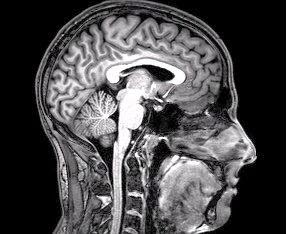
Neuroscience, the quest to understand the brain and how it works, was founded on case studies of how the mind to appeared to change when the brain was injured. Traditionally, the mind was thought of as a unified thing that inhabits or suffuses our brain somewhat as a ghost haunts an old house. If part of the house burns down, the ghost is the same: it can just move to another rooms. But careful observers, early scientists, noticed that an injury to a part of the brain affects the mind itself. When particular parts of the brain were injured, patients lost specific capabilities (to form new memories, for example, or to recognize faces, or to keep their temper). Sometimes, the personality itself would change, like from friendly to unfriendly or vice-versa. Or in the case of split-brain patients, they would simultaneously like and dislike, believe and not believe, or be able and not able to do certain things, depending on how you ask, or sometimes just depending on what side of the body you address them from! Gradually, we came to understand that the mind is something that emerges from a physical brain, from the way the brain’s parts work together, and is entirely dependent on the brain itself for its qualities and for its very existence. 


And as we discussed, it’s not only neuroscientists with their fMRIs that are revealing how the brain works. The criminal justice system has amassed mountains of evidence that shows us how often the human brain does its job and helps us ‘get the right guy’, and how often it fails. With advances in technology, such as DNA testing, more sophisticated firearms testing, expanded access to files and records, and many other newly available forensic tools, we’re discovering an alarming number of false convictions, not only of people currently imprisoned, but sadly, of those we’re too late to help. Most of these are the direct result of basic errors of our own faulty brains. 

(I’ve more briefly discussed the issue of false convictions for crime in an earlier piece, stressing the importance of knowing the ways our criminal justice system fails, and one of the most effective ways society can keep itself informed.)

Two of the main culprits in false convictions are false memory and misperception, the one resulting from errors in recall, the other resulting from bias or the misinterpretation of sense evidence.

For example, let’s consider the case of a rape victim and the man she falsely accused, who went on to work together for reform in certain law enforcement practices. For years, Jennifer Thompson-Cannino was absolutely sure that Ronald Cotton had raped her, and her identification of him led to his conviction for the crime. After all, as she said, and as the court agreed, one couldn’t forget the face of someone who had done this to you, committed such an intimate crime inches away from one’s own eyes, could they? Eleven years later, the real rapist was identified when the original rape kit sample was re-tested to confirm a DNA match. Over time, Thompson-Cannino had convinced herself, honestly by all accounts, that Cotton’s face was the one she originally saw, and each time she looked at it, the more she ‘recognized’ it as that of her rapist, and the more strongly she associated this recognition with the rest of her memories of the crime. Fortunately, she’s one of those rare people who are able to fully admit such an egregious mistake, and she has joined with Cotton to call on police jurisdictions to change the way suspect lineup identifications are conducted. Thompson-Cannino and Cotton learned a hard lesson about the fallibility of memory, and how preconceived notions (in this case, that the police must be right) can withstand the rigors of the courtroom and still lead to very wrong conclusions.

But we can imagine that such a mistake must happen from time to time, as in Cotton’s case, when the supposed criminal looks quite a bit like the real one, and the array of circumstances that led to the whole mix-up were so unusually convoluted. But, surely, a lot of people couldn’t all remember the same crime, or series of crimes, wrongly, and describe it mostly the same way when questioned separately? Well, that happens too
. The McMartin case of the early 1980’s was just the first of a string of cases which resulted in hundreds of people being convicted for the rape and torture of small children, usually entirely based on the purported evidence of the ‘victims’ ‘ own memories, or those of their family members. The ‘victims’, mostly young children, told detailed, lurid, horrific stories of events that most people would consider beyond the imaginative scope of innocent children. Over time, as those convicted of the crimes were pardoned, exonerated, or usually just had the charges dropped without apology (some still languish in prison, or are confined to house arrest, or are barred from being with children, including those of their own family), videos and transcripts of ‘expert’ interviews with these children found them leading their interviewees on. Professional psychologists and interrogators were found to be influencing children to form their own false memories, even planting them whole-cloth, rather than drawing them out as most people thought they were doing. This includes the professionals themselves! Some of these children, now grown, still ‘remember’ these events to this day, even those who now know they never happened.

Okay, now we’re talking about children, and we all know children are impressionable. But usually it’s adults who give evidence in such important cases, and though they might be fuzzy on the details when it comes to what other people did, they know what they themselves did, right? Well, here again, no, not necessarily. In Norfolk, Virginia, eight people were convicted of crimes relating to the rape and murder of one woman, based on the first-person confessions and testimony of four military men. These men, who had tested sound enough of mind and body to join the Navy, were convinced by police interrogators, one by one, to ‘reveal’ that they and several others had, by a series of coincidences, formed an impromptu gang-rape party that managed to conduct a violent crime that lasted for hours, while leaving little destruction or evidence behind. Although these confessions didn’t match the evidence found in the crime scene, didn’t match the other confessions, or were contradicted by alibis, all were found guilty on the common-sense and legal assumptions that sane, capable people don’t falsely accuse themselves.Yet as in the Norfolk case, the case history of our criminal justice system reveals that with the right combination of pressure, threats, assertion of authority, and personality type, just about anyone can be pushed to confess to committing even a terrible crime, and worse yet, become convinced that they did it (as one of the men did in the Norfolk case). The Central Park Five, as they are often called, were five teenage boys, aged 14 to 16, who were convicted of the rape, torture, and attempted murder of a woman in Central Park in New York City. The justifiably horrified public outrage at this crime, combined with frustration over a rash of other crimes throughout the city, put a lot of pressure on law enforcement to solve the crime in a hurry. These five boys had already been picked up by police officers in suspicion of committing other crimes that night, of robbery and assault, among other things, and when the unconscious, severely beaten woman was found, the police hoped they had her attackers in custody already. After hours of intensive untaped interrogation, all five eventually confessed, implicating themselves and each other. They were convicted, despite the fact that the blood evidence matched none of them, and their confessions contradicted each other in important details. 

False memories and false confessions are only two of the ways our fallible brains can lead us astray in the search for truth. Human psychology, so effective at so many things, is also short-sighted, self-serving, and wedded to satisfying and convenient narratives, to a fault. Law enforcement officials in all of these cases were convinced that their theories of effective interrogation were right, and that their perceptions of the suspects were right. The prosecutors were convinced that the police officers had delivered the right suspects for trial. The legislators that made the laws, and the courts that upheld them, were convinced they were acting in the best interest of justice. And as we’ve seen, all of these were wrong.

As just about everyone was who were involved in bringing Todd Willingham to court, and in condemning him to die for the murder of his own children by arson. By all accounts, Willingham didn’t act as people would expect a grieving father to act, especially one who had escaped the same burning house his children had died in. Yet it was one faulty theory after anotherfrom pop psychology and preconceived notions about that ‘real’ grief looks like, from bad forensics to a poor understanding of how an exceedingly immature and awkward man might only appear guilty of an otherwise unbelievable crime, that led to his conviction and execution by lethal injection.

But the problem of false conviction for crime is much, much larger than we might suppose from the cases we’ve considered here: these were all capital crimes, and as such were subject to much more rigorous scrutiny than in other cases. If wrongful convictions are known to happen so often in the case of major crimes, we can reasonably extrapolate a very high number of false arrests, undeserved fines, and especially, false plea deals, in which people innocent of the relatively minor crimes they’re accused of are rounded up, charged, and sentenced. Plea bargaining presents a special problem: suspects are persuaded to plead guilty and accept a lesser sentence than the frighteningly harsh one they’re originally threatened with, and in jurisdiction after jurisdiction, we’re finding that huge numbers of innocent people are sent to prison every year through this method. All of this results from a blind zeal to promote justice, or at least, the appearance of justice in the interest of feeling secure, of more firmly establishing authority, or of fulfilling the emotional need to adhere to comforting social traditions.

So how do we need to change our attitude towards our criminal justice system, in the pursuit of actual justice? A proper spirit of epistemic humility, a greater concern for those who may have been wrongfully convicted, and a real love of justice itself (rather than the mere show of caring about justice that the ‘tough on crime’ too often consists of).

But we still are left with the practical task of protecting ourselves and one another. Positive action must be taken, or crime will run rampant, being unopposed. But that doesn’t mean hold on to old ideas and practices because we like them, because they are familiar and ‘time-tested’, and make us feel safe. This includes the death penalty, which shuts out all possibility that we can remedy our mistakes.

Here’s one general solution: approach criminal justice as we do science itself, where we accept conclusions based on the best evidence at the time, but founded on the idea that all conclusions are contingent, are revisable if better, compelling, well-tested evidence comes along. We need a justice system that assumes the fallibility of memory and perception, and builds in systematic corrections for them.

And we need a system that doesn’t just pay homage to this idea: we need to build one that allows for corrections, and not in such a way that it takes years, if ever, to release someone from prison or clear someone’s name if the evidence calls for it. Many would say that the system already works this way: look at how many appeals are available to the convicted, and how many hundreds of people have already been exonerated of serious crimes. But it doesn’t work that way in almost all circumstances. It takes anywhere from months to several years after actual innocence is established to actually release a wrongfully convicted person from prison. For all those not so lucky as to have their innocence proved: most cases don’t have DNA evidence available to test to begin with, at least that would definitively prove guilt or innocence. And even in the rare cases such evidence is available, most is never re-tested to begin with, since the bar for re-evaluation of evidence is so high. Or, the evidence that was available is destroyed after the original conviction and is unavailable for re-examination. Or, legal jurisdictions are so determined that their authority remain unchallenged that they make it extremely difficult, if not impossible, for prosecutors and law enforcement officers to be held accountable in any way if they make a mistake, and bend over backwards to make sure such mistakes are never revealed. And so on.

In short: we don’t just need a justice system that brings in science to help out; we need a justice system whose laws and practices emulate the self-correcting discipline of science, which, in turn, is derived from the honest acknowledgement of the limitations of our own minds.

*Listen to the podcast version here or on iTunes

* Also published at Darrow, a forum for thoughts on the cultural and political debates of today

~~~~~~~~~~~~~~~~~~~~~~

Sources and Inspiration

‘About the Central Park Five’ [film by Ken Burns, David McMahon and Sarah Burns], PBS.org.
http://www.pbs.org/kenburns/centralparkfive/about-central-park-five/Berlow, Alan. ‘What Happened in Norfolk.’ New York Times Magazine. August 19th, 2007.
http://www.nytimes.com/2007/08/19/magazine/19Norfolk-t.html

‘The Causes of Wrongful Convictions’. The Innocence Project.
http://www.innocenceproject.org/causes-wrongful-conviction

Celizic, Mike. ‘She Sent Him to Jail for Rape; Now They’re Friends’ Today News, Mar 3, 2009.
http://www.today.com/id/29613178/ns/today-today_news/t/she-sent-him-jail-rape-now-th

Eagleman, David. ‘Morality and the Brain’, Philosophy Bites podcast, May 22 2011.
http://philosophybites.com/2011/05/david-eagleman-on-morality-and-the-brain.html

‘The Fallibility of Memory’, Skeptoid podcast #446. Dec 23, 2014.
http://skeptoid.com/episodes/4446

Fraser, Scott. ‘Why Eyewitnesses Get It Wrong’ TED talk. May 2012
http://www.ted.com/talks/scott_fraser_the_problem_with_eyewitness_testimony

Grann, David. ‘Trial by Fire: Did Texas Execute an Innocent Man?’ The New Yorker, Sep 7, 2009
http://www.newyorker.com/magazine/2009/09/07/trial-by-fire

Hughes, Virginia. ‘How Many People Are Wrongly Convicted? Researchers Do the Math’. National Geographic: Only Human, Apr 28, 2014.
http://phenomena.nationalgeographic.com/2014/04/28/how-many-people-are-wrongly-

Jensen, Frances. ‘Why Teens Are Impulsive, Addiction-Prone And Should Protect Their Brains’. Fresh Air interview, Jan 28th, 2015.
http://www.npr.org/blogs/health/2015/01/28/381622350/why-teens-are-impulsive-...

Kean, Sam. ‘These Brains Changed Neuroscience Forever’. Interview on Inquiring Minds, 

Lilienfeld, Scott O. and Hal Arkowitz. ‘What “Psychopath” Means’. Scientific American,
Nov 28, 2007. http://www.scientificamerican.com/article/what-psychopath-means/

Loftus, Elizabeth. Creating False Memories.’ Scientific American, Sept 1,1997. http://faculty.washington.edu/eloftus/Articles/sciam.htm
and ‘The Fiction of Memory’ TED talk. June 2013.
http://www.ted.com/talks/elizabeth_loftus_the_fiction_of_memory?

 
Nelkin, Dana K., ‘Moral Luck’, The Stanford Encyclopedia of Philosophy. Edward N. Zalta (ed.) http://plato.stanford.edu/entries/moral-luck/
 
Perrilo, Jennifer T. and Saul M. Kassin. ‘The Lie, The Bluff, and False Confessions’. Law and Human Behavior (academic journal of the American Psychology-Law Society). Aug 24th, 2010.
https://www.how2ask.nl/wp-content/uploads/downloads/2011/10/Perillo-Kassin-The-Lie

Possley, Maurice. ‘Fresh Doubts Over a Texas Execution’. The Washington PostAug 3, 2014.
http://www.washingtonpost.com/sf/national/2014/08/03/fresh-doubts-over-a-texas-execution/

Robertson, Campbell. ‘South Carolina Judge Vacates Conviction of George Stinney in 1944 Execution’, The New York TimesDec. 17, 2014. http://www.nytimes.com/2014/12/18/us/judge-vacates-convict

Shaw, Julia. ‘False Memories Creating False Criminals’. Interview, Point of Inquiry podcast.
March 2nd, 2015. http://www.pointofinquiry.org/false_memories_creating_false_criminals_with_dr..

‘The Trial That Unleashed Hysteria Over Child Abuse.’ New York Times, Mar 9th, 2014.
and video ‘McMartin Preschool: Anatomy of a Panic | Retro Report’

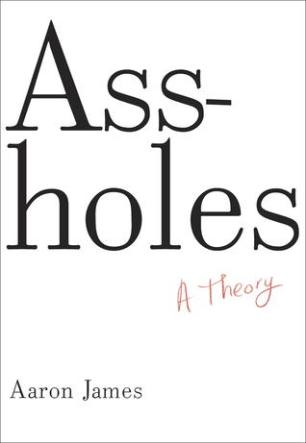
Book Review / Reflections On: Assholes, a Theory

The title might make you think it’s not a serious work, that it’s tongue-in-cheek, even a parody of a philosophy book.



But it’s really a very good, intelligently written, well-thought-out exploration of a sadly widespread phenomenon. And yes, it’s so satisfying to finally see that age-old question ‘Why are you being such an asshole?’ addressed and explained so thoroughly.

Author Aaron James is not being merely provocative in using the term ‘asshole’ to designate the particular kind of person he’s talking about. He uses this colloquialism because we really have no other word that’s so specific and so widely understood, to refer to a person who displays a certain attitude and systematically engages in certain types of bad behavior. Here’s James’ three-part definition: the asshole 1) allows himself to enjoy special advantages and does so systematically: 2) does this out of an entrenched sense of entitlement; and 3) is immunized by his sense of entitlement against the complaints of other people (p 5).

When we say of someone: ‘what an asshole!’, or observe ‘that was such an asshole thing to do!’ pretty much everyone recognizes this just the sort of person or behavior we’re talking about. If we were to use a more formal or non-slang term instead, as in ‘what a bad person!’ or ‘that was a depraved thing to do!’, the full richness and specificity of meaning that the colloquial, richly nuanced term asshole possesses wouldn’t be fully expressed. Look at how many words it took James to define what we mean by ‘asshole’ (and I would say, not quite fully: none of the definition’s three parts describe the little shudder of outraged disgust we feel when we see assholes doing what they do.)

That’s why, like James and fellow philosopher Harry Frankfurt, whose 2005 paper ‘On Bullshit’ caused quite a stir, I disagree with linguistic purists and prudes who wholly reject the use of colloquialisms in serious or academic work (though I speak only for myself as to how far this should go ). Out of self-righteously willful obtuseness, I insist, these purists just don’t ‘get it’. Everyday spoken language is much more fluid and adaptable than formal language, because there’s no arbiter of proper usage ‘breathing down your neck’ other than your partner in conversation. In the virtual experimentation lab that is daily conversation, we search for words that express exactly what we mean as efficiently if possible, and if there’s no ready word available, we adapt one that already exists, or make one up on the spot. As long as the person you’re talking to right then understands you, ‘it’s all good’. Formal language, on the other hand, evolves much more slowly, and must adhere more rigidly to existing standards of usage. Only over long periods of time do newer terms, having entered into common usage, filter up through the levels of linguistic formalization, and become accepted by editors of dictionaries, publishing houses, and news media. Yet the formalization of language doesn’t always result in a more expressive, precise one. As you can see, I used several idioms and colloquialisms in this paragraph, in quotes, to express my thoughts, and if you haven’t ‘been living under a rock’ you probably understood exactly what I meant. You can also see that colloquialisms can not only be a more colorful or amusing way, but more efficient way, of expressing yourself. You can test this by trying to define the full meaning of these colloquialisms, with all their nuance, using a lesser number of terms in formal language. I’d ‘bet your ass’ you can’t!

(In one of my student papers written a few years ago, I explore the linguistic origins and evolution of colloquialisms in the light of Grice’s Cooperative Principle, Dumas and Lighter’s paper on slang, and Steven Anderson’s hilarious and thoughtful documentary F**k. )

But I digress. To return to James’ book: it has a lot going on. So much so that it lead me to think, for example, more about the nature of language itself, just from the parts where he discusses what ‘asshole’ means, the various subtypes of assholes, and compares and contrasts asshole to related terms bitch, schmuck, assclown, douchebag, dickhead, dick move, and so on. (He forgot one of my favorites, asshat, which refers to having one’s head up one’s own ass, thereby wearing it like a hat.) It’s a testament to the richness of ideas in this book that thinking it over, every time, engendered so many other interesting lines of thought. Exploring the concepts contained in the term ‘asshole’ raises important questions about respect for one’s self and others, of human dignity, of exploitation, of how you should act and not act in a cooperative society, what we can rightfully expect of others and why their failure to live up to this is so objectionable, and much more; in short, this term is thick with moral and political implications.

There’s one point on which I disagree: his suggestion that, while assholes are far more likely to be men (which I agree is the case), they are almost entirely a product of culture (chapter 4). While I agree there may be cultural factors that help instill asshole qualities in men, and that some cultures are more likely to instill these qualities than others, it seems that nature plays a larger role than James allows. I think it likely that testosterone, the hormone which we know increases the tendency to aggression, contributes a lot to the phenomenon of assholery. After all, the traits James ascribes to the asshole are aggressive in nature: systematically granting oneself special privileges over others, of feeling entitled to things whatever the circumstances, and rejecting or ignoring others’ just complaints. It’s not that all men are assholes, far from it. It’s just that the biological factor of hormonal makeup increases the likelihood that males will be more susceptible to asshole influences, or more likely to possess aggressive traits that readily fall into asshole patterns of thought and behavior, than women. To my mind, assholery is a product of combined nature and nurture: asshole seeds take root in ground made more fertile by testosterone.

One of my favorite sections of the book was on asshole capitalism. James is not claiming here that capitalism is necessarily an asshole system. What he’s claiming is that capitalism is essentially a cooperative system ripe for exploitation by assholes, which, in turn, puts it in ever-present danger of collapse, of being destroyed from within. That’s because capitalism is a system of exchange and of reward: people exchange goods and services cooperatively and fairly, which generates trust and more trade, and people reward those who devise and provide the best goods and services with admiration and customer loyalty. And assholery, systematically behaving as if one is entitled to things regardless of the actual value of their contributions to the world, threatens the stability of the cooperative environment necessary for capitalism.

Since assholes systematically regard themselves as the rightful recipients of the best of everything, out of a sense that they are entitled to it per se, assholes exploit other people’s willingness to be fair and to reward others. Asshole drivers feel that owning bimmers entitle them to run red lights and rev their motors inches from people in crosswalks; asshole CEOs and managers think nothing of the fact that their wealth is built on the backs of sweatshop laborers or from industries that generate mass pollution; asshole bankers think they should earn millions or billions a year because they ‘have the balls’ to gamble other people’s money in financial markets, even at the risk of bringing down entire economies (to be fair, they are often so obsessed with their own rewards they may have a hard time even conceiving of larger, potentially dire consequences, because that would mean seriously considering interests other than their own).

Capitalism can and does thrive when people act somewhat selfishly within a larger context of cooperativeness. But never to the extent that the system would hold up under too much lying, cheating, stealing, abuse and neglect of employees, etc. That’s because money, and markets, can’t operate without trust. If most people can be trusted and it’s just a relatively few bad apples gaming the system, well, human nature being what it is, that’s to be expected. But if entitled, self-obsessed, rapacious assholes proliferate beyond a certain proportion, all bets are off. James explains why the modern Russian oligarchic system is rightly considered a full asshole capitalist system and the Japanese system is very much not. Worryingly, and not the least bit to my surprise, James presents evidence for what I’ve already been convinced of: the United States brand of capitalism is edging far too close to Russia’s end of the spectrum, and much farther away from Japan’s. That’s because our modern American capitalist culture has become one of entitlement (as much as certain pundits like to use this word exclusively to refer to aid to the poor, not handouts and special privileges to the rich), in which far too many of use we feel justified in grabbing whatever we want because we somehow, innately, ‘deserve’ it, everyone else be damned.

In sum: this book is a very useful book, on how to understand the origins and nature of assholes; on how to recognize and deal with assholes in the media and in daily life (James’ theory helps explain why certain assholes in the media remain entrenched in their self-serving dishonesty); and as a cautionary tale of when societies allow and encourage assholery to run amok.

– This book review is dedicated to my father-in-law, a man given to succinctness. His fatherly wisdom, which so resonated with my husband he has retold it many times over the years: ‘Son, don’t be an asshole. The world has enough of them already’.

James, Aaron. Assholes, a Theory. First published Doubleday, NY 2012.
First Anchor Books Edition, Apr 2014.  www.onassholes.com

Nicholson, Christie. ‘Testosterone Promotes Aggression Automatically’, Scientific American, June 9, 2012. http://www.scientificamerican.com/podcast/episode/testosterone-promotes-agression-aut

Thanks also to www.urbandictionary.com, which helped me make sure I had all my colloquialisms right, and avoided spelling bimmer ‘beamer’ like a moron

Ordinary Philosophy Recommends: David Morris on the ‘Volunteer’ Army and the History and Science of PTSD

In this fascinating podcast, former Marine infantry officer David Morris explains to host Indre Viskontas what PTSD (post-traumatic stress disorder) really is: a little bit medical diagnosis, and a whole lot moral/political argument. To understand PTSD, we need to consider not only why some suffer from PTSD and why others don’t, but what war means to us as a society.

Besides being fascinated by what I learned about the science and history of PTSD specifically (as I hope you will by listening to the podcast!) I was particularly struck by what Morris’s remarks on the institution of our modern ‘volunteer’ army (starting at about 19.17). He points out how our nations’s leaders, along with most Americans, are almost entirely removed from the consequences of the wars we start since the de facto end of conscription in the 1970’s.

It seems that allowing all soldiers the choice to enlist, rather than forcing them to do so, is the only fair and just way to go about fighting a war, right? Seems shameful, undemocratic, even downright un-American, to force people to kill who don’t believe in killing.

Yet Morris makes this excellent point: rather than allowing us to ‘choose for ourselves’, which sounds democratic, the volunteer army system allows us to vote in favor of war, or stay at home and do little or nothing to stop it, while avoiding most of the burden and all of the danger.

So we start wars, or allow them to be started in our name, at little or no cost to most of us. As a nation, we all too often rush into war with too little consideration of the long-term consequences, or little understanding of the underlying cultural and historical causes of the turmoil in the first place (hmm, can we think of any modern wars that belong in that category?). Meanwhile, the President who calls for declaring war, the Congress who votes in its favor, we who vote these leaders to office, and the rest of us who do little or nothing about any of it, can rest easy knowing we don’t have to pay the costs. We don’t have to be soldiers, or to send our friends and loved ones off to do the fighting, unless we want to. We can shout our opinions to the heavens, take a righteous stand on one side or another, and forget about it the next day.

So the ‘volunteer’ army of paid soldiers bear the burden, face the danger, take the bullets and suffer the pain, while the most of the rest of us go about our relatively wealthy, secure, and comfortable lives, forgetting there’s a war on at all. How is this democratic? How is it any more fair or just to let the entire burden and danger of our war fall on the tiny percentage of Americans who enlist, and on their loved ones?

Morris offers what I think is a very good solution: if we do go to war, every able adult must be eligible for drafting into public service: we can choose to join the armed forces, or we can choose to dedicate hours working for the public good, at a non-profit, or with the Peace Corps, AmeriCorps, or other public works project. That way, we can require each other to become full participatory citizens once again, with all the rights and responsibilities that entails. If we truly believe that all killing is wrong, or that this particular war we’re engaged in is unjust, we won’t be forced to betray our principles, but neither will we be able to escape our civic duty to involve ourselves in the all-important matter of war and peace. And our leaders will be encouraged to make more responsible decisions about the wars they vote for, knowing once again that whatever they decide, they and their own families and friends will have to bear the burden too.

~~~~~~~~~~~~~~~~~~~~~~~~~~~
Sources and Inspiration: 

Morris, David J. ‘The History and Science of PTSD’. Inquiring Minds podcast #73, Feb … 2015
https://soundcloud.com/inquiringminds/73-david-j-morris-the-history-and-science-of-ptsd

Wikipedia contributors. “Conscription in the United States.” Wikipedia, The Free Encyclopedia. http://en.wikipedia.org/wiki/Conscription_in_the_United_States

Brian Williams, Bill O’Reilly, Rush Limbaugh, and Honesty in Public Discourse

You’re likely aware of the backstory to this piece: well-known news anchorman Brian Williams was caught telling stories. A generous interpretation would portray them as exaggerations; a harsher one a series of self-aggrandizing lies. Williams placed himself in the thick of the action while covering certain news stories, like the shooting down of a military helicopter and the aftermath of Hurricane Katrina, when he was actually at a safe distance. Since his stories were recently debunked, in whole or in part, by others there at the time, he has been widely criticized, shamed, and mocked, and the public debate over the nature and reliability of modern news rages ever more fiercely.

He’s not the only public figure in hot water right now for playing fast and loose with the truth. Bill O’Reilly is also being called out for his history of adding, ahem, some ‘color’ (my term, not his) to his news stories. He’s repeatedly talked (bragged?) about ‘covering four wars with his pen’ (his words), including the war in the Falklands, when he was actually over a thousand miles away from the ‘active war zone’ (also his words, the phrase he used to describe his own location at the time) covering a demonstration in Buenos Aires.

But the O’Reilly case is different! many say. Brian Williams is a trusted news anchor, from whom people expect to get unvarnished facts, and they expect to get them because that’s what he promises to deliver. O’Reilly is a commentator, albeit on a popular news station. Yet he presents himself as a truth-teller, speaking from the ‘No Spin Zone’, constantly referring to his bona fides as a lifelong journalist. So his viewers do expect the same level of honesty from him as from Williams, be it the facts or his true political and moral opinions.

Bill O'Reilly dining with troops, image public domain via Wikimedia Commons

Bill O’Reilly dining with troops, image public domain via Wikimedia Commons

Instead of taking the snarky, self-righteous tone he’s adopted, using tactics of straw-manning and name-calling his critics and trying to obscure his tall tales with lame excuses, O’Reilly could just honestly admit that he used exaggerated or even just colorful language to add a sense of immediacy, urgency, or drama to his stories, and given his self-proclaimed role as a truth teller and ‘non-spinner’, admit that he might have misled his audience.

Rush Limbaugh, another famous commentator who’s often accused of lying and slander, likes to use the same excuse that his fans do when he gets caught: that he’s ‘just an entertainer’. Presumably, then, when he purposefully misrepresents the words, actions, and characters of his ideological opponents, he doesn’t really mean what he says. Or does he?

Rush Limbaugh / Sandra Fluke, image public domain via axiomamnesia.com/

One such case was that of Sandra Fluke, a law student and activist who testified before Congress regarding a proposed religious exemption to the government mandate that all health insurance policies must cover contraception. Fluke presented arguments, based on medical evidence and anecdotes of friends with gynecological and hormonal conditions, that birth control is essential preventative and therapeutic health care, especially for women, and as such, should be covered under all plans, public or private.

Limbaugh exploded. He called Fluke a slut and a prostitute and represented her as saying that ‘she must be paid to have sex’, and if so, she should provide sex tapes as public repayment for taxpayer money. Yet if you read Fluke’s own testimony, and read or listen to any of Fluke’s own discussion of birth control, it’s clear that she doesn’t mean any such thing, or says anything that can reasonably be construed as saying that paying for birth control is equal in any way to ‘paying for sex’. This would be as nonsensical as saying that to pay for an emergency room visit for a car crash victim amounts to ‘paying them to drive’ (and therefore they are obligated to be your chauffer?), or to pay for insulin for a diabetes sufferer is to ‘pay them to eat sweets’, or to pay the medical bills for the delivery of baby is to ‘pay for her to have sex’ (after all, that’s how she got pregnant) or ‘pay for her to have children’ (and therefore you have the right to put spycams in the nursery? Or make her child come over to do your chores?). After a storm of protest over his nasty (and pervy) rhetoric, Limbaugh apologized for calling her names and for ‘exaggerations to describe’ her personally. Yet he’s never, so far as I could discover, apologized for distorting and misrepresenting (two commonly used, slightly polite ways of saying ‘lying about’) her views on preventative healthcare on his radio show. Of the two, I argue that the name-calling is by far the lesser of the two: the slurs are unbelievable, and therefore perhaps possibly construed as satire. But the misrepresentation of her views is a lie that harms both her and the public, by slandering her and keeping important information from his audience, replacing it with falsities.

Limbaugh tells his viewers that he’s one of the most ‘honest‘ commentators out there, ‘huge on personal responsibility’ as he said in the same apology broadcast. He also says that he’s a satirist, that he uses ‘absurdity to illustrate the absurd’. It doesn’t appear to me as if he presents his take on Fluke’s testimony as satire: he seems to present it as a corollary of her arguments. The trouble with Limbaugh is that he slides back and forth from what he tries to call ‘satire’ to what he would call ‘the truth’ without any sort of clarification, any sort of signal to his audience so they can tell when he’s being factual, and when he’s uttering an absurdity to make a point. In researching this piece, I read quote after quote, transcript after transcript, of supposed satirical absurdities, facts, and half-truths all scrambled together will-nilly in each sentence, each paragraph, each entire show, generally with no discernible way to tell which was which. This gives him a general ‘out’ when it comes to saying whatever he wants without being called out for lying, which, in turns, makes every statement as credible as any other, which is not at all. Sorry, Rush. You can’t have it both ways.

(When I was doing research to refresh my memory on the case, I found that he had scrubbed his website of all transcripts and recordings of his actual remarks. It may be he was forced to do so as a result of his advertisers fleeing, or it may have been his own ass-covering move. Either way, this scrubbing does not represent evidence of his honesty or belief in ‘personal responsibility and accountability’, to say the least.)

So why bring up this old case again?

It’s to illustrate how and why so many of us are feeling so distrustful, so tired, so saddened, or (I think mostly) so jaded about honesty, and the lack thereof, in our public discourse. These three men, three widely admired, influential public figures present themselves as advocates for and providers of ‘the truth’: the straight newsman, the newsman-turned-commentator-on-a-news-network, and the straight commentator. All of them have been caught lying, some more than others, some more seriously, perhaps, than others. The way these three men have responded to being caught in lies and exaggerations reveal a lot about what they expect of themselves, and what they think we expect of them.

Brian Williams, of the three, has responded the best. He publicly apologized and admitted he made a mistake, admittedly in a rather defensive, perhaps self-excusing way. His inaccuracies may have been half-honest, in a sense, as he exaggerated his stories little by little over time with each re-telling, as human beings commonly do, just as Bill O’Reilly may have done. (I have been researching how memory works for another piece I’m working on, and how easy it is for certain people to create false memories, and to change certain aspects of a memory, especially when recalled and discussed repeatedly over a period of time. Stay tuned for more on that.) But he, like O’Reilly, should also have been fact-checking himself all along when re-telling such an important story after so many years, because that’s his self-imposed job: to stay faithful to the facts in a way the ordinary citizen doesn’t necessarily need to. As his friends and colleagues have stated, however, he alone, of these three, appears appropriately contrite, even ‘shattered’.

It seems clear that he’s aware of the wrong he’s done, and why it was wrong.

O’Reilly and Limbaugh, on the other hand, have been reacting very badly, as we have seen. They simply seem to have a different conception of what truth is, and what their relation to it should be. Is it because they consider themselves commentators first, and reporters of factual information second? Perhaps. But this makes no difference.

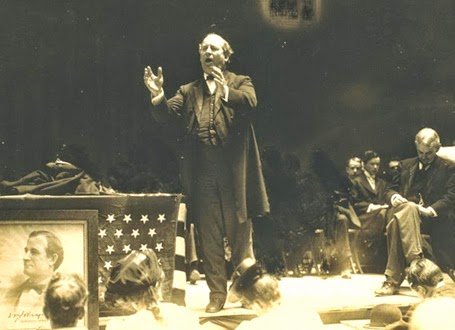
William Jennings Bryant, 1908, image Public Domain

If you promise your audience that you will tell the truth, that you should be trusted, then you have made it your duty to be truthful and trustworthy. I believe, further, that it becomes your duty in these circumstances to be a living example of truthfulness and trustworthiness: conduct discourse in an honest fashion, present your opponent’s views fairly and give them the benefit of the doubt, and debate and discuss their arguments on their own merits. If you want to tell the truth indirectly in satire, make clear what’s satire, and what’s not.

And if you get caught in a lie or an exaggeration, admit it. Your audience will thank you for your honesty, even as you make a mistake, since admitting it without excuses it proves your honesty all the more.

The discussion continues: On Jonathan Webber’s Discussion on Deception With Words: Honesty in Public Discourse Part II

*Listen to the podcast version here or on iTunes
*Also published at Darrow http://darrow.org.uk/2015/04/12/brian-williams-bill-oreilly-rush
*this piece has been lightly edited on June 8th, 2018 for clarity

~~~~~~~~~~~~~~~~~~~~~~~~~~~~~~~

Sources and Inspiration:

Corn, David. ‘Bill O’Reilly Responds. We Annotate’. Mother Jones, Feb 20th 2015
http://www.motherjones.com/politics/2015/02/david-corn-response-oreilly-falklandsFluke, Sandra. Sandra Fluke Yestimony to US Congress, Feb 23, 2012
https://en.wikisource.org/wiki/Sandra_Fluke_testimony_to_US_Congress_%282012_Feb….

Freed, Benjamin. ‘7 Questions for Travis Tritten, Reporter Who Debunked Brian Williams’s Helicopter Story’, Washingtonian, Feb 5th 2015. 
http://www.washingtonian.com/blogs/capitalcomment/media/7-questions-for-travis-tritt…Limbaugh, Rush. ‘Why I Apologized to Sandra Fluke’. The Rush Limbaugh Show, Mar 05 2012
http://www.rushlimbaugh.com/daily/2012/03/05/why_i_apologized_to_sandra_flukeLimbaugh, Rush. Quote: ‘You know I have always tried to be honest with you…’ Wikiquote, from
The Rush Limbaugh Show, Oct 10th 2003 http://en.wikiquote.org/wiki/Rush_Limbaugh

McCoy, Terrance. ‘Brian Williams Perhaps Misremembered Floating Dead Body and Gangs During Katrina Hotel…’ Washington Post Feb 10, 2015

http://www.washingtonpost.com/news/morning-mix/wp/2015/02/10/brian-williams-perhaps

Mahler, Jonathan, Ravi Somaiyia, and Emily Steele. ‘With an Apology, Brian Williams Digs Himself Deeper in Copter Tale’. New York Times, Feb 5, 2015
http://www.nytimes.com/2015/02/06/business/brian-williamss-apology-over-iraq-account-is-

Reeve, Elspeth. ‘Rush Scrubs ‘Slut’ Comment, Demand for Fluke Sex Tapes’. The Wire, Mar 8 2012 http://www.thewire.com/politics/2012/03/rush-scrubs-demand-for-fluke-sex-tapes/49643/

Steel, Emily and Ravi Somaiyia. ‘Brian Willaims Suspended From NBC for Six Months Without Pay’, New York Times, Feb 10, 2015

Uygur, Cenk. ‘Bill O’Reilly Responds To Attacks Over Falkland Islands War Coverage Lies’.
The Young Turks, Feb 23rd, 2015. https://www.youtube.com/watch?v=DiTbq8OAqbM

Sexual Purity: A Dirty Idea

So have you ever heard of a purity ball?

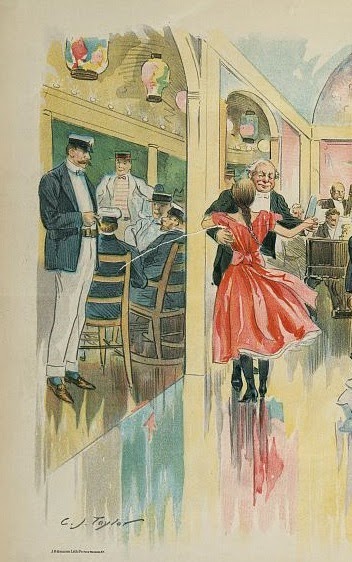
It’s sort of like a prom, but with a twist: daughters are accompanied by their fathers, instead of their boyfriends. There, they enjoy music, eat, drink, and dance… and then these young girls pledge to remain sexually abstinent, or ‘pure’, until their wedding day.

Other than sounding weirdly out-of-date, like bride-prices and trousseaus, anything else bother you about this concept?

What does this concept of ‘purity’ mean?

The idea seems to be that if you’ve never had sex with someone, you’re more virtuous, more worthy, more desirable, more ….clean.

But what does this imply? That if you do have sex with someone, you’ve become, somehow, ‘impure’? That it makes you dirty, less desirable, less worthy, less virtuous, less worthy of respect, maybe even less valuable as a person?
This idea, that engaging in one of the most social, most cooperative, most intimately friendly actions that human beings enjoy with one another can ever make you ‘impure’, has been a bee in my bonnet ever since I began to question what the idea of sexual purity, like the Cult of the Virgin, really stands for. For ages, human belief systems have equated virginity, especially of women, with sacredness. The stories of the birth of Horus, of the Buddha, of many of the Greek gods, of Jesus, all illustrate this obsession many of the world’s cultures, and especially religions, have had with virginity. (The virgin birth of the Buddha seems to be a later addition: early Buddhist texts honor the Buddha’s father, as his natural father, as well.) These gods and heroes are made out to be more special, better than mere ordinary human beings, at least partly because their mothers didn’t create them with the help of another human being. Gods and saints have been more revered, and brides’ dowries have been higher, so long as they or their mothers are virgins.
So what does this say about our attitude towards human beings?
‘How about respect?’ one might ask. ‘How about the idea that we should practice self-control, that we should respect each other’s bodies, and not ‘use’ each other for our own selfish pleasure?’ I answer: this is both an important issue, and an entirely separate one. Sexuality, for human beings, is generally a deeply emotional thing, unlike most other animals (so far as we know). For us, it’s intertwined with the need for closeness, for intimacy, for feeling more alive, for just plain feeling good. In short, it’s one of the most richly sociable activities we engage in. And we can easily hurt each other through sex, when we lie to our partners, when we make promises we don’t keep, when we profess love to get what we want only to show indifference afterwards, and worst of all, when we inflict pain and violate their right to self-determination through rape. We expect each other to practice sexual self-control, and we are right to condemn ‘using’ anyone as a mere tool for our exclusive pleasure.

But sex outside of marriage is more often friendly, affectionate, respectful, mutually exciting, and consensual than not. Most of the time, it’s a good and valuable thing, not only for its own sake, but for what it can teach us about being good partners not only for the evening, but for life. And even when it’s not, when we use our sexuality selfishly, or to harm or deceive others, our bad behavior has no impact at all on their integrity or worth. We may be said to make ourselves ‘impure’ through our disrespect, dishonesty, cruelty, or violence; we may metaphorically be said to sully our own moral characters by wronging anotherYet we don’t have purity balls in which we pledge not to sully ourselves by lying, stealing, cheating, or murdering. There’s no Cult of the Honest Woman, no god or prophet honored by virtue of their mother’s never haven stolen anything. And we don’t ever imply that we can be made impure if others lie to, steal from, or cause harm to us. It’s sex that’s been so widely singled out and associated with the concept of transmissible purity and impurity in so many of the world’s ideologies, cultures, and religions, for reasons that are no longer useful, and no longer morally defensible.

When I look at the belief systems that sacralize virginity, it seems the common denominator is the inheritance of values from tribal, patriarchal cultures, in which life was wrested out of the land with great difficulty, where infant mortality was high and competition for territory was fierce. Keeping tight control over women helped ensure one’s bloodline was unmixed with that of competitors, and worthy of protection by the head of the household and the tribe. The mythology of purity and impurity, of ritual, superstition, and prohibition surrounding human sexuality is perceived as such effective method of social control that they persist in many cultures and belief systems even to this day (though sexual assault statistics over the decades reveal that liberal, secular societies generally have lower rates of sexual assaults than more sexually repressive ones). Over the years, the justifications have changed, but attitudes remain the same.

Yet most of the world’s population has long since left that harsh ancestral world behind, and we are in an age in which personal liberty and individual human worth and dignity are valued like never before. Murder, theft, assault, and sexual coercion and violence are vilified and illegal, and most societies now go out of their way to ensure individuals can express their personalities and pursue their own goals as much as possible, in safety and security. We also care to understand how and why our social institutions and practices can enrich and beautify human life, and to celebrate them, from conversation, humor, and storytelling, to music and fine arts, to dining with friends, family, and allies, to sex itself, as countless scholarly volumes, scientific studies, and works of art and literature attest.

I argue that this view of human nature, in which human beings are understood as both individually valuable and thoroughgoingly social, doesn’t have room for this concept of sexual purity and impurity. In fact, to say sex with another human being can ever make you impure is just about the most personally insulting and antisocial idea one can express: the claim that the touch of another human being can make you dirty is an attack on human dignity itself.

It undermines the concept of personal responsibility, in which we are morally accountable for what we do and not for what a person does to us. It treats sex as a thing that is corrupt and evil outside of a narrow context, in a way totally divorced from what we’ve discovered about the history, evolutionary biology, and psychology of human sexuality. It reveals a deep scorn for human nature, in which sexuality is as basic a component as rationality, language, the need to survive, to feel pleasure, to matter, and to find love and companionship. And it implies that human beings are innately corrupt, dirty, wicked things, redeemed only through distancing themselves from their own humanity.

Just as I reject all of these, so I reject the idea of sexual purity. And I think you should, too, if you believe that human beings are valuable and worthy of respect for their own sake.

* Listen to the podcast version here or on iTunes

* Also published at The Dance of Reason, Sac State’s philosophy blog

The Wisdom of Crowds: How Voting Produces a Better Society

It’s easy to feel discouraged in the United States of America sometimes.

Recently, I was chatting with someone who suggested that a meritocracy might be better than the democracy (of sorts) which we have now. A democratic republic, rather, and a degraded one: our government seems more dysfunctional than ever, overrun with ideologues and pawns of a few moneyed interests, and hyperbole and unreason holds sway over public discourse. A meritocracy, where rulers are selected based only on their qualifications, be it education, political experience, or business acumen, might prove a welcome change.
Meritocracy is, pretty much, just a theoretical form of government. I expect everyone believes it would be best to have wise and qualified leaders (if we must have any at all), and most think it’s good to try to put such people in office. No government exists whose constitution specifically requires that only the smartest people rule. But imagine a real meritocracy, with strict laws in place to ensure that only the most able, most knowledgeable leaders are appointed. Perhaps public officials would be selected by undergoing a series of tests, or elected by a panel of experts in relevant fields of knowledge. Wouldn’t this increase the chance that no dummies, however slick, charming, or pandering, would be allowed to hijack the government and, through their incompetence, ruin it for everyone else?
Not all that long ago, this sounded pretty good to me. When I returned to college awhile back and studied political philosophy, I was very much in the mood for it, or something like it. Like just about everyone else, it felt that I was constantly slapping my forehead (as I still do) over the ludicrous statements and bad laws our politicians were cranking out. Wouldn’t it be much better if they all had to take IQ tests, plus general knowledge tests in political and legal theory, history, English, rhetoric, and the rules of basic courtesy before they were allowed to run for office? (I’m willing to bet that no politicians who call for ‘citizenship tests’ for voters also call for ‘leadership tests’ for themselves.) Like you, dear readers, I have a deep respect for learning, and would be thrilled to see more of it make its way into our government and into our political discourse, let alone into our (to my mind) overly-materialist culture.

Yet through the years, the more widely I read, and the more I listen to politicians, scholars, and other influential people discuss and debate any given topic in any given field of expertise, it doesn’t seem likely that anyone exists, however brilliant, who could know or understand enough about any subject to craft public policy on their own. No one mind can hold all the relevant knowledge that should be brought to bear in crafting a good law. It’s not just technical knowledge that’s the problem: an expert in a field could, at least theoretically, access enough of that sort of knowledge on their own, from their colleagues, their library, and the Internet, though it still seems unrealistic that one person could put it all together in a reasonable time frame. The far bigger problem is that no one person could escape their own biases sufficiently to craft laws that are just for everyone.

All societies are made up of people with different personalities, different points of view, different belief systems, different circumstances of life. Each, therefore, has different interests and different responsibilities, and have different rights they hold most dear. It’s not possible for any one mind to fully understand how the rights, responsibilities, and interests of all interact and conflict. Not only that: a wise leader must effectively predict the entire chain of events that might result from enforcement of the law, or system of laws. We might say well, of course, no one knows all these things. So what we need in order to create an effective meritocracy is many leaders, not one or just a few. Between them all, a governing body of a large number of experts should be able to work out these problems as least as well as the public at large, and probably better.
But here we run into problem of numbers. Aside from the inevitable clashes of ego, think of how many ‘meritocrats’ it would take to adequately take all of the relevant knowledge, all the possible outcomes, all the values and interests of all of its citizens into account while crafting legislation. Is it likely that any one group, so unrepresentative as they are of the general population, could create a society in which the rights and interests of all of society, rich and poor, educated and otherwise, men, women, and children, laboring and not, of all races, are fairly and equally represented? Could they do this even in theory, given the facts of human psychology? Almost everyone, almost all of the time, automatically favors their own interests and those of their peers over those of other groups, and it makes sense that they should. For one thing, they understand why their own interests are as they are, because they arise from their own particular life experience. For another, everyone is prone to availability bias: people form beliefs and make decisions based on examples they themselves can readily call to mind. Therefore, we are intellectually hostage, so to speak, to whatever set of information and experience we are privy to. However much we try to expand our knowledge of the world, we are always limited. These, and myriad other quirks of human psychology, make it inevitable that no one human being on their own, or a relatively small group of human beings, could make sufficiently fair, impartial, and fully informed decisions on policies that effect everyone.

Let’s consider pre-Revolutionary France for an extreme example of how a meritocratic but short-sighted few, ruling over a non-participatory citizenry, can bring about societal collapse. France, like other European societies at the time, was ruled by a heritable meritocracy of a monarch and an aristocracy, and an appointed clergy, who all had the wealth and leisure, unavailable to most people, to afford an education. These ruled a populace which they kept in strict subjection, for the people’s own good, of course. Yet these meritocrats could not put themselves into the sabots (wooden clogs of the peasantry) of the majority of the people. (The Estates General, made up of representatives from various classes, advised the king, but had little power to begin with, and it decreased over time; the Third Estate, made up of the poorest members of  French society, had the least power, and the burden of taxation fell almost entirely on them.) As they saw it, the classes of society were properly kept in their place to fulfill their respective roles, and to undermine this structure would be to undermine the delicate balance of a functioning society. They were proven wrong: the intolerable condition of their lives caused the laboring classes to revolt and overthrow their rulers. While the monarch, the aristocracy, and the clergy considered themselves best suited for rule, they lacked the knowledge, the insight available only through the experience of what it takes to make the life of a laboring person not only bearable enough forestall rebellion, but satisfying and remunerative enough to encourage more productivity. They lacked the epistemic humility that wise people have. If the ruling elites were more informed, say, by the input of the people they ruled over, perhaps they could have thought of ways to harness human energy and facilitate creativity as market societies would later do. But since they shut themselves off from the input of the majority of the population, their policies were ill-informed and short-sighted, and their society eventually collapsed. This was the fate of so many undemocratic societies, that it seems most likely to be the fate of all.

‘But wait a minute!’ you may object. Why would we expect better results in a democracy, when it’s at least as likely and probably more, that the average person’s vote is based on just as narrow, less-than-fully-informed self-interest as that of the aforementioned meritocrats?

 
In a democratic system, individual voters don’t have to be fully informed about everything for their votes to be valuable. Since the vote crowd-sources knowledge from the entire population, each person, even if voting out of narrow self-interest, informs society of the things they know most about. Our votes tell each other what we want, and indicate why. By the way people vote, we discover what individuals have learned from their own life experiences, from the work they do, their area of study or expertise, their family and peer groups, and the demands of the environment in which they live. We learn what people believe, what their interests are, how far they’re willing to go to help each other out, and where they want the line drawn to protect themselves. We learn how much people know (and how much they don’t), what values they hold, and what kind of leaders they admire.

So it’s not that the average voter must be wise or fair for their vote to count, though it’s better that they are, since this speeds up the process of creating a better government. What matters most is that society as a whole is well informed. A society can only become knowledgeable enough to create a government that’s well-functioning, impartial, and more conducive to the flourishing of all of its constituents, by this crowd-sourcing of information. Since no one mind, or no few minds, can hold enough information or understand enough points of view to do what’s best for everyone, it’s everyone who must provide the necessary knowledge.

This utilitarian argument, by the way, is not meant to replace moral arguments in favor of democracy: that proper respect for the moral equality of all persons entails the right to vote, or that it’s incumbent on all good citizens to fulfill their social obligations through political participation, and so on. I offer it as one of many excellent reasons to prefer a democratic system of government over any other: not only because it’s morally enlightened, it’s also the most practical. Democracy is best because it works best, and the evidence of history bears this out. In modern democratic societies, for example, war is relatively rare, since the transfer of power from one leader to the next is peaceful. Generally, the burdens of war disproportionately fall on the majority of society while a relative few reap the benefits; very few wars in history were revolutions that benefited the majority the most. For those of us dismayed at how many wars we still wage nowadays, compare the state of the world today with the history of Europe : nearly every time a ruler or rulers died, by fair means or foul, either a war would break out to decide who should rule next, or the new ruler(s) would embark on a war of conquest to prove their supremacy, or the favored religion of the new ruler(s) was forcibly, and bloodily, imposed. Most of Europe was at war most of the time, century after century, until their monarchies, aristocracies, and theocracies were replaced with modern, democratic, and largely secular governments. Modern democratic societies, while sometimes at war with other countries, aren’t at war with each other, and there are far fewer wars overall as a result.

Let’s consider a modern example of how not voting not only leads to more oppression, but to well-intentioned yet bad policy resulting from self-imposed ignorance: the disenfranchisement of convicts. Those convicted of serious crimes are punished with the loss of some of their civil rights, at least for awhile, and this often includes the right to vote. While I understand the deterrent effect of many types of punishment, including the loss of some rights and privileges, the loss of the vote does little good in this respect. Each individual prisoner loses little when they lose the vote, but society loses a lot: as we punish criminals by taking away their right to vote, we undermine our society by making it that much less informed.

As we are only significantly realizing now, our criminal justice system is not only rife with mistakes, but with affronts to human dignity and assaults on human rights. For example, we’re discovering that our ‘common-sense’ reliance on eyewitness testimony and police interrogation techniques has led to an unacceptable rate of false convictions. We’re finally discovering that our ‘tried-and-true’ methods of police interrogation and psychological questioning routinely generate false testimony and false confessions. This includes 20%-25% of exonerations for serious crimes based on DNA evidence (an alarming rate, since relevant DNA evidence is available only in a substantial minority of cases). There are a wealth of examples of people convicted because of the brain’s ability to create false memories, especially if an authority figure or medical ‘professional’ induces them, or because eyewitnesses misunderstand or misremember what they saw. Consider the rash of cases in the 1980’s and 1990’s where scores of childcare workers were falsely convicted of ritualistic child rape and torture. Or the Norfolk, Virgina murder/rape case, in which four grown military men (who had passed mental- and bodily-health tests to join the Navy) were coerced into giving contradictory confessions. The list of problems with our justice system does not end there, not by a long shot: there’s our long history of junk forensic science, prison overcrowding, official indifference to prison rape, solitary confinement-induced mental illness, and law-enforcement policies which generate higher recidivism rates and help turn petty criminals into hardened, violent ones through over-punishment.

Yet if those convicted of crimes had been informing the rest of us, through their votes, of their inside knowledge of the criminal justice system, the sooner we could have had the opportunity to recognize and correct these errors. It took centuries for policy makers and researchers and scientists to discover how prevalent, and how serious, these problems are, or to care enough to find out. Of course, it’s important to be tough on crime, and all members of a society have the right and responsibility to protect themselves and their loved ones. But this interest in self-protection must be balanced against the interests of those who have suffered the ill effects of over-zealous, ‘tough-on-crime’ policies. Every time an innocent person is convicted of a crime, the guilty one remains free to commit more, and every policy that encourages the abuse of prisoners and raises incarceration and recidivism rates, the more injustice we commit, the more criminality we foster, and the more taxes we pay.

None of this is to say that merit doesn’t matter, of course it does. In modern democratic societies, we not only vote directly for specific laws and taxes, we vote for representatives, specialists whose job it is to be better informed on the issues than the average person, or have expert advisers, or have achieved a higher level of education. A democratic republic such as ours can be seen as a type of meritocracy, since the idea is that the people, as a whole, elect representatives based on their merits as well as on the likelihood that they will best represent their constituents’ interests. But even so, the fact that they are voted in by all of the people still ensures that the whole range of interests are represented, and the widest possible range of knowledge is brought to bear.

To return to the degraded state of the United States’ democratic republic: the problem isn’t so much that uninformed voters are dragging the country down, though I think they, too, can impede progress. The bigger problem is that the votes of most people count less than ever, in this era where buying power makes right, and where the interests and values of the majority of people are not adequately represented. For example, we have a problem under-regulation, where powerful financial interests have over-ridden the interests of most of the population. These few financial interests, who have grown to such gargantuan proportions that they hold most of the nation’s capital in their (virtual) vaults, gamble with it freely for the sake their own personal gain, to the detriment of the nation’s economy, and of the world’s.We also have a problem with over-regulation, where special interests of a powerful few successfully hijack government, through financial enticements and pressure on elected officials, for the express purpose of crushing their competition. Here, again, the interests of most of the people are trumped by the outsize influence of a moneyed few.

Here’s my two cents on the matter: VOTE! You matter! Your interests, your input matter! Don’t just throw your hands up in the air, sigh, stay home, and play into the hands of those who have, in recent years, been throwing up roadblocks to keep certain people from the polls, disproportionately effecting the poor, those disabled by age or illness, and otherwise disadvantaged people. After all, do you think it’s likely that such an effort would be made by those in power if voting doesn’t matter? Think about it.

Listen to the podcast edition here or on iTunes

****************************************************************************

Sources and Inspiration:

Berlow, Alan. ‘What Happened in Norfolk.’ New York Times Magazine. August 19th, 2007.
http://www.nytimes.com/2007/08/19/magazine/19Norfolk-t.html

Childress, Sarah. ‘Why Voter ID Laws Aren’t Really About Fraud’. Oct 20, 2014. Frontline.
http://www.pbs.org/wgbh/pages/frontline/government-elections-politics/why-voter-id-laws-arent-...

‘Day-care sex-abuse hysteria’. (2014, December 29). In Wikipedia, The Free Encyclopedia.
http://en.wikipedia.org/wiki/Day-care_sex-abuse_hysteria

‘Estates General (France)’. (2014, October 5). In Wikipedia, The Free Encyclopedia
http://en.wikipedia.org/wiki/Estates_General_%28France%29

Fontevecchia, Agustino. ‘As New York City Crushes the Food Truck Business, Mexicue Pushes a New Model’. Forbes. May 23rd, 2014. ‘http://www.forbes.com/sites/afontevecchia/2014/05/23/...

Fraser, Scott. ‘Why Eyewitnesses Get It Wrong’ TED talk. May 2012
http://www.ted.com/talks/scott_fraser_the_problem_with_eyewitness_testimony

Kahneman, Daniel. Thinking, Fast and Slow. Farrar, Straus and Giroux, New York 2011.
https://books.google.com/books?id=ZuKTvERuPG8C&printsec=frontcover&dq=thinking...

Lightman, David. ‘Wall Street crisis is culmination of 28 years of deregulation’. McClatchyDC. Sept 15th, 2008. http://www.mcclatchydc.com/2008/09/15/52559/wall-street-crisis-is-culmination.html

Loftus, Elizabeth. “The Fiction of Memory” TED talk. June 2013.
http://www.ted.com/talks/elizabeth_loftus_the_fiction_of_memory?

‘Meritocracy’. Wikipedia, The Free EncyclopediaJan 8, 2015.
http://en.wikipedia.org/wiki/Meritocracy

Mills, Steve and Maurice Possley. ‘Man Executed on Disproved Forensics’. Chicago Tribune, Dec 9th, 2004. http://www.chicagotribune.com/news/nationworld/chi-0412090169dec09-story.html#page=1

Perrilo, Jennifer T. and Saul M. Kassin. ‘The Lie, The Bluff, and False Confessions’. Law and Human Behavior (academic journal of tje American Psychology-Law Society). Aug 24th, 2010.
https://www.how2ask.nl/wp-content/uploads/downloads/2011/10/Perillo-Kassin-The-Lie-The-Bluff

Perry, Marvin. Western Civilization: A Brief History, Vol II: From the 1400’s. Boston: Wadsworth, 2009 https://books.google.com/books?id=7SIKAAAAQBAJ&printsec=frontcover&dq=Perry,

Pinker, Steven. The Better Angels of Our Nature: Why Violence Had Declined. New York: Viking Penguin, 2011 https://books.google.com/books?id=J7ATQb6LZX0C&printsec=frontcover&dq=inauthor