O.P. Recommends: Bettany Hughes on Three Intellectual Giants of the Ancient World and Their Practical Wisdom

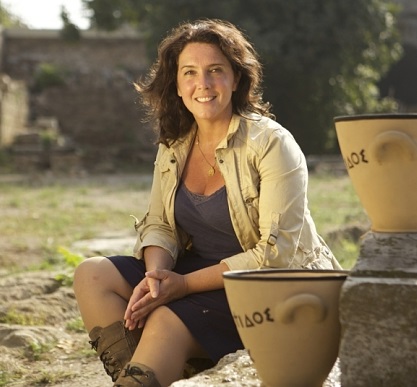
I’ve been listening to this wonderful new series by the always delightful historian and documentarian Bettany Hughes, as she delves into the origins of philosophy.

She tells us the story of three ancient thinkers who remain among the world’s most influential: the Buddha, Socrates, and Confucius. These men, who all lived within one hundred years of each other, formulated their groundbreaking philosophies at a time when new technologies in food production, housing, and travel allowed human beings, for the first time, to form sophisticated, specialized societies. This enabled people to spend a lot less time devoted to mere subsistence and to divert much of their energies into the arts, into thought, and into figuring out how the world works. It also made people ready and able to think of life as something they could improve and control, not merely subject to the whims of nature and of capricious, mysterious gods.

Hughes is not only enamored with these three great thinkers because they are fascinating in their own right, but because she thinks of philosophy as I do: a deeply practical pursuit, in which we puzzle out how to go about living as good a life as we possibly can, as individuals and as societies. As I’ve heard her say, we need to bring philosophy back to the street where it began, where Buddha, Socrates, and Confucius first confronted the world with their ideas, and where it also belongs.

Check out the series, which originally aired on the BBC, here:
https://www.youtube.com/watch?v=MCv20Z1q7eI
https://www.youtube.com/watch?v=N2cI9LfKKqo
https://www.youtube.com/watch?v=_zfENJlVz-g

Review: In Defense of a Liberal Education, by Fareed Zakaria

In Defense of a Liberal Education, by Fareed Zakaria
New York: W.W. Norton & Company, Inc., 2015

When I returned to college a few years ago to follow my heart’s desire and study philosophy, one of my ethics professors opened the first class session with this question: ‘Why are you here?’ It was not meant as that ubiquitous and difficult-to-answer metaphysical question which would be the topic of so many future course discussions (difficult because it’s not well-formed, many of us would object, being too nebulous). He meant, why where we there in his class, and why were we attending college at all?

I was sitting there, aglow with satisfaction at having resumed my pursuit of a higher education after spending so many years working for others, then struggling to keep my own small business afloat in the 2008 recession era. I was feeling that the daily tasks of my working life were taking up an inordinate amount of time while failing to satisfy my curiosity about the world, so I reduced the size of my business (I’m happy to report it continues to thrive to this day) and returned to school.

In answer to my ethics professor’s question, a few hands went up. ‘To get a good job?…’ one student offered, hesitatingly. ‘I want to get rich! That’s what we’re all here for, really’ said another, with bravado. Others chimed in in assent, with a few objecting that while that’s really what they were here for, too, that’s not the only reason. While some lip service was paid to the intrinsic value of education, the instrumental view of college, as a means to the end of achieving wealth and status, won out in that particular discussion.

In the idealistic mood I was in, I was disappointed. I was here because I was sick to death of the struggle to get ahead, and was thrilled at the prospect of pouring most of my energy into learning and thinking; making money was now relegated to the periphery of my life, and good riddance. For awhile, at least, I would be thrifty and work enough to pay the bills and save a little for emergencies, and that was it.

Why open this review with an anecdote? I’m inspired to to do by Zakaria himself, who opens his excellent little book with his own story: how he, like his brother, came to America and received a liberal education, and what it did for him. In fact, his book is all about what education can do to make each individual’s life a much richer one, in every sense of the word. When I say ‘little book’, I only mean it’s not long, just six chapters and less than 200 pages. It’s really a very big book when it comes to the ideas he explores and the wealth of information and evidence he supplies in support of his arguments. I’ve long admired Zakaria’s ability to express important ideas clearly, succinctly, and with personality, and with this book, he accomplishes all of these to the highest degree.

A liberal education, as Zakaria describes it, is not only generous in its rewards; it’s liberating. It frees the mind narrowed by a lack knowledge and experience, of deeply exploring other points of view. It expands and strengthens the mind as it becomes more elastic, ever ready to take in more information and process it in light of what you’ve learned so far. The more art and culture you take in, the more developed your aesthetic tastes become, and the more you’re able to appreciate. The more you’re practiced in critical thinking, the better able you are to take in new ideas and explore them for quality and for beauty, for strengths and weaknesses. When done right, a liberal education should not make you a ‘know-it-all’; it should make you more open, more ready and able to constantly learn more as you go through life, and more keenly aware of how little anyone can really know about this fantastically rich, complicated, and endlessly fascinating universe we find ourselves in.

A liberal education also makes you a better citizen. You learn about important and influential political theories, and critiquing them logically as well as comparing how they fare throughout history, you learn what works, what doesn’t, and how to judge what might work best in the future. You learn about those who made a big difference in the world, how you can make a difference too, and why you should try to do so. It’s also a quintessentially American innovation: by the people, of the people, and for the people. It’s a great equalizer, open to anyone (or at least intended to be) who has the basic skills and the desire to learn, no matter what socioeconomic class they come from. It presents the best ideas from all over the world for the students to critique and compare on their own merits, though instructors who themselves came from all manner of backgrounds.
Zakaria compares liberal education to skills-based training, which is now winning favor in public and political discourse as the more practical way to help people improve their lives. Many politicians are decrying public education as too ephemeral and calling for more public money to be spent on job training, if spent on education at all. Even President Obama, in favor of free junior college for qualified applicants, recently took a crack at a humanities major. While agreeing that skills-based training is very important, Zakaria explains why it’s not only not enough for a democracy, it’s not enough for a nation that wants to stay innovative and competitive. A person whose talents are honed and locked into one narrow set of skills may be very good at one particular job, but when changes in technology and in the market render that job obsolete, that person’s training is no longer relevant, and they’re left poorly equipped to pursue other options. Consider an entire population educated and trained this narrowly, and you see the problem. As Zakaria points out, a liberal education, which focuses on instilling a broad base of knowledge and generally applicable critical thinking skills, does much more to help people become more informed, flexible, and equipped to take in new information and apply it in new ways.

When I reconsider that ethics class discussion in light of Zakaria’s book, I realize we were talking past each other. There’s no reason to choose between the instrumental side and the intrinsic value of college. A liberal education, which as undergrads we were all pursuing, helps us accomplish all of our goals in a way few other social institutions can, and can be essential for helping us become the best human beings we can be.

On Jonathan Webber’s Discussion on Deception With Words: Honesty in Public Discourse Part II

I’ve been thinking quite a bit on the subject of lies, deception, and public trust since I wrote about some recent high-profile cases of deceivers in the media.

I recently gave Jonathan Webber’s podcast interview on Philosophy Bites ‘On Deception With Words’ a second and more attentive listen. I remembered that something he said struck me as not quite right. I agree with him on the importance of honesty in general, yet I take issue with his position on lying versus deceiving. In this discussion, as Webber defines the terms, lying refers to telling a brazen untruth, and deceiving refers to implying an untruth without specifically stating one.

When host Nigel Warburton asks Webber which of the two is worse, morally speaking, Webber answers (at about 5:15):

‘I think that lying is worse… well, more precisely, I think that we ought to have the attitude that lying is worse. So we ought to treat liars more harshly than we treat people when we catch them misleading us… I think the difference is that lying does more damage to your credibility than misleading does. The way we work as human beings, as a community of people, is that we exchange information all the time, that’s one important part of the way we work, and in order to do that, we need to be able to rely on each other as informants. So we need one another to be credible. I need to be able to believe what you say, and you need to be able to believe what I say.’

I disagree with him on this point for the same reason I think that, in comparing the lies and deceptions of Brian Williams, Bill O’Reilly, and Rush Limbaugh, Limbaugh is the one who systematically betrays the public trust in the worst way. It’s because he not only lies fairly often, blatantly telling falsehoods about facts of the matter and about the opinions of the people he disagrees with, but he also misleads by a bait-and-switch tactic of relying on his self-bestowed credentials as a truth-teller in one moment, and then at other moments falls on his credentials as an entertainer who misrepresent, exaggerates, and distorts for the purposes of entertainment or to make a wider point. He does this at will, without making a distinction at any given time which he’s doing. This not only reflects on his general credibility as a reliable truth-teller: it harms his audience more by making it that much more difficult to tell the lies from deceptions from truths. It creates a situation that his audience, which he invites to trust him, can’t tell when they’re being misled.

So to me, in general, making a moral distinction between lies (brazen untruths) and deceptions (implied untruths) is not very helpful, especially the attempt to say that one is generally more wrong than the other. For one thing, lies and deception are used for the same purpose: compare it to a claim that it’s more wrong to commit murder with a hammer than with an axe, and you’ll see where the problem lies. But even if Weber is right, and the most important moral factor is the credibility of the speaker, I don’t think he demonstrates that lying does, in fact, damages credibility more. As we see in my Limbaugh example, it seems that deception can and often does do more to damage credibility, because it gives the speaker a weaselly ‘way out’ or plausible deniability which allows him to evade any and all personal responsibility for causing the listener to believe something untrue.

More than damaging the credibility of the speaker, however, I think that deception can be worse in many cases because the harm done to the listener can be more egregious. For example, a blatant lie can more readily be identified and fact-checked by the speaker. A deception, however, is not always so easily fact-checked, and in fact, can’t always be identified as the conveyor of untruth that it is. That’s because, as Webber points out, deception is usually done through implicature, exploiting the linguistic tool of leading the hearer to believe the speaker means one thing when he says another. The very indirectness of the

I’m not the least bit Pollyanna-ish about lying. Like most people, and I would claim like most morally committed people, I think there are times when lies and deception are permissible, and times when dishonesty is the only right way to go. I would usually not tell the truth about the proverbial dress that makes the wearer’s butt look too big (though given the fashionableness of curvy posteriors now, this could be taken as a compliment!), and I would lie my head off to lead the proverbial Nazi stormtroopers away from the Jewish family hiding in the closet. That’s because communication, in these instances, is only a tool to accomplish valuable ends, in these cases easing the mind of the insecure dress-wearer, and saving lives from murderous thugs.

So here’s where we get to why I think Webber is mistaken about the relative wrongness of lies and deception: if language is only the means, and the end if its use is to convey truth to the listener, than it wouldn’t make much sense to say that lies and deception, as two means of conveying untruth. are generally morally distinct. It seems to me that the rightness or wrongness of what’s said is entirely contingent on the moral value of its purpose, and if a lie or a deception is wrong, we can judge how wrong it is based on how effectively it undermines the public trust, and how injurious it is to the hearer’s need to know the truth of the matter.

~~~~~
Sources and Inspiration: 

Webber, Jonathan. ‘On Deception With Words’. Philosophy Bites podcast interview March 01, 2015.
http://philosophybites.com/2015/03/jonathan-webber-on-deceiving-with-words.html

Ordinary Philosophy Recommends: IQ2 Debate – Are Liberals Stifling Intellectual Diversity on Campus?

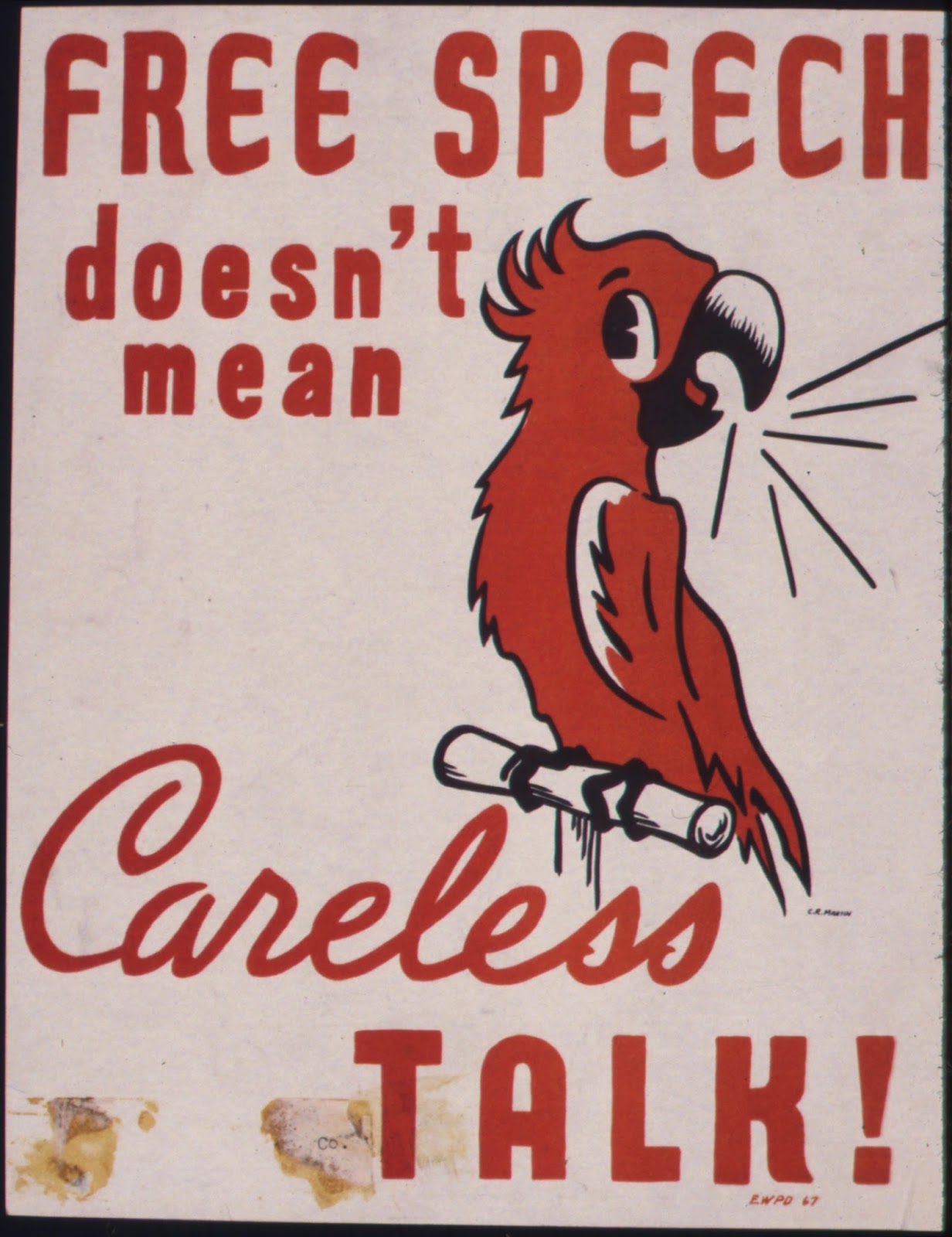
Office for Emergency Management War Production Board Free speech doesn't mean careless talk circa 1942 1943 Public Domain via Wikimedia CommonsWhen I first read the title of this debate, my immediate reaction was ‘Yup!’

I consider myself more of a liberal than otherwise, yet I found myself generally in agreement with the proposition ‘Liberals are stifling intellectual diversity on campus’.

Many of the examples of effective censorship were already familiar to me: the students who called for UC Berkeley to dis-invite Bill Maher to deliver a commencement speech; constant overzealous insistence on ‘politically correct’ terminology; the perceived need to prefix nearly every class lecture or statement with ‘trigger warnings’ so that students’ feelings, apparently of the delicacy of fine china within their tender little minds, wouldn’t suffer in the slightest.

If I sound sarcastic in the latter remarks, it’s intentional: all this hyper-sensitivity, I fear, is helping to dumb down public discourse, which is especially worrisome in the very institutions whose mission it is to enlighten. It’s important to understand the difference between respect for others, which I think includes the respect for their intellect which informs open and honest discourse, and the squeamish fear of arousing any emotional response beyond placid approval.

To be fair, there’s plenty of non-liberal censorship going on too, as the debaters against the motion pointed out, and were some examples of purported liberal censorship that I don’t think are valid. For example, Kirstin Powers, in favor of the motion, referred to universities refusing to approve student club constitutions that require their members or leaders to hold certain beliefs, such as at Vanderbilt University. I don’t think this is an example of censorship at all. The reasons students are not allowed to command belief in their members are derived from generally applicable laws and principles that prioritize full participation in the public square. An institution that accepts money and resources from the public, such as a university, is well within its rights to say that a club can’t accept those resources and then turn around and allocate them in a discriminatory way. Likewise, the university, and in turn its approved clubs, can’t command their members not to believe certain things either. The students who decide to join these clubs will thus freely self-select their own membership, and those who join who hold dissenting beliefs will bring in a little healthy debate and strengthen the club’s own grasp of the ideas they promote. That’s how the marketplace of ideas works.

Likewise, the students who call for dis-invitations of speakers they don’t agree with would show themselves much more faithful to true liberal values if they support the right of people with opposing views to speak at their campus. If they disagree with the views and actions of the speaker, they should show up to the speech and challenge the views of the speaker in person, in the question and answer session, or with signs for the speaker and audience to read, or if no other means of expression is available to them, plainly express their dissent by getting up en masse and walking out.

~~~~~~~~
Sources and Inspiration
‘Liberals are Stifling Intellectual Diversity on Campus’, Intelligence Squared U.S. debate, Feb 24, 2015.
http://intelligencesquaredus.org/debates/past-debates/item/1310-liberals-are-stifling-intellectual….

‘Vanderbilt University: Refusal to Approve Constitutions of Student Groups that Require Leaders to Share Beliefs’, FIRE (Foundation for Individual Rights in Education) website, 2012.
http://www.thefire.org/cases/vanderbilt-university-refusal-to-approve-constitutions-of-student

Book Review / Summary: The Birth of the Pill

In The Birth of the Pill, Jonathan Eig tells the fascinating story of the four people whose combined efforts, arguably more than any others, made birth control effective, affordable, widely available, and perhaps most importantly (since it makes all the others possible), socially acceptable: Margaret Sanger, Dr. Gregory Pincus, Dr. John Rock, and Katherine McCormick.

At the time the contraceptive pill was being developed, human reproduction was still very poorly understood. Prudish attitudes and obscenity laws hampered scientific research, discouraged and in many cases prevented doctors from educating their patients, and kept women from having any significant degree of control over their own bodies or the decision to become pregnant. It took a few independent-minded, morally driven people of unusual character to achieve change in the arena of reproductive rights.

Two of these four had spent years caring for people whose unchecked fertility threatened their own life and health, and the well-being of their families. Women, especially poor women, found themselves pregnant again and again before their bodies had recovered from earlier pregnancies, had medical conditions caused or exacerbated by pregnancy and childbirth, or could not afford adequate food, clothing, shelter, and health care for their rapidly growing families. Many women also found too many pregnancies burdensome, as they were prevented from pursuing an education or a career, or suffered from exhaustion, depression, and feelings of hopelessness as they found themselves caring for more children than they could cope with.

Margaret Sanger and Dr. John Rock encountered all of these problems up close and personal; their birth control activism was the direct result of their experiences as reproductive health care providers. Sanger worked for many years as a nurse caring for the poorest people in the slums and tenements of New York City. She was so moved by the plight of these women that she risked fines and imprisonment to open the first ‘birth control’ clinic (as she coined the term). Countless poor women, who had often already fled starvation, poverty, and disease in their home countries, found themselves unable to escape the cycle of repeated pregnancies and deepening poverty as their own bodies weakened and their meager resources were stretched ever thinner in the face of anti-immigrant bias, pittance wages, and filthy, overcrowded, and dangerous living and working conditions. This was also an era when women had no right of refusal of sex to their husbands. They faced the awful choice of risking another pregnancy, injury or death by self-performed abortion, or being abandoned when few jobs were available to women, and few jobs paid women enough to live on themselves, let alone support a family. And charity organizations, try as they might, could not keep up with even a fraction of the demand for assistance. Despite repeated arrests and fines, Sanger continued to provide birth control devices and information to the who women flocked to her clinic, pouring out their life stories in person and in letters like this one (original spelling):

‘… I am thirty years old have been married 14 years and have 11 children… I have kidney and heart disease, and every one of my children is defictived and we are very poor. Now Miss Sanger can you please help me… I am so worred and and I have cryed my self sick …I know I will go like my poor sister she went insane and died. …the doctor won’t do anything for me … if I could tell you all the terrible things that I have been through with my babys and children you would know why I would rather die than have another one. Please no one will ever know and I will be so happy and I will do anything in this world for you and your good work …Doctors are men and have not had a baby so they have no pitty for a poor sick Mother. You are a Mother and you know so please pitty me and help me. Please Please.’

I can only imagine what Sanger felt as she read this letter as she worked with so many women struggling under these same burdens, while social mores and the law opposed her efforts to help them.

Dr. John Rock was an obstetrician and fertility specialist. While one of his main focuses was on helping women with fertility problems become pregnant, he also worked with many other women for whom pregnancy, childbirth, and child care was detrimental to their physical and mental health, for various reasons. He became a staunch activist for birth control, and worked to convince the public and the Catholic church, of which he was a committed member, that effectively planning families and regulating childbirth is not only practical, but of the highest moral worth, since it promotes bodily and spiritual health, and a loving family life in which all children can be well cared for. He thought he could convince the church hierarchy that the hormonal method of birth control is consistent with Catholic teaching, since it’s simply an extension of the natural cycle that occurs in a woman’s body, rather than a barrier method with was doctrinally forbidden; his rhythm-method clinic taught the only form of birth control other than abstinence that was sanctioned by his religion, but as he observed, neither worked very well. His efforts to help women control their rates of pregnancy would eventually prove effective, but his efforts to convince the Church, until this day, have been in vain.

Yet birth control was not only linked to beliefs in reproductive rights and health: it was linked to a change in sexual mores. Sanger, Pincus, Rock, and McCormick all held what we’d now call ‘sex-positive’ beliefs: they thought sex could and should be a wonderful thing, among the most joyous, intimate, and healthy means by which humans connect with one another. In a time when sex was often regarded as shameful, depraved, and for the sake of men (I would argue that while it’s re-branded, it still is, as ‘liberated’, ‘powerful’ women painfully squeeze themselves into bustiers and stilettos and straighten, curl, bleach, and cut their hair and bodies to fit into a few stereotypical male fantasy body types as possible, in our crudely sex-obsessed, tabloid, misogynistic culture — yes, I’m talking about you too, Beyonce), they thought it could and should be a loving, freeing, and transcendent experience for both partners.

Dr. Gregory Pincus, the scientist who would ultimately formulate the first effective, FDA-approved birth control pill, was an unusually independent-minded, freethinking, colorful personality from an early age. As a young researcher at Harvard, he was widely publicized for his frank and unapologetic views on the benefits of revolutionizing human reproduction through scientific intervention. The sensationalist, brave-new-world ‘news’ stories led to Harvard’s kicking him out of their faculty and their labs, as a reputation-defense measure. Pincus went on to found his own research institute,. where he continued his research into hormones and their effects in reproduction. Arguably, it was this very political and financial independence from any large mainstream establishment that enabled him to succeed in his goal to produce the first birth control pill.

It also took money, and lots of it, as it does with any new pharmaceutical. Planned Parenthood could only provide limited funding for Pincus’s work, so it dragged on slowly, until Katherine McCormick, wealthy heiress, came along. She had discovered, shortly after she married, that her new husband suffered from severe mental illness. McCormick was well-educated, an MIT graduate at the time of her marriage, and was fascinated by all things science. When she learned of her husband’s mental illness, she poured time, money, and research into finding a cure, especially in the fields of hormonal research and heritability. She was also dedicated to women’s rights causes, and by the time of her husband’s death, her interests and fields of study and activism led to her single-minded determination to aid in the cause of making birth control effective and widely accessible. It was she, more than any other, who provided Pincus the funds to pursue more lab research, and for he and Rock to conduct more clinical trials.

Eig’s book is not a simple hero story: he reveals the history and personalities of each with their complex set of motivations, warts and all. Sanger was a eugenicist, for example. It was not uncommon for progressives, scientists, and those in the medical field to subscribe to the principles of eugenics at that time; many thought (mistakenly, as it turned out) that it was the only way science could really ‘cure’ disability and disease once and for all. Medical science, humanitarian groups, and governments had not yet offered systematic or effective solutions to the dangers of pregnancy and childbirth, diseases caused by overcrowding and malnourishment, and mental health issues, and were simply unable to keep up with the demands of the humanitarian crisis in affected communities. Eugenics, on the other had, seemed to offer the only sure and straightforward solution, until the application of its principles by fascist governments revealed how faulty a ‘science’ (really a pseudoscience) it was. Sanger was also a neglectful mother, unsuited by personality to the stay-at-home role mothers were restricted to in her time. Pincus was a media hound, and conducted some of his trials in what today would be considered an unethical manner. Rock was willing to mislead some of his patients when he found that public attitudes made most women unwilling to participate in contraceptive studies, if presented as such. And McCormick, like Sanger, had a marked tendency to elitism.

Yet the contributions of these four unusual, passionate, driven crusaders towards improving women’s health and social and legal emancipation can hardly be stressed enough. Women can now have as many children as they choose when they choose, and are not subject to the whims of men when it comes reproductive issues (still mostly true despite discouraging recent regrettable, retrograde legal decisions, for example, regarding the mandate that insurance companies pay for full reproductive health care). Sanger’s, Pincus’s, Rock’s, and McCormick’s belief that birth control would ultimately improve and save the lives of women, and improve the standard of living for families, have been vindicated over the years. For example, women on the pill live longer, on average, than other women, and the results of decades of study leads the World Health Organization to promote birth control as an important means of improving health and relieving poverty around the world.

With his excellent book, Eig not only compellingly tells the story of how the pill came to be, but also of the human dramas behind its invention. The history of the pill, the circumstances which gave rise to its invention, and the ideas of its creators show us how and why ready access to effective birth control is as important today as it ever was.

~~~~~~~~~~~~~~~~~~~~~~~~~~~

Sources and inspiration: 
Eig, Jonathan. The Birth of the Pill: How Four Crusaders Reinvented Sex and Launched a Revolution. W.W. Norton & Company, New York, 2014. http://books.wwnorton.com/books/The-Birth-of-the-Pill/

Kelland, Kate, Ed Jon Hemming ‘Women On the Pill Live Longer: Study’. Reuters, Mar 12 2010
http://www.reuters.com/article/2010/03/12/us-contraceptive-pill-risk-idUSTRE62B01R20100312

World Health Organization website, ‘Reproductive Health’.
http://www.who.int/topics/reproductive_health/en/

Book Review / Reflections On: Assholes, a Theory

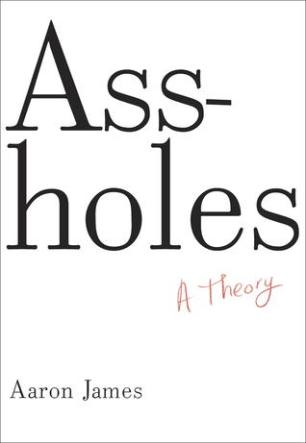
The title might make you think it’s not a serious work, that it’s tongue-in-cheek, even a parody of a philosophy book.
But it’s really a very good, intelligently written, well-thought-out exploration of a sadly widespread phenomenon. And yes, it’s so satisfying to finally see that age-old question ‘Why are you being such an asshole?’ addressed and explained so thoroughly.

Author Aaron James is not being merely provocative in using the term ‘asshole’ to designate the particular kind of person he’s talking about. He uses this colloquialism because we really have no other word that’s so specific and so widely understood, to refer to a person who displays a certain attitude and systematically engages in certain types of bad behavior. Here’s James’ three-part definition: the asshole 1) allows himself to enjoy special advantages and does so systematically: 2) does this out of an entrenched sense of entitlement; and 3) is immunized by his sense of entitlement against the complaints of other people (p 5).

When we say of someone: ‘what an asshole!’, or observe ‘that was such an asshole thing to do!’ pretty much everyone recognizes this just the sort of person or behavior we’re talking about. If we were to use a more formal or non-slang term instead, as in ‘what a bad person!’ or ‘that was a depraved thing to do!’, the full richness and specificity of meaning that the colloquial, richly nuanced term asshole possesses wouldn’t be fully expressed. Look at how many words it took James to define what we mean by ‘asshole’ (and I would say, not quite fully: none of the definition’s three parts describe the little shudder of outraged disgust we feel when we see assholes doing what they do.)

That’s why, like James and fellow philosopher Harry Frankfurt, whose 2005 paper ‘On Bullshit’ caused quite a stir, I disagree with linguistic purists and prudes who wholly reject the use of colloquialisms in serious or academic work (though I speak only for myself as to how far this should go ). Out of self-righteously willful obtuseness, I insist, these purists just don’t ‘get it’. Everyday spoken language is much more fluid and adaptable than formal language, because there’s no arbiter of proper usage ‘breathing down your neck’ other than your partner in conversation. In the virtual experimentation lab that is daily conversation, we search for words that express exactly what we mean as efficiently if possible, and if there’s no ready word available, we adapt one that already exists, or make one up on the spot. As long as the person you’re talking to right then understands you, ‘it’s all good’. Formal language, on the other hand, evolves much more slowly, and must adhere more rigidly to existing standards of usage. Only over long periods of time do newer terms, having entered into common usage, filter up through the levels of linguistic formalization, and become accepted by editors of dictionaries, publishing houses, and news media. Yet the formalization of language doesn’t always result in a more expressive, precise one. As you can see, I used several idioms and colloquialisms in this paragraph, in quotes, to express my thoughts, and if you haven’t ‘been living under a rock’ you probably understood exactly what I meant. You can also see that colloquialisms can not only be a more colorful or amusing way, but more efficient way, of expressing yourself. You can test this by trying to define the full meaning of these colloquialisms, with all their nuance, using a lesser number of terms in formal language. I’d ‘bet your ass’ you can’t!

(In one of my student papers written a few years ago, I explore the linguistic origins and evolution of colloquialisms in the light of Grice’s Cooperative Principle, Dumas and Lighter’s paper on slang, and Steven Anderson’s hilarious and thoughtful documentary F**k. )

But I digress. To return to James’ book: it has a lot going on. So much so that it lead me to think, for example, more about the nature of language itself, just from the parts where he discusses what ‘asshole’ means, the various subtypes of assholes, and compares and contrasts asshole to related terms bitch, schmuck, assclown, douchebag, dickhead, dick move, and so on. (He forgot one of my favorites, asshat, which refers to having one’s head up one’s own ass, thereby wearing it like a hat.) It’s a testament to the richness of ideas in this book that thinking it over, every time, engendered so many other interesting lines of thought. Exploring the concepts contained in the term ‘asshole’ raises important questions about respect for one’s self and others, of human dignity, of exploitation, of how you should act and not act in a cooperative society, what we can rightfully expect of others and why their failure to live up to this is so objectionable, and much more; in short, this term is thick with moral and political implications.

There’s one point on which I disagree: his suggestion that, while assholes are far more likely to be men (which I agree is the case), they are almost entirely a product of culture (chapter 4). While I agree there may be cultural factors that help instill asshole qualities in men, and that some cultures are more likely to instill these qualities than others, it seems that nature plays a larger role than James allows. I think it likely that testosterone, the hormone which we know increases the tendency to aggression, contributes a lot to the phenomenon of assholery. After all, the traits James ascribes to the asshole are aggressive in nature: systematically granting oneself special privileges over others, of feeling entitled to things whatever the circumstances, and rejecting or ignoring others’ just complaints. It’s not that all men are assholes, far from it. It’s just that the biological factor of hormonal makeup increases the likelihood that males will be more susceptible to asshole influences, or more likely to possess aggressive traits that readily fall into asshole patterns of thought and behavior, than women. To my mind, assholery is a product of combined nature and nurture: asshole seeds take root in ground made more fertile by testosterone.

One of my favorite sections of the book was on asshole capitalism. James is not claiming here that capitalism is necessarily an asshole system. What he’s claiming is that capitalism is essentially a cooperative system ripe for exploitation by assholes, which, in turn, puts it in ever-present danger of collapse, of being destroyed from within. That’s because capitalism is a system of exchange and of reward: people exchange goods and services cooperatively and fairly, which generates trust and more trade, and people reward those who devise and provide the best goods and services with admiration and customer loyalty. And assholery, systematically behaving as if one is entitled to things regardless of the actual value of their contributions to the world, threatens the stability of the cooperative environment necessary for capitalism.

Since assholes systematically regard themselves as the rightful recipients of the best of everything, out of a sense that they are entitled to it per se, assholes exploit other people’s willingness to be fair and to reward others. Asshole drivers feel that owning bimmers entitle them to run red lights and rev their motors inches from people in crosswalks; asshole CEOs and managers think nothing of the fact that their wealth is built on the backs of sweatshop laborers or from industries that generate mass pollution; asshole bankers think they should earn millions or billions a year because they ‘have the balls’ to gamble other people’s money in financial markets, even at the risk of bringing down entire economies (to be fair, they are often so obsessed with their own rewards they may have a hard time even conceiving of larger, potentially dire consequences, because that would mean seriously considering interests other than their own).

Capitalism can and does thrive when people act somewhat selfishly within a larger context of cooperativeness. But never to the extent that the system would hold up under too much lying, cheating, stealing, abuse and neglect of employees, etc. That’s because money, and markets, can’t operate without trust. If most people can be trusted and it’s just a relatively few bad apples gaming the system, well, human nature being what it is, that’s to be expected. But if entitled, self-obsessed, rapacious assholes proliferate beyond a certain proportion, all bets are off. James explains why the modern Russian oligarchic system is rightly considered a full asshole capitalist system and the Japanese system is very much not. Worryingly, and not the least bit to my surprise, James presents evidence for what I’ve already been convinced of: the United States brand of capitalism is edging far too close to Russia’s end of the spectrum, and much farther away from Japan’s. That’s because our modern American capitalist culture has become one of entitlement (as much as certain pundits like to use this word exclusively to refer to aid to the poor, not handouts and special privileges to the rich), in which far too many of use we feel justified in grabbing whatever we want because we somehow, innately, ‘deserve’ it, everyone else be damned.

In sum: this book is a very useful book, on how to understand the origins and nature of assholes; on how to recognize and deal with assholes in the media and in daily life (James’ theory helps explain why certain assholes in the media remain entrenched in their self-serving dishonesty); and as a cautionary tale of when societies allow and encourage assholery to run amok.

– This book review is dedicated to my father-in-law, a man given to succinctness. His fatherly wisdom, which so resonated with my husband he has retold it many times over the years: ‘Son, don’t be an asshole. The world has enough of them already’.

James, Aaron. Assholes, a Theory. First published Doubleday, NY 2012.
First Anchor Books Edition, Apr 2014.  www.onassholes.com

Nicholson, Christie. ‘Testosterone Promotes Aggression Automatically’, Scientific American, June 9, 2012. http://www.scientificamerican.com/podcast/episode/testosterone-promotes-agression-aut

Thanks also to www.urbandictionary.com, which helped me make sure I had all my colloquialisms right, and avoided spelling bimmer ‘beamer’ like a moron

Ordinary Philosophy Recommends: David Morris on the ‘Volunteer’ Army and the History and Science of PTSD

In this fascinating podcast, former Marine infantry officer David Morris explains to host Indre Viskontas what PTSD (post-traumatic stress disorder) really is: a little bit medical diagnosis, and a whole lot moral/political argument. To understand PTSD, we need to consider not only why some suffer from PTSD and why others don’t, but what war means to us as a society.

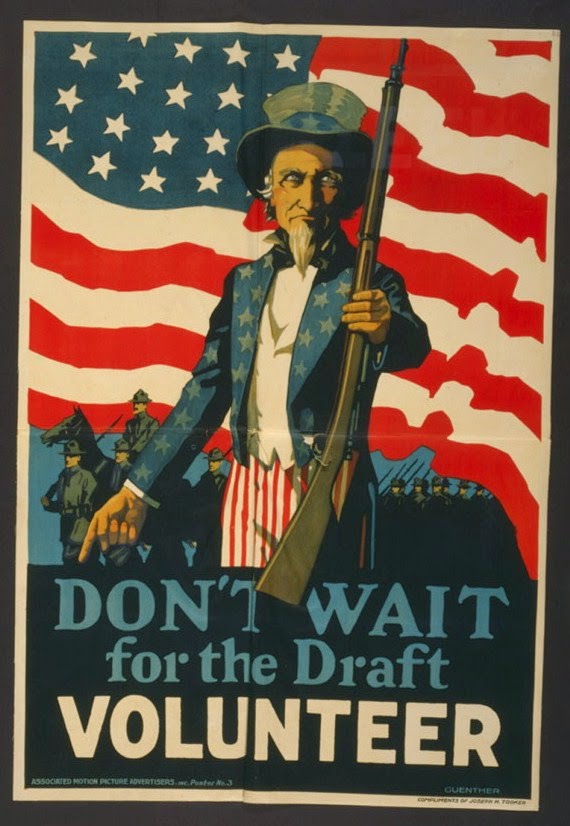
Besides being fascinated by what I learned about the science and history of PTSD specifically (as I hope you will by listening to the podcast!) I was particularly struck by what Morris’s remarks on the institution of our modern ‘volunteer’ army (starting at about 19.17). He points out how our nations’s leaders, along with most Americans, are almost entirely removed from the consequences of the wars we start since the de facto end of conscription in the 1970’s.

It seems that allowing all soldiers the choice to enlist, rather than forcing them to do so, is the only fair and just way to go about fighting a war, right? Seems shameful, undemocratic, even downright un-American, to force people to kill who don’t believe in killing.

Yet Morris makes this excellent point: rather than allowing us to ‘choose for ourselves’, which sounds democratic, the volunteer army system allows us to vote in favor of war, or stay at home and do little or nothing to stop it, while avoiding most of the burden and all of the danger.

So we start wars, or allow them to be started in our name, at little or no cost to most of us. As a nation, we all too often rush into war with too little consideration of the long-term consequences, or little understanding of the underlying cultural and historical causes of the turmoil in the first place (hmm, can we think of any modern wars that belong in that category?). Meanwhile, the President who calls for declaring war, the Congress who votes in its favor, we who vote these leaders to office, and the rest of us who do little or nothing about any of it, can rest easy knowing we don’t have to pay the costs. We don’t have to be soldiers, or to send our friends and loved ones off to do the fighting, unless we want to. We can shout our opinions to the heavens, take a righteous stand on one side or another, and forget about it the next day.

So the ‘volunteer’ army of paid soldiers bear the burden, face the danger, take the bullets and suffer the pain, while the most of the rest of us go about our relatively wealthy, secure, and comfortable lives, forgetting there’s a war on at all. How is this democratic? How is it any more fair or just to let the entire burden and danger of our war fall on the tiny percentage of Americans who enlist, and on their loved ones?

Morris offers what I think is a very good solution: if we do go to war, every able adult must be eligible for drafting into public service: we can choose to join the armed forces, or we can choose to dedicate hours working for the public good, at a non-profit, or with the Peace Corps, AmeriCorps, or other public works project. That way, we can require each other to become full participatory citizens once again, with all the rights and responsibilities that entails. If we truly believe that all killing is wrong, or that this particular war we’re engaged in is unjust, we won’t be forced to betray our principles, but neither will we be able to escape our civic duty to involve ourselves in the all-important matter of war and peace. And our leaders will be encouraged to make more responsible decisions about the wars they vote for, knowing once again that whatever they decide, they and their own families and friends will have to bear the burden too.

~~~~~~~~~~~~~~~~~~~~~~~~~~~
Sources and Inspiration: 

Morris, David J. ‘The History and Science of PTSD’. Inquiring Minds podcast #73, Feb … 2015
https://soundcloud.com/inquiringminds/73-david-j-morris-the-history-and-science-of-ptsd

Wikipedia contributors. “Conscription in the United States.” Wikipedia, The Free Encyclopedia. http://en.wikipedia.org/wiki/Conscription_in_the_United_States

Book review: Plato at the Googleplex: Why Philosophy Won’t Go Away

As I sit here and sit here, racking my brain for a place to start this book review, I find I’m at a loss. I should have scribbled some notes as I was going along. But I didn’t, dammit. Perhaps it was because I was too enthralled all the while, each chapter taking me to new and surprising places. And since I’ve finished, it left me with so much to think about all at once, so therefore, I don’t know where to begin…

Well, here’s the gist of it: Plato at the Googleplex, by Rebecca Newberger Goldstein, is about Plato, his philosophy, his life and times, and his relevance to the world today. The chapters jump back and forth in time: each non-fiction chapter is about Plato’s (and his main influence Socrates’) life and thought, and is interspersed with a fictional one where Plato finds himself in some modern scenario. In each of the latter, he’s involved in dialogue and debate with various figures representative of our time, from an advice-session-turned-discussion with a media escort accompanying Plato in advance of his Authors at Google presentation and a tech geek on lunch break, to a panel discussion on how to raise a perfect child with a tiger-mom-slash-idealist and a Freudian, to an interview with a Bill O’Reilly-like pundit, to an MRI session in a neuroscientist’s research lab.

I’ve read some Plato over the years, a book here, and (mostly) a selection there, and he nearly always felt very removed. His language seemed remote and foreign, his thought experiments (the mythical Republic) seemed outlandish and overly idealistic, and the leading-question and answer style of his Socrates felt contrived, by modern standards of taste. Yet it took this scholar of Plato, who brought to bear her considerable skill as a novelist, to reveal Plato as the thinking, seeking, flesh-and-blood person who, more than just about anyone, got this whole philosophical project going in a big way.

Plato got it all going by showing us how to question everything, and why we should: it’s the only way to make progress. Not progress for its own sake: progress for our own sake, as it’s necessary to make every life better in a practical sense, and more worthwhile in a personal and social sense. Goldstein addresses time and again the objection that philosophy makes no progress, since it’s still asking the same questions. While the ‘same questions’ part might be true, the ‘no progress’ part is not. Some of the questions remain the same because they’re the questions each individual person must answer in regards to their own lives and experiences, no two of which are just alike. Therefore, the answers will be different for each person. Others of these ‘same questions’ are of such magnitude that we must keep asking them in order to slowly fill in the wealth of detail each answer requires if we are ever to get to a satisfactory one. Some remain important but unanswered, not necessarily because they are unanswerable (though many may well be), but because we don’t have the tools or information we need available yet. And so on and so forth.

Yet the most important reason we keep asking so many of these same questions is that the search for answers keeps generating yet more important questions, and yet more answers. And we, intelligent, restless, creative, curious creatures that we are, love love LOVE trying to find things out. I think more than we love knowing, though we love to know some things. And it’s the practice of never taking things for granted, never resting on our epistemological laurels too long, always asking, that Plato teaches us is the best way to learn about the marvelous world around us, and the universe out there, and that within our own minds.

In short: I highly recommend this glorious book. We would all do better to know more about Plato and why he’s so important, and it’s hard to imagine anyone doing a better job of describing why and how this is than Goldstein. But more than that, this book is a celebration of philosophy, the love of wisdom itself. It’s taken its place way up there among my very favorites!
(It’s = Philosophy and this book.)

Plato at the Googleplex: Why Philosophy Won’t Go Away. Pantheon, New York 2014.
http://www.rebeccagoldstein.com/publications/plato-googleplex-why-philosophy-won%E2%80%99t-go-away

Welcome to the Podcast Edition of Ordinary Philosophy!

Hello dear readers, and welcome to the
podcast version of Ordinary Philosophy!

You can listen to the podcast here, on Google Play, or subscribe in iTunes.

Like many of you, I’m a big fan of podcasts, mostly because my life is very busy. One day in the future, I hope to have a lot more time to do each task one at a time, to really be present, as they say, as I wash the dishes, straighten the house, do the laundry, and perform all those other tasks that take up time, but not much thought.

But at this time in my life, between my day jobs, my creative projects, and spending time with friends and family (which I don’t do enough of these days, sadly), I don’t have enough time to keep up the world of ideas as nearly much as I’d like to by sitting down and reading. Instead, I keep myself informed and increase my education by listening to lots of podcasts: discussions with my favorite authors and thinkers, audio renditions of books and essays, debates, recordings of classes on my favorite subjects, and so on. I listen to these podcasts while doing those aforementioned chores, and let me tell you: as one who is not fond at all of household chores like doing the dishes and washing the floor, the podcast is a marvelous invention: they transform boring chore time into great opportunities for learning and exploration. I’m also an avid hiker, and it’s a wonderful thing to be able to immerse myself in some fascinating ideas or discussion as I immerse myself in the beauties of nature.

To begin with, this podcast will simply consist of audio recordings of my Ordinary Philosophy pieces. Over time, I may add commentary and who knows, perhaps interviews and discussions with guests. We’ll see how it goes. In the meantime, here’s Ordinary Philosophy in audio form: I hope you find it interesting and enjoyable!

… And here’s episode 2: Is the Market Really the Most Democratic Way to Determine Wages?
Originally published as an essay Feb 6th, 2014

Book Review: Darwin’s Ghosts: The Secret History of Evolution

Well, it’s sort of a book review. It’s more like a very informal description of a reaction to the book.

Which was: immense enjoyment.

My sister was nearly finished reading it when she left it behind at my house one day. In short order, I ‘accidentally’ forgot to bring it back to her the next time I saw her, or to remind her to take it with her when she came to visit. Perhaps I’m a bad sister, but that’s what she gets when she leaves such a marvelous book behind. Oh, the trials of having excellent taste in reading materials!

Anyway, I picked it up and started browsing through it, since she had already mentioned it to me, and from the start, I could hardly put it down. The long inward struggle that Charles Darwin went through prior to publishing his discovery of the evolution of species (or, rather, the primary mechanism that drives it), is well-known. Yet only the broad outline is really known: no-one can entirely imagine what goes through your mind at a time like that. What tortured thoughts must you wrestle with when you know a truth and believe it’s too important to remain untold, but are also shy, torn by loyalty to family and friends, and fear scorn, notoriety, and persecution?

The book begins with the story of Darwin around this time, just after he published On the Origin of Species, when he had finally been spurred on to do so after another naturalist, Alfred Wallace, made the same discovery independently sixteen or so years later. The book returns often to the story of Darwin’s struggles before publishing, since so many, whose stories are also told in this book, went through similar trials; it first opens with Darwin considering how best to acknowledge and properly credit those whose work contributed most to his theory.

The author proceeds to first takes us on a giant leap far back into the past, to ancient Greece, where the great natural philosopher Aristotle gathered sea sponges and fishes and was the first known to describe them systematically. Then she guides through a history, from Aristotle to Darwin, of the intensely curious, intellectually brilliant, and restless thinkers and observers who gave us modern science. Throughout, I was enthralled. Rebecca Stott tells of awkward, cranky loners who spent most of their time in dusty specimen cabinets or crawling about on hands and knees, meticulously recording the denizens of the natural world, of precocious, highly educated children of privilege who went on to lavish their money and leisure hours in the cause of scientific advancement, of pious priests and moralistic skeptics and atheists who considered the natural universe the most sacred and the most beautiful treasure trove of knowledge available to all, and of many more: a wide variety of people of various temperaments, backgrounds, advantages, types and levels of ability and creativity, are represented in this wonderful history of ideas and of discovery.

Among other scenes in book, I felt myself longing to have had the chance to take part in any, if just one, of those salons of Enlightenment Paris or Edinburgh. Fashionable, educated women and men hosted dinner parties to bring together the best and brightest minds, full of the most original, revolutionary, and fascinating ideas that human minds were creating. But these salons were not where it was all happening: some of the greatest discussions and intellectual achievements at the time happened in ordinary and humble studies, attics, homemade labs, lecture halls, monk’s rooms, coffee shops, and student’s quarters. It was a time when thinking and knowledge was, it seems to me, more widely and more highly valued. Not only familiarity with facts and factoids, but real understanding, was the greatest prize to be sought, the greatest goal in life.

If you want some of the best examples of how to be a part of that great quest, pick up this book and romp through the history of ideas with her. I think you’ll be as glad you did as I was.

*****************************

Stott, Rebecca. Darwin’s Ghosts: The Secret History of Evolution. Random House, New York 2012.
https://books.google.com/books?id=5Lt_MXhNJEoC&pg=PP5&dq=darwin%27s+ghost