Happy Birthday, Angelina Weld Grimké!

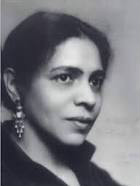
angelina-weld-grimke-image-public-domain

Angelina Weld Grimké

El Beso

Twilight—and you
Quiet—the stars;
Snare of the shine of your teeth,
Your provocative laughter,
The gloom of your hair;
Lure of you, eye and lip;
Yearning, yearning,
Languor, surrender;
Your mouth,
And madness, madness,
Tremulous, breathless, flaming,
The space of a sigh;
Then awakening—remembrance,
Pain, regret—your sobbing;
And again, quiet—the stars,
Twilight—and you.   (via Poets.org)

Let us celebrate the memory of the wonderful and far-too-unknown author of this gorgeous poem and so many other wonderful works of art and literature on her birthday!

Alix North of Island of Lesbos writes of Grimké:

Angelina Weld Grimké was born [on February 27th, 1880] in Boston, the only child of Archibald Grimké and Sarah Stanley. Angelina had a mixed racial background; her father was the son of a white man and a black slave, and her mother was from a prominent white family. Her parents named her after her great aunt Angelina Grimké Weld, a famous white abolitionist and women’s rights advocate.

Angelina received a physical education degree at the Boston Normal School of Gymnastics in 1902. She worked as a gym teacher until 1907, when she became an English teacher, and she continued to teach until her retirement in 1926. During her teaching career, she wrote poetry, fiction, reviews, and biographical sketches. She became best known for her play entitled “Rachel.” The story centers around an African-American woman (Rachel) who rejects marriage and motherhood. Rachel believes that by refusing to reproduce, she declines to provide the white community with black children who can be tormented with racist atrocities. “Rachel” was the only piece of Angelina’s work to be published as a book; only some of her stories and poems were published, primarily in journals, newspapers, and anthologies.

Only her poetry reveals Angelina’s romantic love toward women. The majority of her poems are love poems to women or poems about grief and loss. Some (particularly those published during her lifetime) deal with racial concerns, but the bulk of her poems are about other women, and were unlikely to be published for this reason. Only about a third of her poetry has been published to date… Read the complete bio and a wonderful selection of poems here

angelina-weld-grimke…and learn more about Angelina Weld Grimké at:

Angelina Weld Grimké – in Encyclopedia of African American Women Writers, edited by Yolanda Williams Page

Angelina Weld Grimké – by Judith Zvonkin for The Black Renaissance in Washington, D.C.

Angelina Weld Grimké – from Encyclopædia Britannica

Grimke, Angelina Weld (1880-1958) – by Claudia E. Sutherland for Blackpast.org

Grimkè’s Life and Career: The Introduction to The Selected Works of Angelina Weld Grimké – by Carolivia Herron for Modern American Poetry at the Department of English, University of Illinois at Urbana-Champaign

Further reading: Selected Women Writers of the Harlem Renaissance: A Resource Guide – Angelina Weld Grimké 

Ordinary Philosophy and its Traveling Philosophy / History of Ideas series is a labor of love and ad-free, supported by patrons and readers like you. Please offer your support today!

O.P. Recommends: NYT’s Story of How Zachary Turpin, Graduate Student at the University of Houston, Found a Lost Walt Whitman Novel

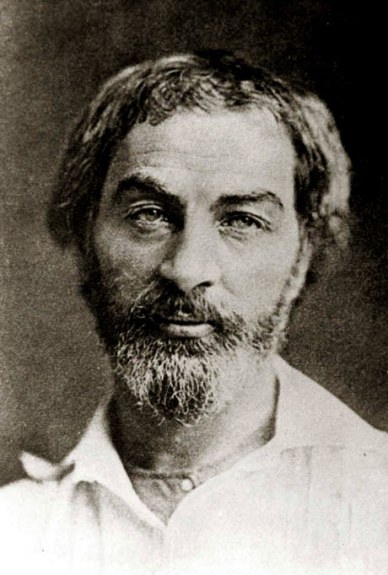
Walt Whitman in 1854, Daguerreotype, Photographer unknown probably Gabriel Harrison, public domain via Wikimudia Commons

Walt Whitman in 1854, daguerreotype, photographer unknown (probably Gabriel Harrison), public domain via Wikimedia Commons

I just came across this exciting story this morning in the New York Times’ Books section about how Zachary Turpin, a graduate student at the University of Houston, found a lost Walt Whitman novel. It was published in serial form in The Sunday Dispatch in 1852. It’s called Life and Adventures of Jack Engle: An Autobiography, and subtitled A Story of New York at the Present Time.

Read the New York Times article about the book’s discoverer and how he made his discovery here,

and read more about the book, part of the book itself online, and order a print copy here

Ordinary Philosophy and its Traveling Philosophy / History of Ideas series is a labor of love and ad-free, supported by patrons and readers like you. Please offer your support today!


Happy Birthday, Audre Lorde!

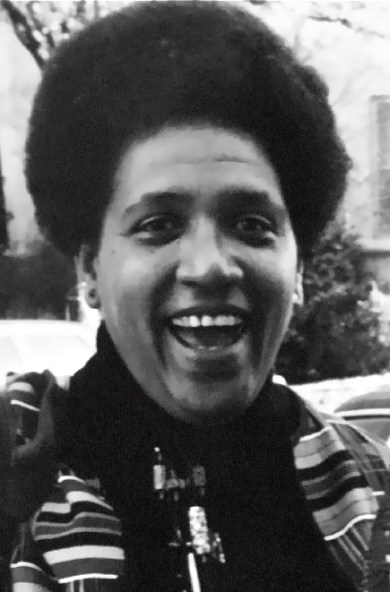
Audre Lorde, 1980

Audre Lorde, 1980

Poet and civil rights activist Audre Lorde was born on February 18, 1934. In remembrance of this powerful and eloquent woman on her birthday, I’ll share the bio I found at the Poetry Foundation:

‘A self-described “black, lesbian, mother, warrior, poet,” Audre Lorde dedicated both her life and her creative talent to confronting and addressing the injustices of racism, sexism, and homophobia. Her poetry, and “indeed all of her writing,” according to contributor Joan Martin in Black Women Writers (1950-1980): A Critical Evaluation, “rings with passion, sincerity, perception, and depth of feeling.” Concerned with modern society’s tendency to categorize groups of people, Lorde fought the marginalization of such categories as “lesbian” and “black woman,” thereby empowering her readers to react to the prejudice in their own lives. While the widespread critical acclaim bestowed upon Lorde for dealing with lesbian topics made her a target of those opposed to her radical agenda, she continued, undaunted, to express her individuality, refusing to be silenced. As she told interviewer Charles H. Rowell in Callaloo: “My sexuality is part and parcel of who I am, and my poetry comes from the intersection of me and my worlds… [White, arch-conservative senator] Jesse Helms’s objection to my work is not about obscenity…or even about sex. It is about revolution and change.” Fighting a battle with cancer that she documented in her highly acclaimed Cancer Journals (1980), Lorde died of the illness in 1992…. Read more about Audre Lorde and her poetry here

Ordinary Philosophy and its Traveling Philosophy / History of Ideas series is a labor of love and ad-free, supported by patrons and readers like you. Please offer your support today!

O.P. Recommends: Bettany Hughes At 5×15 – Socrates And The Good Life

One of my favorite historians, broadcasters, and speakers, Bettany Hughes, gives a wonderful talk here on Socrates. Enjoy!

~ Ordinary Philosophy is a labor of love and ad-free, supported by patrons and readers like you. Any support you can offer will be deeply appreciated!

*All views and opinions expressed by guest writers are their own and do not necessarily reflect those of Ordinary Philosophy’s editors and publishers

O.P. Recommends: The Great Arab-American Painter, Poet, and Philosopher Kahlil Gibran on Why Artists Make Art, by Maria Popova

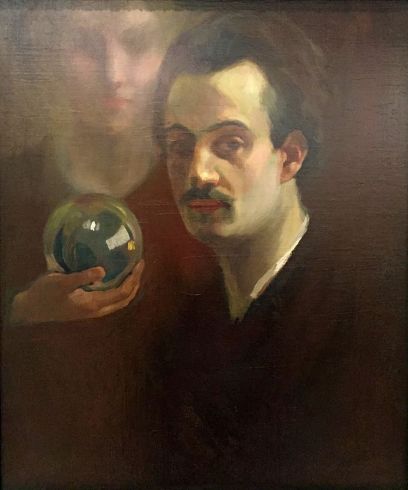
Khalil Gibran, Autorretrato Con Musa, 1911, public domain via Wikimedia Commons

Khalil Gibran, Autorretrato Con Musa, 1911, public domain via Wikimedia Commons

As happens so often, I’ve just discovered another wonderful thing because of the great Maria Popova of Brain Pickings. If there is only one website or blog you follow, I recommend that one be Brain Pickings. Literature, history, philosophy, art, poetry, children’s books, all of these and more are topics of discussion there, and the writing is beautiful.

This time, the discovery is the artist, writer, and philosopher Kahlil Gibran, and his take on a question I and I’m sure all other artists and writers ask ourselves from time the time: why we constantly feel the driving need to create things.

Popova writes:

The questions of why we humans create — why we paint caves and canvases, why we write novels and symphonies, why we make art at all — is so perennial that it might indeed fall within the scope of what Hannah Arendt considered the “unanswerable questions” central to the human experience. And yet some memorable answers have been given — answers like Pablo Neruda’s stirring childhood allegory of the hand through the fence.

Another exquisite answer comes from the great Arab-American artist, poet, and philosopher Kahlil Gibran (January 6, 1883–April 10, 1931) in Beloved Prophet (public library) — the collection of his almost unbearably beautiful love letters to and from Mary Haskell…

Read the article in full at Brain Pickings

Ordinary Philosophy and its Traveling Philosophy / History of Ideas series is a labor of love and ad-free, supported by patrons and readers like you. Please offer your support today!

Teach Kids Philosophy, It Makes Them Better at Math, by Drake Baer for New York Magazine

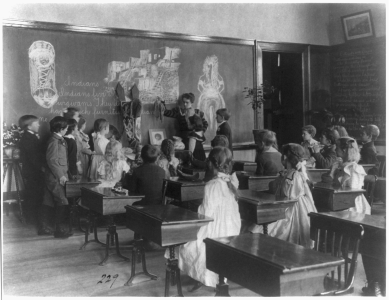
2993d-elementary_school_class_on_american_indian_cultureBut of course!

Drake Baer writes for New York Magazine:

‘The nature of truth. Theories of fairness. The essence of bullying. These are big, weighty subjects, and apparently 9- and 10-year-olds just eat them up.

As in, according to a Quartz piece by Jenny Anderson, placing grade-schoolers in weekly philosophical discussions has surprising effects on their academic performance. The program in question, called Philosophy for Children, led to improvements in math and reading scores on par with an extra two months of instruction, with bigger gains for disadvantaged kids. The 3quarksdaily blog highlighted it all earlier this week….read full article here

Ordinary Philosophy and its Traveling Philosophy / History of Ideas series is a labor of love and ad-free, supported by patrons and readers like you. Please offer your support today!

A Scot’s Lament fur her American Fellows (Oan their election of a tangerine gabshite walloper), by Lorna Wallace

I read this with such delight, I must share it with you!

Lorna Wallace's avatarWriting by Lorna

America, aw whit ye dain?!
How could ye choose a clueless wain
Ti lead yir country? Who wid trust
A man sae vile?!
A racist, sexist eedjit
Wi a shite hairstyle?

Yet lo, ye votit (michty me!)
Ti hawn’ this walloper the key
Ti pow’r supreme, ti stert his hateful,
Cruel regime.
A cling ti hope that this is aw
Jist wan bad dream.

But naw, the nightmare has come true,
A curse upon rid, white an’ blue,
An’ those who cast oot Bernie
Must feel sitch regret
Fur thinkin’ Mrs. Clinton
Was a safer bet.

So noo we wait ti see unfold
Division an’ intolerance, cold;
A pois’nous bigotry untold
Since Hitler’s rule
As the free world’s hopes an’ dreams
Lie with this fool.

Alas, complainin’ wullnae change
The fact this diddy has free range
Ti ride roughshod ow’r human beings
That fall outside
The cretinous ideals borne of

View original post 182 more words

O.P. Recommends: Professor Watchlist Could Make McCarthyism Look Like a Picnic, by Ellen Schrecker

2993d-elementary_school_class_on_american_indian_cultureI heard of Professor Watchlist a little while ago and when I glanced at it, it creeped me out a little: it looked like Yelp for cranks, but I didn’t think much of it. But when I read this letter, I realized it’s an example of something more serious: the sort of self righteous tendency to witch-hunt, on the left and on the right, that the Internet fosters, and that can all too easily destroy reputations and careers. I’m a believer in free speech and the marketplace of ideas, but we all need to keep it a place that fosters liberty too, by keeping a diligent watch on our own and others’ excesses. Let’s make sure that the court of public opinion is not allowed to turn into a kangaroo court.

Ordinary Philosophy and its Traveling Philosophy / History of Ideas series is a labor of love and ad-free, supported by patrons and readers like you. Please offer your support today!

Where Has All The Loving Gone? A Review Of The New Film, ‘Loving’ by Peter Cole

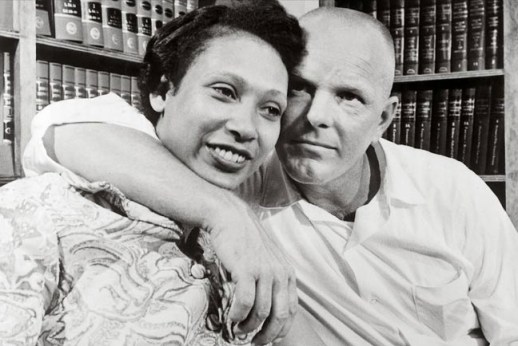
Mildred Jeter and Richard Loving, June 12, 1967, by Bettmann/Corbis via New York Times, public domain via Wikimedia Commons

Mildred Jeter and Richard Loving, June 12, 1967, by Bettmann/Corbis via New York Times, public domain via Wikimedia Commons

A new film about the Southern working class couple whose love and dedication broke the back of anti-miscegenation laws across the nation arrives just in time. Released days prior to Donald Trump’s election, viewers of Loving might be shocked to discover that anti-racist, blue-collared, white men—like Richard Loving—walked Southern soil. He was brave (or ignorant) enough to think he could get away with marrying a black woman; wise enough to know she was smarter than him. His deferral to her effort to seek legal counsel ultimately overturned laws banning interracial marriage in the landmark Supreme Court decision, Loving v. Virginia (1967)

Beneath the film, the Lovings’ story also speaks to the centuries-long effort by white supremacists to create a “white race” and defend it from “race-mixing”(also called miscegenation). In 1958, Richard Loving, 23, and Mildred Jeter, 17, married in the District of Columbia. They did so because Virginia outlawed interracial marriages, one of twenty-four states with similar laws at the time. Richard was “white,” Mildred “black” though actually a mixture of African American and Rappahannock Indian.

So began their nine-year odyssey that ended with the Court unanimously ruling that states could not prevent a man and a woman from marrying, regardless of their racial identities. Written and directed by Jeff Nichols, critics at Cannes hailed the motion picture and Oscar buzz has begun. The film deserves high praise and wide viewership, anchored by incredible performances from Ruth Negga and Joel Edgerton, the two principal actors.

Despite knowing the law—as proven by their DC marriage—the newlyweds chose to live in Central Point, their rural home in eastern Virginia’s Caroline County. A remote community made up of poor and working class people with a long, complicated history of ethnic and racial mixing, African Americans, European Americans, and Native Americans all lived in Central Point. Tellingly, despite 97% of all births, in 1960, occurring in hospitals, Richard’s mother, a midwife, delivered Mildred’s first child in 1959.

Just weeks after marrying, and prior to Mildred’s delivery, the sheriff arrested and jailed them for “unlawful cohabitation.” According to Mildred, when “they asked Richard who was that woman he was sleeping with,” she responded: “‘I’m his wife,’ and the sheriff said, ‘Not here you’re not.’”

The Lovings had violated Virginia’s Racial Integrity Act of 1924 though laws prohibiting interracial marriage and sex date back to the colonial era. The first “Richard Loving,” as it were, appeared in Virginia court records in 1630: “Hugh Davis [a white man] to be soundly whipped before an assembly of Negroes and others for abusing himself to the dishonor of God and shame of Christians by defiling his body in lying with a Negro; which fault he is to acknowledge next Sabbath day.”

By 1662, though, reality forced Virginia’s House of Burgesses to designate the status of interracial offspring:

WHEREAS some doubts have arisen whether children got by any Englishman upon a Negro woman should be slave or free, Be it therefore enacted and declared by this present grand assembly, that all children borne in this country shall; be held bond or free only according to the condition of the mother.

Virginia’s law dictated, “that which is brought forth follows the womb” or, in Latin, “partus sequitur ventrem.” In other words, a white, male slave-owner could have sex with—quite possibly raping—a black female slave, but their child was considered a slave, like the mother, rather than free, like the father. Previously, Virginia followed English common law, which dictated a father’s status determined a child’s. Virginia first outlawed miscegenation in 1691, as part of “An act for suppressing outlying Slaves.”

Over time, racial barriers further hardened in Virginia, the South, and nation. Before the twentieth century, Virginia considered a person “black” with one-forth African ancestry. In 1910, the state adopted one-sixteenth as its definition. With the Racial Integrity Act of 1924, Virginia embraced the notorious “one-drop” rule, authored in a period of heightened xenophobia and racism. For violating this law, in 1959 Judge Leon M. Bazile of the Caroline County Circuit Court sentenced Richard to prison for a year, but suspended this sentence if the couple agreed to leave Virginia and not return for twenty-five years.

In 1963, following encouragement from a relative inspired by the recent March on Washington for Jobs and Freedom, Mildred wrote Attorney General Robert Kennedy. He forwarded her letter to the American Civil Liberties Union (ACLU), which took the case. Attorneys Bernard S. Cohen and Philip J. Hirschkop, both young Jewish men committed to racial equality, quickly recognized this Loving story could, once and for all, overturn all interracial marriage bans.

In response to their appeal, Judge Bazile wrote: “Almighty God created the races white, black, yellow, malay and red, and he placed them on separate continents. And but for the interference with his arrangement, there would be no cause for such marriage. The fact that he separated the races shows that he did not intend for the races to mix.”

In this tumultuous era, the height of the civil rights movement, white Virginians led efforts to prevent integration. In 1956 Virginians Senator Harry F. Byrd and Representative Howard Smith introduced the Southern Manifesto, encouraging Southern whites to engage in “massive resistance” to integration.

In 1963, the same year Cohen and Hirschkop appealed the Lovings’ punishment, another Virginia court ruled against interracial marriage: “’to preserve the racial integrity of its citizens,’ and to prevent ‘the corruption of blood,’ ‘a mongrel breed of citizens,’ and ‘the obliteration of racial pride’.”

Four years later, Chief Justice Earl Warren profoundly disagreed: “Under our Constitution, the freedom to marry, or not marry, a person of another race resides with the individual and cannot be infringed by the State.” “Odious to a free people,” banning interracial marriage violated the 14th Amendment. Case closed.

Sadly, the Lovings only spent eight more years together after becoming the Supreme Court’s most aptly named case. A drunk driver killed Richard, just 41, in 1975. Mildred died of pneumonia, in 2008, at 68. She never remarried, living the rest of her days in the house her husband, a bricklayer, built for her after changing History.

Given the recent presidential election, it seems impossible to watch Loving and not meditate about the so-called white working class. Two-thirds of whites without a college education—a very imperfect correlation to socio-economic class—voted for Trump. Yet, for most of the twentieth century, such people, particularly Southern whites, voted Democratic. At least in part due to the civil rights revolution, Southern whites overwhelmingly realigned and, largely, took over the Republican Party. In 2016, 72% of registered Republicans still question the Americanness of America’s most famous mixed race citizen, Barack Obama.

Richard Loving rejected white supremacy when he married Mildred—in contrast to legions of white men who “simply” had sex with black women. He, his wife, and their three mixed race children became victims of racism. He became a “race traitor.” White film viewers come to see that, after marrying, Richard essentially joined the black community. They lived with her family, first in Virginia and, later, a racially segregated part of Washington, DC. Except for his mother in Central Point, Richard appeared to have no white friends; he and his best friend, a black man, owned and drag-raced cars. He kept to himself at work—(apparently) all-white construction sites.

A long history of accepting interracial couples and mixed race children exists in the black community, if only because no alternatives seem to exist. James Baldwin laid bare this ugly truth during a televised debate with a white conservative. When asked about what whites feared most, “Would you want your [white] daughter to marry one [black]?” Baldwin retorted, “You’re not worried about me marrying your daughter—you’re worried about me marrying your wife’s daughter. I’ve been marrying your daughter since the days of slavery.”

In a telling scene in the film, Richard drinks with three black friends in a black saloon. One friend pointedly asks Richard how it feels to experience what blacks had suffered from for 350 years: virulent racism. Richard, always taciturn, says nothing but proceeds to get drunk and, later, cry in Mildred’s arms.

Today, the number of interracial couples and families, like the Lovings, remains small. The 2010 U.S. Census reported nine million Americans identified as multiracial. The Pew Research Center noted in 2013, however, “a record-high 12% of newlyweds married someone of a different race.” Yet, apparently many white Americans still fear people like the Lovings and the ongoing demographic changes transforming America into a “majority-minority” nation.

Hence, we need reminding that America was not so great for many Americans, including African Americans, Latinos, American Indians, and Asian Americans along with their white allies who opposed white supremacy. We also need reminding that Mildred and Richard Loving personally overcame. Their story and this film demand a wide audience.

~ This review was originally published on Nov 27th, 2016 in the blog of the African creative-commons-attribution-noncommercial-4-0-international-licenseAmerican Intellectual History Society, and the text and links are here reproduced in full 


Peter Cole is a historian of the twentieth-century United States, South Africa and comparative history. Dr. Cole is Professor of History at Western Illinois University. He is the author of Wobblies on the Waterfront: Interracial Unionism in Progressive Era Philadelphia (University of Illinois Press, 2013) and currently at work on a book entitled Dockworker Power: Race, Technology & Unions in Durban and the San Francisco Bay Area. Follow him on Twitter @ProfPeterCole.

Ordinary Philosophy and its Traveling Philosophy / History of Ideas series is a labor of love and ad-free, supported by patrons and readers like you. Please offer your support today!

O.P. Recommends: Delaware Artist Inspired by Philosophy and Music to Make Beautiful Artwork, by Brian Drouin

Moment in a Forest of Words, image credit Michael Krausz, used by permission

Moment in a Forest of Words, image credit Michael Krausz, used by permission

I just came across this great story about Michael Krausz, a professor of philosophy and an

‘..artist [who] weaves music, art, and philosophy together as one.

Swiss born Michael Krausz was destined for a life of music, the son of professional musicians, he later discovered philosophy and in a moment that changed his life he discovered his love of painting…’

Read Krausz’s story and watch the video by Brian Drouin. I think you’ll love what you see and hear.

You can learn more about Krautz at his Bryn Mawr faculty page as well.

~~~~~~~~~~~~~~~~~~~~~~~~~~~

Ordinary Philosophy and its Traveling Philosophy / History of Ideas series is a labor of love and ad-free, supported by patrons and readers like you. Please offer your support today!