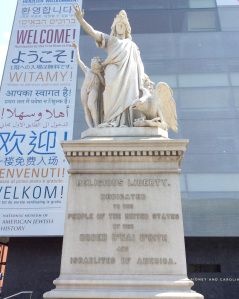
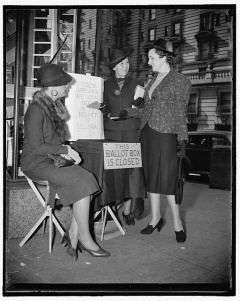
On Authoritarianism And Civilization, by Neil Roberts

W.E.B. Dubois, Photograph taken by J.E. Purdy in 1904, public domain via Library of Congress

W.E.B. Dubois, Photograph taken by J.E. Purdy in 1904, public domain via Library of Congress

In 1890 the young W.E.B. Du Bois delivered the Harvard University Commencement address “Jefferson Davis as a Representative of Civilization.” Du Bois focused on a central figure of nineteenth-century America as he prophesied the meanings of freedom, democracy, and what American life — or more accurately, civilization — would look like over the next hundred years and beyond for the white world, the black world, and other non-white populations that hitherto occupied spaces outside the epicenters of civil and political society.

Born in Kentucky, Jefferson Davis held the offices of U.S. Representative and Senator for the state of Mississippi and later Secretary of War under President Franklin Pierce. Following Pierce’s failure at the 1856 Democratic National Convention to acquire Presidential re-nomination support from party delegates, Davis ran again, won, and went back to Congress as a Senator. Yet with the 1860 election of Abraham Lincoln and escalating distrust between South and North, Davis resigned his Senate post.

After ensuing Southern secession, Davis assumed the Presidency of the Confederate States of America, maintaining the position until the Civil War’s end. Davis had poor health much of adulthood and detractors internal to the Confederacy. While underestimated by peers and despised by several prominent Confederate politicians and generals, he nevertheless forged an obedient coalition and crafted a resolute model of governance and rule. Although Davis lived until the post-Reconstruction year before Du Bois’s speech, his thoughts and actions as Confederacy President provided core teachable moments.

Du Bois considers Davis a person whose self-conception is that of “a typical Teutonic hero” and whose notion of leadership personifies “the idea of the Strong Man.” By ‘Strong Man,’ Du Bois means a leader espousing “[i]ndividualism coupled with the rule of might.” The Strong Man, suffuse with strength, privileges the “I” and self-assertion over the “Thou.” The Strong Man bolsters civilization through “stalwart manhood and heroic character” on the one hand and “moral obtuseness and refined brutality” on the other. The Strong Man often relies on disgruntled and violent mobs, adherents who are, as Hannah Arendt observes, angry masses that feel excluded from previously accessed corridors of politics, believe their standing is society has evaporated compared to the prior generation, loathe heterogeneous society as is, and cry out for the homogeneous order the Strong Man promises. The Strong Man’s patriarchal idea of civilization is intimately tied to racial orders, and it is his vision of a future world that augurs the consolidation and regeneration of the white race above all other races.

Du Bois contrasts the Strong Man with the ‘Submissive Man,’ characterized by weakness, a commitment to truth, and desire to acquiesce to the Thou, the You, the part of personhood not obsessed with the image of the being reflected back in the mirror. Whereas the American Teuton, of which Davis is exemplary, is indicative of the Strong Man, the Negro is for Du Bois the archetypal Submissive Man Davis dismisses.

Ironically, the Strong Man and Submissive Man need one another, their diametrically opposed views notwithstanding. Otherwise, the polity they inhabit devolves into despotism or slavery, and not merely for those emboldened at any given time with the might and right of state.

Jefferson Davis, “the peculiar champion of a people fighting to be free in order that another people should not be free,” missed the inseparability of the I and the You. He refused to admit the ways we’re interconnected, in relation, despite our pluralistic and differential conceptions of the free life and in spite of attempts by agents of state and their lackeys to interfere, dominate, segregate, deport, and annihilate.

Davis’s Strong Man hubris spawned a vitriolic, angry, white nationalist, revolting mass. It also led to his downfall, the Confederacy’s decline, and American civilization as he conceived it, in large measure due not only to abolitionists but also the actions of fugitives and slave agents catalyzing its genesis. It didn’t, however, obliterate the wages of whiteness and political philosophy of white supremacy in the post-1865 polity. Du Bois documents this in The Philadelphia Negro, The Souls of Black Folk, “The Souls of White Folk,” and, most notably, Black Reconstruction in America, as do scholars such as C.L.R. James, Frantz Fanon, Annette Gordon-Reed, and Nell Painter. This last point haunts us today.

Authority and authoritarianism undergird Du Bois’s prognostications. An agent with “authority” demands dogged obedience, compliance, and dispelling of ressentiment urges by the subjects of sovereign command. “Authoritarianism” is the structural macropolitical systemization of a type of statecraft designed by what Theodor Adorno and collaborators call an authoritarian personality. It is a hierarchical social, political, and economic order militating against egalitarianism. Moreover, as Arendt notes in “What Is Authority?” we shouldn’t confuse authoritarianism with tyranny, for “the tyrant rules in accordance with his own will and interest, whereas even the most draconian authoritarian government is bound by laws.”

Du Bois wrestles with Jefferson Davis’s legacy because Davis oversaw a confederation based on slavery and apparatuses of unfreedom enshrined in jurisprudence. Du Bois cautions against ambivalence, nihilism, and avoidance of the afterlife of chattel slavery, first since modes of enslavement sanctioned by law mutated and have been upheld at different junctures by authoritarian personalities, though not always in the public sphere by the prime executive. An amplification of these chilling effects occurs when the entity wielding authority — whose public beliefs defend racism, sexism, xenophobia, chauvinism, and rabid masculinity — is Commander-in-Chief. Second, struggle, resistance, and abolitionist challenges to authority and authoritarianism are as much a tradition as the tradition their actions seek to dislodge. Never forget that.

Our current moment is unprecedented. Yet past lessons offer signposts for future judgments and decision-making. President-elect Donald Trump entered campaign 2016 a noted businessman, consummate reality TV performer, and political chameleon. In the process of winning the Republican primary and shockingly defeating Hillary Clinton, Trump clarified certain issues and left many policy positions open-ended.

What’s incontrovertible is Trump’s authoritarian personality. Only time will tell what type of authoritarian President Trump will be, Jefferson Davis reincarnated or otherwise. And if his senior administrative appointments are any indication, particularly the ghastly selection of avowed white nationalist Stephen Bannon as top White House advisor, then we’d be foolish to assume Trump’s stated public beliefs and campaign promises are one big bluff. Parrhesia is hard to digest.

We have a choice in the Age of Trump: ignore history and our intrinsic abilities for action, thereby reifying the authoritarian order Trump very much plans to implement. *Or* protest. Petition. Resist authoritarianism and its mob enforcers. Organize. Unlock our political imaginations. Believe firmly our actions can match our convictions.

‘American Democracy’ is an unrealized and perhaps unrealizable Platonic ideal, but democracy in America, in the hemisphere, and in the globe, measured by nodes of progress, are attainable. Progress, as with regress, comes in stages. And like freedom, the theory of relativity, and quantum mechanics, the meaning of progress and attendant strivings for it begin with acknowledging a foundational phenomenon: perpetual flight.

Flight operates betwixt, between, and beyond the options of Strong Man and Submissive Man. “Human” progress, a consequence of ongoing marronage, beckons us.

This piece was published in the African American Intellectual Historical Society Blog on December 4th, 2016

~ Neil Roberts is an associate professor of Africana Studies and a faculty affiliate in Political Science at Williams College. He is author of the award-winning Freedom as Marronage (University of Chicago Press, 2015) and the collaborative work Journeys in Caribbean Thought (Rowman & Littlefield International, 2016). Roberts is presently completing A Political Companion to Frederick Douglass for The University Press of Kentucky, and he is President-Elect of the Caribbean Philosophical Association. Follow him on Twitter @neildsroberts. (Bio Credit: AAIHS Blog)

Ordinary Philosophy and its Traveling Philosophy / History of Ideas series is a labor of love and ad-free, supported by patrons and readers like you. Please offer your support today!

Should We Act on our Beliefs? The Vexing Nature of Responsibility, by Rik Peels

Brain illustration from The Principles and Practice of Medicine...' by W Osler, 1904, public domain via Wikimedia Commons

Brain illustration from The Principles and Practice of Medicine…’ by W Osler, 1904, public domain via Wikimedia Commons

Some people think that voting for Donald Trump was a detestable thing to do, whereas others are convinced that we had an obligation to vote for him in order to get rid of the political elite. Of course, in explaining why they voted the way they did, people will appeal to their beliefs. Some of those will be factive: beliefs about such things as whether someone paid his taxes or whether someone gave full disclosure of certain emails. Other beliefs will be normative: beliefs about such things as whether America should pursue international political leadership or about whether it is permissible to use water-boarding techniques to extract information from prisoners.

People act on their beliefs. Obviously, that, as such, does not get them off the hook for the ensuing actions. Those who voted for Clinton believe that adherents of Trump should know better and vice versa—when it comes to the facts, when it comes to certain moral norms, or, more likely, both. Or, to give a few examples on which most Westerners agree: we believe that ISIS fighters also act on their beliefs, but that they should know better, and we believe that climate skeptics act on their beliefs, but that they should know better. If people were not responsible for their beliefs, it would seem improper to blame them for the actions they perform on the basis of those beliefs.

However, the idea of responsibility for our beliefs faces two big challenges. First, how can we be responsible for our beliefs at all? I am responsible for whether I treat my neighbor kindly or rudely, because I can choose or decide to treat her kindly or rudely. But I do not choose or decide to hold a belief. Nobody ever wakes up in the morning and thinks: “Today, let me form this or that belief.” Beliefs are things that are not under the control of our will. How, then, are we responsible for them? This is a controversial issue in contemporary analytic philosophy. One way to think of it is this: we are responsible for our beliefs, because they are the consequences of things over which we do have control, such as whether we gather more evidence, whether we are humble and pay attention to our prejudices and biases, and whether we try to become more open-minded.

Second, assuming that the first challenge can be met and that we are indeed responsible for our beliefs, we still face a deep puzzle about responsibility. As I said, people normally act in accordance with their beliefs. And that, it seems, is the right thing to do. One should not act contrary to what one believes to be the facts or contrary to what one believes one ought to do. Philosophers have even come up with a name for situations in which one succumbs and acts against one’s better judgment. Ever since Aristotle, they call it akrasia. One is akratic, for instance, if one believes that eating an entire bag of chips is bad, but one still does it. We don’t want people to be akratic. Rather, they should act in accordance with their beliefs.

Now, here’s the problem. If we are to hold people responsible for their beliefs, then, given that belief is not under the control of the will, it must issue from an earlier culpable act: one neglected evidence, one failed to enter into conversation with certain people, one was not open-minded, or some such thing. But, presumably, at that earlier time, one believed it was alright to neglect that evidence, fail to enter into conversation, or not be open-minded on that occasion. Thus, how can we ever hold people responsible for their beliefs and the actions performed on the basis of those beliefs? We are unwilling to give up holding people accountable for their beliefs. But it seems we are equally unwilling to give up the principle that people should not act contrary to their beliefs.

I am not entirely sure how this challenge can be met. But here are at least a few things we ought to note that can help in solving the problem.

First, it seems that if people act on their beliefs and there was no way they could have changed those beliefs – for instance, because they have been thoroughly indoctrinated or they suffer from a psychosis – we cannot blame them for holding those beliefs and for the actions based on those beliefs. Maybe we should take protective measures and perhaps even incarcerate them, but they are not morally responsible for what they believe or what they do.

Second, intellectual virtues or, as philosopher Linda Zagzebski calls them, ‘virtues of the mind’, steadily grow over long periods of time: open-mindedness, curiosity, thoroughness. And so do intellectual vices, such as dogmatism, conformity, and sloppiness. They gradually arise out of choices we make on particular occasions, such as whether we listen to someone and try to understand what things would look like from their point of view. These intellectual virtues and vices heavily influence our beliefs and, consequently, our actions. Thus, the more evidence we have that someone has had enough opportunity to develop these virtues, the more we can hold them responsible for their beliefs.

Third, the flat-out principle that we should act on our beliefs might be too simplistic: it may need substantial qualification by taking into account serious doubts that one might have, whether or not one’s belief matches one’s emotions and desires, and whether or not there is substantial disagreement with others about the belief in question. This, as such, will not solve the problem, but such qualifications seem needed to do full justice to our intuitions about the plausibility of the akrasia principle.

The responsibility we bear for our beliefs is crucial for individual well-being and the flourishing of our societies. And yet, like so many things that are crucial in our lives, it is vexing and raises deep philosophical questions. We will need joint work by ethicists, epistemologists, psychologists, and sociologists to find satisfactory answers.

~ Originally published at OUP Blog: Oxford University Press’s Academic Insights for the Thinking World, on November 19th, 2016

~ Rik Peels is Assistant Professor in Ethics and Epistemology at Vrije Universiteit Amsterdam, the Netherlands. He is the author of Responsible Belief: A Theory in Ethics and Epistemology (OUP, 2016), editor of Perspectives on Ignorance from Moral and Social Philosophy (Routledge, 2016), and co-editor of The Epistemic Dimensions of Ignorance (CUP, 2016). You can read more on his personal website www.rikpeels.nl. (Bio credit: OUP Blog)

Ordinary Philosophy and its Traveling Philosophy / History of Ideas series is a labor of love and ad-free, supported by patrons and readers like you. Please offer your support today!
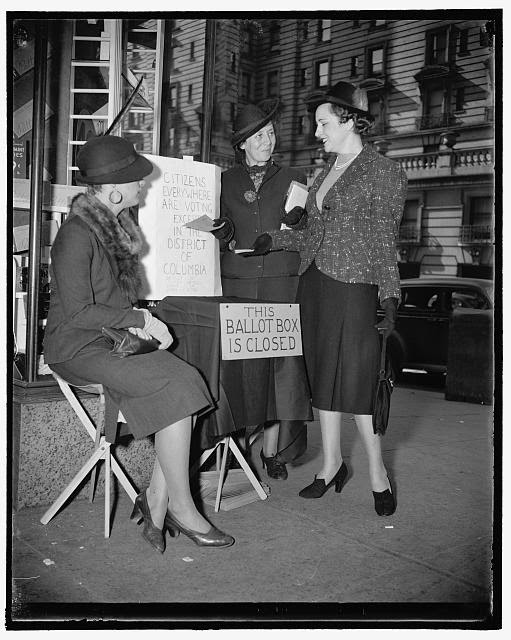
The Morning After Election Day 2016

3f86f-ballot2bbox2bclosed2bprotestI watched the election results roll in last night on the same sofa and in company with the same good friends as eight years ago when Barack Obama was elected the first black president of the United States. As the night wore on, our dearest hopes that we would see the first woman elected president of the United States were dashed, to the deep disappointment of everyone in the room. Trump was elected president. It was clear to me that though all believe that women should have equal chances of being elected president, the gender of the candidate was not foremost in their minds last night. It was the misogyny, racism, crass materialism, and bullying personality of Trump and his followers that must be defeated, showing the world that our values are much better than our new Twitter-troll-in-chief might have you believe.

My friends are nearly all liberal, my family mostly conservative. Some of my loved ones are rejoicing, some are mourning, and probably, given the new president’s coarse speech and demeanor, checkered past, and nonconservative positions on many issues, more were at least as glum as they were glad.

For some of my religious family members, I believe they did not vote for Trump because they like him, admire him, or agree with him on many issues. They voted for Trump while holding their noses at his attitudes toward women and minorities, his coziness with Putin, his anti-free-trade positions, his hiding of his tax returns. For them, abortion is by far the most important issue at stake, so the candidate that will nominate anti-abortion Supreme Court justices and oppose Roe v. Wade is their only viable choice. I understand their position: if you truly believe abortion is legalized murder, then the candidate that will likely to most to change the law in this regard must be their candidate. But that doesn’t mean they like having to vote for him.

Other people I know and love do sincerely admire Trump, dismissing some of his worst behavior as mere indiscretions, excesses of the vitality and exuberance that made him the go-getter they see him as: the man of the people who made himself rich in the can-do, hard-working, all-American way. For myself, I have a hard time seeing how exactly how the actual Trump fits in with this perception: his primary business is building luxury amenities for the wealthy, funding it at the beginning with piles of money he didn’t earn; he’s repeatedly exploited bankruptcy laws to the fullest which allowed him to escape personal responsibility for his bad investments while stiffing his contractors, the hard-working Americans that he’s supposed to represent; the things he does have made are often built from cheap Chinese steel and with low-paid Chinese, not American, hands; he starred in a reality TV show where he showcased his ‘business acumen’ by glowering behind a big shiny desk in a too-big suit, repeating generic self-help platitudes that convey no real guidance or information at all. In other words, he is just business-as-usual. But like so many Americans, they fell for his brand, the heavily marketed, glossy persona that the media lap up because he’s just so entertaining.

For me, what the Presidential candidates represent often does take priority over what they do, since they do not run the country on their own. Many of the qualities and principles that Trump represents to people are, I think, even uglier than what he’s said and done, which is often bad enough. But it seems that what he doesn’t represent is what got him into office: he doesn’t represent the establishment and he doesn’t represent the multicultural cosmopolitanism of the new information-centric world. And he doesn’t represent what’s been called the feminization of our culture, as machismo, militarism, and hyper-individualism slowly erodes from our national character. Hilary Clinton largely represented this feminization, the idea that the state also exists as a facilitator of care, for promoting health and education, of taking in those that flee to us for help, nurturing the young and the disenfranchised so that all have an equal shot or, if you happen to be a casualty of the capitalism most of us benefit from, you’re not out on your ear. And she represented it in a way that the strong mom does: idealistic yet practical, ruthless if need be in defense of her brood. Clinton has flaws, perhaps as many as Trump, but they are flaws of excess in the pursuit of greater and worthier things than self-aggrandizement and self-indulgence. But women, traditionally, are not allowed to have flaws, not if we are to be admired and promoted to any position of influence. For men, that’s just, well, part of being a man, part and parcel to being strong, bold, and getting things done.

I wish we could have shown the world last night that we believe in women too, that our girls do have the same chance of becoming president as anyone else, and they could do so by being women, unapologetically, able to succeed to our fullest potential whether or not we have flaws too.

Ordinary Philosophy and its Traveling Philosophy / History of Ideas series is a labor of love and ad-free, supported by patrons and readers like you. Please offer your support today!

Xerxes and Demaratus on Tyranny, Liberty, and the Law

Relief of the Persian king Xerxes (485-465 BC) in the doorway of his palace at Persepolis

Relief of the Persian king Xerxes (485-465 BC) in the doorway of his palace at Persepolis, public domain by O. Mustafin via Wikimedia Commons

I’m now reading Book Seven of Herodotus’ Histories which tells the story of Xerxes I of Persia and the second invasion of Greece, which he led to avenge the defeat of his father Darius, who led the first. Darius was defeated at the battle of Marathon when the Athenians and their allies the Plataeans, badly outnumbered, managed to drive away the Persians. In this story, I came across another interesting exchange I’d like to share with you.

After reviewing his massive forces, Xerxes calls for Demaratus, a former king of Lacedaemon (city-state of Sparta) who had defected to Persia after being deposed by a rival. He asks Demaratus if he believes that his fellow Greeks will dare oppose his invasion considering the size and wealth of the new Persian army. After all, Xerxes asks, ‘How could a thousand men, or ten thousand, or even fifty thousand come to that, possibly stand up to an army the size of mine, when all of them enjoy a similar degree of liberty, and have no one man in command?… Just perhaps, were they like us in having one man set in authority over them, they might indeed be prompted by their dread of him to conquer their own instincts, and under the compulsion of the whip to advance against a force much larger than themselves. Left to their own devices, though, there is no way they will do either of those things.’ (Histories 7.103)

Xerxes is speaking here of the land of Athens and Lacedaemon, cradle of democracy, a novel form of government at the time. Many of us moderns who are raised in societies which inherited that spirit of government would respond: ‘But of course! A free people who participate in their own government have a stake in the outcome of public enterprises. Therefore, in war or peace, free people have a reason to care about their outcomes and to be personally motivated to succeed, because the success belongs to each individual as well as the society. Those who are tyrannized and enslaved, however, have no personal stake in the outcome, and fear only motivates one to do the minimum needed for survival. Indeed, fear and resentment of tyranny can motivate the people to undermine the efforts of the tyrant, and to defect to another state at the first opportunity.’ I expected Damaratus to give some such answer.

But Damaratus takes a different tack. Though he begins by citing the courage and martial discipline of the Greeks, he tells Xerxes the main reason he believes the Greeks will stand up to him whatever the size of his army. They’ll resist, he says, because ‘Free as they are, you see, they are not altogether free. Set over them as their master is the law – and of that they are more terrified than ever your men are of you. Certainly, they do what it commands them to do – a command that never alters.’ (7.104)

I think it fascinating that Damaratus uses the expression ‘terrified’ when he describes the Greeks’ attitude to the law. I consulted two other translations and it used the word ‘fear’. I wonder: is this a fear or terror born of deep respect and awe, such as that due to the gods or nature itself? Of fear of their fellow citizens for breaking the social contract or upsetting the natural order of things? Why fear or terror? Then I realize: perhaps he uses this term because he wants Xerxes to understand what he’s saying, and the only thing Xerxes can imagine inspiring obedience is fear and terror. But it’s interesting that he holds on to that idea. After all, Xerxes knows that his father learned otherwise, and the hard way at that. A free

Or, do you think Damaratus means just what he says? That it’s possible that an otherwise free people can actually have a fear of the law itself? It’s not too far of a stretch, after all, that a religious, god-fearing society could fear something else that’s abstract which imposes order and its will on the world.

Or, it could be that Damaratus is talking about the fear of the Greeks betraying their own selves as living embodiments of the law. After all, if adherence to the law is instilled as a sort of sacred duty to the very thing that makes us both free and fully realized as human beings, then the thought of transgressing the law is as terrifying as the thought of destroying our very selves, of becoming something less than human. I suspect Damaratus is talking about something like this.

Ordinary Philosophy and its Traveling Philosophy / History of Ideas series is a labor of love and ad-free, entirely supported by patrons and readers like you. Please offer your support today!

~~~~~~~~~~~~~~~~~~~~~~~~~~~~~~~~~~~

Sources and inspiration:

Cartledge, Paul. ‘The Democratic Experiment‘. From History at BBC.com

Herodotus. Histories. Translated by Tom Holland. New York: Viking, 2013

Herodotus. Histories. Translated by A. D. Godley. Cambridge: Harvard University Press, 1920, from Tufts.edu

Herodotus. Histories. Translated by G. C. Macaulay, 1890, from Project Gutenberg.

O.P. Recommends: Texas Picked an Ominous Date to Arm Its Public Colleges, by Rosa A. Eberly

Charles Whitman's rifles and sawed-off shotgun used in University of Texas massacre of 8-1-1966, image free use under CCA 3.0As you may know, dear reader, I’ve long expressed deep concerns over my country’s obsession with guns, over the widespread conviction that guns are the solution to many problems that the proliferation of guns, in fact, manifestly worsens. We’re so awash in guns, culturally and historically, that we take them for granted and forget that there are other possible ways to live. Even the fact that high rates of gun ownership rarely correlate now or throughout history with relatively low rates of gun deaths, be it by state or country, doesn’t seem to matter. Our culturally-induced intuition that bad guys with guns will behave themselves out of fear of good guys with guns seems to render the preponderance of available evidence irrelevant, time after time after bloody time. There’s a particularly telling illustration of this going on right now, as Rosa Eberly writes in her recent piece for The Chronicle of Higher Education:

‘In what appears to be an audacious act of public forgetting, a controversial Texas campus-carry law allowing concealed guns in university buildings is scheduled to take effect on Monday, August 1, the 50th anniversary of the University of Texas tower shootings.

The first mass murder on a U.S. college campus, the tower shootings left 14 people dead, plus the gunman, and more than 30 wounded. As in other more recent examples of mass gun violence, the shooter first used deadly force in a domestic setting — he killed his wife and mother before ascending the tower with an arsenal…’

I dearly hope the students that don’t suffer the possible worst consequences of this very dangerous social experiment. But the evidence of history gives us very good reasons to worry that they will.

Ordinary Philosophy and its Traveling Philosophy / History of Ideas series is a labor of love and ad-free, supported by patrons and readers like you. Please offer your support today!

Empathy for Immigrants

M.S. St. Louis, 1939, which carried 930 Jewish refugees who were turned away from the U.S, Canada, and Cuba

M.S. St. Louis, 1939, which carried 930 Jewish refugees who were turned away from the U.S, Canada, and Cuba

Here’s a very short piece I published almost exactly three years ago, and with the anti-immigrant rhetoric of a certain presidential nominee, I worry more than ever about the fate of those fleeing danger, severe want, and persecution. So many people in dire circumstances do not have the time or the money to wait around until they can emigrate legally. So it’s a matter of stay, suffer, and perhaps die, or go. The Smithsonian featured another article after I had originally posted this piece, about the U.S.’ history of hardline policies against refugees in the interest of national security: http://www.smithsonianmag.com/history/us-government-turned-away-thousands-jewish-refugees-fearing-they-were-nazi-spies-180957324/. But the larger question is this: if we are committed to protecting human rights in general, are we ever justified in preventing people from picking up and moving anywhere they wish to seek a happier and safer life? Last year, I shared an excellent podcast episode by Freakonomics which explored that very question: https://ordinaryphilosophy.com/2015/12/27/o-p-recommends-freakonomics-is-migration-a-basic-human-right/

Amy M Cools's avatarOrdinary Philosophy

M.S. St. Louis, 1939, which carried 930 Jewish refugees who were turned away from the U.S, Canada, and Cuba

M.S. St. Louis, 1939, which carried 930 Jewish refugees who were turned away from the U.S, Canada, and Cuba

To those hard-liners against amnesty for people who immigrated here illegally:

Remember that many, perhaps most, have done so because they’re rescuing themselves and their children from dire poverty, from murderous drug cartels, or from other dangers. They aren’t able to immigrate legally, even if they wanted to, due to the long wait times, high cost, and stringent requirements.

Do you think that all people, morally, should always place a higher value on obeying immigration laws than on the lives and well-being of themselves and their children?

This brings to my mind a famous example of people denied entrance to this country who were fleeing danger and oppression, and were forced to return to Nazi-terrorized Europe. Untold numbers of people died as a result.

Think of your own children, family…

View original post 60 more words

To Achieve Freedom Of or From Religion, Equal Protection is a Better Strategy Than Separation of Church and State

Dear readers: as I study for the GRE (oh, maths, I’d forgotten all about you!), I’ll be posting new pieces a little less frequently for a couple of weeks, though I’m still hard at work on the rest of the Douglass series. Here’s a piece I wrote about one year ago today, still a matter of concern though the recent spate of violence between police officers and enraged citizens has taken precedence in the news. We could all use to take a deep breath and commit ourselves anew to that generous-minded tolerance that makes us the envy of the world when and where it’s practiced. The spiraling rise of polarization around the recent shootings of citizens by police and vice versa, and around the presidential run of a self-worshipping fear-mongering pop-celebrity whopper-spouting icon, is undermining that great American tradition.

Amy M Cools's avatarOrdinary Philosophy

Generally, I’m a big fan of such organizations as the Freedom From Religion Foundation and Americans United for Separation of Church and State.

The former, founded in 1978, is headed by Annie Laurie Gaylor and Dan Barker, enthusiastic and principled atheists who believe that true religious freedom entails freedom from religious interference in matters of government or public goods. They carry out their mission in two main ways: through letter-writing and litigation when the establishment clause of the First Amendment to the Constitution (“Congress shall make no law respecting an establishment of religion…”) is violated, and through public awareness campaigns via social media, network news appearances, a radio show (also available as a podcast; I’m a regular listener), billboards, and ads.

The latter, founded in 1947, is headed by Reverend Barry Lynn, an ordained United Church of Christ minister. The AU pursues many of the same goals as the FFRF…

View original post 1,997 more words

Our Present and The Past, by Ben Alpers

Millenium Clock, National Museum of Scotland, Edinburgh, 2014 by Amy Cools

Millennium Clock, National Museum of Scotland, Edinburgh

At times of great political upheaval, people suddenly start paying attention to history, grasping to find past events that might provide a kind of road map for what the world is going through in the present. The last several months and weeks feel extraordinary in so many ways. The steady stream of mass killings around the world, many of which are connected to ISIS. The nomination of Donald Trump, whose candidacy is clearly unusual and seems to many unusually disturbing. Norbert Hofer of Austria’s Freedom Party nearly becoming the first candidate of the far right to win a western European presidency since World War II … and getting a second bite at the apple when the election results get thrown out. The Brexit vote and the apparent meltdown of UK politics. Cops caught on video killing African Americans in this country with seemingly little cause. The shooting of five cops in Dallas. And today an attempted military coup in Turkey. On and on it goes.

1968 seems to have emerged in recent months as the go-to historical analogy for our current global political upheavals. In the spring, it was often raised by Democrats made nervous by the Bernie Sanders candidacy who wondered if this year’s convention in Philadelphia might fall apart like their party’s 1968 convention in Chicago did. Donald Trump, too, brought back memories of 1968, though more of third-party candidate George Wallace than of Republican Richard Nixon.

As things seem to have fallen apart around the world, the ’68 analogy has been extended beyond the presidential race itself, though most Americans who lived through that year remember it as much worse. “What’s happening now is terrible. 1968 incomparably worse: RFK & MLK assass, 17k US deaths VN, LBJ steps down etc,” tweeted James Fallows last week.

Over the weekend, Vox published an interview with the journalist Michael Cohen, who wrote a recent book on America in 1968. Acknowledging that the political unrest we’re experiencing leads to the analogy, Cohen, like most others who have tackled the question in recent weeks, thinks that 1968 was much worse, both because it was significantly more violent and because we have made so much social progress since then.
But what fascinates me about this whole debate is that it misses half of what 1968 was about. 1968 is such a painful memory because it was a year of dashed hopes. Johnson’s stepping down was a triumph for the anti-war movement. Martin Luther King, Jr. began the year planning a Poor People’s March that would broaden the scope of his movement. RFK emerged as a candidate who seemed potentially capable of bringing America together and end the war in Vietnam. Of course none of these things worked out.

1968 was a year of dashed hopes around the world, as well, The Prague Spring in Czechoslovakia. Student movements in France and Mexico. The sense of political defeat that set in by the end of the year was so strong precisely because the hopes had been so high.

For 1968 to stand only for things falling apart, for political promises unfulfilled, is something that could really only entirely emerge in hindsight. And there’s nothing particularly unusual about this. In fact, that’s why we do history. In the middle of a string of events, one simply doesn’t know how things are going to turn out.

And that’s very much the case for our experience of 2016. So far at least, if the political violence and despair, at least in the U.S., seem less acute this year than they did then, so too do the hopes for change. But we really don’t know, can’t know, how 2016 will turn out, let alone how we will remember it. There is an odd comfort in reaching for analogies, even when those analogies are very negative. If 2016 is 1968 redux, if Trump’s movement is fascism, then at least we know what we’re dealing with. But history never really repeats itself. We can certainly learn from the past. But this year, however it turns out, will end up being something new.

Ben Alpers is Reach for Excellence Associate Professor in the University of Oklahoma’s Honors College, whose faculty he joined in 1998. His primary teaching and research interests concern twentieth-century American intellectual and cultural history, with special interests in political culture and film history. Among the courses he offers in the Honors College are colloquia on World War II in history and memory and film noir, and Perspectives courses on American social thought and politics and culture in the Great Depression. Alpers is also affiliated with the History Department and the Film and Media Studies Program. He is the author of Dictators, Democracy, and American Public Culture: Envisioning the Totalitarian Enemy, 1920s-1950s (UNC Press, 2002) (Bio credit S-USIH.org)

~ This piece was originally published on July 15, 2016 at U.S. Intellectual History Blog

Ordinary Philosophy and its Traveling Philosophy / History of Ideas series is a labor of love and ad-free, entirely supported by patrons and readers like you. Please offer your support today!

Political Maneuver or Not, I Think Hillary’s Call for Automatic,Universal Voting Registration Is a Great Idea

One year ago today…

Amy M Cools's avatarOrdinary Philosophy

As you may know, I am a staunch advocate of voting: I think voting rights should be expansive, that as a nation we should encourage and facilitate voting as much as possible, and that voting is not only a right, it’s responsibility.

When we don’t vote, we do an injustice to ourselves and our fellow citizens by failing to uphold our democracy, we act as pawns of those who try to limit access to voting (in recent years, these efforts have been especially aimed at minorities, the poor, the elderly, and the young, go figure), and we betray those whose labor and personal sacrifices made it possible for us to vote in the first place. Next time you feel lazy or tempted by Russell-Brand-style ‘principled’ slacktivism, think of Frederick Douglas, Carrie Chapman Catt, and Miguel Trujillo, and imagine how lame you’d sound if you had to stand before them and explain…

View original post 625 more words

History, Philosophy, and Political Hope, by Richard Eldridge

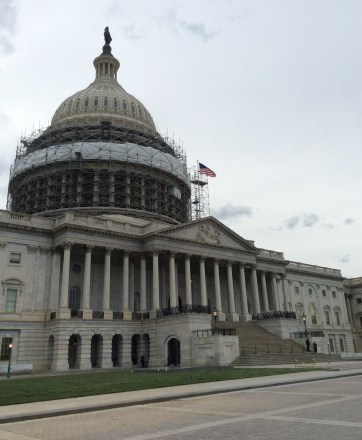
US Capitol Building under repair, Washington DC, photo 2016 by Amy CoolsPolitics in general is all about how to develop, sustain, and revise institutions, practices, and policies that bind individuals together productively and that point toward more fulfilling individual and joint futures for them. Debates about how best to do this are natural. Should the US become yet more aggressively libertarian-individualist, or should a substantial social compact that enforces terms of fair cooperation via significant redistribution be instituted? Should the UK embrace European social democratic values and relations, or should it stand on its Anglo-Saxon distinctiveness?

These important questions are increasingly addressed, however, in the absence of significant, articulate knowledge of political ideals that historically have informed political life. As a result, debates about these questions are typically shriller and less productive than they could and should be. Various forms of nativism and populism supplant more considered deliberations, for good enough reasons, as individuals and subpopulations come to be and to feel disenfranchised from political and economic business-as-usual. In a 15 May 2016 New York Times opinion piece, the economic historian Michael Lind reports that “A 2016 Presidential Election Survey by the RAND Corporation revealed that the single factor that best predicted voter support for Donald Trump among likely Republican voters was not income, education, race, gender or attitudes toward Muslim or illegal immigration, but agreement with the statement ‘people like me don’t have any say.’” Globalization and the degradations of the powerful are increasing political and economic disenfranchisement throughout the industrialized world. Disenchantment then produces anger, for good reasons. Presciently, and echoing Plato’s criticisms of democracy (though not his proposals to abolish it), the philosopher Richard Rorty suggested in 1997 in Achieving Our Country that

members of labor unions, and unorganized unskilled workers, will sooner or later realize that their government is not even trying to prevent wages from sinking or to prevent jobs from being exported. Around the same time, they will realize that suburban white-collar workers–themselves desperately afraid of being downsized–are not going to let themselves be taxed to provide social benefits for anyone else.

At that point, something will crack. The non-suburban electorate will decide that the system has failed and start looking around for a strongman to vote for–someone willing to assure them that once he is elected, the smug bureaucrats, tricky lawyers, overpaid bond salesmen, and postmodernist professors will no longer be calling the shots…

One thing that is very likely to happen is that the gains made in the past forty years by black and brown Americans, and by homosexuals, will be wiped out. Jocular contempt for women will come back into fashion…All the resentment which badly educated Americans feel about having their manners dictated to them by college graduates will find an outlet.

The demand for an outlet for resentment and anger is being exploited by so-called anti-system politicians and parties, including Trump and Sanders in the US, Marie LePen in France, Nigel Farage in the UK, Beppo Grillo in Italy, and the Syriza Party in Greece. Whether from the left or the right, the watchword is “tear it down,” not “build it up.”

One way to begin to reverse these developments and to enrich political debates is to consider detailed accounts of political-ideals-as-lived that have been articulated and argued for by major philosophers who are sensitive to the values all at once of individualism, responsibility, political equality, economic security, rich joint meaningful life, and ongoing critical thought, as commitments to these values have been lived out against the backgrounds of religious and philosophical traditions. Immanuel Kant and Walter Benjamin are two thinkers of exactly this kind. Each of them eloquently asked and answered the question, “What may we hope for?,” and each of them answered it by taking seriously both political ideals and available historical possibilities that might be seized. Working through their partly complementary, partly opposed ideas about the historical achievement of value within joint political life might help us to develop richer images of political maturity and help us toward more productive public political debate. As Michael Lind concluded his essay, “If we want to avert the sense of powerlessness among voters that fuels demagogy, the answer is not less democracy…, but more.” Reading Kant and Benjamin together and subjecting their accounts to reflective comparison and criticism can help us to cultivate a more genuine, informed, reflective democracy and, thus, to give life and depth to political hope.

~ Originally published at OUP Blog: Oxford University Press’s Academic Insights for the Thinking World, on June 26th, 2016

~ Richard Eldridge is Charles and Harriett Cox McDowell Professor of Philosophy at Swarthmore College. He has held visiting appointments at Essex, Stanford, Bremen, Erfurt, Freiburg, Brooklyn, and Sydney. He is the author of 5 books and over 100 articles in aesthetics, philosophy of language, philosophy of literature, and Romanticism and Idealism. He has edited 4 volumes, including The Oxford Handbook of Philosophy and Literature, and he is the Series Editor of Oxford Studies in Philosophy and Literature. (Bio credit: OUP Blog)

Ordinary Philosophy and its Traveling Philosophy / History of Ideas series is a labor of love and ad-free, supported by patrons and readers like you. Please offer your support today!