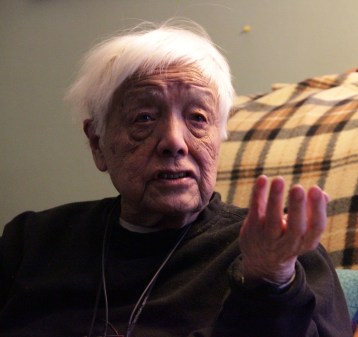
Happy Birthday, Grace Lee Boggs! A Bio and Book Review by Ashley Farmer

Grace Lee Boggs, By Kyle McDonaldm creativecommons.orglicensesby2.0, via Wikimedia Commons, cropped

In celebration of Grace Lee Bogg’s birthday on June 27th, 1915, I share an excellent bio and book review by historian Ashley Farmer:

“The Power And Importance Of Ideas:” Grace Lee Boggs’s Revolutionary Vision”

In the opening lines of her autobiography, Living for Change, Grace Lee Boggs remarked: “Had I not been born female and Chinese American, I would not have realized from early on that fundamental changes were necessary in our society.”[1] A daughter of Chinese immigrants born in 1915, who, by her account, became a philosopher in her 20s and an activist in her 30s, Boggs remains one of the greatest radical theorists of the twentieth century.

Born in Rhode Island, Boggs spent her childhood in New York City, working in the two restaurants her father owned in Times Square. At the age of 16, she left home to attend Barnard College, and afterward, Bryn Mawr, where she earned a PhD in Philosophy in 1940. Philosophers like Hegel helped her “see [her] own struggle for meaning as part of the continuing struggle of the individual to become part of the universal struggle for Freedom.”[2] Boggs moved to Chicago in 1940. She began working with the South Side Tenants Organization set up by the Workers Party, a Trotskyist group that had split off from the Socialist Workers Party. Her time in the Windy City proved transformative. For the first time she was talking and working with the black community, getting a first-hand sense of what it meant to live within the confines of segregation and discrimination, and learning how to participate in grassroots organizing.[3]

It was also during her tenure with the Workers Party that she met Caribbean radical C.L.R. James, and began a “theoretical and practical collaboration that would last twenty years.”[4] As part of a small wing of the workers Party led by James and Raya Dunayevskaya, Boggs became a leading theoretician, co-authoring texts like State Capitalism and World Revolution (1950). Through James, she came into contact with a number of black writers and activists who expanded her perspective. She relocated to Detroit in 1953, where she would organize with, and marry, James (Jimmy) Boggs.

During the 1950s, Boggs, “mainly listened and learned” to the black activists around her in an effort to better understand the black condition. It would take several years before she decided that she had been “living in the black community long enough to play an active role in the Black Power Movement that was emerging organically in a Detroit where blacks were becoming the majority.”[5] Living and working in what was considered to be an epicenter of black radicalism, Boggs engaged in a combination of theorizing and protesting, authoring texts with James Boggs, meeting and organizing with Malcolm X, and mentoring young radicals like Muhammad Ahmad (Max Stanford), leader of the Revolutionary Action Movement (RAM).

Her liberation theory was grounded in her study of philosophy and honed through her experiences organizing with and for black communities. It was also constantly evolving. Boggs emphasized dialectical thinking, arguing that reality is ever changing and that we must “constantly be aware of the new and more challenging contradictions that drive change.”[6] This reciprocal process drove her expansive vision of revolution. In her final book, The Next American Revolution, she explained her latest concept of revolution:

The next American Revolution, at this stage in our history, is not principally about jobs or health insurance or making it possible for more people to realize the American Dream of upward mobility. It is about acknowledging that we as Americans have enjoyed middle-class comforts at the expense of other peoples all over the world. It is about living the kind of lives that will not only slow down global warming but also end the galloping inequality both inside this country and between the Global North and Global South. It is about creating a new American Dream whose goal is a higher Humanity instead of the higher standard of living dependent on Empire.[7]

Boggs consistently offered a holistic vision of revolution and concrete steps through which to build it. She argued that achieving this goal meant more than organizing or mobilizing to petition the state or “changing the color of political power,” but rather growing food, reinventing education, developing Peace Zones in local neighborhoods, and creating restorative justice programs. She saw the seeds of revolution everywhere and showed us how, by practicing dialectical thinking, breaking down divides and categories, and building on rather than replicating older political models, we might “grow our souls.” She mirrored this in her own life, constantly “combining activity and reflection.”[8] Her willingness to do the work, her ability to listen and learn from black activists, her commitment to living in the communities in which she organized, and her openness to revising her politics, and values, made her an effective life-long ally of the black community and theoretician of liberation and revolution.

As she noted, often, “in the excitement of an emerging movement, we tend to want to be part of the action, and we underestimate the power and importance of the ideas in our heads and hearts.”[9] Upon her death, it’s important to revisit the ideas in her head. She left us a roadmap for revolution through ideas and action, one that anyone could be a part of if they were clear about the stakes of the transformation and that fundamental change is necessary.

Originally published at the African American Intellectual History Society blog, this was originally republished at O.P. when under a Creative Commons licence in 2015

Ashley Farmer is a historian of African-American women’s history. Her research interests include women’s history, gender history, radical politics, intellectual history, and black feminism. She earned a BA in French from Spelman College, an MA in History from Harvard University, and a PhD in African American Studies from Harvard University. She is currently a Provost Postdoctoral Fellow in the History Department at Duke University. In August 2016, she will be an Assistant Professor in the Department of History and the African American Studies Program at Boston University. This bio and more about Ms. Farmer are to be found at her personal website

~ Ordinary Philosophy is a labor of love and ad-free, supported by patrons and readers like you. Any support you can offer will be deeply appreciated!

*All views and opinions expressed by guest writers are their own and do not necessarily reflect those of Ordinary Philosophy’s editors and publishers

~~~~~~~~~~~~~~~~~~~~~~~~~~~~~~~~~~~~~~

[1] Grace Lee Boggs, Living for Change: An Autobiography (Minneapolis: University of Minnesota Press, 1998), xi.

[2] Ibid., 30-31.

[3] Ibid., 36.

[4] Ibid., 43. James and Boggs “went their separate ways in 1962.”

[5] Grace Lee Boggs with Scott Kurashige, The Next American Revolution: Sustainable Activism for the Twenty-first Century (Berkeley: University of California Press, 2011), 66.

[6] Ibid., 62.

[7] Ibid., 72.

[8] Ibid., 164.

[9] Ibid., 80.

Happy Birthday, Aimé Césaire!

Aimé Fernand David Césaire, photo credit manomerci.comAimé-Fernand-David Césaire was a poet, playwright, philosopher, and politician from Martinique. In his long life (1913-2008), Césaire accomplished much in each of these roles, a rare feat as they rarely coincide in one person!
In turn mayor of Fort-de-France, deputy to the French National Assembly for Martinique, and President of the Regional Council of Martinique, this prolific writer and intellectual was also co-founder of Négritude, a ‘literary movement of the 1930s, ’40s, and ’50s that began among French-speaking African and Caribbean writers living in Paris as a protest against French colonial rule and the policy of assimilation.’ (Encyclopædia Britannica). The Stanford Encyclopedia of Philosophy describes Négritude as ‘the self-affirmation of black peoples, or the affirmation of the values of civilization of something defined as “the black world” as an answer to the question “what are we in this white world?”’. The term was chosen so as to be provocative, a way of re-claiming the word nègre, which had become a racial slur, while simultaneously shocking those who heard or read it into paying attention. Through his philosophy, political writing, and especially his poetry and plays, the world pays attention still.

Learn more about the great Aimé Césaire through the resources below; an excellent place to start is with Meredith Goldsmith’s article from The Poetry Foundation.

Ordinary Philosophy and its Traveling Philosophy / History of Ideas series is a labor of love and ad-free, supported by patrons and readers like you. Please offer your support today!

~~~~~~~~~~~~~~~~~~~~~~~~

Sources and inspiration:

Aime Cesaire‘. In Encyclopædia Britannica.

Chidi, Sylvia Lovina. The Greatest Black Achievers in History, chapter 1

Diagne, Souleymane Bachir, ‘Négritude‘. In The Stanford Encyclopedia of Philosophy

Goldsmith, Meredith. ‘Aimé Fernand Césaire‘, 1913–2008. In The Poetry Foundation

Women in the World of Frederick Douglass by Leigh Fought

Women in the World of Frederick Douglass by Leigh Fought, at the San Francisco Public Library

I just finished this book about Frederick Douglass by scholar Leigh Fought. I’m at the library right now, about to turn it back in, and have that feeling of afterglow which follows reading a fascinating story while gaining much deeper understanding of a subject that’s long inspired me.

Not only did I get to know the character and work of Douglass much better, his struggles, triumphs, mistakes, virtues, flaws, and motivations, I learned about the ways in which women shaped his life and ideas and made his work possible. I had uncovered pieces of this larger story when following his life and ideas last year, but Fought’s work tells this larger story fully and compellingly and then some. This not only a book about these personalities and how they met, fell in love, collaborated, clashed, helped, betrayed, and so on, but it’s about the real human side behind the various social movements Douglass and the women in his life were a part of. And for many, still a part of, through their memory and influence. It’s about the antislavery movement, the women’s rights movement, the suffrage movements, the worker’s rights movement, the Civil War, the formation of the Republican Party as a free soil, pro-Union party and its after-war (what I consider) devolution into the economy-above-all party, and many other potent movements shaping and reshaping American society.

I very highly recommend this book, and think you’ll love it as I do.

Enjoy!

Ordinary Philosophy and its Traveling Philosophy / History of Ideas series is a labor of love and ad-free, supported by patrons and readers like you. Please offer your support today!

Why Shouldn’t We Compel Them to Come In? Locke, the Enlightenment, and the Debate over Religious Toleration, by Nicholas Jolley

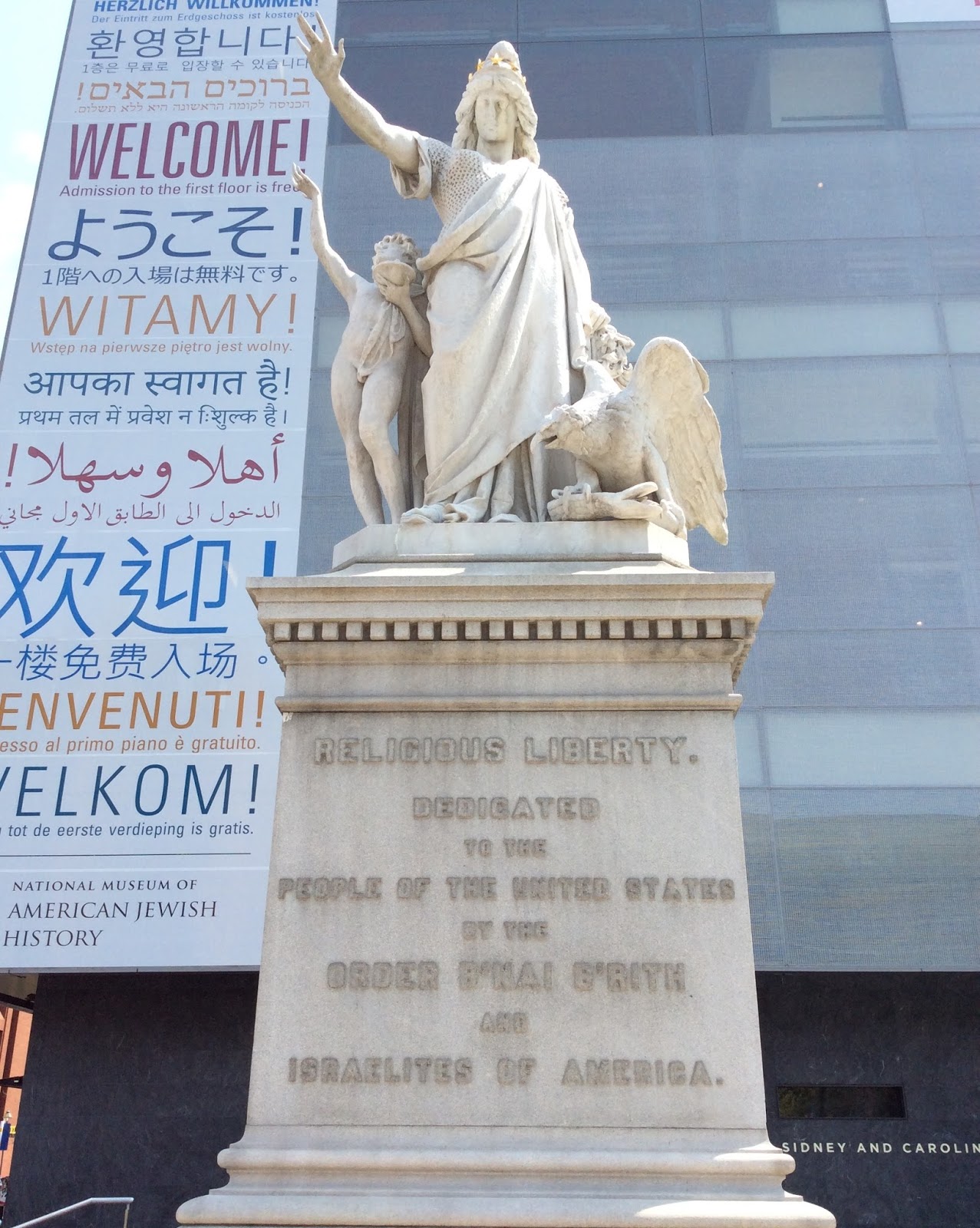
Religious Liberty, at the National Museum of American Jewish History in Philadelphia, by Moses Jacob Ezekiel, 1876

Most people in the West today unreflectively accept the need for religious toleration. Of course, if pressed, they will admit that toleration, like freedom of speech, can’t be absolute; there must be some limits. Suppose, for example, that my religion calls for human sacrifice every Sunday; no one will think that such a religion should be tolerated. Again, if pressed, people will agree that there are difficult cases: to take an issue that troubled John Locke, suppose that my religion demands allegiance to a foreign power. We may think that reasonable people can disagree over such cases. But the fact that there are these problem cases doesn’t shake people’s commitment to the principle of religious toleration.

We tend to be so wedded to this principle that we can easily forget how seductive the case for intolerance can be. Consider, for instance, a person who says with an authoritative air: “I know that my religion is the true one and that yours is completely false. I also know you will go to hell if you don’t convert to my religion.” Wouldn’t it be an act of charity on his part to convert you, by force if necessary, to the religion that will ensure your happiness in the afterlife? Here one might adapt an example given by that champion of liberalism, John Stuart Mill, for another purpose. A police officer sees a person trying to cross a bridge that he knows to be unsafe. According to Mill, it’s not an unwarranted interference with the person’s liberty for the officer to use force to prevent him or her from stepping on to the bridge; he knows, after all, that the bridge is unsafe and he knows that the person doesn’t want to fall into the river. One might take a similar line in the religious case: I know that John’s religion is leading him to hell, and I know that that’s not where he wishes to end up. Theologians in the Western tradition such as Augustine have argued for intolerance along these lines, and they have buttressed their argument by appealing to the biblical text: “Compel them to come in.”

Modern liberals are likely to respond that the appeal to Mill’s example is unfair, for the analogy is far from exact. For one thing, Mill builds into his example the assumption that there is no time to warn the person about the danger of the bridge; presumably, if there were time to warn him, then other things being equal, Mill would admit that there was no case for coercion. More importantly, one might argue that no one really knows, or can know, that the doctrines of revealed religion are true; acceptance of such doctrines depends on accepting the accounts of witnesses who may be unreliable or whose words may have been misinterpreted down the ages.

The idea that no one can know the claims of revealed religion are true is the basis for one of Locke’s main strategies of argument for religious toleration. The strategy is a powerful one, but it is open to a couple of objections. First, Locke sets the bar for knowledge very high: he allows little to count as knowledge that isn’t on a par with mathematical demonstration. By his lights, in the bridge example, even the policeman doesn’t strictly know that the bridge is unsafe. Further, even if the champion of intolerance concedes that he doesn’t strictly know his religion to be true, he may still say that he has very strong support for his beliefs, and that this level of support justifies him in coercing others. So the kind of case that Locke makes here may not be conclusive.

Fortunately, Locke has other strings to his bow. One intriguing argument turns on the nature of belief and its relation to the will. Suppose that the champion of intolerance says to the unbeliever: “You ought to believe the articles of my faith” (e.g. the doctrine of the Trinity). It seems apt for the unbeliever to reply to such a claim by saying: “It’s not in my power to believe this doctrine. You misunderstand the nature of belief. Belief is not a voluntary action like switching on a light. Rather, belief is more like falling in love; it’s something that happens to you.” One might then plug in the Kantian principle implicitly accepted by Locke: ought implies can. If belief is not in my power, and ought implies can, then I can have no obligation to believe the proposition in question.

This can seem like a powerful reply to the advocate of intolerance, but again, unfortunately, it’s not conclusive. For the advocate may say: “I agree that belief is not directly under your voluntary control, but I maintain that it is indirectly so. True, you can’t just switch on belief, but it’s in your power to do things that will result, or are likely to result, in your coming to believe.” Pascal, for instance, thought that though we can’t just believe at will, we can do things such as going to Mass and mixing with the congregation of the faithful that will have the effect of producing belief; faith, he thought, is catching. And then the intolerant person is in a position to make a case for religious persecution on the part of the state: there should be penalties for non-attendance at church so that people are induced to attend and at least to give a hearing to the teachings of the state-approved religion. This was the argument put to Locke by his opponent, Jonas Proast. Locke seeks to reply to this argument by saying that sincere religious belief can’t be produced in this way, and that it’s only sincere religious belief that is acceptable to God. Whether this reply to Proast is successful is a controversial issue among philosophers who have studied the debate. And the issue isn’t a narrowly academic one: it should be of interest to all those who seek to defend the values of the Enlightenment today.

This essay was originally published at OUP Blog: Oxford University Press’s Academic Insights for the Thinking World

Nicholas Jolley is Research Professor and Emeritus Professor of Philosophy at the University of California, Irvine. He has also taught at the University of California, San Diego, and Syracuse University. He is the author of a number of books for OUP, including Toleration and Understanding in Locke (2017), and Locke’s Touchy Subjects: Materialism and Immortality (2015).

~ Ordinary Philosophy is a labor of love and ad-free, supported by patrons and readers like you. Any support you can offer will be deeply appreciated!

*All views and opinions expressed by guest writers are their own and do not necessarily reflect those of Ordinary Philosophy’s editors and publishers

The “Woman’s Rights” Man: A New Book on Women in Frederick Douglass’s World, by Ibram X. Kendi

Left: Leigh Fought, image Le Moyne College; right, Anna Douglass, image Library of Congress

The author of Women in the World of Frederick Douglass is Leigh Fought. Professor Fought is an associate professor of history at Le Moyne College in Syracuse, New York. She was an associate editor on the first volume of Frederick Douglass’s correspondence at the Frederick Douglass Papers, published by Yale University Press in 2009. Her previous books includes Southern Womanhood and Slavery: A Biography of Louisa McCord (University of Missouri Press, 2003) and Mystic, Connecticut: From Pequot Village to Tourist Town (History Press, 2006). Professor Fought earned her Ph.D. in U.S. history from the University of Houston and a Master of Library Science degree from Simmons College in Boston.

In his extensive writings, Frederick Douglass revealed little about his private life. His famous autobiographies present him overcoming unimaginable trials to gain his freedom and establish his identity—all in service to his public role as an abolitionist. But in both the public and domestic spheres, Douglass relied on a complicated array of relationships with women: white and black, slave-mistresses and family, political collaborators and intellectual companions, wives and daughters. The great man needed them throughout a turbulent life that was never so linear and self-made as he often wished to portray it.In Women in the World of Frederick Douglass, Leigh Fought illuminates the life of the famed abolitionist off the public stage. She begins with the women he knew during his life as a slave: his mother, from whom he was separated; his grandmother, who raised him; his slave mistresses, including the one who taught him how to read; and his first wife, Anna Murray, a free woman who helped him escape to freedom and managed the household that allowed him to build his career. Fought examines Douglass’s varied relationships with white women—including Maria Weston Chapman, Julia Griffiths, Elizabeth Cady Stanton, and Ottilie Assing—who were crucial to the success of his newspapers, were active in the antislavery and women’s movements, and promoted his work nationally and internationally. She also considers Douglass’s relationship with his daughter Rosetta, who symbolized her parents’ middle class prominence but was caught navigating between their public and private worlds. Late in life, Douglass remarried to a white woman, Helen Pitts, who preserved his papers, home, and legacy for history.

By examining the circle of women around Frederick Douglass, this work brings these figures into sharper focus and reveals a fuller and more complex image of the self-proclaimed “woman’s rights man.”

In this well-researched and richly textured book, Leigh Fought gives us a fascinating new view into the life and times of one our most famous and revered figures: Frederick Douglass. As he freely acknowledged, women helped make Douglass the man he became. So we, too, are in debt to the women whose stories come so vividly alive in these pages.”—Annette Gordon-Reed, author of The Hemingses of Monticello: An American Family

Ibram X. Kendi: What are the principle findings or arguments of the book? What do you hope readers take away from reading it?

Leigh Fought: Frederick Douglass would not have become one of the greatest black activists of the nineteenth century without the work of women. This was not the cliché “behind every great man is a woman.” Women played a central role in his intellectual development, his independence as a man and activist, his economic well-being, his challenge to racial stereotypes and prohibitions, and the persistence of his place in history.

When I started this project, I was simply interested in finding more about all of these women who seemed as fascinated by Douglass as I was, except that they actually knew him. I also thought that the project would be synthetic. As it turned out, others had expressed little curiosity about most of the women themselves, with the exception of those women who merited their own biographies. Then, as I began to reconstruct the lives of the women from original research in order to explain their interaction with Douglass, I began to see a feminine space around him, much like the concept of a “negative space” in art. That feminine space, like most feminine spaces, was where the real action took place. If you want to know about a life, that is the place you have to investigate.

In Women in the World of Frederick Douglass, readers will meet a host of fascinating, resourceful women, some of whom might otherwise remain footnotes. The women featured in this book had the most dramatic influence on Douglass’s life, but they also had their own agendas and contexts that explain the ebb and flow of their relationships with Douglass, as well as his respect for or sympathy with them. The abuse suffered by slave women and the capitulation of white women to the institution of slavery shaped his childhood, laying the foundation for the man he became. In his adulthood, each woman at some point formed a partnership with Douglass to advance a cause against racism that extended beyond abolition and the end of slavery. His relationships with all of these women exposed the variety of ways that gender and race were employed as tools of oppression. At the same time, he and they mobilized their resistance along those very same lines. While the story of women in Douglass’s world does not preclude other actors or influences in his life, by bringing them into focus their biographies add nuance and deeper understanding to his.

This piece was originally published at Black Perspectives, the blog of the AAIHS, on May 1st, 2017, the release date of Ms. Fought’s book

Ibram X. Kendi is the associate editor of Black Perspectives. He is the author of Stamped from the Beginning: The Definitive History of Racist Ideas in America (Nation, 2016), which won the 2016 National Book Award for Nonfiction. In August, Kendi begins a new position as Professor of History and International Relations and the Founding Director of the Anti-Racist Research and Policy Center at American University. Follow him on Twitter @DrIbram.

~ Ordinary Philosophy is a labor of love and ad-free, supported by patrons and readers like you. Any support you can offer will be deeply appreciated!

*All views and opinions expressed by guest writers are their own and do not necessarily reflect those of Ordinary Philosophy’s editors and publishers


Are Human Rights Anything More than Legal Conventions? by John Tasioulas

Eleanor Roosevelt and The Universal Declaration of Human Rights

We live in an age of human rights. The language of human rights has become ubiquitous, a lingua franca used for expressing the most basic demands of justice. Some are old demands, such as the prohibition of torture and slavery. Others are newer, such as claims to internet access or same-sex marriage. But what are human rights, and where do they come from? This question is made urgent by a disquieting thought. Perhaps people with clashing values and convictions can so easily appeal to ‘human rights’ only because, ultimately, they don’t agree on what they are talking about? Maybe the apparently widespread consensus on the significance of human rights depends on the emptiness of that very notion? If this is true, then talk of human rights is rhetorical window-dressing, masking deeper ethical and political divisions.

Philosophers have debated the nature of human rights since at least the 12th century, often under the name of ‘natural rights’. These natural rights were supposed to be possessed by everyone and discoverable with the aid of our ordinary powers of reason (our ‘natural reason’), as opposed to rights established by law or disclosed through divine revelation. Wherever there are philosophers, however, there is disagreement. Belief in human rights left open how we go about making the case for them – are they, for example, protections of human needs generally or only of freedom of choice? There were also disagreements about the correct list of human rights – should it include socio-economic rights, like the rights to health or work, in addition to civil and political rights, such as the rights to a fair trial and political participation?

But many now argue that we should set aside philosophical wrangles over the nature and origins of human rights. In the 21st century, they contend, human rights exist not in the nebulous ether of philosophical speculation, but in the black letter of law. Human rights are those laid down in The Universal Declaration of Human Rights (1948) and the various international and domestic laws that implement it. Some who adopt this line of thought might even invoke the 18th-century English philosopher Jeremy Bentham, who contemptuously dismissed the idea of natural rights existing independently of human-made laws as ‘rhetorical nonsense – nonsense upon stilts’.

Now, it is true that since the middle of the previous century an elaborate architecture of human rights law has emerged at the international, regional and domestic levels, one that is effective to wildly varying degrees. And for most practical purposes, it might be that we can simply appeal to these laws when we talk about human rights. But, ultimately, this legalistic approach is unsatisfactory.

To begin with, the law does not always bind all those we believe should abide by human rights. For example, some states have not ratified human-rights treaties, or have ratified them subject to wide-ranging exceptions (‘reservations’) that blunt their critical edge. A country such as Saudi Arabia can have a seat on the UN Human Rights Council yet persist in severe forms of gender discrimination – for example, prohibiting women from driving – because it made its acceptance of human-rights treaties subject to an override in the case of conflict with Islamic law.

Moreover, the international law of human rights, like international law generally, almost exclusively binds states. Yet many believe that non-state agents, such as corporations, whose revenues in some instances exceed the GDP of all but the wealthiest nations, also bear grave human-rights responsibilities. When manufacturers such as Nike use 12-year-olds to stitch soccer balls in Pakistan, or internet service providers such as Yahoo secretly hand over the emails of dissidents to the Chinese government, many critics decry not just corporate malfeasance but human-rights violations. And this is so even if the corporation has complied with the laws of the country in which it is operating.

It is precisely in response to the threat to human rights posed by corporations that the ‘Guiding Principles on Business and Human Rights’ (2011), the brainchild of the Harvard political scientist John Ruggie, were established. Endorsed by the UN, the principles are not legally binding either on states or corporations. Instead, they aim to provide an authoritative statement of human-rights responsibilities that apply directly to corporations, quite apart from any legal obligations they might also bear. Ruggie’s ambition is that the principles will eventually inform corporate decision-making at all levels, illustrating the fact that human rights go beyond law and its enforcement.

Yet there is a deeper problem with identifying human rights with existing laws. Laws are the creations of fallible human beings. They might be good or bad, and so are always subject to interpretation and criticism in terms of independent moral principles. The international law of human rights, on this view, does not establish which human rights exist; instead, its goal is to implement moral rights we already possess, simply by virtue of our humanity. Slavery, torture and racial discrimination did not suddenly become human-rights violations only when they were legally prohibited. It is the other way round: we have human-rights law in order to give force to human rights that in some sense pre-exist their legal recognition. Unfortunately, no consensus has yet emerged among philosophers or anyone else on how human rights are to be defended as objective truths, independent of law.

The late American philosopher Richard Rorty sought a way out of this impasse. Although a staunch liberal, he turned his back on the philosophical enterprise of attempting to give a rational justification for human rights. He judged that activity to be pointless now that human rights are a deeply embedded fact of our culture, not just our law. How can we justify human rights when they seem more compelling to us liberal Westerners than any other idea we might use to justify them? The real task that confronts us, Rorty thought, was the practical one of enhancing compliance with human rights worldwide, not the intellectual one of grounding rights in the fabric of reality.

A similarly dismissive attitude is adopted by Ruggie, who conceives of his Guiding Principles not as reflecting ‘true’ moral demands, but as rooted in empirically measurable ‘social norms and expectations’. At a more sophisticated level, the late American political philosopher John Rawls, in his last work The Law of Peoples (1999), insisted that in a pluralistic world we cannot build our public commitment to human rights on any controversial account of the ‘truth’ about humanity or the good. We have to return, instead, to shared ideas embedded in the culture of a liberal democracy.

But is it enough to rely on the supposed fact that human rights are embedded in a liberal democratic culture? Or do we need to be able to step back from that culture and offer an objective justification for the principles embedded in it, as the philosophers have long supposed? The problem is that social expectations and cultural assumptions not only vary significantly across societies, but that they are fragile: various forces ranging from globalisation to propaganda can cause them to change dramatically or even wither away. Would rights against gender or racial discrimination disappear if sexist or racist attitudes come to predominate?

The question is not fanciful. Once apparently settled beliefs about the impermissibility of torture or the rights of refugees have recently suffered a backlash. There can be backsliding as well as progress, with no guarantees either way. Social expectations and deep cultural assumptions are no more a sufficient basis for human rights than the law is. There is a fatal contradiction in defending human rights against the rising authoritarianism of a ‘post-truth’ era while simultaneously abandoning the belief that our commitment to those rights is itself grounded in the truth, and being prepared to defend it on that basis.

My own view is that human rights are rooted in the universal interests of human beings, each and every one of whom possesses an equal moral status arising from their common humanity. In other words, in defending human rights, we will need to appeal to the inherent value of being a member of the human species and, in addition, the interests shared by all human beings in things like friendship, knowledge, achievement, play, and so on. And we will need to ask whether these considerations generate duties that are owed to each and every human being. This proposal is hardly uncontroversial. The appeal to the inherent value of humanity will be contested by some as a brute prejudice – a ‘speciesism’ on a par with racism. Similarly, the appeal to universal interests will be contested by those who think that human rights are ultimately about respecting individual freedom regardless of whether it advances the right-holder’s well-being.

Whether I’m right or not, I am convinced that we cannot sustain our commitment to human rights on the cheap, by invoking only the law or the assumptions of our liberal democratic culture. Only a deeper justification can explain why we are right to embody them in the law, or maintain a liberal democratic culture, in the first place. This has precisely been the aim of philosophical defences of human rights from the 12th century up until very recent times. To keep our human rights culture in good order, we cannot avoid engaging with the question of justification. And we should think of this not as the exclusive domain of professional philosophers, but as a process of public reasoning to which all citizens are called to contribute.Aeon counter – do not remove

This article was originally published at Aeon and has been republished under Creative Commons.

John Tasioulas is the inaugural Chair of Politics, Philosophy and Law, and director of the Yeoh Tiong Lay Centre for Politics, Philosophy and Law at King’s College London. He is working on his latest book, Human Rights: From Morality to Law (forthcoming, OUP). (Bio credit: Aeon)

~ Ordinary Philosophy is a labor of love and ad-free, supported by patrons and readers like you. Any support you can offer will be deeply appreciated!

*All views and opinions expressed by guest writers are their own and do not necessarily reflect those of Ordinary Philosophy’s editors and publishers

Paul Robeson, Black Dockworkers, and Labor-Left Pan-Africanism, by Peter Cole

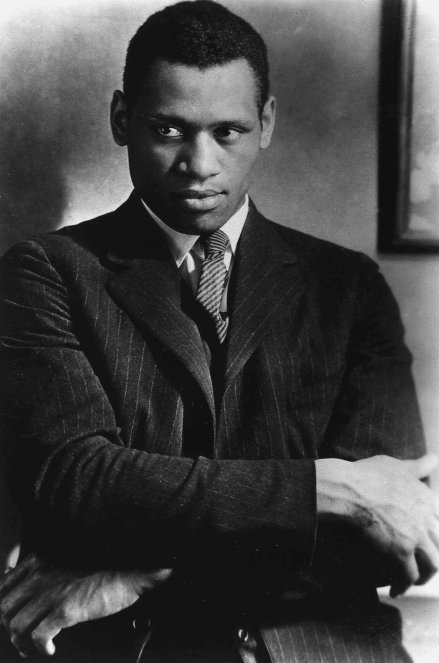
Actor Paul Robeson, photographed at Madame St. Georges studio in London in 1925 (AP Photo/Courtesy Paul Robeson Jr.). Click to hear Robeson’s incomparably beautiful baritone voice sing ‘Shenandoah’

In honor of singer, actor, and civil and labor rights activist Paul Robeson’s birthday, April 9, 1898, here’s an excellent piece by Peter Cole, originally published at the African American Intellectual History Society blog:

Paul Robeson was one of the greatest black internationalists of the twentieth century. A gifted actor and singer, he was also an unabashed leftist and union supporter. This resulted in his bitter persecution, destroying his career and causing, to a surprising degree, his disappearance from popular–if not academic–memory. Robeson’s connections to the fiery black dockworkers of the San Francisco Bay illuminate a form of black internationalism still left out of scholarly analyses –what I will refer to as Labor-Left Pan-Africanism.

Robeson’s life exemplified Pan-Africanism, a global movement of politically conscious black people who believed they shared much in common with all people of African descent in Africa and across the African Diaspora. In the 1930s, Robeson embraced this ideology, along with communism, and supported the Soviet Union. Robeson and other leftwing, Pan-African black intellectuals and activists—such as W. E. B. Du Bois, Eslanda Robeson, Vicki Garvin, and Hubert Harrison—fought long and hard for racial equality in the United States and for liberation of African and Caribbean nations abroad.

Robeson connected struggles for civil rights with socialism and working class politics. His interest in black equality first came from his father, William Drew Robeson, who was born a slave and successfully liberated himself. Robeson’s leftist politics emerged in the 1930s, first visiting the Soviet Union in 1934, and subsequently embracing socialism for treating black people as equals. He combined politics and artistry from then onwards.

In 1935, Robeson performed in the London debut of the American play Stevedore.1 The reviewer in the NAACP’s Crisis magazine concluded: “Stevedore is extremely valuable in the racial–social question—it is straight from the shoulder.” Later that year, he also played the lead in C. L. R. James’ take on Toussaint L’Ouverture, itself written shortly before James’ classic history of the Haitian Revolution, The Black Jacobins (1938).

In 1937, back in the United States, Robeson helped to establish the Council on African Affairs (CAA), which promoted African liberation in an era when few Americans actively engaged in such matters. Perhaps its greatest achievement came in 1946, when the CAA submitted a memorandum to the United Nations Commission on Human Rights in support of the African National Congress (ANC). Led by its US-educated President, Alfred Xuma, the ANC successfully fought to prevent the annexation of South-West Africa (now Namibia) by racist, white minority-ruled South Africa. Alas, the CAA was red-baited out of existence shortly after this victory.

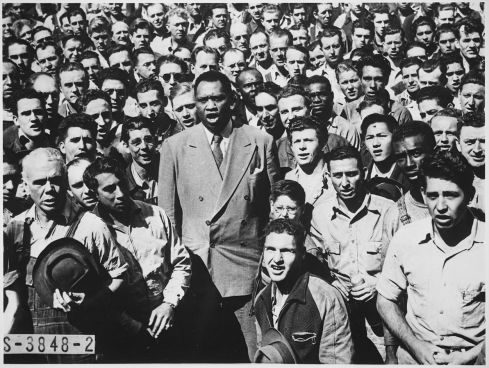
In 1942, during WWII, Robeson traveled to Oakland to champion the black and white union workers contributing to the Allied war effort on the home front. One of Robeson’s most famous photos shows him singing the “Star Spangled Banner” amidst a sea of black and white workers at Moore Shipyard in Oakland. The image captures his politics brilliantly, all the more so since Robeson had worked as a shipbuilder during WWI.

Paul Robeson, world famous baritone, at Moore Shipyard in Oakland, CA, leading workers in singing the Star Spangled Banner.

After WWII, the Cold War commenced and black people linked to communism, like Robeson and Du Bois, were persecuted by the US State Department, the FBI, and many so-called patriots intolerant of dissent. Historian Penny M. Von Eschen cites Robeson’s “extreme advocacy on behalf of the independence of the colonial peoples of Africa” as an explanation for his career’s destruction in the Red Scare. I would also add his labor activism.

Just like Robeson, many of the black dockworkers I study adhered to Labor-Left Pan-Africanism. In the San Francisco Bay Area, thousands of African Americans belonged to the International Longshore & Warehouse Union (ILWU).2  This leftwing union was renowned for its fierce and proud commitment to racial equality and black internationalism. Indeed, during WWII, Robeson became an honorary member of the ILWU. Robeson and the ILWU were, in many ways, a perfect fit.

The ILWU was—and remains—amongst America’s most radical unions, led for decades by its leftist President Harry Bridges and supported by many leftists in the rank-and-file. The union put socialism into action in its hiring halls, which dispatched members based upon a “low man out” system in which the person with the fewest amount of hours worked, that quarter, received the first available job.

In keeping with its politics, the ILWU attacked racism on the waterfront beginning with its initial “Big Strike” even though the workforce was 99% white in 1934. Local 10 welcomed thousands of African Americans during the WWII-induced shipping boom and these blacks, alongside leftist white allies, fully integrated their union and fought for civil rights in the Bay Area and nationwide. Due to their aggressive efforts, ILWU Local 10, which represents dockworkers in San Francisco, Oakland, and throughout the Bay Area, became black majority in the mid-1960s with blacks elected to every leadership position available. Truly, the ILWU embodied what historian Robert Korstad labeled “civil rights unionism.”

Robeson understood the significance of the ILWU as a platform from which to demand civil rights. Two of Robeson’s best friends– Joe Johnson and Revels Cayton— belonged to the ILWU. Together, these three black men articulated a commitment to Labor-Left Pan-Africanism.

The best example of its Pan-Africanism was ILWU’s commitment to the struggle against apartheid and, more broadly, for the liberation of all the peoples of southern Africa. In the 1950s and 1960s, the union repeatedly condemned white-minority rule in South Africa and also noted the ironic similarities with Jim Crow segregation in the States. In the 1970s and 1980s, rank-and-file members of ILWU Local 10 formed the Southern Africa Liberation Support Committee, which stood at the vanguard of black working class anti-apartheid activism during this period. Leo Robinson, Texas-born and a child of the 2nd Great Migration to Oakland, followed in his father’s footsteps to the waterfront in 1963. In Local 10 Robinson became a communist and activist who helped found the SALSC after the Soweto student uprising of 1976. Although Robeson died that same year, after declining health and decades in forced retirement due to McCarthyism, other radical longshoremen inspired by socialism and liberation movements in Africa joined Robinson and following in Robeson’s footsteps.

The black and white members of the SALSC fought for the liberation of black people in South Africa, Mozambique, Rhodesia, and elsewhere in the best way they knew how: direct action on the job. To leftist, Pan-African dockworkers, the most logical way to attack apartheid and racial capitalism was flexing their economic muscle, i.e. stop work. In 1962, 1977, and for eleven days in 1984 (shortly after Reagan’s landslide re-election), they refused to unload South African cargo. By contrast, other black Pan-Africanists embraced consumer boycotts or economic divestment. Local 10’s actions set the bar for US anti-apartheid activism and helped inspire many in the Bay Area to join the solidarity struggle. Nelson Mandela thanked the union on his first visit to Oakland in 1990 and Robinson received a posthumous award from the now-democratic South African government.

Long after his death, Paul Robeson continued to inspire African Americans in the ILWU including the Bay Area’s Alex Bagwell. Like Leo Robinson, Bagwell’s family moved to San Francisco during WWII. In the 1960s, he dropped out of college after admission to the union, which had elevated so many black folks into the middle class. Like Robeson, Bagwell was a leftist and active in the union’s anti-apartheid efforts. He and his wife, Harriet, belonged to a radical choir, Vukani Mawethu, founded by a South African who belonged to the ANC and had gone into exile. Alex and his wife were among those in Vukani who sang when Mandela visited Oakland.

In the early 1990s, though not yet retired, Bagwell finished his B.A. and then earned his M.A. in Creativity and Arts Education at San Francisco State University. For his graduate degree, he wrote a play on Robeson’s life, conducting interviews with twenty people who knew him including Local 10 member Joe Johnson, Robeson’s long-time friend.

After the birth of a multiracial, democratic South Africa, the Bagwells traveled to the country, as part of Vukani Mawethu, to perform there. Other black and white radicals in the ILWU did so, as well. The Pan-Africanism of these dockworkers clearly followed in the footsteps of Robeson, who first championed the rights of black South Africans in the 1940s. The spirit and ideals of Robeson continue to shape the Pan-Africanism of working class black dockworkers who now have established connections with black dockworkers in South African ports. Robeson would be proud.

  1.  Stevedore is an older term for dockworker or longshoreman, workers who load and unload cargo ships.
  2. The ILWU’s original name was the International Longshoremen’s & Warehousemen’s Union but, in 1997, a resolution was approved, unanimously at its biennial convention, that made its name gender-neutral. “What’s in a Name? For ILWU, it’s not ‘men’,Journal of Commerce, May 4, 1997

Peter Cole is a historian of the twentieth-century United States, South Africa and comparative history. Dr. Cole is Professor of History at Western Illinois University. He is the author of Wobblies on the Waterfront: Interracial Unionism in Progressive Era Philadelphia (University of Illinois Press, 2013) and currently at work on a book entitled Dockworker Power: Race, Technology & Unions in Durban and the San Francisco Bay Area. He writes on labor history and politics (Bio credit: AAIHS)

~ Ordinary Philosophy is a labor of love and ad-free, supported by patrons and readers like you. Any support you can offer will be deeply appreciated!

*All views and opinions expressed by guest writers are their own and do not necessarily reflect those of Ordinary Philosophy’s editors and publishers

Cesar Chavez Day, by Alejandro Magaña

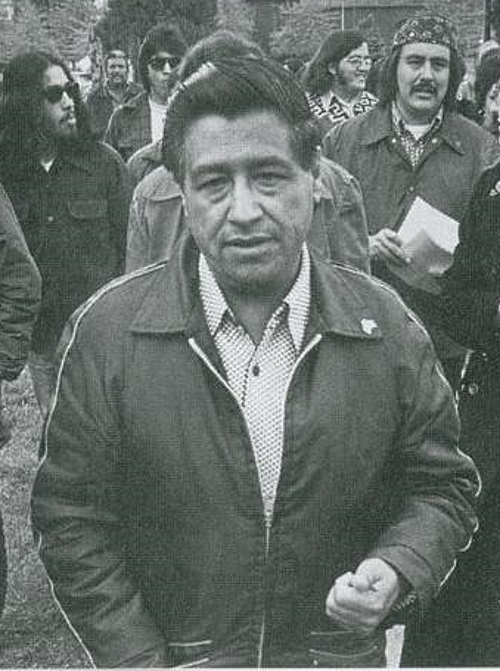
Cesar Chavez visits college - By Movimiento - Own work, cropped - CC BY-SA 3.0 httpcreativecommons.orglicensesby-sa3.0 via Wikimedia CommonsEvery year around Cesar Chavez’s birthday, as media outlets report of festivities in his honor, I’m reminded of a joke in a Simpsons episode and the strange sadness it elicited in me when I saw it: Homer Simpson is on his front lawn and is confronted with the apparition of a debonair, mustachioed man who introduces himself as, “the spirit of Cesar Chavez.”

In typical Homer confusion he asks, “Then why do you look like Cesar Romero?”

The ghost replies, “Because you don’t know what I look like!”

Cesar Chavez is certainly revered by many people, especially within the Latino community, but despite the steadily increasing ubiquity of his name across the United States, especially the American Southwest, there are still many Americans today who don’t really know who he is, let alone what he stood for, or what he accomplished.

Cesar Chavez was a Mexican-American community organizer turned labor leader. A former migrant farmworker recruited by the Community Service Organization (CSO) in its heyday of the 1950s, he co-founded the National Farmworkers Association (NFWA,) which later became the United Farm Workers (UFW,) the first successful union for migrant farmworkers. The UFW’s membership consisted mostly of indigent Latinos and Filipinos, and their struggle for justice and dignity, fighting to gain higher wages and better conditions in the fields where they were deprived of basic needs such as clean drinking water and bathrooms, became a national moral cause under the stewardship of Chavez, who courted national and international sympathy using militant non-violent tactics in the vein of Mahatma Gandhi and Martin Luther King Jr, such as strikes, boycotts, fasts, and peaceful marches.

Chavez was not an imposing orator with the fire-and-brimstone timbre of the Reverend Dr. King, nor did he cut as iconoclastic a figure as Gandhi, but in his unassuming way he could be just as charismatic and endearing, and this often caught people off guard, as it did an interviewer for the New Yorker in 1973, who, “had expected, if not a Mexican-American Lenin…a young, hard, intense man bristling with revolutionary zeal. Instead we found Mr. Chavez to be a stocky man…about five feet seven …with Indian features…and a pleasant earnest manner.” With his trademark regular boys’ haircut parted on the side and wearing simple cardigans with button down plaid shirts and slacks, his fashion was more Mr. Rogers than Mr. Lenin. He looked the part of the humble Everyman that people felt they could relate to.

On a personal note, my parents actually met while working with Cesar Chavez in the early ‘70s, and when they tell stories of those days, they both recall how approachable he was with his easy but confident demeanor; how people were drawn to him and trusted him, even as he took them out of their comfort zones, like the time he sent my mom and a few other farmworkers to Chicago, to publicize and organize the Grape Boycott, even though they spoke very little English and were armed with just a few phone numbers of sympathizers there along with the names of some churches that might possibly provide them with food, room and board. They believed they could accomplish such ambitious plans because this diminutive, unpretentious man seemed capable of stopping the engine of the entire agricultural industry and took on Big Agribusiness all by himself. Before it became widely known as the slogan of Barack Obama’s presidential campaign, I grew up with my father reminding me, “¡Si se puede!” (Yes, you can!) a phrase Chavez often chanted before throngs of people at picket lines and marches.

Like Gandhi and King, he was intensely spiritual and absolutely committed to non-violence. In what may be his most recognizable aphorism, he said, “It is my deepest belief that only by giving our lives do we find life. I am convinced that the truest act of courage…is to sacrifice ourselves for others in a totally non-violent struggle for justice.” Self-immolation was a recurring theme in both word and deed: in 1968, during the Delano Grape Strike, after several tense confrontations at the picket lines nearly devolved into violence, he fasted for 25 days to encourage and remind the farmworkers that their fight was to be a non-violent one. He would fast for 24 days again in 1972, and in 1988 he fasted for 36 days(!) to bring attention to the pesticide poisoning of grape workers and their children. It is thought that his relatively early death at the age of 63 in 1993 was probably due to aggregated health complications suffered from these sacrifices. Still, even now, if you talk to people who marched with Chavez and the UFW back then, most speak of Chavez in reverential, even hagiographical ways, for to them he was como un santo: like a saint..

Throughout the 1960s and 1970s, as the UFW made sweeping legislative strides on behalf of organized farm labor, Chavez was also becoming the most widely known leader within the broader Chicano Movement, or “El Movimiento,” a civil rights movement which empowered Mexican Americans caught between two cultures, not quite Mexican enough for their Mexican immigrant forebears, nor seen as truly American by the white hegemony. The term “chicano” was originally a derogatory term for the American children of Mexican migrants, but in the Movement it was flipped, transmogrified, to be a badge of ethnic pride. Of course Chavez always made sure to situate the fight of the UFW as united with the struggle of “all farm workers across the country, the Negroes and poor whites, the Puerto Ricans, Japanese, and Arabians…the races that comprise the oppressed minorities of the United States,” but “The Plan de Delano,” a text co-authored by Chavez with Dolores Huerta and the Chicano playwright Luis Valdez, reifies and emboldens his ethnic heritage, declaring “We are sons of the Mexican Revolution.” To this day, the flag of the UFW, showing a black Aztec eagle on stark red background, is widely considered a symbol of Chicano or Latino pride. Those of us who wear this symbol, or even, as in my case, have it tattooed on their body, recognize that the life we have so firmly rooted in the United States, with access to resources and opportunities that our parents or grandparents did not have, is due to the hard work and vigilance of people like Cesar Chavez, Dolores Huerta, or my mother, Maria Saludado.

The identity politics that certainly began to swell in the 1960s have persisted despite reactionary criticism and remain particularly relevant today; an era in which the ugly scars of racism seem as starkly etched in our national consciousness as ever. As we near the end of the second term of America’s first ‘non-white’ President, as Mexican immigration continues to be a galvanizing and polarizing issue in the US, and the Latino vote is highly prized on both sides of the political aisle, conditions would seem fecund for a reboot of El Movimiento. In appropriate fashion, this year the Cesar Chavez Foundation, an offshoot of the UFW, began its annual celebration in San Fernando, the first city in the nation to commemorate Cesar Chavez Day with a paid holiday, with a rally and march to encourage activism to “Dump Trump.”

¡Que viva César Chávez!

~ Alejandro Magaña is a musician, poet, and songwriter some of the time, and a father and husband all of the time. He also works full-time as an office manager at Urban Ore in West Berkeley. He lives in North Oakland with his wife and son and books and records.

Sources and Inspiration:

● My mother and father. ¡Que viva mis padres!
● Chasan, Daniel. “‘Marcher,’ an interview with Cesar Chavez,” The New Yorker, May 27, 1967.
● Chavez, Cesar, Huerta, Dolores, and Valdez, Luis. “The Plan of Delano,” El Malcriado, March 17, 1966.
● Chavez, Cesar. An Organizer’s Tale: Speeches Ed. Ilan Stevens. London: Penguin Books, 2008.

This piece was first published one year ago today here at Ordinary Philosophy

~ Ordinary Philosophy is a labor of love and ad-free, supported by patrons and readers like you. Any support you can offer will be deeply appreciated!

*All views and opinions expressed by guest writers are their own and do not necessarily reflect those of Ordinary Philosophy’s editors and publishers

Abortion: Conflict and Compromise, by Kate Greasley

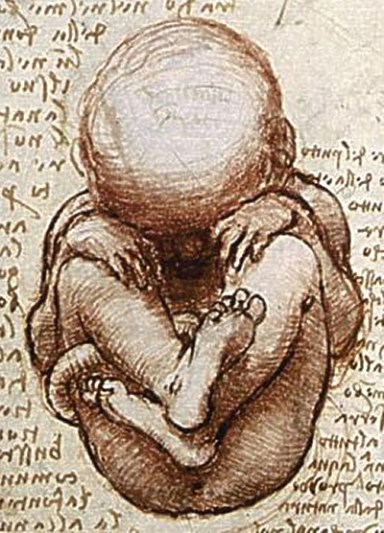
View of a Foetus in the Womb, c. 1510 – 1512, drawing by Leonardo da Vinci

A few years ago, when I told a colleague that I was working primarily on abortion rights, he looked at me quizzically and replied, “But I thought they had sorted all of that out in the seventies”. Needless to say, he was a scientist. Still, while the idea that the ethical questions implicated in abortion were somehow put to bed in the last century is humorous, I knew what he meant. The end of the ‘sixties and beginning of the ‘seventies marked watershed developments for reproductive freedom in both Britain and the U.S. – developments which have (with some non-negligible push and pull at the boundaries) continued to set the basic terms of abortion regulation ever since.

In Britain, the 1967 Abortion Act widely legalised termination of pregnancy for the first time and codified the grounds upon which abortions could be legally carried out. Shortly after, the 1973 Supreme Court decision Roe v Wade famously declared that there was a constitutionally protected right to abortion in the United States, albeit with some qualifications. Since those events, there have been no revolutionary changes to the system of abortion regulation on either side of the Atlantic, although there have been many meaningful ones.

Of course, legal resolution by no means signalled the end of moral disagreement about abortion. A significant minority voice has continued to vehemently oppose abortion practice. What was settled back then secured far more of a grudging détente than a happy compromise. (Like so much legislation, the Abortion Act was a product of political expediencies; I once heard one of its drafters describe the pandemonium of last-minute back-room deals in the Houses of Parliament, and the hotchpotch of provisions that emerged from all of the bargaining necessary to get it through.) As such, the political resolutions, whilst enduring, have always been intensely fragile, especially in the US where Christian conservatism and the anti-abortion lobby overlap so much. Of late, that fragility has become increasingly apparent. Recent developments in the United States and elsewhere have revealed just how misplaced any complacency about reproductive rights truly is.

It is, in truth, hardly surprising that abortion compromise is so precarious when one considers the nature of dissent to abortion practice. If one side of that debate really believes—as many claim to—that abortion is murder, akin to infanticide, then it is hard to see how they can ever truly accept legal abortion merely on the strength of its democratic pedigree. Against such a belief, rehearsing the familiar pro-choice mantras about women’s rights and bodily autonomy is a bit like shooting arrows at a Chinook helicopter. For what strength does control over one’s body and reproductive destiny really have when measured against the intentional inflicting of death on another?

Of course, if ideological opponents of abortion rights really believe that abortion amounts to murder, it may be hard to make sense of some of the traditional exceptions they themselves have defended, in circumstances, for example, of rape or incest, or where the pregnancy endangers the very life of the pregnant woman. If killing the fetus is no less than homicide, then how can it be justified even in these dire conditions? We certainly do not permit the out and out killing of born human beings for comparable reasons. This may be an indication that opponents of abortion who make such concessions do not truly, deeply, believe the claim that killing an embryo or fetus is like killing a child. Alternatively, it may just suggest that such concessions are rarely ever authentic, but adopted merely as a matter of political strategizing, to avoid losing moderate support in the wider conflict. If that were true, it would be unsurprising to see those traditional concessions gradually withdrawn as opponents of abortion become emboldened by increasing success.

Either way, defenders of abortion rights have a constant decision to make about how to respond to attacks on reproductive freedom and the denunciation of abortion as a moral horror. The approach most traditionally favoured, at least in public spheres, is to simply ignore all talk about abortion being murder and try to refocus attention on women’s stakes in abortion freedoms. As the Mad Men character Don Draper always quipped, “If you don’t like what’s being said, change the conversation”. This strategy can have its uses, but also its drawbacks. Most importantly, whilst reminding everyone of what women stand to lose through abortion prohibition is likely to strengthen the resolve of those sympathetic to abortion rights, it does nothing to address the consternation of those that are genuinely conflicted about the issue – who are not sure that abortion isn’t murder. As an effort to persuade avowed opponents of abortion rights to think again, it is even more pointless. For those who decry abortion as unjustified homicide do not usually need to be convinced that women can be hugely benefited by it, and harmed by its outlawing. That is not where their main ground of opposition ever lay.

It is for this reason that I think any effective defense of abortion rights must meet that opposition on its own terms, and confront the claims that abortion is homicide and the fetus the moral equivalent of a child. The task can seem daunting; how does one even begin to argue about whether or not unborn human lives have exactly the same right to life as mature human beings? But there are many reflections one can bring to bear on that question, and especially on the question whether, when examining our own or others’ beliefs, we are really committed to the claim that embryos are equal in moral value to human children. For one thing, as some philosophers have pointed out, if we really believed that claim, we may have to ask why infinitely more resources are not devoted to the prevention of natural miscarriage, which, it would follow, is the single biggest cause of child mortality – far greater than famine, disease, or war. At any rate, if defenders of reproductive freedoms do not concern themselves with the fundamental questions of abortion ethics, they are in danger of being left with little effective argument if and when the fragile settlements that have held for some decades threaten true collapse.

This essay was originally published at OUP Blog: Oxford University Press’s Academic Insights for the Thinking World

O.P. Recommends: A Conversation With Michael Ignatieff on Universal Human Rights, Localism, and the Ordinary Virtues at Philosophy 247

President Obama meets with Michael Ignatieff in Ottawa, Canada on Feb. 19, 2009 (from White House photo by Pete Souza)Ignatieff speaking of people he worked with on his travels to uncover people’s actual and expressed beliefs about human rights:

I first heard about Michael Ignatieff on the Philosophy Bites podcast a few years ago, and found his story of transforming himself from an intellectual to a politician and back again very intriguing. Just last week, I was very interested to hear a discussion between him and David Edmonds, co-host of Philosophy Bites and now host of his own podcast Philosophy 24/7.

This time, Ignatieff talks about human rights, a topic he’s been working on deeply for many years. As part of his preparation and research, he traveled the world to uncover people’s actual and expressed beliefs about human rights. What he says about what he learned really struck me:

‘The Human Rights edifice created since 1945 has had a huge effect on the world in the sense of powering the democratic revolution, the self-determination revolution, the civil rights revolution… On the one hand, you get people saying ‘my voice should be heard’… [The idea of] human rights has been influential in creating the tacit presumption… that their voice mattered… I don’t think without the human rights revolution that would have anchored itself in their souls and conscience as much as it is.

On the other hand… human rights is a form of universalism. It says that all human beings matter, and that we have duties to human beings outside our borders, and that it is the human identity that counts in moral judgment. What struck me very much is that people thought they wanted to make a claim of equality for themselves as citizens but not for other people, so equality of voice within the nation state, but no very strong or increased development of a universalist obligation to people beyond states. And that I think is a surprising result, because if human rights means anything, it is, we have this idea of transnational solidarity to people who are not fellow citizens, and so equality for us, not so much equality for strangers.

And this has, needless to say, huge political implications for a whole range of issues, notably refugees and migration…’

Igniateff then goes on to discuss how this great moral innovation, the idea of universal human rights, squares with what Ignatieff calls ‘ordinary virtues’: those interpersonal moral instincts which impel us to deal justly and kindly with those nearest to us, with those we encounter directly and those who share our culture, our language, our belief system, and our family and local community ties. Ignatieff believes that the ordinary virtues are not only compatible with, but necessary for realizing the ideal of human rights in the world. That’s because localism and the ordinary virtues provide us with a key element, that of triage, which makes these great human rights projects scalable, manageable, and effective within localities in a way that the application of universalist principles can’t on their own.

Does Ignatieff succeed in his attempt to reconcile the universalist conception of human rights with localism and the ordinary virtues? What do you think? Find out by listening to this fascinating and informative discussion at Philosophy 24/7

And learn more about the widely accomplished and ever-energetic Michael Ignatieff at:

Michael Ignatieff: Biography – at his website

Michael Ignatieff – by Michael Ray for Encyclopædia Britannica

Michael Ignatieff on Political Theory and Political Practice – discussion at Philosophy Bites podcast

“I Don’t See the President As An Intellectual at All”: A Q&A with Michael Ignatieff – by Isaac Chotiner for  The New Republic, February 20, 2014

Michael Ignatieff, The Intellectual Who Wanted to Be a Politician – by Jordan Michael Smith

Ordinary Philosophy and its Traveling Philosophy / History of Ideas series is a labor of love and ad-free, supported by patrons and readers like you. Please offer your support today!