Happy Birthday, Karl Marx!

Marx by Sam Kaprielov, 76x61cm, oil on canvas, 2015, image used by permission of the artist

Marx by Sam Kaprielov, 76x61cm, oil on canvas, 2015, http://www.samkaprielov.com/

Born on May 5, 1818, few thinkers have been as influential as Karl Marx. Philosopher, theoretician of history, economist, sociologist, journalist, and revolutionary socialist, he was a prolific thinker and writer, widely lauded, criticized, and misunderstood, and all of these especially by those who claim to act in his name.

Too many of the latter have instituted some of the world’s most brutal and deadly regimes, which would have surprised and horrified Marx to no end. After all, his thought was informed and driven by the horrors of overcrowding, filth, pollution, and poverty that the industrial revolution and nascent, unregulated capitalism had wrought in English cities in his own time. While the value of his observations of the plight of the working poor are widely appreciated, as are his explorations of problems with and contradictions within capitalism that earlier thinkers such as Adam Smith had not identified or foreseen, there doesn’t seem to be much hope that his solutions would or could be implemented except by oppressive and tyrannical regimes.

In honor of his birthday, here’s a series of works about Karl Marx, a recent painting by an artist whose work my good friend introduced me to, and a song that I love.

Karl Marx (1818 – 1883) ~ a brief bio at BBC: History

Karl Marx, 1818-1883 ~ by Steven Kreis for The History Guide

Karl Marx ~ by Jonathan Wolff for The Stanford Encyclopedia of Philosophy

Marx ~ Melvyn Bragg and guests Anthony Grayling, Francis Wheen, and Gareth Stedman Jones discuss Karl Marx for BBC’s In Our Time podcast and radio series

Karl Marx: Capitalism vs. Communism, Marx and Kierkegaard on Religion Part 1 and Part 2and Austrians and Marx ~ by Stephen West for Philosophize This!

*A version of this piece was previously published at Ordinary Philosophy

~ Ordinary Philosophy is a labor of love and ad-free, supported by patrons and readers like you. Any support you can offer will be deeply appreciated!

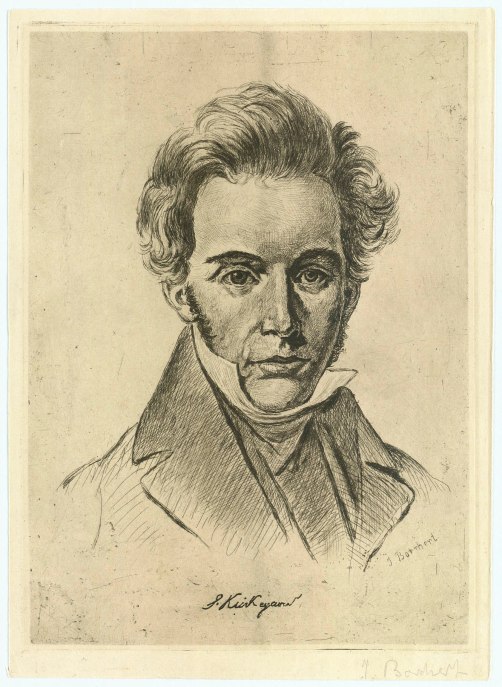
Happy Birthday, Søren Kierkegaard! By Eric Gerlach

S. <>Søren Kierkegaard (May 5, 1813 – Nov. 11, 1855 CE), the great Danish philosopher and forerunner of existentialism, was born in the Danish city of Copenhagen, and throughout his life he enjoyed walking through the city, greeting everyone he met as his equal regardless of their station in life.  As a young boy, Kierkegaard’s father drilled him with difficult lessons so he would be the top student in his class, but to prevent his son from developing selfish pride, the father demanded that his son get the third best grades in the class, purposefully making mistakes to prevent the boy from being recognized as first or second student.

Caspar_David_Friedrich_-_Wanderer_above_the_sea_of_fog

For Kierkegaard, genuine truth is human subjectivity and perspective, and it is only the individual who accepts subjectivity who comes to realize the greater truth insofar as it is achievable by individuals.  For Kierkegaard, truth is not objective, but subjective, not an object achieved, but a test withstood, not a hurdle overcome, but an experience endured.  Kierkegaard argued that no social system can authentically give the individual meaning and truth. Individuals must make choices, and if they choose to go along with the masses, they have sacrificed their own ability to give truth meaning.  Kierkegaard wrote that he could have, like most scholars of his day, become a voice pronouncing the greatness and objectivity of his race, his country, his historical period, his fellow scholars, but rather than commit treason to truth he chose to become a spy, a solitary individual who chronicled the hypocrisy of all claims to objectivity.

472px-Kittinger-jump

To be an individual is to experience “a vertigo of possibilities”, the monstrosity of spontaneity.  Kierkegaard wrote, “We are condemned to be free”.  It is our freedom, the experience of the infinite, undefined and unbounded, which unites us most intimately with our world.  Kierkegaard argued that one can overcome the angst, the vertigo of possibilities, by making a leap of faith, by choosing to believe in something and act with some purpose in spite of the fact that beliefs and purposes can never be fully justified.  Only this is authentic individuality and truth, having chosen what one is to be, with the honest recognition of the freedom involved in the choice.

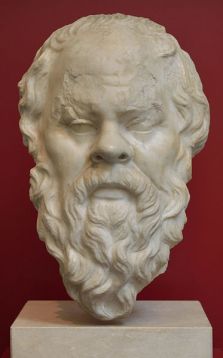
373px-Head_of_Socrates_in_Palazzo_Massimo_alle_Terme_(Rome)

Kierkegaard saw himself as a true follower of Socrates, who argued that he knew that he did not know, which is why the Oracle at Delphi said that no man was wiser than he.  Kierkegaard wrote his college thesis on Socrates, irony, and indirect communication, much as Kierkegaard himself indirectly communicated through his pseudonyms.  Socrates never made great claims to truth, and would instead use analogy, myth, and paradox to show that human judgments and beliefs are problematic and contradictory even as they assert themselves with certainty, which Kierkegaard argued was also the method of Jesus.  Kierkegaard wrote that Socrates “approached each man individually, deprived him of everything, and sent him away empty-handed”.  Socrates showed others that they did not truly know what they believed themselves to know, and he was killed by the Athenian assembly just as Jesus was killed for questioning the Pharisees.

Brooklyn_Museum_-_Saint_John_the_Baptist_and_the_Pharisees_(Saint_Jean-Baptiste_et_les_pharisiens)_-_James_Tissot_-_overall

Kierkegaard’s works are dominated by theological concerns, wondering on many pages about the individual’s relationship to God and Jesus.  For Kierkegaard, the meaning of Christianity was not the achievement of objectivity, but the acceptance of subjectivity, of individually lacking the God’s eye view.  Kierkegaard was brutally critical of the Danish Lutheran Church for presenting itself as the objective truth, and argued that it is only as an individual that one can be a genuine Christian.  Kierkegaard argued that Christianity began as a rebellion against the status quo, but then became the entrenched regime.

450px-Image-Søren_Kierkegaard_grave_4

After healing a blind man, Jesus rebuked the Pharisees, the political and religious establishment of his time, and said that because they think they see they are in fact blind.  In his later years, Kierkegaard attacked the Danish Church without mercy, and at his funeral a fight broke out when young theology students, progressive and inspired by Kierkegaard, protested that the church was attempting to hijack his name and fame by calling him one of their own after he had so bitterly attacked their hypocrisy for decades.  Kierkegaard wanted his tombstone to read only, “The Individual”, though his relatives decided otherwise.

*A version of this piece was previously published at Ordinary Philosophy

~ Ordinary Philosophy is a labor of love and ad-free, supported by patrons and readers like you. Any support you can offer will be deeply appreciated!

*All views and opinions expressed by guest writers are their own and do not necessarily express those of Ordinary Philosophy’s editors and publishers

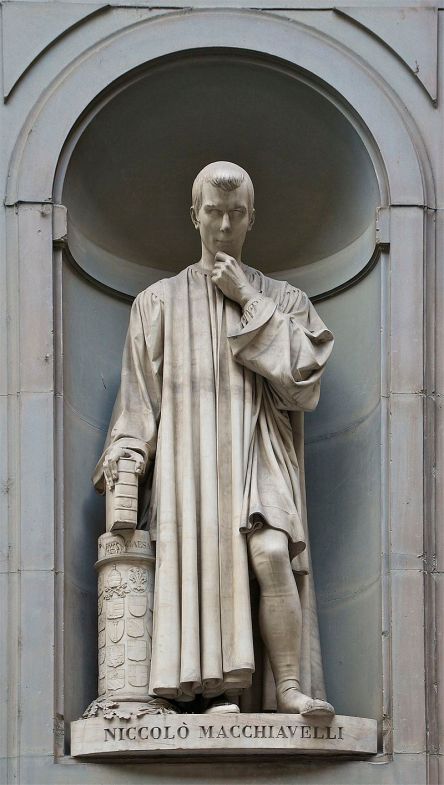
Happy Birthday, Niccolò Machiavelli!

Niccolò Machiavelli statue at the Uffizi

Cary Nederman introduces us to his piece on Niccolò Machiavelli for The Stanford Encyclopedia of Philosophy thusly:

Why an entry on Machiavelli? That question might naturally and legitimately occur to anyone encountering an entry about him in an encyclopedia of philosophy. Certainly, Machiavelli [May 3, 1469 – June 21, 1527] contributed to a large number of important discourses in Western thought—political theory most notably, but also history and historiography, Italian literature, the principles of warfare, and diplomacy. But Machiavelli never seems to have considered himself a philosopher—indeed, he often overtly rejected philosophical inquiry as beside the point—nor do his credentials suggest that he fits comfortably into standard models of academic philosophy. His writings are maddeningly and notoriously unsystematic, inconsistent and sometimes self-contradictory. He tends to appeal to experience and example in the place of rigorous logical analysis. Yet succeeding thinkers who more easily qualify as philosophers of the first rank did (and do) feel compelled to engage with his ideas, either to dispute them or to incorporate his insights into their own teachings. Machiavelli may have grazed at the fringes of philosophy, but the impact of his musings has been widespread and lasting. The terms “Machiavellian” or “Machiavellism” find regular purchase among philosophers concerned with a range of ethical, political, and psychological phenomena, even if Machiavelli did not invent “Machiavellism” and may not even have been a “Machiavellian” in the sense often ascribed to him. Moreover, in Machiavelli’s critique of “grand” philosophical schemes, we find a challenge to the enterprise of philosophy that commands attention and demands consideration and response. Thus, Machiavelli deserves a place at the table in any comprehensive survey of philosophy…’

In addition to Nederman’s excellent entry in The Stanford Encyclopedia of Philosophy, learn more about the often contradictory, ever controversial, always fascinating and relevant Niccolò Machiavelli:

The Inverted Advice of Niccolò Machiavelli ~ by William J. Connell for the Times Literary Supplement

Machiavelli and the Italian City States ~ Melvin Bragg in conversation with his guests Quentin Skinner, Evelyn Welch, and Lisa Jardine

Niccolò Machiavelli ~ by Cary Nederman for The Stanford Encyclopedia of Philosophy

Niccolò Machiavelli: Italian Statesman and Writer ~ by Harvey Mansfield for Encyclopædia Britannica

*A version of this piece was previously published at Ordinary Philosophy

~ Ordinary Philosophy is a labor of love and ad-free, supported by patrons and readers like you. Any support you can offer will be deeply appreciated!

Happy Birthday, Santiago Ramón y Cajal!

Santiago Ramón y Cajal, estudiante de medicina en Zaragoza 1876: self portrait, public domain via Wikimedia Commons

I discovered the fascinating scientist and thinker Santiago Ramón y Cajal (May 1, 1852 – Oct. 17, 1934) last year among the always excellent writings of Maria Popova:

Diseases of the Will: Neuroscience Founding Father Santiago Ramón y Cajal on the Six Psychological Flaws That Keep the Talented from Achieving Greatness – by Maria Popova for Brain Pickings

Popova’s essay explores Cajal’s observations about the ways in which we can so easily defeat ourselves in the pursuit of excellence. I, for one, find that his observations and advice offer very wise guidance, a series of signposts marking pitfalls that can entrap our egos all too easily. Cajal clearly lived by his own advice, and his achievements were marked by hard work and dogged perseverance as well as brilliant insights.

Learn more about Cajal’s life and scientific achievements:

Life and Discoveries of Santiago Ramón y Cajal – by Marina Bentivoglio for Nobelprize.org

Santiago Ramón y Cajal – by Abdellatif Nemri for Scholarpedia

Santiago Ramón y Cajal – Biographical – from Nobel Lectures, Physiology or Medicine 1901-1921, Elsevier Publishing Company, Amsterdam, 1967, at Nobelprize.org

Santiago Ramón y Cajal: Spanish Histologist – by the editors of Encyclopaedia Britannica

*A version of this piece was previously published at Ordinary Philosophy

~ Ordinary Philosophy is a labor of love and ad-free, supported by patrons and readers like you. Any support you can offer will be deeply appreciated!


Following in Mary Wollstonecraft’s Footsteps in London

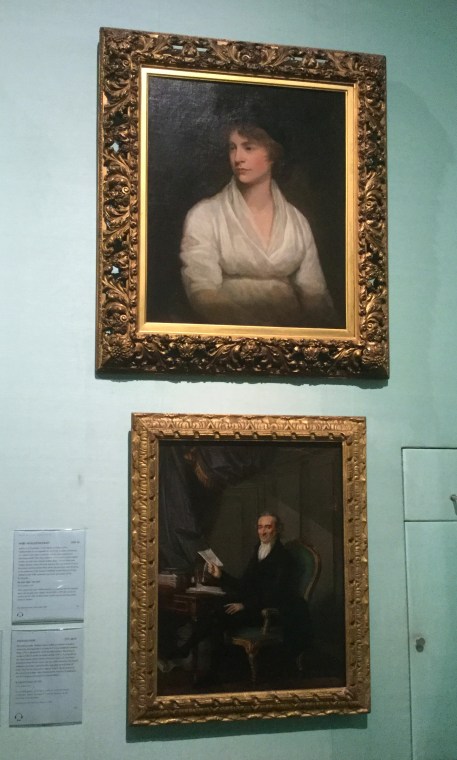
Portraits of Mary Wollstonecraft and Thomas Paine at the National Portrait Gallery in London. Photo by Amy Cools, 2018

In honor of the great philosopher and founding mother of modern feminism Mary Wollstonecraft‘s birthday April 27, 1759, let me share the story of two 2018 visits to London in which I visited places associated with her life and legacy.

On January 11, 2018, I visited my friend Steven in London, who was studying history at King’s College after retiring from a successful law career. He kindly toured the city with me, showing me many of his favorite spots and accompanying me to others of my choosing, the latter mostly having to do with great thinkers and doers I admire and write about. It was great fun to run around London with a fellow energetic and restlessly curious traveler!

Among the sites I chose, the first stop was at the National Portrait Gallery to see the original 1797 portrait of Wollstonecraft by John Opie. It was painted when Wollstonecraft was pregnant with her daughter Mary, who would become Mary Shelley, author of Frankenstein.

Wollstonecraft’s portrait is hung among those of other British radicals, including that of her husband, eventual biographer, and father of her daughter Mary, the anarchist philosopher William Godwin. Below Wollstonecraft’s, I find a 1791 portrait by Laurent Dabos of her friend and ideological ally Thomas Paine. Both Wollstonecraft and Paine wrote in favor of using reason to design more just social structures and, contrary to Edmund Burke, in favor of the French Revolution. However, over time, Wollstonecraft and Paine found many reasons to become disillusioned with it. From an understandable and perhaps even laudable revolt against a massively unequal and unjust social system, the French Revolution developed into a wholesale bloodbath of the aristocracy and of real and perceived intellectual and political foes. For more connections between Paine and Wollstonecraft’s lives and ideas, please see my series ‘To Paris, France I Go, In Search of Revolution-Era Thomas Paine, Mary Wollstonecraft, and Thomas Jefferson.’)

Oakshott Court, London, at the site of 29 The Polyglon, where Mary Wollstonecraft died. Photo by Amy Cools, 2018

Portrait of William Godwin by James Northcote, 1802, at the National Portrait Gallery in London, England. Photo by Amy Cools, 2018

A few months later, on May 5th, my sweetheart Laurence accompanied me as I sought out two more sites, the day after we went on a fascinating tour of the Tower of London. Both are within easy walking distance of King’s Cross and St. Pancras stations. Our first destination was Oakshott Court, which stands at what used to be 29 The Polyglon, or Polyglon Square. Here, Wollstonecraft and her husband William Godwin settled in April of 1797 to enjoy a happy, if sometimes tumultuous, love. Wollstonecraft and Godwin had met many years before at a 1791 dinner held in honor of Paine, but had disliked each other at first. Both were passionate, opinionated people prone to speaking their minds, and they spent much of that first meeting arguing about religion. Godwin was also described by people who knew him as awkward with women. But the two had mutual friends and met again occasionally over the years, slowly warming to one another. In January of 1796, Godwin read Wollstonecraft’s travel book A Short Residence in Sweden, Norway and Denmark. As Godwin wrote in his biography of Wollstonecraft, the book increased his respect and admiration of her, and after she called on him in the spring of that year, they became real friends, then lovers.

At first, they lived apart. But when it became clear that Mary was pregnant, they decided to marry, though they both considered marriage an outmoded, superstitious, and even ridiculous institution. Wollstonecraft and Godwin decided that they didn’t want to subject their child to the social difficulties of growing up with unmarried parents. Godwin was also acutely aware of the struggles Wollstonecraft had faced raising her first daughter Fanny as a single mother, and wanted to spare her a repeat of that experience. Besides, Wollstonecraft gloried in the domestic lifestyle she and Godwin had settled into, so marriage didn’t feel like much of a sacrifice on her part. According to Godwin, they ‘declared’ their marriage in April 1797 though they had already married a short while before. They moved to the Polyglon house on April 6th, but their newfound joy was not to last long. The delivery of little Mary went well at first, but Wollstonecraft died 11 days later, on September 10, 1797, of an infection following the surgical removal of her undelivered placenta.

Old St. Pancras and churchyard, London, England. Photo by Amy Cools, 2018

Mary Wollstonecraft’s original sarcophagus at St. Pancras Old Church burial ground, London, England. Photo by Amy Cools, 2018

Laurence and I then headed a few blocks northeast to St. Pancras Old Church, just past the north end of St. Pancras International station and on the west side of the tracks. We were in search of the gravesite where Wollstonecraft, Godwin, and Godwin’s second wife Mary Jane (Clairmont) Godwin were buried. I had read a description of the site but when we arrived, we found there was no map of the graveyard. It took some searching to identify it from the weathered inscriptions. Laurence spotted it first: a simple, tall, rectangular sarcophagus with a flared lid. Wollstonecraft and Godwin are no longer buried here: after Mary Shelley died in 1851, her parents’ remains were moved to join hers at the Shelley family burial ground at St. Peter’s in Bournemouth.

St. Pancras was a lovely place to be on such a lovely day; the leaves and grass were lush and green and lavishly sprinkled with flowers. I was happy to see that Wollstonecraft’s memory was still being honored, with flowers and other little tributes placed on the top. I suspect that it was Godwin who chose this elegant coffin and specially for Wollstonecraft, since she lived so independently of her family and was the first to be buried here. Its clean lines emphasize the carved text on the front: ‘Mary Wollstonecraft Godwin, Author of Vindication of the rights of Woman, Born 27th April 1759, Died 10th September 1797.’ This inscription also reflects Godwin’s intellectual love of Wollstonecraft. In the title of her biography, Memoirs of the Author of A Vindication of the Rights of Woman, he repeated this emphasis on her immortal ideas contained in her most memorable work.

The churchyard at Old St. Pancras, London, with Wollstonecraft’s sarcophagus second from the right. Photo by Amy Cools, 2018.

Wollstonecraft’s life was short, only 38 years, but oh, how fully she lived it! For my take on her fascinating life, please see my essay ‘Mary Wollstonecraft, Champion of Reason, Passionate in Love.

For more about the indefatigable Wollstonecraft, please see:

Articles and essays:

Mary Wollstonecraft ~ by Sylvana Tomaselli for The Stanford Encyclopedia of Philosophy

Mary Wollstonecraft: English Author ~ by the editors for Encyclopaedia Britannica

Wollstonecraft, Mary (1759–1797) ~ by Barbara Taylor for the Oxford Dictionary of National Biography

and various excellent essays about Mary Wollstonecraft~ by Maria Popova for Brain Pickings

Books:

The Life and Death of Mary Wollstonecraft ~ by Claire Tomalin

Memoirs of the Author of a Vindication of the Rights of Woman ~ by William Godwin

Vindication: A Life of Mary Wollstonecraft ~ by Lyndall Gordon

~ Ordinary Philosophy is a labor of love and ad-free, supported by patrons and readers like you. Any support you can offer will be deeply appreciated!

Happy Birthday, James McCune Smith!

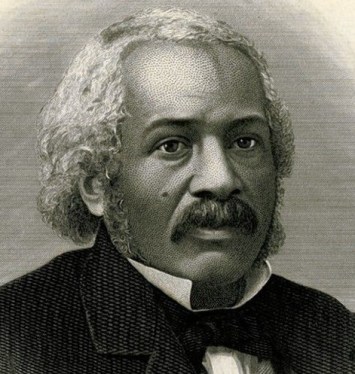
James McCune Smith, closeup of engraving by Patrick H. Reason

On this anniversary of Dr. James McCune Smith’s birth, I’d like to share the story of this great thinker and activist’s life and why I’ve chosen him as the subject of my Ph.D. studies. Rather, in a way, I think he chose me. While researching the life of his colleague, friend, and frequent star at Ordinary Philosophy Frederick Douglass, I came across McCune Smith and was drawn in by his intelligence, passion, writing styles, and fascinating life story. I’m now working on writing the first full-length biography of this great and far-too-little known pioneering African American physician, intellectual, activist, and community benefactor who also made important contributions to history, literature, anthropology, physiology, medicine, constitutional theory, and the emerging field of statistics.

McCune Smith was born in New York on April 18th, 1813, the son of self-emancipated slave Lavinia Smith and, likely, her former master, a merchant named Samuel Smith. From an early age, little James excelled in his studies at New York City’s African Free School No. 2 on Mulberry St. There, he was a classmate of, and over the years, a lifelong friend, colleague, and in some cases biographer of such luminaries as minister and activist Henry Highland Garnet, mathematician and educator Charles L. Reason, engraver Patrick H. Reason, and Shakespearean actor Ira Aldridge. All of these, as well as others among their classmates, went on to become leaders in the fight for abolition and equal rights.

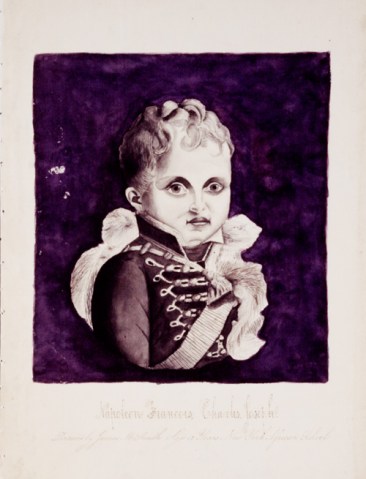
Drawing of Napoleon Francois, Charles Joseph, by James McCune Smith, 1825. Published at O.P. with the kind permission of the New-York Historical Society

Upon finishing his studies at the Free School, McCune Smith continued his studies independently and with tutors, focusing on Greek, Latin, and the classics; over the years, he would come to be fluent in Greek and Latin, and to gain a working knowledge of French, German, and Hebrew. When his applications for admission were rejected from the medical schools at Columbia and Geneva in New York on account of his African ancestry, McCune Smith applied to the University of Glasgow in Scotland, which had no racial restrictions. He completed his bachelor’s degree there in 1835, his master’s degree in 1836, and his medical degree in 1837, receiving several honors along the way. Upon his return to his native New York City in 1837, he was said to be the most educated African American of his time.

Though he had enjoyed great freedom and opportunity in Scotland, McCune Smith decided to make New York City his permanent home. There, he continued the freedom struggle he had engaged in as a founding member of the Glasgow Abolition Society, this time in his native United States where he felt his efforts were most needed. While he was establishing his pharmacy and medical practice at 93 West Broadway St, McCune Smith also jumped right into political activism, fighting to remove the discriminatory $250 property qualification that applied only to black voters. He is most well known today for his activism in abolitionist societies such as the American Anti-Slavery Society, the American and Foreign Anti-Slavery Society, and the Radical Abolitionists, as well as his leading role in the Colored Convention movement. Yet much, if not most, of McCune Smith’s freedom struggle took place on a personal, community, and grassroots level. He fought for greater economic and educational freedom and opportunity for his fellow New Yorkers of color, regularly gave lectures to raise money for black charities, was a founding member of the Committee of Thirteen dedicated to helping those escaping from slavery, and was the attending physician to the Colored Orphan Asylum for over twenty years.

McCune Smith Cafe & Shop, Glasgow, Scotland, photo January 2019 by Amy Cools

McCune Smith married Malvena Barnet in the early 1840s and together they had (about) 11 children, five of whom survived to adulthood. McCune Smith and Malvena loved raising children and grieved hard over the loss of so many. It must also have been uniquely hard for McCune Smith in his role as a physician administering to children, not being able to save so many of his own from their ultimately fatal illnesses. Yet he managed to keep his hope alive and his energies up, leading an incredibly productive professional, intellectual, and creative life. In addition to his groundbreaking work as the first African American to have a case report presented to a mainstream medical association and to have an article published in a medical journal, McCune Smith wrote prolifically and brilliantly in statistics, several sciences, history, travel, and literature. His writing ranged from concise and clinical to lyrical; from erudite to plain and direct; from sharply critical to experimental; from sarcastic to witty; from righteously angry to tender; from wry to comical.

It was not only suffering the loss of so many children that could have kept McCune Smith down. The Colored Orphan Asylum that he had loved and labored for so long was burned down in New York City’s draft riots of 1863, leading McCune Smith to move his family to the safety of Williamsburg in Brooklyn. He felt frustration, anger, sorrow, and even despair at the intractability of racism and oppression directed at his fellow African Americans despite their abilities, potential, and invaluable contributions to American prosperity and culture. McCune Smith also suffered from bouts of heart disease, lung ailments, and edema for about twenty years, and though he had many health scares over that time, he always seemed to rally and push on. Yet as he wrote occasionally throughout the middle and later years of his life, McCune Smith suspected he would not live a long life. He was right. McCune Smith died of congestive heart failure on November 17th, 1865, at only 52 years old. He had lived to see the passage of the Emancipation Proclamation, the end of the Civil War, and the passage of the 13th Amendment abolishing slavery, but died just before that Amendment was fully ratified.

Please stay tuned for more about McCune Smith as I continue my research into his life, ideas, and legacy…

Sources and inspiration (not exhaustive by any means, but these are some readily available to share with you online):

AFS Bios: James McCune Smith’. Examination Days: The New York African Free School Collection

Associated Press. ‘White Descendants Gather to Honor 1st Black US Doctor, Put Tombstone on His Unmarked NYC Grave’. FoxNews.com, 26 September 2010

Lujan, Heidi L. and Stephen E. DiCarlo. ‘First African-American to Hold a Medical Degree: Brief History of James McCune Smith, Abolitionist, Educator, and Physician.Advances in Physiology Education 43, no. 2 (April 2019): 134-39

Morgan, Thomas M. ‘The Education and Medical Practice of Dr. James McCune Smith (1813-1865), First Black American to Hold a Medical Degree.’ Journal of the National Medical Association 95, no. 7 (July 2003): 603–14

Obituary of James McCune Smith’. The Medical Register of the City of New York for the Year Commencing June 1, 1866, 1866, 201–4

Smith, James McCune, and John Stauffer. The Works of James McCune Smith: Black Intellectual and Abolitionist. Oxford: Oxford University Press, 2006

~ Ordinary Philosophy is a labor of love and ad-free, supported by patrons and readers like you. Any support you can offer will be deeply appreciated!

Happy Birthday, Averroes (Ibn Rushd)! By Eric Gerlach

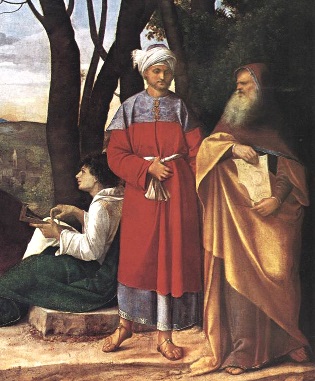
Averroes by Giorgione893 years ago today, on April 14th, 1126, the great Islamic philosopher, theologian, political theorist, and scientist Ibn Rushd, or as he is known by the Latinate version of his name in Europe, Averroes, was born.

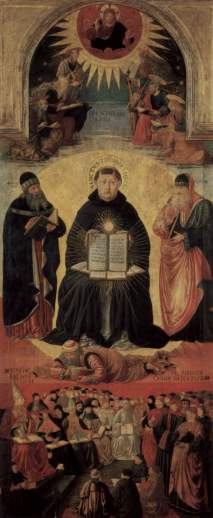
Among his many achievements, Averroes is credited with popularizing the study of Aristotle in Europe, inspiring the work of Thomas Aquinas and the Christian Scholastics.  Averroes was known as “The Commentator” and Aristotle “The Philosopher” to Aquinas and the Scholastics, as Averroes wrote multiple commentaries to help others understand Aristotle’s thought. To the left is an image of Averroes standing between and above an ancient Greek sage, likely Aristotle, and an Italian scholar of the Renaissance, sitting at their feet, painted by Giorgione of Venice. Averroes was also a major influence on Maimonides, Giordano Bruno, Pico della Mirandola, and Baruch Spinoza, and was one of the great souls that Dante wrote was dwelling in limbo with the Greek sages who lived before Jesus.

Aquinas Averroes and Scholastics

Thomas Aquinas

Averroes’ grandfather and father both served as chief judge of Cordoba, the place where Averroes was born, which later became part of Spain. Averroes wrote prolifically, twenty-eight works of philosophy as well as important treatises on law and medicine.  As a rationalist, Averroes argued that philosophy and religion teach the same truth and thus are not in conflict, such that intellectuals pursue the same matters that common people comprehend through religion and rhetoric.  He also argued that analytic thinking was important for the proper interpretation of the Quran, as Christian Scholastics would argue later about the Bible in Europe.  Averroes’ works were banned and burned in Islamic and Christian lands at different times, but they were revered enough to survive in both places.

Averroes was opposed to the work of Al-Ghazali, the Sufi mystic and author of The Incoherence of the Philosophers.  Ghazali argued that philosophers such as Plato, Aristotle, Al-Farabi and Avicenna contradict each other, and are thus incoherent as a set, and also contradict the teachings of Islam.  Ghazali also argued that Aristotle and those who follow him are wrong to assert that nature proceeds according to established laws, as all things proceed directly through the will of God.  Averroes wrote his most famous work, The Incoherence of the Incoherence, in response to Ghazali. Averroes defended Aristotle and argued that philosophy does lead to coherent truth, which is not in conflict with Islam, and that nature proceeds indirectly from God via the laws of nature, which God established during creation.

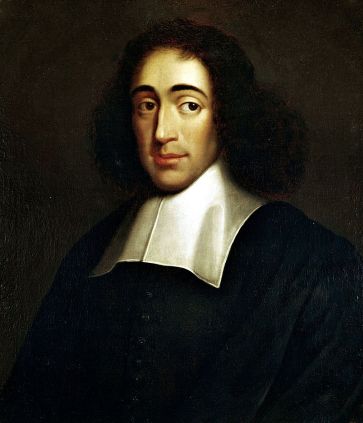
Portrait of Baruch de Spinoza (1632-1677), ca. 1665, by an unknown artist

Portrait of Baruch de Spinoza (1632-1677), ca. 1665, by an unknown artist

Averroes is also famous for his idea of monopsychism, that we all share the same divine soul, mind, and awareness, with each taking a part such that the lower soul is individual and mortal but the higher soul is universal and immortal, the source of true inspiration and reason.  Spinoza, who said that each of us is like a wave on the great sea of being, was a pantheist, inspired in part by Averroes.  Much later, when Albert Einstein was asked if he believed in God, he said, in the spirit of Averroes, “I believe in Spinoza’s god”.

In these and countless other instances, we can discern the influence of Averroes throughout both Eastern and Western thought. Thank you for your wisdom and insight, Averroes!

*A version of this piece was previously published at Ordinary Philosophy

~ Ordinary Philosophy is a labor of love and ad-free, supported by patrons and readers like you. Any support you can offer will be deeply appreciated!

*All views and opinions expressed by guest writers are their own and do not necessarily express those of Ordinary Philosophy’s editors and publishers

Happy Birthday, Thomas Jefferson!

Thomas Jefferson by Charles Bird King, 1836, after Gilbert Stuart, at the Smithsonian Portrait Gallery in Washington, D.C. Photo 2016 by Amy Cools

In remembrance of Thomas Jefferson (April 13, 1743 – July 4, 1826) on his birthday, let me share anew my tributes to his memory, his life, and his ideas from over the years:

To Washington DC, Virginia, and Philadelphia I Go, In Search of Thomas Jefferson

To Paris, France I Go, In Search of Revolution-Era Thomas Paine, Mary Wollstonecraft, and Thomas Jefferson

and my thrilling interview with Clay Jenkinson, Jefferson scholar

Interview with Clay Jenkinson as Thomas Jefferson

I hope you enjoy following me as I followed in the footsteps of Jefferson!

*A version of this piece was previously published at Ordinary Philosophy

~ Ordinary Philosophy is a labor of love and ad-free, supported by patrons and readers like you. Any support you can offer will be deeply appreciated!

Happy Birthday, H.P. Grice!

In honor of this anniversary of H.P. Grice’s birth on March 13th, 1913, let me share an undergraduate paper I had an especially good time writing.

Heads up: this paper features a lot of colorful and crude language, examined philosophically of course, and comedians’ opinions.

To learn more about the brilliant Grice, I recommend Richard E. Grandy and Richard Warner’s excellent bio and exploration of the ideas of this philosopher of language, in the Stanford Encyclopedia of Philosophy. Enjoy!

Slang and Grice’s Cooperative Principle

In “Logic and Conversation”, H. P. Grice outlines the unspoken but fixed rules of conversation that not only explain the workings of ordinary language, but account for implicature.

In a paper written only three years later in 1978, “Is Slang a Word for Linguists?”, Bethany K. Dumas and Jonathan Lighter develop a set of criterion for distinguishing slang from other language, through analysis of historical definitions and attitudes and description of its characteristics. In the contemporary F**k, A Documentary, Steve Anderson presents a more informal exposition of a particularly controversial yet ubiquitous slang word, interviewing a host of linguists, politicians, social critics, and entertainers on issues surrounding the use, abuse, and censorship of the term. These interviewees contribute a variety of insights into the nature of slang and its influence on language generally as well as on social thought and attitudes. In this paper, I explain how Grice’s rules of conversation, besides accounting for implicature, also provide an excellent explanation of the mechanism by which slang originates, develops, and conveys meaning.

Question: if sentences and terms refer to things in the world and/or express thoughts, how is it that so many utterances actually convey meaning without using apparently appropriate or specific terminology?

In his paper, Grice considers this phenomenon of pragmatics, or language behavior. He explains that implicature, the ability of a statement to convey meaning without including literal or explicit terms, is possible because acts of language are governed by rules and maxims. The Cooperative Principle (1) contains four rules: quantity, quality, relation, and manner. Each rule, in turn, contains one or more maxims, or principles of linguistic etiquette. Grice proceeds to explain how exploiting these rules and maxims enables a speaker to implicate what they want to say without expressing it literally. Implication serves countless linguistic functions: irony, the discreet sharing of gossip, insult, raising doubts, avoiding or expressing rudeness, social and political critique, proclaiming membership in a social group, artistic expression, etc. Implication is so integral to conversation, so effective for conveying meaning while tailoring the needs of expression to the context of a given situation, that Grice argues that a philosophic theory of language is incomplete without an explanation of it.(2)

Dumas and Lighter are concerned with formalizing a set of criteria for determining what constitutes slang. Prior to their paper, ‘slang’ was a variously defined, often maligned, and poorly understood category of language.(3) The paper opens with a series of descriptions and characterizations of slang over time by linguists, academics, and authors, many of whom dismiss slang as, at best, an unfortunate habit engaged in by the uneducated, lazy, and the thoughtless, or at worst, a corrosive force on language and morals. A few of these figures, however, are much more impartial in their assessment, characterizing slang as a side product of social change or simply a sort of code; a few (Walt Whitman, for example) even approve of its use. Dumas and Lighter demonstrate an attitude of professional detachment in their exploration of slang, considering their paper a much-needed contribution to this academically neglected subject; they recognize, contrary to the dismissive commentary of their peers, that slang is an important area of pragmatics. Like Grice, they narrow their criteria of what constitutes slang language to four: it lowers the dignity of formal/serious speech or writing; it implies a special familiarity between speaker and hearer or speaker and referent; it’s taboo in higher-status social circles; and it’s a euphemism to protect the user from social discomfort or the necessity of elaboration.(4)

Anderson’s documentary, unlike the scholarly works summarized above, is an informal and irreverent romp aimed at a mainstream audience, yet it provides informative insights into the usage and functions of slang.(5) It’s an exploration into a specific slang term, ‘fuck’, widely considered offensive and confrontational by society generally. Yet, it’s a subtle term as well, capable of conveying very complex meanings in various shades, and often considered especially useful for ‘expressing the inexpressible’. (Comedian Billy Connolly provides a particularly charming example of this: “…’fuck off!’…is international; I don’t care where you are…if someone’s fucking with your bags…in Tibet…and you say…’fuck off!’ …he knows exactly what you mean…and off he will fuck!”) Some of the interviewees in this documentary enjoy using this word, some consider it obscene and find hearing or using it offensive, and some are uncomfortable with it, but consider right to free speech so democratically essential that they oppose any sort of coercive censorship of its use. Many of the interviewees (even some of those who disapprove of it generally) acknowledge that ‘fuck’ and other slang/obscene terms have historical significance for challenging and testing social norms and institutions, and many entertainers, authors, academics, and reporters consider this category of language as an important element in artistic and political expression. The academics interviewed in the film, such as Geoffrey Nunberg and Reinhold Aman (the latter humorously billed as ‘a cunning linguist’) discuss why ‘fuck’ is an interesting word strictly linguistically as well, including for its venerable pedigree and for its variety of forms.

Dumas and Lighter’s quote from James Sledd: “the most crucial feature of slang: it is used deliberately, in jest or in earnest, to flout a conventional social or semantic norm”(6) neatly dovetails Grice’s characterization of the way implicature likewise works, by flouting or exploiting conventions of use. Between the the two, Dumas and Lighter’s paper and Anderson’s documentary contain at least one specific discussion or pragmatic example for each rule and maxim of Grice’s Cooperative Principle; and I’ll present and explore these examples following Grice’s arrangement.

The first Cooperative Principle is Quantity, containing two maxims; the first is “Make your contribution as informative as required”. ‘Fuck’, ‘dude’, and other slang terms can abbreviate a large amount of information (7) (as demonstrated previously by Billy Connolly), especially between the speaker and an ‘insider’ audience, a subgroup who uses terms familiar to the speaker. So, using any of these terms exploits this maxim by violating it when speaking within the wider community, since using this term either conveys no information, or is ambiguous meaning in meaning, in this context. However, the maxim is not violated if such a term is used within the subgroup. The mirror maxim, “Do not make your contribution more informative than is required”, is exploited in one way by the element of connotation essential for slang, another method of using a term or expression to informally convey an additional amount of information not gleanable from the general term or expression itself. (8) For example, this information can include contextual information about the speaker, approval or disapproval of the content of the discourse, or compliments or insults directed at the audience.

Quality, the second Cooperative Principle, also contains two maxims. “Do not say what you believe to be false” is exploited when a speaker intentionally breaks with conversational convention by using a term that would not be true or accurate if understood according to its usual definition. (9) The following sentence is an example Dumas and Lighter provide, a slang term inserted into an otherwise conventional sentence, as an instance of flouting this maxim.”The Federal government spends nearly one hundred billion bucks annually for defense.” (10) Traditionally, ‘bucks’, as the term for male deer, would understood according to that definition, and the above sentence would be false. However, ‘bucks’ as a slang term for ‘dollars’, is accurately used within this sentence, but the truth of the statement is only preserved for others familiar with the slang usage, or for those who accept the propriety of its usage. In this case, the choice of the slang usage of ‘bucks’ in place of ‘dollars’ could convey the additional meaning of disrespect for the Federal government, or of identification with the same social group as the audience, and so on. In this way, an apparent falsity actually functions as an more efficient method of conveying the additional meaning with a simple switch of terms. “Do not say that for which you lack adequate evidence” is a more idealistic maxim, though I grant that most people expect the speaker to have some justification their statement, be it independently verifiable evidence or at least an accurate, relevant anecdote. However, in ordinary conversation, it’s sometimes important for a speaker to extricate themselves from a difficulty caused by the conversation itself. Perhaps the speaker is in a position to be embarrassed by their own lack of knowledge of the subject discussed. Or, perhaps the speaker is impatient with the conversation, out of lack of interest or in a state of offense at the subject matter, or has a personal dislike of the other participant(s) in the conversation. Whatever the reason, using slang, or more specifically obscenity, can “…protect the user from the discomfort or annoyance of further elaboration.” (11)

Relation is the sole Cooperative Principle with only one maxim: “Be relevant.” Walt Whitman, quoted by Dumas and Lighter, shares the slang speaker’s disdain for strict adherence to this maxim: “Slang, or indirection, [is] an attempt of common humanity to escape from bald literalism, and express itself illimitably….”(12) Whitman here extols the potency of slang terms, in much the same way as entertainers, artists, and free speech advocates such as Billy Connolly, Lenny Bruce, Shakespeare, and Sam Donaldson do, (13) for conveying force and shades of meaning the speaker finds unconveyable in conventional terms. These slang/obscene terms import some of this meaning precisely from the novelty, unexpectedness, or seeming irrelevance of the terms. While singer Pat Boone, for example, may advocate (sometimes humorously) elegant expressions using traditional, even terms for the more intimate functions of the human body as creative ways to express wrath, insult, or depths of passion (14), this general manner of speaking simply doesn’t convey other shades of meanings, such as disapprobation of a political body or philosophy, or declaration of membership in a subgroup, or disgust with corruption, or humorous social commentary, and so forth, that’s essential to political or artistic discourse or is more relevant to the context in which slang is used.

Grice’s final Cooperative Principle, Manner, contains four maxims. Sam Donaldson, veteran anchorman of ABC news, enjoys the term ‘fuck’ as an all-purpose word unlike most others, for its versatility as a substitute for an amazingly large number of other terms while retaining its own particular shade of meaning. (15) Yet ‘fuck’ clearly violates, on its face, the first maxim “Avoid obscurity of expression”, as it seems to rarely denote its original and specific referent, but instead any one of a numerous other things (often within in a noun phrase): as a substitute for actions such as ‘destroy’, ‘harm’, or ‘undermine’, descriptions such as ‘drunk’, ‘wrong’, or ‘in trouble’, or exclamations such as ‘that’s wonderful!’, ‘that’s awful!’, or ‘that’s amazing!’ It appears to be an obscure expression until the context is considered, making it an excellent one for interpersonal and other specific conversational usage but inexcusably ambiguous (according to the maxim) for formal discourse. With ‘fuck’, as with all slang, novelty is important (16), as is the speaker’s intention (17). What the speaker wishes to express is often something they find ordinary words insufficient for: conveying such additional meanings as mentioned earlier: biographical details, general attitudes about life or mood of the moment, or status in society or with a particular subgroup, to give a few examples. (18)

“Avoid ambiguity” is closely related to the obscurity maxim. Again, ‘fuck’ provides an excellent example of slang interpreted through Grice’s Cooperative Principle. As funnyman Billy Connolly explains, it has a guttural sound which aids its expressiveness; a “primal word” (19) that, while to Connolly is unambiguous in its general meaning, is ambiguous in reference to literal translatability: the hearer can understand the word to mean a whole variety of things, depending on the circumstances. Slang is also often used as a euphemism to allay the discomfort of the speaker in a given situation, for example, saying “I love you” can seem too formal, or serious, or connote a level of commitment to the hearer that the speaker is not prepared to make. Instead, a slang phrase such as “you’re cool” or “I dig you” conveys the meaning of some level of affection of the speaker for the hearer, but in a strategically ambiguous way.20 The speaker can later claim that the statement expressed merely friendly feelings or passionate emotion, whichever best suits the speaker at the time.

Some slang actually exploits the third maxim “Be brief” (or, “Avoid unnecessary prolixity”) by obeying it to a fault. ‘Fuck’, ‘dude’, and other slang words are often used to abbreviate longer sentences, as briefly discussed two paragraphs earlier in the “Obscurity”section. Many pop-culture favorites such as commercials, video skits, and comedy films such as “Baseketball” feature characters who conduct entire conversations mostly or even entirely composed of repetitions of a single slang term, variously inflected, to express entire statements of approbation, anger, surprise, inquiry, or command (a web browser search for videos, using the single keyword ‘dude’, will quickly provide multiple examples of this). Yet, this brevity of speech is only successful in conveying the desired meanings when the speaker and hearer belong to the same social group that uses the slang term this way. (21) The general community that conducts conversations according to the Cooperative Principle will not understand such usage. The fourth and final maxim, “Be orderly, is exploited by slang terms (rather obliquely) in their function of punctuating sentences with unconventional words so as to make them more informal, less “dignified”. (22) A more direct example of this, once again, is a particular way the word ‘fuck’ is used: this time, by inserting it in the middle of another word or phrase, interrupting its expression so as to lend it additional dynamic force, in a positive (“fan-fucking-tastic”, “abso-fuckingly-lutely”) or negative manner (“no-fucking-way” or “jeezus-fucking-christ”) (23). Besides the slang classification of such terms by the conversational community, the slang terms inserted into sentences in such a way obtains its forcefulness from the very fact that it interrupts an otherwise orderly sequence of syllables or words.

From my very first reading, I was impressed, and remain so, by Grice’s explanatively powerful, tidy, and intuitive theory for how ordinary conversation and implicature function.

As my research for this paper progressed, I was also surprised by how neatly Grice’s Cooperative Principle and Dumas and Lighter’s description of slang fit together. From Dumas and Lighter’s retelling of historical descriptions and accounts of slang, it appears that there was a poverty of theoretical work on its origins and pragmatics. It appears clear that this was due to an attitude of academic aloofness, if not outright disdain, towards this essentially populist form of expression. Yet slang provides a living laboratory for observing the dynamics of the evolution of language and the way new terms and expressions come into being, as slang originates, changes, and disappears so quickly. It’s the linguistic fruit fly for evolutionary research! And the sheer number of scholarly articles I found on the subject of slang while I was doing my research indicates that scholars of language have discovered this.

While I share the scholar’s high valuation of precision in discourse, I also value vibrancy of expression in many forms including that such as that slang provides, as Walt Whitman did, and as the contemporary comic and author Stephen Fry does: “Imagine if the structure, meaning and usage of language was always the same as when Swift and Pope were alive. Superficially appealing as an idea for about five seconds, but horrifying the more you think about it. If you are the kind of person who insists on this and that ‘correct use’ I hope I can convince you to abandon your pedantry. Dive into the open flowing waters and leave the stagnant canals be. But above all let there be pleasure. Let there be textural delight, let there be silken words and flinty words and sodden speeches and soaking speeches and crackling utterance and utterance that quivers and wobbles like rennet. Let there be rapid firecracker phrases and language that oozes like a lake of lava. Words are your birthright …Don’t be afraid of it, don’t believe it belongs anyone else, don’t let anyone bully you into believing that there are rules and secrets of grammar and verbal deployment that you are not privy to. Don’t be humiliated by dinosaurs into thinking yourself inferior because you can’t spell broccoli or moccasins. Just let the words fly from your lips and your pen. Give them rhythm and depth and height and silliness. Give them filth and form and noble stupidity. Words are free and all words, light and frothy, firm and sculpted as they may be, bear the history of their passage from lip to lip over thousands of years.” (24)

Damn straight, Stephen Fry!

*A version of this post was previously published at Ordinary Philosophy

~ Ordinary Philosophy is a labor of love and ad-free, supported by patrons and readers like you. Please offer your support today!

NOTES:

1 – Grice, H.P. “Logic and Conversation” in The Philosophy of Language, ed. A. P. Martinich, Oxford University Press, Oxford 2008, 173
2 – Ibid, 172
3 – Dumas, Bethany K. and Jonathan Lighter. “Is Slang a Word for Linguists?”. American Speech, Vol. 53 No. 1 (Spring 1978) pp 5-17, 10
4 – Ibid 14-15
5 – Anderson, Steve. F**k, A Documentary, 2005
6 – Dumas and Lighter, 12
7 – F**k
8 – Dumas and Lighter, 13
9 – Ibid, 13
10 – Ibid, 14
11 – Dumas and Lighter, 15
12 – Ibid, 5
13 – F**k
14 – Ibid
15 – Ibid
16 – Dumas and Lighter, 7
17 – Ibid 11-12
18 – Ibid 13-14
19 – F**k
20 – Dumas and Lighter, 15
21 – F**k
22 – Dumas and Lighter, 14
23 – F**k
24 – Fry, Stephen. “Don’t Mind Your Language” Stephenfry.com.

Happy Birthday, Michel de Montaigne!

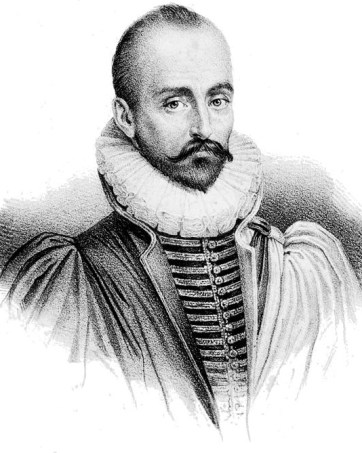
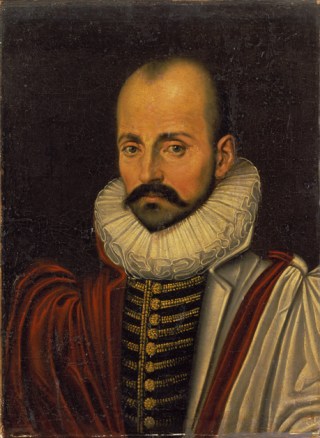
Michel de Montaigne, public domain via Wikimedia Commons

Michel de Montaigne, public domain via Wikimedia Commons

Let us remember and honor the great Michel de Montaigne (Feb 28, 1533 – Sep 23, 1592), a thinker after my own heart, on this anniversary of his birth.

Montaigne was a deeply philosophical thinker, though he never developed a complete philosophical system or moral theory. He invented, or at least popularized, a revolutionary way of writing: the essay. In his essays, he wrote about anything and everything he found interesting enough to observe and think deeply about which was …well, just about everything, especially his inner life. His Essays are a rich source of wonderful philosophical and moral insights. As the Stanford Encyclopedia of Philosophy describes: “… under the guise of innocuous anecdotes, Montaigne achieved the humanist revolution in philosophy. He moved from a conception of philosophy conceived of as theoretical science, to a philosophy conceived of as the practice of free judgment’. Judgment, in this sense, involves applying both our cultivated moral sense and our reason, enriched with knowledge, to navigating the complexity and variety of situations we face throughout our lives; it also refers to the expansive, tolerant attitude we should display towards each other and towards the whole of reality.

While Montaigne highly valued education, he also recognized that it can be overemphasized to the detriment of learning from our own experiences. In his day, education often consisted largely, even mostly, of rote memorization of a vast quantity of facts. This learning method can stifle our ability to exercise practical judgment and serve to blunt social skills as well, preventing us from learning from and about each other, which is essential for cultivating moral understanding. We should learn as much about the world and each other as possible, Montaigne thought, through interpersonal interaction as well as through more formal types of education.

Montaigne also thought that sometimes, our big, smart brains can even hinder our quest for wisdom. For example, we can become ashamed, insecure, even hateful of our own bodies when we contrast the refinements of education and the arts to the material, often messy, even disgusting reality of caring for the body and satisfying its needs. This distaste for our bodies is ungenerous and ungrateful, said Montaigne, considering how we rely on our bodies for so much. In fact, even to this Catholic Christian man who believed in the soul, we are our bodies in an essential way. Our bodies are much more than just meat that our souls inhabit, they are intimate partners of souls, and together, they comprise whole human beings. As such, our bodies deserve our compassion, gratitude, love, and respect.

Our big brains can make also make us too proud, unable to recognize wisdom in humble or unexpected places. Those of little or no education, Montaigne maintains, sometimes display more wisdom than the most rigorous scholar. This includes animals, who, especially, are sometimes wiser than we are; for example, they live their whole lives with the natural, unembarrassed, proper attitudes towards their own bodies that allows them to unapologetically enjoy the pleasure of being alive. Montaigne believed that we should learn from them and imitate them in these respects. Those who have the most wisdom to teach us, then, can come from all walks of life, and the wisest person will be receptive to the lessons that can be learned anywhere.

Furthermore, we shouldn’t limit our exposure merely to our own cultures, but should learn about as many other cultures and beliefs as possible. Montaigne, like Confucius, believed that before you can be a philosopher or a moral theorist, you must first be an anthropologist. A wide-ranging education and exposure to the world has two major advantages. First, the information you have to work with will be much more vast, your scope much wider, than if you merely stuck to the received wisdom of your own culture. Secondly, you will cultivate in yourself the very virtues that characterize the wise and moral person: tolerance, benevolence, respect, kindness, generosity, understanding, and so forth. Conversely, narrowness of outlook and xenophobia lead to hatred, violence, and so on, as the horrific stories coming back from the conquest of the New World made him all too aware. Montaigne believed we shouldn’t base our attitudes about right and wrong on habit, which is morally lazy and which a narrow education can easily lead us to do; rather, we should temper our moral attitudes with reason, and our reason, in turn, should be informed by an expansive and ever-expanding body of knowledge.

michel-de-montaigneThis can make Montaigne seem like a moral relativist, but I don’t think that this is so. He was a committed Catholic, which seems to rule that out. Yet he did recognize that some things society traditionally recognized as wrong are in fact both bad and good, sometimes one or sometimes the other depending on the circumstances, sometimes both at the same time. For example, consider drunkenness. It can be bad, such as when it gets you fired or leads you to violence. But, it can also be good, such as promoting sociability or artistic disinhibition. Montaigne recognized that if there are universally true moral maxims, they’re likely to be few. Rather, his approach to philosophy is a skeptical one: he recognized that an attitude of uncertainty and doubt is a fruitful one for gaining wisdom. When you don’t easily accept the first easy answers that come along, when you’re always waiting for more information to come in, when you generally accept that there’s a possibility you are wrong, you are practicing a wise skepticism; otherwise, you cheat yourself out of the opportunity to learn.

Ethically, Montaigne espoused some behaviors as universally preferable: those that are inspired by tolerance, joyfulness, sociability, generosity, benevolence, curiosity, a good-humored attitude towards other people and their varied ways of living, and so on; he specifically denounced cruelty and narrowness in thinking and feeling. He described his ethical theory not by outlining a rigorous system, however, but by enacting and describing a moral attitude that inspired moral behavior in others. In sum, he may or may not have been a relativist when it comes to a specific theory or set of maxims, but he was definitely not relativistic in the overarching value he placed on the art of being a good, complete human being, and on promoting the same in others.

Montaigne’s Essays demonstrate that the most well-reasoned advanced moral theory may never be quite as convincing, effective, or influential when spelled out as that which is lived out. Montaigne showed us how we can all be philosophers, how we can live ethically, and how we can discover it all for ourselves.

Philosophers, if they’re doing it right, will be the happiest of all people since philosophy can and should be a joyful enterprise, and we should all be philosophers.

Learn more about this great master of introspection here:

Essays ~ by Michel de Montaigne

Me, Myself, and I: What Made Michel de Montaigne the First Modern Man? ~ by Jane Kramer for The New Yorker

Michel de Montaigne ~ by Marc Foglia for The Stanford Encyclopedia of Philosophy

Michel de Montaigne ~ Melvin Bragg discusses Montaigne’s life and thought with David Wootton, Terence Cave, and Felicity Green (my Intellectual History advisor!) for the BBC’s In Our Time

Michel de Montaigne ~ from The Book of Life

Michel de Montaigne (1533—1592) ~ by Christopher Edelman for Internet Encyclopedia of Philosophy

Michel de Montaigne (1533-1592) ~ by Terence Green for Philosophy Now

Michel de Montaigne: French Writer and Philosopher ~ by Tilde A. Sankovitch for Encyclopædia Britannica

Montaigne on Death and the Art of Living ~ by Maria Popova for Brain Pickings

Can We Have More Than One Friend? According to Montaigne, No ~ by Manuel Bermudez

Philosophy: A Guide to Happiness – Montaigne on Self-Esteem ~ by Alain de Botton

*A version of this piece was previously published at Ordinary Philosophy

~ Ordinary Philosophy is a labor of love and ad-free, supported by patrons and readers like you. Any support you can offer will be deeply appreciated!