Happy Birthday, John Stuart Mill!

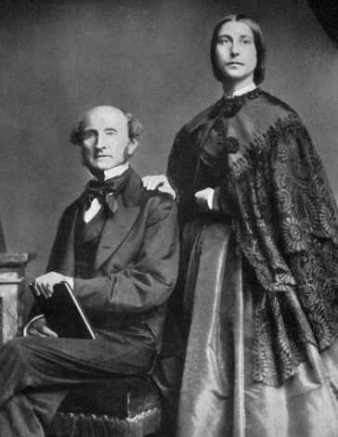
John Stuart Mill and Helen Taylor, daughter of Harriet Taylor, collaborated with Mill after her mother's death, public domain via Wikimedia CommonsOne of my very favorite ideas in political philosophy is John Stuart Mill’s ‘marketplace of ideas’ (though he didn’t phrase it this way himself): that the free, open, and vigorous exchange of ideas in the public square does more to further human knowledge than anything else. But not only has his comprehensive and to my mind, absolutely correct defense of free speech in his great work On Liberty had an immense and beneficial influence on the history and theory of human rights, he was admirable in myriad other ways as well:

‘Mill believed in complete equality between the sexes, not just women’s colleges and, someday, female suffrage but absolute parity; he believed in equal process for all, the end of slavery, votes for the working classes, and the right to birth control (he was arrested at seventeen for helping poor people obtain contraception), and in the common intelligence of all the races of mankind… all this along with an intelligent acceptance of the free market as an engine of prosperity and a desire to see its excesses and inequalities curbed…. Mill was an enemy of religious bigotry and superstition, and a friend of toleration and free thought, without overdoing either…’ ~ Adam Gopnik, from his article and book review ‘Right Again‘, 2008

‘The son of James Mill, a friend and follower of Jeremy Bentham, John Stuart Mill (1806-1873) was subjected to a rigorous education at home: he mastered English and the classical languages as a child, studied logic and philosophy extensively, read the law with John Austin, and then embarked on a thirty-five career with the British East India Company at the age of seventeen. (He also suffered through a severe bout of depression before turning twenty-one.) Despite such a rich background, Mill credited the bulk of his intellectual and personal development to his long and intimate association with Harriet Hardy Taylor. They were devoted friends for two decades before the death of her husband made it possible for them to marry in 1852; she died in Avignon six years later. Mill continued to write and to participate in political affairs, serving one term in Parliament (1865-68). The best source of information about Mill’s life is his own Autobiography (1873). Mill

Philosophically, Mill was a radical empiricist who held that all human knowledge, including even mathematics and logic, is derived by generalization from sensory experience. In A System of Logic, Ratiocinative and Inductive (1843) he explained in great detail the canons for reasoning inductively to conclusions about the causal connections exhibited in the natural world.

Mill’s moral philosophy was a modified version of the utilitarian theory he had learned from his father and Bentham. In the polemical Utilitarianism (1861) Mill developed a systematic statement of utilitarian ethical theory. He modified and defended the general principle that right actions are those that tend to produce the greatest happiness of the greatest number of people, being careful to include a distinction in the quality of the pleasures that constitute happiness. There Mill also attempted a proof of the principle of utility, explained its enforcement, and discussed its relation to a principle of justice. Mill

Mill’s greatest contribution to political theory occurs in On Liberty (1859), where he defended the broadest possible freedom of thought and expression and argued that the state can justify interference with the conduct of individual citizens only when it is clear that doing so will prevent a greater harm to others. Mill also addressed matters of social concern in Principles of Political Economy (1848) and Considerations on Representative Government (1861) and eloquently supported the cause of women’s rights in The Subjection of Women (1869).’

~ from The Philosophy Pages by Garth Kemerling, licensed under a Creative Commons Attribution-Share Alike 3.0 Unported License

Read more about John Stuart Mill:

Anschutz, Richard Paul. ‘John Stuart Mill: British Philosopher and Economist‘. In Encyclopædia Britannica.

Gopnik, Adam. ‘Right Again: The Passions of John Stuart Mill‘. New Yorker magazine website, Oct 6 2008

Heydt, Colin. ‘John Stuart Mill (1806—1873)‘, Internet Encyclopedia of Philosophy

Mill, John Stuart. On Liberty, from Project Gutenberg

Wilson, Fred. “John Stuart Mill“, The Stanford Encyclopedia of Philosophy

~ Ordinary Philosophy and its Traveling Philosophy / History of Ideas series is a labor of love and ad-free, entirely supported by patrons and readers like you. Please offer your support today!
Happy Birthday, Bertrand Russell!

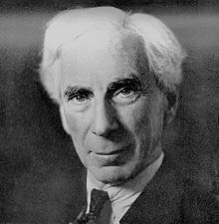
Betrand Russell in 1938, image public domain  via Wikimedia CommonsBertrand Russell lived an extraordinarily long life, in which he did an extraordinary number of extraordinary things.

Encyclopedia Britannica introduces him thusly: ‘Bertrand Russell ….born May 18, 1872, Trelleck, Monmouthshire, Wales- died Feb. 2, 1970, Penrhyndeudraeth, Merioneth, [was a] British philosopher, logician, and social reformer, founding figure in the analytic movement in Anglo-American philosophy, and recipient of the Nobel Prize for Literature in 1950. Russell’s contributions to logic, epistemology, and the philosophy of mathematics established him as one of the foremost philosophers of the 20th century. To the general public, however, he was best known as a campaigner for peace and as a popular writer on social, political, and moral subjects. During a long, productive, and often turbulent life, he published more than 70 books and about 2,000 articles, married four times, became involved in innumerable public controversies, and was honoured and reviled in almost equal measure throughout the world…’

For myself, he was particularly influential to my younger freethinking self, disenchanted with the religion of my youth and seeking new and more satisfying ways of viewing the world. I read his great History of Western Philosophy and Why I Am Not a Christian each several times over. I admire his clear, precise thinking and his principled anti-war stance which came at a significant cost, including jail time and loss of a prestigious job at the University of Chicago, and it’s always so enjoyable to watch him speak (you’ll find plenty of videos on YouTube) in his oh-so-aristocratic accent with a pipe often tucked into the corner of his mouth. He was not a perfect man, but oh man, he was never a less-than-fascinating one.

Read more about Bertrand Russell:

Bertrand Russell‘. In Encyclopedia Britannica

Irvine, Andrew David, “Bertrand Russell“, The Stanford Encyclopedia of Philosophy

~ Ordinary Philosophy and its Traveling Philosophy / History of Ideas series is a labor of love and ad-free, entirely supported by patrons and readers like you. Please offer your support today!
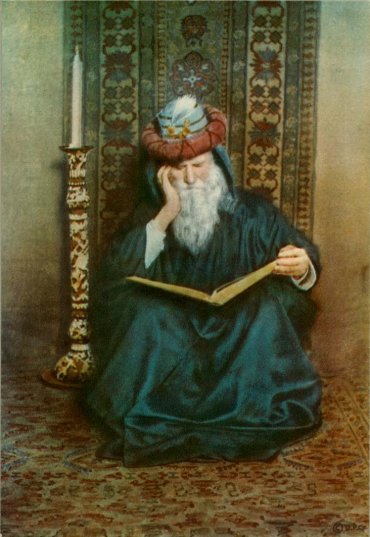
Happy Birthday, Omar Khayyám!

By Adelaide Hanscom, from Edward Fitzgerald's The Rubaiyat of Omar Khayyam, 1905, public domain via Wikimedia Commons

Since Edward FitzGerald published his translation of The Rubáiyát of Omar Khayyám in 1859, Omar Khayyám has been known, especially in the western world, first and foremost as a great poet, eloquently expressing the joy and beauty of life and our own struggles to live it with a sense of love and meaning. It’s a humanist work, with Khayyám writing much as an Epicurean or Skeptic here and a Stoic there, freely doubting and wondering at everything, unshackled from the orthodoxy one might expect from a famed teacher and writer of his time and place. Yet Khayyám, a devotee of Avicenna, took his Islamic faith very seriously, and thought deeply about the nature of God and our relationship to him.

Khayyám, born in Persia in 1048, was most famed in his own time as a mathematician, astronomer, and scientist. He wrote some of the most important medieval works in geometry and algebra, and helped reform the calendar, an even more accurate one than the Gregorian calendar we use today. But he was also an accomplished philosopher, and scholars are working on resolving the apparent contradictions between this work and his poetry.

One thing I’ve gotten from my research (which, thus far, is only beginning and therefore not nearly enough): for all his prodigious learning and accomplishments, Khayyám honestly acknowledges the limits of human understanding, and seems to tell us that while the great work of discerning the truths of the universe is a great, noble, even necessary endeavor, we do well to keep in mind that we can never know everything, whether through science or religion. So, Khayyám seems tells us, we do well to work, to wonder, to seek, to do right, but also to live for today:

‘At first they brought me perplexed in this way
Amazement still enhances day by day
We all alike are tasked to go but Oh!
Why are we brought and sent? This none can say’. (Rubā‘iyyāt, Tirtha 1941, 18, from IEP)

‘As Spring and Fall make their appointed turn,
The leaves of life one aft another turn;
Drink wine and brood not—as the Sage has said:
“Life’s cares are poison, wine the cure in turn.” (Sa‘idī 1994, 58, from IEP)

~ Ordinary Philosophy and its Traveling Philosophy / History of Ideas series is a labor of love and ad-free, entirely supported by patrons and readers like you. Please offer your support today!

~~~~~~~~~~~~~~~~~~~~~~~~~~~~~~

Sources and Inspiration

Aminrazavi, Mehdi and Van Brummelen, Glen, ‘Umar Khayyam‘, The Stanford Encyclopedia of Philosophy

Omar Khayaam, 1048–1131‘. The Poetry Foundation

Omar Khayyam‘. In Encyclopædia Britannica.

Omar Khayyam‘. In Wikipedia, The Free Encyclopedia.

Rizvi, Sajjad H. ‘Avicenna (Ibn Sina)‘. The Internet Encyclopedia of Philosophy

‘Umar al-Khayyam (Omar Khayyam)‘. Muslim Heritage

Happy Birthday, Lady Mary Wortley Montagu!

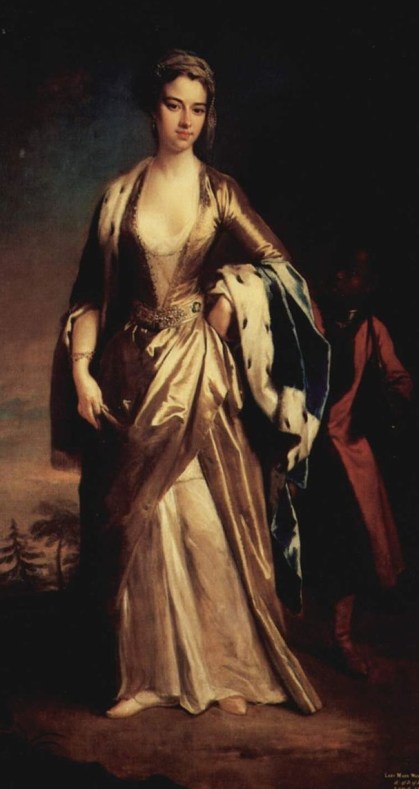
Mary Wortley Montagu by Jonathan Richardson the Younger (cropped), public domain via Wikimedia CommonsI just discovered this fascinating woman this morning, on the occasion of her birthday.
According to Encyclopedia Britannica, Lady Mary Wortley Montagu was a ‘prolific letter writer in almost every epistolary style; she was also a distinguished minor poet, always competent, sometimes glittering and genuinely eloquent. She is further remembered as an essayist, feminist, traveler, and eccentric.’

Here are three excellent features on Montagu:

Lady Mary Wortley Montagu“. Encyclopædia Britannica.

Lady Mary Wortley Montagu, 1689–1762“. The Poetry Foundation.

Secor, A., 1999. ‘Orientalism, gender and class in Lady Mary Wortley Montagu’s Turkish Embassy Letters: to persons of distinction, men of letters and c’. Cultural Geographies (formerly Ecumene) Volume 6, Issue 4 pp375-398. Arnold Publishers.

~ Ordinary Philosophy and its Traveling Philosophy / History of Ideas series is a labor of love and ad-free, entirely supported by patrons and readers like you. Please offer your support today!

Happy Birthday, Karl Marx!

Marx by Sam Kaprielov, 76x61cm, oil on canvas, 2015, image used by permission of the artist

Marx by Sam Kaprielov, 76x61cm, oil on canvas, 2015, http://www.samkaprielov.com/

Born on May 5 1818, few thinkers have been as influential as Karl Marx. Philosopher, theoretician of history, economist, sociologist, journalist, and revolutionary socialist, he was a prolific thinker and writer, widely lauded, criticized, and misunderstood, especially by those who claimed to act in his name.

In honor of his birthday, here is a series of pieces about Karl Marx, a recent painting by an artist whose work my good friend just introduced me to, and a song that I love.

The World Isn’t Fair, by Randy Newman

Karl Marx (1818 – 1883), a very brief bio at BBC: History

Karl Marx, 1818-1883, by Steven Kreis at The History Guide

Karl Marx, by Jonathan Wolff, at the Stanford Encyclopedia of Philosophy

Karl Marx, Wikipedia

~ Ordinary Philosophy and its Traveling Philosophy / History of Ideas series is a labor of love and ad-free, entirely supported by patrons and readers like you. Please offer your support today!

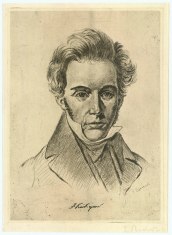
Happy Birthday, Søren Kierkegaard! By Eric Gerlach

S. <>Søren Kierkegaard (1813-1855 CE), the great Danish philosopher and forerunner of existentialism, was born in the Danish city of Copenhagen, and throughout his life he enjoyed  walking through the city, greeting everyone he met as his equal regardless of their station in life.  As a young boy, Kierkegaard’s father drilled him with difficult lessons so he would be the top student in his class, but to prevent his son from developing selfish pride, the father demanded that his son get the third best grades in the class, purposefully making mistakes to prevent the boy from being recognized as first or second student.
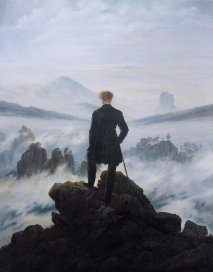

Caspar_David_Friedrich_-_Wanderer_above_the_sea_of_fog

For Kierkegaard, genuine truth is human subjectivity and perspective, and it is only the individual who accepts subjectivity who comes to realize the greater truth insofar as it is achievable by individuals.  For Kierkegaard, truth is not objective, but subjective, not an object achieved, but a test withstood, not a hurdle overcome, but an experience endured.  Kierkegaard argued that no social system can authentically give the individual meaning and truth. Individuals must make choices, and if they choose to go along with the masses, they have sacrificed their own ability to give truth meaning.  Kierkegaard wrote that he could have, like most scholars of his day, become a voice pronouncing the greatness and objectivity of his race, his country, his historical period, his fellow scholars, but rather than commit treason to truth he chose to become a spy, a solitary individual who chronicled the hypocrisy of all claims to objectivity.

472px-Kittinger-jump

To be an individual is to experience “a vertigo of possibilities”, the monstrosity of spontaneity.  Kierkegaard wrote, “We are condemned to be free”.  It is our freedom, the experience of the infinite, undefined and unbounded, which unites us most intimately with our world.  Kierkegaard argued that one can overcome the angst, the vertigo of possibilities, by making a leap of faith, by choosing to believe in something and act with some purpose in spite of the fact that beliefs and purposes can never be fully justified.  Only this is authentic individuality and truth, having chosen what one is to be, with the honest recognition of the freedom involved in the choice.

373px-Head_of_Socrates_in_Palazzo_Massimo_alle_Terme_(Rome)

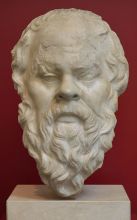
Kierkegaard saw himself as a true follower of Socrates, who argued that he knew that he did not know, which is why the Oracle at Delphi said that no man was wiser than he.  Kierkegaard wrote his college thesis on Socrates, irony, and indirect communication, much as Kierkegaard himself indirectly communicated through his pseudonyms.  Socrates never made great claims to truth, and would instead use analogy, myth, and paradox to show that human judgements and beliefs are problematic and contradictory even as they assert themselves with certainty, which Kierkegaard argued was also the method of Jesus.  Kierkegaard wrote that Socrates “approached each man individually, deprived him of everything, and sent him away empty-handed”.  Socrates showed others that they did not truly know what they believed themselves to know, and he was killed by the Athenian assembly just as Jesus was killed for questioning the Pharisees.

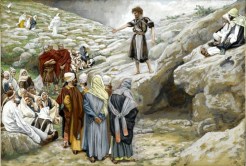
Brooklyn_Museum_-_Saint_John_the_Baptist_and_the_Pharisees_(Saint_Jean-Baptiste_et_les_pharisiens)_-_James_Tissot_-_overall

Kierkegaard’s works are dominated by theological concerns, wondering on many pages about the individual’s relationship to God and Jesus.  For Kierkegaard, the meaning of Christianity was not the achievement of objectivity, but the acceptance of subjectivity, of individually lacking the God’s eye view.  Kierkegaard was brutally critical of the Danish Lutheran Church for presenting itself as the objective truth, and argued that it is only as an individual that one can be a genuine Christian.  Kierkegaard argued that Christianity began as a rebellion against the status quo, but then became the entrenched regime.

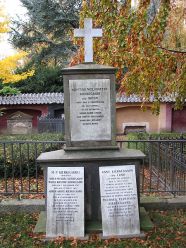
450px-Image-Søren_Kierkegaard_grave_4

After healing a blind man, Jesus rebuked the Pharisees, the political and religious establishment of his time, and said that because they think they see they are in fact blind.  In his later years, Kierkegaard attacked the Danish Church without mercy, and at his funeral a fight broke out when young theology students, progressive and inspired by Kierkegaard, protested that the church was attempting to hijack his name and fame by calling him one of their own after he had so bitterly attacked their hypocrisy for decades.  Kierkegaard wanted his tombstone to read only, “The Individual”, though his relatives decided otherwise.

Ordinary Philosophy and its Traveling Philosophy / History of Ideas series is a labor of love and is ad-free, entirely supported by patrons and readers like you. Please offer your support today!

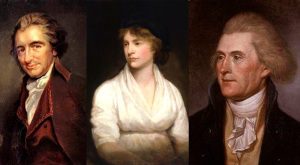
To Paris, France I Go, In Search of Revolution-Era Thomas Paine, Mary Wollstonecraft, and Thomas Jefferson

Happy 257th birthday, Mary Wollstonecraft! Here is my other tribute to your memory, a journey I took in your footsteps last year

Amy M Cools's avatarOrdinary Philosophy

Hello, friends of Ordinary Philosophy!

From time to time, I take a trip to some corner of the globe, to explore the lives and ideas of great thinkers in the places where they lived and worked. For this series, I follow in the footsteps of thinkers who are no longer alive, since those who are still telling their own stories. But those who are no longer alive in the body live on in the ideas that they pass on, and in the example they provide for us to follow.

I’m pleased and excited to announce my fourth philosophical-historical themed adventure, this time in Paris, France to follow in the footsteps of Thomas Paine, Mary Wollstonecraft, and Thomas Jefferson at the time of the French Revolution.

The French Revolution, following on the heels of the American Revolution, inspired and horrified many. The financial crisis, caused by over-expenditures in recent wars (including…

View original post 511 more words

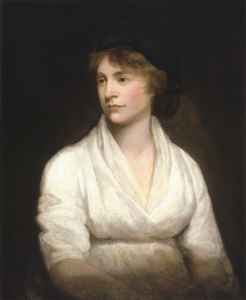
Mary Wollstonecraft, Champion of Reason, Passionate in Love

In honor of Mary Wollstonecraft’s 257th birthday (she was born on April 27, 1759), here’a piece I wrote about her last fall, following my history of ideas travel series following this great feminist and champion of human rights’ time in Paris. Enjoy!

Amy M Cools's avatarOrdinary Philosophy


The life and work of Mary Wollstonecraft, mother of modern feminism, can seem to reveal a mass of contradictions.

Her seminal feminist work, A Vindication of the Rights of Woman, champions reason as the ultimate guide for a moral and productive life. She used reason to great effect to show why women should, and how they could, grow out of their socially constructed roles as under-educated coquettes and household drudges. She believed that reason should rule both individuals and societies because it’s the best tool we have to achieve justice and to perfect the self. Without reason, she thought, human beings are ruled by narrow self-interest, by the prejudice born of ignorance, and by crude lust.

Yet the life Wollstonecraft chose to live was widely criticized both during her lifetime and over the two hundred plus years since her death. It’s not just because she didn’t conform to the mores…

View original post 2,185 more words

Remembering Margaret Fell

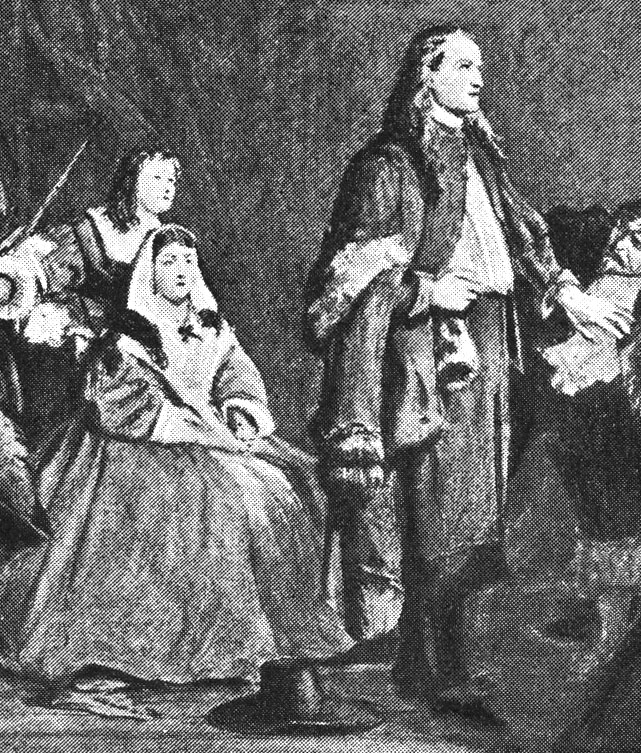
Margaret Fell, with George Fox before the judges, from a painting by J. Pettie 1663, public domain via Wikimedia Commons

Margaret Fell with George Fox before the judges, from a painting by J. Pettie, 1663

Margaret Fell was born on some unknown date in 1614, so let’s take this occasion to remember her on the date of her death, April 23rd, 1702.

Fell’s lived a life as passionate as it was long. She was an unconventional thinker for her time, a zealous and progressive religious activist at times imprisoned for her beliefs, a prolific writer, well-traveled, a mother of eight children and a wife twice.

An early adherent and eloquent promoter of Quakerism, Fell is now considered one of its founders. She converted to Quakerism after hearing a sermon by one of its most charismatic preachers, George Fox, and almost immediately launched into a lifetime of hosting Quaker meetings and speaking out on behalf of her new religion. After her husband died some years later, Fell married Fox, probably more as a co-missionary than as a romantic partner since their work, travels, and imprisonments kept them apart for much of their marriage.

As I’ve had a lifelong fascination with the history of human rights, I’ve long admired the Quakers because, along with Unitarians and Deists, so many have been leaders in the struggle to expand, establish, and promote them. That’s because these faiths emphasize the importance of individual conscience, the primacy of the human mind, God’s rational nature, and the moral equality of all human beings.

Fell believed in the Quaker doctrine of the Inner Light which God has caused to shine equally in the hearts of all beings; all we need do is heed it. Therefore, one does not need ministers, priests, or any other authorities or intercessors to achieve salvation. And because God has created everyone for the same purpose and gave everyone that light, everyone is spiritually equal and capable of understanding and proclaiming the Truth. We can see how this doctrine, central to Quakerism, readily aligns with human rights movements centered on a belief human spiritual and intellectual equality. The right of women to speak in church and write religious texts, in her time limited to men, was a cause particularly dear to Fell’s heart. While Fell’s belief in the equality of women was limited to their role as spiritual beings, Quakerism tended to encourage ever-more progressive beliefs in its adherents. Over time, Quakers came to be leaders in the abolitionist and pacifist movements, promoting the right of all to receive equal and universal education and for women’s rights in social and political spheres as well.

In light of her achievements as a female religious pioneer, and the human rights advances facilitated by the Quaker faith she helped found, Fell’s contributions should continue to be remembered and celebrated.

Ordinary Philosophy and its Traveling Philosophy / History of Ideas series is a labor of love and is ad-free, supported by patrons and readers like you. Please offer your support today!

~~~~~~~~~~~~~~~~~~~~~~~~~~

Sources and inspiration

Broad, Jacqueline, ‘Margaret Fell‘, The Stanford Encyclopedia of Philosophy, Edward N. Zalta (ed.)

Jacoby, Susan. Strange Gods: A Secular History of Conversion. New York: Pantheon, 2016 (see chapter on Margaret Fell)

Happy Birthday, Averroes (Ibn Rushd)! By Eric Gerlach

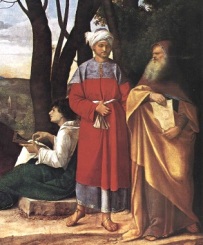
Averroes by Giorgione890 years ago today, on April 14th, the great Islamic philosopher, theologian, political theorist and scientist Ibn Rushd (1126 – 1198) was born, or as he is known via Latin in Europe, Averroes.  Among his many achievements, he is credited with popularizing the study of Aristotle in Europe, inspiring the work of Thomas Aquinas and the Christian Scholastics.  Averroes was known as “The Commentator” and Aristotle “The Philosopher” to Aquinas and the Scholastics, as Averroes wrote multiple commentaries to help others understand Aristotle’s thought.  Included here is an image of Averroes standing between and above an ancient Greek sage, likely Aristotle, and an Italian scholar of the Renaissance, sitting at their feet, painted by Giorgione of Venice.  Averroes was also a major influence on Maimonides, Giordano Bruno, Pico della Mirandola, and Baruch Spinoza, and was one of the great souls that Dante wrote was dwelling in limbo with the Greek sages who lived before Jesus.
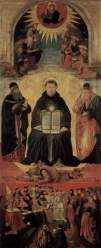
Aquinas Averroes and Scholastics

Averroes’ grandfather and father both served as chief judge of Cordoba, the place where Averroes was born, which later became part of Spain.  Averroes wrote many works, twenty eight in matters of philosophy, as well as important works on law and medicine.  As a rationalist, Averroes argued that philosophy and religion teach the same truth and thus are not in conflict, such that intellectuals pursue the same matters that common people comprehend through religion and rhetoric.  He also argued that analytic thinking was important for the proper interpretation of the Quran, as Christian Scholastics would argue later about the Bible in Europe.  Averroes’ works were banned and burned in Islamic and Christian lands at different times, but they were revered enough to survive in both places.

Akhlaq-i_Nasiri

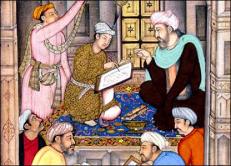
Averroes was opposed to the work of Al-Ghazali, the Sufi mystic and author of The Incoherence of the Philosophers.  Ghazali argued that philosophers such as Plato, Aristotle, Al-Farabi and Avicenna contradict each other, and are thus incoherent as a set, and also contradict the teachings of Islam.  Ghazali also argued that Aristotle and those who follow him are wrong to assert that nature proceeds according to established laws, as all things proceed directly through the will of God.  Averroes wrote his most famous work, The Incoherence of the Incoherence, in response to Ghazali.  Averroes defended Aristotle and argued that philosophy does lead to coherent truth, which is not in conflict with Islam, and that nature proceeds indirectly from God via the laws of nature, which God established during creation.

Spinoza

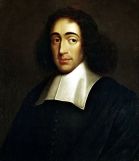
Averroes is also famous for his idea of monopsychism, that we all share the same divine soul, mind and awareness, with each taking a part such that the lower soul is individual and mortal but the higher soul is universal and immortal, the source of true inspiration and reason.  Spinoza, who said that each of us is like a wave on the great sea of being, was a pantheist, inspired in part by Averroes.  Much later, when Albert Einstein was asked if he believed in God, he said, “I believe in Spinoza’s god”.  Clearly, the history of human thought should continue to celebrate Averroes, as well as the many he inspired.