Q&A With Singer: A Philosopher On His Craft and Practicing it at Princeton, by Michael Hotchkiss

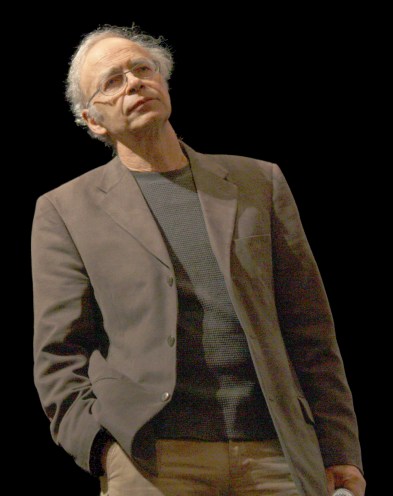
Peter Albert David Singer at The College of New Jersey in 2009, by Bbsrock, Creative Commons BY-SA 3.0 via Wikimedia Commons

Peter Albert David Singer at The College of New Jersey in 2009, by Bbsrock, Creative Commons BY-SA 3.0 via Wikimedia Commons

Peter Singer is one of the world’s best-known philosophers, recognized for his thought-provoking views on topics including animal rights, bioethics and the plight of the world’s poorest people.

Since 1999, he has been the Ira W. DeCamp Professor of Bioethics in the University Center for Human Values at Princeton University. He splits his time between Princeton and the University of Melbourne in his native Australia, where he is Laureate Professor.

Singer’s influential books include “Animal Liberation,” “Practical Ethics” and “Rethinking Life and Death.” His book “The Life You Can Save” challenges readers to help improve the lives of the world’s poorest people, and he is the co-founder of a nonprofit group by the same name that is devoted to effective philanthropy to serve people living in extreme poverty.

Singer also regularly writes brief essays on topics related to current events. A new book, “Ethics in the Real World,” compiles many of those essays with other reflections to explore, in an easily accessible form, some of the deepest philosophical questions.

Singer recently answered questions about his book, philosophy and teaching at Princeton.

~~~~~~~~~~~~~~~~~~~~~~~~~~~~~~~~~~~~~~~~~~~~~~~~~~~~~~~~~

Why do you write the kinds of brief, topical essays that are compiled in “Ethics in the Real World”?

Singer: I think it’s important to play a role in contributing to public debates and hopefully trying to improve the standard of those debates. In many areas of academic life — but perhaps particularly in ethics — there’s a lot of debate that goes on and a lot of it is to a rather low standard. If you can contribute to showing people how it’s possible to have reasoned discussion of ethical issues, I think it’s a valuable thing to do. A lot of people think ethics is all just subjective, a matter of taste. They think you can’t really say anything, therefore you might as well just abuse your opponents. I think there are other possibilities.

What does it mean to do philosophy?

Singer: I think doing philosophy really means learning to think more deeply and rigorously about hard questions that cannot be answered by straightforward empirical investigation. There are many things people think hard and rigorously about — physics, history or whatever it might be. In some of those fields you can answer questions by doing an experiment or finding the relevant documents. Generally speaking, you can’t run experiments to settle the kind of questions philosophers talk about. And you’re not going to turn up documents in some archive that are going to solve them either. So you have to think. The discipline of thinking, of recognizing good and bad arguments, of recognizing fallacies and where an argument is rigorous or where its weak points are, that’s something you can be trained in and can develop through practicing. That’s why we want people to do philosophy, to talk about it and write about it, not simply to learn what other philosophers of the past have said.

What does it mean to do philosophy at Princeton?

Singer: I think this is a great environment for doing philosophy, particularly for the area I work in, which is practical or applied ethics. Having the University Center for Human Values sitting alongside the philosophy department and the politics department produces a substantial body of people who are very good at discussing a range of practical and applied ethical questions. Plus, of course, we have really excellent students. For me, that’s one of the most rewarding things about being at Princeton. You get truly outstanding students who are very rewarding to teach, and that is just the undergraduate level. Many of them are also really enthusiastic about the role they are hoping to play in the world. When you get to the graduate level, you get yet another level of discussion. All of that makes a really exciting combination.

“‘Ethics in the Real World: 82 Brief Essays on Things That Matter’ by Peter Singer” book jacket

In his new book, Singer compiles brief essays on topics related to current events that explore some of the deepest philosophical questions. (Courtesy of Princeton University Press)

What are the most important tools you have at your disposal to engage people?

Singer: The primary tool is the ability to express ideas. As a teacher, you will mostly do that using your voice, speaking, though sometimes you will get students to read things. As a public intellectual, I’m much more likely to do that in writing. Being able to express yourself clearly is the most important tool for what I do. I’m grateful for my education in analytic philosophy at the University of Melbourne and Oxford because of the emphasis placed on clarity of expression. If something you said wasn’t clear, then it wasn’t good even though there might be some deep thing lurking there. You had to try to bring that out. It’s a contrast that exists to this day between most English language philosophy that comes out of that analytic tradition and that which comes out of what you might call a continental tradition, where clarity is not really prized and it seems to me at least that profundity is hinted at through ways of expression that might be clever but certainly aren’t clear.

The course description for your undergraduate class ‘Practical Ethics’ is full of questions: Should we be trying to live our lives so as to do the most good? Does a human embryo have a greater claim to protection than a chimpanzee? Should we be able to choose to end our own life, if we are terminally ill? Why do you take that approach?

Singer: I ask questions because I see the role of the course as challenging students to think about issues that otherwise they might not think about a great deal. I do not simply want to get them to absorb the truth, whatever the truth might be on these ethical questions. I certainly don’t want to encourage the idea of professors as authorities from which they just take statements and write them down. I want to challenge their way of thinking so they may come to see that what they’ve been thinking is superficial and they need to go deeper.

What are the questions you find your students engage with the most?

Singer: We have a lot of spirited discussions. Probably in recent years the two topics that have been most spirited have been questions about the treatment of animals and whether we ought to be eating them, and questions about global poverty and what we ought to do about that. Do we, as comfortably well-off people in an affluent nation, have an obligation to actually do something, to contribute some of our wealth to people to whom it can make a much bigger difference than it makes to us?

Many academics have critics, and you have your share. In the ‘Practical Ethics’ course, you assign a book called ‘Peter Singer Under Fire’ that features essays critiquing your views and your responses. Why do you bring your critics right into the classroom?

Singer: That book is listed because it has critical essays about me. And if students are going to get my views from me firsthand they need to have ways of pushing back and seeing what other people have said that is different. Those essays are specifically written to criticize Peter Singer’s views. A lot of the reading, not just the essays from that book, is opposed to what I think. There are a number of other books on the reading list that are written by people who have a very different perspective, people who differ from me. Those views do get represented in my courses, always.

Do you find a lot of students become really engaged with your ideas and pursue them further? What’s that like for you?

Singer: I find a significant number of students do become engaged and continue to live in ways that are influenced by some of the thoughts that maybe they started thinking in my classes or reading some of my works. In fact, one example just came up recently. It’s not the majority of students who become as engaged as that, of course, but a few individuals can have a very big impact on many people. I find that rewarding. I find it really encouraging when I discover my teaching has made a significant difference, changed someone’s life in some important way, perhaps, or just reinforced them in going down a path they were going down anyway. If that’s a positive path, as it is generally, I feel pleased because I have indirectly made a positive contribution to the world.

In the book, you mention that you learned from some of your students about the racist parts of Woodrow Wilson’s legacy. What else do you learn from your students?

Singer: I learn lots of things from my students. You get a range of people I would not ordinarily meet and get to talk with. You also learn a lot about the way young people think. I consider myself very fortunate to be always mixing with young people both in the classroom and out of the classroom because it keeps me fresh in terms of what’s going on in the world and what people are thinking about. I think it’s easy to be mixing mostly with people of your own age group and not really be aware of what 20-year-olds are likely to be thinking.

You came to Princeton from Australia in 1999. What have you taken from that experience?

Singer: It’s a pretty cosmopolitan campus, really. We have a lot of international students. We have other students who are immigrants or children of recent immigrants. I really value that. I think it’s tremendously important that we think about the world as a whole and that we be a truly cosmopolitan place. That connects with some of the essays in the book, which talk about how we should be thinking about the world, globalization, global poverty, what we should be doing about it. I value the “service of humanity” aspect of the University’s informal motto and the experience of Princeton because they point the way to getting beyond just a focus on the United States. When you come to the United States as I did, it’s one of the things you discover. Because you have come to a really big and important country, it’s natural that the media are going to be more focused on the United States here than the media would be on Australia in Australia, for example. Even having said that, I think the lack of attention on other parts of the world where America’s interests are not directly affected is something that’s pretty deplorable, and I think it’s important that universities try to counterbalance that by having international breadth and international understanding.

In one of the essays in your book, you describe the experience of learning to surf later in life. Why is that kind of experience important?

Singer: My experience with surfing shows that even if you think you might be too old to learn something new, that’s not necessarily going to be the case. Sure, you may never be really good at it. I’ll never be really good at surfing. But I can do it well enough to enjoy it and get a lot of satisfaction out of it. There is a lesson there for people at any stage of life: Don’t think things have passed you by. Obviously, objectively some things will have passed you by. I’m never going to become a footballer, but there are a lot more things that are still open as you go through life. More people are realizing that. You can change career directions later in life. If there’s something you want to do but you’ve thought it’s too late, think about it. Maybe it’s not.

Originally published in News At Princeton, at Princeton University’s website

~ Michael Hotchkiss, social sciences writer, went to Princeton in 2012 after seven years as an editor at The Wall Street Journal. He earned a bachelor’s degree in journalism from the University of Missouri in 2000 but really learned the ropes of writing and editing at Mississippi community newspapers… At Princeton, he develops news and editorial content about the teaching, research and service missions of the University, with a special emphasis on the social sciences. (Bio credit: Princeton University)

Ordinary Philosophy and its Traveling Philosophy / History of Ideas series is a labor of love and ad-free, supported by patrons and readers like you. Please offer your support today!
Happy Birthday, John Rawls!

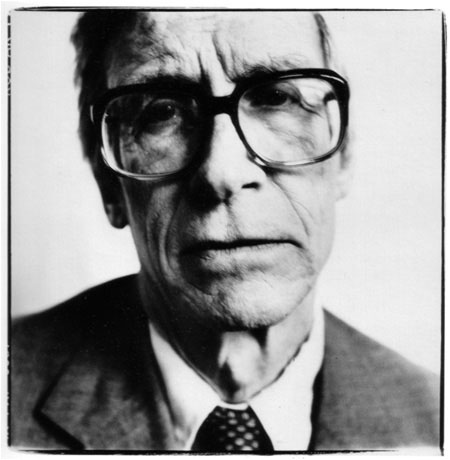
John Rawls, image via BBC's Will and Testament blogLet’s remember and celebrate John Rawls, Feb 21, 1921 – Nov 24, 2002, the great political and moral theorist who thinks of justice as fairness, on his birthday.

Among his greatest contributions is the thought experiment called ‘the veil of ignorance’. It’s a beautifully simple tool for designing a just society. Imagine you’re to be placed into society with no idea what you would be: rich, poor, or middle-class; tall or short; intelligent or not; of which gender; outgoing or shy; of which race; employed and at what kind of job or not at all; and so on.

Given that you have no idea what your roles in life will be, what cultural practices, laws, policies, governmental system, economic system, and so on, would you put into place? Remember, behind that veil of ignorance, you’ll have to decide what kind of society benefits everyone the most since you could end up being anyone. If you were really in that situation, imagine just how fair you’d be. Perhaps, as Rawls imagines, we’d all be far better off if that was really how the world works.

Here’s a short list of resources to learn more about the great John Rawls:

John Rawls – by Leif Wenar for The Stanford Encyclopedia of Philosophy

John Rawls – by Henry S. Richardson for the Internet Encyclopedia of Philosophy

A Theory of Justice – by John Rawls (Google book preview)

and my own work featuring Rawls:

Behind the Veil: Rawls, Locke, de Tocqueville, and Human Connection in a Liberal Society

Communitarianism, Writ Large

Sources, Influences, Shout-Outs, and all that Good Stuff

Ordinary Philosophy and its Traveling Philosophy / History of Ideas series is a labor of love and ad-free, supported by patrons and readers like you. Please offer your support today!
O.P. Recommends: NYT’s Story of How Zachary Turpin, Graduate Student at the University of Houston, Found a Lost Walt Whitman Novel

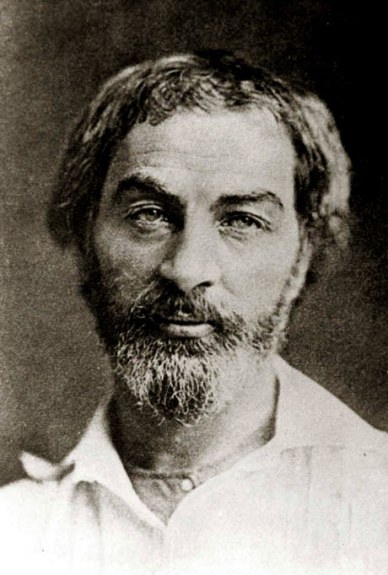
Walt Whitman in 1854, Daguerreotype, Photographer unknown probably Gabriel Harrison, public domain via Wikimudia Commons

Walt Whitman in 1854, daguerreotype, photographer unknown (probably Gabriel Harrison), public domain via Wikimedia Commons

I just came across this exciting story this morning in the New York Times’ Books section about how Zachary Turpin, a graduate student at the University of Houston, found a lost Walt Whitman novel. It was published in serial form in The Sunday Dispatch in 1852. It’s called Life and Adventures of Jack Engle: An Autobiography, and subtitled A Story of New York at the Present Time.

Read the New York Times article about the book’s discoverer and how he made his discovery here,

and read more about the book, part of the book itself online, and order a print copy here

Ordinary Philosophy and its Traveling Philosophy / History of Ideas series is a labor of love and ad-free, supported by patrons and readers like you. Please offer your support today!

 

New Podcast Episode: Margaret Sanger NYC Sites, Day 4

Planned Parenthood Clinic at Margaret Sanger Square, Mott and Bleeker Streets, NYC

Planned Parenthood Clinic at Margaret Sanger Square, Mott and Bleeker Streets, NYC

Listen to this podcast episode here or on Google Play, or subscribe on iTunes

Friday, October 21st, 2016

It’s cold and rainy, so I spend a long morning with my coffee as I do more research. Try as I might, I just can’t identify, with any certainty, the exact site of the Queens County Penitentiary, Long Island City, where Margaret Sanger was imprisoned for thirty days in 1917 for operating her Brownsville birth control clinic. Nor do I locate the site of the original White Plains Hospital where Sanger trained as a nurse. I had pored over the atlases of that town, from that time, in the New York Public Library map division, and I searched assiduously in their digitized records this morning. No luck.

So I finish my account of the first site I visited on Tuesday and publish it, then head out. It keeps raining, but oh well, it’s not a terribly long walk and besides, I welcome a walk in the rain, under my umbrella, of course. The drought back home had been mostly unrelenting for ages and it’s nice to experience a good rain again.

My first destination is Planned Parenthood’s Margaret Sanger Center at Mott and Bleecker Streets… Read the written version here

Ordinary Philosophy and its Traveling Philosophy / History of Ideas series is a labor of love and ad-free, supported by patrons and readers like you. Please offer your support today!


Happy Birthday, Nicolaus Copernicus!

Nicolaus Copernicus portrait from Town Hall in Toruń, ca.1580, public domain via Wikimedia Commons

Nicolaus Copernicus portrait from Town Hall in Toruń, ca.1580, public domain via Wikimedia Commons

Let us remember and salute the visionary Nicolaus Copernicus on the occasion of his birthday.

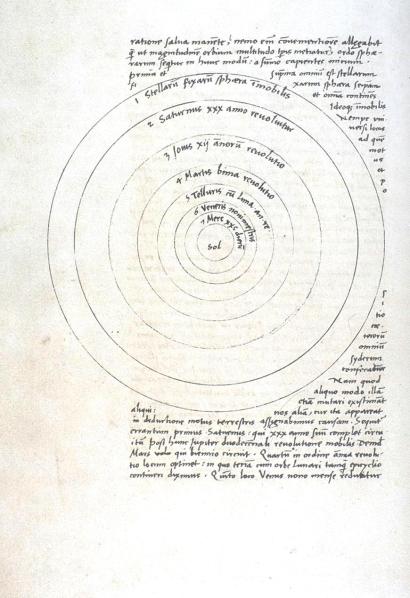
de-revolutionibus-manuscript-p9b-by-nicolas-copernicus-www-bj-uj-edu-pl-public-domain-via-wikimedia-commons

De Revolutionibus manuscript, page 9b by Nicolaus Copernicus (www.bj.uj.edu.pl) Public domain via Wikimedia Commons

Born on February 19th, 1473, Copernicus gave our modern world the heliocentric theory of the solar system. He credited the ancient Greek astronomer and mathematician Aristarchus of Samos with originally describing how Earth and her sister planets orbit around the sun and took it upon himself to make the observations and work out the mathematics to prove it. Copernicus reintroduced the heliocentric theory so convincingly that it overcame the dominant earth-centered model preferred by the powerful Christian Church for theological reasons. His rigorous and clear reason simply could not accept the clumsy, assumption-laden model that Claudius Ptolemy had devised in the second century A.D. to explain why the planets did not behave as expected if the earth-centered model was accurate. Copernicus was a religious man himself, but he did not believe that his faith required him to believe something that his reason and his own eyes demonstrated was untrue.

For emphasizing the primacy of observation-driven reason over theology when it comes to describing and explaining the natural world, Copernicus is widely credited with starting the Scientific Revolution.

Here’s a short list of excellent resources to learn more about the great Nicolaus Copernicus:

Nicolaus Copernicus – by Sheila Rabin for The Stanford Encyclopedia of Philosophy

Nicolaus Copernicus – by J.J. O’Connor and E.F. Robertson for the MacTutor History of Mathematics Archive, School of Mathematics and Statistics University of St. Andrews, Scotland

Nicolaus Copernicus – From Wikipedia, the free encyclopedia

Copernicus – episode 2 of the BBC series The Beauty of Diagrams, hosted by mathematician Marcus du Sautoy

Ordinary Philosophy and its Traveling Philosophy / History of Ideas series is a labor of love and ad-free, supported by patrons and readers like you. Please offer your support today!
Happy Birthday, Audre Lorde!

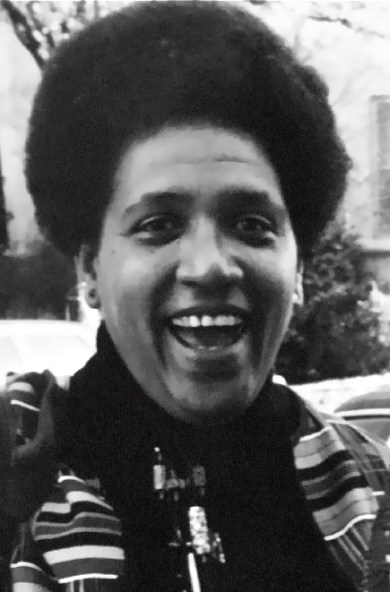
Audre Lorde, 1980

Audre Lorde, 1980

Poet and civil rights activist Audre Lorde was born on February 18, 1934. In remembrance of this powerful and eloquent woman on her birthday, I’ll share the bio I found at the Poetry Foundation:

‘A self-described “black, lesbian, mother, warrior, poet,” Audre Lorde dedicated both her life and her creative talent to confronting and addressing the injustices of racism, sexism, and homophobia. Her poetry, and “indeed all of her writing,” according to contributor Joan Martin in Black Women Writers (1950-1980): A Critical Evaluation, “rings with passion, sincerity, perception, and depth of feeling.” Concerned with modern society’s tendency to categorize groups of people, Lorde fought the marginalization of such categories as “lesbian” and “black woman,” thereby empowering her readers to react to the prejudice in their own lives. While the widespread critical acclaim bestowed upon Lorde for dealing with lesbian topics made her a target of those opposed to her radical agenda, she continued, undaunted, to express her individuality, refusing to be silenced. As she told interviewer Charles H. Rowell in Callaloo: “My sexuality is part and parcel of who I am, and my poetry comes from the intersection of me and my worlds… [White, arch-conservative senator] Jesse Helms’s objection to my work is not about obscenity…or even about sex. It is about revolution and change.” Fighting a battle with cancer that she documented in her highly acclaimed Cancer Journals (1980), Lorde died of the illness in 1992…. Read more about Audre Lorde and her poetry here

Ordinary Philosophy and its Traveling Philosophy / History of Ideas series is a labor of love and ad-free, supported by patrons and readers like you. Please offer your support today!
Civil Rights and Healthcare: Remembering Simkins v. Cone (1963), by Ezelle Sanford III

Dr. George Simkins, Jr.

Dr. George Simkins, Jr.

Upon her release from L. Richardson Memorial Hospital’s maternity ward in Greensboro, North Carolina, my grandmother, Ann Wilson Scales, walked a few short steps to her mother’s home with a small baby in hand. She had just given birth to my mother, La Tanya Wilson Sanford, in the city’s Black hospital. It was 1965. Unbeknownst to either of them, a small group of L. Richardson’s physicians, dentists, and patients had waged a quiet war against segregation two years earlier. The city was the site of arguably one of the more consequential yet little-known civil rights battles in American history. No, it was not the beginning of the student sit-in movement initiated by North Carolina A&T students in 1960. Rather, this small contingent fought in district and circuit courts to desegregate U.S. healthcare. At issue was where medical professionals could practice and where patients could access care: in the older, segregated L. Richardson Hospital, or in the newer, more modern (and better funded) Moses H. Cone Memorial Hospital.

In 1962, dentist George Simkins, Jr. unsuccessfully attempted to admit a patient to Moses H. Cone Memorial Hospital, one of two private white hospitals in the city supported by tax dollars. Combining his role as community dentist and President of the Greensboro chapter of the NAACP, Simkins initiated a class-action lawsuit against both Moses Cone and Wesley Long Community Hospitals. The NAACP’s Legal Defense Fund assisted in litigating the test case. Not only were African American patients barred from these institutions, Black physicians were barred from practicing there, even as both institutions received state and federal funds provided by the 1946 Hill-Burton Hospital Survey and Construction Act. Hill-Burton emerged from President Harry Truman’s failed healthcare reform and promised to rebuild and modernize the U.S. healthcare infrastructure. However, this program included a loophole where states that engaged in de jure racial segregation could use the money to build segregated facilities. Cone and Long Hospitals both benefitted from this program and its segregation loophole. This is not to say that segregated hospitals did not exist before the Hill-Burton Program, however; historian Vanessa Gamble chronicles the movement to establish Black hospitals from 1920–1945.

Initially, the district court of North Carolina sided with the defendant hospitals; however, the Fourth Circuit Court of Appeals (and later the United States Supreme Court, which refused to hear the case) deemed that the two hospitals’ policies of racial discrimination for both patient admissions and visiting physician staff privileges violated the fifth and fourteenth amendments of the Constitution.

Last September, the CEO of Cone Health Network, of which Moses Cone Memorial Hospital and Wesley Long Hospitals are now a part, issued a public apology to the last surviving plaintiff of the historic court ruling. Dr. Alvin Blount, 94, graciously accepted the long overdue apology from the health system, initiating local reflections on racial discrimination in healthcare. This is not the first apology issued to acknowledge the long-strained history of race and racism associated with medicine and healthcare. In May 1997, former President Bill Clinton formally apologized for the United States Public Health Service’s “Tuskegee Study of Untreated Syphilis in the Negro Male” (1932–1972). In 2008, the American Medical Association (AMA) officially apologized for its exclusion of Black physicians from membership, an important acknowledgment given that AMA membership became increasingly important for hospital admitting privileges, licensure, and broader steps in professional development. As historian Thomas Ward notes, until the AMA desegregated in 1968, Black physicians were barred from white hospitals and denied opportunities for continuing medical education, thereby justifying their own professional societies and medical schools. All of these apologies were too little, too late, and their legacies continue to influence healthcare to date.

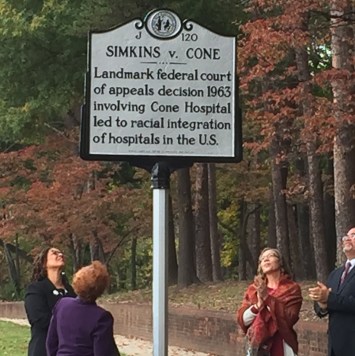
Historical marker for landmark decision of Simkin v. Cone, 1963

Historical marker for landmark decision of Simkin v. Cone, 1963

Cone Health commemorated the legacy of the Simkins decision by allocating $250,000 in scholarship funds for students pursuing healthcare professions. Guilford County commemorated the case by placing a marker outside Cone Hospital and a bronze statue of George Simkins on the grounds of the Guilford County Courthouse. These symbolic gestures speak to the case’s broad importance, defining Simkins not only as a significant battle for civil rights in medicine, but also as a touchstone moment in a much larger movement for freedom and liberation. Simkins was decided only months before the Civil Rights Act of 1964 was ratified; the Title VI of this act and Medicare funding forced the desegregation of healthcare facilities almost overnight, as historian David Barton Smith argues. In a short documentary produced by Cone Health, Dr. Blount recalled that the Simkins case “ended ‘separate but equal’ forever.”

Yet, the Simkins decision does not figure prominently in many popular renditions of civil rights history.1 Contrary to the aforementioned Clinton and AMA apologies, which received national attention, the Simkins apology did not move beyond the local media. In many of these local reflections, the Simkins case was likened to the historic 1954 Brown v. Board ruling. Though both cases ostensibly achieved similar ends, eliminating separate but equal institutions in education and healthcare, respectively, the comparison obscures more than it reveals. Even I am guilty of this shorthand, an easy way to communicate the gravity and significance of this decision. But this shorthand has the unintended effect of perpetuating Simkins’ invisibility.

History plays a role in why Brown lives on in the popular imaginary and Simkins does not. A majority of Americans interacted with both systems as they each cared for the nation’s most vulnerable: children and the infirm. Desegregating American education, however, was a very public battle, as images and video captured the Little Rock Nine or Dorothy Counts (who integrated my high school, Harding University High School in Charlotte, North Carolina) confronting inflamed white mobs. Brown was not simply waged in court; debates around school segregation seeped into American homes and into popular discourse. On the other hand, Dr. Blount remembered that the Simkins plaintiffs wanted to engage in a quiet challenge to segregated healthcare.2Although their fiscal independence allowed some physicians, like T. R. M. Howard, to jump to the fore of a broader movement, others sought to challenge their exclusion from the medical establishment in a more dignified manner.

While the Supreme Court heard Brown, it did not take the Simkins case. Until the Civil Rights Act months later, the lower Circuit Court’s ruling stood as jurisprudence only in the Fourth Circuit’s Mid-Atlantic region. Moreover, the two cases had distinct legal questions at their heart; Brown questioned the separate but equal doctrine established in 1896, while Simkins questioned whether public funding of private institutions counted as “state action.” Undoubtedly, Brown was an essential step leading to the Simkins decision. Without its challenge to the separate but equal doctrine, Simkins may have failed. Finally, the speed by which institutions in the fields of education and healthcare were desegregated differed dramatically. In the words of Chief Justice Earl Warren, school desegregation was ordered with “all deliberate speed,” while the Simkins case, combined with the Civil Rights Act and Medicare legislation, helped to desegregate many hospitals rather quickly. Political scientist and historian David Smith’s The Power to Heal: Civil Rights Medicare, and the Struggle to Transform America’s Healthcare System (2016) recovers this connection and situates health policy implementation in the broader movement for equality, employment, and rights.

Though the Simkins case is lauded for bringing about a swift end to segregation in healthcare, among other things, it led to the decline of Black community hospitals. While some, like Grady Memorial in Atlanta, successfully negotiated the new terrain of race relations, federal monies, power, and increased opportunities for Black medical students and doctors elsewhere, others like Homer G. Phillips Hospital of St. Louis and L. Richardson Hospital shuddered under the burden of increasing medical costs, lack of staff, and changing ideas around the importance of these institutions. In effect, Black hospitals were an anachronism in the post-Simkins era. Where some Black patients could, like my grandmother, walk to and from their community hospitals, such an action is almost inconceivable today given the large, distant campuses of many contemporary urban hospitals and medical centers.

Cone Health’s apology, though overdue, came at just the right moment. Dr. Alvin Blount passed away earlier this year, only months after his former legal foe recognized and applauded his pioneering work. The silences around the Simkins decision demonstrate that more work still needs to be done on our understanding of the history and legacy of Black liberation. Specifically, the nexus between civil rights and health remains fertile ground for scholarly inquiry. We must heed the warning of W. Montague Cobb, physician, anthropologist, editor, activist, and intellectual, “lest we forget.”

This piece was originally published at The African American Intellectual History Society (AAIHS) blog

Ezelle Sanford III is a fourth-year graduate student at Princeton University in the Department of History, Program in the History of Science. He is currently a Visiting Scholar in the Center for Humanities at Washington University in St. Louis working on his dissertation project, “A Source of Pride, a Vision of Progress: The Homer G. Phillips Hospital of St. Louis, MO.” (Bio credit: AAIHS)

~ Ordinary Philosophy is a labor of love and ad-free, supported by patrons and readers like you. Any support you can offer will be deeply appreciated!

*All views and opinions expressed by guest writers are their own and do not necessarily reflect those of Ordinary Philosophy’s editors and publishers

Margaret Sanger NYC Sites, Day 3 Part 2

24 Post Ave near Dyckman St, Inglewood, Manhattan, NYC, 2016 by Amy Cools

24 Post Ave near Dyckman St, Inglewood, Manhattan, NYC, 2016 by Amy Cools

Listen to this podcast episode here or on Google Play, or subscribe on iTunes

Thursday, October 20th, 2016, continued

I exit the A train at the Dyckman St station, the second to the last stop on the line, and walk a couple of blocks to 34 Post Ave. Margaret Sanger moved into ‘an inexpensive little flat’ here in January of 1914 leaving her husband William, or Bill as she called him, behind in Paris. The Sangers had lived there for a few months as Sanger researched and wrote and William worked to establish himself as a painter. En route to Paris, they stopped in Glasgow, Scotland, so that Sanger could observe and write about the effects of municipal ownership, a system of public ownership often endorsed by Socialists, for a newspaper assignment. While in Paris, Sanger met with many socialists and activists, all the while researching French methods of contraception. But she was growing bored and restless, eager to get back to work and engage in activism once again. She and the three children returned to New York City around the New Year, leaving William behind to continue his artistic pursuits… Read the written version here

Ordinary Philosophy and its Traveling Philosophy / History of Ideas series is a labor of love and ad-free, supported by patrons and readers like you. Please offer your support today!


Happy Birthday, Jeremy Bentham!

Jeremy Bentham's Auto-Icon at University College London, 2003 by Michael Reeve, GNU Free Documentation License Version 1.2

Jeremy Bentham’s Auto-Icon at University College London, photo 2003 by Michael Reeve

Jeremy Bentham, the great English moral and legal philosopher born on February 15, 1748, was a very strange man. A brilliant one, but strange nonetheless. He was a precocious child and advanced in his studies very early, finding Westminster and Queen’s College at Oxford too easy and therefore rather boring. He was trained as a lawyer but decided not to practice law after hearing William Blackstone’s lectures. Blackstone’s treatise Commentaries on the Laws of England is still considered one of the most authoritative and foundational works on English law, so for a guy to consider them so flawed that he’d want to give up his career seems a bit… well, presumptuous. But he demonstrated his own great intellectual capacities through his lifetime of prolific writing, mostly on legal theory, moral philosophy, and social reform. In the end, he earned the right to a certain degree of arrogance.

Bentham is generally considered the father of utilitarianism, the moral philosophy which judges anything that can be judged as right or wrong, good or evil, according to how conducive it is to ‘the greatest happiness of the greatest number.’ Utilitarianism, then, is a type of consequentialism, which holds that a thing is right or wrong based on its consequent harms or benefits. Bentham did not invent the principles of utilitarianism; he discovered them in the writings of Cesare Beccaria (who authored the ‘greatest happiness’ axiom), David Hume, Claude Helvétius, and Joseph Priestley. But he spent a lifetime synthesizing these principles into a cohesive, fleshed-out moral philosophy founded on utility, whether a law or action increases or decreases pleasure or happiness. This principle can seem too subjective to apply to matters of law or public policy; after all, what makes one happy can make another less so, and how can we determine whether the happiness of one is greater, or more important, than the happiness of another? Bentham, careful and systematic in his approach to this as he was to everything else, devised his ‘Felicific Calculus’ to solve this problem. Bentham believed that pleasure, a natural phenomenon like everything else in the world, was likewise quantifiable. He hoped his method of assigning unitary measurements to pleasure, then determining their relative values through mathematics, was a way to make his moral philosophy practicable, conducive to real social reform.

To many, the idea that pleasure and happiness could be reduced to mathematical formulas seems very strange; some think he may have had Asperger’s syndrome or another cognitive feature that caused Bentham to view emotion with such scientific detachment. But as socially awkward as he and his ideas often were, his utilitarian philosophy led to him to some moral conclusions that we now consider extremely progressive and much more caring than those typical of his times. For example, he was an early proponent of racial equality, women’s rights, and animal rights. As to animal rights, just as for all classes of human beings, considering only the pleasure and pain of some sentient beings and not others when it comes to morals is unscientific and therefore unjustifiably biased. After all, animals, like all human beings, have feelings too, and their feelings are just as important to them as ours are to us. So, a moral system based on feelings must consider all equally important, so that one unit of pig happiness, for example, is just as morally significant as one unit of human happiness. The only correct way to balance them out in matters of morals and public policy is to apply the Felicific Calculus to determine how much pleasure or pain each experience in any given situation.

At the end of his long and productive life, the committed naturalist arranged to have his body publicly dissected, both for scientific inquiry and to provide an example to others; he believed that a perfectly good body should never go to waste and that everyone should donate their body to science. He also arranged to have his head and skeleton preserved, dressed in his clothes and stuffed to look as lifelike as possible, to be displayed in some public place. The preservation of Bentham’s head, with its glass eyes he had purchased some years before, left much to be desired; the expression it ended up with creeped people out. So his Auto-Icon, as he called it, sits today in its glass case at University College, London with a nice lifelike wax head in its place. His real head is safely stored away where students, prone to stealing over the years in a series of pranks, can no longer get to it.

Read more about the brilliant and eccentric Bentham at:

Jeremy Bentham – by James E. Crimmins for The Stanford Encyclopedia of Philosophy

Jeremy Bentham – University College London website

Jeremy Bentham on the Suffering of Non-Human AnimalsUtilitarianism.com

Ordinary Philosophy and its Traveling Philosophy / History of Ideas series is a labor of love and ad-free, supported by patrons and readers like you. Please offer your support today!
Happy Birthday, Frederick Douglass!

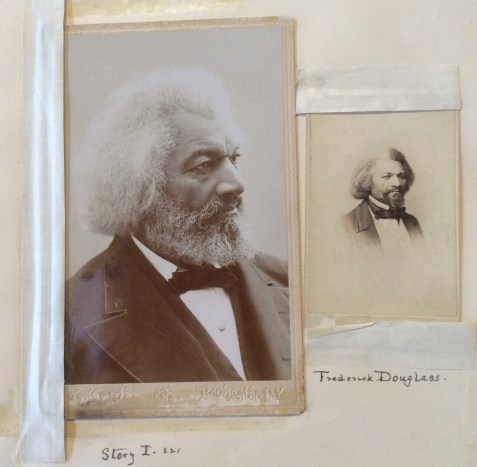
Two portraits of Frederick Douglass from the Hutchinson Family scrapbook, photo by Amy Cools

Two portraits of Frederick Douglass from the Hutchinson Family scrapbook in the archives of the Lynne Museum & Historical Society, photo by Amy Cools

The exact day of Frederick Douglass’s birth is unknown. We know the year, 1818, from the slave ledger of his master Aaron Anthony. His likely birth month, February, is an estimate. In his later years, Douglass chose to celebrate his birthday on February 14th because his mother Harriet once called him ‘my Valentine’.

Douglass is one of my favorite people that ever inhabited the world. He was born into slavery in Maryland, was mostly self-educated, escaped to freedom when he was 20, married the loving and strong Anna Murray, and became one of the most eloquent and influential advocates for civil rights in American, and, indeed, world history. He was an author, orator, preacher, activist, statesman, patriarch, musician, and world traveler. Not only was he a motivated, resourceful, brilliant, complicated, and incredibly fascinating person, I think he was oh-so-handsome too.

Here are a few links to some articles and works of art by, about, and inspired by the great Frederick Douglass, including my own work.

7 Haunts of Frederick Douglass in New York City – by Amy Cools for Untapped Cities

Frederick Douglass – by Ronald Sundstrom for Stanford Encyclopedia of Philosophy

Frederick Douglass and a Valentine, Emily Dickinson and a Snake – by Rob Velella for  The American Literary Blog

Frederick Douglass in Washington, D.C.: The Lion of Anacostia – by John Muller; this is my favorite blog about Douglass

Frederick’s Song – Douglass’ words arranged and set to music by SayReal and Richard Fink

From Oakland to Maryland, New York, and Massachusetts I Go, in Search of Frederick Douglass – History of ideas travel series by Amy Cools for Ordinary Philosophy

Interview with Ken Morris, Anti-Slavery Activist – by Ken Morris and Amy Cools for Ordinary Philosophy Podcast

Interview with Leigh Fought on Anna and Frederick Douglass – by Leigh Fought and Amy Cools for Ordinary Philosophy Podcast

Ordinary Philosophy and its Traveling Philosophy / History of Ideas series is a labor of love and ad-free, supported by patrons and readers like you. Please offer your support today!