Encourage a More Progressive Islam: The Peaceful Muslim Majority Should Dominate the Conversation

The debates around the Charlie Hebdo shooting have been raging hot and fast: should there be a stronger military response to militant Islamists? Does the Quran promote or at least allow violence, and if so, is Islam really a religion of peace? Are principles of the right to free speech and basic respect for the feelings of religious people compatible?
We’ve tried, and mostly failed, the military response tactic. Even where gains appear to have been made in the short term, a new crop of fanatics soon rise up to strike, as they feel their country’s honor has been violated by invaders who have no right to dictate what they should believe, what laws they should make, or what form of government they should create. It’s a fact of history that invasion, real or perceived, by foreign armies invariably provokes those disposed to violence to take up arms; these, in turn, convince the young, the aimless, and the self-righteous to join them in their ‘sacred’ cause. Even if the intention of the ‘invaders’ is to liberate or to protect (though I’m not convinced that’s entirely or even usually the case on the part of governments), these military interventions usually turn out worse for everyone in the long run. Consider the domino effect from our early intervention in Afghanistan against the Russians to our seemingly endless war(s) in the Middle East. While each intervention on its own seemed justified to many in the short term, the deeper all parties dig themselves in with more fighting, the more the bodies pile up and the deeper the tensions run, generating yet more conflict.
So how about the religion itself, and its holy book? The Quran indeed contains violent passages, allowing and even commanding its readers to kill those who violate certain commandments or who don’t believe. The Bible is also chock-full of both divinely tolerated and divinely commanded violence, including rape, murder, mutilation, and lots of genocide. Christians, for centuries, invaded other countries, overthrew rulers, tortured and killed heretics and ‘witches‘ (including little girls), and harshly oppressed the Jews, from baptizing and kidnapping their babies to murderous pogroms. All this with consent, by silence or by instruction, of religious authority figures, including the Pope.

So why does the western world widely consider Christianity a religion of peace, and Islam a religion of genocide? Well, Christianity has undergone a pretty thorough reformation through the influence of better philosophical and evidence-based ideas, starting with the Protestants, continuing with the Enlightenment, and up to the Age of Science and Human Rights. With widespread literacy and open trade came the awareness that the old dogmatic, sin-obsessed, holy-war-glorifying ways are actually quite awful for human well-being, and that hey, if God loves us, maybe he doesn’t actually want us to live that way. Now, except for abortion clinic bombers, the odd Timothy McVeigh or Anders Behring Breivik, and certain pundits, fundamentalists, and warmongers who seem to long for the days of the Crusades, Christianity is now, in comparison, mostly a benign family of religions of tolerance, peace, and good works. Even if, as I believe, they get a lot of stuff wrong (mostly the metaphysical stuff; otherwise, many of the ethical systems they promote are not half bad), Christian religions bear little resemblance to their forebears who enacted Old Testament values with gusto. Same goes for (most of) the Jewish family of religions.

This takes to our modern Age of Human Rights, in which the rights and interests of individual persons are of primary concern, so that any and all human institutions, be it religion, corporation, community, or government, is judged by how well it serves to protect and expand human rights. Is Islam compatible with this new understanding of the importance of human rights, in that they are at least on equal footing with religion, if not taking precedence over it? (From the religious viewpoint, of course: most modern, reformed, and mainstream religions seem to promote a robust conception of the centrality of human rights in their moral systems, and see no real conflict. The most progressive believers, as well as atheists and secularists, think that too many religions are still retrograde and unjust in their beliefs regarding gay, women’s, and children’s rights.) Should the threat of offending religious people be sufficient to limit that most sacred of human rights to the western world, free speech? We’re still figuring that one out when it comes to extreme cases, such as those that specifically incite violence, or ‘hate speech’. But for the most part, I think the general attitude of the western world towards free speech is the correct one: it should rarely be constrained, except when’s demonstrable that severe and direct harm will almost surely result from it. Even the speech of people with the most disgusting views must be tolerated in the interests of being an informed person, since it’s important to know who they are and what the bad ideas are that influence them. Most religions in the western world have become pretty comfortable with the idea of free speech and have come to value it highly, including the more moderate forms of Islam.

So how to stop the seeming spiral of parts of the Muslim world into an orgy of violence and the ideological dominance of its most extreme and retrograde forms? Encourage and promote those who stand against those violent ideologues. Most Muslims belong to this category of believers, and number among the most humane, thoughtful, and decent people you may care to meet. These are the Muslims who feel most, and most justifiably, beleaguered. They are as horrified as anyone else at all the atrocities committed in the name of the religion they identify with, perhaps more so since it’s other Muslims committing these crime, and like most Christians today, emphasize the nice parts of their holy book and interpret away the rest. And I’m sure they feel, as this thoughtful piece successfully argues, that it’s as ridiculous to blame Muslims as a group for the actions of Muslim killers, as it is to blame all Catholics for child-raping clerics, all Jews for the ultra-Orthodox few slinging feces at schoolgirls, or all atheists for Stalin’s genocide. It’s as ridiculous to expect all Catholics, Jews, and atheists to apologize and justify themselves following such atrocities, as it is to expect all Muslims to.

While there are still large parts of the Muslim world living under the rule of governments whose laws still carry out a retrograde understanding of justice, it’s just not true that most Muslims condone terrorist acts. Indeed, while doing research for this piece, I had a far harder time finding Muslim leaders who justify any kind of violence, even physical punishment for ‘apostates’ and criminals, than those that do. Outside of the rantings of pundits, who jump on the relatively rare examples of communities where a significant demographic believe violence is justified, it’s just not the case that Islam necessitates violence any more than Christianity does. Both revere holy books rife with passages promoting violence, but few Muslims and Christians are guided more by those passages than the peace-promoting ones. Yet it seems the pundits’ rantings dominate the major media outlets, while the voices of the peaceful majority of Muslims are all too often drowned out.

So if you’re one of those screaming and pointing fingers at ‘The Muslims’, let’s all stop being so damned self-righteous and smug in our own ‘enlightened’ point of view (yes, you too, my fellow atheists). Those of us who are interested in living in a more just, peaceful, tolerant, and free world should encourage such progress wherever it’s found, by praising it and trumpeting it from the rooftops. While I, too, feel that the world will be a better place when religion has lost its still too widespread dominance over the human heart and mind, I also know that many religious people feel a deep sense of identity with whatever faith they were brought up in, and this rarely changes quickly.

Who, then, will change the minds of those Muslims who hold beliefs contrary to principles of human rights and personal liberty? Will it be vitriolic Christians who point out the speck in their eye while ignoring the historical plank in their own? Will it be atheists who shout ‘Look, I told you so, that’s what happens when you consider ancient tribal texts the source of your morals’? I don’t think so, if history and a large body of research into why and how humans form their beliefs are any indication. The people who will change the mind of Muslims will generally be other Muslims.

So share widely every story of Muslims who hate violence and love tolerance, knowledge, and freedom, and let it it drown out the fundamentalists; I, for one, am rooting for their side in the fight over what broadly defines their religion. After all, they have the credentials and the inside knowledge of how it is to be a Muslim, to demonstrate to their fellow believers that the best way to be Muslim is to believe in a God of peace, tolerance, and justice. If you support these good people, you will become a help, and not a hindrance, on the journey of the human race, religious and secular alike, towards a more peaceful, tolerant, just, and wise world.

Here are prominent and influential Muslims and Muslim groups who stand against violence, to which I’ll keep adding as I discover them… and there are plenty to discover. Please share as widely as you can!

The Arab League and Al-Azhar condemn the Charlie Hebdo shooting:

The Council on American-Muslim Relations condemns the Charlie Hebdo shooting:
The Grand Mosque of Paris condemns the Charlie Hebdo shooting:
Imam Hassen Chalghoumi condemns the Charlie Hebdo shooting:
Imam Imtiaz Ahmed condemns the Charlie Hebdo shooting:
President Abdel Fattah al-Sisi condemns the Charlie Hebdo shooting: 
 
The Union of Islamic Organizations of France condemns the Charlie Hebdo shooting:

What Leaving Religion Has Done for Me

I grew up as a member of a large and generally very religious, very conservative Catholic family. As I describe in an earlier piece, both sides of my family are close-knit and traditional, with a tendency to insularity. When I was much younger, I loved it. Religion, especially in its more traditional and fundamentalist forms, has many upsides: a strong sense of community, a feeling of intimate belongingness in a group that shares a creed, a mythology, a history, and an identity. There are things I remember fondly: the warmth that suffuses family faith-based rituals, like putting on a fresh new dress for Easter morning, or the excitement of Christmas midnight mass, with its rich decorations, solemn rituals, and stirring hymns. We would return and light the tree, a luminous and dream-like vision to a child who just woke up from the wee-hours car ride home. There were pancake breakfasts and coffee socials after Mass, Sunday school friends, singing in the choir, and suppression of giggles as my brother, sisters, and I pulled faces at each other during the hour-plus long service.

I also remember that religious fervor, that soaring feeling, that high, that rush of heart-swelling emotion that would come over me sometimes as I sought connection with the divine. In my mid-teens, Jesus was my ‘drug’ of choice. (Not that I did much in the way of drugs later, ahhh-hem.) The Catholic religion has many elements that suit a romantic temperament: prayers and chants, candles and incense, a baroque artistic sense, a preoccupation with death, suffering, and self-sacrifice, and a deep veneration for martyrdom. And no-one is more romantic than a teenager.

But that feeling of belongingness can also lead to insularity, so that you feel removed to some degree from the broader human community and from the wider world of ideas. There was a feeling of loneliness sometimes, of separation from the world. I remember times when my religious compatriots and I would bad-mouth secular people: their music, clothing, slang, history, practices, and beliefs and ideas (I later learned we were mostly wrong about what they actually think and believe). It felt satisfying, in a way, as it made me feel part of some exclusive club, but it felt a bit mean too. We portrayed the rest of the world to ourselves as a lost, sad, evil place compared with what our religion had to offer. We could rest easy, satisfied that we knew the truth and could lead more meaningful, ‘holy’ lives, here on earth and after death. (Though, oddly enough, I feared death terribly in those years, and thought of it often. Try as I might, the always vague promise of the joys of heaven failed to console me. I thought perhaps God was testing me: tests of faith are an important theme in Catholicism.)

As I approached adulthood, and began to meet people from different backgrounds, with different beliefs, faith faded and gave way to doubt. I’d always been a curious person, but my youthful shyness and anxiety, combined with my insular upbringing, kept me mostly isolated from the world beyond family and church. It wasn’t until I entered the workforce, and then attended junior college, that I discovered the wider world, one of dazzling variety, and found it suited my personality to a T.

Slowly, I began to emerge from my religious shell. I began to let down my guard, thinking: if my religion is true, my faith will survive running the gauntlet of questions, challenges, and opposing ideas, gaining strength along the way. After all, if integrity and love of knowledge are virtues and God is good, God would prefer even an honest atheist to an intellectually lazy believer. So I opened myself up to discovery, to an enthralling diversity of beliefs, ideas, cultures, and practices, a world with a rich and varied history. Science, literature, philosophy, history, art, culture, religion itself, all became available to me to explore, to consider, and to critique, honestly, in its own terms, and on its own merits. There were no more heresies and dogmas: now, there were facts and theories, truth and falsehood, useful ideas and otherwise. There was no more sin and redemption: now, there were systems of ethics and self-improvement, and considered moral judgments derived from considerations of good and bad, help and harm, beneficence and selfishness, virtue and non-virtue. The supernatural gave way to the natural, certitude to a healthy skepticism, blanket acceptance of creed to understanding, faith to belief ‘wisely apportioned to the evidence’.

I came to value the sense of belonging to humanity as a whole over the sense of belonging to a narrower community of belief. My newfound cosmopolitanism broadened my sense of care for and responsibility to my fellow human beings beyond the scope of any one ideology. The world was no longer divided into ‘Us’ (in my case, Catholics) and ‘Them’, the poor benighted souls wandering this world lost, hopeless, and forlorn. Instead, I came to understand that all of these tools we’ve developed, from morality to literature to government to art to religion, are products of the great quest to better ourselves, to attain the happiness and fulfillment that all humans seek. Religion, like culture, language, and so on, I came to understand as a human creation, and no more or less important, sacred, or immune to change and criticism than any other artifact. Religion lost its magic: since humans made religion, humans can reform or unmake it. I could glean the best of what it has to offer, and explore its history, appreciate its role in moral progress, gain insight from its ethical and metaphysical theories, enjoy the creativity which gave rise to its fables and rituals, and discard the rest.

Likewise, the whole of the great treasure trove of human thought became available to me for study and consideration. There is no list of banned books, no heresies. Instead, there are good ideas and bad ideas: theories that better explain the workings of the universe, and those that do not; beliefs that accord with reality and with reason, and those that do not; ideologies that lead people to do good and to lead better lives, and those that do not; literature and art that arouse the best emotions and enrich understanding in us, and those that do not.

Many religions, including the brand of fundamentalist Catholicism in which I was raised, lead many adherents to restrict the education of their children to a cherry-picked, often distorted or flat-out-wrong, circumscribed array of ideas, scientific theories, and historical accounts that accord with the doctrines of their faith. Many of these children remain ignorant of the wider world of human thought and history until something in their experience or personality compels them to look beyond the teachings of their youth. For example, my own dear grandmother, out of love but misguided by her piety, did a disservice to the education of her grandchildren by attempting, and in some cases succeeding, to restrict our education in this way. Her religious beliefs led to her conviction that a broad, liberal education offered too many temptations to disbelief, so she felt compelled keep us from learning anything other than that which would accord with her fundamentalist Catholic faith. As I later discovered, she was right, not for the reasons she thought. Truth, in my opinion, holds fast in the face of challenges; it does not give way as easily as error does. Each new thing I learned, then, was not a temptation: it was a window of opportunity for growing in understanding, and for replacing bad ideas with better ones. Fortunately, I inherited, and was inspired by, her adventurous side, her love of people. Over time, I encountered and fell in love with the wider world of ideas, through the people I came to meet and the broader education I eventually received.
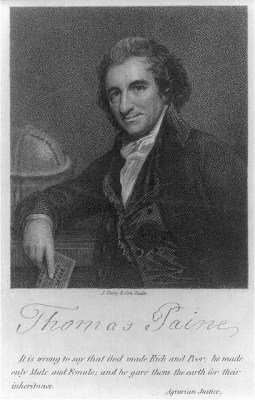
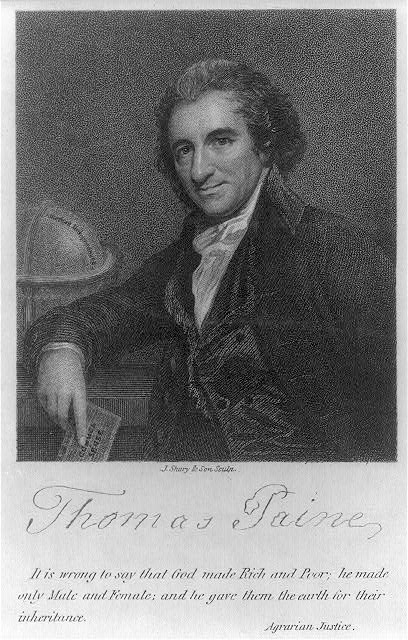
Now, in place of memorizing and reciting the Apostle’s Creed, I immerse myself in Aristotle and Mill, in Hume and Kant, in Wollstonecraft, Rose, Stanton, Jefferson, and Paine, in Avicenna and Aquinas, in Rawls, Pinker, Newberger Goldstein, and Hitchens. I can immerse myself in the teachings of religious founders as well, including the historical Jesus, endlessly more complex, fascinating, and inspiring than the blonde, haloed icon of the Baltimore Catechism. I have the opportunity to explore what all of these thinkers and reformers have to offer, to seek to understand their ideas on their own terms, putting aside those distorted accounts produced by religious rivalry. I can also, without fear of divine censure, explore the bad ideas people have conceived, from belief in witchcraft and satanic possession to the defense of torture, to racist ideologies, to ‘holy war’ and terrorism to social Darwinism (a sadly misleading term, does a disservice to a great thinker by associating his name with eugenics, a pseudoscientific theory contrary to his own ideas). I can try to enter the minds of those who created these dangerous and immoral ideas, in order to really understand how they came up with them, and to better explain why they are so terrible.

These days, I think of myself as a happier, more morally responsible, more intellectually honest, and more informed person than I would have been if I had remained religious. In that, I speak for myself only. Yet I know that this is true for many others, whose accounts celebrate the benefits of their own religious deconversions. It’s my impression that the most joyful, most passionate, and yes, the most resentful converts from religion are those who were brought up in more restrictive, fundamentalist belief systems. Critics say that such people gave up their religion because it was too hard, so they took the easy way out; or, that they just wanted to be able to ‘sin’ freely. I’ve had these accusations thrown at me many times. In a sense, they’re right, but not for the reasons they think. Many of these religions are too hard because their restrictions and demands are contrary to human nature since they’re based on deeply flawed accounts of it, and much of what they deem ‘sin’ is not wrong after all.

Many people attribute their own best qualities, of character, of behavior, of outlook on life, to religion, whether it’s the one they were brought up with or one they converted to. While I recognize the fact that religion can give a deep sense of fulfillment, the evidence indicates religiosity is not more of a predictor for good behavior than secularism. Study after study, personal account after personal account reveal that religious people commit most crimes at about the same rate, are about as generous, and behave about as morally overall than secular people.

My own observation is that people use religion to justify whatever way they are inclined to behave, good or bad. As the physicist Steven Weinberg points out, good people do good things, and evil people do evil things, regardless of religion. Many of the kindest, wisest, and most wonderful people I know are religious, and credit their religion with their moral successes. I’ve also known plenty of religious people use their beliefs to dodge responsibility for their bad behavior with excuses such as ‘the devil made me do it’ and ‘well, of course, I’m just a sinner’. They use this get-out-of-jail-free-card, such as this particular one available to Catholics (but of course, not necessarily endorsed by all Catholics): ‘I’ll just go to Confession later’. Some are otherwise good people who hold what I think are immoral beliefs, because they were taught to believe this way, and threatened with eternal punishment if they don’t. Others aren’t morally praiseworthy people in any sense of the term, and go through life doing only that which serves their own short-term self-interest. Religion, for these, is a matter of convenience or habit.

All of these things are basically true of the non-religious people I’ve come across, including my secular community of friends, family, and co-workers. Some are kinder than others, some are morally committed to doing good, some have a more nihilistic, selfish, or jaded view of the world. Yet here’s why I generally prefer a secular brand of morality over the religious: secular people generally take goodness more for granted. While this might sound counter-intuitive as an indicator of a better moral character or as a way of habituating oneself to better behavior, I think it’s excellent for both.

For example, when complimented on a good deed, a secular response is generally something along these lines: ‘well, obviously, it’s the right thing to do’, or, ‘it just feels right / good’, or, ‘of course, that’s how decent people behave’. These sorts of responses indicate that they see goodness as the default position, as required by reason, as a basic human instinct, or both. After all, human beings go through day to day life being decent to one another: we pay the asking price for the things we want, we step aside to let others pass on the sidewalk, we obey the rules of traffic, we say please and thank you, we lavish food, money, and medical care on strangers as well as family and friends, we spend huge amounts of our time communicating complex thoughts and ideas, and so on and so on. We take all this for granted, to our credit. When we compare the human species with all others, even to our closest relatives the chimpanzees, we find that our level of cooperation, generosity, and tolerance is quite remarkable. In all other species, some combination of predation, raiding, warfare, murder, infanticide, and/or indifference to suffering and the welfare of anyone besides close kin and allies are par for the course. With humans, however, such behavior makes the news.

Since goodness is the default, it’s badness has to be explained: by mental illness, alcohol or drugs, a bad upbringing, a momentary selfishness that overcame one’s better side, or by faulty ideology or culture. Therefore, most good deeds are not terribly remarkable: they are a natural product of sociability combined with reason. Sociability gives us the instincts to cooperate and help others; reason shows us that the more widely we extend our cooperation and good-naturedness, the better off everyone is in the long run.
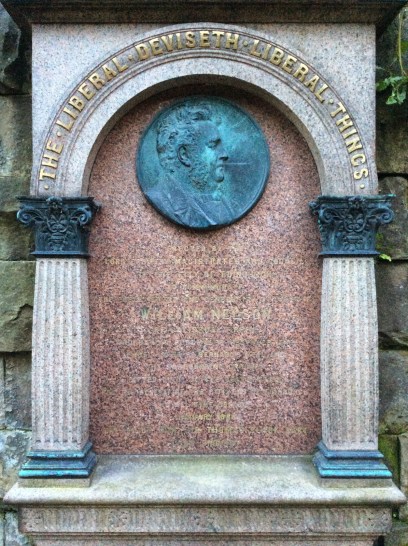
Since secular people (as well as many liberal and progressive religious people) tend to believe in the basic goodness of human nature, they tend to be liberal in politics and morality, and broad in their conception of human nature. For example: since it’s everyone’s basic duty to help one another out, it’s right and just that we all pay taxes to create public welfare systems for those less fortunate than ourselves. To not institute public welfare systems is to say that it’s right that people should enjoy the benefits of civilized society, while being permitted to shirk their responsibility to care for those whom it hasn’t benefited. Another example: since most kinds of human behavior are good or at least morally neutral, there’s only a narrow range of behaviors that should be prohibited, namely those that actively harm others. Human nature, with its unique combination of advanced intelligence and strong social instincts, has evolved to include a wide variety of ways of being that are not only valid, but worthy of celebration, as they are indicative of the wonderfully fascinating, complex, endlessly inventive creatures that we are.

It’s no surprise, then, that secularists and adherents of the more liberal religions, which share this belief in basic human goodness and the broadness of human nature, have been on the forefront of reform and civil rights movements throughout history. Abolition of slavery, religious liberty, women’s, worker’s, and gay rights, indeed all of the great movements for reform and freedom, originated with the dissidents, the broad-minded, and the humanists. Religion is made for human beings, not the other way around.

An aside: there are certain leading secularists, such as Richard Dawkins and Sam Harris, who claim that the only ‘true’ religious believers are fundamentalists. They argue that liberal and reformed believers just want to pick and choose the ‘nice’ parts and discard the rest, which constitutes a betrayal of their religion. I think this view is not only historically inaccurate, it’s based on a more basic categorical error. Religions are not, and have never been, eternally ‘fixed’ systems that do, or ‘should’, remain constant over time. They are better understood as belonging to a category of things that include culture and language, all of which come gradually into being from thoughts and practices that are products of human nature, and change over time. Culture, language, and religion evolve as human nature evolves and as the totality of human knowledge and wisdom expands and is applied to current circumstances. It’s no more true to say that the only ‘true’ religion is that which remains wedded to a particular holy book or creed established by a synod, or a particular interpretation of these, than it is to say that the only ‘true’ communicator of English language is one who strictly adheres to the first Webster’s dictionary, or considers the Canturbury Tales or the works of Shakespeare as the eternal exemplar of ‘true’ English grammar and style.

Let’s contrast the more liberal, progressive, humanist views of secularists and moderate believers with the views of some of the more fundamentalist and hierarchical religions, usually descendants of tribal belief systems. This includes the brand of conservative Catholicism I grew up with (which is not reflective of all variants of Catholicism, some of which are quite tolerant and emphasize social justice). In these belief systems, humans are born in sin, ‘fallen’, weak and corrupt, and it’s only through the greatest struggle, and never without divine help, that we can achieve goodness. Their view of human nature is narrow: people are created to fulfill one of a number of comparatively few, narrowly defined roles, and behavior and proclivities that aren’t in accordance with these are sinful. Their view of life is one of spiritual warfare: we are beset on all sides by Satan and his agents as they vie with God for dominance over our souls. The way to redemption, then, is a lifetime of constant prayer, diligence, and suffering, battling one’s way to an eventual union with God that relatively few can achieve.

Secularism and the liberal religions, with their naturalist view of morality, emphasize the ordinariness of human goodness and the value of habitual, systematic, readily achievable goodness. The more rigid, fundamentalist religions, on the other hand, emphasize the difficulty of defeating evil and the value of relatively rare exploits of good deeds through heroic self-denial. While the latter may be more romantic and exciting, I think that the secularist and humanist view of human nature has been more conducive to human flourishing overall. It promotes a greater quantity of goodness in the world by making it understandable and accessible. This is readily apparent when we examine the evidence throughout history and up to the present time. Where we find tolerant governments and secular or progressive religious belief systems, we find less warfare, a higher standard of living, and a system of laws that protect all citizens from oppression, from each other as well as from government itself. Where we find civilizations dominated by religious fundamentalism, rigid ideologies, and aristocratic and ‘ordained’ hierarchies, on the other hand, we find the opposite.

In sum: leaving religion behind, for me, has proved not only emancipatory, but has provided a wonderful opportunity for learning, for critical thought, and for personal growth that I may never had had otherwise. I still have a residual distaste for religion, especially for its more ritualistic trappings, as one has a distaste for imbibing a substance one has overindulged in, or for fire after one has been burned. I shy away from churches, am creeped out by rote prayers, and feel depressed when listening to Gregorian chants and solemn hymns. (I feel very differently about other forms of sacred music, and wouldn’t you know it, I never heard any of them in the church of my youth.) Yet I seek wisdom from any source in which it may be found, and since I know that there is much to be found in religious traditions as there is in any arena of human thought, I look for it there, too, despite the inclinations I sometimes have against it. And one day, when my residual aversion to religion has finally worn away, I’ll be that much less in the sway of the kind of bias that blinds the intellect and blunts the understanding.

*Listen to the podcast version here or here on iTunes
*Also published at Darrow http://darrow.org.uk/2015/04/12/what-leaving-religion-has-done-for-me/

Virtue Ethics: An Ancient Solution to a Modern Problem, by Peter D.O. Smith

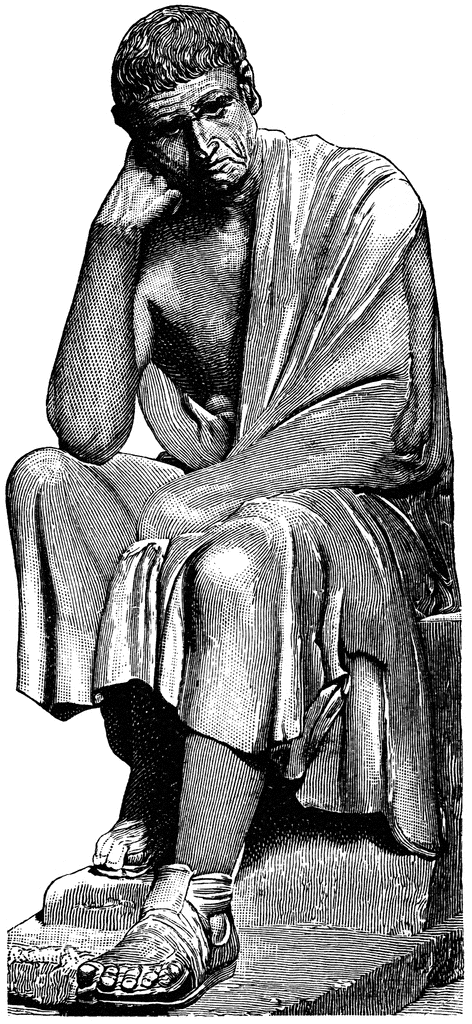
Aristotle

I recently discovered this piece by Peter D.O. Smith in Scientia Salon, a favorite ‘webzine about philosophy and science‘ of mine.

I’m especially interested in philosophy’s attempt to unify ethics, to help bring the various particular ethical systems and local moralities into some sort of accord, or at least to bridge the gaps between them to whatever extent possible. Great harm often results when adherents of different ethical / moral systems come into conflict (religious wars, political gridlock), where instead of seeking common ground in the pursuit of the good, conflicting parties seek to dominate by force and inflammatory rhetoric. Blinded by self-righteousness, these conflicting parties can bring about a situation where at best, no progress is made as each side expends all of their efforts undermining the other, or at worst, inflict death and destruction on each other and on innocent bystanders.
This piece addresses this problem, and offers virtue ethics as an excellent candidate for its resolution.
What do you think? 
~~~~~~~~~~~~~~~~~~~
Introduction

This article is neither a defense of nor an attack against either religion or secularism. It treats them as well established sociological facts and no more than that. I take them as given and argue that a greater moral good can be achieved if the two belief systems find common moral ground in virtue ethics.

Why should we care?

Moral choices infuse most aspects of our life, whether we know it or not. And a great number of these moral choices are bad ones. This is why our prisons are filled to overflowing [1], and recidivism is so high at 66% [2]. This is why we have so many war dead and this is why so many die violent deaths at the hands of murderers or radical ideologues. This is also why we have such an inequitable distribution of wealth. This is why cheating is rampant at schools and universities [3]. We maintain large standing armies to protect ourselves from the bad moral choices of others and on occasion we use it to inflict our bad moral choices on others. This is why we have no qualms in spying on our own citizens [4] or in killing without due process. This is why almost everyone has been the victim of crime, unfairness, injustice, discrimination, bullying [5], sexism, racism, ageism or other forms of bigotry, bias, and discrimination. This is why stalking is commonplace [6].

Bad moral choices touch us all and are the major cause of suffering in today’s world. Every person who has been jilted by a cheating partner has felt that suffering. Marital infidelity is the most common cause of divorce and abuse is another important cause [7]. One in five women are sexually assaulted at university [8]. Even natural disasters such as earthquakes or floods are compounded by moral failures as nations don’t respond adequately. Famines become moral failures when we cannot distribute food where and when it is needed. Our economic systems become moral failures when they turn into instruments of greed. Our political systems become moral failures when they are used for the advantage of the powerful, to exploit or neglect the weak.

The point I am making is that moral suffering is real, pervasive and needs attention. We have made great progress in reducing material suffering, but only some progress in reducing moral suffering. This is the important challenge that faces us today, to reduce moral suffering with the same degree of success that we have reduced material suffering.

What then is the problem?

The problem quite simply is that, in comparative terms, we do not give moral problems much attention at all and that we give it the wrong kind of attention, by creating a growing thicket of rules and regulations [9].

Modern society rewards material progress while neglecting moral progress. We have huge budgets for science research and we give large rewards to outstanding achievers in science. But society allocates far smaller amounts to advance moral interests or to reward moral achievers. As a simple example, of the six Nobel awards, only one (Peace) has a moral dimension [10]. Of the other 21 high-honour prizes, only seven have a moral component [11]. School education has a strong science bias but gives little attention to moral education [12]. Our criminal justice system spends a great deal on addressing the outcome of moral problems but little on addressing the causes of moral problems, with the result we have a recidivism rate of 66% [2]. We punish moral offenses but we do not prevent them. We have resorted to a form of legislated morality with our criminal justice and human rights systems. This is a framework with large gaps that does not address or give guidance to private morality.

We are becoming a rules based society, but the rules have only a weak hold because they lack intrinsic motivation [13]. Perhaps the most dramatic example of this was the collapse of the banking system. Banking is one of the most highly regulated parts of the economy, and yet that does not prevent abuse and exploitation [14]. Without intrinsic motivation the rules become a challenge to find means of evasion. We have reacted by adding more rules but it is only a matter of time before more means are found to evade them too. There has been an explosive growth in criminal laws. For the past twenty-five years, a period over which the growth of the federal criminal law has come under increasing scrutiny, Congress has created over 500 new crimes per decade [9]. Adding to this, the Administration is increasingly relying on mandates and directives.

A modern problem

Western society, for a long time, had a broad consensus on morality that was derived from religion. Indeed religion can be seen, in sociological terms, as society’s way of promoting cohesion through moral consensus [15]. Modernity and the Enlightenment have weakened the hold of religious morality, providing space for alternative conceptions of it to take hold. Modernity introduced a spirit of utilitarianism [16] and this has shaped present day society’s concept of morality. But it was not merely the concept that changed, but also the authority of moral systems. Religious moral systems derived their authority from their concept of God and this helped to provide intrinsic motivation. With the new utilitarian morality a new authority was introduced, the individual. Inevitably this has resulted in a weakened and diffuse moral sensibility that contains many contradictions. This new concept of morality has been accompanied by a shift from intrinsic to extrinsic motivation. Extrinsic motivation is, by its very nature, less effective.

With this new concept of morality came a changed approach to society’s problems. The spirit of utilitarianism has created a tacit assumption that alleviating material need reduces the impetus for moral wrongs. There is a belief that moral wrongs are largely the outcome of material conditions. Thus effort has been directed to solving material problems, which have in any case been shown to have easy solutions, while true moral problems remain intractable and so are neglected. We have been picking the low hanging fruit.

We are divided by differing concepts of morality

With the weakening of religious morality and the widespread adoption of utilitarian approaches a sharp moral divide has opened up in society.

The secular world has adopted a tacit, inchoate form of moral consequentialism. It believes there is no absolute good or bad, only that acts should be judged by their consequences. It rejects the absolute lawgiver and the laws of religious deontology. It makes the individual the final arbiter of his acts.

The religious world, by contrast, believes in absolute good and bad and that acts can themselves be inherently good or bad. It believes there is an absolute lawgiver that has handed down a set of rules for a good life. The religious world rejects moral consequentialism on the grounds that it is a shifting and dangerous moral system that is easily tailored to suit the needs and desires of the moment.

As consequentialism or utilitarianism rose to the fore, reflecting the material and mechanical spirit of the times, challenging long held moral conceptions, Protestant Christianity (and Islam) retreated into a form of hardline deontology. The result is the strong ethical divide we see today.

There is thus a yawning chasm between the moral concepts of the religious and secular worlds. This chasm weakens the ability of society to address common moral problems since it lacks consensus. Society has reacted to this problem with a growing thicket of laws with no end in sight [17]. This has proven to be a poor solution, since adding rules merely invites further evasion if they are not reinforced or accompanied by some form of intrinsic motivation.

The need for a middle ground

We are a common people with common moral problems that affect us all. To solve these problems we need a unifying moral concept that both the religious and secular worlds can accept. For example, schools are a place where we should also give our youth moral preparation for adult life, and schools serve both world-views. This is one example of why it is necessary that we find common ground. Deontology and moral consequentialism are not acceptable to both sides of the divide and so cannot fulfill this need.

Which raises the question: is there a middle moral ground where the secular and religious worlds can meet and agree? Today’s society places a strong emphasis on the concepts of justice and rights. These can be seen as instances of what are known as ‘virtues’ and it is in virtue ethics, the third major branch of ethical philosophy, that I see an important opportunity for finding common ground between the secular and the religious worlds. Virtue ethics shows promise as the means of filling in the gaps of legislated morality. One can think of it as being the soft flesh on the hard skeleton of legislated morality, making a healthy, functioning body that is directed to the purpose of flourishing. Virtue ethics can be seen as an important form of intrinsic motivation that makes the regulated rules of society more effective while providing strong guidance to unregulated, private conduct. It is not accidental that here has been a sharp increase in academic interest in virtue ethics lately [18].

The appeal of virtue ethics

Virtue ethics is an enduring idea with ancient roots. Aristotle, some 2,300 years ago, clearly articulated the ethical philosophy known today as virtue ethics [19, 20]. Cicero, close to the time of Christ, wrote of it as being one of the three main contending moral systems of the day [21]. Catholicism, early on, incorporated it into its teachings where it continues to this day to be a major influence [22]. The last 50 years have seen a marked revival of academic interest in virtue ethics [18, 23], and Alisdair McIntyre’s publication of After Virtue was a landmark in this revival [24].
Virtue ethics looks neither to rules nor to consequences. Instead it considers internal motivations directed at realizing the telos, or end, of a “good” person, and it is in this that the religious and secular worlds can find agreement. In my mind, the appeal of virtue ethics is fivefold.

First, the generally accepted list of virtues is free of religious terminology or implications. This makes the virtues acceptable to the secular world. At the same time the religious world finds them a natural extension of its beliefs. For example, Catholicism has embraced virtue ethics, and both secularists and theists would readily agree on the list of 52 virtues given by the Virtue Project [25]. Theists would add faith, hope and charity to that list while secularists would ignore them, a minor difference. The differences that the many belief systems bring to this are largely ones of terminology and emphasis. It is an ethical system that is neutral about belief systems and can therefore be accepted by all belief systems.

Second, supplying an internal motivation is a better way of obtaining a good outcome, whether of act or consequence. It is widely agreed that intrinsic motivation is more effective than extrinsic motivation (intrinsic motivation refers to doing something because it is inherently interesting or enjoyable, and extrinsic motivation refers to doing something because it leads to a separable outcome[13]).

Third, by supplying intrinsic principles, rather than rules, it is adaptable to a wide range of circumstances. A rules based system can only adapt to new circumstances by adding new rules, something that becomes intolerable in the long run.

Fourth, virtue ethics supplies a means of internalizing and integrating rules into a person’s behavior, making them more effective. It is a powerful way of reinforcing the rules and regulations of society by translating them into intrinsic motivation.

Fifth, virtue ethics can supply a new source of meaning, independent of but complementary to religious belief. It can be an antidote to the angst of modernity. This is a large field that is only touched on here.

In short, virtue ethics is capable of supplying an intrinsic motivation that is acceptable to both the secular and religious worlds. We live in an overwhelmingly rules dominated world. Virtue ethics offers a way of internalizing and then integrating rules such that they become intrinsically motivating. It is a promising field for finding common ground between the secular and religious worlds, to makes rules and regulations more effective, and to provide a source of meaning for the non-religious.

A practical solution

The attraction of virtue ethics is its practicality and simplicity. It can be formulated in simple terms that are appealing to most people. It is independent of belief systems and yet most belief systems can accept it, with only changes in terminology. It can easily be taught at an elementary level while still be challenging at a philosophical level. It is easily incorporated into codes of conduct for organizations.

But it is not just a solution to individual moral concerns. It can also be expanded to any domain of activity as an example discussed by Bruni and Sugden shows in the case of market economics [26]. They describe the market as a practice having a telos of voluntary and mutually beneficial exchanges. They explain: “On the supposition that the telos of the market is mutual benefit, a market virtue in the sense of virtue ethics is an acquired character trait with two properties: possession of the trait makes an individual better able to play a part in the creation of mutual benefit through market transactions; and the trait expresses an intentional orientation towards and a respect for mutual benefit. In this section, we present a catalog of traits with these properties, without claiming that our catalog is exhaustive.” Their catalogue of traits, or virtues, include universality, enterprise and alertness, respect for trading partners, trust and trustworthiness, acceptance of competition, non-rivalry, self-help and stoicism about reward.

Another example is the Character Counts! Coalition for moral education in schools, which uses a virtue ethics framework centered on respect, responsibility, trustworthiness, caring, justice, fairness, civic virtue and citizenship [27].

These examples are intended to show that a virtue ethics framework can readily be adapted to any domain of activity or ‘practice.’ This makes virtue ethics a very flexible approach that can be tailored to all parts of our culture.

The role of secularism

Secularism has defined itself in opposition to theism. Its great achievement was the separation of religion from public life. Going beyond that, some secularists have set themselves the goal of destroying religion. This seems to be an ill advised goal as its chief result has been: to poison the public perception of atheism [28] and to harden the stance of Christian fundamentalism. Religion is a deep seated sociological phenomenon and is not going away. It has been part of human history for at least 40,000 years and remains an important part of all societies. It is far too durable a phenomenon and there is no realistic prospect that it will be ended [29]. The criticisms directed at religion by secularism have prompted strong reforms in religion and so have been useful for that end. The so-called war between secularism and religion is now becoming counterproductive as it obscures the major issue facing society, that of moral suffering. Now it is time that secularism embraces this problem and treats religion as an ally and not an enemy, or at least declares a truce. This does not mean religion should not be criticized when the occasion demands it, and indeed criticism can be a healthy impetus for reform. But attention should be shifted to the real enemy, moral suffering. To overcome this enemy the secular world should make common cause with the religious world. It can do this by embracing virtue ethics and making it the central plank of a morally committed secularism.

A solution to future problems

Population growth and rapid industrialization of the third world will create a situation of resource shortages and ultimately low growth [30]. Coping with this new world will require a major re-adjustment of values away from today’s one of rampant consumerism centered on hedonistic happiness. It will require a strong sense of responsibility and restraint, frugality will become the new watchword. Virtue ethics is our best hope of navigating this challenging new world. As Julia Annas, in Intelligent Virtue [31], explains, the virtues are a template for flourishing, in that to become a virtuous person is to become a flourishing person. It is a move away from hedonistic happiness to the eudaimonia of the virtues. This is a radical move away from the idea of happiness that depends on circumstances or goods, a necessary move in the resource constrained world that lies in our future.

That this goal is not so elusive can readily be appreciated when we compare the levels of positive emotions of some poor countries with those of some rich countries [32]:
Panama 85%, Singapore 46%;
Lesotho 77%, United Kingdom 77%;
Swaziland 76%, Germany, 74%.
_____
Peter D.O. Smith is a foundry metallurgist, quality engineer, software engineer, and corporate manager (recently retired), who lives by the motto fides quaerens intellectum.

[1] US incarceration rate.
[2] Recidivism in the United Sates.
[3] Academic cheating fact sheet.
[4] The Snowden Files.
[5] 44% of children report having been bullied.
[6] Stalking.
[7] Causes of divorce.
[8] Sexual assaults at university.
[9] Revisiting the explosive growth of new crimes.
[10 Nobel prizes, literature, medicine, physics, chemistry, peace, and economics.
[11] Other high honor prizes.
[12] How Moral Education Is Finding Its Way Back into America’s Schools.
[13] Ryan and Deci, Intrinsic and Extrinsic motivation.
[14] Why only One Banker Went to Jail.
[15] Nicholas Wade, The Faith Instinct.
[16] Trends in utilitarianism – Google books Ngram.
[17] Business Ethics: The Law of Rules.
[18] Trends in virtue ethics – Google books Ngram.
[19] Nichomacaen Ethics.
[20] Notes on Nichomachean Ethics.
[21] On Moral Ends, Marcus Tullius Cicero, Julia Annas.
[22] The Cardinal Virtues in the Middle Ages: A Study in Moral Thought from the Fourth to the Fourteenth Century.
[23] Contemporary virtue ethics.
[24] Alisdair MacIntyre, After Virtue.
[25] The Virtues Project.
[26] Reclaiming virtue ethics for economics.
[27] The Six Pillars of Character.
[28] Net rating of religious belief systems.
[29] Growth of Religion.
[30] Paul Gilding, The Great Disruption.
[31] Julia Annas, Intelligent Virtue.
[32] Gallup poll, Positive emotions worldwide.

This piece was originally published on Sept 25th, 2014 at 
http://scientiasalon.wordpress.com/2014/09/25/virtue-ethics-an-ancient-solution-to-a-modern-problem/

Gospel Songs, Negro Spirituals, and This Heathen

The great Mahalia Jackson

I’m a non-religious person, an atheist, a freethinker, a heathen…. whatever you want to call me, any of those terms suits me just fine. I also love a lot of ‘God-dy’, spiritual music.


I grew up Catholic, but for the most part, our church music didn’t ‘stay’ with me as an adult. I’m just not that into chants (I usually find them kinda depressing) and traditional Catholic and Christian hymns tend to be pretty chant-y, or too ponderous and formal for my taste. ‘Ave Maria’ is lovely, and some of the Christmas songs, but overall, that style just doesn’t do much for me. Nor did I ever like the more modern, multi-denominational Christian hymns: they’re mostly pretty corny, and are as artistically satisfying and pack as much of an emotional punch as a discount Hallmark card. The absolute worst of all: Christian rock, country, and pop music. ***shudder***

But let me tell you: if I had grown up in a Baptist church in the South, and heard that passionate, joyful gospel music every Sunday, or those soulful Negro spirituals, I may have remained a weekly churchgoer to this day. I just don’t know if I could have torn myself away from those songs, which alternately uplift the hearer to dizzying heights, or tears your heart apart with the most delicious pain as it simultaneously heals you.

Why do I love this brand of religious music? Why do I find it ranks right up there with the very best of human artistic accomplishments?

I’ve thought this over quite a bit, and I’ve come to the conclusion that there are three main reasons:

1) Time: Gospel songs and Negro spirituals were developed from centuries of earlier forms of music, from standard Christian church songs, American folk songs, and rhythmic African music. The crafters of these songs had a rich tradition to draw from, and this music was developed and perfected over centuries. Of course, this is true of all types of music one degree or another, so now we add the next basic element:

2) Indirectness: For some as yet poorly-understood reason rooted in human psychology, I find that the most sublime, most important emotional truths are rarely well conveyed if the language used is too literal. The words can be simple and seemingly direct, but what they’re ultimately alluding too, the deepest and most transcendent parts of human experience, are somehow out of reach of ordinary language. When it comes to religious music, it has a way of revealing the depths of pain, joy, gratitude, ecstasy, and connection with each other and the universe as it’s couched in the symbolic language of the supernatural. (To me, that is; to its authors, the supernatural imagery is often meant to be taken literally). Other forms of poetry do the same; that’s why similes, metaphors, and other linguistic forms of insinuation and suggestion are so universal. Like symbolism, they are incredibly effective in igniting the imagination and setting it free to roam the universe and explore our inner depths. Yet there’s one more element needed to really raise these forms of music to the heights of artistic expression:

3) Authenticity: Gospel songs and Negro spirituals (along with other related forms of American music, blues, country, and folk) are a direct outpouring of some of the greatest suffering, coupled with the deepest longing for redemption and relief from suffering, that humankind has ever known. There is little to no affectation in this music. Much of this music is the legacy of slavery, the outpourings of the tortured human spirit in the midst of oppression, torture, hopelessness, and despair resulting from one of the greatest evils the human race has ever inflicted on so many of its members. So it’s no wonder that the language of religious redemption, combined with the longing for liberty and freedom from pain on earth, and the joy at the thought of its attainment, resulted in some of the most transcendent, stirring music that our species has ever created.

That’s why I find, heathen that I am, that most freethought and atheist songs leave me cold: they are missing one or more of these elements. Steve Martin is just about right: ‘Atheists Don’t Have No Songs‘! They are too gimmicky, too ‘clever’, too literal, too simultaneously reactionary to and derivative from religious music. The few freethought songs I like are are almost always the funny ones, where cleverness is what the song’s all about, such as Roy Zimmerman’s Creation Science 101.

It’s no surprise that agnostic, atheist, irreverent songs are generally not very good, since freethought as a movement is still very young compared to religion. Give it some time and good songs will come, no doubt, once they’ve escaped the overly-rational, self-consciously non-spiritual constraints they’ve placed on themselves. Tim Minchin, by adding some heart to the mix with his witty and sweet White Wine in the Sun, moves freethought songcraft in the right direction.

So who cares about religion or no religion in music: all are created by human beings for the enjoyment of other human beings. Here’s a list of some of my very favorite gospel and spiritual songs (and songs inspired by that tradition) that I think are more moving than just about anything else you’re likely to hear:

He Must Have Known‘ – Mahalia Jackson – (Thanks for this one, Mike LaSalle)

Let It Shine‘ – Blind Willie Johnson

Didn’t It Rain‘ – Sister Rosetta Tharpe (and well, pretty much every other song she ever did!)


Sending Up My Timber‘ – Blind Willie McTell


I Saw The Light‘ – Hank Williams as Luke the Drifter


Com’ By H’Yere Good Lord – Nina Simone

I Must See Jesus – Snooks Eaglin


Uncloudy Day – The Staple Singers

I Was Standing By the Bedside of a Neighbor – Michelle Lanchester and Sweet Honey in the Rock

I’ll be adding to this list from time to time as I think of them, or find a new must-hear. In the meantime, dance, weep, jump up and down, sway, transcend, and enjoy!

Pornography

Recently, I read a post on Facebook where my cousin’s wife woefully reported that my cousin’s new anti-pornography site had to be taken down due to a huge negative reaction (though he received much support as well). The site is (was?) called ‘Her Name’, and it’s a forum where you assign a name (first name only) to a woman whose dignity had been affronted through pornography: women you know, women you’ve seen but not met, and so on. By naming these women, their humanity, their individual worth is re-affirmed, and all are reminded that each woman a life and a story beyond the simple object of gratification that pornography portrays them as.

That was what I was able to gather from the description of the website and from  my cousin’s wife’s post. But I didn’t find many details of why many objected strongly to the website, in the blog review and discussion of ‘Her Name’ I found on Patheos, nor on Facebook. Nor was I able to discern clear arguments in support of the claim that women are, in fact, dehumanized or injured in other ways by pornography.

Here’s what I gathered about the nature of the angry comments: by providing a forum to name these women, my cousin was (inadvertently, I believe) also creating a handy tool for ideologues to shame women taking part in pornography, or to ‘out’ women who want to keep their porn careers private. And here’s what I gathered from the discussion overall: pornography is bad, especially for women, period.

I’m glad that my cousin feels passionately about the issue insofar as he is concerned with promoting the dignity and freedom of women. And I’m glad that he’s taking part in the public discussion that we should all continue to have about pornography. It’s such a complicated subject, to which the blog reviewer doesn’t do justice: she offers no arguments to support her assertion that porn dehumanizes women. She simply claims that it’s a tool of the devil to destroy souls by denying their existence without explanation as to why or how.

Another thing: the overall characterization of porn, on the site and the blog post, was almost exclusively about the victimization of women, yet both sexes are involved in its production as well as the consumption, to one degree or another. I presume that the assumption is that men are making most or all of the decisions, and the women are all victims and dupes. I have serious doubts about both of these claims, if they really are such. Be that the case, let’s keep in mind that while I offer primarily offer women as examples in the discussion here for consistency’s sake in comparing the arguments, most of the points made apply to all sexes involved.

Based on his replies to the blog review comments, my cousin’s objections also appear to be based primarily on his religious beliefs: lust is sinful, tempting another to lust is sinful, sexual intercourse outside of marriage is sinful, and so on. These claims will have little meaning for those not adherents to particular dogmas. Yet we can infer broader points from what he has to say. For one, the anonymity and secrecy surrounding pornography, of the actors and the viewers, indicate that shame, an instinctive reaction to pornography, indicates there’s something wrong with it. Secondly, porn, by its very nature, dehumanizes the participants by reducing them to a collection of parts that have no purpose other than to gratify sexual desire. And thirdly, supporting the sexual gratification market that is porn, also supports awful practices as sex slavery and rape by validating the general idea that it’s okay to view some women, or all women, as nothing but objects of lust.

Those who subscribe to the ideas of the growing sex-positive movement, however, would not recognize this wholly negative portrayal of pornography. Sexuality, they say, is not only natural, but as valuable a characteristic of the human personality as reason or creativity. It originates from the best parts of human nature: empathy, sympathy, cooperation, our rich emotionality, the urge to create new life. It’s one of the most exciting ways that humans can bring each other joy, and unite in one of the most emotionally intense, intimate ways that we can. In short, sex is beautiful, and the ways in which we enjoy it can be, and should be, as variable as is the range of human personality itself. It’s precisely because of patriarchy and religion, in fact, that human sexuality has been shamed, perverted, twisted, and portrayed as ugly and exploitative in all contexts outside of the confines of male-dominated monogamy. That type of sex-negative religious view, in turn, is a regrettable inheritance from our evolutionary ancestors, who felt the need to exert control of women’s sexuality in the competition to successfully procreate with limited resources. When religion and patriarchy lose their influence, sexuality can again be freely expressed in all its joy and beauty, and the religiously-imposed shame will melt away. After all, as Mark Twain says, ‘Nature knows no indecencies; man invents them.’ 

Pornography, then, in this view, is to sexuality as academia and the scientific community are to intelligence, and sculpture and novels are to creativity: an expression of our sexual nature. There’s bad pornography, and good pornography, just as there are harmful scientific theories such as eugenics, and clunky, tacky, poorly written novels such as ‘Atlas Shrugged’ and ‘Naked Came the Stranger’, and lousy art such as Dan Lacey’s pancake and unicorn paintings (though hilarious!)

So why is sex the one part of the human nature whose expression and gratification we consider most taboo even as it’s most alluring? Why single it out this way? We don’t consider gratifying hunger and thirst as shameful, nor other needs and desires such as art, music, or intellectual stimulation. What is it about sex that engaging in it, and portraying it, is considered dehumanizing in all but the very narrow context of marriage, when it’s such a very human thing for all to do and to desire? Why is considered so good and yet so bad? 

Let’s explore the problem of treating sex differently than other aspects of human nature by considering a rather extreme example. I read an opinion piece the other day about Somaly Mam and her apparently now-dubious credentials as an advocate against sex trafficking. The author makes what I think is an excellent point: Mam would ‘liberate’ sex-workers only to place them in what many might call ‘honest’ work: jobs in the apparel industry, where in Cambodia, as in many other places where sex-trafficking is a big problem, it’s a free-for-all. There are few to no human rights protections or regulations, and the women work long, back-breaking hours for little pay in awful conditions. It’s that, or starve, so there’s no real choice for most of these women. So what makes the sweatshop job more ‘dignified’? In both cases, the women have little to no autonomy, and are treated with contempt (perhaps, one might argue, more so in the sweatshop job, since the woman is not even considered a ‘possession’, and therefore of some personal value to the owner!) Is it the only the fact that it’s there’s sex involved that makes the latter condition of miserable servitude somehow better than the former? We would probably hear many on the anti-pornography side of the argument say that, of course, both are examples of terrible behavior of the slavers and of the sweatshop owners, but I would wager that they would not be impassioned advocates of labor unions, minimum wage laws, and regulations as they might be anti-sex-work activists.

The porn industry does not, for the most part, resemble the terrible practice of sex slavery, so considering them side by side is only useful insofar as it helps us recognize our own often inconsistent attitudes about sex and respect for our fellow human beings. So let’s return to a less dramatic example, where autonomy is not in question. Does the dehumanization lie in portraying a woman in such a way as to present only one aspect of her nature for the satisfaction of the audience, in this case her sexuality? How about when she is ‘reduced’ to another aspect of her person, say her physical appearance? Let’s take the example of a model for fine art, or for fashion photography. She is chosen because she is beautiful (or interesting-looking, for fits the chosen profile, or whatever), and is paid to stay still while the artist captures the outward appearance of her body, and is dismissed when the work is complete. Is she dehumanized then? How about any interaction in which a human being is only considered in the light of the narrow role they play in the other’s life in that moment, the waiter, the conversationalist at the bar, the cashier, the barista, the taxi driver, the person who makes the clothes one buys, the arms dealer? They are anonymous, or will be except during that particular transaction, and they will never be seen again. Are they dehumanized too? Why is it that interacting with another person in only their role as a sexual being more dehumanizig than interacting with them only insofar as they play a different role?

One may reply, that sex is deeply intimate and meaningful, where a painting a portrait is not (necessarily, anyway), nor is ordering food or coffee or buying stuff, nor chatting up a stranger at a bar. But why must sex always be intimate and meaningful? Just as conversation can be intimate and meaningful, it can also be casual, or meaningful but not lasting (that fascinating, intelligent fellow traveler on an overnight flight who shared the best stories and ideas you ever heard which stayed for you for life, while you never see them again), or baby talk that the infant will not remember, or part of the larger conversation a committed pair have over their shared lifetime. Yet all of those types of communication are an important part of a full life. So it goes with all other parts and products of human nature. Just because it can be deeply intimate and meaningful and long-lasting, doesn’t mean it has to be; there’s room for simple, easy, non-committed encounters as well, isn’t there?

Again, what’s so special about sex?

For the last half-dozen paragraphs, I’ve offered arguments and counter-examples from the sex-positive perspective against the anti-pornography view I (admittedly briefly) summarized at the outset. (Since I outlined only those arguments I could muster that have a broader-than-religious applicatio, it was necessarily relatively brief). Intellectually, I sympathize with the latter, since they not only harmonize best with a naturalistic philosophy most informed with verifiable evidence, but are more consistent with the values of autonomy and liberty. Yet anti-pornography advocates makes some valuable points, too, as we shall see.  

Thus far, we’ve considered arguments in favor of anti-pornography and pro-pornography (or at least anti-anti-pornography) ideas. But how do they play out in real life? Is pornography really as nasty, destructive, and shameful as some say, or as pro-human, life-affirming, nature-celebrating as others say? What does porn really look like out there, and what is its actual effect?

Here’s where I think the anti-pornographers have a point: much of the actual, mainstream pornography doesn’t seem to celebrate the same degree of respect for autonomy, diversity, and positive-body-image values that the sex-positive community has. Mainstream porn seems to chew women (and men) up and spit them out in the same way as Hollywood and the tabloids do (and these days, even Fox News and CNN!). The only people that are considered sexy enough to be featured are the hard-bodied, perfectly evenly tanned, straight and/or blonde haired, fake-white-teeth, heavily made up, simultaneously tiny-waisted and big-titted (or -cocked) stars of Barbie and Ken’s dreams. If you want to be a porn star and aren’t born with this set of attributes, under the knife and chemicals you go! There is porn made for people with other body types who wish to act in it, but as of yet, it’s generally of the boutique, Good Vibrations variety (G.V. is like Whole Foods, for the socially-conscious and horny). As of now, the body-positive attitudes celebrated in those wonderful You-Tube manifestos have not yet influenced the mainstream porn industry, just as they have not influenced Hollywood or news outlets.

I wish the porn industry overall actually looked more like the sex-positive activists’ vision, I really do! One day it may, when people grow tired of the monotony of seeing people of a only very few body types represented. Real-girl-next-door, all-natural, widows, Wallendorf Venuses, seniors, divorcees with empty nest syndrome, all of these may one day be represented as widely, and more personally, in mainstream porn as they are in people’s actual day to day fantasies and moments of curiosity. But I doubt it will happen anytime soon, if beauty magazine covers and increasing rates of plastic surgery are any indication. When it comes to body-shaming, it seems the narrow conception of beauty that informs mainstream pornography, as in all those other aforementioned public arenas: the only beauty that is celebrated is of such a rare type, and so many slice and paint themselves to artificially achieve it, that most women and girls are left to feel self-conscious and in some way not valued, since most don’t look like that standard. So they binge and purge, cut and paste, and smash themselves into ill-fitting clothing and tottering shoes.

Yet it’s not all bad news with mainstream pornography. When women are supposedly more dehumanized than ever through its unprecedented consumption as well as its extreme appearance standards, it’s also the era of unprecedented levels of legal protection of pornography actors, and of moral attitudes against the their oppression, in all categories of sex work. State by state, country by country, developed nations are instituting health regulations, labor unions, and laws that protect sex workers from the disease, exploitation, coercion, and violence that plagued them as long as sex work as existed (as the ‘oldest profession’, that’s a long time!). Sex workers, from pornography actors to prostitutes, need to worry less and less that they will be further victimized by the police or by the courts when they report crimes done against them, and sex trafficking, sex with minors, pimping, and other crimes of coercion (and patriarchy!) are less and less morally and legally acceptable than the sex-for-pay itself. 

So on the whole, I find must side with the sex-positive community in the matter of pornography. Their arguments, as I interpret them, are not only more logically consistent with what we observe in human nature and behavior, but are better aligned with what we actually see happening when it comes to protecting and caring for women and everyone else in porn. But we must keep in mind the nastier elements that are still very characteristic of the market overall, that I think my cousin and some others in the discussion recognized. There is a significant level of disrespect for our fellow human beings in the industry at large, and we must keep up the good fight against all manner of body-shaming, violence, exploitation, and coercion that are still endemic in porn.

P.S. It may seem odd that, throughout this post, I never refer to my cousin and his wife by their names, though they made their names public in the blog post discussion. My purpose is (somewhat smart-alecky, my apologies if my little joke offends!) to illustrate the point: perhaps it’s best to let people make their names public when and if they want to, when it comes to such a still-delicate subject. While it’s true that many porn actors have published their names, it’s often with the understanding that the only people likely to notice are in the porn-making and porn-watching communities, not likely to be seen by grandmas and co-workers who may not understand or agree with their choices due to the stigma that remains. The choice should be left to the porn actors publish their names more widely; it’s up to the rest of us to make the public sphere a more welcome, less harmful place to do so.

************************************************************************

Sources and inspiration:

– Thanks to my cousin and his wife for starting such a fascinating and complex discussion of pornography in the context of naming versus anonymity, which brings to bear so many important and practical issues: human nature, sexuality, morality, the meaning of dignity, autonomy, and so much more

– My husband Bryan, whose intelligent conversation inspired and informed this piece throughout, besides being the most beautiful and sexy man I’ve ever had the pleasure to behold both naked and clothed.

– My sister Therese and my dear buddy Kristin, who also offered valuable insights, and patiently put up with my pestering them with counterexamples and devil’s-advocacy

– Dan Savage http://www.savagelovecast.com/

– Greta Christina http://freethoughtblogs.com/greta/

– All whose work I linked to throughout the article

The Tale of the Magic Toe – Superstition? Or What?

I attended a meeting of the Humanist Society of Scotland the other day, and some of us were chatting about my David Hume project. They recommended sites to see and people and ideas to add to my research, and I was telling them what I had seen and discovered so far. They also regaled me with some Hume anecdotes. Such a friendly group of people, so engaged with important issues of the day, and so welcoming and ready to chat and have a good time!

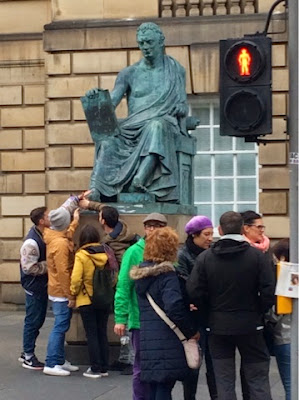
One thing that came up was the classical statue of Hume on the Royal Mile in Edinburgh’s Old Town. I noticed that the left toe of the statue is polished to a bright brassy shine, from the tradition of students and others rubbing it for luck, so as to absorb some of his wisdom.

Some who I was talking to laughed, as if at a friendly little joke, while others took it a little more seriously. What would Hume, the greatest philosopher of the Scottish Enlightenment, skeptic, naturalist, and pragmatist, think about this seemingly superstitious practice? Some thought he would very much disapprove, as Richard Wiseman does.

That’s a very good question, I thought. Although he did not approve of superstitious thinking generally, would he consider the toe-rubbing an example of real superstition? Would he take it seriously?

A few days later, standing in the square across from the statue, I watched the crowd go by as I was waiting. Many paused and looked a little wonderingly at the big shiny toe, while others stopped, usually people who were in groups, and rubbed it, laughing and chatting. There was an Asian couple who did this more solemnly and almost ritualistically, rubbing the toe and than their heads, as if to physically rub in the absorbed knowledge like a salve. The scene, to anyone who is not just a little too grouchy for their own good (I think), was a charming and friendly one.

In thinking it over, I recalled another Hume story recounted, for my benefit, at the HSS meeing. One day, Hume was crossing the bog created by the recent draining of the Nor Loch; he was going from his house in Old Town to check on the progress of the house he was having built in New Town. On the way, he slipped in the mud, and partially because it was slippery and partly because he was a fat man, he couldn’t get up. He asked a passing sturdy fishseller for help, but she knew who he was: a reputed atheist. She refused to help, unless he recited the Lord’s Prayer and the Creed. He obliged, she offered him her hand, and they went on their way. For some time afterwards, this was a favorite funny anecdote of Hume’s, and he referred to her as the most astute theologian that he had ever met.

So I was thinking: would Hume, who recognized the humor, even charm, in the story of the fishseller, really disapprove of the toe-rubbing? He was such a sociable person; he thought that the most virtuous people were the charming, friendly,  conversational, generous people. Sharing a happy time and a laugh is among the best things one person can do for another.

My conclusion: Hume himself would look on the toe-rubbers, smile and laugh, and probably join in, getting great satisfaction out of the joke. I think that sometimes, in the pursuit of reason, some of us can forget the role that the little rituals and talismans we create are a sort of game or story that we engage in to facilitate friendly communication, and play. This can go for astrology, tarot cards, knocking on wood, whatever. I’m not talking about those who sell their services, hoodwinking people into believing that if they pay enough money, their fortunes can be changed. I’m talking about how most people actually engage in these practices. They might say sometimes that they believe, maybe a little, in the magic power of these practices and objects.

But if you observe people closely, most carry on as if they didn’t believe in actual magic. They still go to work, study hard, pay for insurance, and go about the business of life as if it’s up to them to take responsibility for as much of their future as they have control over, whether or not they had just read the tarot or rubbed a brass toe.

People need stories and games, rituals and talismans, and some need these things more than others. it’s as ancient a part of our nature as just about anything else. By taking it all too seriously, committed  rational thinkers run the danger of giving so-called magical thinking too much credit, and too much power. All of these things are human creations, and we should use them only insofar as they help our lives, as opportunities for fun and human bonding.

So as long as your life is not hindered by superstition, play with those cards with the mysterious and pretty pictures, splash around the ‘holy’ water, and touch the ‘lucky’ statue! Chill out, and have a good time, people! I believe this philosopher wouldn’t mind a bit.

~ Ordinary Philosophy and its Traveling Philosophy / History of Ideas series is a labor of love and ad-free, supported by patrons and readers like you. Please offer your support today!

The Value of a Liberal Education, and Two Risks of an Ideologically Narrow One

I grew up in a large, pretty close-knit extended family. There was a lot of dysfunction, as with many families, but a lot of love too. While I was often frustrated by the choices of some relatives (such as the tendency to enable bad behavior by sheltering the ‘sinner’ from consequences, or pretending it wasn’t happening), I was also secure in the knowledge that I belonged to a large, loving circle of people who would never abandon each other.

We were also a very insular family. We mostly hung out with each other and a few close family friends, pretty much all from church and pretty much all holding similar beliefs. Many of us kids, especially the older ones, had little contact with people outside of family and church. Many of us were (and some still are) home-schooled with a very conservative, fundamentalist Catholic curriculum, and many others attended all or mostly religious schools.

Given the state of much of the public school system, at least in the working class neighborhoods where many of us grew up, a part of me sympathizes with this choice. American public schools often leave much to be desired, to say the least. Since we have such a rotten system in America of funding public schools, with funding determined by the local tax base, we create a classist school system where the kids who need the most help don’t get the funding. So much for the non-aristocratic, egalitarian, freedom-of-opportunity ideal of America! But I digress…

But it seemed that the choice to limit our schooling to a strict Catholicism-centric education was usually based less on the concern with education quality as on a concern with raising children to replicate their parent’s beliefs and lifestyles. This makes sense in a certain way: parents want what’s best for their children, and people generally believe their own beliefs are the best, so, it’s logical parents want their children to believe and live as the parents see fit.

But here’s the way in which that doesn’t make sense: children are not replicants of their parents. They have their own thoughts, their own personalities, and their own sets of experiences. The world is full of different beliefs systems and lifestyles, often incompatible with those of the parents, that fulfill people, that suit them and make them happy. Every child, however they were raised, will inevitably confront that fact, and in today’s world of rapid, comprehensive access to data from all over the world, it will not take long.

Many parents recognize these facts, and are comfortable raising their children in a cosmopolitan fashion.

They want to equip their children with all the information they might require to navigate the world successfully in any community they may end up being a part of. To this end, they want children to truly understand not only their own beliefs, but the beliefs of others. While these parents may explain to their children why they think their own beliefs are better, they know that understanding the alternatives strengthens their capacity for critical thought. These patents also understand that their children should be comfortable interacting with people who believe and behave differently than they do, and familiarity with other faiths and cultures is the best way to accomplish this. Last but not least, these parents have the epistemic humility to admit that there’s a possibility that they are wrong, and they want to afford their children the opportunity to discover for themselves if that’s the case.

Such wise parents would agree, as I do, with Daniel Dennett, the philosopher who promotes the idea that a study of world religions should be a basic part of childhood education. Since religion is so central to both private and public life for most inhabitants of the world, he argues, children require this information to be wise and informed citizens. I think the same applies to science, politics, history, literature, and other disciplines relating to how people go about sharing, navigating, and understanding this world together.

For those parents who insist on providing an ideologically narrow education for their children, I’d ask them to consider this questions: when children grow up and confront different beliefs, customs, and lifestyles for the first time, as they inevitably will, what happens? What happens, for example, to the child of Biblical fundamentalists who finds out that almost all scientists, besides the half-dozen quoted in their textbooks, believe the Earth is billions of years old? Or that prayer doesn’t, statistically, prove to be effective in healing people? Or that people of other belief systems often live as harmonious, happy, fulfilled, ‘blessed’ lives as they do? Or even better? What happens to the barely educated woman, married off in her early teens and taught to be submissive to her husband, when she discovers that other women have the opportunity enjoy a rich intellectual life, a successful career, or a partnership with a spouse that respects her as an independent person?
For some children educated in this narrow way, whether their parents’ intentions were benign or otherwise, they will mostly reject alternative beliefs and ideas they come across out of hand. (‘That can’t be true, Dad would never lie to me.’ ‘I feel deep in my heart I know the truth, so I don’t need to question it.’ ‘Those poor Buddhists, they didn’t learn about Jesus. When they do, then they’ll truly be happy.’ ‘That’s the Devil talking, better not listen or I’ll be tortured in hell.’ ‘Liberals don’t believe in anything, but I do, so they must not have anything of value to say.’ ‘Environmentalists should just trust God instead of the government to protect the earth.’) They will grow up to more or less replicate the lives of their parents, happy in the security of knowing that they know the truth, what life’s really all about.
Others (I think very much a minority, but some) will thoroughly question the beliefs they were raised with in light of new ideas they’ve confronted, and in the end retain their parents’ beliefs because, to them, those beliefs ‘held up’ to the scrutiny. They might make some modifications here and there, but overall, stay convinced. These few are among the happiest of people, even happier than the unquestioning believers, I think, because they enjoy not only a sense of security in their beliefs, but intellectual satisfaction.

Still others will end up with a smorgasbord of beliefs, considering some sacred and unquestionable, discarding others, and adopting new ones. (Conservative Catholics derisively call others ‘cafeteria Catholics’ for engaging in this sort of picking and choosing.)

Many more will engage in ‘doublethink’, holding two or more contradictory beliefs at the same time. To take another example from the religion of my childhood, one might believe that it’s ‘spiritually true’ that the body and blood of Jesus is present in the eucharistic wafer, but also believe it’s scientifically impossible for a thing to have all the qualities of bread while simultaneously being composed of human tissue. (The psychological phenomenon of cognitive dissonance, how pervasive it is and the ways we deal with it, is discussed thoroughly and fascinatingly in Carol Tavris and Elliot Aronson’s book Mistakes Were Made, but Not By Me. I highly, highly recommend it.)

But there are two big risks for the hopeful yet, I think, misguided parents who seeks to shelter their children from knowledge that could contradict their own cherished beliefs. And I think parents would do well to consider these risks carefully before embarking on this project of transforming education into something more akin to indoctrination.
Risk #1: Your children might grow up to challenge you on your perceived deception. They will ask: What did you have to hide? Why did you feel you had to shelter me from thinking through these matters in an informed way? If what you taught me was really, evidently true, than why did you go to such lengths to keep me from learning about opposing ideas? And why would you undermine my ability to defend the beliefs you wanted to pass on, by keeping me ignorant of the challenges to those beliefs?
I went through that process myself, resenting my education which as narrow and limited until I took it into my own hands and chose a public college rather then the very conservative one my family would choose for me. Initially, I questioned the motives of my family, and was very angry that I was years behind in many subjects, especially science and history. Over time, I’ve come to realize that it was their tactics, not their motivations, that were at fault. But the damage had been done.

Risk #2: But by fair the largest danger is raising children with the potential to be bigots, even violent ones. While most children brought up to strictly conform to the beliefs of their parents will not turn out that way, of course, too many do. Consider this: what inspires oppression, warfare, and terrorists attacks? They come from the ideologically ‘pure’, from those who think it’s their job to make sure the world conforms to their ideology, from religious dogmatism to racial ideology to political utopianism. And the more isolated people are in their minds from the ideas and beliefs of others, the more sure, the more committed they are, that they are right, so everyone else must be wrong. And if others are wrong, if they are different, they are the enemy.

Since people are rarely convinced to convert to a whole new set of beliefs overnight, the ideologue often resorts to violence as a means of forcibly imposing those beliefs. Ironically, violence, though a popular tool
throughout history for trying to impose change, it’s the least effective, as psychologist Steven Pinker and other researchers reveal. To this day, religiously and politically motivated terror attacks and assassinations continue to make headlines.

Yet despite this, things on that front are getting better all the time. I recently heard Pete Seeger say, pertaining to the environment, that the world will be saved by people working in their communities. I think the world will also be saved by children who grow up in this new era where information about the world is not so easily hidden from them. Despite some parent’s best efforts, children can no longer so easily be sheltered in little bubbles of idealized ignorance, sentimentally dubbed ‘innocence’. Since information flows so freely, children now grow up exposed to media that brings others’ experiences so vividly to life, and are now more comfortable in the presence of people who look and think differently then they do. Familiarity with ‘others’ humanizes them, and communities will come to be determined mostly by shared interests, not by geographic location or ideological isolationism.

So parents, teach your children not only how to be good people, but to be informed citizens of the world. It will be a safer and more wondrous place for them and their progeny, and I bet they’ll thank you for it.

Review / critique: Frans De Waal’s The Bonobo and the Atheist: In Search of Humanism Among the Primates

I’ve just finished Frans De Waal’s excellent new book, which is a combination of a popular science exploration of primatology and the origins of human morality, and a critique of the ‘New Atheist’ movement. De Waal, a nonbeliever himself (as a scientist, he finds the question of whether or not God exists ‘uninteresting‘), nevertheless finds the confrontational style of the New Atheist movement ill conceived, counterproductive, and probably futile.

Anchoring the themes of his book is a series of reflections on Hieronymus Bosch’s famous triptych The Garden of Earthly Delights. Traditional interpretations of the painting, De Waal writes, are generally based on the view that human beings, ever since the ‘fall’ of Adam and Eve in the Garden of Eden, are naturally wicked, prone to cruel and hateful behavior, and it’s only by straining hard against our sinful nature that human beings can hope for redemption by adhering the moral code provided by God through religion .

De Waal has a different interpretation, seeing the painting thorugh the lens of his own understanding of human nature. His lifelong study of primate behavior, especially of bonobos and chimpanzees, reveal a tendency to prosocial behavior that strongly resembles human morality in many important ways. De Waal concludes that not only does morality predate religion, since it’s rooted in the same social instincts we share with our cousins the great apes (as well as other social animals), but it’s most accurately viewed as a key component of human nature. Based on modern findings of human psychology and evolutionary biology, ‘It is now widely assumed that we are designed in body and mind to live together and to take care of each other, and that humans have a natural tendency to judge others in moral terms. Instead of being a thin veneer, morality comes from within.’ (De Waal, p 42).

Image Source: http://en.wikipedia.org/wiki/File:The_Garden_of_Earthly_Delights_by_Bosch_High_Resolution.jpgBosch’s painting, De Waal thinks, actually reveals his humanism, the idea that the human race is naturally good and worthy of admiration in it own right. The figures frolicking in the garden in the center panel enjoy the best that the world has to offer, especially the joys of one another’s company. The figures being punished in the hell of the right panel, revealingly, are not being punished for sins against religion. Rather, they have trangressed the moral laws pertaining to just and fair treatment of one another, such sins as greed, gambling, and cheating, and those pertaining to the proper care and comportment of our own bodies, such as gluttony and drunkenness.

In this, De Waal agrees with the bonobo (in this book, the bonobo represents the naturally moral side of all social creatures), the humanist Bosch, and the atheist: human beings are moral beings, and ‘sins’ are those tendencies and behaviors which lead individuals to act against the interests and moral codes of the group. He provides a wealth of evidence, from his own years of fieldwork, experimentation, and research, that prosociality and morality are natural phenomena without which human beings and their social cousins would fail as a species. Morality originates as an evolutionary adaptation, giving us the ability to transcend our individual limitations, to thrive as a species through cooperation, sharing, and mutual protection.

However, De Waal has found himself disturbed by the militancy (as he sees it) of the so-called New Atheist movement: their rhetoric that disparages religion, calling for its immediate demise, ridiculing it as entirely outdated, useless, stupid, and destructive, and for their ‘dogmatic’ God-denial, and their tactics of anti-religious propaganda and political activism. He quotes A.C. Grayling, who compares militant atheism to ‘sleeping furiously’, asking: ‘What does atheism have to offer that’s worth fighting for?’ (De Waal, p. 84) He finds that the New Atheist movement shares this with religious fundamentalists: they both misunderstand the origins and nature of religion, which originated and still functions as an evolutionarily useful social tool, encoding and helping to enforce moral behavior.

I found De Waal’s book a refreshing and entirely approachable summary of the best of our current knowledge of human psychology, evolutionary biology, and animal behavior. I also admire the evidence of his knowledge and understanding of philosophy, which he applies to and compares with the findings in his own field. He admires Hume, the prosocial moral philosopher, and both agrees and disagrees with Kant: the moral law is indeed within, as Kant says, but altruism is not confined to those behaviors that are devoid entirely of self-interest, as Kant defines it. It’s actually a good thing that altruism, though it does carry a personal cost, also benefits the altruist, as De Waal sees it: it firmly grounds altruism as a natural product of a human nature that is more social than selfish. (This is not to say that human nature is not selfish as well. It’s rather that we have methods of making sure selfishness does not run amuk and result in mutually assured self-destruction of the human species.) All in all, De Waal offers a compelling and persuasive view of the natural origins of morality and that the good rules human nature more than the bad.

It’s De Waal’s critique of the New Atheist movement and of atheists overall with which I find myself only in partial agreement. I do agree that too many prominent atheists refuse to publicly acknowledge that religion appears to be a product of natural adaptations, and a historically (and prehistorically) useful one at that. Many other atheists, however, do acknowledge this, notably Daniel Dennett, who De Waal sometimes lumps in with the New Atheists, though he does give Dennett some credit for his view of religion as a natural phenomenon. (De Waal, p 94) I also agree with him that an overly confrontational attack-oriented approach is unlikely to be overall as effective as a more humanism-positive, common-ground seeking approach, based on what we know about human psychology and belief formation (Kahneman, Haight, Ariely, and others have done extensive work on this recently; even in antiquity, Aristotle revealed how well he understood this aspect of human psychology).

But contrary to De Waal, I think that atheism, as a movement, does have some important things to offer. When he criticizes atheism as lacking in substance or utility since it’s an ‘anti-‘ stance, he fails to account for the historical abusive and destructive applications of religion. As well as promoting good behavior and bonding within groups, it’s also been used to persecute out-groups of religious minorities and non-believers, to oppress women, children, and the poor, to prop up and protect corrupt regimes and clergy (dictatorships and absolutist monarchs, the sale of undulgences, murderous popes, rapist priests), and as a justification of cruel and oppressive practices (the institution of race-based slavery, the punishment of heretics). There are plenty of ‘anti-‘ groups and ideologies that have plenty to offer precisely because they arise out of opposition to destructive or morally repugnant institutions, belief systems, and natural forces: the abolitionist movement (anti-slavery), the feminist movement (anti-oppression of women), various organizations that combat disease (anti-AIDS, anti-cancer, etc). To ignore what the atheist movement as a whole has to offer is to ignore the history of how and why the atheist movement originated, and that it’s generally united in humanism-derived values and goals (equal social and political rights and protections for non-believers and religious minorities, for example). In his blanket dismissal of atheism as ideologically empty, De Waal fails to adhere to the same standards of applying evidence and history to this issue as he does for the rest of the scientific and philosophical issues he discusses in his otherwise excellent book.

Work Cited:

De Waal, Francis. The Bonobo and the Atheist: In Search of Humanism Among the Primates, 2013.

A ‘Light’ That Obscures: The Misrepresentation of Secular Thought in Pope Francis’s First Encyclical

foot-washing-255x212Like many, I’ve found myself pleasantly surprised and impressed by many of the sayings and doings of the new Pope. He emphasizes helping the needy and is critical of over-judgmentalism and of hyper-materialism (he practices what he preaches by driving a cheap car and living in a simple apartment). He also goes out of his way to spend time with ordinary people, be it in a correctional facility, in processions, or on the phone. Often dubbed ‘The People’s Pope’, he’s making the most of his promotion, on a mission to do real good in the world. Catholic or not, most people are thrilled that such an influential person is providing such an excellent example of how to live a life of service and of mercy. 

But I wasn’t quite as pleased the author of an article in the Huffington Post about Pope Francis’ first encyclical Lumen Fidei (The Light of Faith) co-authored with the previous Pope, Benedict XVI. The author says that the encyclical ‘…reflects Francis’ subtle outreach to nonbelievers’. While I consider myself an atheist, I’m a cultural Catholic, brought up with that religion. Since so many of my loved ones are observant Catholics and the Catholic church is so influential in the world, I’m very interested in what goes on in it. The first encyclical of a new Pope is a big deal, and this encyclical does a good job of promoting Catholic teaching with inspirational language and metaphors. However, the authors also resort to bad arguments to make their point. In many instances, they do so by contrasting their doctrines, for positive effect, against ‘straw man’ versions of non-believers’ views. In others, they set up false dichotomies, where they present Catholic doctrine as the only positive alternative to something bleak. I was disappointed that such educated and influential men, willfully or otherwise, so thoroughly mischaracterized attitudes and beliefs of secular people. 

As I’m sure you know, a ‘straw man’ argument is the logical fallacy of first constructing a caricatured or artificial version of an opponent’s arguments, then attacking the false arguments in place of the real ones. A false dichotomy is a related fallacy, where the argument is presented as offering only two possible choices: the (arguer’s) favored position, or an opposing, usually unattractive or unbelievable one. While often effective in politics, these tactics are recognizable as a sign that the arguer finds themselves in a disadvantage. They might find that they can’t understand the arguments of his opponent, they might find that the opponent’s real arguments are so strong that they can’t find a way to answer them, or they might find that they’re worryingly attractive to others so they wish to obfuscate, misrepresent, or conceal them. The first two are less likely in this case as the authors are educated and articulate men. I think something like the latter is what’s going on here. 

I also found that the encyclical promoted some worrying misconceptions about human beings, our nature and how we actually go about thinking, learning, being good, and finding meaning for ourselves. They describe human nature through the lens of a very narrow Catholic conception, which is to be expected, but they ignore, denigrate, or dismiss the validity of other accounts of human nature, informed by the sciences, the liberal arts, and other belief systems. 

It’s especially clear from sections 2 and 3 that the Popes feel the Catholic Church is under attack by the scientific revolution, where evidence and reason are generally prized over tradition and belief. Perhaps this is the origin of the backlash against secularism and naturalism that’s characteristic of the poor arguments throughout the encyclical. The ways they present secular and atheistic thought is not new or unique to these men; they’re commonly held views, a fact very recently highlighted by Oprah Winfrey’s response to a self-professed ‘spiritual atheist’ interviewee. Yet the Popes could have offered a defense and promotion of their doctrines without the bad arguments, and their work would have been much better for it. It’s too bad that here again, the thoughts, motivations, beliefs, and characters of so many, in this case, naturalist, atheist, agnostic, and otherwise secular people, are misrepresented to such a large audience by influential men who I think should know better.

It’s true that there are some non-believers who are so, or become so, out of lack of interest, out of ignorance, or even simply to get out of following the rules of religion. But in my years of reading and research, I think the majority reject religion for worthy reasons. There are plenty of rational and moral reasons why people don’t believe in gods or a God as any religious tradition has conceived them or It. I think most secular people, from those who are personally believers of some sort but who value a society free of religious coercion, to the most ardent atheists, have done a lot of thinking on the matter, and this essay, I’m talking about these people. I’ll refer to them generally as secular thinkers, and to their musings as secular thought.

Here are some specific instances where I think the Popes got it wrong (there are plenty others). All quotes are from the encyclical ‘The Light of Faith’, in order of the sections they appear in, and my response follows directly after each:

From section 2:

‘Slowly but surely, however, it would become evident that the light of autonomous reason is not enough to illumine the future; ultimately the future remains shadowy… As a result, humanity renounced the search for a great light, Truth itself, in order to be content with smaller lights which illumine the fleeting moment yet prove incapable of showing the way. Yet in the absence of light… it is impossible to tell good from evil…’

There are many secular thinkers who feel that reason alone, the deliberative reflection on the nature of reality and what it means for the self and for humankind, is the only way people find truth and meaning. Yet more accept a more nuanced understanding, informed by the findings from more recent research in psychology, evolutionary biology, behavioral economics, and neuroscience. When we look closely at how we think and behave, we find that instinct and emotion play a huge role as well, and in fact, that reason is secondary to and cannot function without these. It’s that emotional part of us, where morality originates and the experience of transcending our individual selves takes place, that also leads us to discover truth, in the various ways it’s defined.

peter-paul-rubens-massacre-of-the-innocents-1611-12-photo-by-ken-thompson-at-the-art-gallery-of-ontario-public-domain-via-wikimedia-commonsSecular people, too, realize this, and by renouncing religion or never joining one, it does not at all mean that they renounce the search for ‘the great light’ of truth. It’s more often the opposite: secular people make the choice to become or to remain free to search for truth without the often seemingly arbitrary limits of dogma. We can go where the evidence leads us, and we can say ‘what if?’ and ‘I don’t know’ without fear of retribution from an inscrutable God. We can give an account of good and evil based on what we learn about human nature and about the natural world as a whole. It could be argued, against Pope Francis, that if there is an unaccountable, unknowable, and unanswerable supernatural, conscious being force that creates and rules the world, it would be impossible to tell whether it was good or evil since whatever it says goes. In one era God could say it’s good to slaughter the infants of enemies (Ezekial, Isaiah), and in another era he might say it’s evil. This argument, often called divine command ethics, is an ancient one, and philosophers generally agree that a conception of the good must exist prior to determining whether something, God or otherwise, is good. It is, in short, not only possible, but necessary, to tell good from evil outside of the parameters of religion. That’s how you can recognize, in the first place, whether a religion is a good one.

From 8 and 10:

‘Faith opens the way before us and accompanies our steps through time. Hence …we need to follow the route it has taken… Here a unique place belongs to Abraham, our father in faith. Something disturbing takes place in his life: God speaks to him… Abraham is asked to entrust himself to this word.’

The story of Abraham and his son Isaac is a strange one to the secular thinker, and not at all a good example for showing how faith is linked to the search for truth. In this story, God demands Abraham do something considered evil by just about any human being, secular or religious, from Abraham’s time to our own: to murder his son. All the while this God is knowing he doesn’t really mean it! Where’s the love of truth here? The sort of faith this deity demanded was the same sort of faith demanded of the suicide bomber, or the parent who denies life-saving medicine to their child because they belong to a faith-healing sect. It’s the sort of faith, that of the blind worshiper, that is deeply alien to one who seeks to understand what they do before they do it, and why they do it, while simultaneously demanding personal accountability from themselves and others.

It’s the ultimate anti-personal-responsibility fable, and was among the earliest religious tales that alerted me to the problems of faith.

From 13:

‘The history of Israel also shows us the temptation of unbelief to which the people yielded more than once. Here the opposite of faith is shown to be idolatry…Idols exist, we begin to see, as a pretext for setting ourselves at the centre of reality and worshiping the work of our own hands. Once man has lost the fundamental orientation which unifies his existence, he breaks down into the multiplicity of his desires… his life-story disintegrates into a myriad of unconnected instants.’

milky-way-by-unsplash-creative-commons-via-pixabay-croppedThis is also a very strange section to a secular thinker. The opposite of faith, the philosopher, the logician, the linguist would say, is non-faith, which precludes worship of anything at all. 13 is a long section of false dichotomies as well as straw man arguments. The thinker who learns from the world itself, through history, biology, psychology, astrophysics, and so on, learns that the universe, humankind, and the self are not a disorienting haze of ‘unconnnected instants’. Things are interconnected and form marvelous patterns throughout the universe, from the forming of stars, elements, galaxies, planets, and solar systems in the cosmos through various forces, to the transition from instinct-only to simpler forms of intelligence to consciousness in the story of human evolution, to the fascinating development over time from simple hunter-gatherers in small groups to complex societies, cultures, beliefs, and knowledge-gathering systems. The history of human thought reveals that human beings, from prehistoric times, throughout history, and up to now, from innocent of religion to pagan to religious believer, have been engrossed with understanding the cosmos, from the blazing sky to the deepest mysteries of their own minds, and all the while have demonstrated rigor and discipline while on their quest for knowledge. Religion is just one of the many human products of that quest.
From 19:

‘…The attitude of those who would consider themselves justified before God on the basis of their own works. Such people …are centred on themselves… Those who live this way, who want to be the source of their own righteousness, find that the latter is soon depleted and that they are unable even to keep the law. They become closed in on themselves and isolated …their lives become futile and their works barren…’

This section is focused on a debate within the larger community of believers, but I include it here because of what it implies about those who look to human nature and to their own instincts to find the impetus for goodness. It implies here that human nature, on its own, is essentially isolationist rather than altruistic. By doing so, it ignores nearly everything we know today about human psychology and behavior, about evolution, neuroscience, economics, and so on. Human beings are essentially social with an individualistic streak, and without deeply rooted instincts toward cooperative, generous behavior, we are weak, nearly defenseless against predators and the forces of nature, and are imprisoned by and even defeated in the pursuit of our own shortsighted needs. Goodness and kindness are accounted for with or without religion.

From 25:

‘In contemporary culture…truth is what we succeed in building and measuring by our scientific know-how, truth is what works and what makes life easier and more comfortable… But Truth itself, the truth which would comprehensively explain our life as individuals and in society, is regarded with suspicion… In the end, what we are left with is relativism, in which the question of universal truth …is no longer relevant.’

This section is problematic to begin with in the way that it seems to work with a definition of Truth narrowly defined within the parameters of Catholic doctrine, and from there proclaiming that people no longer care about Truth, just facts about the world that can lead us to make useful products. But people all over the world of no faith or any religious faith, throughout time, have demonstrated restless curiosity and boundless energy in trying to find out the truth about reality, from the most prosaic little problem in everyday life (how can I save time carrying water from the well?) to the greatest mysteries of the universe (what are the stars made of, and do they move on their own or do the gods push them around?). This is as true today as it ever was, regardless of the fact that some people (and I would agree, too many) are overly concerned about personal comfort at any cost and how much nice stuff they can amass for themselves.

It’s also problematic in that this section appears to imply that placing a high value on ‘what works’ leads people to care nothing about what’s truly enriching. The scientist, the naturalist, indeed anyone who finds the universe an utterly fascinating and meaningful thing on its own terms might find this idea very strange. Applying a test of ‘workability’, in fact, shows a great deal of respect for truth, in that the seeker takes great pains to make sure that personal bias, incomplete or misleading information, too small a sample size, etc. are not a source of error. If a theory or received dogma doesn’t ‘work’, doesn’t adequately account for the facts, doesn’t coherently explain how and why something is as it is, or doesn’t successfully make predictions, then, they know, the search for truth must continue.

From 35:

‘Because faith is a way, it also has to do with the lives of those men and women who, though not believers, nonetheless desire to believe and continue to seek. To the extent that they are sincerely open to love and set out with whatever light they can find, they are already, even without knowing it, on the path leading to faith. They strive to act as if God existed, at times because they realize how important he is for finding a sure compass for our life in common or because they experience a desire for light amid darkness, but also because in perceiving life’s grandeur and beauty they intuit that the presence of God would make it all the more beautiful.’

Here, the Popes make the most underhanded move to undermine secular people. They resort to a particularly transparent sort of fallacious argument along the lines of: ‘You’re saying (that), but I know what you’re really thinking, you’re thinking (this), and here’s why (this) is wrong’. This is simply a dishonest argument, and potentially insulting in a most unphilosophical way. The honest philosopher does their best to understand the argument of their opponent, consider it as it if might be true, and then argue against it on its own merits if she disagrees; they do not pretend as if it’s really something else. They do this sneakily, using the phrase ‘those…who’, so that there’s an out: this does not necessarily include the entire class of nonbelievers. But reading carefully, they also set it up so that no one could tell which nonbelievers it includes, since the nonbelievers themselves, ‘without knowing it’, really want to be believers somewhere deep down. So just as easily, they could be referring to all believers, or to none, though presumably they’re referring to some quantity in between. But this doesn’t work. If one is actually a non-believer, it seems incoherent to say that they could also be one who believes that a God is necessary for meaning and beauty. Unless you’re talking about a nihilist of a particular variety. Yet this can’t be so, because they’ve already added the caveat that they are also ‘sincerely open to love’. So either this section is entirely contradictory in its attempt to outline the true nature of believers (at least some), or it’s a veiled attempt to deny that there are really any unbelievers out there. Circular reasoning strikes again.

From 43:

‘Children are not capable of accepting the faith by a free act, nor are they yet able to profess that faith on their own; therefore the faith is professed by their parents and godparents in their name.’

Years back, when my grandfather began to notice that he never saw me at church anymore, he asked me if I was still going. When I said no, he said that that wasn’t acceptable: the promise my parents made for me at my baptism obligated me to go. I said little at the time, being in my late teens and still not comfortable with challenging my grandfather directly. But I was very annoyed at what I thought a most ridiculous notion: that anyone could make this sort of binding promise on another’s behalf.

But that’s not the worst of it: my grandfather was also making the same point the Popes make in this encyclical, that parents can proclaim tenets of faith on behalf of their child. But faith, or belief, is not something that can be simply transferred or put on, like a family heirloom or a piece of clothing. It’s the natural assent of the mind to the matter-of-factness of propositions or circumstances. True, you can ‘fake it ’til you make it’, engaging in a sort of cognitive-behavioral exercise where you decide ahead of time what you want to be true, then make a habit of acting as if it is, then come to believe it. Perhaps the Popes have this sort of thing in mind in this passage, though they don’t describe it that way. But to the secular thinker, this sort of belief-inducement is not an honest one, since it can be used to instill belief in anything at all. Rather, keeping an open mind to the evidence and allowing belief to emerge naturally in response is a much better method if you don’t want to be misled. When the Catholic religion of my early youth no longer offered meaningful, believable answers to so many of my questions, I felt angry at the time, feeling that I had been raised in a bubble, led to assent to all kinds of things without having the relevant information. ‘Faith’ became almost a dirty word for me, as it began to sound more and more as if it really meant something more like indoctrination or even brainwashing. So in the end, raising us to believe only in the strict ‘Truth’ of Catholic teaching without being allowed to question, and without introducing other possible answers, resulted in the opposite of its intended effect.

From 54:

‘Thanks to faith we have come to understand the unique dignity of each person, something which was not clearly seen in antiquity. …Without insight into these realities, there is no criterion for discerning what makes human life precious and unique. Man loses his place in the universe, he is cast adrift in nature, either renouncing his proper moral responsibility or else presuming to be a sort of absolute judge, endowed with an unlimited power to manipulate the world around him.’

I don’t know entirely know how the Popes feel justified making this claim. While it’s true that Bible-based religions caused many converts and believers throughout history to behave much better than they did before or might have otherwise, the opposite is also true. Sometimes it inspired the Christians to have mercy on their enemies, sometimes it led them to torture and kill ‘heretics’, slaughter Jews in pogroms, and to enslave and murder black people and Native Americans. Some may say that people who behave this way are not really of the ‘true faith’, but their actions are justifiable according to certain Biblical principles and commandments. In the Old Testament, unbelievers are to be put to death (and what are Jews and Native Americans to Christians if not unbelievers?). In the New Testament, Jesus says that the fate of towns who don’t accept his disciples’ teaching will be like that of Sodom and Gomorrah, where God put everyone to death (Matthew 10: 13-15, Genesis 19). It seems that, here, the worth of human life is actually often contingent in the Bible, on ‘good behavior’ or on whether they profess the right religion, and not always of value in its own right.

code-of-hammurabai-public-domain-via-wikimedia-commonsIn antiquity, in fact, there were many cultures and belief systems that did place human life and dignity on as high or even higher a plane than did the ‘faithful’ of the Old and New Testaments. Ancient Egyptian literature, the Code of Hammurabi, the Epic of Gilgamesh, and some philosophies and religions of ancient India and Greece, for example, advocate such principles as non-violence and the worth and dignity of the human person, and place strict limitations on harming and killing other human beings, and indeed, other living things that are not human beings. Many of these ideas and belief systems are religious, but many are not.
Secular thinkers such as myself find no trouble deriving firm principles and morals from the natural world, and in fact find that taking moral responsibility demands rejecting religious dogma in favor of an understanding of how human nature works and what the actual circumstances require. We don’t find ourselves ‘adrift’ since human morality is based on the social instincts, expanded and universalized through reason, and we’re all in this world to sink or swim together, ultimately. We also don’t consider ourselves ‘absolute judges’. Instead, we hold ourselves accountable not only to ourselves but to each other, to democratic principles, to the consideration of the rights of other people, and to the limits and strictures of the universe itself. In fact, it’s unquestioning acceptance of dogma that can look, to the secular thinker, very much like reneging on one’s moral responsibility.

In sum, the authors of this encyclical and secular thinkers find themselves in agreement on many particular issues, and in disagreement on others. (Of course, I don’t speak for all secular thinkers just as the Popes don’t represent every belief of all individual Catholics. Instead, I represent my own views and those I find generally promoted by secular thinkers who write about philosophy, morality, the physical sciences, psychology, political and legal theory, and the humanities.) Respect for individual rights, a commitment to promoting human health and happiness, justice, equality of opportunity, and so on, are universal human concerns, and have been throughout recorded history, from the atheistic to the pious.

Fortunately, in his public speeches and behavior, Pope Francis I publicly emphasizes the best of his humanistic principles with little or no disparagement of those who do not believe in these principles for the same underlying reasons. In this, I think the good example he provides will far outweigh his theological publications when it comes to his broader influence in the world. But it’s worth having the discussion about the nature of inherited faith versus evidenced-based belief, until secular thought is no longer maligned by those who fear and mistrust it because of the kind of misrepresentation this encyclical exemplifies.

Ordinary Philosophy and its Traveling Philosophy / History of Ideas series is a labor of love and ad-free, supported by patrons and readers like you. Please offer your support today!

~~~~~~~~~~~~~~~~~~~~~~~~~~~~~~

Sources and inspiration: 

Pope Francis I. Lumen Fidei (On The Light of Faith)Encyclical letter, June 29th, 2013

The New Pope Says Something Nice About Atheists! Is This Really A Big Deal?

I’ve seen a lot of news stories, opinion pieces, critiques, and other buzz regarding the new pope’s comments about atheists and other non-Catholics, to this effect: that all can do good, and that doing good is what should bring us all together. Sounds nice, right?

While there are many prominent atheists, secular humanists, and others who are gladdened by the pope’s remarks, many others are skeptical or dismissive, as exemplified by participants in a recent online discussion I took part in. They point out that the Pope’s historical positions on many important issues is aligned with the officially systematized bigotry of the church he leads: opposition to gay marriage, women banned from the priesthood, and so on. With this, I agree. They also think it’s a mistake to ‘hope for acceptance’ from the Catholic Church, or that atheists are ‘eagerly’ ‘falling for’ a positive interpretation of the pope’s actual stance on atheism. This is the part of the discussion where I think it veered off into treating some hypotheticals about what the glad atheists are thinking as fact. I think the skeptical reactions may be based on misunderstanding the reasons behind the positive reaction.

My point in the discussion, and my understanding of why there was such a glad reaction to the pope’s comments, was this: the pope’s current tendency to use more peaceful and ecumenical rhetoric is more likely to inspire better behavior in his followers, who generally look to him for an example to follow, not Vatican officials who issue a legalistic statement later. So, even if it’s true that the pope is still a bigot and his church is still an organization that promotes hateful and untrue doctrines, it’s still the case that if the words that come from his mouth are of a more peaceful and ecumenical tone, those who look primarily to him as their role model are more likely to adjust their own attitudes accordingly. That’s one point. There is nothing in this having anything to do with caring whether the pope or any other church members personally approve of atheists, or whether official church doctrine has changed regarding the afterlife and how it pertains to atheists, or any of the other red herrings such as charges of ‘hoping for acceptance’ that came up in the discussion. The positive response of many atheists, especially prominent ones, focus on whether or not the pope’s words signal a positive shift in attitude, and whether his words will provide a good example to his followers.

But another point I didn’t make, which upon reflection I think is more important, is this: the single most influential moral leader in the world just publicly classified atheists (and others) in the same moral category as Christians and Catholics. Christians do good. Atheists do good too. So both are good! Big deal, an atheist, a cosmopolitan, indeed, any reasonably informed or empathetic person might say. That’s as obvious as saying: atheists think and have emotions and are competent language users, therefore, they must be human too! I mean, c’mon! Duh!

But remember: atheists have been distrusted and marginalized for so long, since most Christian religions claim that belief in Christ’s divinity is necessary for deliverance from evil, that the idea that atheists can be good people is a novel one for countless religious people all over the world. Yet these are same people who adjust their beliefs to align with the pope’s, and his words constituted a sort of permission to consider atheists and non-Christians good people too. In my own family there are still those who use the word ‘atheist’ as an epithet for one who’s wicked, stupid, or depraved! The previous pope’s hyper-conservative, dogmatic, and divisive rhetoric did nothing to help matters. This pope’s remarks, by contrast and for the first time at this level of authority and clarity that I’m aware of, places atheists in the same moral category as religious people: those who do good. It humanizes atheists for those who simply don’t understand atheists, who think atheists are evil and have rejected the good since they don’t believe in any gods. And this is important because of what we know about human psychology: people are kinder to others when they identify with them, when they think they’re on the ‘same team’, when they’re humanized and no longer ‘the other’. 

I think that the Pope, with these few remarks, just helped a whole lot of people all over the world to really believe that when it comes to doing good, most human beings believe in the same and most important thing. Thomas Paine described it best: ‘The world is my countryall mankind are my brethren, and to do good is my religion.’ (The Age of Reason, 1794) Whether the Pope himself really shares the conviction that atheists are worthy people, I think his remarks will lead a whole lot of other people to believe so.