Anger and Hypocrisy, by Clay Jenkinson

Obamas on Inauguration Day 2013 by P. Souza, Public domain via Wikimedia Commons

Obamas on Inauguration Day 2013 by P. Souza, public domain via Wikimedia Commons

I find it interesting that for eight years the anti-Obama legions kept their eyes open at all times for signs that Barack Obama was “an angry black man.” If at any time he showed the slightest impatience or raised his voice above a certain level, or spoke in something that could be thought to resemble black street English, the conservative punditry accused him of being an “angry black man.” They had slightly better luck with the First Lady Michelle Obama, who seemed to have a slightly more volatile temperament than her famously self-controlled husband. The academic papers of her young womanhood were examined for any sign that she hated white people, hated America, or sought radical revolution. Her statement in Milwaukee on February 18, 2008, that “For the first time in my adult lifetime, I am really proud of my country,” was cited as proof that she hated white America.

That sentence was proof positive to millions of Obama detractors that we had somehow put into the White House a couple bent on destroying America, or at least the America we know and love. Every Obama association, no matter how ancient and no matter how thin–the Reverend Wright, Bill Ayes, Saul Alinsky–was routinely trotted out to prove that the President of the United States was a dangerous radical, and perhaps a treasonist.

Apparently all black men are angry and violent. You can go to Harvard or Princeton, speak in perfect grammar, dress with great elegance, exhibit ceremonial decorum not seen in the White House since Jack and Jackie, write thoughtful and eloquent books (by yourself), and exhibit an analytical capacity that even Bill Clinton rarely exhibited, and still be regarded by the yahoos as a Black Power Radical likely to reveal his core rage at any moment. Apparently, you cannot be a black President of the United States unless you have built up no resentment about the historic and ongoing oppressions of White America, and never reveal anything but a sunny minstrel temperament.That sentence was proof positive to millions of Obama detractors that we had somehow put into the White House a couple bent on destroying America, or at least the America we know and love. Every Obama association, no matter how ancient and no matter how thin–the Reverend Wright, Bill Ayes, Saul Alinsky–was routinely trotted out to prove that the President of the United States was a dangerous radical, and perhaps a treasonist.

Now, in 2016, we elect not just an angry white man, but an almost continuously angry white man. I doubt that a day went by on the two-year campaign in which Donald Trump did not lash out at some one or some group. At times he slavered in his rages. At times he became incoherent as he tried to find words sufficient for the level of anger and denunciation he felt. From the podium he singled out individuals for ridicule and abuse. He heaped abuse on American war heroes, parents of young men fallen in America’s battles, journalists just doing their job, women who had tearfully and reluctantly confessed that he groped them in public.

When was the last time in American politics when a major candidate was so angry, so often, and with such a mean-spirited manner?

If you are a student of history, you can think of only two obvious examples. Remember in 1980 when Ronald Reagan was upset by the logistics of a Republican debate in New Hampshire? His face darkened, and he said, with unmistakable anger, “I am paying for this microphone?” The reason we all remember that minor incident is because it was essentially the only time the even-tempered, genial, and happy Reagan ever lost his temper in public.

The only other modern politician worthy of comparison with Donald Trump is former Alabama Governor George Wallace in the 1960s–with his famous leer and sneer–a vicious southern racist whose every pronouncement during those years was “dripping with the words of ‘interposition’ and ‘nullification,’” as Martin Luther King, Jr., put it.If you are a student of history, you can think of only two obvious examples. Remember in 1980 when Ronald Reagan was upset by the logistics of a Republican debate in New Hampshire? His face darkened, and he said, with unmistakable anger, “I am paying for this microphone?” The reason we all remember that minor incident is because it was essentially the only time the even-tempered, genial, and happy Reagan ever lost his temper in public.

The only other modern politician worthy of comparison with Donald Trump is former Alabama Governor George Wallace in the 1960s–with his famous leer and sneer–a vicious southern racist whose every pronouncement during those years was “dripping with the words of ‘interposition’ and ‘nullification,’” as Martin Luther King, jr., put it.

Think about it. Barack Obama was routinely accused of being an angry black man, but he wasn’t. He was about as gracious a human being as you could ever put into the Presidency (whether you like his policies or not). Donald Trump is perhaps the most angry man ever installed in the Presidency. Barack Obama had a great deal to be angry about: the history of American racism, oppression, racial profiling, segregation, lynching, belittlement. But he was invariably professional and often serene. What does Donald Trump have to be angry about? He has always been one of the most mollycoddled, indulged, and privileged of Americans, a man who can afford to install gold faucets in his homes. (Try as I might, I have never been able to find gold faucets at Home Depot).

Angry White Man with no reason to be angry: OK.

Gracious Black Man with plenty to be angry about, but beyond anger: Dangerous radical.

But as the far right likes to say, “I ain’t racist, ain’t no racism or prejudice in my body.” – CSJ

Originally published at clayjenkinson.com

– Clay S. Jenkinson is the author, educator, and scholar who created The Thomas Jefferson Hour, and is a sought-after historical impersonator, speaker, and media commentator, providing a deep but playful context to today’s events. (Bio credit: The Thomas Jefferson Hour) To discover more about Clay and his work, please visit http://www.clayjenkinson.com/

Ordinary Philosophy and its Traveling Philosophy / History of Ideas series is a labor of love and ad-free, supported by patrons and readers like you. Please offer your support today!
The Right to Be Poor, by Peter Adamson

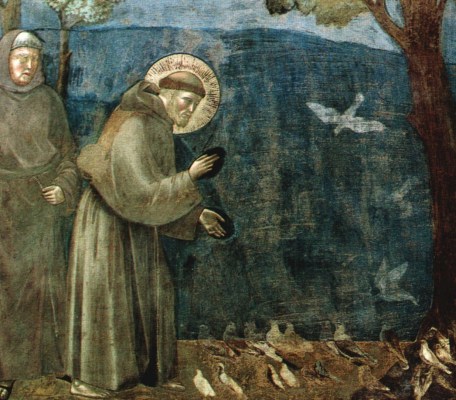
St Francis of Assisi by Giotto

St Francis of Assisi by Giotto

Peter Adamson just published a most fascinating and insightful essay in Philosophy Now about an aspect of the property rights debate that we rarely address: the right to own nothing. It’s an important question, especially in this culture of hyper-consumerism and the conviction that property ownership is essential to personal and political freedom. But as a certain innovative and humble friar realized in the early 13th century, property ownership can also be a burden, alienating us from one another and from the unencumbered pursuit of spiritual perfection. Perhaps Thomas Jefferson, when writing the Declaration of Independence, had a similar insight as St Francis of Assisi and his mendicants when he adapted John Locke’s principle of ‘life, liberty, and property’ as essential human rights as ‘life, liberty, and the pursuit of happiness’.

Adamson writes:

‘One of my favorite things about the history of philosophy is finding out that ideas we now take for granted originally emerged in surprising ways. I can think of no better example than the notion of a right to own property. Not that we can take it for granted that we have such a right, if we consider the history of communism in the Twentieth Century. Still, it seems such an obvious concept that it must surely always have been with us. But you can make a good case that it was first explicitly articulated in the later Middle Ages. And here’s the surprising part: the thinkers who first explored this notion were actually concerned with their right to own nothing.

They were members of the mendicant orders, especially the Franciscans. Following the example of their founder, Francis of Assisi, Franciscans argued that spiritual perfection requires the voluntary embrace of poverty. Like Blanche in A Streetcar Named Desire, they depended on the kindness of strangers, living on charitable donations. Hence the term ‘mendicant’, meaning, ‘given to begging’. Christ and his Apostles, the Franciscans argued, had shown the way by giving up all their possessions. Furthermore, ownership of property is a consequence of the Fall. In a state of innocence there would be no need for possessions, since by generosity of spirit all things would be shared. However, as well as an individual religious commitment, the embrace of poverty amounted to an implicit and sometimes explicit political critique, since the medieval church as an institution most certainly did not embrace poverty. The mendicants’ very existence was a rebuke to the opulence and worldliness of the papal court and the rest of the ecclesiastical hierarchy….’

Read the full article in Philosophy Now

Ordinary Philosophy and its Traveling Philosophy / History of Ideas series is a labor of love and ad-free, supported by patrons and readers like you. Please offer your support today!

A Scot’s Lament fur her American Fellows (Oan their election of a tangerine gabshite walloper), by Lorna Wallace

I read this with such delight, I must share it with you!

Lorna Wallace's avatarWriting by Lorna

America, aw whit ye dain?!
How could ye choose a clueless wain
Ti lead yir country? Who wid trust
A man sae vile?!
A racist, sexist eedjit
Wi a shite hairstyle?

Yet lo, ye votit (michty me!)
Ti hawn’ this walloper the key
Ti pow’r supreme, ti stert his hateful,
Cruel regime.
A cling ti hope that this is aw
Jist wan bad dream.

But naw, the nightmare has come true,
A curse upon rid, white an’ blue,
An’ those who cast oot Bernie
Must feel sitch regret
Fur thinkin’ Mrs. Clinton
Was a safer bet.

So noo we wait ti see unfold
Division an’ intolerance, cold;
A pois’nous bigotry untold
Since Hitler’s rule
As the free world’s hopes an’ dreams
Lie with this fool.

Alas, complainin’ wullnae change
The fact this diddy has free range
Ti ride roughshod ow’r human beings
That fall outside
The cretinous ideals borne of

View original post 182 more words

The Tragedy–and Hope–of African American History, by Robert Greene II

Obamas on Inauguration Day 2013 by P. Souza, Public domain via Wikimedia Commons

Obamas on Inauguration Day 2013 by P. Souza, Public domain via Wikimedia Commons

In 2007, Andrew Sullivan wrote a cover essay for The Atlantic in which he argued that the rise of Barack Obama to the national stage meant an end to the divisive cultural politics that defined American politics since 1968. Sullivan argued at the time, “he could take America—finally—past the debilitating, self-perpetuating family quarrel of the Baby Boom generation that has long engulfed all of us.” Reflecting on the events of the last eight years, it now seems this assumption about Obama’s rise was naïve and misplaced. Now, as we transition from an “Age of Obama” to an “Age of Trump” everyone has spilled much ink—both real and digital—trying to explain how we got here.

A keen reading of African American history, especially intellectual history, offers us much to consider in this debate. The recent Ta-Nehisi Coates essay, “My President Was Black,” offers one of the better meditations on Obama’s presidency and its possible legacy. The responses to it—in particular Tressie McMillian Cottom’s—have all been useful to also think about Obama’s failings and successes in office. Along with this is a reflection among historians and others about what kind of era we’re entering. Indeed, Coates’ body of work—from his essay on Bill Cosby and Black America to this most recent piece—offer a fascinating take on post-1945 African American history. While I will leave that for another post down the road, I do want to tackle the ways in which history is being discussed in the public sphere in 2016.

Historical comparison is a cottage industry unto itself. After November’s election, pundits and historians alike began casting a wide net to make comparisons with the past. Jamelle Bouie compared the events of November 8, 2016 to the backlash to Reconstruction. This comparison soon caught on with other writers. Barret Holmes Pitner, at The Daily Beast, made a similar argument. In concern about potential backlash to racial progress, I can sympathize with this comparison. This reminds me of earlier comparisons made between Black Lives Matter and the Civil Rights and/or Black Power Movements. But I also vehemently disagree with it.

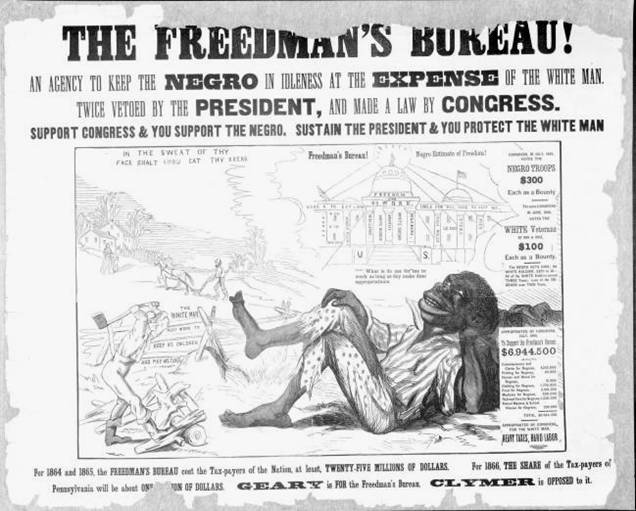
Backlash against racial progress is central to the story of America–as you can see with this political advertisement from 1866. Whether or not it was the reason for Trump’s victory, the interminable problem of racism and democracy in American society remains with us.

Historical analogies are useful, but we also need to recognize how they are limited in speaking to the present moment. Both Bouie and Pitner acknowledge this. History never repeats itself. It doesn’t even necessarily rhyme. But we can “use” history to think harder about the present. History, taught well, teaches us that the present is never easy to understand. There are never any simple answers or quick victories. Historical comparison, of course, is nothing new. C. Vann Woodward, among many others, referred to the Civil Rights Movement as a “Second Reconstruction.” Today, the theologian and activist Rev. Dr. William Barber of North Carolina refers to the present day as a “Third Reconstruction.” Others may also argue that the here and now is a “second Nadir of African American history,” in comparison with the low point in African American history from 1890 to 1930 written about and described as such by Rayford Logan.

The comparison with another nadir is not new. The historian Sundiata Keita Cha-Jua argued, in a The Black Scholar essay in 2010, that Black America was already suffering through a second nadir. There, he argued that African Americans were already in a nadir due to a variety of factors. Most notably, the changes in American political economy since the mid-1970s due to the rise of neoliberalism and its associated policies of austerity—coupled with cultural and political debates over colorblindness and racism—have damaged the progress made by African Americans in the immediate aftermath of the Civil Rights Movement. Cha-Jua argued that events such as the 2000 election (and allegations of voter suppression in Florida), the federal response to Hurricane Katrina, and the collapse of the housing market in 2007-08 (which destroyed the slowly-built up wealth of the African American middle class) were all symbols of the modern nadir. This was all before Obama’s election in 2008—which Cha-Jua argued was “contrasted but not off set by” the events previously mentioned.

I disagreed with this analysis of a “new Nadir” when it first came out. Today, I am tempted to argue that it is the best analysis of the present moment. Economic factors of the damage done to African Americans over the last three decades lend some credence to Cha-Jua’s analysis. And, to be blunt, I worry that any administration in the White House may not provide the answers to helping millions of Americans—regardless of race—recover from the 2008-09 Great Recession. The debate about voter suppression across the country, highlighted by recent events in North Carolina, also make the “new Nadir” take a tempting one.

I still reject a wholesale comparison with that era, for a variety of reasons. But it is not out of any sense that things are fine today. On the contrary. Historical comparisons are not to be discarded. They can and do serve a purpose. Comparisons across historical eras make the present day easier to understand. In that sense, African American history is critically useful. After all, African American history offers a bitterly learned lesson—that democracy and progress are always built in American history on a foundation of sand. Freedom cannot be taken for granted. Most importantly, the whiggish idea of history as a march of progress has been laid bare, once again. Much of human history proves this. For Americans, however, to simply look to the history of African Americans—or, for that matter, Native Americans, women, Hispanics, a multitude of groups—is to realize that “progress” and “hope” are not natural to human history.

And so we plunge into 2017, unsure of the future and groping for lessons from the past to help us. The urge to make historical comparisons is understandable. Just remember that the differences between eras is important too.

~ Originally published at Society for U.S. Intellectual History Blog, on January 1st, 2017

~ Robert Greene II is a PhD. student at the University of South Carolina. He studies American history after 1945 with a focus on the American South, political history, and memory. (Bio credit: S-USIH Blog)

Ordinary Philosophy and its Traveling Philosophy / History of Ideas series is a labor of love and ad-free, supported by patrons and readers like you. Please offer your support today!

A Woman’s Work: Ann Plato’s Republic, by Sara Georgini

phillis-wheatley-silhouette-william-kingShe was named for the ship that stole her away. At seven years old, Phillis Wheatley crossed the Atlantic from West Africa, another dot in the mosaic of roughly six million enslaved Africans who landed in the Americas between 1700 and 1808. Small and so young, she became Boston merchant John Wheatley’s gift to wife Susannah. Early on, Phillis’ talent shone. She mastered Latin and Greek, earning transatlantic praise for her Poems on Various Subjects, Religious and Moral, the first book of poetry by an African-American, published in London in 1773. She sat for an author portrait, toured England, met George Washington, and, finally, secured her freedom before dying, impoverished, in 1784.

Early Americans and early Americanists have pored over her too-brief career ever since. Phillis Wheatley’s byline alone, threading together her sacrifice and her sale, bears hard history in it. As an African-American founding mother of our national literary tradition, Wheatley owns a leading role in survey classes, public statues, and cultural memory. Wheatley’s last manuscript, 300 pages of poetry, may be lost; but we hold pieces of her legacy intact. Here at the Massachusetts Historical Society, I pass by her writing desk nearly every day. It’s not the one in her formal portrait. Rather, it’s the mahogany “card or tea table” that John Wheatley gifted Phillis with sometime during her long servitude. Ball-and-claw feet grip the carpet. A neat apron-front drawer has room enough for cards, ink, and a few cottony sheets of colonial paper. Sold at auction to settle her heavy debts, the poet’s desk is a rich artifact of literary technology, an Enlightenment-era laptop. Polished and bare, Phillis Wheatley’s desk raises the question: Who took up her pen?

Today, resuming my series on early American women intellectuals, I’ll focus on Ann Plato, a Hartford, Conn., schoolteacher who was, in many ways, Wheatley’s direct heir. Or so argued the abolitionist preacher James W.C. Pennington in his opening attestation of Plato’s 1841 Essays; Including Biographies and Miscellaneous Pieces, in Prose and Poetry. Pennington, then deep at work on his own book, The Origin and History of the Colored People (1841), made a compelling case for Plato’s historical significance. Of African-American and Native American ancestry, Plato (fl. 1824-1870), had, according to Pennington, suffered in order to persevere as a literary artist. By his lights, Ann Plato therefore joined the ranks of Wheatley, the Roman playwright Terence, and the Jamaican poet Francis Williams. “These all served in adversity,” Pennington reminded readers, “and afterwards found that nature had no objection, at least to their serving the world in high repute as poets… But as Greece had a Plato why may we not have a Platoess?”

For researchers, the long-forgotten, local “Platoess” has proved near-mythic to examine. A great deal of excellent biographical spadework has been done by Ron Welburn, in Hartford’s Ann Plato and the Native Borders of Identity (Albany: SUNY Press, 2015). Ann Plato presents a critical dilemma for scholars, as Welburn points out, since she “left neither entry nor exit signs,” opting to blur her contributions within the historical record. Tracing Plato’s education from eastern Long Island to her Connecticut teaching career, Welburn weaves in the intellectual “places in between,” where Ann Plato also thrived: praying at the Talcott Street (Colored) Congregational Church, publishing poetry in The Colored American newspaper, and––like so many other Americans––possibly wending her way West, to Iowa, in the Reconstruction era. To deal with Plato on any critical level is tough. Though she produced several shorter (and often near/anonymous) pieces, Ann Plato’s legacy rises or falls on her single volume, Essays. Between her conduct book’s rote lines lies a wealth of African-Americans’ sense of experience, education, history. A pastiche of prose parables, morality tales, advice for youths, and poetry humming with political and religious commentary: Ann Plato’s book is at home in the early republic.

Plato’s Essays split along three paths, marked out “Prose,” “Biographies,” and “Poetry.” To read Plato is to sink fully into the antebellum schoolroom. The first section instructs the reader via “lessons from nature,” outlining the Christian principles of education, diligence, and obedience needed to frame a good character. Youth remains the best “season” to cultivate ideal habits. Plato’s voice steers the narrative; she is quiet but firm. In one essay, she frets that her female pupils will favor making a “showy appearance” more than “prizing the gift” of entrance into the “temple of knowledge.” In another piece, she urges students to excel, since “mediocrity is a proof of weakness; and perfection may always be purchased by application.” Like her literary peers, Ann Plato keeps her “Prose” primly aspirational with “Eminence from Obscurity,” a listicle of “great” European men who have “risen from humble stations” and laboring lives to become artists and scholars.

Plato wraps up “Prose” with a trinity of tragic reflections. “Life is Short” documents the first moments of new orphans, in freefall after a family funeral. “Death of the Christian,” a shorter and more ambitious work, namechecks a set of classical and modern references (Caesar, Pollok, Byron, Chesterfield, Addison). There, Plato reels in cultured readers with her impressive grasp of Anglo-American literature. Then she steps back, sealing her conclusion with an appeal to godly virtue. “Learn with what superior dignity of mind a Christian can die,” Plato writes. Certainly, Pennington’s “authoress” knew her audience, for Plato folds lost friends into her saga. The second part, “Biographies,” features short eulogies of four women, all local acquaintances who died young (likely of consumption). Using their lives to reinforce cherished notions of Christian morality and youthful piety, Plato attempts women’s biography with sentimental verve. Industrious, mild, and ever sweetened by death’s approach, Plato’s subjects melt and sway into one another’s path. Plato is more interested in presenting a template than a person, putting her work in line with the religious tracts, advice books, and “manners” novels that fellow New Englanders enjoyed. Then, in the space of a few stanzas, Plato turns inward, and against the crowd.

Ann Plato is best known for her poem, “The Natives of America,” an eloquent reflection on her biracial identity, which features prominently in her Essays’ final pages. Go ahead, read it. Plato opens in a familiar, Longfellow-esque tone, with a child begging for a story from her father’s lap. But the narrative she learns is one of conquest and loss. Here is a key sample: “Wars ensued. They knew the handling of firearms. / Mothers spoke,––no fear this breast alarms, / They will not cruelly us oppress, / Or thus our lands possess. / Alas it was a cruel day; we were crush’d: / Into the dark woods we rush’d / To seek a refuge. / My daughter, we are now diminish’d, unknown, / Unfelt! Alas! no tender tone / To cheer us when the hunt is done; / Fathers sleep––we’re silent every one.” If Plato’s individual eulogies run drab, embroidered with obligatory accents of Christian piety, her reconstruction of the Native American experience is raw, powerful, and worth your read.

Part of why I began this project was to read more early American thinkers who sensed their histories, like Phillis Wheatley’s or Ann Plato’s, were diminished, unfelt, unknown. Reading Ann Plato’s republic is a way to understand the kind of historical figure extolled by Anna Julia Cooper in A Voice From the South (1892), the “open-eyed but hitherto voiceless Black Woman of America.” It’s also a route to retrace how early American women wrote about themselves en route to Seneca Falls, through the Civil War, beyond the cultural upheavals of Reconstruction, and into a modern realm of world literature that Phillis Wheatley glimpsed, far too briefly. For, as “A Lady from Philadelphia,” asked in an 1885 issue of Lippincott’s Monthly Magazine: “Why should not the coming novelist be a woman as well as an African? She––the woman of that race––has some claims on Fate which are not yet paid up.”

~ Sara Georgini is a Historian & Series Editor, Adams Papers, @MHS1791. Ph.D., #BU. Views=mine, #history for all (Bio notes credit: author’s own on her Twitter page)

~ This piece was originally published in the Society for U.S. Intellectual History Blog on December 21st, 2016

Ordinary Philosophy and its Traveling Philosophy / History of Ideas series is a labor of love and ad-free, supported by patrons and readers like you. Please offer your support today!
On Authoritarianism And Civilization, by Neil Roberts

W.E.B. Dubois, Photograph taken by J.E. Purdy in 1904, public domain via Library of Congress

W.E.B. Dubois, Photograph taken by J.E. Purdy in 1904, public domain via Library of Congress

In 1890 the young W.E.B. Du Bois delivered the Harvard University Commencement address “Jefferson Davis as a Representative of Civilization.” Du Bois focused on a central figure of nineteenth-century America as he prophesied the meanings of freedom, democracy, and what American life — or more accurately, civilization — would look like over the next hundred years and beyond for the white world, the black world, and other non-white populations that hitherto occupied spaces outside the epicenters of civil and political society.

Born in Kentucky, Jefferson Davis held the offices of U.S. Representative and Senator for the state of Mississippi and later Secretary of War under President Franklin Pierce. Following Pierce’s failure at the 1856 Democratic National Convention to acquire Presidential re-nomination support from party delegates, Davis ran again, won, and went back to Congress as a Senator. Yet with the 1860 election of Abraham Lincoln and escalating distrust between South and North, Davis resigned his Senate post.

After ensuing Southern secession, Davis assumed the Presidency of the Confederate States of America, maintaining the position until the Civil War’s end. Davis had poor health much of adulthood and detractors internal to the Confederacy. While underestimated by peers and despised by several prominent Confederate politicians and generals, he nevertheless forged an obedient coalition and crafted a resolute model of governance and rule. Although Davis lived until the post-Reconstruction year before Du Bois’s speech, his thoughts and actions as Confederacy President provided core teachable moments.

Du Bois considers Davis a person whose self-conception is that of “a typical Teutonic hero” and whose notion of leadership personifies “the idea of the Strong Man.” By ‘Strong Man,’ Du Bois means a leader espousing “[i]ndividualism coupled with the rule of might.” The Strong Man, suffuse with strength, privileges the “I” and self-assertion over the “Thou.” The Strong Man bolsters civilization through “stalwart manhood and heroic character” on the one hand and “moral obtuseness and refined brutality” on the other. The Strong Man often relies on disgruntled and violent mobs, adherents who are, as Hannah Arendt observes, angry masses that feel excluded from previously accessed corridors of politics, believe their standing is society has evaporated compared to the prior generation, loathe heterogeneous society as is, and cry out for the homogeneous order the Strong Man promises. The Strong Man’s patriarchal idea of civilization is intimately tied to racial orders, and it is his vision of a future world that augurs the consolidation and regeneration of the white race above all other races.

Du Bois contrasts the Strong Man with the ‘Submissive Man,’ characterized by weakness, a commitment to truth, and desire to acquiesce to the Thou, the You, the part of personhood not obsessed with the image of the being reflected back in the mirror. Whereas the American Teuton, of which Davis is exemplary, is indicative of the Strong Man, the Negro is for Du Bois the archetypal Submissive Man Davis dismisses.

Ironically, the Strong Man and Submissive Man need one another, their diametrically opposed views notwithstanding. Otherwise, the polity they inhabit devolves into despotism or slavery, and not merely for those emboldened at any given time with the might and right of state.

Jefferson Davis, “the peculiar champion of a people fighting to be free in order that another people should not be free,” missed the inseparability of the I and the You. He refused to admit the ways we’re interconnected, in relation, despite our pluralistic and differential conceptions of the free life and in spite of attempts by agents of state and their lackeys to interfere, dominate, segregate, deport, and annihilate.

Davis’s Strong Man hubris spawned a vitriolic, angry, white nationalist, revolting mass. It also led to his downfall, the Confederacy’s decline, and American civilization as he conceived it, in large measure due not only to abolitionists but also the actions of fugitives and slave agents catalyzing its genesis. It didn’t, however, obliterate the wages of whiteness and political philosophy of white supremacy in the post-1865 polity. Du Bois documents this in The Philadelphia Negro, The Souls of Black Folk, “The Souls of White Folk,” and, most notably, Black Reconstruction in America, as do scholars such as C.L.R. James, Frantz Fanon, Annette Gordon-Reed, and Nell Painter. This last point haunts us today.

Authority and authoritarianism undergird Du Bois’s prognostications. An agent with “authority” demands dogged obedience, compliance, and dispelling of ressentiment urges by the subjects of sovereign command. “Authoritarianism” is the structural macropolitical systemization of a type of statecraft designed by what Theodor Adorno and collaborators call an authoritarian personality. It is a hierarchical social, political, and economic order militating against egalitarianism. Moreover, as Arendt notes in “What Is Authority?” we shouldn’t confuse authoritarianism with tyranny, for “the tyrant rules in accordance with his own will and interest, whereas even the most draconian authoritarian government is bound by laws.”

Du Bois wrestles with Jefferson Davis’s legacy because Davis oversaw a confederation based on slavery and apparatuses of unfreedom enshrined in jurisprudence. Du Bois cautions against ambivalence, nihilism, and avoidance of the afterlife of chattel slavery, first since modes of enslavement sanctioned by law mutated and have been upheld at different junctures by authoritarian personalities, though not always in the public sphere by the prime executive. An amplification of these chilling effects occurs when the entity wielding authority — whose public beliefs defend racism, sexism, xenophobia, chauvinism, and rabid masculinity — is Commander-in-Chief. Second, struggle, resistance, and abolitionist challenges to authority and authoritarianism are as much a tradition as the tradition their actions seek to dislodge. Never forget that.

Our current moment is unprecedented. Yet past lessons offer signposts for future judgments and decision-making. President-elect Donald Trump entered campaign 2016 a noted businessman, consummate reality TV performer, and political chameleon. In the process of winning the Republican primary and shockingly defeating Hillary Clinton, Trump clarified certain issues and left many policy positions open-ended.

What’s incontrovertible is Trump’s authoritarian personality. Only time will tell what type of authoritarian President Trump will be, Jefferson Davis reincarnated or otherwise. And if his senior administrative appointments are any indication, particularly the ghastly selection of avowed white nationalist Stephen Bannon as top White House advisor, then we’d be foolish to assume Trump’s stated public beliefs and campaign promises are one big bluff. Parrhesia is hard to digest.

We have a choice in the Age of Trump: ignore history and our intrinsic abilities for action, thereby reifying the authoritarian order Trump very much plans to implement. *Or* protest. Petition. Resist authoritarianism and its mob enforcers. Organize. Unlock our political imaginations. Believe firmly our actions can match our convictions.

‘American Democracy’ is an unrealized and perhaps unrealizable Platonic ideal, but democracy in America, in the hemisphere, and in the globe, measured by nodes of progress, are attainable. Progress, as with regress, comes in stages. And like freedom, the theory of relativity, and quantum mechanics, the meaning of progress and attendant strivings for it begin with acknowledging a foundational phenomenon: perpetual flight.

Flight operates betwixt, between, and beyond the options of Strong Man and Submissive Man. “Human” progress, a consequence of ongoing marronage, beckons us.

This piece was published in the African American Intellectual Historical Society Blog on December 4th, 2016

~ Neil Roberts is an associate professor of Africana Studies and a faculty affiliate in Political Science at Williams College. He is author of the award-winning Freedom as Marronage (University of Chicago Press, 2015) and the collaborative work Journeys in Caribbean Thought (Rowman & Littlefield International, 2016). Roberts is presently completing A Political Companion to Frederick Douglass for The University Press of Kentucky, and he is President-Elect of the Caribbean Philosophical Association. Follow him on Twitter @neildsroberts. (Bio Credit: AAIHS Blog)

Ordinary Philosophy and its Traveling Philosophy / History of Ideas series is a labor of love and ad-free, supported by patrons and readers like you. Please offer your support today!

Should We Act on our Beliefs? The Vexing Nature of Responsibility, by Rik Peels

Brain illustration from The Principles and Practice of Medicine...' by W Osler, 1904, public domain via Wikimedia Commons

Brain illustration from The Principles and Practice of Medicine…’ by W Osler, 1904, public domain via Wikimedia Commons

Some people think that voting for Donald Trump was a detestable thing to do, whereas others are convinced that we had an obligation to vote for him in order to get rid of the political elite. Of course, in explaining why they voted the way they did, people will appeal to their beliefs. Some of those will be factive: beliefs about such things as whether someone paid his taxes or whether someone gave full disclosure of certain emails. Other beliefs will be normative: beliefs about such things as whether America should pursue international political leadership or about whether it is permissible to use water-boarding techniques to extract information from prisoners.

People act on their beliefs. Obviously, that, as such, does not get them off the hook for the ensuing actions. Those who voted for Clinton believe that adherents of Trump should know better and vice versa—when it comes to the facts, when it comes to certain moral norms, or, more likely, both. Or, to give a few examples on which most Westerners agree: we believe that ISIS fighters also act on their beliefs, but that they should know better, and we believe that climate skeptics act on their beliefs, but that they should know better. If people were not responsible for their beliefs, it would seem improper to blame them for the actions they perform on the basis of those beliefs.

However, the idea of responsibility for our beliefs faces two big challenges. First, how can we be responsible for our beliefs at all? I am responsible for whether I treat my neighbor kindly or rudely, because I can choose or decide to treat her kindly or rudely. But I do not choose or decide to hold a belief. Nobody ever wakes up in the morning and thinks: “Today, let me form this or that belief.” Beliefs are things that are not under the control of our will. How, then, are we responsible for them? This is a controversial issue in contemporary analytic philosophy. One way to think of it is this: we are responsible for our beliefs, because they are the consequences of things over which we do have control, such as whether we gather more evidence, whether we are humble and pay attention to our prejudices and biases, and whether we try to become more open-minded.

Second, assuming that the first challenge can be met and that we are indeed responsible for our beliefs, we still face a deep puzzle about responsibility. As I said, people normally act in accordance with their beliefs. And that, it seems, is the right thing to do. One should not act contrary to what one believes to be the facts or contrary to what one believes one ought to do. Philosophers have even come up with a name for situations in which one succumbs and acts against one’s better judgment. Ever since Aristotle, they call it akrasia. One is akratic, for instance, if one believes that eating an entire bag of chips is bad, but one still does it. We don’t want people to be akratic. Rather, they should act in accordance with their beliefs.

Now, here’s the problem. If we are to hold people responsible for their beliefs, then, given that belief is not under the control of the will, it must issue from an earlier culpable act: one neglected evidence, one failed to enter into conversation with certain people, one was not open-minded, or some such thing. But, presumably, at that earlier time, one believed it was alright to neglect that evidence, fail to enter into conversation, or not be open-minded on that occasion. Thus, how can we ever hold people responsible for their beliefs and the actions performed on the basis of those beliefs? We are unwilling to give up holding people accountable for their beliefs. But it seems we are equally unwilling to give up the principle that people should not act contrary to their beliefs.

I am not entirely sure how this challenge can be met. But here are at least a few things we ought to note that can help in solving the problem.

First, it seems that if people act on their beliefs and there was no way they could have changed those beliefs – for instance, because they have been thoroughly indoctrinated or they suffer from a psychosis – we cannot blame them for holding those beliefs and for the actions based on those beliefs. Maybe we should take protective measures and perhaps even incarcerate them, but they are not morally responsible for what they believe or what they do.

Second, intellectual virtues or, as philosopher Linda Zagzebski calls them, ‘virtues of the mind’, steadily grow over long periods of time: open-mindedness, curiosity, thoroughness. And so do intellectual vices, such as dogmatism, conformity, and sloppiness. They gradually arise out of choices we make on particular occasions, such as whether we listen to someone and try to understand what things would look like from their point of view. These intellectual virtues and vices heavily influence our beliefs and, consequently, our actions. Thus, the more evidence we have that someone has had enough opportunity to develop these virtues, the more we can hold them responsible for their beliefs.

Third, the flat-out principle that we should act on our beliefs might be too simplistic: it may need substantial qualification by taking into account serious doubts that one might have, whether or not one’s belief matches one’s emotions and desires, and whether or not there is substantial disagreement with others about the belief in question. This, as such, will not solve the problem, but such qualifications seem needed to do full justice to our intuitions about the plausibility of the akrasia principle.

The responsibility we bear for our beliefs is crucial for individual well-being and the flourishing of our societies. And yet, like so many things that are crucial in our lives, it is vexing and raises deep philosophical questions. We will need joint work by ethicists, epistemologists, psychologists, and sociologists to find satisfactory answers.

~ Originally published at OUP Blog: Oxford University Press’s Academic Insights for the Thinking World, on November 19th, 2016

~ Rik Peels is Assistant Professor in Ethics and Epistemology at Vrije Universiteit Amsterdam, the Netherlands. He is the author of Responsible Belief: A Theory in Ethics and Epistemology (OUP, 2016), editor of Perspectives on Ignorance from Moral and Social Philosophy (Routledge, 2016), and co-editor of The Epistemic Dimensions of Ignorance (CUP, 2016). You can read more on his personal website www.rikpeels.nl. (Bio credit: OUP Blog)

Ordinary Philosophy and its Traveling Philosophy / History of Ideas series is a labor of love and ad-free, supported by patrons and readers like you. Please offer your support today!

APA Member Interview: Amy Cools

Amy Cools, Portrait by Alex Black, 2014October 21, 2016 by Skye Cleary for the American Philosophical Association Blog

What excites you about philosophy?

There’s something about discovering or realizing a truth about the world and about our inner experiences of it that’s more thrilling to me than anything else. When I first read Wilfred Seller’s definition of philosophy, the “aim…to understand how things in the broadest possible sense of the term hang together in the broadest possible sense of the term”, I recognized that his conception of philosophy is closest to my own. I believe philosophy is something that all human beings engage in, to one degree or another, and to feel that I’m part of this great human endeavor to understand and appreciate the world is also deeply satisfying…

Read the rest of this interview at the APA Blog

Ordinary Philosophy and its Traveling Philosophy / History of Ideas series is a labor of love and ad-free, supported by patrons and readers like you. Please offer your support today!


Where Has All The Loving Gone? A Review Of The New Film, ‘Loving’ by Peter Cole

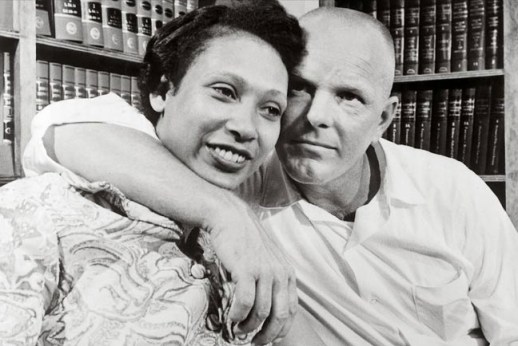
Mildred Jeter and Richard Loving, June 12, 1967, by Bettmann/Corbis via New York Times, public domain via Wikimedia Commons

Mildred Jeter and Richard Loving, June 12, 1967, by Bettmann/Corbis via New York Times, public domain via Wikimedia Commons

A new film about the Southern working class couple whose love and dedication broke the back of anti-miscegenation laws across the nation arrives just in time. Released days prior to Donald Trump’s election, viewers of Loving might be shocked to discover that anti-racist, blue-collared, white men—like Richard Loving—walked Southern soil. He was brave (or ignorant) enough to think he could get away with marrying a black woman; wise enough to know she was smarter than him. His deferral to her effort to seek legal counsel ultimately overturned laws banning interracial marriage in the landmark Supreme Court decision, Loving v. Virginia (1967)

Beneath the film, the Lovings’ story also speaks to the centuries-long effort by white supremacists to create a “white race” and defend it from “race-mixing”(also called miscegenation). In 1958, Richard Loving, 23, and Mildred Jeter, 17, married in the District of Columbia. They did so because Virginia outlawed interracial marriages, one of twenty-four states with similar laws at the time. Richard was “white,” Mildred “black” though actually a mixture of African American and Rappahannock Indian.

So began their nine-year odyssey that ended with the Court unanimously ruling that states could not prevent a man and a woman from marrying, regardless of their racial identities. Written and directed by Jeff Nichols, critics at Cannes hailed the motion picture and Oscar buzz has begun. The film deserves high praise and wide viewership, anchored by incredible performances from Ruth Negga and Joel Edgerton, the two principal actors.

Despite knowing the law—as proven by their DC marriage—the newlyweds chose to live in Central Point, their rural home in eastern Virginia’s Caroline County. A remote community made up of poor and working class people with a long, complicated history of ethnic and racial mixing, African Americans, European Americans, and Native Americans all lived in Central Point. Tellingly, despite 97% of all births, in 1960, occurring in hospitals, Richard’s mother, a midwife, delivered Mildred’s first child in 1959.

Just weeks after marrying, and prior to Mildred’s delivery, the sheriff arrested and jailed them for “unlawful cohabitation.” According to Mildred, when “they asked Richard who was that woman he was sleeping with,” she responded: “‘I’m his wife,’ and the sheriff said, ‘Not here you’re not.’”

The Lovings had violated Virginia’s Racial Integrity Act of 1924 though laws prohibiting interracial marriage and sex date back to the colonial era. The first “Richard Loving,” as it were, appeared in Virginia court records in 1630: “Hugh Davis [a white man] to be soundly whipped before an assembly of Negroes and others for abusing himself to the dishonor of God and shame of Christians by defiling his body in lying with a Negro; which fault he is to acknowledge next Sabbath day.”

By 1662, though, reality forced Virginia’s House of Burgesses to designate the status of interracial offspring:

WHEREAS some doubts have arisen whether children got by any Englishman upon a Negro woman should be slave or free, Be it therefore enacted and declared by this present grand assembly, that all children borne in this country shall; be held bond or free only according to the condition of the mother.

Virginia’s law dictated, “that which is brought forth follows the womb” or, in Latin, “partus sequitur ventrem.” In other words, a white, male slave-owner could have sex with—quite possibly raping—a black female slave, but their child was considered a slave, like the mother, rather than free, like the father. Previously, Virginia followed English common law, which dictated a father’s status determined a child’s. Virginia first outlawed miscegenation in 1691, as part of “An act for suppressing outlying Slaves.”

Over time, racial barriers further hardened in Virginia, the South, and nation. Before the twentieth century, Virginia considered a person “black” with one-forth African ancestry. In 1910, the state adopted one-sixteenth as its definition. With the Racial Integrity Act of 1924, Virginia embraced the notorious “one-drop” rule, authored in a period of heightened xenophobia and racism. For violating this law, in 1959 Judge Leon M. Bazile of the Caroline County Circuit Court sentenced Richard to prison for a year, but suspended this sentence if the couple agreed to leave Virginia and not return for twenty-five years.

In 1963, following encouragement from a relative inspired by the recent March on Washington for Jobs and Freedom, Mildred wrote Attorney General Robert Kennedy. He forwarded her letter to the American Civil Liberties Union (ACLU), which took the case. Attorneys Bernard S. Cohen and Philip J. Hirschkop, both young Jewish men committed to racial equality, quickly recognized this Loving story could, once and for all, overturn all interracial marriage bans.

In response to their appeal, Judge Bazile wrote: “Almighty God created the races white, black, yellow, malay and red, and he placed them on separate continents. And but for the interference with his arrangement, there would be no cause for such marriage. The fact that he separated the races shows that he did not intend for the races to mix.”

In this tumultuous era, the height of the civil rights movement, white Virginians led efforts to prevent integration. In 1956 Virginians Senator Harry F. Byrd and Representative Howard Smith introduced the Southern Manifesto, encouraging Southern whites to engage in “massive resistance” to integration.

In 1963, the same year Cohen and Hirschkop appealed the Lovings’ punishment, another Virginia court ruled against interracial marriage: “’to preserve the racial integrity of its citizens,’ and to prevent ‘the corruption of blood,’ ‘a mongrel breed of citizens,’ and ‘the obliteration of racial pride’.”

Four years later, Chief Justice Earl Warren profoundly disagreed: “Under our Constitution, the freedom to marry, or not marry, a person of another race resides with the individual and cannot be infringed by the State.” “Odious to a free people,” banning interracial marriage violated the 14th Amendment. Case closed.

Sadly, the Lovings only spent eight more years together after becoming the Supreme Court’s most aptly named case. A drunk driver killed Richard, just 41, in 1975. Mildred died of pneumonia, in 2008, at 68. She never remarried, living the rest of her days in the house her husband, a bricklayer, built for her after changing History.

Given the recent presidential election, it seems impossible to watch Loving and not meditate about the so-called white working class. Two-thirds of whites without a college education—a very imperfect correlation to socio-economic class—voted for Trump. Yet, for most of the twentieth century, such people, particularly Southern whites, voted Democratic. At least in part due to the civil rights revolution, Southern whites overwhelmingly realigned and, largely, took over the Republican Party. In 2016, 72% of registered Republicans still question the Americanness of America’s most famous mixed race citizen, Barack Obama.

Richard Loving rejected white supremacy when he married Mildred—in contrast to legions of white men who “simply” had sex with black women. He, his wife, and their three mixed race children became victims of racism. He became a “race traitor.” White film viewers come to see that, after marrying, Richard essentially joined the black community. They lived with her family, first in Virginia and, later, a racially segregated part of Washington, DC. Except for his mother in Central Point, Richard appeared to have no white friends; he and his best friend, a black man, owned and drag-raced cars. He kept to himself at work—(apparently) all-white construction sites.

A long history of accepting interracial couples and mixed race children exists in the black community, if only because no alternatives seem to exist. James Baldwin laid bare this ugly truth during a televised debate with a white conservative. When asked about what whites feared most, “Would you want your [white] daughter to marry one [black]?” Baldwin retorted, “You’re not worried about me marrying your daughter—you’re worried about me marrying your wife’s daughter. I’ve been marrying your daughter since the days of slavery.”

In a telling scene in the film, Richard drinks with three black friends in a black saloon. One friend pointedly asks Richard how it feels to experience what blacks had suffered from for 350 years: virulent racism. Richard, always taciturn, says nothing but proceeds to get drunk and, later, cry in Mildred’s arms.

Today, the number of interracial couples and families, like the Lovings, remains small. The 2010 U.S. Census reported nine million Americans identified as multiracial. The Pew Research Center noted in 2013, however, “a record-high 12% of newlyweds married someone of a different race.” Yet, apparently many white Americans still fear people like the Lovings and the ongoing demographic changes transforming America into a “majority-minority” nation.

Hence, we need reminding that America was not so great for many Americans, including African Americans, Latinos, American Indians, and Asian Americans along with their white allies who opposed white supremacy. We also need reminding that Mildred and Richard Loving personally overcame. Their story and this film demand a wide audience.

~ This review was originally published on Nov 27th, 2016 in the blog of the African creative-commons-attribution-noncommercial-4-0-international-licenseAmerican Intellectual History Society, and the text and links are here reproduced in full 


Peter Cole is a historian of the twentieth-century United States, South Africa and comparative history. Dr. Cole is Professor of History at Western Illinois University. He is the author of Wobblies on the Waterfront: Interracial Unionism in Progressive Era Philadelphia (University of Illinois Press, 2013) and currently at work on a book entitled Dockworker Power: Race, Technology & Unions in Durban and the San Francisco Bay Area. Follow him on Twitter @ProfPeterCole.

Ordinary Philosophy and its Traveling Philosophy / History of Ideas series is a labor of love and ad-free, supported by patrons and readers like you. Please offer your support today!