Encourage a More Progressive Islam: The Peaceful Muslim Majority Should Dominate the Conversation

The debates around the Charlie Hebdo shooting have been raging hot and fast: should there be a stronger military response to militant Islamists? Does the Quran promote or at least allow violence, and if so, is Islam really a religion of peace? Are principles of the right to free speech and basic respect for the feelings of religious people compatible?
We’ve tried, and mostly failed, the military response tactic. Even where gains appear to have been made in the short term, a new crop of fanatics soon rise up to strike, as they feel their country’s honor has been violated by invaders who have no right to dictate what they should believe, what laws they should make, or what form of government they should create. It’s a fact of history that invasion, real or perceived, by foreign armies invariably provokes those disposed to violence to take up arms; these, in turn, convince the young, the aimless, and the self-righteous to join them in their ‘sacred’ cause. Even if the intention of the ‘invaders’ is to liberate or to protect (though I’m not convinced that’s entirely or even usually the case on the part of governments), these military interventions usually turn out worse for everyone in the long run. Consider the domino effect from our early intervention in Afghanistan against the Russians to our seemingly endless war(s) in the Middle East. While each intervention on its own seemed justified to many in the short term, the deeper all parties dig themselves in with more fighting, the more the bodies pile up and the deeper the tensions run, generating yet more conflict.
So how about the religion itself, and its holy book? The Quran indeed contains violent passages, allowing and even commanding its readers to kill those who violate certain commandments or who don’t believe. The Bible is also chock-full of both divinely tolerated and divinely commanded violence, including rape, murder, mutilation, and lots of genocide. Christians, for centuries, invaded other countries, overthrew rulers, tortured and killed heretics and ‘witches‘ (including little girls), and harshly oppressed the Jews, from baptizing and kidnapping their babies to murderous pogroms. All this with consent, by silence or by instruction, of religious authority figures, including the Pope.

So why does the western world widely consider Christianity a religion of peace, and Islam a religion of genocide? Well, Christianity has undergone a pretty thorough reformation through the influence of better philosophical and evidence-based ideas, starting with the Protestants, continuing with the Enlightenment, and up to the Age of Science and Human Rights. With widespread literacy and open trade came the awareness that the old dogmatic, sin-obsessed, holy-war-glorifying ways are actually quite awful for human well-being, and that hey, if God loves us, maybe he doesn’t actually want us to live that way. Now, except for abortion clinic bombers, the odd Timothy McVeigh or Anders Behring Breivik, and certain pundits, fundamentalists, and warmongers who seem to long for the days of the Crusades, Christianity is now, in comparison, mostly a benign family of religions of tolerance, peace, and good works. Even if, as I believe, they get a lot of stuff wrong (mostly the metaphysical stuff; otherwise, many of the ethical systems they promote are not half bad), Christian religions bear little resemblance to their forebears who enacted Old Testament values with gusto. Same goes for (most of) the Jewish family of religions.

This takes to our modern Age of Human Rights, in which the rights and interests of individual persons are of primary concern, so that any and all human institutions, be it religion, corporation, community, or government, is judged by how well it serves to protect and expand human rights. Is Islam compatible with this new understanding of the importance of human rights, in that they are at least on equal footing with religion, if not taking precedence over it? (From the religious viewpoint, of course: most modern, reformed, and mainstream religions seem to promote a robust conception of the centrality of human rights in their moral systems, and see no real conflict. The most progressive believers, as well as atheists and secularists, think that too many religions are still retrograde and unjust in their beliefs regarding gay, women’s, and children’s rights.) Should the threat of offending religious people be sufficient to limit that most sacred of human rights to the western world, free speech? We’re still figuring that one out when it comes to extreme cases, such as those that specifically incite violence, or ‘hate speech’. But for the most part, I think the general attitude of the western world towards free speech is the correct one: it should rarely be constrained, except when’s demonstrable that severe and direct harm will almost surely result from it. Even the speech of people with the most disgusting views must be tolerated in the interests of being an informed person, since it’s important to know who they are and what the bad ideas are that influence them. Most religions in the western world have become pretty comfortable with the idea of free speech and have come to value it highly, including the more moderate forms of Islam.

So how to stop the seeming spiral of parts of the Muslim world into an orgy of violence and the ideological dominance of its most extreme and retrograde forms? Encourage and promote those who stand against those violent ideologues. Most Muslims belong to this category of believers, and number among the most humane, thoughtful, and decent people you may care to meet. These are the Muslims who feel most, and most justifiably, beleaguered. They are as horrified as anyone else at all the atrocities committed in the name of the religion they identify with, perhaps more so since it’s other Muslims committing these crime, and like most Christians today, emphasize the nice parts of their holy book and interpret away the rest. And I’m sure they feel, as this thoughtful piece successfully argues, that it’s as ridiculous to blame Muslims as a group for the actions of Muslim killers, as it is to blame all Catholics for child-raping clerics, all Jews for the ultra-Orthodox few slinging feces at schoolgirls, or all atheists for Stalin’s genocide. It’s as ridiculous to expect all Catholics, Jews, and atheists to apologize and justify themselves following such atrocities, as it is to expect all Muslims to.

While there are still large parts of the Muslim world living under the rule of governments whose laws still carry out a retrograde understanding of justice, it’s just not true that most Muslims condone terrorist acts. Indeed, while doing research for this piece, I had a far harder time finding Muslim leaders who justify any kind of violence, even physical punishment for ‘apostates’ and criminals, than those that do. Outside of the rantings of pundits, who jump on the relatively rare examples of communities where a significant demographic believe violence is justified, it’s just not the case that Islam necessitates violence any more than Christianity does. Both revere holy books rife with passages promoting violence, but few Muslims and Christians are guided more by those passages than the peace-promoting ones. Yet it seems the pundits’ rantings dominate the major media outlets, while the voices of the peaceful majority of Muslims are all too often drowned out.

So if you’re one of those screaming and pointing fingers at ‘The Muslims’, let’s all stop being so damned self-righteous and smug in our own ‘enlightened’ point of view (yes, you too, my fellow atheists). Those of us who are interested in living in a more just, peaceful, tolerant, and free world should encourage such progress wherever it’s found, by praising it and trumpeting it from the rooftops. While I, too, feel that the world will be a better place when religion has lost its still too widespread dominance over the human heart and mind, I also know that many religious people feel a deep sense of identity with whatever faith they were brought up in, and this rarely changes quickly.

Who, then, will change the minds of those Muslims who hold beliefs contrary to principles of human rights and personal liberty? Will it be vitriolic Christians who point out the speck in their eye while ignoring the historical plank in their own? Will it be atheists who shout ‘Look, I told you so, that’s what happens when you consider ancient tribal texts the source of your morals’? I don’t think so, if history and a large body of research into why and how humans form their beliefs are any indication. The people who will change the mind of Muslims will generally be other Muslims.

So share widely every story of Muslims who hate violence and love tolerance, knowledge, and freedom, and let it it drown out the fundamentalists; I, for one, am rooting for their side in the fight over what broadly defines their religion. After all, they have the credentials and the inside knowledge of how it is to be a Muslim, to demonstrate to their fellow believers that the best way to be Muslim is to believe in a God of peace, tolerance, and justice. If you support these good people, you will become a help, and not a hindrance, on the journey of the human race, religious and secular alike, towards a more peaceful, tolerant, just, and wise world.

Here are prominent and influential Muslims and Muslim groups who stand against violence, to which I’ll keep adding as I discover them… and there are plenty to discover. Please share as widely as you can!

The Arab League and Al-Azhar condemn the Charlie Hebdo shooting:

The Council on American-Muslim Relations condemns the Charlie Hebdo shooting:
The Grand Mosque of Paris condemns the Charlie Hebdo shooting:
Imam Hassen Chalghoumi condemns the Charlie Hebdo shooting:
Imam Imtiaz Ahmed condemns the Charlie Hebdo shooting:
President Abdel Fattah al-Sisi condemns the Charlie Hebdo shooting: 
 
The Union of Islamic Organizations of France condemns the Charlie Hebdo shooting:

Activism is Not Enough: As Long As We Keep Shopping and Don’t Vote, It’s Our Fault Too!

I live in the San Francisco Bay Area, a wonderful place to live. It has a rich culture and a thriving music and arts scene and nightlife. It’s surrounded by great natural beauty in all directions: from oak forests to redwood groves, from chaparral to sandy beaches and sea cliffs. It has a fascinating history, plentiful and delicious food, beautiful architecture, and balmy weather. It’s also a liberal ‘bubble’, with an appetite for activism and, for better and for worse, a penchant for righteous outrage.

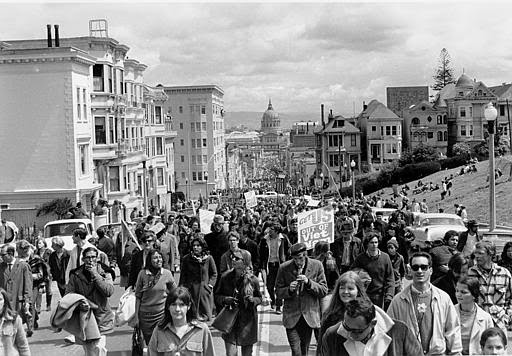
I admire and identify with the history and the culture of activism. Like the reformers of history and of today, the brave people who fight to create a more just world are among the finest the human race has ever produced. But I’ve been feeling something a bit lacking in activist movements lately. They still march in the streets, and we join them there and online by signing petitions for reform, posting blog pieces, and sharing videos bursting with righteous indignation. It’s exciting, it’s attention-getting, it makes the news. Historically, take-it-to-the-streets activism has been key in achieving the most important reforms (and breaking away to form our own nation in the first place!). The Occupy Movement, for one, was inspiring, and exciting, and it appeared that we were finally witnessing a harbinger of real change.

Sadly, it seemed to fizzle out before any substantial reform was achieved. Why? Because it wasn’t followed by practical action, which, of course, is much less exciting. Demonstrations of protest don’t do much lasting good unless they’re backed up by real, widespread change in attitudes, behavior, and civic engagment. Right now, the activist community is mainly pouring its energy into marches, inspiring songs, signs, slogans, and speech, and a few into blocking highways, smashing windows, and taunting riot police. But for actual reform to happen, we need to turn our collective accusatory gaze back on ourselves and realize we are the problem too…

How can we be the problem while we’re working and calling for reform? Because we keep supporting bad business through what we choose to buy, and we’re not reforming government by showing up at the polls.

It’s like protesting an assassination after we pitched in to pay the hit man and did nothing to stop him as he stole the getaway car.

For example, we’ve long known that many of our smartphones, tablets, and other gadgets are made in factories where people work terribly long hours for little pay, in conditions we’d never put up with ourselves. And we know that many or even most of our discarded electronics end up in some country, state, or town unprotected by regulations, or whose ‘recycling’ systems are really not effective in keeping up with the deluge, at keeping toxic heavy metals and chemicals out of the water supply, the ground, and the air. So we’ve signed online petitions and shared testimonies of abused workers on YouTube and Facebook. Yet we buy every new gadget as fast as they come along, throwing away our ‘old’ ones (cracked screen? doesn’t have the new games on it? too thick now since the new ones are 1/4″ thinner?) and buying a new one whether we ‘need’ it or not. When we purchase these things, we fund all operations of the companies that make them, and we send them the signal that we’ll buy them no matter how much their products pollute and how they treat their workers.

We also know, from the wealth of scientific information gathered and presented by the Intergovernmental Panel on Climate Change (IPCC) and our own National Climate Assessment, that we’re polluting our air to levels that present great threats to the health and future food security of ourselves and our progeny. We’ve also seen how air and other pollution causes respiratory ailments and even death in humans and animals, from pre-1970’s, pre-Clean Air Act Los Angeles, California, to Beijing, China of today. So again, we sign online petitions and share videos and speeches, and call on regulators to crack down on corporate polluters, on factories (industrial and farming), auto manufacturers, and the trucking industry. Yet it’s the commuter cars we drive and the emanations from animals we eat every day that pollute the most. We drive everywhere we want to go whether or not we need our car to get there, and gobble up more meat than is healthy for us and for the planet, all the while insisting that gas and meat stay cheap.

And so on, and so on, and so on. We want one thing, but do another. We say we want the world to be one way, but our actions help guarantee it won’t come to pass. It’s a hard pill to swallow, but here it is: we can’t justifiably blame corporations and the government for institutionalized racism, radical income inequality, pollution, climate change, poor wages and working conditions, poverty, and other social ills while at the same time we’re funding their operations, and are too politically apathetic to send more than a symbolic message by voting in the change we want.

There are two main ways we are undermining our own calls for reform:

We are a market-driven society, for better or for worse, and the market will always deliver what we want to buy, eventually. If we keep buying it, it will keep being made, whatever the good it does, or the harm. If we want things that cause harm, they will be made, ever more so as we keep buying them. And if we shop around for the lowest price, down prices will go, whether by benign means (improved technology) or not (driving down wages). Capitalism brings us wonderful things: safer and better machines for all kinds of purposes, warm comfortable clothing and plentiful food, information-sharing devices to educate and entertain, and best of all, technology that can better our lives while reducing waste. But it brings awful things as well: the supply and demand for plastic bottles and convenient packaging is trashing rivers and seas and killing fish; electronics, designed to quickly become obsolete and full of heavy metals, turns into masses of polluting trash our limited recycling systems can’t keep up with; plentiful, cheap meat pollutes the air and water and encourages animal cruelty; cheap fuel drives climates change and wars; cheap goods of all kinds drive down wages, degrades working conditions, and lead to overconsumption and massive waste. We know this, yet keep the demand going by gobbling it all up as quickly as they supply it.

Here’s an aside to my fellow progressives, liberals, and everyone who loves our world and don’t want to trash it: don’t pretend that recycling bins and boutique ‘green’ products will do the trick. Currently, recycling programs are akin to a cheap plastic Band-Aid applied to a gaping wound. Most recycling processes create nearly as much, sometimes even more, pollution than new products and packaging created in the first place. (Read this fantastic article by Andrew Handley: informative, succinct, and eloquent.)

Secondly, we are allowing the few, most moneyed interests to take over our government with scarcely a murmur. The ballot box, historically the most powerful tool for voicing our collective will, is being abandoned. We are voting in fewer and fewer numbers every year, with depressing results. I understand the Russell Brand type of argument, to ‘drop out’ of politics as an act of protest against systemic government corruption. But I don’t agree with his conclusion. It may be the case, as he points out and as we discover anew every voting season, that many or all of the candidates aren’t terribly inspiring. We may find that many of the initiatives won’t seem to do all the good we’d wish. But consider these facts: historically, the reforms sought by the great activist movements mostly became law because they continued their march right to the polls, and either voted in those laws themselves through referendums, and the rest were achieved indirectly, by voting better leaders into office. And think of what happens when we don’t vote. As someone who considers myself politically progressive, I’ve been dismayed as here in California, such laws as Prop 8 passed, banning gay marriage, because more people opposed to this unjust law (later overturned by the courts as unconstitutional) didn’t bother to get to the polls; ideologues, lavishly funded by a few interest groups, voted in droves while believers in liberal and progressive values (including many who held protest signs, I’ll bet) stayed home. For the same reason, capital punishment is still legal in California and marijuana use (other than medical) is not. I was also dismayed by the most recent general election, in which candidates that are aggressively status-quo and anti-reform were elected to office in droves. Why? Again: those who poll in favor of reform did not show up at the polls.

It’s true that too many candidates are overly motivated to please the interest groups that fund them, and don’t pay enough attention to the rights and the will of the average citizen. But that’s not just because of the money (initially provided by us, by the way, via the market): these candidates have been made well aware that we’ve grown a little too comfortable to make the effort to vote them out. So they make speeches to please us, and then we pass them around online and think we’ve done our duty. On election day, we stay home, and the next day, it’s business as usual.

In sum: so long as we put our own ease, comfort, and desire for luxuries ahead of our principles, we are stuck with the world that results. If our political system continues to grow ever more corrupt and our laws fail to protect the vulnerable, the poor, the immigrant, the disenfranchised, and the environment, yet we don’t vote the bad politicians out and the good laws in, we are to blame too. If corporations and other businesses make harmful products, endanger and underpay their workers, funnel all profits to a few at the top, and pollute, deforest, drive species to extinction, and hasten global warming, yet we keep buying their products, it’s our fault too. If police precincts become ever more militarized and continue to employ overly violent and coercive tactics on the streets and in the interrogation rooms, and we don’t vote them or those that appoint them, out of office, then we’re giving our tacit consent. If our political leaders, prosecutors, and judges continue to make, enforce, and uphold laws that are contrary to our constitutional rights, our best interests, and scientific evidence, and we keep putting them in office (or do nothing while special interest groups put them in office), then we aid and abet them with our neglect.

So what do we do about it? Do we all become ascetics, deny ourselves all pleasures that might conceivably cause harm, subsist in ‘hobbit homes’? Do we obsess over politics, wring our hands in despair daily or cast them in air as we give up in hopelessness? This doesn’t seem tenable: we want an easy, pleasant life filled with hope, comfort and plenty for ourselves, our loved ones, our children, for everyone.

Yet if we want our progeny and the rich, vibrant, diverse world of living things to survive and flourish, we need to change our habits. Our main stumbling block is this fact about human psychology: it’s extremely difficult for us to act idealistically when the long-term ramifications of our actions are not emotionally, immediately apparent at the time. But be it easy or be it hard, we need adopt new and better practices, or the world we love will suffer from our neglect. I’m as stuck in bad habits as much as anyone else, so I’m not playing a blame game here. When it comes to consumer waste: I’m lucky in that I worked in a salvage and recycling operation for some years, and that experience turned me off from enjoying shopping for cheap gadgets, and made me more frugal and more likely to preserve the tools I have for as long as I can repair them and make them work. (There’s nothing like working in a resale warehouse, or salvaging quality reusable goods from a mound of broken cheap crap and trash at the dump, to change one’s perspective on material goods. Now, in the rare occasions I go to Target or a department store, I perceive mostly a mound of thinly disguised future garbage.) But I continue to buy too many things with unnecessary packaging, I still drive my car more often than I really need to, and I buy and eat too much factory-farmed meat. When it comes to politics and law enforcement: I usually don’t do nearly enough homework on the issues or on candidates before I vote, and I miss valuable opportunities to make a difference by engaging in local politics, where individuals can have the most influence.

Let’s make a pact to honor our activists, and to join their ranks as true ones, by living out our desired reforms. Let’s stop buying water and drinks in plastic bottles and packaged goods so long as there’s an alternative; if enough people do this, companies will pay heed and provide their goods through better delivery methods. Let’s stop buying so much stuff, period, and divert our money to businesses and institutions that deliver quality goods that last and public goods that all can enjoy. (Less malls and big box and discount retailers, more small businesses, quality goods made to last, public works, humanitarian projects, and museums.) Let’s stop glorifying wealth and the trappings of wealth more than its due. Let’s vote in every election, for candidates and referendums that best represent our values: if we demonstrate that we will only vote for those that deliver on their promises for reform and will vote them out if they fail, the political arena of competition will shift as it favors less corruption.

Let’s put the act back in activism.

*Listen to the podcast version here or here on iTunes

Ordinary Philosophy and its Traveling Philosophy / History of Ideas series is a labor of love and ad-free, supported by patrons and readers like you. Please offer your support today!

~~~~~~~~~~~~~~~~~~~~~~~~~~~~~~~~~~

Sources and inspiration:

Ariely, Dan. ‘The Long-Term Effect of Short-Term Emotions‘. Mar 23, 2010. DanAriely.com

Brand, Russell. ‘On Revolution: “We No Longer Have the Luxury of Tradition”‘ Oct 24, 2013. TheNewStatesman.com

FlorCruz, Jaime. ‘Listen Up Beijing. This is What You Can Learn From Los Angeles About Fighting Smog‘. Dec 9th, 2014. CNN.com

Handley, Andrew. ‘10 Ways Recycling Hurts the Environment‘. Jan 27th, 2013. Listverse.com.

Parsons, Sarah.’Electronics Recycling 101: The Problem With E-Waste‘. Inhabitat.com

Silverman, Jacob. ‘Do Cows Pollute As Much as Cars?HowStuffWorks.com

Welcome to the Podcast Edition of Ordinary Philosophy!

Hello dear readers, and welcome to the
podcast version of Ordinary Philosophy!

You can listen to the podcast here, on Google Play, or subscribe in iTunes.

Like many of you, I’m a big fan of podcasts, mostly because my life is very busy. One day in the future, I hope to have a lot more time to do each task one at a time, to really be present, as they say, as I wash the dishes, straighten the house, do the laundry, and perform all those other tasks that take up time, but not much thought.

But at this time in my life, between my day jobs, my creative projects, and spending time with friends and family (which I don’t do enough of these days, sadly), I don’t have enough time to keep up the world of ideas as nearly much as I’d like to by sitting down and reading. Instead, I keep myself informed and increase my education by listening to lots of podcasts: discussions with my favorite authors and thinkers, audio renditions of books and essays, debates, recordings of classes on my favorite subjects, and so on. I listen to these podcasts while doing those aforementioned chores, and let me tell you: as one who is not fond at all of household chores like doing the dishes and washing the floor, the podcast is a marvelous invention: they transform boring chore time into great opportunities for learning and exploration. I’m also an avid hiker, and it’s a wonderful thing to be able to immerse myself in some fascinating ideas or discussion as I immerse myself in the beauties of nature.

To begin with, this podcast will simply consist of audio recordings of my Ordinary Philosophy pieces. Over time, I may add commentary and who knows, perhaps interviews and discussions with guests. We’ll see how it goes. In the meantime, here’s Ordinary Philosophy in audio form: I hope you find it interesting and enjoyable!

… And here’s episode 2: Is the Market Really the Most Democratic Way to Determine Wages?
Originally published as an essay Feb 6th, 2014

On Empathy, Sympathy, and Compassion

I was listening to an episode of Inquiring Minds podcast the other day, and in it, cognitive scientist Paul Bloom discusses his and others’ research on the earliest manifestations of morality in human babies, a hot topic in psychology and neuroscience these days.

Near the end of the (fascinating) interview, Bloom discusses the difference between compassion and empathy, as he sees it:

‘..I’m writing a book on empathy now, and I’m against it. I’m arguing that empathy’s a poor moral guide. And it’s… it’s like saying you hate kittens, or you’re in favor of Ann Coulter… it just sounds really weird. But I would make a distinction between empathy and compassion, where empathy is putting yourself in someone’s shoes and feeling their pain. And I think empathy can do good in the short term, but it tends to distort things. It’s racist and parochial, it’s a lot easier for me …to feel empathy for someone who looks like me and is adorable, than someone who scares me or lives far away and doesn’t look like me.

Empathy is innumerate, it tends to focus on the plight of individuals, not on groups. It’s because of empathy that societies like ours tend to care much more about a little girl stuck in a well than we do about global warming. Because I can empathize with the girl and her family. Global warming is some abstract thing. Yeah, it might kill billions of people, but show me one… and if you can’t, empathy has no moral pull. Compassion is valuing people, it’s valuing human life, and in a distant sort of way. And I think in every possible way, compassion trumps empathy. Even at the local level. So it’s not just contemporary doctors, but it’s actually Buddhist theologians [who] have long pointed out that feeling empathy for suffering people will exhaust you and will burn you out and make you useless, while a more distanced compassion, where they [people] have value, and you care about them and you want them to be better, but you don’t feel their pain, is actually better to be a good person.So I’m a big champion of compassion and very down on empathy.’ – Paul Bloom, ‘Babies and the Origins of Good and Evil’, Inquiring Minds #60, 46:38 – 48:24

I was edified by Bloom’s remarks: a few times over the last several months, I thought over what I’d written in a previous mini-essay, ‘Empathy for Immigrants‘. In it, I appealed to those who take a hard-line stance against amnesty for illegal immigrants, challenging them to imagine having to choose between obeying the law and trying to procure health, safety, and access to a better life for themselves and their children.

While I continue to think it important to be able to put ourselves in others’ shoes, to take their emotional perspective, to realize that their interests are just as important to them as ours are to us insofar as we can feel with them, I’ve been doubting that this is of primary importance. To think it is, is to imply that if we don’t feel emotionally attached to others’ interests, then they might not be important. Empathy, it seems, is too narrow, too dependent on us happening to feel like being good to others. What leads to empathy in the first place?

As I was thinking about it, over time, I realized that what I was really calling for in that piece was more like sympathy, or compassion. But let’s take a moment here to consider an objection that probably already arose in your mind, or was about to: isn’t it just a question of semantics to be picky about the meanings of empathy, sympathy, and compassion? Aren’t they more or less interchangeable terms? Or aren’t they close enough to the same that the differences aren’t worth worrying about?

It’s true that they are often used interchangeably, and in some cases, it doesn’t matter which term is used, if what’s being said comes across clearly enough through context. Other times, though, they’re used interchangeably and confusingly, as in the Wikipedia article which seems to mix up the meanings of ‘sympathy’ and ’empathy’ multiple times in the first paragraph alone, and the Dictionary.com article which contradicts psychotherapist Stephen Crippen. In any case, it’s not the semantics of the words themselves which are so important (though for clarity’s sake it helps to distinguish the differences, and use accordingly), of course: it’s the ideas these terms are meant to convey.

So how do these three terms differ, and why is it important to understand the difference?

Keeping in mind that it’s the ideas behind the words, not the semantics, that are important, I’ll be using the word empathy in the way that academics and researchers such as Bloom, Rebecca Saxe, and Steven Pinker tend to use it, to refer to a state of internalizing anothers’ mental state, of ‘putting yourself in their shoes’, of experiencing, if only for a moment, another’s pain, joy, or perplexities as your own. Sympathy, while a related concept, is more often used (according to my own experience and my admittedly rather perfunctory research) to refer to a state of general concern for or identification with anothers’ experience, without necessarily internalizing it. Pinker describes it as ‘aligning another entity’s well-being with one’s own, based on a cognizance of their pleasures and pains’ (576). In other words, when we sympathize, we still identify with another’s internal experiences and care about them, but it’s enough to know they have them: we don’t necessarily have to feel them ourselves. Sympathy, then, is more like compassion, which is to care about the well-being of others and desire to help them as a result of our convictions, regardless of whether we feel like it at the time.

So to go back to my objection about empathy: it seems too narrow, too contingent, to be more than a starting point, morally speaking. It can give us the original impetus to do good, but doesn’t go far enough. Empathy gives us patriotism, local-sports-team-fandom, a feeling of religious, racial, ethnic, cultural, and ideological identity. These can all be important; David Hume points out how central the passions or ‘sentiments’ are to human morality, including empathy (in his time, termed sympathy). (Book III, Sect 1, Pt 1) Without our empathetic responses first toward our families, then our immediate social circles, then our wider community, morality would probably not exist. Those instincts first show us in life how to care about other people, as it did our earliest pro-social ancestors. Caring about people like ourselves is relatively easy.

That’s because, as Bloom points out and as history shows us, our empathetic response is usually aroused by the cute and the familiar. Just about everyone wants to help big-eyed babies, dimpled little children, good-looking people, and members of our racial, national, religious, cultural, political party, or sports team ‘tribe’.

Yet, empathy does little for us when we encounter people from other groups. We don’t like to think about it, but we rejoice when we watch someone we don’t identify with take a fall; we don’t really want to help them most of the time. This is so common, we take it for granted so much, that we don’t even notice it happening. Gun enthusiasts rejoice when George Zimmerman is set free and mock Trayvon Martin’s defenders, and anti-gun activists feel a thrill when yet another school shooting adds weight to their argument, even as both groups speak regret for the victims. Conservatives gloat over Bengazi and liberals over Iran-Contra, and act as if each occurrence is a ‘proof’ of the rightness of their party and of the evilness of the other; we say little or nothing about the dead unless it serves to bolster our talking points. We beat up fans wearing the wrong sports jersey as we leave the game, ‘our’ team victorious, and we turn up our noses as we find ourselves having to share space with unsophisticated, poor, ‘uncool’, awkward, or otherwise ‘outsider’ people. We can’t, really, imagine what it would be like if ourselves or our children belong to groups who are more routinely beaten, imprisoned, or shot while committing the sort of petty crimes and youthful indiscretions, or having a public outbreak of mental illness, that our group routinely goes through unscathed. We bomb, declare war on, execute, allow to starve and die of illness in refugee camps and across the border, and otherwise treat our fellow human beings with an abundance of neglect and destruction, because we happen to not feel like caring for them. Empathy fails all the time.

It takes that leap of the imagination, inherent in sympathy or compassion, to want to help those who are not like us. Sympathy and compassion make us want to help people not just because we feel like it but because we believe in it for its own sake, for philosophical, religious, or other ideological reasons. Experiencing more kinds of people who are not like us, personally through travel and virtually through media, expands our opportunities and our instincts for empathy to some extent. Hume made this case somewhat controversially in his time, and our experience in our new cosmopolitan, digitally connected world bears this out. Yet sympathy/compassion can extend this capacity orders of magnitude more: it leads us to universalize the kindness and generosity that we naturally extend to our members of our close communities. Sympathy/compassion is the habit of  extending our concern for others based on our beliefs about justice, community, human rights, human flourishing, and so on. When we base our convictions on the right way to treat others on reason at least as much as on our pro-social instincts, we expand our moral characters, and not only increase our sympathy/compassion, we develop and expand our capacity for empathy as well.

*Also published at Darrow, a forum for culture and ideas

Ordinary Philosophy and its Traveling Philosophy / History of Ideas series is a labor of love and ad-free, supported by patrons and readers like you. Please offer your support today!

~~~~~~~~~~~~~~~~~~~~~~~~~~~~~~~~~~~~~

Sources and Inspiration:

Bloom, Paul. ‘Babies and the Origins of Good and Evil‘, Inquiring Minds podcast episode #60

Crippen, Stephen. ‘Empathy, Sympathy, and Compassion 101‘.

Hume, David. A Treatise of Human NatureVolume III – Of Morals (online). Originally printed for Thomas Longman in London, England, in 1740. (I had a glorious time referring to versions published in Hume’s own lifetime during my trip to Edinburgh!) 

Pinker, Steven. The Better Angels of Our Nature: Why Violence Had Declined. New York: Viking Penguin, 2011.

Saxe, Rebecca et al. ‘Finding Empathy‘, Video

Stueber, Karsten, “Empathy“, The Stanford Encyclopedia of Philosophy (Spring 2014 Edition), Edward N. Zalta (ed.)

What is the Difference Between Empathy and Sympathy?‘, Dictionary.com Word FAQs.

Let’s Have an Honest Debate About Abortion

Have you seen the image to the left on social media sites recently?

As an advocacy poster, it’s quite effective, isn’t it? It tugs at the heartstrings, it moves us to feel the best emotions we are capable of: care, sympathy, and protectiveness, as it portrays a tiny human life in a helpless position. It invites you to endorse its message by clicking on the image if you think it says something true, which it does. Abortion ends a life, and that life is human. At a glance, it makes a powerful case for the author’s position.

Now suppose we take another image

…and give it what appears to be nearly the same caption: ‘

Click if You Think Surgical Removal of Undeveloped Twin Ends Human Life.’

This phrase also contains at least some truth. Would it be effective in rallying people in protest against the surgery? The surgery could save the fully developed twin’s life, or at least give them some degree of freedom, opportunity, and good health not possible so long as the undeveloped twin remained attached.

At this point, on whatever side of the abortion-rights debate you are on, you’re probably already protesting against at least one of these. What point would you make, what argument would you use? ‘A fetus is not a human life yet!’? Or, ‘Abortion is not like surgery to remove a parasitic twin: one is meant to end a life, the other to save one!’? Or, ‘That makes no sense, to compare a beautiful human baby to an assemblage of non-functioning human parts!’? Or something else?

(Note: throughout this essay, I’ve decided not to use the terms commonly used by either side in this debate. They’re inaccurate, disparaging, and to my mind represent the dishonesty that pervades mainstream debate. ‘Pro-life’ implies that people who believe in abortion rights are against life generally; ‘pro-abortion’ implies that people think having an abortion is awesome and everyone should go get one recreationally, or as casually as a boob job; ‘pro-choice’ and ‘anti-choice’ imply that the other side thinks people should have no choices at all when it comes to reproduction. Instead of these terms, I’m using the purely descriptive terms ‘anti-abortion-rights’ and ‘pro-abortion-rights’.)

I’ll start by addressing the last of the objections listed above. While it’s true that the two captions imply a comparison between a fetus to a parasitic twin, they do so primarily in the sense that the subject of each shares this characteristic: they are both human life. They are both composed of active, functioning cells, they take in nutrients and excrete waste products, they do not decay. And if a biologist were to put their cells under a microscope, or a geneticist were to sequence their DNA, they would classify them as human and not as any other kind of living thing. Yet, as you undoubtedly realize, they are not alike in many other ways, especially this one: one is (presumably) developing in a manner that has the potential to become a fully functioning human individual; the other has no such potential.

But the human fetus, as well as the human embryo (yes, also human life) and the parasitic sometimes share other circumstances: in some cases, the fetus has some sort of abnormality that will prevent it from having the potential for consciousness or for living much time at all.  And sometimes, the presence of the fetus is deadly or potentially deadly to the mother, as in the case of an ectopic pregnancy, or in cases such as that of the unfortunate Indian woman who died in labor in Ireland a few years ago. In such circumstances, the fetus or the embryo shares this relationship with the mother as the parasitic twin does to the developed one: the one depends for its life on the other, but is also the cause of the other’s debilitation or death.

The contrast between the two images and their captions reveal one of the main problems with the commonly used terms in the debate: the phrase ‘human life’ is used without specifying what’s really being talked about, a sort of  ‘bait-and-switch’ tactic, in which sometimes it means one thing, and sometimes another. Is what’s being talked about in both images ‘human life’? Yes. Are they both referring to the same sort of human life? No.

In the first case, it’s pretty clear that the author means ‘human person’ or at minimum, ‘potential human person’ when he says ‘human life’. This is not at all the same thing as what’s meant when applying the term ‘human life’ to the parasitic twin. The parasitic twin, in the case of the photo above, as well as in most other cases where that term is used, is a un- or mis-developed twin that, if all had gone well, would have been a separate, individually sustaining organism, but as it turned out, lacks the characteristics of what we would normally refer to as a human person. A human person, generally understood, has a brain capable not only of sustaining a body’s basic functions, but of having or achieving some level of consciousness, to even if only to sense its surroundings, feel pain, and have some sort of capacity for instinct or emotion; it also has a body at least mostly capable of sustaining that brain.

The term ‘human life’ is actually very broad category, which the author of first image ignored when creating it. This category contains all of the following: a harvested organ, arecently severed arm, skin tissue grown in a petri dish for reconstructive surgery, sperm, eggs, human cells, a zygote, a  blastocyst, an embryo, a fetus, and last but not least, human persons.

I recognize many believe the last five in the list belong in the same category, so let’s explore that idea, which, in my opinion, is the crux of the debate: What’s the difference between a human person and a human life, if there is any difference?

Some might say it’s the possession of a soul that makes a person, a person. The term ‘soul’ is a nebulous one, generally a religious term referring to a supernatural, life-giving, consciousness-generating substance or principle that inhabits or in some way is enjoined with a human body. It’s also often used euphemistically to refer to consciousness itself, or rationality, or the feeling, emotional, instinctive part of a person. Yet for the purposes of law in a secular, religiously diverse society, we can’t rely on a concept such as ‘soul’ to decide the issue, not only because its existence can’t be proven empirically, but because not everyone is religious. But even if everyone, or most people, were religious, the fact that every religion, and each adherent of each religion, have different ideas about what the soul is and how and when it’s united with the body, renders it too nebulous an idea to derive law and policy from. For example, some believe that the soul enters the body at conception, while others believe it enters later, when the first breath is taken, when ‘quickening’ occurs, or when the brain is developed enough to attain consciousness. No, we must look to nature to inform the law in this matter, which most anti-abortion-rights activists now do.

Is it having unique DNA which makes a human life a person? I hear this argument used most frequently now that the basic science of genetics has become widely known. In my opinion, it’s the strongest argument used against abortion rights, since it’s the least nebulous, and based on strong empirical evidence. It does, in fact, support the idea of the individuality of a human in its earliest stages of life. If an embryo or a fetus is genetically distinct from the mother, aren’t we morally required to consider it a separate human being, and thus, it’s own person?

Yet the more we know about the biology of reproduction, we discover many facts that may undermine this argument. For one, embryos can split and produce twins, separately developing organisms that are genetically identical. Since genetic distinctness is what makes a life unique, should we think of them collectively as somehow one being, at least until later in life when they develop differentiating traits? A little less widely known: two (or more) fertilized eggs sometimes merge and develop as one organism, called a chimera. Genetically, the living product of this process looks like two individuals, with some cells, parts, or organs of the body possessing one set of chromosomes, and others another, yet it functions as a complete, individual organism. So is it two persons, or one, and if one, did one die, did one somehow ‘kill’ the other? And often, as an embryo develops, some cells separate and live on their own for awhile without developing into anything, though they have the capability to become another embryo; if that doesn’t happen, they die off. Was that individual human life a person yet? Many  zygotes never implant and begin development at all, and many embryos and fetuses (estimated as one-third to one-half) never develop to viability; instead, they die off and are absorbed into the mother’s body, or delivered stillborn. Should we be mourning the deaths (and unconscious cannibalism) of massive numbers of people, though such failed attempts at life are a routine feature of human development? The more we learn about reproduction, the more we find out it’s a messy business, full of false starts, blurry divisions, and multiples that become singulars and vice versa. Genetic uniqueness may not be enough, then, on its own, to demonstrate personhood, though it may be an important factor.

Perhaps it’s the potentiality of personhood that demands we should treat a developing human life as already a person. That positions seems a bit shakier: it creates an even larger number of problems when we consider how and why we should treat ‘potential’ things as real things, that do not admit of clear-cut or satisfactory answers. Should male ejaculate be zealously guarded as potential human life as well, and should we be dismayed by ‘nocturnal emissions’ or the removal of a testicle due to cancer? Should women live their entire lives ‘on eggshells’, avoiding all possible dangers to the point of not pursuing their pleasures or interests, as if they were already pregnant, given that they’re carrying all the eggs (potential offspring) she will ever produce inside her ovaries? Is it wrong for people to not be  trying to reproduce at any given moment, given that if a woman’s monthly cycle goes by without a pregnancy, an eggs and sperm die and are wasted? And why should we treat potentiality the same as actuality in reproduction if not in other areas of life? I think it’s difficult, if not impossible, to answer these questions in a way that supports the position that potential personhood is equal to actual personhood; in fact, I think it’s easy to find that most of the logical conclusions of this idea turn out to be ridiculous. If there is a good argument for it, I would be curious to hear it.

To move this debate forward, let’s go ahead Andy grant the idea of embryonic and fetal personhood here, so we can move on and consider the next big question: is it ever permissible not only to destroy non-person human life (such as discarding spare organs, destroying tumors, and excising parasitic twins), but to destroy the lives of human persons?

Most people, I think, would say yes, even if rarely. For example, take self-defense. In defense of one’s own life, or in defense of another innocent person’s life, most would agree that one would be justified in stopping an immediate threat, even if that could only be accomplished by using deadly force. Many others believe it’s permissible for soldiers to kill enemy combatants in a just war, or even if it’s unclear it’s a just war, so long as they don’t target civilians. Others believe it’s justified to take human life if they’re a real but perhaps not an immediate threat, such as assassinating the murderous Hitler or Saddam Hussein. Some would even say it’s permissible in some cases of euthanasia, such as the following: the doctor who painlessly puts to death his terminally ill patients before the approaching Nazis, known for their brutality and torturous human experimentation, can reach them; the slave mother who kills her infant daughter, conceived in rape, so that she will not have to endure the same life of rape, pain, and misery that her mother did; the terminally ill patient who chooses to die rather than endure pain, debilitation, or the knowledge that their family would be impoverished by medical bills. Many believe more mundane cases of euthanasia are okay too, such as ‘pulling the plug’ on a patient who’s entirely dead except for life processes maintained only with machines. A few would even say it’s okay to sacrifice the innocent life of another to save many, as in the famous thought experiment in which you push a very large man over a bridge to stop a runaway trolley, knowing you’ll save several other people further down the track, yet knowing you’ll kill him in the process.

Given, then, that most people think it’s at least sometimes permissible, or even right, to end the lives of human persons in some circumstances, are similar arguments applicable to cases of abortion? Let’s return to the case of the Indian Hindu woman who died in the Irish hospital. If we grant that the lives of two persons were at stake, we are left with the fact that we’re mourning the death of two people, where it might have been only one. In the case of women (and all to often, young girls) who find themselves in a situation where the offspring they’re carrying threatens their lives, would self-defense arguments apply? After all, most of us don’t think that the right of self-defense only applies when the threatener is consciously aware of being a threat: they could be innocent of wrongdoing but still justifiably ‘neutralized’, whether the threat is from someone who is operating in a state of brain damage, insanity, extreme immaturity, or in the case of a fetus, incapababilty of conscious thought.

At this point, we’ve considered many of the key arguments in favor of the anti-abortion-rights position, and raised objections. Let me pause here and critique what I think are problematic arguments commonly made by pro-abortion-rights advocates, a good one and, I think, a silly one:

Let’s start with the stupid one, to get it out of the way: ‘If you’re against abortion, don’t have one, but don’t take away a person’s right to choose.’ If you present say this (with bumper stickers or otherwise) to one who believes that human lives are human persons from the very earliest stages of development, you’re making a statement analogous to this one: ‘If you’re against murder, don’t commit one, but don’t take away a person’s right to choose,’ or, ‘If you’re against child molestation, don’t do it, but don’t take away a person’s right to choose.’ How silly, if not horrifying, do those last two sound? If no one buys the latter arguments, no one should buy the first, whatever side of the debate you’re on. I beg everyone who uses this slogan to please stop, it sounds as thoughtless as it is.

The better one, called the bodily rights argument, holds that a woman’s self-determination, her ability and her right to control her own life and her own destiny, depends on her right not to nurture another body inside of her own against her will. While on the face of it, it sounds compelling, but I must admit: I don’t buy it. I don’t buy it for the same reasons I don’t think it’s permissible to withhold care from any person who depends on you for survival. Human beings are social creatures and all of our lives depend on one another to some degree, especially the lives of children, the disabled, and the very elderly, who are entirely dependent on others. All humans use their own body, in one way or another, to nurture  other lives: it’s a central feature of the human condition. I think it’s a case of special pleading (a logical fallacy) to think we can ‘force’ parents to feed and shelter their offspring using their body only when their offspring are outside the body, and not in all other cases in which they’re entirely dependent. If the argument claims that our independence and integrity is dependent on our not having to nurture others, this makes our responsibility to our children merely a matter of the child’s location, and of which resources we feel like sharing at the time, which seems arbitrary. Unless you almost literally want to throw the baby out with the bathwater, this argument weakens upon examination, at least when used on its own. Human persons are their bodies, and are morally connected and responsible to one another, required to nurture their children, or they’re not. The argument as to whether or not embryos and fetuses are persons, that they have become children who we’re morally and legally obligated to nurture, is a separate one.

Whether or not we’ve made up our minds as to what makes a human life a human person, there are several positions we can take. Here are some:

One: we should refrain from purposefully ending human lives in general. And we probably take this position because we agree with one or more of these propositions, with or without qualifiers: all human life is precious, fragile, and should be intrinsically important to us as a social species dependent on one another for survival. We should protect and nurture all human life insofar as we are able, since, from its earliest stages, it has the potential to develop into a an interesting, unique, and valuable individual, and it’s this potential that makes human life worth protecting and nurturing; when we make exceptions and habituate ourselves to ending human life in its earliest stages, we can become ‘hardened’, over time, a little less disposed to treating human life, in all its forms, as if it’s valuable. This is by no means an exhaustive list, there are many more such propositions in favor of an anti-abortion-rights position. And some of the arguments that support these positions are not only compelling, but true.

Two: we should be circumspect about ending human life while recognizing that nurturing, protecting, and sometimes saving the lives of human persons sometimes necessitates ending human lives that are not persons, and sometimes, if rarely, ending lives of other human persons. We should be honest about the real difficulties and dangers of preserving the lives and liberties of human persons in a world where pregnancy, disease, and other people can threaten the health, life, and liberty of women or their other children, especially in parts of the world where women traditionally have little or no rights of control over their own bodies, and where child poverty, even starvation, is common because birth rates outstrip accessible resources. Even if we have not yet, as a society or as a species, clearly identified the criteria for what makes a human life a human person, we should make the best laws we can based on all of the best information we have, not based on a narrow ideology, and to always make it our concern to err in favor of preserving the lives of persons.

Three: we should not worry too much about whether or not the lives we take are those of human persons, so long as the difficult circumstances we are faced with give us compelling reasons to take those lives, that when we do so we endeavor to minimize suffering, and we have good reasons to put the interests of certain lives first: those of sentient, conscious beings; of members of species in danger of extinction; of members of communities other than our own who presents a danger to us.

This list is not exhaustive, of course there are many more. My own position is closest to the second of these.

However we all disagree on the matter, we must make it our priority to conduct the debate in the most honest way possible. First of all, it’s because we realize that the complexity of the matter make it often extremely difficult to discover what’s the right thing to do given the circumstances. But mostly, it’s because only an honest debate will bring the true facts of the matter, and the actual issues we face, out into the open. Only then do we have any hope of actually resolving this important moral and legal problem. Whatever side of the debate we’re on, human lives, and human happiness, are at stake.

Ordinary Philosophy and its Traveling Philosophy / History of Ideas series is a labor of love and ad-free, supported by patrons and readers like you. Please offer your support today!

~~~~~~~~~~~~~~~~~~~~~~~~~~~~~~~~~

Sources and inspiration:

“Chimera” – http://en.wikipedia.org/wiki/Chimera_(genetics)

“Ensoulment” http://en.m.wikipedia.org/wiki/Ensoulment

“Jury Cites Poor Care in Death of Woman Denied Abortion”
http://www.nytimes.com/2013/04/20/world/europe/jury-cites-poor-medical-care-in-death-of-indian-woman-in-ireland.html?_r=0

“The Twin Inside Me” (documentary) http://www.ovguide.com/tv_episode/extraordinary-people-season-4-episode-5-the-twin-inside-me-609631# (I watched this documentary several years ago, where I first learned of the phenomenon of chimerism)

“The Twin Within the Twin” (documentary) https://www.youtube.com/watch?v=xUrIQiqeTv0 (I watched this documentary several years ago as well)

Personal Responsibility and Collective Action Problems

In a recent essay, ‘But My Brain Made Me Do It!‘, I argue that many attempts to evade or minimize personal responsibility for one’s actions are misguided. The concept of personal responsibility exists not only to impart personal and societal meaning to human behavior, but to assign accountability. After all, if human beings can not be required to fulfill responsibilities or make retribution for harms done, societies could not function and group living would be impossible. Many attempts to evade personal responsibility only consider the reasons why one might easily have acted one way or another, and ignore two other key factors which lend weight and force to it in the first place: whether the person could have acted otherwise, and whether the person was in fact the one who performed the action. Therefore, attempts to isolate only deliberate intention, and to disregard other factors in matters of personal responsibility, undermine the nature and utility of the whole concept.

In the United States, debates about the meaning and ramifications of personal responsibility surround not only crime and punishment issues, but also public policy dealing with collective action problems, such as pollution, overpopulation, gun control, defense, law enforcement, and access to health care. These types of problems result from individual choices en masse, so that personal responsibility may be difficult to assign to any one individual. Yet, these problems would not exist unless all of those individuals choose to act they way they do. Collective action problems affect so many people, are so complex, and are so expensive, that a solution to them requires mass participation: many individuals each required to take part in solving the problem.

Yet solutions are often difficult to find because of the personal responsibility problem: how do we hold particular people responsible for solving a collective action problem when their individual choice is merely a ‘drop in the bucket’, so to speak? If personal responsibility is so narrowly conceived that one is only held responsible when there is a clear and direct link from the act in question to the entirely of the consequence, and they that they must have (mostly) understood the consequence of their action beforehand, than we must allow that no-one can be held responsible for most collective actions problems. But if we take a more robust view, that people can be held responsible for what they do and the consequences that flow from it, even if the consequences cannot be foreseen or intended, then we do have the right to call on the community to do what they can to fix the problem, be it through contributions of money or effort, through reparations, through accepting (just) punishment, or through other means.

In my ‘Brain’ essay, many of my arguments supporting a robust view of personal responsibility are consistent with a typically American conservative viewpoint, though some of my conclusions relating to particular public policies may differ. (For example, when it comes to criminal justice, I favor a reparative/restorative system over a punitive one, and restraint over zeal in enforcement of all but the most serious crimes, but those are topics for other essays.) When I apply the same arguments to collective action problems, however, the result is more consistent with a progressive approach to public policy as well as to morality.

A robust view of personal responsibility, I find, entails that individuals are morally obligated to contribute, through taxes or otherwise, to programs that preserve and promote the health, protection, and basic well-being of society as a whole. I argue this for two reasons: one, it is individual choices, be it in the aggregate, that create collective action problems (I address this issue in a past essay, in my example of the Dust Bowl crisis in mid-century United States, where the individual decisions of farmers to ‘get rich quick’ created a crisis for everyone, including those others who decided to farm more prudently and responsibly.) Therefore, members of a society should contribute to solutions or to make reparations, for the harms to others that result, directly or indirectly, as a result of their choices, Secondly, individuals, as well as society as a whole, often enjoy wealth, comfort, improved health, and other benefits that are derived from the reduced circumstances of others. A robust view of personal responsibility would also require that those who enjoy these benefits should pay their fair share for them when they have not adequately contributed for them otherwise (for example, in the marketplace).

Consider the issue of health care, and the debate over whether it should be publicly subsidized.

A typically American conservative position on this issue is that health care should be a free market commodity, because it should be a reward for honest work and its contribution to society. If one is personally responsible for their own actions, then if they do their fair share and work hard, they earn the right to access health care. The market is the mechanism, therefore, that limits the access to health care only to those people who have contributed to society through work. People who do not do their fair share, on the other had, should not get health care as a freebie, coercively paid for via taxation, by wage earners. If people feel like freely donating health care to the poor, fine and good, but they should not be forced to do so.

I sympathize with that position to a limited degree. I now work in the health care industry and see people who I have good reason to believe are gaming the system, quite often, in fact. (I address this issue in another recent essay.) If some people are cheating the system, I agree, they oftne are doing the wrong thing, but, I think, not necessarily. Consider this example: a pair of aging parents find their nest egg, carefully scrounged together through a lifetime of hard work, suddenly threatened by the wife’s recent diagnosis of breast cancer. These parents may be faced with this set of choices a) let the wife die without treatment, b) pay for the treatment, wiping out the life savings with which they would have paid for their retirement and the care of their children c) hide their assets to access free public health care assistance. These parents may feel justified making the third choice, since they feel that their primary moral duty is to save the life of their spouse and to care for their children, that their lifetime of hard work contributed enough to society to earn the moral right to this public assistance, and that they do little wrong gaming a system made corrupt and expensive by greed and political chicanery. I, for one, would find it difficult to condemn such a choice, and in some circumstances, may agree that it’s the most morally justifiable choice.

In my work in the medical office as well as in my years in the work force, I’ve seen far more examples of situations that bear a closer resemblance to the hypothetical situation I presented (closely inspired by a real life one) than to simple cheating out of greed or laziness. I work for a good doctor, who is the only local one in his specialty to see low-income patients on public health care assistance. (The reimbursement rates from many public health care assistance programs are very, very low, and physician’s offices have a hard time keeping their doors open at all if they accept many patients with that insurance.) Therefore, our office cares for many of the working poor as well as the suspected cheaters. Every day, I see elderly people who carry the signs of their past lifetime of hard work as well as people who currently work long, hard hours for little pay, whose health care is paid for through taxation because they can’t afford it otherwise. And I think: that’s how it should be.

That’s because all of us enjoy the benefits that come from the hard work of so many low-income people. We get to eat plentiful, cheap food because other people toil long hours with little pay in fields, restaurants, and factories. We get to wear comfortable, well-made clothing and stuff our wardrobes to a degree that no-one but the wealthiest of aristocrats used to enjoy, again, because others work in miserable, boring, depressing conditions working practically for nothing. I live in Oakland’s Chinatown, where I am surrounded by the hardest-working people I’ve seen in my life, other than the (largely immigrant and children of immigrant) people I worked with in the food industry, and these people, too, receive pitiful remuneration for the vast contributions they make to your life and mine.

When you and I pay a few cents for an apple, or a few bucks for a shirt, or a couple hundred for a computer, we do not pay our fair share, to my mind. The market may have driven prices and wages down, but when we’ve purchased those things, we’ve only fulfilled our part of the bargain between the buyer and the seller. We have not, however, fulfilled our personal responsibility towards all those other people who made our wealth possible. We have paid for our own life of comparative wealth and ease in an exchange that buys a life of privation for another.

So when you and I buy that cheap apple, that cheap shirt, that cheap computer, our decision to do so creates an economic situation in which many other people earn poor wages. And those poor wages, in turn, mean that people can’t afford to buy health care, or indeed, enjoy those benefits of society that their work makes possible in the first place. In the long run, it’s our fault, even if indirectly, that other people can’t buy health care, because this situation arises as a consequence of our own choices, our own actions. And this is only one example in which individual actions cause collective action problems. Other examples are pollution, overpopulation, natural resource depletion, systematic racism, traffic jams…. The list goes on and on.

So here’s a question with which I would challenge those who don’t like to feel responsible, or to hold other people responsible, for such collective action problems, including so many American conservatives: why is it that you should be personally responsible for your economic well-being by choosing to do your part and work hard, but you should not be held personally responsible for the consequences of your choices in the marketplace for others who work hard? As an example we’ve already considered shows, we can follow the chain of consequences readily from our own market choices to their collective impact on the lives of others. People, out of self-interest, choose to pay less for food if they can, usually without questioning why it’s cheap. But for food to be cheap, it’s generally because wages are low (in combination with improved technology, which can increase efficiency; but sometimes, new technology means workers have to compete with it, again lowering wages). Individual choices to buy cheaper produce cause wages to be low: they benefit from the reduced circumstances of others. And healthcare, even in more efficient, less corrupt systems than ours, tends to be expensive, because of the high cost of the education of doctors and of research and development, and because it’s labor intensive (each doctor’s visit often requires a significant input of time to be effective), so low wage earners usually cannot afford adequate health care. Therefore, our personal decision to buy cheap produce causes many others not to be able to afford health care. Why, then, would we not be held to any level of responsibility for the consequences of our actions when it comes to access to health care?

We already accept the idea of personal responsibility for individual contributions to collective action problems in many other areas of life. In order to enjoy the legal right to drive, for example, we’re required to purchase driver’s insurance. That’s because our own decision to drive can have debilitating and fatal consequences for others, even if they are entirely accidental. Almost no-one intends to maim or kill another when getting behind the wheel, yet we accept that when we choose to drive, we are still personally responsible, in one way or another, for what happens as a consequence. We also accept that since we desire and enjoy such benefits and freedoms as the right to go our way unmolested by other people, to vote, to travel on public roads and bridges, and so on and so forth, we are responsible for contributing to those institutions that solve collective action problems, and contribute to the maintenance of the military, the police, infrastructure, legal system, and so forth, thorough our tax contributions and otherwise.

As intelligent social creatures, human beings have conceived and developed societies organized according to and supported by robust conceptions of personal responsibility, demonstrated by such human products as morality and law. Instead of operating primarily from a ‘me and mine’ outlook, the most successful and long-lasting, and I argue, the happiest persons and societies operate from a predominantly ‘us and ours’ mentality, with the ‘me and mine’ enjoying even greater benefits than pure self-interest could produce. (The earliest Christian communities adopted this influential philosophy and practice, with great success and to their great credit; consider the tale of Ananias, who, out of greed, did not contribute the same percentage as others towards the welfare of all. Contrast this with the later incarnations of the Church, which retained the rhetoric and abandoned the practice of equal personal responsibility for, and equals enjoyment of, the public good.)

In sum, a robust view of personal responsibility leads us to act more responsibly in our day to day actions and, in turn, to generally behave in such a way that has the best outcomes. We come to act as Immanuel Kant’s categorical imperative would have us do, to ‘Act only according to that maxim whereby you can, at the same time, will that it should become a universal law’. When each of us realizes that our day to day actions often have not only immediate and personal but wide-reaching consequences, our behavior changes. And when we wish that the consequences of our actions are beneficial or at the least not harmful, our behavior changes for the better, our imagination expands, and the world becomes a richer and safer place for us all.

Great Thing About Family Is….

I belong to a large family. Like, very large. On my mom’s side, I am one among a pool of 18 first cousins, a number not too out of the ordinary, but last I heard, I am one of a whopping 70 or so cousins on my dad’s side (If that number is out of date, dear relation who may be reading this, let me know and I’ll update!) I have twenty-one (living) aunts and uncles, not including my dad and mom, and when it comes to my siblings’ and my cousins’ kids, their spouses, the great aunts and uncles and their families… you can imagine the sheer numbers of people I count among my relations.

And yet, I actually do know a substantial majority of them, though not necessarily well. But a great many of them I do know well.

Here’s another thing: I am very different than many, probably even most, members of my family, in temperament, habits, and beliefs, as is the case with most extended families, I expect. I even find many of the beliefs and opinions held by some of my relations distasteful or sometimes even downright abhorrent, as I suspect they do mine.

Regardless of this, I love and respect almost all of them, and I really like to spend time with them when I can.

People sometimes find it necessary to distance themselves from family for their own protection, to preserve their mental health and peace of mind, for example, or because their family members’s beliefs cause them to reject their atheist, or gay, or interracially-married, or religiously converted, or otherwise non-conformist relations. Some people abuse their family members, too, sometimes in most horrific ways. Every situation is different, and of course, many people really should sever ties when the relationships they have to family is destructive.

But I think it’s so important to preserve family relations if you can, because what they have to offer can be of immeasurable value.

First, there’s the wealth of love and support that comes with family. You acquire a posse of friends and allies just through the simple fact of being born. And as you go through life, you grow together with them, and get to share in their history, in a way unique from any other kind of relationship. A member of your family can understand you in a particular way that few others can, by virtue of each of you accompanying another as each grow and change. You, in turn, can have that particularly intimate sort of insight into what makes them tick.

But secondly, and I think at least as importantly, you have the opportunity to keep your mind that much more able to imagine and to understand other ways of seeing the world. For example, here in the Bay Area where I’ve made my home for well over a decade now, I live in a liberal, artsy, worldly, well-read, foodie, moderately out-doorsy, rather cosmopolitan ‘bubble’. My friends would all be readily characterized as such, and I love these things about them, as we share so many points of view in common, and enjoy doing and talking about the same sorts of things.

But there are other ways of experiencing the world,  and as we share our city, state, country, and planet, and therefore in many ways our fate with very different kinds of people, it’s imperative that we all be able to talk to each other. But how to do overcome these often vast differences, and bridge that gap, in order to be able to understand how others think? This problem is illustrated most strikingly in our public discourse, where in the media and on internet forums, citizens, pundits, and politicians shout past each other, and instead of convincing their ideological opponents, almost always just end up ‘singing to the choir’.

And that’s where the bonds of family loyalty and shared history can come in, to help you increase your patience and expand your understanding. Family is one of the few spheres where very different people can come together in mutual love and respect, overcoming their differences in order to preserve something even more important than simply agreeing with one another about everything.

I consider my dad, for example, the most important moral influence in my life, though the few times we’ve specifically talked about the issue, we find we have very different accounts about the nature and origin of morality. Yet, I find he embodies that which morality ultimately is for, and how it molds a genuinely, habitually virtuous person that I would recommend everyone emulate and admire.

Another example: one of my uncles, dear that he is, calls me regularly in an effort to convert me back to the Catholic religion of my upbringing. (He was my confirmation sponsor, a Catholic rite of passage somewhat like a Bat Mitzvah, and he takes it very seriously, though I’ve assured him time and again that I consider him released from that obligation: I was far too young, and lacked the relevant information, to make such a vow of fealty to any religion.) We end up having many frank, lengthy discussions and debates on all manner of religious, philosophical, and political topics, and rarely agree on anything beyond the most basic moral principles and standards of reason. But we end every conversation, no matter how heated it had gotten, on the friendliest of terms, and say good-bye amidst good-humored banter.

Most of the time, it feels as if there’s just not enough time and energy to go around spending a lot of time with people that don’t share many of your interests and beliefs. But without family, it’s unlikely that many of us would have the opportunity to really get to know people that are substantially different than we are. I’ve spent countless happy and enriching hours in friendly companionship eating, hiking, swimming, playing sports and games, and just chatting with relatives with whom I have few things even common, who disagree with me philosophically, politically, and aesthetically about so many things, and I with them. But ultimately, none of that mattered at the time: we were sharing time as fellow beings sharing a kind of close human relationship that could transcend all of that.

Funnily enough, that same family loyalty that historically has led so so much tribalism and in-group, insular thinking, can also be among the most important avenues for opening us up to a more tolerant, cosmopolitan mindset, so long as we have family that are open to maintaining a system of love and support while being very different in habit and thought. So if you can, stay close to family, keep the lines of communication open. You may very well become a much bigger person as a result.

My family has done so much for me in that line, even if unintentionally, and for that, among so many other things, I thank them, and owe them a great debt.

Our Kids Don’t Want Our Legacy of Bigotry, Thank You Very Much

Atticus Finch defends Tom Robinson from false rape charges in To Kill a Mockingbird

I just finished reading Michelle Alexander’s The New Jim Crow: Mass Incarceration in the Age of Colorblindness. It made me good and mad all over again.

I had been reading it a week or so ago when I came across a Facebook post of a young man (I’d guess about 15 years old) who started making videos, on his cell phone, of salespeople following him around in stores. You can make a pretty good guess what color his skin is. In a temper, I made a comment on that post, perhaps an incautious one, in that it could have been interpreted as too broadly accusatory. I called out anyone who was reading it, who might be engaged in that sort of behavior, to just stop it!

The thing is, I could be a target of my own comments. Even though I don’t remember ever following anyone around a store because of their skin color, I know my thoughts and actions are sometimes influenced by unjustly negative biases too, and I’ve caught myself, from time to time, automatically having low expectations of people, based on their appearance, before I’ve spoken with them or had a chance even to observe how they actually behave.

But that makes me mad too. I remember when I was very small, when I first became aware of (often subtly) bigoted comments and attitudes, in some of the grown-ups around me, be it towards people of another race, religion, sex, or sexuality. There was a black family next door, for example, and we played and chatted with those kids blissfully unaware of race issues. Over time, I realized that there was some sort of divide, some awkwardness, between ‘my’ people and ‘their’ people. I won’t say who, but I have quite a few relatives and family friends who are quite bigoted, and many more who are but less so. It made me uncomfortable, and the way the adults answered my questions often sounded dishonest, and were unsatisfying. That may be why, when I was in sixth and seventh grade especially, I was obsessed with the civil rights movement and the whole issues of American racism. I’m sure I checked out every single book in our school library on the subject, and I remember when I was assigned to read ‘To Kill A Mockingbird’ a few years later, I had already read it several times. It’s still one of my favorite books.

So why am I mad at other people when I, too, catch myself in biased thinking? I’m mad on behalf of myself and every single other young person who inherited that unwanted baggage from each previous generation. And I’m willing to bet that, all things being equal, those adults who passed on those bigoted attitudes wouldn’t have chosen to inherit them either, since they are good in other ways.

Although I’m so conscious of that bias that creeps in, I’ll often adopt an exaggeratedly non-bigoted attitude (even if a person of color is behaving suspiciously or badly, I’ll sometimes pretend they’re not, for example), and for all of us who feel a little bigoted against our own wills and fight against it, young people pick up on subtle cues with astonishing insight. They pick up on those awkwardnesses, those little changes in the way you hold yourself, in the way you think and speak, in the presence of different people, and they all too often internalize it, adopting those attitudes themselves over time, even becoming more racist themselves in an attempt to justify those adopted instincts.

I feel that for every one of these kids who inherit racism, their innocence has been violated: not the kind of innocence that, I think, is often just idealized ignorance (like that regarding sex), but the good kind, where people are just people and they’re all equal candidates for companions and playmates. Little kids treat each other more or less the same when it comes to color, once they’ve asked those funny getting-to-know-you questions that, to adult ears, sound racist, though they reflect only honest curiosity (hence the lack of self-consciousness). The racial divide happen later, when the awkwardness creeps in, as you grow and realize that your very thoughts have become tainted with the quality of injustice that is bigotry. In these subtle little ways, people pass on those old nasty habits of thought and behavior, robbing the next generation of that kind of inner peace that justice brings, and of so many opportunities to have a wider circle of friends, companions, and allies.

That’s how I remember it happening.

Going back to the teen and his cell phone videos: while I felt defensive on his behalf, I was also disturbed that he called one of the women following him around ‘bitch’. Then I felt doubly sorry about how this kid is being betrayed: not only are adults around him behaving badly in treating him preemptively, and therefore unjustly, as a criminal, but he’s been inculcated with at least some degree of sexism already, in that he’s comfortable with calling women ‘bitch’. An epithet on his part would be warranted, I grant, but ‘bitch’? That’s as sexist as those women following him are racist.

In every way, as with the one before, and those before that, the older generation is letting this kid down, as we do all other kids we’re subjecting to our bad example.

But I’m hopeful. I think the internet, even as it’s making our kids more sophisticated and worldly-wise than we might be comfortable with, are also bringing kids in constant contact with others of all races and cultural backgrounds, and they’re communicating freely with them clear of adult interference. They’re learning that others, whose bodily appearance may be different, have the same sort of thoughts and emotions that they do, just as we did on the playground. Now, however, the adults are not present to infuse those interactions with their racism, purposefully or not. Mr. Barack Obama was right, when he observed of his daughters and their friends ‘…when I talk to Malia and Sasha and I listen to their friends and I see them interact, they’re better than we are. They’re better than we were on those issues.’

Kids these days: they’re becoming cosmopolitan, in spite of all of those adults around them who justify their own bigotry by trying, unconsciously or not, to pass it on to their kids. Fortunately for the kids, I don’t think that’ll work this time around.


Hume, Aristotle, and Guns

Photo 2014 by Amy Cools

Antique firearms at the Scottish National Museum, Edinburgh

I’ve been mulling over the issue of ‘gun rights’ for some time now. It’s a pressing issue here in the United States, since more people are injured and killed by citizens wielding guns than in any other state with a stable government and a thriving economy.

It’s also a divisive issue, as it’s generally argued in terms of liberty, a core value in our culture and politics. One side emphasizes the right to self-defense, the other the right to freedom from fear and from the pressure to join the arms race. And whether or not people chose to arm themselves, their fellow citizens feel that they are placed under some kind of obligation or burden as a result.

From the anti-gun perspective: if at least some of your fellow citizens are armed, then you are forced into a position where you must arm yourself too whether you’d like to or not, or remain at their mercy. After all, in a moment of greed, anger, zeal, fear, mental illness, hate, or accident, one person with a gun can permanently remove all freedoms that another could ever enjoy, within seconds, with the simple squeeze of a trigger. When another is armed, they have the potential power to wield complete control as to whether you live or die, and to force you to act according to their will, and against your own.

From the pro-gun perspective: if your fellow citizens choose not to arm themselves, you leave all the work of crime deterrence up to gun owners. Not only that: since a gun is the most effective weapon which can be wielded by a person of nearly any degree of strength, it’s the only available method for many who feel the need to defend themselves and others. In other words, it’s the one real equalizer: anyone with a gun has as much power as any other, so long as they know how and when to use it.

What would help us decide how to settle this, since the freedom to live the life we want, and the freedom to live at all, are in direct conflict here? We’re still figuring it out here in the US. Some nations have chosen in favor of individual gun rights, and others have disarmed their citizens, with varying results. While, generally speaking, nations and states with low gun ownership rates have much lower rates of gun violence, there are some exceptions. The gun rights dilemma, therefore, is not simply and immediately solved through legislation designed in favor of one set of rights issues over another.

Putting the conflicting liberty and rights issues aside for the moment, perhaps it would help to consider the relevant moral issues. Here, we can look beyond local, cultural considerations to a broader source of guidance as to what we should do about guns. What does it mean to be a good person, a virtuous person, and how do we cultivate that in ourselves and in each other? How does a society cultivate that in its citizens? Can these and other considerations help us decide what’s right, morally, when it comes to the rights and responsibilities of owning a gun? What should we do about it? Is it right or good for people to hold so much power over life and death? Permissive gun laws, which make it easy for responsible gun owners to trade in guns, also make it easier for members of drug cartels and other criminals to get their hands on them, too; that being known, are those laws right?

I think two of the greatest thinkers on morality and virtue, David Hume and Aristotle, can do much to help us discover some answers to these questions. Let’s explore their ideas, look for some answers there, and see how they fit with modern discoveries in behavioral science, psychology, and neuroscience.

According to David Hume, morality originates in the ‘passions’, or feelings. We can see ourselves as naturally moral creatures, since we come equipped with those emotions, those motivations, that make morality possible. We demonstrate altruistic, ‘pro-social’ (not Hume’s term, a more modern one), even as children, though we develop our moral character as we grow, through life experience, conversation with other moral beings, and by acquiring and developing the use of reason. For example, from the earliest age, we approve of kindness and disapprove of cruelty. We desire happiness, love, and generosity, and detest pain and avoid selfish people; we crave learning, and enrichment, and the approval of others. Those ‘sentiments’ ennoble us, and are responsible for that which is best in our characters. Yet the emotions we come equipped with are not sufficient, in themselves, for a morally developed person. Reason also plays a key role, enabling us to universalize and expand morals, and to apply these needed in any given situation.

Yet morality cannot be founded on reason alone: as Hume points out, reason is the means to means to link one true proposition with another, but cannot, on its own, show us what to value, or make us care about each other or anything else. It’s moral feeling, the passions, that provide the motivations, and provide reason the materials to work with to develop our morality. So as we grow up, we learn to develop our moral instincts, to ‘expand our moral circle‘ through conversation and the use of reason. By spending time with others, by being exposed to diverse ways of thinking and being, we learn that others have emotions and interests just like we do, that are just as important to them as ours are to us. Emotionally, we empathize with others; rationally, we know that what we expect of others is no more or less than what we must demand of ourselves. A very young person has the instincts for morality, but prior to experience of the world and the use of reason, it’s a very limited morality, or can even be considered a sort of proto-morality. Experience of other moral agents, through discourse with them, reveals there are others whose feelings and interests matter just as much to them as ours do to us, and finally reason shows that there is not particular reason to favor oneself over another when determining moral rules and guides of behavior. A morally good person, then, will seek to be pleasant and generous, to make others happy and improve their well-being, to respect and protect their interests as much as possible, just as we desire and expect they will do for us.

Hume’s account of how morality works, combined with the body of knowledge we’ve discovered since his time, reveals that it’s as much a natural part of the makeup of the human personality as any other, as are creativity, romantic passion, mother love, curiosity, and hunger, as well as (sadly!) rapacity and cruelty. A natural explanation of morality does not require a complex suite of arguments to found its origins in logic and reason, nor does it require some cause outside of ourselves, as traditional explanations claimed. To find out what morality is and how it works, we observe human beings, how they act and how they desire themselves and each other to act; we explain how and why morality developed as a natural adaptation for human beings; and we apply reason to determine what kinds of mindsets, rules, and behaviors lead to their flourishing.

Behavioral, biological, and evolutionary sciences have, over the years, lent support to Hume’s explanation of morality. Rebecca Saxe and Alison Gopnik, among others, has closely observed the behavior of infants and very young children over time, and has gathered a large body of evidence that people demonstrate moral instincts from the very earliest age, recognize that others are moral beings with their own interests and emotions just like us, and make moral judgments accordingly. Evolutionary psychology (Darwin considered Hume one of his great influences), in which morality is considered as much an adaptation as our opposable thumbs and long limbs, inherit much from Hume’s account. In fact, Hume is widely considered a founder of naturalistic moral theory, and a father to modern cognitive science.

Aristotle’s grounds the origin of morality more on reason, though his theory is founded, like Hume’s, from his observation of the world and how people behave. His elegant ‘function argument’ is the centerpiece of his moral theory. When you consider what something is for, and observe what it does and how it functions, you’ll know where to start. The quality of goodness in material things is closely related to the quality of goodness when it comes to actions and moral feelings. A musical instrument is for making music; therefore, an excellent, or good, musical instrument is that which produces the best music. Further, if we consider a case in which we’re deciding who the musical instrument should belong to, it would be the right thing to do to give it to the best musician. Not to the nicest person, or the one who can pay the most for it, or even to the person who made it; those considerations are irrelevant since none of those have anything to do with the proper function of the instrument.

To Aristotle, reason is the one definitive human trait that no other creature on earth possesses. That’s what we do uniquely, and what we’re best at, or at least, that’s what we do when we’re at our best. So what we should do, the moral thing to do, is what’s most reasonable, what’s most in keeping with our nature as reasonable beings. What helps us recognize that, in turn, is called the ‘Golden Mean’: consider all those traits we have, see how they fall on a spectrum, and we will see that the virtue consists of the happy medium between extremes. For example, bravery would be the virtuous golden mean between cowardice and recklessness, love between disdain and fawning or obsession, and so on. (Fun fact: Hume himself placed great importance on moderation, temperance, and fairness, eschewing divisive party politics, for example, as if it was part of his mission to live out the ideal of the Golden Mean!)

Making the leap from the function of a thing which is an artifact of intentional human creation, to the function of a human being itself, is quite a leap. Aristotle recognized this and sought to address it, but did not yet have the modern knowledge of the theory of evolution, and of evolutionary psychology, and how well they account for the origin and development of moral virtues such as kindness, sympathy, generosity, bravery, and so forth. Nor did Hume, but he did not consider it justified to form conclusions by building a logical case as far removed from original observations as many who followed Aristotle later. Hume saw human beings as much a product of the natural world as any other, and their nature as fully explicable in those terms. So leaving the function argument aside for the time being, let’s consider another important contribution of Aristotle’s to moral philosophy: the importance of habit.To Aristotle, habit is essential to the practice of virtue. By emulating virtue, we habituate ourselves to it. Over time, morality, the practice of virtue, becomes second nature. Here, Aristotle proves himself a keen observer of human psychology, and his emphasis on habit as a central driving force behind human thought and behavior, as well as something which can be deliberately instilled through practice, is confirmed by the findings of modern psychologists and neuroscientists. A recent article in Scientific American outlines some of the ways in which habits are formed, and how necessary they are if we wish to improve our behaviors systematically. Cognitive behavioral therapy, now widely considered among the most effective ways to overcome addiction and anxiety-depression, among other disorders, is also founded on these scientific discoveries.

Here’s where I find a link between these two moral theories: Aristotle’s emphasis on habit works hand in hand with Hume’s account of how moral sentiments arise from human psychology. Whether it be from habit or other mental processes we are naturally equipped with when we achieve consciousness, moral behavior is largely a spontaneous reaction to the situation at hand. Early in our development, as Saxe and Gopnik describe, a basic set of moral instincts are included in human consciousness in its earliest stages. As Hume observes, experience and reason help us expand, develop, and perfect our moral characters over time; the moral character, as Aristotle recognizes, is the set of, and relationships between, the virtuous habits we’ve cultivated through practice.
This also consistent with other findings of modern neuroscience and psychology. The way we tend to act in any given situation, the emotions and motivations that arise in us as we respond to stimuli, are formed as we react to circumstances, and by engaging in patterns of action, reactions, thoughts, behavior, we create mental channels, so to speak, or ‘paths of least resistance’, which predict our reactions, our thoughts and behavior, given similar circumstances. We usually act and think in accordance with how we’ve been given to act and think before, and only change when some new consideration(s) arises that makes us stop and consider whether to do something else this time. These considerations, the combination of reason and emotion (how do I act that will make me feel good about it, given the consequences of my actions for myself and others? How did the decisions I made last time the sort of thing came effect me and the world around me? How do others act in these situations, and what are the effects then?) inform how we habituate ourselves to new and improved moral actions and reactions.

Let’s pause for a moment. So far, we have these two thinkers’ descriptions of morality and virtue, supported by the findings of modern psychology and neuroscience.  Hume and Aristotle show us where they think we should look for virtue, how to recognize it, how to describe and explain it, and where it originates. In other words, they are engaged in metaethics. But as you may have noticed, this tells us only how people actually do think and behave; what about telling us what we should do? What are the criteria for deciding what’s right and what’s wrong?

Arete (Virtue)

I think Hume and Aristotle point us in this direction: human beings not only do, but should habituate themselves to those practices which form in us the best moral character. While both men don’t explicitly tell how we can definitely say what’s right and wrong, they go to great lengths to show us what an admirable character looks like, and how they think and behave. I think they do so in order to reveal to us not only how we could be, but how we should be. In his writings as well as by example (he was widely known to have a particularly admiral character), Hume emphasizes such virtuous sentiments as sympathy, sociability, amiability, beneficence, generosity, and so on, and advocates the cultivation of these traits, especially through conversation and spending time in the company of others, especially those who can broaden your understanding of the world, and by avid reading and study of philosophy, literature, and history. Aristotle emphasizes the virtue of moderation in all things, of wisdom, self-control, courage, and nobility. Both men emphasize, to the highest degree, the use of reason, and the value of its careful and consistent application in all matters of life. It appears that they go through all this trouble not only to show us what a good person looks like, but to offer us something to aspire to: the formation of an excellent, moral character, which leads to the best life a person can achieve.

So, finally, we return to the gun issue. What does all this have to do with owning them, and using them? What does this have to do with what we observe in human behavior when people own guns? How about when people value, or even glorify, guns?

Let’s return to the consideration of the evidence, which can reveal how attitudes and practices relating to guns manifest themselves in human behavior; in other words, what habit or habits does a gun-owning society promote?

There are conflicting statistics to when it comes to gun-related behavior. For example, people in the United States own almost twice as many guns per-capita as Canadians and Germans. Canada and Germany, in turn, have a much higher rate of gun ownership compared to most other developed nations. Yet among these three nations, the United States has a far higher gun-related death rate, about four times that of Canada, and about 8 times that of Germany, though the three share many key cultural and political traits: they are democratic, capitalistic, and culturally and historically Christian. There are also examples where lower gun-related death rates correlate with higher per-capita gun ownership. This is the case for some states in the U.S, and for Switzerland, a country that, interestingly, imposes a requirement on all households to own a gun.Yet given such outliers, most states in the US, and most countries in the world, see a strong correlation between lower rates of gun-related death and injury and lower rates of gun ownership. The U.S. ranks near the top in gun-violence rates, just under Mexico’s, a country overrun with trigger-happy drug cartels, and outranked almost entirely by countries with weak, unstable governments, poor human-rights records, and high rates of poverty and income inequality. The very lowest rates of all, by contrast, are enjoyed by those countries who possess a high degree of personal liberty and human-rights protections while at the same time restrictive gun-ownership privileges, or none at all. Even in Switzerland, often cited by gun-rights advocates as an example of how high rates of gun ownership can correlate with low levels of violence, there are 16 times as many gun deaths as in the U.K, and 64 times as many as Japan. The rates are low in Switzerland only as compared with the most violent countries, but not in comparison with the least violent.

Photo 2014 by Amy Cools

Antique long guns at the Scottish National Museum, Edinburgh

Returning to the liberty issue for a moment, it seems that overall, since you must be alive to enjoy any liberty at all, liberty is best served when there aren’t many guns around. When a fight ensues, or the home is broken into, or a child has figured out how to get into a locked cabinet, or a person goes on a violent rampage due to mental illness, few, if any, people actually end up dying or disabled when there’s no guns nearby to reach for. It’s relatively difficult and messy to kill someone with a knife and other non-gun weapons, and the planning that goes into other kinds of homicide, like poisoning, gives people more time to consider the consequences of their action, decreasing the chance they’ll go through with it, or decreasing the chances of success at homicide.

As we’ve seen, however, the liberty issue can’t be the only determining factor in deciding the gun issue, since liberty considerations conflict so sharply when one’s liberty interests run counter to another’s. There are still compelling arguments to be made that individual liberty requires the right for each person to make their own decision in the matter, from the right to self-protection and self-determination. There’s also the fact that there are some states and countries where higher rates of gun ownership do correlate with low gun violence, especially in places where the population is more homogeneous, ethnically, religiously, racially, economically, and so on, even if they are relatively few. Conversely, there’s the liberty considerations of those who wish to be free from the fear of coercion and bodily harm, ever-present dangers that usually result from a heavily armed population, as the statistics reveal.

This is where the law comes in. One main purpose of the law is to defend the rights and liberties of the citizenry at large, and this involves protecting citizens from each other. A population is always composed of people who have conflicting interests, needs and desires, so to keep a society functioning, prosperous, and harmonious as possible, the law (ideally) is crafted to balance the rights, responsibilities, and interests of each citizen, impartially, with the other.Another purpose of the law is to codify, universalize, and enforce the mores of a given society, or at least those that harmonize with the principles of justice, equality, liberty, and so on that are central to the political system of that society.And last but not least, the law encodes a system of rights, responsibilities, and prohibitions, the practice of which is requisite to being a good citizen. In other words, the law is a society’s (in a democracy, the people’s) way to habituate its citizens to those practices which form a virtuous, a good citizen.

Gun law is no exception. Prior to passing laws relating to gun ownership, there are societal attitudes towards guns that people possess, cultivate, and enforce not only through custom and discourse, but eventually through law. Famously, in the 1990’s, the Australian government, with widespread support from its citizens, collected and destroyed a large proportion of the country’s firearms, and imposed restrictive gun laws. These laws were a direct result of the public’s horrified reaction to a series of gun-related mass murders that had happened in the decade prior. The public’s new attitude towards guns was made manifest in the law. It’s still in debate whether the sharp decline in gun violence that followed the new laws were a result of the laws, or vice-versa. It appears most likely that it’s some combination of the two: after all, as we’ve observed throughout history, there’s a feedback loop between the law and a society’s moral progress.
Consider the history of civil rights legislation in the United States: desegregation and other civil rights protections happened gradually, with each disenfranchised group demanding the full rights of citizenship, despite the current will of the majority to keep those groups subjugated and oppressed. Over time, the use of reason (in these cases, legal reasoning) and consideration of the values underpinning the foundational political philosophy and documents (in this case, the Declaration of Independence and the Constitution) led to new laws which not only enforced better practices, but habituated citizens to more virtuous thought and behavior, often in spite of themselves. We see this time and time again in American history: the disenfranchisement and oppression of black people, religious minorities, the poor and non-landowners, women, Jews, gay people, and so on, once common practice, came to be looked upon with righteous distaste, worthy of contempt. In so many of these cases, it was the law that changed commonly held attitudes, more than the other way around, and the change in attitudes and behavior often happened far more quickly than it would have otherwise if the practice of virtue wasn’t inculcated through law.

In sum: Considering the lessons of history, the evidence of the current states of affairs in which high gun-ownership rates correlate strongly with destructive attitudes and behavior when the entirety of the evidence is considered, and how the wisdom of two of the greatest moral thinkers is confirmed by the findings of modern science, I think that laws restricting, even eliminating, gun ownership by most individuals help lead to a wiser, more prudent, more beneficent, more amiable, more free society.

What do you think?

Ordinary Philosophy and its Traveling Philosophy / History of Ideas series is a labor of love and ad-free, entirely supported by patrons and readers like you. Please offer your support today!

– I’d especially like to thank Guy Fletcher, Lecturer in Philosophy at the University of Edinburgh, who kindly gave me some of his valuable time (despite it’s being finals week), invaluable insights, and excellent pointers regarding the subjects covered in this essay, especially in reminding me to make clearer the distinctions between meta-ethics, morality, and ethics.

~~~~~~~~~~~~~~~~~~~~~~~~~~~~~~~~~~~~~

Sources and inspiration:

Aristotle. Nichomachean Ethics. About 350 BC. 

Boseley, Sarah. ‘High gun ownership makes countries less safe, US study finds‘. The Guardian, Sep 18, 2013.

De Waal, Francis. The Bonobo and the Atheist : In Search of Humanism Among the Primates, 2013.

Gopnik, Alison. The Philosophical Baby, 1998.

Haidt, Jonathan. The Righteous Mind, 2013.

Hume, David. A Treatise of Human Nature, Volume III – Of Morals. Printed for Thomas Longman in London, England, in 1740. (I had a glorious time referring to versions published in Hume’s own lifetime during my trip to Edinburgh!) Online version: http://www.gutenberg.org/files/4705/4705-h/4705-h.htm

David B. and Stephen D’Andrilli. “What America can learn from Switzerland is that the best way to reduce gun misuse is to promote responsible gun ownership.” American Rifleman, Feb 1990

Kraut, Richard, ‘Aristotle’s Ethics‘. The Stanford Encyclopedia of Philosophy, 2014 

Morris, William Edward. ‘David Hume‘. The Stanford Encyclopedia of Philosophy, 2009.

Saxe, Rebecca. ‘How We Read Each Other’s Minds‘. TED talk, 2009

Tucker, Abigail. ‘Are Babies Born Good?’ Smithsonian Magazine, Jan 2013.

The Debate Over Government and Freedom

As I read, do research, and reflect during my philosophy-themed travel to Edinburgh, I come across more or less the same issues as I do in contemporary discussions in the United States. David Hume argued in favor of a greater degree of freedom of commerce than was afforded people in his time, because as he observed, trade and its accompanying flow of information was a sure road to greater prosperity and liberty for the people as a whole.

Yet Hume hadn’t had the opportunity to observe how in a free market, the gradual accumulation of capital and the forming of monopolies could also be used to oppress and even enslave people, and rob individuals of fair opportunity and their share of the fruits of their labor. (His friend Adam Smith, however, predicted some of this.) Both correctly described what, in fact, did happen in the free market: it brought people out of serfdom, and led to greater prosperity for a larger number of people than ever before.

Market considerations also created the slave trade and made slavery last as long as it did; it’s causing the despoilation and ruination of the homes and lives of people around the world who live where they have rich natural resources but no political power; it’s causing the US to head towards a state of oligarchy, where misguided conservatives and libertarians are pushing through legislation that allows the rich to effectively buy the government that was intended to represent others as well; it’s destroying the environment through the reckless overproduction and overconsumption by manufacturers and consumers who usually make shortsighted, imprudent decisions, as behavioral economists observe and predict.

The fact that certain individuals and moneyed interests have and do oppress people as much as governments do, is what’s missing from much of the political discourse today. I have an essay in the works regarding government, the people, and liberty, but this fact seems obvious to me: the whole point of the US system of government (as well of those of other free countries in the world today) was that it’s supposed to be us, in a representative sense.

In that case, it shouldn’t be a matter of ‘making government small enough to drown in a bathtub’, or however that Grover Norquist quote goes. If that were the case, slavery never would have ended, for example: it was we the people, through our government, that forced slaveowners and the entrenched moneyed interests that depended on slavery for their profits, to give up some of their power, and freed millions of people to pursue their own happiness. We, via the government, championed human rights against encroachments on the part of both other individuals and government: suffrage for women and minorities, religious freedom, reproductive rights, you name it. Why on earth would we want to drown ‘we the people’ in that metaphorical bathtub? That would destroy individual liberty as surely as crushing the free market would.

Re-read, then take to heart, the intro to the Constitution, Grover.

My solution: take back the government from the few moneyed interests and individuals that are buying it up bit by bit, and make it ‘we the people’ again. Individual freedom, as well as the public interest and most businesses, would thus be best served. Remember, if plurality of interests disappears, swallowed up in mega business and monopolies that end up controlling the majority of resources, we would end up, effectively, just as much in a state of serfdom as anyone was before the free market was invented.